Blog

  • Dave McCormick, Pa. Republicans aren’t pushing back against Trump’s new election fraud claims as they lobby for the SAVE America Act

    Dave McCormick, Pa. Republicans aren’t pushing back against Trump’s new election fraud claims as they lobby for the SAVE America Act

    In the opening pages of the book he published between losing and then winning a Pennsylvania seat in the U.S. Senate, Dave McCormick painted the picture of an uncomfortable scene at Mar-a-Lago.

    It was early 2022. McCormick, a former hedge fund CEO running in a tough Republican primary against celebrity doctor Mehmet Oz, had made the pilgrimage to meet with then-former President Donald Trump and ask him not to endorse Oz. Trump had maintained a firm grip on the party after leaving office and avoiding conviction for “incitement of insurrection” at his second impeachment trial.

    According to McCormick’s retelling, Trump pulled up a television interview McCormick gave after the Jan. 6, 2021, attack on the U.S. Capitol in which he said the president was partially responsible for political divisiveness.

    “Then the former president looked me in the eyes and warned, ‘You know you can’t win unless you say the election was stolen,’” McCormick wrote. “I made it clear to him that I couldn’t do that. Three days later, Trump endorsed Mehmet Oz.”

    McCormick lost the race but ran again and won with Trump’s support two years later — when they shared a ballot. Now, three years after McCormick penned the book, he has become a prominent cheerleader in the Senate for an election reform proposal — the SAVE America Act — that Trump has advocated for while continuing to falsely say the 2020 election was rigged against him.

    The Pennsylvania Republican has still not echoed the president’s debunked claims of widespread fraud in 2020. He also has not disputed them as he lobbies for the bill, which he and other Trump allies argue will build confidence in elections and which critics say will do the opposite while potentially disenfranchising millions of voters.

    Other Pennsylvania Republicans in Congress — some of whom tried to block the state’s electoral votes hours after the Capitol attack — have similarly stayed quiet as Trump has both resurfaced old allegations and introduced new ones.

    In a prime-time speech earlier this month, Trump claimed that China had secretly obtained U.S. voter information and that a “large-scale voter registration operation” led to fraud in Michigan six years ago. His administration also released a document alleging Pennsylvania was among four states where the Department of Homeland Security had identified more than 250,000 noncitizens registered to vote.

    Pennsylvania Secretary of State Al Schmidt, a Republican appointed by Democratic Gov. Josh Shapiro, has forcefully rejected those claims.

    But adding more fuel to the rhetoric about election integrity, New Jersey officials said last week that about 6,600 people who were not citizens were registered to vote before the 2024 election, and fewer than 400 cast a ballot.

    Still, many of the claims Trump made in his speech have been refuted by election experts and, in many cases, were not new. Meanwhile, none of the 11 Republicans representing Pennsylvania in Congress have commented directly on them, including some who responded to certain questions for this story but did not answer others specifically about the new claims.

    President Donald Trump, left, and Sen. Dave McCormick, R-Pa., attend the finals at the NCAA wrestling championship, Saturday, March 22, 2025, in Philadelphia. (AP Photo/Matt Rourke)Matt Rourke

    McCormick’s spokesperson said only that the senator’s position on 2020 “remains unchanged.”

    A spokesperson for U.S. Rep. Brian Fitzpatrick, a moderate Bucks County Republican who voted to certify President Joe Biden’s 2020 win, said the lawmaker “completely disagrees with the president’s allegations of interference in the 2020 election.” She did not answer a question about the new and specific claims, such as the 250,000 noncitizens registered, but said Fitzpatrick “has full faith and confidence [in] our election officials.”

    Rep. Scott Perry, R-Pa., speaks during the Conservative Political Action Conference, CPAC 2024, in Oxon Hill, Md., Feb. 22, 2024. (AP Photo/Jose Luis Magana, File)Jose Luis Magana

    U.S. Rep. Scott Perry, a York County Republican who tried to overturn election results and became a subject of investigations into Jan. 6, reposted comments online that raised alarm about the White House’s claims of noncitizen voters.

    Perry’s office did not respond to a request for comment. He is one of four Republicans in the state facing a competitive reelection this fall — putting Pennsylvania in the national spotlight as Democrats push to gain control of the narrowly divided U.S. House, and potentially at the center of concerns about Trump’s attempts to control the election process.

    Republicans point to N.J. as they call for new voting law

    Every Pennsylvania Republican in Congress, meanwhile, has supported the SAVE America Act. The bill would require voters to provide proof of citizenship when registering to vote and to show photo ID at the polls. It would also scale back mail voting, which has become increasingly popular since the COVID-19 pandemic but has remained a focus of Trump’s false claims of fraud.

    Supporters of the legislation say that voter ID is widely popular and that eliminating even a few noncitizens from the voter rolls is worth ensuring elections are legal and secure. Opponents say that the issues the bill is trying to solve are either nonexistent or statistically irrelevant, and that it would effectively make registering more difficult for about 21 million people who do not have easy access to the paperwork that would be required, like a passport or birth certificate.

    “It would upend voter registration and our democracy and, on its own terms, is an extraordinarily harmful policy that would hurt millions of American citizens,” said Eliza Sweren-Becker, a voting rights expert at the Brennan Center for Justice. “It is being advanced on the backs of lies about our election system that are themselves harmful to our democracy and trust in election administration.”

    Though he has not addressed Trump’s latest claims, McCormick renewed his public push for the SAVE America Act after Trump’s prime-time address — writing, “Let’s act now,” on social media following the speech.

    Last week, he and others also grasped on to both a nearly decade-old voter registration issue in Pennsylvania and the fresh problem in New Jersey to underscore the need for the law.

    “This isn’t a harmless ‘software error,’” McCormick wrote on social media after Gov. Mikie Sherrill said a technical mistake led to noncitizens registering to vote. “This is why we must confirm citizenship before anyone registers. Only U.S. citizens should vote in our elections.”

    McCormick also elevated a statement from the Department of Homeland Security that referred to an issue that Schmidt, then a Philadelphia city commissioner, discovered in 2017. Schmidt found 168 noncitizens were registered in Philadelphia, and likely hundreds more were registered statewide, due to an error by the Pennsylvania Department of Transportation. State Auditor General Tim DeFoor, a Republican, has said fixes to the system were largely successful.

    U.S. Rep. Ryan Mackenzie, a Lehigh County Republican who is running in one of the most competitive districts in the country, also pointed to the Pennsylvania example and the New Jersey developments while justifying his support for the SAVE America Act during a telephone town hall with constituents Wednesday.

    But while trying to remember the details on the call, Mackenzie potentially overstated the problem.

    “I believe it was about 8,000 people here in Pennsylvania made their way onto the voter rolls, who were not supposed to be there and weren’t asked those proper questions. So these things do happen,” Mackenzie said before stressing the need for the SAVE America Act.

    Asked about that number, a spokesperson for Mackenzie pointed to the Pennsylvania Department of State’s additional review in 2018 that found 8,698 voters whose eligibility needed to be determined. Those voters, however, were not necessarily noncitizens or otherwise ineligible to vote, and the state never released a more detailed analysis.

    The spokesperson did not answer questions about whether Mackenzie agrees with Trump’s old or new claims about election fraud in 2020, or whether Pennsylvanians should have confidence in the state’s current system.

    “This case from Pa., and from N.J. more recently, highlight the lack of appropriate checks taking place when people initially register to vote. We should have appropriate checks to verify the citizenship status when someone initially registers, which is what the SAVE Act provides. The absence of these safeguards, as well as the egregious errors that have been seen in states like New Jersey, are key reasons for the bipartisan frustration with our elections.”

    Sweren-Becker said overstated claims of noncitizen voters have contributed to spreading distrust. The Pennsylvania situation, she said, was also not an example of a scheme to defraud the system, and “not the basis for a policy that would block millions of Americans from being able to cast their ballots.” Both that case and the one in New Jersey are instead examples of administrative errors that occasionally happen in a complex election system and represent “an extraordinarily small fraction” of voters, she said.

    The Cato Institute, a libertarian Washington-based think tank, has also thrown cold water on the idea that the SAVE America Act would have prevented the New Jersey error. Legal fellow and former Arizona Republican official Stephen Richer, in a post that referred to McCormick’s advocacy, wrote that the current structure of the bill “likely wouldn’t have prevented” the software error.

    “Be wary of politicians who say, ‘All of these problems will be fixed with my simple legislation,’” Richer wrote. “That’s often not the case.”

    ‘Deeply unhelpful’

    McCormick, in response to questions for this story, did not directly say if the law would have prevented the issue in New Jersey. But he stressed that the paperwork requirement “helps stop noncitizens from getting registered.” It would also require states to set up a program to “continuously check voter rolls to find noncitizens” using different datasets — which he noted some states already have.

    In a telephone town hall with constituents on Wednesday, the senator also acknowledged concerns about the bill when asked about it by voters on both sides of the issue.
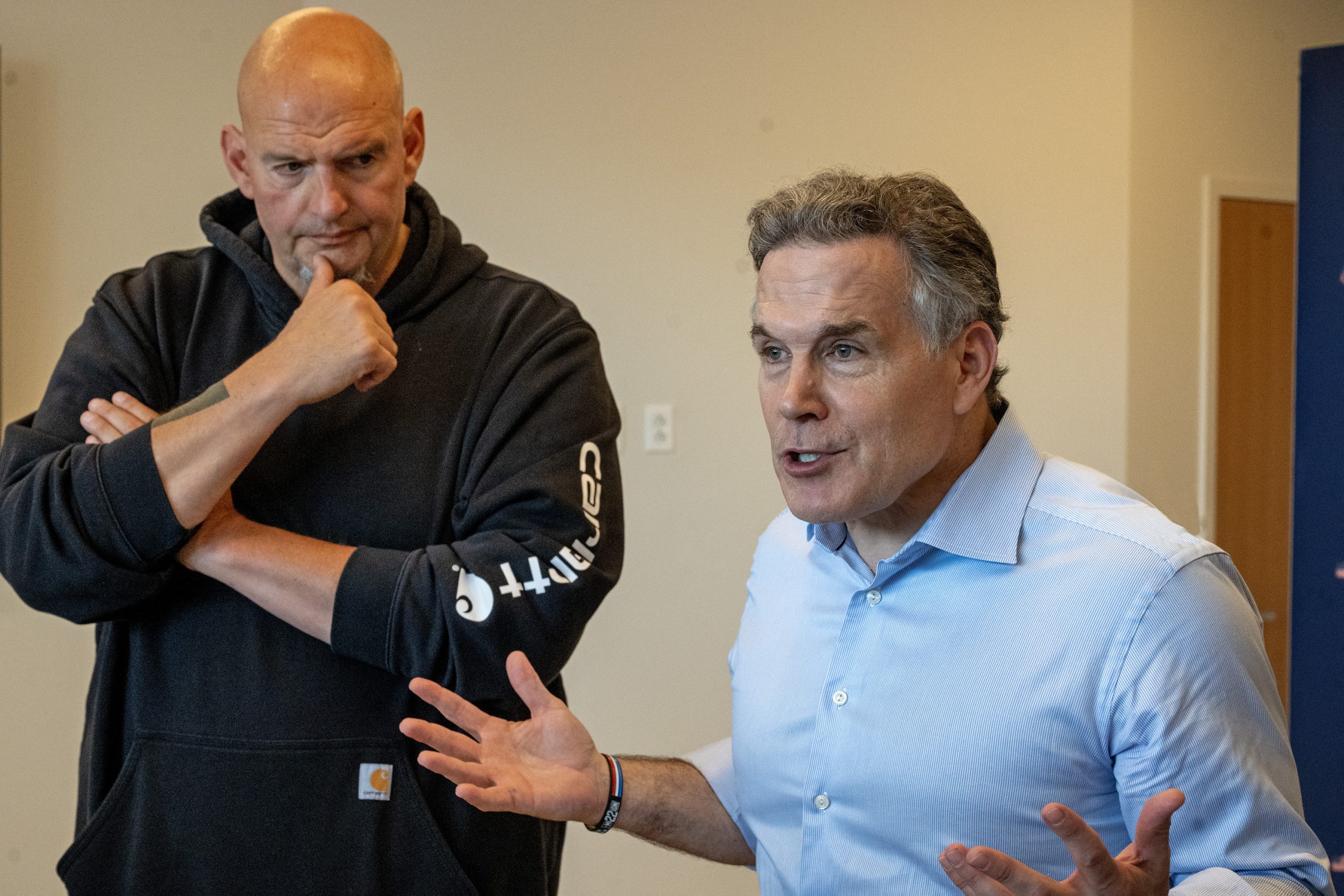
    Pennsylvania’s U.S. Senators John Fetterman (left) and Dave McCormick appear together Monday, June 29, 2026 to promote the savings accounts for kids that were a signature piece of President Trump’s Big Beautiful Bill.Tom Gralish / Staff Photographer

    He said he believed the law would “make it as easy as possible” for people to obtain valid forms of ID if they do not have them. And as someone who lost his first race against Oz by 950 votes and won his second race against Democratic U.S. Sen. Bob Casey by about 15,000 votes, he said even rare cases of noncitizen voting could make a difference in close elections. Eligibility for mail ballots also needs “to tighten up dramatically,” he said, though he did not fully explain his thoughts on the issue or if he believes there has been fraud associated with them.

    As Democrats block the bill in the Senate, he called on them to “defend the indefensible” and said “there should be a political cost in objecting to something that most Americans agree with.”

    One of the Democrats opposing the bill is McCormick’s close friend and ally — U.S. Sen. John Fetterman.

    Though he has frequently broken with his party — and now supports voter ID after previously calling it “insidious and unnecessary” — Fetterman has said the bill’s changes to mail voting are “a nonstarter” for him.” In a CNN interview last week, he also said that the 2020 election in Pennsylvania was fair, that there is “no evidence” of 250,000 noncitizens registered, and that Trump was unnecessarily fixated on the 2020 election.

    “In Pennsylvania, out of 67 counties, the vast, vast, vast majority of them are deep red counties, and they’ve never encountered any kinds of fraud,” Fetterman said. “I don’t know why the president is dragging up all of this stuff. You’re the president. Do something positive. And you are talking about 2020. That’s been settled over six years ago. It’s deeply unhelpful.”

    Other Pennsylvania Democrats have lambasted Trump for dredging up the old claims, and they have blamed GOP “enablers” for supporting him and pushing the bill.

    “The only thing it would ‘save’ is Trump and his Republican enablers from voters holding them accountable,” U.S. Rep. Dwight Evans (D., Philadelphia) said.

    U.S. Rep. Chris Deluzio, an Allegheny County Democrat who worked on election security issues before running for Congress in 2022, said the bill “will do nothing to improve election security” and would instead harm married women — whose birth certificates might not have their current name — and people without passports. He said those who lie about the 2020 election are “cowards” who should not have a place in elected office.

    “The fact that some Republican politicians are so scared of Donald Trump that they lie for him just to keep their jobs is spineless and pathetic,” Deluzio said.

    McCormick, for his part, said during the telephone town hall that the bill is unlikely to pass as Democrats continue to block it from getting the required 60 votes in the Senate, and as Republicans decline to eliminate the filibuster rule to let it move forward with just 50 votes.

    “Where does that leave us? That leaves us in a position where I think we should be constantly talking about this, and I try to do this every single week, multiple times, [saying] why the SAVE America Act is important,” said McCormick, whose staff said he was unavailable for an interview.


  • The Philadelphia Museum of Art is running record deficits. The next few years look rocky.

    The Philadelphia Museum of Art is running record deficits. The next few years look rocky.

    When art world veteran Daniel H. Weiss took over the Philadelphia Museum of Art in December, he quickly recruited a new team, including a chief financial officer and chief fundraiser. That team has begun to assess the museum’s financial condition and what can be done about it.

    The picture that is emerging is not a pretty one.

    Preliminary figures seen by The Inquirer show that the museum ran a deficit of about $10 million on a budget of $76.5 million for the fiscal year that ended June 30.

    That is on top of a deficit of $5.4 million for the year before, and leaders say the outlook does not promise to improve soon. For the fiscal year that has just begun, the museum anticipates the deficit will be comparable to last year’s $10 million, but in planning the budget the museum has outlined the possibility that it could be as high as $15.9 million.

    The shortfalls are the museum’s largest in recent history, leaders say.

    Weiss said the museum’s financial situation is “substantial, but solvable.”

    “I have no doubt that we will have a balanced budget in about three years,” he said, “but we have real work to do to get there.”

    Financial pressures are not threatening the museum’s ability to remain open, but the run of red ink cannot continue. The museum is covering the deficits by drawing on a pool of money that includes cash and reserves — sometimes referred to as quasi-endowment — whose use was not restricted by donors for any specific purpose.

    “The way I would describe it is, we have a savings account for rainy days. We’re spending it,” Weiss said. “We need to stop doing that.”

    Daniel H. Weiss, director and CEO of the Philadelphia Museum of Art, at the museum in January.Tom Gralish / Staff Photographer

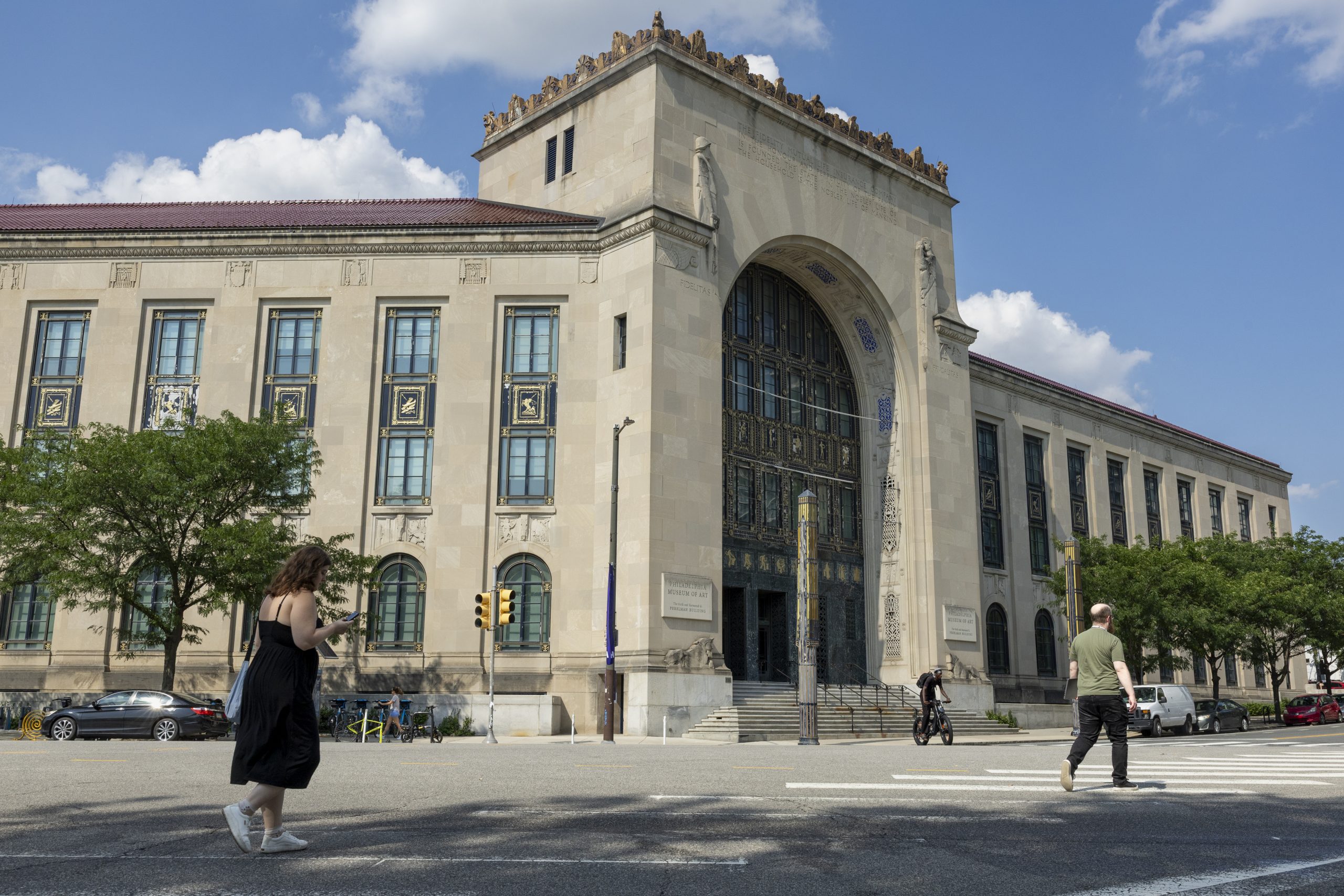
    The museum’s struggle to right its finances comes as it faces some urgent needs and considers the fate of key projects. Among the unsettled questions is how to pay for deferred maintenance to both the main building and the Perelman building, the annex to the north that was closed to the public during the pandemic and never reopened.

    The combined cost of work on the two buildings has a preliminary price tag of around $300 million.

    As for a much sexier project, the museum’s much-trumpeted expansion envisioned by architect Frank Gehry: That will have to wait. Given the current challenges, the ambitious idea of carving out new spaces beneath the east terrace continues to be on hold; the timeline is uncertain.

    “It is not, at this time, appropriate for us to be evaluating the feasibility of a very substantial new capital project which would be required to implement the Gehry plan,” Weiss said. “We need to determine the priorities and sequencing of capital work that needs to be done. And over the long term, we need to figure out what this institution can afford in a sustainable way.”

    The famed architect died late last year.

    The priority now is ringing the alarm that all is not well at one of the city’s two largest arts groups (the other being the Philadelphia Orchestra and Ensemble Arts) and rallying support around a rescue plan.

    Weiss said:

    “We want to be transparent and we want to be accessible to people, and they have a right to know — it’s their institution. But we don’t want to do it in a way that turns people away. It’s just an institution that needs repair. So how to tell that story is part of what we have to work on.”

    The polychrome high-relief sculpture on the north pediment of the Philadelphia Museum of Art. The high-relief sculpture depicts 13 figures from classical mythology.Aidan T. Gallo / Staff Photographer

    Ambitions despite deficit

    The pool of money is finite, and the museum would like to stop tapping its reserves as quickly as possible. Instead of funding the deficit, it could be helping grow the nest egg.

    Referring to what is being spent this year alone to cover the deficit, Weiss said:

    “That’s $10 million of assets earning at least 5% a year till the end of time we’re foregoing. We’ll never get that back.”

    And yet the museum does not expect to balance its budget this year or next.

    “We anticipate getting within shouting distance of a balanced budget within three years. We don’t have the luxury of taking longer,” Weiss said.

    Even as it struggles, the museum has not shelved ambitious projects. The idea of creating a new learning and engagement center on the north side of the museum is still very much in play, Weiss said. Design development for the facility could begin within a year.

    Blockbuster exhibitions like the 1982 show of Nigerian art seen by 197,000 visitors or the Cézanne retrospective in 1996 that drew 548,741 are hard to come by, but the museum is working on a number of shows that it believes would draw 100,000-plus visitors each.

    “We will have exhibitions that will be of very significant public interest that will draw large numbers that will be exciting and powerful,” said Weiss, who declined to give specifics on the exhibits.

    The Perelman building, an annex to the Philadelphia Museum of Art containing exhibition galleries, offices, conservation labs, and the museum library.Aidan T. Gallo / Staff Photographer

    About the future of the nearby Perelman building, Weiss said the museum is searching for ideas.

    On the one hand, the highly decorated art deco structure contains the library, art conservation studios, and administrative offices for which there is no space in the main building. On the other, the costs of operating and maintaining it are high. It is more building than is needed, and the location across two busy streets limits the number of visitors who will make the trip to reach it.

    A revenue stream that’s been flat

    The museum’s new leadership has analyzed finances from the last 10 to 12 years — a period that includes the pandemic, plus the periods before and after — and determined that the deficit is the result of a revenue stream that has not grown much, while expenses have.

    “Functional revenue — contributions, admissions, membership, and earned revenue — has grown by only 0.3%, effectively flat,” said Mitchell Wein, the museum’s executive vice president and chief financial and operating officer.

    The museum has not fully yet developed a plan for reversing the trend, but is “modeling lots of scenarios and coming up with the best approach on how to do that,” Wein said.

    “Part of this process is evaluating everything. Everything is on the table,” Weiss said.

    Reducing expenses in some areas will be considered, but that cannot be the only answer.

    “We also know we need to focus on revenue generation and supporting the museum for the long term,” Wein said.

    But revenue from where?

    ‘Miners’ Wives’ (right) by Ben Shahn and ‘The End of the War, Starting Home’ by Horace Pippin in the ‘A Nation of Artists’ show at the Philadelphia Museum of Art.Tom Gralish / Staff Photographer

    Six keys to securing solvency

    Ticket sales is one obvious place to look, but a big boost from admission is probably not in the cards. The museum once aspired to attract a million visitors a year, but that goal was floated before the pandemic, and the museum has not yet recovered its pre-COVID numbers.

    This past fiscal year, the forecast called for 731,000 visitors; 672,753 showed up.

    So the goal for next year has been adjusted down to 705,000, which the museum feels is more realistic. Attendance was 773,511 in the last full year before the pandemic.

    The museum’s difficulty in coming back from the pandemic is not unusual. Over half (55%) of U.S. museums of all kinds were reporting lower attendance in 2025 than in 2019, according to a report from the American Alliance of Museums.

    Daniel H. Weiss, director and CEO of the Philadelphia Museum of Art, looking out onto the museum’s east terrace.Tom Gralish / Staff Photographer

    Weiss says the museum needs to focus on six key areas to achieve solvency:

    • Optimizing endowment income.
    • Boosting earned revenue, including income from retail, restaurants, special events and membership, and admissions. “Each of those needs to be examined to determine what’s possible,” he said.
    • Evaluating how much can be brought in through philanthropy.
    • Working toward more city and state government support. “We want to try to make the case to them that a larger investment in these facilities is in everybody’s best interests, and that’s a work in progress.”
    • Reviewing the operating budget. “The operating budget can be improved, but there’s not a ton of opportunity for us, for example, to lay people off. Our staffing levels are already down. We don’t think that’s the answer. But there are certain things we can cut and manage better or maybe outsource or streamline to improve the operating budget.”
    • Assessing programs, such as making better and more economical use of the Perelman building.

    “If you add all of those things up and we do all of those things — even if we don’t also find a private equity guy who falls in love with us who’s going to give us $100 million — we’re going to balance our budget,” Weiss said.

    Hundred million-dollar gifts may or may not be in the future, but the suggestion raises a salient question being pondered by leaders: What is the fundraising capacity of the museum?

    “How much can that be, how much can we raise? I don’t know,” Weiss said. “What is this city set up to do? Most of the people who give money to an institution like this are local. So what is the philanthropic opportunity for one of the leading cultural institutions in this city?”

    What Weiss is sure of is that fundraising depends on resetting the profile of an institution known more recently for organizational turmoil than for success.

    “People who invest in an organization at lower levels as members, at higher levels as donors or major philanthropists, they always invest in winning organizations, and they rarely invest money to remediate problems. And one legacy I would like to leave is that we become an organization that’s known for being really good at what we do.

    “The positive is a world-class institution with a great collection. If we can’t figure this out, then we’re the wrong people. It’s just not that hard.”

  • Letters to the Editor | July 26, 2026

    Letters to the Editor | July 26, 2026

    Nuclear reality

    Regarding the article about how regulators have ordered a probe into the response to July Fourth power outages, the recently enacted Power New Jersey Act supports building a large nuclear power plant in the state. Gov. Mikie Sherrill described nuclear power as “affordable,” “secure,” “reliable,” and “clean.” But facts indicate otherwise.

    Affordable? The only two new U.S. reactors started in the past 30 years cost $37 billion — way above the original estimate of $14 billion.

    Secure? Nuclear power plants are heavily guarded, especially after the 9/11 attacks (al-Qaeda had considered attacking U.S. nuclear plants on 9/11).

    Reliable? During a recent heat wave, France shut three reactors temporarily and reduced power at eight others. Reactors return billions of gallons of used/heated water to their source daily, making them unreliable when electricity is most needed.

    Clean? Reactors generate more than 100 radioactive chemicals, similar to atomic bomb explosions. This waste is stored at plants for hundreds of years, or escapes into air and water. The cancer death rate in Salem County, N.J., was slightly below the state until the mid-1980s (after three reactors opened), but is now 33% higher.

    New Jersey relies on fracked natural gas and nuclear power for most of its power. Safe, renewable, and affordable sources like wind and solar now generate more than 30% of U.S. electricity; these, not nuclear, should be the focus of our energy future.

    Joseph Mangano, Ocean City, N.J.

    What antifa?

    Marco Rubio is organizing an “antifa summit” to target “left-wing extremists,” which he claims pose a violent threat. Can he cite an example? There is no left-wing equivalent to the Ku Klux Klan, Proud Boys, or Oath Keepers. Right-wing individuals and groups have committed many acts of violence, including mass shootings at churches and synagogues. They held marches displaying racism and antisemitism, and played a prominent role in the violent (and televised) attack on the U.S. Capitol. The administration seeks to quell “violent secular political groups whose ideology is anti-American, radically pro-transgender, and anarchist.” Although no such groups exist, I will address those labels. For anti-American, Rubio should look at the White House. Donald Trump has expressed the desire to “terminate” any portion of the Constitution that stands in the way of his own agenda. When asked on Meet the Press if he needed to uphold the Constitution, he said, “I don’t know,” even though he swore an oath to do so. There is nothing more un-American than violating the Constitution, and Trump has done just that countless times. As for “pro-transgender,” I have read the Constitution, and there is not a word in it prohibiting people from being transgender, or requiring Americans to treat them with animosity. Nor is anarchy a goal of the left wing. On the contrary, the millions of people participating in No Kings rallies are doing so to remind Washington that the supreme law is the Constitution, and it applies to all, including elected officials.

    Jean A. Kozel, West Norriton

    Join the conversation: Send letters to letters@inquirer.com. Limit length to 150 words and include home address and day and evening phone number. Letters run in The Inquirer six days a week on the editorial pages and online.

  • Horoscopes: Sunday, July 26, 2026

    ARIES (March 21-April 19). People rarely understand the difficulty of a task until they try it themselves. Today, that means letting someone struggle through a task, even if you could do it faster yourself. Experience teaches lessons that explanations couldn’t.

    TAURUS (April 20-May 20). Whatever you pay close attention to becomes more interesting. Other people also notice where your attention goes, and today they will follow along, so your curiosity creates more curiosity.

    GEMINI (May 21-June 21). Whether you’re doing something because you want to, doing it out of duty or acting out of fear of what will happen if you don’t, the point is that you’re in motion. Your work will have a lucky outcome.

    CANCER (June 22-July 22). It’s time to treat yourself like an athlete the day before the race. Sleep, water and nutrition in the proper amounts are the cornerstone of your well-being and the reason you can do your best work.

    LEO (July 23-Aug. 22). Inspiration can strike, but mostly it doesn’t. Often it tickles. Other times it nudges. Sometimes it puts a hand on your shoulder and gently guides you in a direction. That’s the kind that’s happening now for you.

    VIRGO (Aug. 23-Sept. 22). Relationships run on a mix of spoken agreements and unspoken expectations — some obvious, others so deeply ingrained that they go undetected until someone breaks them. Today, you’ll notice assumptions that have been running in the background. That awareness changes everything.

    LIBRA (Sept. 23-Oct. 23). If you followed your every impulse, life would get chaotic and exhausting. So when your options narrow, you may as well consider that a good thing. The path gets easier to follow once there are fewer exits to distract you.

    SCORPIO (Oct. 24-Nov. 21). The person you’re with every moment of every day is you. When that relationship is easy, everything else requires less effort. Today, you’re really not looking to any person, place or thing to complete you. You’re looking, yes — but you’re looking for the sake of discovery, not rescue.

    SAGITTARIUS (Nov. 22-Dec. 21). Just because you love someone very much doesn’t mean the relationship will be without conflict. Love doesn’t guarantee agreement. It simply gives people more reasons to keep trying after they disagree.

    CAPRICORN (Dec. 22-Jan. 19). If you miss a beat, don’t scramble back to try to pick it up. Be like the professional musicians — pick it up next time it comes around. Always be moving forward. The beat goes on.

    AQUARIUS (Jan. 20-Feb. 18). Are you spending too much effort to keep something alive? That’s what happens when the relationship, project or circumstance doesn’t breathe on its own. Maybe it’s time to release what asks more than it gives.

    PISCES (Feb. 19-March 20). However well you love a plant, it will grow according to the sunlight and soil. Today, focus less on trying harder and more on creating the conditions where people, projects and even your own spirit can flourish.

    TODAY’S BIRTHDAY (July 26). It’s your Year of the U-Turn. There’s much going right, but for the areas of your life that just aren’t working? You will turn them around, with or without permission. And after a bit of backtracking, your destination changes. More highlights: A relationship gives you what you’ve longed for. Your shining example will be followed. An income opens up — you’re so good at this! Libra and Scorpio adore you. Your lucky numbers are: 6, 2, 14, 9 and 30.

  • Dear Abby | Sister makes being around her an unpleasant experience

    DEAR ABBY: My unpleasant older sister lives by the creed, “It’s my way or the highway.” As a result, she has no close friends, no husband or partner, no social circle. She was “strongly encouraged” to take early retirement from teaching because she couldn’t get along with her co-workers.

    After retirement, she joined a few clubs but soon quit because they “didn’t do things right,” aka her way. Even though she treats me terribly, I have tried for years to be the better person and invite her to my family gatherings so she doesn’t have to spend holidays alone. Unfortunately, she is also the world’s worst houseguest. Within minutes of arriving, she announces a list of things she just can’t stand (and are therefore prohibited during her stay). These include certain TV shows, music, foods, ingredients, topics of conversation, any family story that includes her, etc. She stays until everyone has gone and then berates me for everything that I did wrong during her visit.

    If I don’t invite her, I feel guilty that she’s alone and has no other options. If I do invite her, I’m so stressed that I don’t get to enjoy having time with my children and grandchildren, which is very precious to me. What do you recommend I do?

    — TORN SISTER IN WASHINGTON

    DEAR SISTER: I think you have suffered enough. If you decide to invite your older sister to visit again, first establish some ground rules. The first should be that when she’s under your roof, you, not she, will decide on what entertainment is appropriate and what foods you will serve. And how they’re prepared. No topic of discussion will be off-limits. If there is something she can’t eat, she can refuse it. If something being talked about is not to her liking, she’s free to leave the room.

    The second ground rule should be that you are not obligated to entertain her 24/7, particularly if you want to spend time with the grandchildren.

    Of course, Sissy is free to reject your kind invitation, but if she accepts your conditions, the holiday will be a far happier one for you.

    ** ** **

    DEAR ABBY: My husband passed away last year. I live by myself in a two-story house with three bedrooms and three bathrooms. My kids want me to sell it. I don’t care for the stairs, but that’s the only thing I don’t like about my house. I’ve lived in this house for more than 30 years, and I don’t want to sell. I’ve always done what everybody else, especially my husband, has told me to do. For once in my life, I want to do what I want to do.

    Can you give me some advice?

    — FINALLY FREE

    DEAR FREE: My advice is to take your own advice. You seem to be happy where you are, so don’t allow your kids to pressure you into selling before you’re ready. I will add, though, that it would be wise to run your kids’ worries by your physician. If there are health concerns that make it unsafe for you to live alone in a big house with stairs, it’s best to listen to your doctor.

  • Fans from Philly and beyond gather to watch the WNBA All-Star Game: ‘It’s really come a long way’

    Fans from Philly and beyond gather to watch the WNBA All-Star Game: ‘It’s really come a long way’

    Jessica Shoulders is a WNBA fanatic, and she has maintained her love for the “W” since 1999. Naturally, she is excited that Philadelphia is getting a team in 2030 — just don’t expect her to root for them.

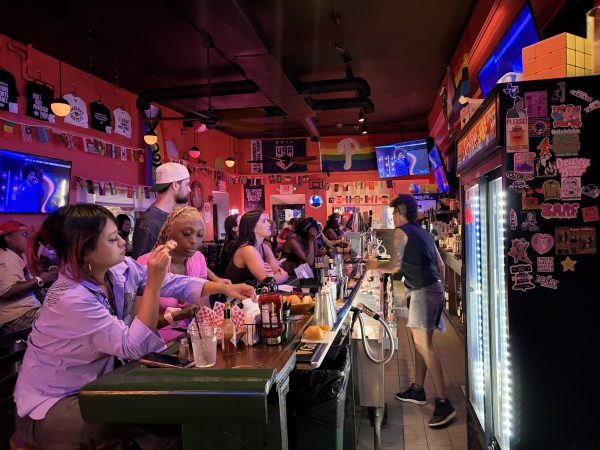
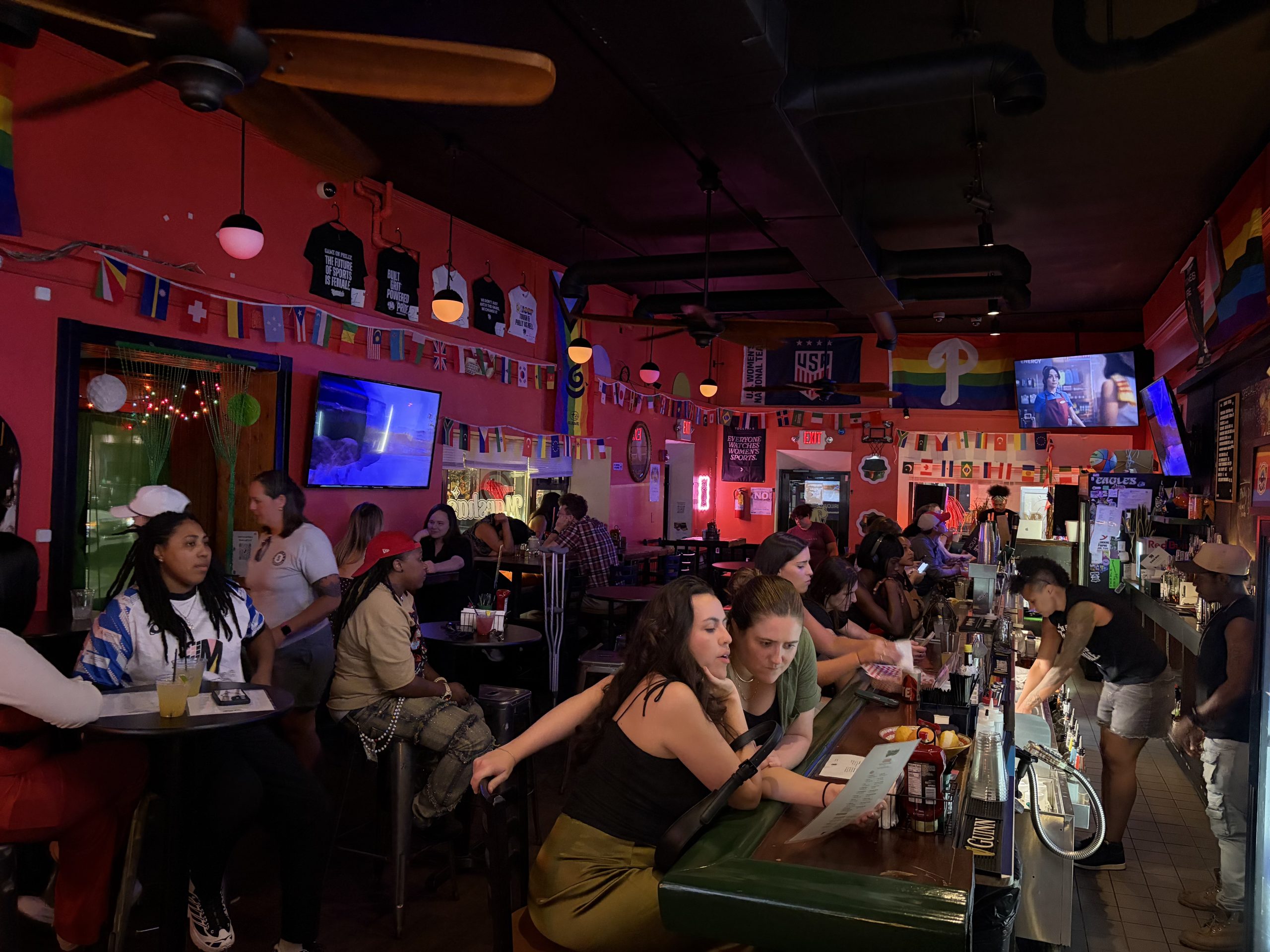
    Before the WNBA All-Star game on Saturday, Shoulders was one of two guests at Marsha’s, a women’s sports bar on South Street, to sink a free throw on a miniature basketball hoop. Her prize? A vintage San Antonio Stars Becky Hammon jersey. Shoulders was excited, but she made sure to quickly clarify to onlookers that she was not a Stars fan or a fan of the Las Vegas Aces — the team Hammon now coaches.

    “I’m loyal to the Lynx,” Shoulders said.

    And that won’t change for a free jersey, or even a new team coming to town.

    “Cheryl Reeve has my heart,” she added, referring to the Minnesota team’s coach and president, who grew up in Gloucester County and graduated from La Salle. “And Olivia Miles — Rookie of the Year — I don’t care what anybody says, she’s been out here balling out. First to be able to get 500 points in 21 games.”

    Fans take in the WNBA All-Star Game at Marsha’s, a women’s sports bar on South Street, on Saturday.Conor Smith

    In Marsha’s, where a crowd gathered to watch Teresa Weatherspoon’s Team Spoon defeat Cynthia Cooper-Dyke’s Team Coop, 129-120, Shoulders was not the only fan planning to stay loyal to their current team come 2030.

    “I could never switch allegiance,” said Em Friedman, a Golden State Valkyries fan who recently moved to Philadelphia. “But I can have a second favorite.”

    In April, the NBA and WNBA Board of Governors formally approved a WNBA expansion team in Philadelphia after it was announced in June 2025. Like the 76ers, the franchise will be owned and operated by Harris Blitzer Sports & Entertainment. The team also will share a new South Philadelphia arena with the Sixers and Flyers that is scheduled to open in 2031.

    One person who will ditch her WNBA squad for the still-unnamed Philly team is Marsha’s owner Chivonn Anderson, who currently claims the New York Liberty.

    “Oh no, they’re done,” Anderson said. “Like, they’re out the door. We got a lot of love to give in a small amount of time, but as soon as we get our own team, I think we will become fierce rivals.”

    ‘Share their story’

    Before opening Marsha’s, Anderson struggled to find a space to watch and celebrate women’s sports. The tipping point for her came in 2019 when she got into an argument with a Philadelphia bartender over putting the women’s soccer World Cup final on one of the bar’s televisions.

    “A couple of years later, I had the opportunity to purchase the building here, the liquor license, and all the business assets to create this space where we highlight professional athletes,” Anderson said. “These women that sacrifice pretty much everything in their lives to get to this ultimate platform. We’re just here to share their story with everybody.”

    The bar’s namesake comes from queer civil rights activist Marsha P. Johnson, who is best known for helping lead the 1969 Stonewall uprising. Since opening, Marsha’s has hosted events ranging from a deadlift competition to tarot card readings. Following the free-throw contest, Saturday drew in a crowd that was locked into the All-Star Game from start to finish — for good reason.

    New York Liberty center Jonquel Jones, playing for Team Spoon, won MVP honors in the tightly contested match. Jones logged 22 points, 13 rebounds, and eight assists in 22 minutes off the bench. Notably, she became the first player in WNBA history to win league MVP, Commissioner’s Cup MVP, Finals MVP, and All-Star MVP.

    “The atmosphere here is amazing,” Marsha’s patron Molly Coulter said. “The All-Star Game is a really exciting moment, and we’re going to be Philly fans when we finally get our team here, but we like seeing the stars. I like seeing the camaraderie on the court, honestly, like everyone having fun together.”

    Not everyone packed in Marsha’s for the game was from the area.

    Kathleen Bennett, a 16U baseball coach, was visiting Philadelphia for the first time for a tournament. The Syracuse, N.Y., native knew the All-Star Game was on, so she went searching for somewhere to watch it with others.

    “I heard that there was a really cool sports bar, a place to go to watch women’s sports,” Bennett said. “I knew that the All-Star Game was tonight, and so I wanted to check it out and be a part of the scene.

    “The WNBA is really the first prominent women’s professional sports league. It really had some staying power, and I can remember when it first started. Watching the [Houston] Comets back then. They were the team to beat. It’s really come a long way.”

  • No blood or DNA from missing women was found in Olney house, sources say

    No blood or DNA from missing women was found in Olney house, sources say

    What initially appeared to be a significant amount of blood inside the Olney home tied to a missing persons investigation was not real blood, according to law enforcement sources.

    Forensic testing conducted so far also has found no DNA belonging to the two missing women at the center of the evolving investigation, the sources said.

    Philadelphia police and FBI agents began searching the home of Eugene Horsch last month after police arrested him with a woman carrying a fake ID in the name of Blair Tonzelli, a woman struggling with drug addiction who was last seen at the property in 2022. The probe also renewed interest in another missing person, Amy McHale, the ex-wife of Eugene’s father, who was last seen in 2016 at the same house on West Chew Avenue.

    But detectives did not find the DNA of either woman on items tested so far, and while preliminary tests indicated that a significant amount of blood was present in the house, subsequent forensic tests came back negative, said the sources, who spoke on the condition of anonymity to discuss an ongoing case.

    The Philadelphia Police Department did not immediately respond to a request for comment Friday.

    This week police began excavating a pipe beneath the property to search for more evidence. And FBI agents are examining hundreds of pages of handwritten and typed documents, CDs, videos, and text messages for clues related to the missing women, the sources said.

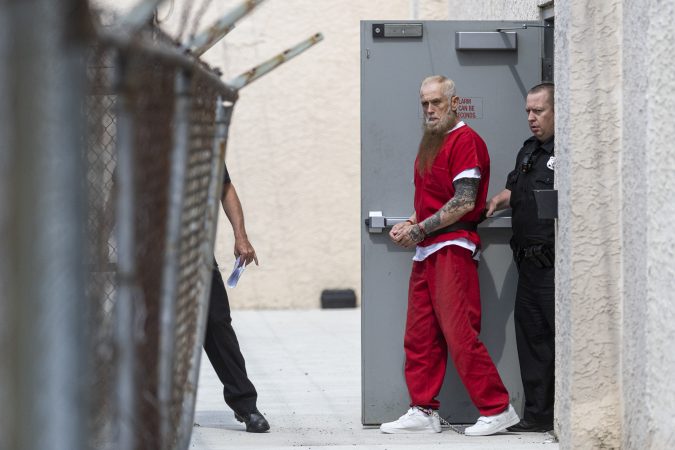
    Police arrested Horsch on June 19 near Independence Mall with drugs, guns, and various other weapons, as well as a phony U.S. Drug Enforcement Administration badge in the name of “Eugene Frederick Steiner.” He remains in federal custody on charges related to those offenses but has not been accused of any crimes in connection to the missing women.

    Horsch, 44, was incarcerated for a previous drug conviction at the time McHale’s family reported her missing in 2016. But his father, Raymond “R.C” Horsch, who died in May 2025, has become another focal point of the investigation.

    Raymond Horsch was an erotic photographer and filmmaker whose career in the porn industry dates to the 1970s. His work depicted graphic sexual violence and simulated death scenes, often involving women in addiction. Some scenes used what appeared to be prop blood. Horsch also penned semi-autobiographical novels that featured sadomasochists and serial killers.

    While the forensic testing has not shown that any real violence took place, investigators continue to examine other evidence found in the home, including unpublished film and writing, law enforcement sources said. One of those items is a handwritten note that describes hurting people and references the serial killer Ted Bundy.

    Shortly after Raymond Horsch’s death last year, a fire led police to search the property and arrest Eugene after they found a drug manufacturing operation and several illegal firearms.

    When police searched the property again last month, they found additional drugs and guns, as well as hidden compartments, vats filled with chemicals, and a 55-gallon drum with connections to water lines in the basement.

    When police arrested Eugene Horsch near Independence Mall in his black BMW, a woman with him showed police a fake ID in Tonzelli’s name. According to an affidavit of probable cause to search the Olney home, the woman told police that she did not know Tonzelli. She said Eugene never harmed her, but he told her he knew the chemicals needed to dissolve human bodies.

    Testing of the pipe excavated from the property this week remains ongoing.

  • Chester man convicted of murder for killing two of his coworkers at Delaware County Linen

    Chester man convicted of murder for killing two of his coworkers at Delaware County Linen

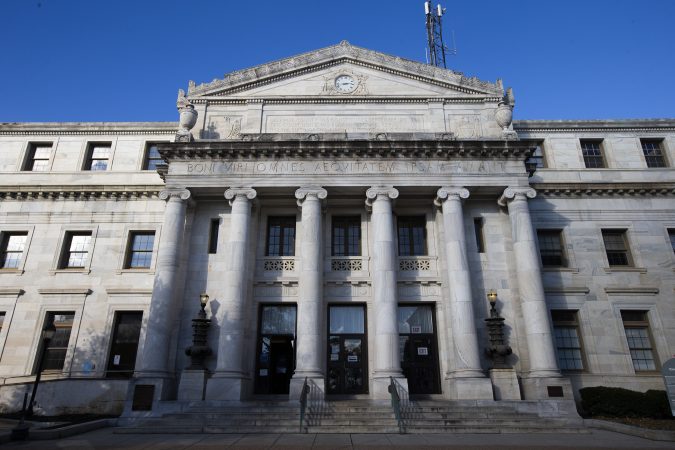
    A Chester man who gunned down two of his coworkers during an armed rampage two years ago was convicted of murder Friday.

    Wilbert Rosado-Ruiz, 63, was also convicted of four counts of attempted murder — three for other coworkers he wounded in the May 2024 shooting, and one for another man he attempted to shoot before his gun jammed.

    Rosado-Ruiz had no reaction as the verdict was handed down by Delaware County Court Judge Kevin Kelly, who presided over the bench trial. Kelly will sentence Rosado-Ruiz in October. A conviction for first-degree murder carries a mandatory penalty of life in prison.

    Leovanny Peña Peña, 30, and Giguenson Peña Peña, 26, were killed by Rosado-Ruiz during the shooting at Delaware County Linen, an industrial laundry facility where he had worked for 10 years. The three other victims were seriously wounded, including Charles Doyle, who said that he suffered severe internal injuries that have left him with limited use of his arms.

    During his trial before Kelly, Rosado-Ruiz testified that he acted in self-defense: A group of his coworkers, including the Peña Peña brothers, cornered him inside the facility and threatened to kill him and his family.

    The brothers, he said, were holding knives as they slowly walked toward him.

    Prosecutors disputed Rosado-Ruiz’s version of events. Evidence from the scene, including surveillance footage and witness accounts, showed Rosado-Ruiz was the aggressor, screaming that he was “tired” of his coworkers during an argument near the facility’s time clock.

    He then pulled out his 9mm handgun and opened fire, according to Nilamarie Valdivieso, the first person Rosado-Ruiz shot that morning.

    In her closing arguments, Assistant District Attorney Sophia Polites said none of the victims were armed, and no weapons were recovered from the scene. She asserted that Rosado-Ruiz went room-to-room, searching for more victims as they fled from the initial gunfire, and at one point paused to reload his gun before continuing to fire.

    Rosado-Ruiz intended to kill more people, according to the prosecutor, and would have done so had his gun not jammed. He fled the scene, and was arrested by a Trainer police officer not far from his home.

  • Excavation begins at Olney house at center of missing women case

    Excavation begins at Olney house at center of missing women case

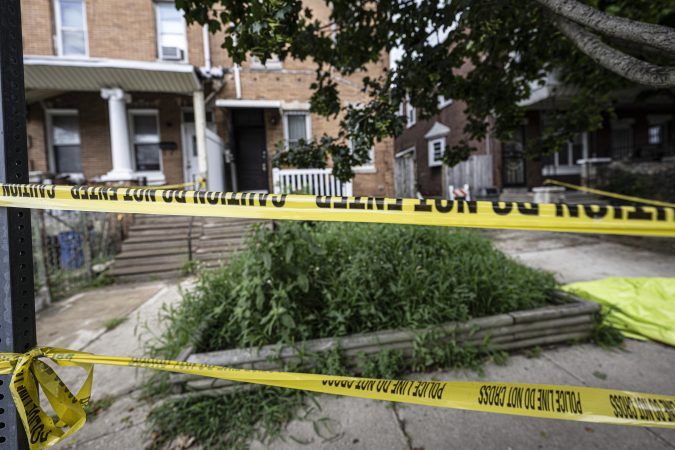
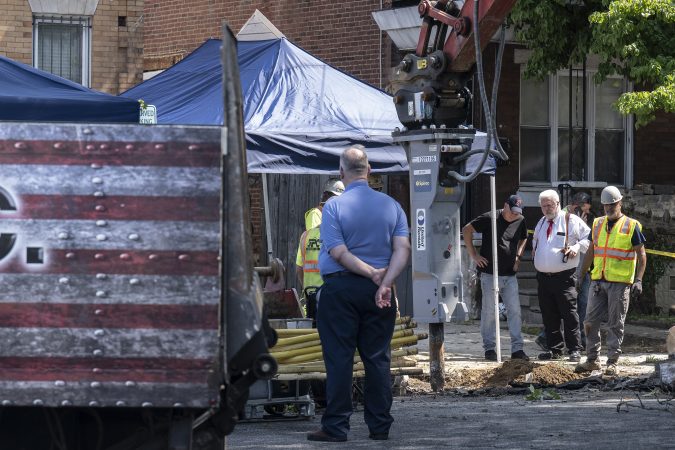
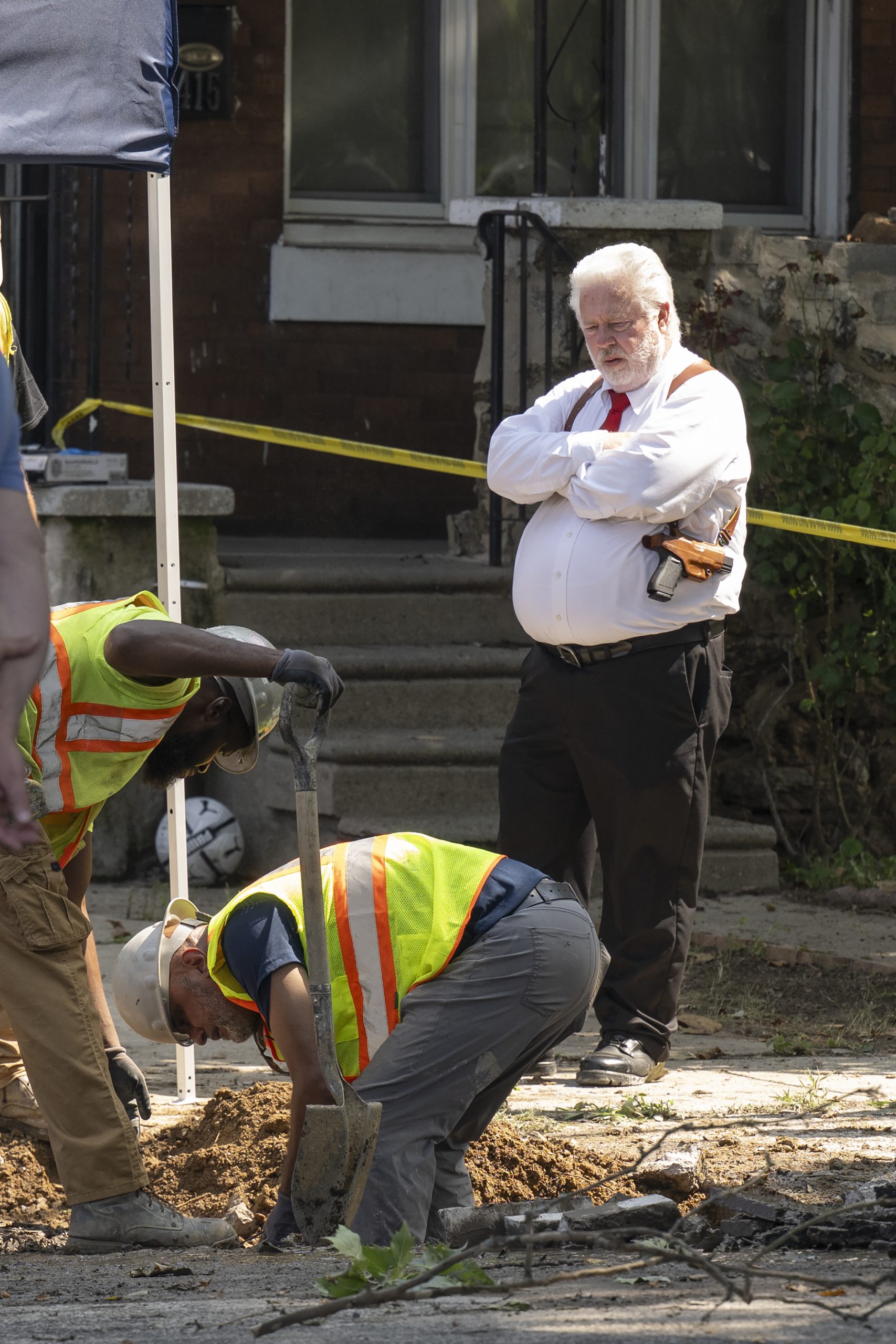
    Breaking concrete, beeping trucks, and the hum of heavy machinery signaled movement Wednesday in the monthlong investigation into two missing persons last seen at a house on the 400 block of West Chew Avenue in Olney.

    With that cacophony of construction sounds, the Philadelphia Police Department and the FBI began a planned excavation at the home of Eugene Albert Horsch, 44, who faces charges of carrying illegal firearms and fake federal law enforcement credentials following a June arrest. Horsch’s dilapidated twin home on West Chew Avenue has since been connected to the disappearances of at least two women in the last 10 years.

    Authorities said they would excavate a portion of Horsch’s property with assistance from the Philadelphia Water Department. Investigators, officials said, were intent on unearthing and examining a pipe under the house as part of a widening probe.

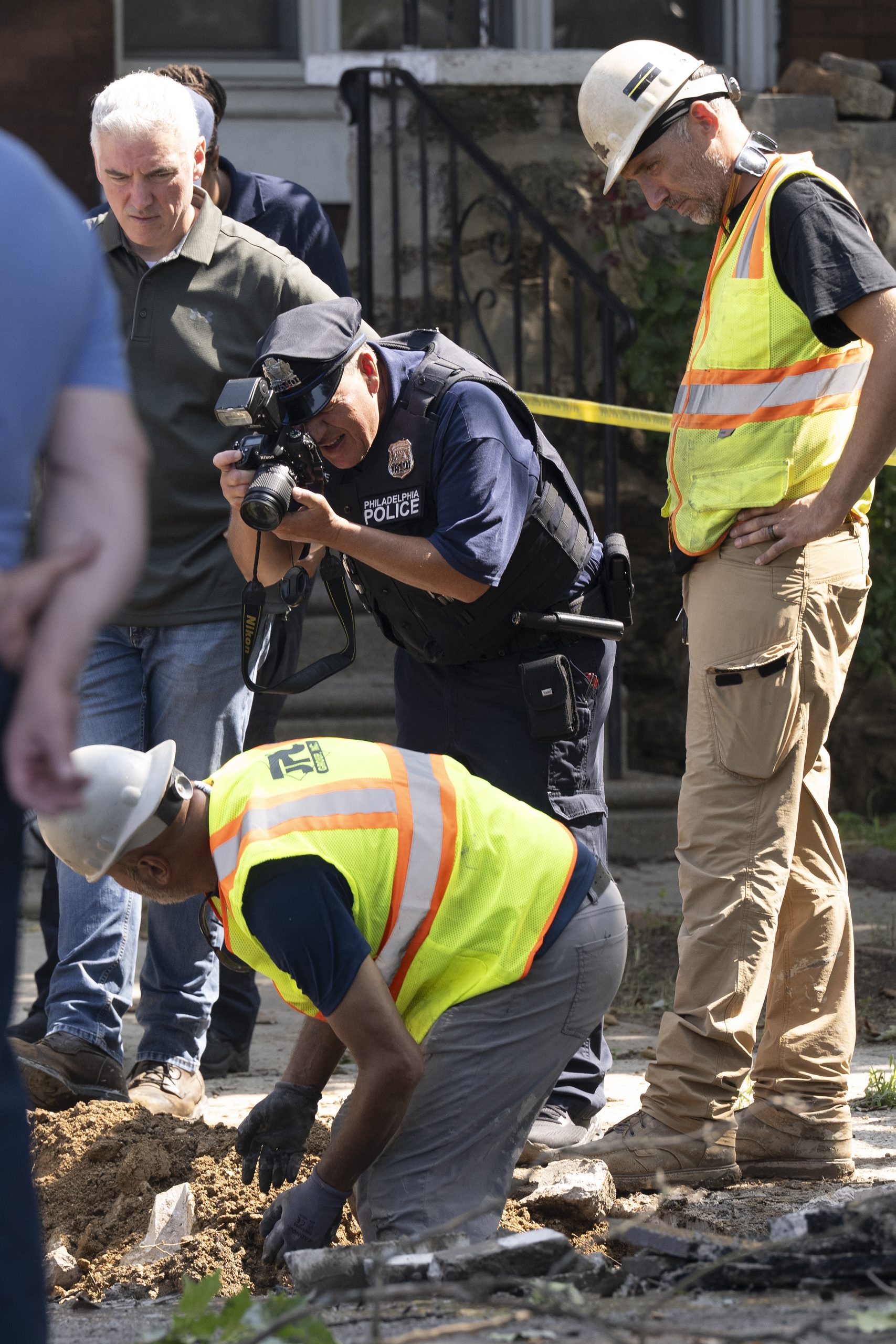
    Workers and police investigators dig and inspect a hole while removing pipes and debris at the entrance to the home of Eugene Albert Horsch on West Chew Avenue.Jose F. Moreno / Staff Photographer

    “The general scope of the dig is to excavate and remove a pipe that will be subsequently examined by FBI and PPD forensics for any evidence that may be present,” Sgt. Eric Gripp, a police department spokesperson, said Monday.

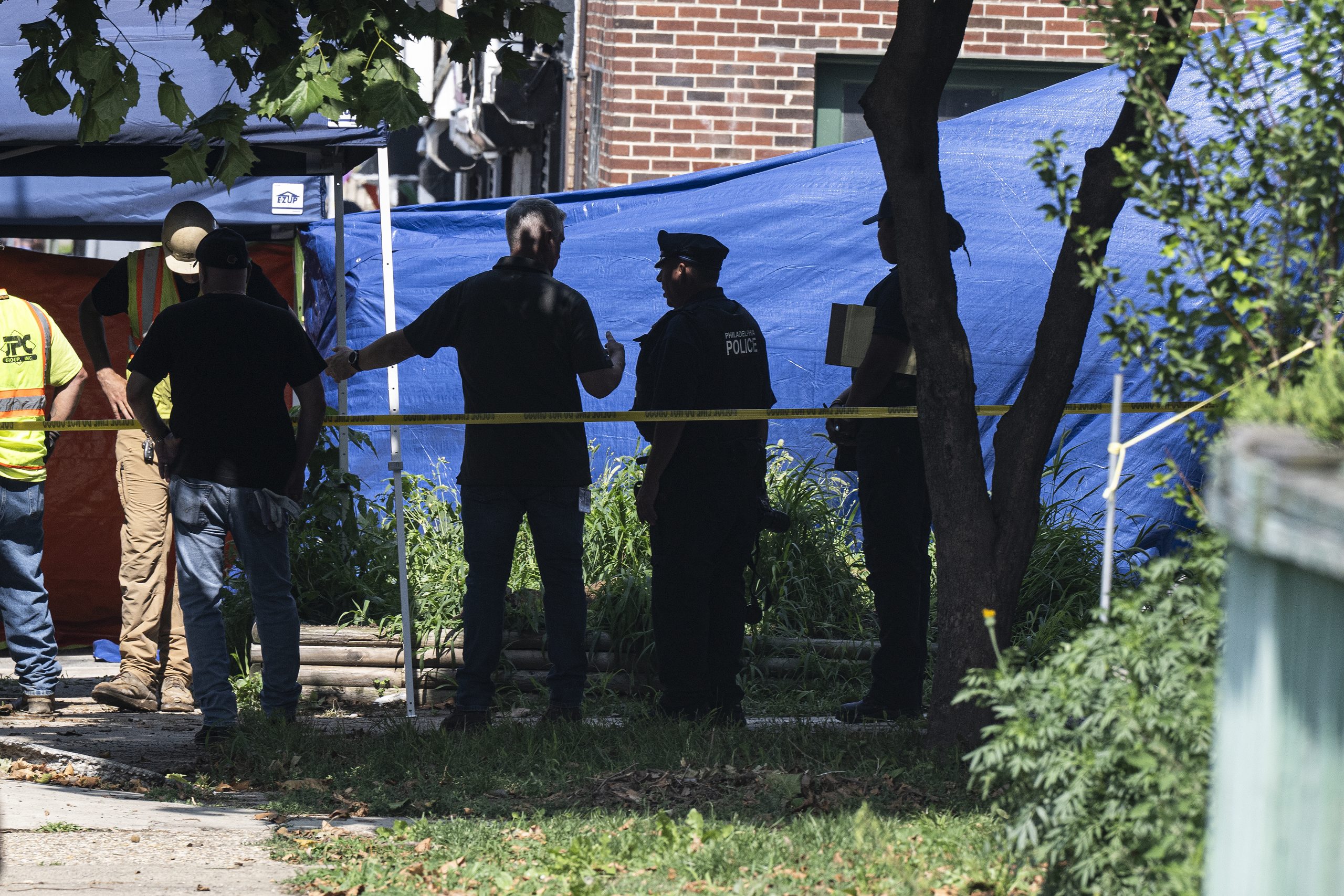
    That effort began in earnest before 9 a.m. Wednesday morning, with crews digging up what was once a small, overgrown garden in front of Horsch’s home, as well as the sidewalk and street in front of the property. Trucks and tents cropped up throughout the morning as investigators walked the block. Periodically, investigators inserted a white pole into the earth, measuring the depth of a hole.

    Later in the morning, workers pulled a piece of pipe from the ground and took it inside the home.

    Wednesday’s excavation was the latest development the case that began June 19, when Horsch was arrested near Independence Mall with drugs, guns, and other weapons, as well as a counterfeit U.S. Drug Enforcement Administration badge. A woman was with him at the time, and she was carrying a fake ID in the name of Blair Tonzelli, who was last seen at Horsch’s home in 2022.

    Workers and police investigators dig and inspect a hole while removing pipes and debris at the entrance to the home of Eugene Albert Horsch.Jose F. Moreno / Staff Photographer

    Since then, investigators have discovered a swath of evidence, authorities have said. Among the items found at the West Chew Avenue home were vats of chemicals, a 55-gallon drum with connections to water lines in the house’s basement, and what police sources called “a significant amount” of blood.

    Forensic testing is continuing, and it has not yet been announced whether the blood is human. Horsch does not currently face charges involving violent crimes.

    Additionally, authorities have found other fake IDs in Tonzelli’s name, as well as the missing woman’s bank card. Investigators have also said that Amy McHale, the ex-wife of Horsch’s late father, Raymond Horsch, was last seen at the Olney home in 2016, according to the woman’s family.

    It was unclear Wednesday if investigators had linked any evidence to the disappearances of Tonzelli or McHale.

    Workers and police investigators dig and inspect a hole while removing pipes and debris at the entrance to the home of Eugene Albert Horsch on Wednesday.Jose F. Moreno / Staff Photographer

    The midweek excavation surprised some neighborhood residents. Cheri Smith lives two blocks from the site of the investigation, but still felt its effects. Smith, who has lived nearby for two decades, said she has felt unsettled since news of the investigation broke last month, and has seen little communication among police, the city, and neighbors.

    “It’s a shame what happened,” Smith said. “It would be nice if they notified us that this work is going to be happening, but the city is going to do what they are going to do.”

    Laurenza Moise said that when she arrived Wednesday to open her braiding business, the corner of Fifth Street and Chew Avenue had already been blocked off. Since the investigation began, she said, she has seen a reduction in business.

    “When they close the street, my business goes down, and there’s no parking for customers,” Moise said. “What can I do other than mind my business?”

  • A Chester man was convicted in his friend’s murder after recruiting him for the botched ambush of their rival

    A Chester man was convicted in his friend’s murder after recruiting him for the botched ambush of their rival

    A Chester man who recruited his friend to carry out the execution of a criminal rival in June 2024, only to have that friend die during the botched ambush, was convicted of first-degree murder by a Delaware County jury.

    Jesse Allen Jr., 20, was charged with the murder of Zaheem Sabree, even though he did not fire the shot that killed him, under the legal theory of transferred intent. The person who pulled the trigger, Tyjohn Walker-Jones, 18, was the target of Allen and Sabree, who were out for revenge after Walker-Jones allegedly killed their friend weeks earlier.

    Text messages presented during Allen’s three-day trial showed that he had begun plotting Walker-Jones’ death immediately after the murder of Sabrie “Breezy” Pierce.

    “Everybody gone pay,” Allen said in the message, displayed in court.

    Surveillance footage from a nearby deli recorded Allen and Sabree walking together down 24th Street on the day of the shooting, then hiding nearby — Allen in shrubbery and Sabree behind a concrete wall. Moments later, Walker-Jones is seen on the video walking through the area and then ducking behind a parked car as the gunfire rang out, prosecutors said.

    Shell casings found at the scene showed that Walker-Jones and Sabree shot at each other multiple times — Sabree with a .45-caliber pistol and Walker-Jones with a 9mm, prosecutors said. Walker-Jones and Allen then fled in opposite directions.

    Sabree was found near that scene, shot in the head. Police took him to Crozer-Chester Medical Center, where he was later pronounced dead.

    The jersey of Chester High School football player Zaheem Sabree hangs on the fence while the Chester High School before a game in August 2024. Sabree was gunned down in Chester during the botched ambush of another teen.Yong Kim / Staff Photographer

    Allen’s attorney, Brian Malloy, urged jurors in his closing arguments to acquit his client. The real killer, he said, was Walker-Jones, who, while awaiting trial in Pierce’s murder, was given a “two-for-one deal” by prosecutors.

    During Allen’s trial, Walker-Jones, who was not charged in connection with Sabree’s death, took the stand and admitted to shooting Sabree in the head.

    “He knows he has to play along, say what he has to say, but actions speak louder than words,” Malloy said. “We watched videos of him killing two people, and he’s not sitting at this table, and that’s a crazy thing.”

    Malloy suggested that Walker-Jones was the aggressor, chasing Allen and Sabree as they walked through Chester.

    But Deputy District Attorney Matt Krouse said Allen took deliberate steps to plan the ambush and was directly responsible for Sabree’s death.

    Allen directed Sabree, a star football player at Chester High School and an honors student at STEM Academy, to wear all black and meet him at a deli in Walker-Jones’ neighborhood, which was nowhere near his own, Krouse said. He deliberately left his cell phone at a friend’s house, knowing his movement would be tracked.

    And after the shooting, Allen, in text messages, bristled at the rumor circulating through Chester that he had left his wounded friend to die, saying he had no choice.

    “He knew already on June 30, 2024 that he was guilty of everything he was charged with,” Krouse said. “But just like he ran from his so-called best friend to avoid the consequence of his actions, that’s what he’s trying to do today and this week.”

    Allen is to be sentenced in October. Walker-Jones’ trial in the death of Sabrie Pierce is scheduled to be held later this year.