Jaylen Brown has yet to play a game for the 76ers, following the stunning blockbuster trade from the Boston Celtics earlier this month.
Yet a significant Brown-related decision already faces the Sixers. The All-NBA wing on Sunday became eligible for a one-year contract extension that could be worth nearly $69 million, which would keep him signed through the 2029-30 season.
If Brown does not sign the one-year extension this offseason, he will become eligible for a three-year extension in the 2027 offseason.
This all further demonstrates the financial investment the Sixers are making in Brown, who last season finished sixth in voting for the NBA’s Most Valuable Player award and is a five-time All-Star and former Finals MVP. He has three years remaining on his current supermax deal, with salaries of $57.7 million for the upcoming season, $61.7 million in 2027-28, and $65.6 million in 2028-29.
It also aligns with the rationale given by Celtics president of basketball operations Brad Stevens for why he dealt Brown in his prime.
Had Brown stayed with the Celtics, he instead would have been eligible for a two-year, $142 million extension. Stevens cited a reason for the trade was that Brown and fellow star Jayson Tatum — who has four years remaining on his current contract, including a $71.4 million player option for 2029-30 — would take up approximately 70% of the Celtics’ salary cap. That makes it increasingly more challenging to build out a roster with strong complementary players under the league’s new collective bargaining agreement, with “apron” penalties including trade restrictions for high-spending teams.
Stevens repeatedly used the word “optionality” when describing the roster-building reasons for the move that shocked the NBA.
“I might be wrong. I’m not going to stand up here and be defensive about that,” Stevens said at a news conference following the trade. “But the path [to winning a championship] looked a little bit more challenging. … You have to do a great job of building out depth that can hopefully replace the irreplaceable individual.”
But Brown being traded to the Sixers knocked his extension eligibility down to one year, because players on new teams are only allowed to extend their contracts out to four total seasons. According to NBA cap expert Keith Smith, the salary figure Brown can earn on that additional year is the greater number of either the max salary for a player with 10 years of NBA service, which Spotrac projects to be $66.9 million in 2029-30, or a 5% raise on the final year of his current deal, which is $68.9 million.
Though adding Brown is a bit less of an immediate financial burden for the Sixers, it still creates a top-heavy salary cap sheet for multiple seasons.
Former NBA Most Valuable Player Joel Embiid is slated to make $57.7 million on his max extension in the upcoming season, then $62.4 million in 2027-28 and $67 million in 2028-29. All-NBA guard Tyrese Maxey also has three years remaining on his first max contract, at $40.8 million for the upcoming season, then $43.6 million in 2027-28, and $46.4 million in 2028-29.
Though both contracts are scheduled to come off the books in the 2029 offseason — barring another max or supermax extension for Maxey — standout guard VJ Edgecombe will be eligible to sign his first (potentially max) extension in the 2028 offseason.
It is possible the Sixers could persuade Edgecombe to take the same route that Maxey once did. Instead of signing a max extension when eligible entering the final year of his rookie contract, in 2023, Maxey waited a year before inking a max deal. That gave Maxey a smaller cap hit in the 2024 offseason, and more financial flexibility for the Sixers that they ultimately used to sign Paul George to a four-year max contract.
Today that George deal is considered even more of an albatross than Brown’s contract, because George is older (36), no longer a perennial All-Star, and has struggled to stay on the court in recent seasons. But he will come off Boston’s books sooner, with two years remaining on his deal including a player option. That contract also becomes increasingly easier to trade the closer it gets to expiring.
Just because Brown is now eligible for the one-year extension does not mean that it will be offered by the Sixers and agreed to immediately — or at all.
Yet it is a reminder of at least part of the Celtics’ justification for trading Brown. And it gives the Sixers a Brown-related decision before he even steps on the court for his new team.
When Herman Welker came to Washington in 1951, he had what seemed to be the ideal résumé to become a man of influence.
The Republican senator from Idaho was an unwavering conservative — a former prosecutor and World War II veteran — whose opinion counted on matters including war, national security, and U.S. Supreme Court seats.
But Welker’s path to power and prominence — serving as a close ally and faithful wingman to Republican Sen. Joe McCarthy in his abusive, power-hungry, and attention-seeking campaign to root out American communists — undid him in a single term. Welker, known in the Senate as “Little Joe from Idaho,” was implicated in another senator’s blackmail-driven suicide. When McCarthy faced censure in the Senate, Welker tried to delay, dissuade, and, according to accounts at the time, bully others out of officially expressing their disgust.
Welker lost his seat in the next election, then, after a brief illness, died.
That’s the thing about influence attained through a grand bargain with those who wield power in ways that defy the law, norms, and anything approaching restraint: It requires a grasp of time and mortality few humans can reliably claim. Which is precisely the risk Sen. Lindsey Graham, a lawyer and a veteran of the wars in Iraq and Afghanistan, ran until his sudden death this month.
Unlike Welker, Graham transformed in full public view from a man who was once one of Donald Trump’s most strident and vociferous critics into a dependable MAGA workhorse in Congress.
Now, Graham’s legacy will be forever bound up with that of the 47th president, who took pains to tell NBC News that his faithful wingman’s death would be a “big blow” to the passage of the SAVE America Act.
In 2015, Sen. Lindsey Graham described Donald Trump as a bigot. Much changed over the next decade, Janell Ross writes.Jacquelyn Martin
In 2015, Graham was a third-term senator from South Carolina vying for the Republican presidential nomination — a field that included more than a dozen others — en route to being crushed by Trump.
Graham, for his part, described Trump as a bigot, interested in anti-American policy, and a malignancy that, if nominated, would destroy the GOP.
Given that, when Graham offered his pithy prescription for America in a December 2015 appearance on CNN, I wasn’t exactly surprised.
“You know how you make America great again?” he said. “Tell Donald Trump to go to hell.”
It was a riff on the recycled bit of American political sloganeering that Trump had pushed into the zeitgeist, again. Trump’s vision was to make America more like it was in the past: less diverse, more exclusionary, with group suspicion as public policy, and strict racial and gender hierarchies governing national life.
In 2015, Graham’s position on Trump seemed clear and immutable. He told reporters he did not vote for Trump in 2016. Then, Trump won the election, and Graham spent most of the decade since transforming into one of the president’s most steadfast defenders.
There was a brief interregnum, a wobble of sorts on Jan. 6, 2021. After Trump supporters invaded the U.S. Capitol, Graham gave a speech. On the Senate floor, Graham seemed to point the finger of responsibility directly at Trump.
Sen. Lindsey Graham (R., S.C.) speaks with reporters during the second impeachment trial of former President Donald Trump in February 2021 at the U.S. Capitol Building.Stefani Reynolds
“Trump and I, we’ve had a hell of a journey,” Graham said. “I hate it to end this way. Oh my God, I hate it. From my point of view, he’s been a consequential president. All I can say is count me out. Enough is enough.”
But Graham, converted MAGA bannerman and, his critics say, Trump-era opportunist, soon returned.
Graham’s devotion to Trump was so sweeping and so sudden that the more conspiracy-minded have embraced the idea that Graham was the victim of blackmail or controlled by some sort of kompromat.
In death, Graham’s defenders — a group that, in these contentious times, notably includes Republicans and Democrats — have described his Trump transition as pragmatic, even admirable; what a skilled legislator must do.
Graham, they say, managed, in the final days of his life, three substantive foreign policy victories. He hammered out the details of a Russian economic sanctions bill Trump has said he will sign. He secured U.S. approval for Ukrainian strikes in Russia. And with these agreements, Graham effectively shored up NATO and its fundamental goal of staving off world war. Of course, all of that is contingent upon a mercurial president remaining uncharacteristically disciplined and consistent.
Sen. Lindsey Graham (R., S.C.) with President Donald Trump at a rally in Charlotte, N.C., in March 2020.DOUG MILLS
And therein lies the public lesson for us all. Time can and will run out. Redemption arcs, periods of public reconsideration, and book-tour explanations are not guaranteed.
Entirely honest assessments of the dead are rare. Many will offer familiar strings of superlatives, words of admiration, mutual respect, and sympathy — perhaps in the hope that those sentiments will be reciprocated when their time comes.
Others might just say our passing was a “big blow” to one of their pet projects.
Ultimately, though, our actions and associations will speak unvarnished truths about us long after we are gone.
Visit the block where Welker lived in Washington, D.C. Today there is not so much as a plaque. There’s just a Marriott.
Janell Ross is a former senior correspondent at Time magazine who frequently writes about race, politics, and identity.
Most days during the summers — sometimes well into the evening — Delores Lawrence is outside her home in Germantown weeding, watering, and otherwise tending her garden.
Her small front yard is where she grows tomatoes, blackberries, purple daisies, and orange and yellow lilies, all planted closely together. There’s also a narrow strip on the side where Lawrence cares for a mix of potted calla lilies, peonies, and other vegetation.
The land around her home is her peace.
It’s her little slice of the American dream.
But instead of being able to enjoy another summer growing season, Lawrence is livid about how the construction of a new apartment building next door has disrupted life on the block where she has lived for more than 30 years.
Her garage is no longer standing, her brick driveway damaged, and the construction noise at times was absolutely unbearable.
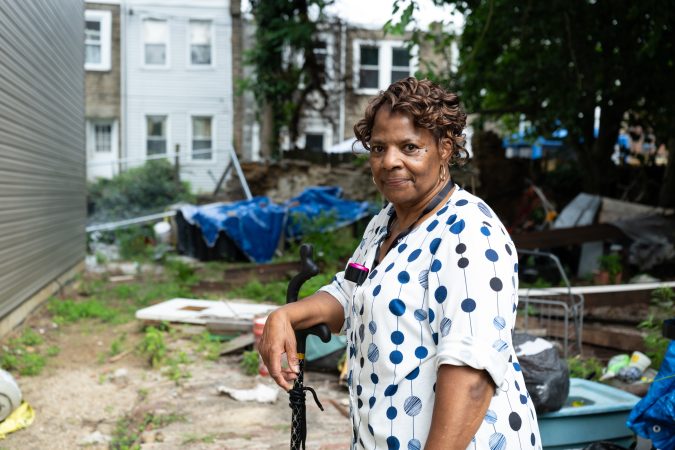
Lawrence, who worked in nursing before being injured, doesn’t know what to do. “I want my garage built back up. I want my driveway reconstructed,” she told me recently over the phone. “It makes me angry. It makes me upset. I even went to the doctor. I can’t even sleep.”
I recently paid a visit to the 200 block of East Bringhurst Street and walked with Lawrence as she pointed out the shambles the construction had made of her beloved yard.
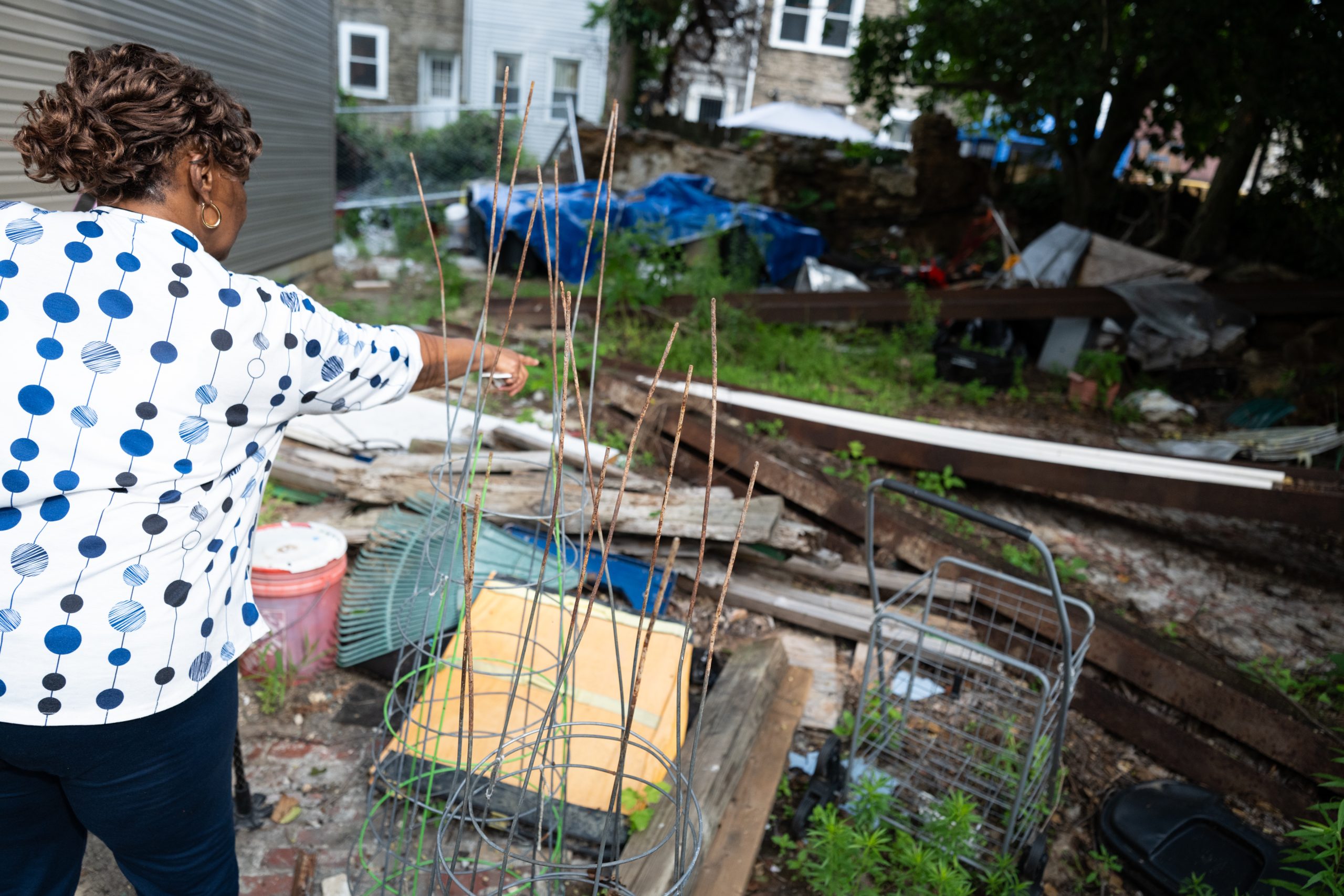
There was a stack of old bricks that had been removed from her driveway. The remnants of an old stone garage where she would do arts and crafts projects. “These are iron beams that they took off the roof,” she said. “It was a building back here.”
There was more — a tree trunk lying on its side with its roots exposed, what looked like electrical cables in the rear, and containers of paint that she said belonged to the builders working next door.
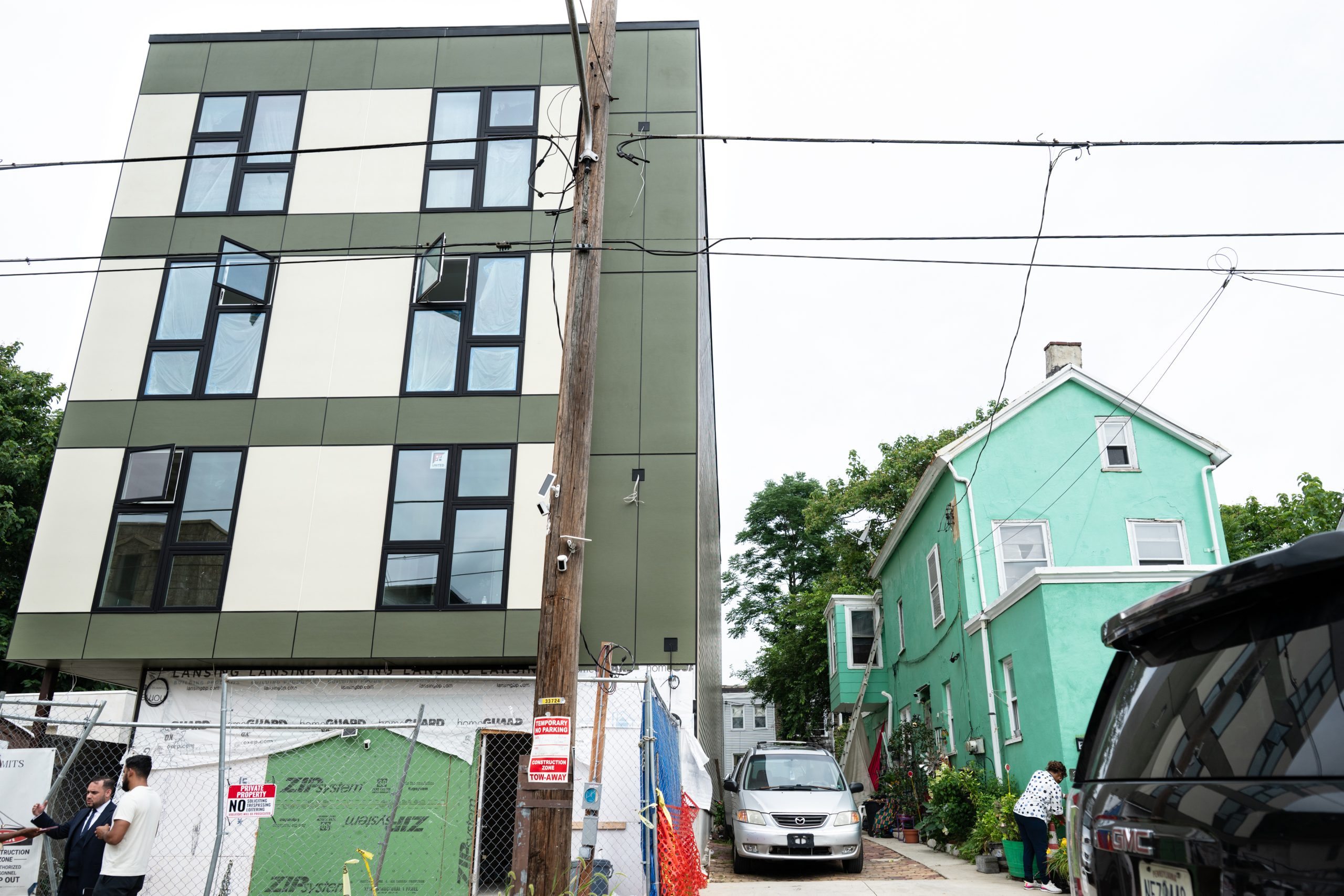
Delores Lawrence points to the remains of a garage where she used to do arts and crafts projects amid the detritus of a construction project next door. The project — a 15-unit apartment building — has been underway since 2024.Erin Blewett / For The Inquirer
Taking in the scene, I thought to myself that this is a whole situation — and I saw how it has turned into a court fight that is shaping up to be as messy as Lawrence’s backyard.
On one side, there’s Lawrence, a 70-year-old homeowner who has filed a lawsuit demanding compensation for damage to her property caused by the construction of a new four-story, 15-unit building immediately adjacent to her driveway.
On the other side is Danilo A. Burgos, the cofounder of Burg Properties and the 29-year-old son of State Rep. Danilo Burgos, a Democrat who was first elected in 2018 and who serves the North Philly neighborhoods of Kensington, Hunting Park, and Feltonville. The four-story, 15-unit building is under the charge of the younger Burgos and has been in the works since 2024.
Given everything going on in Philly right now, it would be easy to ignore the situation between a politically connected developer creating much-needed affordable housing and a senior citizen upset about its impact on her property. But I can’t help but feel for Lawrence.
Besides, hers isn’t an isolated situation. What’s happening to her in Germantown is actually emblematic of similar struggles playing out between residents and developers in neighborhoods around the city.
Residents of Chinatown successfully pushed back against a proposal to build a new Sixers arena along Market Street. In Northern Liberties, several neighbors on Brown Street are suing a developer, claiming their homes were damaged by the construction of a nearby apartment building. In 2024, my colleagues at The Inquirer produced an entire series called Crumbling City about how housing redevelopment created construction issues among some rowhouses.
Whatsets the situation in Germantown apart is the reality that the developer is the son of a state legislator.
“This is about entitlement and privilege,” Kevin L. Valentine, Lawrence’s attorney, told mein an email.
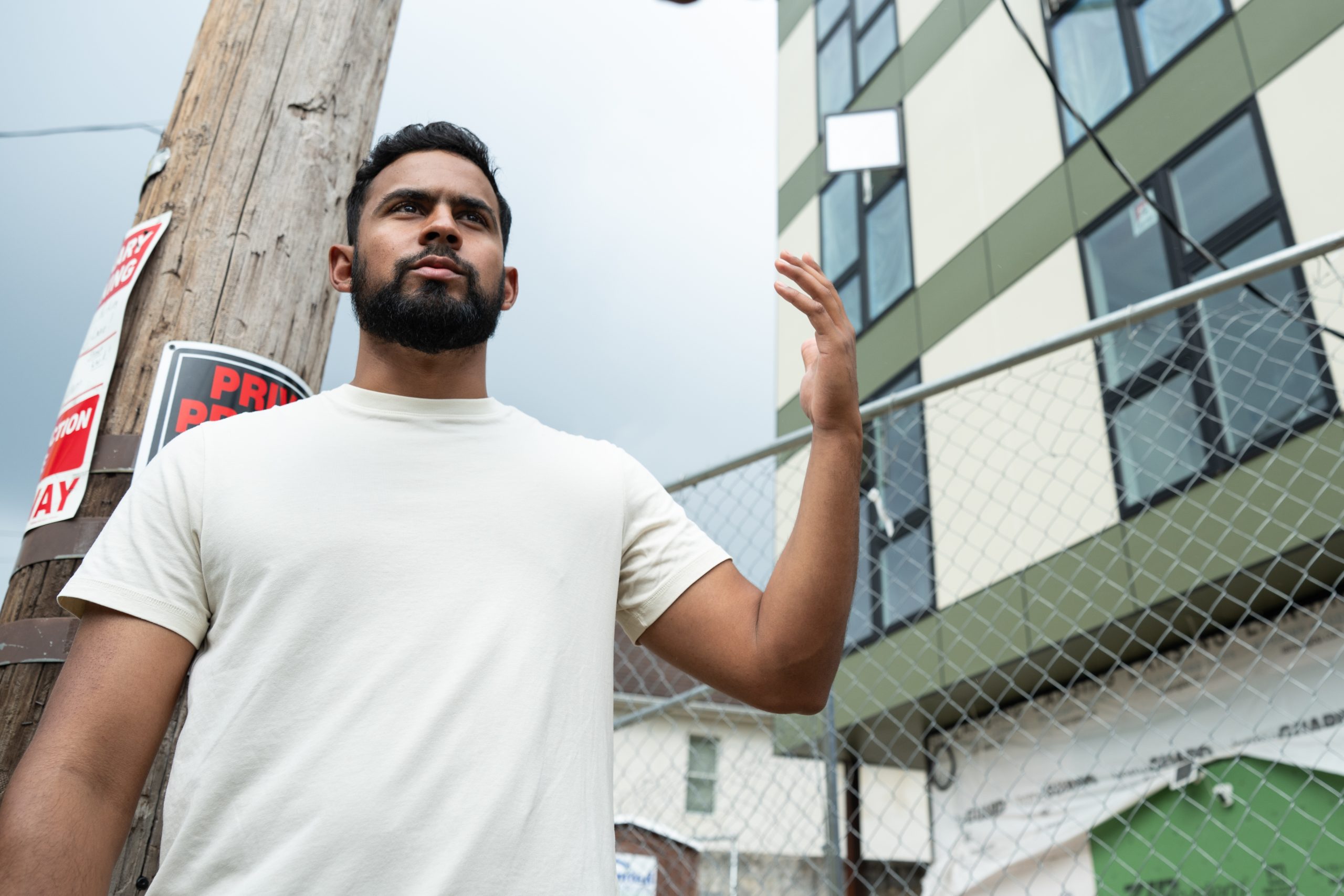
Property owner Danilo A. Burgos speaks to the press outside his affordable housing project under construction in the Germantown section of Philadelphia on Thursday, July 9.Erin Blewett / For The Inquirer
I reached out to Burgos, the state representative, who said: “My son has not done anything wrong. The lady, she’s suing him, and they’re in court. That’s it.” He added, “They have everything documented, and when the court case comes, everything will be squared away, God willing.”
As for the son, he says he’s doing good for the community by providing affordable housing. Philly is in the midst of a “severe housing crisis,” which is why Mayor Cherelle L. Parker has made building and restoring roughly 30,000 homes a cornerstone of her legislative agenda.
But developers still need to respect neighbors in the communities where they build. Christopher Edwards, a block captain and president of the Baynton Hill Neighbors Association, is deeply concerned about the impact the new Bringhurst Street apartment building will have on the narrow street with limited parking.
“We can see where this thing is going to become very unpleasant, especially for those of us who have lived there for years,” he told me.
After meeting with residents who aired their concerns, Burgos, a Temple University graduate, said he purchased a nearby lot that he intends to convert into a parking lot for his tenants’ use. Neighborhood residents, he said, will have priority when it comes to renting units.
As far as the garage in the rear of Lawrence’s home that had been negatively impacted, Burgos said that “it wasn’t a structure. It wasn’t a garage. It was like freestanding walls scattered [around]. Because some were up. Some weren’t.”
He said his workers knocked down a party wall the properties shared. “We notified her of the wall that we were going to knock down,” Burgos told me as we stood with his attorney in front of his new apartments. “Everything we did, we didn’t do it behind her back; we did it with her knowing what we were going to do.”
Attorney Saury A. Mejia and property owner Danilo A. Burgos (left) speak to the press outside Burgos’ affordable housing project under construction as neighbor Delores Lawrence (right) tends to her garden in the Germantown section of Philadelphia on July 9. Lawrence says construction of Burgos’ low-income housing project next door damaged her property.Erin Blewett / For The Inquirer
I liked hearing him say he was prepared to fix any of the property damaged by his workers. But Burgos said he is awaiting permission from Lawrence to do it.
“We’re willing to put it back to its prior condition,” Burgos said, adding that he’s willing to negotiate. “We’ve been open to dialogue the entire time.”
It sounds to me as if a meeting with all parties involved needs to happen quickly.
“I want him to sit down with my client and for him to make her whole,” Valentine said. “I’m just trying to get some justice for this woman.”
Councilmember Cindy Bass is willing to convene such a gathering. “If we can get all parties together, we’re certainly willing to do that and to do it soon,” she said.
Meanwhile, the proverbial clock continues to tick. Time is money. That’s not something Lawrence, who worked at Shriners Hospital for Children, has much of.
The more I think about what Lawrence is going through, the angrier I get. I’ve never been in her situation personally, but who would want workers coming onto their property and damaging it? People work hard for what they have. Your home is supposed to be your sanctuary. You may not have a say in what goes on around you, but you’re the custodian of what goes on inside your proverbial picket fence.
“I’m here minding my business. I’m not bothering nobody,” Lawrence told me. Her voice broke into sobs as she added, “How long do I have to put up with this?”
Happy Sunday! It looks like the start of another beautiful day in Philly.
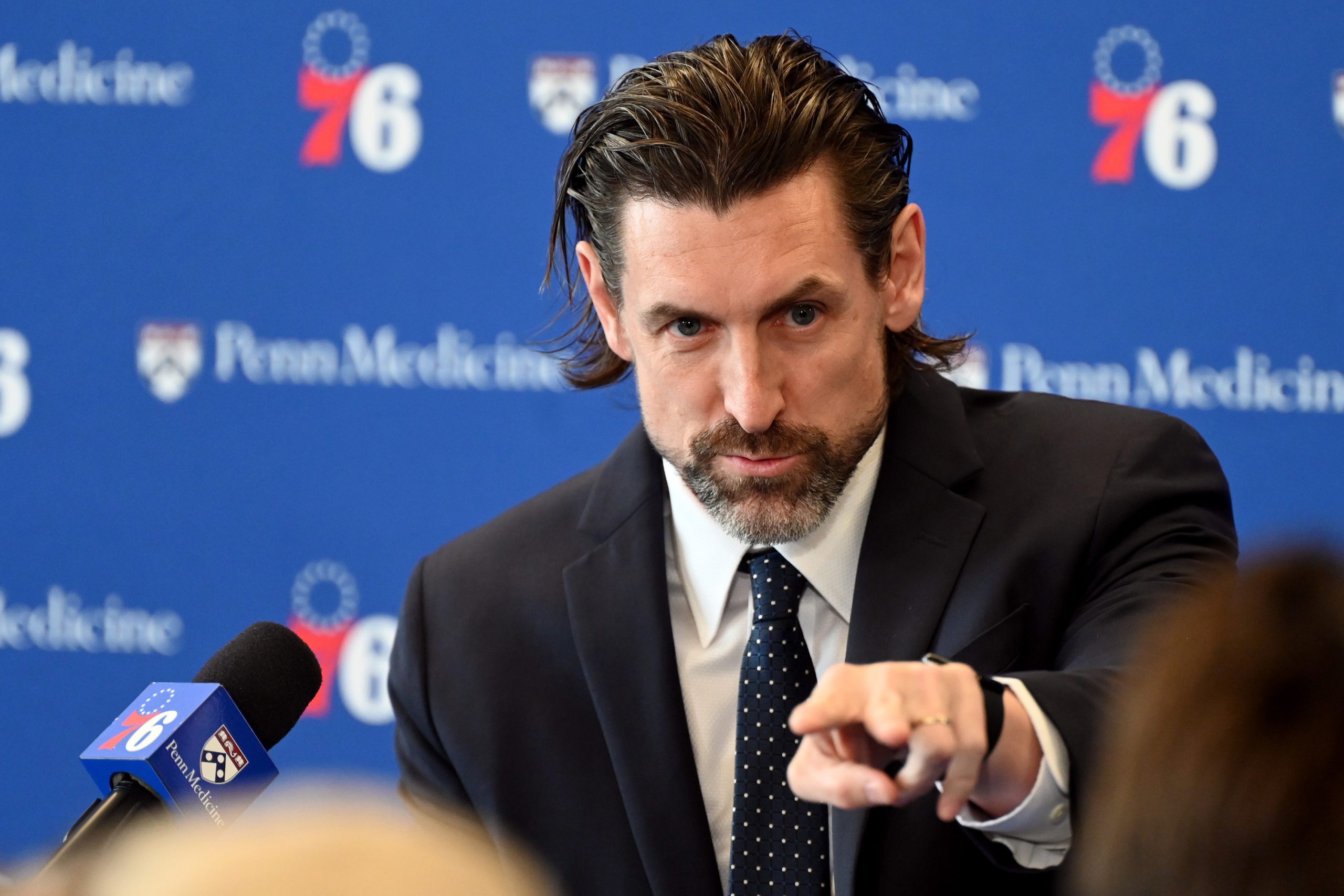
In today’s newsletter, now that we’ve caught our breath from the news that LeBron James would be joining the Sixers, we’re looking at 76ers president Mike Gansey’s first offseason as a whole.
Also, Franklin Square is celebrating 20 years since its refurbishment from a dusty and dim outpost to a destination for family-friendly fun.
The 76ers became the talk of the sports world Friday, when LeBron James announced he would sign with the team to finish out his illustrious NBA career.
Some final roster tinkering still must occur before training camp begins in late September. But James’ addition means the bulk of business is finished. In short, it has been a heck of a first offseason for new president of basketball operations Mike Gansey.
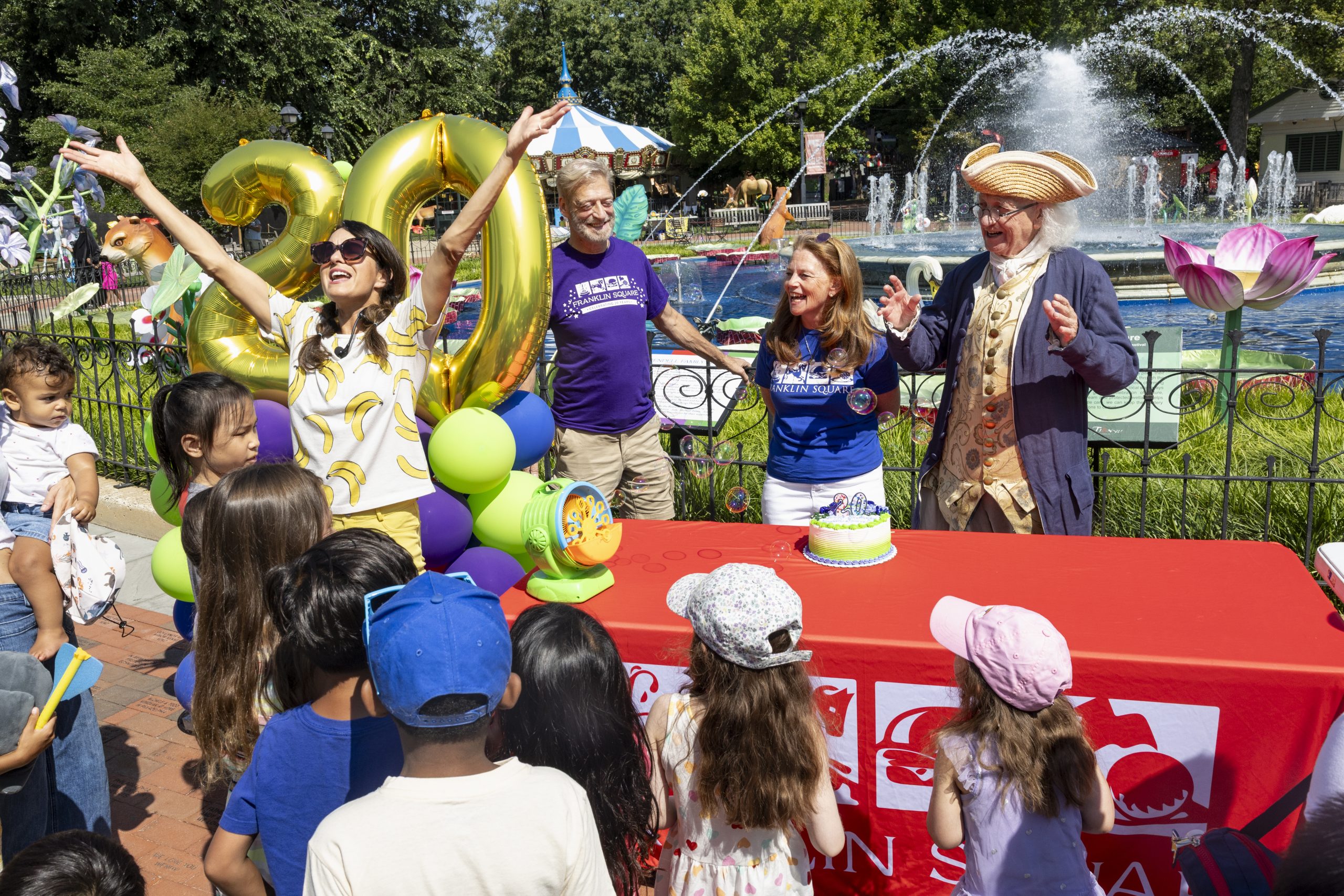
Franklin Square, the once-forgotten green space at Sixth and Race Streets, celebrated a milestone on Saturday: This July marks 20 years since the square’s dramatic revitalization, which transformed it from a dusty and dim outpost to a destination for family-friendly fun.
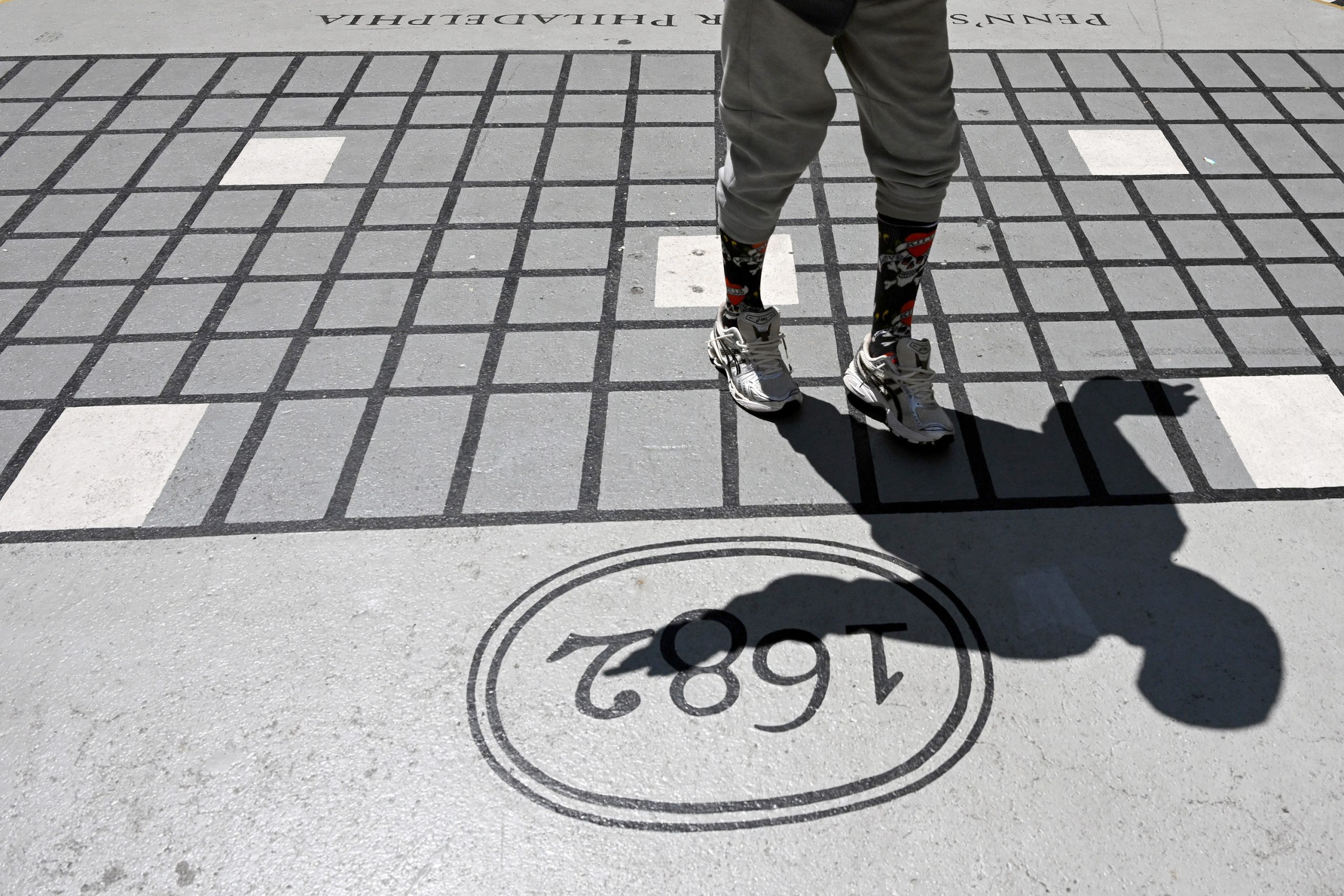
Franklin Square (originally North East Publick Square and later renamed in honor of Benjamin Franklin) dates back to 1682, when William Penn designed Philadelphia. Penn anchored the city around a quintet of parks.
A Penn professor thought she’d sell 1,000 copies of her Odyssey translation. She sold more than a million this year alone, thanks to Christopher Nolan.
Kentavious Caldwell-Pope is reportedly negotiating with the Memphis Grizzlies for a buyout to join the Sixers and team up with LeBron James.
Two Sweet Boutique, known for its viral Kelce Klusters, is busier than ever after a move to Washington Township.
Five people in a South Philly basement studio are making a whole lot of indie music.
The publisher of a satirical quarterly is determined to bring the laughs to South Philly.
This week in history
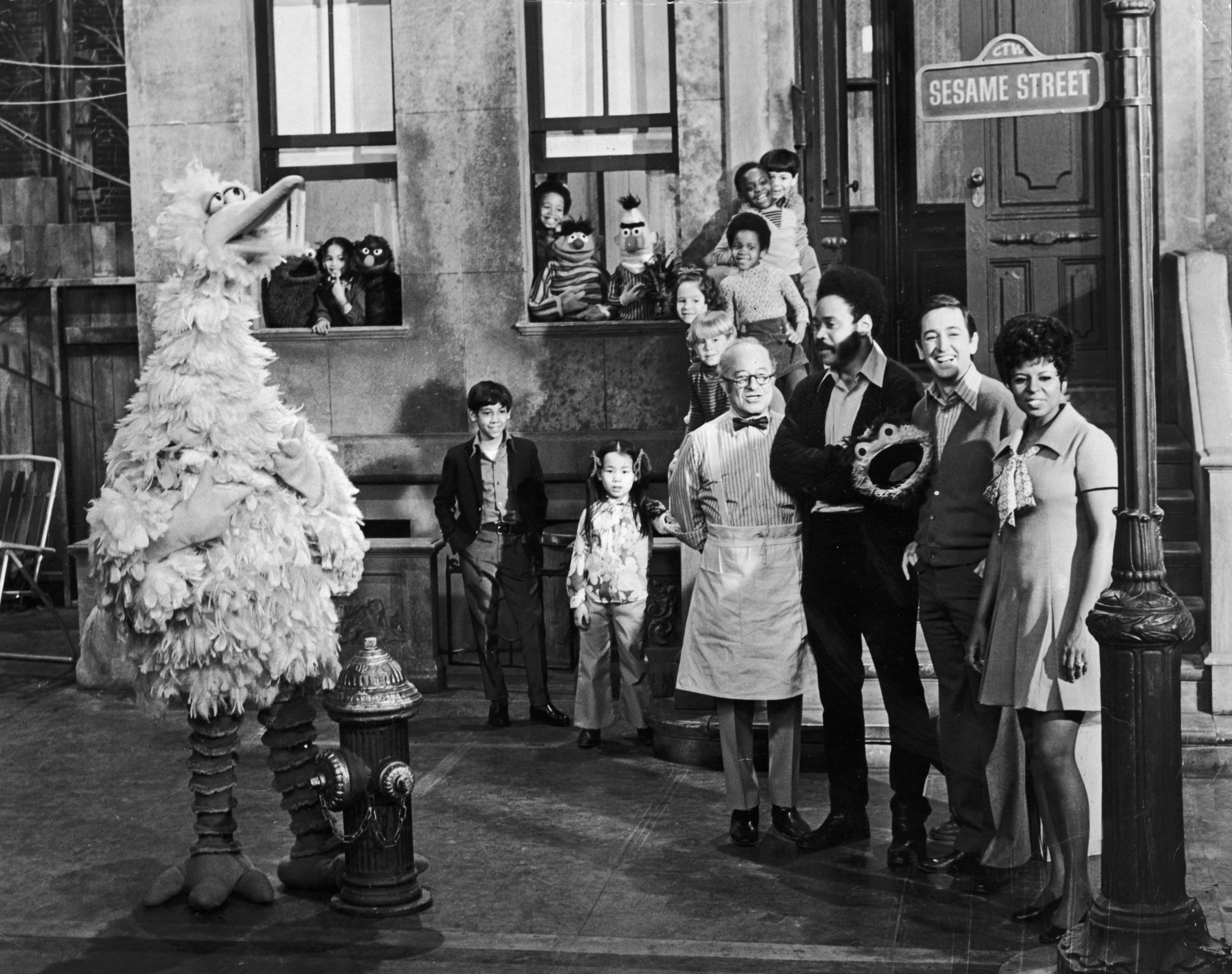
🎤 Now I’m passing the mic to Tommy Rowan with a look back at the first episodes of “Sesame Street,’ which were tested on Philly preschoolers in the 1960s.
Sesame Street may be set in New York, but the iconic children’s show started in Philadelphia.
Over five days in July 1969, producers of Sesame Street broadcast five hour-long test-pilot episodes on WHYY-TV’S UHF Channel 35 on televisions spread across 70 homes throughout Philly.
The program, which can trace its roots to the mid-20th-century Civil Rights Movement, would go on to delight, instruct, and entertain, thanks to the worldview and genius of Jim Henson.
Cheers to David Laderman, who correctly guessed Saturday’s answer: SHERMAN BROTHERS. Philadelphia shoe retailer Sherman Brothers is moving to the Main Line after 73 years in Center City.
Photo of the day
The City Hall Courtyard’s rendering of William Penn’s grid plan for his 1,200-acre “Greene Countrie Towne” between the Delaware River and the Schuylkill.
Photographer Tom Gralish focuses his Scene Through the Lens photo essay on the beauty of walkable Philadelphia. “Center City is compact and easy to explore on foot,” Gralish writes, “with many stores, restaurants, museums, attractions, and parks all within a short walk.”
Gralish is familiar with walks around Philly. In his early days at The Inquirer, Gralish spent weeks walking our streets, leading to this Pulitzer Prize-winning photo essay about how unhoused men survive.
🎶 Today’s song: We’re enjoying “Here They Come” (because of course we are). We like this old-school video someone made years ago for a class.
👋🏽 Enjoy your Sunday basking in the sun, the glow of the LeBron news, or whatever makes you happy.
By submitting your written, visual, and/or audio contributions, you agree to The Inquirer’s Terms of Use, including the grant of rights in Section 10.
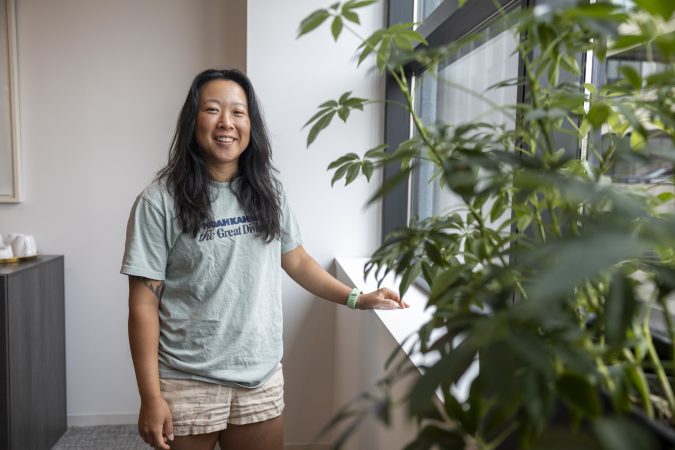
Lilly Chen, 30, wants people to stop thinking local government software “sucks.”
The cofounder and CEO of Philadelphia-basedFSH Technologies once worked at Facebook writing software that trains AI models, lived in a monastery as a teen, and is now on a mission to make local government technology more efficient.
In the last two years, her company has raised $5.5 million from venture capital, and secured a contract with the city’s Department of Commerce.
“We’re so gung ho about local government, which is like a weird thing to say, but it’s true,” said Chen.
The business just moved into a new office at 2400 Market St., where Aramark is headquartered, and opened a smaller outpost in New York City this month. Chen hopes to hire 40 workers by early 2027, adding to the current 12-person staff, to work on contracts the company has alreadysecured. She’s looking for software engineers and client strategists — positions that can come with a starting salary of $150,000 at FSH Technologies, as well as a signing bonus and equity, she said.
The company is “winning government contracts at a clip,” said Chen, who was born in New Jersey and went to college in Colorado. She was working in San Francisco when the pandemic started, and decided to move closer to her parents in Media.
She declined to share how much the company brought in last year in revenue but says “it’s in the millions.”
The Inquirer interviewed Chen on a hot July day over the phone while she enjoyed an ice cream from 1-900-ICE-CREAM. The following conversation has been edited for clarity and brevity.
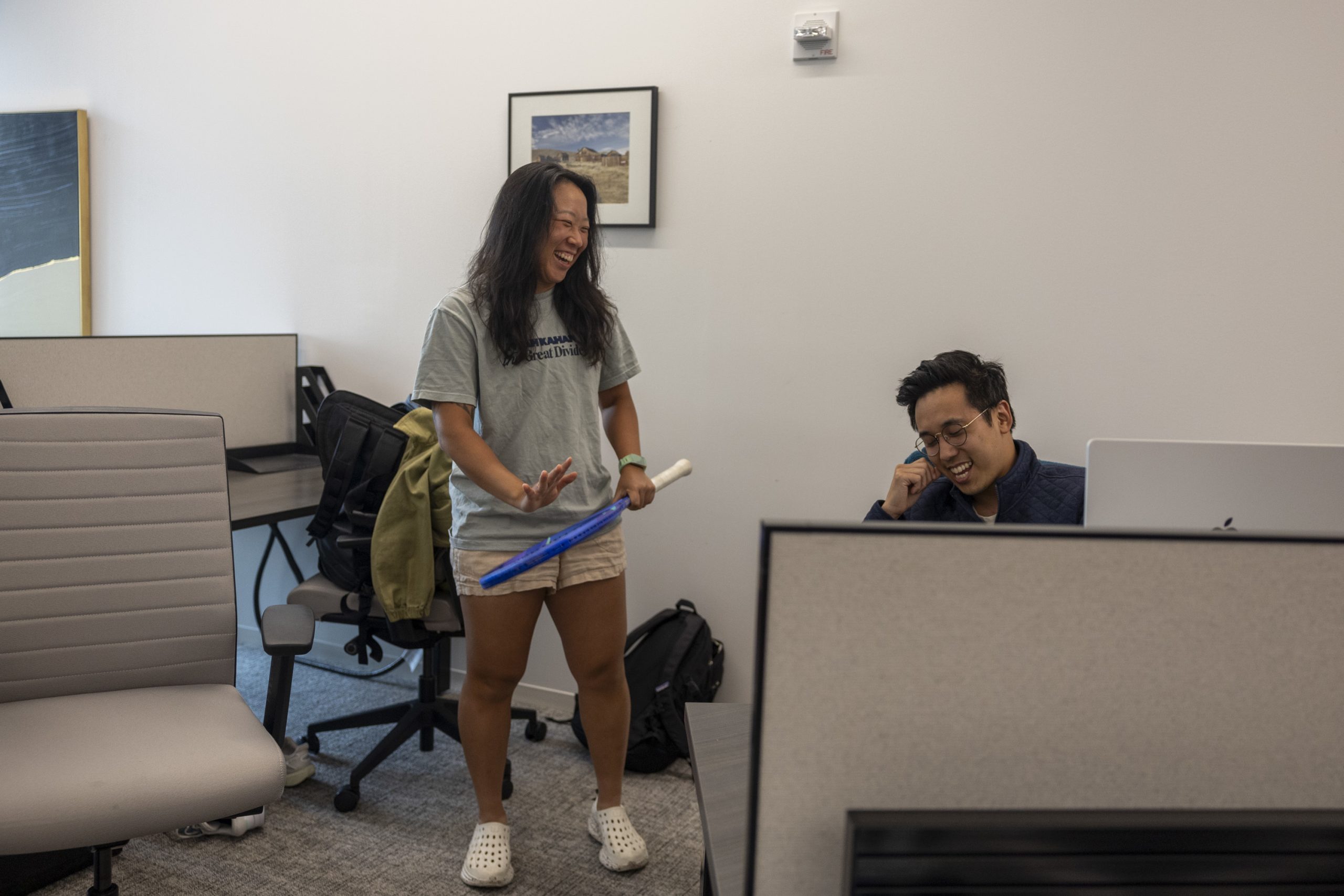
FSH Technologies cofounder Lilly Chen chats with COO Jason Chen in their Philadelphia office.Tyger Williams / Staff Photographer
Why did you start this company, FSH Technologies?
I used to work at Meta… when I worked there it was called Facebook. I was just very disenchanted with the apathetic nature of tech bros and the real-world impact that technology has on regular people.
FSH technologies is focused on creating software for local government. Why this niche?
I was [thinking about] what is a net positive on society that I can feel very good about, that I think technology is a good solution for. I landed on local government because it’s the one thing that universally everybody in America has to interface with, and the technology is so outdated. If you’ve tried to pay a parking ticket, get a permit, just try to navigate your local municipality, it’s so hard, it’s so complicated. Usually the software doesn’t even exist. It could be a manual paper thing.
In the last year there was a lot of talk in the Donald Trump administration of making the federal government more efficient. You’re talking about efficiency at the local government level. Did any of that narrative impact you?
There was actually no technology involved in the DOGE effort. When you drive real efficiency in government, it’s not rip and burn things. It’s actually getting into the weeds to understand the current process, who’s doing it, how they’re doing it, why they’re doing it, and then iteratively improving and wherever possible digitizing the relative components of that.
It’s not at all just being like, “Let’s just fire these people and see what happens.”
What about the name FSH Technologies? Where does that come from?
I used to be a Buddhist monk. I dropped out of high school when I was 16, and I moved to China and I lived in a monastery….We had a pond where we kept fish, and [my sensei] … would describe to me: “You are the pond, not the fish.”
If you can kind of separate yourself from the immediate feelings and see things as a bigger picture, as a system, you actually have a much more cohesive understanding and view of the problem.
You were a monk?
I was a real troublemaker in high school. I actually ended up getting very sick — I had an autoimmune disease … I was missing a lot of class, I was kind of misbehaving. My mom at one point threw her hands up in the air and was like, “We’re now Buddhists, we are moving to China, we’re going to live in a monastery, we’re shaving our heads.”
Can you tell me more about your work for the Philadelphia Department of Commerce?
We build software for the entire Department of Commerce, actually.
We standardized and unified all their forms into one platform, and then we created business profiles so that businesses would have to input, for example, their EIN number…once, and it’s there. If you put in your revenue, it will show you what you qualify for.
Prior, if you think about a Google form and you fill it out, you don’t actually know if you qualify, because anybody can open the form, anybody can submit it. It creates a lot of bureaucracy on both ends. You, as the business, don’t know if it was worth your time to fill it out, so you just fill it out – or you don’t fill it out. You, as the city, don’t know if this business is eligible, so you just spend time reviewing stuff for people who don’t qualify. Everything becomes slower and like sludge because the interface is really bad for actually streamlining the process.
The city spends so much less time reviewing applications now because they only get access to the ones that are actually qualified.
How are you managing the company’s work with your current staff of 12?
We have actually won a ton of contracts that are coming down the pipeline, but we haven’t started them yet. We have time to staff up, which is what we’re trying to do. If I can hire 50 people, I would.
Why can’t you?
What we do requires two things. One, is a deep passion and empathy for communities, civil servants, public good. You really need to care about the details because if you don’t care about them, you’re going to let people fall through the cracks.
That’s actually kind of hard to find because … people hear government software and they think it’s boring. They don’t necessarily realize how much impact you can have if you care deeply about this boring thing.
The second thing is software skill — the craft of building software that just works is hard.
The Venn diagram of skill and care is hard because a lot of people who are highly, highly skilled in technology end up at these AI frontier labs, which are paying a million dollars in salary.
What do you want the company to look like in five years? What’s the goal?
The goal is being able to have people no longer think local government software sucks.
Three major trends have dominated recent cultural discourse: charms, food and fashion collaborations, and mini totes. The tote from Wawa and Lands’ End harnesses all three into one sandwich-sized bag. And I’m obsessed with it.
Labubu bag charms took the world by storm in 2025, inspiring almost everyone with a handbag to personalize theirs with dangling dolls. The post-Labubu era isn’t so much a reaction to the somewhat cumbersome creatures dangling from key chains, but an evolution into a fixation with different charms, like a bracelet proclaiming one’s devotion to the World Cup, the cities in which games were played, and one’s willingness to wait for many hours in line to procure one from a Bank of America sponsor tent.
Lands’ End was paying attention to all three trends, leading to the Wawa and Lands’ End limited-edition tote. It debuted Wednesday on both the Lands’ End website, where it immediately sold out, and in select Wawa stores in New Jersey (which allegedly still have them in stock). This is an aggression toward the beautiful city of Philadelphia, but I digress.
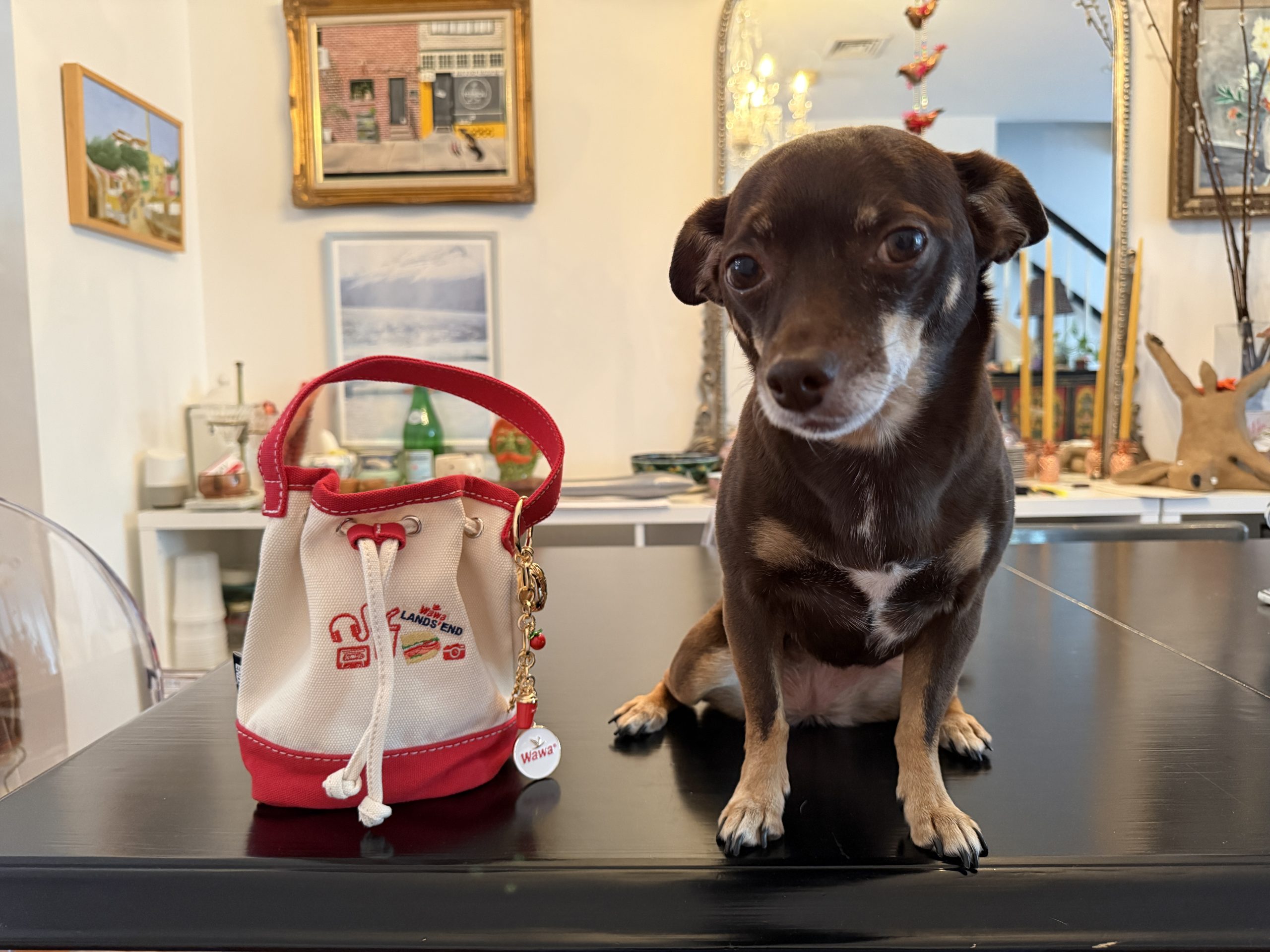
It’s called the Shorti® Tote. It costs $39.95 for the tote itself and a matching bag charm that features an enamel hoagie, tomato, Wawa coffee cup, and “East Coast” charm. The collaboration also includes a Wawa branded T-shirt from Lands’ End ($44.95) that comes wrapped up like a hoagie (of course). Wawa provided me with a sample bag for this review.
The collaboration celebrates the Jersey Shore and encourages you to take a Wawa hoagie to the beach, where it will be duly protected from the elements by the thick, high-quality cotton canvas of a dedicated bucket-shaped tote bag. As someone who does not ever go to the Jersey Shore, I found that the tote has numerous other merits: It’s perfectly sized for a small water bottle, my wallet, keys, flashlight (with which I snap food photos because I am a food writer), and other bits of detritus.
Unlike the Trader Joe’s tote, it has a drawstring opening that can keep all your belongings firmly inside. It’s entirely made of canvas (worthwhile to note because canvas totes with plastic handles are the absolute worst), with metal grommets to secure the drawstring. The embroidered graphic collage of cassette tape, wired headphones, a Shorti, analog camera, cup with straw, feels pretty ‘90s-coded (also so trendy right now), and the Wawa and Lands’ End logos are small and demure. True to its name, it also fits two hoagies very nicely.
It’s comfortable to hold on my forearm, and I have found that it’s also the perfect BYOB bag as it holds all the contents of my purse along with a bottle of wine. The only drawback I see is that it does not fit my Chihuahua, Coconut, whom I also generally like to throw into a tote bag.
The Shorti® Tote next to Coconut the Chihuahua, who does not fit inside the mini tote.Kiki Aranita / Staff /
But perhaps the greatest part of possessing this tote is the envy I have inspired.
“When you’re done reviewing it and need to give it to someone, I am available,” said my colleague Beatrice Forman as I slowly backed away from her.
Get your own.
Wawas that received totes are in Sea Isle City, Stone Harbor, Avalon, Somers Point, Cape May, Ocean View, Brigantine, Ship Bottom, Wildwood, North Wildwood, Ventnor, Marmora, Dorchester, Ocean City, Manasquan, Rio Grande, Normandy Beach, Margate, Villas, Long Beach Township, Barnegat, and Neptune.
Editor’s note: This article has been updated to correct the spelling of Lands’ End.
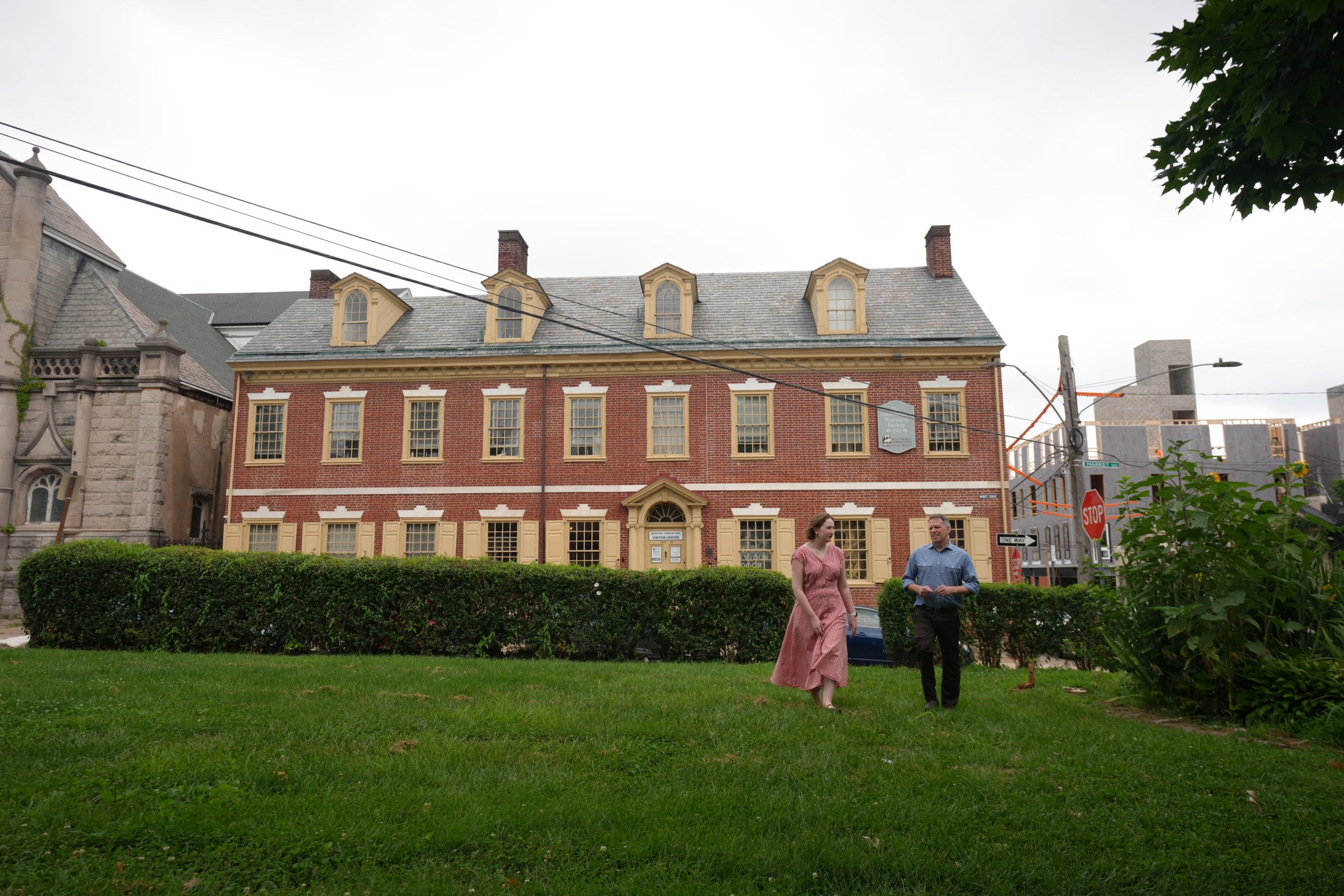
A new visitor center aims to root Germantown more firmly in its own history, showcasing it as the site of a major Revolutionary War battle and a place with important ties to religious freedom, abolition, and the Civil Rights Movement.
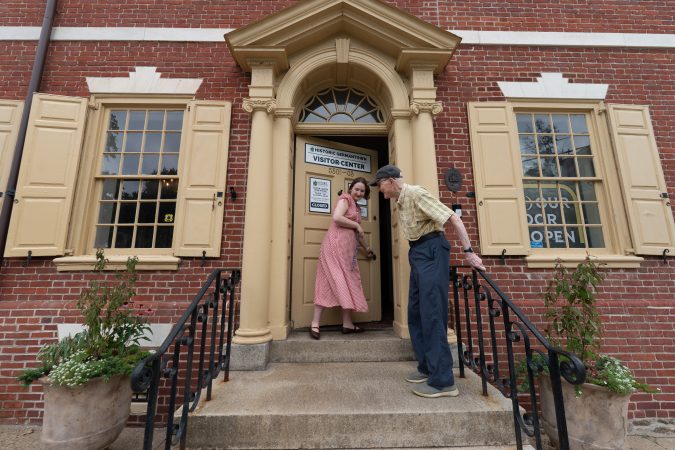
The center opened in a two-story redbrick building at 5501 Germantown Ave. earlier this month. Owned by the Germantown Historical Society, it is intended to serve as a starting point for visitors and residents alike.
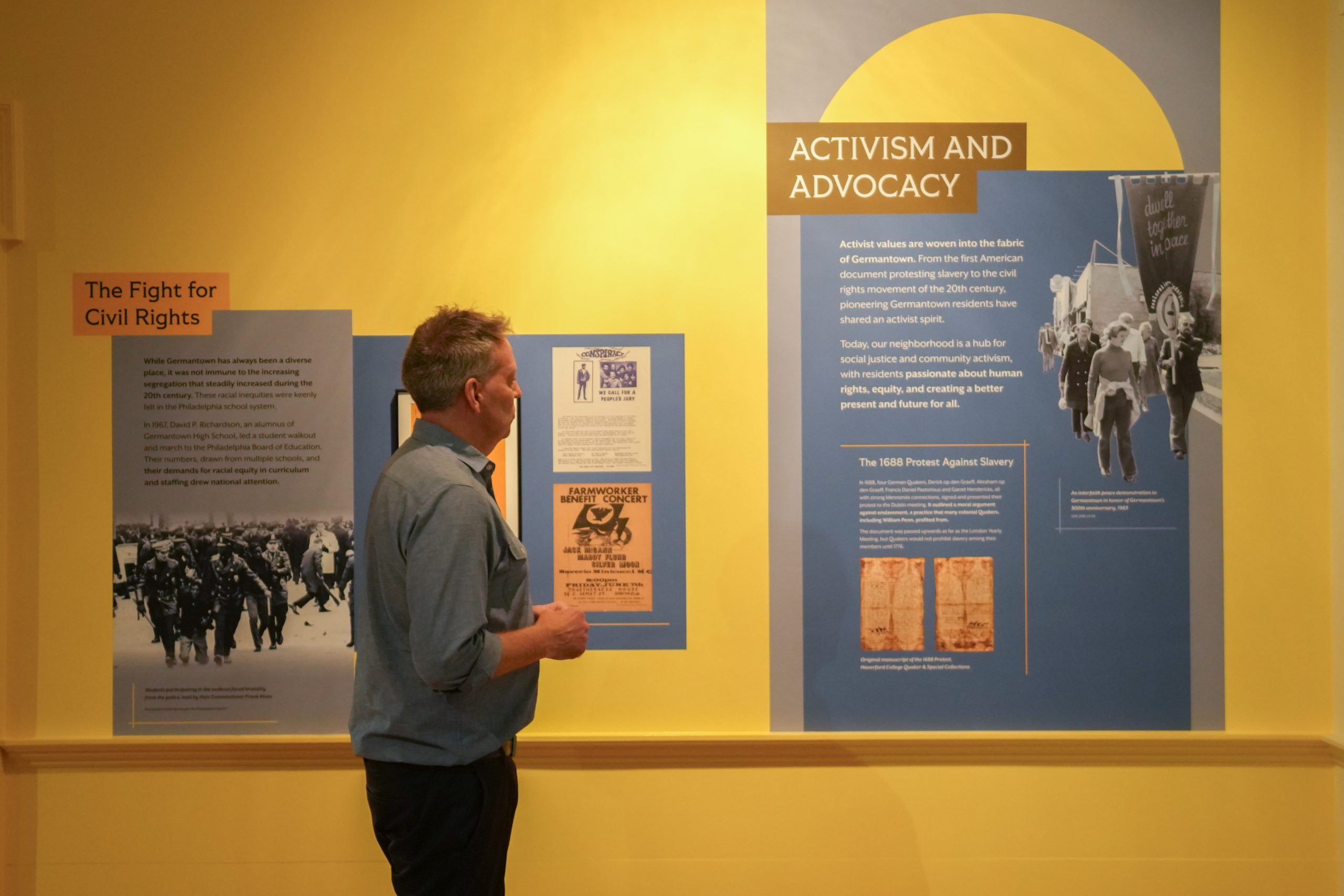
The exhibitions were curated using a process of community conversations in which neighborhood residentsshared what was important to them, said curatorKaila Temple. The main exhibit highlights major themes in Germantown’s history. Sections like “Activism and Advocacy” focus not only on the 1688 Germantown Quaker Petition Against Slavery, but also on a student protest in 1967 that was met with violent police opposition.
Tuomi Forrest, executive director at the Germantown Historical, in the new exhibit.Jessica Griffin / Staff Photographer
German immigrants first settled in Germantown in the late 16th century, fleeing Europe in search of religious freedom. Germantown played a central role in the American Revolution and later became the site of strong abolitionist advocacy, and robust student youth activism during the Civil Rights Movement.
The visitor center hopes to both connect residents of Germantown with their local history and draw visitors from elsewhere. Visitors will be directed to visit the many historical sights in the area with maps available for walking tours. Director Tuomi Forrest hopes the visitor center can be a resource for neighbors and bring in more visitors from outside Philadelphia, citing those as “twin” goals.
The visitor center received about 200 people the first week it opened and hopes for more. It recently collaborated with Neighborhood Jawnts Tour Series, a Philadelphia-based tourism effort, to bring in visitors from around the city.
It has also worked closely with neighbors who want to learn more about their own homes and their ancestors. One neighbor found a wedding invitation from 1912 during home renovations and wrote to the center to ask for documents that would shine more light on who used to live in the home; another wanted more information of how his mid-1800s home came to be an institution for orphans; others ask to come to the center to do research on their ancestors.
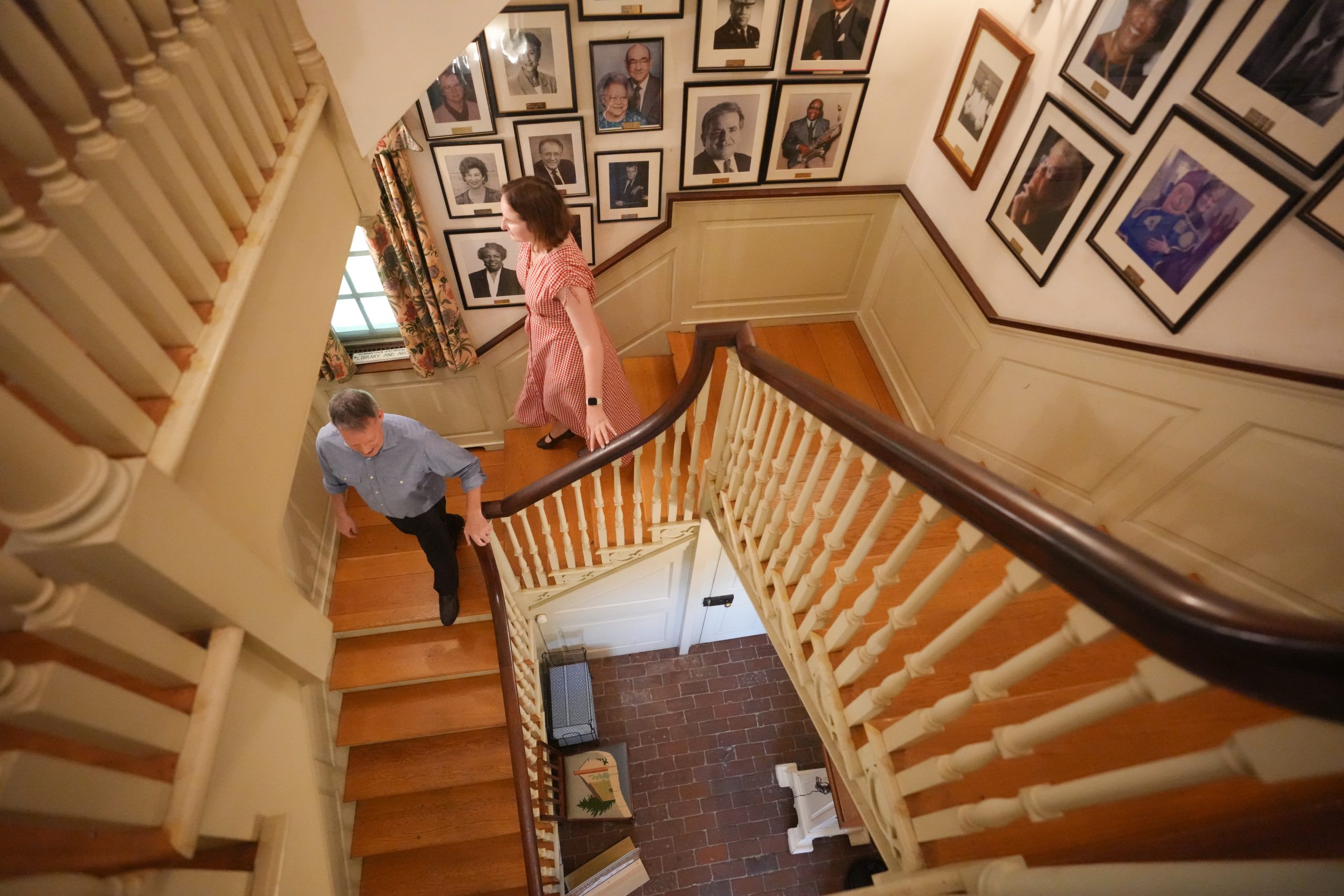
Tuomi Forrest, executive director, and Kaila Temple, curator, at the Germantown Historical Society building.Jessica Griffin / Staff Photographer
The square where the visitor center sits dates to 1703. George Washington lived across the street from it in 1793, and when Philadelphians wanted the federal government to stay locally, they touted the square as an asset.
The Colonial Revival building where the visitor center is now housed was constructed in the 1790s and restored around the 1940s and ’50s.
Visual markers of the Colonial Revival style, a result of the 1876 Centennial Exhibition’s reawakening of Americans’ desire to connect architecturally to their colonial past, still dominate the historical section of Germantown. Along Germantown Avenue, gray stone churches stand beside pale yellow, redbrick, and coral-colored houses.
But the visual character of the historic section of Germantown that houses the new center is not uniform, especially as new developments begin to populate empty lots.
A neighborhood ‘at an upswing’
As the local visitor center leans into Germantown’s past, some nearby residents and businesses — many of whom were not aware of the new center — said they were concerned with the direction of their neighborhood’s future.
Van Brooks, operations manager of a coffee shop kitty-corner from the visitor center, worries about development just down the street — afour-story apartment building that is visiblefrom the window of a visitor center gallery. “A lot of folks in this neighborhood don’t want this space to exist here,” he said. He worries the modern, flat apartment complex will begin to gentrify the neighborhood.
Nicholas Thaete, who has lived in Germantown for 46 years and runs an antique repair shop, says the neighborhood has gone through different periods. “It goes up and down. Right now, it is at an upswing,” he said.
And yet, as Debbie Curry, who works in a nearby fabric store, remembered, Germantown used to have more commercial activity: “There was a time when there were a lot of department stores. … You didn’t have to go to Center City to do your shopping.” Curry, 66, grew up in Germantown but moved from the neighborhood when she married. She is happy something is finally being done about empty lots.
“A lot of people thought for years that Germantown would see new development, but now it has,” Forrest said, standing in front of the visitor center.
Kaila Temple, curator of Collections at the Germantown Historical Society and Tuomi Forrest, executive director at GHS, outside the new Historic Germantown Visitor Center.Jessica Griffin / Staff Photographer
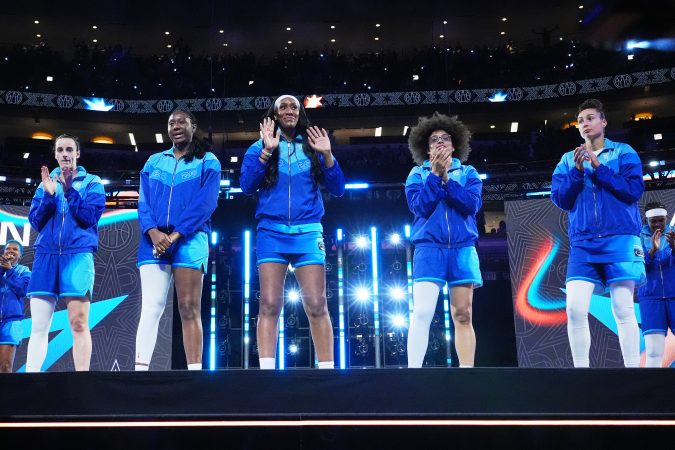
Some of the world’s best women’s basketball players were in Chicago for the WNBA All-Star Game, and, as usual, the fashion didn’t disappoint.
The WNBA orange carpet on Friday had heads turning to get a glimpse at this year’s All-Stars ahead of Saturday’s game. From top rookies like Azzi Fudd to superstars like Paige Bueckers, the All-Stars pulled out all the stops.
Playing for “Team Spoon” in the All-Star Game, the Las Vegas Aces center stunned on the orange carpet in one of the most formal looks of the evening. Alongside a bedazzled basketball, the sheer all black attire was chic, cool, and confident — all attributes of the four-time WNBA MVP, eight-time All-Star, and three-time champ with the Aces, including the 2025 crown.
Ahead of the Shooting Stars competition on Friday, Johnson arrived in a matching denim set with faux sticky notes with affirmations like “be intentional” and “out work your excuses.”
The rapper and Seattle Storm rookie said in an interview on the orange carpet that they were for “some positive energy and big four energy.”
Fudd, who was this year’s first overall pick in the WNBA draft, stepped onto the orange carpet with a cool street style pairing a black leather bralette and distressed jeans with a casual gray blazer. With a Coach Tabby bag to match, the Dallas Wings rookie was fitted to make history when she became the first rookie to win Friday night’s three-point contest, scoring 30 out of 40 possible points.
Fudd’s teammate, the second-year fan favorite Bueckers pulled out the stops with another iconic carpet look for her second WNBA All-Star Game.
Donning an ever-chic slicked-back bun and shades, the guard wore a sleeveless light blue button-up with a tan tie and baggy trousers, with crisp white Air Force 1s completing the basketball star’s ensemble.
The All-Star Game had some local flair, too. North Philly native Kahleah Copper pulled up to the Windy City — her WNBA home for seven seasons — in a silver-studded suit. The five-time All-Star was one of multiple players wearing the street style brand GRÉVYI, with the logo etched onto the cuff.
After starring at Prep Charter, Copper took her talents to Rutgers and the W, where she’s played for the Washington Mystics, Sky, and now the Phoenix Mercury.
In perhaps the most adorable look of the night, the New York Liberty star stepped out on the carpet with her whole family in matching fashion.
Her wife, Marta Xargay Casademont, a retired Spanish professional basketball player who also spent two seasons with the Mercury, and two children sported black and blue ensembles. Both women wore deep-cut blazers, and Stewart sported matching shorts and pearls.
The award for most colorful and sparkly on the orange carpet goes to Ogwumike. The Los Angeles Sparks forward dazzled in a green and purple asymmetrical dress, a cascade of fringe highlighting the ensemble that was complete with simple heels and diamond studs.
Howard had one of the most impactful looks of the night, decked out in purple in support of lupus awareness, a tribute to a close friend. The Atlanta Dream guard wore a custom suit with fine embroidery. Both legs were inscribed with a lilac “Think Within,” matching with beaded basketball hoops on each side of the chest. An autism awareness logo stood out on the back tying together Howard’s motivations before she headed out onto the court.
Ahead of her third All-Star Game, the Atlanta Dream star donned baby pink from head to toe. Complete with a feathered shawl trailing right down her pink platform heels, Reese was surrounded by an air of confidence entering the game, in which she was a forward for Team Coop.
Of course, one orange carpet guest who stood out more than the rest.
Ellie, the New York Liberty mascot and social media sensation, strutted on the orange carpet wearing a custom dress with her name on the side. Her nails and hair matched in the Liberty’s green, and the outfit was tied together with hoops and a New York-themed Coach Tabby bag. The best-dressed elephant around, Ellie was giving the pros a run for their money.
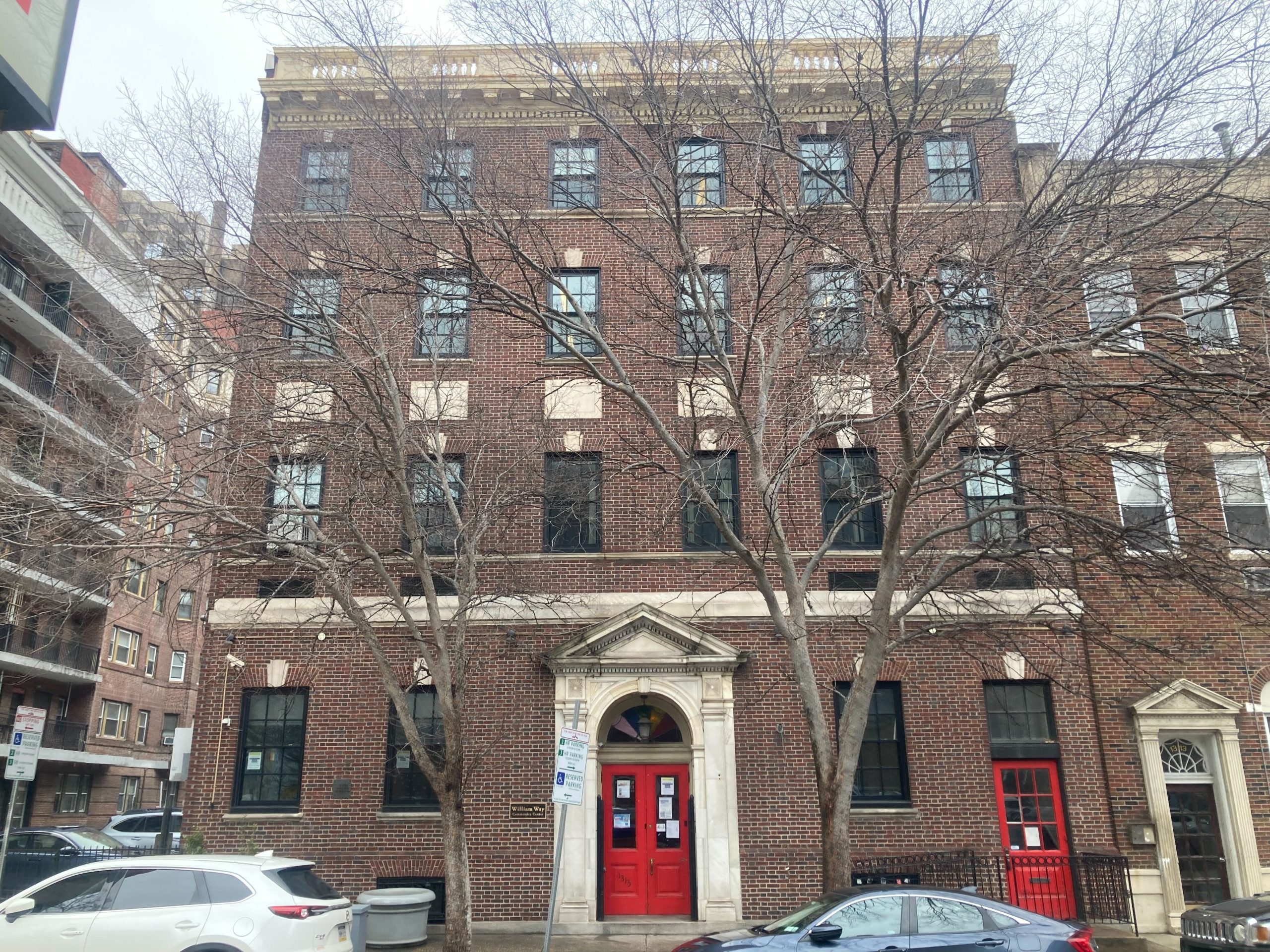
The first time people openly referred to the pocket of Center City between Jefferson University and Broad Street as the “Gayborhood” was 1995. Within a year, the William Way LGBT CommunityCenter made it official by purchasing a stately, Georgian-style clubhouse at Juniper and Spruce. The building has been a refuge for Philadelphia’s LGBTQ+ community ever since.
Sadly, that groundbreaking haven is now closed. It was shuttered in December to address maintenance issues, including an outbreak of black mold. At the time, the board said it was gearing up for a major renovation and would temporarily relocate its core services to St. Luke’s church on 13th Street.
Just three months later,William Way’s boardabruptly changed course and revealed the center would be demolished to build subsidized housing aimed at LGBTQ+ seniors.
The announcement came not from William Way’s board, but from Mark Segal, a longtime activist who founded the Philadelphia Gay News and oversees a nonprofit that has built affordable housing, the dmhFUND. The timing was noteworthy: The plan was made public a few days after a Common Pleas Court judge overturned the neighborhood’s historic district protections.
Segal’s announcement stunned William Way regulars, including many former board members. Sure, COVID-19 had scrambled the organization’s finances, as it did for many Philadelphia nonprofits. Revenue and donor gifts fell precipitously. The center laid off nearly a third of its staff in 2024, and its longtime director, Chris Bartlett, retired soon after.
The building was known to be in poor condition. But total demolition? Nothing suggested that the building was unsalvageable, including a major facilities assessment by Metcalfe Architecture& Design in late 2024.
While there is no doubt that the building requires extensive renovations, demolition is the wrong solution. It would rob all of Philadelphia — not just its LGBTQ+ community — of a major cultural touchstone.
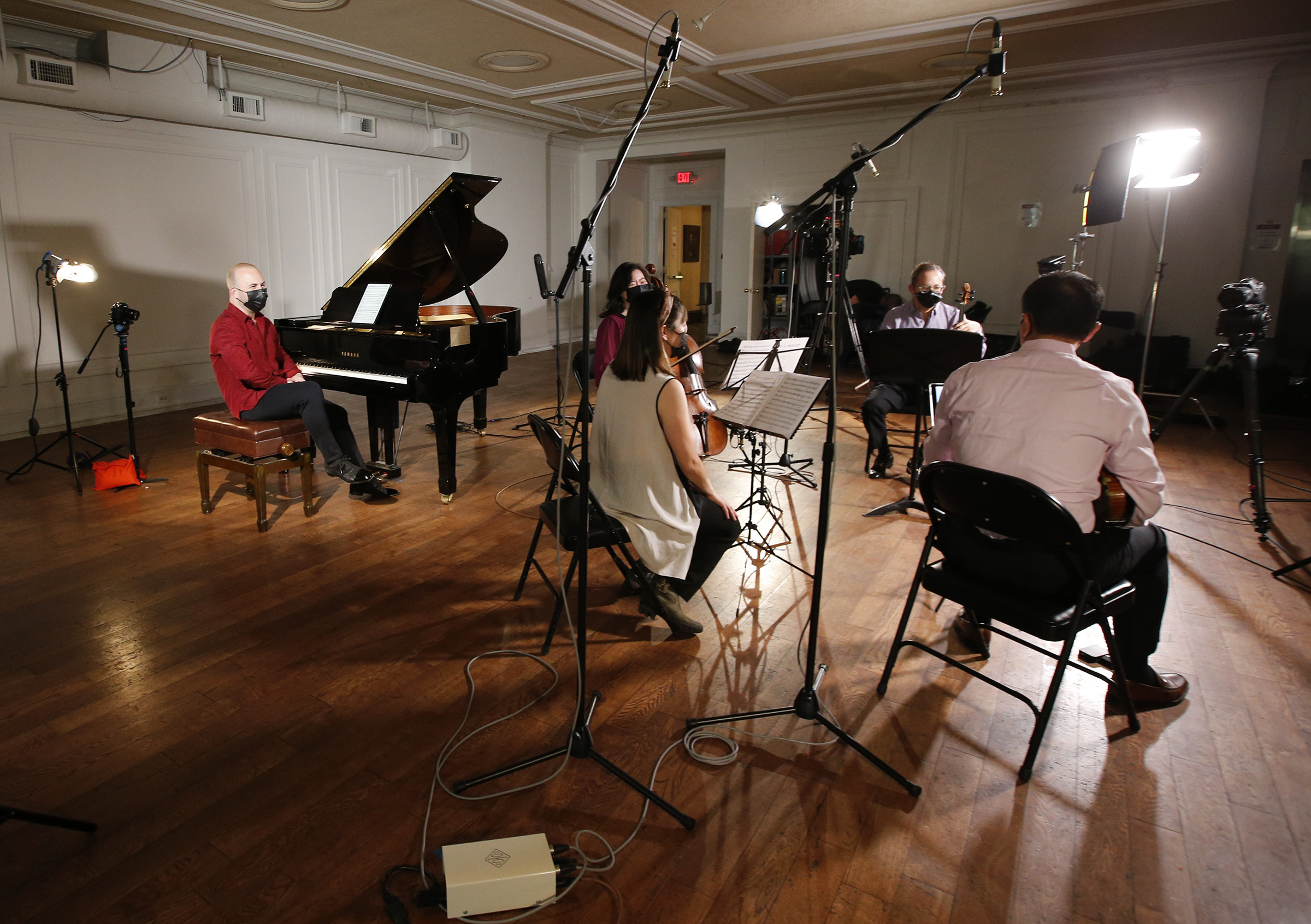
Philadelphia Orchestra music director Yannick Nézet-Séguin filmed a series called “Our City, Your Orchestra” in the William Way center ballroom in 2021, along with violist Pierre Tourville and other musicians.YONG KIM / Staff Photographer
A civil rights landmark
Although the William Way center has called 1315 Spruce St. home for only three decades, its presence has transformed the 19th-century building — originally a private club for engineers — into a civil rights landmark.
This is where Philadelphia’s LGBTQ+ community fought to address the AIDS crisis, advance marriage equality, and be accepted into the mainstream of American life. It’s where they attended cabarets in the elegant ballroom and art exhibits in the wood-trimmed parlor. The building’s visibility makes it the architectural equivalent of being out.
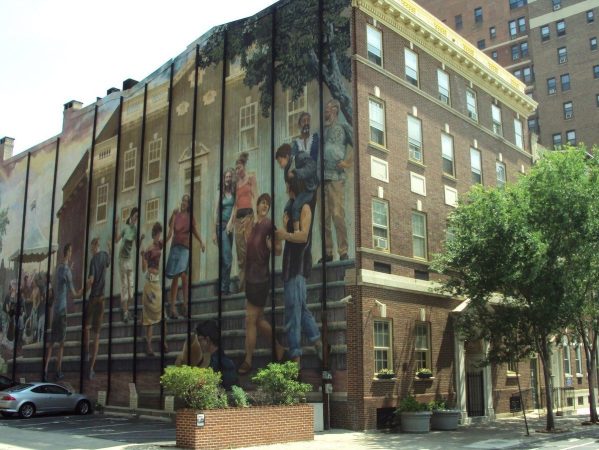
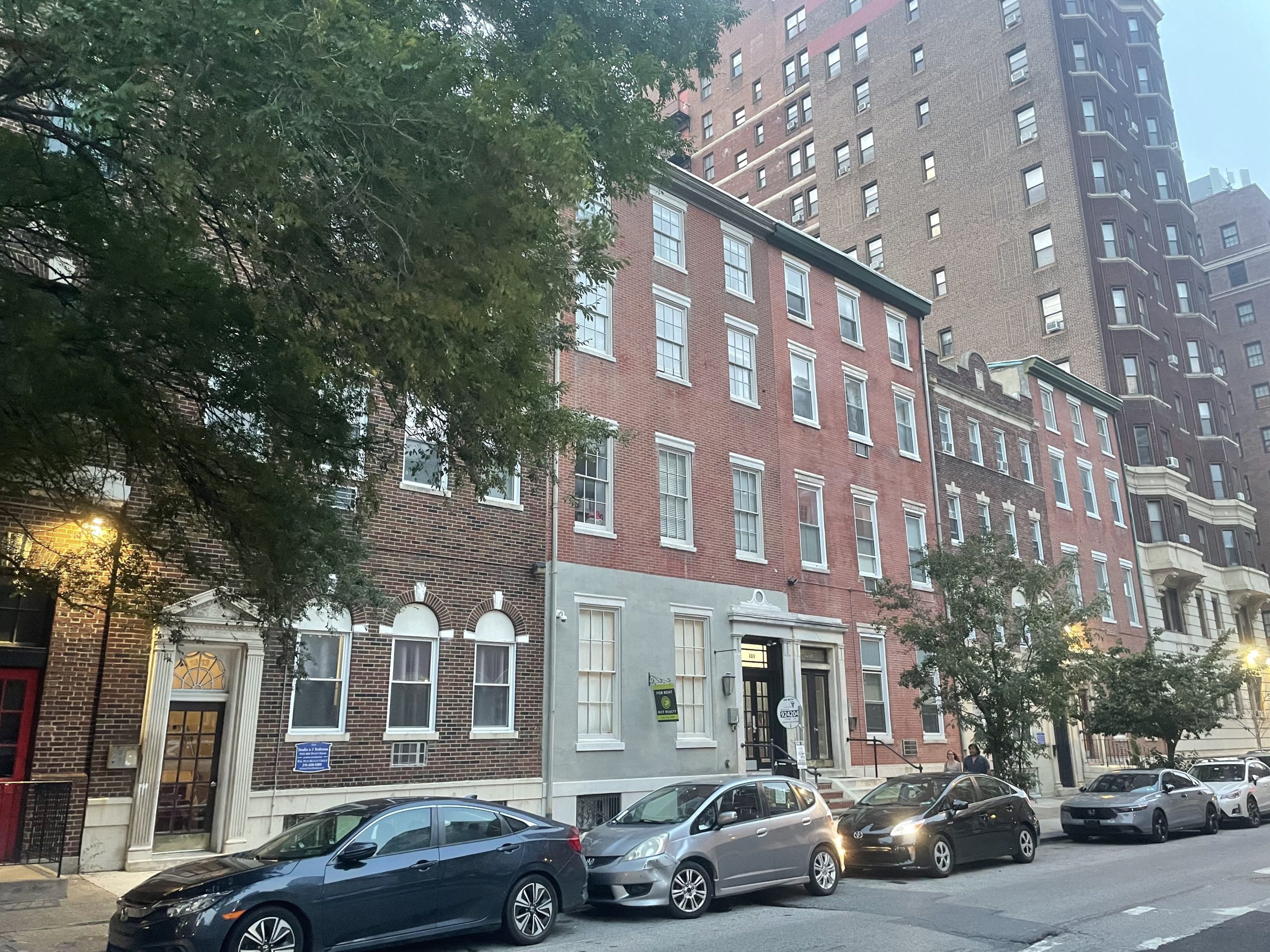
Beyond losing a place with profound cultural resonance, the demolition would break up the historic 1300 block of Spruce Street, a stretch that is still remarkably intact despite the presence of two unsightly parking lots at the Juniper Street corners.
Although the block’s large townhouses, which were built for lawyers and doctors in the 1840s, have been divided into apartments, the row retains most of its original architectural features and reads as a single ensemble. The William Way building, which was created in 1929 by fusing two townhouses behind a single facade, was designed to blend in with its neighbors.
No one would consider demolishing other community anchors, such as Christ Churchin Old City, Mother Bethel A.M.E. Churchin Center City, Rodeph Shalom synagoguein Spring Garden. So why is this one being written off so casually?
The 1300 block of Spruce Street, where the William Way Center is located, remains a largely intact architectural ensemble. The townhouses date from the 1840s and were originally private homes occupied by doctors and lawyers.Inga Saffron
I couldn’t get any of William Way’s board members or employees to answer that question. A communications consultant did provide written responses to several queries, but eventually directed me to Segal.
He told me that the financially strapped nonprofit had reached out to him because of his development experience, as well as his long association with the center. The second-floor ballroom is named in his honor.
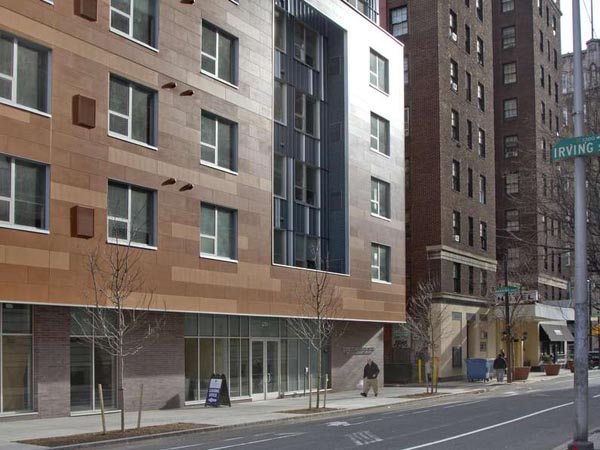
Segal was also the guiding force behind the John C. Anderson Apartments on 13th Street, the first subsidized housing in the United States marketed to low-income LGBTQ+ seniors. After the building opened to raves in 2014, Segal began searching for another Gayborhood site for a second affordable project. But land prices in the desirable Washington Square West neighborhood were just too high.
Completed in 2014, the John C. Anderson apartments at 13th and Spruce Streets were the first subsidized housing in the U.S. marketed to low-income LGBTQ+ seniors.
A new plan for William Way
William Way’s troubles provided a solution.
Segal told the board he could replace its 180-year-old clubhouse with a mid-rise building that would include both subsidized apartments and a new home for William Way. Theboard chairs, Dave Huting and Laura Ryan, readily accepted the deal and signed a letter of intent with the dmhFUND earlier this year. In exchange for providing the land, William Way would be given a condo space large enough to accommodate its programs for a dollar.
Completing that project won’t be easy, however. To raise money for the apartments, Segal and the dmhFUND will have to cobble together a mix of federal, state, city, and private grants. Most affordable housing projects rely heavily on Low Income Housing Tax Credits from Washington, and there is stiff competition for those funds. Any new construction on the site would also require Philadelphia Historical Commission approval, eventhough the historic district is currently in limbo.
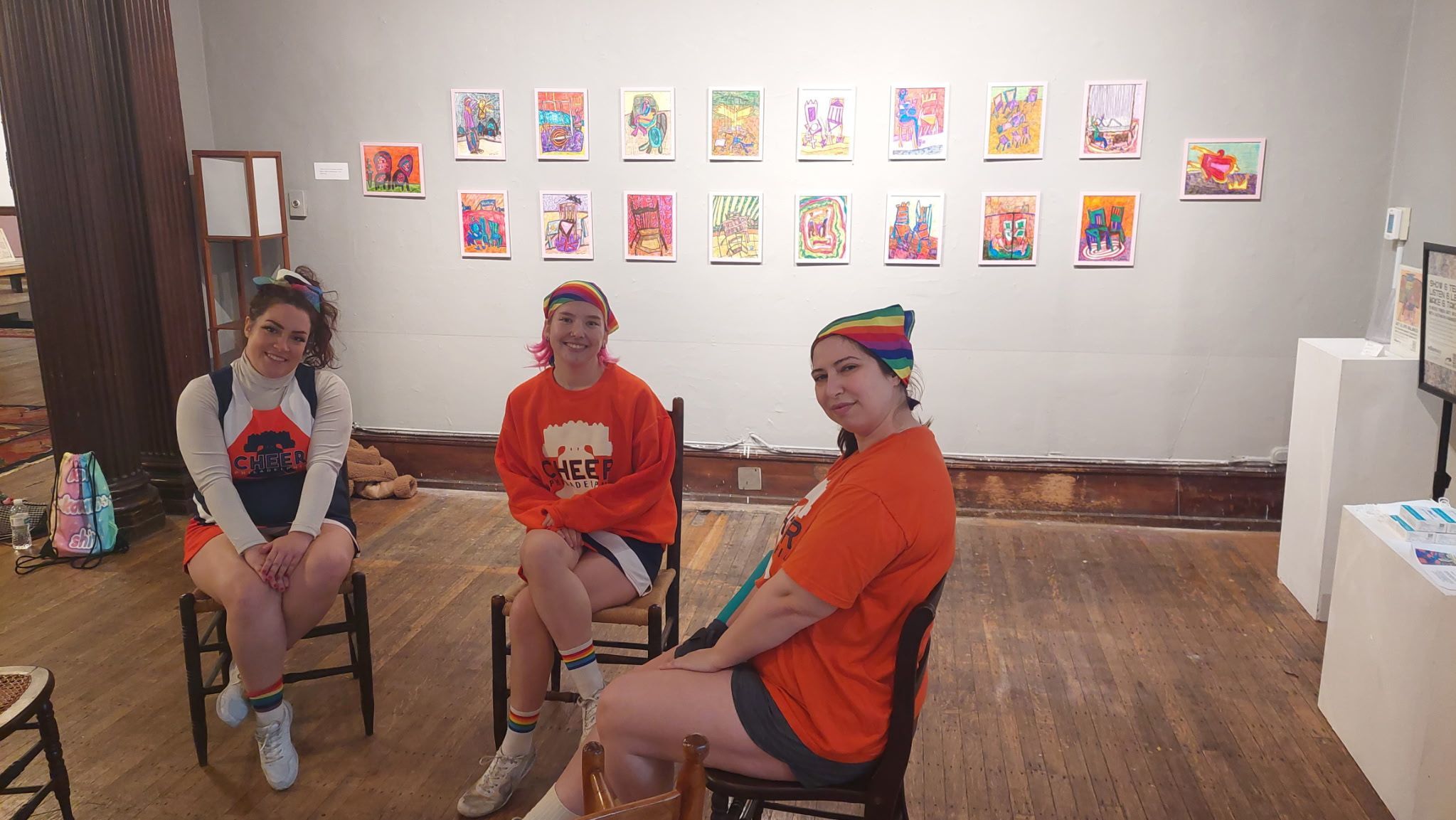
Artist Kathryn Pennepacker staged one of the last art exhibits in the William Way center’s wood-trimmed reception area. Titled “You are welcome here. I saved a chair for you,” it encouraged visitors to sit, talk and view her artwork.Courtesy of Kathryn Pennepacker
Because of those hurdles, Segal told me, it could take five to seven years to complete the apartments. During that time, William Waywould be without a permanent home. And once it moves back to Spruce Street, it’s unlikely the new space will have the same level of visibility as the existing building.
Segal says he is undaunted by the challenge. “People told me John C. Anderson was impossible,” he said. “People told me all the things I’ve fought for were impossible.”
Despite the Metcalfe report’s conclusions and a more upbeat assessment from J&M Preservation Studio, Segal maintains that the building is too far gone to be saved at a reasonable price. In his view, William Way must now choose between saving itself or saving the building.
Alternatives to demo?
It’s hard to believe the situation is that binary. Several people who have been involved in the center’s programs told me that the decision to go with Segal’s plan was made by a small circle of board members, without consulting the larger William Way community and its longtime donors.
Demolition “wasn’t even mentioned” as an option at the organization’s 50th anniversary gala celebrations in February, held just a week before the arrangement with Segal became public, noted Paul Steinke, executive director of the Preservation Alliance for Greater Philadelphia and a former William Way board member.
In a guest essay published last month in the Philadelphia Gay News, Steinke and a group of activists urged the board to hold a community meeting where the issues could be aired and debated. Segal has responded by forming an advisory board composed of a handpicked group of William Way staff, activists, elected officials, and neighborhood residents.
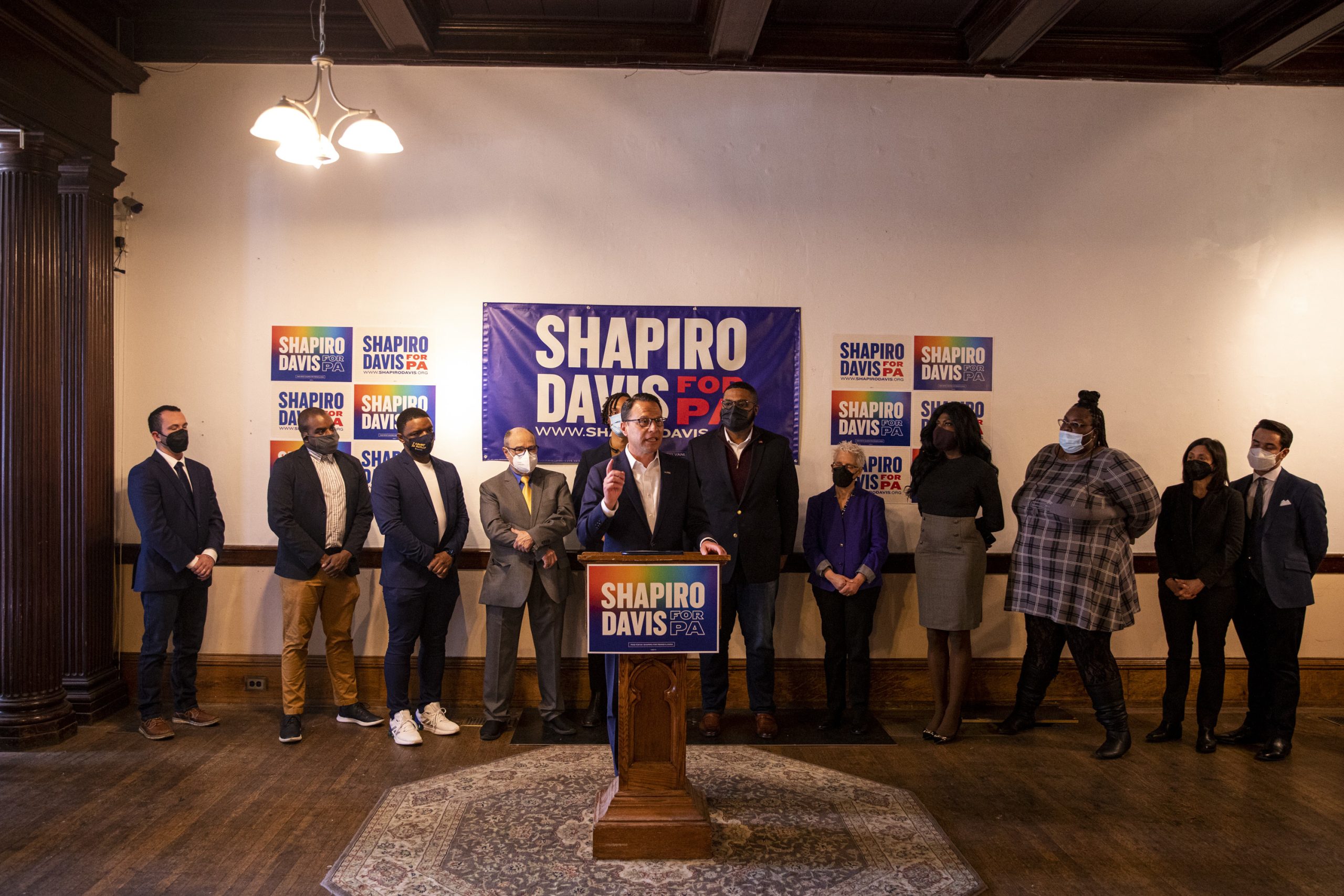
In 2022, Gov. Josh Shapiro spoke in the parlor of the William Way center, where he received endorsements from a variety of LGBQT+ leaders. TYGER WILLIAMS / Staff Photographer
Before COVID interfered, the board had been working on a design to reconfigure the building to address longstanding circulation issues. The plan called for slicing off the back of the structure and inserting a small tower with space for offices or apartments. The arrangement would have preserved the facade and the two most important ceremonial rooms, the ballroom and the large lobby area.
Why not use that idea to create affordable housing?
Segal argues that it would be difficult to insert two separate entrances — one for the William Way center, the other for the apartments. But there are plenty of narrow rowhouses in Philadelphia that have separate entrances serving apartments. I know it’s heresy in progressive circles to say this, but how about partnering with a market-rate developer who could finish the overbuild in less than five years?
An even faster option? Renovate the existing building. It can be done in stages so the center could move back sooner.
The William Way LGBT Community Center already has two entrances, which could be repurposed to serve an apartment tower inserted behind the front rooms.Jake Blumgart / Staff
Building affordable housing in Center City, close to transit, is a noble goal, and Segal deserves praise for making it a priority. But there is something seriously wrong when we demolish a building rich in Philadelphia history, while leaving the surface parking lots that flank it in place.
Since COVID, Philadelphia has lost a series of legacy cultural institutions that shaped the city’s identity. The Painted Bride. The Atwater Kent history museum. And, most painful of all, the University of the Arts.
William Way worked too hard for visibility to now be erased.