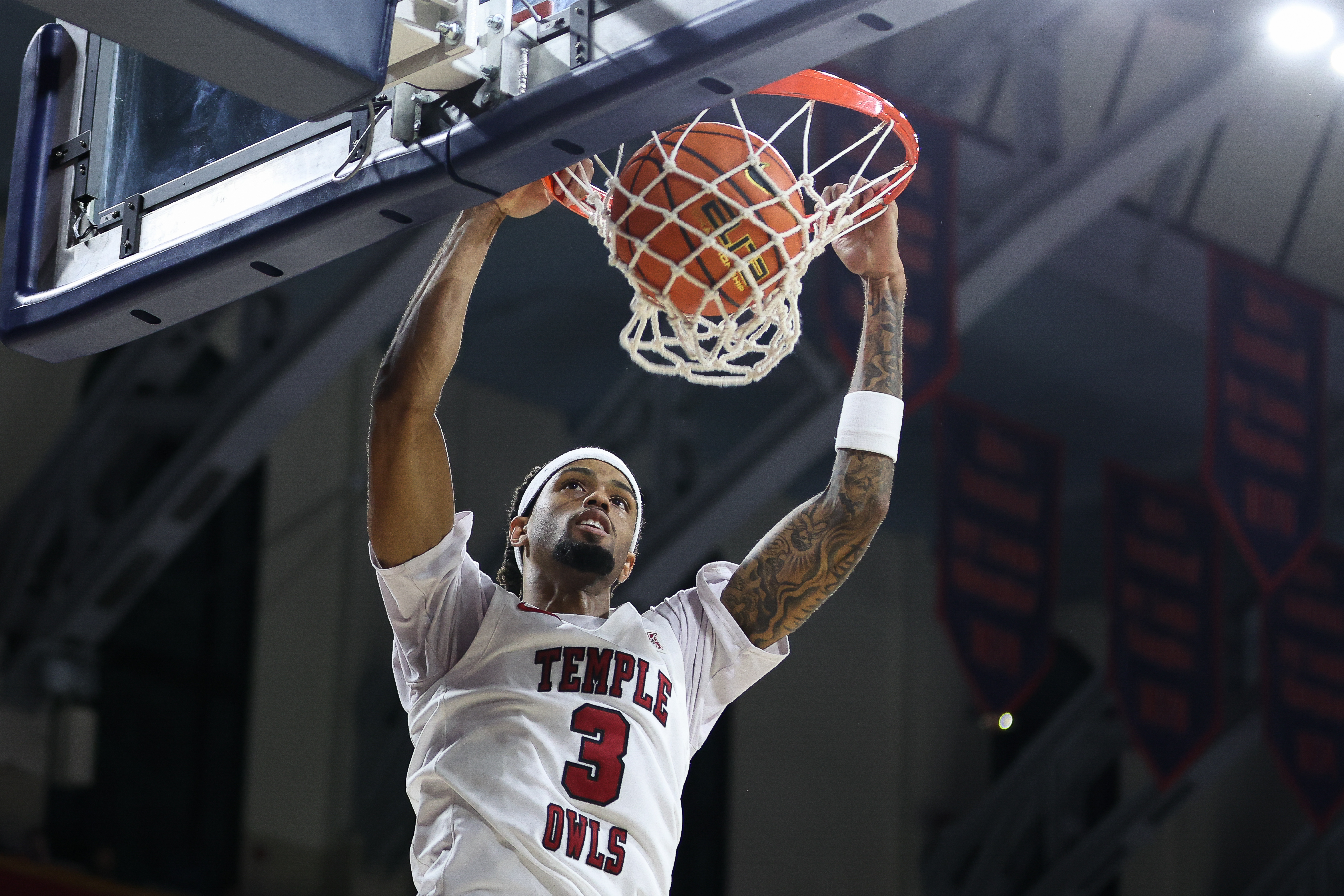
Cam Scott knows what it takes to contribute to an offense. He just had to wait for another chance to prove it.
Scott graduated high school as a two-time South Carolina player of the year, then entered the college circuit playing for his local Gamecocks. He was relegated to the bench his freshman year and decided to redshirt the next season.
Scott packed his bags and transferred to North Broad Street in May. Six months later, the redshirt sophomore is a starter and Temple’s leading scorer, averaging 15.3 points through three games. He scored a career-high 26 points in Temple’s 91-81 loss to College of Charleston on Wednesday.
“It was just relieving to get out there again,” Scott said. “Coach [Adam Fisher] mentioned to me [to] stay poised, have fun, be myself, go out there and compete to the best of my ability. And that’s just what I try to do every night.”
High school dominance
Scott joined Lexington High School’s varsity roster in eighth grade and averaged 15.6 points. He took the next step in ninth grade, winning the first of his four Class 5A all-state honors.
Scott broke Lexington’s all-time scoring record his junior season. Three weeks later, he won the state’s player of the year. Scott capped his high school career by leading the Wildcats to their first state championship since 2000.
Scott, then a four-star recruit, committed to Texas in August 2023 before withdrawing and signing with South Carolina.
Transition to college
Scott had a quiet debut at South Carolina. He scored six points in a season-opening loss to North Florida. The 20 minutes he played ended up being the most he saw on the floor all season. Scott appeared in 25 games as a reserve and averaged 10.1 minutes.
By spring, it was time for Scott to make another decision. After shortly entering the transfer portal in April 2025, he chose to stay home. Though, Scott redshirted and didn’t see any game action.
As the 2025-26 season wound down, Temple ended the year on a familiar note. It lost 63-59 in the first round of the American tournament to Florida Atlantic, and the floodgates of the transfer portal opened.
Seven players left. Fisher looked to fill his gaps with shooting, size, and grit. Scott fit the bill perfectly.
“He is an unbelievable athlete, knocks down shots, he’s a great defender,” Fisher said. “The progress he’s made since he got here — he’s been off the charts.”
New opportunities
Scott became one of the strongest players on Temple’s roster over the summer.
He chose the Owls because of their potential and his ability to be a leader. Now, he’s making it a priority to help Temple get back on the winning side.
“I got to be one of those guys who help lead,” Scott said. “We have a really experienced team, but even for myself, coming off a year, I feel like I have the experience where I can continue to uplift my teammates and talk them through it.”
On Wednesday, Temple found itself trailing against the Cougars, but Scott proved to be the steady hand once again. With Temple down 20 points in the first half, Scott helped power the offense by scoring 19 of his 26 points in the second.
While the 2026-27 season hasn’t gone Temple’s way so far, Scott has been a commanding presence after a slow start to his college career.
“He hasn’t played a ton in college, but it’s his third year,” Fisher said. “He’s always working. He’s in the gym, he’s watching extra film. When you put in that, good things are going to come of it. Again, the way he played [Wednesday] is how we expect him to play every night.”
A Lower Gwynedd man was sentenced to 25 to 50 years in state prison Thursday for intentionally running over a Plymouth Township police officer, leaving him with life-altering injuries, during a chaotic chase in October 2025.
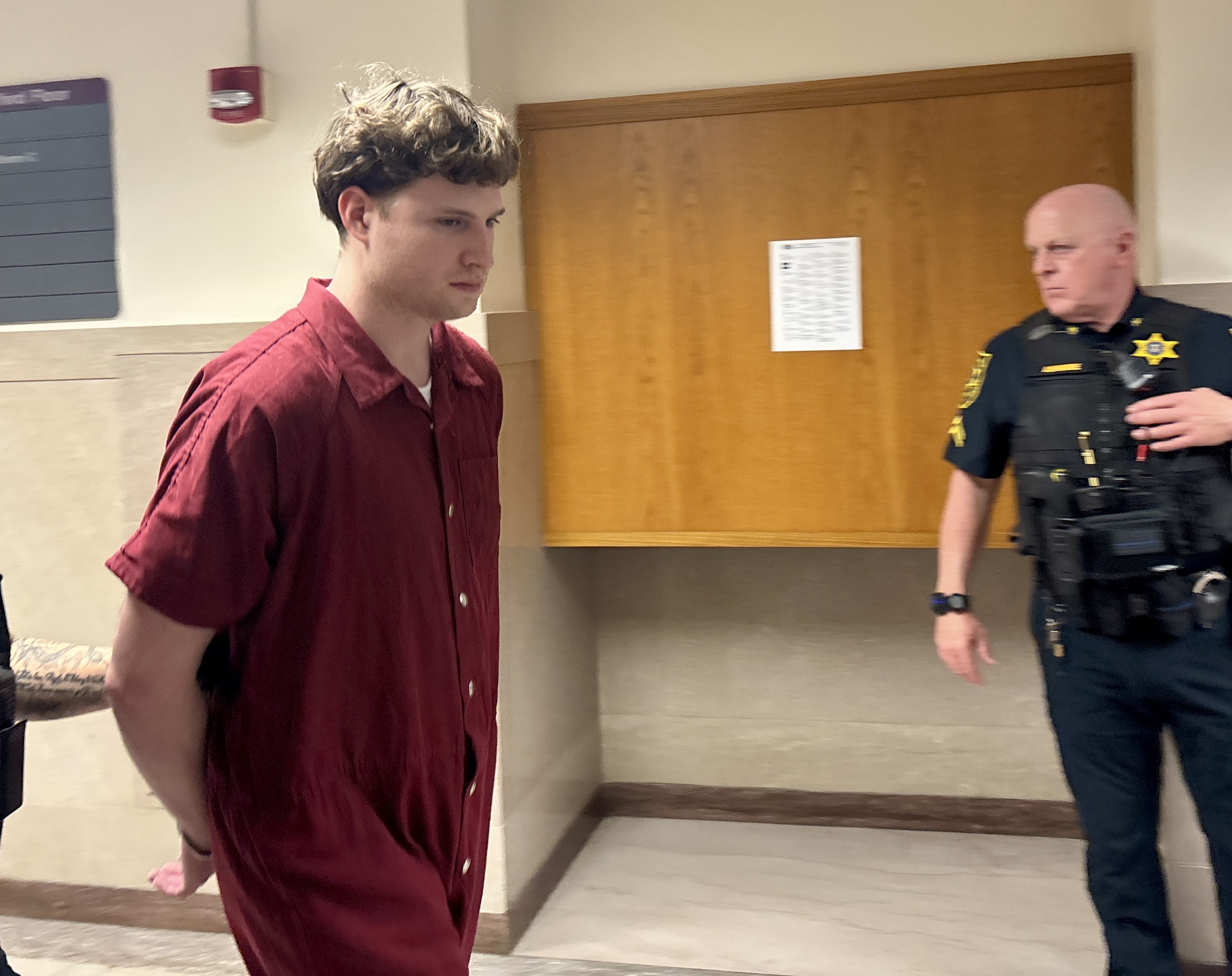
In a negotiated deal with prosecutors, Dalton Janiczek, 22, pleaded guilty but mentally ill to attempted murder of a law enforcement officer, aggravated assault, and fleeing and eluding. That designation means Janiczek will receive psychiatric care during his sentence.
The plea came days before Janiczek’s jury trial was set to begin.
After handing down the sentence, Montgomery County Court Judge Wendy Rothstein commended Plymouth Township Officer Jacob Hennessey for his resilience in light of the physical and mental injuries he is still fighting to overcome.
“You leave home every day with one mission, to protect the public,” Rothstein said. “Unfortunately, on that day, you were the ones who were targeted.”
Janiczek apologized to Hennessey and the dozens of other officers who packed Rothstein’s courtroom Thursday, saying he was deeply sorry for his actions that day.
“At the time, I didn’t appreciate I was suffering from serious mental illness,” Janiczek, the son of Center City civil defense attorney Lee Janiczek, said.
Janiczek’s attorney, Tim Woodward, said afterward that his client has been diagnosed with bipolar disorder with psychotic features. He sharply criticized the systems in place to treat mental illness, saying Janiczek had been improperly released from Montgomery County Emergency Services, a private psychiatric hospital, after being involuntarily committed weeks before the encounter with police.
“They let him walk out. That is an utter disgrace, and something needs to be done, because mental illness is real,” Woodward said. “The system is broken.”
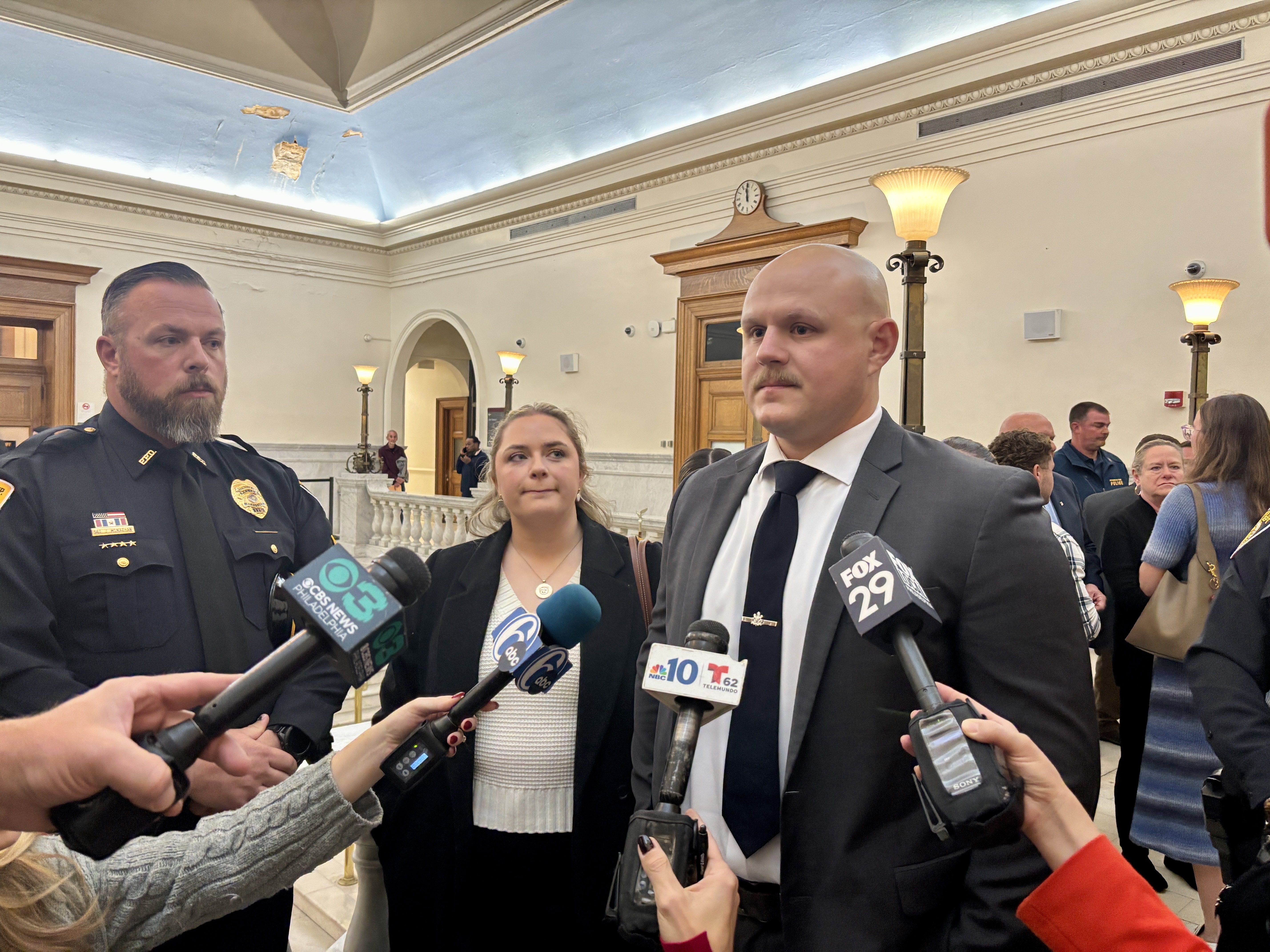
Plymouth Township Police Officer Jacob Hennessey (right) and his wife, Meghan, (center) speak to reporters after Dalton Janiczek was sentenced to decades in state prison.Vinny Vella / Staff
On the day of the incident, Janiczek intentionally ran over Hennessey with his Mercedes G63 while fleeing from an attempted traffic stop moments earlier, prosecutors said. The officer was pursuing Janiczek after he threatened to blow up a police station in Chester County and fled from other officers’ attempts to pull him over, prosecutors said.
In the parking lot of the Doubletree Hotel on Fountain Road, Hennessey ordered Janiczek to get out of the vehicle, then drew his gun and fired as the SUV continued to barrel toward him.
Janiczek struck him once, pulled away, and then returned to hit the officer an additional three times as Hennessey lay on the ground, attempting to put a tourniquet on his shattered leg.
Janiczek then fled, and intentionally struck two vehicles being driven by other Plymouth Township officers. Both officers were hurt in those collisions, including Sgt. Kyle Wilhelm, who suffered from significant injuries to his knee and later retired from the department.
Hennessey, choking back his emotion, said Thursday he can still smell the coolant that dripped onto him as Janiczek’s SUV was on top of him, and can still hear his own screams for help.
He underwent five surgeries, one as recent as September, to repair fractures to his tibia, femur, fibula, and ribs. Constant nerve damage still plagues him, and he is unable to flex his left foot.
But the worst injury, he said, is his inability to return to a career he had dreamed of since he was in eighth grade.
“The scars may fade, but every day I wake up with a sore knee, I will be reminded of the damage to my family caused by Mr. Janiczek,” he said.
Hennessey’s injuries occurred eight days before his planned wedding to his childhood sweetheart, Meghan. The couple still were able to wed, he said, albeit in a much different ceremony than they had imagined: in his in-laws’ backyard, with him in a wheelchair and a tuxedo T-shirt.
“It’s truly a miracle I’m here today,” Hennessey said. “I want everyone to understand that if God didn’t intervene, I surely wouldn’t be here.”
Philadelphia City Council introduced legislation Thursday to create a corridor of zoning incentives along South Broad Street meant to encourage multifamily housing development along SEPTA’s Broad Street Line.
The legislation would opt five subway stations into what Mayor Cherelle L. Parker has dubbed the “transit-oriented communities” zoning overlay, which boosts the number of units that can be built on areas zoned for multifamily and mixed-use development within a quarter mile of transit stations.
The legislation stretches the incentive from Locust Street in Center City to Pollock Street in South Philadelphia, from Lombard-South Station to Oregon Station.
It would include the bus stop at Broad and Christian Streets in Center City. It could run from 17th Street to the west to 11th Street to the east.
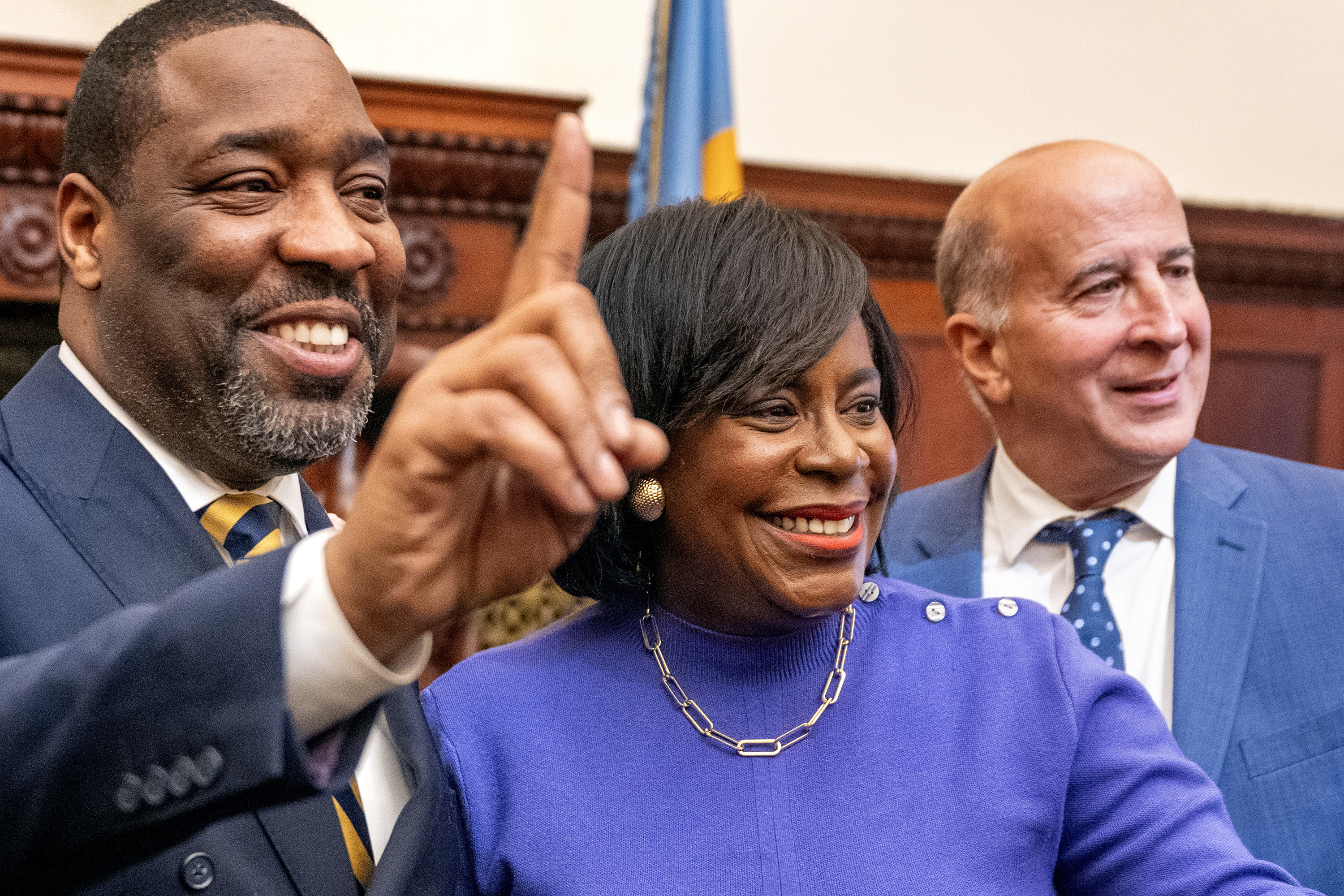
“I support transit-oriented development along South Broad Street,” said Council President Kenyatta Johnson, who introduced the legislation with Councilmember Mark Squilla. “Hopefully, it’ll bring some level of affordable and also market-rate development to those immediate areas.”
Squilla represents the eastern side of Broad Street. Johnson represents the western side.
The bill builds on a Parker initiative earlier in the year that expanded an existing law that grants development incentives to most non-single-familyproperties around transit stations. That law increased a previous radius of 500 feet around a transit station to a quarter of a mile.
Transit advocates hailed the legislation.
“This is a big opportunity to build more housing where people can actually use transit to get to work and to opportunities,” said Jay Arzu, a member of the urbanist group 5th Square Advocacy. “It sets the precedent for building more housing and more economic development adjacent to stations.”
Unlike in other American cities, Philadelphia’s law does not apply to all transit stations. Instead, district City Council members have to opt their individual stations into the law.
That left a mixed pattern of adoption, with Councilmember Jamie Gauthier opting all the Market-Frankford Line stations in her district into the program long ago, while none on the Broad Street Line are included.
Johnson and Squilla’s proposal would finally change that.
“Both district Council offices have been in contact regarding station-area development impacts,” reads a memo obtained by The Inquirer from the Planning Commission about the legislation. “They have expressed intention to consult local civic groups.”
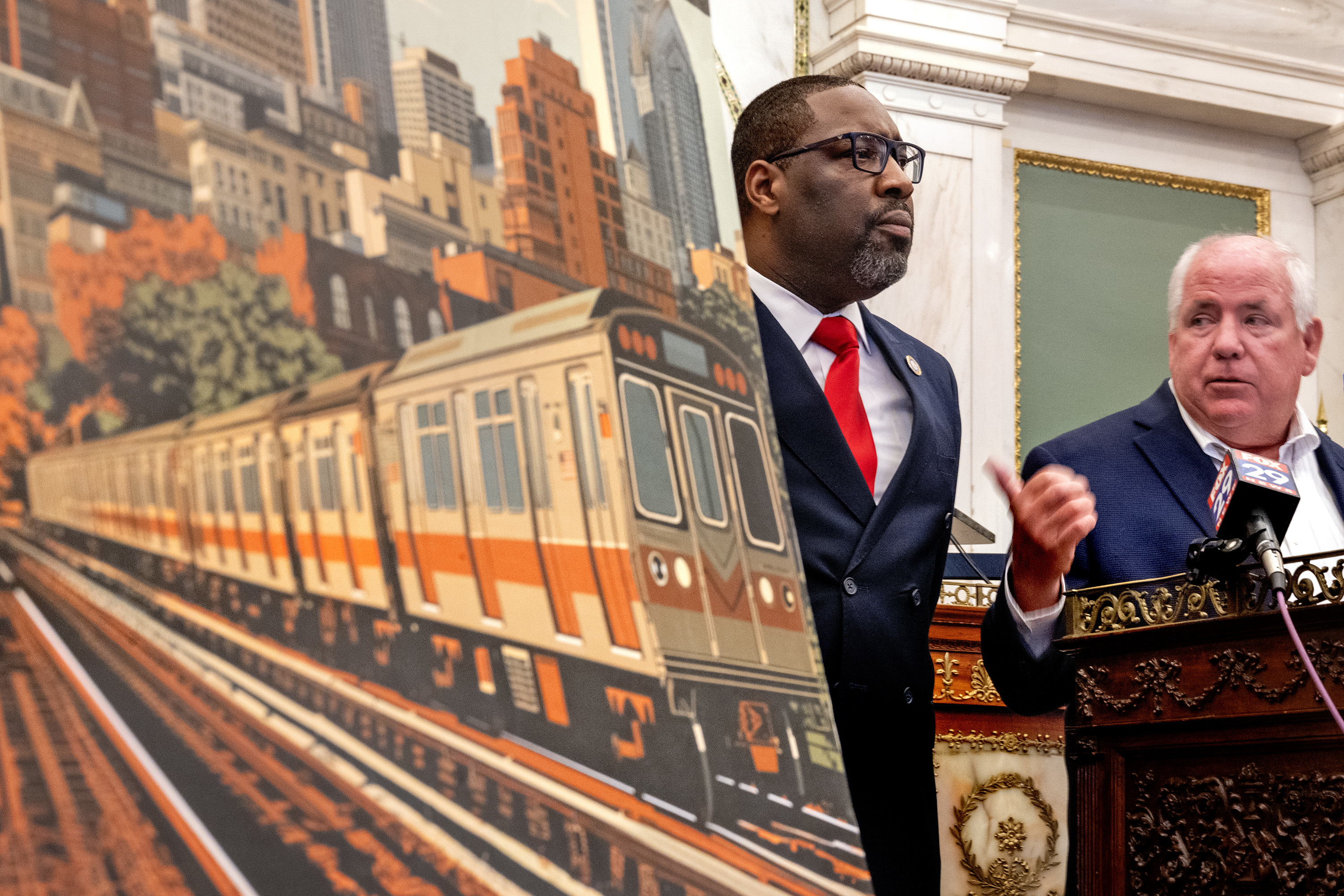
City Council President Kenyatta Johnson (left) and Councilmember Mark Squilla (right) with Mayor Cherelle L. Parker in 2024.Tom Gralish / Staff Photographer
There could be some pushback from residents who live along South Broad Street, as was seen in a recent small apartment proposal for a surface parking lot in the Council president’s district.
But in that case, Johnson listened to organized community groups, who negotiated with the developer for concessions.
Squilla says he expects a robust debate on the legislation as neighborhood groups weigh in.
“Once you get into the more residential neighborhood, it’ll be a little more challenging because the area is so big now,” he said. “You might get some more pushback as this moves forward.”
Changes at Snyder Station
If the legislation passes City Council, the effects of the changes could be relatively limited around some of the stations. The quarter mile around Lombard South is already densely built, and there are few developable lots.
Much of the land around Oregon Station is either zoned for single-family residential or covers a public park, neither of which would be eligible for density bonuses.
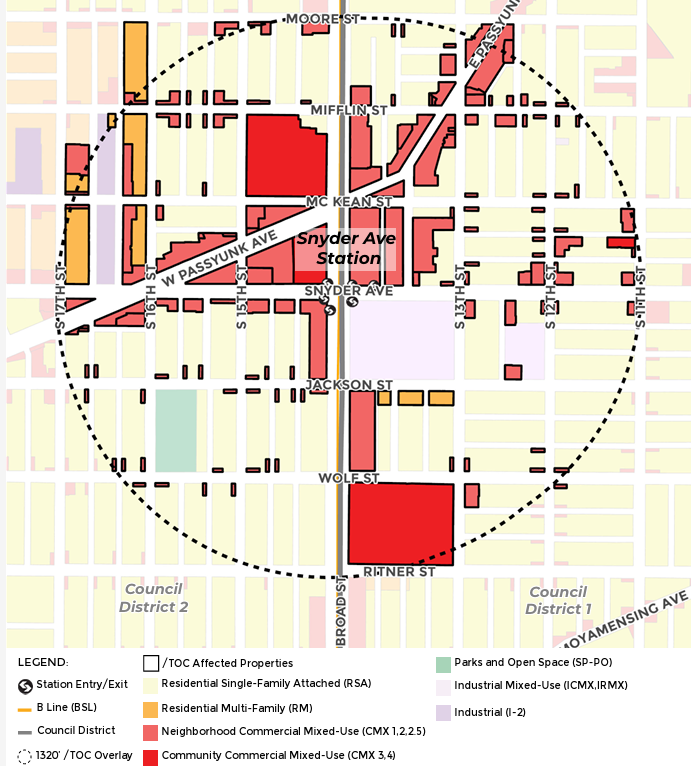
But Snyder Station, which has struggled with vagrancy and drug dealing since the pandemic, could get a significant boost, transit advocates say.
“Snyder Station has seen better days,” Arzu said. “The neighborhoods surrounding it could benefit from more density there, could benefit from more eyes on the street.”
A screen shot of the Planning Commission’s analysis of which properties — those coded red or pink — would see the greatest development boosts from the new law. All the yellow coded areas are rowhouse blocks that would be unaffected.Philadelphia Planning Commission
Johnson said the intersection of Broad Street and Snyder Avenue could use more development, and more residents.
“With this particular piece of legislation, hopefully, people will say, ‘Let me take a look at what we can build up and build capacity in that area, and add more foot traffic,’” Johnson said. “Hopefully it attracts more businesses.”
There also are a number of large surface parking lots and vacant lots nearby, including the property that used to host the Melrose Diner. Some one-story, low-occupancy retail buildings could be replaced with larger mixed-use structures.
“For the most part, the South Broad stations, there’s not a ton of areas that are going to see major changes. That’s one of the reasons why I think that this is moving so fast,” Arzu said. “Snyder is the outlier.”
What comes next?
Arzu sees South Broad Street as a test case. Johnson signaled earlier this year that he was interested in such a move, and Squilla has long been seen as open to the idea.
With the political will in place and fewer opportunities for big development on the corridor to draw opposition from neighborhood groups, the addition of these stations should be a relatively easy lift.
“It is important about both the Council president and Councilman Squilla signing on to this. It shows that they’re willing to put their money where their mouth is and open the door to other parts of the city joining,” Arzu said.
The bigger opportunities are on North Broad Street, which has a lot more vacant land and more areas with multifamily zoning in place.
But Councilmember Jeffery Young, a frequent critic of new development, has sought to block apartment development on North Broad Street around the former Hahnemann University Hospital.
He has not expressed interest in adopting the mayor’s new transit-oriented development overlay in his district.
“The goal here is to get those North Broad stations because they would be the most impacted by the … legislation,” Arzu said. “North Broad is really the next step.”
Samara Joy, the young, widely praised vocalist creating a stir in the jazz world, will join the Philadelphia Orchestra in a one-night-only appearance in January, the orchestra announced Thursday.
Joy, who turned 27 Wednesday, has won six Grammy Awards since her debut album in 2021. She was raised in the Bronx, but her Philadelphia connections run deep. Her grandparents Ruth McLendon and Elder Goldwire McLendon were founders in the 1950s of Philadelphia gospel group the Savettes. Her father is Philadelphia-born bassist Antonio McLendon.
Growing up, “we came to Philly like three times a year to visit my grandparents. Just to go to their house in West Philly and hang out all day,” Joy told The Inquirer’s Dan DeLuca.
Samara Joy McLendon (her full name) attended the Fordham High School for the Arts and won best vocalist in a high school competition hosted by Jazz at Lincoln Center. She was a voice major at SUNY Purchase. After releasing her self-titled debut album as she was graduating college, Jazz Times named her Best New Artist in 2021.
Critics have been effusive.
“Joy’s staggering vocal command and the smoky timbre and dazzling range of her voice have earned frequent comparisons to classic jazz vocalists like Sarah Vaughan and Ella Fitzgerald, as well as another personal favorite, Carmen McRae,” DeLuca wrote in The Inquirer.
The singer has spoken of the influence of Vaughan and Fitzgerald on her artistry.
“This music is my foundation for sure,” she told GRAMMY.com in 2021. “When I want to learn a song and learn how to tell a story, they’re who I go to for perspective.”
The set list for her Philadelphia concert is expected to include Hoagy Carmichael’s “Stardust,” Duke Ellington’s “Sunset and the Mockingbird,” Billy Strayhorn’s “Lush Life,” and “Left Alone” by Billie Holiday and Mal Waldron.
Joy has performed at the Kimmel Center before, but the January show will mark her debut with the orchestra. Andrew Grams will conduct, and the instrumental forces will include Joy’s own band. A performance in May with the Chicago Symphony Orchestra featured standards and original material.
Samara Joy appears with the Philadelphia Orchestra on Jan. 5 at 7 p.m. in Marian Anderson Hall, Broad and Spruce Sts. ensembleartsphilly.org, 215-893-1999.
A police officer shot a man after a traffic stop led to a “physical altercation” Thursday morning in Elmwood in Southwest Philadelphia, police said.
Around 7:30 a.m. two Philadelphia Police Department officers stopped a white Chevy Malibu at the corner of Lindbergh Boulevard and Eastwick Avenue, police said.
The traffic stop led to a “confrontation” between the man and two officers, Deputy Commissioner Frank Vanore told news reporters at the scene.
“He became very erratic,” Vanore said. After officers asked him to exit the car, “a physical altercation very quickly ensued,” Vanore said.
Both officers used Tasers on the man, Vanore said, but they didn’t stop him.
“At some point during the fight, he made it back to his vehicle and he produced a firearm. That firearm, we now know, had an extended magazine, it was loaded,” Vanore said.
At that point, one of the officers shot him, Vanore said.
The man was taken to Penn Presbyterian Hospital; his condition has not yet been made public.
Both officers had body cameras on and the vehicle camera captured the incident, Vanore said.
The officer that fired his weapon is on administrative leave, Vanore said, in accordance with department policy.
Police are investigating the incident.
This is a developing story. Check back for details.
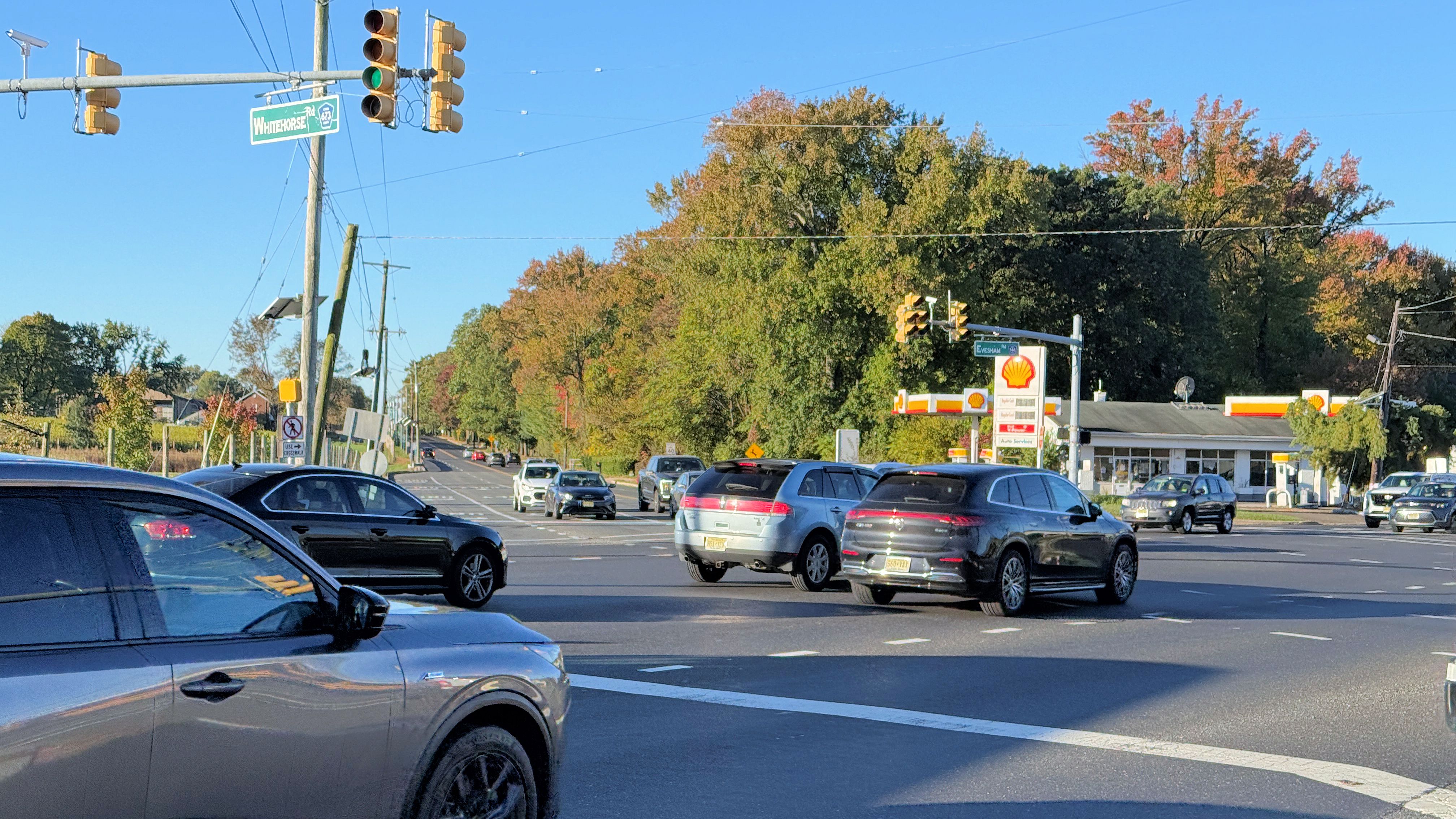
“It’s a doozy of an intersection,” said Ascalon, who grew up in Cherry Hill and has lived there all of his adult life. Ascalon was a community leader in the successful quest to permanently preserve from development the Holly Ravine Farm, which is near the northwest corner of the intersection and now owned by Cherry Hill Township.
“It’s not a well-thought-out plan,” Ascalon said of TNG Voorhees LLC’s request for a use variance for the residential part of the site that’s zoned rural residential by Voorhees.
The application was scheduled to be heard Thursday evening by the Voorhees zoning board, but it has been postponed to Jan. 28 because not enough board members will be present.
Ascalon, whose parents live in Voorhees, plans to testify before the board against the proposed exception to the zoning law.
He said a car wash that would look more at home on Route 73 or the White Horse Pike shouldn’t go at the intersection where Cherry Hill preserved the Holly Ravine Farm and Saddlehill Winery sits on the southeast corner in Voorhees.
Entrance/exit driveways would be installed on Evesham Road and White Horse Road, according to the developer’s plans. The intersection also is fed from Springdale Road on the Cherry Hill side.
The former Shell station at 1607 Evesham Rd. is owned by the developer. TNG and three others purchased the property from Voorhees Shell in 2017 for $1,658,112, according to Camden County property records.
The home at 1502 White Horse Rd. next to the Shell station would be demolished as part of the project. Although the developer’s zoning board application received by the township in August lists Ferriol C. Apistar and Crisanta B. Apistar as the owners, county property records show they sold the property in June to Granite Peak Property Investments LP of San Diego for $650,000.
The car wash building would be constructed where the home is now, and parking would go on the corner where the gas station sits.
Ascalon says it’s not surprising that the developer isn’t based in the area.
“They’re not locals, because if they were they’d realize how absurd this is,” he said of building a car wash at the busy intersection.
70and73.com is a hyperlocal news site focused on South Jersey, including the communities of Cherry Hill, Evesham, Mount Laurel, Voorhees, Medford, Medford Lakes, and Moorestown.
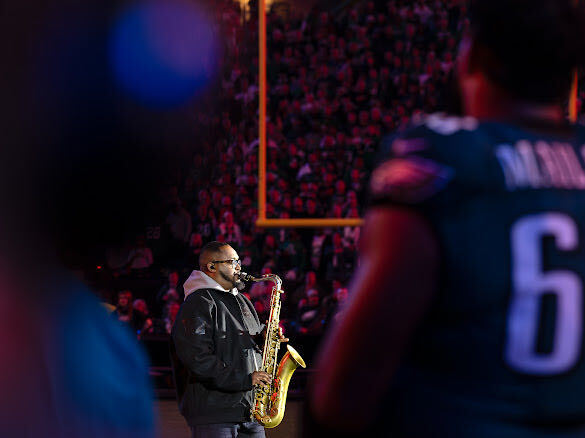
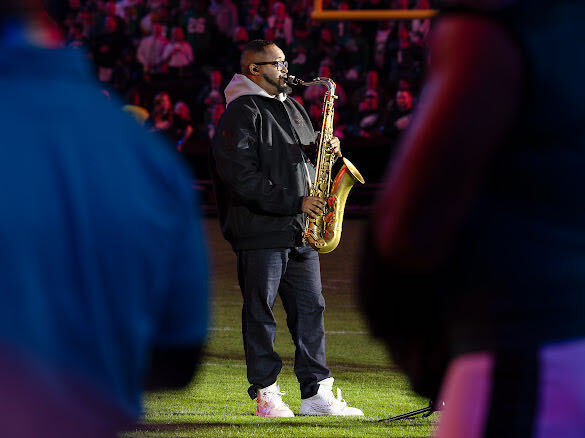
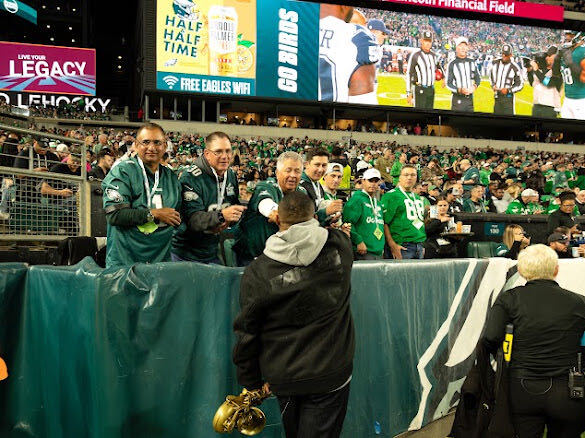
Hiruy Tirfe had one job before Eagles-Cowboys Monday Night Football game: perform the national anthem in front of thousands of fans at Lincoln Financial Field and millions more watching on television.
The Philadelphia-area saxophonist had one admission about his preparation.
“I didn’t practice,” Tirfe told The Inquirer. “I hate to admit that, but, you know, I didn’t.”
Tirfe’s jazz-influenced rendition of The Star-Spangled Banner quickly sparked national conversation. Some viewers criticized his unconventional interpretation, while others appreciated his creativity.
But Tirfe, who was born in West Philadelphia to immigrant parents and raised in Upper Darby, isn’t particularly concerned with the criticism.
“I did not look at any comments,” he said.
Tirfe had performed the anthem at other events, although Monday marked his first performance for an NFL team. He knew the song well and understood its significance, but wanted to leave his own musical signature while respecting the melody.
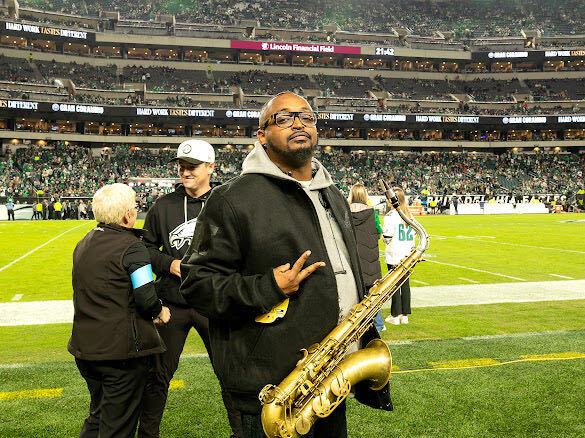
Saxophone player Hiruy Tirfe has played the national anthem at other events, but “Monday Night Football” was his first performing it for an NFL game.Courtesy of Torri Green
His goal was to communicate unity and energize Eagles fans before the rivalry game.
The Eagles gave Tirfe a two-minute window for his performance, which had to accommodate the team’s pregame presentation and the flight of Lincoln, its live bald eagle.
After a sound check, he spent roughly three hours at the stadium waiting for his moment.
His primary concern when he stepped onto the field wasn’t forgetting a note. It was remembering to look up. He said he tends to look down while playing and wanted to take in the experience.
“Eyes up. Eyes up,” Tirfe said he told himself.
Saxophone player Hiruy Tirfe says he wanted to take in the moment playing the national anthem at the Eagles-Cowboys game.Courtesy of Torri Green
From his perspective, the performance received an encouraging response inside the stadium. Tirfe said fans began applauding before he finished, then grew louder as he reached the final notes.
“Philly fans will always be honest with you,” he said.
He described Philadelphians as authentic, particularly when it comes to music and sports, and said the reaction reassured him.
“I served my purpose,” Tirfe said.
Online, the response was more divided.
Tirfe learned about the attention through friends and fellow musicians who sent him news articles and social media posts. ESPN also shared the performance on its social media accounts.
But he hasn’t sought out the criticism.
“Not everybody, you can’t please everybody,” Tirfe said.
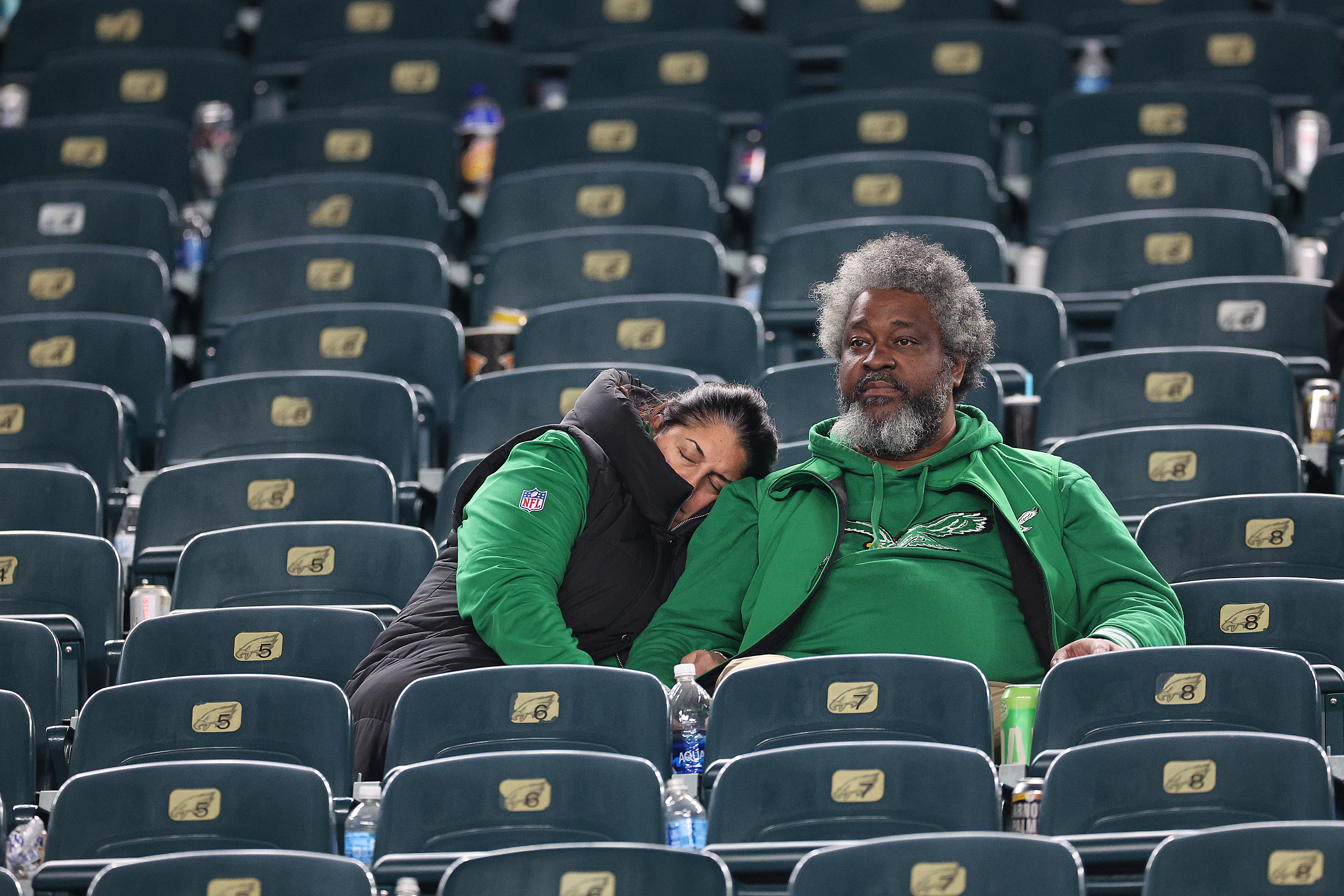
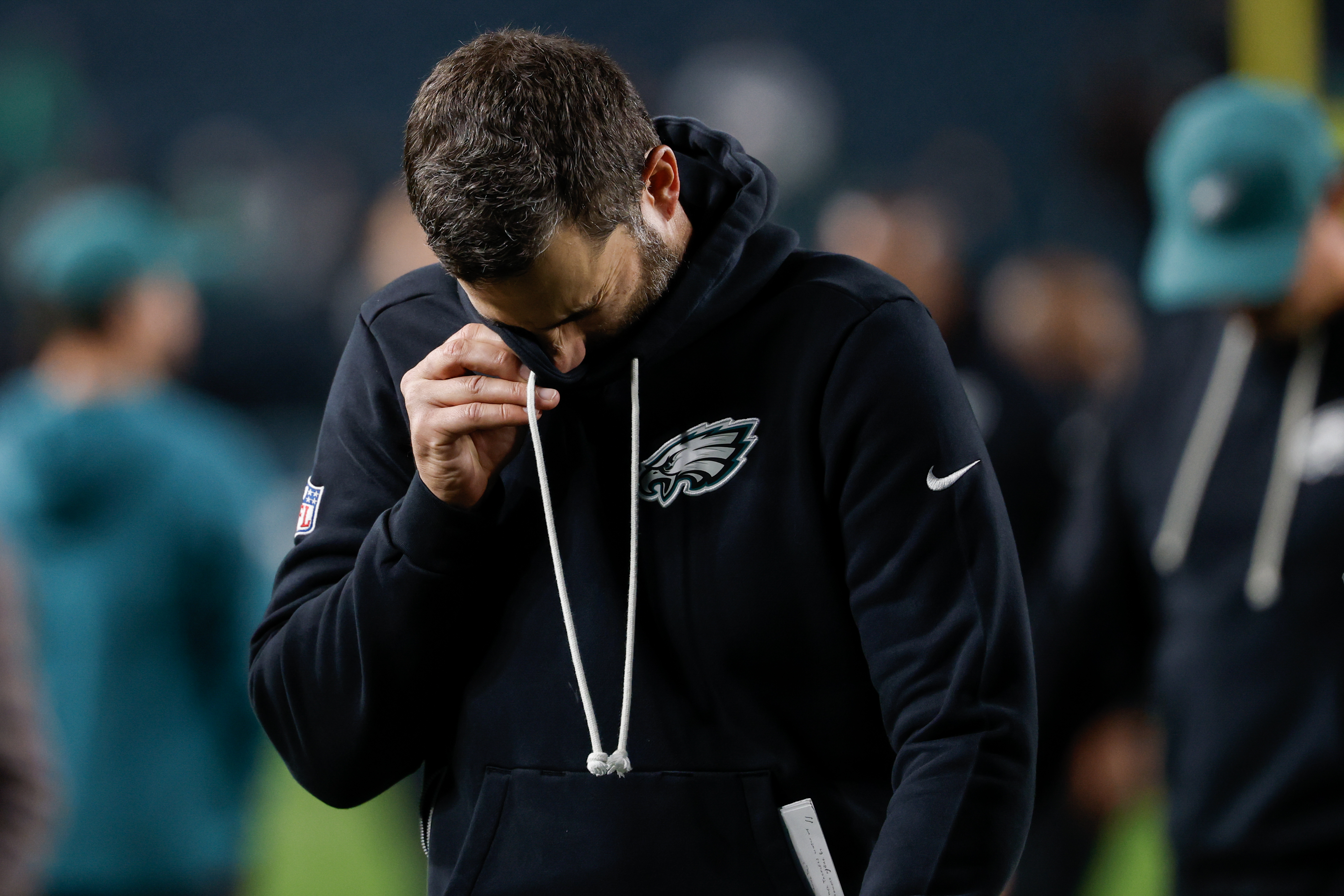
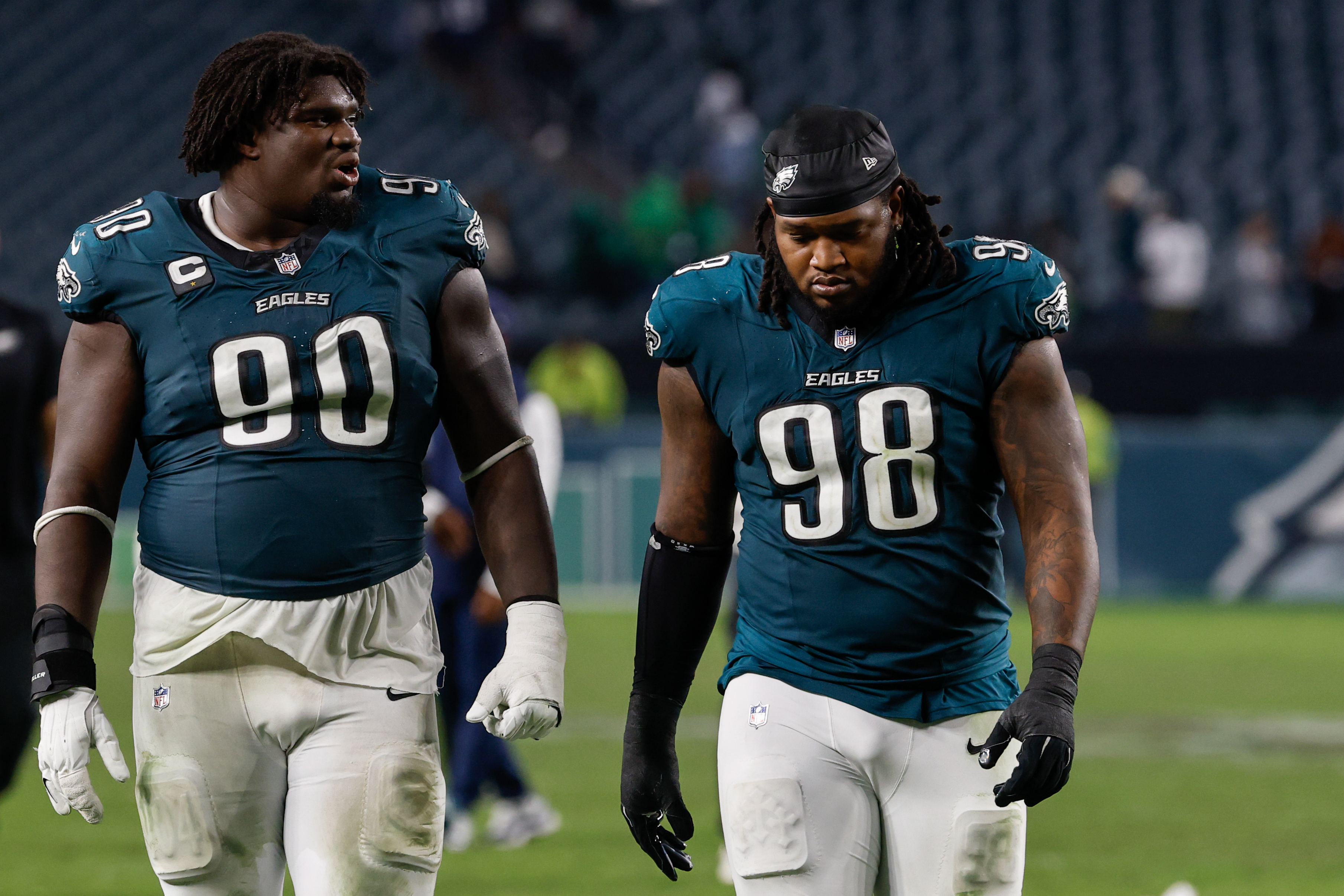
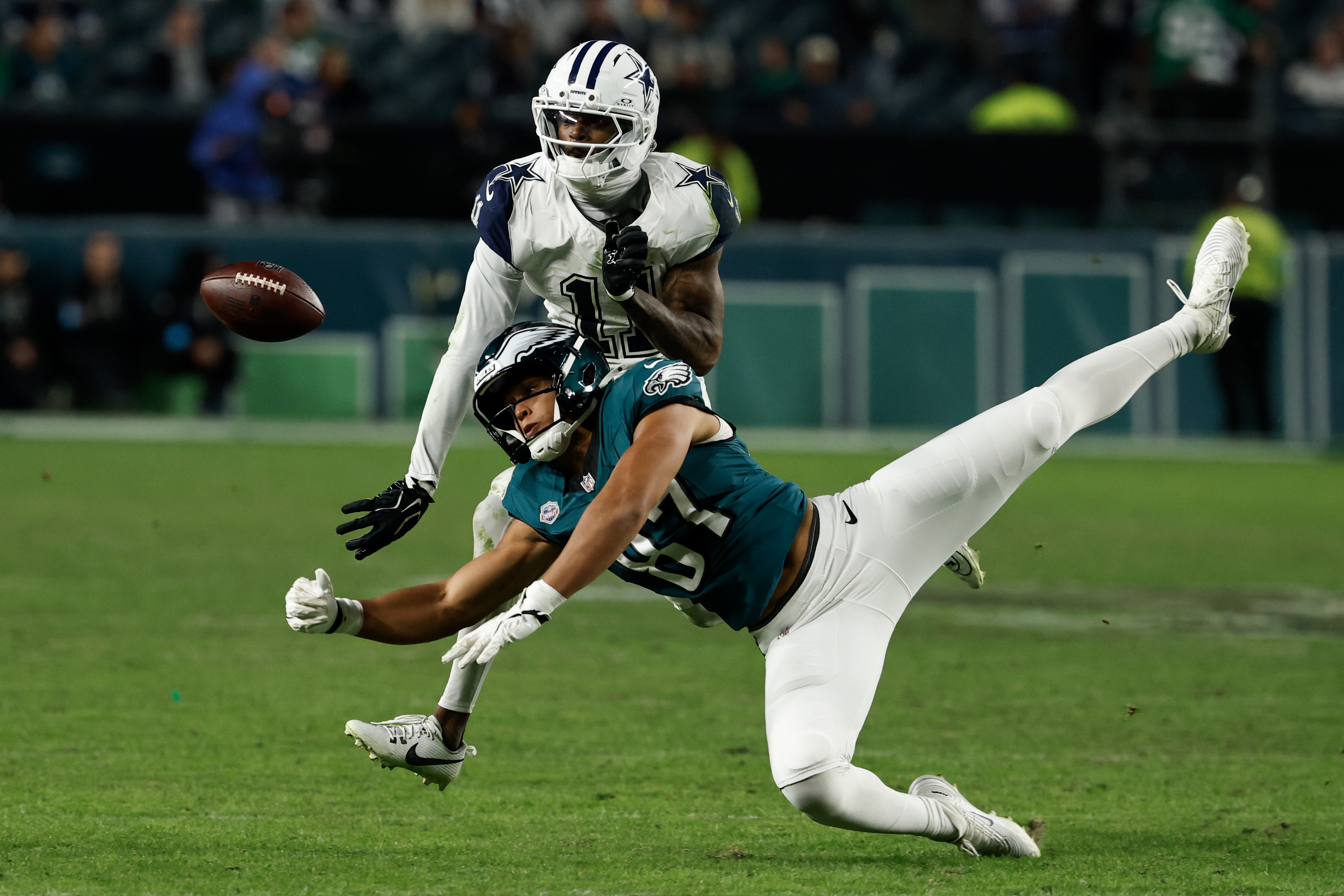
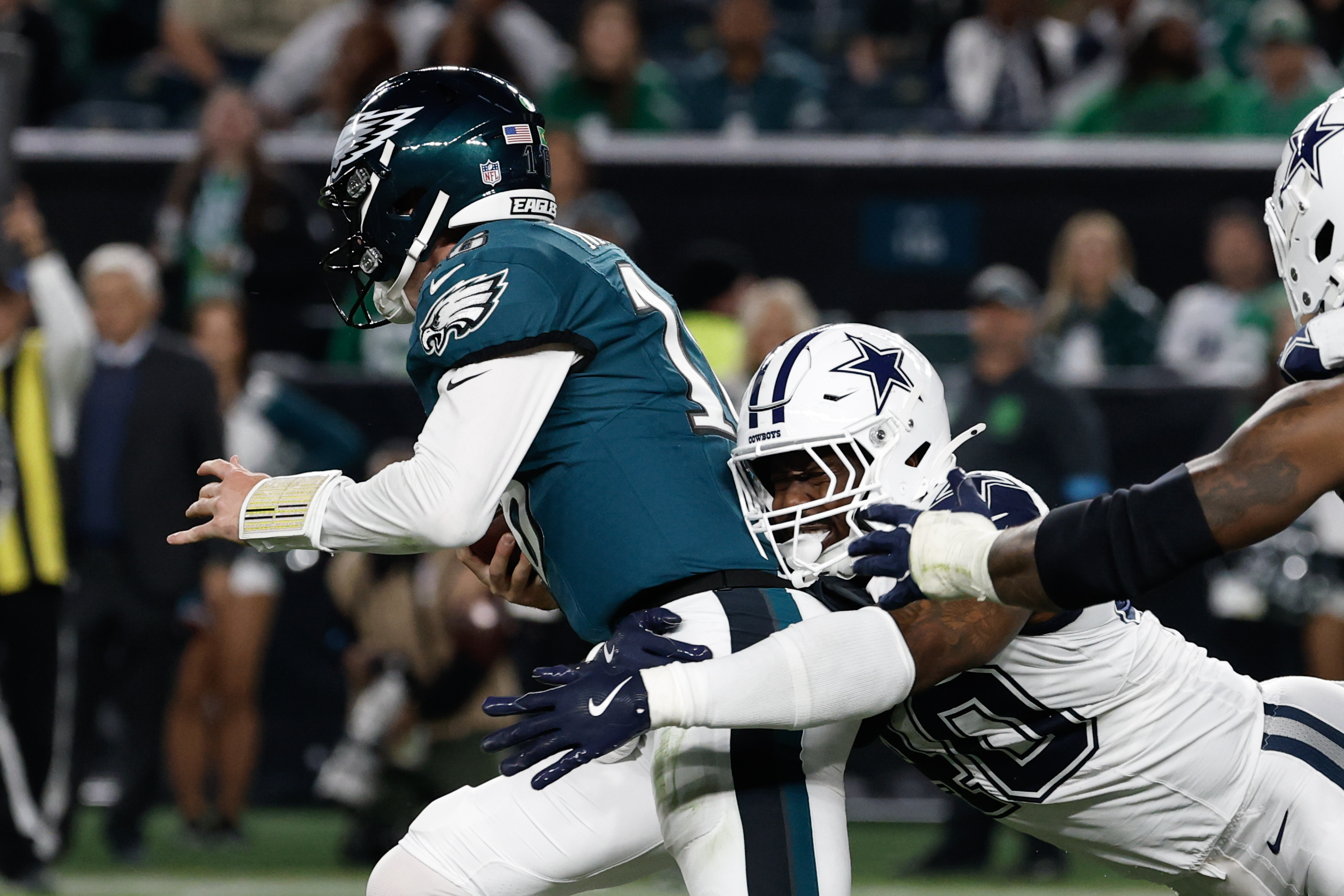
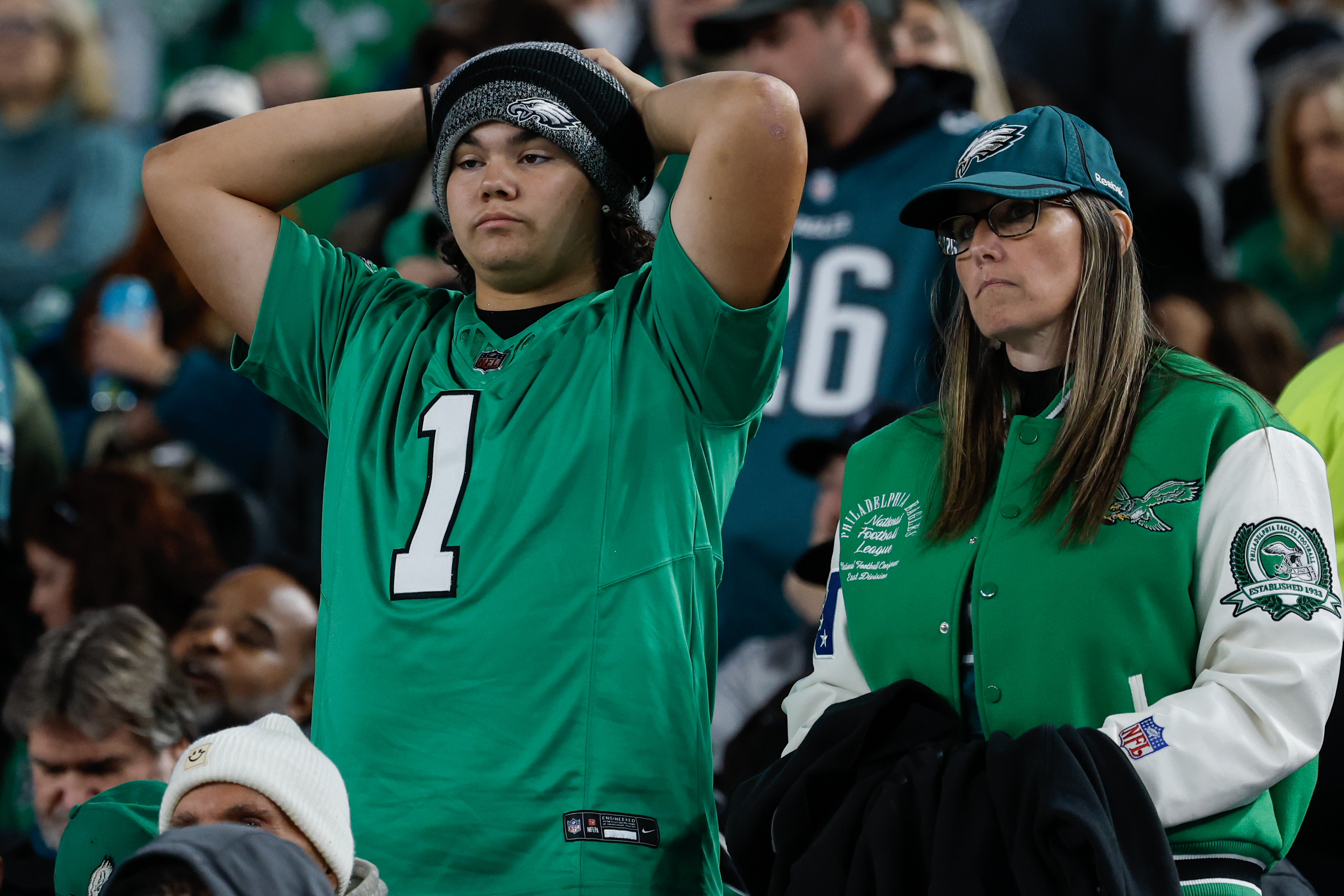
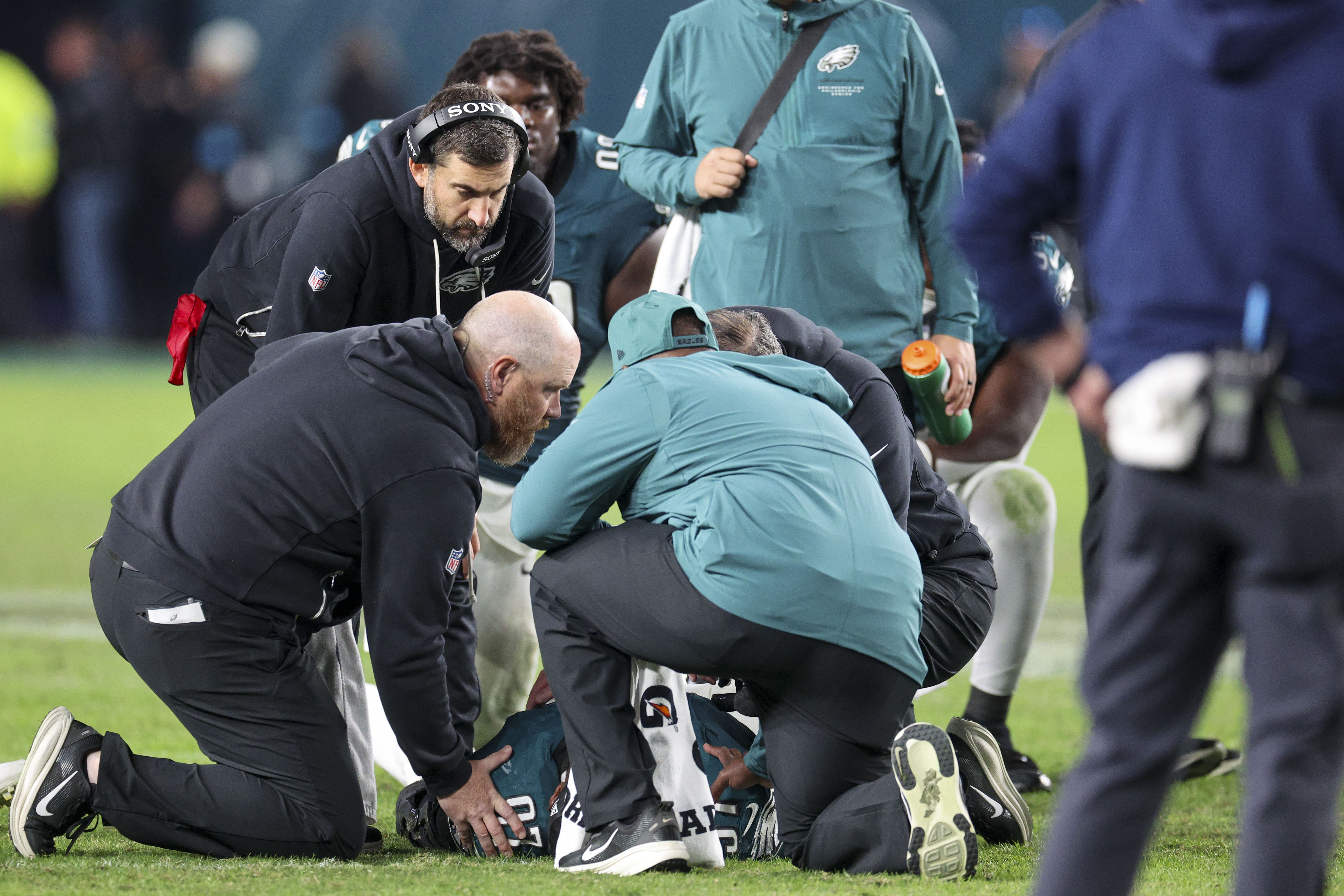
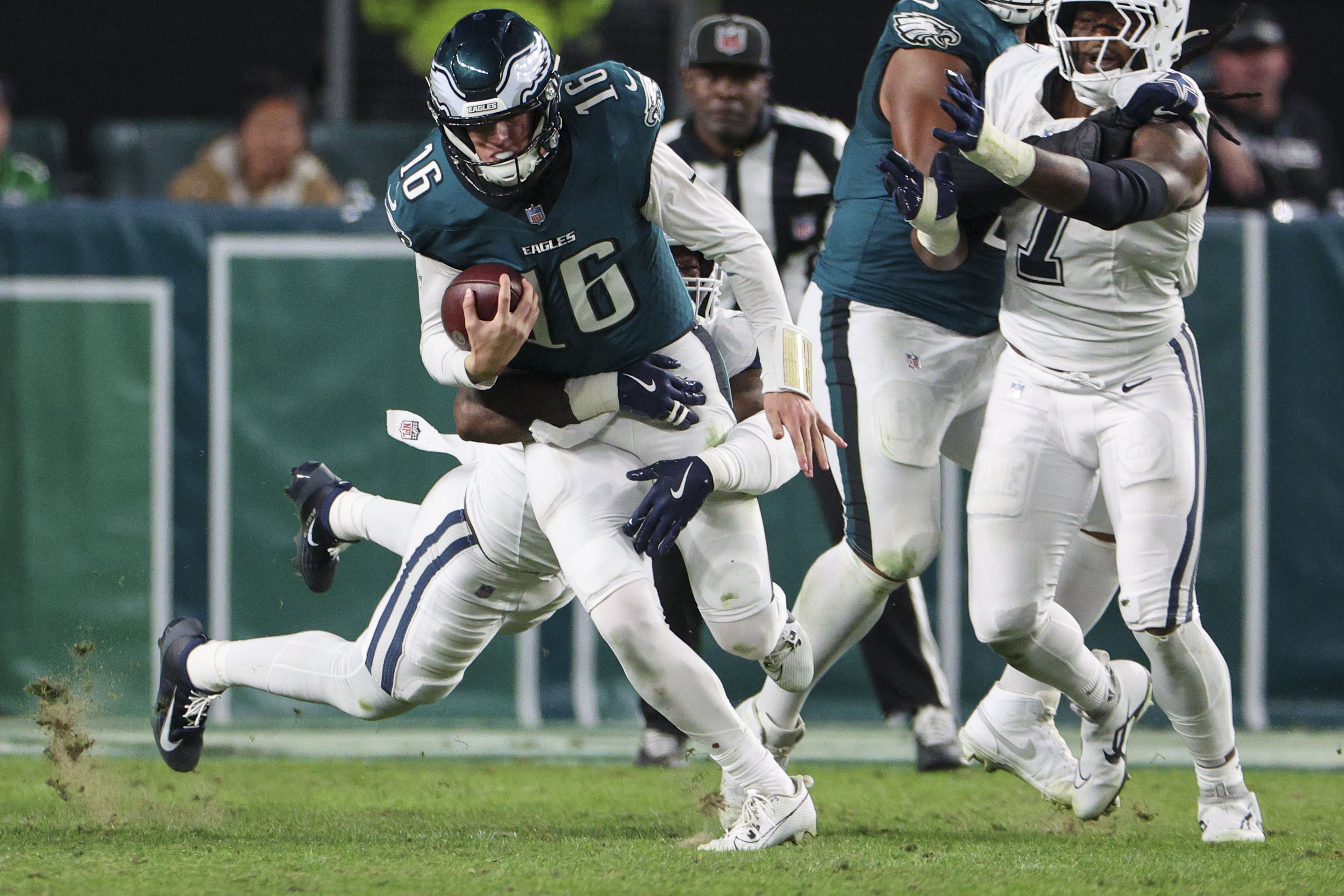
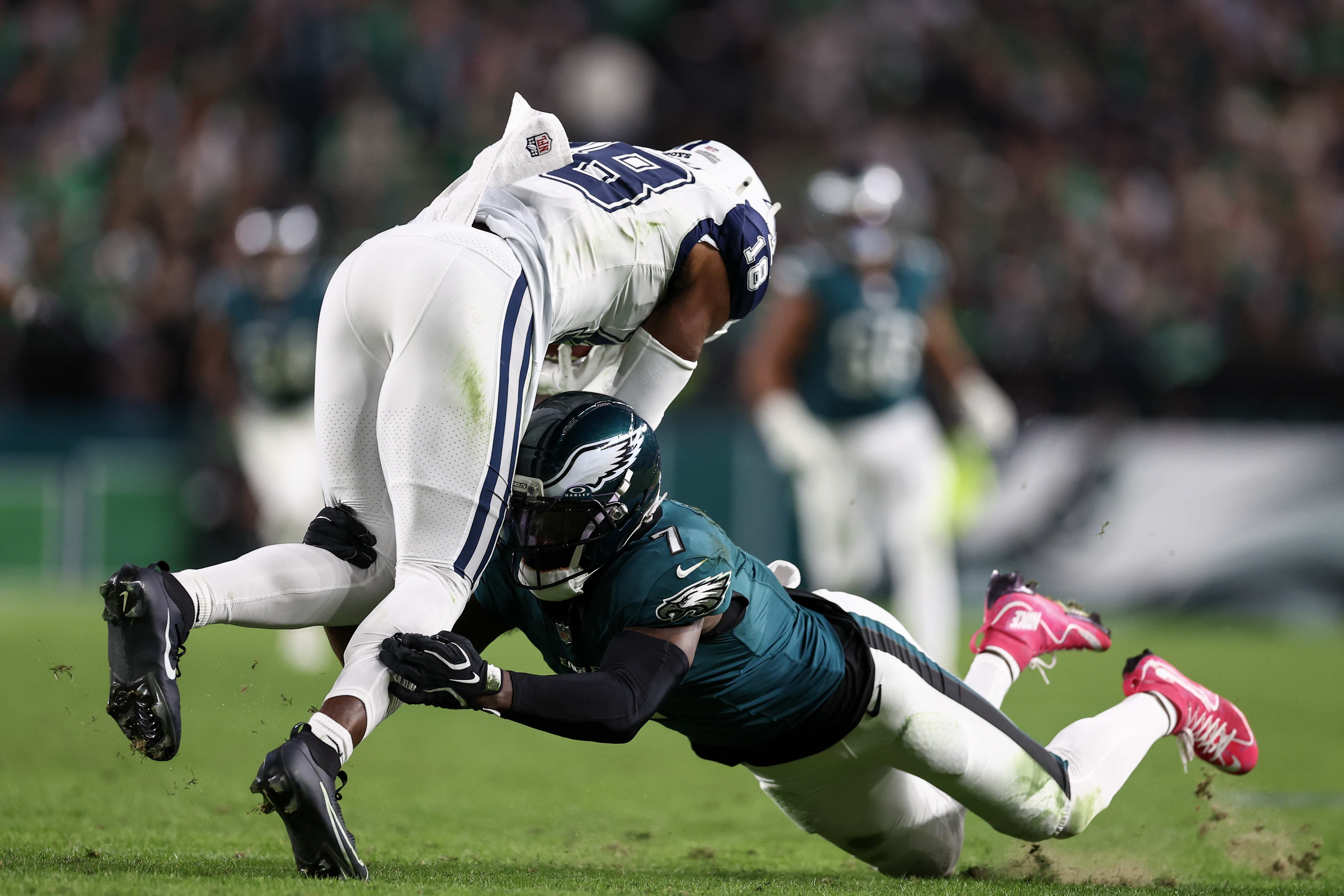
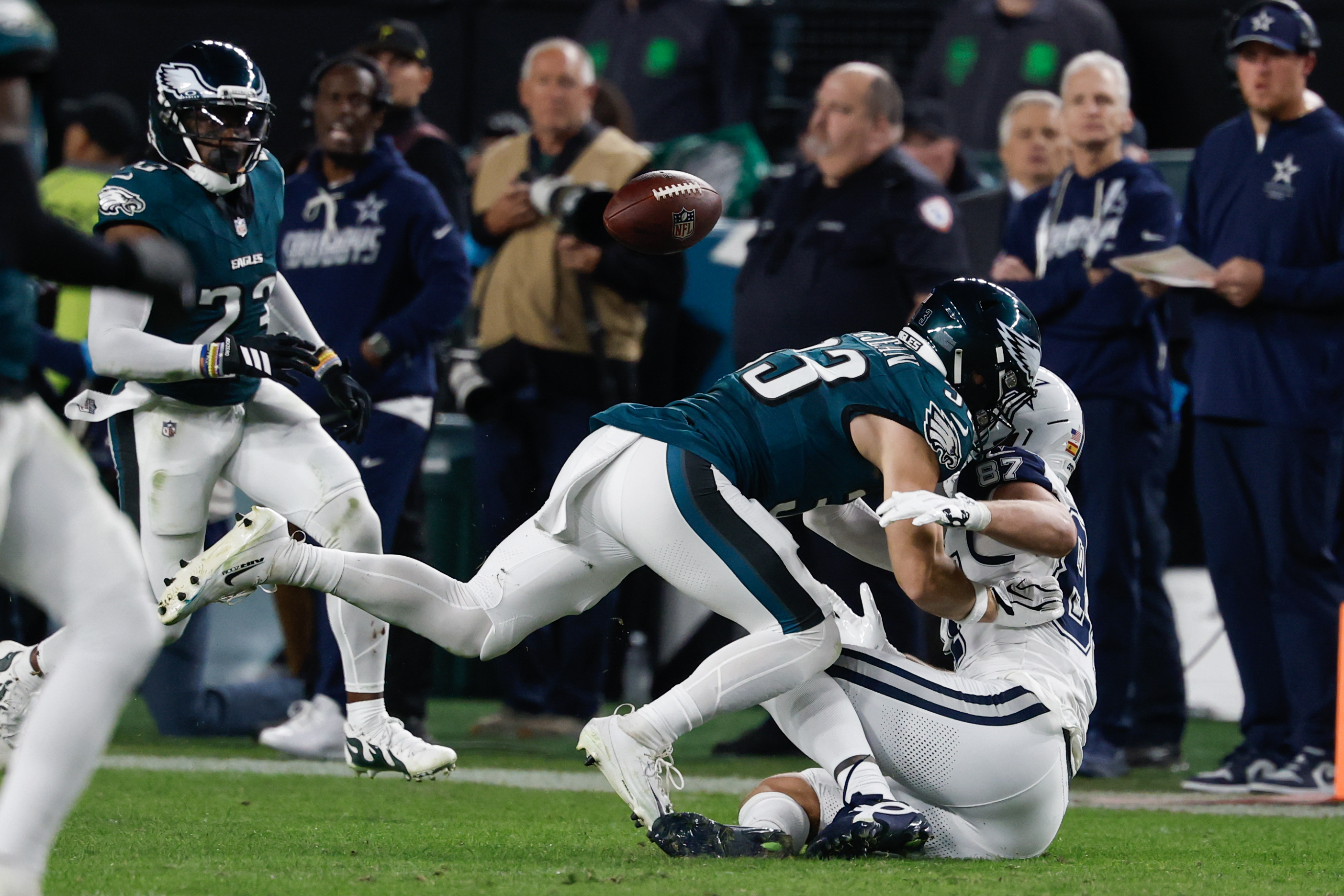
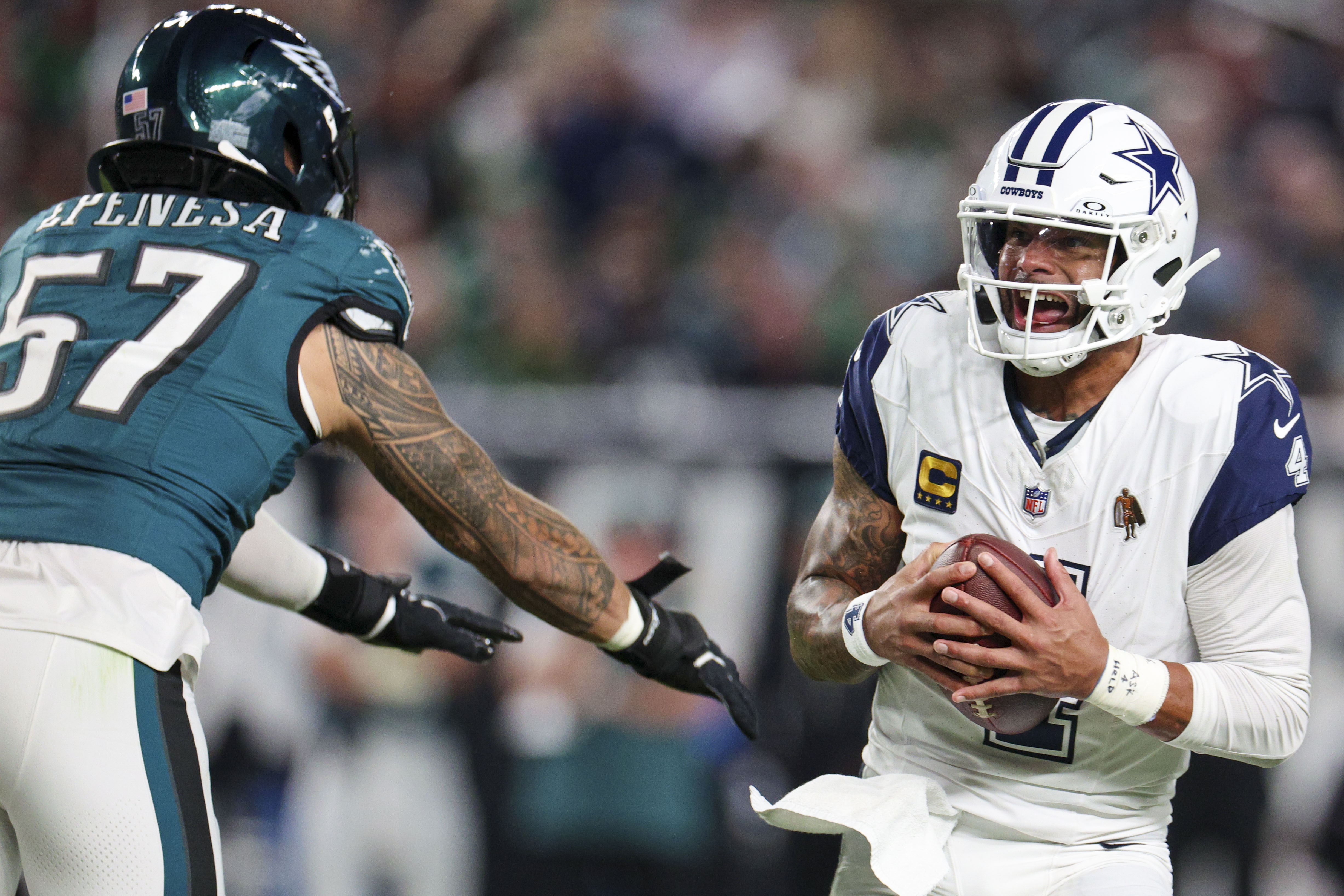
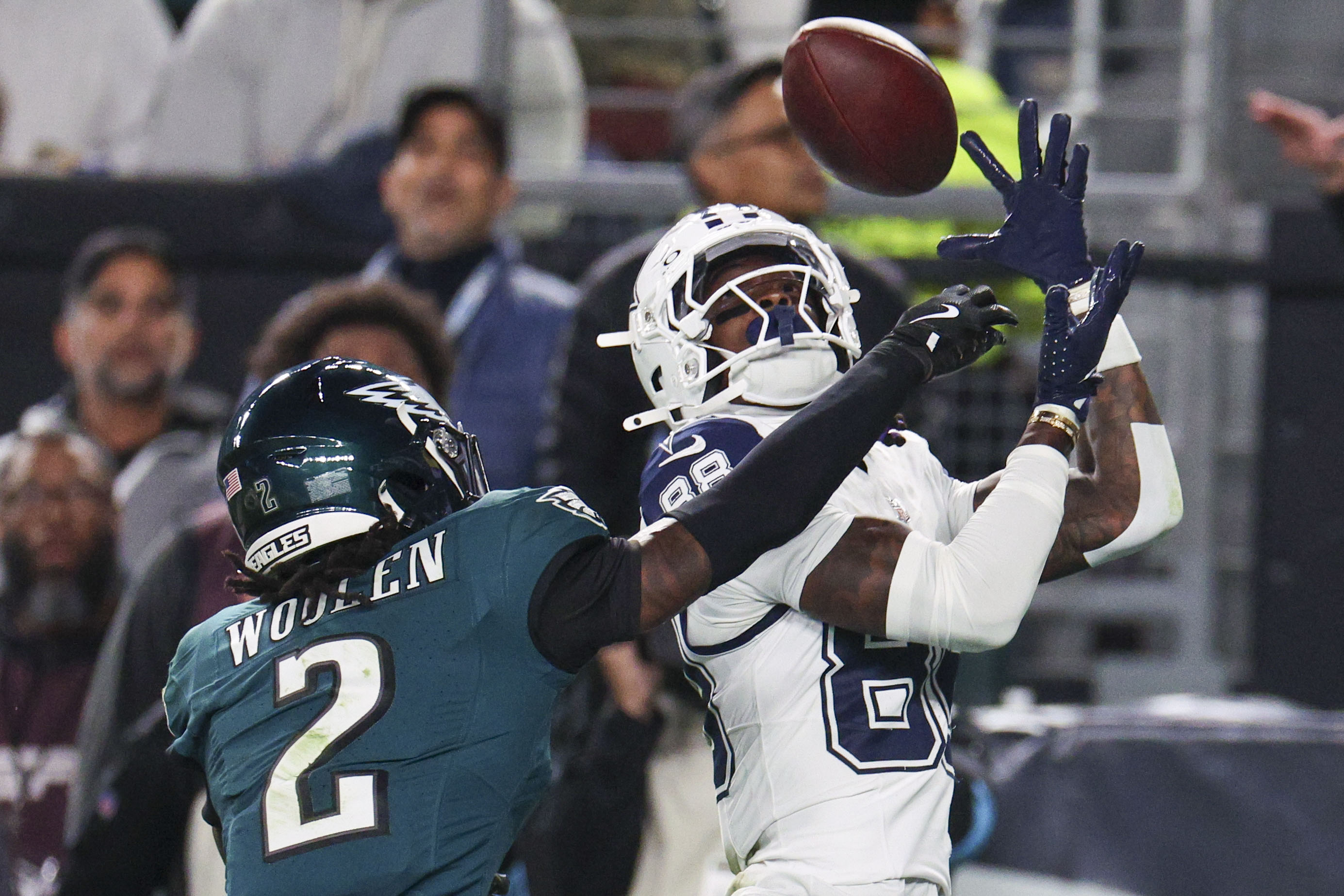
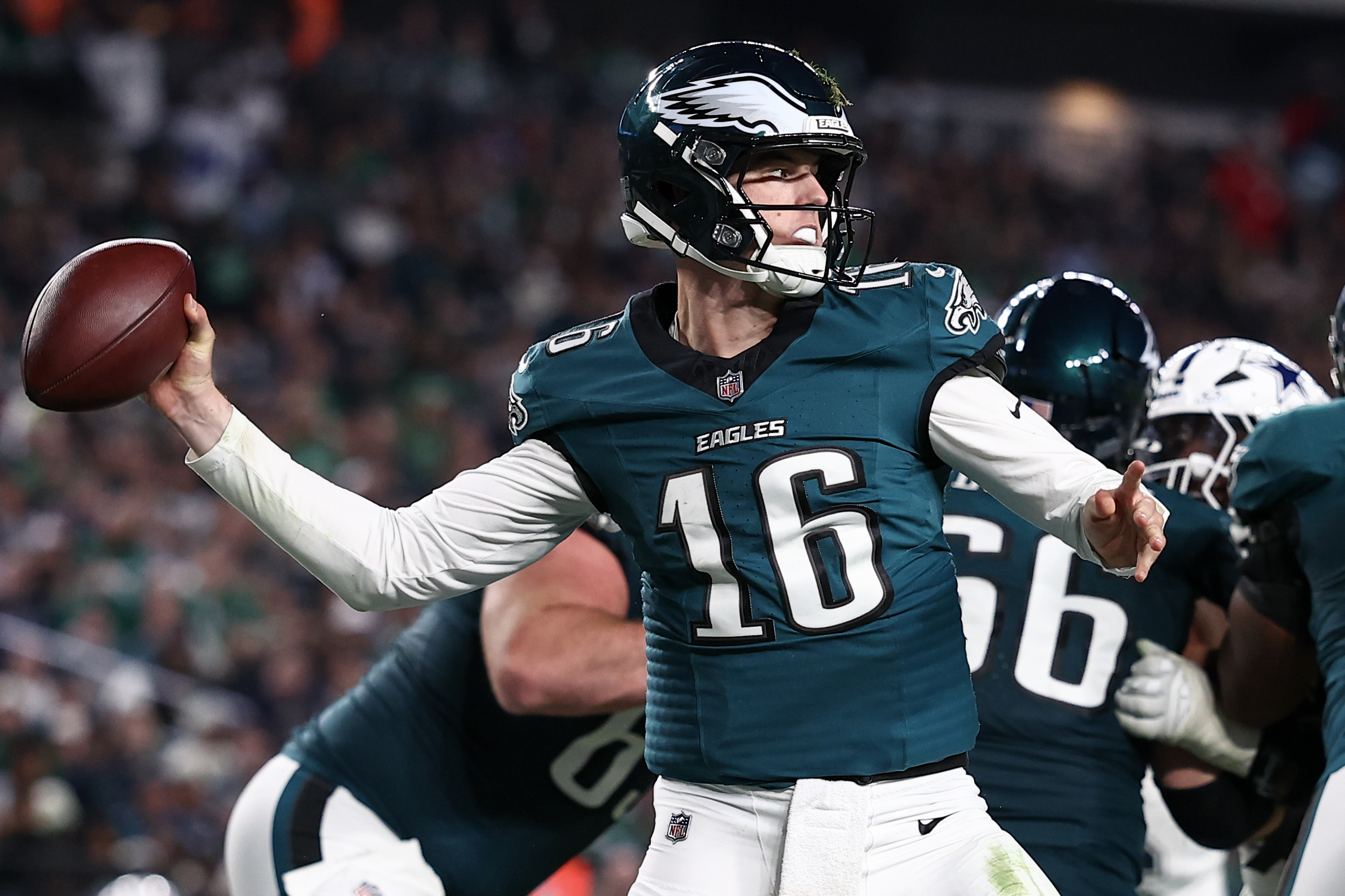
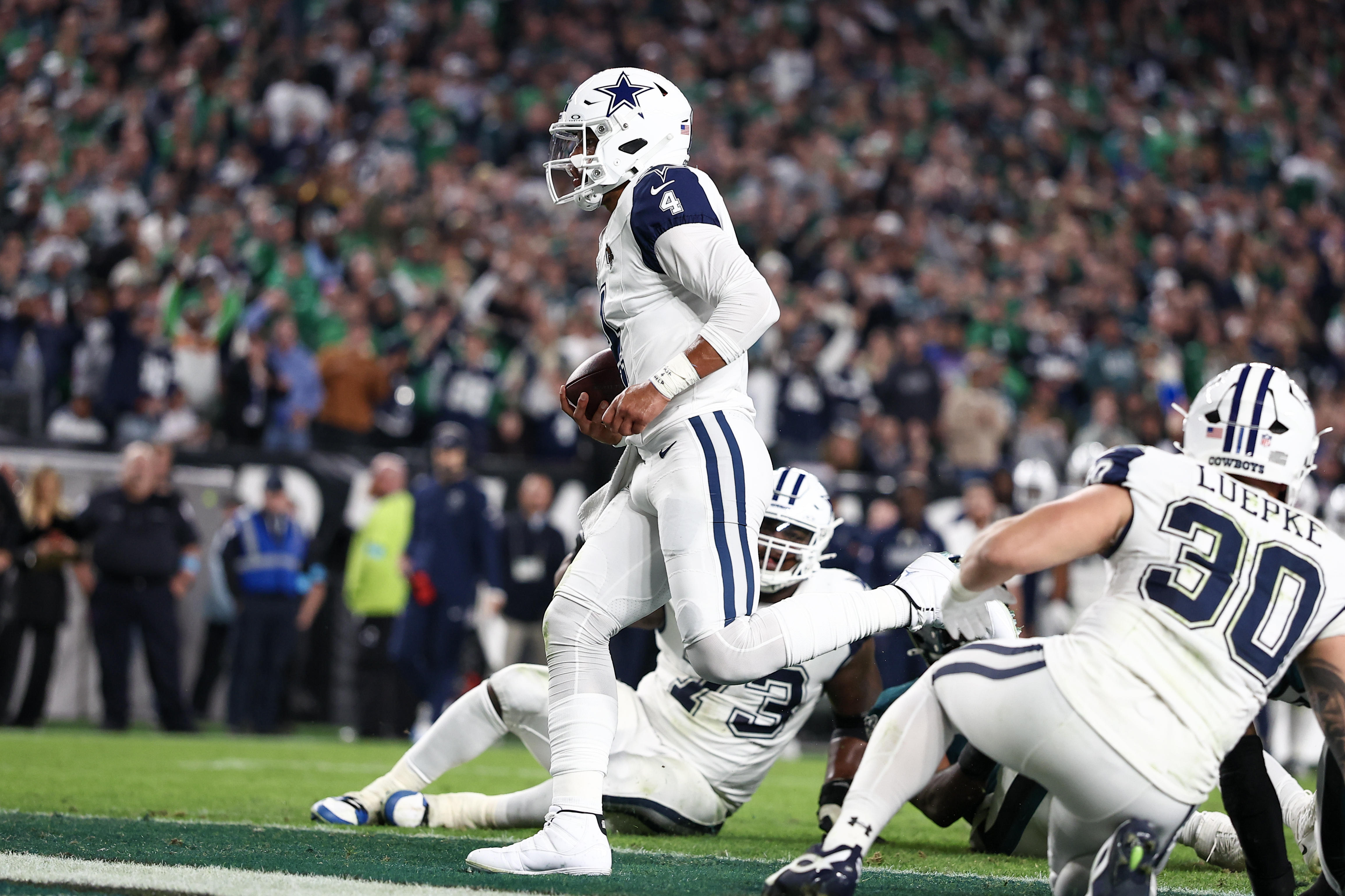
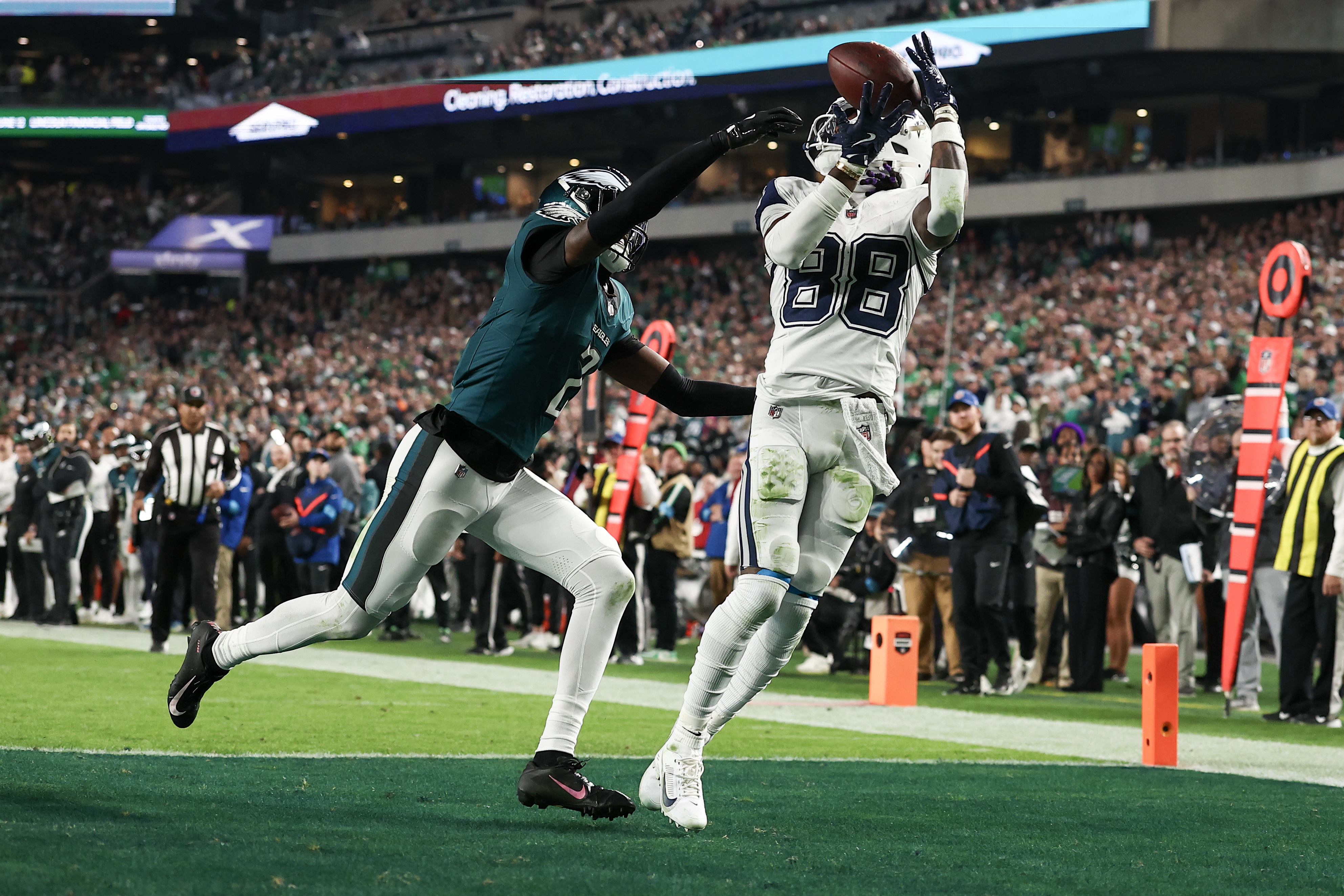
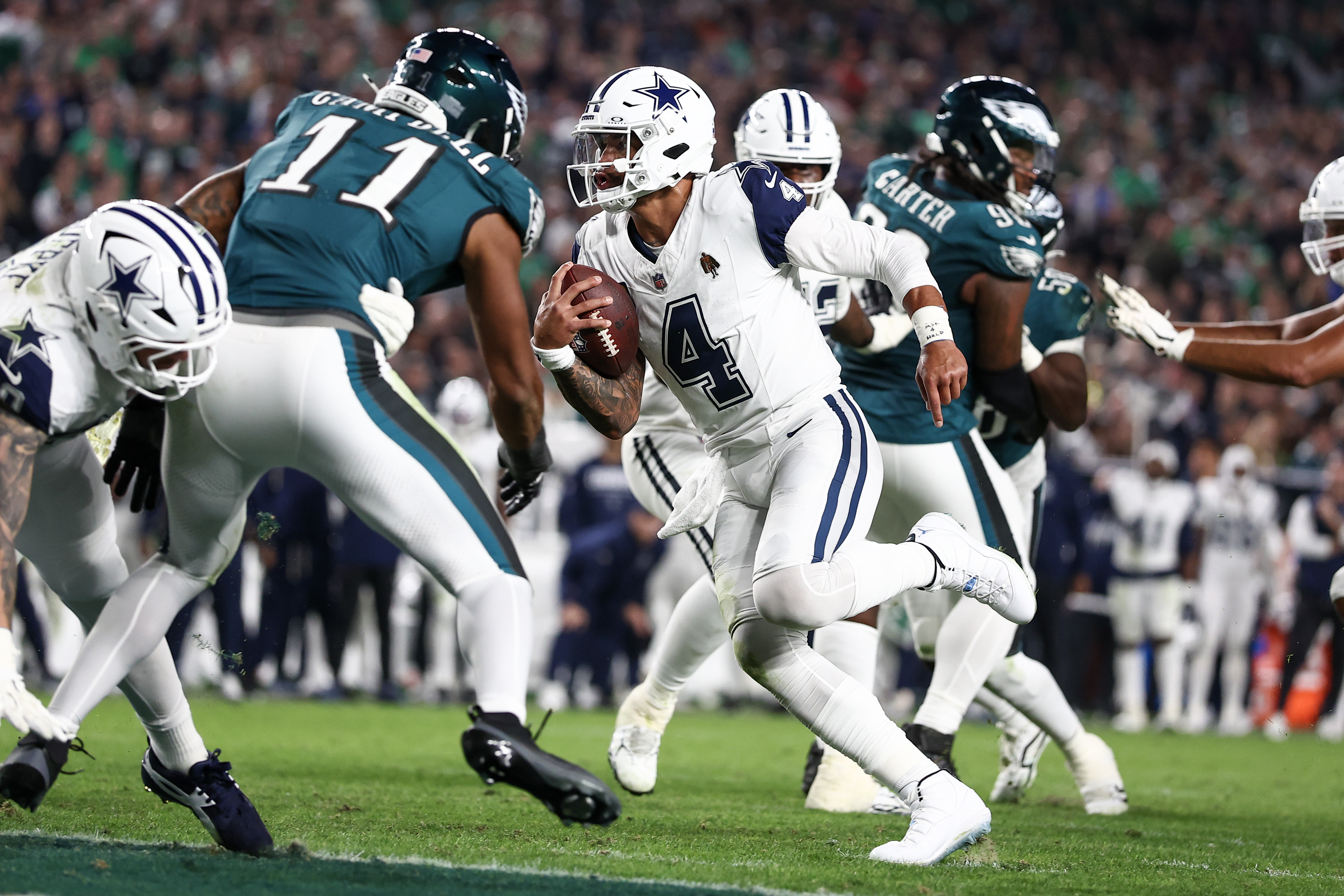
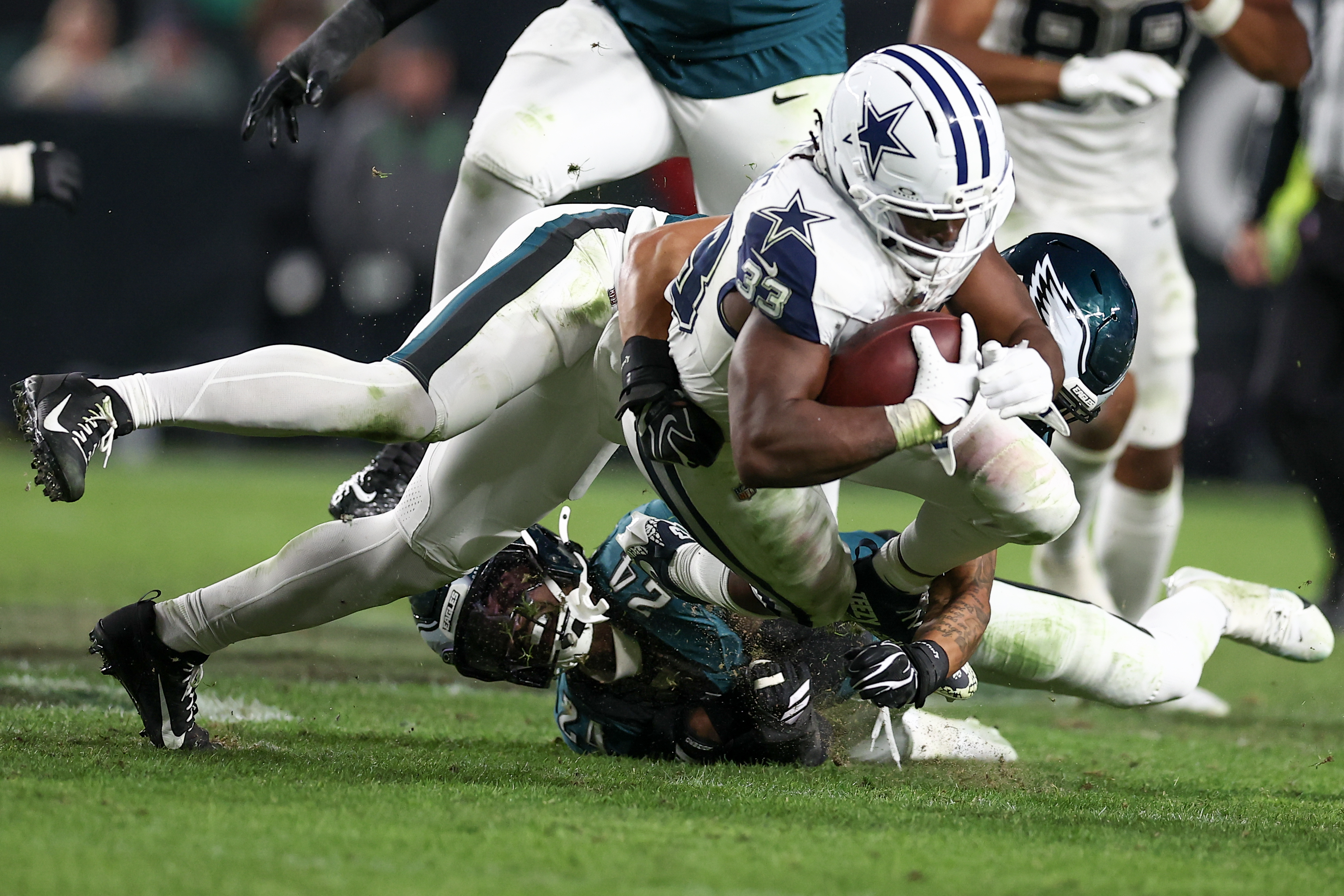
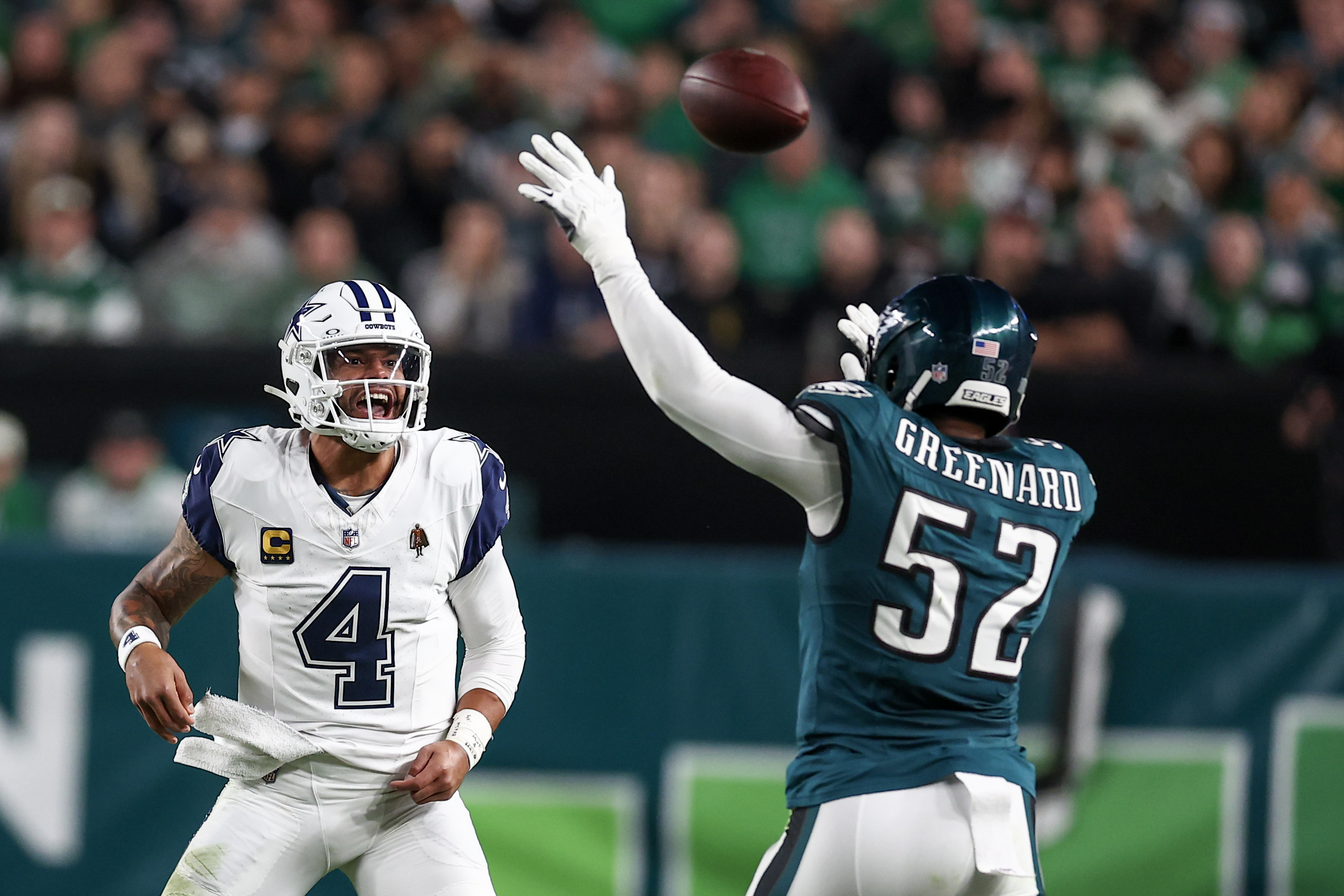
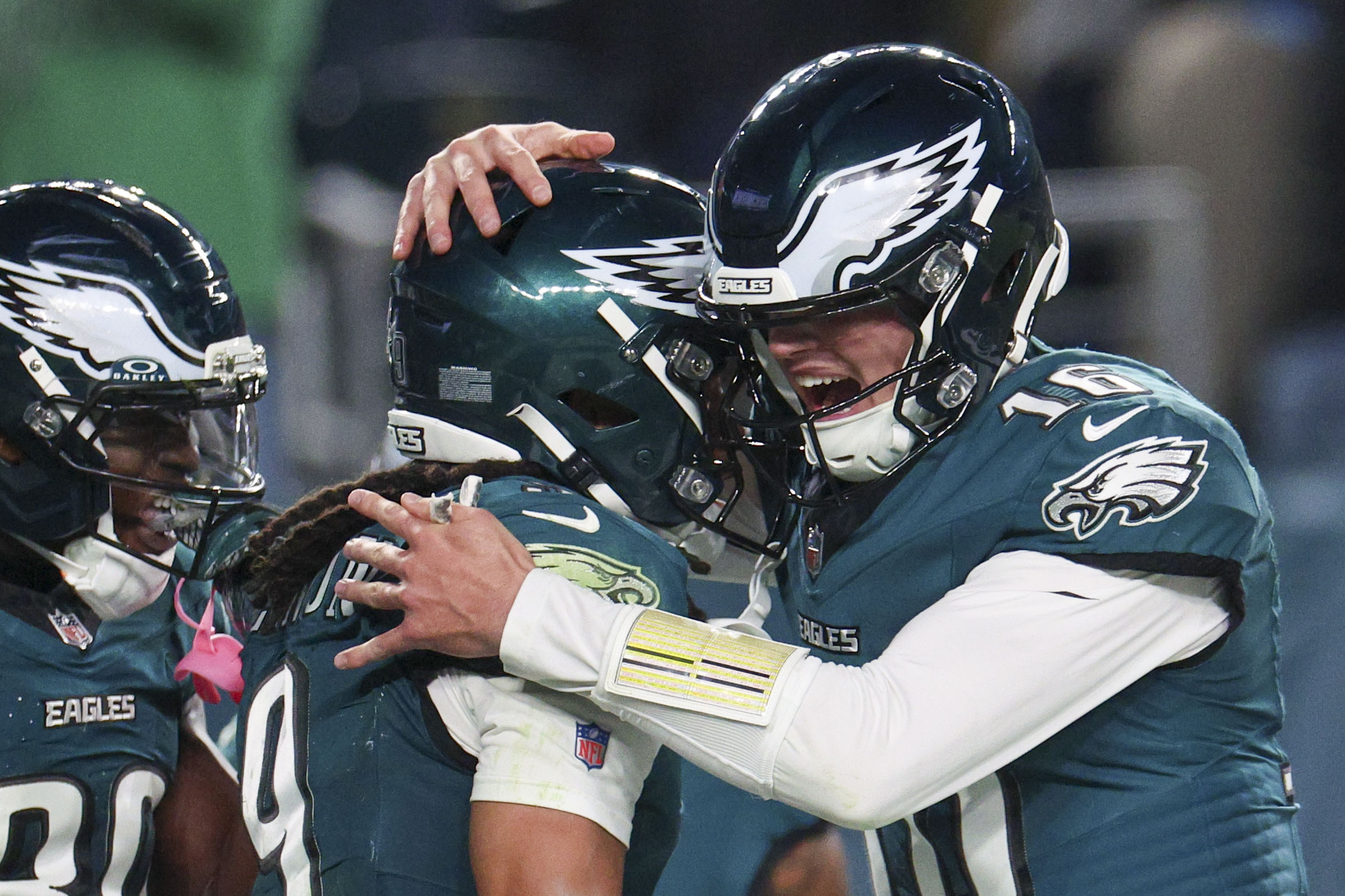
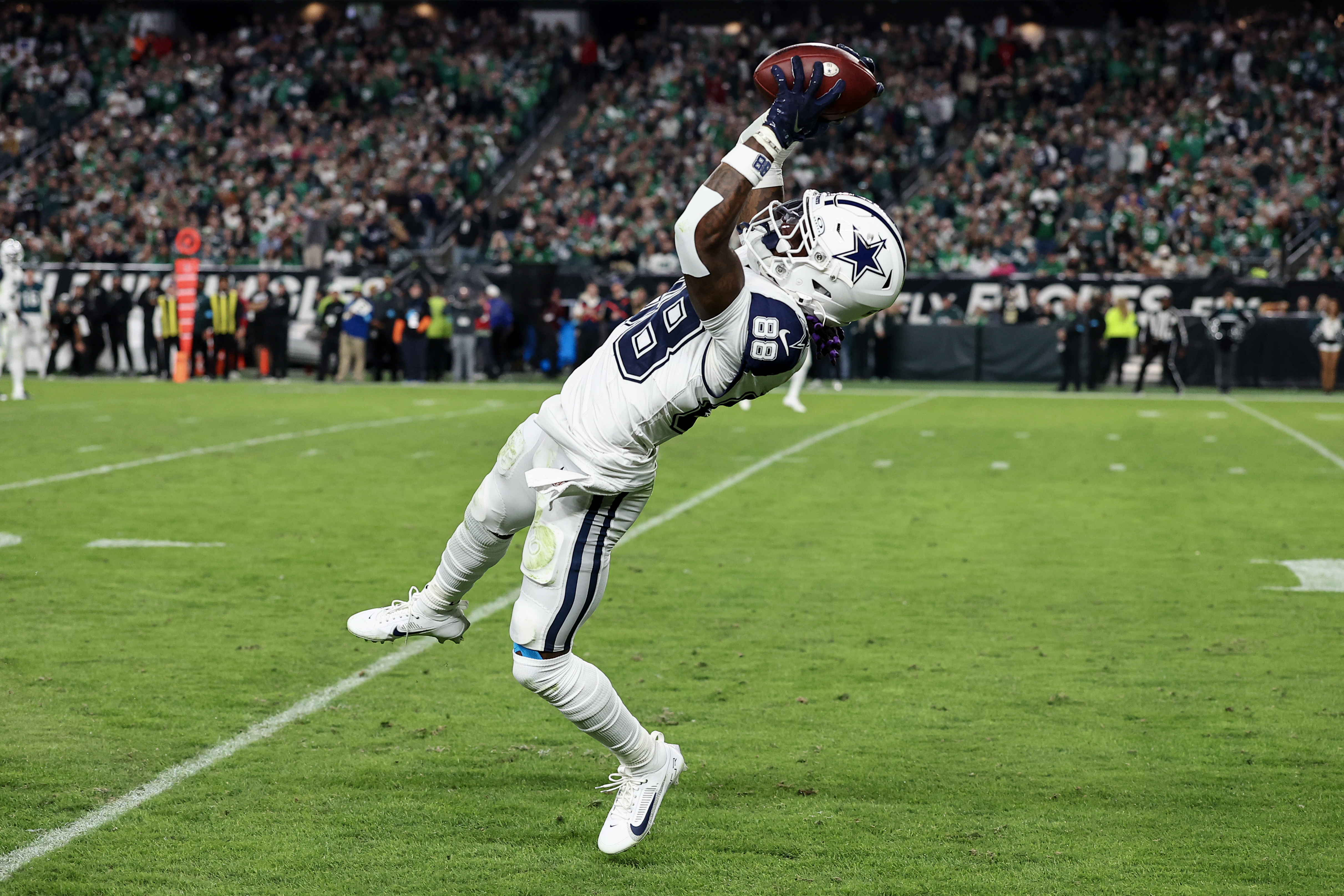
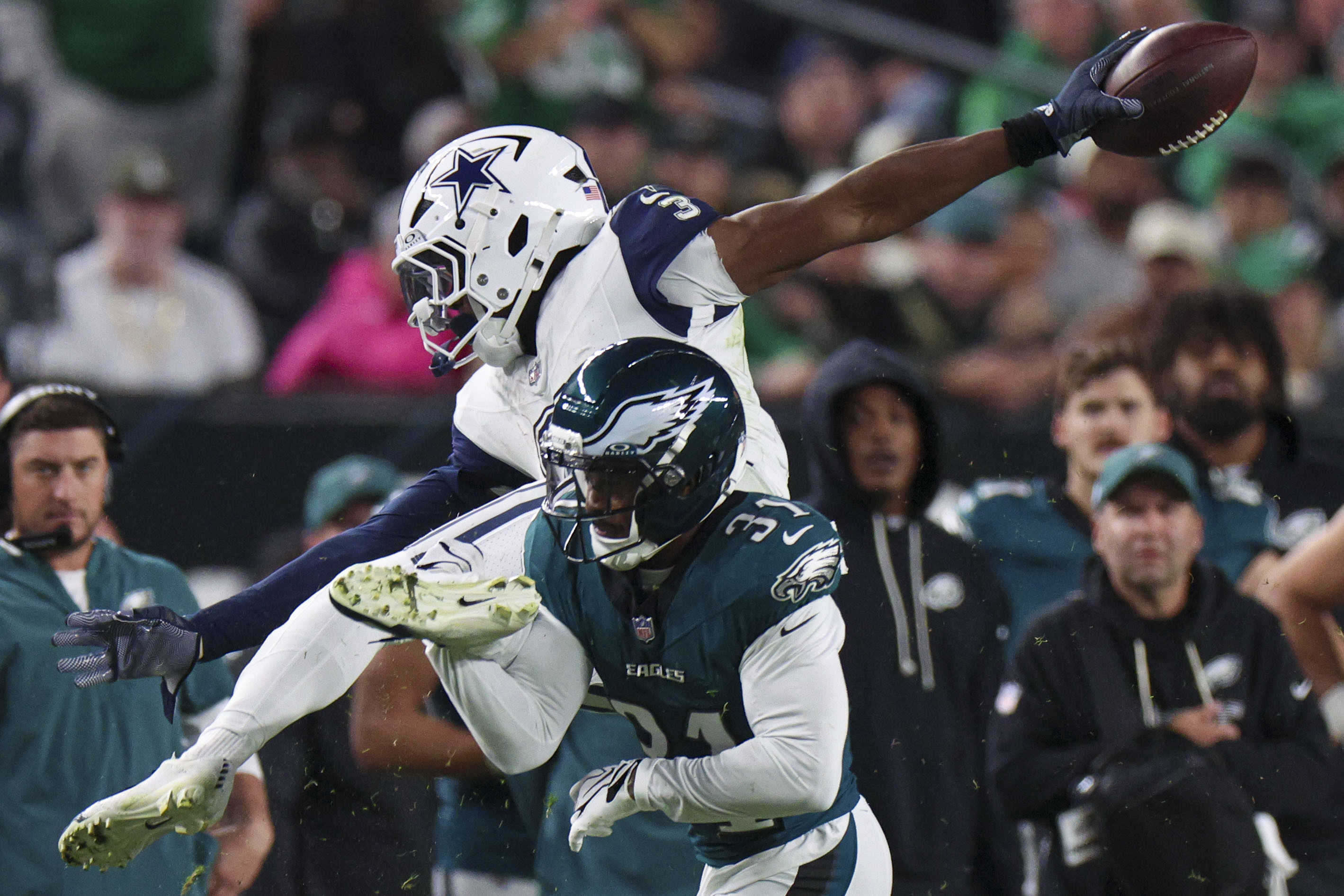
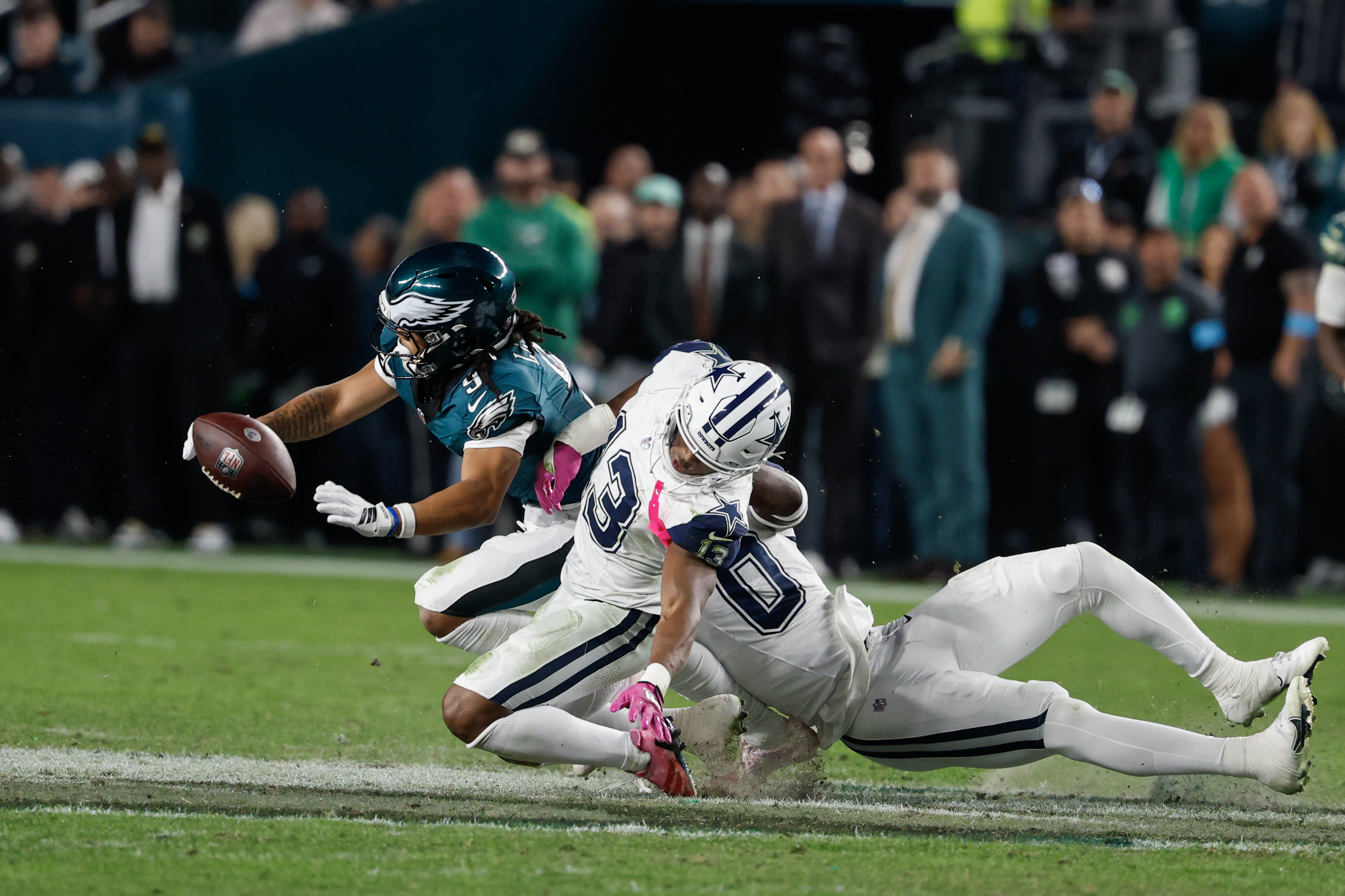
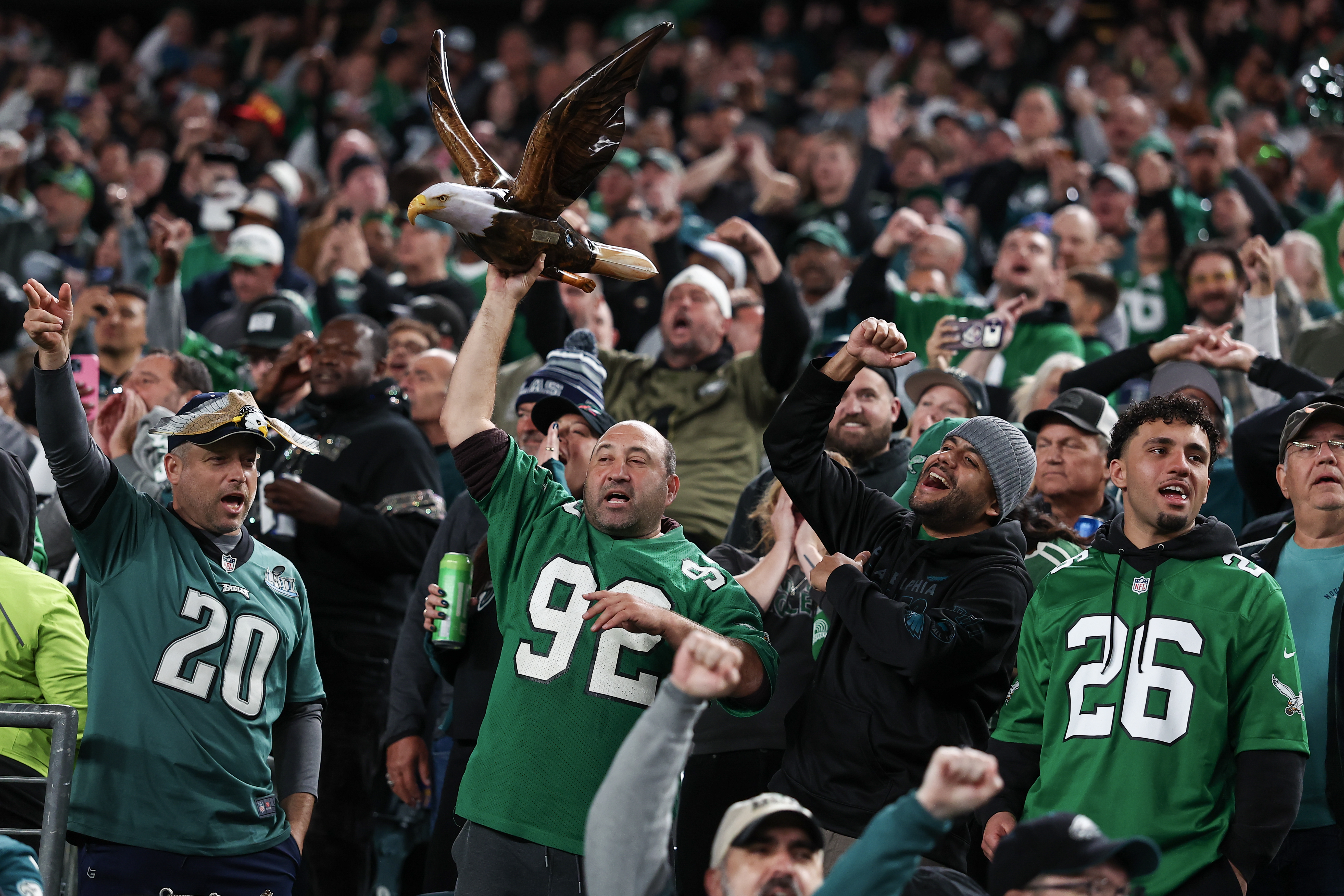
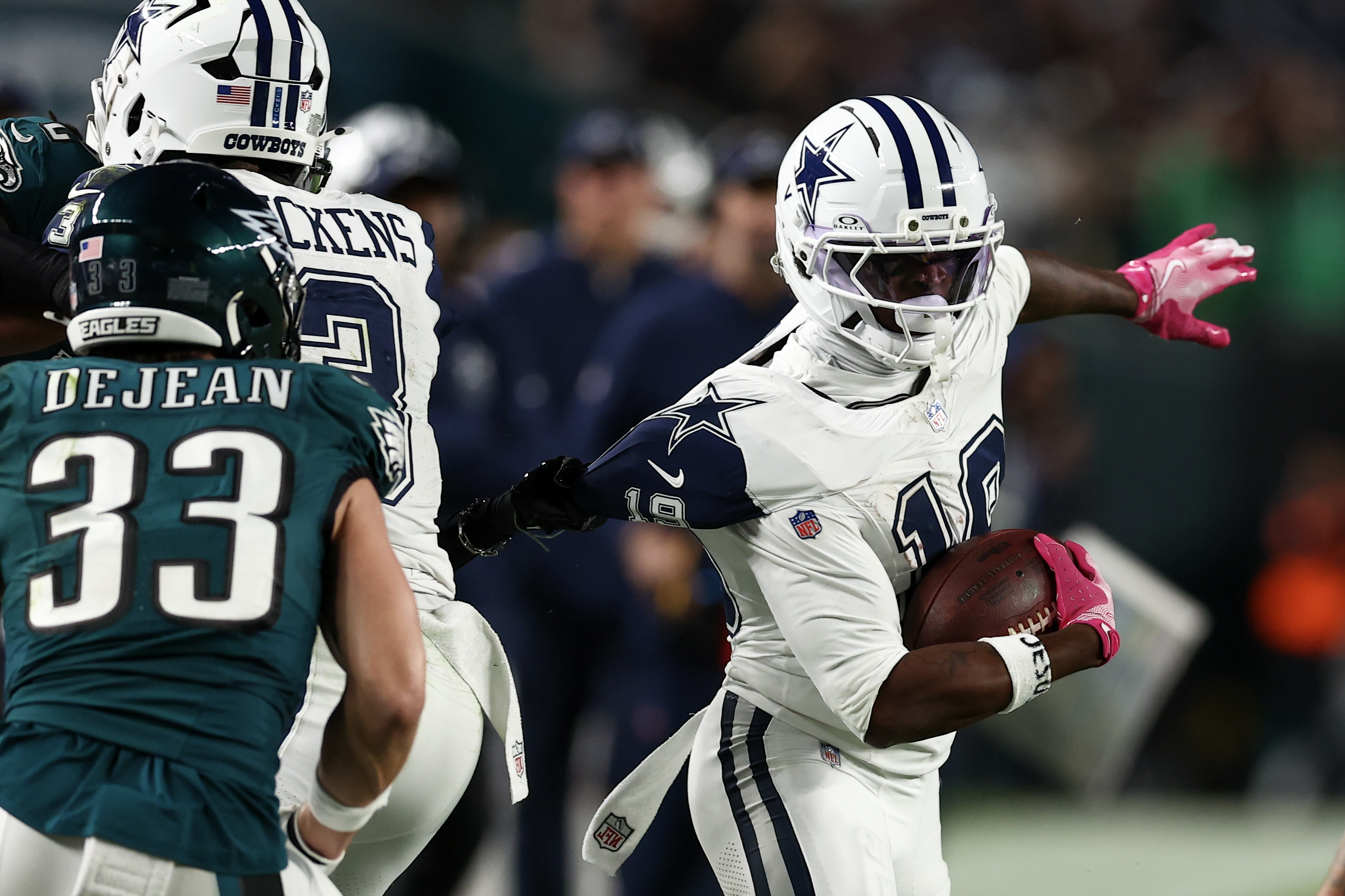
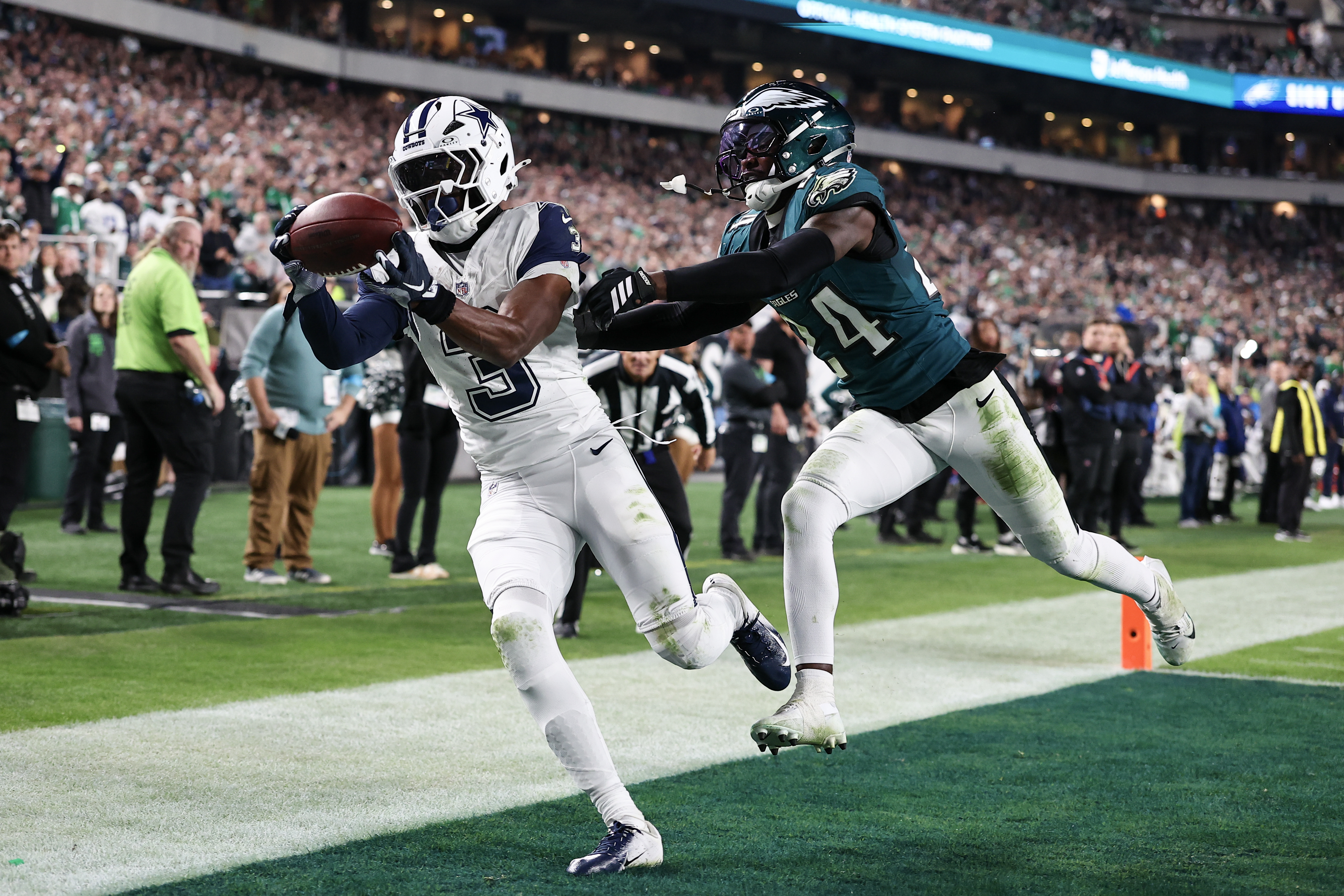
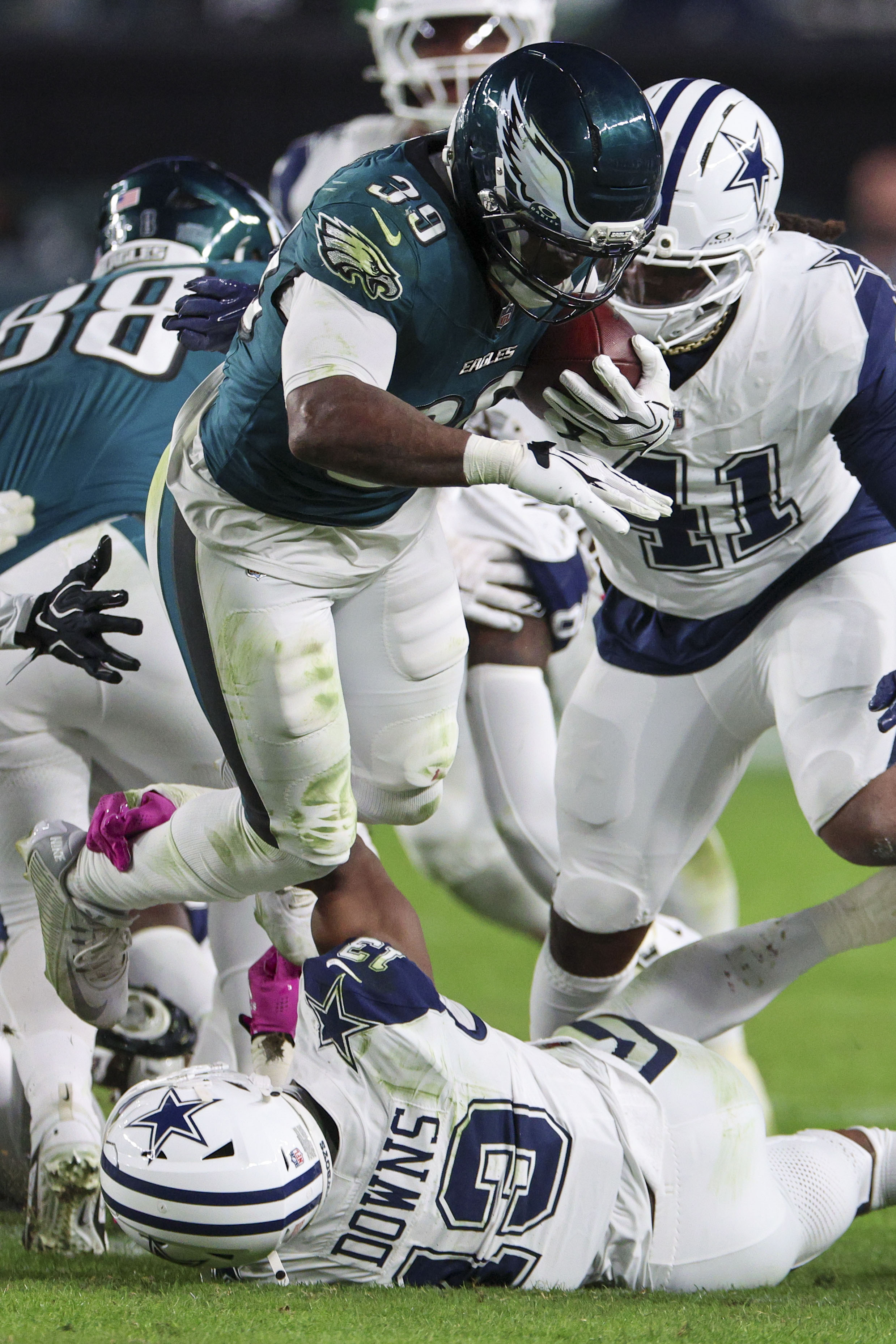
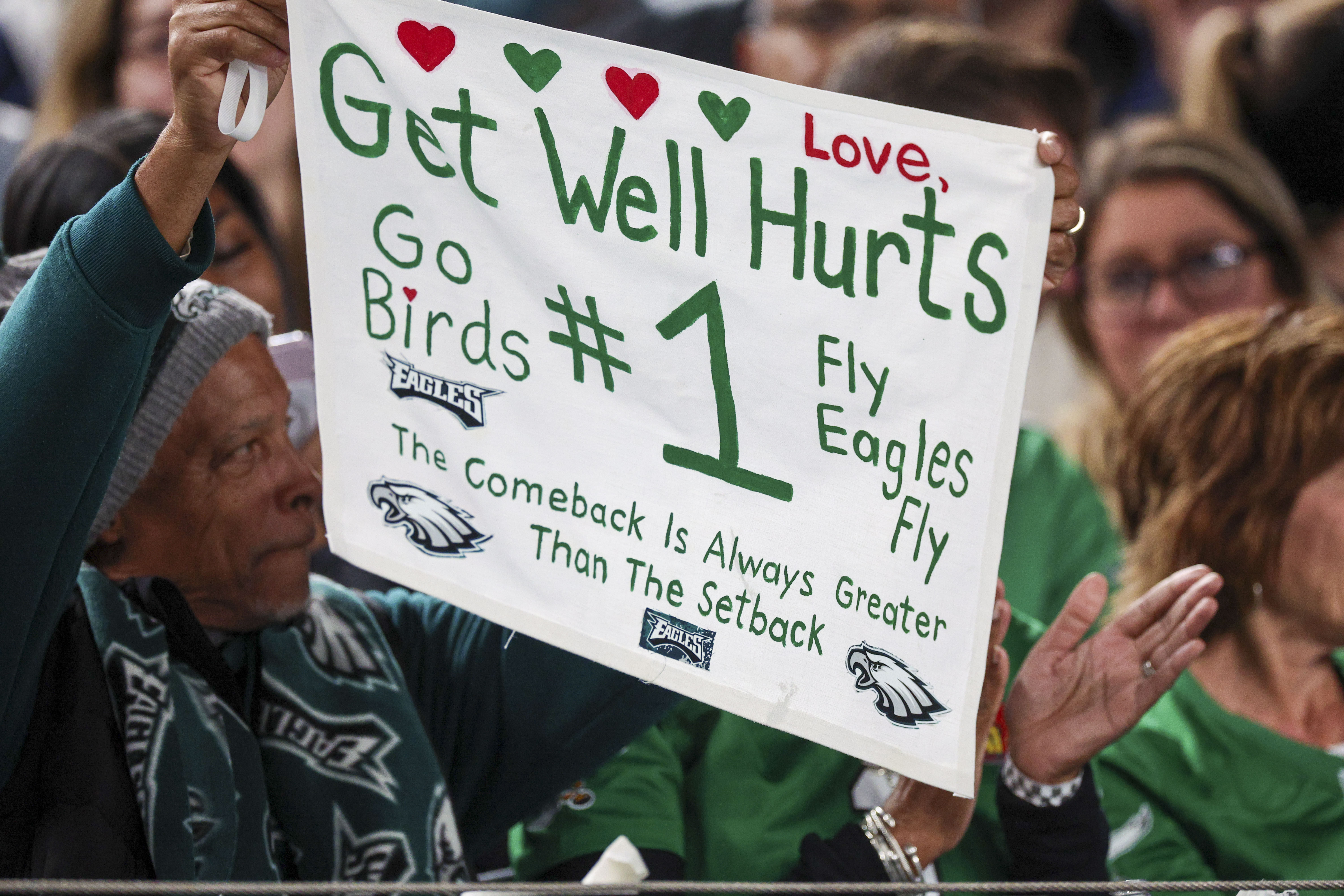
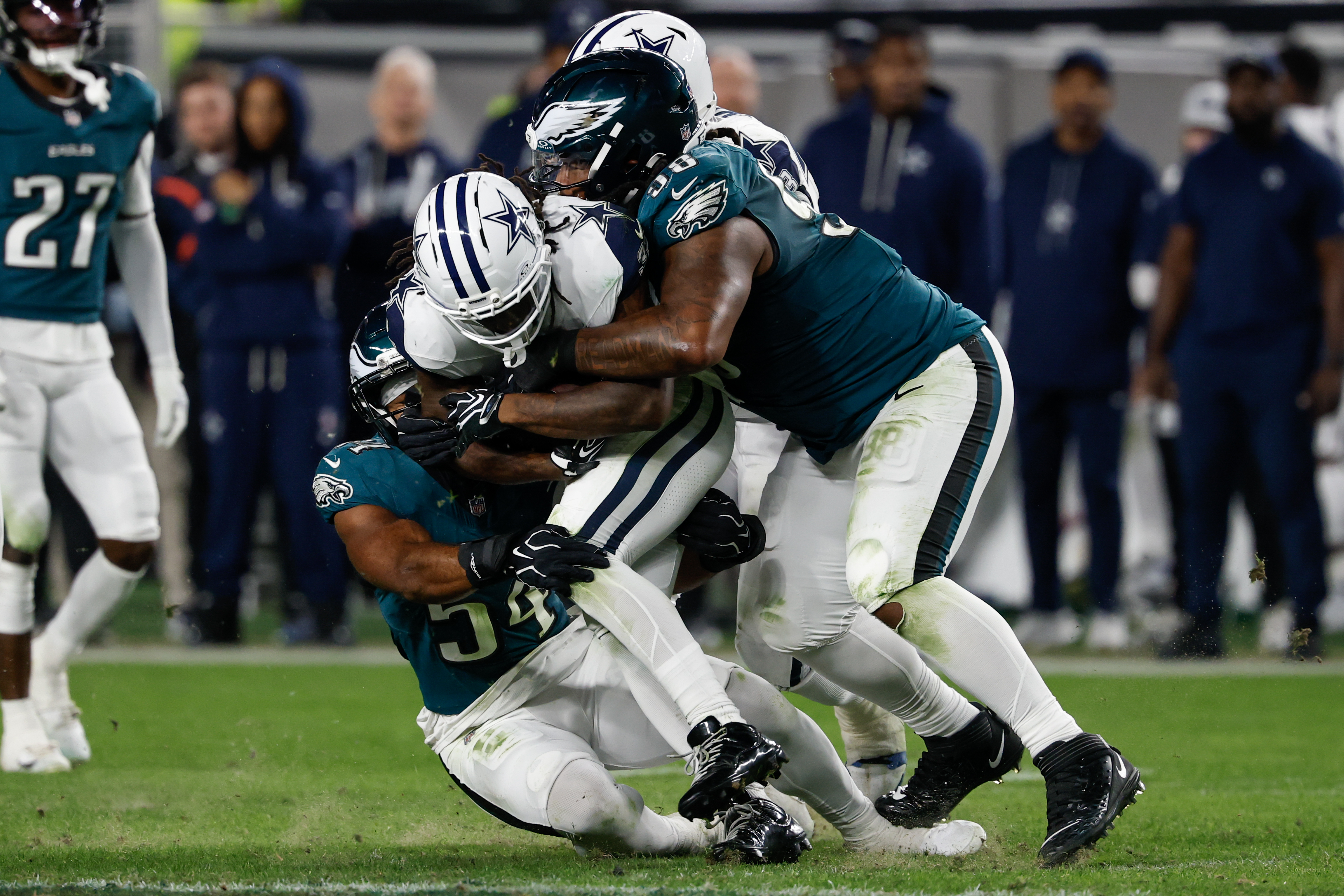
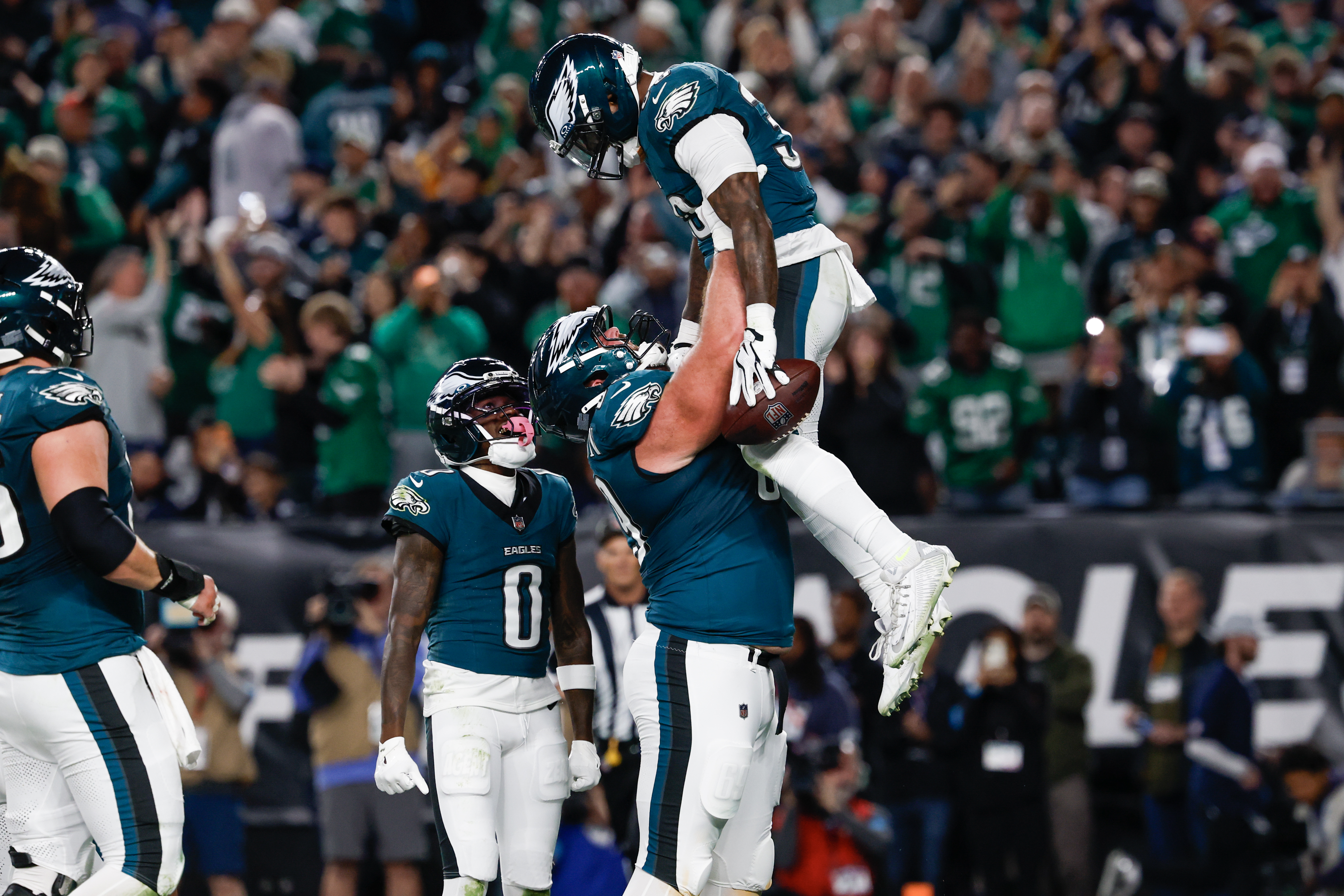
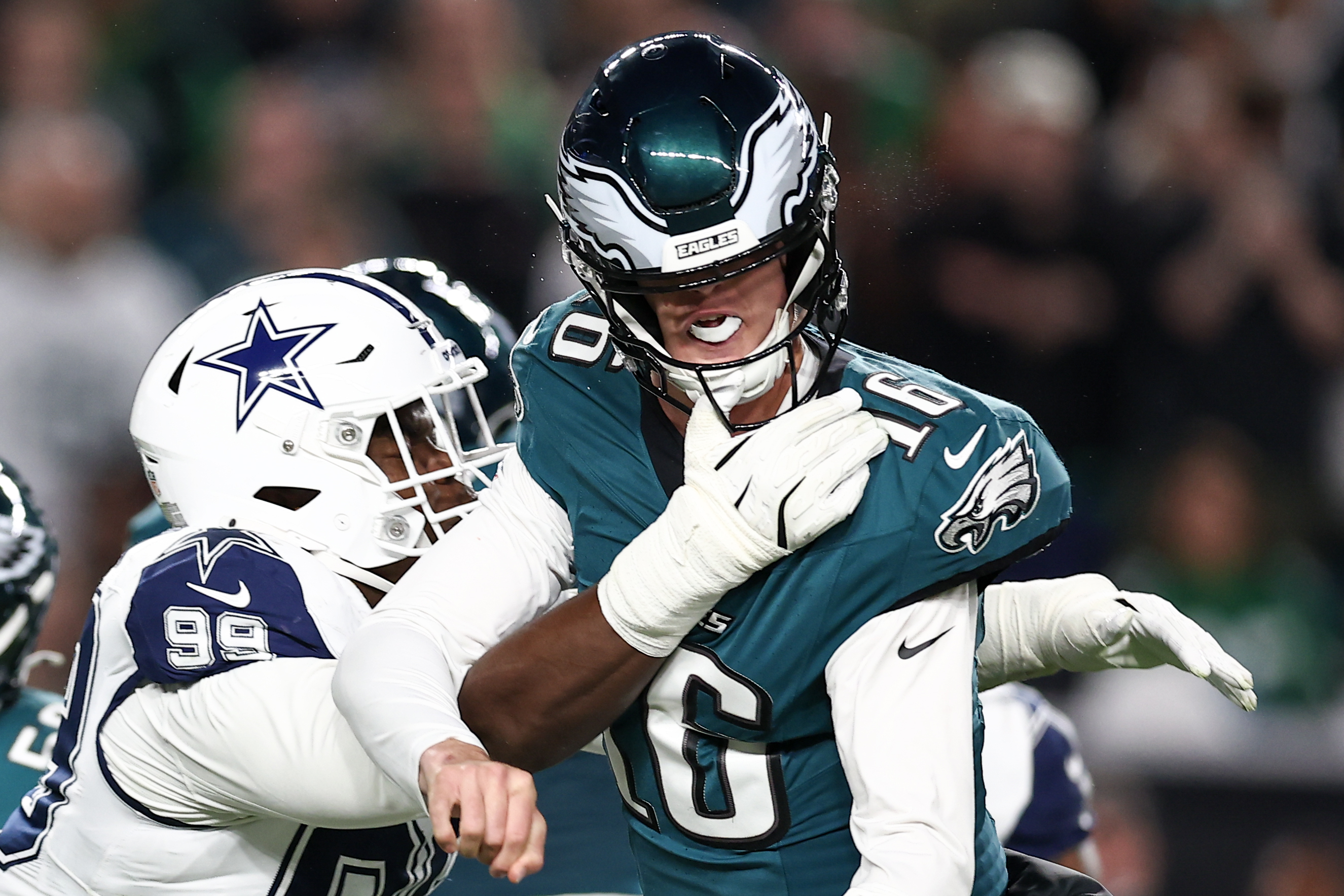
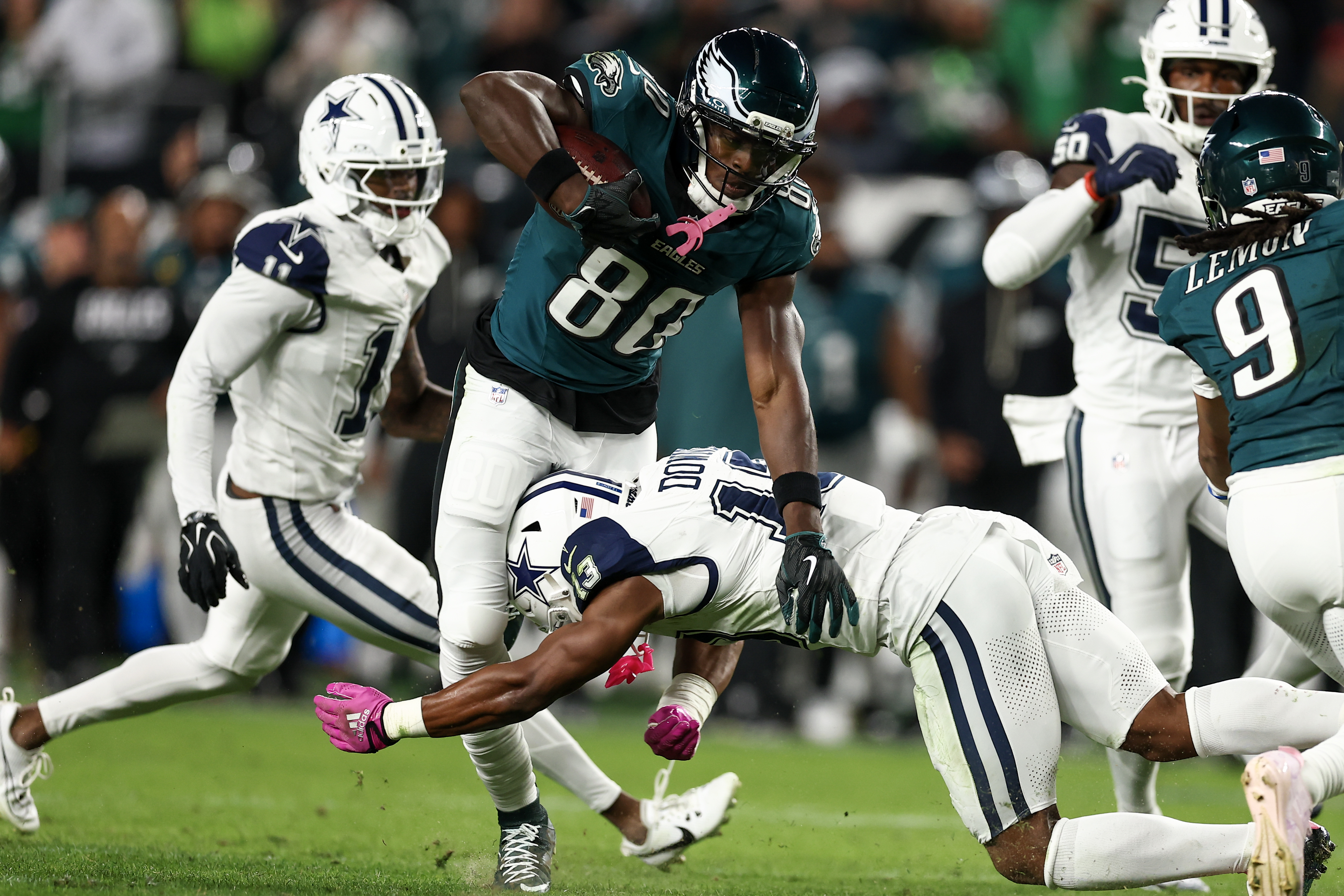
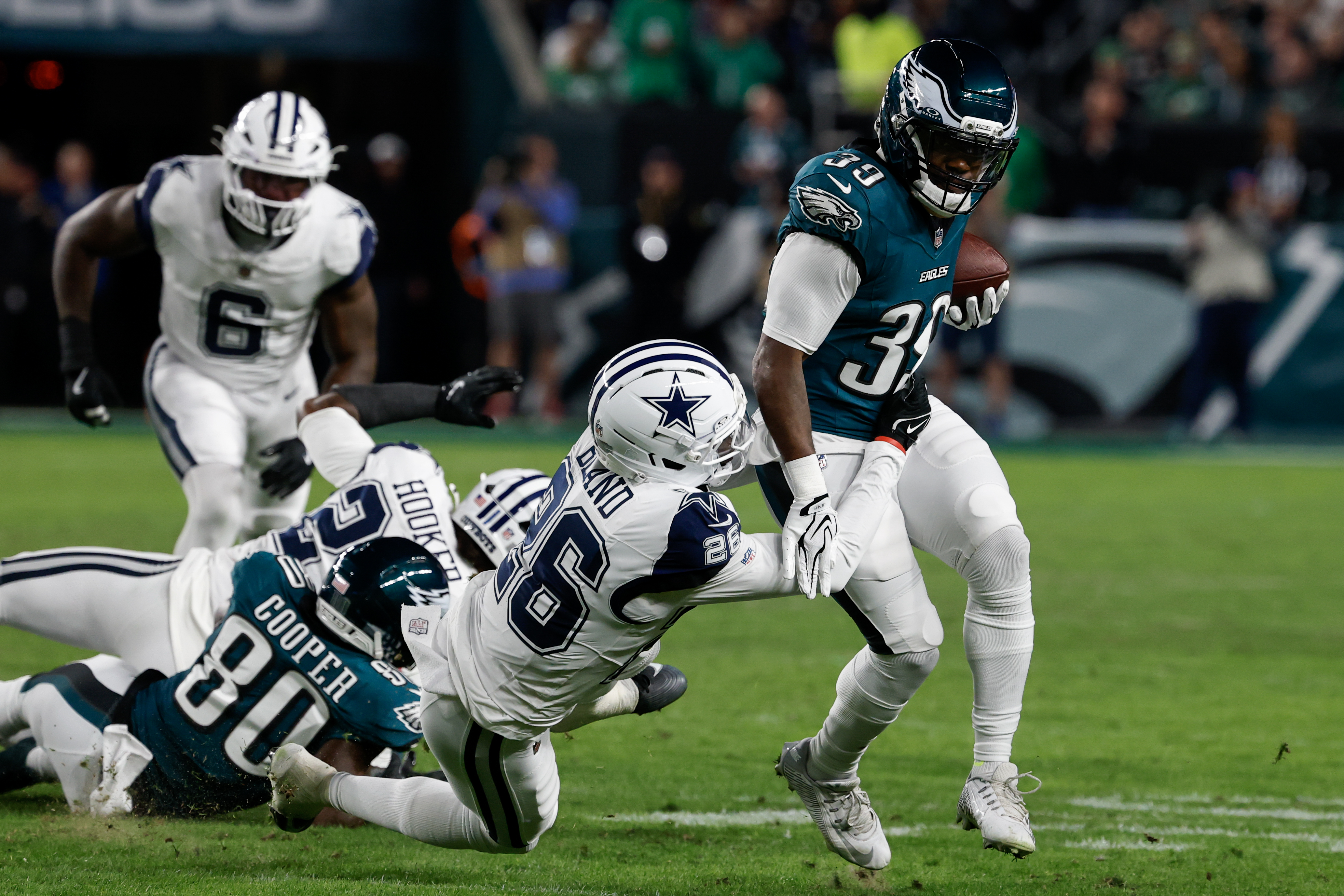
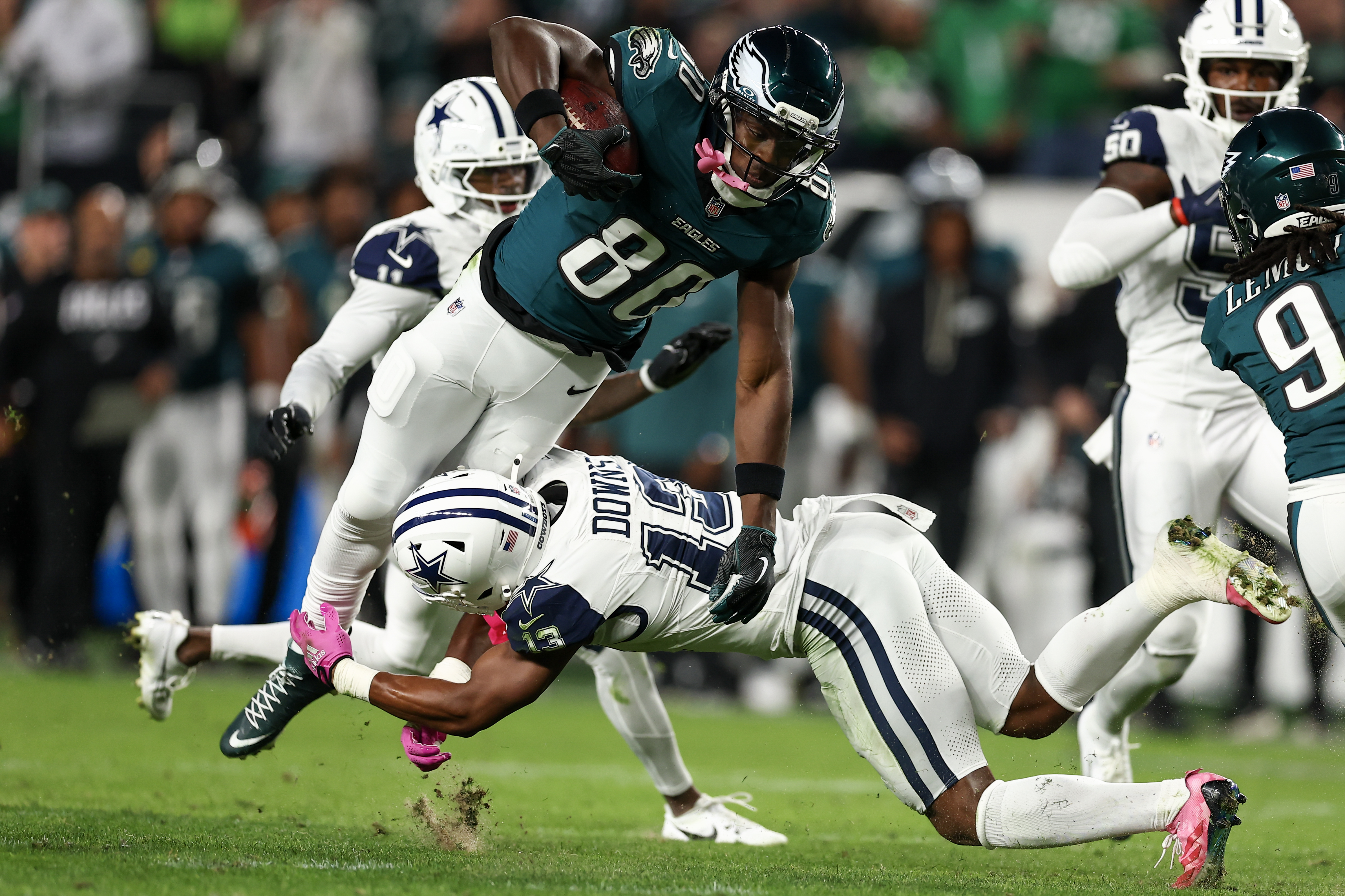
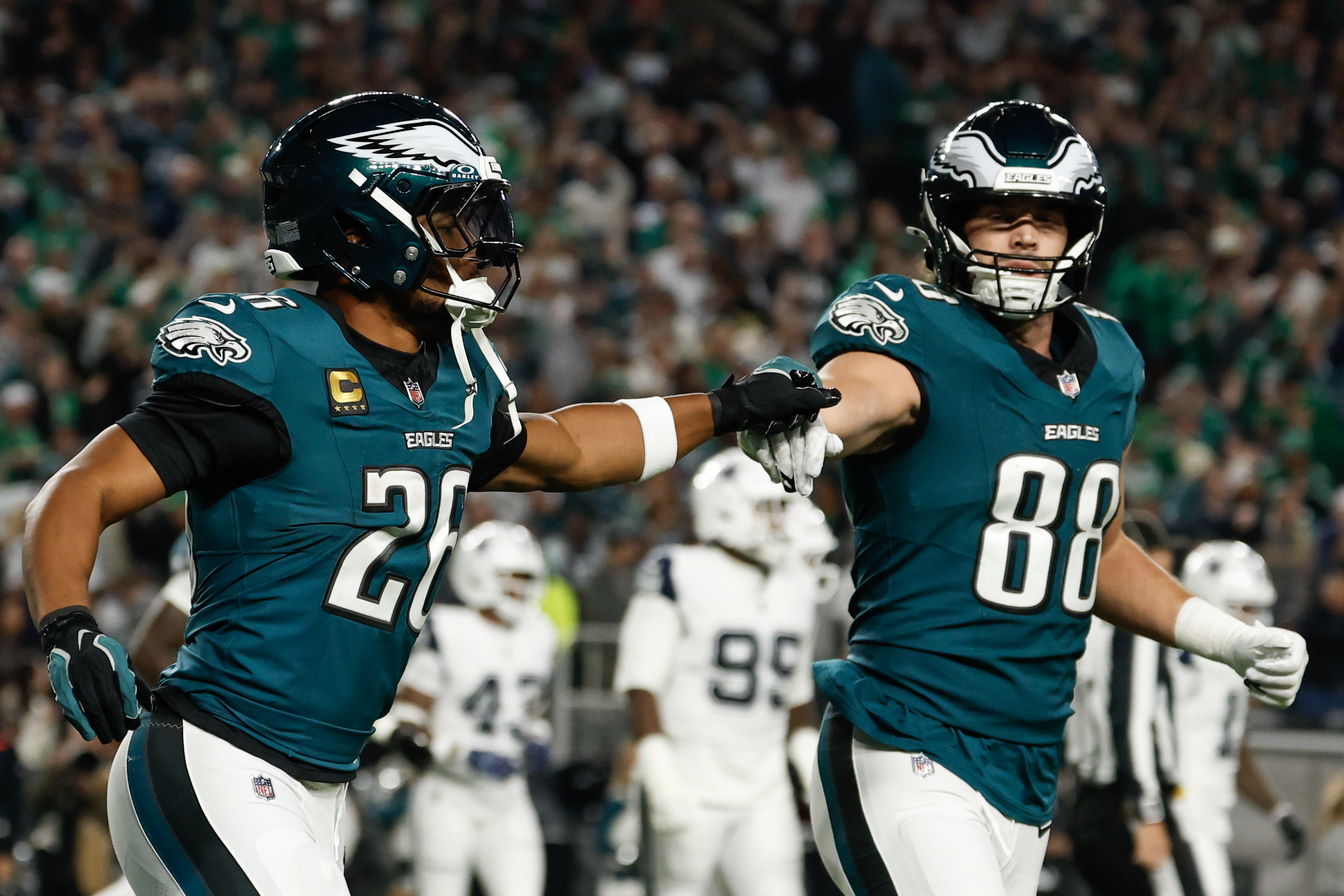
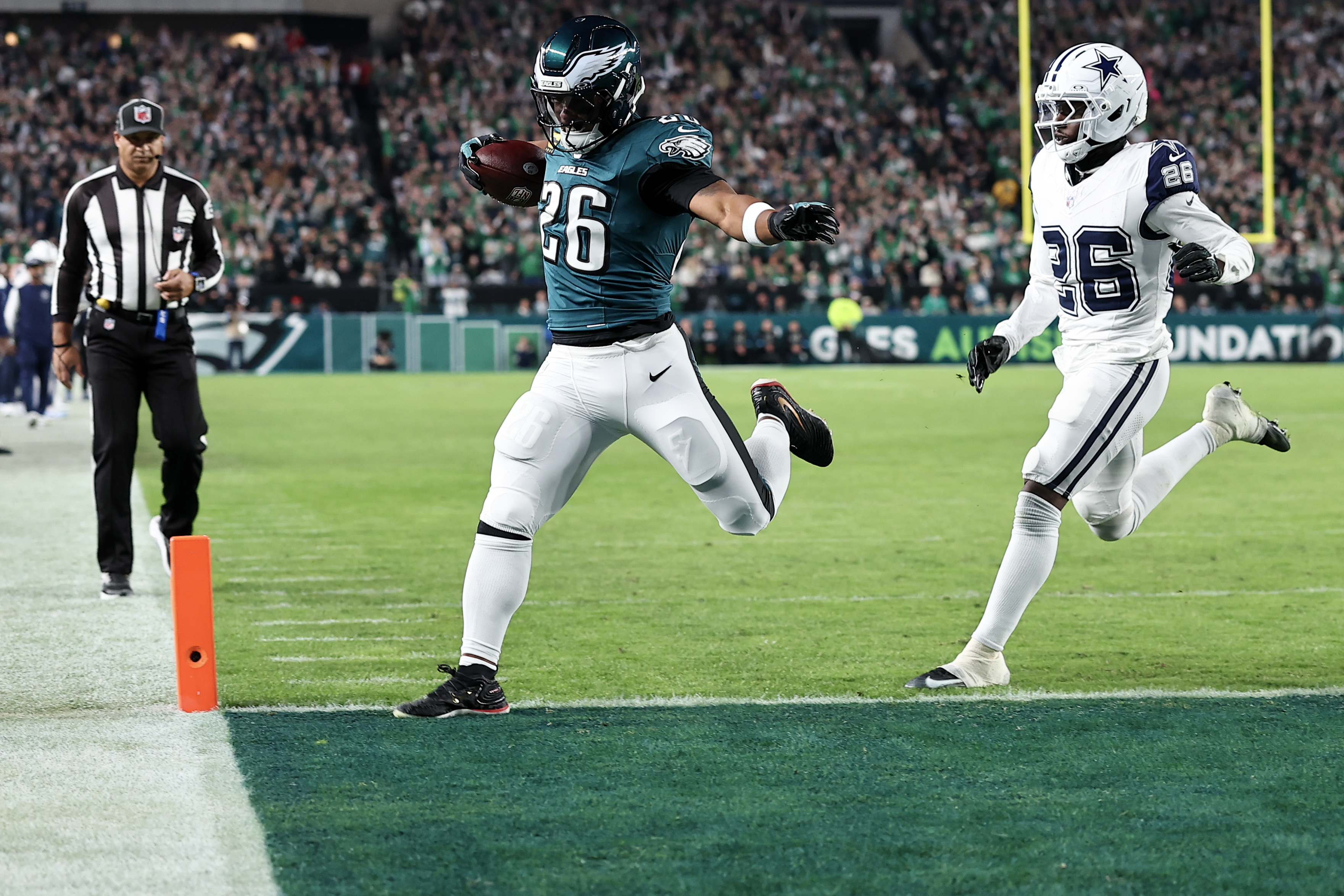
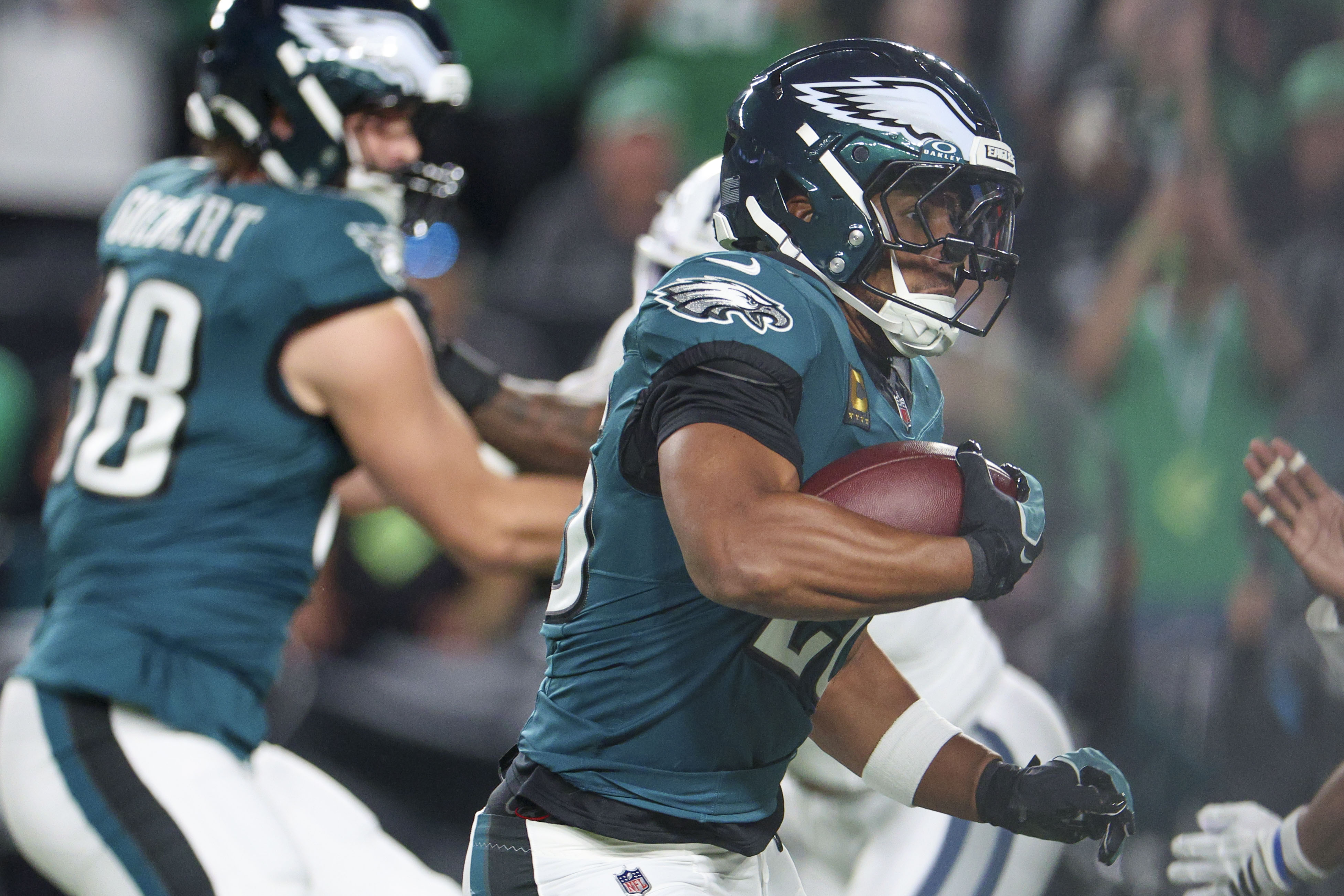
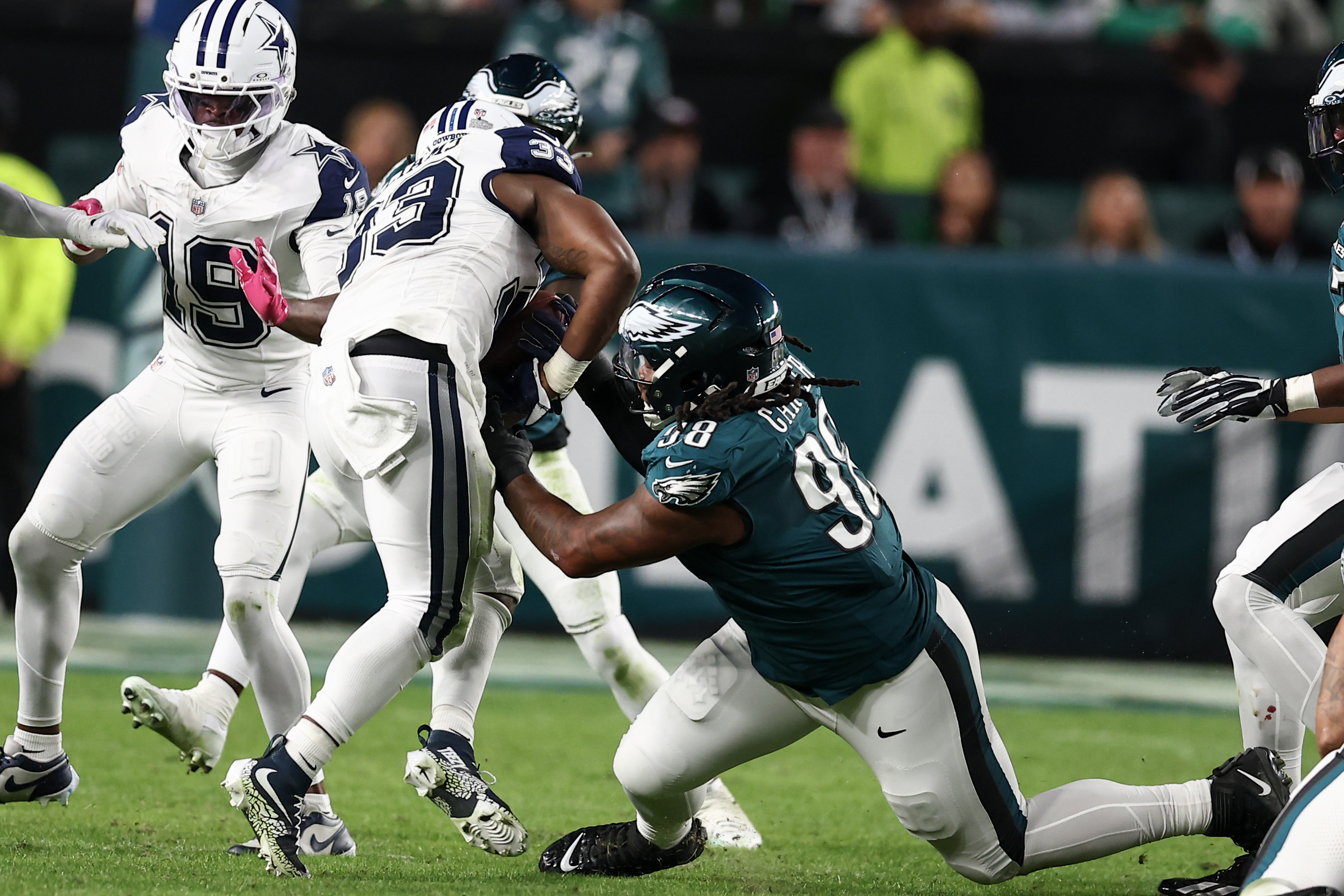
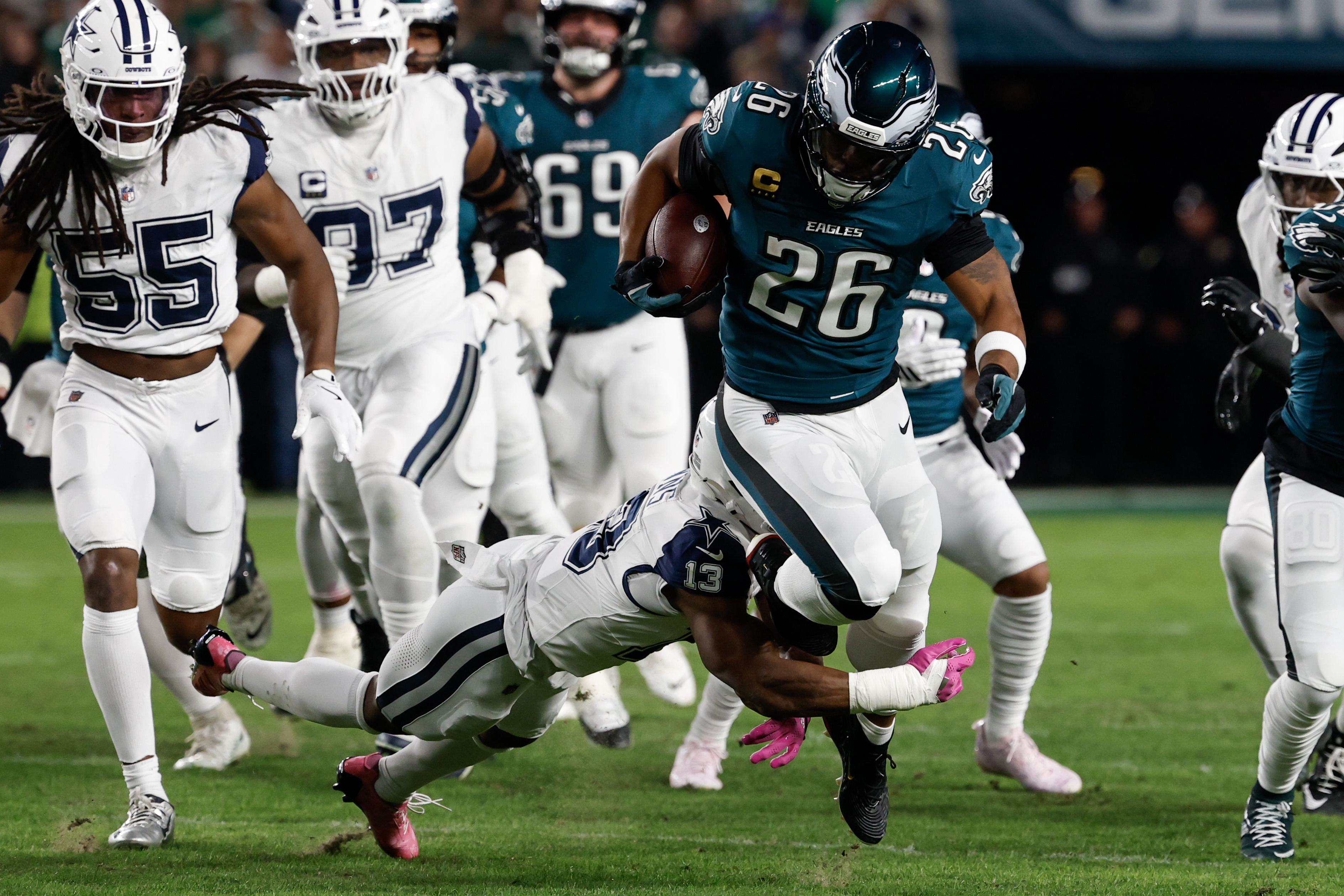
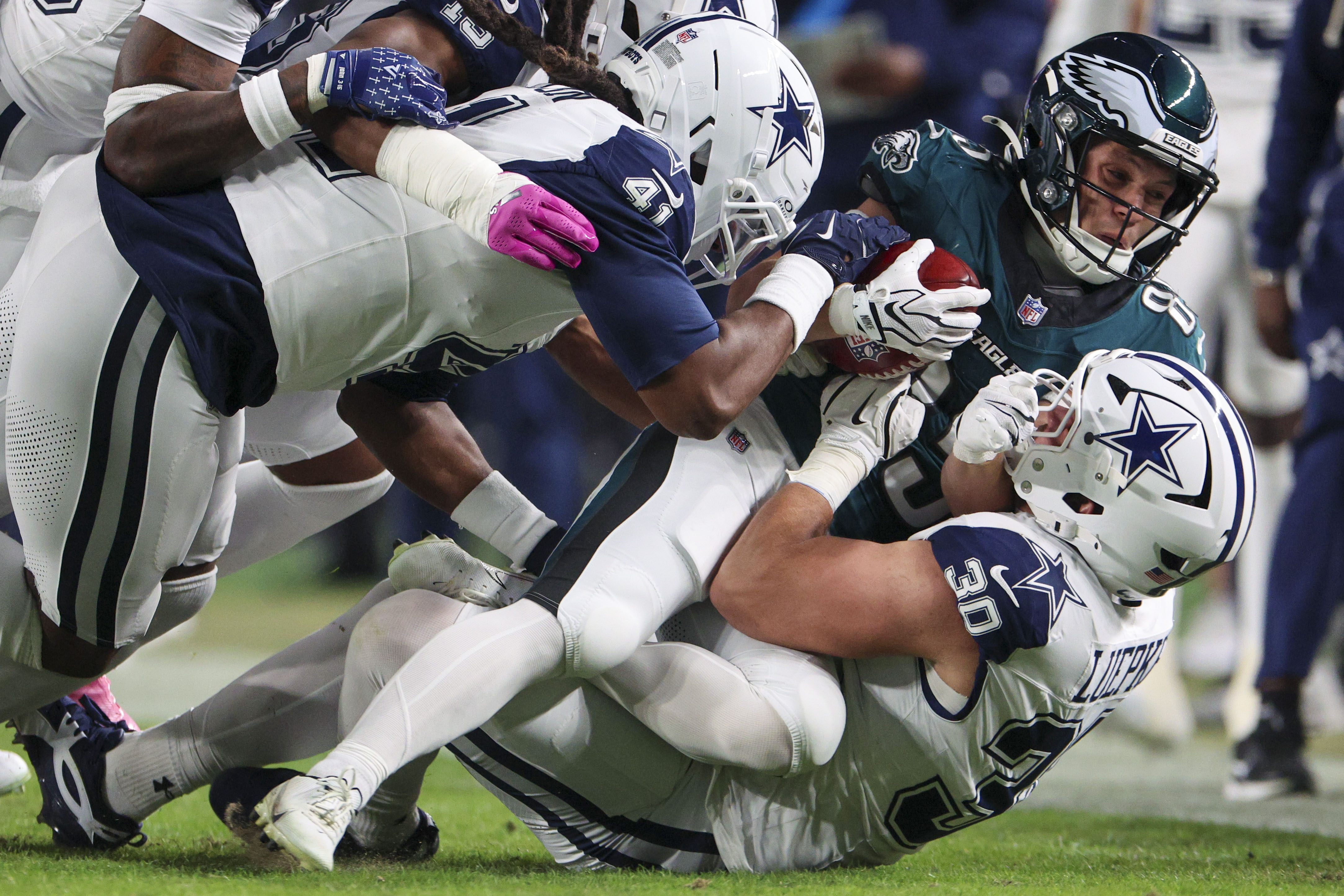
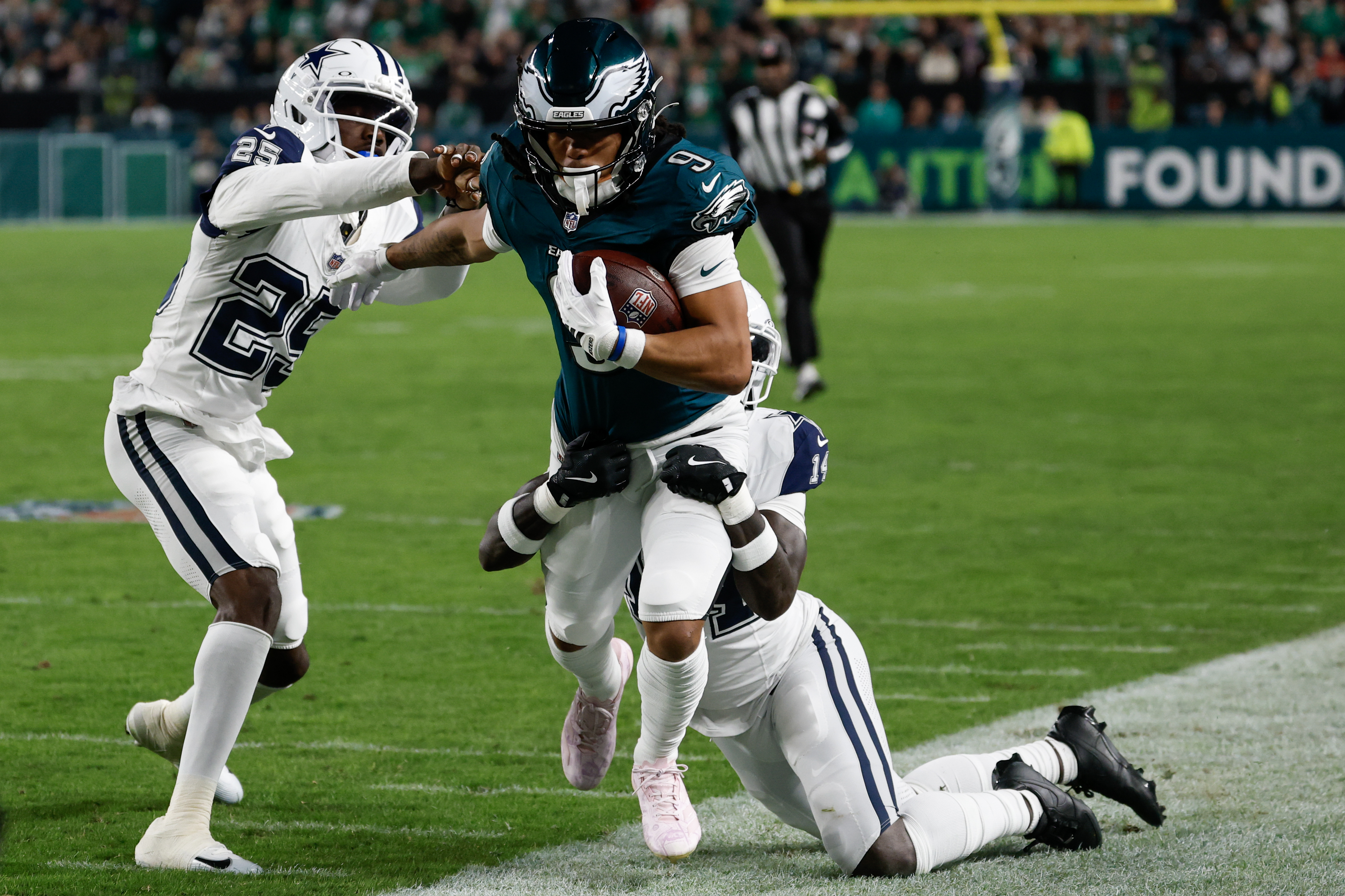
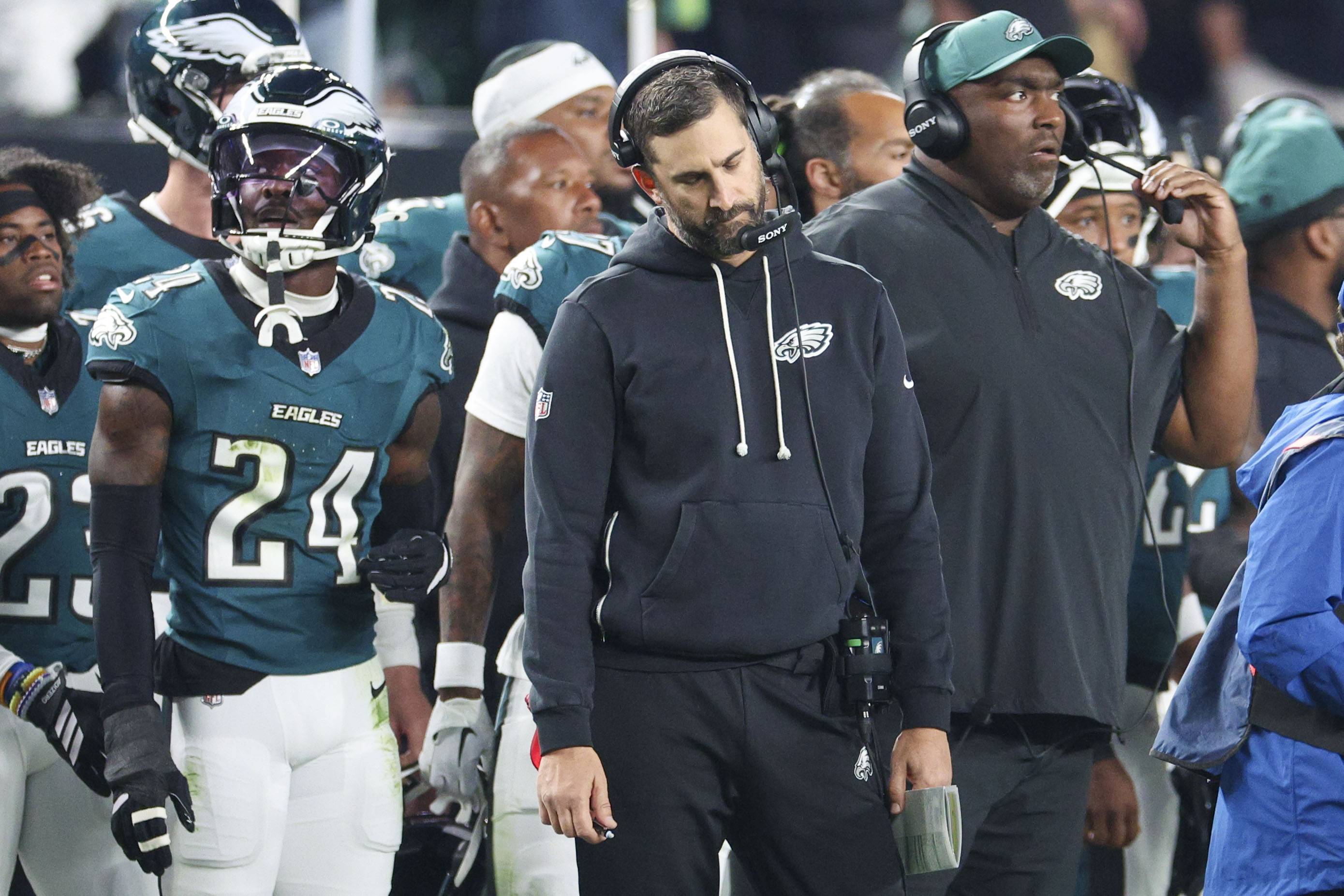
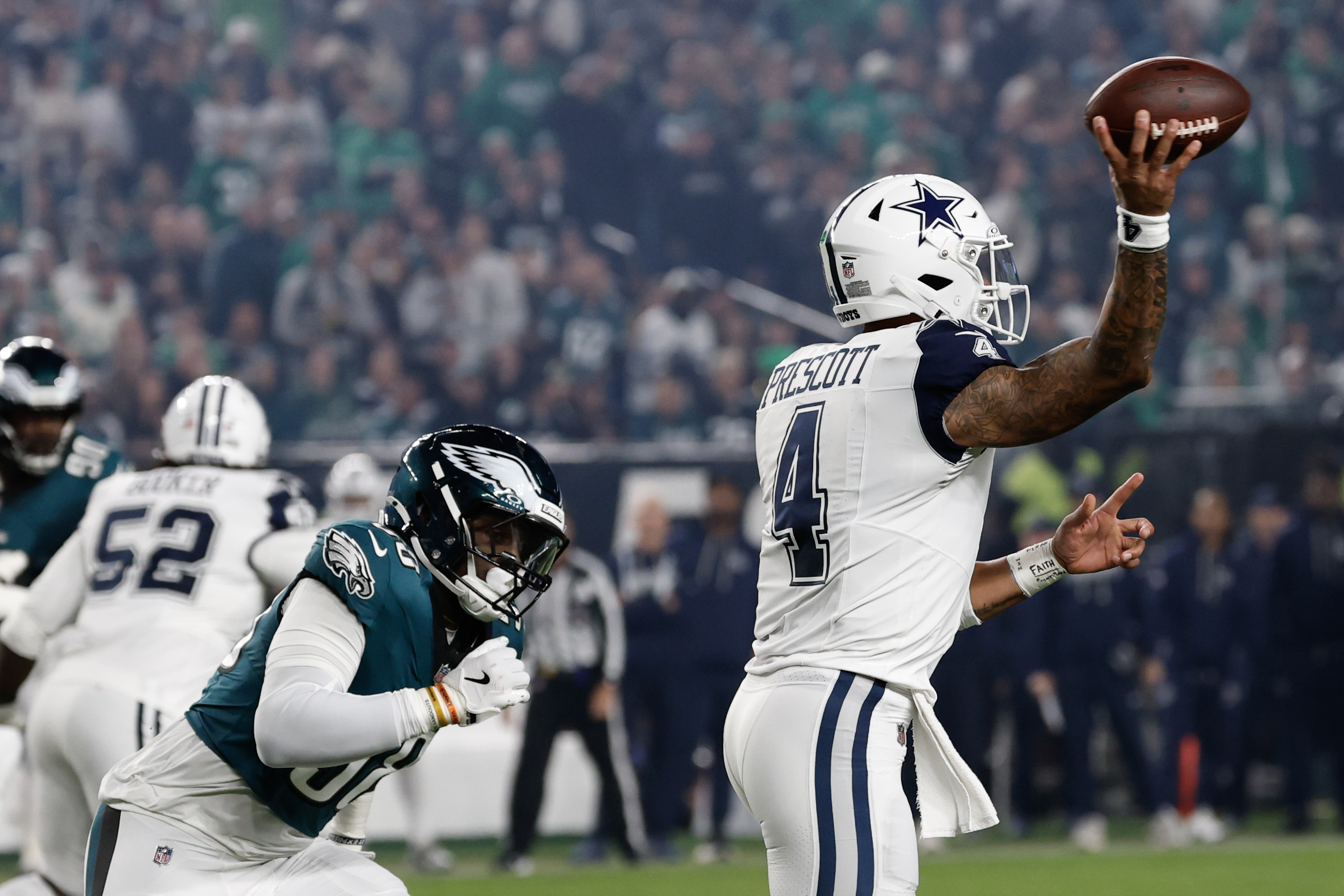
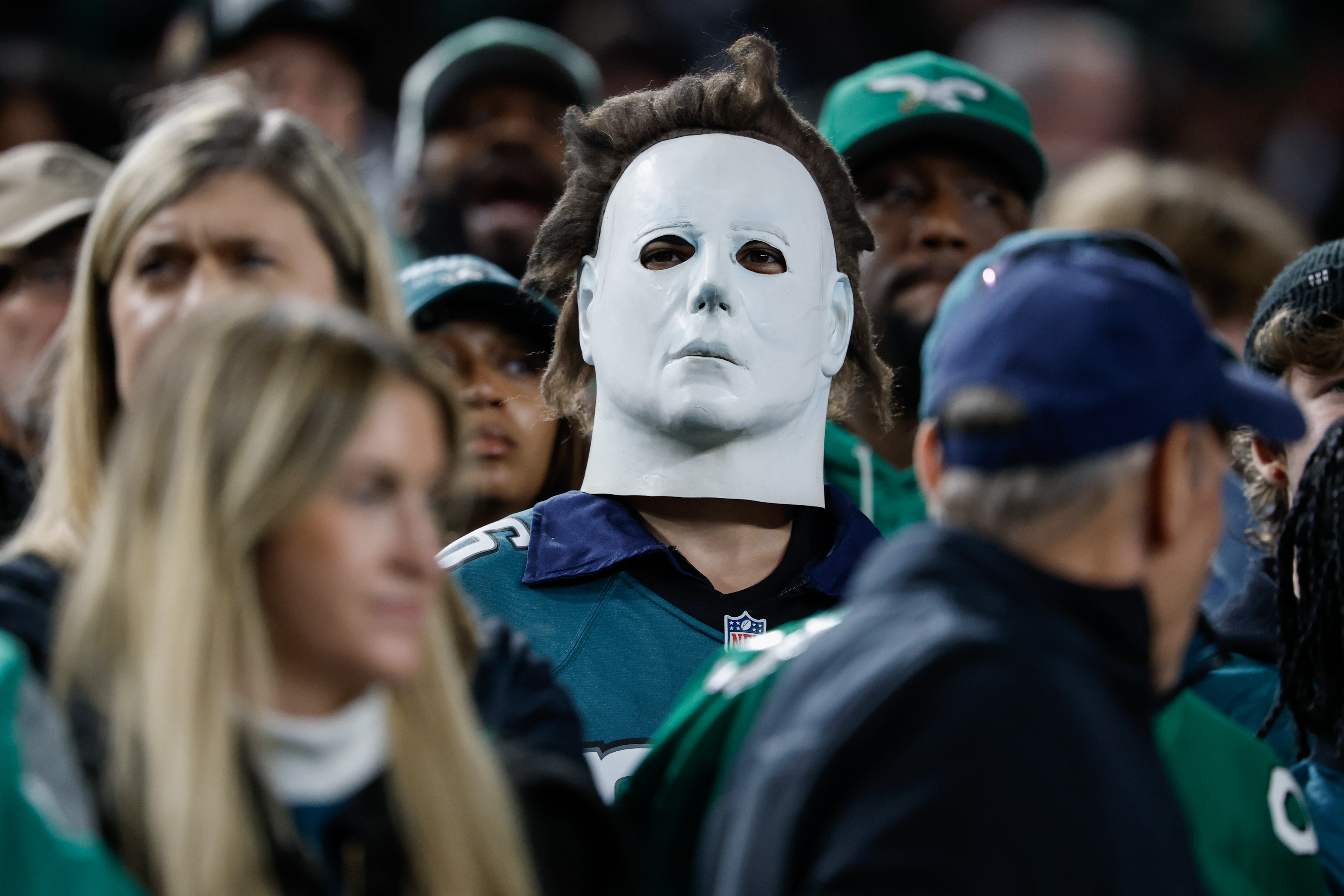
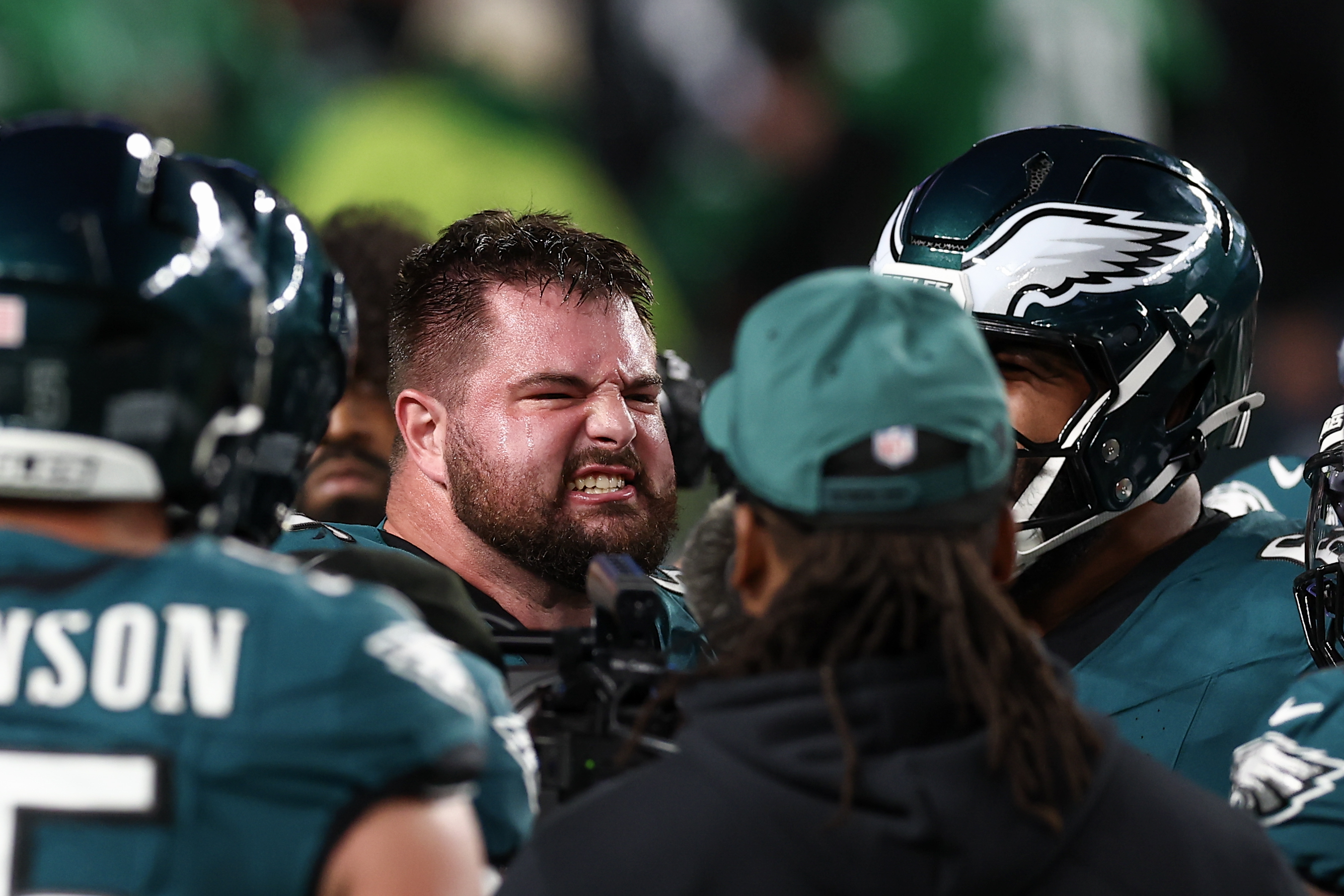
Eagles fans hang in their seats as the players leave the field after the Eagles lose to the Dallas Cowboys in Philadelphia on Monday, Oct. 26, 2026. Eagles lose 38-21.David Maialetti / Staff PhotographerEagles head coach Nick Sirianni walks off the field after a 38-21 loss to the Cowboys.Yong Kim / Staff PhotographerEagles defensive tackle Jordan Davis (left) and defensive tackle Jalen Carter leave the field after a 38-21 loss to the Cowboys.Yong Kim / Staff PhotographerEagles tight end Eli Stowers attempts to catch the ball against Cowboys safety Alijah Clark late in the fourth quarter.Yong Kim / Staff PhotographerCowboys linebacker Von Miller stops Eagles quarterback Tanner McKee during the fourth quarter.Yong Kim / Staff PhotographerDisappointed Eagles fans as the Eagles trail 31-21 during the fourth quarter against the Cowboys.Yong Kim / Staff PhotographerPhiladelphia Eagles head coach Nick Sirianni looks on as the medical staff tends to Philadelphia Eagles defensive tackle Moro Ojomo, who was injured in the fourth quarter with 6:45 left in the game.David Maialetti / Staff PhotographerDallas Cowboys outside linebacker Von Miller brings down Philadelphia Eagles quarterback Tanner McKee in the fourth quarter.David Maialetti / Staff PhotographerEagles cornerback Kelee Ringo stops Cowboys wide receiver Jonathan Mingo on a kickoff return during the fourth quarter.Monica Herndon / Staff PhotographerEagles cornerback Cooper DeJean pass interference with Cowboys tight end Jake Ferguson during the fourth quarter.Yong Kim / Staff PhotographerPhiladelphia Eagles linebacker A.J. Epenesa pressures Dallas Cowboys quarterback Dak Prescott in the fourth quarter with 9:55 left to go in the game.David Maialetti / Staff PhotographerPhiladelphia Eagles cornerback Riq Woolen can’t break up a pass intended for Dallas Cowboys wide receiver Ceedee Lamb in the third quarter. Lamb scores in the third quarter, and the Cowboys lead 28-21.David Maialetti / Staff PhotographerEagles quarterback Tanner McKee completes a pass during the third quarter.Monica Herndon / Staff PhotographerCowboys quarterback Dak Prescott scores a two-point conversion during the third quarter.Monica Herndon / Staff PhotographerCowboys wide receiver Ceedee Lamb scores a touchdown as Eagles cornerback Riq Woolen defends during the third quarter.Monica Herndon / Staff PhotographerCowboys quarterback Dak Prescott scores a two-point conversion during the third quarter Monday, Oct. 26, 2026, in Philadelphia.Monica Herndon / Staff PhotographerCowboys running back Javonte Williams is tackled by the Eagles during the third quarter.Monica Herndon / Staff PhotographerCowboys quarterback Dak Prescott scrambles and Eagles linebacker Jonathan Greenard on defense during the third quarter.Monica Herndon / Staff PhotographerPhiladelphia Eagles wide receiver Makai Lemon celebrates with Philadelphia Eagles quarterback Tanner McKee after catching a touchdown in the third quarter against the Dallas Cowboys.David Maialetti / Staff PhotographerCowboys wide receiver Ceedee Lamb reception during the second quarter.Monica Herndon / Staff PhotographerDallas Cowboys wide receiver George Pickens tries to jump over Philadelphia Eagles defensive back Jonathan Jones and picks up the first down at the end of the second quarter.David Maialetti / Staff PhotographerEagles wide receiver Makai Lemon attempts to catch the ball against Cowboys safety Caleb Downs and linebacker DeMarvion Overshown (right) during the second quarter.Yong Kim / Staff PhotographerFans chant “Fly Eagles Fly” after the Eagles running back Dameon Pierce scores a touchdown during the second quarter.Monica Herndon / Staff PhotographerCowboys wide receiver Ryan Flournoy is pulled by Eagles cornerback Riq Woolen during the second quarter.Monica Herndon / Staff PhotographerCowboys wide receiver George Pickens touchdown past Eagles safety Andrew Mukuba during the second quarter.Monica Herndon / Staff PhotographerDallas Cowboys safety Caleb Downs trips up Philadelphia Eagles running back Dameon Pierce on a run in the second quarter.David Maialetti / Staff PhotographerPhiladelphia Eagles fan holds up a sign for Philadelphia Eagles quarterback Jalen Hurts as the Philadelphia Eagles play the Dallas Cowboys at Lincoln Financial Field in Philadelphia, PA.David Maialetti / Staff PhotographerEagles defensive tackle Jalen Carter (right) and Eagles linebacker Jeremiah Trotter Jr. take down Cowboys running back Javonte Williams.Yong Kim / Staff PhotographerEagles running back Dameon Pierce celebrates a touchdown with Eagles guard Landon Dickerson during the second quarter.Yong Kim / Staff PhotographerCowboys defensive tackle Lt Overton is called for roughing the passer on Eagles quarterback Tanner McKee during the second quarter.Monica Herndon / Staff PhotographerEagles wide receiver Darius Cooper carries the ball during the first quarter.Monica Herndon / Staff PhotographerEagles running back Dameon Pierce runs against Cowboys cornerback Daron Bland.Yong Kim / Staff PhotographerEagles wide receiver Darius Cooper is stopped by Cowboys safety Caleb Downs during the first quarter.Monica Herndon / Staff PhotographerEagles running back Saquon Barkley celebrates a first-quarter touchdown with Eagles tight end Dallas Goedert against the Cowboys.Yong Kim / Staff PhotographerEagles running back Saquon Barkley scores a touchdown during the first quarter against the Cowboys.Monica Herndon / Staff PhotographerPhiladelphia Eagles running back Saquon Barkley on a touchdown run in the first quarter.David Maialetti / Staff PhotographerEagles defensive tackle Jalen Carter tries to stop Cowboys running back Javonte Williams during the first quarter.Monica Herndon / Staff PhotographerEagles running back Saquon Barkley runs over Cowboys safety Caleb Downs for a first down during the first quarter.Yong Kim / Staff PhotographerDallas Cowboys running back Hunter Luepke brings down Philadelphia Eagles wide receiver Britain Covey on a kickoff during the first quarter.David Maialetti / Staff PhotographerEagles wide receiver Makai Lemon first down during the first quarter.Yong Kim / Staff PhotographerPhiladelphia Eagles head coach Nick Sirianni reacts during a penalty for illegal formation against the special teams, who tried to block a successful field goal attempt, in the first quarter.David Maialetti / Staff PhotographerCowboys quarterback Dak Prescott throws under pressure from Eagles linebacker Jalyx Hunt during the first quarter.Yong Kim / Staff PhotographerAn Eagles fan wears a slasher Halloween mask as the game against the Cowboys gets underway.Yong Kim / Staff PhotographerEagles guard Landon Dickerson talks to teammates in a huddle before the start of the game against the Cowboys.Monica Herndon / Staff Photographer
He also disagreed with the notion that his arrangement strayed too far from the anthem. While jazz musicians frequently embellish familiar melodies, Tirfe believes preserving the original composition’s recognizable structure is essential.
“I can strongly say that the core foundational sense of the melody was still there,” he said.
To him, the debate comes down to musical preference.
“Some people like extra seasoning, some people don’t like seasoning at all,” Tirfe said. “It’s all good.”
For those unfamiliar with Tirfe, Monday offered an introduction to a musician whose career has been deeply rooted in Philadelphia.
Tirfe grew up surrounded by the city’s jazz and hip-hop communities. He later attended the University of the Arts and developed relationships with musicians who established national careers.
Among his peers were drummer Justin Faulkner, who has performed with the Branford Marsalis Quartet, and saxophonist Immanuel Wilkins.
But Tirfe credits The Roots with inspiring him to pursue music professionally.
“If it wasn’t for The Roots, I would not be in this game,” he said. “I would not be doing music as a career.”
Saxophone player Hiruy Tirfe greets fans at the Eagles’ “Monday Night Football” game vs. the Dallas Cowboys.Courtesy of Torri Green
He recalled attending the group’s free Fourth of July concert on the Benjamin Franklin Parkway, where he watched The Roots perform alongside Earth, Wind & Fire.
Years later, Tirfe would work alongside The Roots, Patti LaBelle, and other prominent musicians. Those collaborations taught him how to perform, navigate the music business, and become a bandleader.
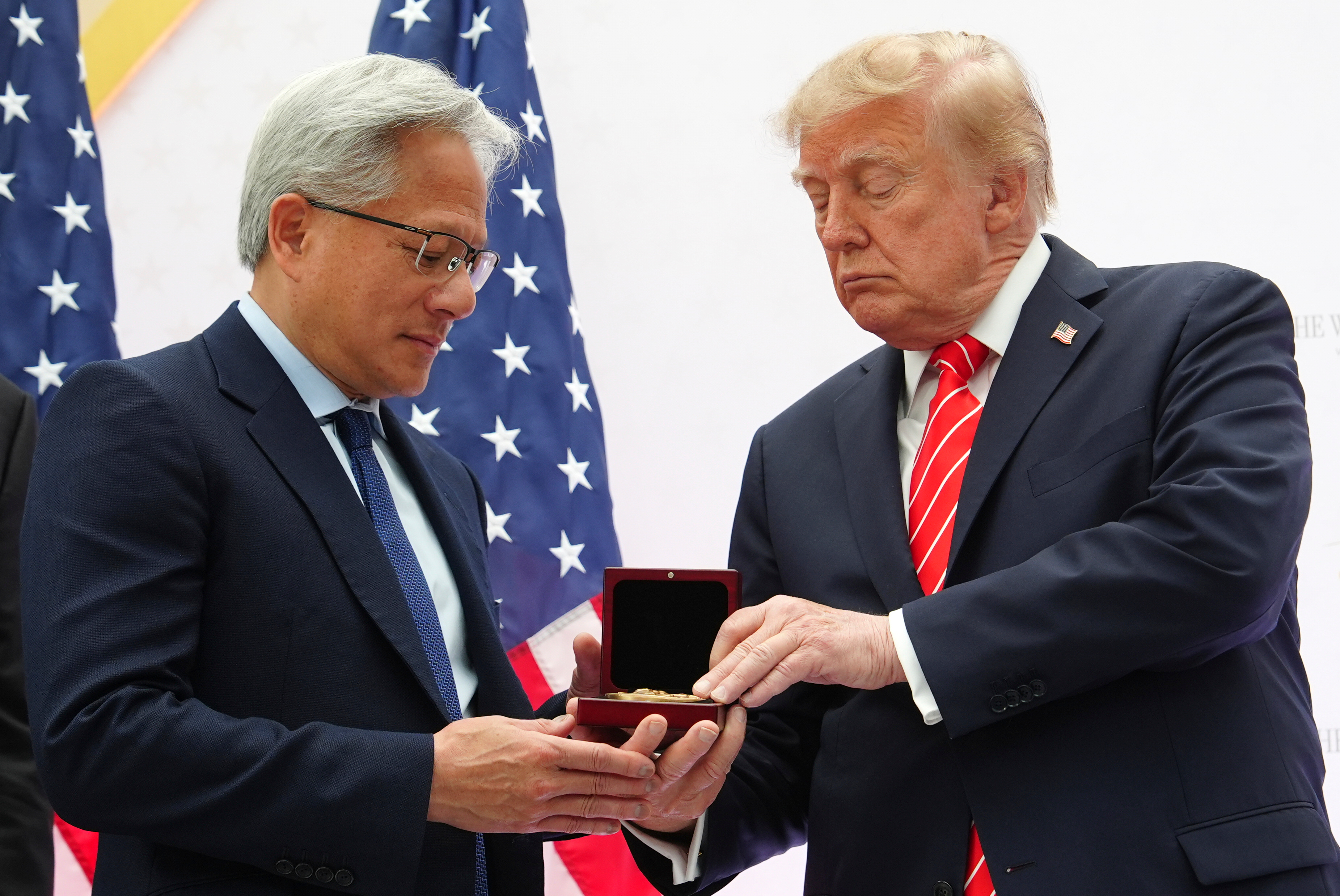
Even among a legion of Big Tech sycophants, Jensen Huang had stood out for his capacity to flatter Donald Trump into giving him what he wanted. It turned out that Huang, the perpetually leather-swathed chief executive of Nvidia, was not impervious to such motivated means of persuasion himself — and he has paid a devastating price for it.
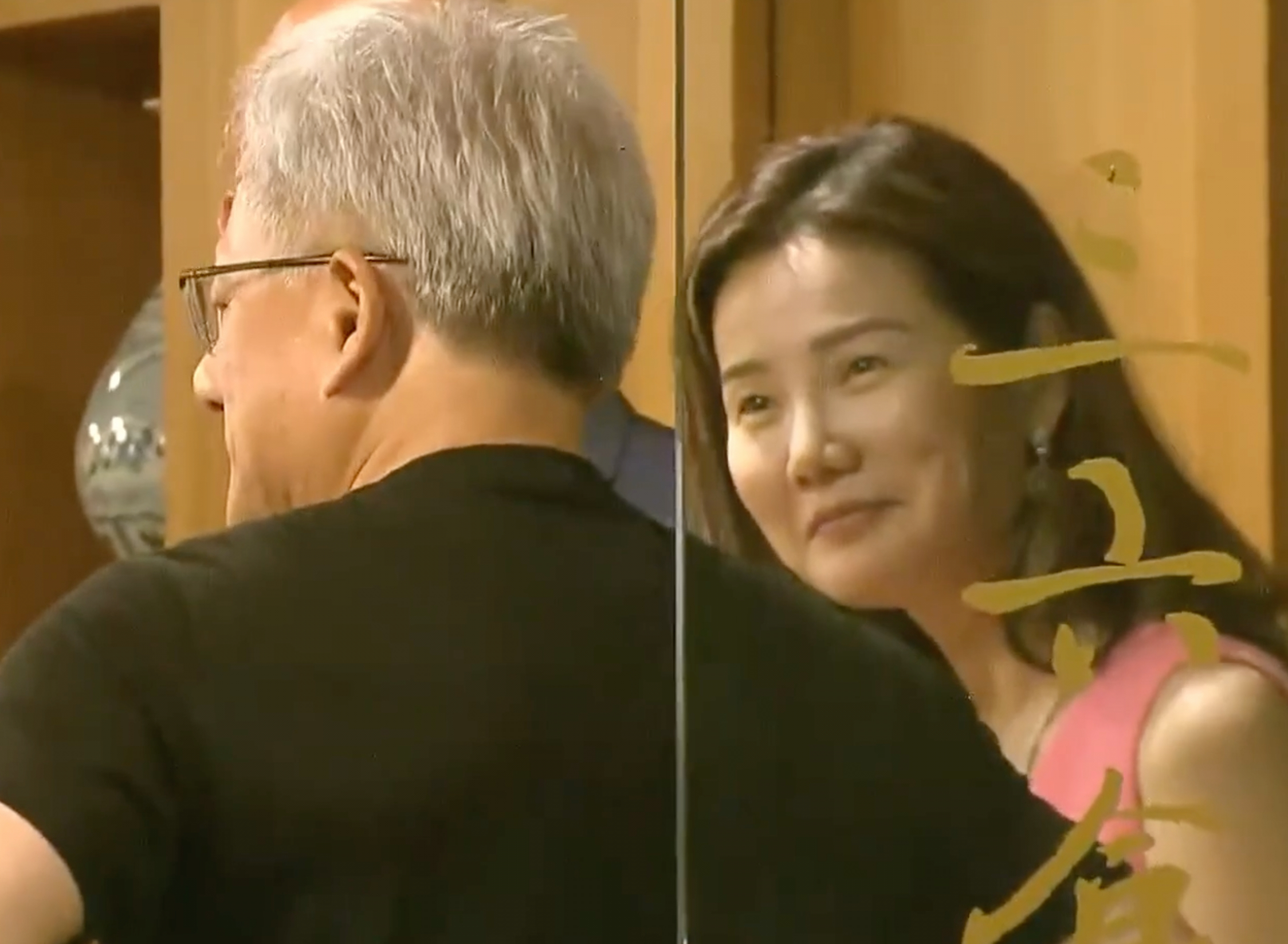
Huang resigned Thursday as the head of the microchip giant, days after acknowledging an extramarital affair with a Singapore-based tech executive known as Alice Huang, who is believed to be a Chinese spy. The revelations about their relationship would have been awkward for anyone, but it was particularly so for the man who successfully lobbied the president to ease restrictions on exporting his company’s AI-enabling chips to the agent’s alleged handlers.
Further complicating matters for Huang was a report by the New York Times late Wednesday that he had engaged in a second affair with a subordinate at the company.
The scandal seems to have done what all the artificial intelligence industry’s warnings about its own destructive potential somehow did not. It triggered a sell-off of Nvidia stock, federal investigations and renewed questioning of the headlong, government-assisted rush to develop a dangerous, ill-understood technology regardless of the consequences.
“I hope there’s no problem,” Trump said of Jensen Huang on Monday, but it seemed a little late for that. The problem is that the cofounder of the world’s most powerful and valuable AI company — and the closest adviser to the president on the technology — appears to have been hopelessly compromised by our chief adversary, China. As Stephen Witt, who wrote a book about Nvidia, told the New Yorker, “If the CEO is sleeping with spies, that’s generally regarded as bad.”
In this image taken from video provided by TVBS, Alice Huang attends a dinner hosted by Jensen Huang, Nvidia’s CEO, at a restaurant in Taipei, Taiwan, in 2025.Uncredited
Worse, the president appears to have known that for some time, even though he persists in assurances that Huang is “a very high-quality,” “amazing,” and “honorable guy” who will end up “in good shape.” Trump was warned of Huang’s relationship with a suspected Chinese intelligence asset last year and again in May, the Times reported, just before the executive joined the president on a trip to Beijing.
And yet, Trump appears to have done nothing about it apart from enthusiastically facilitating the goals of a man who may have been in thrall to the Chinese Communist Party. Huang has somewhat paradoxically argued that the United States must maintain its chipmaking advantage over China by selling more chips to the country, which Trump helped him do by easing export controls established under President Joe Biden. The Commerce Department also reportedly abandoned an investigation into whether Alice Huang’s company smuggled chips into China after an Nvidia lawyer contacted the administration.
Nvidia is among the major investors in an estimated $1.4 trillion initial public offering being prepared by the AI company Anthropic, which has warned potential investors that the technology poses “catastrophic or existential risks to humanity.” And yet, Trump has hewed to the laissez-faire approach to AI that Jensen Huang has pushed, concluding after meeting with him and other tech executives that the companies should “self-police.”
Nvidia itself illustrates the folly of this notion. The company’s generally deferential board is populated by early investors and longtime associates of the cofounder, and — prior to Huang’s resignation — there was no succession plan or clear replacement. Nvidia’s chief financial officer, Colette Kress, will lead the company while the search for a permanent replacement commences.
Perhaps the only good that can come of all this recklessness is the thorough debunking of the irresponsible idea that such a powerful technology should go unregulated. Changing the current policy, or lack thereof, will certainly be challenging as long as Trump remains in power. But the new Congress is full of members elected on promises to rein in data centers and other aspects of AI, and, in some cases, with a history of doing so.
This mess shows they won’t arrive a moment too soon.
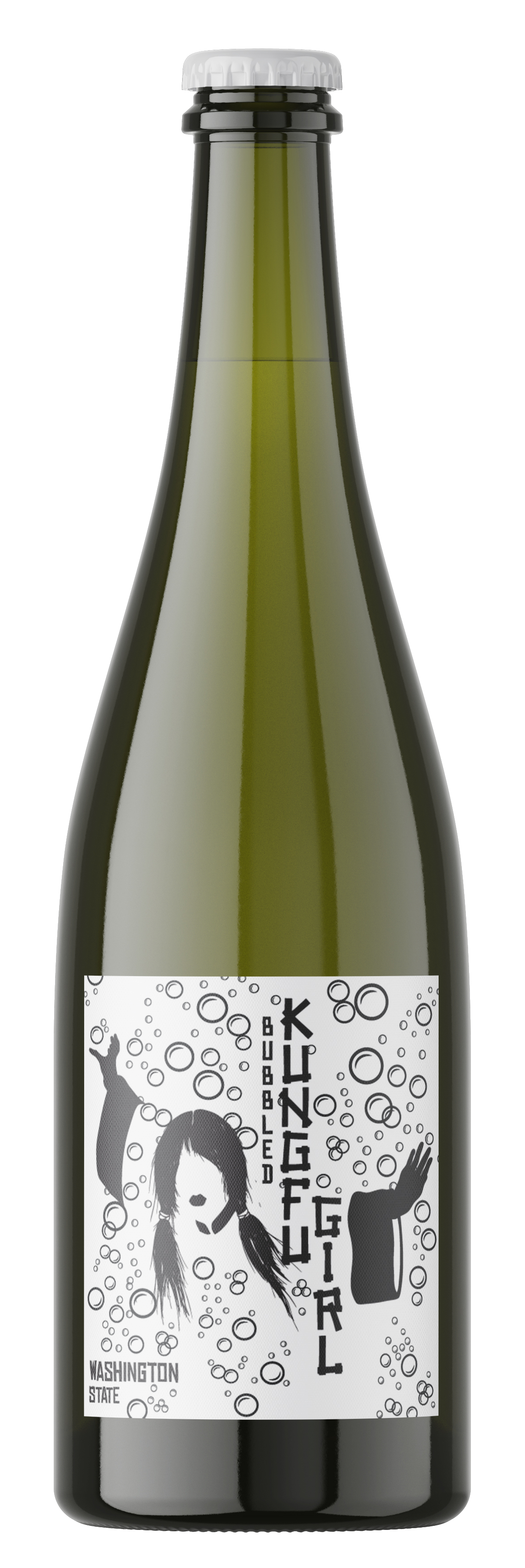
Sparkling wines have become so wildly popular that some winemakers are experimenting with new ways to add a tingle of carbonation and excitement to their still wines, too, as with this new “bubbled” spin on an iconic riesling from the Pacific Northwest.
The fermentation process used to make all alcoholic beverages generates carbon dioxide as a natural byproduct, so carbonation isn’t foreign to wine. In standard winemaking, this carbonation is allowed to dissipate before bottling, but over the past 500 years, vintners have developed specialized methods for making wines that sparkle and fizz.
The most influential innovation, pioneered in the Champagne region of northern France, was to add sugar to bottles of a still base wine, sparking a second fermentation in a closed vessel that could trap the resulting bubbles. To this day, almost all sparkling wines undergo a second fermentation. The most ambitious wines use the “Champagne method” (meaning the second fermentation occurs in the same bottle in which they’re later sold) or traditional-method large tanks, while more affordable options like prosecco from Italy induce the second fermentation in pressurized tanks.
Force-carbonating a wine — a practice common in beer and cider — is not routine in the wine trade, but this is changing fast. The demand for bubbles at bargain prices is inspiring less traditional winemakers like this one to experiment with “bubbled” versions of their still wines.
Here, a vibrant, racy, and lightly sweet riesling that has had a cult following for decades has been given a brilliant effervescent makeover with deliciously unfamiliar results. Twice-fermented riesling can make a compelling sparkling wine, but the process mutes the grape’s distinctive fragrance; by adding carbonation to a finished riesling instead, the wine’s green apple flavors and jasmine tea aromatics are amplified by zippy bubbles in a delightful and irreverent way. The only downside is that bubbled wines like these do go flat faster than other sparkling wines. But few will notice since the bottle will likely be finished well before then.
Charles Smith “Kung Fu Girl” Bubbled RieslingCharles Smith
Charles Smith “Kung Fu Girl” Bubbled Riesling
Washington State
12% ABV
PLCB Item #100057055
on sale for $14.99 through Nov. 29 (regularly $17.99)
No alternate retail locations within 50 miles of Philadelphia according to Wine-Searcher.com
Samah Elhajibrahim is a Palestinian American scholar and peace activist. She is a member of the Prayers for Peace Alliance and holds a doctorate in political science from the University of Pennsylvania. Her work specializes in political theory, citizenship, gender, statehood, statelessness, and colonization, with regional expertise in the Middle East.
What took place this weekend in Philadelphia? The answer depends on whom you ask. As a member of a Palestinian-Jewish partnership, Prayers for Peace Alliance (PFPA), that believes in mutual solidarity and centers our work on the liberation of the Palestinian people — on ending occupation, genocide, and ethnic cleansing — the answer is clear: division and distraction.
Division within a movement that has worked for so long to cultivate trust and understanding. Distraction from the real and urgent issues. This week, six Palestinians were killed in Gaza by Israeli airstrikes, including two children and three women. In the West Bank, at least three Palestinians were killed in Jenin. Palestinians in Gaza were forced once again to evacuate flooded tents; 70,000 tents were flooded within the first 12 hours of a storm.
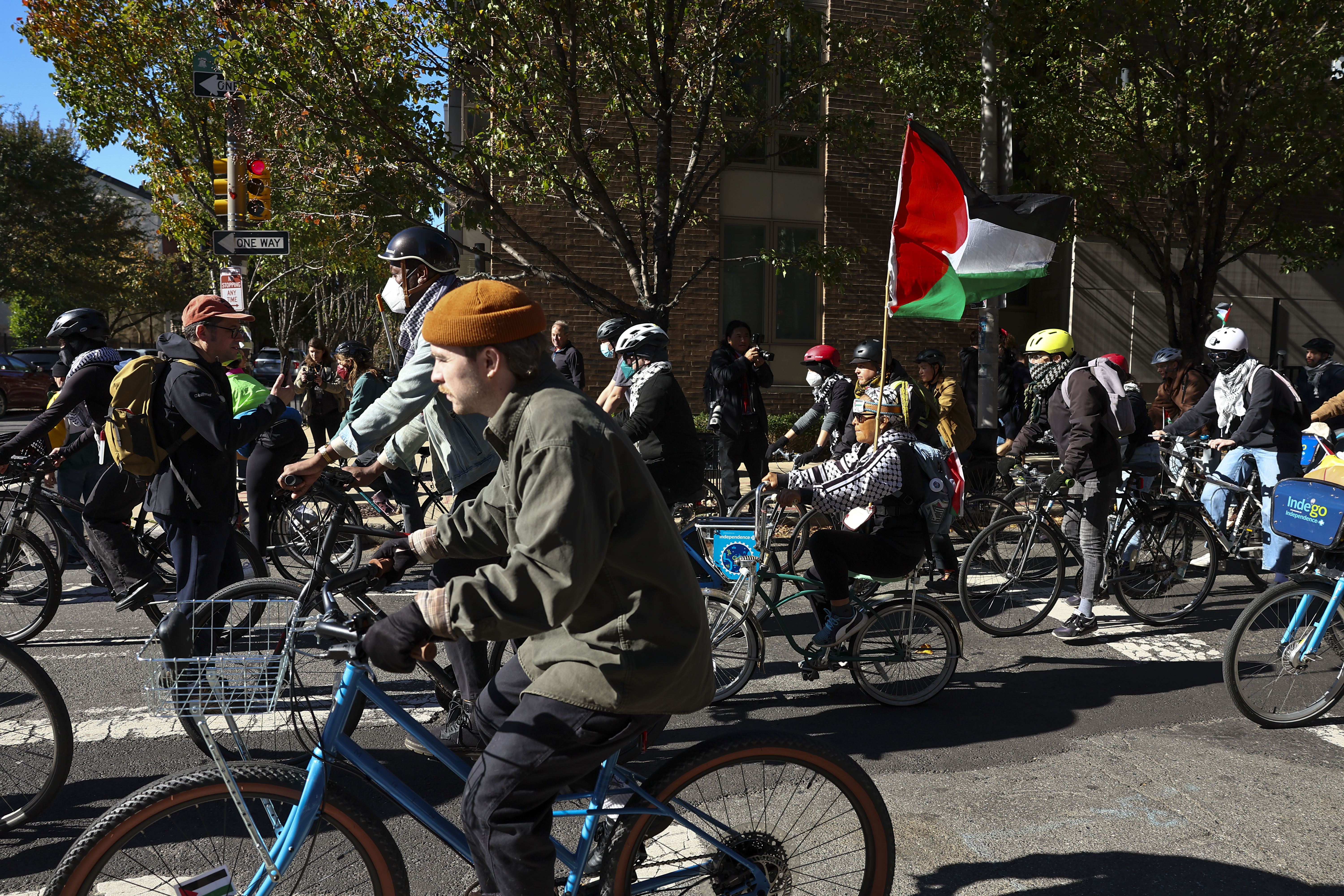
Palestinians were being killed and displaced while the movement that is supposed to center Palestinian freedom was divided over its response to a bicycle boycott ride.
Some wholeheartedly embraced the ride, some were cautious, and others believed it was ill-conceived and crossed a line. Some endorsed it, some denounced it, and some criticized it. We fell into the trap. Rather than centering Palestinians in Palestine, the movement was distracted and divided.
This division is damaging. It drains energy from the urgent work, weakens the pressure we can bring to bear, and gives opponents openings to misrepresent us. It turns potential allies into bystanders and makes trust harder to rebuild.
PFPA is clear: A boycott is a legitimate nonviolent campaign to pressure governments. If governments and the international community had fulfilled their responsibility — sanctioning Israel and holding it accountable for genocide, ethnic cleansing, and its prolonged occupation of Palestine — people would not have to assemble flotillas to break a siege or run boycott campaigns.
The Boycott, Divestment and Sanctions (BDS) movement is strategic in nature. It does not boycott “every boycottable event,” instead opting to carefully select targets and how to intervene. This boycott ride, however, was not strategic. That is precisely why it produced division rather than clarity, and distraction rather than pressure.
We can acknowledge that this particular boycott, as carried out, was a misstep. Its rhetoric and messaging were problematic, and that allowed misinformation and confusion to fill the space. A tactic that is easily misunderstood, and that divides the people it is meant to unite, is not a tactic we can afford to treat as if it were beyond question.
Nonetheless, the outrage that this nonviolent boycott has generated — death threats, doxing, and people getting fired — is deeply disproportionate and troubling, especially when set against the absence of comparable urgency and moral clarity regarding the ongoing genocide in Gaza.
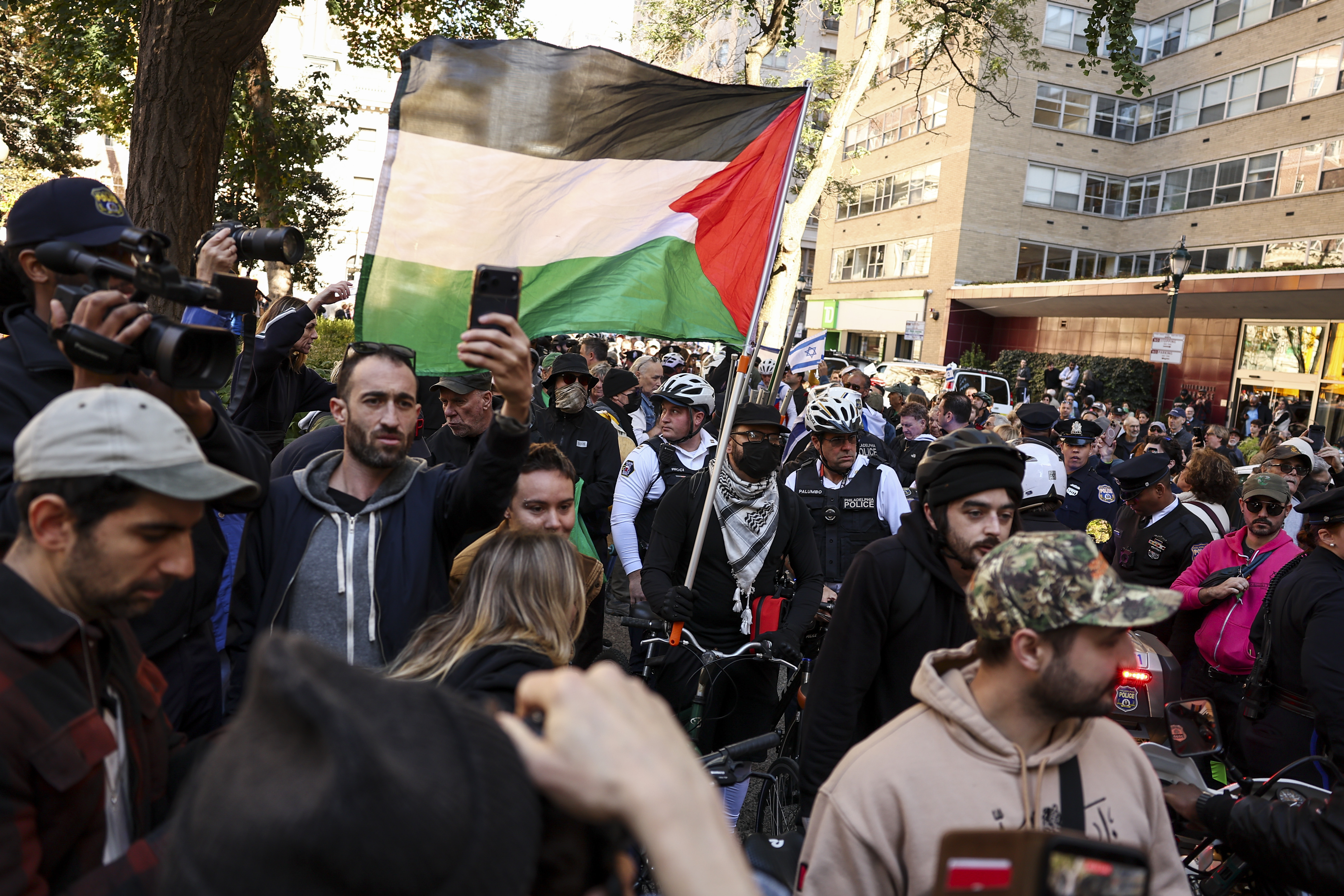
Protesters and counterprotesters engaged with the police during the bike-ride boycott at Rittenhouse Square on Sunday, Nov. 8.Monica Herndon / Staff Photographer
Some might argue that a local boycott is a local issue, while the genocide is a federal matter. This is not true.
Philadelphia is a sister city to Tel Aviv, a relationship formalized by City Council resolution and celebrated as a partnership of “business alliances.” Philadelphia’s institutions and investors have poured tens of millions of dollars into Israel bonds — $45 million at a single Real Estate Power Lunch in 2025 alone. The Pennsylvania Treasury has invested millions more in Israel bonds, funding the very economy that sustains the occupation.
This is not a distant, federal abstraction. This is Philadelphia money, Philadelphia institutions, and Philadelphia political will actively sustaining systems of oppression. The referendum to divest funds from Israel in Providence, R.I., shows that municipal boycotts can be a successful strategy. This success demonstrates the potential of grassroots pressure at the local level.
At PFPA, we believe our energy should also be directed at global corporations located in Philadelphia, like Lockheed Martin, Boeing, and Day & Zimmermann, which are directly aiding and enabling the genocide in Gaza.
This is not a call to silence legitimate debate about tactics. It is a call for discipline. We cannot afford to turn every disagreement into a rupture, or every tactic into a purity test. The movement must return to what matters: fighting oppression in Palestine, centering Palestinian voices, and targeting the institutions and corporations that make occupation, genocide, and displacement possible.
So let us get back to work. Eyes on Palestine. Hands on the real targets. Hearts open to one another. And discipline in the struggle against oppression wherever it lives — in Palestine, in Philadelphia, and across the United States.