Temple entered Wednesday’s Big 5 women’s basketball matchup with La Salle looking to build on its offensive performance against Navy, when the Owls scored 97 points to earn their first victory of the season.
The Owls continued that momentum at John E. Glaser Arena, thanks to their aggressive defense and rebounding to secure an 89-67 victory. Temple (2-1) forced 30 turnovers and controlled the glass over La Salle (1-2).
For Temple coach Diane Richardson, her team’s performance also demonstrated the developing chemistry between the returning veterans and newcomers, who are adjusting to different responsibilities.
“They are a really tight team,” Richardson said. “They play together. They have fun together, and they understand that for us to win, we got to do it together.”
The Owls will return to action Tuesday at George Washington (6 p.m.).
Embracing a different role
Saniyah Craig established her presence early, grabbing six rebounds in the first quarter and helping Temple control the paint.
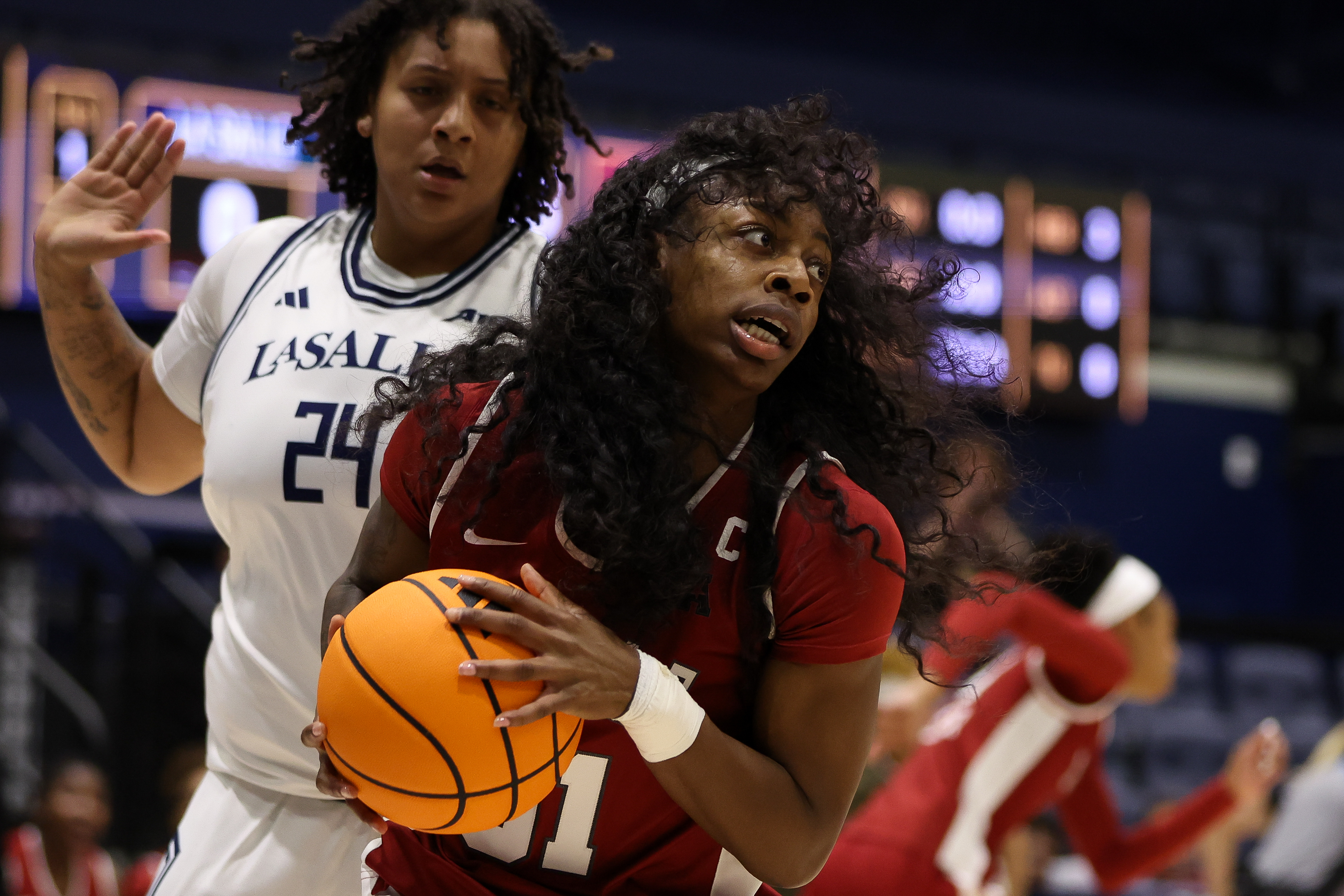
The senior forward finished with 17 points and 10 rebounds, continuing the production that made her one of the American’s better rebounders last season.
Craig averaged 7.9 rebounds and recorded five double-doubles in 2025-26. Despite her individual success, Temple finished 15-17.
Saniyah Craig served mainly as a scorer last season. She’s looking to do more in 2026-27.Isaiah Vazquez / For The Inquirer
With several newcomers joining the roster, Craig has focused on contributing beyond scoring and rebounding.
“Last year, I was more of a scorer,” Craig said. “This season, I do all the dirty work. I do whatever they need me to do.”
Her physicality helped Temple establish an advantage that La Salle struggled to overcome. Explorers coach Mountain MacGillivray said Temple’s offensive rebounding was one of its biggest strengths and his team couldn’t match it.
Craig believes her experience carries greater responsibility this season as Temple continues to establish its identity.
“I know I got a bigger role,” Craig said. “I got to do all the dirty work, as I said, and just be me.”
Pressure creates opportunities
Temple’s full-court pressure has become one of its most effective weapons.
The Owls repeatedly disrupted the Explorers’ possessions, forcing rushed decisions and generating transition opportunities. Taliyah Logwood led the defensive effort with nine steals, while Temple recorded 21 as a team.
The Explorers made several attempts to close the deficit, but struggled to maintain possession long enough to build sustained runs.
Shayla Smith, who finished with 17 points and 14 rebounds, described the team’s defensive approach as a “spicy defense.”
“We always talk about spicy defense as our defense,” Smith said. “It’s just up in them, making them speed up and turn it over, and that was working for us.”
Shayla Smith described Temple’s defense as “spicy,” as its full-court pressure has become one of its most effective weapons.Isaiah Vazquez / For The Inquirer
Richardson has emphasized defense as the foundation of Temple’s identity, especially with a roster capable of producing points through several players.
“Defense has been a number one priority for us, because we know we can score, but we’ve got to stop our opponents,” Richardson said.
A more balanced attack
Kaylah Turner entered the season following an impressive individual campaign in which she led the American with 16.4 points per game and earned second-team all-conference honors.
Against La Salle, Turner scored 10 points, but Temple’s offense didn’t depend on her carrying the scoring load.
Four Owls reached double figures, with Smith, Craig, and Logwood providing production alongside Turner. The balanced attack reflected Richardson’s emphasis on players understanding their responsibilities.
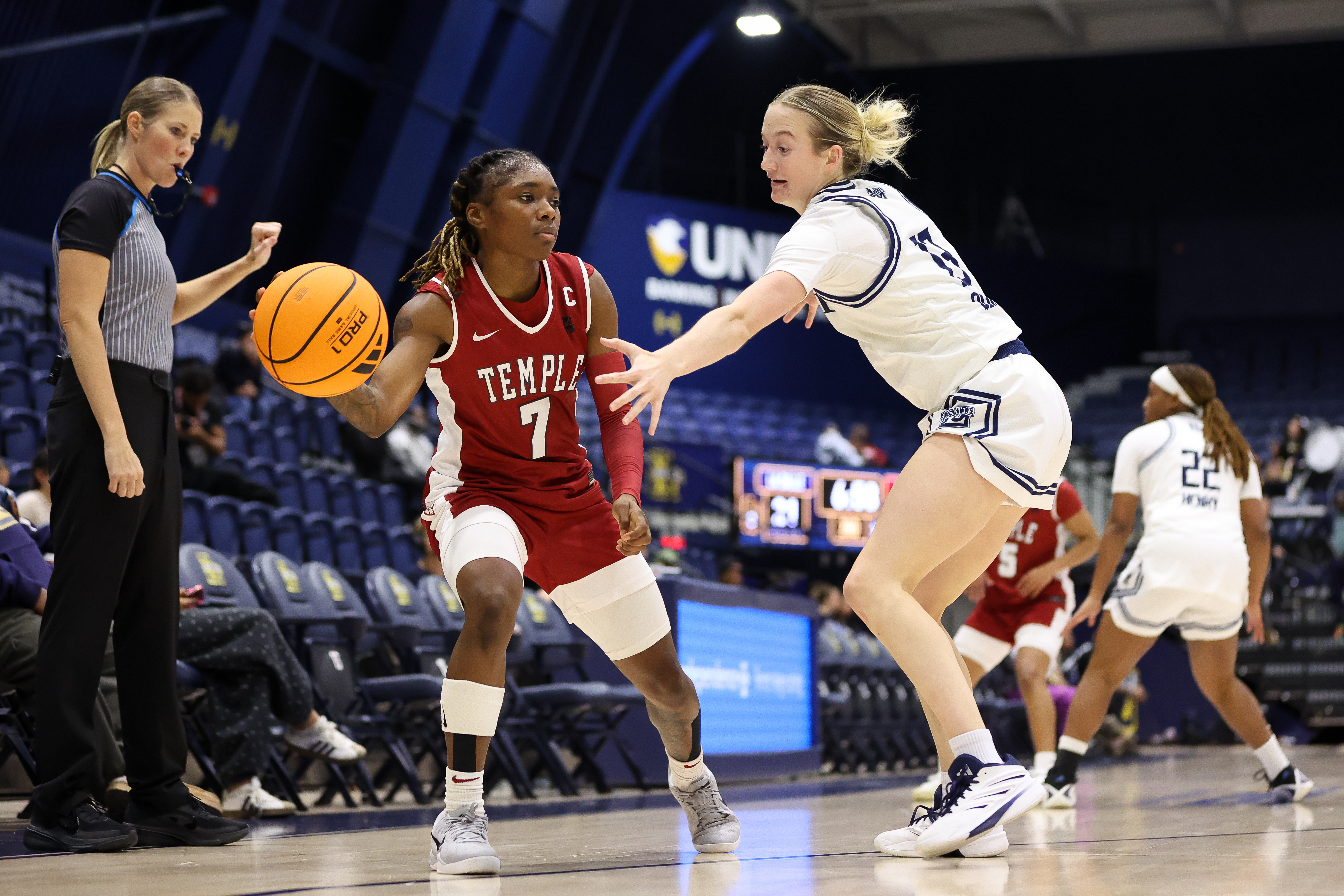
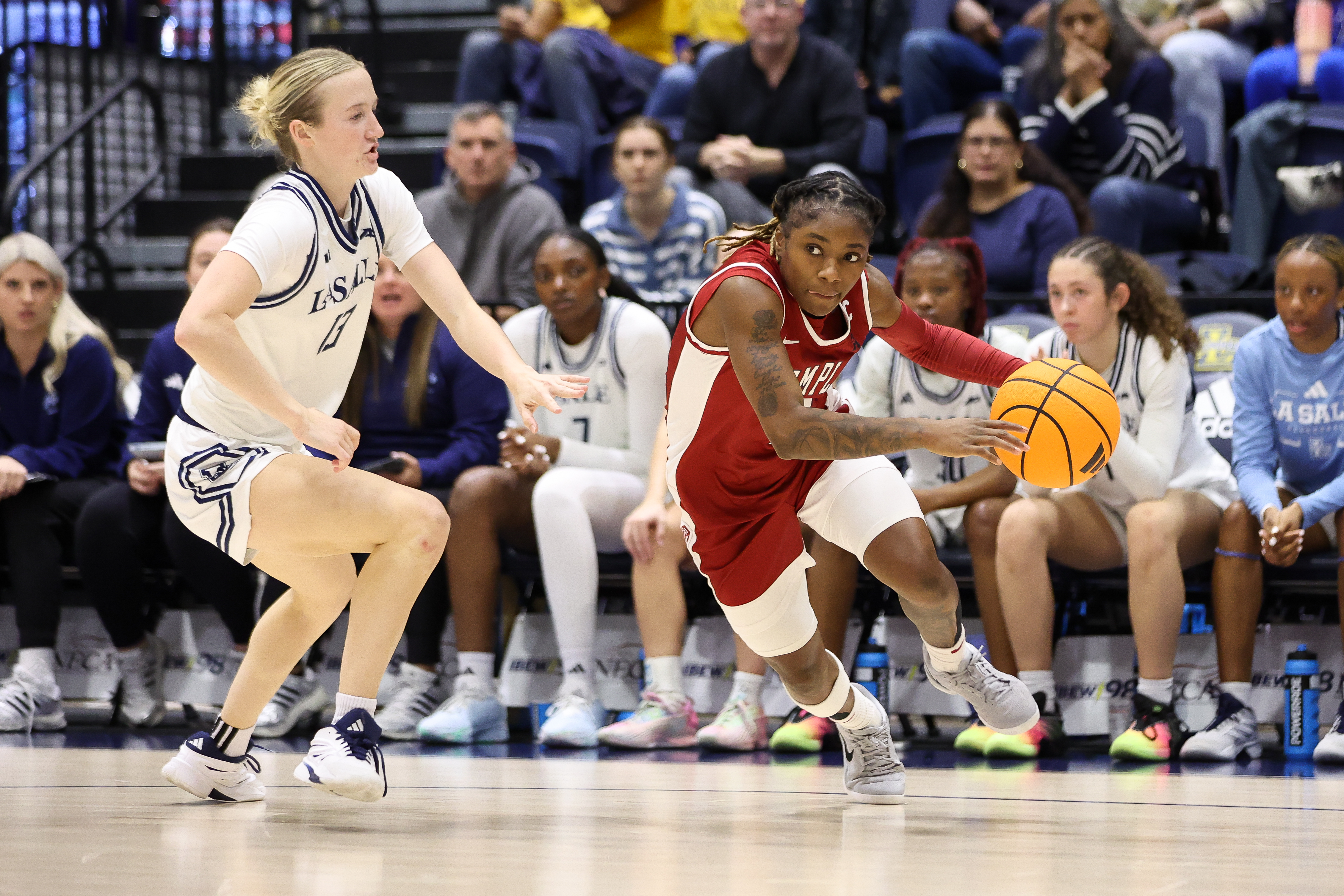
Kaylah Turner (7) finished with 10 points against La Salle on Wednesday.Isaiah Vazquez / For The Inquirer
Richardson said she has stressed three principles throughout the offseason: culture, clarity, and confidence.
For returning players, including Turner and Craig, that means adjusting their roles to accommodate newcomers while continuing to contribute their experience and leadership.
“They have clarity in their roles where they’re going to do whatever is necessary for this team,” Richardson said.
Temple has now scored 89 or more points in consecutive games. Richardson attributed that success to the team’s growing chemistry.
As Democrats in Washington prepare to launch a flurry of investigations into President Donald Trump and his allies once they assume control of Congress in January, one Philadelphia-area lawyer is gearing up for battle.
Wally Zimolong, a Main Line attorney who has worked for Republican causes including the unsuccessful efforts to overturn the president’s loss in the 2020 election, said his firm is assembling a team of trial lawyers to defend Trump administration officials when Democrats take control of Congress in January.
Incoming Democratic leaders have vowed to hold Trump and his cabinet accountable. Their sweeping wins in the midterm elections, they have said, give them a broad mandate to act not just on voters’ top-of-mind affordability issues but also on what they have described as the most corrupt administration in history.
Warning of an unprecedented “subpoena-palooza,” Zimolong, a longtime Trump supporter, said the situation is all-hands-on-deck.
“Anybody that had any interaction with the Trump administration is going to be a potential target,” he said. “That’s certainly how we’re treating it.”
Less than 12 hours after the “blue tsunami” became apparent last week, Zimolong and his Wayne-based firm announced the plan they had been discussing for months: a Congressional Investigations and Lawfare Defense Task Force.
The group’s intention is to defend Trump officials as well as private third parties associated with the White House. Those include businesses that have come under scrutiny for working with the government or donating to the president’s projects.
The top Democrat on the House Natural Resources Committee, for instance, on Monday sent letters to nine federal agencies and 27 private companies to preserve records that may be relevant to congressional inquiries. The list included major corporations like Chevron, United Airlines, and TikTok, which Democrats have said may have received special treatment after donating to this year’s 250th anniversary events.
“[T]o every agency official and corporate executive receiving these letters: save everything,” U.S. Rep. Jared Huffman, a California Democrat who is poised to become the committee’s chair in January, said in a statement. “The American people deserve to know what you did with their government and their money, and we intend to get them answers.”
U.S. Rep. Robert Garcia, another California Democrat set to chair the powerful House Committee on Oversight and Government Reform, had a more succinct election night message: “Lawyer up.”
Zimolong said he believed Garcia’s statement showcased an intention by Democrats not to engage in legitimate investigations that fulfill their legislative and oversight duties but to take an illegal and “prosecutorial” approach that the public does not want.
He pointed to the failed attempt, initiated by an outgoing Republican and supported by House Democrats, this week to impeach Defense Secretary Pete Hegseth. Democrats promised to try again when they have a sizable majority in January, revisiting accusations that Hegseth violated the Constitution while waging the war in Iran, ignoring laws intended to limit civilian casualties, and more. Zimolong said the idea that Hegseth committed high crimes or misdemeanors by following the commander in chief’s orders was “ridiculous” and “political retribution, plain and simple.”
“If Democrats want to spend their perceived legislative mandate on investigations and subpoenas rather than focusing on the wants and needs of the American people … then it’s going to be a short reign for Democrats,” Zimolong said. “In some ways, if that’s how they want to spend their time, I welcome it because it’s the quickest way for Republicans to regain control of Congress.”
In 2020, he worked outside the Trump campaign to invalidate ballots cast in the Pennsylvania election as the president spread false claims that widespread fraud led to his loss. Four years later, he represented the Trump campaign as well as Republican Dave McCormick’s U.S. Senate campaign and the Republican National Committee in lawsuits around election administration — including a successful move in Bucks County to extend a deadline for voters to apply for, receive, and cast mail ballots in person.
This year, he has represented Democratic Gov. Josh Shapiro’s Abington Township neighbors in a land dispute, as well as a Lehigh Valley congressional candidate who made a last-ditch effort to get on the ballot in a highly competitive race as a Green Party nominee but who Democrats believed was part of a disguised GOP effort to draw votes from the Democratic nominee, Bob Brooks, who went on to win the seat.
Zimolong, in an interview with The Inquirer, said that he did not “coordinate with anybody” in the congressional race and that the Shapiro situation was not “a Republican thing.”
“People think it’s sort of coordinated and we all get together and plan these things out,” he said. “That’s not the way the world works.”
Zimolong said he and his colleagues began considering the task force in the spring when it looked like Republicans might lose control of Congress in the midterms. He said they spoke “to a wide range of stakeholders that may be affected by this,” though he declined to name any individuals or groups because of confidentiality concerns. The team of lawyers is still being built out, and he said he is confident that both outside counsel and those working in the Department of Justice are equipped to handle the coming investigations, whether he is part of the defense or not.
“I’m not worried about anything. I don’t think it’s going to get very far,” he said.
Still, he said, he expects a robust court battle that will “test the limits of executive privilege” — possibly unlike anything since Watergate, when President Richard Nixon unsuccessfully fought to keep White House recordings private. Zimolong said the Trump administration is “correctly” signaling that it will take “a very aggressive view on executive privilege” that protects its communications and those of cabinet officials.
In a clear sign of the clash ahead, White House counsel William Scharf sent a letter to Garcia on Monday that claimed Democrats had issued “abusive and capricious threats,” and that their actions to issue “unlawful subpoenas … may warrant further investigation.” One of the comments the White House noted was from U.S. Rep. Analilia Mejia (D., N.J.), who wrote on social media, “We’re going to toss out subpoenas like Mardi Gras beads.”
Garcia responded in a statement, saying the new Congress “will not be deterred by baseless threats from a weaponized DOJ or from the president’s lawyers.” The lawmaker has indicated he will pursue investigations into Trump’s family’s business dealings — which he has referred to as the “Trump Crime Family” — as well as the handling of the Jeffrey Epstein investigation files and immigration enforcement “abuses” by Immigration and Customs Enforcement and the Department of Homeland Security.
Another investigation topic could be Trump’s personal settlement with the Department of Justice this year. The deal included a $1.8 billion anti-weaponization fund that Trump launched to compensate individuals whom the administration believed to be the victims of political prosecution, though both Democrats and Republicans raised deep concerns and it was blocked by the courts. Zimolong and his firm applauded its creation in May.
Democrats have also raised alarms about Trump’s use of the Justice Department to investigate and indict his perceived political enemies, such as former FBI Director James Comey.
After an additional boundary-pushing two years, Zimolong said Democrats are preparing to unfairly target Trump and nearly anyone in his orbit.
“I like to say that if you look at the White House, you’re a potential target,” Zimolong said. “Obviously, that’s in jest. But, depending on which member you speak to or … which member statements you read, it’s not that far off.”
Peter Schmidt is a retired high school principal and history teacher.
As election returns on the night of Nov. 3 made clear that voters were endorsing sweeping changes for the political future of our country, media pundits were offering a broad range of explanations of what was unfolding across the nation.
Regardless of how we interpret the results of the 2026 midterm elections, it is abundantly clear the United States is facing a crucial moment in its history. In fact, I would argue that the next two years will be as defining for America as any period of time since the conclusion of the Civil War in 1865.
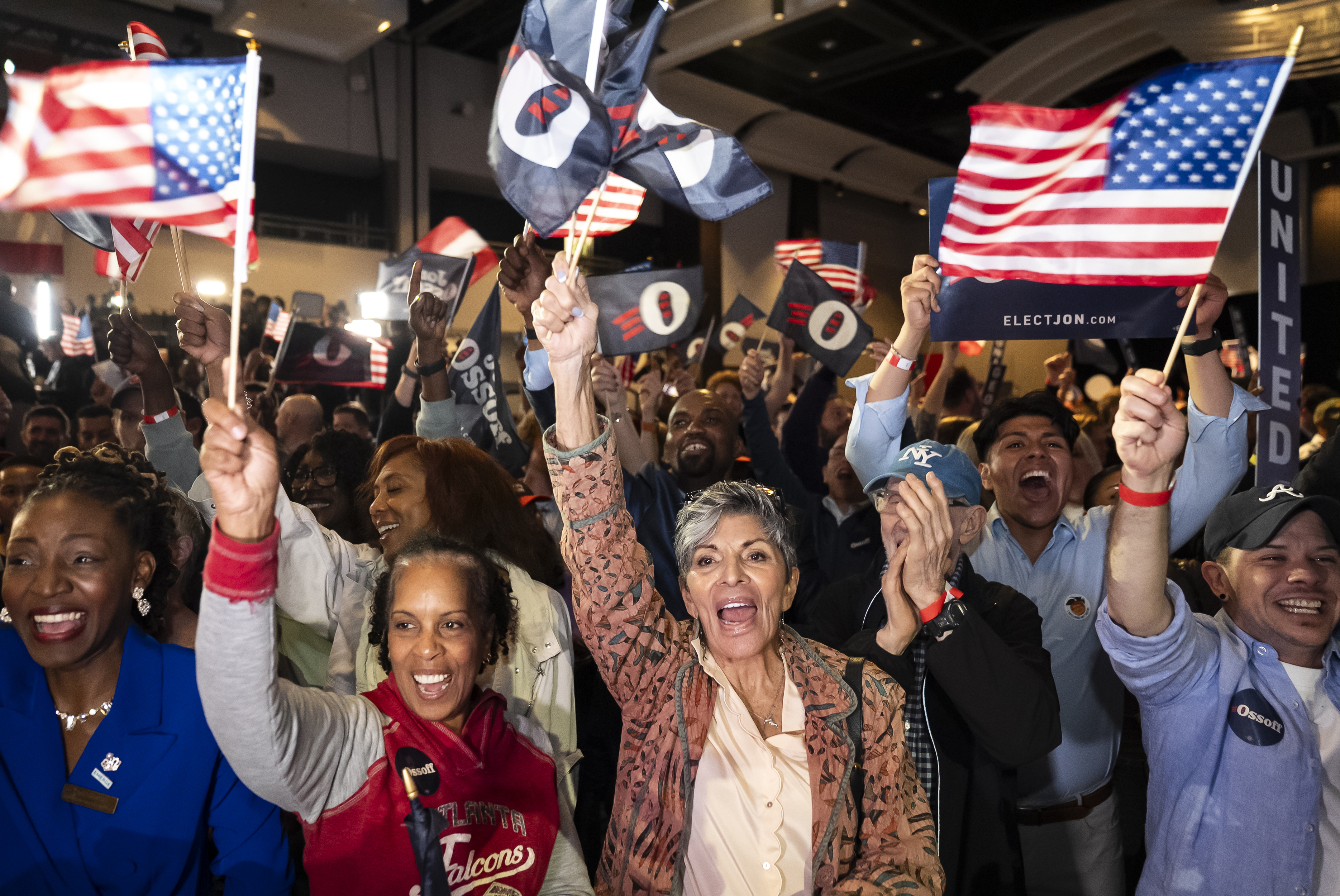
Supporters of Sen. Jon Ossoff (D., Ga.) react as he is projected to win reelection on Nov. 3. The repudiation of President Donald Trump with an overwhelming victory of the Democrats has set the stage for major policy changes in Washington.NICOLE CRAINE
At that time, the nation was facing not only the political uncertainties of how to reunite a country torn by four years of domestic warfare that claimed the lives of hundreds of thousands of soldiers and civilians, but also the loss of its president, who had been assassinated just a few days after Robert E. Lee’s historic surrender to Ulysses S. Grant at Appomattox in Virginia.
Opportunity to rebuild
Call it a second Reconstruction, if you will.
Historians have argued over the successes and failures of Reconstruction-era policies and their enforcement, or lack thereof, since the late 19th century. It remains abundantly clear that the opportunity to rebuild a nation that practiced its principles of liberty and justice for all was left incomplete.
Despite the passage of the 13th Amendment to the Constitution, which abolished slavery, there remained forced incarcerated labor, which remains in effect to this day. Despite the passage of the 14th Amendment, which granted citizenship to enslaved African Americans, the debate over the meaning of “birthright citizenship” continues. And while the 15th Amendment granted the right to vote to African Americans, we must not forget the battles over voting rights that dominated the news before the recent midterms.
We need to pay close attention to our history and learn the lessons it has placed in front of us. Well-intended Reconstruction policies meant to restrain the forces of hate that sustained the brutality of slavery were not enforced. That hatred and brutality did not end with the conclusion of the Civil War. It continued with the rise of the Ku Klux Klan and other forms of white supremacy that led to the lynchings of African Americans and uninhibited racial violence in both the North and the South.
To be sure, the past two years of the Trump administration can hardly be compared to the horrors of enslavement. And while the country is not as shattered as it was 160 years ago, the division and distrust and disillusionment today run deep. What is broken won’t be easily put back together.
Benefit the majority
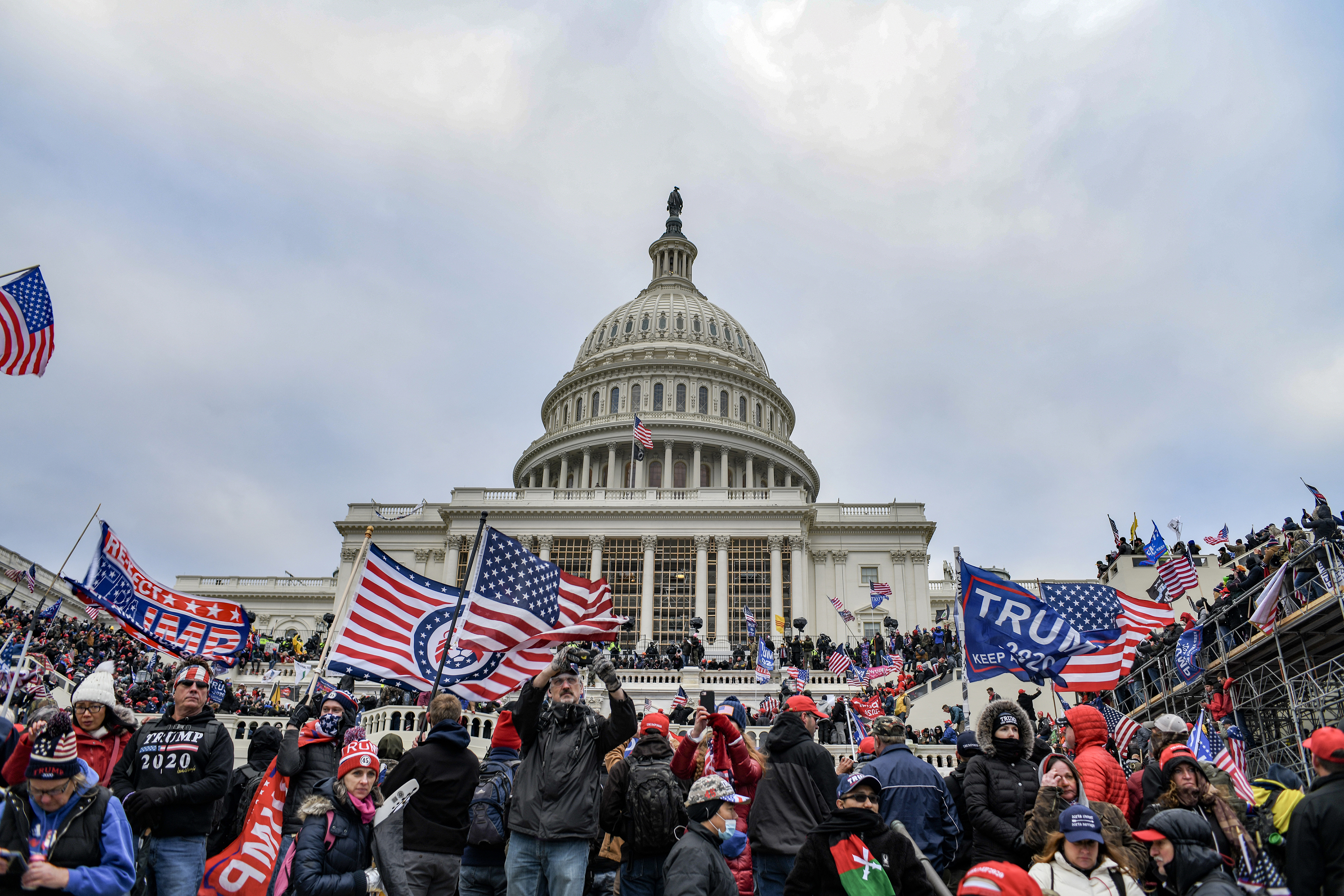
We cannot forget the efforts by the Trump administration and its Republican allies in Congress to erase the reality of the Jan. 6, 2021, insurrection from history. That alone has created a seemingly unbridgeable chasm, but it should compel the incoming Congress to focus its attention on what will benefit the vast majority of Americans who are now in financial distress, including measures that end the senseless war with Iran, and legislation that will address the failures of immigration policies that have contributed to the deaths of honest and law-abiding Americans.
The failure of Reconstruction to rebuild a country torn by war should lead our contemporary policymakers to understand that it won’t be enough to create legislation that will right the wrongs of the past several years. We must now work to repair our frayed democratic ideals. It will take political will and moral fortitude. And a resolute commitment to making the nation whole.
HONG KONG — Nvidia CEO Jensen Huang resigned Thursday, capping a spectacular downfall for a poster boy of the artificial intelligence boom whose exit following reports of extramarital affairs now thrusts the chipmaker into an uncertain future.
After a dizzying series of headlines about Huang’s infidelity and ties to an alleged Chinese spy, his departure sets off a scramble to find a permanent replacement to lead the multitrillion-dollar colossus that grew from obscurity to a perch between Apple and Microsoft at the top of the S&P index.
The resignation sent shares of Nvidia plummeting 14% at the opening bell, before stabilizing. The stock was down about 4% around midday Thursday as investors pondered the lawsuits, investigations, likely corporate jockeying and the resilience of a market driven by the gains of a few tech giants.
“Huang’s departure introduces uncertainty well beyond the company itself,” said Asa Hiken, senior analyst for research firm eMarketer, reflecting fears of wider implications and the possibility of an AI bubble.
The company named Colette Kress, the executive vice president and chief financial officer, as interim chief executive. She became CFO in 2013, overseeing the company’s global finance operations. Before that, she worked for three years at Cisco and spent 13 years at Microsoft.
Nvidia had no succession plan to prepare for the possibility of the departure of Huang, who was synonymous with Nvidia for more than 30 years in much the same way Steve Jobs embodied Apple. Nvidia said its board would consider internal and external candidates to replace him.
In a statement Thursday, Kress said that Nvidia’s “strength has always come from its people” and that she was “committed to building on the extraordinary foundation Jensen created over the last 33 years.”
The board of directors said Thursday it had also named its first-ever chairman, Harvey C. Jones, an entrepreneur and venture investor.
Drumbeat of scandals grew louder
Huang, 63, is one of the world’s wealthiest people, with a personal fortune that Forbes estimates at more than $150 billion. He is the single largest individual shareholder of Nvidia stock.
A drumbeat of scandals around him had grown louder in recent weeks after The New York Times reported Huang’s relationship with a woman the paper said U.S. officials had concluded was a Chinese spy who was recruited to influence California-based Nvidia to make its most advanced chips more available in China.
The discovery set off alarms as high as the White House.
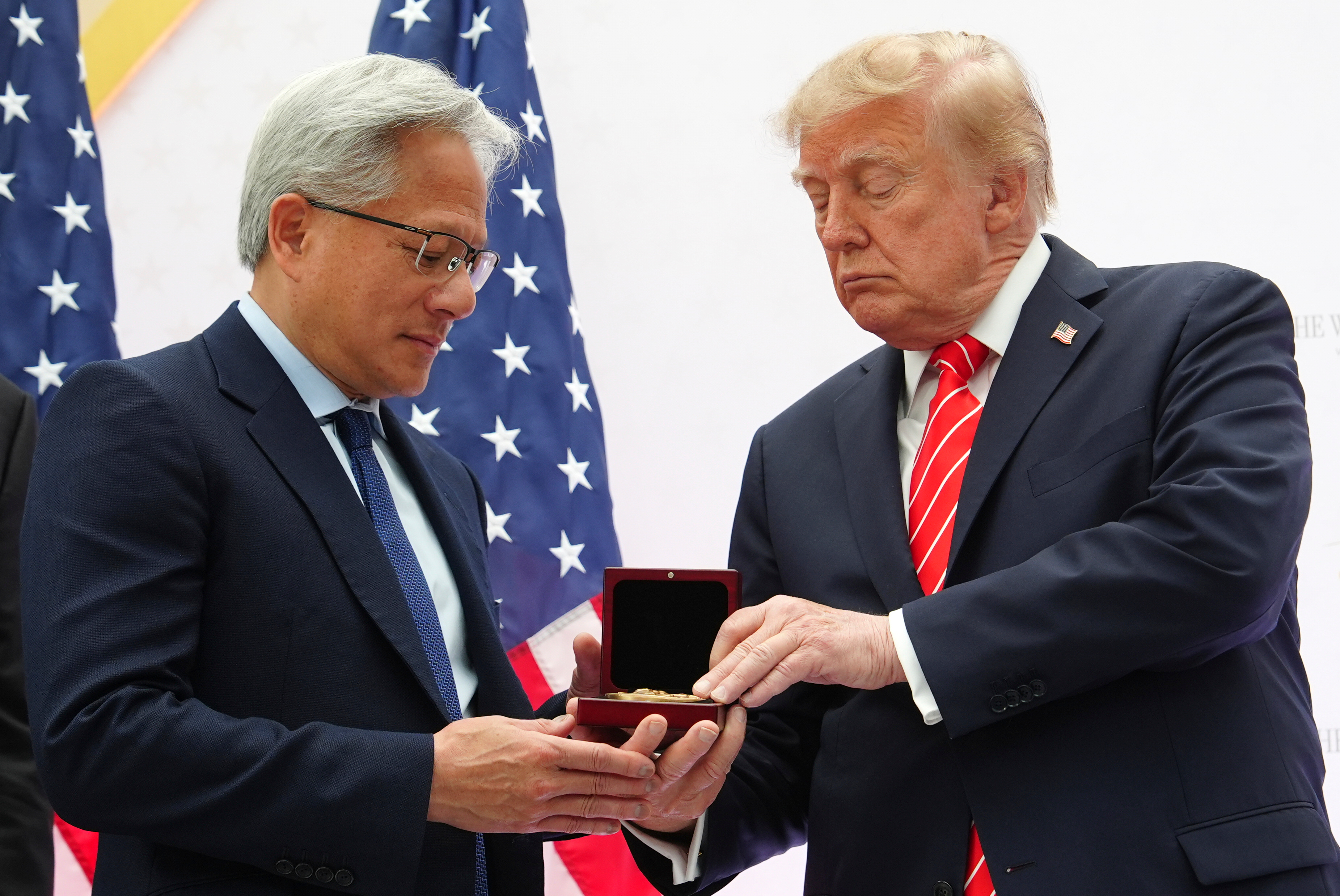
U.S. President Donald Trump said Monday that the FBI was investigating but remained complimentary of Huang on Thursday, saying he “has done a fantastic job.” Like many top tech CEOs, Huang is close to Trump, who has hosted him at the White House and on Air Force One, and awarded him a National Medal of Science.
Nvidia’s board announced an investigation into the allegations on Sunday, but said it remained confident in Huang’s leadership. Then pressure compounded late Wednesday after reports surfaced of another alleged affair by Huang, this time with an Nvidia employee who reported to him.
The company has said it had “no reason to believe” that either national security or its secrets were compromised, but that its inquiry would examine all available information.
Nvidia is due to report earnings Tuesday.
Lawmakers still want to question Huang
After Huang’s exit, U.S. lawmakers were still insisting on questioning him about his interactions with a Chinese businesswoman named Alice Huang and the company’s security protocols against espionage.
“Congress must demand answers from Mr. Huang and others at Nvidia about how they may have put U.S. national security at risk,” Democratic Senate leader Chuck Schumer of New York posted online.
Rep. Brian Mast, chairman of the House Committee on Foreign Affairs, said the committee was in contact with Huang’s team as recently as Wednesday night after putting in an initial request for an interview on Nov. 5. Mast said Huang would receive a subpoena to compel his appearance, if necessary.
Alice Huang, the suspected spy at the center of the scandal, is a former executive at Singapore-based Megaspeed International. Jensen Huang acknowledged an affair but did not identify her.
The two are not related.
Megaspeed faced allegations last year that it was illicitly shipping advanced Nvidia computer chips into China, but in December said there was “no evidence” of such exports.
Singaporean authorities said Thursday that they questioned Alice Huang and confiscated her passport last year as part of an investigation into Megaspeed. They concluded that there wasn’t enough evidence that she had committed a crime but suspected she provided “inaccurate information” to downplay her role at Megaspeed and barred her from returning to the country.
China denies attempting to ensnare executive
China has denied that it attempted to ensnare Jensen Huang. Nvidia has become a leader in making chips that power AI, and Huang has lobbied Washington to loosen limits on sales of Nvidia chips to China. In January, he won Trump’s approval to sell Nvidia’s H200 chips to China.
Megaspeed said Thursday that it has cooperated with the U.S. Department of Commerce’s Bureau of Industry and Security, which handles enforcement of national security restrictions on technology exports, and was ready to “cooperate fully with any other relevant U.S. government authority.”
The company said it has hired a U.S. law firm to conduct a “comprehensive census” of its computer chips and to verify its export controls.
“Megaspeed welcomes appropriate government scrutiny and is committed to demonstrating through concrete actions that it operates responsibly, transparently, and in accordance with applicable U.S. laws,” it said.
Apart from questions over national security, Megaspeed’s finances also have drawn attention. Its total assets soared roughly 90-fold from late 2023 to 2024, to almost $3 billion, according to Singapore corporate records.
Revenue surged to over $294 million in 2024 from none in 2023.
What comes next for Jensen Huang is unclear, though another tech mogul, Elon Musk, said on X that it “would be an honor” to hire him.
At a time of growing alarm about AI’s potential risks, Huang has been a voice of optimism on the technology’s potential. His climb to the top of the corporate world started with an idea born in an unglamorous setting.
Huang and two other engineers gathered in 1993 at a Denny’s in San Jose, California, where they discussed building a computer chip that would make graphics for video games faster and more realistic.
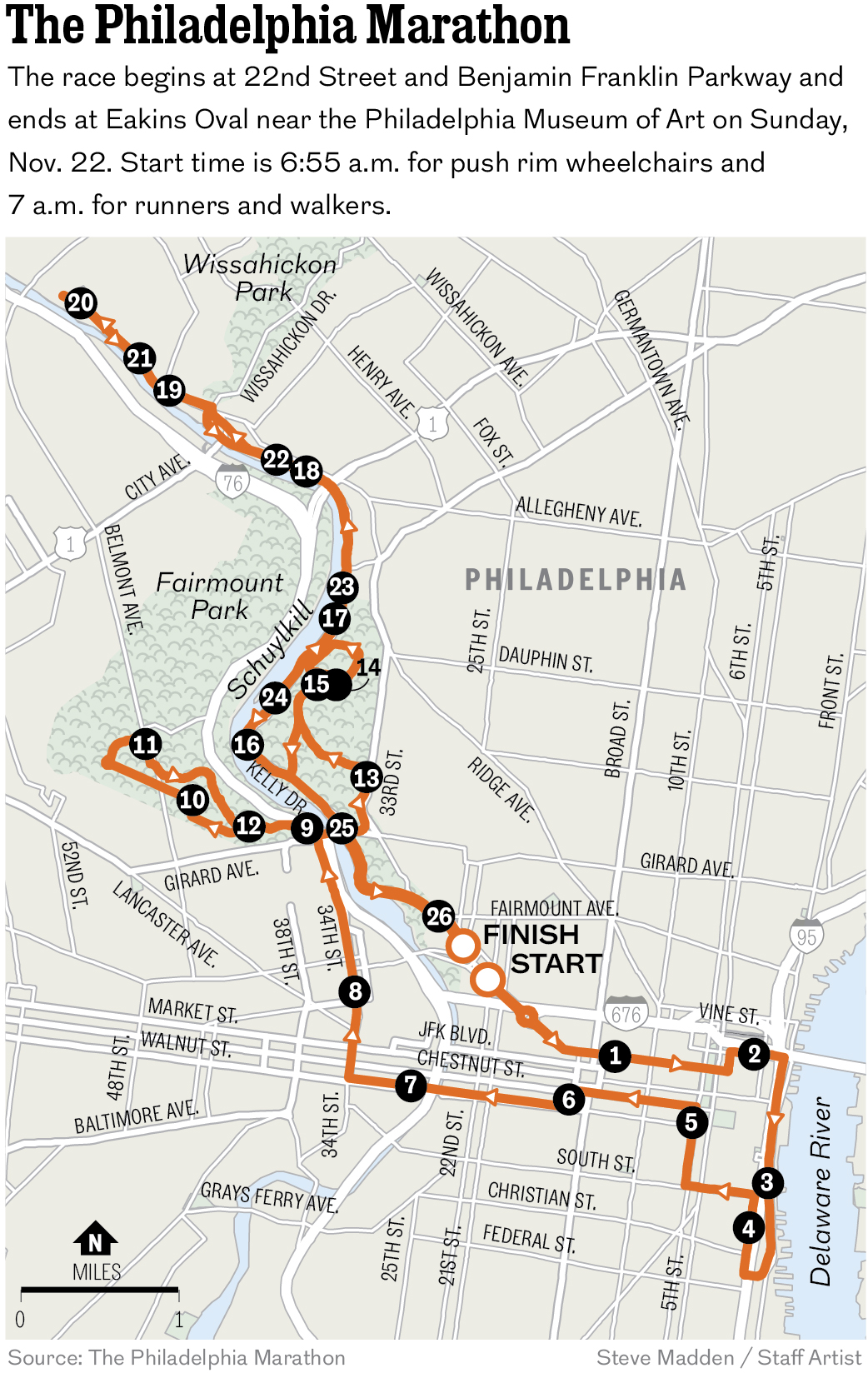
The Philadelphia Marathon returns Nov. 20-22 for what organizers expect to be the largest race weekend in event history.
Runners from around the world will compete in the 8K, half-marathon, and 26.2-mile marathon, which stretches from Manayunk to the Delaware River waterfront.
The first Philadelphia Marathon was held in 1994 with just 1,500 participants. This year, organizers expect nearly 40,000 runners across four races.
With that many runners hitting the streets, Philadelphians can expect road closures, parking restrictions, and traffic detours throughout the weekend.
Here’s what to know before the 2026 Philadelphia Marathon Weekend.
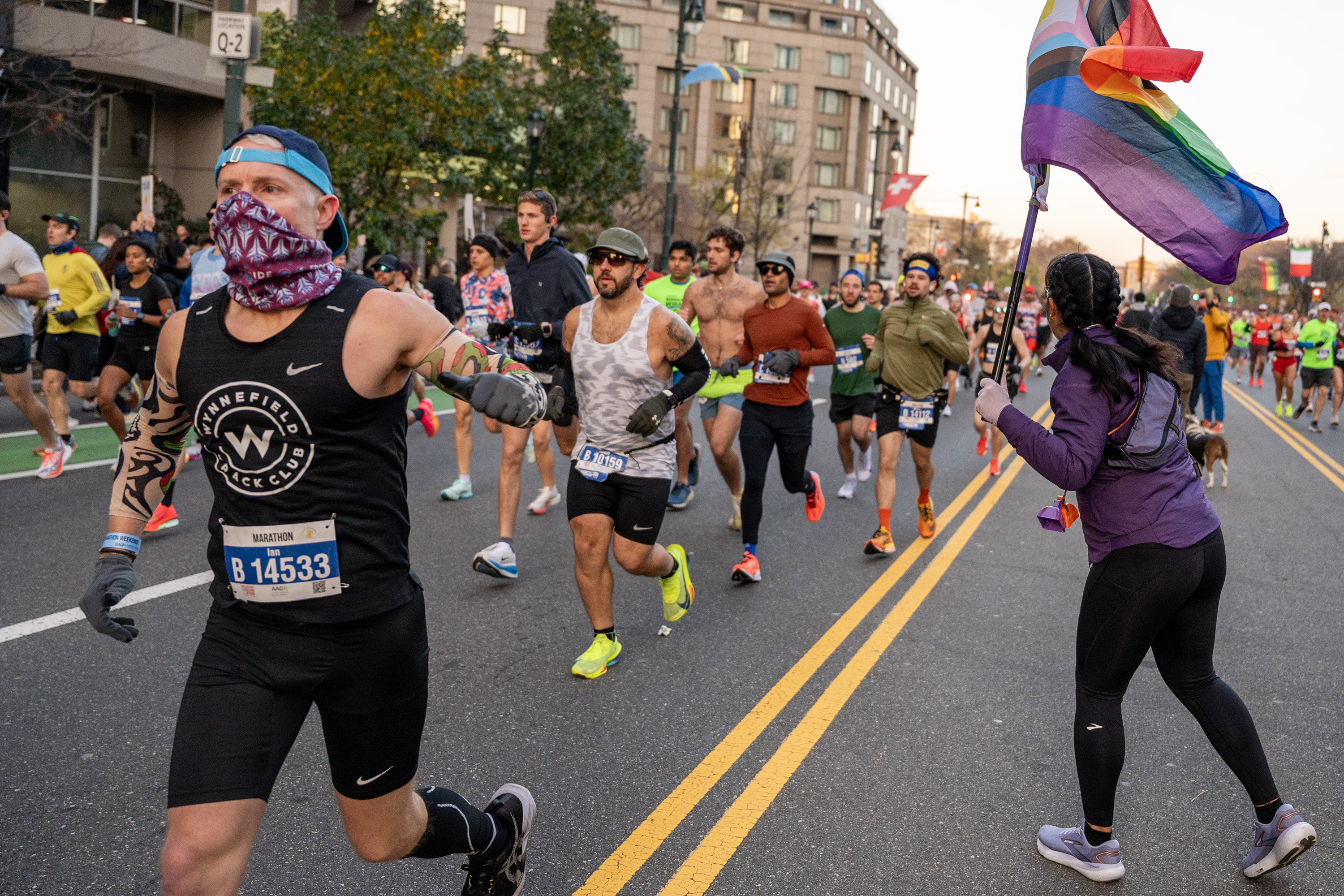
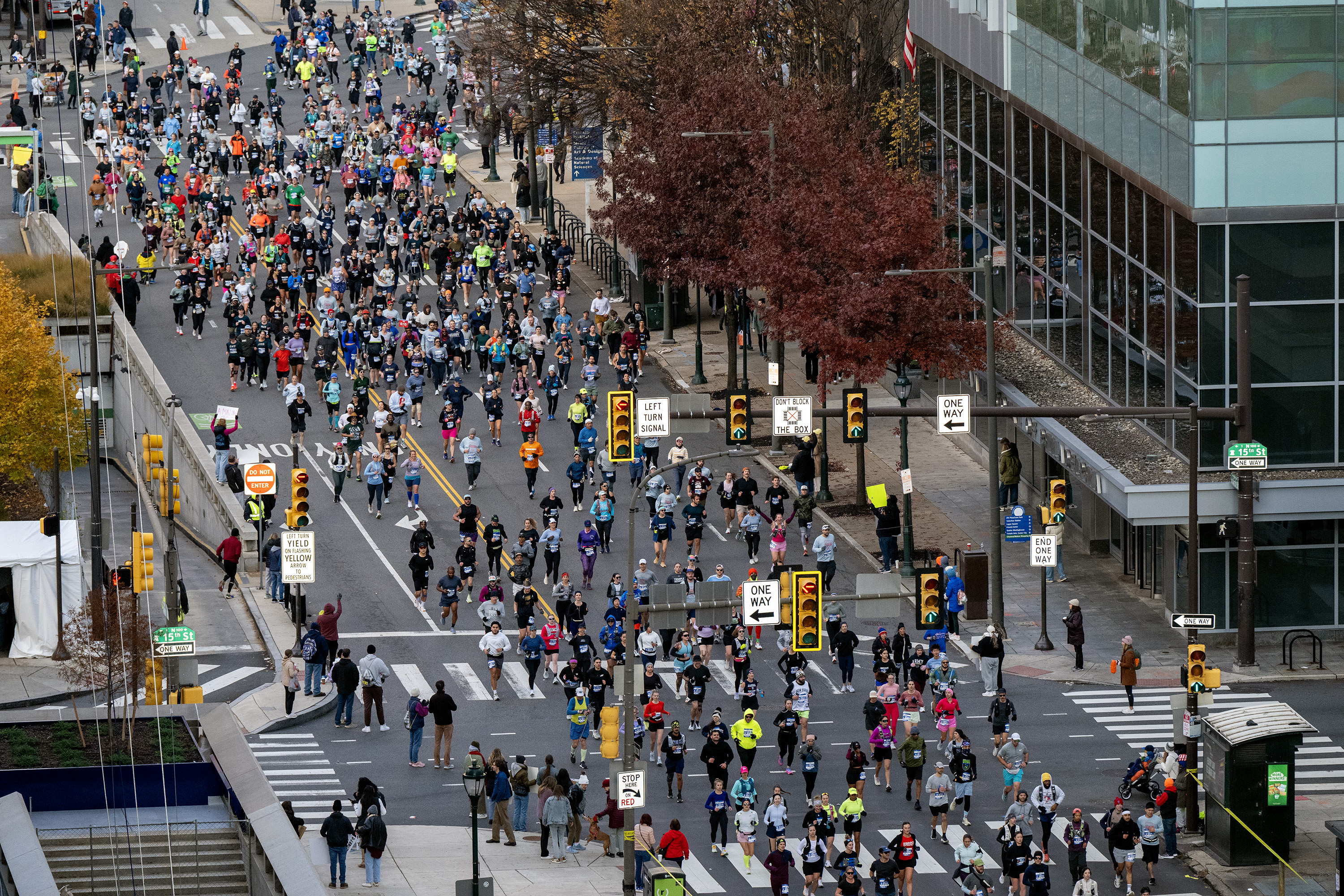
Sharon Tejada (right), a coleader of Queer Run, encourages runners heading out on the Benjamin Franklin Parkway at the start of the annual Philadelphia Marathon on Nov. 23, 2025.Tom Gralish / Staff Photographer
Race start times and locations for the Philadelphia Marathon
All four races start near the Philadelphia Museum of Art. The marathon, half-marathon, and Children’s Run begin at 22nd Street and Benjamin Franklin Parkway, while the Rothman Orthopaedics 8K starts at 25th Street and Kelly Drive.
Dietz & Watson Philadelphia Half-Marathon: Saturday, Nov. 21, 6:55 a.m. (wheelchair participants); 7 a.m. (runners and walkers)
TIAA Philadelphia Marathon: Sunday, Nov. 22, 6:55 a.m. (wheelchair participants); 7 a.m. (runners and walkers)
Philadelphia Children’s Run: Sunday, Nov. 22, 11 a.m.
Race routes for the Philadelphia Marathon
Each race follows a unique route. The marathon and half-marathon wind through Center City, Chinatown, Old City, Queen Village, Rittenhouse, and University City, with portions of the courses passing through Fairmount Park and along Kelly Drive and the Benjamin Franklin Parkway.
Course map for the Philadelphia MarathonSteve Madden
The expo features vendors showcasing apparel, shoes, and running gear, along with free product samples and educational booths focused on health and fitness. Both days will also feature a speaker series and meet-and-greets with some of the country’s top runners.
For spectators of the Philadelphia Marathon
Spectators are welcome to line the race routes to cheer on runners but will be restricted from the starting lines and in secure running areas until after 8 a.m. on Saturday and Sunday to ensure smooth race starts.
Large umbrellas, coolers, alcohol, bicycles, scooters, and animals (except service animals) are prohibited. Organizers also discourage spectators from bringing large blankets, backpacks, handbags, and cameras.
Lilian Yao, 20, poses for her mother, Leslie Liu, after completing the Philadelphia Marathon on Nov. 23, 2025. This was her first marathon. Her mom arrived from Hong Kong just hours before the start of the race.Tom Gralish / Staff Photographer
Road closures
All-weekend closures
Friday, Nov. 20, through 5 p.m. Sunday, Nov. 22
Benjamin Franklin Parkway (all lanes) between 22nd Street and Eakins Oval
Kelly Drive (inbound) closed at 25th Street, with local traffic permitted to Anne d’Harnoncourt Drive
Spring Garden Street Bridge and MLK Drive (inbound) traffic detoured onto 24th Street
Spring Garden Street closedbetweenBenjamin Franklin Parkway and Pennsylvania Avenue
Saturday, Nov. 21
2 a.m. closures
2000-2400 Benjamin Franklin Parkway
Spring Garden Street, from Pennsylvania Avenue to Benjamin Franklin Parkway
23rd Street, from Pennsylvania Avenue to Benjamin Franklin Parkway
22nd Street, from Winter Street to Park Towne Place (local access to Park Towne Place maintained)
21st Street, from Pennsylvania Avenue to Winter Street
4 a.m. closures
I-676 off-ramp at 22nd Street (westbound)
I-76 off-ramp at Spring Garden Street (eastbound)
6 a.m. closures
17th Street, from Arch Street to Vine Street
18th Street, from Arch Street to Callowhill Street
19th Street, from Arch Street to Callowhill Street
20th Street, from Arch Street to Callowhill Street
21st Street, from Arch Street to Spring Garden Street
22nd Street, from Arch Street to Spring Garden Street
Benjamin Franklin Parkway, from 16th Street to 20th Street
Market Street, from Sixth Street to 16th Street
Chestnut Street, from Fifth Street to Eighth Street
Sixth Street, from Market Street to Chestnut Street
Fifth Street, from Chestnut Street to Race Street
South Penn Square
Juniper Street, from Chestnut Street to Market Street
John F. Kennedy Boulevard, from Juniper Street to 17th Street
15th Street, from Race Street to Chestnut Street
16th Street, from Chestnut Street to Race Street
Race Street, from Sixth Street to Columbus Boulevard
Columbus Boulevard (southbound lanes), from Vine Street to Washington Avenue
I-95 southbound off-ramp at Washington Avenue
Washington Avenue, from Columbus Boulevard to Front Street
Front Street, from Washington Avenue to South Street
South Street, from Front Street to Seventh Street
Sixth Street, from Bainbridge Street to Locust Street
Lombard Street, from Fifth Street to Broad Street
13th Street, from Bainbridge Street to Chestnut Street
Walnut Street, from 12th Street to 34th Street
34th Street, from Chestnut Street to Girard Avenue
Spring Garden Street, from 32nd Street to 34th Street
Girard Avenue, from 33rd Street to 38th Street
33rd Street, from Girard Avenue to Cecil B. Moore Avenue
Reservoir Drive, from 33rd Street to Diamond Drive
Mount Pleasant Drive
Fountain Green Drive
Kelly Drive
Access and reopening
Local access for residents and businesses will be maintained at police-controlled points.
Access to the Philadelphia Museum of Art will be available via Spring Garden Street (Bridge and Tunnel) to Anne d’Harnoncourt Drive.
Motorists and pedestrians can expect delays when trying to cross roads or streets along the racecourse.
Police will allow traffic through intersections when possible, depending on runner flow.
All streets (except Eakins Oval and the Parkway) are scheduled to reopen by 2 p.m. Saturday. Many Center City roads will reopen earlier as they are cleared and serviced.
Sunday, Nov. 22
As part of enhanced security for the TIAA Philadelphia Marathon, “No Parking” regulations will be strictly enforced. Vehicles on the race route will be relocated beginning at 1 a.m. Sunday.
2 a.m. closures
2000-2400 Benjamin Franklin Parkway
Spring Garden Street, from Pennsylvania Avenue to Benjamin Franklin Parkway
23rd Street, from Pennsylvania Avenue to Benjamin Franklin Parkway
22nd Street, from Winter Street to Park Towne Place (local access maintained)
21st Street, from Pennsylvania Avenue to Winter Street
4 a.m. closures
I-676 off-ramp at 22nd Street (westbound)
I-76 off-ramp at Spring Garden Street (eastbound)
6 a.m. closures
17th Street, from Arch Street to Vine Street
18th Street, from Arch Street to Callowhill Street
19th Street, from Arch Street to Callowhill Street
20th Street, from Arch Street to Callowhill Street
21st Street, from Arch Street to Spring Garden Street
22nd Street, from Arch Street to Spring Garden Street
Benjamin Franklin Parkway, from 16th Street to 20th Street
Arch Street, from Third Street to 16th Street
Fourth Street, from Arch Street to Vine Street
Race Street, from Sixth Street to Columbus Boulevard
Columbus Boulevard (southbound lanes), from Vine Street to Washington Avenue
Columbus Boulevard (northbound lanes), from Washington Avenue to Callowhill Street
I-95 southbound off-ramp at Washington Avenue
Washington Avenue, from Columbus Boulevard to Front Street
Front Street, from Washington Avenue to South Street
South Street, from Front Street to Seventh Street
Sixth Street, from Bainbridge Street to Market Street
Chestnut Street, from Sixth Street to 15th Street
15th Street, from Chestnut Street to Walnut Street
Walnut Street, from Broad Street to 34th Street
34th Street, from Chestnut Street to Girard Avenue
Lansdowne Drive, from Girard Avenue to South Concourse Drive
South Concourse Drive, from Lansdowne Drive to West Memorial Hall Drive
East Memorial Hall Drive, from South Concourse Drive to Avenue of the Republic
Avenue of the Republic, from East Memorial Hall Drive to Catholic Fountain
Belmont Avenue, from Montgomery Drive to Parkside Avenue
States Drive, from Lansdowne Drive to Girard Avenue
Girard Avenue Bridge, from Lansdowne Drive to 33rd Street
33rd Street, from Girard Avenue to Reservoir Drive
Reservoir Drive, from 33rd Street to Edgley Drive
Edgley Drive, from Reservoir Drive to Fountain Green Drive
Fountain Green Drive, from Edgley Drive to Kelly Drive
Kelly Drive
Falls Bridge
Ridge Avenue, from Schoolhouse Lane to Manayunk Avenue
Main Street (Manayunk), from Ridge Avenue to Conarroe Street
Access and reopening
Local access for residents and businesses will be maintained at police-controlled points.
Access to the Philadelphia Museum of Art will be available via Spring Garden Street (Bridge and Tunnel) to Anne d’Harnoncourt Drive.
Expect delays at crossings along the course; police will allow traffic through when possible.
All streets (except Eakins Oval and the Parkway) are scheduled to reopen by 3 p.m. Sunday; many Center City roads will reopen earlier as they are cleared and serviced.
The outer lanes of Benjamin Franklin Parkway, Eakins Oval and Kelly Drive will be reopened to vehicular traffic by 5 p.m. on Sunday. All affected roads will be reopened by 8 a.m. on Monday, Nov. 23.
Transportation to the races
🚌 Bus
Lines 7, 32, 38, 43, 48, and 49 normally stop within a short walk of the Philadelphia Museum of Art. However, race-related detours are expected throughout the weekend.
Check SEPTA’s system status for the latest route changes and schedules.
🚄 Trains
Athletes and spectators can take the Market-Frankford Line to 15th Street at City Hall or Drexel Station at 30th Street, then connect to nearby routes 7, 32, 38, 43, 48, and others to reach the museum area.
Visitors can also board the Broad Street Line to Fairmount and Broad-Spring Garden stations, and transfer to connecting routes 7, 32, 48, 49, or others serving stops near or at the museum.
🚆 Regional Rail
Visitors can take SEPTA Regional Rail to Suburban Station or 30th Street Station to reach the start and finish areas. Check SEPTA’s website for schedules and service updates.
🚴♀️ Bicycle
The race’s starting line is within a 10-minute ride from the City Hall area and subway stop and other locations. Check the map of Indego bike share stations to rent bikes and return them at a station near the Art Museum.
Runners turn from the Benjamin Franklin Parkway (upper right) onto Arch Street heading to 15th Street (bottom) in the first mile of the annual Philadelphia Marathon on Nov. 23, 2025.Tom Gralish / Staff Photographer
Where does the money go?
Proceeds from the Philadelphia Marathon support several charities and nonprofits, including local organizations such as B Inspired Philadelphia and the Mazzoni Center.
2027 Infiniti QX65 Sport vs. 2026 Volkswagen Atlas Cross Sport SEL Premium R-Line AWD: Battle of the chopped-down SUVs
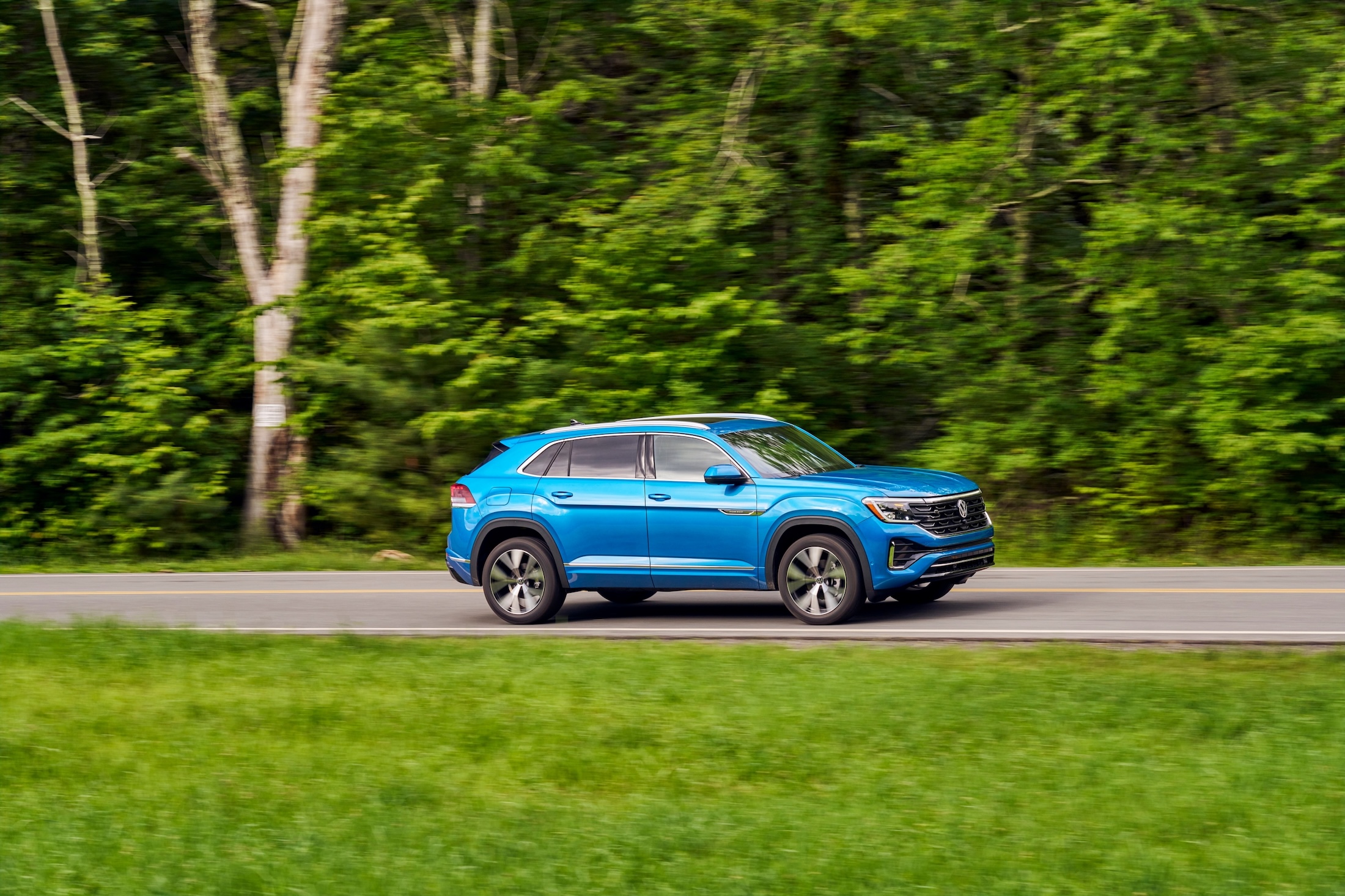
This week: 2026 Volkswagen Atlas Cross Sport
Price: $55,095 as tested. It’s a tippy-top-of-the-line sample, so no options on the test vehicle; even the panoramic sunroof, heated rear seats, and premium sound system were included.
What others are saying: “Highs: Fashionable profile, roomy interior, even base SE comes well-equipped. Lows: Infotainment interface still on VW’s to-do list, dynamically blasé, value argument erodes with top trims,” says Car and Driver.
What Volkswagen is saying: “That turbo engine means business — and fun.”
Reality: Last week’s Infiniti confidence has met its match.
What’s new: Not that much. The Atlas Cross Sport got its start in 2022. It’s based on the large three-row Atlas SUV; with a lowered rear roofline and removed third row and some tuning tweaks, you have a “sport crossover.” A refresh came for 2024. Its big moment will arrive in the 2027 model year with a redesign. So, maybe, here’s your chance to get a discount on a leftover, especially with Volkswagen crying poorthese last few months.
Competition: Volkswagen reaches for the stars with this model. Other writers may disagree, but the competition I see is in the upscale brands. In addition to the QX65, other competitors include Audi Q4, BMW X6, Lincoln Nautilus, Mercedes GLC-Class Coupe, and Porsche Cayenne.
Up to speed: Car and Driver complains Volkswagen never got around to the multimedia center, yet C&D never got around to testing a Cross Sport from this latest generation. They cite a 2025 Atlas SUV for 0-60 numbers, noting a 7.3-second time in that larger SUV. Let’s assume this swoopier, seat-reduced version gets there in 7 seconds; even the 7.3 number is still a full second faster than the QX65.
The 2.0-liter turbocharged four-cylinder engine creates 269 horses, precisely one more than the QX65. Its best trick is highway passing; stop paying attention in a radar zone, and expect flashing lights in your rearview as a reward. Just tell the nice patrol officer how cool the engine sounded doing it; maybe that will help. Advantage, Atlas Cross Sport.
Shifty: The Cross Sport gets the Audi-esque shift switch, which is a big toggle for R-N-D. Park is a button. Shutting down the Cross Sport is a “I’m Mr. Cool” moment. The start-stop switch sits in a row with the transmission choices, and a small electronic emergency brake brings up the back end. Park button, stop button, pull brake, boop, boop, yank. Pretty slick.
There was shiftability as well, but I never tried it.
On the road: The Atlas Cross Sport is by no means a perfect vehicle, but, man, did I look forward to driving it. The handling was direct, and Sport mode really brought out the best characteristics of the SUV. As I was putting the finishing touches on this comparison, I noticed I’d written that I did not look forward to driving the Infiniti, so the clear advantage again goes to the Atlas Cross Sport.
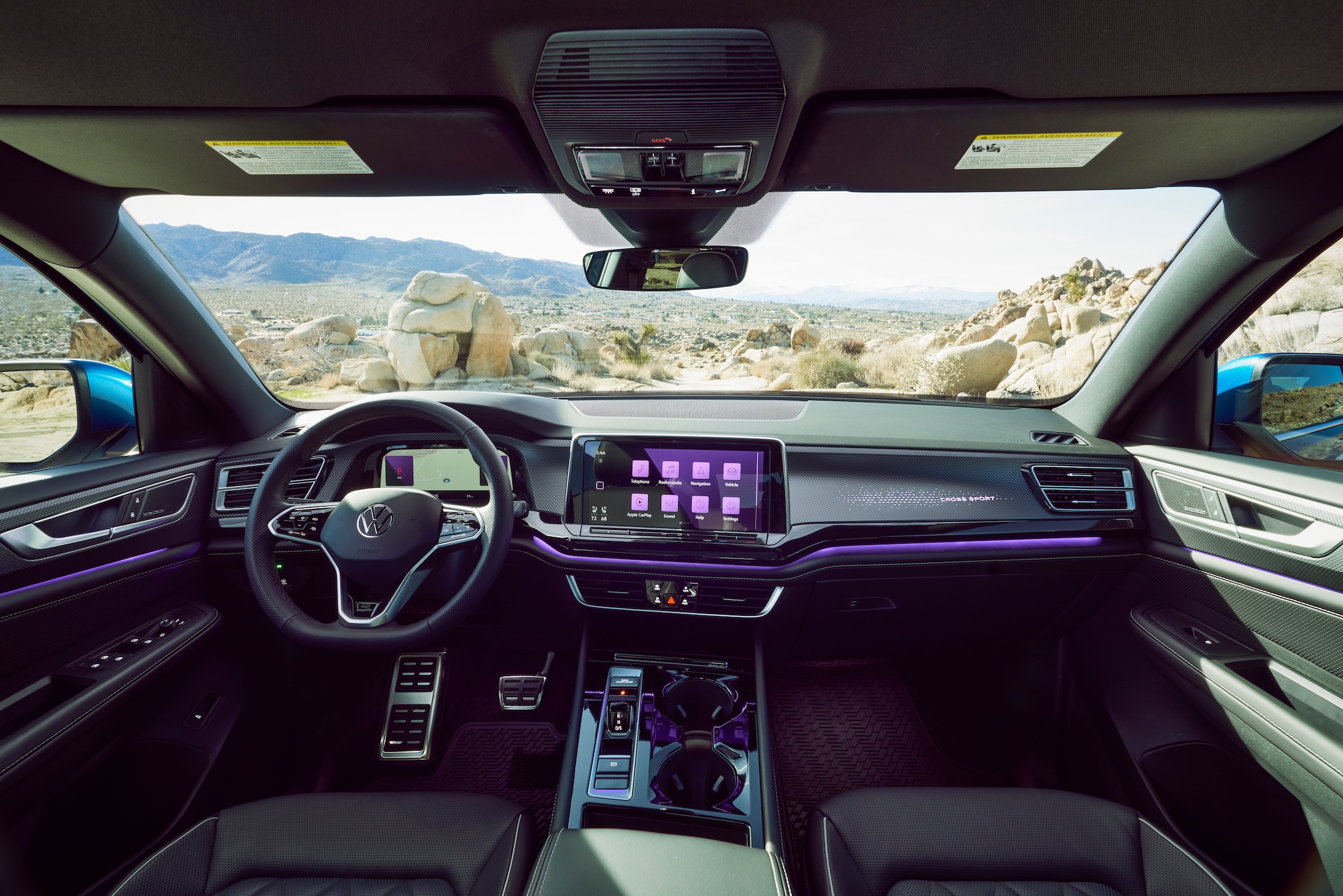
The interior of the 2026 Volkswagen Atlas Cross Sport offers comfort, convenience, and some roominess.Volkswagen
Driver’s Seat: The comfortable Driver’s Seat remained heavy on firmness like Volkswagens and Audis can be. The no-cost chalk and titan black leather interior rivals the upscalery of the competitors; so does difficulty seeing around the vehicle. Sloped windshields, high driving positions, and “sporty” designs make the close-ups hard to spot.
The dashboard operates as easily as most VWs. Still, the QX65 gets this category.
Friends and stuff: The rear seat is not as bad as some: The fabric matches the front; there’s some grip from the seat outlines; and the seat back does have two adjustments. But with seats that move forward and recline with more options, the QX65 wins this event.
Cargo space is 40.3 or 77.6 cubic feet.
In and out: It’s a bit of a leg hoist but not a lot.
Play some tunes: I really thought the infotainment troubles I keep experiencing with Volkswagens have been my fault, but I’m glad to see Car and Driver says they’re “still on Volkswagen’s to-do list.” I can link up CarPlay in theory but can’t ever get the screen to show.
At least the 12-inch screen works. I can find the settings without too much trouble. (It sounds small these days, but I thought it was a nice size.)
Sound from the Harman Kardon system is about an A- or A. Even with the missing tech functions, the Atlas Cross Sport is ahead of the QX65.
Keeping warm and cool: The HVAC controls have moved into the touchscreen, annoying at best. A button opens up the screen, and then look again for the choices. Cold mornings made balky controls balkier. This is a toss-up.
Fuel economy: Over 800 miles with multiple drivers, the Atlas Cross Sport averaged around 22 mpg. That’s no great achievement, but it’s more than 10% better than the QX65.
Where it’s built: Chattanooga, Tenn.
How it’s built:Consumer Reports rates the Atlas Cross Sport reliability as 3 out of 5.
In the end: CR pits this against more run-of-the-mill SUVs like the Subaru Outback and the Jeep Grand Cherokee, and you can certainly get a version of this for a more reasonable price.
But at this level, the Atlas Cross Sport does a pretty good job of showing the far more expensive Mercedes and BMW products — as well as the competitively priced Infiniti — just how sporty crossovers can be.
The warning, buried in an obscure government report this summer, was unflinching.
The Defense Department’s vaunted network of research laboratories — whose scientists helped develop satellite communication, radar technology, and even the computer mouse — was in trouble.
The labs lost a significant share of their staff last year, largely in response to the Trump administration’s efforts to thin the federal workforce, the report found. Refilling critical positions was proving difficult due in part to President Donald Trump’s demand that new hires be screened for their loyalty to his goals. The report, issued by the Pentagon, pointed to “potentially grave consequences for the future of national defense.”
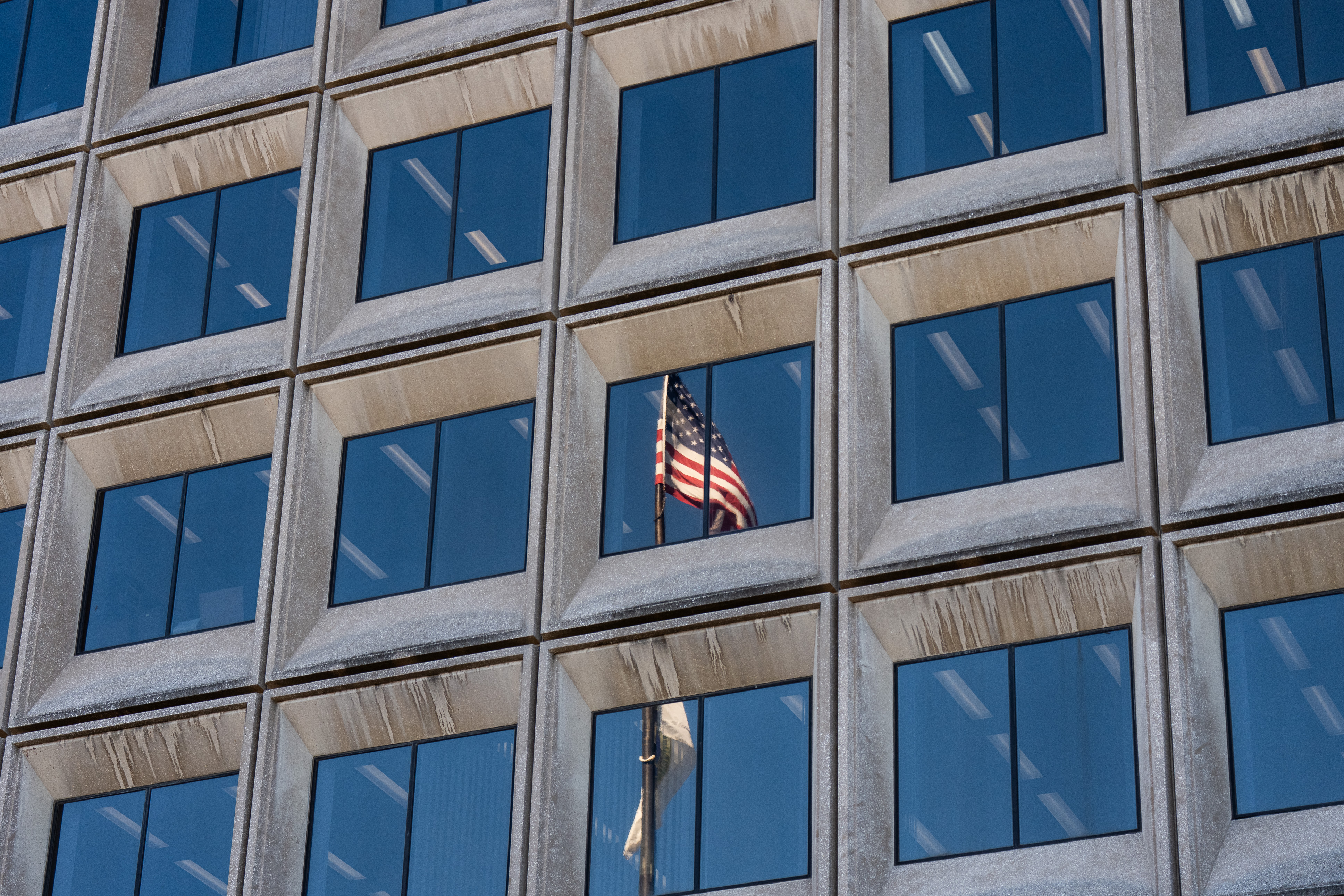
The turmoil inside scientific research has extended beyond the Pentagon. The Energy Department, a key hub of nuclear and quantum research, has lost more than 1,000 scientists and technical staff. The National Science Foundation, for decades a primary backer of long-term, foundational research, has withheld more than $1 billion in funding. And at the National Institutes of Health, the biggest funder of medical research, officials delayed or canceled more than 2,000 grants to biomedical researchers focused on topics such as Alzheimer’s, cancer and other diseases.
Under Trump, the federal government is still spending roughly as much on research — about $200 billion this year — as the administrations that came before. Scientists across the country are still receiving grants; universities are still being funded. But beneath the surface, the system of federally funded science that helped make the United States a global superpower is under intense strain from Trump’s policies, jeopardizing the nation’s advantages in defense, medicine, and technology, a New York Times examination has found.
The White House regularly proclaims that it is advancing U.S. interests. Yet its actions are eroding the country’s scientific edge as global rivals challenge U.S. dominance in fields that will help define the 21st century, according to interviews with scientists, university leaders, government officials, and analysts and a review of documents and budgets.
The damage is the byproduct of three pillars of Trump’s broader agenda.
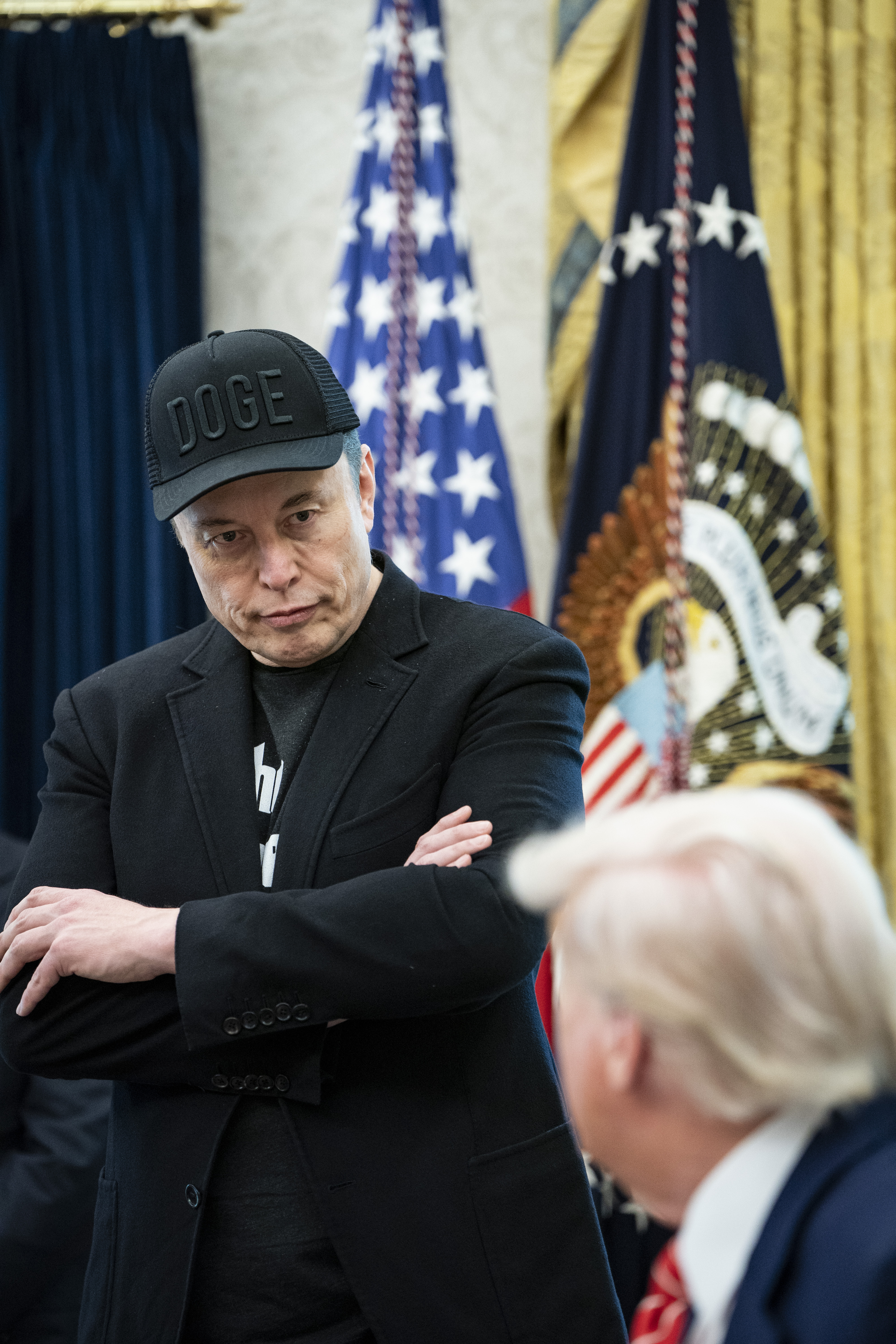
One is the sweeping job cuts and grant cancellations engineered last year by the so-called Department of Government Efficiency, the Elon Musk-led effort that viewed much of federal spending as wasteful and whose effects are still reverberating across the bureaucracy.
A second is the administration’s continued pressure on research universities, in which the White House used funding cuts to push schools into adhering to its demands for ideologically driven policy shifts.
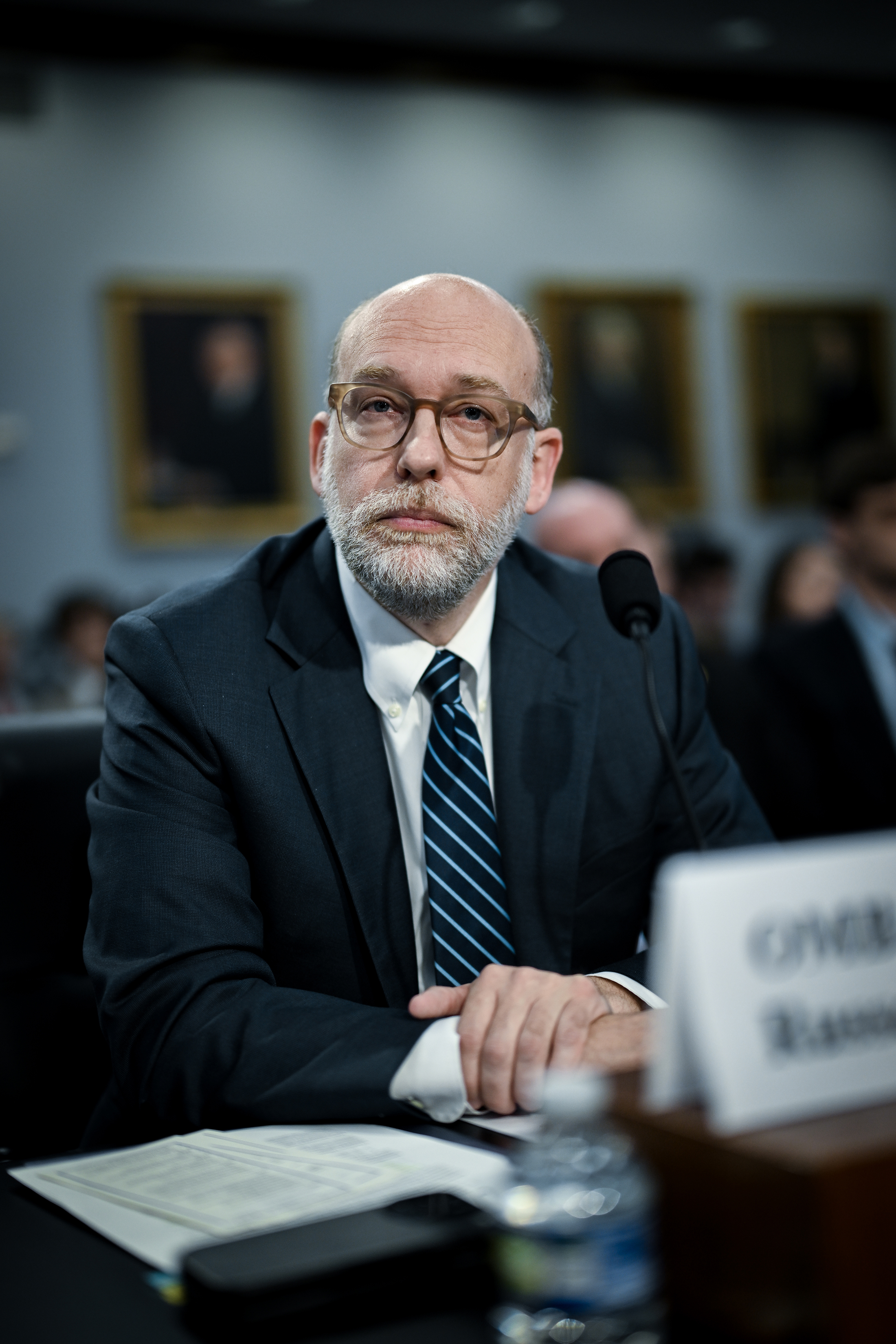
The third is a campaign by Trump’s budget director, Russell Vought, to impose more political control over how the government spends money appropriated by Congress, further infusing politics into decisions around scientific research.
If not for the courts curbing the administration’s campaign against universities and lawmakers in both parties rejecting cuts to research funding, the impact on science would have been far deeper. Still, the effects of the broader agenda have rippled through nearly every facet of the nation’s research machine.
Aspiring scientists have seen their career paths thwarted, with fewer available spots for doctorate students. The number of doctorate applications from foreign students, typically a significant share of U.S. science programs, shrank by 21% this year at leading universities, according to data gathered for the Association of American Universities. Total doctorate admissions at those schools have dropped as universities try to make do with less resources.
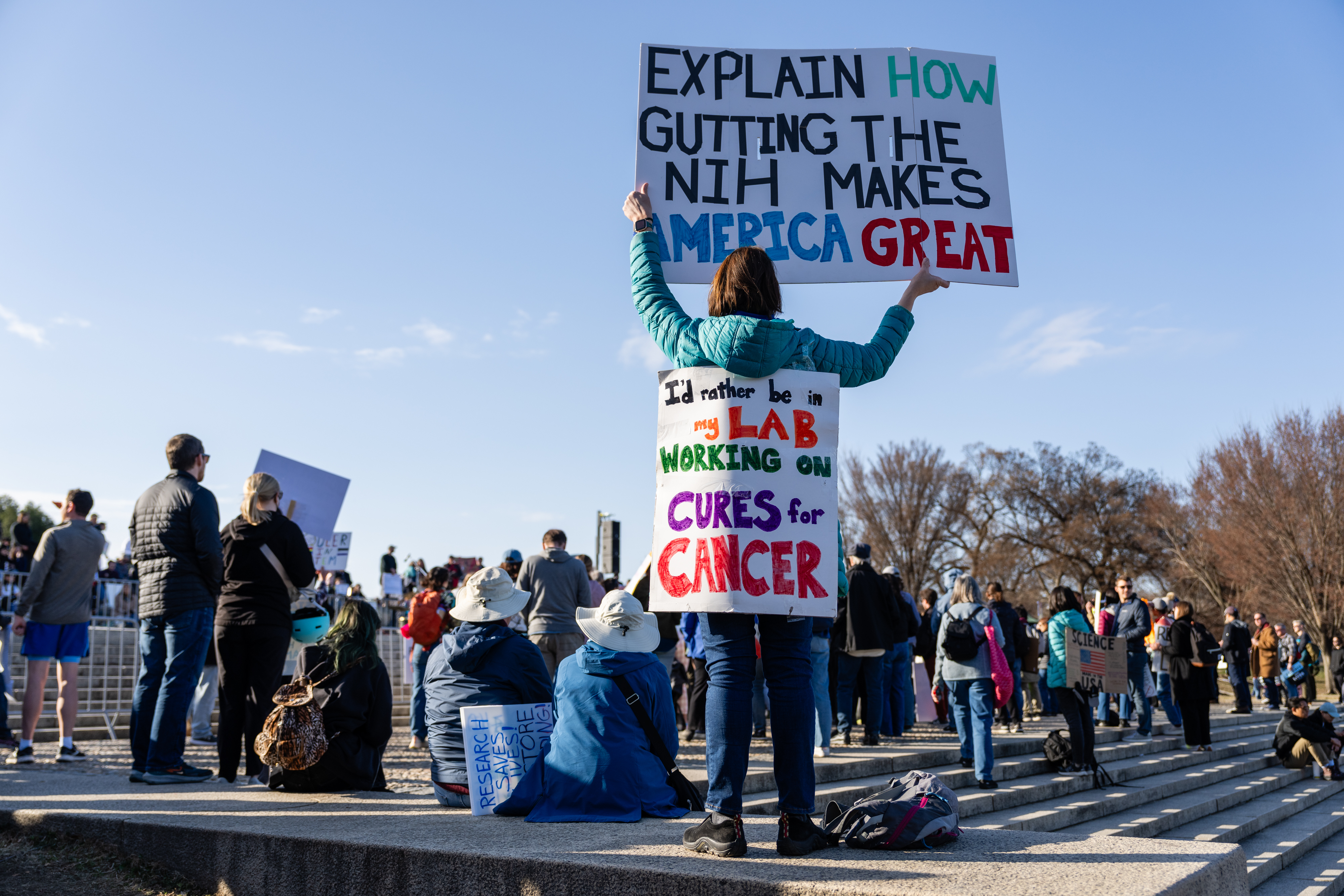
FILE — Demonstrators during 2025 Stand Up for Science rally at the Lincoln Memorial in Washington, on Friday, March 7, 2025. Scientists across the country are still receiving grants; universities are still being funded. But beneath the surface, the system of federally funded science that helped make the United States a global superpower is under intense strain from Trump policies, jeopardizing the nation’s advantages in defense, medicine and technology, a New York Times examination has found. (Eric Lee/The New York Times)ERIC LEE
Even the agencies working on topics that Trump and his aides have called priorities — including national defense, artificial intelligence, quantum computing, and nuclear energy — have been depleted.
Taken together, the changes underscore how Trump’s policies have disrupted scientific research beyond the areas the administration has targeted more directly, such as vaccines and climate science, endangering U.S. power and preeminence.
By many measures, China is closing the gap with the United States as the world’s research leader. Some organizations that rank global universities show China’s best schools increasingly displacing U.S. universities at the top. And the impact of Chinese research papers, as measured by citations from other scientists, has caught up with the United States, according to Clarivate, a data and analytics company.
By the time the full consequences of the administration’s actions become apparent, experts warn, it could be too late to fix. That’s because basic research funded by federal grants often takes decades to mature into the technology, medical treatments, and consumer products that change American life.
Federally funded work on atomic clocks starting in the late 1940s, for example, paved the way for GPS technology. In 1976, federally funded research yielded a major discovery about the origins of cancer-causing genes, which led to a Nobel Prize and, two decades later, lifesaving cancer drugs. Some of the early precursors to artificial intelligence date to U.S.-backed research in the 1980s, which used an algorithm to teach neural networks to learn from mistakes.
“Science is the long game,” said Marcia McNutt, who was president of the National Academy of Sciences, the country’s top scientific advisory body, until this summer. “By the time we no longer win any Nobel Prizes, we will have lost the capacity to ever recover.”
In response to the Times’ reporting, officials from the White House, Pentagon and other science agencies disputed that administration policies were hampering science. Rather, said White House spokesperson Liz Huston, the administration is reinvigorating U.S. science by transforming organizations in need of change.
“President Trump is ushering in a new golden age of American science by modernizing our research institutions, refocusing on ambitious national missions, and fully leveraging super intelligence for scientific discovery,” Huston said in a statement, using Trump’s preferred term for artificial intelligence. “Revitalizing our national scientific enterprise requires supporting the best American scientists and funding the best research based on merit.”
The White House said the administration has expanded a number of programs that support young researchers, and noted that the decision to reduce doctorate admissions this year was made by the universities themselves. The Association of American Universities said schools’ decisions to reduce admissions were largely the result of “federal research funding uncertainties.”
The White House also said that most of the scientists who have stopped working for the federal government since Trump came back to office were not fired, but instead left voluntarily. And it noted that the methodologies for ranking universities, such as comparisons between the United States and China, are limited.
The rest of the world now sees an opportunity.
Australia, for example, announced its “global talent attraction program,” calling it “an urgent and unparalleled opportunity to attract the smartest minds leaving the United States.” Canada dedicated more than $1 billion to bring in 1,000 international researchers, drawing U.S. leaders in fields such as biochemistry and neuroscience.
Even China, a country not known for academic freedoms, has been luring researchers away. A winner of last year’s Nobel Prize in chemistry left the University of California, Berkeley, to lead an institute in Beijing using artificial intelligence to accelerate the discovery of new materials — two fields the Trump administration has said it wants to dominate.
A postwar system shaken to its core
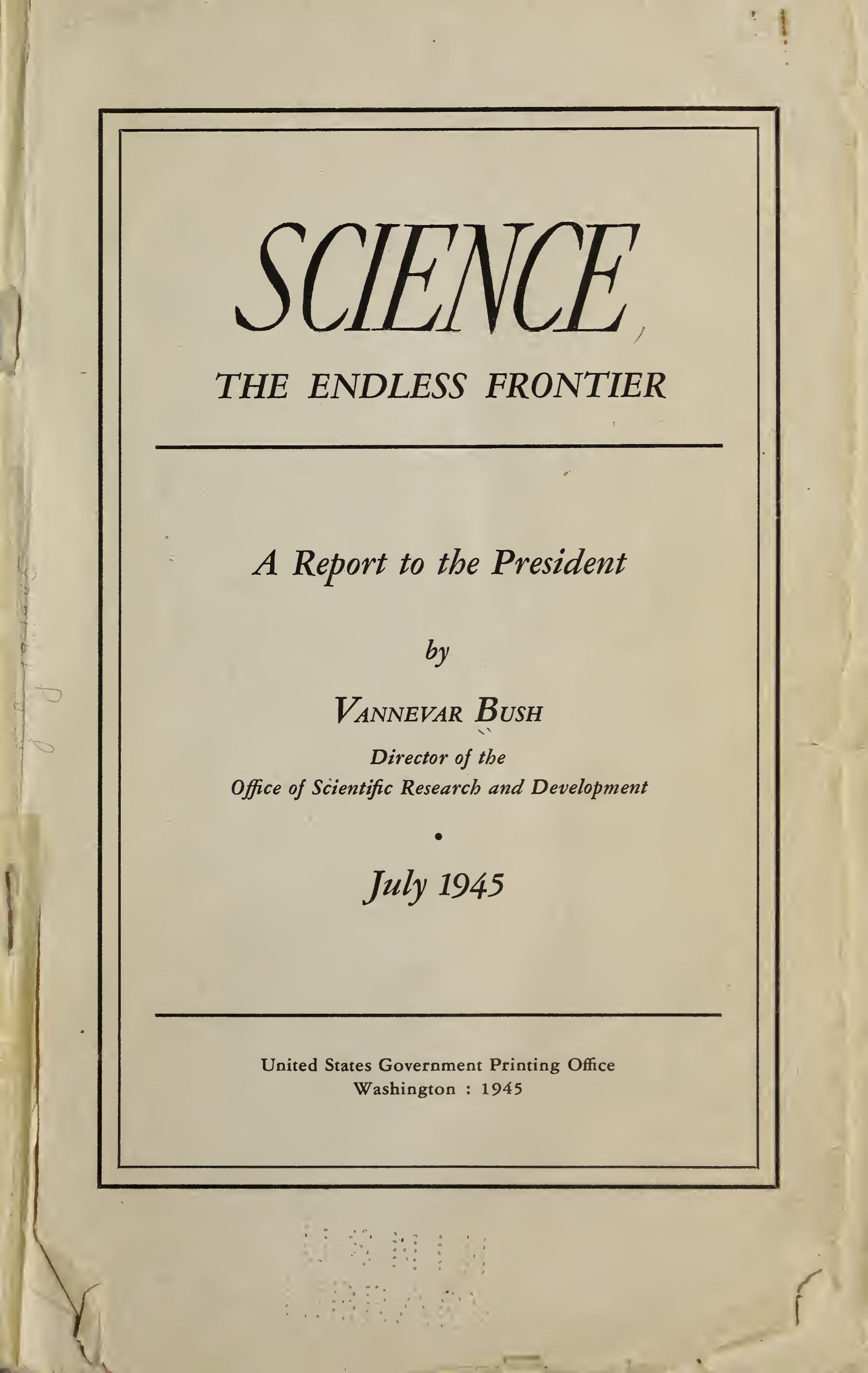
The roots of the United States’ science empire can be traced to a landmark 1945 report issued during the Truman administration, “Science: The Endless Frontier.” It described a vision, inspired in part by the Manhattan Project that led to the atomic bomb, for how science would power U.S. dominance in the world.
The federal government went on to establish a network of science agencies with distinct missions. The National Science Foundation supports theoretical or experimental work, which often lays the groundwork for future technologies years or even decades later. The Department of Energy was established to pursue advances related to power generation, as well as managing the nation’s nuclear arsenal. NASA, created in response to Soviet advances in space, put a man on the moon. The National Institutes of Health, which traces its roots to 1887, funds biomedical advances.
The federal government also provides tens of billions of dollars each year to the nation’s research universities while funding national labs, private industry, and other institutions — a system built up over 80 years by presidents and lawmakers from both parties.
In less than two years, Trump has shaken that system to the core.
The upheaval began early in the administration.
DOGE engineered staff firings and encouraged others to resign across the federal bureaucracy. Within a year, NIH staffing had shrunk by one-fifth. The NSF’s ranks were reduced by a third. Even NASA, which shrank less than other science agencies, lost 20% of its employees with doctorates. Those who left included its chief scientist, a climate science expert whose job the administration eliminated.
NASA said it will keep recruiting staff as needed. In a statement, Nicky Fox, associate administrator for NASA’s Science Mission Directorate, said the agency is working to get “more science into space for lower cost.”
DOGE and the White House directed agencies to search for terms in grant descriptions that might reveal science the administration viewed as liberal, including anything that appeared to promote diversity, equity, and inclusion.
The cuts cascaded through the country.
Ann D. Cohen, a neuroscientist who co-directs an Alzheimer’s research center at the University of Pittsburgh, had been working on a five-year study looking at how people’s exposure to stress and health problems earlier in life can affect their odds of developing the disease.
The research was critical to developing better treatments and health interventions, Cohen said. “If the triggering event is poor cardiovascular health in midlife, we can actually deploy public health strategies to improve those things, and potentially have an effect on Alzheimer’s,” she said.
Recruiting people from different backgrounds was difficult, because people who volunteer for scientific studies tend to have higher than average incomes and education levels. So Cohen and her colleagues recruited from rural western Pennsylvania, whose residents were more likely to be white and low-income, as well as from Black communities in Pittsburgh.
This past August, the NIH terminated the grant, effective immediately, on the grounds that the project was focused on structural racism — an argument that fundamentally misunderstood the work, Cohen said.
Emily Hilliard, a spokesperson for the U.S. Department of Health and Human Services, which includes the NIH, did not comment on specific grants. In a statement, she said the NIH’s commitment to Alzheimer’s research has not decreased.
“NIH is focused on funding innovative projects led by a new generation of health researchers, and on allocating funds for research that will lead to better health for the American people,” Hilliard said.
Some researchers who lost funding acknowledged having framed their projects in the language of DEI. But, they argued, that was what the Biden administration had emphasized.
Jessica L. Rosenberg, director of education for the Quantum Science and Engineering Center at George Mason University, had received NSF funding to research ways to encourage more U.S. students to seek careers in quantum technology, an emerging field that has led to innovation by vastly expanding computing power.
The NSF canceled the grant last year, about four months after the project started. Rosenberg said she suspects the grant was targeted because her application mentioned students from diverse backgrounds.
“That was what we were supposed to be doing at the time,” she said in an interview.
Trump administration officials argue that the push to incorporate DEI degraded science, and that scientists who embraced the approach had themselves to blame for losing support.
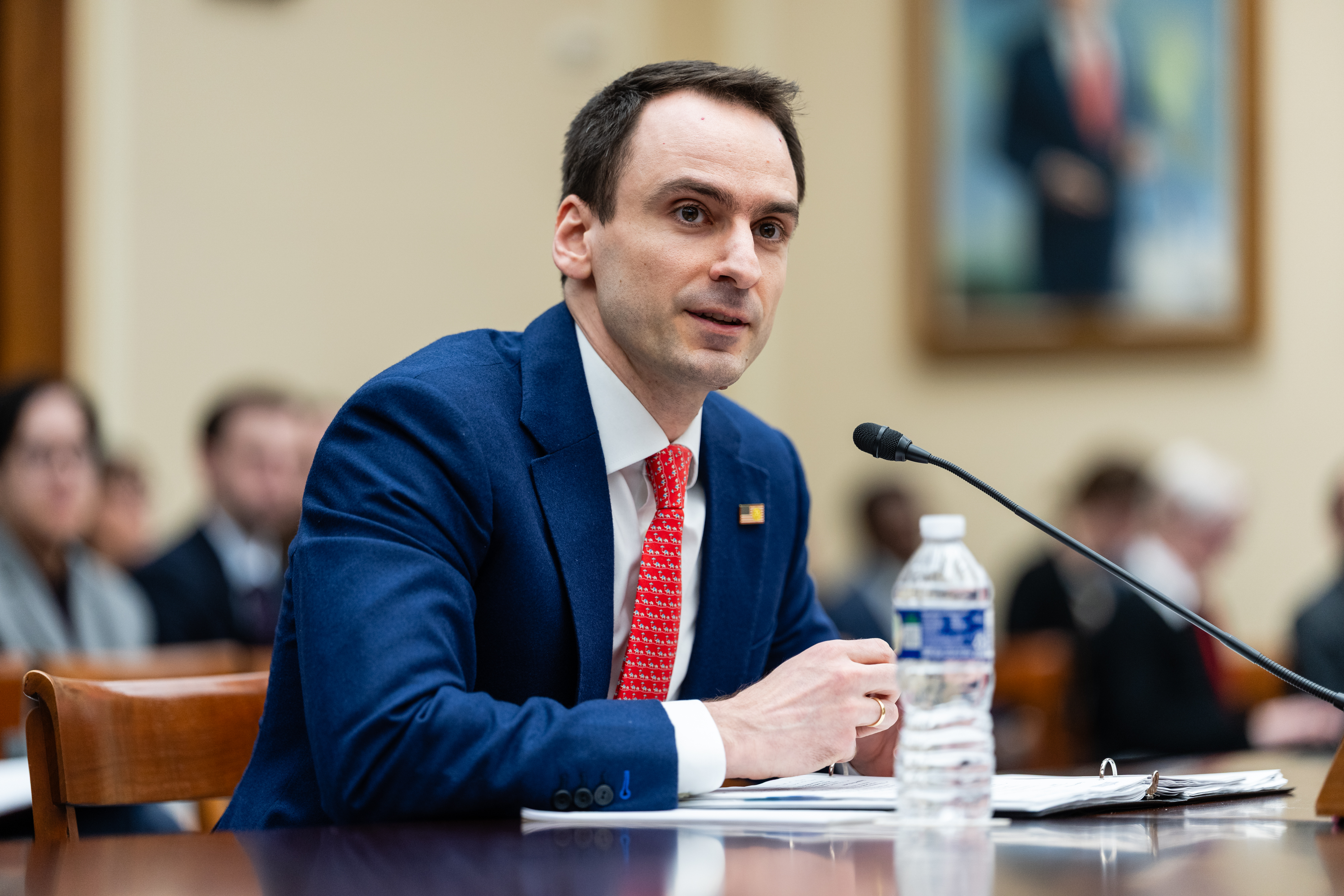
FILE — Michael Kratsios, the director of the White House Office of Science and Technology Policy, in Washington, on Jan. 14, 2026. Kratsios report barely mentioned a crucial part of the administration’s agenda: a proposed rule issued by the Trump administration this past May, which would require that Trump’s political appointees approve which researchers get funding — taking power away from nonpartisan science officials who have typically been the deciders. (Eric Lee/The New York Times)ERIC LEE
“We cannot afford for America’s scientists to be in the business of scoring points for an ideological agenda,” Michael Kratsios, Trump’s science adviser, told a meeting of scientists last year.
A dilemma for universities
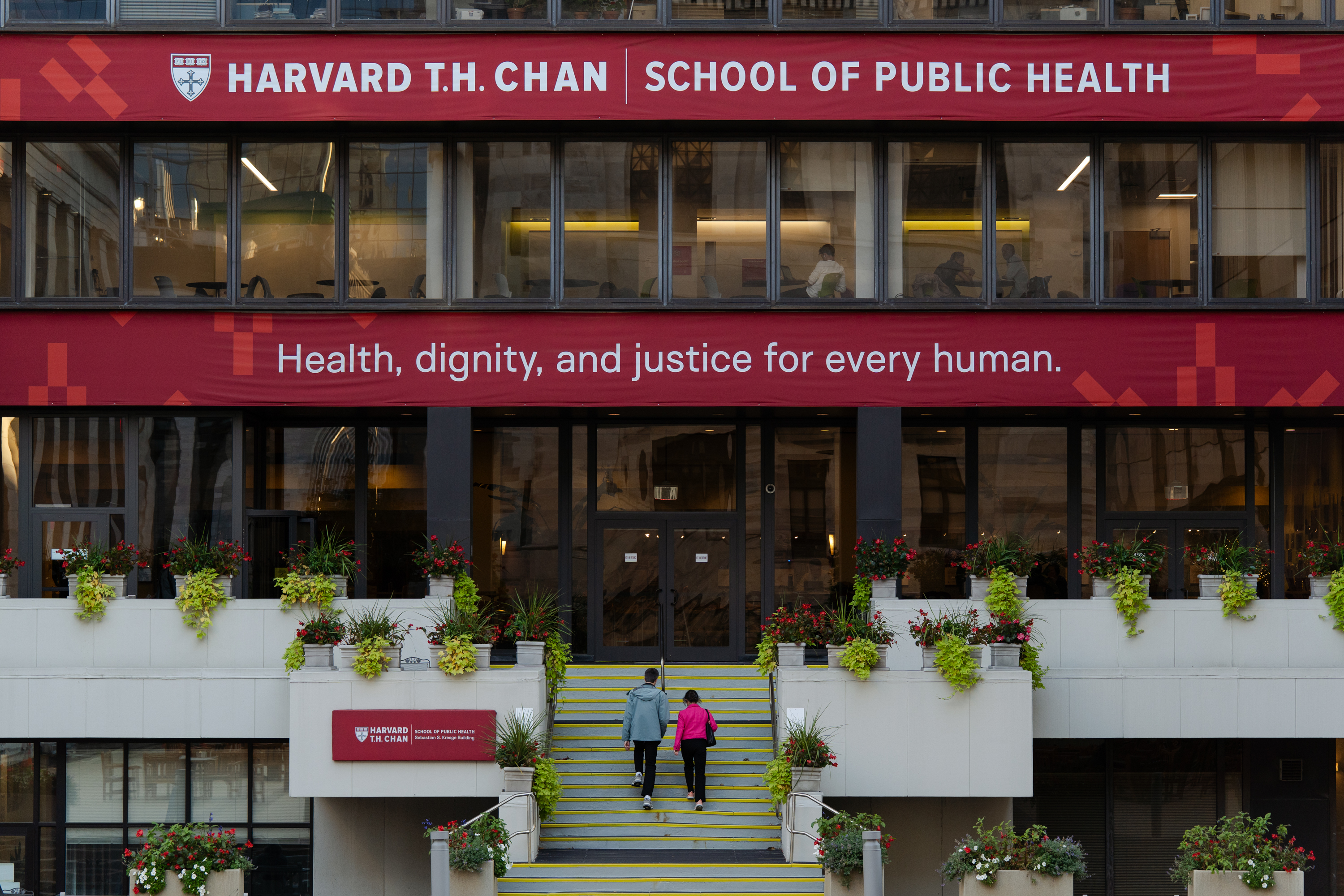
Trump and his aides returned to the White House wanting to punish elite schools like Columbia and Harvard universities, ostensibly for transgressions like tolerating antisemitism.
But when cuts to research funding became the White House’s weapon of choice, professors and administrators had to decide whether to fight or acquiesce.
Harvard sued. Other schools negotiated. And even at universities that were not explicitly targeted, researchers made changes in hopes of keeping federal money that was foundational to their work — softening the language in their proposals, narrowing their projects and debating the line between fair-game government oversight and improper political interference.
The cuts fell across disciplines. Projects on epilepsy, Lou Gehrig’s disease, tuberculosis, and even astronomy outreach and education sputtered. Work on cancer and heart rhythms was imperiled.
The administration ultimately restored billions of dollars in funding, either because of court orders or settlements with universities. But researchers said the interruptions and changing priorities delayed or derailed experiments.
“You can’t run a research operation when you have to constantly pivot,” said Dorota Grejner-Brzezinska, vice chancellor for research at the University of Wisconsin-Madison, which was swept up in the administration’s funding cuts and participated in more than a dozen legal challenges.
“The current state of affairs is that it’s really very hard to plan long term,” she added, “and research is a long-term kind of enterprise.”
May Mailman, a former White House aide who helped lead the pressure campaign against universities, said the administration wasn’t overly concerned about the effects on research. Funds taken away from one university could eventually make their way to other schools whose behavior and ideology the White House approved of, she said. In the meantime, Mailman said, the administration tried to minimize the disruption to fields of research it supported, including artificial intelligence and some types of energy.
But much of the work coming out of universities, she said, may not have merited the taxpayer money going into it.
“There’s a feeling that there is more spent on research than comes out of it — that the system is a little bit broken,” Mailman said.
The hunt for woke
The administration also sought deep funding cuts to federal science agencies. Last year, when Vought presented the administration’s annual budget request to Congress, he called for reducing research funds at the National Institutes of Health by 41%; cutting the National Science Foundation by 55%; and reducing NASA’s budget for science by almost half. No previous administration, from either party, had sought such deep cuts.
Congress rejected those cuts. But Vought began finding novel ways to slow grants and redirect funds.
One of the offices that Vought targeted in his budget request was the NSF’s “woke social, behavioral, and economic sciences” — an apparent reference to an NSF division that funded social science. Not long after, the division began reducing its grants.
An NSF spokesperson, Michael England, said in a statement that the agency’s funding decisions “reflect a strategic alignment of resources in a constrained fiscal environment.”
The loss of those funds affected researchers like Priti Shah, chair of the University of Michigan’s psychology department. Shah had applied for a grant to study how people evaluate and make decisions based on scientific information. In the summer of 2025, the NSF told her that her application had been put on hold because of funding issues. It was later rejected entirely.
“It is so important to understand what people assume and what errors they make when they’re thinking about science,” Shah said. “People are very poor at reasoning about scientific evidence.”
An innovation engine ‘at risk of stalling’
The administration’s actions also hurt agencies central to its political agenda.
The Defense Department’s assessment of science and research capabilities published this summer said changes during the first year of the Trump administration had degraded the department’s highly regarded network of research laboratories, due largely to DOGE cuts and obstacles to hiring.
“Without a swift and sustained reversal of these policies,” the report warned, the Defense Department’s “innovation engine is at risk of stalling.”
The labs lost about 14% of their staff, the report found. Among those mentioned were the Naval Sea Systems Command, charged with developing ships and weapons; the Air Force Research Laboratory, which helped develop stealth aircraft and laser systems; and the Army’s Aviation & Missile Center.
External research laboratories, which are funded by the Pentagon but staffed by civilian researchers and develop technology for use by the military, were also suffering from the administration’s policies, the report said.
Much of the work at those labs, some of which are attached to major research universities, is classified, and the report did not disclose specific examples of research that has been affected. But it warned that staff departures inside the labs and among agency employees who coordinated with them “jeopardized the execution of critical defense research.” Without key points of contact between the agency and the labs, the report said, efforts that support “time-sensitive, real-world operations are in some cases at a standstill or delayed.”
Because the labs aren’t financially connected to defense contractors, they play an added important role helping the Pentagon objectively evaluate contractors’ claims about new technologies, said Heidi Shyu, who oversaw the Pentagon’s research operation as under secretary of defense for research and engineering in the Biden administration.
A Pentagon official acknowledged that, during the first year of the administration, there was a “retraction in the number of scientists and engineers across the research enterprise.” But, the official said, the agency has “hired to fulfill the mission and mitigate any impacts from the loss of personnel.”
Defense Department funding changes also affected university researchers.
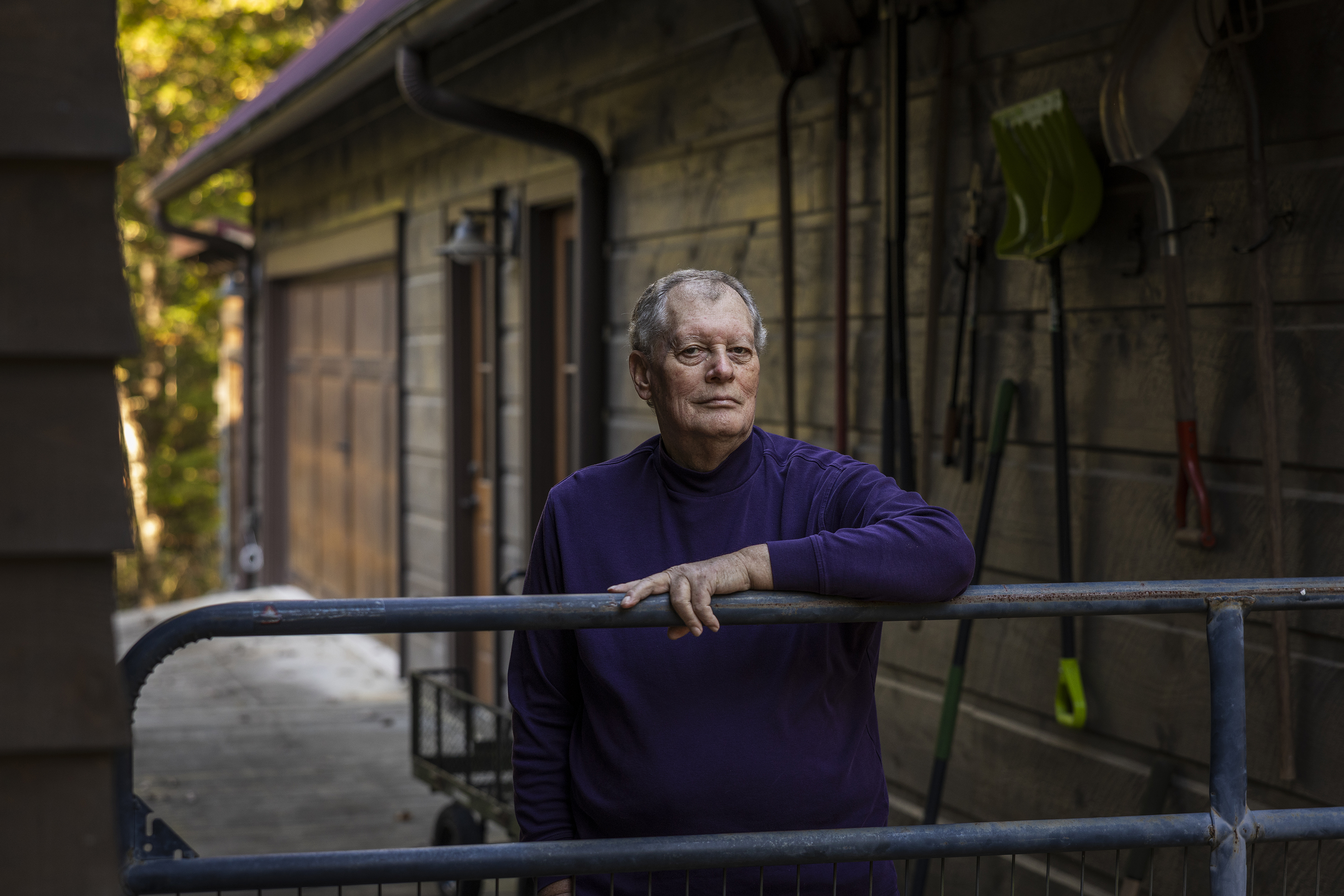
Randall Engle, a psychologist at the Georgia Institute of Technology, at his cabin in Ellijay, Ga., on Oct. 23, 2026. Engle was working on ways to help the Navy select air traffic controllers, pilots and other applicants for complex jobs.(Audra Melton/The New York Times)AUDRA MELTON
Randall Engle, a psychologist at the Georgia Institute of Technology, was working on ways to help the Navy select air traffic controllers, pilots, and other applicants for complex jobs.
The Navy needs to train roughly 1,000 new air traffic controllers each year, Engle said, at a cost of about $100,000 per trainee. But because the job requires intense focus in difficult conditions, nearly a quarter of trainees typically fail.
So he received funding to develop diagnostic tests to determine a person’s ability to maintain focus.
Engle tested his new approach at the Navy’s air base in Pensacola, Fla., and found that it did a better job identifying people likely to succeed as air traffic controllers. He was in the midst of refining those tests, when the Office of Naval Research told Georgia Tech that the grant was canceled.
Engle said he believes the grant was canceled simply because it was happening at a university.
“There was no wokeness,” Engle said of his project. “There was no diversity, inclusion.”
A new agenda
The uncertainty over the future of U.S. science is reflected in the events that have unfolded at the Department of Energy.
The agency is a critical engine for research in the physical sciences, and it houses the Genesis Mission — a marquee Trump administration initiative that officials say will drive discoveries across a range of topics, from quantum computing and particle accelerators to microchips that can operate in outer space. In an executive order, Trump called it a “dedicated, coordinated national effort to unleash a new age of AI-accelerated innovation and discovery.”
But the Energy Department’s central role on a Trump-driven project came with a glaring contradiction: It was also hammered by DOGE.
The agency has lost about one-quarter of its staff since the start of the administration, according to a Times analysis of federal data. And the amount of grant money awarded by its two major science offices dropped by more than one-quarter during the administration’s first year, before Genesis began — a reduction of more than half a billion dollars.
Darío Gil, the agency’s top science official, rejected the idea that its science mission has suffered, noting that much of the department’s work is done by 17 national laboratories, where most staff are not federal employees and so not affected by DOGE’s staff-reduction programs. He said the agency is hiring.
“Staffing is always a challenge,” Gil said. “We continue to recruit good people.”
He added that the goal of Genesis is to double the productivity of the United States’ science industry within a decade. The program has selected almost 300 projects to fund at universities, private companies, national labs, and other research organizations.
“The outcome we seek,” Gil said, “is that this transformation impacts the entire American economy.”
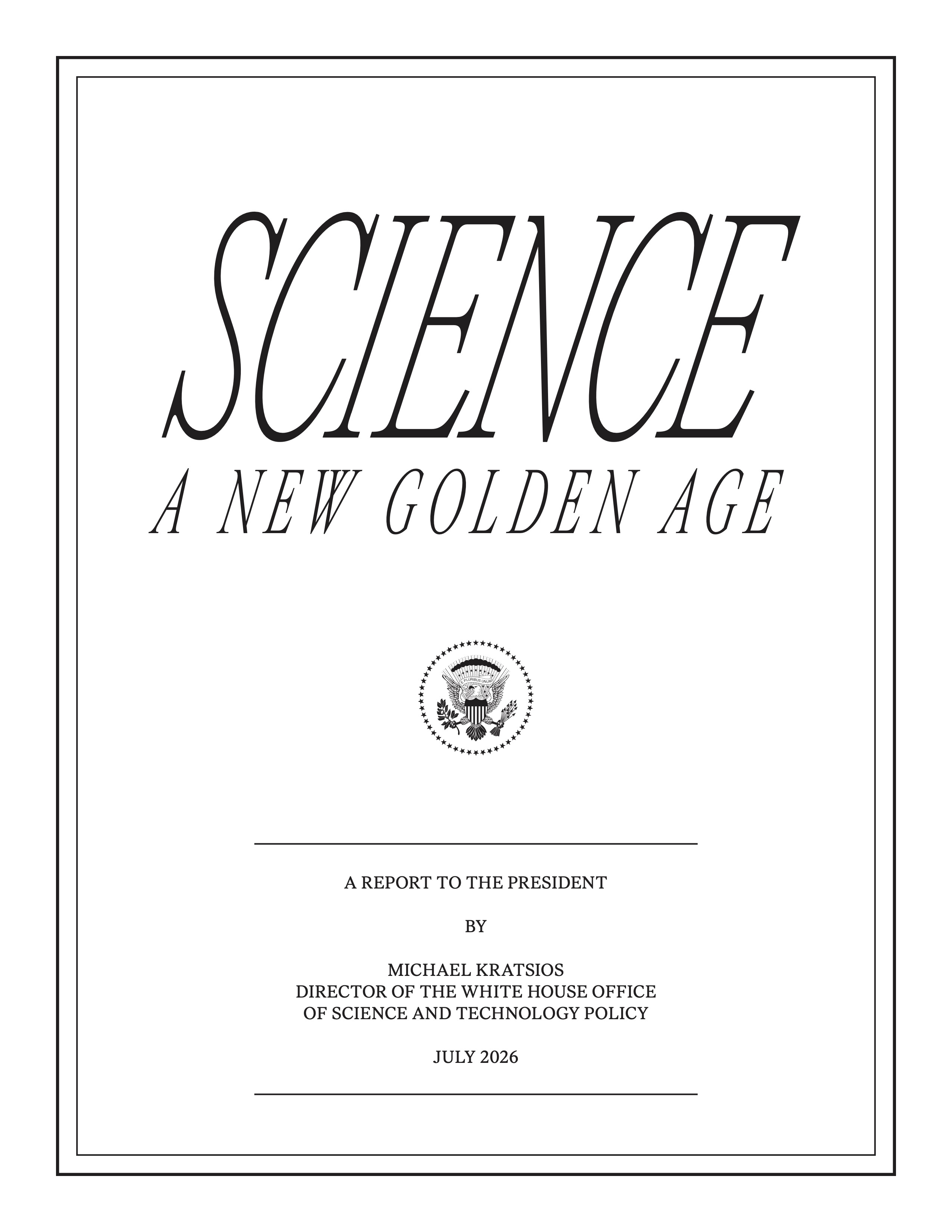
In July, just a few weeks after the Pentagon published its warning about defense labs, Kratsios, the White House science adviser, issued a report of his own.
The document emphasized many of the administration’s goals: Increasing the role of private industry in federal research. Bypassing the traditional peer-review process for deciding who gets research grants, instead giving individual reviewers the chance “to make bold scientific bets” on researchers of their choosing. Redirecting more money toward younger researchers.
Kratsios barely mentioned a crucial part of the administration’s agenda: a proposed rule issued by the Trump administration this past May, which would require that Trump’s political appointees approve which researchers get funding — taking power away from nonpartisan science officials who have typically been the deciders.
Under the proposal, researchers seeking funds “should commit to complying with administration policies.” Officials would screen and reject applications for projects that “promote anti-American values.”
The day after Kratsios released his report, he appeared before the House science committee to discuss it. Some committee members seemed perplexed by his promise to usher in a scientific golden age, given the tumult over the previous year and a half.
“All I see is tarnish and deterioration,” said Rep. Gabe Amo, D-R.I. “Do you commit to not leaving our scientific apparatus in shambles?”
“I don’t think, sir, I would be doing my job if I wanted to leave the scientific enterprise in shambles,” Kratsios responded. “So I will commit to not doing that.”
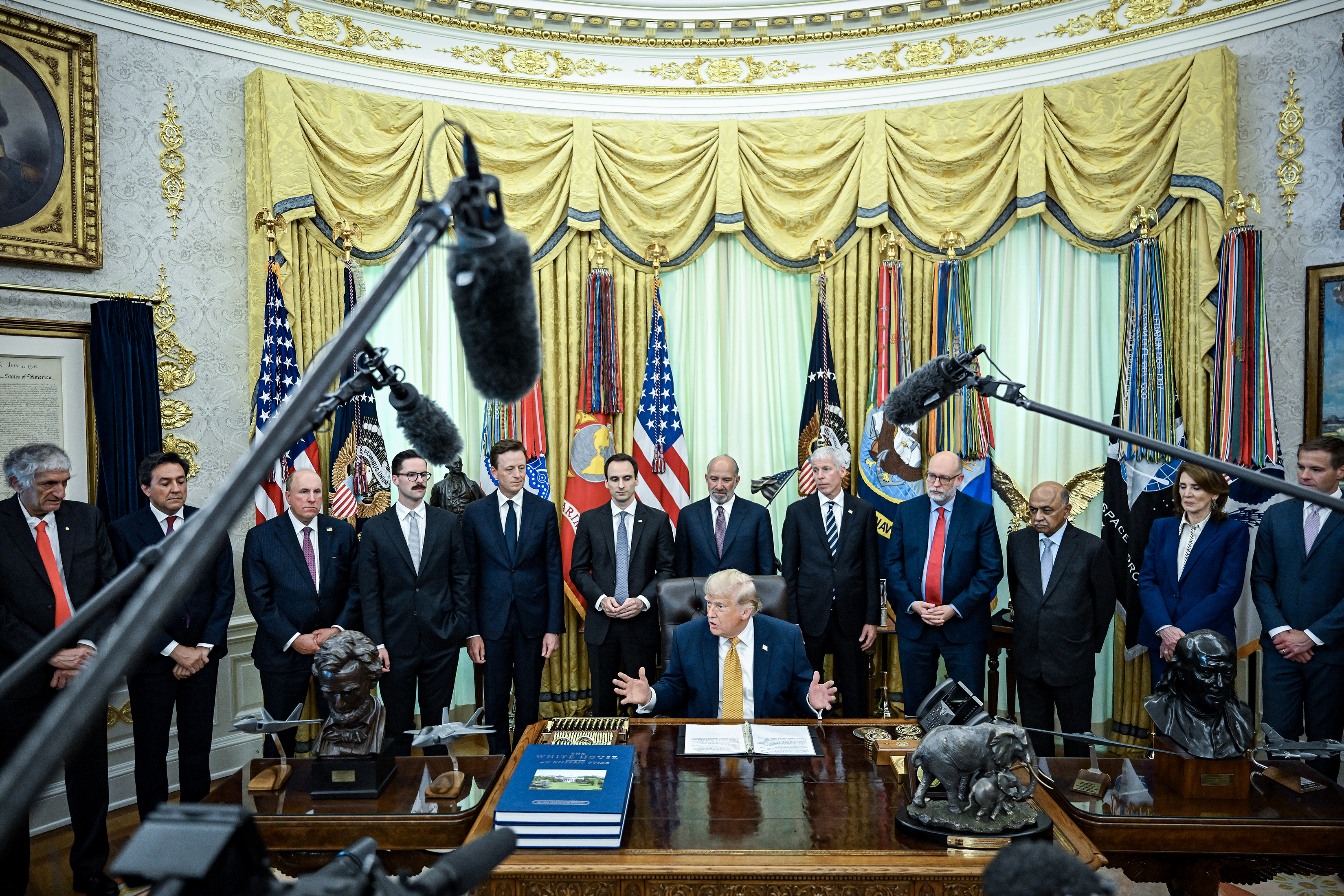
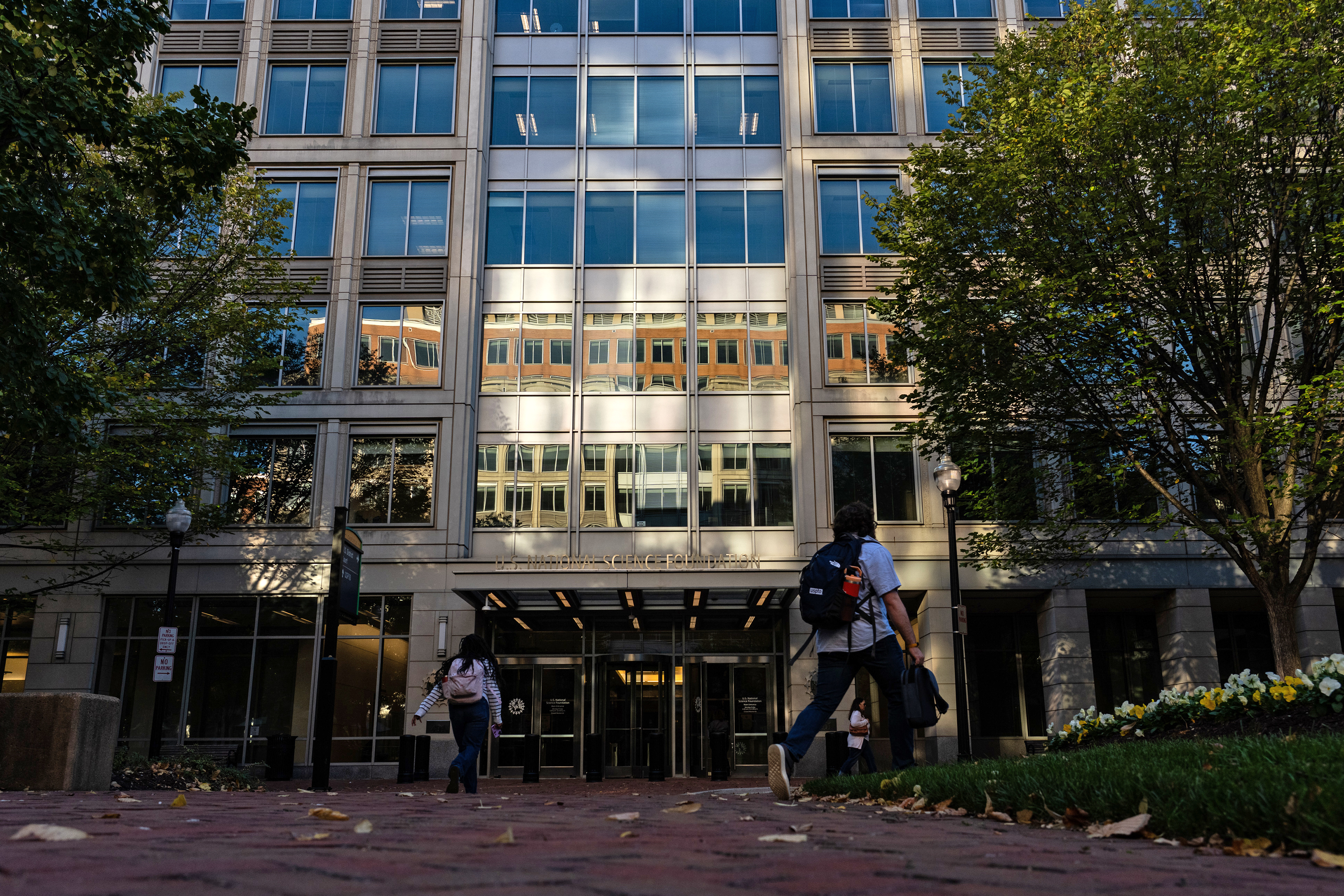
FILE — Russell Vought, director of the Office of Management and Budget, appears for a House Appropriations Committee hearing on Capitol Hill in Washington, on June 4, 2025. Vought has sought to impose more political control over how the government spends money appropriated by Congress, further infusing politics into decisions around scientific research. (Kenny Holston/The New York Times)KENNY HOLSTONFILE — Elon Musk, left, with President Donald Trump in the Oval Office of the White House in Washington, May 30, 2025. Scientists across the country are still receiving grants; universities are still being funded. But beneath the surface, the system of federally funded science that helped make the United States a global superpower is under intense strain from Trump policies, jeopardizing the nation’s advantages in defense, medicine and technology, a New York Times examination has found. (Haiyun Jiang/The New York Times)HAIYUN JIANGThe Energy Department, a key hub of nuclear and quantum research, in Washington on Monday, Oct. 7, 2026, has lost more than 1,000 scientists and technical staff. Scientists across the country are still receiving grants; universities are still being funded. But beneath the surface, the system of federally funded science that helped make the United States a global superpower is under intense strain from Trump policies, jeopardizing the nation’s advantages in defense, medicine and technology, a New York Times examination has found. (Salwan Georges/The New York Times)SALWAN GEORGESA report to the president produced by Vannevar Bush, Director of the Office of Scientific Research and Development from 1945 laid out a vision for how science would power U.S. dominance in the world. Scientists across the country are still receiving grants; universities are still being funded. But beneath the surface, the system of federally funded science that helped make the United States a global superpower is under intense strain from Trump policies, jeopardizing the nation’s advantages in defense, medicine and technology, a New York Times examination has found. (Via The New York Times) — NO SALES; EDITORIAL USE ONLY —VIA THE NEW YORK TIMESFILE — Darío Gil, far left, under secretary for science at the Energy Department, Michael Kratsios, rear center, and Russell Vought, far right, listen as President Donald Trump speaks during an executive order signing in the Oval Office of the White House, in Washington, on June 22, 2026. Scientists across the country are still receiving grants; universities are still being funded. But beneath the surface, the system of federally funded science that helped make the United States a global superpower is under intense strain from Trump policies, jeopardizing the nation’s advantages in defense, medicine and technology, a New York Times examination has found. (Kenny Holston/The New York Times)KENNY HOLSTONFILE — May Mailman, a former White House aide who helped lead the pressure campaign against universities, in the Eisenhower Executive Office Building in Washington on July 31, 2025. Scientists across the country are still receiving grants; universities are still being funded. But beneath the surface, the system of federally funded science that helped make the United States a global superpower is under intense strain from Trump policies, jeopardizing the nation’s advantages in defense, medicine and technology, a New York Times examination has found. (Haiyun Jiang/The New York Times)HAIYUN JIANGFILE — An aerial view of the Pentagon in Arlington, Va., Oct. 31, 2025. The Pentagon’s network of research labs lost staff members amid efforts to thin the federal work force. (Kenny Holston/The New York Times)KENNY HOLSTONA report issued by Michael Kratsios in 2026 proclaiming that the Trump administration was renewing the country’s dominance in research and development. Scientists across the country are still receiving grants; universities are still being funded. But beneath the surface, the system of federally funded science that helped make the United States a global superpower is under intense strain from Trump policies, jeopardizing the nation’s advantages in defense, medicine and technology, a New York Times examination has found. (via The New York Times) — NO SALES; EDITORIAL USE ONLY —VIA THE NEW YORK TIMESDorota Grejner-Brzezinska, vice chancellor for research at the University of Wisconsin-Madison, on campus in Madison, Wis., on Oct. 30, 2026. The University of Wisconsin-Madison was swept up in the administration’s funding cuts and participated in more than a dozen legal challenges.(Jenn Ackerman/The New York Times)JENN ACKERMANThe Harvard T.H. Chan School of Public Health in Boston, Oct. 29, 2026. Scientists across the country are still receiving grants; universities are still being funded. But beneath the surface, the system of federally funded science that helped make the United States a global superpower is under intense strain from Trump policies, jeopardizing the nation’s advantages in defense, medicine and technology, a New York Times examination has found. (Sophie Park/The New York Times)SOPHIE PARKThe headquarters of the National Science Foundation in Alexandria, Va., on Oct. 7, 2026. Scientists across the country are still receiving grants; universities are still being funded. But beneath the surface, the system of federally funded science that helped make the United States a global superpower is under intense strain from Trump policies, jeopardizing the nation’s advantages in defense, medicine and technology, a New York Times examination has found. (Salwan Georges/The New York Times)SALWAN GEORGES
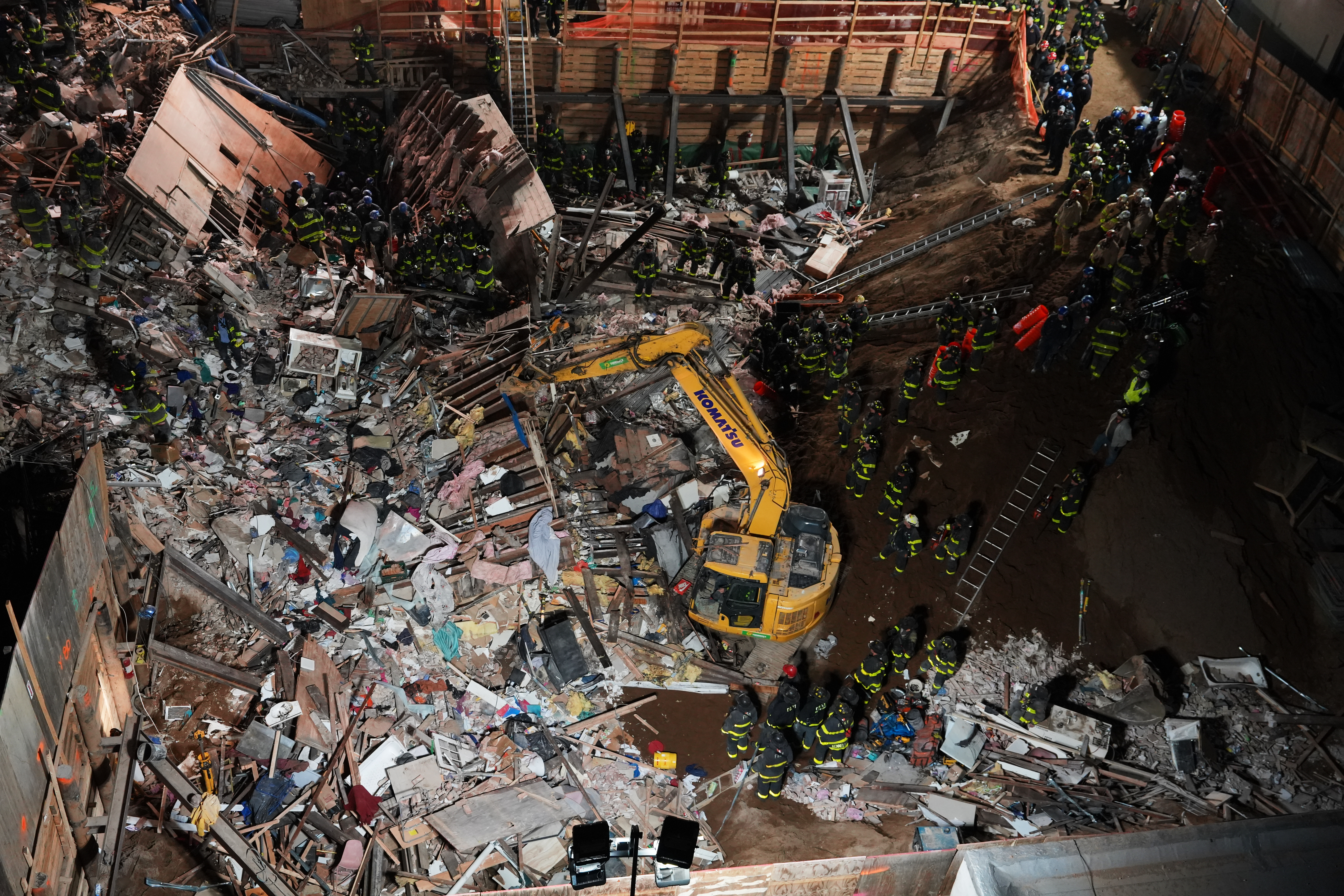
NEW YORK — Crews operating heavy equipment hoisted chunks of debris Thursday in the search for more victims in the rubble of a collapsed Brooklyn apartment building that killed at least eight people, including two children.
The three-story building gave way while construction workers were digging Wednesday afternoon at an adjacent lot, causing New York City’s mayor to order inspections at about 100 building sites involving companies related to the project.
“If there is anyone, or any entity, operating in this city that bears responsibility for what happened, we will hold them fully accountable,” Mayor Zohran Mamdani said during a news conference.
Investigators have not determined what caused the collapse that injured 18 others, including four firefighters, Mamdani said.
One witness said he watched bricks fall minutes before the disaster while a woman in a neighboring building said she and fellow residents blamed vibrations from the construction for cracks that appeared in their apartment walls.
Emergency workers used power saws and pickaxes to get through the debris, pulling four victims out of the rubble in the early hours of Thursday. Hours later, excavators removed larger piles of the wreckage so searchers could get deeper into the construction pit, said New York Fire Commissioner Lillian Bonsignore.
“We always assume there are more people there until we can access the ground,” Bonsignore said. “So until we remove some of the bigger debris and are able to search beneath them, this will remain a rescue operation”
Victims were from multiple countries
Among those killed and injured were people from Mexico, Colombia, Ecuador, and Trinidad, Mamdani said. Two of the dead were construction workers, he said.
He described how some workers who survived joined firefighters in digging out survivors, thanking “those who ran toward danger when this building collapsed, and in the hours afterward.”
Witnesses describe the immediate aftermath and destruction
James Williams, who works at a deli across the street, said he heard loud banging at the site all day Wednesday and looked outside to see bricks falling. “Two minutes later, the building collapsed,” he said.
As the building crumbled and exposed the neighboring building, Williams spotted a woman on a staircase. “There wasn’t anything I could do,” he said, his voice cracking.
Customers and stylists at a nearby hair salon jumped up and ran onto the sidewalk as the building fell.
“We heard the boom and we all rushed outside and saw smoke and dust everywhere,” said hairstylist Brigitte Anama.
She saw emergency workers pulling people from the rubble, including what appeared to be a child. “People were saying, ‘Pray for the baby, pray for the baby,’” Anama said.
Dervie Mapp, who lives along the construction site, said she and others complained for months about the project. Her landlord brought engineers into the building, but residents never received an inspection report, she said.
Rescuers with dogs searched through the night
This was the second high-profile structural problem with a building in New York in the past five months. In July, several buildings in Manhattan were evacuated after support columns buckled inside a skyscraper that was formerly the headquarters of Pfizer.
First responders in Brooklyn worked to clear through a massive heap that included mattresses, a broken sink, and a refrigerator tossed on its side. Among the belongings scattered in the rubble were vinyl records, clothes, and shoes.
Rescue dogs sniffed piles of twisted wood and brick dotted with brightly colored clothing.
Firefighters pulled a pregnant woman from the rubble Wednesday, hoisted her up on a stretcher, and rushed her to a waiting ambulance. Others were rescued as the night wore on.
The fire commissioner said the search would not end despite heavy rain Thursday afternoon.
Building records show there were four apartments on the upper two floors and a commercial unit on the ground floor of the collapsed building.
A construction worker from Ecuador was among those killed
The Consulate of Ecuador in New York said José Luis Caguana Cosquillo from Ecuador was among those found dead.
His brother told WNBC-TV that he died while working at the construction site. He was an immigrant from Ecuador who had been in the U.S. for about six years and had a pregnant wife and a young child, Carlos Caguana said.
“He was the sole provider for the family. Now that he’s gone, she is going through an immense amount of pain,” Caguana said.
The surrounding blocks along Flatbush Avenue, a busy thoroughfare in Brooklyn, are tightly packed with mostly older brick buildings and a few newly built apartment complexes. A mix of Caribbean and Mexican restaurants reflects the diversity of the neighborhood.
Inspectors reported violations at the construction site this year
New York City’s buildings commissioner, Ahmed Tigani, said Wednesday that construction workers were excavating the empty lot next door when the building buckled. The city’s Department of Buildings is investigating what caused the collapse.
The architect, property owner and general contractor listed in city records have not responded to phone and email messages seeking comment.
City officials said a stop work order was issued in March after inspectors concluded the building next door was being demolished without adequate overhead protection such as netting to shield neighboring buildings, the department said in an emailed statement.
In April, inspectors found that the demolition work had resumed in violation of the stop work order, the department said. Work was allowed to continue in May after the problems were corrected, it said.
The project has active permits for excavation and foundation work.
It won’t be extreme — about what one might expect in mid-November when the sun goes to bed early and takes its time pinking up the sky in the morning — but a December-like chill is about to settle across the Philly region.
After a gloomy, rainy Thursday — with a thunderstorm possible — forecasts are calling for highs in the 40s Friday and Saturday, with perhaps some wet snowflakes making cameos.
The chill should last into early next week. However, it appears warmer days will be making a strong comeback after that, with perhaps record warmth Thanksgiving week.
The forecast for the Philly region
Light rain is expected to develop Thursday with highs in the 60s, but winds from the northwest generated by a coastal storm due to mature off the Jersey coast are expected to import much colder air Thursday night into Friday, with more rain possible.
Snow is possible in the higher elevations of Eastern Pennsylvania, and random snowflakes could find their way into the Philly region, said Marc Chenard, senior branch forecaster at the federal Weather Prediction Center, in College Park, Md.
But no cause for panic.
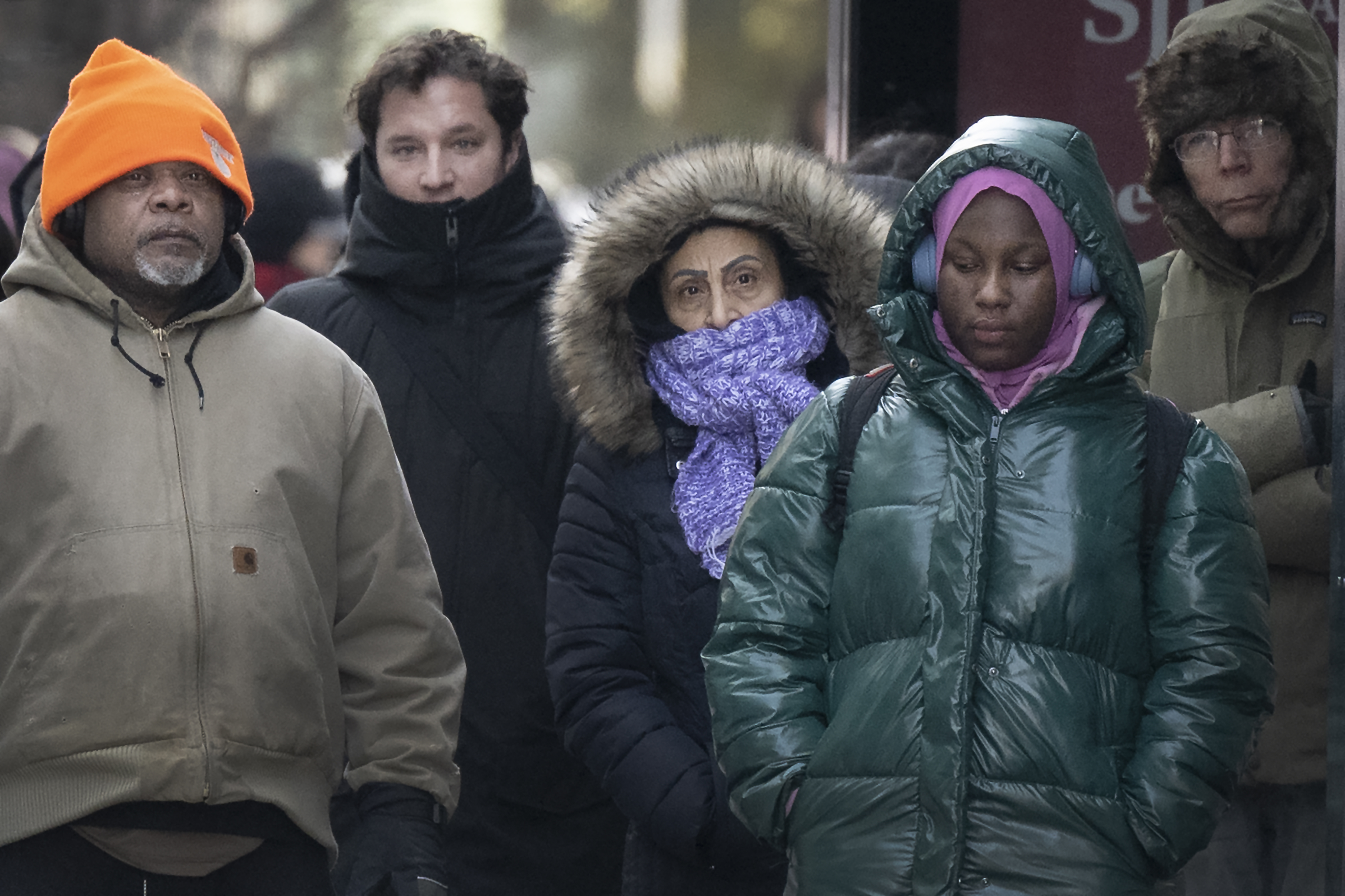
While the cooldown won’t be polar vortex stuff, stiff northwest winds will drive wind chills into the 30s through the weekend.
“It’s going to be a shock to the system,” said Tom Kines, senior meteorologist with AccuWeather Inc. “We’ve been spoiled for the last several weeks.”
True. In fact, after a mild October, temperatures this month are running a lusty 7 degrees above normal.
That has a lot to do with that El Niño warming of sea surface temperatures in the equatorial Pacific, Kines said.
El Niño continues to cook and affect U.S. weather
The interaction of the overlying air and the waters that have been running about 4 degrees Fahrenheit above normal have been delivering generous amounts of warmth to North America.
That is likely to continue.
A significant warmup is likely in the region starting in the middle of next week, and Kines said that heading into Thanksgiving week, record warmth is possible in Philly.
The government’s Climate Prediction Center has the odds strongly favoring above-normal temperatures in the Northeast leading up to Thanksgiving, not the most welcome news for ski resorts hoping for early openings.
It is likely to get chilly again Thanksgiving weekend, but “before that we’re going to have a lot of nice weather,” he said.
Meteorologists still are keeping an eye on an Arctic disturbance that may allow cold air to spill southward later in the month or in December.
But for now, Kines said: “This is El Niño all the way.”
Alaine K. Arnott is the president and CEO of the National Liberty Museum in Philadelphia.
Last Sunday on Walnut Street, a woman held a sign above her head that read, “HATE is not Brotherly LOVE.” A few dozen feet away, a man held one that read, “Money loving Zionists.” Cyclists carrying Palestinian flags rode past both, while police officers on bicycles moved between the crowds. Each side may have seen the other as a threat. All of them were standing in and utilizing the same American constitutional system.
That system has just faced one of its regularly scheduled stress tests, and the strain is not yet over. Protest activity does not quiet down when the polls close; it often ratchets up. Immigration enforcement, reproductive rights, campus free speech policies, the Israeli-Palestinian conflict, economic angst, and the election results themselves will continue to converge on our cities, sometimes at the same time.
As Americans, we should plan for a season of demonstrations, not be surprised by one. And at moments like this, civic leaders such as myself should not stay on the sidelines. We have a role to play in defending the right to assemble, and an equally important one in teaching people how to exercise that right safely, effectively, and legally, whatever their cause may be.
The government has the authority to enforce the law. Citizens have the right to challenge how that authority is used. Officers must be able to do their jobs without being threatened, and protesters must be able to object without being treated as enemies of the state. A functioning democracy holds all four ideas at once.
The First Amendment protects the right of the people to assemble peaceably and petition the government. “Peaceably” matters. Violence, threats, destruction of property, and unlawful physical interference with government are not protected simply because they occur during a protest. But “the right of the people” matters just as much. Officials should not treat anger as violence or a crowd as dangerous. The standard must be conduct, not viewpoint or which viewpoint a crowd supports.
Philadelphia just put that principle to the test. A group calling itself Philly Bike on Your Left organized last Sunday’s “boycott ride” through Rittenhouse Square, targeting six Jewish-owned businesses because of their alleged support of Israel. This demonstration also fell on the eve of the 88th anniversary of Kristallnacht, the night when Nazi mobs ransacked Jewish shops and synagogues.
Mayor Cherelle L. Parker, Gov. Josh Shapiro, Attorney General Dave Sunday, and countless other elected officials and faith leaders condemned this assembly as antisemitic. The organizers, however, insisted their quarrel was not with the Jewish community, but with Israel.
Police estimated roughly 500 protesters and counterprotesters in total. Throughout the event, many heated words were exchanged, and three arrests were made, but no property was damaged, and crowds had all but dispersed by early afternoon.
I bring this recent event up not to make a political statement, but to make a constitutional observation. Both sides were exercising the same constitutional right.
The U.S. Supreme Court has consistently held that peaceful political boycotts are protected expression, and a government cannot shut one down simply because officials find its message offensive.
In this framing, our elected officials did their duty, balancing and defending the organizers’ right to protest peacefully while also voicing their own personal beliefs regarding the morality of the message that organizers were spreading.
While the Constitution limits how our government may respond to this kind of speech and assembly, it places no such limits on what citizens may say back. And Sunday’s counterprotesters showed us exactly that.
Regardless of your opinion on the cause of the assembly or the content of the speech, one thing is clear: What we saw on Sunday is exactly how our system was designed to work and must operate. Answering speech and assembly not with government intervention and suppression, but with more speech and assembly is exactly the right way for Americans to exercise our freedoms.
As president and CEO of the National Liberty Museum, I have seen too often where things go astray because most Americans have never been taught how to demonstrate safely, effectively, and legally. They are not familiar with their rights when approached by police, how the permitting process works, what “time, place, and manner” restrictions mean, or how a peaceful gathering can be hijacked by a few bad actors.
That gap in civic knowledge is where museums and civic institutions like mine can do real good, and where confusion and fear currently thrive.
We need to teach this directly. We need to teach what the law actually protects vs. what it does not. Organizers need to know how to document a demonstration and spot agitators before they become the story. And everyone should understand how to de-escalate and calmly assert their rights with law enforcement.
Demonstrators during a protest against President Donald Trump’s proposed arch in Washington, Oct. 1.ALEKSEY KONDRATYEV
That is why the National Liberty Museum created “The Freedom to Peaceably Assemble,” an online guide that explains where you can protest, when you need a permit, how to record law enforcement officers, and what to do if you are ordered to disperse.
And importantly, what forms of action are and are not protected.
Freedom of assembly is not a political or partisan issue. As Americans, we all possess the same rights and responsibilities. But these rights are only meaningful if we know how to use them. Knowing how to assemble is just as useful for every parent protesting a school board decision as it is for every student walking out over war, every union member picketing for a better contract, and every Philadelphian who stood on Walnut Street last Sunday.
As keepers of our shared history, museums and other civic institutions play an important role in preserving the record: the signs and banners, the experiences of immigrant families, the officers’ accounts, permits granted and denied, footage before it is edited and twisted and transformed.
Preserving this competing and oftentimes contradictory evidence is how future citizens come to understand what actually happened, not just what the loudest voices say happened.
A person waves a trans pride flag during a pro-transgender rights protest outside of Seattle Children’s Hospital in February.Lindsey Wasson
There will not be one answer for every demonstration in the months ahead, because context, along with time, place, and manner, all play a role. But the integrity of the process depends on rules that are understandable, proportionate, and applied consistently.
To protect our right to assemble, protesters and law enforcement need to know where dissent ends and unlawful conduct begins. And when gatherings begin to boil over, public leaders should focus on lowering the temperature rather than leveraging confrontation for political points.
As a nation, we do not protect freedom of assembly because every crowd is wise or every cause is just. We protect it because government should not decide which peaceful voices deserve to be heard.
The test is not whether we defend assembly when we agree with the people gathering. It is whether we equip every American, whatever their sign or slogan, to exercise that right peacefully and lawfully.