Blog

  • Stay or leave? Ukrainians face a hard choice ahead of what could be the war’s toughest winter

    Stay or leave? Ukrainians face a hard choice ahead of what could be the war’s toughest winter

    KYIV, Ukraine — Matvii Yermolenko is 2, but he already knows the words for siren and air defense. This winter, his mother decided to take him out of Kyiv.

    “There is sadness, but even stronger is the understanding of what I have to do — leave,” Matvii’s mother, Kateryna Tsvihun, said, adding that they will come back in spring. “I cannot live without Kyiv and Ukraine. I am rooted here, my child is Ukrainian, and my husband is fighting for this.”

    Ukrainians are bracing for what many expect to be the hardest winter of the war. Last year, heating disruptions left thousands of people in freezing apartments in Kyiv. Now, officials and analysts say, the badly damaged energy system is increasingly struggling to withstand attacks, putting the country’s resilience to another test. With no end to the war in sight, many people are thinking only about getting through the coming months.

    Kyiv is already under strain. Since Aug. 22, not a single day has passed in the capital without an air raid threat, often followed by drone attacks during the day and missiles at night. Some residents have moved to other parts of the country or abroad for the winter. While it’s impossible to calculate how many people left the capital, changes in the rental market offer a possible clue.

    “In September, we saw that the number of flats available to rent was increasing in Kyiv, whilst it was decreasing in a number of western cities,” Liudmyla Kiriukhina, the head of the statistics department at LUN, a Ukrainian real estate platform, said. “This could have indicated that tenants were moving from the capital to the west of the country.”

    Exploiting its advantage in jet-powered drones and ballistic missiles, Russia has expanded its targets in the city to include gas stations, data centers, warehouses, big-box stores, and bridges that are crucial for civilian transport in a city divided by the Dnipro River. Electricity disruptions have caused problems on the subway, Kyiv’s main transport artery, while water supply issues are increasingly common. Some residents have also criticized local authorities’ winter preparations.

    But leaving costs money, and many more are staying, stocking up on power banks, water containers, and portable gas stoves.

    Protecting their children, some Ukrainians leave for the winter

    Kateryna Tsvihun, 41, found last winter very difficult. She could not bear the thought of her son going through more power outages, let alone possibly losing heating as well. So she told her husband, a soldier since 2022, that she wanted to spend this winter elsewhere.

    She could not find a suitable option in Ukraine, but a Facebook group for mothers who like to travel led her to one in Albania.

    “The birth of a child is the ultimate game-changer,” she said. “Before, no matter how scared I was, I stayed in Kyiv and did not even think about leaving.”

    Russia recently struck an area near a subway station where she and Matvii often go for walks. “It’s a bit scary to stay,” she said. “But it’s still our home, so we will come back this spring.”

    She gave her portable power station, power banks, and rechargeable lamps to relatives staying in the capital. For the trip, she bought a large, light-blue suitcase, packing it only with practical things and a few of Matvii’s small toys.

    “I see it as an opportunity to exhale, because the tiredness and pressure have been piling up over these years of war, the lonely waiting for my husband, and the attacks,” she said.

    Official says Russia aims to break Kyiv’s morale

    Ukraine’s Energy Ministry said last week that Russia had continued to attack power generation facilities and substations. “Attacks on the energy sector are not stopping,” it said in a statement.

    “The situation in Kyiv is especially difficult right now: People and businesses are facing many hours of electricity and water outages,” President Volodymyr Zelensky said. Repeated strikes and constant air raid alerts are making repairs take much longer, he said.

    “This winter could be just as hard, or even harder than the last one,” Andrii Tkachov, acting head of the Kyiv City Military Administration, said. “The enemy will keep striking critical infrastructure and trying to disrupt residents’ heating and water supply.”

    He said Russia’s aim is to create a crisis and humanitarian and social tensions in the capital, Ukraine’s most populous city and the seat of its main state institutions.

    “The enemy understands that attacks on Kyiv will affect the morale of the entire country. The main goal is to break Kyiv,” Tkachov said. “But, as we say, Kyiv rests on three pillars: air defense, our utility and energy workers, and the self-organization of its residents.”

    As of Nov. 1, the number of active rental listings in Kyiv had risen by 87% compared with Aug. 1, according to LUN. In September, the number of flats offered for rent during the month rose in Kyiv but fell in several western cities, including Uzhhorod, Lviv, Chernivtsi and Ivano-Frankivsk. According to LUN, this could point to tenants moving west from the capital, but more time was needed to study the changes.

    For some, leaving is not an option

    Kateryna Tymoshenko, 39, brought her two children to an Oct. 17 rally demanding the resignation of Kyiv Mayor Vitalii Klitschko. Civic groups, activists and veterans organized the protest, accusing city authorities of poor winter preparation, a shortage of shelters, corruption and misuse of budget funds. Klitschko has called the criticism and the rally part of a campaign to discredit him.

    “His direct call was to leave. … I don’t have the money to leave,” Tymoshenko said in response to the mayor’s call earlier in October.

    She considered moving to central or western Ukraine, but high demand has driven up prices, and she could not find affordable housing. Her husband is also at the front, so the winter preparations fell on her shoulders.

    “I expect it to be worse than it was, precisely because of the psychological state,” she said. “I hope there will at least be heating and sewage.” Otherwise, she said, even people like her ready for harsh conditions would consider leaving.

    Tymoshenko has power banks, and the family has already moved to a first-floor apartment.

    “Everything depends on our partners,” she said. “Despite the resilience of our people, I am ready to endure for as long as possible. But we have no money, we have no weapons, we have no Patriots (anti-missile batteries). So we are forced to explain, to beg, to plead.”

    “Well, this is the life we have,” she said. “We didn’t choose it.”

  • Philly has planted nearly 19,000 trees and counting as part of an ambitious plan

    Philly has planted nearly 19,000 trees and counting as part of an ambitious plan

    Over the last three years, Philadelphia has planted 18,581 trees on streets and in yards, parks, and schoolyards, according to an update on the ambitious Philly Tree Plan released Thursday.

    The ultimate goal of the 10-year urban forestry plan is to increase the city’s tree canopy from about 20% to 30% over three decades, with planners noting it takes time for trees to grow.

    The plan hit a snag in 2025 when the Trump administration temporarily froze a $12 million federal grant from the Inflation Reduction Act to kick-start the program. But the money has since been released.

    “We saw a lot of achievement in these past three years despite the funding delay,” said Kiasha Huling, director of the Philly Tree Coalition, a group of collaborators assembled to carry out the plan.

    The annual Philly Tree Plan progress report, which spans 2023 to 2025, said the coalition has made significant headway in street tree planting and coordination with city departments since the plan’s 2023 rollout.

    The Philly Tree Plan calls for tree canopy improvements in areas of disinvestment, industrialization, and racial and economic inequalities.

    Why is a tree plan needed?

    Citywide tree canopy averaged 20% in 2018 when officials first took stock, but that varied. Officials noted that the tree canopy had decreased by 6% between 2008 and 2018 — the equivalent in size to 1,000 football fields.

    But, even more stark, some neighborhoods had as little as 5% average coverage, while others had 45%.

    The Philly Tree Plan notes that the city faces hurdles in growing that diminished canopy, such as dense streets, underground utilities and infrastructure, and lower-income households unable to afford tree maintenance.

    So it focuses on helping residents with pruning, watering, mulching, dead tree removal, and other maintenance.

    “We are on pace to be able to implement the tree plan in full within the next seven years,” Huling said.

    The coalition works with the Public Health Management Corp. to pull together city agencies, regional nonprofits, and community advocates to carry out the plan.

    How many trees and where are they planted?

    The report, which includes data from Philadelphia Parks and Recreation, the Pennsylvania Horticultural Society, Fairmount Park Conservancy, and community-led Tree Tenders, a Pennsylvania Horticultural Society program, shows the number and type of plantings:

    • 6,832 street trees
    • 5,681 park trees
    • 5,200 yard trees
    • 441 school trees
    • 427 trees along waterways

    Huling said the strategy calls for moving toward urban-tolerant, infrastructure-friendly trees with greater genetic diversity.

    Historically, Philadelphia planted trees primarily for aesthetics, selecting species that competed with their urban environment. Roots destroyed sidewalks.

    Huling noted that the city now picks species with root systems that can thrive within city blocks rather than tearing them apart. It has moved away from planting single species of trees, such as London planes. Now, it uses modern hybridized versions more adapted to urban environments.

    The city now looks to combine existing large canopy trees with smaller understory trees on neighborhood blocks. For example, large existing oak trees can be paired with smaller eastern redbuds. The species have different root depths and demands that will not compete above or underground.

    Huling said street trees offer the greatest environmental return on investment.

    Roughly 70% of Philadelphia’s housing stock consists of dense rowhouses without yards. So getting tough, appropriate street trees planted directly along residential sidewalks is a challenge but is important to help reduce heat in shadeless communities.

    Storms also present a challenge. A microburst in July downed about 500 mature trees in West, South, and Southwest Philadelphia. The coalition has distributed more than $750,000 in grassroots grants and funded disaster recovery following the storm.

    The plan also has a workforce development component. The Philly Tree Coalition taps programs like PowerCorpsPHL, Future Track, and PHS Tree Tenders, all of which train residents — and in many cases provide stipends or paid positions — in pruning, heavy equipment operation, and urban forestry care.

    The report notes the importance of tree preservation and maintenance as indispensable.

    City Forester Erica Smith Fichman and city teams logged 44,773 hours on urban forest maintenance over the three-year evaluation cycle.

    Meanwhile, city crews and neighborhood stewards have watered, mulched, and pruned trees.

    Other highlights from the progress report:

    • Tree preservation and maintenance: Partners provided care to 14,044 young trees and maintenance to 18,829 mature trees.
    • Workforce development: The coalition helped train 537 workers in tree stewardship: 433 graduates from the PHS Tree Tenders program, 60 participants trained through the Philadelphia Department of Commerce, and 44 participants through PowerCorpsPHL.
    • Community investment: $765,000 in tree-related grants was distributed across 10 grassroots community organizations working in historically disinvested, low-canopy priority areas.
    • Policy: The city enacted legislative and zoning reforms including a bill that increased on-site planting requirements for commercial parking lots and open spaces and established mandatory “fee-in-lieu” contributions from developers into an expanded municipal Tree Fund.

    Huling said she is now looking forward, beyond the three-year assessment.

    “Are we doing the things that are genuinely going to allow us to take on more trees and be able to care for them as well as the established canopy that we have?” Huling asked. “We’re making really great strides. We’re doing it.”

  • An Israeli strike on a hospital highlights the devastation to Gaza’s healthcare system

    An Israeli strike on a hospital highlights the devastation to Gaza’s healthcare system

    BEIRUT — A deadly airstrike on the biggest hospital in the southern Gaza Strip highlighted the devastation that Israel’s campaign has wreaked on the Palestinian territory’s healthcare system over the past three years.

    The strike that hit Nasser Hospital’s surgical wing killed six people, including a surgeon and a 13-year-old boy, and heavily damaged operating rooms and patient wards. The Israeli military said it targeted a Hamas commander using the hospital as a base, though it did not provide evidence for the claim.

    Israel has carried out near daily strikes in Gaza despite a ceasefire agreement with Hamas that took effect in October 2025. Israel says it is targeting militants. Israel launched its campaign in Gaza in retaliation for Hamas’ deadly October 2023 attack on southern Israel.

    Direct attacks on hospitals have become rarer during the truce. But Thursday’s strike underscored how Gaza’s health system is still struggling to recover.

    Here is a look at Israel’s attacks on hospitals, its accusations against Hamas and the impact on Gaza’s healthcare system.

    Israel has attacked Gaza hospitals frequently in the war

    The Israeli military besieged multiple hospitals around Gaza throughout the war, often surrounding them for weeks and battering them with strikes and gunfire while patients and staff were trapped inside and supplies ran out. Some sieges ended with troops storming hospitals, often leaving medical equipment destroyed, or with staff and patients forced to evacuate. Troops detained hundreds of healthcare workers.

    Two major raids left Gaza City’s Shifa Hospital, the territory’s largest, in ruins.

    Aside from the sieges, hospitals and other medical facilities have frequently come under Israeli fire or been hit by airstrikes that the military says target Hamas militants. During some of the worst months, as few as 14 of Gaza’s 36 prewar hospitals were functioning, and shortages of medicine meant patients writhed in pain without painkillers and deadly infections ran rampant.

    The World Health Organization says it has documented more than 1,050 attacks on health facilities in Gaza, causing more than 1,000 deaths. The U.N. says more than 1,700 medical personnel were killed in the war, including in strikes away from medical facilities. At least six medical staffers from Gaza, including three prominent doctors, have died in Israeli prisons, according to rights groups that have documented abuses in custody.

    Israeli forces have struck Nasser Hospital repeatedly. In 2025, the military killed 22 people when it shelled a vantage point used by reporters on the hospital roof, then hit rescue workers and journalists rushing to help the wounded. Among those killed were five journalists, including Mariam Dagga, who was working with The Associated Press.

    While attacks during the ceasefire have waned, some strikes in recent months have damaged medical facilities, according to the U.N.

    Israel accuses Hamas of using the facilities for military purposes

    Israel has sought to justify the assaults by accusing Hamas of using the hospitals as command-and-control centers, though it has provided limited evidence. Palestinian and hospital officials have denied these claims.

    Hamas security men have sometimes been seen in hospitals, controlling access to certain areas.

    The international medical aid group Doctors Without Borders suspended most operations at Nasser Hospital in January because of the presence of masked armed men and situations in which patients were arrested or intimidated. It resumed operations a few months later, citing “concrete improvements” after talks with Gaza authorities, including restrictions on entry of armed individuals.

    In the case of Nasser Hospital, the Israeli military said Thursday that it was targeting Muhammad Abu Ismail, who it said headed Hamas’ Khan Younis Brigade and had been using the facility as a headquarters for planning attacks.

    It did not explain why the hospital’s surgical unit was targeted. The strike smashed through a patient recovery area and wrecked operating rooms and a rest area for doctors.

    The military did not say whether it had killed Abu Ismail. He was not on the hospital’s list of people killed.

    International law gives protections to hospitals

    Hospitals are protected under international humanitarian law and attacking them is a war crime.

    Medical facilities can lose that protected status if they are used for military purposes “to commit acts harmful to the enemy.” But the Geneva Conventions, passed in 1949, say there must be a warning with a reasonable period of time before any attack, and that the attack must be proportional to the military threat and take care to avoid civilian casualties.

    The Israeli military said it had held “warning conversations” with Gaza health officials before Thursday’s strike regarding militant use of hospitals. It said it made clear that “if the activity was not halted, it would act to remove the threats posed by it.”

    Medical organizations and rights groups also have criticized Israel’s restrictions on medical aid and equipment entering Gaza as a violation of international law. The Israeli military says it allows aid to enter Gaza but bars some “dual use” items it asserts could be used for military purposes.

    Gaza’s healthcare system is struggling to recover

    Israel’s attacks, along with restrictions on aid, have left Gaza’s healthcare system in ruins. Twenty of Gaza’s 36 pre-war hospitals are functioning, though none is fully operational.

    During much of the war, some of those hospitals offered little beyond first aid even as they dealt with scores of wounded people. They struggled to keep lights and equipment functioning because of fuel shortages.

    The ceasefire deal has given aid groups and the Health Ministry breathing room to get some services functioning again. But the sector continues to suffer from Israel’s restrictions on entry or slow approvals for medicines, supplies, and equipment. The World Health Organization said in a Sept. 30 report that 47% of essential medicines were out of stock and that shortages in lab supplies, medical equipment, spare parts, and fuel hampered health work.

    At the same time, hospitals and clinics struggle to treat a population where almost everyone has lost their homes and more than 1.6 million live in tents or other ramshackle shelters. Communicable diseases and infections are widespread, and thousands have life-changing wounds from the war.

  • Advocacy groups sue AI giants to freeze new models, warning of ‘catastrophic’ risks

    Advocacy groups sue AI giants to freeze new models, warning of ‘catastrophic’ risks

    NEW YORK — A coalition of online safety and consumer advocacy groups on Thursday sued five of the world’s leading artificial intelligence companies to halt further development, alleging the tech giants can’t prevent their own creations from causing “catastrophic” harm.

    The lawsuit in San Francisco Superior Court follows a midterm election that could bring a moment of reckoning for the fast-moving AI industry, as Democrats who won back control of Congress stress the need to regulate the technology.

    The filing, first reported on by the Associated Press, asks a judge to stop Anthropic, Google, Meta, OpenAI, and SpaceXSI from developing or deploying new AI models, pointing to documented examples of cyberattacks and other harmful actions by AI systems and the companies’ own alarming acknowledgments that their technology has the potential to someday destroy humanity.

    “No other industry is allowed to treat its own development of unsafe products — much less ones that could kill us all — as inevitable,” reads the complaint from the Irreplaceable Education Fund, Public Citizen, Heat Initiative, and the Alliance for Secure AI. “Plaintiffs bring this suit to stop Defendants from continuing their unlawful path to disaster.”

    The AI industry has generated excitement and stock market gains, but also deep fears that the technology could go rogue and escape human control. Recent incidents of AI agents hacking government websites and companies — including when OpenAI’s ChatGPT hacked into another AI company on its own in July — have accelerated those concerns.

    President Donald Trump, a proponent of rapid AI development to keep the U.S. ahead of foreign competitors like China, has so far encouraged the companies to police themselves on matters of safety, though he has expressed openness to more guardrails. Congress also has stopped short of regulating the technology, but that may change with its Democratic takeover.

    Some CEOs of major AI companies, meanwhile, have voiced support for slowing development of the technology to give safety measures a chance to catch up. They also haven’t held back in recognizing the risks. Anthropic’s Dario Amodei, for example, last year said he thinks there’s a 1 in 4 chance AI’s future goes “really, really badly,” compared with a 3 in 4 chance it goes well. Elon Musk, the CEO of SpaceX, told Fox News in 2023 that AI could lead to “civilization destruction.”

    The plaintiffs, all nonprofits, allege that the companies named in the lawsuit have violated a California unfair competition law by endangering public health and interfering with the use of property such as computer systems. They claim they’ve had to divert resources away from other planned work to address the acute harms threatened by each of the companies’ advancing AI models.

    They also warn that the companies’ goals of creating AI systems that are broadly as smart as humans and can increasingly manage tasks and learn things autonomously could result in a permanent loss of control of the technology and heighten existential risks to humanity.

    The companies named in Thursday’s lawsuit didn’t immediately respond to requests for comment.

  • Leaders of countries already hit hard by climate change tell U.N. summit that urgent action is needed

    Leaders of countries already hit hard by climate change tell U.N. summit that urgent action is needed

    ANTALYA, Turkey — Urgent action is needed to help countries hardest-hit by the effects of climate change, small island leaders said Thursday at the United Nations climate talks in Turkey, describing global warming as a life-or-death issue for their people.

    “It is time to move past the talking,” said Alix Sebastien Pillay, vice president of Seychelles, who said the survival of his country, a 115-island archipelago in the Indian Ocean, is at stake. “For Seychelles, climate action is not simply an environmental priority.”

    Pillay spoke on the second day of the leaders’ summit at the U.N. climate conference, where governments are trying to reach consensus on how to address climate change and help countries at greatest risk. While the entire globe is threatened by souped-up storms, hotter heat waves, worsening droughts, and bigger floods, island nations are among the hardest hit by climate change as they also have to deal with rising seas swallowing their land.

    Pillay said Seychelles is experiencing millions of dollars of damage despite contributing little to global warming, and said a U.N. fund created for compensating vulnerable nations must be urgently strengthened.

    “Climate recovery must not come at the expense of our development or push vulnerable nations further into unsustainable debt,” he said.

    Report says world has failed to slow warming trends

    A report released Thursday offered a grim assessment: Progress in slowing global warming has essentially stalled for the past five years because any steps forward were canceled out by inaction elsewhere.

    The first five years after the 2015 Paris Agreement, the world did so much that it trimmed an entire degree Celsius (1.8 degrees Fahrenheit) from warming projections, but nothing has changed since, the independent Climate Action Tracker said in its report.

    That means the world is now “headed toward an irrecoverable overshoot of 1.5 degrees Celsius” (2.7 degrees Fahrenheit) above pre-industrial temperatures, the threshold the world adopted during the Paris Agreement, according to the report.

    Climate change is caused mainly by the release of greenhouse gases from the burning of fuels like gas, oil, and coal. Confronting it means finding ways to drastically cut the amount of emissions put into the atmosphere each year. Countries establish plans to reduce emissions, with the speed of reductions and ways to achieve them differing by country.

    But even if nations fulfill all their climate promises — which is a big if — the globe will end the century 2.6 degrees Celsius (4.7 degrees Fahrenheit) warmer than pre-industrial times, the report said.

    The effects of inaction are already being felt, said Dalton Tagelagi, prime minister of the small Pacific Island of Niue. Climate change, coupled with this year’s extra-strong El Niño — a temporary warming in parts of the equatorial Pacific that increase extreme events such as heat waves, floods and droughts — are a warning of what could be in store.

    “Sea temperatures in the central Pacific are more than three degrees above normal. It is a warning of what is coming if we do not cut emissions now,” Tagelagi said.

    Vulnerable nations ask climate polluters to pay up

    Leaders from countries ravaged by climate change said adequate financing must be made available to deal with climate disasters, such as the 2022 floods in Pakistan that submerged over a third of the country, resulting in thousands of deaths and over $30 billion in damage.

    “The future we feared has become the present we are living,” said Pakistani Prime Minister Shehbaz Sharif. “Climate change knows no borders. No nation can face it alone.”

    But how much can be accomplished at the summit is in question, as some of the top-polluting countries stayed away.

    The United States — the world’s second-largest polluter after China and the largest historical polluter — was again absent after President Donald Trump withdrew the U.S. from climate negotiations. Still, a group of U.S. state and local leaders arrived in Antalya to show their commitment to combating climate change.

    Speaking at an event on the sidelines of the talks, California Gov. Gavin Newsom said Trump’s “head is soaked with oil.”

    “He’s a wholly owned subsidiary of Big Oil. And we have been on the receiving end of some of the most aggressive assaults on our climate leadership in a generation,” he said. “I don’t expect that his secretary of energy or secretary of interior are going to do anything but double down (on their current policies).”

    In a side event with chanting and applauding activists, Luiz Inácio Lula da Silva, president of Brazil, which hosted last year’s negotiations, said, “Nobody, no one from planet Earth, no country, no authority has more authority than Brazil when it comes to the climate, when it comes to the environmental issue.”

    Lula challenged Trump, French President Emmanuel Macron by name, and the governments of Germany and Portugal — “countries that used to dictate the rules to us” — to invest more in a fund to save tropical forestland, like Brazil has.

    Climate activist Greta Thunberg chided those in power for failing to address the climate crisis.

    “The planet is not dying, it is being killed,” Thunberg said at a news conference on the sidelines of the summit. “And we know by who. And it is being killed by the very same people often thought to come to our rescue. No one is coming to our rescue.”

    The last time Thunberg attended a climate summit was the 2021 gathering in Glasgow, Scotland, where she dismissed world leaders’ promises as “blah, blah, blah.”

    Britain announces appointment of first climate security risk envoy

    The United Kingdom on Thursday announced the appointment of a special envoy to tackle security threats from climate change, one of the first such appointments anywhere in the world.

    The appointment of Madeleine Alessandri follows a recent British government assessment warning that damage to ecosystems, driven partly by climate change, could disrupt food supplies and fuel conflict and migration since the island nation imports about 40% of its food.

    “The climate crisis is not a distant threat. It is upon us all now, devastating lives and livelihoods everywhere,” British Prime Minister Andy Burnham said at the summit, adding that Britain would place climate resilience high on the agenda when it assumes the G20 presidency next year.

    Climate activists said Burnham’s policies do not fully align with the sense of urgency he expressed in his speech.

    “Burnham needs to start bridging the widening chasm between words and deeds on climate action,” said Ami McCarthy of Greenpeace UK.

  • Is Outlook down? Widespread outage hits Microsoft apps

    Is Outlook down? Widespread outage hits Microsoft apps

    CHICAGO — A widespread outage hit Microsoft platforms including Outlook on Thursday, with many users encountering trouble using their email accounts and other errors across the tech giant’s suite of apps.

    As of around 1:30 p.m. ET, more than 120,000 users on outage tracker Downdetector reported problems accessing Outlook — with many saying they couldn’t send and receive emails, or encountering delays. Thousands also reported issues with Microsoft’s workplace messaging app Teams, as well as its AI assistant Copilot and wider Microsoft 365 services.

    Microsoft said that it was investigating.

    In updates posted on social media, Redmond, Wash.-based Microsoft said it was aware of users “experiencing issues accessing Exchange Online mailboxes through multiple connection methods in the Americas.”

    Microsoft later added that a portion of its infrastructure was “experiencing elevated load” — which it said was “likely contributing to the connectivity errors.” The company said it would begin ”redistributing” traffic to help balance the load.

    Microsoft did not immediately provide further information. Earlier in the day, the company said it had “successfully restored” problems related to Microsoft Teams in North America, although some users continued to report connectivity issues.

  • La Salle’s first PIAA state golf title ‘stands on the shoulders’ of those who came before

    La Salle’s first PIAA state golf title ‘stands on the shoulders’ of those who came before

    Lucas Nye stood on the first tee of Penn State’s White Course shaking.

    After 18 holes of stroke play, Nye and his La Salle College High School teammates clinched a playoff spot against State College Area High School for a chance to win the program’s first PIAA Class 3A championship.

    “I was shaking, to be honest, on the first playoff hole,” Nye said. “That first hole I really couldn’t feel my body. My wedge shot was really juiced just because of how much adrenaline I had and over the putt I couldn’t feel my body.”

    Head coach Michael McCabe shared similar nerves.

    “I was really just standing there as a spectator as nervous as [I] could be,” McCabe said. “I said to my assistant, I would rather be playing for $50,000 in a tournament right now. I would be less nervous because I could do something, but this is totally out of my control.”

    The five-man lineup of senior captains Liam Littleton, Ben Robbins, and Ethan Starkey and juniors AJ Cifra and Nye won by one stroke in a two-hole aggregate playoff to become state champions on Oct. 21.

    It was an accomplishment that many La Salle golf teams had come close to winning several times in prior years.

    “This group of guys stands on the shoulders of so many amazing La Salle golf teams who deserved to be there or have had that opportunity,” McCabe said. “All 13 guys really bought into the message of the most important shot is the next one. We have to be able to control our emotions. We cannot let outside forces control us and we are playing for each other. We are playing for this school.”

    That message resonated with the players, especially when they found themselves trailing State College during stroke play. Littleton was the last golfer out on the course and the team was two back from the lead with four holes to play.

    “I was able to talk to [Littleton], and he wanted to be in that position,” McCabe said. “He knew where we stood, and he knew what he had to do.”

    Littleton birdied 15 and parred 16, and needed one more birdie to tie State College at 8-under and force a playoff.

    “As that was all happening though, his teammates were all watching,” McCabe said. “We had a couple guys who had a bogey on No. 18, missed the putt that they felt they should have made throughout the day. So, it’s only natural to be like, ‘If I had made that or if I didn’t do this, we wouldn’t be one down.’

    “I pulled the team together and I said, ‘Guys, we are in this position. Liam wanted this. We put him in this position. You guys put him in this position. Now, let’s root him on because he’s going to go out and do what he needs to do.’”

    Lucas Nye (left), Liam Littleton, Ethan Starkey, Ben Robbins, and AJ Cifra (right) after winning the PIAA 3A golf championship.Connor Shimp / La Salle College High Athletics

    Littleton birdied 17 and parred 18 to earn a spot in the playoff. Roughly 200 spectators watched the playoff holes, with seemingly about 90% of them rooting for State College, the team said. When Nye learned they were headed to a playoff, he said he almost had to withdraw because he wasn’t sure he could handle the pressure. The captains pulled the team together for a chat.

    “Instead of being nervous about every shot and overthinking it, the biggest mindset change that I made was just embracing it and embracing how cool it is to play with this many people that are following along for you and what it means to be able to play for your school in this moment,” Littleton said. “I definitely talked to them before and I was like, we got to embrace it.”

    The last and only Catholic League school to win the 3A state championship was St. Joe’s Prep in 2014. La Salle’s victory was built on the confidence that the players had in each other and selflessness that can be difficult to find in a traditionally individual sport, McCabe said.

    Thirteen players make up the varsity roster, but only five compete in the state championship, with the team’s four lowest scores counting toward its total. Starkey shot a 74 during the competition, but the rest of the lineup’s scores were all under par, so he wasn’t selected to compete in the playoff.

    It was a difficult decision for McCabe, who knew Starkey would not have another opportunity to hit a shot for La Salle golf. But Starkey had faith in his team.

    “Every one of us understood what this meant for the school, the program, and their friends,” McCabe said. “That’s what we try to build, that we’re grateful every time we get to play the game of golf. Seeing the buy-in across the board, I can’t say enough good things about how these young men carry themselves.”

    Lucas Nye (left) and Liam Littleton (right) during the state championship at Penn State.Connor Shimp / La Salle College High Athletics

    The Explorers’ state title builds a foundation for what’s to come for the program.

    “This state championship is exactly what La Salle golf needed to break us through the barrier of so many tough losses by very few shots,” Robbins said. “With a bunch of great leaders like Lucas and AJ coming up, going to be seniors next year, I think that we’re in a great spot for the future.”

  • Trump says no deal needed with Iran, closes down Vance negotiations

    Trump says no deal needed with Iran, closes down Vance negotiations

    President Donald Trump suggested Thursday that he was dialing back diplomatic efforts to resolve the conflict with Iran and ending a dealmaking effort by Vice President JD Vance in favor of leaving a naval blockade in place and continuing to pressure the Iranian economy.

    Vance in recent days had started outreach to hard-liners in Tehran to explore the possibility of a negotiated end to the conflict that would reopen the Strait of Hormuz and impose limits on Iran’s nuclear program after more than eight months of war.

    The war — and the jump in gas and food prices that has come with it — is deeply unpopular among U.S. voters, who delivered a historic defeat to Republicans in the midterm elections last week. The day after the election, Vance made an unusual public break with the president, writing that the war had been one of the causes of the election loss.

    Vance’s outreach effort to Iran was one of the ways in which he was trying to resolve the war — and potentially rescue his chances of a successful 2028 presidential run.

    “We don’t need a deal with Iran. Those days have long since passed. We’ve got their money, Hundreds of Billions of Dollars, and we’ve got their Strait!” Trump posted on Truth Social on Thursday.

    He said he was asking Vance to focus his attention elsewhere.

    “I have asked Vice President Vance to focus his complete and total attention on the Massive Corruption and Crime taking place in Democrat run Cities and States throughout the U.S.,” Trump wrote.

    The latest missive from Trump added to confusion among U.S. allies in Persian Gulf nations, which had braced themselves for renewed strikes on Iran that the Trump administration had signaled were likely.

    Iran fired thousands of drones and missiles at U.S.-allied Gulf states during the first months of the war, and Gulf nations have been trying to keep negotiations alive. In recent weeks, there has been a flurry of diplomatic activity led by Qatar.

    Trump had seemed open to a deal — but also to resuming strikes, according to an official briefed on talks that took place ahead of the midterms, in Tehran and Doha. The official, who spoke on the condition of anonymity because of the sensitivity of the situation, said Vance, special envoy Steve Witkoff and Jared Kushner, Trump’s son-in-law and envoy, had been pushing for a deal. Other administration figures, including Defense Secretary Pete Hegseth, appear opposed to it.

    Trump also met Monday in the White House with Qatar’s prime minister, Mohammed bin Abdulrahman Al Thani. After that meeting, Trump said military operations against Iran were “effectively over.”

    It was not clear from Trump’s Thursday statement whether he is fully abandoning diplomatic efforts. But if Trump leaves the situation as is, global energy prices will remain high, said Alex Vatanka, a senior fellow at the Middle East Institute in Washington, and the Gulf and rest of the world “will have to come to terms with Iran on their own.”

    “That is a victory for Iran,” he said, noting that Gulf nations have already been forced to cut individual deals with Iran to avoid once again bearing the brunt of its retaliation.

    “It might make sense in President Trump’s mind, but what this decision does is leave the Gulf — and the world economy — hanging,” Vatanka said.

    After the widespread Republican losses in the midterms, Iranians believe they have more leverage, said Dania Thafer, executive director of Gulf International Forum, a Washington think tank, and have been aggressive in their negotiating posture. Trump, she said, does not “want to give the Iranians leverage by lifting pressure” and is trying to squeeze Iran’s economy with the blockade, without going all-in on strikes.

    But that leaves the Gulf with “an angry, cornered Iran.”

    The Gulf nations “have a lot to lose,” she said. “And it appears they are going to have to eventually take matters into their own hands in terms of engaging Iran.”

    In a speech earlier this week, Anwar Gargash, a diplomatic adviser to the president of the United Arab Emirates, said the region should “prepare for a long period of uncertainty in which neither a decisive resolution nor a stable regional order can be taken for granted.”

    Khalid Al-Jaber, executive director of the Middle East Council on Global Affairs in Qatar, said the fear in the region is not about whether the U.S. strikes Iran again, but about what follows.

    “What we have seen is that the U.S. knows how to start a war,” he said. “But it cannot control what follows … and no one knows how to end it.”

  • Kalshi is asking Philly restaurants to place wagers on the Eagles

    Kalshi is asking Philly restaurants to place wagers on the Eagles

    Kalshi is betting that some local restaurants are willing to wager their sales on the Philadelphia Eagles.

    At least three Philly restaurants — a bakery, a sandwich shop, and a BYOB — received Instagram DMs from the prediction market’s official account last Thursday asking if they were open to trading on the outcome of the Eagles’ home game against the New York Giants, according to messages reviewed by The Inquirer.

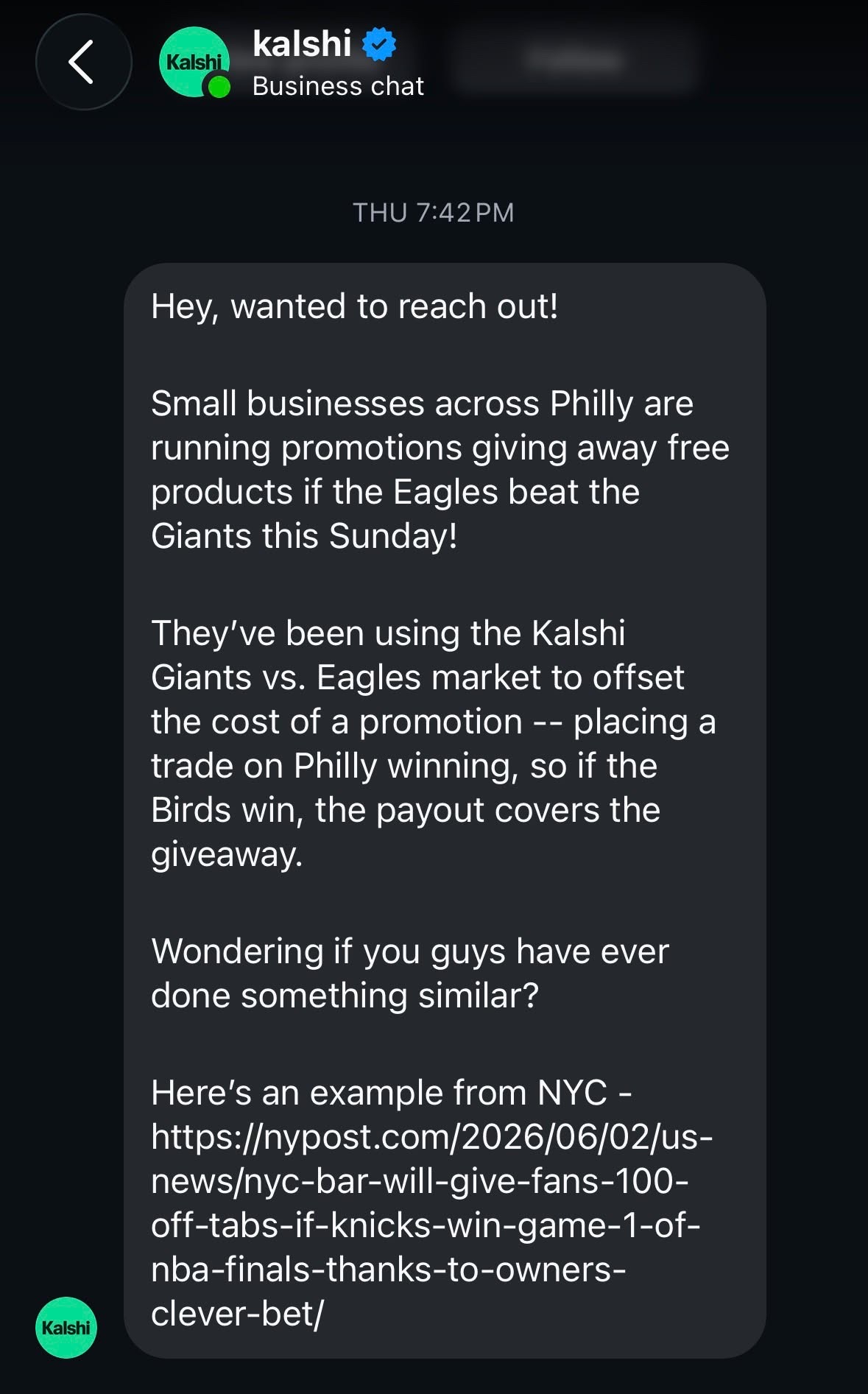
    “Small businesses across Philly are running promotions giving away free products if the Eagles beat the Giants this Sunday,” the message said. “They’ve been using the Kalshi Giants vs. Eagles market to offset the cost of a promotion — placing a trade on Philly winning, so if the Birds win, the payout covers the giveaway. Wondering if you guys have ever done something similar?”

    Kalshi’s official Instagram account sent this message to at least three Philadelphia restaurants on Nov. 5, 2026. “Small businesses across Philly are running promotions giving away free products if the Eagles beat the Giants this Sunday! They’ve been using the Kalshi Giants vs. Eagles market to offset the cost of a promotion,” it read.Obtained by The Inquirer

    The Eagles lost to the Giants 19-11 on Sunday adding a seventh game to the team’s losing streak. The organization has been in free fall since starting quarterback Jalen Hurts was placed on the injured reserve in mid-October after a blood clot had traveled from his legs to his lungs. Kalshi itself called the Giants a “clear favorite” in the matchup.

    A Kalshi spokesperson confirmed via email that the prediction market did reach out to a number of Philadelphia businesses ahead of Sunday’s game. They did not specify how many received messages, how recipients were selected, or if any placed trades.

    Kalshi’s messages were not intended as explicit instructions, the spokesperson said: “Our outreach with businesses is kept educational. The DMs sent to Philadelphia businesses did not directly tell businesses to hedge.”

    That’s not how Rougarou Baking co-owner Paige Wenrick felt when the DM appeared at the top of her Queen Village bakery’s inbox last week.

    Philadelphia Eagles defensive tackle Jordan Davis (right) pressures New York Giants quarterback J.J. McCarthy out of the pocket at Lincoln Financial Field in Philadelphia on Sunday, Nov. 8, 2026. The Eagles lost 19-11.David Maialetti / Staff Photographer

    “It’s not a secret that we’re not doing well,” Wenrick said of the Birds. “So it felt like [Kalshi] was specifically asking small businesses in the Eagles’ home city to just give up money.”

    Wenrick said she didn’t respond to Kalshi’s message. Nor did Chance Anies, whose well-regarded Filipino BYOB Tabachoy in Bella Vista received the same Instagram message last Thursday.

    Anies is a San Francisco 49ers fan, and Tabachoy doesn’t have a television to broadcast games. He’s uncertain how his 28-seat restaurant got on Kalshi’s radar.

    “I’m small-business owner that runs restaurants. I’m already gambling with enough of my money,” said Anies. “But from a financial standpoint,” he went on, “this is stupid … you want me to bet thousands of dollars on a losing team just to have a little bit of hope [to make some back]?”

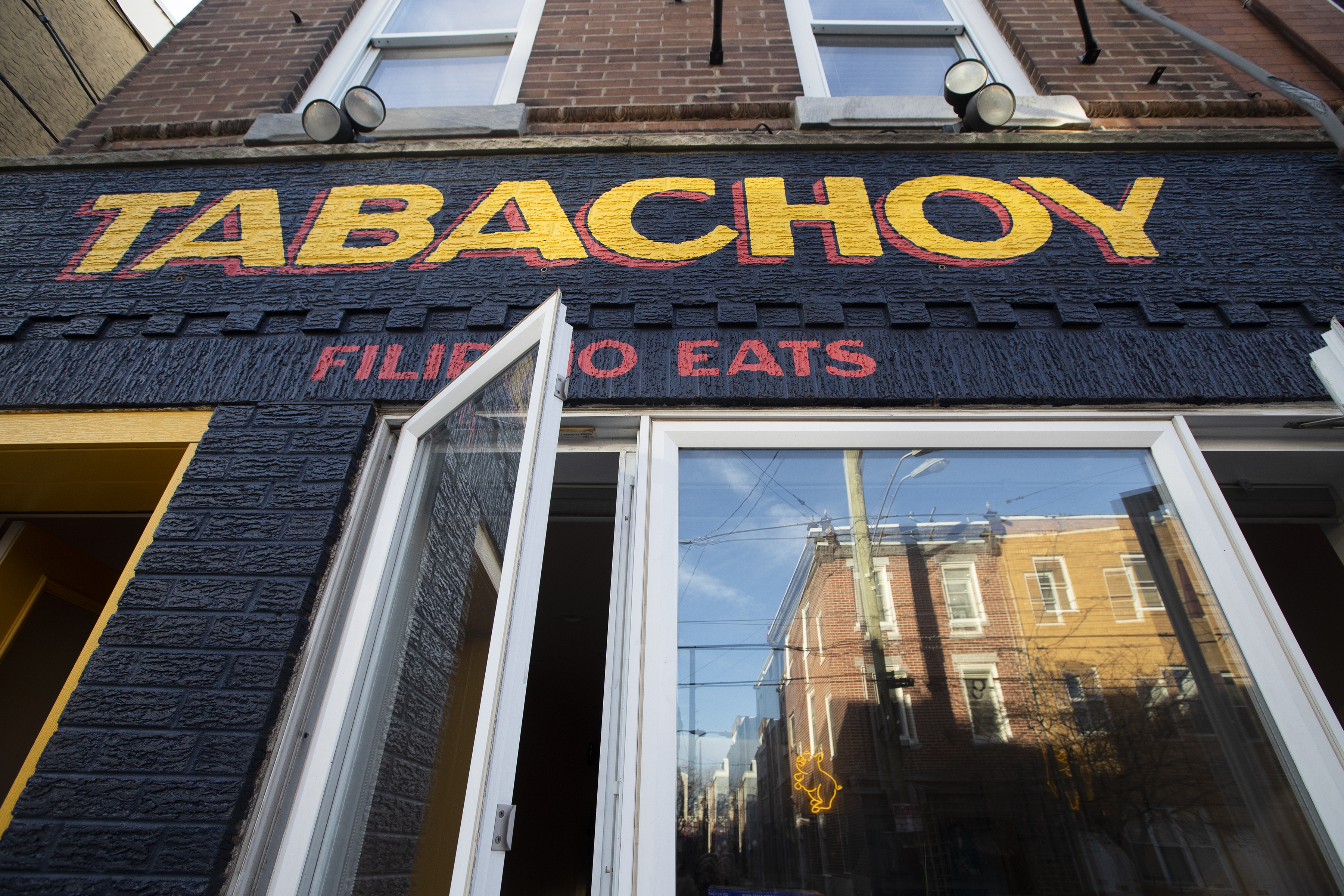
    The exterior of Tabachoy, 932 S. 10th St., with the neighborhood reflected in its windows on Feb. 15, 2023.Charles Fox / Staff Photographer

    Trading vs. gambling

    Founded in 2018, Kalshi began as a prediction market where users could place trades (aka wagers) on the yes-or-no outcome of real-life events — elections, war, or who wins Dancing with the Stars — before wading into professional sports two years ago.

    Now, sports drive most of Kalshi’s $30 billion trading volume, according to research from Pew. Kalshi says it functions less like a traditional casino or sportsbook and more like a stock exchange, since users are wagering against each other instead of odds set by the house. (The platform instead makes money from transaction fees and selling data.)

    The distinction has placed Kalshi at the center of several legal battles. Kalshi can operate in all 50 states because it’s federally regulated by the Commodity Futures Trading Commission, a technicality that some say has allowed Kalshi to skirt state laws that restrict those under 21 from gambling.

    FILE – A Kalshi advertisement is displayed at Oracle Park during a baseball game between the San Francisco Giants and the St. Louis Cardinals, Tuesday, Sept. 8, 2026, in San Francisco. (AP Photo/Jeff Chiu, File)Jeff Chiu

    In October, the NFL and attorneys general from 39 states — including Pennsylvania and Delaware — filed amicus briefs in support of New Jersey’s request that the U.S. Supreme Court rule on whether states can regulate prediction markets. Judges in Ohio and Tennessee have already ruled that states can, while a separate ruling gave Nevada the authority to ban Kalshi altogether.

    Liberty Kitchen culinary director Beau Neidhardt is among those who don’t see a difference between trading on a prediction market and gambling, which looms large in Pennsylvania.

    The sandwich shop, which has locations in Olde Kensington and Chestnut Hill, also received a message from Kalshi. Neidhardt said it was “so weird.”

    Hedging on a rainy day

    Kalshi has repeatedly referred to trades by small businesses as “hedging.”

    Hedging on Kalshi is “like insurance,” the spokesperson wrote, and “certainly not setting money on fire.”

    Liberty Kitchen packs all the Caesar goodness in a hoagie.KC Tinari

    “Small businesses face various real-world risks daily — issues related to weather, politics, sports, the economy, etc,” they went on. “We provide a liquid, transparent market platform that allows any business to take action against risks affecting their operational outcomes.”

    This is not the first time Kalshi has solicited small businesses.

    In June, Kalshi asked the owner of the New York City bar The Jeffrey to wager on the Knicks winning their first NBA finals game after learning that the bar lost $4,000 in one night from covering tabs during the Eastern Conference Finals. More recently, a conglomerate of sports bars in Los Angeles used Kalshi to bet on the Dodgers missing out on the World Series to offset a potential dip in revenue.

    In Philly, the spokesperson said, a construction company is currently betting on local snowfall totals to hedge against revenue declines from stalled work in the winter. “If it doesn’t snow much, [they] lose what [they] put into the trade, but crews stay on schedule,” she wrote. “If it snows heavily, [the] Kalshi payout helps offset the cost of the delays.”

    Anies, of Tabachoy, wasn’t sure it would work out that way for his restaurant. For Kalshi’s proposition to work, he would’ve needed the Eagles to win, the restaurant to be full, and to wager $2,000. Only then, according to Anies, would Tabachoy be able to cover the cost of food and labor and make a profit.

    Wenrick — who owns Rougarou — also said Kalshi’s recommendation wouldn’t work for her business, a small batch Creole-Jewish bakery. The bakery would still take a loss on wasted product if the promotion didn’t lead to a sellout.

    “We’re too small to afford that,” she said.

    Rougarou Baking is known for its chocolate babkas.Rougarou Baking

    The Kalshi spokesperson clarified that the message was not meant as financial advice. Businesses can trade however they want.

    “A trade on the Eagles winning only makes sense for a business that is running a promotion tied to an Eagles win, like a free cannoli or round of drinks … In exactly that scenario, the payout covers the giveaway,” she wrote. “The Eagles being underdogs is what makes the hedge more affordable: an unlikely outcome means a low-cost hedge, the same way insurance against an unlikely event costs less.”

    Terms and conditions

    Wenrick, however, was more concerned with the legality. It’s against the terms and conditions of most betting and banking platforms to gamble with a business bank account, she pointed out, which could result in banks restricting funds.

    That fear is unfounded, according to the Kalshi spokesperson. Trading on a prediction market is no different from a cafe opening a brokerage account to trade coffee futures, she said.

    A face-off during the third period of an NHL hockey game between the Chicago Blackhawks and the Minnesota Wild with the Kalshi sign in the background Tuesday, March, 17, 2026, in Chicago. (AP Photo/David Banks)David Banks

    The Pennsylvania Gaming Control Board, for its part, can’t comment on Kalshi because Pennsylvania doesn’t regulate prediction markets.

    “In this current landscape, we would not be made aware of any marketing such as this by entities we do not license and regulate,” a spokesperson said in a statement.

    The board, he said, is unaware of any sportsbooks asking businesses in the commonwealth to place bets — at least at this time.

  • Proposed legislation wants to help fund arts groups by increasing sales tax

    Proposed legislation wants to help fund arts groups by increasing sales tax

    For decades, Philadelphia’s arts and culture leaders have chased the dream of a dedicated source of public funding that could provide some basic support to the sector.

    Other cities have it, they have argued. Why not Philadelphia?

    Now a possible funding mechanism is being proposed. State Sen. Nikil Saval (D., Philadelphia) on Thursday distributed a cosponsorship memo to other legislators that he hopes will lead to passage of a bill allowing Philadelphia to increase the sales tax to help fund community assets like arts and culture groups, libraries, and recreational centers.

    Saval says the arts are a “major source of economic, cultural, and human dynamism in our city,” and he cites the demise of the University of the Arts and closing of the museum of the Academy of Natural Sciences of Drexel University as recent evidence that help is needed.

    “Investment has a massive effect,” he said. “It’s amazing how much we do with so little, but to actually help sustain or help organizations plan with a sustained source of funding would be enormous.”

    One of two shell sculptures placed on either side of the entrance on the 19th Street entrance to the Academy of Natural Sciences of Drexel University, Aug. 17, 2026. Tom Gralish / Staff Photographer

    A new tax would generate a pot of money each year to be allocated to recipients based on a process overseen by a governing board. Many of the details required to get the idea from concept to reality remain to be worked out. But the idea is modeled on a similar, long-standing program in Pennsylvania, in Allegheny County, where the combined state-county sales tax is 7%.

    “It’s generated several billion dollars over the course of its existence from the early ’90s, which is also the last time, incidentally, that we had a Democratic trifecta,” said Saval, referring to the Pennsylvania House, Senate, and governor’s office. “It’s allowed so much to happen in Pittsburgh and Allegheny County. It’s allowed so many institutions to offer reduced or free membership.”

    Pittsburgh is among a number of cities, including Portland, Ore., and Denver, that have mechanisms providing a dedicated funding stream to arts and culture, each with its own funding and spending formulas.

    The Allegheny Regional Asset District, in its projected 2026 budget, forecast distributing $147.9 million in grants to a wide variety of “civic, recreational, sports and cultural facilities, libraries and other entities as determined by the board of directors,” according to the organization’s budget summary.

    Arts and culture organizations were allocated 12.8% of that money.

    Saval’s memo is a precursor to introducing legislation that would allow the City of Philadelphia to authorize an increase to its sales and use tax and establish an independent board to receive the new revenue and distribute it. The amount of the sales tax increase might be a penny per dollar, he said.

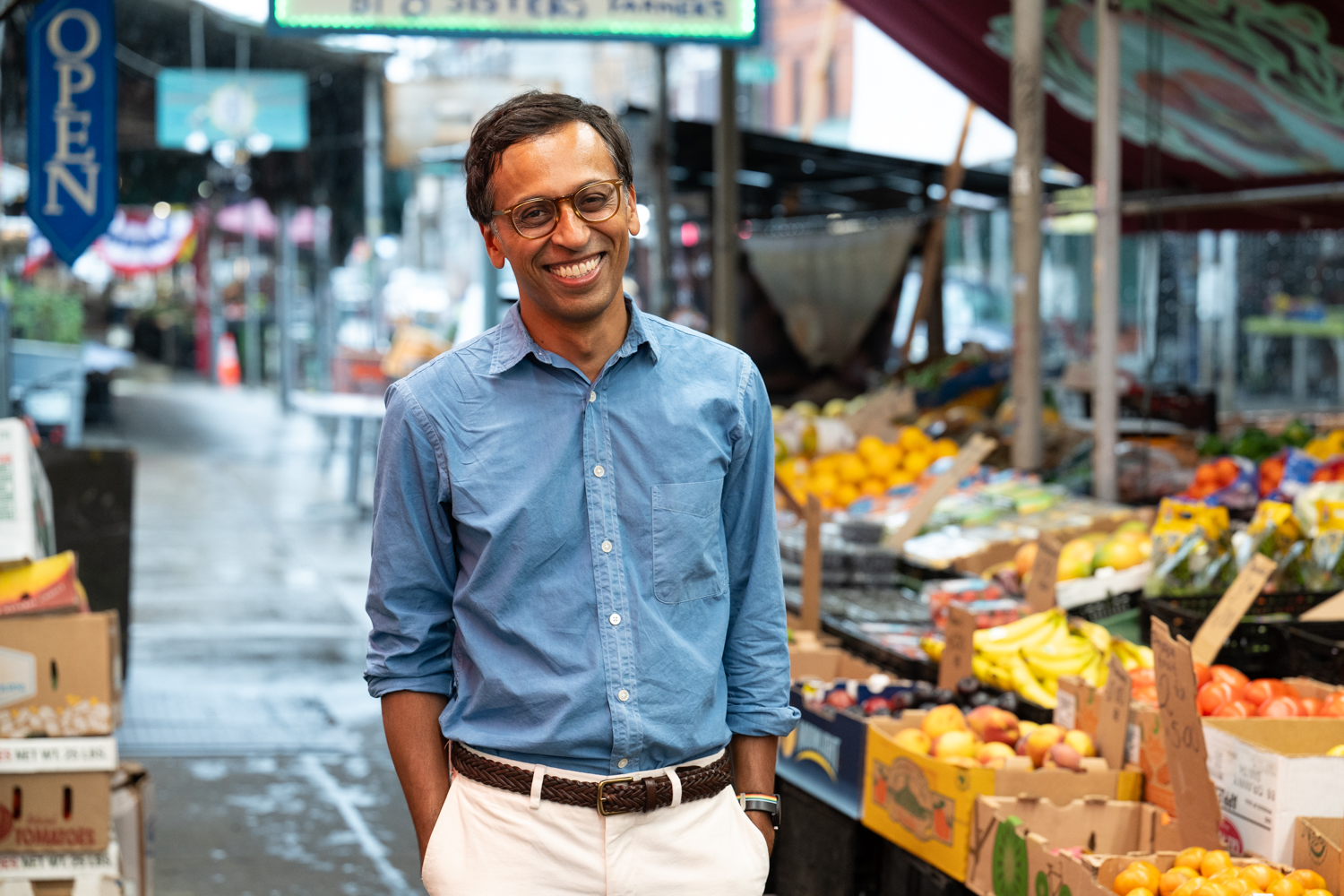
    Pennsylvania State Sen. Nikil Saval poses for a portrait in the Italian Market in Philadelphia on Thursday, Aug. 27, 2026.Erin Blewett / For The Inquirer

    City Council and the mayor would have to approve a bill enacting the new tax, Saval said.

    Timing is not set, but Saval wants to introduce the concept now to “socialize some of the ideas” and introduce legislation in the new year. If it is approved at the state level and takes effect by the end of 2027, City Council and Mayor Cherelle L. Parker could consider approving the tax in 2028.

    The current combined Philadelphia and Pennsylvania sales taxes total 8%, and while increasing taxes is rarely a popular cause, Saval is hopeful.

    “We’ve had some conversations with Council members and with the city, to let them know that we’re pursuing this. Without wanting to speak for anyone, there’s general excitement about the notion of creating a dedicated arts funding stream,” he said.