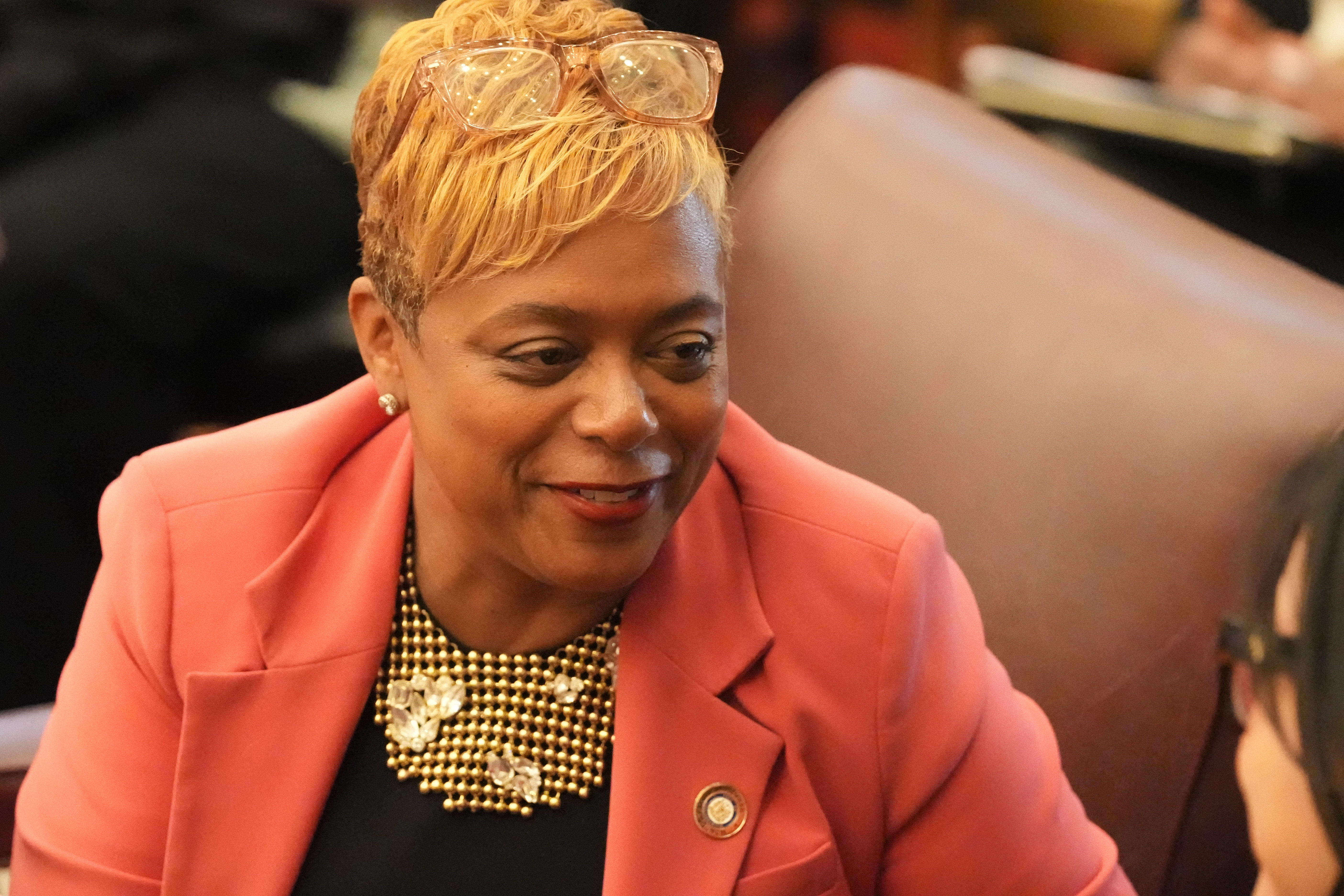
Philadelphia’s Democratic City Committee is likely to take the rare step of ordering a redo of Monday’s controversial 22nd Ward leader election, in which City Councilmember Cindy Bass declared herself the victor after a closely divided voice vote, according to a person with knowledge of the party’s decision-making process.
City committee chair Bob Brady confirmed that Octavius Price, a progressive who ran against the incumbent Bass in the Mount Airy ward, has filed a formal challenge to the election results.
The party’s contest committee, which is made up of other ward leaders, will meet on Sunday to hear from both sides, Brady said. That committee will then make a recommendation on how to proceed that will be considered by the full body of duly elected ward leaders from across the city — excluding Bass. From political endorsements to disciplinary decisions, the ward leaders in the past have almost always followed the recommendations of the party’s committees.
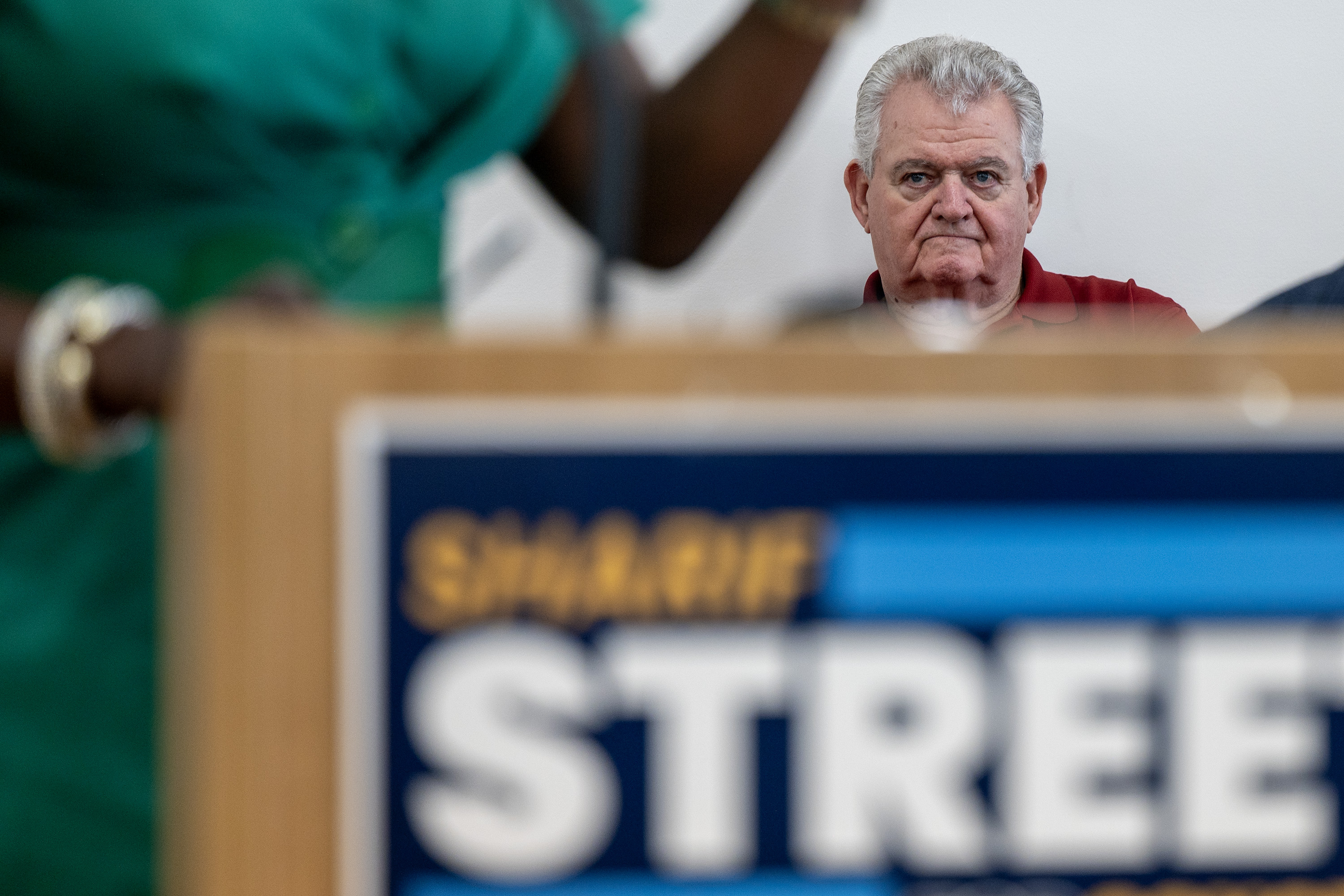
Philadelphia Democratic Party Chairman Bob Brady listens as Mayor Cherelle L. Parker speaks at a rally for 3rd Congressional District primary candidate State Sen. Sharif Street May 18, 2026.Tom Gralish / Staff Photographer
Possible outcomes include the party declaring that either Bass or Price had won on Monday night — or ordering a rerun of the election, in which the ward’s committeepeople would have to meet for another election overseen by a neutral party.
Given reports from Monday — including a video showing Bass adjourning the meeting after declaring victory, while ignoring cries for a roll call to clarify the vote — the city committee is all but guaranteed to order a rerun of the election, according to the source, who was not permitted to discuss the party’s plans publicly and spoke on the condition of anonymity.
That decision would represent a notable rebuke from the city’s Democratic establishment for Bass, a centrist who has been a ward leader since 2018 and holds a leadership role in the citywide party as a vice chair.
Bass has repeatedly clashed with progressive activists in her Northwest Philadelphia-based 8th Council District and was narrowly reelected in 2023. She is likely to face another challenge from the left in next year’s Council election, and control of the 22nd Ward could be an important factor in the race.
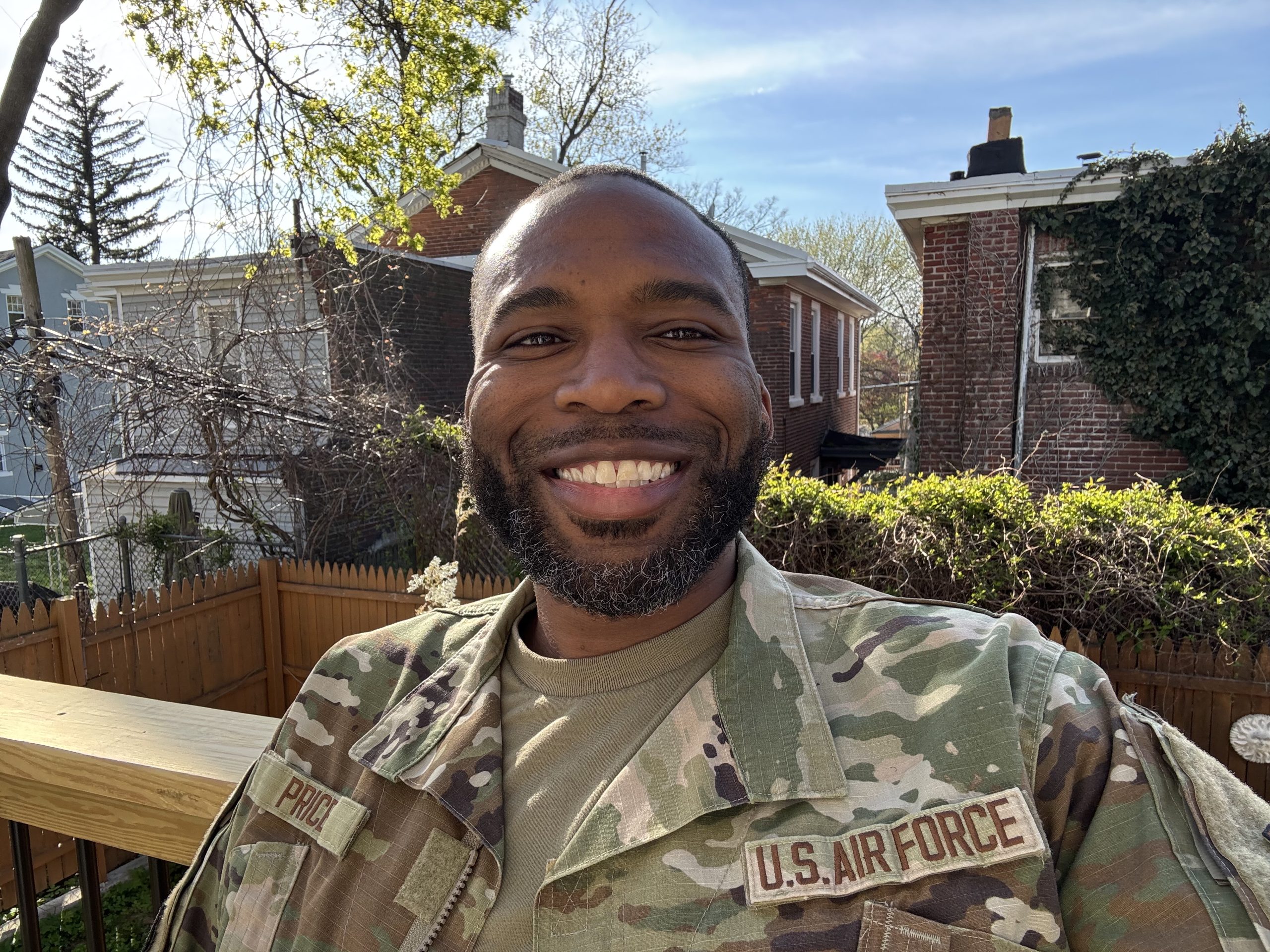
Octavius Price, a fiber optic engineer and member of the Pennsylvania Air National Guard, ran for 22nd Democratic Ward leader. Sean Walsh
Bass said she is confident she will have the votes to win another four-year term as ward leader if there is a rerun.
“It’s not in my hands,” she said Wednesday. “It’s totally up to the Democratic City Committee, and I’ll support whatever the decision is.”
Ward leaders and committeepeople are the foot soldiers of the Philadelphia Democratic Party. They are tasked with knocking on doors to get out the vote for party-endorsed candidates, as well as sometimes fielding constituent services requests.
As the incumbent ward leader, Bass chaired Monday night’s election at the Germantown Seventh-day Adventist Church in Mount Airy. A video of the meeting obtained by The Inquirer showed that numerous people voted for Bass and for Price during the voice vote, and that Bass ignored requests for a vote-by-vote roll call that could have clarified who won.
Brady said Monday that while voice votes can be used to decide ward leader elections, any requests for roll-call votes must be honored. He added that having a video of the meeting would provide “great proof” for the contest committee as it tries to sort out what happened.
“There’s always ‘he said, she said,’” Brady said. “But if there’s a video, we gotta take a look at that.”
Price, a fiber optic engineer, said that Democratic City Committee officials have made “no guarantees” to him that there will be a new election. But, he said, they have briefed him on how a rerun would work if the ward leaders order one.
The election would take place at a time negotiated by Price and Bass, he said, and it would be at the city committee headquarters on Spring Garden Street, not in Mount Airy.Price said he was not informed how votes would be cast.
“We just want a fair vote. It’s supposed to be one person, one vote,” he said Wednesday. “I hope that we do get our fair shot. I hope that we get transparency and an opportunity to get our voices heard.”
A 45-year-old mother of four was beaten to death with a brick in North Philadelphia on Sunday, according to police.
Keisha Furlow was found in a rear alley on North Opal Street around 6:15 a.m. that morning by first responders, who pronounced her dead at the scene.
Furlow had suffered severe lacerations to her face, police said. Officers found two bloodied bricks on the ground near the woman’s body and believe they were used in the attack,which occurred around 2 a.m.
Investigators are searching for two people they believe are responsible for the attack, according to a law enforcement source who was not authorized to speak publicly given the ongoing nature of the investigation.
One of the attackers, captured on surveillance footage, appears to kick Furlow and beat her repeatedly with a brick, according to the source.
Investigators believe both assailants fled with Furlow’s purse after the attack. The department released an image of one of the suspects, a man, on Wednesday afternoon.
Furlow is a resident of the 2700 block of North Opal Street, according to police.
No arrests have been made, and homicide detectives continue to investigate.
When the first World Cup match in the U.S. kicks off, most eyes will be on the host country’s team. But for the small community of Paraguayans living in the U.S., it’s a moment in the spotlight for their own treasured team, returning to the tournament after a 16-year absence.
Paraguayan fans across the United States have been planning barbecues and get-togethers to watch the team’s group stage matches. While many balked at the prices for Friday’s match against the U.S., with seats selling for more than $1,000 each, some have already bought tickets to later matches.
Santiago Araujo is among them. His family owns one of the few Paraguayan restaurants in the U.S., in the seaside town of Pacific Grove, Calif. He and his brother scored tickets to see the team face Australia in Santa Clara, Calif., about 80 miles away.
“Every Paraguayan I know wants to go,” said Araujo, who moved to California with his family when he was 11. “It’s not like there’s seasons of any other sports in Paraguay. I used to sleep with a soccer ball as my toy.”
A long wait for the small, but dedicated, Paraguayan community
There are some 37,000 Paraguayans living in the U.S., according to Census estimates, and they’re eager for the team’s long-awaited return to FIFA’s prized tournament. It’s the first time Paraguay has clinched a World Cup spot since 2010, when it had its best performance, reaching the quarterfinals. The team, which FIFA currently ranks 40th in the world, is making its ninth World Cup appearance.
The U.S. and Paraguay are joined in Group D by Turkey and Australia, which Paraguay will respectively face on June 19 and June 25 in Santa Clara.
One of Paraguay’s veteran players, midfielder Miguel Almirón, plays for the MLS’ Atlanta United. At 32, he remembers watching that 2010 World Cup as a kid with hopes that someday he, too, would have the opportunity to play on soccer’s biggest stage.
It’s been a long wait.
“It’s going to be something beautiful in that moment, not just for me, but also for my family and for all the Paraguayan fans, and for anyone who’s been with us through all the tough moments,” Almirón said recently, thinking ahead to the first match. “There are going to be a lot of emotions at that moment. We take it on with responsibility, because we know so many people are depending on us.”
How fans are celebrating in the US and Paraguay
Paraguay is among South America’s less populous countries, with about 7 million people. Landlocked, it’s surrounded by Argentina, Bolivia and Brazil and known for vast savannas, lush landscapes and the indigenous Guarani culture. In the U.S., more concentrated Paraguayan communities can be found in New York and the affluent town of Bernardsville, N.J., which Paraguay’s President Santiago Peña visited in 2024.
To cheer on the team, Paraguay fans will don its red-and-white jerseys and tubular top hats. In Northern California, Cafe Guarani, which Araujo’s family owns, is hosting a celebration to bring together Paraguayan fans between the games with traditional dishes that include manioc empanadas and iced yerba mate. In the Queens borough of New York, they’ll gather at the I Love Paraguay restaurant to watch the games.
Ana Di Sessa, of New Jersey, said she’d love to attend the matches in California but it’s too much of a trip.
“It is not only the tickets — you have to pay your hotel, the flights,” she said. “A lot of people are not going to be able to go there.”
Zoraida Pereira, a travel agent in Bernardsville, said she has sold packages to fans heading to Santa Clara, but not the opening game because of ticket prices. The 43-year-old, who was born in Paraguay but has lived in the United States for more than 30 years, said it’s tough to choose between the two countries on the pitch.
“I am rooting for Paraguay this time around,” she said. “They’ve been out for so long.”
The frenzy is also underway more than 5,000 miles away in Paraguay, where the documentary film “El Renacer Albirrojo” was released about La Albirroja’s yearslong journey to return to the World Cup. The team was sent off to the United States with a fanfare of fireworks, and some community members in the U.S. said they have friends and family flying in from Paraguay to attend the matches.
Rodrigo Valdez, a computer engineer in San Diego, is planning to travel more than 450 miles to Santa Clara to see the team play. Born in the U.S., the 34-year-old spent his childhood in Paraguay and relishes the attention the team is getting.
He said he’ll watch Friday’s game with family and friends in San Diego. Despite having a 4-month-old baby, his wife encouraged him to buy himself a ticket to the match with Australia as a gift for his first Father’s Day.
“It was a unique opportunity for us that we are living in California,” Valdez said. “It will be very meaningful.”
Christen “Chris” Woods, the former leader of one of Philadelphia’s largest labor unions, was acquitted of theft and conspiracy charges Wednesday by a judge who rejected prosecutors’ allegations that he used a union-funded renovation project to secretly funnel money into local political campaigns.
In delivering her verdict, Common Pleas Court Judge Tracy Brandeis-Roman said prosecutors had failed to prove beyond a reasonable doubt that Woods — who once led District 1199C of the National Union of Hospital and Healthcare Employees — acted criminally when he hired longtime political operative Tracy Hardy to oversee the renovation of a bar inside the union’s Center City headquarters in 2019. The case against him, she said, relied on circumstantial evidence that did not definitively tie Woods to any wrongdoing.
As the judge declared Woods, 41, not guilty, he lowered his head toward the defense table, overcome with emotion. Behind him, family members and friends sprang to their feet, raising their hands toward the ceiling and shouting in celebration until Brandeis-Roman restored order by rapping her gavel.
The verdict brought to an end a protracted prosecution by the Pennsylvania Attorney General’s Office that accused Woods of orchestrating a plot to covertly channel money into Philadelphia’s 2019 Democratic primary elections.
Prosecutors alleged that Woods used a bar renovation project as a vehicle to steer more than $100,000 in union funds toward political consulting and campaign work benefiting candidates he supported, including one of Woods’ closest friends, Isaiah Thomas, who won a City Council seat.
Rather than rely on traditional campaign contributions, prosecutors said, Woods hired Hardy — who owned bars but did not work in construction — to develop fake and inflated estimates for the renovation project, then got one of those bloated proposals approved by the union’s board. Then, they said, Hardy took the excess money and used it to surreptitiously support the candidates.
Woods, who now owns a consulting firm and medical transportation business, was once viewed as a rising star in city political circles, and dozens of supporters sat in the courtroom to watch the case unfold. Thomas was among those who attended the proceedings, making a brief appearance during the trial’s opening phase in February. Brandeis-Roman conducted the nonjury trial over the course of months, before hearing closing arguments in May and issuing her verdict Wednesday.
During the trial, Woods’ attorneys blamed Hardy for any issues with the renovation’s cost or the accuracy of its invoices. Woods never intended to use the union’s funds for anything other than construction, they said, and if Hardy overbilled the union, he did so on his own — and to line his own pockets.
Hardy pleaded guilty in federal court last year to charges stemming from the bar renovation, as well as a separate scheme in which he fraudulently obtained $2 million in pandemic relief funds.
He is scheduled to be sentenced in September.
“This isn’t a case about theft from a union,” Woods’ attorney, Keir Bradford-Grey, said in court. “This case is about a fraud between Hardy and [his contractors].”
Among the evidence presented were financial records and witness testimony that prosecutor James Price said showed the renovation project’s cost ballooned from an initial estimate of about $47,000 to nearly $150,000 by the time the board approved it. Price said that was because Woods and Hardy were secretly using the arrangement to fund political consulting by Hardy for candidates of Woods’ choosing.
“You cannot spend union money just because you think it’s for the best,” he said in his closing argument.
But Woods’ attorneys said that the initial estimate for the construction project was unrealistically low, and that Hardy did ultimately renovate the bar.
If Hardy was a sloppy bookkeeper or dubious project manager, they argued, that did not make Woods guilty of knowingly misdirecting his union members’ funds to another purpose.
Woods’ trial also included testimony by Ryan Boyer, head of the politically influential Philadelphia Building and Construction Trades Council and one of the city’s most powerful political figures. Boyer spent half a day on the witness stand answering questions about his relationship with Woods and Hardy, as well as his assessment of the bar renovation’s costs.
Although Boyer served as a prosecutors’ witness, he delivered testimony that appeared to bolster Woods’ case: He said Hardy was a shady operator who cut corners and spread himself too thin, and suggested that any issues with the bar renovation likely stemmed from Hardy’s conduct.
On Wednesday, Brandeis-Roman said the evidence left room for competing interpretations, with facts that felt as if they “could go both ways.” Combined with testimony from 19 character witnesses who vouched for Woods’ integrity, she said, the uncertainty convinced her that prosecutors had not met their burden of proof.
“Sometimes,” she added, “all you have is your good name, and that should mean something.”
Among those in the courtroom was Woods’ mother, Valencia, who jumped from her seat after the verdict and repeatedly shouted, “Thank you, Jesus. Thank you, God,” until she embraced her son in the hallway outside the courtroom.
There, surrounded by loved ones, Woods said the verdict meant “I’m finally able to move on with my life.”
Bradford-Grey added: “I am glad people will finally get to see he is not the person he was portrayed originally in the paper. It’s time to put this to bed and let Chris be the man we know he is.”
Rep. Nancy Mace’s trouncing in Tuesday’s South Carolina gubernatorial primary dealt a blunt defeat to a once rising GOP star, a politician who had basked in national attention during her dramatic political transformation.
Mace had real political talent and promise, but her downfall and isolation followed years of brazen political opportunism, a hunger for media attention at any cost, rejecting advisers’ counsel and turning on many allies, more than a dozen former aides, colleagues and supporters in both South Carolina and Washington said in interviews.
She finished fifth in the contest, according to unofficial returns, solidly losing even her own home county and district.
Mace arrived in Congress after flipping a Charleston-area district in 2020 and built a reputation as a moderate who appealed to swing voters. She voted to codify same-sex marriage rights, called herself “pro transgender rights” and urged her party to “meet in the middle” with Democrats on abortion. By last year, Mace had begun repeatedly mocking transgender people as “trannies” and disparaged gay relationships on social media. In recent days, Mace suggested a Republican opponent in the governor’s race came from “a slum in India.”
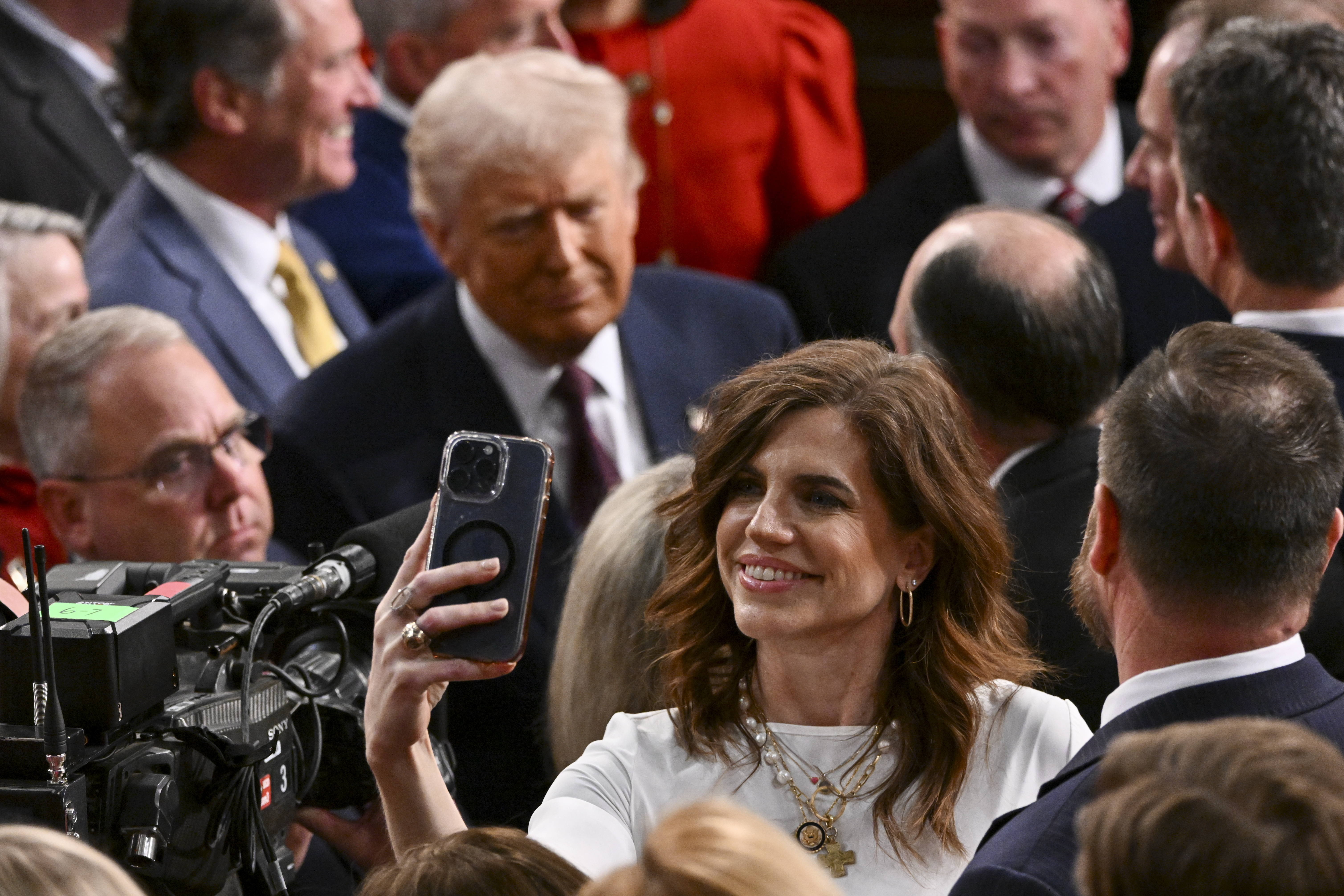
Rep. Nancy Mace (R., S.C.) takes a selfie as President Donald Trump leaves the chamber after addressing a joint session of Congress on March 4, 2025. Ricky Carioti
Her relationship with President Donald Trump was similarly mercurial. She distanced herself from him soon after taking office, survived his attempt to oust her in 2022, rebranded herself as a MAGA warrior, defied Trump on the Epstein files and sought his endorsement in the governor’s race, only to watch him back a rival. No high-profile Republican endorsed her campaign.
The spectacle of Mace’s transformation often unfolded on the cameras she gravitated toward in television interviews, selfie videos posted on social media and dramatic exchanges in committee hearings. Her public appearances grew increasingly combative and bizarre.
“The only thing I hope is she gets the help she needs,” former Republican House speaker Kevin McCarthy told the Washington Post, saying he watched as her “political and personal life unraveled” in recent years.
Mace, whom McCarthy had helped to unseat Democrat Joe Cunningham in 2020, cast an unexpected vote for his ouster as speaker in 2023, joining right-wing hard-liners and Democrats as she abruptly turned on him. She later walked around the Capitol wearing a large scarlet “A” on her shirt, because she said she had been “demonized” for that vote.
“I helped her win. But I just watched her change along the way,” said McCarthy, who supported an unsuccessful primary challenge to Mace in 2024. “Some people warned when she was an early candidate, ‘Watch out, she’s not all there.’ I didn’t.”
Former staff said Mace embraced stories about her being a “caucus of one” on a “lonely political island.”
Mace and her campaign did not return requests for comment. She previously accused her former staff of mismanaging money and spying on her, and has dismissed criticism that she is overly focused on getting attention.
“I will always be grateful for the people of South Carolina who trusted me, fought with me, and refused to look the other way,” Mace posted on social media after her loss Tuesday evening. “This isn’t the end of the fight. It’s just the end of this chapter.”
Public outbursts
Mace raised eyebrows in Washington year after year for drawing attention to herself, such as wearing an arm sling after accusing a foster care activist of “trans violence” during a handshake — having him arrested on assault charges only for prosecutors to drop the case. Her behavior in the months preceding her gubernatorial run became even more confounding to those observing it.
In the throes of her split from her ex-fiancé, Mace in February 2025 spoke on the House floor for nearly an hour, accusing him and three other men of rape and other sex crimes, which the men denied. During a congressional hearing on surveillance months later, she showed a “naked silhouette” photo of herself, saying it was taken without her consent.
In April 2025, Mace posted a video she took at a makeup store where she repeatedly cursed out a constituent who asked when she planned to host her next town hall.
A week and a half later, Mace confronted her nephew John Mace McGrath as he sat next to local elected officials during Vice President JD Vance‘s visit to a steel plant in Huger, S.C. She stood over him and pointed her finger in his face as she upbraided him for accepting an endorsement in a local party chairman race from state Attorney General Alan Wilson, whom she had also criticized during her lengthy House floor speech and would later run against her for governor.
“You f— up taking Alan’s endorsement, and you’re going to pay for that someday,” Mace said to the 26-year-old, according to two people who witnessed the May 1, 2025, scene, which has not previously been reported. The people spoke on the condition of anonymity, saying they did not want to attract any additional wrath from Mace.
After conceding Tuesday, Mace endorsed Wilson in the gubernatorial runoff, despite repeatedly accusing him in the last year of being a “pedophile protector.”
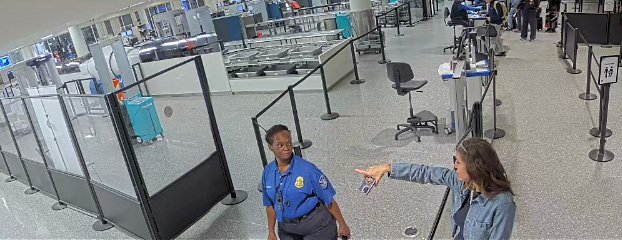
The highest-profile eruption took place in October, when officials at Charleston airport reported that Mace had berated airport staff and police after a misunderstanding about her security escort preferences. A police report of the encounter described an expletive-laced tirade where she called airport police “f— incompetent.”
Mace is seen speaking with an officer during the confrontation at the Charleston International Airport.
Dozens of local elected officials in her district signed a letter condemning her behavior, and the state’s Republican senators, Tim Scott and Lindsey Graham, criticized her actions. Mace refused to apologize, threatening to sue the airport for defamation and claiming the incident report had been “fabricated.”
“People can say she’s crazy, but they’re still talking about her,” said Austin McCubbin, Mace’s former political adviser who resigned in December after disagreements about campaign decisions and compensation. “It’s kind of one of those things where just so long as you spell my name correctly, that’s all that matters.”
Shifting political persona
Days after the former state lawmaker entered Congress, Mace criticized Trump in the aftermath of the Jan. 6, 2021, attack on the Capitol, saying she did not believe he had a future in the Republican Party.
As the insurrection unfolded, Mace told aides she wanted to go out and get punched by rioters “so she could get on TV,” Natalie Johnson, her communications director at the time, told the Post. But Mace months later decided to pare back criticisms of Trump after a poll she commissioned showed they were unpopular in her district, Johnson said.
“I don’t know of anybody who puts their finger in the wind and tries to see which way it’s blowing more than Nancy Mace,” said Justin Evans, a longtime GOP political operative in the state who supported her state House run and now works for Pam Evette, the Trump-endorsed candidate who placed first in Tuesday’s gubernatorial primary. “She was a good-looking, talented communicator, had the social media following, had all the ingredients that a successful candidate should have. It’s just her moral compass was completely missing.”
Mace walks with a dog through Statuary Hall near the House chamber on July 5. Tom Brenner
Soon after entering office, Mace had shown herself to be a powerful force in politics who told a compelling backstory. A rape survivor at 16 and high school dropout who once worked as a Waffle House waitress, she became the first woman to graduate from The Citadel.
CJ Westfall, chairman of the Dorchester County Republican Party who worked on Mace’s 2022 general election campaign, described her as inspiring and hardworking. He credited her win that year to Republicans believing she was an “independent voice,” despite Trump’s opposition.
Since then, Westfall said her penchant for drama became clear and described her as a “crybully” who liked to provoke controversy and then “play the victim” when someone pushed back.
After her defeat, Mace said she challenged the powerful even if it cost her politically.
“Every vote I cast, every hearing I called, every fight I picked — it was always for you,” she wrote in a social media post. “I’ve seen what happens when good people stay quiet. And I’ve seen what happens when they don’t. I would choose the latter every single time.”
Strained alliances in Congress
Soon after Mace’s vote to oust McCarthy in fall 2023, Rep. Don Bacon (R., Neb.) greeted several of Mace’s congressional staff eating lunch at the Rayburn cafeteria and asked who they worked for.
“I used to really like her,” Bacon replied. “Not anymore. We can’t work with her.”
He told the Post he got along with her during her early time in the House, but her vote to push the speaker out “was a tough pill for many of us to swallow.”
At times, Mace allied with liberal Democrats including Reps. Ro Khanna of California and Jamie Raskin of Maryland.
“She would interact with Democrats in a way very few Republicans do, because she has sided with victims of sexual violence and sexual harassment,” Raskin said. “A lot of the people on the GOP side want to quickly brush those subjects under the rug, and Nancy, in her more freethinking, uninhibited moments, is willing to side with Democrats.”
Mace and Khanna, who had founded a joint caucus focusing on affordable child care, largely stopped their joint appearances after Mace fixated on transgender people. Mace introduced a resolution to ban transgender women from using women’s restrooms in the Capitol, in response to the 2024 election of Rep. Sarah McBride (D., Del.) as the first openly transgender member.
Mace, however, signed on to a successful petition last year by Khanna and Rep. Thomas Massie (R., Ky.) to release federal investigation files related to convicted sex offender Jeffrey Epstein.
She said she wanted justice for Epstein’s victims, even though Trump initially opposed the release of the files. But Mace’s decision surprised her own dwindling team of aides because she was bent on getting the president’s endorsement for her gubernatorial run.
Wooing Trump
A few days before Mace announced her run for governor in August 2025, she tried calling Trump to give him a heads-up. She left a voicemail for the president, who later texted her with well wishes, according to a person familiar with their communication who spoke on the condition of anonymity to discuss private conversations. But Mace panicked when Trump also passed along two polls that showed her struggling in a hypothetical race. Mace commissioned her own poll days later that showed her leading the field and with the highest name recognition.
Mace sent the poll to the president, who then posted it to Truth Social that month without comment — which political operatives said lent credibility to her nascent campaign.
In the final days of the race, Mace repeatedly said her support for releasing the Epstein files was the reason Trump did not endorse her. The president did not publicly criticize her for supporting the effort.
Mace’s congressional office frequently shed staff, some of whom she forced out, while others resigned citing difficult work conditions. At one point, in a three-month span after her McCarthy vote, her entire nine-member staff had turned over.
Mace during a staff meeting at her congressional office on April 25, 2023.Ricky Carioti
Mace also struggled to maintain political allies. She spoke of her love for former governor Nikki Haley, who backed Mace in the difficult 2022 reelection primary. But Mace went silent the next year when Haley sought her endorsement in her 2024 presidential run, and proceeded to blast Haley while campaigning for Trump.
“I don’t think Nancy Mace has ever seen a bridge in her life that she hasn’t burned down,” said Will Hampson, one of her former communications directors.
Hampson said his former boss was self aware that she was on an island. But he’s not sure if she recognizes she put herself there.
“She was her own best weapon,” he said, “and own worst enemy.”
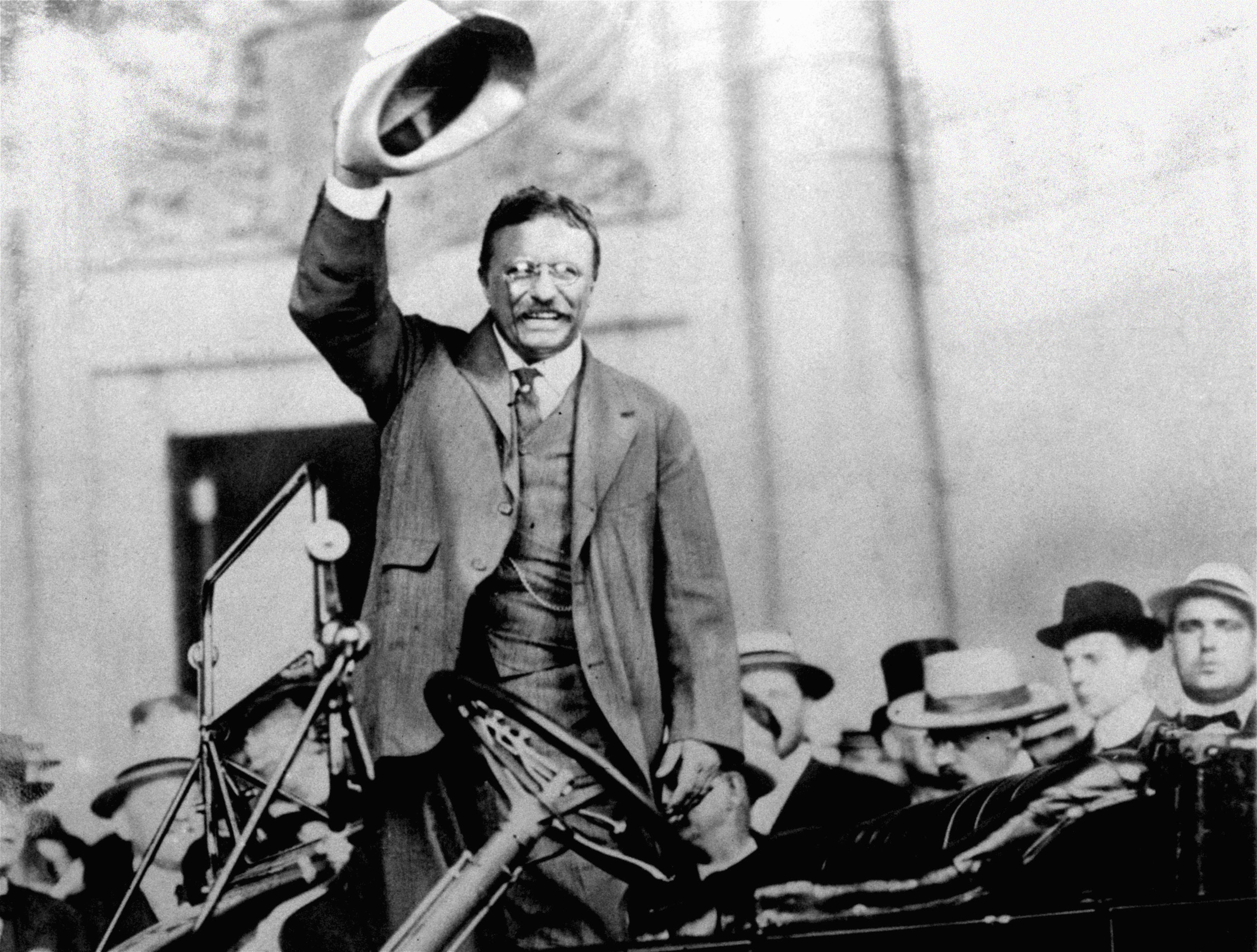
For most of Theodore Roosevelt’s presidency, he kept a secret. He was partially blind in his left eye.
It was only when he was out of office that he revealed the injury and how it came about: During a boxing match. In the White House.
Today, the White House plans to host UFC Freedom 250, as part of the celebrations honoring the semiquincentennial anniversary of American independence. Fourteen fighters will pound each other in seven separate bouts in a 5,000-seat arena that has been erected on the South Lawn.
Democratic lawmakers have widely criticized the planned event. A new lawsuit filed last weekend by the anti-corruption group Public Integrity Project on behalf of two plaintiffs is attempting to stop the event, claiming the plan is “deeply corrupt” and enriches President Donald Trump’s allies.
It will not be the first time the White House has served as a fighting arena. Last time, it was set against the backdrop of a presidency also marked by controversy over razing sections of the executive mansion.
During his roughly 7½ years in office, Roosevelt frequently invited aides, friends, and even professional athletes to the executive mansion to engage in all manner of sportsmanlike battery and barbarity. He was also frequently injured during these sporting matches.
But the damage to his left eye is believed to have occurred while boxing one of his military aides.
According to a 96-year-old letter sent from renowned ophthalmologist William H. Wilmer to Roosevelt’s biographer, Henry F. Pringle, Roosevelt was seen by Wilmer for the eye injury on Dec. 12, 1904. A transcript of Wilmer’s original letter, found in a Harvard University archive, details the approximate timing and extent of Roosevelt’s injury.
“At that time the President gave a history of having noticed for a while a dimness before the left eye after wrestling, and the further history that about two weeks ago, he was struck in the left eye while boxing,” the letter reads. “Since that time, he had noticed black spots before the eye. At first it seemed rather central and blurred the vision, but, now, it seems to have moved about two inches to the left … Examination at the time showed a few spots of hemorrhage in the retina of the left eye and some floating opacities in the vitreous.”
Roosevelt was told to take a break from “his very vigorous exercises” or else he might completely lose vision in the eye, according to the letter. The president protested, however, because he had already scheduled a jiu-jitsu match for 8 a.m., boxing at noon, a sport called “singlestick” involving wooden swords after that, then a long walk or horse ride in the afternoon. The doctor ultimately prevailed, and Roosevelt took his rest.
While Wilmer claims that the hemorrhage in Roosevelt’s eye healed, he later developed a cataract “reducing vision in the left eye to perception of light” — perhaps a result of the injury, Wilmer wrote.
Only a handful of people learned about Roosevelt’s medical condition at the time. The truth did not become public knowledge until October of 1917, after Roosevelt quietly checked himself in at a health camp in Stamford, Conn.
By that point it had been over eight years since the end of his presidency, but it wasn’t long before reporters discovered him. “The colonel is what is technically described as a ‘patient,’” reported the Springfield Daily News. “There is absolutely nothing the matter with him, except the extent of his girth.” In more polite terms, Roosevelt was there to lose some weight.
During his two terms as commander in chief, Roosevelt had dazzled the country with his relentless exercise regime. But at 58, after years of political setbacks, America’s “most strenuous citizen” — as he was playfully called in the press — was feeling depleted and bloated.
Historian Michael Cullinane, co-director of the Theodore Roosevelt Center, said that Roosevelt was stuck at home on the political sidelines during World War I. “He’s writing ferociously for journals and magazines about the war, and he’s very sedentary,” Cullinane said. “And so, what he realizes is that, if he doesn’t look after himself, he’s liable to have a heart attack or some weight-related illness.”
The health camp offered a rapid weight-loss program. And by the end, Roosevelt had lost 14 pounds, slimming down to 215. He gathered a group of reporters to witness the results. It was there, reminiscing about the glory years of his exercise routine, that he revealed the bombshell.
“The last boxing I did was in Washington. I boxed with my aides most of the time, but one day a young captain of artillery came along and broke some blood vessels in my left eye. I have never been able to see out of it since, although I don’t believe many people knew it.”
When pressed for more details by reporters, Roosevelt refused. “There is to be nothing more to say about the matter,” he said.
The mystery captivated newspapers. “Who hit the Colonel in the eye?” asked the Philadelphia Inquirer. There was no shortage of suspects. Roosevelt made it a regular habit of boxing with all sorts of White House visitors during his presidency.
“Every day, he built into his routine, some amount of exercise. And the people who exercise with him wound up being the ones who then had access to power,” Cullinane said.
Reporters scrambled to discover the identity of “the young captain of artillery” who had delivered the fateful blow. Within days they had uncovered their suspect: Col. Dan T. Moore, a cousin of the first lady Edith Roosevelt.
“I was one of the military aides at the White House in 1904 and 1905,” Moore confessed to the Evening Star. “The colonel and I boxed four or five times a week, I guess.”
Roosevelt’s injury had been such a secret, it had even been kept from Moore.
“I never knew the colonel had lost the sight of one eye in a glove bout until I read that interview the other day,” Moore told the Evening Star. “And I certainly do hate to think I was responsible for it.”
Cullinane said it was kept secret to protect Roosevelt’s modesty. “I mean, health issues, it’s no different now as then,” he said.
Roosevelt didn’t seem to have any hard feelings, which Cullinane credits to his sportsmanship. But this also wasn’t a fluke. Roosevelt was constantly getting himself injured as president. According to newspapers, he had almost had the same eye poked out the year prior, in fact, while fencing at the White House.
The rapier of his sparing partner, Gen. Leonard Wood, thrust through Roosevelt’s mask, narrowly missing his eye and leaving a serious bruise on his forehead. Then, just a week later, Roosevelt’s right wrist was severely injured in a singlestick match, again against Wood. “Such a collection of scars as that borne by President Roosevelt was never owned by an American Chief Executive before. He is the ‘most wounded’ President of the United States,” the Boston Post declared.
One mystery surrounding the injury to Roosevelt’s eye is pinpointing where the match occurred on the White House grounds. While newspaper accounts refer to a “gymnasium,” the White House Historical Association, which tracks these sorts of things, has no record of such a designated facility existing in 1904.
The White House underwent a massive renovation during Roosevelt’s tenure. After a century of different presidents and first ladies redecorating random rooms, the Roosevelts decided the whole house needed an overhaul.
“The decor was like a mix of like a Gilded Age, Victorian hotel, and steamboat gothic,” said Matthew Costello, chief education officer at the White House Historical Association. “When you see the photographs post-1902 renovation, I would argue, you see a White House that is much more recognizable to us today.”
Both the West Wing and East Wing were built during Roosevelt’s renovation, and many of the mansion’s iconic spaces were transformed. Not everyone was happy, though.
Among the most unpopular parts in the renovation plan: tearing down the enormous 45-year-old greenhouses on the west side of the mansion to make room for the new West Wing and turning the East Room into a state dining room, which would also function as a “handsome ballroom,” according to the Marion Star.
“Criticism of all these alterations are frequent and various,” wrote the Chattanooga News. “Many shake their heads, as though something were ‘rotten in the state,’ and mournfully talk of the desecration of the old mansion where Jefferson, Madison … and all the other noble executive chiefs were wont to keep ward over the nation’s destinies as they sat in stately communion.”
But Roosevelt’s “desecration” of the White House didn’t stop there. The venerated Cabinet Room, where for decades former presidents like Ulysses S. Grant had consulted with their top advisers, was rumored to have been converted into Roosevelt’s “department of physical culture.”
After the renovations were complete, Roosevelt was leading a group of guests on a tour of the second floor, taking pains to point out everything he had kept intact, when they arrived at the old Cabinet Room. “When the door was opened, ‘Presto change!’” the St. Louis Globe-Democrat reported: “All the guests rubbed their eyes. Before them were floor mats, shields, boxing gloves, wire masks, fencing gloves, padded vests, swords and foils, single sticks and other athletic paraphernalia.”
An unnamed White House official dismissed the rumor in the Times Herald. “It all depends on what you think is necessary to make up a gymnasium,” the official said. “If you require trapezes, and parallel bars, and flying rings, and all sorts of apparatus for exercising the muscles you would never be satisfied with the old Cabinet room for that purpose; for those things are not there. But if the President wants to singlestick there, I suppose he can find room enough, just as in any other of the rooms in the house.”
He might have injured his eye in that room — or not. According to historical accounts, it would appear Roosevelt was fighting all over the White House. There are stories of him wrestling and fencing in the basement, practicing jiu-jitsu in the library and boxing in the attic. The whole house served as his gymnasium.
Last month, the White House began erecting the UFC “octagon” fighting arena on the South Lawn.
Every president makes the White House their own to some extent. While the White House has long been a sacred symbol of American democracy, it is also a private home, and the history of the mansion is filled with these personal touches from past presidents, some more controversial than others, Costello said.
“There’s been tree houses, jungle gyms, swing sets, victory gardens, tennis courts, basketball courts, swimming pools, putting greens, Hoover ball — that was a big popular game during Herbert Hoover’s presidency,” he said. “But to the best of my knowledge, no octagons.”
A race for a key swing district in Northeastern Pennsylvania has caught the eye of a major Democratic super PAC that plans to spend around $50 million on advertising targeting Republican-held seats, according to the New York Times.
“We’re going to Republican territory and planting a flag,” Bradley Beychok, the president of American Bridge, a Democratic super PAC, said in an interview with the Times. “These Republicans are in a world of hurt.”
American Bridge is targeting 14 House races, the report said, with a television, radio, streaming, digital, and direct mail advertising blitz focused on economic issues like the cost of living and tariffs.
That includes the 8th Congressional District, which includes Scranton and Wilkes-Barre. U.S. Rep. Rob Bresnahan, a freshman Republican who narrowly flipped the seat in 2024, will face a challenge in November from Scranton Mayor Paige Cognetti.
Cognetti, who was unopposed for the Democratic nomination in last month’s primary, has attacked Bresnahan over stock trades he has made since taking office and over cuts to healthcare.
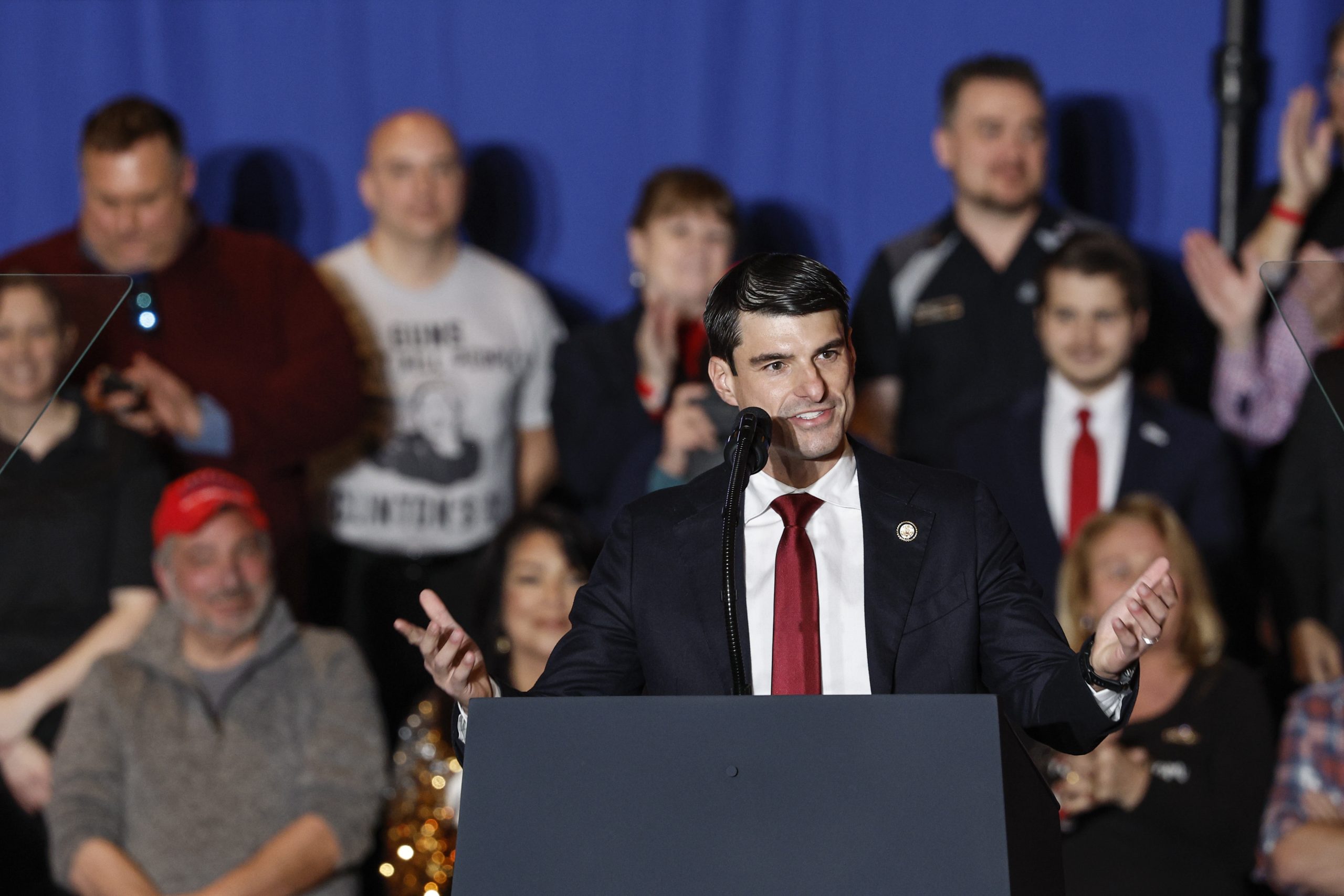
U.S. Rep. Rob Bresnahan introduced before remarks from President Donald Trump made his first stop on an “economic tour,” in Mt. Pocono Pa., Tuesday, December 9, 2025 .Steven M. Falk / For The Inquirer
“Rob ran for Congress on a promise to ban stock trades,” Cognetti said in an ad launching her campaign. “This year, he’s already made 600 trades — 600.”
This year’s $50 million spend is the most American Bridge has spent on a midterm election, according to the New York Times, which cited Trump’s falling approval ratings as the reason.
Bresnahan’s campaign contended that the spending is proof that Cognetti will be beholden to national Democratic Party leaders.
“Paige Cognetti is and always will be a loyal Democrat establishment shill and the millions of dollars she’s accepting from outside liberal groups make it clear she’s not fighting the machine, she’s a cog in it,” Bresnahan campaign spokesperson Samantha Bullock said in a statement.
The nonpartisan Cook Political Report has classified the race as a toss-up, which helps explain that national investment.
“Your opponent’s drowning,” Beychok told the Times. “We need to throw them an anvil.”
This story has been updated to include a response from Bresnahan’s campaign.
American Airlines permanently removed all future flights from Philadelphia to Doha, the capital of Qatar, from its schedule this week. The update follows a late February decision that suspended all Philadelphia-Doha flights until 2027, due to the flare in regional hostilities.
The airline’s flight to Doha held the title of the longest-ever flight departing from Philadelphia International Airport (PHL), 14½ hours that covered approximately 6,798 miles.
“As part of an optimization of our network and fleet, American has made the difficult decision to discontinue service to Doha, Qatar (DOH). We will proactively reach out to impacted customers to offer them alternate travel arrangements and apologize for any inconvenience,” American spokesperson Bri Harper said in a statement emailed to The Inquirer.
The Philadelphia-Doha route originated in 2023 as part of an expanded code-share agreement — a policy that allows airlines to sell seats on flights operated by other airlines — between American and Qatar Airways, the leading carrier in the Middle East.
The companies first partnered in 2013 when Qatar Airways joined the now 16-member Oneworld airline alliance, featuring participants such as British Airways and Iberia. In 2017, public disputes emerged between American Airlines and Qatar Airways. Since some Middle East airlines receive government subsidies, they can operate certain routes at a loss and encroach on U.S.-operated flight routes. Yet, in 2020 the companies reconciled by renewing their code share, and an expanded agreement two years later gave American’s customers the ability to book travel on Qatar flights via Doha to and from 16 new countries.
To fill the vacancy left by American’s exit, Qatar Airways is returning to PHL and will startdaily service to Doha beginning Aug. 1.
PHL chief commercial officer Kate Sullivan said flights from Philadelphia to Doha have been “an important economic generator” for the region.
“The PHL-DOH route also supports significant outbound and inbound business and tourism traffic — including visitors seeking advanced medical care — by bringing passengers from Doha and throughout Qatar Airway’s vast global network to our region.”
American anticipates flying 750,000 flights this summer. To meet Philadelphia’s demand, American recently launched nonstop service to additional cities in Europe, including Budapest, Hungary, and Prague, Czech Republic. For international flights, American’s PHL hub will offer nonstop service to 19 destinations across the Atlantic.
American is PHL’s largest air carrier, which conducts an average of 400 flights per day. It also ranks 10th in the city’s top employers, according to the Pennsylvania Department of Labor.
Editor’s note: This story has been edited to update news that Qatar Airlines is returning to Philadelphia.
The enormous popularity of new weight-loss drugs often eclipses the downsides: the burden of weekly injections, rough gastrointestinal side effects, muscle and bone loss.
That is shaping a race among drug manufacturers vying to roll out better options.
Eli Lilly, which makes Zepbound and Mounjaro, and Novo Nordisk, which makes Ozempic and Wegovy, have the vast market for branded drugs to themselves and are steadily reaping billions of dollars. But pharmaceutical giants Pfizer, Roche, Boehringer Ingelheim, and Amgen are among competitors planning to bring improved drugs to the market.
Simply touting an eye-popping weight-loss number, such as Zepbound’s 21% body-weight reduction, won’t be enough, drug company executives and researchers said. It’s not just how much weight you lose but how you get there. Companies recently touted their progress on the next generation of drugs at the American Diabetes Association conference.
The goal is to make it more likely people will stay on the drugs and avoid an obesity rebound.
“Lowering the weight alone is the beginning. Quality of weight loss is important,” said James List, Pfizer’s chief internal medicine officer.
Reducing shots
Pfizer is testing a monthly injection GLP-1 drug to improve a patient’s experience by reducing the number of shots someone needs per year from the current 52 weekly (with existing drugs) to as few as 13 (which includes a ramp-up dose). That will eliminate a barrier for patients who find it unpleasant to regularly jab themselves in the abdomen, thigh, or arm.
Pfizer plans to test its GLP-1 drug in more than 20 trials during 2026, including combining it with amylin, a natural hormone, in a bid to boost its weight-loss effects and reduce side effects. Although it would be entering the marketplace late, the company sees plenty of room to develop weight-loss products that are distinct from the current crop.
“The differentiation has to be clinically meaningful, and it has to fill a gap, and we think there are tons of gaps right now,” List said.
Amgen is testing a GLP-1 drug in combination with a monoclonal antibody that it says could reduce injections to four to six times a year.
“Weight loss is incredibly important, but on top of that is living long-term with this disease and finding easy ways for patients to maintain their weight,” said Susan Sweeney, Amgen’s executive vice president for obesity.
GLP-1s have revolutionized obesity care in just a few years. First rolled out to treat diabetes, they mimic a natural gut hormone that makes a person feel full, reducing appetite. They also are showing benefits for cardiovascular health, inflammatory diseases, and even cancer.
But getting people to stay on the drugs has been difficult. About 50% of people who start a GLP-1 stop taking it within a year, putting themselves at risk of regaining their weight. That relates in part to cost, because many insurers still don’t cover the drugs. But poor adherence also is associated with the inconvenience of shots, as well as serious side effects such as nausea, diarrhea, and constipation.
Novo Nordisk and Eli Lilly have already introduced daily tablets to make dosing easier.
Sidelining side effects
To reduce side effects, companies are tinkering with dosing strategies, starting with a smaller dose to reduce the impact of a sudden change to gut chemistry and then increasing it over time as a patient’s body adapts.
But an even better option for reducing side effects may be emerging in the form of amylin, another natural hormone that is produced in the pancreas.
Genentech, which is part of Roche, is among multiple companies ― including Eli Lilly and Novo Nordisk ― developing amylin weight-loss drugs as part of the effort to reduce gastrointestinal side effects. This year, Genentech expects to begin human trials testing it in a combination injection with its GLP-1.
The amylin does not slow down stomach-emptying like GLP-1, which in turn reduces nausea symptoms, said Manu Chakravarthy, a senior vice president at Roche-Genentech. Avoiding that stomach slowdown may ease other gastrointestinal side effects, as well, he said.
“It gives you a feeling of satiation ― satisfaction with your meal. It doesn’t give you an aversion to eating your meal,” he said. “It’s a subtle but very important difference.”
Eli Lilly and Novo Nordisk, working to protect their dominance, are both working on amylin drugs. Novo Nordisk applied in December for Food and Drug Administration approval of a GLP-1 drug that combines it with amylin.
Saving muscle
Protecting muscle while targeting fat more precisely is another key priority.
That will be especially important after Medicare, government health insurance for the elderly and disabled, starts covering the drugs in July. Loss of muscle naturally accelerates in people over 60.
Boehringer Ingelheim released phase 3 clinical trial results last week that showed patients on its experimental GLP-1 drug — which combines it with glucagon, a naturally occurring hormone that regulates blood sugar — lost an average of 16.6% of their body weight over the 72-week trial period.
Of the weight lost, 10.8% was lean mass, including muscle. That would indicate better preservation of lean mass than current offerings, which have been shown to cause losses in the range of 25 to 40%. The result indicated that “weight loss was primarily driven by reductions in fat mass,” the company said. At the highest dose, however, 20% of patients stopped taking the drug due to side effects.
Neerja Balachander, Boehringer Ingelheim’s vice president of U.S. clinical development, said a key finding was that 34% of the weight loss was “visceral” fat, which is in the abdomen and can damage organs. Additionally, liver fat was reduced to normal levels in 6 out of 10 patients who had metabolic fatty liver disease.
These are the types of findings that patients and doctors will need to sift through as the next wave of drugs is approved in coming years.
“We continue to believe this is going to be a big tent,” Balachander said.
WASHINGTON — Rising gas prices pushed inflation to its highest level in three years last month, a headache for the Federal Reserve and a potential political challenge for the Trump administration as midterm elections near.
Consumer prices rose 4.2% in May from a year earlier, the Labor Department said Wednesday, up from 3.8% in April and the third straight monthly increase. On a monthly basis, prices rose 0.5% last month, after big gains of 0.6% in April and 0.9% in March.
Prices have now risen faster than wages for several months, pressuring many Americans’ finances and causing consumers to take a decidedly dim view of the economy. Families are dipping into savings to maintain their spending, and more people are falling behind on their credit card bills. Large retailers say they have also noticed changes in customer behavior, like buying smaller amounts of gas during visits to the pump.
Inflation is now well above the Federal Reserve’s 2% target, which it has surpassed for more than five years. New Fed chair Kevin Warsh will preside over his first policy meeting next week, when the central bank is expected to keep its key interest rate unchanged. But the Fed is also likely to change the statement it issues after each meeting to remove a suggestion that its next move could be to lower rates. With inflation proving stubborn, financial markets expect the Fed could instead raise rates by the end of the year.
When the Fed lifts rates, over time it can make mortgages, auto loans, and business borrowing more expensive.
Outside energy costs, price increases last month were not as dramatic, a sign that sharply higher inflation hasn’t yet spread throughout the economy. Should the Iran war end and oil and gas prices decline, headline inflation could begin to cool. Gas prices have fallen this month, though they remain elevated.
Excluding the volatile food and energy categories, core prices rose at a more modest pace. On a monthly basis, they climbed just 0.2%, down from a 0.4% gain in April. Compared with a year ago, they have rise 2.9%, up from 2.8% in April.
Still, many goods and services rose in price last month: Clothing costs increased 0.3% and are 4.8% more expensive than a year ago. Airline fares, pushed higher by pricier jet fuel, jumped 2.7% just in May and are nearly 27% higher than a year ago. Electricity prices rose 0.6% in May and are up 5.9% in the past year.
Grocery prices were tamer in May compared with previous months, rising just 0.1% from April. Still, they are up 2.7% from a year ago and have risen sharply since the pandemic.
“I don’t think we’re anywhere near out of the woods yet,” Omair Sharif, chief economist at Inflation Insights, said. Price increases “were stronger under the hood.”
Sharif and other economists point out that the cost of services, including childcare, home healthcare, and dental services are still rising much more quickly than is consistent with the Fed’s 2% inflation target.
Bill Adams, chief U.S. economist at Fifth Third Commercial Bank, attributed some of the gain to a crackdown on immigration, which has likely forced many employers in those industries to raise wages.
Inflation had been cooling before President Donald Trump imposed sweeping tariffs in April 2025, which lifted the costs of many goods. Prices have since surged after the Iran war made oil and gas more expensive, making affordability a key political issue.
Small businesses are struggling with higher costs, some of which they are passing on in the form of higher prices. Others have slowed hiring or even cut jobs.
Beth Benike, the founder of Oronoco, Minn.-based Busy Baby, said her small company was hit hard by tariffs last year and is now struggling with higher shipping costs stemming from more expensive fuel. The company sells silicon place mats and toys that attach to high chairs and strollers.
Sales have declined as inflation has worsened, and Benike recently reduced one full-time employee to part-time hours. She said that more of her customers are now grandparents of newborns, rather than the parents.
“Grandparents have a little more disposable income than the generation that’s having babies,” she said.
Gas prices rose in May because of Iran’s closure of the Strait of Hormuz, which has choked off about a fifth of the world’s oil supply. Prices at the pump rose, on average, from about $4.04 in mid-April to $4.49 in mid-May, according to the Energy Information Administration.
They have since fallen back to $4.16 on average nationwide, according to AAA, which could lead to a cooler inflation reading in June. That doesn’t mean gas prices are not prominent in the minds of most Americans. A gallon of gas has hovered above $4 a gallon since March.
Major retail chains have discounted prices to accommodate customers who are watching their spending more closely.
Dollar General is expanding the number of items that cost $1 or less, including frozen food. The shift has come with shoppers swapping out favored retailers for dollar stores.
“When that [gas] price hits that $4 mark and then crosses it and then sustains for a while, you start to see that trade-in come in and you start to see that our core customer needs us most,” Dollar General CEO Todd Vasos said this month.
Amber Greenwell, executive director of the America First Credit Union’s charitable foundation, based in Ogden, Utah, says the cost of gas, housing, and groceries have risen sharply in her state and much of the west in the past year. Her organization organizes food and diaper drives in the six states where the credit union operates.
“There is substantial growth in families who need more food resources as well as diaper resources,” she said.
Stubbornly high inflation has shifted the debate among Fed policymakers, who had signaled at the start of the year that they were inclined to cut their key rate twice more this year. Now, more officials are saying they expect the Fed’s next move will likely be a hike rather than a cut.
Despite higher inflation, the job market appears to be improving, with hiring increasing to a healthy level in May, and the economy is still growing. These positive signs suggest the Fed doesn’t need to cut rates to stimulate growth and hiring. They also signal that the Fed’s rate isn’t so high that it is weighing on the economy. Yet some officials want rates to cool growth a bit, because that can bring down inflation.