Blog

  • Appeals court denies last-ditch Kennedy Center bid to delay removing Trump’s name

    Appeals court denies last-ditch Kennedy Center bid to delay removing Trump’s name

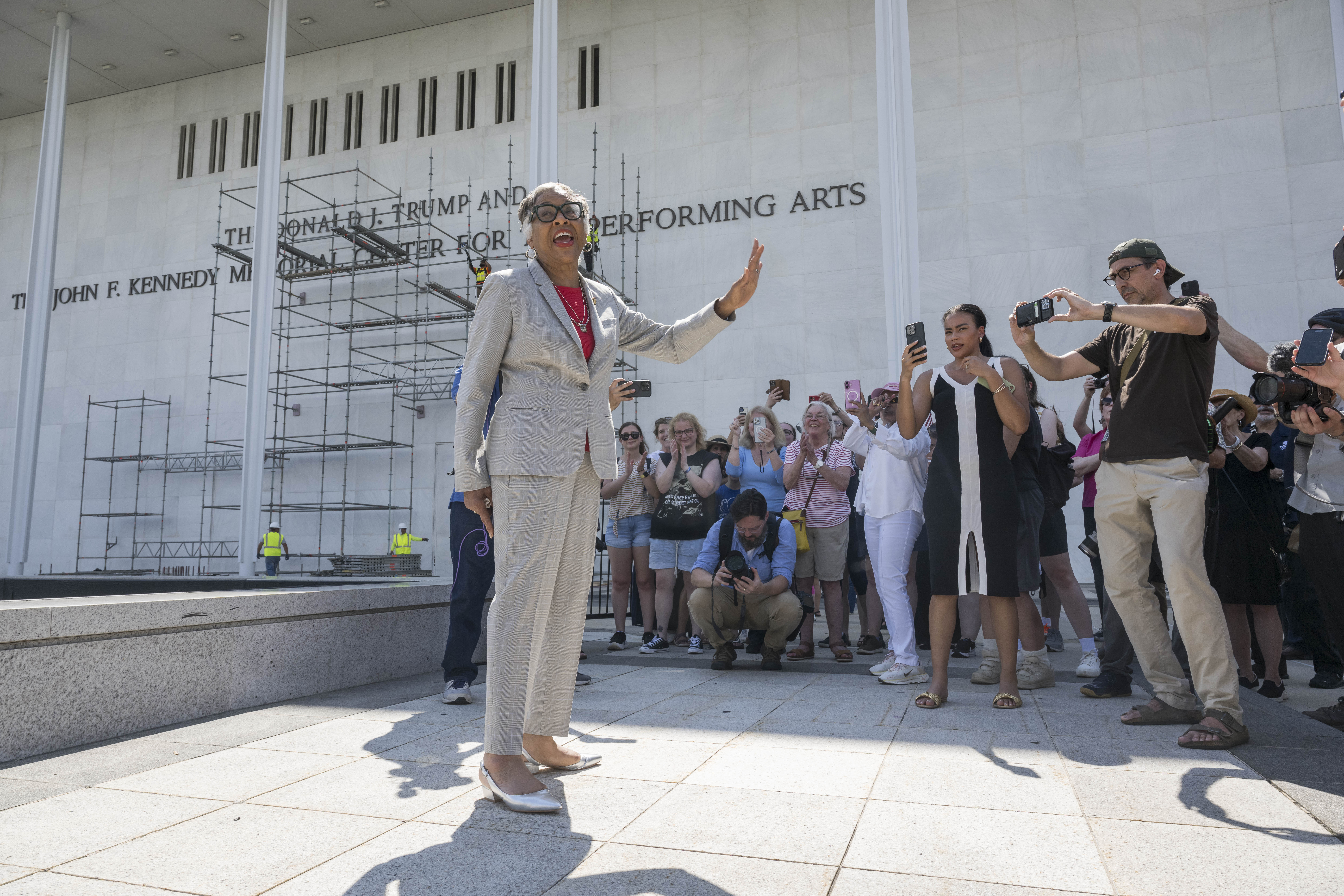
    A federal judge Friday denied the Kennedy Center’s last-ditch motion to delay removing President Donald Trump’s name from the performing arts venue, as crews erected scaffolding next to the building less than 12 hours before the court-ordered deadline to do so.

    U.S. District Judge Christopher Cooper ruled Friday afternoon that the Kennedy Center’s lawyers failed to demonstrate they were likely to win their appeal or that the center would suffer “irreparable harm” if Trump’s name were removed.

    Justice Department lawyers representing the center filed the motion to stay after the center’s trustees voted Thursday to appeal Cooper’s May 29 ruling.

    The Kennedy Center’s leadership appealed Cooper’s Friday ruling to the Court of Appeals for the D.C. Circuit and requested action by the court by 7 pm ET. That appeal was also denied Friday evening.

    Scaffolding had been erected earlier in the day around a section of the building that includes Trump’s name and crowds gathered to cheer the workers, though there was no effort to remove it by 7 p.m. Eastern Time. Storms with lightning were dancing around Washington, adding to the challenge for workers.

    Removing Trump’s name would be the most tangible setback in the president’s 15-month effort to take over the storied arts institution. On Monday, the center removed “Trump” from the title of its website, restoring it to “The Kennedy Center.” That came four days after the venue’s administration directed employees to erase references to Trump from official center materials — signs, social media accounts, email signatures, webpages, documents, and promotional materials.

    In February 2025, Trump purged the center’s board of trustees and replaced them with political allies who then elected him board chair. In December, those loyalists voted to rename the venue, and a day later, crews added Trump’s name to the exterior.

    Trump claimed that the board’s vote to do so was a surprise, but he had joked about naming the center after himself for months. Within hours his name was on the website, and the next morning the building’s sign read: “The Donald J. Trump and The John F. Kennedy Memorial Center for the Performing Arts.”

    Justice Department lawyers representing Trump later acknowledged that, given the speed with which the signage was installed, it had been “prepared and/or purchased prior to the Board’s vote the day before.”

    The addition of Trump’s name sparked immediate backlash from the arts community and members of the Kennedy family, who argued that the renaming desecrated a living memorial to the assassinated president. Congress established the center in 1964, two months after Kennedy’s death, designating it “the sole national monument to his memory within the city of Washington and its environs.” Critics noted that under the law creating the institution, only Congress has authority to change the center’s name.

    Rep. Joyce Beatty (D., Ohio), an ex officio board member, sued fellow trustees in December after she was muted during a virtual board meeting when she tried to voice opposition to the name change.

    In his May opinion, Cooper ruled that Congress was “crystal clear” in 1964 when it passed legislation changing the name of the National Cultural Center to the John F. Kennedy Center for the Performing Arts, designating it as “a living memorial” to the president who had been assassinated the year before.

    “Congress gave the Kennedy Center its name,” Cooper wrote, “and only Congress can change it.”

    Washington National Opera sues Kennedy Center board

    The Washington National Opera on Thursday filed a lawsuit seeking to force the Kennedy Center to turn over $17 million in gifts and donations to the opera company.

    The Kennedy Center has “wrongfully held” years’ worth of donor gifts, bequests, and endowment funds that belong to the opera, according to the complaint filed in the U.S. Court of Federal Claims, five months after the two institutions ended a roughly 15-year affiliation.

    “These funds represent years of gifts from loyal supporters who gave specifically to advance WNO’s mission, its performances, its artists, and its education and community programs,” the company said in a statement. “WNO has a fiduciary responsibility to its donors to ensure their contributions are honored and used as intended to support the work of WNO’s artists and its programs.”

    The lawsuit alleges the Kennedy Center not only refused to return the funds but also put a significant portion of them at risk.

    In a Jan. 8 email, the center’s chief financial officer claimed for the first time that millions held in a fund for WNO’s benefit actually belonged to the Kennedy Center — and disclosed that the center had used the money to collateralize its own line of credit, according to the complaint. The WNO board voted to terminate the affiliation agreement the next day.

    The breakup was swift and acrimonious, the complaint states. Within hours of WNO’s termination notice, the Kennedy Center allegedly cut off the opera’s access to its emails, donor records, and board minutes dating to 2011; locked staff out of their offices; sent termination letters to WNO employees; and scrubbed the opera’s remaining season from the center’s website. Then-President Richard Grenell announced on X that the “Trump Kennedy Center has made the decision to end the EXCLUSIVE partnership” with the opera.

    WNO said it spent months trying to resolve the dispute short of litigation, proposing meetings and invoking the mediation clause of the parties’ agreement, but the Kennedy Center never responded to its request to select a mediator.

    The complaint asks the court to award at least $17.1 million in damages and seeks a complete accounting of all WNO funds the center holds.

    The Kennedy Center did not immediately respond to a request for comment.

  • A Souderton beef processing plant, one of Montco’s biggest employers, is closing

    A Souderton beef processing plant, one of Montco’s biggest employers, is closing

    A global meat producer and one of Montgomery County’s top employers is closing a beef processing facility in Souderton that employs about 1,700.

    JBS said Friday that the plant will close by Aug. 14, citing the company’s larger strategy for “growth, modernization, and long-term competitiveness in the United States.” It also plans to close a site in Memphis.

    The planned closure impacts some 1,500 union workers who are represented by the United Food and Commercial Workers International Union (UFCW) Local 1776.

    “These decisions are never easy because they directly affect our team members and the communities where we operate,” Wesley Batista Filho, CEO of JBS USA, said in a statement Friday. “Our focus right now is on supporting them with transparency, respect, and access to new opportunities wherever possible.”

    Workers at the Souderton facility were among some 26,000 JBS employees who secured a new union contract last year with better wages and benefits including a more inclusive bereavement leave policy and the ability to accrue sick days.

    The contract also established a pension plan for workers. That’s a rarity in the industry in recent decades, according to the union, which called the agreement “a new standard” in the meatpacking industry.

    That contract is set to expire in August, when the company plans to close the facility, according to the union.

    The work being carried out at the Souderton site, which JBS has operated since 2008, will be distributed among the business’ other facilities, according to a company news release. In the past year, JBS has been expanding its operations in Texas, Georgia, and Iowa as it focuses on growing its prepared foods business.

    “JBS USA is investing heavily in the United States and in the future of food production,” Batista Filho said in a statement. “At the same time, we must ensure our operations are efficient, modern, and positioned to compete. By investing where we are growing and making difficult adjustments where needed, we are building a stronger and more resilient company.”

    The union is working to try to keep the Souderton site open.

    “We are not giving up on this plant, and we are not giving up on these workers,” Wendell Young IV, president of UFCW Local 1776, said in a statement Friday. “Our union will be working around the clock engaging with every elected official and government agency we can to explore all options to keep this facility open and these workers employed.”

  • Haiti’s World Cup jersey deemed too political, echoing censure of its Winter Olympic uniform

    MILAN — Haiti has been forced to change the design of its World Cup jersey after it was deemed too political by FIFA just months after the Caribbean nation had to amend its Winter Olympic uniforms.

    The jersey, by Colombian sportswear manufacturer Saeta, originally included a depiction of the final battle of the Haitian War of Independence in 1803 on its front. The image was rejected during FIFA’s approval process.

    Saeta said in a statement Wednesday that it would comply with the ban even though the design “was not intended as a political statement,” but rather as a “tribute to the men and women who contribute every day to Haiti’s future.”

    The jersey featured blue to mirror the sea and red for the nation’s “strength and passion,” the sportswear maker said. Players wore the now-banned jersey in a warmup match against Peru last week. The original design was marked as sold out on the SaetaUSA online shop.

    Similarly, the International Olympic Committee required the removal of an image of Haitian founding father Toussaint Louverture from Haiti’s opening ceremony uniforms for the Milan Cortina Winter Games, ruling that it violated Olympic rules barring political symbolism.

    Haiti gained independence in 1804 and is widely regarded as the world’s first independent nation founded by formerly enslaved people after a successful slave revolt.

    Italian-Haitian designer Stella Jean, who designed the Olympic uniforms, came up with a creative solution: Painting over the figure, leaving just a horse against the background of tropical foliage. The designs were so much in demand that Jean later created a production version featuring the original Louverture image.

    “Either way, Haiti has to be setting a record: Two rebukes from the highest international sports authorities in just a few months,” Jean told The Associated Press on Thursday.

    Haiti opens World Cup play on Saturday against Scotland in Foxborough, Mass., then plays five-time champion Brazil on June 19 in Philadelphia and Morocco on June 24 in Atlanta.

  • How NASCAR driver Natalie Decker is balancing motherhood and racing after NICU scare

    How NASCAR driver Natalie Decker is balancing motherhood and racing after NICU scare

    As a 9-year-old girl growing up in Eagle River, Wis., Natalie Decker would hop out of her purple go-kart, make her way over to a tiny toy stroller, and push her baby doll around the go-kart tracks.

    Nearly two decades later, in August 2025, a 27-year-old Decker was still pushing around a stroller in between races. But this time the purple go-kart was replaced with a NASCAR stock car, and the stroller she was pushing belonged to her first newborn child, Levi.

    “I always saw myself as being a mom one day,” Decker said. “Now, it’s real. It’s so crazy. In my racing suit, walking around in the garage area, carrying my baby, pushing him in the stroller. And I feel so grateful that I have the opportunity to be Levi’s mom. Once Levi was here with me, I was like, it’s life-changing. But in the most positive, best way ever.”

    Levi attended Decker’s first race back from maternity leave, just six months after Decker gave birth, as she competed in the NASCAR Xfinity Series at Daytona International Speedway. Since then, Decker has continued to compete, including Saturday at Pocono Raceway in the NASCAR O’Reilly Auto Parts Series MillerTech Battery 250 race.

    “Pocono is called the tricky triangle,” Decker said. “And it is tricky. I’m so excited to be racing there with T.N. Dickinson’s. But I haven’t been to the Poconos in years. I think it’s been five years since I’ve raced that. So, I’m really excited to get back.”

    Ahead of her race, Decker reflected on her journey, discussed dealing with outside noise, balancing both motherhood and racing, and overcoming an autoimmune disease that should have limited her time on the track.

    Start your engines

    Decker grew up surrounded by racing. Her father, Chuck, was a former professional snowmobile racing world champion who owned the Eagle River Derby Track in Wisconsin. Chuck, along with his brothers Steve, Mike, and Allen formed Team Decker, one of the most decorated snowmobile racing dynasties.

    “I grew up with a family that loved motorsports on my dad’s side,” Decker said. “I grew up around snowmobile racing and my dad always watched NASCAR on TV. So, I fell in love with it at a very young age. I didn’t necessarily like racing snowmobiles. I tried it. It didn’t go well. And it was cold.”

    With no passion to follow in her father’s footsteps of racing snowmobiles, Decker asked him to buy her a go-kart. And after years of asking, he finally gave in on her ninth birthday, thinking they would just resell it after a few weeks.

    But four years later, Decker was in a full-size stock car racing all across the United States. A few years after that, at 14 years old, she was racing the Super Late Model, the highest, fastest class you can get into on the asphalts.

    “The motorsport industry is a small circle and everybody knows everybody,” Decker said. “I love [being part of a racing family]. My cousins [Paige and Claire] raced with me growing up. They both married into racing families. Once you’re in it, you don’t ever want to leave it.”

    Balancing motherhood

    Decker is starting her own racing family with her husband Derek Lemke, a fellow NASCAR driver. In February 2025, they became parents to their first child, Levi, who already has a love for race cars.

    “He just turned 16 months,” Decker said. “And he is obsessed with race cars. Every time he sees a race car or anything with wheels, he goes ‘vroom, vroom.’ He just loves racing and it makes me really happy.”

    After giving birth, the Deckers had a bit of an early scare. As soon as Levi was born, he was rushed to the NICU with holes in his lungs. Fortunately, he was able to heal on his own.

    Natalie Decker pictured with her husband Derek Lemke and their son, Levi.Overbey Photography

    “He didn’t have to do any surgery,” Decker said. “He was a strong little man and was in the NICU for four days but it felt like four years. Now he’s a healthy, strong little baby. They’re so resilient but it was very terrifying at the moment.”

    Six months later, Levi attended his mom’s first race back postpartum. And since then Decker has been balancing motherhood and racing, even if that means squeezing in a light workout while Levi sits and watches Mickey Mouse in the living room.

    “It’s a lot to balance it all,” Decker said. “I would not be able to do it all without my family. Everyone’s so involved and I feel so lucky to have this much support around motherhood for me with Levi. When they say it takes a village to raise a child, it truly takes a village. And I have a village.”

    Being a mother has also impacted how she handles herself on the racetrack.

    “Racing is definitely a really physical sport,” Decker said. “And when it does get physical, it can start getting in your head a little bit. But, I’m like ‘Oh, this is nothing compared to carrying a baby for nine months and pushing this baby out. Like, I can literally do anything. I can conquer anything physically.”

    The physical demands of NASCAR

    The physical side of racing can be very taxing on the body, and for Decker this is especially so as she battles a number of autoimmune diseases. At 2 years old, she was diagnosed with juvenile rheumatoid arthritis. Since then, she’s developed Hashimoto’s disease, psoriatic arthritis, and psoriasis.

    “It definitely changed my mindset at a very young age,” Decker said. “All my friends are going out to the birthday parties and the sleepovers and I have to go to my doctor’s appointment or stay home and take my methotrexate shot, it was the chemo drug. I realized life is not fair but it doesn’t mean you stop showing up.”

    While taking methotrexate, Decker kept herself active with racing, hockey, and dance.

    “I had to take it every week and it made me feel sick, more sick than the actual autoimmune disease,” Decker said. “So we would plan the shots around racing events or hockey games or whatever I was doing.”

    To manage racing, Decker knows her own physical limitations and keeps that in mind when it comes to her training regimen.

    “With my autoimmune diseases, my training does look different,” Decker said. “I do very low impact workouts and I don’t necessarily even lift weights. A lot of walking, walking on an incline on the treadmill and Pilates-type workouts. But I do everything at home.”

    “The biggest thing [my autoimmune diseases] have taught me is to advocate for myself wherever that is, in the doctor’s office, or at the race shop with my team.”

    Eliminating outside noise

    Being an athlete in the sport is already challenging enough. But being a woman in the sport has added to the outside noise.

    “The toughest thing about being a female in the sport is not necessarily with my competitors or my team,” Decker said. “It’s with the outsiders and the fans. They’re not as accepting. And this year, I’ve gotten into viewing a lot of hate that comes from social media and some of the NASCAR fans.

    “It’s a privilege that our fans in the motorsports industry are just that dedicated and love the sport that much that they speak their opinions so strongly. So, that’s how I started trying to view it so I don’t get down on myself when there’s a bunch of hate going on online.”

    Decker has tried her best to eliminate the outside noise.

    “I have such a great support system around me,” Decker said. “That’s how I always raced and that’s how I will always do it. And that’s why I enjoy it so much. So, at the end of the day, if I have a bad weekend or a good weekend, I get to come home with my family and then go back to the race track again with my family.”

  • Penn president announces he will leave his job next summer

    Penn president announces he will leave his job next summer

    University of Pennsylvania President J. Larry Jameson will conclude his presidency next June, he announced in an email to the Penn community Friday.

    “Although I greatly enjoyed serving as president, now is the right time for Penn to begin its next chapter under new leadership,” Jameson said in the email. “My goal was to help restore stability during unanticipated leadership transitions, refocus our community on Penn’s mission, and strengthen Penn for the future during a challenging time for higher education.”

    Those goals have been accomplished, he said.

    There was much speculation about whether Jameson — an endocrinologist who previously led Penn’s health system and medical school for more than 12 years — wanted or would be asked to remain in the seat beyond next year’s expiration of his current contract. Many have credited Jameson with steadying the school during a turbulent time, including as the school faced funding threats and increased scrutiny by President Donald Trump’s administration.

    His departure will leave the Ivy League school searching for a new leader during a time of uncertainty under Trump, who has targeted elite universities.

    Board chair Ramanan Raghavendran said he respected Jameson’s decision and the board will begin searching for the school’s next president in the fall.

    Jameson, 71, will have served in the top job at Penn just three-and-a-half years, one of its shorter presidential tenures. But he came into the job by circumstance rather than desire.

    Jameson took over in December 2023 during perhaps one of Penn’s greatest leadership upheavals. Former President Liz Magill had just resigned amid a bipartisan backlash over her testimony involving the school’s response to antisemitism complaints. He first was named interim president and then was elevated to the permanent post in March 2025.

    Jameson earned total compensation of more than $8 million in 2024, the most recent tax year available. That included $5.4 million in “reportable compensation” and more than $2.5 million in other compensation.

    “Dr. Jameson stepped in at a pivotal moment, and what he has accomplished in two-and-a-half years has been simply extraordinary,” Raghavendran said in a statement.

    Neither Raghavedran nor Jameson were available for interviews Friday, the university said.

    In his message, Jameson said “the momentum we have built will continue,” noting his intention to work over the next year on implementing the Penn Forward plan. The plan calls for everything from more transparent and predictable tuition and cost policies and improved student experience to more efficient operations, a focus on keeping Penn at the forefront of best uses of artificial intelligence, and a growing presence in the San Francisco Bay Area — where Wharton already has a campus.

    Penn also has some tough decisions ahead in his final year. During the spring semester, the school proposed new open expression guidelines that some on campus say are too restrictive and would chill free speech. The university is considering the feedback and plans to issue final guidelines next academic year.

    The university also is undergoing belt-tightening in anticipation of potential federal cuts and increased legal and insurance costs. Penn in January asked schools and centers to pare 4% from their budgets for the next fiscal year, on top of a 5% cut last year.

    Penn’s Graduate School of Education laid off several staff members last week as part of those cuts, according to The Daily Pennsylvanian, the student newspaper.

    Many at Penn speak highly of Jameson’s leadership, though some wish he had made a stronger defense against some Trump demands.

    “Even if this were a good time to search for a new president — and it decidedly is not — I cannot imagine Penn finding a more effective leader,“ Eric Feldman, faculty senate tri-chair and a law school professor, said last month. ”His deep knowledge of the medical school is a significant asset amid continuing pressures on federally funded research, and his extensive leadership experience, spanning decades, makes him uniquely well suited to guide the university through what are likely to be several more complex years.”

    During an interview with The Inquirer last month, Jameson explained his decision to resist the Trump administration on some things and negotiate on others.

    “My approach has been not just to complain,” Jameson said during his first interview as Penn’s president with a major media outlet, “but to say, ‘Well, here’s where we’re working together very effectively. Here’s where we’re not necessarily aligned, but let’s discuss how to move forward.’”

    Jameson was at the helm when Penn last summer struck an agreement with the White House over the prior participation of transgender swimmer Lia Thomas on the school’s swim team. The school agreed to adhere to the Trump administration’s definitions of sex, female, male, women, and men in regard to athletics, and send letters of apology to female athletes who felt aggrieved by Thomas’ participation on their team during the 2021-22 season.

    But he also was at the helm when Penn rejected a compact that would have given it preferential treatment for federal funding if it agreed to the Trump administration’s operational demands. The school also is actively fighting a demand by the Equal Employment Opportunity Commission to turn over lists of Jewish people on its campus for its investigation into alleged antisemitism at Penn. The agency sued Penn for not complying with its subpoena and a federal judge sided with the EEOC, but Penn is appealing the decision.

    Jameson said he gained new perspective in the presidential role, which “allowed me to learn each day from the people, ideas and achievements that define this university and its extraordinary breadth. …While my career has been in academic medicine, it has been illuminating to reacquaint myself with other fields, from poetry to political science, from finance to fine arts.”

    He said the university is on a positive trajectory.

    “Penn has tremendous momentum and is exceptionally well positioned for the future,” Jameson wrote.

  • Montco sued to get back $7.5 million paid to clean up Hurricane Ida debris after vendors razed parks

    Montco sued to get back $7.5 million paid to clean up Hurricane Ida debris after vendors razed parks

    Montgomery County sued to get back $7.5 million it paid two disaster debris companies that engaged in “overzealous clearing” that harmed the environment in the aftermath of Hurricane Ida in 2021.

    Mississippi-based DebrisTech and Texas-based DRC Emergency Services billed Montco for $14 million worth of cleanups, the suit said, but the federal government deemed more than half the removals “unnecessary” and declined to reimburse the county for it.

    “Their overzealous clearing of County lands not only resulted in over half of the County’s reimbursement request getting denied, but it also caused environmental harm that requires extensive remediation,” the complaint said.

    The lawsuit, which was initially filed in the Montgomery County Court of Common Pleas last month but moved to Philadelphia’s federal court this week, is a step to hold two vendors accountable for harm they caused, county spokesperson Megan Alt said in a statement.

    “The Montgomery County Commissioners take their responsibility as stewards of the taxpayers’ money and natural resources very seriously,” Alt said.

    DRC is committed to providing disaster recovery services that meet the instructions of its clients, Kristy Fuentes, the company’s vice president of administration and compliance, said in a statement.

    “DRC looks forward to presenting all relevant evidence during the court proceedings regarding its disaster recovery work in Montgomery County,” Fuentes said.

    DebrisTech did not respond to a request for comment.

    Hurricane Ida hit the Philadelphia area in September 2021, inciting record flood levels, spawning at least seven tornadoes. Five people died in the region, and authorities recorded hundreds of water rescues.

    DRC and DebrisTech came into Montgomery County days after Ida to assist in the recovery, the suit says. The vendors were required to engage only in clearings that are eligible for reimbursement by the Federal Emergency Management Agency, according to the complaint.

    Montco relied on the companies’ expertise to determine FEMA eligibility but “instead of protecting the County’s interests,” the suit said, the vendors “overcut trees,” “mismanaged” oversight responsibilities, and “failed” to comply with FEMA regulations.

    DRC and DebrisTech also cut down at least two Montgomery County-owned nature preserves, according to to the complaint. An 11-acre wooded preserve in Whitemarsh Township is “no longer,” the suit says, and Audubon Park turned into a “mud pit.”

    All told, the companies billed Montgomery County $14,028,597.81 for the cleanup, the suit says. FEMA reimbursed just less than half, finding that the vendors removed debris that didn’t pose an “immediate threat.”

    The federal agency denied multiple appeals by the county, leaving taxpayers on the hook for the remaining $7.5 million.

    The suit asks a judge to require the vendors to reimburse the county for the $7.5 million FEMA found ineligible, restore the Whitemarsh site and Audubon Park, and pay damages and attorneys fees.

    “Service providers hired for their claimed expertise are not free to accept public funds and then fail to perform, divert resources, or withhold services while retaining payment,” the lawsuit says. “To permit such conduct undermines fiscal accountability, erodes public confidence, and converts taxpayers’ dollars into a risk-free subsidy for contractual non-performance — an outcome the law cannot tolerate.”

  • Elon Musk becomes the world’s first trillionaire

    Elon Musk becomes the world’s first trillionaire

    Elon Musk became the world’s first trillionaire Friday when shares of his rocket company SpaceX began trading on the stock market, signaling a new era of ultra-affluence and widening wealth inequality.

    Musk reached the milestone when trading of SpaceX shares opened at $150, up 11% from their initial public offering price of $135. His net worth — which comprises his stock in SpaceX and his electric carmaker, Tesla, as well as ownership stakes in other ventures including brain implant company Neuralink and tunneling firm the Boring Co. — stood at around $1.1 trillion.

    Musk, 54, was already the world’s richest person. He claimed that title from Amazon founder Jeff Bezos in January 2021, after Tesla’s shares surged to take his net worth past $185 billion.

    Since then, the South African-born entrepreneur’s fortune has more than quintupled in a 5½-year period, during which he bought social media company Twitter, founded an AI startup, fused them together with SpaceX, and then took the conglomerate public. In that time, Musk also spent more than $250 million to help elect Donald Trump and advised the president.

    And Musk’s wealth-making has only accelerated, cementing his influence over society, culture, and global politics. Since October, his net worth has doubled.

    “The fact is that wealth for some and wealth inequality is growing in dimensions that we’ve never seen before,” said Steven Durlauf, the director of the Stone Center for Research on Wealth Inequality and Mobility at the University of Chicago.

    When oil tycoon John D. Rockefeller’s fortune was at its height in 1937, his $1.4 billion net worth amounted to about 1.5% of U.S. gross domestic product, Durlauf said. Musk’s net worth is now equivalent to more than 3% of U.S. GDP.

    Such wealth is so extraordinary that it can be hard to make meaningful comparisons. The median American household had a net worth of just under $200,000 in 2022, the year with the most recent data available from the Federal Reserve. That means Musk’s net worth is 5 million times as large as that of the typical family.

    His wealth dwarfs even that of the everyday wealthy. The top 10% of households by income had an average net worth of $6.5 million in 2022, less than 0.001% of the SpaceX leader’s total. The world’s second-richest person, Google co-founder Larry Page, is worth around $304 billion, according to the Bloomberg Billionaires Index.

    Inequality is notoriously difficult to measure, but the explosion of wealth at the top is hard to dispute. The net worth of the middle 40% of households, adjusted for inflation, has risen slightly more than 50% over the past decade, according to data from French economists Emmanuel Saez and Gabriel Zucman. The top 1% have seen similar gains. But the richest 0.001% have seen their wealth roughly double over the same period.

    Beyond Musk, the ultrawealthy have experienced significant increases in their fortunes. In 2016, a net worth of $100 billion — a mark that Musk crossed about six years ago — would have easily placed someone at the top of the Forbes Billionaires list. Today, $100 billion would rank them as the 20th richest person in the world.

    “Christ, when I was a kid, we only talked about millionaires,” said Bernie Sanders, 84, the progressive senator from Vermont. “If this isn’t an example of oligarchy, I don’t know what is.”

    Musk’s rapid accumulation of wealth largely comes down to the appreciation of his nearly 50% stake in SpaceX, which is worth more than $900 billion. During its IPO, the company sold more than 555 million shares, which valued it at $1.77 trillion, up from a $400 billion valuation on the private market last summer. Starting in January, SpaceX also granted Musk pay packages totaling 1.3 billion shares, which he cannot sell until he hits certain operational milestones.

    Musk did not respond to a request for comment. But he has previously acknowledged the trillionaire milestone.
    In February, he replied to a post on X about possible trillionaire status by noting that he had created significant wealth for shareholders and held less than 0.1% of his net worth in cash. In May, he responded on X to the financial musings of Peter Diamandis, a friend and SpaceX investor, saying he would reach “$10T or bust.”

    Musk has also recently said that “money won’t matter” in the future because Tesla and SpaceX would develop robotics, AI, and rockets so powerful that no human would ever have to work again. In his utopian world of “amazing abundance,” everyone would have “universal high income,” he has said.

    Musk’s allies said his net worth was justified by his impact, providing an example and incentive for those who want to build successful companies. Diamandis, the head of the XPrize Foundation, an organization that holds contests to encourage scientific breakthroughs, said Tesla and SpaceX were “raising the floor.”

    “The fruits of his labor are making him into a trillionaire, and they’re uplifting humanity,” Diamandis said.

    Adeo Ressi, Musk’s college roommate at the University of Pennsylvania, said the SpaceX chief never cared as much about financial gain as obtaining resources to help him achieve his entrepreneurial goals. For Musk, “money is a means to an end,” Ressi said, comparing his friend’s mindset with a gamer accumulating coins in a video game to beat a level.

    “He’s amassing resources to do things, and the thing he wants to do most is colonize Mars,” Ressi said. “That’s a really big driving force behind his wealth accumulation.”

    He added that Musk was “not a poster child of wealth inequality” and pointed to the tech leader’s lifestyle, in which he is known to work around the clock and avoid the typical trappings of the rich, like islands and megayachts.

    “It’s not like he’s planning to leave this in a massive family trust,” Ressi said. “It’s literally going to be used to make humanity into a multiplanetary species.”

    But critics say the way Musk chooses to lead his life is beside the point. His net worth has already provided him with the means to personally acquire companies and spend hundreds of millions of dollars to help elect a preferred presidential candidate, Durlauf of the University of Chicago said.

    Becoming a trillionaire will only magnify how “economic inequalities are spilling over into the political domain,” he added.

    Sanders called Musk’s trillionaire status “a moral travesty,” noting that 60% of Americans live paycheck to paycheck.

    The senator also agreed with the assessment that Musk was probably not as interested in owning islands or yachts. The trillionaire, in his view, was interested in just one thing.

    “This guy is into power,” Sanders said. “And he is now the most powerful person on Earth.”

    This article originally appeared in the New York Times.

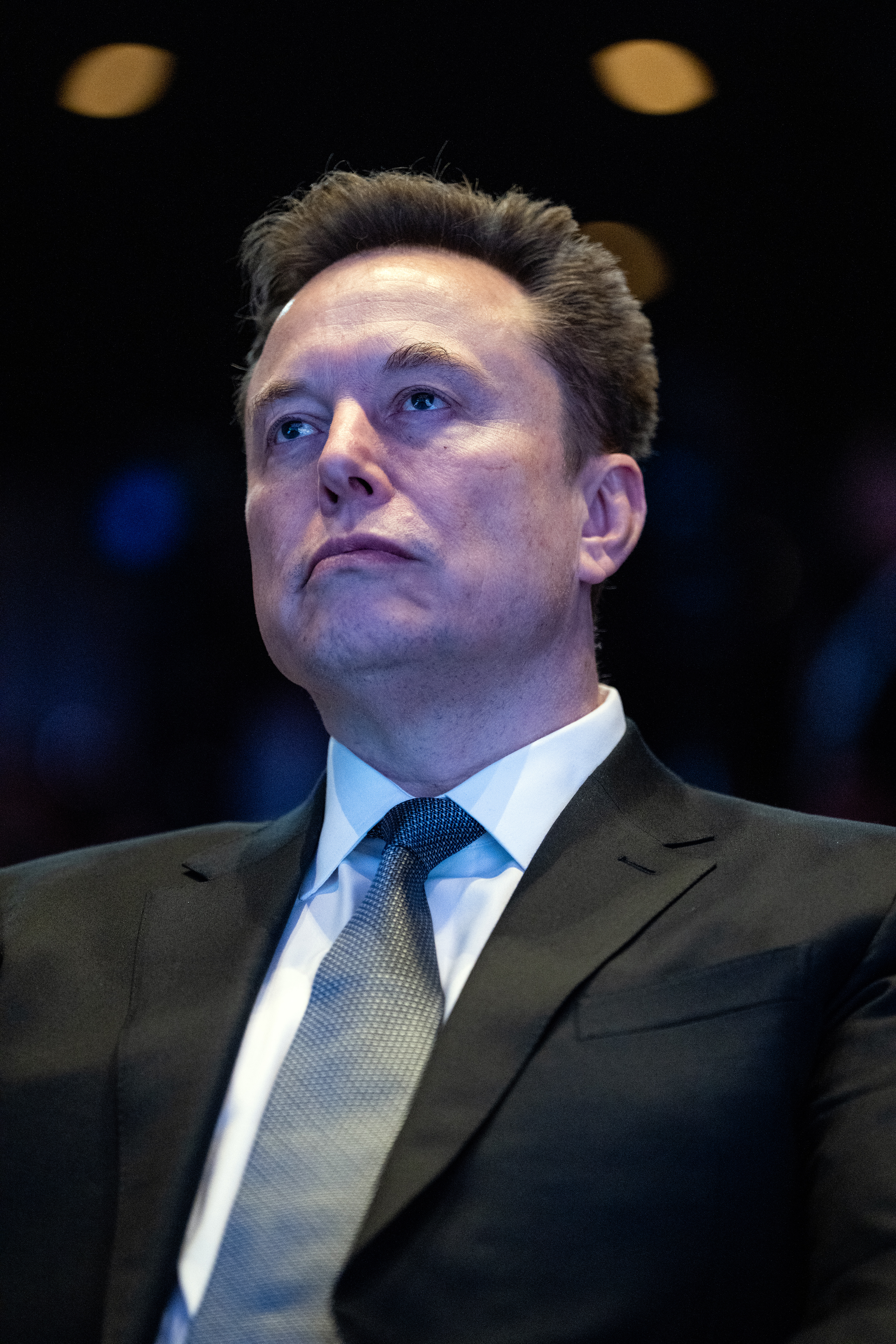
    FILE — Elon Musk in Washington on Nov. 19, 2025. Elon Musk became the world’s first trillionaire on June 11, 2026, as shares of his rocket company SpaceX began trading on the stock market at $150, up 11 percent from their initial public offering price, signaling a new era of ultra-affluence and widening wealth inequality. (Haiyun Jiang/The New York Times)HAIYUN JIANG
    FILE — The SpaceX Starbase rocket launch site near Boca Chica beach, in Cameron County, Texas, on Feb. 24, 2024. Elon Musk became the world’s first trillionaire on June 11, 2026, as shares of his rocket company SpaceX began trading on the stock market at $150, up 11 percent from their initial public offering price, signaling a new era of ultra-affluence and widening wealth inequality. (Meridith Kohut/The New York Times)MERIDITH KOHUT
  • Police are investigating the drowning death of a 1-year-old child in Kensington

    Philadelphia police said they are investigating after a 1-year-old girl drowned in Kensington Thursday night.

    Just after 7 p.m., police responded to a 911 call at a house on the 1800 block of East Somerset Street, police said. Emergency medical personnel were already on scene, police said, and were treating an unresponsive child in the back of an ambulance. Paramedics took her to St. Christopher’s Hospital for Children, where she was pronounced dead.

    At the home, police found a water-filled basin in the second-floor bathroom, police Chief Inspector Scott Small told CBS Philadelphia Thursday. The house’s dining room on the first floor was also soaked with water.

    “At this point in the investigation, there are inconsistencies in witness statements as to where the child was when the incident occurred,” police said Friday.

    The department’s Special Victims Unit, which investigates sensitive crimes often involving children, is leading the investigation, police said.

  • Burlco man kills acquaintance, then himself, authorities say

    A South Jersey man fatally shot an acquaintance Wednesday afternoon and then took his own life in his vehicle after driving a short distance, Burlington County authorities said.

    Lumberton Township police were called to a home on Curry Court about 4:15 p.m. for the report of a shooting. They arrived to discover the body of Damon Nesmith, 53, who was pronounced dead at the scene. Authorities said Tyrone McLean, 56, had gone to the residence and fired multiple shots at Nesmith with a .40-caliber handgun.

    McLean then drove about half a mile before fatally shooting himself while parked on the 600 block of Holland Place, authorities said. Police found McLean inside his Volvo SUV with the engine still running.

    Investigators said that McLean was a former tenant at the Curry Court home and was recently evicted. Two other people inside the home at the time of the shooting were not injured.

    The shootings followed an earlier incident involving McLean in Southampton Township, authorities said. Just before 4 p.m., New Jersey State Police were called to a residence on the 200 block of New Road for a report of gunshots. Police were told that McLean had stopped to talk with an acquaintance there before suddenly pulling a handgun and firing multiple shots. No one was injured.

    The investigation is being conducted by the Burlington County Prosecutor’s Office, Lumberton police, and New Jersey State Police.

  • These 4 Philly properties just got historic protection

    These 4 Philly properties just got historic protection

    These 4 Philly properties just got historic protection

    National Bank of Olney

    The former National Bank of Olney building is an example of the shift in the design of neighborhood banks toward the Art Deco style in the late 1920s.Kevin McMahon

    5604 N. 5th St. | Built: 1927-28

    The building is an example of the shift in the design of neighborhood banks toward the Art Deco style in the late 1920s. Its architects — Simons, Brittain & English — were nationally prominent.

    Manayunk Plush Manufacturing Co.

    A manufacturing building and a power plant of the former Manayunk Plush Manufacturing Co. are representative of Manayunk’s industrial-era textile economy.Oscar Beisert

    4889 Umbria St. | Built: 1926-27

    The former company’s manufacturing building and a power plant are representative of Manayunk’s industrial-era textile economy. A developer plans to build a large apartment project next to these buildings.

    Galilee Baptist Church

    Galilee Baptist Church has been an institution for Black residents in the Roxborough/Manayunk area for 125 years.Philadelphia Historical Commission

    459 Roxborough Ave. | Built: 1900-01

    The church has been an institution for Black residents in the Roxborough/Manayunk area for 125 years. It “has endured, far removed from the historical epicenter of Philadelphia’s Black community life.”

    Tetlow Manufacturing Co.

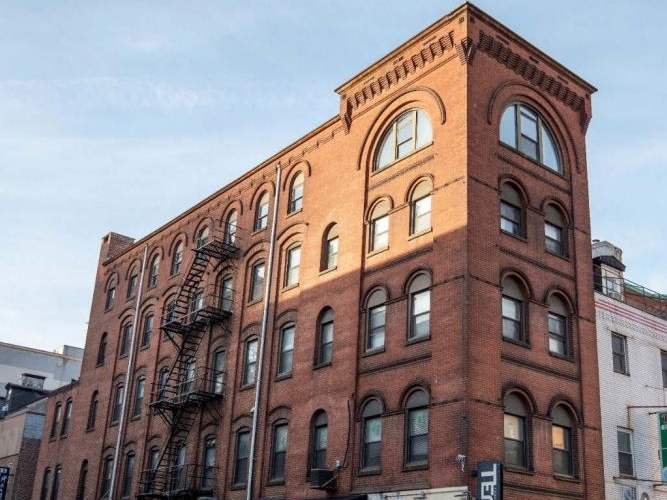
    This building in Chinatown was once a factory for the cosmetics maker Henry Tetlow. The Tetlow Manufacturing Company also is a “remarkably intact” example of a late-19th century industrial building.Annie Liang-Zhou, Liangs Culture

    132 N. 10th St. | Built: 1885

    This building was once a factory for the cosmetics maker Henry Tetlow, who discovered a non-toxic base for face powders. It also is a “remarkably intact” example of a late-19th century industrial building.

    bond_michaelle

    4 Philly buildings that just got historic protection —and one that didn’t

    Boyd Theatre owners want to remove historical marquee, angering preservationists