Blog

  • Future Hall of Fame MLB owner planted ivy at Penn on this week in Philly history

    Future Hall of Fame MLB owner planted ivy at Penn on this week in Philly history

    It’s not just the Chicago Cubs who have a history with ivy.

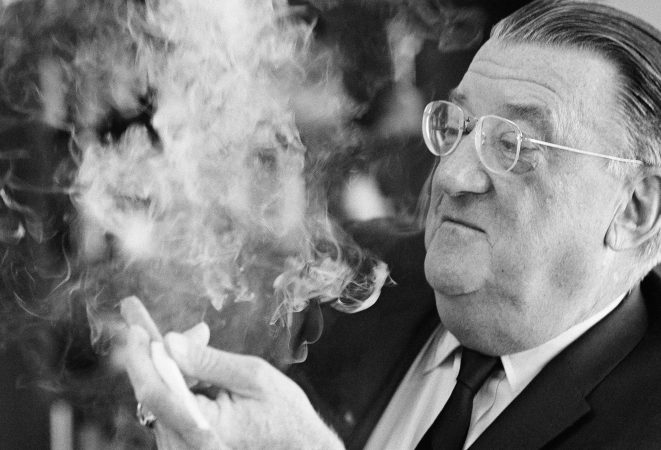
    On June 15, 1926, as the senior class president, future Los Angeles Dodgers executive Walter O’Malley delivered the salutatory address to his classmates during the University of Pennsylvania’s 170th commencement.

    And as part of the tradition, he planted a sprig of ivy representing the 1,700 members of the Class of 1926.

    He was a native New Yorker (forgive him), but at Penn, he was a distinguished undergraduate, leading his class in several significant ways.

    He was his junior and senior class president. And at the Weightman Hall ceremony he was awarded the “Spoon Man” honor, which is voted on by the senior class. The award, a wooden spoon, is a bigger deal than it sounds. It reflects the winner’s leadership and popularity.

    After Penn, he earned a law degree from Columbia. He became associated with the Dodgers when they were still in Brooklyn in 1932. He took over as team president and majority owner in 1950, and he made the controversial decision to move the team to Los Angeles in the mid-1950s. He ran the club until 1979.

    He served as a Penn alumni trustee and board member from 1966 until his death in 1979.

    O’Malley would go on to become the first Penn alumnus to be inducted into the National Baseball Hall of Fame. And he never even played a game.

    He was inducted posthumously into the Hall of Fame in 2008. He is one of only 16 owners among the 354 inductees.

    “Walter O’Malley was as great an executive talent as I have seen,” MLB Commissioner Bowie Kuhn said in 1979. “While baseball was his medium, his skills would have flourished in any walk of life.”

  • Meet the new Flyers, from Joseph Woll’s musical talent to Simon Benoît’s intense love of milk and coffee

    Meet the new Flyers, from Joseph Woll’s musical talent to Simon Benoît’s intense love of milk and coffee

    Following Carolina’s Stanley Cup victory Sunday, it’s officially the NHL offseason — and it took almost no time for the Flyers to make a move.

    On Tuesday, the team traded goalie Samuel Ersson, defenseman Emil Andrae, and a third-round pick in next week’s draft to the Toronto Maple Leafs in exchange for goalie Joseph Woll and defenseman Simon Benoît.

    There are still a few months before fans will see the Flyers’ latest additions on the ice, and that leaves plenty of time to get familiar with the new additions off the ice.

    Here are five things to know about the newest Flyers …

    High IQ player

    Goalies are often regarded as some of the quirkier players on the ice, and while Flyers fans have grown accustomed to Dan Vladař and his un-goalie-like habits, the new member of the Flyers’ tandem seems to better fit the adage.

    Woll’s uniqueness lies less in quirks and superstitions and more in his intellect and cerebral approach.

    Joseph Woll was his high school’s valedictorian and can play piano by ear.Connor Hamilton

    A straight-A student, Woll attended Westminster Christian Academy in the St. Louis area for his first two years of high school, originally committing to Harvard as a sophomore. When he moved to Ann Arbor, Mich., to join the United States National Team Development Program, he attended Pioneer High School and graduated valedictorian.

    He flipped his commitment, ultimately playing for Boston College where he earned a finance degree and the school’s scholar-athlete award.

    Goal(ie) song

    Woll’s intellect and talent intersect at his love of music.

    With an interest in music theory and the ability to play the piano by ear, Woll’s talent comes from his great grandmother, who shared the same musical ability.

    Playing since he was young, Woll revealed in a 2024 YouTube video posted by the Maple Leafs that he doesn’t do well reading music, but enjoys the instrument more when he can play from memory or from ear.

    He even performed Hans Zimmer’s theme from Interstellar at the Maple Leafs’ Blue and White Gala while recovering from an ankle sprain in 2024.

    The Philadelphia Ducks

    Benoît was an undrafted free agent in 2018 before signing an AHL contract with the San Diego Gulls, the affiliate team of the Anaheim Ducks. He then signed an entry-level contract with the Ducks in 2019, playing six games for Anaheim in the 2020-21 season before appearing in 131 games over the next two seasons.

    The 2020-21 season was the same time that current Flyers Jamie Drysdale and Trevor Zegras started their careers with Anaheim.

    In May, ahead of the 2021 American Hockey League playoffs, the trio were all sent back down to the Gulls. Because of the pandemic, the Calder Cup was not awarded that season, but the three all competed in playoff AHL hockey together for Anaheim.

    Benoît was then traded to the Maple Leafs before the 2023-24 season. Drysdale was traded to the Flyers in January of that same season. Zegras followed suit last season, with each of their paths bringing them back together as teammates in Philly.

    A ‘whole’ new meaning to 3.8%

    On a January 2024 episode of the Mitts Off with Luke Gazdic podcast, Benoît spoke passionately about his love for milk, adding that he keeps glass bottles in the refrigerator and admitting he cannot sleep without it.

    When asked which kind of milk he preferred, Benoît’s answer perfectly foreshadowed his new team.

    “The whole milk, 3.8%, that’s the real stuff,” Benoît said.

    During their playoff run this season, 3.8% was closely tied to the Flyers. Of course, it wasn’t dairy-related, but rather reflected their underdog role — as late as March 18, the Flyers had just a 3.8% chance of making the playoffs.

    While the Flyers and their new defenseman might have different associations for the number, having a link to the same percentage down to the decimal point seems like a good sign for Benoît’s fit in Philadelphia.

    Coffee connoisseur

    Milk isn’t the only beverage Benoît has publicly revealed his appreciation for.

    Arriving at Scotiabank Arena ahead of a matchup against the Colorado Avalanche in March 2025, Benoît was seen carrying in a silver briefcase.

    Benoît revealed that the briefcase was actually a coffee machine for his pregame flat whites.

    Benoît also noted that he can’t always trust the quality of the coffee on away trips. Hopefully, the brews in Philly will meet his standard.

  • Robin Cogan, renowned Camden school nurse and national health and safety advocate, has died at 65

    Robin Cogan, renowned Camden school nurse and national health and safety advocate, has died at 65

    The letters that follow Robin Cogan’s name represent some of healthcare’s most impressive achievements. NCSN, nationally certified school nurse. FNASN, fellow of the National Academy of School Nursing. FAAN, fellow of the American Academy of Nursing. Also, RN and MEd.

    Then there are the awards. Two-time President’s Award winner from the National Association of School Nurses. The 2017 Population Health Hero Award from the New Jersey Department of Health. The Johnson & Johnson 2017 School Nurse of the Year. And many more.

    Robin Cogan joined the Camden City School District as a school nurse in 2001 after training earlier as an art therapist and spending 14 years as a psychiatric clinical nurse and corporate health services manager. It was with the school district and its students, families, and staff where she really found her groove.

    For nearly three decades, Robin Cogan championed school safety and population healthcare, and advocated tirelessly for school nurses everywhere. Her website, blog, frequent podcast appearances, and wide-ranging institutional activism gave voice to school nursing stories, and combated gun violence and other pressing problems.

    She started blogging on RelentlessSchoolNurse.com in 2017 and cocreated the No More Empty Desks student art campaign in 2019 to memorialize students killed in gun violence. “Robin’s national reach and advocacy know no bounds,” a Camden colleague said on Facebook. “Robin Cogan is the embodiment of the school nursing profession.”

    On May 10, Robin Cogan blogged: “The profession is better, and so are countless children, because of the relentless, brilliant nurses who choose school nursing year after year.”

    Mrs. Cogan became a school nurse in Camden in 2001.Heather Khalifa / Staff Photographer

    On Thursday, June 11, Robin Cogan died of cancer at Cooper University Hospital in Camden. She was 65.

    “Robin dedicated her life to caring for others,” Pamela K. Clark, president of the Camden Education Association, said in a tribute. “Her work extended far beyond the walls of our schools, leaving a lasting impact on the profession she loved.”

    Born in Philadelphia, Mrs. Cogan graduated from Cherry Hill West High School in 1978 and earned a bachelor’s degree in art therapy and psychology in 1982 at what is now the College of New Jersey in Trenton. She gained her nursing credentials at the Helene Fuld College of Nursing in New York and Rowan University, and earned a master’s degree in clinical, counseling, and applied psychology at Wilmington University in Delaware in 2009.

    As a school nurse in Camden, she oversaw more than 900 students from preschool through eighth grade at Cooper’s Poynt School and, most recently, more than 400 students at three preschools. She took temperatures, counseled worried parents, and personally helped thousands of people weather the COVID-19 pandemic.

    “She influenced policy, championed health equity, elevated the role of school nurses,” a colleague said on Facebook, “and reminded us that one person truly can create ripples that become waves.”

    Mrs. Cogan was the New Jersey director for the National Association of School Nurses and taught in the school nurse certification program at Rutgers University-Camden. She earned grants, sat on boards, lectured around the country, wrote or cowrote dozens of columns, papers, and articles about health issues, and posted advice and information frequently on X, Bluesky, Facebook, and other online platforms.

    The Inquirer published this story and photos about Mrs. Cogan’s art program in 2019.Newspapers.com

    She was featured in The Inquirer and other publications, and appeared on TV and radio programs and podcasts. She focused on “shared values” to connect people, she said often, and posted the motto for her Relentless Nurse website on the homepage: “Be relentless in your practice whatever it is.”

    Robin Michelle Cohen was born June 28, 1960. She met Ed Cogan in college, and they married in 1984, lived in Trenton and Cherry Hill, and had twin daughters Allie and Jill.

    Mrs. Cogan was driven to address gun violence, she said, after her father survived a mass murder in Camden in 1949, and her niece survived the 2018 mass shooting at Marjory Stoneman Douglas High School in Florida. “I hope my legacy is helping solve this crisis,” she told The Inquirer in 2022. “Don’t we owe that to our kids?”

    This photo of Mrs. Cogan (left) and others at the old Temple Emanuel in Cherry Hill appeared in The Inquirer in 1996.Elizabeth Robertson / Staff Photographer

    She was a talented painter and designed a popular pin that she and a friend sold in a home-based spiritual jewelry and art business. She loved nature and 1970s folk music. She enjoyed hosting Thanksgiving dinners and visiting the Jersey Shore. She was one-time president of the old Temple Emanuel Sisterhood in Cherry Hill.

    “She was a helper,” said her daughter Allie. “She was good at relationships and never really turned off her working mind.”

    In addition to her husband and daughters, Mrs. Cogan is survived by a granddaughter, Nora, a nephew, Matthew, sisters Lori and Merri, and other relatives.

    Private services were held earlier. A celebration of her life is to be held later.

    Donations in her name may be made to Brady: United Against Gun Violence, 840 First Street N.E., Suite 400, Washington, D.C. 20002; and Grandparents for Vaccines.

  • ICE removed detainee protections after private outreach from top contractor

    ICE removed detainee protections after private outreach from top contractor

    When U.S. Immigration and Customs Enforcement was revising the federal standards that govern immigration detention centers, one of its top contractors privately asked for changes that could benefit its business, according to a person briefed on the discussions.

    Geo Group, which oversees more than a dozen ICE detention facilities, has faced lawsuits in three states alleging it violates minimum-wage laws by paying some immigrant detainees $1 a day to work. The company maintains that the work is voluntary and that it operates the program at the direction of the government.

    Geo asked that ICE remove lines saying contractors needed to follow state and local laws around the treatment of detainees and that ICE amend language to support its legal position in these cases, the person said, speaking on the condition of anonymity for fear of reprisal. The company also asked that the standards specify that detainees are not employees of the facilities where they work.

    The new national detention standards, which ICE posted to its website Monday, include some of Geo’s requested changes. The document says detainees are not employees “and are not entitled to wages or benefits under applicable wage laws or labor regulations.”

    The revised rules no longer say detainees must be paid at least $1 per day, and no longer include several references to contractors having to comply with state or local laws.

    ICE standards are the key rules that govern the conditions of detention centers, where hundreds of thousands of people are held each year. The policies, which ICE enforces through its contracts with private companies and local governments, cover a wide range of facility operations, including how body cavity searches must be conducted as well as when detainees should be placed into solitary confinement.

    Geo’s input in the new standards, which has not been previously reported, highlights the ICE contractor’s influence over the agency that is both its regulator and, corporate filings show, its biggest customer.

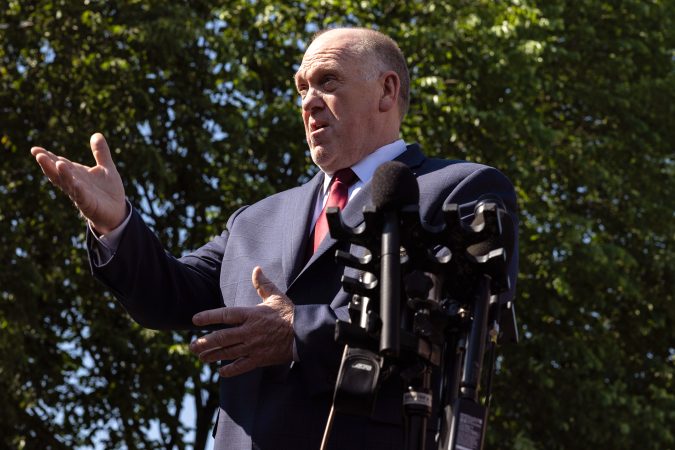
    Two of the Trump administration’s top immigration officials — border czar Tom Homan and ICE’s acting director, David Venturella — previously worked for Geo Group, prompting Sen. Elizabeth Warren (D., Mass.) to question in a letter last month “whether ICE enforcement priorities are being driven by the financial interests of politically connected detention contractors.”

    As the administration has ramped up arrests of immigrants, it has relied on Geo to help it significantly expand the nation’s capacity for holding ICE detainees. Advocates for immigrants and some state regulators say poor oversight at many of these facilities has led to the mistreatment of migrants.

    This month, New Jersey sued Geo for refusing to allow state health inspectors full access to its Delaney Hall facility, in Newark, where the state says detainees have staged hunger strikes to protest being fed spoiled or rotten food and not being given access to basic hygiene products. Geo’s lawyers have said in court filings that only ICE can grant state inspectors access to the facility.

    In the new standards, ICE said part of the goal of the revisions was to “reduce the burden on our detention operators.” At least one other detention contractor, CoreCivic, was consulted on the new standards, the person said. It’s unclear whether CoreCivic offered input.

    “As part of the revision process, ICE consulted with a variety of stakeholders, including facility operators responsible for implementing the standards,” Lauren Bis, a spokesperson for the Department of Homeland Security, said in a statement. “ICE considered that input alongside operational, legal, and policy requirements when making a final decision on the standards.”

    Ryan Gustin, a CoreCivic spokesman, said that the company is sometimes asked by government partners for input on standards but that “ultimately, government officials decide on the standards and policies they develop and enforce.”

    Abigail Jackson, a White House spokesperson, said Homan adheres to federal ethics and conflict-of-interest rules. Geo Group did not respond to requests for comment.

    It’s not uncommon for federal agencies to solicit feedback on policy changes from the industries they regulate, said Steve Schooner, a professor of government procurement law at George Washington University.

    But typically, these discussions are done through a comment period that is open to businesses, advocacy groups, and other members of the public, he said. ICE did not hold a public comment period on the new standards.

    “The reason we do public commenting is because there are various stakeholders,” Schooner said. ICE’s contractors, he added, “are probably not the best voice to represent the people who are being detained.”

    Venturella, who was picked to lead ICE last month, is a former senior executive at Geo Group, where he earned millions of dollars overseeing the company’s detention business, corporate filings show. He worked as an executive at Geo from 2012 to 2023 and as a paid consultant for Geo through Jan. 31, 2025, the company said in a filing.

    Venturella joined DHS as a senior adviser less than two weeks later, and was granted a waiver from a federal ethics rule that generally bars government employees from working on contracts awarded to their former employers for one year, the Washington Post reported last year, based on interviews and documents.

    DHS declined a request to share this waiver, arguing that doing so would jeopardize the privacy of a government employee.

    Geo Group and CoreCivic each donated $500,000 to Donald Trump’s presidential inaugural fund in December 2024, election spending data shows. A Geo Group subsidiary, Geo Reentry Services, has contributed $2 million to MAGA Inc., a Trump-aligned super-PAC, since last October, the records show.

    Gustin said CoreCivic has consistently contributed to inauguration events for both Democrats and Republicans.

    New versions of ICE standards go into effect gradually, as they become incorporated into new or modified contracts. At least one new detention center in Appleton, Minn., already has agreed to follow the 2026 rules, federal procurement records show.

    It’s unclear how the revisions would help Geo fend off legal challenges to its $1-a-day work program, said Jacqueline Stevens, the founding faculty director of Northwestern University’s Deportation Research Clinic. Federal law and state laws define employees broadly as people who work for pay, she says, and ICE cannot override those laws by changing its contractual standards.

    “ICE cannot magically wipe out those protections,” Stevens said.

    ICE previously has made two revisions to the standards under Trump, and each time critics accused the agency of weakening protections for immigrant detainees. Revisions in 2019 removed the mandatory minimum ratio of toilets per detainee, as well as a line that banned the use of “hog-tying” or unnecessarily tight restraints.

    The 2026 standards added some protections for detained immigrants, including an effort to expand access to language translation services, stricter rules around who can be put into solitary confinement, and a requirement that facilities alert ICE when they cannot accommodate the medical needs of any detainee.

    ICE also specified in the new standards that facilities do not have the right to refuse any person that the agency decided to detain.

    One of Geo’s recommendations, which proposed stipulating that the government would reimburse contractors up to $100 million for legal losses associated with wage lawsuits, was not reflected in the new standards, the person familiar with the discussions said.

  • Shinnecock Hills study starts before US Open practice rounds to avoid long waits

    SOUTHAMPTON, N.Y. — The U.S. Open brought big wind and not nearly as much activity for a Monday, typical these days of practice rounds at majors that move to a different course each year.

    More players are coming early, not so much to avoid the rush but to avoid the wait.

    “It’s gotten terrible,” Justin Thomas said leading into the third major of the year. “You have to sign up for tee times at the (British) Open and U.S. Open, and then people sign up with you and play in a foursomes. You can’t play nine holes in less than three hours.”

    The way around that is to follow a script from Jack Nicklaus back in his prime — see the course early before it becomes populated with pros and amateurs, contenders and dreamers.

    Scottie Scheffler and Rory McIlroy took a detour on their way to Ohio two weeks ago to play Shinnecock Hills, the first time seeing it for the No. 1 player, a refresher course for McIlroy.

    Jon Rahm arrived last Friday to see what he should expect for the U.S. Open. Patrick Reed, who hasn’t played since the PGA Championship last month, is said to have played the course more often than some of the Shinnecock members.

    This is one of the most energy-draining weeks of the year, a product of the mental stress a course like Shinnecock — and a major like the U.S. Open — tends to elicit.

    Thomas and Jordan Spieth arrived over the weekend and played practice rounds two days before the official start of practice rounds. They didn’t have the course all to themselves, but it felt like it. And it beat the alternative of long rounds when players hit different clubs off the tee, dozens of shots from the rough and closely mown area around the green, putting to all four corners of the green.

    Their preparation largely done, official practice days are now light work. That’s the Nicklaus way.

    “That’s why I never wanted to practice then,” Nicklaus said of the early part of the week at the majors. “I got my practice in the week before so I knew what I wanted to do, instead of waiting for everybody else. I didn’t like that. So I tried to get my practice in, and go back on Tuesday (of major week). I didn’t want to get stuck in that six hours.

    “If I had been there the week before, why did I need to get there on Monday?”

    McIlroy had limited practice time at the PGA Championship because of a nagging blister on his right toe. But then, he had come to Aronimink two weeks earlier for serious practice.

    But there was one image during his practice round when McIlroy had a small army tagging along inside the ropes, from television personalities to equipment staff and photographers. It didn’t feel very productive to him.

    “Too many people inside the ropes I think is the big part of it,” he said of the long practice rounds at the majors. “I think as well, guys are resigned to the fact that they’re going to play nine holes, so it’s OK to be out there for three hours. No one plays 18-hole practice rounds anymore the week of (a major). I guess it gives everyone the ability to play slow and hit as many balls as they like.”

    Tiger Woods used to have his own routine, playing first to have at least nine holes to himself.

    One year at the Masters, he walked out of the clubhouse at 7:25 a.m. toward the first tee unaware of a wooden clock at the tee box indicating the course would open at 8 a.m. Not to worry. His caddie, Steve Williams, moved the hands back a half-hour.

    Woods stepped onto the tee at 7:28 a.m., saw the clock and moved the big hand back two more minutes and fired away. He was on the links courses of the British Open around 6 a.m. Anything much later than that meant he had overslept.

    Scheffler had a dream day of practice at the PGA Championship before he won at Quail Hollow last year. He was the only PGA Tour player on the course the Sunday before official practice because most everyone else was at two PGA Tour events that day.

    Monday through Wednesday can be as slow.

    “I don’t remember it being as bad as it is,” Thomas said. “The U.S. Open and PGA Championship to me are the worst. It’s getting treated more like the range and chipping green. I get that you need to get used it — I totally understand that. But it’s gotten to be a lot.”

    The wind ushered away overnight rain clouds and bathed Shinnecock in bright sunshine on Monday. Wind and the greens are the greatest defense on this century-old course, and it was a preview of the test that awaits. Wyndham Clark already knew that.

    “The one thing today is I actually didn’t do a practice round,” he said. “I came in earlier and did some work. This wind is not the normal wind, so if there’s any time to take a day off, it was today.”

    ___

    AP golf: https://apnews.com/hub/golf

  • Tina Fey’s ‘The Four Seasons’ renewed for third season

    Tina Fey’s ‘The Four Seasons’ renewed for third season

    (Spoilers ahead)

    The funniest vacation crew is coming back: Tina Fey’s hit romantic comedy series The Four Seasons has been renewed for a third season, Netflix announced this week.

    The show, initially an adaptation of a 1981 film directed by Alan Alda, released its second season in May with its ensemble cast, including Fey, Colman Domingo, Will Forte, Kerri Kenney-Silver, Marco Calvani, and Erika Henningsen. Each season sees the friend group travel together on four trips throughout the course of one year, going as far as Italy and Puerto Rico and as near as upstate New York and the Jersey Shore (where they filmed in Ocean Grove and Point Pleasant Beach).

    Created by Fey and fellow 30 Rock writers Tracey Wigfield and Lang Fisher, The Four Seasons has been credited for its realistic and heartwarming portrayal of middle-aged couples in long-term relationships and friendships.

    Fey and Domingo, from Upper Darby and West Philly, respectively, direct some episodes as well. Like their on-screen friendship, the actors have gotten closer as they’ve worked together on the show, they told The Inquirer last month.

    “We grew up so geographically close together. I was like on the very edge of the last street in Upper Darby, and across the street was Cobbs Creek Park,” said Fey, adding that they’re the same age.

    Tina Fey as Kate and Colman Domingo as Danny in Season 2 of the Netflix comedy series “The Four Seasons,” which premiered May 28.Emily V. Aragones/Netflix

    “I feel like you can see [our friendship] on screen, because it’s actually what has happened personally for us as well, as we got to know each other and each other’s families, each other’s hearts,” said Domingo. “The Jersey Shore location felt very personal for us, because I feel like we grew up there and it brings up [memories].”

    In Season 2, the group is grieving the death of their friend Nick (Steve Carrell) and navigating major life changes, like in the case of Domingo and Calvani’s characters. Danny and Claude move to Italy after deciding not to have children. In the finale, however, the couple decide to move to Danny’s hometown of Philadelphia to care for his aging mother. (Initially, Danny tries convincing his mom to live with them in Italy, but when she hears there’s no Wawa in the country, she simply replies, “Then there’s no Beverly in Italy.”)

    Will Season 3 see the cast spending any time in Philly? The itinerary hasn’t been announced, but we’re holding out hope.

    Cocreator and writer Tina Fey in “The Four Seasons.”Emily V. Aragones/Netflix

    Calvani, in the Netflix announcement, suggested that Season 3 might feature Danny and Claude’s “other, hotter” friend group; Calvani said he hopes to “explore our gay friends” and Domingo added that it would be fun to “take the straights on that vacation.”

    One potential new addition to the show is Doctor Who actor David Tennant, who made a cameo in the Season 2 finale as a love interest for Kenney-Silver’s character, Anne. Wigfield hinted at the idea of more story lines with Tennant’s character, but his involvement isn’t official just yet.

    “Tina Fey, Lang Fisher, and Tracey Wigfield have a magical way of blending heart and sharp humor, making us feel like part of the inner circle,” said Netflix’s vice president of U.S. comedy Tracey Pakosta in the announcement. “Audiences have fallen in love with these characters and this legendary cast’s electric chemistry.”

  • Iran says the deal to end war with U.S. requires Israel to withdraw from Lebanon

    DUBAI, United Arab Emirates — Iran’s top diplomat said Tuesday that the tentative deal to end the war with the United States would require Israel to withdraw from Lebanon — a condition Israel has already rejected and that could sink the agreement, leading to the resumption of all-out war.

    The deal, which is between the U.S. and Iran, has not been made public, and officials have sometimes offered contradictory interpretations of what is in it. While Israel is not party to the agreement, it is part of the war: It joined the U.S. in launching strikes on Iran on Feb. 28, and has since fought the Iran-backed Hezbollah militant group in Lebanon and seized large swaths of that country.

    Iranian Foreign Minister Abbas Araghchi said Israel’s continued occupation of southern Lebanon would violate the deal.

    “Without the withdrawal of Israeli forces from the territories they occupied during this war, the war has not fully come to an end,” Araghchi said.

    A U.S. official, who spoke on condition of anonymity to discuss outlines of the agreement, has said the deal does not call for an Israeli withdrawal. And Israeli Prime Minister Benjamin Netanyahu said Monday that Israel would remain in Lebanon “as long as necessary.”

    The negotiations to end the war have been plagued by such disagreements before, leading to a prolonged but uneasy ceasefire that has failed to develop into a permanent end to hostilities and has left the Strait of Hormuz, a crucial waterway for the world’s energy supplies, effectively shut.

    In other developments, Switzerland’s foreign ministry said the signing ceremony for the deal will take place Friday at the Bürgenstock resort near the city of Luzern. Ministry officials said Tuesday that the location was proposed by Pakistani and Qatari mediators, along with the U.S. and Iran.

    Lebanon tests the durability of the deal

    Pakistan, a key mediator, has said the deal called for an end to military operations, including in Lebanon, as Iran long insisted. But Araghchi’s call for an Israeli withdrawal adds a new wrinkle.

    It puts Israel into a dilemma as it tries to degrade Hezbollah’s military capabilities without undermining an agreement championed by its most important ally, the United States. Israel invaded southern Lebanon after Hezbollah fired missiles across the border during the first week of the war. Since then, it has expanded its military footprint to levels unseen in decades and struck targets deep inside Beirut.

    Though Hezbollah has been weakened, it retains the ability to strike Israel, leaving open questions about the effectiveness of Israel’s campaign.

    As of Tuesday evening, Netanyahu had not seen the memorandum of understanding between the U.S. and Iran, said a person familiar with the situation, who spoke on condition of anonymity to discuss closed-door details. Another person, who also spoke on condition of anonymity to discuss private conversations between Israel and the U.S., said Israeli officials have not asked U.S. negotiators for the memorandum.

    Netanyahu’s office did not immediately respond to a request for comment from the Associated Press. The White House declined to comment on whether Netanyahu or Israeli officials have reviewed the agreement.

    The Israeli ambassador to the U.S., Yechiel Leiter, told NPR that while Israel does not know the details of the deal, the apparent inclusion of Lebanon is “unnecessary and unhelpful.”

    The extent of Israel’s strikes has at times opened a public fracture between its leaders and U.S. President Donald Trump, who told reporters Tuesday that he was “not happy with the way Israel has handled themselves with Lebanon and with Hezbollah.”

    “It just goes on forever,” he said of Israel’s strategy. Israeli strikes in Lebanon have killed nearly 4,000 people, including hundreds of civilians, and displaced more than 1 million. “Israel’s fighting Hezbollah too long, and too many people are being killed,” he said.

    Trump said he’s open to sending the emerging agreement to the U.S. Congress for review.

    Speaking on the sidelines of the Group of Seven summit in the French Alps, Trump said, “I like the idea, send it to Congress please.” He added, “I mean, who wouldn’t approve it.”

    Republicans on Capitol Hill say they want Trump to provide more information about the agreement, with some expressing skepticism that the deal can deter Iran from pursuing a nuclear weapon.

    Israel and the Lebanese government have entered into their own U.S.-mediated direct negotiations, of which Hezbollah was not a part. Those talks have yielded several announced ceasefires that were never implemented on the ground. Lebanese officials initially tried to keep Lebanon separate from the U.S.-Iran negotiations, not wanting to be seen as beholden to Iran, but they have since welcomed the announcement that the deal to end the U.S.-Iran war would include a ceasefire in Lebanon.

    Araghchi’s latest comments appear to match the understanding of two regional officials with direct knowledge of the interim deal. The officials, speaking to AP on condition of anonymity to discuss the closed-door negotiations, said it would require Israel to leave nearly all the territory it occupies in Lebanon, minus a few hilltop points along the border seized earlier.

    The officials say Iran insisted the accord include Lebanon in the last days of the negotiations.

    U.S. allies push to make deal work at G7 summit

    Lebanon is only one of several major questions hanging over the ceasefire ahead of the planned ceremonial signing.

    The agreement is meant to provide a meaningful truce in a monthslong war that has killed thousands across the Middle East, including the top leaders of Iran’s theocracy, and raised the prices of fuel, food, and other basic goods far beyond the region.

    The agreement provides for the “immediate” opening of the Strait of Hormuz and the lifting of the American naval blockade of Iranian ports, according to a senior U.S. official who spoke to reporters Monday on condition of anonymity to discuss outlines of the agreement.

    Pakistani officials who helped broker the agreement also described plans for the simultaneous lifting of Iran’s closure of the strait and the U.S. blockade.

    The United States and Iran will then begin 60 days of negotiations over Iran’s nuclear program and the potential lifting of sanctions, Pakistani officials who helped broker the interim deal said, speaking on condition of anonymity about the unpublished text.

    The pact also includes the possibility of releasing Iran’s frozen funds and a $300 billion fund to help rebuild Iran if Tehran meets certain benchmarks, senior U.S. officials told reporters Monday. Trump later said the United States would not “invest” funds in Iran.

    Regarding the timeline, regional officials who spoke to AP about the deal said the release of frozen Iranian assets would be tied to Tehran implementing the deal. Gulf Arab states also have pledged to inject billions of dollars in Iran’s economy, they added, speaking on the condition of anonymity to discuss the negotiations.

    Iran’s nuclear program, specifically the fate of its stockpile of highly enriched uranium, would be subject to the 60-day clock. Iran has agreed to discuss ways to possibly “dilute or remove” it, the officials said. However, it remains unclear whether Tehran would agree to that, particularly with hard-liners opposed to giving it up.

    U.S. officials have not yet explained how they see the agreement addressing Iran’s nuclear program, including who will be in charge of verifying that Iran is in compliance and who will destroy or remove highly enriched uranium believed to be buried under nuclear sites that were badly damaged by U.S. strikes last summer.

  • FDA’s green light of old chemical offers chance to restore faith in sunscreen

    FDA’s green light of old chemical offers chance to restore faith in sunscreen

    Officials, environmental health advocates, and skin care industry groups are expressing hope that the Food and Drug Administration’s approval of a sunscreen ingredient on June 9 — after consideration for two decades, and global use for nearly as long — will help restore Americans’ wavering faith in sunscreen.

    “Bemotrizinol has been used safely in Europe for decades,” Health and Human Services Secretary Robert F. Kennedy Jr. said in the announcement about the approval. “FDA’s action will increase competition and consumer confidence in sunscreen products.”

    Nonprofits that advocate for health, such as the Environmental Working Group, and the skin care industry alike had lobbied for approval of the ingredient, which makes sunscreens sheerer and lighter on the skin than many available American options while blocking a wider spectrum of ultraviolet rays that can cause premature aging and skin cancer.

    The newly approved sunscreen filter will allow companies to reformulate sunscreens to address consumers’ concerns, said Carl D’Ruiz, a senior manager at DSM-Firmenich, a Swiss maker of sunscreen chemicals that applied for the FDA approval. In addition to allowing companies to offer what the FDA calls safe and effective formulations, he said, the approval will allow sunscreens that are more like sought-after South Korean brands to be sold in the U.S. by autumn.

    Confidence in U.S. sunscreen has faltered on two fronts: among those concerned about what’s in the sunscreens they use and those who believe sun exposure is healthy. But will the new ingredient win the trust of Make America Healthy Again skeptics and Gen Zers intentionally tanning? RFK Jr., strikingly bronzed, has helped stoke this confusion by pledging in 2024 to fight what he called the FDA’s “war on public health” and “aggressive suppression” of sunshine. Under his leadership, the FDA backed away from a plan in March to ban people under 18 from using tanning beds.

    All this matters because 1 in 5 people will develop skin cancer by age 70 in the United States. It is the most common cancer in the nation, where about 3.3 million people are diagnosed each year with basal and squamous cell carcinomas.

    D’Ruiz said he thinks bemotrizinol, also known as BEMT, will change the dynamic. “People will talk more positively about sunscreens,” he said.

    In the U.S., new sunscreen chemicals are regulated as over-the-counter drugs like aspirin or cough syrup rather than as cosmetics, as in Japan and the European Union. That means they face more elaborate testing and safety protocols, such as animal testing that runs afoul of EU laws, which is why the approval process for bemotrizinol took nearly two decades, D’Ruiz said.

    What’s “generally recognized as safe and effective,” otherwise known as “GRASE” in FDA-speak, is at the center of the American sunscreen debate. Bemotrizinol joins zinc oxide and titanium dioxide on the FDA’s GRASE list.

    That could help rebuild trust, said Alexa Friedman, an environmental epidemiologist at the Environmental Working Group, a nonprofit that researches the ingredients in consumer products.

    “It has strong safety data,” Friedman said. “The documents submitted to the FDA to achieve ‘generally recognized as safe and effective’ include tests of irritation, sensitization to allergies, two-year animal studies for carcinogenicity, and reproductive health.”

    Phillies fan Theresa Krallinger, of North Wales, Pa. applies sunscreen before the Phillies play the Reds at Citizens Bank Park in Philadelphia on Sunday, July 6, 2025.David Maialetti / Staff Photographer

    The approval will also give consumers access to sunscreens that don’t leave as much of a white cast, she said, which makes some people hesitant to use mineral sunscreens such as zinc oxide and titanium dioxide.

    Bemotrizinol’s approval won’t change the possibility of several chemicals with unclear safety profiles being added to sunscreens.

    In 2019, the FDA said there was insufficient data to support a positive “generally recognized as safe and effective” determination for 12 commonly used sunscreen chemicals.

    The concerns emerged after the FDA published a study that said some sunscreen ingredients had been found in humans’ bloodstreams. Though the industry has since phased out several of those chemicals lacking GRASE status, four are still widely used: avobenzone, homosalate, octisalate, and octinoxate.

    “The European Union had recently concluded that homosalate was not safe at concentrations that they were using and recommended a very low percentage — which was effectively a ban,” Friedman said. “The U.K. also issued a safety evaluation.”

    Octisalate and octinoxate have been associated with disruption of the endocrine system, and octinoxate was banned for sale in Hawaii due to concerns that it harms marine life and bleaches coral reefs.

    Avobenzone breaks down when exposed to light, making it less effective, Friedman said, and has been associated with allergic reactions.

    Mark Mitchnick, a pediatrician who invented transparent zinc oxide, which is known under the brand Z-Cote, said bemotrizinol will give chemists a new tool to make sunscreens that people will want to wear.

    “It’s a good UVA block,” he said. “It gives us good flexibility. In my mind, it allows you to make really good products without using avobenzone, which I think has a lot of baggage.”

    Most of the UV rays people are exposed to are UVA rays that can penetrate the middle layer of the skin and cause up to 90% of skin aging, along with a smaller amount of UVB rays, which are responsible for sunburns. Ultraviolet radiation falls on the electromagnetic spectrum between X-rays and visible light.

    Mitchnick said major companies have used chemical filters because they work better on a per-pound basis compared with mineral sunscreens made with zinc oxide and titanium dioxide. “That’s why hybrids are great — you get the best of both worlds.” He said he expects companies, including his own, to release hybrid products containing bemotrizinol and zinc oxide later this year.

    J. Frank Nash, a senior director and research fellow at Procter & Gamble, said skepticism about sunscreen is unfortunate because properly formulated sunscreens do an excellent job blocking solar UV, “which we know is responsible for skin cancers and aging.”

    He worries the industry has contributed to the trust gap by adding unapproved UV filters, called boosters, to mineral sunscreens, to raise sun protection factor ratings, or SPF. This leads consumers to wonder what’s in the products they’re buying.

    Still, in Australia, where bemotrizinol has been used in sunscreens for years, a recall scandal over ineffective products shows that even when regulators allow lauded UV filters, bad actors can taint a whole industry.

    “People are not shunning sunscreen because they have stopped believing UV is dangerous,” said Joseph Mizikovsky, a director of the Australian Sunscreen Council. “They are shunning it because they have lost trust in what is in the bottle.”

    He applauds the FDA’s transparency with American consumers about the lack of safety data for filters without GRASE status, and FDA’s insistence on mandatory microbial testing of products.

    But he said the FDA could do more to rebuild trust in sunscreens.

    “My view is the FDA should move faster to ban filters that are missing safety data, and the public should focus on physical protection — shade, clothing, hats, sunglasses — with sunscreen as the last layer, not the first.”

    KFF Health News is a national newsroom that produces in-depth journalism about health issues and is one of the core operating programs at KFF — the independent source for health policy research, polling, and journalism.

  • Flyers deal Samuel Ersson, Emil Andrae, draft pick to Leafs for Joseph Woll, Simon Benoît

    Flyers deal Samuel Ersson, Emil Andrae, draft pick to Leafs for Joseph Woll, Simon Benoît

    The mystery over the future of two Flyers players has been solved.

    The team traded goaltender Samuel Ersson, defenseman Emil Andrae and a third-round 2026 draft pick to the Toronto Maple Leafs in exchange for goaltender Joseph Woll and defenseman Simon Benoît, the team announced Tuesday.

    “We thought it was a chance to improve the team, help them take another step. Sam has been a fantastic teammate, really loved in the room, both him and Emil,” Flyers general manager Danny Brière said.

    “We just felt, in Sam’s case, it’s one of those where it might be time for a change of scenery for him, and hopefully it gives him that chance to take another step. He did well in the second half last year, down the stretch. He’s a gamer, but I think it was time for him to get the points elsewhere, and we felt that Woll is a step forward for us, and we’ll be able to help [Dan Vladař] in a tandem role.”

    With one more year on Dan Vladař’s current deal and a likely extension coming, Woll should slide into Ersson’s backup role. He has two more years left on his current contract at $3.66 million annually.

    Toronto Maple Leafs goaltender Joseph Woll makes a glove save in a March game.Connor Hamilton

    Woll made his NHL debut in November 2021 for the Leafs, and since then has seen his role steadily increase. In 117 games, he has recorded a 2.94 goals-against average and a .906 save percentage. But he’s coming off a down year in 2025-26, putting up a career-worst 3.34 GAA and .899 save percentage in 39 appearances.

    Ersson had his moments, and was even selected to Sweden’s Four Nations Faceoff team, but ultimately wasn’t as consistent as the Flyers wanted. In 143 appearances for Philadelphia, Ersson put up a .884 save percentage and a 3.01 GAA.

    “We pushed the tandem thing, but the goalies have to perform, and I think it was tough at times last year when Sam was struggling early in the season,” Briere said. “ … We hope that we’re not coming down the stretch with a tired goalie [again]. The better you can have both of them going, I think it helps prevent injuries and stays fresh, and they can, I think, perform better. We hope that they can push each other that way.”

    Benoît is a bottom-pairing defenseman who started with the Anaheim Ducks before spending the last three seasons in Toronto. He played 73 games last year, averaging 17:18 minutes per game and picking up six assists.

    “He might be; maybe he’s even higher up the lineup too. Why not?” Briere said when asked if Benoît would play on the bottom pair. “We like the physicality that he brings, and we like the size and the skating aspect, too; he’s a really good skater. Emil, we loved his competitive edge inside, but it did make our defense a little small at times; we have Jamie [Drysdale] and [Cam York] there, so the three of them wasn’t ideal. So I think it’s going to probably be a little easier for the coaches having a guy like Simon Benoît back there to use.”

    Andrae, a left-handed shot who was in and out of the Flyers’ third pair this season, is a restricted free agent, like Ersson.

  • Trump’s Iran deal greeted with skepticism and scrutiny on Capitol Hill

    WASHINGTON — Republicans on Capitol Hill said Monday they need more information about the agreement between the United States and Iran announced by President Donald Trump, and some are expressing skepticism as they ask the White House for details.

    The agreement announced Sunday to end the war in Iran, set for a ceremonial signing Friday in Geneva, is centered around reopening the Strait of Hormuz and lifting the United States’ naval blockade in the region, along with financial incentives for Iran if it meets certain benchmarks. But Senate Republicans and Democrats who returned to Washington on Monday said there were still many unanswered questions about the deal and they need thorough briefings before it is finalized.

    “I just don’t know enough about it,” Senate Majority Leader John Thune (R., S.D.) told reporters in the Capitol. “Even the people who follow this stuff closely up here don’t know that much about it.”

    Congressional leaders and intelligence committees generally receive higher-level intelligence briefings before rank-and-file members, and they are notified of major developments before they are announced. But Thune said he had not been personally briefed on the deal.

    “I think that my understanding of what it entails — and, again, not having seen anything — it would require, I think the issues are going to be compliance, and how are you going to enforce that,” Thune said.

    Thune’s concerns were echoed by several other GOP senators.

    “If it’s a secret deal then how can I take it seriously?” asked Republican Sen. Thom Tillis of North Carolina.

    Vice President JD Vance told ABC News on Monday that the White House would release the text this week, “and what everybody will see is that Iran doesn’t get a dime of money unless they perform their obligations.”

    Senators have questions about details

    Trump has not yet explained how his agreement will address Iran’s nuclear program, including who will be in charge of verifying that Iran is in compliance and who will destroy or remove highly enriched uranium believed to be buried under nuclear sites that were badly damaged by U.S. strikes last summer.

    A memorandum of understanding also includes the possibility of releasing Iran’s frozen funds, sanctions relief, and a $300 billion fund to help rebuild Iran if Tehran meets certain benchmarks, senior U.S. officials told reporters Monday. But the document has not been released.

    Thune said he wants to know more about the conditions on the financial incentives for Iran. He said the deal would be a “good one” if the incentives are conditioned upon Iran winding down its nuclear program and getting rid of the enriched uranium, “preventing them from having a nuclear capability in the future.”

    Sen. John Kennedy (R., La.) said he is hopeful but “until you see the final document, it’s hard to make an assessment.”

    “I go into it very skeptical of the government of Iran,” Kennedy said. “They learn to lie before they learn to talk. So any agreement we make with them has to have guardrails. It has to have a way to judge through independent inspection if they’re doing what they say they’re doing.”

    Senate could have a vote

    Under the Iran nuclear agreement review act passed by Congress during the Obama era, any deal the U.S. reaches concerning Iran’s nuclear material must be submitted within a certain amount of time to Congress for review. But it is up to Congress whether that happens — it is not required.

    President Barack Obama’s 2015 nuclear agreement with Iran, known as the JCPOA, was submitted for what’s called a vote of disapproval in the Senate. The outcome did not roll back the agreement, but put the senators on record with their support or opposition.

    Sen. Lindsey Graham, a close ally of Trump and a longtime hawk on Iran, has appeared skeptical over the emerging agreement. He said he is “pulling for a deal” but Congress will need to review and vote on it, and he wants to see the memorandum that the two countries have agreed on.

    “The way Iran describes it, it’s awful. The way we describe it, it makes sense to me,” Graham (R., S.C.) said. “Let’s look at it and see what it actually is.”

    Graham has said he wants Vance, whom he called “the architect of the deal,” to present it to lawmakers.

    Vance responded to Graham on Monday, saying in the interview with ABC that he would “caution Lindsey Graham and anybody else not to believe the hard-liner propaganda in Iran, but to believe what’s actually in the agreement.”

    Even though Iran’s new supreme leader, Mojtaba Khamenei, is the son of the last supreme leader, and Iran’s paramilitary Revolutionary Guard still has significant authority in Iran, Vance told CNN in a separate interview that “fundamentally, it is a much different group of people.” He insisted that the conflict had unlocked much more direct communication with high-level Iranian officials and that the relationship was “fundamentally transformed.”

    Next steps in Congress unclear

    Most Senate Republicans said they want to review the deal, but it was still unclear whether they would have a vote, or if Congress could pass it.

    Republican Sen. Eric Schmitt of Missouri said he doesn’t think an up-or-down vote is necessary.

    “You have the camp that wants us to lose and then you have a camp that wants a forever war,” Schmitt said. “President Trump’s not in either one of those camps, and neither am I.”

    Sen. Ted Cruz (R., Texas) said he expects the Senate will get the final say. But he praised Trump for making “the single most consequential decision of his presidency” by attacking Iran.

    “I think he made America safer,” Cruz said. “The president as commander in chief acted decisively to stop that ayatollah from getting nuclear weapons.”

    Sen. James Lankford, an Oklahoma Republican who serves on the Intelligence Committee, said he expects there are still many more steps to the process before any package would come to Congress for review.

    “Seems like early reports are showing that this is kind of the first step,” he said. “Once we have a final agreement, we need to take it up and pass it. … If you want a long-term agreement it’s got to be law.”

    Democrats ask what has changed

    Democrats questioned how the deal will improve upon the U.S. position before the war — and how it differs from Obama’s 2015 nuclear deal.

    “For all his critique of JCPOA, we had international observers, we actually had an alliance there that included the Europeans, and Russia and China were all signatories,” Virginia Sen. Mark Warner, the top Democrat on the Intelligence Committee, told CBS’ Face the Nation on Sunday.

    Sen. Elizabeth Warren (D., Mass.) said there are more questions than answers, including what happens to the Iranian nuclear program and sanctions on Iranian oil.

    Trump has spent “tens of billions of dollars” and service members and Iranians have died, “and he still cannot explain how one family in Massachusetts is better off,” Warren said.

    Democratic Sen. Tim Kaine of Virginia said an end to what has been a costly and unpopular war would be a good resolution, but he wants to hear more details.

    “An off ramp is good because it was a war that should have never been started,” he said.