The gunfire that killed a North Philadelphia woman and wounded her husband as the couple sat on their porch Sunday night may have been an act of retaliation for an earlier homicide, law enforcement sources said.
Shariff Perry, who police say killed Michelle Wilson, 61, and shot her 67-year-old husband, is the brother of a man authorities say was killed by the couple’s son, Evans, in 2022, according to the sources.
Authorities have not publicly disclosed a motive for the crime, but sources, who spoke on the condition of anonymity to discuss an ongoing investigation, said retribution was the likely cause.
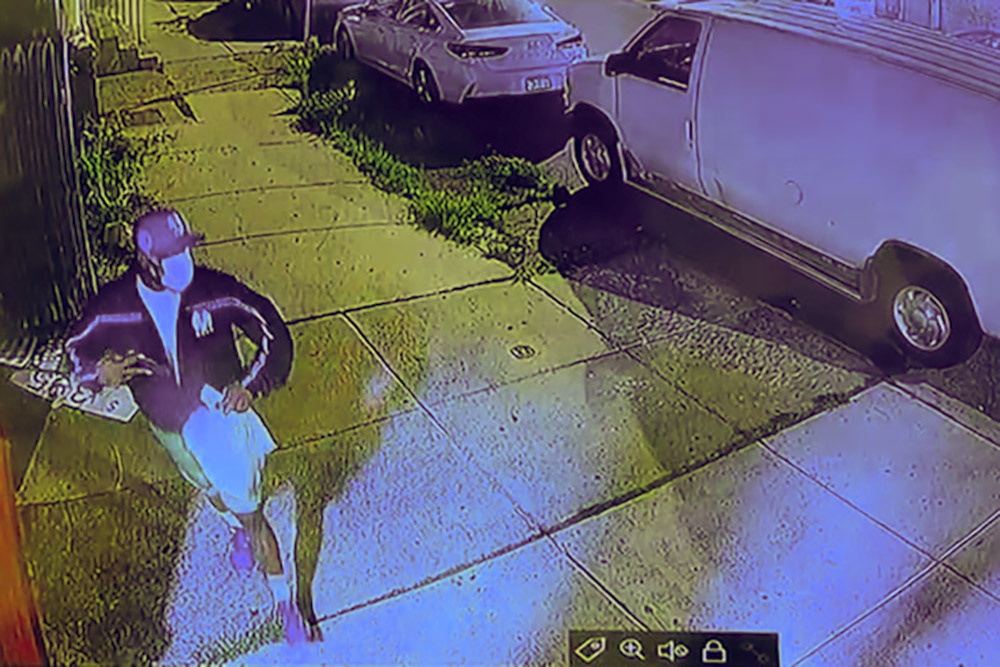
Surveillance video obtained from a business near Wilson’s home showed a man wearing a surgical mask and a hat approach the couple’s front porch, pull out a handgun, and open fire just before midnight. Wilson was pronounced dead moments later. Her husband survived.
On Wednesday, police identified Perry, 35, as the suspected shooter. He remained at large Thursday.
Reached by phone, Wilson’s husband tearfully declined to be interviewed, as did his daughter.
The Wilsons’ son, Evans, is one of three people charged in the death of James Dunbar, 20, who was shot in the head on the 2800 block of North Taylor Street, less than a mile from where the Wilsons were shot, sources said.
Another man was also shot, but survived, police said.
Witnesses told detectives at the time that they heard a barrage of gunshots, then saw two armed men fleeing in a Hyundai Sonata. Detectives recovered 17 bullet casings from the scene, authorities said.
Wilson and two teenagers were charged with murder and related crimes, court records show. Wilson has pleaded not guilty and is awaiting trial.
Wilson’s attorney, David Mischak, did not return a phone call on Thursday.
Dunbar’s death came during a wave of crime in the city following the pandemic.
Michelle Wilson’s killing was one of six homicides in Philadelphia between Friday morning and Sunday night, a burst of bloodshed in what has otherwise been one of the city’s least violent years in decades.
Hours before her death, Wilson’s family had gathered for a Sunday afternoon barbecue, with children and relatives on the porch, a neighbor said. The neighbor — who asked not to be identified for fear of retaliation — said the couple were “quiet” and “friendly.”
Police have offered a $20,000 reward for information leading to Perry’s arrest and conviction and have asked anyone with information to contact the department’s homicide unit at 215-686-3334 or its tip line at 215-686-TIPS (8477).
Staff writer Ellie Rushing contributed to this article.
Joy Huertas, 33, woke up Monday morning in her Philadelphia home to multiple messages in her family’s WhatsApp group: Her parents were nowhere to be found.
A 7.4-magnitude earthquake had struck her hometown of Pereira, Colombia, as well as other areas of the country, leaving more than 200 people dead and thousands missing.
Huertas knew her father had a doctor’s appointment in the center of the city that morning before heading to the airport for a flight to Bogota.
A quick look on social media showed her that Pereira’s airport had a half-collapsed roof and that the building in which the doctor worked had been reduced to rubble.
“I started to panic,” Huertas said.
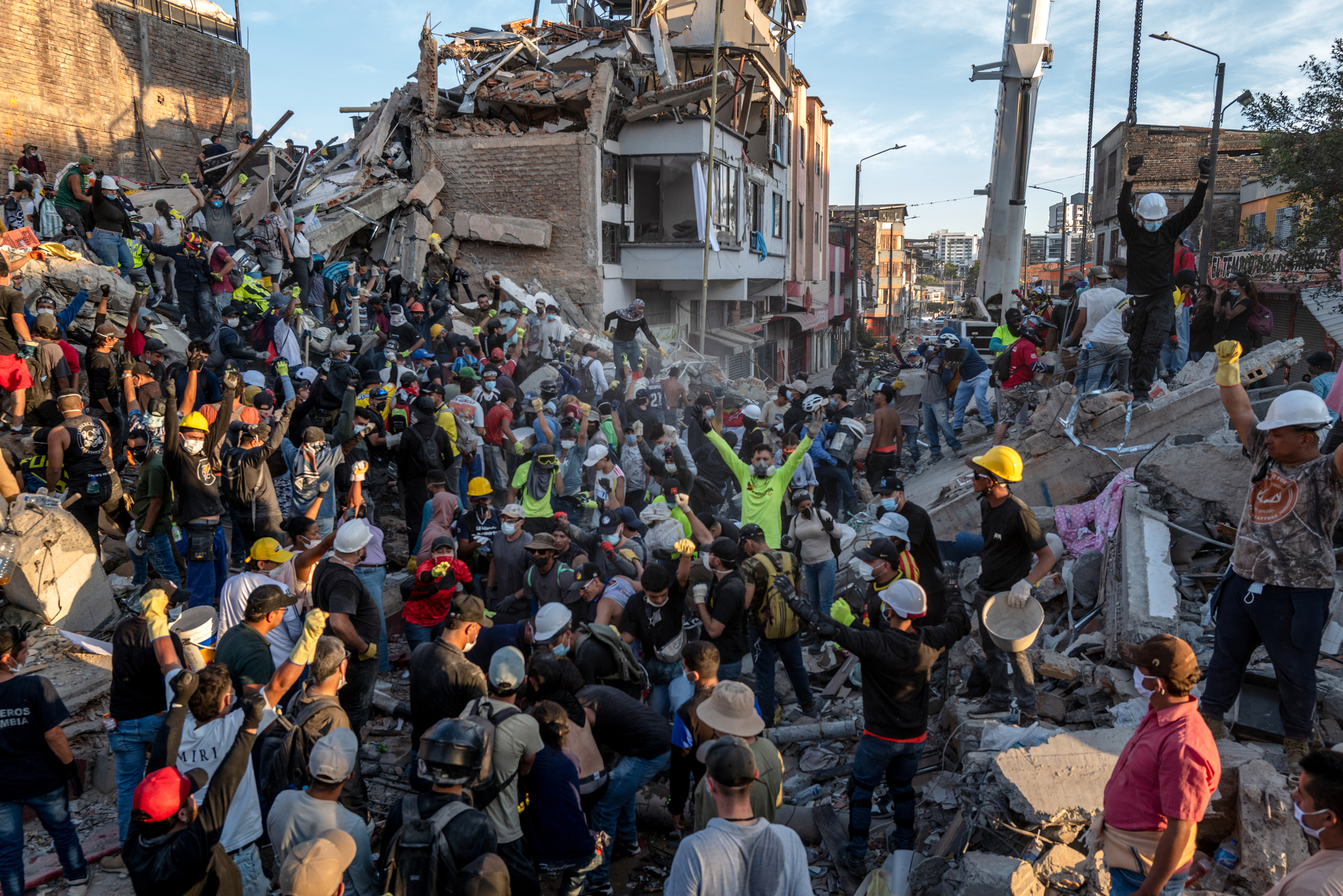
Volunteers and rescue workers search for survivors at the site of a collapsed building, one of several destroyed during Monday’s 7.4-magnitude earthquake in Pereira, Colombia, on Tuesday.JUAN ARREDONDO
An hour later, she managed to get hold of her brother. Her parents were safe.
Fortunately, her father’s doctor had rescheduled his appointment to an earlier time, before the earthquake. But, with the power out and the internet connection spotty, she had not been able to contact any family members until well past noon.
“My mom said that it felt like the land had turned into the sea, and that it went on for so long, everything around them was shaking,” Huertas said, holding back tears. “She said everyone was so scared to go back inside.”
By Tuesday, conditions had not improved. The aftershocks had Huertas’ Pereira neighbors dragging mattresses out and sleeping in front of their homes.
People camp out in a park on Wednesday, after after an earthquake damaged their homes.Fernando Vergara
“Mom said it feels like being back in the pandemic because the lines to buy supplies are so long, and when your turn comes mostly everything is gone,” Huertas said. “They have no water, people are running out of food, and the trucks with supplies can’t access the area to put food back in the grocery stores.”
Still with a heavy heart, Huertas found solace in a Wednesday night vigil organized by Acción Colombia. The Philly community nonprofit provides resources, coordinates events, and serves as a cultural bridge for the more than 8,000 Colombian nationals living in Philadelphia, as well as folks in New Jersey and Delaware.
Dozens of people, many with Colombian flags, gathered outside City Hall to hold one another through the sense of loss. Through live music and a moment of silence to pay respect to the dead, one thing was clear: The community wanted to help.
“We’ve come to give Colombia a hug and show our solidarity so that people find the strength to rebuild after such a catastrophic event,” said Leity Rodriguez Largo, director of Acción Colombia.
Moved by how many people in Philadelphia reached out to the group looking to help people back home, Acción Colombia began organizing to send resources to the earthquake-affected areas.
“Philadelphians have been wonderful. They need to know that every ounce of help counts and is appreciated,” Rodriguez Largo said.
On Saturday and Sunday, Acción Colombia will be holding multiple events in and around Philly to collect donations. Here is how to help:
Resources needed
Before donating, make sure perishableitems have not expired and other itemshave not been opened.
Food: Canned goods such as chicken, tuna, sardines, beans, vegetables, and fruit. Also: rice, cereal, pet food, and powdered hydration drinks.
Hygiene and baby products: Diapers (for all ages), baby wipes, formula, feminine hygiene products, soap, shampoo, toothpaste, toothbrushes, and deodorant.
Emergency equipment: First aid supplies, flashlights, batteries, work gloves, helmets, and face masks.
Packing tools: Scissors, packing tape, and medium boxes.
What not to bring
According to Rodriguez Largo, water bottles are not being accepted because they are hard to transport and can be found in areas not affected by the earthquake. Clothing items will not be accepted, either.
Where to donate in Philadelphia
Acción Colombia will be at these locations both Saturday and Sunday:
3 to 8 p.m.: Lighthouse Field/Oblea Fusion, 101 E. Erie Ave., North Philadelphia.
Where to donate outside Philadelphia
Donations will be collected in Malvern on Saturday, between noon and 8 p.m., near Mi Pais restaurant, 477 Lancaster Ave.
How to volunteer
Philadelphians who would like to volunteer to pack and classify the items are welcome to text Acción Colombia at 267-423-9020, Rodriguez Largo said.
For monetary donations
Rodriguez Largo recommends directly supporting groups already on the ground in Colombia. She advises monetary donations go to Manos Visibles, a nongovernmental organization helping people in the most affected areas.
A firefighter working on rescue efforts holds a Colombian flag amid the rubble on Thursday.Ivan Valencia
To Andrew Mukuba, there is no sense dwelling on the past.
The fractured fibula that ruined his rookie season with the Eagles in a Week 12 loss in Dallas, the demanding rehabilitation that followed, the emotional ups and downs that come with all of it, that’s all behind him, he says.
When he hits the football field next to play a game, which could be as soon as the preseason opener Saturday night in Baltimore, he won’t be seeking any closure.
“I feel comfortable out here despite what I had going on,” Mukuba said after practice Thursday. “I’ve already put everything behind, just focused on what’s next and what’s in front of me.”
There still is a lot in front of the 23-year-old. The Eagles are putting a lot of trust in their second-round pick from last year’s draft. They lost Reed Blankenship in free agency and did not make major upgrades to the position group in part because they feel like Mukuba is capable of being an every-down difference maker. There were “shaky” moments during his rookie season, Vic Fangio said in the spring, but the longtime defensive coordinator felt like Mukuba was “coming on” in the five or six games leading up to his injury.
Drew Mukuba suffered a season-ending injury on this play last season after colliding with teammate Sydney Brown late in the fourth quarter of a Week 12 loss in Dallas.David Maialetti / Staff Photographer
What’s the biggest difference year-over-year?
“It’s just experience, knowledge, and know-how of the defense,” Fangio said last week. “You might look and say, ‘Man, he looks quicker. He’s in better shape.’ I think it’s just the thought process [speeding] up, comfortability with the defense, and what he has to do. He’s in a little bit better shape too.”
That part always helps, especially in the steamy conditions training camp practices come with. But Mukuba agreed that the biggest difference between this version of him and the rookie version this time last year was on the mental side of the game. His offseason was dominated by rehab. He wasn’t fully cleared for workouts during the offseason program, and a lot of his time away from the field was spent watching film and diving into the playbook.
“In that situation, you can’t do anything but try to learn,” he said.
He said he sees the preparation paying off in his ability to recognize plays — “letting the formation talk to you,” he said — and pick up on cues from the running backs and offensive linemen.
“Little things I feel like rookies might struggle with coming in and having a lot thrown at you,” Mukuba said.
The safety position is an interesting one during this Eagles camp. Mukuba is the lone constant, but he has different players next to him at times. When the Eagles are in their base defense, with just two cornerbacks on the field, Cooper DeJean has been sliding from the nickel spot to safety next to Mukuba. When they’re not in base, which is the majority of the time, Marcus Epps has seen a lot of first-team work, as has Michael Carter II, who, like DeJean, is making a transition from nickel to safety.
It’s not out of the realm of possibility that the Eagles search for an upgrade to pair next to Mukuba before the season begins, but Fangio has expressed comfort in Epps and Carter.
Mukuba said earlier this month that DeJean, a “natural defensive back,” was picking up his new occasional position well, but there are challenges.
“You think differently, you play differently with the runs because you’re closer to the ball,” Mukuba said of a nickel. “Obviously with safety you’re further away from the ball. Finding right angles and trying to play in space is a little different than when you’re closer to the ball.”
Eagles safety Andrew Mukuba intercepts a pass intended for Kansas City Chiefs tight end Travis Kelce.Monica Herndon / Staff Photographer
Mukuba, who had 46 tackles in 11 games last season, will have some new duties thrown his way. Blankenship, who left for Houston in free agency, was the defensive quarterback who did a lot of communicating from the back. The safeties will share those responsibilities, Fangio said.
Mukuba said his next steps for year two are to continue getting more comfortable in the NFL and keep growing in his role.
“Trying to see how much I’ve grown from last year, trying to remove the mental errors or the little things that I was struggling with last year,” he said. “A lot of things I struggled with last year, I feel like this year I’ve overcome and I’m playing more confident and faster.
“I feel good. I worked hard to get to this point.”
The parasite’s spread can become a self-perpetuating cycle. Cyclospora is found only in humans, where it replicates in the intestinal tract, causing severe diarrhea. The organism reproduces by releasing oocysts, which are excreted in those human feces. In the U.S., feces usually end up in sewage systems.
In many states, sewage water is treated — though not always in ways that remove or kill the oocysts — and then released into waterways and can be used to irrigate crops. The oocysts mature in the environment with warm temperatures in about a week. Then a human comes along and eats the irrigated food or drinks the water and gets sick, releasing more oocysts into sewage systems.
I am a public health water microbiologist who collects sewage water and tests it for evidence of harmful pathogens, such as cyclospora. The first time I studied cyclospora was in the first outbreak ever documented in the U.S., a small, 45-case outbreak in Florida in 1995.
The cause was initially suspected to be strawberries grown in California, but later it was determined it was more likely due to imported contaminated raspberries from Guatemala. That country’s raspberries were also associated with much larger outbreaks in 1996 and 1997. At the time, little was known about this single-celled protozoan pathogen.
There are two reasons researchers like me collect sewage and monitor what’s in it.
The first is to evaluate levels of disease in a community. Measuring viruses such as SARS-CoV-2 in untreated sewage helped paint a picture of the spread of COVID-19 and the emergence of variants as the pandemic continued.
The second reason is to determine whether and how sewage treatment removes, inactivates, or kills pathogens.
It is not easy to measure cyclospora oocysts in sewage, contaminated water, or food. Even modern laboratory methods have trouble reliably detecting low levels of oocysts, which can still cause disease.
Cyclospora oocysts have been found in sewage around the world. A range of studies across the world shows that they can be detected in up to 25% of sewage samples — but not all studies report how high or low the concentrations of the oocysts were. So it can be hard to say exactly how widespread it is.
A person who is infected with cyclospora excretes somewhere between 100 and 10,000 oocysts per gram of feces for as long as 60 days. Based on what is known about other fecal pathogen excretions from patients, related to the concentrations of those pathogens in sewage, I estimate that there could be anywhere from 1 to 100 oocysts per liter in sewage.
Our laboratory at Michigan State University is developing a method to more accurately detect this parasite even at lower levels in sewage. This type of wastewater surveillance may help determine when an outbreak is beginning to subside and where larger numbers of people are still affected. In addition, this information could allow sewage treatment plant managers to regularly monitor their discharges.
What happens during sewage treatment?
There isn’t clear data on how well standard sewage treatment processes reduce the numbers of cyclospora oocysts. But there is information on two other similar protozoa that also cause significant diarrhea in humans: Cryptosporidium produces an oocyst about half the size of cyclospora, and giardia produces a cyst that is similar in size to cyclospora.
From 2001 to 2003, my laboratory studied the occurrence of those protozoa at six sewage treatment plants — one each in Arizona and California and four in Florida. All had been approved by their respective state regulators for nonpotable reuse, including irrigation of landscapes and, in some cases, crops.
In that study, we found these protozoa in all the untreated sewage we tested, indicating there is some portion of the population that is infected and excreting their cysts or oocysts.
The five treatment plants whose processes included disinfection with chlorine were able to get rid of a high percentage — but not all — of the protozoa in their discharged wastewater. Some cysts and oocysts remained intact, with the potential to cause disease, even in water that had gone through the entire treatment process, as it is known that wastewater chlorination does not kill these protozoa.
From that data, it seems reasonable to assume that at least some small proportion of cyclospora oocysts also survive sewage treatment processes and are released back into the environment, where they can survive for months.
Some of that wastewater undergoes additional filtration and disinfection for reuse before being spread directly on landscapes or crops. The volumes, however, are not readily known. And other treated sewage, which undergoes only standard secondary treatment, is discharged into rivers, streams, and reservoirs that could provide irrigation water.
What is needed for better risk assessment and management?
As floods and droughts occur routinely across the U.S. and around the world, sewage may overflow into bodies of water or be used directly on crops. That increases the risk that diseases, including protozoa such as cyclospora, which are transmitted through ingestion of fecal matter, may spread through food and water supplies.
And because cyclospora oocysts mature in outdoor heat, it is possible that increasing temperatures, such as heat domes, could speed up their maturation, exposing more people to the infectious form of the parasite.
Modern technology and techniques are capable of monitoring water quality, detecting harmful pathogens and eliminating them. Expanding monitoring of wastewater for protozoan diseases and other dangers can help prevent outbreaks and slow the spread of disease from sewage-contaminated water in the future.
Joan Rose is a professor of water research and director of the Water Alliance at Michigan State University.
CALI, Colombia — With arms raised and fists clenched, rescuers in Colombia called for silence Thursday as they listened for signs of life in the rubble left by a deadly earthquake that has killed more than 270 people and left hundreds more missing.
The call for quiet was part of last-ditch efforts to find survivors in the aftermath of the 7.4-magnitude quake that struck the South American country Monday. Aid agencies consider the first two to three days after a quake to be the prime window for retrieving survivors. But that time frame can be extended if those trapped have access to food and water.
“There might be two more people alive here, and I’m hopeful,” rescuer Daiana Rojas, 25, told the Associated Press. “We have been hearing sounds since 2:30 a.m., so our hope remains.”
Rojas and her family were unharmed by the quake, the most powerful to hit Colombia in this century. She has been working as a volunteer to help search for survivors in Cali, one of the most affected cities, along with Pereira, Manizales, and Quibdó.
“I thought that was going to be my last moment alive,” she said, recalling the terror of the quake. “Seeing this situation in my city breaks my heart.”
Rojas has witnessed two people being pulled alive from the debris, as well as the recovery of bodies.
“They are not a relative or a friend of mine, but it feels as they were,” she said of the survivors who have been found. “Whenever rescuers ask for silence, everyone stays still and tries not to move, speak, or whisper. But when signs of life are found, all the teams start to applaud.”
The mayor of Cali, Alejandro Eder, told reporters Wednesday that rescue teams continue to find signs of life under the rubble and race to save anyone within reach. “The next 20 hours are the most critical to find and rescue people alive,” he said.
But authorities recognize that the rescue effort is entering a grim phase as search teams begin shifting toward recovering bodies.
“The removal of debris begins now; more than 72 hours have passed,” Milton Castrillón, who works in the Cali mayor’s office, told AP, adding that the teams now lean on “miracles from God to find survivors.”
The death toll rose Thursday to 273, authorities said.
Over 3,800 people were reported injured, with nearly 12,600 homes destroyed and more than 74,800 homes damaged, according to David Santiago Tamayo, director of the National Unit for Disaster Risk Management.
The devastation has tested Colombia’s new president, Abelardo de la Espriella, and his government as they scramble to respond while aid groups seek to help the most heavily damaged communities.
De la Espriella said Wednesday that nearly 500 people were reported missing, though civilian-run databases put that number at more than 4,200. In total, more than 25,800 families have been affected, de la Espriella said.
Meanwhile, Colombia received more international aid from around the world.
A group of rescuers from the Los Angeles County Fire Department arrived Thursday to help with search efforts and structural engineering assessments. Other countries, including Peru, El Salvador, Mexico, and Brazil, have also offered assistance.
De la Espriella announced on X that Colombia will receive a $10 million donation from the United Arab Emirates.
The South American Football Confederation and the Colombian Football Federation also jointly announced a $1 million donation to support reconstruction efforts.
“Soccer transcends the pitch and remains close to its people, especially in the most difficult times,” they said in a joint statement.
In Venezuela, acting President Delcy Rodríguez waited nearly four hours before addressing the nation. In Colombia, de la Espriella announced an emergency command post to oversee rescue efforts barely an hour after the earthquake. For weeks, Venezuelan civilians were clawing through rubble by hand. Hours after the earthquake in Colombia, rescue teams were searching for survivors with cranes and excavators.
The contrast was a reminder of the differences between the nations — their political systems, resources, and the strength of their institutions — and a demonstration of how those can take on life-or-death importance.
This year’s record-smashing El Niño will do more than just shift and enhance patterns of heat, extreme rainfall, and drought around the world.
It will also give the planet a preview of the late 2030s.
That’s because this El Niño will act like a climate time machine, temporarily pushing global temperatures to levels that might not otherwise be reached for another decade or so.
According to an analysis by climate scientist Zeke Hausfather that was shared with the Washington Post, there’s around a 95% chance that 2027 will become Earth’s hottest year on record — soaring past the last record in 2024 — because the combination of El Niño and climate change could spike global temperatures to around 3.17 degrees Fahrenheit above preindustrial averages.
Described as “stunning” by Hausfather, who researches and analyzes the climate for Stripe, Carbon Brief, and Berkeley Earth, this value would be so far above the warming trend of the past decade that it could bring global temperatures to levels not otherwise expected under that trend until around 2037.
“I’m not sure folks have realized just how crazy the second half of 2026 and 2027 will be for global temperatures — on the back of a record-smashing El Niño event,” wrote Hausfather on X.
It’s currently close to a coin flip whether 2026 would become the warmest year on record, according to Hausfather’s analysis, which considers the average of several different temperature data sets. It’s possible that 2026 sets a record in some, but not all, of these data sets.
Jim Hansen, director of the Program on Climate Science, Awareness, and Solutions at Columbia University, said he expects 2026 to become the warmest year, but to hold that crown only until 2027 exceeds it.
There is a much stronger signal for record warmth in 2027 because increasing air temperatures caused by El Niño lag slightly behind increasing ocean temperatures.
A global temperature of 1.76 degrees Celsius above preindustrial levels in 2027 would be about 0.29 degrees Celsius higher than what’s expected based on the warming trend of the past decade.
According to Hausfather’s temperature predictions for next year, the middle 50% of forecasts range from 1.67 degrees Celsius to 1.85 degrees Celsius above the preindustrial average.
At the high end of that range, global temperatures in 2027 would jump roughly 13 years ahead of the recent warming trend, reaching levels that might otherwise become typical around 2040. The low end would represent a 7-year boost, to around 2034.
Hausfather said that this El Niño event is happening on top of a “strong acceleration in the rate of warming associated with continued emissions of greenhouse gases.”
Both Hausfather and Hansen also mentioned that decreasing atmospheric aerosols — which have historically offset some warming — are contributing to the acceleration in warming.
Although Hausfather expects 2028 to be cooler than 2027, he added that “human emissions are adding a permanent El Niño worth of heat to the climate system each decade.”
In other words, global temperatures in 2027 will take a big but temporary upward stairstep, and they are unlikely to permanently continue at or above those levels for now.
These temperature increases will also have consequences for atmospheric water vapor. Because the water vapor-carrying capacity of air increases at a rate of 7% per degree Celsius, it’s possible — if not likely — that 2027 also sets a new global moisture record, surpassing 2024. In 2025, the Post mapped the planet’s rising moisture zones and showed how they are closely connected to an increasing risk for rainfall extremes.
The role of El Niño
During El Niño, huge stores of ocean heat from the western Pacific spread eastward, eventually reaching the west coast of South America. Thunderstorm activity shifts with that warmth, transferring heat from the ocean and pumping it high into the atmosphere. Winds and atmospheric circulation then redistribute that heat beyond the tropical Pacific and around the globe, raising global temperatures.
That’s why strong El Niño events often appear as an upward stairstep in long-term plots of global temperatures.
But this El Niño isn’t just going to be strong. Boosted by the planet’s long-term warming trend, it’s probably going to dwarf the six strongest that came before it in 2015, 1997, 1982, 1972, 1888, and 1877 — the latter contributing to a global famine that caused 3% to 4% of the global population to perish.
Ocean temperatures in the central equatorial Pacific, where El Niño’s strength is measured, have already broken records for 75 days straight.
That streak isn’t expected to end anytime soon.
Temperatures in the equatorial Pacific Ocean may surge more than 7.2 degrees F above average by December, breaking the previous record.
Those weather effects will vary from place to place.
But the temperature spike will briefly push the entire planet into its warmer future.
This weekend is serving up some of the best of late summer in our beloved city.
Settle into a laid-back evening at the Philadelphia Folk Festival, sample regional flavors at the Ice Cream Festival on Filbert, or embrace the brine with pickle-flavored cocktails at Pickle Palooza.
And that’s only a taste of what’s in store this weekend.
While I’m away at the 2026 National Association of Black Journalists Convention in Atlanta, you’ll attend some of the summer’s best music, food, and cultural festivals.
Here are some of the best things you could be doing this week:
This year’s lineup kicks off with three Philly bands with roots in the rock and roll spirit: Ben Arnold & the 48 Hour Orchestra, Roberta Faceplant, and Lazy Villains will be the campers-only openers on Thursday night.
On Friday, the Folk Fest will be an all-day event, with highlights that include bluesy guitarist Eddie 9V, bluegrass trio Damn Tall Buildings, country-folk duo Kieran Kane and Reyna Gellart, and more.
Saturday standouts include festival regular Tom Rush, Celtic roots group Runa, Terrance Simien & the Zydeco Experience, and John Flynn, who will also serve as main stage emcee throughout the fest.
To close out the fest, Sacred Steel with the Campbell Brothers will open in the morning. The Campbells will be on the Martin Stage later in the day, as well as York, Pa.-native Robbie Fulks and Gauthier. The final stage act is Kentucky mandolin and fiddler player Sam Bush.
FILE – Charlie Woods hits onto the 17th green during the first round of stroke play of the U.S. Junior Amateur Golf Championship, in Bloomfield Township, Mich., July 22, 2024. (AP Photo/Carlos Osorio, File)Carlos Osorio
⛳ Big swings in Ardmore: The 126th United States Amateur Championship is back at Merion Golf Club for the first time since 2005. The weeklong event features top-end male amateur golfers, including locals such as Nicholas Gross, Hunter Stetson, and Hank Kancher. Grab your tickets to see the competition take its course.
🎨 Celebrate Dominican arts and culture: Check out From Page To Screen at Esperanza Arts Center. The event is part of a three-part series that celebrates authors and filmmakers from the Dominican Republic. The evening will feature film screenings, artist conversations, local vendors, Merenguemusic, and dance lessons.
🍨 A scoop of local sweets: The annual Ice Cream Festival on Filbert is back at Reading Terminal Market. Participating ice creameries include regional favorites such as Milk Jawn, The Franklin Fountain, Scoop DeVille, Siddiq’s Water Ice, and others.
🥒 Relish in pickle heaven: Pull up to the Pickle Palooza at Neshaminy Creek Brewing. It’s kind of a big dill. (I couldn’t resist). Local vendors will be on-site selling pickles, and bartenders will be mixing dill-flavored cocktails.
📅 My calendar picks this week: Deviled Eggs & Rosé, Festival of India, and Philadelphia Taco Festival. Here’s our full list for the week.
Oddities & Curiosities Expo is coming to Montgomery County
Starting Saturday, one of the world’s largest showcases of oddities is coming to Montgomery County.
The touring expo will set up shop at the Greater Philadelphia Expo Center. There will be a selection of artists and vendors selling clothes, taxidermy, and other items that lean into the bizarre.
There will also be sideshow performers outside of the venue throughout the two-day event.
🎷 Funk and jazz in North Philly: The Jazz on the Ave Music Fest, hosted by radio legends Patty Jackson, Dyana Williams, and Mina Say What, returns for an evening of soothing performances by headliners Vertical Current, Kyng Musik, and Jessie Renee.
🥩 Luck up at Live! Casino: Restaurant Week returns to Live! Casino & Hotel through Aug. 20. Stop in for sizzling, seven-ounce steaks at The Prim Rib, Jet Tila’s pad thai at Luk Fu, and special dine-and-drink deals at the casino’s bars and lounges.
🍿 Grab your popcorn:Free Street Movies, presented by Scribe Video Center, is back with a touring outdoor theater experience for movie lovers throughout Philadelphia. The 29th edition of the film series is offering free, family-friendly screenings through Aug. 30.
🎨 The creatives behind Philly street art: Dig deep into the stories of legendary graffiti writers and street artists such as Darryl “Cornbread” McCray at Platform X in Suburban Station. The new art exhibit, “Evolution of the Revolution,” opens on Friday and runs through September.
Staffer picks
Foo Fighters play Lincoln Financial Field on Aug. 13.Courtesy of the Artist
Here’s pop music critic Dan DeLuca’s list of the best concerts this weekend.
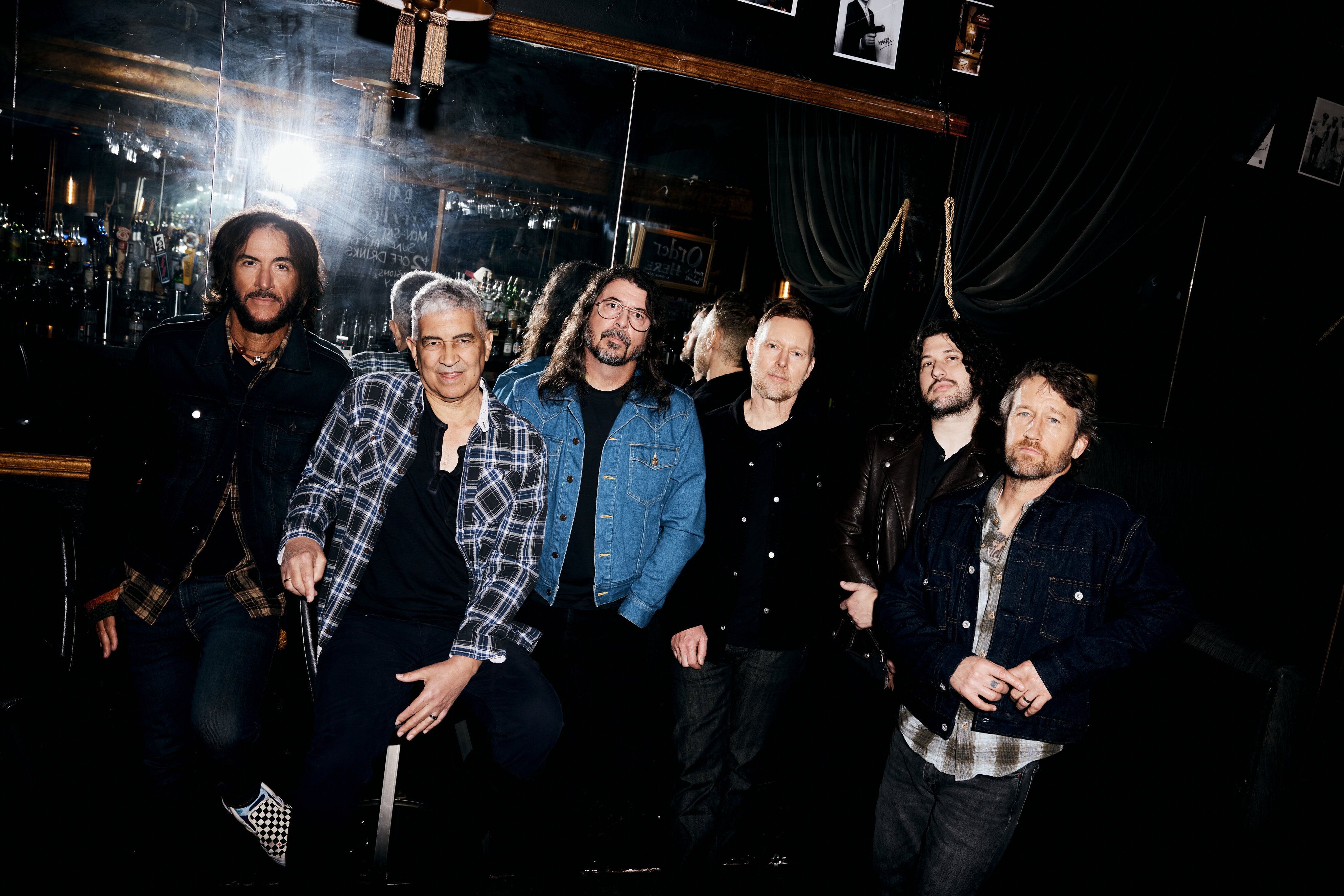
Thursday: TheFoo Fighters, smack in the middle of their yearlong “Take Cover” tour, is dropping into South Philly on Thursday. The Dave Grohl-led band will step onto Lincoln Financial Field with Queens of the Stone Age and Philadelphia’s own Mannequin Pussy.
Friday: Jazz trio Trash Gadget, comprised of Philly pianist and bandleader Orrin Evans, bassist Matthew Parrish, and drummer Byron Landham, are celebrating their new album and 30 years of collaboration with two shows at Chris’ Jazz Cafe.
Saturday: Louisville rapper Jack Harlow, who shifted from straight-up hip-hop to neo-soul on his latest album, Monica, will hit the Fillmore Philly stage on Saturday.
Sunday: Miami’s own Flo Rida, who scored several party anthems in the late 2000s, is bringing the South Florida heat to Citizens Bank Park. He performs after the Phillies play the Miami Marlins.
The Philadelphia Folk Festival is one of the nation’s longest-running folk music festivals in the country. What year did it start?
A) 1962
B) 1964
C) 1967
D) 1961
Here’s the answer to last week’s question: Before filmmaker Maori Karmael Holmes founded BlackStar Film Festival, what other festival did she help develop in Philly? Answer: Black Lily Film & Music Festival
Ask Earl anything
Many of you have questions about each week’s listings, and others about Philly’s arts, culture, and entertainment scene.
I have you covered. Have a question? Email me for a chance to have it answered in an upcoming newsletter.
That’s a wrap for this week’s edition of Things To Do. I may be signing out from Atlanta, but you know my heart and mind are forever home in Philly, baby. Enjoy the weekend ahead, and I’ll be back soon to hear about it. Peace!
— Earl Hopkins
By submitting your written, visual, and/or audio contributions, you agree to The Inquirer’s Terms of Use, including the grant of rights in Section 10.
Monday’s announcement by the Republican president calls for separating combination shots — including the measles, mumps, and rubella, or MMR, vaccine — into separate injections. Appointments for that and other vaccinations should be spaced out whenever possible, the order states.
To accomplish that, drugmakers would need to revive a slate of individual vaccines that have not been marketed separately in the U.S. for decades. They would also have to build new manufacturing plants capable of producing millions more vaccine doses than the nation currently uses.
For parents, unbundling the MMR vaccine and spacing out the shots would mean returning to the doctor’s office many more times than is currently needed. Those appointments could also strain pediatricians who typically administer the shots, while driving up costs tied to syringes and other medical supplies.
Studies in the U.S. and other countries have shown that combination vaccines increase the likelihood that children will be fully protected from infectious diseases before starting school.
Health experts say there is no scientific basis for changing course.
“We do things that are less convenient and more expensive if there’s a good reason to do it,” said Anna Durbin, of the Johns Hopkins Bloomberg School of Public Health. “There is no good justification for this. I think it’s very bad public health policy.”
Trump’s plan would require vaccine manufacturing overhaul
Under Trump’s executive order, federal officials are instructed to develop within 90 days plans for breaking up the MMR shot and spacing out other vaccines.
But pharmaceutical scientists and former regulators say those changes would likely take years and require drugmakers to spend tens of millions of dollars on new studies and manufacturing facilities.
Currently, there are no individual vaccines in the U.S. for measles, mumps, or rubella. All the vaccines approved for those viruses by the Food and Drug Administration are combination shots. That three-in-one approach has been the standard in the U.S. since the early 1970s.
Jesse Goodman, a former FDA vaccine chief, said companies would have to conduct large studies showing new individual shots produced immune system-boosting reactions in children similar to the current versions.
Companies might also have to demonstrate the safety of new manufacturing facilities and procedures, given that individual measles shots haven’t been widely produced in the U.S. for roughly a half-century.
“The question is how much has changed since then and how comfortable will the FDA and the companies be relying on those comparisons?” said Goodman, who is now a professor at Georgetown University.
Designing, constructing, and getting federal sign-off for new vaccine plants typically takes about five years, according to industry experts.
Additionally, Goodman said, the FDA would have to review and license each unbundled vaccine separately, a process with no precedent.
“I don’t think there’s any comparable example of removing hugely effective public health measures that protect babies for no documented scientific reason,” he said.
Individual shots for measles and related diseases tend to be used by lower-income countries that can’t afford the MMR shot. Merck, GSK, and the handful of other companies that supply U.S. childhood vaccines make only the combination shot.
In separate statements, Merck and GSK said they stand by the safety and effectiveness of their products. Neither discussed plans to unbundle their shots.
“To date, there has been no published scientific evidence that shows any benefit in separating the combination MMR vaccine into three individual shots,” Merck said in an emailed statement.
Many more trips to the doctor
The MMR shot is currently delivered in two doses — the first at the age of 1 and the second dose after age 4. Splitting up the shot into its three separate components would mean six office visits. Spacing out other shots for pertussis and other infectious diseases could multiply the number of visits many more times.
As the number of visits goes up, parents are more likely to miss appointments or stop making them, according to Durbin.
“It’s going to be less convenient, more expensive, and you’re going to have fewer people getting vaccinated,” she said.
Since last year, Trump has repeatedly expressed concern about the number of vaccinations U.S. children are receiving and called on Health Secretary Robert F. Kennedy Jr. to reduce the number. Kennedy and other officials have pointed to smaller countries, such as Denmark, that recommended slightly fewer vaccines than the U.S.
But breaking up combination shots will result in kids receiving many more individual shots than other comparable nations, Durbin notes.
White House spokesperson Kush Desai said the Trump administration’s efforts on the MMR vaccine “will give parents more options on timing and frequency for their children, which ultimately will increase vaccination rates for all three diseases.”
Vaccine order is not legally binding
Despite the precedent-breaking nature of Trump’s order, some experts are skeptical it will result in meaningful changes.
Neither the White House nor the FDA can compel drugmakers to develop and seek approval for new vaccines. And from a business perspective, companies have little incentive to develop individual versions of vaccines they already sell in combination shots.
“They’d be competing against themselves, and there’s no reason to do that,” said Paul Offit, a Children’s Hospital of Philadelphia vaccine researcher and former government adviser.
While Trump’s order calls for more federal research and recommendations, only state governments have the legal authority to require vaccinations for schoolchildren. The order simply advises states to consider updating their laws to reflect the Trump administration’s approach.
“I think states will ignore this,” Offit said. “I think that bottom line is that we don’t need to look to Donald Trump for our medical advice.”
It’s been a while since Eagles fans last saw white helmets paired with kelly green wings on the field in Philly. The last time came over 50 years ago, in 1973, but after the team posted a seemingly innocent video that featured the retro style, some fans are dreaming of a potential return.
The video, posted Wednesday afternoon, featured Jalyx Hunt and new defensive back Riq Woolen blindly trying to match up different team helmets, but the comments were all focused on one thing: the white kelly green helmet that was curiously included in the lineup.
Across platforms, fans speculated. “Give us the white Kelly jerseys!” someone commented on TikTok, and below the video shared on X, someone responded, “Just take my money now if y’all are dropping the white kelly green.”
So it raises the question: Are the Eagles teasing a return of the vintage look?
Well, it’s complicated.
The team cannot just add another uniform or swap elements, like helmets, at random. The NFL imposes strict regulations. Per the league’s last update in 2024, teams are capped at four uniforms and three distinct helmet designs, and must give the league significant advance notice before using them. Of course, for the purposes of this game, the team needed a fourth helmet.
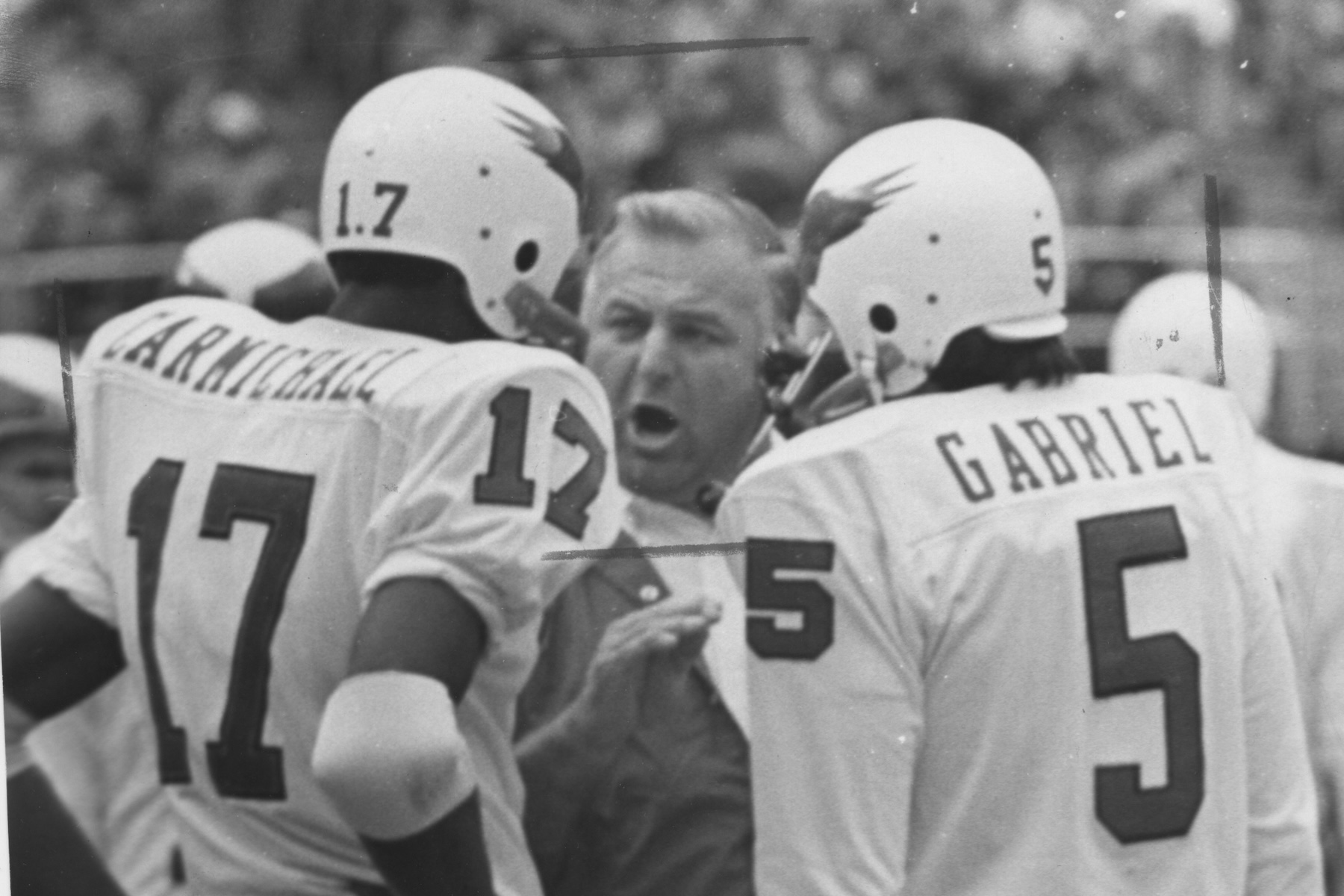
The Eagles’ current uniform lineup includes the midnight green home jerseys, the white-and-midnight green away uniforms, the all-black set, and the throwback kelly greens. Both the standard home and away uniforms use the midnight green helmet, while the other two uniforms have their own matching helmets. The throwback kelly green alternate uniform, when announced in 2023, sent fans into a frenzy to get their hands on the Harold Carmichael-and Randall Cunningham-era favorites.
Nostalgia is a powerful tool, and adding white kelly green uniforms and a matching helmet could be an opportunity to have fans lining up to get their hands on the vintage look.
Quarterback Jalen Hurts is certainly on board. In a video shared in May announcing the 2026 schedule, Hurts said he “needs” the white kelly greens to make a comeback, prompting Saquon Barkley to remind him, “Well, you got the power to change that, Mr. Hurts.”
Perhaps Hurts, and many fans, will get their wish. Hurts, after all, has a history of seeing those wishes come true. In 2021, he successfully pushed for the team to wear black pants with its white jerseys, so maybe the QB has some sway. But unless this is one of the best-kept secrets in Philly sports, it might take more than a year to see that come to fruition.
Another possible path to seeing the retro design return is through the NFL and Nike “Rivalries” program, a community-inspired concept similar to MLB’s “City Connect” series. Over the next few seasons, the partnership plans to bring new uniforms to select teams during home games, alongside specialized merchandise — a possible opportunity for the Eagles to reintroduce the white kelly green look, but that wouldn’t happen until at least the 2027 season. This year’s teams are already locked in, with the eight teams in the NFC North and AFC South set to unveil their new uniforms on Aug. 25.
Outside of Hurts in May and the match-the-helmet video on Wednesday, the Eagles have not so much as whispered the words “white kelly green” anywhere. And it doesn’t look like they plan to acknowledge the flood of comments speculating over the style the team wore for only for parts of five seasons (1969-73). But if Eagles fans are anything, it’s dedicated and persistent, even, perhaps especially, when it comes to how they look in the stadium.
A Holmesburg man who killed his wife after he said she disrespected him was sentenced to 25 to 50 years in state prison by a Montgomery County judge.
Jose Luna, 59, pleaded guilty to third-degree murder late Wednesday before Judge Wendy Rothstein. The plea, negotiated with prosecutors, spared him from a trial scheduled to begin next month on first-degree murder and related charges.
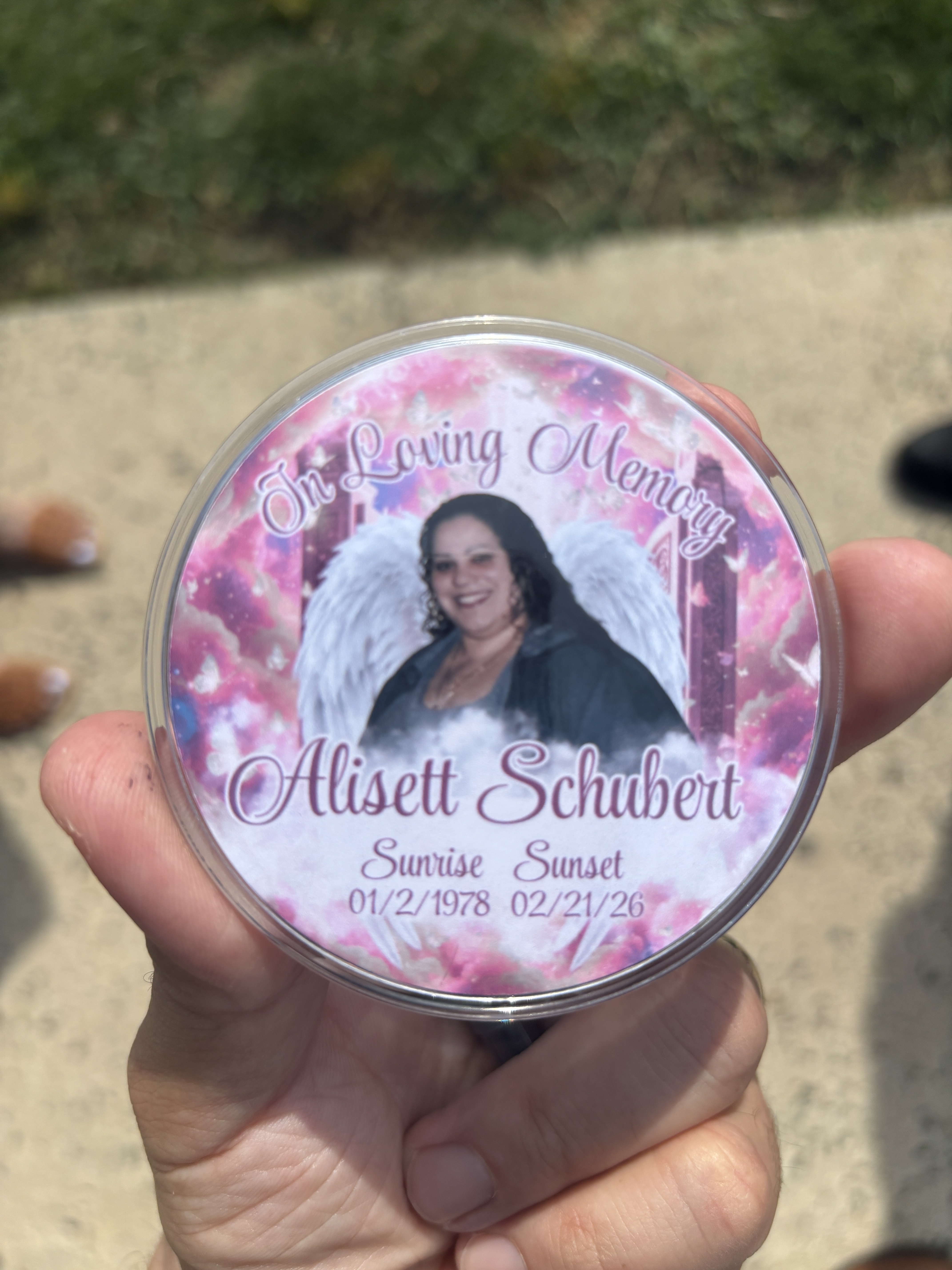
Luna shot Alisett Schubert, his wife of seven years, five times on Feb. 21 as she drove them home from a family party in Rockledge, according to prosecutors. The murder weapon was Schubert’s .38-caliber revolver, which Luna had grabbed from his wife’s purse as they began to argue.
Luna’s attorneys, Scott Frame and Joe Schultz, said he pleaded guilty to spare his wife’s family the pain of sitting through a trial.
“This was his wife, he loved his wife, and he has to live with this rest of his life,” Schultz said. “He feels the weight of what he’s done.”
The sentence handed down by Rothstein effectively puts Luna behind bars for the rest of his life, something Frame said Luna has acknowledged and accepted, remorseful for his actions on the day of the shooting.
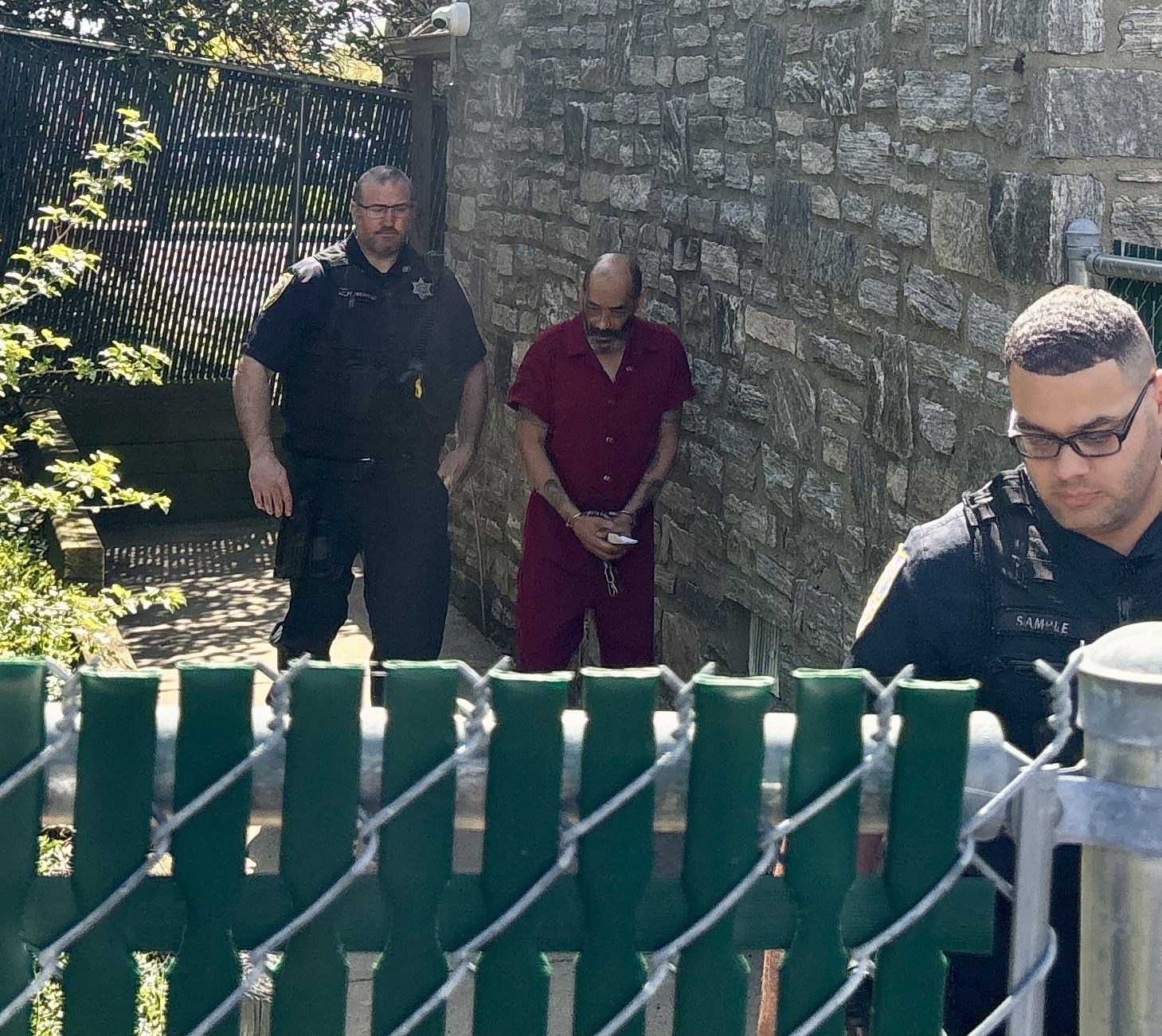
Jose Luna shot Alisett Schubert, his wife of seven years, five times in February, according to prosecutors.Vinny Vella / Staff
In Schubert’s obituary, her family described her as “a spirited soul whose love for life was unparalleled.”
“The circumstances surrounding her passing are a heartbreaking reminder of the fragility of life,” her family said. “Suddenly and tragically taken from us, Alisett’s absence leaves an unfillable void in the lives of those who knew her.”
In a statement read in court, Brinda Millican, one of Schubert’s best friends, said her death “has left an emptiness that cannot be repaired.”
“She should have been able to continue living her life and making new memories with the people who loved her,” Millican said. “Instead, her life was violently taken from her by the person who should never have been the one to cause her harm.”
From the outset of the case, Luna admitted he killed Schubert, 48, prosecutors said.
During an interview with detectives hours after the shooting, Luna said he slapped Schubert during a family party after she disrespected him, according to the affidavit of probable cause for his arrest. He told her, after hitting her, that he didn’t care if her family saw the dispute.
The couple continued to argue on the drive home from Rockledge. During the dispute, Schubert stopped the car and told Luna to get out and walk home.
Luna saw that his wife was holding her purse, and he knew her gun was inside it. The two began to fight over the bag, the affidavit said. Luna grabbed it, pulled out the gun, and shot his wife once.
As Schubert turned to get out of the car, Luna shot her four more times, according to prosecutors. He then fled, pausing to throw away his hat and jewelry to avoid being recognized.
Officers in Rockledge found Schubert on the ground, unresponsive. She was later pronounced dead at Jefferson Abington Hospital.
Luna was arrested about a mile away from the crime scene, still holding the gun. He raised the revolver to his head, telling responding officers that he had lost everything, and pulled the trigger.