Blog

  • Nearly 30 dead sharks washed ashore in Sea Isle City

    Nearly 30 dead sharks washed ashore in Sea Isle City

    It was a startling sight, to be sure.

    While walking along a stretch of beach in Sea Isle City earlier this week, a woman reported coming upon something you don’t often see in the South Jersey locale: Nearly 30 small dogfish sharks, all dead, washed up on shore.

    They were small — maybe a foot in length. And some had small red marks on their bellies, according to reports.

    Was this the result of something deadly in the water? Some new kind of apex predator? The approaching apocalypse?

    Probably not, it turns out.

    Michelle Greenling made the discovery on Wednesday morning, she told CBS Philadelphia, as she walked a 10-block stretch of the town’s beach. The first couple shark corpses weren’t particularly surprising, she said.

    “But when I saw three and four and five,” she told the outlet, “I knew something was up.”

    Greenling was initially worried that the sharks had been affected by something in the water.

    But that does not appear to be the case, experts said.

    Having examined photos of the dead sharks, Thomas Grothues, director of the Rutgers University Marine Field Station in Tuckerton, was confident they could be traced back to a fairly common occurrence.

    Basically, when commercial fishing boats inadvertently scoop up fish that its crew is not actively targeting, workers are required to release them back into the water.

    “This is super consistent with a commercial bycatch of fish,” said Grothues. “You can get 200 in a trawl [net] easy, and most of them will live — they’re pretty tough. But if a catch is huge and they’re sorting it, then sometimes the weight itself can kill sharks that wouldn’t normally die.”

    Lawrence Hajna, media director for the New Jersey Department of Environmental Protection, offered a similar explanation.

    “These occurrences are not uncommon in the summer when these fish forage near the shore and sometimes get caught inside sandbars as the tides goes out,” Hajna said in an email Thursday. “It is also possible they were discarded as bycatch from a commercial or recreational fishing trip.”

    As for whether the curious incident requires any investigative follow-up?

    Hajna said that the agency is not investigating the situation, “as this does not appear to be an unusual event.”

  • Ten games to watch from the Sixers’ 2026-27 season, including the ‘Nova Knicks and LeBron James’ former teams

    Ten games to watch from the Sixers’ 2026-27 season, including the ‘Nova Knicks and LeBron James’ former teams

    The march toward the 2026-27 season has been unlike any other in 76ers history. In one offseason, the organization hired Mike Gansey as president of basketball operations, traded for Jaylen Brown, and signed LeBron James.

    That series of events has created quite a bit of excitement in Philly. Ticket prices were jacked up at Xfinity Mobile Arena. James murals went up all over town. And fans were riled up after a slimmed-down Joel Embiid arrived to informal workouts in midseason shape.

    That predated Thursday’s release of the Sixers’ full-season schedule. We’d been given a look at marquee games, including opening week and Christmas Day. Now with the full schedule in front of us, here are 10 games to watch from one of the more-anticipated Sixers seasons in recent memory:

    Season opener at New York (Oct. 20, NBC10)

    The NBA has leaned into this rivalry in recent years for several reasons. The ‘Nova Knicks have numerous Philly connections, and these franchises had failed to reach the mountaintop for decades. That finally changed for the Knicks in June after knocking off the Sixers in the Eastern Conference semifinals as part of their NBA championship run. Now the Sixers have formed a “Big Five″ and could turn the tide. A matchup on ring night and another on Oct. 30 could deliver an early postseason matchup.

    Home opener against Cleveland (Oct. 22, ESPN)

    Folks in Philly will get their first regular-season glimpse of the new-look Sixers as James faces one of his former teams. This meeting will have a little extra sauce after James considered the Cavaliers in free agency and did not pick home in his “final decision.” The Cavaliers have the continuity advantage after they doubled down on their roster with Donovan Mitchell signing a big extension and former Sixer James Harden expected to re-sign this summer.

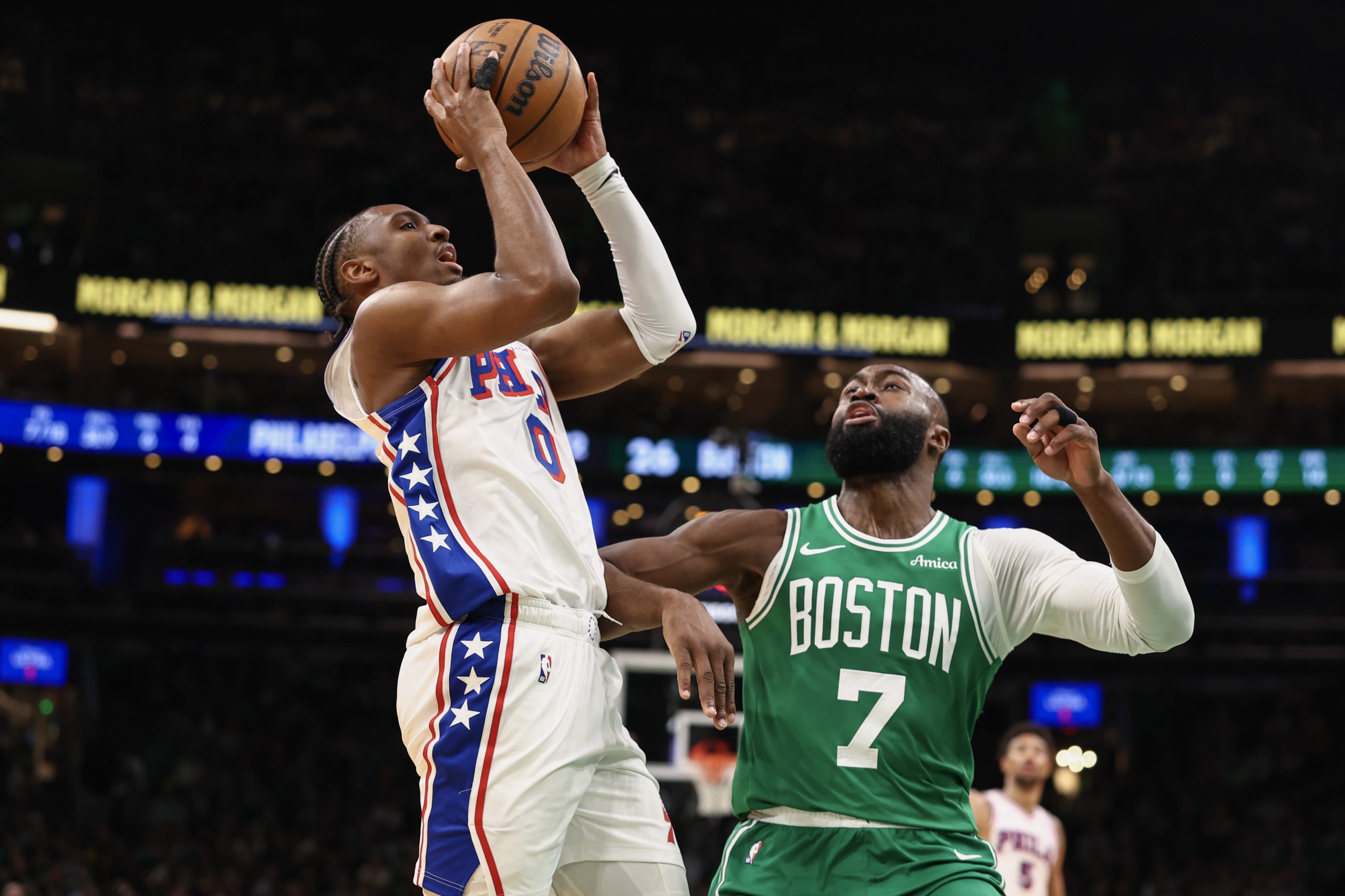
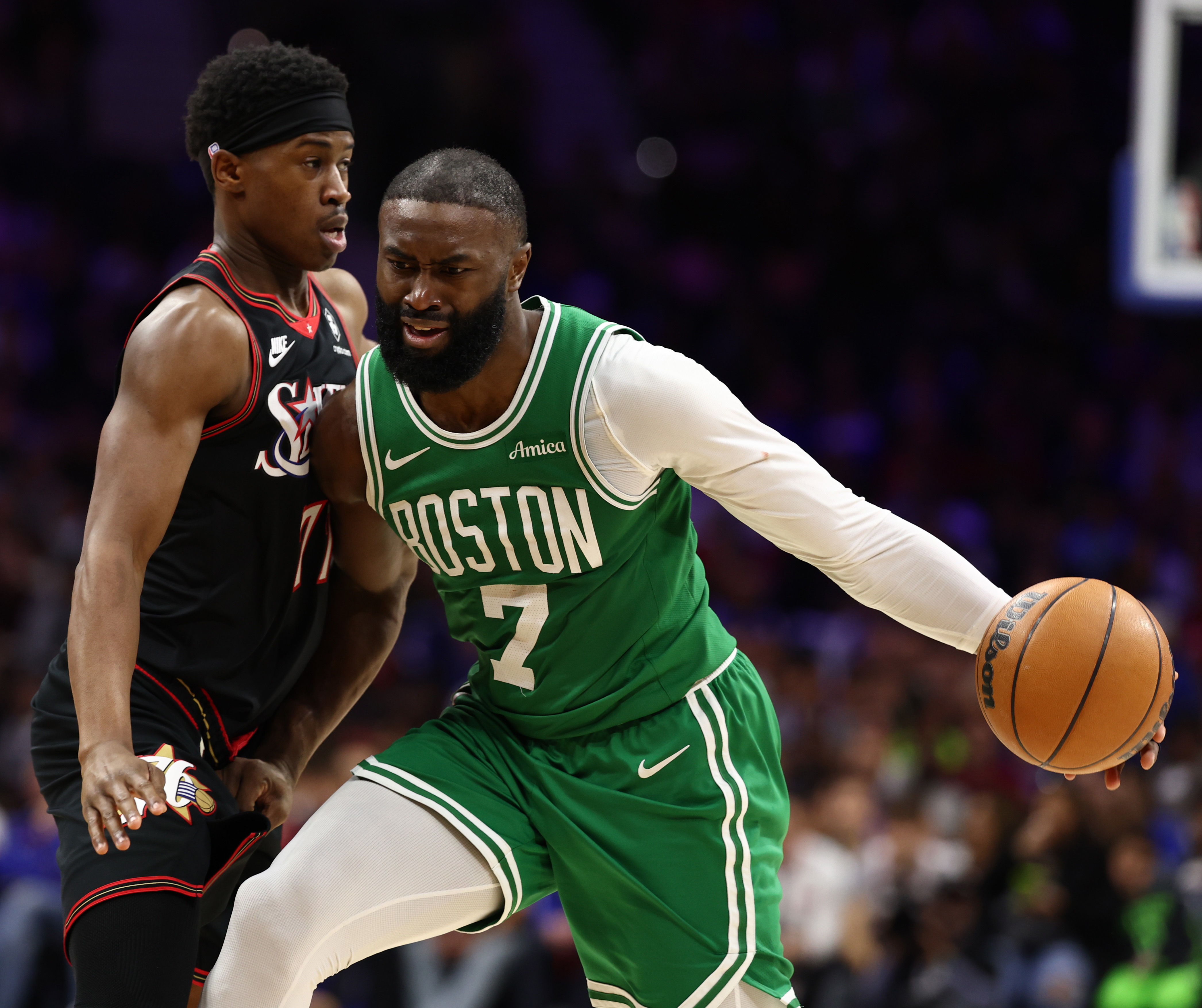
    Tyrese Maxey (left), new teammate Jaylen Brown, and the Sixers will first face Boston on Nov. 10 at home.

    Brown’s first game against Boston (Nov. 10, NBC10)

    There has been no love lost between Brown and the Celtics since he was traded to the Sixers on July 1. Brown still is coming to grips with the separation after spending the first 10 years of his career in Boston. Meanwhile, behind-the-scenes issues from his tenure there have started to emerge, as he and Jayson Tatum have carried on a cold war of sorts in the media and Celtics president of basketball operations Brad Stevens struggles to explain the deal that netted an aging Paul George. Brown, fresh off his “favorite season” as the centerpiece in Boston, will need to learn to fit into a star-studded Sixers roster. But he’ll likely take center stage in this matchup.

    Embiid returns to Houston after last season’s appendicitis (Nov. 28)

    This game takes on significance for several reasons, chiefly Embiid’s return to Houston for the first time since he underwent an emergency appendectomy in April. That surgery was one in a long line of ill-timed Embiid injuries. Finally on a team with tangible title hopes, Embiid’s quest to stay healthy has never been more important.

    LeBron’s return to Los Angeles (Dec. 25, 6abc)

    Ownership weirdness aside, the Lakers still are one of the NBA’s cornerstone franchises. It’s the reason James chose them in 2018 when he last entertained changing teams. It’s the reason he made waves this summer when he declared his intention to leave the West Coast. Before that public divorce, the Lakers already appeared to be trending in another direction with Luka Dončić on a max deal, and Austin Reaves signed to another contract extension this offseason. Even at 41 years old, James will have extra motivation on Christmas Day in LA.

    Sixers’ second meeting with Miami (Jan. 8, ESPN)

    The Sixers’ and Miami Heat’s first matchup this season is Nov. 25. But with new rosters on both sides, they still will be figuring things out at that stage. This Jan. 8 meeting will be the real matchup. By then, James, Brown, and new Heat star Giannis Antetokounmpo will have had time meshing with their new rosters and figuring out life in new cities. The East is a gauntlet, and these franchises are part of what has altered the conference.

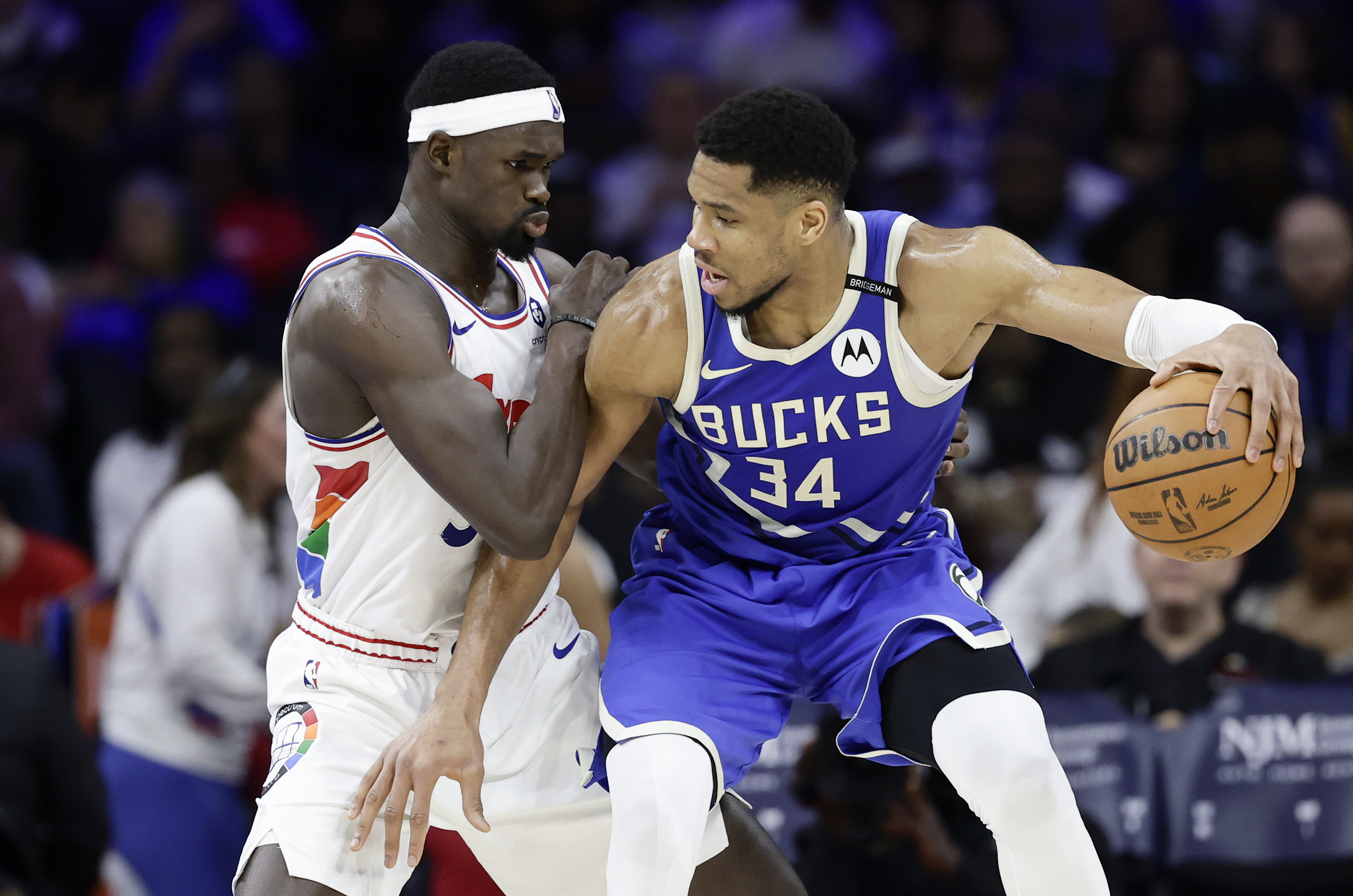
    The Sixers will visit Giannis Antetokounmpo (right) and the Heat in January.Yong Kim / Staff Photographer

    Brown returns to Boston (Jan. 21, Prime)

    Brown’s news conference was a sign he intends to put down real roots in Philly. He also connected with Boston and will hold a block party later this month to put a bow on his tenure there. Celtics fans had plenty of reasons to love Brown, who helped deliver a title in 2024 and was Finals MVP. But then Brown will have to flip the switch and remember that he now plays for the team he was “programmed to hate.”

    Game against OKC, McCain (Feb. 13, Prime)

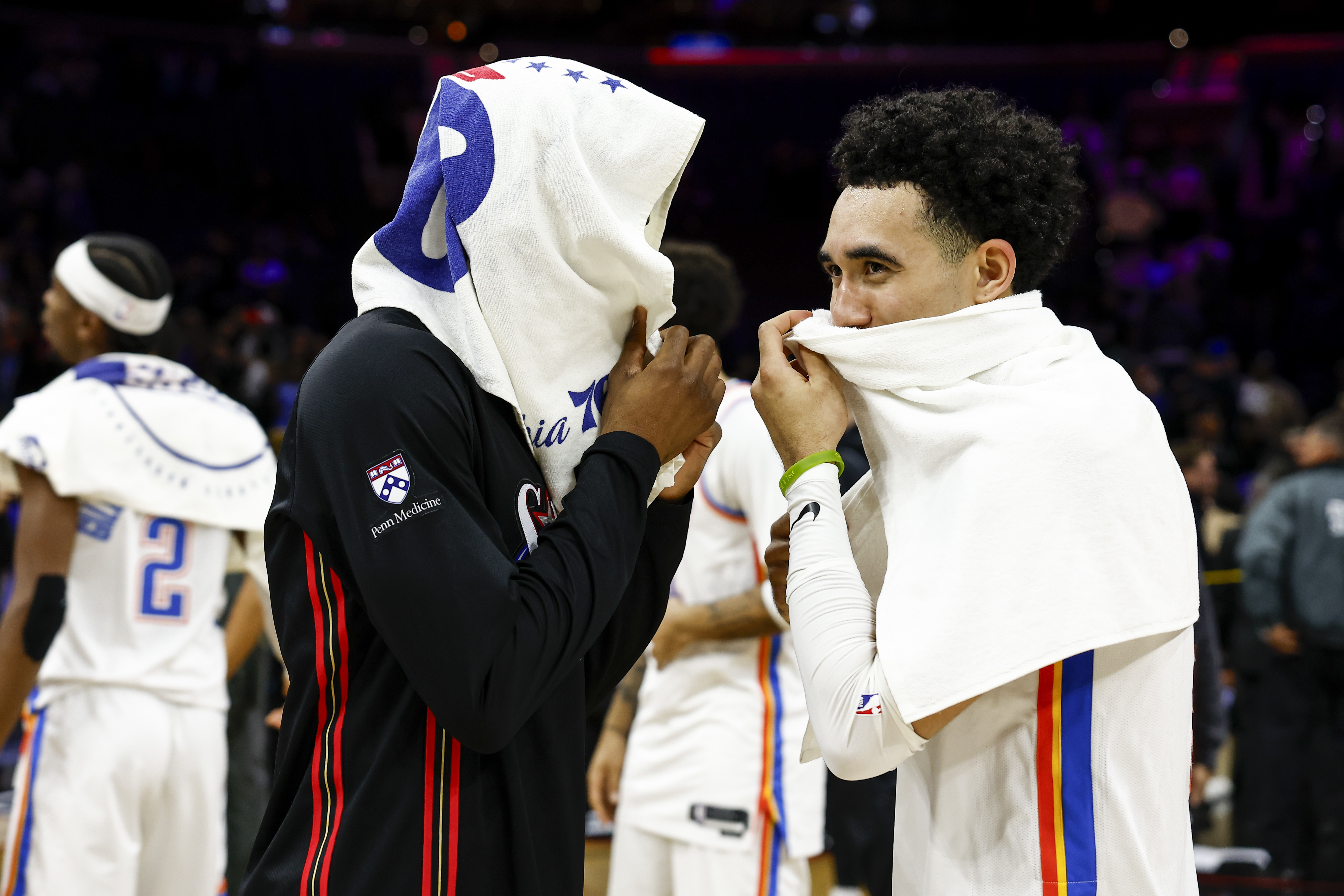
    The Sixers’ seismic offseason started with one February transaction. Jared McCain was sent to the Thunder at the February trade deadline, which likely spelled the end of Daryl Morey’s time in town. His trade was considered the linchpin that led to Gansey being hired, the trade for Brown, and the signing of James. Still, McCain remains well-liked in Philly, and his Thunder will serve as a crucial test for the Sixers right before the All-Star break.

    Embiid faces Wemby, San Antonio (March 11, Prime)

    One of the best performances of Embiid’s career came against one of the best defenders in NBA history. Embiid scored 70 points against then-rookie Victor Wembanyama and the San Antonio Spurs on Jan. 22, 2024. It also was one of the final times Embiid looked fully healthy. He suffered a meniscus injury about a week later and underwent left knee surgery. Embiid’s health will be critical for the Sixers’ title hopes. This should serve as a nice test for him right before the playoffs.

    Playoff tuneup against Golden State (March 31, ESPN)

    Speaking of tests, the Sixers by this point likely will start to wind down and load manage before the postseason. So against Golden State, another team James considered this summer, the Sixers will play a franchise with a championship pedigree even if it’s past its prime years.

  • Eagles practice observations: Jalen Hurts’ INTs explained; Moro Ojomo and Fred Johnson brawl; cornerbacks on ice

    Eagles practice observations: Jalen Hurts’ INTs explained; Moro Ojomo and Fred Johnson brawl; cornerbacks on ice

    The Eagles held the 11th practice of their 2026 training camp on Thursday at the Jefferson Health Training Complex. Here were my observations from Day 11 (and links to Days 1, 2, 3, 4, 5, 6, 7, 8, 9 and 10):

    Fight club

    My notes will start at the end of practice and what caused a scheduled 90-minute workout to finish prematurely: The Eagles’ first bona fide fight of camp. Defensive tackle Moro Ojomo and tackle Fred Johnson had themselves a good ol’ donnybrook in which fists were thrown, alleged cheap shots were taken and multiple players and coaches did their best to separate the two combatants.

    As with most camp altercations, there was apparently a series of events that led to the ultimate throwdown between the linemen. Ojomo doesn’t typically line up over Johnson, but there are occasions when they will meet, particularly on run plays. In second-unit team drills, Ojomo beat Johnson inside and notched a would-be tackle for loss. He might have had another TFL a set later if Johnson didn’t tackle him to the ground.

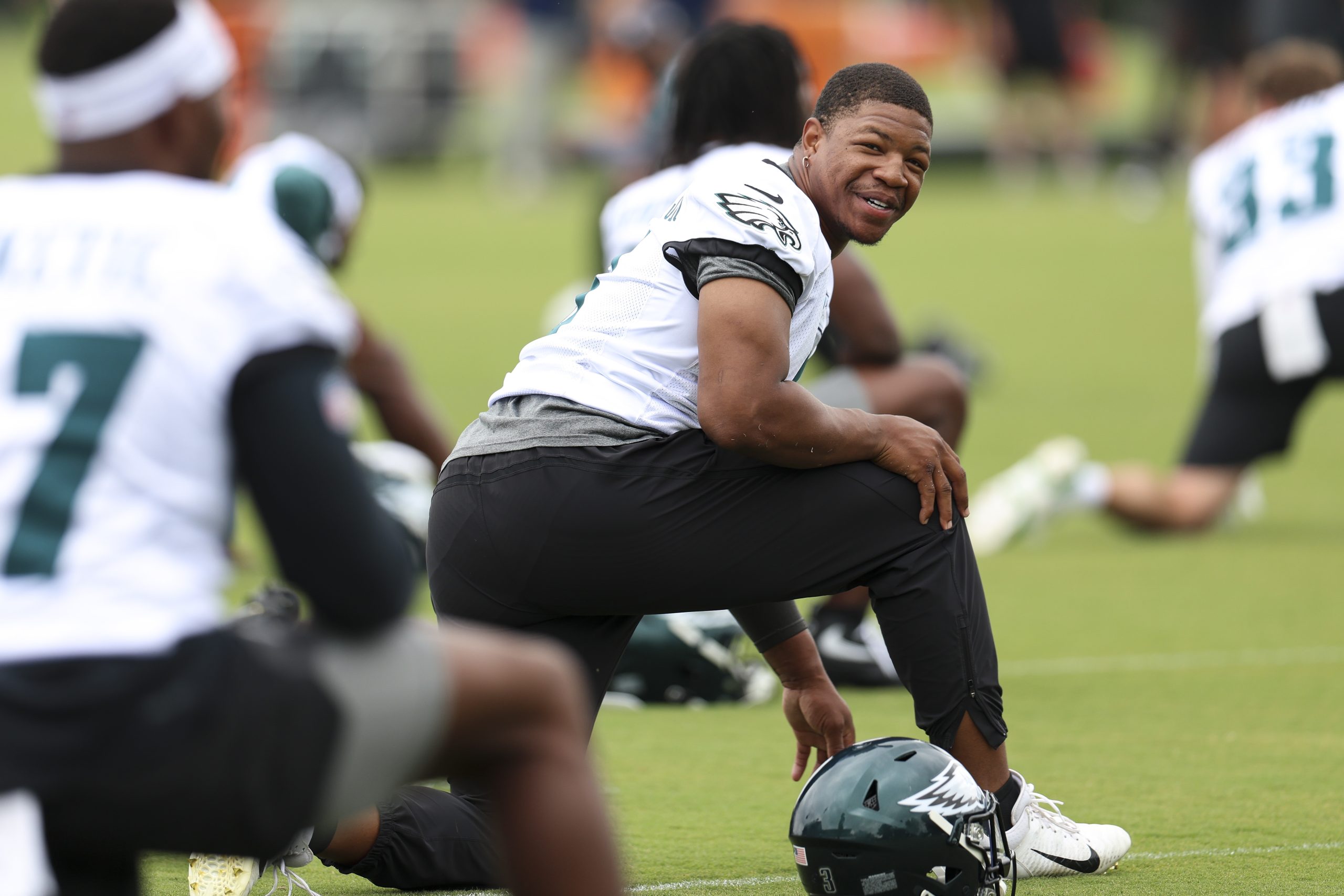
    Moro Ojomo took exception to what he felt was a late push by teammate Fred Johnson. Jose F. Moreno / Staff Photographer

    It all came to a head later on when Johnson gave Ojomo an extra push to the ground. Ojomo popped up, stormed at Johnson and led with a left. Johnson responded and they scuffled until it was broken up. Normally, throwing hands would get you kicked out of the next play or even practice. Ojomo and Johnson not only remained on the field, but faced off again. And, of course, it got physical again. Johnson pancaked Ojomo to the turf, Ojomo came up swinging — this time with a right hook — and then all I could see were bodies flying around trying to stop the melee.

    Punching a helmet makes little sense and Ojomo apparently realized as much. My view was obstructed, but I was later told that after breaking free from his teammates, he lunged at Johnson’s lower body. That prolonged the fracas until the two were finally pried apart. Ojomo kept yelling at Johnson, who said to no one in particular, “He tried to take out my knees! I got kids!”

    Coach Nick Sirianni huddled the team together and wrapped up practice 10 minutes early. After two weeks of facing off against each other, the Eagles’ offense and defense will finally face a team in another uniform when they meet the Ravens on Saturday. And again when they head to New England for two joint practices with the Patriots next Wednesday and Thursday. It’s about that time.

    Corner boys

    Quinyon Mitchell (glute) and Cooper DeJean (groin) were the latest to miss practice. I don’t think it’s a coincidence that the two All-Pro cornerbacks landed on the injury report at the same time. The Eagles have likely seen enough out of Mitchell and DeJean, and as they did with receiver DeVonta Smith, decided to shut down two key players who don’t need camp as much others do.

    With Mitchell out, Jakorian Bennett and Kelee Ringo split reps at right cornerback. Michael Carter II filled in for DeJean in the slot and Marcus Epps took most, if not all, of the snaps at safety. Cornerback Tariq Castro-Fields might have gotten some looks with the first-unit defense, too, but he was also out with a heel injury.

    The following remained sidelined: receiver Makai Lemon (hamstring), cornerback Jonathan Jones (shoulder), outside linebacker Keyshawn James-Newby (ankle), running back Dameon Pierce (hamstring), safety Cole Wisniewski (hamstring), and Smith (hamstring). Receiver Danny Gray (concussion) was limited.

    Receiver Johnny Wilson (knee) was back in action.

    When Riq Woolen (2) is off the field, Mac McWilliams (22) is often on it. Monica Herndon / Staff Photographer

    Hollywood shuffle

    Cornerback Mac McWilliams got some starter’s reps whenever Riq Woolen took a breather. He made the most of his turn during seven-on-sevens when he intercepted Jalen Hurts’ toss to receiver Hollywood Brown in the end zone. McWilliams caught sight of the pass late, but he used one hand to secure the ball against his shoulder and pulled it in for the pick.

    Hurts’ pass didn’t look errant. The timing between a quarterback and a receiver on out routes can be of the utmost importance. Hurts worked with Brown on the route after practice. Lemon was involved, as well. Brown hasn’t really stood out in camp. There could be a host of reasons why. Does Hurts not yet trust him? Is he not a scheme fit? Has he lost a step? Or is it simply too early to make assessments?

    Brown later dropped a screen pass.

    Interpreting interceptions

    Brown was also the intended receiver on Mitchell’s interception from Tuesday. I chose to spotlight the corner’s improved ball skills rather than Hurts’ turnover because it appeared as if Brown wasn’t precise on his dig route. As with most plays in football, there were multiple factors. The Eagles posted the play on their social media accounts and it created a minor stir.

    I understood some of the commotion. The team wouldn’t normally promote anything that would seemingly disparage their franchise quarterback. I think in this case, they simply wanted to give props to Mitchell. The interception had already been reported. It’s not like Hurts — or any player — is perfect. And, in fact, I appreciate that the Eagles didn’t feel like they had to mollycoddle the 28-year old. That hasn’t always been the case.

    Nevertheless, Hurts could end up throwing more interceptions with more projected middle field throws in the new offense. I asked Sirianni if he needed to alter his conservatism when it comes to turnovers because the reward of more over-the-middle passes is worth the risk. His answer in a nutshell was no, but I think there is an alternate reality.

    Nolan Smith Jr. had a strong practice Thursday. Monica Herndon / Staff Photographer

    Smith locked in

    Nolan Smith was all over the field during the first team period. The outside linebacker raced into the backfield to touch up running back Saquon Barkley after getting by tight end Dallas Goedert’s block. Smith was even more impressive on the next rep when he beat left tackle Jordan Mailata with a push-pull move and strung a run play out. A few plays later, he snuffed out a swing pass to Barkley.

    Smith’s instincts and versatility are strengths. He’s effective in setting the edge against the run and wily when he drops into coverage. His effort is unquestioned. A lot of his pressures and sacks come from dirty work. The one knock, as I see it, is fairly significant: He doesn’t win enough in the pass rush. At least not yet. And there are concerns about durability. He’s still wearing a large brace on his left arm. But the Eagles picked up his fifth-year option for good reason.

    Fixed Wicks

    Dontayvion Wicks opened camp as one of Hurts’ go-to guys. He wasn’t targeted as much over the last week, for whatever reason, but Thursday’s practice further validated the notion that Wicks should get the second-most number of snaps at receiver once the season starts.

    Hurts and Wicks have developed obvious rapport on certain concepts, mostly on the out route. Wicks knows how to win at the line. He caught a 10-yarder in front of McWilliams early on, and then beat Woolen for a touchdown. Woolen has been one of the best man-press covers in the NFL. But Wicks used a quick shuffle at the line to keep the corner from jamming him. Hurts hit him in stride before the pylon and pumped his fist in celebration.

    Bell power

    Markel Bell took the snaps at right tackle when Lane Johnson got rest. The 6-foot-9 rookie has so far answered some of the questions about his agility in the Shanahan scheme. We know he has the size traits, especially when it comes to arm length in pass protection. But would he be able to get out of a three-point stance in run blocking? Would he be able to climb to the second level and get his hands on linebackers?

    I saw it before in camp, but he had two impressive instances on Thursday when he sealed off linebacker Zack Baun on inside zone runs by Barkley and Tank Bigsby. Guard Tyler Steen — his partner on the right side — had a solid day as well. He once contained defensive tackle Jalen Carter at the point of attack. He later had a false start and may have held Carter on another down, but Steen has solidified his standing this summer.

    Johnny Mundt (83) was a target for Jalen Hurts (1). Tyger Williams / Staff Photographer

    First down

    Hurts loves his tight ends during sevens-on-sevens. Goedert and Johnny Mundt were his targets on the first three drops. Hurts then tried two corner fades in the red zone — the first to Wicks and the second to Wilson — but Michael Carter and Woolen each recorded pass breakups.

    Ringo took a poor angle on a Barkley run to the perimeter. A year ago, Ringo essentially took himself out of the starting cornerback competition when he missed an open field tackle in the first preseason game. Hurts later found Goedert in the back of the end zone for a touchdown in team drills. Safety Andrew Mukuba was in coverage, but Hurts had all kinds of time in the pocket.

    Tanner McKee should get some run on Saturday. Tyger Williams / Staff Photographer

    Second down

    Sirianni declined to say who would start at quarterback on Saturday. It’s doubtful that Hurts and Co. play. The guess here is that Andy Dalton will get the nod, but Tanner McKee will play as much. McKee was first up with the second offense on Thursday. His best moment came on a 12-yard hitch to receiver Britain Covey.

    Dalton struggled in his first set. His throw to running back Will Shipley led him just out of bounds. Shipley did his best to drag his feet, and a nearby referee ruled him inbounds, but the replay suggested otherwise. Gray was wide-open in the back of the end zone a play later, but Dalton overthrew him.

    Extra points

    Barkley got dinged at one point and required trainer attention. He should fine, from what I understand. … It was bound to happen. Willie Lampkin missed a block. Defensive tackle Byron Young was credited with a sack when he slipped outside the guard. Lampkin’s error wasn’t physical. He just hesitated a second on his assignment. … Covey, Elijah Moore, Quez Watkins and Brandon Hayes handled punt return duties. Lemon watched from nearby. … UFC’s Paddy “The Baddy” Pimblett watched practice. … The Eagles have a closed walkthrough on Friday. They’re off on Sunday and will return to practice on Monday.

  • Chatbots are doing the work of Congress with little oversight

    Chatbots are doing the work of Congress with little oversight

    The amendment was one of hundreds filed this summer to an annual defense bill making its way through Congress. Along with her proposed change, Rep. Anna Paulina Luna’s office had sent a summary of what it would do.

    But the first line made no sense.

    “increasing example specific factors. Identical to H.R. 100 (118th Congress).11:25 AM????Claude responded:”

    One of Luna’s staffers had copied a chatbot’s answer — timestamp and all — and pasted it into the public record of the National Defense Authorization Act.

    As a screenshot of the garbled text circulated on social media, the Florida Republican was nonchalant.

    “Not a shocker,” she wrote. “Most staff use it.”

    Asked later about the incident, Luna went further. “A lot of staff will use ChatGPT, Claude, Grok. I personally like Grok better, but my staffer prefers Claude,” she told the Washington Post. “I’m not going to knock him for that. There’s nothing illegal about him doing a summary.”

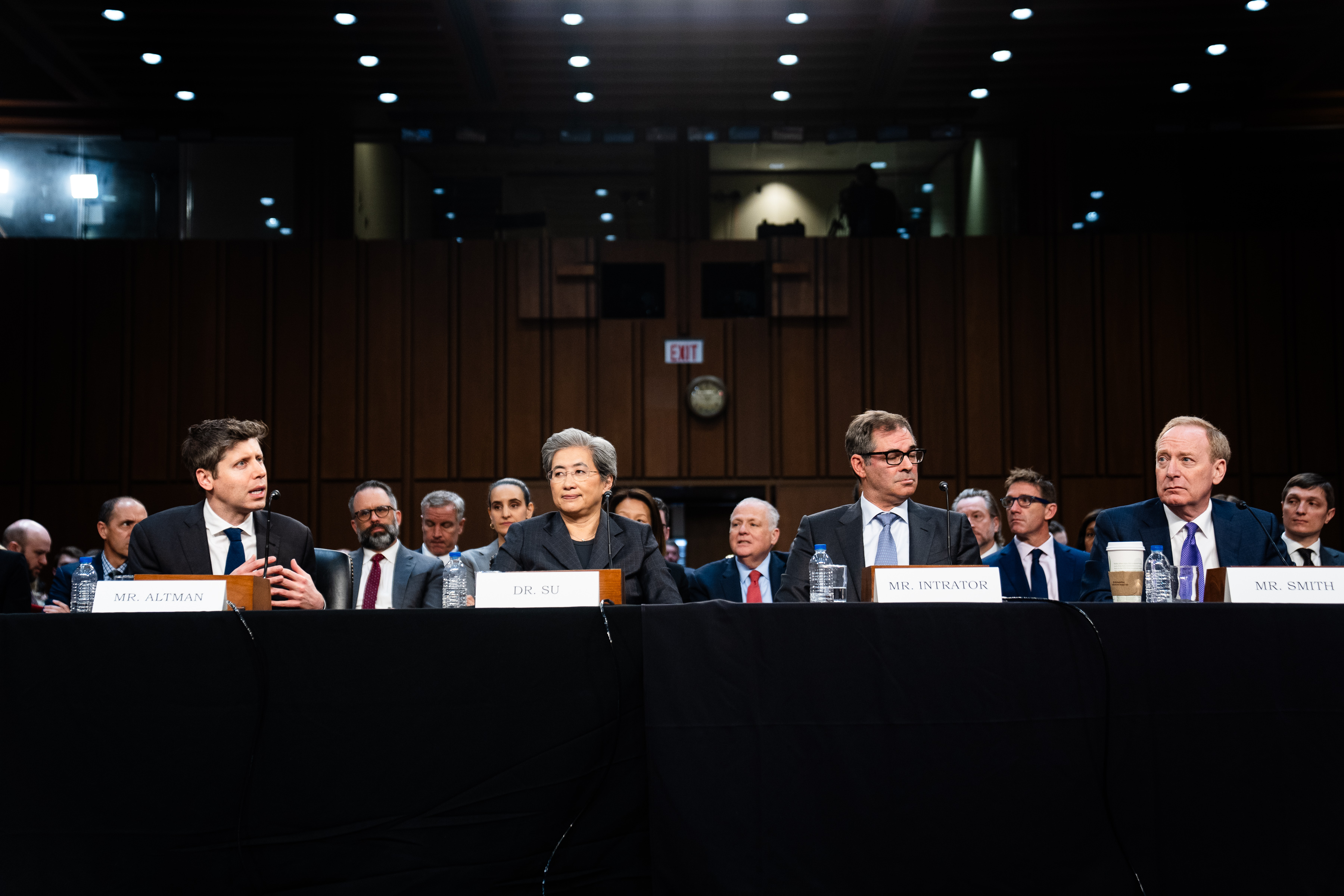
    Across the Capitol, lawmakers and staffers are using artificial intelligence to write speeches and news releases, sort constituent mail, prepare questions for congressional hearings, and draft amendments.

    Even as politicians are debating how to govern AI for the rest of America, Congress has already settled how it will use the technology: quickly, broadly, and with little oversight.

    Both chambers have cleared members and staff to use chatbots — Copilot, ChatGPT, Gemini, and, in the House, Claude — for official work, with more under review. The House bought 6,000 Microsoft Copilot licenses last year and encouraged staff to use them.

    Having someone else put words in a lawmaker’s mouth is nothing new. For almost as long as Congress has existed, staffers have been ghostwriting speeches for their bosses. But a speechwriter can be summoned or fired. Chatbots are products built by the tech companies that lawmakers are in charge of regulating.

    Amid the rapid adoption of AI on the Hill, lawmakers face a key question: How much of their responsibilities are they willing to hand over?

    Interviews with more than two dozen lawmakers and staffers — some of whom spoke on the condition of anonymity to discuss internal operations — along with internal House and Senate policies obtained by the Post show that the institution has left that question largely unanswered. The few House and Senate rules that exist are poorly understood and seldom enforced. In practice, AI use is left up to the hundreds of individual congressional offices to settle for themselves. It’s not clear how many offices have internal written policies on AI.

    And no one the Post asked knew of any instance where a staffer was formally disciplined by the House or Senate for breaking its rules.

    Luna was right. There was nothing illegal about having AI edit, spell-check — or even write — legislative materials. It wasn’t against House rules, either.

    Her staffer’s only mistake was letting Claude sign its work for others to see.

    Congress’ newest staffer

    Sen. Tommy Tuberville has found a new way to pass the long drives across Alabama: talking to ChatGPT.

    He asks it about Medicare and Medicaid, and listens as the machine’s voice talks back.

    “It’s kind of like you can sit there and talk to an expert,” said the Alabama Republican. “You don’t know whether or not they’re 100% correct. But they put you on the right path.”

    Rep. Mike Flood (R., Neb.) said he consulted a chatbot while working on a bipartisan housing bill that passed this year, asking it where private equity was buying up single-family homes. Sen. Elizabeth Warren (D., Mass.), who has proposed stricter legislation on tech companies, uses ChatGPT to look up demographic information.

    One GOP staffer’s boss uses chatbots to generate the occasional cartoon of himself, she said with a laugh. Her explanation: “He’s a boomer.”

    But the real power users are the thousands of staffers who do most of Congress’s work.

    Earlier this year, Rep. Cleo Fields (D., La.) had a town hall coming up in Natchitoches, a city in his district that his press secretary didn’t know well.

    So that aide, Sydney Broome, asked Claude for a list of TV stations in town, its newspapers, and reporters’ names and contacts. Then, she started calling each one.

    At 22, Broome is the youngest full-time staffer and only press secretary for Fields. AI saves her three or four hours of work a week, she said. Her boss does not use it at all.

    ChatGPT first emerged when Broome was still in college. Her professors, unable to stop students from using AI, urged restraint and ran their assignments through AI detection. Students could use it for research, they warned, but never to write from scratch.

    Congress has no such checks. So Broome has imposed them herself.

    She’ll use Claude to find a reporter’s email, but not to write to them. She doesn’t use it to produce anything in her boss’s name. “That’s just kind of a bit of a gray area,” she said.

    Many staffers say they are aware of AI’s limitations. The tools occasionally invent nonexistent bills. Other times, the writing is formulaic and clunky. Still, chatbots help speed up their work.

    A GOP aide in another office said he uses Copilot to write appropriations amendments. The subcommittee he works for used AI to suggest witnesses for a hearing and to help generate the questions lawmakers should ask them.

    Another Republican aide has taken AI even further. He exported all his phone contacts and text messages — years of conversations — into a personal Claude account and told it to build a database of every reporter he has ever dealt with: what he pitched them, which ones they accepted, which exchanges went badly. The chatbot auto-updates itself with each new conversation.

    Recently, his boss wanted to do a TV interview about surveillance law. The aide asked Claude whether he had ever pitched a TV booker on that topic and how it went. It came back instantly with a contact.

    Claude also runs that staffer’s office’s communications budget — the taxpayer-funded mail and ads sent to constituents. “I don’t really have to touch the data in Excel much anymore,” he said.

    The aide said he’s not sure what exactly is permitted by congressional rules. “You’re still not supposed to put constituent data into AI,” he said. “There are weird things around where the rules are. I don’t know all of them.”

    When nobody’s looking

    In 2024, the House Administration Committee convened a private, bipartisan meeting with House officers and outside AI experts to talk through how far to let AI into the legislative process. About 150 chiefs of staff attended.

    Out of it came the first AI guidance for Capitol Hill.

    Internal House and Senate policies obtained by the Post and interviews with people familiar with them show how Congress has embraced the use of AI.

    Last summer, the House bought 6,000 Copilot licenses. The tool was a natural fit for a chamber that already ran on Microsoft and a more secure way to keep congressional work inside a single system, officials believed. Starting in January, offices could sign up for access.

    They came with a major guardrail built into the system: Copilot is designed to refuse political requests. Ask it to criticize a party, politician, or political group, and the machine declines.

    “I can’t create content that criticizes or condemns political parties, politicians, or political groups,” read one Copilot response shared by a staffer. “That includes writing tweets that attack Democrats, Republicans.”

    Roughly half the licenses are now in use, and House officials have extended the deal.

    The rules Congress wrote for itself are loose. Off limits under current House guidance: putting sensitive material such as constituent information into a chatbot, generating deepfakes, making personnel decisions, and finalizing legislation.

    A machine may help write a bill but may not be the last hand on it. It may draft a reply to a constituent but can’t be told who the constituent is.

    In theory, a staffer breaking those rules can be stripped of access to AI tools, suspended, fired, even fined and imprisoned.

    But no one could name a single case of that happening. People familiar with House operations said they’re not aware of any enforcement action by the chief administrative officer. A spokesperson for the CAO said the office can’t comment on potential enforcement actions. A spokesperson for the Senate sergeant-at-arms didn’t respond.

    Catching violations largely falls on staffers, who would have to report a colleague, or themselves.

    Most said in interviews that they don’t know the rules. A former senior Republican House staffer said that his office subscribed to both ChatGPT and Claude and that staff used them however they liked. He wasn’t sure what the rules were, or whether his team followed them. “We just had a free-for-all,” he said.

    The House and Senate encourage individual offices to implement their own written AI policies. If a House office wants Copilot, in theory, it must have a policy in place.

    One reason Congress has moved so quickly to adopt AI tools is to keep pace with the executive branch, said people familiar with internal House operations. The Trump administration has spent the past year and a half pushing AI into every corner of the government.

    “If we are not keeping pace with how the executive branch is functioning,” one person said, “then we’re not performing effective oversight.”

    AI for everything

    The new frontier has left some lawmakers pondering how to proceed.

    “We want to make sure we’re using AI, and AI isn’t using us,” said Rep. Jamie Raskin (Md.), a constitutional law professor and the top Democrat on the House Judiciary Committee.

    Sen. Elissa Slotkin (D., Mich.) recently worked with her staff on a new policy for her office. They can use AI to “enhance and streamline” work but not to generate “final products” — like floor speeches or public remarks. They have to take AI training. Nothing with personal information about constituents or the senator can be uploaded. And her office is holding unannounced “spot check” inspections.

    “We didn’t want to prohibit the use of the newest tools, but we also didn’t want absolute schlock showing up in my memos,” Slotkin said. “What I’m not willing to do is put my head in the sand and pretend that my young staff aren’t going to find new and interesting ways of doing this.”

    In recent months, one Democratic staffer said his office has been exploring something new: feeding AI his boss’ past statements so the tool can write in the lawmaker’s voice. He heard another office was pulling it off and wanted to try himself.

    In the same building, a GOP press secretary whose office has stricter AI limits said it’s unfair other offices get an advantage. “We could churn out so many op-eds if we were more comfortable with AI,” she said.

    Recently, she found her own press assistant using AI in violation of their office’s policy. “We had to have a very robust conversation about how not to use AI for things in [the boss’s] voice,” she said.

    A preview of what more rampant AI use could look like already exists in state legislatures — many of which have no rules or policies at all.

    Amber Hulse serves in the South Dakota state Senate, where money is tight and lawmakers have no full-time staff. Hulse, a Republican, uses AI for almost everything — policy research, constituent email, speeches, writing legislation.

    Lately, she said, the signs of AI’s effects are getting easier to spot.

    “It’s funny,” Hulse said, “how your ears will start to pick up on the floor someone who’s giving a speech that was very clearly written by AI.”

  • Concerns grow over conditions on Navy carrier

    Concerns grow over conditions on Navy carrier

    WASHINGTON — Democratic senators have begun raising concerns about the extended deployment of the USS Abraham Lincoln, amid reports about poor living conditions and a lack of downtime for the crew after more than 8½ months at sea.

    The Lincoln, a San Diego-based aircraft carrier with a crew of about 5,000 sailors, is supporting U.S. operations in the Middle East against Iran.

    In a letter to Defense Secretary Pete Hegseth and Hung Cao, the acting Navy secretary, Sen. Richard Blumenthal (D., Conn.) described a list of reported problems on the ship.

    “There have been widespread reports of shortages of basic supplies, water contamination, plumbing issues, deteriorating mental health, deck safety concerns, and disruptions in the mail system, which have caused many care packages in route to the ship to be lost in transit for months,” he wrote about the problems, many of which were reported earlier by Navy Times and Stars and Stripes.

    Blumenthal added that the Trump administration had kept aircraft carriers at sea far longer than usual during its pressure campaign against Venezuela and its war with Iran.

    Sen. Ruben Gallego (D., Ariz.) said in a social media post Wednesday that he was requesting an overnight visit to the Lincoln for a bipartisan delegation of lawmakers.

    “Unlike Donald Trump, I’ve seen active duty,” said Gallego, who served in combat as a Marine. “The way he’s treating our service members as he carries out this illegal war is not just disgusting; it’s dangerous.”

    The Navy is sending the aircraft carrier George Washington to the Middle East to relieve the Lincoln, according to a U.S. official who spoke on the condition of anonymity because they were not authorized to speak publicly about ship schedules.

    “We ​make sure every ship, every crew, every captain has everything we can provide ​them at every single moment,” Hegseth told reporters ​during a visit to Panama on Thursday, according to Reuters. “Some deployments are longer than others, and I have more respect and gratitude for those sailors than anybody. What they do in ​those high seas in those austere conditions with less port calls — it’s incredible.”

    A second carrier, the USS George H.W. Bush deployed on March 31 and is already operating in the Middle East.

    The Navy’s newest carrier, the USS Gerald R. Ford, was deployed for 326 days before it returned home in May, breaking the record for the longest carrier deployment since the Vietnam War.

    The Ford deployed from Norfolk, Va., on June 24, 2025, and was operating in the Mediterranean when it was redirected to the Caribbean in October as part of the force that captured President Nicolás Maduro of Venezuela. In February the ship was sent to the Middle East as part of a buildup of U.S. military forces in the region that launched the war against Iran late that month.

    During its deployment, the ship suffered a fire and food shortages along with mechanical problems.

    The longer warship deployments are, the more they wear on people and equipment alike. When in constant operation, gear often begins to break or become inoperable if replacement parts are not readily available. And the nonstop cycle can take a toll on morale.

    Keeping warships out for extended periods often also creates other issues, such as upending plans that keep ships in certain parts of the globe for strategic reasons, along with interrupting shipyard maintenance schedules that are developed years in advance.

    “The Navy has a lot of flexibility to react to contingency operations, but as those deployments get extended and demand more underway time outside of normal schedules, readiness and maintenance suffer,” Mike Franken, a retired Navy vice admiral, said in an interview. “We just don’t have the ability to recover from that quickly. It will take years.”

    The Lincoln itself had to fend off attacks from Iran during the early phase of the war.

    “Iran shot hundreds and hundreds of missiles and one-way attack drones at our aircraft carrier,” Hegseth told reporters at the Pentagon on April 8. “Every single one of those shots, easily shot down miles and miles away from the Abe Lincoln.”

    The Lincoln has also helped enforce the U.S. blockade of Iranian ports, which initially ran from April 13 until a ceasefire agreement was announced in mid-June, and then resumed on July 15.

    During the first blockade, U.S. Central Command, which directs military operations across the Middle East, said its forces disabled nine “noncompliant” vessels through gunfire and missile attacks, and had “redirected” 135 ships that ultimately complied with the blockade order.

    In the second blockade, there appear to have been fewer U.S. attacks on merchant ships. In its most recent update on Aug. 9, Central Command said it had redirected 55 commercial vessels, disabled two, and boarded two to “ensure compliance” since the blockade was reinstated.

    When the Lincoln’s relief will arrive is unclear, but the George Washington recently passed through the Strait of Malacca — a major transit route through the Pacific Ocean in Indonesian waters — heading west, according to a second U.S. official who spoke on the condition of anonymity to discuss warship movements.

    With the Navy’s limited numbers of aircraft carriers being routinely pushed months beyond their scheduled deployments, Franken said, it will begin to limit their availability for combat operations in the future.

    “I guarantee you that the first two years of the Trump administration will definitely affect the next two years of the Trump administration,” he said.

    This article originally appeared in The New York Times.

  • King of Prussia data center fight could be paused by developer’s lawsuit

    King of Prussia data center fight could be paused by developer’s lawsuit

    A Main Line developer looking to build multiple data centers in Montgomery County possibly could have more time to make his case for a five-property campus near King of Prussia.

    And residents who oppose the projects — who had been preparing for a potential vote on the plans this week — now may wait to learn whether the complex will be built in their neighborhood.

    A Montgomery County Court of Common Pleas Judge on Wednesday temporarily prohibited Upper Merion Township from making decisions about any data centers proposed by Brian O’Neill. The township board of supervisors had been set to vote Thursday on the five proposed data centers totaling 4.6 million square feet.

    The developer had asked for an extension from Upper Merion until Sept. 30, saying his team needed more time to respond to dozens of township review letters related to the projects. In emails, O’Neill said township officials made clear they would not allow more time.

    “It is clear … that the township’s board of supervisors intends to decline the offer of extension and instead proceed to deny the applications,” O’Neill wrote in the lawsuit.

    On Wednesday, the developer had sued Upper Merion Township, its board of supervisors, and its planning commission, saying they violated his legal right to an extension and treated him unfairly during the review process.

    The judge’s ruling ordered that township officials halt certain proceedings and not make any decisions about the data center plans until after a court hearing scheduled for next week.

    Before the lawsuit, the Upper Merion Township Planning Commission had been scheduled to discuss and make recommendations to the Upper Merion Township Board of Supervisors on two of O’Neill’s five data center plans on Wednesday. The planning commission had previously voted not to recommend approval of O’Neill’s three other proposals.

    In a separate meeting on Thursday, the township supervisors had been set to vote on whether to approve the five data center plans.

    The proposed data centers in Upper Merion are across the river from another data center O’Neill has proposed near Conshohocken.John Duchneskie

    But late Thursday afternoon, Judge Garrett D. Page vacated his Aug. 12 order, paving the way for a potential vote Thursday night on O’Neill’s extension request and his data center plans.

    O’Neill’s team had declined to discuss the projects with the planning commission on Wednesday, citing the lawsuit.

    “We are not making a presentation tonight consistent with the court’s order,” said Edmund J. Campbell, an attorney for the developer. “I will ask to be excused as I don’t believe my presence is needed, pursuant to the court’s order.”

    With Campbell’s exit, the township planning commission had opened the floor to dozens of local residents, all but one of whom was opposed to the projects.

    They expressed concerns about light, noise, and sound pollution; water use; the impact on the power grid and electricity prices; mental and physical health impacts; and overall quality of life in the suburb. Some said they were angry with O’Neill and his team, with a few citing a recent 6ABC interview in which O’Neill said opponents wanted to “fight for the sake of the fight” and were against development that was “right for the community.”

    Some residents disagreed with those statements.

    “Judging by the past five months or so [of] our community standing together in solidarity against these horrific proposals, this is clearly not right for our community,” Upper Merion resident Zachary Davis said Wednesday.

    Some King of Prussia residents have put up lawn signs opposing the data centers.

    O’Neill has said his Upper Merion data centers would “change the world for the better” through AI-powered biotech that would complement his existing life-sciences complex, Discovery Labs.

    The developer has said the data centers would operate on a closed-loop system, requiring no outside water, and provide their own power. They’d emit little light and noise, according to O’Neill, and include billions of dollars worth of emissions controls.

    O’Neill’s team last week released an economic impact study that says the Upper Merion centers would result in more than 10,000 jobs during its construction and then generate more than $55 million a year in local tax revenue.

    O’Neill’s efforts come as data-center opponents’ ire toward him has intensified.

    The animosity was on display last week at a zoning hearing board meeting in nearby Plymouth Township, where O’Neill is trying to build a 2-million-square-foot data center on the outskirts of Conshohocken.

    In recent weeks, the developer has sparred with Plymouth Township officials, and filed a legal challenge to the zoning ordinance there. News of the moves prompted a “hell no” from Gov. Josh Shapiro, who had previously encouraged data center development in the commonwealth.

    A date has not been set for the next Plymouth Township meeting, though officials indicated it would occur sometime in September.

    In Upper Merion, officials said late Wednesday that the monthly board of supervisors business meeting scheduled for 6:30 p.m. Thursday was still on. Other issues, not related to data centers, were on the agenda.

    Editor’s Note: This story has been updated after Montgomery County Common Pleas Judge Garrett D. Page late Thursday afternoon vacated his Aug. 12 order.

  • Jaylen Brown’s Boston return, LeBron James’ tour, and more Sixers schedule observations

    Jaylen Brown’s Boston return, LeBron James’ tour, and more Sixers schedule observations

    The NBA released the rest of the 76ers’ regular-season schedule Thursday afternoon, rounding out a much-anticipated slate after the team added stars LeBron James and Jaylen Brown to become preseason championship contenders.

    Several marquee games were announced earlier this week, including the Sixers’ season opener (Oct. 20 at New York Knicks) and home opener (Oct. 22 vs. Cleveland Cavaliers); their holiday matchups on Christmas (at Los Angeles Lakers), Martin Luther King Jr. Day (Jan. 18 at Atlanta Hawks), and Presidents Day (Feb. 15 at Dallas Mavericks); and their NBA Cup group play matchups (Oct. 30 vs. New York, Nov. 6 at Cleveland, Nov. 25 vs. Miami Heat, and Nov. 27 at Indiana Pacers).

    Here are the highlights from the remaining slate:

    Jaylen Brown’s Boston return

    The primary mystery still lingering entering Thursday was when All-NBA wing Jaylen Brown would make his return to Boston. That day will finally arrive Jan. 21 — unless one counts the Sixers’ preseason visit to TD Garden during which Brown, like many stars in those exhibitions, may not suit up.

    Brown played his first 10 NBA seasons with the Celtics, developing into a five-time All-Star, 2024 NBA champion, and Finals MVP before being shockingly traded to the Sixers last month.

    The Sixers will also play in Boston on March 7, a 1 p.m. game televised by ABC. The first Sixers-Celtics meeting will be Nov. 10 at Xfinity Mobile Arena, marking Paul George’s return to Philly after he was moved to Boston in that blockbuster deal. That November game also will be the first with stakes since their wild first-round playoff series, when the Sixers rallied from down three-games-to-one to win Game 7.

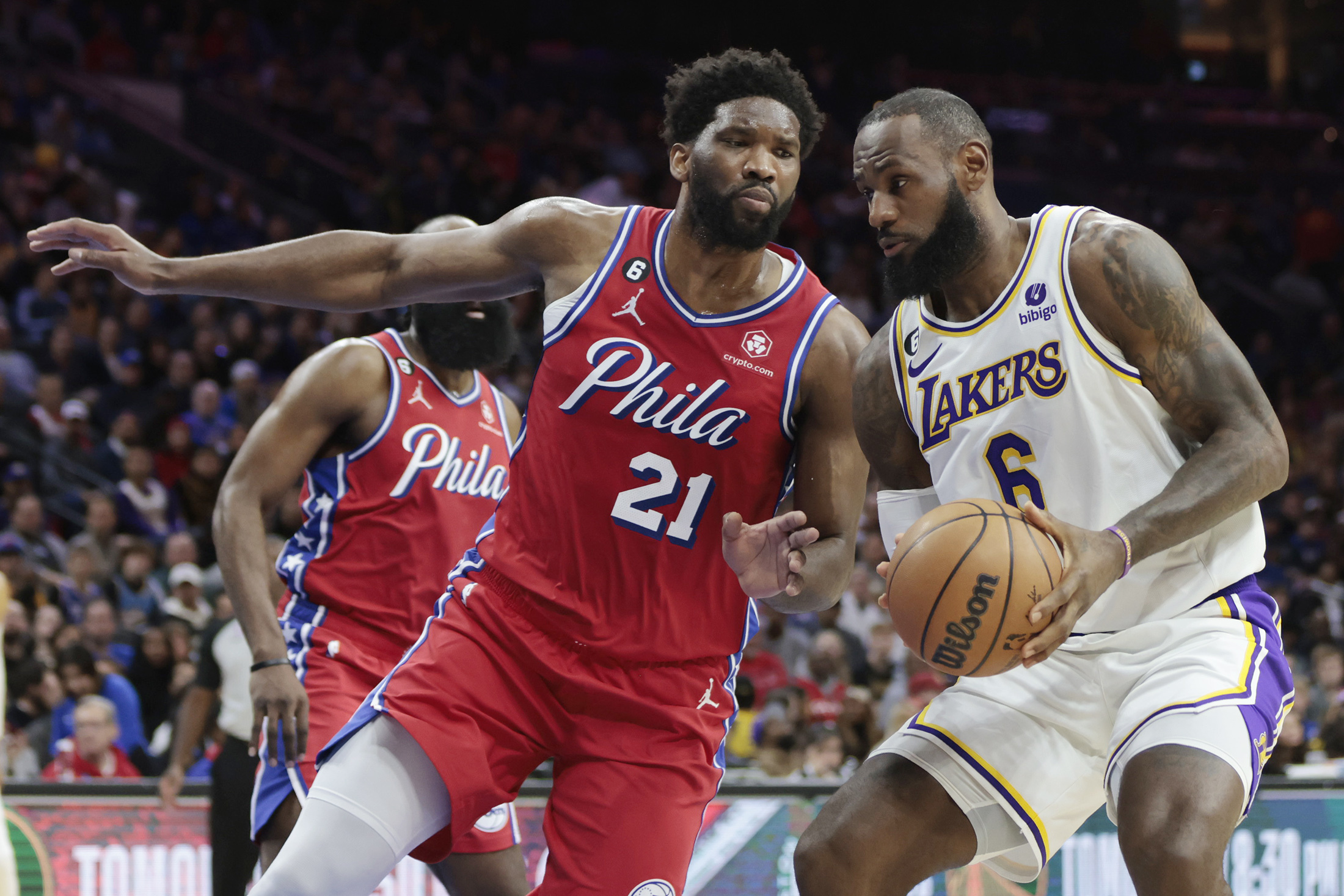
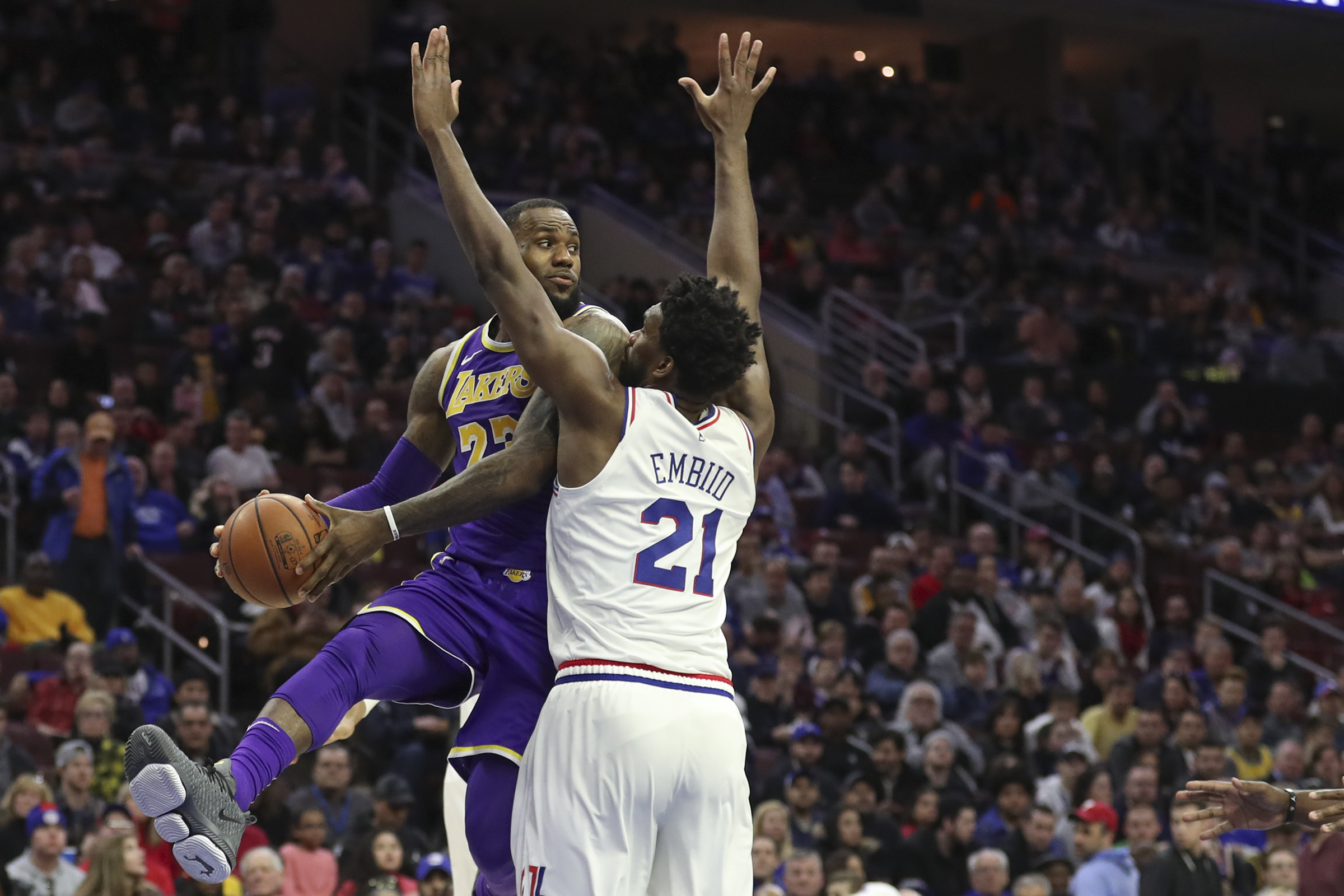
    Sixers Joel Embiid covers Lakers LeBron James in the first quarter of the Los Angeles Lakers at Philadelphia 76ers NBA game at the Wells Fargo Center in Phila., Pa. on Fri., Dec. 9, 2022.

    Hello again, LeBron

    The NBA had already placed James’ first game against the Lakers, for whom he had played the previous eight seasons, as a premier Christmas Day matchup. The all-time great also will return to Cleveland on Nov. 6 and March 1, and to Miami on Jan. 30 and April 8.

    James won NBA titles and MVP awards with the Cavaliers and Heat, and was considering both teams during his elongated free agency. Instead, James chose to sign a two-year contract with the Sixers in what he called his final playing-destination decision.

    One additional LeBron-related travel anecdote: The Sixers’ game at the Memphis Grizzlies is Feb. 3, after James said he is not the biggest fan of the hotel accommodations in that particular city. It is a single-game trip.

    Heading West

    Unsurprisingly, the Sixers’ two longest road trips of the season are primarily to the Western Conference.

    That Lakers showdown on Christmas begins a five-game trip, which continues against the Los Angeles Clippers (Dec. 27), Sacramento Kings (Dec. 29), Phoenix Suns (Dec. 30), and Milwaukee Bucks (Jan. 1).

    The Sixers also will head West four games in late March against the Utah Jazz (March 23), Golden State Warriors (March 24), Portland Trail Blazers (March 26), and Denver Nuggets (March 28). That finale in Denver is of note, considering former MVP Joel Embiid has not played in that city — and against former MVP-caliber center rival Nikola Jokic — since 2019.

    Beyond those jaunts, the Sixers’ longest road trip of the season is three games coming out of the All-Star break in February. And two of those are against the New York teams (at Brooklyn Nets Feb. 25, at Knicks Feb. 27) and won’t require travel in between.

    Noteworthy visits

    Here is when several big names and former Sixers will visit Philly (barring health):

    Oct. 25 and Feb. 5: Cade Cunningham (and Paul Reed and Isaiah Joe) with the Detroit Pistons

    Nov. 12 and March 15: Kawhi Leonard (presumably) with the Toronto Raptors

    Nov. 15 and Jan. 19: Kelly Oubre Jr. with the Indiana Pacers

    Dec. 2: Jokic with the Nuggets

    Dec. 23: Kevin Durant with the Houston Rockets

    Jan. 6: Shai Gilgeous-Alexander (and Jared McCain) with the Oklahoma City Thunder

    Jared McCain (right) and the Thunder will visit Philly on Jan. 6.Monica Herndon / Staff Photographer

    March 4: Luka Doncic (and Quentin Grimes) with the Lakers

    March 21: Victor Wembanyama (and Tobias Harris) with the San Antonio Spurs

    March 24: Stephen Curry (and, potentially, Jimmy Butler) with the Warriors

    Other nuggets

    • The Sixers have 34 nationally televised games, a franchise record and the maximum allowed for a single team. That further embodies the immense attention on a star-studded roster. Ten of those are on Amazon Prime Video, while eight apiece are on ESPN and NBC/Peacock, five are on ABC, and three are on Peacock/NBC Sports Network.
    • The Sixers will play 13 back-to-backs, down from 16 last season. Managing those will be crucial to maintaining the health of James and Embiid, who previously said on the record that he may never play in both games of such a set again. The Sixers’ strangest back-to-back: Indiana to Houston over Thanksgiving weekend (Nov. 27 and 28).
    • Nine of the Sixers’ 16 January games will be at home, the most in a month during the season. Matchups against the Washington Wizards (Jan. 12), Nets (Jan. 14), Clippers (Jan. 25), and Sacramento Kings (Jan. 27) — who are all expected to finish near the bottom of the standings — are part of that stretch.
    • Their final four games — vs. Atlanta, at Toronto, at Miami, vs. Charlotte — could go a long way in determining postseason seeding and exemplifies the newfound depth of the Eastern Conference.
  • U.S. investigated left-leaning groups during Minnesota immigration crackdown

    U.S. investigated left-leaning groups during Minnesota immigration crackdown

    Four days after Alex Pretti was fatally shot while filming officers taking part in the Trump administration’s immigration crackdown in Minnesota, the Homeland Security Department quietly opened an investigation at its office in St. Paul.

    The target was not the Border Patrol agents who had killed Pretti, a 37-year-old government nurse, in late January. Instead, it was several left-leaning political organizations — labor unions, a climate change group, socialist collectives — that investigators believed had provided help and money to what they described as the “violent opportunists and agitators” on the street, according to newly released government documents.

    As part of their inquiry, the documents show, Homeland Security officials used an array of invasive tactics during the first half of this year to gather information on many groups and individuals who were never accused of crimes, crossing the line that has traditionally stood between investigating criminal activity and political dissent.

    In one instance, officials used administrative subpoenas to obtain more than three years of financial records from the Sunrise Movement, an environmental action group, and a labor union, the Communications Workers of America. That time frame went well beyond the civil unrest in Minnesota, which was prompted by the deployment of thousands of immigration agents to the state during the winter.

    In another, investigators scrutinized three years’ worth of wire transfers made by the nation’s biggest healthcare workers union, the Service Employees International Union, in what they referred to as an inquiry into “domestic terrorist financing.”

    The documents further detailed an expansive covert surveillance operation in which undercover agents spied on protesters and organizers at meetings held online, as well as in libraries, parks, and churches, taking down not only what they said, but also their names and sometimes license plate numbers. The undercover agents also infiltrated group chats on Signal, listening as activists discussed coming demonstrations and their political opinions.

    So far, none of the organizations targeted by the Homeland Security inquiry, conducted with the U.S. attorney’s office in Minnesota, have faced charges. And yet, as the investigation moved forward, prosecutors showed grand jurors a PowerPoint slide asserting that 18 groups — including the AFL-CIO, the country’s largest federation of labor unions — were part of a conspiracy to impede the work of immigration officers in Minnesota.

    Ultimately, that supposed conspiracy led in June to the indictment of 15 people accused of interfering with law enforcement agents as members of the far-left movement known as antifa.

    The Homeland Security Department did not respond to a message seeking comment. A spokesperson for the U.S. attorney’s office in Minnesota declined to answer questions about the investigative tactics.

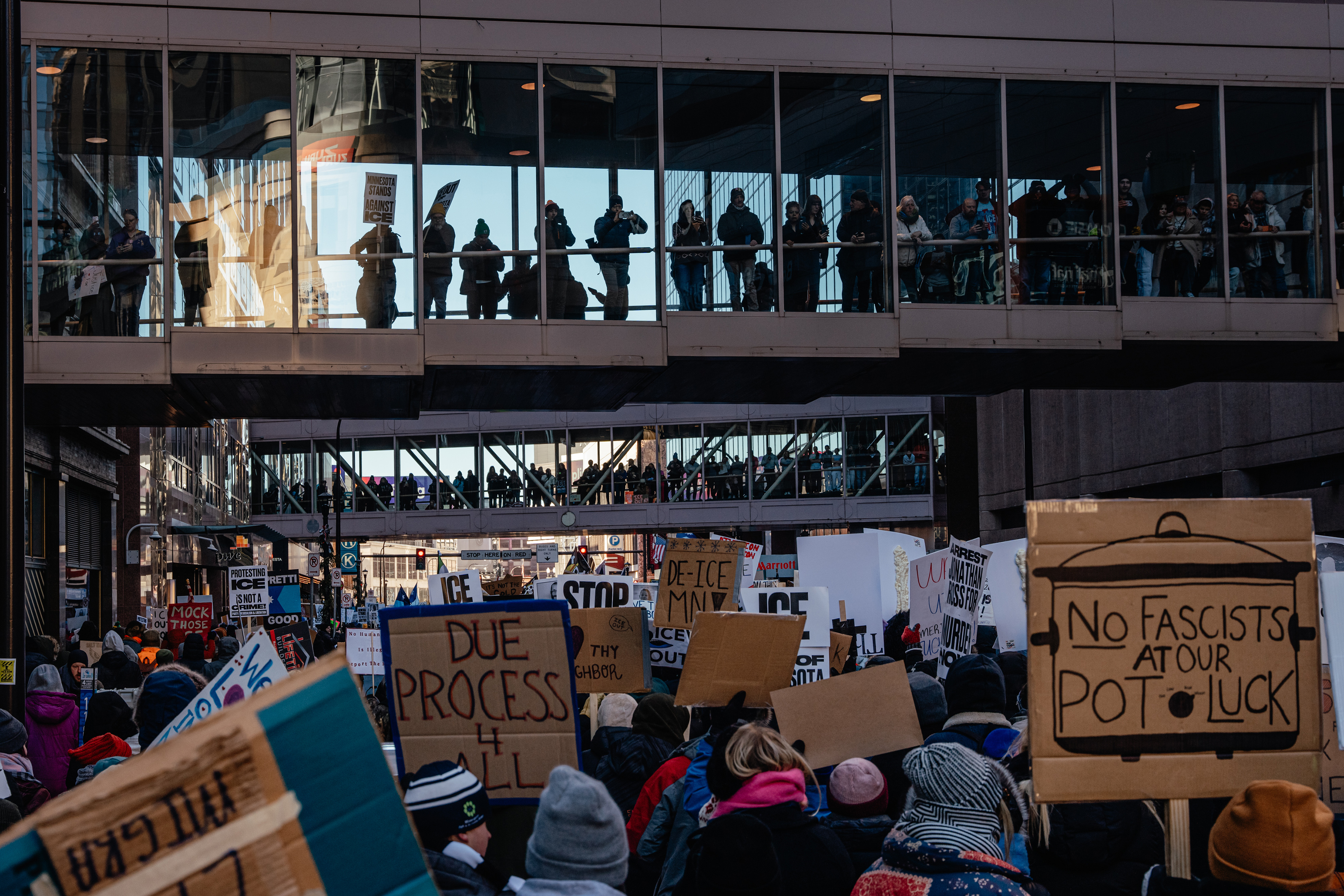
    By its own account, the institutional left in Minnesota, especially the labor movement, played a central role in bringing out hundreds of thousands of people to march in protest of President Donald Trump’s immigration crackdown in the state. But the demonstrations — and corresponding efforts to monitor the movements of Immigration and Customs Enforcement agents — were largely undertaken by ordinary residents, most of whom have said they were committed to peaceful resistance.

    “While federal agents repeatedly broke the law, ordinary people exercised their First Amendment rights to protect their neighbors,” said Aru Shiney-Ajay, the executive director of the Sunrise Movement. “The Trump administration is now trying to intimidate individuals and organizations who opposed his agenda.”

    Some of the 15 people charged in the so-called antifa case did, in fact, belong to some of the unions and political organizations that faced scrutiny over several months during the spring and winter. But the newly released documents, which were disclosed as part of a motion asking for more details about the criminal inquiry, suggest that investigators used those tenuous connections to take a deep dive into the inner workings of the groups.

    Kevin Riach, the lawyer who filed the motion, in U.S. District Court in Minnesota, wrote that the Homeland Security investigation into the interference with federal agents “extended far beyond any potential threat to law enforcement safety.”

    “It concluded, with no evidence (but obvious political animus),” he wrote, “that numerous Twin Cities unions and nonprofit organizations were involved in a widespread conspiracy,” adding that “it surveilled and surreptitiously gathered financial records generated by these organizations despite the lack of any connection between those organizations and criminal conduct.”

    The investigation in some ways called to mind Cointelpro, the intrusive counterintelligence program that the FBI ran against leftist groups from the 1950s to the 1970s under the leadership of the bureau’s director, J. Edgar Hoover.

    The Minnesota surveillance reports in particular documented what largely appeared to be political activity protected by the First Amendment. They showed how undercover agents embedded themselves in a “noise protest” outside a hotel where immigration agents were staying and took down notes at other gatherings as demonstrators brainstormed ideas on how to protest the surge of officers who descended on Minnesota late last year.

    Former federal prosecutors questioned why Homeland Security officials took the lead in a case that would typically be overseen by the FBI. Others said that the broad use of subpoenas targeting labor unions and other groups was unusual and concerning, especially if it turns out there was no evidence that the organizations were breaking the law.

    “The government’s power to investigate is extraordinary, and with that power comes a responsibility to exercise care and restraint,” said Harry Jacobs, who resigned as the chief of the criminal division at the U.S. attorney’s office in Minnesota in January in protest over the Trump administration’s handling of the killing of Renee Good.

    “An investigation should begin with a legitimate basis to suspect criminal conduct, not with a chosen institution or group,” Jacobs added. “Prosecutors must follow the facts and the law wherever they lead, rather than select a target and work backwards to build a case.”

    Several of the groups that were targeted in the inquiry, known as Operation Puppet Master, and in a follow-up investigation called Project Whipple Shield, declined to comment. (Whipple Shield is a reference to the Whipple Building, which served as a hub of the immigration operation.)

    When Daniel N. Rosen, the top federal prosecutor in Minnesota, announced the indictment of the 15 purported antifa members two months ago, he chose his words carefully, insisting that the defendants had been charged only because each of them had “violently opposed” federal agents taking part in the Trump administration’s immigration agenda.

    “Be assured,” he told reporters, “the Department of Justice and my U.S. attorney’s office has and will distinguish between lawful protest and criminal conduct.”

    But what Rosen did not disclose that day was that the charges filed against the 15 defendants stemmed from a sprawling investigation. Its tentacles had touched the lives of scores of ordinary people — teachers, veterans, union members — who in many instances had gotten together to do little more than discuss monitoring ICE agents or abolishing ICE altogether.

    The case in St. Paul, like others against ICE protesters, arose from a sweeping directive issued last year by Trump known as National Security Presidential Memo 7. The memo ordered a whole-of-government approach to stem what officials have described as a rising tide of left-wing political violence.

    But former prosecutors and civil rights lawyers have criticized it for encouraging aggressive investigations and prosecutions of groups and people on the left for activities typically protected by free speech laws.

    In drafting their indictment, prosecutors under Rosen focused on an organization called Direct Action Minnesota, or DAMN, an umbrella group that describes itself as a “decentralized coalition of working-class people engaged in various forms of community defense against the current federal occupation” in Minnesota. Prosecutors said that the group trained its members in how to use shields against law enforcement officers, conduct surveillance, plan events, and mount “rapid mass mobilization” against actions by ICE officers.

    The indictment details some behavior by protesters with ties to DAMN that clearly seems violent or obstructive.

    For example, prosecutors said that on Jan. 23, demonstrators who had gathered at the Whipple Building threw ice blocks at law enforcement vehicles. They also formed a blockade, boxing federal agents into one area near the federal building. Weeks later, prosecutors added, some of the defendants put debris in a road outside the building, trying to block access to it.

    But the indictment also notes that the defendants often relied on information gleaned from group chats whose members tracked and monitored vehicles going to and from the Whipple Building — behavior that is not necessarily illegal. Indeed, the federal judge overseeing the case, Katherine M. Menendez, has already issued an order in a separate civil proceeding saying that protesters cannot be arrested simply for following federal agents in their vehicles.

    Nonetheless, some groups that organized and ran the group chats were targeted by the surveillance operation and later identified in the prosecutors’ grand jury presentation as being part of the conspiracy to interfere with ICE agents. Other members of the alleged conspiracy were said to include the local chapters of the SEIU and the Democratic Socialists of America, a state teachers union — and even the Grease Pit, a small bike shop in Minneapolis.

    In his motion, Riach described how federal agents took down the license plate numbers of people who attended a protest at a church in Roseville, Minn., and used that information to obtain their names. The agents then searched social media for images of the people, compiling an “intel work-up” that included detailed personal information about them.

    “None of these individuals did anything other than engage in protected First Amendment speech in a church meeting room,” Riach wrote. “Yet now their personal information is memorialized in a DHS dossier.”

    This article originally appeared in The New York Times.

  • Pa. says vaccine guidelines won’t change over Trump’s executive order

    Pa. says vaccine guidelines won’t change over Trump’s executive order

    Pennsylvania will not change its immunization guidelines in response to President Donald Trump’s executive order this week calling for states to reduce the number of recommended childhood vaccinations and separate a combination shot protecting against measles, mumps, and rubella (MMR).

    Gov. Josh Shapiro, a Democrat, said his administration will “continue to give Pennsylvanians clear public health guidance based on science and facts.”

    “President Donald Trump and [Health and Human Services Secretary Robert F. Kennedy, Jr.] are screwing around with the childhood vaccine schedule — ignoring decades of science, sowing chaos and confusion, and spreading dangerous misinformation that put kids and families at risk,” Shapiro said.

    States set vaccination mandates for schoolchildren, not the federal government.

    The order signed by Trump on Monday asks states to “consider updating” laws to require fewer vaccinations for all schoolchildren.

    The order also recommends that children receive all vaccinations at separate appointments, which experts say can delay children’s protection against serious diseases.

    And it gives Kennedy, a longtime anti-vaccine activist, 90 days to present Trump with a plan for a number of vaccine policy changes. Changes could include splitting the MMR vaccine into separate shots for each disease. There are currently no individual vaccines for measles, mumps, or rubella licensed in the United States.

    “Splitting up combination immunizations, like the MMR vaccine, creates unnecessary hurdles for parents, needlessly extends the window of risk for our youngest residents, and doesn’t follow the results of the many studies that went into developing the previous vaccine schedules,” Pennsylvania Secretary of Health Debra Bogen said in a statement.

    Trump’s earlier attempt to reduce the number of recommended vaccinations was blocked in federal court.

    White House spokesperson Kush Desai did not comment directly on Pennsylvania officials’ decision to keep its original vaccine recommendations.

    He said in a statement that Trump has pledged to reduce the vaccines recommended for all children, and the “administration is committed to delivering with Gold Standard Science and every lever of executive authority.”

    “The countless parents whose questions and concerns about America’s vaccine schedule have been ignored if not mocked finally have a true champion in President Trump,” he said.

    Vaccine politics under Trump

    The new executive order is not binding, experts say, and states are free to ignore it.

    Several states, including Pennsylvania, have already balked at Trump’s repeated attempts to upend longstanding childhood vaccination schedules.

    In February, Pennsylvania and 14 other states sued to block changes to the childhood vaccination schedule.

    And last year, when the Trump administration did not approve COVID-19 vaccinations for certain groups, Pennsylvania changed state policy to allow pharmacists to dispense vaccines based on recommendations from a number of professional medical organizations, including the American Academy of Pediatrics and the American Academy of Family Physicians.

    Previously, pharmacists were asked to dispense vaccinations based solely on recommendations from a Centers for Disease Control and Prevention committee. Kennedy fired the entire committee and replaced them with hand-picked appointees last year, some of whom included vaccination skeptics. That action is also the subject of a court battle.

    “The way to handle this is to ignore it,” said Paul Offit, the director of the Vaccine Education Center at the Children’s Hospital of Philadelphia and a prominent Kennedy critic.

    “It’s not science based, it doesn’t make vaccines safer or more effective,” he said. “All it does is put children in harm’s way.”

    He noted that despite longstanding concerns by anti-vaccination activists that children receive too many vaccinations, breaking up combination vaccinations like MMR would result in children getting more shots. “Kids would need six shots instead of two,” he said.

    Logistics uncertain

    Changing the kinds of vaccines available in the United States would take years, said Ana Santos Rutschman, a professor specializing in health law at Villanova University.

    Trump could ask the Food and Drug Administration to approve separate measles, mumps, and rubella vaccinations, which would require extensive clinical trials and a long approval process, she said. And vaccine manufacturers may not attempt to develop new shots if Republicans lose control of the White House in 2028, she added.

    “Right now, it’s unlikely anyone will reshift their operations,” she said. “It’s feasible — it’s just expensive, and the payoff is very small.”

    The FDA could revoke licensing for the current combination MMR vaccines, but that would likely invite court challenges, Santos Rutschman added.

    In the short term, she’s concerned that Trump’s repeated attempts to change longstanding vaccine policy will only confuse parents and providers who have relied on consistent recommendations from the federal government.

    “Suddenly, you have our top regulators saying there’s a reason to hop to a different set of products. This is inherently confusing,” she said.

  • In the Reflecting Pool saga, the National Park Service’s mission is tested by Trump’s demands

    In the Reflecting Pool saga, the National Park Service’s mission is tested by Trump’s demands

    WASHINGTON— President Donald Trump’s botched repairs at the Lincoln Memorial Reflecting Pool have landed the National Park Service in a tight spot, forced to serve the public while managing controversial demands by the Republican president.

    The beloved federal agency, its iconic park rangers, and other employees have been navigating a new reality under Trump, from orders to revise exhibits at parks and other sites to the demolition of important structures under its stewardship, such as the White House’s East Wing, to arresting visitors for alleged vandalism at the pool.

    Critics say the monthslong Reflecting Pool saga and other demands by Trump risk undermining the integrity of a federal agency that has long been held in high esteem by the American public.

    “Never — not once in decades — have I witnessed such systematic degradation, disrespect, and dismantling of the National Park Service as I see today under the thumb of President Donald Trump and Interior Secretary Doug Burgum,” said Bill Wade, a former park ranger and superintendent.

    Wade, who now serves as executive director of the Association of National Park Rangers, wrote an op-ed for the Denver Post lamenting what he called the Trump administration’s “assault on the people, the mission and the values that have made the National Park Service one of America’s most valued institutions.”

    The park service has been at the center of some of Trump’s most contentious actions during his second term. An executive order targeted funding and demanded reviews at national parks and other sites that Trump said advanced “divisive narratives” and “improper ideology,” resulting in changes to some exhibits on slavery or climate change.

    The president has also ordered sweeping changes to historical monuments and buildings in Washington that fall under NPS’ purview, including the creation of a White House ballroom and a 250-foot-tall memorial arch. The agency meanwhile has lost at least one-quarter of its permanent workforce since Trump began his second term, through layoffs, forced retirements, and resignations.

    Park service employees “are being politicized and drawn into the absurdities and corruption of this administration” on a regular basis, said California Rep. Jared Huffman, the top Democrat on the House Natural Resources Committee. He cited the pool project, the proposed arch, and the executive order on exhibit materials.

    The ongoing political assault on the agency “is unlike anything we’ve seen in this country, and it makes life miserable at agencies like the National Park Service,” Huffman said.

    Reflecting Pool saga continues

    Trump launched repairs at the Reflecting Pool earlier this year, hoping to address longstanding problems at the iconic site ahead of the America 250 celebrations. But the $16 million project faced immediate problems, including peeling blue sealant and a fierce return of green algae.

    Trump blamed the sealant issues on vandalism without providing evidence, and felony charges were brought against a former Olympic canoeist, David Hearn, after he was accused of vandalizing the pool.

    The U.S. Park Police, a unit of the National Park Service, arrested Hearn, who denied wrongdoing and said he briefly touched a chunk of the coating.

    Charges against Hearn were dropped on July 31 after prosecutors acknowledged that damage was caused by a bungled installation rather than vandalism.

    The advice and counsel of career officials and rangers — instantly recognizable by their signature flat hats and green-and-gray uniforms — has been ignored or pushed aside as Trump and Burgum make decisions regarding the failed pool repair, according to an Interior Department employee who was not authorized to discuss internal discussions and spoke on the condition of anonymity.

    “It’s tragic,” said Ed Stierli, vice president of government affairs at the National Parks Conservation Association, another advocacy group. “The whole thing is a master class in how not to go about a public rehabilitation project.”

    In the days since the dismissal of the charges, Trump has continued to lean on NPS in his repeated claims that vandals damaged the pool’s lining.

    “A National Park Service career employee, a highly credible witness, saw David Hearn … in broad daylight vandalize the Reflecting Pool by ‘violently’ ripping and tugging at the Pool’s somewhat delicate coating,” Trump posted Aug. 9 on his Truth Social site. Hearn’s legal team said Trump “is continuing to attack an innocent man.”

    Stierli, of the parks conservation group, called Trump’s reference to the unnamed park employee an example of the awkward position agency workers now face under Trump and Burgum, who has publicly backed Trump’s claims about vandalism at the pool.

    “I think the public understands that unfortunately, you have the president of the United States directly driving decisions, both here in Washington and around the country,” Stierli said. The park service — and especially its career staff — “has very little control over this,” he added.

    The White House and the Interior Department did not directly respond to requests for comment on the park service. The White House defended the pool project, saying Trump “promised to make D.C. safe and beautiful, and he’s delivering.”

    “For years, the Reflecting Pool sat neglected, plagued with algae, and leaking millions of gallons of water,” the White House said in a statement. “Fixing it was common sense.”

    Park service morale is at its lowest point, a former official says

    Wade, the former park superintendent, called the pool repair “a comedy of errors” and “a continuation of the incompetence” shown by the Trump administration.

    “Most people realize the NPS is under the gun and can’t do much about it, even though they’d like to,″ he said, adding that morale at the agency is at the lowest point he can remember.

    Edicts from Washington have made clear that speaking honestly about what is going on could cost staffers their jobs, Wade said. “There’s a very strong fear among employees at NPS,″ he said in an interview. “It’s very frustrating for them, as you can imagine.”

    Trump’s proposed memorial arch has faced some pushback. A recent report by park service staff warned that the proposed gilded arch could disrupt the historical significance of dozens of sites around its planned location near the Lincoln Memorial.

    The arch, which last month received initial approval from a key federal commission, would impact the “integrity” of dozens of historical properties because it would change “character-defining visual and spatial relationships” between them, the report said.

    Americans view the National Park Service favorably

    The park service is popular with Americans. About three-quarters of U.S. adults — including similar shares of Democrats and Republicans — have a favorable opinion of the agency, according to Pew Research Center polling from 2025. Only about 1 in 10 have a negative impression, and about 15% are unsure.

    A Washington Post/Ipsos poll from July found that about two-thirds of Americans say they are “dissatisfied” or “upset” about Trump’s Washington area projects, including construction of a new ballroom at the White House, painting the Reflecting Pool, and building his triumphal arch. Republicans are more likely to be “enthusiastic” or “satisfied” with the projects.

    About one-quarter of U.S. adults say Trump’s goal is to “make Washington more beautiful,” while about half say he has a “different goal.” In an open-ended question, many respondents speculated that Trump wants to glorify himself or leave his mark.

    The pool and other recent controversies including the exhibit reviews jeopardize the agency’s credibility, Wade said.

    “Whether interpreting the Civil War, discussing climate science, or describing the complex stories of Indigenous people, rangers have sought to present evidence, not political ideology,’’ he said. ”That is now being lost.”