Blog

  • Brothers in Christ, brothers in golf: Pa. stars from Liberty U. shine at U.S. Amateur

    Brothers in Christ, brothers in golf: Pa. stars from Liberty U. shine at U.S. Amateur

    His opponent dropped three straight birdies to end the front-nine and flip the match from 1-down to 1-up. A year ago, Michael Lugiano might have melted.

    “I could have fallen apart after seven, eight, and nine,” Lugiano admitted. “I used to get pretty angry on the golf course. I’ve really worked on that.”

    He was not alone. In 2024, when Lugiano left Jackson Township, which is west of Scranton, to play at Liberty University, he was not the same young man that he has become. Josh Ryan has been a big part of that.

    Within weeks of Lugiano’s arrival at Liberty, which is a Christian school in Lynchburg, Va., he met Ryan, became fast friends, and accepted Christ as his savior. Ryan, then a junior, guided him through that year of change — intensely competitive golf, and intense work on controlling his emotions. They were roommates this past school year. They are housemates this week. Ryan lives in Norristown, 10 miles from Merion Golf Course.

    Ryan had been the big story of the first two days at the U.S. Amateur Championship. The 312 qualifiers played 18 holes of stroke play on Monday and Tuesday at Merion or Philadelphia Country Club, alternating courses, to winnow the field to 64. Ryan’s 8-under score of 131 won him medalist honors and was one shot shy of the tournament record. His 5-under 65 at Merion on Tuesday was one shot off the course record. All of which made him the feel-good No. 1 seed as the match play began Wednesday at Merion, where it will remain through Sunday. Lugiano finished 19th in stroke play, which was magnificent … but stroke play lacks the crushing intimacy of match play.

    Could Lugiano hold it together?

    Lugiano never lost control Wednesday. He found peace. He tied the match on No. 12, regained the lead on No. 16, saw it disappear on No. 17, then won it with a long lag putt on No. 18 to beat Chase Hughes and advance to the Round of 32 on Thursday.

    There was something slightly beatific about Lugiano when he recounted the last dozen holes. This was something he felt he would find at Liberty.

    “I knew it would be a good spot where I could follow God’s path more and learn more about Him,” Lugiano said.

    He’d battled five hours in 90-degree sun but his day was far from done. His older brother Bobby had caddied for him — they’re both COVID-19 converts from baseball to golf — but his spiritual brother was still on the course.

    Joshua Ryan of Norristown, Pa., teeing off on the second hole during Tuesday’s stroke-play round, lost in a playoff in the round of 64 on Wednesday.Jose F. Moreno / Staff Photographer

    Lugiano spent the next three hours following Ryan’s match.

    “I don’t know if I could’ve done that,” Ryan said later.

    At 7:30 p.m., when, in dying daylight, Ryan forced extra holes by winning No. 18, Lugiano was right there, his soiled golf glove still hanging from his belt, his “Liberty” score book still stuffed in his left hip pocket.

    A few minutes later, on No. 1, the first playoff hole, Ryan found Merion’s fiendish, six-inch rough one time too many, and his Am was over, upset by Taishi Moto. Ryan hugged his mother on the green, hugged his brother by the cart path, then plopped into the cart waiting to take him to the locker room.

    Not so fast. Lugiano lumbered over, hopped in, and gave him a quick hug, too. They were happy.

    What might have been an awkward post-tournament dinner between players with a lesser bond would be a celebration Wednesday night at Ryan’s house.

    “This is what we dream of, right?” Ryan said. “I want him to win this week. If I could be medalist and he wins it, that’s great. We’re both walking around with some hardware. That’d be fun. So, I’m excited to watch.”

    They don’t look like brothers. Lugiano has big shoulders and big legs and big frames on his glasses. He brushes his dark hair onto his forehead like Sam the Sheepdog, the laconic Briard from Looney Tunes.

    Ryan has a slighter build, curly, sandy hair, and an aura of leadership that belies his boyish looks. He qualified for the U.S. Am at the qualifier last month at Llanerch Country Club in Havertown, but won the Pennsylvania Amateur two weeks ago to boot. He had a fine four years at Liberty, and he plans to return for a fifth year if the NCAA loses its appeal of a federal court ruling handed down last month. But Ryan knew as soon as Lugiano arrived in Lynchburg that Liberty had a star in the making.

    “Michael’s golf game is a lot different than mine. He’s going to go out and just hit great golf shots,” Ryan said. “He’s one of the best tee ballplayers I’ve ever seen, so he never lacks confidence. So when he’s playing good golf, it’s just easy: Fairway, green. He’s getting around the course super easy. So it was never, never really a doubt if it was going to happen.”

    It happened first last June, when Lugiano won Delaware’s Amateur and qualified for the 2025 U.S. Amateur at The Olympic Club in San Francisco. There, he missed the playoff for the cut by one stroke. Fast-forward to the end of Lugiano’s sophomore season, when, in May, he won the NCAA Regional in Corvallis, Ore., which made him not only the first NCAA regional medalist in Liberty history, but the first in the history of Conference USA. He finished tied for fourth last month at Llanerch to make the field.

    Michael Lugiano advanced to Thursday’s Round of 32.Tyger Williams / Staff Photographer

    Now, he’s among the last 32 players trying to secure a title won by some of the giants of the game. Arnold Palmer, Bryson DeChambeau, and Phil Mickelson each took home the Havemeyer Trophy. Jack Nicklaus won it twice, Tiger Woods won it three times, and Bobby Jones five, the last, in 1930, right here at Merion.

    Even 18 months ago, taking home such a trophy would have been outrageous to Lugiano. But that was before he was saved, and before he found peace, and before he’d discovered a boundless work ethic and a well of talent he’d never known was there.

    Golf used to be something he did for fun. Now?

    “I want to do this as my career,” he said. “So, my goal now is to go out and win every tournament. I know I’m capable of it.”

    His goal for Wednesday night was much less formidable. His goal Wednesday night was to get to bed early, because his next match was at 9:25 a.m. Thursday.

    But first, dinner.

    Ryan’s mom had white-bean chicken chili waiting at home in the crock pot.

  • Poland says it thwarted a Russian plot to kill an American citizen in Warsaw

    Poland says it thwarted a Russian plot to kill an American citizen in Warsaw

    WARSAW — A Russian plan to kill a Ukrainian American citizen in Warsaw was thwarted by Poland before it could be carried out, the Polish prime minister said Thursday, adding it was the first time that “someone on the order of Russia” sought to attack a U.S. citizen on the territory of another NATO country.

    Western officials have previously warned that Russia stepped up a campaign of targeted killings since President Vladimir Putin’s 2022 invasion of Ukraine, saying they have disrupted several plots across Europe. But Polish Prime Minister Donald Tusk said this incident was unprecedented.

    The suspect, who was allegedly recruited by Russia’s secret services, was detained by Polish authorities on Aug. 7. He will be held in custody for three months, the Warsaw police said in a statement.

    The American Ukrainian citizen “was uncomfortable for the Putin regime,” Tusk said in a news conference, without elaborating.

    The operation was carried out in cooperation with U.S. services, said Tomasz Siemoniak, Poland’s minister overseeing intelligence services. He said the targeted victim was a U.S. citizen “of Ukrainian origin.” Officials did not immediately provide further details.

    The Russian Foreign Ministry did not immediately respond to a request for comment.

    The U.S. State Department said it was aware of the reports but said it had no additional information.

    Western countries believe Russia seeks to undermine Ukraine’s allies

    Russia has long been accused of targeting its enemies abroad, including by using rare poisons. But intelligence officials previously told the Associated Press that Russia’s security services are now more brazen in their choice of targets, going after Russian activists and foreign supporters of Ukraine as well as military defectors.

    “We must assume that the Putin regime will try to eliminate people who are inconvenient for various reasons, in various places around the world,” Tusk said on Thursday. He said that Poland and others must be prepared to counter such actions.

    Western officials see the campaign as connected to Russia’s broader efforts to undermine European countries that support Ukraine. The AP has mapped about 200 acts of sabotage, arson, and other disruption across Europe since the start of the war that officials have linked to Russia. President Vladimir Putin told the AP in June that Russia is not waging a sabotage campaign against Europe.

    In 2006, British authorities accused Russia of being behind the killing of former FSB officer Alexander Litvinenko in London with radioactive polonium. The U.K. also blames Russia for the attempted killing of former Russian military intelligence officer Sergei Skripal in Salisbury in 2018 with the nerve agent Novichok.

    German authorities said Russia organized the 2019 killing of Zelimkhan Khangoshvili, a former Chechen rebel commander who was shot in a Berlin park by Vadim Krasikov, a hitman who was later greeted by Putin after he was exchanged in a spy swap.

    In June, a Russian artist who was critical of Putin was shot and killed at close range near his home in eastern Poland. Tusk said at the time that the killing of Robert Kuzovkov, known by the pseudonym Semyon Skrepetsky, had the hallmarks of a political assassination. He suggested it was possible Russia was behind it but Polish officials have not yet attributed it to Moscow.

    Last year French officials disrupted a plot which they believe was aimed at killing Vladimir Osechkin, a Russian exile who lives under police protection and works to help military defectors flee Putin’s war. Lithuanian officials also disrupted a plot last year to kill a Lithuanian supporter of Ukraine and another against a Russian activist. Officials in Germany have similarly broken up two plots: one to target the head of a German weapons company supplying Ukraine, the other against a Ukrainian military official.

    Polish authorities arrested a man in 2024 in what they said was a plot to assassinate Ukrainian President Volodymyr Zelensky. That year, a Russian helicopter pilot who defected was killed in Spain — with Russian operatives the prime suspects.

    “This campaign is not by accident or chance,” a senior European intelligence official previously told the AP. “There is political authorization.”

  • Congo’s fastest-growing Ebola outbreak reaches a sixth province

    Congo’s fastest-growing Ebola outbreak reaches a sixth province

    KINSHASA, Congo — Congo’s Ebola outbreak has spread to a sixth province after a death was recorded in the previously unaffected Bas-Uele province, the head of Africa’s CDC said Thursday.

    The man died in Buta, the capital of Bas-Uele, after traveling there from Isiro in Haut-Uele province, said Jean Kaseya, director general of Africa Centres for Disease Control and Prevention.

    He was a motorcycle-taxi driver who had sought treatment at several hospitals before he died, Jean-Jacques Muyembe, head of Congo’s National Institute ​for Biomedical Research, said. His colleagues tried to forcibly take his dead body, prompting police intervention and concerns that more people may have been exposed to the virus, Muyembe added.

    The outbreak in eastern Congo, considered the fastest-growing one yet, is on track to surpass the deadliest one in history, which erupted over a decade ago and killed over 11,000 people, the World Health Organization said Wednesday. There are no approved vaccines or treatments for the rare Bundibugyo virus responsible for the current outbreak.

    It has killed over 2,100 people out of more than 4,500 cases, according to the latest government figures. This death toll has been reached almost three times faster than in the 2014-16 Ebola outbreak in West Africa — the worst in history.

    The outbreak is unfolding in some of the most challenging conditions imaginable, with strikes by some unpaid health workers, threats by rebel groups, anger from long-traumatized communities, and misinformation asserting that Ebola isn’t real.

    Bas-Uele is a vast province in northeastern Congo that borders the Central African Republic, where there is recurring armed violence that has forced thousands to flee and take refuge in the province. Access can be difficult due to bad and poorly connected roads as well as limited communication networks, and there are frequent population movements related to gold mining and displacement from conflict.

    As of Thursday, six out of 26 of Congo’s provinces have been impacted. About 90% of all cases and 80% of deaths are concentrated in Ituri province, the WHO said Wednesday.

    Mercy Corps, an aid group, warned Thursday that Ebola cases have been reported along a major travel route about 22 miles from Congo’s border with South Sudan, expressing concern over the outbreak’s “widening footprint.” No cases have been confirmed in South Sudan so far.

    Unpaid health workers’ strikes, low contact tracing hamper response

    Meanwhile, health workers at the Nizi Treatment Center in Ituri province, one of the most affected in the area, went on strike Thursday, leading to the temporary closure of the center after they said they have not been paid for three months.

    Kaseya on Thursday called on the Congolese government to pay the outstanding salaries.

    “We need to pay health workers,” he told reporters. “This is the responsibility of the government, not partners. And they told us that money is available.”

    The real scope of the outbreak remains unknown. It was declared on May 15, but the WHO now says sequencing showed it began months earlier, in February.

    Health authorities have said between 60% and 70% of new cases are recorded outside contacts being monitored, and that the disease is spreading at an “alarming” rate. Contact tracing helps break chains of transmission by finding exposed people early and reacting quickly if they show symptoms.

    “We are chasing the virus; the virus is ahead of us,” the WHO regional director for Africa, Mohamed Yakub Janabi, said this week.

    On Thursday, Kaseya from Africa CDC said, “The concept of contact tracing in DRC has become useless.”

    Trials for treatments and vaccines are underway

    Ebola is rare but highly contagious and can be contracted from bodily fluids such as vomit, blood, or semen, and from contaminated surfaces and materials such as bedding and clothing. The disease it causes is severe and often fatal.

    Clinical trials of two possible treatments for this type of Ebola began last month in Ituri, the most affected of the provinces in Congo where cases have been reported.

    Two vaccines developed specifically for the Bundibugyo virus are now being tested in people for the first time, the WHO said Wednesday.

    WHO also plans to test whether an existing Ebola vaccine could protect people against the virus after studies in animals showed promising results.

    Kaseya said on Thursday that the Africa CDC supports the use of Ervebo, a vaccine authorized against the Zaire Ebola strain, in provinces impacted by Bundibugyo virus. He said some studies show some cross-protection from the available vaccines.

    “We are in a gray area,” he said. “And when you are in a gray area, you have to make strong decisions to stop seeing people dying.”

  • A Philly-area Little League team is one win from Williamsport — and the kids are living ‘every 12-year-old’s dream’

    A Philly-area Little League team is one win from Williamsport — and the kids are living ‘every 12-year-old’s dream’

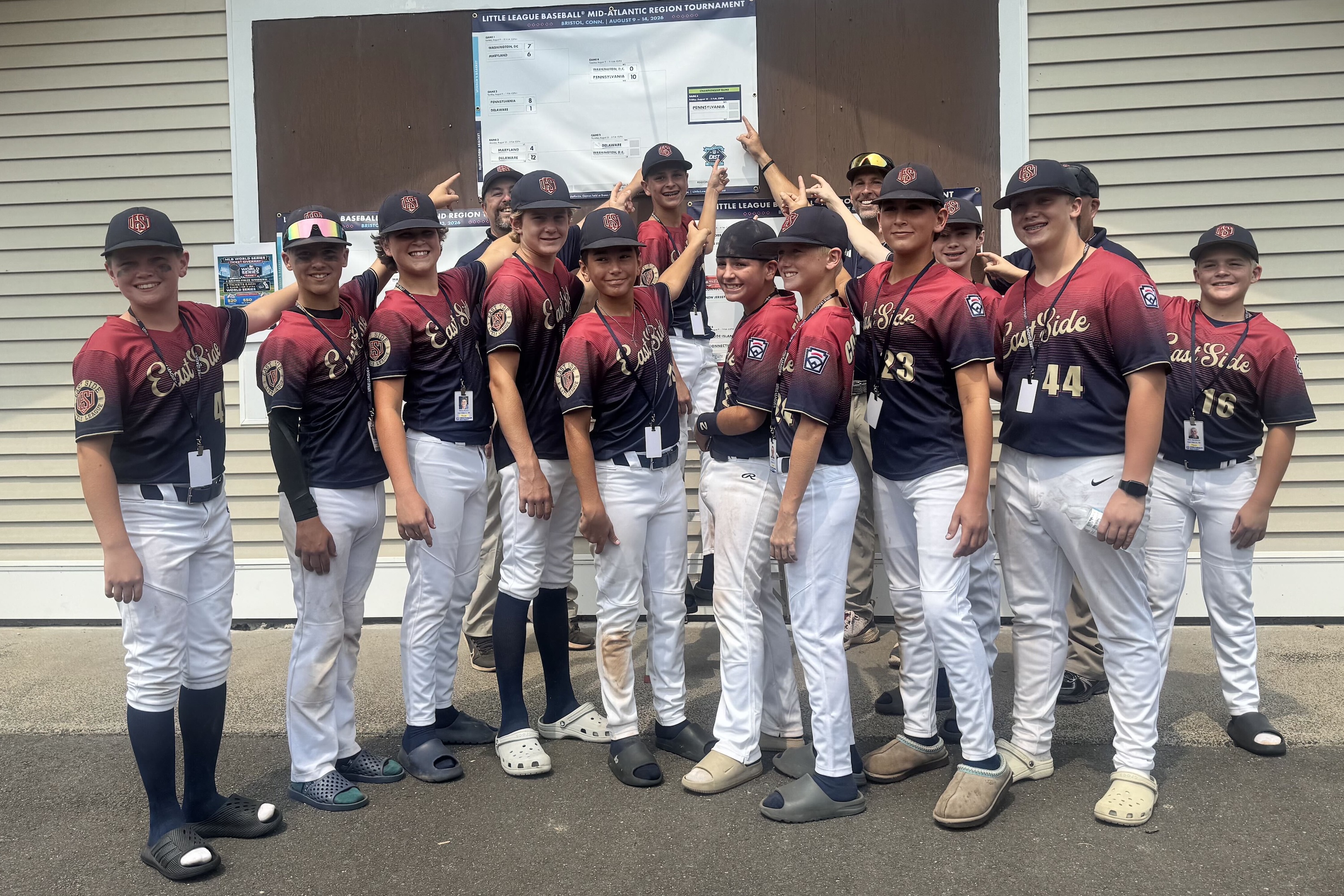
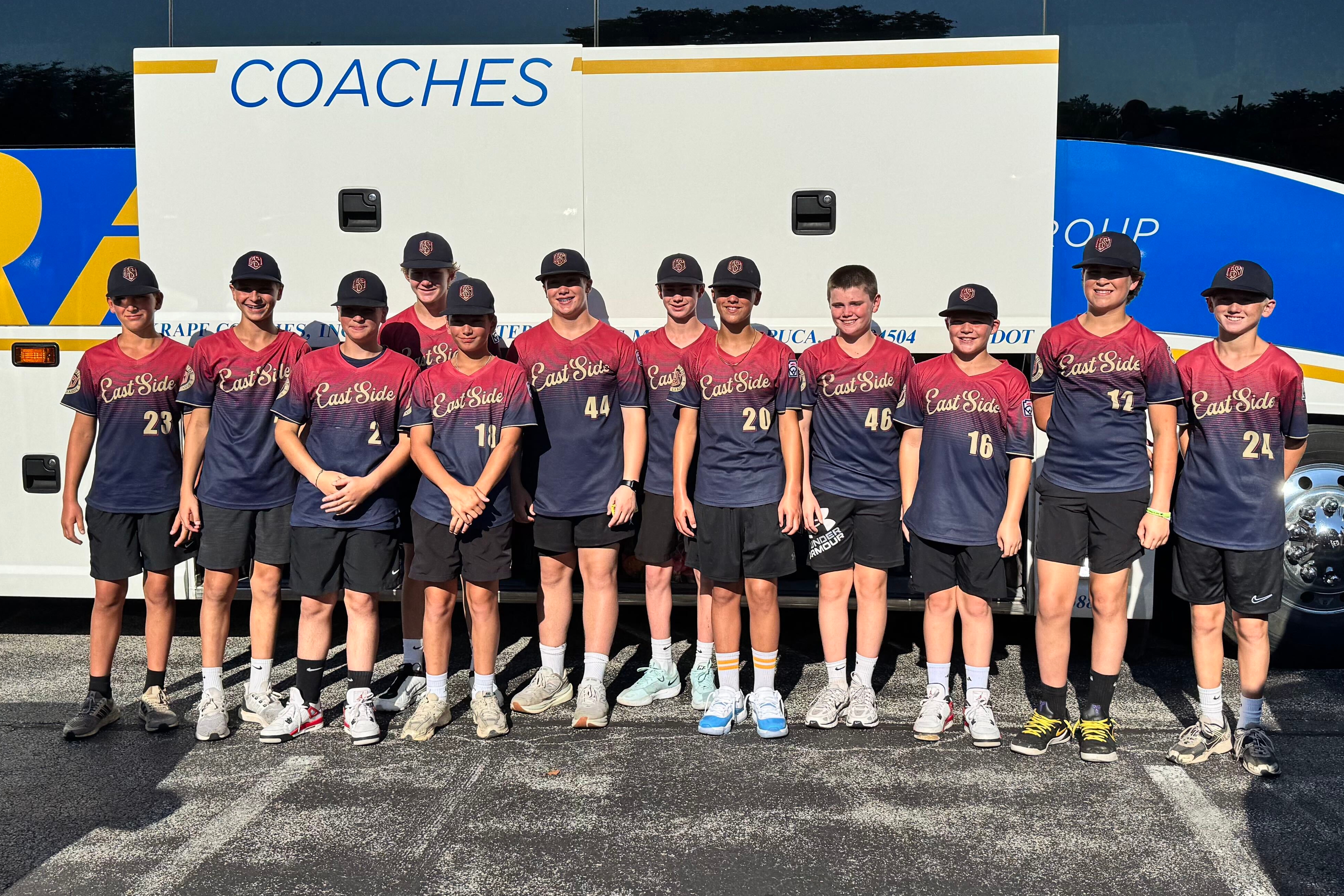
    East Side Little League, a 12-and-under baseball team based in West Chester, is one win away from stamping its ticket to Williamsport, Pa., for the Little League World Series. The moment is not lost on the team’s players.

    “It’s every 12-year-old’s dream, and we’re living it right now,” said left fielder Paul Cooperthwaite.

    East Side will play in the Little League Mid-Atlantic regional final on Friday in Bristol, Conn. (3.p.m., ESPN). They will face the team from Delaware — Naamans Little League, from Wilmington. Naamans, which beat Capitol Hill Little League (Washington, D.C.), 7-2, on Thursday, is roughly a 30-minute drive (about 15 miles) from East Side. The winner of Friday’s game will represent the Mid-Atlantic Region in the Little League World Series.

    “We’re not looking ahead,” said coach Bob Hennessey, whose son, Ryan, plays on the team. “When we get into a game situation, we tell them, ‘Hey, let’s win every inning.’ That’s been our mantra for the last couple years.”

    Added first baseman Dillon DiGiulio: “I knew we could make it this far. We’ve faced so many challenges, and just to make it here, it’s been great.”

    The kids from East Side Little League in West Chester.Courtesy of Katherine Cowperthwait

    East Side cruised through districts and sectionals before falling in their second matchup of the Pennsylvania State Little League tournament. The state tournament is double-elimination, so Hennessey’s team had to claw out of the losers’ bracket to have a chance at regionals — which they did. By winning each of its next four games, East Side secured a spot in the state title game against Blue Mountain (Schuylkill County).

    In the final inning — the top of the sixth — and with the game tied, East Side third baseman Jack Cassidy hit a grand slam to power a 12-8 win and propel his team to the four-team regional stage.

    “They had the mentality of, ‘Hey, we’re not ready to go home yet,’” Hennessey said. “I think it was just like, ‘Stay focused, go out there, and continue to play your game.’ We made a couple changes in our lineup [after the loss]. That’s also what helped spark the way we started playing after that, and then we started hitting the ball really well and scoring a lot of runs.”

    East Side’s two Mid-Atlantic regional games came with less dramatics. The West Chester side trounced Delaware, 8-1, on Sunday before shutting out Washington, 10-0, on Tuesday. While the team is staying in Bristol, the West Chester community is cheering them on from home. Throughout their run, local restaurants have hosted watch parties.

    “It’s been fun,” Cooperthwaite said. “I’ve heard all about it. Everyone’s telling me about all the watch parties.”

    The team even received a video from recent Phillies Wall of Fame inductee Chase Utley, who wished the squad good luck. Although the players were in diapers when Utley played his last game as a Phillie in 2015, they were thrilled to hear from a baseball legend.

    With so much noise around the team, Hennessey is looking to keep his players focused.

    “Keeping them thinking about baseball,” Hennessey said. “Obviously, they have other interests and stuff, but they bought into ‘we’re here to play baseball. We have an end goal in sight, and we’re one win away.’ They’re right there at the goal.”

    If East Side advances to Williamsport, they’ll join a trio of other Philly-area teams that have represented the Mid-Atlantic at the Little League World Series: Glenmoore Eagle Little League (from Upper Uwchlan Township) last year, Council Rock Newtown Little League in 2024, and Media Little League in 2023.

  • Flock unveils changes after Post report on police misuse of its network

    Flock unveils changes after Post report on police misuse of its network

    The country’s most prominent seller of automated license-plate readers said Thursday it will enact major changes in hopes of more proactively preventing abuse by police officers.

    Flock, the maker of a vast roadside camera network that maps cars’ movements into a database searchable by law enforcement, said it would for the first time start requiring officers to label every search with a criminal case number and automatically review all searches for “abnormal activity,” a previously voluntary feature that the company said was used by about a third of its 7,000 law enforcement agencies nationwide.

    Flock also said it would reduce the default setting for how long license-plate data is stored, from 30 days to seven, and give police departments more control over how their data is shared with other agencies.

    The announcement comes roughly a week after the Washington Post reported that at least 50 officers had been accused, charged with, or convicted of misusing Flock’s system and other license-plate readers to spy on people’s locations, including to stalk their girlfriends and ex-wives. Since publication, the Post has confirmed more than a dozen additional cases of license-plate-reader misuse.

    The case number and automated-review features were previously offered to agencies as optional settings. Policing experts and civil liberties advocates identified those two features in the Post report as key product shifts that could help combat misuse.

    Flock chief executive Garrett Langley said in an interview that the changes reflected the system’s “continual evolution of Flock’s responsibility to the communities we help serve.” Company executives, he said, had declined to mandate them sooner because they expected more local officials would activate the antiabuse features on their own.

    “I had this hope that local lawmakers at the state and local level would move very quickly and they’d look at the things that we’re recommending as optional and say, ‘Great, we’re going to force it.’ And they haven’t,” he said. “Instead of waiting, we said, ‘Look, we should just move faster.’”

    Max Isaacs, director of technology law and policy at the New York University School of Law’s Policing Project, said the shift was a “welcome change” but that he questioned what had taken the company so long to implement it.

    “There is no reason the system shouldn’t have been designed that way to begin with,” he said of the case number requirement. “Ultimately, though, this kind of safeguard should be required by law. It’s completely backward that we are relying on this one company to implement the kinds of things that ought to just be standard everywhere.”

    Flock, which is based in Atlanta, has installed more than 120,000 of the artificial-intelligence-enabled cameras across the U.S. since 2017. The company said the 20 billion plate scans recorded every month by its cameras have helped officers investigate 1 million crimes a year.

    Although Flock’s training guides encourage officers to use the search tool exclusively for official police work, the company only began offering agencies the option to require that officers tag every search with a criminal case number in July 2025.

    In misuse-case records reviewed by the Post, some officers frequently looked up car locations without providing any details linking the searches to legitimate criminal investigations.

    In April, Flock announced an automatic review feature, known as Audit Assistance, and said the tool would scan officers’ searches for suspicious behavior, such as repeated targeting of a single plate or bursts of searches in the middle of the night. Flock officials declined to share the criteria the system uses to look for abnormal behavior, arguing that sharing the details would help bad actors avoid detection.

    The company has announced that some officers have been charged with misusing the system following an Audit Assistance report. But Isaacs recommended treating the system with “a healthy dose of skepticism,” given that it relies on artificial intelligence, not human experts, to find suspicious conduct.

    “It’s good to see vendors developing accountability features,” he said, “but until we have some evidence that this tool does what it says it does, I don’t think we should rely on it to replace any human auditing measures.”

    Flock also said it would reduce the default length of time for how long plate scans are saved to seven days. Agencies can choose to ignore that default and increase their data-retention policies to as long as a year with prior approval from an elected official or governing body, the company’s evidence policy said.

    It also will launch a feature called Evidence Mode that will allow officers to preserve license-plate data beyond that retention window “for cases that need more time,” a company announcement said.

    Flock currently allows police departments to share their license-plate data with other agencies beyond city, county, or state lines. But as part of the changes, the company said it would begin allowing agencies to determine the types of investigations for which its data can be shared. A city could, for example, allow its camera data to be searched for violent crimes but not for immigration enforcement, the announcement said.

    Langley said he spoke to 100 police chiefs in the last week to preview the changes and that all were supportive of the shift. He argued that the cases of misuse reported by the Post showed that Flock’s long-running strategy of recording all officer searches into audit logs that agency leaders can examine to investigate misconduct helped fight abuse.

    “It’s not that people abuse Flock,” he said. “It’s that Flock actually found cops that abused their power, and I want to find all of them.”

    Flock said it was still considering additional changes, including a function that would automatically lock out officers whose activity met the “criteria for abnormal behavior” until their searches were reviewed by an agency administrator, according to the announcement.

    In some towns, however, the agency’s Flock administrators are the police chiefs themselves, and some chiefs have been fired or charged with criminal misconduct in cases of Flock misuse previously reported by the Post. Langley said he hoped that, given the “increased level of attention” to the problem, local mayors and city managers would take a more proactive role in pushing for regular agencywide audits or supervision by outside law enforcement.

    Marci Bakely, an Air Force veteran in Georgia whose police chief ex-boyfriend searched her plate hundreds of times and was charged with stalking and misuse of a license-plate reader, said in an interview that she hoped the changes would curb abuse but that she worried it was mostly a “temporary Band-Aid” to shield the company from criticism.

    “They knew before that stuff like this would happen. So now they want to wait until after it’s been brought to the public’s eye?” she said. “Now it’s a big deal, whereas before it didn’t mean anything? They weren’t worried about it, but now it’s been brought to the light.”

  • Upper Darby residents rally to save the ‘Mozino Forest’ from mixed-use development plans

    Upper Darby residents rally to save the ‘Mozino Forest’ from mixed-use development plans

    Upper Darby will consider buying a 15-acre forested property at the heart of a conservation fight after dozens of residents packed a public meeting and demanded the township look into purchasing options before rezoning the parcel for mixed-use development.

    The Upper Darby Township Council on Wednesday considered moving forward an ordinance to create a mixed-use zoning district on a tract of land between State and Township Line Roads. The tract, known by residents as the Mozino Forest, contains unmaintained forest. Though the land is private property — owned by Peter Mozino and under contract to be sold to the Rockwell Development Group — residents have long utilized it as a place to walk, hike, and commune with nature.

    Rockwell Development Group has proposed developing the property with a blend of single-family homes, townhouses, apartments, and ground-floor commercial spaces, as well as dedicated community and recreation spots and pedestrian walkways.

    Rita LaRue, Upper Darby’s director of community and economic development, said Rockwell originally came to the township with a plan to build 56 single-family homes on the site, a proposal that would be allowed under the site’s existing zoning and would not require special zoning approvals. The township then asked Rockwell to consider an alternative, higher-density plan that would combine diverse housing types, retail, and community amenities, LaRue said. Over several months, Rockwell worked with the township’s solicitor, engineer, and planning staff to bring the mixed-use zoning ordinance.

    Upper Darby officials have said putting a denser, mixed-use development on the tract, rather than the 56 single-family homes, would help fulfill core township goals by bringing in more tax revenue and adding diverse housing options.

    “We are very committed to having a mixed-use space that is not simply, you know, brick and mortar. We want it to be a place that adds to community life for everybody in Upper Darby,” LaRue said.

    At the meeting, Rockwell president Greg Lingo touted his Upper Darby bona fides, telling the crowd he was not the ill-intentioned, outside developer he had been portrayed as. The developer said he graduated from Upper Darby High School, is a taxpayer in the township, and has invested significantly in the Drexel Hill neighborhood over the years.

    Lingo said that while he understands residents’ concerns about preserving green space, the land is private property and could be developed into a residential neighborhood regardless of whether the zoning amendment is passed.

    “This isn’t necessarily a decision between open space and a future mixed-use development,” Lingo said. “This property is not open space. I’m pleased to hear that people have just been using it as open space over the years. It’s private property. It’s property that’s been neglected for as long as I can remember.”

    Lingo said he would be willing to sell the property if the township wanted to purchase it, but added that as a taxpayer, he does not “think that that’s a great use.” Lingo approximated the cost of the land at $8 million.

    There were 15 proposals to purchase the property, none of which involved maintaining it as open, green space, planning commission member Debbie Nifong said at a June 8 meeting.

    The planning commission voted 3-2 to recommend approval of the zoning change in June.

    At the Wednesday night council meeting, residents packed the council chambers, donning green shirts and spilling out into the hallway in protest of the proposed zoning change. They described tranquil walks through the Mozino Forest and warned of environmental consequences if the land were to be developed.

    “I believe that having some open space, it’s future gold in terms of urban planning,” said Dolores Lombardi, a resident and former chair of the township’s shade tree commission. “Many cities are preserving open space, and creating more. An overdeveloped heat zone is not an attractive place to live in.”

    “The whole forest is a natural sponge for our area. There will be severe downstream flooding,” said resident Gail Grant, who warned of increased stormwater runoff should the green parcel be paved.

    Residents questioned why the forested tract should be developed when the township has numerous vacant storefronts and existing corridors in need of redevelopment.

    Members of the township’s environmental advisory committee urged the council to strike down or table the zoning ordinance and said that, if given more time, they could put together a proposal for the township to purchase the land with supporting funds from local conservancies or state or federal bodies.

    They cited the $13 million purchase of the Oakwell estate in Villanova by the conservation nonprofit Natural Lands and the Wyncote Foundation. The lush estate was once slated to become athletic fields for the Lower Merion School District but was sold to the nonprofits after significant community pushback.

    The council voted unanimously to table the ordinance, citing a need for more information from both Lingo and the environmental advocates.

    “I know the administration wants to look into seeing what sources we have available to see if we can come to some type of agreement,” council member Kyle McIntyre said.

    McIntyre said he did not want to “get everyone’s hopes up” and described “two trains running parallel to each other.” While the township will “do everything in our power to possibly strike a deal” to buy the land, McIntyre said, he expressed a desire to work with Lingo to “make sure that what we’re building for this community actually does benefit it” if a sale does not happen.

    “We did learn a lot of things tonight, and I’m eager to have those conversations with the township and see where we fit in and what we can do, so that we can make a decision that’s good for everybody,” Upper Darby Mayor Ed Brown said.

    This suburban content is produced with support from the Leslie Miller and Richard Worley Foundation and The Lenfest Institute for Journalism. Editorial content is created independently of the project donors. Gifts to support The Inquirer’s high-impact journalism can be made at inquirer.com/donate. A list of Lenfest Institute donors can be found at lenfestinstitute.org/supporters.

  • Kennedy Center votes to restore Trump’s name and close for 2 years, challenging a judge’s order

    Kennedy Center votes to restore Trump’s name and close for 2 years, challenging a judge’s order

    WASHINGTON — The battle over the Kennedy Center’s future escalated Thursday as President Donald Trump’s allies on the board took new steps to commemorate him with physical changes to the iconic performing arts institution that could defy a federal court order.

    During an hourslong meeting that was conducted virtually, the board voted to add Trump’s name to the building’s facade so it would read “The John F. Kennedy Center for the Performing Arts Restored and Renovated By President Donald J. Trump.” The plaza in front of the building would be named after Trump and most of the space at the venue would be closed for two years to allow for substantial renovations.

    The changes, described by Rep. Joyce Beatty, an Ohio Democrat who is an ex-officio board member, and her lawyers, amount to a dramatic test of U.S. District Judge Christopher Cooper. He ruled in May that letters affixed to the building that spelled out Trump’s name were added illegally and he ordered their removal, a decision that the Republican administration failed to persuade courts to overturn. At the same time, Cooper blocked a two-year closure that was set to take effect July 5, saying an earlier board vote authorizing the shuttering was “ill-informed and seemingly preordained.”

    “This latest development is a transparent effort to circumvent the Court’s ruling, and flies in the face of the statutes that Congress passed,” Beatty said in a statement. ”I will continue to fight for this treasured national monument.”

    A representative of the Kennedy Center did not immediately respond to a request for comment.

    Much of Thursday’s board meeting was expected to focus on the extent of closures required to allow for renovations that the Kennedy Center’s management says are needed to improve safety. In response to the judge’s criticism of the earlier vote, the institution’s leaders said they would provide the board with three options to consider.

    They included a complete closure or a partial closure that would allow “some continued public access and limited programming in spaces unaffected” by the work. A third option would “consider a highly limited series of phased closures to address only the Center’s most serious infrastructure needs while scheduling and maintaining a full slate of programming.”

    Ultimately, the board decided to close the building for two years while leaving the potential for some degree of programming to still happen in an outdoor space known as the Reach. The decision to move ahead with the two-year closure, in addition to the moves to memorialize Trump, could revive questions about whether the board seriously considered the full range of options.

    During Trump’s second term, the Kennedy Center has become an unlikely — and highly visible — metaphor of presidential power. While he largely ignored the institution during his first round in Washington, Trump moved quickly to oust the institution’s leadership when he returned to office in January 2025 and replaced it with a board of trustees that named him chairperson.

    His name was quickly added to the building, before coming down in June in response to Cooper’s order. The area where it once stood is now covered by a massive tarp.

    Trump’s push to remake the nation’s capital

    The Kennedy Center moves are part of Trump’s broader push to reshape the physical landscape of the nation’s capital in ways that have few modern parallels.

    He demolished the East Wing of the White House and is building a controversial ballroom in its place, though an appeals court ruled last week that construction should stop because Congress didn’t approve the project. Trump has said he will take the case to the Supreme Court.

    His remodel of the Lincoln Memorial Reflecting Pool has also stumbled after algae returned and U.S. Attorney Jeanine Pirro refuted his claims that a vandal was responsible for the damage.

    Meanwhile, Trump is planning extensive renovations of a golf course in East Potomac Park, which could significantly reduce the public’s access to running and biking paths. He is also moving forward with a triumphal arch that will sit near Arlington National Cemetery.

    Trump has derided the Kennedy Center as “rusted, rotted, and rat and bug infested” and threatened to hand the building over to Congress after Cooper rejected the closure and the addition of the president’s name to the building.

    The institution’s leadership has argued that it’s in genuine need of repair and updating.

    Matt Floca, the Kennedy Center’s executive director and chief operating officer, guided a group of journalists through the building in April, highlighting severe water damage that he said corroded steel in some places as thin as tissue paper. Some pieces of equipment, including several 800-ton chillers that help cool the building, are decades old and in need of replacement.

    At the time, Floca said he considered doing the repairs individually but insisted it was his recommendation to Trump to close the building and move forward with the renovation all at once.

    “When the president asked: ‘How do you make these projects the best? How do you make them really excellent and deliver them efficiently?’ my recommendation was you close the building and you do everything over a definite period of time, two years,” he said.

    More recently, the legal battles became the subject of barbs and jokes as comedian Bill Maher accepted the Mark Twain Prize for American Humor in late June. At the start of the program, Pamella Roland DeVos, a Kennedy Center trustee appointed by Trump, described the institution as a “national cultural center open not just for some but for every American patron who wants to experience the greatest art and expression the world has to offer.”

    “The responsibility that comes with it is one our board takes very seriously,” she said.

  • Phillies jump to Iowa and Netflix for Field of Dreams game. Scott Franzke just hopes there’s a booth.

    Phillies jump to Iowa and Netflix for Field of Dreams game. Scott Franzke just hopes there’s a booth.

    After losing two straight series, the Phillies hope to find a bit of heaven in Iowa.

    The Phillies will take on the Minnesota Twins in Dyersville, Iowa Thursday night (7:30 p.m., Netflix) in MLB’s first Field of Dreams game in four years, named after the beloved film starring Kevin Costner.

    Costner will be on hand as part of Netflix’s exclusive coverage, with veteran play-by-play announcer Matt Vasgersian calling all the action. He’ll be joined in the booth by CC Sabathia and former Phillies outfielder Hunter Pence, with Lauren Shehadi reporting throughout the game.

    Netflix’s pregame coverage will once again be hosted by Elle Duncan and feature Barry Bonds, Albert Pujols, and Anthony Rizzo. Bonds and Rizzo worked particularly well together during Netflix’s coverage of the Home Run Derby at Citizens Bank Park last month.

    Despite that, the pregame show felt overstuffed, needlessly shoehorning in Will Ferrell in an attempt to promote his new Netflix show. They took a similar approach during MLB’s opening night in March, drawing widespread criticism for the number of promos.

    Gabe Spitzer, Netflix’s VP of sports, signaled on a recent conference call that Thursday night’s approach for the Field of Dreams game might be different, noting the teams and setting make a case for “not overthinking this and not trying to do too much.”

    “It’s a game that matters for these two teams in the playoff chase, it’s an iconic venue, and we want to let that do most of the work,” Spitzer said.

    As for the Phillies, they’re certainly testing the whole “if you build it” mentality. Since the All-Star break, the team and its $321 million payroll — fourth most in all of baseball, according to Spotrac — has lost six of eight series, and slumping new addition Luis Arráez has just seven hits and one walk in 38 plate appearances with the Phillies (though he did drive in the team’s only run during Wednesday’s loss to the St. Louis Cardinals)

    If the season ended today, the Phillies wouldn’t qualify for the playoffs, missing out on the final wild-card spot to the Arizona Diamondbacks.

    At least they’ll get to sport cool 1939-inspired throwback jerseys as part of the Field of Dreams game festivities, which even include a centennial patch all teams wore that season.

    Bryce Harper sports the 1939-inspired jersey the Phillies will wear Thursday night.

    Latest weather forecast for Field of Dreams game

    They built it, but mother nature was threatening to show up.

    Earlier forecasts were seeing chances for heavy rain and thunderstorms around first pitch.

    However, it appeared the rains were backing off Thursday afternoon, said Alex Gibbs, a meteorologist with the National Weather Service Office in Davenport, Ohio, and weather prospects were brightening considerably.

    “We have a pretty good feeling,” said Gibbs (a diehard Milwaukee Brewers fan). “It looks like a good window.” He said the only concern was the potential for thunderstorms — with lightning, of course — later at night. While chances are they would hold off until the game was over, “We have to keep an eye on stuff,” he said. Timing and location of thunderstorms in summer are notoriously unpredictable, as Philadelphians are aware.

    The National Weather Service has issued a flash flood watch just south of Dyersville through Friday afternoon, but there remains a lot of uncertainty on the timing or exact location of the potential storms.

    If the game is rained out Thursday, both teams will take the field Friday, but showers are again possible in the evening, said Gibbs.

    Scott Franzke just hopes there’s a booth

    Phillies radio announcer Scott Franzke will call all the action on 94.1 WIP.

    While Netflix will exclusively stream the game, Phillies fans can still tune into 94.1 WIP to hear Scott Franzke and Kevin Stocker call all the action.

    Despite the hyped-up setting and national spotlight, Franzke hasn’t been told what to expect.

    “I don’t have any idea about the broadcast conditions. Is it a big booth or a small booth? I imagine it’s pretty small,” Franzke said. “I’m assuming there’s a booth. There wasn’t in London. We just did it from the seats.”

    Franzke said as an announcer, these event-style games are a fun diversion. But he’s not sure how the team feels about them.

    “It does create a little different wrinkle in the rhythm of the summer and the travel, and it’s not an exhibition game,” Franzke said. “There’s a lot at stake, both for us and the Twins. One game can make all the difference in the world.”

    Phillies TV announcers Tom McCarthy and Rubén Amaro Jr. were to travel with the team to Iowa, despite NBC Sports Philadelphia not broadcasting the game. They’ll call the final two games against the Twins Saturday and Sunday at Target Field in Minneapolis, but don’t expect to hear them on Thursday’s radio broadcast.

    “I think they’re just going to hang out,” Franzke said.

    One big plus is Franzke and his colleagues won’t have to rely on Porta Potties to get through the night, thanks to recent renovations that added amenities like running toilets and sewer lines.

    “I always appreciate some good indoor plumbing,” Franzke said.

    Phillies NL East standings

    window.addEventListener(“message”,function(a){if(void 0!==a.data[“datawrapper-height”]){var e=document.querySelectorAll(“iframe”);for(var t in a.data[“datawrapper-height”])for(var r,i=0;r=e[i];i++)if(r.contentWindow===a.source){var d=a.data[“datawrapper-height”][t]+”px”;r.style.height=d}}});

    NL wild card standings

    window.addEventListener(“message”,function(a){if(void 0!==a.data[“datawrapper-height”]){var e=document.querySelectorAll(“iframe”);for(var t in a.data[“datawrapper-height”])for(var r,i=0;r=e[i];i++)if(r.contentWindow===a.source){var d=a.data[“datawrapper-height”][t]+”px”;r.style.height=d}}});

    Phillies news

    Phillies slugger Bryce Harper. Yong Kim / Staff Photographer

    Upcoming Phillies TV schedule

    • Phillies at Twins
    • Marlins at Phillies
    • Cardinals at Phillies
    • Phillies at Mariners
    • Phillies at Angels
  • Luigi Mangione expected to plead guilty in federal case in UnitedHealthcare killing, AP source says

    Luigi Mangione expected to plead guilty in federal case in UnitedHealthcare killing, AP source says

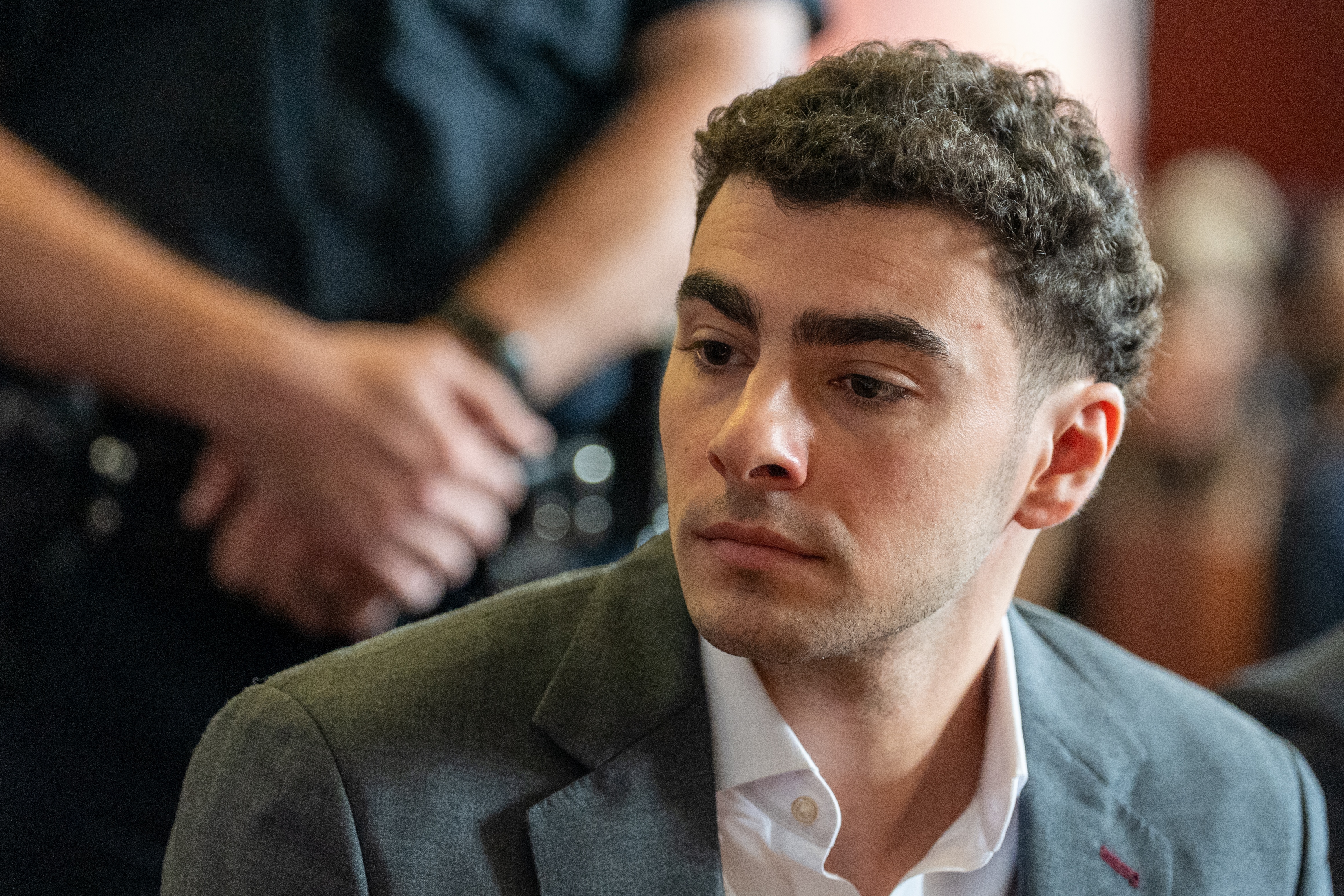
    NEW YORK — Luigi Mangione is expected to plead guilty as early as Friday in the federal case accusing him of stalking and killing UnitedHealthcare CEO Brian Thompson, according to a person familiar with the matter.

    The person, who was not authorized to talk publicly about the case and spoke to the Associated Press on the condition of anonymity, cautioned that Mangione could change his mind. If he follows through, it would be a stunning development in a case that rattled business leaders while galvanizing their critics.

    Mangione’s lawyers, and spokespeople for the Justice Department and Manhattan federal prosecutors, declined to comment.

    Mangione is accused of traveling to New York City to ambush Thompson, 50, then shooting him outside a Manhattan hotel on Dec. 4, 2024, as the executive walked to UnitedHealth Group’s annual investor conference.

    Mangione is due in court on Friday for a hastily scheduled hearing in the federal case, which involves two counts of stalking. It wasn’t clear what charge or charges Mangione is expected to plead guilty to. The hearing, in Manhattan federal court, comes as his lawyers have been talking with federal prosecutors about a possible resolution to one of two criminal cases against Mangione in Thompson’s death. Previous talks in June broke down.

    Mangione, 28, has been charged in both federal and state court in New York and still faces the possibility of a trial in his unresolved state case. Mangione’s state murder trial is set to begin Sept. 8. Both sets of charges carried the possibility of a life sentence.

    Mangione has pleaded not guilty and has spoken out publicly against the prospect of two trials, telling a judge in February: “It’s the same trial twice. One plus one is two. Double jeopardy by any commonsense definition.”

    Under New York law, a state prosecution could be barred if the federal case is resolved first, but it isn’t automatic.

    The state’s double jeopardy protections kick in if a jury has been sworn in a prior prosecution, such as a federal case, or if that prosecution ends in a guilty plea. Mangione’s cases involve different charges arising from the same course of conduct.

    Once Mangione pleads guilty, his lawyers could then ask the judge in the state case to throw out those charges on double jeopardy grounds. State prosecutors argue their case is distinct and double jeopardy shouldn’t apply.

    Mangione’s federal charges allege that he traveled across state lines by bus to stalk and kill Thompson and that he used means such as a cell phone, the internet, interstate highways, and staying at a hostel that serves out-of-state customers while planning and carrying out the attack. The state charges pertain to the killing itself, as well as firearms offenses.

    In a letter last month, state prosecutors objected to the possibility of a guilty plea in the federal case wiping out the state case.

    “Obviously, any guilty pleas in these matters must account for the seriousness of defendant’s offenses, the loss of an innocent life, the impact of those crimes on the victim’s family, and the other state interests that are implicated, including the sanctity of life principle that underpins the state homicide charges,” Seidemann wrote.

    Mangione’s apparent decision to plead guilty comes after a series of setbacks for his defense.

    In January, U.S. District Judge Margaret Garnett took the death penalty off the table but ruled that prosecutors could use items collected from Mangione’s backpack during his arrest as evidence against him.

    They included a 3D-printed pistol that investigators said matched the one used to kill Thompson and a notebook in which authorities say Mangione described his intent to kill an insurance executive.

    In June, Mangione’s lawyers said they would pursue a psychiatric defense in the state case but reversed course a day later. The defense, involving claims that he was suffering from extreme emotional disturbance at the time of the killing, isn’t allowed in federal court.

    Surveillance video of the killing showed a masked gunman shooting Thompson from behind. Police say “delay,” “deny,” and “depose” were written on the ammunition, mimicking a phrase used to describe how insurers avoid paying claims.

    Mangione, an Ivy League graduate from a wealthy Maryland family, was arrested five days later at a McDonald’s in Altoona, Pa., about 230 miles west of Manhattan.

    He has become a cause célèbre for people upset with the health insurance industry.

    An online fundraiser for his legal defense fund raised more than $1.5 million, and several dozen supporters have shown up to his court appearances, some wearing green clothing — the color worn by the Mario Bros. video game character Luigi — and “FREE LUIGI” T-shirts.

  • Cheltenham is trying to move past its football scandal. Here’s what happens next.

    Cheltenham is trying to move past its football scandal. Here’s what happens next.

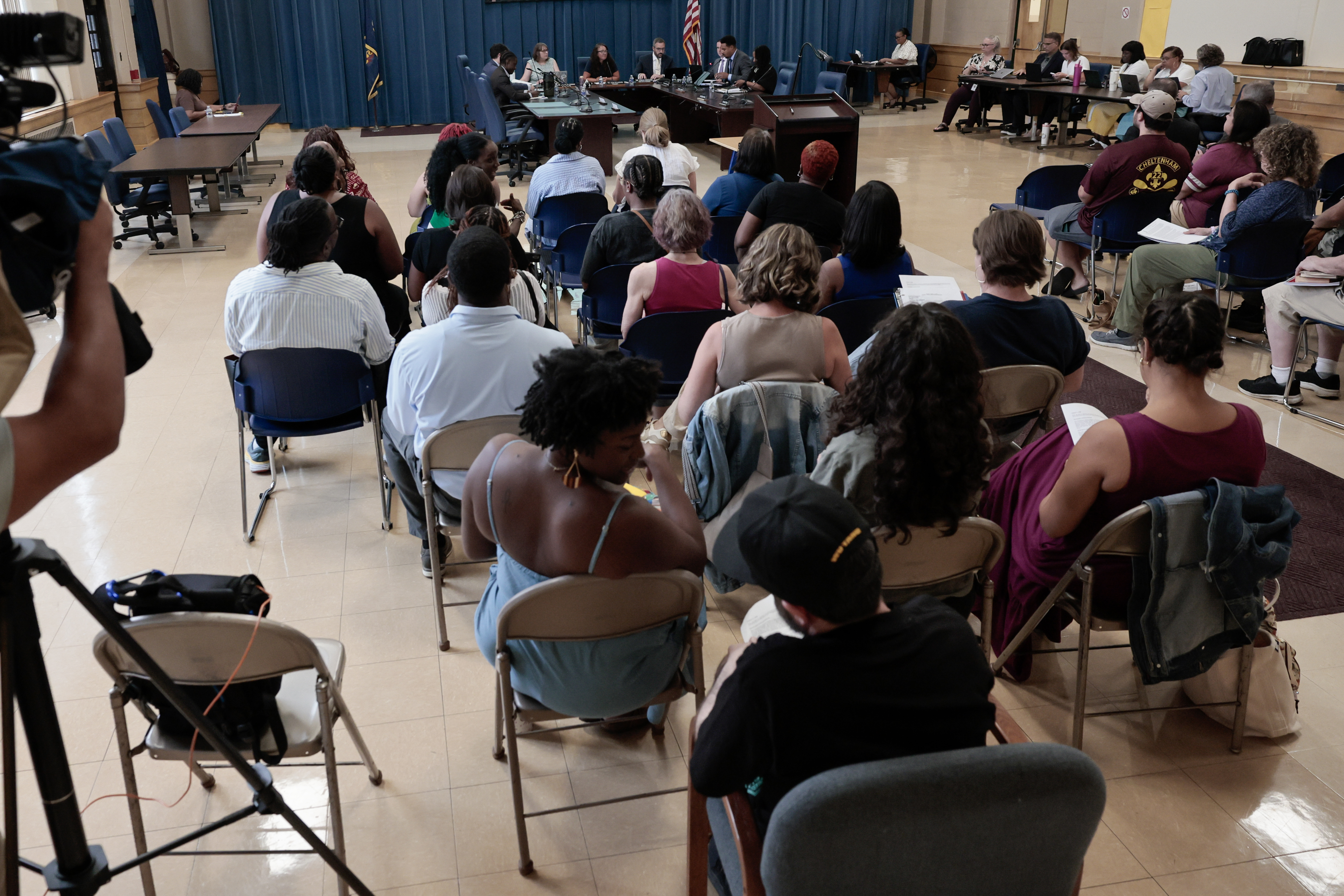
    As it faced parents and community members during an emotional meeting Tuesday, the Cheltenham school board laid out several steps to address concerns about the scandal over the 2025 locker-room assaults that led to criminal charges against four coaches and six players.

    The board announced new leadership — with plans to appoint veteran educator Chris McGinley as interim superintendent — and an independent review of district policies, with recommendations to follow in 60 days.

    But questions remain about how the board will respond to the district’s alleged mishandling of the situation, including by employees faulted in a grand jury report. Parents on Tuesday, including some who have alleged the district’s safety problems extend beyond the football program, voiced skepticism of the board’s promises.

    The district will pay former Superintendent Brian Scriven, who resigned last week, as part of a separation agreement, according to a spokesperson, but terms have not been disclosed.

    Here is what happens next as the board deals with the aftermath of the criminal charges announced two weeks ago, and the lack of confidence expressed by community members:

    A former superintendent returns

    The board said it plans to tap McGinley, a longtime educator who served as Cheltenham’s superintendent in the early 2000s, to lead the district following Scriven’s resignation.

    McGinley, who more recently worked as an education professor at Temple University, will be appointed by the board at a special meeting Tuesday at 6:30 p.m., district spokesperson Kevin Kaufman said Thursday.

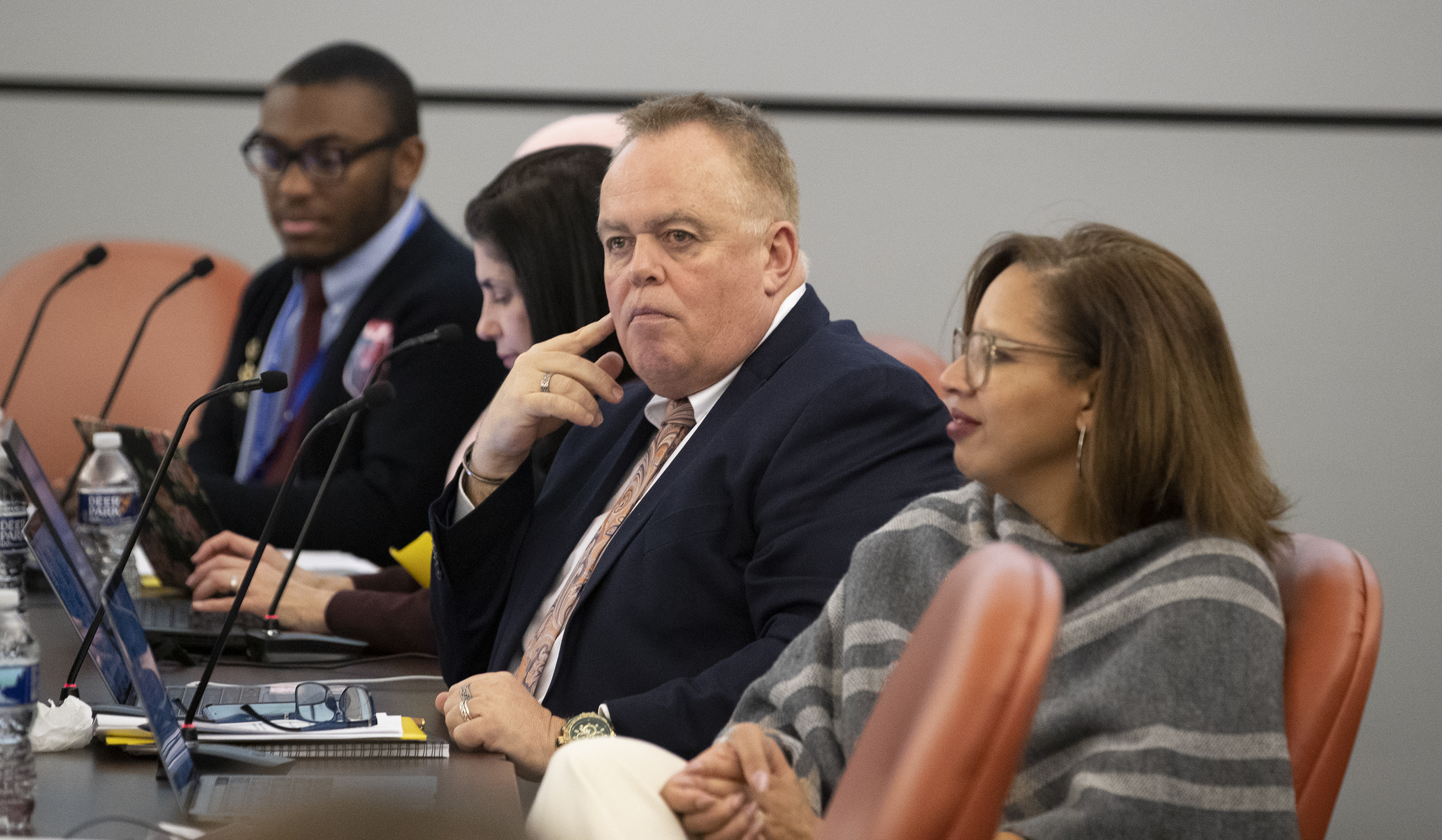
    Chris McGinley, center, and Angela McIver, right, at a meeting of the Philadelphia Board of Education on Jan. 30, 2020.Charles Fox / Staff Photographer

    McGinley, who began his education career as a teacher in Philadelphia, joined Cheltenham in 1999 as an assistant superintendent, where he oversaw efforts to address the district’s racial achievement gap. He then became Cheltenham superintendent, leaving the district in 2006 before becoming superintendent two years later in Lower Merion, which he led through 2014.

    McGinley then served on the Philadelphia School Reform Commission, which oversaw the city’s schools while they were under state control. He was later named to the Philadelphia school board by former Mayor Jim Kenney, leaving the board in 2020.

    McGinley could not be reached for comment Wednesday.

    Scriven had received a new five-year contract in December. Kaufman said in an email Thursday that “the terms and conditions of Dr. Scriven’s separation agreement will be negotiated (in accordance with Dr. Scriven’s contract and applicable law) and approved publicly at a future meeting.”

    An outside lawyer’s review

    The board has enlisted Leigh Dalton, an education attorney based in York, Pa., with the Saxton & Stump firm, to review its policies and procedures and produce recommendations to the board in 60 days.

    Board president Leah Mulhearn said Tuesday that the review would “include consideration of the grand jury’s findings and how to address them.”

    None of those findings were discussed by the board Tuesday. In a scathing report accompanying the recommendation of criminal charges, the grand jury accused the district of “incompetence” while describing the actions of three employees at the high school.

    Taryn Knox (left) speaks to School Board President Leah Mulhearn and Director of Business Joshua Sweigard during the Cheltenham School Board meeting in Elkins Park on Tuesday, August 11, 2026. The school board was meeting for the first time since criminal charges against four football coaches and six players were announced, and since Brian Scriven resigned as superintendent. .Elizabeth Robertson / Staff Photographer

    The trio — labeled in the report only as Employees #1, #2, and #3 — texted one another after the mother of the 15-year-old victim reported her son’s assault on Sept. 7. One said the student had a “chip on his shoulder” from not making varsity and said he had steered the mother away from coming to the high school in person.

    The employees also indicated they trusted the head coach, Terence Tolbert, and did not believe the mother that Tolbert — who, along with three other coaches, has since been charged with conspiracy and endangering the welfare of a child — had instructed the victim not to tell his parents what had happened. The report said the district then included Tolbert in its investigation.

    Asked about the status of the three employees, Kaufman said Thursday that the district “doesn’t comment on specific personnel matters.”

    On Thursday, Cheltenham High School principal Benjamin Hammond informed families that Mark Hoff, who was vice principal at the high school last year but had been reassigned to Wyncote Elementary in July, would be returning to the high school this fall.

    The player’s mother said she initially reported her son’s assault to Hoff on Sept. 7.

    “Due to the heightened environment about student safety and culture, and acknowledging community concerns, the district has decided to continue Mark Hoff’s assignment as vice principal at Cheltenham High School,” Hammond said in a message to families, adding that Hoff would “provide stability this upcoming school year.”

    Kaufman said that Dalton’s hourly rate was $265.

    Dalton was hired by Central Bucks last year to investigate special-education abuse allegations; the district did not publicly release her conclusions.

    “While communications between counsel are privileged, the board does intend to report out on the recommendations that she makes where appropriate,” Kaufman said.

    Football is still canceled

    The board will also be reviewing all athletic programs, “top to bottom,” Mulhearn said. And there is no timetable for when football, which the district already canceled in May, will resume.

    “Football will not return until we address this, no matter how long it takes,” Mulhearn said.

    Safety changes

    Mulhearn said some safety changes were already underway. The district is “ensuring that all staff members have current criminal history and child abuse clearances on file,” she said. The grand jury report had said that at least five of the district’s football coaches last year were not up to date on clearances related to child abuse reporting requirements.

    She also said the district was “communicating and reinforcing coach expectations and plans for improved locker-room supervision.” While there was an office in the football locker room, coaches did not use it last season, leaving players unsupervised, according to the grand jury report.

    Cheltenham has “begun implementing” recommendations from an audit by the Center for Safe Schools, Mulhearn said. She also said the board had retained the Bucks County Intermediate Unit “to audit our human resources function.”

    Some parents of football players recently told The Inquirer they had urged the district not to hire Tolbert, who they said was hired as coach without an interview because he was already a teacher in the district. The district has not responded to questions about Tolbert’s hiring.

    The Cheltenham school board meeting Tuesday, Aug. 11, 2026, in Elkins Park.Elizabeth Robertson / Staff Photographer

    The criminal cases

    Three coaches and the two players charged as adults by the Montgomery County District Attorney’s Office will face a district judge at a preliminary hearing scheduled for Aug. 27. (Ralph Burnley, the fourth coach charged, has not yet been arraigned in the case, and there is no indication he has hired an attorney. He did not respond to a request for comment.)

    The four players charged as juveniles will face separate proceedings in juvenile court that are not open to the public.

    At the preliminary hearing for the other defendants, prosecutors will present evidence to the judge to support the charges through witnesses. Defense attorneys will be given the opportunity to cross-examine those witnesses and make arguments to the judge for their clients’ innocence.

    After the hearing, the judge will determine whether the prosecution has proved the validity of the charges and, if so, will send the cases to county court.

    Staff writer Jess Rohan contributed to this article.