Blog

  • U.S. military has lost roughly 25% of its Reaper drones as Iran war depletes arsenal

    U.S. military has lost roughly 25% of its Reaper drones as Iran war depletes arsenal

    The U.S. military has lost at least 45 MQ-9 Reaper drones during the war with Iran, or roughly 25% of its fleet, according to three U.S. officials familiar with the matter.

    The Reaper is used to conduct surveillance and targeted strikes, and it can cost between $30 million to $50 million depending on the type of sensors and weapons it carries, according to the Air Force. The potential taxpayer cost of recent losses is over $1.3 billion for that weapon system alone.

    The aircraft have seen heavy use around the Strait of Hormuz, the vital shipping route that has become a major flash point in the conflict — and a key obstacle to negotiating a lasting peace deal. But the drones fly slowly and often at low altitudes, making them relatively easy targets for Iran’s military and its regional proxies in Yemen and Iraq.

    A fourth U.S. official, who like the others spoke on the condition of anonymity to discuss Pentagon data, said that not all of the lost Reapers were shot down. An unspecified number crashed after their operators’ communications link to the drones failed, the official said.

    The Reaper joins a growing list of U.S. weapons and munitions that have been drained by the Iran war and years of American military support for Ukraine in its conflict with Russia. As the Washington Post and others have reported, the shortages have constrained President Donald Trump’s military options as tensions with Iran remain high.

    The Pentagon, which declined to comment for this article, has consistently denied reports that its weapons stockpiles are running low. At the same time, the Trump administration has asked Congress for tens of billions of dollars in funding to offset costs incurred by the Iran war and to replenish supplies.

    As the Post reported last week, Trump confronted Defense Secretary Pete Hegseth about the state of the U.S. stockpile. The encounter occurred July 31, on the sidelines of a cabinet meeting at Camp David, the presidential retreat in Maryland.

    The shortages have appeared to embolden Iran, which has intensified its demands for control of the Strait of Hormuz and reparations for damage the country has sustained since Trump ordered the start of hostilities on Feb. 28.

    There were approximately 185 Reapers in the U.S. military fleet — 165 in the Air Force and 20 in the Marine Corps — before the conflict began, according to public budget data and the services. That figure does not include Reapers operated by U.S. intelligence agencies. To date, none of the Marines’ Reapers have been lost, a spokesperson, Lt. Col. Joshua Benson, said in a statement. Those operate primarily in the Asia-Pacific.

    In May, Lt. Gen. David Tabor, a senior Air Force officer at the Pentagon, told the Senate that the number of remaining drones had fallen to about 135. At the time, Tabor told lawmakers he was “concerned” about the losses and that the Air Force was exploring how to quickly replenish its fleet.

    The Pentagon is phasing out the General Atomics-produced Reaper and envisions a replacement fleet of less expensive armed surveillance drones that can swarm their targets.

    Meanwhile, the Trump administration is trying to shore up lawmaker support for a $67 billion Iran war supplemental budget that it says is vital to restocking the Pentagon’s arsenal. Even if Congress approves the funding, it will be years before stockpiles depleted by the conflict in Iran and the munitions sent to Ukraine are reconstituted.

    Hegseth told the Senate in July that the Pentagon would have to curtail military trainings without a quick infusion of additional funding as the Iran war strains the defense budget. He estimated that the conflict would cost $37.5 billion through the end of September, though that total does not include the cost of rebuilding U.S. bases in the Middle East damaged by Iranian strikes.

    Republicans in Congress are divided on the best strategy to secure the war-related funding and have left Washington for their August recess.

    This week, the right-leaning American Enterprise Institute think tank released a report examining the military’s effort to increase production of critical munitions. It found that in some cases the Pentagon’s plans have “key dependencies,” including a significant expansion of the defense industry’s factory output.

    For example, it could take years to replenish Terminal High Altitude Area Defense (THAAD) interceptors used throughout the war, the report found. The missile defends against incoming ballistic missiles and, as the Post reported previously, U.S. forces have used hundreds of them during the conflict.

    The U.S. Missile Defense Agency’s maximum production rate is 96 a year — but the Pentagon seeks 857 of them in next year’s defense budget, and almost 2,600 total over the next five years. At current production rates, it would require “approximately 27 years” to the fulfill the request, AEI found.

    It takes almost three years to manufacture a single THAAD interceptor, said AEI senior fellow Todd Harrison, the report’s author.

    “Even if you ordered them today, delivery wouldn’t be until President Trump leaves office,” Harrison said.

    Other U.S. munitions reviewed by AEI had similar timelines, the report showed.

    Although Hegseth has met with many of the companies responsible for building key munitions, and secured what the Pentagon calls framework agreements to increase production, there are no contracts or funding yet for those firms to move forward.


  • Rep. Max Miller’s ex-wife sues after sensitive image of child was publicly shared

    Rep. Max Miller’s ex-wife sues after sensitive image of child was publicly shared

    Rep. Max Miller’s ex-wife filed a federal civil rights lawsuit Wednesday against the Ohio Republican and his attorney, alleging that they “recklessly published” a nude image of Miller’s 2-year-old daughter online.

    The claim stems from a livestream Miller hosted this month to defend himself against charges of domestic violence by his ex-wife, Emily Moreno. In an attempt to support his assertion that Moreno made up the allegations, Miller released a trove of documents through a publicly accessible Dropbox account.

    In her lawsuit, Moreno says the folder included a picture of their daughter in which her genitalia was visible, and which remained available for anyone to download for 23 hours.

    Miller’s lawyer, Aaron Minc, apologized the following day in an email, included in the lawsuit, writing that he inadvertently published an unedited version of the image and deleted it as soon as he found out. He later disputed the characterization that genitals were visible.

    Moreno is seeking $150,000 in damages for each time the photo of her daughter was downloaded from the Dropbox account, which she says in the lawsuit was viewed hundreds of thousands of times.

    “This child is an entirely innocent victim who has become collateral damage to her father’s political ambition,” Moreno’s attorney, Subodh Chandra, said in a statement.

    Miller and Minc did not immediately respond to requests for comment.

    Following their divorce last year after three years of marriage, Moreno has alleged in court filings that Miller threw hot water on her from a pan of eggs he had just cooked, once held a gun to her head, and hurt their daughter, who suffered a fractured collarbone in February. Miller has dismissed the accusations, which are now being investigated by the House Ethics Committee, as fabrications during a messy custody battle.

    Some Republicans subsequently sought to pressure Miller, who represents a conservative House district stretching south from the Cleveland suburbs, to drop his bid for a third term. But Miller vowed to push ahead with his campaign, saying that he did not want his daughter to view him as “a quitter.”

    National Democrats are now taking greater interest in the race, sensing an opportunity to flip what would have been a safe Republican seat. The Democratic Congressional Campaign Committee, the political arm for House Democrats, announced Tuesday that it is adding Miller’s challenger, Brian Poindexter, to its priority Red to Blue program.

    The designation, which has been given to 30 other candidates seeking to flip GOP-held districts in November, opens up additional party resources, strategic guidance, and fundraising support for Poindexter, a union ironworker and city council member in a Cleveland suburb.

  • N.J. towns, school districts owe millions to public worker health plans

    N.J. towns, school districts owe millions to public worker health plans

    Municipalities and school districts owed New Jersey’s public worker health programs nearly $50.5 million in arrearages earlier this year, months before experts recommended steep rate increases for health plans that insure hundreds of thousands of school and government workers.

    The debts owed by nearly 50 local units are part of the mix behind another year of steep premium increases for state-run health plans that have become increasingly unstable in recent years amid what actuaries have called a “death spiral.” Mounting costs drive some towns and school districts to leave the state-run plans for private plans, driving costs yet higher and leaving the state-run plans in distress.

    “The delinquent payments just put salt in the wound, and I recognize they are not alone driving the death spiral. Don’t get me wrong — I’m not suggesting they are. But if there’s death by a thousand papercuts, these are quite a few papercuts,” said Assemblyman Mike Inganamort (R-Morris).

    Thirty-five local governments owed the State Health Benefits Program $28.1 million in April, while 13 school districts owed $22.3 million to their state-run plan, according to a tally of April arrearages drafted by the Treasury and released by Inganamort.

    Though the arrearages are not the main drivers behind trends that could push premiums for current school workers up by as much as 34%, or 17.3% for local government workers, they contribute to rate growth by reducing the amount the state collects in premiums.

    “It all adds up,” said Dudley Burge, the AFL-CIO representative for local government workers on the State Health Benefits Commission, which sets rates and approves contracts for the government worker health plans. “A one or one-and-a-half percent decrease in premium helps, right?”

    It’s unclear how or whether individual local units’ debts have changed since April in most cases, but the overall level of outstanding balances has ticked up a bit since then. More recently, the plans were owed about $58 million, $43 million to the plan for local government workers and $13 million to the plan for school workers, according to the Treasury. Unlike the data provided to Inganamort, it’s unclear how the $58 million cited by the Treasury breaks out across individual towns and school districts.

    Debts are marked delinquent if a town or school district is at least 31 days late on its payments.

    The debts varied wildly by size and age. Paterson, which held the largest outstanding debt, owed the State Health Benefits Program $11.8 million in April, while Hope, a Warren County Township with fewer than 2,000 residents, owed just $4.04.

    Some of the debts are held by local units that left state-run plans years ago or that have dissolved entirely. While state officials said they continued to work with locals to secure payment, it is unclear when those funds would arrive or, in some cases, if they ever would.

    Darryl Isherwood, a spokesperson for the Treasury, said most disenrolled districts eventually pay off their balances. The department had not moved to forgive any debts owed to public worker health plans, Isherwood said.

    “Treasury continues to work with local employers to try to collect all outstanding amounts owed,” he said.

    The department had boosted outreach to governments in arrears, both to collect what’s owed and to help towns and school districts avoid expulsion, Isherwood said.

    In April, disenrolled districts’ debts were significant, accounting for about $26.9 million across school and local government plans.

    In general, those debts were concentrated in a handful of units: Newark (which owed $11.4 million), the Hudson County Schools of Technology ($11.6 million), and the Orange Board of Education ($2.4 million).

    Both Newark and the Orange school board left state plans in 2023. They last made payments on their debt that February and March, respectively. A spokesperson for Newark did not provide comment.

    The Hudson County Schools of Technology last made a payment on its debt last October. They separated from the public plan this February.

    Burdge said Paterson’s debt did not appear on a separate report drafted for health benefit commissioners in March, suggesting its arrearages are new. Diana Nunez, a spokesperson for the city, said its debt was related to the timing of state transitional aid and would soon be resolved for the rest of the year.

    “Because many of the city’s largest costs come before a significant portion of its revenue is received, the city must prioritize certain payments until those funds become available. If transitional aid were distributed evenly over the course of the year, the city would be current on all of its financial obligations at all times,” Nunez said.

    Inganamort said the state should get more aggressive in collecting health benefit debts, including by cutting or withholding state aid to districts that owe money to the state plans.

    “What I think we should consider is any public entity that has a delinquent payment to the state, that should be reflected in any aid that they do get from the state of New Jersey, whether it’s to the municipality or the school district,” he said. “I don’t believe we should continue to give aid to entities that owe the state money.”

    In some cases, debts may be unrecoverable because the unit that owes them has closed.

    That appears to be the case for the Wildwoods Joint Construction Office, which owes government workers’ plan $7,714.45 and, according to Civil Service records, ceased to exist in 2007.

    The School Employees’ Health Benefit Commission is due to vote on rate increases for next year on Aug. 19. The State Health Benefits Commission has tentatively set its rate renewal vote for Aug. 26.

  • Senate Democrats request audit of Trump’s ballroom project

    Senate Democrats request audit of Trump’s ballroom project

    Minority Leader Chuck Schumer and other top Senate Democrats are requesting an audit of spending on the White House East Wing and ballroom, saying in a letter Wednesday that the Trump administration’s handling of the project raises “serious concerns about transparency, accountability, and stewardship of this national landmark.”

    The D.C. Circuit Court ruled Friday that Trump needed congressional approval to continue work on the ballroom, setting up a likely Supreme Court showdown.

    For months, President Donald Trump said the project would be fully funded by private donors; more recently, he has said that taxpayers will be paying for major security components of the East Wing. The White House maintains that the ballroom itself will be privately funded.

    On Wednesday, the Washington Post, citing confidential contracts and other documents, reported that the administration is now planning to spend at least $927 million on White House campus projects, including the East Wing, with most of the money coming from taxpayers. Over $500 million of that is coming from the Secret Service and the White House Military Office, records show.

    In their letter to the Government Accountability Office, an independent, nonpartisan agency that works for Congress, the eight senators took issue with the administration using public funds in ways that they say Congress did not approve.

    Led by Sen. Jeff Merkley of Oregon, the top Democrat on the Budget Committee, the lawmakers said the administration has not “provided any planning details or justifications that would allow for informed consideration of the White House’s plans that would be a prerequisite for authorization or appropriation of funds.”

    In a statement to the Post, White House spokesperson Davis Ingle said that the renovations are “long-overdue and necessary.”

    In response to questions from the Post for its report Wednesday, the White House did not give a tally of the total expected construction costs or funding sources but said all the public dollars were being spent in a “manner consistent with” Congress’ original intent.

    The Circuit Court decision halts East Wing construction but does not go into effect until 14 days from the Aug. 7 ruling, giving the administration time to appeal.

  • Bristol Borough woman killed in early-morning domestic dispute, sources say

    Bristol Borough police and Bucks County detectives are investigating a homicide that took place early Thursday.

    Officers were called to a residence on Wood Street around 6:30 a.m. for what law enforcement sources described as a domestic incident.

    A woman inside was reported dead at the scene, and one person was in custody, said the sources, who spoke on the condition of anonymity to discuss an ongoing investigation.

    Police said there was no danger to the public.

  • Why chenin blanc is one of the most underrated wine grapes of all time

    Why chenin blanc is one of the most underrated wine grapes of all time

    Chenin blanc ranks among the most underrated wine grape of all time in terms of its quality potential. When grown and made with care, as with this California example, its wines can be spectacular. Combining the aromatic finesse of riesling with the tactile opulence of chardonnay, chenin blanc rivals the finest of white grapes.

    However, chenin blanc has struggled to shake off a bulk-wine reputation because its strengths are so easy to exploit in making cheaper wines, especially sweeter wines.

    Depending on decisions made by vintners, any green grape can make wine that is still or sparkling, sweet or dry, oaked or unoaked. Whether the wine is lightweight or heavyweight is determined by how ripe the fruit is at the moment of harvest. Most wine grapes perform better in one or two styles, and people come to know what to expect from them. Sauvignon blanc is almost always dry and unoaked, for instance, while riesling is more often made to be sweet. Chardonnay is usually dry but fuller-bodied and often oaked, and almost every other grape has a similar “classic” style.

    This is where chenin blanc has a truly perverse problem from a marketing perspective — it is simply too good at making too many styles to have carved out any single recognizable stylistic niche. This makes every bottle purchased a bit of a leap of faith for the buyer, who can’t be sure quite what they’re going to get. That’s why it is so helpful that Dry Creek Vineyard shares this wine’s technical data right up front, confirming that the wine is made in a style that is light in body, at only 12% alcohol, and quite dry. Most vintages contain less than half a percent of residual sugar, which is well below the threshold of perception for most drinkers.

    Where many California chenin blancs are barrel-fermented as if they were chardonnays, this wine’s back label confirms that it is unoaked. In the glass, the wine has strong green apple and golden apple flavors, accented with notes of mandarin orange and honeydew melon. It is brisk, clean, and dry and makes an excellent partner for sushi or heirloom tomatoes.

    Dry Creek Vineyard Dry Chenin BlancCourtesy of Dry Creek Vineyard

    Dry Creek Vineyard Dry Chenin Blanc

    Clarksburg, California; 12% ABV

    PLCB Item #86917

    On sale for $15.99 (regularly $17.99) through Aug. 30

    Also available at: Moorestown Super Buy Rite ($13.49) in Moorestown, N.J., moorestownbuyrite.com; Hopewell Super Buy Rite ($15.99) in Pennington, N.J., buyrite.wine; and WineWorks ($16.98) in Marlton, N.J., wineworksonline.com.

  • Archbishop Wood’s Caleb Lundy becomes Drexel basketball’s highest-ranked commitment

    Archbishop Wood’s Caleb Lundy becomes Drexel basketball’s highest-ranked commitment

    Caleb Lundy announced his verbal pledge to Drexel on social media Thursday.

    The Archbishop Wood guard and Warminster Township native is ranked as a four-star recruit and the fourth-best rising senior in Pennsylvania, according to 247Sports.

    Lundy chose Drexel over Temple, La Salle, and St. Joseph’s, among others.

    Lundy has the highest composite rating of any Drexel recruit in the 247Sports database, which dates back to 2000. His four-star ranking bests former players Mate Okros, T.J. Bickerstaff, and former NBA guard Damion Lee, all of whom were three-star recruits.

    Lundy, a 6-foot-4 guard, earned first-team all-Catholic League and second-team all-state honors as a junior at Wood. He was the Vikings’ leading scorer last season, averaging 17.1 points and 4.7 assists.

    Lundy and Marist signee Brady MacAdams led Wood to a 12-1 regular-season finish in the Catholic League and a semifinal appearance in the PCL tournament. The Vikings have not won a league championship since 2021.

    Lundy is the first player to commit to Zach Spiker’s 2027 recruiting class. The Dragons have also extended an offer to Imhotep Charter forward Zaahir Muhammad-Gray, a rising senior and four-star recruit who has yet to make his commitment.

    Lundy’s verbal pledge will not be official until he signs an aid agreement with the school. The early signing period for the class of 2027 begins on Nov. 11.

    Archbishop Wood’s Caleb Lundy (left) averaged 17.1 points and 4.7 assists last season.Isaiah Vazquez / For The Inquirer

    Lundy is the third player from Wood to commit to Drexel under Spiker, who is entering his 11th season as the Dragons head coach.

    Josh Reed was part of Spiker’s 2024 recruiting class, and former Wood guard Justin Moore spent two seasons in University City after joining the Dragons in 2022.

    Lundy comes from an athletic family. His father, Mikal Lundy, played running back at Kent State in 2000 and 2001. Caleb’s uncle, Wali Lundy, was a running back at Virginia. He spent one season with the Houston Texans after being selected in the sixth round of the 2006 NFL draft.

  • The Union’s new third jersey pays tribute to the rest of the city’s sports scene

    The Union’s new third jersey pays tribute to the rest of the city’s sports scene

    The Union’s new third jersey has been a rather poorly kept secret for a few weeks, but now it’s official.

    An off-white shirt with a lot of vibrant trim, it pays tribute to the entire Philadelphia professional sports landscape. The centerpiece is the word “PHILLY” in block letters, in front of a depiction of the Center City skyline; the neck and sleeve cuffs have stripes in Flyers orange, Phillies red, Sixers blue, and Eagles green.

    The Union’s snake logo sits where the crest usually goes on a jersey, and a lower corner of the shirt depicts that snake in front of a stylized Liberty Bell.

    Alejandro Bedoya modeling the Philadelphia Union’s new third jersey.Major League Soccer

    As with a lot of soccer apparel these days, it’s designed to be seen around town as much as at the stadium. And as with the Union’s 1776-themed main jersey for this year and next year — full of images of historic city landmarks — it might not be for everyone beyond the Philadelphia region.

    But it should appeal to fans around here, especially casual followers looking to buy some Union merchandise. If they don’t all know that the snake on the crest spot has been part of the team’s logo for years, they certainly will understand a jersey with “PHILLY” front and center.

    Union fans will also recognize the usual Bimbo Bakeries sponsorship logo, but this time it’s on the back side instead of the front. The necktag has a stylized version of the MLS logo from the league’s early years.

    This is the first time since 2014 that the Union have had a third jersey. Back then, they had one of the most famous items in club history: a black shirt with white and red trim that paid tribute to the Bethlehem Steel dynasty of a century ago.

    The Union’s Bethlehem Steel-inspired jerseys in the mid-2010s remain some of the most popular in team history.Drew Hallowell

    MLS went away from third jerseys for a while, but resumed in 2024 with a rotation of a select number of teams each year. This time is finally the Union’s turn. (The one exception to the rotation is Inter Miami, which has gotten a third kit each year since 2024 to profit from Lionel Messi.)

    The Union and Adidas, which makes all the jerseys leaguewide, also released a jacket in the same off-white color. It has the snake crest on the front and Philly logo on the back in the team’s traditional navy blue.

    Both items are now available at MLS’s official online store, MLSStore.com, adidas.com, and at the Subaru Park shop. Expect to pay around $160 for the authentic version, $100 for the replica version, and $80 for children’s sizes.

    The Union will wear the new jersey for the first time on Wednesday, when they host Messi’s Inter Miami in the highest-profile game of the regular season.

    Alejandro Bedoya modeling the Union’s new third jersey and the accompanying jacket.Major League Soccer
  • Philadelphia has seen nearly two dozen cyclosporiasis cases this year

    Federal officials this week assured Americans they can safely eat fresh produce, saying they’ve issued new safety guidelines for producers and pulled all lettuce associated with an outbreak of cyclosporiasis from the market.

    The intestinal parasite Cyclospora cayetanensis, which causes “explosive” diarrhea, had contaminated lettuce sold in 15 states, including Pennsylvania.

    Philadelphia health officials said Monday that the city has confirmed 22 cases of the gastrointestinal illness in 2026. Reported cases have been higher elsewhere in the state.

    Statewide, officials had recorded 214 confirmed cyclosporiasis cases as of Tuesday and an additional six probable cases. Pennsylvania confirmed 40 cases of cyclosporiasis in 2025 and 87 in 2024, officials said.

    Federal health officials have confirmed more than 13,000 cases across 47 states this spring and summer.

    The CDC has linked more than 6,000 cases of cyclosporiasis, 278 hospitalizations, and two deaths to iceberg lettuce sold by Taylor Farms. (Taylor Farms had also recalled jalapenos separately linked to a salmonella outbreak in 26 states. The jalapenos were not sold in Pennsylvania.)

    Pennsylvania has reported far fewer cyclosporiasis cases than states like Michigan and Ohio, where thousands have been sickened. Still, because confirmed cases have increased in Pennsylvania in recent weeks, it’s too soon to predict case counts for the year, said Akhil Vaidya, a distinguished professor in the Department of Microbiology and Immunology at Drexel University College of Medicine.

    “Generally, it is between May and August that you see Cyclospora. We don’t know how it will go for the rest of the year,” he said. “I hope we dodged a bullet.”

    Cyclospora was only discovered by scientists in the mid-1990s, and more research on the parasite remains needed, Vaidya said. Most research is conducted outside the U.S., where cyclosporiasis is more common, and the parasite cannot be grown in a lab, which often makes it difficult to track the source of foodborne outbreaks, he said.

    State and federal health officials must carefully monitor when and where illnesses emerge to understand why so many cases have been reported this year, Vaidya said.

    State health officials urged Pennsylvanians to take these steps to protect themselves from cyclosporiasis: washing their hands with soap and water before and after handling raw fruits and vegetables; rinsing produce under hot water, scrubbing firm produce like melons with a clean brush; cutting away damaged parts of produce; and refrigerating cut, peeled, or cooked fruits and vegetables as soon as possible.

    Cyclospora is not necessarily killed by rinsing alone, so the FDA advises cooking produce to 158 degrees to remove the parasite.

  • Semiquincentennial freedoms are upheld daily by citizen airmen in N.J.

    Semiquincentennial freedoms are upheld daily by citizen airmen in N.J.

    Two hundred and fifty years ago, a group of ordinary men walked into a brick building in Philadelphia and signed their names to the most consequential document in American history, the Declaration of Independence. Throughout this year, and all across the nation, Americans are gathering to celebrate those first steps toward freedom.

    Last month, while I listened to the concerts on the Parkway and watched the fireworks over the Art Museum, I found myself thinking about the people who have kept it going ever since.

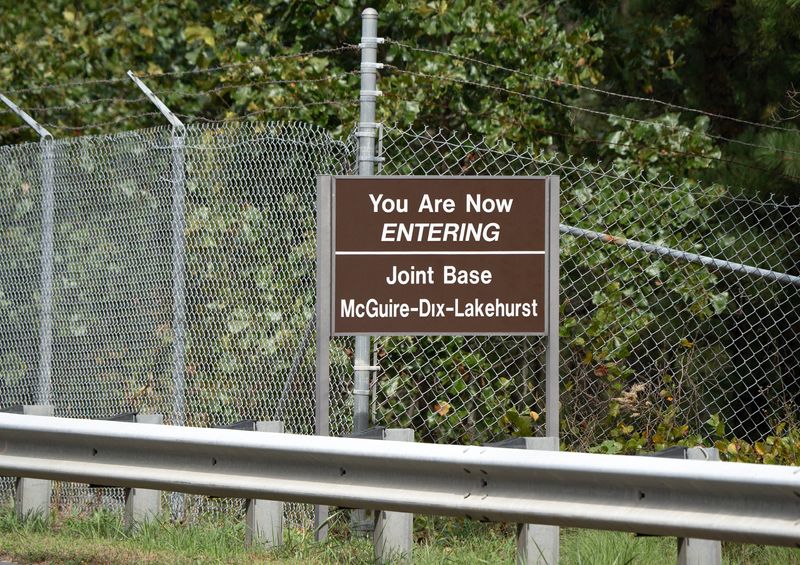
    Joint Base McGuire-Dix-Lakehurst is shown along Route 539, Whiting-New Egypt Road, Manchester Township, N.J. The author has served nearly all of his 26-year Air Force career at the 514th Airlift Wing at Joint Base McGuire-Dix-Lakehurst.Doug Hood/Asbury Park Press

    I have spent nearly my entire 26-year Air Force career right here, at the 514th Airlift Wing at Joint Base McGuire-Dix-Lakehurst in South Jersey, affectionately known as the Freedom Wing. That name has always meant something to me, but this anniversary year, it carries a particular weight.

    Freedom is not a monument or a date on a calendar. Freedom is a daily act of service, renewed by ordinary people who choose to do an extraordinary thing: raise their right hand and pledge to lay it all on the line for their fellow citizens.

    The members of the Freedom Wing are your neighbors. Truly and literally. They teach your children in Philadelphia classrooms. They run toward the smoke when your house is on fire. They wear a SEPTA uniform in the morning and a flight suit in the evening. They are nurses, corporate executives, police officers, and small-business owners. They coach Little League in the summer and strut down Broad Street on New Year’s Day.

    And then, when the nation calls or the mission demands, they put on the uniform and get to work. They leave their families, their jobs, and their routines, and they go where they’re needed. No questions asked.

    In the Air Force Reserve, we call them citizen airmen. I call them my chosen family and the best people I have ever known.

    Since this wing was originally designated in 1949, our citizen airmen have answered the call in every major conflict our country has faced — Korea, Vietnam, Iraq, Afghanistan — and in humanitarian missions across the globe. The Freedom Wing has never sat on the sidelines of history.

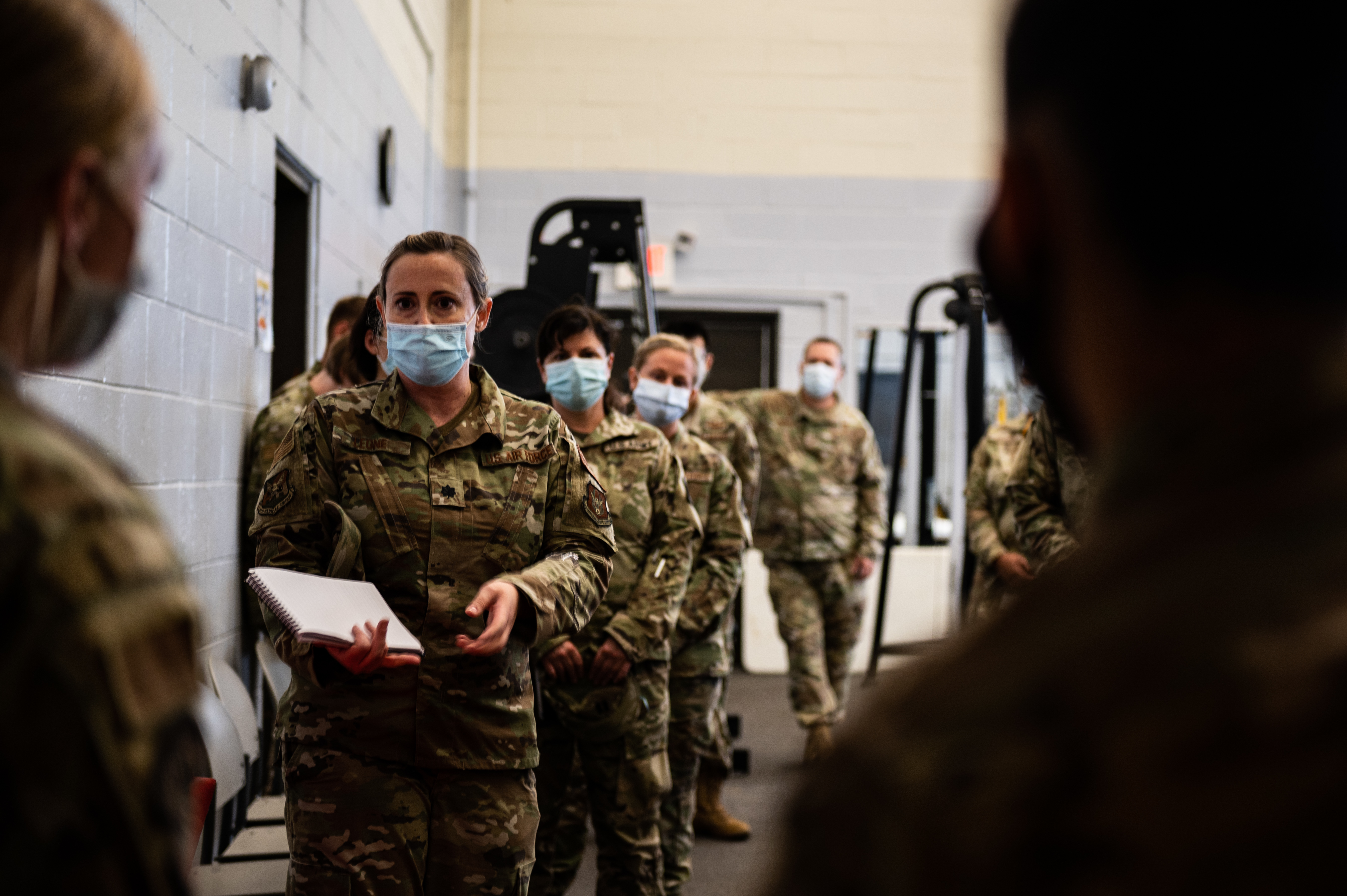
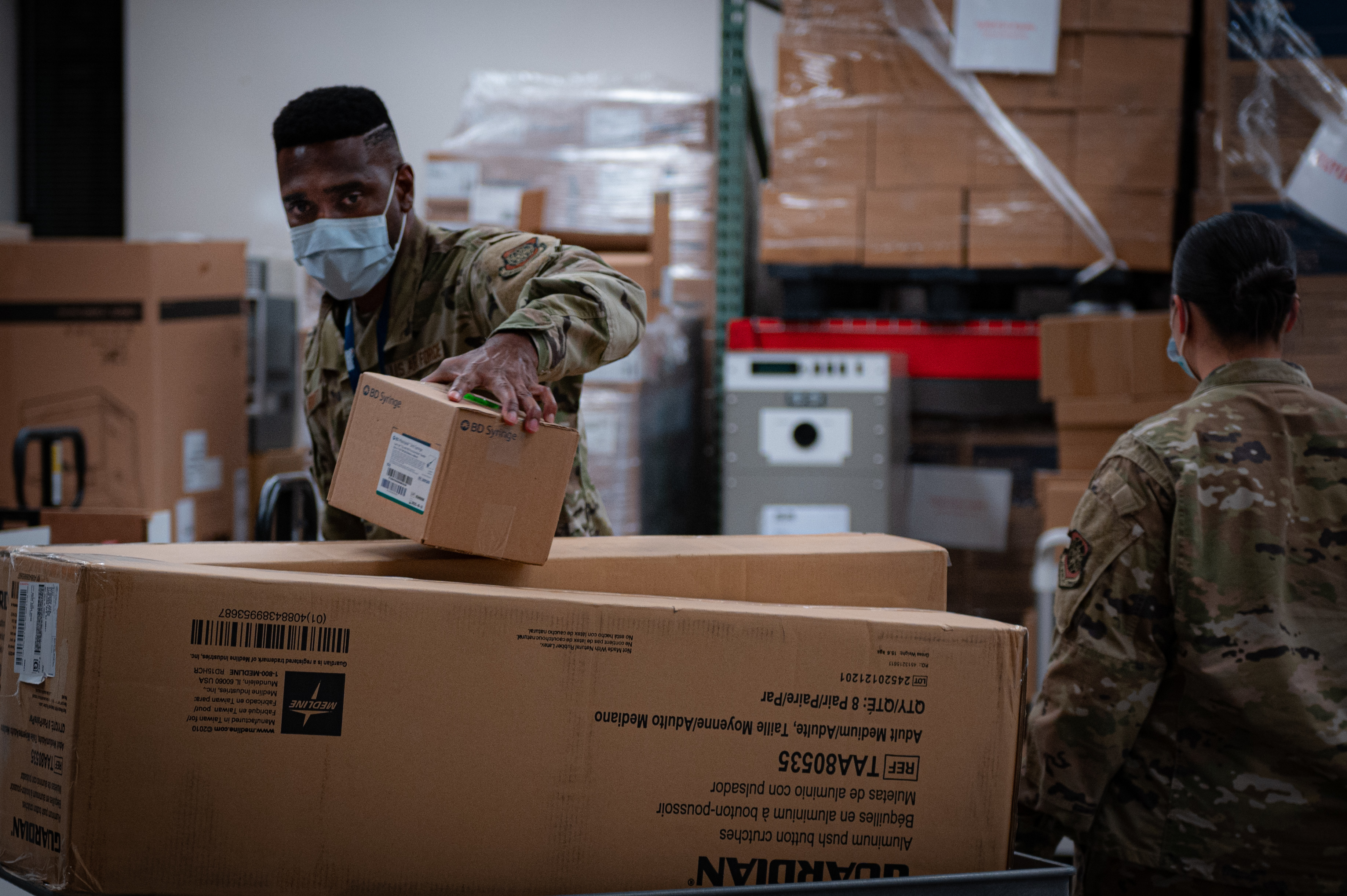
    Task Force McGuire-Dix Airmen prepare personal protective equipment to aid in the arrival of Afghans in support of the U.S. Department of State-led Operation Allies Refuge at Joint Base McGuire-Dix-Lakehurst in New Jersey in 2021.U.S. Air Force photo by Airman 1st Class Joseph Morales

    After more than a quarter century standing alongside these individuals, what strikes me most is not the mission accomplishments, though they have been extraordinary — it’s the sacrifice that surrounds each one.

    It’s the spouse who holds the household together for a sixth month of deployment. It’s the firefighter who tells his crew he has to leave again, and the crew that jumps to cover his shifts. It’s the teacher who builds training plans instead of lesson plans in the back of an aircraft at 30,000 feet, and the students who send hand-drawn cards and care packages.

    The uniform isn’t what makes these people and their loved ones remarkable. Their character does. Their grit does. This city is known for it, and so are our citizen airmen.

    As Philadelphia continues to celebrate 250 years of this improbable, magnificent country, take a moment to consider how we got here.

    Look around for the people who have dedicated their lives to preserving our freedom — they are already among you. Tell them you see them. That recognition costs nothing, and to a citizen airman who has given up more than most will ever know, it means everything.

    The truest way I know to celebrate Freedom 250 is not just to enjoy the freedoms we have inherited, but to honor the people who are still out there, right now, making sure we keep it.

    Col. Thad Amundson is the deputy wing commander of the 514th Airlift Wing, the “Freedom Wing,” at Joint Base McGuire-Dix-Lakehurst in New Jersey. The Philadelphia resident has flown combat sorties in Operations Enduring Freedom, Iraqi Freedom, New Dawn, and Inherent Resolve. He is a command pilot with over 4,000 flying hours, 800 hours flown in combat, and more than 5,000 flying hours as a civilian airline pilot.