Blog

  • Kushner meets Netanyahu in effort to break logjam over Gaza

    Kushner meets Netanyahu in effort to break logjam over Gaza

    JERUSALEM — Jared Kushner, President Donald Trump’s son-in-law and former White House adviser, was meeting with Prime Minister Benjamin Netanyahu of Israel in Jerusalem on Monday in an effort to break a logjam over Trump’s plan for the future of the war-ravaged Gaza Strip.

    The plan had been stalled for months over Hamas’ refusal to lay down its arms, as well as Israel’s frequent airstrikes and military operations beyond the withdrawal line it agreed to in the ceasefire reached in October 2025. Israel has also failed to meet its commitments to allow specified amounts of fuel and other necessities into Gaza.

    Trump’s announcement last month that his Board of Peace had secured Hamas’ agreement to disarm briefly raised hopes for progress. A 15-point “road map” that Hamas agreed to called for the militant group to lay down its weapons in a phased approach that would be matched by Israel withdrawing from parts of Gaza.

    But Netanyahu rejected the deal this month, insisting that Israel would not pull back within Gaza, let alone from Gaza, until Hamas had disarmed completely.

    Kushner and members of the Board of Peace flew to Israel for Monday’s meeting after holding talks with representatives of Hamas, including its political leader, Khalil al-Hayya, on Sunday in El-Alamein, Egypt.

    Hamas officials presented Kushner with a list of what they contended were Israel’s violations of the ceasefire, according to a Hamas official and two people briefed on the talks, and he promised to speak to Netanyahu about Israel upholding its end of the agreement.

    Kushner, in turn, asked the Hamas representatives to move ahead with disarmament, the two people said. But they replied that Israel first needed to keep its commitments under the ceasefire, and they warned that the road map they agreed to last month was not open for changes.

    The Board of Peace’s deal with Hamas says that, as part of the disarmament process, Israel should first uphold its side of the ceasefire. But political considerations are widely believed to be preventing Netanyahu from upholding all of Israel’s commitments under that deal.

    The Israeli leader faces a tough campaign for a new term in elections to be held Oct. 27, and his right-wing coalition is behind in the polls. Any concessions to Hamas or perceived softening of his posture toward Gaza could subject him to attacks from allies he considers vital.

    Political considerations are also important for the Board of Peace and for the Trump administration. With the U.S. midterm elections approaching in November and the anniversary of the ceasefire in early October, a failure to reach an agreement that could pave the way for reconstruction in Gaza could be highly embarrassing for the board, for the White House, and for its approach to the Middle East.

    This article originally appeared in the New York Times.

  • Ohio State and Oregon are 1-2 in preseason Top 25 football poll; Penn State 18th

    Ohio State and Oregon are 1-2 in preseason Top 25 football poll; Penn State 18th

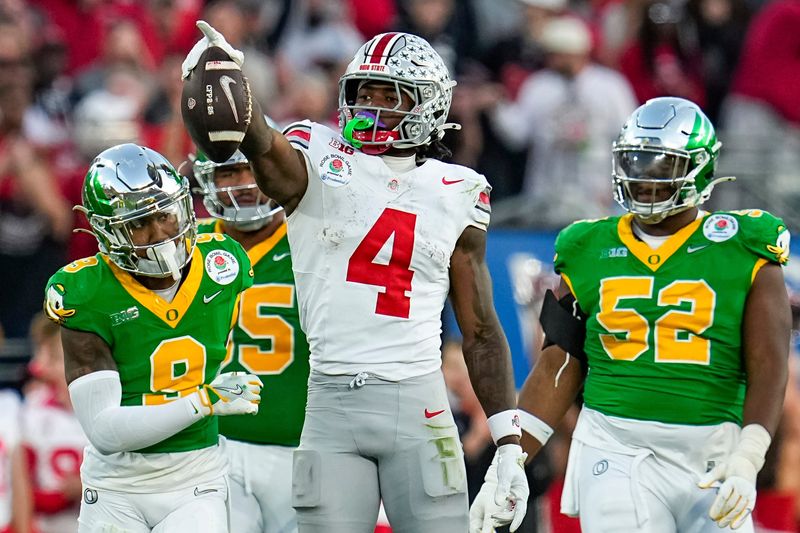
    Ohio State and Oregon are 1-2 in the AP Top 25, giving the Big Ten Conference the top two teams in the preseason rankings for just the second time ever. Georgia, Notre Dame and Texas round out the top 5.

    The Southeastern Conference gets bragging rights with nine ranked teams, but the Big Ten isn’t far behind with eight.

    Penn State is ranked 18th going into its first season with coach Matt Campbell, who was hired in December following a 7-6 season that cost James Franklin his job in October. Penn State is one of four teams in the Top 25 with new coaches.

    Indiana finished the 2025 season at No. 1 in the rankings after a historic 16-0 run and national championship game victory. This season, Ohio State enters with the best odds (+600) to win it all. Notre Dame (+650), Texas (+650), Indiana (+800) and Oregon (+800) round out the top five.

    The Top 25 voters are more than 60 journalists covering college football for AP members and other news organizations. They’re urged to base their votes on head-to-head results, not reputation, preseason speculation or regional bias.

    Conference breakdown

    SEC (9): No. 3 Georgia, No. 5 Texas, No. 8 Texas A&M, No. 9 Mississippi, No. 10 Oklahoma, No. 11 LSU, No. 13 Alabama, No. 20 Tennessee, No. 25 Missouri

    Big Ten (8): No. 1 Ohio State, No. 2 Oregon, No. 6 Indiana, No. T-14 USC, No. 16 Michigan, No. 17 Washington, No. 18 Penn State, No. 22 Iowa

    Big 12 (4): No. 12 Texas Tech, No. T-14 BYU, No. 21 Utah, No. 23 Houston

    ACC (3): No. 7 Miami, No. 19 SMU, No. 24 Louisville

    Independent (1): No. 4 Notre Dame

    SEC has 9 ranked teams to Big Ten’s 8

    Having Ohio State and Oregon enter the season Nos. 1 and 2 ahead of sixth-ranked defending conference and national champion Indiana is a flex for the Big Ten, which already is riding the momentum of winning the last three national titles.

    Having five of the top 10 teams, and seven of the top 13, bolsters the SEC’s contention that it has greater depth. The SEC has nine ranked teams compared to the Big Ten’s eight.

    The debate goes on over conference supremacy and will only heat up when the Big Ten and SEC square off in the first heavyweight games of the season Sept. 12. That’s when No. 10 Oklahoma visits No. 16 Michigan and No. 1 Ohio State goes to No. 5 Texas. Both are rematches of games won by the home team last year — OU 24-13 and Ohio State 14-7.

    Texas quarterback Arch Manning is expected to be a Heisman Trophy candidate this season.Stephen Spillman

    Longhorns, No. 1 in last year’s preseason poll, look to bounce back

    The Longhorns entered the 2025 season at No. 1 after receiving 25 first-place votes — two more than No. 2 Penn State. But after a Week 1 loss to Ohio State, Texas found itself fighting upstream to maintain its top-ranked status. An October loss to a struggling Florida team didn’t help either, knocking Texas out of the rankings altogether.

    The Longhorns, despite gutting out a few impressive wins, ultimately fell short of the 12-team College Football Playoff after Georgia handed them a third loss.

    Eyes will be on quarterback Arch Manning, who the Longhorns hope makes the expected jump from year one to year two as a full-time starter. Manning, a favorite for the Heisman Trophy this year, will have to lead a team facing plenty of expectations once again.

    Buckeyes are an early favorite

    It’s the first time the Buckeyes have topped the list since the 2015 preseason.

    Ohio State ranked No. 1 in the AP Top 25 for the entire regular season last year, only dropping after a Big Ten Championship game defeat from Indiana. With a 12-1 record, Ohio State still earned the No. 2 seed and a first-round bye in the College Football Playoff. The Buckeyes ultimately went on to drop 24-14 to eventual runners-up, Miami, in the Cotton Bowl.Gallery

    This season appears promising with quarterback and receiver duo Julian Sayin and Jeremiah Smith returning to the offense. Veteran defensive end Kenyatta Jackson Jr. is expected to anchor the defense. Notre Dame and Texas are tied for the second best odds at +650. Indiana (+800) and Oregon (+800) round out the top five.

  • The inaugural JAB Classic brought a bevy of basketball stars for a showcase to foster unity

    The inaugural JAB Classic brought a bevy of basketball stars for a showcase to foster unity

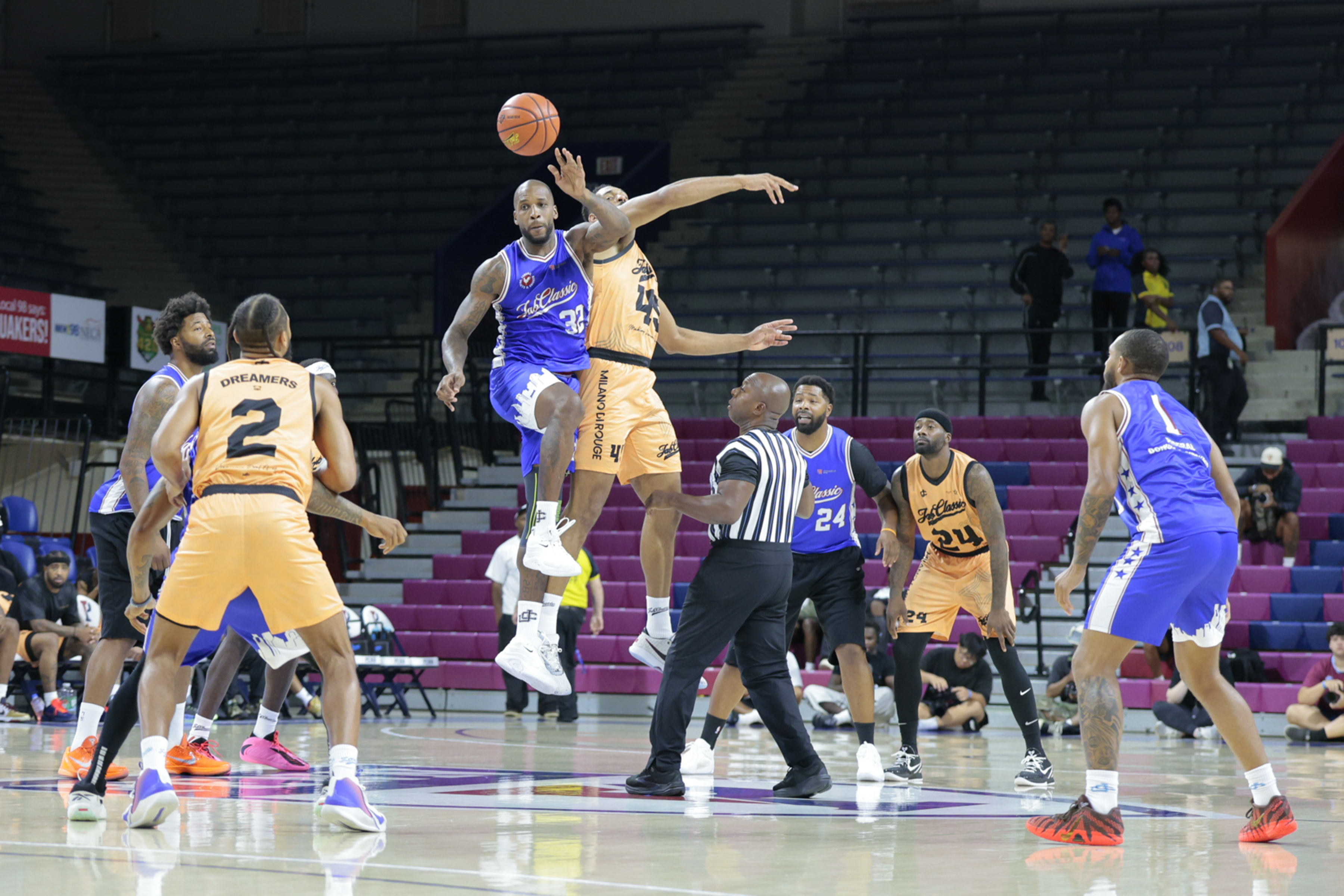
    Philadelphia natives Marcus Morris Sr. and Markieff Morris showed out in front of a home crowd on Sunday.

    The Morris twins, who put together long careers in the NBA, starred for a team representing Chuck Ellis Workouts in the inaugural JAB Classic Championship — the culmination of a three-day pro-am basketball tournament at the Palestra.

    The final saw their Philly-based team defeat Texas’s Trusted Vision, 106-77. Zid Powell, a former standout at Rocktop Academy while attending Overbrook High, was named the game’s most valuable player.

    After the final whistle, Chuck Ellis Workouts was awarded a $1 million championship bonus check.

    “I already knew what time it was, man,” Marcus Morris Sr. said after being presented the check. “I already knew. Just show some love. Just show some respect, man. You know what time it is. I’m taking [the check] to the crib, and we know what it is — a million.”

    In 2024, Marcus Morris, then a member of the Sixers, received a key to the city for his philanthropic work. Marcus and Markieff helped found the Family Over Everything Foundation, a program that provides assistance to local children in single-parent households and other underserved communities. For the Morris twins, playing in the JAB Classic was another way to give back to Philadelphia.

    Chuck Ellis Workouts shows off their prize after beating Trusted Vision to win the JAB Classic and the $1 million grand prize at the Palestra on Sunday.Steven M. Falk / For The Inquirer

    “It’s amazing to have people come out,” said Marcus Morris. “Been playing in the NBA for 15 years. And even when I’m not playing, they still come to show love, man. It’s always about Philly.”

    Markieff Morris added: “Felt good, had the city come out. We need more of it.”

    The JAB Classic was centered around fostering unity. JAB founder Jared Armstrong thought to bring the inaugural tournament to Penn after years of campus turmoil following the Hamas-led attacks on Israel on Oct. 7, 2023, and the ensuing war in Gaza, which has killed more than 70,000 people.

    Armstrong, who plays professionally in Israel, has helped fund the renovation of 17 total basketball courts between Israel and Philadelphia. The tournament, which ran from Friday through Sunday, will help fund a new court in the city. The location has yet to be announced.

    “I just think [combating] the rise of hate [is the goal],” Armstrong told The Inquirer last week. “Whether it’s racism, antisemitism, Islamophobia — it’s going to start with the next generation and really educating them.”

    Jared Armstrong, who plays professionally in Israel, started the JAB Classic, he says, as a way to grow the sport both overseas and here in Philly. Jared Armstrong

    The Morris twins were far from the only high-level talent that graced the Palestra’s court. In total, over 35 current and former NBA players were featured on the classic’s eight teams. Other notable names included 76ers forward Dominick Barlow, two-time NBA champion Quinn Cook, former NBA Sixth Man of the Year Montrezl Harrell, and former Villanova standout Omari Spellman.

    On Friday, Philadelphia rapper Kur performed between Games 3 and 4. Then, during halftime of Sunday’s championship matchup, prominent Chicago emcee G Herbo performed a medley of his hits.

    Despite the evident star power, the JAB Classic failed to pack the Palestra. Sunday’s championship round, the best attended of the tournament’s three days, filled roughly a quarter of the arena. Marcus Morris hopes to help bring in more fans if the event is held again.

    “Next year we want to get [ahead] of it a little bit earlier,” he said. “So we can get more people to come out.”

    Still, the fans who did show up on Sunday made themselves heard.

    In the second half, when Chuck Ellis Workouts began to run away with the lead, a crowd formed on the baseline. One player that fed off the section was Chuck Ellis Workouts guard Josh Sharkey, a graduate of Archbishop Carroll.

    “Man, they gave us a lot of energy today,” Sharkey said. “You know, we [were] trying to promote it and get people in here, and they gave us a lot of energy. So it was good to come out and give them a show in front of the city and to win the money here.”

    “We [had] a very well put-together team,” added Sharkey, who also played in last week’s Danny Rumph Classic. “Shout-out to the [Morris] twins. Shout-out to Chuck [Ellis] for putting us together. And we had a goal, and we had no egos on the team.”

  • Supreme Court again rejects Trump’s appeal of $5 million E. Jean Carroll payment

    Supreme Court again rejects Trump’s appeal of $5 million E. Jean Carroll payment

    WASHINGTON — The Supreme Court for a second time refused a request by President Donald Trump to review a $5 million civil judgment against him after a jury found in 2023 that he had sexually abused and defamed writer E. Jean Carroll.

    The announcement Monday did not include the justices’ reasons, which is typical when the court issues routine orders. There were no noted dissents.

    Trump paid Carroll in July, a few days after the court initially turned away the president’s appeal. He also made a long-shot request to the justices that they reconsider, which the court formally declined Monday.

    The president has separately asked the Supreme Court to overturn a much larger award of $83.3 million that a jury ordered him to pay in 2024 for defaming Carroll in 2019, after she accused him of a decades-old rape. The justices are on summer recess and not expected to consider whether to take up that case until late September at the earliest.

    The request the justices dispatched Monday was always a long shot, since they rarely reconsider when asked. Still, it was another in a series of blows to the president’s efforts to contest Carroll’s claims and avoid the two separate monetary awards that juries have ordered him to pay related to Carroll’s allegations.

    In a statement, Trump’s legal team said: “The American people stand with President Trump as they demand an immediate end to all of the witch hunts, including the Democrat-funded travesty of the Carroll hoaxes. President Trump will keep winning against liberal lawfare, as he continues to focus on his mission to make America great again.”

    Carroll’s lawyer Roberta Kaplan said in a statement: “We are pleased that the United States Supreme Court has declined again to hear this case. As a result, the jury’s unanimous verdict that Donald Trump sexually assaulted and then defamed E. Jean Carroll is now final and cannot be challenged in any court.”

    The $5 million matter stems from a trial held in May 2023, when a federal jury in New York found the president liable for sexually abusing and defaming Carroll.

    The jury agreed that Carroll, a former magazine writer, had sufficiently shown that Trump sexually abused her in a dressing room of the Bergdorf Goodman department store when the two crossed paths in the 1990s. Further, the jury found that Trump had defamed Carroll by posting a statement on social media calling her case “a complete con job” and “a Hoax and a lie.” Throughout, Trump denied Carroll’s allegations.

    After that verdict, Trump appealed to the 2nd U.S. Circuit Court of Appeals, asserting, among other things, that the trial judge, Lewis A. Kaplan, erred by allowing certain evidence to be shown to the jury.

    In December 2024, a three-judge appeals court panel upheld the jury’s verdict, finding that Trump failed to show that the evidence had harmed his rights to a fair trial.

    Trump then asked the justices to weigh in and find that the trial court had erred.

    This article originally appeared in the New York Times.

  • Inside the gentle, careful work of restoring famous paintings of Lincoln

    Inside the gentle, careful work of restoring famous paintings of Lincoln

    Heather Smith stood before the tattered portrait of Abraham Lincoln, holding a fine-tipped sable brush and a small plastic palette smeared with dabs of conservation paint.

    Wearing special magnifying glasses, she peered at the edge of the unframed portrait where paint was missing and pieces of old canvas remained.

    Lincoln, shown in the portrait resting his chin on his right hand, seemed to be watching.

    “He’s been through a war of his own,” she said of the painting of the nation’s Civil War president. “It’s terrifying to think about.”

    The 6-foot-2-inch portrait of a contemplative Lincoln sitting in a chair was painted in 1887. Time has weathered it and pocked it with flaws: Its original canvas was removed, probably with a scalpel. The surface of the painting was abraded, perhaps with an iron. And spots dotted the portrait where the paint was gone.

    But the Baltimore art conservator, working for the Smithsonian’s National Portrait Gallery, which owns the painting, has now embarked on a months-long effort to restore the majestic portrait to its original look.

    The effort is part of the portrait gallery’s project to assess 110 of its presidential portraits and repair those in need. The work has been funded, in part, by a grant from Bank of America.

    Smith is the owner of Maryland Art Conservation, which is based in a former Baptist church in northern Baltimore.

    She has already worked on the gallery’s 1785 portrait of George Washington by English artist Robert Edge Pine. And she is scheduled to work on gallery portraits of presidents Theodore Roosevelt, Benjamin Harrison, Woodrow Wilson, and Dwight D. Eisenhower.

    She is also working on another Lincoln — known as the penny portrait, which resembles the image of Lincoln on the coin.

    But the large portrait of Lincoln seated is, perhaps, the most dramatic and well-known of the group. He is shown wearing a dark suit, white shirt and bow tie. He is leaning forward, his left hand gripping the arm of the chair, as if listening.

    The painting is too big to fit on an easel, Smith said, so it leans against a wall, flanked by two large windows. It was last on view at the portrait gallery in 2022.

    It is one of four similar Lincoln portraits painted by the prolific American artist George Peter Alexander Healy, said Mindy Farmer, a portrait gallery historian.

    “This has been an iconic work since it was created,” she said.

    Another version, painted in 1869 and once owned by Lincoln’s son, Robert, is in the White House, according to the White House Historical Association.

    The portraits are based on The Peacemakers, a painting Healy did in 1868 depicting Lincoln meeting with Lt. Gen. Ulysses S. Grant, Maj. Gen. William T. Sherman, and Rear Adm. David D. Porter near the end of the Civil War, according to the association’s website.

    The gallery’s 1887 portrait was commissioned by Lincoln’s longtime friend and political ally Elihu B. Washburne, who wanted it for his home, art historian Alba Campo Rosillo wrote in Smithsonian Magazine in 2021.

    Healy painted the portrait in the winter of 1887 in his studio in Paris, where he was living, Rosillo wrote.

    Washburne died in Chicago later that year, and the painting passed to his brother, William, who died in 1912.

    It was purchased in 1934 by the A. W. Mellon Educational and Charitable Trust. It was given to the National Gallery of Art in 1942 and transferred to the planned portrait gallery in Washington in 1965, according to the gallery. The gallery opened in 1968 with the Lincoln portrait on display.

    In the early 1940s, during conservation at a now-defunct gallery in New York, the painting underwent what Smith said was a radical treatment procedure.

    “I’ve never encountered this before,” she said in an interview in her conservation lab. “They put [it] face down, removed the canvas from the back of the paint layers, which is extremely unusual.”

    “They would have protected the front with something called a facing, which is paper glued to the front of the painting to keep everything intact, and then worked on the back,” she said.

    The old canvas was probably scraped away little by little, except for a small ridge along the edges of the painting, she said. “I would not be surprised if that is how some of the painting’s numerous tears and holes were inflicted.”

    The old canvas was replaced with a new backing, Smith said. The portrait also shows evidence of “abrasion,” where the paint has been worn down. What probably happened was that a prior conservator, assumably in the 1940s, used an iron to try to fix cracks in the paint surface, she said.

    “When they ironed them, they didn’t put anything protective between the iron and the painting,” she said. “And I’m guessing they just wore down the paint.”

    The painting’s last major conservation was in 1966, Smith said, and the portrait was in poor shape when she got it earlier this year.

    She has since removed dirt and old varnish and reattached bits of paint that were loose.

    She plans to soon begin comprehensive inpainting — adding paint to places where it’s missing. In her lab, she keeps books, paint brushes, picture frames, lighting equipment, jars of pigment, and a bed for her dog, Charity.

    Across the room from the large Lincoln portrait, his penny portrait rests on a table. The work on it requires using bits of cotton on the end of a bamboo skewer to clean off dirt and soot.

    The 1864 portrait, by the Boston artist William Willard, may have hung above someone’s fireplace, she said. The painting was given to the gallery in 1976 by Mr. and Mrs. David A. Morse, the gallery’s website says. It was last exhibited in 2009.

    Smith, a native of Westminster, Md., has been an art conservator for more than 20 years, taking over the business in the small wood-shingled church when her employer retired.

    She said she feels a sense of responsibility adding paint to damaged works of historic art.

    “Early in my career … I would have conversations with the artist — ‘I’m sorry this happened to your painting,’” she said. “Over time, you treat enough paintings, you’re more looking at it as the materials, you kind of break it down in your head to the raw materials.”

    She said that there is a sense of gravity to the work, a realization that the person restoring the art is part of its history.

    “Obviously, you want to do no harm but make it look as good as possible,” she said. “Eventually, you won’t see any damages any more and will focus on what we’re here to see.”

  • The Supreme Court again rebuffed Trump’s push to toss out the $5 million verdict in the E. Jean Carroll defamation case

    The Supreme Court again rebuffed Trump’s push to toss out the $5 million verdict in the E. Jean Carroll defamation case

    WASHINGTON — The Supreme Court on Monday again rebuffed President Donald Trump’s push to throw out a jury’s $5 million finding that he sexually abused the writer E. Jean Carroll at a New York City department store in the mid-1990s and later defamed her.

    The Republican president’s lawyers had asked the justices to reconsider their refusal to hear his appeal. The court denied Trump’s petition along with several others.

    It’s unusual — although not unheard of — for the court to grant such requests. Trump paid the judgment shortly after the court declined to take up his appeal in June.

    President Donald Trump boards Air Force One on Sunday, Aug. 16, 2026, in Morristown, N.J. Julia Demaree Nikhinson

    Trump and the Justice Department are also asking the high court to toss out a second Carroll verdict totaling $83 million. They argue he’s immune from being sued over comments he made about her in 2019, when he was president. The court has not yet acted on that appeal.

    Carroll is a longtime advice columnist and former TV talk show host. She testified at a 2023 trial that Trump turned a friendly 1990s encounter into a violent attack in the dressing room at Bergdorf Goodman, a luxury retailer across the street from Trump Tower in Manhattan. The jury found Trump liable for defaming Carroll when he denied her allegation in 2022.

    Trump has denied any wrongdoing.

    The Associated Press does not identify people who say they have been sexually assaulted unless they come forward publicly, as Carroll has done.

  • N.J. school athletic director charged in Bucks County with prowling outside young neighbor’s window

    N.J. school athletic director charged in Bucks County with prowling outside young neighbor’s window

    An athletic director at a Mercer County school district has been charged with loitering and prowling after he leered into the bedroom window of his neighbor’s underage daughter, Plumstead Township Police say.

    Winfield “Tripp” Becker, 48, was caught on a surveillance camera Aug. 6 looking into the window, according to the affidavit of probable cause for his arrest. The victim’s mother installed that camera after an unidentified man spent months knocking on the window at night and then “fleeing the area,” the document said.

    Neither Becker nor his attorney, Thomas Logan, responded to requests for comment.

    Becker lives one street over from the victim in Pipersville, according to court records, and is known to the girl and her family. He was charged via summons, and has a preliminary hearing scheduled for next month.

    Becker is the athletic director at Hopewell Valley Regional School District, a district north of Trenton that serves about 3,400 students. In a letter sent to parents, Superintendent Rosetta Treece, without naming Becker, said a district employee was the subject of a criminal investigation, and had been suspended until the conclusion of that investigation.

    Treece said the district was working to secure temporary staffing to fill the position.

  • Michigan’s pass-fail grading won’t cure student angst

    Let’s suppose you’re the kind of citizen who puts a “Science is Real” sign on your lawn. You’re outraged by the Trump administration’s baseless attacks on vaccines and its brazen denials of human-made climate change. You think data — not ideology — should determine our social policies.

    How can you also be OK with a college lowering its academic expectations for students?

    I’m talking about the University of Michigan, which announced last week that first-semester students in its college of arts and sciences would receive pass-fail grades rather than traditional letter marks. The aim, Michigan said, was to “curb the mental health crisis unfolding among college-aged individuals.”

    That’s an admirable goal, of course. But there’s no evidence that easing up on students will help them feel better.

    To the contrary, psychologists have been reminding us for years that the best way to improve mental health is to address our fears and challenges head-on. Avoiding them might bring momentary relief, but it will make us feel worse in the long run.

    Put simply, Michigan is engaging in a huge collective experiment in avoidance. The first term of college is indeed a challenging time for students. But we don’t do them any favors by letting them coast in class.

    And make no mistake: That’s what they’ll do. I’ve been teaching college for 35 years, and I can assure you that all but a handful of students would do less work if I wasn’t grading them.

    Think about yourself at 18. Would you have devoted yourself fully to your studies if you could get the same grade without putting in the effort?

    Gamely, Michigan officials said that eliminating grades in the first term would “allow intrinsic motivations to guide personally meaningful academic journeys.” Instead of just working for a grade, the argument goes, students will explore ideas that truly interest them.

    That would be wonderful, but it won’t happen. Of course, I want students to develop a love for learning. But most of them won’t do that unless we grade them, too. Remember, they’ve been graded for a decade or more before they arrive at our doors. It’s what they know.

    And the more we expect of them, the more they’ll learn. In a now-classic 1965 experiment, psychologists Robert Rosenthal and Lenore Jacobson administered IQ tests to elementary students, and then told their teachers that certain randomly selected members of the class were “bloomers” who would likely improve. Regardless of their initial scores, those students showed more gains than their classmates when the test was administered again at the end of the school year.

    Rosenthal and Jacobson called that the Pygmalion effect, after the artist in Greek mythology who falls in love with a statue he built and asks the gods to bring it to life. Teachers can breathe life into their students, too, but only if the teachers believe the students can succeed.

    And if we lower expectations for them, we communicate the opposite: You’re too weak and fragile to get the job done. How can that be good for their development as human beings?

    Even at elite schools, let’s remember, a rising number of people arrive without the skills and knowledge that first-year students formerly possessed. Letting them skate by won’t solve that problem; instead, we will reinforce it.

    The only way to help them succeed — and to feel better about themselves — is to ask more of them. Over the past five decades, college students have done progressively less homework even as their grades have gone up.

    We need to reverse that trend. Rather than eliminating first-semester grades, we should raise the requirements for earning the top one.

    That might mean some students are disappointed with the marks they get. But that, too, can be good for them.

    “College should be one of the places where young people learn that evaluation isn’t always pleasant,” psychotherapist Jonathan Alpert said last week, criticizing the new Michigan plan. “These experiences can hurt, but learning that you can tolerate them and move forward prepares you for adulthood.”

    I’m not saying we should curve grades to limit the number of A’s, like Harvard did earlier this year. Instead, we should raise the bar and encourage everyone to meet it.

    That won’t be popular with our students, of course. At Michigan, the student body president praised the elimination of first-semester grades on, yes, mental health grounds. “You’re just figuring out how to be an adult and live on your own,” he said. “It gets extremely stressful having to balance that with also wanting to be a straight-A student.”

    I’m sure it does. But that’s why students need to confront the stress, not shrink from it. The science on that is real. The only question is whether we’ll shrink from it, too.

    Jonathan Zimmerman teaches history and education at the University of Pennsylvania. He is the author of “Schooling Citizens: How Education Can Save Democracy,” which will be published next spring by the American Philosophical Society Press.

  • City commits to being ‘part of the solution’ to preserve affordable rental homes in West and Southwest Philly

    City commits to being ‘part of the solution’ to preserve affordable rental homes in West and Southwest Philly

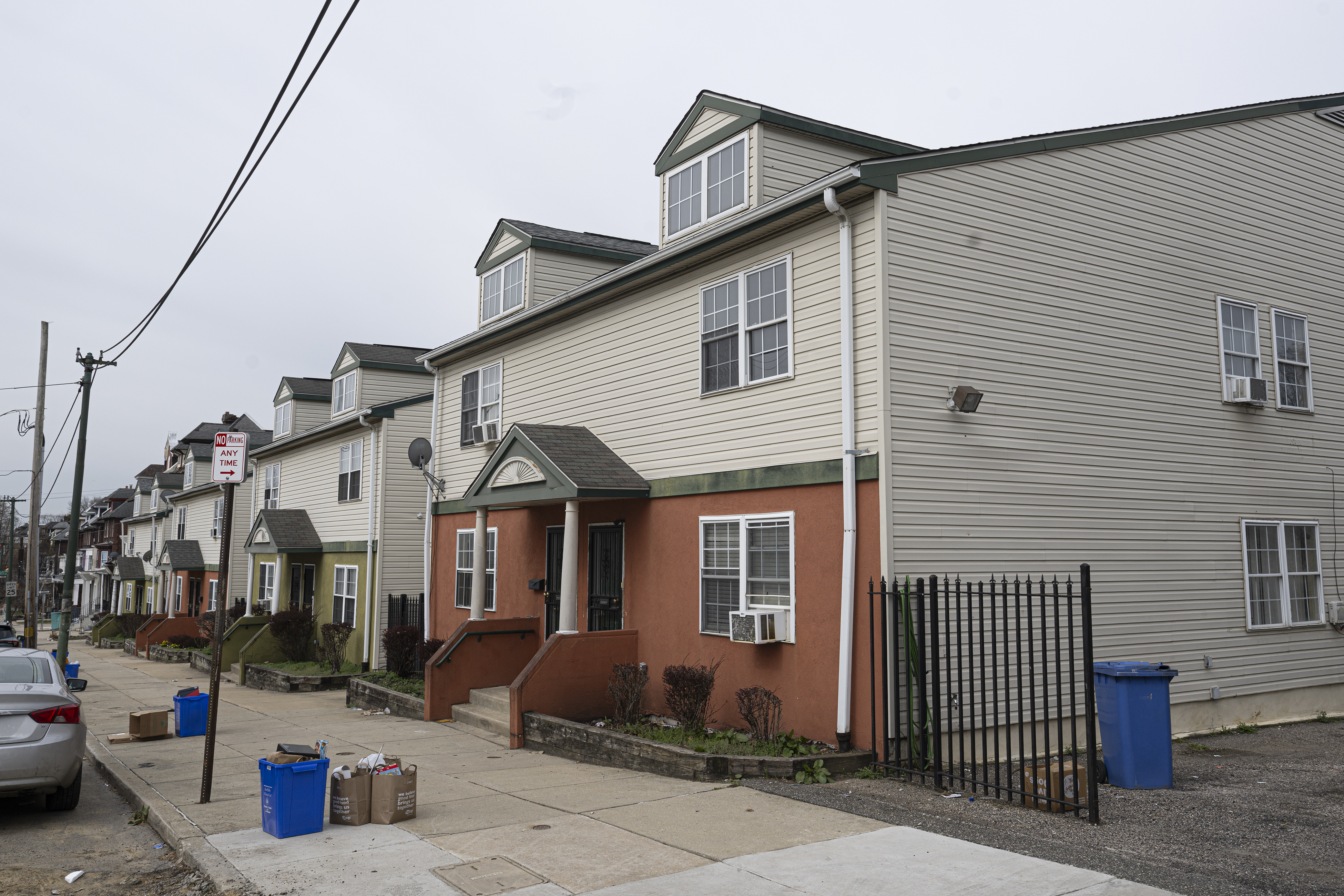
    Mayor Cherelle L. Parker’s administration met formally for the first time Friday with the owner of hundreds of rental homes in West and Southwest Philadelphia whose federal affordability requirements are expiring and committed to working to preserve the homes.

    Jim Levin of Neighborhood Restorations plans to sell 925 homes where tenants pay below-market-rate rents, and he wants to keep them affordable. But he needed assurance that the city plans to work with him, said Angela D. Brooks, Parker’s chief housing and urban development officer.

    Brooks gave him that on Friday, she said, telling Levin “we’re in this, we’re going to be a good partner, and we’re going to move this forward.”

    “We are committed to being part of the solution,” Brooks said in an interview Friday.

    About 3,000 people live in the 925 rental units in West and Southwest Philadelphia. The homes were developed through the federal Low Income Housing Tax Credit program, which requires reduced rents at the properties for three decades.

    The city’s initial focus will be on 225 of the homes: the 63 that are no longer required to be leased for below-market-rate rents or will lose the requirement by the end of the year, and the 162 homes where affordability requirements are set to expire within the next three years.

    Agreements for reduced rents at the other 700 homes are set to expire between 2030 and 2040.

    Across the city, Philadelphia is at risk of losing more than 7,500 subsidized rental homes during the next decade as federal affordability agreements expire, according to an analysis published last fall by the Housing Initiative at Penn.

    When agreements end, property owners can choose to continue charging below-market rents, charge higher rents, or sell their properties in potentially lucrative deals to take advantage of the city’s rising property values.

    Levin told tenants and city officials a year ago that he planned to sell the properties.

    The city will not buy the homes, Brooks said, and it has not made a spending commitment toward its goal of keeping the properties affordable once they’re sold.

    But a steering committee that began meeting at the end of last year and includes members of the administration, elected officials, and housing policy experts recommended that the city provide $36 million over five years to help preserve Neighborhood Restorations properties.

    Over the next few months, the committee plans to start evaluating the conditions of the properties and identifying funding sources, Brooks said.

    Three days before Brooks’ meeting with the property owner, tenants who fear losing their reduced rents and their homes rallied at City Hall to push the administration to help save the properties.

    Brooks said preserving all 925 homes could cost more than $260 million.

    In a statement, Parker said, “There is no simple or immediate solution at this scale.”

    “The city remains committed to doing our part and continuing the work,” she said. “But preserving these homes will require all of us, including strong intergovernmental support that includes resources from local, state, and federal government.”

    Tenants have partnered with the grassroots social justice nonprofit OnePA to push the city to keep the homes affordable permanently and to give renters the opportunity to buy their homes for below-market prices.

    In a statement, tenants thanked Parker and her administration “for making an initial commitment to saving our homes.”

    “We know there is still a long way to go before our homes are safe, and we urge the city to act quickly before it is too late,” they said. “We look forward to working with Mayor Parker and others, and we will continue organizing until all 925 units are protected and no one is displaced.”

  • Ryan Richter challenged Cavan Sullivan to step up in New York. The teen phenom went on to steal the show.

    Ryan Richter challenged Cavan Sullivan to step up in New York. The teen phenom went on to steal the show.

    NEW YORK — There were plenty of opinions on the penalty kicks that whistle-happy referee Sergii Demianchuk called in the first half. But there wasn’t much disagreement that the Union deserved to be down two goals at intermission to New York City FC, because they’d been outplayed for more than just those two moments Sunday night.

    It was easy to figure interim manager Ryan Richter would have some choice words for his players in the locker room, and he revealed at the end of the night that he did.

    “One or two things tactically, but it was more about challenging the guys to just play better,” he said after the Union’s 3-2 victory. “To give more, to be more connected when they didn’t have the ball.”

    Richter admitted to “challenging some guys individually,” and said at first that he didn’t want to name names. But that attempt didn’t last long, because the first player he was asked about turned out to be one of them.

    It also happened to be Cavan Sullivan.

    This was his first start against NYCFC, and his first time on the field at Yankee Stadium since a one-minute cameo as a rookie in 2024. It isn’t his fault or the Union’s that outsiders put a little more on this matchup than some others with him. But they do, and not just because of the famous stage.

    The Pigeons are owned by Manchester City, the English Premier League giant that Sullivan will move to when he turns 18. So if he does something big against their New York siblings, it gets noticed in a few more places.

    And if NYCFC keeps him quiet, as happened for much of the first half, that gets noticed, too.

    The outside chatter isn’t Richter’s business, either. All he wanted to do was hold Sullivan to the same standard he has kept all along. And he made it clear that Sullivan wasn’t meeting it.

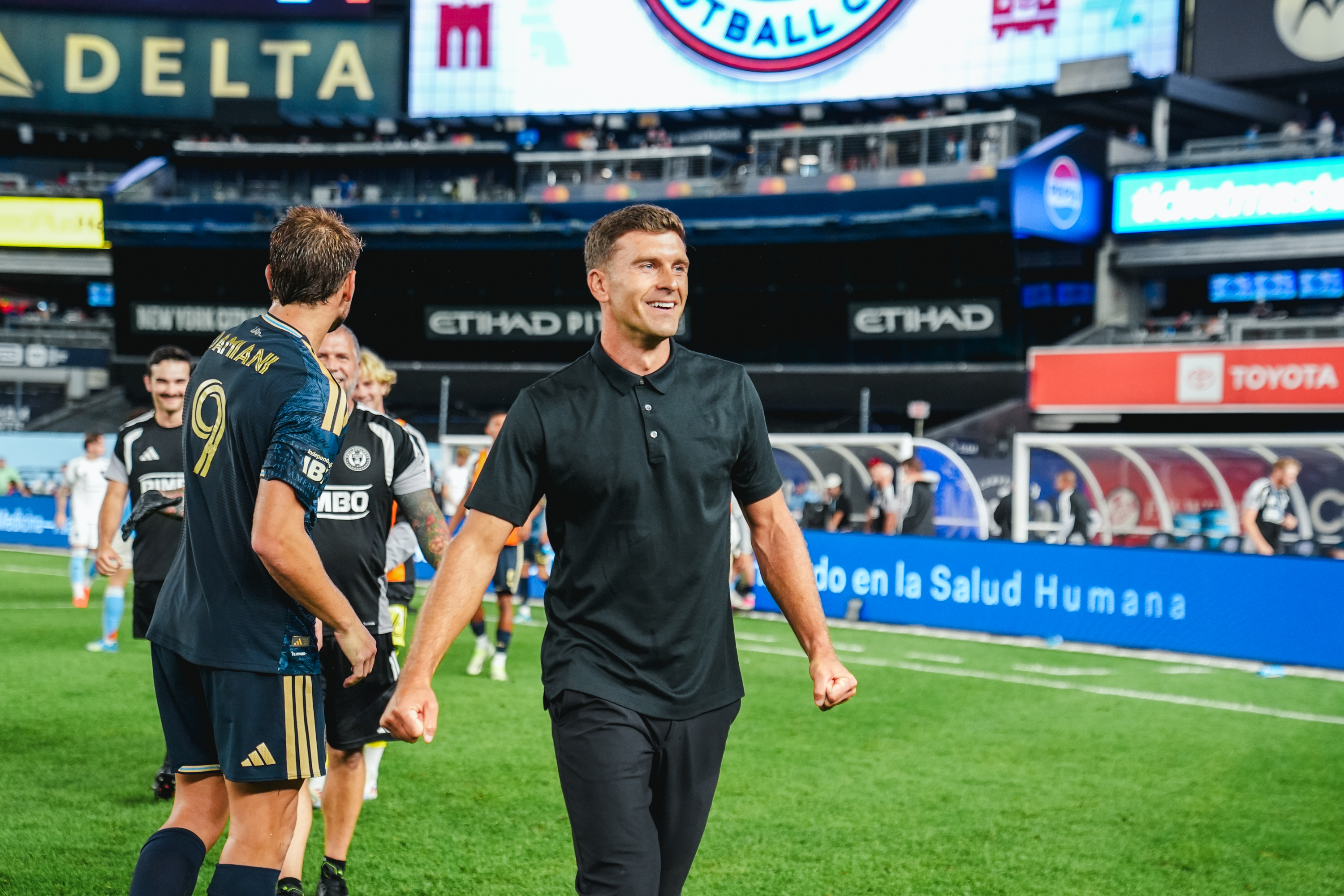
    Ryan Richter (center) celebrates after the Union’s stunning comeback win at New York City FC.Philadelphia Union

    “I can say he’s one of the guys at halftime that I really challenged,” Richter said. “Because we know about his talent. It’s incredible the things that he can do, the mentality that he has. But he can’t only play when the ball is at his feet. Every game is not going to be a situation where he is getting in these positions, can go at guys, create from there.”

    He continued on, giving the media what felt like much of the speech he gave the locker room.

    “He’s going to have to find the game in different ways sometimes,” Richter said. “And that was more the challenge: You have to position yourself for second balls. You have to recover in the game. You have to find the ball in the middle of the field in tight windows, and turn and make plays from there. And you have to just, yeah, play better, because you’re capable of it, bring everything at a higher level.”

    Three minutes into the second half, Sullivan won the foul for the free kick that delivered the first goal, then headed Kai Wagner’s service on to eventual scorer Danley Jean Jacques. Just over 20 minutes later, he broke past New York’s defense to receive Milan Iloski’s pass and set up Bruno Damiani for the equalizer.

    But it wasn’t just those two plays. It was a tackle a few seconds before the counterattack that led to Damiani’s eventual winner. It was three tackles total, one interception, seven duels won from 11 contested, four passes into the attacking third, and six shots.

    It was jumping into Quinn Sullivan’s arms after the older brother sprang free on the left and assisted Damiani’s winner. And at the end of the night, it was leading the team over to the cluster of Union fans along the first-base line to celebrate a wild victory.

    Cavan Sullivan leads the Union over to the away fans’ section to celebrate the win:

    [image or embed]

    — Jonathan Tannenwald (@jtannenwald.bsky.social) August 16, 2026 at 8:12 PM

    “He’s a guy that, for a young man, that he can accept this in the moment, take it, and then put together what he did in the second half. And then have the unselfish play that he made on Bruno’s first goal — that’s what makes him different,” Richter said. “It’s this maturity and this mentality. With a lot of the guys, I’m proud of them, but I’m really proud of the way that he responded to what I think was not his best first half.”

    Did it matter a little more in this game than others? Probably not, especially compared to what’s coming next: Inter Miami’s visit to Subaru Park on Wednesday, the first time Sullivan will play against Lionel Messi on the Bridesburg native’s home turf.

    But you can be sure outsiders put a little more meaning into Sunday night. On top of the New York-to-Manchester connection, the calls are growing fast for Mauricio Pochettino to pick the 16-year-old for the U.S. men’s national team’s upcoming friendlies.

    That, too, is for later. Right now, the Union (5-10-4, 19 points) have just two days to prepare for their biggest game of the year, and Jovan Lukić will be suspended due to yellow-card accumulation.

    Cavan Sullivan takes a photo with fans at Yankee Stadium after the game.Philadelphia Union

    “For the coach and the coaches, a lot of work,” Richter said of having just two days to prepare. “For the players, a lot of recovery.”

    Damiani delivers again

    Admit it: When Sullivan sent that pass to a wide-open Damiani for the equalizer, what was on your mind?

    Was it Surely he can’t miss this?

    This is a safe space, so you can say yes.

    Bruno Damiani celebrates scoring one of his two goals Sunday night.Philadelphia Union

    No doubt the critics are breathing easier now, even if the striker still has a ways to go to make up for all his misses before the last few days: two goals Sunday, and the first since February the previous Sunday against Necaxa in the Leagues Cup.

    “The run that he was in prior to scoring in the Leagues Cup, you could feel the weight come off of him in that moment,” Richter said. “And tonight, like his goal against Necaxa, tonight was two striker’s goals: run to the right spot, be available for your teammate, one-touch finish, bang, easy business.”

    If the Union are to make the playoffs, few things could help more than Damiani scoring consistently.

    “The work that he does outside of that, that always makes the team better,” Richter said. “But his job is to put the ball in the back of the net, and to see him do that twice tonight in a big moment was really good.”