Blog

  • What’s in a pepper pot? Black chefs gather to celebrate, revive, and update Philadelphia’s signature soup.

    What’s in a pepper pot? Black chefs gather to celebrate, revive, and update Philadelphia’s signature soup.

    The parade of soup bowls that perfumed the air of chef Shola Olunloyo’s South Philadelphia home kitchen with spice and heady broth could not have been more different. A buttery brown stew enriched with veal and bacon. An ethereal orange purée of squash that harbored habanero heat and delicate shellfish. A modernist collage of deconstructed elements — oxtail, pork belly, and frilly tripe dabbed with a gingery green mince of Caribbean herbs — artfully posed over a shallow splash of dark broth. But each one answered to the same name: pepper pot.

    “Pepper pot! Smoking hot!”
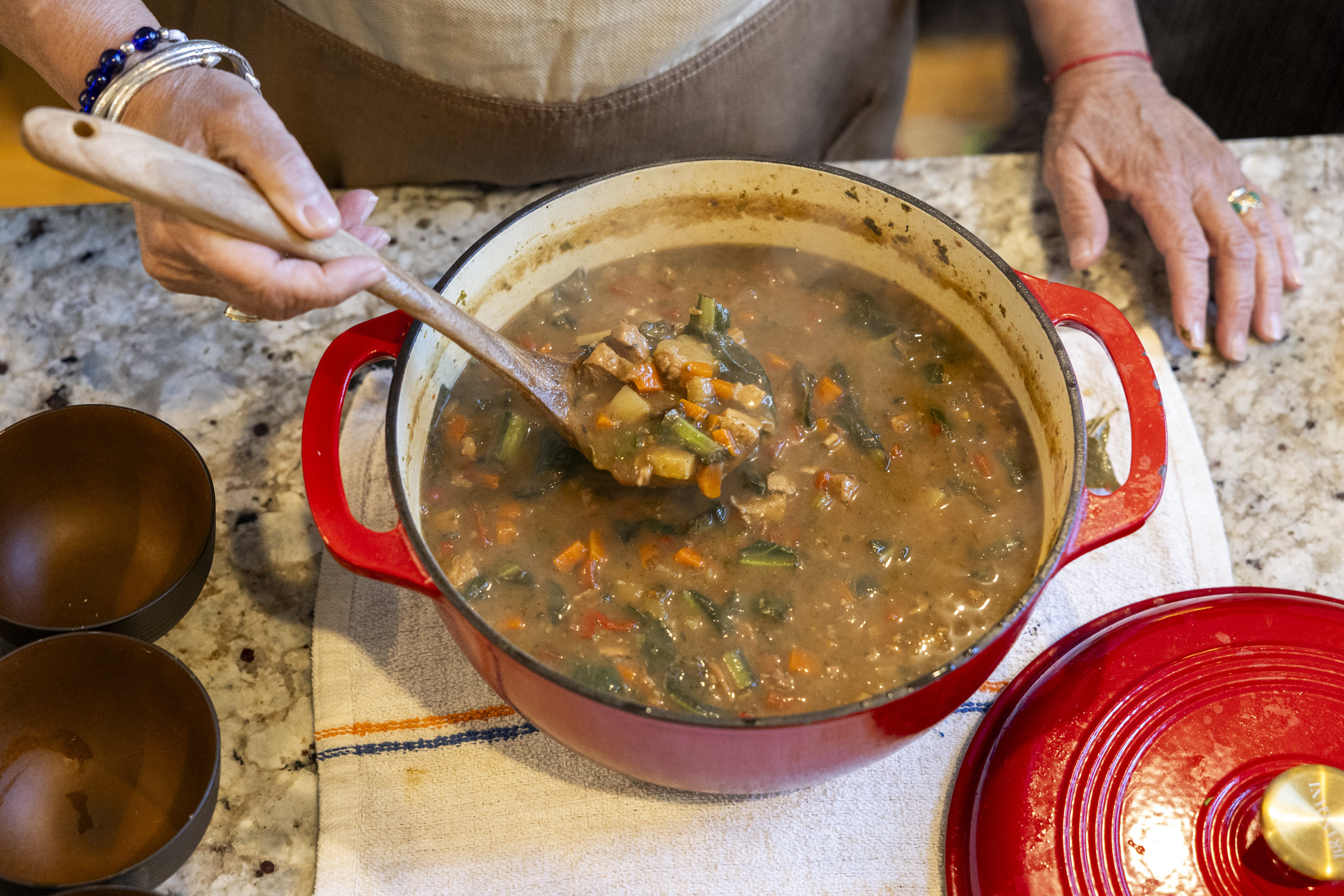
    Chef Angie Brown prepares to serve her version of pepper pot for fellow chefs to try.Tyger Williams / Staff Photographer

    So went the chant of the colonial-era vendors whose pepper pot cauldrons simmered on street corners across Philadelphia, America’s first capital city, with a “pleasant feast” made from an improvised variety of inexpensive cuts of meats, often including ox foot, tripe, and “a great portion of spice.” This iconic soup, largely produced by Black women from the West Indies, was immortalized as a city staple in an early 19th-century booklet chronicling the street cries of Philadelphia, a painting of an 1811 market scene painting by John Lewis Krimmel that hangs in the Philadelphia Museum of Art, and, more than 150 years later, Andy Warhol’s Pop Art series of Campbell’s soup can prints.
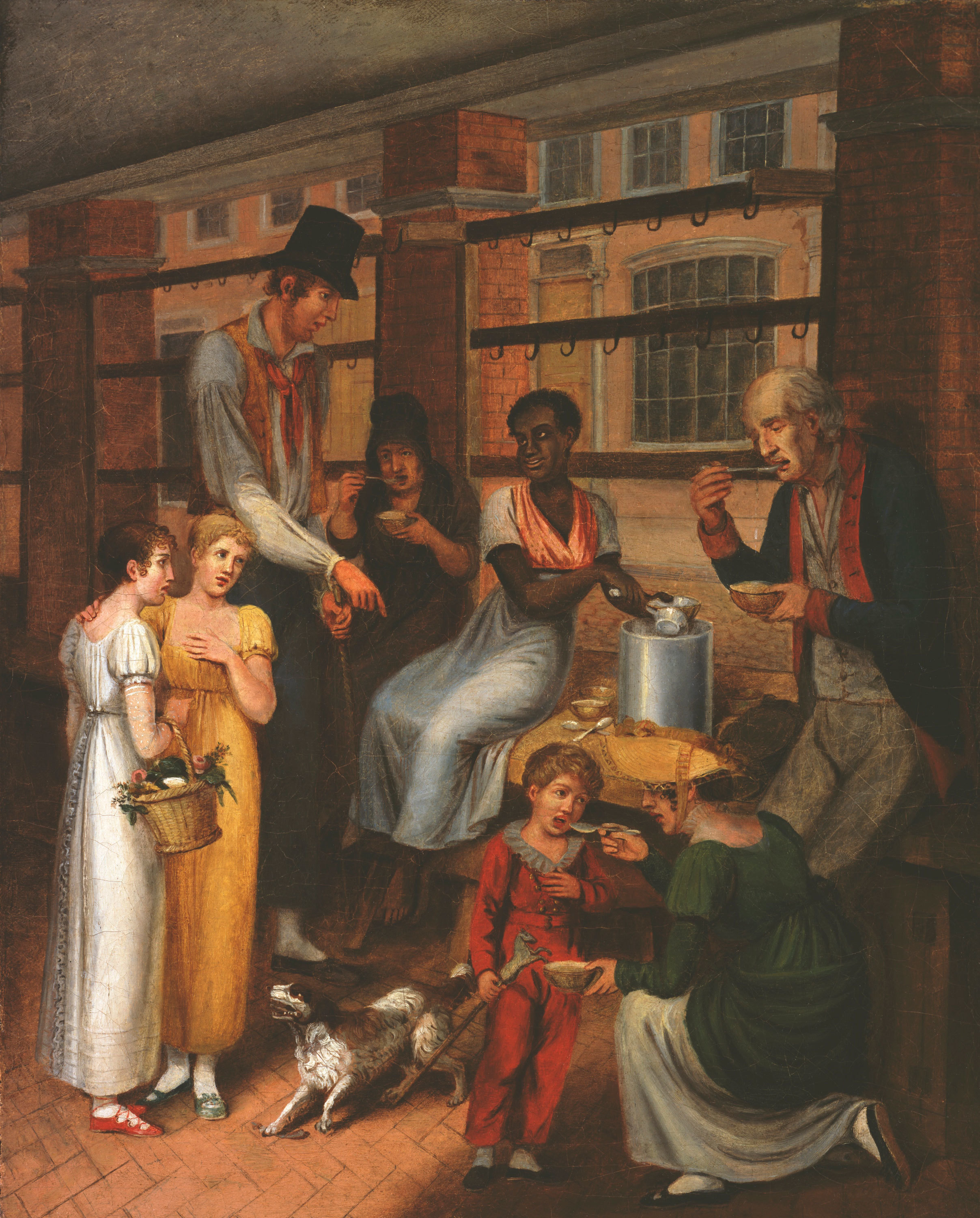
    “Pepper-Pot: A Scene in the Philadelphia Market” by John Lewis Krimmel depicts Philadelphians of varying classes enjoying the soup. Philadelphia Museum of Art: 125th Anniversary Acquisition. Gift of Mr. and Mrs. Edward B. Leisenring, Jr., 2001-196-1

    Over time, pepper pot evolved into a broad diversity of styles, hinted at by the starkly different interpretations on the table at Olunloyo’s home. Olunloyo, a culinary consultant and the chef of Studio Kitchen, had gathered a small group of Black chefs there for a pepper pot summit — to taste and compare recipes, reflect on its legacy, and, perhaps, spark a local resurgence.

    “I was excited to learn that Philadelphia had a distinct dish that was not just cheesesteaks or pretzels, and to be a part of understanding what cemented Philadelphia’s culinary reputation,” says chef Omar Tate, who served us a test run of a pepper pot he plans to add to the menu at Honeysuckle this fall.

    Chef Chad Williams, who was unable to attend the June gathering, is planning to serve a version of pepper pot on the tasting menu soon at his Michelin-starred Friday Saturday Sunday. He’s starting his process with the flavor memories of a pepper pot his grandpa Chester once made in West Philadelphia, along with other variations Williams cooked earlier in his career, then “working our way backwards.”

    “We’ve got to put it on restaurant menus again because if we don’t cook it, it dies,” says Angela Brown, a private chef and former culinary director for Rex at the Royal, who led off the lunchtime event with a hearty rendition of the dish she learned from her great-grandmother. “This new generation of cooks doesn’t know anything about pepper pot, so it’s nice to bring it back.” (The meal was also documented for radio by NPR reporter Justin Kramon for WHYY’s The Pulse.)
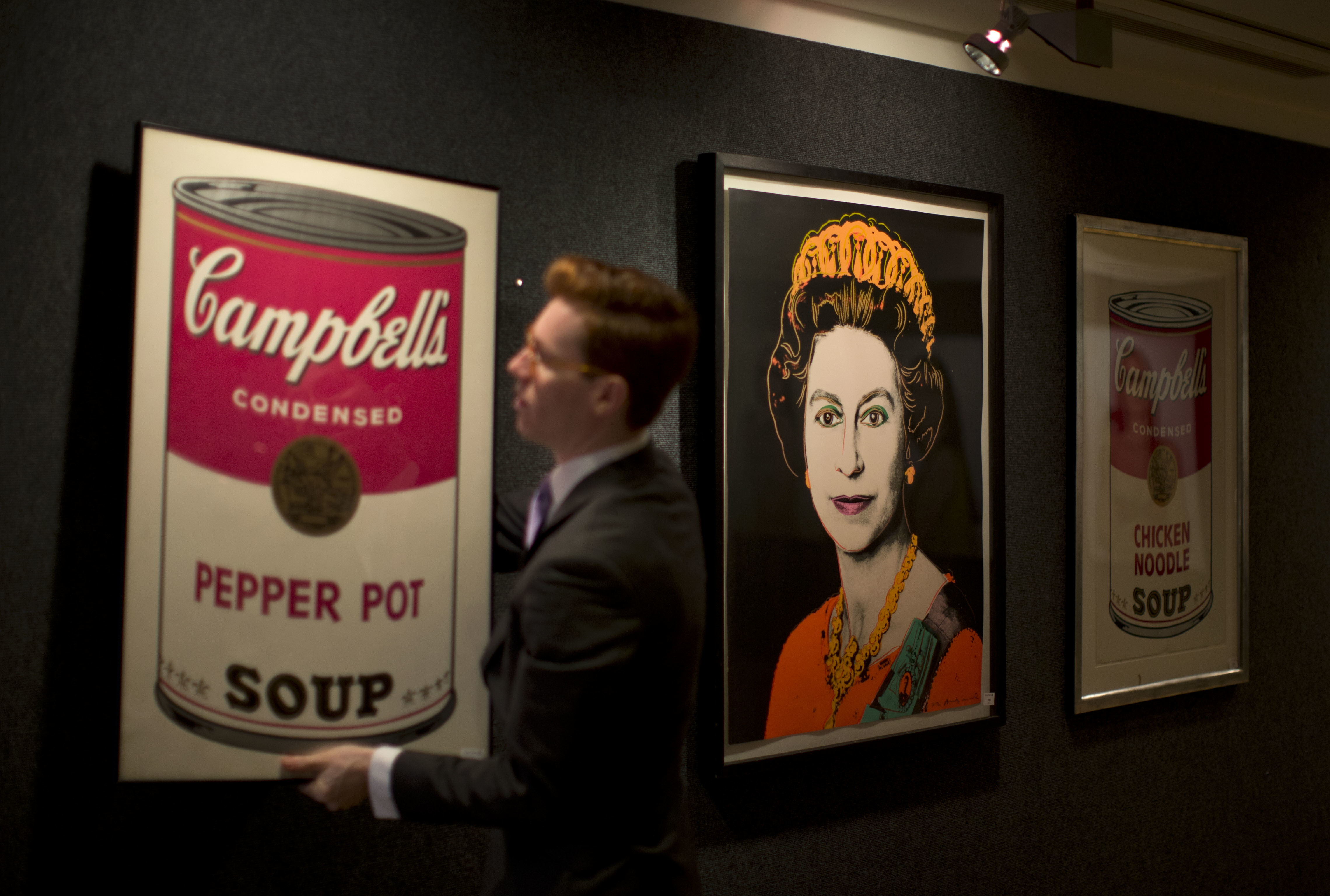
    Andy Warhol’s 1968 color screenprint “Pepper Pot.”Matt Dunham

    The rise and fall of pepper pot

    The effort can’t come soon enough. In 2026, pepper pot as we once knew it has become nearly extinct. Campbell’s stopped producing it in 2010, coinciding with a dwindling appetite for tripe. History-minded chef Adam Diltz still produces it occasionally at Elwood. There have been efforts by local food historians and home cooks to keep its memory alive. The last local restaurant to regularly serve pepper pot was City Tavern (although chef Walter Staib’s West Indies version was without tripe), before the replica of the historic tavern closed in 2020.

    The timing of this pepper pot party is not a coincidence. Reflections on history have been at the forefront of this year’s celebration of America’s 250th anniversary. Food historian William Woys Weaver, among the tasters at Olunloyo’s house, argues in his forthcoming Pepperpot City that no proto-Philadephia dish may be as meaningful — or elusive — to grasp.

    Weaver unearths a stunning array of pepper pots in the book, due out in October, from the humblest market-stall versions to those ladled from the gilded tureens of society’s hautest tables: There are myriad variations of meats, seafood, seasonal produce, dumplings, and numerous cultural influences. The breadth of iterations makes it impossible to define Philadelphia’s pepper pot as one specific thing, aside from the inclusion of tripe (usually, but not always) and the presence of spice. It was a way of life and cooking more than a particular bowl of soup.

    “What’s pepper pot? It’s whatever you had there right in front of you,” says Weaver. “These chefs did not live by written recipes, but oral traditions they learned from a mentor. That’s why there were so many different kinds. Each person cooked from their soul.”

    The ever-morphing nature of the soup became emblematic of colonial Philadelphia as a focal point for the New World melting pot, he says, where the confluence of Black, white, and Creole foodways began to define this newly founded country’s culinary personality.

    “The City of Brotherly Love helped create a singular identity that helped shape what we know today as American cuisine,” writes Weaver. “Especially when winnowed through the hands of Black cooks.”
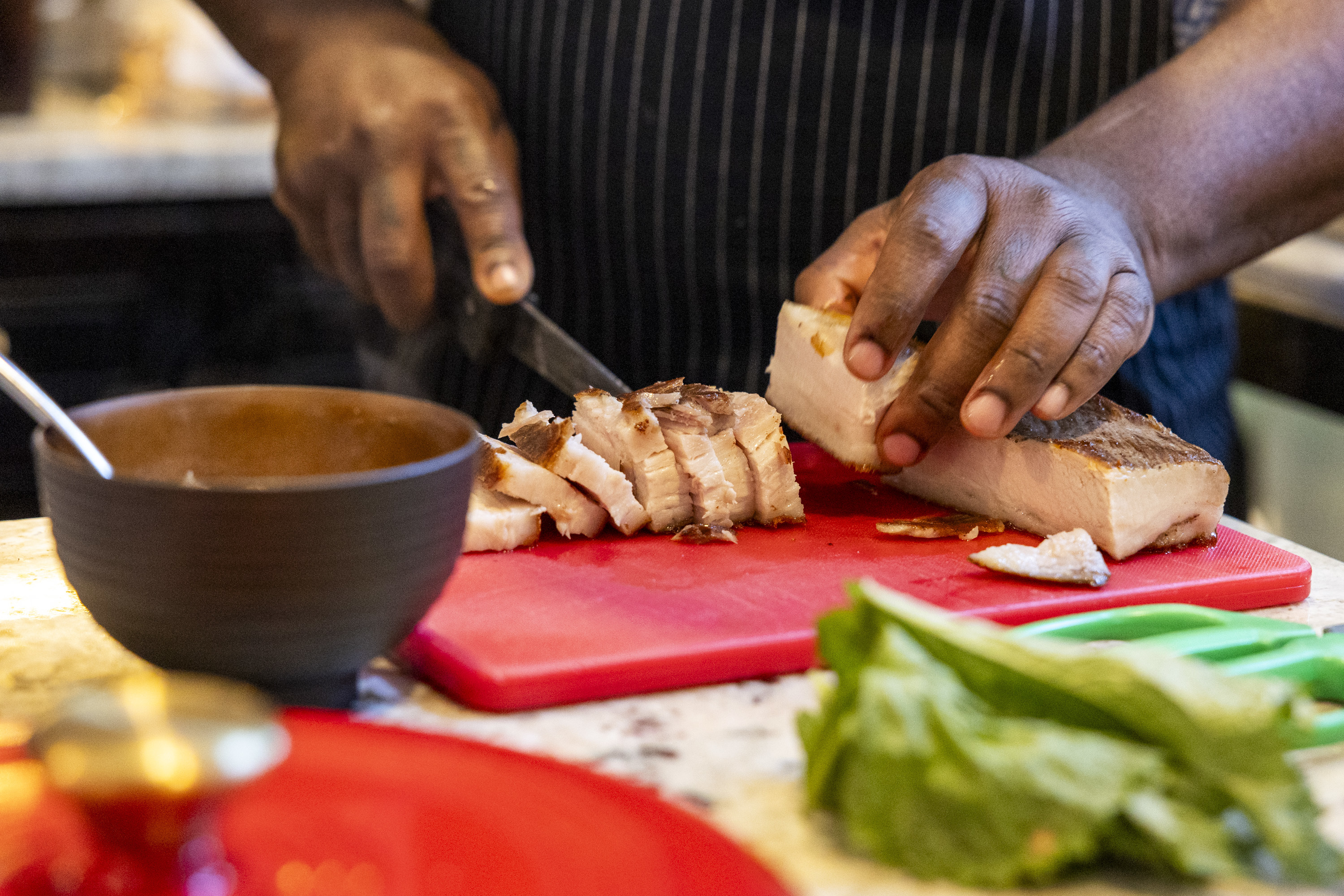
    Chef Omar Tate served a test run of a pepper pot he plans to add to the menu at Honeysuckle this fall.Tyger Williams / Staff Photographer

    Diverse foodways, all in one dish

    Philadelphia’s pepper pot shares Afro-Caribbean roots with a number of soups that go by the same name in the Caribbean and South America, although they’re distinctly different, since many are flavored with the caramelized cassava juice known as cassareep. It is also cousins with the callaloos and pepper soups of West Africa, as well as New Orleans gumbo and Haitian soup joumou. Pepper pot reflects Philadelphia’s unique status as a haven for free Black communities who had access to the tropical foodstuffs — allspice, habaneros, sea turtles, and pumpkins — arriving at its vibrant port on ships that also supplied the West Indies slave trade.
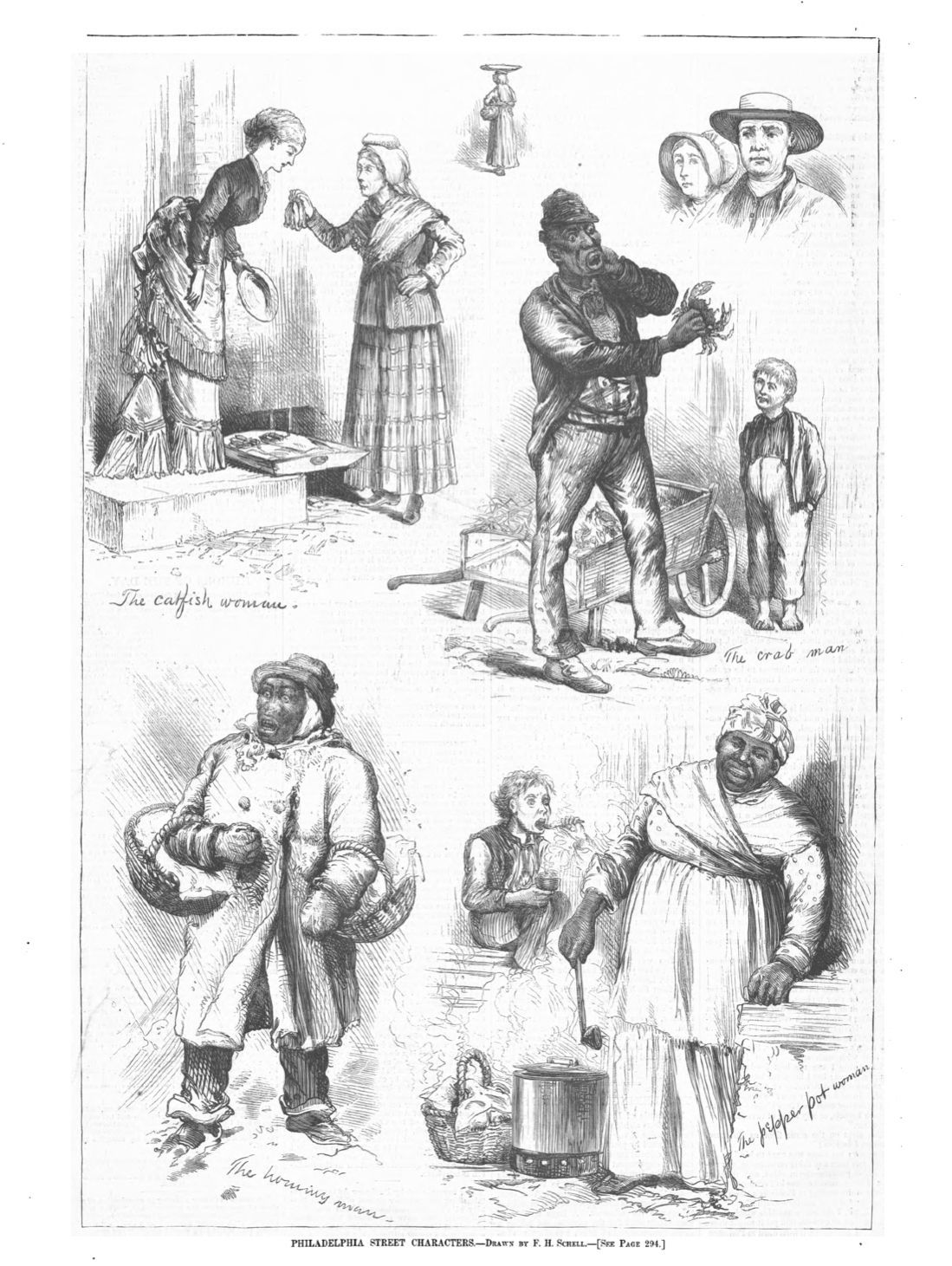
    This illustration of “Philadelphia street characters” was published in Harper’s Weekly in 1876. “The pepper pot woman” stands at the bottom right.Harper's Weekly/Google

    For this reason, many, including Weaver and food historian Jessica B. Harris, have come to regard early Philadelphia as the northernmost Creole city.

    “Nowhere is this connection more apparent than in Philadelphia’s pepperpot soup,” Harris writes in her book Beyond Gumbo. In a recent interview, she elaborated: “You’ve got a port bringing foods from other places and people also who are coming in from all over, enslaved and free. This kind of urban polyglot mix — that is the matrix of Philadelphia. And then you start getting their food. You know women of West Indian origin are going to make use of their skills and call on their memories to make something palatable to the people in this new place. All those things come together in pepper pot.”

    That lineage was especially resonant for Angela Brown, whose deeply flavored and nuanced stew of veal, bacon, and tripe took on a buttery texture from a dark roux and delivered just a gentle glow of peppercorn spice.

    “As a Black woman, when I think about all those women in the 1700s out there on the wharfs cooking soup to sell for the day and praying they get enough money, I feel sort of sad that my ancestors had to work that hard,” she says.
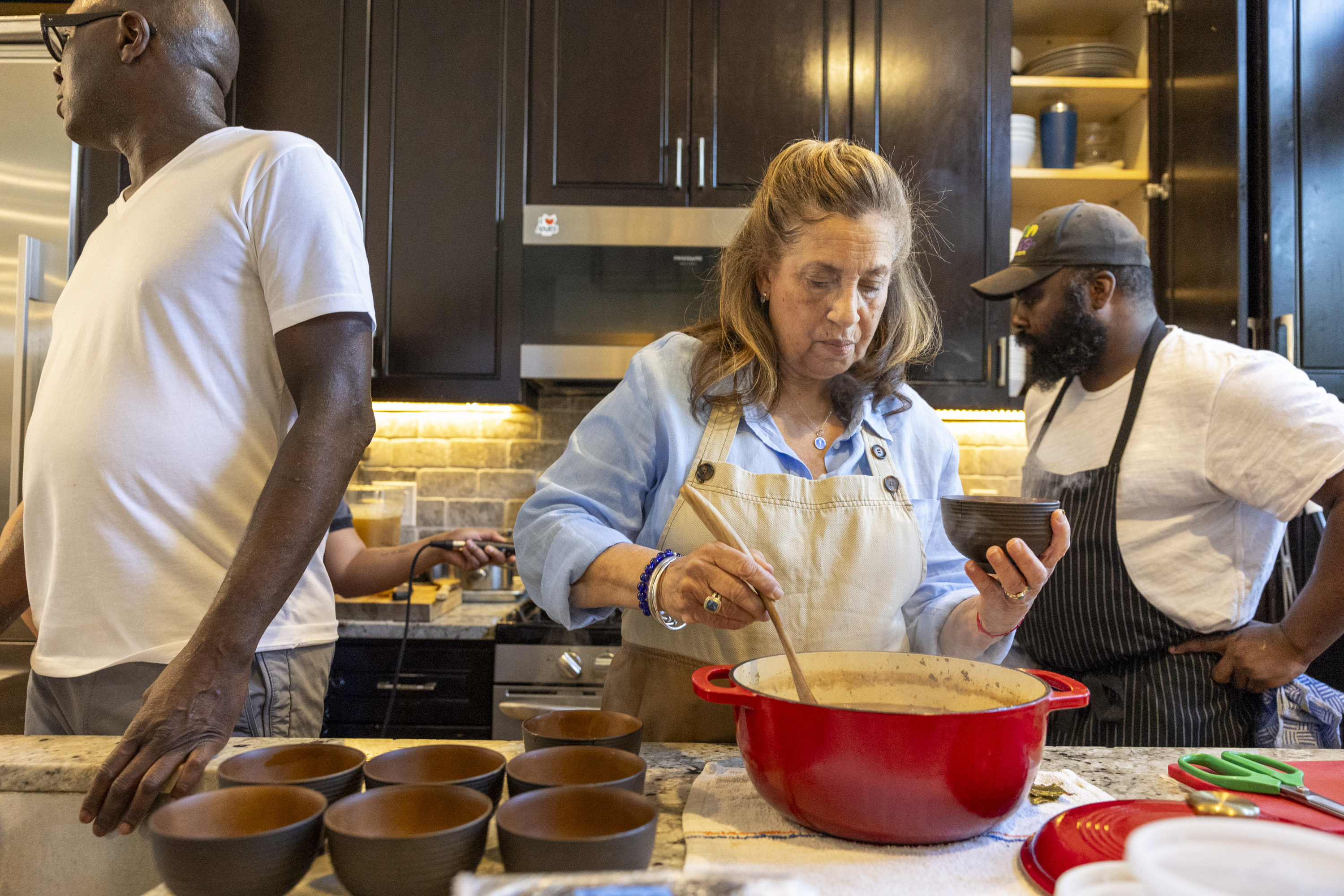
    Chef Angie Brown prepares her version of pepper pot for fellow chefs.Tyger Williams / Staff Photographer

    Yet cooking pepper pot also brought her joy, because it conjured warm memories of Brown’s childhood in Mount Airy. She’d walk to the neighborhood butcher for a pound of tripe, then closely watch her great-grandmother, Carrie Smithers, make it, beginning by sizzling the holy trinity of celery, bell peppers, and onions in rendered bacon fat and veal drippings.

    “That’s the reason I knew how to layer it,” says Brown. “I was very close to my great-grandmother, and she would be so proud that I made it delicious. I might have even made it better than hers.”

    Brown’s soup was the closest we’d taste that day to the thick, meaty tripe stew from Campbell’s that stamped pepper pot as a Philadelphia specialty, along with a version popularized nationwide on the dining cars of the Pennsylvania Railroad.

    “But there never really was a single ‘Philadelphia-style’ pepper pot. It was a marketing device, because this was a diverse city and pepper pot changed with every neighborhood,” says Weaver, who documents several 19th-century soup halls known as “pepperpot hotels” across the city, along with recipes that range from Esther Levy’s Jewish beef-and-mutton pepper pot from 1871 to pepper pot with crab, asparagus tips, and dumplings from a culinary instructor named Aunt Matilda in 1879. “Every Philadelphia recipe I’ve seen is different.”

    A recipe published for the Philadelphia World’s Fair in an 1876 cookbook from the Women’s Centennial Exhibition Committee featured two kinds of tripe in a veal knuckle broth studded with veal dumplings. Another completely different pepper pot called gingambo au potiron — with sea turtle broth, seafood, and a Brazilian pumpkin — emerged from the émigré Creole neighborhood called Hamiltonville, on the Woodlands estate southwest of the University of Pennsylvania campus.
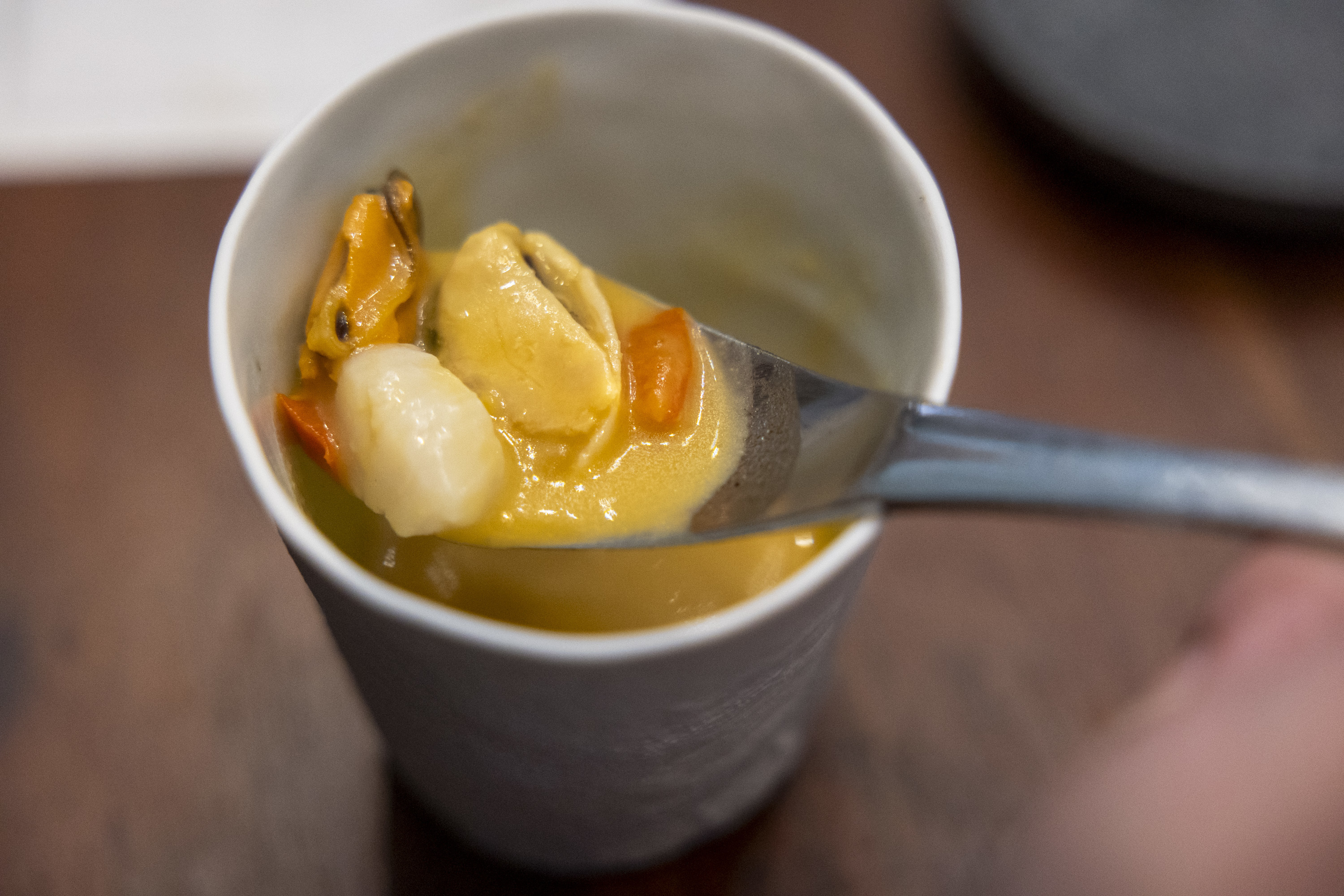
    Chef Shola Olunloyo, a culinary consultant and the chef of Studio Kitchen, made a variation of a seafood-pumpkin pepper pot he once cooked at the restaurant Deux Cheminees.Tyger Williams / Staff Photographer

    A soup that unlocks memories

    Coincidentally, Olunloyo served us a variation of that same seafood-pumpkin pepper pot, a dish he grew fond of making regularly when he launched his career at Deux Cheminées. The late chef-owner there, Fritz Blank, had amassed a legendary cookbook collection and befriended both Weaver and Harris, who published Blank’s recipe in Beyond Gumbo.

    Olunloyo’s soup skipped the turtle broth for rich fish stock and swapped out pumpkin for butternut squash. The froth of its silky orange puree — enriched with vermouth, cream, and leeks — sparks with Scotch bonnet, ginger, and a scant pinch of aromatic mace. Sweet little bay scallops, added to the bowl raw, cook in its warmth alongside mussels and other shellfish. It was an elegant reminder of the refinements that European-trained French chefs gave to the high-society kitchens of early Philadelphia, one of “two separate strands” — the vernacular creativity of its street foods being the other — that shaped the city’s culinary evolution, says Weaver. Ever-evolving pepper pot existed in both spheres.

    For Olunloyo, whose career as a consultant and supper club chef has been most influential in its advocacy of modern methods and cutting-edge technology, diving back into pepper pot has been a reminder of his formative years as a cook and the enduring value of classic techniques.
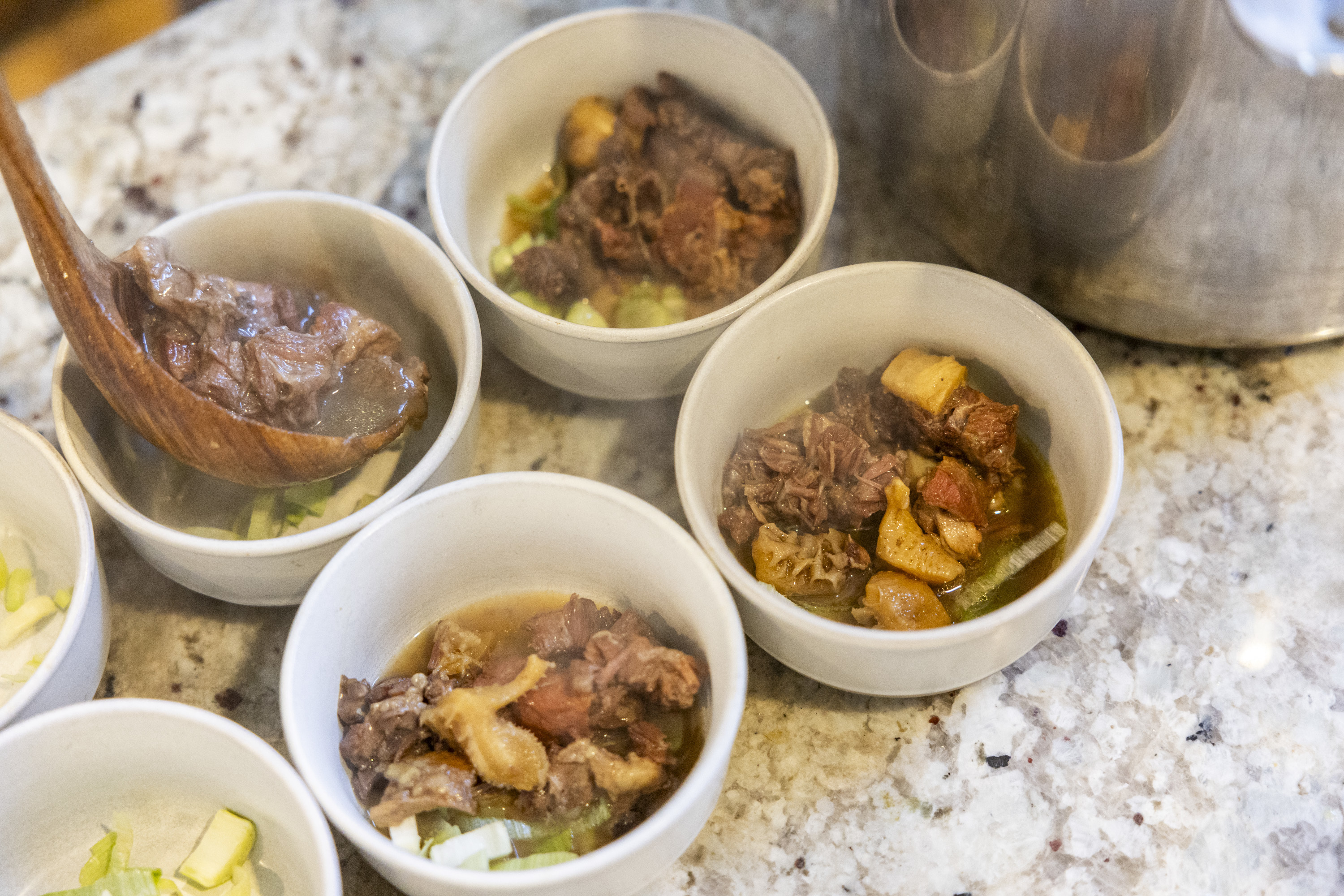
    Chef Shola Olunloyo ladles out a meaty version of Nigerian pepper stew, a not-so-distant cousin of pepper pot.Tyger Williams / Staff Photographer

    The dish transports him even farther back to his childhood in West Africa and the pepper soups he grew up eating in Nigeria. In addition to his seafood-squash pepper pot, he served the group a boldly spiced version of that pepper soup — a rustic, bone-in stew of goat, beef neck, and tripe flavored with a blend of Nigerian seeds and dried chilies, with an extra hit of habanero and fresh green shiso he snips over each bowl to replicate hard-to-find African scent leaves. The connection to the West African roots of pepper pot’s creators could not have been more obvious.

    “Taste is not linear,” observed Omar Tate. “It is kind of like a spiral, the memory is trying to circle back home at every point when you pick up an ingredient.”
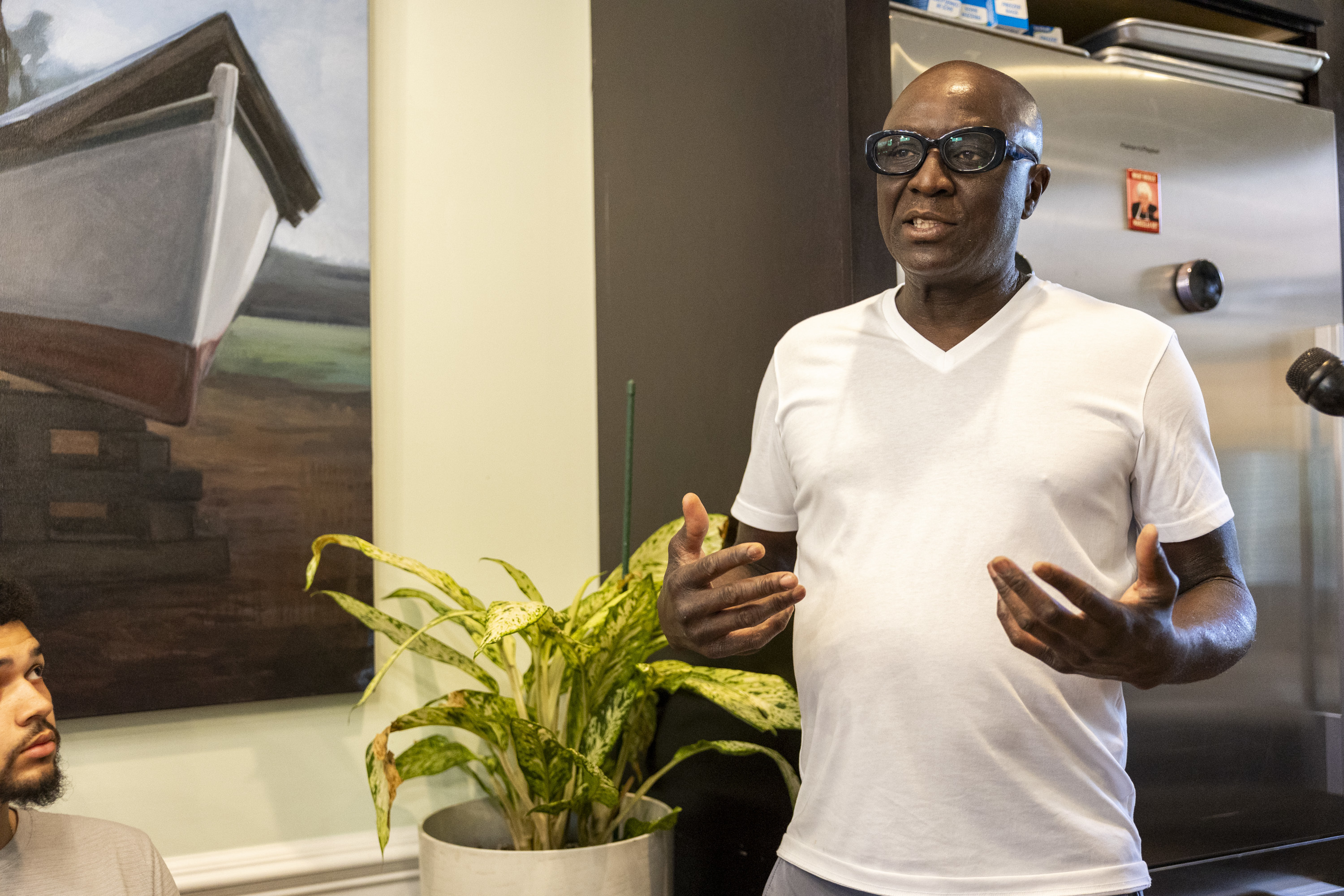
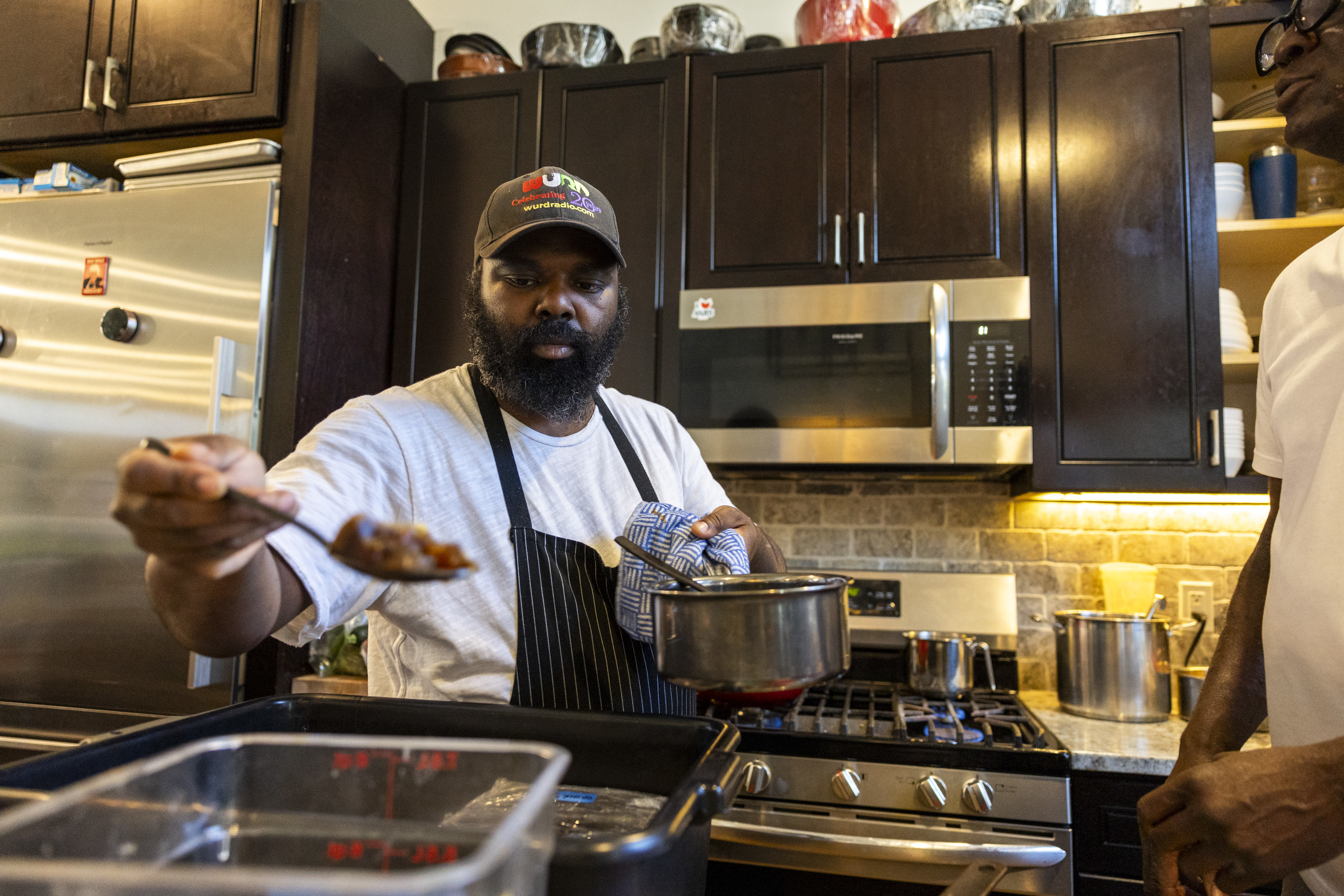
    Chef Shola Olunloyo explains his pepper pot recipe in his home kitchen in South Philadelphia.Tyger Williams / Staff Photographer

    The importance of historical Black dishes in 2026

    For Tate, whose pepper pot efforts sit squarely within the provocative explorations of the Black American foodways Honeysuckle is known for, the point of the exercise for him was not to recreate history — “I’m not interested in copy-and-paste tradition” — but to modernize it for today’s tastes. His rendition with oxtail, pork belly, and honeycomb tripe was partly inspired by the Krimmel painting of a woman serving a market crowd of early 18th-century Philadelphians. But Tate’s deconstructed presentation, with each element suspended above locally raised vegetables and a puddle of intensely flavored broth spiced with fish peppers from Honeysuckle partner Plowshare Farms, looks like the melting pot in reverse. (Seeds for the fish pepper, an heirloom chile used by Black caterers in Baltimore in the 1800s, were publicly reintroduced by Weaver in 1995.)

    “I’ve never been able to fully sit in the idea of what tradition is because of my relationship to Black history in America, and realizing that the strongest, most consistent Black tradition is being uprooted constantly all the time,” he says. “Yes, we are preserving culture and honoring the past, but I’m constantly trying to disrupt what I know about that, because it helps understand how people navigated change.”
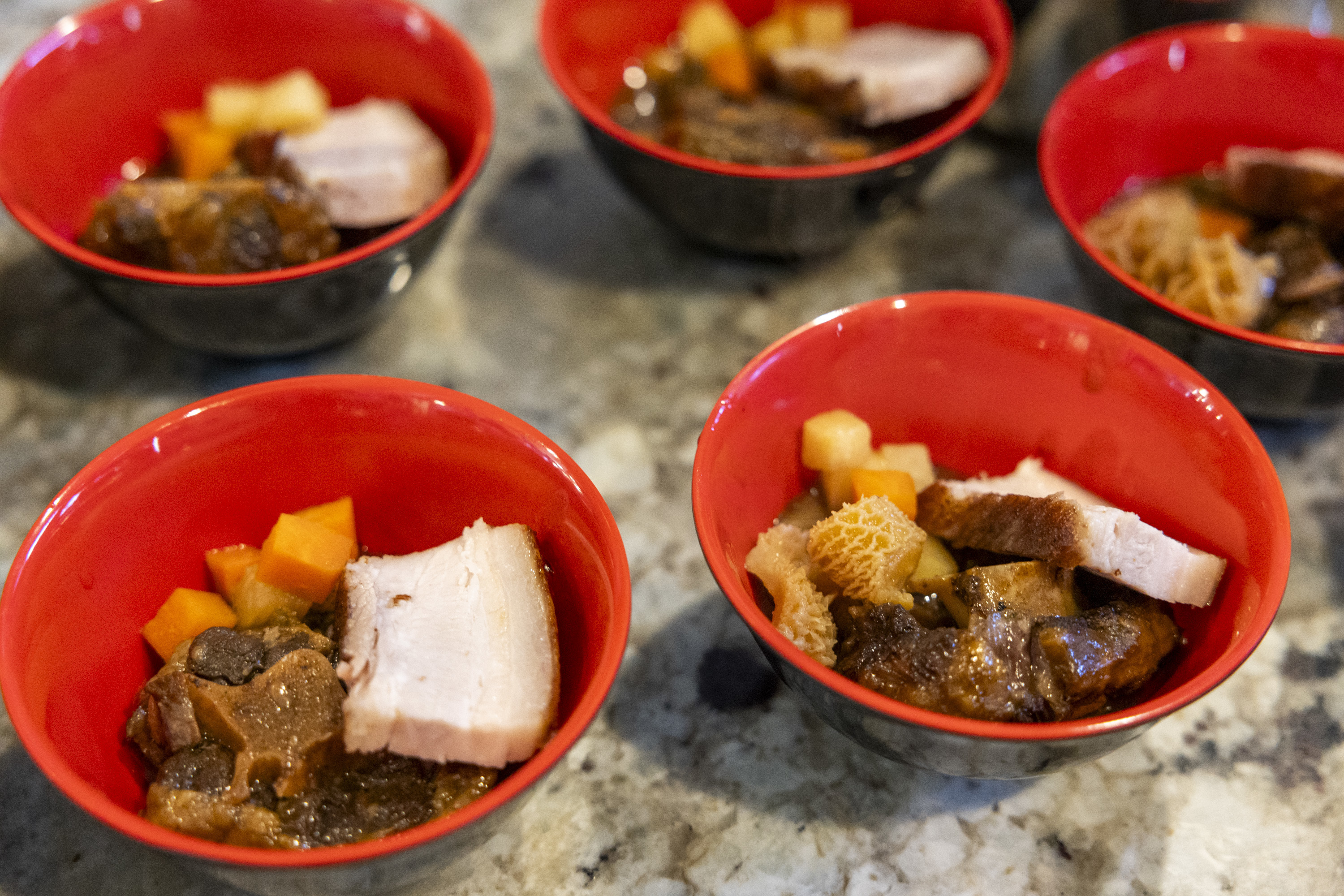
    Chef Omar Tate of Honeysuckle plates his version of pepper pot.Tyger Williams / Staff Photographer

    In this respect, the timing could not be more keen for a pepper pot tribute and the conversations it starts about the important role Black chefs played in shaping the nation’s cuisine. Keeping history front and center through food remains a powerful act, especially after the administration of President Donald Trump abruptly altered displays at the President’s House on Independence Mall to sanitize George Washington’s role there as an enslaver of nine people, including the seminal chef Hercules Posey.

    “We tried to honor their history and make sure tradition was preserved, but now that’s been disrupted and they have to be reimagined,” said Tate of the enslaved individuals previously commemorated at the President’s House, where the changes, he said, have deeply affected him. “That can only come through the possibility of taste and oral history.”

    Chad Williams agrees.

    “You have to cook it to keep it alive. Much of what makes dishes truly great is difficult to put into a recipe — the flavor, the experience of the dish, and making sure that gets pushed forward into the future by cooking it hand-to-hand. It can’t always come from a book.”
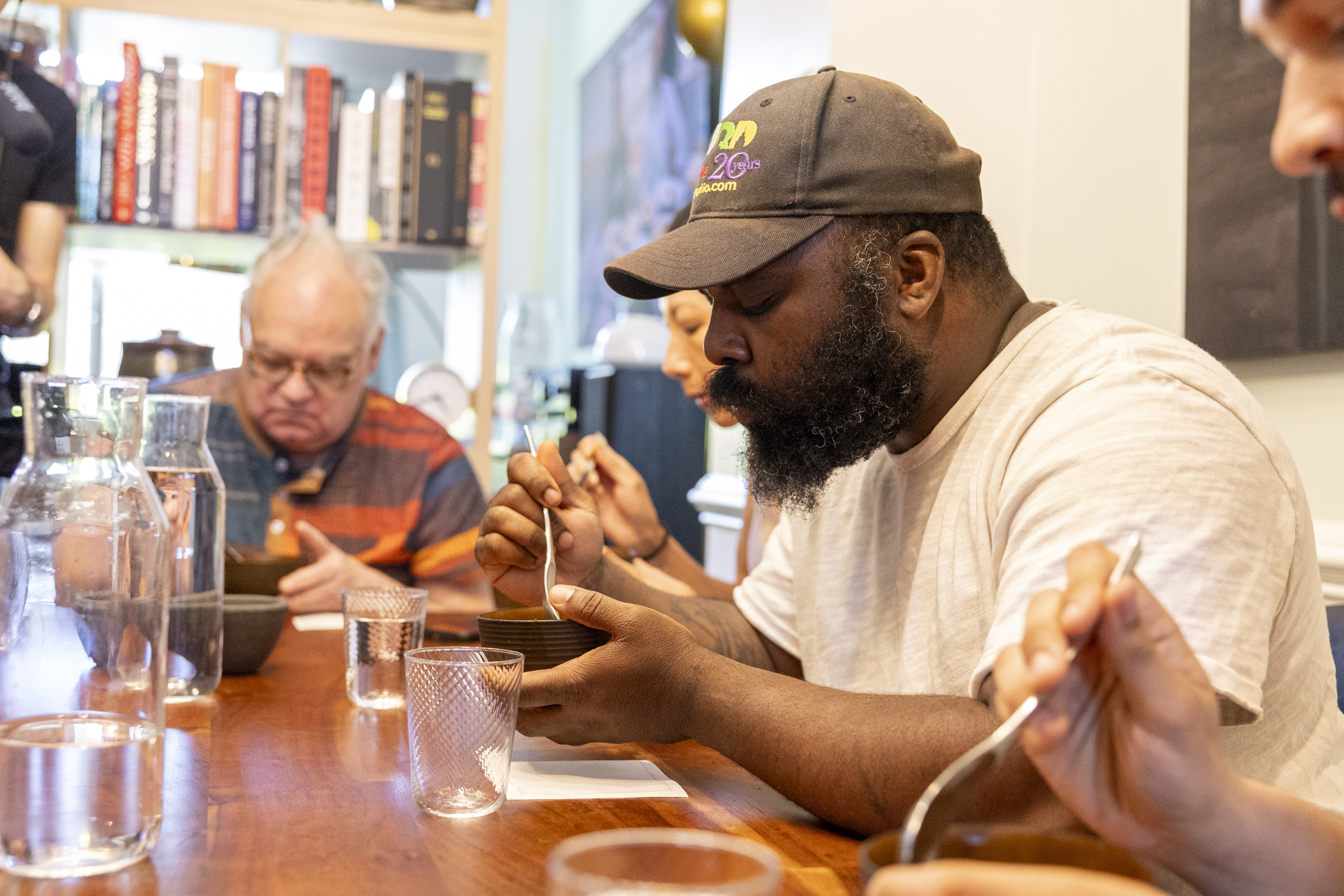
    Honeysuckle chef Omar Tate tastes the pepper pot recipe of Angie Brown.Tyger Williams / Staff Photographer

    Pepper pot keeps evolving

    The beauty of Philadelphia’s pepper pot is that it has proven to be less of a specific recipe than a culinary approach tied to this city, a resourceful way to coax tender sustenance and comfort in a stew flared with spice and the memories of a faraway land using whatever was locally available. As Tate and others at the tasting noted, such dishes have, in fact, continued to thrive with the arrival of new waves of immigrant communities, even if their fiery tripe-laced soups go by other names.

    Vietnamese bún bò Huế. Mexican menudo. Mauritanian tripe and cow skin gravy over Jollof rice. Spicy Korean beef gopchang-jeongol. Polish flaki. Italian trippa alla Romana. Excellent versions of all these and more can be found here, which, in the context of Pepperpot City, means they, too, could be considered as part of a grand centuries-old Philadelphia tradition that’s not quite ready to fade away.

    “They’re all pepper pots,” insists William Woys Weaver. “That’s our local word for it, you know! Let’s stop pretending that pepper pot is one thing. Pepper pot is Philadelphia’s soul soup.”
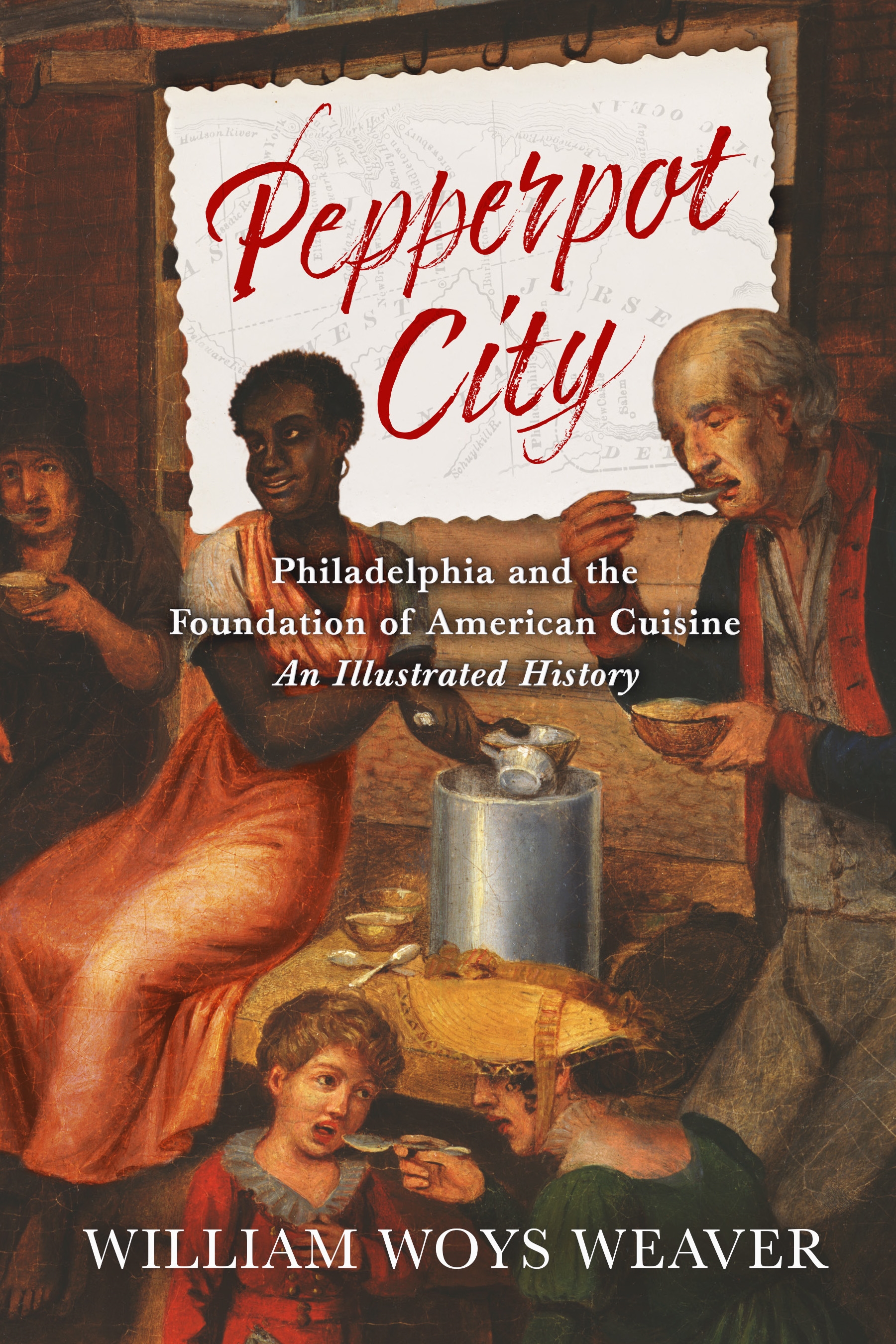
    The cover of “Pepperpot City,” a book about Philadelphia food history by local historian William Woys Weaver. The cover features a portion of an 1811 painting by John Lewis Krimmel depicting a pepper pot vendor selling the soup in a market.Courtesy University of Pennsylvania Press
  • Should my 5th grader take Regional Rail alone?

    Should my 5th grader take Regional Rail alone?

    This week’s question (Have your own? Submit it here.):

    My fifth grader wants to take Regional Rail back from his downtown magnet school by himself. He’s done a few weeks with an adult so he knows the route, and I can track him on my phone. But he doesn’t have any buddies to walk back with. Is this crazy, or will it help foster independence?

    Amy Rosenberg, Life & Culture reporter

    I want this to be OK, but my first thought is maybe fifth grade is a little too young?

    Elizabeth Wellington, features columnist

    I think you might be right, Amy. I mean, when I was 10 — and that was 100 years ago — I took the bus by myself. But the train was a different animal completely. There are a lot of ways for them to get lost, and missing a stop is a long walk, rather than a few blocks. You know?

    Amy Rosenberg

    It also depends on the child. Some are more ready than others. A group of fifth graders, or maybe two of them together, might work? Not sure about the walk home from the stop either. I walked to and from school for lunch as a fifth grader and that seemed fine, but it was also a long time ago.

    Elizabeth Wellington

    I walked to and from school by myself when I was in the fifth grade. I demanded it because I had a crush on a boy, but that’s another story.

    Now, I’d be afraid to let my fifth grader walk to the end of the block by themselves. Then again, I wouldn’t want to foster sense of fear for the city in my fifth grader either.

    Amy Rosenberg

    I used to walk home and read the newspaper that was in the driveway and eat my lunch out of a bag (not every day!). My girls had a lot of freedom as kids, but still, as fifth graders they were not traveling around by themselves.

    Maybe this person hires someone to meet the child at the train station? I’d definitely try to find another student making that same trip. Maybe there’s an older student that could be a buddy.

    Elizabeth Wellington

    That’s a great idea. I think the fifth grader wants to feel independent around friends, and there are always friends to travel from school to the train with. If someone is waiting for them when they get home then the parent can know the child made it home safely and the 10-year-old can still feel cared for. Because sometimes when you’re 10 — and even when you are 50 — you need to know someone is there for you when you get home.

    When the 10-year-old becomes a 12-year-old or maybe even 13, then they can travel by themselves confidently. Even today, as Gen X’s latchkey-kid generation, I’m not sure 9- and 10-year-olds coming home by themselves from school was the safest thing.

    Amy Rosenberg

    I agree. There’s a lot of maturing that happens between 10 and 12. I think kids should move around the city confidently and be able to ride public trains by themselves, but the sweet spot age seems a little bit older than fifth grade. Especially the start of fifth grade.

    I also think the parent would worry, and be constantly tracking, or even on the phone with the child, and that’s hardly independence. That’s just anxiety.

    Elizabeth Wellington

    And independence for one person should never translate to anxiety for a loved one.

    Amy Rosenberg

    I had an after-school babysitter one year who famously drove into our garage door with my girls in the backseat, at around fifth grade. Luckily, only damage to the garage door. So danger everywhere!

    Elizabeth Wellington

    Yeah, and I fear a 10-year-old kid walking to and from school by themselves, even with a cell phone, might be a danger magnet.

    I’m getting nervous just thinking about it.

    Amy Rosenberg

    I have recently done a bit of traveling on Regional Rail, and I didn’t see anyone that young. And those stations are big. It’s nice to want independence for your kids, but this seems like a big step. I would definitely wait, or try to find a traveling buddy.

    I also bet other parents at the school have a big range of travel strategies and opinions about age and independence.

    So, look for smaller ways to foster independence at this age.

    Elizabeth Wellington

    And explain it to them in a way that doesn’t say you don’t trust them, but that it’s a good idea to wait a few years.

    Amy Rosenberg

    Yeah, lean into finding a buddy or two. I traveled on trains to school with buddies beginning at around 14 and those were great memories.

    Elizabeth Wellington

    I think it’s important that the child knows that it’s not that you don’t trust them. … Just it’s not their season yet to be taking public transportation alone.

  • Hurry up and wait

    Hurry up and wait

    The “hurry up and wait,” often for ridiculously long times for a news conference to start, or a newsworthy event to happen, or even everyday life to unfold is not just an occasional part of a career in journalism, it becomes the basic rhythm of the job.

    Like spending an entire day outside a courthouse for a few brief moments and the opportunity to photograph defendants arriving or leaving (cameras are not allowed in courtrooms in Pennsylvania).

    Waiting, with an officer with the United States Marshals Service, outside the James A. Byrne U.S. Courthouse at 6th & Market Streets.Tom Gralish / Staff Photographer

    You’re waiting for something you can’t control, all the while trying to alert for the moment it finally happens.

    Over my years as a photographer there has been one “wait” that is even more constant and one that I probably could control.

    When I am assigned to photograph a building or city street scene I could just make sure my camera setting are all correct, my battery is fresh and I have clean SD card in the slot. Then make a quick snap to show readers what the building or street scene looks like and move along.

    But no, I wait. A lot. For a bunch of random elements to line up perfectly.

    Waiting – without any luck – for an orange-clothed pedestrian or bicyclist. Tom Gralish / Staff Photographer

    I stand there like the two characters in the 1952 Nobel Prize-winning Samuel Beckett absurdist play, Waiting for Godot. But instead of some mysterious stranger, I am waiting — and hoping — the stars all align just right, the photo gods are willing, and the universe gets it together to allow that one person, dog-walker, jogger, bicyclist, scooter, car, bus, or trolley to pass through my carefully pre-composed frame at just the “right” time. In the “right” place.

    And maybe the “right” color. Like my yearslong Oy-Yo yellow pursuit (those waits however were for a mere 7.6 minutes at a time).

    I like to think of myself as being patient and even visually heroic; good qualities to have in a photojournalist.

    But anytime I really think about it or try to explain the “why?” to friends or even colleagues it ends up sounding both obsessive and pathetic.

    The solitary waits are a great time for self-reflection. Or during more media busy events a chance to hang out with photo friends.

    Waiting with the cameras and news photojournalists outside Montgomery County Magisterial District Court in Jenkintown.Tom Gralish / Staff Photographer

    One last literary reference, before unfolding a few of the photos I’ve made recently while waiting. They’re another way I keep myself entertained, and help avoid feeling too much like Sisyphus, condemned to push that stone up the hill only to watch it roll back down.

    Waiting in University City and looking up as a helicopter conducting power line inspections passes overhead.Tom Gralish / Staff Photographer
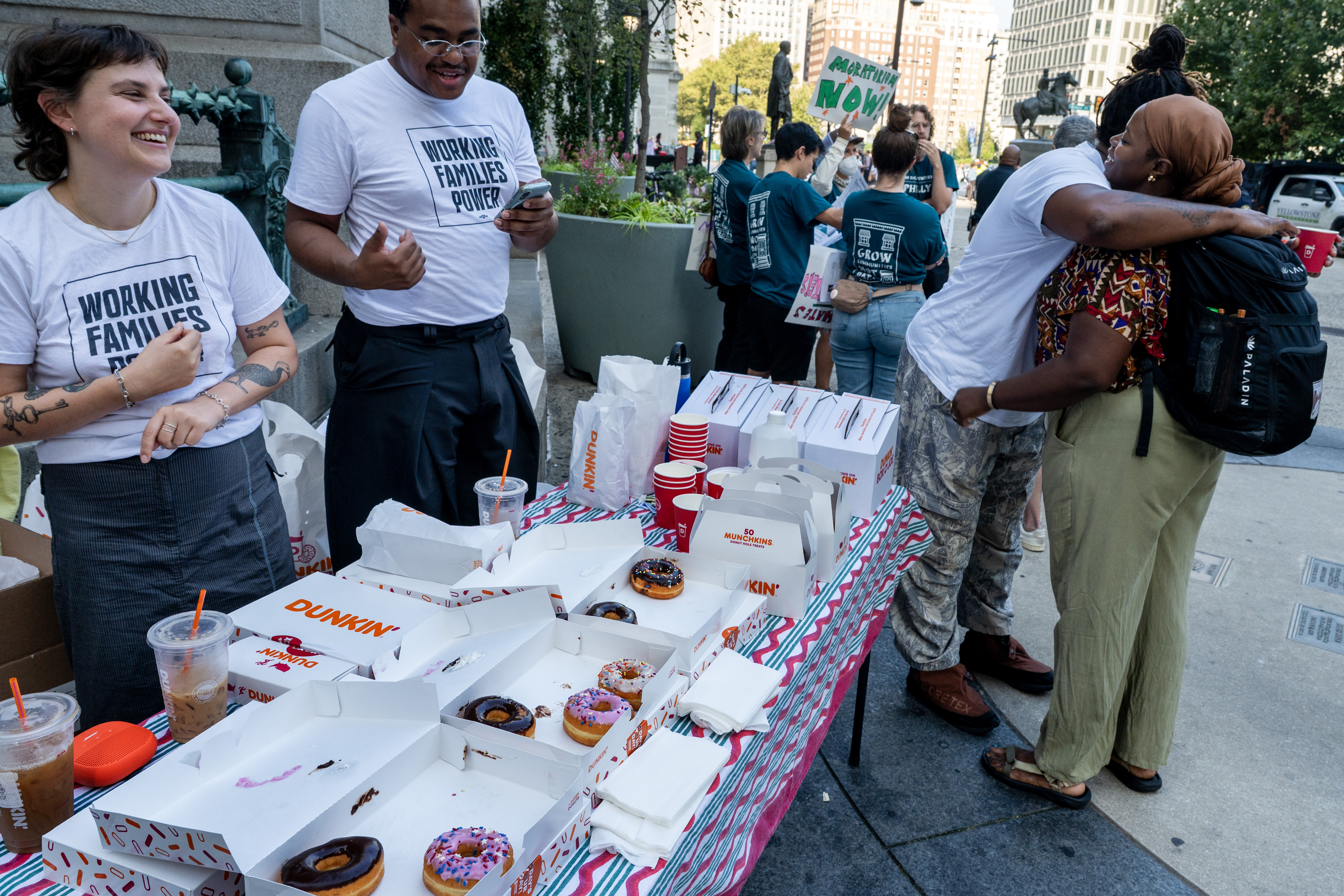
    Waiting outside City Hall – with free coffee and donuts for those arriving early – for the day’s meetings and protests to begin.Tom Gralish / Staff Photographer
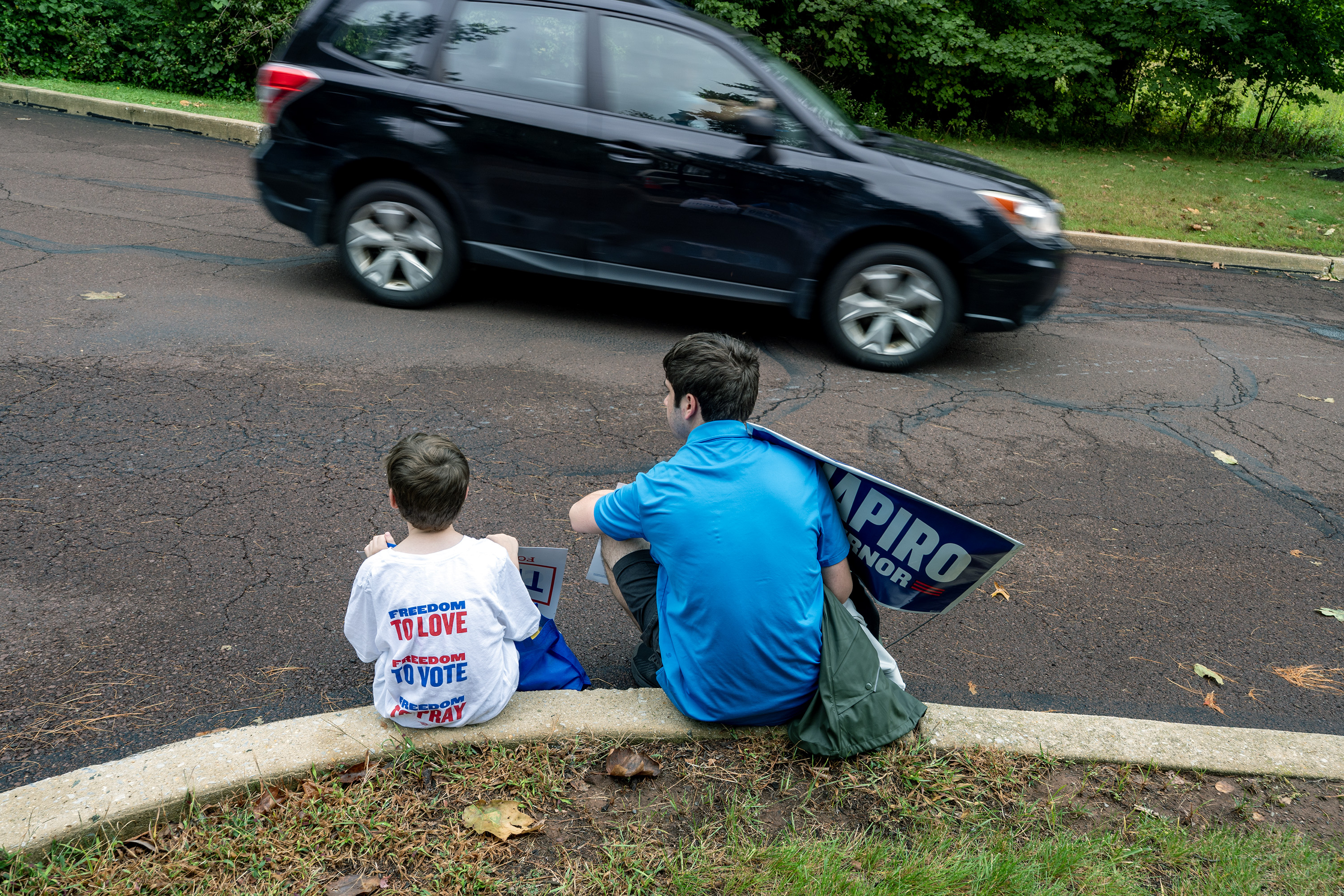
    Waiting at a candidate’s rally.Tom Gralish / Staff Photographer
    Waiting outside a courthouse, and watching the cell phone – and reflections – for that text from inside that a hearing is over.Tom Gralish / Staff Photographer
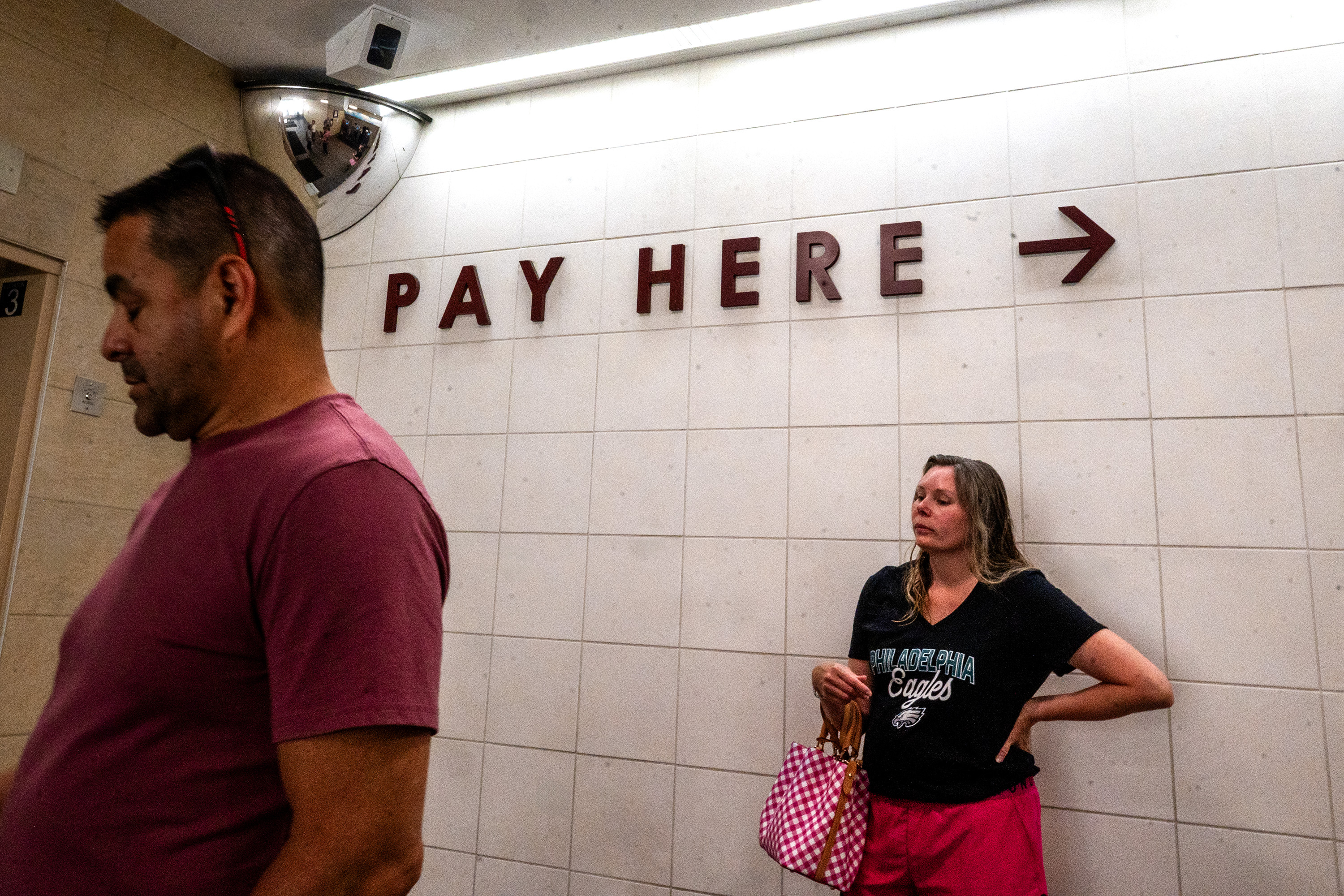
    Waiting for the parking garage elevator.Tom Gralish / Staff Photographer
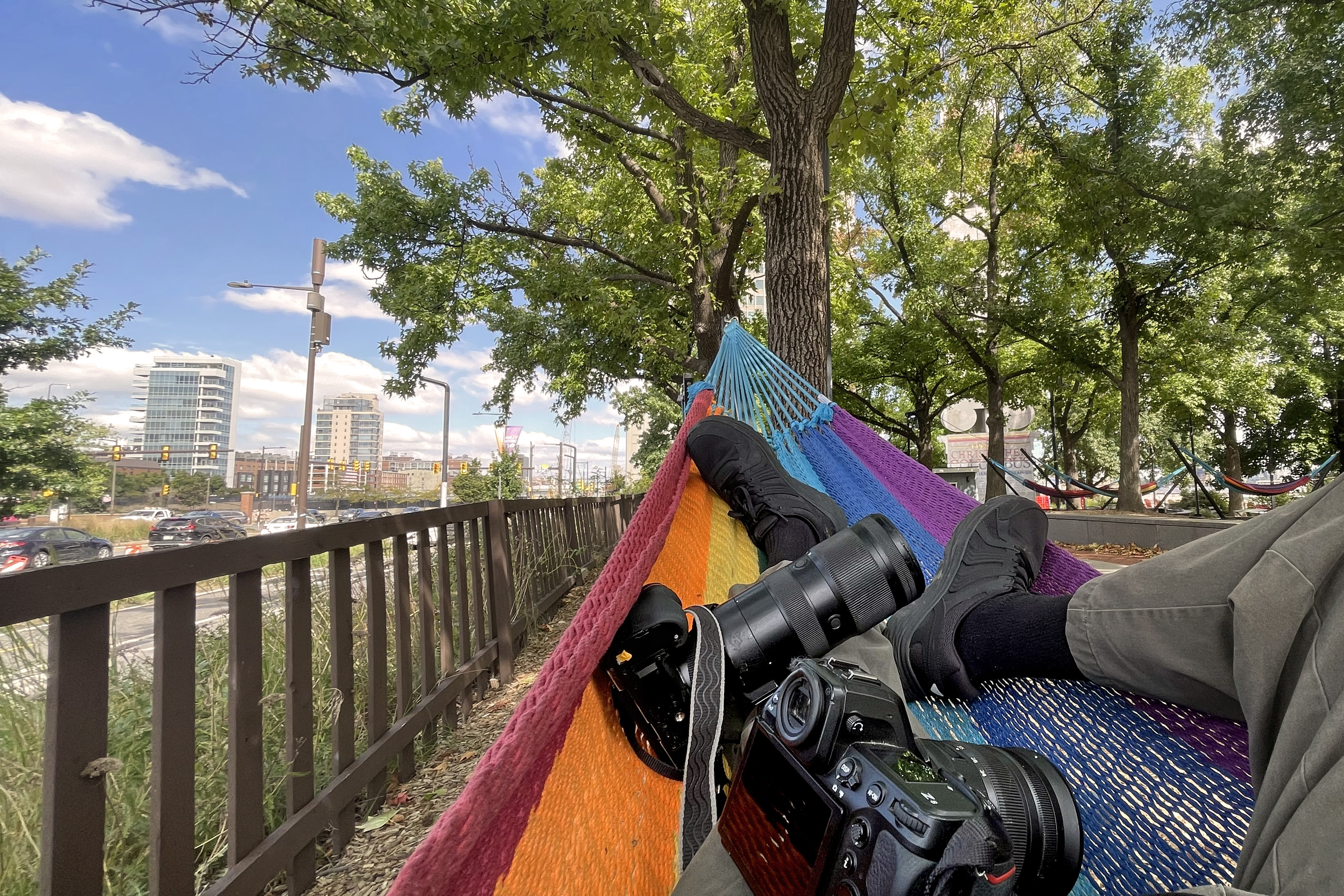
    The photographer takes a break from waiting – and hoping.Tom Gralish / Staff Photographer

    Since 1998 a black-and-white photo has appeared every Monday in staff photographer Tom Gralish’s “Scene Through the Lens” photo column in the print editions of The Inquirer’s local news section. Here are the most recent, in color:

    » SEE MORE: Archived columns and Twenty years of a photo column.

  • Boricua pride murals, Philadelphia Orchestra feat. Joe Hisaishi, and a beautiful manhole cover are among our favorite works of art this week

    Boricua pride murals, Philadelphia Orchestra feat. Joe Hisaishi, and a beautiful manhole cover are among our favorite works of art this week

    Hidden art at your feet

    Museums and galleries are spaces we enter expecting to find joy and beauty in art. Even when we leave overwhelmed with feelings, we know that we went in looking for that beautiful indescribable emotion. That joy is doubled when art comes at you from unexpected corners.

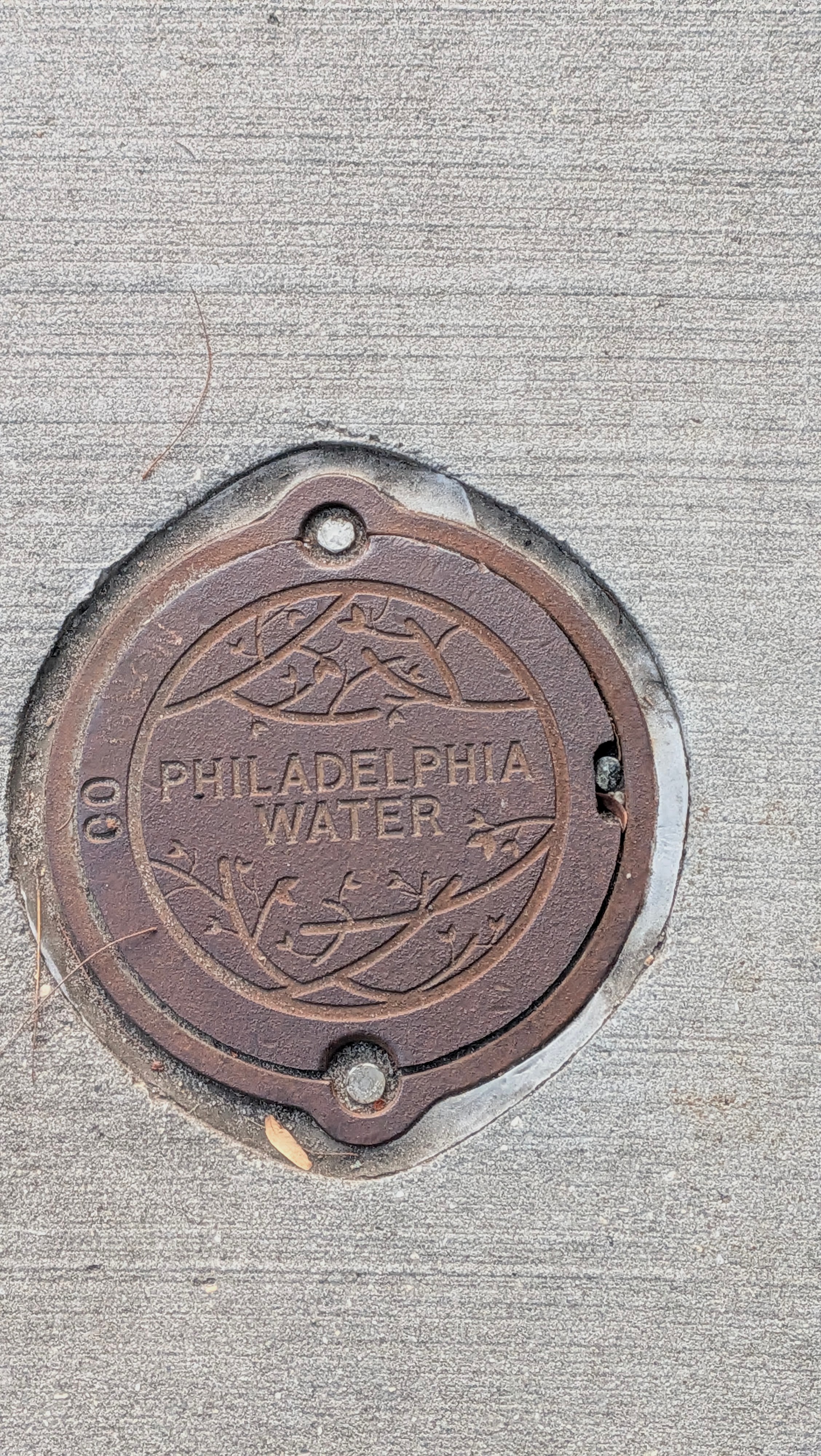
    I was walking across the John F. Kennedy Boulevard Bridge one morning when my eyes fell on a manhole cover. A metal lid on the city’s unseen river of waste? Decidedly not art.

    A Philadelphia Water Department metal manhole cover on the John F. Kennedy Boulevard Bridge, on Sept. 17 2026.Bedatri D. Choudhury

    But imagine it’s early morning and the sun isn’t too strong yet, you’re walking to work with purpose and a head full of to-dos. You see the metal lid that conceals what you’re not supposed to see. The lid is stamped with a design of what looks like shoots of a plant with little leaves growing on them, and the words “Philadelphia Water” occupy the center in symmetrical typographic harmony.

    It’s beautiful; its beauty enhanced by the fact that it didn’t have to be anything but a plain metal lid screwed to concrete. No one is supposed to stop and look at manhole covers in silence like framed art in a gallery but someone somewhere in the long line of civic workers at the Philadelphia Water Department decided to build something beautiful just in case someone on their way to work decided to stop and look. Someone came up with a design, someone forged a stamp, someone stamped the metal with it, and someone put that metal lid on the bridge I walk to work. There’s so much joy in discovering this silent gift. Thank you.

    — Bedatri D. Choudhury

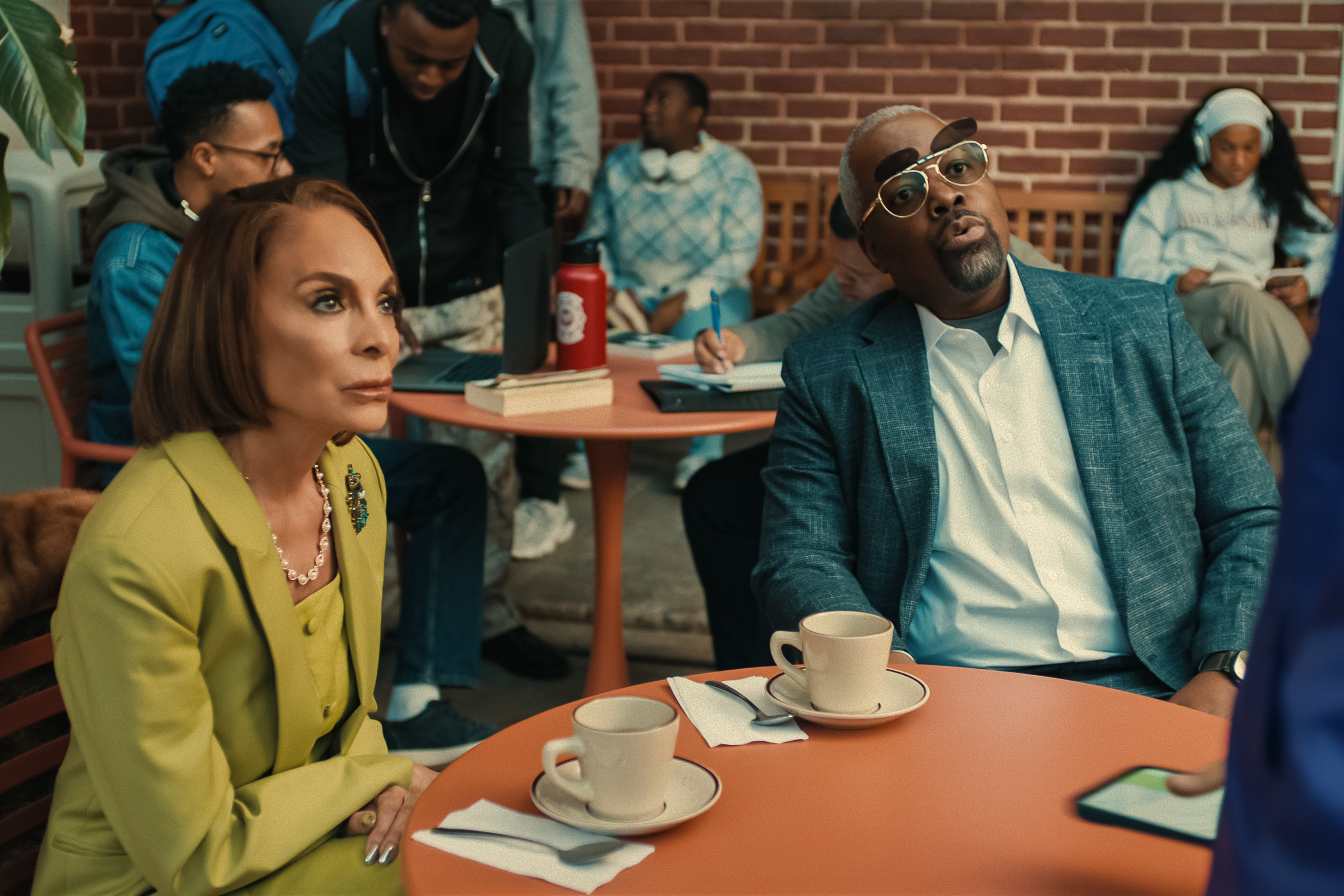
    Jasmine Guy and Kadeem Hardison in a scene from “A Different World.” (Netflix via AP)Uncredited

    Netflix’s ‘A Different World’ is everything I wanted ‘Bel-Air’ to be

    For those of you who don’t remember, A Different World was NBC’s 1987 spinoff of North Philly’s own Bill Cosby’s The Cosby Show. It featured Cliff’s second daughter, Denise Huxtable (Lisa Bonet), as a freshman at her parents’ alma mater, the fictional historically Black university, Hillman College.

    After one season, however, Denise was out, Whitley (Jasmine Guy) was the center, and viewers were glued to their seats every Thursday night following Dwayne (Kadeem Hardison) and Whitley’s budding romance. By the end of its six-season run, Dwayne and Whitley were married, and we assumed they lived happily ever after.

    After almost 30 years, Netflix has revived A Different World millennial-style, and this week it’s back.

    The 10-episode first season gives Philly-inspired Bel-Air vibes; it’s a serious take on a fun-and-games ’90s comedy. At first glance, the male lead, Shaquille Johnson (Cornell Young IV), looks a lot like Jabari Banks, the West Philadelphia-born actor who assumes Will Smith’s character on Peacock’s Bel-Air.

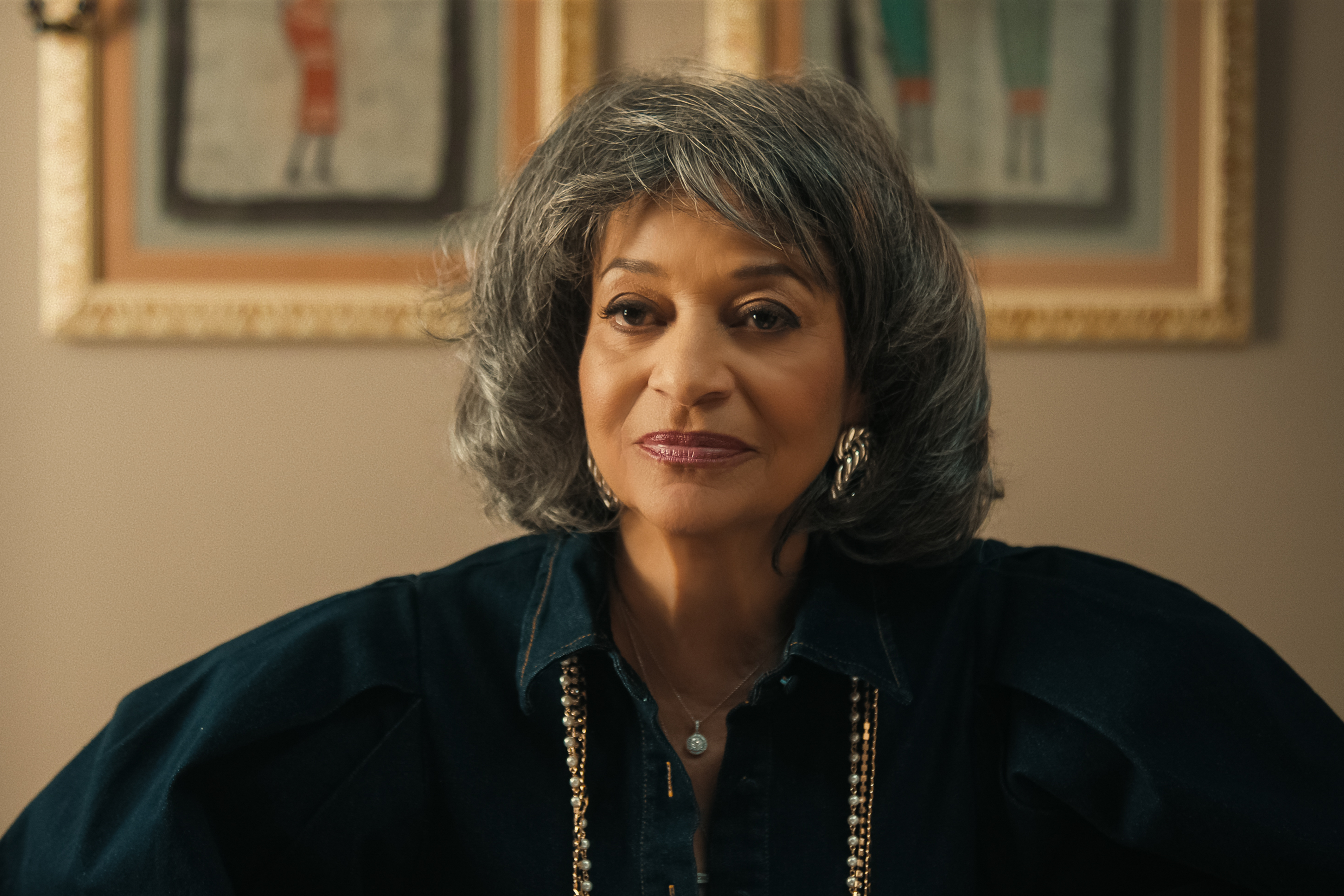
    Debbie Allen in a scene from “A Different World.” (Netflix via AP)Uncredited
    But that’s where the similarities end.

    The updated version of A Different World is what I thought Bel-Air would be. It remains true to the original show’s characters: Whitley is still an entitled snob. Dwayne remains as thoughtful as he is brilliant. And Dwayne and Whitley’s daughter, Deborah (Maleah Joi Moon), is a delightful blend of her mom’s sense of bougieness and her dad’s altruism. It’s a stone-cold gas that her favorite accessory are flip glasses just like Dwayne Wayne. (It made me want to dig mine out)

    Yet, the new A Different World is more than a nostalgic walk in the park. The first few episodes deal with 2020s issues like the current presidential administration’s attack on Black history, rampant mismanagement of funding by university administrators, and what it’s like for this generation of college students to engage with professors and each other after almost two years of COVID-19 lockdown.

    Just like its 1980s predecessor, A Different World millennium-style has the same immediacy.

    “A Different World” is now airing on Netflix.

    — Elizabeth Wellington

    Beethoven meets Joe Hisaishi, thanks to the Philadelphia Orchestra

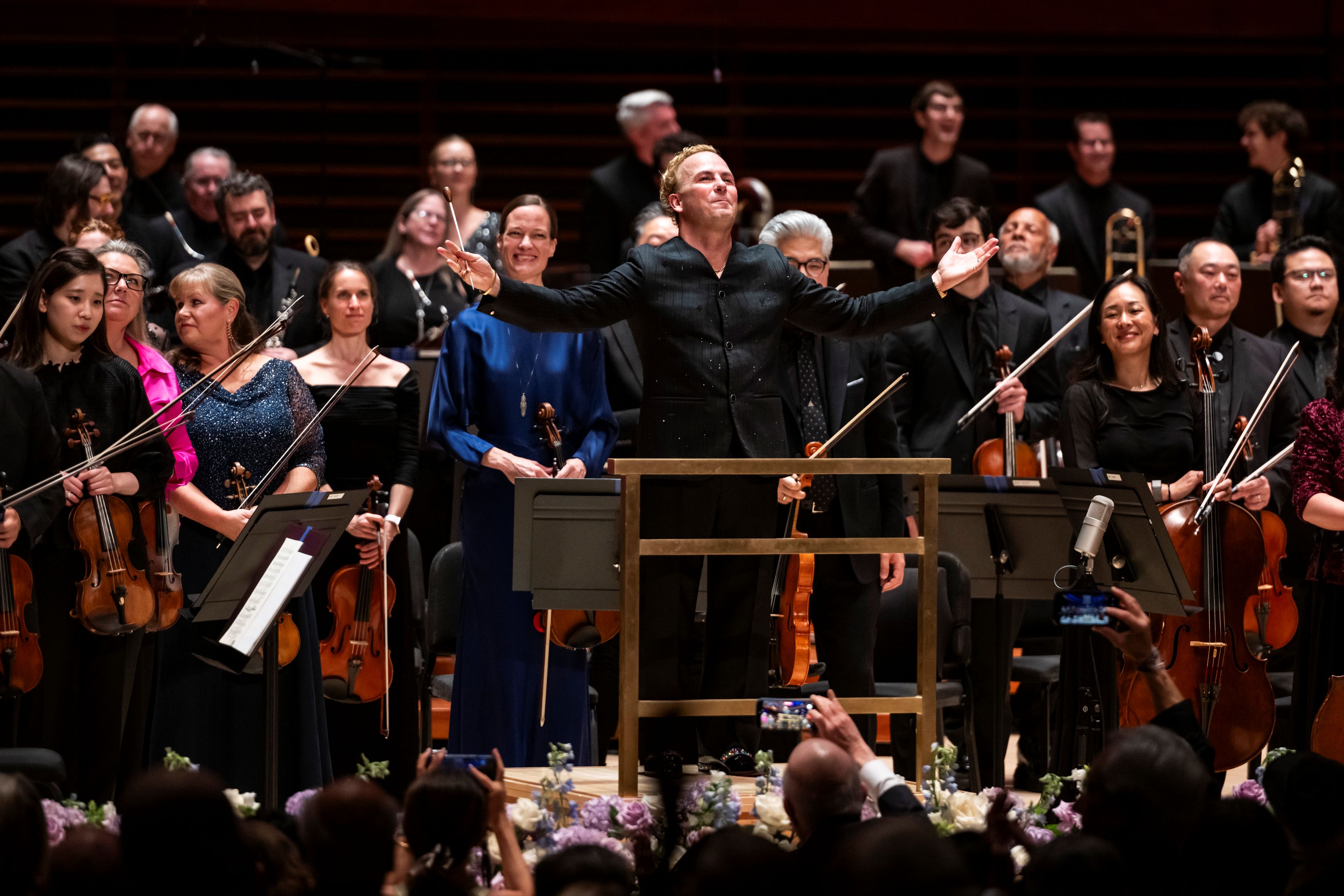
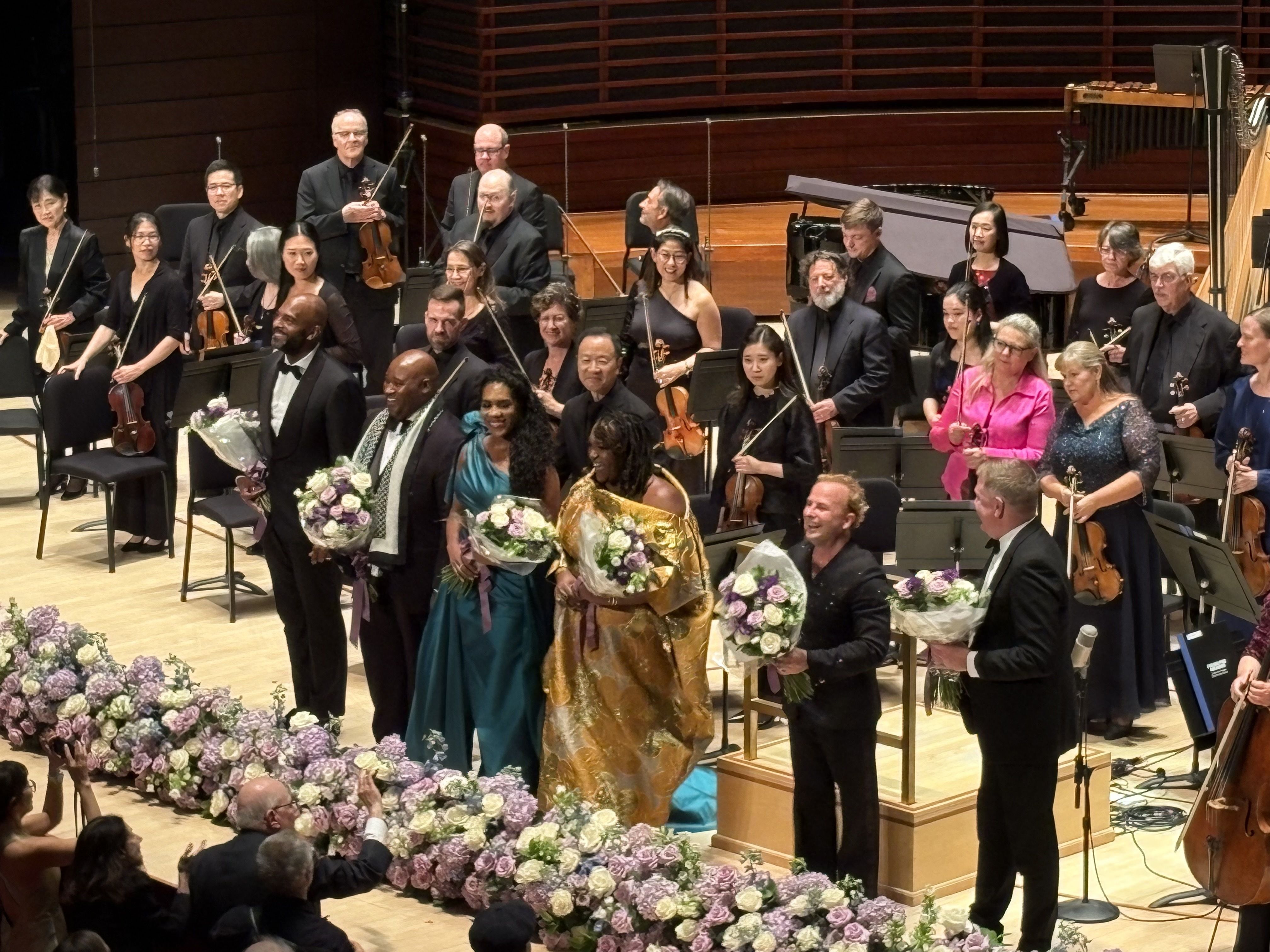
    At opening night of the Philadelphia Orchestra’s 2026-27 season in Marian Anderson Hall, performers take bows after Beethoven’s Symphony No. 9. From left, bass-baritone Ryan Speedo Green, tenor Issachah Savage, mezzo-soprano J’Nai Bridges, soprano Leah Hawkins, conductor Yannick Nézet-Séguin, and Philadelphia Symphonic Choir artistic director Joe Miller.Peter Dobrin

    Yannick Nézet-Séguin opened the Philadelphia Orchestra’s 127th season Thursday night with a message at once broad and universal, and very local.

    The piece was Beethoven’s Symphony No. 9, and the orchestra’s music and artistic director was no doubt referencing the state of the world when he spoke to the Marian Anderson Hall audience of the work’s shared humanity and how it reminds us that “there’s much more that unites us than what divides us.”

    But “this is why,” he continued, “I want to finish by saying that it’s important for me and all of us to recognize all the musicians who have devoted their lives to the orchestra.”

    No one said it explicitly at this gala fundraiser, but musicians and management of the orchestra recently agreed to remain united another three years. A new labor contract was ratified last week by players — “overwhelmingly,” a union official said — after six months of talks.

    Nézet-Séguin not only praised orchestra members who have been “at the service of this incredible … treasured sound that’s unique in the world,” but an unusually large number of them populated tables in the Kimmel Center lobby for the dinner following the concert, where flowered tablescapes featured photographs of the players.

    If the orchestra had wanted to extend the theme of unity, it might have programmed Valerie Coleman’s Umoja: Anthem of Unity, which the ensemble premiered in 2019 and has since championed. But Joe Hisaishi is the orchestra’s composer in residence, and his Orbis, a work whose sound straddles film and concert music, fit the moment.

    The orchestra, too, now occupies both of these stylistic realms, making Hisaishi’s ethereal-to-brightly-stirring score — whose Latin text sung by the Philadelphia Symphonic Choir speaks of joy — emblematic of the season ahead.

    The short work was written in 2007 as a companion piece to Beethoven’s symphony, which on Thursday featured the expert choir and four soloists who ranged from strong to stupendous: soprano Leah Hawkins, mezzo-soprano J’Nai Bridges, tenor Issachah Savage, and bass-baritone Ryan Speedo Green.

    Gala concerts of this sort often feature a single big-name soloist. The spotlight here was on the Beethoven, this great undying statement of humanity, and it was a programming decision endorsed by an audience that responded to the conductor’s push of the tempo at the end with a spontaneous roar.

    There was another notable singer in attendance — Kathleen Battle, not on stage, but in the audience. At 78, the soprano still has presence, and you couldn’t help but sense her place as a bridge in history, a link from the pioneering Black contralto for whom the hall is named to the four soloists on stage who represent the future of the art form.

    — Peter Dobrin

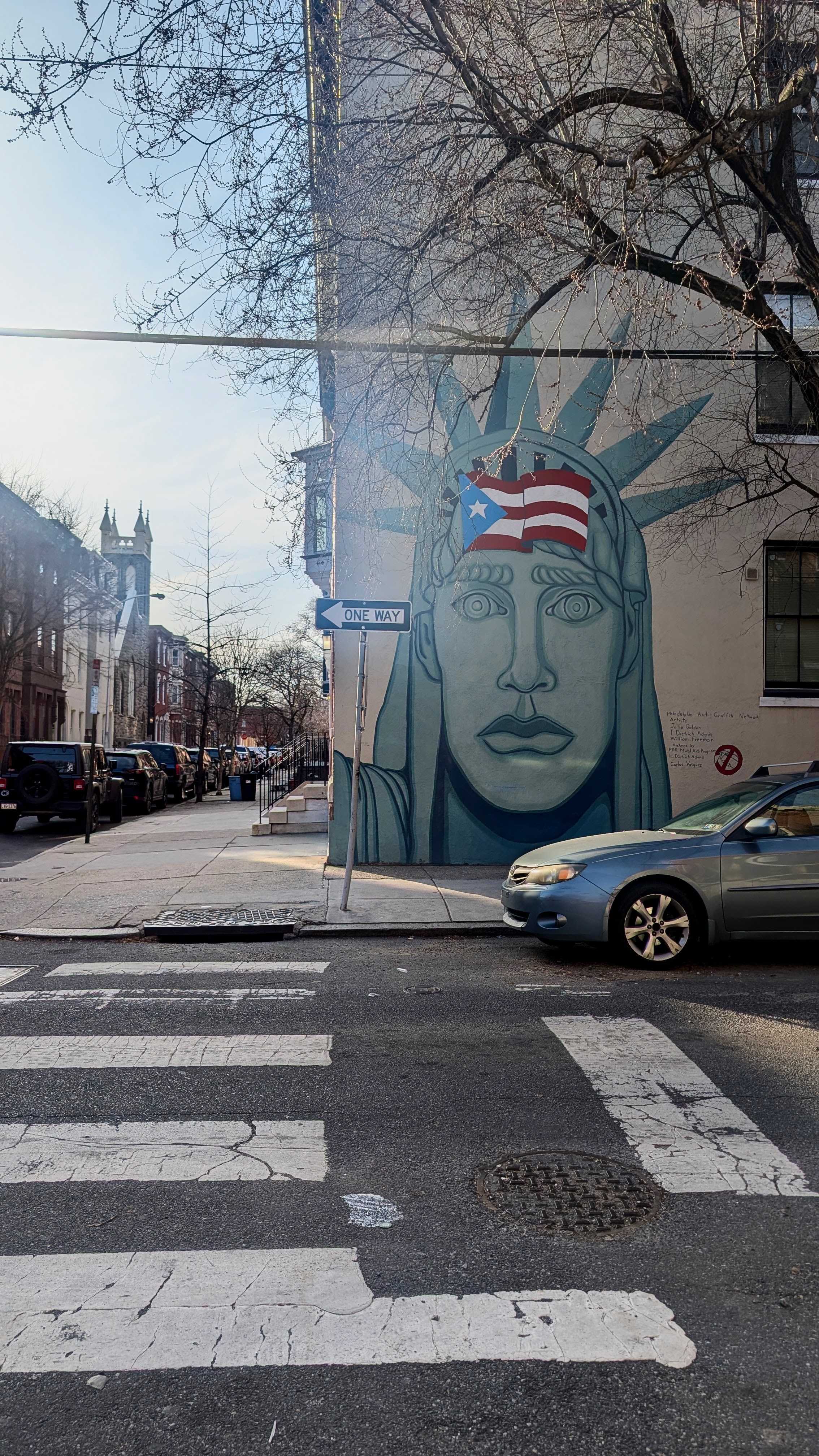
    The mural “Puerto Rican Statue of Liberty” in Fairmount, captured in March 2025.Bedatri D. Choudhury

    Ladies of liberty and Boricua pride

    Thousands of Philly Ricans will celebrate the annual Puerto Rican Day Parade on the Parkway this weekend in one of the loudest and proudest parties of the year spotlighting our city’s incredibly strong Boricua community. All year round, though, there are other places in Philly with quieter but no less exuberant representations of Puerto Rican history and culture that recently made me smile.

    In Fairhill — where I was thrilled to see the indie band Chuwi from Isabela perform at Feria del Barrio a couple weeks ago — there’s a towering, brightly colored mural by Philadelphia artist Parris Stancell that’s a joy to see. There are two vejigante figures in striking red, green, and yellow masks, one with arms wide open like it’s about to embrace the viewer. (These characters typically appear in festivals with frightening, monstrous masks to scare away bad spirits.) Beautiful birds and symbols from Indigenous Taino tribes adorn the vibrant scene.

    Also, picture the Statue of Liberty with a Puerto Rican flag hanging from her crown. If that sounds familiar, you may have seen a mural in Fairmount depicting Lady Liberty with the same flag. That painting offers a close-up look at the statue’s mournful, softly defiant face.

    Both murals show a powerful symbol in the history of Puerto Rico’s independence movements: These ladies of liberty were not some artistic imagination but recreations of a protest from 1977, when a group of Puerto Rican nationalists occupied the Statue of Liberty and draped their flag across her forehead to demand independence for Puerto Rico.

    According to Mural Arts, the Fairmount mural was first made by an anonymous graffiti artist in the early 1980s who wanted to honor that significant historical event, but the mural was later covered up, only to be recreated after Philly Ricans petitioned the mayor to replace it.

    These murals have me reflecting on the power of the diaspora in Philadelphia and beyond as Puerto Ricans on the archipelago are struggling through a devastating water crisis. That Statue of Liberty takeover happened nearly 50 years ago to criticize the government for treating Puerto Ricans as second-class citizens. Today, during Latino Heritage Month, when many Latin American nations ring in anniversaries of their independence days, Puerto Rico remains in colonial limbo. And Philly Ricans won’t let anyone forget it.

    — Rosa Cartagena

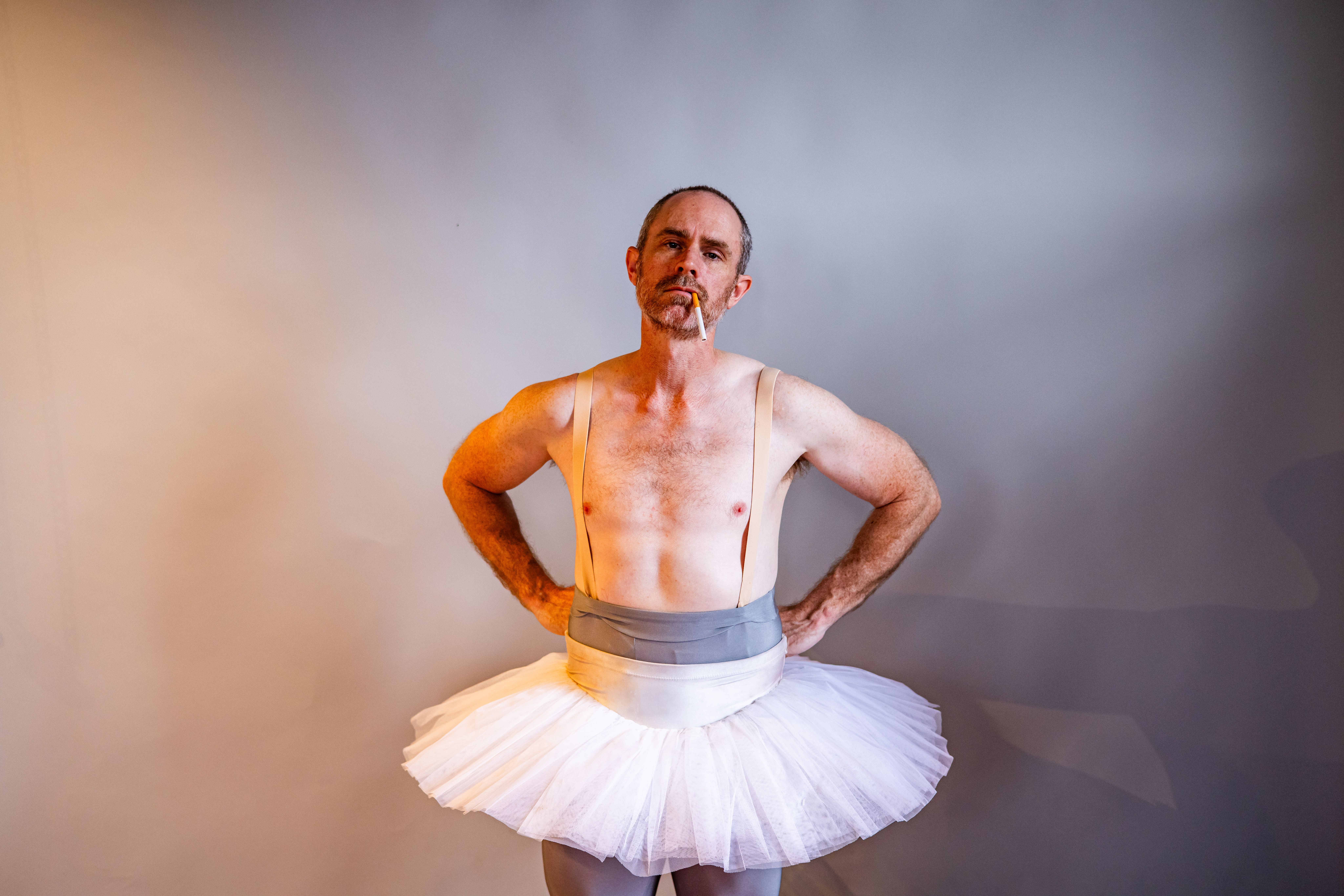
    Writer and performer Chris Davis in “The 40-Year-Old Ballerino” as part of the 2026 Philadelphia Fringe Festival. Ashley Smith / Wide Eye Studios

    Finding balance at Fringe

    Chris Davis is still learning to let go of the barre. A literal ballet barre, from his years of late-in-life dance training. But the barre also represents the vices of his past — drugs; alcohol; unrealistic romantic expectations, thanks to too much exposure to ‘90s media; a codependent relationship.

    And, he might admit, maybe they’re not all left in the past.

    Dressed in a white tank top, tights, and slippers, Davis stretches and speaks to the Fringe Festival audience with nothing beside him onstage, except the barre and a boom box, which he occasionally holds above his head à la Say Anything.

    The sparse set and sub-hour runtime are effective in centering Davis’ emotional journey from the guy who takes up ballet because of a ballerina ex, to the guy who keeps up with ballet (five to six days a week!) because it is what’s filling the existential void. There are more toxic ways to start over.

    “The 40-Year-Old Ballerino” runs until Saturday, Sept. 26, at Studio 34.

    — Julie Zeglen

  • The best thing Kiki Aranita ate this week: Candy-shaped pasta from Fiorella

    The best thing Kiki Aranita ate this week: Candy-shaped pasta from Fiorella

    The cleverest pastas tend to trick the eye and tease with wordplay. Are those postage stamps or francobolli? A plate of handkerchiefs or fazzoletti? Sorprese? Or surprise! It’s stuffed with nothing at all.

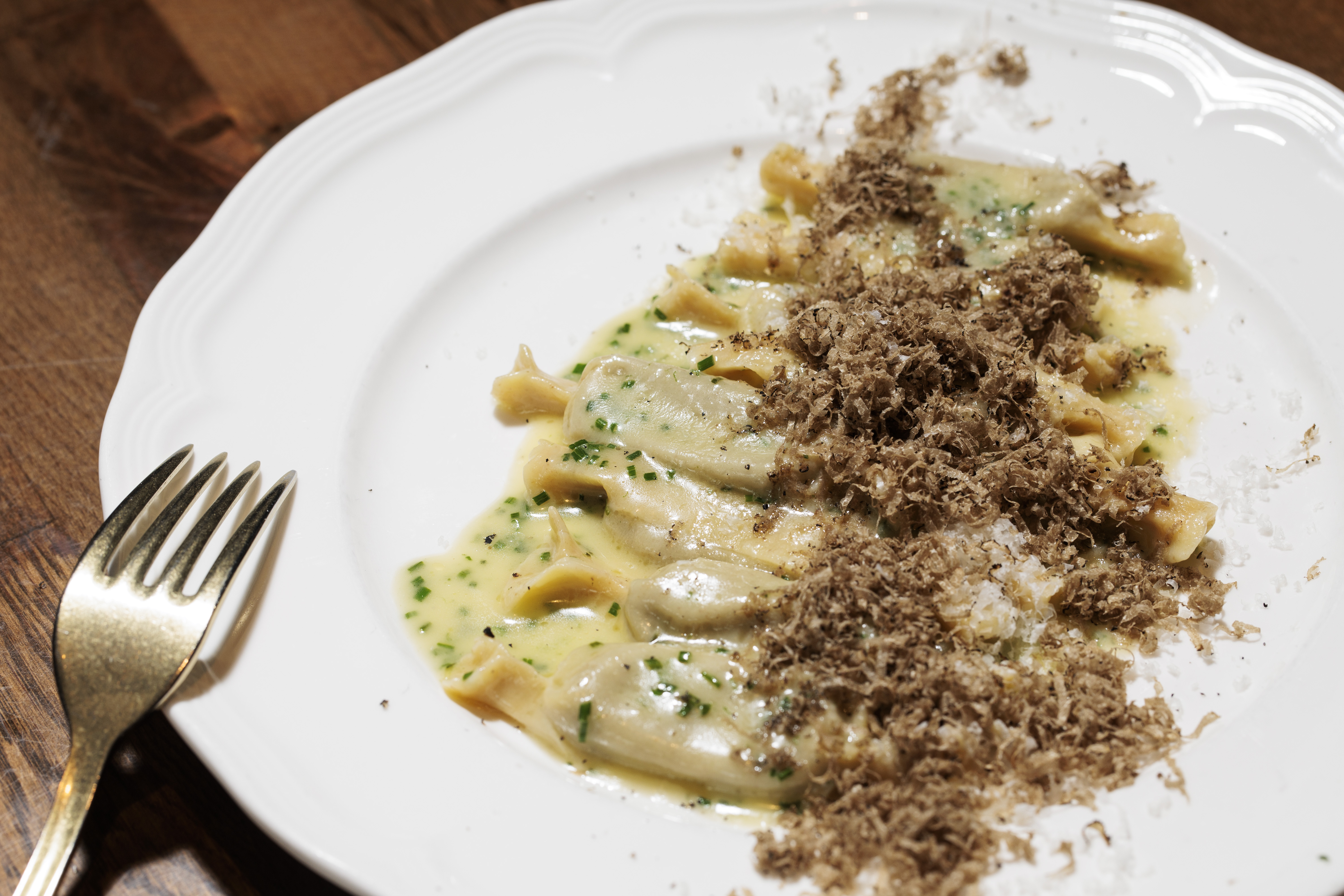
    But no pasta shape is more visually convincing than caramelle, which closely resembles oblong candies in wrappers, with both ends twisted to contain the fillings. Fiorella’s cooks add another layer of wit to their current variation on the classic shape: Their caramelle are undeniably sweet (something that pasta often is not).

    But the historic Italian Market butcher shop-turned-pasta bar isn’t sugaring its pasta. The caramelle’s sweetness comes naturally from late-summer corn simmered in butter and funked up with huitlacoche and black summer truffles.

    “Huitlacoche is known colloquially as the poor man’s truffle,” said chef Matt Rodrigue, who loved the duality of uniting it with conventionally expensive black truffle — and with the fungus’ host.

    “Pairing huitlacoche [corn smut] with corn isn’t reinventing the wheel but, again, it was simple. They grow together. It’s one of the few fungal infections that happen on a farm where the farmer is, well, not upset because of how much it can sell for,” he said.

    It’s unlikely you’d fly to Italy and get a plate of caramelle pasta made with huitlacoche, but it’s an essential ingredient in Mexican cuisine — and in Philly’s Italian Market, which now contains far more Mexican businesses than its namesake suggests.

    By cooking with locally available ingredients, Rodrigue is, in essence, hewing to Italian tradition and simplicity in his approach to making pasta, even if he’s not always sticking to ingredients from Italy.

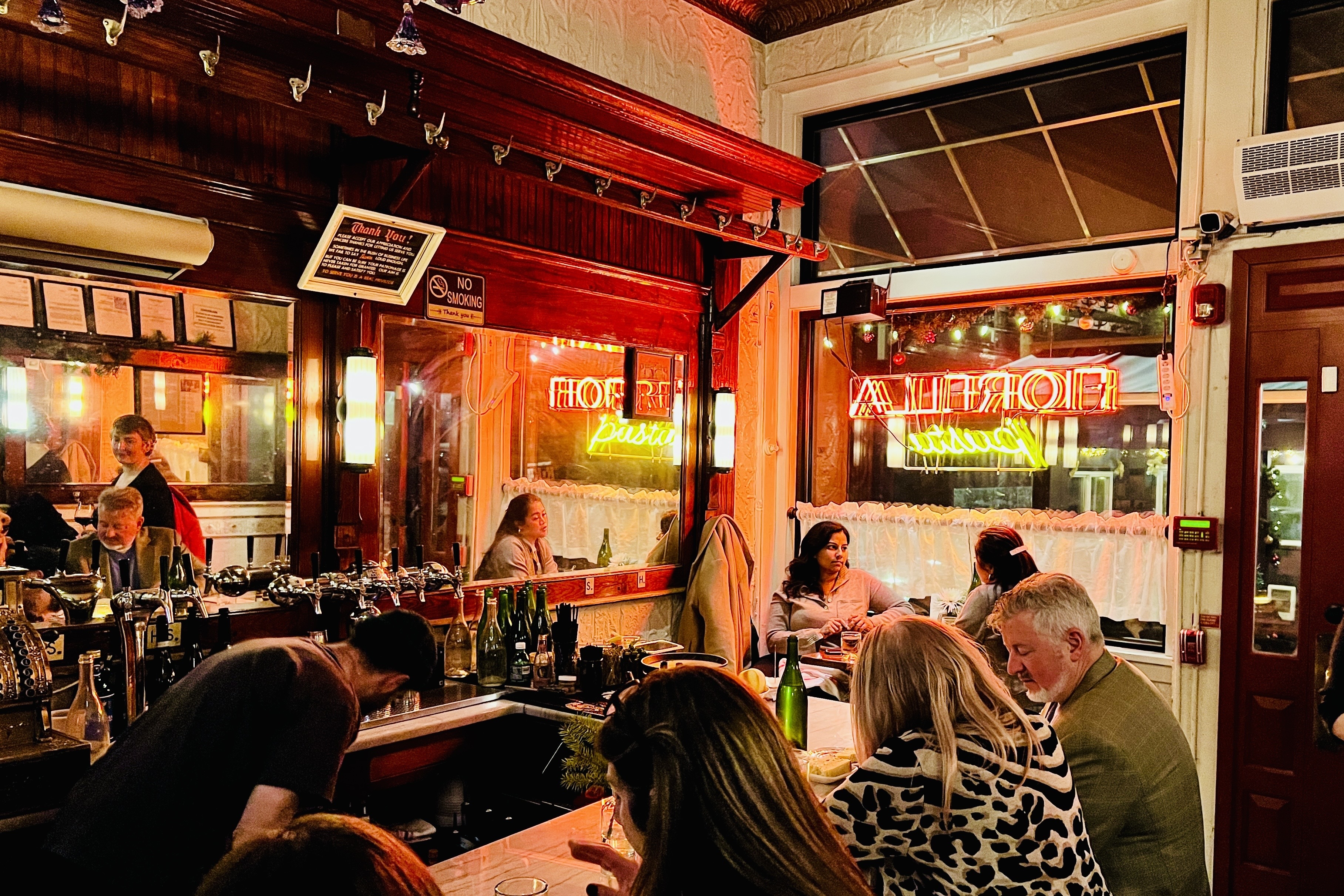
    Fiorella Pasta, 817 Christian St., Philadelphia, on Dec. 27, 2025.Michael Klein / Staff

    “Simple is hard. It’s difficult to be restrained and to work within confines,” Rodrigue said. “But rules help you develop a vision.”

    And so his caramelle filling is simply corn, huitlacoche, butter, and onion simmered together, pureed until silken, then twisted up into pasta. The candy-shaped batons are cooked, then dressed with pasta water that’s emulsified with chives by vigorously tossing the caramelle in the pan. The dish is finished with a snowdrift of Parmigiano Reggiano and black truffle shavings. The result is a marriage of cultures, aromatic funk from two different sources, and the last breath of the season’s corn.

    “People pay for things. For truffles, for certain mushrooms. And I felt corn should be in that category and an all-star. Corn is perfect. It just needs butter and salt and you’re good to go,” said Rodrigue.

    And Fiorella’s caramelle is a perfect salute to corn and its smut. But also, of course, butter.

  • I report on how people buy houses. Here’s what I got wrong buying mine.

    I report on how people buy houses. Here’s what I got wrong buying mine.

    As a reporter for “How I Bought This House,” The Inquirer’s series that shares the stories of how people purchased homes, I’ve spent a lot of time asking people about, well, how they bought their houses. How much they offered. What they waived. What they regretted. I’ve learned all sorts of tips and tricks, strategies, and common mistakes to avoid.

    So when I bought my first house this August in Philadelphia, I fancied myself savvier than the average first-time buyer. I knew, for instance, that the appropriate response to discovering knob-and-tube wiring is to run in the opposite direction, and that only a fool would waive the inspection.

    I headed into the process eager and overly confident, sure I’d be able to nab the perfect house well below the asking price and secure a mortgage at the lowest possible interest rate. I’d planned to use things I learned while helming this column, like seller assists and mortgage buydowns, to finagle the seller into practically giving me the house for free.

    Then I found a house I really wanted, and I learned that knowing what to do is one thing. Doing it when you are terrified that someone else might buy your dream house is another.

    Most of the hacks I picked up flew out the window the second another couple showed up at the open house. Faced with a competitive seller’s market, I quickly folded on things I would’ve previously considered nonnegotiable.

    Like the inspection. While I didn’t waive it entirely, I did agree to it being “information only,” meaning I gave up my right to ask the seller to fix or pay for anything. Information-only inspections can strengthen your offer when you can’t afford to pay more, but they can still end up costing you in the form of a hefty repair bill.

    Looking back, I wish I had done a full inspection. I didn’t know the details of the other offers, but I doubt anyone else waived theirs. When the report came back with a list of necessary repairs totaling $15,000, I was stuck.

    I knew from interviewing dozens of buyers that people often use inspection findings to negotiate a seller’s credit. I would’ve liked to ask for one to cover some of the $12,000 it cost to replace the cloth wiring. But because I’d agreed to an information-only inspection, my only real option was to walk away. I believe this is what people in business call giving away your leverage.

    And speaking of giving away leverage, I don’t know why I offered over the asking price except that fear is a powerful motivator. And by that point, I had developed a healthy fear of being outbid.

    I had already been outbid on two houses, both of which sold for more than $40,000 above asking. This time I could afford to offer more, so I did, even though I didn’t know what the other offers were.

    In a less panicky state, I might have remembered something I’d heard again and again reporting on homebuyers: If someone else offered more than us, the seller would probably circle back and ask if I could match them. That would’ve been a good time to go above the asking price. Instead, I did it right out of the gate. To borrow another phrase from the business community, I negotiated against myself.

    Thankfully, not everything I learned from How I Bought This House was for naught. While debating ways I could fend off the competition I was convinced was trying to steal my house, I remembered a couple from Collingswood who hoped to avoid a bidding war. They had bought and sold several homes before, so they knew how to put together an irresistible offer. One of the things they did was waive the mortgage contingency.

    When you waive the mortgage contingency, you’re essentially telling the seller that your financing is your problem, not theirs. If your loan falls through, you can’t back out of the deal and get your earnest money back. You have to be able to buy the house one way or another.

    It sounds risky — especially if you’re still planning to use a mortgage — but I felt it was a risk I could safely take. My lender was confident I’d be approved.

    Plus, I knew the seller would find it appealing because sellers love certainty. Waiving the mortgage contingency gave them the security of an all-cash offer without requiring us to actually make one. A true “win-win,” as my friends in business would say.

    Of course, I have no idea whether it won us the house, but after spending so much of the process paying extra to calm my own nerves, it felt good to finally strengthen my offer for free.

    If I learned anything from buying my first house, it’s that you should decide what you’re willing to spend, waive, or risk before you fall in love. Then stick to it. I didn’t. But I still got the house. And I don’t have any regrets.

  • Downingtown’s Mary Kate Morrissey went from Broadway to the golf course after her run as Elphaba from ‘Wicked’

    Downingtown’s Mary Kate Morrissey went from Broadway to the golf course after her run as Elphaba from ‘Wicked’

    Mary Kate Morrissey spent most of her life trying to excel at one thing: musical theater.

    However, while growing up in Downingtown, Morrissey was surrounded by athletics. Her mom, Mary Beth, played basketball at Mount St. Mary’s University, and her sister, Tara, played Division II lacrosse at West Chester. Her dad, John, wanted his children to play golf, so he signed them up for golf camp one summer and gave them tiny sets with panda head covers.

    Morrissey, though, wasn’t interested. She remembers sitting on top of a hill at a golf camp, hearing a production of West Side Story being performed down the street.

    “I was livid,” Morrissey said. “I couldn’t believe that I had to be outside when I could be inside doing musical theater. So that was the end of that, and I swore off all things sports until I graduated college.”

    Instead, she immersed herself in all things arts.

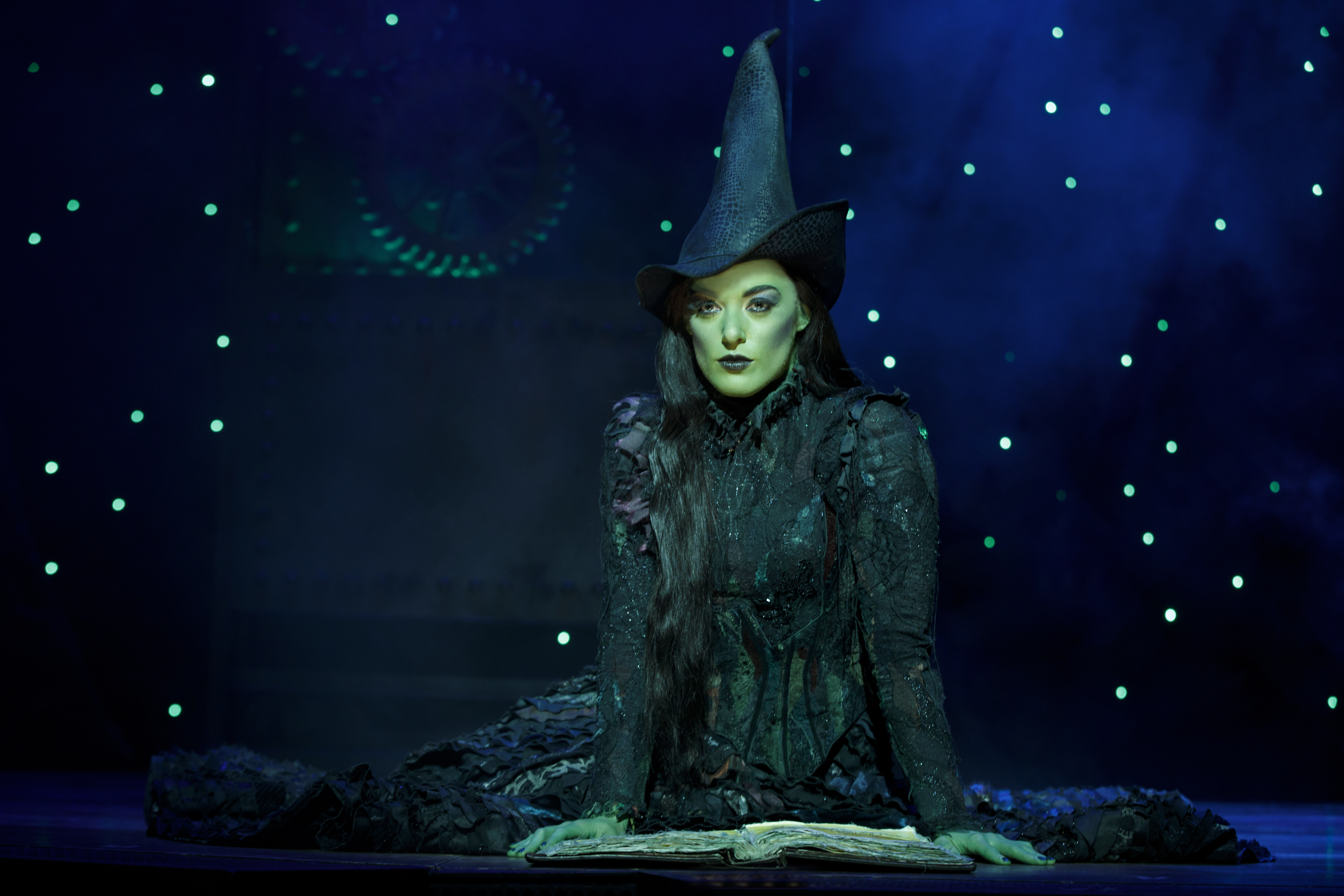
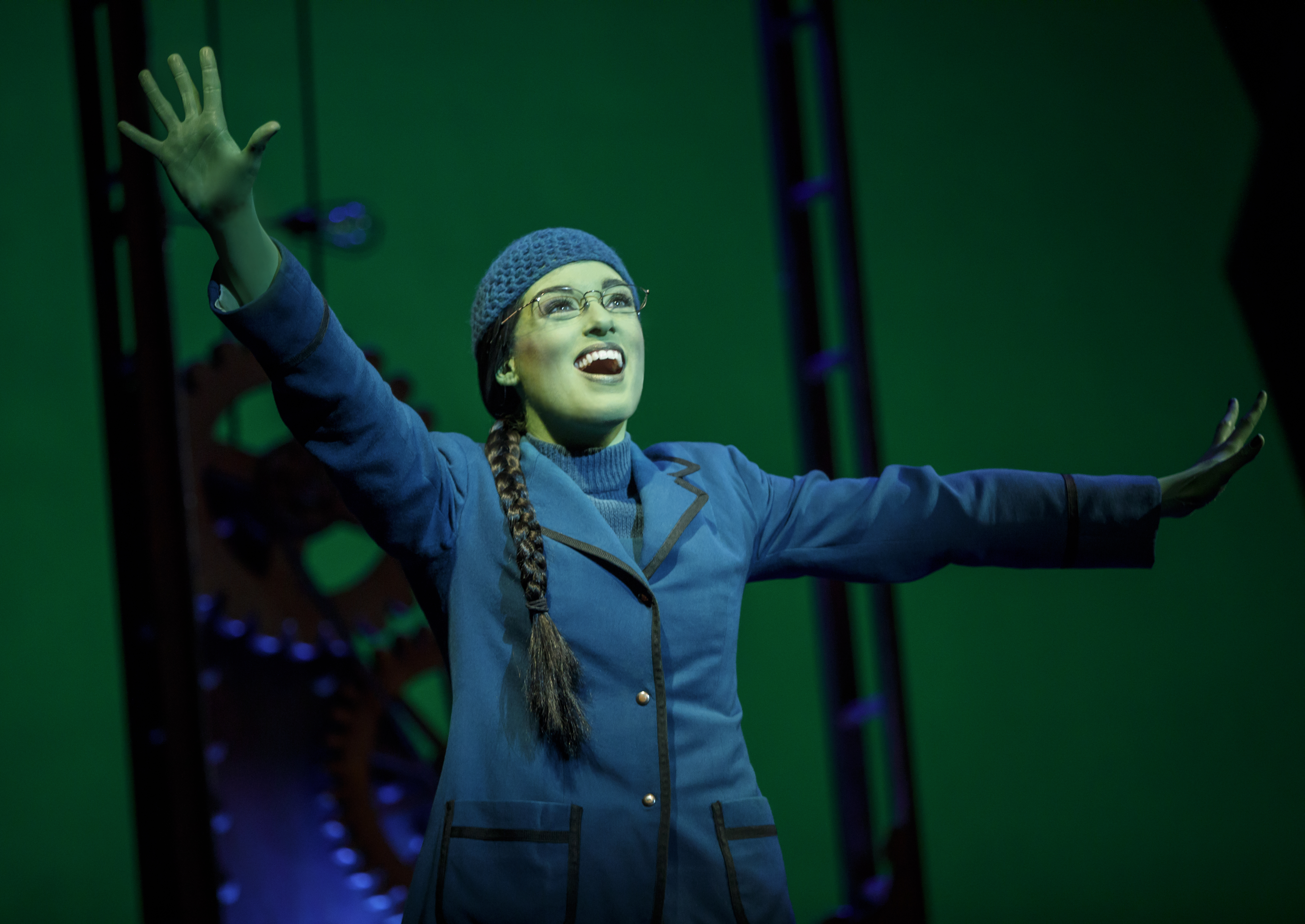
    Mary Kate Morrissey worked her way to being a standby for Elphaba on the national tour of “Wicked” from 2015 to 2017. Joan Marcus Photography

    “Anytime you go full throttle into one thing, there’s not a whole lot of time for anything else and so I really focused on theater, singing, band, just straight arts,” she said.

    That focus eventually led her to Broadway. Morrissey worked her way to being a standby for Elphaba on the national tour of Wicked from 2015 to 2017. She said she went from having about $300 to her name to becoming the principal Elphaba on tour.

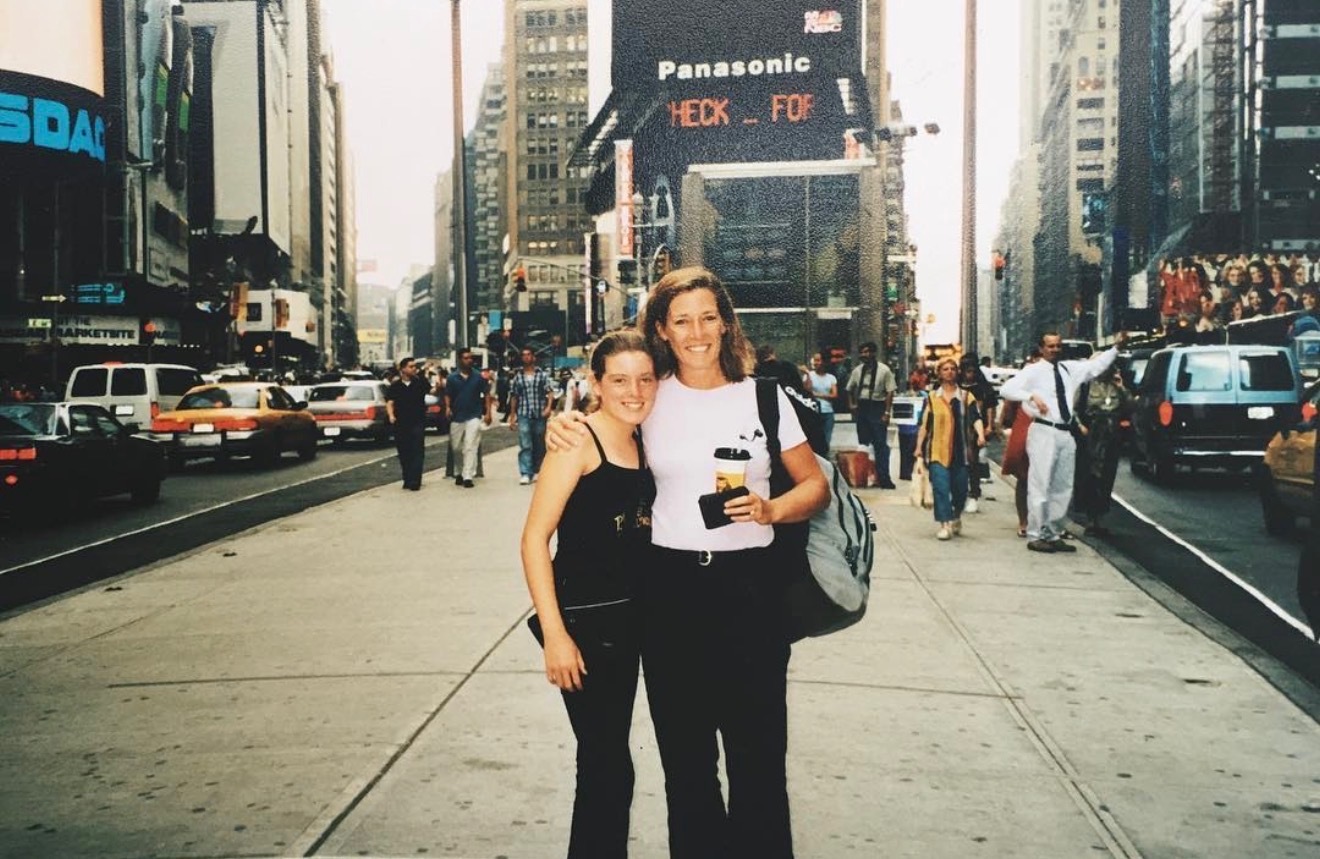
    She later became the Broadway standby from 2023-24, before taking over as the principal Elphaba on Broadway from 2024-25. The role was a dream she had chased since she saw her first Broadway show, The Lion King, at 10 years old and stood in Times Square telling herself she would be there one day.

    Elphaba’s story of being a misfit resonated with Morrissey, who described herself growing up as the “weird art geek.”

    “I felt like I was her,” she said. “I had really bad skin and so all this stuff about her not wanting to be seen in her own skin, and I was like, that’s me. I always wanted to play the part, but I never actually thought I would.”

    Morrissey had hoped for a faster path to Broadway, but now believes her debut came at the exact right time.

    Morrissey became the principal Elphaba during the same year Wicked the movie starring Cynthia Erivo and Ariana Grande, was released. The popularity surrounding the film brought new audiences to the Gershwin Theatre in New York.

    Mary Kate Morrisse took over as the principal Elphaba on Broadway from 2024-25. Joan Marcus Photography

    “Everybody expected me, myself included, to be the very best of the best,” Morrissey said. “I felt so much pressure because there were so many first-time Wicked viewers coming to Broadway because they had seen the movie or because they wanted to see it before the movie came out. I felt this massive responsibility to just be as dialed into my performing as possible that I really needed somewhere where I could just go be bad at something and try to learn something new.”

    And that’s how golf reentered her life.

    Morrissey, now 37, has combined her passion for musical theater with her newfound love of golf to show audiences that sometimes it’s good to be a beginner and try something entirely new.

    “If you’re always working on that thing that you’re best at,” she said, “it’s really good to flex the muscle of ‘I’m also not good at this other thing’ for our egos and to stay humble and to truly build character.”

    Growing up in Philly

    Storytelling and singing was always a part of Morrissey’s life.

    Her father’s side of the family immigrated to South Philadelphia from Ireland. John’s father sang locally in Philadelphia speakeasies, corner bars in Southwest Philadelphia, and on the Irish radio.

    Whenever the Morrissey family had parties, the night would end with a “sing-song.”

    Mary Kate Morrissey with her mom after seeing “The Lion King” on Broadway.Courtesy of Mary Kate Morrissey

    “You’d say, ‘Mary Kate, give us a song,’ and she would be 5 years old and she would belt out some Irish song about the Irish famines and she’d sing it and sit down,” her mother said. “There was never any fear of performance for any one of our children.

    “She came out of the womb singing and has never stopped.”

    Mary Beth loved “Godspell,” written by Stephen Schwartz, who also wrote the music for Wicked, and Morrissey remembers listening to the cassette tape in the car. John also used to take her and her siblings to plays and musicals at the Academy of Music and Walnut Street Theatre.

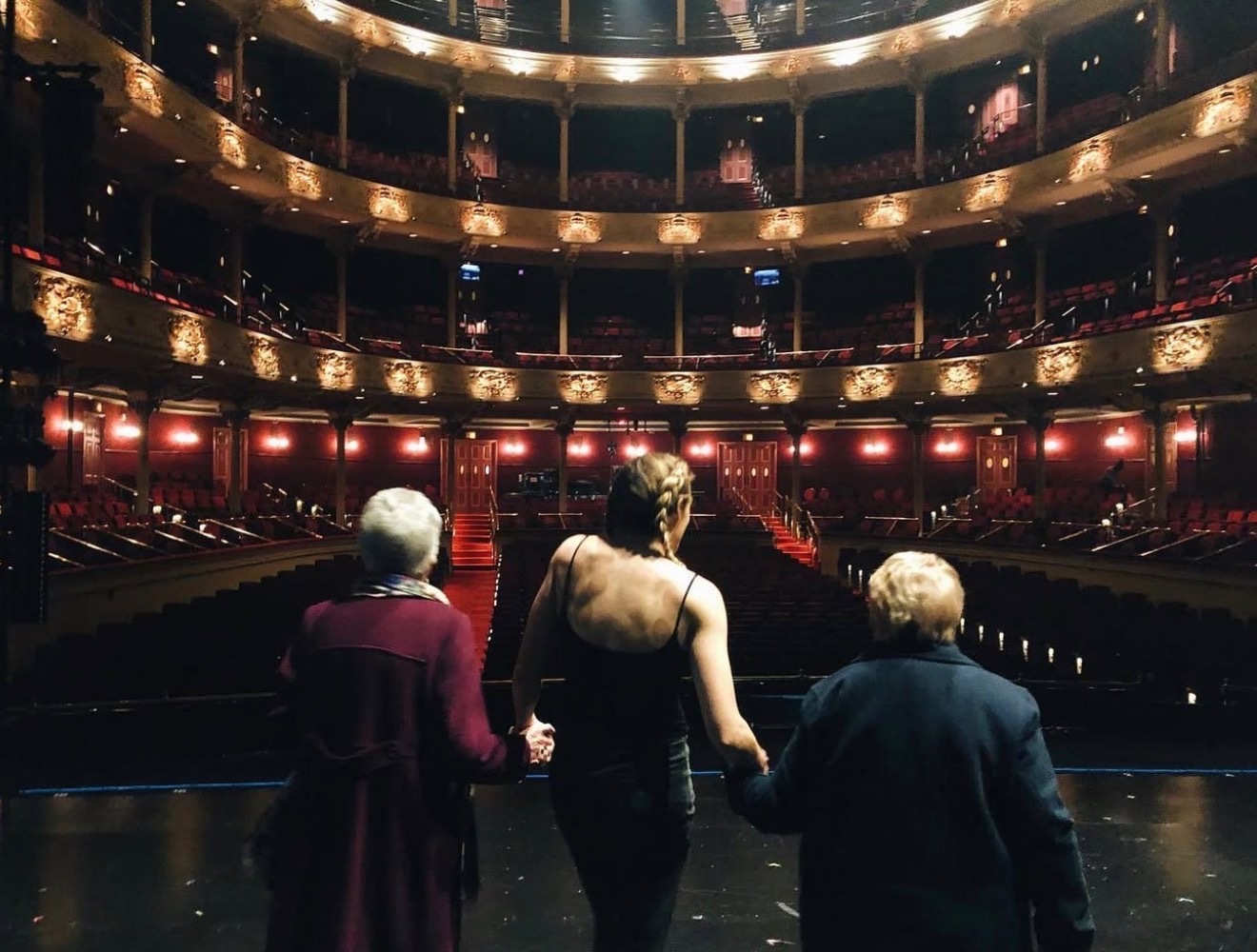
    When Morrissey returned to Philadelphia in 2019 to perform as Janis Sarkisian in “Mean Girls” at the Academy of Music, she brought both of her grandmothers backstage.

    “The academy is this crazy, big, beautiful, old theater, so just to bring them on stage, they were over the moon,” she said. “It was one of the coolest things to come back to Philly and do that.”

    Mary Kate Morrissey with her grandmothers at the Academy of Music.Courtesy of Mary Kate Morrissey

    The parallels in golf and theater

    Morrissey’s return to golf started with her mom after the COVID-19 pandemic.

    Mary Beth retired from Liberty Property Trust in 2020 and began playing golf. She loved it, she said, and Mary Kate enjoyed watching her mom become immersed in a new sport.

    “It was fun to see her being plugged into a community where it’s all surrounded by this hobby where you get to walk and be competitive and have a cocktail after,” she said.

    So during her run as Elphaba on Broadway, Morrissey decided she wanted to try it herself.

    She convinced a nearby golf simulator, Golf v.2, in Brooklyn to give her free lessons, if she posted about it on Instagram. Once a week, she would take a lesson in silence.

    She performed Wicked at night and had to protect her voice during the day, so her golf coach had to figure out how to teach her without speaking.

    “I almost learned it like it was a dance move or choreography,” Morrissey said.

    The more she played, the more similarities she saw between golf and theater that are often overlooked.

    “I feel like both are storytelling venues,” she said. “With golf, each golfer is the hero of their story, each course is the setting, the sand traps are the villain, how are they going to overcome their obstacles, everything is a beginning, middle, and an end. They’re faced with conflict. It’s the same thing with theater.”

    Both golf and theater require calm under pressure, while demanding preparation, repetition, and the ability to find something new in something familiar, she said.

    “Broadway actors do the same show every single day, and they find something new in it every single day,” she said. “In golf, you could play the same course every single day and find something new in it.”

    ‘Broadway to Birdie’

    Morrissey and her friend were at the beach when they started talking about the lack of golf media they wanted to watch, especially for women and beginners.

    “We were like, ‘Let’s think of five big ideas that we can make happen in the next year,’ and ’Broadway to Birdie’ started,” Morrissey said.

    In November 2025, she started “Broadway to Birdie” on YouTube, bringing together Broadway performers who aren’t golfers to show you don’t need to be an expert to enjoy the sport.

    The series has featured Broadway veterans, including McKenzie Kurtz, who played Glinda in Wicked, Anna in Frozen, and Heather Chandler in Heathers, as well as Brian d’Arcy James, who was the original Shrek in Shrek the musical and King George in Hamilton.

    The performers play a friendly best-ball match and whoever loses each hole has to sing from the losing green to the next tee box.

    “What I’m hoping it does,” Morrissey said, “is show other women and people who are not used to seeing themselves on the course in the media, that someone they admire, like a Sam Pauly or Shoshana Bean, can be out there hacking away and just having fun and practicing the beginner’s mindset.”

    She believes that golf can teach the same lessons that theater has taught her throughout her career.

    “Golf is really very character-building because it forces you to remain cool, calm, and collected,” she said. “It’s fun to put that kind of exercise on people who build characters for a living and have to sustain that kind of pressure.”

    Morrissey has learned many lessons by blending golf and musical theater. She shared that message as a speaker during Women’s Day at Travelers Championship in 2025 and 2026 and the 2026 KPMG Women’s PGA Championship Leadership Summit.

    “Golf and theater have become sort of parallel for me, and it’s a story that I really love sharing and love talking about,” she said. “Golf, I think that for so long it’s felt like a closed door and very insider, like a boys’ club, but it feels to me like that’s changing and sometimes you have to open the door for yourself. I think that theatergoers can find the story and the theater in the tournaments and in the players.”

    At the 2026 U.S. Open at Shinnecock Hills, she created a multimedia performance built around past champions Corey Pavin and Retief Goosen. She used clips from their winning championship final rounds and performed a Broadway medley that she sang over the video in front of Pavin and Goosen.

    “She has found a nexus where golf and Broadway intersect, and I don’t think anybody has really been able to bring golf and their music or talent together,” her father said. “Mary Kate has found this very special lane, and the joy she is bringing to these other people and bringing into the game as a result of it is just unbelievable.

    “The golf community has accepted her and have supported her, as you can see from the way her Instagram account is growing.”

    Changing and growing the game

    Every September, Morrissey’s family runs a golf fundraiser at Seaview Golf Club for the Holy Redeemer’s Jersey Shore Food Pantry, which is a charity Nancy, John’s mother’s sister, started with the Sisters of the Holy Redeemer over 30 years ago.

    The tournament, called the Redeemer Health Golf Klassic, raises money for the food pantry that serves thousands of individuals each year.

    “It all goes back to my aunt and it’s part of her mission,” John said. “We feel like we’re perpetuating her mission of hope to the people of the Jersey Shore who need it.”

    The same idea of bringing people together through golf is at the heart of Morrissey’s approach. She hopes her journey with golf can show people that it is never too late to pick up the game.

    Mary Kate Morrissey has taken up golf and wants to get more people involved in the sport.Andrew Hertherington / The Photo Caddie

    “You don’t have to be a natural athlete, that doesn’t have to be your story,” she said. “I’m an actor, I’m a singer, I’m an artist, but it really helps with balance and confidence. You have to get past the hard beginning part, but it’s good for us to feel like we are bad at something.”

    Morrissey believes “Broadway to Birdie” will inspire more women to start playing golf.

    “Get out there and try it,” she said. “I’m really just trying to integrate the audiences and making golf more accessible — and making Broadway more accessible, too.”

  • Taking care of grandchildren may help slow cognitive decline

    Taking care of grandchildren may help slow cognitive decline

    Being a grandparent may mean many things: making the best cookies, giving the warmest hugs, passing along hard-won wisdom, and sharing family stories.

    But beyond giving you a sense of joy and meaning, there’s emerging evidence that being a grandparent has other benefits: It may help protect your brain during aging.

    Recent research has found grandparenthood may be linked to not only slower cognitive decline, but also a lower risk of dementia and even a younger-looking brain.

    There are still relatively few studies looking at how grandparenthood changes cognition and the brain, but more research is underway. “This is kind of a new frontier, and we’re just kind of at the beginning of it,” said James Rilling, a professor of psychology at Emory University.

    But the benefits of caregiving as a grandparent make sense, considering scientists have also identified long-term benefits in mothers and fathers, in which parents with more children had increased functional connectivity in brain networks that tend to thin with age.

    “By taking care of others, it might help us to support healthy brain aging,” Rilling said.

    The cognitive benefits of caregiving

    In one of the first population studies of American grandparents and dementia, researchers looked at over 10,000 grandparents and found that caring for grandchildren was linked to a lower risk of dementia over 16 years of longitudinal data, said Seung-won Emily Choi, an associate professor of sociology at Texas State University who researches cognitive health in aging and conducted the study.

    A study published in 2025 of over 10,000 older adults in China found that caregiving for less than 40 hours a week was associated with a 24% reduced risk of dementia compared with grandparents not providing care for grandchildren. The researchers’ analyses concluded this could be in part because of reduced loneliness and increased digital technology access.

    Also, the act of caregiving itself may be linked to the cognitive benefits. Compared with grandparents not involved in caregiving, those who were involved had higher verbal fluency and episodic memory, according to a 2026 study conducted by Flavia Chereches, a graduate student of developmental psychology at Tilburg University in the Netherlands.

    Grandmothers vs. grandfathers

    Intriguingly, the research suggests there may be differences in the effects for grandmothers and grandfathers. In Choi’s study on the link to dementia risk, for example, grandmothers had the most benefits when they were engaged in lower-intensity caregiving (less than 500 hours over two years), while grandfathers benefited from higher intensity (over 500 hours). And in Chereches’s research, only caregiving grandmothers had less cognitive decline.

    This may be, in part, due to cultural gender differences. Grandmothers tend to be more involved in the more physically demanding labor of feeding, cleaning, and managing care, which may be more beneficial in lower amounts.

    The differences may also relate to the “grandmother hypothesis” for the evolutionary reasons adult female humans live long past their reproductive age, a trait shared by few other mammals, including some whales and chimpanzees. Evidence suggests that grandmothers have a consistently positive impact on their grandchildren’s health, Rilling said.

    However, for cognitive benefits, it might not “necessarily matter if you’re a grandma or grandpa, but more like how you experience caregiving,” Chereches said.

    Bonding across generations

    There are many known ingredients that go into healthy aging, such as being embedded in a social network, staying physically active, and stimulating your mind.

    “Caregiving is one meaningful social role that might provide access to all of this,” Chereches said.

    When grandparents are with their grandkids, they report more instances of feeling sadness or worry — perhaps due to concern over the children’s well-being, as well as bittersweet feelings about the transience of life — compared with when they spend time with others.

    But more often, they report more feelings of pride and love, Chereches and her colleagues found in a 2026 study.

    “There seems to be something special about this connection,” she said.

    Time connecting with grandchildren can connect grandparents with others, too. While “interacting with the grandchildren, they have more chances of getting along with their other children or the other family members and even well in the community,” Choi said.

    At the same time, the kinds of interactions nanas and pawpaws have with their grandkids can be very mentally stimulating, with storytelling, playing make-believe, and reading books.

    And you don’t necessarily need to be an actual grandparent to benefit.

    Research on older adults volunteering with Experience Corps, a program run by AARP that trains teams to volunteer in elementary schools, also found that the experience helped improve memory and executive function, as well as decreased brain volume loss in areas associated with dementia.

    A younger brain

    More recent research suggests that the act of caregiving as a grandparent may also be linked to a younger brain. In a 2025 study, Rilling and his colleagues scanned the brains of 50 grandmothers and compared them to those of 25 women of similar ages who were not grandparents. On average, the grandmothers’ brains looked 5½ years younger according to age estimates calculated by a computer model.

    However, these studies are associational and can’t show causation. It’s very possible that people who are healthier are more likely to provide active grandparent caregiving, for example.

    The grandmothers in the imaging study are “almost like super-grandmothers” because they signed up for a study about grandmothers, Rilling said. “They were very mentally, physically healthy, financially stable. They’re not overextended, and they’re really highly engaged with their grandchildren.”

    The research also points to the importance of balance: Caregiving can be physically and mentally exhausting — perhaps an obvious statement to anyone who has engaged in it — which can detract from the benefits. Research shows that grandparents who are the sole caretakers of their grandchildren are less likely to have cognitive benefits, for example.

    “We should not expect that grandparenthood or grandchild care is the right thing for everyone,” Chereches said. “If grandparents want to provide grandchild care, if the role is important to them, and there’s something they want to do, then it’s definitely a great way to maintain oneself active, engaged with a meaningful social role, but then we also need to acknowledge that there are people that maybe would like to do something else.”

    The key is to take care of your own physical well-being with proper sleep, diet, and exercise and to maintain other social connections, Choi said, and at the same time, enjoy the more stimulating parts of taking care of grandchildren.

  • Horoscopes: Saturday, Sept. 26, 2026

    Horoscopes: Saturday, Sept. 26, 2026

    ARIES (March 21-April 19). You’ve recently been pushing yourself to do the hard thing, only to discover that not only does doing hard things make you better, stronger and smarter, but it makes you braver too. Your self-definition is expanding.

    TAURUS (April 20-May 20). You don’t have all the ingredients, but start anyway. Look at what is already available. Whatever is on hand is enough to make progress: enough money for the smaller version, enough time for a first step, enough skill to begin.

    GEMINI (May 21-June 21). One question keeps coming back because you feel like you need an answer before you can move on. Ask. A friend, expert or coworker has the detail you’re missing, or at least a clue that gets you one step further.

    CANCER (June 22-July 22). You have been the person who remembers, arranges, checks in and gets things done. When another person offers to help, be sure to give them a real job. You will have less to manage, and they will feel good knowing you trust them.

    LEO (July 23-Aug. 22). Put more emphasis on what’s already going well: the friend who always makes you laugh, the skill people pay for, the project you like returning to. Focusing there is more fun and it’s also more productive. Keep going with what makes you proud.

    VIRGO (Aug. 23-Sept. 22). People have an easier time because of you, and it feels good to recognize it, even if you don’t always get the acknowledgment you deserve for it. Seeing that you’ve made a difference is the most satisfying feeling.

    LIBRA (Sept. 23-Oct. 23). You often make room for everyone else’s needs and forget that you also require things such as attention, sustenance, work that’s meaningful to you and joy! A fair arrangement includes something good for you as well.

    SCORPIO (Oct. 24-Nov. 21). An old problem that’s been taking up room in your mind is moving out. As it fades into the distance, you may feel that even though it wasn’t completely resolved, it didn’t have to be to become unimportant to you.

    SAGITTARIUS (Nov. 22-Dec. 21). It so happens that the thing that didn’t work out brought you a blessing in disguise. You’ll have a lot of fun with a fresh start, trying something new or testing a different idea. There’s a cheaper, easier way to get the result you wanted.

    CAPRICORN (Dec. 22-Jan. 19). People come to you with questions. Take your time. Process what they really mean and need — and more importantly, what helping will cost you. A thoughtful answer saves you from creating extra work or drama for yourself.

    AQUARIUS (Jan. 20-Feb. 18). Show up where people gather around something you already enjoy. You like people who understand the reference, laugh at the same strange detail and keep the conversation moving. A chat leads to a new friend or an invitation.

    PISCES (Feb. 19-March 20). Because you approach people compassion-first, you’re open to a fuller picture of who they are and even how it must feel to be them right now. No wonder you put together social scenes, groups and teams that really benefit all.

    TODAY’S BIRTHDAY (Sept. 26). In your Passion Fire Year, you are pulled by feelings beyond logic and duty to pursuits you once would have deemed ridiculous. Heart ablaze, old fears burn off, paths are illuminated and relationships spark. More highlights: You’ll travel many miles to make a deal. You’ll be early to a trend and reap many benefits, including financial. Fresh habits give you the energy to enjoy your big plans. Taurus and Sagittarius adore you. Your lucky numbers are: 5, 17, 33, 12 and 35.

  • Dear Abby | Opinions differ on multi-birthday gift exchange

    Dear Abby | Opinions differ on multi-birthday gift exchange

    DEAR ABBY: I have a group of friends who get together once a month, usually for a casual dinner. Next month’s gathering will be to celebrate three birthdays, one of which is mine. While planning this gathering (via text), I asked if we could skip exchanging presents and just enjoy our time together. The response from my friends was “No! We’re doing presents.” I know their intention is good; these are very generous friends. But I’m working only part time and have to pay for my health insurance out of pocket. They said I don’t need to get them presents, but they will be getting me presents, so naturally I feel the pressure to reciprocate. While I’m not the most creative person, I could get away with making them something, but I’m also a bit put off. Shouldn’t my wishes have been respected since it’s my birthday?

    — BIRTHDAY GIRL IN MASSACHUSETTS

    DEAR BIRTHDAY GIRL: Happy birthday! Your friends understand why you don’t want to exchange gifts, and they want to give you something anyway. They aren’t doing it to pressure you; they’re doing it out of love. If giving them a handcrafted item would help you feel better, that’s fine, but please don’t feel disrespected by their generosity.

    ** ** **

    DEAR ABBY: My husband of two years and I are opposites when it comes to planning. He’s spontaneous and acts on the spur of the moment. I’m the type who plans everything down to the last nanosecond (slight exaggeration). Everything came to a head last Saturday when he suddenly decided to start a household project at 5 p.m. We were supposed to meet another couple for an evening out at 7. When he started the project, I reminded him of our date and asked him to let the other couple know that something had come up and we wouldn’t make it. I thought he had taken care of it until they texted me at 7:15 wanting to know where we were. I texted back, “Been delayed, on my way.” I dressed hurriedly, put on makeup in the car, broke all speed records and arrived there about 45 minutes late. I made excuses for him, knowing he has done this to them before. We were halfway through the meal when he showed up, wearing the same “work around the house” clothes from earlier. (I was surprised the hostess even seated him.) I was embarrassed, the other couple was understandably peeved, and I have had it with his inconsiderate behavior! Please advise.

    — NOT OK IN OKLAHOMA

    DEAR NOT OK: If your husband doesn’t know what a faux pas he committed by leaving the other couple hanging, tell him. His behavior was thoughtless and rude. Because you know he is forgetful, you should have kept asking him if he had made the call, or you could have done it yourself. I think your biggest mistake was trying to cover for him by fibbing. In the future, make sure you arrive promptly. Let him do his own explaining, make his own apologies and experience the fallout.