Blog

  • Gov. Josh Shapiro’s administration will rescind Pa. disease-tracking proposal that reignited pandemic-era outrage

    Gov. Josh Shapiro’s administration will rescind Pa. disease-tracking proposal that reignited pandemic-era outrage

    Gov. Josh Shapiro’s administration will rescind a series of proposed vaccination and disease-tracking regulations that reignited public outrage toward restrictive pandemic-era policies in Pennsylvania — a decision made after receiving more than 10,000 comments opposing the changes, the Pennsylvania Department of Health said Friday.

    The department will withdraw the regulations, incorporate feedback, and resubmit the public health rules “once Pennsylvanians’ feedback has been adequately incorporated,” Neil Ruhland, a spokesperson for the department, said in a statement.

    Shapiro’s administration earlier this year submitted the proposed regulations aimed at combating infectious diseases to the Independent Regulatory Review Commission, a little-known board that assesses and approves new state regulations, requiring public input before they can be implemented. These regulations had been in progress for years, but were not introduced to the public until June 4.

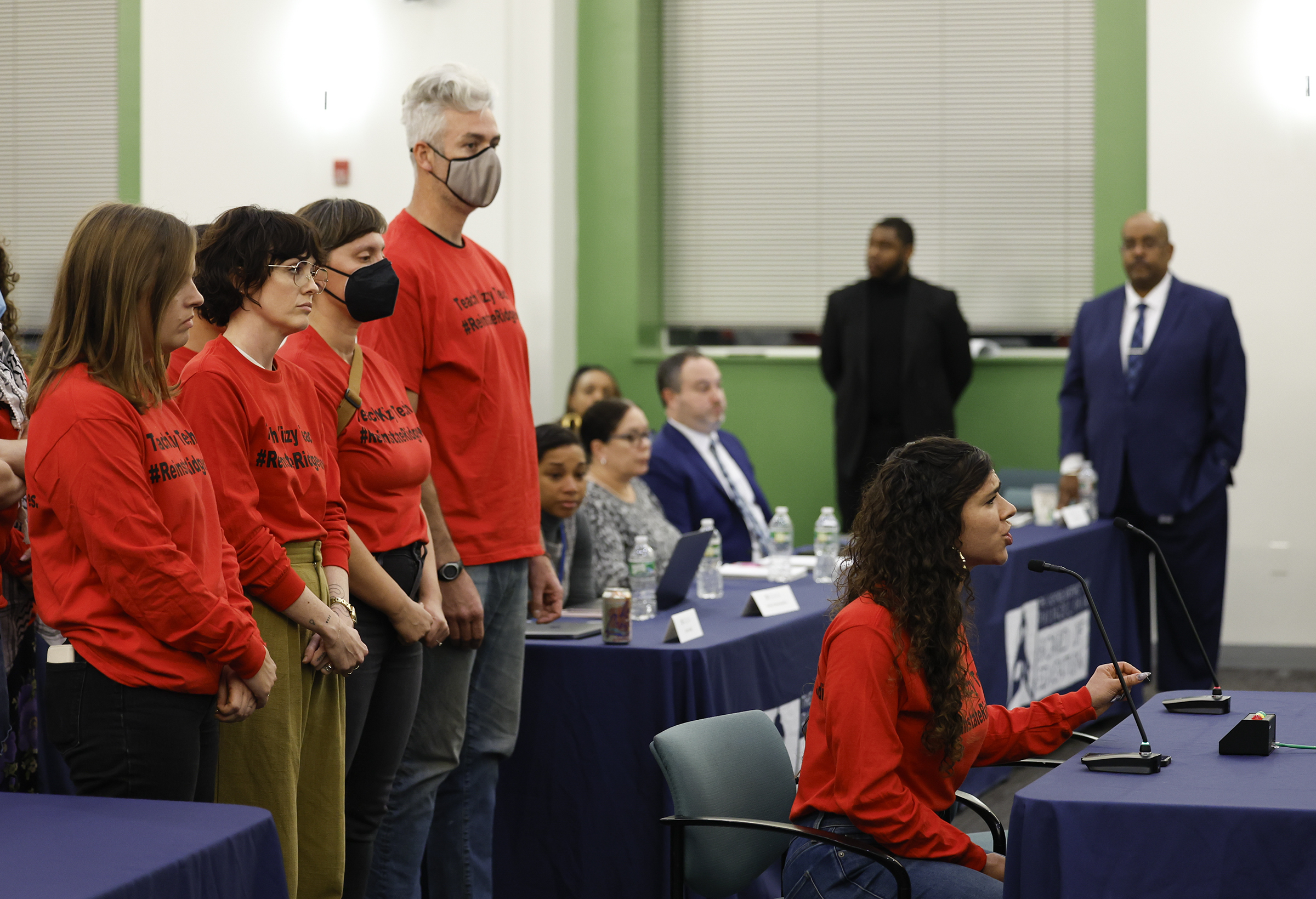
    The public comment period coincided with a high-profile clash between Shapiro and U.S. Secretary of Health and Human Services Robert F. Kennedy Jr. over two infant deaths that Pennsylvania attributed to measles — the first deaths from the highly contagious and preventable disease in the state in 35 years. And it quickly refueled public disapproval of government mandates enacted during the COVID-19 pandemic.

    The 502-page proposed regulations would have expanded the state health department’s investigatory powers deemed necessary to track, prevent, contain, or mitigate a contagious disease. Republican state lawmakers and thousands of enraged constituents were especially concerned by a provision that would allow the state health department or local health authorities to enter schools or private properties to investigate alleged outbreaks or review vaccination records. They also criticized the health department’s effort to change references to a “pregnant woman” to a “pregnant individual” throughout the policy, claiming it was an effort to remove women from the state’s public health rules.

    The pushback comes at a time when federal health officials, under Kennedy, who has a history of anti-vaccine activism, have worked to reduce the number of childhood vaccination recommendations — and as childhood vaccination rates hit new lows in Pennsylvania. The effort has prompted Shapiro and other Democratic governors to sign executive orders to protect vaccine access. Setting vaccination mandates for schoolchildren falls to the states, not the federal government.

    The proposals rescinded Friday will not affect federal or state executive orders related to vaccination access.
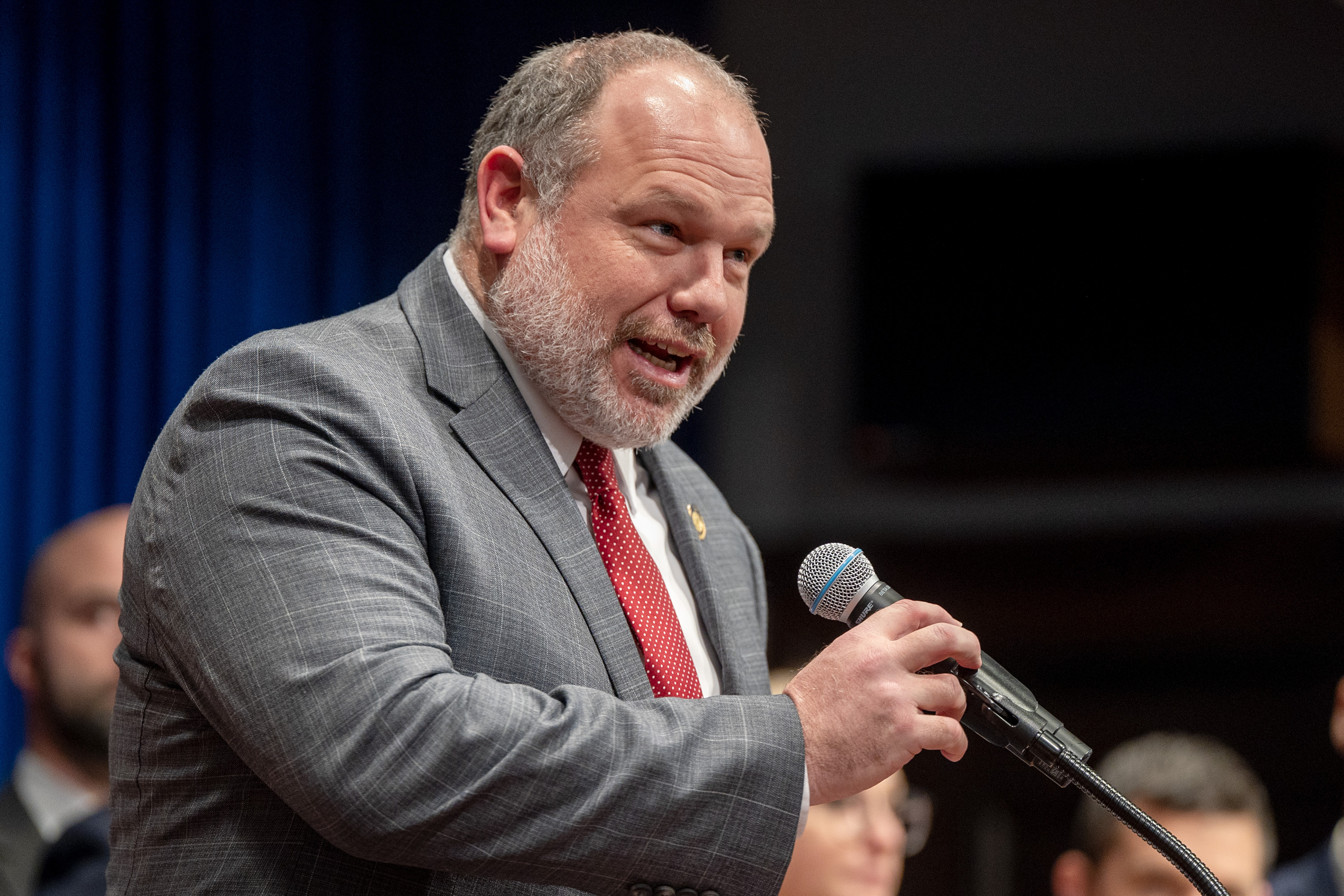
    State House Minority Leader Jesse Topper (R., Bedford) during a news conference at the Capitol in Harrisburg Feb. 3, 2026.Tom Gralish / Staff Photographer

    House Minority Leader Jesse Topper (R., Bedford) was among the first officials last month to raise alarm about the proposed regulations. In a statement Friday, he said it was the “correct and logical conclusion” for the health department, following the outpouring of public opposition.

    Senate Majority Leader Joe Pittman (R., Indiana) called Friday’s announcement “a tremendous victory for the grassroots efforts of Pennsylvanians.”

    ”This is a stark reminder that we must continue to be vigilant when the Executive Branch attempts overreach,” Pittman said in a statement. “We cannot and will not allow actions like we saw taken by the Executive Branch during the height of the COVID-19 pandemic to be put in place again.”

    Nearly all of the members of the Republican caucuses in Pennsylvania’s Senate and House submitted letters in opposition to the proposed regulations, arguing they were more restrictive than the ones enacted during the COVID-19 public health emergency and would infringe on Pennsylvanians’ constitutional rights.

    “The proposed regulations represent executive-branch overreach reminiscent of what we experienced during the COVID-19 pandemic — but this time, the rules would be permanent,” Senate President Pro Tempore Kim Ward (R., Westmoreland) said in a statement last week. “Every Pennsylvanian should understand these regulations and how they could impact their lives.”

    At least one Democrat — State Rep. Dan Frankel (D., Allegheny), who chairs the House Health Committee — submitted his support during the public comment period for updating the state’s existing communicable disease rules. Even so, his remarks recommended several changes to the proposed regulations, including to how the state would evaluate some vaccination exemptions to consider how children will be affected if their parent forgoes the preventive measures.

    Senate Minority Leader Jay Costa (D., Allegheny) said in a statement Friday he was looking forward to continuing the conversation about the regulations, adding that “public trust and buy-in is crucial to effective governance.”

    Beth Rementer, a spokesperson for House Democrats, said Friday that Shapiro’s administration was “acting responsibly” by considering public opinion.

    “After all, that’s how government is supposed to work,” Rementer said.

    Shapiro’s administration has rescinded at least 11 other regulation proposals since taking office in 2023, according to administration officials. But a deluge of feedback is rare, and most proposed regulations receive around five public comment submissions, a Shapiro administration official said.

    Monday was the final day for public comment submissions. As part of their opposition campaign, Republican lawmakers encouraged their constituents to voice their opinion as part of public comment. By the end of the day, the review commission had received more than 10,000 comments opposing the regulations.

    “The Department of Health received a historically high volume of feedback during the public commentary period, and it is clear additional stakeholder input is needed,” Ruhland said in the statement.

    Shapiro, a Democrat, is seeking reelection in November. His GOP challenger, State Treasurer Stacy Garrity, has criticized Shapiro over the proposed regulations, calling them “mandates that would make draconian COVID-era restrictions blush.”

    On Friday, Garrity celebrated the regulation withdrawal, and in a statement called Shapiro “the least transparent governor in America” who “got caught trying to sneak a 502 page invasion of privacy and parental rights through.”

    A spokesperson for Shapiro declined to comment Friday, deferring to the state health department.
  • The Jersey Shore is bracing for a big September storm — but it’s a nor’easter, not a hurricane

    The Jersey Shore is bracing for a big September storm — but it’s a nor’easter, not a hurricane

    It isn’t a hurricane, or a storm with a name (at least not yet), but the early-season nor’easter that was brewing off the Mid-Atlantic coast Friday may end up focusing its ferocity on the Jersey Shore and pester the Philly area with one memorably miserable weekend.

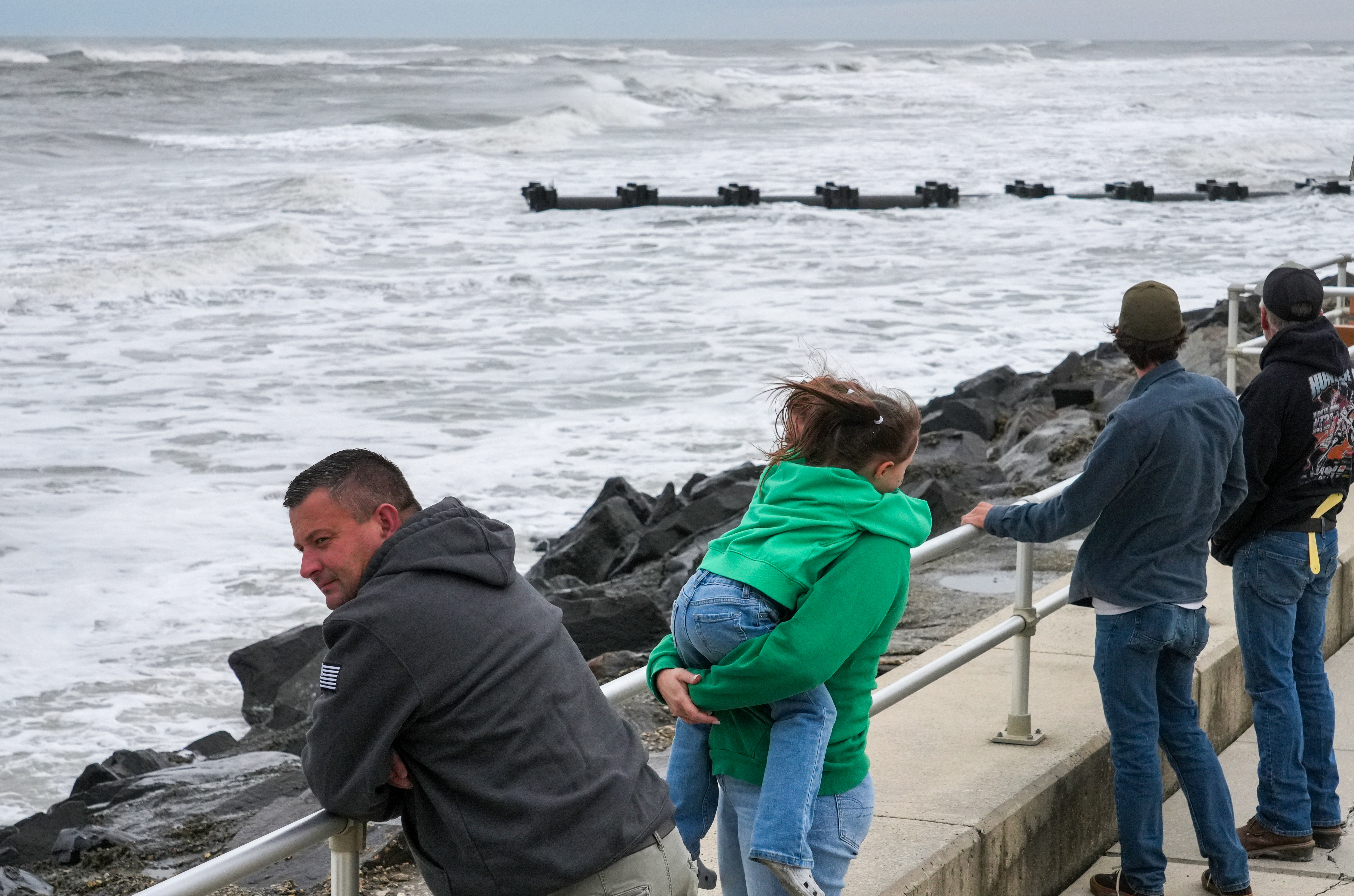
    With the storm’s projected path changing dramatically, forecasters warned Friday that heavy rains were possible throughout the weekend along with tropical-storm-force gusts that could go as high as 70 mph at the Shore. Flood warnings and advisories have been extended well into the weekend.

    “Major” flooding was expected Saturday morning and possibly Saturday evening on the beachfronts and bay areas, with the National Weather Service warning “some locations may become isolated by the floodwaters.”

    Up to 5 inches of rain are possible at the Shore, and as much as 4 inches in Philly.

    Gov. Mikie Sherrill declared a state of emergency for the eight Shore counties, effective 5 p.m. Friday.

    It is possible that the storm, which was centered about 200 miles east of Norfolk, Va., on Friday, may make a sharp left sometime during the weekend and cross the New Jersey coast a la Superstorm Sandy in 2012, said Bob Oravec, senior branch forecaster with the federal Weather Prediction Center. (No, this won’t be in a league with Sandy, he assured.)

    With storm waves pounding the oceanfront, and the back bays congested with water, multiple rounds of at least moderate flooding were expected at the Shore, and at least minor flooding along the Delaware River in Philadelphia, where winds could gust to 45 mph.

    “And the full moon doesn’t help,” said Jason Franklin, the meteorologist in charge of the National Weather Service’s Mount Holly office. The monthly astronomical tug is going to exacerbate any flooding.

    The timing of the storm’s impacts

    A flood warning for the Shore is in effect until 2 a.m. Sunday, and minor flooding occurred with high tides Friday morning.

    Significant flooding was expected for at least three consecutive high tides, which occur at roughly 12-hour intervals, on the oceanfront and the back bay abutting Ocean City starting at 7 p.m. Friday, with the major flooding Saturday morning.

    On Friday, Franklin noted that the onshore winds from the Northeast — why they call them nor’easters — had taken on a more northerly direction. That would be problematic for north-facing beaches, such as the ones in North Wildwood and the north end of Avalon.

    And given that the wind and gust festival was in its third day, drainage was becoming a challenge, said Franklin, particularly for the bays.

    “They’re swollen,” said Franklin.

    A flood advisory was up for Philly and areas along the Delaware River for minor flooding during four straight high tides beginning 1 a.m. Saturday.

    The Shore was under a wind advisory until 6 a.m. Sunday, and it was possible that gusts to 70 mph could be measured along the Jersey Coast to Long Island, said Peyton Simmers, meteorologist at AccuWeather Inc.

    The advisory for Philly, also in effect to 6 a.m. Sunday, called for gusts to 45 mph.

    The nor’easter was have impacts all the way to Cape Cod, but in the end the highly unusual — and very early — coastal storm could save its worst for the Jersey coast, said Oravec.

    The nor’easter is early, and extraordinary

    Coastal storms form along the boundaries of chilly and warm air and usually hold off until later in the fall or winter when the temperature contrasts between the cold air from the north and remnants of summer to the south ripen.

    In this instance the cold air was being supplied by a powerful area of high pressure, or heavier air, over eastern Canada, whose clockwise winds from the northeast made Philly feel October-like this week.

    The high’s cold winds have been interacting with the very warm waters of the Gulf Stream to generate the nor’easter and add a kick to the onshore winds, part of a cyclone’s counterclockwise circulation.

    Pressure differences incite winds: A common image is that of air from a punctured tire rushing into air that is half as light.

    One subplot to watch is that the nor’easter may take on tropical characteristics, drawing moisture and warmth from spending so much time over the Gulf Stream, said Simmers. That could bump up the rain amounts.

    It could even become a “subtropical storm,” he said, although he wouldn’t expect the National Hurricane Center to name it. Not that the distinction would make much difference.

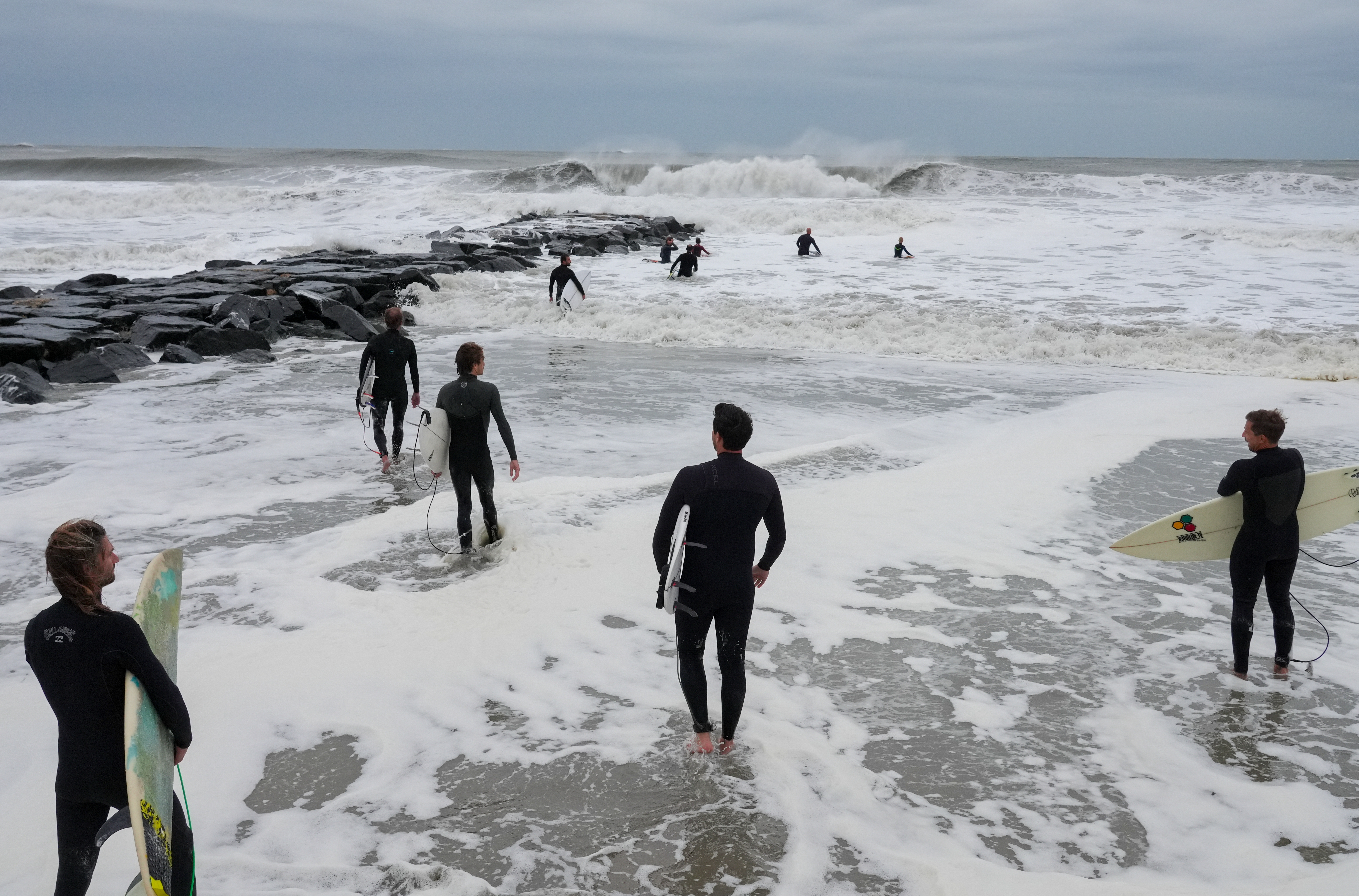
    Surfers check out the nor’easter incited waves in Ocean City, where back-bay flooding could be significant. Tim Hawk / For The Inquirer

    Nor’easters vs. Hurricanes

    The U.S. East Coast happens to be one of the world’s favored spawning grounds for cyclones, notes John Gyakum, an atmospheric scientist at McGill University in Montreal who is an expert in coastal storms.

    Unlike hurricanes, which form in the tropics, nor’easters develop in the cooler midlatitudes.

    Hurricanes tend to be more destructive and have more celebrity power, but their influence is relatively small compared with nor’easters, whose circulation can cover thousands of miles. Also, nor’easter winds can persist for days, eroding beaches and causing significant property damage. Hurricanes tend to be quick hitters.

    A coastal storm that coincided with a full moon and five consecutive high tides in March 1962 caused mass devastation and forever changed the New Jersey Shore. One of the most destructive nor’easters in the period of record was the Blizzard of March 1993, which affected areas from Florida to Maine and as far west as Illinois.

    Sandy technically was a hybrid storm, losing its tropical characteristics after it made landfall in October 2012 near Atlantic City and buzz-sawed west, knocking out power to more than a million electric customers.

    This nor’easter will be no Sandy, but for celebrity power, it won’t be competing with any hurricanes. Not a single one has formed this season, an unprecedented wait for a first hurricane.

    No complaints have been registered among residents or property owners along the Gulf or Atlantic coasts.

  • William Penn Foundation offers funding to keep Academy of Natural Sciences museum open

    William Penn Foundation offers funding to keep Academy of Natural Sciences museum open

    Drexel University has received an offer from the William Penn Foundation that would underwrite operating costs at the museum at the Academy of Natural Sciences of Drexel University while its survival could be studied.

    The money would float the continued operation of the museum for at least a year while questions about the Academy’s viability could be examined — matters such as how much money would be required to cover deferred maintenance on the building, how much it would cost to adequately fund and run the museum, and what the potential fundraising capacity would be.

    On Sept. 1, Drexel and the Academy announced the closure of the museum as of Sept. 30, with Sunday being the last day open to the public.

    Shawn McCaney, executive director of the William Penn Foundation, one of the largest and most influential funders of arts and culture groups in the region, said in a statement that the foundation values the “importance of the Academy of Natural Sciences and its deep history, its presence on the Parkway, what it contributes to critical scientific research, and its public facing museum which has engaged generations in science learning for hundreds of years.

    “We have offered to cover the cost of the operating subsidy Drexel has been providing to keep the museum open for at least another year so that the full range of options for the future of the museum could be properly explored, and to provide time to test the interest of other funders and supporters who have not been engaged so far.”

    A Drexel spokesperson did not specify whether the university had declined the offer, but said: “No proposal has been presented that would provide a permanent, sustainable path forward for the Academy’s museum. We sincerely appreciate the many ideas and expressions of support.

    “At this time our efforts remain focused on securing a permanent, financially sustainable future for the Academy, one that protects its collections and research enterprise and provides meaningful opportunities for public engagement over the long term.”

    Academy of Natural Sciences board chairperson Suzanne Biemiller said the Academy was supportive of the idea of staying open beyond Sunday.

    “The Academy has learned of an offer to keep the museum open for an interim period of time and give us some breathing room to reimagine a path forward working with the philanthropic community and the larger community. Certainly as a board we are open to the idea and are truly grateful.”

    That said, as of Friday afternoon, Biemiller said she was operating under the assumption that the museum would be closing for good to the public at 5 p.m. Sunday.

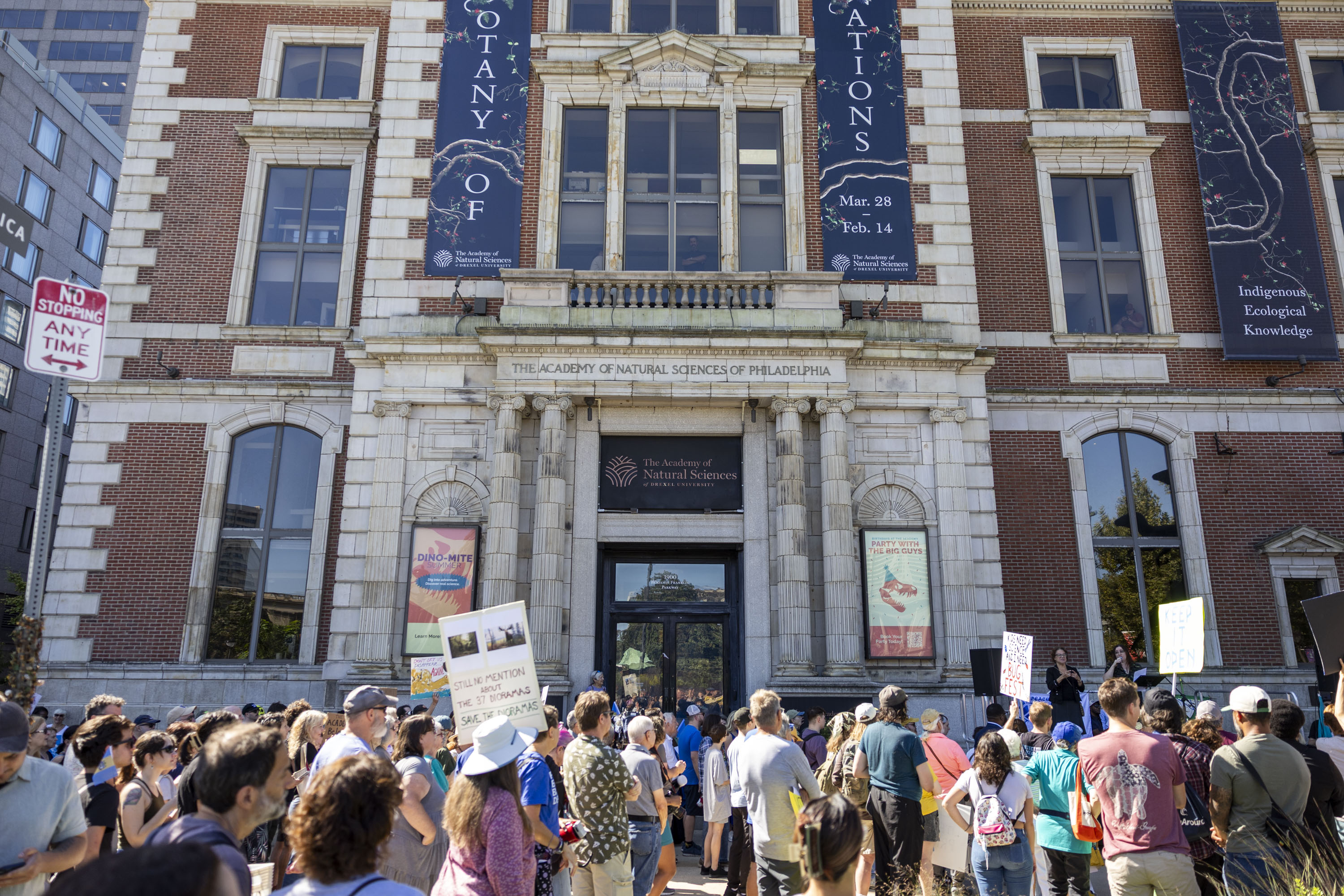
    A second rally by the Save the Academy coalition is planned for Saturday afternoon and a candlelight vigil and march to City Hall on Sunday, beginning at 5 p.m. A rally was held earlier this month shortly after the Sept. 1 announcement.

    The plans for the museum come after weeks of public shock and dismay from a broad swath of government officials, civic leaders, science advocates, and families.

    City Council members have called for public hearings. Petitions calling on Drexel and the Academy to reverse the decision have drawn tens of thousands of signatures. And families, children, and others have taken to their feet. Attendance at the museum last weekend was about 14,000 over three days — a sum that, if it could be repeated every weekend of the year, would bring more visitors to the Academy annually than almost any other cultural attraction in the city.

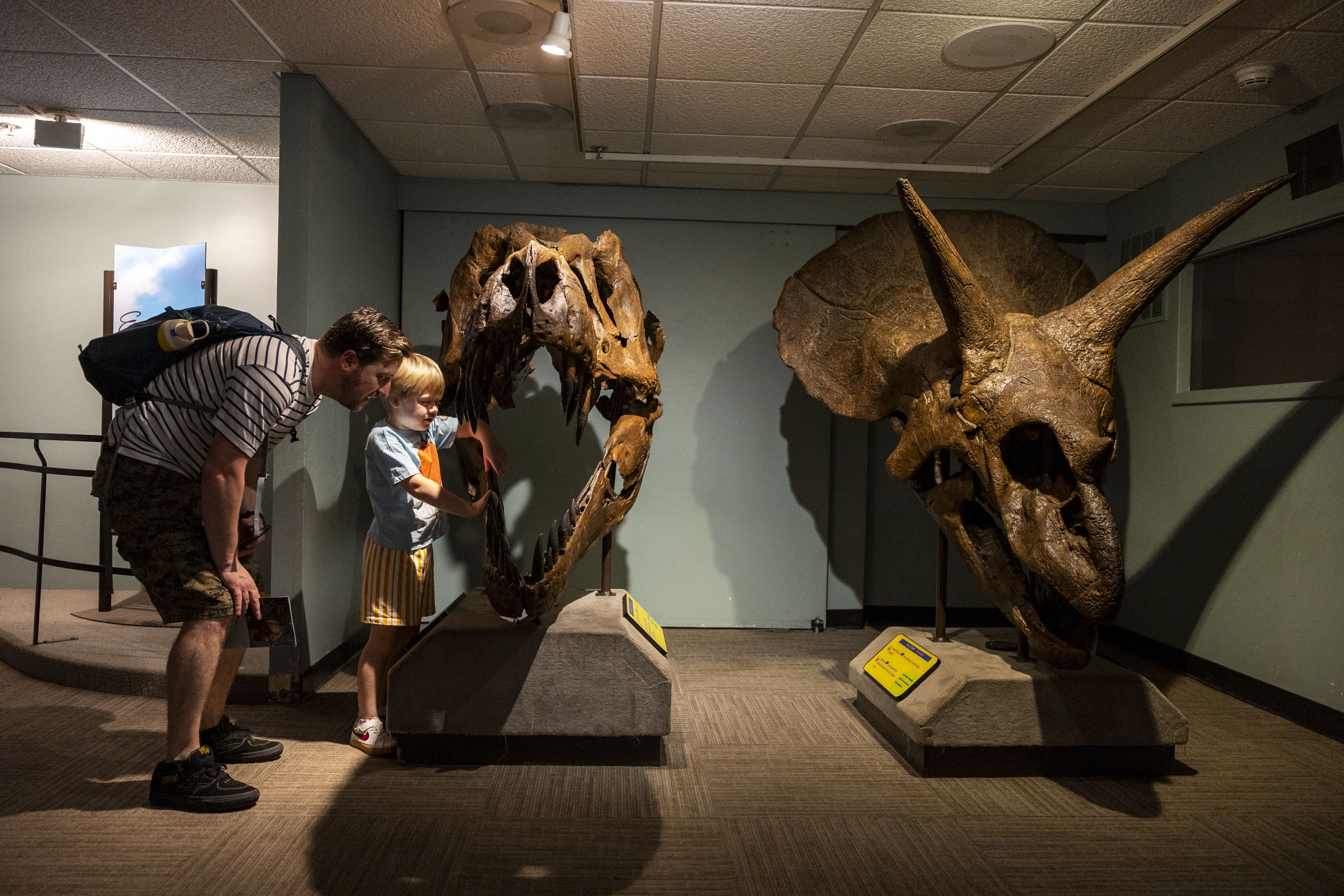
    Michael Ashleigh, of Phoenixville, Pa., with his son Otto, 5, looking at the Tyrannosaurus Rex Skull in the Dinosaur Hall at the Academy of Natural Sciences of Drexel University on Sept. 4, 2026. Michael wanted to give his son the experience he had 20 years ago when he first visited the Academy.Tyger Williams / Staff Photographer

    Former Comcast executive and U.S. Ambassador to Canada David L. Cohen, who has been involved in the talks between Drexel and the Academy at the behest of Gov. Josh Shapiro, said on Friday that the museum cannot survive in its current location, which has far too many deferred maintenance needs. The better approach, he said, is to find an alternative museum or exhibition space and then seek funders to support the plan.

    “When we have a plan, it likely will require some funding,” he said. “And then we’ll go to the philanthropic community, which seems so eager to write a check with a real plan where money can actually accomplish something and accomplish something that would be valuable.”

    Cohen said the agreement between Drexel and the Academy preserves the research and education components of the Academy and the third leg — coming up with a plan for a new museum space — is still being worked on.

    “We need to have a real plan which is likely to be a community-based plan, that is, with multiple institutions coming to the table,” he said. “We just need the time to put that together and no one is helping things by offering Band-Aids.”

    While Cohen said he was aware, and appreciative, of various offers from the philanthropic community, they are “premature,” he said, and “not founded in the true facts of what’s going on here.”

    He did not specifically address the William Penn Foundation offer.

    Dinosaur Hall at the Academy of Natural Sciences Aug. 5, 2026.Allie Ippolito / For The Inquirer

    At-large City Council member Nina Ahmad said on Thursday she is continuing to explore what can be done to help the academy both with its capital and operational needs and to be sure its endowment is protected.

    “We are taking some steps to do our due diligence to understand where we are,” she said. “We are getting hundreds and hundreds of emails with concrete suggestions. We are going through those suggestions.”

    She said one thing to explore is whether the PIDC, Philadelphia’s public-private economic development corporation, could provide a bridge loan that would help secure other financing. The Preservation Alliance for Greater Philadelphia also is applying to get the Academy building on the National Historic Register, which might open up other funding streams, she said.

    A hearing on the Academy also will be held before City Council, but the date hasn’t been set. Ahmad said the resolution authorizing the hearing included subpoena powers so that Drexel officials will be required to testify.

    “It should not have come to this,” Ahmad said. “Somebody has just been moving along without addressing problems in a timely way,” she said.

    A spokesperson from the mayor’s office declined to comment on the offer put forward by the William Penn Foundation.

    Drexel and the Academy earlier this month reached a tentative agreement that will continue their affiliation and maintain Drexel’s financial support of the Academy. Negotiations continue on final terms.

    Niki Gianakaris, the Drexel spokesperson, said the Academy and Drexel are continuing discussions and “nearing an agreement that will establish a new framework for the relationship between the two institutions and support the Academy’s path forward.”

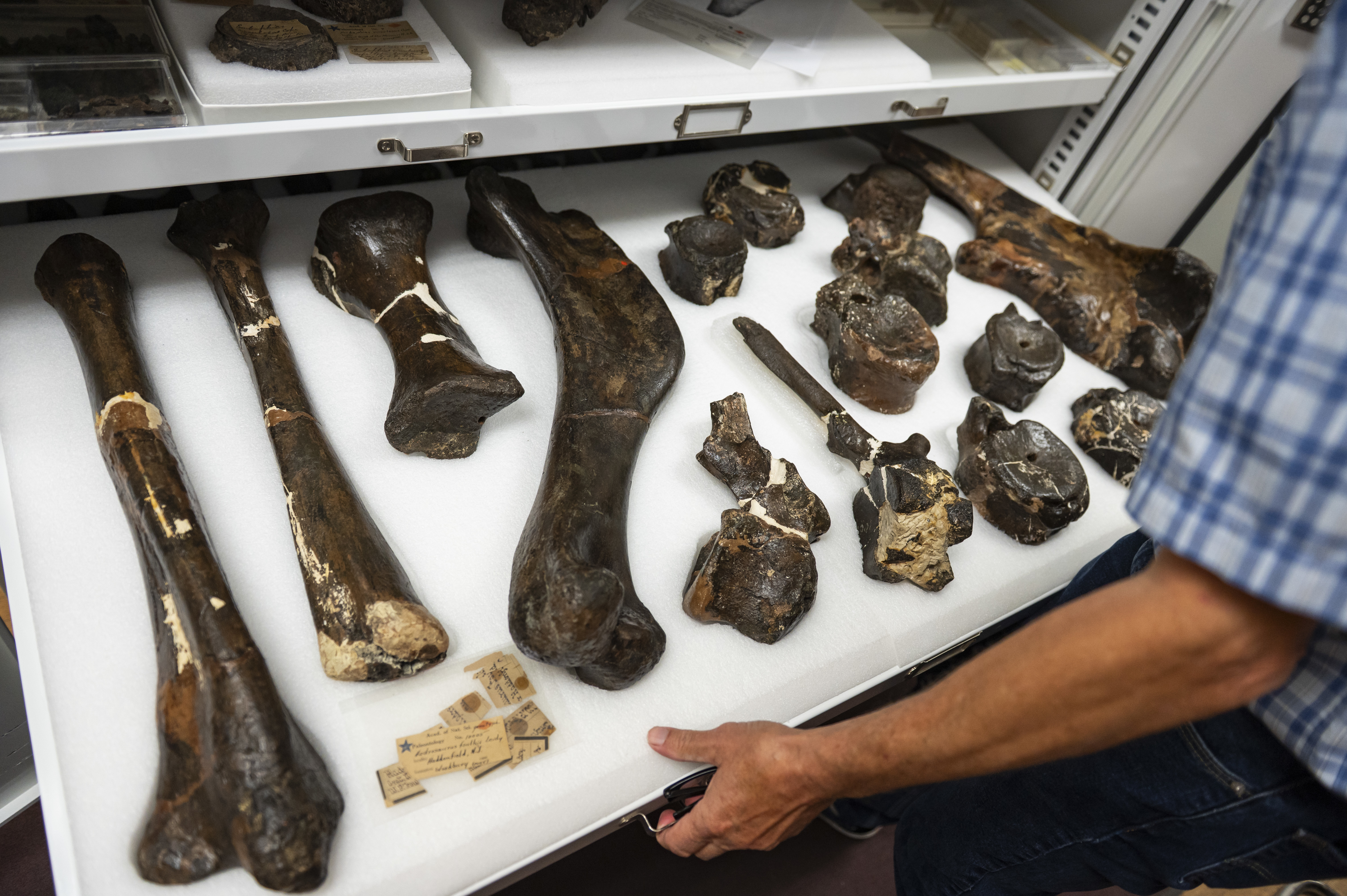
    Ned Gilmore, collection manager for vertebrate paleontology, pulls out a drawer filled with bones from a Hadrosaurus at the Academy of Natural Sciences of Drexel University, Aug. 5, 2026. The Hadrosaurus fossils were found in Haddonfield.Allie Ippolito / For The Inquirer

    The Academy’s collections, research activities and exhibit materials will remain in the building “while Drexel and Academy leadership consider potential pathways forward,” she said.

    William Penn’s McCaney said that a creative solution was possible given the challenges that the arts and culture sector has faced down before.

    “This is a city that can do great things — we saved Eakins’ The Gross Clinic and Parrish’s Dream Garden when they were in jeopardy of leaving Philadelphia. We built an incredible new museum on the Parkway — Calder Gardens. The partnership between the Free Library and the Rosenbach kept a cultural treasure accessible to the public. Those efforts took strong leadership and bringing together partners with the political, intellectual, and financial capital to keep our city at the forefront of arts, culture, and science. We are ready to contribute to an effort with similar thought, ambition, and collaboration.”

  • Hannah Gann’s deceit makes the work of Black and brown justice activists harder

    Hannah Gann’s deceit makes the work of Black and brown justice activists harder

    A few months ago, I attended a Black history workshop in the city with educator-activists from around the country. That’s where I met Hannah Gann. At the workshop, she shared with some and reiterated to others that she was Palestinian. She also claimed to be Black.

    No one questioned her. Even if one had doubts — and I did — it never crossed my mind that someone would lie about that.

    We’ve since learned she did, and has been telling falsehoods about her identity to her friends, family, fellow activists, and — worst of all — the students and families she taught at the Workshop School, a project-based Philadelphia School District high school.

    There will be some who’ll say Black and Palestinian activists should have known better. That they should have done their “research” on Gann to confirm who she said she was.

    It’s natural to wonder and ask why this happened, and where we, as a community of Black people, Palestinian people, and justice activists, go from here. It’s undeniable that the social justice issue of our day is the genocide taking place in occupied Palestine. That it is a genocide has been confirmed by numerous scholars of genocide as well as Israeli human rights organizations.

    Likewise, it is one of the most divisive issues of our day in this country. Not because calling it out is a lie. Rather, because naming it a genocide can be perilous, especially for the people Gann pretended to be a part of: Black and Palestinian communities.

    People have rallied around Macklemore after he was cut from musician Ed Sheeran’s tour for expressing his support for Palestinians in Gaza, but the numerous members of Black, Palestinian, and Muslim communities who have lost jobs or had their reputations ruined haven’t experienced the same kind of support.

    Gann’s deceit makes the work of Black and brown activists and truth-tellers even harder. She should have known that.

    If Gann had truly been committed to the justice movement, she would have known the troubling history of white infiltrators in Black organizations who attempted to sabotage the struggle for freedom. The most famous of these efforts was COINTELPRO. The response of the Racial Justice Organizing Committee and Philly Educators for Palestine, in their joint statement, is to consider her just such an infiltrator, and they’ve cut ties with her.

    Gann’s actions going forward will determine whether she can redeem herself. But it is not our responsibility to do that work for her. We shouldn’t even put her at the center of our discussions about this going forward. The individuals, the activist groups, and the students she’s betrayed belong at the center.

    We should ask how to support social justice activists and the work they do on behalf of oppressed and marginalized communities.

    We should ask how we can support the many students who’ve come through the doors of Gann’s classroom.

    We should ask how it is wrong to call for an end to the murdering of innocent people in the name of retribution.

    We should ask whether there is room for redemption in America for those who boldly declare that injustice anywhere is a threat to justice everywhere — just as there is for the perpetrators of injustice.

    As for white allies who wish to fight for justice, be like Ms. Rachel, not like Ms. Gann.

    Then maybe there’ll be enough room for redemption for the rest of us, persecuted simply for being true to ourselves, our people, and our native land.

    Rann Miller is an educator and freelance writer based in South Jersey. His “Urban Education Mixtape” blog supports urban educators and parents of children attending urban schools. urbanedmixtape.com @UrbanEdDJ

  • Kitty Lunn, who expanded the boundaries of dance, dies at 76

    Kitty Lunn, who expanded the boundaries of dance, dies at 76

    In 1987, months before she was to perform in her first Broadway production, Kitty Lunn, an actor and former ballet dancer, was on her way to a date when she slipped on a patch of ice and tumbled down a flight of marble steps.

    The fall shattered vertebrae and damaged her spinal cord. She spent the next three years in acute care, undergoing a series of major surgeries. Dancing again seemed impossible.

    “I couldn’t point my toes. I couldn’t hold my stomach in,” Ms. Lunn recalled in a 2020 interview. “Never mind that I couldn’t stand up.”

    Yet when Andrew Macmillan, her date that fateful night, asked what was stopping her from dancing again, Ms. Lunn said something that surprised even her: “The answer to that question was fear.”

    In 1995, Ms. Lunn went on to serve as a founder and artistic director of Infinity Dance Theater, devoted to breaking down barriers in dance by training and mounting performances featuring dancers both with and without disabilities. She died on Aug. 18 at her home in Manhattan. She was 76.

    The cause was cardiovascular disease, a representative from Infinity Dance said.

    Ms. Lunn performed in hundreds of productions with the company, translating principles of ballet and modern dance into movements designed for dancers with a variety of physical disabilities, and using a lightweight, nimble wheelchair modified by Macmillan, whom she married after her long hospital stay. (She signed her name Kitty Lunn-Macmillan, but maintained Kitty Lunn as her professional name.)

    She performed around the world, including at the first Cultural Paralympiad, a showcase of the talents and experiences of people with disabilities held at the 1996 Paralympic Games in Atlanta. She also performed at the Kennedy Center in Washington in 2000 and 2004. Among the notables who trained with Infinity was Alice Sheppard, the dancer, choreographer, and founder of the disability arts ensemble Kinetic Light.

    “Without my chair, I’m really an invalid,” Ms. Lunn once said. “I never refer to myself as wheelchair-bound — that sounds like I’m in chains. I’d rather describe myself as a dancer who sits down a lot.”

    Kitty Morrison was born on Aug. 5, 1950, in New Orleans, the youngest of three children of Hugh Morrison Jr., who owned an insurance agency with his brother, and Beatrice (McClung) Morrison, a real estate agent and interior decorator.

    Her fascination with dance started at 8, when her grandmother took her to see The Red Shoes — the heralded 1948 British ballet film starring Moira Shearer.

    “I looked up at that beautiful redheaded ballerina, and I wanted to be her,” she told the website Stance on Dance in 2019.

    By her midteens she was dancing principal roles with a regional New Orleans ballet company, which led to a scholarship to the Washington School of Ballet, where she studied with renowned teacher Mary Day and ballet master Edward Caton. Along the way, she also performed in classics like Swan Lake and Giselle.

    She was drawn to ballet roles that required a degree of acting, and eventually decided to pursue a career as an actor. At 20, she moved to New York and studied at the Neighborhood Playhouse School of the Theater, where Diane Keaton and Eli Wallach had trained.

    In 1984, Ms. Lunn took a job as a radio producer at WABC while waiting for her big break in acting; she finally earned a role with Frank Langella’s Sherlock Holmes in Sherlock’s Last Case on Broadway. Then came her accident. “Two seconds and one piece of ice,” she recalled in a 2018 video interview with National Geographic, “and my whole world changed.”

    During her years in the hospital, Macmillan’s suggestion that she might dance again initially seemed absurd. “I was a noodle,” she recalled in a 2009 interview with the Brooklyn Rail. “I couldn’t sit up by myself, wash myself, feed myself or anything.”

    But after seeing an American Ballet Theater production of Pyotr Ilyich Tchaikovsky’s The Sleeping Beauty, the “movie in my mind led me to believe it would be possible,” she told the New York Times in 1997.

    Ms. Lunn worked with Shaw Bronner, a physical therapist and former dancer, five days a week, five hours a day for five years, she told the Brooklyn Rail. By the early 1990s, she felt ready to embark on her reimagined dance career.

    Even so, “no one would let me take a class,” she recalled in a 2020 interview with John Jay College of Criminal Justice in Manhattan, where she had earned a degree in legal studies in 1995. She went to one studio armed with a copy of the Americans with Disabilities Act, and insisted that it was against the law to bar her admittance.

    “I was told that if anyone complained, I would have to leave,” she said. “My response was simple. I said, ‘I can promise you that I will not run into anyone, but I cannot promise you that they will not run into me.’”

    She appeared as a guest artist in a performance featuring dancers in wheelchairs in Cleveland, and eventually started Infinity with dance veterans Robert Koval, Christopher Nelson, and Spider Duncan Christopher.

    In doing so, she adapted traditional ballet movements, as well as those pioneered by dance luminaries like Martha Graham, to be executed from a seated position, using the arms, head, and core to perform actions typically involving the legs.

    “I started transposing the technique of classical ballet,” she said. “When you transpose music into a different key,” she added, “you’re not losing any of the notes.”

    A review of a 2001 performance in Manhattan by the magazine New York Dance Fax noted that she “sensitively and dynamically danced with her wheelchair spins and gorgeous torso extensions,” praising her “rolling movements on the floor around the chair, reflecting her feelings about her disability and changed life.”

    In a review of the same show in the Times, critic Jack Anderson described Ms. Lunn’s artful gyrations to the music of jazz trumpeter Don Cherry: “While Burke J. Wilmore’s lighting created the illusion of a snowfall, Ms. Lunn slipped on and off the chair, tilting it, tipping it over and responding to its presence as if it had a personality all its own.”

    She is survived by a brother, Randy Morrison, and a stepson, Ross Macmillan. Her husband, an actor and television and radio news anchor, died in 2016.

    This article originally appeared in the New York Times.

  • Pep Boys will eliminate 169 jobs at Bala Cynwyd corporate offices amid merger

    Pep Boys will eliminate 169 jobs at Bala Cynwyd corporate offices amid merger

    On the heels of announcing a planned merger with private equity-backed Mavis Tire Express Services, Philadelphia-born Pep Boys will lay off dozens of employees at its local corporate offices.

    Pep Boys, which got its start over 100 years ago, had over 750 auto service locations across the country that carry out maintenance and repair services as of July.

    As part of the recent acquisition, Mavis is leading a “reorganization of the Pep Boys corporate support services” and conducting “a mass layoff,” Susanne Cairo of Mavis’ legal department said in a layoff notice filed with the Pennsylvania Department of Labor and Industry.

    The company plans to eliminate roughly 169 jobs in Bala Cynwyd by the end of February of next year, according to a layoff notice. Layoffs are set to begin Dec. 31.

    A company spokesperson could not immediately be reached for comment.

    Icahn Automotive Group said in July that it planned to sell the company to White Plains, N.Y.-based Mavis for $700 million in cash. Its parent company, publicly traded Icahn Enterprises LP, bought the company just over a decade ago.

    As part of Mavis, Pep Boys CEO Joe Auriemma said in July, “Pep Boys will have the scale, footprint, and operational and technological strength to continue building on its legacy as it enters a new chapter of growth.”

    A Mavis spokesperson said in July that Pep Boys “will continue operating under its iconic brand name” but declined to address the fate of the Bala Cynwyd corporate office at the time.

    Icahn sold Pep Boys’ longtime headquarters on Allegheny Avenue in North Philly several years ago but leased back some space there. There had been 500 employees based there at the time. Pep Boys no longer occupies that building, a spokesperson told The Inquirer in July.

    Inquirer staff writer Andrew Seidman contributed to this article.

  • Tasia Fortune’s hanging was ‘staged’ after her death in a drug dispute, Mississippi police say

    Tasia Fortune’s hanging was ‘staged’ after her death in a drug dispute, Mississippi police say

    JACKSON, Miss. — Tasia Fortune was apparently killed in a drug dispute before her body was hung in a tree in a “staged” lynching behind an abandoned home in the Mississippi capital this summer, a detective testified Friday.

    Fortune was killed in a disagreement about drugs, and she fought hard with her attackers before she was killed, Jackson police Detective Samuel Dukes told the court. Citing the medical examiner’s opinion, he also said the hanging was “staged.”

    Fortune was Black, and the Aug. 3 discovery of her hanging body stoked fear and drew widespread attention because the scene recalled actual lynchings in the Southern state, which has a long and troubled history of racial violence.

    Authorities haven’t disclosed the exact cause of Fortune’s death or said why they think her body was hanged afterward, but they ruled it a homicide and arrested two men, both of them also Black, on murder charges. They also issued an arrest warrant for an unnamed third person.

    Outside court, Fortune’s mother, Christy Spivey, told reporters that she had been aware that her daughter died before her body was hanged.

    “What bothered me was they said Tasia fought for her life. I know she did. I know my daughter,” Spivey said.

    The hearing was meant to determine whether there is sufficient evidence to send the case against the first man arrested, Jarques Ratliff, to a grand jury for a possible indictment. It will resume Sept. 30.

    Ratliff, 51, was arrested in mid-September and has pleaded not guilty. He remains jailed without bond. Police arrested a second defendant, 25-year-old Earnest Lloyd Jr., this week.

    During Friday’s hearing, Ratliff blurted out in court that he and Fortune were friends.

    “It sounded sincere. Tasia had a lot of friends,” Spivey said later. ”I hope if he is innocent that he can prove he’s innocent. We don’t want any innocent people going to jail.”

    Ratliff’s stepdaughter, Lashuna Jones, was among her father’s supporters at court.

    “He didn’t do it, and I’m behind him,” she said.

    Spivey has said her daughter, who had four children, struggled with homelessness in recent years, and that she wasn’t sure where Fortune was living at the time of her death. She said Fortune had talked about starting a cleaning business and was trying to get her life in order.

  • For Trump and Xi, a warm farewell and unfinished business

    For Trump and Xi, a warm farewell and unfinished business

    President Donald Trump showed off the Constitution, the Bill of Rights, and the Declaration of Independence to Chinese President Xi Jinping on Friday, as the two leaders wrapped up a state visit to Washington with friendly gestures but few apparent breakthroughs other than a promise to see each other twice more this year.

    “We’ve made great strides, very positive for both countries,” Trump said over tea Friday before setting out for the National Archives, embracing what he said was a warm personal relationship with Xi.

    He later said that “everything” had been discussed, including the war in Iran, and that the outcome of the summit would be “great for the farmers.”

    Xi focused more on the relationship between the two countries than on his personal chemistry with Trump, continuing a difference that was evident on the meeting’s first day.

    “The president and I are like two people that are charting the course for the great ship of China-U. S. relations,” Xi said. He said that Trump and he had agreed to build a relationship of “strategic stability on the basis of respect, fairness, and reciprocity. So, from this, one can see that the prospects for this relationship will get brighter.”

    He praised his host in terms that were sure to appeal to the U.S. leader, who gained fame early in his career by running hotels and whose family remains invested in the resort business.

    “Everything is done to the highest order of perfection, and there is thought in every little detail, and it’s greatly appreciated,” Xi said.

    After tea, the leaders and their wives toured the National Archives to see the foundational documents of the United States to commemorate America’s 250th birthday year.

    Under a different president, the gesture — parading the authoritarian leader of a communist country in front of the key artifacts that guarantee U.S. democracy — might have been seen as aggressive. Trump, however, offered a genial tour to his guest, and if he commented about democracy, it wasn’t audible to the cameras, which were back in operation after a court order ended Trump’s effort to ban three news organizations from covering him.

    “We’re just comparing. Ours goes 250 years. Which is great, and we’re proud of it. But theirs goes 6,000 years. So there’s a little difference between 6,000 and 250. But we’re very proud of our 250,” Trump said.

    Xi and other Chinese leaders often have focused on their country’s thousands of years of history as a way of emphasizing that they can outlast pressure from Washington — although modern China’s communist government dates to 1949.

    Trump, who Thursday praised Xi’s knowledge of stone and particularly granite, declared his admiration for the rotunda of the National Archives building, which was completed in 1935.

    “This is a great building. Great building,” Trump said. “This is when they built it properly.”

    Trump fought with the news media during the course of the summit after his effort to bar CNN, MS NOW, and Politico from the White House. On Thursday, the White House video pool, which television networks share, remained out of commission as the networks awaited assurances that CNN would be allowed access. That drew complaints from Trump that the press was missing “made for television” moments of the summit.

    By Friday, however, the TV pool was back, and in the end Trump said that he was happy with how the trip had played in the media.

    “We appreciate the fair coverage. It’s been very fair. We appreciate it,” he said.

    The two leaders confirmed plans to meet again in November in China and in December in Miami, making for four face-to-face encounters over the course of 2026.

    The rapid pace of meetings may ease the pressure off any one summit to produce a breakthrough, even as both sides continue to discuss Taiwan, whether to regulate artificial intelligence, and the complex and thorny economic relationship between the two superpowers.

  • White House network TV pool resumes operations after a dayslong ban of news outlets from grounds

    White House network TV pool resumes operations after a dayslong ban of news outlets from grounds

    The U.S. network video pool for the White House was back in operation Friday, for the first time since President Donald Trump banned three news outlets in an extraordinary showdown over media access.

    At noon on CNN, viewers could see Trump and President Xi Jinping touring the National Archives, along with Melania Trump and Peng Liyuan, Xi’s wife. The banner along the bottom of the screen read: “Trump and China’s Xi Visit National Archives.” It was a routine report from a state visit — but for the fact that CNN had not aired live video of Trump in several days.

    “As of now, all systems are go,” said a person familiar with the pool, speaking on condition of anonymity because of the fluidity of the situation.

    The pool consists of five major U.S. broadcast outlets that take turns shooting and sharing video. When the White House banned CNN — which belongs to the pool — from White House grounds, along with MS NOW and Politico, the other four pool providers declined to participate in a show of solidarity.

    A judge temporarily struck down the ban in an overnight ruling early Thursday, but his ruling didn’t directly address the pool. The networks continued to refrain from covering Trump as part of the pool, even as reporters from all three outlets were allowed back in the White House.

    CNN was not commenting directly on Friday, referring instead to its editorial coverage. But Brian Stelter, the network’s media analyst, posted on X that CNN had a pool assignment at the National Archives event and that the White House had approved the network’s credentials.

  • unCovering the Birds: Inside Zach Ertz’s Return

    unCovering the Birds: Inside Zach Ertz’s Return

    Earlier this year, the scenario seemed far-fetched, especially after the Eagles used a second-round draft pick on a tight end. Zach Ertz overcoming a serious injury to make a nostalgic return to the city where his career began? It just didn’t feel like a possibility. Then rookie Eli Stowers got hurt in the preseason, and starter Dallas Goedert went down Week 2 vs. Tennessee. All of a sudden, the Eagles had a need. Now, the 35-year old Ertz has been tapped to fill it. The Philadelphia Inquirer’s Jeff McLane explains how an unlikely reunion between Ertz and the Eagles came together, why both sides are hoping for more than a feel-good story, and which player on the roster could be affected by this move the most.

    00:00 Inside the Eagles’ reunion with Zach Ertz

    10:08 What Ertz’s signing could mean for the rest of the roster, especially a couple rookies

    16:12 Week 3 mailbag: The Kenny Moore acquisition, and Jalen Hurts’ contract extension

    unCovering the Birds is a production of The Philadelphia Inquirer and KYW Newsradio Original Podcasts. Look for new episodes throughout the season.