Blog

  • How Jefferson is Deepening its Community Ties to Improve Health Outcomes

    How Jefferson is Deepening its Community Ties to Improve Health Outcomes

    From the Poconos to Cherry Hill, Jefferson has become a familiar presence. As the largest academic health system in the Greater Philadelphia region, the nonprofit institution sees millions of patients each year across its 33 hospitals and more than 700 care sites spanning Pennsylvania and New Jersey. That reach, said Keith Leaphart, the executive vice president and Humana chief health equity and community impact officer at Jefferson, gives the organization a particular responsibility to its communities.

    “We are the primary safety net system here,” Leaphart, who also serves as vice chair of The Inquirer’s board of directors, said. “We’re serving a lot of people who are uninsured and underinsured, and we’re not turning them away.”

    Jefferson’s 2025 Community Impact Report, “Driven to Improve Lives,” explains how the anchor institution is using its unique model as an integrated health system that includes a university and a not-for-profit health plan to address the region’s needs. The report highlights more than $2.7 billion in community funding, including investments in access to care, health professionals’ education, and community-based services. It also offers a road map for Jefferson’s community partnerships and initiatives: building trust through neighborhood partnerships, expanding access to nutritious food, creating pathways into healthcare careers, and preparing the next generation of providers to meet people where they are. “At Jefferson, we believe our responsibility goes far beyond the walls of our hospitals,” Jefferson CEO Dr. Joseph Cacchione said.


    Building Bridges to Bring Healthcare to All

    Jefferson’s 2025 Community Impact Report that approach through investments in initiatives like the Community Health Worker Academy, a paid job-training program for new healthcare professionals who help their neighbors navigate health and social services.

    The program is an example of how Jefferson has been intentional about mobilizing health workers who come from the same communities that they serve and are often able to speak with patients in their preferred languages. Empowering community members to provide care creates a powerful access point for residents who may not otherwise connect with care systems. Community health workers also help build trust between their neighbors and health institutions.

    Similarly, Jefferson’s Inspire Network, which launched last November, partners with faith-based organizations across the region to empower faith leaders to help their congregants better understand the healthcare system. “When someone gets sick or they need care, they’re often going to a community of faith and asking for prayers and support and comfort and meal trains,” Leaphart, the Jefferson leader, said. By teaming up with faith leaders, Jefferson can help them meet their congregations’ needs directly. The health system also invites faith leaders to its quarterly Partners in Purpose events to foster relationships and collaborate on their work together. To date, Jefferson has partnered with more than 150 faith-based organizations to offer health services like screenings. The organization also hosts family-friendly events like Night at the Zoo, an annual visit to the Philadelphia Zoo that provides residents with access to affordable health options. Last year’s occasion drew 4,000 residents.

    To build on the success of partnerships like these and create opportunities for future collaborations, Jefferson recently launched a community engagement request form through which workers with community-based organizations can request a JeffCARES team visit to their place of worship or social event to provide free screenings and other health services.

    Cortney Reed, Jefferson Health’s director of Community Engagement, at the JeffCARES Community Food Pantry, which offers fresh food and recipes to support healthy eating, at Jefferson Einstein Philadelphia Hospital.Courtesy Jefferson Health

    A Recipe for Expanding Food Access

    Jefferson’s community-impact report also shines a light on the work the organization is doing to increase access to healthy meals in the Philadelphia region, where more than 600,000 people experience food insecurity. The health system partners with food banks like Philabundance and Second Harvest Food Bank of the Lehigh Valley and Northeast Pennsylvania and runs a number of community pantries, volunteer programs, and initiatives, including custom meal plans that support cancer patients undergoing treatment in Willow Grove.

    One highlight from the report is the JeffCARES Community Food Pantry, the first Philabundance food pantry located within a hospital. It opened in April 2025 at Jefferson Einstein Philadelphia Hospital in North Philadelphia. “Philabundance has been a valued partner of ours for many years, but establishing a hospital-based site was something our community truly needed,” Dixie James, the president of Jefferson Health’s Central Region and the chair of the Philabundance Board of Directors, said.

    In addition to fresh dairy products, meat, and shelf-stable items, the pantry provides recipes for nutritious meals tailored to support a variety of health conditions, including diabetes. The pantry is open to patients, community members, and Jefferson colleagues.

    “Access to safe, healthy, nutritious foods, [and] fresh produce is something that we know is directly connected to overall better health. If you’re able to eat healthy, you’re going to have better health in general. We want to be at the center of that,” Leaphart said. “That doesn’t happen without partnerships.” Jefferson serves around 150 meals per week to families and has distributed about 6,700 bags of food so far this year.

    Jefferson’s $2.7 billion investment in community impact expands access to care and inspires future healthcare professionals through education and a school speaker series.Courtesy Jefferson Health

    Careers That Grow With Community Partnerships

    Another important part of Jefferson’s community-impact work, as detailed by the report, is career development. “One of the things that we’ve been really intentional about is building out pathway programs and pipeline programs for young people to be exposed really, really early to careers in medicine,” Leaphart said. The organization, which is the region’s largest employer with 65,000 employees, is getting kids interested in the healthcare industry by inviting staffers to visit classrooms to talk about their careers as Jefferson School Speakers.

    Jefferson has more than 20 programs across the enterprise engaging students from elementary to high school in career exploration, as well as pipeline initiatives with reputable workforce development organizations. Jefferson also runs dedicated programs for high school and college students through partnerships with educational institutions. “One that we’re really excited about is the Jefferson Workforce Development Program, a partnership between the School District of Philadelphia, North Philadelphia’s Esperanza College, and Jefferson Health,” Leaphart said. The program offers free training to high school students interested in careers as patient care technicians or medical assistants.

    Students who successfully complete the training are qualified to enter the healthcare industry as entry-level workers. Since launching the program last April, Jefferson has hired 27 students who earned their certification in the course.

    Community partnerships are also emphasized within Jefferson’s own academic institution. Students at Thomas Jefferson University, for instance, are encouraged to actively volunteer in the community. “Volunteering is core to everything that we do,” Susan Aldridge, Ph.D., the president of Thomas Jefferson University, said. “When you start here at Jefferson as an undergraduate student, within your first week, you’re volunteering in the local community, which is really unique and reflects the culture of our institution.”

    Many medical students with Sidney Kimmel Medical College volunteer with the student-run program JeffHOPE, through which they work alongside physicians to provide health screenings to vulnerable populations through a network of free drop-in clinics at homeless shelters — yet another example of how Jefferson is committed to expanding access to care. To date this year, Jefferson has hired 1,308 Thomas Jefferson University graduates.

    Community-First Leadership

    For Jefferson, improving access to health and education extends beyond hospital campuses and care sites into schools, shelters, food pantries, houses of worship, and community events — places where people feel comfortable and are already seeking support.

    “As a leading academic health system, we have both the reach and the obligation to improve health across entire communities — by expanding access, investing in people, and partnering in ways that create lasting impact,” Cacchione said. As the report makes clear, Jefferson’s mission to improve lives depends on building the partnerships, pathways, and trust that help communities thrive.


    Chloé Pantazi-Wolber is a writer and editor. Her work has appeared in Business Insider, Philadelphia magazine, The Rooted Journal, Travel Bulletin, The Paris Review, and more.


  • The Big Picture: World Cup heartbreak, All-Star previews, and the best Philly sports photos of the week

    The Big Picture: World Cup heartbreak, All-Star previews, and the best Philly sports photos of the week

    Each Friday, Inquirer photo editors pick the best sports images from the last seven days. France met Paraguay in the final match at Philadelphia Stadium (aka Lincoln Financial Field), while fans across the area and the nation watched the U.S. bow out of the tournament. The summer of sports continues, though, with preparations underway for MLB’s All-Star Game at Citizens Bank Park.

    Preparations for the MLB All-Star Game are underway, and the logo is on the field at Citizens Bank Park.Tyger Williams / Staff Photographer
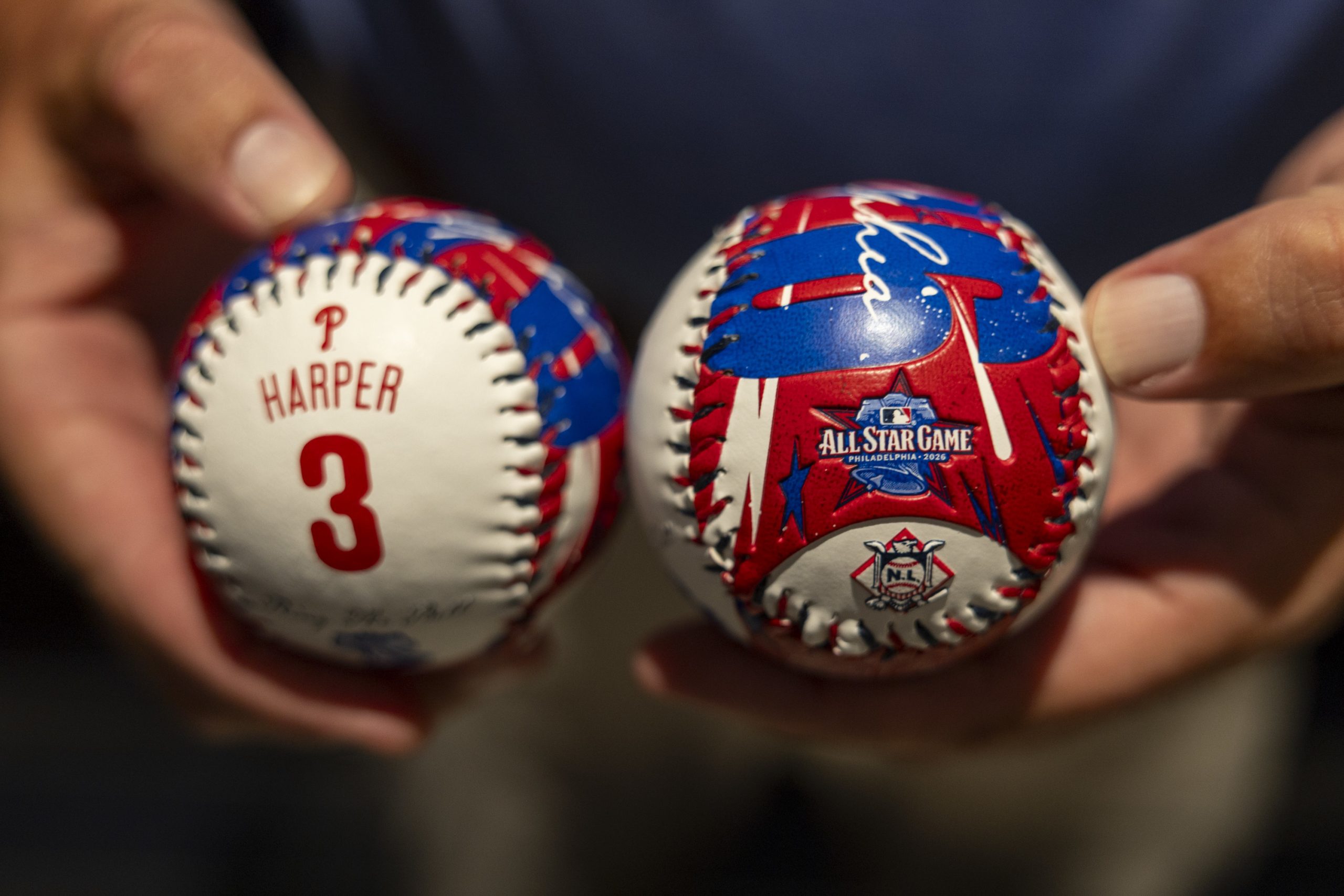
    Francis Winkey shows off the merchandise he created for the 2026 All-Star Game, including the baseballs with players’ names and the game’s logo.Tyger Williams / Staff Photographer
    The All Star-Game logo adorns Citizens Bank Park on July 8.Tyger Williams / Staff Photographer
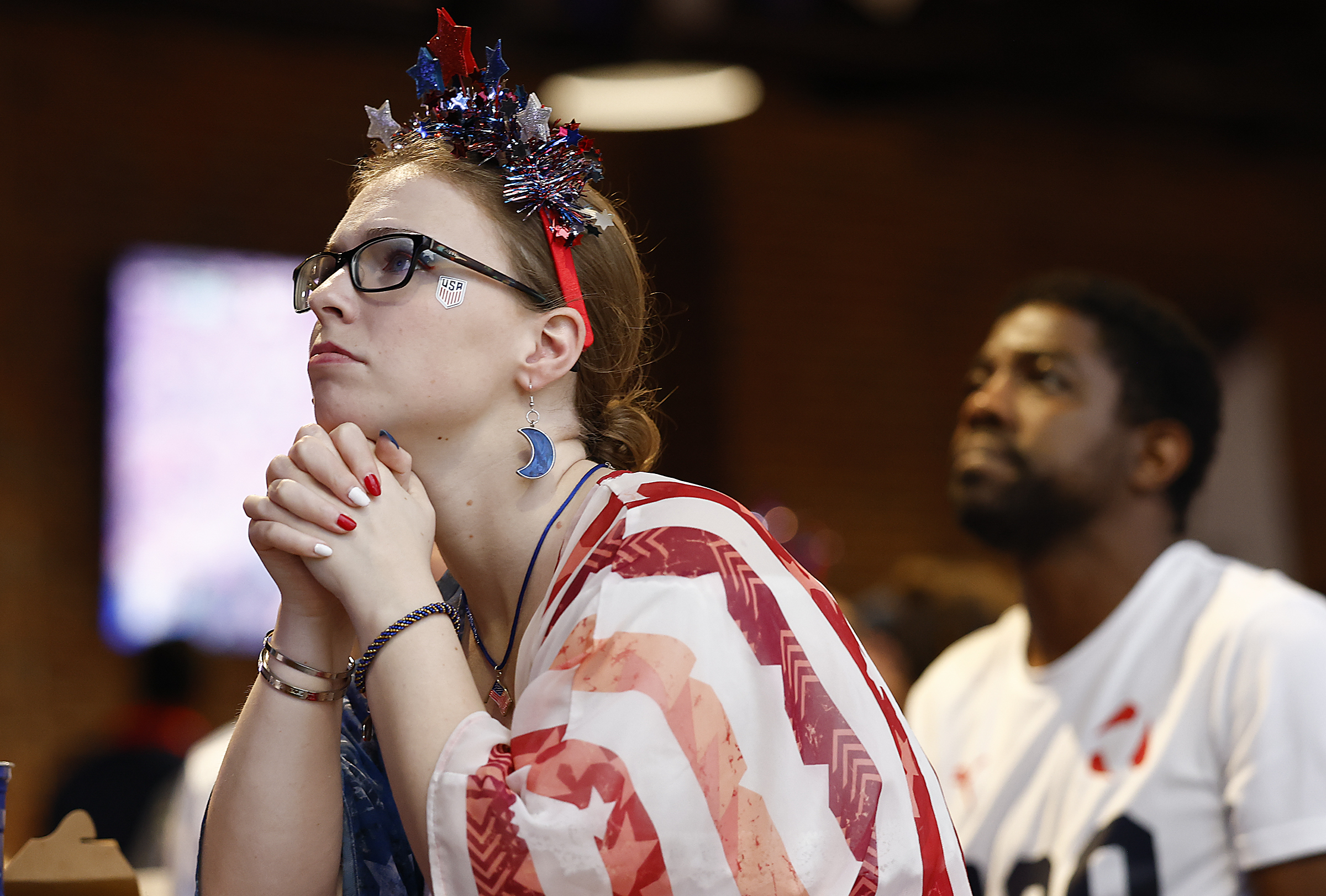
    Taylor Davis watches the first half of the United States’ World Cup round of 16 game against Belgium on Monday. The USMNT lost, 4-1.Yong Kim / Staff Photographer
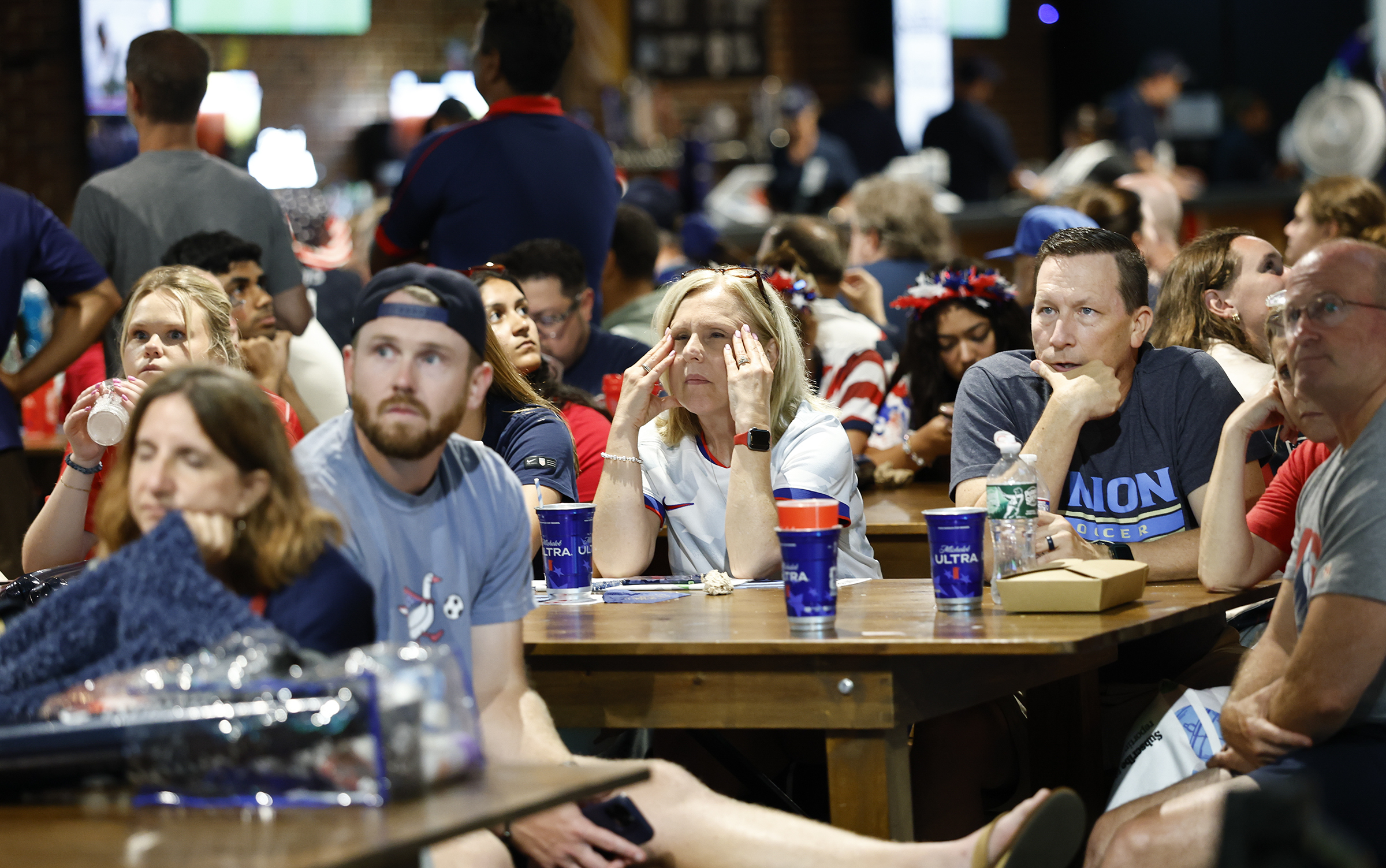
    Soccer fans at Union Yards in Chester watch second-half action in the United States’ World Cup round of 16 game against Belgium on Monday. Belgium scored three unanswered goals after the USMNT tied the game at 1-1.Yong Kim / Staff Photographer
    Rob Li lifts Dawn Trucksess as they work together during a Philly Acro Skill Share at Power Athletics on July 5, 2026 in Atco, NJ.Monica Herndon / Staff Photographer
    Rob Li (left) and Acacia Noel work on a skill with hoops during a Philly Acro skill share on July 5 at Power Athletics in Atco, NJ.Monica Herndon / Staff Photographer
    Oliver Herrine, of Merion Station, and Juliana Martell, of Old City, take a break during a Philly Acro skill share.Monica Herndon / Staff Photographer
    France’s William Saliba (right) heads the ball as Paraguay’s Gabriel Ávalos defends during the second half of a FIFA World Cup round of 16 match on July 4 at Philadelphia Stadium (aka Lincoln Financial Field). France won, 1-0.Jose F. Moreno / Staff Photographer
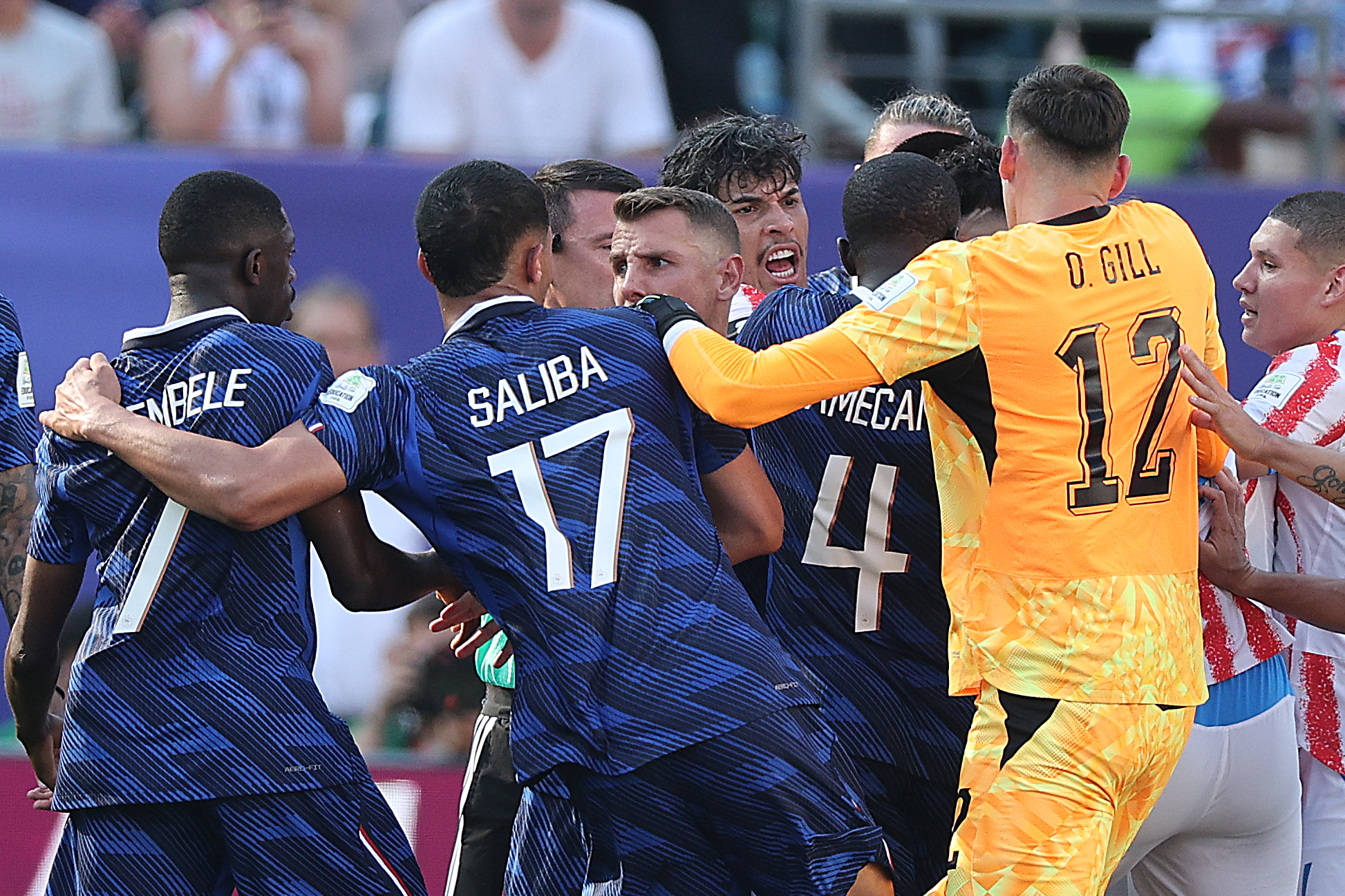
    France and Paraguay players tussle during their round of 16 match on July 4.David Maialetti / Staff Photographer
    France forward Kylian Mbappé (left) reacts as Paraguay defender Juan José Cáceres grabs him late in the July 4 match. David Maialetti / Staff Photographer
    France forward Kylian Mbappé (right) celebrates as Paraguay goalkeeper Orlando Gill walks off after France defeated Paraguay, 1-0, in the round of 16.David Maialetti / Staff Photographer
    France’s Kylian Mbappé celebrates after scoring the decisive penalty kick in the 70th minute of a round of 16 game against Paraguay.Jose F. Moreno / Staff Photographer
    France celebrates after beating Paraguay, 1-0, in the round of 16.David Maialetti / Staff Photographer
  • The Sixers’ title hopes still hinge on Joel Embiid. Mike Gansey admitted as much.

    The Sixers’ title hopes still hinge on Joel Embiid. Mike Gansey admitted as much.

    With all due respect to LeBron James, the Sixers’ greatest and most impactful unknown is the same as it has always been.

    Mike Gansey acknowledged as much on Thursday.

    “Obviously,” the Sixers new president of basketball operations said in a courtside interview during ESPN’s broadcast of the team’s summer league opener, “the big fella is the X-factor.”

    It speaks to the magnitude of Joel Embiid that such a sentiment can be qualified as obvious. Nothing about the Sixers over the last two months has been obvious. From the firing of Daryl Morey to the hiring of Gansey as his replacement to the dramatic trade of Paul George and a couple of first- and second-round picks to the Celtics for some guy named Jaylen Brown to the front office’s attempt to woo James, the Sixers are in the midst of an overhaul more radical than any Embiid has seen in his decade with the team.

    For maybe the first summer of his career, everyone’s focus is elsewhere. Yet, everyone is fooling themselves if they think they can talk about the Sixers as a legitimate contender without factoring the big fella into the equation.

    The exact nature of the question has changed. There’s no doubt about that. It is no longer, “How far can Embiid carry the Sixers?” In Tyrese Maxey and VJ Edgecombe, they have young guards who carried them to a Game 2 playoff win over Brown and the Celtics without Embiid. In Brown, they have a player who was overwhelmingly responsible for Boston’s win over the Sixers in Game 1 of the same series. That trio is talented enough to pencil in the Sixers for a playoff spot and, potentially, a top-four seed even if Embiid were not to play a game. At no point prior in the Embiid era have we been able to say such a thing.

    That’s more than a good thing. It’s the reason that a jaded city can now deconstruct its emotional walls and allow itself to invest time and energy in the Sixers again. The potential outcomes are no longer as divergent as “championship contention” or “No. 3 overall draft pick.” The exhaustion that people feel with regard to Embiid is in large part a function of his inordinate importance over the years. With him, the Sixers could beat anybody. Without him, there was little point in watching.

    So, yeah, the question has changed. But it is still the one that matters most when it comes to handicapping the Sixers’ 2026-27 title odds.

    What do they expect out of Embiid?

    What will they get?

    The first part is more interesting. The organization’s public rhetoric regarding their big man has shifted since the change in regimes.

    For Morey, Embiid was something like a mission statement: any time the former president spoke publicly about his team, his comments were centered around the center. He took the job in 2020 with the idea that Embiid was the exact sort of front line, once-in-a-generation superstar that teams need to win a title. The goal was to get him whatever help he needed. Morey professed that belief to (virtually) the bitter end.

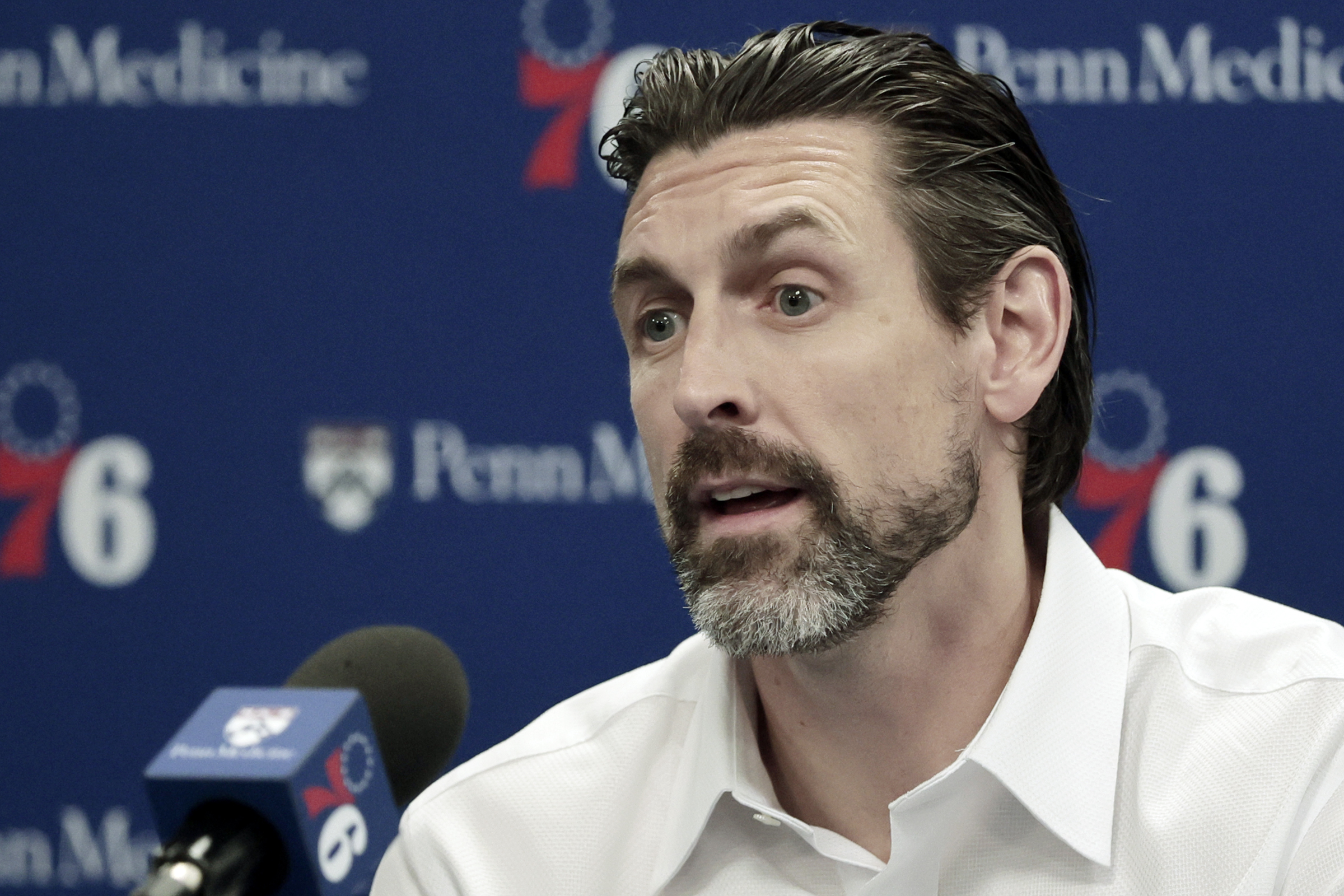
    Sixers president of basketball operations Mike Gansey says Joel Embiid was excited about the Jaylen Brown trade.Elizabeth Robertson / Staff Photographer

    Gansey and ownership proxy Bob Myers have been far less committed in their public sentiments about Embiid. In his introductory press conference a month ago, Gansey avoided talking with much specificity about the big man beyond including him in the framing of the Sixers’ existing roster structure as a “Big Four.”

    “They’re our four guys, they’re under contract. We got to do the best to get them to their best self,” Gansey said on his first day on the job, “because I think every night at 7 p.m., we got to get them to their best to help us win.”

    Barely a month later, George was en route to Boston and the Sixers “Big Four” was now a “Big Three.”

    Perhaps it is notable, then, that Gansey now feels comfortable speaking of Embiid in such terms as the ones he deployed in his ESPN interview on Thursday.

    “Joel’s in a good space,” Gansey said. “He’s finally healthy going into the offseason. He’s excited about this summer. He’s getting to work here shortly. He expects to have a good year, as we all do.”

    Embiid has been conspicuously silent since the Brown trade. His lone Twitter post in the wake of the deal was about the Tour de France. In an interview with the Sixers’ flagship radio station on Thursday, Gansey said that Embiid was excited and “fired up” when Gansey informed him of the trade.

    Whatever the case, the Sixers are well past the point of factoring Embiid’s feelings into their actions. The Brown trade was as much about the Sixers’ ability to compete without him as with him. At the same time, the only way they contend for a title this season is with him.

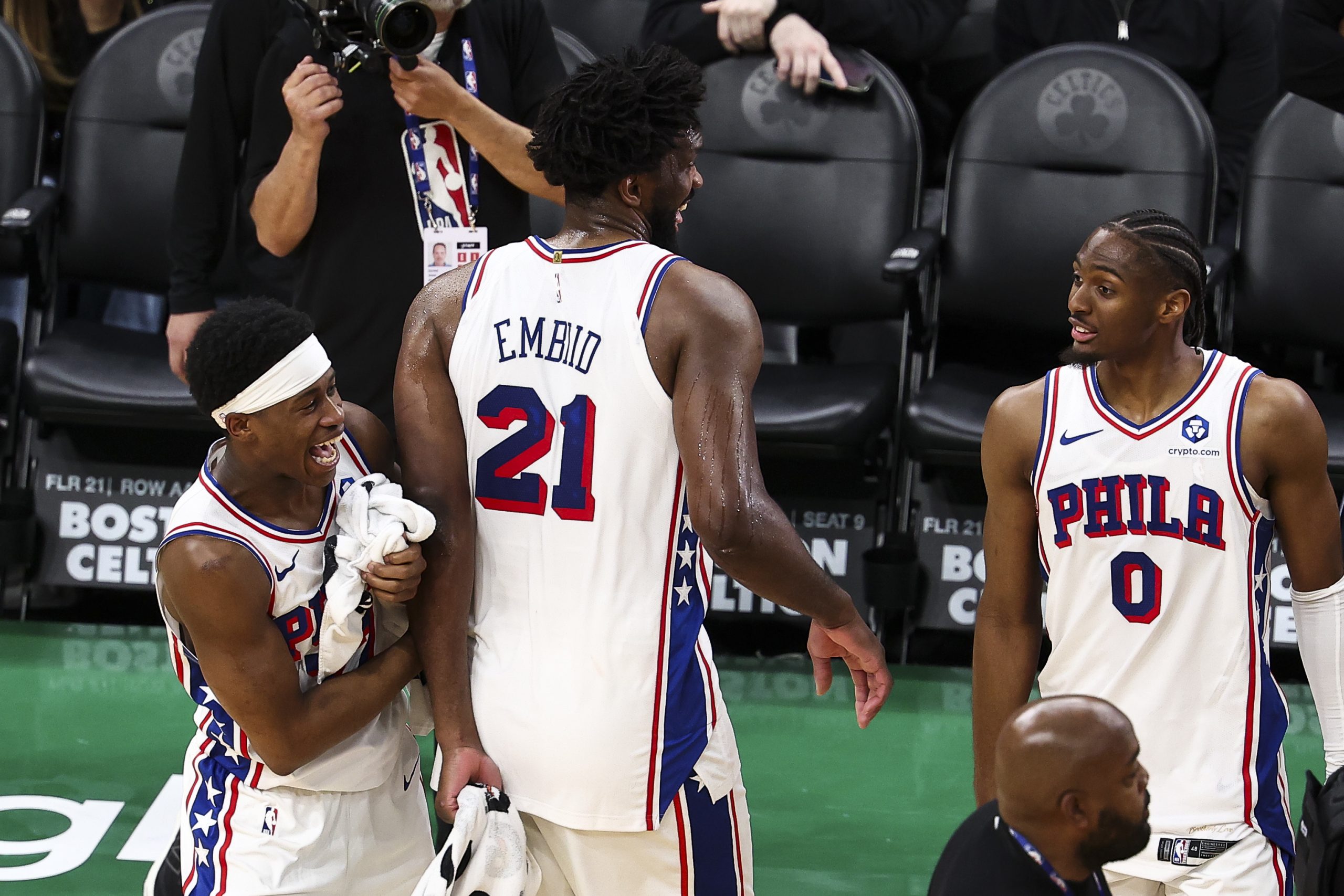
    VJ Edgecombe (left), Joel Embiid, and Tyrese Maxey celebrate after winning Game 7 against the Boston Celtics in May.Monica Herndon / Staff Photographer

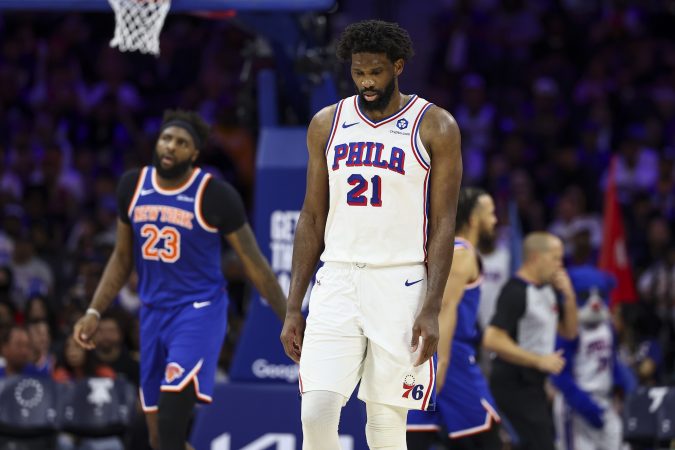
    April’s playoff series against the Celtics offers a tidy encapsulation of where the Sixers are. As dominant as Brown was during various stretches, Boston still lost. As impressive as Maxey and Edgecombe were at times, the Sixers still needed to win a Game 7 against the Jayson Tatum-less Celtics just to earn the right of getting blown out of the playoffs by the Knicks. Celtics coach Joe Mazzulla offered the definitive sound byte after the Sixers finished off their series comeback.

    “What changed in this series was Joel Embiid came back and they’re a completely different team,” Mazzulla said.

    Embiid missed Game 2 of the next series. The Sixers were outscored by 57 points in the 88 minutes he played against the Knicks. Somewhere on that continuum, their immediate hopes lie.

  • 90 percent of U.S. adults have this syndrome — but most have never heard of it

    90 percent of U.S. adults have this syndrome — but most have never heard of it

    Susan Gilchrist, a preventive cardiologist and epidemiologist, sees patients all the time at the University of North Carolina Cardiovascular-Kidney-Metabolic (CKM) Syndrome Clinic who don’t know what CKM is and are not sure why they’re in her clinic.

    It’s not surprising — CKM syndrome was only recently coined, in 2023, by the American Heart Association (AHA). And roughly 9 in 10 U.S. adults — about the same number of people estimated to have it — have never heard of it.

    CKM syndrome is not one disease but rather “a broad disorder that recognizes the overlap between cardiovascular, kidney and metabolic conditions such as diabetes and obesity,” said Muthiah Vaduganathan, a cardiologist at Brigham and Women’s Hospital who has conducted landmark studies on CKM syndrome. Doctors have long known that people often have more than one of these conditions at once. CKM syndrome reflects a newer understanding that the very same factors — specifically, extra weight, high blood pressure, high blood sugar, abnormal cholesterol and reduced kidney function — can contribute to the onset and progression of all three types of disease, Vaduganathan said.

    The good news is that a similar set of therapies can be used to manage conditions across the CKM triangle, Vaduganathan said.

    How does CKM syndrome start and progress?

    Researchers have defined CKM syndrome as a four-stage continuum, reflecting how symptoms and risk factors progressively pile up, raising the likelihood of a heart event or kidney failure.

    • Stage 1: Includes people with extra fat tissue — defined as a body mass index (BMI) of 25 or higher, or a waist circumference of 88 centimeters or greater in women and 102 centimeters or greater in men — and those with “dysfunctional” fat tissue, who may not have a larger body but show signs of poor glucose tolerance, like prediabetes. Because BMI can’t distinguish lean body mass from fat, it can misclassify short or muscular people as overweight, which is why Gilchrist said experts often use it in tandem with the other metrics here to pinpoint those who fall in this risk bucket.
    • Stage 2: Includes people with metabolic risk factors that often flow from extra fat tissue, like high blood levels of a type of fat called triglycerides, high blood pressure, metabolic syndrome (a cluster of symptoms that can include either of the previous two, as well as a large waist, poor cholesterol and high blood sugar), diabetes or chronic kidney disease. At this stage, people still tend to be asymptomatic, Vaduganathan said. Getting categorized requires bloodwork, usually done at a routine physical.
    • Stage 3: Includes those from prior stages who’ve developed presymptomatic heart disease, such as atherosclerosis or heart failure, and those with very high-risk CKD or a risk greater than 20 percent of a heart event in the next 10 years, based on the AHA’s PREVENT calculator. Since the disease might still be silent at this point, a person would be classified when their doctor orders screenings based on the above risk factors.
    • Stage 4: Includes people from the above stages who’ve been diagnosed with a stroke, heart failure, coronary heart disease, peripheral artery disease or atrial fibrillation. This stage, which can occur with kidney disease (stage 4b) or without (stage 4a), covers the most severe outcomes of CKM syndrome and brings a high risk of future heart events, too.

    This framework has helped Gilchrist explain to patients why weight matters for health: Carrying extra weight alone does not equate to disease — but it may put you on a path toward it. A large waist circumference and high blood sugar, in particular, are signs of what Gilchrist called “metabolically dangerous” fat. It releases inflammatory proteins into the blood and can rev up your body’s “fight or flight” stress state, she said.

    That combination can raise blood pressure and levels of certain fats in the blood, and make cells resistant to insulin (which helps with sugar uptake), dumping even more sugar in the blood. Both high blood sugar and high blood pressure can damage the tiny blood vessels feeding the kidneys, harming their ability to filter waste and extra fluid, said Joshua Joseph, an endocrinologist at the Ohio State University Wexner Medical Center. The fluid backup increases blood volume, straining the heart and further raising blood pressure, Joseph said, setting off a downward spiral toward heart events and kidney failure.

    Why is CKM syndrome becoming a more common diagnosis?

    The CKM framework was only formalized in 2023, and the physician guidelines for identifying and managing it, in June 2026, so the syndrome is just now gaining recognition.

    CKM syndrome affects 90 percent of Americans because it’s broadly defined to capture everyone on the continuum from those who might feel well but have early metabolic risk factors, to those with full-fledged heart disease. “It doesn’t mean that 90 percent of Americans require treatment,” Vaduganathan said. The goal isn’t to overmedicalize but to push prevention: “It’s more that 90 percent of Americans should be aware that they are at least at risk for progression of one or more of these conditions — metabolic, kidney or heart — and that early lifestyle management can help.”

    Gilchrist pointed out that the guidelines even describe a “Stage 0,” which includes the other 10 percent of Americans. They may not technically have the syndrome but are still at risk for developing it if they don’t actively subscribe to a healthy lifestyle, she said.

    So much of the American public falls between Stage 1 and Stage 4 CKM syndrome because of our typical lifestyle behaviors, said Joseph. “We live in a 24-hours-a-day society where we may struggle to eat healthy foods, be physically active and get enough sleep,” he said. Roughly 20 percent of U.S. adults also use tobacco products, he added, which ratchets up risk, too.

    But our behaviors also occur in the context of our environments, Joseph pointed out. You might live in a rural area without easy access to a grocery store or in a city lacking green spaces or other safe areas to go out and be active. Or maybe your home is surrounded by factories that pump pollutants into the air. “Both the environmental foundation and the lifestyle behaviors are levers we’re trying to move,” Joseph said.

    What are the treatments for CKM syndrome?

    At early stages, treatment centers on lifestyle interventions. For instance, “we know that a Mediterranean-style diet can not only help mitigate blood pressure and blood sugar, but has also been shown to reduce long-term cardiovascular risk,” Joseph said. Beyond diet, the AHA guidelines for CKM syndrome also note being physically active, avoiding nicotine products and getting quality sleep plus, in people with extra weight, behavioral weight loss programs led by clinicians.

    A handful of long-used medications are also still recommended to tackle specific risk factors and diseases in people at higher stages — for example, metformin to lower blood sugar, statins to combat high cholesterol and angiotensin-converting enzyme (ACE) inhibitors to control blood pressure.

    But the biggest focus for people across the CKM spectrum is on new medications with broader effects across organs, the experts said. For instance, glucagon-like peptides (GLP-1s) can help with weight and lower blood sugar by slowing down digestion, which has been shown to benefit the heart and kidneys. Then there’s sodium-glucose cotransporter 2 (SGLT2) inhibitors, which help you urinate out sugar and are also proven to reduce heart failure admissions and stabilize kidney function, Joseph said. And nonsteroidal mineralocorticoid receptor antagonists (nsMRAs) can limit fluid backup in the kidneys with upstream benefits for the heart.

    We’re in such a “great era of medicine,” Gilchrist said, because we don’t just have drugs that lower one risk factor. With the CKM framework, we can find people at risk, she said, and “we can offer medicines that may actually help them stay out of the hospital and live longer.”

  • The MLB draft in Philly has a few firsts, including the Phillies being penalized

    The MLB draft in Philly has a few firsts, including the Phillies being penalized

    The 2026 Major League Baseball draft kicks off Saturday in Center City Philadelphia as part of the All-Star festivities, taking place in the City of Brotherly Love for the first time since the production hit the road in 2021.

    Another first? NBC will broadcast the first hour and a half of the draft, which kicks off at 1 p.m. Saturday at the Pennsylvania Convention Center. It’s the first time since MLB started televising the draft live in 2007 that it’ll air on broadcast TV, at least until it switches over to the MLB Network at 2:30 p.m.

    The MLB draft hasn’t historically been a big TV draw because of how long it takes players to make it to the big leagues. Last year’s No. 1 pick, shortstop Eli Willits, is just 18 and is currently playing for the Washington Nationals’ single-A team in Fredericksburg, Va.

    The fastest top pick to be called up? Former third baseman (and one-time Phillie) Dave Roberts, who started just one day after being taken with the No. 1 pick by the San Diego Padres in 1972.

    For the fourth-straight year, the first six picks of the draft were determined by a lottery that took place in December. The Chicago White Sox enter the draft with the No. 1 pick for the first time since 1977, when they took future Hall of Famer Harold Baines.

    The Phillies don’t technically have a first-round pick; they were pushed back 10 spots because their 2025 roster exceeded the second surcharge of MLB’s luxury tax. As a result, they have the No. 36 pick, the first time in franchise history they’ve received such a penalty.

    Here’s everything to know about the MLB draft:

    2026 MLB draft TV schedule

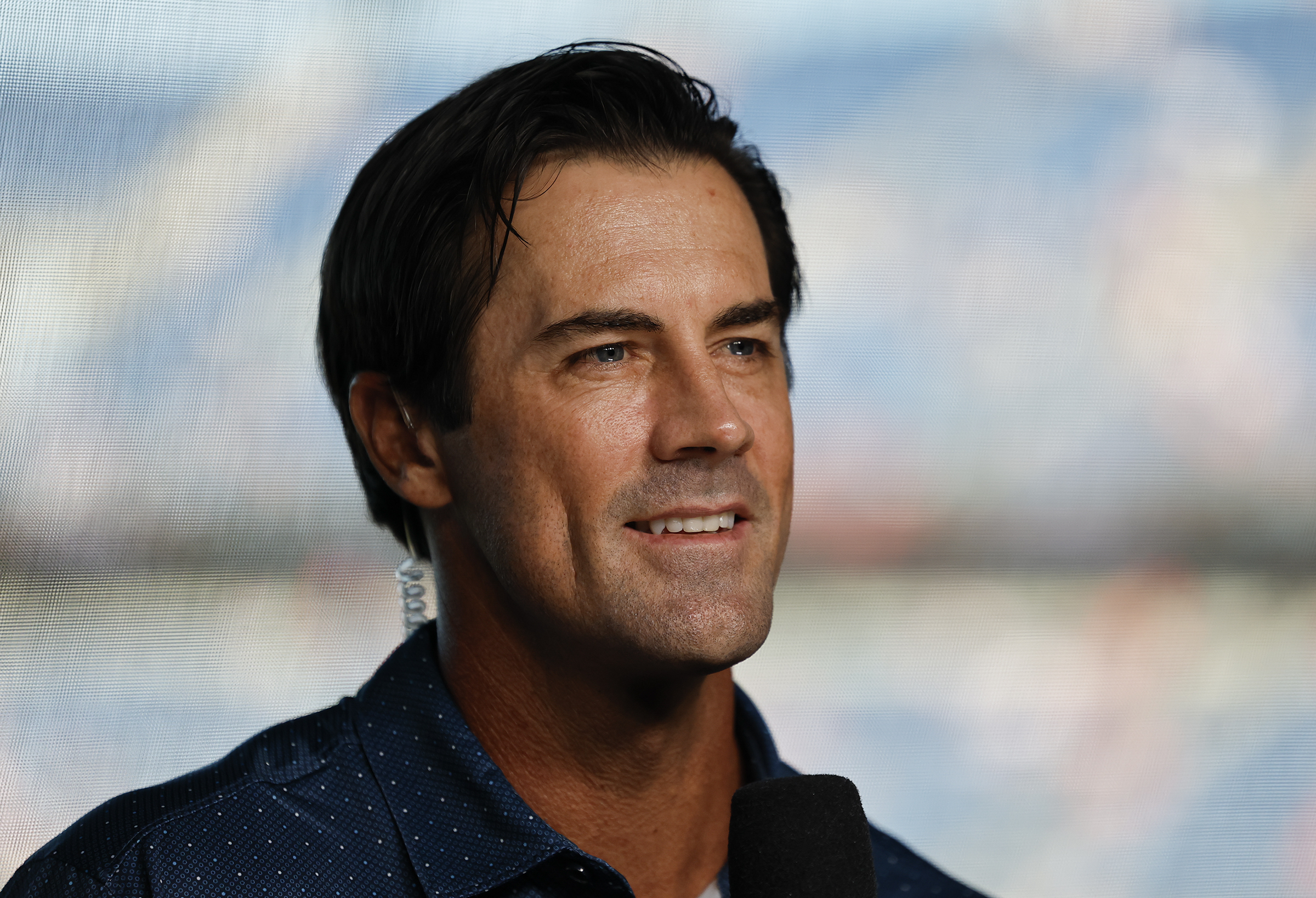
    Former Phillies pitcher Cole Hamels will be among the analysts on TV for the 2026 MLB draft. Yong Kim / Staff Photographer

    The 2026 MLB draft is scheduled to begin Saturday at 1 p.m. Philly time at the Pennsylvania Convention Center and run through 7:45 p.m., but not all of it will air on TV.

    NBC will broadcast the first hour and a half, covering the first 10 picks, before handing off to MLB Network at 2:30 p.m. The event will shift to streaming only at 4:30 p.m., with both Peacock (which is streaming the entire draft) and MLB.com carrying the proceedings through the fourth round.

    Rounds 5 through 20 will stream on Peacock and MLB.com Sunday beginning at 11:30 a.m.

    While NBC is dipping its toes into broadcasting the draft, MLB Network will be handling the production. A new face this year will be 2008 World Series MVP Cole Hamels, who will provide analysis alongside Mark DeRosa, Harold Reynolds, and former Colorado Rockies general manager Dan O’Dowd. Coverage will be hosted by Greg Amsinger.

    Phillies 2026 MLB draft picks

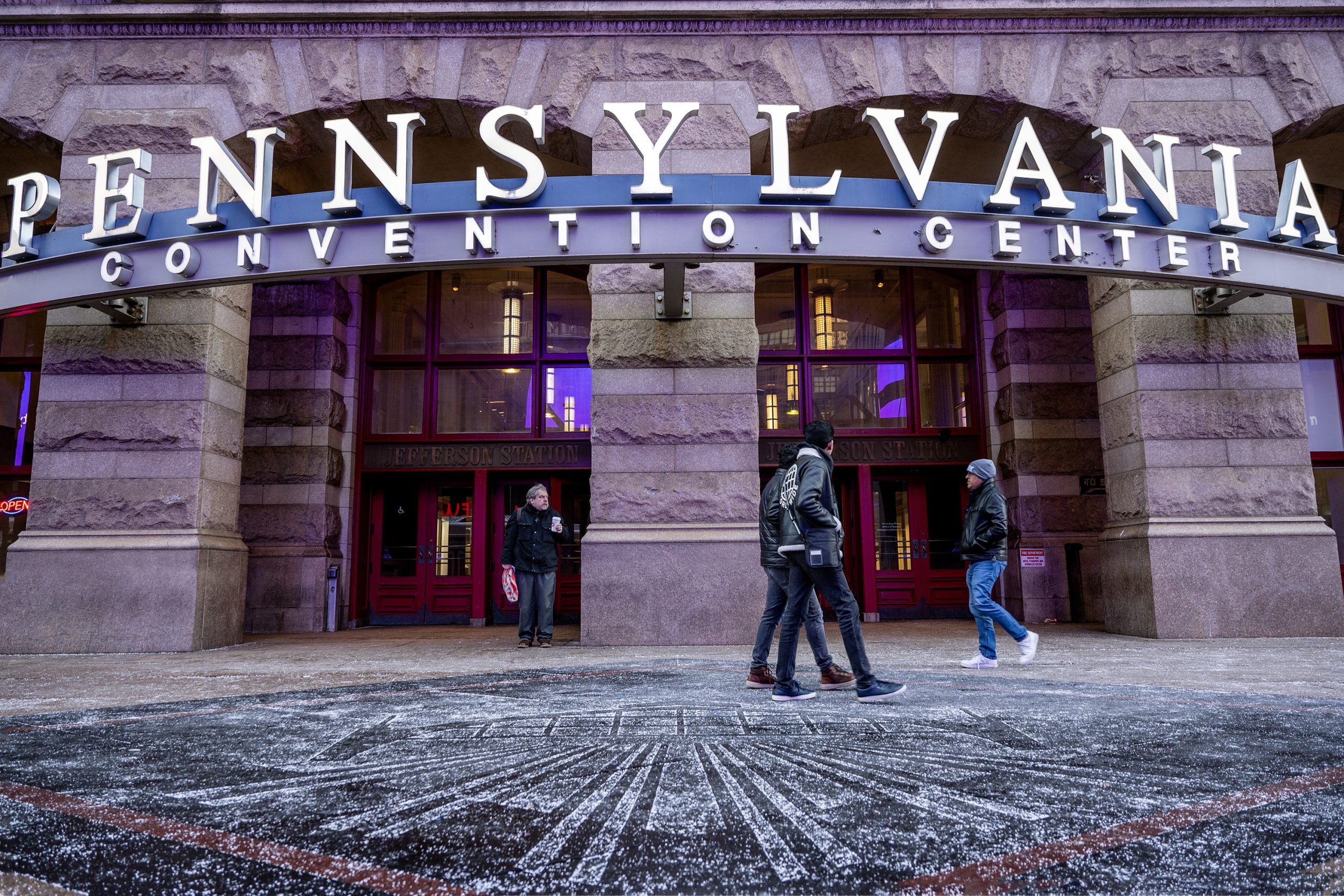
    The 2026 MLB draft will take place at the Pennsylvania Convention Center in Center City.Tom Gralish / Staff Photographer

    The Phillies have five picks Saturday: Nos. 36, 64, 100, 128, and 135.

    They’ll get 16 more Sunday, beginning with the No. 161 pick in the fifth round and ending with the No. 209 pick in the 20th round.

    Yes, the MLB draft is long, but a lot shorter than it used to be. The draft used to last 40 rounds before being cut down during the COVID-19 pandemic. Prior to 2011, it ran upwards of 50 rounds.

    Who will the Phillies draft with their first-round pick?

    It’s really anyone’s guess who the Phillies will take with the No. 36 pick, but experts have some thoughts.

    In his final MLB mock draft, ESPN insider Kiley McDaniel has the Phillies selecting 2026 grad Archer Horn, a shortstop prospect who already committed to Stanford after batting .406 with six homers this year for St. Ignatius Prep in San Francisco.

    One other name McDaniel mentioned is Taj Marchand out of South Carolina, another high school shortstop, who hit .531 with 13 home runs this year. But Marchand is expected to be taken before the Phillies are on the clock.

    MLB Network’s Jonathan Mayo predicted the Phillies would take Notre Dame pitcher Jack Radel in his most-recent mock draft.

    The Athletic’s Keith Law, who correctly predicted the Phillies would take Gage Wood last year with the No. 26 pick, didn’t include the Phillies in his final mock draft.

    Recent Phillies first-round picks

    The Phillies drafted pitching prospect Gage Wood with their first-round pick last year. Yong Kim / Staff Photographer

    The Phillies have had some success landing major league players in recent years, with three former first-round picks — Justin Crawford, Bryson Stott, and Alec Bohm — currently starting for the team.

    Andrew Painter, the Phillies top pitching prospect, struggled during 12 starts for the team this season and was demoted to triple A last month. The Phillies haven’t outlined a timetable for when he could return.

    Two former first-round picks play for other teams. Mickey Moniak, the No. 1 pick in the 2016 draft, was traded to the Los Angeles Angels in 2022 and currently plays for the Colorado Rockies. Pitcher Mitch Abel, taken with the No. 15 pick in 2020, was traded to the Minnesota Twins last year in the deal that landed closer Jhoan Duran.

    Here are the Phillies recent first-round picks:

    !function(){“use strict”;window.addEventListener(“message”,function(a){if(void 0!==a.data[“datawrapper-height”]){var e=document.querySelectorAll(“iframe”);for(var t in a.data[“datawrapper-height”])for(var r,i=0;r=e[i];i++)if(r.contentWindow===a.source){var d=a.data[“datawrapper-height”][t]+”px”;r.style.height=d}}})}();

    MLB draft first-round order

    This year, the first round of the draft has just 25 true picks. Three teams — the Phillies, New York Yankees, and New York Mets, exceeded MLB’s surcharge tax threshold in 2025, pushing their first-round picks 10 spots down into the second round.

    The Atlanta Braves and Houston Astros were awarded picks for promoting prospects

    There are also a handful of compensatory picks that will take place after all the first-round picks have been made.

    Here is the order for the first round, including supplemental picks that begin with No. 26:

    1. Chicago White Sox
    2. Tampa Bay Rays
    3. Minnesota Twins
    4. San Francisco Giants
    5. Pittsburgh Pirates
    6. Kansas City Royals
    7. Baltimore Orioles
    8. Athletics
    9. Atlanta Braves
    10. Colorado Rockies
    11. Washington Nationals
    12. Los Angeles Angels
    13. St. Louis Cardinals
    14. Miami Marlins
    15. Arizona Diamondbacks
    16. Texas Rangers
    17. Houston Astros
    18. Cincinnati Reds
    19. Cleveland Guardians
    20. Boston Red Sox
    21. San Diego Padres
    22. Detroit Tigers
    23. Chicago Cubs
    24. Seattle Marines
    25. Milwaukee Brewers
    26. Atlanta Braves (prospect incentive)
    27. New York Mets (luxury tax penalty)
    28. Houston Astros (prospect incentive)
    29. San Francisco Giants (via trade)
    30. Kansas City Royals
    31. Arizona Diamondbacks
    32. St. Louis Cardinals
    33. Tampa Bay Rays (via trade)
    34. Pittsburgh Pirates
    35. New York Yankees (luxury tax penalty)
    36. Philadelphia Phillies (luxury tax penalty)
    37. Colorado Rockies
  • Trump administration fires members of independent election group

    Trump administration fires members of independent election group

    The Trump administration has forced out the three remaining members of an independent, bipartisan commission that supports states in administering their elections, the White House confirmed on Thursday. The move comes as President Donald Trump seeks to cast doubt on the outcome of the upcoming midterms and impose control over how ballots are counted.

    Trump terminated, effective immediately, Thomas Hicks and Benjamin Hovland, two members selected by congressional Democrats to serve on the Election Assistance Commission, and accepted the resignation of a Republican member, Christy McCormick.

    The board has no other remaining members, as its fourth commissioner resigned this spring.

    An unidentified White House official issued a statement saying that Trump reserved the right to remove individuals who “may not be totally aligned with the important task of securing America’s elections and ensuring every legal vote is counted.” The White House official cast the dismissals as part of the federal government’s strategy to work across agencies to safeguard elections from fraud and abuse.

    The official pointed to the recent decision in which the Supreme Court ruled that Trump had the authority to fire most independent regulators for any reason, ushering in a vast expansion of presidential power. Trump had hailed the decision as “the Greatest Increase in Presidential Power in the last 100 years.”

    Trump has been laying the groundwork for months to claim that Republicans would face a tough midterm election, not because of the broadly unpopular war in Iran and plummeting approval ratings on the economy, but because the country’s election system is fraudulent.

    Trump, who has falsely claimed that the election he lost in 2020 was “rigged,” has been pushing legislation that would impose stringent voter identification requirements. He has called for significantly curtailing the use of mail-in ballots, which he has claimed without evidence that Democrats have used to cheat. (Trump voted by mail in a special election in Florida in March.)

    The Election Assistance Commission, which was established in 2002, is a crucial guardrail for ensuring election security across the country. According to its website, it guides states in ensuring they meet voting requirements, oversees testing and certification of voting systems and disperses funding to help states meet requirements. It serves as a national clearinghouse for information on election administration and maintains the national mail voter registration form established by the National Voter Registration Act of 1993.

    Last year, Trump issued an executive order that calls on the Election Assistance Commission to require people to show government-issued proof of U.S. citizenship to register to vote in federal elections and directs state or local officials to record and verify the information. It also seeks to require states to count ballots by Election Day. A judge permanently blocked the order, saying the president exceeded his authority.

    Michael Waldman, the president and chief executive of the Brennan Center for Justice at the New York University School of Law, in a statement called the terminations “deeply concerning in light of President Trump’s relentless efforts to try to interfere in elections.”

    This article originally appeared in The New York Times.

  • New Air Force One lacks defensive countermeasures of previous model, officials say

    New Air Force One lacks defensive countermeasures of previous model, officials say

    The new Air Force One, which President Donald Trump flew on earlier this week to Turkey, lacks the same defensive countermeasures that were security features of the old model, including its advanced antimissile capabilities, according to multiple officials who have been briefed on how the jet was retrofitted.

    Experts say the absence of those capabilities on the Boeing 747-8 aircraft, which was donated by Qatar, creates potential risk in using the jet abroad, a dynamic underscored by the abrupt decision Wednesday for Trump to leave Turkey on the old Air Force One at the urging of the Secret Service.

    The episode is intensifying the focus on Trump’s demands to rapidly retrofit the donated 747 to replace an aging fleet that had served as the official presidential planes.

    Lawmakers have called on the administration to disclose whether the overhaul of the Qatari plane, which the Air Force oversaw in the course of the past year, provided sufficient security upgrades. The safety of the aircraft is critical not only for the president, but also for the large entourage of White House staff, Secret Service officials, journalists, and guests who fly aboard.

    Trump pushed for the new plane to be put into use as quickly as possible and frequently complained that the old presidential aircraft was not impressive enough to take on international trips.

    On Thursday, the White House did not address specific questions about the new plane’s capabilities, but defended its safety.

    “The new Air Force One is a state-of-the-art aircraft that has been fitted with high-level security protocols that ensure the safety of the president and his staff,” Steven Cheung, the communications director, said in a statement. “As the president has said recently, there are many enemies of America who have their sights on him, and we use every tool at our disposal to address those threats.”

    The Air Force has declined to discuss specifics around security systems on the retrofitted Qatari plane, which is being used as a “bridge” aircraft while two Boeing jets that will be part of the permanent presidential fleet are being finished.

    But in a statement it made when it announced that the donated jet was ready to transport the president, it acknowledged that the temporary plane did not have all the equipment usually found on an Air Force One.

    “No risk was taken in security, safety, or mission communications,” the Air Force said in a statement on June 19. “But the collective team made trades on some of the less commonly used mission sets that Boeing must deliver to support the next 40 years.”

    The Air Force would not say what it meant by “less commonly used mission sets.”

    However, officials who have been briefed on the retrofitting of the Qatari jet, who spoke on the condition of anonymity to describe its security features, said it did not have the same counter-defensive capabilities of the previous model.

    Two former Air Force officials, who had both been involved in the effort to replace the older Air Force One planes, said they were surprised to see Trump fly on the new jet overseas, where there are greater security risks. Turkey, where Trump attended a NATO summit, borders Iran, which the United States pummeled with renewed strikes this week.

    The former officials were not involved with the retrofitting of the Qatari jet, but said the speed of the project meant there would not have been enough time to make all of the security modifications that are traditionally associated with a fully equipped presidential aircraft.

    “Time didn’t permit all the normal Air Force One modifications, so some mix of security, communications and support is missing,” said Frank Kendall, the former Air Force secretary who was in charge of the department as it tried to push Boeing to accelerate its long-delayed contract to deliver two new Air Force One planes.

    “With the Iran situation, this could be of concern,” Kendall said. “Frankly, I’m surprised to see this plane used outside the U.S.”

    Andrew P. Hunter, the former Air Force assistant secretary who was in charge of the Air Force One program during the Biden administration, also said that a true retrofit of a 747 jet to prepare it to become Air Force One would require more than a year of work.

    The day before Trump left for Turkey, Senate Democrats wrote to the Air Force asking questions about the modifications to the Qatari plane and questioning whether it had all the necessary security upgrades.

    “Trump’s own statements — including his celebration of ‘a level of luxury that nobody’s ever seen before’ — make it clear that these decisions prioritized Trump’s personal comfort and tastes over U.S. national security,” they wrote in the letter sent by Sen. Christopher Murphy (D., Conn.) and 12 other senators.

    The older planes that served as Air Force One included a defensive system designed to defeat heat-seeking missiles. That capacity is also planned to be included in the new Boeing planes, according to three former Pentagon officials.

    Different parts of the defensive systems are visible on the old Air Force One, under the wing of the plane and on its tail. They are not observable in photographs of the new Qatari plane, according to a third former Air Force official, who spoke on the condition of anonymity to describe the security protocols.

    Missile defense systems on Air Force One have seen little use in the history of the aircraft, but have nevertheless been considered critical aspects of the plane’s security features.

    The Pentagon published specifications for the Boeing aircraft now under construction that indicate the new jets will include a “self-defense system” and “mission communication system,” as these and other upgrades are needed “to enable the president to execute the duties of head of state, chief executive, and commander in chief.”

    U.S. officials have said that Iran has been targeting Trump since he ordered the drone strike that killed Qassem Soleimani, in January 2020. During the 2024 campaign, the Secret Service increased protection for Trump, even before the attempt on his life in Butler, Pa., because of intelligence about Iran’s plotting against him.

    Despite the resumption of intense U.S. strikes on Iran, U.S. policymakers briefed on the current intelligence do not believe that Iran has a current plan to kill Trump during this period. A U.S. official, who spoke on the condition of anonymity to describe intelligence assessments, said that Iran had a clear understanding of what kind of deep provocation any attempt on Trump’s life would be and the intensity of a U.S. response.

    Nevertheless, the Secret Service was concerned enough about Trump’s proximity to the country while in Ankara to force the president to swap planes on the way out of the country, as the New York Times first reported Wednesday.

    In announcing the change, Trump offered a different story: He claimed that he was flying out on the old plane so the new jet could leave early and make stops at U.S. military bases to show it off to the troops because the aircraft is “magnificent.”

    One former senior White House official involved in discussions about military aircraft used for presidential travel said that there were frequently points of tension between White House staff and the military advisers and Secret Service over travel plans when security questions emerged.

    But when the military experts demanded changes, White House officials generally let them prevail, with “course of action” plans that mitigated potential threats.

    This article originally appeared in the New York Times.

  • Pennsylvania is among 25 states suing over federal Medicaid rules they say ‘overstep’ the law

    Pennsylvania is among 25 states suing over federal Medicaid rules they say ‘overstep’ the law

    Felix White worries his ability to keep working — and avoid a health crisis — could be at risk.

    The 62-year-old Montgomery County resident relies on Medicaid to afford the insulin he needs to manage his type 1 diabetes.

    Beginning in January, people with Medicaid will be required to provide proof that they are working 80 hours a month, unless they are considered too sick to work and qualify for an exemption.

    If White fails to submit enough evidence, he could lose Medicaid. Yet without the government-funded coverage, he won’t be able to get the medications and care he needs to stay healthy enough to keep working.

    “It would be a death sentence for me,” White said.

    A few years ago, White lost his job in computer science — and the private health insurance that once covered the medications, glucose monitor, and specialists he needs to manage type 1 diabetes.

    Finding work in his field has been challenging at his age, White said. So instead, he’s relied on a string of odd jobs, such as mowing lawns, for income and Medicaid for healthcare.

    Pennsylvania expects 310,000 residents to lose Medicaid when the new rules take effect, and White fears he could be among them.

    The work requirements are part of Republicans’ 2025 spending and tax cut bill, which is expected to cut more than $900 billion in Medicaid spending over the next 10 years.

    The legislation passed by Congress allowed exemptions for Medicaid recipients considered “medically frail.” The law loosely defined categories of exemptions, such as for people with a substance use disorder, a disabling mental disorder, a “serious or complex” medical condition, and disabilities that limit their daily activities.

    White’s Type 1 diabetes is considered a disability that could hinder a person’s ability to work.

    But in June, the Centers for Medicare and Medicaid Services provided additional details: To be exempt from the work requirement, people will need to prove not only that they are “medically frail,” but also that their illness is so severe they are unable to work.

    Republicans who pushed the legislation argue that work requirements ensure only people with the greatest needs receive the safety-net support, while helping people who have been sick reintegrate into society.

    Pennsylvania is among 25 Democrat-led states suing over the interim final CMS rule, which they say oversteps the law, HR 1. The June rule “differed significantly” from initial guidance and “undermines months of work and human and financial resources” Pennsylvania has spent to meet the new requirements outlined in HR 1, the Pennsylvania Department of Human Services said in a statement.

    “This redirection poses an even greater threat to health and well-being for Medicaid recipients and the stability of our entire healthcare system,” said Brandon Cwalina, a spokesperson for DHS.

    Shifting Medicaid rules

    Implementing the new Medicaid rules represents a massive undertaking for states. The law calls for many people to prove on a monthly basis that they are working, and reapply for coverage every six months, instead of once a year. Certain groups of immigrants will no longer be eligible.

    These changes have required Pennsylvania and other states to overhaul the type of information they document about Medicaid applicants. Processing renewals twice as often will require more staff.

    States also had to devise strategies for alerting people of the changes, for fear they will be dropped from coverage they didn’t know they were at risk of losing.

    Pennsylvania DHS “has worked in good faith” to make these changes, sharing designs and plans with CMS leadership, Cwalina said.

    The June rules from CMS will require “a more complex, costly, and labor-intensive approach,” he said.

    Administrative hurdles for vulnerable patients

    The new rules will make it harder for people to get the care they need, patient advocates and health analysts warn, saying it will drive more people to rely on emergency care, further straining the health system.

    “What the administration is calling work requirements are really just hurdles for people who deserve Medicaid and access to the care they need,” said Michael Berman, director of Protect Our Care PA, a healthcare advocacy group, who spoke at a virtual press conference Wednesday with stakeholders and patients, including White.

    Under the June rules, states are responsible for developing a list of diagnosis codes that qualify for an exemption, and devising a system to determine how a person can prove their diagnosis prevents them from working.

    The CMS guidance provides some specific limitations.

    People with substance abuse disorder, for instance, will not be eligible for a work requirement exemption if they have been in recovery for at least five years.

    Behavioral health workers worry that will lead to more people relapsing.

    “We know recovery works, but only when people can consistently access care,” said Jeannine L. Lisitski, CEO of Mental Health Partnerships, which provides mental health and substance abuse services in Pennsylvania.

    People with HIV/AIDS and cancer, also considered serious medical conditions, will only be exempt from the work requirement rules if they prove they are too sick to maintain a job.

    Gathering the documentation could be especially burdensome for people who are seriously ill.

    “For someone who’s in cancer treatment, to go back to a doctor and get another piece of paper filled out is just going to make it harder and less likely they’re able to get the care they need to survive,” Berman said.

  • New York construction scare highlights the challenges of converting offices into housing

    New York construction scare highlights the challenges of converting offices into housing

    NEW YORK — When two steel columns buckled this week inside the former Pfizer headquarters in midtown Manhattan, the scare prompted evacuations and halted work on one of the nation’s largest office-to-apartment conversions.

    It also highlighted the complex engineering behind adaptive reuse projects, which have become increasingly popular as officials try to tackle a nationwide housing shortage by transforming offices that have sat underused since the COVID-19 pandemic.

    The plans call for turning two office buildings — one built in 1909, the other in the 1960s — into about 1,600 apartments by adding more than a dozen stories atop the older structure and redesigning and expanding the other. The buckling occurred on the 21st floor of the newer structure, and crews have installed temporary supports as officials investigate.

    Engineering experts said the conversion project is complex and poses many challenges, which include making sure older buildings can safely support new loads and carving up office floors to accommodate residential living.

    But none said the high-profile setback should make people doubt the ability of engineers to complete such projects.

    “I don’t think it really brings into question our understanding of how to do something like this,” said Ben Schafer, a structural engineering professor at Johns Hopkins University.

    How do you build a new tower on top of an old one?

    On its website highlighting the midtown project, adaptive reuse firm Collaborative Construction Management says the nine-story building from 1909 will be “threaded through” with a new addition of about 30 stories of poured concrete.

    Schafer, who is not involved with the undertaking, said the likely approach is to have the century-old building continue to carry its own weight while building a new structural system to support additions.

    “My interpretation would be that they’re going to leave that building carrying its own load, and they’re just going to poke holes in it so that they can take the load from the building that they’ve put above it and bring it all the way down to the foundation,” Schafer said.

    Schafer said construction on the other tower presents a different challenge: punching holes in the existing floor plate to bring light into apartments, while also ensuring that the steel frame can support the newly added loads.

    City officials have not determined what caused the columns to buckle. But both Schafer and Emily Guglielmo, a San Francisco-based structural engineer, believe the failure likely resulted from the added load.

    Spokespersons for MetroLoft, the project developer, didn’t respond to requests for comment Thursday. But Nathan Berman, the firm’s founder, acknowledged in an interview with The Wall Street Journal that the added weight from widening the top 15 or so floors of the building likely caused the damage.

    Guglielmo thinks that either the original design assumptions were misunderstood, something went wrong during the design or construction process, or construction crews overloaded or weakened the structure.

    Adding stories to existing buildings is common in dense urban areas where land is scarce, she said, but it requires reviewing original construction documents and inspecting the building before determining how additional floors will affect the structure.

    “In cities and towns that don’t have that available geography, you’re going to see a lot more of this type of a design where there’s an adaptive reuse to an existing building,” Guglielmo said.

    Why not just create a new building from scratch?

    To many structural engineers, demolition should occur only as a last resort.

    “Tearing buildings down is a terrible waste,” Schafer said, pointing out that buildings and the construction sector are responsible for about 40% of the world’s energy-related carbon emissions. “From a sustainability standpoint, that’s a disaster.”

    Beyond the environmental costs, demolishing and hauling away the remnants of huge buildings is especially expensive in dense cities such as New York.

    If an existing structure can safely be reused, engineers generally prefer that.

    James LaFave, a structural engineering professor at the University of Illinois, said a steel-framed building from the 1960s, like the former Pfizer structure, would typically be a “very good” starting point for a conversion.

    Does the scare in New York call into question other adaptive reuse projects?

    In recent years, officials across the country have embraced office-to-housing conversions as a potential lifeline for downtown business districts that have struggled since the pandemic.

    New York, especially, has embraced this push, as officials have made zoning changes and enacted tax incentives to spur housing production. A report from the New York City comptroller’s office last year noted there are 44 adaptive reuse projects in the city that, as of early 2025, had either been completed, were underway or could move forward.

    Pfizer moved out of the building in 2023 after opening a new office near Penn Station, leaving the property vacant. Construction on the property began in 2024.

    Joshua Harris, director of Fordham University’s Real Estate Institute, said office-to-residential conversions are a key part of solving the housing shortages in New York and other cities, even if they come with risk.

    “In a certain sense, it’s not terribly surprising that this happened, and we should have a little bit of grace,” he said. “These are very, very complicated surgical procedures being done to very old buildings.”

    “This is part of the reality of fixing the housing crisis,” Harris continued. “Things like this can happen. It doesn’t look as complex as putting a rocket into space, but, in a real estate sense, construction in an environment like Manhattan on 42nd Street and Second Avenue is very complex.”

    Guglielmo, the California engineer, said a combination of building codes, inspections and experienced construction crews makes failures like this rare.

    “We’re very fortunate here in the United States that we are not seeing these types of failures on a day-to-day basis,” she said. “We’re privileged to have really robust building codes that explain to us as engineers how to do our designs in a way that’s safe.”

    Still, Harris said it is likely a gut check for the industry, as office conversions transform once sleepy business districts across the city into 24/7 neighborhoods, like parts of Wall Street in recent years.

    “If this building has a problem, all the other projects that have been sort of greenlit, they’re going to want to review to make sure that it’s not something similar,” Harris said.

  • Trump’s all-out assault on free and fair elections undermines trust in democracy | Editorial

    Trump’s all-out assault on free and fair elections undermines trust in democracy | Editorial

    Let’s begin with the obvious: Donald Trump is out to rig the midterm elections.

    We know this because the president commits many of his illegal acts in broad daylight.

    For the past year, Trump has revved up his election-tampering efforts by throwing everything at the proverbial wall.

    He called for nationalizing elections, pushed to redraw election maps, slashed funding for election security, moved to restrict voting, targeted election workers, rewarded election deniers, and continued to repeat baseless claims that the 2020 presidential election was fixed.

    Trump even mused about canceling the November midterms. The White House said it was a joke, but his track record indicates anything is possible.

    Trump has ignored court orders, trampled presidential norms, and even refused to uphold the Constitution. He has cheated at everything, including the draft, golf, taxes, and marriage, so why not elections?

    If the Great Experiment in self-government that the founders began 250 years ago is to continue, we need free and fair elections. But Trump is working feverishly to tilt the playing field to ensure Republicans win.

    Last summer, he pushed GOP lawmakers in Texas to take the rare step of redrawing congressional maps in the middle of the decade to add more Republican seats.

    Lawmakers in other red states, including Florida, Ohio, and Missouri, followed Trump’s blatant call for gerrymandering. Some blue states, like California, moved to do the same to offset the Republican scheme, sparking an undemocratic arms race.

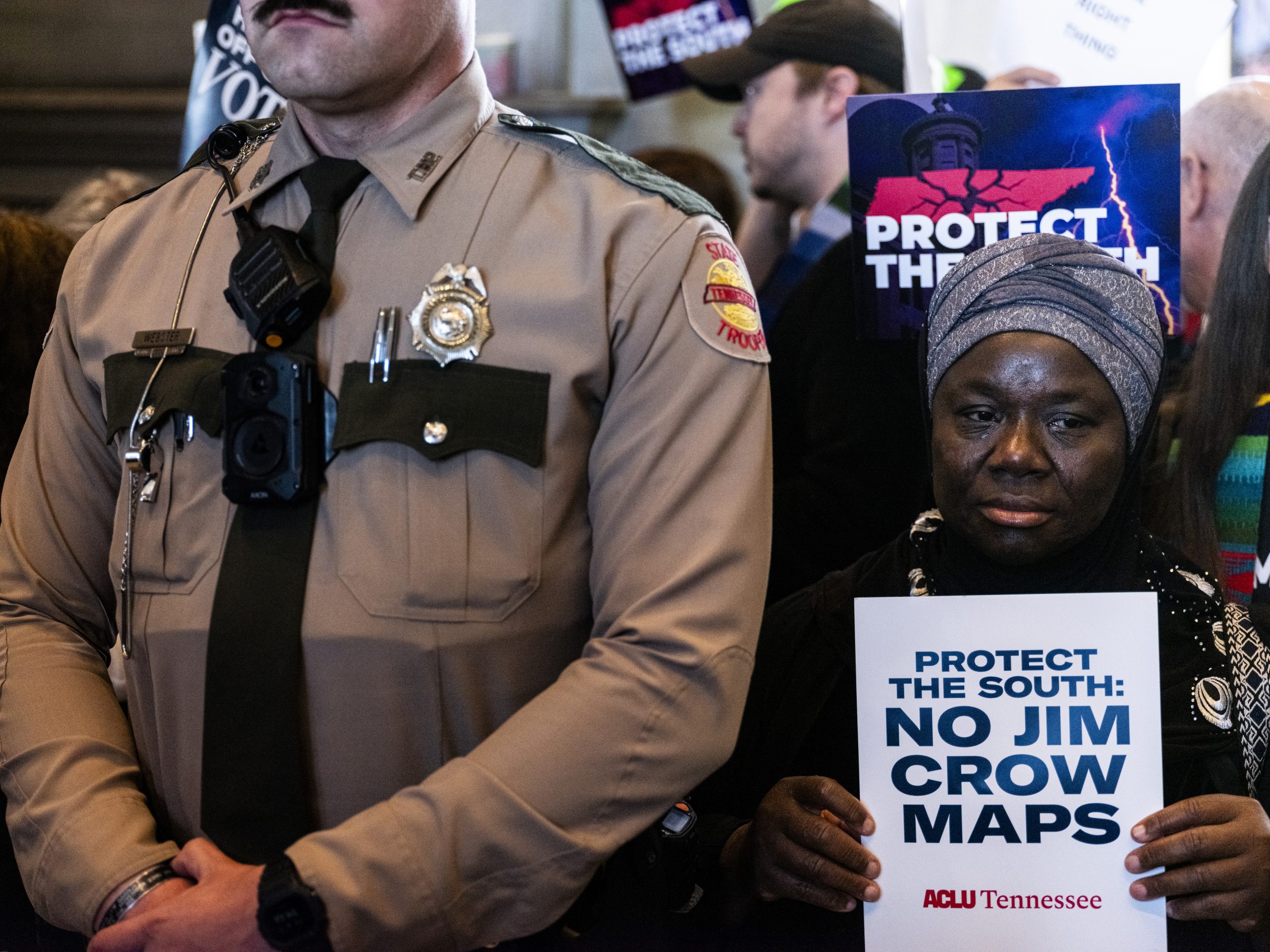
    The U.S. Supreme Court joined in by further obliterating the Voting Rights Act that previously provided for majority-minority districts. With that safeguard dismantled, Tennessee, Louisiana, and Alabama carved up Black majority districts to eliminate Democratic seats.

    Zulfat Suara (right) protests a new congressional map next to a Tennessee state trooper at the state Capitol in Nashville in May.BRAD J. VEST

    Polls indicate deep dissatisfaction with Trump and Republicans, who control the House and Senate. He fears hearings and investigations into his corruption, incompetence, and self-dealing if Democrats take control of either chamber.

    “If we don’t win the midterms … I’ll get impeached,” Trump said earlier this year.

    Hence, the all-out attack on the election system.

    Trump called for the federal government to seize control of elections — even though the Constitution put the states in charge.

    He demanded the end of mail-in voting — even though presidents do not have the power to change voting laws.

    Trump signed an executive order that would require voters to show proof of citizenship and that all mail-in ballots be received by the time polls closed — moves that were blocked last month by a federal judge, but the president remains relentless.

    This week, Trump’s Justice Department threatened criminal charges against Pennsylvania’s top election officials if they let noncitizens vote. Other states received a similar warning, even though the issue is exceedingly rare and already illegal.

    But Trump’s baseless rhetoric helps to sow distrust in elections — something he has done throughout his tumultuous decade in politics.

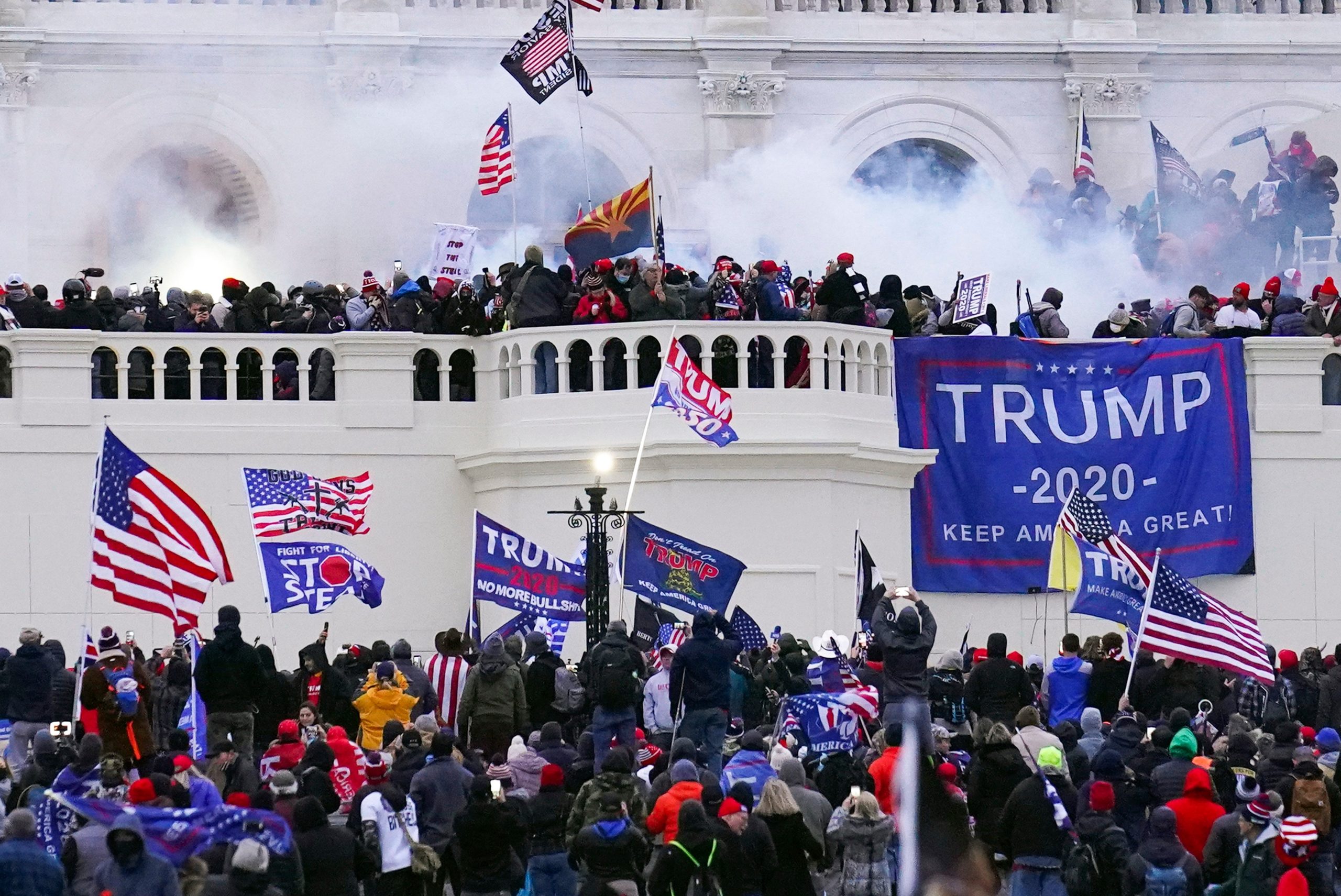
    Trump has demonstrated he will cross any line. As president, he incited an insurrection as part of a broad conspiracy to overturn the 2020 presidential results — an act of treachery that has earned its place in infamy.

    Trump was criminally indicted for his monthslong effort to interfere with the peaceful transfer of power, but the charges were dropped after he returned to the White House and assumed control of the U.S. Department of Justice.

    To this day, Trump refuses to admit he lost the 2020 presidential race, despite producing no credible evidence of widespread voter fraud and abusing the legal system by mounting 60 failed election cases before state and federal judges.

    In fact, Trump is still seeking to overturn the 2020 results.

    Rioters storm the West Front of the U.S. Capitol Jan. 6, 2021, in Washington.John Minchillo

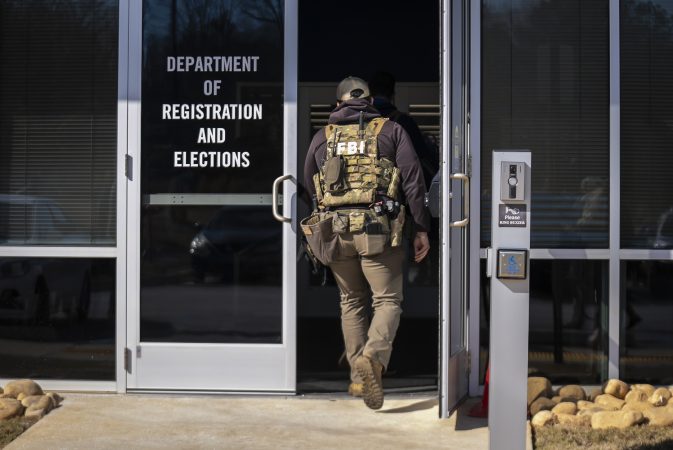
    In February, he ordered Tulsi Gabbard, the then-director of national intelligence, to attend an FBI search of election facilities in Georgia, where Trump lost in 2020.

    The FBI recently assigned more than 200 agents to search for election fraud in Georgia, six years after exhaustive state and federal investigations found none.

    During a ballyhooed visit to Arizona to discuss election security, former Homeland Security Secretary Kristi Noem couldn’t cite a single case of election fraud.

    But a Republican-led Senate Intelligence Committee investigation did find top Trump campaign officials had extensive contacts with Russian operatives during the 2016 election.

    For all of Trump’s bluster about rigged elections, he remains the poster child for election interference. Now, he is willing to undermine national security to get the election results he wants. He demanded states change election rules, such as requiring voter identification, or risk losing federal terrorism prevention funds.

    Trump also put his political gain above the public’s pain. He refused to sign a landmark bipartisan bill designed to lower housing costs until Congress passed legislation that would require proof of citizenship for all voters.

    Trump has taken other steps recently to weaken election security.

    One directive disbanded an FBI task force created to combat foreign influence in U.S. elections, and another crippled the Cybersecurity and Infrastructure Security Agency that Trump created.

    The moves come as Russia, China, and Iran ramp up efforts to meddle in U.S. elections, just as they did during Trump’s victories in 2016 and 2024.

    Before Jan. 6, 2021, it was hard to imagine a sitting president inciting a mob to storm the U.S. Capitol, attack police, defecate in offices, and look to hang the vice president.

    So, how much further will Trump go to get his desired election results?

    With Trump, there is no bottom.