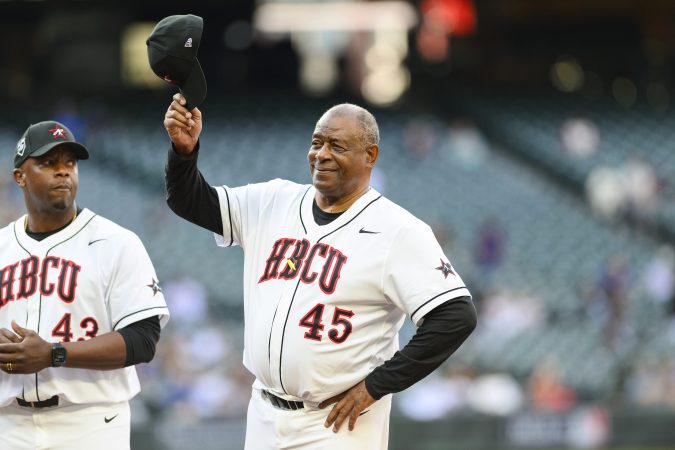
In honor of the nation’s 250th anniversary, Major League Baseball (MLB) is bringing the Mid-Summer Classic to the place where the Declaration of Independence was signed. Among the kick-off events is the HBCU Swingman Classic on July 10, an event showcasing the past and present of historically Black college and university (HBCU) baseball programs.
The event, intended to increase interest in baseball among Black Americans, reflects MLB’s complicated relationship with Black fans. Across the 20th century, team owners and executives have tried periodically to draw Black fans to the ballpark. Yet, to maintain the game’s appeal to its traditional fanbase, much of it white, owners simultaneously created environments that did not fully welcome Black fans. This history shows that if MLB truly wants to draw more Black Americans to the game, it has to alter the culture of the game and do more than just stage one-off events like the Swingman Classic.
Racism permeated the sport, inside and outside the ballpark. In a radio interview in 1938, despite not actually working in law enforcement, Yankees outfielder Jake Powell (who ended his career with the Phillies in 1945) claimed that he stayed in shape in the offseason by claiming to be a police officer who would beat Black people “over the head with my blackjack.” His comments provoked outrage and although Powell was suspended and forced to apologize, he remained with the Yankees through the 1940 season.
Yankees General Manager Ed Barrow told The Philadelphia Tribune, “No owner of a business permits his employees to be pert or insulting to the customers patronizing the business,” indicating that the team was happy to take money from Black fans but would prefer their players not share racist views on the air. Evidently, the team concluded that they should angle for revenue from Black fans—but keep Powell on the roster all the same.
The next year, when Robinson broke MLB’s color barrier with the Brooklyn Dodgers, Black fans regularly made up as much as one-third of the crowd at his games. But as scholar Gerald Early recognized, it was “not the desire of any major-league baseball owner to have blacks make up the kind of attendance percentage they did when Robinson debuted in 1947. It would, indeed, be a cause of unease, if not downright unrest.”
Owners couldn’t stop Jackie Robinson and the waves of talented players of color who followed him to the majors. Instead, they made it more difficult for Black fans to attend games by building stadiums farther away from Black communities. Scholars Alan Sager and Arthur Culbert determined that the demographics of the neighborhood around a team’s ballpark was the deciding factor for whether or not a team moved in the decades after Robinson’s debut. Teams that moved between the 1950s and 1970s left neighborhoods that were on average 44.1 percent Black. By contrast, teams that did not move were in neighborhoods that were 17.6 percent Black. Almost all teams that relocated in this era moved to far whiter neighborhoods, including the Phillies who moved from Connie Mack Stadium in North Philadelphia to Veterans Stadium in South Philly after the 1970 season.
By contrast, in Houston, owners of a yet-to-be-named franchise secured vital Black voter support for the bonds needed to construct what would eventually be called the Astrodome. They promised that unlike many other public accommodations in Houston in 1961, it would be desegregated. But MLB owners continued to display bias against Black fans. Roy Hofheinz, who led the franchise and was the driving force behind the Astrodome, told a reporter, “We did a lot of research before choosing the colors [of the luxury suites]. We made sure the color complemented the complexion and clothing of women. It took us two weeks to get the right color of blue. Many blues would give ladies a pasty-looking complexion.” His concern reveals that he did not expect Black women to sit in the most exclusive part of the dome.
When the Baltimore Orioles opened Oriole Park at Camden Yards in Baltimore’s downtown in 1992, it seemed to signal a shift in ballparks’ relationship to urban spaces and their Black populations. Yet in other ways, the team continued MLB’s pattern of marginalizing potential Black fans. Maryland state representative Howard P. Rawlings noted that the Orioles had “neglected the city’s black majority” in the park’s opening festivities and argued “it’s a reflection of [the team’s] lack of awareness that” the city “is more than 60 percent African-American.” Ballparks evolved, but many MLB executives’ attitudes about potential Black baseball fans did not.
Made By History sponsors. FOR USE ON MADE BY HISTORY STORIES ONLY.Inquirer Staff
Unlike the Home Run Derby and the All-Star Game being played a few days later at Citizens Bank, tickets for the Swingman Classic are comparatively affordable and cheaper than some Phillies games, an admirable and encouraging choice. History cautions, however, that MLB is usually only interested in extracting revenue from Black fans when doing so does not threaten the game’s largely white fan base. While the Swingman Classic will likely draw a higher percentage of Black fans to Citizens Bank Park than an average Phillies game, only time will tell whether it helps to shift MLB culture towards greater inclusion of Black fans.
Made by History takes readers beyond the headlines with articles written and edited by professional historians. Opinions expressed do not necessarily reflect the views of The Inquirer.
The stampers were runnin’ wild, and state officials wanted their piece.
So it was time to crack down on the ping-pong-ball pullers.
On July 10, 1981, Republican Pennsylvania Gov. Dick Thornburgh signed the Bingo Law.
The bill, which took effect on Nov. 9 of that year, would ensure the popular game remained a tool of charitable groups and remained small-stakes operations. This new law limited prize money to $250 (about $920 today) per game, $2,000 (about $7,300 today) for a so-called jackpot game, and $4,000 (about $14,700 today) in total for any one day.
The bill also specified that only nonprofits that had been existence for at least two years could host the games, and that they could do so no more than twice a week.
Traditionally, bingo games were put on by charitable associations — think church groups and senior centers — that were legitimate nonprofits. Still, it was a prohibited form of gambling, and law enforcement across the state chose to ignore this fact and instead allowed the parlor game to thrive.
The bill, Thornburgh told The Inquirer in 1981, would “end this hypocrisy.”
He added, however, that he was not “convinced that this is the absolute, ideal bill,” and that his administration would continue working with the General Assembly “to ensure that some of the loopholes that have been alleged to exist are addressed.”
The bill-pushers were pumped. Legalizing bingo, they told anyone who would listen, would protect charitable foundations, civic groups, and legitimate nonprofits from what an Inquirer reporter called “unscrupulous bingo entrepreneurs.” It would, theoretically, keep those groups from having to pay taxes on the raised money, and keep it out of organized crime’s reach.
But the bingo bill had noisy detractors, like future Philly Mayor Ed Rendell, then the district attorney, who astutely pointed out that the bill would allow anyone to organize a nonprofit and run bingo games. The bill did not provide much enforcementinfrastructure, either.
Today, bingo licenses run $100 for a year, or $15 for a three-day stint.
Think you know your news? There’s only one way to find out. Welcome back to our weekly News Quiz — a quick way to see if your reading habits are sinking in and to put your local news knowledge to the test.
Question 1 of 10
Bryce Harper’s new line of Under Armour cleats includes a colorway that pays tribute to this Philly icon:
CorrectIncorrect. XX% of other readers got this question right.
The Phillies star’s 11th signature cleat with the company, named “All Lines Lead Home,” is inspired by SEPTA and its colorful map, symbolizing the “many paths players, fans, and visitors take to reach the city,” the brand wrote in a release. The shoe’s metallic silver base has streaks of color across it meant to symbolize SEPTA’s different routes. The colors include orange (for the Broad Street Line), blue (Market/Frankford Line), red (PATCO), light green (trolleys), and purple (Norristown High Speed Line). There also is a replica of the SEPTA map on the cleat’s tongue. The spikes are half red and half blue, similar to the SEPTA logo, and the tongue pull loop has Philly’s “215″ area code on it.
Question 2 of 10
Property values in this neighborhood went up more than any other Philly neighborhood this year:
CorrectIncorrect. XX% of other readers got this question right.
The biggest jump in Philadelphia’s property assessments this year occurred in Kensington, a measure that means many homeowners in the long-struggling neighborhood are likely to see higher taxes amid a concerted effort by the city to clean up the area.
story continues after advertisement
Question 3 of 10
Will Smith was ready to go home on the night of the July 4 Parkway concert following bad weather. Then, he said he got a call from Mayor Cherelle L. Parker, pleading for a late-night concert. When recounting this on stage, Smith affectionately referred to the mayor by this nickname:
CorrectIncorrect. XX% of other readers got this question right.
“The mayor called and asked ‘would we go on at midnight,’” Smith said in a video posted on his Instagram account on Monday, referring to Cherelle L. Parker, whom he referred to as “Mrs. Mayor” on stage when he finally got to perform at the One Philly: United for America concert.
Question 4 of 10
Oscar-winning actor Mahershala Ali was spotted in Manayunk wearing a Phillies hat on set for filming season 2 of HBO’s Task. What was he seen doing between scenes?
CorrectIncorrect. XX% of other readers got this question right.
Ali was spotted on Grape Street in Manayunk, jumping rope between scenes. Wearing a grey polo t-shirt, blue jeans, and a Phillies hat, Ali seemed to be getting in a quick exercise while the Task crew set up equipment behind him, according to a video posted to the Roxborough Rants & Raves Facebook group on Tuesday.
Question 5 of 10
Which Philly legend is slated to perform the national anthem at next week’s All-Star Game?
CorrectIncorrect. XX% of other readers got this question right.
On Tuesday, MLB announced the slate of entertainment for its midsummer classic at Citizens Bank Park (July 14, 8 p.m., Fox29). Philly native and “Godmother of Soul” Patti LaBelle will perform the national anthem, while EGOT winner Jennifer Hudson is slated to sing “America the Beautiful.” Philadelphia R&B group Boyz II Men and Top Gun: Maverick star Miles Teller, a Downingtown native, also headline the game’s entertainers.
Subscribe to The Philadelphia Inquirer
Our reporting is directly supported by reader subscriptions. If you want more journalism like this story, please subscribe today.
A Point Breeze mural is being considered as an addition to the city’s Register of Historic Places, which would make it an officially designated and protected landmark. Who is the artist behind the mural?
CorrectIncorrect. XX% of other readers got this question right.
The Point Breeze mural, the only collaborative Keith Haring mural that still hangs in its original location, is being proposed to be added to Philadelphia’s Register of Historic Places. Some are wary of the precedent that designating a mural as protected will set.
Question 7 of 10
FanDuel sent a personal video message to a customer with a gambling addiction from this Philadelphia athlete. It’s a unique test of how cozy the league will allow players to get with gambling companies.
CorrectIncorrect. XX% of other readers got this question right.
The Inquirer obtained a copy of the 21-second personalized video from Bryce Harper. In it, Harper addresses Thompson by name and acknowledges Thompson’s young son. Harper ends by thanking Thompson for his support.
Question 8 of 10
After her Fourth of July performance on the Parkway, Jill Scott took to her old stomping grounds in Spring Garden and did this:
CorrectIncorrect. XX% of other readers got this question right.
Scott and her crew ran through the spray of an open fire hydrant on that hot day, briefly stopping traffic to get the job done.
Question 9 of 10
Platform X, at Suburban Station’s entrance, spotlights this type of art:
CorrectIncorrect. XX% of other readers got this question right.
Long vilified, graffiti art has found an unlikely gallery in Suburban Station. There, 250 graffiti artists have each created works that respond to the semiquincentennial, and that includes building a replica of a SEPTA BSL train car.
Question 10 of 10
After receiving his award from Mayor Cherelle L. Parker, actor Colman Domingo had a very Philly day: complete with water ice and a cheesesteak with Whiz. Where did Domingo get his cheesesteak from?
CorrectIncorrect. XX% of other readers got this question right.
The actor stopped at South Street, where he patronized Jim’s South Street and Rita’s Italian Ice & Frozen Custard. He ordered a Whiz wit and was friendly with staff and customers.
Your Results
You have skipped .
You scored XX out of 10.
The average reader scored XX out of 10
Seems like you’ve been skimming more than reading there, buddy. There’s always next week.
You’ve read some articles (or made some educated guesses) but we wouldn’t come to you first for our local news recaps. Better luck next week!
Do you work here? You’re a local news stan with the latest updates on Philly happenings. Your friends definitely ask you for summaries on what’s going on and it shows.
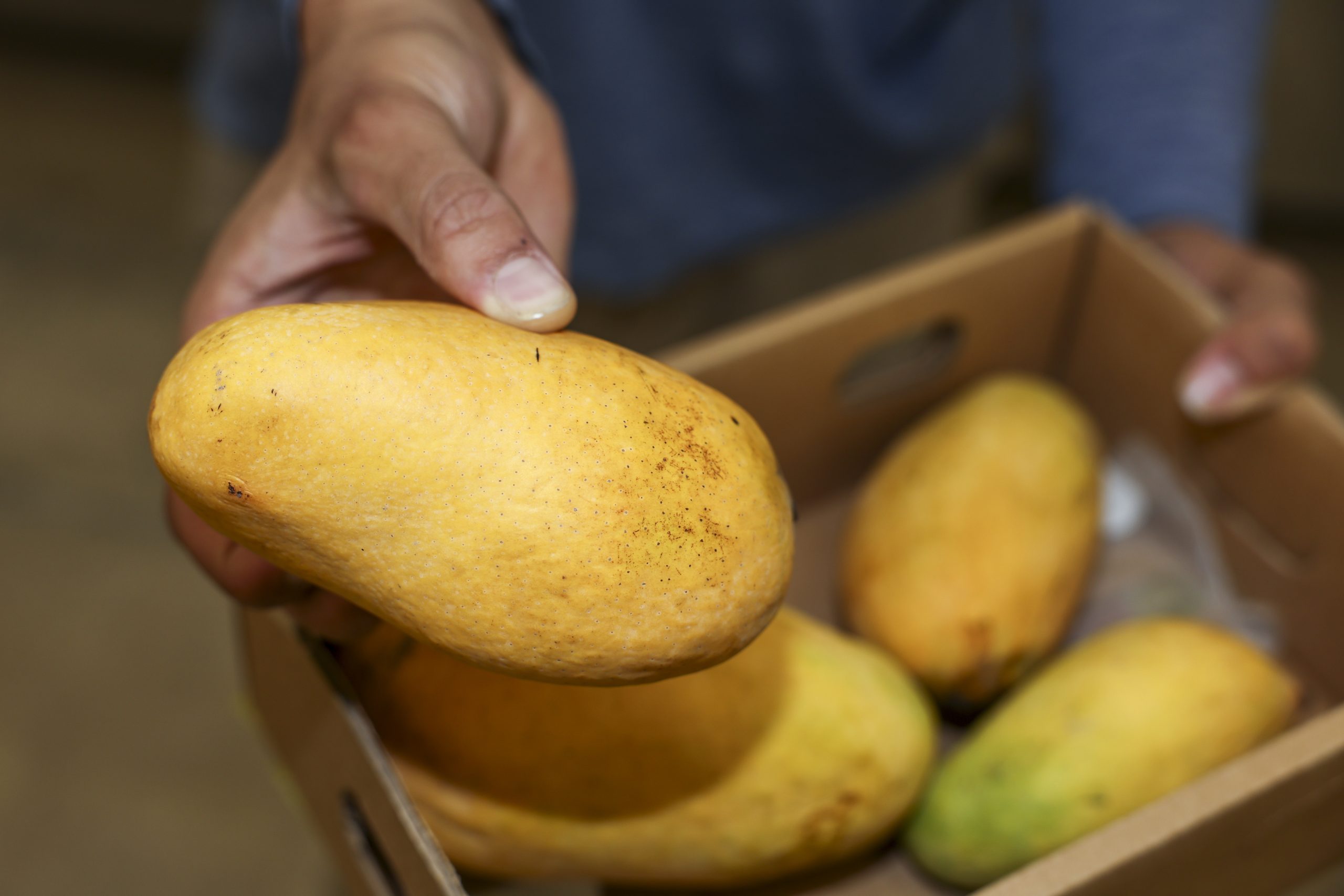
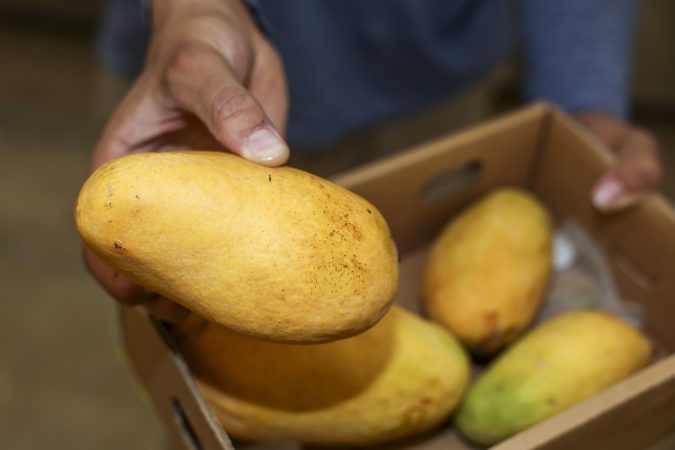
🥭 Pakistani mangoes, approved for import in 2010, are hard to come by in the U.S. due to high transport costs, customs restrictions, and their short shelf life.
🥭 But a network of dealers across the country makes it possible for people to enjoy the highly coveted fruit. Mango middlemen sell them through WhatsApp groups at a premium.
🥭 A father-son duo of a Delco farmers market talked to The Inquirer about what it took to navigate this high-stakes network, and the satisfaction of acquiring the sweet fruit. “It smells like you’re in Pakistan, that’s how fresh they are,” Musa Khan told food reporter Hira Qureshi.
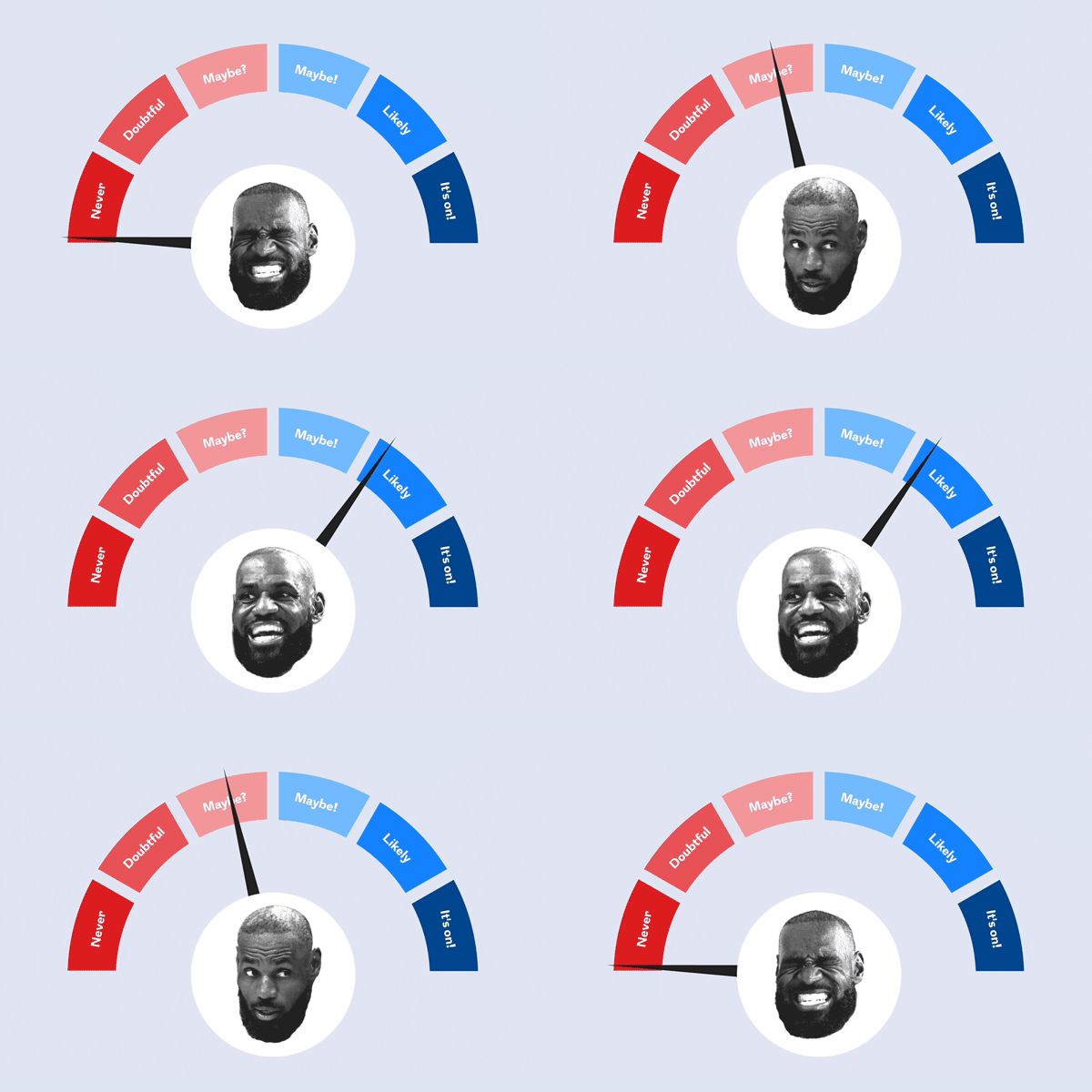
At 41, basketball superstar LeBron James is considering several suitors for his 24th season with the NBA, and insiders are reporting that Philly is among the top destinations.
But is it at all likely for him to join the Sixers? 🤞
Enter the Bron-O-Meter. We built it to keep our finger on the pulse of the latest reporting, analysis, and speculation surrounding the all-time great’s moves.
It’s wholly unscientific, but with the rumor mill working overtime, the tool lets us peep the evolving possibility that he may or may not come to South Broad.
Philly firefighters and paramedics will receive smaller wage increases than police officers got for the first time in two decades. The head of the union said the new contract is a “middle finger” to the city’s emergency medical personnel.
An Oregon man was sentenced to 30 years in prison Thursday for fatally stabbing a beloved South Jersey veterinarian at the vet’s Cherry Hill home.
Police officers in one of Philadelphia’s largest districts frequently failed to activate their body-worn cameras during encounters that department policy required them to record, according to a new audit.
SEPTA is trading Glenside Regional Rail riders three scheduled daytime trains for new off-peak options, more train cars, and new schedules aimed at preventing delays.
Bryce Harper declined to comment Thursday on an Inquirer report that FanDuel sent a personalized video of him to a VIP bettor with a gambling addiction.
A New York-based developer who outbid real estate investor Dean Adler and Philadelphia’s PMC Property Group for control of the huge office complex at Centre Square has decided to walk away from the property.
In a rare move, Pennsylvania’s two senators have created a joint fundraising committeethat would allow them to split money from donors who want to give to both of their campaigns, despite being members of different parities.
The Ben Franklin Bridge will be closed to vehicles for much of Saturday, allowing pedestrians to walk the span’s roadway. Here are the details of the party shutting down the bridge.
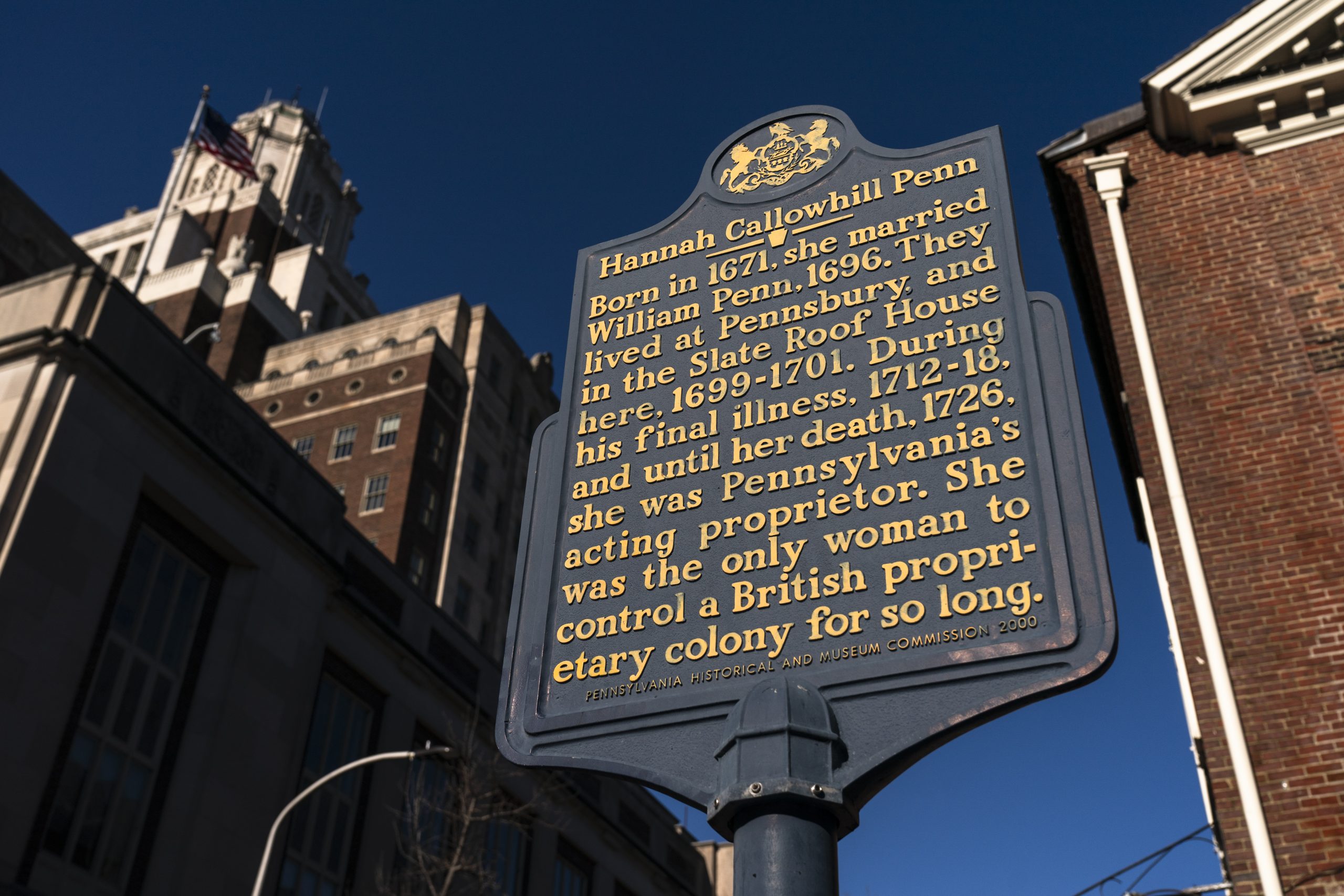
This week, we’re resurfacing an explainer from 2024 on how to nominate a person, place, or event to be immortalized on a blue-and-yellow plaque.
More than 320 historical markers line the streets of Philadelphia, and about two dozen new ones join the ranks annually, according to the Pennsylvania Historical and Museum Commission. Here’s what they told us about the process.
Will Smith was ready to go home on the night of the July 4 Parkway concert following bad weather. Then, he said he got a call from Mayor Cherelle L. Parker, pleading for a late-night concert. When recounting this on stage, Smith affectionately referred to the mayor by this nickname:
P.S. Yesterday’s trivia link was wrong. Sorry about that! Here is the correct story (and solution): The Vances added a chicken coop to the vice president’s residence.
What we’re…
🎸 Rocking out to: Concerts in Philly this week, featuring a triumvirate of legends and much more.
Cheers to Jeanne Maier, who solved Thursday’s anagram: The Schmitter. The iconic sandwich is making its triumphant return to Citizens Bank Park for the All-Star game.
Photo of the day
Margaret Lord, founder of Music With Miss Margaret, makes bubbles at Rittenhouse Square. Lord hosts bubble shows around the city for children and toddlers to enjoy.Aidan T. Gallo / Staff Photographer
Thanks for reading, and have a great weekend when you get there.
By submitting your written, visual, and/or audio contributions, you agree to The Inquirer’s Terms of Use, including the grant of rights in Section 10.
A familiar legend at Delaware County’s Darby Free Library goes as follows.
It was an October day in 1947 when a woman walked into the library and returned a book. The woman had found the library book while going through her late grandfather’s possessions, she said, and she was returning it on his behalf. What was remarkable was that the book had been taken out of the library in the mid-1800s, more than 100 years earlier. It was overdue by a century.
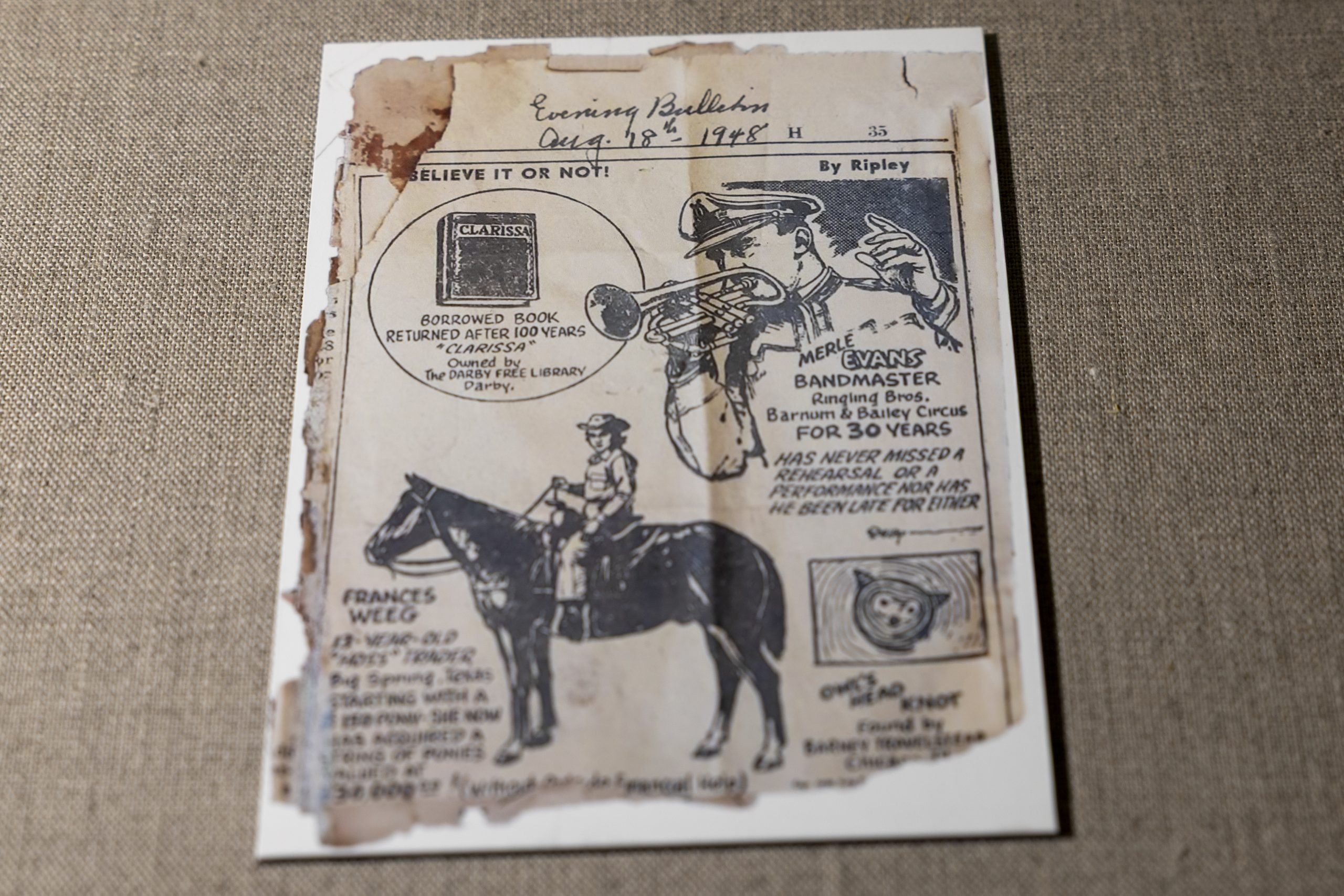
The local paper purportedly caught wind of the story, and on Aug. 18, 1948, the tale was featured in the Ripley’s Believe It or Not! panel and syndicated in over 750 newspapers around the world.
“BORROWED BOOK RETURNED AFTER 100 YEARS,” the Ripley‘s panel declared.
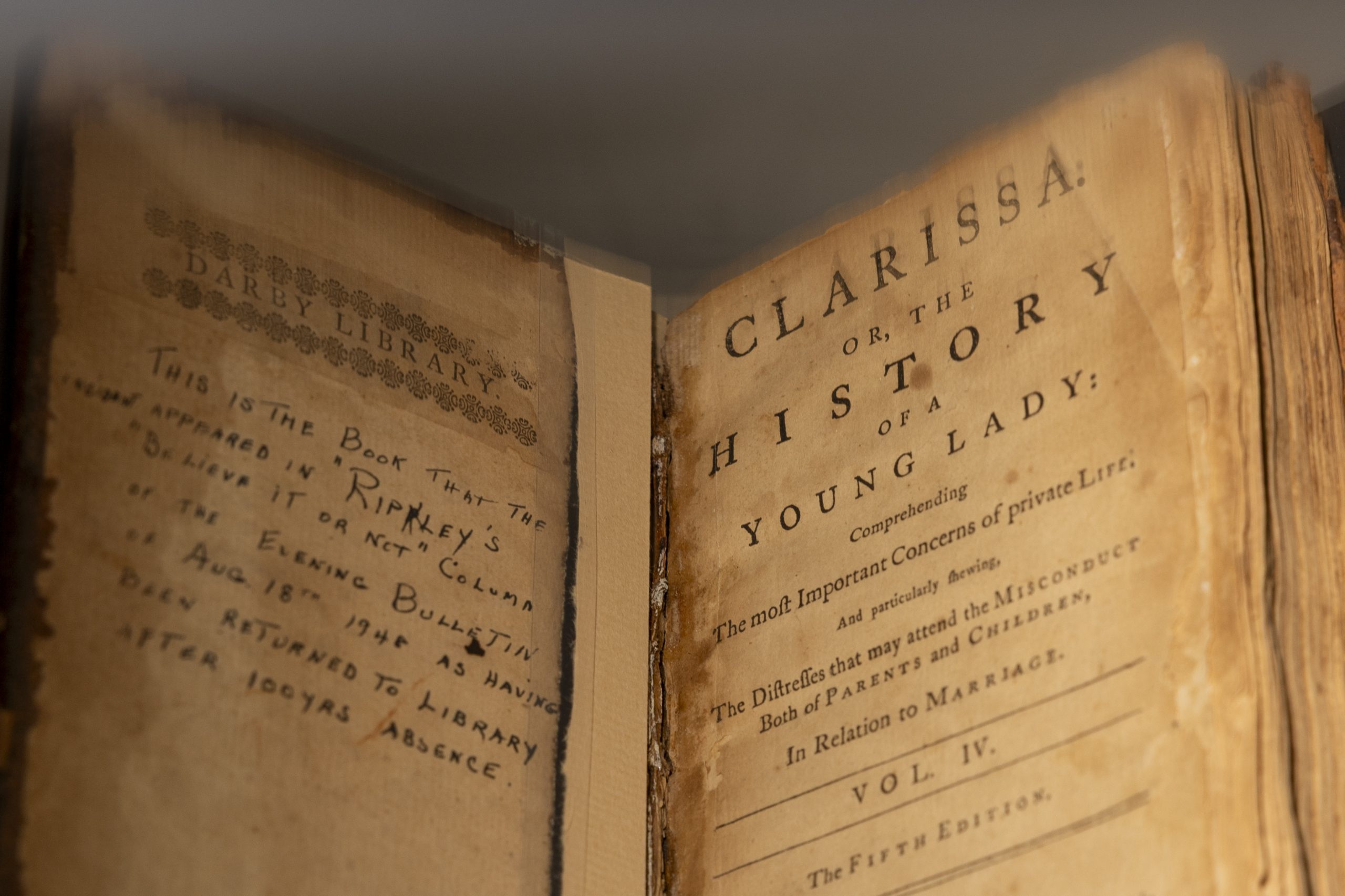
The “Ripley’s Believe It or Not” clipping about the century-overdue volume of “Clarissa” inside the Darby Free Library. Aidan T. Gallo / Staff Photographer
The famed book wasvolume four of Clarissa, a 1748 novel by Samuel Richardson that follows the trials and tribulations of Clarissa Harlowe, a young woman who flees home with a charming but untrustworthy man, Robert Lovelace. The book, considered controversial by many at the time,is written largely in the form of letters between Clarissa and Robert Lovelaceandis thought to bean early great psychological novel, exploring the characters’ inner lives and the complex themes of gender, power, and freedom. Clarissa spans seven to eight volumes and has a word count of nearly one million.
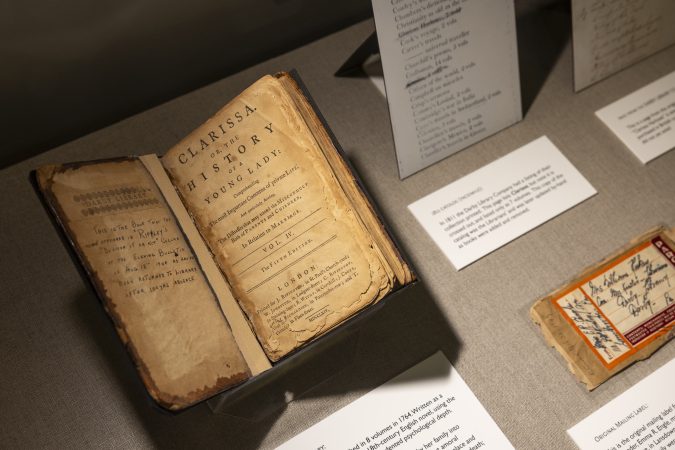
The Darby FreeLibrary’s Emily Finigan was sorting through the library’s collection a few years ago when she came across the famed overdue copy of Clarissa. Finigan found the book inside of a small box adorned with a mailing label. Attached to the mailing label was the Ripley’s clip, and inside the book was an inscription: “This is the book that the incident appeared in ‘Ripley’s Believe It or Not’ column of the Evening Bulletin of Aug. 18th, 1948 as having been returned to library after 100 yrs absence.”
Finigan wears a lot of hats at the library, including fundraising, volunteer work, and, with her husband, managing the library building’s restoration.
Finding Clarissa piqued her interest, and she began to wonder if she could use archival research to uncover the identity of the borrower who first checked out the 100-year overdue book.
Yet a quest to identify the original borrower of volume four of Clarissa sent Finigan down a rabbit hole that left her with more questions than answers: Was Clarissa really a century-old overdue book? And, if not, what really happened to the library’s copy of the 1700s novel?
The “Clarissa” copy inside the Darby Free Library.Aidan T. Gallo / Staff Photographer
The Darby FreeLibrary was founded in March 1743 by a group of Quaker farmers and merchants looking to organize their village’s first cultural institution. The group, made up of 29 townsmen, threw together money to purchase 45 original books, many of which are on display in the library today.
In 1826, the library offered up borrowing rights to anyone who could pay three pounds. In 1898, it became a public library. Nearly a century later, in 1984, the Darby Free Library was adopted into the Delaware County Libraries system.
According to records, the Darby Free Library acquired alleight volumes of Clarissa in 1769for 2 pounds, 6 shillings, and 2 pence.
By 1811, a catalog of the library’s collection only counted seven of eight volumes, a sign that one may have already gonemissing, or had beenborrowed by a reader.
Though the legend of the 100-year overdue volume of Clarissa involved a woman walking into the library to return the book, the copy, Finigan noted, had seemingly been mailed to the library, not returned by a mysterious visitor. So who mailed the package?
The original shipping label identified the sender as Emma Engle, a local librarian who mailed the book from her sister Josephine’s home in Landsdowne. Emma and Josephine’s parents and grandparents weren’t local to the area, according to archival research, making it unlikely that Emma Engle had returned her own grandfather’s book, as the legend went.
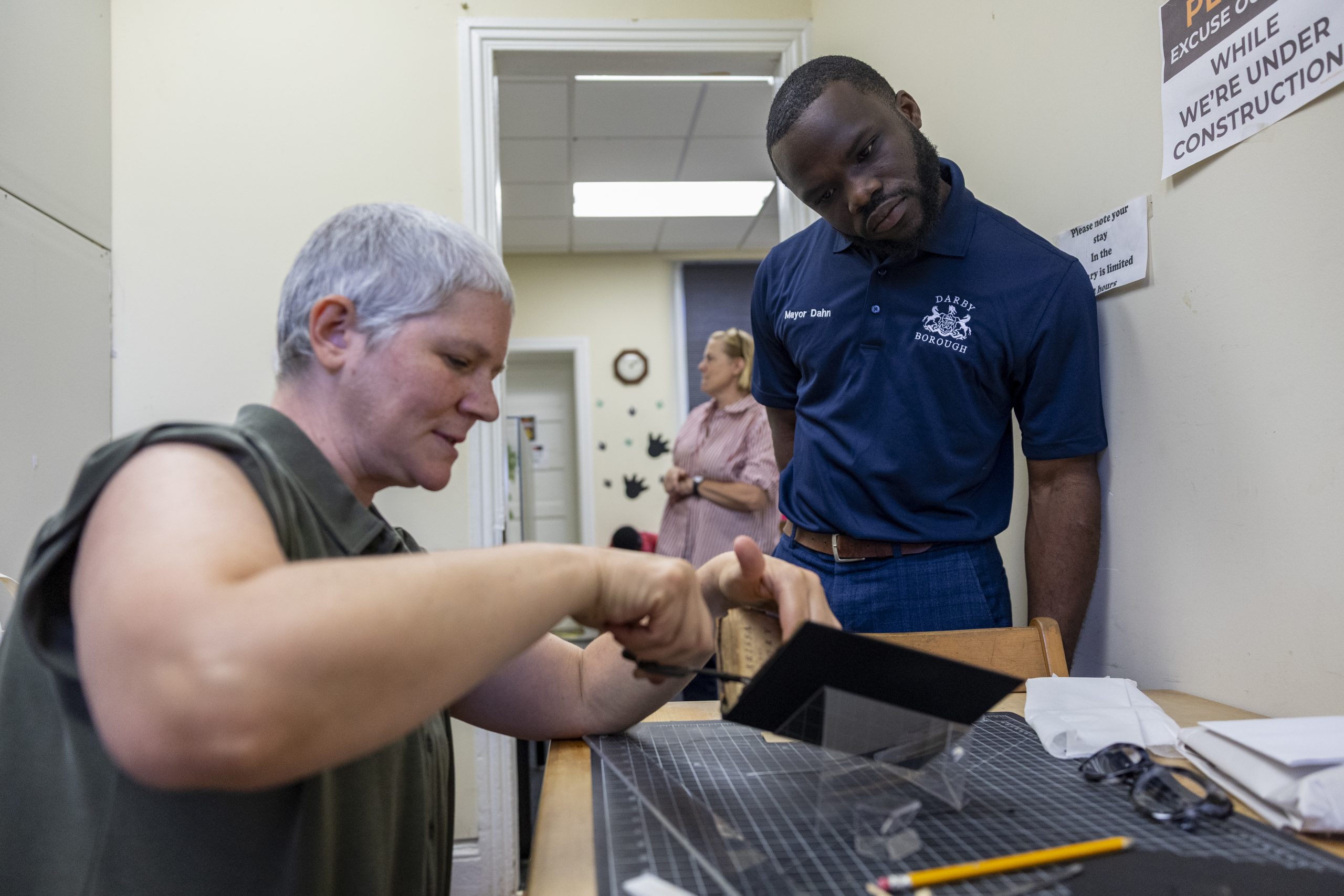
Darby Mayor Joar Dahn looks on while Liz McDermott, a conservation technician, handles a centuries-old copy of “Clarissa” at the Darby Free Library.Aidan T. Gallo / Staff Photographer
Josephine Engle, however, was married to a man named Isaac Rhoads, a member of the Darby Quaker Meeting, which was affiliated with the library. Isaac’s mother, Mary Hibberd Rhoads, was listed as a library member, and his grandfather, Samuel Rhoads, would have been alive around the time Clarissa was taken out of the library.
So was Engle mailing backa long-lost book once taken out, and never returned, by her brother-in-law’s grandfather? That’s one possibility, Finigan said.
Another possibility? The Darby Free Library may have sold off Clarissa in an attempt to clear its shelves of controversial material, and one volume made its way back to the library through Engle.
In 1826, the same year the library opened borrowing rights to the community, it appointed a committee to make a list of books that it “may be expedient … to dispose of.” When they met again the following year, a number of titles had made the chopping block, includingthe seven accounted-for volumes of Clarissa.
Why would the Darby Free Library want to sell Clarissa, among other books? Finigan has a few ideas. In the eighteenth and nineteen centuries, some saw novels as frivolous, distracting, and tempting readers toward vanity. Somenovels with more sinister or self-interested characters may have been viewed as at-odds with the values of honesty and sincerity held by Darby’s Quaker residents, Finigan said.
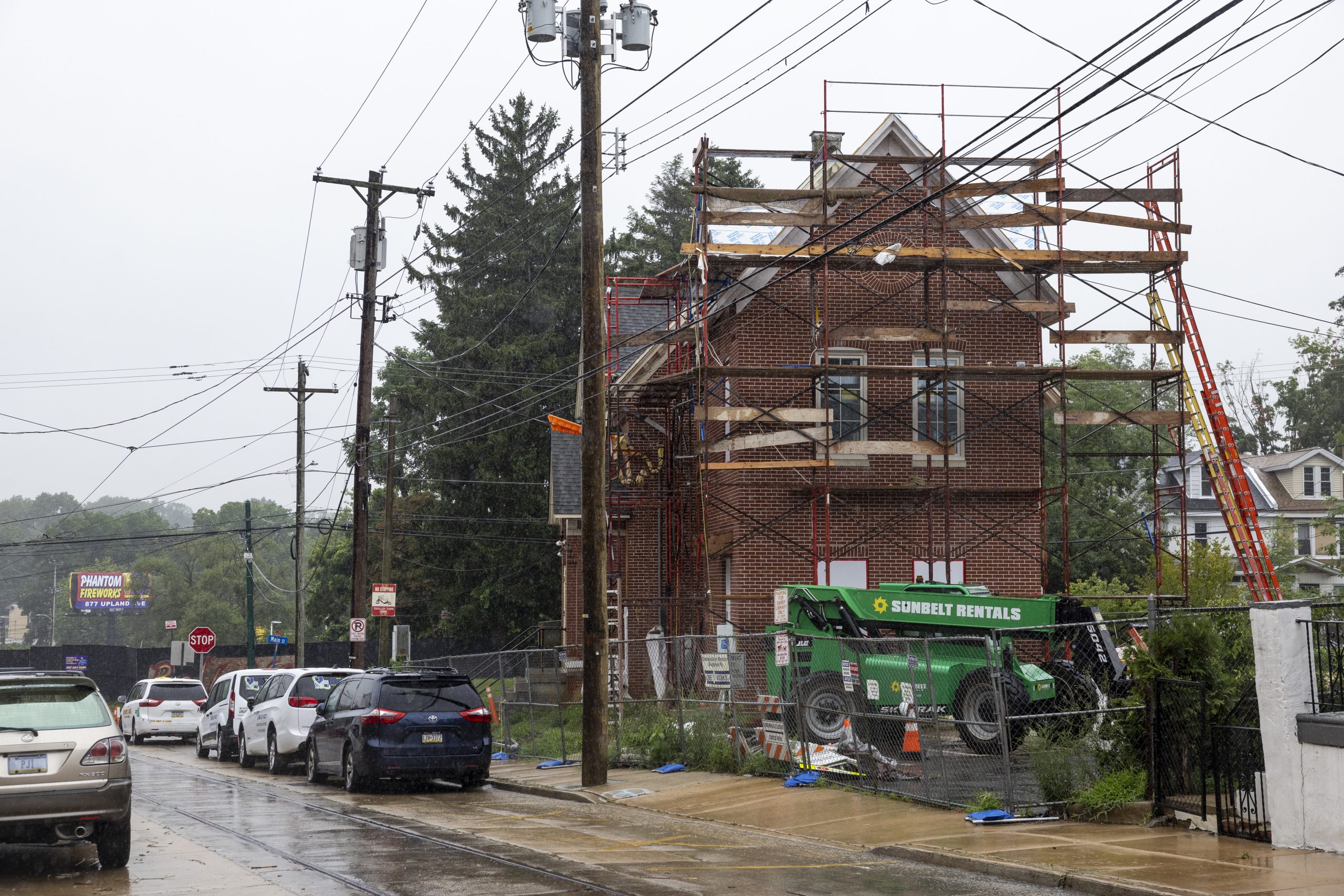
The Darby Free Library in Delaware County, founded in 1743, is currently undergoing renovations. Aidan T. Gallo / Staff Photographer
So, was the missing volume of Clarissa actually removed from the library in the early 1800s for objectionable content? That would be one explanationas to why seven, not eight, volumes were listed for sale in 1827.
Was volume four actuallysold with the rest of the collection in 1827 before eventually making it back to the library through Emma Engle? Could the list of seven, andnot eight, volumes have been an incorrect count?
Or could it havetruly beenan overdue book, taken out by a relative of Emma Engle’s and returned over 100 years later?
Finigan says the mystery remains, and may never be revealed. But curious minds can view the famed “century overdue” copy of Clarissa at the Darby Free Library from July 10 through Aug. 1 during normal library hours.
“Treasures from the Darby Library: THE 100-YEAR OVERDUE BOOK”
This suburban content is produced with support from the Leslie Miller and Richard Worley Foundation and The Lenfest Institute for Journalism. Editorial content is created independently of the project donors. Gifts to support The Inquirer’s high-impact journalism can be made at inquirer.com/donate. A list of Lenfest Institute donors can be found at lenfestinstitute.org/supporters.
This week’s Shackamaxon covers property tax assessments, state budget negotiations, and Pennsylvania’s gambling dependence.
Assessment anger
Philadelphia property owners have by now received one of the least anticipated pieces of snail mail of the year: our assessment notifications. My own home’s value went up by around $30,000, meaning my family will have to fork over another $400 a year to the city and school district.
Ever since Mayor Michael A. Nutter instituted the Actual Value Initiative in 2013, property taxes in Philadelphia have become an increasingly contentious issue. In the past, valuations stuck around for years — whether or not they matched the overall economic climate.
This meant some property owners were stuck paying more than they should, while others were getting a significant break. By switching to AVI, Nutter hoped to create a system that would be fairer. It also ensured city coffers would benefit from investments in neighborhoods.
This being Philadelphia, however, nothing is so simple.
While many of the underassessed properties were owned by people of significant means, like landlords or vacant-land speculators, the city also has one of the largest concentrations of low-income homeowners in the country. While no one wants to pay an additional $400 a year, this kind of increase is much harder to manage for the nearly 100,000 Philadelphia homeowners who earn less than $50,000.
That is why City Council often feels pressure to provide relief. Sometimes, however, the conversation on this topic would lead one to believe the city currently does nothing for longtime, low-income residents who are struggling with higher bills. Fortunately, this is not the case.
The biggest program on offer is the Homestead Exemption, which allows resident homeowners to deduct roughly $1,400 from their property tax bill. For those whose home is worth less than $200,000, they are getting more than half of their bill eliminated. There’s also the Longtime Owner Occupants Program and the senior tax freeze.
City Hall is also helping homeowners keep up with the costs of repairs. Mayor Cherelle L. Parker’s H.O.M.E. Initiative offers $10,000 to help fix problems like leaky roofs, and the Adaptive Modifications Program ensures residents can age in place or adapt to unexpected physical limitations.
Between those programs, the city is spending hundreds of millions of dollars each year on protecting homeowners. That’s more than the combined receipts for the proposed rideshare tax, the soda tax, and the liquor-by-the-drink tax. Renters, who tend to be poorer and more cost-burdened than homeowners, get comparably little support from City Hall.
When City Council returns this fall and considers how to react to rising assessments, the conversation must reflect how much Philadelphia already does to help struggling homeowners.
Gov. Josh Shapiro delivers his third budget address to a joint session of the state House and Senate at the state Capitol in 2025.Tom Gralish / Staff Photographer
Budget funding
Even though state senators have been called back for budget votes, there’s still no official word on what will be in the document.
Last year, the commonwealth spent just over $50 billion, while bringing in just under $49 billion in revenue. This meant using money from the state’s reserves — although the Rainy Day Fund, which has around $8 billion, was not touched. Instead, state leaders cannibalized other sources, like the Public Transportation Trust Fund, to pay for services without raising taxes.
The plan Gov. Josh Shapiro unveiled in February proposed around $53 billion in spending. Absent new sources of revenue, this would require tapping into the Rainy Day Fund. It remains to be seen whether Harrisburg will finally act on so-called games of skill. Taxing the machines could bring in around $1 billion per year, which would significantly close the gap between projected revenue and the governor’s proposal.
Still, no one expects the Republican-controlled Senate to approve the full proposal. In the past, they’ve objected to any increase in funding for public transit agencies, for which Shapiro has proposed an additional $300 million. There’s also another $565 million in funding for schools, meant to address a structural imbalance that the courts have ordered rectified. Given the emphasis from Mayor Parker, Council President Kenyatta Johnson, and the city’s legislative delegation on education funding, it’d be a surprise if the final deal did not include a significant increase in support for schools.
Philadelphia Phillies first baseman and star hitter Bryce Harper appears in a custom-made video for the betting site FanDual.Obtained by The Inquirer
Aiding in betting
The biggest reason not to tax skill games is that Pennsylvania is already too dependent on gambling to pay the bills.
Between brick-and-mortar casinos and online betting outlets, the commonwealth generated more than $270 million in revenue in just May of this year. The sports betting platform FanDuel even subsidized SEPTA service for the Eagles’ playoff run. While this money does help avoid unpopular service cuts and tax increases, it comes with its own costs. Research says that problem gambling is on the rise, with the ease of betting on your phone a key component.
While gambling has long been a part of human society, the legal online gambling platforms that dominate the scene today are unprecedented. Inquirer reporter David Gambacorta managed to locate one local man who wagered $18.5 million on sports. Along the way, he was offered multiple perks to keep him in the game. Casinos have long sought to keep big spenders happy through meal vouchers, free drinks, and comped accommodations. FanDuel went a step further: It secured a personalized video from Phillies star Bryce Harper.
Part of the justification for legalizing gambling was to clean things up. Legitimate businesses don’t break kneecaps or organize “bust outs.” They had to operate with the kind of regulatory guardrails that simply didn’t apply to illegal bookies who dominated the trade not so long ago.
Stories like these complicate that logic. The more lawmakers in the Keystone State rely on gambling to pay our bills, the more complicit we are in the industry’s misdeeds.
On a warm June evening, Aqeel Ahmed and his son Musa Khan eagerly waited outside their recently opened Delco Farmers Market in Folcroft for a minivan and its long-awaited cargo.
The drop-off occurred at 6 p.m., with their Upper Darby supplier pulling up right on schedule.
The 36 boxes of Anwar Ratol, Chaunsa, and Sindhri mangos filled the market’s produce section with a smell that defined Ahmed’s summers growing up in Karachi.
“It smells like you’re in Pakistan. That’s how fresh they are,” Khan said.
The cargo of mangoes had traveled more than 7,000 air miles from Khan and Ahmed’s homeland, where they are considered the “King of Fruits” and celebrated in songs and poetry.
Within six hours, all 36 boxes were sold.
With customs restrictions, high transport costs, and a short shelf life, Pakistani mangoes are difficult to come by in the U.S. despite being approved for import in 2010. A network of mango dealers across the country makes it possible for the diaspora to acquire their homeland’s national fruit, albeit from a limited supply.
Musa Khan (left) and his father, Aqeel Ahmed, pose while holding Sindhri mangos at the Delco Farmers Market on Monday, July 6, 2026, in Folcroft.Monica Herndon / Staff Photographer
“For a group of internet-savvy immigrants and their children, a new option has emerged over the past few years: Middlemen and logistics experts acquire the mangoes from farms in Pakistan and sell them over WhatsApp at a premium, often only a few days after harvest,” James Beard-winning writer Ahmed Ali Akbar wrote in the food publication Eater in 2021.
A member of the Philly-area Muslim and Pakistani communities, Aqeel Ahmed was aware of the vast mango trade network and wanted to sell the fruit even before he opened the supermarket in May.
“When it was illegal to bring Pakistani mangoes, people — not my dad — would smuggle it from Canada, because it was legal to bring [the fruit] there,“ Khan said. ”A lot of people used to drive all the way to Chicago, New York, and California to get these mangoes. So it was a big thing and you always knew who had it.”
Ahmed previously ordered from a mango middleman in Long Island. His son was 12 years old when he had his first bite of a Pakistani mango in America.
“It just tasted better; it was so refreshing,” Khan, 19, said. “They’re juicier — you need to eat it over the sink because every time it’s a mess. And it’s definitely sweeter.”
Ahmed began his search for a local mango dealer in early April. Mango season, which lasts roughly from April to September in Pakistan was around the corner and he knew dealers would be overwhelmed with orders soon. He heard through the WhatsApp grapevine that there was a mango middleman in Upper Darby. So he spent the month calling all the people he knew in the area.
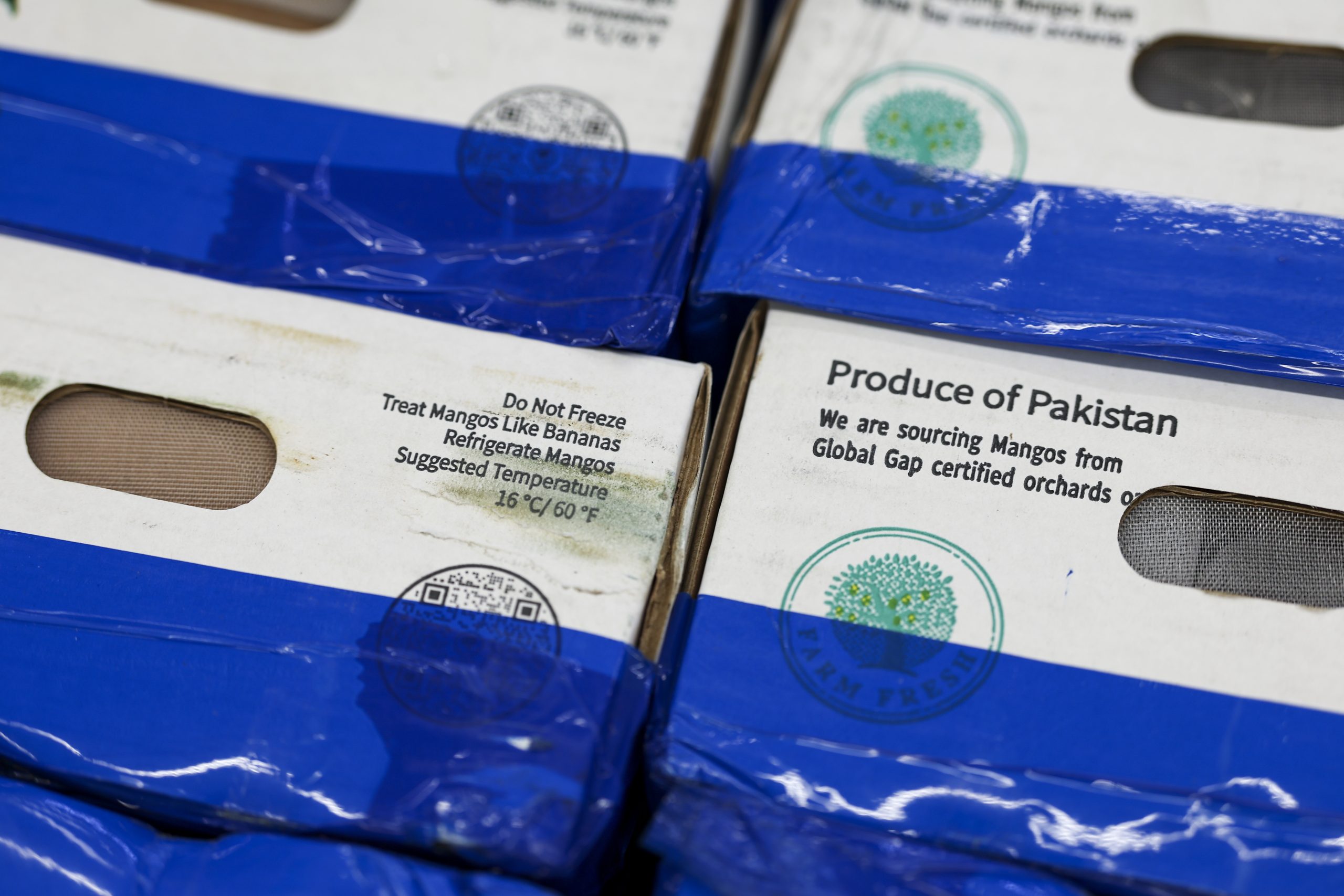
Boxes of Sindhri and Chaunsa mangos from Pakistan are on display at the Delco Farmers Market on Monday, July 6, 2026 in Folcroft.Monica Herndon / Staff Photographer
At the end of April, he made contact.
“My dad called him and said, ‘I’m local in the community as well. We’re opening up a big supermarket and we want to sell Pakistani mangoes,’” Khan said. “It took a little bit of convincing, but [the mango dealer] was able to get us boxes … there’s such a high demand.”
The Upper Darby middleman initially gave the father-and-son duo 12 boxes each of three varieties of mangoes: the small, sweet, and aromatic Anwar Ratol; the almost fiberless, custard-like Chaunsa; and the sweet-tart Sindhri.
Each 4.4-pound box held six or seven mangoes and cost the store $33.
Before the July Fourth holiday, Ahmed ordered another shipment to replenish the first. There were fewer than 200 boxes being sold at the store for $40 each, with a four-to-five day shelf-life.
Pakistani mangoes can go for over $7 apiece due to transportation costs, Akbar said.
After one post about their mango stock, Khan said the store’s Instagram DMs were flooded with people looking to buy. Some even asked if the mangoes could be shipped as far as Kansas, California, and Ohio.
But this was the last order from the mango dealer, Khan said.
With the high demand, the Delco Farmers Market family is looking to cut out the middleman and import directly from Pakistan.
“We didn’t ask [the mango middleman] how he got them,” said Khan, “but we figured out how after a company in Pakistan contacted us on Instagram.”
Middlemen across the country pick up mangoes from airport cargo bays, including Ahmed’s dealer who picks up his stock from the Philadelphia airport. With no direct flights to America from Pakistan, the mangoes need to secure passage to a hub city like Dubai before arriving at an American international airport, said Akbar.
Upon arrival, the fruit is taken to an irradiation facility, quarantined, and then loaded onto another cargo flight.
And all of this needs to happen within a few days of harvest before the fruit spoils.
Boxes of Sindhri and Chaunsa mangos from Pakistan on display at the Delco Farmers Market on Monday, July 6, 2026 in Folcroft.Monica Herndon / Staff Photographer
The next step to going solo, Khan said, is to figure out a way to get the mangoes to Dubai and then to an international airport in Texas or New York.
“Our main goal is to have our own boxes — we want them to say Delco Farmers Market,” Khan said.
Growing up in Lower Merion, Khan never saw a big supermarket dedicated to selling Pakistani and halal products in his neighborhood. The goal for his family, he said, was to be that hub where Philly-area immigrants and diaspora could shop for meat, prepared foods, and fruit from their home country.
“We’re not making anything by selling Pakistani mangoes, but we’re serving the community,” Khan said. “And to have them in our own store after eating it as a kid is a full-circle moment.”
Q: I know so many people who have been diagnosed with cancer. Are rates really going up? Why does it seem so common now?
A: Cancer is a global problem. If it seems like there are more cancer diagnoses than ever, you’re right: In 1975, about 400 per 100,000 people in the United States were diagnosed with cancer. In 2023, the incidence was 456 per 100,000, though overall rates have been mostly stable since 2014.
While more people are being diagnosed with cancer today compared with 50 years ago — either because of an increase in actual cases, better detection, or a changing definition of what’s considered cancer — the good news is that fewer are dying of it. Since 1999, age-adjusted cancer death rates fell dramatically, from 201 per 100,000 people in 1999, to 142 per 100,000 people in 2023.
To understand how these can both be possible at the same time — and how, ultimately, the outlook for those diagnosed with cancer is quite positive — it helps to first understand what cancer is, how it occurs, and how modern treatments have learned how to exploit the diagnosis for good.
What is cancer and how does it start?
Put simply, cancer involves the uncontrolled growth of cells in the body. While there are a number of possible causes, they are all related to errors that happen in the cell’s genetic instructions, or DNA.
The cell can make a random mistake when replicating, resulting in a cell that grows faster than other cells around it. Or, the cell can be damaged by carcinogens, such as ultraviolet light or the chemicals in cigarettes.
Some cancers can also occur when a cell’s “self-destruct” code malfunctions. Our bodies recognize when cells are damaged, grow too rapidly, or otherwise behave abnormally, then react by sending out chemical signals that tell the cells to stop growing or self-destruct. Errors can alter that signal or affect a cell’s ability to recognize it; the cell turns a deaf ear to the instructions from the body to cease and desist.
Most genetic errors that cause uncontrolled cell growth occur because of bad luck. The longer we live, the more of our cells divide, increasing the statistical likelihood that one of those cells will make a mistake when replicating and develop into cancer. This is why most cancers are diagnosed in older adults.
Another form of bad luck includes genetic mutations we’re born with. It is estimated that up to 10% of cancers are caused by inherited genetic abnormalities such as BRCA1 and BRCA2, which are linked to breast, ovarian, and prostate cancers, among others.
Some genetic errors are introduced by viruses. Anywhere from 13 to 20% of cancers worldwide are thought to be due to viruses, such as human papilloma virus, or HPV, Epstein-Barr virus and hepatitis B and C, and bacteria, such as Helicobacter pylori.
Other extrinsic or “outside of the body” factors can break or damage a cell’s DNA and lead to cancer, including smoking, alcohol intake, and exposure to ultraviolet radiation from the sun or other sources, such as tanning beds. Less common DNA-damaging culprits include environmental exposures such as industrial chemicals, nuclear radiation, chemotherapy, or radiation therapy used to treat other cancers.
Once created, cancer cells are insidious: They can instruct blood vessels to grow toward tumors, thus ensuring their own survival by having an adequate supply of oxygen and nutrients; they can hide from the immune system, cloaking themselves to prevent their own destruction; and they can even trick the immune system into helping them survive and thrive.
Why have cancer rates increased over time?
Overall, people are living longer because deaths from cardiovascular disease, stroke, and other medical conditions have declined. As we extend our life span, though, we increase that statistical likelihood that our cells accumulate genetic mutations.
Cancer rates can also change depending on how we define “cancer.” For example, many of my patients have a type of bone marrow cancer called myelodysplastic syndromes. It was only about 25 years ago that the Centers for Disease Control and Prevention and the National Cancer Institute formally recognized this condition as a cancer, and started tracking it alongside more common cancers like those of the lung, breast, or prostate. Once these government agencies decided to call myelodysplastic syndromes a cancer, overnight the numbers of cancers diagnosed in the U.S. increased by about 20,000 per year.
And much of the increase in cancer diagnoses can be attributed to better detection. Radiology scans have become more refined and sensitive, making them better at detecting abnormalities that lead to cancer diagnoses. Laboratory tests have been developed to identify markers in the blood (such as certain proteins) that suggest cancer may be present before it otherwise would have been discovered.
Cancer screening programs, which are designed to detect cancer in its early stages, when it is potentially more curable, have uncovered more slower-growing cancers — including ductal carcinoma in situ of the breast in women or early stage prostate cancer in men — that previously never would have been diagnosed.
While there are increases in certain kinds of cancer (which generate a lot of discussion), such as colorectal cancer in people under 50, it’s also true that cancer rates are dropping in other groups, like colorectal cancer in people over 50.
Treatments to target and eliminate cancer keep getting better
There is some good news: People are living longer than ever following a cancer diagnosis. The National Cancer Institute’s Division of Cancer Control & Population Sciences estimates that there are over 18 million cancer survivors in the U.S. and that this number is expected to grow to 26 million by 2040. Seventy percent of survivors live five or more years following their diagnosis, approximately half live 10 or more years and three-quarters of survivors are 60 years or older.
While some of the improved survival from cancer can be attributed to the increased number of early-stage cancers detected, we can also thank advancements in cancer therapies. Traditional chemotherapies damage cells during the division process, taking advantage of those rapidly dividing cancer cells. Other drugs, called angiogenesis inhibitors, help prevent the growth of blood vessels that feed the tumor. These treatment approaches, though, are not always specific to a given person’s cancer, and tend to affect the growth of noncancerous cells, too.
But over the past two to three decades, medications have been developed that target specific genetic mutations within the cancer cells, such as the HER2 abnormality in breast cancer, ALK in lung cancer, FLT3 in leukemia, and more recently KRAS in pancreatic cancer, among many, many others.
And within the past 10 to 15 years, there has been a revolution in the use of immunotherapy to treat cancer, with drugs that specifically target proteins on the outside of cancer cells, or that harness a patient’s own immune system to essentially train it to find and eliminate cancer. These newer, innovative treatments have improved the rates and duration of remission and even survival for a number of cancers, and have retooled how we treat cancer.
So while it is true that there seems to be more cancer than ever, there is also more hope than ever, as cancer is being detected earlier, eliminated more effectively, or transformed to a chronic condition rather than a life-threatening one.
Mikkael A. Sekeres, MD, MS, is the chief of the division of hematology and professor of medicine at the Sylvester Comprehensive Cancer Center at the University of Miami. He is author of the books “When Blood Breaks Down: Life Lessons from Leukemia” and “Drugs and the FDA: Safety, Efficacy, and the Public’s Trust.”
Jefferson Einstein Philadelphia Hospital was cited by the Pennsylvania Department of Health for maintenance and sanitation issues in March.
The incident was one of nine times inspectors visited the hospital, formerly known as Einstein Medical Center, to investigate potential safety problems.
Here’s a look at the publicly available details:
April 15, 2025: Inspectors came to investigate a complaint but found the hospital was in compliance. Complaint details are not made public when inspectors determine it was unfounded.
June 3: Inspectors came to investigate a complaint but found the hospital was in compliance.
June 18: Inspectors came to investigate a complaint but found the hospital was in compliance.
July 30: Inspectors came to investigate a complaint but found the hospital was in compliance.
Sept. 30: Inspectors came to investigate a complaint but found the hospital was in compliance.
Nov. 19: Inspectors came to investigate a complaint but found the hospital was in compliance.
Jan. 23, 2026: Inspectors came to investigate a complaint but found the hospital was in compliance.
March 11: Inspectors visited for a mental health survey and found the hospital was in compliance.
March 11: Inspectors cited the hospital for sanitation issues in several rooms, including tacky floor stains, debris left in trash cans, and a dark substance in the corners of a shower stall. Inspectors also found the hospital had not installed sloped safety coverings for medical gas and vacuum valves on the wall above the bed in four patient rooms. Without the coverings, the exposed valves posed a ligature risk, meaning a patient could use the edges to harm themselves. Hospital administrators agreed to install valve covers and retrained staff on cleaning procedures.
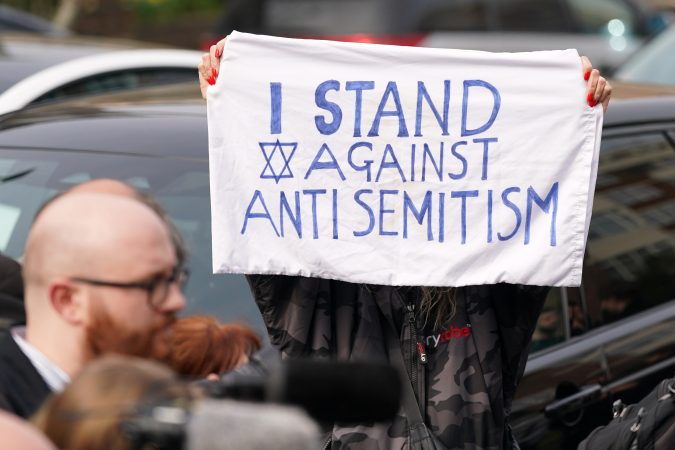
One hundred and twenty years ago Sunday, Alfred Dreyfus, a French army captain, was exonerated of his wrongful conviction on espionage charges— bringing to an end an explosive and tortuous process marked by antisemitism, deceit, and the complicity of France’s military in aiding one of the first great miscarriages of justice to play out in the modern media age.
Dreyfus was arrested in December 1894 after being accused of passing military secrets to the German Embassy in Paris. He was court-martialed, convicted, and sentenced to life imprisonment on France’s notorious Devil’s Island.
Historians now agree that a major factor in Dreyfus’ conviction was antisemitism. Dreyfus was a Jew from the Alsace region of France at a time when Jewish officers were rare in the army. They were subject to the same kinds of prejudice and discrimination faced in other parts of French society. A case was trumped up against him by the French military establishment, looking for a convenient scapegoat.
Following the trial, a French officer, Lt. Col. Georges Picquart, conducted further investigations that indicated that it was not Dreyfus, but another French officer, Maj. Ferdinand Walsin Esterhazy, who was responsible for passing the secrets to the Germans.
Astonishingly, in 1899, Dreyfus was again court-martialed and found guilty. Though he subsequently received a pardon from the president, he was not fully exonerated by France’s highest civilian appeals court until July 12, 1906.
There were many examples of great drama and heroism during what came to be known as the Dreyfus affair.
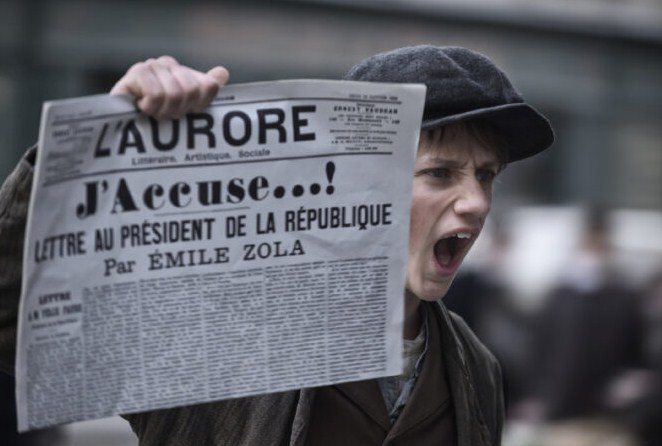
In 1898, the French author Émile Zola published an open letter to the French president in support of Dreyfus, headlined “J’accuse.” The power of Zola’s piece and its wide dissemination launched a movement in defense of Dreyfus but also reinforced divides: Dreyfusards and anti-Dreyfusards, liberal/secularists vs. conservatives, left vs. right.
A scene from Roman Polanski’s 2019 historical drama about the Dreyfus affair, “J’accuse” (“An Officer and a Spy”).Venice International Film Fest /
That the story spread so widely is even more remarkable considering that the key events in the case took place long before the emergence of electronic media — the widespread use of radios wouldn’t take hold for another 20 years or so after Dreyfus was cleared.
Nevertheless, the Dreyfus affair became a watershed moment in the media’s role in high-profile trialsanda yardstick by which subsequent miscarriages of justice were measured.
In the United States, the 1925 Scopes trial became a cause célèbre with a reach thatapproximated the Dreyfus affair, despite the very different facts surrounding that case.
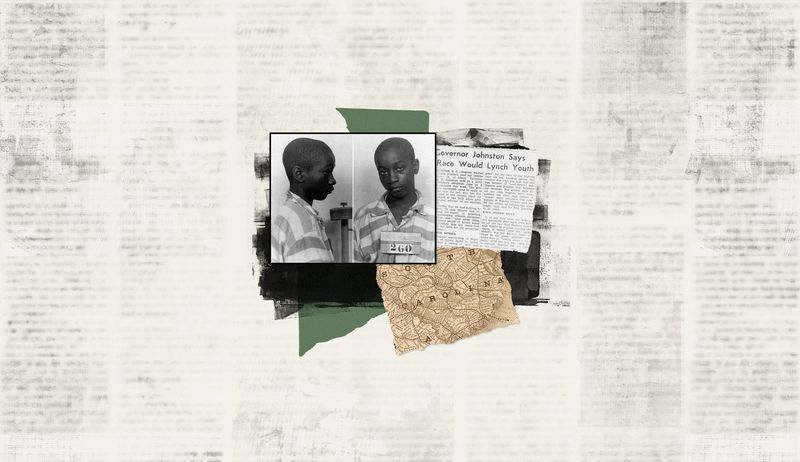
In 1944, South Carolina executed 14-year-old George Stinney Jr. after a 10-minute trial. Decades later, a judge declared his conviction unjust. Pictured are George Stinney Jr. in an undated booking photo and an article from Atlanta Daily World on June 23, 1944.Illustration: Andrea Brunty, USA
The execution of George Stinney Jr. — a 14-year-old Black boy who was wrongfully convicted of killing two white girls in South Carolina in 1944 — is one of the many controversial death penalty convictions that have also betrayed the principles of justice.
What distinguishes the Dreyfus affair is not just the case itself, but its aftermath. The exoneration of Dreyfus ultimately became an indictment of a political culture in France that was defined by secrecy, prejudice, institutional corruption, and arrogance.
Sadly, none of that is unfamiliar to us — so what have we learned in the past 120 years?
What have we learned? A dozen decades after Alfred Dreyfus was finally cleared — and at a time when antisemitic hate crimes continue to rise — that is a crucial question we must continue to ask ourselves.
Paul McElhinney is a writer and journalist living in Wexford, Ireland. He has contributed to many Irish, British, and American journals.