Blog

  • MLB All-Star Game events will close some roads in Philly

    MLB All-Star Game events will close some roads in Philly

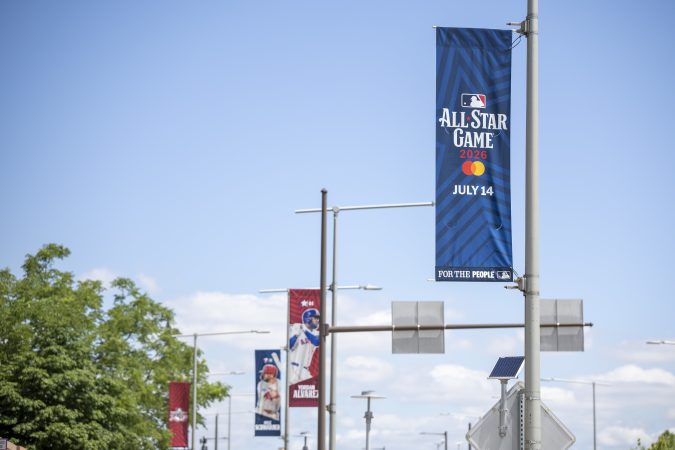
    Philadelphia’s packed summer slate continues with MLB All-Star Week, a five-day run of baseball events in South Philly and Center City that caps off with All-Star Game at Citizens Bank Park next week.

    And in addition to crowds of baseball fans, the occasion is also slated to bring a number of road closures and parking restrictions over the next few days.

    Officially, it all kicks off Friday at Citizens Bank Park with the HBCU Swingman Classic, a game that features 50 players from Division 1 historically Black colleges and universities. Events will run throughout the weekend and Monday ahead of the main event Tuesday.

    Here is what you need to know:

    Planned road closures

    Road closures kick off Friday afternoon in the area of Sixth and Market Streets for the Budweiser Clydesdales Hitch Parade. That event will close Sixth Street between Market and Chestnut Streets from 3 p.m. to 6 p.m., and additional rolling closures are expected to be implemented along the parade route between Sixth and Seventh Streets, and Walnut and Market Streets.

    Sunday brings a nighttime drone show that will see road closures on and around Eakins Oval from 9 p.m. to 10 p.m. Those closures will affect:

    • All lanes of Eakins Oval
    • Kelly Drive from Eakins Oval to Fairmount Avenue
    • Anne d’Harnoncourt Drive
    • The I-76 eastbound off-ramp at Spring Garden Street

    On Monday, Independence Mall will see road closures starting at 5 a.m. to accommodate building out the MLB Red Carpet Show. Set to be in place through midnight, those closures will impact:

    • Fifth Street between Market and Chestnut Streets
    • Ludlow Street between Fourth and Fifth Streets
    • Randstead Street between Fourth and Fifth Streets

    Independence Mall will remain tied up Tuesday for the MLB Red Carpet show itself, with closures again in place from 5 a.m. to midnight. Those closures will affect:

    • Fifth and Sixth Streets from Arch to Walnut Streets
    • Market and Chestnut Streets from Fourth to Seventh Streets
    • Ranstead and Sansom Streets from Sixth Street to Seventh Streets

    Philadelphia police, the city said, may institute additional closures in the interest of public safety.

    Parking restrictions

    All roads affected by closures will also be temporary no-parking zones, the city said. If vehicles are parked in those locations during the times they are closed, the vehicles will be moved.

    Drivers who may have had their cars moved should contact the police district of the area where their vehicle was parked, the city said.

    Other closures

    The Autopark parking garage at Independence Mall, located near Sixth and Arch Streets, will be closed starting at 11:59 p.m. Monday, the city said. Its Fifth Street exit will stay open for vehicles to leave and move, and all vehicles must be moved by 5 a.m. Tuesday.

    Additionally, the Philadelphia Independence Visitor Center will be closed to the public starting at noon on Tuesday, the city said.

    Public transportation

    To accommodate fans heading to Citizens Bank Park, SEPTA will run six additional express trains on the Broad Street Line, also known as the B Line, to NRG Station before and after the Home Run Derby and All-Star Game Monday and Tuesday.

    Free rides on the line from NRG Station will also be available at select times during those events. Free rides begin after the second round of the Home Run Derby on Monday, and after the sixth inning of the All-Star Game Tuesday, the city said.

  • Pa. lawmakers moonlight as lawyers, landlords, and even as a pilot. Advocates say it’s a conflict of interest.

    Pa. lawmakers moonlight as lawyers, landlords, and even as a pilot. Advocates say it’s a conflict of interest.

    When she’s not serving in the Pennsylvania House, State Rep. Marla Brown is teaching 13 fitness classes a week at the local YMCA.

    From cycling to core strength to high intensity hit lessons, the pressure of the state legislature transformed the Lawrence County Republican’s former fitness hobby into another job, squeezed in the morning, in the evening and on weekends between political commitments.

    “It keeps my mind healthy and active and engaged,” said Brown (R., Lawrence). “I think that’s vitally important in any career, and especially in politics where there’s so much negativity.”

    More than half of the General Assembly reports an outside business interest or alternative forms of income, according to an analysis of all 251 state lawmakers’ statements of financial interest by The Inquirer. They moonlight as attorneys, company executives, property managers, farmers, and other roles when they’re not in session.

    Local government reform advocates say public officials are inevitably influenced by the money they make on the side. Advocates from Rock the Capital and MarchOnHarrisburg have pushed for changes to moonlighting law, calling for bans on what they consider to be conflicts of interest.

    While there are few restrictions to private employment for legislators across the country, the majority of states don’t allow their legislators to work secondary jobs in the public sector, like government or public school positions. New York imposes a cap on earnings from legislators’ outside earned income. Pennsylvania hasn’t pursued any sanctions or caps on outside employment, public or private. Not all state legislators earning outside income are making working wages — more than 40 lawmakers earn passive income as landlords.

    Because the Pennsylvania Ethics Commission requires elected officials to report their businesses regardless of their earnings, it is difficult to say how many legislators are truly making significant profits on the side.

    State Sen. Jarrett Coleman (R., Lehigh) is an airline captain for JetBlue Airways. State Rep. Kathleen Tomlinson (R., Bucks) is a funeral director. State Sen. Jimmy Dillon (D., Philadelphia) runs a children’s basketball academy. State Rep. Dan Williams (D., Chester) is the senior pastor of New Life in Christ Fellowship in Coatesville.

    (function() {
    var l2 = function() {
    new pym.Parent(‘moonlighting_house’,
    ‘https://media.inquirer.com/storage/inquirer/projects/innovation/arcgis_iframe/moonlighting_house.html’);
    };
    if (typeof(pym) === ‘undefined’) {
    var h = document.getElementsByTagName(‘head’)[0],
    s = document.createElement(‘script’);
    s.type = ‘text/javascript’;
    s.src = ‘https://pym.nprapps.org/pym.v1.min.js’;
    s.onload = l2;
    h.appendChild(s);
    } else {
    l2();
    }
    })();

    Pennsylvania is the third highest-paid legislature in the country with a $106,000 annual salary for lawmakers. California and New York legislators make more, but reform advocates say Pennsylvania’s $181 per diem and other benefits likely push the state’s lawmakers to the top in terms of overall compensation.

    With six-figure compensation, Pennsylvania lawmakers are much better off than the average state legislator in the country making $43,494 annually (New Hampshire lawmakers are the lowest-paid at just $100 a year).

    Even so, the Pennsylvania General Assembly gathers fewer than 50 days a year, giving some members time to partake in personal endeavors, which has raised ethical concerns among advocates.

    “You either work for the people or you work for yourself,” said Michael Pollack, executive director of MarchOnHarrisburg, one of the groups pushing for reforms.

    Here’s what state legislators do in their free time, according to their 2023 Statements of Financial Interest.

    Pennsylvania legislator side hustles

    State legislators play a big part in making housing and rent law, but Pennsylvania has no rules limiting or banning legislators from acting as landlords, or in any career appealing to them.

    At least 40 state legislators earn income from rental properties or property management businesses across the Commonwealth. Another nine legislators work as executives for property insurance and realty companies.

    Of those serving in the state House and Senate’s housing committees, at least 11 legislators report income from rental properties or realty companies last year. These committees vote on legislation directly affecting renters, including amendments to Pennsylvania’s Landlord and Tenant Act.

    !function(){“use strict”;window.addEventListener(“message”,(function(a){if(void 0!==a.data[“datawrapper-height”]){var e=document.querySelectorAll(“iframe”);for(var t in a.data[“datawrapper-height”])for(var r=0;r<e.length;r++)if(e[r].contentWindow===a.source){var i=a.data["datawrapper-height"][t]+"px";e[r].style.height=i}}}))}();

    Not all landlord legislators rent out properties to their constituents, though.

    Sen. Frank Farry (R., Bucks), the majority chair of the Senate Urban Affairs & Housing committee, quadruples as a senator, attorney, fire chief, and rental property owner. Rather than traveling to and from the Capitol, he owns a Harrisburg rowhouse that he shares with other legislators during session. He also leases his former home to his in-laws in Langhorne.

    When his daughter moved to Pittsburgh, rather than moving into the newly flipped house he made for her, Rep. Jim Rigby (who DJs for friends and family) decided to rent the property out to local medical students. He says he has yet to break even on the cost.

    Attorneys make up another large chunk of the bucket, with more than 15% of the General Assembly working for law firms. Lawyers have a long-held tradition of dominating American politics, and the story is no different in Pennsylvania.

    Farry, an attorney with Begley, Carlin & Mandio, said he hasn’t set foot in a courtroom in years, but he still gives legal advice over the phone and never from his state Senate office.

    “There needs to be boundaries between my legal job and my Senate job,” Farry said, uncertain that others in the state legislature adhere to the same separations.

    (function() {
    var l2 = function() {
    new pym.Parent(‘moonlighting_senate’,
    ‘https://media.inquirer.com/storage/inquirer/projects/innovation/arcgis_iframe/moonlighting_senate.html’);
    };
    if (typeof(pym) === ‘undefined’) {
    var h = document.getElementsByTagName(‘head’)[0],
    s = document.createElement(‘script’);
    s.type = ‘text/javascript’;
    s.src = ‘https://pym.nprapps.org/pym.v1.min.js’;
    s.onload = l2;
    h.appendChild(s);
    } else {
    l2();
    }
    })();

    The ethics of attorneys-turned-lawmakers working for outside legal clients has been scrutinized for years. Legislators actively practicing could, in theory, meddle in laws affecting their clients, a worry of good government advocates.

    Sen. Gene Yaw (R., Lycoming) moonlights as an attorney for Williamsport-based McCormick Law Firm, which represents gas companies and practices environmental law. Yaw is the majority chair of the state Senate Environmental Resources & Energy committee.

    His firm also has represented Pace-O-Matic, the Georgia-based company dominating the skill games industry. In May, Yaw introduced the Skill Video Gaming Act, which would regulate and tax skill games in the commonwealth. Miele Manufacturing, which produces the systems for Pace-O-Matic in Pennsylvania, occupies Yaw’s district. Yaw did not return requests for comment.

    Pollack, MarchOnHarrisburg’s executive director, said Yaw’s legal side job is “absolutely ridiculous and corrupt as can be” and called for legislators to choose a side of the fence.

    Reform advocates say jobs in law, property management, and big business can create conflicts of interest for legislators.

    But lawmakers’ business interests aren’t confined to those industries. Eight lawmakers work in agriculture. Several others work in health, education, and the Pennsylvania National Guard. Personal businesses range from lake resorts to custom gunsmiths to farm animal pregnancy testing.

    “If you have two skis, and both skis are going in different directions, it’s hard to stay focused,” said Rock the Capital founder Eric Epstein, an advocate for reform.

    Questions remain about Pennsylvania lawmakers’ business interests

    Even if they’re not active in the company, Mary J. Fox, the executive director of the state Ethics Commission, said filers must report their businesses “whether they make money or not.”

    This means that legislators who own businesses that haven’t operated in years still must claim the job, making it unclear at times whether lawmakers are active employees.

    Rep. Michael Schlossberg (D., Lehigh) still must claim his iPhone trivia game company and author website, despite not earning income from either in years. Rep. Perry Warren (D., Bucks), a former ice cream truck driver in Long Beach Island, still claims his business Ice Cream and Dreams despite his last truck being sold in 2017.

    While some lawmakers continue operations as usual, others leave their co-owners, usually spouses, to continue the business while they serve or shut down their work altogether.

    “When I ran for office and got elected, my wife told everybody she fired me because I stopped showing up for work,” said Sen. Timothy Kearney (D., Delaware), the co-owner of architectural firm Cueto-Kearney Architects.

    Lawmakers do not have to report how much they make from their businesses or rental properties, even if they are actively employed. It is unclear how much any legislator is making outside of the General Assembly.

    “Is it a million dollars? Is it a thousand dollars? We’d like to know,” Pollack said.

    Lawmakers who take up other fields say the quality of their legislative work depends on their time spent in public service elsewhere.

    “It’s really a way to stay grounded in reality. One of the problems with being an elected official is you don’t stay connected with what’s going on in the real world,” said Rep. Arvind Venkat (D., Allegheny), an emergency physician working weekend night shifts from 11 p.m. to 7 a.m.

    Farry says firefighting helped him understand his role as the chair of the Fire and Emergency Caucus when he served in the House, even as his staff called him crazy for working 70 hours a week.

    “It was more important to be there and help out, in my mind,” Farry said. “I’ll make up the sleep at some point.”

    Sarah Nicell is an intern with the Pennsylvania Legislative Correspondents Association. They can be reached at snicell@inquirer.com.
  • Downingtown high school students were drinking while supervising a youth football camp, district says

    Downingtown high school students were drinking while supervising a youth football camp, district says

    Two Downingtown high school students admitted to drinking alcohol while supervising a football camp at Downingtown East High School last month, district officials said Friday.

    The students, who were minors, were removed from the Blue & Gold camp after the district learned about the incident June 18, said Downingtown spokesperson Jennifer Shealy.

    The camp, which ran from June 15-19 by the Downingtown East football team’s booster club with the help of high school volunteers, was open to students in first through ninth grades. The club did not immediately respond to a request for comment Friday.

    Shealy said an adult volunteer “partially responsible” for supervising the students was also removed from the camp.

    In a statement, district officials said that “district staff were present and overseeing camp operations at all times, ensuring that campers remained supervised and safe during the camp.”

    The district said in the statement that it had “addressed the matter promptly in accordance with district policies and Student Code of Conduct,” but couldn’t comment on specific allegations “or any disciplinary actions that may have occurred.”

    In a letter the district said was sent to parents of campers, Downingtown High School East principal Paul Hurley and athletic director Corey Sigle said they were “shocked and deeply disappointed” by those involved in the incident.

    “The trust placed in our students by younger campers, families, coaches, and community members makes this behavior especially disappointing,” Hurley and Sigle said in the letter.

    Hurley and Sigle also apologized “for not communicating the initial report immediately.” It wasn’t clear when the letter was sent.

    The students who admitted to drinking did not have drivers’ licenses and did not drive drunk, Shealy said.

  • Norcross family takes home rare copy of Declaration of Independence after bidding $3.6 million

    Norcross family takes home rare copy of Declaration of Independence after bidding $3.6 million

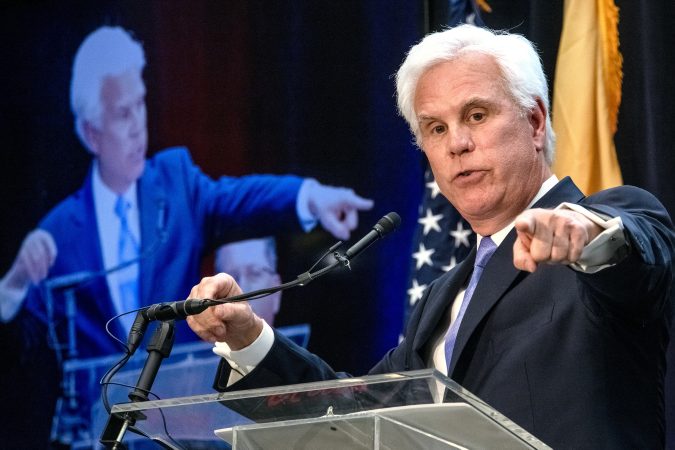
    A rare copy of the Declaration of Independence found a new home after South Jersey Democratic power broker George E. Norcross III placed the winning bid of $3.6 million on behalf of his family at an auction on Wednesday.

    The document, which was put on sale to celebrate the nation’s 250th anniversary by Camden County auction house Goldin, is considered to be one of the oldest copies of the Declaration of Independence.

    The copy was printed in Exeter, N.H., in 1776 by local printer Robert Luist Fowle, according to PhillyVoice.

    Only 11 copies of an Exeter broadside are known to have survived, with two others having been sold in January 2026 and January 2025 by Christie’s auction house in New York for $5.7 million and $2.4 million, respectively, reported PhillyVoice, which was founded by Lexie Norcross, the daughter of George Norcross.

    “This one is in tremendous condition, it may have been posted in a tavern or some kind of hall,” Ken Goldin, founder of Goldin Auctions, said to PhillyVoice. “The fact that any of them survived is remarkable.”

    Lexie Norcross and Alex Norcross, George Norcross’ son, said in a statement it was a privilege to own such an important historical document, especially so close to the 250th anniversary.

    “As America celebrates its 250th anniversary, we are deeply honored to become the stewards of such an extraordinary piece of our nation’s history,” Lexie and Alex Norcross said in a statement. “The Declaration of Independence is far more than a historic document, it is a pivotal document that belongs to the story of every American and a symbol of the ideals that continue to unite and inspire generations.”

    According to PhillyVoice, the Norcross family plans to make the document publicly accessible, with Lexie and Alex Norcross saying they are dedicated to preserving it.

    “We recognize the responsibility that comes with preserving this remarkable piece of our nation’s heritage and committed to preserving it with the care and respect it deserves so future generations can continue to appreciate its enduring significance,” Lexie and Alex Norcross said.

    George E. Norcross III, an insurance executive and major Jersey political boss, is also the owner of two other declaration-related artifacts.

    In July 2021, the Norcross family paid $4 million for a copy of the Declaration of Independence, presented to Charles Carroll of Carrollton, one of the 56 signers.

    The family also purchased the Proctor-Sang-Newell Collection of Signers of the Declaration of Independence, one of 40 complete sets of the signatures of the 56 signers of the declaration known to exist.

  • Ryan Daly’s Philly basketball roots brought him to Syracuse — with a chance to revive the Orange

    Ryan Daly’s Philly basketball roots brought him to Syracuse — with a chance to revive the Orange

    A sign hangs in Ryan Daly’s office at the John A. Lally Athletics Complex in Syracuse, N.Y., with the total number of fans that can pack the JMA Wireless Dome — 35,446.

    In November, Syracuse fans will fill the historic college sports venue, hoping one of college basketball’s most prominent programs returns to success.

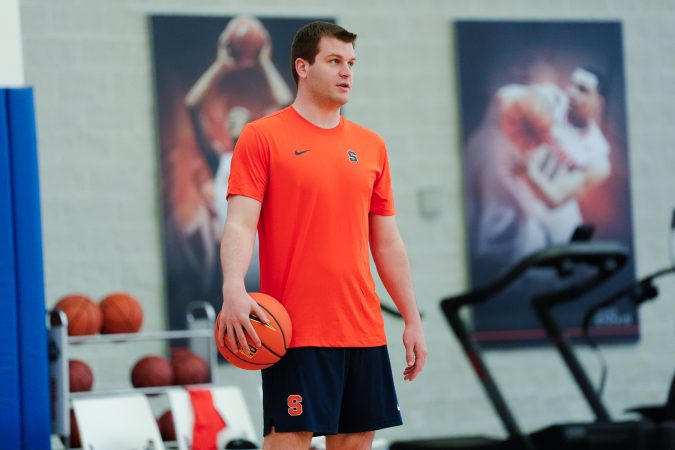
    For Daly, who was hired in April as an assistant under new head coach Gerry McNamara, the number is a reminder of the work that lies ahead.

    The Havertown native has climbed the coaching ranks at 28 years old, arriving at Syracuse after serving as an assistant at Albany, Bryant, and Virginia Commonwealth. Daly said none of that would be possible without his Philadelphia basketball roots and the people he met along the way.

    “A lot of these opportunities that have come my way have been a result of a lot of people pouring into me,” he said.

    A family affair

    Growing up in a family of “basketball junkies” sparked a fire in Daly.

    His grandfather, Jim Boyle, was the longtime coach of St. Joseph’s before coaching in the NBA and overseas. His father, Brian, played at Hawk Hill under Boyle, then coached at Penn State.

    “We are a Philadelphia basketball family,” said his mother, Tracie Daly. “We weren’t on the outside looking in, we were on the inside.”

    Ryan’s earliest basketball memory was at 5 years old, shooting on a Fisher-Price hoop at his grandparents’ house in Overbrook.

    “I don’t remember a time when basketball wasn’t the only thing I thought about or talked about every day,” he said.

    Ryan went to St. Denis School until the seventh grade. Prior to that school year, his family moved to Boston, then State College, Pa., after his dad took a coaching job at Boston University and Penn State, respectively.

    Three years later, Ryan and his younger brother Colin approached their parents with a request.

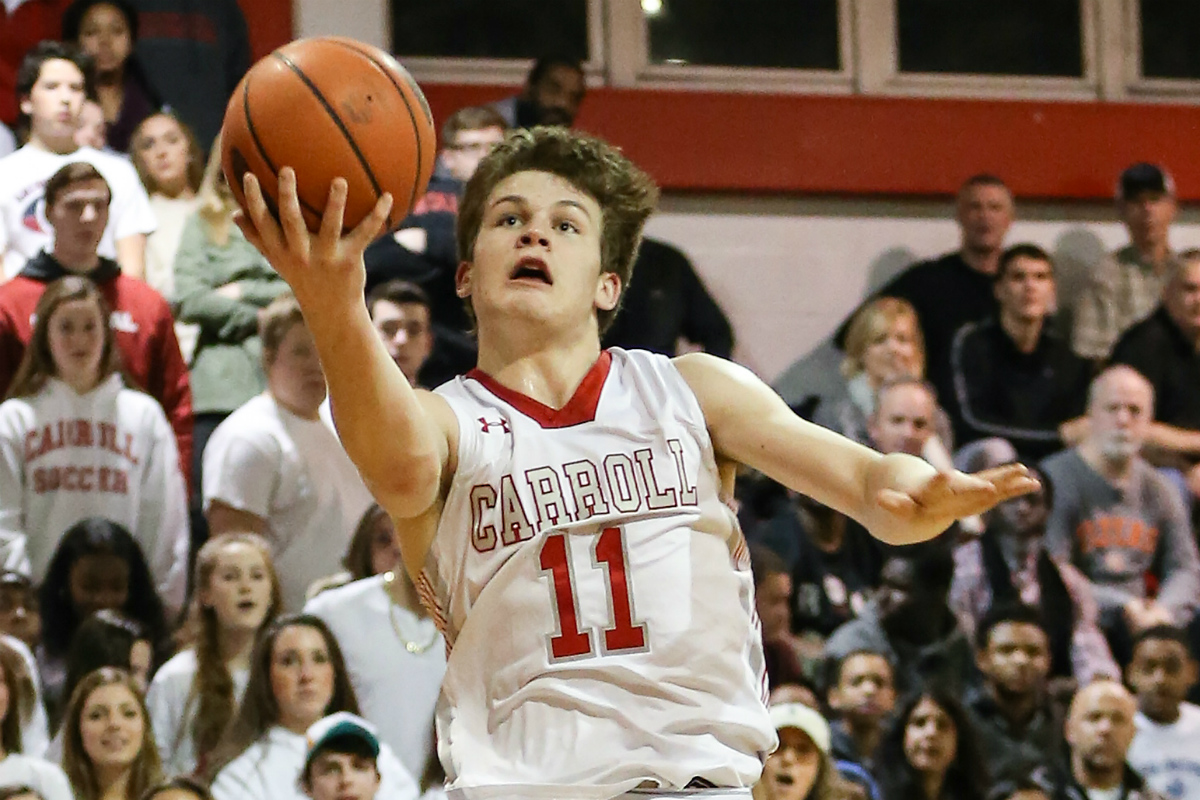
    Ryan Daly joined Archbishop Carroll as sophomore and won Catholic League MVP in 2016.STEVEN M. FALK / Staff Photographer

    “They came up to us and said, ‘We want to play basketball in the Catholic League,’” Tracie said.

    The Philadelphia Catholic League is one of the top high school basketball conferences in the country, and there is a certain type of DNA that those players possess, Ryan said.

    Tracie, Ryan, Colin, and their sister, Keri, moved back to the area before Ryan’s sophomore year, while Brian stayed at Penn State to continue coaching. Ryan and Colin both played for Archbishop Carroll.

    “Neither of my boys would’ve been able to develop to the basketball players they were if we hadn’t moved back,” Brian said.

    ‘Tight-knit community’

    Philadelphia basketball became Ryan Daly’s classroom.

    Daly grew up hearing stories about Sonny Hill, Speedy Morris, John Chaney, Phil Martelli Sr., and Jay Wright — legends of Philadelphia basketball. Jim Lynam — also known as pop — was another mentor. Those relationships gave him an appreciation for the city’s basketball culture.

    “Philadelphia is a special basketball community,” he said. “ … To see so many people coaching and involved with it, it’s one big circle, and it feels like it’s a very small tight-knit community.”

    However, his own college recruiting process wasn’t easy.

    Daly was a star on his nationally ranked AAU team, the Jersey Shore Warriors, and at Carroll — he won PCL MVP in 2016 — but didn’t receive many scholarship offers. It was a stressful time, he said, but his own experience became one of the biggest lessons in his coaching career.

    “It taught me patience with evaluating players,” he said. “You might see them on a really good day, and that’s not really who they are or you might see them on a bad day and they are a lot better than that.”

    He committed to the University of Delaware two days before graduating from high school without visiting the campus.

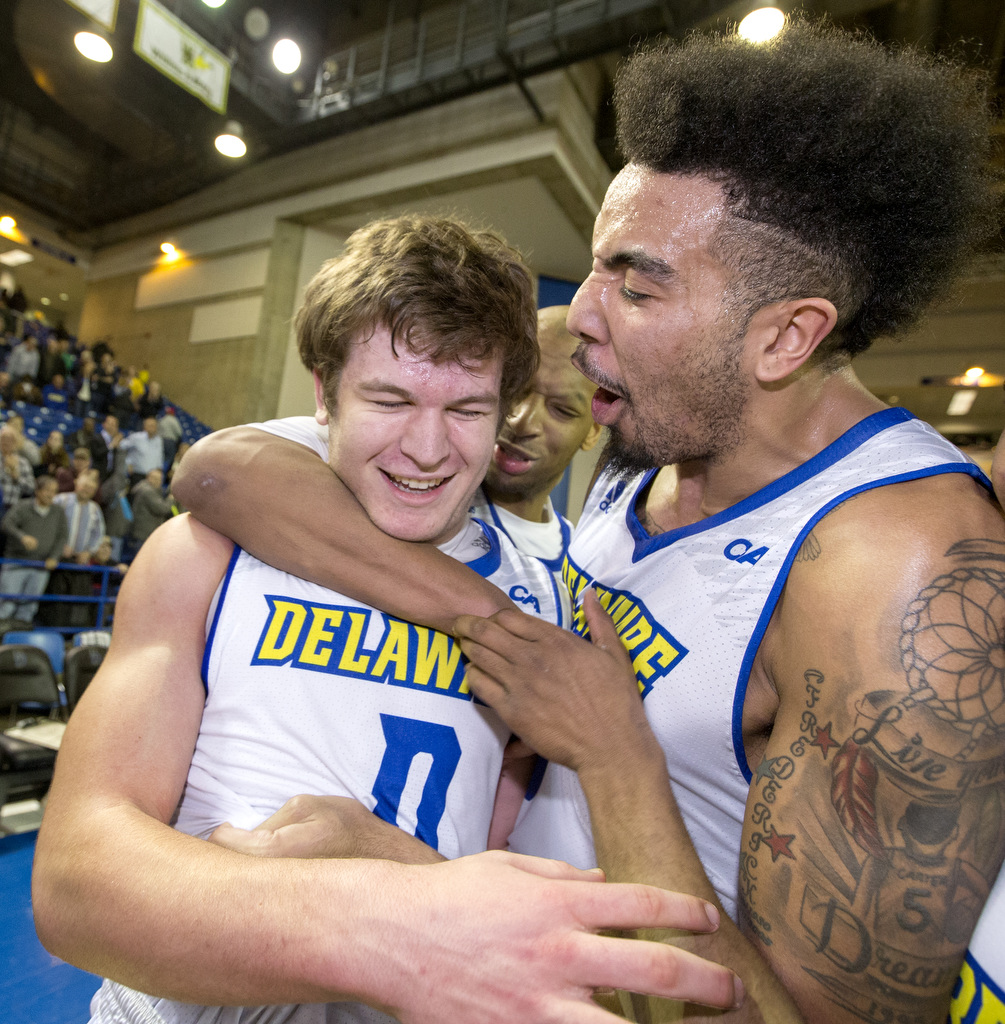
    Ryan Daly spent two seasons at Delaware, where he surpassed 1,000 career points.

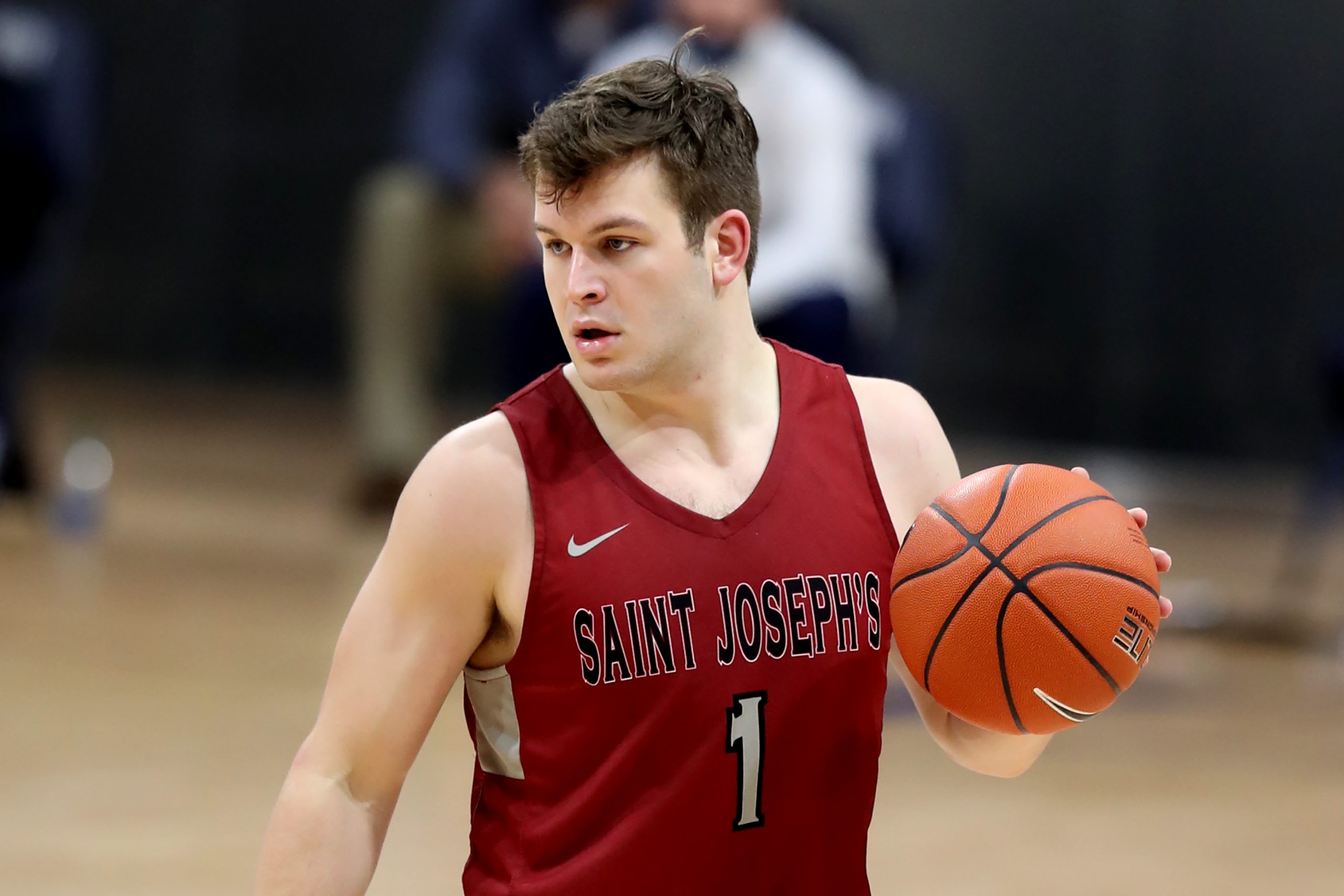
    Daly had two standout seasons at Delaware, surpassing 1,000 career points. He then transferred to St. Joe’s and led the Atlantic-10 and Big 5 in scoring from 2019 to 2021.

    Daly briefly pursued a career in the NBA G League, but living out of hotels and being away from his family was not for him. He quickly realized coaching was where he belonged and accepted his first coaching position at Albany when he was 24.

    Soaking it in

    At Albany, Bryant, and VCU, Daly immersed himself in the coaching profession, working early mornings and late nights and soaking up every piece of information from those he worked with.

    He credits Albany head coach Dwayne Killings for teaching him creativity and VCU head coach Phil Martelli Jr., whom Daly followed from Bryant to the Rams, on how to recruit.

    Each of those schools helped him develop his coaching philosophy.

    One mantra in particular has stayed with him. Martelli Jr. often reminded Daly to “believe further than you can see.”

    “When he said that line to me a year and a half ago, it really stuck out to me,” Daly said. “You never know when opportunities are going to come, you just have to be ready for it.”

    That philosophy carried Daly to two conference championships and two NCAA Tournament appearances in consecutive seasons at Bryant and VCU.

    Relationship-driven sport

    Daly’s relationship with McNamara began long before he got the call to join the Syracuse coaching staff.

    When Daly was a sophomore at Carroll, McNamara was recruiting his teammate, Derrick Jones Jr. McNamara attended open practices twice a week and often spoke to Daly after practice.

    “He took me aside a lot and was like, ‘I don’t understand why coaches aren’t recruiting you; you should have a lot of interest and offers right now,’” Daly said.

    Years later, when Ryan was a coach at Albany, they reconnected at a Coaches vs. Cancer event.

    “I walked up to him and said, ‘I don’t know if you remember me,’” he said.

    McNamara’s response was immediate: “‘Of course I remember you,’” Daly recalled.

    While playing for St. Joe’s, Ryan Daly led the Atlantic 10 and Big 5 in scoring from 2019 to 2021.CHARLES FOX / Staff Photographer

    Since then, Ryan and McNamara have kept in touch, texting each other about wins or recruits, while also seeing each other frequently on the road. When McNamara was announced as Syracuse’s new head coach, Daly texted him, saying congratulations. Two days later, Daly received the call from McNamara asking to join his staff.

    But leaving VCU was not an easy decision.

    “In some sense it was the hardest thing I ever did,” he said. “In some sense, it was a no-brainer.

    “The part that was exciting for me was that growing up I remember seeing Syracuse in the Final Four and Sweet Sixteen. The Orange is synonymous with March, and the challenge of bringing them back to that was exciting.”

    Brian Daly emphasized to Ryan while growing up that building connections was an important part of life, but also in the sports community. And those relationships are exactly how he has advanced in the profession and ended up at Syracuse.

    The last time Syracuse made an NCAA Tournament appearance was in 2021, and it advanced to the Sweet Sixteen. The program won its first and only national championship in 2003, when McNamara was a player on the team.

    Soon, 35,446 fans will be able to fill the Dome to see what McNamara and Daly are building in Syracuse.

    “I know the fans are diehard supporters, and experiencing people who live, eat, sleep, and breathe Syracuse men’s basketball in the Dome every night, you really can’t ask for anything more as a coach and a player,” Ryan said. “It’s a real home court advantage, and we want to bring that back.”

  • Patriot missile deal and Trump’s praise for Zelensky put pressure on Russia

    Patriot missile deal and Trump’s praise for Zelensky put pressure on Russia

    The U.S. agreement this week to allow Ukraine to produce Patriot missiles and President Donald Trump’s praise for President Volodymyr Zelensky are leading the Kremlin to recalibrate its message on the war.

    The Kremlin has downplayed the developments but says they will make a peaceful resolution more difficult.

    Dmitry Peskov, the spokesperson for Russian President Vladimir Putin, accused Ukraine on Friday of being “unwilling” to engage in a peace process, while Moscow remains open to ending the war through diplomacy. He reiterated that Putin was open to scheduling another phone call with Trump.

    The Kremlin has, in fact, repeatedly rejected Zelensky’s offers to meet with Putin and rejected his calls for a full ceasefire.

    “One must give credit to Zelensky’s diplomacy,” the Russian political scientist Vladimir Pastukhov wrote Friday on Telegram. “Ukraine managed to reconfigure the anti-Russian alliance into a new alignment — one far more advantageous for itself and increasingly threatening to Russia.”

    Zelensky, Trump told reporters Wednesday at the NATO summit in Ankara, Turkey, has “done an amazing job.” It was a dramatic departure from Trump’s comments during his first year back in office, when he accused the Ukrainian leader of ingratitude for U.S. help and “gambling with World War III.”

    “We’re going to give a license to you to make Patriot missiles,” Trump said Wednesday. “That’s pretty cool. This way, you can’t complain that we’re not giving them enough. I said, ‘Make them yourself.’ We haven’t informed the company of that yet, but that’ll work out all right.”

    The Patriot missiles, long sought by Kyiv, are among the few Western weapons capable of shooting down the ballistic missiles Russia is increasingly firing at Ukrainian cities.

    Secretary of State Marco Rubio, speaking alongside Trump, said Russia was finding it harder to defend its own skies. He expressed hope the deal would “create the space now to negotiate the end of this war.”

    “It’s an escalation,” Trump added, “but it’s also an escalation that can help lead to an end.”

    Peskov, in response, said the Kremlin does not “see an escalation” but said there were “certain misconceptions within the White House administration … regarding the idea that escalation and military pressure can help pave the way for a peaceful settlement.”

    He called this “a flawed judgment” and warned it might cause what Russia calls its “special military operation” in Ukraine to go on longer.

    “It will result in our having to establish a larger security zone — a larger buffer zone,” he said. “Consequently, stoking tensions and taking actions that drive escalation will in no way contribute to the peace process.”

    Peskov downplayed the Patriot deal.

    “Yes, it is an obvious fact that the U.S. is continuing full-scale deliveries of weaponry and military technology to Ukraine — we are aware of this,” he said. “At the same time, however, there is a certain duality in the United States’ position: Unlike the Europeans, the U.S. maintains a desire to facilitate a move toward a peace process.”

    Russia, which invaded Ukraine, has pressed maximalist demands on Kyiv, including the surrender of territory its forces have not captured. The Kremlin has invited Zelensky to come to Moscow, while the Ukrainian leader has dismissed the offer as a stalling tactic.

    “The Kremlin appears to be struggling to adjust its narrative line in response to the Trump administration’s recent denial of Russian negotiating tactics and acknowledgment of Ukrainian battlefield successes,” the Washington-based Institute for the Study of War said in a recent analysis.

    Pastukhov, who is based in London, said Zelensky had “succeeded in altering — not so much the ‘reality on the ground’ that Putin is so fond of citing, but rather the West’s perception of that reality.”

    “Now,” he said, “it is Putin who must rack his brains over how to present the ‘realities on the ground’ in a more favorable light.”

    While the U.S. deal is a diplomatic win for Zelensky, military analysts warn it won’t address Ukraine’s immediate needs. Russia is firing ballistic missiles at Ukrainian cities almost daily. Given strict U.S. technology controls and the complexity of the missile systems, full-scale production is likely years away.

    Zelensky thanked the United States for the “positive decision.”

    “President Trump has repeatedly emphasized that only two or three countries in the world are currently capable of producing Patriots because the others are not technologically ready,” he told reporters Friday. “The United States has recognized Ukraine as a country that is ready to do this.”

    Now, he said, his teams need to work out a timeline to set up production. “The sooner we reach an agreement, the sooner we’ll be able to produce Patriots.”

  • So you want to be a rock and roll (or hip-hop, or country, or R&B) star? An old-fashioned Battle of the Bands is coming to Philly.

    So you want to be a rock and roll (or hip-hop, or country, or R&B) star? An old-fashioned Battle of the Bands is coming to Philly.

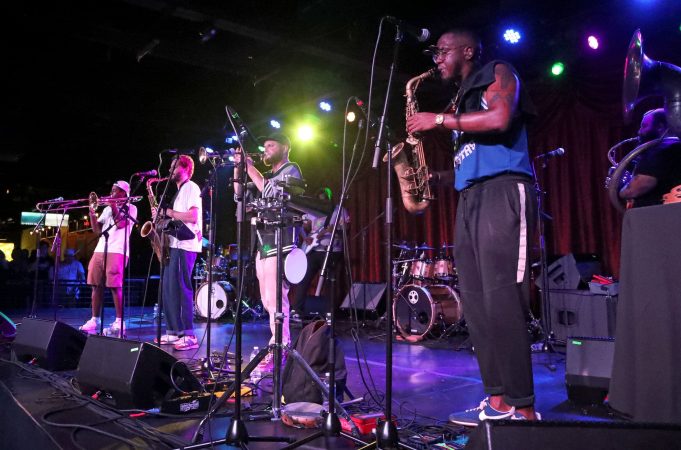
    Local Noise Philadelphia, an old-fashioned Battle of the Bands competition, will be staged over two nights at Brooklyn Bowl Philadelphia in August.

    Bands or individual artists of all pop genres — from rock to hip-hop, R&B to country — have until July 24 to apply to be one of the acts selected to compete at the Fishtown venue on Aug. 13 and 14.

    Each act must submit a video performance of an original song through an application portal that can be no shorter than three minutes and no longer than five minutes. That means no 10-minute jams, jam bands!

    The ground rules: Applying acts must not already be signed to a record label, either currently or in the nine months prior to July 6, 2026. All band members must be at least 18, and applications must be in by July 24.

    The poster for Local Noise Philadelphia.Live Nation

    Applicants to the Live Nation contest will have their work assessed by a panel of radio and music industry professionals who will judge them on “originality, musicianship, and presentation.”

    Those that make it through that screening process will then compete in the Local Noise semifinals on Aug. 13 and 14, and will be graded and rated by a panel of judges and the live audience. The winners will move on to a final competition at Brooklyn Bowl on Aug. 20, where a winner will be crowned.

    The Local Noise Philly champion will receive $5,000, and perform on a side stage during an as-yet-undetermined “major concert” at the Freedom Mortgage Pavilion in Camden in September. Among the acts playing in the capacious amphitheater that month are Lil Wayne (Sept. 11), Bryson Tiller (Sept. 18), Jason Aldean (Sept. 19), Mt. Joy (Sept. 25), and Gorillaz (Sept. 27).

    Applications can be entered here.

  • Five Below plans to have 2,000 stores soon — on par with Home Depot and Target

    Five Below plans to have 2,000 stores soon — on par with Home Depot and Target

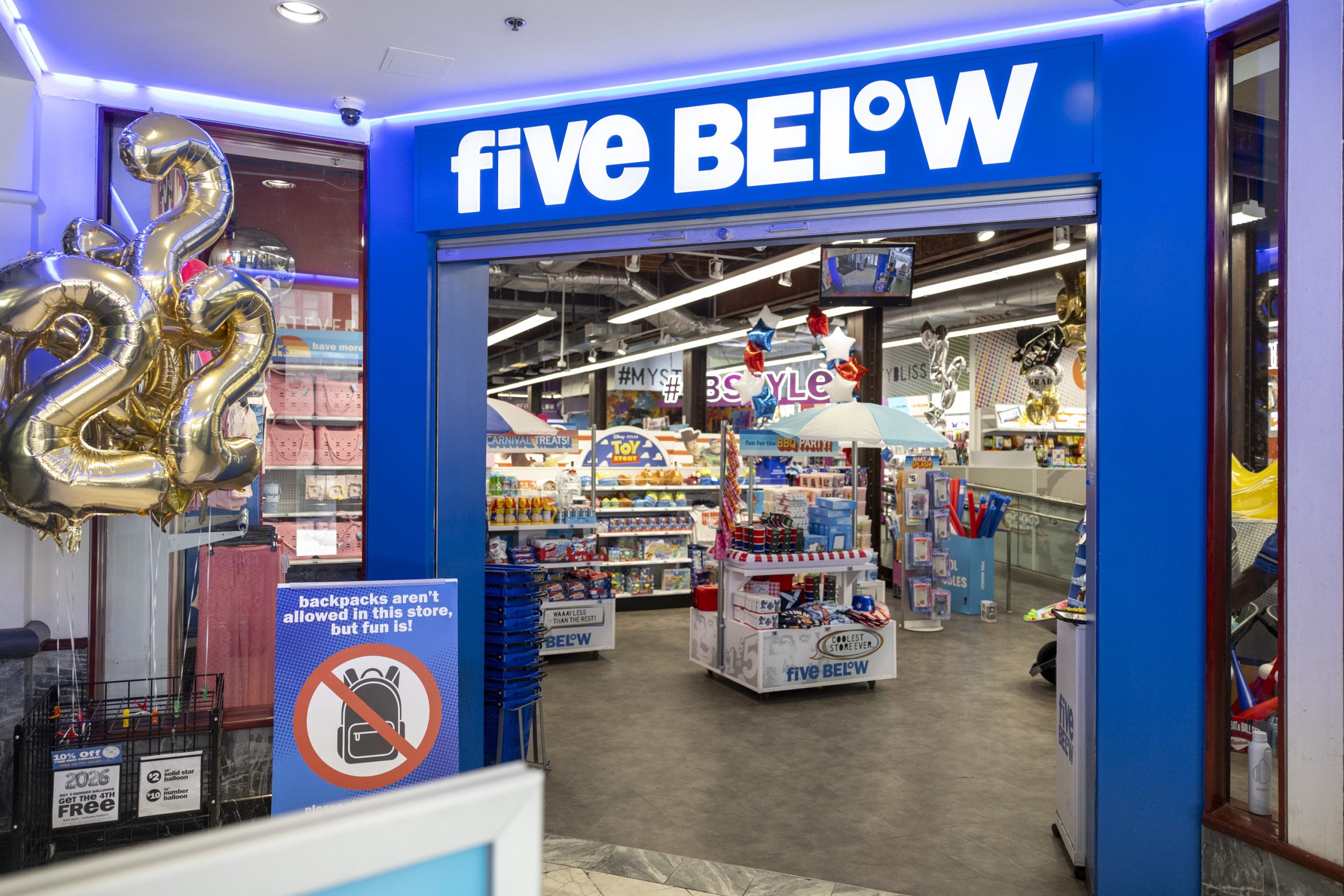
    Five Below has been opening hundreds of new stores in recent years, and this month, the Philly-based retailer is set to add its 2,000th location.

    The new store is expected to open in LaGrange, Ga., on Friday, July 17, the company announced this week.

    “Reaching 2,000 stores is an incredible milestone for our brand whose mission is to be the destination for the kid and the kid in all of us,” CEO Winnie Park said in a statement. “We know our unique retail concept has a lot of runway ahead with thousands of new stores across the U.S.”

    The company’s expansion puts its store count on par with Home Depot and Target. As of the beginning of 2026, Home Depot operated 2,359 stores in the U.S., Canada, and Mexico, and Target had 1,995 U.S. stores.

    Company leaders said in a recent annual report that they see opportunity to grow Five Below’s store count to 3,500 eventually.

    Five Below launched its first store in 2002 in Wayne, and most items the business sells cost between $1 and $5. Its offering of toys, gadgets, games, and other items includes slinky toys, crayons, sandcastle buckets, basketballs, and wireless gaming headsets.

    “Many of the products we sell can also be found in mall specialty stores, department stores, mass merchandisers and drug stores,” the company’s most recent annual statement notes, but what sets the business apart is their prices, and their “exciting and easy to shop retail environment.”

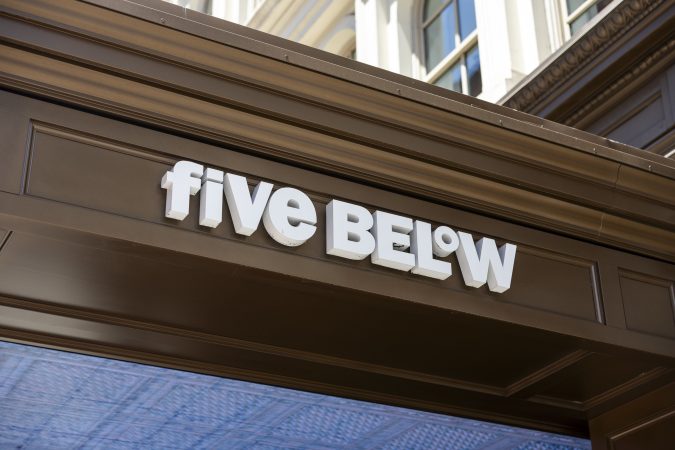
    The Five Below storefront at the company’s headquarters in Philadelphia.Tyger Williams / Staff Photographer

    Three years ago, Five Below had 1,350 stores in over 40 states. Then-CEO Joel Anderson, said the company had a plan to triple its store count by 2030. In the last three fiscal years, the company has added between 150 and 227 net stores annually, according to its recent annual report.

    Five Below recently eliminated the section of its stores dedicated to items over $5. The company still sells the pricier items but now displays them among other items in the store.

    As of January, the company reported having 7,800 full-time employees and 16,800 part-time workers, 24,600 total. The majority work at stores across 46 states.

  • Holiday weekend heat-deaths in N.J. labeled ‘mass casualty event’ by advocates

    Holiday weekend heat-deaths in N.J. labeled ‘mass casualty event’ by advocates

    Heat-related deaths in New Jersey appear to have shot up roughly five-fold over last summer following a holiday weekend with record-high temperatures, prompting advocates to urge the state to do more to protect vulnerable residents.

    New Jersey reported 29 heat-related deaths between July 2 — when state data show temperatures in New Jersey peaked at 108 degrees — and July 6, according to state health officials, up from six such fatalities last summer.

    Roughly a dozen of the deaths involved people who were unhoused or living in their cars, said Connie Mercer, CEO of the NJ Coalition to End Homelessness.

    “Really we had a mass casualty event,” Mercer said.

    Mercer and others want the state to expand its network of emergency cooling centers and take other steps to better protect those who are living or working outside from the impact of extreme temperatures.

    State health officials did not provide specifics on the recent heat-related deaths, which must still be confirmed by autopsies, but they said most occurred in north and central New Jersey and involved people of all ages, not just elderly residents. Some were found in homes without air conditioning, while others died on the street or in parked cars, they said.

    The heat also led emergency rooms to diagnose 132 people with heat-related illnesses on July 3, the highest single-day total in several years. Between July 2 and July 6, more than 350 people sought emergency care for heat issues, state data show.

    “This is not a typical summer heat wave and it’s really important that we all take it seriously because it can become life-threatening very quickly,” state health commissioner Raynard Washington said at a July 4 press conference on storm damage and heat impacts.

    New Jersey has reported heat-related fatalities in the single-digits for most years since 2000, when there were just two such deaths, according to health department data. Deaths peaked at 11 in 2002 and reached 10 in 2011 but fell to three in 2024.

    The recent high death toll underscores the need to do more to protect those who work outdoors, according to state Sen. Joe Cryan (D., Union), who has championed a bill to create a state program to reduce occupational heat stress.

    The bill, which has yet to get a hearing, calls for farms, amusement parks, and other outdoor job sites to provide water and shade breaks, and monitor workers for heat stress, among other things.

    “Twenty-nine heat-related deaths is a staggering figure for one of the wealthiest states in the nation,” Cryan told the New Jersey Monitor, adding that he is renewing his push for worker protections and believes Gov. Mikie Sherrill “should be leading the charge for it.”

    Sherrill’s office declined to comment but pointed to a broadcast interview the governor gave earlier this week about the impacts of the recent extreme weather, in which she said she was open to new ways to better serve the public during storms and heat waves. She said state agencies had sought to warn residents through social media and other channels and noted her office had worked closely with counties to establish cooling centers.

    The governor also announced a new heat-health website during a July 4 press conference and urged residents to look out for each other during the extreme temperatures.

    “Extreme heat is the number one weather-related killer in America, and this is the hottest stretch we’ve seen in over 14 years. And the heat is hitting all of us — not just seniors, not just people with underlying conditions. People of all ages,” Sherrill said.

    Advocates like Mercer said extreme temperature was only part of the problem. The recent deaths were preventable, she said, a result of systemic policy failure. New Jersey needs to do more to create affordable housing and support shelters, and to invest in emergency sites to keep people cool on dangerously hot days, she said.

    “Quality shelter in a variety of forms would make sure that not too many people died horrible deaths out in the sun,” she told the New Jersey Monitor.

    According to the most recent annual point-in-time count, more than 13,700 people in the state were considered homeless in 2025.

    Heat-related illnesses occur when the body can’t properly cool itself, according to the health department, and the higher the temperature, the greater the risk. Infants, older adults, and people with chronic health conditions like diabetes, cardiovascular issues and respiratory diseases are most in danger, it notes.

    Kelvin Boddy, director of healthy homes and communities with the Housing and Community Development Network of New Jersey, said the recent fatalities underscore the need for a statewide “code red” alert system for extreme heat, like the “code blue” warnings now in place for deep freezes.

    As it is, Boddy said a handful of urban centers have instituted comprehensive responses to heat events, with designated cooling centers and clear strategies to communicate these options to residents. A pilot program adopted last year and backed by $2.5 million in state funds calls for similar programs in the five counties with the highest homeless rates: Essex, Burlington, Hudson, Union, and Mercer.

    Work on the pilot is progressing slowly however, Boddy said, and the need for cooling services stretches statewide. “Clearly, as we saw with the recent statewide heatwave, this is needed outside the five counties,” he told the New Jersey Monitor.

    Mercer said the code red program, while well intentioned, is not enough to address the need. “It’s a joke,” she said.

    This story originally appeared on New Jersey Monitor.

  • Kyle Schwarber joins Bryce Harper in Home Run Derby, says a finals rematch would be ‘awesome’

    Kyle Schwarber joins Bryce Harper in Home Run Derby, says a finals rematch would be ‘awesome’

    DETROIT — The Phillies haven’t had a Home Run Derby champion since 2006, when Ryan Howard blasted 23 total to take the crown.

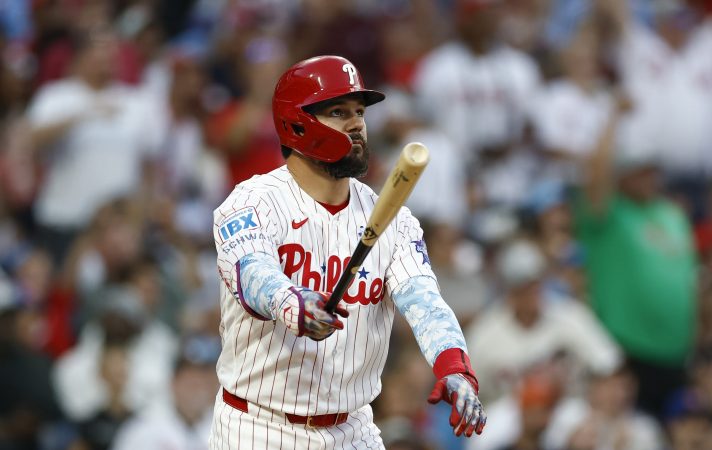
    This year, at Monday’s competition at Citizens Bank Park, they will have double the chance. Because for the first time in the 41-year history of the Derby, the Phillies have a pair of teammates competing against each other. Kyle Schwarber announced Friday that he would officially be joining Bryce Harper in the event.

    “I just wanted to make sure pretty much getting through that series in Cincinnati, make sure everything was good healthwise, and everything’s been trending the right way. So that’s when we pretty much made a decision to do it,” Schwarber said.

    Schwarber and Harper have competed in the same Derby before in 2018, although they were representing different teams. With Harper in his final year with the Nationals and Schwarber playing with the Cubs, the future teammates found themselves in the final round together in Washington D.C. Harper bashed 19 homers to narrowly best Schwarber’s 18.

    Schwarber hopes that this year ends with another rematch.

    “I think it would be awesome, especially in Philadelphia, where our fans obviously are going to get the opportunity to really show out what they’re capable of and what we’ve seen for years and years of just pure electricity,” he said. “So I think it would be a pretty cool ending there if that could happen. But we’ll see what happens.”

    Schwarber hit his league-leading 32nd home run on Wednesday against the Reds, which broke Mike Schmidt’s franchise record for most before the All-Star break.

    Bryce Harper said he didn’t really want to do the Derby again, but decided to participate for the fans.Yong Kim / Staff Photographer

    The fact that Harper has already won the Derby made him reluctant to compete again, but he said that he wanted to do it for Phillies fans. He officially announced his participation on Thursday night.

    “I wasn’t really looking forward to it, to tell you the truth,” Harper said. “I didn’t really want to do it, but being able to do it for the fans, and doing it at home kind of took me to the point where I wanted to do it.”

    Another thing initially holding Harper back was not having someone to throw to him. In 2018, Harper’s father pitched to him, but he needed to find someone else this year since his father hasn’t thrown in a while. He settled on Dodgers third base coach Dino Ebel, who crossed paths with Harper as a coach on the U.S. World Baseball Classic team this year.

    Ebel happened to play a role in Schwarber’s All-Star Game MVP-winning performance last year. While he didn’t participate in the 2025 Derby, Schwarber still launched the most memorable home runs of the week. In the first-ever “swing off” to break the ninth-inning tie between the National League and American League in the All-Star Game, Schwarber hit three homers on three swings with Ebel pitching to him.

    Phillies assistant hitting coach Rafael Pena will pitch to Schwarber on Monday.

    The format of the Derby will look different compared to the last time Harper and Schwarber participated in 2018 and 2022, respectively. Rather than rounds based on timers, each participant will have a set number of swings. In Round 1, the maximum is 20 swings, while Round 2 and the final round will have 15 swings each.

    Harper isn’t a fan of the new rules.

    “The clock, I really liked. I know a lot of guys didn’t like it because they got tired or got worn down from it. I didn’t see it that way,” he said. “I think the clock on it kind of brings that theater part to it.”

    He also presented an idea to MLB where in the bonus round, the players would be able to use aluminum bats to see how far they could hit. (The children who traditionally shag balls in the outfield during the Derby would have to be removed for that part, of course.) The league declined.

    “Seeing a ball go way up into the third deck or over Ashburn Alley completely or off a scoreboard, I think would have got a lot of eyes on it in a way that they’ve never had, besides the steroid era,” Harper said. “People want to see that kind of homer, right? You want to see Sammy Sosa putting it through the windows in Milwaukee, and people putting it over the wall in Fenway, hitting the Citgo sign or whatever it was. I think fans want to see that, so I think it’d have been pretty cool to have that opportunity.”

    But even if aluminum bats won’t be involved, the Derby this season will involve Harper and Schwarber competing against Cardinals outfielder Jordan Walker, Rays third baseman Junior Caminero, Yankees first baseman Ben Rice, Royals outfielder Jac Caglianone, and Red Sox first baseman Willson Contreras.

    As for who the hometown crowd will back?

    “They’d root for both of us,” Schwarber said. “I think they’d definitely root for both of us. I think it’d be just a straight cheer factory, so it wouldn’t be anyone against anyone, so I think it’d be pretty cool.”