Blog

  • Joan E. Lynaugh, nursing trailblazer, historian, and professor emerita at Penn Nursing, has died at 90

    Joan E. Lynaugh, nursing trailblazer, historian, and professor emerita at Penn Nursing, has died at 90

    Joan E. Lynaugh, 90, of Gwynedd, Montgomery County, pioneering primary care nurse practitioner, award-winning professor emerita of nursing at the University of Pennsylvania, historian, mentor, author, birdwatcher, and “living legend,” died Friday, July 10, of age-associated decline at Foulkeways at Gwynedd retirement community.

    Reared on a dairy farm in the Finger Lakes region of upstate New York, Dr. Lynaugh became a pioneering international expert on primary care nursing and nurse practitioner policies, education, and history. For decades, from the early 1960s through her retirement in the late 1990s, she treated patients, taught students, researched history, and joined colleagues in defining and expanding the role of nurses in modern healthcare.

    During her career, the benefits of home care, the importance of critical care, and the need for nursing history education were hot topics in healthcare. “As a historian,” she told The Inquirer in 1997, “I take great interest in this shift from the intense emphasis on hospitals to the more balanced emphasis on other kinds of care.”

    Dr. Lynaugh joined Penn’s School of Nursing in 1980. She took charge of the school’s new primary care nursing unit and went on to be director of the Robert Wood Johnson Foundation primary care nurse practitioner program and associate director of the foundation’s teaching nursing home project.
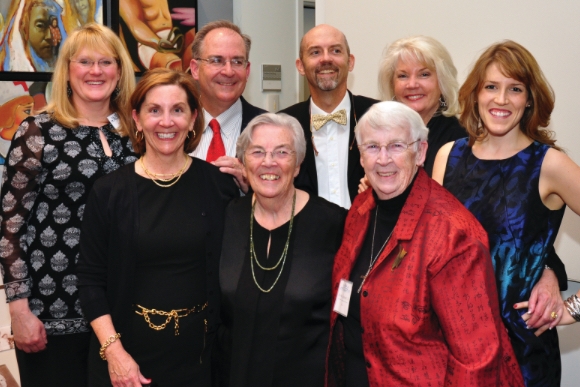
    Dr. Lynaugh (front center) and her family celebrate her 2005 award as a “living legend.”Courtesy of the family

    She was also the nursing school’s associate dean and director of graduate studies from 1993 to 1996, and chair of the nursing, history, and healthcare department from 1994 to 2000. In a tribute, colleagues at Penn Nursing said: “Dr. Lynaugh was a visionary leader, a prolific scholar, and a dedicated mentor whose extraordinary career left an indelible mark on Penn Nursing and the global nursing profession.”

    In 2000, she told writer Suzanne Gordon: “We know we can’t get into the hospital without a doctor. That’s no surprise. We are, however, surprised to discover that we can’t get out of the hospital without a nurse.”

    She was a founding director of Penn’s Barbara Bates Center for the Study of the History of Nursing in the mid-1980s, and her research focused on the origins of community hospitals and critical care units. In 2005, she was named a “living legend” by the American Academy of Nursing and earned a lifetime achievement award from the National Organization of Nurse Practitioner Faculties.

    Penn Nursing created the Joan Lynaugh Award for a graduating midwifery student for excellence in clinical practice, and the Bates Center features the Joan Lynaugh Founders Fund to support educational and archival activities, and the Joan Lynaugh Digitization Project Fund to preserve data and material from the Joan E. Lynaugh papers.
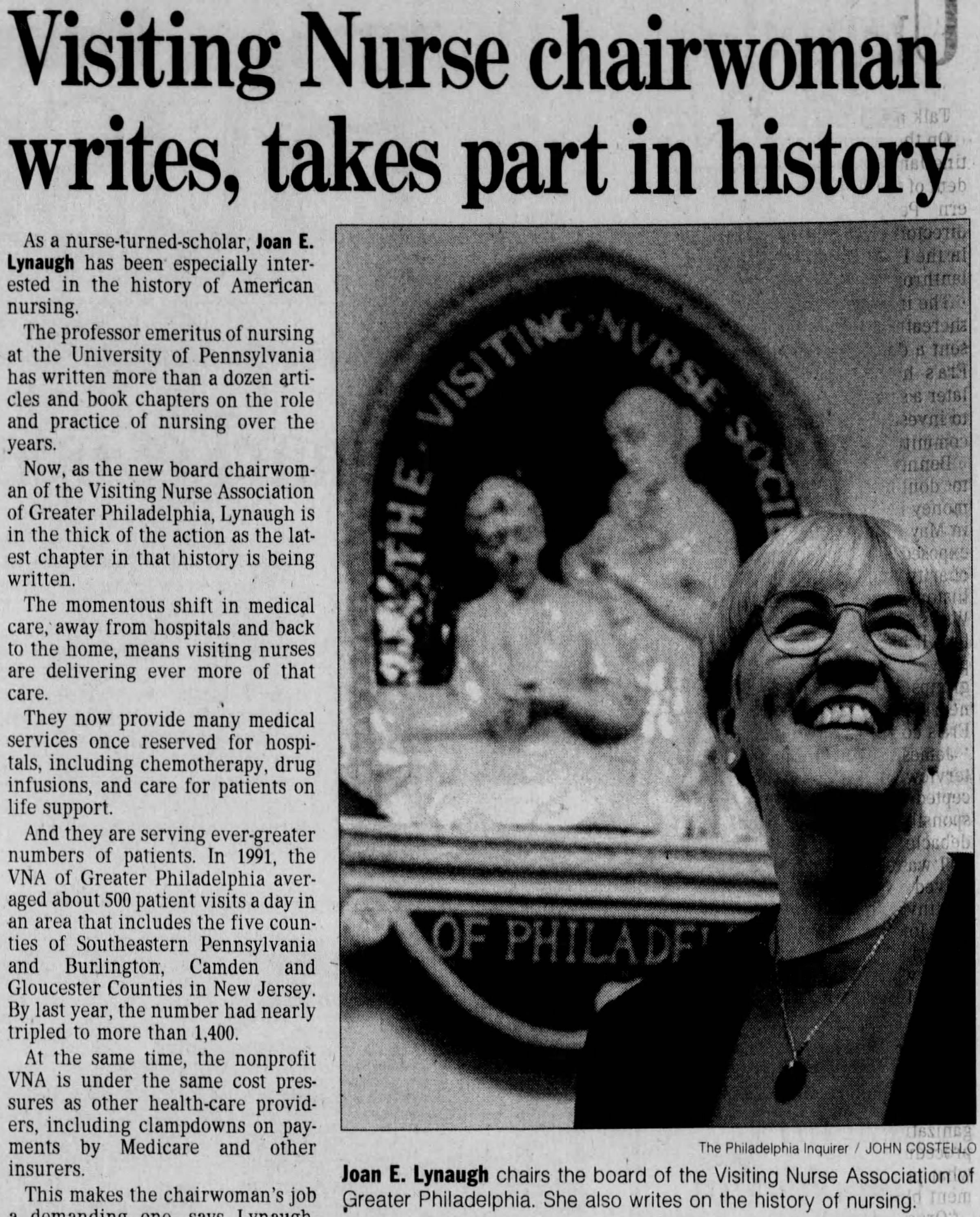
    This story and photo of Dr. Lynaugh appeared in The Inquirer in 1997.Newspapers.com

    In 2018, the center named its archives the Joan E. Lynaugh Archives and Special Collections. Before Penn, Dr. Lynaugh practiced and taught nursing at the University of Rochester and the old Providence Hospital in Washington, D.C.

    She was a fellow at the American Academy of Nursing, board chair of the Visiting Nurse Association of Greater Philadelphia, and active with the College of Physicians of Philadelphia, the American Association of Critical Care Nurses, and other groups. She cowrote Critical Care Nursing: A History with Penn colleague Julie Fairman in 1998, and coedited the award-winning textbook Enduring Issues in American Nursing in 2000.

    Colleagues at the American Association for the History of Nursing said in a tribute: “Joan’s intellectual curiosity, generosity as a mentor, commitment to excellence, and passion for nursing history left an indelible mark on the nursing profession worldwide.”

    A friend on Facebook called her “one of the smartest, kindest scholars I ever had the honor and pleasure to be mentored by.”
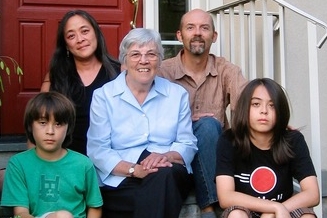
    Dr. Lynaugh (center) enjoyed time with her family.Courtesy of the family

    Joan Estelle Lynaugh was born Aug. 30, 1935, in Canandaigua, N.Y., about 28 miles southeast of Rochester. She studied nursing at St. Mary’s Hospital School of Nursing in Rochester and earned bachelor’s and master’s degrees in nursing at the University of Rochester, and a doctorate in history at the University of Kansas in 1982.

    Her whole life, she enjoyed traveling, bird-watching, camping, and hiking. She was an engaging host and liked to read mysteries and newspapers.

    She was a longtime colleague and personal partner of fellow medical professional Barbara Bates, and they lived in Bryn Mawr for years. Bates died in 2002, and Dr. Lynaugh moved to Gwynedd a few years later.

    “Joan will always be remembered for her generous spirit, wonderful sense of humor, persistent intellectual curiosity, and a sincere commitment to making the world a better place,” her family said in a tribute.
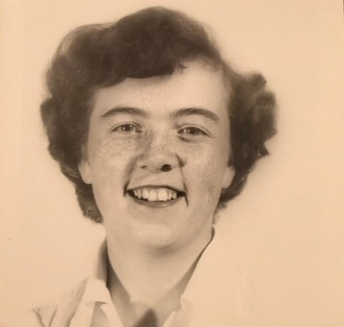
    Dr. Lynaugh grew up in the Finger Lakes region of upstate New York.Courtesy of the family

    Her niece Mary Clare Hamlin said: “She was understated, humble, practical, and scientifically minded. She always wanted to help others.”

    In addition to her niece, Dr. Lynaugh is survived by other relatives. Two brothers and a sister died earlier.

    A celebration of her life is to be held at 1 p.m. Friday, Oct. 23, at Penn’s Claire M. Fagin Hall, Room 316, Third Floor front, 418 Curie Blvd., Philadelphia, Pa. 19104.

    Donations in her name may be made to the Joan Lynaugh Founders Fund at Penn’s Barbara Bates Center for the Study of the History of Nursing, Office of Institutional Advancement, Claire M. Fagin Hall, 418 Curie Blvd., Suite 445, Philadelphia, Pa. 19104.
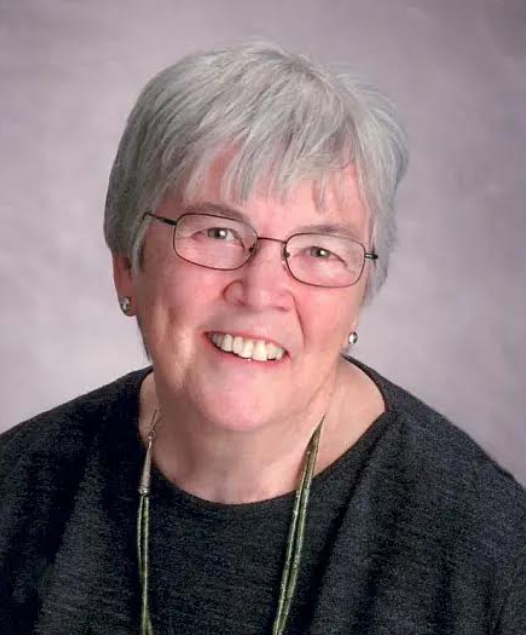

    Dr. Lynaugh “was understated, humble, practical, and scientifically minded,” her niece said. Courtesy of the family
  • Josh Shapiro and Stacy Garrity will debate for Pennsylvania governor next month

    Democratic Gov. Josh Shapiro and Republican Treasurer Stacy Garrity, both candidates running to be Pennsylvania’s next governor, have agreed to face off next month in the first and only scheduled televised debate between them.

    The debate — scheduled for 8 p.m. on Oct. 7 and hosted by ABC 27 — will be held in Harrisburg and will air live on several stations owned by Nexstar across Pennsylvania, including WPHL-TV in Philadelphia.

    Both campaigns said they look forward to meeting face to face to discuss issues important to voters.

    “Game on,” said Matthew Beynon, a spokesperson for Garrity.

    Manuel Bonder, communications director for Shapiro’s campaign, said “we look forward to continuing to make the choice in this election clear.”

    Shapiro, who was elected governor in 2022 after serving as the state’s attorney general, holds a sizable lead against Garrity, according to a Philadelphia Inquirer/New York Times/Siena University poll conducted last month.

    As the November election approaches, Shapiro — who is a rumored contender for president in 2028 — has focused on translating his popularity to downballot Democratic candidates in four, nationally watched congressional districts and those running for seats in the Pennsylvania state Senate, which has been under Republican control for more than 30 years.

    Garrity, meanwhile, has struggled to gain traction among voters and to compete with Shapiro’s massive campaign funds. A quarter of likely Republican voters did not know who she was or know enough about her to form an opinion of her, The Inquirer/New York Times/Siena poll found.

    Next month’s debate could present Garrity with a fresh chance to introduce herself to voters statewide and make her case on why Shapiro should not be reelected.

    October’s debate is the only one scheduled between the candidates, though Garrity’s campaign have proposed several more. In 2022, Shapiro and his Republican challenger, State Sen. Doug Mastriano, did not debate after the two could not agree to terms.

    Topics likely to surface during the debate include data centers, the measles outbreak, and President Donald Trump.

    Both candidates have released television ads criticizing the other’s past support for data center development, which has grown increasingly unpopular in Pennsylvania and beyond. Garrity has denounced Shapiro for his shifting positions on data centers, though she has a mixed record herself. Last month he signed an executive order dramatically restricting their development, touting them as the strictest guardrails in the nation. Garrity has called for a pause in data center development.

    Garrity has also blasted Shapiro for his handling of the rollout of public health information in announcing two measles-associated deaths in Pennsylvania, saying he has stepped in front of verified facts. Shapiro has been critical of the Trump administration, saying the nation’s health secretary was responsible for the influx of measles cases by stoking misinformation.

    Trump has endorsed Garrity in the governor’s race, and Shapiro has repeatedly sought to tie her to some of his unpopular policies, highlighting her support for his tariffs on imported goods and unpopular war in Iran.

    ABC 27 anchor and reporter Dennis Owens will moderate the debate, which will also be available to view on streaming platforms.

  • Symbolic funerals held in Nepal for those feared lost as some missing tourists make contact

    Symbolic funerals held in Nepal for those feared lost as some missing tourists make contact

    KATHMANDU, Nepal — Tourists previously reported missing in Nepal have made contact with authorities, officials said Wednesday, as families of locals still unaccounted for after last week’s catastrophic floods held symbolic funerals for their loved ones.

    Nepal’s Foreign Ministry said 324 foreign nationals have been rescued, while another 590 from 39 countries remain missing following the Aug. 26 floods that killed at least 1,118 people and left more than 3,900 missing.

    Australian Prime Minister Anthony Albanese said Wednesday that the number of Australians missing in the disaster had fallen from 43 to 38 after five were confirmed safe overnight.

    “Amidst all of this tragedy, we are seeing some positive news. Today, another five Australians have been confirmed safe,” Albanese told reporters in Palau, where he is attending a regional summit.

    “We hope, of course, for positive news further, and we’re doing everything we can to work with authorities,” Albanese added.

    Sunil Sharma, a spokesperson for the Nepal Tourism Board, said at least five other tourists who were previously reported missing had contacted authorities by email or telephone in recent days.

    It is thought the disaster happened when a glacial collapse in the Himalayas sent rock, ice and meltwater into valleys below, triggering powerful floods downstream. The surge entered rivers flowing through Tibet and Nepal, causing them to rise rapidly. Floodwaters swept away homes, buildings, roads and bridges, carrying mud and rocks downstream.

    Families hold symbolic funerals

    Some families in Nuwakot, one of Nepal’s worst-affected districts, have held symbolic funerals for relatives still missing, hoping to free their souls after they were presumed dead.

    In Hindu tradition, cremation is an important final rite, and for some families, performing the ceremony even without the bodies of their loved ones provides a sense of spiritual release.

    Mukunda Rijal said his cousins and their daughters had not been found, prompting the family to perform a symbolic funeral for them.

    Along the banks of the Trishuli River, a priest placed straw effigies representing the missing family members and covered them with small piles of wood before setting them alight. The symbolic funeral pyres were surrounded by offerings to Hindu deities as relatives gathered to perform the final rites.

    Authorities in Nepal have also been burying recovered bodies in temporary graves until they can be identified. They are preserving DNA samples, photographing distinguishing facial features and recording other identifying details to help match the remains with missing people and eventually return them to their families.

    China builds access road for rescue crews

    On the Chinese side, rescue crews completed a makeshift road to the disaster site at Gyirong Port on the Nepal border, state broadcaster CCTV reported on Wednesday.

    Crews have been clearing access for heavy machinery to be used in the search at the border crossing complex, which was washed away by the floods. The road leading to the crossing was destroyed and buried under water, mud and rocks.

    At least 21 people have been killed and 541 remain missing in China, according to the Chinese state news agency Xinhua.

    Survivors find shelter in Kathmandu

    Some flood survivors are fleeing the devastation to seek shelter in Nepal’s capital, Kathmandu.

    Around 400 survivors, mostly from the town of Timure, about 65 miles west of Kathmandu, have been staying at the Yellow Gumba monastery. The shelter is being organized by locals and relatives, with relief supplies donated by individuals and charity organizations.

    Riya Tamang, 21, who fled with her 10-month-old baby as the floodwaters approached, is among those taking shelter at the monastery. She lost her grandparents in the disaster.

    “I was the last one to leave the house. It was so difficult to escape,” she said.

    Her husband, who works as a cook in Gyirong town on the Chinese side of the border, also survived, and the couple now stays in touch through video calls.

  • It was a thunderstruck stormy summer night but Bruno Mars’ ‘The Romantic Tour’ stop at Linc made it all worth it

    It was a thunderstruck stormy summer night but Bruno Mars’ ‘The Romantic Tour’ stop at Linc made it all worth it

    By the time Bruno Mars got around to singing “It Will Rain” at Lincoln Financial Field on Tuesday, the storm had already passed.

    Mars was running late during the first of two back-to-back nights on his “The Romantic Tour,” as he put a meteorological metaphor to music during a piano medley of hits — but through no fault of his own.

    Earlier in what turned out to be a wildly entertaining evening with Mars and his high-stepping band the Hooligans — complete with a six-song interlude from Silk Sonic, Mars and Anderson .Paak’s soul and funk supergroup — the South Philly skies opened up.

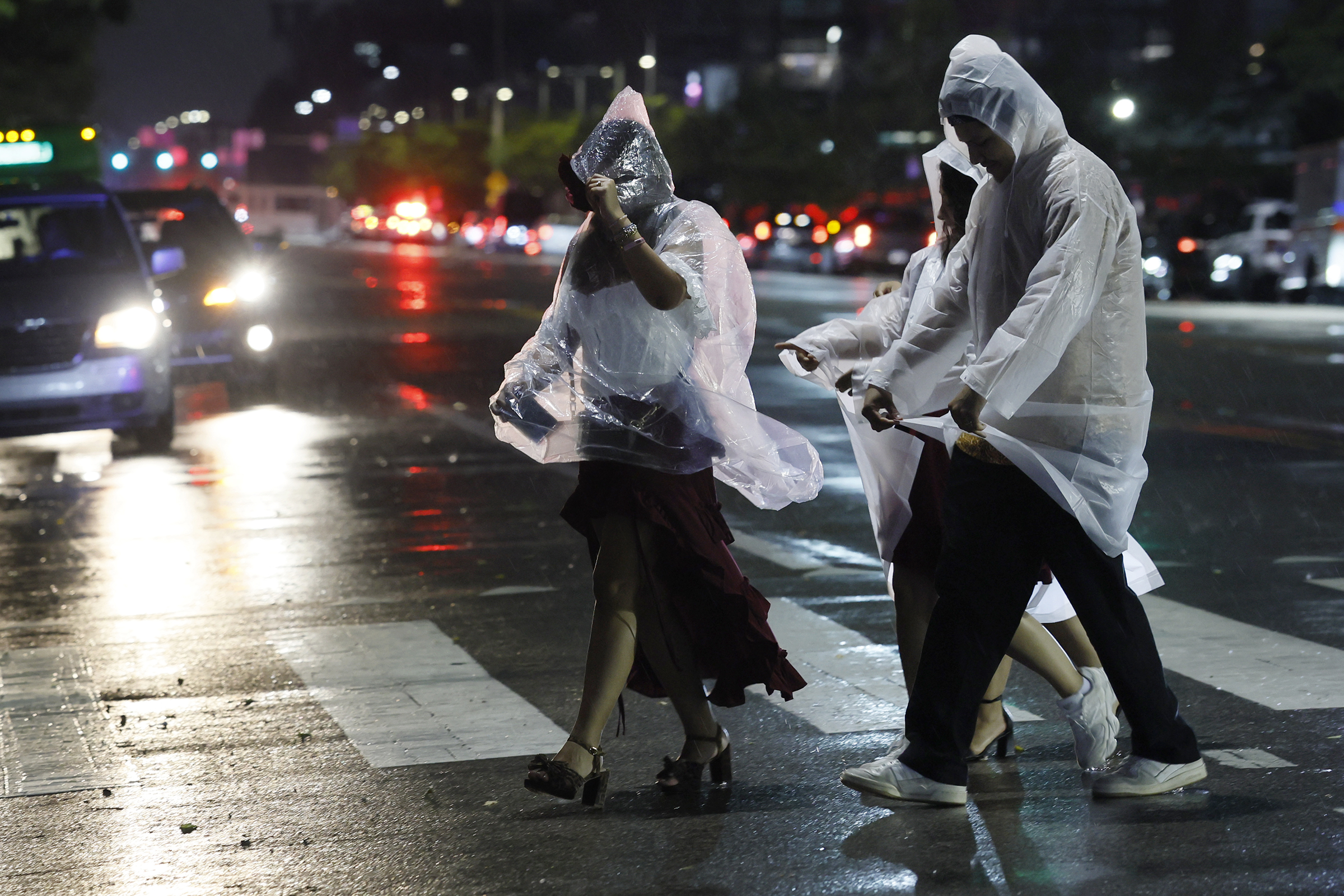
    Sadly, severe weather lit up the night in advance of the fireworks that popped off during Mars’ performance and put the kibosh on the planned opening set by Raye, the British vocalist whose presence made the tour one of the most tantalizing bills of the summer.

    Raye was only able to make it through one song — “Beware. The South London Lover Boy,” from her new album This Music May Contain Hope — before a PA announcement urged audience members to flee open seated areas and shelter in place.

    A two-hour delay followed, and Raye never returned. That meant fans missed the chance to check out one of the breakthrough talents of the year, hear her hit “Where Is My Husband!” and speculate that she might be on the way to finding him, if internet rumors about dating actor Michael B. Jordan turn out to be true.

    Those who spent the interlude seated in stairwells or shopping for “I ❤️ Bruno Mars” merch didn’t seem too let down by that disappointment, however.

    The sold-out crowd was a wide-ranging-in-age gathering of Black, white, Asian, and Latino fans of the Hawaiian entertainer of Filipino, Spanish, Askenazi Jewish, and Puerto Rican descent. That was the most genuinely diverse audience I’ve seen this year.

    Before Tuesday, Mars — whose given name is Peter Hernandez and was nicknamed Bruno by his percussionist father who thought that, as a toddler, he looked like wrestler Bruno Sammartino — had last performed in Philadelphia in 2018.

    Bruno Mars at a date on his “The Romantic Tour” in Paradise, Nevada, in April. He performed at Lincoln Financial Field on Tuesday and was scheduled to perform again on Wednesday.Courtesy of the Artist

    That eight-year wait ended a few minutes before 10 p.m., which was only an hour or so later than he was originally supposed to hit the stage, since Raye had been excised from the itinerary.

    The show began with a video of Mars praying in church, beseeching the Lord to help him accomplish something well within his abilities — “give my band and I the power and strength to give this city a show they’ll never forget. Amen.”

    With that, Mars crossed himself on screen and put on a white cowboy hat and picked up a red rose. As Ennio Morricone-style spaghetti western music played, he materialized in the flesh on stage, ready for romance.

    He opened with “Risk It All,” a heart-on-its-sleeve bolero from The Romantic album punctuated by mariachi horns that played a like a vow to a lover — or an audience — to earn their devotion.

    “It’s crazy, but it’s true,” he sang. “There’s nothing I won’t do.”

    For the next two hours, the lifelong song and dance man — who was 6 years old when he played an Elvis impersonator in Honeymoon in Vegas in 1992 — pretty much made good on that promise.

    Backed by a 10-piece band that included Mars’ brother Eric Hernandez on drums and Cuban musician Daniel Rodriguez on percussion, Mars, 40, was every bit the seasoned entertainer. He was an old-school crowd-pleaser with a Little Richard mustache who puts on a boundlessly energetic, tightly disciplined show.

    Over the course of the 25-song evening — packed with hits, though he didn’t get to some like “APT.,” his 2024 smash with K-pop singer Rosé — Mars played guitar and congas as well as piano.

    Mars is also a nimble dancer, leading the way with a band whose members stay in step with him in loose, limber rhythm. Their movement felt relaxed, without any of the lockstep vibe that can make pop spectacle choreography seem like a militaristic exercise.

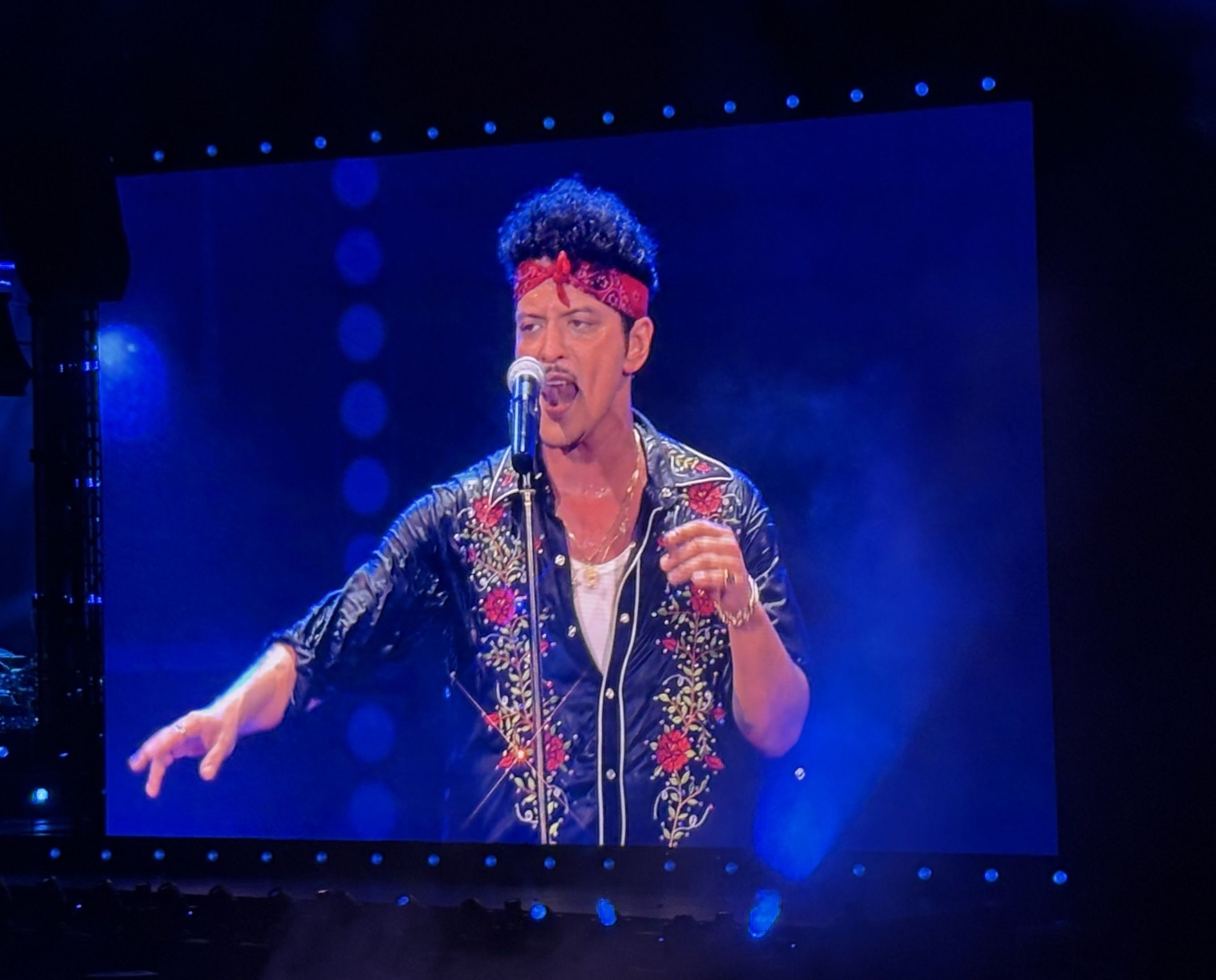
    Anderson .Paak (forefround) and Bruno Mars of Silk Sonic on the video screen during Mars’ “The Romantic Tour” date at Lincoln Financial Field in South Philadelphia on Sept. 1.Dan DeLuca

    The early part of the show drew heavily from The Romantic album, which leaned into Latin rhythm, starting with “Cha Cha Cha,” the second song of the night. By the croony third number, “On My Soul,” fireworks were already going off overhead.

    “Perm,” from 2026’s 24K Magic, punched up the James Brown funk. And the high point of the first section of the show came when Mars followed The Romantic ballad “Why You Wanna Fight?” by rolling a vintage red Cadillac convertible on stage and sitting on the hood while covering the Chi-Lites’ 1972 “Oh Girl” and Marvin Gaye’s 1973 “Let’s Get It On.”

    He paired those with his own “Please Me” (alas, without duet partner Cardi B.) and stood on the hood for his hip-hop soul banger “That’s What I Like.”

    The two-hour show was briskly paced, making the Foo Fighters’ three-hour endurance test last month at the Linc seem flabby in comparison.

    The transition to the middle segment as Silk Sonic with .Paak — who had warmed up the crowd earlier as DJ Pee. Wee — was marked by a video introduction by master of funk Bootsy Collins.

    .Paak started behind the drum kit, before coming out front wearing shades and a glittering jacket that matched Mars’, to join the singing, dancing, and finger-snapping troupe.

    The six-song interlude culminated in the creamy slow jam “Leave the Door Open.” which gave both .Paak and Mars ample opportunity to fall on their knees to please the audience. It also made for some winningly playful competition between the two to see who could best win over South Philly hearts.

    First, .Paak gave Birds fans a “Go Eagles!” shout-out, unabashedly flapped his wings and even added that his father came from Philadelphia. Mars shook his head in mock dismay that .Paak would stoop so low to pander, and then one-upped him, albeit with geographical inaccuracy, proclaiming that his “next baby mama” would come from “the great state of Philadelphia!”

    After .Paak’s exit, Mars poured on the hits, from the perfect pop of “Marry You,” which ended with him kissing the neck of his guitar, to the piano medley that began with “It Will Rain” and included “Talking to the Moon,” “Grenade,” and “When I Was Your Man.”

    People leaving the Bruno Mars concert during a rain delay at Lincoln Financial Field in Philadelphia on Tuesday, September 1, 2026Elizabeth Robertson / Staff Photographer

    “The Romantic Tour” is aptly named. Every song is a love song.

    Mars is eminently likable on stage and his music is so well-crafted and crisply performed that you don’t really mind, for example, that his “Just the Way You Are,” is even more platitudinous than Billy Joel’s song of the same name.

    By the time “Uptown Funk” came around to close out the show, and Mars declared “I got to kiss myself, I’m so pretty,” and that he’s “smoother than a fresh jar of Skippy,” it was hard to disagree.

    It was a pleasure to spend a few hours with such a world-class entertainer, even on a thunderstorm-soaked South Philly summer night.

    Bruno Mars’ “The Romantic Tour” with Raye and DJ Pee. Wee at Lincoln Financial Field, 7 p.m. Sept. 2, lincolnfinancialfield.com

  • You can now buy Philly-minted Trump coins with a golden hue

    Gold-hued $1 coins featuring the face of President Donald Trump are now available for purchase online and at the U.S. Mint gift shop on Independence Mall in Old City.

    But it’ll cost you more than a buck.

    Neither Philly’s Mint nor the website has single coins for sale, so early buyers can get no fewer than 25 coins in a roll for $61. A bag of 100 coins for $154.50 is also available. Households are limited to two orders until Thursday at 2 p.m. when the cap will lift.

    The commemorative coins, printed in Philadelphia to mark the 250th anniversary of the signing of the Declaration of Independence, may be used as legal tender.

    Early buyers may also find unique coins with their purchases: 250,000 Trump coins with a special-issue “July 4” mark, minted on Independence Day, have been randomly hidden in some rolls and bags, Willy Wonka-style.

    First announced in July by U.S. Treasury Secretary Scott Bessent, the coins bear Trump’s face on one side with the words Liberty, In God We Trust, and 1776 ~ 2026. The other side features the presidential seal, with “250″ inscribed on the eagle’s shield.

    The coins faced hurdles in production with critics arguing that they violate U.S. code that says “only the portrait of a deceased individual may appear on United States currency.” In response, Bessent cited historical precedent: In 1926, the U.S. minted a commemorative half-dollar featuring living President Calvin Coolidge.

    Although the coins are gold-colored, they are composed mostly of nonprecious metals, including copper, zinc, manganese, and nickel. No actual gold is used in the coins.

    In November, the mint stopped producing pennies due to rising costs. According to the mint, it cost up to 3.69 cents to create one penny.

    Philadelphia is home to the nation’s oldest mint, built in 1792. Visitors can tour the facility on weekdays. It is the world’s largest coin-making factory, according to the Guinness Book of World Records.

  • Shapiro expresses ‘real concerns’ about Flock surveillance cameras as he weighs a potential ban

    Shapiro expresses ‘real concerns’ about Flock surveillance cameras as he weighs a potential ban

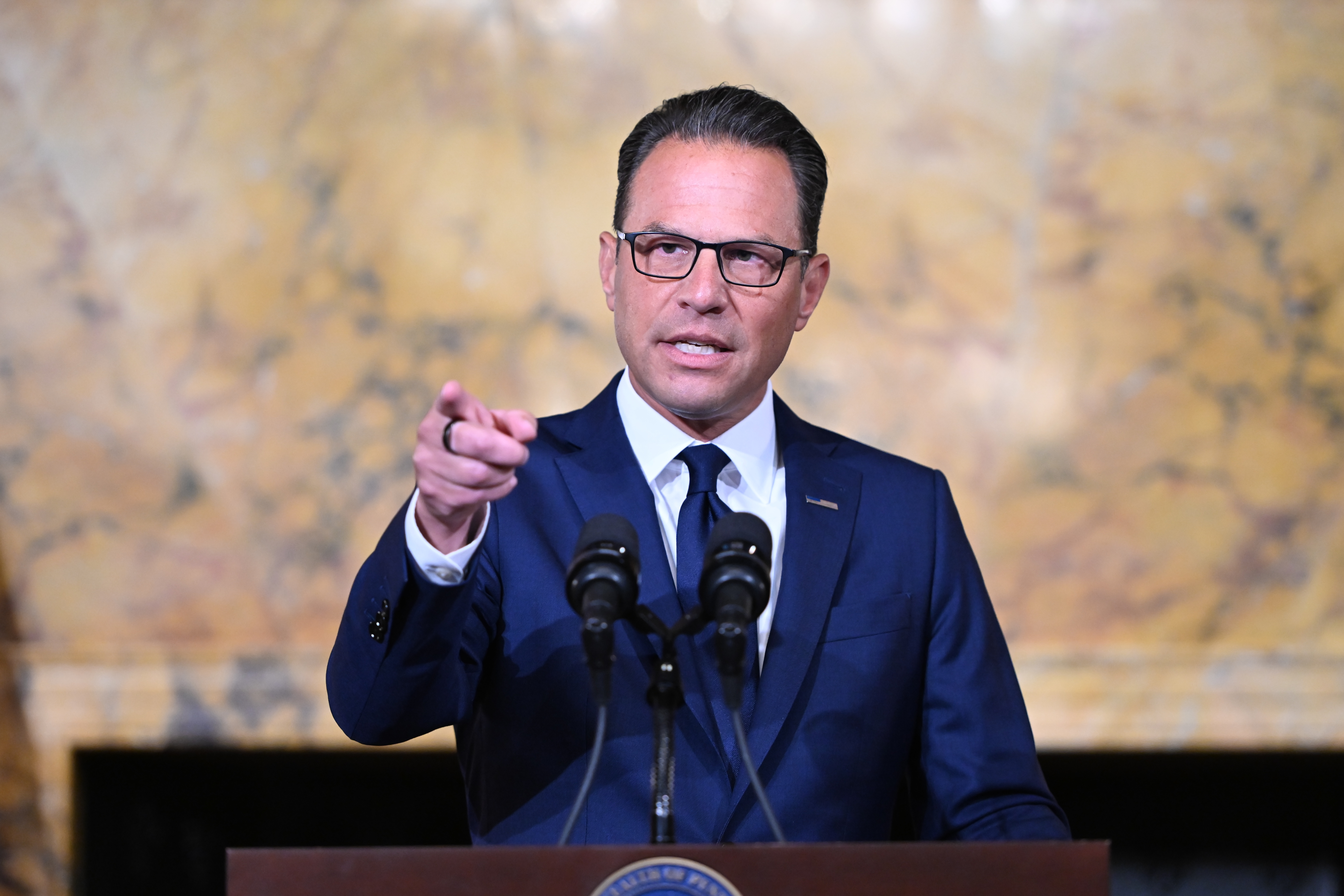
    Pennsylvania Gov. Josh Shapiro has “real concerns” about the way Flock cameras — automated license plate readers that capture and store data gleaned from moving cars — are being used in the state, a spokesperson said Wednesday.

    Open to banning the technology, Shapiro is wary of how Pennsylvanians’ privacy can be protected, Rosie Lapowsky, Shapiro’s spokesperson, said in a statement. Flock cameras can record license plates and other vehicle features such as bumper stickers of every car that passes them.

    Lapowsky added that commonwealth agencies, including the Pennsylvania State Police and the Department of Transportation, “do not own Flock cameras and will not allow them to be used or installed on Commonwealth property.”

    Shapiro, a Democrat up for reelection in November, has pointed out that there a several proposals being weighed by the Pennsylvania General Assembly that would either ban or strictly regulate this technology, Lapowsky said.

    “And,” she added, “our administration is working with the General Assembly on what piece of legislation could make it to the governor’s desk in order to protect Pennsylvanians’ privacy.”

    A bipartisan proposal would establish statewide privacy and accountability protections for automated license plate reader systems. The bill, which was introduced by Philadelphia Democratic State Rep. Tarik Khan, would create guardrails to prevent the misuse of personal data and to protect civil liberties.

    In a statement Wednesday, Flock spokesperson Paris Lewbel characterized the cameras as “important public safety tools … helping [law enforcement] officers solve serious crimes and find missing people.”

    But organizations such as the American Civil Liberties Union call the cameras “creepy” and part of what could grow into a nationwide, warrantless surveillance system.

    The issue has gained traction nationally ahead of the November midterm elections amid a wider backlash to the AI industry.

    Last week at a news conference in Franklin County, Shapiro said, “I think law enforcement needs to have tools to keep communities safe. Flock cameras are not a tool that I support. I would welcome bipartisan legislation to ban these across the state.”

    The county announced it would terminate its contract with Flock, even though the sheriff’s department supported the technology.

    Similarly, the Abington Township Police Department ended a contract last month that supplied the agency with Flock cameras over concerns about data security. The governor resides in Abington.

    Concerns grew after it was learned that the network uses artificial intelligence to identify cars that frequently drive together, and allows officers to search for vehicles by behavior, rather than plate number.

    Officers in other states have even been accused of using Flock to keep tabs on their girlfriends.

    Unredacted search logs have also been released to the public through information requests and data leaks.

    Lewbel added that the company would “support thoughtful, bipartisan legislation that puts strong privacy, transparency, and accountability guardrails in place while preserving law enforcement’s ability to use technology responsibly to keep people safe.”

  • Academy of Natural Sciences and Drexel University reach tentative terms on the Academy’s future

    Academy of Natural Sciences and Drexel University reach tentative terms on the Academy’s future

    After the threat of a possible split, the Academy of Natural Sciences and Drexel University reached a tentative agreement that will continue their affiliation and maintain Drexel’s financial support of the Academy, multiple sources confirmed Wednesday. It will also give the university control over its major decision-making.

    Also on Wednesday, Drexel and the Academy appointed Patricia “Trish” Wellenbach to temporarily lead the Academy, serving as its senior adviser. She is deputy mayor to Philadelphia Mayor Cherelle L. Parker’s administration and previously president and CEO of the Please Touch Museum. Wellenbach is on loan from the city and will not receive any compensation from Drexel or the Academy for her new role.

    Drexel holds the reins

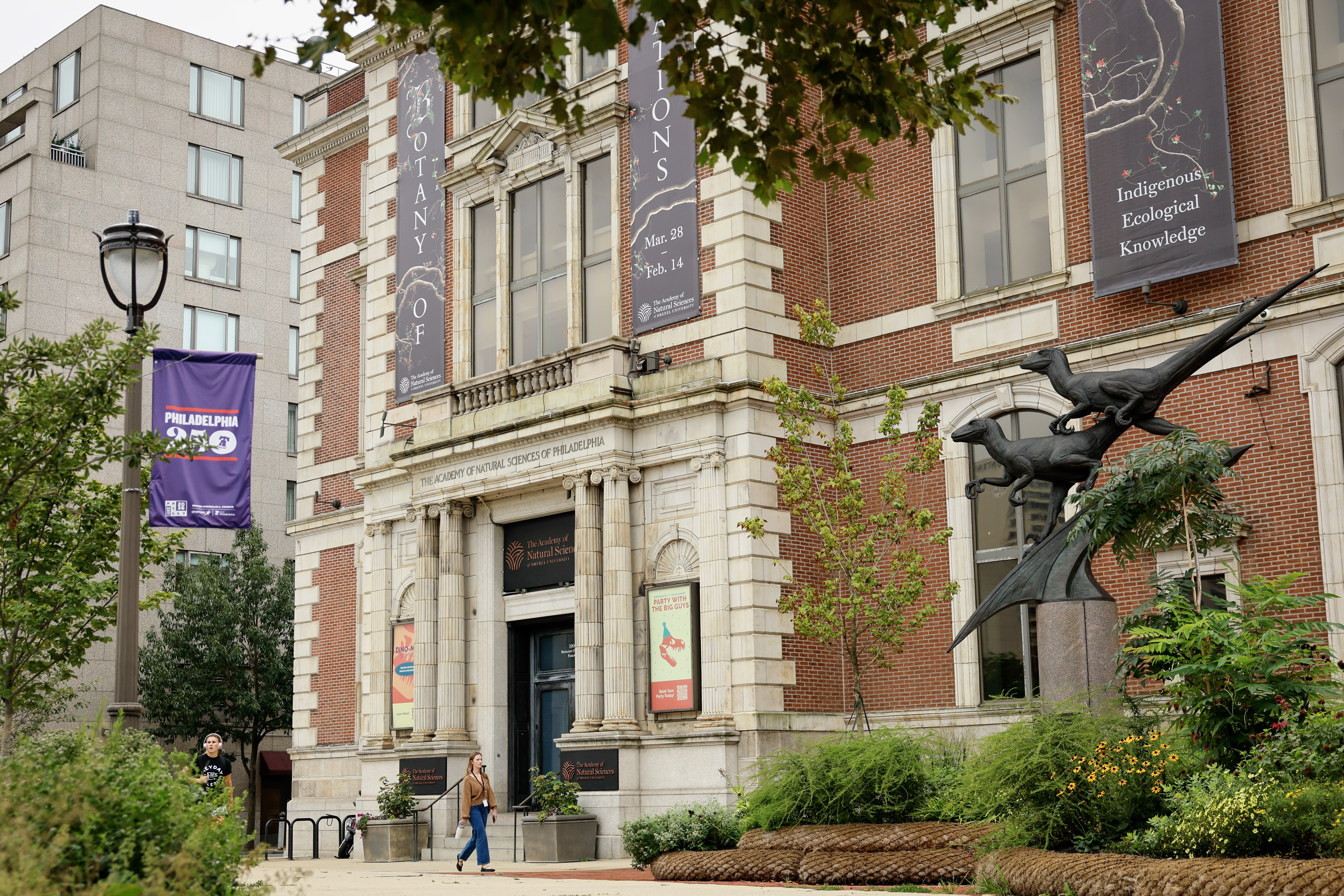
    The announcement comes one day after Drexel and the Academy said they would close the Academy’s museum effective Sept. 30 and that Academy CEO Scott Cooper would be stepping down immediately. Sept. 27 will be the last day the museum will be open to the public.

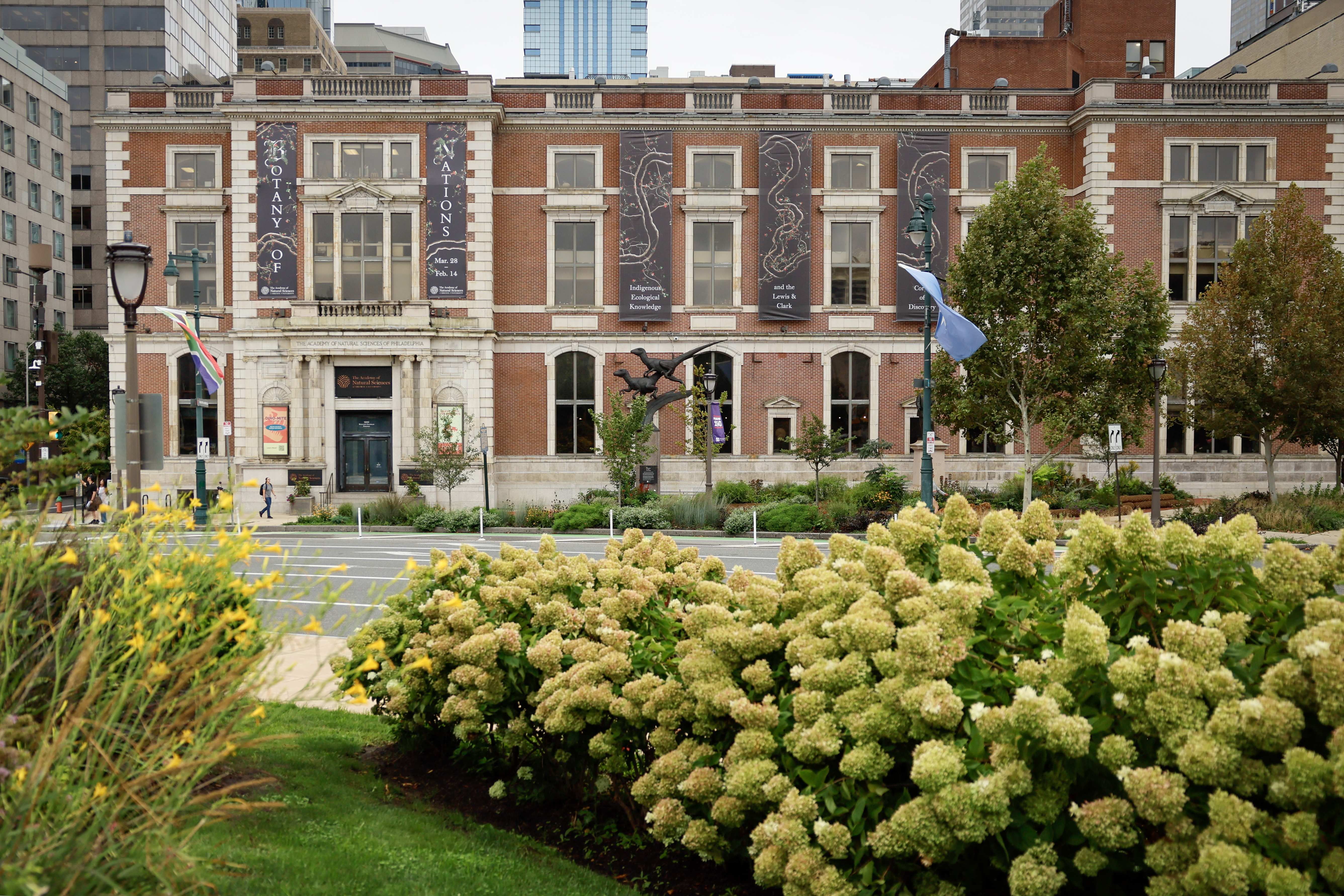
    Though not part of the new terms, the goal now is to relocate the Academy’s collections and sell its 1876 building at 19th and the Benjamin Franklin Parkway, which has numerous deferred maintenance needs, said a source close to the talks between Drexel and the Academy who asked not to be identified.

    The new “nonbinding” terms of the letter of intent maintain Drexel’s financial support of the Academy, modify the governance structure, and preserve the right of the Academy board to de-affiliate from Drexel and find a new partner or partners for its collections should it wish to do so.

    The terms cover issues such as selection of an interim leader and a permanent leader of the Academy and budgeting, according to a source close to the talks. While Drexel and the Academy will engage in a collaborative process to find a new leader, the final decision will rest with Drexel, the source said.

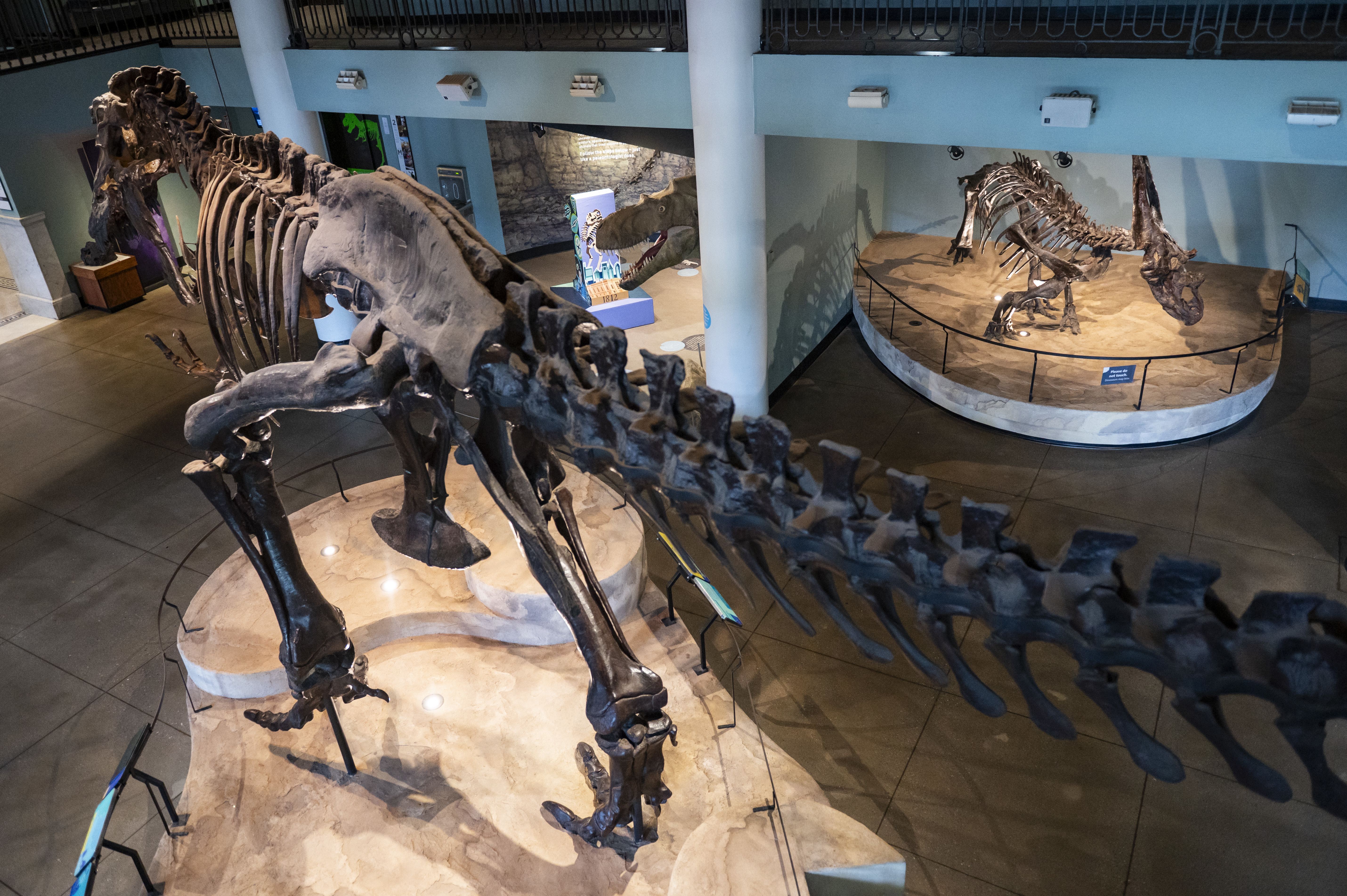
    Dinosaur Hall at the Academy of Natural Sciences on Wednesday, Aug. 5, 2026.Allie Ippolito / For The Inquirer

    “It’s fair to say all decisions of importance have to be approved by Drexel,” the source said, including the budget, which is about $25 million annually.

    Under the affiliation agreement in 2011, Drexel provided substantial financial support to the Academy and covered its deficits. That will continue, and Drexel also will cover the costs of relocation of the collection and other transition expenses, the source said.

    Academy board chair Suzanne Biemiller did not respond to messages seeking comment.

    A ‘solid’ but nonbinding resolution

    Of the new terms, another Academy board member said:

    “I’m hopeful that something positive will come of it. The goal is to find a way to keep the Academy in existence and achieve its mission, so I think it’s a solid resolution,” said the board member, who asked that their name not be used.

    Like most letters of intent, the agreement is nonbinding until the two sides come to a complete binding agreement, the source said.

    The Inquirer reported in April that Drexel was seeking to totally take over the Academy or end the partnership. The terms signed Tuesday were brokered by former Comcast executive and U.S. Ambassador to Canada David L. Cohen at the behest of Gov. Josh Shapiro.

    Sept. 27 is the last day the Academy of Natural Sciences of Drexel University will be open to the public.Elizabeth Robertson / Staff Photographer

    The leaders of Drexel and the Academy signed the terms sheet on Tuesday, Cohen said. But there are significant ongoing issues for the Academy and Drexel to work through, he added.

    “They include the responsible move of the collections, and a variety of other transition activities,” he said. “The Academy needs a senior representative, a senior voice in these ongoing discussions both to communicate internally at the Academy and with other stakeholders including Drexel.”

    That will be Wellenbach’s role, he said.

    She will have a voice in discussions on finding another location to display some of the collections, now that the museum will be closed, Cohen said.

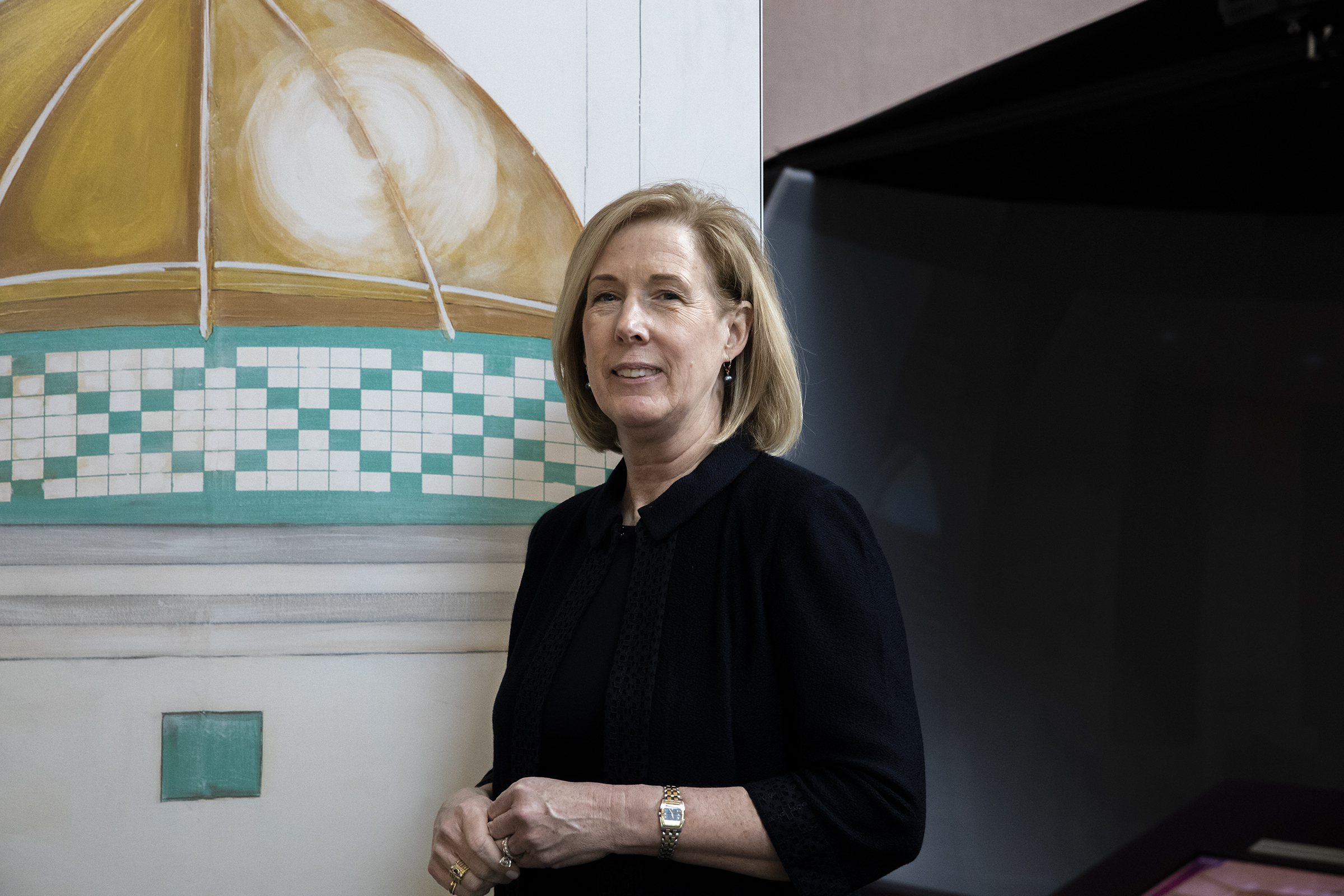
    Patricia Wellenbach, former president and CEO of the Please Touch Museum.Heather Khalifa / Staff Photographer

    A temporary leader

    Wellenbach will be based at the Academy part of the week while also continuing in her city role. She will lead temporarily while Drexel and the Academy search for an interim leader.

    “Ms. Wellenbach has had a distinguished career spanning nonprofit leadership, healthcare, governance and public service,” said the announcement from Drexel president Antonio Merlo and Biemiller.

    Mayor Parker in a statement called the Academy “a critical, longstanding part of Philadelphia’s cultural and educational landscape” and said she was pleased to loan Wellenbach to the effort.

    “We are working collaboratively with Gov. Shapiro, Ambassador Cohen, the Academy and toward the outcome we all seek for the City of Philadelphia,” Parker said.

    The Academy museum is ending operations after nearly two centuries because of declining visitorship and rising expenses, according to the Academy and Drexel.

    “Over time, it became clear that these were not temporary pressures, but fundamental changes in the economics of the Academy’s operational model, costs that have imperiled the Academy’s ability to discharge its overall mission and preserve its legacy,” the two institutions said in a joint statement Tuesday.

    Biemiller and others have pledged to not abandon the Academy’s role in educating the broader public about the natural world.

    While it was “incumbent upon us to find places and ways” for the museum to continue, she said earlier this week, the exact form it would take has not been determined.

    While Drexel has the major decision-making power, the Academy board will continue to be the fiduciary board and decision-maker for the Academy’s endowment, though management of it has been delegated to Drexel’s investment office, according to the source close to talks.

  • Kacey Musgraves, Kehlani, Lily Allen, Don Toliver, and Delaware Valley Bluegrass Festival are highlights of this last summer week

    Kacey Musgraves, Kehlani, Lily Allen, Don Toliver, and Delaware Valley Bluegrass Festival are highlights of this last summer week

    The unofficial last weekend of Philly’s summer pop music schedule keeps the heat on. There’s Don Toliver and Kacey Musgraves in South Philly, Kehlani in Camden, Lily Allen in Fairmount Park, Los Lobos in King of Prussia, and the Delaware Valley Bluegrass Festival in South Jersey.

    Thursday Sept. 3

    Los Lobos

    The great Chicano band Los Lobos is the focus of Native Sons, a documentary that is now making the film festival rounds. It shares a name with the band’s 2021 album of songs of Los Angeles. That album was produced by the band’s one non-Los Angeleno: Cheltenham-native sax and keyboard player Steve Berlin. So this Montgomery County gig is a hometown show of sorts for the band that — if justice is ever served — will one day wind up in the Rock & Roll Hall of Fame. 7 p.m., Concerts Under the Stars, 175 W. Valley Forge Road, King of Prussia, concertsunderthestarskop.com.

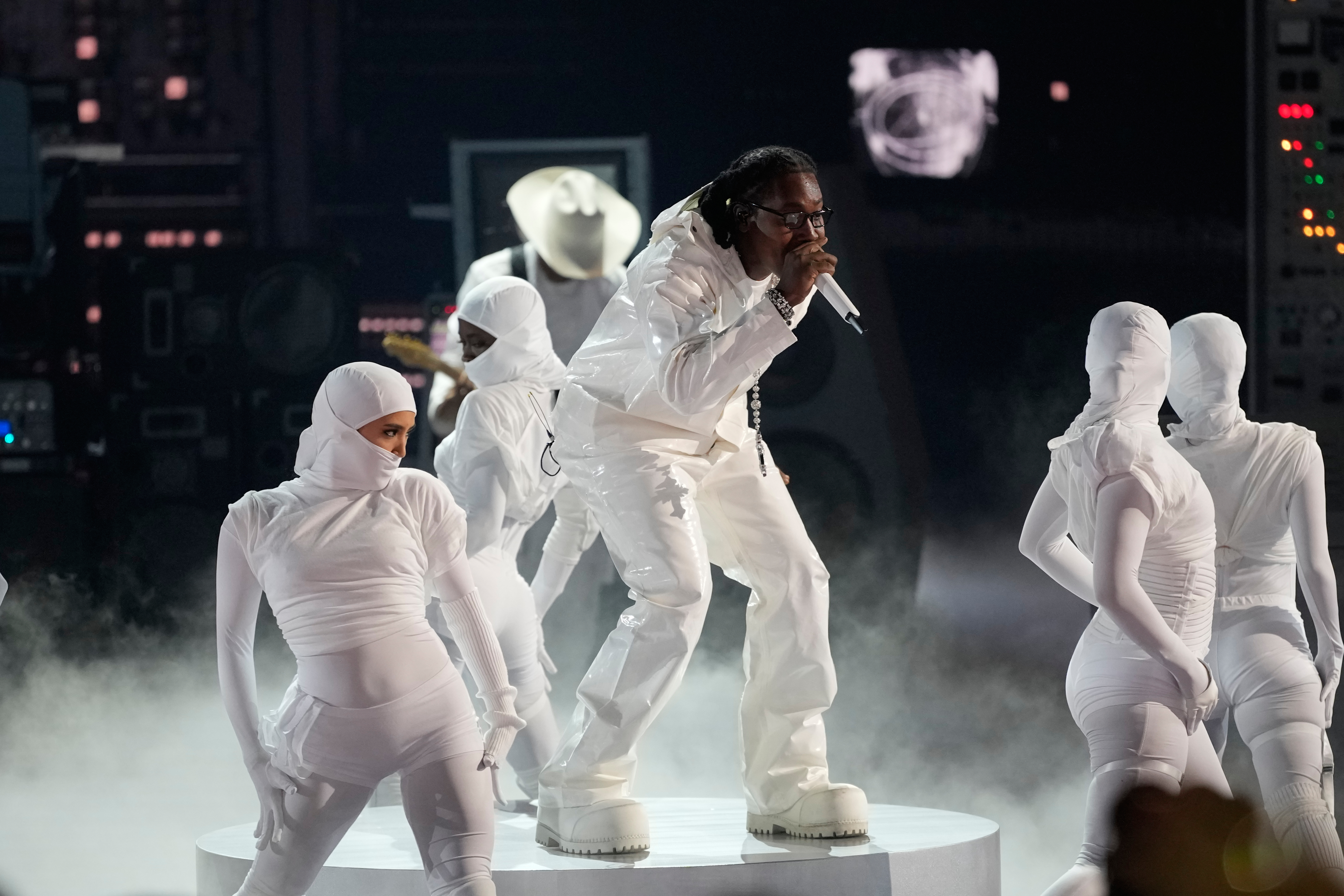
    Don Toliver performs during the BET Awards on Sunday, June 28, 2026, at the Peacock Theater in Los Angeles. (AP Photo/John Locher)John Locher

    Don Toliver

    The Houston rapper born Caleb Zackery Toliver brought his “Octane Tour” to South Philly in May and already, he’s back. It’s the second “Nitrous” leg of the trek for Toliver’s Octane album, which features Teezo Touchdown and The Odyssey actor Travis Scott. Chase B. is also on the bill. 8 p.m., XfinityMobile Arena, 3601 S. Broad St., xfinitymobilearena.com

    Friday Sept. 4

    Kacey Musgraves

    Kacey Musgraves comes back to country on Middle of Nowhere, the Grammy-winning Texas songwriter’s excellent seventh album. Willie Nelson, Billy Strings, and Philly Music Fest headliner Gregory Alan Isakov drop in. Musgraves also finds common ground with fellow Lone Star State singer Miranda Lambert, with whom she had a longstanding beef, on “Horses and Divorces.” Expect this show to turn into a Dolly Parton celebration. Flatland Cavalry opens. 8 p.m., Xfinity Mobile Arena, 3601 S. Broad St., xfinitymobilearena.com

    Dan Tyminski headlines the Delaware Valley Bluegrass Festival in Pilesgove, N.J., on Saturday, Sept. 5.Courtesy of the Artist

    Friday Sept. 4 to Sunday Sept. 6

    Delaware Valley Bluegrass Festival

    Founded at the urging of bluegrass titans Bill Monroe and Ralph Stanley in 1972, the Delaware Valley Bluegrass Festival is a Labor Day weekend tradition that endures.

    This year’s three days of music kicks off Friday in Salem County in South Jersey with Kathy Mattea, the country-bluegrass singer who hosts public radio’s Mountain Stage, as headliner. Friday’s lineup also includes the Price Sisters — singing Ohio siblings Lauren and Leanna Price — as well as Virginia guitarist Junior Sisk and the Travelin’ McCourys, sons of bluegrass legend and frequent DVBF headliner Del McCoury.

    On Saturday, Dan Tyminski gets top billing. The former member of Alison Krauss’ Union Station has had two moments of extraordinary popularity for a bluegrass musician: 2000’s O Brother, Where Art Thou? soundtrack, on which he sang “I Am a Man of Constant Sorrow,” and “Hey Brother,” an unlikely 2013 hit with Swedish dance music producer Avicii.

    New Orleans street band Tuba Skinny at the Delaware Valley Bluegrass Festival in 2022. The band will return to play the Pilesgrove, N.J., fest on Saturday.Delaware Valley Bluegrass Festival

    New Orleans ragtime street band Tuba Skinny also plays Saturday, as do Critten Hollow, Danny Paisley & Southern Grass, and the Gibson Brothers. The festival winds down Sunday with Black Eyed Suzies — self-described as “the Bluegrass Ladies of Maryland” — as well as Tennessee quintet Blue Highway, Chicago duo Special Consensus, Boone, N.C., roots band Burnett Sisters, and Nashville quintet Appalachian Road Show. Gates open at 8 a.m. each day. Salem County Fairgrounds, 735 Route 40, Pilesgrove, N.J., delawarevalleybluegrass.org.

    Kehlani performing during the second day of The Roots Picnic at the Belmont Plateau on May 31, 2026, in Philadelphia.Monica Herndon / Staff Photographer

    Saturday Sept. 5

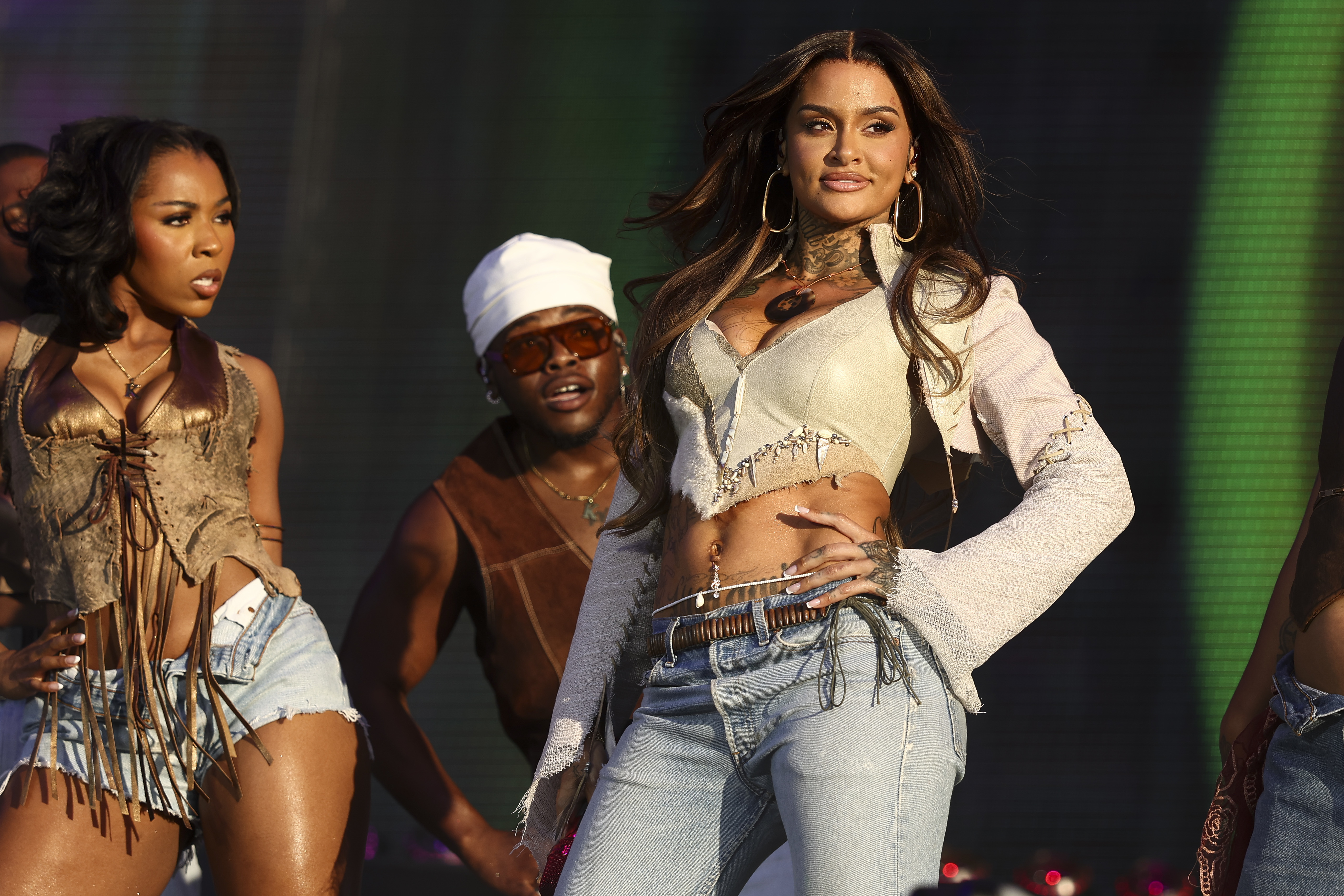
    Kehlani

    Kehlani had the biggest hit of their career last year with “Folded,” which was co-written with Philly producer Andre Harris and won two Grammys. The R&B vocalist celebrated with a performance at The Roots Picnic, and now they’re back for a headlining show in Camden on a tour that includes Durand Bernard, TheArti$t, Wahseel, and Dixson. 7 p.m., Freedom Mortgage Pavilion, 1 Harbour Blvd, Camden, freedommortgagepavilion.com.

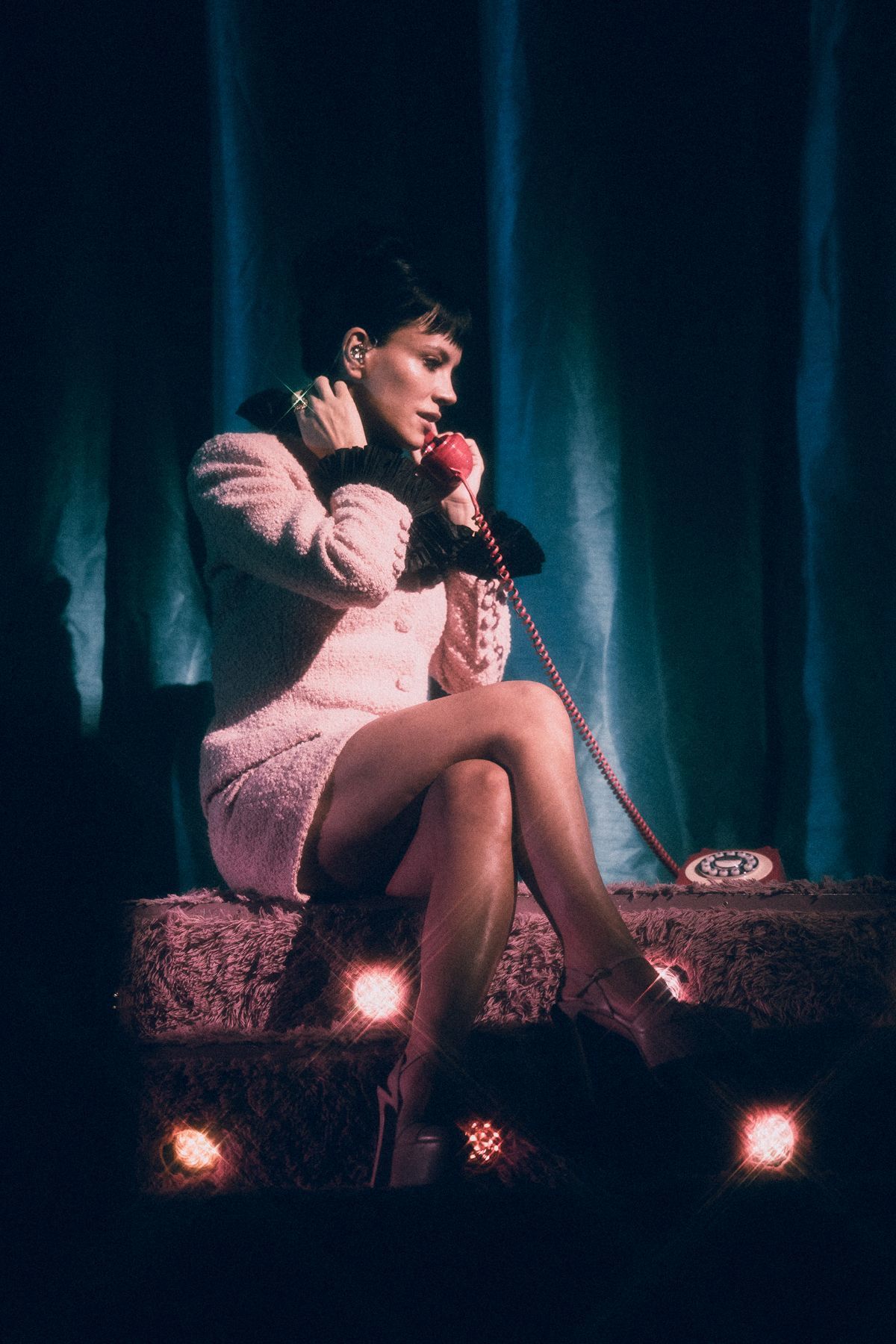
    Lily Allen at the Met Philly in April during her show “Lily Allen performs West End Girl.” She returns to play the Highmark Mann on Sunday.Christina Bryson

    Sunday Sept. 6

    Lily Allen performs ‘West End Girl’

    Lily Allen struck a nerve with last year’s West End Girl, a song suite inspired by the dissolution of her marriage to actor David Barbour, that resonated big time with an audience all too familiar with shady doings by unfaithful partners. Earlier this year, the British songwriter, who has displayed a winningly wicked wit going back to her 2006 Alright, Still?, performed West End Girl album in order in a terrific, if brief, show at the Met. Sunday’s show was scheduled for the Xfinity Mobile Arena but moved to the Mann. 8 p.m., TC Pavilion at the Highmark Mann, 52901 Parkside Ave., highmarkmann.com.

    Philly tribute to the Clash

    Many, including me, have argued that the four sides of London Calling, the 1979 double album by the British punk band the Clash, add up to the greatest album of all time. One side each goes to a Philly band: Citizens Riot, No Good Crowd, the Big Trip, and 2 Tones Clash. Guests on this tribute show include Hannah Taylor, Spoon Ferguson, John Faye, Cowmuddy, Phil Dunn, and Adam Weiner of Low Cut Connie (also playing a Free at Noon in Ardmore on Friday.) 6 p.m., Ardmore Music Hall, 23 E. Lancaster Ave., ardmoremusichall.com

    Slowey and the Boats

    Fab Philly instrumental quintet Slowey and the Boats’ breezy, light-on-its-feet sound is built around steel guitarist Isaac Stanford. The band’s delightful Slowey After Dark swings sweetly, using the Hawaiian origins of Stanford’s instrument as a starting point. 2 p.m. Wissahickon Brewing Company, 3705 W. School House Lane, sloweyandtheboats.com.

    Peter Hook & the Light play Union Transfer on Monday.Adam Kennedy

    Monday Sept. 7

    Peter Hook & the Light

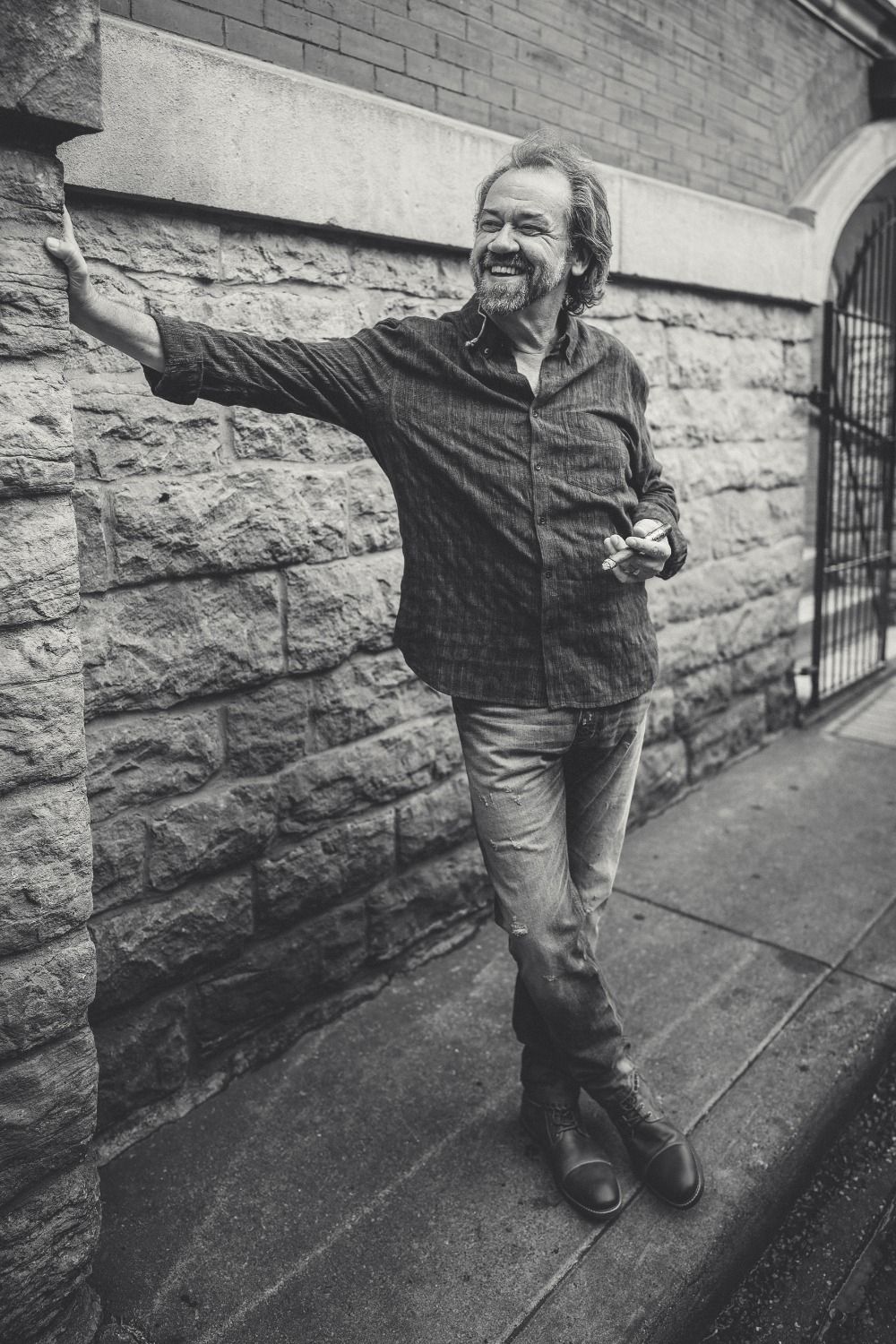
    Bassist Peter Hook was a key player in Manchester, England, in the late 1970s and 1980s as cofounder of Joy Division, New Order, and Durutti Column. Since 2020, he’s played the music of Joy Division and New Order, with his bassist son Jack, who frees him up to sing. He’ll perform New Order’s 2001 album Get Ready, plus pull from the JD and NO catalogs. 8 p.m., Union Transfer, 1026 Spring Garden St., utphilly.com

    Tuesday Sept. 8

    Social Distortion

    Longtime Southern California punk band Social Distortion is in fine form on Born to Kill, its first album in 15 years. Leader Mike Ness sounds refreshed after a battle with tonsil cancer, and the band is pushed hard by drummer David Hidalgo Jr., son of the coleader of Los Lobos. Social D’s fellow SoCal punks the Descendents and young Australian punks the Chats also perform. 8 p.m., themetphilly.com

    Gary Clark Jr.

    At Bruce Springsteen’s Music of America concerts in the spring, Gary Clark Jr. covered “Power of Soul” by Jimi Hendrix’s Band of Gypsys and Bobby “Blue” Bland’s Texas shuffle “Further on up the Road.” Those two songs hint at the range of the Austin-based Clark Jr., who has been Texas’ leading guitar hero since he gained nationwide renown with Blak & Blu in 2012. Dumpstaphunk and DJ Kurupt open. 8 p.m. Keswick Theatre, 291 N. Keswick Ave., Glenside, Keswicktheatre.com

    DJ Jazzy Jeff performing at The Roots Picnic in Philadelphia, on May 30, 2026.

    Wednesday Sept. 9

    DJ Jazzy Jeff

    Jeff Townes has had himself a Semiquincentennial summer. At The Roots Picnic, the West Philly-born and -raised DJ put on a turntablism clinic on Belmont Plateau. Then Townes teamed with Will Smith and The Roots to shut down the Philly 250th celebration on the Ben Franklin Parkway in the wee hours of the morning. Now he’ll display his musical mastery at a Longwood Gardens illuminated Fountain Party. 8 p.m., 1001 Longwood Road, Kennett Square, longwoodgardens.org.

    New Zealand singer Aldous Harding plays Underground Arts on Wednesday.Emma Wallbanks

    Aldous Harding

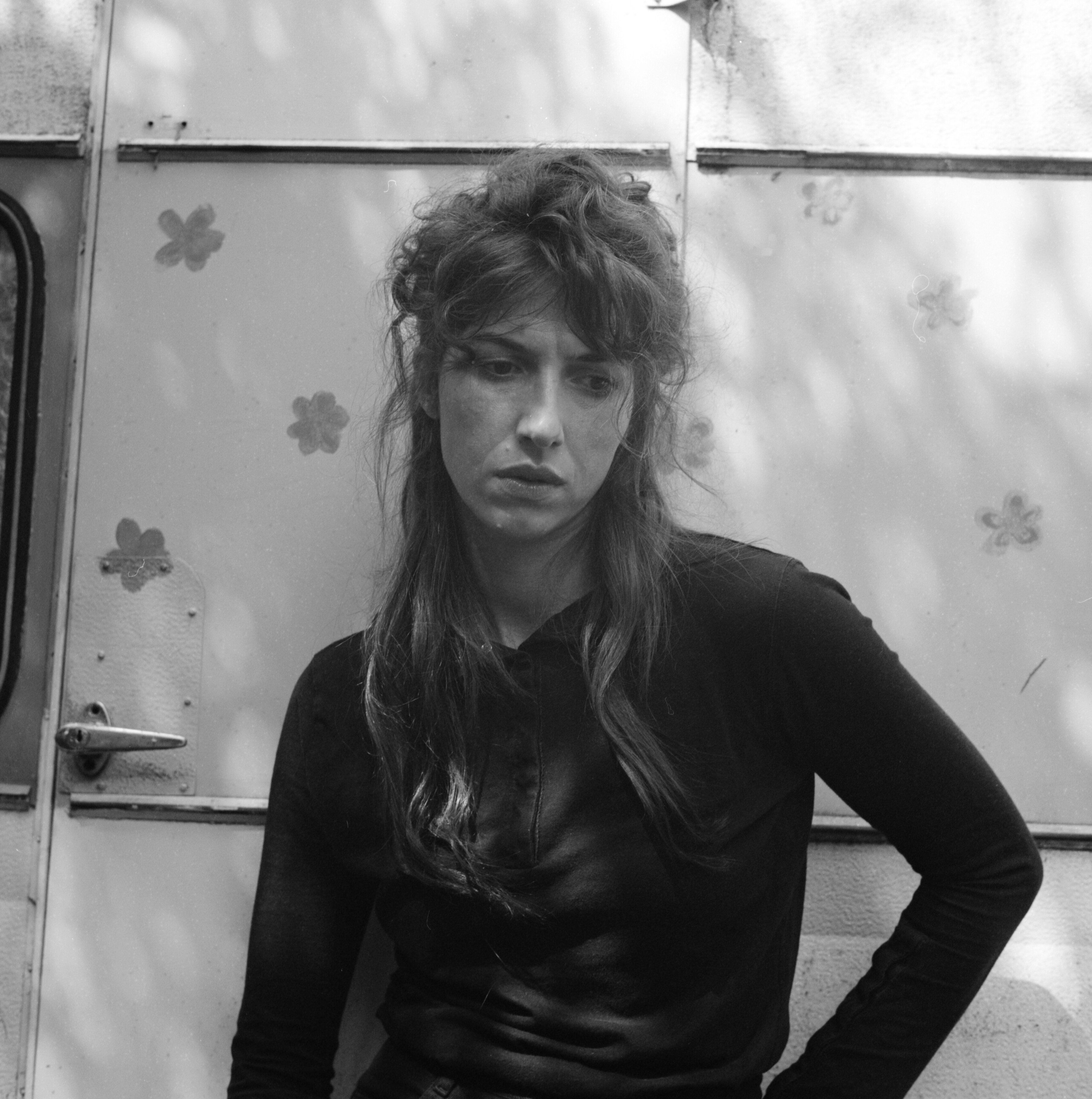
    New Zealand songwriter Aldous Harding is touring behind Train on the Island, the fourth album she’s recorded with PJ Harvey collaborator John Parish producing. The songs are in keeping with Harding’s reputation as an inscrutable, willfully strange songwriter but are also rock solid psychedelic folk tunes. Sam Burton opens. 8 p.m., Underground Arts, 1200 Callowhill St., undergroundarts.org.

  • One of the fastest-growing jobs has a wage theft problem. Pa. will now fast-track investigations

    One of the fastest-growing jobs has a wage theft problem. Pa. will now fast-track investigations

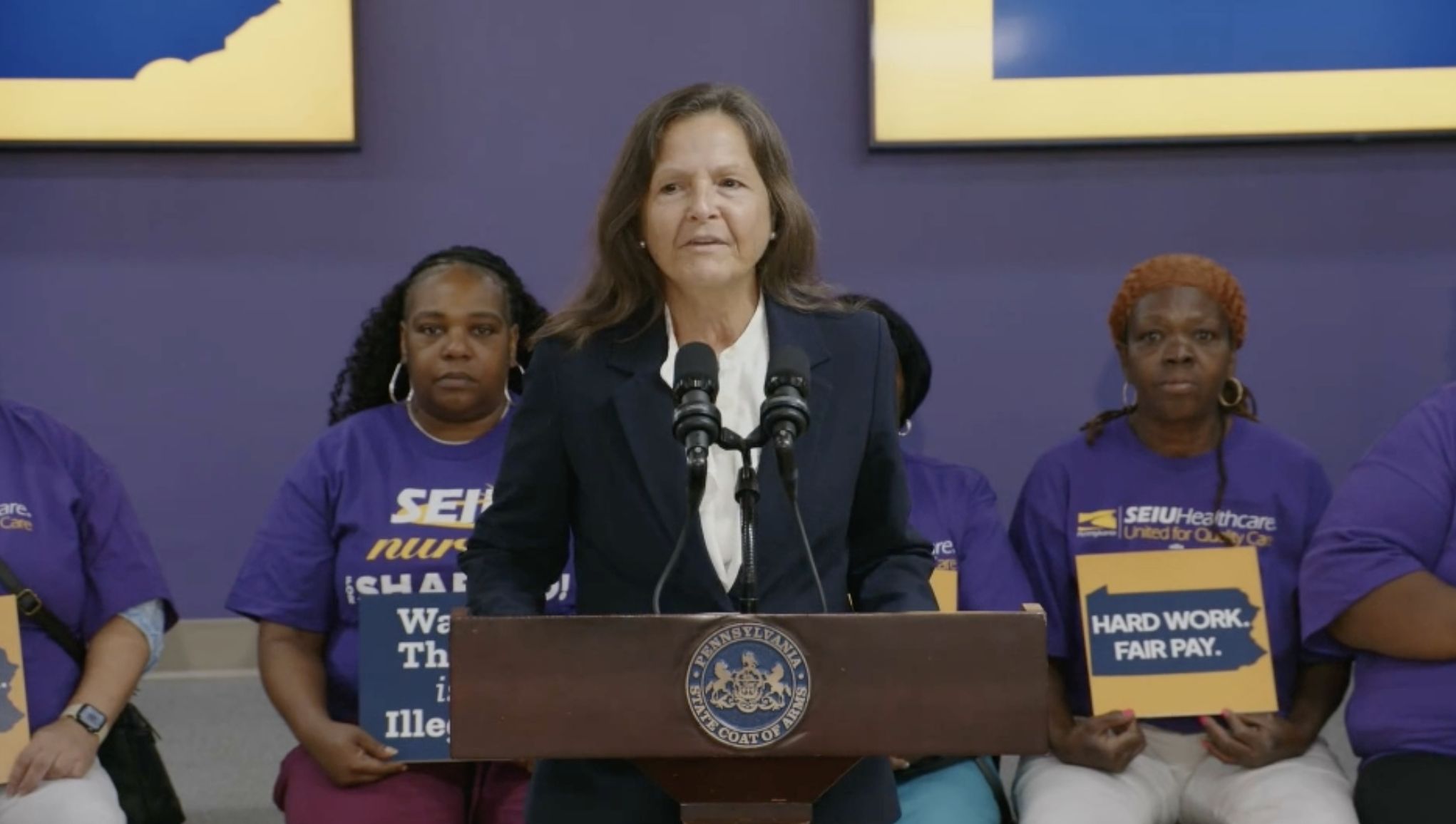
    One of the fastest-growing occupations is also a hot spot for wage theft complaints in Pennsylvania. A new initiative by state regulators aims to help change that.

    Nearly 40% of the minimum-wage complaints sent to Pennsylvania’s Department of Labor and Industry are from the home healthcare industry, State Labor Secretary Nancy Walker said at a news conference Tuesday.

    Under the new initiative, the state won’t wait to receive new complaints, said Walker. Instead, regulators will audit home healthcare agencies, making “legal demands for wage and hour information,” said Walker, to find potential wage violations.

    “We’re here today because these workers are not receiving the wages they earned, and that changes now,” Walker said.

    Demand for home healthcare is expected to continue growing, but attracting workers to the industry has been a challenge.

    Many home healthcare workers, who help patients with daily living needs, have been shorted on their overtime pay in Pennsylvania in recent years and employers have ultimately had to pay back millions in some instances. One contributing factor is that Medicaid doesn’t pay home healthcare employers extra for overtime.

    “The workers doing this care are not always treated the way we should be,” Marshene Ellis, a home care worker for over 17 years, said at Tuesday’s news conference. “I’ve worked for different agencies and seen the broken promises and low wages.”

    Making ‘good jobs’ in home healthcare

    Pennsylvania is home to more than 257,000 home care workers, according to the Bureau of Labor Statistics, but more are needed to meet demand, especially as the population ages.

    Nationally, home health aide is expected to be one of the fastest growing jobs in the coming decade, according to BLS, which predicts 847,300 more home health jobs by 2035.

    In Pennsylvania, some 112,000 care shifts go unfilled every month, according to Matt Yarnell, president of the SEIU Healthcare Pennsylvania union.

    “That means somebody who cannot get themselves out of bed, is laying in that bed hoping someone shows up,” said Yarnell. “We have a lot of work to do in this space.”

    Those in need may find themselves in the emergency room instead, Yarnell added.

    “When families cannot find a home care worker, the impact is immediate,” said Gabrielle Szymanski, of Pennsylvania’s Department of Aging. “Family caregivers are forced to leave work or take on additional responsibilities, and providers struggle to meet demand — and too often people end up in more restrictive and more costly settings.”

    Attracting and retaining home-health workers has been challenging. Turnover is high in the industry, and wages are low. The median wage in Pennsylvania is $14.14 per hour.

    Workers deserve higher wages, said Mia Haney, CEO of Pennsylvania Homecare Association in a statement on Tuesday and pointed to low Medicaid rates as part of the issue.

    “We support holding bad actors accountable, but they should not define an industry overwhelmingly made up of providers committed to their workers and the people they serve,” said Haney, whose organization represents nearly 700 home care and hospice providers.

    Gov. Josh Shapiro’s administration recently added $21 million to the state budget to boost home healthcare wages.

    “It is really really critical that these become good jobs, and that will not happen on its own,” said Yarnell.

  • How much is that gene-edited dog in the window?

    How much is that gene-edited dog in the window?

    For thousands of years, we have been trying to craft our ideal canine companions. We have honed their abilities to perform an array of specific tasks, from fetching waterfowl to staring down wayward sheep. We have reshaped and refined their bodies, producing sausage-shaped dachshunds, polka-dotted Dalmatians, bushy-browed schnauzers, and deeply wrinkled Shar-Peis.

    And we have done it using nothing more sophisticated than good old-fashioned selective breeding.

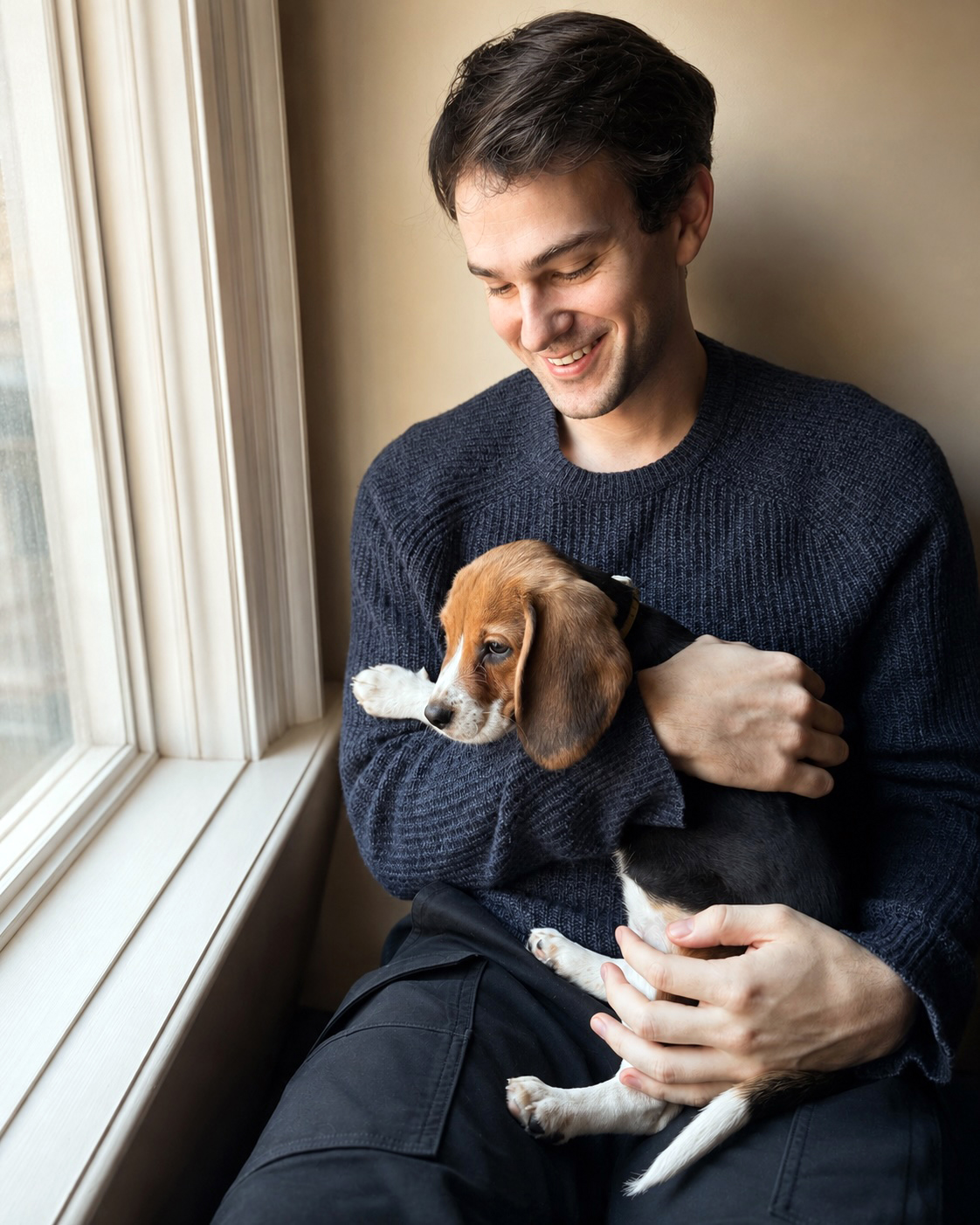
    Now our canine engineering efforts are entering a new era. Earlier this month, Kindred Companion Sciences, a biotech startup based in New York, revealed that it had used the technique known as CRISPR to create the first gene-edited, hypoallergenic dogs. Thanks to a single genetic tweak, the dogs — two undeniably adorable beagles — appear unable to produce a protein that can leave some people red-eyed and wheezing.

    Still, it’s a long way from the lab to the laps of pet owners across America. (It has been 2½ years since scientists announced a gene-edited, hypoallergenic cat, but such felines are not yet available to the public.) More time and data are needed to determine whether Kindred has truly delivered on its promise of hypoallergenic dogs, experts said. Can a single gene edit reliably stave off the sniffles in humans?

    An even more critical question: What does it mean for dogs? Will our efforts to create pets that are more convenient for us have unintended health consequences for them?

    History is not encouraging. Since the Victorian era, when dog fanciers began to create and codify modern dog breeds, our quest for the perfect pooch has yielded dogs that are inbred, disease-prone, and saddled with extreme physical traits — super flat faces and ultralong backs — that compromise their welfare.

    “We’ve created an enormous amount of inherited diseases in dogs, often unintentionally, because of our pursuit of certain traits that appeal to us,” said Rowena Packer, an expert on companion animal welfare at the Royal Veterinary College in London. “I just think we have a lot more responsibility to think more critically about the dogs that we create.”

    Dog design

    For all the canine diversity we’ve managed to create through selective breeding, a truly hypoallergenic dog remains something of a holy grail. Breeders have created all manner of low-shedding dogs and purportedly hypoallergenic dogs (behold the labradoodle and all of its doodle-y descendants). But these dogs still produce proteins that, secreted through their skin, saliva, and urine, can trigger human allergies.

    Gene editing provides a “simple, elegant” way to solve the problem at the source, said Matt Walker, cofounder and CEO of Kindred, who has suffered from dog allergies his whole life.

    Kindred began with canine cells, using CRISPR to disable a gene known as Can f 1, which codes for one of the main canine allergens. Then, the scientists used a basic cloning technique to transfer the edited genomes from these cells into dog embryos. They implanted the embryos in a surrogate beagle mother, who gave birth to two puppies: Alfie and Bailey, who are now almost 2 years old.

    The company has detected no trace of the allergen in either dog, and Walker, who adopted Bailey, has experienced no allergic reactions. (Alfie was adopted by one of Walker’s colleagues.) The dogs appear to be developing normally.

    “No red flags, no yellow flags — so far, the animals seem completely healthy,” Walker said. “That said,” he added, “this is the starting point of our work.”

    Indeed, for all its purported precision, gene editing can have unpredictable consequences. Medical issues might appear later in the dogs’ lives, or when the company starts producing enough dogs to spot rare side effects.

    Or, of course, they could turn out to be perfectly healthy. But it’s too soon to say, and we’re likely to see more efforts to create gene-edited dogs in the future. Where do we want to draw our ethical lines?

    Thirty years ago, when genetic engineering was still in its infancy, philosopher Bernard Rollin proposed an ethical principle he called the “conservation of welfare,” which held that we should not modify animal genomes in ways that left the animals “worse off, in terms of suffering” than their unmodified forebears.

    That’s a sensible starting point. But it’s a low bar. And it doesn’t address all the ethical implications of making gene-edited dogs, which may require using additional animals to serve as test subjects, egg donors, and surrogate mothers.

    “I think we get sometimes so excited about the idea of what technology can fix, particularly biotechnology — we’ve got to remember that, generally, we use a lot of animals to get to that end ‘product,’” said Lisa Moses, a veterinarian and bioethicist at Harvard University.

    Ethicists have also questioned whether we should bring gene-edited dogs into a world that already has more dogs than it can care for, especially when the goal is not to create a healthier animal, but one that better meets our human needs.

    “Should we use sophisticated biotechnology to create the animals we want, rather than changing how we relate to the animals who already exist?” said Jessica Pierce, a bioethicist at the University of Colorado Anschutz Medical Campus. “That’s a question of priorities, and perhaps misplaced priorities.”

    Walker sees it differently. His allergies would prevent him from ever adopting a shelter dog, he said; gene editing is the only thing that has made it possible for him to have a relationship with dogs. “I’m also really invested in applying this work to service dogs for people who are allergic,” he said.

    “People’s ethical barometers are set differently,” he added. “For me, this feels justified by the potential benefits, as long as animal health is protected.”

    Good breeding

    Dog lovers can, in good faith, come down on different sides of the Kindred question. But if we’re going to discuss the ethics of dog creation, experts agreed, we need to ask ourselves some hard questions not just about our new gene-editing tools, but also about our long-standing breeding practices.

    “At the end of the day, they’re both producing animals for companion purposes,” said Alison Van Eenennaam, an expert on animal genomics and biotechnology at the University of California, Davis. “It’s not the technology that’s creating the ethical issues.”

    We’ve done plenty of harm without modern biotechnology. And there are ways to use gene editing to improve canine lives — even, in some cases, to undo some of the damage done through selective breeding. In a 2022 study, scientists showed that it was technically possible to use gene editing to “correct” a genetic mutation associated with hip problems in Labrador retrievers.

    But these hip problems stem from a variety of risk factors — both genetic and environmental — and most canine health conditions probably cannot be cured by editing just one gene, experts said.

    Improving dog welfare is likely to require an array of complementary approaches. These include revising breed standards, opening up closed breeding pools, performing widespread genetic screening, and educating the public about the welfare costs of breeding dogs with certain physical traits.

    Experts have been calling for these reforms for years, with limited success. But they are necessary if we want to bring our behavior in line with the values we claim to hold. We are, after all, a society that is so besotted with dogs that we have startups trying to develop canine longevity drugs — and editing genes so that people can live alongside creatures that would otherwise give them hives.

    Life with Bailey has been “amazing,” Walker said. “I didn’t really appreciate, when people say pets are part of your family, what that really means. But she really is a part of our family.”

    His wife had grown up with dogs, he added, and had long bemoaned his allergies. “She always said that this was the one thing she wished she could change about me,” he said.

    Indeed, as news of Kindred’s hypoallergenic dogs spread across the internet this month, one Facebook commenter raised precisely that possibility: “Why doesn’t he alter himself instead of the beagles?”

    Alas, we can’t yet edit dog allergies out of our own genomes. But that doesn’t mean we can’t evolve.

    This article originally appeared in the New York Times.