Blog

  • This Philly business started by making dinners for doctors. Now it’s selling thousands of meals a week.

    This Philly business started by making dinners for doctors. Now it’s selling thousands of meals a week.

    When Home Appétit moved into a space just off City Avenue in West Philadelphia in 2020, founder and CEO Lee Wallach thought the company would stay five to 10 years.

    But given the business’ quick growth, particularly during the pandemic, the company is already “bursting at the seams,” Wallach said. The meal delivery company is moving to East Falls in September, to a former catering facility Wallach bought and is renovating.

    Home Appétit, founded in 2013 in Wallach’s Center City apartment, is on track to bring in $10 million in revenue this year, Wallach says. His company delivers roughly 16,000 to 20,000 meals a week within a 50-mile radius.

    Wallach sees untapped customers and opportunities he can now pursue.

    In addition to buying the new headquarters for a little over $2 million, he plans to spend between $3 million and $4 million on renovations and business upgrades, which he’s been able to do through bank financing. He’s building out a fleet of delivery vans, opening a pickup window, and setting up the business to make and sell more meals. That includes hiring dozens more employees.

    With that, Wallach predicts, Home Appétit will “have almost unlimited potential for growth.”

    Why Home Appétit grew as some competitors fizzled

    In Home Appétit’s early days, Wallach planned to discontinue chicken cutlets. Breading the chicken by hand and cooking it was very labor intensive for his small team, he says.

    “I tried to take them off the menu, and I had many customers messaging me that I couldn’t do that,” Wallach said. “They’ve been on the menu ever since.”

    It was an early lesson in what keeps people coming back to Home Appétit. Wallach’s earliest customers were doctors. Today, customers include doctors, nurses, and professors, as well as young families, and new parents who receive meal delivery as a gift. Of his original first five customers, two still buy his meals.

    In recent decades, plenty of meal kit companies such as Blue Apron and HelloFresh have tried to shake up home cooking, providing customers with premeasured ingredients and detailed instructions. But they have faced retention challenges.

    Home Appétit, on the other hand, offers fully prepared heat-and-eat or ready-to-eat meals — so do several competitors.

    Factor has Keto and vegan options; Thistle offers gluten-free and dairy-free meals; and CookUnity brings together distinct chefs to craft menus.

    They’re all helped by a trend of people eating fewer meals out, said Michael Infranco, a RetailStat analyst who covers businesses such as Wegmans, HelloFresh, and Kroger.

    But the industry is facing competition from grocery stores that offer prepared meals and delivery, he says. Some are partnering with Uber Eats or DoorDash.

    There’s a lot of industry pressure around trends, says Wallach, who has steered clear of them.

    “People are looking for protein, and people look for macros, and everybody wants to count calories, and everybody wants to know how many carbs are in [their food],” he said. “That’s not really us.”

    His business doesn’t cater to a specific diet, he says. Instead, his team aims to make “restaurant quality” food.

    “We’re not just dumping butter or dumping salt into a dish to make it taste good,” Wallach said. “We’re finding different ways and using different techniques to really elevate the flavor and the profile of the meals that we prepare.”

    Home Appétit sets itself apart because of its focus on the long-term, Wallach said. He wants it to be an “essential service” to its customers.

    That’s been true for Ricky Grenis of Northern Liberties. He and his wife, Bonnie, have been considering a move to the suburbs and often joke that they must stay in the Home Appétit delivery range, Grenis said.

    “It’s hard to put a price on the convenience that it provides us as two working parents,” said Grenis, 37, who has two young children and works in the wine industry. The couple tried out a few national meal-kit companies, but they were unimpressed by the ingredients and still had to cook.

    Grenis is a vegetarian, but Bonnie isn’t, and Home Appétit allows them to order meals that both can enjoy, as well as kid-friendly options. “It literally feels like we have a private chef,” said Grenis.

    The only downside, he said, is the amount of plastic packaging. “If we could figure out how to even be more sustainable, that would be a plus,” he said.
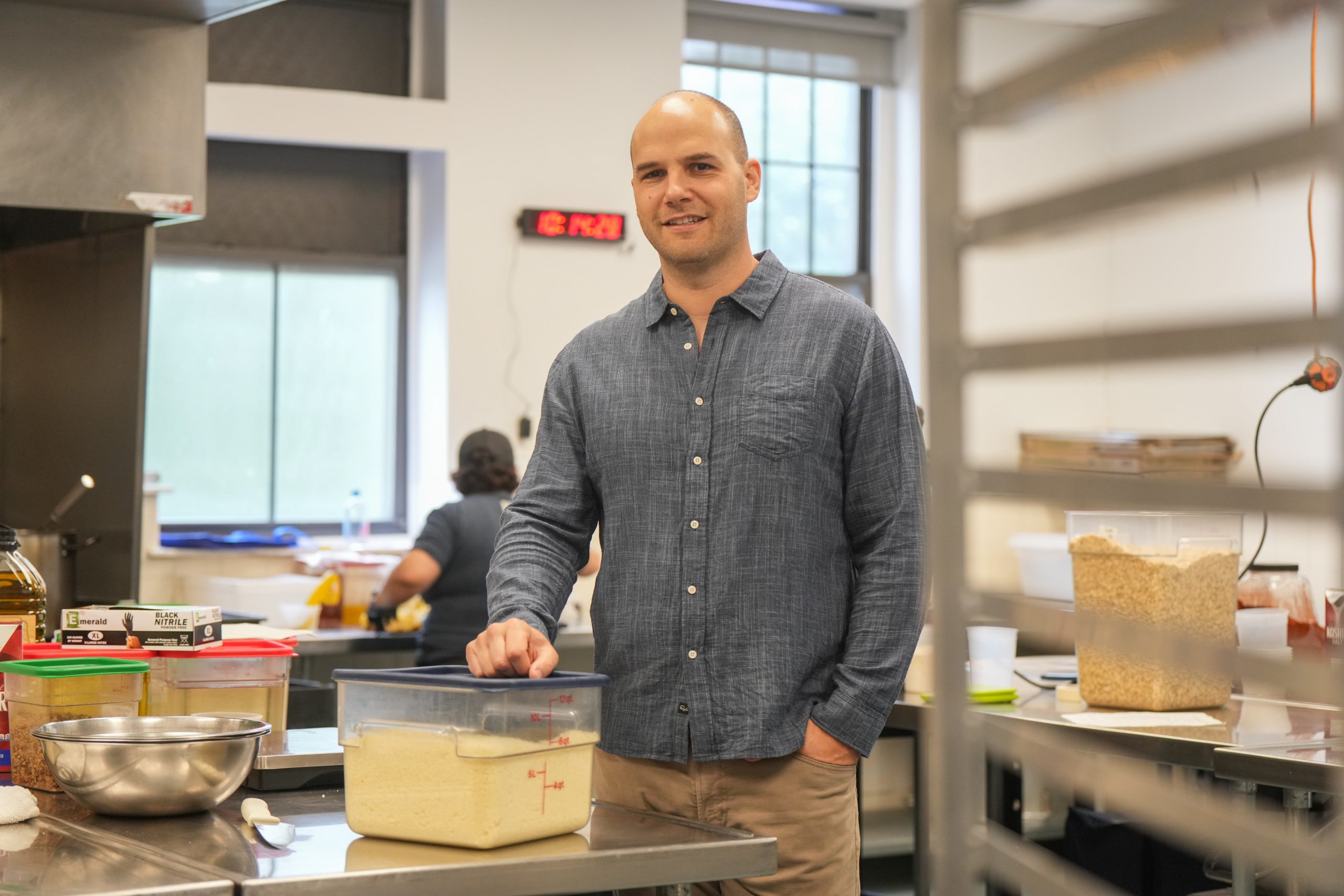
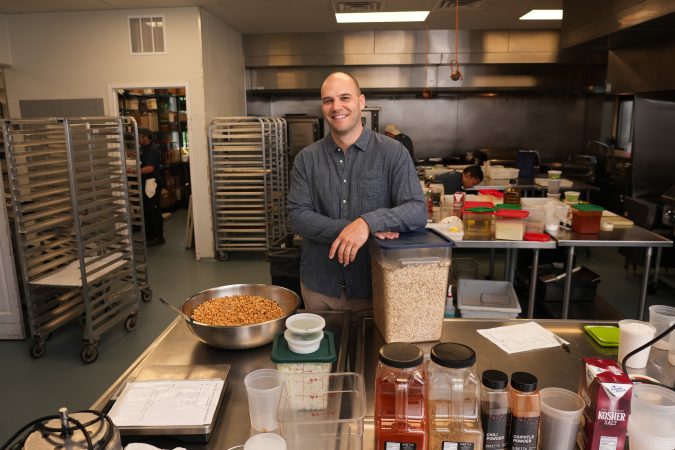
    Lee Wallach at the company’s kitchen.Jessica Griffin / Staff Photographer

    Staying competitive, and focused on the Philly area

    On a recent day in July, Home Appétit’s entree menu included a miso-glazed salmon bowl with bok choy and brown rice, a pulled buffalo chicken sandwich, and a “Southwest Salad” with tortilla strips and buttermilk dressing. The company also offers small plates and add-ons such as roasted asparagus, steamed broccoli, and hard-boiled eggs.

    Customers can order anytime between Tuesday and Friday night, to receive their meals the following Monday.

    The minimum order costs $100 and covers four to six meals for a single person. Customers can also increase their order size for more people.

    While some businesses have struggled with rising food costs, Wallach says Home Appétit has been partly insulated because it sources products from cooperatives and small farms.

    “That’s kind of been a bit of a competitive advantage for us, and has allowed us to control our prices a little bit more,” he said.

    Still, economic conditions have changed since 2013, particularly the costs of labor. He increased prices for the first time last year. While the basic order still costs $100, adding more people to an order now costs more.

    The new headquarters is 23,000 square feet, up from the current 3,500-square-foot space, as well as a leased office in South Philly. With the move, the company will consolidate under one roof.

    Wallach plans to have a staff of 200 to 250 by 2028. He currently employs roughly 50 full-time kitchen staff and 10 corporate employees. Meals are delivered by 40 to 50 drivers, who are mostly contractors in their own vehicles.

    Tech company founder Lilly Chen, 30, orders most of her food to her Chinatown apartment, where she lives with her cofounder. She has tried every food delivery service under the sun, she says, but Home Appétit stands out because of its delivery model. She says it’s because the company doesn’t outsource delivery.

    “There’s a lot of other meal providers, that because they don’t own it, if something goes wrong — the food spoils or it’s late or you can’t find a delivery — they just kind of have to refund you and then you’re on your own,” Chen said.

    Wallach plans to launch pickup at the new location, which customers have been asking for. Home Appétit also got its first refrigerated van.

    Under the company’s current model, food gets delivered in insulated bags with ice packs in contractors cars, which puts a limit on how far meals can travel — but Wallach plans to expand the company’s delivery zone as he adds additional refrigerated vans.

    He also plans to deliver on more days, not just Mondays, starting next year.

    “If we can start delivering [closer to the weekend] and deliver to the Shore, I think it’s a home run for us for the summer months,” Wallach said.

    He might pursue other markets in the future, perhaps Boston or Washington, D.C. But for now, Wallach is focused on the Philadelphia region, he says.

    “There’s a ton of untapped opportunity here,” he said. “I’m excited to finally be able to take advantage.”
  • Aaron Bauer, ‘the Lizard King,’ retires after 38 years teaching at Villanova

    Aaron Bauer, ‘the Lizard King,’ retires after 38 years teaching at Villanova

    Scientist Aaron Bauer gawked at the cat-sized gecko.

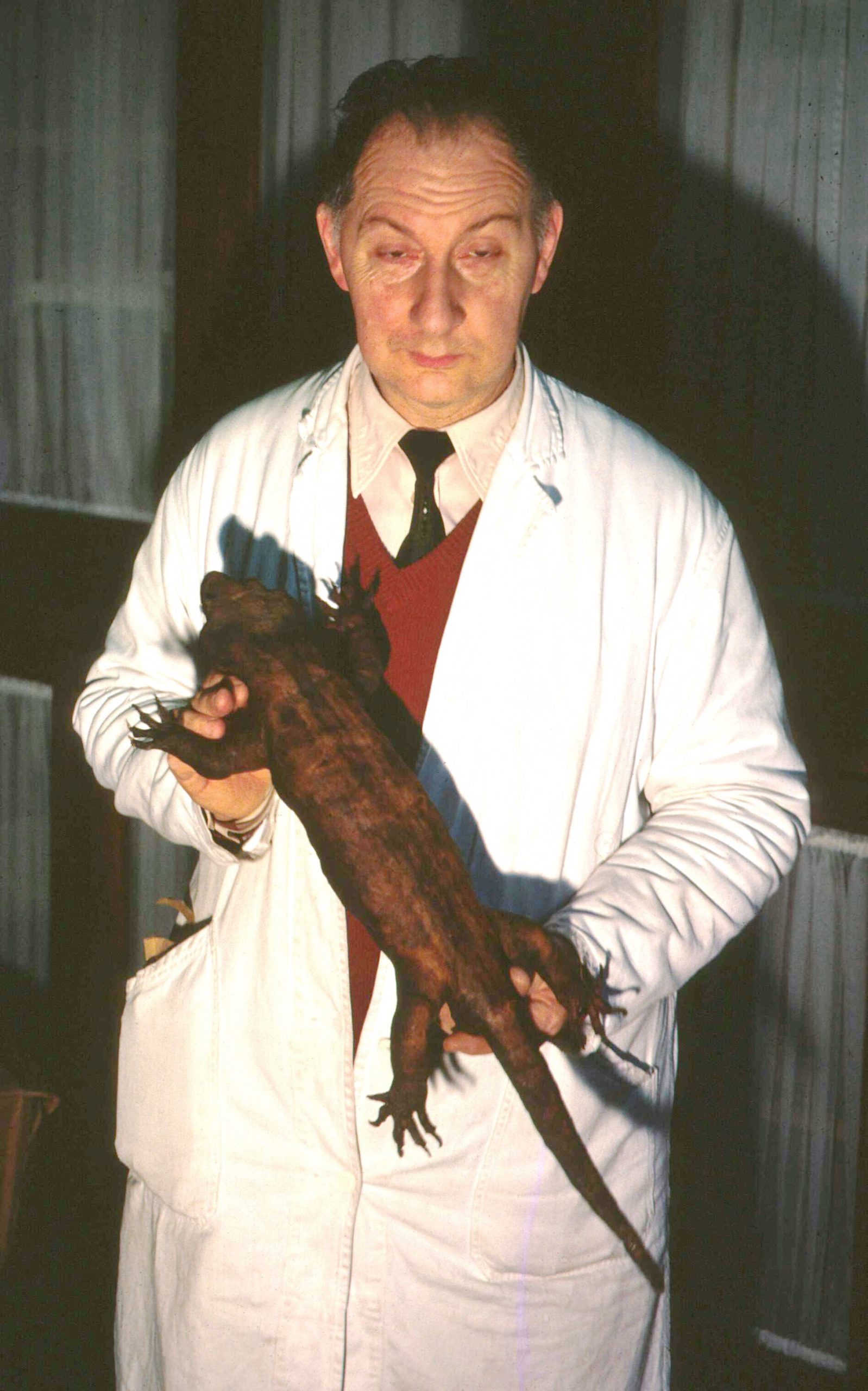
    The two-foot-long, preserved creature had sat unidentified in a natural-history museum in France for nearly two centuries.

    Staring at its huge head and climber’s build, “I sure as heck could recognize that this was a gigantic, unknown species,” he said.

    The extinct creature was the largest gecko to ever live, and the first new species Bauer — at the time a PhD student in his 20s — ever discovered and described.

    French museum worker Alain Delcourt is pictured holding the giant gecko, which was the first new species of gecko Aaron Bauer ever described.Courtesy of Aaron Bauer

    Now a renowned herpetologist at Villanova University, Bauer, 65, has identified 320 new species of reptiles and counting — more than any other living scientist.

    Scientists worldwide discover more than 16,000 new species every year, researchers estimate, spanning plants, animals, insects, and other forms of life.

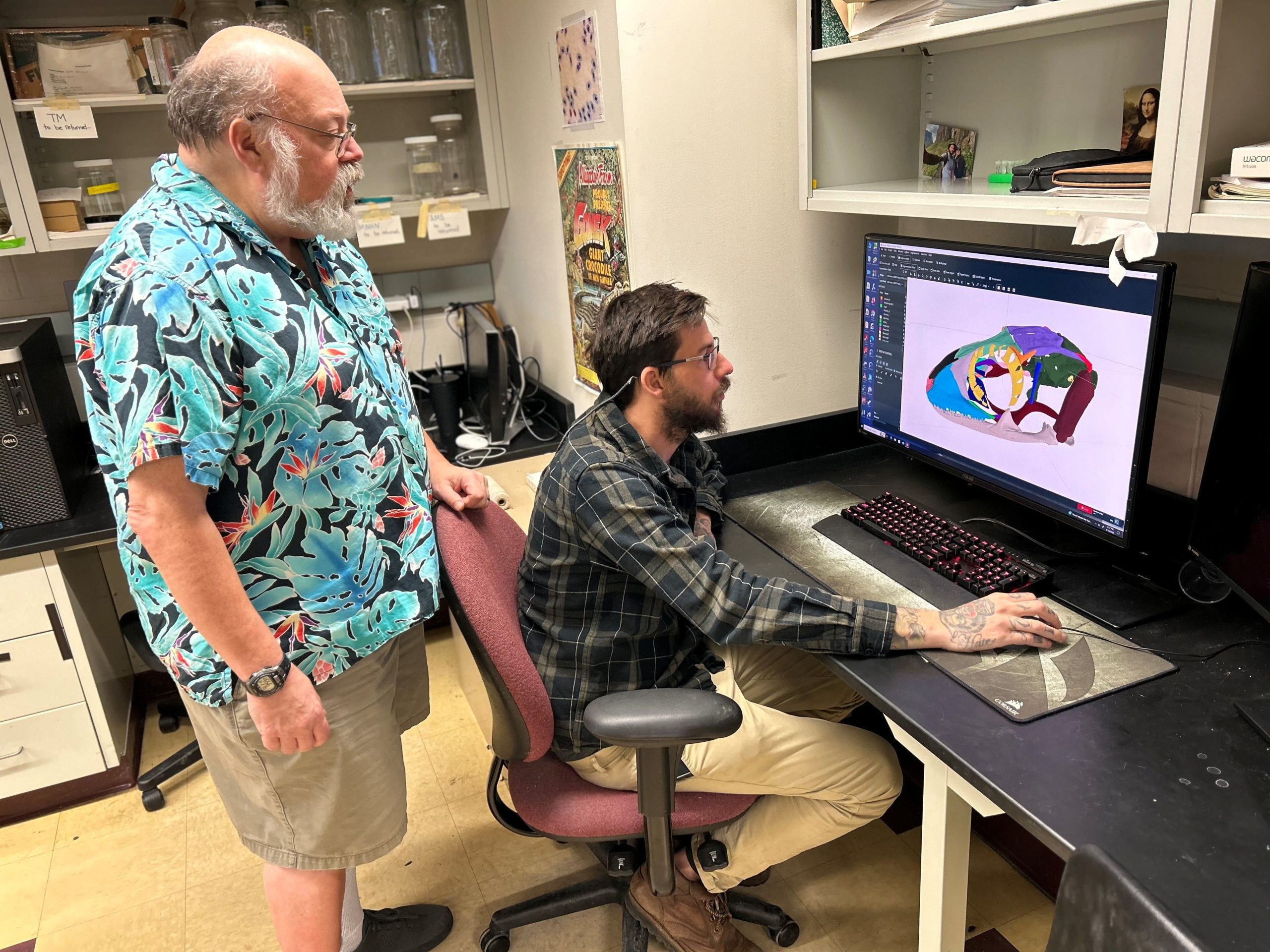
    Nicknamed “the Lizard King” by his students, Bauer retired in May from a 38-year-long teaching career at the university, where he mentored dozens of master’s students in herpetology, the study of reptiles and amphibians.

    Aaron Bauer’s former students are hosting a Bauer-fest in honor of his retirement from teaching.Courtesy of Villanova

    Some of his discoveries happened much like his first — seeing something in a museum that was “clearly something new,” he said. Others happened through regular travels to Africa, the South Pacific, and Asia.

    His longest research project revolves around the original giant gecko he discovered 40 years ago during a 1980s trip to Marseille.

    Bauer’s former graduate student, who later became a University of Michigan-Dearborn professor of biology, helped him analyze DNA from the gecko’s leg bone in 2023.

    “If I have had a successful career, it’s because I’ve had great students who didn’t just come and go,” Bauer said.

    The snazziest snake

    Aaron Bauer keeps in touch with his former students. The majority have stayed in herpetology.Courtesy of Villanova

    Bauer spent his childhood exploring ponds, fields, and wildlife on the 68-acre Long Island estate where his grandfather was a caretaker.

    He decided to become a herpetologist at age 5, after catching “the snazziest snake we have in the northeastern U.S.”

    As an 8-year-old captivated by the bright green creature, Bauer typed up lists of all the Latin names of amphibians and reptiles.

    He knew he wanted to work with these critters, but not how to make a living from it.

    “Nobody in my family had gone to college, so what do I know?” Bauer said.

    His path began with studying zoology and history at Michigan State University, where he graduated in 1982.

    As a PhD student at the University of California, Berkeley, he specialized in lizards. It was the one species he could not find at the Long Island estate, where frogs, salamanders, turtles, and snakes abounded.

    “Everybody wants what they don’t have,” he said.

    Geckos, in particular, captivated him with their “weird features,” he said, including toe pads, the ability to climb, and lack of eyelids.

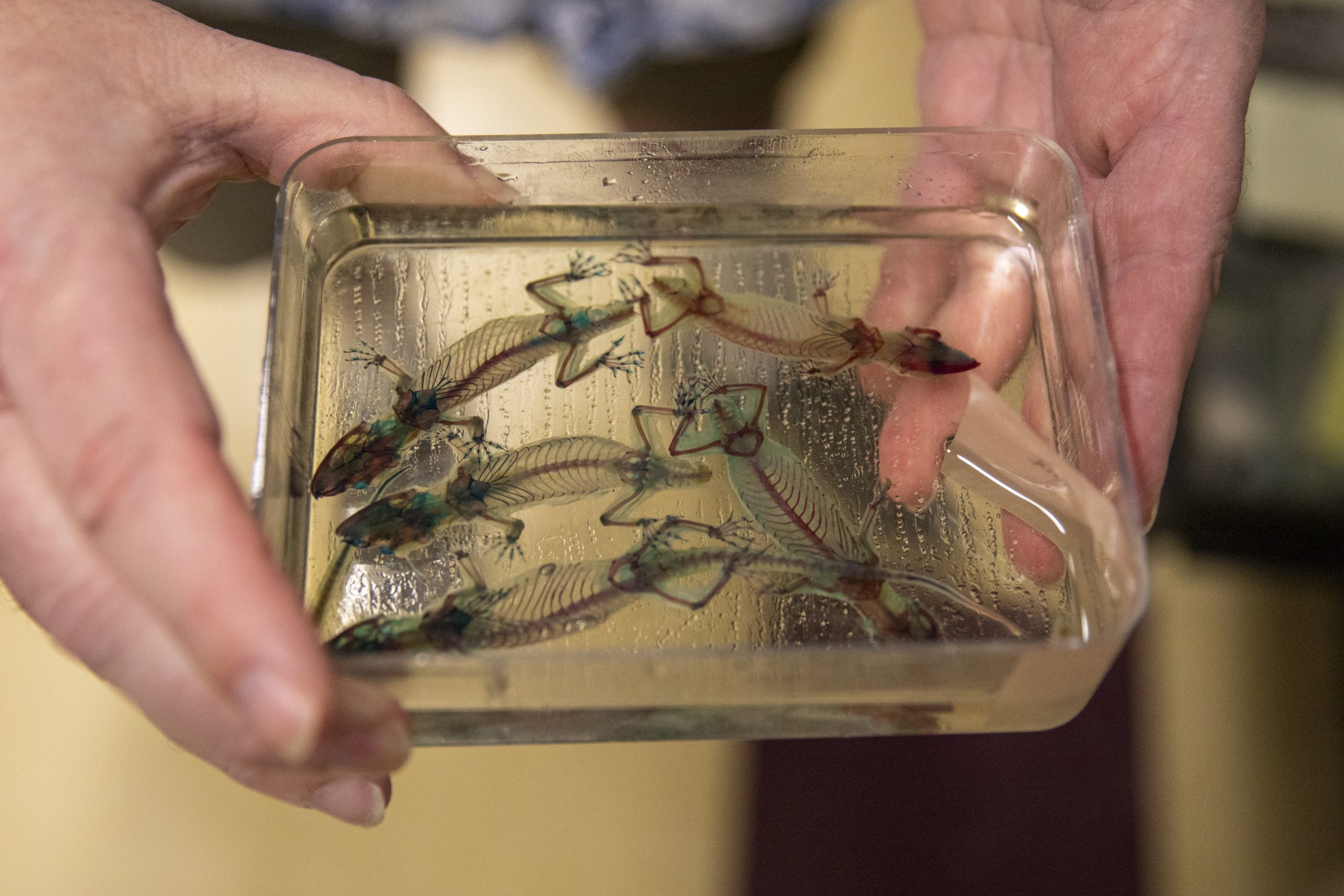
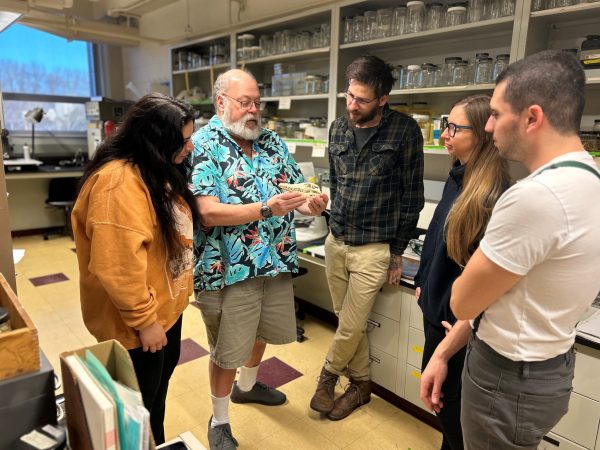
    Aaron Bauer holds a container of African House Geckos in the labs at Mendel Hall at Villanova University.TYGER WILLIAMS / Staff Photographer

    His research explores the diversity of life and its history:

    How does this lizard’s anatomy allow it to be successful? How is it related to the area of the world where it lives, and how did it get there?

    In the field

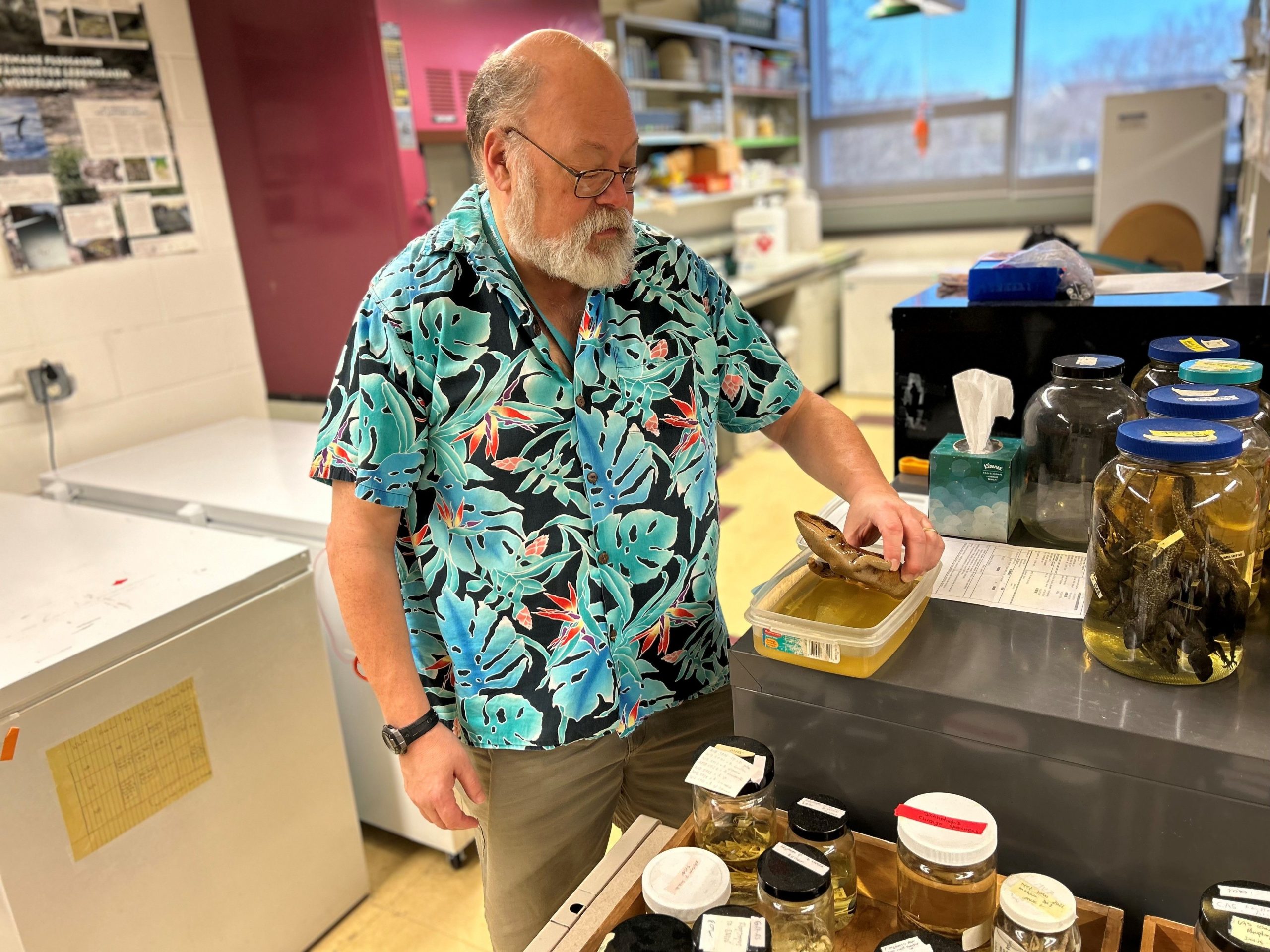
    At work, people know Bauer as the guy in Hawaiian shirts and shorts.

    He tries not to wear such bright shirts in the field, because “you want to be a little more inconspicuous in the vegetation,” he said.

    In these areas, the nearest human could be 50 or 100 miles away.

    His team tries to sample from as many places as possible to capture diversity. Some days, they cover hundreds of miles. Other days, they spend a week in one place.

    Usually, they identify a new species.

    “One of the facts of field work is you don’t know what you’re going to find,” Bauer said.

    His team brings nets for frogs, snake sticks for pinning venomous snakes, and equipment to collect tissue samples for DNA analysis. Lizards can be caught by hand.

    From these field trips, he has collected enough material to work on for the rest of his life. Still, he said he feels a “physiological urge” to go back, and will continue researching as an emeritus professor.

    Aaron Bauer retired from his 38-year-long teaching career at Villanova in May.Courtesy of Villanova

    Bauer always reminds his students how lucky they are to go to remote places like northern Namibia, where they may go a week without seeing another person.

    “There’s something special about that,” Bauer said. “To go places that most people will never see and don’t know even exist.”

    Raising an academic family tree

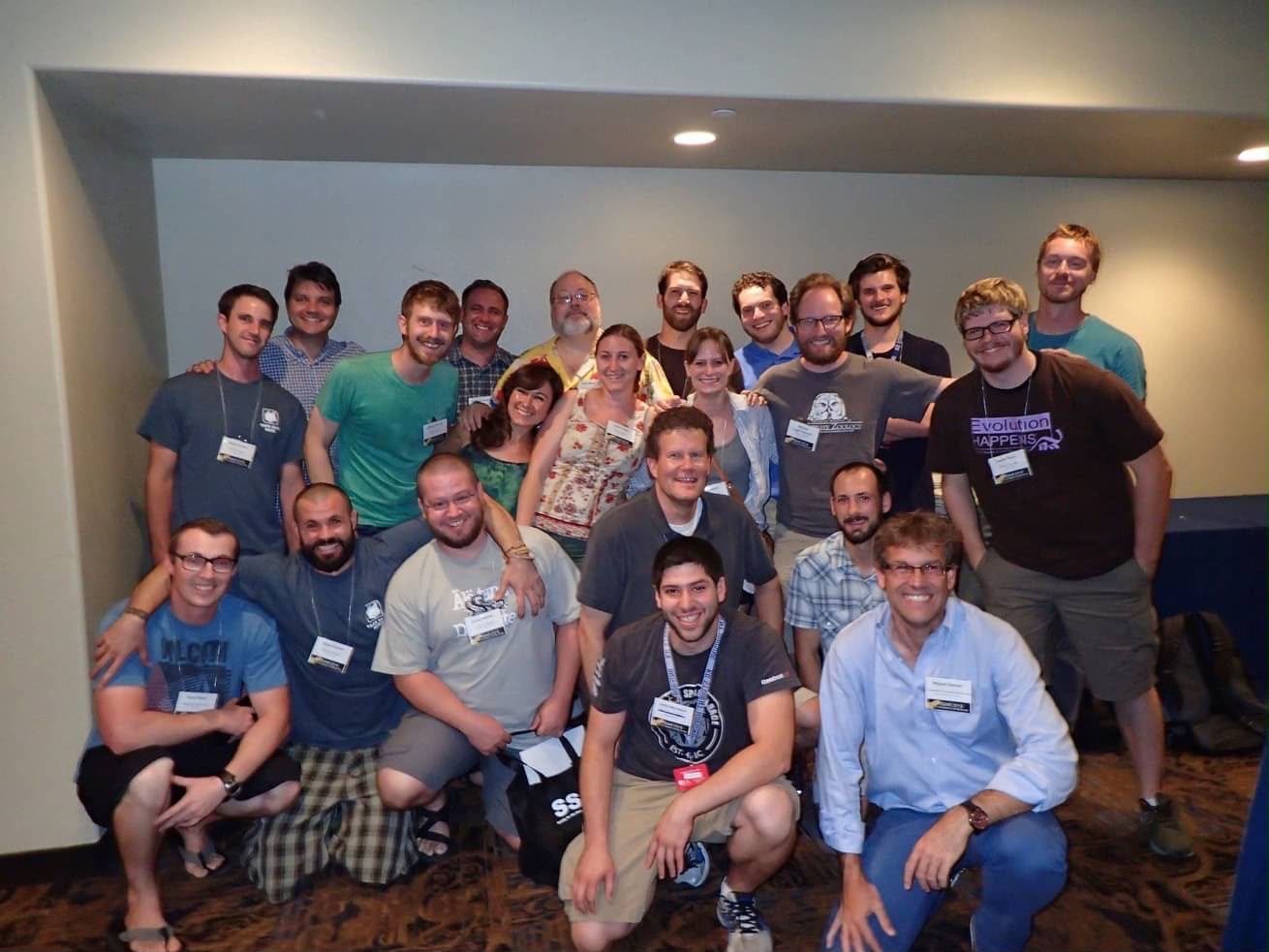
    A group photo of Aaron Bauer, Todd Jackman, and many current and former students at a herpetology meeting at the University of Kansas in 2015.Courtesy of Daniel Paluh

    At this week’s national herpetology conference in New Orleans, a special session called “Bauer-fest” will celebrate his career.

    “He’s always continued to be a really strong advocate for all of his students,” said Daniel Paluh, an assistant professor at the University of Dayton in Ohio, and one of the former students organizing the event.

    Paluh was intimidated by Bauer when he first met him at a conference, before realizing he was “a very friendly, funny, personable person.”

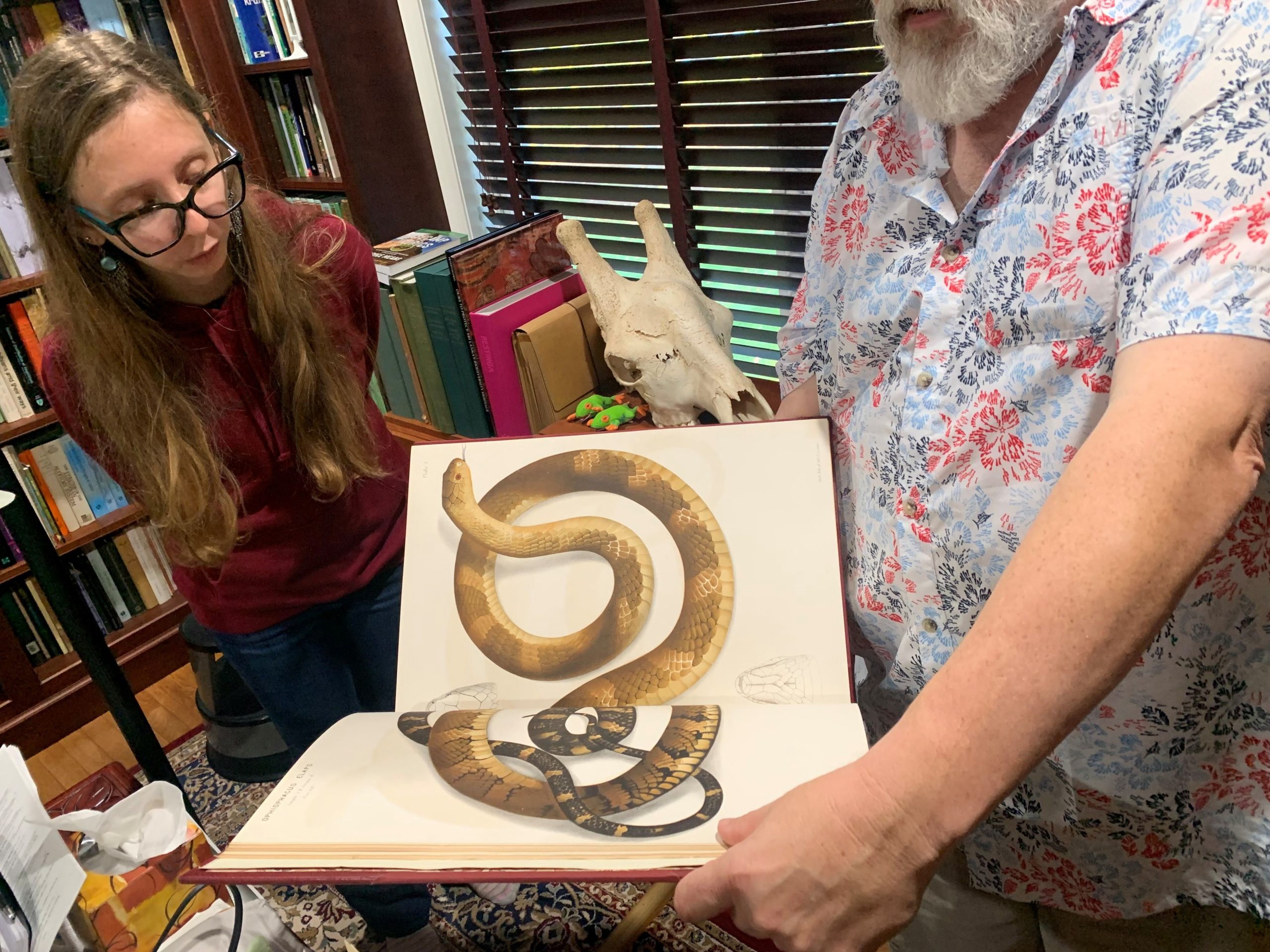
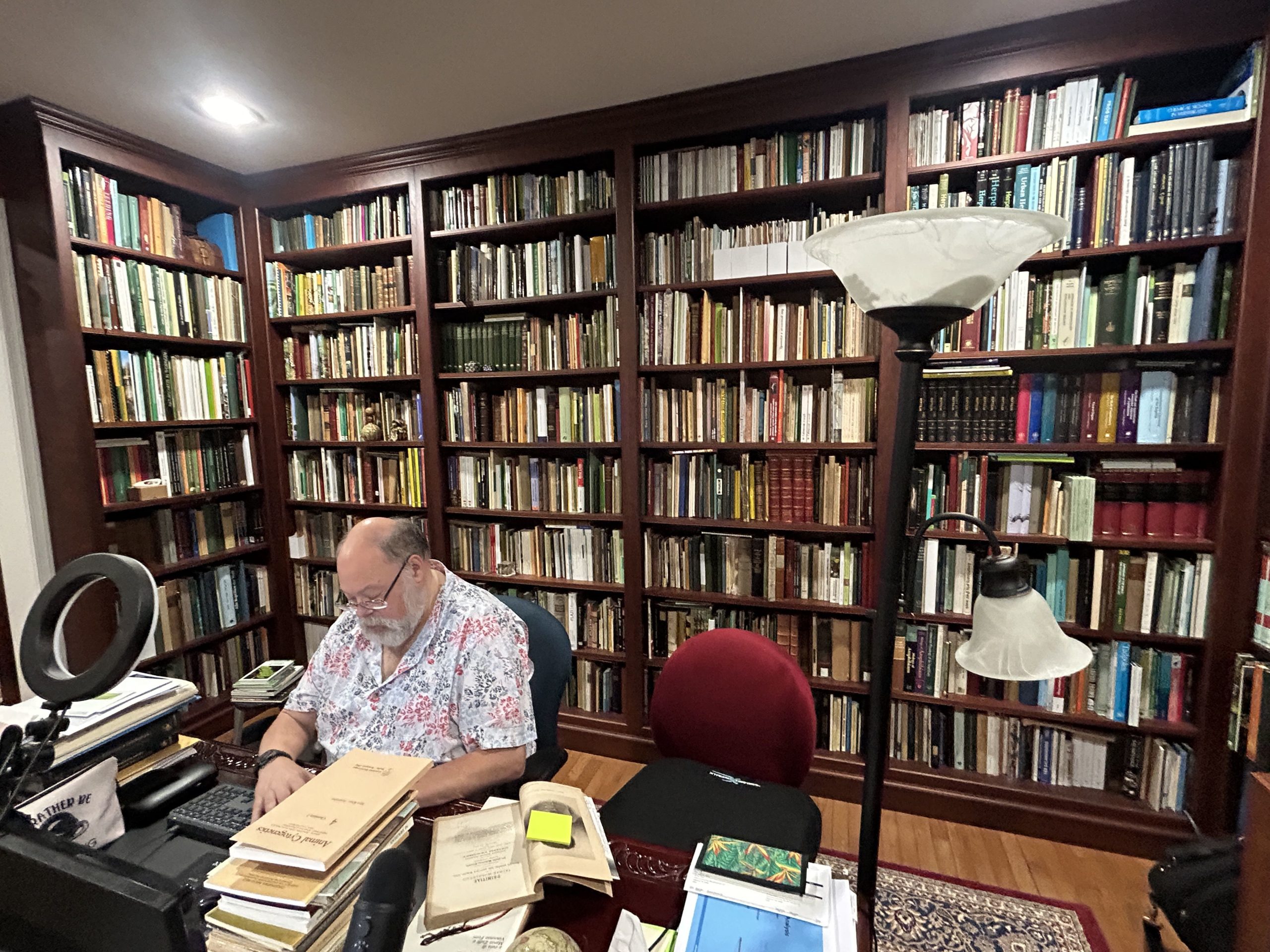
    Bauer had an “open-door policy,” Paluh recalled, to help his students with research. That came with access to his personal library — one of the largest collections of books on herpetology in the world and the inspiration for a scene in the 2012 movie The Amazing Spider-Man.

    Aaron Bauer’s personal library is one of the largest collections of books on herpetology in the world. It was used as inspiration for a scene in the 2012 movie “The Amazing Spider-Man.”Courtesy of Aaron Bauer

    Bauer also cares about his students’ lives beyond graduation, said his Villanova colleague Todd Jackman, who is organizing a “Bauer-palooza” near the university in September.

    About 80% of his former master’s students have stayed in the field, becoming professors in Louisiana and Kentucky, a museum curator in Australia, the head of nature conservancy in southern Angola, and more.

    “I’m not crazy about being the center of attention, but I think that’s outweighed by the fact that I’ll have all of these people in one place,” Bauer said.

  • How I stopped focusing on retirement and leaned into my ‘rewirement’

    How I stopped focusing on retirement and leaned into my ‘rewirement’

    You’ve just retired, and in the blush of that found time, your life seems to be taking a decidedly positive turn. You are freer now than you’ve ever been. You can sleep later, take a leisurely shower, and plan trips whenever you want. There are no deadlines to meet, no meetings to endure, and no clients or other stakeholders to manage.

    But there are also no appealing challenges for you to ponder or triumphs to celebrate. Eventually, in the honesty of your most objective moments, you know something is “off,” and you are starting to feel adrift. Your calendar has now opened to days of mostly blank space. Metaphorically, it is something between desert and forest. Dry and dark … and getting darker.

    It is a particular derangement, a silent assault on your sense of identity, and you have no passport away from it. This life state called “retirement” has occupied you completely, and it is not what you might have expected. It feels more like an ending, a loss, an uncertainty, an inert state in which your energy is no longer directed toward anything challenging or meaningful.

    As a psychologist and an executive coach, I have always eschewed the concept of retirement, and the word, too. Retirement — it just didn’t seem apt for anyone who, in the words of a global CEO whom I coached before he retired, “… still had a lot of juice left.”

    Some years before I was approaching my own retirement, I started thinking about a more apt and ego-syntonic way to refer to it. Eventually, I hit on the neologism “rewirement,” and whenever I used it in conversation — especially with retirees or pre-retirees — it elicited immediate and positive reactions, strong resonant reactions, and even fervent reactions of gratitude for this term.

    Many of the retirees had had demanding and truly successful careers, but they were now feeling flat and at odds with themselves. Uncertain. Unhappy. While they had no financial or physical or familial concerns to worry about, I detected a distinct, almost depressive angst that had been triggered and sustained by their status as a retiree. Their conversation dwelled on “what was before” with no trace of “what could be now.” While they weren’t clear about the concept of rewirement, they brightened at the sound of it.

    Of course, not everyone falls into an emotional abyss after retirement. There are people who move through their adult development phases successfully and for whom that growth helps propel them into a state of rewirement upon their retirement — they just didn’t have a word for it. These rewired people serve as role models in that their postretirement journeys are characterized by self-compassion, humor, optimism, curiosity, resilience, and self-expression.

    As I’ve come to see it, rewirement is the postretirement life phase during which the retiree identifies pursuits that foster a state of renewal. These pursuits may be new, or they may be “back-burner” dreams or interests that one finally has time to explore.

    This state of renewal is sustained by a sense of meaning and contentment. This is comparable to or may even transcend the sense of accomplishment experienced in their previous work-related role.

    I am reminded of the former global business executive who became a fine art photographer, the nonprofit leader who joined a community group in which members mended the clothing of low-income and homeless people, the psychotherapist (and former priest) who became a chaplain to hospital patients, and the human resources professional who became a master gardener.

    The factors that identify the difference between these successful rewirements and those who get stuck in a conflicted or discontented state of retirement await the scrutiny of research. There is much to discover here.

    However, in the meantime, I highlight the concept of rewirement as a possible neutralizer to the quotidian malaise that can seize us in retirement. I see it as a mental compass that can help us progress to renewal. And I’ve also identified three guideposts for those seeking a new sense of meaning as they transition out of their careers.

    Identifying the ‘aspirational self’

    This is based on one overarching question: What’s my aspirational self now? Exploring the answer to this question involves a concerted reflection about what pursuits one aspires to focus on now in this newfound time they’ve been calling retirement. In short, it’s the identification of the pursuits that will yield challenge and be meaningful in postretirement. This may be clear and even obvious for some, but it can be difficult for others; serious discussion with people who know us well (e.g., colleagues, close friends, partner, executive coach) can help clarify the path forward.

    Regardless of how we address this fundamental question, the answer will significantly inform efforts toward achieving rewirement — efforts focused forward on possibilities vs. getting stuck in feelings of loss, despair, emptiness, or even unrequitedness. This is a time to build, not mourn.

    Being more discerning about time

    Greater discernment about time can prove especially difficult because we are habituated to our daily routines and priorities. Our routines and priorities are deeply ingrained. We trust and value these habits. They have abetted our success.

    However, true rewirement necessitates an abandonment of certain habits — especially those that could interfere with what we really want to pursue during this life phase. For example, pleasing others and an inability to say no, even to requests for spending time and doing things we really don’t want to do anymore, are particular blockers to rewirement.

    The necessary behavioral shift here is to deny requests for our time that are not in the service of achieving our aspirational self. While it may sound egocentric, asking yourself the question “Does this really deserve my time given what I’m trying to do now?” is a proactive habit to cultivate on the path to rewirement.

    Being more discerning about relationships

    Achieving rewirement often requires a difficult reflection about the quality of our relationships. Who’s supportive? Who’s not? Who’s a time drain? Who fuels our progress, happiness, and sense of meaning in postretirement? If we have a partner, do we need to have a courageous conversation with them about how we can successfully navigate this next life phase together?

    Like habituated work habits that can block progress toward rewirement, certain relationships may also need to be changed or even let go in rewirement. As a successfully rewired business leader once told me: “I realized I had to prune my relationship portfolio as if it were a business. There were so many people from the past with whom I had little in common now.”

    Ultimately, to achieve a successful rewirement, retirees may need to change some habits, they may need to manage their time differently, and they may need to adjust some relationships. However, as difficult as these efforts may be at first, they should be rewarded — rewarded because they support the retiree’s tilting toward what can be now vs. slipping into the emotional abyss of what was.

    Sigmund Freud maintained that a human life is primarily about two spheres: love and work, and if there’s trouble in one sphere, or surely if there’s trouble in both, that’s a scenario for a depression.

    As a sturdy and adventuresome bridge between work and love, a retiree’s personal renewal — fostered by their rewirement pursuits — is a reliable antidote to depression.

    Yes, you are freer in retirement, but you can be even freer — and happier — in a state of rewirement. It is an oasis in the desert. Moonlight in the forest. So, are you in your rewirement now? And if not, what will it take to get you there?

    Karol M. Wasylyshyn is a consulting psychologist happily in the midst of her evolving rewirement.

  • Nick Nurse discusses Sixers’ ‘really good’ offseason, next steps for Tyrese Maxey and VJ Edgecombe, and more

    Nick Nurse discusses Sixers’ ‘really good’ offseason, next steps for Tyrese Maxey and VJ Edgecombe, and more

    LAS VEGAS — Nick Nurse’s view entering the 76ers’ offseason was similar to the outside consensus — that his team did not have much financial “wiggle room” with Joel Embiid, Tyrese Maxey, and Paul George all on max contracts.

    Then the Sixers pulled off the stunning blockbuster trade for All-NBA wing Jaylen Brown. They surrounded that big swing with complementary moves, adding Dean Wade, Anfernee Simons, and Ariel Hukporti in free agency and drafting Labaron Philon Jr. The Sixers are now among the threats in a deep Eastern Conference.

    “Sitting here right now,” Nurse told a small group of reporters from a Las Vegas hotel Saturday, “I think, obviously, we’ve had a really good summer so far. … It was some good teamwork, some good maneuvers.

    “I’d like to think we got better at several positions: younger, faster, depth, shooting, rebounding. There [were] a lot of areas to address, and I think we addressed some of them.”

    One giant potential free-agency domino could still fall, of course, if all-timer LeBron James chooses to sign with the Sixers. Nurse did not comment on that possibility, since he does not hold the front office’s role in recruitment and negotiation. Bob Myers, Harris Blitzer Sports & Entertainment’s president, already made his pitch as a guest on Game Over podcast hosted by James’ agent, Rich Paul.

    Nurse, though, lauded the early collaboration with new president of basketball operations Mike Gansey, saying he could “feel a good organizational blueprint” entering the offseason. The coach has long been impressed by Brown’s versatility on both ends of the floor, his year-by-year improvement, and his winning resume as an NBA champion and Finals MVP.

    “He’s sitting in his prime,” Nurse said of Brown. “It’s amazing that he’s going to be a Sixer.”

    Now Brown joins the dynamic backcourt of Maxey and VJ Edgecombe, along with the 2023 MVP (though oft-injured) Embiid. The goal is for this configuration of top-end talent to be healthy enough to gain consistency — Embiid, Maxey, and George played only 36 games together in two seasons — while building enough depth “to have some more gas in the tank to make a longer [postseason] run.”

    Jaylen Brown (right) will join the Sixers’ dynamic backcourt, including leading scorer Tyrese Maxey.Monica Herndon / Staff Photographer

    After a thrilling comeback to upset the Boston Celtics in the first round, the Sixers were swept by the eventual champion New York Knicks. Nurse acknowledged he “pushed all the chips in [for] Game 2 in New York,” and that it was difficult to rebound after they lost that down-to-the-wire matchup.

    “It’s a hell of a lot longer tournament than one round,” said Nurse, who won the 2019 NBA title with the Toronto Raptors. “ … We were tired as hell Game 1 [in New York]. We were spinning from that. They were on a heater of beyond proportions, and it was like, ‘We’ve got to knock them off this heater,’ and Game 2 was our chance to do it.

    “Unfortunately, we didn’t make enough shots in the fourth quarter, because they were wide open. … The gas tank was pretty low. We just need some more depth. We need a little bit more experience. We need to not be totally drained out of that after one round.”

    Here are three more takeaways from the wide-ranging offseason conversation with Nurse.

    Other newcomers

    Nurse reiterated that he would not hesitate to immediately insert Philon into the rotation, a belief rewarded by the crafty guard’s terrific start to Summer League play. He totaled 24 points and six assists in the Sixers’ overtime win over the Indiana Pacers on Saturday afternoon at Cox Pavilion, after compiling 18 points and seven assists in Thursday’s opening win over the Detroit Pistons.

    “I just feel like he’s talented enough,” Nurse said. “I think we liked him enough as a staff. … I think he’s going this direction [up] quickly. I think he’s got some confidence to him that I don’t think he’ll be afraid. I think he’ll make the most of the opportunity.”

    Nick Nurse said that he believes first-round pick Labaron Philon Jr. will “make the most of the opportunity.” Tom Gralish / Staff Photographer

    Nurse offered similar (and warranted) trust in Edgecombe to become a Day 1 starter last season, and in then-rookie Jared McCain to instantly contribute before his 2024 knee surgery.

    Wade, meanwhile, is what Nurse called an “opportunity scorer” and, more importantly, a rebounder and versatile defender at 6-foot-9 and 225 pounds. Hukporti’s addition means a competition with Adem Bona for the backup center job — which becomes a starting role when Embiid is sidelined — is “all in play, as of now,” Nurse said. The coach also believes Simons, in addition to his high-volume shooting, can handle the ball and play in the pick and roll.

    “We may be a touch small at times [or] whatever,” Nurse said of the guard group. “But I’ll certainly take the speed and athleticism. Then it’s just up to our staff to put them in the right spot.”

    Next steps for Maxey and Edgecombe

    Though Brown has become the Sixers’ flashy offseason addition, much of their present and future will be fueled by Maxey, an All-NBA third-team selection last season, and Edgecombe, who finished third on a terrific NBA Rookie of the Year ballot.

    When asked where Edgecombe can most develop in his second NBA season, Nurse highlighted extending his three-point range — he connected on 35.4% of his 5.6 attempts, but had a knack for crunch-time makes — to provide more spacing for teammates. Nurse also wants to see Edgecombe progress toward becoming a lockdown perimeter defender, and to go coast-to-coast more frequently when he gets the ball in transition.

    “Instead of two of those a game,” Nurse said, “I’d like to see 10. Or at least try. I just think there’s a little bit more pace he can add to his game offensively.”

    Tyrese Maxey and VJ Edgecombe grew into a dynamic backcourt for the Sixers last season.Monica Herndon / Staff Photographer

    For Maxey, Nurse again emphasized the midrange game between his explosive drives to the basket and deep three-pointers.

    “He’s got that in his game,” Nurse said of Maxey, who ranked fifth in the league in scoring last season (28.3 points per game). “He’s just so good at the other stuff [that] he doesn’t hardly ever get put in those positions. But I think it’s an area of growth for him.”

    Optimism for Embiid?

    At Embiid’s end-of-season news conference, he expressed optimism that the Sixers’ medical and training staff had “figured out” how to manage his knee following multiple surgeries. He expects that will make him more available after logging 96 total games the past three seasons. Last month, Myers reiterated that Embiid had no procedures scheduled, allowing him to spend more time on basketball work.

    When Nurse was asked Saturday if he shared Embiid’s optimism that the big man will be able to play more in 2026-27, Nurse said, “I do” but did not elaborate much further.

    “I think that he’s feeling pretty good,” Nurse said. “I think he’s working pretty hard right now. So I do think I share his optimism.”

  • They call her the Delco Dog Detective. She’s spent over a decade finding the Philly area’s hardest to catch lost dogs

    They call her the Delco Dog Detective. She’s spent over a decade finding the Philly area’s hardest to catch lost dogs

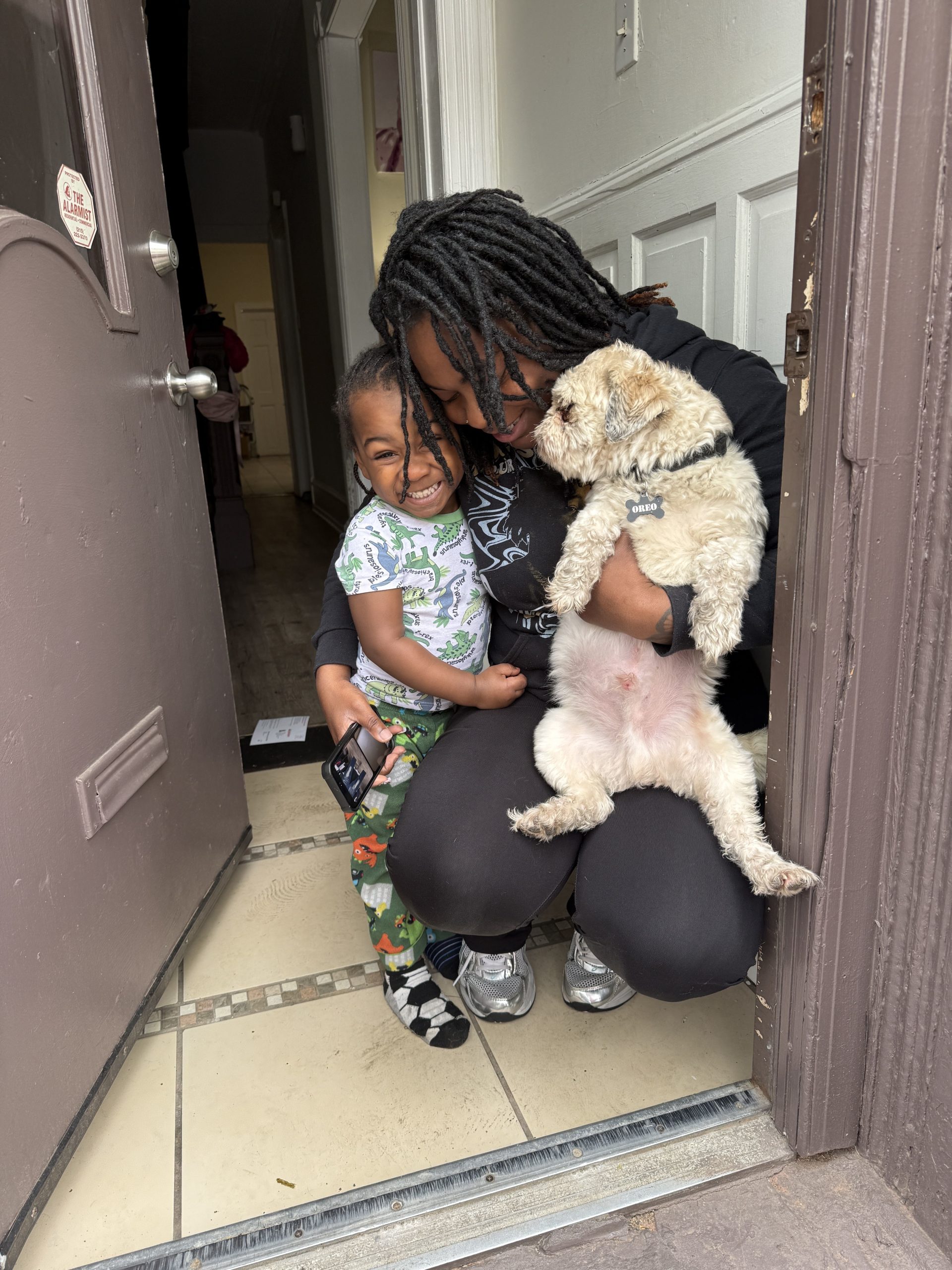
    His eyes were smeared with black goo, his legs were caked in dirt, his back was riddled with ticks, and a chunk of fur was missing from his upper lip. And yet, Oreo, a 4-year-old shih tzu, blissfully bounded up the front porch steps of his Mantua home on a Sunday morning in April.

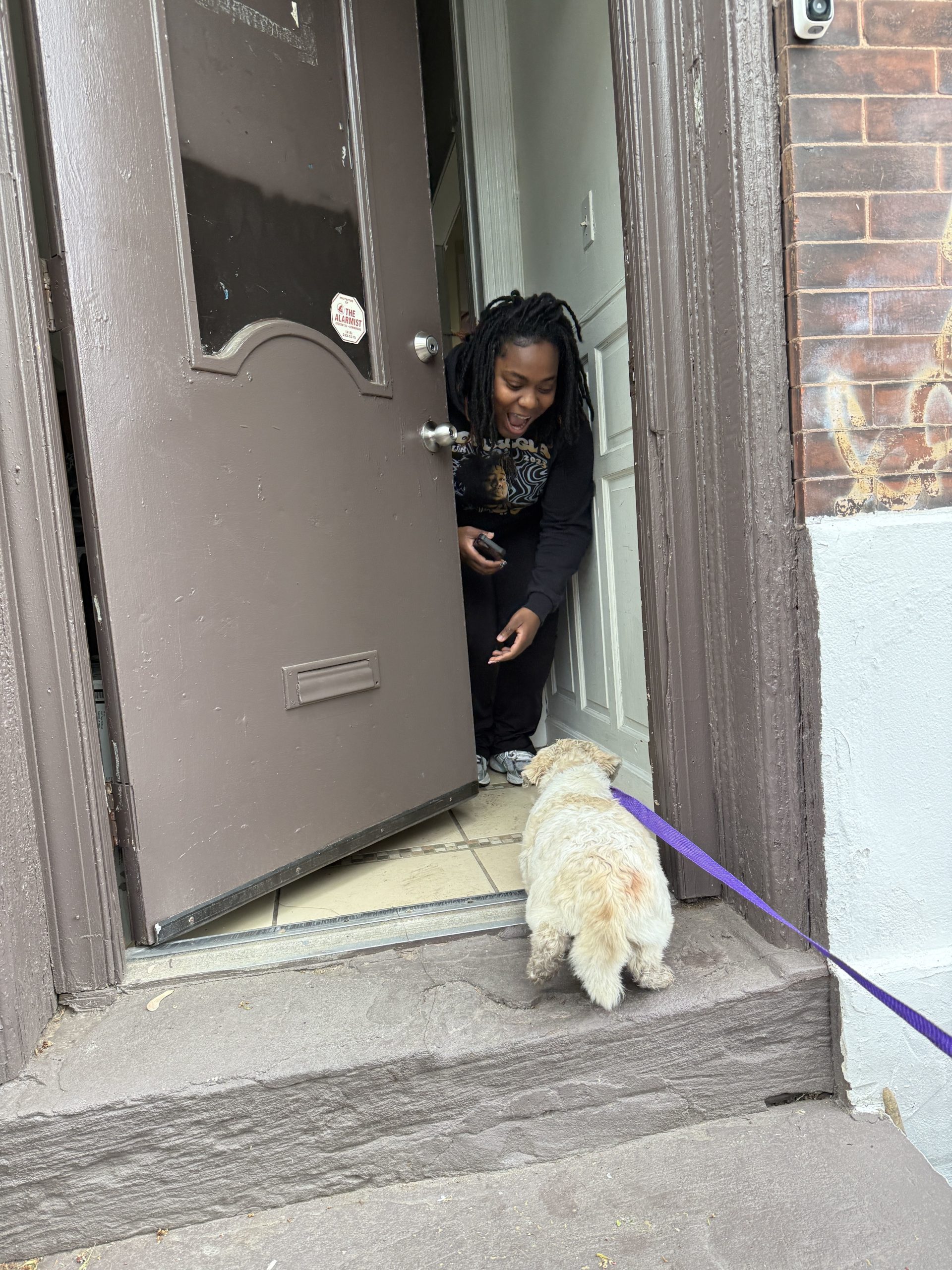
    He wedged his tiny frame between the door and the molding, a crumpled purple leash trailing from his neck, waiting until the knob turned and 22-year-old Jayda Pizarro appeared in a black hoodie and yoga pants. Her braces sparkled as she beamed widely and greeted her pup, who’d been lost in the woods for the last 15 days.

    Jayda Pizarro reunites with her dog Oreo at her Mantua home.Dana Munro

    Tears dripped from Pizarro’s eyes onto the tile foyer floor as she nestled Oreo between her cheek and shoulder.

    “Thank you,” she sniffed out as she cradled his body and rocked him in her arms. “We’ve been crying every day.”

    It was all in a morning’s work for 53-year-old Colleen Bell, who estimates she’s recovered nearly 1,000 dogs, both strays and family pets, over the last roughly 14 years.

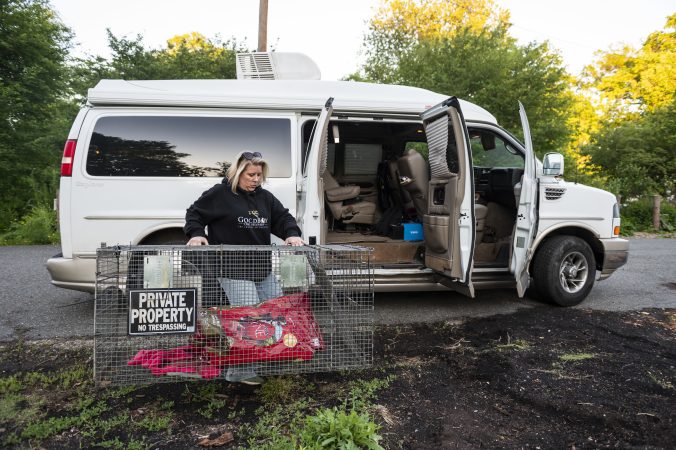
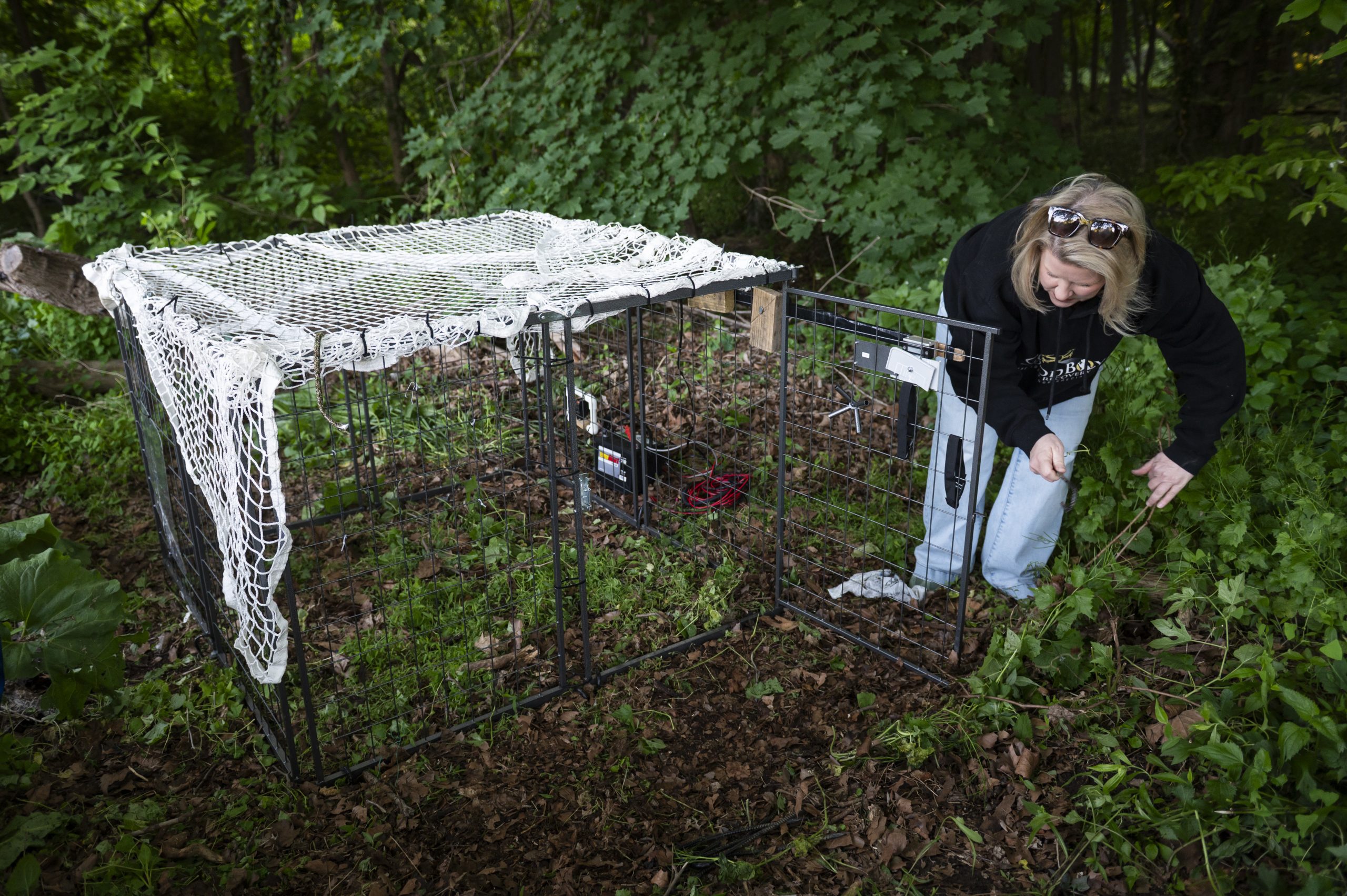
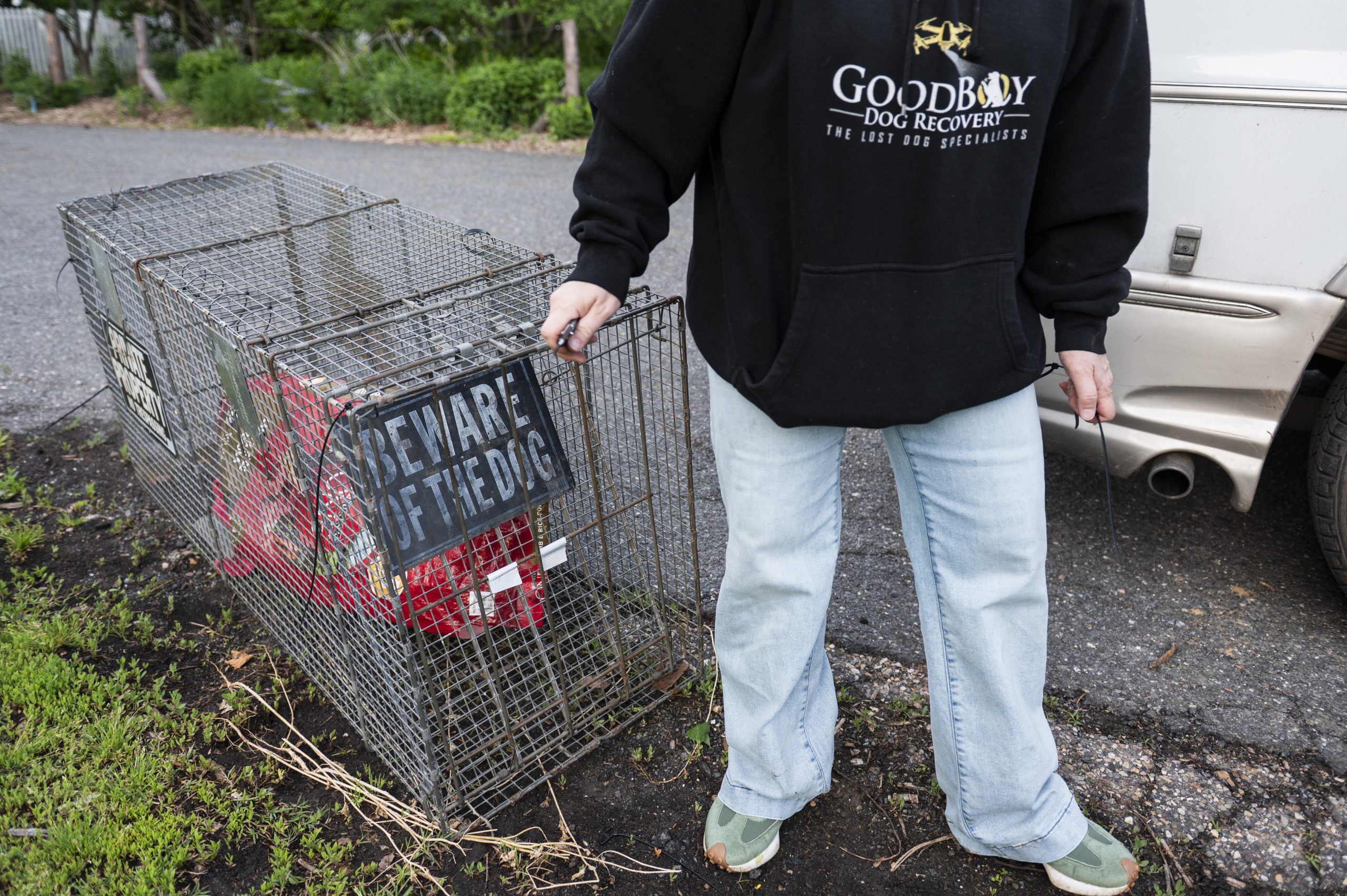
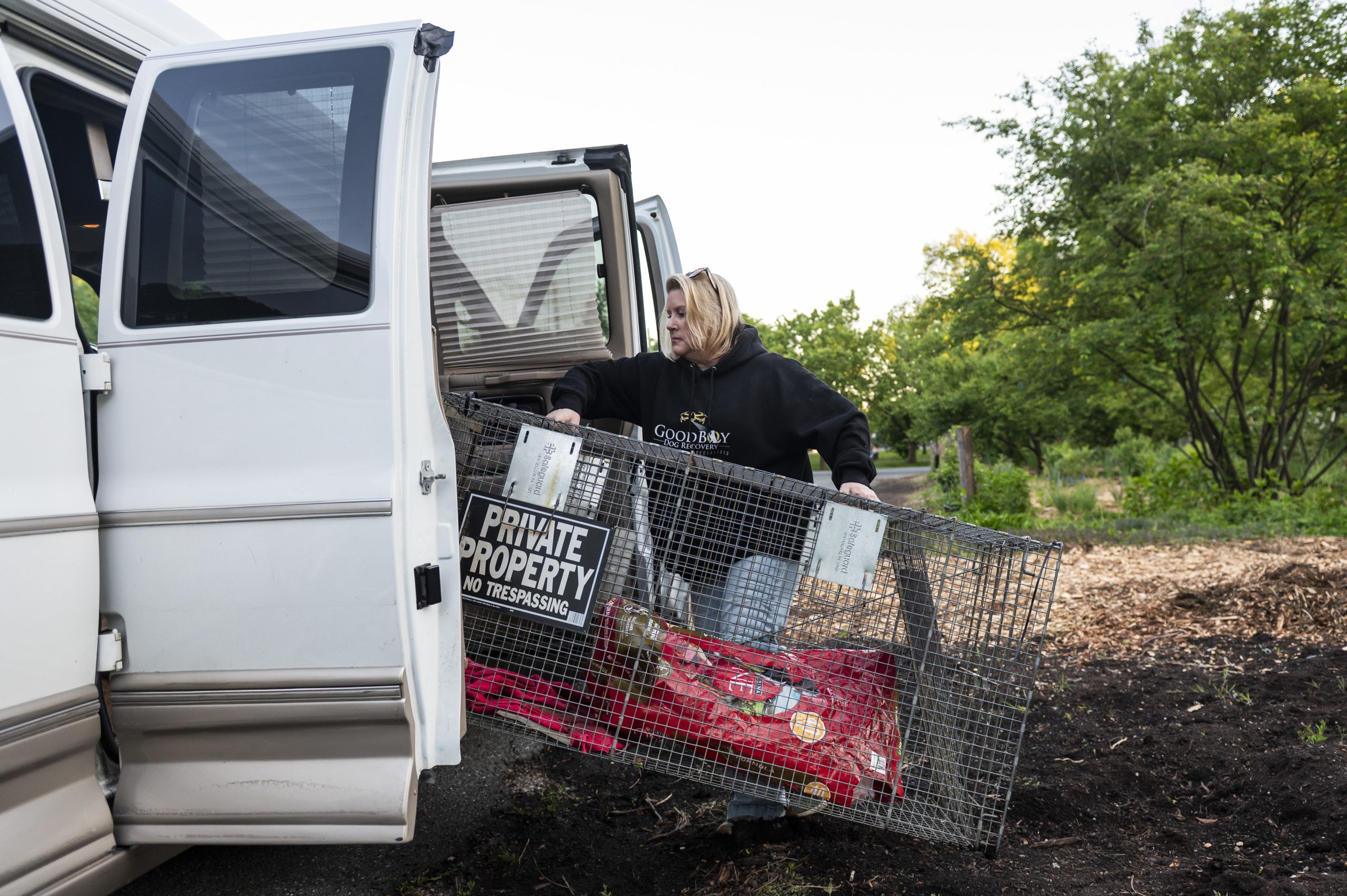
    Colleen Bell finishes setting up a dog trap by the Woodford Mansion in Fairmount Park on Monday, May 11, 2026. Bell runs the non-profit, GoodBoy Dog Recovery, where her and her brother and friend catch mainly stray and lost dogs in the Philadelphia region.Allie Ippolito / For The Inquirer

    Bell doesn’t do this work for money, acclaim, or internet fame. She does it purely for a love of the game, the thrill of the hunt, the satisfaction of capturing a petrified pup, and the fulfillment of reuniting it with a frenzied family.

    Over the last several years, she’s become a trusted and critical resource for the Animal Care & Control Team of Philadelphia and many others in the region and across the globe. She’s also become a fearless dog rescuer, who’s traversed mountains, driven through blizzards, sifted through building rubble, and charged through rainstorms with soccer nets to retrieve retrievers, shepherd shepherds, and master mastiffs.

    Puppy love for a new pursuit in life

    Bell spent much of her Lower Chichester upbringing tearing through Nancy Drew books as a steady procession of stray dogs came and went from her Delaware County home.

    However, this specific fusion of her love of dogs and solving mysteries didn’t set in until decades later. It started about 14 years ago with a black pug named Lilly.

    When her neighbor with dementia accidentally let Lilly out the front door, Bell, a single mother with two adult daughters and some time on her hands, volunteered to help. She and others weren’t able to find the dog, but the experience, Bell said, “kind of sparked something in me.”

    When another opportunity arose to reunite a lost dog with its family, she was determined to do so. So she contacted Justice Rescue, a Pennsylvania-based animal welfare group, which had special traps designed to catch animals. The dog was caught within five minutes.

    From then on, “I was kind of hooked,” she said.

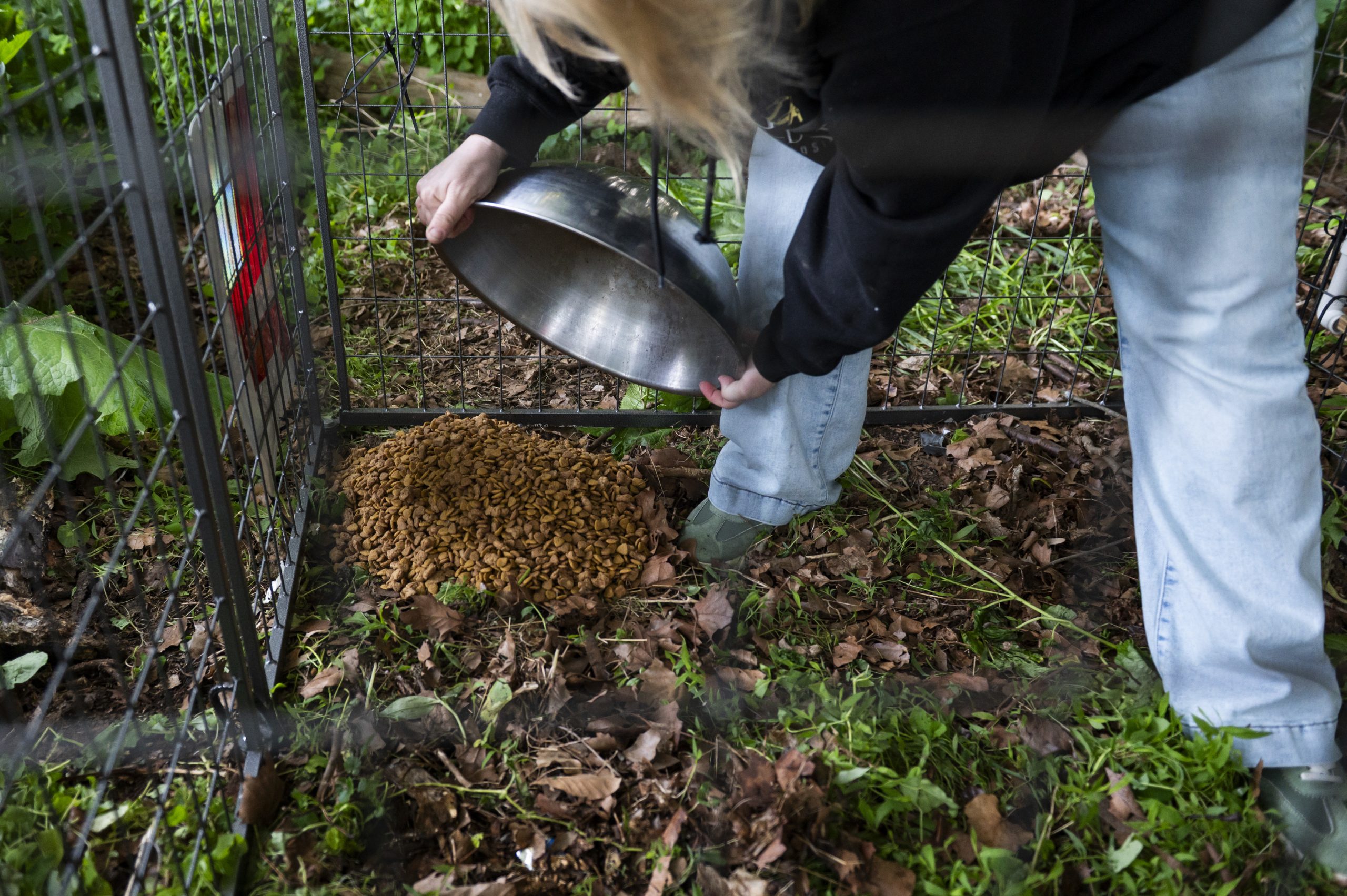
    Colleen Bell dumps food into a dog trap in hopes of luring a local stray dog by the Woodford Mansion in Fairmount Park.Allie Ippolito / For The Inquirer

    Slowly, she started collecting her own equipment — some traps, some cameras, and some dog food.

    With a little outside advice, a whole lot of dogged persistence, and through good old-fashioned trial and error, she refined her approach. She learned what entices fearful dogs and what scares them off. She studied their body language and behaviors and miraculously kept all her fingers and toes in the process.

    She filled her free evenings after her day job as a supervisor at a health insurance company with stakeouts.

    Most people in her life didn’t know she was doing any of this until one fateful midnight about two years ago.

    Tanwyn the golden retriever was missing in Chester County’s White Clay Creek Preserve. Bell tried every tactic in her arsenal. She even purchased a stuffed golden retriever toy that breathed and cried in hopes it would spark Tanwyn’s maternal instincts. She set up traps and slept in her car overnight in case the dog appeared. But nothing worked. Bell needed to get closer.

    She procured a duck blind and positioned it near the trap so she could hide behind it and grab the leash if the dog came close enough.

    Around 12:30 a.m., as she sat alone in the preserve, fear set in.

    “What the hell am I doing?” she thought to herself. “I’m scared to death. Nobody knows I’m here.”

    But she couldn’t leave. It wasn’t in her nature. It could be the night the dog came. So she called her brother, Brian. Of her three older brothers, Brian had always been the “dependable” one, she said.

    “What are you doing?” she asked him.

    “I’m sleeping,“ he replied. ”What’s going on?”

    Within the hour, he was there. And, for the most part, he hasn’t left her side since.

    “I’m an older brother,” said Brian Bell, 55. “It’s my job to look out for her.”

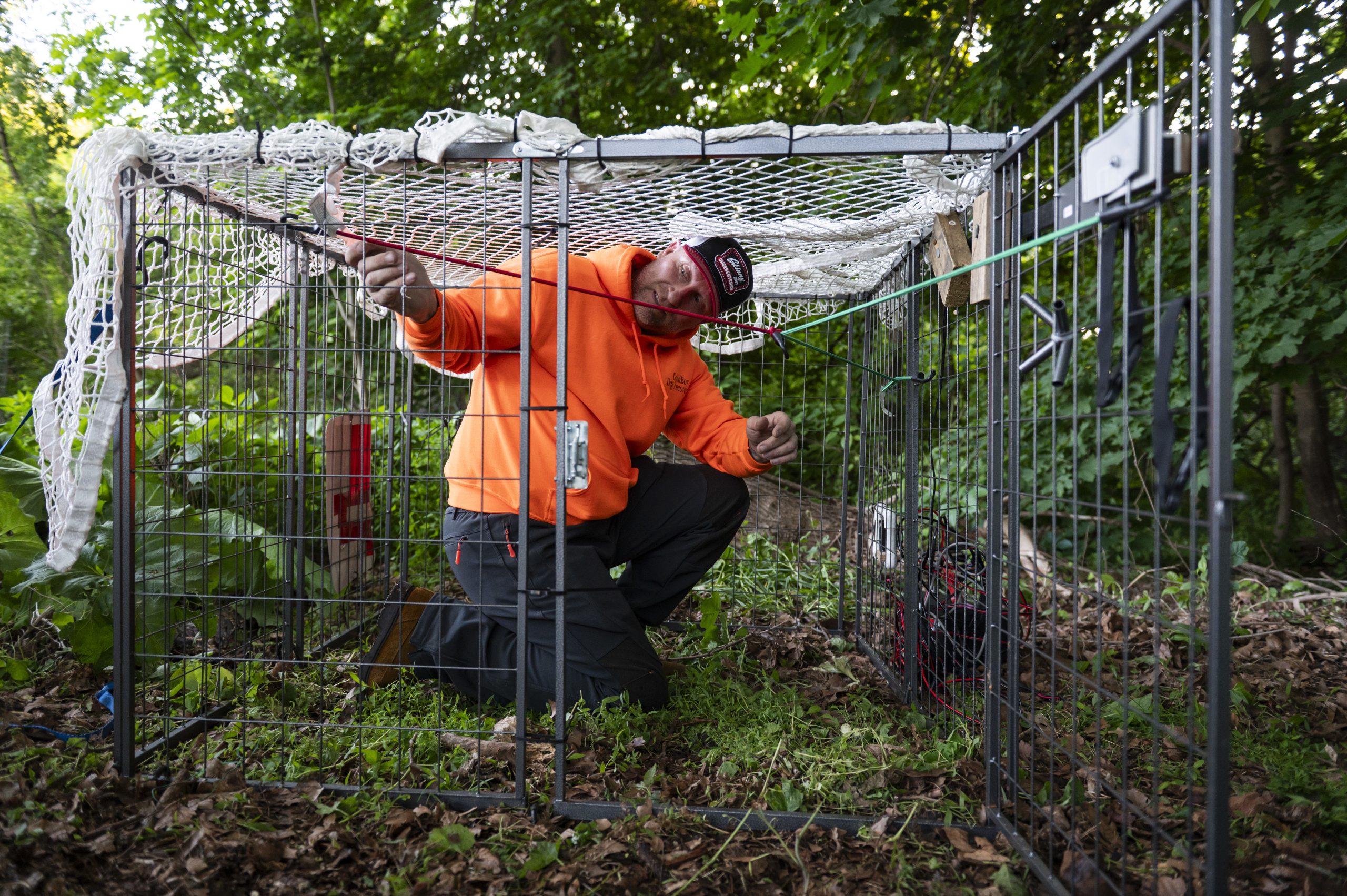
    Brian Bell sets up a dog trap by the Woodford Mansion in Fairmount Park.Allie Ippolito / For The Inquirer

    Previously, the two had gone years without speaking. They were raised in an abusive household, Colleen said, which led her to distance herself from her siblings.

    “I just couldn’t deal with talking to anybody” from that part of my life, she said.

    The dog recovery work reunited all four of them, Colleen said, but especially her and Brian.

    “He’s become one of my best friends,” she said.

    “We’re like inseparable,” Brian added.

    Soon their friend Alan Boates, 45, got involved as well. All three, who live minutes from one another in Chichester, adore dogs and the rush of capturing one on the run fending for its life.

    Quickly, Brian Bell and Alan Boates understood their assignment as the muscle of the operation. Colleen Bell was the brains, and neither hell (an unstable building or unscalable mountain) nor high water (frozen creeks and torrential downpours) were going to stand in her way.

    “There’s nothing that she won’t do to save a dog,” Boates said. “If she got to sacrifice us for a dog, it’s the dog.”

    Boates, who owns a construction company, leveled up their equipment. They built traps operated by remote control and others activated by laser beams.

    They upgraded items as they found more advanced versions online. They swapped DIY drop nets for net launchers that hang between trees and shoot nets at the ground.

    At one point, Colleen Bell came across literature about thermal drones and how they create digital maps that can help locate animals in dense woods so she bought one for $8,000 and roped a retired state trooper into teaching her to fly it. It shattered on the asphalt due to a faulty battery. Luckily, she’d already purchased a more sophisticated one for $18,000.

    While she worked alone, Colleen paid roughly $15,000 to $20,000 a year out of pocket. She even took a second job at a nursing home to cover the costs. But once her brother and Boates came on board, the operation became more advanced, and the equipment too expensive to afford on her own.

    So, about two years ago she created a 501(c)3, GoodBoy Dog Recovery. Donations rolled in for fuel, food, traps, cameras, and more. Last year she raised about $134,000, according to a 990 tax form. Much of the money came from her 75,000 Facebook followers.

    Never letting sleeping dogs lie … alone in the woods

    Now, dog recovery is effectively Colleen’s No. 2 full-time job and No. 1 passion.

    Her days typically start with work at AmeriHealth Caritas at 7:30 a.m. She clocks out at 4 p.m., then texts her brother an eyeballs emoji to see if he’s free and up for an adventure. She’ll often reach out to Boates as well.

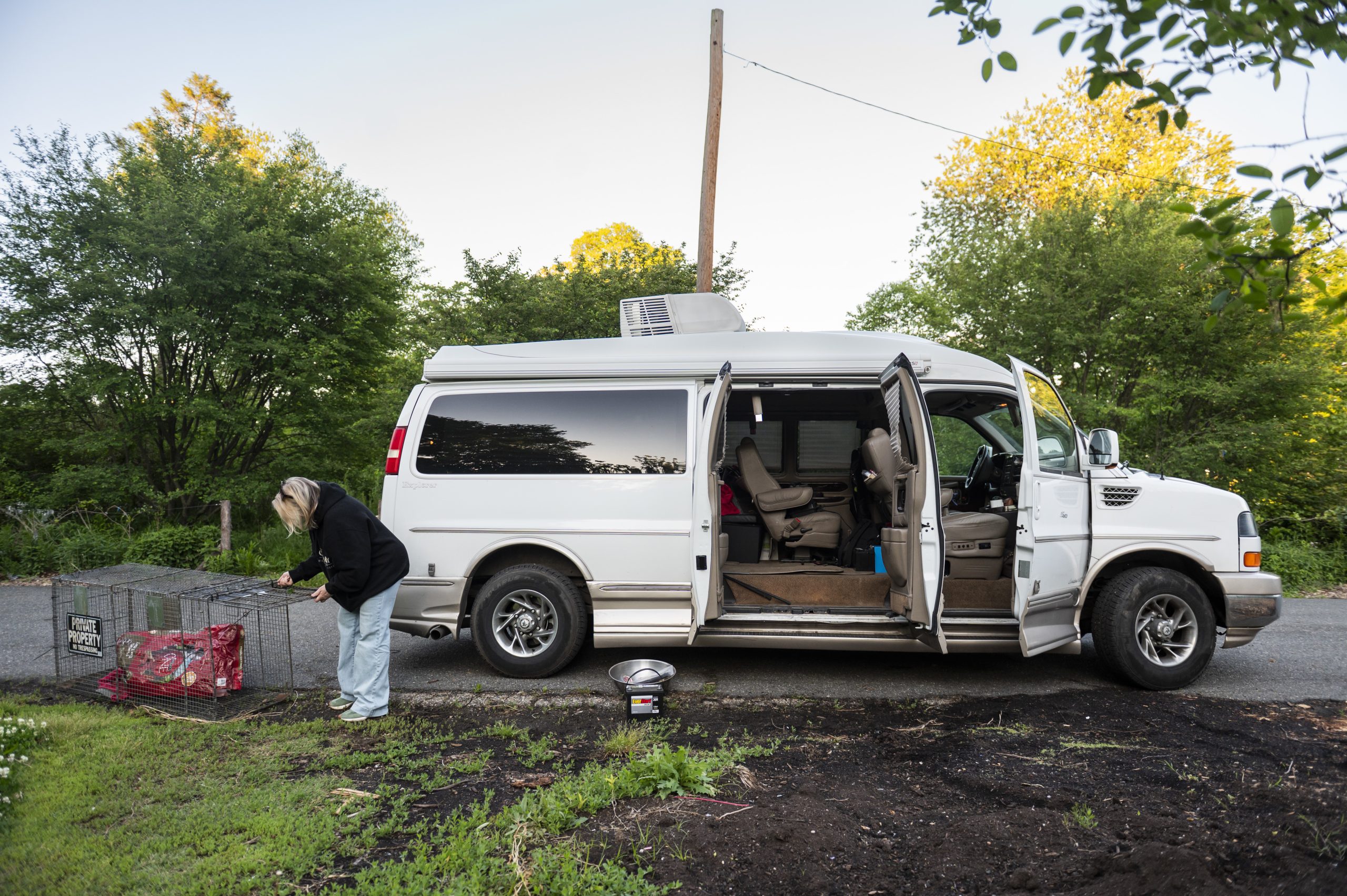
    On a recent Tuesday in June, she picked up Brian in a donated conversion van and drove to the Woodford Mansion near the Strawberry Mansion neighborhood.

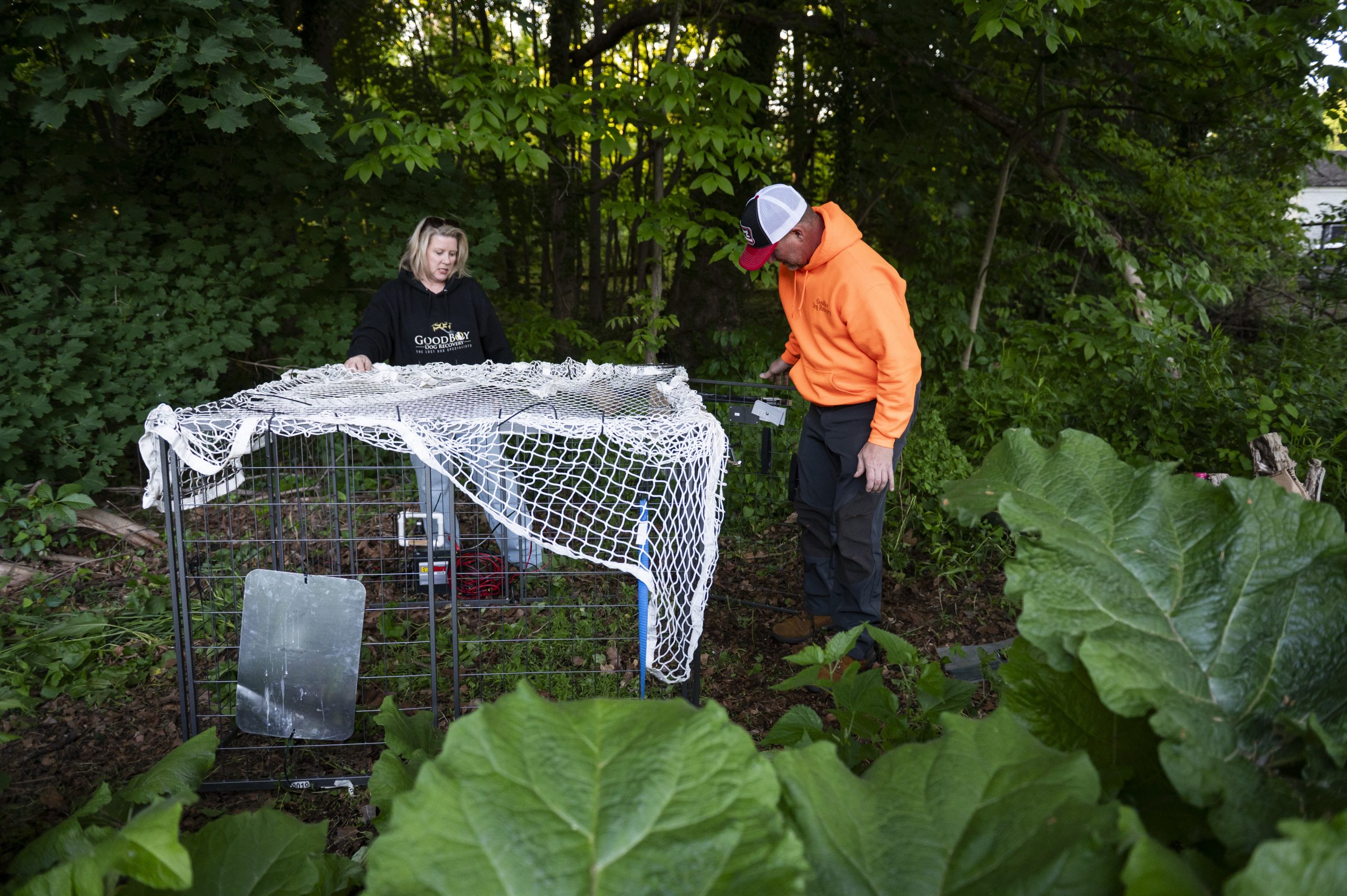
    Colleen Bell (left) her brother Brian Bell (right) set up a dog trap by the Woodford Mansion in Fairmount Park on Monday, May 11, 2026. They run the non-profit, GoodBoy Dog Recovery, where they catch mainly stray and lost dogs in the Philadelphia region.Allie Ippolito / For The Inquirer

    They often sleep in the van parked near a trap in the woods. That’s because sometimes the dogs enter the traps in the wee morning hours and if the traps were unattended, the dogs might get confused and scared.

    On this night they pulled into a driveway at around 7:15 p.m. and replenished the kibble in the trap they’d set weeks ago for Parker, a stray pit bull they were pursuing. Colleen Bell sprayed the area with a barbecue-scented liquid smoke, which she buys by the gallon. Some of these dogs, especially if they’ve been in the wild a long time, survive primarily on wild game. So the crew keeps deer meat and chicken feet on hand. They even have a moose dealer.

    After they prepared the trap area, the siblings sat in the van and waited.

    They scrolled their phones, sipped juice, and nearly popped out of their seats when a jingle emanated from Colleen’s phone, which told them motion was detected in the trap.

    “Be a dog. Please be a dog,” she muttered to herself. “Oh it’s a raccoon. Oh it’s two raccoons.”

    About half an hour later the phone tinkled again. She rushed to press the alert.

    “Damn,” she said. “It’s a fox.”

    An hour later, another alert sounded. This time, it was Brian Bell who shot out of his seat.

    “I got a feeling,” he said with a cockeyed smile.

    “Fox,” she responded, deflated, before pressing a button on her phone that allowed her to transmit an audio message into the trap. “Get out of there,” she warned the fox before its white frame scurried out of view.

    Many nights, she only sleeps a few hours.

    “We never stop until we catch the dog,” she said.

    Colleen Bell drags a dog trap no longer in use to pack up in her van after setting up a different dog trap by the Woodford Mansion in Fairmount Park on Monday, May 11, 2026. Bell, her brother, and friend run the non-profit, GoodBoy Dog Recovery, where they catch mainly stray and lost dogs in the Philadelphia region.Allie Ippolito / For The Inquirer

    When normal methods cease to work, Colleen Bell will throw in a number of toys of her own invention. Her tactical lamb chop, as she calls it, a stuffed Lamb Chop toy into which she sews a GPS tracker, can be especially effective in locating dogs.

    For Brian Bell, the most satisfying part is watching his sister’s face when they close in on a canine.

    “Once she sees it, she’s locked in,” he said. “To her, it’s like each dog that we catch is like the lottery.”

    When they do finally catch them, sometimes the dogs are in disturbingly poor condition, Boates said. One they caught recently “looked like it has 10 legs because it was so matted,” he said. Another had cigarette burns all over its head. Some dogs are dead when they find them. The trio will retrieve the body for the family to deal with as it sees fit.

    For the dogs who are alive, once they’re securely in the trap or net, Colleen Bell puts them in the back of her van. They’re usually asleep within minutes.

    “They’re just so tired of running,” Boates said. “I don’t know what it is, with Colleen, it’s like they know she’s there to help them.”

    Colleen Bell gets ready to pack up her van after setting up a dog trap by the Woodford Mansion in Fairmount Park on Monday, May 11, 2026. Bell, her brother, and friend run the non-profit, GoodBoy Dog Recovery, where they catch mainly stray and lost dogs in the Philadelphia region.Allie Ippolito / For The Inquirer

    A dog eat dog state

    For the professionals, such as those in charge of the Animal Care & Control Team of Philadelphia, Colleen Bell is a critical resource, said Sarah Barnett, executive director of ACCT Philly.

    Barnett’s team gets thousands of calls a month, many about lost dogs. Locating them all would be impossible for ACCT to do alone.

    Not only does Colleen Bell search for dogs in Philly and the suburbs, relieving some of the load from ACCT, she also lends her equipment to individuals with missing pets.

    Philadelphia is relatively privileged in terms of animal resources when compared with surrounding areas, Barnett said. Many Pennsylvania counties, such as Chester and Delaware, have spottier animal care and control coverage.

    In those counties, sometimes, “the dogs just stay wandering,” Barnett said.

    Call off the dogs

    On the sunny April morning Oreo returned to his Mantua home, he quickly settled back into the loving and chaotic environment he’d wandered off from weeks before.

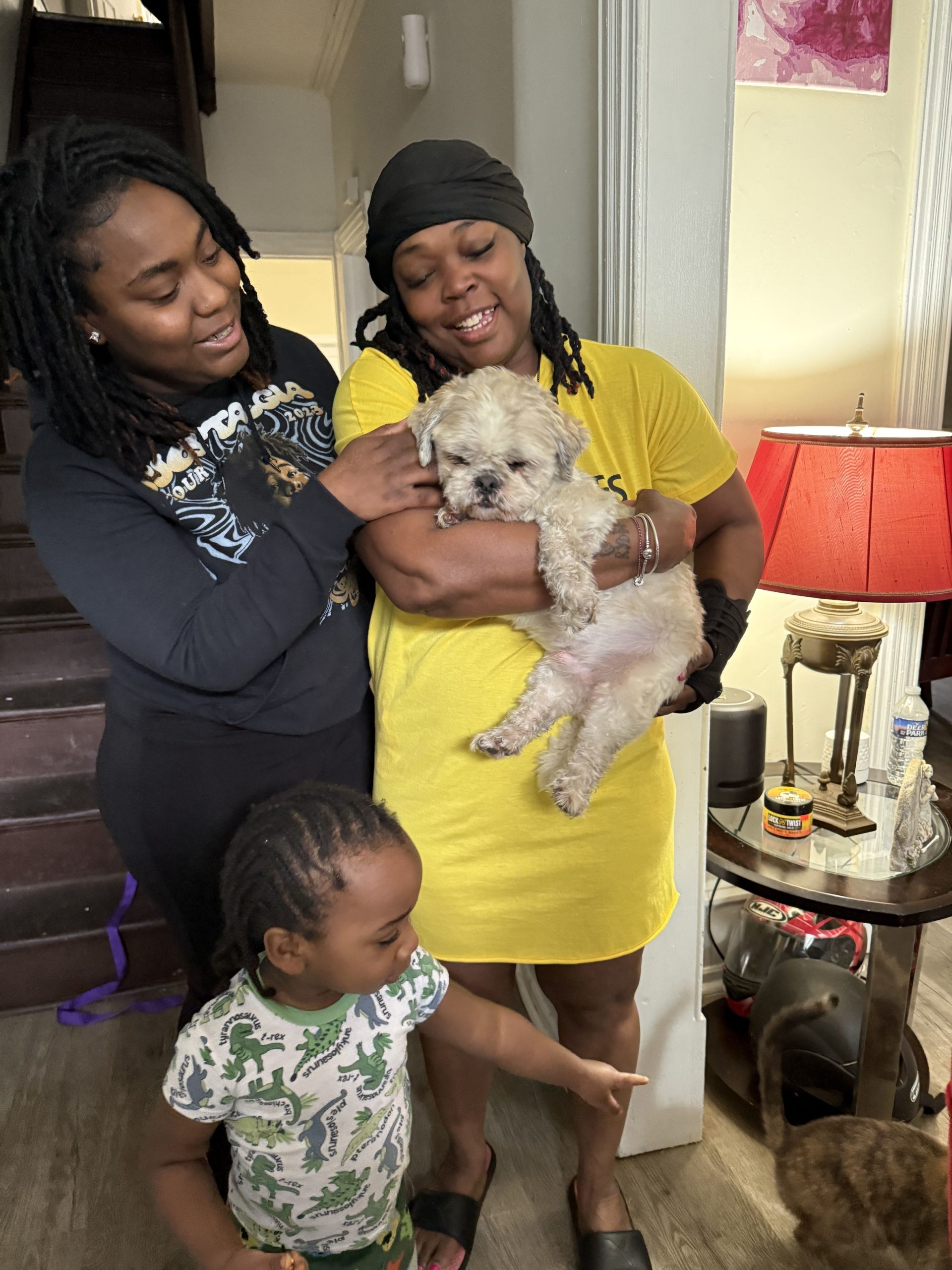
    “Come see Oreo, Meatball,” Jayda Pizarro shouted up the stairs to her 3-year-old cousin who all in the home refer to by the name of the spaghetti topper.

    Jayda Pizarro reunites with her dog Oreo at her Mantua home.Dana Munro

    A toddler in dinosaur pajamas and one soccer-printed sock and one striped sock came ambling down the staircase.

    As Meatball delightedly watched Oreo wriggle on the floor, a cat emerged from the living room to judgmentally gaze upon the scene. All seemed as it was meant to be.

    Jayda Pizarro and her family reunite with their dog Oreo at their Mantua home.Dana Munro

    “I appreciate you,” Pizarro said with a smile for Colleen Bell before the dog detective climbed back into her van to continue her perennial search for dogs in distress.

    Colleen Bell packs her van with a dog trap no longer in use after setting up a different dog trap by the Woodford Mansion in Fairmount Park on Monday, May 11, 2026. Bell, her brother, and friend run the non-profit, GoodBoy Dog Recovery, where they catch mainly stray and lost dogs in the Philadelphia region.Allie Ippolito / For The Inquirer
  • Ricky Bottalico ‘tells it like it is’ and understands it might bother some Phillies

    Ricky Bottalico ‘tells it like it is’ and understands it might bother some Phillies

    Ricky Bottalico often walks NBC Sports Philadelphia with a hockey stick, pacing the newsroom like a third-line enforcer before it’s his turn to dissect that night’s Phillies game.

    Bottalico battled that same restlessness during his 12-year major league career, often bothering fellow relievers with his inability to simply relax in the bullpen while they waited for the phone to ring. It’s only fitting that he prepares for TV the same way.

    “He’ll take slap shots at people,” said Sean Kane, a senior producer who oversees the network’s Phillies coverage. “People are trying to get work done, and he’s shooting hockey pucks. He’s all amped up talking to people. It’s just how he is. How he’s wired. And it makes for good TV.”

    Bottalico pitched with intensity — he once started a brawl by beaning Barry Bonds and cursed at his old manager after earning a save — once he left those jitters in the bullpen. His fastball was blazing, and his stare was glaring. Bottalico had an edge. So does the guy who carries the hockey stick around the newsroom.

    The 56-year-old Bottalico has made his name on TV as a no-nonsense analyst who isn’t afraid to criticize the Phillies, even though the team owns part of the station. Bottalico is irate after a loss, fumes when relievers don’t throw strikes, and blows his lid when fundamentals are lacking.

    He does praise the Phils when they deserve it and is just as heavy-handed with the opponent. But it is his barbs against the Phils — “This is pathetic,” he said after a rough loss one night — that players have bristled at over the years. Bottalico pitched seven seasons for the Phils, and it’s uncommon for a former player working as an analyst on the station that carries the games to have as strong opinions as him.

    The former player said he never takes a cheap shot as he speaks solely on what happens on the field. It’s never personal. He’s doing his job, just like he did when he was on the mound. Bottalico is throwing strikes.

    “I’m sure there are some guys who are pissed at me,” Bottalico said. “You don’t want to piss anyone off. That’s not why we do it. I’m sure there are some people who enjoy teeing off on players. I don’t enjoy teeing off on something that happens in a game, but you have to. It’s part of the job. The way I look at it is if you can look in the mirror and see that you had a bad game or you made some bad pitches, then everything is status quo.”

    Ricky Bottalico (left) prepares for “Phillies Pregame Live” with senior producer and digital contributor Sean Kane and host Michael Barkann on Thursday at the NBC Sports Philadelphia studio inside Xfinity Mobile Arena.Yong Kim / Staff Photographer

    Truthful to the fans

    Bottalico started with the network, then called Comcast SportsNet, late in the 2007 season. He retired two years earlier and was looking for the next chapter.

    “You get your first summer off in 15 or 20 years,” Bottalico said. “And I’m like, ‘This is going to be great.’ Then you realize that it’s not everything you thought it would be. You’re sitting around a lot. Everything is getting stale. I missed the game.”

    Bottalico’s TV gig gave him a chance to get back to baseball. He didn’t have much experience, but station fixture Michael Barkann said the former All-Star closer had what it took to be in front of a camera: knowledge, passion, and an opinion.

    “He’s just so good at conveying what’s going on on the field,” said Barkann, who hosts the pregame and postgame show. “Many people will say baseball is just as simple as ‘See ball, hit ball, field ball, and throw ball.’ But it’s so much more than that situationally. When you absolutely live it and it just runs right through you and it’s a language you can speak with other people who have been there, it enables you to explain the game in a much more clear way. That’s him.”

    Bottalico’s work that season led to more postgame shifts in 2008 along with work as a color commentator for the Lehigh Valley IronPigs. A Daily News review of broadcasters in 2009 said Bottalico would be a star once he lost “the alumni-bias that sometimes causes him to broad-brush obvious chinks in the Phillies’ armor.” That soon happened.

    “You have to be truthful to the fans,” said Bottalico, who also cohosts an afternoon radio show on 97.5 FM. “I don’t like to beat around the bush. I learned early on that you have to be truthful about what happens because fans see what happens. But the other side of that is when they’re good, you point out that they’re good. I will say it’s a lot easier to do the show when they’re good.

    “I’ve been doing this job for a long time. I now work with Cole Hamels. I see Ryan Howard around all the time. Jimmy Rollins, I played with and analyzed. They never had a problem with me. They might say, ‘Ah, you’re getting on me today.’ But that’s about it.”

    The network started broadcasting Phillies games in 1998 and gave the team a share of the station in 2014 as part of its current $2.5 billion TV deal. So Kane said it can be “a little tricky sometimes” when the studio analyst working for the rights-holder takes a dig at the team.

    Kane said he’s heard Bottalico might not be the most popular person if he walked into the Phillies clubhouse, but he’s never fielded a complaint from anyone. So Bottalico keeps bringing the heat.

    “He’s going to tell it like it is, and I think that’s why fans love him,” Kane said. “He’s not going to worry about ‘Well, if I say this it might upset the players or it might upset the front office.’ I don’t think he takes cheap shots, but I just think he tells it like it is. If someone needs to play better or if someone needs to be more accountable, then he’s going to say it on TV.

    “I’m sure over the years that has rubbed some guys in the clubhouse the wrong way. Like, ‘What’s this former player doing? He should be more protective. He should be more of a player-friendly analyst like, ‘They’re trying hard. That’s all you can ask.’ But I really don’t think he takes cheap shots. I just think he’s objectively watching this like a fan and ‘This guy needs to be better’ and ‘This guy needs to hustle’ and ‘This was a stupid decision’ and ‘They should’ve done this.’ When they’re not playing well, he’ll get angry. It’s not manufactured.”

    Ricky Bottalico (right) with host Michael Barkann during a show on Thursday at the NBC Sports Philadelphia studio inside Xfinity Mobile Arena.Yong Kim / Staff Photographer

    Treating it like football

    If you think Bottalico is intense, he said you should watch a Phillies game with his dad in Connecticut.

    “It’s unreal. It is unreal,” Bottalico said. “I’ll be there every once in a while and be outside with my brothers and we’ll hear ‘What the heck are they doing?’ You’re like, ‘Wow. OK. I guess I know where I got it.’”

    The intensity Bottalico inherited from his father, Jay, proved to be a perfect match with Barkann, the host who rides an emotional roller-coaster every night during a 162-game season.

    “He made a comment the other night and said, ‘You know what I love about Philadelphia is that we treat it like the Eagles, and they play once a week. That’s how we do every game,’” Bottalico said. “But it’s true. Because that’s our job. A lot of people don’t understand, ‘How are you getting so excited over this one game?’ Because that’s our job to bring what we feel that night. I think he’s a perfect example of what Philadelphia is and how intense the city has always been.”

    Treating the result of a baseball game the same as a football score is the antithesis of how baseball players manage the grind of a season that often is characterized as a marathon. But how many viewers would tune in after a loss if the hosts simply said, “That’s baseball?” This is TV they’re making, and even the pitcher who ran those marathons for years had to become a sprinter.

    “When you’re playing, you don’t do this,” Bottalico said. “But let’s face it: If I wasn’t true to what’s happening each and every game, I wouldn’t be doing this anymore. It’s one of those things where you have to have a love of the game, a passion for what you’re doing, and you have to be able to talk and explain it.”

    The analysts know their tone may not resonate in the clubhouse, but their audience is the fans who are reeling — or riding high — like they are. The team’s postgame show meets the die-hards where they are.

    “You want to be true to them,” Barkann said. “If you treat 162 games like Don Mattingly treats 162 games or Dave Dombrowski does, then come on. You want people to watch the program. You want people to get excited. You also understand as a fan that it’s not one of 162. It’s everything on that particular day or night. I pride our program on the fact that we do get excited, maybe a little over the top, about every win or every loss.”

    Ricky Bottalico had a 3.70 ERA and 78 saves over seven seasons with the Phillies, and was their lone All-Star in 1996 at Veterans Stadium.INQ LODRIGUSS

    A natural edge

    Bottalico signed his first professional contract with the Phillies in 1991 in the backseat of a scout’s car after being discovered in a men’s league in Hartford, Conn. He was a catcher who didn’t start pitching until his junior year of college before going undrafted. Bottalico reported to Clearwater, Fla., and another pitcher wondered how Bottalico fell through the cracks.

    “He looks at me and goes, ‘You throw harder than anyone else in here,’” Bottalico said.

    It would have been easy to be bitter about the route he needed to take, but Bottalico never felt slighted. The edge he pitched with was not because he was overlooked. It was just him.

    “I had it in Little League,” Bottalico said. “And I’m being honest. In Little League, I wanted to win every game. I wanted to get a hit every at-bat. At that point of your life, you don’t realize that the game is a game of failures. I always wanted to win. I always had that desire to make everyone on the team better, no matter where it was. I just think you’re born with that fire and desire.”

    Five years after being undrafted, he was the lone Phillies’ All-Star in 1996 at Veterans Stadium. He was a big league closer, which meant the reporters flocked to his locker after a blown save but practically ignored him after a 1-2-3 ninth. Like a kicker, the closer usually makes news only after a botch. Bottalico understood the game.

    Ricky Bottalico says “If you can look in the mirror and self-evaluate, then you don’t have a problem with getting ripped apart.”Yong Kim / Staff Photographer

    “John Marzano was doing pre- and postgame, and he would rip us apart,” Bottalico said. “But I thought it was funny. I never took it offensively. I’d be like, ‘OK, John. Get on me. What are you going to do? Rip me tonight.’ It was just one of those things. I was always the look-in-the-mirror-first guy. We used to have to stand in front of our lockers, and if I had a bad game, I would tear myself apart before they even asked a question. I was true to myself. If you can look in the mirror and self-evaluate, then you don’t have a problem with getting ripped apart.”

    The analyst who presses the Phillies every night once was the player who got pressed. He didn’t have issues taking it, so he has no issues dishing it out. Bottalico is doing his job just like Marzano was. The guy who carries a hockey stick around the office can still pump one by you.

    “Let’s face it: People criticize me,” Bottalico said. “You know what I do? I laugh at it. OK. You have your opinion, and I have mine. I’ve never thought about it as a critical thing. It’s just that I have a job to do. I’m doing my job, and they have a job to do, and they do their jobs.”

  • ‘Time doesn’t heal all wounds’: A beloved Delco teacher’s killing, seven years later, haunts loved ones and confounds authorities

    ‘Time doesn’t heal all wounds’: A beloved Delco teacher’s killing, seven years later, haunts loved ones and confounds authorities

    It’s possible that nobody knows the stretch of Brandywine River that meanders through the heart of Wilmington better than Missy Morrissey.

    Since her sister Susan’s battered body was discovered there nearly seven years ago, the West Chester native regularly returns to its banks, mulling a question:

    How exactly did the 50-year-old Delaware County schoolteacher arrive in the shallows more than three miles downriver from where her car was found abandoned early on a July morning in 2019 in what authorities said was a homicide?

    And how, she wonders, has the crime gone unsolved for all these years?

    Susan Morrissey, who had been sipping wine and texting with friends into the early morning hours, left her Wilmington home just after 3 a.m. for reasons unknown, authorities said, and turned up dead in the river hours later.

    Surveillance cameras captured Morrissey’s black Honda Civic as it left her home and headed to the gates of a nearby office building, where it was parked haphazardly and left unlocked with her cell phone and purse inside.

    It was not until about four hours later that a construction worker discovered Morrissey’s body floating in the water miles away near the Northeast Boulevard bridge. She had died from blunt force trauma and drowning, the medical examiner found.

    A photo of Susan Morrissey.Missy Morrissey

    Investigators can’t say for sure how Morrissey’s body made it to the opposite side of town, though they believe she was alive when she entered the river and that she did not do so near where her car was parked.

    “A friend refers to it as ‘the magic carpet ride,’” Missy Morrissey said of the distance between her sister’s car and where her body was discovered. “We just can’t figure anything out.”

    It’s a puzzle that brings Missy Morrissey, the oldest of four siblings, back to the Brandywine each year, where she lays a bouquet of roses to honor her sister’s memory.

    But this year, as yet another anniversary of Morrissey’s July 23 death nears, her family has begun to wonder whether after years of efforts to uncover the truth, her killer may never be found.

    “On the first anniversary in 2020, I couldn’t have imagined that we would be sitting here in 2026 talking about this,” said Meg Morrissey Heinicke, the second-youngest of Susan’s siblings. “I would say time doesn’t heal all wounds. It is just as painful this year as the first year, the second year, the third year.”

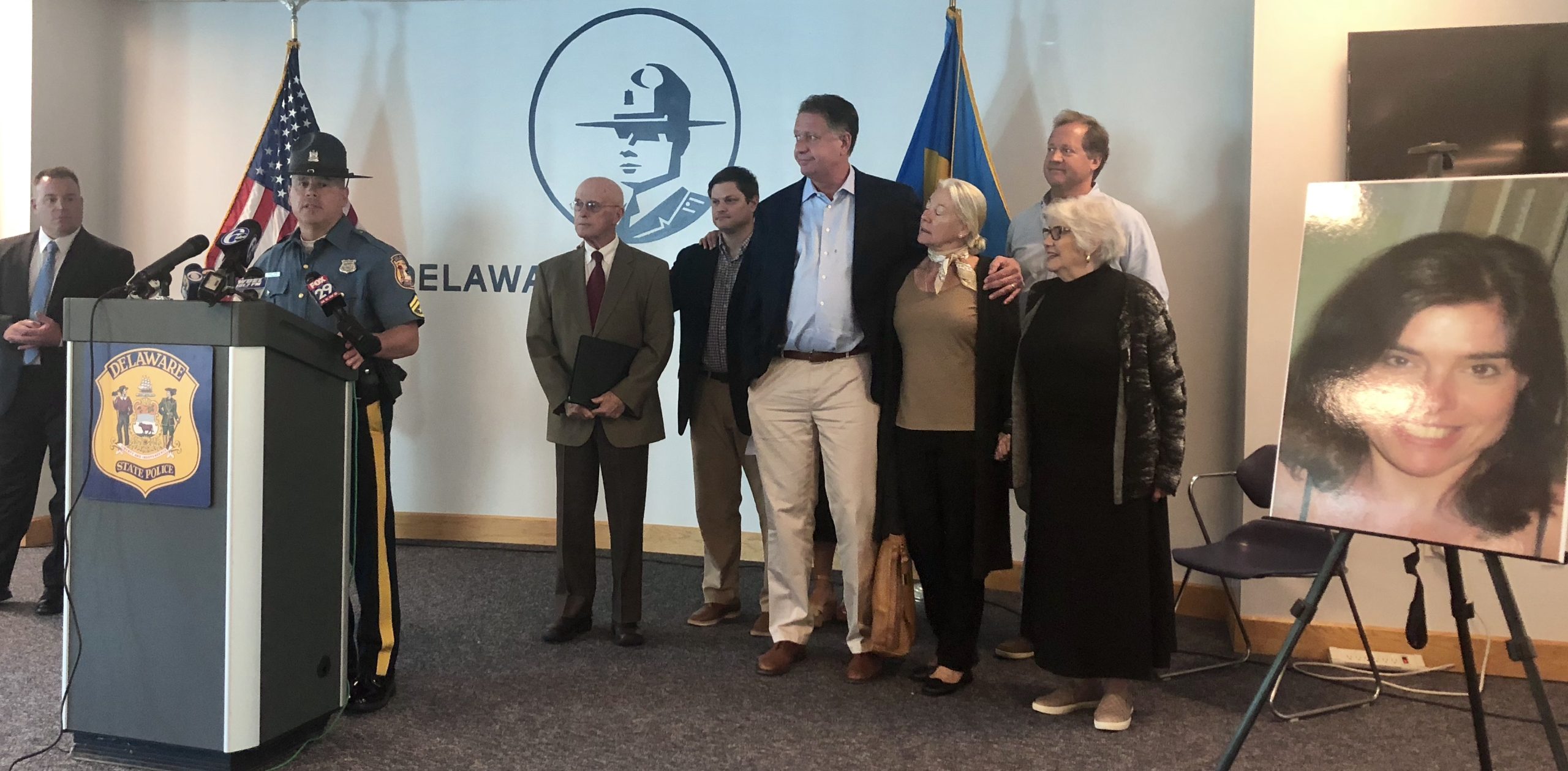
    Homicide detectives with the Delaware State Police say the investigation continues, but they have no suspects or motive, and there are no new developments in a crime that has divided the Wilmington and Chester County communities and drawn attention from true-crime podcasts and amateur sleuths across the country.

    Missy Morrissey appreciates that people have taken an interest in her sister’s death long after it faded from the headlines.

    Still, she and her family just want the crime solved.

    A sister with flair

    Susan Morrissey did just about everything with flair, her siblings said.

    She grew up around West Chester and Wilmington and attended the city’s prestigious Tatnall School before heading to Georgetown University and later to San Francisco State, where she earned a master’s degree and began her career as an educator at a public school in a low-income Bay Area neighborhood.

    Morrissey volunteered often, her siblings said, working with young people at a juvenile detention facility and devoting hours to an animal rescue, where she combed frigid Northern California beaches for stranded sea lions.

    She was the first to read up on far-flung conflicts and the world’s injustices, and she loved sitting with a book on the beach in Stone Harbor.

    It was she who recommended Noam Chomsky tomes and George Carlin stand-up specials to her less-enlightened siblings, they said. Everything from her CD collection to her handwriting oozed taste and personality.

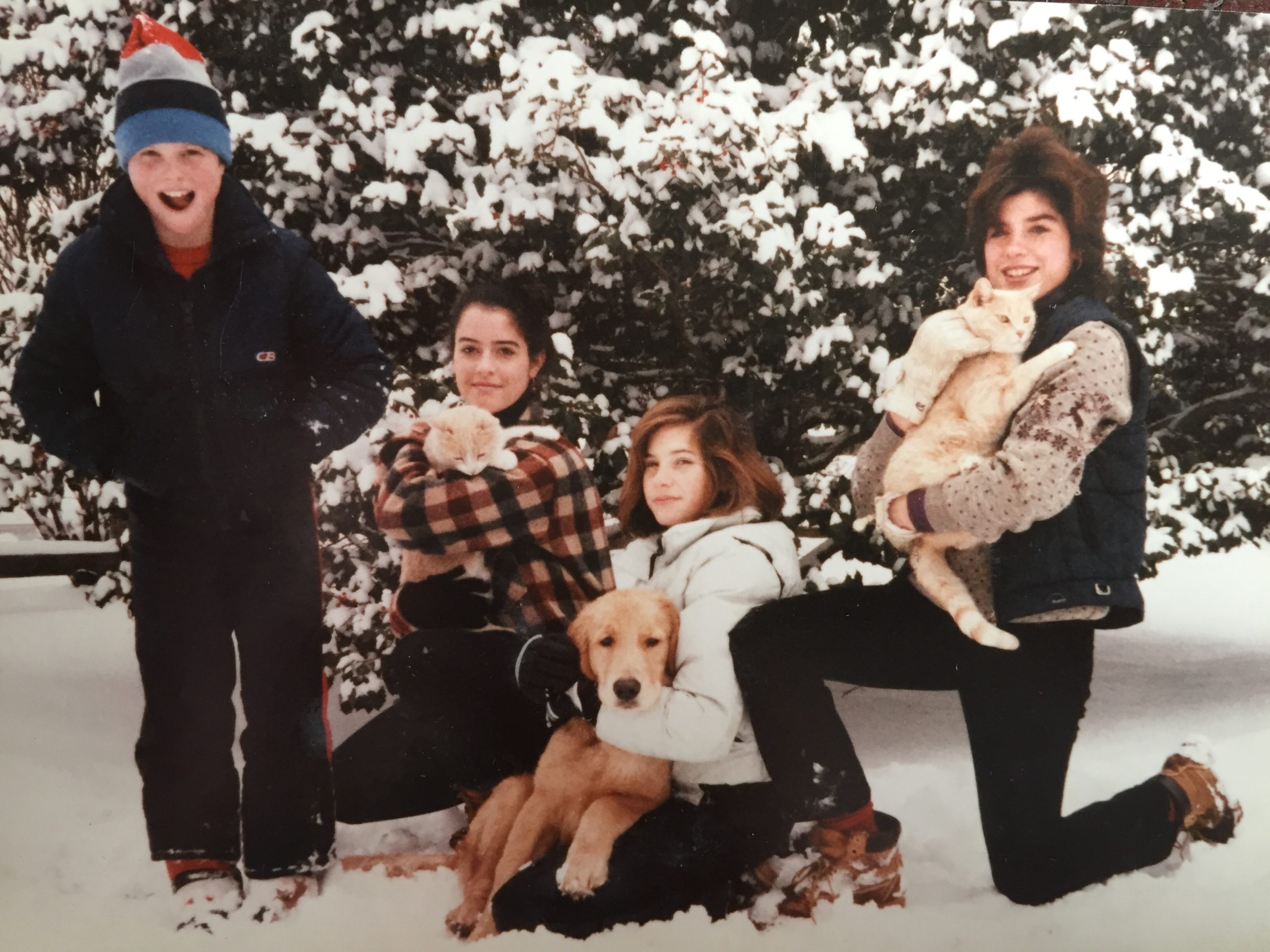
    The Morrissey siblings (from left: John, Meg, Missy, Susan).Missy Morrissey

    “I don’t know how many people feel this way, but I kind of felt like the coolest person in the world happened to be in my family,” said John Morrissey Jr., the youngest of the siblings.

    Morrissey eventually returned east and, after a disappointing stint of online dating in her 40s, reconnected with a former schoolmate, Ben Ledyard, an investment consultant and a regular on the Wilmington social scene.

    The two soon wed, and each weekday morning, Morrissey drove to Pennsylvania to teach English at Academy Park High School in Sharon Hill, Delaware County, where she worked for 13 years until her death on July 23, 2019.

    Her brother now lives in Virginia but regularly returns home to the Brandywine Valley, where visits have begun to trouble him.

    With each crossing of a bridge, each riverside drive, he said, a reminder of his sister’s killing lurks beneath the river’s surface.

    “Susan liked true crime,” he said, “especially local crime.”

    The mystery of her death, he said, is “exactly the kind of case that Susan would have been interested in.”

    A body in the water

    Even after all these years, Missy Morrissey still has the texts saved to her phone.

    It was 12:29 a.m., she said, and the sisters casually exchanged messages while Susan Morrissey relaxed with a glass of wine on the back porch of her Riverview Avenue home.

    She was a night owl, her sister said, and often stayed up late chatting with family or friends, especially during her summer break from school. Morrissey, she said, had been looking forward to attending a Rolling Stones concert with her husband at Lincoln Financial Field the next evening.

    Phone records showed that Morrissey texted with friends and updated her storefront on Poshmark, an e-commerce site for secondhand fashion, until 2:45 a.m.

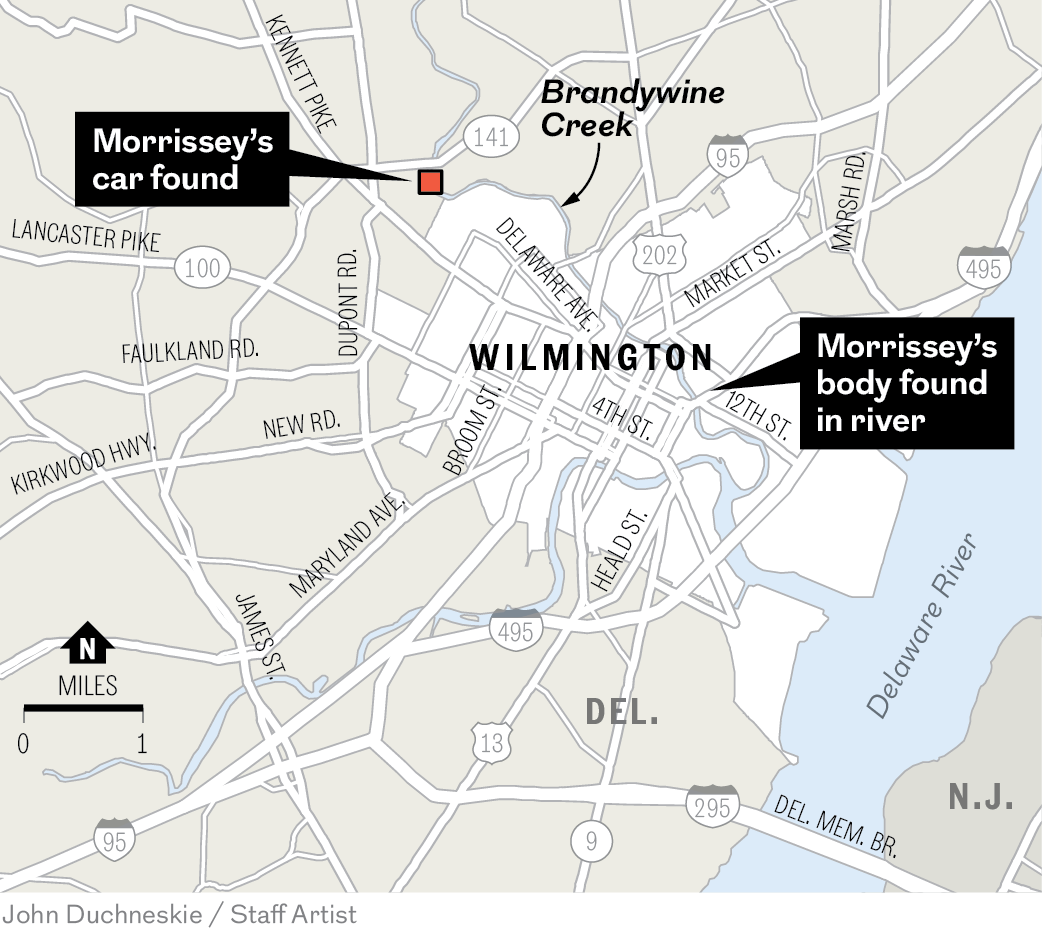
    Then at 3:02 a.m., a nearby security camera captured Morrissey’s car leaving her driveway, according to Delaware State Police. It traveled around a mile through Wilmington to Walker’s Mill, a historic riverside property that had been converted into offices.

    In the dark of night, however, detectives who later reviewed the footage could not determine who drove the vehicle to Walker’s Mill or see who left the car after it was parked.

    Map of Wilmington, Del., showing locations in the death of Susan Morrissey, whose death seven years ago remains unsolved.John Duchneskie

    What happened in the nearly five hours between the car’s arrival at Walker’s Mill and the discovery of Morrissey’s body downriver remains a mystery. Investigators say they have not determined why Morrissey would have entered the water that morning.

    “She got her injuries close in time to when she died, and she died close in time to when her body was found” at 7:39 a.m., said Detective Daniel Grassi of the Delaware State Police.

    He believes she may have entered the river anywhere from the Brandywine Zoo to the 16th Street Bridge, more than two miles downriver from her vehicle.

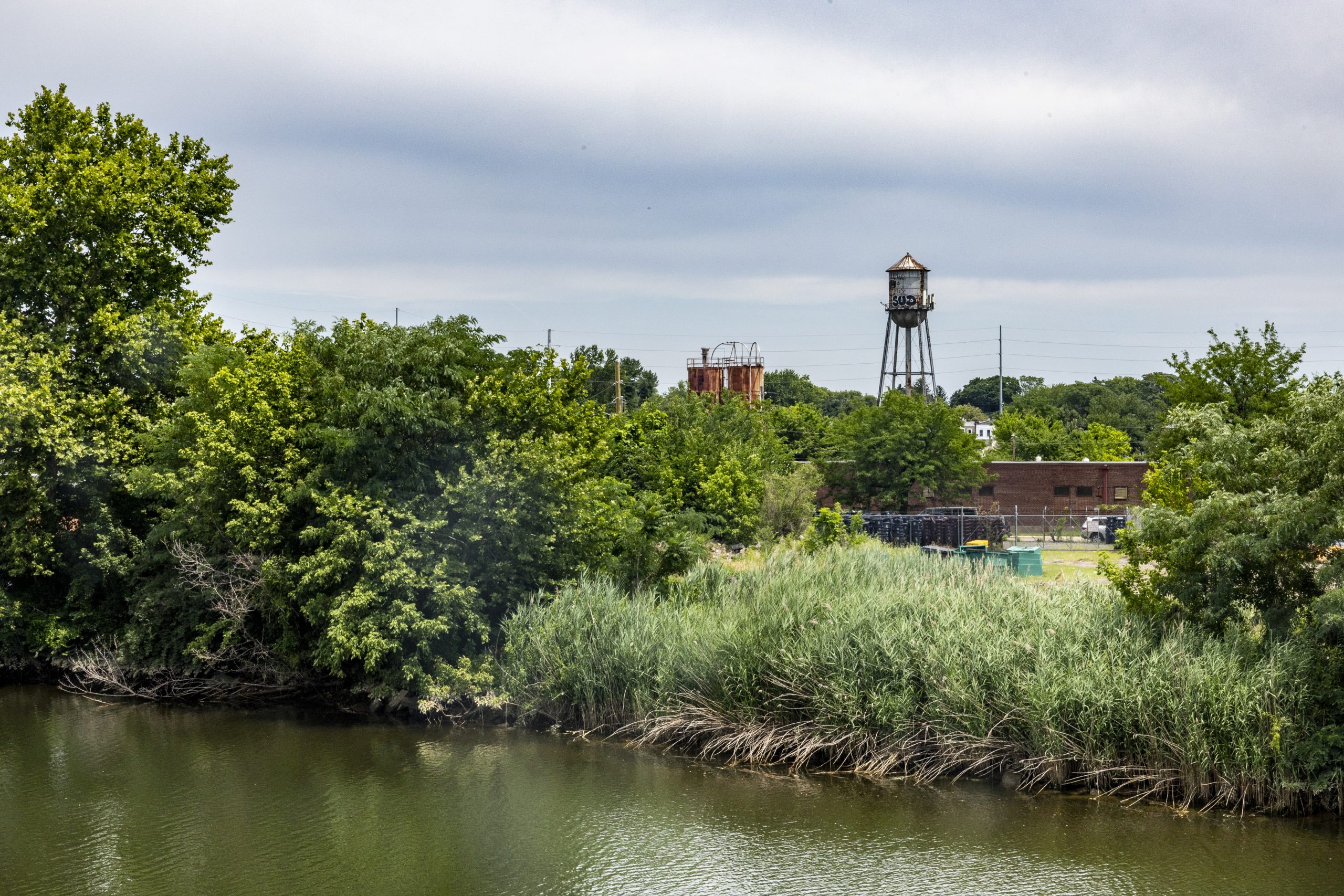
    A water tower is seen from the top of the Northeast Boulevard Bridge in Wilmington, Del., on Friday, June 26, 2026. Susan Morrissey, a schoolteacher in Delaware County, was killed in Wilmington, Del., seven years ago this summer. Her body was found in the Brandywine River near the Northeast Boulevard Bridge.Aidan T. Gallo / Staff Photographer

    Using data from Morrissey’s Fitbit device, investigators have pieced together the barest of timelines from that morning.

    The tracker did not record Morrissey’s GPS location, so investigators cannot trace her movements, but they know she walked about a mile within an hour of her vehicle arriving at Walker’s Mill.

    And at 7 a.m., the device stopped recording her heartbeat.

    “I don’t know why she left the house at 3 a.m., and I don’t know what she was doing between 3 and 7,” Grassi said. “That four-and-a-half hour gap is a major issue with the investigation.”

    What happened to Susan?

    At her West Chester home, Missy Morrissey, 58, keeps hundreds of pages of notes and documents related to her sister’s case, making her something of an in-house historian of the family’s tragedy.

    Since 2019, she has studied the river’s edge between Walker’s Mill and the Northeast Boulevard Bridge, poring over maps, interviewing store owners and strangers, and posting flyers seeking information about the killing near where Susan Morrissey may have been.

    It is not only the lack of a suspect that vexes her. Police have not detailed the cause or extent of Morrissey’s injuries, beyond saying that they were traumatic.

    Morrissey had been home alone that evening while her husband attended a screening of a documentary about the jam band Phish along with a friend. When he came home, Ledyard told investigators, he and Morrissey shared half a bottle of wine before he took a sleep aid and went to bed around 11 p.m.

    Delaware State Police Master Cpl. Michael Austin speaks in 2019 to brief reporters about updates in the death of Susan Morrissey Ledyard. With him were her brother, John (second to left), and husband, Ben (third from left).Katie Park/Staff

    He said he had no idea what happened to his wife — a woman he told reporters was “the love of my life, my best friend” — until police came to the house around 9:30 the next morning to tell him she was dead.

    Ledyard could not be reached for comment.

    Two years after Morrissey’s death, Ledyard remarried, and in 2023 he was charged with assault for attacking his wife with a marble figurine and smashing her head into the floor after she asked him to turn down loud music on New Year’s Day.

    He pleaded guilty to second-degree assault and was sentenced to two years in prison.

    The charges brought fresh attention to the Morrissey case and fueled internet speculation that he could have harmed his former wife.

    But police say he is not a suspect in the homicide and has cooperated fully with law enforcement.

    ‘A hope you desperately cling to’

    Morrissey’s parents, Serena and John, died last year at 89 and 91 — without learning what happened to their daughter and without seeing anyone brought to justice for the crime.

    John Morrissey’s death from advanced dementia came just two days after the anniversary of his daughter’s death.

    “It’s been a tough year for our family,” said Meg Morrissey Heinicke, who lives in San Francisco. “This year’s anniversary feels particularly sad and painful.”

    Yet there remains “a hope that you desperately cling to” that the case will be solved, she said.

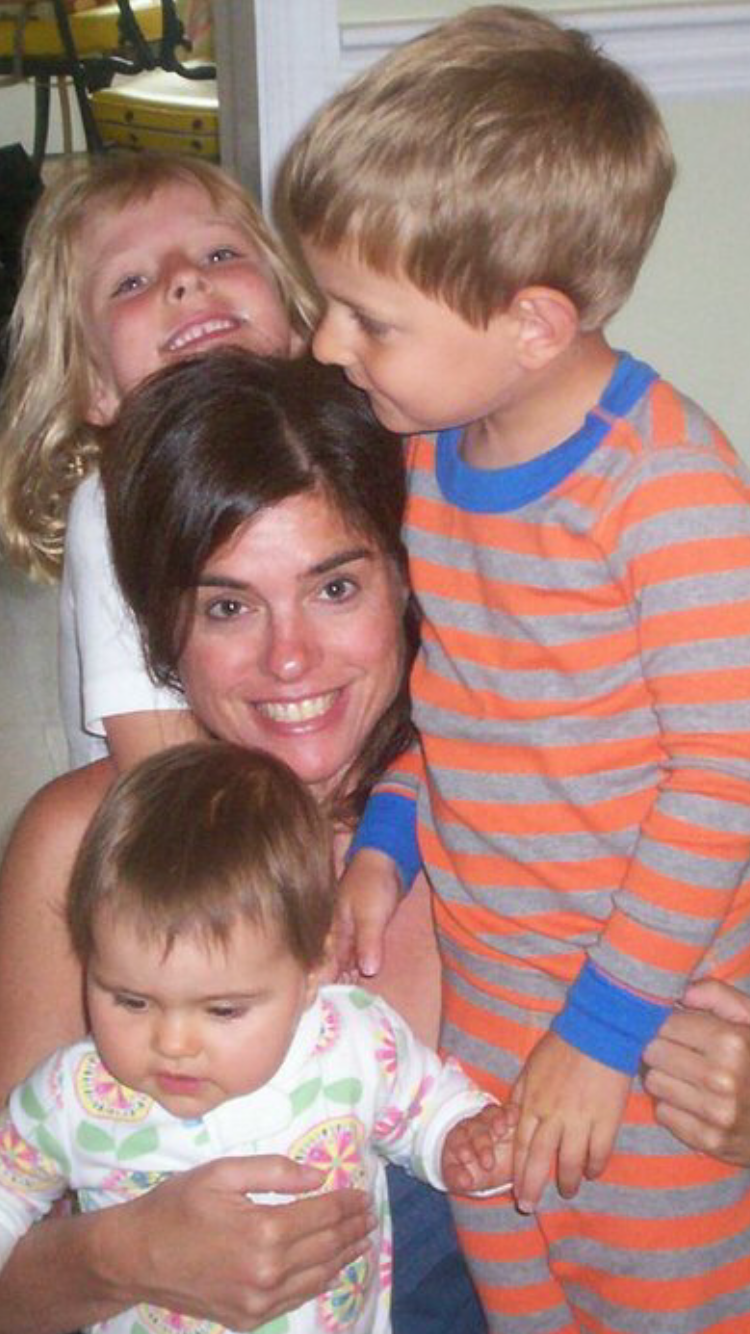
    Susan Morrissey with her nieces and nephew. Missy Morrissey

    In honor of their sister, the siblings started the Susan Morrissey Foundation, which awards an annual scholarship to an Academy Park student for excellence in English, a small way of keeping her memory and love of the written word alive.

    In their quest for answers, the family has promised a $50,000 reward for information leading to an arrest.

    “I just want us to have some answers,” Missy Morrissey said of the family’s ongoing grief. “I don’t think that any of us can really process, or go on, without knowing.”

    Anyone with information about the case is encouraged to call detectives with the Delaware State Police at 302-365-8441 or email daniel.grassi@delaware.gov.

  • Letters to the Editor | July 12, 2026

    Letters to the Editor | July 12, 2026

    Failed policies

    It is infuriating to me to hear the president of the United States continuing to rant about the illegitimacy of our election processes and about how the 2020 election was “rigged,” all without a shred of evidence. He repeated these absurd and divisive claims during his Fourth of July address to the nation, a time when he should be celebrating with — and trying to unite — all Americans. But as he’s shown throughout his entire life, facts are not his forte.

    Let me offer this one fact to the Dear Leader crowd: If the election process is so rigged by the evil, democracy-hating Democrats, how did the GOP win the presidency in 2016 and 2024, and majorities in the House and Senate in 2024? This doesn’t sound like Democratic rigged elections that require “saving” to me.

    Again, his accusations against his opponents are, in reality, his own confession. It is his voter-suppressing SAVE America Act that will rig elections, in his own words, guaranteeing Republican wins “for 100 years.” Because the incompetent destroyer of the White House knows his party will certainly lose the 2026 midterms, not because of election fraud, but because of his horrific foreign and domestic policies. So in his frightened mind, there is only one way to save the election for his GOP in 2026: make sure it’s rigged.

    Steve Cickay, Newtown

    Misplaced focus

    For more than 50 years, I have been a loyal subscriber to The Inquirer. Throughout that time, I have defended the value of legacy media and The Inquirer, in particular, whenever others criticized it. That long history is why I was so disappointed to pick up the July 6 edition after the Independence Day weekend and find the front-page headline centered on President Donald Trump.

    Did you experience the same Fourth of July as the rest of the region? Because what so many Philadelphians were focused on was something entirely different. Across the country, people of every age braved the heat to attend parades, gather with family and friends, swim, picnic, and celebrate America’s 250th birthday. I live in a community of older adults, and many spent the day watching ABC’s extensive coverage of the nationwide celebrations. From small towns to major cities, the focus was on history, community, and the shared joy of marking an extraordinary milestone in our nation’s story.

    The beautiful full-color photographs inside the paper captured the spirit of Philadelphia and the celebrations our region shared. That story deserved the front page. Instead, the newspaper elevated a political narrative over the event itself, leaving the impression that one individual defined the holiday. Independence Day belongs to the American people, not to any president.

    At a time when trust in journalism is fragile, newspapers have an opportunity to reflect what unites communities as well as what divides them. America 250 was one of those rare occasions that called for a front page celebrating our city, the surrounding region, our history, and our shared civic life.

    I believe The Inquirer missed that opportunity, and as a longtime reader and supporter, I found that deeply disappointing.

    Marguerite Sexton, Philadelphia

    Join the conversation: Send letters to letters@inquirer.com. Limit length to 150 words and include home address and day and evening phone number. Letters run in The Inquirer six days a week on the editorial pages and online.

  • Teen charged with killing pizza delivery driver during a robbery in North Philadelphia

    Teen charged with killing pizza delivery driver during a robbery in North Philadelphia

    A Queen Village teenager is accused of gunning down and robbing a pizza delivery driver after luring him to an abandoned home in North Philadelphia last month, police said Saturday.

    Sincere Camps, 14, was arrested late Friday and charged with murder, robbery, conspiracy, gun violations, and related crimes in the June 5 death of Anshul Kuncha.

    Camps remained in custody and was denied bail. There was no indication he had hired an attorney.

    Kuncha, 28, was working as a driver for Pete’s Pizza on Ridge Avenue when he was shot once in the back of the head at the nearby Raymond Rosen Homes, a Philadelphia Housing Authority property on Edgley Street, according to police.

    Surveillance footage from the area showed two people following Kuncha as he walked to the property which, unknown to him, was abandoned.

    Investigators identified Camps as one of the people seen in that footage.

    Kuncha was an Indian national living in Philadelphia, according to an interview with his parents published in The Times of India. He had been living in the city for four years, his sister, Tanvi, told the publication. She described him as “a very loving and joyful person.”

    A LinkedIn profile associated with Kuncha showed he had graduated from Drexel University’s LeBow College of Business in 2024, and was also working as a data analyst for a company in Warminster.

  • Dear Abby | Struggling daughter seems uninterested in helping herself

    DEAR ABBY: I am the single mom of a 19-year-old daughter who copes with bipolar 2, ADHD, anxiety and depression. She has a mental age that’s younger than her adult self. Over the years, she has gone through therapy and changes in medication.

    It has been recommended that my daughter attend a residential therapy program, but she refuses. Since finishing high school, she has refused everything: college classes, job applications, exploring other therapies or taking any small steps toward independence in the future.

    Her goals now center around socializing and smoking marijuana with a few friends. She rarely leaves her room except when they call. There are days I doubt she’s med compliant or wants the help others try to give.

    It’s heartbreaking watching her being “stuck,” but I am also tired of being held hostage to her behavior and actions. Many days I want to pack up her stuff and tell myself she’ll figure things out. (I would continue to be here when she needs me.) Is this fair given her mental health challenges? Because she is at risk, I feel like anything I do is wrong.

    — BURNED-OUT MOM IN COLORADO

    DEAR MOM: I know of few people who, if given the choice, wouldn’t like life to be a constant party. You may need the services of a licensed psychotherapist to decide what to do to help your daughter. It’s apparent to me that unless there are consequences for her unwillingness to help herself, nothing will change and she will continue floating on a cloud of cannabis in perpetuity.

    I suggest you make her continuing to live with you contingent upon her participation in the program that will help her gain some independence. If you need more guidance about this, contact NAMI — the National Alliance on Mental Illness. It’s the nation’s largest mental health organization, dedicated to building better lives for the millions of Americans affected by mental illness. You will find more information about it at nami.org.

    ** ** **

    DEAR ABBY: My mother died five years ago, and my stepfather passed away a month ago. Both were cremated with no service, no obituary and no celebration of life. My parents’ wish was to be placed together at their home.

    I asked my brother, stepsister and stepbrother if I could have a small amount of their ashes to place in a small urn or a piece of memorial jewelry. My stepbrother is fine with my request; the other two are appalled.

    I am the oldest, but my stepfather gave my brother power of attorney. I think this authority has gone to his head, as he tells us he is the boss. Was it wrong to request some of my parents’ ashes?

    — GRIEVING DAUGHTER

    DEAR GRIEVING DAUGHTER: Please accept my condolences for the loss of your parents. Of course your request was not wrong or even unusual. Families often divide a loved one’s ashes just as you described. If your brother continues to ignore your appeals as a grieving sibling, you must decide whether this is important enough to bring a lawyer into the discussion.