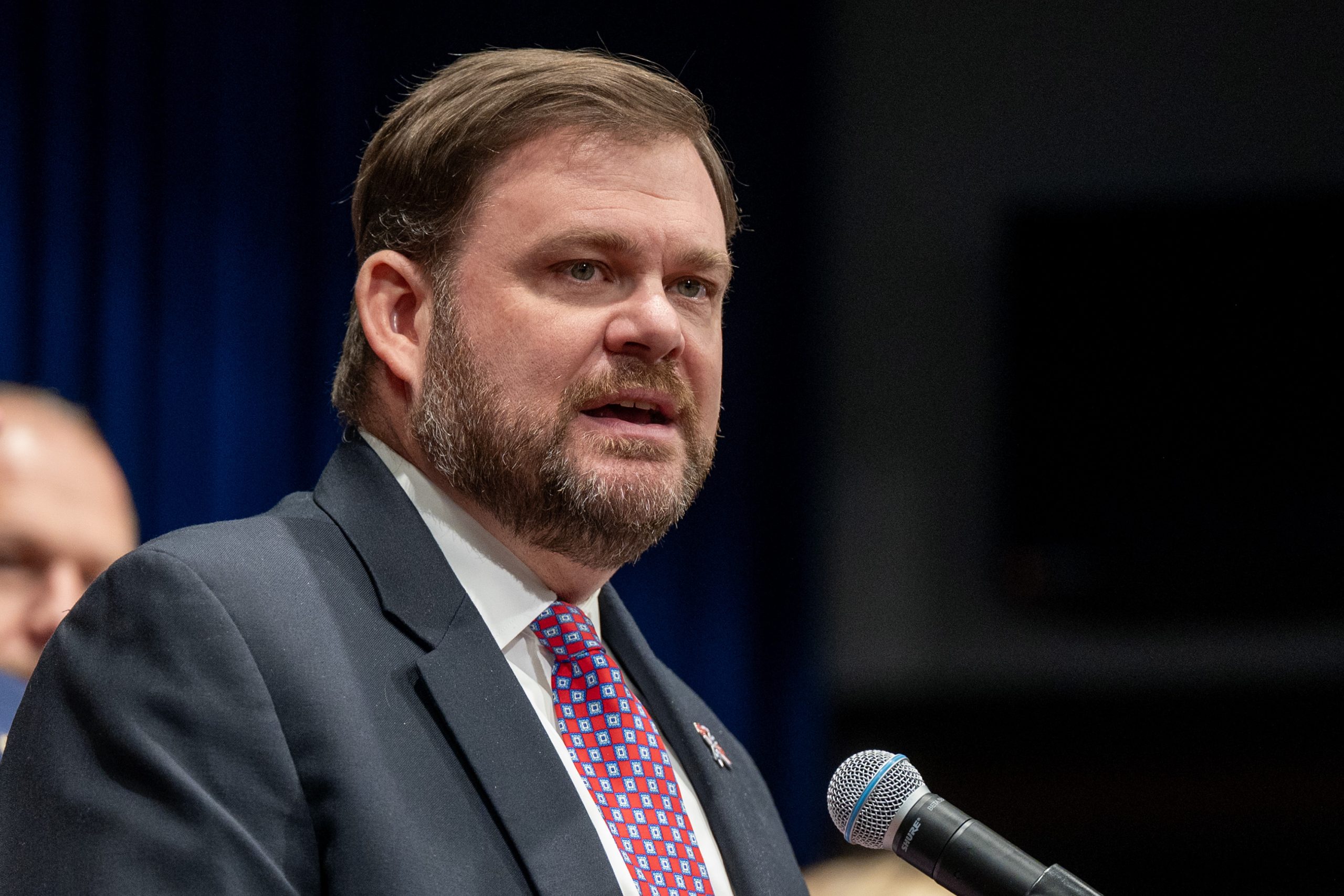
As he prepares for his senior year at Haddonfield Memorial High School, Luke Patterson has a big decision to make: What college to attend? He has a blank check to go anywhere.
Patterson, 17, was awarded an all-expenses-paid merit scholarship from the Calvin Coolidge Presidential Foundation. The four-year award will cover tuition, room and board, and related expenses for him to attend any college in the United States.
He was among five students nationwide selected from among 4,200 applicants, said Matthew Denhart, the foundation’s president. He is the first recipient from South Jersey since the foundation began awarding the scholarships in 2016, he said.
“It doesn’t matter to us where they go,” Denhart said in an interview. “The sky is the limit.”
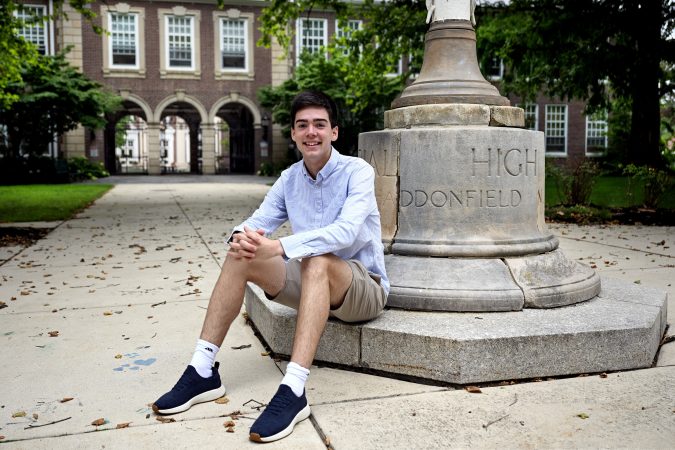
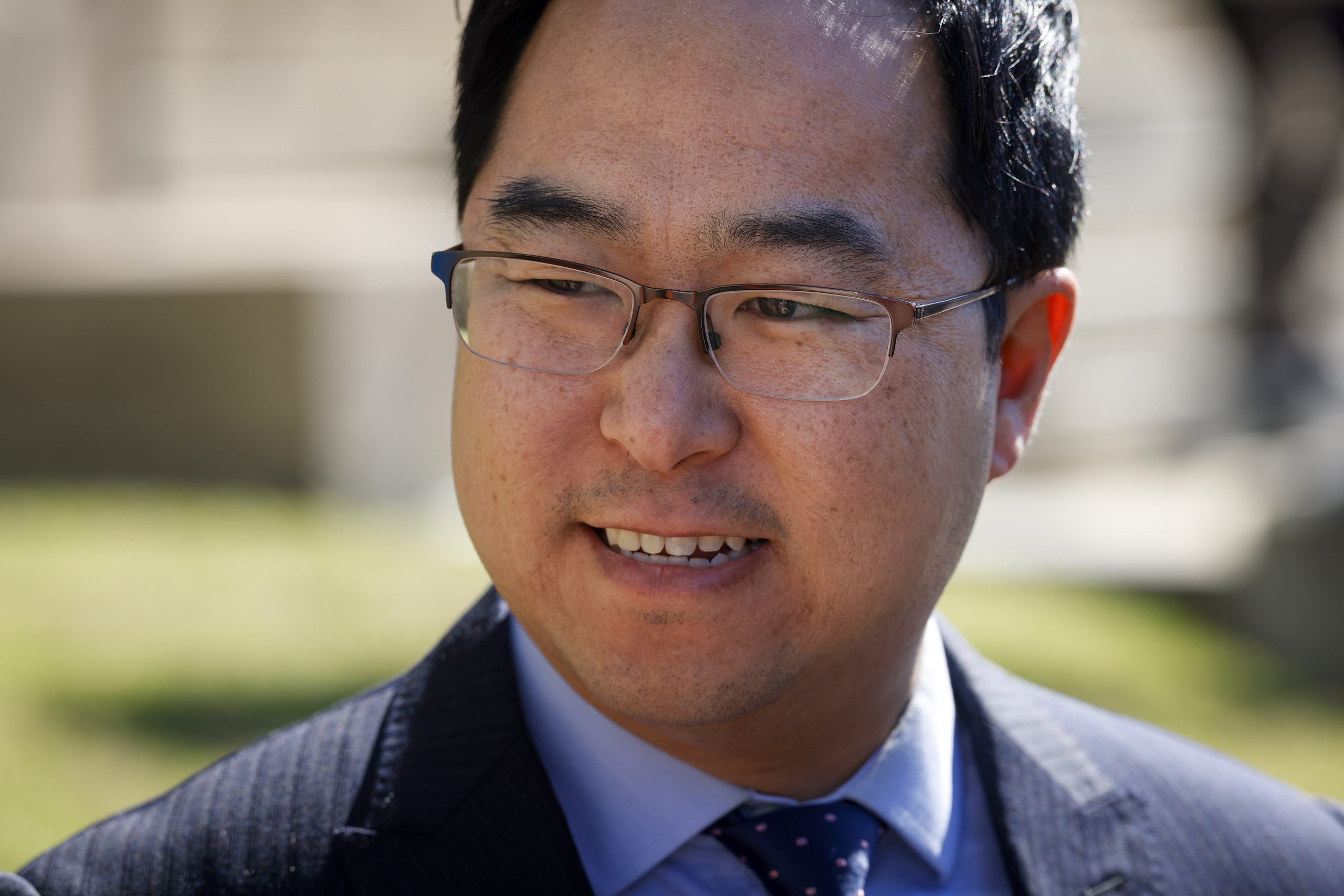
Haddonfield Memorial High School rising senior Luke Patterson poses at the school Tuesday, July 7, 2026. He has been awarded a Coolidge Scholarship, a prestigious, highly competitive full-ride merit award that pays for four years of tuition, room, board, and expenses at any accredited U.S. college or university.Tom Gralish / Staff Photographer
Patterson learned about the scholarship last year when he noticed a track teammate reading Coolidge’s autobiography. The teammate was reading the book to apply for the scholarship.
In order to apply, Patterson was also required to read Coolidge’s autobiography and study policies during his administration, write several essays and get recommendation letters. Applicants must demonstrate humility and a commitment to public service, qualities endeared by Coolidge.
He then traveled to Plymouth Notch, Vermont, Coolidge’s birthplace and where the foundation is located, for a final interview. He fielded questions from a panel chaired by the state’s former governor, James H. Douglas.
“I expected to be nervous, but I actually felt pretty comfortable,” he said. The foundation requests that recipients do not disclose details about the interview process.
Said Denhart: “Luke was just a real star.”
At Haddonfield High, which enrolls about 870 students in grades 9 through 12, Patterson is an honors student, participates on the track and cross country teams, and writes for the school newspaper, covering school board meetings.
Patterson also is a member of the Anti-Bias Club and serves as historian of the Student Council, and has been tapped to help spearhead a project this school year to create a timeline for the school’s 100th anniversary, Principal Tammy McHale said.
“Where good things are happening, Luke is around it,” McHale said.
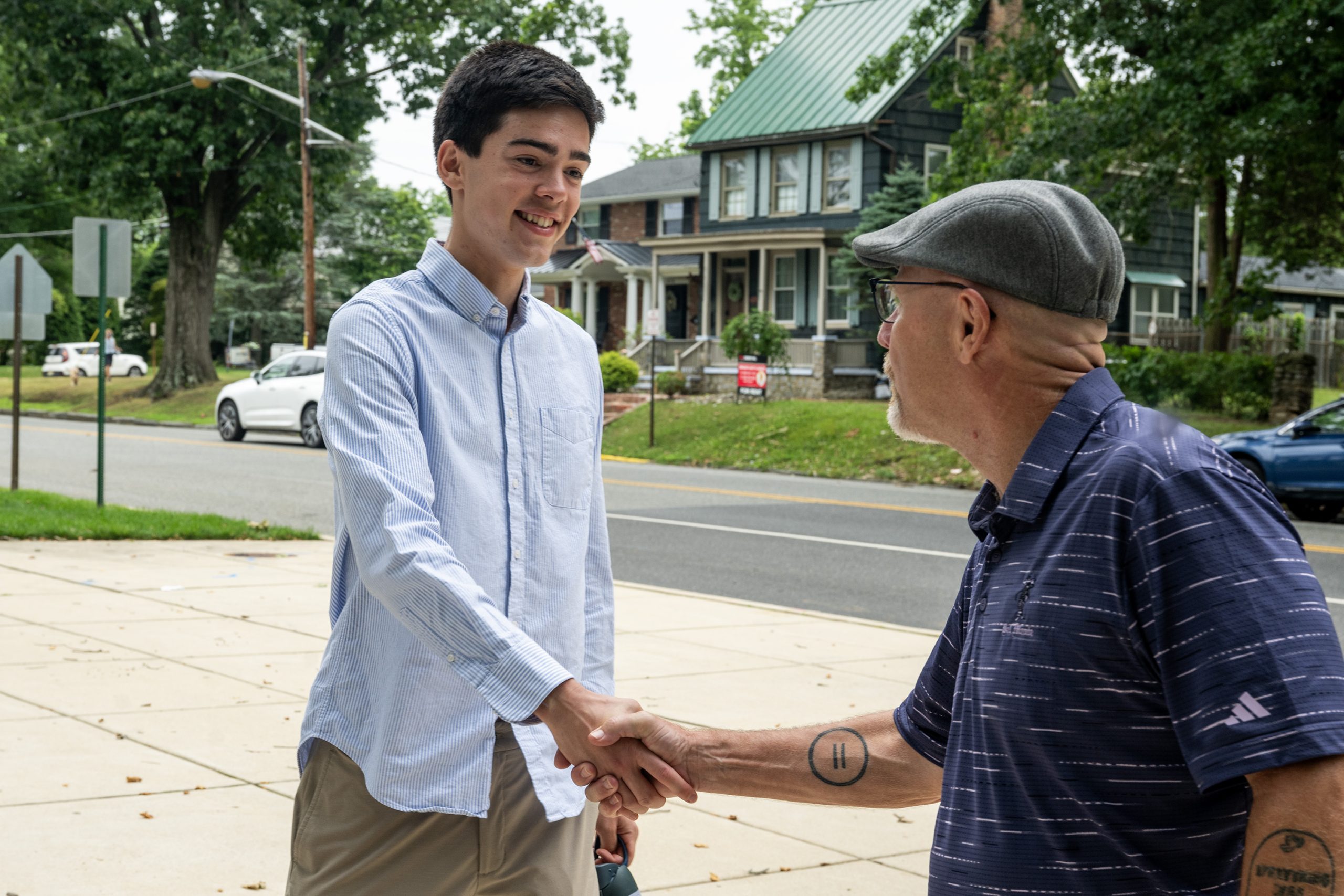
Haddonfield Superintendent of Schools Chuck Klaus (right) happens to pass by as Haddonfield Memorial High School rising senior Luke Patterson is at the school Tuesday, July 7, 2026. Patterson has been awarded a Coolidge Scholarship, a prestigious, highly competitive full-ride merit award that pays for four years of tuition, room, board, and expenses at any accredited U.S. college or university.Tom Gralish / Staff Photographer
English teacher David Scorsolini noted in a recommendation letter that Luke had demonstrated humility in his world literature class, one of the scholarship’s requirements. Patterson showed respect for his classmates and their perspectives, he said.
“It takes a great deal of humility to read, and more importantly, to listen. Luke listens,” Scorsolini wrote in an email.
Patterson credits his teachers for preparing him to apply for the scholarship. He was surprised when he got a call that he had been selected.
“I was completely shocked,” he said. “Over the next days, I realized how many doors this opens.”
It will ease the financial burden on his parents, who also have a younger daughter, Clara, he said.
“I’m just really proud of all that he has done,” said his mother, Ellen Patterson. “Obviously, the scholarship is amazing.”
The foundation launched the scholarship program to better educate young people about Coolidge, considered one of the least-known presidents, Denhart said.
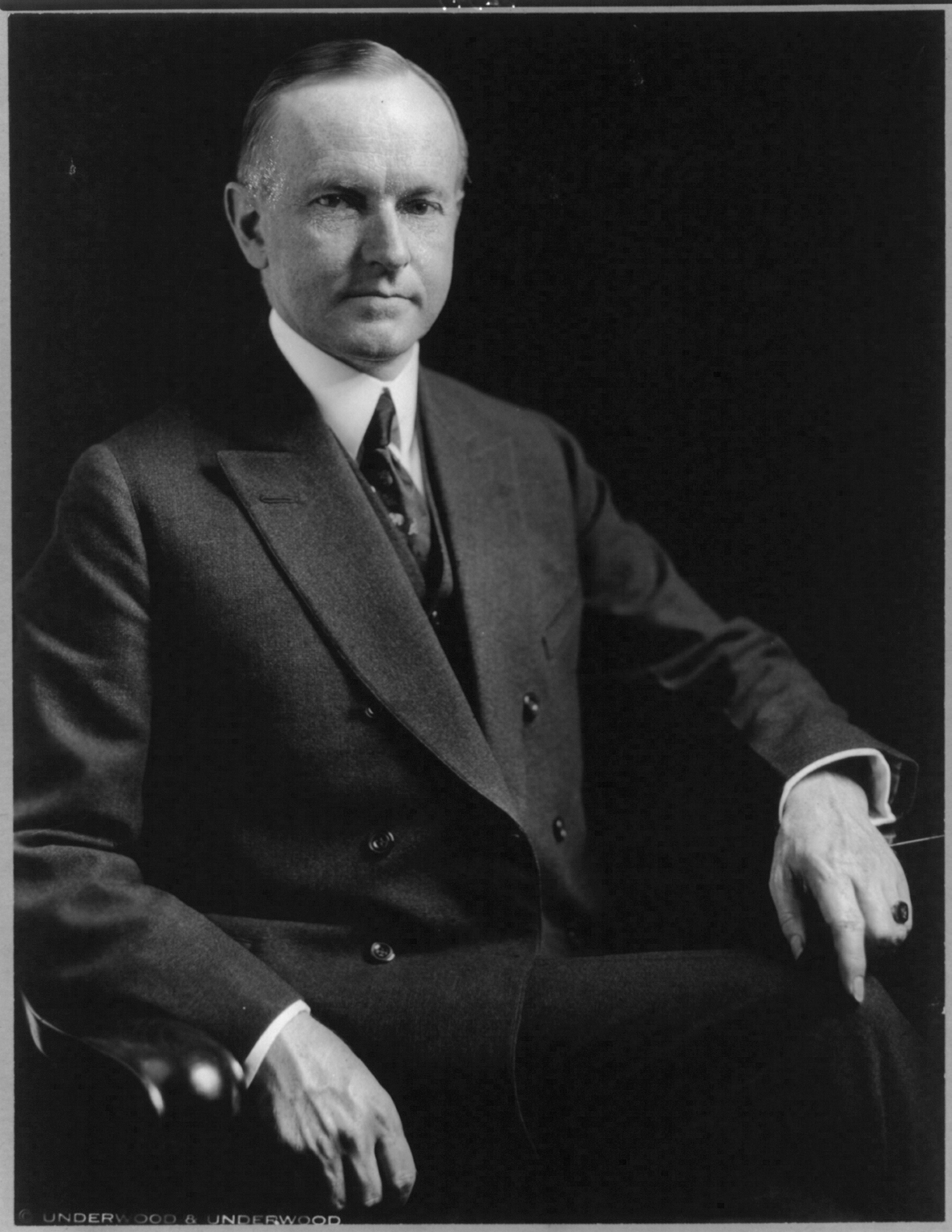
Calvin Coolidge’s seated portrait, June 6, 1924.Library of Congress
The program seeks students who embody the principles and ideas that defined Coolidge’s term as the 30th U.S. President. Coolidge was known for his humility as well as his support for political bipartisanship, public education, and local self-government.
This is the 11th class of scholars sponsored by the foundation, Denhart said, and since 2016, nearly 50 students have passed through the program. The foundation also awards smaller scholarships to its top 100 finalists.
The scholars are not expected to follow the politics of Coolidge, a Republican who had a reputation as a small-government conservative, Denhart said. They study his history and public policies and debate at an annual seminar, he said.
Patterson said he plans to spend the summer finalizing his college choices and writing essays. He is undecided about a possible major.
“The really cool thing about the scholarship is that it opens up all kinds of possibilities,” Patterson said.
He is considering joining an ROTC program and possibly becoming a U.S. Air Force pilot.
Patterson wants to encourage underclassmen to consider applying for the scholarship. His advice:
“Don’t be afraid to put yourself out there. You never know what might happen,” he said.
A bus program that shuttles families to Pennsylvania’s far-flung state prisons will soon resume a full schedule of trips after lawmakers approved $600,000 for the service in the state budget, restoring a level of operation the program had not seen since before the pandemic.
The funding followed months of behind-the-scenes lobbying by the Pennsylvania Prison Society, the nonprofit that runs the program. The organization said the money will allow buses to travel to every state prison every other month, a substantial expansion from the patchwork of limited pilot routes it has operated in recent years with short-term funding. The money will also allow the society to add departures from Pittsburgh for the first time, beginning next year.
For nearly two decades, the buses have carried thousands of relatives to prisons scattered across rural Pennsylvania, many of them hours away and virtually impossible to reach without a car. Advocates say restoring the service will preserve those family connections while expanding access to people in Western Pennsylvania.
“Keeping your family whole is really challenged by incarceration,” said Claire Shubik-Richards, the prison society’s executive director. “This program keeps families connected.”
Still, the funding covers only one year, meaning advocates will likely have to fight for it again next budget season. “This is a victory for today,” Shubik-Richards said, “but we always need to be working to ensure that it can go forward into the future.”
The program had operated continuously with funding from the Pennsylvania Department of Corrections. But during the pandemic, the prison system suspended in-person visits and stopped paying for the bus program. When visits resumed, the money for the buses did not.
For Yvonne Newkirk, 72, the service had become a lifeline. She began riding the buses about a dozen years ago to visit her daughter, Stacey, at the state prison in Muncy, three hours from her West Philadelphia home. Stacey Newkirk, 55, is serving a life sentence for third-degree murder, and her mother said she took the bus to visit her six times a year — every route offered to that prison.
When the service was suspended, Newkirk said, she relied on relatives to drive her. The trips required them to take time off work, and Newkirk paid for gas, tolls, and their lost wages — far more than the bus fare she had once paid.
Newkirk said she was overjoyed to learn the service had been funded for another year. She has not told her daughter yet. Instead, she said, she plans to share the news in person later this month on one of the program’s trips. “I know she’s just going to be really ecstatic,” she said.
Her daughter, she said, often tells her not to visit so frequently because of the long journey.
“But at my age, I told her, ‘I’m going to come as much as I can because there’s going to be one point in time where I will not be able to make it up there,’” Newkirk said.
Four trips from Philadelphia to prisons are scheduled for the fall. Shubik-Richards said service will expand gradually, with the first Pittsburgh routes expected in early 2027.
Families take a three-and-a-half-hour bus ride to visit their love ones at SCI Benner in Bellefonte, Pennsylvania. Jose F. Moreno / Staff Photographer
Even with funding secured, the expansion poses logistical hurdles. The society must find a coach company willing to operate the Pittsburgh routes, a task its staffers say has become difficult as the number of bus operators has shrunk and costs have risen.
The bus trips also create challenges inside the prisons. On bus-visit days, visitation resources are largely devoted to the program’s families — dozens of visitors at once.
Kirstin Cornnell, the prison society’s family and community support director, said she is working with prison officials to schedule trips on days with lighter visitation and determine the most “responsible way to scale up.”
While the prison system has faced staffing shortages, its spokesperson, Maria Bivens, said Thursday that “existing resources” would be used to make the program work.
Pennsylvania prisons facilitated more than 1 million visits last year — most of them virtual, she said. “While research has shown that video visits provide the same recidivism-reducing benefits as in-person visitation,” she said, ”this program eliminates a barrier to in-person visitation for families who lack the resources, reliable transportation, or ability to travel long distances to correctional facilities.”
Lawmakers carved the $600,000 from a larger appropriation to the Pennsylvania Commission on Crime and Delinquency. Advocates called it a hard-fought win during a budget season marked by intense scrutiny of state spending.
Two of the program’s strongest supporters, State Reps. Jordan Harris (D., Philadelphia) and Emily Kinkead (D., Pittsburgh), said in interviews that they backed the funding because maintaining family ties improves public safety. Research has found that incarcerated people with strong family connections are less likely to commit violence in prison or return after release, they said.
Harris, the House Appropriations Committee chairman, said the consequences of incarceration extend beyond the person convicted.
“It also affects their family,” he said.
He added that the program helps preserve relationships and gives people returning home the support they need to successfully reenter their communities.
“While I make no apologies for a crime that may have been committed, that doesn’t mean that we dehumanize that person,” he said. “It doesn’t mean that person’s family doesn’t still feel the brunt of that pain. And it doesn’t mean that we still shouldn’t allow children to have relationships with their parents who may be behind bars.”
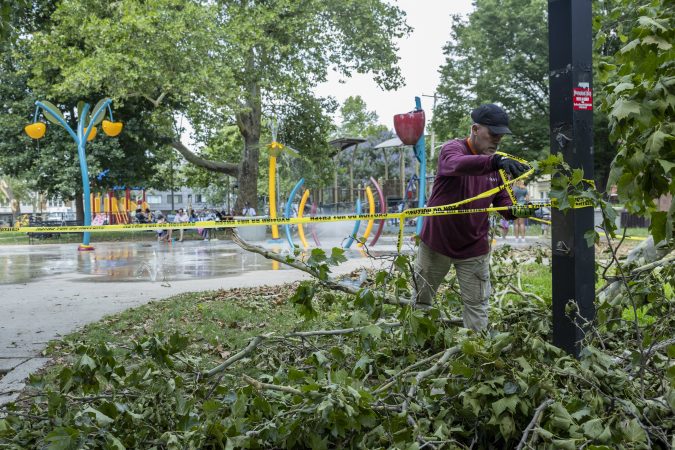
New JerseyGov. Mikie Sherrill and Philadelphia Mayor Cherelle L. Parker are assessing whether they’ll need to ask the federal government for help following recent storms in Philadelphia and Camden as President Donald Trump rejects more disaster aid from blue areas.
Sherrill and Parker have both signaled they anticipate seeking federal emergency aid, but first they need to see if there’s enough damage to qualify. New Jersey is still trying to get aid for a snowstorm that took place just one month into Sherrill’s term — a request that Trump denied — and Pennsylvania has faced several Federal Emergency Management Agency request rejections in recent years.
Sen. Andy Kim, a South Jersey Democrat who serves as the ranking member on the subcommittee that oversees FEMA, recently led a group of senators accusing the Trump administration in a letter of a “significant partisan disparity” in federal disaster aid.
“Right now, there’s no predictability with this administration, and that’s just scary when you’re dealing with disaster response,” Kim said in an interview Wednesday.
Here is what to know about federal emergency aid at this moment.
How does FEMA aid work?
First, local officials work to assess the extent of the damage after a storm and report it to the county, which works with the state to assess the damage. If the disaster has caused more harm than the local and state government can address, the governor can request the president declare a major disaster. That’s required to unlock public FEMA aid.
Individuals can only apply directly for FEMA aid if the president approves individual assistance as part of a disaster declaration.
Residents should report damage to their insurance companies and begin the claims process as soon as possible and report damage to the Office of Emergency Management, said Joseph Walsh, a sergeant first class with New Jersey’s Office of Emergency Management.
“There are technical things we need to meet,” Sherrill said during her visit to Camden after the storm. “I think we probably will, but we’re collecting that now.”
Sean Higgins, a Sherrill spokesperson, said in a statement Wednesday that the governor’s team “has been working around the clock to ensure communities have the support they need and we will ensure that New Jersey applies for any and all help that we qualify for.”
In Philadelphia, Dominick Mireles, the city’s director of emergency management, said earlier this week thatthe city is figuring out the “financial price tag” of the damage, a process that will continue in the coming weeks. Then the city will determine what may be needed — and what it’s eligible to receive — from state and federal resources.
“This might be something above and beyond what we can navigate on our own,” Mireles said.
Camden Mayor Victor Carstarphen shows New Jersey Gov. Mikie Sherrill visuals of the recent storm in Camden on a tablet on Tuesday.Tyger Williams / Staff Photographer
Has Trump denied FEMA aid to Pennsylvania and New Jersey?
New Jersey is in the process of appealing a FEMA rejection for Winter Storm Hernando from February of this year, Walsh said.
The rejection was part of a $227 million denial in disaster aid requests from four Democratic-led states, along with New York, Rhode Island, and Massachusetts. Higgins said more than $84 million of that pool represented costs from New Jersey municipalities and counties.
“Without that aid, our local governments will be stuck with the costs of an unprecedented snowstorm that didn’t care about political boundaries. … Sherrill will continue to fight for every dime that New Jerseyans are owed, regardless of political party,” Higgins said in a statement.
FEMA data also show a 2018 rejection for a severe storm and flooding event in New Jersey during Trump’s first term. Walsh said the state requested aid for several counties even though the damage did not meet the threshold for federal assistance.
The data show that Pennsylvania faced denials from the Trump administration during his first term for awinter storm in March 2017 and storms and landslides fromFebruary to April2018, following a close2016 win for Trump in Pennsylvania during Democrat Tom Wolf’s gubernatorial administration.After losing the 2020 election to former President Joe Biden, Trump on Nov. 18 rejected requests for aid in Philadelphia and surrounding counties for the August 2020Tropical Storm Isaias.
Pennsylvania’s appeal for the 2017 storm was rejected for not meeting the “severity and magnitude” for a disaster declaration, and an appeal for the 2018 incidents were rejected for being “separate and distinct” and not meeting the required threshold, according to documents from the Pennsylvania Emergency Management Agency.
The state did not appeal the rejection for damage from Isaias.
The commonwealth also faced rejections during Biden’s administration following flooding in July and September 2023, and a snowstorm in November 2024 after Trump flipped back Pennsylvania.
Sen. Andy Kim and other Democratic senators have asked for a meeting with FEMA to discuss disaster assistance.Alejandro A. Alvarez / Staff Photographer
What is Andy Kim accusing Trump of?
Kim said Wednesday that Trump has been treating government money like “his own personal slush fund.”
“These are about families that are struggling, and you can’t punish them because of political retribution,” the senator said.
He was joined by 16 members of the Senate Democratic caucus in writing a letter last month to Russell Vought, the director of the federal Office of Management and Budget, citing a Politico report that said Trump’s second administration rejected disaster aid for Democratic-run states at the highest rate in the 47 years that FEMA has existed.
Trump has approved 23% of disaster declaration requests from states with a Democratic governor and two Democratic senators, compared with 89% of requests from states with a Republican governor and two Republican senators so far during his second term, and Democratic-led states also had longer wait times to find out the decision, the report said.
“To be clear, this reporting suggests that in the wake of disasters, as President, President Trump, who has the sole authority to grant or deny this assistance, may be punishing Americans who live in states with Democratic Senators and Governors, by denying access to disaster relief funding,” the senators said in the letter.
FEMA did not respond to a request for comment on the letter. White House spokesperson Abigail Jackson has previously told news outlets that “there is no politicization” in Trump’s disaster relief decisions and that he “provides a more thorough review of disaster declaration requests than any Administration has before him.”
The senators contendedthere are specific approval criteria and called for more transparency on the administration’s process.
In response to their letter,the budget office told the senators to talk to FEMA, so they sent the letter to FEMA to ask for a meeting and are awaiting a response, Kim’s office said Wednesday.
President Donald Trump has touted FEMA funding for states with candidates he supports.Julia Demaree Nikhinson
In the meantime, the president has attempted to use the agency to advance his agenda.
A report by House Democrats found the Trump administration improperly diverted resources from FEMA by sending staffers to help with immigration enforcement, Trump’s hallmark policy.
His administration also recently threatened to withhold FEMA terrorism prevention money for states that don’t run their elections the way the president wants them to.
During his first term, Trump opposed disaster funding for Puerto Rico and said he wanted more aid to go to Texas and Florida, according to news reports.
Recently, Trump touted FEMA funding for states with candidates he supports.
But the administration’s efforts haven’t always succeeded.
Pennsylvania and New Jersey were part of a lawsuit against the Trump administration for cutting certain FEMA funding meant for preventing harm from natural hazards through infrastructure upgrades. That program, called Building Resilient Infrastructure and Communities (BRIC), has since been reinstated. As a result, Pennsylvania was awarded nearly $838,000 for recovery from the 2024 Tropical Storm Debby.
Trump signed BRIC into law during his first term, but during his second term FEMA criticized it for being too “focused on ‘climate change’” under Biden.
Kim said he has advocated for the program’s expansion to help prevent damage from major weather events before they happen.
“This is not a shock that Camden had the flooding that it did,” he said. “We’ve known for a long time that their drainage and sewage and other types of efforts to mitigate flooding are just not to the level that is needed for the people there.”
In the fall of 1874, Philadelphia entrepreneur Robert M. Green was looking to make his fortune selling soda fountains. So, he set up a stand at the grand exposition feting the Franklin Institute’s 50th birthday.
The monthlong fair — held near City Hall where Wanamakers would stand just two years later — drew hundreds of people a day. To Green’s dismay, another soda fountain manufacturer showed up to make his fortune, too.
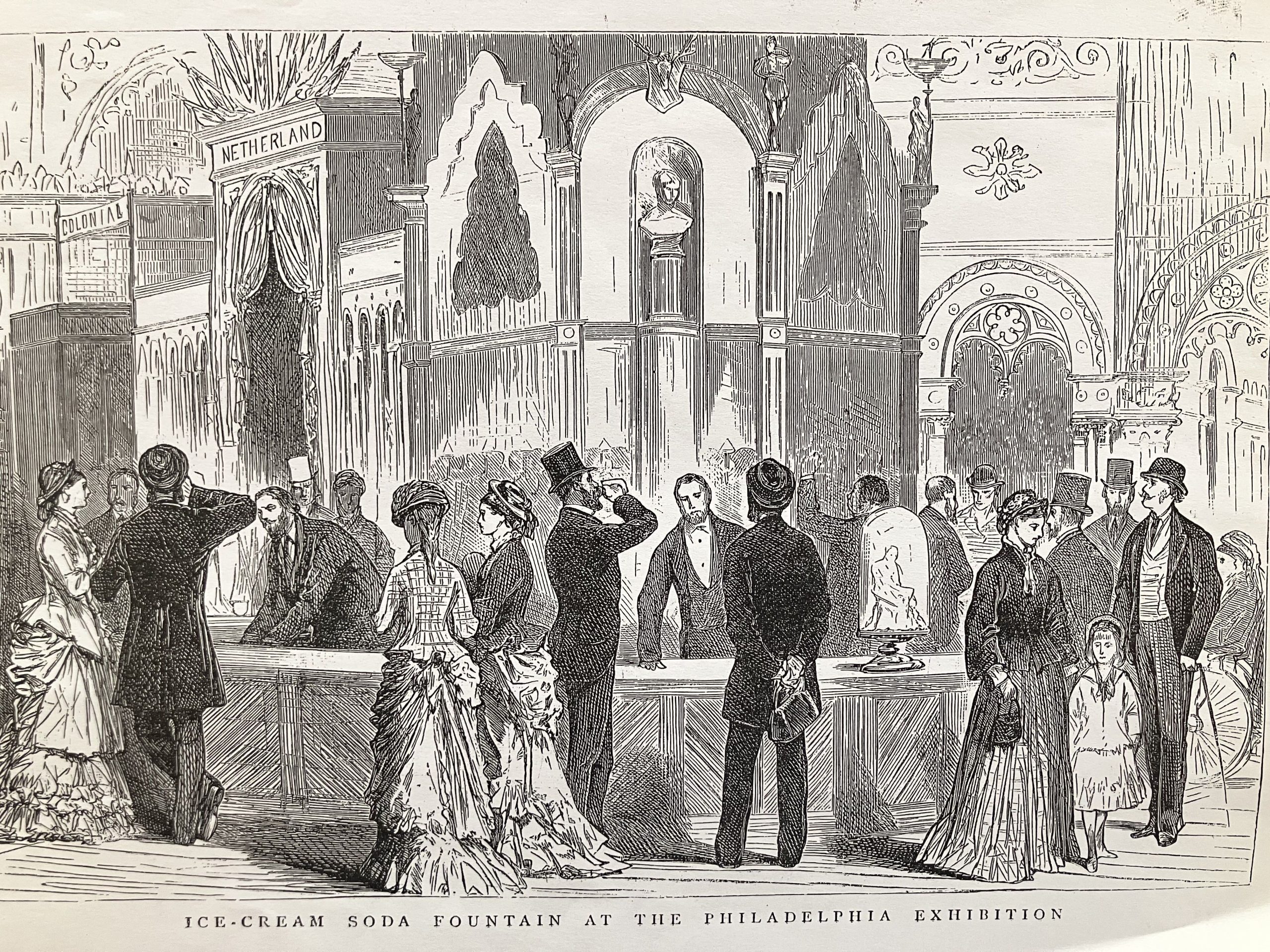
An ice cream soda fountain pictured at the Philadelphia World’s Fair.Colibri Workshop
To lure more fairgoers to the flavored soda water he was hawking at 10 cents a pop, Green added a dollop of vanilla ice cream. (Green purchased the ice cream from Henry Snyder, a confectioner at the corner of 13th and Vine.)
“The ice cream soda came out of a moment of desperation,” explained Eric Berley, self-anointed ice cream historian and owner of Franklin Fountain in Old City. “It started to fizz and bubble up creating a real 19th-century experience.”
The Philadelphia Historic District will honor ice cream soda’s effervescent beginnings at Franklin Fountain, Saturday July 18, from 11 a.m. to 1 p.m. It will be the district’s 29th firstival, part of a yearlong party celebrating America’s 250th birthday.
The first ice cream soda was served at the 50th birthday fete for the Franklin Institute back in 1874 by soda fountain salesman Robert M. Green.Colibri Workshop
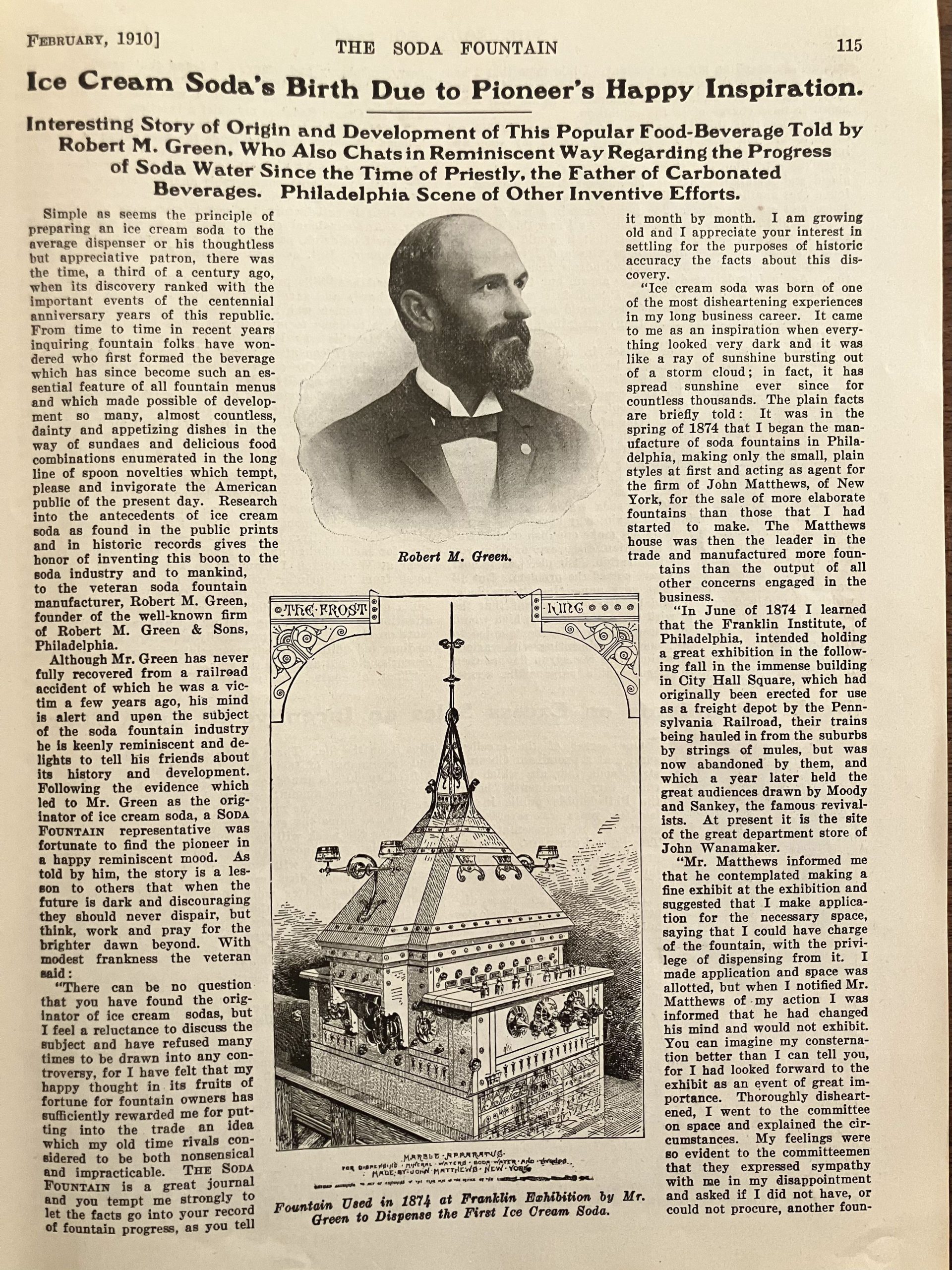
Green made $8 that first day of ice cream soda sales. But he knew he could do better. According to a 1910 article in Soda Fountain, the next day he printed handbills advertising the creamy concoction. He gave teenagers free tastes and paid them to crowd around his booth to drum up interest.
By the end of the fair Green was pulling in $200 a day — $5,793 in today’s money.
Word of the sweet treat traveled throughout the country and ice cream sodas became a drugstore staple. Up until then, soda fountains were only used to make medicinal drinks like Alka-Seltzer. Ice cream helped turn drug stores into hot spots.
Ice cream sodas, according to an article in the 1920 Philadelphia Evening Ledger were the precursors to the “sundae, the banana split, and the various egg drinks and a score or more of the tasteful and appetizing things which are now offered to the public.”
Robert M. Green recounted how he made the first ice cream soda in a 1910 article printed in the trade magazine The Soda Fountain.The Berley Bros. Collection.
Green opened Robert M. Green & Sons, at Broad and Vine, in the late 19th century where he sold soda machines and made a fortune. He’s buried in West Laurel Cemetery in Bala Cynwyd where his tomb stone reads: “Here lies the originator of the ice cream soda.”
While it’s tempting to end the ice cream soda story here, there is more to this sweet saga.
At the 1876 Centennial, Philadelphia-based pharmacist Charles Hires introduced the temperance drink Root Beer, a spicy blend of 16 wild roots and berries.
Seventeen years later, Frank J. Wisner, owner of a Colorado-based brewing company, plopped in a scoop of vanilla ice cream, inventing the Root Beer float.
The terms ice cream soda and ice cream floats are used interchangeably these days, Berley said.
“But it’s clear without Philadelphia you wouldn’t have an ice cream soda or a root beer float.”
The Ice Cream Soda Firstvial will be held, Saturday is Saturday, July 18, 11 a.m.-1 p.m. at the Franklin Fountain, 116 Market St.
Kobe Bryant? Of course. Sabrina Carpenter? Obviously. But a fighter pilot born in the early 1900s? Not so much.
The Inquirer recently dug into the 2025 top five most-searched individuals born in Lower Merion or Narberth, with the tiny borough punching above its weight class.
Topping the list is Narberth native Kylie Kelce, who gained traction online after her podcast “Not Gonna Lie” launched in late 2024.
She’s followed by two fellow Narberth natives, one a former Navy fighter pilot and the other a best-selling author. Rounding out the list is an MLB player and the former president of the Cleveland Browns.
In case you missed it, Lower Merion police are investigating a string of home burglaries. They believe thieves are targeting high-value houses that appear to be unoccupied.
A Lower Merion teen got booed during Monday night’s Home Run Derby at Citizen’s Bank Park. The Inquirer’s Alex Coffey explains why — and how the 17-year-old Harriton High School alum sees the viral moment as a badge of honor.
New Kobe Bryant shoe releases appear to be in the works from Nike. The late Lower Merion basketball star’s widow, Vanessa Bryant, recently offered a sneak peek.
A Lower Merion company made the list of the 2026-2027 U.S. News Best Companies to Work For. Bala Cynwyd-based Susquehanna International Group, which is headquartered at 401 City Ave., specializes in quantitative trading and received a high rating for its work-life balance. To determine its list, U.S. News weighed factors such as employee sentiment, evaluating companies with at least 1,000 employees and over $500 million in annual revenue.
🍽️ On our Plate
6abc’s Alicia Vitarelli paid a visit to the recently opened Bryn Mawr outpost of The Buttery to learn how the popular cafe makes Turkish eggs. Check out the segment here.
🎳 Things to Do
🎶 Bryn Mawr Twilight Concerts: There are two shows this weekend. On Friday, get a preview of the upcoming Philadelphia Folk Fest, and on Sunday, hear Trout Fishing in America, an eclectic folk/rock band. ⏰ Friday, July 17, 7 p.m., and Sunday, July 19, 4 p.m. 💵 Free on Friday; $25.88 for adults and $16.56 for kids 12 and under on Sunday 📍 Bryn Mawr Gazebo
🎞️ To Catch a Thief: See a screening of the 1955 Alfred Hitchcock film starring Cary Grant and Grace Kelly. ⏰ Sunday, July 19, 4 p.m. 💵 $11.75-$16.25 📍 Bryn Mawr Film Institute
🎵 Music in the Park: Coca Leaves and Pearls headlines the next concert. ⏰ Wednesday, July 22, 7 p.m. 💵 Free 📍 Narberth Park gazebo
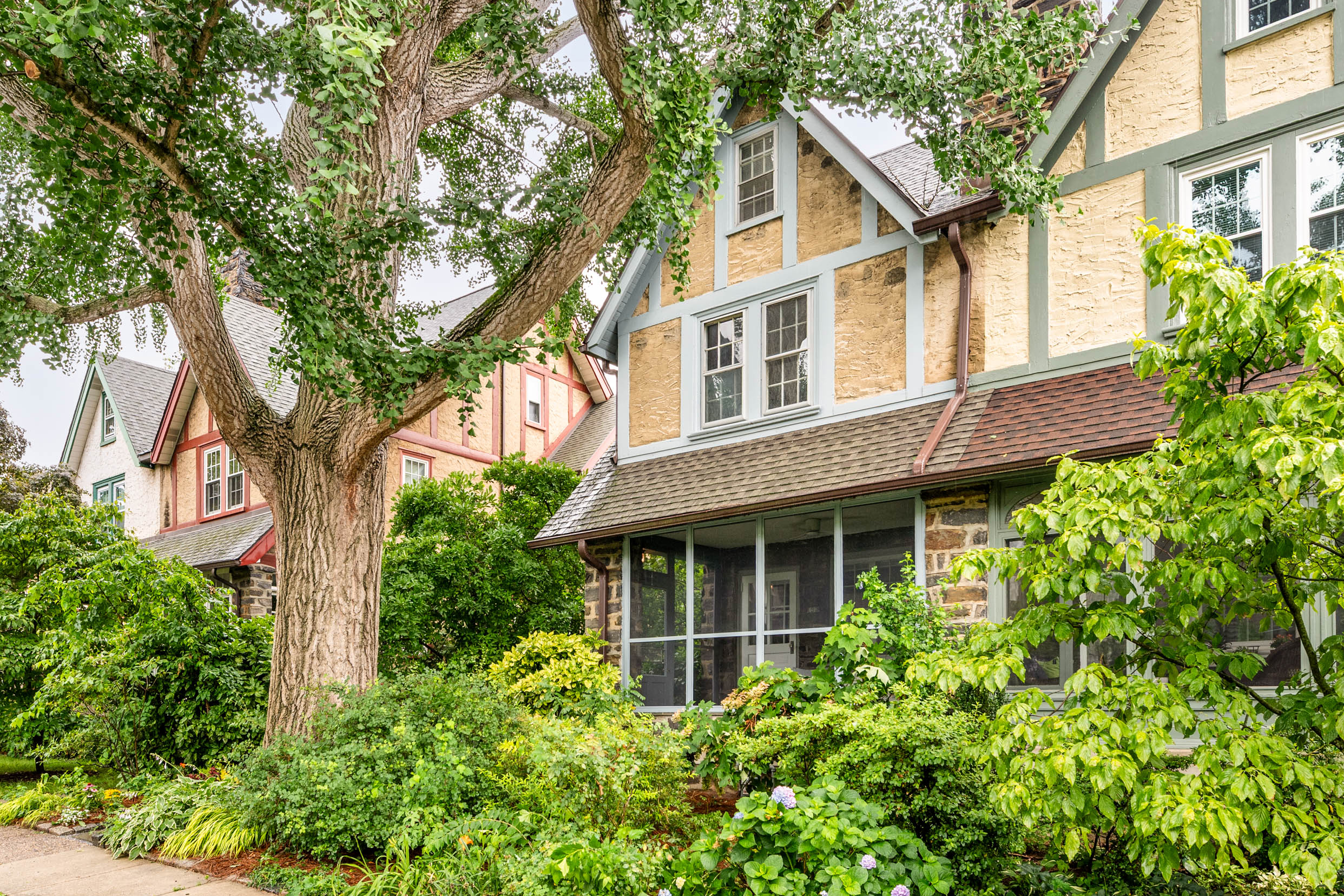
The home has a screened-in porch.Ben Floyd Photography | Courtesy of Kathleen Hartnett/Compass RE
Built in 1926, this four-bedroom Tudor has undergone a number of updates to blend the past and present. The home features a living room with a stone fireplace, a dining room, a kitchen with quartz countertops and stainless steel appliances, and a screened-in porch. It also has bonus living space on the third floor and a deck out back.
By submitting your written, visual, and/or audio contributions, you agree to The Inquirer’s Terms of Use, including the grant of rights in Section 10.
This suburban content is produced with support from the Leslie Miller and Richard Worley Foundation and The Lenfest Institute for Journalism. Editorial content is created independently of the project donors. Gifts to support The Inquirer’s high-impact journalism can be made at inquirer.com/donate. A list of Lenfest Institute donors can be found at lenfestinstitute.org/supporters.
There’s a 1920s house for sale in Abington whose previous residents may have included a shoe heir.
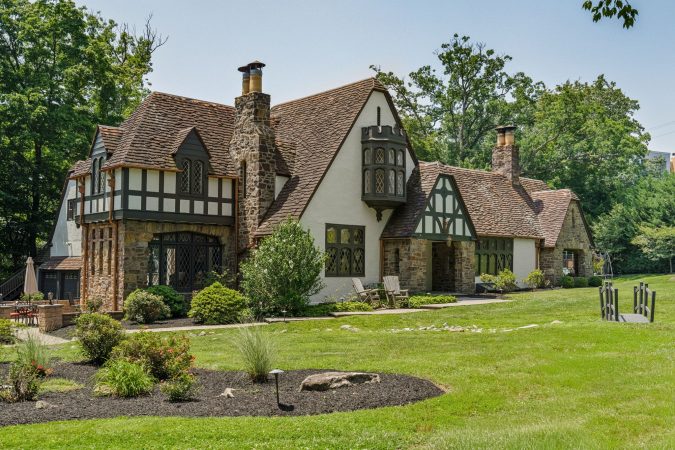
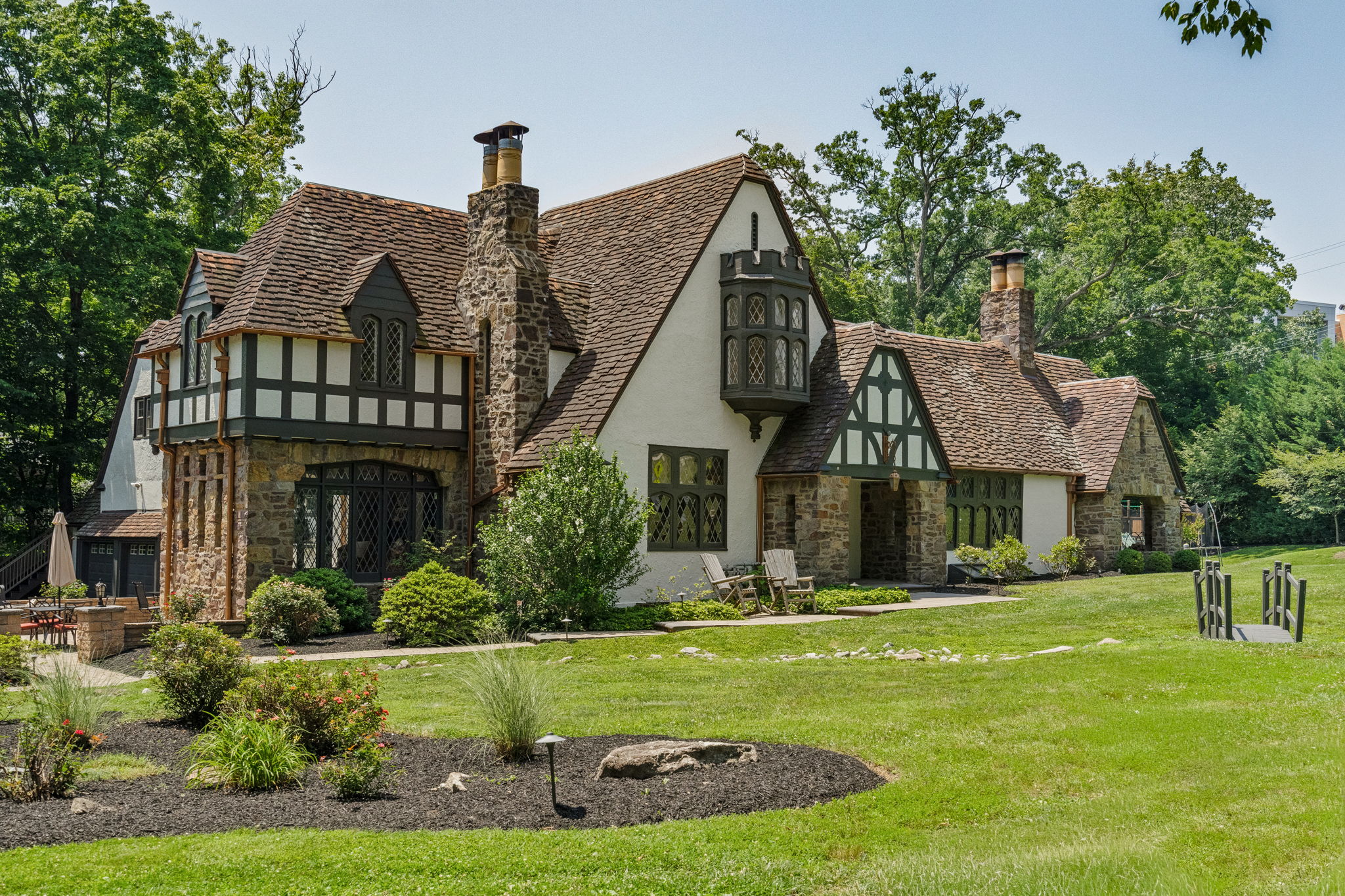
The 4,328-square-foot-home has five bedrooms, three full bathrooms and two half bathrooms on just under an acre across from Abington Senior High School. One of the bedrooms sits separately above the three-car garage as a suite with a half-bath and a kitchenette. The asking price is $1.2 million.
The Canterbury Road house sits beside a wooded area owned by a property management company, according to county records, which describe the house as a Tudor.
But the house also has Norman Revival features, said Brian Whetstone, a historian at the University of Pennsylvania, including a rounded tower and stucco elevations: “This building is certainly taking a grab bag of references from Tudor and Norman influences in the final product.”
A 1920s Tudor home is for sale on Canterbury Road across from Abington Senior High School.Donkin Media Group
The two-story house is nicknamed “Tall Trees” for the woodsy feel it used to have, but anyone who’s ever paid an arborist can rest easy — the current owners have removed many of the trees.
An added bonus is how much sunlight now enters the house, said Tim Owen of Compass Real Estate.
The main floor of the 1920s Tudor for sale in Abington Township.Donkin Media Group
“Often with Tudors, the houses feel really dark with the wood and all,” Owen said, but several potential buyers have mentioned how bright it feels inside, even on a gloomy day.
The home is filled with original amenities, including wood-burning stone fireplaces, hardwood floors, carved woodwork, and sconces that may date back to the late 1920s. The house was built by Tudor-loving real estate mogul Wayne Herkness.
An interior view of a 1920s Tudor for sale in Abington.Donkin Media Group
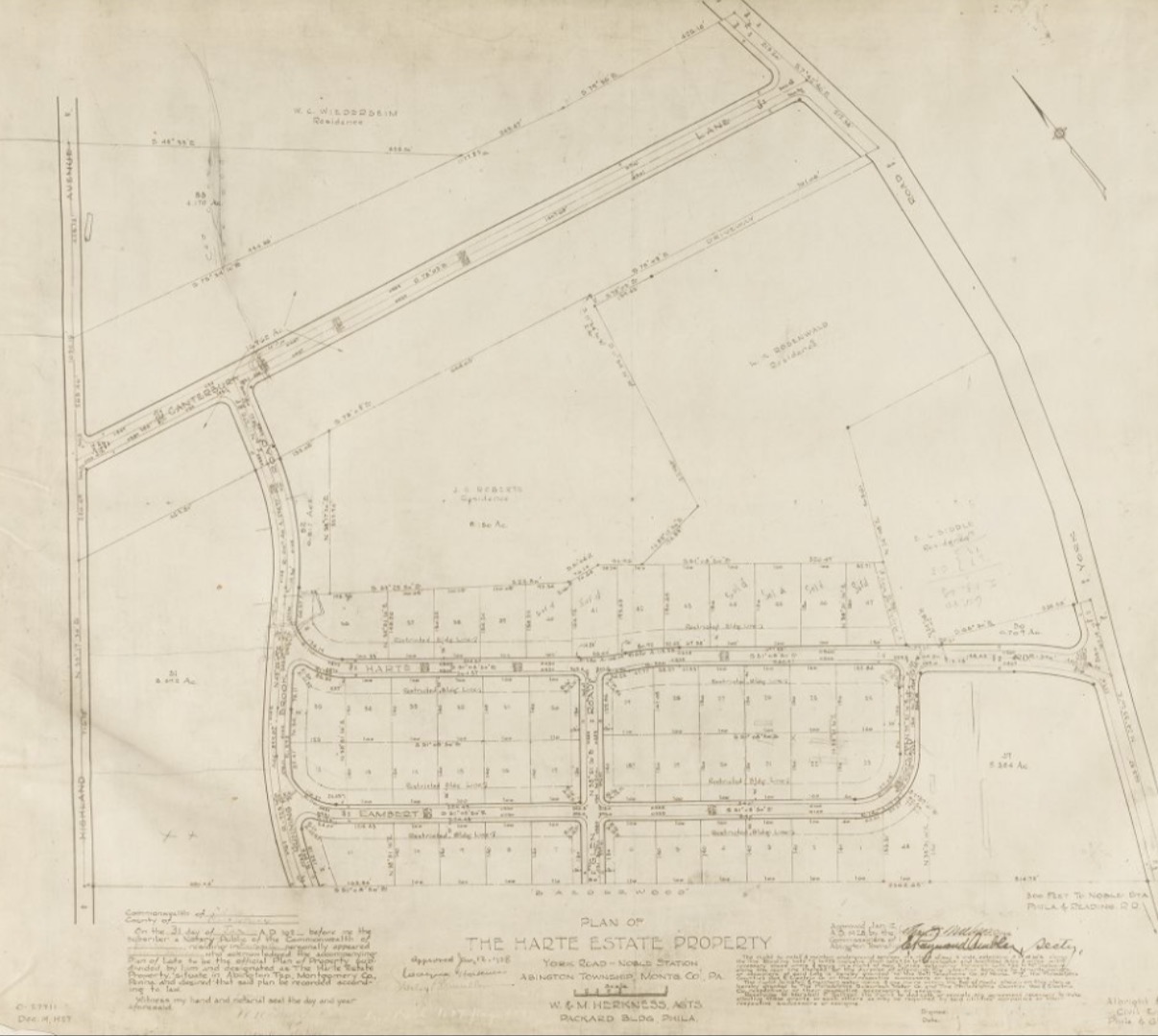
Herkness “studied a great deal from books about English architecture,” reads the description of survey plans held in the Penn State University Libraries collection. “He developed the houses in his favorite styles, English Tudor and stone colonial, with grand center halls and on large lots.”
A 1920s real estate survey by Albright & Mebus for the former Harte property in Abington includes Canterbury Road, where a Tudor home is on the market.W&M Herkness
The current owners have restored original features and made several updates, Owen said, adding high-velocity central air-conditioning and a heated, in-ground, saltwater pool, replacing the windows, and re-staining the wood moldings.
“They’ve definitely been very busy in the 13 years they’ve been there,” Owen said. “It truly is a move-in ready home.”
The current owners of the Tudor home for sale on Canterbury Road in Abington added an in-ground, saltwater pool to the property.Donkin Media Group
The previous owners who sold the house in 2013 passed on a framed print from the early days of Laird & Schober Shoes, a Philadelphia company that rose to international prominence in the early 20th century, Owen said.
The company won an award from the Franklin Institute in 1900 for shoe manufacturing, and collaborated with famed Italian designer Elsa Schiaparelli.
The kitchen of the home for sale on Canterbury Road in Abington.Donkin Media Group
The print may be a nod to one of the home’s first owners, George S. Laird. The name matches the son of the shoe company’s founder who also worked for the family business, according to a 1920 passport application.
“It’s a cool house and has a cool story as well,” Owen said.
This suburban content is produced with support from the Leslie Miller and Richard Worley Foundation and The Lenfest Institute for Journalism. Editorial content is created independently of the project donors. Gifts to support The Inquirer’s high-impact journalism can be made at inquirer.com/donate. A list of Lenfest Institute donors can be found at lenfestinstitute.org/supporters.
But faced with the prospect of another embarrassing budget impasse at the expense of state-funded services like schools and libraries, Harrisburg chose another shameful option: They punted.
The Keystone State has a divided legislature. In the Senate, Republicans hold 27 seats, while Democrats hold 23. In the House, the margin is even closer. Democrats hold 102 out of 201 seats. With the commonwealth this closely divided — and the state facing evident funding challenges — bipartisanship should be the order of the day, not political gridlock.
Voters have every right to ask their representatives why they still have not been able to find common ground on addressing such annually recurring budget topics as whether to tax skill games, whether there is a sustainable means to increase public transportation funding, or how to go about raising the state’s minimum wage.
By putting off decisions on those fiscal questions and others, Pennsylvania’s ability to invest in its infrastructure is limited to a narrow range of options that include raising taxes or raiding the Rainy Day Fund. This year’s budget also papers over a potential deficit by “rolling over” more than $1 billion in Medicaid spending until next year.
One of the biggest ways to generate more revenue for the state would be by taxing and regulating the slot machine-like devices known as games of skill. While many Harrisburg observers felt that a recent state Supreme Court ruling classifying these devices as a form of gambling would spur action, legislators chose to do nothing.
Of course, if state leaders were more driven by doing the right thing than by thinking mostly of political convenience, they’d ban the devices altogether. But lawmakers can’t even find a way to agree on such basic questions as what rate to tax the machines at, which agency should regulate them, and what priorities should be funded by the money they generate.
Another untapped revenue source is recreational marijuana. While that money comes with legitimate concerns about public health and regulatory conflicts, the reality is that residents of the commonwealth already have access to cannabis products for recreational purposes. The money is just flowing to the black market and across Pennsylvania’s borders into nearby states instead.
State Senate Majority Leader Joe Pittman (R., Indiana) during a news conference at the Capitol in Harrisburg in February.Tom Gralish / Staff Photographer
Of the six states that share a border with Pennsylvania, only West Virginia continues to ban recreational use, even as the federal government moves forward with easing marijuana restrictions. While the bulk of the revenue from recreational marijuana sales should go to the general fund, some should also be reserved for research and prevention. Programs like Alaska’s Marijuana Education and Treatment Fund provide a good model. Some of the revenue could also be used to support more youth development programs.
The collective “Philly Shrug” by the General Assembly also means another year of uncertainty for SEPTA, which has made significant progress in reducing its deficit, increasing paid ridership, and keeping vehicles and stations clean.
The transit agency’s customer satisfaction surveys show record-high results, serious crime is down, and the agency has saved around $30 million per year in operating costs despite investments in additional police and hundreds of new cleaners. If next year’s budget process fails to adequately fund transit, these efforts will not be enough to forestall the devastating service cuts the region narrowly avoided last fall.
That’s not to say there’s nothing to celebrate in this budget.
While Pennsylvania is still far from achieving the education funding parity laid out in the landmark Commonwealth Court ruling on education funding, state leaders did vote to send an additional $670 million to schools across the state, including $157 million more for Philadelphia. The bulk of that money will go through the state’s new “adequacy formula,” which was created to fix gaps in equitable funding.
It is good that the commonwealth avoided the months of delays that accompanied last year’s budget process. But unless there’s a change of heart — or in Harrisburg’s partisan makeup — it seems state leaders will continue to delay key decisions on critical issues at the expense of all Pennsylvanians.
Ikea has opened a small-format store at the Promenade at Granite Run.Peter Morrison
Area residents no longer have to trek to Conshohocken or South Philadelphia to get their Ikea goods. The Swedish furniture brand opened its first Delaware County store last week at the Promenade at Granite Run.
Unlike its neighboring behemoths, this one is a “plan and order point” concept, where customers can meet with design consultants and order goods, or pick up items they purchased online.
In case you missed it, former Wawa president and CEO Richard D. Wood Jr. died last week at the age of 88. Wood was instrumental in growing the beloved, locally rooted convenience chain into one of the largest privately held companies in the country.
Swarthmore council has named a new borough manager, approving former member Scarlett McCahill for the role at its most recent meeting. She will take over for interim borough manager David Unkovic, who has served in the role since the previous manager was terminated earlier this year. In addition, council named Alex Ashcom assistant borough manager.
It’s happening! Hit Delco-set HBO shows Task (which just got six Emmy nods) and Mare of Easttown will finally see their two worlds collide in a crossover. Here’s what we know.
Nether Providence police are reminding residents to lock their car doors at night and not leave valuables unattended after several reported thefts earlier this week.
Delaware County said last week it was continuing to investigate a recent hack into its network and had restored internal services.
Students at Cheyney University will see tuition go up 4.3% after a Pennsylvania State System of Higher Education board of governors vote last week.
Heads up for drivers: PennDot will be doing overnight conduit and utility cable installations Monday through Thursday from 9 p.m. to 5 a.m. on both sides of I-476 between the Route 1 and Baltimore Pike interchanges. Expect lane closures and potential traffic stoppages. There will also be a lane closure on Bortondale Road and Orange Street between Old Middletown Road and Baltimore Pike tonight from 7 p.m. to 5 a.m. Starting Monday, Aqua will begin water main replacements on Providence Road between West Rose Valley and Chester Roads, and on Leslie Lane.
🍽️ On our Plate
Looking for an espresso martini? Main Line Today recently rounded up spots to sip the cocktail, including Ariano and Brick & Brew, both in Media.
🎳 Things to Do
🎸 Amped Up Concert: Hear Mikeal Anthony Greto perform at this month’s concert. ⏰ Thursday, July 16, 6-8 p.m. 💵 Free 📍 Swarthmore amphitheater
🎶 Rose Tree Summer Festival: The upcoming lineup features performances from the Eric Mintel Quartet tonight, the Lonnie Shields Band tomorrow night, the Upper Darby Shooting Stars Summer Stage on Saturday, and swing band 22 Park Avenue on Saturday. On Wednesday, seven-piece Billy Joel cover group Angry Young Band takes the stage. ⏰ Thursday, July 16-Wednesday, July 22, 7:30 p.m. 💵 Free 📍 Rose Tree Park, Media
🪕 Tie Dye Music Festival: Try your hand at tie dying, listen to live music, and grab a bite to eat from a food truck at this annual festival. ⏰ Saturday, July 18, 4-8 p.m. 💵 Pay as you go 📍 Community Arts Center, Wallingford
⚽ World Cup Final Watch Party: Catch the action on a big screen on Olive Street. ⏰ Sunday, July 19, 3 p.m. 💵 Pay as you go 📍 Olive Street, Media
🍿Inside Out 2: Catch one of two screenings of the popular Disney Pixar film. ⏰ Monday, July 20, and Wednesday, July 22, 5:30 p.m. 💵 $15 📍 The Media Theatre
🗞️ What other Greater Media residents are reading this week:
By submitting your written, visual, and/or audio contributions, you agree to The Inquirer’s Terms of Use, including the grant of rights in Section 10.
This suburban content is produced with support from the Leslie Miller and Richard Worley Foundation and The Lenfest Institute for Journalism. Editorial content is created independently of the project donors. Gifts to support The Inquirer’s high-impact journalism can be made at inquirer.com/donate. A list of Lenfest Institute donors can be found at lenfestinstitute.org/supporters.
With Eagles training camp drawing nearer, The Inquirer is taking a closer look at the more than three dozen new faces who are expected to report along with the rest of the team on July 28.
Player: Cole Payton
Position: Quarterback
Age: 23
Previous experience: Before the Eagles selected him in the fifth round this year, Payton spent the last five seasons at North Dakota State. He started 13 games in 2025, his lone season as the starting quarterback, completing 161 passes for 2,719 yards and 16 touchdowns. His passer rating (193.8) and yards per pass attempt (12.1) set single-season school records.
But the 6-foot-3, 232-pound Payton wasn’t just a passer. He was also lauded for his rushing ability, racking up 1,918 rushing yards and 31 touchdowns on 287 carries over his five seasons in Fargo. Payton set single-season school records in total offensive yards per game (268.9) and yards per play (9.71) in his redshirt senior season.
Payton hails from Omaha, Neb., where he played at Westside High School. He earned 2020-21 Nebraska Gatorade Player of the Year honors while throwing for 1,704 yards and 22 touchdowns on 113 passes that season. He also rushed for 1,029 yards and 17 touchdowns on 124 carries.
Path to a roster spot: Payton is a fifth-round pick at the most important position on the field, so it seems unlikely that the Eagles would try to sneak him through waivers to the practice squad at the end of training camp. Perhaps the Eagles could move Tanner McKee before the cutdown deadline, or they could keep all four quarterbacks including Andy Dalton on the roster, a departure from their trend of carrying three.
Regardless, barring a disastrous training camp and preseason, Payton is likely to make the initial 53-man roster. He won’t be the primary backup to Jalen Hurts this season, but he could contend for the role in the future. In the short term, could Payton find a role as a Taysom Hill-esque gadget player? Nick Sirianni said after the draft that “we’ll see how that goes” once he gets acclimated to the playbook.
Fun fact: Payton made his first start at North Dakota State in the home opener against Tennessee State in 2024 … as a running back. He had three carries for 6 yards and two receptions for 5 yards in that game, but he also completed three passes for 29 yards and a touchdown at quarterback.
Additionally, Payton is left-handed, which is a rarity in the NFL. He joins Atlanta’s Tua Tagovailoa and Michael Penix Jr. and Cleveland’s Dillon Gabriel among the handful of active left-handed quarterbacks in the league.
Quotable: “Really, really athletic. Really good with the ball in his hands in the quarterback run game. Made great decisions with the football. Accurate passer. As you know, 72% [completion] last year as a starter. And you can’t be that unless you’re making good, accurate throws and going to the right place with the ball. But there’s some wild plays on his tape that are really impressive. I think I charted four times he jumped over somebody or [I] wrote down a bunch of times that he’s the best athlete on the field.” — Sirianni on Payton after the draft
Tucker Large (1) was a standout for one of the nation’s elite FCS programs at South Dakota State before following his coach to Washington State. Richard W. Rodriguez
Player: Tucker Large
Position: Safety
Age: 23
Previous experience: Large, 5-11, 185 pounds, was a preferred walk-on at FCS school South Dakota State in 2021, with most of his college offers coming from Division II teams, according to the Spokesman-Review. He began playing football relatively late at Roosevelt High School in Sioux Falls, S.D., earning meaningful snaps by his junior season.
He had a breakout year at South Dakota State in 2023, his redshirt sophomore season, on defense and as a return specialist. Large led the FCS national championship team with nine pass breakups and ranked second with four interceptions (including one returned for a touchdown). He also set a single-season school record with 149 punt-return yards on four attempts against Drake.
Large transferred to Washington State for his redshirt senior season in 2025 after WSU hired coach Jimmy Rogers away from SDSU. He started all 13 games at safety, registering 71 tackles (three for losses) and eight pass breakups. Large sustained an apparent right knee injury in the Idaho Potato Bowl victory over Utah State in late December.
Large signed with the Eagles as an undrafted free agent after his five-year college career, but he was waived with an injury designation and placed on the Reserve/Non-Football Injury list in May.
Path to a roster spot: Safety depth on the practice squad. His experience as a return specialist could help him carve out a role, too. But Large faces an uphill battle to stick with the Eagles in any capacity given his injury and his lack of practice time with the team. If he is cleared to return and participate in training camp, he could have a chance to vie for a spot on the practice squad with players such as Cole Wisniewski, Andre’ Sam, and Kapena Gushiken.
Fun fact: Large was a standout basketball player in high school. He set a single-season school record at Roosevelt when he notched 61 steals in 2021.
Quotable: “I’ve always loved his confidence. ‘Coach, just give me the ball,’ or ‘Put me in a position. I’ll make a play for you. They’re not gonna throw it over my head. I hope they throw it my way.’ That kind of thing. When you have that confidence, then I think you’re not afraid to make some plays and gamble a little bit. He’s never had any fear about doing that.” — Roosevelt football coach Kim Nelson on Large, via the Spokesman-Review
One of the coolest things we’ve seen this week (in addition to another heroic comeback by Argentina in the late stages of a World Cup match) was a moment before the fifth inning at the MLB All-Star Game inside Citizens Bank Park.
If you’ve ever seen the 1993 baseball film The Sandlot, you vividly remember the scene where the ragtag group of boys who only wanted to play baseball used the lights of a neighborhood July 4 fireworks display to get a game in.
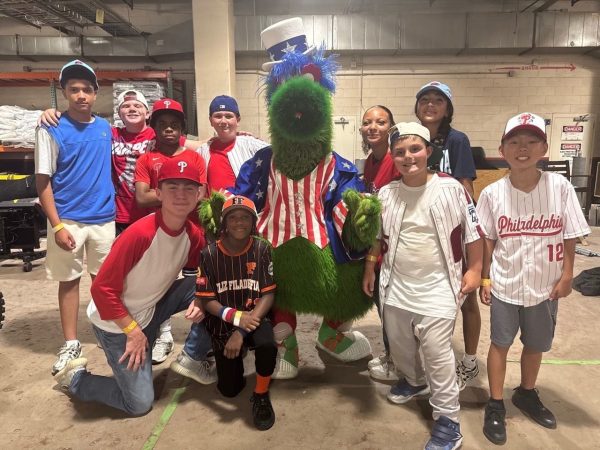
That iconic moment was recreated Tuesday night as a group of Philly-area kids rode onto the field at the Bank on bicycles in front of thousands of onlookers — including the All-Star players on hand. Inquirer writer Gabriela Carroll caught up with a few of the 11 boys who got to hang with baseball’s biggest stars while recreating an unforgettable scene in the process.
Also, we take a look at who was dressed to impress during this week’s red carpet event for the All-Star Game as well. I wish I had better news about the weather, but if you’re pining for a cooler day, know that we’re looking at partly cloudy skies with highs approaching the mid-90s.
Flyers center Trevor Zegras inked a four-year extension with the club late Wednesday, valued at $36.5 million. Yong Kim / Staff Photographer
Trevor Zegras isn’t going anywhere. Late Wednesday, news broke that Zegras inked a four-year extension and a whopping $36.5 million. It comes at the perfect time as Zegras is coming off a season in which he ranked high among the team leaders in points (67) and goals (26).
Earlier on Wednesday, the Flyers announced a few of their games to begin the 2026-27 season. The team will open at home against Keystone State rival Pittsburgh Penguins on Sept. 30, then head up the turnpike the next night to face the New Jersey Devils. The full 84-game NHL schedule will release at 1 p.m. today.
Eagles fifth-round draft choice Cole Payton shown at rookie minicamp on May 1 at the Jefferson Health Training Complex.Jose F. Moreno / Staff Photographer
All summer long, a team of Eagles reporters has been assessing the intangibles of a crop of new talent trying to crack head coach Nick Sirianni’s 53-man roster. In the latest version, Olivia Reiner breaks fifth-round pick Cole Payton, a lefty quarterback from North Dakota State, and an undrafted rookie safety who is also from the Dakotas vying for a roster spot.
Sixers president Mike Gansey (left) and NBA star LeBron James competed in high school, where James beat out Gansey for Mr. Basketball Ohio in 2001.Tom Gralish and Charles Fox / Staff Photographers
LeBron James has been everywhere — and nowhere — during the NBA Summer League.
It has been more than two weeks since the all-time great told the Los Angeles Lakers that he will play somewhere else during the 2026-27 season. Yet as the NBA’s prominent figures converged in Sin City, more speculation than actual insight has percolated about where that next destination will be — and the 76ers’ status as a contender.
Gina Mizell, who was in Las Vegas covering the Sixers’ summer league team, has more on the James waiting game, first-round pick Labaron Philon Jr.’s creativity, and more takeaways from the on-court action.
July 16, 1994: The first airing of Baseball Night in America drops on ABC with broadcaster Al Michaels, Jim Palmer, Tim McCarver, and Lesley Visser as a sideline reporter.
Citizens Bank Park was the Mecca of the baseball world this week as the venue for MLB All-Star week. Yong Kim / Staff Photographer
“I can name a half dozen other stadiums that are worth a special trip. Each is unique in its own way. Yet they all have one thing in common. They aren’t Citizens Bank Park. I don’t know if the whole world saw it on Tuesday night. But anybody who attended sure did. The 68 players. The two coaching staffs. The nearly 50,000 fans who packed the rows and the aisles and seemingly every square inch of concourse.” — David Murphy’s latest takes a look at just how impressive Citizens Bank Park performed, given the spotlight for MLB All-Star week.
🧩 Unscramble the anagram
VICEK NOMIGGLEN
This MLB All-Star had quite the night soaking in all of the festivities — from the comfort of Philadelphia, just a few miles from his hometown. This one should be a layup. Think you know? Take a guess and then click here to see if you’re correct.
What you’re saying about the Phillies
We asked: With the All-Star Game behind us, what would you like to see the Phillies do at the trade deadline?
The Phillies’ biggest trade deadline needs are quality middle relievers, a fifth starter, and a right-handed power hitter. With what the Phillies have to offer in return, I am very skeptical that they will achieve much. — Everett S.
Clearly, the Phillies need a fifth starter (please, no more bullpen games!). In addition, a right-handed outfield bat with some pop and a set-up reliever, we can no longer trust [Orion] Kerkering or [José] Alvarado. — Bob C.
Get Mike Trout and a starting pitcher. — Tom M.
The Phils can use a lot of things: A right-handed power bat, a starting pitcher, and at least one relief pitcher. The farm system is not overflowing, and I am afraid that giving up too much will bankrupt the farm system. Despite that, my first choice would be to bring Mike Trout home. — Richard F.
We compiled today’s newsletter using reporting from Jackie Spiegel, David Murphy, Olivia Reiner, Gabriela Carroll, Gina Mizell, Mia Messina, Own Hewitt, and Conor Smith.
By submitting your written, visual, and/or audio contributions, you agree to The Inquirer’s Terms of Use, including the grant of rights in Section 10.
I’ll be back to get your weekend started tomorrow as well. But live in the now and enjoy today, Philly. — Kerith