Blog

  • King Charles clarifies status of Prince Harry and his wife, Meghan, after their return to the U.K.

    King Charles clarifies status of Prince Harry and his wife, Meghan, after their return to the U.K.

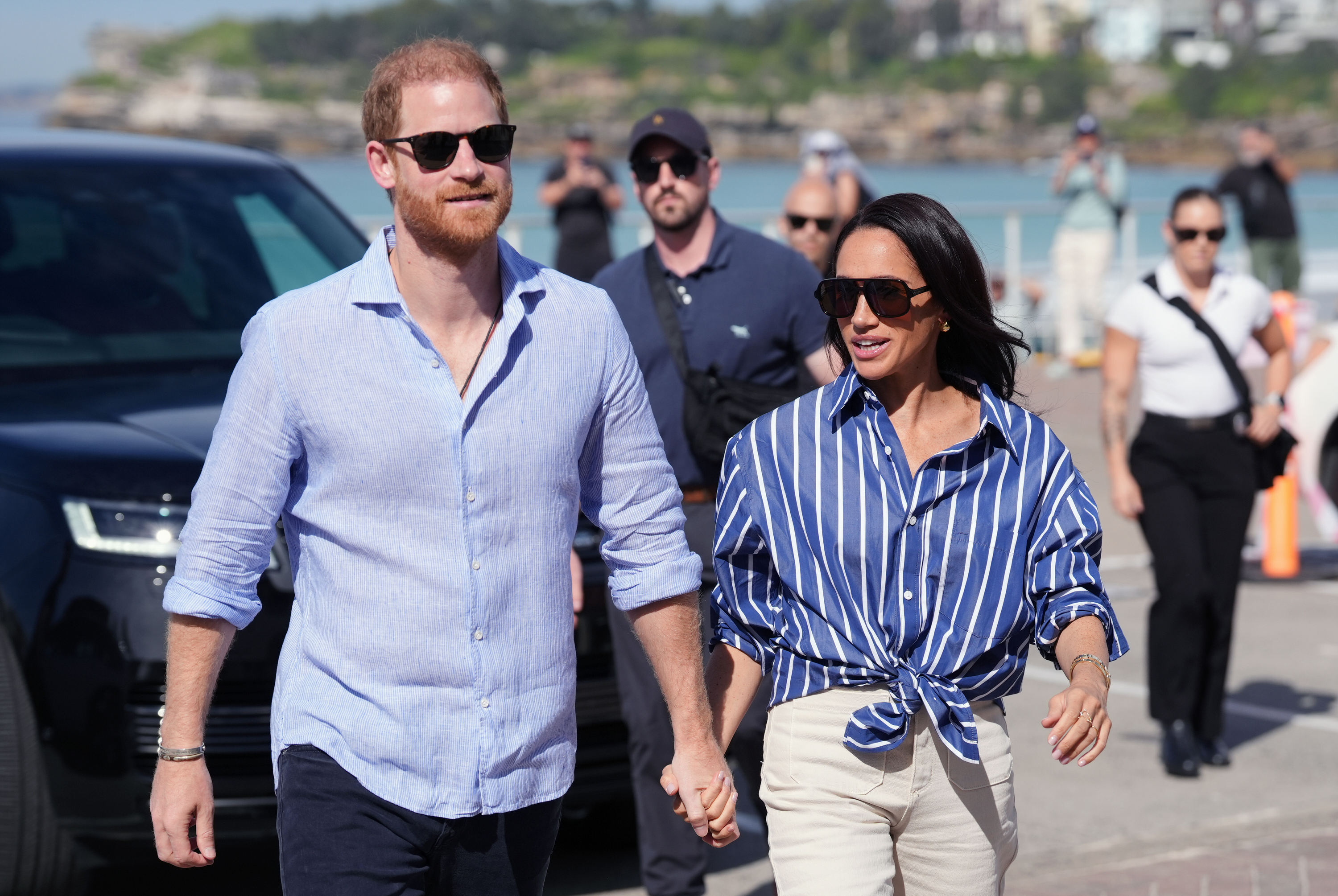
    LONDON — King Charles III has reiterated that Prince Harry and his wife, Meghan, remain nonworking members of the royal family following their return to the United Kingdom.

    A letter sent on behalf of the king to senior government officials said the couple will continue to refrain from using their royal titles as they have done since stepping back from official royal duties in 2020. Any charity work the couple undertakes will be carried out in a private capacity, and operational security decisions are matters for the relevant police agencies, the letter adds.

    The letter was sent by the Lord Chamberlain, the most senior official in the royal household, to senior officials in the government and military, as well as lord lieutenants, the king’s personal representatives around the country.

    “To help avoid doubt or confusion, The King has directed that (this) information be shared,” the letter says.

    While the communication simply confirms that Harry and Meghan’s status remains unchanged, the decision to send the letter and release it publicly demonstrates the concern among some palace observers that the couple’s status could allow them to become a sort of parallel royal court, competing with working members of the royal family.

    The security question is particularly sensitive because Harry has fought a long-running battle with the government for the restoration of publicly funded police protection, which was canceled when the couple gave up their royal roles.

    The decision about whether to restore the couple’s round-the-clock police protection is a matter for a government panel known as RAVEC, or the Royal and VIP Executive Committee.

    “Any specific questions from official and State organizations about the courtesies which should be extended to the Duke and Duchess, and particularly where recourse to public funds may be required, should be directed to Buckingham Palace,” the Lord Chamberlain said in his letter.

  • Trump floats renaming New Mexico as ‘New America,’ prompting pushback

    Trump floats renaming New Mexico as ‘New America,’ prompting pushback

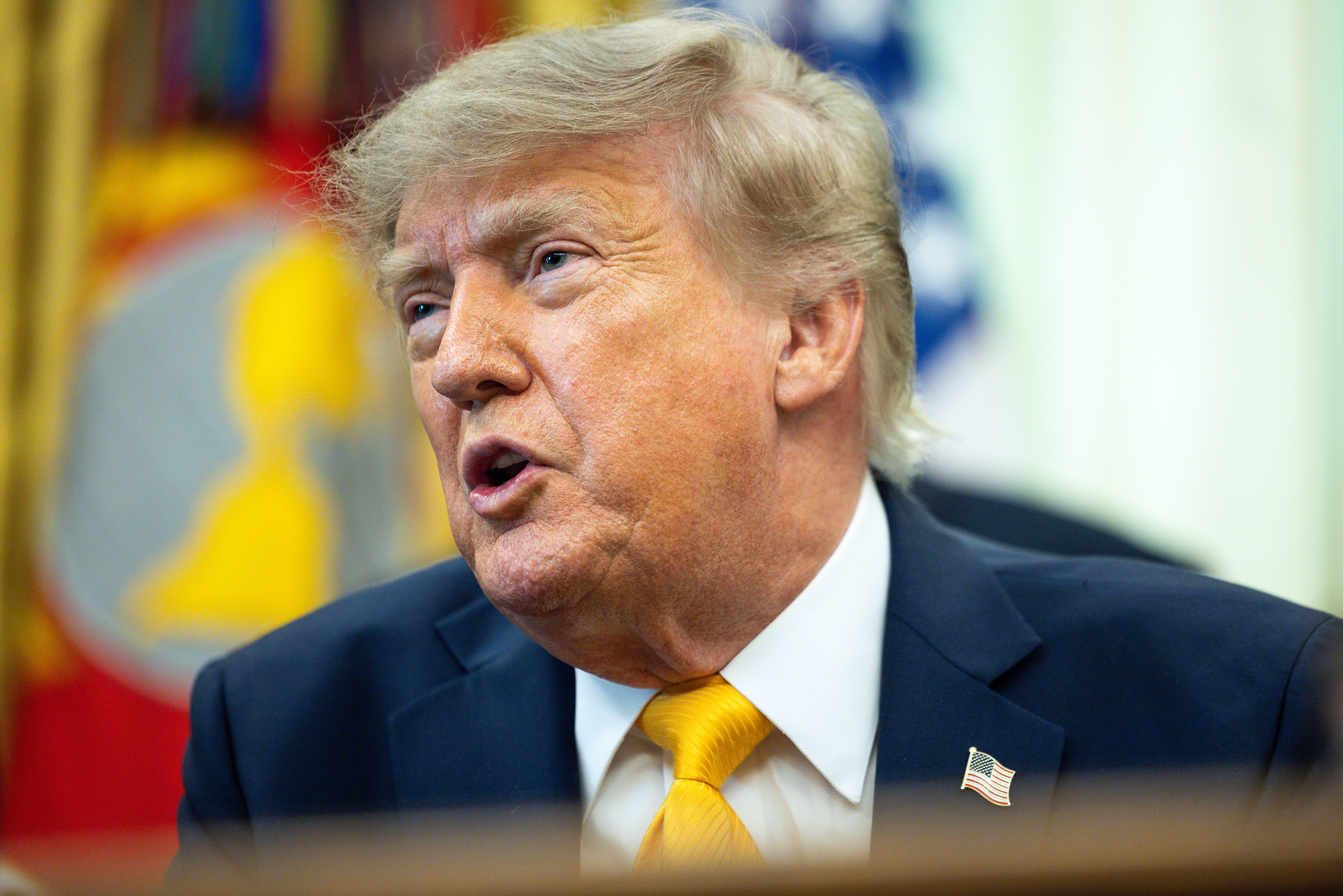
    President Donald Trump appeared to suggest on Sunday that New Mexico should be renamed “New America,” prompting swift backlash from the state’s Democratic leaders over his latest effort to put an American stamp on geographic names.

    On social media, Trump shared an image of a map of New Mexico with the word “Mexico” crossed out with a red X and replaced with “America.” The White House reshared the image shortly after on its official X account.

    The president posted again several hours later, with what appeared to be an artificial intelligence video of him placing a label with the word “America” over “Mexico” on a “Welcome to New Mexico” road sign.

    Trump has no legal authority to rename any state, which in New Mexico’s case is written into its Constitution. Any proposed change would have to originate within the state, a prospect that New Mexico’s Democratic leaders rejected forcefully Sunday.

    “New Mexico’s name isn’t up for debate — it’s been ours since before the United States existed,” Gov. Michelle Lujan Grisham wrote on social media.

    Rep. Melanie Stansbury was more blunt: “Oh hell no!” she wrote on X, adding, “Our state’s name carries generations of history, culture, and family — and it belongs to us.”

    The origins of New Mexico’s name predate the founding of the United States. In the 16th century, Mexicans called the territory north and west of the Rio Grande “New Mexico,” according to the Bureau of Indian Affairs.

    The state’s name is also written into Article 1 of its Constitution: “The name of this state is New Mexico, and its boundaries are as follows,” the first page reads.

    New Mexico’s two Democratic senators also pushed back on Trump’s post. “Three things I will always call by their actual names …,” Sen. Martin Heinrich wrote on X, before listing the Gulf of Mexico, Lake Ontario, and New Mexico.

    On the day Trump returned to office last year, he signed an executive order directing the federal government to rename the Gulf of Mexico as the Gulf of America. The name “has a beautiful ring,” the president said that month.

    Last month, amid an escalating trade fight with Canada, Trump signed another executive order to change the name of Lake Ontario to Lake America. Days before signing the order, the president had posted an image of a map with Lake Ontario crossed out with a red X, as well as an AI video of himself replacing a Lake Ontario sign with “Lake America.”

    Those executive orders, however, dealt with geographic features, not the legal name of a state. The changes were carried out through the federal Geographic Names Information System and apply only to federal usage, including on maps and documents, but they do not bind state and local governments or private mapmakers.

    Rhode Island offers a recent example of how different the process for changing the legal name of a state can be. In June 2020, amid nationwide protests over systemic racism after the killing of George Floyd, the state moved to drop “and Providence Plantations” from its formal name. Gov. Gina Raimondo, a Democrat, ordered the phrase be removed from executive-branch documents and websites while acknowledging that changing the state’s official name required voters to amend the Rhode Island Constitution. Voters approved the change that fall.

    This article originally appeared in the New York Times.

  • Mauricio Pochettino praises the Union’s young stars, and opens the door to USMNT call-ups

    Mauricio Pochettino praises the Union’s young stars, and opens the door to USMNT call-ups

    Next week, U.S. men’s soccer team manager Mauricio Pochettino will announce his roster for the team’s upcoming games in late September and early October. As hopes grow for some of the Union’s young rising stars to get called, Pochettino acknowledged Friday that he’s been watching them, and has been impressed.

    “Philadelphia has good young players, good kids, that maybe we will call a few [of],” he said in a roundtable meeting with reporters on Monday. “New York, yes, Orlando, Nashville, Atlanta — I can keep going, no? But I think, yes, we are so excited, because I think we can add young kids that can bring a fresh start, and you can feel something different.”

    Pochettino didn’t give specific names, and made clear from the start of the meeting that he wasn’t going to. But his acknowledgment was enough, amid that list of clubs with notable prospects.

    From the Union, it’s attacking midfielder Cavan Sullivan, centerback Neil Pierre, and outside back Frankie Westfield. From Red Bull New York, it’s forward Julian Hall and central midfielder Adri Mehmeti. Orlando has forward Justin Ellis, Nashville has goalkeeper Brian Schwake, and Atlanta has central midfielder Cooper Sanchez.

    Cavan Sullivan (left) has blossomed into a big-time player for the Union this summer.Yong Kim / Staff Photographer

    The door is open to them and other emerging players, from MLS and across the Atlantic.

    “The idea now is, it’s about to start to work for the project that is 2030,” the year of the next men’s World Cup, Pochettino said. “And of course, the next camp is going to be the opportunity to bring players that can be involved in that four-year process, with the possibility to arrive to 2030 in the best condition. I think we need to work for the present because we need to win games, we need to be competitive; but I think it’s a different approach than it was in the last period when we arrived.”

    He also will be factoring in candidates for the 2028 Olympic team. It’s an under-23 squad, and U.S. Soccer wants a big performance on home turf in Los Angeles. Westfield and Pierre are prime candidates at that level, with Westfield projected as the potential starting right back.

    Goalkeeper Andrew Rick is another Olympic candidate, though he faces longer odds to make this senior squad. But those odds improved when Pochettino said he expects to have four goalkeepers on his 26-player roster.

    Andrew Rick (center) got great experience spending the World Cup with the U.S. team as a practice player.Jonathan Tannenwald

    “We have a core of young players that need to play the Olympic Games, because it’s an objective for our federation and for the country to try to be a contender for the gold medal,” he said. “And I think it’s important: It’s going to be in our country, and we are going to support that.”

    So expect to see Olympic team coach Steve Cherundolo working with Pochettino this fall. And file away that this specific FIFA window is an especially good chance to get Olympic team candidates into the senior squad.

    The next three windows are the Concacaf Nations League quarterfinals in the fall, the final four in Los Angeles in March, and the Gold Cup next summer. Pochettino will want the stars for those games, but he doesn’t need them all for the friendlies.

    “It’s a decision that we are talking [about] now,” he said. “I think it’s a very important thing if we can provide them, the players that maybe Steve believes can be important in two years, in the Olympic Games — it’s a window that maybe we can provide minutes and international experience.”

    Mauricio Pochettino (right) had four Union alumni on the World Cup team this summer, including centerbacks Auston Trusty (left) and Mark McKenzie.Jonathan Tannenwald

    But there are some caveats to the youth movement. One is that the squad for the upcoming four-game slate — against Peru, Chile, Mexico, and Canada — won’t just be prospects. There are veterans from the World Cup squad whom Pochettino wants, to help get results and to help set the tone for the new generation.

    “We are going to do a mix,” he said. “Experienced players with young players that can fit together and start to work, and [help] how the young kids start to manage the pressure to play in the first team.”

    The other caveat recalls the old Star Wars proverb: Great, kid. Don’t get cocky.

    Pochettino is watching the prospect class to see not just how they play, but how they conduct themselves.

    Neil Pierre has won rave reviews this summer for his play at centerback and his charming character.Steven M. Falk / For The Inquirer

    “When you are young, of course, you need to be confident, you need to have trust in yourself, and belief that you can perform, and that you can do well — but I think there is a limit, no?” he said. “I think you are only entitled to talk a little bit out of order if you are [Lionel] Messi — if you’ve won eight Ballon d’Or [world player of the year awards], OK, you can talk with a certain arrogance. But even Messi, you aren’t going to feel or hear him talking in this way.”

    He spoke of his own role in that, too, knowing how a high-profile manager’s words can be magnified in the media.

    “The balance is the most important, and one of our responsibilities is to protect these guys,” Pochettino said. “Because sometimes if you play well and you are 17, 16, or 18, and you play well, people start to talk about that you are Messi or you are a big star in the world because you do a few good things. If after [that], you are confused and you don’t manage [it] well, that can be dangerous for your career, and that is what we don’t want.”

    USMNT schedule of autumn friendlies

    Saturday, Sept. 26: vs. Peru at Inter.co Stadium, Orlando, 4:30 p.m. (TNT, Telemundo 62, Universo, HBO Max, Peacock)

    Tuesday, Sept. 29: vs. Chile at Energizer Park, St. Louis, 8 p.m. (TNT, Telemundo 62, Universo, HBO Max, Peacock)

    Saturday, Oct. 3: vs. Mexico at State Farm Stadium, Glendale, Ariz., 10 p.m. (TNT, Telemundo 62, Universo, HBO Max, Peacock)

    Tuesday, Oct. 6: vs. Canada at Allianz Field, St. Paul, Minn., 8 p.m. (TNT, Telemundo 62, Universo, HBO Max, Peacock)

  • Fuel prices at record Labor Day high in U.S. thanks to Iran war and refinery issues

    Fuel prices at record Labor Day high in U.S. thanks to Iran war and refinery issues

    It’s never been more expensive in the U.S. to fill up the tank and take one last summer trip over the Labor Day weekend.

    The average price of regular gas was $4.14 a gallon heading into the holiday, nearly a dollar higher than last year and well above the Labor Day weekend record of $3.82 from 2012, according to AAA motor club.

    Nicole Collins planned to head from Philadelphia to South Carolina to visit friends, but she said her family has spent most of the summer close to home and not taking their typical weekend trips because driving has gotten so expensive.

    “Gas is pretty high right now. It doesn’t help that we also have a baby, so we also have to pay for that,” Collins said outside a gas station in Claymont, Del., where regular gas was $4.199 a gallon.

    Prices shot up after the U.S. and Israel attacked Iran in February and have not settled down since. Crude oil traffic through the key Strait of Hormuz has plunged, and Iran has refused to reopen the waterway.

    “Everything points to the Iran war and the Strait of Hormuz,” said Tom Seng, a professor of energy finance at Texas Christian University.

    Energy Secretary Chris Wright offered few specifics on when the nation’s drivers might see relief at the gas pump, acknowledging that prices are higher now than Labor Day 2025.

    “Yes, they’re higher today, but we’re doing everything we can to push them down,” Wright said Sunday on ABC’s This Week.

    The national average for regular gas prices is still well below the record of $5.02 a gallon set in June 2022.

    But diesel is a different story: It hit a national average of $5.85 a gallon Friday, a record.

    Trucks and other freight delivery systems use a lot of diesel, and that increased transportation cost is being passed on to consumers, whether at the grocery store or through package delivery services.

    “It doesn’t really seem like there’s an end to it,” Collins said.

    Gas prices typically drop as the summer driving season ends and refineries turn to making a cheaper winter blend.

    But Seng said there are other factors this year even beyond the volatile situation in the Middle East that make future prices unpredictable. U.S. refineries are working at 98% capacity, many in the unusually harsh Texas heat. If there are problems there or a hurricane knocks some systems offline, prices will struggle to drop.

    And it’s not just a Middle East problem. Ukrainian drone attacks on Russian refineries are squeezing diesel supplies. Chinese refiners are seeing declining outputs as well, said Matthew Metzgar, a clinical professor of economics at UNC Charlotte.

    “There’s just less gasoline coming out of those refineries,” Metzgar said.

    Wright, the energy secretary, said the Trump administration was taking steps to increase production and that the markets forecast lower prices in the coming months.

    “If you look at the futures prices, if you wanted to buy today in bulk gasoline for two months out in November, it’s about $0.35 cheaper than it is today. So the marketplace thinks gasoline prices are going to move meaningfully lower,” he said.

    Geopolitically, though, there is little a driver can do to knock down gas prices.

    But using price apps can help save a little money, especially on long trips where gas by the interstate could be 10 to 15 cents per gallon more expensive than at stations a short drive down the road, Metzgar said.

  • Canada’s retaliatory tariffs set to take effect as Trump threatens to escalate

    Canada’s retaliatory tariffs set to take effect as Trump threatens to escalate

    OTTAWA, Ontario — After more than two weeks of finger-pointing, threats, and patronizing insults between longtime trading partners, Canada’s latest retaliatory tariffs against the United States are set to take effect just after midnight Eastern time Tuesday.

    Polls show that Canadians strongly back Prime Minister Mark Carney’s decision to end trade talks with Washington last month and to hit back with tariffs on about $20 billion in U.S. products entering Canada. But there is also concern over what might happen next. President Donald Trump has repeatedly threatened another round of U.S. tariffs if Canada follows through on its plan.

    Some in Canadian industry say they are inclined to take Trump at his word, at least on this threat.

    People in the Trump administration “are willing to hurt themselves, their own sectors and industries, in pursuit of their goal, however misguided I think it is,” said Flavio Volpe, president of the Automotive Parts Manufacturers’​ Association of Canada. “So they may escalate. I hope that we don’t end up in a tit-for-tat situation. We’re going to run out of runway.”

    Carney announced Canada’s new tariffs after he pulled Canadian negotiators out of talks in Washington last month — an ultimately unsuccessful attempt to stave off 50% U.S. tariffs on $20 billion in Canadian exports and to reduce or eliminate tariffs of up to 50% on Canadian steel, aluminum, and automobiles.

    The Trump administration said the tariffs it imposed last month were in part a response to retaliatory tariffs Canada placed last year on some U.S. imports, particularly autos. U.S. officials have repeatedly noted that only China and Canada retaliated against the United States since Trump began upending global trade.

    At a news conference after a sternly worded speech announcing the tariffs, Carney declared that Canada had been attacked by the United States and that the two countries are now “at war.”

    Last week, U.S. Treasury Secretary Scott Bessent rejected that framing, arguing that Canada is too small an economic power to battle the United States. “I don’t think you can be in a tit-for-tat with someone who’s 13 times larger than you are,” Bessent said on CNBC.

    On Friday, Trump escalated his trade rhetoric even further. He said that he might “end all trade with Canada” and other countries that have trade surpluses with the United States.

    Separately, U.S. Commerce Secretary Howard Lutnick said Carney had shut down the talks to gain “political leverage” at home, not because of what the U.S. side had offered.

    As last week went on, Carney made it clear that he was in no hurry to return to negotiations and was focused instead on diversifying Canada’s trade and expanding its domestic economy.

    “At the appropriate time, the conversation will happen,” he said. “But the most important thing we can do is not to spend all our time waiting by the phone, waiting for a call, refreshing on social media to see what’s coming across.”

    Many of the U.S. items that will soon face Canadian tariffs of 15%, 25%, or 50% mirror the Canadian exports that are now met with 50% U.S. tariffs, particularly clothing and wood products. Canada revised the list to remove dozens of fish products after the Canadian fishing industry said that tight cross-border integration meant that its members would also be harmed.

    Canadian officials have suggested that many targeted items come from states where voters supported Trump, though some political analysts question how much pressure that will actually bring on the White House. The list also includes items with little bearing on the Canadian economy, including the metal bands that attach erasers to pencils, migratory bird identification bands, and fish egg incubators.

    Trump has not imposed tariffs on some of Canada’s largest exports, including oil and gas and many minerals, and has exempted many products with enough North American content to move duty-free under the United States-Mexico-Canada Agreement. Auto parts, for example, are subject to a 25% tariff but generally cross the border without incurring it.

    As a result, Canada’s overall average tariff rate remains low compared with what most other countries face, and the majority of its trade, by dollar value, is still duty-free.

    After the talks collapsed, Trump threatened to impose 50% tariffs on autos and auto parts in January, apparently without the USMCA exemption — a move most analysts believe would be devastating for Canada’s auto industry. Trump has not taken formal steps toward carrying out the threat, though some in Canada speculate that rather than target new products or raise existing tariff rates, the Trump administration may instead strip away the USMCA exemption for many goods.

    Volpe said that auto parts makers were not intimidated. He said that last year when the Trump administration proposed collecting tariffs on Canadian auto parts “they understood that it would shut down the auto industry in a week.”

    He added: “Ultimately, I think they will back off that. But if they don’t, they can have at it.”

    This article originally appeared in the New York Times.

  • Matt Suhey, former Penn State back who helped the 1985 Bears win the Super Bowl, has died

    Matt Suhey, former Penn State back who helped the 1985 Bears win the Super Bowl, has died

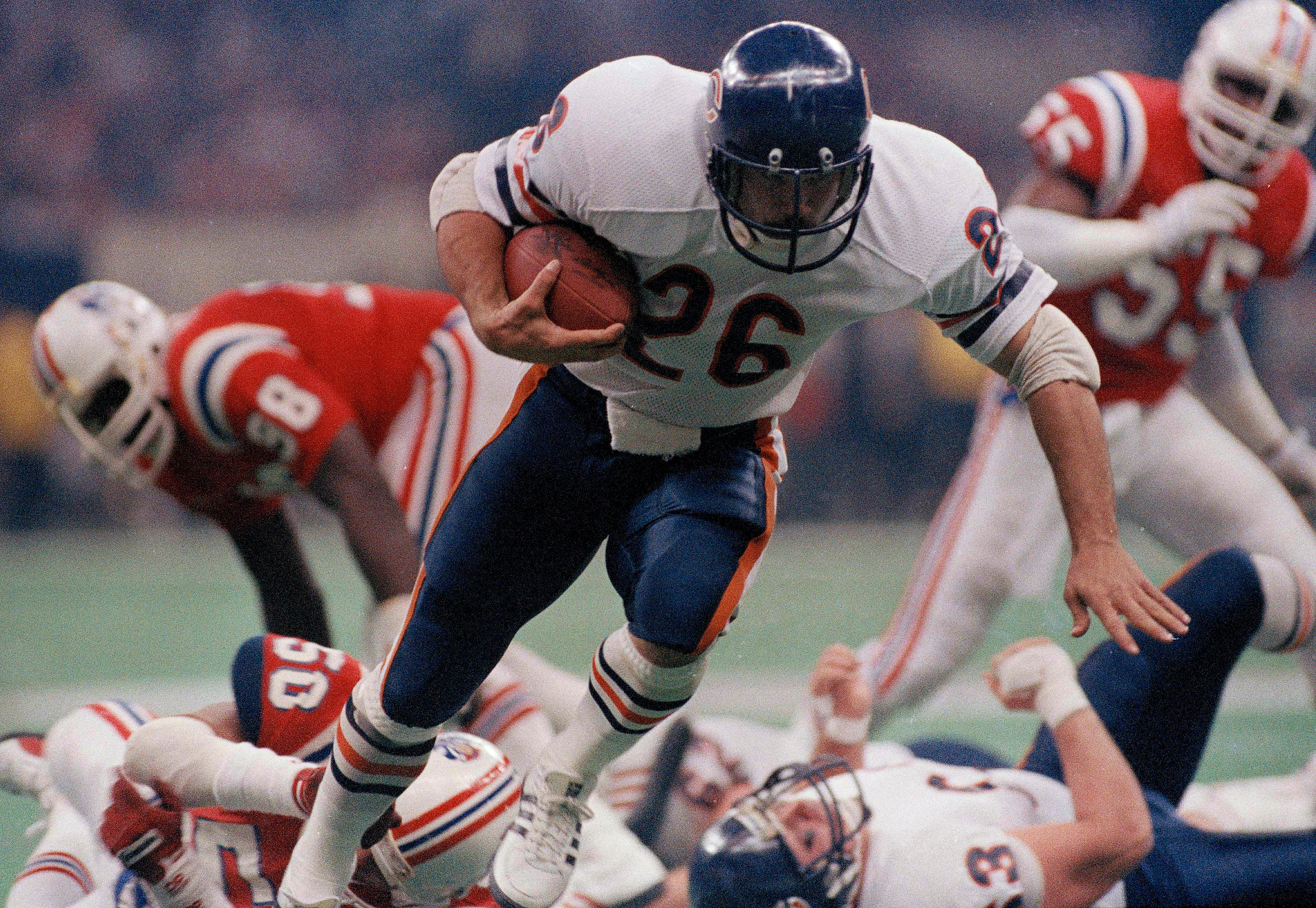
    Matt Suhey, a fullback who helped Walter Payton and the Chicago Bears win the 1985 NFL championship, has died. He was 68.

    The Bears confirmed Suhey died on Sunday morning. No other details were provided.

    Suhey played for Chicago for 10 seasons after he was selected by the Bears in the second round of the 1980 draft. He helped clear the way for Payton to become the NFL’s career leading rusher, a record Payton held until Emmitt Smith surpassed his total on Oct. 27, 2002.

    Suhey and Payton were close friends. Payton served as the godfather for Suhey’s youngest son, Scott.

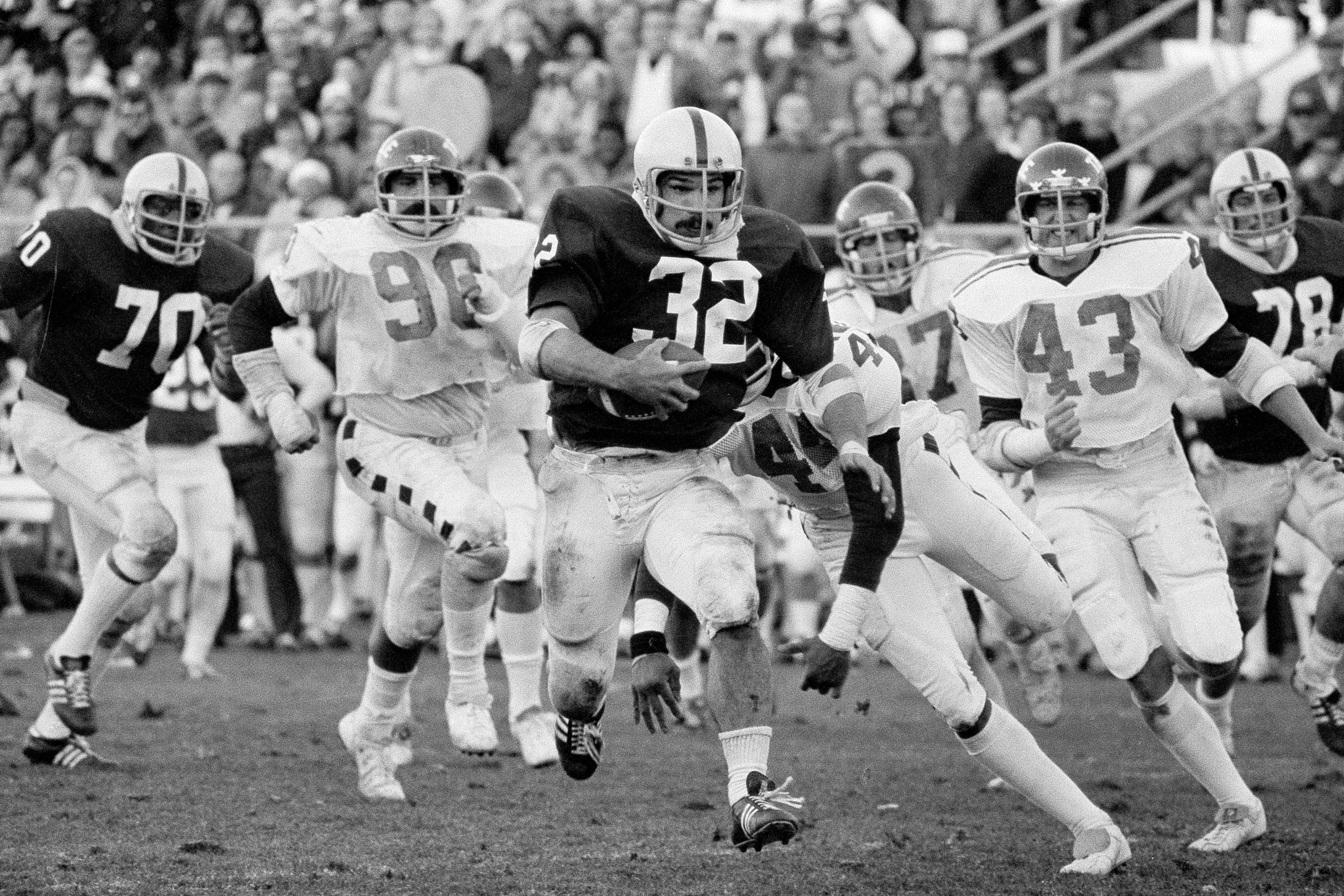
    Penn State’s Matt Suhey runs against Temple in 1979 at University Park.Fred Prouser

    “Matt watched my dad’s back, kind of like being a bodyguard or protector,” Walter’s son, Jarrett, said in “A Football Life,” an NFL Network show. “He blocked for him. He took a lot of hits, making sure that my dad would get the glory, and Matt kind of just sat back in the background, very unselfish.”

    Suhey, a Pennsylvania native, played his college ball for Penn State, following in the footsteps of his father, Steve, a guard who was inducted into the College Football Hall of Fame in 1985.

    Matt Suhey rushed for 2,818 yards and 26 touchdowns on 633 carries for the Nittany Lions. He also caught 39 passes for 328 yards and two TDs.

    Suhey was Chicago’s second-leading rusher when the Bears went 15-1 during the 1985 regular season, finishing with 471 yards on the ground. Payton rushed for 1,551 yards and nine touchdowns that year.

    The 1985 Bears shut out the New York Giants and Los Angeles Rams in the playoffs before routing New England 46-10 in the Super Bowl. Suhey scored the first TD against the Patriots on an 11-yard run in the first quarter. He finished with 52 yards on 11 carries, and he also had a 24-yard reception.

    The durable Suhey played in 148 regular-season games during his 10 years with the Bears, starting 100. He had 828 carries for 2,946 yards and 20 touchdowns. He also had 260 receptions for 2,113 yards and five TDs.

  • EU seeks to reassure a Trump-rattled Greenland with promise of a new partnership and investment

    EU seeks to reassure a Trump-rattled Greenland with promise of a new partnership and investment

    BRUSSELS — The European Union on Monday sought to reassure a jittery Greenland with the promise of a stronger partnership and hundreds of millions of euros in investment following repeated threats from U.S. President Donald Trump to take control of the island.

    During a visit to the capital Nuuk, European Commission President Ursula von der Leyen offered 200 million euros ($232 million) in support over the next two years to help Greenland tackle climate change, boost internet connections, and improve hydropower plants, fisheries, and education.

    The EU has increased its focus on Greenland since Trump began insisting that the United States should take control of the island for security reasons. His persistent claims raised sovereignty concerns and pushback from Greenlandic and Danish leaders and heightened tensions among NATO allies.

    “Greenland’s future is for the people of Greenland and Denmark to decide. No one else,” von der Leyen said. “Territorial integrity, sovereignty, the inviolability of borders. These are fundamental principles of international law.”

    EU promises money for Greenland’s development

    Funds are also earmarked for better housing, support to small businesses, and sustainable tourism. Von der Leyen also said that she wants to double EU budget support to Greenland to around half a billion euros ($580 million) from 2028.

    “Greenland can count on the EU,” she said, after signing an EU-Greenland declaration with Prime Minister Jens-Frederik Nielsen and Danish Prime Minister Mette Frederiksen. Greenland is a semiautonomous territory of NATO ally Denmark.

    Nielsen described the 27-nation EU as “a loyal and trusted friend,” notably at a time when the island faces “new challenges that we cannot tackle alone.”

    “Through these challenging times, your support to us is unfailing,” he said. “You have stood by us and continue to stand by us. We feel it and are deeply grateful.”

    Denmark and European allies resist Trump’s pressure

    The Trump administration also leaned on Denmark. “We have been under pressure,” Frederiksen told reporters. “It has been very clear, and we are very thankful for the great support we have received from our European partners but, by the way, also globally.”

    Denmark and seven of its European allies sent a small group of military personnel to the island in January, publicly for military exercises focused on strengthening Arctic security, but with the intention of showing support for Greenland’s sovereignty.

    In response, Trump threatened to slap new tariffs on them all: Denmark, Finland, France, Germany, the Netherlands, Norway, Sweden, and the United Kingdom. They condemned the move as undermining trans-Atlantic relations, and Trump eventually backed down after NATO agreed to boost security in the Arctic region.

    Von der Leyen’s visit came as 11 NATO countries began military exercises in Greenland on Monday involving around 400 military personnel, including special forces troops trained to operate in Arctic conditions from Canada, Denmark, and Finland. No U.S. troops are taking part in the Arctic Shield drills, which run Sept. 7-18.

  • Phillies building up Tanner Banks to multi-inning role as he nears return from injured list

    Phillies building up Tanner Banks to multi-inning role as he nears return from injured list

    Tanner Banks is eligible to be reinstated from the 60-day injured list on Monday, but the Phillies want to give him more time to build up.

    The left-hander has been on the shelf since July 9 with a left forearm strain, and has already made four rehab appearances for triple-A Lehigh Valley as he works to rejoin the major league bullpen. But the Phillies want to continue building him into the three-inning range, so he can be a bulk option for the major league club.

    “He’s getting to the point where he’s pretty much ready if needed,” said interim manager Don Mattingly.

    Banks has been efficient in his rehab outings. Across 6⅔ innings, he has allowed just two hits and one earned run. He is next scheduled to throw three innings or 40 pitches on Tuesday for the IronPigs.

    “I think you can see how we’re building him right now, is that we would look at him as more of a length option; be able to come in, throw multiples, do different things like that,” Mattingly said. “We’re sitting with three lefties [José Alvarado, Tim Mayza, and deadline acquisition Brooks Raley]; they’ve all been actually pretty good lately. So it would be hard to say I got to force Banks into that, in one of those roles.

    “But I think the way we’re building, is that he is a guy that can come into a game and throw two or three innings, if he’s been built up to a pitch count where you’re comfortable and he’s used to that.”

    Tanner Banks had a 7.14 ERA and 2.00 WHIP in 29 major league innings when he went on the injured list on July 9.Jose F. Moreno / Staff Photographer

    Before his injury, Banks was having a down season and was even optioned in June. He had a 7.14 ERA and 2.00 WHIP in 29 major league innings in 2026, a stark drop-off from his 3.07 ERA and 1.01 WHIP in the majors in 2025.

    “You just keep paying attention, who’s rolling and who’s getting their outs, things like that,” Mattingly said of his bullpen mix. “But this is our team. This is our club. Roles are semi-set, but I think you try to make decisions based on what’s best right now, and not necessarily how it’s been all year long.”

    Cortes update

    Nestor Cortes on Tuesday will see his first official game action since signing with the Phillies on Aug. 19. The left-hander is scheduled to be reinstated from the seven-day injured list and pitch for low-A Clearwater.

    Mattingly said he wasn’t sure if Cortes would start the game for the Threshers, but he is scheduled to appear at some point. Cortes, 31, was signed to a major league deal as organizational pitching depth, but he has been on the injured list since Aug. 25 to give him time to build up. He last appeared in a game on Sept. 3, 2025, for the Padres before undergoing arm surgery that sidelined him for most of 2026.

    Extra bases

    Andrew Painter (3-8, 5.55 ERA) is scheduled to start Tuesday’s series opener against Astros right-hander Hayden Wesneski (4-1, 3.18).

  • Armed man charged toward Democratic candidate for Ohio governor at fair, law enforcement says

    Armed man charged toward Democratic candidate for Ohio governor at fair, law enforcement says

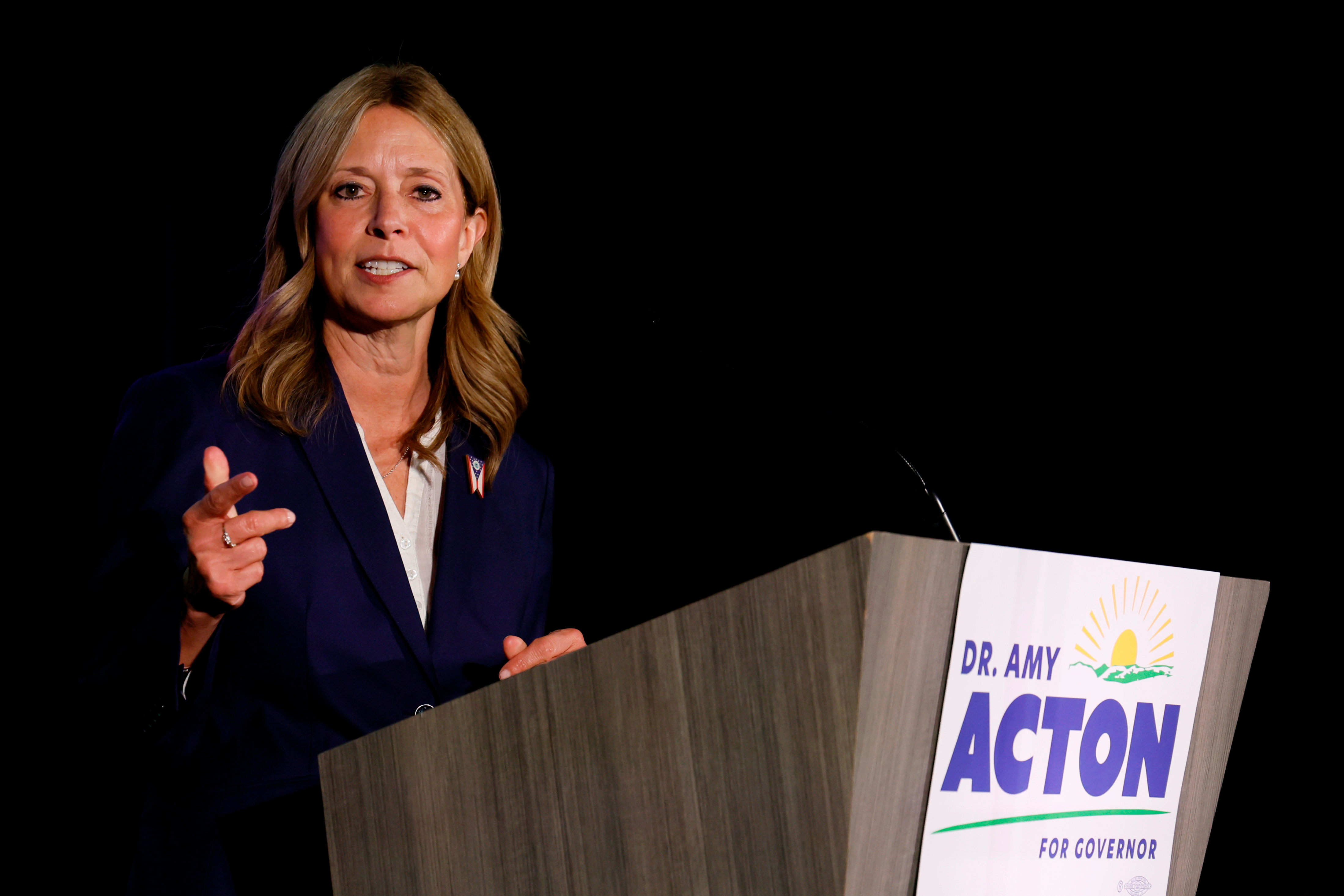
    WASHINGTON — An armed assailant charged toward the Democratic candidate for Ohio governor, Amy Acton, on Sunday during a campaign stop at the Canfield Fair, injuring several people before he was stopped by troopers, the Ohio State Highway Patrol said.

    The Ohio State Highway Patrol said in a statement that a man it identified as Patrick Havas, 38, forced his way through a crowd, knocking over multiple members of the audience as he moved toward Acton, the state’s former public health director. He had a taser and two pistols, the statement said.

    The Mahoning County Sheriff’s Office said two handguns and a set of brass knuckles were recovered after his arrest, and “no weapons were ever brandished or even removed from their holsters.”

    Havas was taken to the county jail and booked on charges of disorderly conduct and two counts of assault, the highway patrol statement said, adding that no other details were available pending an investigation. Online court records didn’t yet list the case, and it wasn’t clear as of Sunday night whether Havas has an attorney.

    Republican Gov. Mike DeWine said in a statement.that the man “tried to forcefully push himself” toward Acton as she was speaking at the fair in Canfield, in northeastern Ohio. “Violence or the threat of violence at political or public events is always unacceptable,” he added.

    The attempted attack is the latest political violence to roil the United States. And the Ohio gubernatorial race is one of the most high-profile races this year as the campaigns enter the final six weeks of campaigning before the election in November.

    Acton is facing Republican Vivek Ramaswamy, who has parlayed his national name recognition, tech industry connections, and alliance with President Donald Trump into a record fundraising haul that he is tapping for advertising spots aimed at the November election. He is using campaign rallies and advertising to criticize Acton.

    Ramaswamy’s campaign called the incident Sunday unacceptable.

    “Candidates should be able to meet with voters without having to worry about threats or violence. What happened today is completely unacceptable and has no place in politics, and we hope that no one was hurt,” Ramaswamy’s communications director, Connie Luck, said in a statement.

    Addie Bullock, communications director for Acton’s campaign, said in a statement that the suspect “lunged” at Acton. She said the Democratic candidate “will always stand up to the chaos, hate, and vitriol that pits us against one another.”

    The incident brought condemnation from Ohio Republican Sen. Jon Husted, who said on X that he and his wife were “disturbed by the attempted attack on Amy Acton today at the Canfield Fair. We are grateful for law enforcement’s quick response. There is no place for this kind of behavior, and it must never be tolerated.”

    The country has seen a rise in political violence over the past decade. That includes the 2017 shooting at a Republican congressional baseball team practice in Alexandria, Va.; the 2022 hammer assault on the husband of Democratic then-House Speaker Nancy Pelosi in California; the 2024 assassination attempt on Donald Trump at a Pennsylvania rally during his presidential campaign as well as another on the president at this year’s White House Correspondents’ Association Dinner in April; and the assassinations last year of a Democratic Minnesota state lawmaker and her husband and of conservative commentator Charlie Kirk in Utah.

    Federal political committees spent more than $40 million on expenses labeled as security during the 2023-24 campaign cycle, the most recent one for which data is publicly available, according a report released in April from the Public Service Alliance, a nonpartisan group that focuses on security for public officials.

    Before running for governor, Acton was recruited by DeWine in 2019 to lead the Ohio Department of Health while serving as an associate professor of public health at Ohio State University. As the COVID-19 pandemic ramped up in early 2020, she was thrown into the state and national spotlight — becoming a source of comfort to many viewers of the governor’s daily news conferences.

    For her service as health director, Acton earned the John F. Kennedy Library Foundation’s Profile in COVID Courage Award, the Columbus Foundation’s Spirit of Columbus Award, and Ohio State’s highest alumni honor, the Alumni Medalist Award.

    Her position as the face of the DeWine administration’s aggressive stance against the virus also earned Acton many enemies, among them statehouse Republicans and average Ohioans who opposed pandemic restrictions.

  • Federal investigators probe Amazon cargo jet’s fiery runway crash that killed 5 in Miami

    Federal investigators probe Amazon cargo jet’s fiery runway crash that killed 5 in Miami

    MIAMI — The five people killed when an Amazon cargo jet ran off a runway at Miami International Airport were all inside a van carrying seven people from a cleaning company and an SUV hit outside of airport property, National Transportation Safety Board Chairperson Jennifer Homendy said Monday.

    Homendy called the scene of Sunday’s crash “utter devastation.” She didn’t detail how many people were in the SUV or where the dead were located.

    Homendy walked the route the Boeing 767 followed, noting tire marks from the pavement into the grass, the destroyed van carrying the cleaning crew, torn fencing, navigational equipment, and the crushed SUV outside airport property.

    The debris included vehicle air bags, equipment from the vehicles, the airplane, and the airport, and “fencing everywhere,” Homendy said.

    “It’s pretty extensive. Hard to see and I’m sure it must have been very difficult for the responders as well,” Homendy said.

    The airline, all told, traveled about 1,300 feet past the paved surface. Debris was everywhere, she said.

    “I would describe it in one word as devastating, utter devastation,” Homendy said.

    The van with seven people inside was “torn apart. It certainly must have been devastating,” she said. The van was owned by Professional Ocean Service Corp., an airline cleaning contractor.

    Homendy said the NTSB would issue more information on Tuesday, including possibly information on speed that is confirmed by the flight data recorder.

    Federal investigators examining cause

    Federal investigators examining the crash spent Monday determining whether the plane touched down too late to stop safely.

    Video of Sunday’s landing appears to show the Boeing 767 remaining airborne well down the runway before touching down. Aviation experts said investigators will seek to determine exactly where the plane landed, whether it was beyond the normal touchdown zone, and why the pilots did not abandon the landing.

    Investigators will also examine the plane’s speed and braking, weather and wind conditions, the aircraft’s mechanical condition, and other factors that could have contributed to the deadly overrun.

    The aircraft on Sunday flew from Cincinnati to Miami and then to San Juan, Puerto Rico. It was returning to Miami when it overran the runway around 2 p.m. and plowed across a road used by warehouse workers and other businesses that surround the airport.

    Aside from the five who died, three people were critically injured and two others were hospitalized with less severe injuries, officials said.

    The crash, which sent thick black smoke billowing into the sky, trapped the pilot and copilot in the cockpit and some occupants in cars, said Miami-Dade Fire Rescue Chief Ray Jadallah. The agency said crews also had to extricate a person who was trapped under a vehicle.

    The typical landing zone for a plane is within the first 3,000 feet of a runway, experts said. If the cargo jet was beyond that area, it should have aborted the landing and gone around for another try, aviation safety expert Steve Arroyo said.

    Mary Schiavo, who is a pilot and former Inspector General of the Transportation Department, said video posted online shows the Amazon plane floating above the runway for an extended period without flaring the nose upward to force the main landing gear onto the ground.

    It wasn’t raining at the time, but dark storm clouds loomed and strong winds were reported. Schiavo said that if the plane had a tail wind, that could have contributed to it floating further down the runway.

    “A tail wind would certainly add to your troubles if you’ve already given up a good chunk of the runway by not touching down and landing right away,” Schiavo said.

    Airport appears compliant without updated system

    The Miami airport is not equipped with arresting systems that the FAA says have been installed at more than 120 airports nationwide to safely stop planes that do go past the end of a runway. Those beds of lightweight, crushable material at the end of a runway have been credited by the FAA with helping save at least 497 lives aboard planes that overran runways.

    Miami’s airport appears to be in compliance and wasn’t required to have an arresting system because it has a 1,000-foot safety buffer at the end of its runways, said Mike O’Donnell, the FAA’s former director of airport safety and accident investigations.

    The requirement was prompted by American Airlines Flight 1420 overrunning a runway at Little Rock National Airport in Arkansas in 1999, killing nine.

    The Prime Air plane came to rest beside a roadway near two semitrucks, images showed. The aircraft appeared to be resting on its belly and was largely intact despite the fire.

    The flight had been operated by 21 Air, a cargo carrier based in North Carolina. The 32-year-old Boeing 767 was originally built to carry passengers and flew for several airlines for more than two decades before being converted to a cargo plane in 2015, according to flight-tracking site Flightradar24.

    Schiavo said the NTSB will also closely examine the maintenance history of this plane — particularly since it has a history of foreign ownership, including by a Russian company.

    The crash halted flights at the busy travel hub for much of Sunday afternoon and continued to hamper air travel into Monday.

    Miami International Airport said that two of its four runways remained closed Monday and that operations were to be affected throughout the day because of aircraft and flight crews not arriving there due to Sunday’s cancellations after the crash.

    An airport spokesperson said there were 160 cancellations and more than 300 delayed flights Sunday, plus another 69 canceled flights Monday through mid-afternoon. Flight tracking sites were reporting widespread delays at the airport.

    Amazon said in a statement that it would cooperate with any investigation.

    “We’re heartbroken to learn that five people lost their lives in today’s incident at Miami International Airport,” the company said. “Our deepest sympathies go out to the families, loved ones, and all those affected by this devastating loss.”

    Last year, a UPS plane crashed after losing its engine while accelerating down the runway at Louisville’s Muhammad Ali International Airport. The crash killed all three pilots and 12 people on the ground. Twenty-three more were injured.