Blog

  • Why the Union and Kai Wagner made the surprising decision to get back together

    Why the Union and Kai Wagner made the surprising decision to get back together

    The Union don’t often pull off surprises, but Kai Wagner’s return to the club definitely counts as one.

    Why did the left back want to come back here, after finally getting the move to Europe he’d dreamed of for years? And why did a Union organization that defines itself on the development of young prospects want to pay a $4 million transfer fee to re-sign a 29-year-old who had those wandering eyes in multiple offseasons?

    The answer, according to multiple sources, is that both sides had stayed in touch after his departure — and they had some things to admit.

    On the player’s side, Wagner’s family started missing life off the field here, and notably hadn’t sold their home in South Jersey. On the team’s side, being in last place in Major League Soccer when the World Cup break arrived (1-10-4, 7 points) set some alarms ringing.

    “Through our conversations with Kai, we know what his motivations are, and what he wants to achieve with us,” sporting director Jon Scheer told The Inquirer. “That’s given us a lot of confidence that this is the right decision.”

    Now the race is on to save the season, which is doable with 19 games left.

    “I would say we need more at that position, in terms of some positional characteristics,” Scheer said. “This is not against any one individual, but I think if you look at the way our attacks are coming, there are limitations if you’re not naturally left-footed, particularly at this position.”

    As sincere as he was about “any one individual,” it was still about a few of them. Philippe Ndinga, whom the Union signed as Wagner’s replacement, and Frankie Westfield are both right-footed. Ndinga hasn’t delivered as hoped, and Westfield has had some injuries. That led now-former manager Bradley Carnell to shoehorn attacking midfielder Ben Bender in a few times.

    Philippe Ndinga (right) was signed to be the Union’s new left back, but hasn’t earned the starting job.Elizabeth Robertson / Staff Photographer

    The Union have also missed Wagner’s set-piece deliveries, though the unusually bad execution this season has been a teamwide problem.

    ‘A club that wants to win’

    But the most striking thing was where Scheer went next.

    “I would also say that for our group in general, I think we need character, we need mentality,” he said. “And I would say, having kept in touch with Kai, you could tell how much he wants this club to be successful and win. That was something to me that was the most important, more than anything in terms of what he can produce on the field.”

    Those words were different from Scheer’s usual ones. He’s the face of a front office that wants the Union to be a “development club,” as he has said many times since taking the helm — first as interim when Ernst Tanner was suspended, then full-time when the suspension ended and Tanner didn’t get the job back.
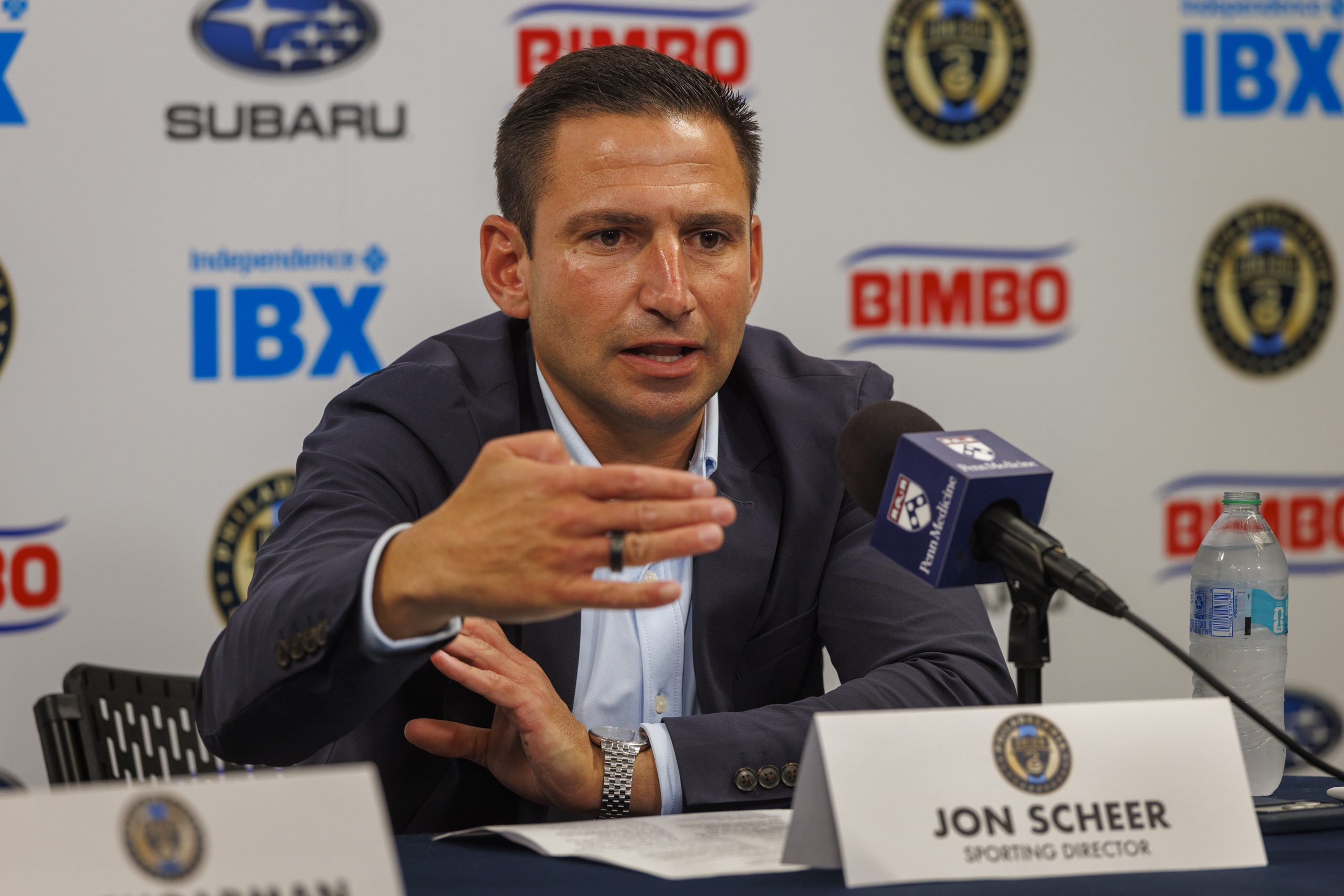
    Union sporting director Jon Scheer.Alejandro A. Alvarez / Staff Photographer

    There’s a promising left back prospect in 17-year-old Jordan Griffin, for example. He has played a lot for the Union’s reserves this season. Would a purely developmental club have promoted him instead of bringing back someone from the past at a considerable cost?

    This was put to Scheer, and he was not surprised.

    “We are a club that wants to win,” he said. “We are a development club, and that’s our vehicle, we feel, to win — and that’s not just homegrowns, but that’s any player that we sign. So, yes, while this is a move that is not always ‘on brand’ for us, I would say that the starting point is what will give us the best chance to be successful and to win.”

    That is the new boss’ imprint.

    “We feel like our young players can learn a lot from veteran players that still have the ability to improve and get better by seeing their habits, by seeing their quality,” Scheer continued. “I think right now, with where our club is, we knew going into this window what those ingredients were that we needed to look for in terms of positions, but also in terms of some of the intangibles that we’ve been talking about.”
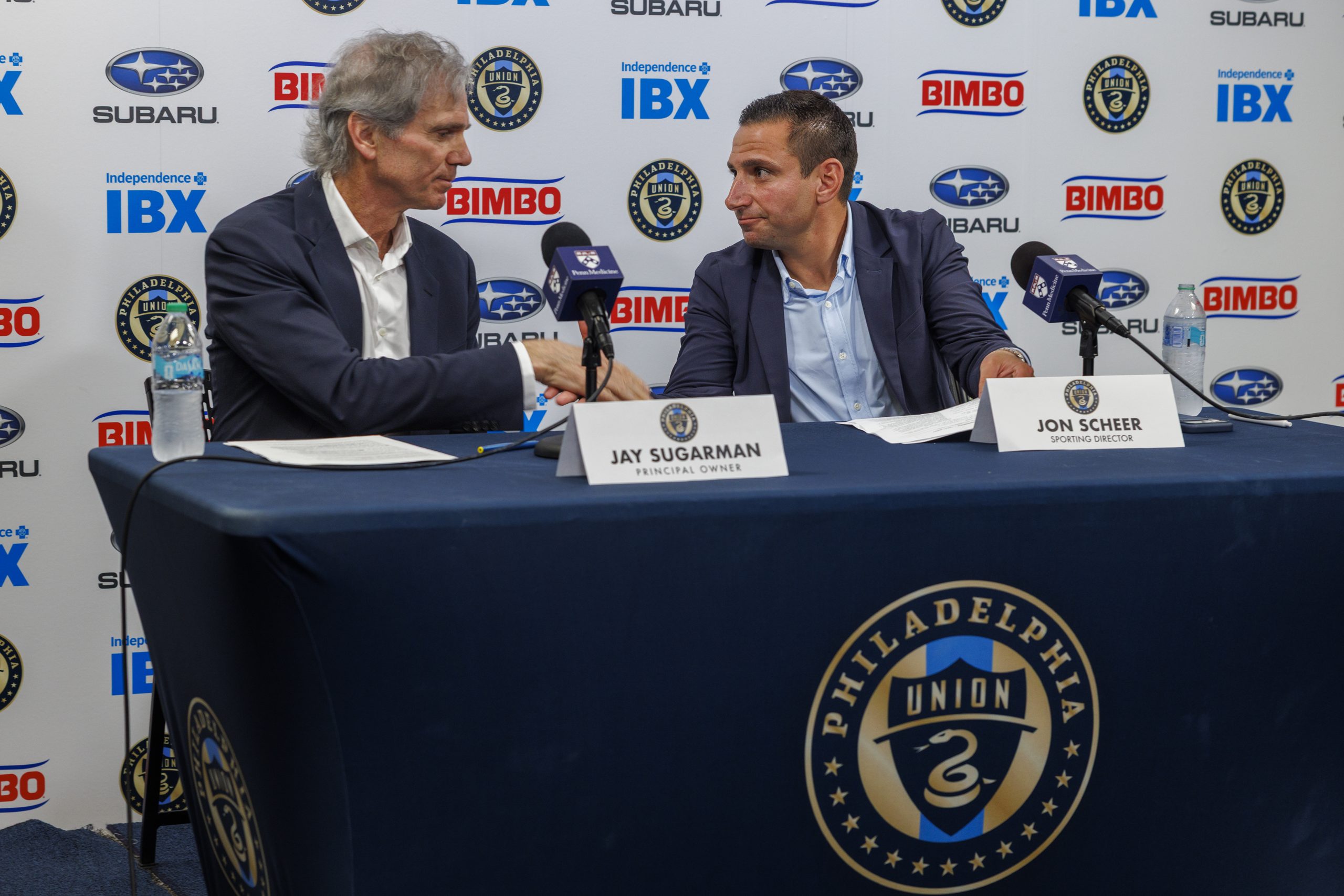
    Jon Scheer (right) with Union principal owner Jay Sugarman at the news conference where Scheer was confirmed as the full-time sporting director.Alejandro A. Alvarez / Staff Photographer

    How will the Union look now?

    The $4 million transfer fee isn’t much by MLS standards, but it’s among the bigger ones the Union have stumped up. It’s also more than the $2.5 million they got from Birmingham City in the first place.

    That’s another odd look. Wagner wanting out should have given the Union some leverage on the price tag. But Birmingham didn’t want to give him up, having signed him there until the summer of 2028. So the Blues held firm, and the Union were ready for that.

    The size of the fee means Wagner is a Designated Player for the rest of this year. His salary won’t make him one, and he might not be one next year, but transfer fees count toward the status. So he is for now. He also got a new contract that’s guaranteed until the summer of 2029, with a team option for the 2029-30 season.

    We’ll see if he jumps straight into the starting lineup when the season resumes Wednesday with Red Bull New York’s visit to Subaru Park (7:30 p.m., Apple TV). That game will also give us a first glimpse of how interim manager Ryan Richter wants to play, and how different it is from Carnell’s 4-2-2-2.
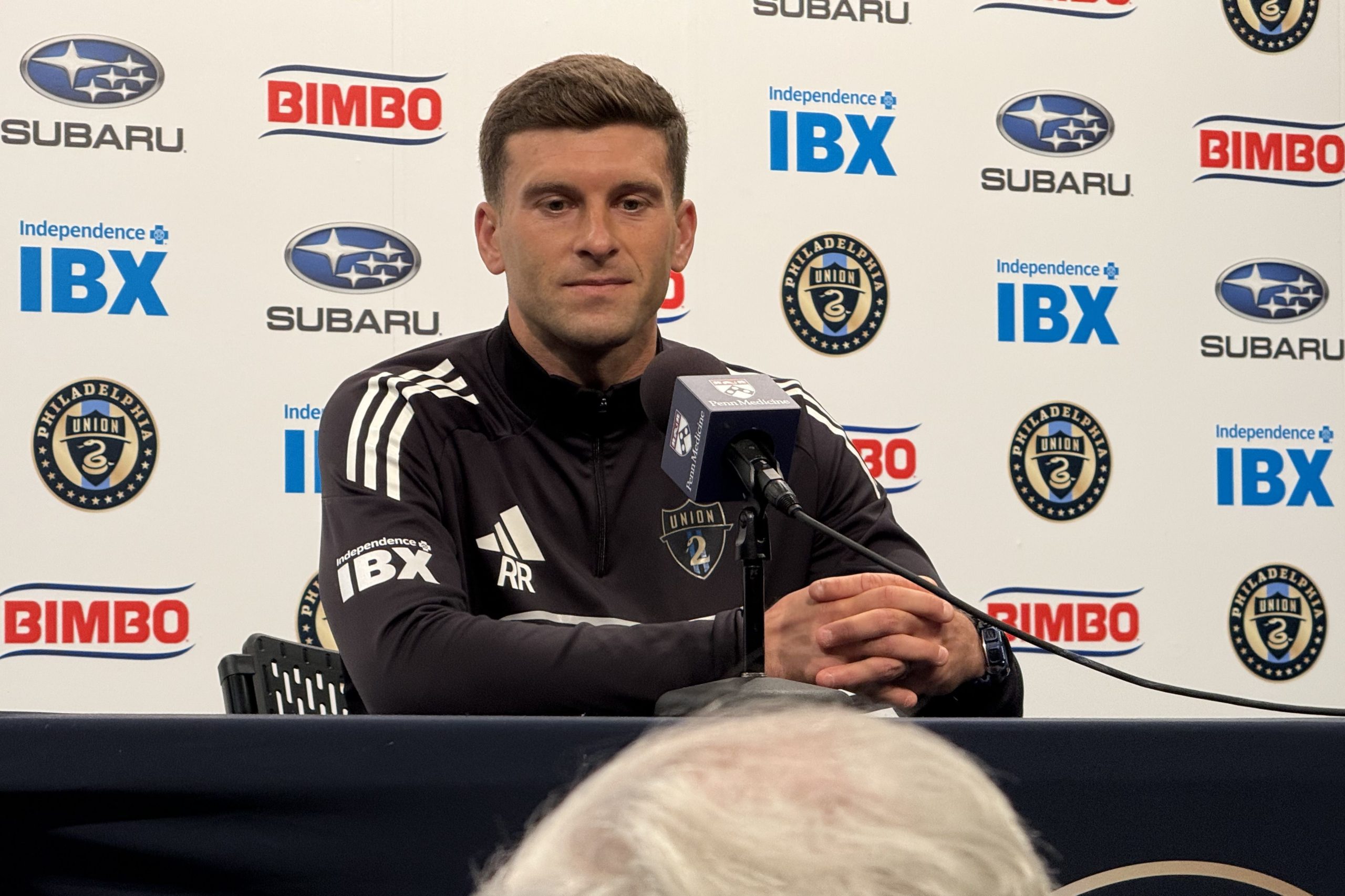
    Ryan Richter is the Union’s interim manager in the wake of Bradley Carnell’s dismissal.Jonathan Tannenwald / Staff

    Scheer said Richter has latitude to be flexible.

    “I would say that what formation and shape we play is not as important and significant as the game model itself, and our principles,” he said. “We want to be aggressive, we want to be ball-oriented, we want to be forward-first in our approach in all phases. The shape in which we play more than likely at times will still look like a 4-2-2-2, but Ryan has flexibility, as does the staff, to press out of a different shape, to attack out of a different shape.”

    He added that there is an expectation to stick with two strikers, “because this is something that we’ve scouted and recruited for over a period of time now for quite a few years.”
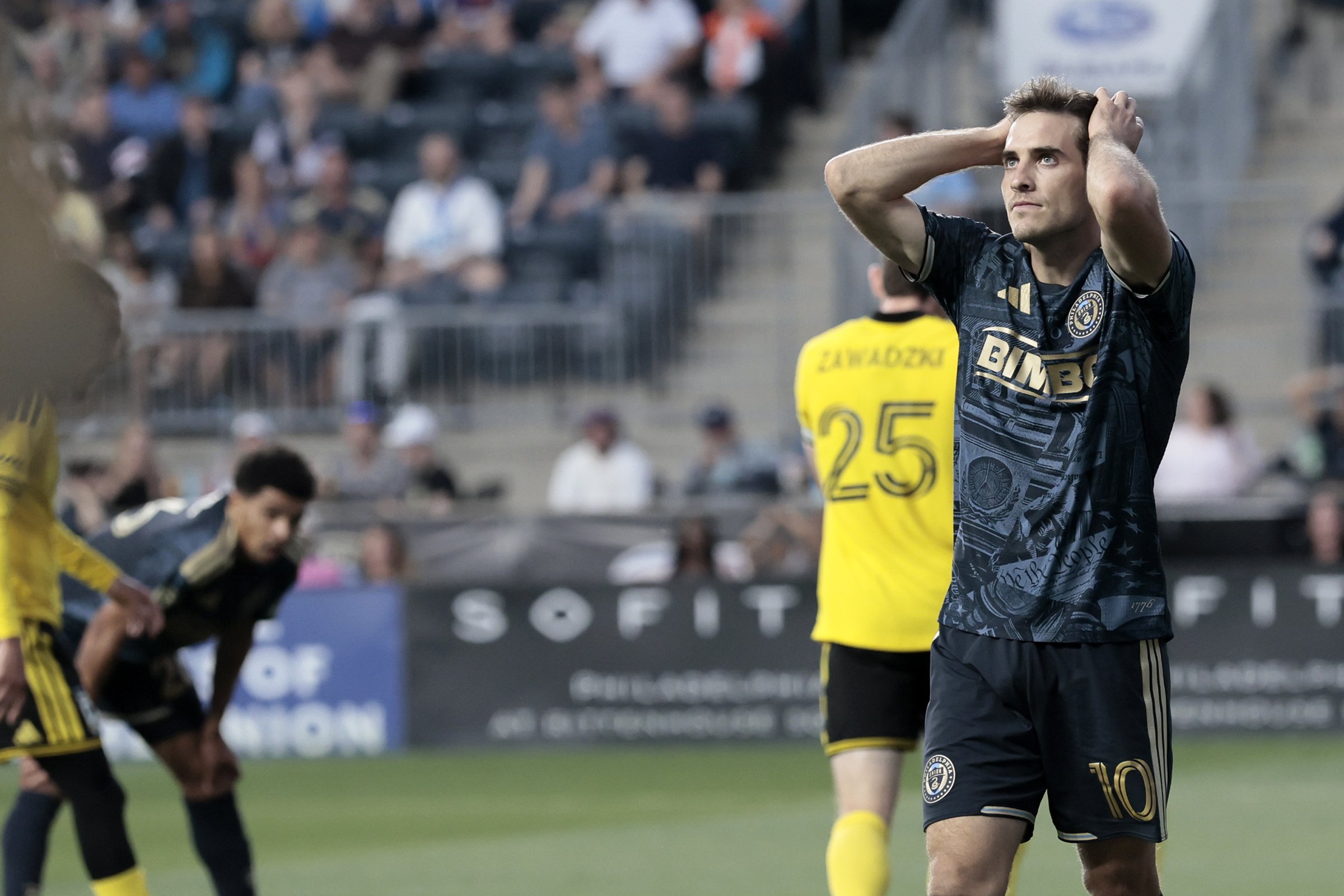
    Milan Iloski and the Union entered MLS’s World Cup break with the league’s worst record.Elizabeth Robertson / Staff Photographer

    That means there still won’t be traditional wingers, a philosophy Tanner first implemented. It makes the outside backs especially important, even though the 4-2-2-2 lets the attacking midfielders move wider than the previous diamond-shaped 4-4-2’s central midfielders could.

    “Finding Cavan [Sullivan], Quinn [Sullivan], Agustín [Anello], these types of players in 1-v-1 situations a little bit wider, is a little bit more apparent in a 4-2-2-2,” Scheer said. “But yes, we don’t play with pure wingers, and I don’t see that changing in the near future.”
  • Men who posed as cops during botched highway robbery will face trial in Chester County

    Men who posed as cops during botched highway robbery will face trial in Chester County

    In a matter of seconds, a highway traffic stop in Tredyffrin Township sent Joel Perez Rodriguez from confusion, to panic, to fear.

    When he saw red-and-blue emergency lights in his rearview mirror, he did what any law-abiding citizen would do, Chester County prosecutors said Thursday: He pulled onto the shoulder of the Pennsylvania Turnpike.

    But Assistant District Attorney Monica Szyszkiewicz said the men who approached Perez Rodriguez’s vehicle on March 28 were not police officers — they were criminals, in league with his sister’s uncle, hired to rob Perez Rodriguez of $49,000 his sister had given him an hour earlier at her home in Germantown.

    The botched robbery ended with Perez Rodriguez shot in the chest, as other bullets narrowly missed his wife and 4-year-old son.

    Two of those men, Roberto Morel, 51, and Tuften Green, 31, were held for trial Thursday evening on charges of attempted murder, aggravated assault, attempted theft, and related crimes after an hours-long preliminary hearing before District Judge Lauren Holt. Holt dismissed kidnapping charges the men faced, arguing there was a lack of evidence to support them.

    The third suspect, Terrell Adams, 38, waived his hearing, and will also be held for trial.

    Lawyers for Morel and Green told Judge Holt that Szyszkiewicz and Pennsylvania State Police investigators had built their case entirely on circumstantial evidence.

    Morel’s attorney, Timothy Tarpey, said his client did not spend time with Perez Rodriguez during the three days he and his family visited his sister, and asserted he had no knowledge of the money being exchanged.

    But Szyszkiewicz said investigators, using a litany of surveillance footage and cell phone data, had been able to reconstruct the entire plot, which began with the three men meeting up hours before the shooting at a gas station in Germantown. Video from that location, played in court, showed Morel and Green arriving at the same time, in separate vehicles, and discussing their plan, according to Trooper Adam McLaughlin.

    “They conspired to pull the victim over for what other reason than to get the money they had received an hour before,” she said, arguing it was no coincidence that Morel had a clear connection to Perez Rodriguez. “Why else would they do that?”

    Green’s attorney, Brian McCarthy, said despite the voluminous text messages prosecutors had pored over between his client and Morel, neither man made specific mention of a robbery, nor was there any attempt during the car stop to take the money from the car’s backseat.

    Holt was not swayed.

    Another video, taken from a Ring surveillance camera near where Perez Rodriguez’s sister lives showed the three men began following his car moments after he pulled out of her driveway, en route to his home in North Carolina.

    And data pulled from Green’s smartphone showed he was on the phone with Morel throughout the entire chase and subsequent shooting. The call ended, Szyszkiewicz said, when Perez Rodriguez fled the scene.

    His sister owns a bodega in Germantown and had given him the $49,000 to invest in his tobacco business back in North Carolina.

    As the family was driving westbound on the Pennsylvania Turnpike, they were being tailed by a Chevrolet Suburban being driven by Adams, investigators said Thursday, as well as a Honda CRV driven by Morel.

    Text messages revealed Green and Morel had discussed adding emergency lights to the SUV, exchanging pictures of them both before and after they had been attached to the vehicle’s dashboard, according to testimony Thursday.

    Once those lights were activated, Perez Rodriguez pulled over. He assumed, he said Thursday, that the occupants of the car behind him were undercover officers.

    Green and Adams approached his car. Both were dressed in all black, with Adams wearing a hat with “police” sewn into it.

    Right away, Perez Rodriguez said he knew something was wrong with the so-called officers. The way they spoke and carried themselves made him suspicious.

    His suspicions were confirmed when Green, seeing Perez Rodriguez’s wife was trying to dial 911, stuck a handgun into her ribs and tried to grab the phone from her.

    Perez Rodriguez sped away, and Green, according to prosecutors, fired the handgun five times.

    An Army reservist, coincidentally driving by in the aftermath of the shooting, saw Perez Rodriguez had pulled again onto the shoulder, and stopped to help, prosecutors said. She helped stabilize his gunshot wound until medics arrived to take him to Paoli Hospital.

    All three defendants will be arraigned in county court in West Chester later this month.

  • Lettuce at Taco Bell in 5 states confirmed as a source of diarrhea-causing parasite

    Lettuce at Taco Bell in 5 states confirmed as a source of diarrhea-causing parasite

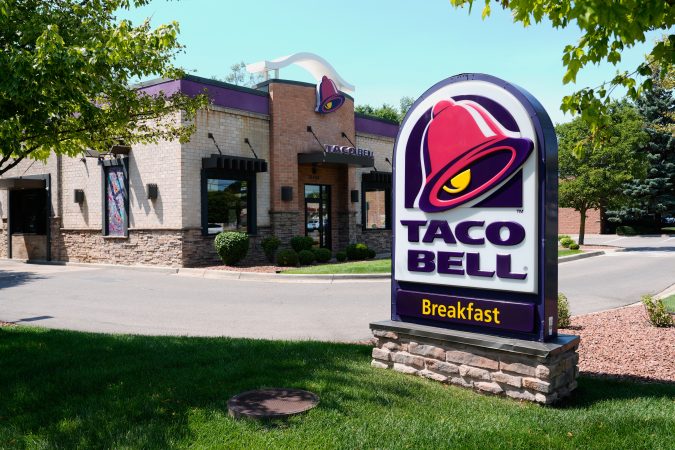
    ATLANTA — Federal health officials have identified lettuce from Mexico served at Taco Bell locations across five U.S. states as a source of a widespread outbreak of diarrhea-causing parasite cyclospora.

    The Centers for Disease Control and Prevention late Thursday warned consumers not to eat shredded iceberg lettuce from Taco Bell restaurants in Indiana, Kentucky, Michigan, Ohio, and West Virginia. A record number of cyclospora cases have been reported in more than 30 states, and experts have said not every recent U.S. illness might be caused by a single source.

    A Food and Drug Administration investigation so far has identified a single supplier of the lettuce. The federal warnings to consumers did not identify the company, but Taylor Fresh Foods, of Salinas, Calif., said FDA testing indicated it was “a specific independent farm” affiliated with the company.

    The FDA was working with the supplier “to determine if potentially contaminated shredded iceberg lettuce remains on the market,” including in other states, the CDC said. “Taco Bell has committed to stop using any lettuce from the supplier identified by FDA’s traceback investigation.”

    Taylor Farms has been tied to foodborne outbreaks in the past. The company said in a statement Friday afternoon that it was voluntarily removing all iceberg lettuce sourced from central Mexico from the U.S. market.

    “As a family owned and operated company, we are deeply concerned for those who became ill, their families, and the many Americans whose trust in the safety of their fresh produce has been shaken,” the statement said.

    Taco Bell says it will use a different supplier

    CDC, FDA, and public health officials in several states have been investigating a multistate outbreak of cyclospora infections.

    The illness is not usually life threatening and is typically treated with antibiotics.

    On Thursday, ahead of the federal government’s confirmation, Taco Bell issued a statement saying that it had taken “immediate action to voluntarily remove potentially impacted lettuce from a supplier in select states. The affected ingredient from our supplier is being indefinitely removed from our supply chain nationwide and will be replaced within 24 hours in select states.”

    It’s possible other businesses could be linked to outbreak

    In a statement, federal health officials stressed that other “brands, restaurants, retailers, or distribution channels” could be tied to the outbreak as the investigation continues.

    Michigan investigators are trying to figure out if the lettuce went to other restaurants or stores because many of the ill people said they didn’t eat at Taco Bell, state health officials said Friday.

    There is no evidence the outbreak “is related to poor food handling or preparation at any single restaurant or fast-food chain,” Michigan health officials said in a statement.

    For that reason, they continue to recommend that consumers purchase whole heads of lettuce instead of pre-washed, bagged lettuce or premixed salad kits. Taylor Fresh Foods said in its statement that no Taylor Farms-branded salad kits contain iceberg lettuce.

    Some past outbreaks linked to the company involved products sold under different brand names.

    North Carolina health officials on Friday reported their count has now surpassed 300 cases, but said the recent illnesses there are not considered to be linked to the outbreak in and around Michigan. They said the most commonly reported foods include parsley, cilantro, and lettuce, but it’s not clear if those ingredients were the source of the infections, they said.

    Cyclospora cases have been rising for years

    Cyclospora is a microscopic, spherical parasite that commonly causes watery diarrhea “with frequent and sometimes explosive bowel movements,” according to the CDC. Outbreaks tend to occur most often in the late spring and summer.

    The heat-loving parasite infects the bowels and spreads through feces. In the past, people have been infected by consuming fruits or vegetables that were exposed to feces-contaminated irrigation water.

    The illness, called cyclosporiasis, is less common than foodborne illnesses caused by other germs, including salmonella and E. coli. Many cases are never linked to a specific food or other source and, for years, few U.S. cyclospora outbreaks were reported. But the number started rising about a decade ago, with a particularly notable spike in 2018 and 2019.

    Previously, 2019 saw the most reported U.S. cyclosporiasis cases, with about 4,700. The current surge has far surpassed that. Michigan — the apparent epicenter of the current outbreak — is reporting more than 5,000 cases, and more than 2,000 additional probable and suspected cases have been reported in other states.

    No deaths have been reported. But Michigan officials say more than 100 people in that state have been hospitalized, and health officials say dozens more have been hospitalized in other states.

    Experts attribute the increasing trend in cases to climate change and better detection. They also say it’s likely that cyclospora cases historically were underreported, for several reasons.

    Some common tests used to check for food poisoning have not been geared to detect cyclospora. Technicians aren’t able to grow the parasite in labs, making it hard to draw evidence from contaminated produce. And it can be hard to figure out what food sick people had in common because sometimes it’s a single ingredient that might be common in multiple recipes — like basil or cilantro.

    Taco Bell, Taylor Farms have been tied to past outbreaks

    The FDA’s traceback investigation identified a single supplier of iceberg lettuce from Mexico used by the Taco Bell locations where people who got sick ate, federal officials said.

    The Mexican food chain is among the restaurants linked to foodborne illness outbreaks in the past.

    Taylor Farms also was tied to a 2013 cyclosporiasis outbreak linked to salad mix and a 2024 E. coli outbreak tied to onions served at McDonald’s.

  • A Penn Medicine employee shuttle was struck by a car and knocked on its side early Friday in South Philly

    A Penn Medicine employee shuttle was struck by a car and knocked on its side early Friday morning in South Philadelphia, police said.

    One passenger was initially in critical condition, but has since been upgraded to stable, Philadelphia police said.

    The van was transporting 11 employees, plus the driver, the University of Pennsylvania Health System said. All were taken to hospitals for evaluation and treatment, Penn said, but other details on the passengers’ conditions was not provided.

    The white Ford van was traveling east on Reed Street when a red Honda Civic Sport traveling south on South Christopher Columbus Boulevard struck the front driver’s side.

    The impact caused the van to spin and tip onto the driver’s side, before stopping near train tracks in the road’s median.

    The incident remains under investigation, police said.

  • Trump’s envoy faces protests in Venice on latest stop of super yacht diplomacy tour

    Trump’s envoy faces protests in Venice on latest stop of super yacht diplomacy tour

    VENICE, Italy — The billionaire U.S. ambassador to Italy faced protests when he arrived in Venice on Friday aboard his luxury yacht as part of a coastal diplomacy tour marking the 250th anniversary of American independence.

    Activists described hospitality mogul Tilman Fertitta’s arrival as an unwelcome display of American wealth and influence for many Italians at a time when they see the Trump administration as upending the post-World War II international order.

    The so-called Coastal Diplomacy 250 tour of 13 Italian coastal regions on a super yacht is intended to celebrate “our shared history, our economic partnership, and the cultural bonds that make the U.S.-Italy relationship so special,” Fertitta said in a social media post.

    In Venice, many of the same groups that protested the wedding last year of Jeff Bezos to Lauren Sanchez are mobilizing against Fertitta’s arrival aboard the 384-foot luxury yacht, Boardwalk, which features two helipads, a pair of swimming pools, and a fully equipped spa and gym.

    On July 4, protest organizers unfurled a banner reading “Venezia non si USA,” which is a play on words combining the Italian phrase “Venice is not to be used” with the acronym USA. The banner was as long as Fertitta’s yacht to illustrate what the protesters called “the dimensions of his arrogance.”

    “It’s arrogant to think he can do what he wants in a city that is ever more sold to the single culture of tourism,’’ organizer Stella Morion told the Associated Press. She said protesters are also opposed to President Donald Trump’s international politics, including U.S. strikes on Iran, which she said have prompted a spike in energy prices.

    “It is the umpteenth slap in the face of a city and all of the people in Venice who struggle to reach the end of the month due to an increase in prices caused by Trump’s war,” she said.

    Fertitta has declined a request for an interview to discuss the tour and the planned protest.

    The billionaire owner of Fertitta Entertainment was sworn in as ambassador to Italy in 2025. He made his fortune in the hospitality industry, including restaurants, hotels, and casinos. He also owns the NBA’s Houston Rockets. His official biography puts his net worth at $11.3 billion, while Forbes ranks him among the 100 wealthiest Americans.

    Details of who Fertitta will meet while in Venice have not been released, but he was expected to attend the famed Redentore festival on Saturday, which commemorates the end of the plague in 1576 culminating with celebratory fireworks over St. Mark’s Basin.

    He has already stopped over in the Sicilian port town of Cefalu, where his family’s roots trace back to 1566, and met with the governor in Palermo. He has also stopped at the Calabrian port of Le Castella and sailed along the coast of Puglia and up the Adriatic coastline to Venice.

    Fertitta’s tenure includes navigating a cooling in the once warm relationship between Italian Premier Giorgia Meloni and Trump, who has made a series of social media attacks against her. Meloni, who was once seen as a close political ally in Europe with similar views on such issues as immigration, did not attend 250th celebrations at the U.S. Embassy.

  • Philly fans came out to pay for All-Star Game merchandise in a record-breaking way

    Philly fans came out to pay for All-Star Game merchandise in a record-breaking way

    Philadelphia fans did more than fill the seats during Major League Baseball’s All-Star Week. They also helped turn the event into one of the strongest retail performances in the history of the Midsummer Classic.

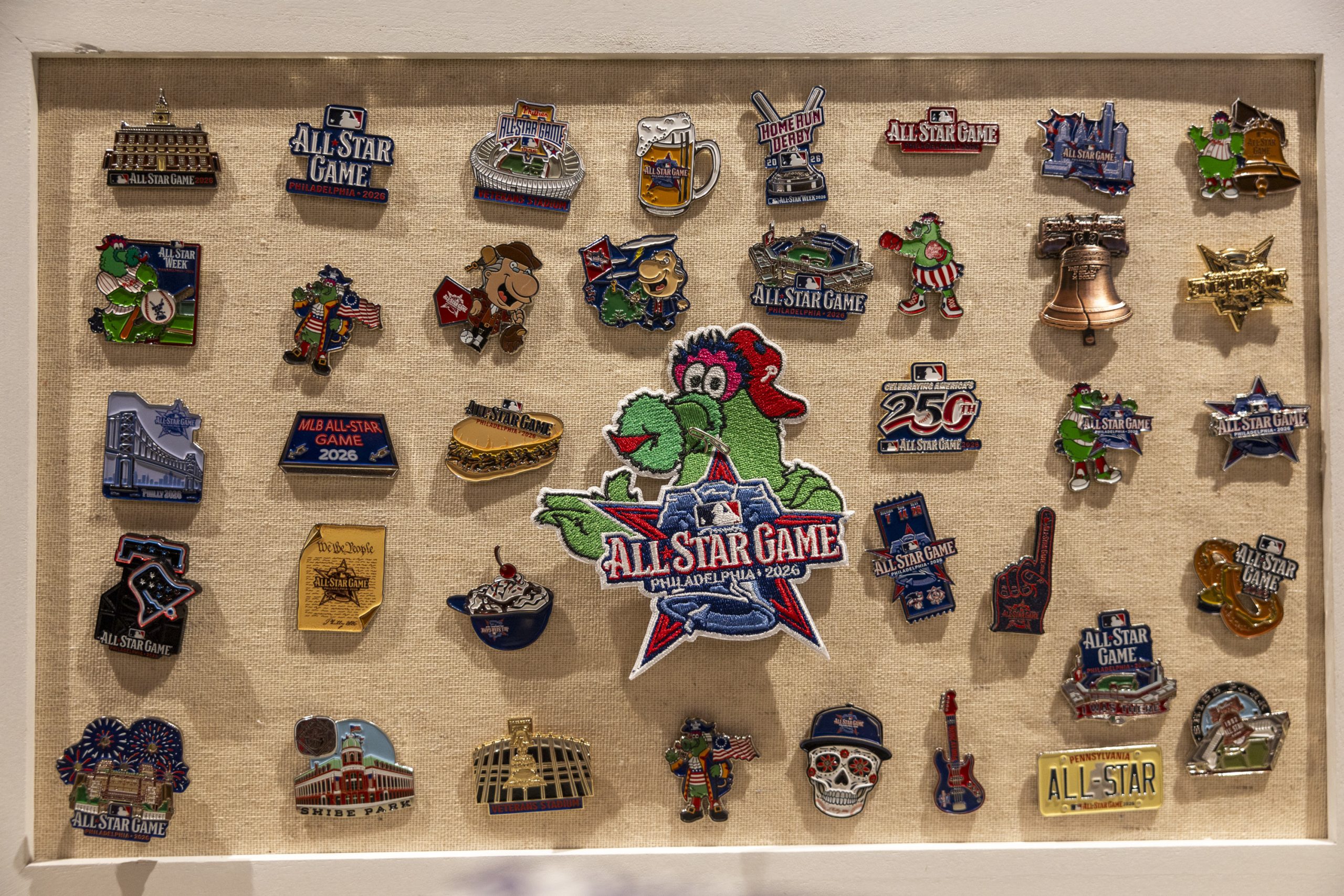
    Major League Baseball does not disclose dollar figures for merchandise sales. But the MLB said fans bought a record number of souvenirs and collectibles, including jerseys, caps, and especially collectible pins — more than 12,000 sold over three days at Citizens Bank Park alone.

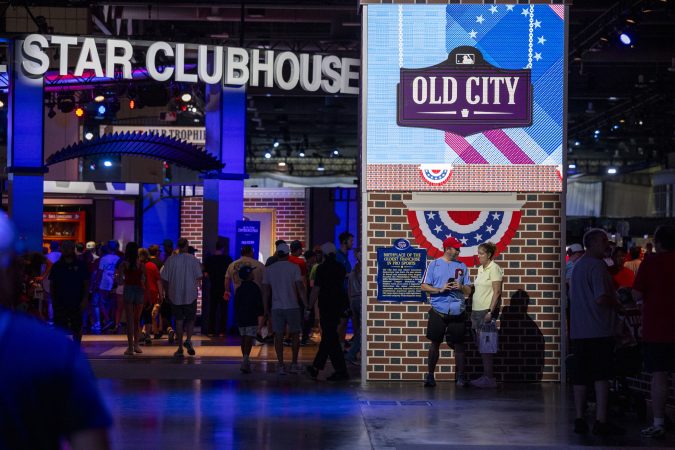
    The biggest draw was the All-Star Village at the Convention Center, where 111,616 people attended the four-day fan festival, according to Jamie Leece, MLB’s senior vice president of global consumer products. That made it the most-attended All-Star fan event since Los Angeles in 2022, the year MLB shortened the festival from five days to four. Leece noted that the Los Angeles event also included a free outdoor component that Philadelphia did not have.

    The crowds translated directly into sales.

    Pins, on display at the retail store at Citizens Bank Park, were a hot seller during All-Star Week.Tyger Williams / Staff Photographer

    Through Tuesday, merchandise sales at the official MLB shop inside All-Star Village, operated by Fanatics, exceeded the previous sales record set at the 2022 fan festival by double-digit percentages. Sales also were up 45% from the 2025 All-Star celebration.

    Across every retail channel — including All-Star Village, Citizens Bank Park, and MLBShop.com — total merchandise sales matched the record-setting performance from the 2022 All-Star Week in Los Angeles.

    At Citizens Bank Park, merchandise sales during All-Star Week rose 25% from 2025. MLB, working with the Phillies and Aramark, operated retail outlets during the HBCU Swingman Classic, the Futures Game, MLB’s 3-on-3 event, the Home Run Derby, and Tuesday night’s All-Star Game.

    Online demand also surged, with sales up 34% over the previous year’s All-Star Week, producing the second-best online All-Star retail performance since MLB launched its e-commerce business in 1998.

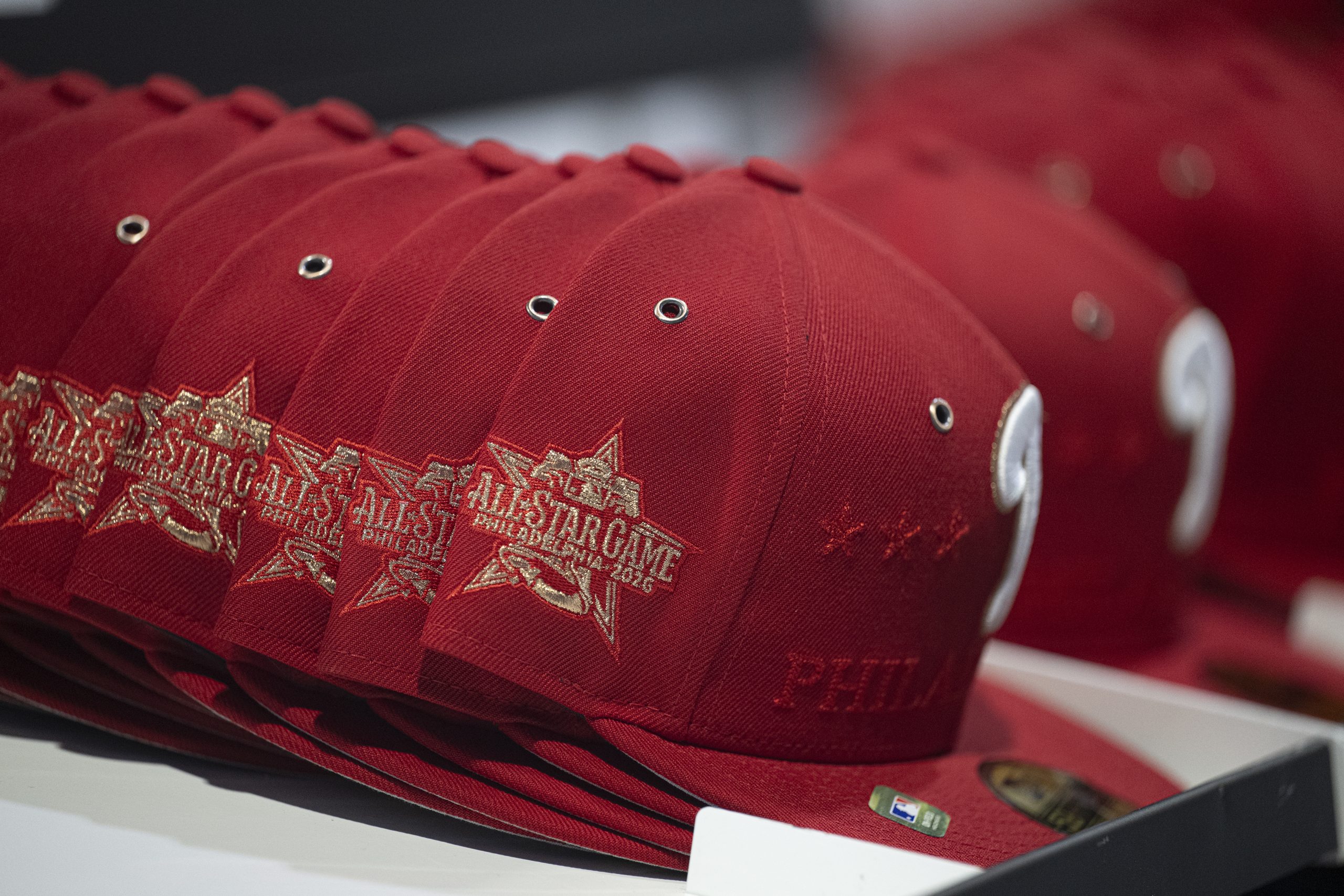
    Headgear accounted for 25% of merchandise sales, according to MLB.Jose F. Moreno / Staff Photographer

    Leece credited Philadelphia’s fan base for helping drive the record performance.

    “Philadelphia fans are deeply passionate and loyal,” he said. “They showed up hours before our events to celebrate, they deeply supported their team and favorite players, and that came through in the retail experience.”

    MLB would not identify its top-selling items, although headwear accounted for a quarter of all sales. Leece said demand was broad across the merchandise lineup, which consisted entirely of Phillies- and All-Star-branded products sold at All-Star Village.

    As for any unsold merchandise, Leece said some will be offered online, while the rest will be donated to a local charity that has yet to be determined.

  • What’s changed at the President’s House with the Trump administration’s new exhibit

    What’s changed at the President’s House with the Trump administration’s new exhibit

    The National Park Service removed early Wednesday the few panels that remained from the slavery exhibit at the President’s House, and replaced them with new panels.

    The original displays were deemed to “inappropriately disparage Americans past or living” following President Donald Trump’s 2025 executive order on “restoring truth and sanity to American history.”

    The newly installed panels include 11 whose renderings were published on the National Park Service’s website and first reported by The Inquirer in April, as well as smaller panels that weren’t previously made public. Among those are additional references to the nine people George Washington enslaved in his Philadelphia home.

    Historians previously criticized the panels for minimizing the brutality of slavery and whitewashing Washington’s culpability in the institution.

    And according to advocates, the additions don’t change much.

    Telling a blatant lie, such as claiming slavery didn’t exist, would be too easily exposed, said Michael Coard, a founding member of Avenging Our Ancestors, a group that advocated for the development of the site.

    “The best lie is one that has a little bit of truth,” Coard said.

    The new panels make light of slavery, the attorney said, and focus on Washington’s “discomfort” instead of the experience of the nine people the United States‘ first president enslaved in Philadelphia.

    Others criticized the panels for drifting away from the site’s original purpose.

    When the site open in 2010, the city and National Park Service said the President’s House exhibit “pays tribute” and “honors lives of enslaved Africans in presidential household.”

    The Department of Interior said Wednesday the new panels “acknowledge the evils of slavery, including its injustices and hypocrisies, and, by telling the stories of the nine slaves that Washington kept in the President’s House, remind us of their essential humanity.”

    The Inquirer photographed the original panels before their removal and the new panels that were installed this week. Here are the differences in the exhibit.

    What’s gone

    The original exhibit included five screens across the site that played reenactments depicting the daily lives of those enslaved at Washington’s Philadelphia home.

    “The site had to tell the stories that are not often told and share the perspectives of the people who up to now have been nameless and voiceless,” said Rosalyn McPherson, the site’s project director, in the 2010 news release.

    Those screens were turned off.

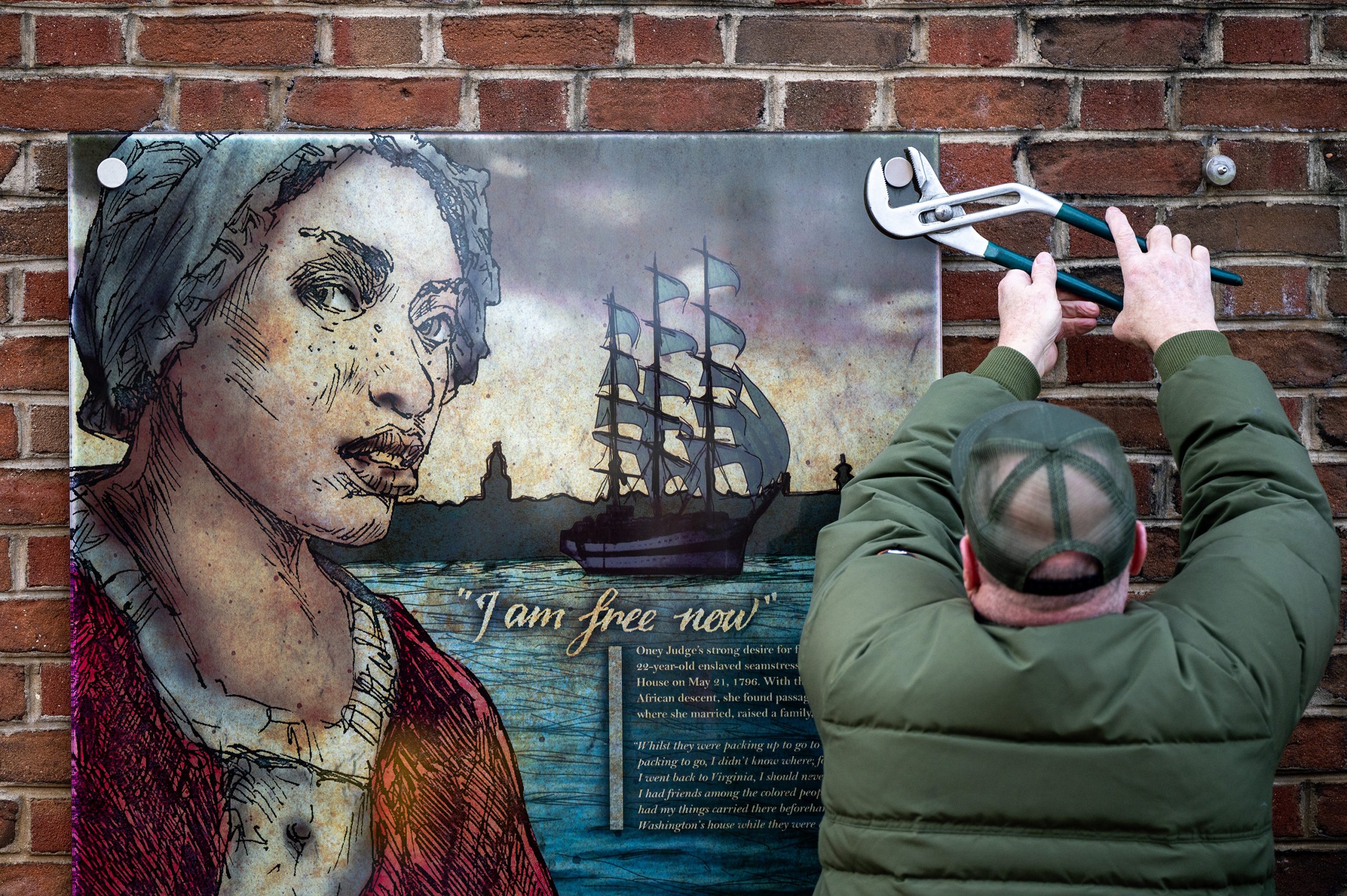
    Also gone are the artistic panels, which included a portrait of Ona Judge, who escaped from slavery at the house, and another about Washington’s signing of the Fugitive Slave Act.

    Workers remove the display of panel for Ona Judge at the President’s House in Independence National Historical Park in January.Tom Gralish / Staff Photographer

    What’s replaced

    The removed panels included information about the suffering of enslaved people.

    A panel titled “The Dirty Business of Slavery” included information about the slave trade, the constitutional compromise to appease slaveholders, the growth of the enslaved population during the presidencies of Washington and John Adams (who also lived at the President’s House), and a timeline of slavery from 1619 and through emancipation.

    Another panel, titled “Life Under Slavery,” discussed the brutality of the notorious institution, resistance efforts, and slavery in Philadelphia.

    It told the story of Absalom Jones and Richard Allen, men who were born into slavery and managed to buy their own freedom.

    “Enslaved people of African descent in the North, deprived of fundamental freedom, endured profoundly difficult lives,” the panel read. ”Controlled by others, their families were always threatened by forced separation, and their work, often exhausting, was nearly always unpaid.”

    Those panels were replaced with ones that include broad descriptions of slavery that do little to unpack the experience of those subjected to it, and focus on the triumph of emancipation.

    The new “Fighting for Freedom” panel discusses the Underground Railroad, quotes Frederick Douglass, Abraham Lincoln’s rise to the presidency, and the Emancipation Proclamation.

    Another panel about “The Constitution and Slavery” begins by stating: “The words ‘slave’ and ‘slavery’ are not in the U.S. Constitution as ratified, nor the word ‘property’ in connection with language alluding to slavery.”

    It discusses “compromises with pro-slavery delegates,” and ends with a section titled “fulfilling the promise” that quotes the Rev. Dr. Martin Luther King Jr.’s “I Have a Dream” speech.

    A panel about “Slavery in the British Colonies” pays homage to Benjamin Franklin and Black abolitionists, and shows the declining numbers of enslaved people in Philadelphia between 1767 and 1847.

    And in a trio of displays called “History Lost & Found,” the Trump administration focuses on how the 2007 archaeological dig of the site worked and discovery of primary sources documents it presents as non-controversial: Washington’s letters and a map of the property.

    Unlike the original panels about the archaeological dig, the new ones have no mention of slavery, the nine people Washington enslaved, or the National Park Service’s initial apprehension about helping to develop the memorial.

    But starkest difference comes in the treatment of slavery at the President’s House itself.

    An original panel included a timeline of the site’s history from the time Indigenous people lived in the area and through the 2002 discovery of slavery at Washington’s household.

    It continued to discuss the collaboration between the city, federal government, and community groups to develop the site.

    The panel’s section on slavery at the house focused on George and Martha Washington ownership of enslaved people, the president’s secret efforts to evade Pennsylvania’s Gradual Abolition Act, and the escapes of Ona Judge and Hercules.

    In contrast, the new panel titled “The Executive Mansion” follows a mention of slavery at the house with a statement that Washington’s views evolved and that he freed his slaves in his will.

    Another new panel that addresses “Presidents Washington and Adams on Slavery” head on says Washington was “caught between his private doubts about slavery and his public responsibilities as president” and privately “often expressed discomfort with the institution.”

    “Slaves living in the President’s House experienced a greater modicum of autonomy than elsewhere in the South such as to explore the city and sometimes even attend the theater, with Washington buying the tickets,” the panel reads.

    On the same wall, a new smaller panels lists the nine people Washington enslaved alongside short bios. The panel tells visitors that Washington “knew and trusted his enslaved house staff,” and repeats that he used to “buy them tickets to the circus and the theater.”

    The wall also includes a smaller panels that briefly tells escape stories of Judge and Hercules, and references Washington’s attempt to recapture them.

    What’s new

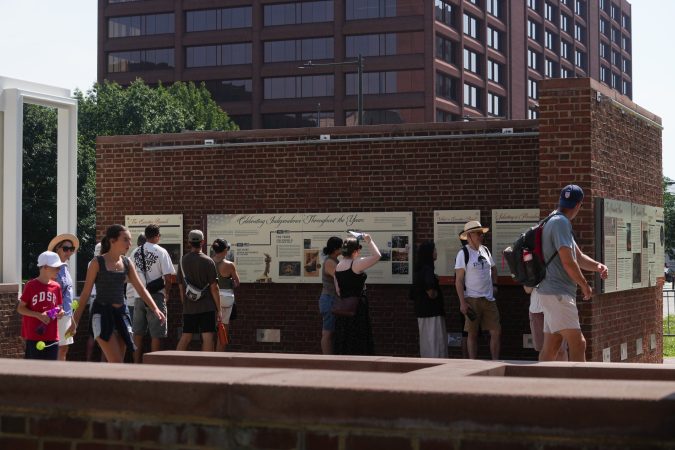
    Multiple panels throughout the exhibit share facts about U.S. history, but bear no connection to the site or slavery. These include “Celebrating Independence” and “Throughout the Years,” which denote the nation’s 100, 150, and 200 year celebrations.

    And a series of panels provide a civic lesson about the history, powers, and role of the commander in chief. Another panel discusses “the need for an executive branch.”

    New panels detail the biographies of George and Martha Washington, John and Abigail Adams, and Benedict Arnold. The biography of William Howe, a British commander who occupied Philadelphia during the Revolutionary War and lived at the President’s House, is also attached to the wall.

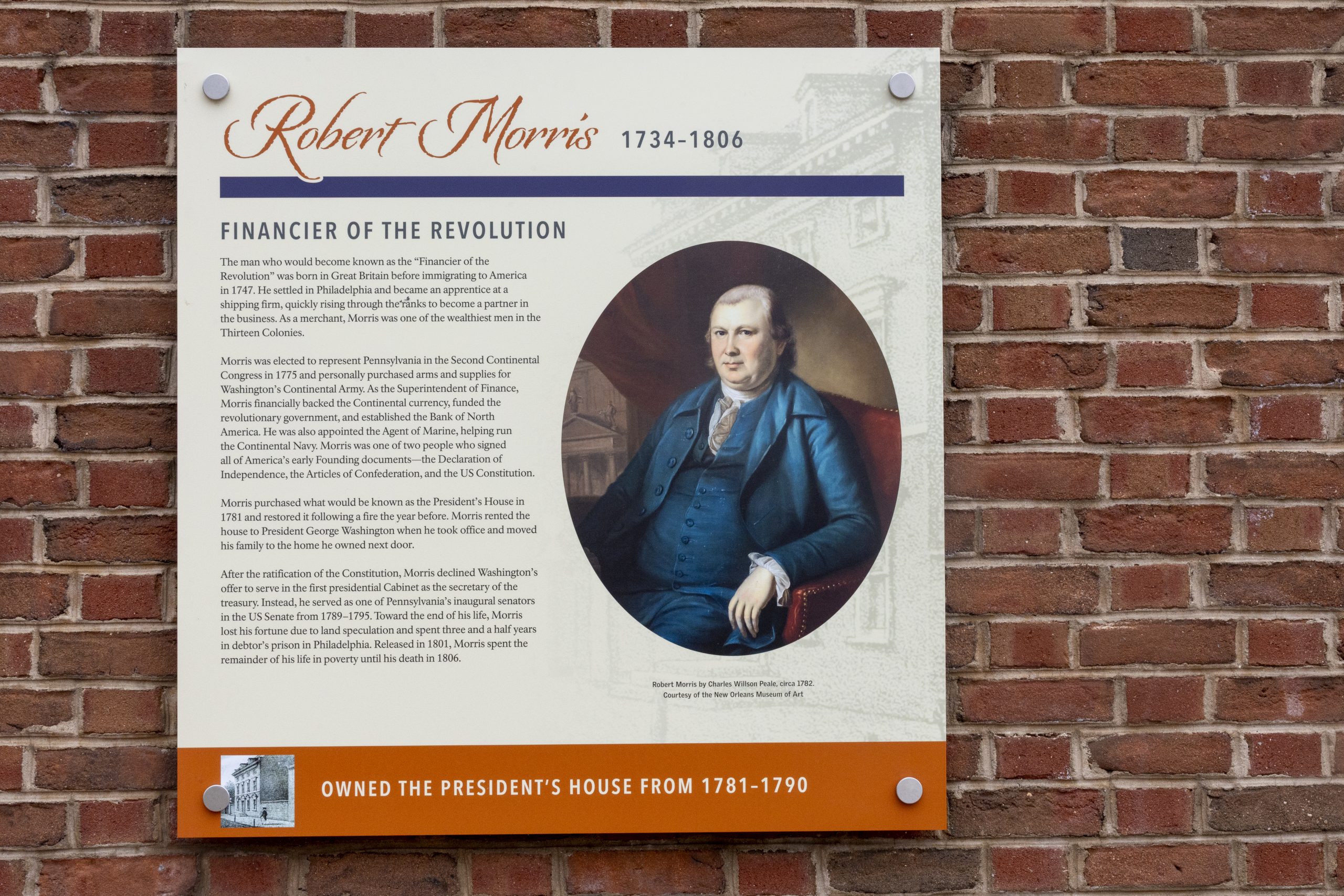
    Finally, the new exhibit pays homage to Robert Morris, known as the “financier of the American revolution” and offered Washington the house as the executive mansion with a panel dedicated to his biography.

    Morris’ ownership of a company that traded slaves is never mentioned.

    A detailed image of one of the new panels installed by the National Park Service at the President’s House this week.Aidan T. Gallo / Staff Photographer
  • Code Red: City and state officials must act now on multiple fronts to protect air quality

    Code Red: City and state officials must act now on multiple fronts to protect air quality

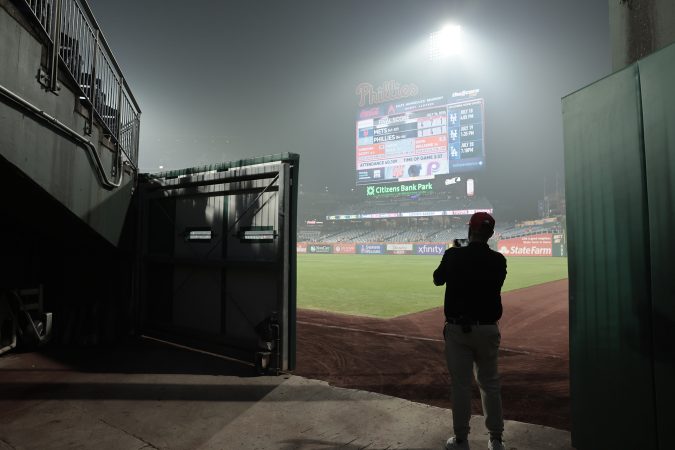
    From I-95 in South Philly, the skyline was barely visible as we drove past empty stadiums and parking lots. The low visibility is due to a blanket of smoke from trees burning across Canada, a thousand miles away, a new — and deeply unwelcome — annual tradition here in the Northeast thanks to our rapidly changing climate.

    We were on the highway because we happened to be driving our 2-year-old son to my parents’ home outside of Boston, and I felt deep relief to be taking his young lungs from an Air Quality Index (AQI) of 182 (“Unhealthy”) to merely 94 (“Moderate”).

    As a pediatrician and parent who thinks a lot about the impacts of air pollution on children’s ability to breathe, it is an especially frightening moment.

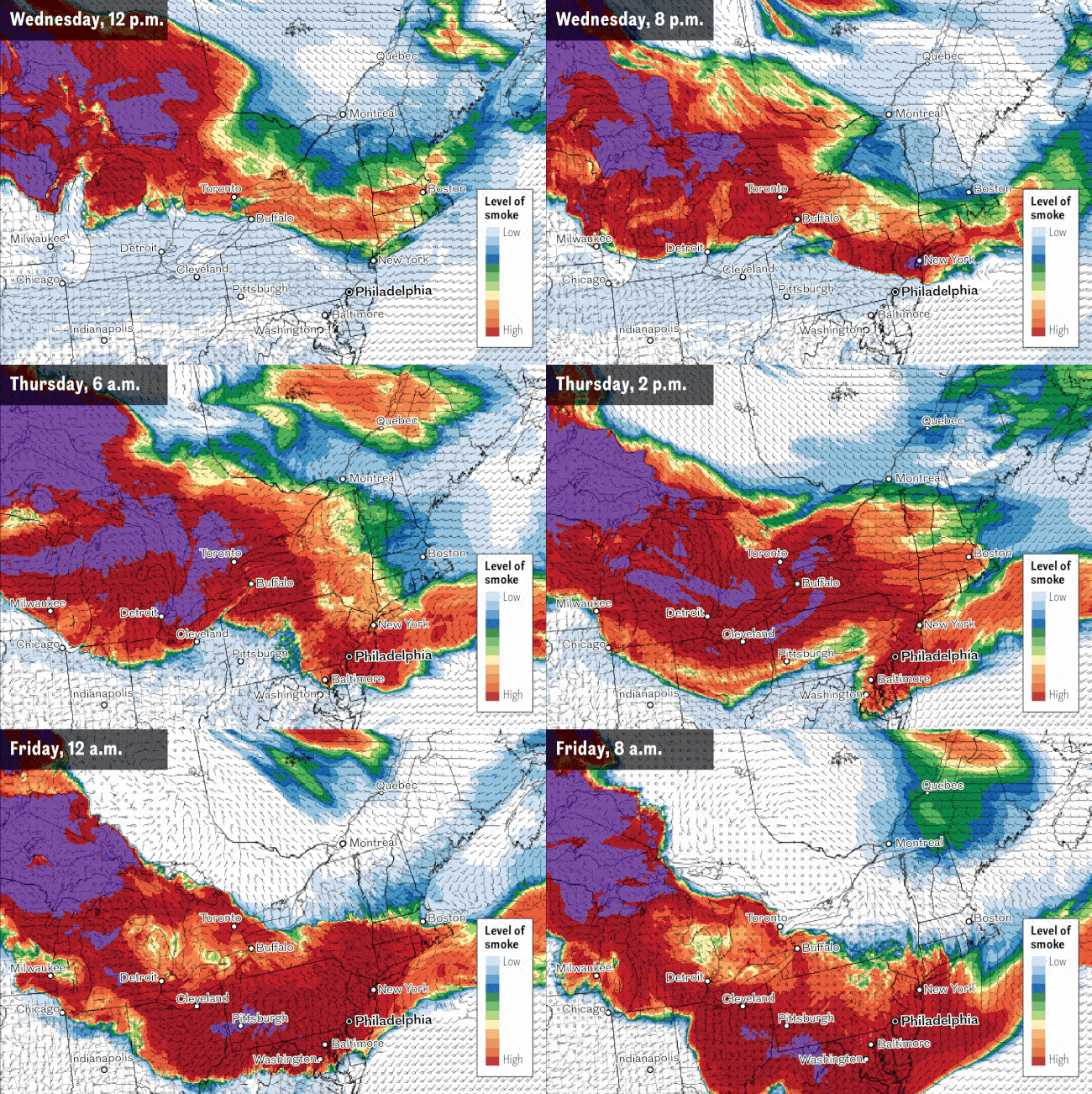
    Near-surface smoke forecast in the Philadelphia area from noon Wednesday through Friday morning.John Duchneskie

    It is also a maddening one for those who care about health or justice.

    Air pollution causes enormous harm to human health. And yet, the Trump administration has made a concerted push to worsen American air quality by attacking antipollution policies and slashing funding for the agencies responsible for their enforcement.

    Under direction from industry lobbyists, the administration — assisted by the conservative majority on the U.S. Supreme Court — is pushing aggressively to weaken the Clean Air Act, which is often identified as the piece of U.S. legislation that has saved the most lives.

    At the same time, the administration is demanding a 50% cut in funding for the Environmental Protection Agency, which maintains airnow.gov, after dramatically cutting funding for weather and climate research at the National Oceanic and Atmospheric Administration last year.

    These actions serve only political donors and wealthy shareholders, at the expense of communities and the environment.

    A helicopter is barely visible over the Delaware River blanketed with the wildfire smoke from Canada in Philadelphia on Thursday.Tyger Williams / Staff Photographer

    In spite of the layers of smoke blocking out the sun, the injustices of the current moment are easy to see. I am lucky to be headed to clearer skies this weekend, but this is only one example of good fortune that is unavailable to many.

    As temperatures climb above 90 degrees Fahrenheit for the fourth day in a row, after two other record-breaking heat waves this year, those without air-conditioning are forced to choose between sweltering with the windows closed and a house filled with smoke from faraway wildfires.

    Communities with lower levels of air-conditioning are also more likely to be Black and Latino communities that have a higher heat burden from a lack of neighborhood trees and greenery and an excess of paved surfaces.

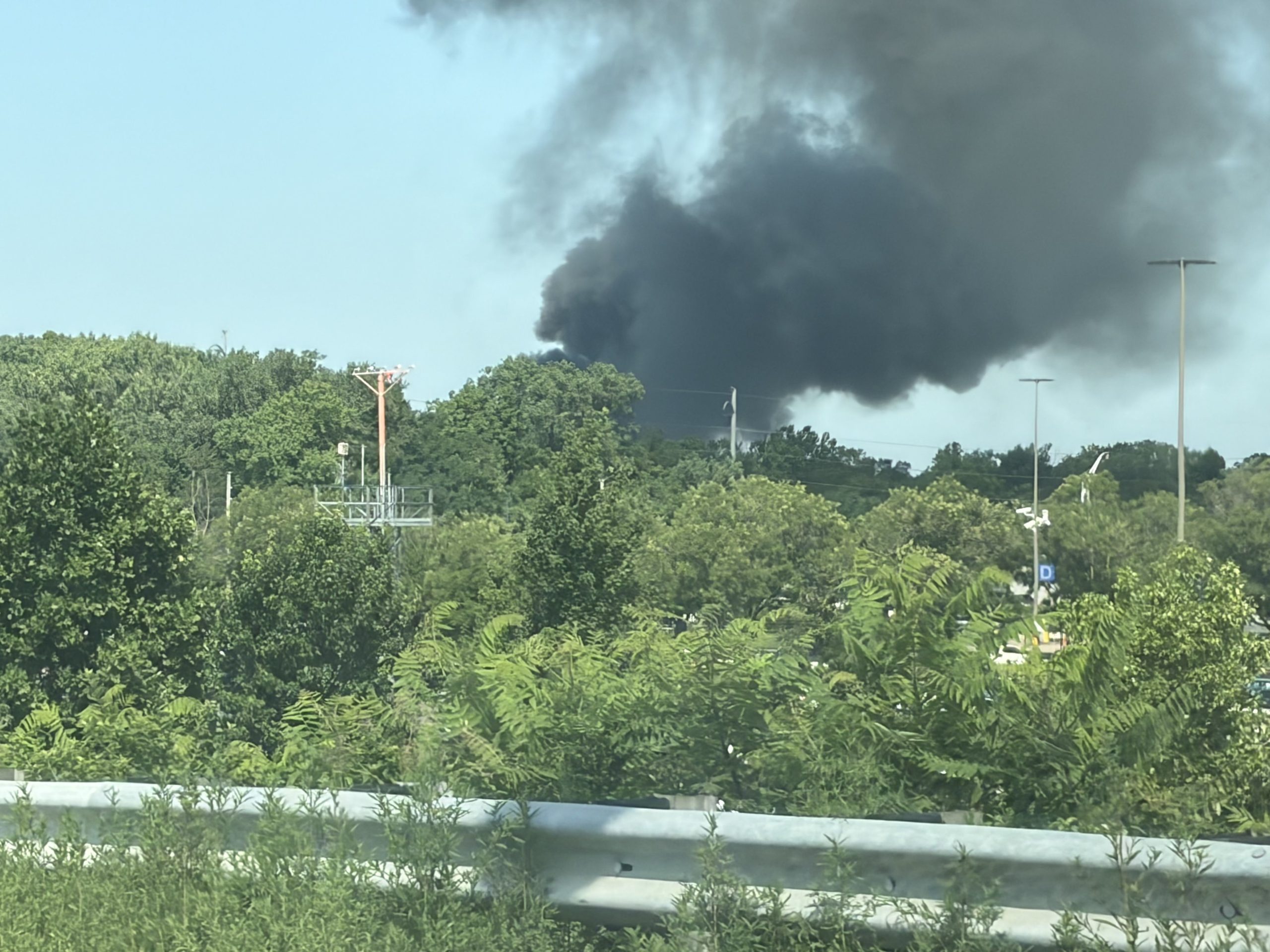
    Add to this the ongoing burdens of polluting industrial infrastructure in these same areas — thrown into sharp relief by the scrapyard fire Wednesday within the environmental justice communities of Darby and Southwest Philadelphia — and it is an overwhelming assault focused on the health of our most vulnerable populations.

    A view July 15 from I-95 of a large scrapyard fire in Darby Township, just outside of Philadelphia.Joseph DiStefano

    It is past time to demand more of the elected officials who serve us. While the federal government and GOP majority in the state Senate have abandoned even performative interest in protecting the environment and its inhabitants, our city agencies must act.

    Right now, Philadelphians can provide support for cleaner air in our region on several fronts.

    Philadelphia Gas Works, our city-owned utility, is pushing to build an even larger liquefied natural gas plant in the Port Richmond neighborhood, where cancer rates are already among the highest in the city.

    The City Planning Commission is discussing possible locations for new data centers, strongly considering Grays Ferry’s Bellwether District, in spite of the decades of pollution and associated diseases from the Philadelphia Energy Solutions gas plant.

    And the city has just moved a step closer to renewing its contracts to incinerate its trash just a few miles down the highway from the scrapyard fire that poured smoke across the region this week.

    All of these actions prioritize short-term costs over long-term benefits to citizens, neighborhoods, and the planet.

    Whether you contact your mayor or City Council member, submit remarks online, or testify at a hearing, let our decision-makers know that this literal Code Red demands big ideas, difficult decisions, and dramatic action — before the city’s commitments to health and justice are as hard to make out as its skyline views.

    Paul Devine Bottone is a pediatrician and father in Philadelphia.

  • A Phillies fan wanted a souvenir ticket for the All-Star Game. He shared the ‘physical memento’ with other fans, too.

    A Phillies fan wanted a souvenir ticket for the All-Star Game. He shared the ‘physical memento’ with other fans, too.

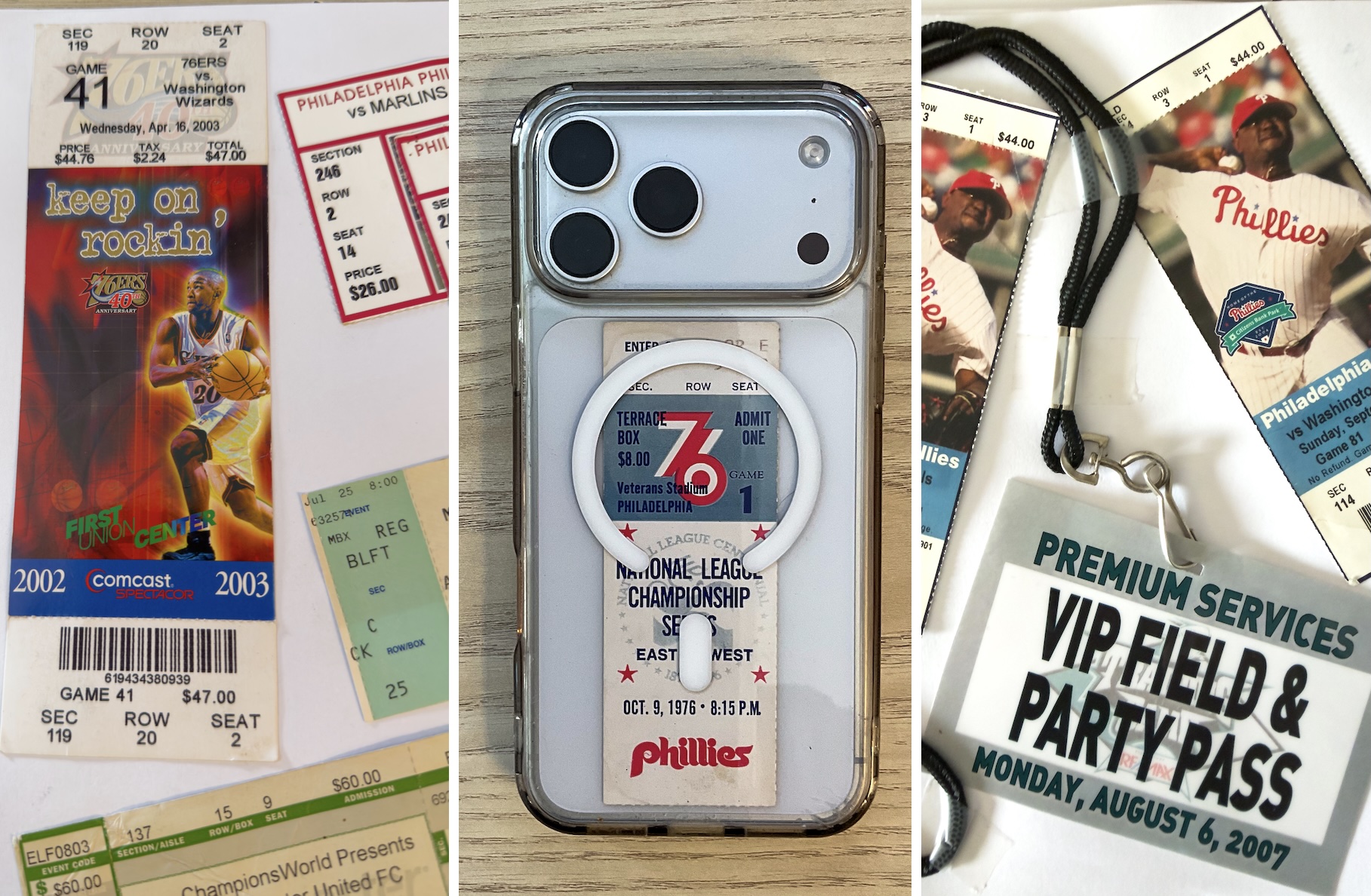
    Mike Harkins collects old ticket stubs. Harkins estimates he has over 500 physical tickets from events he’s attended in the past, kept in journals, scrapbooks, and in storage.

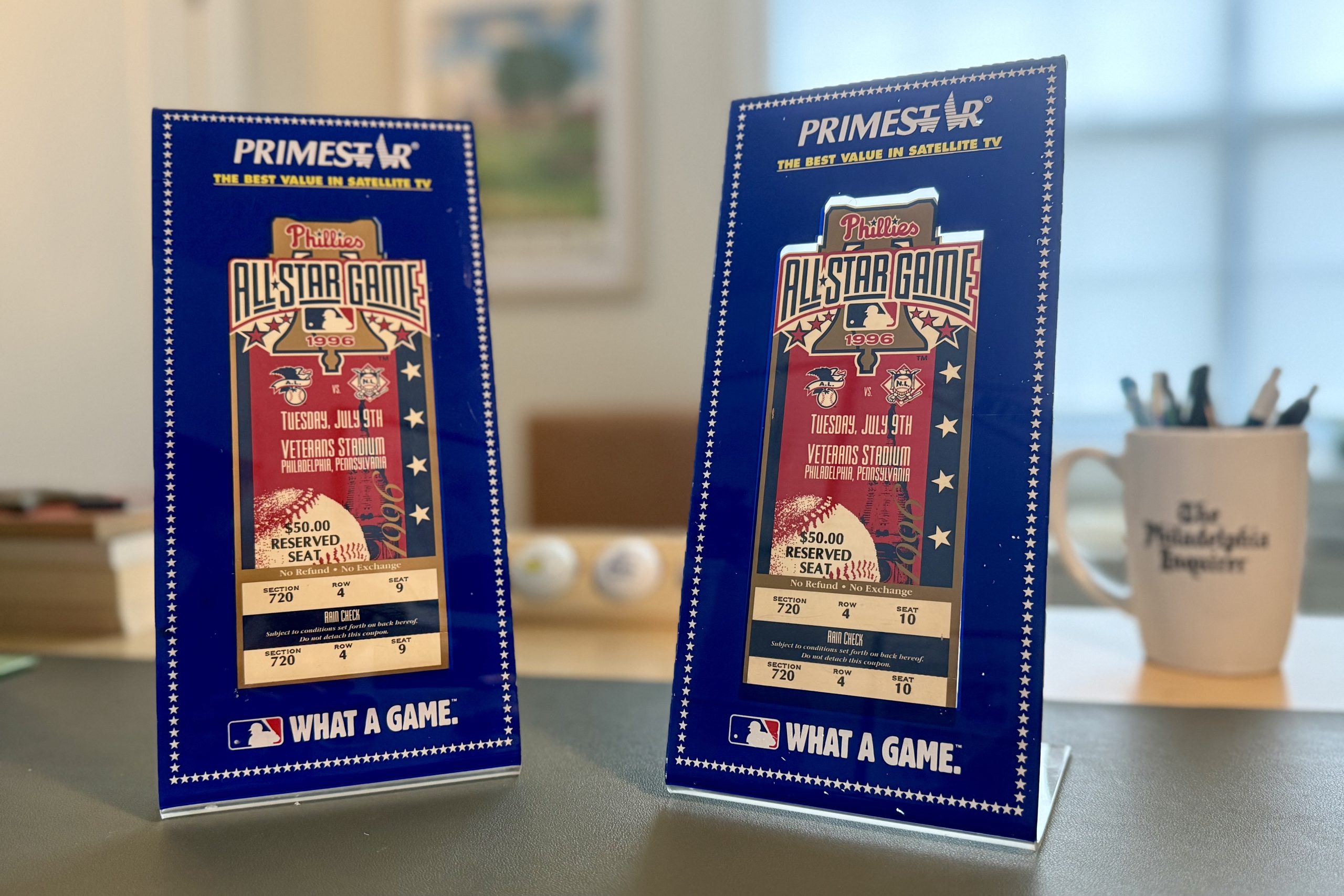
    One of his favorites as a kid was from the 1996 All-Star Game, held at Veterans Stadium. Harkins, who was 11 years old and grew up in South Jersey, attended both the game and the Home Run Derby with his father. It was one of his most special childhood memories, and every time he looks at that stub, it takes him back to that moment.

    The physical tickets from the 1996 MLB All-Star Game were already keepsake items. They even handed out plastic ticket holders at the game.Matt Mullin / Staff

    So, for the 2026 All-Star Game, Harkins decided to print out a physical ticket stub for himself, to remember the moment. He then printed out 250 more, to hand out to fans at the ballpark hoping for that same experience.

    “I had the thought, that kids that are going to this game, like when I was 11 in 1996, they’re not going to have that souvenir ticket to bring home,” Harkins said. “Truthfully, kids didn’t really seem that excited about them, but all of their parents were gung-ho when I handed them the ticket stubs.”

    Everyone received the same section, row, and seat number, each of which carried a special meaning. Harkins picked Section 126 because “Chase Utley is No. 1 in my book.” The row (20) and seat (08) numbers combine to make 2008, honoring the Phillies’ 2008 World Series title, the first Philly championship Harkins experienced.

    On the back of each ticket, he included a message:

    “I hope the newer generations of baseball fans can appreciate having a physical memento to remember this night with,” he wrote. “Maybe, thirty years from now, you’ll still have this ticket. I hope you look back on this night as fondly as that 11-year-old from 1996 still does.”

    He got the idea after attending a concert in Mexico last month. Harkins met a couple from Denver, who printed out individual tickets of their own to celebrate their trip, and gave him one. As an avid ticket stub collector, he immediately started brainstorming.

    Over the last decade-and-a-half, sports teams, concerts, and events have largely turned away from issuing physical tickets, instead relying on mobile tickets and QR codes. The Phillies started the process of turning their season ticket holders toward digital tickets in 2014, eliminating physical tickets entirely in 2020 during the pandemic. Mobile tickets can be more convenient, but don’t make for the same kind of keepsake.

    “I’ll see an Eagles game from 2008, where it was blistery, and I can just remember being freezing cold that night against the Carolina Panthers on a Monday,” Harkins said. “It makes me think of the people that I was able to share that experience with and sometimes the result, sometimes good, sometimes bad.”

    One of those people at Tuesday’s All-Star Game was Cheryl Spielvogel, the longtime peanut vendor whose call of “Peeeeeanuts!” is a familiar refrain for Citizens Bank Park regulars. Harkins happily told Spielvogel, who has been slinging the ballpark snack for over 50 years, that she helped provide “the soundtrack to my childhood.”

    A look at some of the tickets in Harkins’ collection, including Michael Jordan’s last game (left), the 1976 NLCS, kept in his phone case (center), and Phillies tickets from their 10,00th loss and their playoff clinching win in 2007 (right).Courtesy of Mike Harkins

    Harkins, who was a member of the famed Wolf Pack (in honor of former Phillies pitcher Randy Wolf) a quarter century ago, said the best ticket in his collection is from the Phillies’ regular season finale in 2007, when they clinched a playoff berth with some help from the Mets. He and his friends listened from the parking lot as Tom Glavine gave up seven runs in the first inning for New York against the Marlins, and were “floating” the rest of the day at Citizens Bank Park.

    He even got to meet Dontrelle Willis, who started that game for the Marlins and now works for Fox Sports, at the All-Star red carpet at Independence Mall, and hear the story of that game from his side. Later, at the ballpark, Harkins got to meet the fan known as Marlins Man, a regular behind home plate at big-ticket events around the country. Laurence Leavy, the lawyer behind the orange Miami Marlins jersey, was confused when Harkins first handed him the stub, but was thankful once he realized what he had received.

    Harkins considers himself a baseball history fanatic, and said the people who loved physical tickets the most were the ushers at the Bank, many of whom share that same passion for Phillies history.

    He hopes the All-Star weekend and the ticket can help spark that in someone else.

  • Eagles first-round wide receiver Makai Lemon says he’s ’100 percent’ for camp after missing final OTAs

    Eagles first-round wide receiver Makai Lemon says he’s ’100 percent’ for camp after missing final OTAs

    After sitting out part of the offseason program due to injury, Makai Lemon said Friday that he’s “feeling great” ahead of training camp.

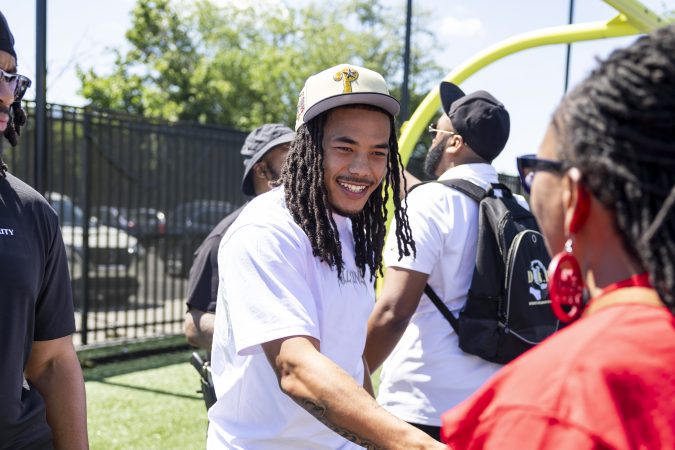
    Lemon, speaking at his FlexWork Sports youth camp in Aston, added that he will be “100%” ready to go when the Eagles hold their first practice of the summer on July 29.

    This spring, Lemon participated in rookie minicamp and the first practice open to the media during organized team activities in May. He was sidelined for the second OTA practice open to the media and the entirety of the two-day mandatory minicamp in June with what teammate Quinyon Mitchell said was a hamstring injury.

    Still, Lemon said he’s had a productive offseason, as he prepares to report to camp on July 28.

    “Just working on my craft, just trying to get the playbook down,” Lemon said. “Just making sure I’m ready so when I go out there, it’s lights out.”

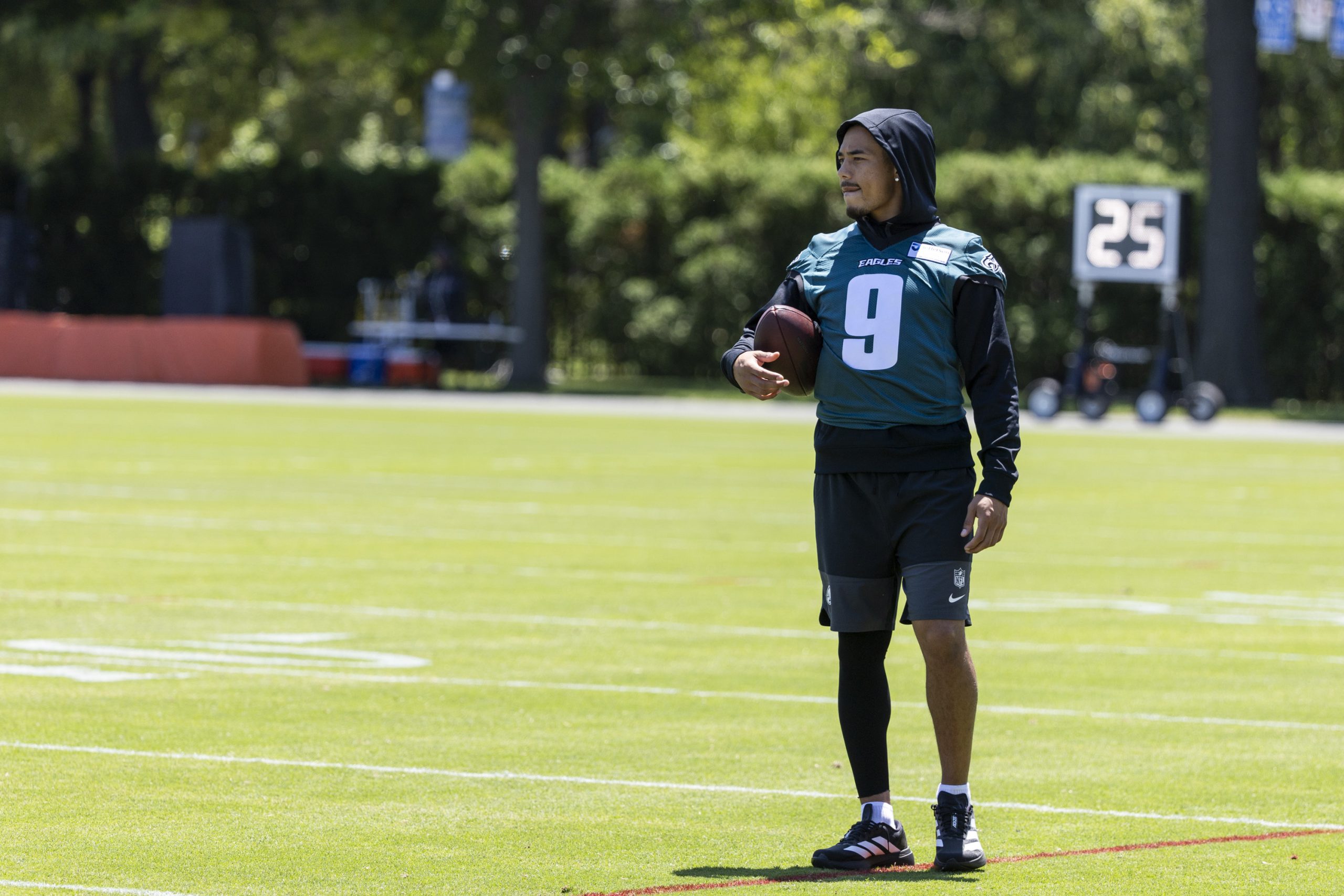
    Makai Lemon (9) was sidelined for portions of the offseason program. Tyger Williams / Staff Photographer

    Lemon, the Eagles’ first-round pick out of USC, is one crucial piece of the new-look receiving corps. Howie Roseman retooled the group this offseason, trading A.J. Brown to the New England Patriots and adding wideouts such as Lemon, Dontayvion Wicks, and Hollywood Brown and rookie tight end Eli Stowers.

    The Eagles have notable returners among the group, too, in DeVonta Smith and Dallas Goedert. Come the start of training camp, offensive coordinator Sean Mannion will have the opportunity to show how each of those pieces will fit in the Eagles’ revamped offensive scheme.

    Lemon didn’t get extensive work alongside each of those players during the offseason program due to his injury. But the 5-foot-11, 192-pound rookie receiver said he has already gleaned useful information from the veteran group.

    “Just how to take care of your body,” Lemon said. “Just how to attack your preparation. Every little thing that them guys do, I’m watching closely. I feel like I can learn so much from them boys.”

    Lemon, who hails from Los Alamitos, Calif., had previously never played on a football team outside of his home state. However, he expressed that he already feels at home in the Eagles locker room.

    “I was walking in there, they had open arms for me,” Lemon said. “A lot of veteran guys in my room. I’m just there to learn from them. Soak up any information I can. I’m ready for the season to ride out with them boys, man.”

    Lemon said he has felt the love outside of the facility, too.

    “It’s a great feeling to get in front of the community,” Lemon said. “The people that show me support, show the Eagles so much love. So I’m just out here just reciprocating that love to the youth.”