Blog

  • A former prosecutor said DA Larry Krasner’s Office colluded with defense attorneys to try to overturn a murder conviction

    A former prosecutor said DA Larry Krasner’s Office colluded with defense attorneys to try to overturn a murder conviction

    A former Philadelphia prosecutor who recommended that a man’s murder conviction be overturned said she did so at the direction of her boss — who she said had done no meaningful review of the evidence and instead was “colluding” with defense attorneys to find the most effective way to have the case thrown out.

    While testifying at a unique hearing Friday in federal court, former Assistant District Attorney Jaclyn Mason said supervisors in the district attorney’s office had effectively abandoned their responsibility to independently investigate Dennis Johnson’s appeal and determine if he should be freed from prison.

    Instead, Mason said, her supervisor, Matthew Stiegler, held routine meetings with Johnson’s lawyers, including the Federal Community Defender Office and the Pennsylvania Innocence Project, to strategize the most effective paths to secure Johnson’s release. And neither she nor Stiegler reviewed key evidence in Johnson’s case, she said, including trial transcripts, homicide files, or witness interviews.

    “Matt told me: ‘If it’s good enough for the Innocence Project, it’s good enough for me,’” Mason said.

    Just as strikingly, she said, earlier this spring, when it became clear that that process might be exposed in court, another set of supervisors asked her to lie to a federal judge.

    As Mason recalled, the supervisors were worried that if the judge found out the full extent of the office’s actions in the case, it would exacerbate the already intense public scrutiny the office was under for the way it had acted in other murder appeals.

    According to Mason, the supervisors suggested she simply tell the judge that any mistakes in the case were hers, and hope that that would be enough to avoid a more thorough inquiry.

    Mason said she declined and resigned.

    “I said, ‘I’m not going to go to court to lie to protect the district attorney’s office,” Mason said. “How come telling the truth isn’t an option?”

    The extraordinary testimony came as part of Johnson’s appeal, which has taken an unusual path through the courts and remains pending before U.S. District Judge Paul S. Diamond.

    It also served as the latest chapter in a series of developments that have raised questions about one of District Attorney Larry Krasner’s key policy initiatives: his office’s willingness to review old convictions and seek to overturn those that prosecutors believe were marred by legal problems.

    Just last month, the Pennsylvania Supreme Court ruled that Krasner’s office had misled judges so consistently and flagrantly in appellate matters that moving forward, any time his office recommends that a conviction be overturned, the state attorney general must be brought in to review the matter as well.

    Diamond was also involved in disciplining two top supervisors in Krasner’s office in recent months, finding that they had been “misleading and dishonest” while seeking to overturn an inmate’s death sentence.

    Krasner has made post-conviction review a central part of his reform-oriented agenda, touting the fact that his office has helped free 59 people — mostly Black men — from what he’s called wrongful convictions.

    But judges in both state and federal court have raised pointed questions in recent months about whether Krasner’s office has been sloppy or even intentionally misleading while seeking to advance that agenda.

    And during Friday’s hearing, Diamond expressed occasional bewilderment at some of Stiegler’s admissions on the stand — including that while he led the office’s Federal Litigation Unit, his staff generally did not reinterview witnesses or speak to previous prosecutors before deciding whether to recommend that a conviction be overturned.

    “It’s a smorgasbord of error — and we’re just gonna pick one?” Diamond asked.

    A ‘pawn’ in a preordained process

    The case around which Friday’s hearing was nominally centered was Johnson’s conviction for second-degree murder.

    In 2009, a jury found him guilty of fatally shooting Kenyatta Smith during a robbery outside a North Philadelphia convenience store two years earlier. He was sentenced to life in prison.

    Johnson appealed, in part because he said his trial lawyer was ineffective.

    And in 2022, Mason filed court documents agreeing with that assertion — and saying the error was so pronounced that his conviction should be thrown out.

    “The case against Johnson was not overwhelming from the outset and his counsel was constitutionally ineffective,” Mason wrote. “The post-trial investigation unearthed additional factors that highlight weaknesses in the prosecution and confirm a low level of confidence in the outcome of Johnson’s trial.”

    In court Friday, however, Mason said she was effectively doing Stiegler’s bidding when she filed that brief.

    She’d only been in the office for about four months when Stiegler assigned her Johnson’s case, she said. And she’d never before worked as a prosecutor or handled similar federal appeals.

    The office also gave her close to no training, she said. And from the moment she was assigned Johnson’s case, she said, she got the impression that Stiegler knew how he wanted the matter to go.

    “The decision to concede had been made, and then I was his pawn,” she said. “I was his scribe.”

    In the months that followed, Mason said, she and Stiegler did almost no independent examination of the evidence in Johnson’s case. But they did have meetings with Johnson’s attorneys, she said, at which the two sides sometimes collaborated on legal strategies for how to ensure his petition would succeed.

    When Mason did actually draft the brief supporting the appeal, she said, Stiegler offered edits — all of which made it into the document. Another supervisor, Nancy Winkelman, the onetime head of the Law Division, also made suggestions that were included in the final brief, Mason said.

    Stiegler testified Friday as well, and said he believed that when Mason was assigned the case, she would review it and provide her best assessment to him. That review, he said, was expected to include an examination of key evidence, including trial testimony or witness statements.

    But under questioning by Diamond, he acknowledged that his unit at that time did not regularly reinvestigate cases, either by re-interviewing witnesses or reexamining primary evidence — an admission that seemed to baffle the judge.

    “You did no investigation on your own?” he asked at one point.

    “No,” Stiegler replied.

    As for the decision to agree that Johnson’s conviction should be overturned, Stiegler said: “My recollection is it was a collaborative decision between Ms. Mason and me.”

    But Mason said that wasn’t true.

    “He met and conferred with the Federal Defender and the Innocence Project to decide how it was going to go before it was assigned to me,” she said.

    A sudden resignation

    Still, none of that discord surfaced until this spring, when Diamond — who will ultimately decide whether to overturn Johnson’s conviction — scheduled an evidentiary hearing. At the time, he said he wanted to hear from several key witnesses to evaluate the strength of the evidence against Johnson.

    He also asked the attorney general’s office to review the case, apparently wary that the district attorney’s office was simply agreeing with Johnson’s lawyers.

    At that point, Mason said, a set of different supervisors in the Law Division “started to panic.”

    And after she told them the “collusive” manner in which the appeal had been handled, she said she was told, in essence, to fall on her sword.

    As Mason recalled it, the supervisors told her to tell Diamond that any mistakes in the office’s brief were hers, “and if we do that, the court might get angry, but it won’t find out how this concession got put together — which is what we really want to avoid.”

    “The whole goal [was] that the process by which that concession came to be not be revealed,” Mason said.

    Within days, Mason said, she resigned.

    A few days after that, the supervisors in the Law Division — David Napiorski, Steven Wildberger, Peter Andrews, and Katherine Ernst — filed a motion with Diamond seeking to undo the position that Mason and Stiegler had once recommended, saying the pair’s brief had been based on “material misstatements.”

    Mason said she was “blindsided” by that filing, and that she believed she was being used as a scapegoat to protect the office and its actions in the case.

    “The whole scheme was designed to cover up how that brief was put together,” she said.

    Friday’s hearing ended before the supervisors she accused of wrongdoing had time to testify or respond to her assertions. Diamond said he would schedule another hearing to hear from them.

    Johnson’s fate also remains undecided with the legal issues unresolved.

    Stiegler, meanwhile, denied that he’d pushed Mason to take a specific position in the case, or that he’d had improper interactions with Johnson’s defense lawyers as the office worked on the appeal.

    Mason was definitive in her view of Stiegler’s testimony.

    “Nothing Matt said was true,” Mason said. “Nothing he said was true.”

  • Hanwha Philly Shipyard picked to build two Golden Dome missile defense ships

    Hanwha Philly Shipyard picked to build two Golden Dome missile defense ships

    The federal government plans to build two new missile defense ships at Hanwha Philly Shipyard after it finishes the last of the “multi-mission” training and disaster-assistance ships it’s been building, Trump administration and shipbuilding officials said Friday.

    But new Navy combat ships that yard leaders also hope to build in Philadelphia will have to wait until the yard has additional space ready, shipbuilding officials said.

    The $1.4-billion contract to build two “Golden Defender” ships — officially Missile Range Instrumentation Ships, or tracking ships, topped by bulbous radar, antenna, and other surveillance gear — was announced Friday by U.S. Office of Management and Budget director Russell Vought to hundreds of shipbuilders and government staff. The ships will replace surveillance ships built in the 1960s.

    The group had assembled to watch Fox News host Rachel Campos-Duffy christen TS Lone Star State, the fourth National Security Multi-Mission Vessel completed at the yard since 2023. The last of that line, TS Golden Bear, is due next year.

    Fox News host Rachel Campos-Duffy christened the training and emergency ship TS Lone Star at Hanwha Shipyard. In her remarks, Campos-Duffy invoked the protection of Jesus Christ and Stella Maris, a manifestation of Christ’s mother, Mary, as the “Star of the Sea,” to protect the ship and its crews.Joseph N. DiStefano

    The anti-missile ships will be built on hulls the same size as the multi-mission ships, but without the multistory cabins used for cadets and hospital personnel, to make room for large-scale surveillance gear.

    The new ships fit into a network of surveillance and combat gear developed by L3Harris and other big military contractors for the planned “Golden Dome” anti-missile network. They will keep the “hot production line” busy at the 2,000-worker shipyard for the next few years, U.S. Transportation Secretary Sean Duffy said.

    Golden Dome will be built by Lockheed Martin, L3Harris, and other defense contractors.

    The new ships will be built under a management contract with Tote Services, a Jacksonville, Fla., company that has been overseeing construction of the multi-mission ships.

    Tote and Hanwha have been delivering those ships “ahead of time and under budget,” Duffy said.

    From left: U.S. Rep. Mary Gay Scanlon (D., Pa.); Russell Vought, director of the U.S. Office of Management and Budget; U.S. Transportation Secretary Sean Duffy; and his wife, Rachel Campos-Duffy, a Fox News host, at Hanwha Philly Shipyard. Joseph N. DiStefano

    He contrasted Tote’s and Hanwha’s record, which built on previous yard owner Aker’s upgrades to the yard, with the slow pace of Navy shipbuilding in past decades. He said more ships should be built the Philadelphia way.

    “Who controls the seas controls the world,” Duffy said, noting that the Trump administration supports reviving U.S. shipbuilding.

    That effort will require vast public spending on design and procurement, plus recruiting and training hundreds of thousands of marine welders, crane operators, and other ship construction workers.

    “I’m a free enterprise guy, but we have to recognize that free enterprise doesn’t exist in shipbuilding because every [other nation is] subsidizing commercial vessels,” Duffy said.

    Other new shipbuilding contracts are in the works for yards in Philadelphia and competing cities, he said.

    “Big orders are coming our way. This is just the beginning,” Duffy said. “There is a lot of partisanship in Washington, but America stands together, Democrats and Republicans, as we figure out how we staff and build ships in our country.”

    Jeff Dixon, President of Jacksonville, Fla.-based Tote Services, with government officials after the christening of TS Lone Star State, a federally-funded training vessel built under Tote’s management at Hanwha Philly Shipyard, July 17, 2026.Joseph N. DiStefano

    One of those “big orders” could bring more Navy ship construction to Philadelphia soon — if Hanwha can execute its long-planned expansion of the yard in time. The company has pledged an eventual $5 billion to help revive American shipbuilding but still operates the yard with a single 1,000-foot dry dock and one Goliath crane, a fraction of the size of its main South Korean yard on Geoje Island.

    On July 13, the Navy’s Portfolio Acquisition Executive for Maritime, the ship design, construction, and maintenance agency formerly known as NAVSEA whose local offices are the largest employer in Philadelphia’s Navy Yard business district, awarded Tote Services a $2.2 billion contract to build up to eight Landing Ship Medium (LSM) vessels for the Marines.

    Those ships will be built in three U.S. shipyards: Italian-owned Fincantieri’s Marinette, Wis., works; the family-owned Bollinger shipyard in Mississippi; and a third yard that has not yet been chosen, Jeff Dixon, president of Tote, said in an interview.

    “The Marine Corps needed these landing ships in the Pacific two years ago,” Dixon said, stressing the military’s urgency to get the landing craft built. “Philly will compete in that process. I think they could fit them in,” and still continue work on its commercial ship construction contracts, if the yard can line up new berthing space.

    Neighbor Rhoads Industries has two smaller drydocks and other space in and around the yard that could be converted if Hanwha can arrange the space and the financing, he and other shipyard sources said.

    JPMorgan Chase & Co. chief executive Jamie Dimon on a visit to the Navy Yard district said Tuesday that his bank has worked with Hanwha on other projects and is eager to back the company’s plans to expand construction of U.S. ships. Hanwha has expressed interest in building combat and support ships, submarines, and drones for the U.S. in South Korea, Philadelphia, and other potential locations.

    Hanwha leaders have said U.S. military shipbuilding can be profitable and competitive with the leading shipbuilding nations — China, South Korea, and Japan — only if it scales up construction of commercial ships, making it much more efficient to build each ship.

    The Philadelphia yard has been finishing a ship, on average, every eight months. Hanwha says it wants to build up to 20 ships a year in an expanded shipyard.

  • A man was critically wounded in a stabbing on a SEPTA bus in North Philly

    A man was critically wounded in a stabbing on a SEPTA bus Friday afternoon in North Philadelphia, police said.

    Around 3:30 p.m., a fight escalated into the stabbing on a Route 54 bus near the intersection of Germantown and Lehigh Avenues, said SEPTA spokesperson Andrew Busch.

    The victim, who was stabbed in the neck and torso, ran to a nearby apartment, police said. He was reported in critical condition at Temple University Hospital, police said.

    The victim said he did not know his attacker, police said.

    The suspect, who was wearing a Snoop Dogg shirt, was last seen running from the scene on Germantown Avenue, police said.

  • Trump urges Darline Graham to run for full Senate term as funeral scheduled for Lindsey Graham

    Trump urges Darline Graham to run for full Senate term as funeral scheduled for Lindsey Graham

    COLUMBIA, S.C. — President Donald Trump said Friday that Darline Graham, the sister of the late Lindsey Graham, has his support to run for a full term to replace her brother in the U.S. Senate.

    He wrote on social media that she “has been a WINNER all of her life and, should she accept, has my Complete and Total Endorsement.”

    “RUN, DARLINE, RUN!” Trump added.

    The president said he had discussed a potential campaign with Darline Graham at the White House. Four people familiar with the deliberations, none of whom were authorized to speak publicly, had previously said that she privately expressed interest in running.

    Trump’s endorsement dramatically reshapes the scramble to fill Lindsey Graham’s seat after he died last weekend. The president had previously suggested he could back a potential candidacy from Rep. Russell Fry. Several other noteworthy politicians — including Fry, Rep. Nancy Mace, Rep. Ralph Norman, and Lt. Gov. Pamela Evette — have been eyeing a run.

    The filing period for a special primary runs from July 21 to July 28, and the primary is scheduled for Aug. 11.

    Plans for Lindsey Graham’s funeral were also announced Friday. There will be a service in Washington on July 28 and more in South Carolina on July 29.

    South Carolina Gov. Henry McMaster appointed Darline Graham to serve the remainder of her brother’s term, which ends in January.

    The first woman to represent the state in the Senate, Darline Graham called it “such an honor,” as dozens of her brother’s staffers and campaign advisers stood behind her, some with eyes glassy from welling tears.

    “Lindsey has always been there for me. And now, I will be there for him,” she said.

    Lindsey Graham died July 11 at age 71. A preliminary report from the medical examiner said he suffered a tear in his aorta.

    He never married or had a family of his own, but his sister was often by his side for the political touch points of his career, speaking at events and appearing in some of his campaign ads. After both of their parents died when Darline Graham was only 13, her older brother became her legal guardian and later adopted her, to ensure his military benefits would flow to her.

    In forging a relationship with Darline Graham — who is new to politics but was a constant in her brother’s political career — Trump could be angling to develop another ally to help steer his agenda through the Senate.

    Although they had at times a tumultuous relationship, Lindsey Graham had been one of Trump’s top Senate confidants, and the day after his death, the president said he was “like a member of the family.”

    In his announcement Monday, McMaster made no reference to Darline Graham as a placeholder or symbolic appointment.

    However, a person familiar with McMaster’s thinking but unauthorized to speak publicly said the governor, in selecting Darline Graham, had never contemplated that she would run for the seat herself.

    Sen. Tim Scott, another South Carolina Republican, said he would not endorse any candidate in the primary because he also serves as chairperson of the National Republican Senatorial Committee.

    But, he said, “as Tim Scott, the voter of South Carolina, I might indeed wade into the water at some point.”

    “I think the truth of the matter is that Darline has so far been off to a remarkable start,” Scott told reporters, asking about her as a possible special primary contender. “‘Why not her?’ would be my question.”

    When he died, Lindsey Graham had millions in his campaign account and was expected to raise much more heading into the general election. But those aren’t funds that Darline Graham could directly access, if she were to run, according to Bradley A. Smith, a former chairperson of the Federal Election Commission.

    Under federal rules, Lindsey Graham’s campaign would be limited to transferring just $2,000 to a potential Darline Graham candidacy. However, Smith said there is no limit on how much it could transfer to the National Republican Senatorial Committee, which could — thanks to a Supreme Court decision last month — “spend an unlimited amount in coordination with Darline’s campaign.”

    “It can’t be earmarked for Darline’s campaign, but in those circumstances I’m sure that the party will make sure she’s not short of cash,” said Smith, now serving as a professor at Capital University Law School in Ohio.

  • Clara Ester, activist who rushed to Martin Luther King Jr. after he was shot, dies at 78

    Clara Ester, activist who rushed to Martin Luther King Jr. after he was shot, dies at 78

    NASHVILLE, Tenn. — Clara Ester, an activist who as a 20-year-old college student rushed to the Rev. Martin Luther King Jr.’s side when he was shot, has died.

    Ms. Ester, who died on July 9 at the age of 78, was among the few remaining witnesses to King’s assassination and its immediate aftermath in Memphis. With the passing of the Rev. Jesse Jackson Sr. in February and Ms. Ester this month, King aide and former U.N. ambassador Andrew Young is believed to be the last surviving eyewitness to the shooting.

    Ms. Ester grew up in Memphis attending Centenary United Methodist Church, where her pastor was civil rights leader the Rev. James Lawson.

    “We used to joke about colored water being Kool-Aid and the white water just being water, and so that satisfied us as children,” Ms. Ester told the Associated Press in 2018, around the 50th anniversary of King’s death. “But until you see the racism, until you see what has been withheld from you because of your color — is what started to really truly anger me. And I knew if there was a movement that could help change any of that, I had to be in it.”

    Civil rights issues were often discussed from the pulpit of her church, Ms. Ester said. Lawson was very involved in the sanitation workers’ strike, so it was natural for her to become involved too.

    “I got to the point that I didn’t miss a mass meeting,” she said. “I picketed every day that the picket lines were up.”

    Even 50 years later, she clearly remembered the impact of hearing King’s speech at the Mason Temple the night before he was assassinated and how it seemed to foreshadow his death the next day.

    “He had seen the mountaintop,” Ms. Ester said. “It was evident on the balcony — how calm.”

    Ms. Ester had gone to the Lorraine Motel for dinner on April 4, 1968, when she saw King chatting on the balcony with people below. Then she heard a shot.

    “He was speaking calmly and pleasantly to a crowd,” she said. “And so he was happy at that moment. But to lay there with his eyes open, looking toward heaven. He had seen the promised land, and he may not get there with us, but he promised that we as a people will see the promised land.”

    Ms. Ester said she ran to King and saw he was struggling for air. She tried to loosen his belt and asked someone to bring towels to try to staunch the bleeding. After King was taken away by ambulance, she had to stay at the hotel, where she was questioned by police.

    When she was finally allowed to go home, her parents asked if she was OK.

    “I said, ‘No, I’m not OK. There’s something wrong with this.’ And it was many months later that I guess at some point, I just broke down,” Ms. Ester said.

    She left Memphis to work elsewhere that summer, and as soon as she finished school, she left for good.

    “It’s just too much to … it hurt me that it happened, but it hurt me that it happened in my hometown, that that’s the legacy for this city,” she said.

    Ms. Ester moved to Mobile, Ala., where she found work as a neighborhood organizer at the Dumas Wesley Community Center, a Christian service program supporting children, seniors, and people experiencing homelessness. She later was named the executive director of the center, serving in that role until she retired in 2006.

    In 1986, she was commissioned as a deaconess, a type of lay minister, in the United Methodist Church. She remained active in the church throughout her life and held leadership roles that included serving as the national vice president of United Methodist Women.

    Methodist Bishop David Graves met Ms. Ester when he was assigned to the Alabama-West Florida Conference in 2016. He wrote in a remembrance that Ms. Ester did not take to him at first, but gradually they came to love each other.

    “Thank you, Clara Ester, for a life well lived and for loving me. It changed me,” he wrote. “Clara will be missed immensely, but what a day of rejoicing is going on in heaven. For love will always find a way for those who trust in Jesus and seek to love even in our differences.”

  • LeBron James said he wants to go to a team that ‘trusts the process’ — but claimed it’s not a Sixers hint

    LeBron James said he wants to go to a team that ‘trusts the process’ — but claimed it’s not a Sixers hint

    Hey, LeBron, could you say that again?

    On Friday, during a live taping of LeBron James’ The Shop talk show at Fanatics Fest, the four-time champion used some choice words while describing what team he would like to join next.

    “I want to compete at a high level,” James said on stage at the Javits Center in New York City. “I want to join a franchise that kind of shares the same, you know, model as myself. And that’s like practicing championship habits every day, but trusting the process more than anything. I think you actually trust the process of actually getting to that point.”

    Cheers from the festival’s crowd interrupted James’ thought after he said “trust the process” a second time — for good reason. The phrase, popularized by former 76ers general manager Sam Hinkie and later adopted by Sixers star Joel Embiid, has since become synonymous with the team. James, noticing what he said, quickly clarified his comments.

    “I’ve been saying ‘to trust the process’ since I was drafted in like 2003,” James said. “I don’t even know if Embiid was even born yet.”

    It seems that James’ “trust the process” comment was just a coincidence and not a hint toward his next team. Or was it?

    On Thursday, during a live recording of James’ podcast Mind the Game, his co-host and Pacers star Tyrese Haliburton also seemed to not-so-subtly drop the Sixers in conversation. Haliburton asked James, “What are you going on, what is this … Year 76?”

    James has not otherwise spoken about his free agency — and shut Haliburton down when he tried to broach the subject.

    The idea of James joining the Sixers a few months ago seemed near-impossible. Today, a few weeks after the team’s blockbuster trade for former Celtics star Jaylen Brown, it is a genuine possibility that the all-time great wraps up his career in Philadelphia.

    James’ agent and Klutch Sports head Rich Paul has already confirmed that the Sixers are a possible landing spot for his longtime client, and even had Bob Myers on his podcast, where the Harris Blitzer Sports & Entertainment president made his pitch. The Sixers front office has also made their interest public, with team president of basketball operations Mike Gansey telling The Inquirer on Tuesday that he would “love to have [James] in Philly.” Additionally, Embiid, Brown, and Tyrese Maxey, who has been pointed to as one of the main things attracting James to Philly, have already been in contact with the future Hall of Famer, per ESPN’s Dave McMenamin.

    With James’ “trust the process” comment, Sixers fans have gone full conspiracy mode on social media. Some are even celebrating as if it is confirmation James is headed to Philadelphia.

    Friday marks 18 days since NBA free agency began. And James said on CNBC’s Boardroom on Thursday that “that he “won’t hold you guys up too much longer.” But some Sixers and NBA fans are fed up with James for taking so long to make a decision:

  • Brenda Fricker, Irish actor who won Oscar for ‘My Left Foot,’ dies at 81

    Brenda Fricker, Irish actor who won Oscar for ‘My Left Foot,’ dies at 81

    LONDON — Brenda Fricker, who became the first Irish woman to win an Academy Award for her role as Bridget Fagan Brown in the 1989 film My Left Foot, has died. She was 81.

    The Irish character actor died Thursday night in Dublin after a period of ill health, her agent, Phil Belfield said in a statement.

    Ms. Fricker won the Academy Award in 1990 for best supporting actress for her portrayal of the determined mother of Christy Brown, a writer and painter who was born with cerebral palsy and could control only his left foot. Daniel Day-Lewis, who played Brown, won the award for best actor.

    “She was just an amazing actress, amazing character, forceful personality, great writer,” the movie’s director, Jim Sheridan, told Irish national broadcaster RTE. “She could be obsessive — in everything she did — life, work, love. But no real malice or anything, she was just a very strong personality and a good laugh.”

    Ms. Fricker said she was stunned when she won the Oscar, never thinking it was possible. In her acceptance speech, she thanked Brown “just for being alive” and paid tribute to his mother, saying “anybody who gives birth 22 times deserves one of these.”

    She later spoke of how the award doomed her to being typecast to forever playing roles as mothers. Later in life, she said she used the weighty statuette to prop open her bathroom door.

    Ms. Fricker, who appeared in more than 90 films and television shows between 1964 and 2024, was known for her role as the “pigeon lady” in the 1992 film Home Alone 2: Lost in New York, in which she played a homeless woman who befriended Macaulay Culkin’s character in New York’s Central Park.

    She also featured in the original cast of the BBC medical drama Casualty and appeared alongside Cate Blanchett in Veronica Guerin,” the story of an Irish investigative journalist who was murdered in 1996.

    “We will never see her like again and the world is lesser for the lack of her,’’ Belfield said. “I was honored to know, love, and work with her and she will always have a place in my heart and in the heart of so many film and TV fans the world over.”

    Born in Dublin in 1945, Ms. Fricker received the city’s highest honor earlier this year when she was awarded the Freedom of the City.

    In her autobiography She Died Young: A Life in Fragments, Ms. Fricker describes both happy childhood escapades with her sister Grania and her struggles to overcome sexual violence and mental health issues, which caused her to be institutionalized several times. Published in September 2025, the book appeared on the Irish Sunday Times bestseller list.

    Simon Harris, Ireland’s deputy prime minister, said the country had lost a national treasure.

    “She truly was among the greatest exports this country has ever produced and an ambassador for Irish talent on the world stage,’’ he said. ”Quite simply, we will never see the like of her ever again.

    Ms. Fricker was married to director Barry Davies from 1979 until they divorced in 1988. She became pregnant several times but suffered miscarriages, which led to severe depression much of her life.

  • A Philly man pleaded guilty to stealing nude images of 5 Pennsylvania women and posting them online

    A Philadelphia man, whom several women in the region accused of posting stolen intimate photos of them, has pleaded guilty to stealing the images of five victims from their cell phones and posting them online without their permission.

    Tyler J. Jones, 34, pleaded guilty Friday to eight felonies and nine misdemeanors, according to the Pennsylvania Attorney General’s Office. He is slated to serve 2½ to 5 years in state prison followed by five years probation.

    The victims at the center of the case could not be immediately reached or declined to comment.

    Pennsylvania Attorney General Dave Sunday, whose office accepted the case on referral from the Philadelphia District Attorney’s Office, said prison is the “appropriate resolution for this disturbing case.”

    “Every time the defendant posted one of these stolen images or videos — and every time that content was viewed online — the person depicted was revictimized,” he said in a statement.

    Jones was convicted in 2013 of secretly recording two women and a 17-year-old girl in a bathroom and posting the recordings on platforms such as Discord, Telegram, and 4Chan — an online message board known for racist and explicit content.

    In this more recent case, four of the Philadelphia victims told The Inquirer last year that Jones presented with a “veneer of a ‘nice guy.’” They said Jones hid his past from them or claimed he’d changed, only to betray them. Jones targeted two people he was in relationships with and their friends, as well as a colleague’s wife.

    One woman said she started experiencing nightmares; all became less trusting of strangers.

    Prosecutors said in at least one instance in the Pennsylvania cases, Jones posted the victim’s full name, something he’d allegedly done to a New Jersey woman as well.

    In that instance, a Gloucester County woman who went by J.G. in civil court filings accused Jones of repeatedly posting photos he stole from her phone on websites, including 4chan, with her identifying information. A federal judge awarded the woman $8.7 million in damages last year, believed to be the biggest judgment under a 2022 federal law.

    Because Jones was posting J.G.’s images on websites with lax moderation policies on explicit content, she said others were able to download and repost them. In at least 10 instances, people tried to contact J.G. in an attempt to “strike up a lewd conversation with her,” according to the lawsuit.

    Experts and victim advocates say the type of crimes Jones was accused of, called image-based sexual abuse, are a growing problem and likely underreported because some victims don’t know their photos are online.

    Sunday, who had previously called Jones’ behavior “cruel and despicable,” said Friday that “engaging in this deviant criminal conduct has been a lifestyle for this defendant.”

    As part of his plea, Jones must also remain registered a sex offender for 15 years and is barred from contacting the victims.

    Philadelphia Court of Common Pleas Judge Zachary Shaffer will formally issue his sentence Oct. 30.

  • Touring Camden’s Cathedral Kitchen, Andy Kim calls Trump’s cuts to SNAP ‘devastating and cruel’

    Touring Camden’s Cathedral Kitchen, Andy Kim calls Trump’s cuts to SNAP ‘devastating and cruel’

    Touring Cathedral Kitchen, the largest emergency meal supplier in South Jersey, Democratic Sen. Andy Kim praised the 50-year-old Camden institution Friday for the food it has served and the people it has saved.

    “The Kitchen is building community, right here in New Jersey,” said Kim, who noted that the nonprofit distributes 28,000 meals a month while training low-income people to be chefs and restaurant workers. Cathedral Kitchen also works to help people obtain IDs, apply for jobs and benefits, and find housing.

    Its work is needed more than ever, the New Jersey lawmaker said, with hunger on the rise because of high food prices and President Donald Trump’s One Big Beautiful Bill Act, which reduced federal food assistance such as SNAP (the Supplemental Nutrition Assistance Program) beginning July 4 of last year.

    Cutting SNAP benefits and changing eligibility requirements, Kim said, is a “devastating and cruel thing to do” at a time when cost of living has been climbing.

    “Why are we taking away necessary support at this time?” Kim asked. “I mean, we’re talking about food, the basics of being a human. Why is this happening now, at a time when people are struggling with affordability?”

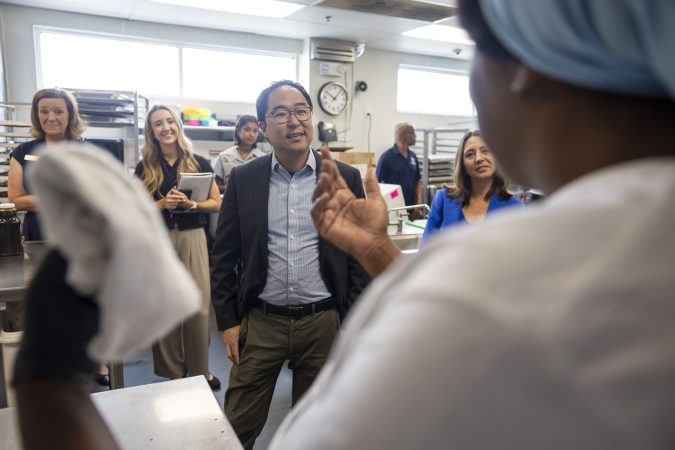
    New Jersey Sen. Andy Kim visits Cathedral Kitchen in Camden, speaking to the workers who provide food for their community and those in need.Tyger Williams / Staff Photographer

    The food assistance cuts are coinciding with the economic fallout from tariffs and the Iran war, Kim noted.

    Nationwide, between January 2025 and January 2026, SNAP rolls decreased by more than 4 million people — from 42 million to 38 million — according to USDA figures.

    In New Jersey, SNAP participation has fallen by more than 50,000 individuals between March 2025 and March of this year, New Jersey Department of Human Services figures show.

    And in Pennsylvania, nearly 90,000 people lost SNAP benefits between July 2025 and April due to new eligibility requirements, according to an analysis by the Pennsylvania Department of Human Services (DHS).

    At the same time, food prices have risen more than 3% in the last year.

    As a result, in Camden, Burlington, Gloucester, and Salem Counties, the number of meals distributed to help those in need grew by 34% over the last four years, according to the Food Bank of South Jersey

    “I know the Camden area,” said Kim, who grew up in nearby Marlton and Cherry Hill. “I’ve seen the struggles that have been here and still persist.”

    The Trump administration has said the cuts it’s made to SNAP, Medicaid, and other programs were necessary to staunch “waste, fraud, and abuse.” It maintains that it’s instituted strict work requirements for SNAP to move more people into the workforce and reduce dependency on government support.

    Kim said many Americans don’t understand that a large number of people who live in poverty also work. “Millions with jobs are still poor, and this country needs a mindset shift to understand that,” Kim said.

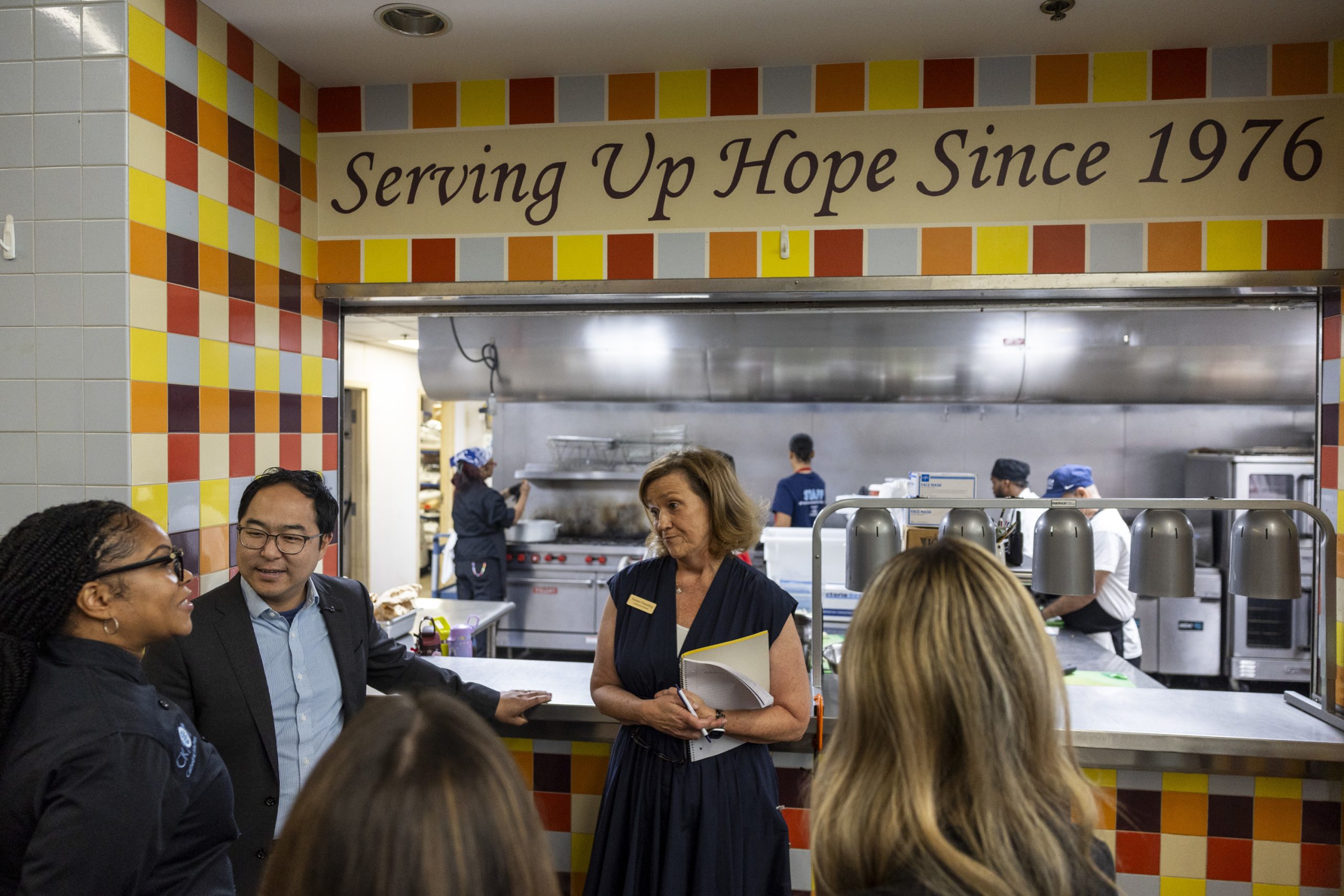
    Sen. Andy Kim (D., N.J.) speaks with Naimah Rutling, executive chef at Cathedral Kitchen in Camden, N.J., on Friday.Tyger Williams / Staff Photographer

    As he continued his Tour of Cathedral Kitchen, Kim invariably found himself in the organization’s actual kitchen, bustling with food workers slicing carrots and onions, preparing for meals ahead.

    Clearly enjoying the moment, Kim said that at home, he makes his own bread, including pizza dough.

    Kim asked executive chef Naimah Rutling what her favorite food is. “Grilled cheese,” she said without hesitating. Kim laughed and said, “I have a 9-year-old and a 10-year-old. About 90% of what we eat is grilled cheese.”

    Before leaving, Kim praised workers in the kitchen for their diligence and dedication in preparing food for those who need it.

    “It gives meaning and purpose to their lives,” he said. “I love the passion I see.”

  • Mullin pushes states to comply with election demands, echoing Trump’s claims about midterm risks

    Mullin pushes states to comply with election demands, echoing Trump’s claims about midterm risks

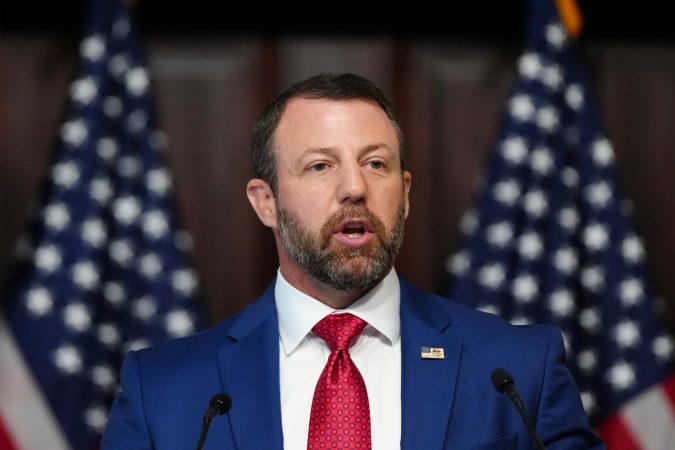
    WASHINGTON — Homeland Security Secretary Markwayne Mullin on Friday warned that state officials could lose funding or face investigations if they fail to go along with President Donald Trump’s election security demands, part of the Republican president’s longstanding attempt to undermine Americans’ confidence in the vote.

    Experts said the threats — issued just months before midterm elections that will determine control of Congress — were likely hollow because Trump’s voting initiatives have been stalled by judges and the Constitution gives states control over how elections are run.

    Nevertheless, Mullin’s remarks, delivered from the White House complex one day after Trump’s primetime address on the topic, could further doubts about election processes and create headaches for states as they prepare for November.

    “We absolutely can build confidence in the American people, but the states have to do their part,” Mullin said.

    Trump continues to falsely claim that Democrat Joe Biden won only because of fraud in 2020, and he’s tried to marshal the powers of the federal government to rewrite that history since he returned to office last year — even though judges and his own attorney general in his first term concluded the election was legitimate.

    Mullin insisted that the president was not relitigating the 2020 election, “although he definitely could at this point.”

    “This is just about exposing what took place and making sure it never happens again,” he said.

    Mullin’s claims of noncitizen voters rely on incomplete data

    During his remarks, Mullin advanced an unsubstantiated claim Trump made Thursday that the federal government had found 250,000 noncitizen voters on the rolls in California, Nevada, New Jersey, and Pennsylvania. He said the Department of Homeland Security’s investigation was conducted using public data, which election experts say is insufficiently detailed and updated to properly identify whether a registered voter is a noncitizen.

    Election officials in California and Pennsylvania said they would review the Trump administration’s findings but noted that they conduct their own voter list maintenance and noncitizen voting is exceedingly rare. Research has supported that finding.

    California Gov. Gavin Newsom, a Democrat, responded to Mullin’s threats with a post on social media.

    “California has free, fair, and secure elections and we will fight for them,” he wrote. “Try us.”

    In Nevada, Secretary of State Cisco Aguilar, also a Democrat, said he was confident in the integrity of the state’s voter file.

    “We are constantly looking at the information to figure out how many registered voters in Nevada don’t have a Social Security number on file,” he said. “We have done significant work to make sure our voter rolls are as clean as possible.”

    Mullin also pledged to aggressively monitor public voter lists to pursue potential voter fraud cases before and after the 2026 election.

    “If you are an illegal or you are voting illegally, we will hunt you down, we will find you, and we will prosecute you,” he said.

    He urged states to participate in DHS’ recently overhauled SAVE program, a federal tool central to the Trump administration’s efforts to nationalize elections. At least 25 states have used it to check their voter rolls since April 2025, after the Trump administration significantly expanded its search abilities, and the Trump administration has demanded that states submit their sensitive voter data to the program to fully audit their voter lists.

    Mullin said if state officials don’t participate in SAVE, they could face fines, penalties, or prison time.

    But the overhauled program’s use was recently blocked by a federal judge over concerns about privacy and wrongful purges of eligible voters. The case included voters whose registrations were wrongly flagged by the program, temporarily threatening their place on the rolls.

    David Becker, the executive director of the nonprofit Center for Election Innovation and Research, said Mullin was making empty threats.

    “Every court to consider the DOJ’s demands — 15 of them to date, six of those judges appointed by President Trump — have confirmed that the federal government cannot legally demand access to states’ sensitive voter data,” he said. “What he’s suggesting is illegal.”

    In addition, Trump’s efforts to pass the SAVE Act, federal legislation that would require proof of citizenship for voter registration, has stalled in the Senate. Republicans don’t have enough votes to change the filibuster rules and pass it without Democratic support.

    Cybersecurity support for election officials diminished

    Mullin also elevated Trump’s concerns about vulnerabilities in electronic voting machines — which voting experts have long acknowledged. While Trump suggested Thursday that these risks make it possible to “rig” the vote, election officials say there are numerous safeguards in place to prevent that, including physical security, voting machine tests, postelection reviews, and paper ballot backups in most of the country.

    To address the concerns, Mullin said the nation’s Cybersecurity and Infrastructure Security Agency, which sits under DHS, would release an updated election infrastructure plan within 30 days and provide cyber threat resources to election officials if they participate in SAVE.

    However, Trump has broadly dismantled the agency’s election security operation.

    CISA was largely absent from its long-held role assisting states in last year’s elections after the Trump administration conducted a review of its election work, placed more than a dozen election-focused staffers on administrative leave, and slashed $10 million from two cybersecurity initiatives, including one dedicated to helping state and local election officials. The agency is also still without a Senate-confirmed director and has cycled through a series of acting leaders.

    Aguilar said his state has stepped up and will protect its own elections in the absence of federal help.

    “The fact that they think they’re going to come in prior to the general election in November and provide us infrastructure, that’s nuts,” he said. “Actions speak louder than words, and in their case, it’s all been talk.”