Blog

  • Ukraine’s Zelensky fires military chief after protests and names a replacement

    Ukraine’s Zelensky fires military chief after protests and names a replacement

    KYIV, Ukraine — President Volodymyr Zelensky on Tuesday fired Gen. Oleksandr Syrskyi as commander-in-chief of Ukraine’s armed forces following days of mass protests in Kyiv and other cities nationwide demanding his removal.

    Zelensky appointed Mykhailo Drapatyi as the new army chief, according to a statement on social media. “Our shared wish is one — victory over the enemy and conditions at the front and in pressure on Russia that would force Russia toward peace,” Zelensky said.

    The Ukrainian leader said he made the decision after a series of meetings with military commanders. They began shortly after protests broke out demanding the reinstatement of former Defense Minister Mykhailo Fedorov, seen by demonstrators as a driver of military modernization, and the removal of Syrskyi, who they said embodied the army’s old, Soviet-style command culture.

    Zelensky thanked Syrskyi for his achievements in Ukraine’s fight against Russia and praised him for the defense of Kyiv and for operations in Kharkiv and Kursk. “I am grateful to Oleksandr Syrskyi and to every one of our warriors for Ukraine’s strong front-line positions,” he said. “I am grateful to Mykhailo Drapatyi for holding that same view.”

    On Tuesday, Zelensky separately met with Fedorov and offered him what he called a respected position in government that would unify the country’s technology sector. But it wasn’t clear if Fedorov accepted the offer and whether the latest moves would satisfy protesters and bring peace to the streets.

  • Democrat set to replace Platner in Maine led state Senate with a temper

    Democrat set to replace Platner in Maine led state Senate with a temper

    Troy Jackson, a powerful Maine legislator now running for Senate, once angrily threw a water bottle in a meeting after he couldn’t persuade a lawmaker to vote his way.

    He yelled at another lawmaker, prompting her to post on social media that straight men were “too emotional” to be in politics. And he cursed and shouted in a meeting with the speaker of Maine’s state House, until she kicked him out of his office.

    During the six years Jackson presided over Maine’s Senate, until 2024, his temper was a feature of his leadership, and one that Democratic lawmakers discussed among themselves as a problem and even raised with the governor.

    That’s according to a portrait of his leadership drawn from interviews with more than two dozen people who spoke to the Washington Post, some on the condition of anonymity to avoid alienating Jackson — now the presumptive Democratic nominee for U.S. Senate — or to avoid being seen as damaging Democrats’ chances of winning the seat.

    His temperament is coming up as he is on the verge of replacing Democratic candidate Graham Platner, who dropped out after a sexual assault allegation he denied. The trail of scandals following Platner, including past inflammatory social media comments, a tattoo resembling a Nazi symbol, and allegations of volatile romantic relationships, made Democrats question whether he had been sufficiently vetted to run in the race, which is crucial to retaking a Senate majority. Jackson is set to clinch the nomination this weekend after his supporters swept elections to serve as delegates to the nominating convention and his opponents dropped out.

    Jackson declined to be interviewed about his temperament and clashes. BJ McCollister, a campaign adviser, acknowledged “moments when he let his frustration get the better of him” but said Jackson took responsibility and apologized when it happened.

    “Troy regrets the moments when disagreements became too heated,” McCollister said, “but passion for the issues he advocates for should not be confused with physical intimidation or bullying.”

    Jackson, a populist and supporter of Sen. Bernie Sanders (I., Vt.) who unsuccessfully ran for governor, is seen by many as the candidate best positioned to inherit and remotivate Platner’s left-leaning, grassroots supporters because he is a fighter for many of the same causes that animated the former nominee’s rise. But some Democrats fear that Jackson’s history of conflicts with women lawmakers could hurt him in the general election against Republican Sen. Susan Collins, given that she has won past elections in the consistently blue state by appealing to independent and left-leaning women.

    Jackson and his allies have acknowledged that he can lose his cool, but they have painted this quality as a byproduct of his passion for policies to improve the lives of people in Maine. Jackson has also picked up endorsements from dozens of former colleagues, including some who have described his temper or had heated arguments with him.

    “There needs to be more passion when you are making the decisions we are making up there,” said Charlotte Warren, a former state representative who wrote the post about straight men not being suited for politics after she clashed with Jackson in 2021. She now supports his Senate run.

    Jackson led the state Senate with a confrontational style, at times berating colleagues who disagreed with him, former colleagues said. And his intensity often veered into behavior that people working in Maine politics at the time characterized as bullying, given that he was the most powerful Democrat in the state Senate.

    Jackson worked with numerous women and frequently clashed with them. The five other top leaders of the state House and Senate were women at the end of his tenure, as was Democratic Gov. Janet Mills.

    One person who participated in meetings with Jackson at the time said that they felt “nervous” and worried to be in the room with him, because his outbursts could escalate so quickly.

    “It was very aggressive,” the person said. “It’s one thing to be screaming when you’re just mad about the world or sad about the world. But his screaming felt like intentional intimidation. So you would feel like then, what else is he going to do?”

    McCollister, the Jackson adviser, said the former Senate president had “heated, often two-way disputes” over legislation he viewed as crucial for the state of Maine.

    “Troy Jackson is passionate and deeply invested in the people and policies he advocates for,” McCollister said.

    In 2024, Jackson quickly became enraged in a meeting in then-House Speaker Rachel Talbot Ross’ office, when the two Democrats disagreed about tactics to pass a gun control measure, two people with knowledge of the meeting said. The fight came about a year after 18 people were killed in a mass shooting in Lewiston, Maine.

    Jackson banged on the table, cursed, and then got close to Talbot Ross’ face after he said he was done talking to the leader, according to two of the people. Talbot Ross, a civil rights advocate and the first Black woman elected to the Maine legislature, kicked him out of her office.

    Another person in the room, connected to the Post by the Jackson campaign, disputed that the former Senate president was face to face with Talbot Ross or that he slammed his hand on a table and cursed. The person acknowledged that the leaders had “a heated argument” over the best way to pass a red-flag law, which would allow relatives to petition a court to temporarily confiscate weapons from someone in their household deemed a risk to themselves or others.

    Despite Democratic majorities in both chambers of the legislature and a Democratic governor, several people said, Democrats in the capital, Augusta, were dismayed that they were not able to accomplish as much as they could have because the leaders did not get along and it was hard to even get them all in a room together.

    “It was so difficult to maneuver because none of them would even speak to each other,” a top Democratic operative in Maine said. “On paper, we had these great majorities, but it was inept. It was very messy.”

    The red flag legislation at the heart of Jackson and Talbot Ross’ disagreement did not become law that session, for example, despite intense pressure from Democratic voters to respond to the 2023 mass shooting at a bowling alley and a bar in Lewiston.

    “When he has an issue that’s important to him, he’ll do whatever it takes to get things to a better place,” said Maureen Terry, who was the second-highest ranking Democrat in the House during the dispute. “I had about 100 meetings [with Jackson], some were really benign and some were a little more volatile, for sure,” she said. “We got some good work done. We also had some misses, for sure.”

    Terry declined to comment on the meeting where Jackson clashed with the speaker. Talbot Ross and the other top leaders in the room — Kristen Cloutier, Mattie Daughtry, and Eloise Vitelli — declined to comment or did not respond to requests for comment.

    Jackson’s supporters tout his work to provide Maine children with universal school meals and to establish paid family and medical leave.

    Jackson, who first ran for office as a Republican before joining the Democratic Party in 2004, was seen as particularly powerful because of his influence over the state budget. Lawmakers did not want to cross him and risk losing out on funding for their projects, three people said.

    Democrats chose him as their leader in part because of his ability to win in rural northern Maine, where their party has struggled. They generally forgave him for his personal opposition to abortion and slightly slower evolution on gay rights because they knew he had a different background and district.

    His 2021 argument with a member of his caucus, then-state Sen. Heather Sanborn, became legend in Augusta, where lawmakers of both parties gossiped about Jackson’s enraged confrontation with her. References to the incidents with sparse details circulated online early in Jackson’s Senate bid.

    Jackson and Sanborn were on opposing sides of a bill aimed at lowering prescription drug prices — Jackson supported the bill, while Sanborn argued it was unconstitutional and would be struck down by the courts. As one meeting wrapped up, Jackson grew angry with Sanborn and confronted her, said three people in the room that day and multiple people briefed on the fight. At one point, he threw a water bottle in anger.

    “He was an inch from her nose, screaming and hollering and haranguing her,” said one of Jackson’s former legislative colleagues who was in the room and did not see any physical contact.

    Multiple former lawmakers recalled that Sanborn left the Senate that day and did not return for several days.

    “It was pretty intense,” the person said. “I haven’t seen anything like that before or since.”

    Sanborn, who is now the Maine public advocate for utility ratepayers, declined to comment.

    Jackson’s campaign adviser acknowledged that the candidate threw a plastic water bottle but said he was not targeting anyone. The campaign offered two witnesses, both of whom endorsed his Senate run, to support his account.

    State Sen. Mark Lawrence, who was present for the confrontation, said the bottle hit a desk before bouncing to the floor. He compared Jackson to a softball player throwing a mitt down or a tennis player throwing a racket.

    Susan Deschambault, a former state senator and Jackson supporter who was in the meeting, did not see the bottle but said that Jackson took a “reprimanding” tone while yelling at Sanborn and disputed that he came close to her face.

    Multiple former colleagues recalled that Jackson angrily left the room after the clash, but that he later apologized to the caucus. Word of the incident traveled quickly through Augusta, because of both that apology and Sanborn’s absence.

    “The next day, of course, the other senators had heard about the incident, and he very much apologized, and I could tell it hurt him a lot,” Deschambault said.

    Jackson, in a 2021 speech on the Senate floor, acknowledged that he would get “emotional” about prescription drug pricing. Sanborn, speaking right after Jackson, said she agreed with the need to lower prices but disagreed with the policy, calling it “not within our power, as a state.”

    “It was unfortunate, the way it happened, but these things happen in a legislature all the time. It is not an indication of Troy’s character,” Lawrence said.

    On the campaign trail, Jackson has said his comfort with challenging people is a strength. At a Friday speech in Portland, the Senate candidate said that to achieve anything, you have “to make the people in charge so uncomfortable that they can’t ignore you anymore.”

    “And that’s something I actually have become pretty good at,” Jackson said.

    Asked by reporters after the event if he had been fully vetted, Jackson said that people “know I wear my heart on my sleeve” and that he is “passionate about the issues,” but that there “isn’t going to be anything” that will come out and sink his campaign.

    Other people Jackson has argued with are supporting his Senate bid. Warren, then a state representative, was so angry at Jackson after a 2021 confrontation in his office that she posted on social media shortly afterward that straight, white men “are too emotional to be in politics.”

    Their dispute, Warren said, began when she went with other women lawmakers to Jackson’s office to try to persuade him to take up a drug decriminalization bill the House had passed. A fight ensued, and Jackson and Warren both cursed and yelled at each other, she recalled.

    “There was nothing physical,” she said. “But we were very forcefully trying to win our way. It is what you do in politics. It wasn’t my finest hour. It wasn’t Troy’s finest hour.”

    Warren said the two “hugged it out,” cried, and made up in Jackson’s office a few weeks later. Now, she says, she’s more focused on how Jackson’s passion could help the state of Maine.

    “Is this guy going to fight for us? Yes, he is,” she said.

  • Hegseth estimates Iran war has cost $37.5B so far

    Hegseth estimates Iran war has cost $37.5B so far

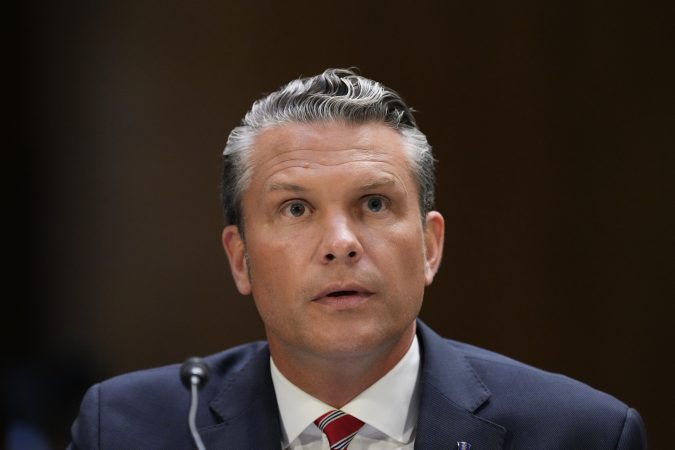
    WASHINGTON — Defense Secretary Pete Hegseth faced questions and protests Tuesday over the U.S. war with Iran, which he estimated has cost $37.5 billion so far, as Republicans prepare a $95 billion GOP budget package to fund the military, along with other White House priorities.

    Hegseth provided the new estimate, up from earlier assessments, during a fiery hearing at the Senate Appropriations Committee. Several times, protesters interrupted Hegseth’s opening remarks, which came days after the Pentagon announced that three more American service members have died in the conflict, bringing the death toll to 17, and that more than 100 have been injured since early July.

    Hegseth said the supplemental war funding is an “urgent, necessary” injection of money, and with President Donald Trump’s proposed $1.5 trillion defense budget a generational investment in the military.

    “Without these funds, we face critical shortfalls,” Hegseth testified.

    But Sen. Patty Murray, the top Democrat on the panel, warned of “another forever war.”

    “This war is now spiraling out of control again,” Murray said in her opening remarks.

    Trump “has told us over 40 times now that a deal is near, and the war will be over soon,” she said. ”But now, he’s asking for $70 billion more — and for us to just trust him it’ll all work out fine.”

    Gen. Dan Caine, chairman of the Joint Chiefs of Staff, and Agriculture Secretary Brooke Rollins were also testifying before the panel. The proposed budget package includes $60 billion and $12 billion for other national security needs, along with $10 billion for farm aid and $10 billion for voting law changes.

    Before the hearing, the White House issued a statement urging support of the budget resolution, “without modification—immediately.”

    War funds make up the bulk of the GOP budget plan

    War funding makes up the bulk of the GOP’s new budget proposal, one last priority package the Republicans hope to launch before lawmakers recess to campaign for the midterm elections that will determine control of Congress. The package aims to help farmers struggling under Trump’s tariffs and to pay for voter law changes that are likely to include new ID requirements, none of it paid for with offsets.

    Most Americans continue to disapprove of how Trump is handling Iran, according to an AP-NORC poll. Gas prices have spiked as Iran works to control oil shipments through the Strait of Hormuz, U.S. munitions are running low from the onslaught of American missile strikes and Trump has shifted away from his own campaign promise not to draw the U.S. into prolonged military conflicts.

    Nevertheless, Trump has showed no signs of backing off the war, and the Republicans have largely refused to confront his strategy, question his objectives, or use Congress’ power of the purse or war powers authority to halt the conflict.

    “The commander in chief and the whole Department of War are working very hard to bring this to a resolution,” said House Speaker Mike Johnson at his weekly news conference Tuesday.

    Trump, in a social media post at the start of the week, asked all House Republicans to vote for the budget resolution.

    Hegseth faces questions over war and his own leadership

    Hegseth appeared before the panel facing a torrent of questions about not only the war, but his own leadership of the department.

    Sen. Susan Collins, the Republican chair of the committee, opened the hearing saying it’s “deeply troubling” that the Pentagon has blocked or denied promotions to various officers, particularly women and minorities.

    “This is likely to discourage well-qualified women and individuals of color from joining our armed forces, thus depriving us of their talent, dedication, and patriotism,” Collins said.

    Sen. Jeanne Shaheen of New Hampshire questioned why Hegseth is asking for more money when the department has not yet spent about half the $150 billion Republicans provided the Pentagon in last year’s big budget bill.

    “If you still have $75 billion available, why are you asking the American people to absorb the cost of a war they don’t support?” asked Shaheen, who is also the top Democrat on the Foreign Relations Committee.

    When Hegseth started describing the “historic nature” of Trump’s military strategy, she cut him off.

    Hegseth later explained that the rest of last year’s budget package would be spent by September, which is the end of this fiscal year.

    Republican Sen. John Kennedy of Louisiana was among several senators demanding answers over the situation in the Strait of Hormuz, asking if Iran will impose tolls on what historically has been an open waterway vital to the flow of oil.

    Caine said, “That’s a hypothetical question, and I don’t know the answer to that.”

    But Kennedy retorted: “Guys, we need straight answers.”

    This week, the Senate will consider another war powers resolution, having voted nearly a dozen times to try to halt the conflict. The House has approved a war powers resolution limiting Trump’s ability to wage war, with a few Republicans joining the Democrats to pass the measure, but no resolution has cleared both chambers to be sent to the president’s desk.

    Republicans work to pass budget over Democratic objections

    The GOP budget proposal is expected to flow through the reconciliation process, which enables the majority to approve the plan on its own, over the objections of Democrats in the minority.

    It’s the same lengthy process Republicans used to approve Trump’s big tax cuts bill last summer, as well as Homeland Security money earlier this year.

    The proposal is headed toward a House vote this week, which would start the process by instructing various committees to begin drafting the legislation. Johnson can afford only a few defectors from his slim majority.

    So far one Republican, Rep. Warren Davidson of Ohio, has objected to the budget plan, warning it will pile on to deficits because the new funding is not being offset with spending reductions elsewhere. Other conservative Republicans share those concerns.

    GOP senators have so far panned the House budget plan, but are waiting to see if Johnson can kickstart the process with this week’s voting.

  • Trump administration says it’s deferring $1B in Medicaid payments to California and Minnesota

    Trump administration says it’s deferring $1B in Medicaid payments to California and Minnesota

    The Trump administration on Tuesday said it was deferring more than $1 billion in Medicaid payments to Minnesota and California because of “suspected fraud and noncompliance,” the latest in a series of punitive steps it has linked to allegations of fraud in mostly Democratic-led states.

    Health Secretary Robert F. Kennedy Jr. said the new actions — which come after previously announced Medicaid funding deferrals in those states — are part of the administration’s strategy to “stop the fraud before it happens” rather than claw back problematic spending after bad actors are prosecuted, as previous administrations had done.

    “We have a duty to stop the payments, demand answers, and then follow the evidence wherever it leads,” Kennedy told a news conference.

    The tactic is part of the administration’s sweeping campaign to show it’s cracking down on fraud and saving taxpayers money when rising healthcare costs and other economic stressors have made affordability a top voter concern in November’s midterm elections.

    In March, Vice President JD Vance launched a new anti-fraud task force at the request of President Donald Trump, bringing together officials from various departments to use data and technology to identify and investigate suspected wrongful use of federal dollars.

    But the federal government hasn’t provided “data or explanation on how the deferral amount was calculated or what it was based on” to Minnesota, said John Connolly, the temporary commissioner and state Medicaid director for Minnesota’s Department of Human Services.

    “Today’s actions show that the federal government is acting again in unprecedented and punitive ways as part of their war on Medicaid and its recipients,” he said in a statement. “Partnership — not politics — is required to stop criminals and protect services for the people who need them.”

    Minnesota’s Democratic Gov. Tim Walz suggested the Republican administration was deferring the funds to pay for Trump’s tax cuts to wealthy Americans. California’s Democratic Gov. Gavin Newsom accused the administration of targeting it for political reasons.

    The Trump administration intensified anti-immigration efforts in Minnesota earlier this year, sending in a robust force of Immigration and Customs Enforcement officers whose actions there caused weeks of counterprotests and included the shooting deaths of two civilians. Trump himself has frequently denounced California as a badly governed state.

    States are facing obstacles because of the actions

    The strategy has led to some false starts and headaches for states.

    In April, for example, the Centers for Medicare & Medicaid Services acknowledged to the Associated Press it made a significant error in figures it used to help justify a fraud probe in New York. Last month, California’s Medicaid director told a congressional committee that CMS had not yet provided “any instances of fraud, waste, or abuse” to the state in its justification of a $1.3 billion Medicaid funding deferral announced in May.

    And in Minnesota, state officials have been executing a thorough corrective action plan to defray CMS concerns that have led the agency to defer some $260 million in federal money and to threaten future cuts.

    “We have cooperated in good faith and proactively engaged the Centers for Medicare and Medicaid Services to first raise the alarm on fraud in Minnesota’s Medicaid program, to effectively investigate fraud, and to institute further safeguards against future misuse of funds,” Connolly said.

    Kennedy didn’t specify in Tuesday’s announcement whether the new deferrals — $867.5 million in federal Medicaid payments to California and $199 million to Minnesota — are in addition to, or overlap with, earlier deferrals announced this year.

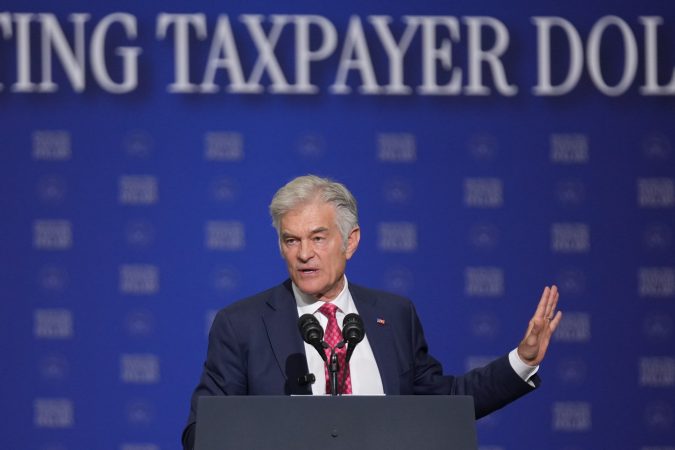
    CMS Administrator Mehmet Oz didn’t provide concrete examples of fraud in the two states in justifying the deferrals. He did mention some patterns the agency noticed that it found questionable, including that some providers were billing for four or more patients at the same time, or billing after the date of a Medicaid beneficiary’s death.

    Oz also highlighted a fast rate of growth in California’s home care program as a reason for concern. California officials have disputed that idea, explaining that the state’s home care program has grown because of an intentional strategy to keep people out of more expensive nursing homes.

    Flow of money could be restored — with documentation

    Kennedy and Oz said states could restart the flow of federal funding by providing documentation proving the payments in question were legitimate.

    A representative for California’s Medicaid program didn’t immediately respond to a request for comment. Officials in the state have previously acknowledged they are working with the federal government to provide the requested information.

    Oz said Minnesota had already returned documents to the federal government and they were being “reevaluated very carefully.”

    Kennedy also suggested Tuesday that he would extend the power to exclude providers from Medicaid, Medicare, and other federal health programs to CMS. In the past, that authority has rested solely with his department’s Office of the Inspector General.

    “This is going to be a full force multiplier,” HHS Inspector General Thomas March Bell told a news conference. “It’s going to create additional momentum, and it’s going to exclude additional bad actors.”

  • Alaska wants to seize a pilot’s plane over a 6-pack of beer. The Supreme Court will hear his case

    Alaska wants to seize a pilot’s plane over a 6-pack of beer. The Supreme Court will hear his case

    WASHINGTON — The Supreme Court agreed Monday to review an Alaska bush pilot’s claims that state authorities have tried to illegally seize his $95,000 airplane after a passenger brought a six-pack of beer on a flight bound for a dry village.

    The pilot, Kenneth Jouppi, sued to block his plane’s seizure after he was convicted of an alcohol-related misdemeanor charge. The Alaska Supreme Court ruled in the state’s favor that Jouppi’s plane was subject to criminal forfeiture laws.

    On Monday, however, the nation’s highest court agreed to hear Jouppi’s case. He argues that taking his 1969 Cessna would violate the Eighth Amendment’s Excessive Fines Clause. Arguments are expected in the fall.

    “I’m in my 80s now, and I’ve been fighting this for over a decade because I see it as my duty to ensure that the Bill of Rights actually means something in protecting against government overreach,” Jouppi said in a statement released by his attorneys at the Institute for Justice.

    In April 2012, Jouppi was preparing to fly a passenger from Fairbanks to a remote village, Beaver, where alcohol was banned. The passenger had packed beer with other groceries in her luggage. State Police troopers searched Jouppi’s plane before it departed and spotted a six-pack of Budweiser in a shopping bag.

    Jouppi, his company, and the passenger were charged with a misdemeanor offense of knowingly transporting an alcoholic beverage into a dry community. The passenger pleaded guilty. A jury convicted Jouppi and the company after a trial. A judge sentenced him to three days in jail.

    Jouppi’s attorneys say Alaska’s high court examined his conduct “purely in abstract terms” and didn’t evaluate whether it was part of a broader pattern of criminal activity. And they say it wasn’t.

    “Few excessive fines cases will present the issue so sharply; a decision upholding the forfeiture of an airplane for a six-pack is a self-recommending candidate for review,” lawyers from the Institute for Justice wrote in their appeal.

    In response, lawyers from the Alaska Attorney General’s office argued that the state Supreme Court’s “fact-bound decision” should be allowed to stand.

    “Courts across the country apply a multifactor test to determine whether a fine or forfeiture is grossly disproportional to the gravity of the offense,” they wrote. “Jouppi does not claim that the four-part standard applied by the Alaska Supreme Court is wrong, only that the court misapplied settled law by giving too much weight to some factors and not enough weight to others.”

    Jouppi’s attorneys argue that the ruling from the state’s highest court conflicts with case law established in other courts, including U.S. Supreme Court precedent.

    “The Excessive Fines Clause was built for cases like this,” they said.

    Alaska’s attorneys said Jouppi hasn’t shown how punishing him with forfeiture of his plane is “grossly disproportional to the gravity of his offense.”

    “Alcohol abuse is a serious problem in rural Alaska, and airplanes are sometimes the only realistic means to commit the crime of alcohol importation,” they wrote.

  • If J. Cole’s Xfinity Mobile Arena tour stop is anything to go by, there is no ‘falling off’ in the cards

    If J. Cole’s Xfinity Mobile Arena tour stop is anything to go by, there is no ‘falling off’ in the cards

    What’s a “fall-off” exactly?

    In the NBA, it’s when a player loses his burst or first-step. Eventually, the player’s statistics dip, injuries pile up, and the calls for retirement become unavoidable.

    Rap superstar J. Cole, whose latest album is called The Fall-Off, loves the sport. His music is coded with basketball references, begging comparisons between an athlete’s dedication on the court to Cole’s in the studio. He, being a basketball player himself, understands how the game can force you to hang up your jersey, even when you feel there’s more to give.

    The same rules don’t apply to the rap game, and Cole knows that. At 41, Cole made a brief pro basketball run in China in April, when most athletes his age have either retired or are in the twilight of their careers.

    The Grammy-winning rapper J. Cole brought Fayetteville to Philly on his “The Fall-Off World Tour” stop at Xfinity Mobile Arena on July 20, 2026.MIKE JONES

    Sure, his new song claims “the fall-off is inevitable,” but unlike an aged NBA star, there’s nothing that points to Cole’s musical decline.

    His first of two shows at Xfinity Mobile Arena on Monday night for “The Fall-Off World Tour” was enough proof.

    Despite his initial claims that The Fall-Off would be his last studio album, the man isn’t showing signs of retiring. He’s relishing the moment, enjoying the ride he’s taken with his fans since 2007’s The Come Up, and occasionally taking personal detours along the way. And to his fans’ delight, he doesn’t let his foot off the gas.

    Cole’s journey to the Xfinity Mobile Arena stage began amid the crowd. Dressed in an unassuming black sweatshirt, he appeared sitting in the stands, in the middle of an arena spotlight. . A video of him appeared on the stage’s LED screen; a title card identified Jermaine Lamarr Cole as the director of the show we were about to witness.

    With “39 Intro” blaring in the arena, Cole walked through the crowd shaking hands with everyone in his path.

    The battered Honda Civic that Cole has kept from his college days, and later drove across the country to promote The Fall-Off’s release, descended onto the stage.

    From then on, Cole was in the driver’s seat.

    With a replica of Fayetteville, N.C.’s historic Market House in the background, he transitioned to hard-hitting odes to his hometown.

    When he performed “Two Six,” a reference to the 26th county in North Carolina where his city lies, the crowd swung their tour-branded towels in the air like fans at an NBA playoff game.

    “We’re only a few songs in, and I can tell this [is] one of them ones,” Cole said less than 10 minutes into his setlist, before breaking into “Safety,” followed by a five-minute monologue about Disc 29, the first half of The Fall-Off.

    The Grammy-winning rapper J. Cole brought Fayetteville to Philly on his “The Fall-Off World Tour” stop at Xfinity Mobile Arena on July 20, 2026.MIKE JONES

    These moments allowed Cole to delve deep into his creative choices and concepts, but it was at the expense of the show’s momentum. He halted tracks like “Life Sentence” to express how much he wants his fans’ marriages to succeed, all to little effect.

    Those lengthy spiels aside, the sequencing of his songs provided a window into Cole’s mind. And with every changing record and shift in the emotional weight, the stage backdrop changed hues — from bright amber on “Two Six” to deep blues and violets on “Poor Thang.”

    The smoke intensified as Cole bounced from 2014’s “A Tale of 2 Citiez” and “Fire Squad,” before pausing to ask the crowd for a quick favor. “Philly, I know y’all don’t play about your sports teams … Whether you’re from PA, Philly, or Jersey, can y’all pretend y’all from Fayetteville for this one song? Is that cool?”

    It didn’t take much convincing.

    He broke into “Old Dog,” and the crowd obliged – erupting as the booming record sprung into rotation.

    As a note of thanks, Cole played a medley of one-off singles and collaborative hits, including “MIDDLE CHILD” and “a lot,” his Grammy-winning collab with 21 Savage.

    He polled the audience to see which of his fans could spit his verse on Benny the Butcher’s “Johnny P’s Caddy,” and one lucky Altoona, Pa., native was handpicked to join him on stage.

    Cole then moved to early mixtape favorites like “Lights Please” and “In the Mourning” before leaping to radio jams like “Work Out” and “Nobody’s Perfect,” all with seamless execution. .

    The crowd rose to their feet for “Wet Dreamz” and hoisted their phone lights to “Love Yourz.”

    Then, after singing “Power Trip” and “Planez,” Cole proceeded to spoil the show’s end.

    “I can’t lie, I have two more songs left,” he declared. “The second is a selfish one. It’s for me.”

    The first was “No Role Modelz,” a track accompanied with an AI video of Cole dressed as former President George W. Bush misstating a common proverb during his 2002 visit to a Nashville high school.

    “Fool me once … shame on you. Fool me — you can’t get fooled again,” Cole rapped, repeated the former president’s words. The obviously doctored video briefly amused the crowd (and Cole).

    The Grammy-winning rapper J. Cole brought Fayetteville to Philly on his “The Fall-Off World Tour” stop at Xfinity Mobile Arena on July 20, 2026.MIKE JONES

    The final song of Cole’s performance was “Quik Stop.” Another personal detour, but a welcome one, no doubt.

    “It’s not a hit record. So, if you want to leave to beat traffic, I get it,” he said. “I got to do this song.”

    Fans barely budged as Cole closed the two-hour show with a record that encapsulates how one encounter with a fan reminded him of his musical existence.

    That closing record was reflective of Cole’s delivery throughout the show.

    He isn’t one for onstage theatrics, synchronized pyrotechnics, or elaborate LED graphics. It’s just him and a microphone, a direct exchange between him and his fans with a few monologues thrown into the mix.

    As it stands, Cole hasn’t lost sight of that connection, and he certainly hasn’t lost his musical touch or command on stage.

    There’s no “falling off” here, only falling forward. Cole is still commanding the rap game, as a great point guard controls the flow of offense.

    And neither he nor his Honda Civic has met its last stop yet.


    Setlist

    • “39 Intro”
    • “Two Six”
    • “Safety”
    • “Run a Train”
    • “Poor Thang”
    • “Legacy”
    • “A Tale of 2 Citiez”
    • “Fire Squad / WHO TF IZ U”
    • “Old Dog”
    • “MIDDLE CHILD”
    • “a lot” (21 Savage Cover)
    • “Johnny P’s Caddy” (Benny the Butcher Cover)
    • “Lights Please”
    • “2Face”
    • “In the Mourning”
    • “Nobody’s Perfect”
    • “Work Out”
    • “Can’t Get Enough”
    • “The London” (Young Thug Cover)
    • “She Knows”
    • “Drum n Bass”
    • “The Let Out”
    • “Bombs in the Ville/Hit the Gas”
    • “Wet Dreamz”
    • “G. O. M. D.”
    • “Life Sentence”
    • “Love Yourz”
    • “Power Trip”
    • “Planez” (Jeremih Cover)
    • “No Role Modelz”
    • “Quik Stop”
  • Smithsonian history museum chief rejects White House criticism of its leaders as radical activists

    Smithsonian history museum chief rejects White House criticism of its leaders as radical activists

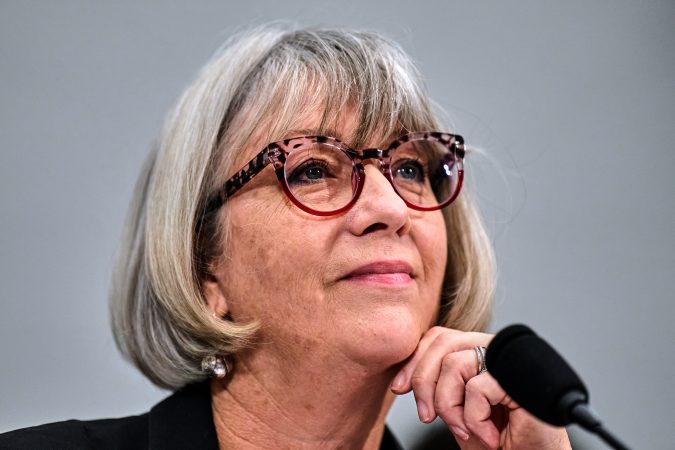
    WASHINGTON — The director of the Smithsonian’s National Museum of American History pushed back Tuesday against a recent White House report that branded the institution’s leadership as radical activists who cannot be trusted.

    The testimony from Anthea M. Hartig came as President Donald Trump has engaged in a broad national effort to reshape the stories of America told by cultural institutions controlled or influenced by the federal government and, in particular, to purge diversity, equity, and inclusion elements from those narratives. Many historians are alarmed by the revisionism.

    “As we continue to fact check the report, we unwaveringly attest that it does not fairly or accurately characterize the full body of work at the museum,” Hartig told a House Oversight subcommittee. “There is always room for improvement. But I also know the beauty and the inspiration and the expertise that lies in our collections, our exhibits, and our programming.”

    Coinciding with the 250th anniversary of American independence, the White House Domestic Policy Council released a report on July Fourth arguing that the museum, a centerpiece of the sprawling Smithsonian complex on the National Mall, doesn’t tell history “in a way that is inspiring, unifying, and worthy of our great republic.”

    Republicans on the panel reiterated some of those concerns on Tuesday.

    “In the museum’s current telling, history is just an ongoing power struggle between oppressors and the oppressed,” said Rep. Tim Burchett (R., Tenn.). “The report makes clear that the museum’s woke exhibits and materials reflect a broader vision held by the museum leadership.”

    Hartig, the first woman to serve as director of the National Museum of American History, said the institution “does not take sides in America’s political debates.” She described the museum’s presentation of the nation’s story as an evolution intended to add voices, not erase history as detractors sometimes argue.

    “When historians talk about reframing a traditional narrative, we don’t mean erasing it,” she said. “We mean adding the evidence, the voices, the objects, that earlier tellings left out, so that more Americans can see themselves reflected in the national story.”

    The White House report argued that the museum “has refused to celebrate the Nation and its history.”

    “It has not created any exhibit dedicated to presenting a general narrative of American history or telling the story of any of our Founding Fathers, the Second Continental Congress, the Declaration of Independence, the American Revolutionary War, or the achievement of independence and the establishment of the constitutional rule of law,” the report said.

    But the museum opened an exhibit in May dubbed “In Pursuit of Life, Liberty, and Happiness” that displays 250 objects throughout the building to celebrate America’s 250th anniversary. The artifacts include the desk used by Thomas Jefferson to draft the Declaration of Independence, a Revolutionary War-era gunboat, and the Star Spangled Banner.

    Some Republicans on the panel on Tuesday acknowledged that the museum displays important material related to the anniversary but argued it was challenging to navigate. Rep. Michael Cloud (R., Texas) said he expected references to the Declaration of Independence to be more prominent during a recent visit.

    “I’m not saying it’s not there, but it’s hard to find,” he said.

    Hartig faced particular scrutiny from Republicans over an exhibit entitled “Girlhood (It’s Complicated),” which included a diary from a 13-year-old exploring issues including gender identity. The museum director said the exhibit, which ran from 2020 through 2023, included a label making clear it was not designed for children.

    Hartig’s future as the museum’s director hung over the hearing. Trump last year said he was firing the longtime leader of the National Portrait Gallery, another Smithsonian museum that, like the National Museum of American History, operates independently of the executive branch. The National Portrait Gallery’s director, Kim Sajet, nonetheless stepped down from the museum in the face of the White House pressure.

    At one point, Burchett asked Hartig why she should continue in her job. She responded simply that overseeing the museum is “the honor of my career.”

  • Rita’s launches specials inspired by ‘The Office’ and ‘Friends’ for a new water ice flavor

    Rita’s launches specials inspired by ‘The Office’ and ‘Friends’ for a new water ice flavor

    Rita’s Italian Ice & Frozen Custard teamed up with cable network TBS to launch a new water ice flavor with some television flair.

    The new flavor? Shirley Temple. The collabs? With some of the network’s most popular TV shows.

    The “Bazinga Blast” — Rita’s Shirley Temple Italian ice topped with edible glitter — is an ode to The Big Bang Theory, for example. “Office Favorite,” with layers of vanilla frozen custard and Shirley Temple Italian ice, pays homage to The Office.

    The “Brain Freeze Misto,” a creamy vanilla frozen custard blended with Shirley Temple Italian ice, is a tribute to Impractical Jokers. Friends inspired the “Central Chiller Ice Blender,” a frozen blended drink made with the Shirley Temple Italian ice and edible glitter. The collaborations are available at participating Rita’s locations until Aug. 23.

    Rita’s is offering a new Shirley Temple flavor collection through Aug. 23.Rita's Italian Ice & Frozen Custard

    “Summer has always been about creating memories with family and friends, and that’s exactly what this partnership is all about,” Carmela Hughley, SVP of marketing insights and innovation at Rita’s Italian Ice & Frozen Custard, said in a news release. “After introducing our new Shirley Temple Ice, we wanted to build an experience that celebrates everything people love about summer — from nostalgic flavors to iconic television moments. Together with TBS, we’re inviting fans everywhere to have A Shirley Good Time.”

    Water ice — number two on Inquirer’s 76 iconic foods list — is the treat of summer, winning big at an Atlantic City festival and making up a key component of water ice martinis, the Philly area cocktail of the season.

    There will also be a mobile way to get those new specials thanks to “A Shirley Good Time Treat Truck Tour.” Throughout the summer, Rita’s and TBS will hit the road with frozen treats, giveaways, and interactive experiences in select markets across the country.

    The Italian ice chain is also offering a chance to win free Rita’s for a year, plus a TBS x Rita’s swag pack, for three fans.

    Customers can enter the TBS and Rita’s Shirley Temple Giveaway by publishing an original photo post or reel on Instagram, Facebook, or TikTok featuring the new Italian ice flavor, tagging Rita’s in the post, and including #AShirleyGoodTime and #RitasItalianIce in the caption.

    “TBS has long been home to the comfort comedies fans turn to again and again, making Rita’s the perfect partner for this summer celebration,” Melissa Chambless, EVP of marketing at Warner Bros. Discovery, said in a statement. “The best partnerships create experiences that extend beyond the screen, and A Shirley Good Time does just that, bringing together iconic comedies, nostalgic flavors, and fan-focused experiences designed to spark connection, laughter, and unforgettable summer memories.”

  • A Philly teacher died after a pole on a Roxborough High’s field fell on her. Her family says the school district should have prevented it.

    A Philly teacher died after a pole on a Roxborough High’s field fell on her. Her family says the school district should have prevented it.

    The Philadelphia School District’s negligence proved fatal for a woman who died when a Roxborough High School utility pole fell and crushed her while she was walking at the school’s athletic complex, a new lawsuit alleges.

    Paula Budin, a retired teacher, was walking on the Roxborough High track on the morning of Dec. 5, 2024, when a 45-foot wooden pole snapped at its base, striking her.

    A passerby found her, bleeding and unresponsive on the ground, and called emergency services, but paramedics could not revive Budin, who died of blunt force trauma injuries from the accident.

    Lawyers for Budin’s family accuse the district — and the Parsons Corp., which was hired by the school system to complete a facilities assessment of all its properties — of negligence. Officials failed to flag rotting at the base of the pole or properly maintain or inspect the pole, the suit said.

    “The School District of Philadelphia knew or should have known of the dangerous condition of the subject pole as there were visible signs of its decay as far back as 2014,” the suit, filed this week in Philadelphia Common Pleas Court, reads. “Despite this actual and/or constructive knowledge and their appreciation of that risk of catastrophic harm, the district did not take corrective action nor did it warn students or members of the community of the risk of catastrophic harm.”

    Budin’s family is seeking financial damages.

    The school district does not comment on pending litigation, spokesperson Naima DeBrest said. Parsons spokesperson Bryce McDevitt said the same.

    Philadelphia’s underfunded school system has a massive footprint — more than 300 buildings and athletic complexes. It has, in some cases, struggled to adequately maintain its facilities.

    Budin, who was 73 when she died, had enjoyed an active lifestyle, her family said. She had taught at Germantown Academy and the Community Partnership School in North Philadelphia before her retirement and was close to her family — two sisters, two nephews, and a niece.

    On the morning of her accident, Budin was walking near her home on Roxborough’s track on Pechin Street, which is generally open to the public. Four poles typically used to hold lighting or security cameras were positioned around the athletic complex.

    Sometime after the accident, the district removed the three remaining poles from the property, the suit said. A subsequent inspection by Budin’s and the district’s lawyers and experts revealed the poles had no inspection tags, indicating they had not been inspected prior to the accident, the suit says.

    Budin’s lawyers say that the pole in question was buried in grass near a storm drain, on a slope near the track. The drain was filled with debris, and because of the condition of the area, no standing water could drain — leading to “lengthy periods of water exposure to the base of the pole at ground level that caused the pole to deteriorate and rot to the point of severe and dangerous decay,” the suit says.

    The other poles were not situated near storm drains, and had no water damage or decay, the suit says.

    Budin’s estate alleges that Parsons, which was hired by the district in 2015 to complete facilities condition assessments of all of its buildings and athletic complexes, is also culpable.

    Parsons inspected the Roxborough fields more than once, issuing multiple reports about the fields, but did not inspect the poles, Budin’s lawyers say.

    “The Parsons defendants knew or should have known they should inspect the utility poles located on the Roxborough athletic track and field yet failed to do so,” the suit reads. “At the time of December 2024 incident, the pole at issue had discoloration at the base and other visible signs of rot which must have been present for a significant period of time.”

  • ‘A rough day’: ESPN, NFL Network layoffs reportedly include Karl Ravech, Tom Pelissero

    ‘A rough day’: ESPN, NFL Network layoffs reportedly include Karl Ravech, Tom Pelissero

    ESPN went through another round of layoffs Tuesday, this time stemming from its purchase of the NFL Network.

    The cuts targeted both on-air talent and behind-the-scenes employees, according to sources not authorized to speak publicly. The layoffs are part of wider cutbacks at Disney previewed in April by CEO Josh D’Amaro and a consolidation of employees at ESPN and the NFL Network.

    In a note to staff Tuesday morning, ESPN chair Jimmy Pitaro said the company was forced to “make some difficult decisions about job impacts” stemming from the merger, and that the moves were intended to “best position us for the future.” Employees were being notified Tuesday, Pitaro said.

    “While most of the job impacts are tied to the acquisition, we will also notify colleagues in other parts of the company today that their positions have been impacted,” Pitaro added.

    ESPN declined to comment.

    Longtime ESPN announcer Karl Ravech is among those reportedly being let go. Brett Davis, Brett Davis-Imagn I

    Karl Ravech, a veteran ESPNer who called the Phillies’ win over the Los Angeles Dodgers Monday night, was among those let go, first reported by The Athletic’s Andrew Marchand.

    Ravech had been with ESPN since 1993, covering baseball for more than three decades in a variety of roles, including as the voice of Sunday Night Baseball for four seasons. He had been slated to call the Little League World Series for ESPN next month.

    NFL Network insider Tom Pelissero was also reportedly among the cuts. He’s been with the network since 2017 and is one of the network’s top insiders, along with Ian Rapoport and Philly native Mike Garafolo.

    Rapoport signed a multiyear contract with ESPN in April.

    ESPN also parted ways with former Carolina Panthers quarterback and NFL MVP Cam Newton, as first reported by Outkick’s Bobby Burack. Newton has been a frequent guest on First Take with Stephen A. Smith during the NFL season.

    Longtime NFL Network analyst Charles Davis, best known for calling NFL games on Fox and CBS, was also let go, according to The Athletic. This fall he’ll replace Gary Danielson as CBS’s lead college football analyst on Big Ten games alongside Brad Nessler.

    Other ESPN staffers reportedly let go were veteran SportsCenter anchor David Lloyd, sports injury analyst Stephania Bell, and ex-NFL linebacker Bart Scott, who cohosted an ESPN radio show in New York City with one-time 94.1 WIP host Chris Carlin.

    Boxing and MMA reporter Andreas Hale and staff writer Dan Hajducky both announced their own layoffs on social media.

    “I’ve been here before. Change is constant, but the outcomes are uncertain,” Hale wrote.

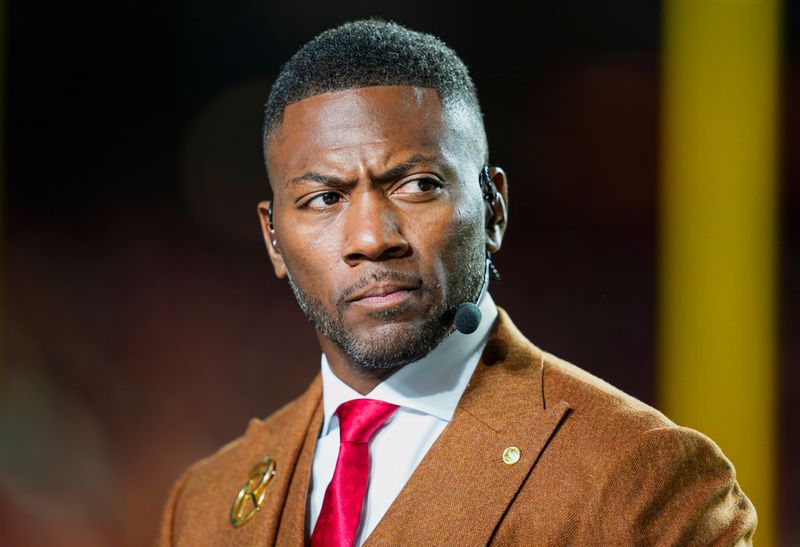
    Ryan Clark pulled from live show

    Ryan Clark was pulled off NFL Live Monday and informed he was being let go. Jay Biggerstaff, Jay Biggerstaff

    Layoffs arrived early for Ryan Clark, the former NFL defender turned TV analyst who has been a star at ESPN for the past decade.

    As first reported by The Athletic, Clark was taken off the air midway through NFL Live on Monday and informed he was being let go after reporters began inquiring about his status with the network.

    In an Instagram post Tuesday morning, Clark described the incident as “madness.”

    “My peace is with God, and my humility comes from within,” Clark wrote. “I’ll continue to build myself so the world can never strip me of what’s real.”

    Clark joined ESPN in 2015 and has been a prominent personality across the network’s NFL programming and daytime shows, including Monday Night Countdown with former Eagles star Jason Kelce.

    In 2024, Clark signed a three-year contract extension after going public with his dissatisfaction with the network

    Stephen A. Smith reacts to cuts

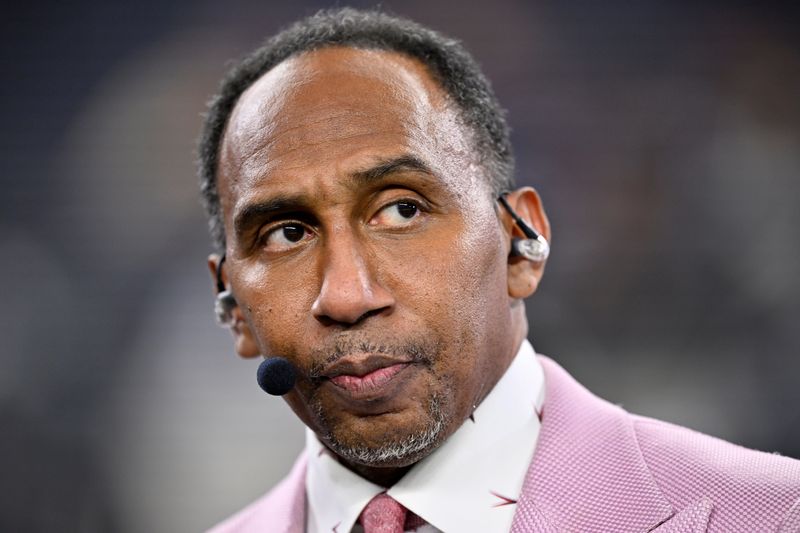
    Longtime ESPN host Stephen A. Smith was particular upset by Ryan Clark’s ouster. Jerome Miron/Imagn

    Longtime ESPN personality and First Take host Stephen A. Smith called it a “rough day” at the network.

    While several regulars from his show were among the cuts, the one-time Inquirer columnist and reporter was particularly irked by Clark’s ouster. Smith described him as “arguably the best NFL analyst in America.”

    “The bosses know I’m not happy about this decision. I’ve made that very, very clear,” Smith said Tuesday afternoon on his SiriusXM show Straight Shooter, adding later in the show, “Was I asked what I thought, what my feeling were? Yes, I was. And of course I said we have to keep him.”

    Smith also spent time outlining all the cutbacks ESPN has gone through dating back to May 2013. A lot of familiar names were forced out the door in the past decade-plus, including Jeff Van Gundy, Jayson Stark, Todd McShay, Zach Lowe, and Ed Werder.

    “This ain’t the days when ESPN could just hire and hire and hire some more without ever having to let go or lay off anybody,” Smith said. “Those days are long gone.”

    ESPN purchased NFL Network and NFL Media in February in a deal valued between $2.5 billion and $3 billion. As part of the deal, all NFL Network staffers and personalities became ESPN employees, and the league took a 10% stake in the network.

    NFL Network isn’t going anywhere, and will still have original programming, including Good Morning Football, and will broadcast a handful of NFL games.

    It’s the second round of layoffs at ESPN in recent months. In the spring, about 30 behind-the-scenes staffers were let go as part of companywide layoffs that reportedly impacted around 1,000 employees.