Tague Davis just got the tattoo on his right arm finished.
The tattoo, which took 13 total hours and two sessions to complete, features the initials of his immediate family members with three clovers — which represents the family’s traditional coat of arms from Ireland. A silhouette of Davis and his father, former major league catcher and Phillies color commentator Ben Davis, playing catch is included at the bottom of the design.
Also included in the tattoo is a verse from the Bible, Matthew 6:34. The verse reads, “Do not worry about tomorrow, tomorrow has its own worries.”
In life and in baseball, the West Chester native looks to live by this passage.
“Once you really break it down, you realize that it’s more of the journey to get to where your next destination is,” Tague Davis said. “That’s where you start reaping the rewards.”
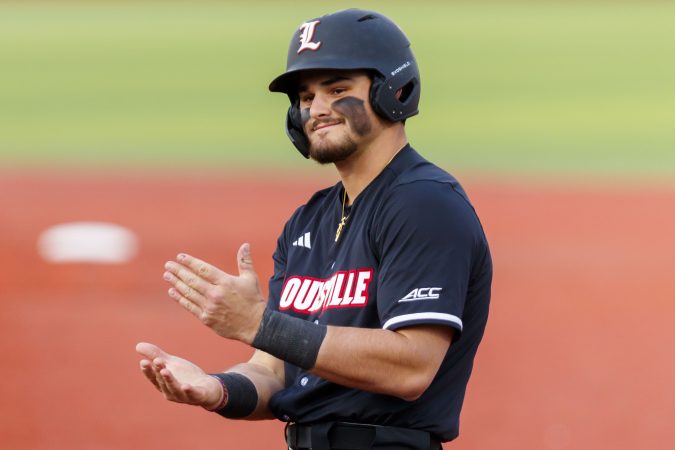
The Louisville first baseman is coming off a stellar sophomore season. In May, Davis was named the Atlantic Coast Conference Baseball Player of the Year. He led the nation with 34 home runs while driving in 98 runs.
This summer, Davis starred for the Cotuit Kettleers of the Cape Cod Baseball League before earning a spot on the USA Baseball collegiate national team. For Team USA, the Malvern Prep alumnus shined in the inaugural World Collegiate Baseball Championship in Taiwan. In a 10-0 win over Korea in the tournament’s semifinals, he logged a game-high three RBIs. Team USA fell short of gold after losing 6-3 to Japan in the final.
Tague Davis competed with USA Baseball’s collegiate national team this summer.Taris Smith / Louisville Athletics
With all this change, Davis has relied on his support system to keep him grounded.
“Luckily and thankfully, there’s always been a role model [in my life] to humble me and show me where I’m supposed to be,” Davis said. “Obviously, faith comes into play with it. Right now at college, coach [Dan McDonnell] is a huge part. He preaches to me every day to be where your feet are, you can’t worry about the next day.”
‘What makes him great’
Louisville baseball coach Dan McDonnell attributes Davis’ success to his worry-free attitude and natural ability to find joy in even strenuous situations.
One story McDonnell loves to tell came during Davis’ freshman campaign. McDonnell opted to pull his pitcher. After he made his way back to the dugout, McDonnell looked back out to the diamond. The infielders were crowded together, discussing how to get out of the inning unscathed. Well, most of them were. Davis was razzing a teammate, flicking the back of his ear.
“As a coach, your first instinct is, ‘Why is this guy not locked in and intense and focused? This is the most crucial part of the game here,’” McDonnell said. “There’s another part that you just kind of [smiles], and you go, ‘That’s what makes him great. He’s a kid. He’s playing the game the way you’re supposed to play it.’”
That was not the only time Davis surprised his coach. During a one-on-one meeting, McDonnell ripped into his star player following a poor two-game stretch. Davis took the criticism “like a champ.” After McDonnell dismissed him, the star player quickly shifted topics — showing the heated conversation was already water under the bridge.
“[Davis] gets off the couch, he gets to my door, and he turns back and smiles,” McDonnell recalled. “He goes, ‘Hey, coach, it’s a great time of the year to go fishing. We need to go fish.’ And he walks out the door.”
Tague Davis says other programs contacted him during the season to see if he had interest in transferring. He rebuffed the offers.Taris Smith / Louisville Athletics
‘Grass ain’t always greener’
Louisville’s 2026 season ended early after an opening-round loss to Pittsburgh in the ACC postseason tournament.
Amid the Cardinals’ disappointing 30-27 season, Davis began receiving attention from other programs — weeks before the season even ended.
“I open my Instagram one day and there was a link,” Davis said. “I clicked on the link and went into my DMs. It was just a list of like four different trucks, like Ford F-350 Lariat — anything you wanted. I’m like, ‘Oh my gosh, what school is this from?’
“You see different stuff like that and you think to yourself, ‘Do I really want this?’ Or do I want to stay at home, and ‘home’ is the easiest answer. So there was a bit of tampering, but you know they’re just doing their job. It’s a shame that the game has come to this.”
Although he found the whole ordeal “flattering,” entering the transfer portal was never in the cards for Davis — who noted he “wasn’t raised like that.” He knows, as his tatted arm will remind him, not to worry about what could be.
“Sometimes the grass ain’t always greener,” Davis said.
Added McDonnell: “We never felt or thought like Tague was necessarily leaving, and that just again goes to show just how well grounded he is. He’s like, ‘I don’t need this status. I don’t need these people gushing over me. Yeah, that money is nice, but that’s not necessarily what I’m chasing.’ It’s just very refreshing in a challenging time in this athletic world.”
With Eagles training camp drawing nearer, The Inquirer is taking a closer look at the more than three dozen new faces who are expected to report along with the rest of the team on July 28.
Player: Uar Bernard
Position: Defensive tackle
Age: 21
Previous experience: Bernard doesn’t have anyprevious experience in football. The Eagles picked him in the seventh round (No. 251 overall) in April’s draft. The native of Nigeria is a product of the NFL’s International Player Pathway program who impressed scouts with his superb athleticism and frame. The 6-foot-4 Bernard boasts just 6% body fat (despite being 306 pounds) and ran the 40-yard dash in 4.63 seconds.
Path to a roster spot: It’s difficult to predict Bernard’s chances of making the roster, since he’s such a raw prospect. The main factor is whether the Eagles want to risk putting him on the practice squad, which would expose him to being signed by other teams. He’ll need to make enough progress to show that he can occupy a roster spot, and the Eagles will need to come out of camp deep enough along the defensive line to allow it to happen.
Fun fact: Bernard’s original plan was to go into real estate. His football journey began when a coach noticed him while playing basketball in his village in Nigeria.
Quotable: “Before the IPP, I was introduced to football by [former NFL player] Osi Umenyiora,” Bernard said on draft night. “So I was back home watching drills about pass rush and walking into the trenches with my coaches back home, learning techniques. … But I can walk into the trenches.”
Carson Steele appeared in all 20 games with the Chiefs in 2024 (regular season and playoffs), including 11 special teams snaps against the Eagles in the Super Bowl. John Bazemore
Player: Carson Steele
Position: Fullback
Age: 23
Previous experience: Steele is entering his third NFL season. He was signed by the Kansas City Chiefs as an undrafted free agent in 2024 after stints at Ball State and UCLA. Steele was waived by the Chiefs last August and spent the season on the practice squad. The Eagles signed him to a reserve/future contract in January.
Path to a roster spot: It remains to be seen whether the Eagles will keep a fullback. Tight end Cameron Latu transitioned to fullback last season and was a decent blocker. Steele also has special teams value — his last meaningful snaps came there against the Eagles in Super Bowl LIX. Steele making the team over Latu rests on his training-camp output and versatility.
Fun fact: Steele had an impactful rookie season, was named an alternate for the Pro Bowl following the 2024 season, and finished second behind Baltimore’s Patrick Ricard for AFC fullbacks in the Pro Bowl voting.
Quotable: “My main goal was to try be like a Swiss Army knife, try to do it all,” Steele told Kansas City reporters in 2024, when describing his play style.
Apartment renters with $1,500 a month to spend can get the equivalent of one or two bedrooms in Pittsburgh, a studio in Philadelphia, or a dorm room in Manhattan.
That’s according to an analysis by RentCafe, a national apartment search website, based on average price per square foot for apartments in properties with 50 or more units.
A monthly rent of $1,500 can get tenants 750 square feet in Pittsburgh, 591 square feet in Philadelphia, and 210 square feet in Manhattan. The national average for this price is 703 square feet — 112 square feet more than in Philadelphia.
In most cities, $1,500 pays for a bit less space this year than last year. Philadelphia renters lost 6 square feet, and Pittsburgh renters lost 18.
Whether a renter paying the same amount gets a spacious home or cramped quarters can depend on the type of rental property, but it mostly depends on the location. Varying costs of living, amounts of available space, and levels of apartment demand and construction all factor into home prices and sizes.
RentCafe’s report, published this month, looks at the 200 largest U.S. cities by population and determines how much apartment space $1,500 in rent pays for in various cities. To calculate the rough number of possible bedrooms, RentCafe looked at each city’s average square footage by bedroom count.
(function(){function e(){window.addEventListener(`message`,function(e){if(e.data[`datawrapper-height`]!==void 0){var t=document.querySelectorAll(`iframe`);for(var n in e.data[`datawrapper-height`])for(var r=0,i;i=t[r];r++)if(i.contentWindow===e.source){var a=e.data[`datawrapper-height`][n]+`px`;i.style.height=a}}})}e()})();
In Philadelphia, $1,500 would not even cover a one-bedroom home in an apartment building.
In places such as Manhattan and Boston, $1,500 a month won’t even pay for a typical studio apartment. That’s the case in 26 cities. Fifteen of them are in high-cost California, including Los Angeles and San Francisco, where $1,500 would get renters 429 square feet and 307 square feet, respectively.
In 97 of the 200 cities RentCafe analyzed, $1,500 a month could pay for apartments with one to two bedrooms. Renters could get a two- to three-bedroom unit in 31 cities, mostly in mid-sized urban centers.
Rent money goes furthest in cities with relatively low costs in the South and Midwest. In McAllen, Texas, a renter with $1,500 a month to spend can get a 1,378-square-foot apartment, enough space for three or four bedrooms. In this city, apartment rents average just under $1,000.
A soft pretzel from Philly Pretzel Factory currently has about 12 grams of protein.
But sometime soon, you will be able to buy one with much more.
The company says it is in the early stages of developing a high-protein pretzel, one of several new products it hopes will attract consumers concerned about weight loss.
“Obviously, the trend is protein,” said company president Marty Ferrill. “Even people who are on GLP-1s, they’re looking for more protein-rich foods.”
Philly Pretzel Factory is just one of the area companies changing their products to accommodate consumers who are eating less and “protein-maxxing.” The viral nutrition trend refers to an increasing obsession with eating more protein based on the idea that it builds muscle.
A recent Gallup survey reported approximately one in eight U.S. adults are taking appetite-suppressing GLP-1 medications.
GLP-1 drugs such as Ozempic and Wegovy were initially created to treat individuals with type 2 diabetes by regulating blood sugar levels, but their hunger-suppressing effects have spurred wider adoption for weight loss. A JPMorgan report estimates that by 2030, up to 30 million Americans may be using GLP-1 medications, especially as pill formats become available.
As the medications rise in popularity and appetites shrink, the food industry could face headwinds. A recent study found that within six months of starting a GLP-1 medication, households with at least one GLP-user reduce their annual grocery spending by $390 on average.
But this isn’t the industry’s first rodeo.
The low-fat craze of the 1980s and the carb-phobic diets of the 2000s also forced food brands to rethink their products.
“Until there’s a magic pill where you just don’t have to eat, period, the food industry will respond,” said Ernest Baskin, chair of St. Joseph’s University’s Food, Pharma, and Healthcare Department. “They’re going to change their product to appeal to the next generation of consumers.”
Making every bite count
Philly Pretzel Factory’s protein-enriched pretzels are an example of functional foods, which are foods that have been formulated to contain added nutrients and health-enhancing substances.
Functional foods can be especially important for GLP-1 users, who eat smaller portions but still require their necessary vitamins and minerals.
“In a world where you’re not eating as much, you want everything to count,” said Baskin.
Campbell’s, the Camden-based food and snack giant, has ventured into the functional foods market with a recent launch of five protein soups that offer 20 grams of protein per can.
The Campbell’s Company launched five new protein soups with 20 grams of protein per can.The Campbell's Company
The company also released a new protein-fortified snack option with Snyder’s of Hanover’s harvest wheat pretzelsticks, which offer 6 grams of protein per serving. (As opposed to 3 grams for a standard pretzel stick serving.)
The options “give consumers choices that fit their nutritional goals and lifestyles while helping get more out of every bite,” says Dave Chalk, Campbell’s vice president of enterprise insights and analytics.
The recipes of popular Philly foods are changing too, as consumers prioritize better-for-you ingredients. In addition to the protein pretzel at Philly Pretzel Factory, their regular pretzels are undergoing a “clean label” reformulation.
Ferrill said the company is ensuring consistent taste while changing some components: using unbleached flour instead of bleached, removing the additive potassium bromate, and replacing whey protein with a plant-based substitute. That means the franchise’s iconic pretzels will become vegan this year.
“The urgency is [greater] now than it was three years ago,” said Ferrill, noting that the company has been developing the clean-label pretzel for years.
Greater control over meals and portions
At Honeygrow, a fast-casual chain that offers salads and stir-fries, customization is another option for GLP-1 users, said Todd Miller, senior vice president of marketing.
More Honeygrow customers are choosing whole-wheat noodles — which offer 17 grams of fiber and 13 grams of protein — for their stir-fries, or crafting more vegetable-forward meals, said Miller.
A chicken parm stir-fry at Honeygrow is at the 11th Street location in Philadelphia in 2024.Jessica Griffin / Staff Photographer
“What is becoming increasingly important is the ability to personalize a meal around the nutrients and portions that matter to each customer,” Miller said.
Campbell’s is banking on similar personalization preferences. Some research shows GLP-1 users are dining out less tocontrol portion sizes and ingredients. With brands like Pacific Foods, Swanson, and Rao’s under the Campbell’s umbrella, the company’s cooking essentials business is benefiting.
“The biggest opportunity within Campbell’s portfolio is the confidence consumers have gained with cooking at home,” Chalk said.
People still want good food
Despite moving toward healthier choices, many food companies are serious about not compromising flavor.
For Honeygrow, that means continually introducing limited-time offers and keeping up to date with new ingredients to attract customers. Currently, Honeygrow’s seasonal summer menu includes a ginger scallion stir-fry and a pomegranate acai salad.
“Even though you’re on a GLP-1, that doesn’t mean that you don’t want delicious food,” said Miller.
Taste matters. When choosing what to eat, people are looking for enjoyment, comfort, and connection, said Ami Lawson, managing director of food and beverage marketing agency Quench.
“The brands that will win aren’t the ones chasing the GLP-1 trend, they’re the ones delivering foods that people genuinely feel are worth eating,” said Lawson.
Nostalgia and memory also play a significant role in food choice. Take soft pretzels, a Philly food staple.
“If you grew up eating pretzels, you’re probably going to give up other things before you give up your pretzels,” Ferrill, of Philly Pretzel Factory, said.
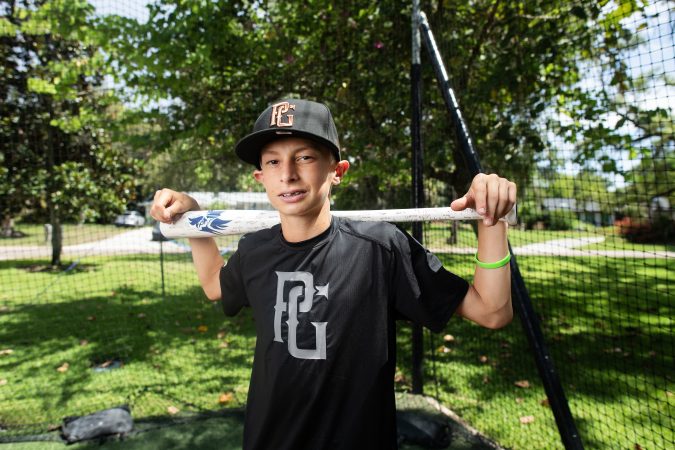
Kyle Kendrick used to walk into the batting cage he built in his Clearwater, Fla., backyard and just stand in it. He dreamed of having something like this when he was a kid and the former Phillies pitcher was in awe of what he had.
“I would just look around and say, ‘This is sweet,’” said Kendrick, a member of the Phillies’ starting rotation from 2007-14.
It was there that he spent hours throwing batting practice to his son, Kyle Jr., as the son fell in love with the dad’s game. Kendrick even installed lights so his boy could keep swinging. The batting cage became their place.
“They grow up fast,” Kendrick said. “Pretty soon, he’ll be in high school and then college, and he won’t want to go into the cage anymore.”
For a few weeks last fall, the dad wasn’t sure if his son would ever be able to get back in the cage after the 12-year-old was hit by a car driving nearly 50 mph while he was walking across the street near his home.
Kyle Jr. broke both femurs, had his mouth wired shut, and spent a week in the hospital after six hours of surgery. The Kendricks first feared their son wouldn’t make it. Next, they wondered if he’d ever play baseball again. And then they watched him leave his wheelchair to get back into the batting cage with his dad.
The son sat on a bucket in the cage 18 days after the crash while his dad bounced baseballs toward him. He nabbed each hopping grounder with ease and fired throws back to his dad. There was no fear, his mother Stephenie said. Kyle Jr. was back in the cage.
“I was just so proud,” his mom said. “This kid was just hit by a car and he wasn’t even flinching. It didn’t faze him. He was so driven to get back. He was on that bucket swinging the bat. He was catching and throwing. He was fielding ground balls. I was amazed.”
‘Oh my gosh’
Kyle Kendrick kept calling his son’s phone, wondering where he was after he rode his bike that Sunday to fish in a nearby lake. Finally, a police officer answered. He told Kendrick that his son was in a crash and he had to get there fast.
“I actually heard the sirens from my house,” Kendrick said. “I was like ‘Oh, my gosh.’”
Kyle Jr. was riding his bike home when he stopped at an intersection so he could walk his bike across the street. A driver waved him on and the boy started to cross. But another car did not see him. The boy was launched into the air before crashing down onto the car and striking the pavement. The driver was not charged. There were ambulances, firefighters, and a crowd of people there when the dad arrived. It was the worst experience of his life, Kendrick said.
He called his wife, who was driving home from a meeting for their daughter’s volleyball team.
“He couldn’t speak,” Stephenie said. “The cop got on the phone and said they had to helicopter him to the hospital. I said, ‘Helicopter him there? Why? Why can’t he take an ambulance? Is he going to survive? How bad is it?”
Former MLB pitcher Kyle Kendrick poses for a portrait with his wife, Stephenie LaGrossa Kendrick, and their children, Sophia, Kyle Jr., and Sloane at their home in Florida. Octavio Jones / For The Inquirer
The son underwent a bevy of X-rays and MRIs at Johns Hopkins All Children’s Hospital in St. Petersburg, Fla., where doctors learned that he broke both femurs but somehow did not have a spinal or head injury. Even his teeth were mostly intact as the boy lost just one.
The crash happened three years after Stephenie’s brother Chris died. Kyle Jr. was close to his Uncle Chris, who loved to fish. She asked her late brother on the way to the hospital to pull some strings and limit the damage.
“I swear he had a hand in it,” Stephenie said. “Every doctor said, ‘He shouldn’t have survived this. This is a miracle.’”
The boy’s face looked like he had gone 12 rounds when his mom saw him in the hospital. His jaw was broken but he still managed to say, “Hi, mom.” Stephenie told her son to show everyone how tough he was. He did just that.
He screamed when his legs were pulled into traction but he fought through it. His pain medication was limited overnight to prepare for surgery in the morning and the boy bore the discomfort. He was tough.
“He really is very tough,” his mom said. “And it’s mentally tough.”
The parents sat in the hospital cafeteria for 6 hours while their son underwent surgery.
“That was the longest and most emotional time,” Kendrick said. “It’s six hours of surgery and he’s under for a long time. As a parent, it’s the worst.”
Former Phillies pitcher Kyle Kendrick thought his son was going to die. Six months later, Kyle Jr. is playing baseball again after being hit by a speeding car.Octavio Jones / For The Inquirer
The surgeon installed metal rods into Kyle Jr.’s femurs through his hips and was so precise that he left the tiniest scar. The doctor told the parents that their son would heal in six months. That sounded a little optimistic, the dad thought. But they were clean breaks, the doctor said. There were no growth plate issues. The boy would bounce back. He got lucky, the doctor said.
The boy stayed in the hospital for a week with his mom while dad stayed at home with their daughters, Sophia and Sloane. Everyone at the hospital was great, mom said. Well, everyone except for the people who kept removing and inserting the catheter.
“I was like, ‘OK. No more students are coming in to try the catheter. We’re going to use your best person who knows how to use a catheter and that’s what we’re going to do,’” said Stephenie, who lives in Florida but still has the accent of the girl from Glenolden who attended Archbishop Prendergast. “I pulled out a whole Delco thing there. You don’t even know. I was real nice until I was like, ‘That’s enough. Now leave the friggin’ catheter in until he can pee on his own.’”
‘Back on the horse’
Kyle Jr. returned to school in early December, less than a month after the crash. His buddies at Skycrest Christian School pushed the sixth grader’s wheelchair around the halls and carried his books. He went snowboarding just three weeks after surgery. The doctor was right.
Kendrick took his son to fish at the spot where he was headed that Sunday and they went back to the scene of the crash. He bought his son a new bike.
One of their daughters used to ride horses, and the trainer always put her right back on the horse if she fell off. There’s no guide instructing parents how to deal with a crash like this. So the Kendricks did what they thought was best.
“We got right back on the horse,” Stephenie said. “He’s a badass. He really is.”
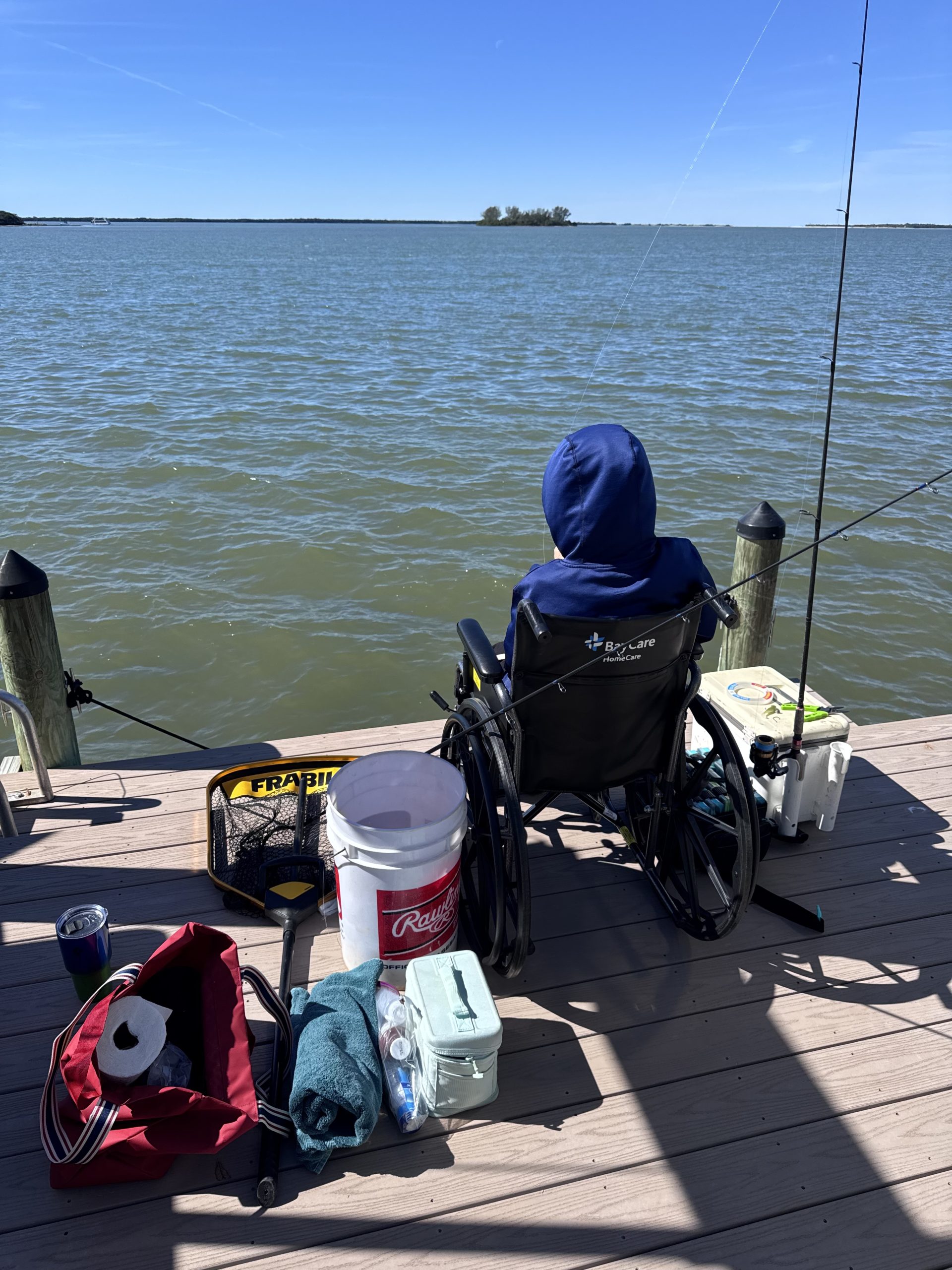
Kyle Kendrick Jr. fishes from his wheelchair weeks after he was hit by a car while heading home from fishing in the same spot. His dad, former Phillies pitcher Kyle Kendrick, drove him back to the spot.Kyle Kendrick
And they got the boy in the cage. Kyle Jr.’s travel team — which is coached by his dad — had a trip planned for June to a tournament in Cooperstown, N.Y. The fields are named after big-league parks and nestled in the valley near the Baseball Hall of Fame. This was a trip the father and son had been looking forward to. But Kendrick worried his son wouldn’t be able to make it.
He played his first game for the Florida Burn in January as his dad used him as a designated hitter to keep him out of the field. His Burn teammates wore his number on their batting helmets and some of the other parents cried. He was back, but the Kendricks noticed their son’s confidence wasn’t where it used to be.
He had missed weeks of baseball and had trouble timing his swing. They couldn’t fault him if he was tentative still from the crash. The father and son kept working.
“He’s a good coach,” the son said. “It’s a lot of fun to hit with him and then to have him as my coach. Just working with him and learning what he learned is really cool. It’s special.”
Kyle Kendrick said his son being “able to play at 100 percent after this is a miracle.”
“When I got back out there with him, I said, ‘This is so cool,’” the father said. “He could’ve passed. And now to still play? He could’ve been paralyzed. Just to be out there doing baseball stuff is unbelievable.
“I really didn’t think he’d be able to play again. I didn’t know how he’d move. A lot of thoughts go through your mind. For him to come back, he looks normal if not better. We’re very lucky and grateful. It’s cool to be back with him. To see him on the field was awesome for me.”
He made it to Cooperstown and the team’s first game was delayed until near midnight. The boys didn’t play that night until way past bedtime. They were a bunch of friends on a baseball trip. They slept in bunks for a week, traded pins, ordered pizza, went to the Hall of Fame, and watched fireworks. Playing late at night was perfect.
It became even better when young Kyle got hold of a pitch and drove it to center field. His first homer came seven months after a crash that gave his parents the worst scare of their lives.
“It was freezing cold,” Kyle Jr. said. “I could hardly feel my hands. I got a high pitch and I just swung up at it.”
He circled the bases and his teammates — the same kids who left a giant banner of support on his lawn when he was in the hospital — rushed toward home plate. Kyle Jr. slowed his jog as he neared the gang of kids and skipped onto home plate as his buddies went wild.
“That felt so good,” Kyle Jr. said. “Everyone was pumped. Everyone was jumping because it was my first one.”
A day later, he did it again. It was “oppo taco,” he said of his opposite-field homer.
The kid who fell in love with baseball in the batting cage his dad built was back doing what he loved.
“I just love to play,“ he said. ”It’s a lot of fun.”
Children’s Hospital of Philadelphia researcher Christopher Forrest has spent nearly a decade training early-career scholars on how to design studies that improve care for kids with congenital heart disease, stroke, and influenza.
That work ended last month, when he had to shut down his PEDSnet Scholars program. The federal funding designated for it stopped coming last fall.
Forrest received official notice last week that the Agency for Healthcare Research and Quality (AHRQ) had canceled his $5 million grant — originally intended to last through 2028. The letter gave no specific reason, stating only that continuing the grant was not “in the best interest of the Federal Government.”
PEDSnet Scholars trained researchers to study how healthcare systems can be organized and financed to improve health outcomes. It was one of 16 such programs nationwide funded by AHRQ. Another program site, located at the University of Pennsylvania, received an identical cancellation notice last week from AHRQ.
“These are not controversial topics,” Forrest said.
Eighty-two affected grants totaling an estimated $211.6 million as of Tuesday had come to the attention of AcademyHealth, a nonprofit that supports health researchersand has been tracking AHRQ grant cancellations. Those include funding for research projects, career development, training programs, and centers.
Some researchers received letters sayingtheir work did not align with the agency or federal government’s priorities, followed by a list of the priorities, AcademyHealth president Aaron Carroll said.
However, many of these projects appear to be directly aligned with priorities, he said.
One involved a randomized trial of antibiotic stewardship — efforts to encourage careful and responsible use of antibioticsto avoid resistance — across 40 hospitals. Yet in the letter canceling it, antibiotic resistance was listed as a priority.
“It can’t possibly be that all of these grants that are seeking to improve the quality, safety, and efficiency, and patient-centeredness of healthcare delivery are all incompatible with this or any other administration’s priorities,” said Scott Halpern, a Penn health services researcher whose funding was alsocanceled.
The Department of Health and Human Services did not respond to requests for an exact count of the grants impacted, saying in a statement that the AHRQ director determines “whether continuation funding is in the best interest of the federal government.”
“To be clear, these grants were not terminated — they were not awarded continued funding,” the HHS statement said.
‘Incredibly demoralizing’
In late 2025, Halpern had planned to hire a new staff member for the Penn PORTAL program, one of the 16 AHRQ-funded training programs, separately funded from CHOP’s program.
His team identified a candidate, but — unable to access funding from their $5 million grant since the fall — delayed extending an offer.
The position was ultimately eliminated. They also rescinded offers to train new scholars in the program.
Halpern received his official notice last week that his grant, set to continue into 2028, was canceled. He had only spent $1.5 million of it so far.
Instead of having 10 trainees this month as planned, the Penn program has zero.
“To not have the resources to support the people who will make a difference in the future is incredibly demoralizing,” Halpern said.
He drew on philanthropic resources and a roughly $150,000 commitment from Penn Medicine to finish training his first cohort. However, the second cohort of scholars was stopped midway.
As a result, projects on improving translation services for hospitalized patients and expanding access to hormone therapy for menopausal women were canceled.
Jay Bhattacharya (left), director of the National Institutes of Health, and Sen. David McCormick (R., Pa.) speak to the media in March, after touring University of Pennsylvania facilities to highlight NIH-funded research in Philadelphia.Jose F. Moreno / Staff Photographer
Grant cancellations from AHRQ will have longstanding impacts on advancing healthcare in the United States, a Penn Medicine spokesperson said in a statement, declining to answer more specific questions.
“Some research projects at Penn Medicine have felt those cuts at their core and impactful work now cannot progress as planned,” the statement said.
CHOP did not respond to a request for comment.
In limbo
Penn researcher Jaya Aysola had not heard as of Tuesday whether her AHRQ grant is canceled, but she assumes the notice is coming.
She had received a $3.8 million grant to serve as a coordinating center for the 16 training centers starting in 2024. The grant should have been renewed for its second year last November, but that didn’t happen.
At first, she was told by the agency that it was delayed due to the government shutdown. Then she was told it was held up due to a lawsuit filed by the Society of General Internal Medicine, a physicians group, in August over AHRQ shutting down its grantmaking program.
Since then, “it’s been radio silence,” she said.
All but roughly $300,000 of her grant remains unused. Unable to access funds since last fall, she had relied on bridge funding from the university to support staff and research faculty.
When that funding ended earlier this year, she had to find new jobs and projects for three of her full-time employees, as well as three part-time employees.
“We already shut down most of the operations,” Aysola said.
The work she has done since has largely been pro bono with her personal time and limited internal funding.
Aysola convened a meeting this spring with the 16 AHRQ-funded training centers to discuss how other programs were bridging the gap in funding. Most had paused on accepting new trainees, and have prioritized finishing the current cohort’s work.
A July 2025 group photo featuring scholars and faculty leaders in the Penn PORTAL program, which was affected by recent cuts to AHRQ grants.Courtesy of Scott Halpern
At Halpern’s Penn PORTAL, the first cohort of scholars’ projects have already been implemented. Across the Penn health system, they “are yielding improvements in the patient experience of care,” Halpern said.
None of the projects led by later cohorts, who would have been trained had the full five years of funding been maintained, are likely to see the light of day, he added.
He hopes to bring awareness to what he considers an inappropriate cancellation of AHRQ funding. Many organizations are exploring options in terms of advocacy and potentially legal engagement, he added.
CHOP’s Forrest estimates 30 faculty will never be trained due to PEDSnet Scholars losing its grant funding.
“It’s very sad because it’s been so instrumental to my career, and I had hoped that it would be instrumental to the career of many of our junior faculty,” Forrest said.
To everyone who has hankered for a Mother Rucker burger at River Twice on a day other than a Monday, Amanda Rucker and chef Randy Rucker have a solution.
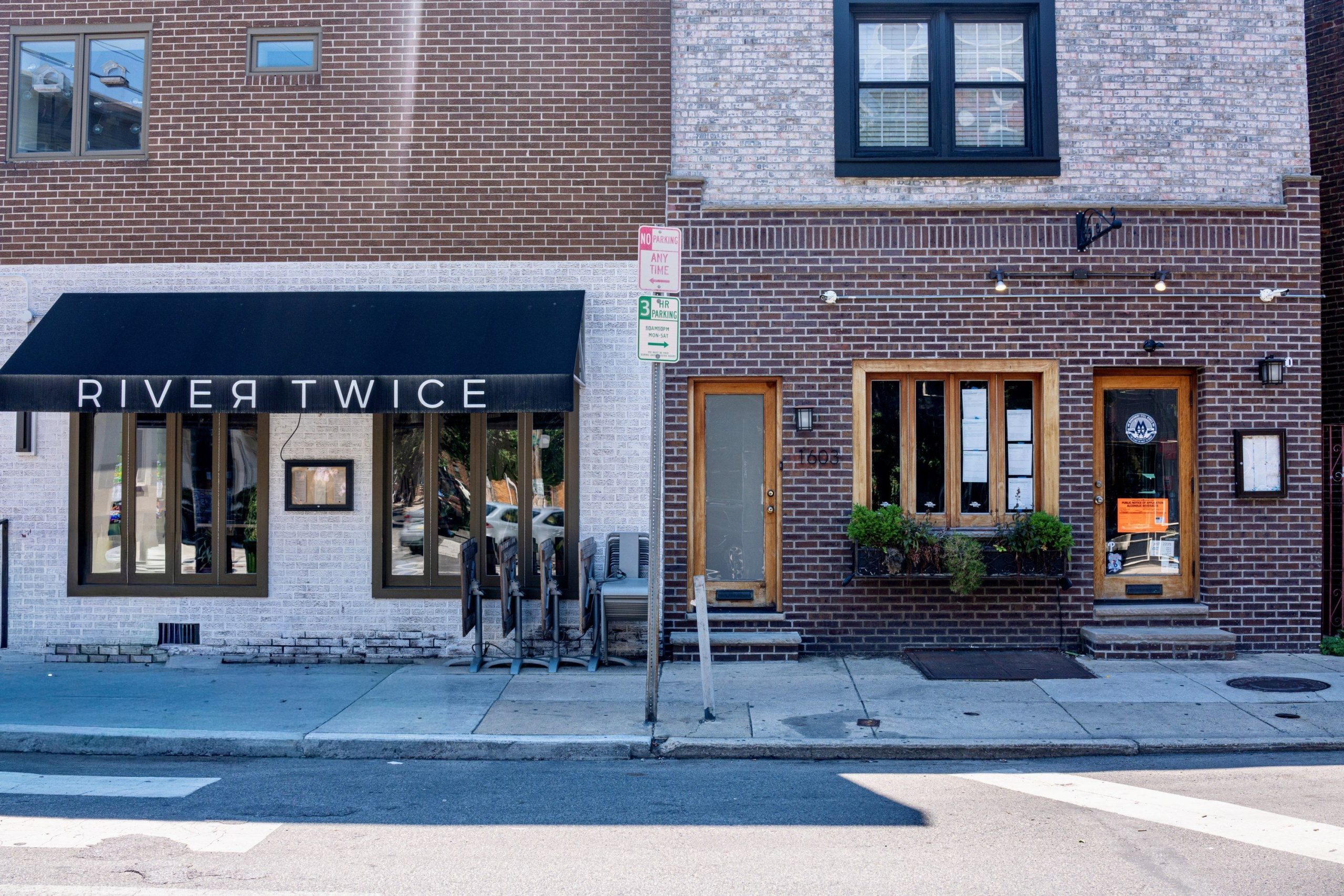
River Twice will expand this fall into the former Manatawny Still Works space next door, adding a full-service bar to the dining room and chef’s counter at Tasker Street and East Passyunk Avenue.
River Twice is expanding next door into 1603 E. Passyunk Ave., the former Manatawny Still Works.Mike Prince
The Ruckers are targeting a September debut for the space at 1603 E. Passyunk Ave., which connects to the Michelin-recommended restaurant by a passageway. Though the renovation will eliminate a few seats in the existing dining room, the project will add 24 seats overall, including a 13-seat bar, a standing drink rail, a temperature-controlled wine display, and a second restroom.
After Manatawny announced last summer that it was closing its tasting rooms, the landlord Passyunk Avenue Revitalization Corp. approached the Ruckers about taking over. “We live in the neighborhood with our kids, and it felt like a chance to plant even deeper roots here,” Amanda Rucker said.
For Randy Rucker, the biggest attraction was the opportunity to broaden the restaurant’s appeal.
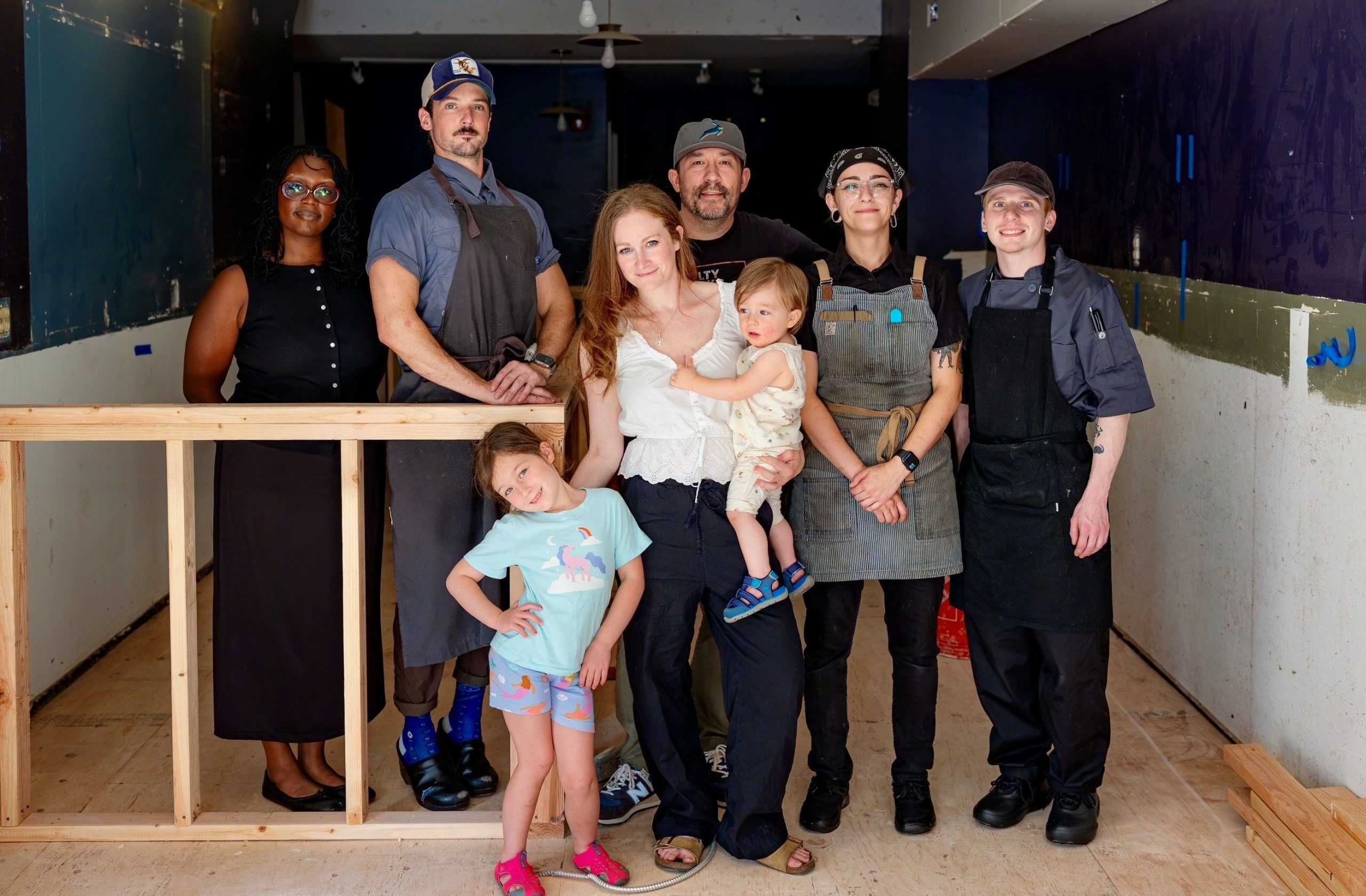
River Twice owners Randy and Amanda Rucker (center, with children Ruby and Stiles), with Jhazmyn Wallace, Jeff McConnell, Autumn Impalli, and Bret Whartenby.Mike Prince
“River Twice has always been a commitment,” he said. “People come in for a multicourse dining experience. Having a dedicated bar program lets us serve people who just want to stop in for a drink and a snack without committing to the tasting menu.”
The addition will remain part of River Twice, not a separate concept. It will have its own cocktail program and an à la carte menu, while guests seated at the bar will also be able to order the tasting menu.
Besides the Mother Rucker burger — two quarter-pound patties from Allen Bros. with American cheese, everything-spiced mayo, and pickled onions on a seeded Mighty Bread Co. bun, offered now only on Mondays — the bar menu will include shrimp toast with uni, ricotta beignets, nightly oyster crudo, and rotating cheese selections from the Farm at Doe Run. General manager/beverage director Jhazmyn Wallace will oversee the cocktail program.
River Twice’s tasting menu will also expand from four to five courses, beginning with canapés.
The project gives Amanda Rucker her largest artistic canvas yet. After designing the interiors of both River Twice and their second restaurant, Rittenhouse’s Little Water, she is painting a mural that will span the entire south wall of the new bar.
The bar is expected to operate Thursday through Monday beginning at 5 p.m.
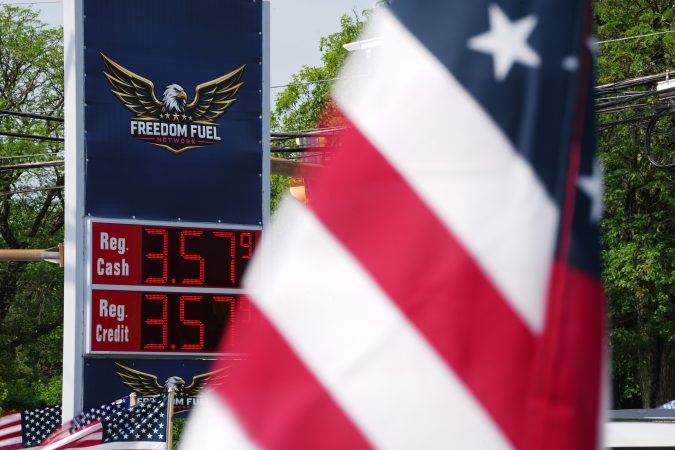
WASHINGTON — President Donald Trump and his White House have enthusiastically promoted the Freedom Fuel Network, a chain of star-spangled convenience stores selling gas at $3.47 per gallon in honor of the 47th president.
Untangling exactly who is behind the Philadelphia-area venture has proven difficult. Records indicate the chain, which was launched last month, is run by a disparate collection of businessmen that includes an NFL kicking coach, a GOP fundraiser and a New Jersey entrepreneur who this year was ordered, along with his brother, to pay civil damages for unlawfully taking more than 200,000 gallons of fuel.
How the stations got Trump’s attention remains a mystery, and the four businessmen declined to — or could not be reached for — comment.
What is clear: Trump loved the idea of cheaper gas. The president celebrated the network’s gas prices just before the busy July 4th travel period as consumers were grappling with higher oil prices sparked by the war with Iran.
“I am pleased to announce that a VERY smart Retailer, located throughout the Northeast, is stepping up,” Trump wrote about the company on his Truth Social platform on July 1. “America has never been stronger than it is now, and Gas Prices will soon be back to the Record Low Prices Americans enjoyed at the pump before our very successful ‘excursion’ in Iran.”
The White House followed up with a post on X a few days later that heralded the opening of the first Freedom Fuel station and produced a video showing patrons waving wads of cash and thanking Trump for reducing the prices outside a store festooned with American flags and a golden eagle logo.
That station, located in Dresher, Pennsylvania, is owned by a subsidiary of Blue Owl Capital, an investment firm, records show. Trump has owned up to $25 million worth of Blue Owl stock, though his most recent financial disclosure says he has sold almost all of that stake.
The White House denied Trump had any personal connection to the venture, but declined to say how the project was developed. It acknowledged having discussions with individuals who set up the network of gas stations.
“The Administration is not involved in the company, nor has the Administration given the company any funding. There is no other entity or person subsidizing the lower gasoline costs,” the White House wrote in a statement.
Blue Owl owns about a third of the Freedom Fuel properties, though the company said it leases the stores to independent contractors and “is not involved in the tenant’s operations or business decisions.”
Fourteen stations in the 25-location network are controlled by companies linked to Shamikh and Syed Kazmi, two brothers who have been dogged by a string of civil misconduct accusations, including fraud, records show.
Shamikh Kazmi is leasing eight of those stations from Blue Owl, according to state records and people familiar with the businesses who spoke on condition of anonymity to discuss the matter. The Associated Press was able to link the brothers to six other Freedom Network locations through records that show they listed those stations’ addresses as headquarters for other ventures or supplied those locations with fuel.
A White House official, who insisted on anonymity to discuss the project, said that no one at the White House who was in conversations with Freedom Fuel Network had specifically spoken or worked with Syed Kazmi, a claim that indicates discussions occurred with the other brother, Shamikh.
The Kazmis have marketed themselves as “top tier” petroleum distributors and gas station operators, with over 75 years of experience and a deep well of corporate affiliations, according to an archived version of the website for one of their companies.
Public records offer a more nuanced portrait, showing the Kazmis have been repeatedly sued by companies they had dealings with.
The brothers have legal issues
Legal filings detail a series of judgments against the Kazmis, who failed to comply with a court order and have been accused of obscuring their finances and dodging service processors as a growing list of former suppliers and franchisors sought payment.
In February, a federal judge in New Jersey ordered the Kazmis to pay over $600,000 to a fuel supplier that accused the brothers of stealing gas. The supplier alleged in court filings that it cut the brothers off after they refused to sign a new contract. But the Kazmis exploited a security lapse and gained access to the supplier’s fuel depot. Over a ten-day period in August 2021, tanker trucks absconded with more than 230,000 gallons of fuel, according to the supplier’s court filings. A judge ruled in the supplier’s favor, finding the brothers unlawfully took the gas.
The fuel supplier says it has yet to receive payment.
Syed Kazmi was hit with a $380,000 judgment two years ago in a suit brought by 7-Eleven, the convenience chain, which accused him of “dishonest, unethical, immoral” conduct while operating a franchise in Lawrenceville, New Jersey, that was flagged for unsanitary conditions that included trash issues and a rodent infestation. The company also said “tens of thousands of dollars” of cigarettes ordered from 7-Eleven on credit had gone missing.
A federal judge held a company operated by Shamikh Kazmi in contempt in 2022 in a trademark case brought by BP America.
Though BP had severed ties with Kazmi’s Diwan Petrol two years prior to the legal action, the corporation’s signage had not been removed from the gas station despite a court order to do so. The judge authorized U.S. Marshals to accompany BP workers to remove it.
A man who answered a call to a number listed for the Kazmi brothers said he was not the right person to talk to and instead directed inquiries to the Freedom Fuel Network’s website. But that website has no contact information, phone number or mailing address. A request for comment submitted through an online contact form was not answered.
Company formed in a state known for opacity
Records from Delaware, a state known for offering incorporators a large degree of opacity, show the Freedom Fuel Network was registered on June 23. The document forming the company was signed by Randy Brown and Yoni Gontownik.
Politico and the website The Newsground reported that Brown is a senior special teams coach with the Baltimore Ravens. He has also served as the elected mayor of Evesham Township, a New Jersey suburb of Philadelphia, where a Freedom Fuel Network station is located.
Brown, a Republican, considered a run for Congress in 2021, telling a local newspaper he was a conservative and a “proud Trump supporter.”
Gontownik is a former investment director at Mercuria, a Swiss-owned commodities trading firm. He and his wife live in northern New Jersey and have been active with the pro-Israel political action committee NORPAC, including hosting fundraisers for Republican members of Congress.
Gontownik and Brown did not respond to requests for comment.
Experts say gas likely sold for a loss
Jeff Lenard, a spokesman for the National Association of Convenience Stores, said Freedom Fuel’s rock bottom promotional price meant the chain was likely selling the gas at a loss.
“It’s not unusual for retailers to have prices that are different than a market when they’re looking to make a splash,” said Lenard, whose association’s members account for most U.S. retail fuel sales, adding that such a splash typically lasts “a matter of hours or a matter of days.”
Social media posts and gas-price checking websites show that the per-gallon rate advertised at Freedom Fuel locations began creeping up this week.
A Freedom Fuel station in Bensalem, Pennsylvania, for example, on Thursday was selling regular gasoline for $3.82 a gallon. That was 27 cents cheaper than at a Sunoco station across the street.
The Freedom Fuel Network posted a note of thanks to its website this week, crediting Trump’s “strong endorsement” for the “explosive growth” of their business.
“Despite the misinformation and baseless speculation circulating,” the statement reads, ”let us set the record straight: Freedom Fuel Network is proudly lowering its prices to benefit our community.”
As I weigh the decision of whether to move my family to New Jersey or stay in Philadelphia, the newly signed Pennsylvania state budget makes moving across the Delaware River just that much more appealing. In Pennsylvania, House Bill 504, a solar energy initiative, was supported by Gov. Josh Shapiro but was held back by the Senate leadership.
But New Jersey is one of 24 states that have passed community solar legislation, enabling residents to save on their utility bills — even renters and others who can’t install solar panels can benefit as subscribers. Community solar facilities provide subscribers with access to clean and cheap solar energy, and a monthly credit on their utility bill. People shouldn’t have to put a solar panel on their own roof to benefit from the electricity it generates. And I want to live in a state where all my neighbors can access solar as a way to reduce their energy bills and live their values.
Community solar deserves consideration in the next legislative session. In the meantime, I’ll be on Zillow looking at houses in South Jersey.
Miranda Bennett,Philadelphia
The Gaza crisis
I want to thank The Inquirer for having the courage to publish two articles in the July 8 print edition talking about Israel. Being anti-genocide or even pro-Palestinian is not being antisemitic. Accordingly, honest conversations about Israel should not be taboo.
People may debate specific numbers and whether to use the term genocide, but what is clear is that there has been a hugely disproportionate use of force against Gaza.
On Oct. 7, 2023, there were a reported 1,200 deaths, 5,430 injuries, and 250 Israelis and other nationalities taken hostage. What occurred that day was horrific and cannot be condoned.
While criticizing Israel is an uncomfortable topic, looking away from this Gaza crisis (and what’s also going on in the West Bank and Lebanon) and pretending it is not happening is not going to make it better, so the more we know and talk about it openly and understand what is actually taking place, the better we will be able to decide whether we as taxpayers want to continue providing aid to the oppressor or the oppressed.
I remember when JRS started after I had left the U.S. House immigration and refugee subcommittee and started in the federal departments working on refugee matters. The views expressed by Ryan represent those of us who created the Refugee Act of 1980, which opened the legal door to refugees (and really just reestablished an American tradition that had been closed off by changes to our law).
The idea for the comprehensive 1980 act (the first comprehensive U.S. refugee law) was initiated by our subcommittee staff in the late 1970s, and we persuaded the Senate committee, headed by then-Sen. Edward Kennedy, and the Carter administration to support it.
The JRS and the events discussed by Ryan are part of a continuing story of the admission of refugees that is not only the humanitarian thing to do, not only consistent with American law and tradition, but also in our national interest in many ways.
And, as Ryan notes, it is tragic to see the destruction of the program under the current administration, both in the U.S. and abroad. We can correct this situation, and should work to see that we will.
Mark R. Zecca, Philadelphia
Labor shortage
What a disconnect in the print edition of The Inquirer Sunday: An editorial mentions the Trump administration’s target of arresting 2,000 immigrants each day. Meanwhile, an article in another section reports that the United States is facing what’s projected to become one of the largest labor shortages in its history. It quotes a labor market expert as saying this could hobble the American economy for years to come.
The article says there will be shortages of tens or even hundreds of thousands of nurses, physicians, teachers, engineers, pharmacists, mental health counselors, construction workers, and airplane mechanics. Forty-one percent of home health aids who are increasingly needed to care for the nation’s aging population have historically come from somewhere else, along with a fifth of nursing assistants, dentists, pharmacists, and registered nurses. Right here in Pennsylvania, we will face a shortage of 218,000 workers by the year 2032.
It seems obvious that a sane and well-managed immigration program is critical to our country’s future economic success. When will Congress figure this out?
Ann Clausen,Philadelphia
Zero-waste future
Thank you for your informative article on the mayor’s plan to renew Philadelphia’s contract to use the Chester incinerator. This renewal will combine waste incineration and landfilling with a rather vague reference to exploring “alternative methods for disposal.”
I highly recommend, as an alternative method, a citywide zero-waste program for composting food wastes, complemented by active recycling and upcycling of non-compostable wastes. This approach would solve multiple problems at the same time. It would avoid landfill methane emissions, thus proactively reducing the impact of climate change, and would eliminate the need for incineration as well, with its concomitant release of toxic emissions that cause deleterious public health impacts, especially on the citizens of Chester.
Moreover, my suggested initiative would create many more new jobs in waste handling compared with the current plan, which opponents of Councilmember Jamie Gauthier’s bill claimed would jeopardize 120 jobs. San Francisco, the gold standard for a comprehensive zero-waste program, supports approximately 1,000 union jobs dedicated to collecting, sorting, and processing recyclable and compostable materials. Philly’s population is approximately twice as large, suggesting that a comparable program would create about 2,000 jobs.
William M. Stigliani, Philadelphia
Shortsighted
The recent article about the “short war fallacy” was spot on. Donald Trump and his advisers ignored the Iraq-Iran War of the 1980s, reckoning Iran would quickly crumble when the U.S. attacked it. Iraq invaded Iran in September 1980, spurred by concerns about political and ideological tensions. With a superior military force, Iraq made quick inroads and expected an easy victory. However, by December its offense stalled. Buoyed by resurgent morale and military capability, Iran launched a counteroffensive into Iraq. Iraq’s perceived short war dragged on for years, resulting in a massive death toll. In 1988, the United Nations mediated a ceasefire. Estimates of war dead range from 500,000 to one million. Iran suffered the majority of fatalities. The war ultimately strengthened Iran’s Islamic Revolutionary Guard Corps. Iran’s ability to withstand military setbacks was well-documented and remains intact.
The administration’s failure to consider that conflict helped suck the U.S. into a war it is attempting to win by air superiority, an increasingly discredited notion. Air superiority isn’t control on the ground. Relying on that strategy exclusively will further draw down key air weapons stockpiles that are already seriously depleted. It may also cause the U.S. to start committing war crimes that military experts were warning against back in April. Trump and his advisers need to seriously consider ending the war with a hollow victory that will extricate the country from another hot spot where a short war victory is proving elusive and likely unattainable absent an escalation in hostilities. Such an escalation wouldn’t guarantee an actual victory. America doesn’t need another win like the ones it achieved in Vietnam, Afghanistan, and Iraq.
Stewart Speck, Wynnewood, speckstewart@gmail.com
Join the conversation: Send letters to letters@inquirer.com. Limit length to 150 words and include home address and day and evening phone number. Letters run in The Inquirer six days a week on the editorial pages and online.
DEAR ABBY: I recently started dating a guy I have known for 30 years. He has moved in and asked me to marry him. Our relationship is perfect except for anything having to do with social media. He has an account on TikTok using a sexually suggestive name.
He’s following 500 women and has just as many following him. I’m worried this will lead to other things, and the fact that he hides this from me makes it worse. Of all the women he follows, I am not on his list, and that hurts, too. I’m sure other readers deal with this issue, and I’m not sure how to handle this situation. Is this a form of cheating, or, because it is social media, should I not worry about it?
To my knowledge, he doesn’t chat with any of them, or maybe he has that hidden so I don’t see it and will probably never know for sure. Should I end this relationship because of doubt — which I’m worried will turn into trust issues — or shrug it off?
— UNCERTAIN IN SOUTH CAROLINA
DEAR UNCERTAIN: How does your partner earn his living? Following 500 women seems time-consuming. If he’s hiding it from you, how do you know this? Your doubt, which is reasonable, already is a trust issue.
I will assume that you know about his “hobby” because you looked at his computer or phone. If you felt the need to do that, do not shrug it off. Have a heart-to-heart talk with him and ask what he’s seeking from these online relationships. Is he a voyeur or looking for adventure? Once you know the answer to those questions, you will know how to proceed.
** ** **
DEAR ABBY: My mother is 86 years old. She has been widowed for more than 10 years. She works, sings in a choir, volunteers at her church and has three children who dote on her, but she desperately wants a man in her life — and the man she wants is married. They have been together for more than five years on and off. They get together, feel guilty and break up. This has happened more than 20 times. She lies to us, her counselor and her friends about this affair. We are tired of her lies, her crying over the adulterer and her inability to enjoy what she has instead of complaining about what she doesn’t have. Doctors, counselors and church members have all tried to convince her this pattern is destructive, to no avail. Help!
— OVER IT
DEAR OVER IT: It sounds like Mom may be in love with the drama more than the man. The best way to deal with it would be to stop engaging. When she starts discussing her affair, change the subject. If she persists, leave the room. Let her know that you really are “over it.” Tell her you refuse to watch her make a fool of herself any longer. Then encourage her to talk about the parts of her life that are not so self-destructive.