Blog

  • How Minnesota became the front line in the fight over prediction markets

    How Minnesota became the front line in the fight over prediction markets

    Minnesota state Rep. Emma Greenman first became concerned about prediction markets early this year.

    Teachers had complained to Greenman that underage users were downloading apps like Kalshi and Polymarket. She said she had grown worried that the platforms were becoming a back door to sports betting, which the state had never legalized.

    “This wasn’t a problem we had, frankly, before 2025,” said Greenman, 47, a Democrat who also works as a voting rights lawyer. “We see it as both a public safety and public health issue.”

    So this spring, she worked with colleagues to introduce and pass a bipartisan bill to ban prediction markets, making Minnesota the first state to do so. A federal regulator and the companies immediately sued — and a federal judged paused the law’s enforcement, for now.

    The legal battle has put Minnesota on the front lines of an escalating fight between states and the federal government over who regulates prediction markets. The closely watched case is expected to help set a precedent on whether states can pass laws banning the prediction markets — or whether federal regulators have the ability to preempt them.

    “This is a test case of how much authority does the state have to step in,” said Richard Painter, a professor of securities law and legal ethics at the University of Minnesota Law School.

    Kalshi, Polymarket, and others have exploded in popularity over the last year, becoming part of the zeitgeist by allowing users to wager on everything from the timing of the Federal Reserve’s next rate increase to who will win the Super Bowl.

    But the platforms have caused growing alarm among states, about 20 of which have tried to enforce existing laws on sports betting and gambling — or, in Minnesota’s case, pass a new one.

    The companies and the Commodity Futures Trading Commission, the U.S. agency that oversees prediction markets, have fought back fiercely. With the backing of President Donald Trump, they have filed lawsuits arguing that the companies are regulated only at the federal level.

    The states have won some victories in recent weeks, with Washington and Nevada temporarily halting Kalshi, the largest platform in the United States, from operating in their states. And a federal appeals court ruled late last month that states had the ability to regulate prediction markets.

    In an August statement, Michael S. Selig, chair of the Commodity Futures Trading Commission, said Congress did not intend for prediction markets “to be regulated under a patchwork of state gaming laws.”

    “These are financial exchanges that offer financial instruments and operate across state lines,” he added.

    Rick Heaslip, Kalshi’s general counsel, said Minnesota lawmakers had rushed “to pass an unprecedented ban of a product they didn’t understand.”

    Minnesota allows some casinos and the lottery. But state legislative efforts to introduce the possibility of legalizing sports betting have hit roadblocks for at least a decade.

    Many lawmakers, including Greenman, took notice as Kalshi and Polymarket surged in popularity.

    In mid-March, she and others introduced bipartisan companion bills to outlaw betting on things like sports outcomes, the Oscars, assassinations, and trial verdicts. A few categories, like weather, were eventually carved out because of their potential to act as legitimate financial tools for farmers looking to hedge their risk.

    “What we really focused in on are things that look and act like gambling,” said state Sen. Jordan Rasmusson, a Republican co-author of the companion legislation in the Senate.

    As they pushed to pass the bills, Greenman and Rasmusson said, they and others became increasingly concerned. Kalshi fined and suspended three political candidates, including one from Minnesota, in April for betting on their own congressional races.

    “There’s broad consensus here that whether Minnesota does or does not expand sports betting — how we do it, if we did it — should be our decision,” Greenman said in a committee meeting that month.

    At the end of April, she helped attach the legislation to an omnibus public safety bill. That passed in May, and Gov. Tim Walz, a Democrat, signed it into law.

    Many in Minnesota are supportive of the pushback.

    Devon Bowker, a high school science teacher in St. Cloud, said he was alarmed at how openly his students discussed how they bet. It has become a way to connect and socialize, he said.

    He tried to remind his students that betting affects their brains, creating dopamine hits faster than they can assess the risk.

    “Do you want to be in control of your own destiny or leave it to chance on the app?” Bowker, 34, asked his students.

    Taylor Jensen, a software engineer who lives in Lakeville, said he considered the prediction markets “very speculative investing” with high risk and high volatility. They are also fairer and less predatory than traditional gambling, he contended.

    Jensen, 35, said he had first downloaded Kalshi in January while ice fishing with friends. They bet on a Chicago Bears football game, he added, but he decided to create a program to place bets on the weather. As of September, he was up just shy of $9,000 in earnings, he said.

    His wagering could continue under the new law, thanks to the weather carve-out. But he’s not a farmer hedging risks.

    Weather is “just another goofy thing to trade,” Jensen said.

    One day after Walz signed the law, the Commodity Futures Trading Commission filed a federal lawsuit, which Kalshi and Polymarket soon joined. “Minnesota has no authority to regulate — much less criminalize — event contracts listed on CFTC-regulated markets,” lawyers said in the filing.

    Minnesota Attorney General Keith Ellison was quick to counter.

    “Minnesota banned prediction markets because of how predatory, addictive, and harmful they can be,” Ellison said in a statement at the time. The platforms facilitate “gambling, plain and simple.”

    At the first hearing on July 2 in U.S. District Court in Minneapolis, Judge Kate M. Menendez heard arguments on whether she should issue an injunction.

    “Who is going to take the ‘educating the middle-aged judge’ set of questions?” Menendez, 55, asked at the start.

    Federal regulation preempts any state laws, argued Henry Dickman, a lawyer for the Commodity Futures Trading Commission. “We see this as a direct invasion of our jurisdiction,” he said.

    A lawyer for the state, Lindsey Middlecamp, countered that Kalshi and Polymarket were not “wrapped in federal immunity” as they claimed to be. She questioned the legitimacy of including wagers about Taylor Swift’s wedding choices under the commission’s federal mandate to regulate financial tools.

    Menendez halted the law’s enforcement until the conclusion of the court battle, which could take months. Still, she conceded that trading on the winner of the reality TV show Love Island, for example, would be hard to classify as a federally regulated financial tool.

    “One is hard-pressed to imagine the financial, economic, or commercial consequence of the occurrence or outcome of these events,” the judge wrote.

    Ellison said in a statement at the time that he acknowledged the complexity of the case. “We look forward to continuing to litigate this case and defend the state’s duly passed law,” he added. A pretrial conference is set for October.

    Greenman said she was hopeful the state would still prevail, in part because the bill was drafted carefully with a legal challenge in mind.

    “I feel confident in the arguments we’re making,” she added.

    This article originally appeared in The New York Times.
  • For the 25th time, New York marks a shattering loss

    For the 25th time, New York marks a shattering loss

    Gordon M. Aamoth Jr.

    Edelmiro Abad.

    Marie Rose Abad.

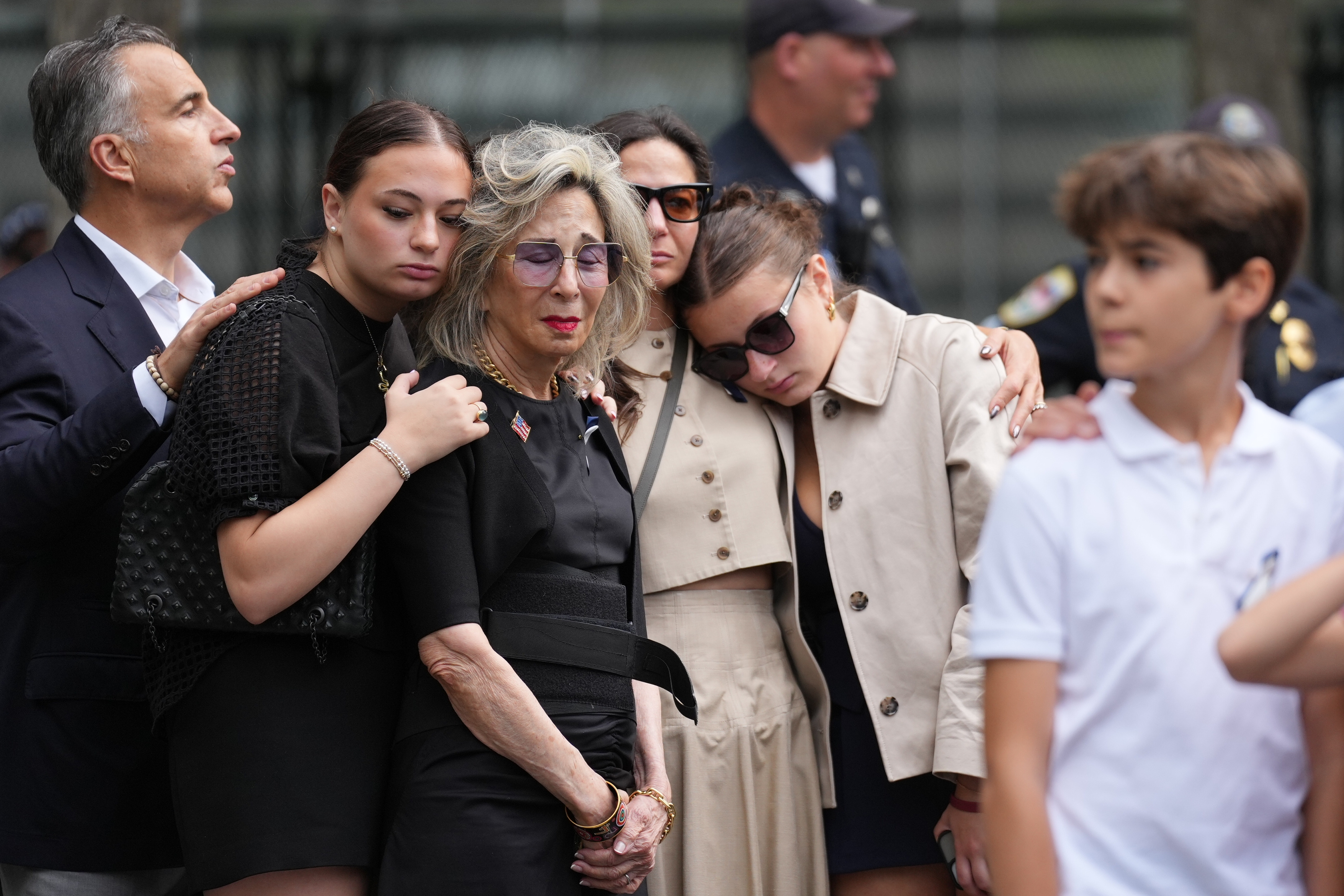
    A quarter-century after the terrorist attacks that shook New York City and the world — an ashen morning followed by years of grief and repair, rebuilding and war — dignitaries and mourners gathered once again in Lower Manhattan to read aloud the names of those killed when hijackers crashed airplanes into the World Trade Center and sent the twin towers crumbling to the ground.

    Milton G. Bustillo. Thomas M. Butler. Patrick Dennis Byrne.

    The ceremony on Friday took place beneath a canopy of swamp white oak trees between the two memorial pools where the towers once stood. The pools were designed to appear bottomless, and their cascading waters lent a whispering backdrop to the morning. Relatives held aloft photos of the dead, forever young, as children on the podium spoke directly to grandparents, aunts, and uncles they had never met.

    “My dad always talks about how wonderful you were,” one girl said after naming a lost relative. She is among the 100 million Americans born since that day.

    Some people used their turns at the microphone to criticize the federal government for continuing to work with Saudi Arabia in the years since the Sept. 11 attacks. Family members of those who died have sought to hold the kingdom responsible in federal court, claiming that its government provided support for the hijackers.

    Among them was Terry Strada, an official with 9/11 Families United, whose husband was killed in the attack. Her organization has tried for years to pursue legal action against the Saudi government. The kingdom has denied involvement.

    “It has been one betrayal after another,” Strada said from the podium. She urged the assembled elected officials to “stand with survivors, stand with Americans.”

    Later, a nephew of Lisa Marie Terry, who died in the attack, accused “the deep state” of hiding the truth. He called on President Donald Trump to “release the unredacted files that implicate Saudi Arabia, while what’s left of the victims’ families are still alive to see it.”

    Four living former presidents, from Bill Clinton to Joseph R. Biden Jr., stood silently nearby. Zohran Mamdani, the city’s first Muslim mayor, was also in attendance, despite a petition signed by thousands of people, including victims’ family members, urging him to stay away. He was joined by former Mayors Bill de Blasio, Michael Bloomberg, and — awkwardly — Rudolph Giuliani, who was in office on Sept. 11 and earlier this week said that Mamdani’s presence at the ceremony “offends me.”

    Mamdani nonetheless approached Giuliani at the ceremony. The two men shook hands, and Giuliani’s position seemed to have softened. Cameras captured him apparently telling Mamdani: “I’ll pray for you. It’s a really hard job.”

    Gov. Kathy Hochul was there, as was Gov. Mikie Sherrill of New Jersey and former Gov. George E. Pataki of New York, who had also called on Mamdani to skip the event.

    Vice President JD Vance stood in for Trump, who instead attended a ceremony at the Pentagon. In his remarks, the president talked about how Sept. 11 had changed America.

    “Twenty-five years after the attacks, we know the world will never return to the way it was at that dawn on that beautiful, peaceful Tuesday morning, 2001,” Trump said, “before the towers fell, before the Pentagon was hit, before the specter of evil, and this horrible, horrible evil came crashing into our lives.”

    In New York, as is custom, there were no speeches from elected officials, putting all the focus on the families. The names of the victims read on Friday included the six killed in the 1993 World Trade Center bombing.

    Uniformed firefighters present and past — many older now, grayer — gathered at the ceremony, at churches and, later, in the city’s barrooms, to raise glasses to their 343 fallen brothers.

    The effects of Sept. 11 played out for months, years. The Fire Department would go on to be further gutted by mass retirements of high-ranking officers. The Police Department lost 23 officers that day, and was reshaped by the introduction of new tactics, units, and equipment to fight terrorism.

    The day is a reminder of how the attacks’ long shadow has reached into many corners of life in the U.S. and beyond.

    The U.S.-led global war on terrorism included invasions of Iraq and Afghanistan — the latter Washington’s longest war — and detentions and harsh interrogation of terror suspects in an international network of secret CIA prisons. The U.S. found and killed al-Qaeda leader Osama bin Laden in Pakistan in 2011, but the accused 9/11 mastermind Khalid Sheikh Mohammed still awaits a trial 23 years after his capture.

    The attacks changed U.S. air travel, led to the creation of the Department of Homeland Security, prompted new federal surveillance and intelligence-gathering powers and banking regulations and generated ongoing debate over the balance between security and freedom.

    Sept. 11 engendered a culture of individual vigilance summed up by the slogan, ” If you see something, say something,” while a wave of patriotism propelled some Americans to join the military, fire departments and police forces.

    On Friday, there were the traditional six moments of silence, marked with the tolling of a bell: one for each of the towers struck, one for each building’s collapse, and two for the plane crashes at the Pentagon and in Shanksville, Pa.

    A seventh moment of silence was added this year to commemorate those who had died of Sept. 11-related illnesses. Mamdani’s administration this week released more than 170,000 pages of previously withheld city records about the air quality around ground zero after the attacks. The documents seem to suggest that New Yorkers were encouraged to return to the area before it was safe to do so.

    The mournful wail of bagpipes — a fixture at hundreds of Sept. 11 funerals — rang out at the start of the memorial. Elsewhere in the plaza, Yo-Yo Ma played his cello softly behind the reading of the names.

    Information from the Associated Press was used in this article.

  • Meek Mill’s Dream Chasers Summit returns to Temple University after 13 years

    Meek Mill’s Dream Chasers Summit returns to Temple University after 13 years

    Hundreds of students darted from School District of Philadelphia buses and climbed Temple University’s Liacouras Center steps on Thursday, anticipating the arrival of multiplatinum artist Meek Mill.

    The North Philly native, who grew up just blocks away from the venue on North 18th and Berks Streets, was equally excited to hit the stage. But there was no concert or setlist on the agenda.

    Instead, Meek welcomed high school seniors and Temple students to the Dream Chasers Sports & Entertainment Summit, a daylong event of moderated discussions with industry leaders across sports, business, and entertainment.

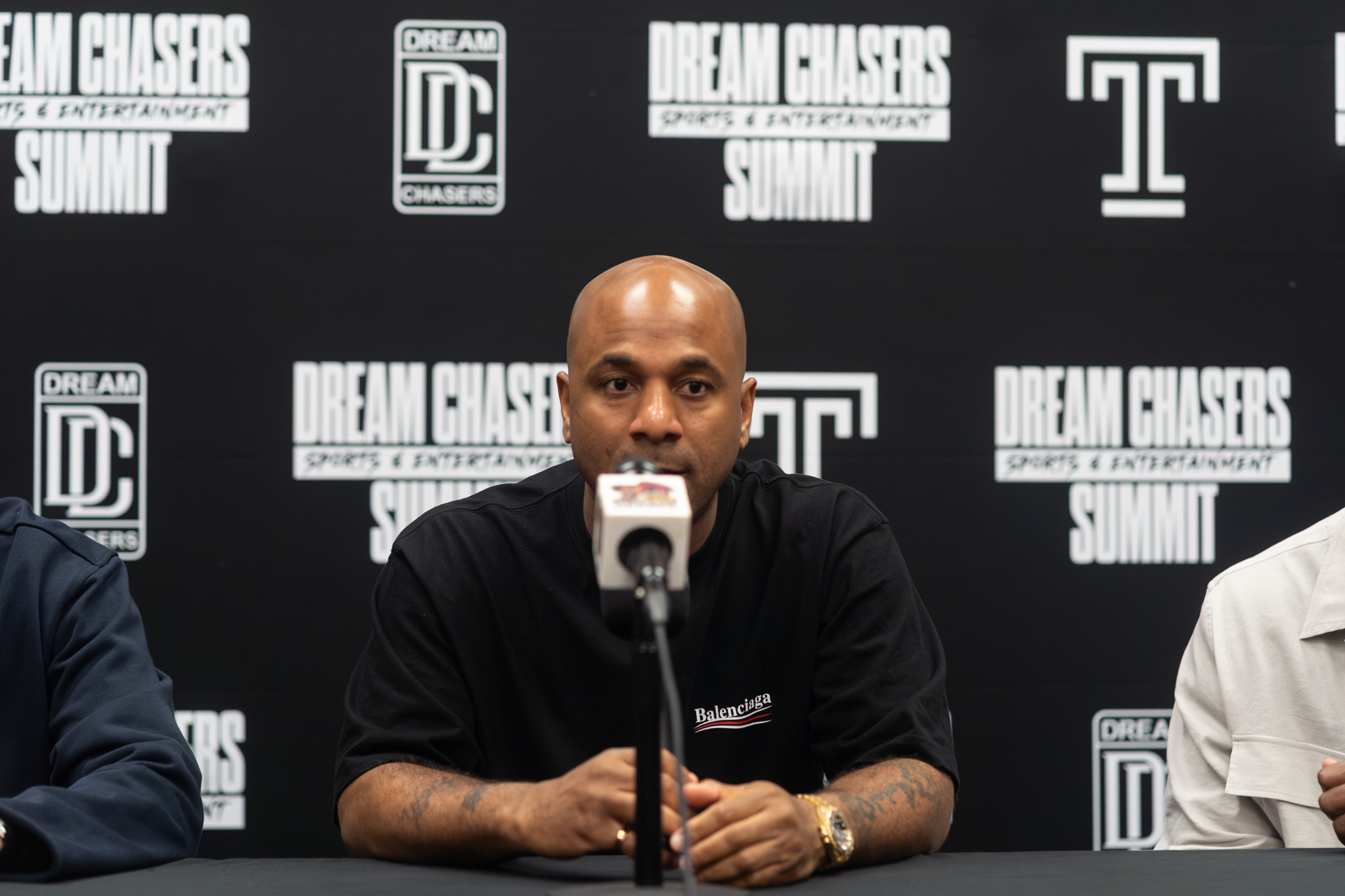
    North Philly native and rap star Meek Mill pictured at the Dream Chasers Sports & Entertainment Summit at Temple University’s Liacouras Center on Sept. 10, 2026.Courtesy of Earl Hopkins

    Thursday marked the second iteration of the summit; the first was at Temple in 2013. “It feels good to be back in the city,” Meek said in the media room, hours before his keynote address.

    While he said this could’ve easily been a rap show, Meek was determined to put on an event that combined youth engagement and education.

    “I was looking at the events and things that were going on, and I [didn’t] see a lot of these types of events taking place,” he said. “I wanted to do this just to add another type of motivation to the city. We need more inspiration here in Philadelphia, and I thought this would be the right thing to do.”

    Speakers included Temple athletics director Arthur Johnson, Live Nation Urban president Shawn Gee, D.C. United president of business operations Danita Johnson, SDP superintendent Tony B. Watlington, Million Dollaz Worth of Game podcast host Wallo267, and others through the day.

    Attendees ranged from teens to Temple students and administrators, who remained engaged from the event’s opening until the ending “Dreams and Nightmares” session featuring Meek, Wallo267, and Larry Miller, chairman of the Jordan Brand Advisory Board.

    The themes of their discussions were based on popular Meek records such as “All Eyes on You,” “Dreams Worth More Than Money,” “Respect the Game,” and others. For second-year Temple student Amira Haynesworth, the summit offered more than just musical references.

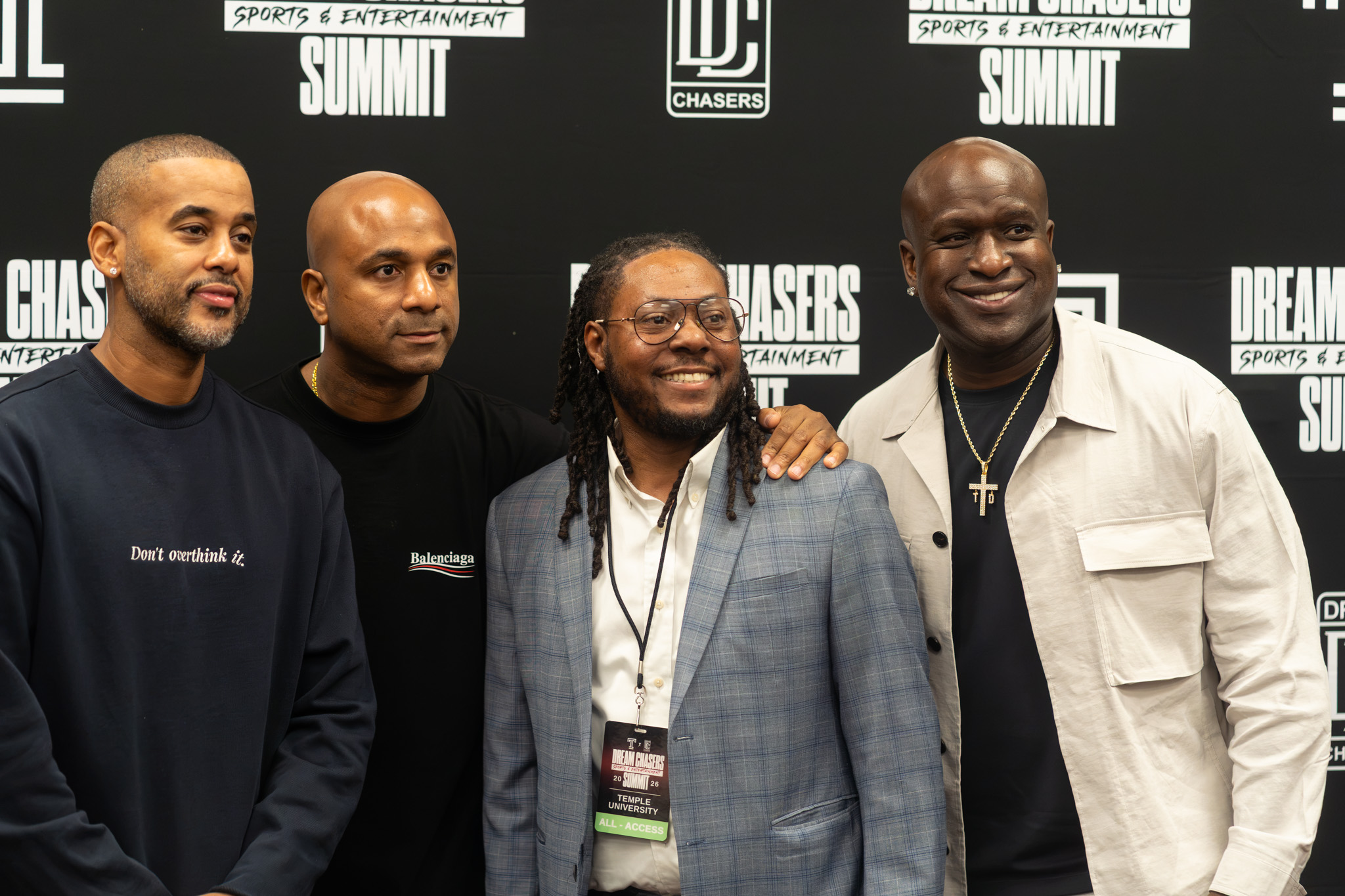
    Sports agents David Mulugheta and Tory Dandy are pictured with motivational speaker and podcaster Wallo267 at the Dream Chasers Sports & Entertainment Summit on Sept. 10, 2026.Courtesy of Earl Hopkins

    Haynesworth, who grew up in North Philly, said hearing Meek, Wallo, and other speakers retrace the obstacles they faced in their journeys gave her and other attendees a sense of self-empowerment.

    “They came from such hardship and still made a name for themselves,” Haynesworth, 19, said. “Being young, people tend to doubt themselves, and many feel like they’re not going to make it somewhere high in life. But they didn’t let that define them.”

    Meek said recruiting a mix of sports leaders, music executives, justice reform advocates, and athletic department heads was paramount, given how transformative this time period is in their young lives.

    “[The summit] is for everybody, but these people are already in that direction, so that was important,” he said. “When I was 17 and 18 years old, those were the most important years of my life when it came to decision-making. I just thought that we have to make sure we touch on the kids first or the younger adults.”

    That was the mission that inspired Meek to develop the summit, and inspired Temple leaders to partner for a second iteration.

    Temple athletics director Arthur Johnson, who helped steer the summit’s return to Temple, said Meek’s mission aligns with the university’s goals for student success and place-based impact for those who are integrated in both the Temple and North Philly community.

    “We’re the wind underneath the wings of all of our students who come and chase their dreams and their goals,” Johnson said. “Helping them understand they can be accountants, attorneys, a compliance person, CFOs, and explore many different careers and opportunities is important.”

    Motivational speaker and podcaster Wallo267 at the Dream Chasers Sports & Entertainment Summit on Sept. 10, 2026.Courtesy of Earl Hopkins

    City Council President Kenyatta Johnson, who greeted event speakers, attendees, and media members throughout the summit, said Meek’s decision to bring the event to North Philly speaks to his commitment to change young people’s lives in his community.

    “It shows the resiliency of Meek Mill, in terms of who he is as a person, the things that he has overcome, but most importantly, his heart and his passion and commitment to giving back,” he said.

    Arthur Johnson said the goal is to bring the summit back to Temple next year and to attract a wider swath of students whose upbringings and career ambitions mirror those shared by Meek and the other speakers he recruits. “Next year, I need double,” he said. “But we’ll plan for it. We’ll have a whole strategy around how do we do that.”

    Sports agents David Mulugheta (far left) and Tory Dandy (far right) are pictured with motivational speaker and podcaster Wallo267 (second from left) and Philadelphia City Councilmember Jeffery Young Jr. at the Dream Chasers Sports & Entertainment Summit on Sept. 10, 2026.Courtesy of Earl Hopkins

    While Meek intends for North Philly to remain the home base for future summits, he wants to expand its attendance and impact, as long as students leave with an endless sense of possibility.

    “My whole brand is Dream Chasers, like chasing a dream to live a better life,” he said. “If you could take something from here that could get you to the next level, or get your ideas sparked in your mind, that’s good enough for me.”

    While a concert wasn’t advertised for the day, Meek decided to surprise the crowd with a brief performance. Students descended onto the arena floor, pulling out their phone cameras and rapping the lyrics to Meek’s “Dreams and Nightmares.”

    “If you want it, you gotta see it with a clear-eyed view,” students yelled at half-court, bringing Meek’s message full-circle.

    North Philly native and rap star Meek Mill pictured at the Dream Chasers Sports & Entertainment Summit at Temple University’s Liacouras Center on Sept. 10, 2026.Courtesy of Earl Hopkins
  • Eagles edge rusher Jonathan Greenard ruled out for Sunday; rookie tight end Eli Stowers listed as questionable

    Eagles edge rusher Jonathan Greenard ruled out for Sunday; rookie tight end Eli Stowers listed as questionable

    The Eagles are heading into Sunday’s season opener against the Washington Commanders without their top outside linebacker.

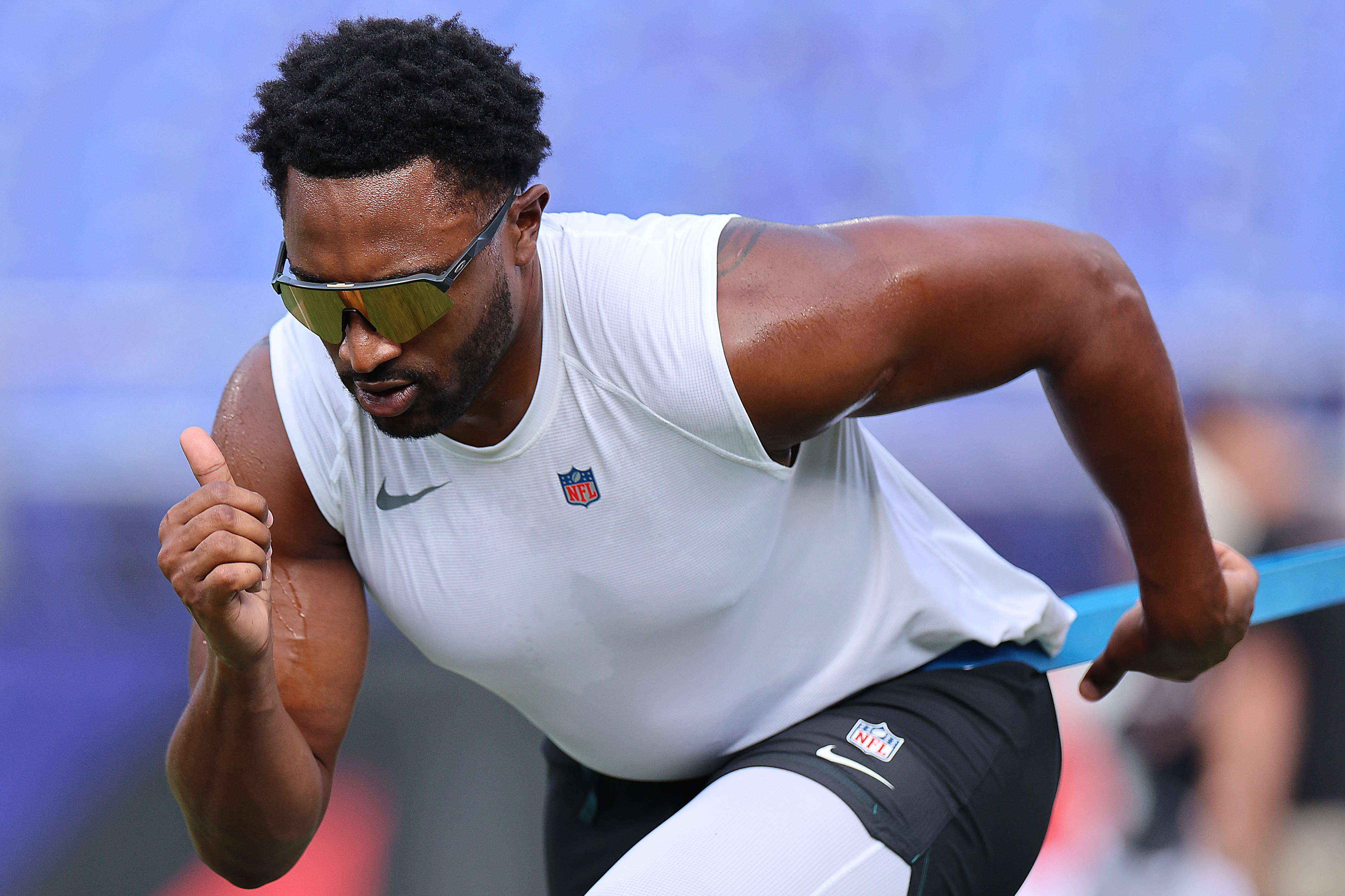
    Jonathan Greenard, the 29-year-old edge rusher, was ruled out on Friday as he works his way back from a pectoral injury that sidelined him throughout training camp. He was a limited participant in practice all week.

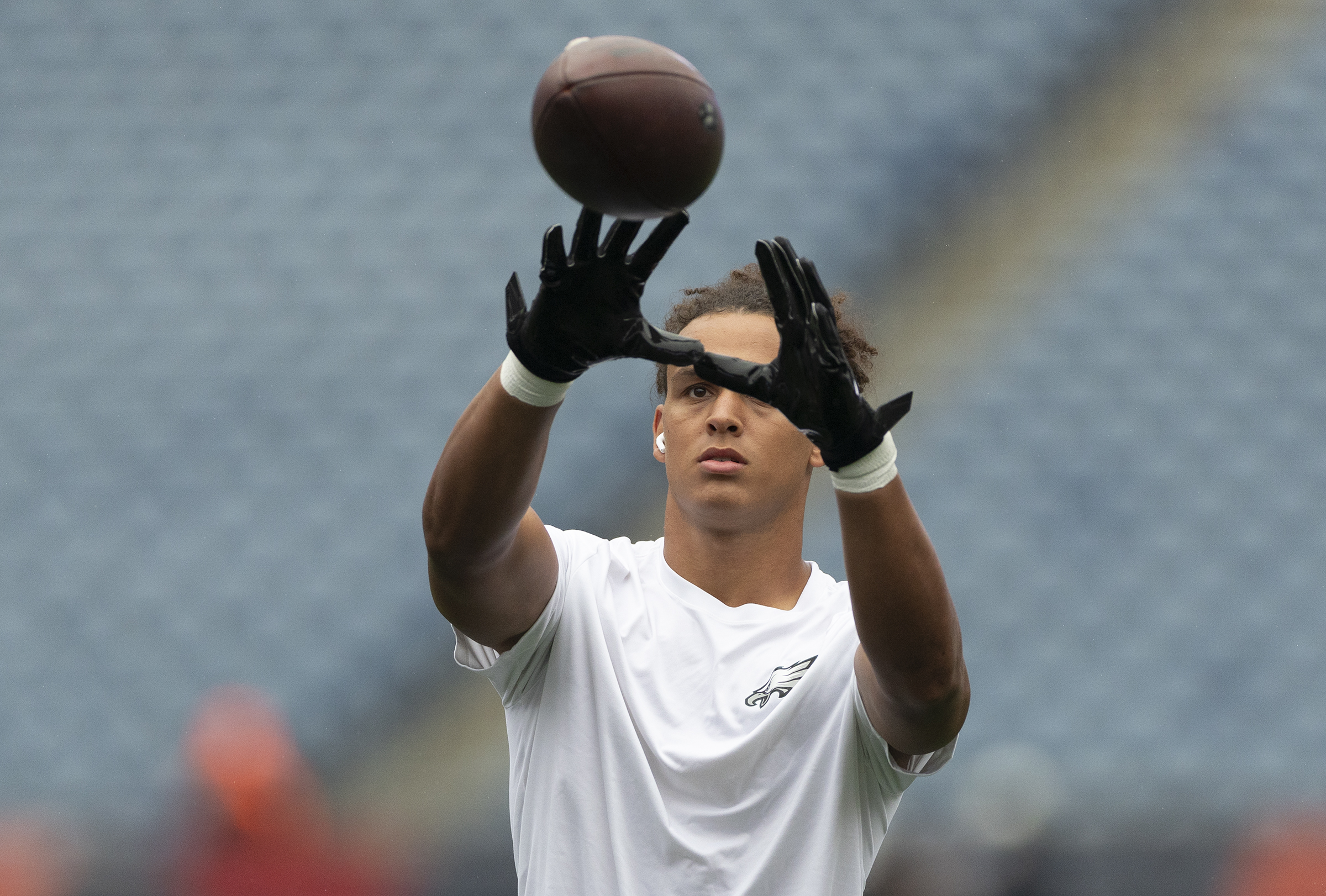
    Eli Stowers, the rookie tight end out of Vanderbilt, is listed as questionable to play with a hamstring injury. However, he said in the locker room on Friday that “the plan” for him is to play.

    Stowers was also a limited participant in practice this week.

    The Eagles acquired Greenard this offseason from the Minnesota Vikings and signed him to a contract extension, adding pass-rush prowess to the defense after Jaelan Phillips departed in free agency. Greenard said on Thursday that he feels good, but he wasn’t certain about his timeline to return to game action.

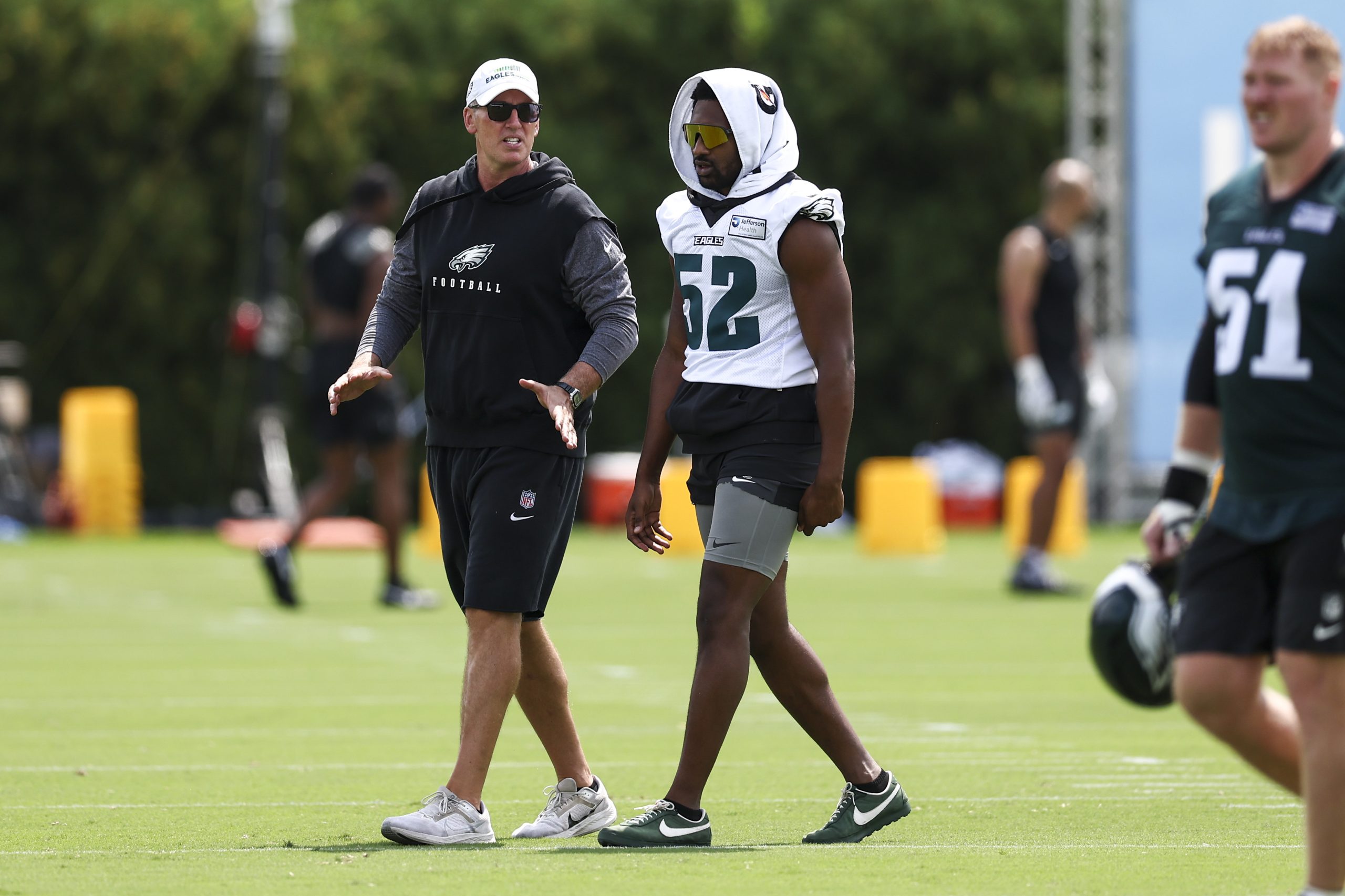
    Jonathan Greenard (52) missed training camp with a pectoral injury but had returned to practice earlier this week. Monica Herndon / Staff Photographer

    “I feel I’m in a good spot,” Greenard said. “Just know that. I know that I’m working every day to continue to try to get this thing stronger. We’re close, I know that.”

    He confirmed that he sustained the pectoral injury prior to camp while lifting. Greenard was sidelined during the offseason program, too, as he recovered from the shoulder surgery that prematurely ended his 2025 season with the Vikings.

    Defensive coordinator Vic Fangio acknowledged on Thursday that the Eagles have to be “careful” with Greenard given his lack of practice time, even when he is healthy enough to play.

    “It’s going to be a while before he’s game ready for a full load,” Fangio said. “It’ll be a pretty good rotation.”

    Stowers was added to the injury report the Monday after the Eagles’ second preseason contest against the New England Patriots. He did not practice during the final week of camp, nor did he play in the last preseason game against the Cincinnati Bengals.

    Eli Stowers dealt with injuries during his first NFL training camp. Yong Kim / Staff Photographer

    The second-round pick had a relatively quiet performance this summer, both in training camp and in the preseason. In his pair of preseason games, Stowers played 39 offensive snaps. His only production came in the first game against the Baltimore Ravens, when he had three receptions for 12 yards.

    Stowers also had 20 special-teams snaps through two games, finishing with one tackle.

    Despite his slow start, Ryan Mahaffey, the Eagles tight ends coach, spoke highly of his development since the start of training camp earlier this month.

    “I think for any rookie, as you’re coming into the NFL, it’s an adjustment, regardless of the position you play,” Mahaffey said. “And for him, I think he’s been very diligent about his preparation each and every single day. He’s growing each and every single rep that he has. So I’m excited about him, and I’m excited about the trajectory he’s on. I think he’s going to continue to get better just as he gets more time on task.”

  • More than 500,000 Russian troops killed in Ukraine, UK defense chief says

    More than 500,000 Russian troops killed in Ukraine, UK defense chief says

    KYIV, Ukraine — More than half a million Russian troops have been killed in Ukraine since the start of Moscow’s full-scale invasion in February 2022, a senior British defense official said Friday.

    The dead are part of 1.5 million Russian casualties in Ukraine, Air Chief Marshall Sir Richard Knighton, chief of the U.K’s Defense Staff, said.

    The U.K. figures roughly coincide with those published by the Ukrainian military. There was no immediate comment from Russian officials.

    Moscow’s bigger army is struggling to make headway on the battlefield. Western officials and analysts say the Russian rate of advance has slowed significantly this year.

    Russia’s armed forces have also lost an “enormous” amount of military materiel, Knighton told reporters. That includes more than 10,000 armored and protected vehicles, close to 3,000 air defense and artillery systems, and over 370 aircraft and helicopters, Knighton said.

    He didn’t say what Ukraine’s losses were.

    Neither Moscow nor Kyiv give regular updates on their battlefield losses.

    Russian drones target Kyiv gas stations

    Russian drones targeted roadside gas stations in Kyiv for a second straight day Friday, as Moscow broadened its air war in what Ukrainian officials say is an effort to rattle civilians.

    The attacks struck two Ukrnafta gas stations, killing two people and wounding six at one of them, the prosecutor’s office said.

    Russian strikes on urban gas stations have intensified in recent months, mostly in regions near the front line in eastern and southern Ukraine. It is part of a campaign to disrupt civilian life and weaken morale that has also included attacks on food distribution hubs, sporadically leaving some supermarket shelves bare in the Ukrainian capital.

    “Russia is systematically attacking places where it knows people will be spending their time going about their daily lives, seeking to maximize casualties, spread fear, and put pressure on Ukrainian society,” Foreign Minister Andrii Sybiha said on X late Thursday.

    Authorities have urged residents not to linger near gas stations and other exposed infrastructure during air raid alerts.

    Ukraine is urgently trying to improve its air defenses as Russia’s invasion stretches into its fifth year, and on Thursday won pledges of more support from Canada.

    Russian shopping mall strikes kill 5 in central Ukraine

    Pavlohrad, a city in central Ukraine, observed an official day of mourning Friday for five residents killed near shopping malls in broad daylight by Russian drones the previous day.

    The attack also wounded 67 people, Sybiha said on X.

    In the southern city of Zaporizhzhia, a 32-year-old woman and her 10-year-old son were wounded in an overnight Russian drone attack, Ukraine’s State Emergency Service said. The drones struck a nine-story apartment block and a shopping mall, it said.

    Efforts to put out the blazes were slowed by the constant threat of repeat strikes, forcing firefighters to stop working and take shelter, it added.

    In Dnipro, a city in central Ukraine, a Russian daylight attack Friday wounded 12 people, according to local officials.

    Russia says it stopped 777 Ukrainian drones

    Ukraine, meanwhile, has extended its own long-range drone campaign deep into Russia, straining air defenses across its bigger neighbor’s vast territory. On Thursday, its military reported hitting a refinery more than 1,800 miles away in Siberia as Kyiv tries to hurt Russia’s vital oil sector. Its strikes have caused fuel shortages in Russia, one of the world’s biggest energy producers.

    Russia’s oil product exports hit record lows in August, and Moscow is importing fuel from South Korea and India, the Center for Research on Energy and Clean Air said in a report.

    “Ukrainian strikes on Russia’s refining capacity have turned tables on the world’s once largest oil product exporter to see them start importing fuels, with imports surging to a record 172,000 metric tons (189,600 tons) in August — more than seven times the previous monthly high,” the Finland-registered nonprofit said Thursday.

    Ukraine launched a major barrage overnight from Thursday to Friday, with the Russian Defense Ministry saying air defenses intercepted 777 Ukrainian drones over 16 Russian regions, as well as occupied Crimea and the waters of the Azov and the Caspian seas.

    Two people were killed and three others wounded overnight in a Ukrainian drone attack on the Tula region south of Moscow, local officials said Friday.

    A Ukrainian drone strike during the night started a fire at the Saratov oil refinery in southwestern Russia, Russian independent online outlet Astra said Friday. Kyiv has repeatedly targeted that refinery, which was last hit in early August.

    Major online retailer Ozon said its logistics facility in the same city was struck and set ablaze by a Ukrainian drone, though no casualties were reported. Ozon is a competitor to Wildberries, whose facilities Ukraine has also targeted.

    Ukrainian President Volodymyr Zelensky said long-range strikes overnight hit eight Russian regions, including a business and an oil industry facility in the Saratov region.

    The attacks were “aimed at reducing Russia’s capacity to wage war,” he said on X Friday.

  • Lower Merion police request funds for a ‘first responder’ drone as anxieties about surveillance spike nationwide

    Lower Merion police request funds for a ‘first responder’ drone as anxieties about surveillance spike nationwide

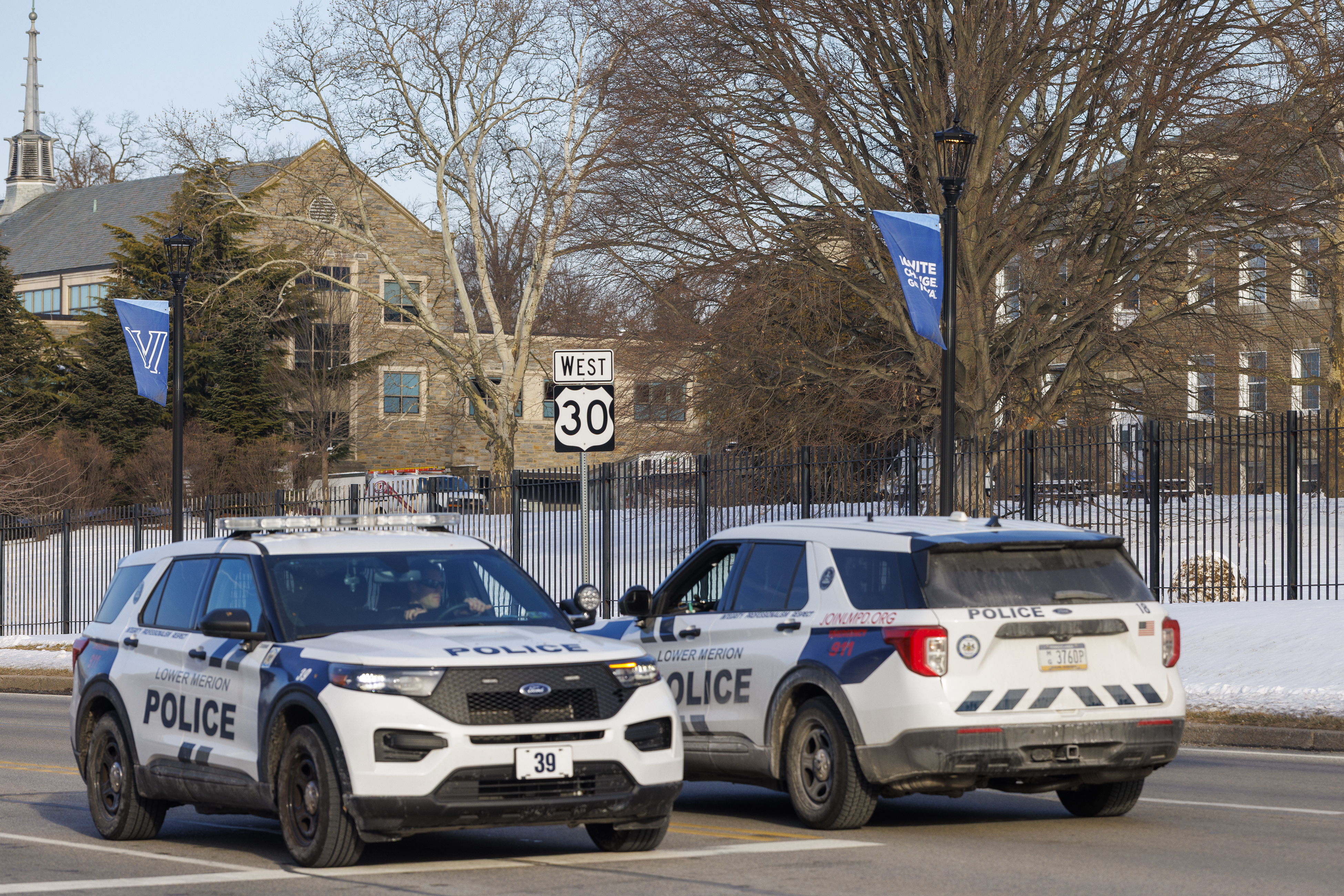
    Lower Merion’s police department has requested funds for a program that would automatically dispatch a drone to the scene of certain 911 calls.

    Andy Block, Lower Merion’s police superintendent, pitched commissioners on Axon’s Drone as First Responder program during a Wednesday budget workshop, describing the technology as a “force multiplier” for the police department that could provide officers with information before they arrive at a crime scene. The department requested $375,000 for a five-year investment in one drone.

    The proposal was met with skepticism from commissioners, many of whom expressed hesitancy about approving funding for the program without strict policies on the books, warning of “mission creep” and privacy violations as anxiety about surveillance technology balloons nationwide.

    What is the Drone as First Responder program?

    Under the program, a drone would be stationed at a dock in Lower Merion and would be automatically launched when 911 dispatchers receive reports of certain incidents, which are classified by codes. Specific codes would release the drone to the site of an incident, a process that would typically happen within 30 seconds of the call coming in, Block said. Once the drone launches, one remote operator, a police officer, would watch the live video feed and evaluate if and where resources should be sent.

    The automated drones differ from Lower Merion’s five existing drones, which require manual setup and launch by an officer once a dispatch is ordered, adding minutes of lag time, Block told commissioners at the budget workshop.

    First responder drones could help officials get ahead on burglaries, missing persons incidents, fires, and area searches, and could evaluate if police are needed at a scene without taking the time and resources to dispatch officers to every call, the police superintendent said.

    Axon, the drone manufacturer, currently provides Lower Merion’s records management system, body cameras, tasers, and in-car cameras. The township moved over to Axon’s systems in January 2025.

    Lower Merion’s police superintendent has said Axon’s automated drones would improve office response time. Alejandro A. Alvarez / Staff Photographer

    Block described recent incidences where first responder drones could have helped police officers respond more quickly and effectively, including a 2024 Meredith Road home invasion and a recent road rage incident on the Blue Route, which led to a suspect chase in Lower Merion.

    He touted the versatility of the drones, floating their potential use for other purposes, including traffic and code enforcement. The Montgomery County District Attorney’s office confirmed that Lower Merion is legally allowed to use drones for traffic enforcement.

    Bensalem launched a “drone as first responder” program earlier this year, which Block described as a model for Lower Merion, calling Bensalem’s program “very impressive.”

    Concerns over privacy

    The Drone as First Responder program was pioneered by the Chula Vista, Calif., police department, which in 2018 became the first municipal police department in the country to deploy the technology. Between 2018 and 2024, the department’s first responder drones made more than 20,000 flights.

    Since then, the technology has grown in popularity among police departments across the country, with municipalities from Washington to Kentucky signing on. A police department in Missouri said its Drone as First Responder program helped with 12 felony arrests in two months this summer.

    Police in Chula Vista have said the technology improved their response times and helped officers deescalate dangerous situations. Yet an investigation by WIRED found that the drones surveilled poorer residents far more frequently than wealthier residents, and were often dispatched for minor issues like vandalism and loud music, in addition to more serious incidents. All the while, residents who regularly encountered the drones reported “feeling constantly watched.” The Chula Vista Police Department has said its drones do not conduct random surveillance or search for suspicious activity.

    Lower Merion commissioners on Wednesday shared apprehension about the implications for residents’ privacy should automated drones begin traversing the township’s airspace.

    No official vote on the funding was taken at the budget workshop. Commissioners said they would need to see clearer policy guidelines before moving the drone into the budget.

    “Surveillance and privacy is a really big issue right now,” commissioner Maggie Harper Epstein said, adding that the program “would be a tough thing to communicate to the residents of the township.”

    Todd Sinai, the board’s president, warned that “there is a difference” between a police officer piloting a drone toward the site of a potential crime and a drone launching automatically “because someone just called something in, and it flies over the township to get to the site, recording along the way.”

    Many criticized the request to approve funding before putting policy guidelines on the books.

    “Until we see what that policy is, I would be very uncomfortable giving support to this,” commissioner Daniel Bernheim said.

    Block clarified that Lower Merion already has a drone policy in place but would need to update its code to specifically include the automated drones.

    A ‘no-brainer’ for law enforcement

    Not everyone shared concerns.

    Commissioner Charles Gregory called the drone program a “no-brainer” and said that the minutes saved with the automated devices could be the difference between life and death in extreme situations.

    Commissioner Louis Rossman said the program “is a great idea” and “just seems like the future.”

    Rossman referenced a series of residential burglaries in the township, saying the drone program may have been able to assist with apprehending offenders who have “eluded” law enforcement.

    This suburban content is produced with support from the Leslie Miller and Richard Worley Foundation and The Lenfest Institute for Journalism. Editorial content is created independently of the project donors. Gifts to support The Inquirer’s high-impact journalism can be made at inquirer.com/donate. A list of Lenfest Institute donors can be found at lenfestinstitute.org/supporters.

  • Elevated inflation keeps pressure on Fed to raise interest rates

    Elevated inflation keeps pressure on Fed to raise interest rates

    U.S. inflation stayed stubbornly high in August, bolstering the case for the Federal Reserve to raise interest rates at its meeting next week.

    The consumer price index report, released Friday, showed overall inflation remained elevated at an annual pace of 3.4%, after a 0.4% rise from July. “Core” inflation, which strips out volatile food and energy items, rose 0.3% in August, or 2.4% from a year earlier.

    The data is factoring heavily into the Fed’s forthcoming policy deliberations, set for Tuesday and Wednesday. Policymakers stipulated this summer that if inflation did not soon moderate, they stood ready to raise rates. Officials have yet to precisely define what “soon” means, but many have run out of patience.

    The Fed’s preferred inflation gauge is the personal consumption expenditures price index, but officials closely scrutinize the CPI report and other metrics for a comprehensive picture of the backdrop. Core measures are paid the most attention given that they are seen as a reliable way to track how persistent inflation is proving to be.

    Policymakers are also digesting a multitude of new risks. The global price of oil is back up above $100 a barrel as the Iran war continues to disrupt supply. President Donald Trump has reignited a trade war with Canada. And on Wednesday, he vowed to distribute a $5,000 check to every American adult if Republicans keep control of Congress in November midterm elections, a bump to economic activity that could further fuel inflation.

    In the wake of Friday’s data release, traders in federal funds futures markets now see 90% odds that the Fed will raise rates by a quarter of a percentage point next week. Since January, they have stood at a range of 3.5% to 3.75%.

    Raising rates just months before the election would undoubtedly stoke tension with Trump. Last week, the president threatened to halt a broad swath of U.S. trade unless the Fed slashed rates. Cutting borrowing costs is not even under consideration.

    Still, that has not stopped the administration from trying to tamp down borrowing costs using its own tools. Treasury Secretary Scott Bessent has over the past month embarked on a series of interventions to keep a lid on long-term Treasury yields to little success. The 10-year Treasury yield is now trading just shy of 5%.

    This tension no doubt makes the stakes for Kevin Warsh, the Fed chair, exceptionally high heading into the meeting. Late last month, Warsh delivered a closely watched speech at the central bank’s annual conference in Jackson, Wyo., that sought to underscore his commitment to fighting inflation after some doubts had emerged.

    He indicated enough of an openness to raising rates that investors quickly piled on bets that the Fed would raise rates in September. But Warsh last month purposely left vague what specifically would tip him in that direction.

    “Here is my standard: We must be confident that underlying inflation is moving to our objective, clearly and at sufficient speed,” he said. “Otherwise, we have work to do.”

    What Warsh is trying to avoid is a redux of the reaction he faced after the Fed’s last meeting in July. Then, he failed to provide sufficient reasoning for standing pat and sowed confusion about how he planned to make good on his pledge to return inflation to the 2% target.

    Warsh’s job as chair next week will be to corral his colleagues, while also providing a clear-cut rationale for whatever decision is ultimately made.

    There is already a group of policymakers who support higher rates on the basis that the Fed’s current policy settings are not restraining demand. Higher rates would not only expedite the return of 2% inflation, they argue, but also ensure that expectations about inflation do not suddenly shift higher.

    The counterargument to raising rates rested on the assumption that inflation was going to decelerate in the latter half the year, giving the Fed flexibility to hold off on taking action. John C. Williams, who as president of the Federal Reserve Bank of New York is vice chair of the policy-setting committee, espoused this view, arguing that policy was in a “good place.” Still, he made clear that he would support higher rates if the data did not cooperate.

    Christopher J. Waller, a Fed governor, also recently suggested that he was inclined to hold rates steady next week, but only if inflation continued to cool.

    August’s data challenges the narrative that inflation is indeed cooling in a timely way.

    One closely watched subset of the CPI report is called supercore inflation, which tracks prices of services excluding energy and housing. It accelerated to 0.5% in August and is up 3% from a year ago.

    Energy prices were a big driver of overall inflation. Gasoline costs were up 3.9% in August. Prices for fuel oil, which is used to heat homes, jumped even more, at 10.1%. That also helped to drive a rise in airline fares, which jumped 2.7% in July. Compared with the same time last year, they are up nearly 25%.

    The impact of Trump’s initial round of tariffs, however, seems to have faded. Goods prices appear to have stabilized after last year’s shocks. Household furnishings are up less than 1% since this time last year. Apparel prices were up 3.6% over the year, but were flat in August compared with July. Still, these prices were recorded before Trump’s latest round of punishing tariffs on Canadian imports.

    This article originally appeared in The New York Times.
  • Isao Harimoto, Hiroshima survivor and a baseball star in Japan, dies at 86

    Isao Harimoto, Hiroshima survivor and a baseball star in Japan, dies at 86

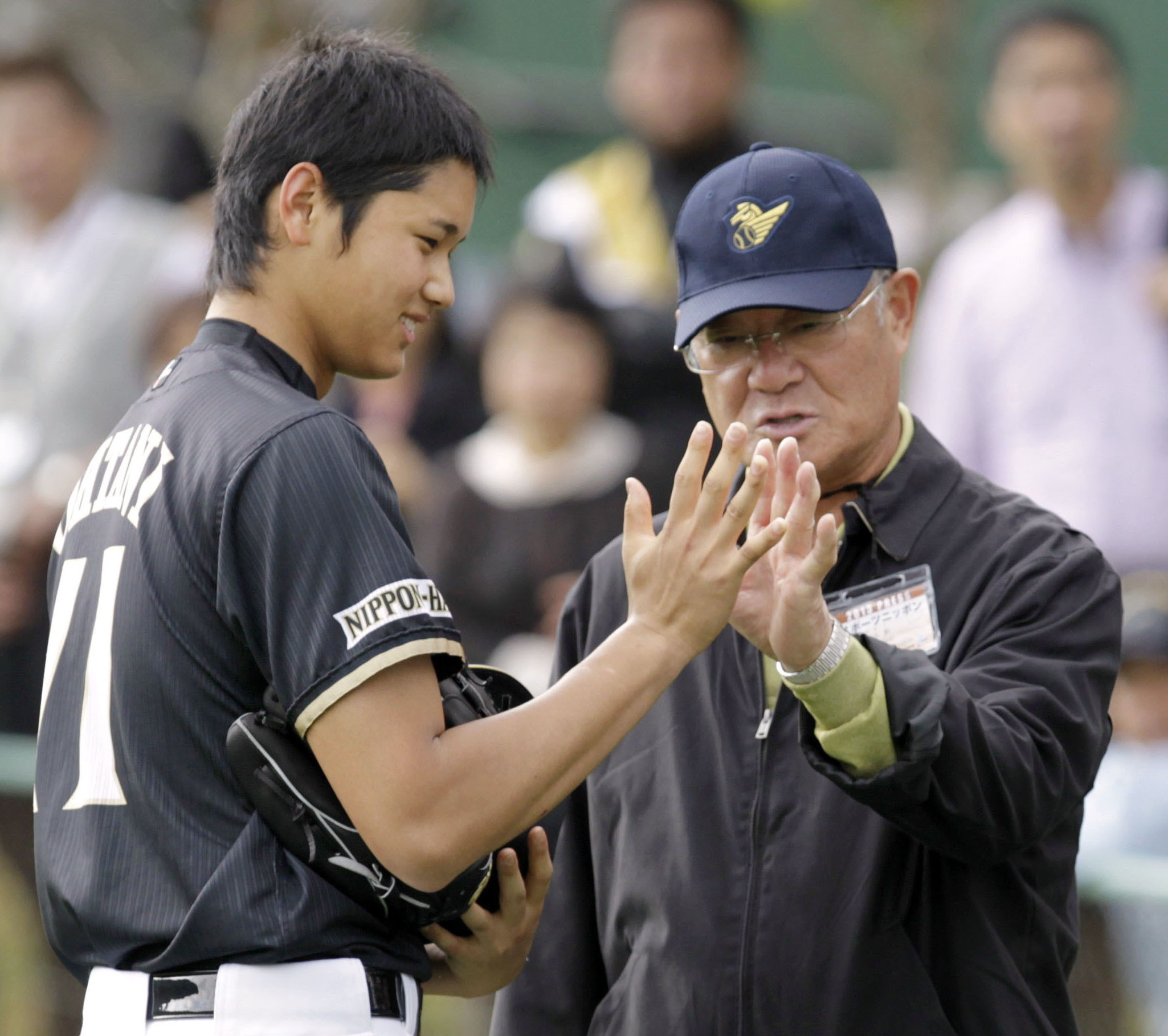
    Isao Harimoto, who survived the Hiroshima atomic bombing as a child and went on to have more hits than anyone else in the history of Japanese baseball, died Wednesday in Tokyo. He was 86.

    His death, in a hospital, was announced by the Meikyukai, or the Golden Players Club, one of Japan’s baseball halls of fame. No cause was given.

    Mr. Harimoto earned the nickname Hit Machine for collecting a record 3,085 of them in a long career than stretched from the late 1950s to the early ’80s. He won seven league batting titles.

    He was the only player to collect 3,000 hits in Japan. (Ichiro Suzuki had 4,367, but more than 3,000 came after he moved to the American major leagues.)

    But Mr. Harimoto was far from a slap hitter; 504 of those hits were home runs, putting him seventh on the all-time list for Japan. He also stole 319 bases, won an MVP award, and was an 18-time All Star.

    After his time as a player, he became an outspoken commentator on the game.

    Isao Harimoto was born on June 19, 1940, in Hiroshima, Japan, to Korean parents who had emigrated the year before. His Korean name was Jang Hun. His mother, Pak Sun Bun, was a cook and his father, Jang Sang Jeong, sold scrap metal and various secondhand items from a cart.

    Harimoto was 5 when the atomic bomb was dropped on the city, about a mile and a half from where he lived. “There was a flash and an enormous roar,” he told the Chugoku Shimbun newspaper in 2011. “The next thing I knew, my mother was shielding me and my sister, three years older, with her body, though her back was covered in blood due to flying shards of glass.”

    The event was not frequently discussed in his home. “My mother wanted to forget; I think she wanted to completely erase her memories of that day,” he told the Mainichi, a Japanese English-language newspaper, in 2020. He lost a sister, Jang Jeom Ja, in the bombing, and his mother burned all photographs of her, he said. He himself did not discuss the cataclysm publicly until well after his baseball career.

    He was proud of his Korean heritage despite being bullied for it as a child and facing prejudice during his career.

    “A lot of ethnic Koreans in Japan assimilate into Japanese society,” said Robert Whiting, author of You Gotta Have Wa (1989), the definitive book in English about Japanese baseball. “Harimoto did not. He talked about the fact that his mother never spoke Japanese in the house, and he was very proud of that fact.”

    Mr. Harimoto was also critical of other athletes in Japan with Korean backgrounds who hid their ethnicity. Only late in life did he become a Japanese citizen.

    He burned his right hand in an accident as a young child, an event that contributed to his becoming a left-handed hitter when he took up baseball in fifth grade. Despite his talent, he lost a few chances at places on top high school teams because of a reputation as a troublemaker, deserved or not.

    In 1958, he visited South Korea for the first time with a team of Korean Japanese high school students. He met his grandparents and later said he truly connected with his Korean roots for the first time.

    His rigorous, disciplined approach to batting, and an ability to consistently hit up the middle, soon brought him to the top leagues. In 1959, playing with the Tokyo-based Toei Flyers, he hit .275, good enough to be named rookie of the year. He got much better over the next two seasons, hitting .302, and then .336. He played left field, and fielding was not his strong suit, but as a hitter, he performed strongly and consistently for two decades.

    Many of the teams he played on were not among the elite in the Japan leagues. He was part of a Japan Series-winning team only once, in 1962, when his Flyers beat the Hanshin Tigers in seven games. That was also the year he was named the Pacific League’s most valuable player. (The Flyers adopted their current name, the Nippon Ham Fighters, during his time with the team.)

    Mr. Harimoto’s most spectacular season was 1970, when he hit .383 with 34 home runs and 100 RBI, all career highs.

    He was a large player by the Japan leagues’ standards at the time, listed at 5 foot 11 and 187 pounds. And he was not afraid of players, American or Japanese, who were bigger still. “If there was a brawl on the field, he was always in the middle of it,” Whiting said. “He was a scary guy; no one wanted to fight him. He wasn’t afraid to show his temper and challenge people on the field.”

    Despite Mr. Harimoto’s batting success, he never could shake a reputation in Japan for being a bit of a bad boy. He enjoyed a drink and was involved in a few fights.

    He moved on to the Yomiuri Giants in 1976 and the Lotte Orions in 1980. He retired after the 1981 season at 41.

    After his playing days were over, Harimoto became a commentator on the game with a reputation for saying what he thought. “He didn’t seem to have a filter,” Whiting said. “He was very protective of the Japanese game and critical of players who went to the States to play, thinking they should be loyal to the Japan leagues.”

    Harimoto worked for the Korea Baseball Organization and helped establish that country’s national league in 1982, though he later split with the group over slights he believed he received.

    Speaking out against nuclear weapons was also a big part of his later life. “Which is more important: protecting human lives or holding on to nuclear weapons?” he asked in the Chugoku Shimbun in 2011. “These two things are poles apart. It’s inhuman to permit the existence of weapons that can annihilate people in an instant, when they’re just trying their best to live.”

    This article originally appeared in the New York Times.

  • Women’s hoops fans celebrate Unrivaled’s return as ticket sales outpace last year’s record-breaking Philly event

    Women’s hoops fans celebrate Unrivaled’s return as ticket sales outpace last year’s record-breaking Philly event

    Seven hours after Unrivaled announced its return to Philadelphia on Thursday, the city’s diehard women’s basketball community was lined up around the block at Dock Street South for a celebratory block party. The event was hosted by Unrivaled, the women’s professional three-on-three league that serves as a second season for several WNBA stars.

    After a record-setting first go-around at Xfinity Mobile Arena, Miami-based Unrivaled is expanding its presence in other cities. Philly will be the third stop on the league’s 2027 bus tour, and one of eight cities outside of Miami that will host games next year.

    “Obviously, tens of thousands of people are going to buy tickets, but to see the people pull up in their Unrivaled gear, waiting in line, it speaks to how diehard their fandom is,” Kirby Porter, chief brand officer at Unrivaled, said. “For us, we want to do things that are engaging fans in digital, but especially in real life, which is I think even more long-lasting.”

    Porter said that Unrivaled’s internal data showed that the Northeast is one of their strongest markets, and all three of the announced stops — in Boston, New York, and Philly — are in the region. Unrivaled wants to “fill the gap” in Boston and Philly, two cities that are not currently home to WNBA franchises, which leads to a large fan appetite for live women’s events.

    Katie Chen (left) stamps the Unrivaled passport for Ren Gaines, of Pennsauken, during Thursday’s Unrivaled party.Elizabeth Robertson / Staff Photographer

    Unrivaled, in collaboration with Xfinity, handed out freebies, including fan passports, which could be completed with an Unrivaled trivia game to win a free poster.

    Ticket sales for Unrivaled’s return are already trending above the 2026 stop, according to Ashley Lunkenheimer, the vice president of the Philadelphia Sisters. In addition to helping bring a WNBA team to Philly in 2030, the Sisters helped secure the city as Unrivaled’s first tour stop and bring it back. After setting a venue record and a record for pro women’s basketball, they’re setting their sights on raising the ceiling even higher.

    Thursday was a huge start. About 250 fans came out to celebrate the league’s return, including Mayor Cherelle L. Parker, one of the biggest supporters of bringing Unrivaled to Philadelphia. She led a spirited cheer of “Philly is Unrivaled” to kick off the evening.

    Ashley Lunkenheimer (left) is the vice president of the Philadelphia Sisters, the women’s sports advocacy group that has played a major role in brining the WNBA, Unrivaled, and more to the city.Elizabeth Robertson / Staff Photographer

    “People that I didn’t know — man, woman, young, old, didn’t matter — were coming up to me and saying that Unrivaled was one of the best sporting events they’d ever been to,” Lunkenheimer said. “Everybody who didn’t go, they had FOMO.”

    Last year’s games brought out celebrities like Dawn Staley, Kylie and Jason Kelce, Kyle Lowry, Robin Roberts, and Leslie Jones, while big-name players like Paige Bueckers, Marina Mabrey, and locals Natasha Cloud and Kahleah Copper were on the court.

    If you want to avoid any FOMO after next year’s event, you can get tickets here.

  • Local brewery admits to late paychecks, pays nearly $583,000 to workers

    Local brewery admits to late paychecks, pays nearly $583,000 to workers

    State regulators on Thursday announced that Bald Birds Brewing Co. violated state wage law at its Montgomery County and Lycoming County locations, and that the state recovered what amounted to several thousand dollars per worker.

    But the brewery is taking issue with that description, contending that it voluntarily paid back staff after a payroll delay.

    Gov. Josh Shapiro’s administration says it recovered more than $500,000 in wages and an additional more than $64,000 in damages for Bald Birds workers through an investigation by the Pennsylvania Department of Labor & Industry.

    Brewery owner Joey Feerrar said the business made those payments without “any enforcement action,” and “calculated the penalties itself.” Feerrar says the department “did not recover anything.”

    All this took place during what seems to have been a time of change for Bald Birds. The company closed its taprooms in Audubon and King of Prussia over the summer, as it refocuses on manufacturing and distribution, according to the website Breweries in Pennsylvania. That work is done through a partnership with Yards Brewing Co. and Connecticut’s Two Roads, called B3 Beverage Co.

    “There was no agreement. No settlement, order, or payment plan was ever proposed or signed,” Feerrar said in a statement.

    State regulators said they started receiving complaints from Bald Birds workers in January. They directed the company to pay the late wages in August and the company did so a few days later, a department statement said.

    “After reviewing the complaints and conducting an audit of the employer’s records, L&I determined Bald Birds Brewery failed over the course of several months to pay employees on time,” the statement reads.

    The total paid was nearly $583,000 to 124 workers including wages and damages. Under the state’s wage law “liquidated damages may be assessed when wages remain unpaid for more than 30 days beyond a regularly scheduled payday,” according to L&I.

    The state said many workers went five weeks without paychecks.

    A state announcement Thursday put the total at nearly $650,000, but the Department of Labor & Industry corrected its own statement Friday.

    “The Department’s irresponsible description of these events has had an immediate and significant impact on the company, including jeopardizing the livelihood of every employee they claim to be championing,” Feerrar said in a statement.

    “We worked in good faith and transparency with the Department, striving to do the right thing in a difficult situation, and that diligence was erased in a few keystrokes,” Feerrar said

    Bald Birds Brewing Company got its start in 2018 with a location in Audubon. Owner Feerrar joined the B3 partnership with Yards last year.