Blog

  • Russia closes window for dissent as Ukraine’s attacks stir public dismay

    Russia closes window for dissent as Ukraine’s attacks stir public dismay

    The Kremlin has initiated a new crackdown on anti-war voices ahead of Russia’s parliamentary elections in September, barring candidates from running if they show any sign of opposing the bloody, expensive, and increasingly unpopular military operation in Ukraine.

    While repression of political opposition forces is nothing new in President Vladimir Putin’s Russia, the new clampdown is jarring because for a moment this spring, it seemed like a rare window had opened for dissent, as the authorities appeared to create a pressure-release valve for growing dissatisfaction over the war.

    But with the government coming under increasing pressure over Ukraine’s relentless drone strikes and the growing toll on the economy, including an acute fuel crisis, hard-liners in the Kremlin and the security services are gaining the upper hand and have pushed successfully for more repressive measures.

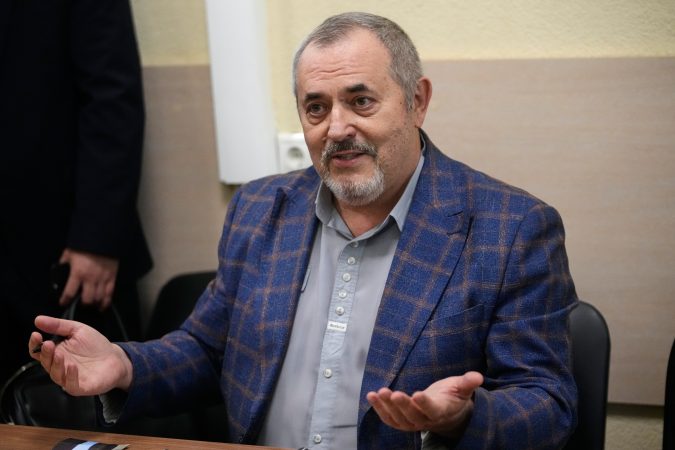
    In recent weeks, the liberal-leaning Yabloko Party, which is attempting to campaign under the slogan “For Peace and Freedom” — a pointed counter to Putin’s unyielding push for conquest — has come under increasing pressure across the country. Meanwhile, Russia’s most prominent anti-war politician, Boris Nadezhdin, who sought to run as an independent, has been barred from the campaign.

    Authorities in St. Petersburg last week refused to register Yabloko for the local parliamentary elections, and more than a dozen of its candidates have been barred from federal and regional elections over accusations they displayed alleged “extremist symbols” such as posting photos online of the late opposition leader Alexei Navalny.

    The Russian authorities “are not going to give any platform to people with anti-war views in the election,” said Andrei Kolesnikov, an independent political analyst in Moscow. “There is now not one noticeable voice against the war.”

    Recent challenges to Yabloko’s registration in several regions over claims of incorrect paperwork could lead to Yabloko being barred overall from the federal election, analysts say — a move that could strengthen United Russia, the ruling party that controls the parliament and has long backed Putin.

    Kremlin spokesman Dmitry Peskov denied the government was targeting anti-war voices, and said individuals were being punished for “violations of the law.”

    “Those who break the law are under pressure and those who don’t break it freely speak their opinion,” Peskov told The Washington Post. “I wouldn’t even call Yabloko a party. It’s no more than a cell,” he added.

    In spring, however, the atmosphere seemed very different. A video posted by social media influencer Viktoriya Bonya lambasting the government’s botched handling of internet restrictions and other problems went viral, forcing the Kremlin to respond.

    A former Kremlin lawyer, Ilya Remeslo, openly branded Putin a war criminal and a thief — but after a brief incarceration in a psychiatric hospital was somehow released and allowed to continue his tirade. More recently in June, German Gref, the head of Russia’s biggest state bank, broke ranks by publicly saying everyone wanted the war to end as soon as possible.

    Remeslo, whose open stance against the war had been seen as representing a divide in the upper reaches of the Kremlin, has since been quietly arrested, accused of spreading allegedly false information about the Russian military — a charge that carries a prison sentence of up to 10 years. He is now being held in a Moscow psychiatric facility, the Serbsky Institute, notorious for its incarceration of political prisoners, according to Remeslo’s lawyer, Sergei Badamshin.

    Forces in the Kremlin decided to put an end to the public dissent, Nadezhdin, the independent anti-war candidate, told The Post in an interview after he was briefly detained and fined for displaying alleged “extremist symbols” — for sharing a link to a video containing an image of Navalny, who died in prison in 2024.

    On July 10, the Justice Ministry declared Nadezhdin a foreign agent, a move that barred him from public office, and he was prohibited from leaving the country.

    “People trust Putin and United Russia less and less because the war has come to them,” Nadezhdin said. “Every day, warehouses and oil bases are exploding. People are dying. And in this situation they are trying to get rid of the most visible political actors like me and Yabloko, who speak against the war and for peace and freedom.”

    Nadezhdin, who won popularity on an anti-war platform in the 2024 presidential elections until the authorities refused to register him as a candidate, said he was now withdrawing completely from opposition politics because it had become impossible.

    In the weeks since public dissatisfaction spilled into the open, Putin’s popularity ratings continued to fall.

    On July 17, a state pollster, the Public Opinion Foundation, recorded the biggest one-week drop in Putin’s approval rating since Russia’s full-scale invasion began in February 2022, a decline of five percentage points to 66%.

    Putin’s falling ratings have been exacerbated by Ukraine’s campaign of long-range drone strikes on Russian oil facilities that have caused widespread fuel shortages and price hikes across the country and potentially pose a threat to this year’s harvest. His declining popularity has raised the stakes in the parliamentary elections, analysts and opposition politicians said.

    “More and more people don’t understand if the authorities at least have a plan about how to exit the situation with the war, and whether all these sacrifices and losses being wrought on Russian society and the economy are justified,” said Tatiana Stanovaya, a senior fellow at the Carnegie Russia Eurasia Center.

    “2026 is a turning point,” she added. “In the first four years of the war people lived in the understanding that the authorities know what they’re doing. Now they don’t know what to expect from tomorrow and there is the feeling that the situation is getting out of control while the authorities don’t have a plan.”

    “Everyone is living from day to day,” Stanovaya said, “while Putin seems far removed from reality.”

    The Kremlin can remove perceived opposition voices at will, and is widely expected to retain a tight grip on the election.

    Still, the gloomy backdrop appears to have forced the Kremlin to reassess what would constitute a win, especially amid persistent public anxiety that the government is planning a new military conscription effort after the election.

    Officials now forecast United Russia could win with 45% of the vote, Russian independent news outlet Meduza reported, down from a previous official prediction of 55%.

    In the Kremlin, officials are still divided over how to handle the increasingly thorny situation, according to Nadezhdin and Mikhail Khodorkovsky, a former Russian oil tycoon who is now a leading opposition figure living in exile in London.

    The recent arrest of Remeslo is a sign that Russia’s Federal Security Service is strengthening its hand against more progressive forces in the Kremlin who had supported figures like Remeslo, Khodorkovsky said.

    “In Putin’s circle a discussion is going on about what to do,” Nadezhdin said. “The [security services] are just trying to repress everyone … And the other part of the administration is trying to somehow work … and get some kind of acceptable result at the election. But it is becoming more and more difficult.”

    In recent weeks, at least 14 members of Yabloko have been barred from running over accusations that they displayed alleged “extremist symbols,” and the party’s registration is being challenged in several regions over claims of incorrect paperwork. The Federal Election Commission has yet to register Yabloko’s list of candidates.

    In addition, at least four members of the Communist Party have been barred from running over charges they posted “extremist symbols.”

    With little sign of renewed peace negotiations, some Russian officials appear to hope that the political situation in Kyiv will deteriorate first, Khodorkovsky said.

    Ukrainian President Volodymyr Zelensky last week ordered a far-reaching government shake-up, including the dismissal of the defense minister, the prime minister and the commander in chief of the armed forces.

    “They are counting on political destabilization in Kyiv,” Khodorkovsky said of hawks in the Kremlin.

    As Russia ramps up ballistic missile strikes on Ukrainian infrastructure in response to Ukraine’s drone campaign, the impact on Ukraine is becoming ever more worrying, one senior Ukrainian official said, speaking on the condition of anonymity to discuss sensitive matters.

    “Of course the Russians suffer a lot,” this official said. “But we suffer the same and on an even bigger scale and what will happen in the winter, no one can say.”
  • Philadelphia’s top lawyer is resigning from the Parker administration

    Philadelphia’s top lawyer is resigning from the Parker administration

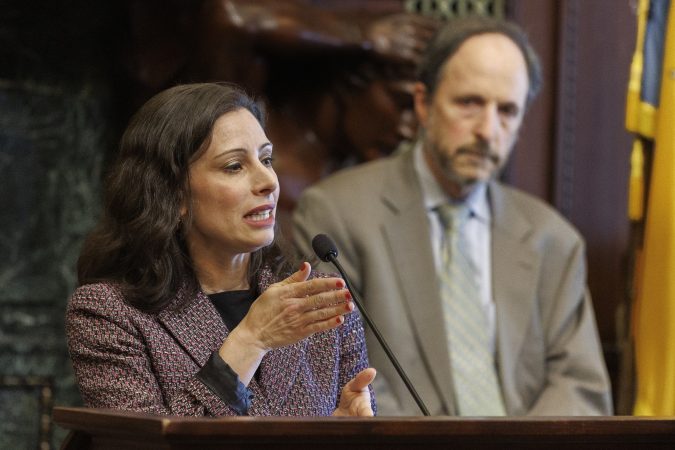
    Renee Garcia, the top lawyer in Mayor Cherelle L. Parker’s administration, is resigning from her job as city solicitor to work in the private sector, the mayor announced Tuesday.

    The reason for Garcia’s departure was not clear Tuesday, and she was not present at a news conference announcing the staff change.

    Garcia, who served in the Parker administration since the mayor took office in 2024, has recently led the city’s strategy in several high-profile matters, including a protracted legal battle with President Donald Trump’s administration over slavery exhibits at the President’s House Site at Independence National Historical Park.

    In some ways, Garcia carried out Parker’s approach to the Trump administration, which has largely been cautious and conflict-averse. At Garcia’s urging, the mayor did not sign legislation supported by City Council that bans federal immigration enforcement officers from wearing masks in the city. But the legislation took effect without Parker’s signature, and the federal government last month sued the city over the provision.

    Garcia will be replaced at the top of the city’s law department by Monique Galloway, who most recently worked as an assistant U.S. attorney in Philadelphia. Galloway’s resume also includes stints as counsel at the federal General Services Administration and the Federal Transit Authority.

    Parker said Galloway’s experience working in the federal government was a key reason for her selection as the next city solicitor.

    “These are challenging times for cities and states as we all have to interact with the federal government,” Parker said. “On any given day, we can never be sure if we’re going to face a legal filing, a summons, or a subpoena out of Washington on a range of different issues.”

    She added that Garcia’s law department has been “Philadelphia’s frontline defense on many of these issues.”

    Galloway said she was “moved by this moment.”

    “Integrity, sound judgment, excellence, and a key focus on public service are who I am,” she said. “And they are the anchor through everything that I do.”

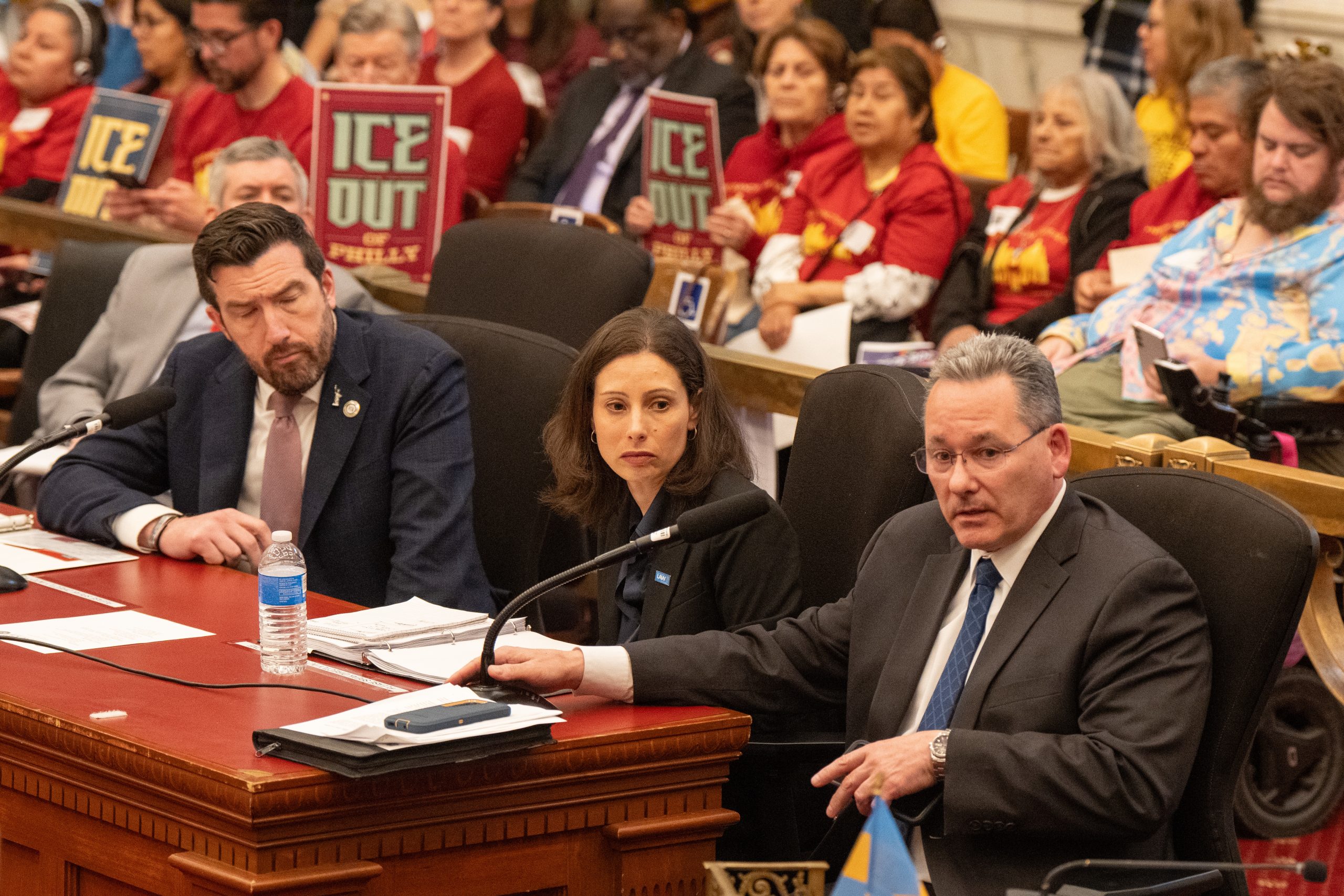
    (left to right) Charlie Ellison, Director of the Office of Immigrant Affairs, Renee Garcia, City Solicitor, Francis Healy, Deputy Police Commissioner, at the City Council hearing about ICE Out legislation, in Philadelphia City Council, Monday, April 13, 2026.Jessica Griffin / Staff Photographer

    Garcia’s departure was the second major leadership change Parker announced Tuesday. Managing Director Adam K. Thiel, who oversees much of the city’s day-to-day operations, is also resigning to take a job in the private sector. He will be replaced by Carlton Williams, a longtime city official who most recently led the Philadelphia Office of Clean and Green Initiatives.

    Taken together, the changes represent a significant shift in the top rungs of Philadelphia’s government. The managing director is in charge of implementing much of the mayor’s agenda, and the city solicitor is responsible for a host of matters, including overseeing litigation and advising both the mayor and City Council on legislation and policy.

    Parker also on Tuesday formalized her appointment of Ralph DiPietro, a deputy commissioner in the Philadelphia Department of Licenses and Inspections. The administration announced last month that DiPietro would replace Basil L. Merenda as commissioner.

    The mayor said Tuesday that she is “excited to welcome this next generation of leadership.”

  • Lindsey Graham eulogized as an ‘American original’ with global reach

    Lindsey Graham eulogized as an ‘American original’ with global reach

    WASHINGTON — Sen. Lindsey Graham, the son of pool hall owners who rose to become one of his generation’s more influential U.S. politicians at home and abroad, was eulogized Tuesday as “a true American original” during memorial services in Washington.

    Graham’s flag-draped casket arrived for a tribute at the U.S. Capitol, where the Republican served for more than 30 years as an indefatigable dealmaker who talked and laughed and badgered his colleagues into action. Later, President Donald Trump joined foreign leaders at Washington National Cathedral, a testament to Graham’s stature on the global stage.

    Trump called Graham “a giant of the United States Senate, a true American original who left us much too soon.”

    In mostly prepared remarks, the president described his onetime presidential rival turned ally as “the first person to make you laugh and one of the last people that you’ve really ever wanted to fight.”

    Trump told the story of how he had publicly disclosed Graham’s cell phone number on the campaign trail, reciting the number in the cathedral, but said the senator had the last laugh because “Lindsey did not stop calling me for the next 10 years.”

    Among those gathered were Israel’s Benjamin Netanyahu and Ukraine’s Volodymyr Zelensky, leaders of two countries fighting separate wars, a nod to Graham’s role as a foremost believer in the power of the U.S. and its military to intervene in the world’s problems. Fox News’ Sean Hannity, in his remarks, said Graham would have been moved that they both made the long journeys to attend.

    Trump cabinet officials, including Secretary of State Marco Rubio and Defense Secretary Pete Hegseth, Supreme Court Justice Brett Kavanaugh, and current and former senators and lawmakers joined in the pews, as did Graham’s sister, now-Sen. Darline Graham, who was appointed by South Carolina’s governor to fill the remainder of her brother’s term.

    It was the start of two days of services, with burial Wednesday in Graham’s home state of South Carolina. Joint Base Charleston will be renamed in his honor, the White House said. Graham died suddenly on July 11 at his home in Washington of a likely aortic tear, according to preliminary findings. He had just returned from a whirlwind trip to a NATO summit in Turkey, where he celebrated his birthday, and a visit to Ukraine. He was 71.

    A place of honor for a ‘swashbuckling’ senator

    During the morning service in the Capitol Rotunda, Vice President JD Vance described Graham as a man of “swashbuckling” stature — “who swashbuckled into the Senate” with his suit jacket open — and was impossible not to like.

    “Lindsey was a towering figure,” Senate Majority Leader John Thune said, choking back tears during his remarks.

    First elected to Congress in the 1994 Republican revolt that swept the GOP to power, Graham was part of a new era of conservatives to take their seats in the House — and among the first Republicans from his Southern state since Reconstruction.

    He quickly rose to prominence as a manager in Democrat Bill Clinton’s presidential impeachment, and he was elected to the Senate in the 2002 election. There, he formed an alliance with Sen. John McCain, a Republican from Arizona, and Sen. Joe Lieberman, an independent from Connecticut, in what would become the “three amigos,” globe-trotting the world focused on national security issues.

    Vance recalled how he argued with Graham over the senator’s staunch support for aid to Ukraine, which has divided the GOP, but praised his legacy, saying Kavanaugh “would not be on the Supreme Court” were it not for Graham’s “fierce advocacy” during the confirmation hearing.

    For decades, Graham had been at the center of the action — a member of virtually every bipartisan gang in Congress — with a relentless ability to adapt to political realities, particularly when it came to Trump.

    One by one, many of Graham’s colleagues said their goodbyes in the Rotunda. Sen. Katie Britt (R., Ala.) placed both hands on his casket and then placed her hand on her heart. Sen. Tammy Duckworth (D., Ill.) saluted from her wheelchair. Former Sen. Richard Burr (R., N.C.) bowed and delivered a brief kiss, and Sen. John Kennedy (R., La.) gave a fist bump.

    The ‘Trump whisperer’ had one last mission: Russia sanctions

    Perhaps nowhere was Graham’s political dexterity on display more as when he navigated his on-again, off-again relationship with Trump.

    Graham had denounced Trump as a “unfit for office” during the 2016 presidential campaign, but over time he had become what senators called the “Trump whisperer,” someone even world leaders relied on to understand the president.

    Days before his death, Graham had won Trump’s support for a long-fought bipartisan proposal to impose sanctions on Russia over the war in Ukraine.

    Senators were scheduled later Tuesday to take a first procedural vote on the sanctions package, in Graham’s honor. Zelensky was expected to be on hand and meet with senators in the evening.

    Graham’s champions and potential successors

    At the Washington cathedral, a roster of socially conservative and anti-abortion leaders gave readings, including Tony Perkins of the Family Research Council, Marjorie Jones Dannenfelser of Susan B. Anthony Pro-Life America, and the Reverend William Franklin Graham III.

    When Hannity said how important Darline Graham and her family had been to the senator, she put her hand over her heart in response.

    Lindsey Graham never married, but he helped support his younger sister after both of his parents died while he was at college and then starting law school. He became the guardian for Darline, who was then 13, and he later in life often extolled the benefits of Social Security that helped keep them financially afloat.

    Darline Graham is now running in a potentially crowded primary field for the fall election. The filing period for the special primary election closes Tuesday, with voting set for Aug. 11.

    Graham went on to serve as a judge advocate general in the Air Force, and remained a reserve or National Guard member for decades. In the Senate, he briefly switched back to active status to help advise the Air Force during the Iraq War and was awarded the Bronze Star medal for service in 2014 before formally retiring as a colonel in 2015.

  • Wall Street’s flip from AI to less-loved stocks accelerates, while oil prices keep easing

    Wall Street’s flip from AI to less-loved stocks accelerates, while oil prices keep easing

    NEW YORK — Most of Wall Street rose Tuesday, even as stocks of computer chipmakers continued to tumble worldwide. Oil prices, meanwhile, eased further from the two-month high they hit last week.

    The S&P 500 added 0.2%, but the modest move masked big swings underneath the surface. The Dow Jones Industrial Average jumped 537 points, or 1%, while the Nasdaq composite slipped 0.2% after briefly dropping 9.3% below its record set last month.

    The majority of the U.S. market rose after more companies delivered stronger profits for the spring than analysts expected. Coca-Cola climbed 5% after its revenue rose 7% despite what CEO Henrique Braun called “a dynamic consumer landscape.”

    Sherwin-Williams rallied 8.3%, and Illinois Tool Works rose 3.6% after both likewise reported stronger earnings for the latest quarter than analysts expected. Stock prices generally follow the trend of corporate profits over the long term, and expectations are high for this most recent round of reports with the U.S. stock market still near its all-time high.

    Such expectations are weighing particularly heavily on stocks of chipmakers and other companies that have been huge winners from the boom in artificial-intelligence technology.

    Micron Technology’s stock came into the day having more than tripled for the year following gangbuster growth, for example. During the three months through May 28, its revenue more than quadrupled from a year earlier.

    But worries are rising about whether such growth is sustainable. Big spenders on computer memory could pull back on investments if AI does not produce as much profit or productivity as promised. Lower-cost AI models from China could also mean less demand for memory and computing power than earlier expected.

    Micron dropped 8.9% and was the heaviest weight on the S&P 500. Others also helping to keep the market in check were Advanced Micro Devices, down 8.1%, and Applied Materials, down 7.8%.

    All told, the S&P 500 rose 15.60 points to 7,428.78. The Dow Jones Industrial Average jumped 537.24 to 52,747.32, and the Nasdaq composite fell 55.17 to 24,876.91.

    The losses for chip stocks were even worse earlier in the day in other markets worldwide.

    Sharp drops for SK Hynix and Samsung Electronics dragged South Korea’s Kospi index down 10.8%. The market’s losses were so big that trading was temporarily halted at times in Seoul.

    “We believe the market was likely spooked by the progress of China’s chipmaking equipment capabilities, and was worried that this progress would threaten the competitive position of global chipmaking and chip equipment leaders,” said equity analyst Jing Jie Yu of Morningstar.

    “That said, we believe the sell-off today is largely a knee-jerk reaction and overdone,” he said. The dominant position of global chipmaking leaders is unlikely to be threatened meaningfully, he said.

    Several huge spenders on AI chips and data centers are scheduled to report their latest quarterly results this week, which could offer updates on how much they’re planning to invest. Meta Platforms and Microsoft are reporting on Wednesday, while Amazon is due on Thursday.

    Because AI superstar stocks have grown so big, their movements carry more weight on the S&P 500 and other indexes than many other companies. But the broad U.S. market could hold up despite their swings if other, less-loved areas are able to keep rising. It’s a rotation that some strategists have suggested could be healthy for the overall stock market.

    In the oil market, the price for a barrel of Brent crude to be delivered in October fell 4.4% to settle at $82.08.

    It’s been falling since late last week, when the price for a barrel to be delivered in September briefly shot as high as $102.

    Pushing up on prices have been worries that worsening fighting in the Middle East could slow the global flow of oil. On the other side, though, are hopes that the United States and Iran could still negotiate something to allow oil tankers to use the Strait of Hormuz to move crude.

    Lower oil prices helped to ease Treasury yields in the bond market. The yield on the 10-year Treasury fell to 4.60% from 4.65% late Monday.

    A weaker-than-expected reading on confidence among U.S. consumers also weighed on yields. Fewer consumers are saying they feel good about current business conditions, according to the latest survey released by the Conference Board Tuesday.

    The drop in oil prices helped push traders to trim their bets that the Federal Reserve could announce a hike to interest rates following its latest meeting on Wednesday. They’re forecasting a 31.5% probability, down from more than 36% a day before, according to data from CME Group.

    Higher rates could keep a lid on inflation, but they would also slow the economy by making it more expensive for U.S. households and businesses to borrow. Long-term mortgage rates have already hit their highest level in nearly a year, chilling the housing industry.

  • Insurers propose 17% average rate increase for Pennie health plans in 2027

    Insurers propose 17% average rate increase for Pennie health plans in 2027

    Insurers are asking for double-digit increases to health plans sold on Pennsylvania’s Affordable Care Act marketplace, Pennie, in 2027.

    Insurers have requested an average increase of 17% for plans sold to individuals and families through Pennie. They are asking to raise the premium price of plans sold to small businesses by an average of 11.5%, according to rate requests released last week by the Pennsylvania Insurance Department.

    The proposed rates are not final. A public comment period is open through Aug. 22, and insurance administrators expect to release final rates this fall.

    Pennsylvania Insurance Commissioner Michael Humphreys said in a statement that the rates were “higher than we’d hoped.”

    New Jersey has not released 2027 rate requests for its ACA marketplace, Get Covered NJ.

    In their rate proposals, Pennsylvania insurers said they needed to charge more to account for the rising cost of medical services and prescription drugs, and a shift in who is buying health insurance and how sick they are. Insurers are required by law to spend 80% of the money they collect through premiums on healthcare for members.

    “Addressing rising healthcare costs requires a shared commitment across the healthcare system, and we will continue working with providers and other partners to help keep quality care within reach for the people we serve,” Independence Blue Cross, which has proposed a 14% average premium increase, said in a statement.

    The proposed increases for 2027 come on top of massive price hikes in ACA marketplaces this year, when a critical financial incentive program was eliminated. The cost of a Pennie health plan more than doubled for many in 2026 and 177,000 people have dropped coverage as a result.

    Advocates worry that another price increase will cause even more people to drop coverage, which could further raise costs.

    “If these proposed rates take effect, even more Pennsylvanians are likely to be priced out of coverage,” Antoinette Kraus, executive director of the Pennsylvania Health Access Network, which helps people enroll in coverage, said in a statement.

    Rising costs and premium prices

    A major factor that affects the cost of insurance is who the plan will cover — how healthy or sick they are, and how much the plan will need to spend on their care.

    Healthy young adults who have few healthcare expenses typically help balance the higher cost of insuring older adults who may have multiple chronic conditions.

    But young adults — many buying insurance on their own for the first time — can be highly sensitive to cost. They have been among those dropping out of ACA plans at the greatest rates after Congress failed to renew a financial incentive program that ensured no one paid more than 8.5% of their income on insurance.

    About a third of adults who dropped out of Pennie health plans so far this year were under age 34, according to state data.

    “They’re the ones looking at the cost and saying, ‘Well I’m pretty healthy right now, I’m going to take the gamble,’” said Devon Trolley, Pennie’s executive director.

    People with ongoing medical needs are more likely to stick with their plan, despite cost increases.

    Pennie’s 2027 enrollment period will run Nov. 1 through Jan. 15.

    Lawmakers have not shown signs of bringing back the enhanced tax credits, which were introduced in 2021 and had been renewed annually since.

    Income-based tax credits that are part of the ACA are still available. People remain eligible for these tax credits if they earn up to 400% of the federal poverty level — about $62,600 a year for an individual or $128,600 for a family of four.

  • A Philly street artist installed a LeBron James mirror mosaic on an old Burger King wall. Why? ‘It explains itself.’

    A Philly street artist installed a LeBron James mirror mosaic on an old Burger King wall. Why? ‘It explains itself.’

    Street artist irregular. rarely cries. But when LeBron James announced he was going to end his NBA career with the Sixers, he shed a single tear — and then got to work.

    Within 48 hours, after a sleepless Friday night, his mirrored tribute to James was up on the side of a Center City building.

    “Someone said, ‘Oh, that was so fast!’” irregular., whose full name is Sean Hassett, said Tuesday. “I don’t think it was fast enough. Actually, I think it could have been a little quicker.”

    As soon as rumors began to swirl that James could potentially join the Sixers, the 37-year-old artist began to pull reference images, knowing that if it happened, he’d want to make art of it. He had a gut feeling it was going to happen.

    “Philly just felt like — why would they even say it if it wasn’t going to be true?” Hassett said. “I was a firm believer three weeks ago.”

    As the weeks wore on, his hope started to dim, but that changed late last week. Within two hours of James announcing his decision, Hassett had already drawn out what he wanted the piece to look like, and then spent the night cutting out each piece of mirror.

    Hassett usually sells art at Rittenhouse Square on Saturdays, but instead spent most of this past Saturday afternoon walking around Center City to scout potential locations for the piece. He ultimately settled on a building at Eighth and Market, the site of a former Burger King.

    “King James, Burger King, I don’t know,” he said. “It’s a weird tie. I love the slogans that Burger King uses, which is what I used as my captions on my Instagram. One of them is ‘There’s a new king and it’s you.’ That makes perfect sense for exactly what I did. I mirrored LeBron James. Their classic slogan is ‘Have it your way,’ and I felt like that’s what the Sixers chose this year, is to have it our way, and we’re going to just put all the chips in and go for it all.”

    Adam Hock, of Center City, saw on Facebook about the LeBron James mosaic on Eighth and Market Streets on Tuesday.Tyger Williams / Staff Photographer

    Hassett has been creating mirror art for 11 years. He started as a painter, but as he developed his skills, he yearned to find a way to stand out from the crowd. Working with mirrors became his medium.

    “The viewer can see themselves in the art,” he said. “It explains itself. It speaks for itself, truly, I would say.”

    Hassett estimated that, at this point, an average project takes him six hours to finish, but the James project ended up taking closer to 10.

    It’s not his first tribute to a Philly athlete either.

    Hassett created a mirrored Saquon Barkley and put it up a week before Super Bowl LIX, since he was that confident the Birds would win. His Allen Iverson mirror art, created after the Sixers unveiled their small practice facility statue, is still up on Third and South Streets.

    “I see [sports] as the true glue of the city,” he said. “I remember the Eagles parade, and I have a bit of social anxiety. I don’t like large groups, but [at] that parade I was literally shoulder-to-shoulder, toe-to-toe with people, and there was nothing better than the energy there.

    “I think we’re going to get that back. We think this year was great, but I think there’s just more great years to come here in Philly.”

  • Jersey Shore-set comedy ‘Wildwood’ in development at FX from ‘Derry Girls’ creator

    Jersey Shore-set comedy ‘Wildwood’ in development at FX from ‘Derry Girls’ creator

    A new comedy set at the Jersey Shore is in the works from Irish writer Lisa McGee, the creator behind the hilarious hit show Derry Girls.

    Called Wildwood, the series will follow a group of college girls visiting New Jersey from Ireland in the summer of 2000 with “no money, no visas, no plan, no clue,” according to Deadline.

    McGee’s Derry Girls became a whopping international hit after first airing on Britain’s Channel 4 in 2018 and later landing on Netflix.

    It follows a group of messy, raunchy, and zany teens — including Bridgerton star Nicola Coughlan — at an all-girls Catholic school in the 1990s during the Troubles conflict in Northern Ireland.

    A still from “Derry Girls.” (Netflix)Netflix / MCT

    The show was a semi-autobiographical story for McGee, who grew up in Derry and writes irreverent, cheeky young characters that make audiences cringe, cry, and laugh out loud. Her most recent project was the comical murder mystery How to Get to Heaven From Belfast, which premiered on Netflix in February.

    Described as a “spiritual successor” to Derry Girls, Wildwood marks McGee’s first U.S.-based project. It will be developed with 20th Television and FX following a reportedly competitive bidding process. McGee will serve as creator and executive producer.

    It’s not yet clear whether Wildwood will film in the eponymous beach town where it’s set, but FX — the longtime home of It’s Always Sunny in Philadelphia — is certainly no stranger to the region.

    The Jersey Shore remains a favorite for TV and film productions in recent years, from The Four Seasons (Ocean Grove and Point Pleasant) to Springsteen: Deliver Me from Nowhere (Asbury Park) to A Complete Unknown (Cape May).

  • Philadelphia Managing Director Adam Thiel resigns from Parker administration

    Philadelphia Managing Director Adam Thiel resigns from Parker administration

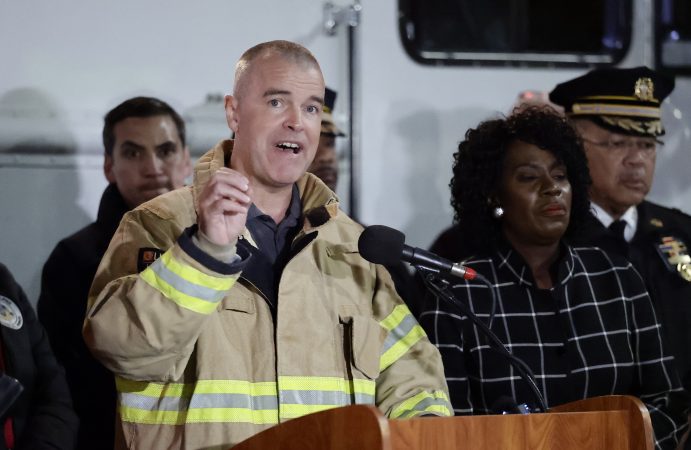
    Philadelphia Managing Director Adam K. Thiel, a top mayoral appointee who supervises many of the government’s day-to-day operations, is resigning from his job in Mayor Cherelle L. Parker’s administration, the mayor announced Tuesday.

    Parker said Thiel is leaving his city role to “reenter the private sector” after serving as managing director for about 2½ years.

    Thiel will be replaced by Carlton Williams, a longtime city official who currently leads the Philadelphia Office of Clean and Green Initiatives. Williams, 57, will assume oversight of a 550-person staff and a vast portfolio of city operations, including health agencies, homeless services, the streets department, parks and libraries, prisons, and the fire department.

    Parker praised Williams’ work implementing new initiatives such as twice-weekly trash collection, and she called him “the individual with all of the attributes the position requires.”

    “Whenever we’ve had a crisis of any kind in this city, he has been on my speed dial,” she said.

    The transition, Parker said, will take place over the next “four to six weeks.” It was not immediately clear who will lead the Philadelphia Office of Clean and Green Initiatives.

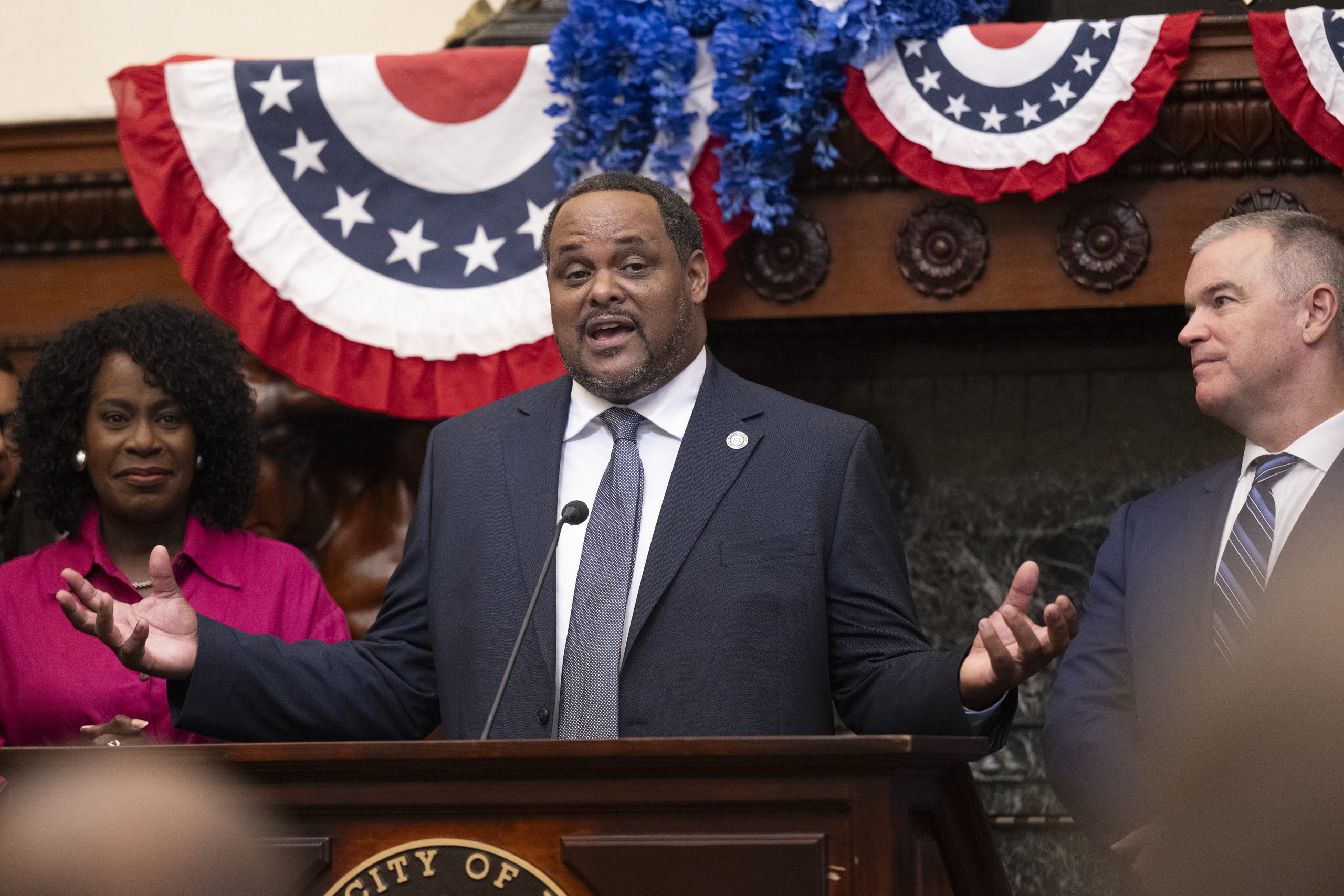
    New Philadelphia Managing Director, Carlton Williams speaks at the podium after being announced by Philadelphia Mayor Cherelle L. Parker, left, during a news conference at City Hall in Philadelphia on Tuesday, July 28, 2026.Jose F. Moreno / Staff Photographer

    Thiel, 54, has been the city’s managing director since Parker took office in January 2024. Prior to being appointed to the role, Thiel spent eight years as the city’s fire commissioner under former Mayor Jim Kenney.

    In the early days of Parker’s tenure, Thiel emerged as a key crisis manager, often flanking the mayor when she responded to emergencies. He was the face of the administration’s strategy in Kensington, where Parker campaigned on ending the sprawling open-air drug market that has persisted in the neighborhood for decades.

    His office also played a critical role in preparing for an array of major events that the city hosted this summer, including FIFA World Cup games and events related to the 250th anniversary of the nation’s founding.

    Details of Thiel’s new job were not immediately clear. He is a major in the Army Reserve, and he has worked as a consultant and an adjunct professor, in addition to his role as managing director. His city salary is $310,000, and last year, he made more than half a million dollars in additional income through his other jobs, according to his financial disclosure.

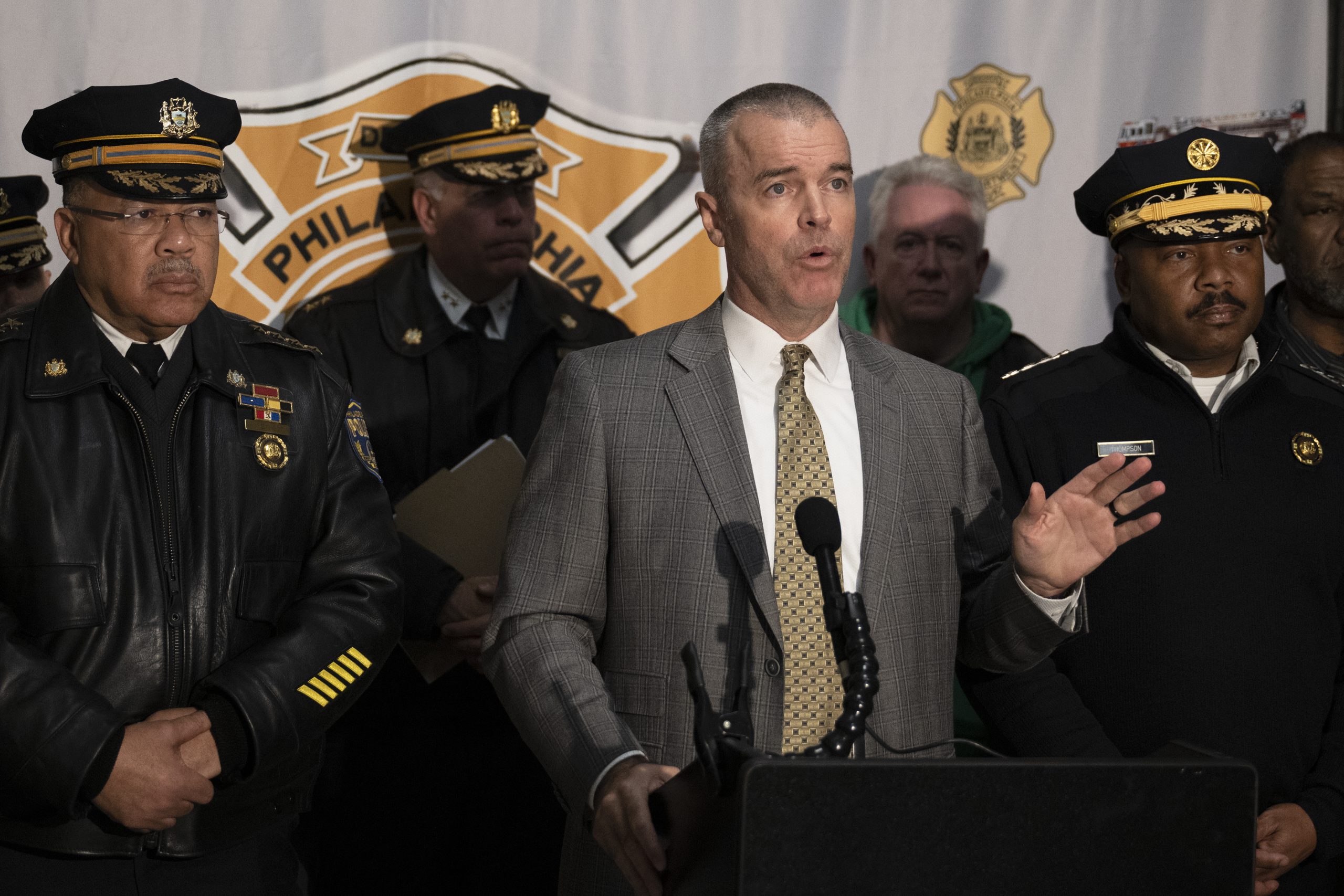
    Managing Director Adam Thiel, center, gives an update on the Northeast Philly plane crash, during a press conference on Tuesday Feb 4, 2025 at the Fire Administration Building in Philadelphia, Pa.Jose F. Moreno / Staff Photographer

    Since Thiel joined the Reserve in August 2024, he has been one of the administration’s least visible senior officials and was frequently on leave. He did not oversee the response to a January snowstorm that was the city’s worst in five years — despite emergency services falling under his purview — and parts of the Kensington strategy are now led by other offices.

    The Inquirer reported in February that Thiel was absent for a total of about five months last year. Of that, six weeks were for military leave — the maximum the city covers for employees — and an additional 13 weeks were for general paid leave, according to city records obtained by The Inquirer. A spokesperson for Thiel said he used most of that time off for military service.

    Thiel refused to discuss his role in the Army Reserve with The Inquirer. A spokesperson for the Army said Thiel is a major assigned to a civil affairs unit based in Staten Island, N.Y. Last year, the Army Reserve paid Thiel about $32,600, according to his financial disclosure paperwork.

    In addition to his jobs with the city and the Army, Thiel has worked on the side as a consultant. Last year, he earned $390,000 as president of Pantheon Global Strategies, an opaque company with little in the way of an online footprint. Thiel has in the past refused to discuss the business in detail.

    He also earned $120,000 last year from FACETS Consulting LLP, an Arizona-based firm that is publicly advertised as a fire safety consultancy. Thiel is a founding partner.

    Philly city managing director Adam Thiel in the bowels of the stadium during the France vs. Iraq 2026 FIFA World Cup Group 1 soccer match at Philadelphia Stadium on Monday, June 22, 2026.Elizabeth Robertson / Staff Photographer

    Thiel has said his consulting work takes fewer than 10 hours per week and did not interfere with his responsibilities as Philadelphia’s managing director. When The Inquirer first reported on Thiel’s consulting work in 2024, he would not disclose his clients but said he followed the city’s ethics guidelines related to conflicts of interest.

    Before coming to Philadelphia in 2016, Thiel worked in a variety of firefighting, disaster response, and emergency preparedness roles around the country, including as Virginia’s deputy secretary of public safety and homeland security.

    He is the third top official to leave Parker’s administration since she took office in January 2024. Former chief deputy mayors Aren Platt and Sinceré Harris, the architects of Parker’s mayoral campaign, each left their posts for jobs in politics outside government.

    In some administrations, the managing director has been the mayor’s clear No. 2, while other mayors have preferred for power to be concentrated among deputy mayors or other staffers in their office.

    Under Parker, chief of staff Tiffany W. Thurman is seen as the mayor’s top adviser and the central figure in her administration. Parker has called Thurman her “chief air traffic controller.”

    She has also placed the execution of much of her agenda on Williams’ shoulders. Earlier this year, he oversaw the city’s response to a major snowstorm, despite that work in the past falling squarely in the managing director’s scope.

    Mayor Cherelle L. Parker walks along Kensington Avenue with Adam Thiel, managing director of city, on Thursday, April 11, 2024. Mayor Parker took the El to attend an event in the Kensington neighborhood in Philadelphia.Heather Khalifa / Staff Photographer

    Still, Thiel oversaw a large team, and the leaders of more than 30 city agencies and offices reported to him.

    One of his major initiatives was coordinating the administration’s efforts to improve quality of life in Kensington. Thiel’s office worked to expand homeless shelter and recovery bed space throughout the city, and he led the development of the Riverview Wellness Village, a city-run recovery house in Northeast Philadelphia that dramatically grew the city’s capacity to house people with substance use disorder.

    Initially, Thiel absorbed scrutiny from community groups and, at times, members of City Council. Lawmakers grilled Thiel on the efforts in Kensington, and they occasionally criticized what they saw as a lack of details coming from the Parker administration about the plan.

    Despite those early hiccups, more than 200 people live at Riverview, which has been open to residents in recovery for more than a year.

    “I’m grateful for what you did,” Parker told Thiel on Tuesday. “And I’m grateful that you had thick skin.”

    And while the drug market in Kensington persists, there have been other markers of success in the neighborhood, including a plummeting shooting rate and a reduction in the number of people living on the street.

    Williams recently toured parts of Kensington alongside Parker and other administration officials to get a sense of the challenges ahead. He said Tuesday that his goal is to be accessible to all residents and to look at the delivery of city services “through the eyes of everyday residents.”

    “You just don’t take these jobs because of the glamour,” he said. “You take the job because you believe that you can make a change.”

    Staff writer Sean Collins Walsh contributed to this article.

  • City Council is pushing the Philly school board to come back to the negotiating table on school closings

    City Council is pushing the Philly school board to come back to the negotiating table on school closings

    City Council on Tuesday renewed its call for officials to amend their plan to shut 17 Philadelphia schools, saying it had been more than a month since talks broke down over removing schools from the closing list.

    “We’re here to basically beg the school board to come back to the negotiating table, and let’s come up with a plan that we can work with,” City Councilmember Isaiah Thomas said at a news conference at City Hall.

    He was joined by six other Council members — Anthony Phillips, Jamie Gauthier, Curtis Jones Jr., Quetcy Lozada, Nina Ahmed, and Mark Squilla.

    The board voted April 30 on a $3 billion blueprint that would close 17 schools and modernize 169. The plan — which is $2 billion short of being fully funded — was largely unpopular with the public, but is necessary, district officials said, to accelerate achievement and solve for 70,000 empty seats, a vast stable of aging buildings, and a chronically underfunded system.

    Council technically has no say in the plan — the school board is the sole decider. But Council controls roughly half of the district’s budget, and some members have expressed frustration that they have not had more input on major decisions like closings.

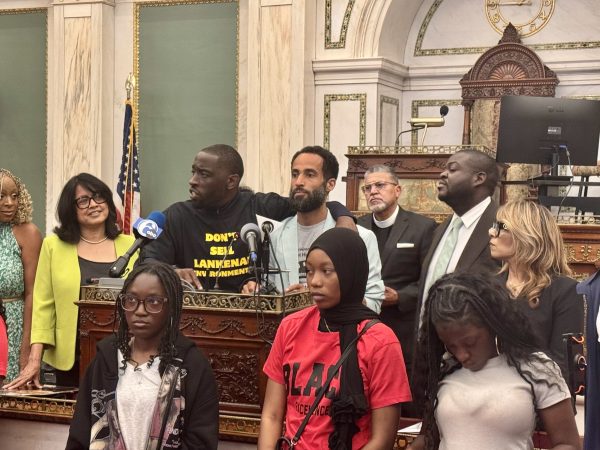
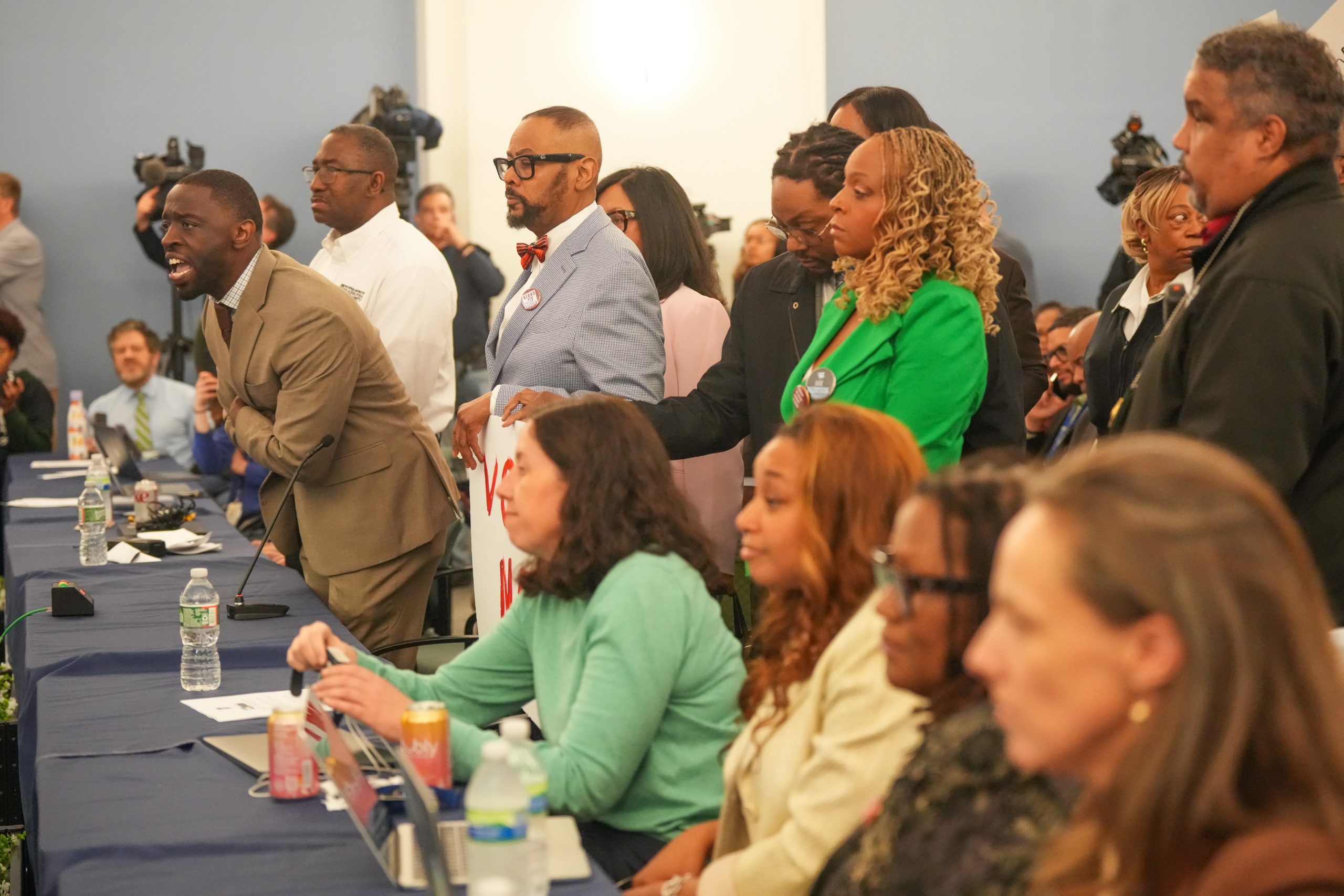
    Council members, led by Thomas, had attempted to body-block the plan, shutting down the meeting at which the school board voted it through. A large contingent of Council vowed to vote against the reappointment of any school board member who supported the closings. Some also said they think it is time to explore changing how school board members are appointed.

    Councilmember Isaiah Thomas, along with members of council, speaks at the school closing vote, in the School District Building, in Philadelphia, April 30, 2026.Jessica Griffin / Staff Photographer

    Jones said Tuesday that “we have tools in our tool belt that we will use” if the board does not budge on school closings.

    Jones said he wanted Council to move forward with legislation to bring in an authority like the Pennsylvania Intergovernmental Cooperation Agency, an independent body that provides oversight of the city’s finances, to supervise the district.

    Vincent Thompson, a spokesperson for Council President Kenyatta Johnson, said that Johnson was “still in discussions about this issue” and that he would have more information in the coming days.

    Thomas also said lawsuits over the facilities plan are possible, though he suggested advocacy organizations, not Council, could bring the suits.

    Delise Williams, a Democratic committeeperson who has been active in the fight to keep Parkway Northwest High School for Peace and Justice open, has already filed a lawsuit, saying she has concerns about student safety.

    At one point toward the end of the school year, the board was negotiating making changes to the closing list with Council, said Thomas and Phillips, the chair and vice chair of Council’s Education Committee. Those talks broke off abruptly, Thomas said.

    Council members have voiced particularly strenuous objections to the closure of Lankenau High in Roxborough, the city’s environmental sciences magnet, plus Paul Robeson High in West Philadelphia and Overbrook Elementary.

    Reginald Streater, the school board president, suggested in a statement Tuesday that negotiations with Council were a nonstarter.

    “For transparency and fairness to impacted school communities, any conversations regarding the board’s April 30th resolution on the Facilities Master Plan’s implementation must occur through the formal transition planning process,” Streater said in the statement. “The board values City Council’s partnership and remains committed to engaging stakeholders throughout the plan’s implementation. As the process moves forward, the board will continue reviewing community feedback and the district’s recommendations when making any decisions.”

    Monique Braxton, a school district spokesperson, emphasized the modernization projects planned and the academic advancements projected.

    “We understand the passion surrounding this matter, and we look forward to being collaborative partners in this process,” Braxton said. “As we begin the transition planning process, we will continue to work closely with students, families, staff, elected officials, community members, and the board of education to ensure every transition is thoughtful, transparent, and centered on student success.”

    Technically, the board’s April vote does not actually close schools; rather, it was a vote to begin the closure process, which officials said could change as circumstances change.

    Pennsylvania public school code requires formal closure hearings to be held at least three months before any closures. The first closures are scheduled to happen in 2027; the 2026-27 year has been designated a planning year for transitions.

    Superintendent Tony B. Watlington Sr. named Shakeera Warthen-Canty, a veteran district administrator, to lead the transition office.

  • More than 2,000 of N.J.’s ‘noncitizen voters’ could actually be citizens, Gov. Sherrill says

    More than 2,000 of N.J.’s ‘noncitizen voters’ could actually be citizens, Gov. Sherrill says

    About 2,000 New Jersey voters identified last week as noncitizens could actually be citizens after all, Gov. Mikie Sherrill said Tuesday, a week after her disclosure of a voter registration glitch put the state at the center of a heated national debate over election security.

    Sherrill announced last week that approximately 6,600 noncitizens had been registered to vote ahead of the 2024 election due to a software glitch with the New Jersey Motor Vehicle Commission’s automatic voter registration program. She said fewer than 400 of those people had voted and there is no evidence that they affected the results of any election. The finding came in the midst of a political fight over President Donald Trump’s claims of widespread voter fraud, including by noncitizens, and his aggressive push for an overhaul of the country’s election system.

    The first-term governor said Tuesday that the New Jersey Department of State’s Division of Elections has begun a process to remove more than 4,500 individuals who were registered because of the software error, but that the rest of the registrations will be referred to county election officials for further review “to ensure that any lawfully registered voters are not being disenfranchised.”

    “We are taking this extra step because our initial review indicates that a number of these individuals may be citizens,” she said in a statement. “That has been the case in other states where clerical and administrative voter registration errors have occurred, and we’re determined to get this right.”

    Her office announced the discovery a little more than one hour after celebrating New Jersey’s new John R. Lewis Voter Empowerment Act, which Sherrill signed July 2. Lewis was a civil rights leader who represented Georgia in Congress from 1987 until his death in 2020.

    The law, which is based on a federal proposal that former President Joe Biden unsuccessfully tried to pass, promotes equal opportunity to voting and voter outreach to communities that do not speak English proficiently, and prohibits intimidation, deception, violence, or restraint of voters or election workers.

    The law lays out a process for individuals who want to file a complaint over voting rights and requires public hearings for redistricting.

    If jurisdictions have a history of discrimination, the law requires approval from the attorney general before they can make changes to their election administration. It also gives the attorney general authority to enforce the law through litigation, investigations, and studies, and by representing the public in federal court.

    “Here in New Jersey, if your rights are violated, you have a right of action,” Sherrill said at Union Baptist Church in Trenton.

    Sherrill said New Jersey is the 10th state to enact the model, but the first to do so since an April Supreme Court ruling that weakened part of the Voting Rights Act as the court’s conservative majority ruled against a majority-Black district in Louisiana.

    Supporters of the bill said they had been advocating for it for four years in New Jersey.

    Sherrill’s Tuesday celebration at the church shows the governor is not shying away from the issue of voting rights even as the state becomes a talking point for Republicans who want enact new national restrictions — including requiring voters to provide proof of citizenship to register with documents like a birth certificate or passport.

    Sherrill opposes the national legislation, known as the SAVE America Act, which has been championed by Trump as a way to make elections more secure but which opponents warn could make it tougher to vote for millions of Americans.

    “Trump has only one concern: winning at any cost, and he’s willing to put the right to vote at risk,” Sherrill said Tuesday. “There’s no line he won’t cross, no rule he won’t break, no norm he won’t violate. But we will not stand idly by.”

    The former member of Congress will likely continue to have a role in the debate as Republicans ramp up their advocacy ahead of November’s midterm elections.

    U.S. Rep. Jeff Van Drew, a South Jersey Republican who was elected as a Democrat in 2018 before vowing his loyalty to Trump a year later, led a public letter with other House Republicans calling on Sherrill to answer a series of questions about the noncitizen voting issue. He questioned how she knows it was “just a software glitch and not a nefarious act.”

    Van Drew, who chairs the House Judiciary Subcommittee on Oversight, said he plans to hold hearings over the issue and is “absolutely exploring” the possibility of subpoenas, Politico reported.

    On Tuesday, Sherrill said Van Drew “has a very sordid history as far as elections go.” She said Van Drew’s campaign had hired a political operative who was a “known ballot harvester” — referring to Craig Callaway, who worked on Van Drew’s 2022 bid.

    Callaway, a former Atlantic City Council president, had previously served prison time for blackmail and bribes when Van Drew’s campaign hired him. In 2025 under former U.S. Attorney Alina Habba, Callaway pleaded guilty in connection with fraudulent mail-in ballots during the 2022 election, but Van Drew said he was not aware of any illegal activity and was not accused of wrongdoing.

    Sherrill said her administration hired the CSG law firm to conduct an independent investigation into the voting registration glitch. One of the firm’s main partners, Jeffrey Chiesa, served as attorney general under former Republican Gov. Chris Christie, who later appointed him to the Senate.

    “We have a bipartisan, independent investigation going on right now because we have nothing to hide,” Sherrill said.