Blog

  • Cecily Tynan is retiring from 6abc after three decades on Action News

    Cecily Tynan is retiring from 6abc after three decades on Action News

    The big story on Action News is the departure of Cecily Tynan.

    The beloved meteorologist is retiring after more than three decades at 6abc, a trailblazing career spanning major weather events, including Hurricane Sandy, the Blizzard of 1996, and devastating flooding in Philadelphia following Hurricane Ida.

    Tynan’s last day with the station will be Monday, Aug. 31.

    At the end of the 6 p.m. Thursday newscast, Tynan publicly confirmed her plans.

    “After more than 30 years at Action News, I will be retiring in a few weeks, and honestly, I’m thrilled about it,” Tynan, 57, said.

    “This has been in the works for a while. I’ve been counting down here at the station. Both my children have graduated from high school. My daughter is going to college in less than a month, and she’ll be running cross country and track. And my husband and I, we plan to attend every single one of her meets. So it’s the right time for me. It’s the right time for my family, and I’m so very thankful,” Tynan said.

    Responding to her announcement, anchor Brian Taff told Tynan: “You are a treasure, not just in this newsroom, of course, but among everybody out there watching who loves tuning in every night and feeling the comfort of having Cecily Tynan tell them what’s coming up.”

    In a written statement, Tynan said she was “honored” to have been a key part of the Action News team, where she began as the station’s first-ever weekend meteorologist before becoming its first female chief meteorologist in 2009, replacing the retiring Dave Roberts.

    “I’m proud of the work we’ve done and thankful to 6abc viewers for trusting me with their weather forecasts,” Tynan said, adding she plans to spend her winters “in Florida water skiing, traveling and having lots of quality time” with her family.

    Tynan is a mainstay in Philly’s closely watched TV news ecosystem, spending much of her career alongside famed anchor Jim Gardner on the 11 p.m. edition of Action News before his retirement in 2022.

    Cecily Tynan cleans a cab with former WIP host Howard Eskin during a fundraiser at the Wyndham Franklin Plaza Hotel in 1999.G.W. MILLER III / Philadelphia Daily News

    She began at the station in 1995 as a weekend weather anchor and reporter, parlaying a two-year contract into a multidecade career that also included the 5 p.m. and 6 p.m. newscasts and a prime spot on the station’s Thanksgiving Day parade coverage.

    “From the moment she first walked off the elevator and joined Action News, Cecily has been a trusted voice for viewers, a leader in our newsroom, and one of the most talented broadcasters in Philadelphia,” John W. Morris, 6abc’s general manager, said in a statement. “Whether guiding us through storms or being part of our holiday traditions, Cecily has been a part of our lives for a long time.”

    On Oct. 9 last year, Tynan celebrated her 30th anniversary in a social media post, recalling that she had originally planned to stay with the ABC network’s Philadelphia station for three years.

    “That’s what happens when you find your ‘home,’ where your co-workers evolve into some of your closest friends,” Tynan wrote.

    “If you love what you do, you never work a day in your life. Thank you from the bottom of my heart!” she added.

    Prior to landing in Philly, the Connecticut native made stops in Las Vegas and Roanoke, Va. She also previously hosted the public affairs show Primetime Weekend.

    “As much as our viewers are going to miss her, we will miss her even more,” Morris said.

    While Action News has been known for its stability, Philly’s most-watched news broadcast has said goodbye to a few notable people recently. Fellow meteorologist Chris Sowers left the station in 2024 to join the ABC affiliate in West Palm Beach, longtime general manager Bernie Prazenica retired in 2025, and Tom Davis, the station’s former vice president and news director, departed in March.

    There have also been a few departures on the sports side, including reporters Gabriella Galati, Jeff Skversky, and Jamie Apody. Both Skversky and Apody later landed at Fox 29.

    The station hasn’t yet announced Tynan’s replacement. Among the candidates are 6abc veterans Karen Rogers, Adam Joseph, and Brittany Boyer.

  • A presumed lightning strike forced 2 store closures on Maple Shade’s Main Street

    A presumed lightning strike forced 2 store closures on Maple Shade’s Main Street

    From this past December to April, Julie Hause took only three days off. The rest of her time was spent on Maple Shade’s Main Street, transforming the longstanding chocolate shop she purchased in 2023.

    Hause spent months personally ripping up the worn green carpet by hand, installing laminate flooring, repainting, and more, breathing new life into the aging downtown staple.

    Now, her L&S Chocolates is closed with extensive smoke, water, and roof damage from a fire Tuesday night that is suspected to have been caused by lightning.

    “It was a group effort. My husband, my kids, my friends — everybody came in and we did it all ourselves. And that’s why I’m so devastated,” Hause said. “I put my blood, sweat, and tears into this. And now, I feel like it literally went up in smoke or washed away in a flood because that’s what I’m dealing with.”

    Hause was in her shop — which had been open for less than four months — when powerful storms rolled through South Jersey Tuesday evening and she heard a “very loud crack” that came from the back of the neighboring bakery, she said.

    The lights flickered in an unusual way, “a really quick stutter of flashing,” she said, before she smelled something burning. Hause quickly searched in her back workroom for the source of the fire before exiting the building and calling the fire department, she said.

    The official investigation into the cause of the fire is ongoing, Maple Shade Fire Marshal Matthew Orsini said.

    Firefighters responded to the scene at 5:53 p.m. Tuesday when they located the fire in “a small area involving the rear exterior wall and roof” of the bakery, Orsini said. The bulk of the fire was extinguished within 10 minutes, he said.

    “Damage was limited primarily to the vinyl siding on the rear exterior wall and an approximately 5-by-5-foot section of the roof,” Orsini said, noting that the concrete construction beneath the siding helped prevent the fire from extending into the interior of the building or the adjoining property.

    The National Weather Service confirmed there were lightning strikes in the area around the time of the fire but the agency does not collect the location-specific data needed to determine whether a particular building was struck or not, a meteorologist with the NWS office in Mount Holly said Thursday.

    Tis So Sweet, the adjoining bakery, posted on social media shortly after Tuesday’s storm announcing that it will be closed until further notice.

    “Unfortunately our Maple Shade store was struck by lightning during this evening’s storm and will be closed until we can clean up and repair damage,” the bakery wrote.

    By Thursday morning, cakes and cupcakes were still sitting in the display cases inside the shuttered bakery on the corner of Maple Avenue, and an “unsatisfactory” designation from the health department was taped to the front door. The bakery’s owners could not be reached for comment.

    L&S Chocolates is closed until further notice due to smoke and water damage from a suspected lightning-caused fire in Maple Shade on Tuesday.Lacey Latch

    Since the fire, Hause has spent nearly every waking moment trying to determine her next steps. Fielding visits and phone calls from the health department, multiple insurance adjusters, her landlord, and more, she said it will likely be at least four to six months before she can reopen the store.

    “It’s hard. I put so much work and effort into this. I cried most of last night, I’ve cried most of today,” Hause said Wednesday afternoon. “Maybe a couple days off of just breathing and relaxing, and then I’ll figure out my next steps.”

    Before the fire, Hause had begun developing ideas for classes and community events that she could host at the store, like cake decorating classes or a “Chocolate & Sip” wine night. Now, she’s just taking things “hour by hour” as she starts to rebuild.

    “I’m scared. I’m absolutely scared for my future now,” she said. “After putting everything into this and, overnight, it’s gone.”

  • Pa. lawmakers can’t agree on how to sentence second-degree murder cases. The state Supreme Court may extend their deadline.

    Pa. lawmakers can’t agree on how to sentence second-degree murder cases. The state Supreme Court may extend their deadline.

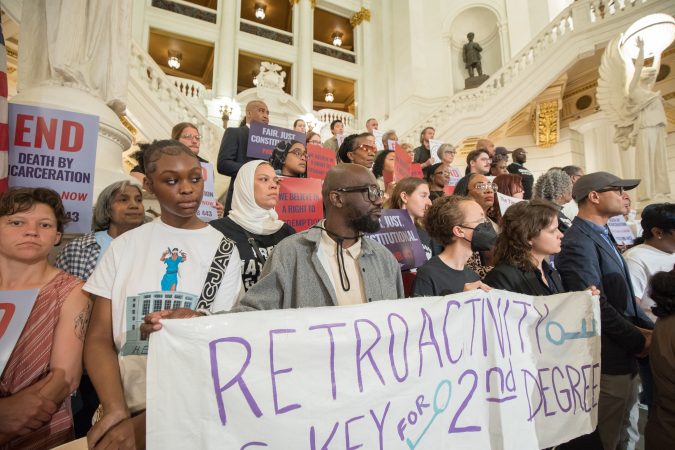
    HARRISBURG — As state legislators failed to reach an agreement on a new sentencing structure for second-degree murder convictions on the eve of a deadline imposed by Pennsylvania’s highest court, the Allegheny County district attorney has asked the Pennsylvania Supreme Court to extend its deadline 120 days.

    Unless the court agrees, the state’s divided legislature is all but guaranteed to not reach a deal by the Friday evening deadline set by the court, which ruled in March that mandatory life sentences for crimes of that category were ruled unconstitutional.

    That means that judges would begin to sentence individuals across the state without legislative guidance — and likely tees up about 1,100 individuals already serving life sentences for lengthy litigation over what comes next.

    In a filing with the court Thursday afternoon, Stephen Zappala, the Allegheny County district attorney, requested that the judges give the General Assembly the ability to continue debating new sentencing guidelines when they return in September from summer recess.

    Lawmakers were not due back to Harrisburg until the fall, but Senate and House Republicans lambasted House Democrats for failing to pass any legislation on second-degree murder. The House returned to the Capitol for a special session Thursday to vote on a Democrat-backed plan for second-degree murder sentencing.

    The passage of that bill, however, did not bring lawmakers closer to a deal.

    “We still want to have a legislative solution, we believe it is going to be the most equitable way statewide to address the issue of people who are currently serving unconstitutional sentences,” said Roxanne Horrell, the legislative director for Straight Ahead, a decarceration advocacy organization. “We are ready and willing to come to the negotiating table.”

    The House-advanced plan, which passed 102-100, would allow individuals who have already been convicted of second-degree murder to seek parole after serving 30 years. A decision on new sentencing guidelines would be left to the state’s Sentencing Commission.

    In a brief statement to reporters, House Majority Leader Matt Bradford (D., Montgomery) said that bill “is a real attempt in the House to meet the Senate more than halfway.”

    In floor arguments that at times grew heated, House Republicans took issue with the outlining no minimum sentence for future cases and instead placing that decision in the hands of the Sentencing Commission.

    Republicans also criticized Democratic leadership for not taking a vote on the Senate-passed plan.

    That bill — which several Senate Democrats voted for — creates a sentencing minimum of 35 years to life for future cases. Individuals would be eligible for parole after serving 35 years, or after serving 20 years for those older than 70.

    “This is one of those issues that requires a great deal of thought, and it requires bringing in some of the stakeholders that we are hearing from that was opposed to this legislation today,” House Minority Leader Jesse Topper (R., Bedford) said. “Those are people who need to be in a room to come up with a solution, and unfortunately, that’s not what happened.”

    He called for party leaders, the state’s Fraternal Order of Police, Gov. Josh Shapiro, and Attorney General Dave Sunday to come together and reach an agreement instead of shuttling bills back and forth between both chambers.

    “When you don’t have that kind of collaboration to deal with an issue such as this,” Topper said, “nothing will be done.”

    Horrell said the decarceration organization would support discussions that include their input.

    In a letter on Thursday, the attorney general urged state representatives to vote against the plan backed by House Democrats.

    “This approach does not foster appropriate and thoughtful re-entry initiatives or put individuals on a path to success,” wrote Sunday, a Republican. “Thoughtful re-entry initiatives are necessary and important, and I support those initiatives. But not this approach, which ultimately fails to hold dangerous offenders accountable.”

    The plan advanced Thursday is the latest development in months of back and forth between Republicans and Democrats who have advanced differing visions for what the new sentencing parameters should be.

    Lawmakers were unable to reach a deal as part of budget negotiations that concluded earlier this month.

    “Today, the House took important action prior to the court-imposed deadline by passing a package to address this issue and it’s time for Senate Republicans to return to Harrisburg and bring this matter to conclusion rather than grandstand,” Shapiro said in a statement.

    The House-passed bill also expands the state’s compassionate release program. Under existing law, incarcerated individuals can only be candidates for release if doctors determine that they have less than a year to live.

    The bill would allow for an individual to be released if they have been diagnosed by a doctor with a terminal or life-threatening illness, or if a physician diagnoses them with an illness that could be treated better outside of a correctional facility.

    Democratic Rep. Rick Krajewski, who represents West Philadelphia, said that the program is designed for incarcerated individuals who are facing serious illnesses “that require real, complex medical care” that can’t be provided while an individual is serving out their sentence.

    “I am glad that the House was able to put a vision forward about how to fulfill our constitutional mandate and reform our carceral system generally,” he added.

    Several Republicans had supported Krajewski’s initial bill, which passed the house 111-92. The program is estimated to save $15 million a year in healthcare costs for incarcerated individuals, he said.

    Now that both the House and Senate have passed a bill, either could be amended and voted on by both chambers in a single day.

    “Instead of allowing a vote on either of the bipartisan bills passed by the Senate, [House Democrats] chose to engage in political theater and failed to produce any feasible product to protect our communities and victims’ families,” Senate Republican leaders wrote in a statement.

    A spokesperson for Senate Republican leadership did not respond to a request for comment on whether the chamber planned to return for a vote Friday.

    On Thursday morning, Topper morning said that he hoped the legislature could come to an agreement in the coming weeks if an agreement could not be reached by the deadline.

    However, speaking to reporters after the House adjourned, Topper said the decision to advance the House bill without a vote on the Senate bill on Thursday “sets things back considerably.”

    Ethan Young is an intern with the Pennsylvania Legislative Correspondents’ Association. He can be reached at ethanmyoung@gmail.com.

  • Brent oil tops $100 per barrel, as tumbles for Tesla and Alphabet yank Wall Street lower

    NEW YORK — Brent oil shot to its highest price since May after increased fighting in the Middle East on Thursday threatened to slow the global flow of crude. At the same time, sharp drops for two of Wall Street’s most influential companies, Alphabet and Tesla, yanked the U.S. stock market to its worst loss in a month.

    The S&P 500 fell 1.2% and is on track for its first back-to-back weekly loss since March. The Dow Jones Industrial Average dropped 506 points, or 1%, and the Nasdaq composite sank 2.2%.

    Stocks fell under the pressure of rising oil prices, which raise costs for businesses and erode their customers’ ability to spend. The price for a barrel of Brent crude oil, the international standard, jumped 7% to settle at $100.69.

    It touched $102 during the day, the highest price since May for the most actively traded Brent contract in the market. The cause: attacks on two Saudi oil tankers in the Red Sea. That threatens another avenue that oil companies use to move their crude from the Middle East to customers worldwide, along with the Strait of Hormuz.

    Underscoring the importance of the sea route for the economy, President Donald Trump threatened “major military punishment” against the Houthi rebels in Yemen, who are backed by Iran, if they keep attacking ships.

    It was just a few weeks ago that Brent had dropped below $72 per barrel, roughly back to where it was before the United States and Israel attacked Iran to begin their war, on hopes that a wind-down in the war would fully reopen the Strait of Hormuz.

    The jumps in oil prices will worsen inflation, just when it had begun to decelerate by more than economists expected. That in turn could push the Federal Reserve and other central banks to raise interest rates, which would slow economies and undercut prices for stocks and other investments.

    The European Central Bank held its main interest rates steady at its meeting Thursday. But traders are betting on a 36% chance the Fed will hike the federal funds rate at its meeting next week. That’s up from the nearly 12% probability seen a week ago, according to data from CME Group.

    An increase by the Fed would be the first since 2023.

    Higher oil prices pushed the yield of the 10-year Treasury up to 4.69% from 4.67% late Wednesday and from just 3.97% before the war with Iran began. That’s a significant increase, and it’s already brought long-term U.S. mortgage rates to their highest levels in nearly a year.

    Gasoline prices tend to follow oil prices higher, and a gallon of regular costs an average of $4.09 across the United States, according to AAA. That’s still below highs of roughly $4.56 in May, but it was at just $3.93 a month ago.

    On Wall Street, stocks of companies with big fuel bills fell to sharp losses on worries about higher expenses.

    American Airlines fell 8.4% even though it reported a much bigger profit for the spring than analysts expected, something that usually sends a stock’s price higher. It raised airfares, which helped it offset its higher fuel prices, during the latest quarter.

    Southwest Airlines lost 6.2%, even though it also reported better profit and revenue than analysts expected.

    One of the heaviest weights on the U.S. stock market was Tesla, which tumbled 14.5% after Elon Musk’s electric-vehicle company reported a weaker profit for the latest quarter than analysts expected. Because it’s one of the largest stocks in the S&P 500 by market value, its stock has more influence on the index than nearly every other.

    One of the few that’s larger is Alphabet, and its stock fell 7.1% even though the parent company of Google delivered stronger profit and revenue than analysts expected.

    Investors focused instead on how much Alphabet is planning to spend on artificial-intelligence investments. Alphabet raised its forecast for capital spending over the full year after its investments last quarter doubled to nearly $45 billion from a year earlier.

    CEO Sundar Pichai said AI helped its cloud revenue growth accelerate to 82% last quarter, but unease nevertheless remains about whether all the money going into AI will pay off in terms of productivity and profits.

    Such worries have been shaking the AI industry broadly in recent weeks, leading to big swings for the overall stock market.

    All told, the S&P 500 fell 90.66 points to 7,408.30. The Dow Jones Industrial Average dropped 506.93 to 51,711.65, and the Nasdaq composite sank 553.21 to 25,137.69.

    In stock markets abroad, indexes fell sharply in Europe after oil prices jumped. France’s CAC 40 dropped 1.6% for one of the larger losses.

    Indexes in Asia were stronger earlier in the day, and South Korea’s Kospi jumped 4.4%.

    AP Business Writers Matt Ott and Elaine Kurtenbach contributed to this report.

  • St. Joseph’s becomes the first college in Pennsylvania to add a jersey patch sponsor

    St. Joseph’s becomes the first college in Pennsylvania to add a jersey patch sponsor

    The uniforms of many St. Joseph’s teams will have a slight change this fall — it will feature a sponsored jersey patch.

    On Wednesday, St. Joe’s announced a partnership with Main Line Health to feature the local healthcare company’s logo on the school’s uniforms. The new uniform emblem was made possible after the NCAA Division I Cabinet approved the addition of “commercial logos or patches” on team uniforms in January.

    St. Joe’s is the first athletic program in Pennsylvania to publicly announce a jersey sponsorship for the upcoming academic year. The Hawks field 21 teams, but the patch won’t be on all of them.

    “We’re going to be a leader amongst all this change,” St. Joe’s athletic director Ashwin Puri told the Inquirer. “We’re going to embrace it. We are going to be uniquely St. Joseph’s in all this legislative change and this … transformation — we’re going to do it our way.”

    Jersey patches, although new to college, have become a lucrative endeavor for professional sports teams in the United States. The MLS, MLB, NHL, and NBA all allow its franchises to strike uniform sponsorship deals. Recently, the Golden State Warriors made headlines after partnering with IREN to make the Artificial Intelligence company the team’s primary jersey sponsor. The deal was reported to be worth more than $50 million a year.

    Meanwhile, in college, the University of Nevada, Las Vegas, reportedly inked a deal with the medicine company Acesso worth $11 million over the next five years.

    St. Joe’s did not state how much the deal is worth, but it is expected to bring the school increased financial flexibility. Last year, St. Joe’s opted in to the House v. NCAA settlement, meaning the school is now required to share revenue directly with its student-athletes.

    For Puri, the recent changes to college athletics — from the rise of Name, Image, and Likeness deals to the onset of jersey sponsors — are “all related.”

    “We are going to prioritize our student-athletes first and obviously the greater university community by finding partnerships that benefit everybody,” Ash said. “It’s holistic.”

    Eric Laudano, the Hawks’ executive senior associate athletic director, spearheaded the deal with Main Line Health, alongside Mark Donley and Steven Brown, both hailing from the school’s multimedia rights operator Van Wagner. Main Line Health will now also serve as the exclusive medical provider for St. Joe’s athletics. Puri explained that this was the original goal of the partnership, noting it “wasn’t about the patch” at first.

    “The conversation started with, ‘How can we bring everything together under one integrated healthcare system?’” Puri said. “Hospital, orthopedic, primary, physical therapy, athletic training, radiology, all the medical specialists — that was the goal. So the conversation purely started with what’s in the best interest of our student athletes.”

  • Government withdraws subpoenas of 3 reporters for the New York Times after admitting legal errors

    Government withdraws subpoenas of 3 reporters for the New York Times after admitting legal errors

    NEW YORK — Criticized by a federal judge for sloppy legal work, the government on Thursday grudgingly withdrew subpoenas that would have compelled three New York Times reporters to testify about their sources for articles about President Donald Trump’s Qatari-gifted Air Force One jet.

    The withdrawals in U.S. District Court followed a remarkable back and forth between a visibly irritated Judge Arun Subramanian and government lawyers. They come at a time when the Trump administration is vigorously going after news organizations whose reporting and coverage it doesn’t like — and also trying to crack down on leaks inside the government.

    The government’s retreat in the face of vigorous legal opposition and a stern reprimand from a judge marked the latest instance of the Justice Department pulling back on its aggressive efforts to compel journalists to identify their sources before a grand jury. The administration recently withdrew similar subpoenas that sought to compel testimony in Virginia from journalists for the Washington Post and the Wall Street Journal related to separate national security coverage.

    Subramanian said he otherwise would have granted the newspaper’s request to reject the subpoenas because laws and regulations pertaining to subpoenas served on journalists maintain that they should be issued as a last resort in an investigation.

    “Subpoenas are the last step, not the first step, but the last step,” the judge said, citing rules set to protect against violations of the First Amendment. He said the government’s actions had turned the law and the regulations “on its head.”

    “When you see something like this, if this were a civil proceeding, what I would normally do is ask the parties to show causes why sanctions should not be issued,” the judge said, referencing punishment for lawyers for egregious actions.

    After the hearing, the Justice Department lashed out at the judge in a statement, saying he “threatened our attorneys with sanctions unless subpoenas were withdrawn, and blocked us from presenting the meticulous process of this investigation.”

    “The grand jury has a right to hear testimony from all material witnesses in a federal criminal investigation. This judge’s conduct overrides clear longstanding principles and common sense — blocking the grand jury from receiving core evidence in a national security investigation,” the statement said.

    “Make no mistake,” it added, “this investigation remains ongoing, and we will pursue justice against those threatening national security by leaking classified information, a serious federal crime.”

    Government attorneys upbraided by judge

    Subramanian noted that with protections for journalists at stake, the government was required to ensure it could not obtain what it needed from any other sources before issuing subpoenas to journalists.

    A Justice Department lawyer, Sean Buckley, cast the government’s missteps as inadvertent errors and said “no one was trying to pull a fast one.” Buckley apologized for other subpoenas that sought records for phone numbers belonging to one reporter’s mother and two of the journalists’ spouses.

    “That was an error, judge, which we own,” Buckley said. “It was a consequence of trying to move quickly.”

    “These things are starting to pile up,” Subramanian said, becoming increasingly testy.

    The hearing was held publicly despite efforts by the Trump administration to keep secret the litigation spawned by subpoenas it served on the Times’ journalists to try to get them to divulge their sources.

    The newspaper’s lawyers had challenged the validity of the grand jury subpoenas, along with subpoenas issued for phone records of several Times journalists and some of their relatives. Senior Times officials, including the paper’s managing editor and general counsel, sat in the gallery watching during Thursday’s proceedings.

    The request for phone records raised questions about the extent of the investigation being carried out by the Justice Department.

    David McCraw, the Times’ chief newsroom lawyer, said after the hearing in a statement that it “was an important affirmation of our country’s commitment to a free press.”

    “We are pleased that the government finally conceded that the subpoenas violated the law, but they should never have been issued in the first place,” he said. “We will not be deterred in the face of tactics like these.”

    Court action comes after reporting on new Air Force One jet

    The new jet in question, a present from Qatar that Trump’s administration spent $400 million to retrofit and upgrade, recently entered service. But Trump used an older model Air Force One jet to leave a NATO summit in Turkey earlier this month.

    The Times, citing anonymous sources, reported that the switch had come at the urging of the Secret Service and that the newer plane lacked some of the advanced security features of the older Air Force One aircraft, including antimissile capabilities. On social media, Trump rejected claims of security concerns.

    The Times wrote in a letter to the judge several days ago that two subpoenas seek records beginning on Jan. 1, long before the newspaper published articles on July 8 and July 9 that became the basis for the grand jury subpoenas.

    It said that lengthy stretch of records sought would indicate that the purpose of the subpoenas might have been “to forage for information about the Journalists’ source relationships more broadly.”

    The Times argued for the phone records subpoenas to be disallowed on the grounds that the government had acted in “bad faith” and ignored its own protocols by not giving the journalists advance notice that records were being sought and by demanding the information “without first conducting any serious investigation.”

    The Justice Department has justified the grand jury subpoenas by saying that “reporters are not the targets, those leaking classified information are.”

    The Justice Department also said it had complied with its own regulations in issuing the subpoenas and had taken investigative steps before seeking them. It said it was authorized to delay disclosing the subpoenas but decided to alert the journalists’ lawyers so they could challenge them.

    In fighting the subpoenas, the Times’ lawyers highlighted how the government’s carelessness could have exposed sensitive information that had nothing to do with the journalists. The mother whose phone records were mistakenly sought is a mental health professional with confidential client relationships and one of the two spouses is the general counsel of a law firm, the lawyers said.

    At Thursday’s hearing, a final rebuke from the judge to the government came when he asked its lawyers to assure him that it won’t repeat a scenario that left one journalist being served a subpoena by an FBI agent while he was home watching the family-friendly movie The Sheep Detectives, about sheep on a quest to solve the murder of their shepherd.

    Said the judge, to loud courtroom laughter: “I can’t think of anything more inconsistent with ‘Sheep Detective’ than an FBI agent showing up at your door.”

  • Fatal police shooting of man with knife roils Madison, Wisconsin

    Fatal police shooting of man with knife roils Madison, Wisconsin

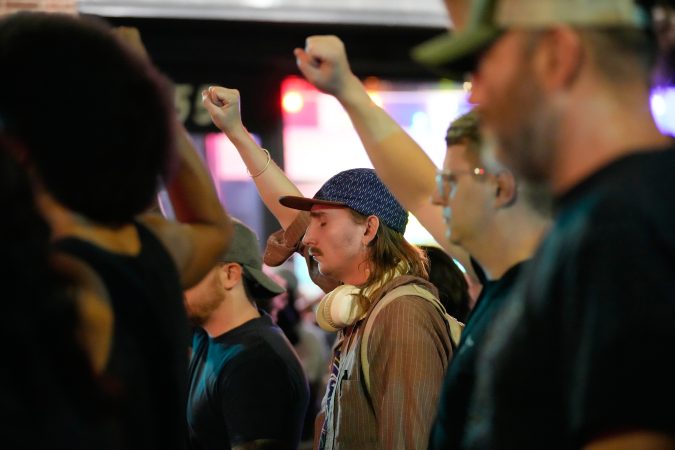
    MADISON, Wis. — Protesters burst into a Thursday news conference about the police shooting of a homeless man in Madison, taking the microphone from the police chief and arguing with some attendees who said they wanted to hear more about the investigation.

    The group of roughly 20 protesters burst into the room at the Madison police station, shortly after Mayor Satya Rhodes-Conway and Common Council President Sabrina Madison identified the man killed by police as Corey Durell Ruiz, a homeless resident.

    Ruiz, 38, was shot and killed Wednesday after police said he resisted arrest and injured an officer with a knife.

    Police Chief John Patterson stepped away from the microphone when the protesters were shouting, and one man in the group took his spot at the podium. The event quickly devolved into a shouting match.

    One protester held a sign saying “Corrupt cops deserve to die too!!!”

    Moments earlier, the mayor said the shooting will be “rigorously investigated.”

    “It does not matter who you are or what your past is, you should not lose your life as a result of an encounter with law enforcement,” Satya Rhodes-Conway said.

    Madison, for her part, said “Corey could have been my brother because my brother is homeless and he often rides a bike.”

    Court records show Ruiz had been in and out of jail over the past decade on charges including failing to pay child support, driving a vehicle without consent, jumping bail, threatening authorities, taking a vehicle without consent, possessing drug paraphernalia, resisting an officer and retail theft.

    “He’s a human being. He had a family. He has parents who loved him who brought him home, who cared for him,” Madison said, adding that she’s struggling to understand what she’s seen in videos of the shooting that have circulated on social media.

    “My first thought is, when the officer’s walking away, why isn’t he walking away in cuffs,” Madison said. “I’m angry, there’s no way around it.”

    Once the protesters quieted down, the chief resumed his presentation, promising his department’s full cooperation with the state investigation.

    Police have released few details

    The shooting has roiled Wisconsin’s capital city, with Gov. Tony Evers calling for “transparency and accountability” and Madison community members gathering Thursday at a growing memorial.

    None of the four officers who were detaining the man wore body cameras, but passersby recorded the confrontation on video, and accused the officers of overreacting.

    “I thought, ‘Holy cow — what could have warranted that?’ It looked to me like they had him under control,” David Ortiz-Whittingham, who saw officers swarming and heard the gunshots, said Thursday. “Even now, knowing about the knife, did he have to die for it? Could this have been de-escalated without him losing his life?”

    The police chief released few details Thursday, saying the Wisconsin Department of Criminal Investigation into the officer-involved shooting must run its course.

    Earlier Thursday, Madison’s independent police monitor, Aeiramique Glass, said police have not yet shared evidence or the officer’s identity with her office, which will review the case and can recommend to the district attorney that charges be filed if warranted. She said the department and city are “obstructing what the community and the public” want.

    “Let me do my job,” she said.

    Patterson said the police were committed to cooperating with Glass as the independent monitor’s investigation is carried out, at the same time as the state’s probe.

    The chief urged people not to draw conclusions

    Patterson has urged caution in reading too much from the cell-phone videos. He said none show the perspective of the officers, and additional video that hasn’t been released is being reviewed.

    The officer who fired his weapon is a veteran of the force, the chief said. He and the three other responding officers will be placed on administrative leave pending an independent investigation by the Wisconsin Department of Criminal Investigation, as required under state law.

    Patterson said police were responding to calls that someone was attempting to enter parked vehicles, and the suspect fled on a bike before the officers surrounded him. One deployed a taser, but Patterson said he didn’t know if the taser worked. Those efforts failed to control the man, Patterson said.

    In the videos circulating online, the man can be seen standing before he’s brought to his knees as the officers struggle to force him into a prone position. Then he falls quickly to the pavement after what sounds like three gunshots, and seems motionless as the officers handcuff him behind his back. Arriving officers then escort one of the officers a short distance away.

    Patterson said he did not know the extent of the injuries sustained by the officer who was injured by the knife.

    “This situation was clearly dangerous,” Patterson said. He later continued, “I am incredibly saddened by the loss of life.”

    A neighborhood now accustomed to police shootings

    The shooting happened in the middle of an intersection in the popular Marquette neighborhood, which is lined with restaurants, bars, shops, and homes less than 2 miles from the state Capitol. The bystander videos show numerous cars at the scene, with people watching and commenting as it unfolded.

    “I saw everything! I saw everything! You did not need to kill him! … We watched it all!” a woman yelled in the video recorded by Ortiz-Whittingham. Three loud shots could be heard among the sirens, followed by screams.

    Residents who dealt with two other police killings within the same few blocks expressed their frustration on Thursday.

    In 2015, a white police officer shot and killed Tony Robinson, who was biracial, on the same street. Large protests followed, but the district attorney filed no charges, determining the officer was justified. In 2012, Paul Heenan, a white musician, was fatally shot after he had been drinking and mistakenly entered his neighbor’s house. That officer was exonerated as well.

    The chief acknowledged that the neighborhood “has experienced a lot of trauma” and urged people to support one another.

    “I want transparency, I want accountability,” Patterson said.

    Questions about race and technology emerge

    The race of the officer who fired his gun on Wednesday and that of the man he killed were not released by police.

    But Black advocacy groups, protesters, and politicians spoke out against the crime and said they believe the man was Black.

    The shooting also focused attention on the Madison Police Department’s lack of body-worn cameras. The force of around 500 is among the largest in the Midwest that doesn’t use the devices.

    Common Council President Sabrina Madison said Thursday that she expects a police request for $400,000 to be approved, enabling the cameras to be phased in over the next three years. Others lamented that cameras aren’t already being used.

    “Nobody can agree on anything,” said Katey Nelson, a member of the police civilian oversight board and operations director at YWCA Madison, a racial justice group. “Now we’re here, looking at another police shooting where we don’t have what we need to make sure the officers are held accountable.”

    The mayor said her budget, which has not yet been released, will include funding for body-worn cameras. Rhodes-Conway said the city needs to put together a policy for the use of the cameras, and said that will be completed before the budget takes effect in January.

    And now it’s a talking point in the governor’s race

    Madison, home to the University of Wisconsin, has a long history of organized protest dating back to the 1960s. More than 100,000 people marched on the state Capitol in 2011 in favor of union rights. There were large demonstrations that turned violent after the George Floyd shooting in 2020.

    And so the shooting quickly infused itself into the race to succeed Evers as governor, with voting already underway in the Aug. 11 primary.

    “This state sanctioned violence was an execution,” posted Francesca Hong, a democratic socialist candidate who appeared with a bullhorn at the scene just a few blocks from her campaign office. She has called for defunding the police.

    Another Democrat in the race, Milwaukee County Executive David Crowley, said while the details must become public, “these reports are painfully reminiscent of the tragedies we have witnessed in Kenosha, Minneapolis, and far too many communities across our country.”

    Republican U.S. Rep. Tom Tiffany called on his rivals to let the state investigation “establish the facts without politicians rushing to judgment or stoking division” in a statement that also said he would “work to end revolving-door criminal justice policies.”


  • Trump imposes double-digit tariffs on dozens of countries as his 10% levies are set to expire Friday

    Trump imposes double-digit tariffs on dozens of countries as his 10% levies are set to expire Friday

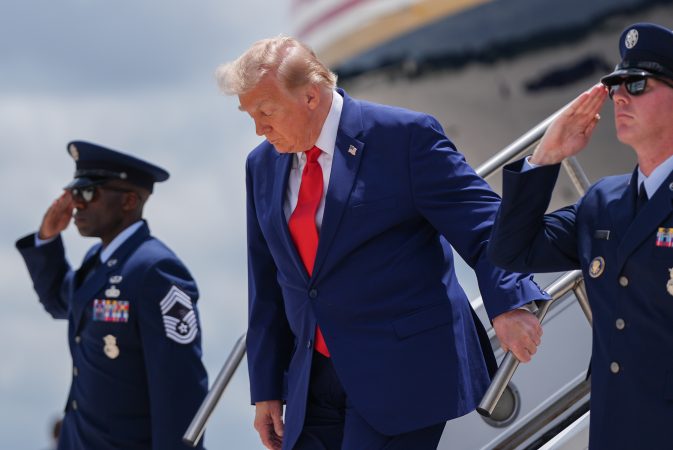
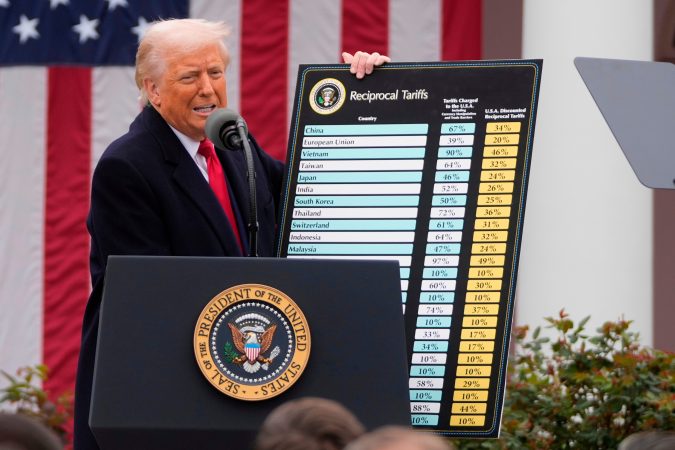
    WASHINGTON — President Donald Trump is going ahead with new double-digit tariffs on dozens of U.S. trading partners just as the clock runs out Friday on stopgap levies he imposed after a stinging defeat at the Supreme Court.

    The United States will slap taxes of 10% to 12.5% on imports from 60 countries accounting for 99% of U.S. imports, charging that they have inadequately enforced bans on goods produced by forced labor.

    “The United States has had a forced labor import ban for nearly a century, and rigorously enforces it; it’s well past time for our trading partners to do the same,” said U.S. Trade Representative Jamieson Greer. “Today’s action will begin to correct what is both a human rights abuse and distortive trade practice to improve the welfare of workers everywhere.

    The new tariffs will take effect just as temporary 10% worldwide tariffs expire at 12:01 a.m. Friday. Trump had turned to those temporary levies after the Supreme Court struck down his biggest and boldest tariffs in February.

    Now he’s tapping more durable tariffs under Section 301 of the Trade Act of 1974, which permits the president to impose import taxes and other sanctions against countries found to engage in “unjustifiable,” “unreasonable,” or “discriminatory” trade practices. Trump used Section 301 to impose big tariffs on China in his first term, and they survived court challenges.

    More Section 301 tariffs are likely coming: The U.S. Trade Representative’s office has launched a probe into whether 16 countries — accounting for 70% of U.S. imports — have overproduced goods, pushing down prices and putting U.S. companies at a disadvantage in global markets. The administration has yet to complete that investigation.

    Trump, who argues that high tariffs will revive American manufacturing, last year overturned decades of U.S. policy that favored lower tariffs and ever-freer trade. Invoking the 1977 International Emergency Economic Powers Act (IEEPA), he imposed double-digit tariffs on imports from almost every country on Earth, saying America’s longstanding trade deficit amounted to a national emergency.

    But the Supreme Court ruled that IEEPA did not authorize tariffs. The decision forced the administration to pay refunds to importers that had paid the tariffs.

    In response, Trump announced 10% worldwide tariffs under Section 122 of the Trade Act of 1974. But he can only use Section 122 levies for 150 days; time runs out on them Friday.

    The administration initially proposed the forced labor tariffs last month. Since then, some countries have tightened forced labor enforcement and qualified for lower tariffs, said a senior administration official who spoke under condition of anonymity. For example, the official said, the tariff on imports from India initially was set at 12.5% but now will be 10%.

    Some products — including oil and gas and fertilizer — are exempted from the new tariffs announced Thursday. Also being spared are products that qualify for duty-free status under the US-Mexico-Canada Agreement, the North American trade pact Trump negotiated in his first term.

    Tariffs are paid by companies in the United States that import foreign products. The importers usually try to pass along the cost by charging consumers higher prices. Americans are already frustrated by the high cost of living. So the administration is taking a risk in rolling out new tariffs ahead of the Nov. 3 midterm elections.

    Human rights watchers say that it’s reasonable to be skeptical of the motivation behind the tariffs. But they say the levies could make an impact on the problem of forced labor.

    Forced labor is defined by the International Labor Organization Forced Labor Convention of 1930 as “all work or service which is exacted from any person under the menace of any penalty and for which the said person has not offered himself (or herself) voluntarily.”

    According to the latest statistics from the ILO, which is a U.N. agency focused on human and labor rights, about 27.6 million people were in forced labor worldwide on any given day in 2021.

    “We’ve gone on record for years now advocating for import bans, not as a magic bullet, it’s not a silver bullet, but as a potentially effective tool in combating forced labor across the globe,” said Martina Vandenberg, founder and president of The Human Trafficking Legal Center.

    “It’s possible to be extremely critical of tariffs, as we are, and to be very concerned about blanket tariffs used as bludgeons against countries,” she said. “And yet I think it’s undeniable that there is a significant response in terms of the adoption of import bans.”

    However Vandenberg and her organization urged in testimony that the tariffs be implemented in a phased approach to give countries time to implement a ban or a plan for enforcement.

    “Our concern is that the import bans will be thin slips of paper with no enforcement,” she said. “Countries need time to build import ban mechanisms that are meaningful and enforceable.”

    Kenya Davis, partner at Boies Schiller Flexner, said the Uyghur Forced Labor Prevention Act, a U.S. federal law passed in 2021 that prohibits the importation of goods made wholly or in part in China’s Xinjiang region or by designated entities, is the most significant legislation related to forced labor that the U.S. has passed before the tariffs.

    “The level of effectiveness is certainly up for debate, but it certainly has drawn attention to the issue of labor trafficking and forced labor,” she said. “And so, if nothing else, these import bans will serve that function of bringing greater awareness to forced labor.”

    But without a “comprehensive approach,” that provides transparency about what the investigations consisted of, and programs that provide countries aid in enforcing bans, “I’m very cautious in my enthusiasm about the [tariffs],” she said.

    Isabelle Glimcher, senior research scientist for global labor at the NYU Stern Center for Human Rights, said one flaw in the tariffs is that they focus on levying the tax on countries based on goods they import — not goods they make domestically.

    But she said the impending tariffs threat has spurred several countries — such as India — to amend their foreign trade policies to include a forced labor import ban. European Union forced labor regulations due to go into effect later next year are also contributing, she said.

    “Not all of these things are necessarily or wholly attributable to the Section 301 investigations, but does seem like countries are responding and starting to take all of this seriously,” she said.

  • Jefferson Health sued IBX, claiming payment changes cost it nearly $100 million this year

    Jefferson Health sued IBX, claiming payment changes cost it nearly $100 million this year

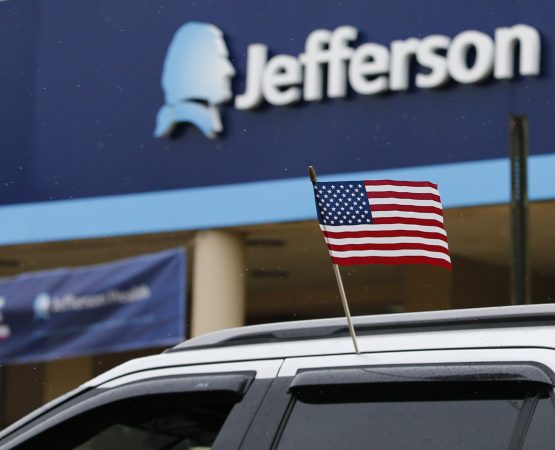
    Jefferson Health says it has incurred nearly $100 million in financial losses this year because of policy changes by Independence Blue Cross in a lawsuit filed this week.

    The lawsuit, submitted Wednesday in Philadelphia Court of Common Pleas, detailed five policy shifts — including two impacting when IBX pays higher inpatient rates for hospital stays — that Jefferson says amount to breaches of the current contract between the region’s largest health system and its largest insurer.

    “IBX has attempted to use policy changes to — over time — effectively rewrite the contract” and pay less than agreed to in the contract, Jefferson’s lawsuit said.

    The suit comes less than six months before its IBX contract expires Dec. 31, adding pressure to negotiations over a new deal. Jefferson said it cared for more than 300,000 people with IBX insurance last year.

    In the last year, the nonprofit health system has shown its willingness to challenge major insurers at a time of increasing financial strain on both insurers and healthcare providers nationally.

    IBX introduced a series of payment changes impacting both commercial and private Medicare plans this year as it faces intense pressure from employers to slow the growth of healthcare expenses and from the federal government, which is trying to trim spending in Medicare Advantage plans.

    Independence declined in an email to comment on the claims in the lawsuit: “We value our provider partners, honor our contractual commitments with them, and regularly discuss any issues. It’s unfortunate that Jefferson chooses to do this in the public arena but if you’ve kept up with the news you can see this is typical of their playbook.”

    A series of reimbursement shifts

    The biggest financial impact came from IBX’s requirement, effective June 1, that certain procedures be performed in lower-cost freestanding ambulatory surgery centers, rather than in hospital outpatient departments, which often get paid twice as much for the same work.

    Jefferson estimated damages from the ambulatory surgery center rule at $35.4 million.

    Two policies affecting when IBX pays inpatient rates cost Jefferson a combined $35.5 million, according to the complaint.

    Jefferson sued Aetna in April over a similar policy that reduces payments for Medicare Advantage plans if Aetna considers patients not sick enough to qualify for full payment.

    The complaint says a policy that eliminated payment for hospital readmissions up to 30 days after discharge cost Jefferson $18.3 million. Since 2017, Penn Medicine has had a contract with IBX that does not pay Penn when patients return to the hospital within a month of being discharged.

    Finally, Jefferson said IBX has failed to pay more than $7.2 million owed under a controversial federal drug discount program known as 340B.

    “After trying to work directly with Independence Blue Cross to resolve these breaches of contract, we have been forced to take this action on behalf of our patients,” Jefferson’s vice president for payer relations, Allison Yudt, said in an email. “This action is the result of a pattern that has repeated itself time and again.”

    IBX said in its statement that it “acts in the best interest of our customers and members and protects their access to high quality affordable care.”

    Jefferson’s harder line with insurers

    Jefferson has expanded through acquisitions from three hospitals to 33 since 2015. The most recent acquisition was Lehigh Valley Health Network two years ago, creating a network that stretches from South Jersey to near Scranton.

    Amid significant losses in recent years, Jefferson has been taking an aggressive approach with insurers when it believes they are paying it less than contractually required.

    This year, Jefferson’s Lehigh Valley Health went out-of-network with UnitedHealthcare for commercial and Medicare Advantage plans. Last year, Jefferson went out-of-network with Cigna for a few weeks before reaching a deal.

  • Josh Shapiro joins lawsuit against Trump administration’s plan to withhold disaster aid to pressure states on voter data

    Josh Shapiro joins lawsuit against Trump administration’s plan to withhold disaster aid to pressure states on voter data

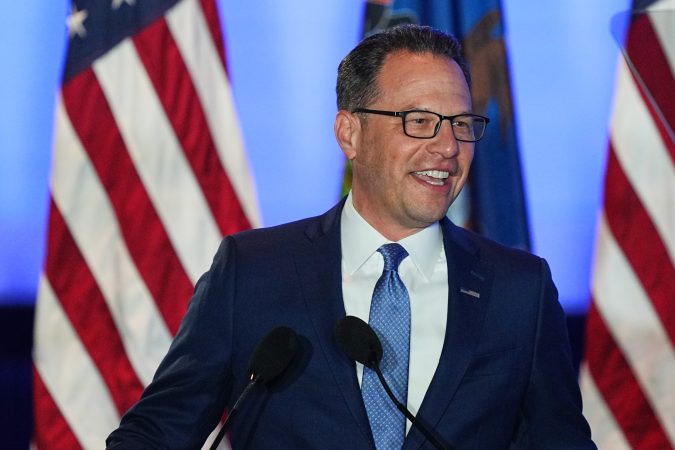
    Pennsylvania Gov. Josh Shapiro was one of 26 Democratic officials from across the nation to join a lawsuit challenging President Donald Trump’s administration over its efforts to compel states into sharing raw voter data by threatening federal funding for natural disasters.

    “Withholding this funding will make our communities less safe and would be dangerous under any circumstance, but doing this in an attempt to undermine states’ authority over elections is reckless and unconstitutional,” Shapiro in a statement Thursday.

    New Jersey and Delaware are among the other states on the Illinois-led lawsuit. The complaint, filed in U.S. District Court in Rhode Island, comes amid escalating tensions between Democratic-run states and the federal government over how best to ensure noncitizens are not voting in any elections — a situation these states say happens extremely rarely.

    But New Jersey’s admission Tuesday that about 6,600 noncitizens were inadvertently added to the state’s voter rolls, due to a system error in the state’s department of motor vehicles voter registration program, has thrust the issue into the national spotlight as these efforts were already underway.

    The Department of Homeland Security announced earlier this month that the Federal Emergency Management Agency would require states to hand over their unredacted voter rolls and adhere to significant changes in their election administration in order to receive funding for preparation and recovery from catastrophic disasters, such as major storms.

    The policy puts nearly $6 million in federal aid at jeopardy for Pennsylvania, according to Shapiro.

    Shapiro has routinely signed on to lawsuits against the Trump’s administration, particularly when federal funding to the state has come under threat.

    Pennsylvania election officials have repeatedly declined to hand over unredacted voter rolls to the Trump administration, citing privacy concerns.

    New Jersey has also refused to provide voter roll data to the Trump administration, though the federal government is using the state’s registration mishap to justify its request.

    “We are not in the practice of turning this kind of personally identifying data over to the federal government because we have seen them weaponize it … and they don’t have a reputation for keeping it private, either,” New Jersey Gov. Mikie Sherrill said after a news conference Thursday.

    As for the FEMA funding, New Jersey Attorney General Jennifer Davenport said in a social media post Thursday that the Trump administration “threatens our safety when it plays politics with these funds.”

    While most of the plaintiffs are attorneys general, Shapiro was one of two governors to join the complaint, along with Kentucky Gov. Andy Beshear, another potential 2028 presidential contender who also leads a state with a Republican attorney general.

    In a prime-time address last week, Trump called for an overhaul of U.S. election administration and ticked through old debunked claims about his 2020 election loss.

    Pennsylvania and New Jersey are among four states — along with California and Nevada, which also joined the suit — that the Trump administration is targeting for additional scrutiny over their voter rolls, according to a document posted to the White House website last week. The one-pager claimed widespread instances of noncitizen voting, much broader than what New Jersey said it uncovered, though election experts have suggested caution when examining these numbers.

    “The Trump Administration is holding critical funding for homeland security and disaster response hostage in their latest attempt to take over our elections and perpetuate baseless conspiracy theories,” Shapiro said in his statement Thursday.