Blog

  • Trump expands a voluntary pledge to protect consumers from high utility bills from AI data centers

    Trump expands a voluntary pledge to protect consumers from high utility bills from AI data centers

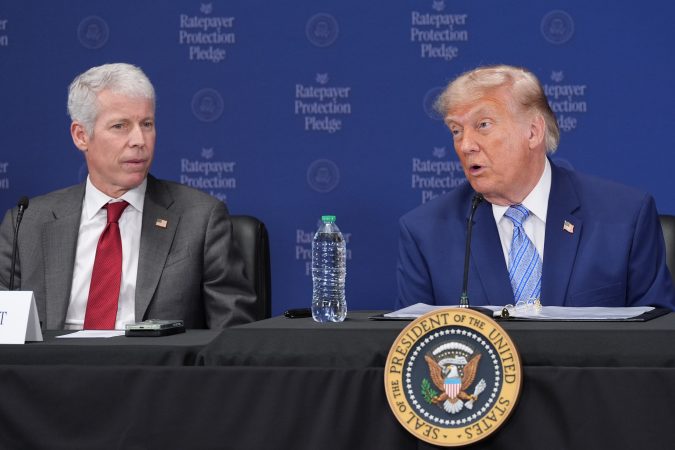
    WASHINGTON — President Donald Trump on Thursday had governors and electricity companies join a voluntary pledge to shield U.S. consumers from higher utility bills from data centers — a sign of how the artificial intelligence build-out has become a lightning rod of controversy before the midterm elections.

    The president first announced the pledge with leading AI and tech companies in March, but that initial commitment has done little to comfort voters who are already grappling with affordability issues as they worry about competing for electricity, water, and land with tech companies controlled by billionaires. It’s unclear, with electricity demand already growing, whether consumers would see genuine savings.

    Trump is doubling down on the pledge at a time when the broader social contract is being rewritten by AI, a technology that is evolving so quickly in its capabilities that governments are struggling over how to provide oversight.

    The president, in remarks about the pledge at the Environmental Protection Agency, called on the gathered executives and governors to sell the public on data centers, stressing that the cities and towns that do have them will be “rich.”

    “You have to convince your community,” Trump said. “You can’t fight it. You have to go with it.”

    The president added: “If you don’t take all that money, somebody else is going to take it. You might as well do it yourselves.”

    Concerns about data centers cross party lines

    The president promised that electricity prices would drop because of the nonbinding pledge, saying there would be a surplus of power. It’s not clear that data centers generating their own electricity will be sufficient to overcome the rising demand for electricity, but that did not deter Trump from saying that utility bills — a major concern for voters — will be lower.

    “Electricity bills for American families will actually come down,” Trump said. “They’re going to have a lot of electricity left over, and they’ll put that into the grid.”

    The White House said Thursday the pledge has been signed by 23 governors and at least 187 companies, including 55 utilities and 27 data center developers. Signers include some of the nation’s biggest utilities such as NextEra Energy, Duke Energy, American Electric Power, Southern Co., and Pacific Gas & Electric.

    Data center developers that have signed the pledge include Equinix, Digital Realty, and Prologis.

    A slowdown in data center construction could derail what has been one of the dominant drivers of U.S. economic growth, in addition to possibly ceding the U.S. edge in cultivating the technology to China and create national security risks.

    But AI’s increasing ability to perform basic tasks — such as driving, analyzing spreadsheets, and writing software — also potentially threatens millions of jobs. That has created mounting public resistance as tech companies concentrate historic levels of wealth in the hands of a select group of tycoons.

    The increased electricity demand could cause monthly utility bills to rise by 15% to 40% by 2030, according to a recent analysis by ICF, a consulting and technology services company.

    Opposition to data centers has spiraled into a bipartisan issue. Voters are worried about the environmental impact, use of AI in schools, and the prospect of data centers making their communities more expensive and less livable. Data center companies say their facilities help to generate tax revenues for school districts and reduce property tax burdens for homeowners.

    The opposition has spread into the Republican stronghold of rural Texas and led to frustration with Gov. Greg Abbott, who is now among the 23 Republican governors who signed Trump’s nonbinding pledge.

    Gina Hinojosa, the Democratic nominee for Texas governor, has been using the issue to challenge Abbott before the November election.

    “They are owned by the richest men in the world,” she said of data centers. “We’re all footing the bill. There are no rules. It is the Wild West of data centers.”

    New York Gov. Kathy Hochul, a Democrat, signed an order to ban construction of large server warehouses in her state for a year. In May, Florida Gov. Ron DeSantis, a Republican, signed a law that he said would prevent utilities from passing along energy costs from data centers to residential and small-business customers.

    Already, dozens of state legislatures or utility commissions have moved to put in place requirements that data centers pay the cost of their electricity, including new power plants or transmission system upgrades. But it’s not

    Tech companies are pushing growth of data centers

    In California, however, the industry opposes legislation designed to protect consumers from electricity price increases attributable to data centers, said Matthew Freedman, a staff attorney for the Utility Reform Network.

    “It is disappointing, but perhaps not surprising, that the same tech companies signing the Ratepayer Protection Pledge are simultaneously opposing efforts at the state level to force them to deliver on their promises,” Freedman said.

    In an interview with The Associated Press last month, Nvidia CEO Jensen Huang, whose computer chips are enabling the AI revolution, said America’s weakness is a lack of power generation for further developing the technology.

    Google, Microsoft, Meta, Oracle, xAI, OpenAI, and Amazon are among the companies that have already committed to the Trump administration’s “Ratepayer Protection Pledge” that consumers will not shoulder the cost of the data center build-out.

    Despite the pledge, there are challenges on addressing issues with electricity prices.

    The White House has complained that PJM Interconnection, which oversees electric power in 13 states from Virginia to Illinois, can’t ensure adequate electricity supplies at reasonable prices in the AI-driven boom.

    White House spokeswoman Taylor Rogers said Thursday that PJM — the nation’s largest grid operator — has failed to implement a bipartisan statement of principles signed by the Trump administration and all 13 governors in the region.

    “The Trump administration strongly advises PJM and its member companies to proactively reform its stakeholder process, reform its board governance, and implement the Statement of Principles before it is too late,” Rogers said.

    There are efforts to formalize Trump’s pledge as law, with the House Energy and Commerce Committee approving a bipartisan bill. The bill would require data centers to bear the costs of grid upgrades.
  • U.S. intelligence agency quietly cut about 200 jobs since June 1

    U.S. intelligence agency quietly cut about 200 jobs since June 1

    The Office of the Director of National Intelligence has shrunk more than is publicly known in recent weeks, losing about 200 personnel to firings and reassignments since June 1, according to data the Trump administration shared with Congress this week.

    The cuts are the latest to hit ODNI, which was created to oversee and coordinate all U.S. spy agencies but has been targeted by President Donald Trump and many Republicans in Congress. They, and some former U.S. intelligence officials, say it has expanded far beyond what lawmakers intended when it was created two decades ago. The ODNI had about 2,000 employees at the start of Trump’s second term. It is now little more than half that size, according to congressional aides.

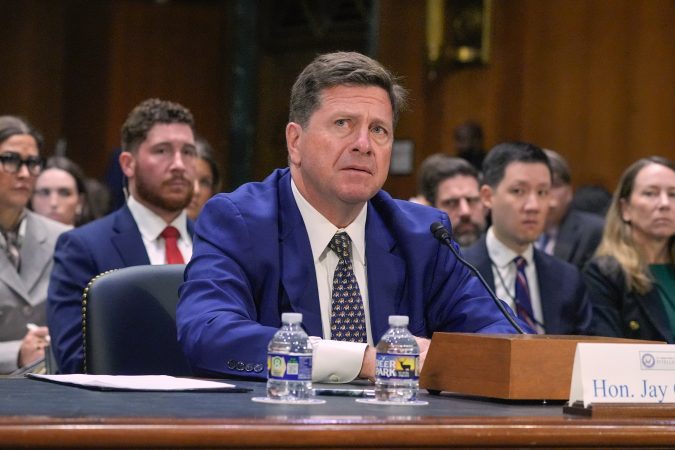
    The staffing reductions mean that Trump’s nominee for intelligence czar, Jay Clayton, if confirmed by the Senate as expected, while inherit a shrunken organization that has experienced steady upheaval over the last 18 months.

    The president in early June tapped federal mortgage regulator Bill Pulte, a political ally with no prior national security experience, to be acting director of national intelligence. Trump said at the time that he wanted Pulte to “start the process” of eliminating some workers.

    Trump has often maintained a hostile posture toward professional intelligence personnel and their agencies, claiming they tried to undermine him in his first term, particularly with the compiling of reports on Russia’s interference in the 2016 presidential election to aid his campaign. The president has dismissed intelligence analysis on a range of issues, from North Korea’s nuclear policy to Iran’s likely reaction to the attacks the U.S. and Israel launched in February.

    Neither Pulte nor the White House has publicly detailed what cuts they have made recently at ODNI, which houses the National Counterterrorism Center and was established to fix U.S. intelligence agencies’ failure to share threat information prior to the September 2001 terrorist attacks.

    The latest personnel cuts were confirmed by a congressional staff member and another person familiar with the matter. They spoke on the condition of anonymity to discuss nonpublic information.

    ODNI did not respond to requests for comment.

    The cuts include some firings, as well as a larger number of intelligence officers who were ordered back to their home agencies, the person familiar with the matter said. Much of ODNI’s workforce consists of personnel detailed from the CIA and other intelligence organizations.

    The counterterrorism center has not been affected significantly, officials have said. But there has been a whole-scale hollowing out of the National Intelligence Council, a prestigious analytic body that conducts intelligence community-wide assessments on key topics such as COVID-19’s origins and foreign interference in U.S. elections.

    The Washington Post previously reported that about 20 intelligence council personnel have been removed or have chosen to leave, including senior officers who oversaw the production of analysis on Russia, China, and Europe. The top official who oversaw the council was placed on administrative leave.

    Neither Clayton nor the Trump administration has articulated a vision of what ODNI should look like or focus on “other than it should be smaller,” said Julia Curlee, who served as a director for intelligence programs in Trump’s White House until last year and recently resigned from the CIA after 20 years as an analyst. “It seems like DNI was just a fat target to punish the ‘deep state.’”

    “Morale is pretty terrible, as you would imagine,” Curlee said.

    It is unclear how many of the 200 personnel were let go under Pulte, who became acting director of national intelligence on June 19, and how many were let go under his predecessor, Tulsi Gabbard, who left the administration after her husband became ill.

    The Trump administration and its allies in Congress have not publicly acknowledged the extent to which ODNI has been shrunk.

    “U.S. National Intelligence is operating more efficiently and effectively than ever before, and today, we started a third round of reducing redundant, or noncritical, personnel,” Pulte posted on X on July 10, without revealing details.

    Senate Intelligence Committee Chairman Tom Cotton (R., Ark.) said shortly after Pulte took over that the acting DNI had told him that “a small handful of front-office personnel” were leaving. “Around 45 or 50 career officers” were returning to their home agencies, Cotton said. Cotton’s office did not respond to requests for comment.

    The precise size of the workforce at ODNI and other U.S. intelligence agencies is classified. By the time Gabbard departed in mid-June, the workforce had shrunk from about 2,000 in January 2025 to about 1,300.

    Clayton was mauled in his Senate Intelligence Committee confirmation hearing by Democrats who decried what they said was his failure to unequivocally state that Joe Biden won the 2020 presidential election, which Trump denies. The Republican-led committee approved his nomination Tuesday on a 9-8 vote, and a full Senate vote is expected next week.

  • North Philly’s Kahleah Copper is heading to the 2026 WNBA All-Star Game as a replacement selection

    Kahleah Copper is an All-Star after all.

    Copper, a North Philly native and Phoenix Mercury guard, was named as a replacement player by WNBA commissioner Cathy Engelbert just days before the league’s All-Star Weekend tips off in Chicago.

    Copper will replace the injured Kelsey Plum on “Team Coop.” Cynthia Cooper and Teresa Weatherspoon, the All-Star general managers, drafted players to “Team Coop” and “Team Spoon,” while Becky Hammon (Las Vegas Aces) and La Salle alumna Cheryl Reeve (Minnesota Lynx) will coach the teams. The All-Star Game is Saturday (8:30 p.m., 6abc).

    This is Copper’s fifth All-Star nod after getting named to the game in four consecutive seasons (2021 to 2024). She’s leading the Mercury in scoring at 20.5 points per game — which is good for seventh in the league and the second-most of her career —along with 3.7 rebounds and 1.8 assists. Over her 11-year career, which includes seven seasons with the Chicago Sky, she’s averaging 13.4 points, 3.6 rebounds, and 1.5 assists.

    Copper rose to WNBA stardom in 2021 with the Sky as she led them to their lone WNBA title and was named Finals MVP. She was traded to Phoenix in 2024 and is now in her third season in the desert.

    This past offseason, the former Prep Charter and Rutgers standout had the opportunity to show off in the place it all began when three-on-three league Unrivaled came to Philadelphia for its first tour stop.

    “There’s so many people that just kind of stepped into my life,” Copper said in January as she led her teammates around her hometown, “and did stuff for me, literally not looking for anything in return. … For them to see me now, like I really made it because of y’all. That’s tough. That’s fire.

    “Everybody literally planted little seeds for me to be who I am today. That’s why it’s so special.”

    Copper wasn’t the only star with local ties to get a nod on Tuesday. Wilmington native Elena Delle Donne will participate in the Shooting Stars competition (8 p.m. Friday, ESPN), representing the Washington Mystics.

    In the timed shooting competition, in which players representing Washington, Minnesota, Seattle, and Dallas/Detroit, have 70 seconds to score as many points as possible from spots around the court, WNBA legends will be paired with a current player and a high schooler from the Nike EYBL circuit.

    Delle Donne, a member of the Naismith Memorial Basketball Hall of Fame’s Class of 2026, is paired with current Mystics center Shakira Austin and could be joined by another local as Wilmington’s Jezelle “GG” Banks and Philly’s Ryan Carter are among the EYBL players. Banks, who’s attending the St. James Performance Academy in Washington, D.C., is the No. 4 player in ESPN’s Class of 2027 rankings, while Carter, a rising senior at Friends’ Central, is the No. 12 player in ESPN’s rankings.

  • The Philly school board just voted to borrow $600 million to pay its bills

    The Philly school board just voted to borrow $600 million to pay its bills

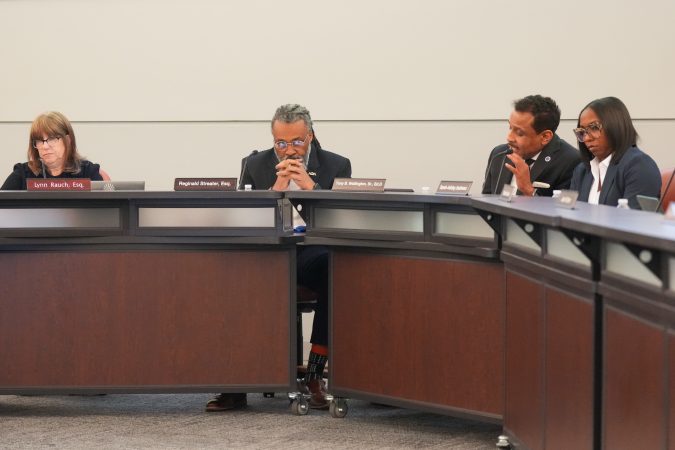
    The Philadelphia school board on Thursday moved to borrow $600 million to pay employees and keep the lights on over the next several months.

    The temporary borrowing, authorized at a special school board meeting, comes in two tranches — $200 million this month, and $400 million in September.

    Borrowing to pay bills is a rite of summer for the district, the only school system in Pennsylvania unable to raise its own funds. The school board has had to issue tax and revenue anticipation notes for 43 of the past 45 years, officials said. Last year, the district authorized borrowing up to $1.5 billion because the state budget had not yet been passed.

    “Simply put, it helps ensure our schools have the cash flow needed to open on time, pay employees and vendors, and continue serving students without interruption,” school board president Reginald Streater said at the meeting, which was held virtually.

    Rates are not locked in, but chief financial officer Michael Herbstman said if the transactions happened now, the first borrowing, which is set to happen Tuesday through Bank of America, would come at a rate of 3.4%, and the September public borrowing would have a rate of 2.85%.

    The move, then, will mean millions in borrowing costs for the school system.

    Philadelphia, the nation’s ninth-largest school system, has about 114,000 students in 216 traditional public schools, and about 65,000 more in 83 charter schools. The district has a budget of about $4.6 billion.

  • A new federal judge for Philadelphia was confirmed by the U.S. Senate

    A new federal judge for Philadelphia was confirmed by the U.S. Senate

    A partner at one of the city’s largest law firms who once worked as a federal prosecutor was confirmed Thursday by the U.S. Senate to become the Philadelphia region’s newest federal judge.

    Antonio Pozos’ nomination to join the region’s U.S. District Court was approved by a vote of 49-44. There was no discussion as the Senate voted to approve his nomination, which earns him a lifetime seat on the bench.

    Pozos, 44, most recently a partner at Faegre Drinker Biddle & Reath, is the first person appointed to the region’s district court since President Donald Trump began his second term last year. During his first term, Trump had five judges confirmed to the region’s federal bench.

    Pozos will fill a vacancy created by last year’s retirement of U.S. District Judge Mitchell Goldberg, giving the court 22 district judges and eight senior judges.

    District court judges oversee a variety of criminal and civil cases each year, and typically issue the first rulings on legal questions that can sometimes reach the U.S. Supreme Court.

    Although some of Trump’s recent nominations to judicial posts across the country have been controversial — including his decision to nominate his former personal lawyer, Emil Bove, to the Philadelphia-based U.S. Court of Appeals for the Third Circuit — Pozos’ candidacy received some bipartisan support.

    Shortly after his nomination was announced, Pennsylvania’s Democratic senator, John Fetterman — who, under Senate rules, had the ability to block Pozos’ candidacy from advancing — decided to allow the process to move forward, the first time any Democrat had done so for a district court nominee during Trump’s second term.

    Fetterman also voted Thursday to confirm Pozos.

    During a confirmation hearing last month, U.S. Sen. Dave McCormick (R., Pa.) called Pozos a “successful attorney, a strong Pennsylvanian, a decorated public servant, and he’s eminently qualified for this role.”

    Pozos was criticized by some Democratic senators during the hearing for hesitating to use the word attacked when describing the riot at the U.S. Capitol on Jan. 6, 2021. He instead said it “appeared that there was violence and trespass” that day, and called the events “profoundly troubling.”

    Pozos lives in Bryn Mawr and is a graduate of Harvard College and the University of Michigan Law School, according to a questionnaire he submitted to the Senate Judiciary Committee.

    Before he became a partner at his firm in 2018, the questionnaire said, he spent three years as a prosecutor in the Justice Department’s criminal fraud section in Washington, where he often worked on cases involving healthcare fraud. He previously worked as an associate in a Washington-based firm and clerked for U.S. District Judge Anthony J. Trenga in Virginia.

    In Philadelphia, Pozos has served as a lecturer at the University of Pennsylvania’s Carey Law School and is on the board of Drexel University’s Kline School of Law.

    With Pozos’ confirmation to the bench, Trump has now appointed six of the Philadelphia region’s district judges, who handle cases that arise from the city, its suburbs, and counties in and around Reading and Allentown. Former Presidents Joe Biden and Barack Obama each appointed seven judges to the bench, and two were appointed by George W. Bush.

    Trump has had a more outsize impact on the region’s appellate court, where he has appointed six of the court’s 14 members across his two terms.

  • Chester County man pleads guilty to human trafficking for forcing girls to work on mushroom farm

    Chester County man pleads guilty to human trafficking for forcing girls to work on mushroom farm

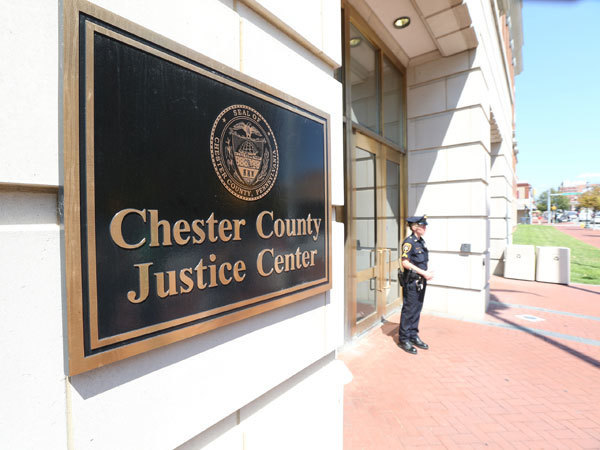
    A Chester County man who forced two teenage girls, one of them a relative, to work long hours on a Kennett Square mushroom farm for no pay pleaded guilty Thursday to human trafficking, involuntary servitude, and related crimes.

    Ramiro Caal Jolomna, 37, threatened to have the girls deported back to their homes in Guatemala if they did not comply with his demands, Senior Deputy Attorney General Zachary Mills Wynkoop said.

    Pennsylvania Attorney General Dave Sunday, whose office investigated the case through its human trafficking division, called crimes like Jolomna’s “cruel and dehumanizing behavior that forces victims into a routine of helplessness and silence.“

    The victims, who were 14 and 17 when interviewed by state investigators in 2024, said Jolomna helped transport them to Chester County with a promise of giving them better lives and the opportunity to earn money to send back to their families.

    Instead, prosecutors said, Jolomna, of New Garden Township, took their salaries from the mushroom farm for himself.

    The younger victim told investigators that she had been working on the mushroom farm since she was 12 years old, and that Jolomna had been signing her paychecks over to himself and his wife.

    After working predawn shifts at the farm, the girl was forced to act as the couple’s housekeeper, and was not even given new clothing to wear, Wynkoop said.

    The other victim told investigators Jolomna charged her rent to live in his home alongside nine other people and forced her to reimburse him for the cost of her flight to America. These debts prevented her from sending money home to her father, who was sick and unable to work, the prosecutor said.

    At one point, Jolomna’s parents contacted the older victim’s parents and asked them for more money, according to the affidavit of probable cause for his arrest. The girl said she “did not know what would have happened if her parents said no,” the document said.

    In an interview with prosecutors, Jolomna admitted to having debts from “smuggling” the girls into the country and to taking the girls’ paychecks to use for food and other items, according to the affidavit.

    Jolomna will be sentenced in the coming months by Chester County Court Judge Debra Ryan.

  • Founder of Kensington anti-violence nonprofit arrested for knife attack on SEPTA train, authorities say

    Founder of Kensington anti-violence nonprofit arrested for knife attack on SEPTA train, authorities say

    A well-known activist and founder of a Kensington anti-violence nonprofit was charged with aggravated assault and related crimes for attacking a woman with a box cutter during an argument on a SEPTA train last week, authorities said Thursday.

    Rosalind “Roz” Pichardo, 48, was taken into custody days after the July 17 assault, which left the victim in critical condition with deep lacerations to her face and chest that required more than 70 stitches to close, according to the Pennsylvania Attorney General’s Office, which is prosecuting the case.

    Pichardo is the founder of Operation Save Our City, a nonprofit that offers social services to people who have experienced grief, addiction, or trauma from exposure to violence, according to the group’s website. She also runs “Sunshine House,” a storefront on Kensington Avenue where people in addiction can drop in for meals, clothes, and other forms of support.

    She has been involved with other anti-violence and victim services organizations throughout the city and has received at least two city grants for her work.

    Last week, one day before the assault, Pichardo touted a $20,000 grant that Operation Save Our City received from the Philadelphia Office of Public Safety.

    And in 2024 and this year, the Philadelphia District Attorney’s Office awarded Pichardo’s organization $25,000 and $10,000, respectively, through its violence prevention microgrant program.

    Pichardo declined to comment Thursday. No attorney for her was listed in court documents.

    Around 9 p.m. Friday on an eastbound SEPTA train near Eighth and Market Streets, prosecutors say, Pichardo assaulted a woman with a box cutter. They said the conflict began when the two women argued on a platform at the transit agency’s 15th Street Station.

    The victim told investigators Pichardo “got smart with her” after she asked a man who was blocking a platform bench to move so she could sit down, according to an affidavit of probable cause for Pichardo’s arrest. She said she, in turn, “got smart” with Pichardo.

    During the spat, the victim said, Pichardo complained about “how rude young people are” and called her entitled for asking the man to move.

    The women then boarded the train, where the argument continued, and they “both got in each other’s face and started fighting each other,” the woman told investigators, according to the affidavit.

    At some point during the scuffle, the woman said, Pichardo pulled out a box cutter and assaulted her. She told investigators she felt warmness on her face and felt “a lot of blood.”

    The attack left the woman with severe lacerations on her cheeks and her chest that, in addition to needing stitches, required surgery to help her regain muscle movement, the documents said.

    Pichardo was taken into custody by SEPTA transit police but released the same evening.

    Investigators said technical issues initially prevented them from viewing surveillance footage captured within the train car, but they later recovered footage from an adjoining car that showed portions of the incident.

    On Wednesday, Pichardo was charged with two counts of aggravated assault, simple assault, possessing an instrument of a crime, reckless endangerment, harassment, and disorderly conduct.

    She was released from custody after posting 10% of $25,000 bail, court records show.

    The case will be handled by the attorney general’s special prosecutor for mass transit, a position created by the state legislature to address what Republican lawmakers said was the failure of District Attorney Larry Krasner to prosecute violent crimes on or near SEPTA properties.

    A spokesperson for Krasner’s office declined to comment on the case and referred questions to the attorney general.

    Pichardo appeared to address the matter in cryptic posts on Facebook, where she frequently promotes her activist work to her 23,000 followers.

    On July 18, one day after the assault, she posted a photo of a SEPTA train car with the caption: “Lord please give me strength to get through this pain.”

    And on Wednesday evening around 9 p.m., she updated followers: “I’m Good .. I’m Home and trusting the process . My head is up..”

    In addition to founding Operation Save Our City in 2012 and later Sunshine House, Pichardo has worked as a lead educator with the harm reduction nonprofit Prevention Point and as a trauma victims advocate in Temple University Hospital’s emergency department.

    Staff writers Ellie Rushing, Aubrey Whelan, and Jillian Kramer contributed to this article.

  • House votes to limit Trump on Iran; Senate fails to advance similar measure

    House votes to limit Trump on Iran; Senate fails to advance similar measure

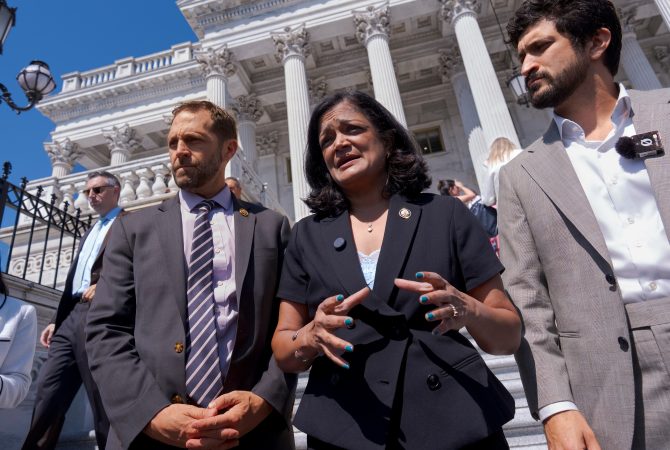
    The House passed a measure to halt the war in Iran on Thursday, as Democrats mounted a last-minute bid to constrain the escalating conflict before lawmakers left Washington for a monthlong recess.

    The effort led by Rep. Pramila Jayapal (D., Wash.) passed by a vote of 214-208. Four Republicans — Reps. Brian Fitzpatrick of Pennsylvania, Thomas Massie of Kentucky, Warren Davidson of Ohio, and Tom Barrett of Michigan — joined Democrats in supporting the measure.

    The Senate blocked consideration of a similar resolution hours later on a 49-47 procedural vote.

    Sen. Susan Collins of Maine was the lone Republican to join Democrats in supporting the measure. Sen. John Fetterman (D., Pa.) voted against it.

    The votes marked the first test of Republican support for the conflict since President Donald Trump resumed strikes against Iran this month. U.S. Central Command, which oversees military operations in the Middle East, announced it had conducted its 12th consecutive day of airstrikes as Trump pledges to retaliate for the deaths of several American service members killed by Iranian attacks in the last week.

    By returning to the war, Trump has forced some vulnerable Republicans into a tenuous political position ahead of the November midterm elections. Iran has closed the Strait of Hormuz — spiking global food and energy markets — and the Houthis, its proxy force in Yemen, have threatened to halt Saudi Arabian oil transiting the Red Sea.

    A Washington Post-Ipsos poll earlier this month found that nearly 70% of respondents thought that the war was not “worth fighting.” Eighteen U.S. service members have died during the conflict, with nearly 430 injured.

    Earlier this week, Defense Secretary Pete Hegseth told lawmakers the war will cost about $37.5 billion by the end of September. Congress is debating how to proceed with a $73 billion package to restock the Pentagon’s inventory of precision weapons and cover other costs incurred by the conflict.

    “When you’re digging yourself a hole, the first thing you should do is stop digging — and that’s what this resolution seeks to do,” Sen. Chris Van Hollen (D., Md.), who introduced the resolution, said on the Senate floor before the vote. “Let us stop pretending that Congress has no role to play while American service members remain in harm’s way.”

    Sen. Tim Sheehy (R., Mont.), a Navy SEAL veteran who served in Afghanistan and Iraq, countered that passing the resolution would send the wrong message to the U.S. troops fighting the war.

    “Think about the people who are deployed right now standing on that wall with a loaded weapon who have volunteered to defend our country and our way of life,” Sheehy said on the Senate floor. “Because they are there defending us in a just war.”

    The Trump administration’s return to military strikes in Iran has also divided some Democrats over how best to respond.

    The successful vote in the House and the failed one in the Senate came after both chambers approved a separate resolution last month meant to halt the war. Trump has argued the measure lacks the power of law, infuriating Democrats who say the war is being conducted unlawfully without lawmakers’ consent.

    The White House has pressured Republicans to oppose such resolutions. Trump complained when he met with Republicans senators last month that the passage of one of the resolutions was undermining his negotiations with the Iranian government.

    Sen. Bill Cassidy (R., La.) supported the resolution that passed last month but opposed a subsequent one after being briefed by the White House. He voted against Thursday’s resolution.

    Two other Republicans who have voted for similar resolutions in the past, Sens. Lisa Murkowski of Alaska) and Rand Paul of Kentucky), did not vote. Sens. Mitch McConnell (R., Ky.) and Katie Boyd Britt (R., Ala.) also missed the vote.

    Rep. Gregory Meeks (D., N.Y.), the top Democrat on the House Foreign Affairs Committee, said Thursday that he will introduce a resolution to sue the Trump administration over its refusal to abide by their efforts to rein in the war.

    Trump “should be coming directly to Congress” to explain why he has continued his war effort in Iran, Meeks said. “Since he’s not, then we should be suing the administration to say ‘You must come to Congress at this point.’”

    Sen. Tim Kaine (D., Va.), the architect of Democrats’ strategy to force war powers votes, said he did not think the failed procedural vote in the Senate undercut the successful passage of the war powers resolution last month.

    “The substantive vote has been taken,” Kaine said after Thursday’s vote. “Both houses have said, Mr. President, you either have to withdraw troops or” seek authorization from Congress to continue the war.

    Still, Kaine said he was turning his attention to pushing back against the war through the appropriations process, through which Congress could exert leverage over the war by refusing to fund it. The House passed a resolution Wednesday taking the first step toward sending $73 billion to the Pentagon and U.S. intelligence agencies, largely to cover the cost of the conflict, but the measure faces an uncertain future in the Senate.

    Senate Majority Leader John Thune (R., S.D.) said the Senate would not take it up immediately as bipartisan negotiations over government funding play out — an approach that some Senate Republicans say is a mistake. The Senate could use the measure to fund the government later if those negotiations collapse.

    After the House vote, Rep. Jason Crow (D., Colo.), a co-sponsor of Jayapal’s resolution, said Democrats would continue to force votes on similar resolutions and predicted that more House Republicans would support them after hearing from frustrated constituents while the chamber is on recess over the next four weeks.

    “They’re going to get crushed,” Crow told reporters after the vote. “When we come back in September, I bet we have more people joining with us saying, ‘All right, let’s wrap this up.’”

    Senate Minority Leader Chuck Schumer (D., N.Y.) signaled that Senate Democrats would also continue to force votes on similar resolutions.

    “We will keep forcing votes until Senate Republicans stop playing dumb and summon up the courage to do what is right,” Schumer said on the Senate floor.

  • Ravi Coltrane joins ‘one of the greatest orchestras in the history of the world’ to celebrate his legendary father’s 100th birthday

    Ravi Coltrane joins ‘one of the greatest orchestras in the history of the world’ to celebrate his legendary father’s 100th birthday

    John Coltrane wasn’t born in Philadelphia, but we can claim him as the city where his musical identity was forged.

    “Game knows game,” is the slightly incongruous way that 6abc morning anchor Tamala Edwards described Coltrane’s apprenticeship years in Philly at the “Coltrane 100: Legacy″ concert Wednesday night. “Iron sharpens iron.”

    Ravi Coltrane performs with the Philadelphia Orchestra, conducted by Edwin Outwater, during a concert celebrating the 100th anniversary of jazz legend John Coltrane’s birth at the TD Pavilion at the Mann in Philadelphia on Wednesday, July 22, 2026.Jose F. Moreno / Staff Photographer

    The indelible music that emerged from that honing process was honored by the Philadelphia Orchestra at the Highmark Mann Center. An early celebration of the legendary saxophonist’s 100th birthday (which falls on Sept. 23), the concert featured Coltrane’s son, saxophonist Ravi Coltrane, backed by the Fabulous Philadelphians on an evening of newly orchestrated renditions of pieces written by and associated with his father.

    Composer Carlos Simon curated the program, enlisting a host of arrangers to reinterpret Coltrane classics in a symphonic setting. The repertoire spanned much of the saxophonist’s career, from his tenures with Thelonious Monk and Miles Davis to later masterpieces like “A Love Supreme.”

    Concertgoers listen as Ravi Coltrane performs with the Philadelphia Orchestra, conducted by Edwin Outwater, during a concert celebrating the 100th anniversary of jazz legend John Coltrane’s birth at the TD Pavilion at the Mann in Philadelphia on Wednesday, July 22, 2026.Jose F. Moreno / Staff Photographer

    A break in the summer’s unrelenting heat greeted concertgoers at the Mann, virtually just across the Schuylkill from the Coltrane home in Strawberry Mansion — itself undergoing a major renovation in time for a yearlong centennial celebration kicking off in September. The breezes greeted the modest crowd who made up for lack of numbers in vigorously voiced enthusiasm, especially during the evening’s most bombastic moments — an acrobatic “Giant Steps” and the precision, program-closing “Impressions” greeted with roars.

    The night’s loudest ovation may have been reserved for native son Johnathan Blake, the drummer in Coltrane’s stellar quartet. Blake’s father, violinist John Blake Jr., was a regular collaborator with McCoy Tyner, pianist in the revered John Coltrane Quartet, providing another direct connection to the Legacy in the program’s name.

    Ravi Coltrane performs with the Philadelphia Orchestra, conducted by Edwin Outwater, during a concert celebrating the 100th anniversary of jazz legend John Coltrane’s birth at the TD Pavilion at the Mann in Philadelphia on Wednesday, July 22, 2026.Jose F. Moreno / Staff Photographer

    Ravi Coltrane was less than 2 years old when his father died. At 60, he’s reached an age two decades older than his father ever achieved, and boasts an estimable career of his own. He could be forgiven for being ambivalent about the elder Coltrane’s looming shadow, but he played passionately throughout his first encounter with Simon’s orchestral program.

    Past iterations have featured soloists like saxophonist Joe Lovano and trumpeter Terence Blanchard.

    If John Coltrane’s place among the pantheon of 20th-century musical masters seems assured, many of the arrangers appear determined to place him in conversation with other luminaries.

    Steven Feifke’s take on “Giant Steps” began with a Wagnerian flourish, while Andy Milne couched “Acknowledgement,” the first movement of “A Love Supreme,” in horns that dawned like a Copland pastorale over harp shimmers. Monk’s “Crepuscule with Nellie,” again arranged by Milne, seemed to navigate through Leonard Bernstein’s midcentury cityscapes.

    Ravi Coltrane performs with the Philadelphia Orchestra, conducted by Edwin Outwater, during a concert celebrating the 100th anniversary of jazz legend John Coltrane’s birth at the TD Pavilion at the Mann in Philadelphia on Wednesday, July 22, 2026.Jose F. Moreno / Staff Photographer

    As is so often the case with jazz-meets-classical hybrids such as this, the orchestra was often relegated to set dressing for the soloists. Did those famed strings really add anything but volume to the stabs of “So What” or “Blue Train”? Was the profound ballad “Naima” helped or hindered by the sentimental swells swathing its incisive melody?

    Simon took the greatest chances with his own arrangements.

    Duke Ellington’s “In a Sentimental Mood,” which Coltrane recorded with its composer in 1962, seemed to ripple through the ensemble underneath Ravi’s aching statement of the melody. The fervent protest piece “Alabama,” penned in response to the 1963 16th Street Baptist Church bombing in Birmingham, felt aptly stark and dramatic, fueling Ravi’s raw-edge, impassioned soloing.

    The Philadelphia Orchestra, conducted by Edwin Outwater, during a concert celebrating the 100th anniversary of jazz legend John Coltrane’s birth at the TD Pavilion at the Mann in Philadelphia on Wednesday, July 22, 2026.Jose F. Moreno / Staff Photographer

    Many of the concert’s highlights arrived in similar moments of alchemy between composition, orchestration, and musicians. Arranger Tim Davies’ use of lush horns seemed to imagine “Central Park West” as an early morning reverie in the park, which Ravi and pianist David Virelles picked up in their solos as if on meditative strolls — the saxophonist’s a hazy daydream, the pianist’s a solemn rumination.

    At times, Ravi directly evoked his father’s voice, beginning his solo on “So What” with a direct quote, weaving his solo on “Acknowledgement” out of ideas from the entirety of “A Love Supreme.”

    Ravi Coltrane performs with the Philadelphia Orchestra, conducted by Edwin Outwater, during a concert celebrating the 100th anniversary of jazz legend John Coltrane’s birth at the TD Pavilion at the Mann in Philadelphia on Wednesday, July 22, 2026.Jose F. Moreno / Staff Photographer

    Virelles took a different approach, conjuring striking moments of abstraction from sudden dissonances and violent clusters, or jarring hints of his Cuban roots. Ravi’s playing on “In a Sentimental Mood” approached it as haunting echoes of the blues; Virelles played with a bold understanding of the deep melancholy undergirding Duke’s elegance.

    Ravi Coltrane called it an honor to perform with “one of the greatest orchestras in the history of the world.” The feeling appeared to be mutual, and whatever the balance of cohesion and collision between the two, “Coltrane 100: Legacy” proved to be a fitting tribute to an iconic artist.

  • How old are Pennsylvania’s school buildings? A new state survey is trying to find out

    How old are Pennsylvania’s school buildings? A new state survey is trying to find out

    For the first time, Pennsylvania will inventory the thousands of public school facilities throughout the state to better assess the extent of aging and unsafe buildings.

    Educators have long raised concerns that deteriorating school conditions threaten student safety and impede learning — but understanding the scope of the problem has been difficult.

    Included in this year’s $50.8 billion budget deal, and effective in 2027, the Pennsylvania Department of Education will be required to collect information about school facilities, including the age and renovation history of buildings as well as their capacity and square footage.

    Democratic State Rep. Elizabeth Fiedler, who represents South Philadelphia and was the initial sponsor of the bill, said the legislation will allow state funding for facilities repairs to be used more efficiently.

    Some school districts already track this information, Fiedler said, but not all do. Having that information in a centralized location, she said, will allow for a “better understanding big picture of what we’re facing and figure out where we should be allotting our very limited school facilities dollars.”

    The state has allocated $200 million in funding for public school facilities improvements in recent budget cycles.

    While her initial bill also called for the creation of a public school facility advisory committee, Fiedler said the inventory requirement represents an important first step.

    “The people who spend Monday through Friday all day long in those same schools, they know what the problems are,” Fiedler said. “They’re tired of having to find work-arounds and deal with them. We need to invest more money. I think that part is plain and simple.”

    Students attending school in Philadelphia have faced leaking roofs, mold, asbestos, and inadequate cooling systems.

    The Philadelphia school board voted in April to approve a controversial $3 billion facilities plan that would close 17 schools and renovate nearly 200 others over the next decade. The average age of a school building in the Philadelphia district is 75.

    That problem is not unique to Philadelphia.

    In Pittsburgh — where the average building is nearly 90 years old — the school board similarly approved a facilities plan this spring that would close 12 schools in a move district leaders hope will help address the older school buildings.

    Statewide, the first round of school facility information will be collected by the education department through an online form by the end of 2027, and then every five years after that. Public school districts as well as cyber charter, charter, and career and technical schools will be required to submit information.

    “This information will enable lawmakers and the administration to evaluate the condition of public school facilities, identify collective needs of our public schools, and further support the investments needed to ensure healthy and safe learning environments,” a spokesperson for the state education department said.

    Aaron Chapin, president of the Pennsylvania State Education Association, said the state’s largest teachers union was proud to work alongside lawmakers in creating the inventory system.

    “We encourage school districts to partner with the Department of Education to provide the information needed so that the commonwealth can address school facility equity in a fair and timely way,” he said in a statement.

    Ethan Young is an intern with the Pennsylvania Legislative Correspondents’ Association. He can be reached at ethanmyoung@gmail.com.