My colleague Lizzy Ravitch wants to put us on to a natural respite that seems to be hiding in plain sight:
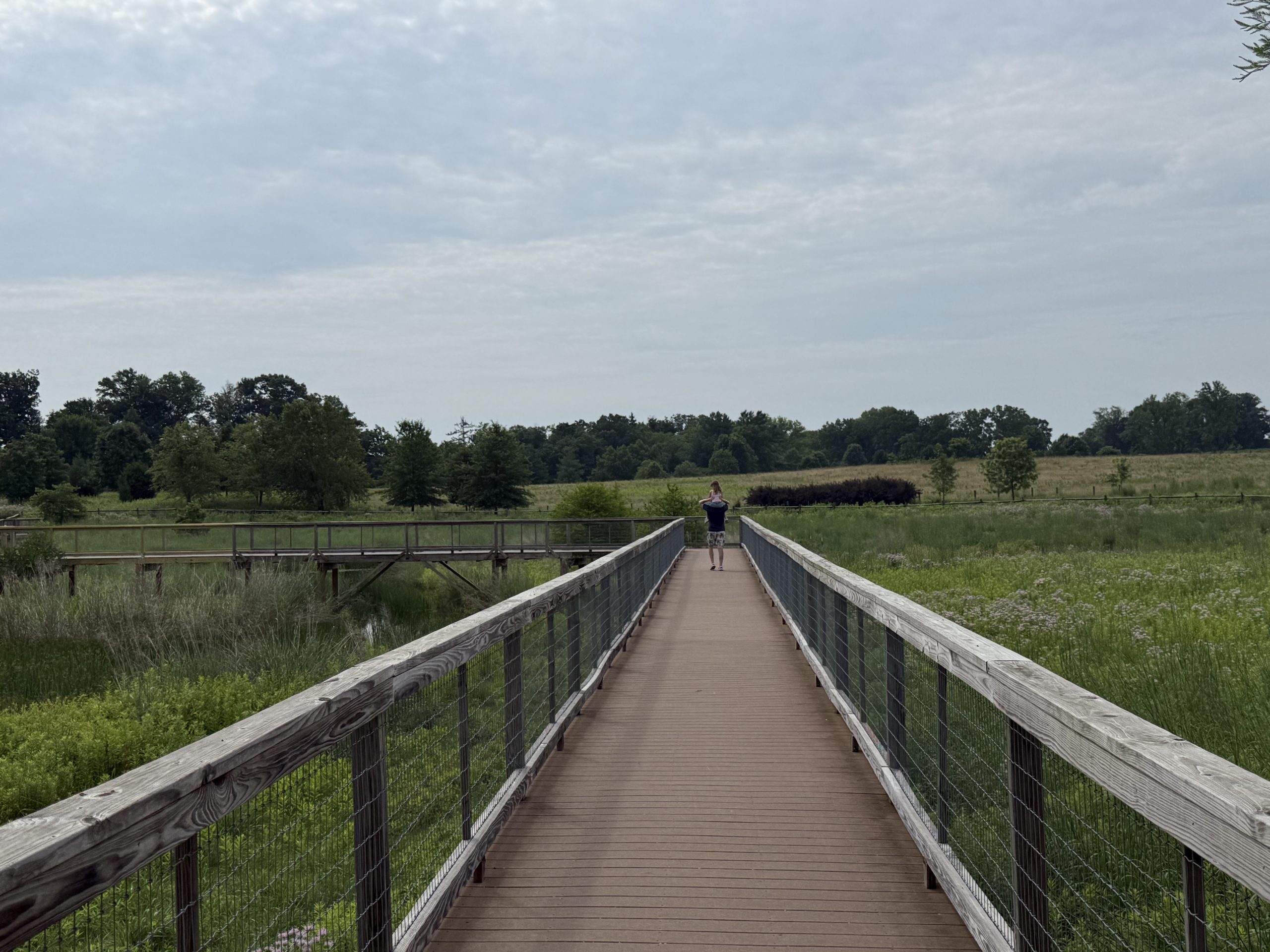
In Whitemarsh Township, just minutes away from bustling suburban shopping centers in any direction, a stretch of road runs past the Erdenheim Farm, and nestled among it is the Dixon Meadow Preserve & Boardwalk.
That’s where I have found myself on quite a few occasions, including the recent sultry Sunday after the Fourth, with my husband and two young kids. The morning promised too much heat for a long walk or hike, but at the preserve, with less than a mile of walking trail to tread, we didn’t have to worry about that.
It may not seem like an escape into nature, given that cars passing by on Flourtown Road are in view from most of the area. Yet somehow, while walking the paved path and a raised boardwalk, one can feel as if a bubble has been created around the preserved space. It’s surprisingly quiet — well, except for the birdsong and occasional quack from a marsh-dwelling duck.
The 14-acre preserve is home to native plants, and it’s frequented by a variety of colorful birds — and binocular-toting birders. Monarch butterflies also hang out there this time of year, and they were our favorite friends to see on that recent Sunday.
After about 30 minutes of wandering, covered in sweat, we headed back home. We didn’t get in many steps, but that wasn’t the point. On a weekend when air conditioning and shade were the responsible choice, it had been nice to spend a moment among the butterflies.
🎤 Now we’re passing the microphone to South Jersey reporter Sarah Nicell.
Any Collingswood resident over the last 18 years can remember the fight to legalize backyard chickens. Or the second attempt. Or the third.
Gwenne Baile, 77, knows the efforts well. A Haddon Township resident and the unofficial “Chicken Lady of South Jersey,” Baile initially became interested when she saw Martha Stewart showing off her chickens on TV. After retiring in 2009 from a long career as an ob-gyn nurse, Baile decided she needed a hobby.
“I started looking into it,” Baile said, “but it was illegal here.”
Since then, Baile said, she has played some part in changing the ordinances in 35 municipalities across South Jersey, including in her hometown. She keeps a list of places with pro-chicken zoning rules, including the 19 municipalities in Camden County that allow them. Baile now has five hens, taken in as fosters, including those injured by predators or forced from owners whose municipalities do not allow coops. — Sarah Nicell
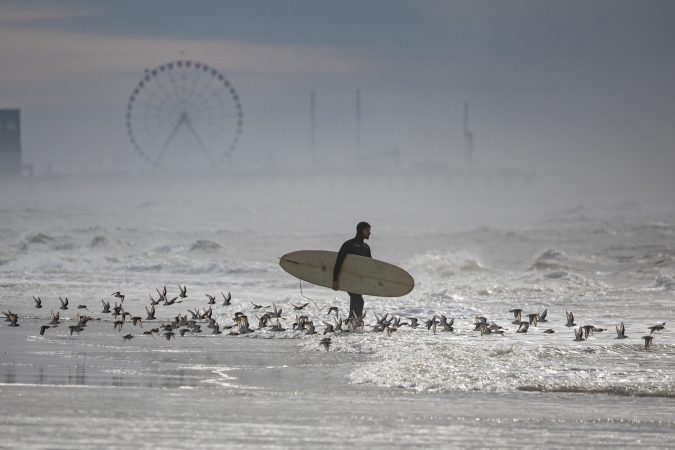
Long Beach Island recently hosted the 18th annual Coquina Jam at Brant Beach, an all-women surfing event that raises funds for the David’s Dream & Believe Cancer Foundation and the Jetty Rock Foundation. With summer in full swing, there are many opportunities to catch waves down the shore: for example, on Aug. 22, people ages 5 to 60 can compete at Ocean City’s 7th street at the Eastern Surfing Association competition. Kids and adults alike can book a lesson up and down the shore.
Surfing might be a part of the shore experience today, but it was not always a staple of the East Coast. In fact, surfing was once seen as the domain of the countercultural West Coast. But during the 1960s, fanatics brought their boards to New Jersey in the hope of disassociating surfing with its rebellious and countercultural image—and instead promote it as a purposeful pursuit and competitive sport. Positioning surfing as no different than playing basketball, baseball, and football helped entrench it in New Jersey seaside life, while also reinforcing ideas about conformity and respectability.
Surfing’s image has evolved greatly over the years, with its roots tracing back to Hawaii. Since about the 12th century, Hawaiians of all classes and genders took to the waves. They steered large, finless, wooden boards known as alaia and olo boards.
However, by the late 19th century, an influx of American Christian missionaries into the islands pushed the “lustful” sport to the margins, casting it as incompatible with the aims of settlers and businesses. Nevertheless, Hawaiians continued to find ways to surf, and soon white settlers began to appropriate Indigenous beach culture for their own purposes.
In the early 20th century, tourism-minded opportunists including Alexander Ford Hume, Tom Blake, and writer Jack London promoted surfing to draw white American settlers and vacationers to the pristine warm waters of Hawaii. In his book chapter “A Royal Sport,” published in 1907 and 1911, London remarked, “I was chiefly conscious of ecstatic bliss at having caught the wave.” Local surfing legends Duke Kahanamoku and George Freeth then spread surfing to the mainland United States. Freeth brought lifeguarding and beach culture to Southern California, while Kahanamoku traveled the globe, showcasing his Olympic-level swimming and extraordinary surfing skills.
In 1912, after the Stockholm Olympics where he won the gold in the 100-meter freestyle event, Kahanamoku visited Atlantic City, exposing the shore resort to “the sport of kings” for the first time. In the early 1930s, Tom Blake, an innovator who manufactured surfboards for U.S surfers in the first half of the 20th century, introduced his 13-foot wooden longboards to Ocean City. But despite these early exposures, surfing did not catch on in the Garden State until the 1960s.
Movies and music were instrumental to surfing fever at the Jersey Shore. Viewers were drawn to Gidget’s (1959) Cliff Robertson as “the Big Kahuna,” a youthful nonconforming rebel who valued the hedonism of the beach and consistent access to surf over responsibilities. Young people were captivated by the carefree lifestyle found in the Beach Party (1963) franchise. These movies were fictional but spoke to growing white affluence and greater access to leisure in real-life postwar America. Teenagers flocked to local theaters to watch the globe-trotting adventures of surfers Robert August and Mike Hynson in 1966’s TheEndless Summer.
Some New Jersey teenagers embraced the fad, perhaps hoping to foster the freedom and youthful expression associated with surfing in their own waters.
Soon, surf shops popped up and down the coast, sponsoring new surf teams and providing locals with access to equipment. Ron Jon Surf Shop was founded in Ship Bottom in 1961, while Surfer Supplies in Ocean City, and Heritage Surf Shop in Sea Isle both opened in 1962. The New Jersey Hobie team was hosted by the Manatee Surf Shop, founded in Belmar in the early 1960s.
Yet as surfing proliferated along the shore, initial community reactions were sour. Young surfers were seen as troublesome, an unpredictable hazard on crowded beaches. Police, concerned parents, and hotel owners all spoke out against surfers, viewing them as vandals with unkempt, long hair, huge unwieldy surfboards, and worst of all, they used profanity and disobeyed authority figures. The presence of surfers threatened to disrupt the peace of beachside resort towns, places for respectable families who followed the rules.
In 1966, for example, authorities in Bradley Beach curtailed surfers’ access to the Kent Avenue Beach, with Police Chief Harvey Gaunt reporting that surfing was a safety hazard. He claimed that surfers “set fires in trash barrels, illegally exchanged beach badges, are often injured, are often poor swimmers, leave their boards where bathers may walk into them, use foul language, create a danger when they carry their boards, and use the beach instead of a toilet.” The litany of charges revealed an almost visceral disgust at people who surfed, evoking an ongoing moral panic about juvenile delinquency and the erosion of middle-class norms.
Made By History sponsors. FOR USE ON MADE BY HISTORY STORIES ONLY.Inquirer Staff
To overcome such associations and convince the broader community that surfing deserved a place down the shore, surfers organized, hoping to show how surfing might channel young people’s energy and coexist with other popular shore activities and sports. They formed surfing associations and clubs.
In 1963, Cecil Lear, a schoolteacher from Belmar, along with eight other members, founded the Jersey Surfing Association (JSA), aiming to garner respect for surfing as a growing American sport. In his fight to establish designated surfing beaches in New Jersey, the schoolteacher touted the positive health benefits of surfing: it provided quality exercise, and what’s more, morning surfing sessions could promote earlier bedtimes—keeping young surfers out of late-night trouble. The association hosted successful competitions during the 1960s, such as the Greater Point Pleasant Jaycee Contest and the Jersey State Open State Surfing Championships in Belmar.
In 1965, John “Bull” Carey, a real estate developer and former lifeguard and surfer, and Don Pileggi, Ocean City’s Recreational Director, founded the Ocean City Surfing Association (OCSA). They instituted a yearlong tournament schedule that operated around school breaks.
The summer season featured contests every Tuesday, where bronze, silver, and gold medals were awarded, culminating in early September with a final event, the Ocean City Open Surfing Championship. During the school year, a contest was held each school break: the Turkey Trot over Thanksgiving, the Polar Bear over winter break, and the Spring Fling over spring break.
By the middle of the decade, the surfing association was strengthening relationships with the city and local businesses. For example, in preparing for the Polar Bear Championship on Dec. 28, 1966, the OCSA worked closely with the city, the Port-O-Call Hotel, and Bob Harbaugh’s oceanside restaurant, providing free hot showers and changing rooms for frozen contestants, drum fires along the contest beaches at 14th and 15th streets, hot coffee and soup on standby, and a catered lunch for the winners.
Treating surfing as a competitive sport and potential money-maker for local businesses helped reposition surfing as a purposeful pursuit, not just teenage trouble.
However, this reframing also solidified a surfing demographic that was solidly middle class, mostly white, and mostly male—thereby marginalizing people of other identities who wished to surf. In this small way, surfing culture reinforced a history of segregation at the Jersey Shore, fortifying the beach and the ocean as mostly white spaces. Events like the Coquina Jam, an all-women surfing competition, may be eroding such boundaries today—but due to the history of how surfing came to the Jersey Shore, there is still a long way to go.
Thomas DiGiovanni is a graduate student at Rutgers-Camden interested in the intersections of race and class within sporting cultures, with a concentration on surfing history.
Made by History takes readers beyond the headlines with articles written and edited by professional historians. Opinions expressed do not necessarily reflect the views of The Inquirer.
KYIV, Ukraine — A Russian attack Friday on a site near Kyiv that was hosting a defense industry event killed at least 10 people and wounded nearly 100 others, Ukrainian government and industry officials said.
The ballistic missile strike came a day after Ukrainian President Volodymyr Zelensky met in Kyiv with senior representatives of Raytheon, the U.S. company that makes the Patriot air defense systems that Ukraine desperately needs to counter the devastating ballistic missiles Russia uses to advance its invasion. Raytheon didn’t immediately respond to an email inquiring whether any of its workers were at the event.
“Missiles for Patriot systems are the number one priority,” Zelensky said on social media, where he reported the attack.
The attack hit the grounds of a privately operated military training site that was hosting an event, acting regional military administration head Ruslan Oliinyk wrote on Facebook, citing preliminary information. The site is about 12-19 miles from central Kyiv, in the Bucha district.
Emergency crews responded to the area, where 27 homes and 44 vehicles also were damaged, Oliinyk said.
The Ukrainian Defense Industry Council, which describes itself as the country’s largest association of private defense manufacturers, said industry representatives were at the site when it was hit, although it did not immediately provide further details.
Ruslan Kravchenko, the country’s prosecutor general, opened a war crimes investigation into the attack and a separate criminal case over possible negligence in organizing the event.
Investigators will examine who approved its location, timing, and format, and whether adequate precautions were taken, Kravchenko said.
The Ukrainian government imposed reporting restrictions on the attack.
Meanwhile, a Ukrainian attack on a military plant in Russia killed six people and wounded 26 others, the regional governor said.
Zelensky meets with delegation from U.S. company Raytheon
The Raytheon meeting came less than three weeks after U.S. President Donald Trump vowed to give Ukraine a license to produce Patriots. The pledge marked an important shift, as Trump recently adopted a more positive tone toward Zelensky.
In another sign that Ukraine is changing minds in Washington, ardent Trump ally Laura Loomer met with Zelensky in Kyiv on Thursday. After years of minimizing the invasion, she rebuked Russian President Vladimir Putin for missile attacks on Ukraine.
The Ukrainian leader said late Thursday that he held talks with a Raytheon delegation, adding that the company was ready to jointly produce Patriot interceptors with Ukraine. The system is comprised of radars, command-and-control systems, and different types of interceptor missiles.
The company made no immediate comment about the meeting on its website or social media accounts.
“Our teams — both at the government level and from the private sector — will stay in close touch to work (it) out,” Zelensky said on social media.
Zelensky is keen to move quickly on a coproduction agreement as Russia relentlessly fires ballistic missiles that are hard to stop and cause civilian casualties as well as inflicting huge damage on civilian areas.
Zelensky has for several years been pleading for more and quicker Patriot deliveries from Western partners. Ukraine has developed its own innovative air defenses, but large-scale production is vital.
Even so, experts and Kyiv officials have cautioned that setting up production in Ukraine would likely take years.
Ukraine hits another hub of Russia’s biggest online retailer
When the Trump administration engaged in a diplomatic effort to end the war last year, Putin portrayed Russia as negotiating from a position of strength. The peace efforts have produced no results so far.
But since first attacking its neighbor in 2014, Russia has captured only around 20% of the country.
Now, the Russian army’s advance is stalling due to Ukraine’s successful front-line and mid- and long-range attacks using cutting-edge drone technology it has developed at home and that is now coveted by other countries, Western officials and analysts say.
Ukraine has expanded its campaign of disruption with bigger and increasingly frequent drone attacks inside Russia that are hitting high-profile targets, causing fuel shortages and piling pressure on Putin.
Ukrainian forces again targeted the logistical hubs of Wildberries, Russia’s biggest online retailer that is often compared to Amazon, the company’s founder said Friday.
Founder Tatyana Kim said Wildberries logistical facilities came under attack in St. Petersburg, the adjacent Leningrad region, and in Simferopol — a city in illegally annexed Crimea.
Photos and videos published by Russian media showed massive plumes of smoke rising over St. Petersburg.
Ukraine struck four other Wildberries warehouses across Russia in recent days, sparking massive fires.
Kyiv officials want ordinary Russians to feel the consequences of the war and question whether Putin can keep them safe. The almost daily attacks have caused consternation in Russia.
Ukrainian long-range weapons hit an oil facility nearly 840 miles from the Ukrainian border, as well as a military plant, Zelensky said Friday.
The plant in Russia’s Kirov region makes components for aircraft and missiles used in attacks on Ukrainian cities, he said.
The Ukrainian attack on the military plant killed six people and wounded 26 others, regional governor Alexander Sokolov said. He didn’t identify the plant, but Astra online news outlet said it was the Avitec plant, which makes air defense missiles and aircraft components.
The Russian Defense Ministry reported Friday that its air defenses shot down 571 Ukrainian drones overnight.
BRUSSELS — The European Commission on Friday said it found TikTok had not adequately protected children’s privacy rights on its platform by allowing adults to view the accounts of minors.
The action exposed children to cyberbullying, unwanted contact and predatory behavior, commission spokesperson Thomas Regnier said.
“Children’s content must never be visible to strangers,” he said. If TikTok does not take steps called for by the European Union’s landmark Digital Services Act, “minors are exposed to predators, to grooming and to cyberbullying,” Regnier said, adding that children aged 13 to 15 can “easily” change their accounts from private to public and the private accounts of minors aged 16 to 17 can be seen by anyone on the internet. “We do not accept this,” Regnier said. “Putting default settings for minors is not a beauty contest under the DSA. It must be effective.”
The investigation comes on the heels of back-to-back crackdowns on Big Tech by Brussels, which has led the world in regulating tech behemoths including Meta and Apple.
TikTok can now defend itself and reply to the findings. If unsatisfied with the Chinese firm’s response, the European Commission could issue a so-called non-compliance decision and possible fine worth up to 6% of the company’s total annual revenue.
The Chinese social media firm, whose parent company ByteDance is based in Beijing, said in a statement it would review Brussels’ findings and “continue to engage constructively with the Commission.”
“Protecting minors online is a goal we share, and we are committed to building on our strong track record of continuous improvement,” TikTok said in a statement.
If unsatisfied with the firm’s response, the commission could issue a so-called non-compliance decision and possible fine worth up to 6% of the company’s total annual revenue.
The commission estimates most of TikTok’s 170 million users in the EU are children, with 7% of children aged 12 to 15 spending four to five hours daily on the app.
The 27-nation European Union found in February that TikTok had breached another aspect of its digital rule book with an “addictive design” of features such as autoplay and infinite scrolling that could harm the physical and mental health of users and minors especially.
Gov. Mikie Sherrill is placing the blame on a vendor for the thousands of illegal voter registrations amid what she calls broader “disarray” at the Motor Vehicle Commission.
And a bankrupt weed company is set to close two of its grow sites in Vineland and lay off 86 employees.
Plus, a presumed lightning strike from Tuesday’s storm caused the closure of two Maple Shade businesses, and more news of the day.
Gov. Sherrill shared Thursday that she was already less than impressed with the vendor that she says is responsible for illegally registering 6,600 noncitizens to vote before she discovered the issue.
In fact, she said, she had been trying to get rid of the company, IDEMIA, and that the new state Motor Vehicle Commission administrator “was already in the process of removing them for their incompetence.”
Earlier this week, Sherrill disclosed that a software glitch at the MVC operated by IDEMIA registered people to vote through the state’s automatic motor vehicle voter registration program even after people identified themselves as noncitizens.
The vendor responsible for the error is also to blame for long waits, bureaucracy, and red tape, according to Sherrill.
Meanwhile, IDEMIA released a statement blaming the New Jersey Department of State’s Division of Elections, saying that the department is “ultimately responsible for verifying eligibility to vote.”
The Cannabist Company dispensaries in New Jersey were among the first adult-use locations to open when the state began to allow recreational weed sales in 2022.
Four years later, the company will shut the doors of its two Vineland grow sites in October after the company filed for bankruptcy back in March.
Nearly all of the Cannabist’s cultivation and manufacturing employees in New Jersey will be laid off. That’s a total of 86 staff members out of a job.
The company also plans to sell the rest of its operation in the state, including the retail store in Deptford.
New Jersey, Pennsylvania, and Delaware are part of a lawsuit against President Donald Trump to reverse new rules that tie disaster aid funding to abiding by the Trump administration’s requests for voter data.
A lightning strike from Tuesday’s storms is suspected to have started a fire and forced a chocolate shop and a bakery to close on Maple Shade’s Main Street. The official investigation into the cause is ongoing.
Chef Nana Araba Wilmot, raised in South Jersey, competed in Season 23 of Top Chef, Bravo’s elimination-style reality culinary competition show. Where exactly was she raised?
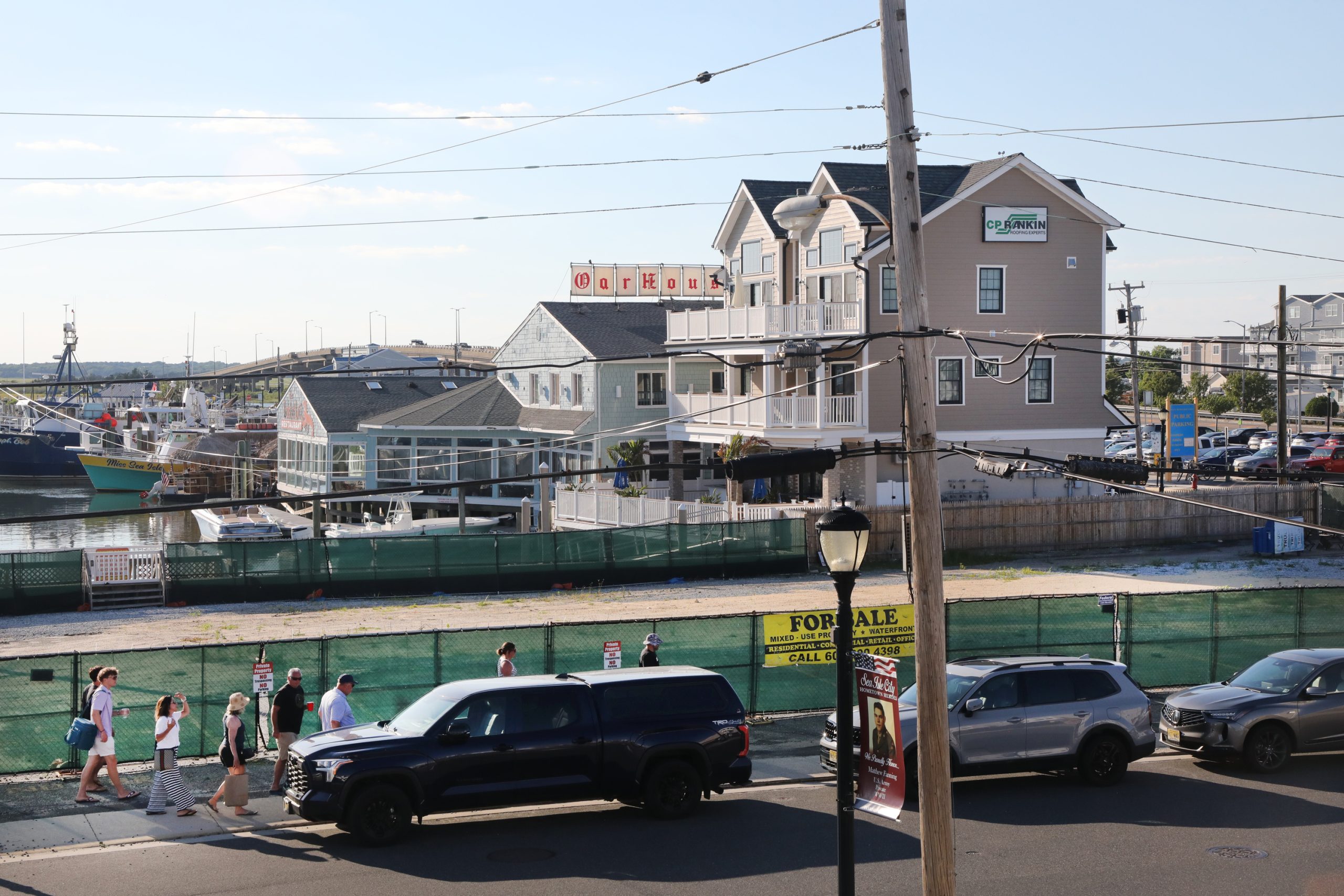
Amy recently published a story about how Sea Isle has undergone a transformation and has become an upscale Shore town. Whether or not that’s a good thing is up for debate.
Below are two responses to the piece:
“My wife and I had the good fortune to buy our home at 34th & Central in 1985. I was 35 and my wife was 33. Can you imagine two 30-year-olds being able to do that today? I do feel bad that isn’t possible in today’s day and age.Certainly, things have changed; I hate some of these housing monstrosities. Those changes aside, I love Sea Isle and consider ourselves absolutely blessed to call it home.”
“We saw what the future of Sea Isle was becoming many years ago when the quaint little cottage next door was sold, demolished, and converted into a QUADRUPLEX!”
How do you feel about Sea Isle’s changes? Is it that different compared to other Shore towns? Email Rosenberg your thoughts at downtheshore@inquirer.com.
📸 Photo of the week
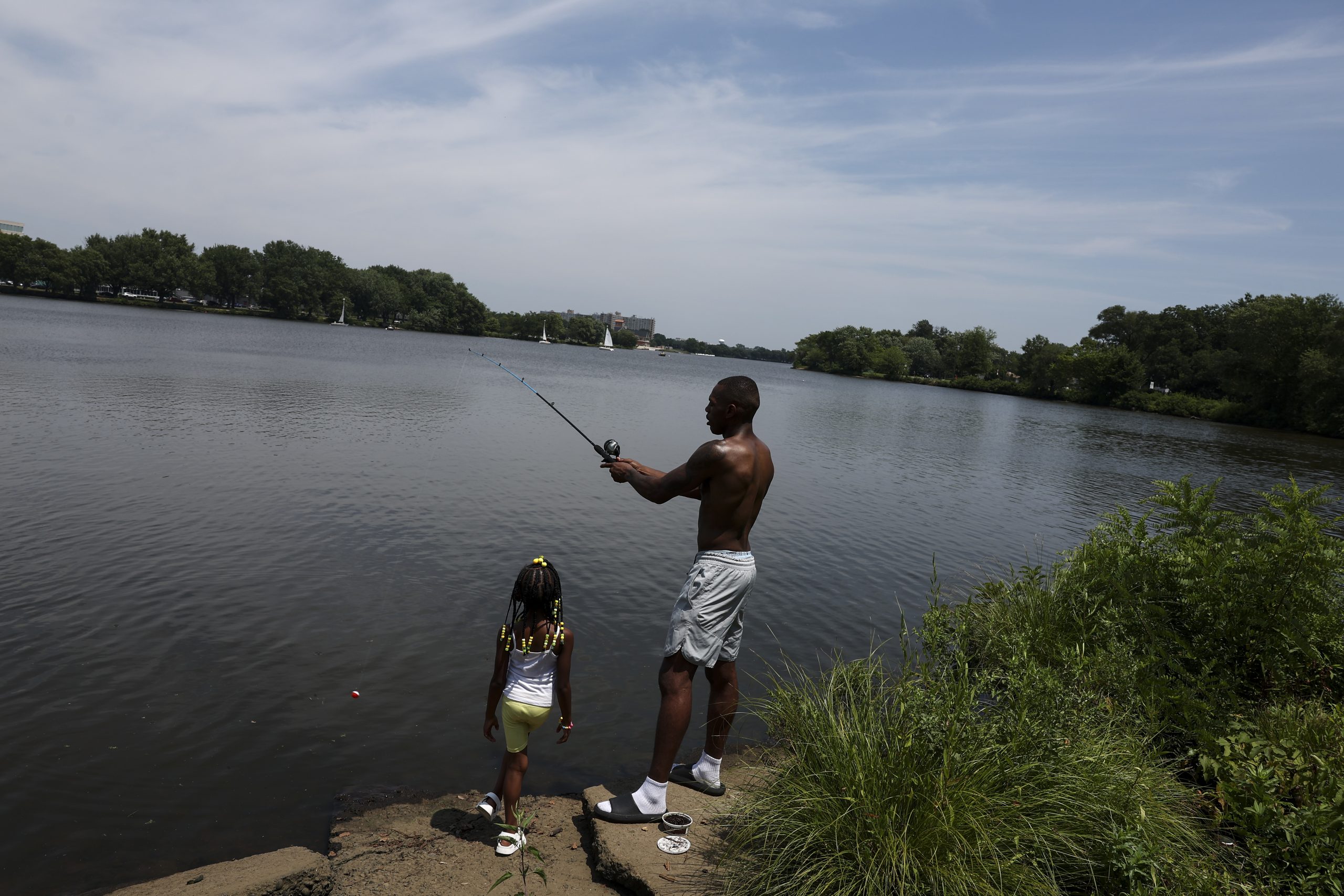
Nahir Albright, of Sicklerville, right, fishes with his daughter Gia Albright, 5, on the Cooper River in Collingswood, N.J. Monica Herndon / Staff Photographer
Have a wonderful weekend and I’ll see you on Monday!
By submitting your written, visual, and/or audio contributions, you agree to The Inquirer’s Terms of Use, including the grant of rights in Section 10.
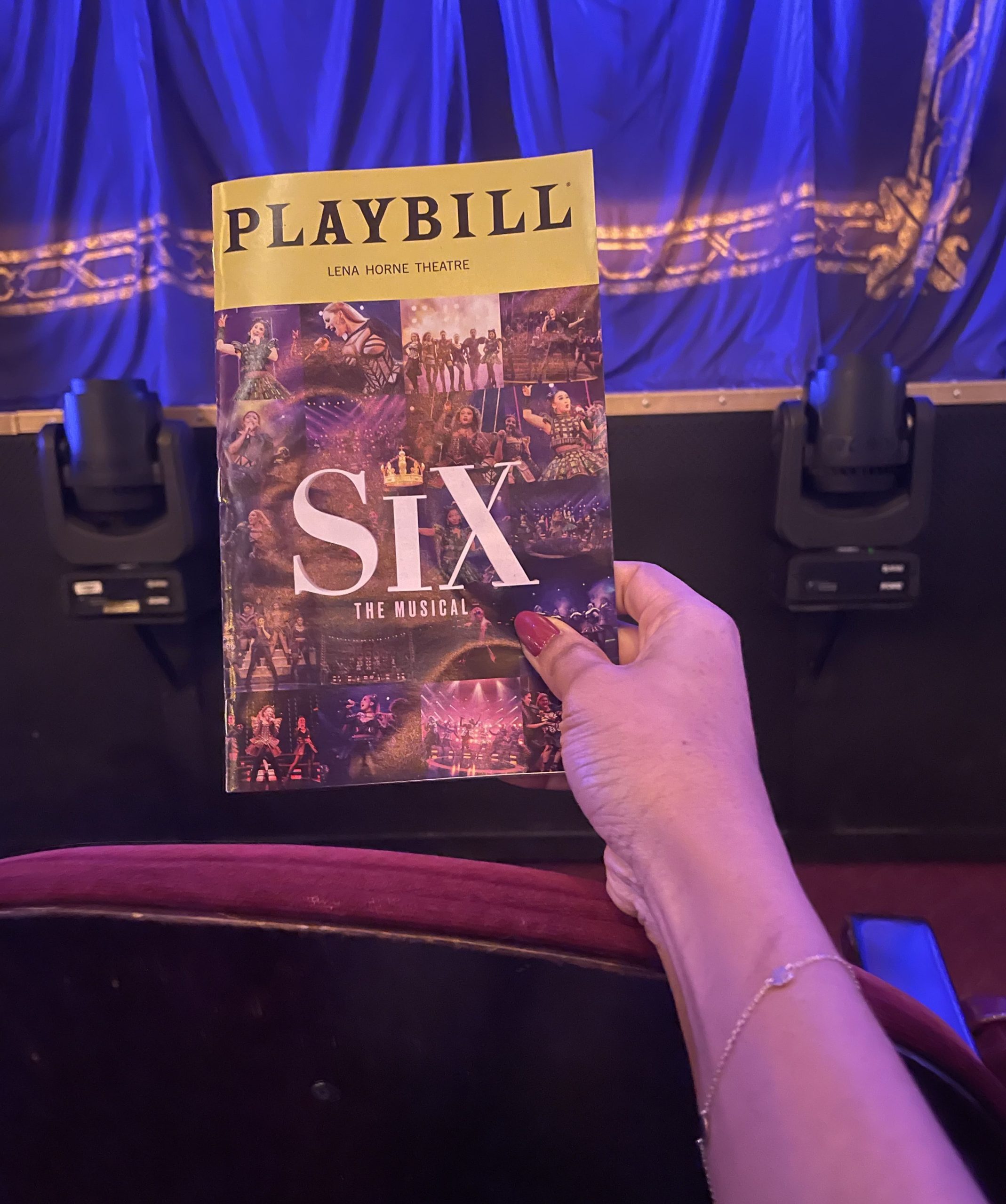
Toward the end of Six— inwhich the six wives of Henry VIII reweave their stories of divorce, beheadings, death, and survival into a celebration of 21st-century girl power —the protagonists wondered whether by repeatedly recounting the horrors of their experiences, they were inadvertently platforming the patriarchy.
In recounting the stories of the harm he had inflicted, had they inadvertently made him the main character and axis of their lives? Was he still shaping their identities? Who were they without Henry?
I often wonder the same about racism. Are we feeding the monster of white supremacy and racism when we choose not to ignore it? When we decide to tell and retell our personal experiences of it?
See what you think.
Ifeoluwa M. Olawole holds the playbill for the musical “Six” which she recently traveled to New York to watch during its Broadway run.Courtesy of Ifeoluwa M. Olawole
My sister and I love Broadway, so earlier this year we went to the musical as part of a birthday trip she planned for me.
As we sat, waiting patiently for the show to start, an older white lady sitting next to me turned and asked, “Are you also on Row A?” Her incredulity almost seemed obligatory.
I looked at her, my senses ringing the alarm. If you are Black, you probably know where this is going.
“What does that mean?” I asked the woman. I made sure my voice was calm and measured. I wanted to give her the benefit of the doubt.
“I want to know if you are also here,” she said, and pointed to our row.
“You can see us sitting here, can’t you?” I said, keeping my face neutral and unreadable.
Her voice buckled a bit, but again she insisted, “Are you sure you’re not in the wrong seat?”
“Why would we be in the wrong seats?” I held her gaze as I asked it.
Her voice started to quiver. “I just … but I just wanted to check.”
There is a pervasiveness to racism, to whiteness really, and how it imposes itself with vehement insistence. It demands — perhaps dares you — to define yourself as it defines you. But the moment you push back, it raises its hand in utter disbelief, armed with feigned innocence and wondering why you would be so offended.
My sister and I ended up having a phenomenal time at the show and in New York. When I talk about our trip to friends, family, and even acquaintances on Instagram, I don’t leave out this disrespectful incident.
Coincidentally, our experience happened a day before two of our best and brightest actors got called a racial slur on the world stage. Does recounting Michael B. Jordan’s and Delroy Lindo’s experience, or telling the story of my Broadway encounter, shift the main character of our stories?
What manner of insanity emboldens someone to doubt that two Black girls cannot afford front row seats at a Broadway show, and then to express that doubt to them? Who gets to decide who is expected to occupy certain spaces? What kind of audacity propels someone to assume we couldn’t possibly belong?
In the end, the very function of racism, as Toni Morrison put it, is distraction. It ruffles us (or at least tries to). It wants to squeeze out every iota of joy from us. It keeps us explaining over and over again why it’s devastating for two Black men to get called a slur in a room full of their peers — even if the intent was not malicious.
So, when that lady acted shocked to see Black girls in the front row, what it revealed was her own assumption about who is supposed to occupy spaces associated with art, pure, undiluted, transcendent art. It is rooted in a stereotype that “Black people don’t go to Broadway,” and comes from the same cultural logic that sees certain forms of enjoyment, art, joy, prestige as belonging only to a particular race or class.
And this is where I respond, because she couldn’t be more wrong. The problem with stereotypes, acclaimed writer Chimamanda Ngozi Adichie once said, isn’t that they are untrue; it is that they are incomplete.
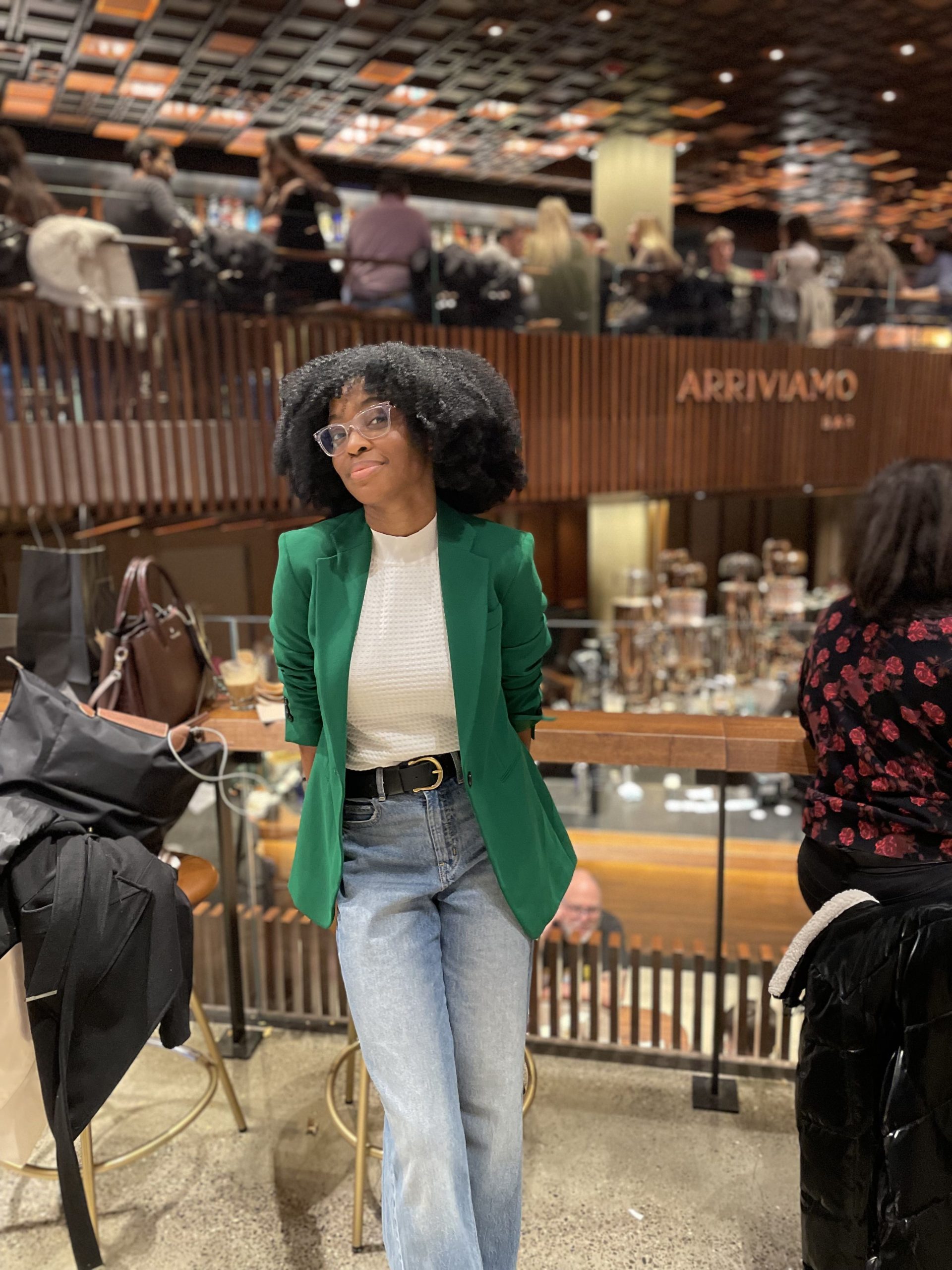
Ifeoluwa M. Olawole at the musical “Six” on Broadway.Courtesy of Ifeoluwa M. Olawole
In our intricate hair, in our swagger, in our style, in our diversity, we, ourselves, are art. Theater has never been foreign to us.
Performance traditions have always been central in African societies, such as in Nigeria, where storytelling, masquerade traditions, dance, poetry, and staged community performances have long been a part of public and cultural life. Even today, stage plays and live performances remain an important part of Nigerian culture.
Enslaved Africans did not arrive in the Americas without these artistic traditions. Performance and storytelling have endured among African Americans who have used these expressions for activism, for redemption and resistance, and for escapism since the era of slavery.
In much of the 19th century, one of the most popular forms of entertainment in America was minstrel shows, which involved white performers portraying Black people in a dehumanizing manner while stealing performance elements from Black acting troupes.
In 1821, William Alexander Brown founded the first Black theater in Lower Manhattan. And in the next century, the Harlem Renaissance marked a particular zeitgeist of African American creative expression across literature, arts, and performance.
Black audiences have participated in American theater for generations.
However, Broadway itself was historically segregated, culturally exclusionary, and increasingly expensive. During the Jim Crow era, for instance, Black theatergoers were often forced into separate or inferior seating sections.
In response, Black performers and audiences built their own theater ecosystems because mainstream venues excluded them. Even so, when white attendees came to see the shows, they were often “hostile, harassing the actors and rioting until the performances couldn’t go on.” Rather than arresting the disruptors, police would arrest the Black performers.
In 1993, when Washington’s Arena Stage attempted to expand the body of work it presented to make it more diverse, it lost many subscribers, with former subscribers calling the multiracial casting “disconcerting,” “distracting,” and even outright advocating for white supremacy.
Broadway has long skewed toward affluent audiences, with recent Broadway audience reports showing the average household income of Broadway attendees is over $250,000, making it inaccessible to many working- and middle-class people of all races. Broadway audiences are still disproportionately white — not because Black people devalue theater, but because Broadway has historically been marketed, priced, and culturally coded as an elite white space.
The easy thing, some might argue, would have been to laugh off that woman’s prejudice and shove it down into the same silence we have been forced to swallow for too long, where it festers into wounds carried across generations.
But silence relinquishes the power to define belonging to those who have always assumed it was theirs. As the protagonists of Six reclaim their stories from Henry VIII, so we must keep reclaiming ours from those determined to exclude us.
Ifeoluwa M. Olawole is a political scientist and writer. You can find more of her writing at www.themoderncedar.com and on Instagram @themoderncedar.
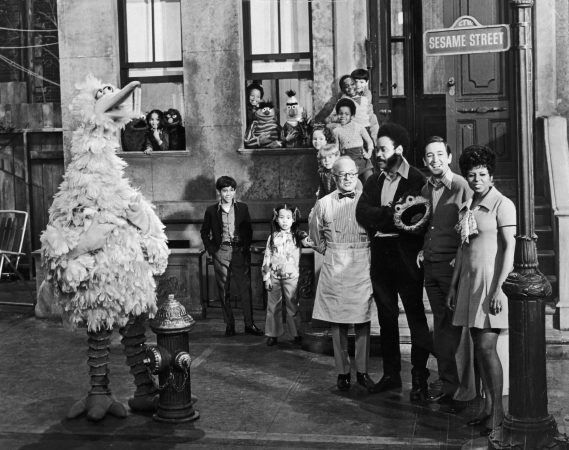
And the next day, on July 21, 1969, the Muppets landed on televisions across Philadelphia.
But unlike the moon landing, the Muppets’ debut was a test run.
Over five days, producers of Sesame Street broadcast five hour-long test-pilot episodes on WHYY-TV’S UHFChannel 35 on televisions spread across 70 homes throughout the city.
So, why Philly?
“The station is one of the country’s top public TV stations,” Edward Palmer, then Sesame’s director of research, told The Inquirer in August 1969. “It has displayed great interest in the [Children’s Television] Workshop and has been most cooperative. And it has Channel 35.”
Those first few episodes, set at the fictional Manhattan meeting place at 123 Sesame Street, paired a snappy theme song with a cast of unusual and friendly oddballs.
The program, which can trace its roots to the mid-20th-century civil rights movement, would go on to delight, instruct, and entertain,thanks to the worldview and genius of Jim Henson.
But it wasn’t a complete home run.
The Philly research showed that of course the kids loved the Muppets, but they were bored by live-action street segments featuring only human actors.
This taught the producers that they had to integrate the Muppets with the human cast, and have them interact, rather than keep the Muppets and humans separate.
“Test audiences of preschoolers in Philadelphia had rejected live-action sequences shot on a mock urban street, with trash cans on the curb and laundry hanging from tenement windows,” according to Michael Davis’ book Street Gang: The Complete History of Sesame Street.
The human-operated puppets would go on to charm millions of children and parents, and their names would become iconic: The Count, Cookie Monster, Big Bird, Bert, Ernie, Oscar, Miss Piggy, Elmo, Kermit, and many others.
And they would later be joined by an endless A-list of guest stars.
Collingswood is hoping to get more pets on the books as a way to help fund the borough’s animal control services.
Per New Jersey law, all cats and dogs 5 months of age and older are required to be licensed with their local municipality, but borough officials say registration is lagging.
Without the fees collected through licensing, Collingswood has to find the funding for animal control services from elsewhere in the budget, Deputy Mayor Amy Henderson Riley said.
In 2025, the borough spent $33,305 on an animal control officer and other services, she said. But as of the June 17 commissioners meeting, Collingswood had collected only $5,740 this year through residential pet licenses, which cost between $5 and $20 each annually.
Assuming animal control services will cost the same for 2026, that leaves a more than $27,000 gap to fill.
“This isn’t meant to be, you know, a ‘nanny state,’” Henderson Riley said of pet licensing. “This is meant to help have a balanced budget in town. We can find the money elsewhere, but I’d much rather have that $27,000 for all the rest of the required and amazing things that we do in town.”
The cost for a license in Collingswood varies by type of animal and whether it is spayed or neutered:
Spayed/neutered dog: $17.
Non-spayed/neutered dog: $20.
Spayed/neutered cat: $5.
Non-spayed/neutered cat: $8.
Since 2020, Collingswood has struggled to collect even close to half the amount needed to pay for annual animal control services, averaging around $7,680 in fees paid each year, according to borough records.
As of July 21, registrations were further behind than they were at this time last year, when the borough had already collected around 20% more in fees, totaling over $7,000.
In response to the drop, the borough is planning a small informational campaign on social media and in town bulletins to spread the word and get licensing rates up, Henderson Riley said.
She said she wants to better inform the public on how this money is used, including for euthanasia of critically injured animals and reunification services for lost pets.
If the funding gap continues, she said, the borough will consider conducting a pet census, hiring staff members to go door-to-door counting the animals in town.
And while Henderson Riley said she understands that many household budgets are already tight, she argues that a relatively small fee can go a long way in helping animals across the borough.
“Affordability is the word of the year,” she said. “People are paying a ton in taxes, and I think sometimes they think, ‘Why should I be paying for a pet license for my 14-year-old dog?’”
The money residents spend on licensing may not go directly to their pet, she said, “but it might help care for an animal who’s hurt or injured or who got loose from their house.”
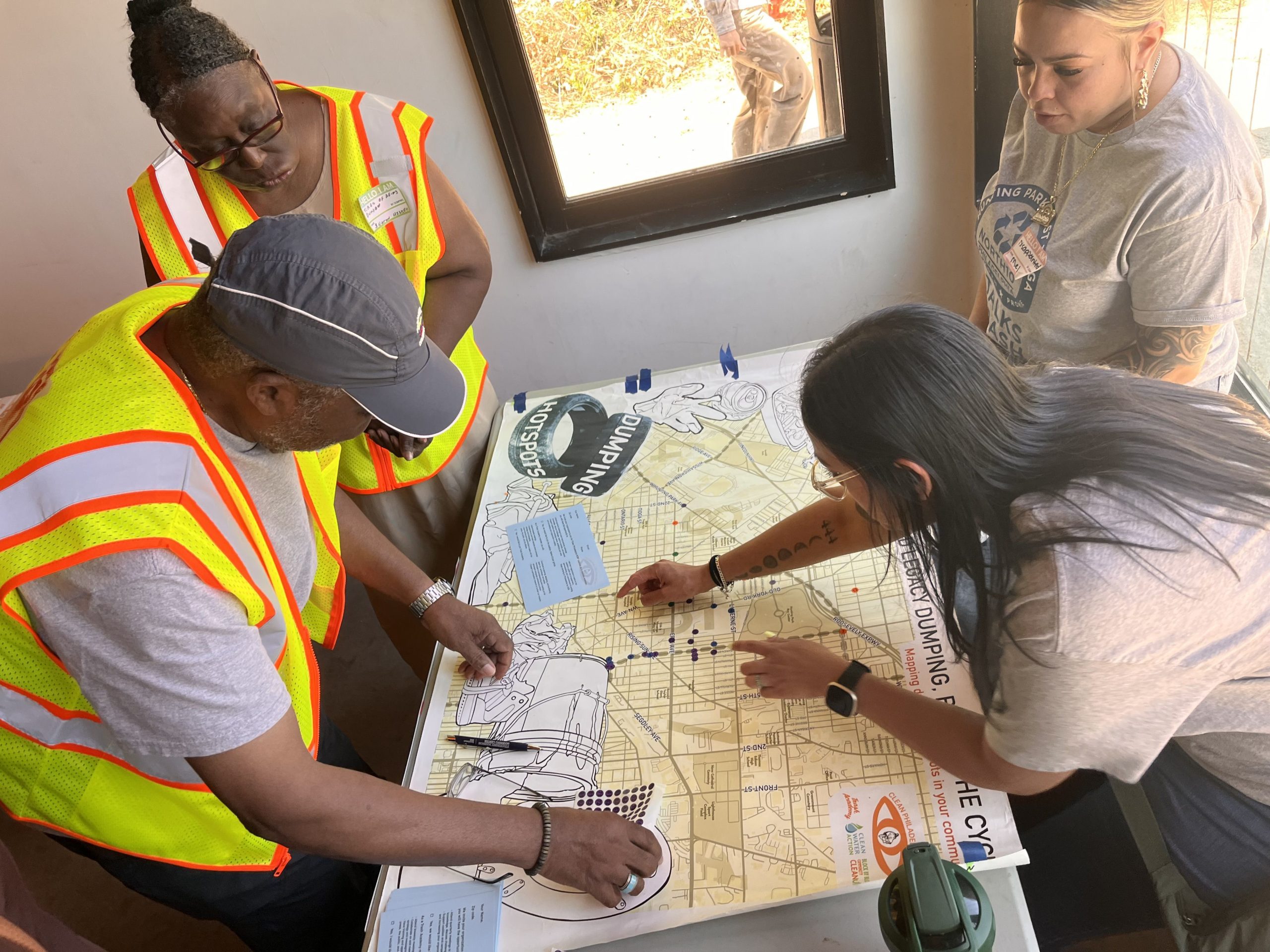
About 75 Philadelphia residents representing neighborhood groups and nonprofits gathered Thursday to map by hand illegal legacy dumps scattered throughout the city.
The Clean Philadelphia NOW initiative, made up of multiple neighborhood organizations and nonprofits, wants to tackle the dump sites comprehensively and coordinate with city officials, the residents said.
Legacy dumps are one of the biggest issues impacting the quality of life in Philadelphia, they said, and they want to find solutions.
While the city has heavily invested in abatement, that falls short of addressing the root causes of the persistent “clean-dump-clean cycle,” said Shari Hersh, a codirector of Trash Academy, one of the groups collaborating with Clean Philadelphia NOW.
When someone reports a minor crime, it can take hours for police to respond — if they do at all. Much of their paperwork is done by hand.
To Bethel, those details capture something bigger: a department in need of a systems upgrade.
In a new five-year strategic plan released Thursday, Bethel chose to treat the police department and its nearly $900 million budget like a business in need of modernizing. He plans to put an eye toward better “customer service” for residents.
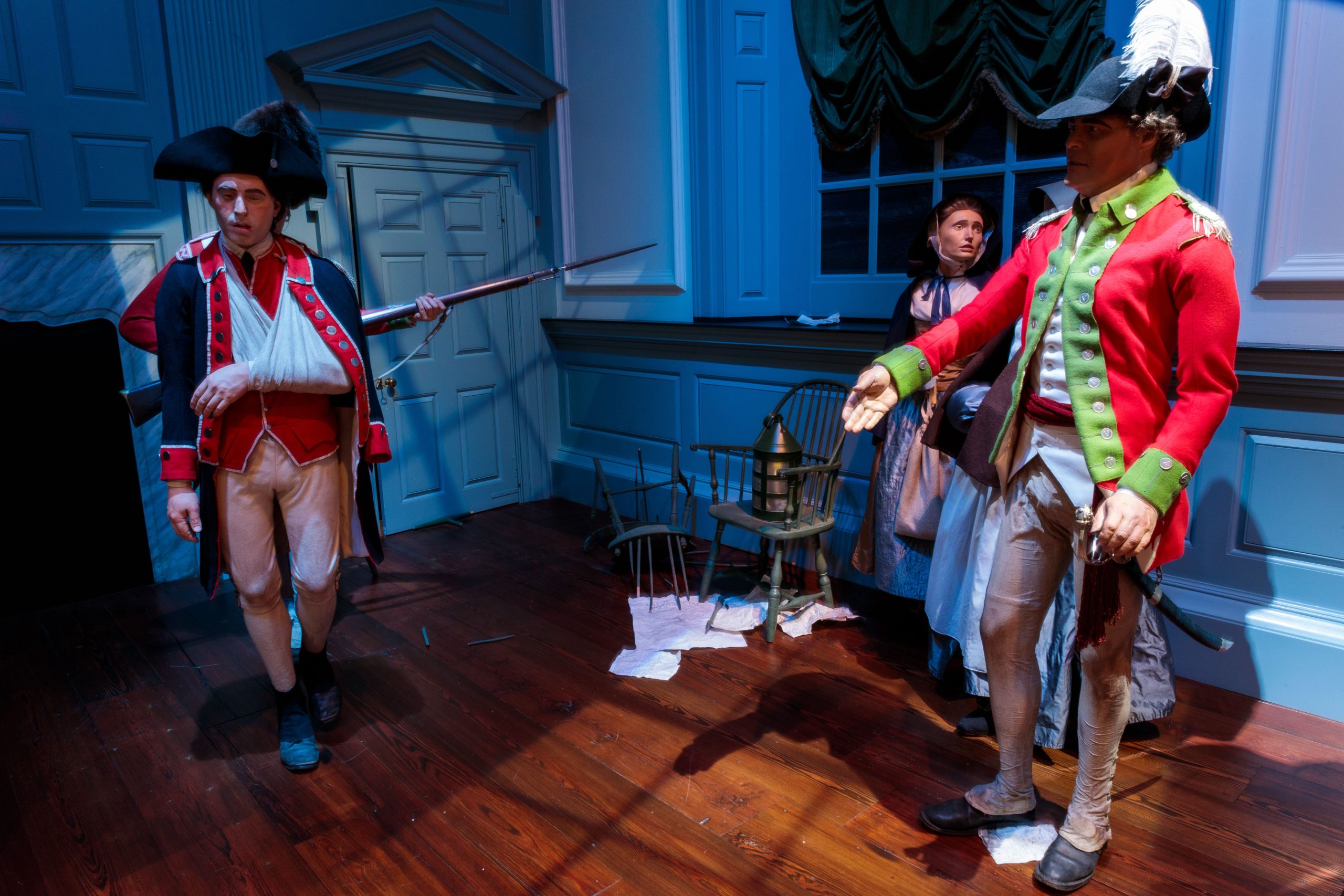
This week, we’re resurfacing an explainer on the Philly people who were loyal to the British crown in Revolutionary days.
It might seem like Philly was always pro-Revolutionary, but “tons of people were against the Revolution, very lukewarm, or their opinions changed,” said Tyler Putman, senior manager of gallery interpretation at the Museum of the American Revolution.
Nike calls its new Air Force 1 shoes “Horse of a Different Color.” The company says they contain pony hair. We suspect someone else’s fur. Which Philly mascot do they resemble?
A) Swoop
B) Gritty
C) Philly Elmo
D) Philly Phanatic
Think you know? Test your local news know-how and check your answer in our weekly quiz.
🏀 Getting ready to watch: This weekend’s WNBA All-Star Game, with North Philly’s Kahleah Copper, who is a last-minute replacement. It’ll be her fifth WNBA All-Star Game.
🧩 Unscramble the anagram
Hint: This delicious reason this month is Middle Child’s “Super Bowl.”
Cheers to Paula N., who solved Thursday’s anagram: Baltimore. Southwest Airlines will offer the one-hour flight twice daily next year.
Photo of the day
Fresh graduate Simone Smith poses with a diploma after Thursday’s 2026 Summer Graduation Ceremony at the Met.Bastiaan Slabbers / For The Inquirer
Nearly 400 Philadelphia high school students almost didn’t make it to the finish line. But they completed their last credits and crossed the stage in joy and celebration at the district’s summer graduation.
Have a great day. Hope you’re looking forward to some fun weekend plans.
By submitting your written, visual, and/or audio contributions, you agree to The Inquirer’s Terms of Use, including the grant of rights in Section 10.
Think you know your news? There’s only one way to find out. Welcome back to our weekly News Quiz — a quick way to see if your reading habits are sinking in and to put your local news knowledge to the test.
Question 1 of 10
Nike’s newest Air Force 1 shoes, called “Horse of a Different Color,” feature pony hair in a certain colored hue. They, in turn, look a lot like this Philly icon:
CorrectIncorrect. XX% of other readers got this question right.
Nike's new "campfire orange" pony hair sneaker is basically Gritty's doppelgänger, writes Inquirer reporter Maggie Prosser. Social media users agree. “Gritty force 1s,” one user on X dubbed the new shoes.
Question 2 of 10
South Street bar Tattooed Mom is unable to host events with music — ranging from drag shows and burlesque performances to karaoke — indefinitely, following an order from the Department of Licenses & Inspections. The required license for events would take at least this long for the business to procure:
CorrectIncorrect. XX% of other readers got this question right.
The license procurement process requires a public meeting followed by a separate hearing with the delay-plagued Zoning Board of Adjustment. As of March, the wait time for a hearing was 180 days — or roughly six months — according to a manual from the City of Philadelphia. (A $750 expediting fee cuts the wait time down to 140 days, or 4.5 months.) Tattooed Mom has yet to apply for the special exception.
story continues after advertisement
Question 3 of 10
A grassroots parallel parking competition in Philly already has more than 400 applicants. But organizers are only allowing for how many competitors?
CorrectIncorrect. XX% of other readers got this question right.
There are only 20 slots available to compete in the parallel parking competition. Contestants will be judged on speed, clearance length, and closeness to the curb. The winner will get bragging rights and a $76 cash prize to cover a PPA ticket.
Question 4 of 10
Kurt Vile has never repped his hometown so hard as on his new album, Inquirer music critic Dan DeLuca wrote in a recent profile. The album, which came out in May, includes shout-outs to Lincoln Drive, the Schuylkill, and Sun Ra, and an infectious single “Chance to Bleed” that features Philadelphia gangsta rap pioneer Schoolly D in a video shot at Kung Fu Necktie. What is Vile’s album called?
CorrectIncorrect. XX% of other readers got this question right.
Vile, whom DeLuca calls a “Philadelphia fixture” celebrated his new album, Philadelphia’s Been Good to Me with a vegan cheesesteak giveaway at South Philly’s Triangle Tavern.
Question 5 of 10
The Phillies will play in the MLB’s third Field of Dreams game, played at a ballpark (complete with cornfields) based on the movie and constructed next to the field used in the 1989 film. The game will air on Netflix. The team’s throwback uniforms for the special game were unveiled this week. What color hats will the team will wear?
CorrectIncorrect. XX% of other readers got this question right.
The Phils will wear navy hats with a bold red “P” on the front. The jerseys — a sharp gray top with red and navy “Phillies” script across the chest — were unveiled Monday along with the uniforms that will be worn by Minnesota on Aug. 13 in Dyersville, Iowa.
Subscribe to The Philadelphia Inquirer
Our reporting is directly supported by reader subscriptions. If you want more journalism like this story, please subscribe today.
What local connection do the famous hedge maze scene in The Shining and the Rocky run sequence up the Philadelphia Museum of Art steps have in common?
CorrectIncorrect. XX% of other readers got this question right.
Oscar-winning cinematographer Garrett Brown — a Philadelphia native — invented several camera systems, most notably the Steadicam, a wearable camera rig that allows for stable running shots without any shakiness. The Steadicam was used on The Shining and Rocky, and now, Brown's story is the subject of a documentary Thank You, Mr. Brown.
Question 7 of 10
Philly restaurant Middle Child's BLT is its hottest selling summer sandwich, with locations in Center City and Fishtown preparing 200 to 250 of them per day — and quickly selling out. Each BLT sandwich costs customers:
CorrectIncorrect. XX% of other readers got this question right.
At $16 each, Middle Child’s classic BLTs consist of tomatoes from Urban Roots Farm in Newtown Square, five pieces of Leidy’s bacon, Duke’s mayonnaise, and locally grown arugula dressed with tomato vinaigrette all sandwiched on slices of rye bread from Merzbacher’s bakery. There are about $2.60 worth of tomatoes on each sandwich.
Question 8 of 10
Comedian Shane Gillis recently set two Guinness World Records with a performance at Lincoln Financial Field, one of which was the largest audience for a comedian. What was the other record?
CorrectIncorrect. XX% of other readers got this question right.
Gillis' show sold 77,047 tickets, and was billed as the largest headlining performance of the comedian's career. Previously, North Philadelphia native Kevin Hart packed the stadium in 2015, but only sold 53,000 tickets.
Question 9 of 10
This Pennsylvania snack company went public six years ago, but is now set to become a private company again as part of a $2.9 billion deal with a German acquirer:
CorrectIncorrect. XX% of other readers got this question right.
When the latest deal is done, Utz’s founding families, the Rices and Lissettes, will own 50% of the company, and Intersnack Group, a snack maker in Europe and the Pacific, will own the other half. Since 1921, Utz has produced its trademark chips and other snacks from Hanover, York County, about 120 miles west of Philadelphia.
Question 10 of 10
The Delaware River stretches some 330 miles between Delaware and New York, and is home to about how many islands across its lengthy run?
CorrectIncorrect. XX% of other readers got this question right.
The federal government, states, counties, corporations, and private individuals all own Delaware River islands that are used for recreation, industry, or, in most cases, nothing at all. Some islands are mere shoals or sandbars, while others span hundreds of acres. Some are no longer true islands after reattaching to mainland via nature or human engineering.
Your Results
You have skipped .
You scored XX out of 10.
The average reader scored XX out of 10
Seems like you’ve been skimming more than reading there, buddy. There’s always next week.
You’ve read some articles (or made some educated guesses) but we wouldn’t come to you first for our local news recaps. Better luck next week!
Do you work here? You’re a local news stan with the latest updates on Philly happenings. Your friends definitely ask you for summaries on what’s going on and it shows.