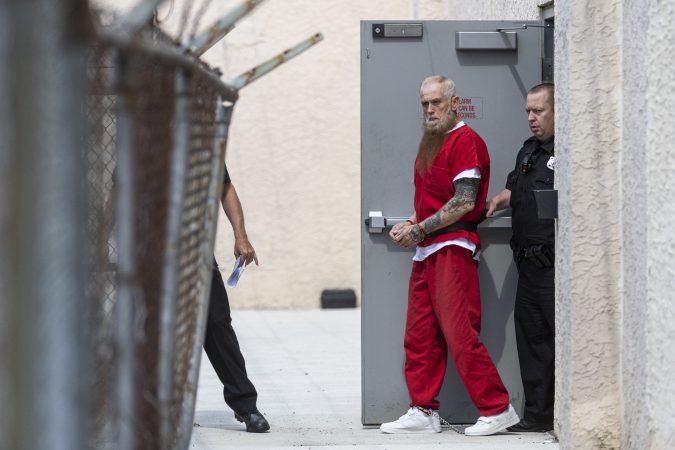
Wilbert Rosado-Ruiz, 63, was also convicted of four counts of attempted murder — three for other coworkers he wounded in the May 2024 shooting, and one for another man he attempted to shoot before his gun jammed.
Rosado-Ruiz had no reaction as the verdict was handed down by Delaware County Court Judge Kevin Kelly, who presided over the bench trial. Kelly will sentence Rosado-Ruiz in October. A conviction for first-degree murder carries a mandatory penalty of life in prison.
Leovanny Peña Peña, 30, and Giguenson Peña Peña, 26, were killed by Rosado-Ruiz during the shooting at Delaware County Linen, an industrial laundry facility where he had worked for 10 years. The three other victims were seriously wounded, including Charles Doyle, who said that he suffered severe internal injuries that have left him with limited use of his arms.
During his trial before Kelly, Rosado-Ruiz testified that he acted in self-defense: A group of his coworkers, including the Peña Peña brothers, cornered him inside the facility and threatened to kill him and his family.
The brothers, he said, were holding knives as they slowly walked toward him.
Prosecutors disputed Rosado-Ruiz’s version of events. Evidence from the scene, including surveillance footage and witness accounts, showed Rosado-Ruiz was the aggressor, screaming that he was “tired” of his coworkers during an argument near the facility’s time clock.
He then pulled out his 9mm handgun and opened fire, according to Nilamarie Valdivieso, the first person Rosado-Ruiz shot that morning.
In her closing arguments, Assistant District Attorney Sophia Polites said none of the victims were armed, and no weapons were recovered from the scene. She asserted that Rosado-Ruiz went room-to-room, searching for more victims as they fled from the initial gunfire, and at one point paused to reload his gun before continuing to fire.
Rosado-Ruiz intended to kill more people, according to the prosecutor, and would have done so had his gun not jammed. He fled the scene, and was arrested by a Trainer police officer not far from his home.
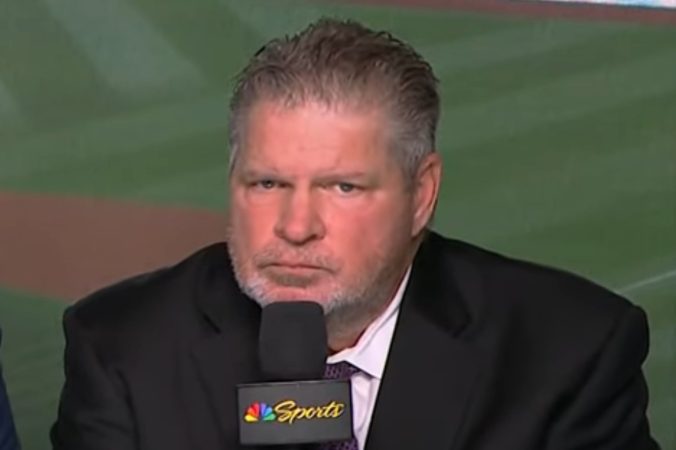
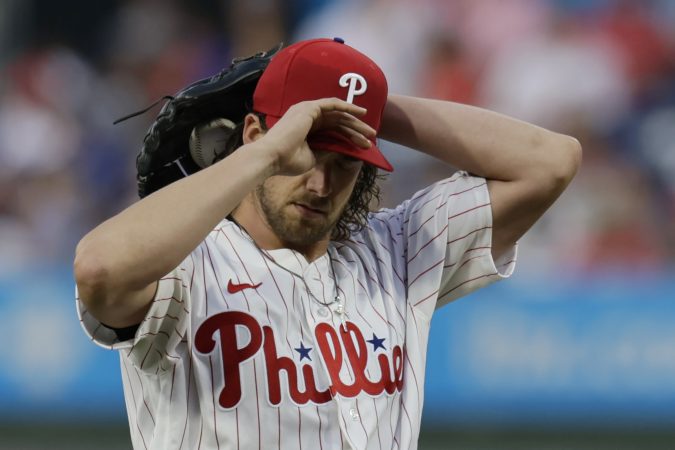
The Phillies have lost two straight series, but fans will have at least one thing to look forward to this weekend — John Kruk in a suit.
The former Phillies first baseman turned TV analyst will be back in the booth for NBC to cover the series finale against the New York Yankees on Sunday Night Baseball. That means Kruk will once again ditch his polo shirt and ball cap to meet NBC’s rigorous broadcast standards.
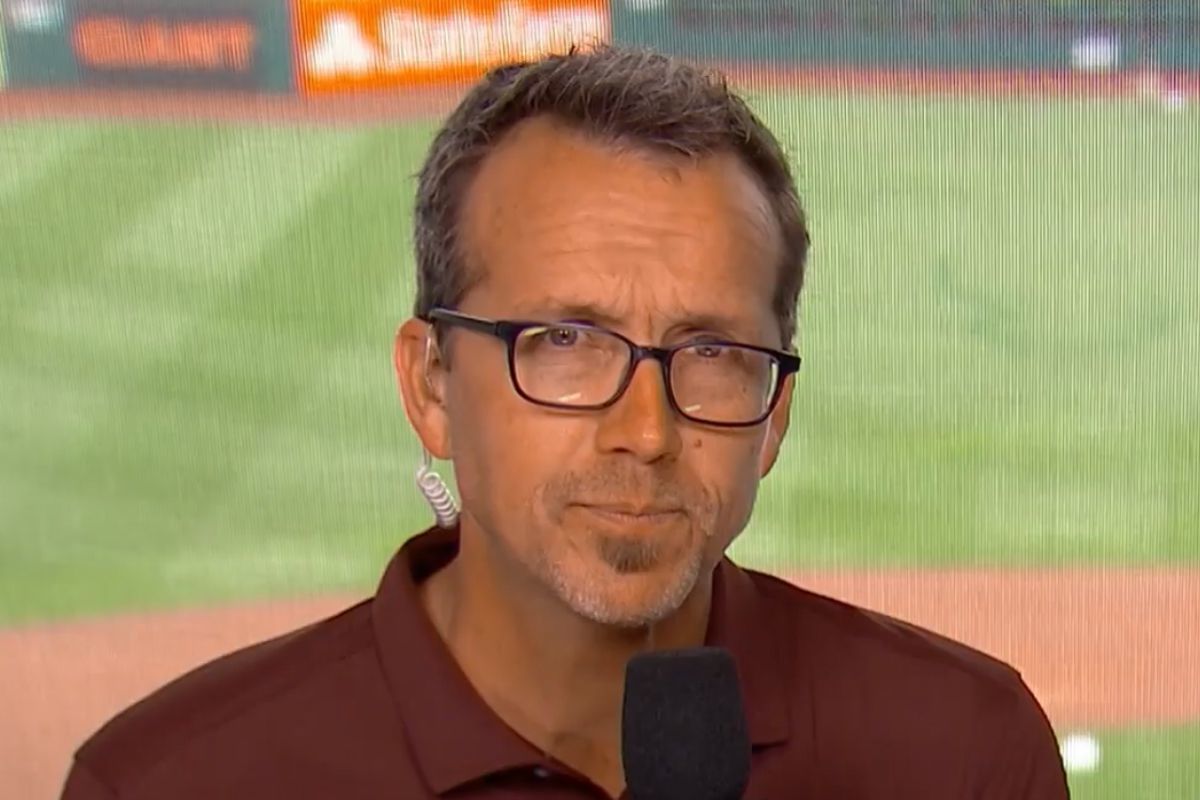
“We’re a coat-and-tie shop, so somebody does forcibly make him wear the suit,” said Jason Benetti, the voice of NBC’s Sunday Night Baseball, who will be calling the game alongside Kruk and former Phillies manager Joe Girardi.
If the past is any indicator, expect social media to have fun with Kruk’s attire. This is the third Phillies game he’s called for NBC this season (though the first was a Peacock exclusive), and each time fans have cracked jokes.
One thought Kruk looked like “a clean-shaven Benjamin Franklin.” Others joked he “legit looks like a Mafia hit man” or like a “washed-up hockey coach who tries to make a comeback after years of heavy drinking.”
John Kruk in a suit looks like someone who’s been advised by a judge to not represent themself in court. pic.twitter.com/hkNmcBqPSh
“Some local place should give him a suit deal, and they should let him gift it to charity,” Benetti said.
Even Tom McCarthy’s gotten in on the fun. Following June’s NBC game, McCarthy suggested they send Kruk’s suit to Cooperstown, N.Y., to be part of the National Baseball Hall of Fame. Earlier this week, Kruk mentioned he might need to borrow a tie for Sunday, so McCarthy brought in a bunch of his own for his broadcast partner to pick from.
“I believe he is going with one of the ones I brought him,” McCarthy said. “The whole exchange has been great.”
Kruk didn’t have a specific color in mind — he just wanted “something that pops” that went well with his dark blue suit.
“I mean, I look good in everything,” Kruk said on the broadcast Sunday during the Phillies’ loss to the New York Mets, though he questioned why he needs to wear a suit in the first place.
This is NBC’s first season broadcasting Sunday Night Baseball, which it took over from ESPN as part of a three-year TV deal with MLB that reportedly runs about $200 million a season. While Benetti is the play-by-play voice, he is joined each week by two different analysts linked to the teams playing.
Benetti has called two games with Kruk this season, describing him as “the perfect improv partner.” But the depth of Kruk’s baseball knowledge took Benetti a bit by surprise.
“I went in with this notion he’ll say anything, and it’ll be interesting, intriguing, weird — the whole range of creativity,” Benetti said. “But he’s an absolutely astute, perceptive, issue-spotting baseball analyst.”
Phillies back on Apple TV to kick off Yankees series
While Apple TV will stream the game, fans can choose to listen to Scott Franzke and the Phillies’ radio broadcast. NBC Sports Philadelphia
Before we get to see Kruk back in his suit, fans will have to log onto Apple TV to watch the Phillies-Yankees series opener on Friday Night Baseball.
First pitch is scheduled for 6:45 p.m. Friday, with Jesús Luzardo on the mound facing Yankees ace Cam Schlittler. Calling the game is Wayne Randazzo alongside onetime Phillies pitcher Dontrelle Willis. Heidi Watney will report live from Citizens Bank Park.
Despite the annoyances that come with being forced to stream a Phillies game, Apple TV has the best feature of any sports streamer — the ability to switch to an audio feed of your team’s radio announcing crew. So Phillies fans can listen to Scott Franzke and Larry Andersen, no syncing required.
It’s the fifth season of Apple TV’s seven-year, $595 million deal with MLB, which runs through the 2028 season. Over that time, the cost has nearly doubled from $6.99 to $12.99 a month, though Apple TV is offering a free one-month trial and this is the last Phillies game scheduled to stream on the tech giant’s platform.
Saturday’s game will be back on NBC Sports Philadelphia, with McCarthy calling the action alongside former Phillies general manager Rubén Amaro Jr.
Citizens Bank Park gets high marks from Benetti
NBC play-by-play announcer Jason Benetti, seen here interviewing Phillies slugger Bryce Harper.NBC Sports
In addition to being the voice of Sunday Night Baseball, Benetti calls Detroit Tigers games for Detroit SportsNet. Prior to that, he spent eight seasons as the TV voice of the Chicago White Sox.
There isn’t a stadium in the majors Benetti hasn’t called a game from. And Citizens Bank Park, where he’ll be Sunday night, is near the top of his list of the best ballparks.
“It’s top three in the league,” Benetti said. “It’s absolutely wired. When it’s close and late, you can’t hear yourself … The ballpark itself plays loud.”
“It was an 11 out of 10,” Benetti said. “It was nonsense how good it was.”
Phillies standings
window.addEventListener(“message”,function(a){if(void 0!==a.data[“datawrapper-height”]){var e=document.querySelectorAll(“iframe”);for(var t in a.data[“datawrapper-height”])for(var r,i=0;r=e[i];i++)if(r.contentWindow===a.source){var d=a.data[“datawrapper-height”][t]+”px”;r.style.height=d}}});
Phillies news
Phillies owner John Middleton. Monica Herndon / Staff Photographer
It has the potential of being a dream story, really.
It’s also one the Union have played out before. Stop if you’ve heard this: An area native and former professional climbs the ranks to become the franchise’s manager.
Part 1 of that tale was former manager Jim Curtin. Part 2 is interim head coach Ryan Richter, the Southampton native, 2010 Atlantic 10 Offensive Player of the Year at La Salle, and Union draft pick who played seven professional seasons across MLS and other leagues.
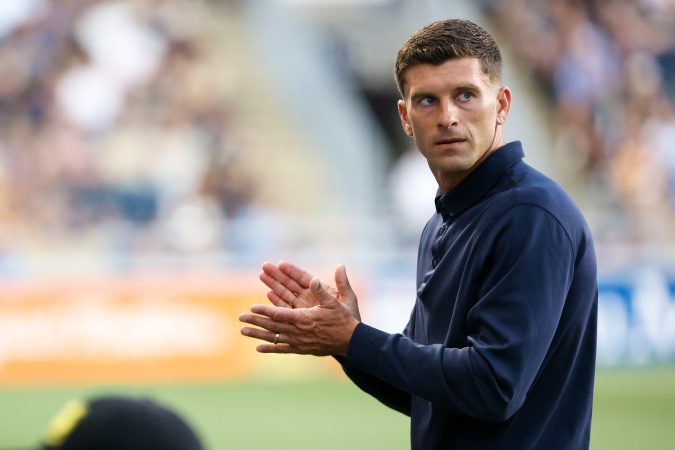
On Wednesday, Richter, 37, stood in the coach’s box on the sidelines at Subaru Park and orchestrated a 3-1 win against rival Red Bull New York.
Congratulations to La Salle grad Ryan Richter, ‘11, as he has been named @PhilaUnion interim head coach!
In this role, Ryan manages team logistics, leads specific training drills, and analyzes player performances.
It was the Union’s first league win at home this season, and, despite their starting centerback holding out, which forced a shift along the team’s back line, the Union (2-10-4, 10 points) looked impressive.
But Richter knows one win doesn’t make him soccer’s Winston Wolf. He’s not quite the fixer yet, but he coaches in a forgiving league. Despite the Union wallowing in the basement of Major League Soccer’s Eastern Conference, there’s still time to chase a playoff run. And that would make it hard for Union brass not to consider revisiting history when it comes to their next full-time manager.
But that’s not on Richter’s mind right now. Well, maybe a little.
“I’ve been a part of this club since 2011 and in pretty much every role, from a coaching standpoint, that you can be involved in,” said Richter, who in addition to coaching the club’s reserve squad, Union II, has coached on just about every level of the club’s youth system, including SWAG, its developmental program dedicated to introducing an underserved population to high-level soccer training.
“I think over that period, I’ve made a lot of good relationships with people, staff in the academy, staff in the second team, ownership, everyone that’s involved in the club … this opportunity for me, personally, is a reflection of all the people that have helped me in this club, all the people that have helped me get to this point.”
For now, all Richter can do is continue to replicate the success from Wednesday and wait. There’s a prevailing belief that the Union not bringing him on immediately is less that they want to conduct a global search for their next manager, than that they don’t want to be on the hook for paying three. They’re still paying Curtin’s buyout and remain on the books with Bradley Carnell, who lasted a season and a half before being dismissed in May, but has a contract with the club through the end of the year.
Richter took over in an interim role following the departure of Bradley Carnell (above) in May.Yong Kim / Staff Photographer
However, according to a source with knowledge of the proceedings, the Union made few moves to bring in candidates over the seven-week break for the World Cup.
Many within the organization believe Richter already has the respect of the locker room, the tactics to make adjustments within the Union’s playing philosophy, and a “ton of energy,” as Union president Tim McDermott said recently when asked about the team’s coaching situation.
But McDermott’s words felt less like a deflection and more like admitting that right now the club’s on-field leadership is in wait-and-see mode, and part of that is waiting to see whether Richter can turn around the team’s fortunes.
“He interacts and communicates and relates incredibly well to our players,” McDermott told The Inquirer. “He is a guy that’s not too far removed from playing himself, and that brings a lot of credibility. He carries himself in a way that’s highly respected, and he’s good at simplifying messages to the players so they get it. They understand what he’s trying to do.”
Drafted by the Union in 2011, Ryan Richter also had a stint with Toronto FC in 2013.
Listen to Richter speak about the game, and it becomes clear that the guy knows ball.
“The philosophy is not going to change,” Richter said. “As someone who’s worked in this club for eight years … three of those years, the Union has had the most points in the league. So what I’ve learned and what I’ve seen produce a winning product is playing this style [and] using this methodology.
“I know it can lead to success when it’s done in the right way. Your job as a coach is to put your players in a position where you only see their strengths. So whether that’s a [4-4-2] diamond [formation], whether that’s a 4-2-2-2, we’re going to try to put the players in a position where we can see their strengths in the game.”
Playing to strengths is a novel idea, considering that Richter had to adapt to a new role when he played for the Union. A striker with a nose for goal, Richter often was used as a more defensive player and even played outside back at times. It may not always have felt comfortable, but he was effective and filled a need that got him playing time.
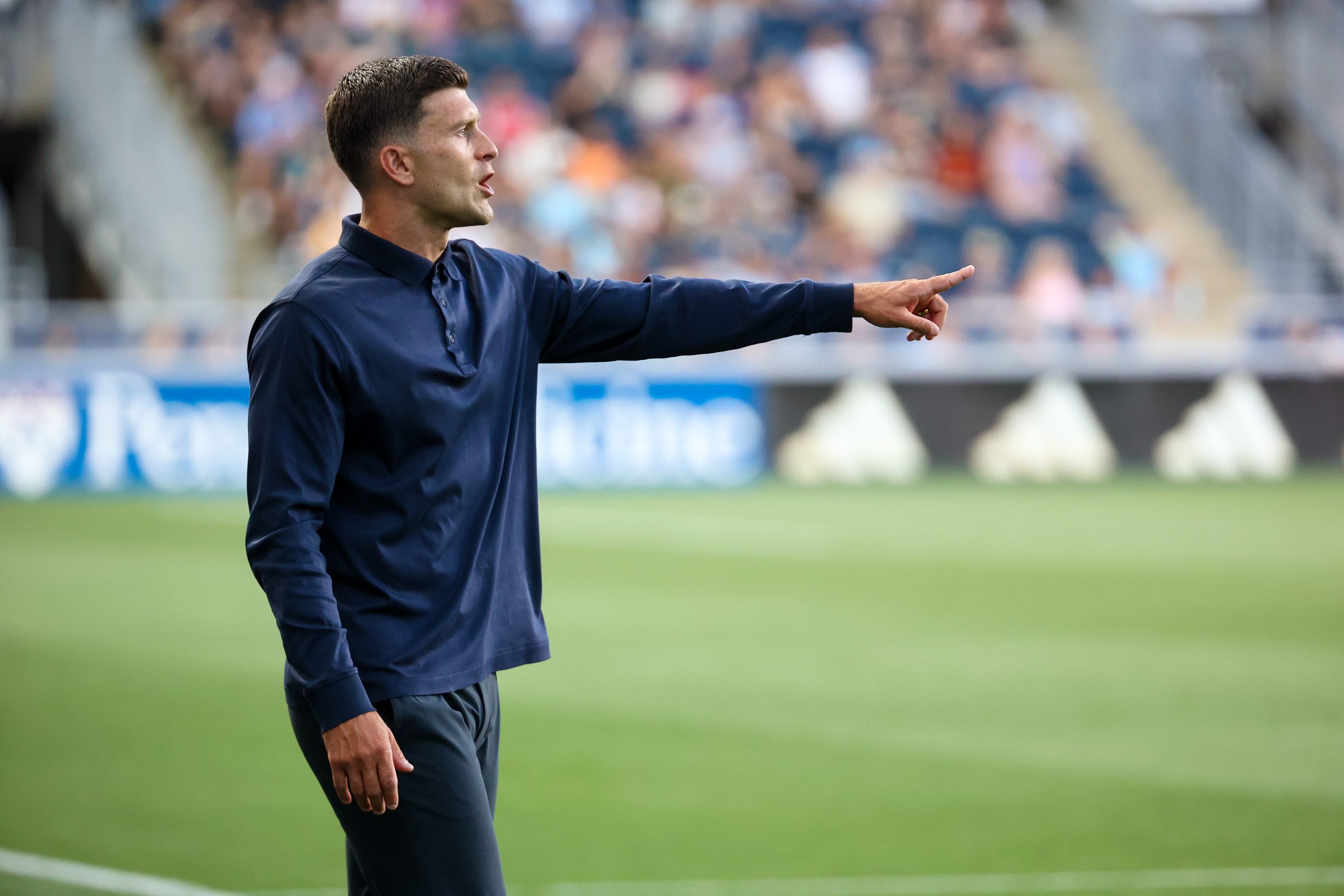
Union interim head coach Ryan Richter relays instructions from the sidelines during the first half of Wednesday’s game against Red Bull New York.Isaiah Vazquez / For The Inquirer
What did look comfortable? His transition to the sidelines, particularly Wednesday. He stood toe-to-toe with former U.S. soccer stalwart Michael Bradley, Richter’s former teammate in Toronto and now the manager of Red Bull and son of U.S. coaching legend Bob Bradley, and outperformed him.
There are a lot of games left, and the Union likely will take their lumps as they look to write history as one of the few teams that bounces back from the bottom of the standings to squeak into the playoffs.
They’ll need more goals, more opportunities. Communication. And, of course, stacking wins. And there are intangibles, too: timing, luck, leadership.
On Wednesday, Richter made a team down on its luck believe it can bounce back. Time will tell if all those stops along the way have made that last one, leadership, his most significant contribution in their run toward the top of the table.
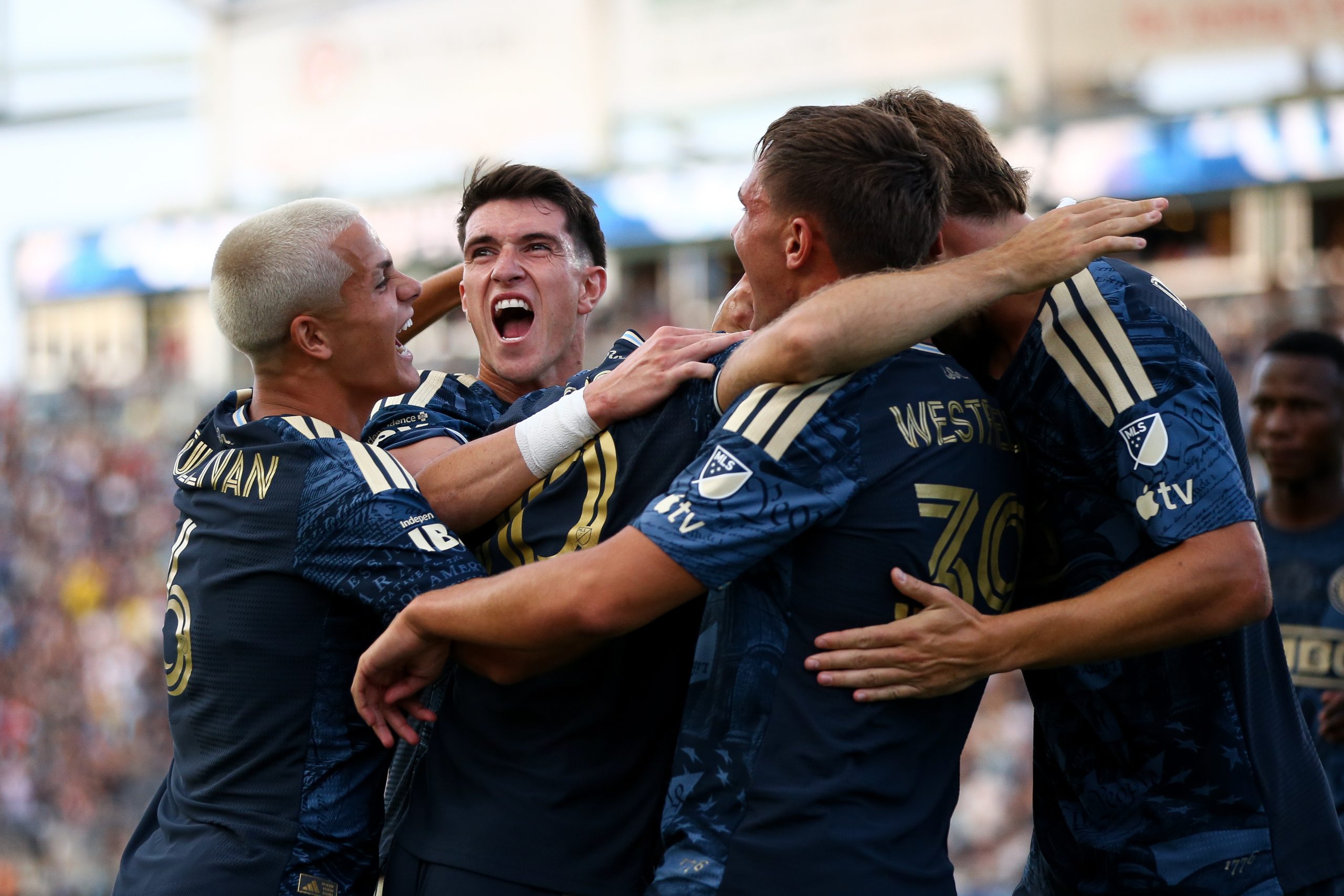
Union midfielder Jovan Lukic (second from left) celebrates with teammate Cavan Sullivan (left) and others in Wednesday’s home win against Red Bull New York. Isaiah Vazquez / For The Inquirer
“The opportunity to take on Union II was something I was really grateful for because it’s so important to learn how to lead a staff,” Richter said. “It’s different when you’re speaking to the players as an assistant coach than when you’re the one making the final decision of who plays on the weekend. Learning that communication piece and learning how to lead people forces you to be honest with yourself every day.
“But, really, it comes down to how you communicate to your players and realizing that everyone’s different. Getting them to do what’s required to be successful is great, and when it all comes together, that’s when you realize that the goals you have for yourself, for them, and for the club are attainable. So, yeah, I’d be lying if I didn’t say I’m excited to see how far we can take this.”
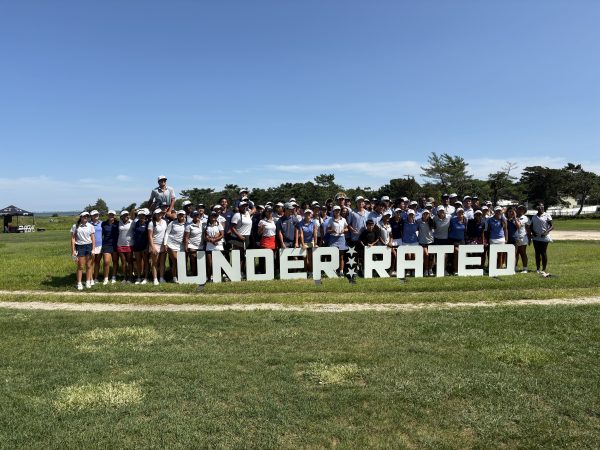
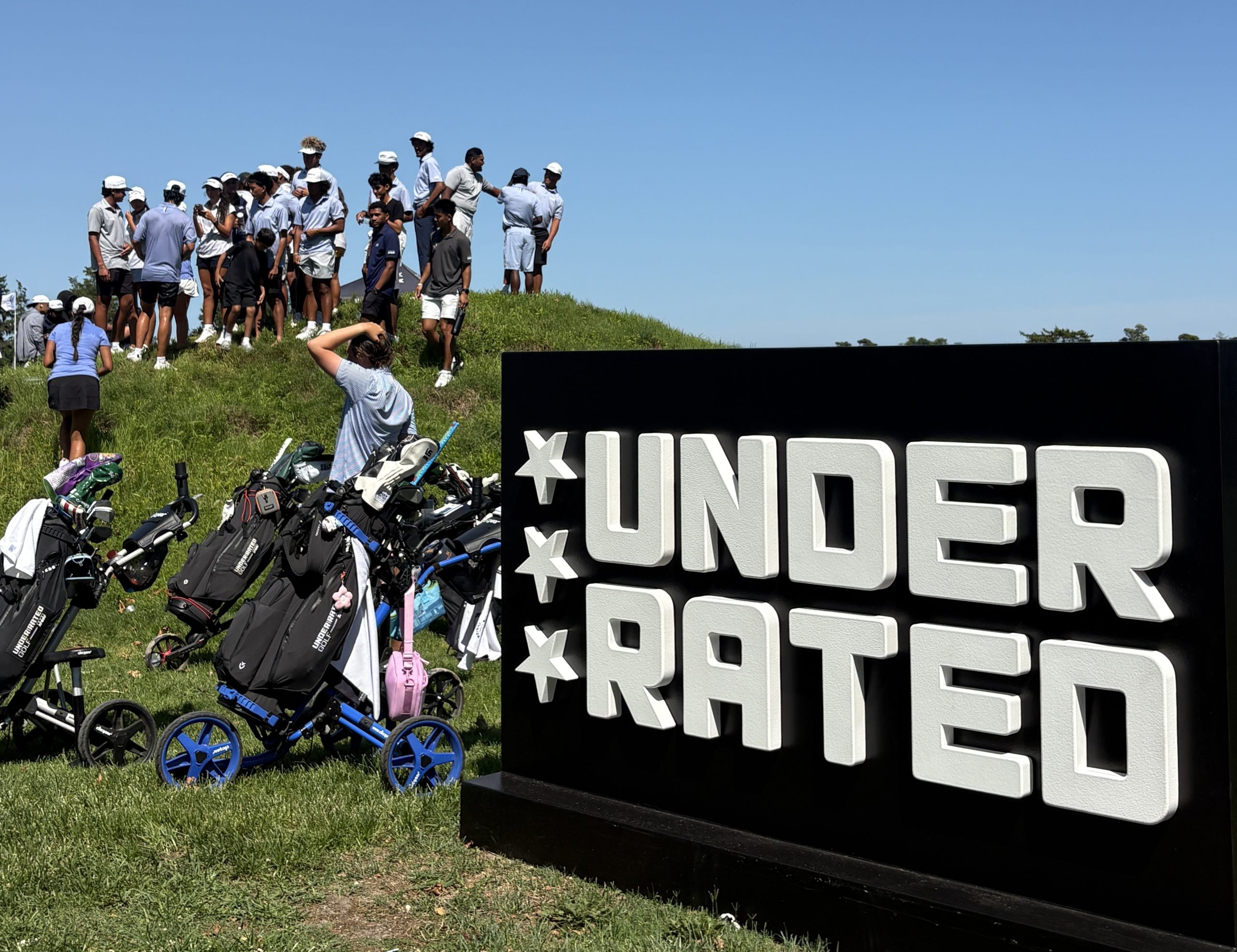
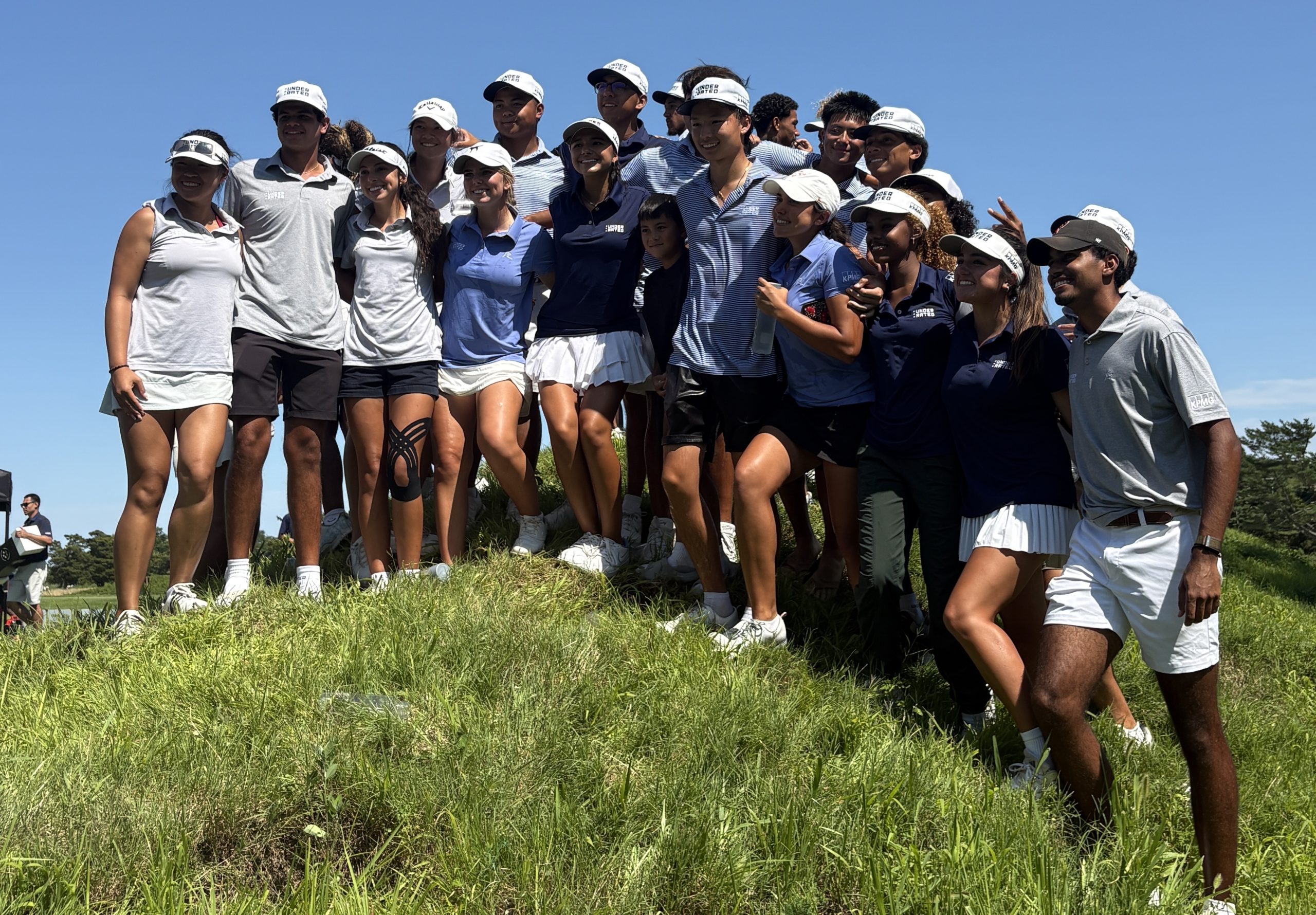
The hills of the 18th hole at Seaview Golf Club in Galloway, N.J., were filled with young golfers clad in blue and gray golf shirts as the final strokes of this latest stop on the Underrated Golf Tour wrapped up Thursday.
Underrated Golf, founded in 2022 by Steph and Ayesha Curry, is an organization focused on lowering the barrier of entry to golf for individuals across all backgrounds by offering more access to competitive opportunities.
With its history as a sport that’s predominantly white, male, and typically played by the wealthy, Underrated’s pillars of equity, access, and opportunity offer experiences for young golfers “regardless of socio-economic status, personal adversity or characteristics protected by law such as ethnic background or gender,” according to its website.
Final round is live at Seaview. 🌊⛳
Yesterday's leaders are back on the course — including two local qualifiers sitting at the top of their respective fields.
— Underrated Golf Tour (@UnderratedGolf) July 23, 2026
“You can’t be what you don’t see,” said former golfer and broadcaster Will Lowery, who has been involved with the organization since its inception. “So when you have young men and women who come from a different clubhouse, various backgrounds, that kid that is at home, desires to play golf, desires to compete in golf, they can see what’s happening in real time. They can get a sniff of what’s going on either via social media or come out here and be on the property, and that may want to inspire them to come out here and compete.”
The number of golfers since 2022 when Underrated began has increased as the organization gains popularity, said Hampton Clark, Underrated’s athletics operations manager.
Clark said that the Currys’ vision for Underrated and what it can do in the junior golf space “sold itself.” It’s become a tour once searching for golfers a few years ago, that today receives outreach from people who want to get involved.
“It’s kind of been kind of cool to see all the interest from the kids and the families,” Clark said. “So, it’s really great to see we’re getting some great golfers, especially kind of the background that we’re looking for. And it’s been kind of great to see from year one to right now.”
Underrated Golf offers experiences for young golfers “regardless of socioeconomic status, personal adversity or characteristics protected by law such as ethnic background or gender,” according to its website. Mia Messina / Staff
Liam Eyer, from San Jose, Calif., has been part of the Underrated tours for four years. On Thursday, Eyer won his first tournament with the tour, going 6-under-par to secure the boys victory.
Eyer, who struggled Wednesday, received a lesson and a few pointers from Lowry following the round, which helped his performance Thursday with advice that Eyer joked “changed [his] life.”
Myra Tomer, from Newtown, also shot 6-under to secure the win on the girls side, in her first Underrated tournament.
Tomer came in as a local qualifier, making her the second female golfer in Underrated to come in with that distinction and go on to win the tournament. She also qualified to play for the Curry Cup at Bethpage Black Golf Course in New York in September, and then the next and final stop of the tour in Los Angeles at Hillcrest Country Club. Tomer also received full status for the tour next year.
“I grew up playing [Seaview’s course], I know it very well, and it was just so special to come and win here,” Tomer said. “It’s somewhere I came as a little kid and I dreamed one day I’m gonna win here.”
The number of golfers who have taken part in the Underrated program has increased exponentially since it began in 2022. Mia Messina / Staff
As a first-time golfer with Underrated, Tomer said everyone instantly made her feel included in what Tomer said was a “special week.” It also contributed to providing her tournament experience, which is part of Underrated’s mission.
Lowery said that part of Curry’s vision includes helping golfers get 10,000 hours of tournament time so they can grow accustomed to playing competitively. It was a mission Lowery said he saw succeed during the three days Underrated was at Seaview.
“I saw the kids have stick-to-itiveness,” Lowery said. “The course is not easy, the conditions aren’t easy, and these kids all said, ‘I played better today.’ ‘I had a rough first round or a first nine,’ and they came back, and that’s what it’s all about. Something they can leave and learn from something.”
It’s time to talk about every baseball diehard’s favorite topic.
The little things.
They are often overlooked, and often deservedly so. The little things are the last bastion of managers, players, and fans when a team doesn’t do the big things very well. They are a coping mechanism. Often. But not always.
We can’t ignore the little things anymore when it comes to the Phillies. The little things cost them dearly in losing two out of three to the Dodgers. You might write that off as happenstance, except that the Phillies are less than a year removed from a playoff loss to the Dodgers where the little things proved decisive.
Last October, we saw Nick Castellanos get thrown out at third with no outs in the top of the ninth inning while representing the game-tying run. We saw Orion Kerkering react to a routine ground ball like he was an iPhone that had just been dropped in a toilet.
These weren’t your average, everyday bad bounces and tough breaks. They were the kind of plays that leave you trembling at the heavens. You don’t expect to see something like that in a baseball game. You certainly don’t expect to see it again.
And yet …
The most disconcerting thing about the Phillies’ series loss to the Dodgers wasn’t the mistakes. It was that the mistakes looked remarkably similar to the ones they made while losing last year’s National League Division Series to the Dodgers.
The lasting image from October was J.T. Realmuto with his mask off pointing toward first base as Kerkering’s brain prepares to betray him.
J.T. Realmuto in action during the Phillies series against the Los Angeles Dodgers this week. Yong Kim / Staff Photographer
The lasting image from this week’s series was Realmuto running from third base back to second base as everyone else stares in disbelief.
Realmuto’s game-ending gaffe on the basepaths in the ninth inning on Tuesday was only the most iconic moment. Other consequential miscues included:
Bryson Stott running into a non-forceout at third base on a ground ball hit in front of him in Wednesday’s 9-5 loss.
Rafael Marchán popping up a sacrifice bunt attempt earlier in Wednesday’s game.
Trea Turner misplaying four balls in the series opener.
Turner made up for his rough defensive showing by driving in five runs during the Phillies’ 10-7 win on Tuesday. But even that victory ended in inglorious fashion, with closer Jhoan Duran scrambling to get warm after the Dodgers halved a six-run deficit against Chase Shugart.
It’s bad enough to fail at the little things. It’s devastating when your opponent does the exact opposite. For all the bellyaching about the Dodgers’ payroll and the competitive behemoth that Andrew Friedman has built, the reality is they’d be an enviable organization even without their limitless capital.
It’s true in the front office, where LA has made a habit of finding pitching like lefty Justin Wrobleski and is currently paying Max Muncy the same amount as the Phillies are paying Adolis Garcia. It’s also true in between the white lines.
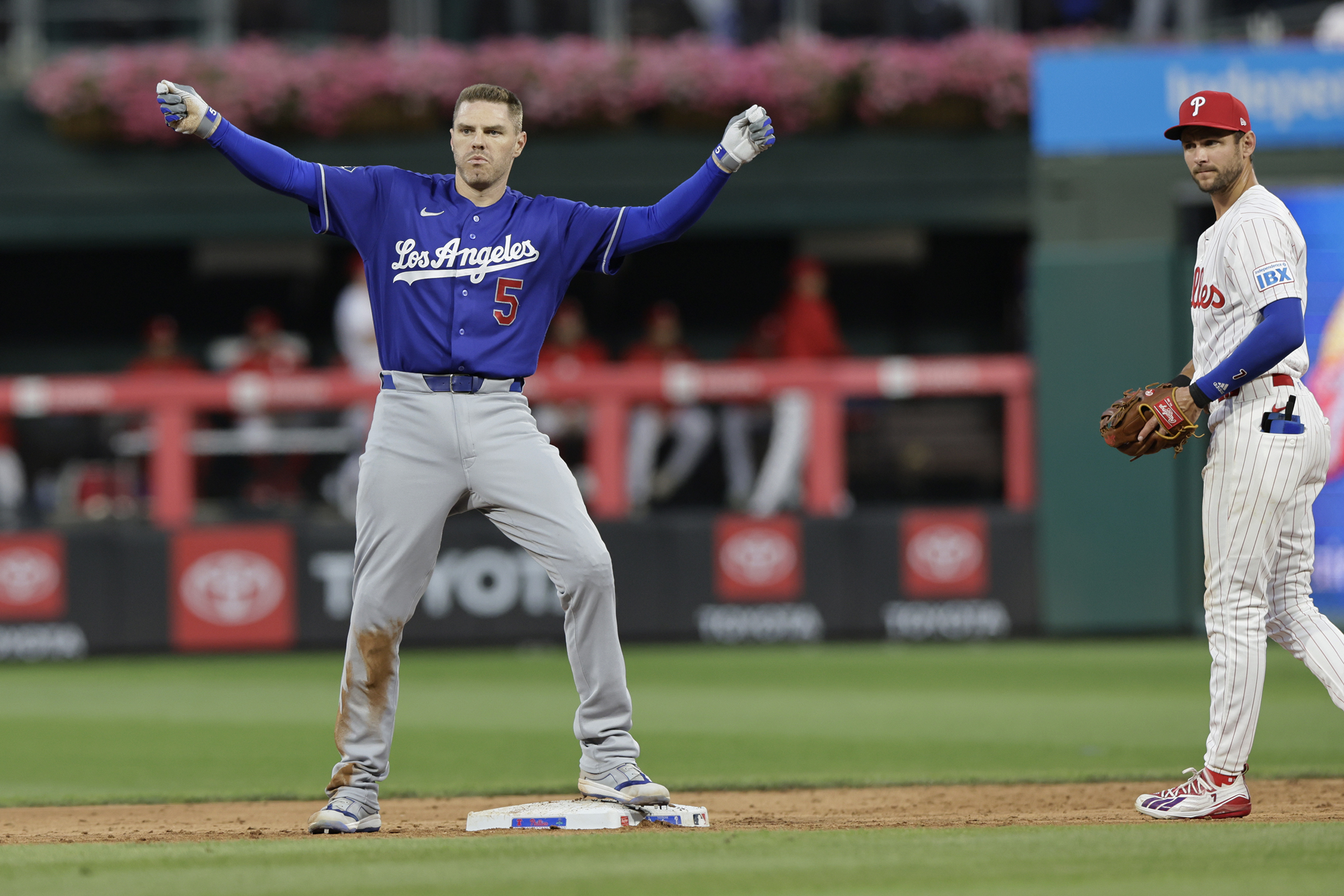
Trea Turner looks on as the Dodgers’ Freddie Freeman goes into second base on a double in the fifth inning of Wednesday’s game.Elizabeth Robertson / Staff Photographer
Baserunning? The Dodgers entered Thursday tied for second in the majors in extra bases taken and ranked fifth in efficiency. They also had the second-fewest outs on the basepaths. The Phillies rank 11th in extra bases but 24th in efficiency (credit where it’s due: They have the eighth-fewest outs on the basepaths).
Situational hitting? The Dodgers rank 12th in productive out percentage (Phillies: 21st). They have 19 pinch hits compared with the Phillies’ nine.
Fielding? The Dodgers have committed just 37 errors, tied for the fewest in the majors. Advanced metrics rank them even further as one of the better fielding teams in the majors. Not so for the Phillies. The Phillies have committed 50, which ranks 14th.
“If we play well, we’re capable of beating anybody,” manager Don Mattingly said after Wednesday’s 9-5 loss.
That’s less of a boast than it probably reads on paper. The “if” is the point.
The bigger the games, the bigger the little things become. It’s hard to blame Mattingly for a problem that predates him. That said, he is the one who needs to figure out a fix before another October arrives.
In 1992, I started teaching at West Chester University. My students were mostly working-class kids from the collar counties who saw higher education as a way to move up in the world. But they often struggled in subjects like history — my own field — which they saw as irrelevant to their future employment.
So let’s make college shorter, shall we? We can save a year by paring away the dull “general education” classes — in English, history, and so on — that the students hate anyway. They can focus on their majors, graduate in three years, join the workforce, and save a quarter of their tuition costs.
I think that’s a bad idea, but I don’t blame people for wanting it. Instead, I blame us.
I’m looking at you, my fellow professors. Put simply, we didn’t do a good enough job with what we have.
College is expensive. Families are strapped. And a lot of general education courses are — as the students correctly perceive — a waste of time and money.
The only way to make the case for them is to make them better. But you won’t hear that from our educational establishment, which pretends we were delivering on the promise of college before the three-year proposal raised its ugly head.
Witness the joint statement from the American Association of University Professors and the American Federation of Teachers condemning Massachusetts’ approval of three-year degrees at two state colleges. “Compressing or reducing the curriculum threatens to narrow students’ education at precisely the moment when society needs graduates with stronger critical thinking, communication skills, scientific literacy, and civic understanding,” they declared.
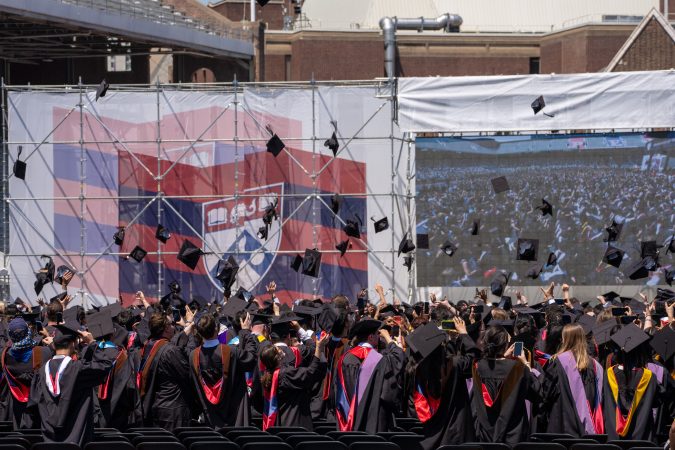
Award-winning presidential historian and best-selling author Michael Beschloss speaks at the University of Pennsylvania’s graduation ceremony in May.Jessica Griffin / Staff Photographer
Kenneth M. Mash, president of the PSSHE faculty union, said almost exactly the same thing. “At a time when there are calls for critical thinking, calls for knowledge about civics, what we’re doing is reducing the amount of time that students have to get that in,” Mash warned.
But here’s what these spokespeople won’t tell you: We’re not teaching those skills now. Even with four years of college, our students remain woefully undereducated.
According to a survey administered earlier this year by the American Council of Alumni and Trustees, only 39% of college students know that U.S. senators serve for six years and representatives for two. And just 37% can correctly identify the branch of government that has the power to declare war. (Answer: legislative.)
So much for civics. What about critical thinking? Cornell University has instituted an online module to teach it to students, precisely because their coursework often didn’t. “Many of us include it in our learning objectives,” one faculty leader admitted, “but when you look at courses, it’s often not taught explicitly.”
That’s especially alarming in the face of artificial intelligence, which threatens to envelop our students in mindless slop. Unless they learn to use their own brains, they won’t be able to critically evaluate what AI spits out.
And we’ve never taught critical thinking well. In 2010, when generative AI was still science fiction, sociologists Richard Arum and Josipa Roksa found that nearly half of all college students showed no improvement in critical thinking skills during their first two years on campus.
There’s no evidence that things have picked up since then. Instead, a growing body of research suggests that AI is eroding students’ capacity to think. The bots have made it easier to cheat your way to a BA while pretending you know what you’re talking about. So why not reduce the degree to three years? Or two, or one? Heck, why not just give it to anyone who will pay?
Because we’re not simply selling credentials, that’s why. I don’t get out of bed in the morning and say, “I’m going to help people affix letters next to their names today!” My goal is to help them learn. And if you think we’re doing that well, you just haven’t been listening.
I know our students need jobs, too. But when you survey employers, it turns out they want precisely the critical thinking skills we’re not teaching. Those irrelevant gen ed classes could have a real market value if we played our cards right.
Last week, I had dinner with a beloved student from my days at West Chester. She succeeded wildly there, but many of her peers failed. They didn’t need a shorter college experience. They needed a better one.
Jonathan Zimmerman teaches history and education at the University of Pennsylvania. His next book, “Schooling Citizens: How Education Can Save Democracy,” will be published next spring by the American Philosophical Society Press.
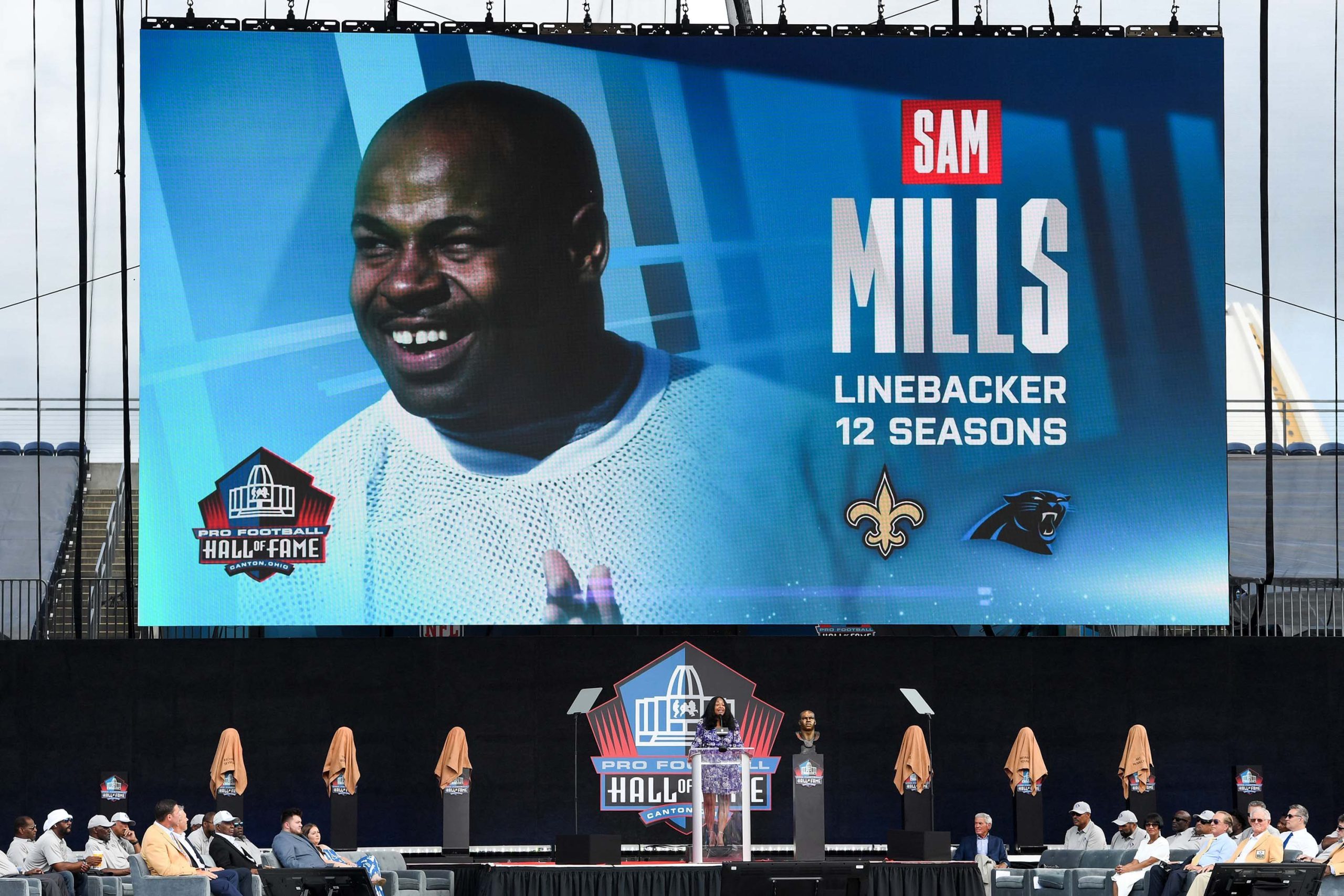
It’s fitting to see Sam Mills’ face on the cover of a book, seeing as he was the personification of the saying “don’t judge a book by its cover.”
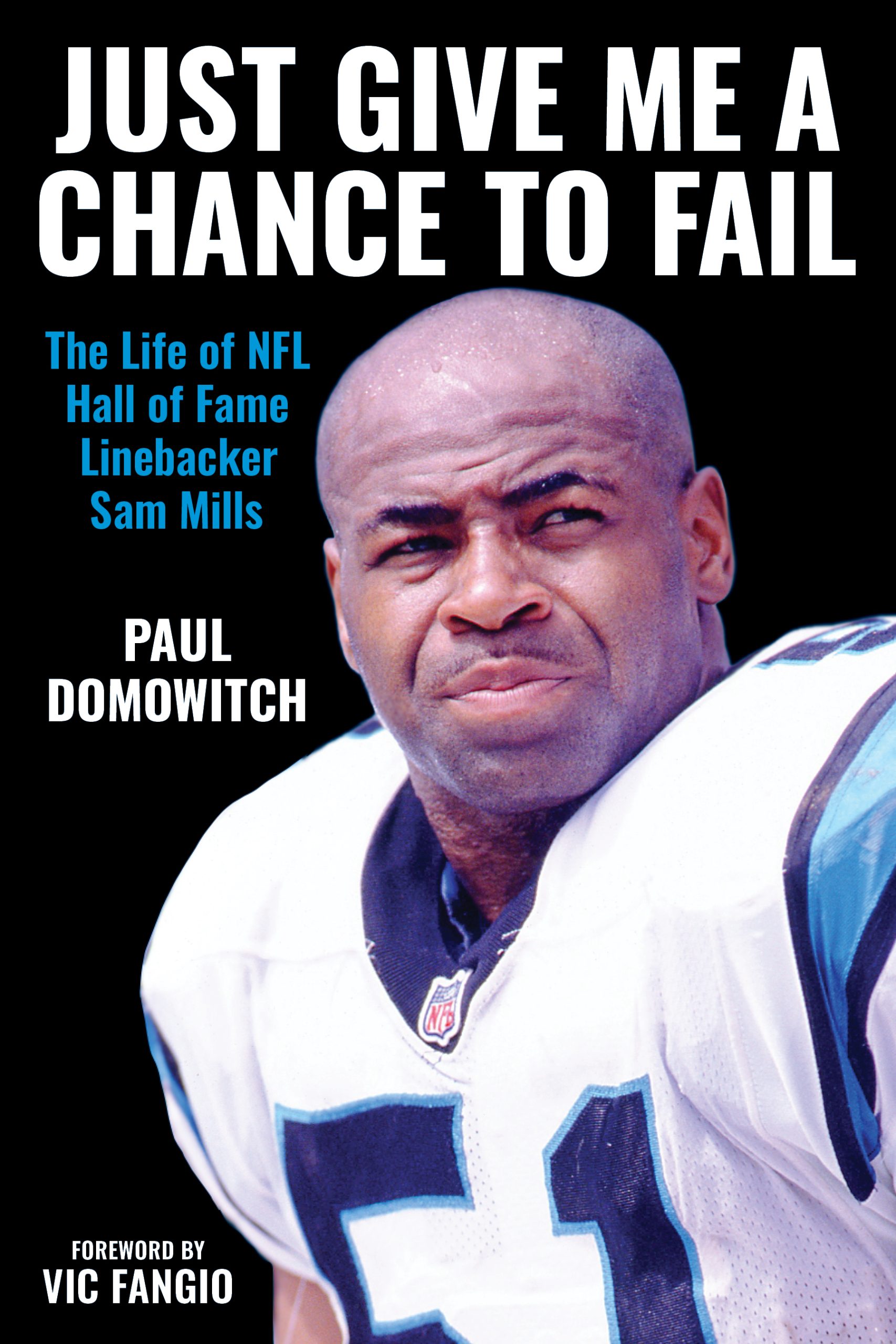
Mills, the Pro Football Hall of Fame member and Long Branch, N.J., native who began his pro career with the USFL Philadelphia Stars, is the subject of a new biography written by former Inquirer and Daily News columnist Paul Domowitch. Just Give Me a Chance To Fail: The Life of NFL Linebacker Sam Mills chronicles the late linebacker’s improbable rise from Long Branch High School and Montclair State to the New Orleans Saints’ “Dome Patrol” defense and the expansion Carolina Panthers, despite being undersized at 5-foot-9.
Domowitch details the impact that Mills made — on and off the field — on the people around him until his death from cancer in 2005. Ahead of the book’s on-sale date on July 28, Domowitch spoke to The Inquirer for a Q&A about Mills’ legacy and the writing process.
The following interview has been edited for length and clarity.
Paul Domowitch’s book about Sam Mills is available July 28.provided by Ames Sports Literary
When did you decide that you wanted to write a book about Mills?
When I still worked at The Inquirer, I kind of figured I wanted to write books after I, quote, “retired.” I was going to work till 70 initially. Ended up taking the buyout at 67 and shortly after that, I knew Sam was what I wanted to write about. I had known him since 1983 and his life was just so fascinating. Everybody roots for the underdog, and Sam’s the ultimate underdog. So he was the guy I wanted to write about first. I took the buyout October of 2021. Started on the book, and then ended up doing some freelance for The 33rd Team that took up a lot of my time. So it kind of slowed down the progress on the book. But I kind of started it in earnest again a couple of years ago, and finally finished it.
How important were those years with the Stars in setting up the rest of his pro career?
Without the Stars, I’m not sure he would have had a career because he’d been cut by the Browns. He’d been cut by the [CFL’s Toronto] Argonauts at that point. He was pretty much accepting the fact that he was going to go back to teach and coach some high school football. And … he had to kind of be talked into even going for the tryout with the Stars and then signing a contract with them, so I don’t know that he would have ever gotten another chance without the USFL. He signed with them and was probably, with the possible exception of Reggie White, the best defensive player in that league in the three years he played there. So that probably would have been the end of his career without the USFL. So it was very important to him.
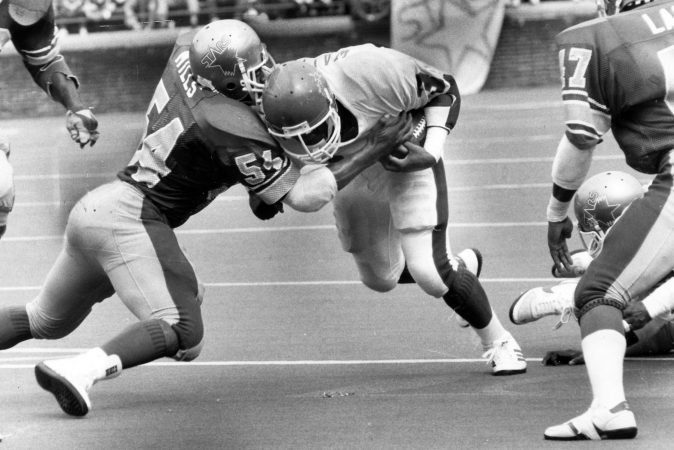
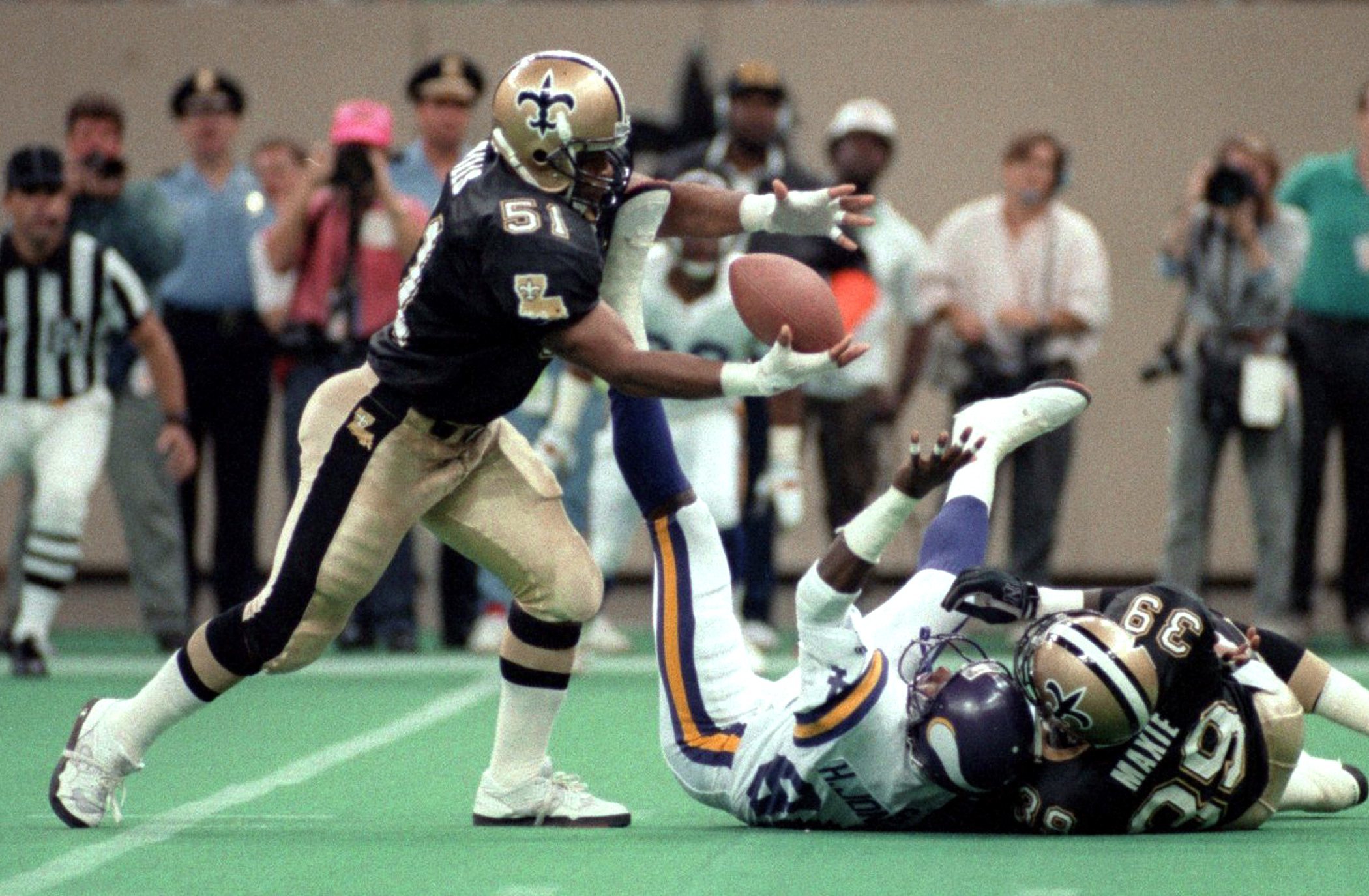
Sam Mills (51) played for Jim Mora both as a member of the USFL Philadelphia Stars and the NFL New Orleans Saints. ELLIS LUCIA / AP
The irony there, which I point out in the book, is Jim Mora, his coach with the Stars and later with the Saints, wanted to cut him the first time he saw him at training camp in Philly because he, like everybody else, refused to believe his eyes that somebody that could be 5-9 could play linebacker in professional football. He finally became convinced, and even then, when he goes to New Orleans and takes the head coaching job there and signs Sam, he’s still not sure he’s going to have an impact in the NFL like he did in the USFL. It wasn’t until he got there in that first practice in a 9-on-7 drill when he just dominated and stoned running backs and got off blocks against guys that were 60, 70 pounds bigger than him that Jim was convinced that he’d survive in the NFL. So without the USFL, I don’t think the guy ever plays pro football.
You got to see him up close in those early days. Did you ever think that he would be able to overcome his height, first at the USFL level, and then ultimately in the NFL, where he built a Hall of Fame career?
It was pretty clear early on in training camp that he was probably the best defensive player they had. The USFL that first year, it was basically a lot of rejects, guys who were on their second and third and fourth chances that had been cut by at least one or two NFL teams. So there were a lot of guys like him. You didn’t pay a whole lot of attention to his size at that point, because I didn’t even know that first year early on what the caliber of the league was going to be. And then as the season went on, you saw both that this was a pretty good league, and that he was a pretty good player. Now, to transfer that and wonder whether he could do that in the NFL, I never doubted he could, because I watched him for two years before that last year when [the Stars] played in [Maryland], and I wasn’t covering them. Size never seemed to be a problem for him. He was able to get under people’s pads. He was the best tackler I’ve ever seen. He was the smartest defensive player I’ve ever covered because he learned early on how to watch film and just knew the game so well that he anticipated what was going to happen and that gave him an advantage that maybe his height might have shortchanged him. So did I think he was going to be a Hall of Famer? I mean, no. Who knows when a guy goes to the NFL, regardless of whether he’s a first-round pick or an undrafted guy like Sam from another league?
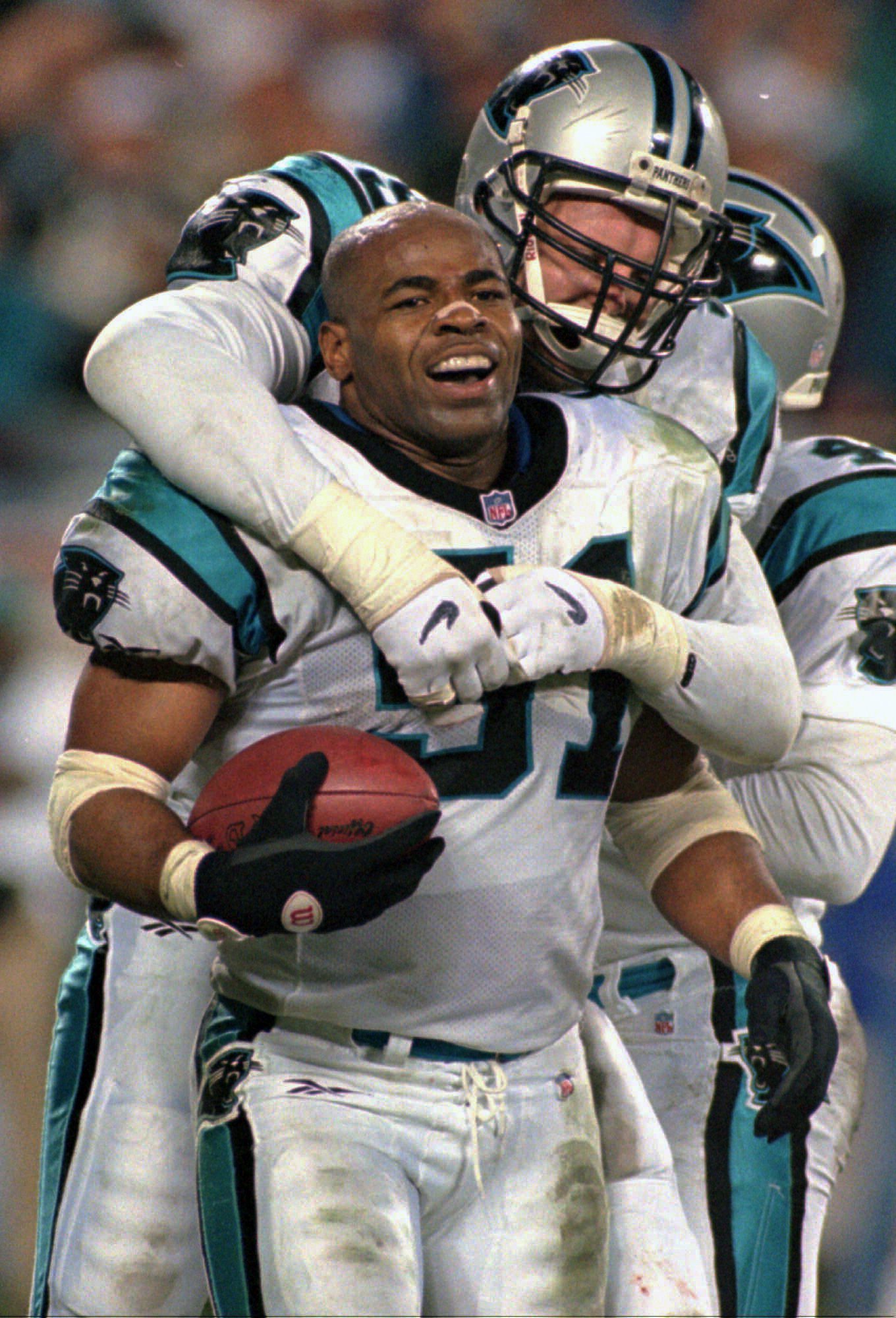
Sam Mills (front) played his final three NFL seasons as a member of the Carolina Panthers (1995-97), leading the team to its first-ever playoff berth in 1996. CHUCK BURTON / AP
But it was pretty quick. After he got to New Orleans, you knew he was going to be a great player in that league. He just took off. [Vic] Fangio was his position coach, and he was surrounded by some pretty good players on that defense in New Orleans the first couple years. But he became their leader, and you just watch them. The one shame there is that they weren’t better offensively in New Orleans. It’s what kind of held that team back the entire time Sam was there. You look at his numbers and the defense’s numbers in the years he played there, and they were a phenomenal defense, but they didn’t have a particularly good quarterback. They had a guy [Bobby Hebert] that was OK, but not good enough to get them over the top. Jim Mora was a very conservative coach. He felt that if you had a good defense and a good running game, that’s all you needed back then. And he found out that wasn’t quite enough and ended up losing all four times they were in the playoffs and in the wild-card round.
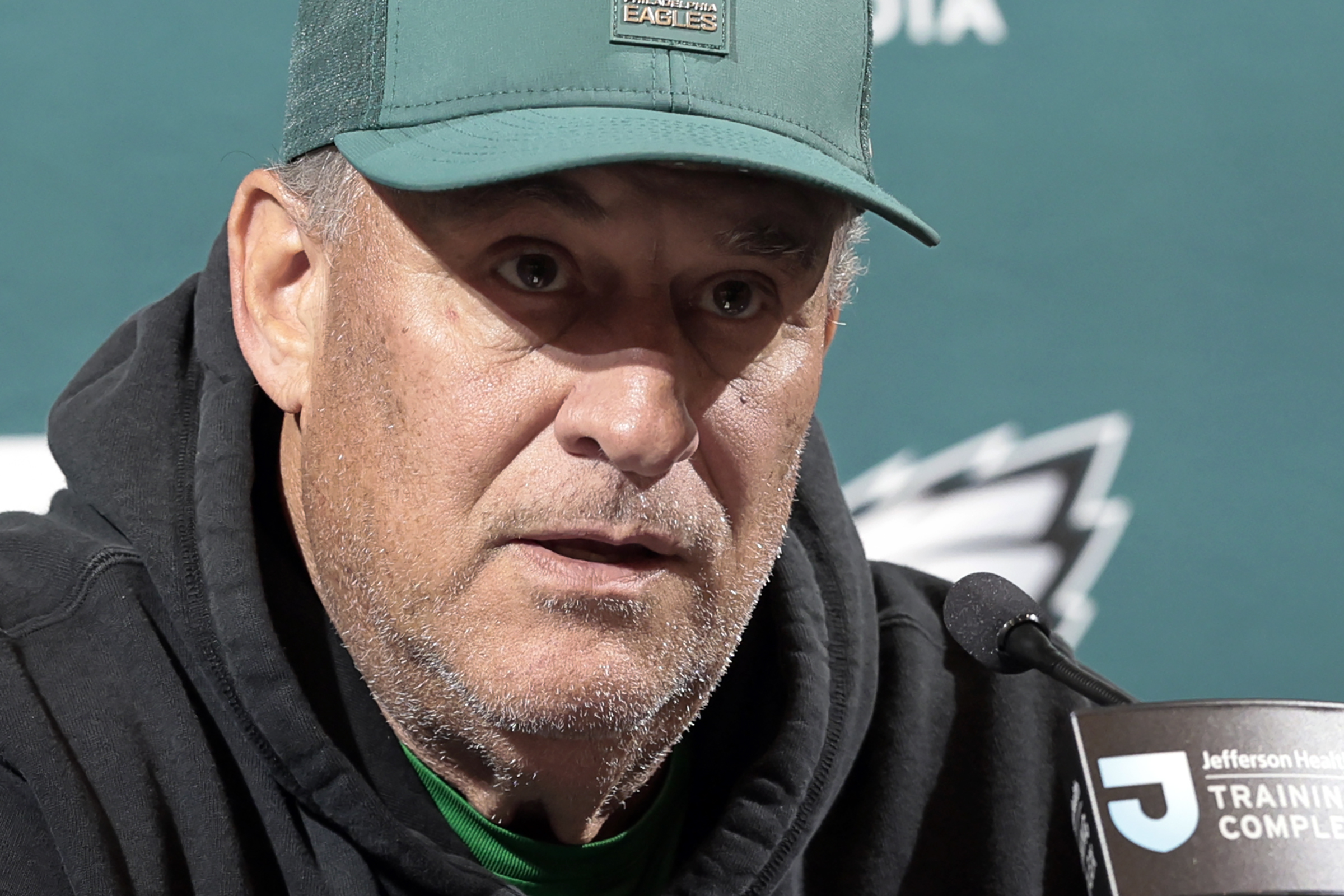
Eagles defensive coordinator Vic Fangio built his reputation during the era when Sam Mills played for him in Philadelphia and New Orleans. Elizabeth Robertson / Staff Photographer
You mentioned Fangio, and his career very much mirrored Mills’ career early on. How impactful was Mills on Fangio, and not only his philosophy on linebacker play and what makes a good linebacker, but also as a person, too?
I think he was very impactful on Vic early on in New Orleans, because Vic, he was a year older than Sam. Sam was 27, I think, when he went to New Orleans. Vic’s 28. First time he’s coaching a position after two years as an entry-level coach with the Stars. Sam quickly became the leader of that defense, leader of those linebackers, and he basically let it be known that you need to trust this guy and believe in him. Not that Vic was struggling. Jim [Mora] believed in him, but even [former Saints general manager] Jim Finks had some reservations about whether Vic was ready for that job. Jim [Mora] said he is, and Vic never made him regret it. But Sam believing in Vic, I think, made it easier for [fellow linebackers] Rickey Jackson, Pat Swilling, Vaughan Johnson to also believe in him, and bring that whole unit together. I think after that, Vic’s knowledge of defense and linebackers and understanding of what Sam could do, and the intelligence he brought … I think there’s a quote in the book somewhere in his foreword where [Fangio] says [Mills] was the leader of that team on the field spiritually and schematically, I think is the way he put the quote. So when he understood what Sam meant to that defense, and especially when he got to Carolina, when he was teaching younger guys, Sam was so important to his career after that.
So they were really good for each other, and as you see in the book, he just loved the guy. He has a picture of Sam on his [office] wall ever since Sam died. I gave him a picture a few weeks ago. I dropped by the [Jefferson Health Training] Complex and gave him a picture of him and Sam standing on the sideline. He’s talking to Sam back when he was playing with the Panthers, and I could tell he was really touched to get it. The picture is in the book, but I gave it to him in a frame, and I think it really meant a lot to him, because that’s just how much he loved the guy. He was in Houston when Sam got cancer, and he went up to Carolina a couple times when he was getting chemo during the 20 months after he was diagnosed, and sat with him and spent time with him while he was getting his chemo and after that. He loved him.
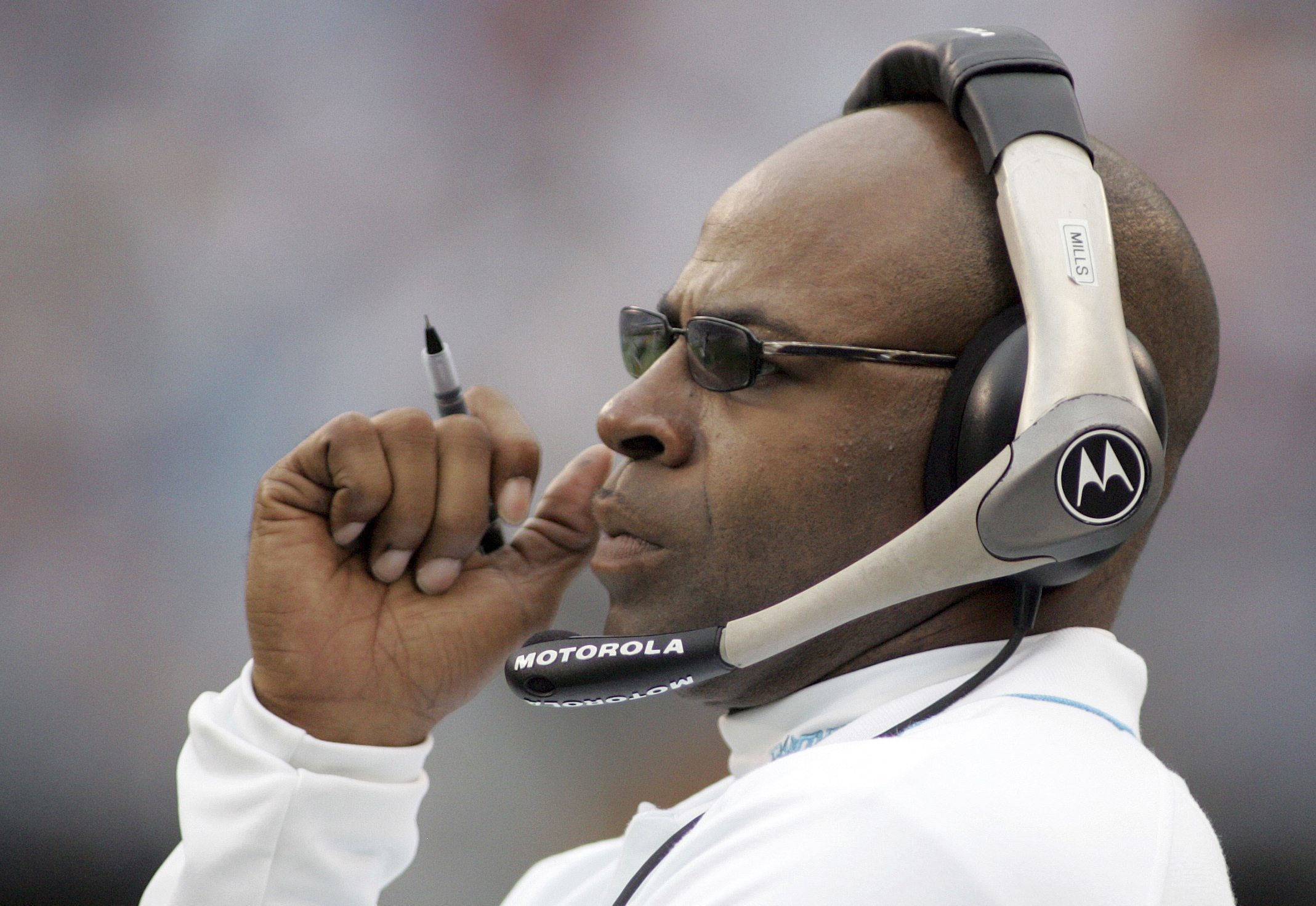
Sam Mills served as an assistant coach with the Carolina Panthers before intestinal cancer took his life at age 45 in 2005. JOHN BYRUM/STAFF / AP
A lot of people loved Mills, and you spoke to so many people for the book. But why Fangio? Why did you want Fangio to write the foreword for the book?
For one, he had spent 15 years with the guy. And I knew how close they were. The story, I think it’s in his foreword, about when he was the head coach in Denver. They start out 0-4 that first year, and he puts together a video for the Saturday night meeting before their fifth game about Sam. Video of Sam playing, video of … ‘Keep Pounding’ speech, not the speech itself, but the impact he had, the statue, just all that inspirational stuff that he put together on a team that none of these guys ever played against Sam. It was in 2019. Sam died in 2005. But that’s how important Sam was to him that he even thought to do that.
So the only other guy I thought about for the foreword was Jim Mora, but Jim had presented Sam at the Hall of Fame when he was inducted. I just felt Vic was probably … aside from Jim, there was nobody else I even thought about. I mean, family, guys he played with. There were so many people that he was close to, but Vic just struck a chord, I guess maybe because he also happened to be coaching in Philly, and I knew him pretty well. All the pieces kind of fell together.
Sam Mills was inducted into the Pro Football Hall of Fame posthumously in 2022. Nick Cammett / MCT
You mentioned the Pro Football Hall of Fame. You’re a voter and you were there for those meetings, notably the one in 2022 where he ultimately got voted in. What were those meetings like, and what really put him over the top at the buzzer?
It was his third year as a finalist. The previous two years, I think I put this in the book, he never even made the reduction vote from 15 to 10. He was eliminated quickly both times. And you get to that last year, I didn’t have a sense for what was going to happen. I couldn’t tell you I was optimistic because it didn’t seem like the rest of the people in the room were hearing what we were saying when we would talk about him. I think the fact that it was his last year was what ultimately rang a bell with people. They realized there was myself and [reporter] Jeff Duncan from New Orleans and Darin Gantt from the Panthers website who spoke up for him. Then some other people that followed after that. It just seemed like everybody realized this was his last chance, because if he became a senior candidate, you can wait forever and never get in. And so when he made it from 15 to 10, I just had a feeling, and then when he made it from 10 to five, and went in on the yes-no vote, it was just really gratifying because there aren’t too many guys that wait that long and get in.
What lessons do you hope people take away from reading about Mills?
As much as this book is about him as a football player, him as a person, I think I mentioned in the book, no one that I interviewed had a bad word to say about this guy. The way he lived his life, when you consider what he went through, there was a lot of reasons along the way for him to be bitter, starting with the fact that nobody believed he could play football, to the fact that he’s diagnosed with this incurable cancer at an age when he’s just starting his coaching career and probably would have been a head coach very quickly.
And he was never bitter. He was just kind of like, “OK, this is just something else I have to deal with,” and he knew he wasn’t going to beat it, but he wasn’t going to surrender. He never took pity on himself the entire time, right up till the time he died. Even when it became clear to him that time was running out, he’s planning his funeral. He’s planning the menu for his funeral. He’s getting the speakers. He’s saying his goodbyes to longtime friends. That’s the kind of stuff that you just don’t see. People that read this book, I hope, look at it beyond football and see a guy that they should emulate as a person, as well as everything else that he overcame.
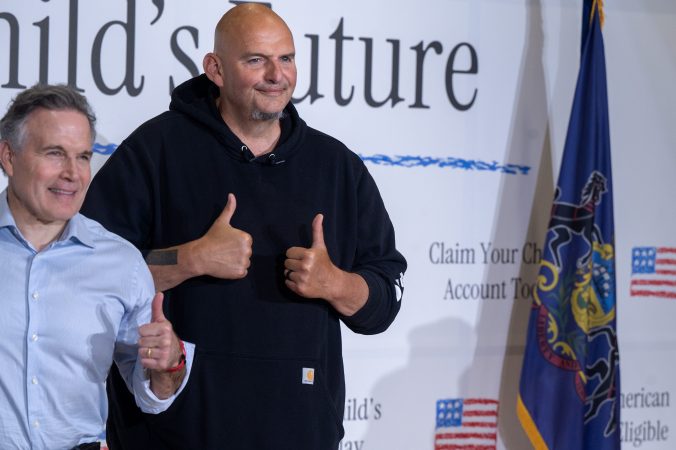
Pennsylvanians were well acquainted with John Fetterman’s idiosyncrasies by the time he was elected to the U.S. Senate four years ago. No one had a right, for example, to expect him to report for Capitol Hill duty with a clean shave and a pressed suit.
His supporters do deserve to be dismayed, however, at their increasingly right-leaning senior senator’s self-indulgent recent threats to leave the Democratic Party entirely. Fetterman won a competitive race as a Democrat thanks to voters who believed in him and his politics even after a stroke forced him off the campaign trail for months. If they wanted a Republican senator, they could have voted for the crudité-shopping TV doctor Fetterman was running against, Mehmet Oz.
For a man who styles himself as such a Washington outsider that he can barely be bothered to put on a pair of long pants, Fetterman is making a very inside-the-Beltway mistake. Judging by his willingness to change his positions and party at a whim, he seems to think the Senate seat belongs to him rather than the people he represents.
After nearly half the Democrats in the House voted against aid to Israel recently, Fetterman said he would leave the party should it incorporate such opposition into its platform and “officially become the anti-Israel party.” That makes his inconstancy sound more high-minded than it really is.
While the vote represented a high-water mark of Democratic opposition to Benjamin Netanyahu’s government and its wars in Gaza and Lebanon, there is no sign Fetterman suddenly finds himself in a party that believes Israel “doesn’t deserve to exist,” as the senator put it. Nearly 100 Democratic representatives took the pro-Israel side of the same vote, after all.
Nor is this some inexplicable or unforeseeable about-face on the part of Fetterman’s fellow Democrats in Congress. The party’s lawmakers are only beginning to catch up with public dismay at the conduct of Israel’s hard-right regime. One recent poll found that about a third of American adults, including a similar share of Jewish Americans and half of Democrats, believe Israeli forces committed genocide in Gaza.
That suggestion has been vociferously deflected by the Netanyahu government, which launched its campaign against Hamas in Gaza after the horrific terror attacks of Oct. 7, 2023. In a statement last week, the prime minister’s office said that “Israel has taken unprecedented wartime measures to minimize harm to civilians while confronting Hamas, a genocidal terrorist organization that uses Palestinians as human shields and deliberately targets innocent Israeli civilians.”
Even if Fetterman’s stated pro-Israel principles are accepted at face value, moreover, they don’t account for the extent of his ideological migration. Perhaps his defense of Israel can be stretched to explain his avid and anomalous support for Donald Trump’s unpopular and unsuccessful war in Iran.
But the senator has also voted for Republican measures to fund Trump’s immigration crackdown, supported his billion-dollar ballroom, objected to fewer cabinet nominees than any other Democrat, and signed off on one of Trump’s judicial nominations, the first in his caucus to do so this term. (Despite backing those initiatives, Fetterman says that his internal metrics show he votes with his party 93% of the time.)
He has also become a Fox News fixture who has accused the Democratic base — the people who, you know, gave him his job — of being “anti-American.” No wonder he is polling better among the state’s Republicans than the GOP’s own senator from Pennsylvania, Dave McCormick.
Despite Fetterman’s proclaimed “moral clarity” on Israel, he often speaks of his grievances with his fellow partisans — and his appreciation for Trump — in political rather than policy terms. He has groused about the repercussions of left-leaning Democrats’ positions for swing-state politicians like him, enthused about Trump’s sheer political talent, and lamented the electoral fate of Democrat Bob Casey, his former Senate colleague.
Maybe the senator’s red shift is motivated less by foreign policy than by an impulse to keep his job — even if it means betraying his voters. In that case, he should at least do his former supporters the courtesy of refraining from dressing up his careerism as morality.
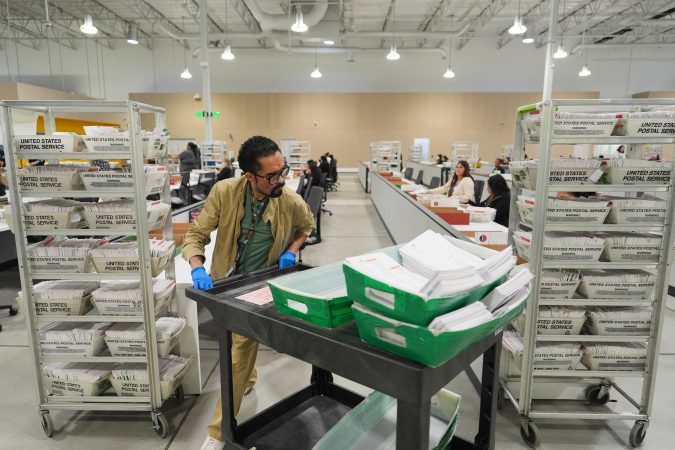
LOS ANGELES — Nearly 150,000 California voters had their mail-in ballots rejected for the state’s June primary, a spike from recent elections even as the state attempts to make voting easier with the goal of boosting participation and counting every ballot.
California has become notorious for its ponderously slow vote counts that can drag on for weeks and sometimes longer, largely the result of multiple changes over the years that were intended to increase turnout but have done little to achieve that. Among the changes: Every voter receives a mail-in ballot that can arrive at an election office seven days late and still be counted, provided the envelope is postmarked by Election Day.
Yet even with that generous weeklong window, the primary driver of the higher rejection numbers is late-arriving ballots, according to data compiled by the secretary of state’s office. Voting experts suspect the main problem is postmarks on ballots that came after Election Day, making them ineligible to be counted. The culprit could be U.S. Postal Service changes that might affect the timing of when postmarks are applied.
In raw numbers, that’s up from the 2024 primary, when 108,982 mail ballots were rejected, or a 1.56% rate. In 2022, 105,818 mail ballots were voided during the primary, or a rate similar to 2024.
Lateness accounted for 93,479 rejected ballots in June, by far the largest category for disqualifying a ballot. That was up from about 70,000 in the 2022 primary and about 76,000 in the 2024 primary, though turnout in those elections was smaller compared to last June.
Kim Alexander, president of the nonpartisan California Voter Foundation, said the jump in rejected ballots because of lateness is a major concern that — along with postal procedures — might also be connected to a late surge in ballots in June. Many voters waited until the final days to make a decision in a wide-open and chaotic race for governor.
“Ballots rejected due to lateness are caused primarily to being postmarked too late to count, not because they arrived too late to count,” Alexander wrote in an email.
Rejection rates have fluctuated over time, but the growing number of those set aside for lateness compared to recent elections “does really demand the question why this is happening,” said Mindy Romero, director of the Center for Inclusive Democracy, a nonpartisan research group.
Updated agency policy says postmarks might not indicate the first day the Postal Service received the mail, but rather the day it was handled in one of its processing centers. Those centers are increasingly likely to be further away from certain communities because of recent consolidations within the Postal Service, which could further delay postmarks.
On Thursday, two Wisconsin Democrats, U.S. Sen. Tammy Baldwin and Gov. Tony Evers, called on the Postal Service to address delays that caused hundreds of ballots to arrive after Election Day in the state in April. In June, a federal judge halted President Donald Trump’s executive order that sought to create a federal voter list and limit who can receive a mail ballot.
Earlier this year, California election officials urged voters to send their mail ballots early, warning that Postal Service changes could lead to slower mail service.
In California, the highest mail ballot rejection rate in June — 3.52% — was in Tulare County, in the agriculture-heavy Central Valley. It was followed by Alpine County, south of Lake Tahoe, and Merced County, also in the Central Valley, which both notched a 3.36% rejection rate.
Mismatched signatures and multiple ballots in an envelope
Nearly 44,000 ballots were set aside because the voter’s signature didn’t match the one on record with county officials. Over 8,300 ballots were rejected because there was no signature on the returned ballot envelope.
In 743 cases, the voter had already cast a ballot, so the mail ballot was voided. Other reasons for rejection included a ballot being missing from the return envelope, or multiple ballots were sent back in a single envelope.
The data didn’t break down the uncounted ballots by party registration.
Florida, Texas and other large population states quickly wrap up vote counting, while California is a national laggard.
After the June primary, President Donald Trump seized on California’s reputation as the national slowpoke in vote counting to renew his long-standing criticism of the state’s elections, while the Republican’s Department of Justice launched an investigation into Los Angeles County’s elections.
There is no indication of any widespread problems with mail voting, which has gained in popularity among Democrats and Republicans alike. A report by the Brookings Institution published in 2025 found that the number of cases of mail voting fraud was minuscule — about four cases per 10 million mail ballots.
The Centers for Disease Control and Prevention has linked four additional states to a multistate cyclosporiasis outbreak traced to shredded iceberg lettuce sourced from central Mexico, according to two individuals familiar with the investigation.
The newly linked states — Illinois, Kansas, Oklahoma, and Pennsylvania — join Indiana, Kentucky, Michigan, Ohio, and West Virginia, and expand the nation’s largest known cyclosporiasis outbreak.
The addition of more states suggests investigators are beginning to connect thousands of illnesses scattered across the country, bringing them closer to reconstructing how a contaminated product or products moved through the food supply and whether additional restaurants, retailers, or distributors received the same products.
The patients in the four additional states may have gotten sick around the same time as the patients in the first five. But investigators may have needed more time to determine which illnesses were part of the same outbreak, one of the individuals said.
The latest development means federal investigators have now traced shredded iceberg lettuce served at Taco Bell restaurants in nine states to a single supplier in Mexico. Taylor Farms de Mexico says it has completed a voluntary recall of iceberg lettuce sourced and processed from central Mexico from the U.S. market.
Cyclospora infections have been reported in at least 41 states this year, but investigators are still working to determine how many are part of the nine-state outbreak linked to shredded iceberg lettuce supplied by Taylor Farms and served at Taco Bell restaurants and how many represent separate clusters or unrelated illnesses. The investigations include comparing patients’ food histories, laboratory findings, and supply-chain records.
In North Carolina, for example, state health officials have identified illnesses that do not appear to be linked to shredded iceberg lettuce served at Taco Bell restaurants. Instead, officials this week pointed to preliminary evidence suggesting parsley and cilantro as possible sources there. Parsley and, especially, cilantro have been implicated in previous U.S. cyclospora outbreaks.
“Those items do pop up frequently and that is not necessarily to say that’s proof that that’s the cause, but it’s one of those situations where if something keeps showing up repeatedly — a certain type of herb like parsley or cilantro or a certain type of vegetable like lettuce — we can start to think that that’s probably implicated or that may be implicated and that’s when we start collecting information on where was it purchased and that we can share with our partners … for a possible traceback,” Carl Williams, with the North Carolina state health department, said at a news conference earlier this week.
North Carolina data updated Tuesday show 561 cases have been reported since May 1, up from 307 a week earlier, according to the North Carolina Division of Public Health.
The Food and Drug Administration disclosed a new cyclospora outbreak that has sickened at least 72 people, according to an update posted to its website Wednesday. The FDA did not identify the location of the illnesses or the suspected food source.
Parsley and cilantro have not emerged as national signals in the broader federal investigation, underscoring how investigators are still sorting through multiple clusters of illnesses that may have different sources, the individual said.
Earlier this week the CDC more than doubled its national confirmed case count, adding more than 4,000 confirmed illnesses and acknowledging more than 7,400 additional reported illnesses still under review.
Even before Friday’s update, the confirmed domestic cases had already exceeded the total number of cyclosporiasis cases reported nationwide during all of 2025.
The increase does not mean thousands of people became sick in recent days. Cyclosporiasis reports typically lag because symptoms can take up to two weeks to appear, and testing and investigations often take weeks more.
In previous cyclospora outbreaks, sometimes one batch of contaminated product is mixed with uncontaminated product that subsequently becomes contaminated, or a piece of equipment causes the contamination.
The microscopic parasite is spread through human fecal contamination.
Food safety experts say contamination can often occur before harvest, when fresh produce is exposed to contaminated irrigation water or other water used in growing or processing. Flooding can heighten the risk by disrupting sanitation systems and washing contaminated water into fields or produce-growing areas.