Blog

  • More than 575,000 people attended Philly’s World Cup fan festival

    More than 575,000 people attended Philly’s World Cup fan festival

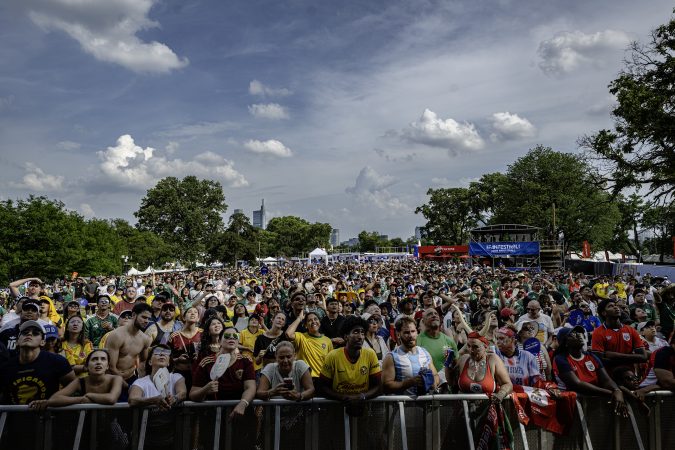
    Philadelphia transformed Lemon Hill into the longest and one of the largest World Cup watch parties in the country throughout the FIFA Fan Festival’s 39-day stay.

    With the World Cup wrapped up, host committees throughout the country are taking stock of how many fans flocked to these festivals. Philly’s fan fest saw the second-highest number of attendees, with 575,304 between June 11 and July 19, according to the festival’s organizer, Philadelphia Soccer 2026.

    Miami’s host committee was less precise in its count, but said its festival drew more than 600,000 guests.

    Each one of the 11 host cities reported fan totals in the hundreds of thousands, but none quite reached the attendance levels of Philly and Miami.

    However, despite South Florida’s high total numbers, Philadelphia set the record for most attendees throughout a single day at a U.S. fan festival with 55,000 attendees during the Brazil vs. Haiti group stage match on June 19. While Philadelphia’s fan festival operated for almost twice as long as Miami’s, opening every day of the tournament, Philadelphia worked with half the capacity limit that Miami did, capping crowds at 15,000 people at a time.

    Anu Akinlotan, 19, of Darby, Pa., (right), Sandra Olaniyi, 25, of Drexel Hill, Pa., (left), and her sister Victoria, 22, (center), watch the USA vs. Australia game at FIFA Fan Festival at Lemon Hill Park in Philadelphia, Pa., on Friday, June 19, 2026.Tyger Williams / Staff Photographer

    New York and New Jersey, home to the largest population among host cities and host of the World Cup final, netted more than one million fans across their decentralized network of official fan zones. The San Francisco Bay Area host committee also chose not to do a single festival but rather a network of watch parties and events. Across those areas, 900,000 people reportedly visited during World Cup games, according to CBS.

    Philly’s million-square-foot watch party, akin to a Fairmount summer barbecue of epic proportions, featured large swaths of open space for fans to lay down blankets and picnic while they watched the game, with the Center City skyline as backdrop; mini soccer pitches to challenge friends to pickup games; and a line of sponsor exhibits, including one outrageously viral Bank of America bracelet-making workshop. Some later resold the bracelets online for upward of $150.

    But the main course was the 60-foot-wide screen playing almost every 2026 World Cup game to a crowd of thousands. This is where Philadelphians and international tourists could experience the energy of the World Cup outside the pricey stadium seats.

    Soccer fans gather to watch Mexico play South Africa on a giant screen during the opening day of the FIFA Fan Festival at Lemon Hill on Thursday, June 11, 2026, in Philadelphia.Jose F. Moreno / Staff Photographer

    Philly and Miami may win out for the highest attendances, likely due to their singular locations and being open much longer than celebrations in other cities, which opted for shorter-lived festival days or decentralized events. Still, most of the U.S. host cities boasted impressive numbers at fan events.

    Atlanta, Houston, and Seattle all reported having hosted at least 500,000 fans at their festivals. Kansas City was close behind, reaching 400,000 fans across its 18-day run. Los Angeles brought in 250,000 people to its festival. Boston hosted 155,000. Dallas’s host committee has not released official counts yet.

  • LeBron James Sixers jerseys are already selling out on Fanatics — but more merch is on the way

    LeBron James Sixers jerseys are already selling out on Fanatics — but more merch is on the way

    Fanatics is already sold out of some LeBron James Sixers jerseys.

    About two hours after news broke that the superstar was coming to Philly, all first editions of the no. 23 jersey were sold out on the Fanatics website.

    The adult royal blue, white, and red Nike Swingman jerseys had been selling for $124.99, in line with the price of similar jerseys for other Sixers stars.

    Red and blue youth and adult Nike Jordan Brand Fast Break jerseys, which are made of different material, were still available to preorder for $69.99 and $79.99 as of Friday afternoon, though some colors and sizes were in low supply. Those jerseys were set to ship next month.

    Once James’ decision was announced, his new jersey was available “instantly,” according to Brandon Williams, Fanatics vice president for global communications.

    An image of the jersey was displayed on the top of the Fanatics homepage with the words: “LeBron James. The king just found his kingdom.”

    Along with the official jerseys, Fanatics is also selling James’ 2026-2027 Topps trading card, the same one that he signed and posted on Instagram after announcing his decision to come to Philly.

    The cards are selling for between $11.99 for a single card and $169.99 for a 20-pack. Fanatics acquired Topps in 2022.

    The company will be adding other James merchandise shortly, Williams said.

    Fanatics, the sports merchandise giant that makes and distributes officially licensed apparel for all major pro leagues and the NCAA, is owned by billionaire Michael Rubin, a Lafayette Hill native who previously had a minority ownership stake in the Sixers.

    On Friday afternoon, Mitchell & Ness customers could preorder several James graphic tees and sweatshirts, set to ship in four to six weeks. The new swag was advertised on the retailer’s homepage, which read “Philly welcomes the king.”

    Rally House, the national sports apparel chain with more than two dozen Philly-area locations, also advertised James Sixers jerseys and T-shirts, set to ship next month.

    But Sixers fans who stop by their local Rally House this weekend won’t find James gear just yet.

    “With the demand of jerseys, LeBron James jerseys will have a slightly longer timeline to land in-store,” Novick said in a statement. “Rally House is doing everything in their power to beat these estimated arrivals and get LeBron James 76ers gear into Philly stores for fans ASAP.”

  • SEPTA wants to extend its free fare benefit to apartment dwellers

    SEPTA wants to extend its free fare benefit to apartment dwellers

    SEPTA is embarking on an experiment to extend its all-access transit pass, SEPTA Key Advantage, to apartment building residents.

    Currently employers and schools can buy into the benefit program. The institutions pay for the passes, and then workers and students sign up to receive a SEPTA Key card that is free for them to use.

    Since its creation in 2022, beneficiaries have used SEPTA Key Advantage for 25 million rides.

    Now SEPTA has received a $150,000 grant from the Delaware Valley Regional Planning Commission (DVRPC) for a pilot program extending the benefit to apartment building owners.

    The two-year program will be open to a handful of apartment buildings so SEPTA can study how tenants use it. The first company to sign on is the HOW Group, a large multifamily developer and owner in Philadelphia.

    “A lot of our properties are located near SEPTA stations, and with a lot of our buildings, their biggest amenity is their location,” said Kelli Tomczak, vice president of property management at the HOW Group. “It was a great opportunity to emphasize how big of an amenity that is coupled with the SEPTA pass.”

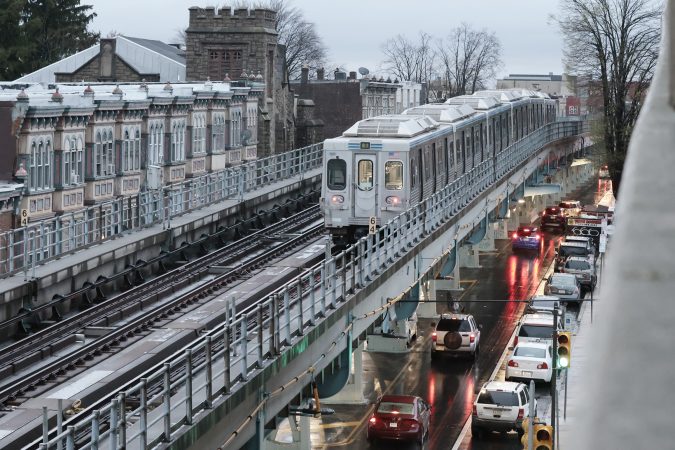
    The SEPTA Key Advantage will be offered first to tenants in the HOW Group’s 104-unit apartment building at 1900 N. Front St. known as the Isaac. It has no parking but is directly across the street from SEPTA’s Berks Station on the Market-Frankford Line.

    “A lot of people who are living there are already utilizing the El. That’s what makes this a great amenity,” Tomczak said.

    SEPTA says it is in talks about bringing the benefit to another HOW building in University City, which has frequent bus lines to Center City, trolleys, and the Market-Frankford line.

    The transit agency also wants to try the pilot in a couple suburban buildings and are searching for partners with 50- to 100-unit buildings near stations in Philadelphia’s collar counties.

    “We are really trying to hone in and really understand, when you have this free pass, do you start to take transit more?” said Gabrielle Pristera, senior sales development specialist with SEPTA.

    “We want to really build the case to show other multifamily properties that there is value in adding Key Advantage as an amenity through this pilot,” Pristera said.

    The HOW Group’s 100+ unit apartment building at 1900 Front St., on the Market-Frankford line, where tenants will be eligible for free SEPTA cards.HOW Group

    SEPTA Key Advantage originated when transit ridership was struggling back from COVID.

    The program was created to get more people riding SEPTA regularly, while raising revenue for the service. SEPTA estimates that it saves regular riders $110 a month.

    Today SEPTA Key Advantage has 60,000 members, 63 participating employers (including the City of Philadelphia), and four participating colleges and universities.

    Roughly half the eligible students and workers have taken advantage of the benefit and SEPTA has found that at small companies 80% of employees sign up.

    The transit authority has long wanted to expand the program to apartment owners and tenants.

    “Especially within Center City, with development being so costly, this is just one of the easiest amenities to get started,” Pristera said. “You don’t have to have space for it. You just can just distribute key cards and go.”

    Philadelphia has seen an apartment building boom in recent years. Neighborhoods like Northern Liberties, Fishtown, and University City have seen thousands of new units added near subway, elevated, and trolley lines.

    DVRPC’s grant money will pay for the administrative costs of the pilot, as property managers don’t have the same kind of human resources departments as employers and higher education institutions.

    The grant from DVRPC will last until 2028. SEPTA will evaluate the results of the program and decide how to proceed from there.

  • Democrats select South Carolina for their first presidential nominating contest in 2028 election

    Democrats select South Carolina for their first presidential nominating contest in 2028 election

    WASHINGTON — South Carolina was selected Friday to once again lead off the Democratic Party’s 2028 presidential nominating schedule, most likely cementing a dramatic break from decades of tradition by keeping Iowa off the top of the calendar and elevating more racially diverse states.

    The decision by the Democratic National Committee’s Rules and Bylaws Committee will need to be approved by the full organization, which is scheduled to meet in August.

    South Carolina or Nevada had been expected to go first, with each state aggressively campaigning for the coveted spot.

    President Joe Biden successfully pushed to move South Carolina to the front of Democrats’ 2024 calendar after the state revived his struggling 2020 presidential campaign. South Carolina has long been the first Southern contest and has served as a key test of candidates’ support among Black voters.

    Jaime Harrison, a former DNC chairperson in attendance Friday, told the Associated Press after the vote that keeping his home state first on Democrats’ nominating calendar signaled to Black voters the value they bring to the party, especially after a Supreme Court decision aimed at weakening their voting power.

    “I think we needed a strong statement to say to the most loyal members of our party, which are Black voters, that we’re going to stand up with you,” said Harrison, who also chaired South Carolina’s Democratic Party. “It was just really important for us to stand up and say, ’We see you, we hear you, but most importantly, we’re going to fight like hell for you. And your voices are important.’”

    Democratic leaders in a handful of Southern states had lobbied for South Carolina to reprise its role as the party’s first-in-the-nation contest holder, arguing in a letter to the DNC that the state best represents the initial playing field for presidential candidates to build the coalitions needed to win and serves as “a moral and political compass for our party and our nation.”

    Democrats wanted more influence for diverse states

    The overhaul reflects Democrats’ effort to give greater influence to states that better mirror the party’s diverse coalition, particularly Black and Latino voters, after years of a calendar led by Iowa and New Hampshire, two states with overwhelmingly white electorates.

    Much of Friday’s debate stood as a contrast on several fronts. South Carolina proponents argued they had the experience to stand up a lead-off primary and serve as a showcase for the Black voters whose support has become vital for Democrats.

    “Black voters didn’t just show up for this party in 2020. They saved us,” Nebraska Democratic Party Chairperson Jane Kleeb said, in making her argument for South Carolina. “They saved our entire country from Donald Trump.”

    Nevada’s supporters, meanwhile, portrayed their state as the party’s future, in which they argued Latino voters play a larger and larger role.

    “We are the battleground state,” said Artie Blanco of Nevada, a DNC vice chair. ”We win elections because we leave no voter untouched.”

    The decision will also shape the opening stage of what is expected to be a crowded Democratic presidential primary. Without an incumbent or clear front-runner, the states that vote first could once again play an outsized role in determining which candidates gain momentum, attract donors, and emerge as viable contenders.

    Republicans still need to do their calendar. They’re expected to stick with their traditional early-state lineup led off by Iowa and New Hampshire.

    The calendar decision is one of the first milestones in what’s expected to be a tumultuous two-year sprint to the Democratic nomination.

    There has not been a truly open Democratic presidential primary — without an incumbent president or a dominant front-runner — in almost two decades.

  • More than 200,000 people flee raging wildfires in France and Spain, some escaping by boat

    More than 200,000 people flee raging wildfires in France and Spain, some escaping by boat

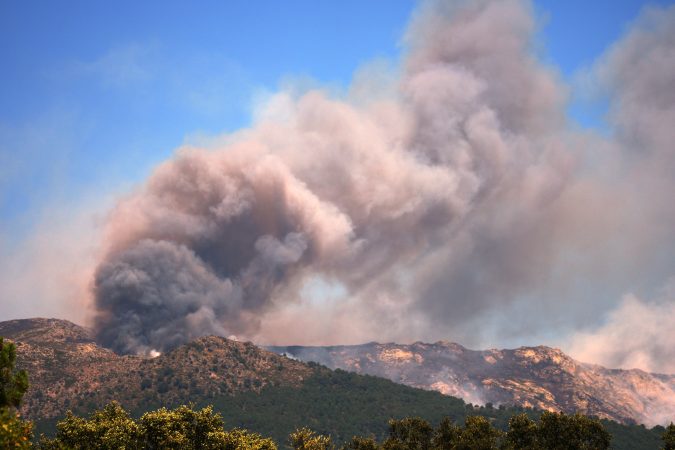
    ARCACHON, France — Massive forest fires burned out of control in southwestern France and central Spain on Friday, prompting authorities to evacuate an estimated 200,000 people from their homes. Some even fled by boat when flames swept through the tourist destination area on France’s Atlantic coast.

    Dozens of firefighters were injured, authorities said in France, but no deaths were reported in either country.

    Some 141,000 fled homes in the Gironde and Landes departments in France, the French interior ministry said. In central Spain, 60,000 were forced from their homes, the Spanish interior ministry said.

    France’s Interior minister Laurent Nunez said that the large wildfire that ravaged large swaths of land in southwestern France is now heading toward the city of Bordeaux.

    Speaking to French TV channel Tf1, Nunez said the wildfire that earlier in the day forced the evacuation of the Cap Ferret peninsula has swept across 54 square miles, with 110,000 people fleeing their homes in the Gironde region.

    “We learned in the middle of the afternoon that, following the wind shift, it had become a large, self-sustaining fire that is extremely difficult to bring under control,” Nunez said. “It is now moving east, toward the Bordeaux metropolitan area. We are going to reorganize our response so we can fight it from the ground and prevent it from advancing toward Bordeaux.”

    Meanwhile, French President Emmanuel Macron has asked the Prime Minister Sebastien Lecornu to activate the government’s crisis response unit, and has instructed the armed forces to mobilize in order to provide the maximum possible reinforcement to the civilian emergency services. Asked whether Bordeaux is under threat, Nunez said: “For the time being, no. We will, of course, do everything we can to protect it using ground resources, including requisitioned military assets and our firefighters.”

    The blaze started on Wednesday near Cap Ferret peninsula on France’s Atlantic coast.. Located just 37 miles from Bordeaux, the peninsula normally offers stunning landscapes and sandy beaches as well as oyster-farming villages and upmarket resorts. Some people fled the flames by boat.

    A separate wildfire broke out in Landes, causing 31,000 evacuations, while both France and Spain asked fellow European Union members for help.

    “It’s quite impressive and even frightening,” said Laurent Moretti, a resident in the town of Arès. “An evacuation on this scale has never happened before. All we really hope is that the firefighters can quickly get it under control.”

    More than 20,000 people had already been evacuated from towns and vacation resorts on Thursday, but that number exploded on Friday as the fires raged out of control.

    Local authorities in the Gironde department said 53 homes and a campsite have been ravaged by flames, adding that 42 firefighters were injured. Around 1,500 people who fled the peninsula arrived by sea in the city of Arcachon, some aboard small water taxis and others on larger boats.

    Hundreds of French firefighters have been deployed and additional ground and aerial reinforcements were sent Friday to tackle the blaze. Meanwhile, another major wildfire destroyed more than 9 square miles of land farther south down the coast. It remained uncontained and strong winds hampered the work of firefighters.

    Authorities believe the cause of both fires was accidental.

    Macron said France will receive EU reinforcements including two Croatian Canadair firefighting aircraft, two Portuguese Air Tractor aircraft, and two heavy-lift Black Hawk helicopters from the Czech Republic and Slovakia. Spanish Interior Minister Fernando Grande-Marlaska said that Italy and Greece are each sending two Canadair water-dumping airplanes.

    Spain struggles to tackle multiple fires amid a heatwave

    In Spain, the government declared a national emergency for wildfires for the first time as the blazes in Madrid and the nearby province of Ávila prompted the evacuation of some 60,000 people from towns west of the capital.

    The fires are being fanned by a heat wave with temperatures expected to top 102 Fahrenheit in parts of Spain.

    The two major fires near Madrid merged into one single blaze that had quickly charred 11.5 square miles by Friday afternoon. Regional President Isabel Díaz-Ayuso called it the worst in Madrid’s history.

    Francisco Martín, the central government representative for the region of Madrid, said that another 20,000 people had been ordered to shelter at home in towns west of the capital. Martín said more evacuations could be coming and that the priority now was to protect the town of San Lorenzo, the home of the Escorial, Philip II’s 16th-century royal palace and monastery.

    Meanwhile, a blaze in Ávila, less than two hours northwest of Madrid, had consumed 34 square miles. Spain’s Civil Guard arrested one man and is investigating another for allegedly having used heavy machinery in an area where it was prohibited for fire risk. Police believe a spark ignited the fire on Thursday.

    “In my 60 years I have never seen something like this in my village, I have never seen fire of these dimensions,” Francisco Martínez, the mayor of Burgohondo, whose residents were preventively evacuated in Ávila, told Spain’s national broadcaster TVE.

    Spanish television showed video taken by retreating residents of walls of flames topped by long plumes of smoke advancing through woods and scrublands. High winds and hilly terrain complicated efforts by firefighters, who combated the blazes with firetrucks and bulldozers.

    “All around the town was smoke and fire, I was scared. Everything was fire and smoke, people were nervous,” 33-year-old Joaquin Espinosa told the Associated Press before he and his neighbors were evacuated from the village of Chapinería, located less than an hour’s drive west of Madrid.

    Strong winds complicate efforts

    In one week, Spain has had the worst fires on record for both the regions of Castilla La Mancha and Madrid.

    Firefighters were still trying to extinguish Spain’s second-largest ever fire in the Guadalajara province of Castilla La Mancha after it had destroyed some 120 square miles over the last week. Thirteen people were also killed in a fire in southern Spain earlier this month, the deadliest fire in recent memory for Spain.

    Spanish Minister for the Ecological Transition Sara Aagesen said that Spain has seen 440 square miles already burned this year, more than five times the burned terrain it had through the first half of 2025. There were nine other serious fires in other parts of Spain active on Friday.

    Sánchez called on Wednesday for a pact between political parties to fight climate change that he said is key to adapting to a more fire-prone climate. Spain has experienced record temperatures in recent summers and forest fires of increasing violence.

    Wildfire analyst Raúl Quílez said that besides the impact of climate change, Spain’s rural areas have become more exposed to fires with the abandonment of farmlands that traditionally provided buffer zones around villages. Now, he said, trees and undergrowth often reach right to homes, putting them in harm’s way.

    “That makes a perfect cocktail for this type of fires,” Quílez told the AP by phone from Valencia, where he works as an analyst for regional firefighters.

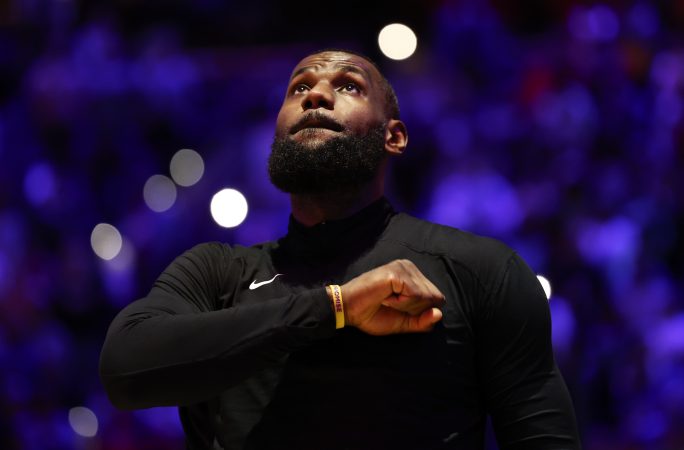
  • LeBron chose the hard, dramatic path when he picked the Sixers. Get ready for a wild ride, Philly.

    LeBron chose the hard, dramatic path when he picked the Sixers. Get ready for a wild ride, Philly.

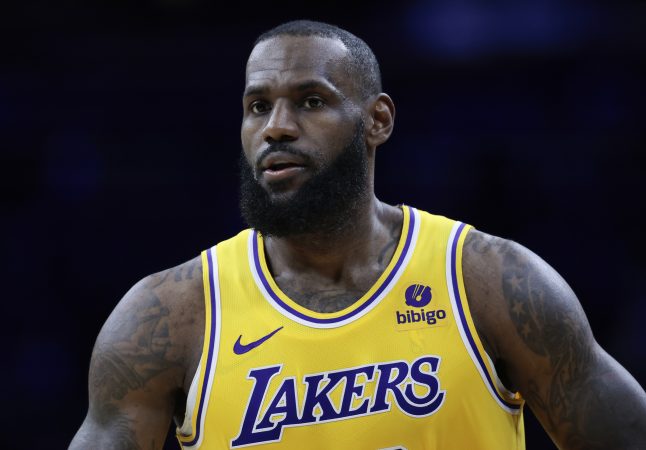
    If LeBron James is to be believed, if he was telling the truth when he took to Twitter/X late Friday morning to explain why he had decided to shock the basketball world and sign with the 76ers, if he was speaking from the heart and not merely trying to sell a new city and fan base on his choice, then this could be a red-letter moment in the history of Philadelphia sports.

    LeBron to the Sixers is unlike anything that has happened around here. Those with long memories like to think that back on Pete Rose’s signing with the Phillies in 1978 or the Sixers’ trading for Moses Malone in 1982 are comparable, and it’s understandable why. Those superstars provided exactly what those teams needed to win a championship, and each of those teams promptly won one — the Phillies in Rose’s second season, the Sixers in Malone’s first.

    But James exists in a different stratosphere economically and culturally from the one Rose and Malone did then. His fame is global. His wealth makes him a multibillionaire. He is among the five best basketball players ever to walk the Earth and among the most famous people walking it now. And he is a perfect fit for this Sixers team, for a franchise that hasn’t won a championship since 1983 and is making an all-in move to end that drought.

    The most heartening aspect of James’ decision isn’t even that, at 41 years old, he should be the ideal power forward/point guard to play alongside Joel Embiid, Jaylen Brown, Tyrese Maxey, and VJ Edgecombe. He is a player unlike any other; he can bring the ball up, get it out of Maxey’s hands, run a halfcourt offense, and play at any pace.

    No, the encouraging thing about his announcement Friday was his reason for making it. He admitted that he had contemplated retiring, that he had spent time with his family and friends, “with all the people I love,” he wrote, “trying to figure it all out.” He wanted to keep playing, but he had to acknowledge to himself why.

    “I’m not going for money,” he wrote, which partially explains why his contract with the Sixers reportedly is just two years long and worth just $8 million. “I’m not going for family. What am I really playing for at this point? I still want to sacrifice. I still want to work. I still want to grind. I still want to compete, to win, and to have a chance at the feeling of winning another championship. I believe I can help make the Philadelphia 76ers a championship team, and I am so excited to energize a new fan base and start this incredible journey one last time.”

    That desire — to win an NBA championship — really was the only factor that stood a chance of drawing James here, and there was a case to be made that the Sixers didn’t even offer the best opportunity for him to win his fifth ring. The Miami Heat have Giannis Antetokounmpo and Bam Adebayo and Pat Riley and Erik Spoelstra and that vaunted Heat culture, and the Cleveland Cavaliers were just in the Eastern Conference finals last season, and he was familiar with both franchises and revered in both markets. He could have gone to either of those teams for sentimental reasons alone, never mind the rosters and the possibilities on the court, and no one would have been surprised.

    Instead, he chose a harder, more dramatic road. Assume he had decided to spend his final season or seasons with the Heat or the Cavaliers. Either of those teams could lose in the second round of the playoffs with him, and James’ legacy and reputation would remain untarnished. They love him in those places and always will. He helped build a dynasty in Miami. The championship he won in 2016 with the Cavs was Cleveland’s first in 52 years. Philadelphia is something else entirely, and not merely because the Sixers have gone so long without a parade.

    A franchise that hasn’t won a championship in more than 43 years, that was expected to win a championship for more than a decade in the aftermath of The Process and never got all that close, will be expected to win one because of James’ presence. People here had grown jaded about the Sixers, about all these iterations of the team, about a franchise that hasn’t had an identity since Allen Iverson was sacrificing his body every night for the sake of scoring 40. James’ decision has blended that cynicism with hope and created a powerful concoction. Ticket sales surely are skyrocketing already. The Sixers will be at the center of every hoops-related talk show, podcast, international news story, and dinner table conversation into the foreseeable future. Their roster will be a fascinating study in leadership and group dynamics, and it will test coach Nick Nurse and his staff like nothing they’ve encountered in their careers. The pressure on this team will be withering.

    LeBron James signed up for all of that. He did it because he wants to win and thinks he can with the Sixers. The stakes for this franchise, for pro basketball in this city, have never been higher. Get ready for a journey no one here has taken before. Get ready, win or lose with LeBron James, for the wildest ride you can imagine.

  • As measles cases in Pennsylvania rise, officials scramble to track cases

    As measles cases in Pennsylvania rise, officials scramble to track cases

    Pennsylvania tallied more than two dozen new cases of measles in the last week, including several in the Philadelphia region.

    In Chester County, health officials confirmed 13 cases in the suburban Philadelphia county since April, with seven identified since Monday.

    The rising counts come as the Centers for Disease Control and Prevention reported Friday that measles cases nationwide had surpassed all cases reported in 2025, the highest case count in 35 years.

    One of the most contagious diseases, measles has made a resurgence as rising numbers of people are refusing the highly effective vaccine that prevents its spread.

    In a growing Pennsylvania outbreak centered in Lancaster County, state health officials confirmed 14 new cases in the last week. The county has been at the center of two separate outbreaks this year and has reported 75 cases since April, when the current outbreak began.

    So far this year, Pennsylvania has reported 139 cases of measles, more than eight times the number reported in 2025 and the highest case count in three decades. Twenty-five people have been hospitalized.

    Delaware on Wednesday declared a measles outbreak, with four cases reported. New Jersey has seen one case so far in 2026.

    (function() {
    var l2 = function() {
    new pym.Parent(‘HE_MEASLES9.html’,
    ‘https://media.inquirer.com/storage/inquirer/projects/innovation/arcgis_iframe/HE_MEASLES9.html’);
    };
    if (typeof(pym) === ‘undefined’) {
    var h = document.getElementsByTagName(‘head’)[0],
    s = document.createElement(‘script’);
    s.type = ‘text/javascript’;
    s.src = ‘https://pym.nprapps.org/pym.v1.min.js’;
    s.onload = l2;
    h.appendChild(s);
    } else {
    l2();
    }
    })();

    Working to track cases

    In Chester County, the local health department has struggled to track cases in part because some exposed residents have refused to provide contact tracers with detailed information, said Jeanne Franklin, the county health director.

    Some residents have not answered calls from the department, or have spoken to health workers only about their own family, not other contacts they might have had in the community. Others have simply hung up the phone, Franklin said.

    “It does not allow us to paint the true picture. If they’re not talking to us, we’re assuming there’s a lot of cases unreported,” she said.

    Public health workers ask residents who are reluctant to reveal information about their contacts to, at least, inform friends and relatives that they may have been exposed to measles, Franklin said.

    She said Chester County residents who have tested positive for measles have mostly sought care in Lancaster County, which borders Chester County to the west.

    But most measles patients are seeking treatment only when they become seriously ill, she said, and milder cases are likely going unreported.

    “People aren’t going to freely get tested. They’re getting tested when their health has declined so much that they need medical assistance,” Franklin said.

    Unvaccinated people in Plain communities, Christian denominations like the Amish and Mennonites, have been affected more than others in the county, but the outbreak is not contained to these communities, Franklin said.

    Some members of Plain communities oppose vaccination, but opinions vary, and doctors in Lancaster, where Plain communities are heavily concentrated, have stressed that cases there are centered among unvaccinated people in general, not Plain residents.

    No major religion expressly forbids vaccines. Yet the spread of misinformation about vaccine safety, rising for years, is increasingly amplified in federal policy discussions under Health and Human Services Secretary Robert F. Kennedy Jr., a longtime anti-vaccine activist.

    Every measles case in the state this year was diagnosed in people who were not fully vaccinated against the highly contagious disease, which can infect up to 90% of unvaccinated people exposed to it.

    The Pennsylvania Department of Health has administered nearly 2,000 measles vaccines in the last year.

    Franklin said Chester County health workers are among those also stepping up vaccination efforts. Besides offering vaccinations at the county’s health clinics and working with community groups to host pop-up vaccine clinics, staffers are traveling to residents’ homes to vaccinate them, she said.

    The department is seeing renewed interest in measles vaccination as the outbreak continues, Franklin added.

    “If you decided or your parents decided a while ago not to get vaccinated for measles, that might have been OK then because the risk was low. In today’s situation, you should reassess your decision,” she said.

  • A Philly judge accused of domestic violence is no longer suspended after all charges were dropped

    A Philly judge accused of domestic violence is no longer suspended after all charges were dropped

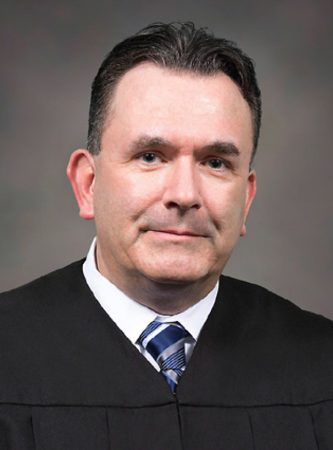
    A Philadelphia Family Court judge who was arrested for assaulting his wife and daughter earlier this year is no longer suspended after prosecutors withdrew all charges against him last week.

    The Pennsylvania Court of Discipline ended Michael Fanning’s suspension without pay Thursday because the only reason for it was the criminal charges against him.

    “With no charges and no other reason cited for the suspension of Judge Fanning, no reason exists for that suspension to continue,” the order said.

    Fanning, 60, will be assigned administrative duty and will not hear cases until the Philadelphia Court of Common Pleas leadership can decide his future assignment, said court spokesperson Martin O’Rourke.

    His request to end the stay did not mention backpay.

    The administrative office of Pennsylvania courts did not immediately respond to a request for comment on whether Fanning would receive back pay for the four months he was suspended.

    Fortunato Perri Jr., Fanning’s attorney, declined to comment.

    Fanning was charged with aggravated assault, strangulation, and related crimes in March after prosecutors said he repeatedly punched his wife in the face, choked her, and dragged his 30-year-old daughter to the ground by her hair, causing her to cut her face, during a fight at their East Torresdale home.

    Assistant District Attorney Brian Collins said last week that the two women were evaluated by medics and did not suffer injuries.

    The Philadelphia District Attorney’s Office withdrew the charges against the judge last week after Fanning’s wife and daughter did not want to proceed.

    Attorneys for Fanning also provided the district attorney’s office with “extensive mitigation” records, prosecutors told the court without describing their content.

    Fanning’s wife said in a March hearing that the judge had voluntarily entered a 30-day inpatient recovery program to treat his excessive alcohol use, an issue the family had worked to address in the past.

    Fanning was appointed to the Common Pleas Court bench in 2014 by then-Gov. Tom Corbett. He won a 10-year term in the 2015 election, and was retained for another term in November. He has been serving as a Family Court judge throughout his tenure.

    Staff writer Ellie Rushing contributed to this story.

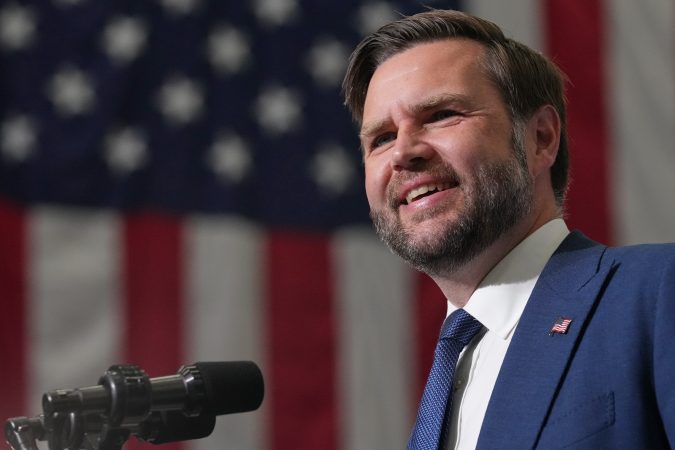
  • Knives are out for Vance in the GOP. His allies say it’s a coordinated ‘op.’

    Knives are out for Vance in the GOP. His allies say it’s a coordinated ‘op.’

    As JD Vance prepares to make a decision about his 2028 plans, the vice president is facing a barrage of online attacks from within his party, criticism his allies say appears to be part of a coordinated attempt to poison the well for him politically.

    His detractors have adopted the “Never Vance” slogan and flooded social media, especially over the past week, with attacks including claims that Vance is “unfit” to be vice president due to his efforts to negotiate a peace deal with Iran. They have asserted, without evidence, that Vance is making policy decisions not supported by President Donald Trump. They have likened him to former President Barack Obama and Sen. Bernie Sanders (I., Vt.).

    The sustained public hostility from Vance’s own side of the aisle is unlike that faced by other vice presidents in decades, both in intensity and in the early timing — two years before the party will choose its next presidential nominee. The unusual nature is a product of the central role that social media plays in today’s political discourse, as well as the high stakes as Republicans prepare to select a new standard-bearer after Trump, Vance allies and critics say.

    Vance’s political team remains dismissive of the social media onslaught and its impact on Republican voters, believing that many of the attacks are not organic, a close ally of the vice president told the Washington Post — a sentiment echoed by two other people with knowledge of Vance’s strategy. The ally and other advisers spoke on the condition of anonymity to discuss internal deliberations.

    Vance’s allies are keenly aware of and monitoring the online attacks, but his team says the criticism sends a signal to the conservative base that establishment Republicans and opponents they label as neoconservatives hate Vance. That, they say, could ultimately strengthen his standing in a GOP primary.

    “Loud Washington establishment voices form an online cacophony,” said Steve Cortes, a conservative commentator supportive of Vance, “but they do not remotely represent the consensus views of Republican voters.”

    Vance, whose brand of politics is populist and skeptical of foreign wars, has remained the front-runner in 2028 Republican primary polling. Secretary of State Marco Rubio, the favorite of many more traditional, business-minded Republicans, has gained ground in recent months, however, although Rubio has insisted he will support Vance if he runs.

    The knives have long been out for Vance within the GOP, since before Trump selected him as his running mate. At the time, hawkish donors and conservative media personalities lobbied for Trump to reject Vance in favor of Rubio or Doug Burgum, now secretary of the interior.

    Polling of Republican voters shows Vance’s favorability within the party as roughly on par with Trump’s.

    Intense criticism from some Republicans, largely over Vance’s foreign policy views, has ebbed and flowed since the start of the second Trump term. The criticism reached a first peak in the fall as neoconservatives and pro-Israel activists portrayed Vance as antisemitic for sympathizing with figures who expressed skepticism over the U.S. relationship with Israel. More recently, attacks ticked up again after Vance sat for a nearly three-hour interview July 15 on Joe Rogan’s widely watched podcast.

    During the show, Vance described himself as a “reasonable moderate” in the debate over the U.S.-Israel relationship. He also cited a recent Time report about an online pro-Israel influence operation run by a former Trump campaign official, through which Vance said he was being attacked “in dishonest ways” by paid influencers.

    “You know, my response to that is, ‘Well, go to hell,’” Vance told Rogan. “I’m going to do what I have to do for the American people. I represent Americans first, and that’s the way that I’ve tried to do this job.”

    Pro-Israel conservatives erupted. A Washington Post analysis of conservative influencers’ posts on X found that criticism of Vance spiked immediately after his appearance on Rogan’s podcast.

    Critical posts poured in from prominent commentators including Ben Shapiro, Marc Thiessen, and Batya Ungar-Sargon, as well as online right-wing influencers and little-known X users whose anti-Vance posts quickly gained traction. Some of the users who pledged to oppose Vance and support Rubio in 2028 had profiles that strongly suggested they aren’t American voters and are based in other countries.

    It was “obvious to anyone with an IQ above 70″ that the barrage of attacks has been “totally inauthentic and probably coordinated to a certain extent,” the close Vance ally said.

    The upsurge in online criticism “hasn’t been reflected in any data correlating with Vance’s image among GOP voters, which currently tracks President Trump’s image to a T,” the person said. “If it were organic, authentic, or effective,” Vance’s favorability rating with Republican voters would have cratered over the past nine months, since the intense online criticism first peaked, the person said. “And that just hasn’t happened.”

    A spokesperson for the vice president said Vance’s only focus is “fighting for the president’s agenda and delivering wins for the American people,” and that he is not concerned with social media.

    Vance allies have pushed back publicly against some of the attacks, at times calling attention to common language used among those posting insults.

    Jon Schweppe, a Vance supporter and senior adviser at the American Principles Project, who worked for Trump’s Federal Trade Commission until earlier this year, posted a chart on X last week that showed the vice president’s favorability among Republicans had remained steady despite an “anti-Vance op.” His post quickly received dozens of replies from accounts that didn’t follow him — all attacking Vance. Schweppe described the response as curious, since his post had not been shared by any high-follower accounts.

    “Primary season — I guess it’s beginning before the midterms this year,” Schweppe said, adding that Vance’s detractors are “trying to create a divide and separate him from the president.”

    “There’s going to be folks within the party structure, within the influencer structure, who are going to try to knock him down a few pegs in hope that a challenger can emerge to beat him, and that’s just what we’re seeing,” Schweppe said. “But it’s absolutely organized.”

    The intense focus on the vice president is unusual. Trump’s first vice president, Mike Pence, didn’t face intense backlash from Republicans until the final weeks of his term, as the president and his supporters blamed Pence for failing to act to overturn the 2020 election results. Before that, Pence had been widely liked by Republicans, with few prominent conservatives raising their heads to harshly criticize him.

    For a significant stretch of her vice presidency, Kamala Harris faced a version of the succession anxiety now surrounding Vance. Democratic donors, strategists, and commentators questioned whether her low favorability ratings, uneven political performance and widely reported management problems left her prepared to become president — an especially consequential concern given President Joe Biden’s age.

    But there are significant differences: Vance is confronting a public, ideological revolt from prominent figures within the conservative coalition. The criticism of Harris, by contrast, generally was framed around competence and electability with jabs at what critics considered misstatements and gaffes. Few major Democratic figures publicly demanded that Biden remove her.

    Marc Short, who served as chief of staff to Pence in the White House, acknowledged that the attacks against Vance are far more intense than what Pence endured for nearly four years in office — at least until Trump turned against him at the end of his term.

    Pence, however, was adamant throughout that term not to show any distance between himself and Trump, even to staff or other cabinet officials, Short said. Vance has at times signaled a different perspective regarding the war with Iran, he noted.

    Trump has confirmed that Vance is “philosophically a little bit different” than him on Iran, and “maybe less enthusiastic about going” to war, although Vance has publicly expressed support for Trump’s decisions.

    “I think that there’s been a difference in the way that the current team has made clear their policy differences,” Short said. “So I think that does create more scrutiny when you do that.”

  • American commissioner speaks on need for structure in college athletics; Temple looks poised for success

    American commissioner speaks on need for structure in college athletics; Temple looks poised for success

    The college football season is coming soon.

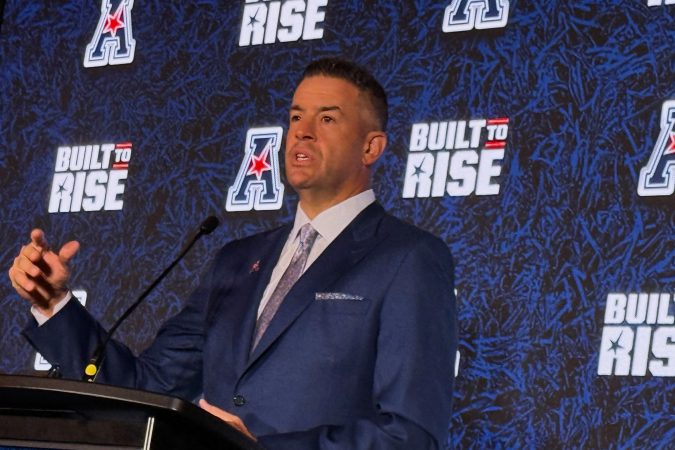
    On Friday, Temple head coach K.C. Keeler took the podium to address members of the media during the American Conference’s media day. Keeler was joined in St. Petersburg, Fla., by the other 13 American head coaches and Tim Pernetti, the conference’s commissioner.

    Here are some notable takeaways:

    ‘Sustainable framework’

    During his opening remarks, Pernetti focused heavily on the evolving nature of college sports and how the current landscape is failing athletes.

    “We have a responsibility to surround [student-athletes] with a sustainable framework, and right now, that’s not a thing,” Pernetti said. “We need to give them a clear path to earn degrees, become leaders, and win championships. Compensation and all these things we hear about — they need to live inside a broader mission.”

    Pernetti expanded on this by endorsing the Protect College Sports Act, a federal bill that would provide an antitrust exemption to the NCAA.

    If voted into law, this exemption would allow the NCAA to establish limits on athletes’ compensation, regulate transfers and eligibility, and prohibit coaches from departing from a program midseason, among other changes. More than 20 college conferences have publicly offered support for the bill, but the two wealthiest conferences — the Big Ten and SEC — have opposed it.

    “‘I’ve walked the halls in D.C. more than Frank Underwood did in House of Cards,” Pernetti said. “The American has a seat at the table. That’s the great news. We have a nationally respected voice, and I’m really humbled to be part of President Trump’s commission to save college sports. And at times, I’ve been the only non-autonomy commissioner in that room.

    “For too long, this industry has lived in this cycle of litigation and temporary fixes and uncertainty, like enough. It’s time for structure in college sports. The Protect College Sports Act is now front and center.”

    On Thursday, ESPN reported that the Senate is not expected to vote on the bill prior to Congress’ August recess, making it unlikely that a vote occurs prior to the midterm elections in November.

    Owls retain crucial starters

    A few hours later, it was Keeler’s turn to field questions from the media. His brief availability was more dedicated to the gridiron than the halls of Congress.

    Keeler is entering his second year at the helm. Last season, the Owls (5-7, 3-5 AAC) finished one game short of bowl eligibility. As Keeler pointed out though, the program is returning key players to nearly every position.

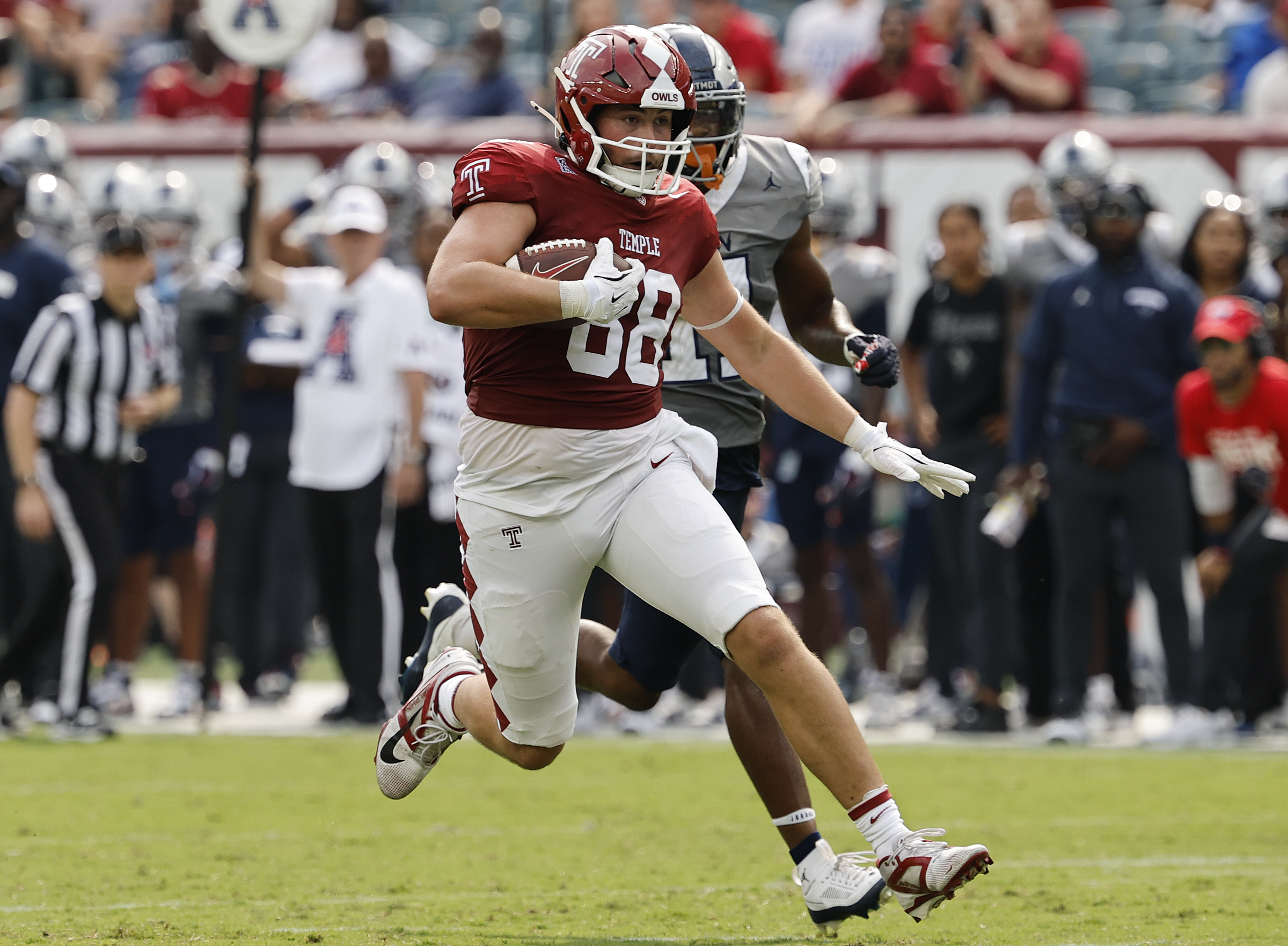
    “We kept every single one of our starters that was able to go in the portal, which is unheard of at our level,” Keeler said. “We had a number of guys that had major opportunities in the Power Four world, and when guys like [tight end] Peter Clarke and [offensive linemen] Giakoby Hills and Eric King turn down literally hundreds of thousands of dollars to stay at an institution because they love Temple, they love Philly, and they see where we’re going, it speaks volumes to the rest of the locker room.”

    One notable position that is not seeing a returning starter may be the most important: quarterback.

    Last season, the Owls were led by Evan Simon, who graduated this past spring. Keeler is now presiding over a quarterback battle between Penn State transfer Jaxon Smolik and Ajani Sheppard, who saw stops at Rutgers and Washington State before landing with the Owls this offseason. In the Cherry and White spring game, Smolik looked like the sharper passer.

    Another new name to watch is fifth-year senior running back Sam Brown V, who transferred from Rutgers. The La Salle College High alumni was sidelined with injuries during his time with the Scarlet Knights. He was formerly 247Sports’ No. 13 high school recruit in Pennsylvania in the class of 2022.

    Despite being approached by other schools, Temple tight end Peter Clarke decided to stay with the Owls.Yong Kim / Staff Photographer

    “You keep Sam healthy, Sam’s a Big Ten starting running back,” Keeler said. “I think we have enough depth that we can keep him healthy.”

    Temple opens its season against Rhode Island on Sept. 5 at Lincoln Financial Field. Then on Sept. 12, the Owls are slated to host Keystone state rival Penn State. Keeler is looking to make sure his team does not look past its initial opponent.

    “And if you worry about what’s beyond you, there’s a good chance that very talented Rhode Island team, that’s ranked No. 4 in the country preseason at FCS, they’re going to beat you,” Keeler said. “I’m going to make sure my players understand nothing else really matters but us playing Rhode Island.”