Blog

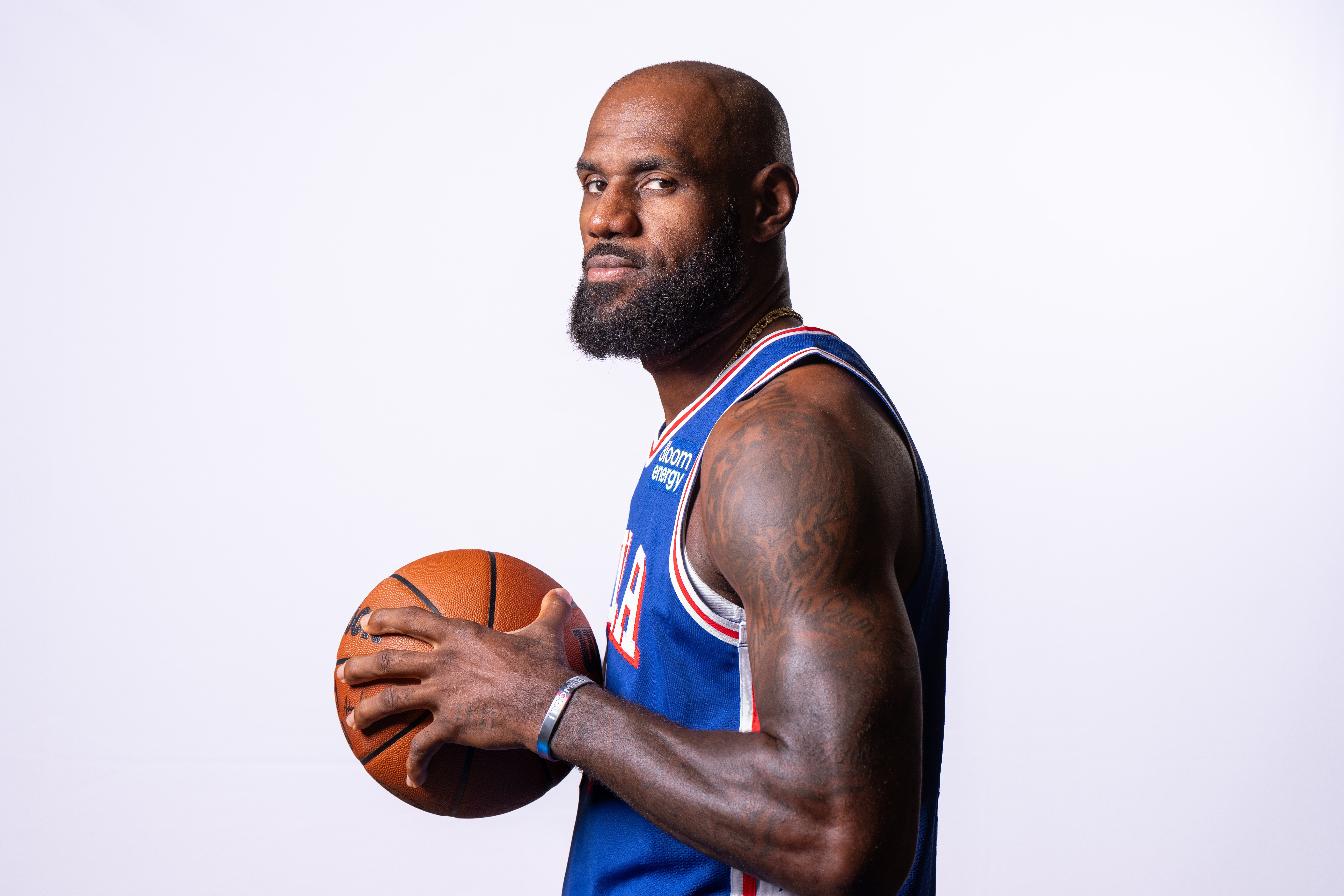
  • Yes, the Iverson-era black Sixers jerseys are back. Here’s what else LeBron James and Co. will be wearing.

    Yes, the Iverson-era black Sixers jerseys are back. Here’s what else LeBron James and Co. will be wearing.

    On Monday, the Sixers announced the team’s six-uniform rotation.

    One of the uniforms revealed is the Iverson-era black alternate uniform. Last season, the Sixers wore the “Hardwood Classic” uniforms to celebrate the 25th anniversary of the 2001 Finals team.

    Before the announcement, it was widely speculated that the Sixers were not bringing back the fan-favorite jerseys. Previously, the NBA had limited its teams to a five-uniform rotation, and classic uniforms were worn only to commemorate anniversaries. The inclusion of the black alternates infringes on both of these norms.

    The team also announced a new jersey patch partnership with Bloom Energy — a maker of off-grid electric plants.

    Here are the six jerseys the Sixers will wear this season:

    White ‘Home’

    It might be disingenuous to call the Sixers’ white uniforms the team’s “home” colors. A decade ago, it would be difficult to find an NBA team not wearing white at home. However, after Nike took over the league’s apparel, the number of uniforms per team skyrocketed. Many teams, including the Sixers, now look to wear their flashier uniforms in front of their home crowd.

    With the Sixers boasting six jerseys, expect white to be seldom worn at Xfinity Mobile Arena.

    Blue ‘Away’

    Like “Home,” the “Away” designation for the Sixers blue jerseys does not have much meaning. From the team’s release, the trademark jerseys do not appear to have undergone any change. In 2023, the team debuted an enhanced drop shadow on the uniform’s text.

    ‘Hardwood Classic’

    Following the landmark acquisitions of Jaylen Brown and LeBron James, Sixers fans had two more requests: for longtime public-address announcer Matt Cord to un-retire and for the throwback black alternate jerseys to come back. They got both.

    Cord, who retired in May after 28 years, announced earlier this month he will return for a final season. Now, the Sixers are officially bringing back their Iverson-era “Hardwood Classic” uniforms. In a release, the Sixers noted that the uniforms will be “worn later in the season.”
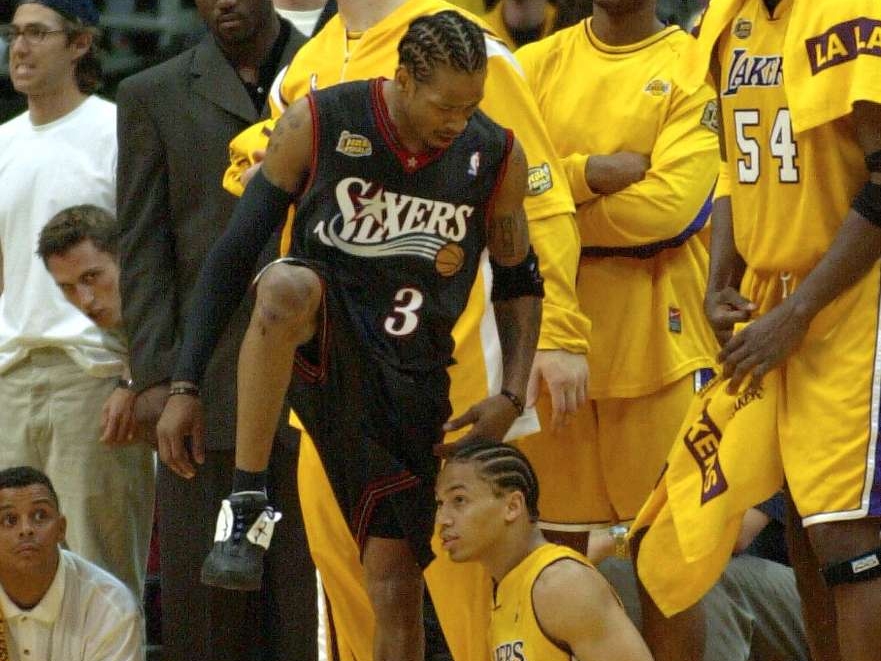
    Allen Iverson famously steps over Tyronn Lue in Game 1 of 2001 Finals.Jerry Lodriguss

    Specter

    The only new uniforms in the Sixers’ rotation are the team’s Specter uniforms.

    Eight of the NBA’s oldest and storied franchises received the new uniforms: the Sixers, the Boston Celtics, the Los Angeles Lakers, the New York Knicks, the Atlanta Hawks, the Golden State Warriors, the Sacramento Kings, and the Detroit Pistons.

    The minimalist uniforms feature various spray paint designs. The Sixers uniform includes gold lettering and three faded stars, representing those present on the team’s logo. Nike also released a collection of streetwear in the same style.

    “This collection represents the next evolution of our partnership with Nike, redefining how team identity and basketball culture are expressed across the league,” Michael Brady, the NBA’s Global Head of Merchandise Partnerships and Business Affairs, said in a release. “By connecting what athletes wear on and around the court with how fans express their passion for the game, the collection brings a new energy and a modern look to NBA fandom.”
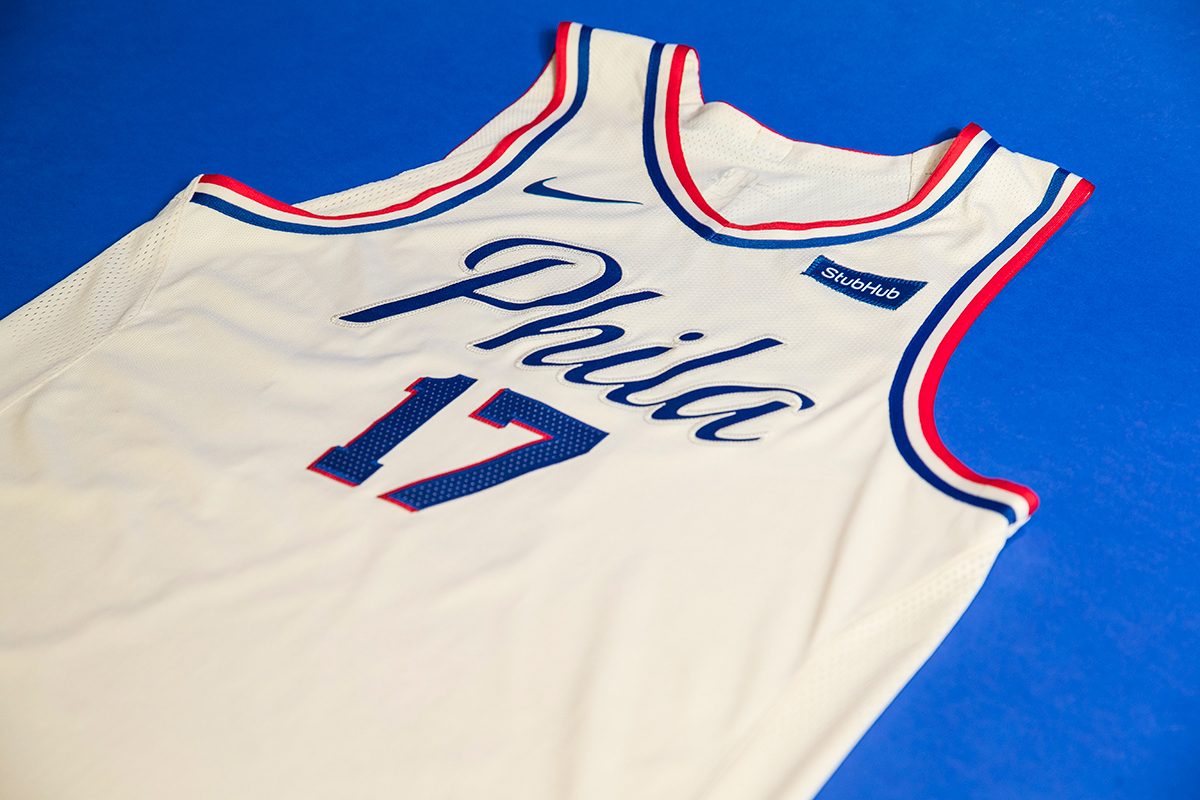
    The Sixers are reviving the “City Edition” uniform this season, made popular in 2017. PHILADELPHIA 76ERS

    City Edition

    The Sixers are bringing back the team’s 2017 City Edition uniforms in time for the nation’s 250th anniversary. The uniforms are inspired by the signing of the Declaration of Independence.

    Many social media users have described the uniforms as “cream-colored,” but they are actually the color of parchment paper, a nod to the United States’ founding document. The “Phila” emboldened on the jersey’s chest is written in signature style, similar to that of the founding fathers’ signatures.

    Statement

    The final uniforms in the Sixers rotation are the team’s red statement uniforms.

    The statement uniforms debuted in 2017 after Nike took the reins over from Adidas. The first iteration of the Sixers’ statement uniforms featured a cursive “Sixers” printed on the jersey’s chest. At the time, many social media users pointed out that the text appeared to read “Suxers.”

    Whether that misunderstanding changed the minds of Nike executives or not, the uniforms were changed to feature “Phila” in 2019. The uniforms have not changed since and have stayed in the team’s rotation.

    Some fans claim the uniforms are cursed as the team has suffered multiple playoff losses in them. Most notably, the Sixers were wearing their statement threads when the Toronto Raptors’ Kawhi Leonard drained a miraculous shot at the buzzer in Game 7 of the 2019 conference semifinals.

  • Congo’s Ebola outbreak tops 8,000 confirmed cases as disease remains out of control

    Congo’s Ebola outbreak tops 8,000 confirmed cases as disease remains out of control

    BUNIA, Congo — The number of confirmed cases of Ebola virus in Congo has surged past 8,000, as the country runs out of health workers to contain the deadly disease.

    Congo announced an outbreak on May 15, caused by the rare Bundibugyo virus, which has no known treatment or vaccine, and has struggled to contain it.

    The latest data from Congo’s health ministry released Sunday showed that 8,067 cases have been confirmed, with 3,901 deaths as of Sept. 26 across 63 health zones in seven of the country’s 26 provinces, with a fatality rate of more than 48%.

    “The continuously high crude case fatality ratio, and especially the continuously high rate of deaths occurring in communities, highlights the seriousness of the disease and the persistent challenges in timely case detection and access to early and adequate patient care,” the World Health Organization said in its latest report.

    It means that a large percentage of those infected were dying, without taking into account factors like delays in seeking help or hidden cases.

    The U.N. Office for the Coordination of Humanitarian Affairs said on Monday that the outbreak has begun to have an impact on other essential services in the hot spots as resources are mobilized toward fighting Ebola. According to OCHA’s report, routine primary healthcare services fell by 13% between April and June in Ituri province alone.

    “The indirect impact of the outbreak reflects both reduced health service availability — as a result of staffing and operational pressures — and reduced demand, as fear of infection and isolation discourages care-seeking,” OCHA said.

    Last week, WHO said that Congo was running out of health workers to contain the disease. Health workers have complained about delayed or missing payments, triggering several strikes. According to the Africa Centers for Disease Control and Prevention, 50 health workers have died since the outbreak was announced.

    Some areas have shown signs of improvement, with fewer confirmed cases in the past several weeks, including in Ituri province and Haut-Uele, but officials say the disease is spreading further in other areas, expanding its geographical reach.

    According to data from the Africa CDC, the current outbreak has outpaced the two-year West Africa regional outbreak in terms of spread in the same time. By week 19, the regional outbreak between 2014 and 2016 recorded 3,781 cases, while the current outbreak recorded 7,840. WHO said that it’s on track to surpass the regional outbreak, which killed 11,000 people.

    Containment efforts have been hamstrung by insecurity, displacement, a health workers’ strike, and intense population movements.

  • Trump administration asks Supreme Court to allow transgender medical care restrictions in prison

    Trump administration asks Supreme Court to allow transgender medical care restrictions in prison

    WASHINGTON — The Trump administration asked the Supreme Court on Monday to let it enforce, for now, restrictions on gender-affirming care in federal prison.

    The emergency appeal comes after lower courts blocked officials from immediately carrying out the policy adopted after an executive order from President Donald Trump.

    U.S. District Judge Royce Lamberth ordered the government to continue providing gender-affirming care like hormone therapy.

    The Trump administration argues that the policy was properly adopted and the judge overstepped. It halts surgeries, hormones, and social accommodations like wigs while allowing mental health therapy to continue.

    It was adopted after an executive order required the Bureau of Prisons to revise its medical care policies so that federal funds aren’t spent “for the purpose of conforming an inmate’s appearance to that of the opposite sex.”

    The government asked the high court to freeze Lamberth’s order while the lawsuit continues to play out, saying the Bureau of Prisons had “determined that sex-trait-modification surgeries, hormone interventions in general, and social accommodations could no longer be justified as treatment for gender dysphoria.”

    The agency said in 2025 that it was providing hormone therapy to more than 600 inmates.

    The bureau doesn’t dispute that gender dysphoria can cause severe side effects, including depression, anxiety, and suicidal thoughts, Lamberth wrote. The Washington-based judge was nominated to the bench by President Ronald Reagan.

    A divided appeals court panel left the order in place.

    ACLU attorneys for the inmates said the policy is “a direct threat to the well-being of transgender people in federal custody and an open violation of their fundamental rights,” and withholding necessary gender-affirming healthcare constitutes cruel and unusual punishment.

    The conservative-majority Supreme Court has previously upheld state laws banning certain medical treatments for transgender youth, and restricting sports participation by transgender athletes in women’s sports.

    It has also handed down shorter term decisions allowing the Trump administration to move ahead for now with other policies rolling back protections for transgender people serving in the military and holding a passport consistent with their gender identity.

  • A Delco firefighter was sentenced to house arrest for calling a woman the N-word during an argument

    A Delco firefighter was sentenced to house arrest for calling a woman the N-word during an argument

    A former assistant volunteer fire chief in Delaware County was sentenced Monday to 23 months of restrictive probation for calling a Black woman the N-word during what he described as a “road rage encounter” in 2024.

    John Romano, 48, must serve the first seven months of his sentence on house arrest, according to a ruling from Judge Margaret Amoroso. He also must undergo anger management and racial sensitivity training, and have no further contact with the victim.

    Amoroso convicted Romano earlier this year of ethnic intimidation, terroristic threats, and related crimes during a bench trial.

    During Monday’s proceeding, First Assistant District Attorney Kristin Kemp asked the judge to send Romano to jail for up to two years.

    “I don’t doubt he’s a racist,” the judge said. “But being a racist, in and of itself, is not a crime.”

    Amoroso said she was focusing more on threats Romano made to the victim, which included taking a picture of her license plate and telling her he would “take care” of her at her home.

    Romano, the former assistant fire chief of the Sharon Hill Fire Company, encountered the woman on Hook Road in Darby Township in November 2024, while he was using a forklift to unload Christmas trees. His forklift was blocking the road, the woman testified at trial, causing a traffic jam of irritated drivers who were honking their horns.

    After the car in front of hers squeezed through a small gap near the forklift, the woman said, Romano got out of the forklift and “rushed” to her passenger window. Romano then called her the N-word. He later told Darby Township officers who responded to her 911 call that she was “a wild animal” and said he was “tired of dealing with them,” according to body camera footage played in court.

    In a statement to the judge, Romano said Monday that he never intended to threaten the driver, and expressed frustration that he was “being prosecuted over words.” He took a photo of her license plate, he said, because she struck his forklift and he was afraid she would drive off without exchanging insurance information.

    Kemp, the prosecutor, said Monday that Romano had demonstrated a pattern of violent, bullying behavior throughout his life, including an arrest in 2006 for ethnic intimidation in a similar incident and a 2013 gun-possession conviction for which he spent two years in state prison.

    “This isn’t someone who had a bad day and mouthed off about his beliefs,” Kemp said. “This is someone who seeks others out to put them in fear, whether with a weapon or his hands.”

    Romano’s attorney, Christopher Boggs, said the case had been blown out of proportion.

    “I have never understood the level of attention this case received,” he said.

    Unlike other people charged with ethnic intimidation, Romano had made no effort to “hunt or stalk” someone, Boggs said, drawing comparisons to crosses burned on Black families’ lawns.

    Two people close to Romano spoke on his behalf, saying, despite his strong personality, he is dedicated to his community through his volunteer firefighting, as well as other service he’s provided during floods and snow storms.

    But Amoroso made her feelings clear.

    “Maybe you’re a great guy to the people who don’t piss you off,” she told Romano. “But you’re a bully, and that’s what you did: You threatened [the victim] for pissing you off.”

  • Trump administration lowers fuel economy standards, critics say at a significant environmental cost

    Trump administration lowers fuel economy standards, critics say at a significant environmental cost

    DETROIT — The Trump administration on Monday released new fuel economy standards that relax regulatory requirements for automakers to control pollution from gasoline-powered cars and light trucks. The new rules were released shortly after President Donald Trump rejected an Iranian proposal to open the Strait of Hormuz, sending oil prices soaring.

    The change furthers Trump’s promise to revoke policies that encouraged or created incentives for the production of electric vehicles and, ultimately, will expose Americans to more planet-warming pollution from vehicles.

    Mileage standards, known as Corporate Average Fuel Economy, or CAFE, requirements, have been implemented since the 1970s energy crisis, and set out how far new vehicles need to travel on a gallon of gasoline. Over time, automakers have gradually improved their vehicles’ average efficiency.

    The Department of Transportation and the National Highway Traffic Safety Administration estimated that the finalized standards would correspond to a combined industry fleetwide average of roughly 34.9 miles per gallon for passenger cars and light trucks in the 2031 model year. That’s up from 30.1 miles per gallon for model year 2024, but down from a projected 50.4 miles per gallon in 2031 under rules put in place by the Biden administration.

    “Thanks to President Trump’s leadership, we have finally ended the illegal mandate that forced automakers to produce more expensive electric vehicles that American families didn’t want,” Secretary of Transportation Sean Duffy said in a statement touting vehicle affordability.

    NHTSA had projected last December that the new standards would hover at roughly 34.5 miles per gallon.

    The news comes amid ongoing tensions as the war in Iran persists, with Trump refusing a deal with Iran to open the strait as recently as Saturday, impacting the world’s oil supply.

    Environmental groups concerned over rollback

    News of the revised standards immediately drew rebukes from environmentalists.

    The DOT said Monday that the rule would cut yearly oil consumption in 2050 by about 1.3 billion barrels as compared to yearly oil consumption in 2024.

    But when the 2024 standards went into effect, NHTSA estimated they would save 14 billion gallons of gasoline from being burned by 2050. The agency also said that while new fuel-efficient vehicles cost more up front, savings on gasoline over the lifetime of the car or truck would more than make up for that.

    Environmental groups estimate now, without stricter standards, cars could produce 22,111 more tons of carbon dioxide per year than under the Biden-era rules in 2035.

    The rule also translates to an extra 90 tons a year of deadly soot particles and 4,870 additional tons a year of smog components such as nitrogen oxides and volatile organic compounds emitted into the air in coming years, experts say.

    Transportation already accounts for much of total U.S. greenhouse gas emissions that warm the planet: 28% as of the last estimate in 2022.

    It “ignores the feasibility of clean technology and the millions of fuel-efficient cars already on the road,” Dan Becker, director of the Center for Biological Diversity’s Safe Climate Transport Campaign, said of the rule.

    Since taking office, Trump has also pulled back auto tailpipe emissions rules, repealed fines for automakers that do not meet federal mileage standards, and terminated consumer credits of up to $7,500 for EV purchases.

    The president has repeatedly pledged to end what he falsely calls an EV “mandate,” referring incorrectly to former President Joe Biden’s target that half of all new vehicle sales be electric by 2030. No federal policy has mandated auto companies to sell EVs.

    According to data from Cox Automotive, EVs accounted for 5.7% of total new-vehicle sales in August, down from 7.4% for all of 2025.

    Katherine García, director of the Sierra Club’s Clean Transportation for All campaign, vowed the environmental group would fight the rule.

    “Less fuel-efficient cars mean more gas burned, spending more at the pump, and dirtier air in our communities,” Garcia wrote in a statement.

    The state of the industry

    Automakers and industry groups have said the new rules will increase Americans’ access to the full range of gasoline vehicles they need and can afford.

    “NHTSA made the right call to better align fuel economy standards with the law and current market conditions,” John Bozzella, president and CEO of the Alliance for Automotive Innovation, which represents the domestic auto industry, said in a statement. He said the previous standards “effectively required a switchover to electric vehicles that was out of step with market realities and customer demand. Today’s final rule is an appropriate course correction.”

    “What the industry needs is long-term regulatory stability that includes balanced, durable, and achievable fuel economy standards that continue to reduce emissions and improve fuel economy,” Bozzella added. “This is the formula for preserving consumer vehicle choice and keeping the U.S. auto industry globally competitive.”

    A spokesperson for Ford Motor Company, maker of the top-selling pickup truck, the F-150, said: “We appreciate Secretary Duffy and the Administration’s work to align regulations with market realities. As we evaluate the final rule’s full impact on our business, we’ll continue working with the Administration to build a strong American auto industry.”

    A General Motors spokesperson said in a statement the company supports the goals of the rule “and its intention to better align fuel economy standards with market realities.”

    Stellantis also welcomed the changes.

    “These standards will allow us to offer our customers the freedom to choose from a range of vehicles and powertrains that meet their needs, from brands they love and trust,” a Stellantis spokesperson said in a statement.

    Trump wrote on his Truth Social media account Saturday that the less stringent mileage requirements would “take the waste out of building cars in America” and save families “thousands on a new, beautiful and safe car,” while boosting auto production in the U.S.

    The DOT reiterated on Monday that the changes will cut the average cost of a new vehicle by $1,300, and save Americans $138 billion over the next five years.

    Americans, however, are spending more on gas as Washington’s war with Iran disrupts the global flow of fuel; gasoline prices averaged $4.47 on Monday, according to the AAA motor club, up from $3.13 a year ago. The rising cost of oil weighed on U.S. stocks to start the week.

    “Trump is tanking sensible mile per gallon standards at the worst possible time for consumers, who are getting hit with sky-high prices at the pump,” the Center for Biological Diversity’s Becker said. “Consumers will pay the price for these reckless rollbacks while Trump’s Big Oil and Big Auto buddies reap the short-term profits.”

    Experts have also said that less stringent rules do not necessarily translate to more consumer purchases of new vehicles that may have more safety features.

    The average new car in America sold for $50,089 in August, crossing over the $50,000 line for the first time since last December, according to Kelley Blue Book data.

  • A rural transgender story of love and acceptance unfolds on the Avenue of the Arts

    A rural transgender story of love and acceptance unfolds on the Avenue of the Arts

    A rural Pennsylvania tableau is laid out across a stage on South Broad Street for the Wilma Theater’s latest production.

    There are fresh green cornstalks in the foreground, and the sky glows violet behind them as the two main characters of Horsegirl & Cowdaddy take the stage.

    Horsegirl, played by Samora de la Brisa, is a trans woman in her 30s, living and working near a farm in an unnamed southern Pennsylvania town with Cowdaddy, her father, played by Mount Airy’s Lindsay Smiling.

    Horsegirl, it turns out, told her father she was trans years earlier, and while he’s still a bit confused by pronouns, his daughter’s identity is not an issue.

    “I thought she was just, er, you know, gay,” Cowdaddy says in a scene, explaining to his daughter’s love interest the day Horsegirl came out to him. “But then she said, she told me, ‘I’m a girl,’ er, and I thought, ‘well.’”

    The Wilma Theater’s production of “Horsegirl & Cowdaddy” runs through Oct. 4.JOHANNA AUSTIN

    Writer DJ Hills, a Queen Village resident who grew up in rural Western Maryland, said one of the goals for their play, which had its world premiere at the Wilma on Friday, was to show that rural America isn’t always a hellscape for queer people.

    “I don’t think that there was ever a moment of my life when society didn’t see me as queer in some way,” Hills, 31, said at Wilma on Thursday. “I was really cared for by my family, even when they didn’t always have the language or an understanding of who I was; there was always a lot of care, my grandmothers in particular.”

    A 2019 report by the Movement Advancement Project, a Colorado nonprofit focused on LGBTQ equality and democracy, found that approximately 16% of trans Americans live in rural areas. The nonprofit said this population faces unique challenges, including higher poverty rates and “increased visibility.”

    “There’s a present-day myth that trans people can only find happiness in metro areas and cities,” said Samora de la Brisa, who is trans. “We are everywhere. We exist in multitudes.”

    Samora de la Brisa (far left), starring as Horsegirl, Lindsay Smiling (center), as Cowdaddy, and Ni-Ni (right), as Bethel, go over staging before their third preview inside the Wilma Theater on Sept. 24.Aidan T. Gallo / Staff Photographer

    In 2023, The Inquirer spent several months chronicling the lives of two transgender women making their way in rural Dauphin County. One woman — Stephanie Fritsch — wanted to stay there. The other, Billie Jean Williams, wanted to get to Philadelphia or another city.

    “You know, I want to be happy, she wants to be happy, and I want people to be happy with their lives. That’s pretty simple, right?” Williams told The Inquirer. “I don’t know what happened in America that made that so difficult.”

    In the play, Horsegirl faces a difficult decision about where to live, whether to follow a love interest across the country or stay in rural Pennsylvania with her father. Cowdaddy struggles with past losses and, possibly, future ones, worrying about how his daughter would be treated in a new place.

    “Folks here know her,” Cowdaddy says.

    Smiling, who was recently named artistic director at the Wilma, said he empathized with the character Hills created.

    “He’s got his issues but [is] a very loving father, a patient father doing the best you can for his kid,” Smiling said. “He’s human, just like us, and one of the wonderful things about the play is there are no villains.”

    DJ Hills stands for a portrait on the stage inside the Wilma Theater on Sept. 24. Hills’ production “Horsegirl & Cowdaddy” premiered on Sept. 22 and will last until Oct. 4.Aidan T. Gallo / Staff Photographer

    Hills said Horsegirl & Cowdaddy was inspired by a simple conversation they had with their father one afternoon in Greencastle, Franklin County, during the pandemic. While the play will be heading to New York City next year, Hills would like to have a run in Pittsburgh and, perhaps, rural settings.

    “You can’t call yourself an American playwright if you’re only interested in New York, speaking to New York audiences,” they said.

    “Horsegirl & Cowdaddy” plays through Oct. 4 at the Wilma Theater.

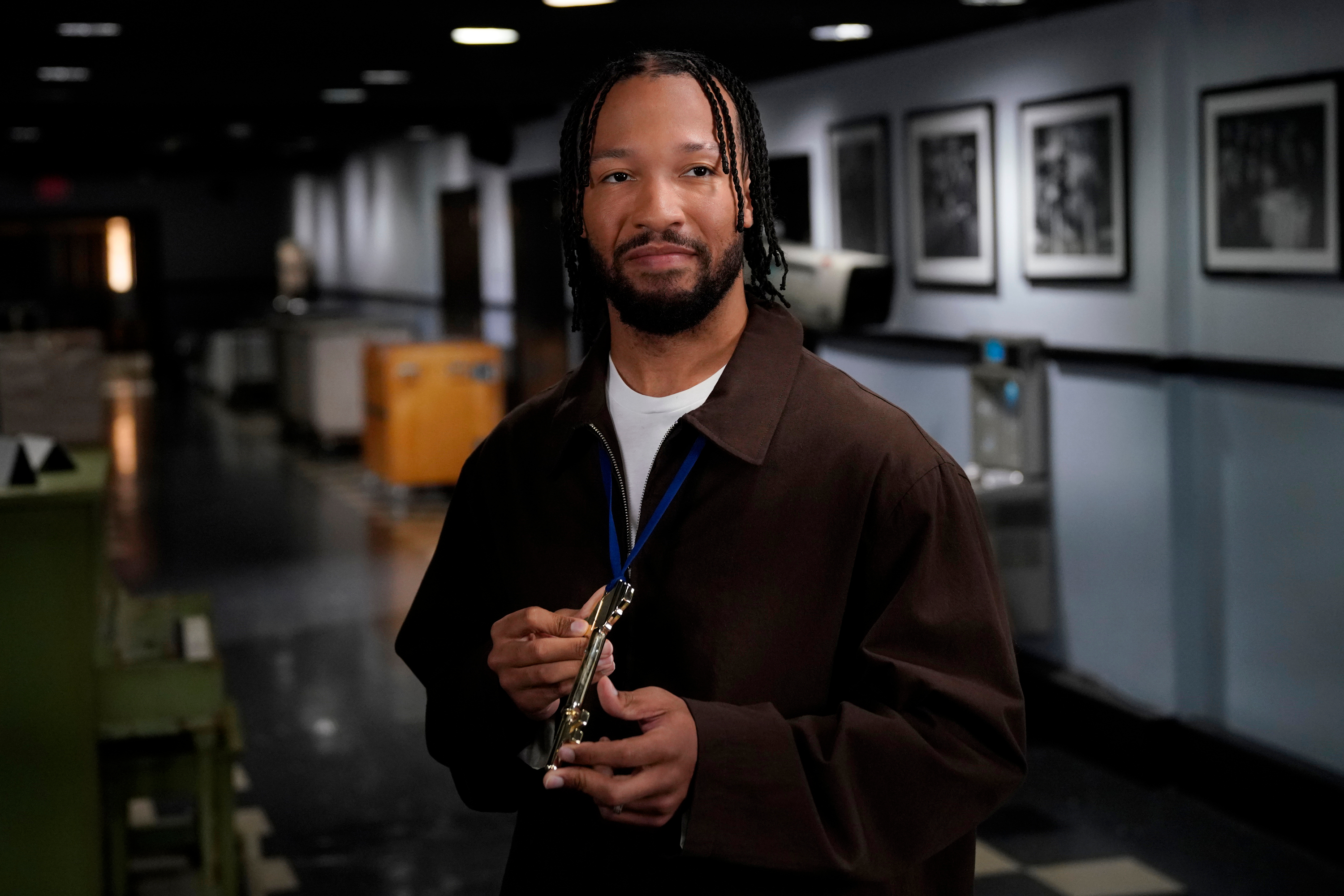
  • Jalen Brunson revels in his moment as the latest (and hilarious) host of NBC’s Saturday Night Live

    Jalen Brunson revels in his moment as the latest (and hilarious) host of NBC’s Saturday Night Live

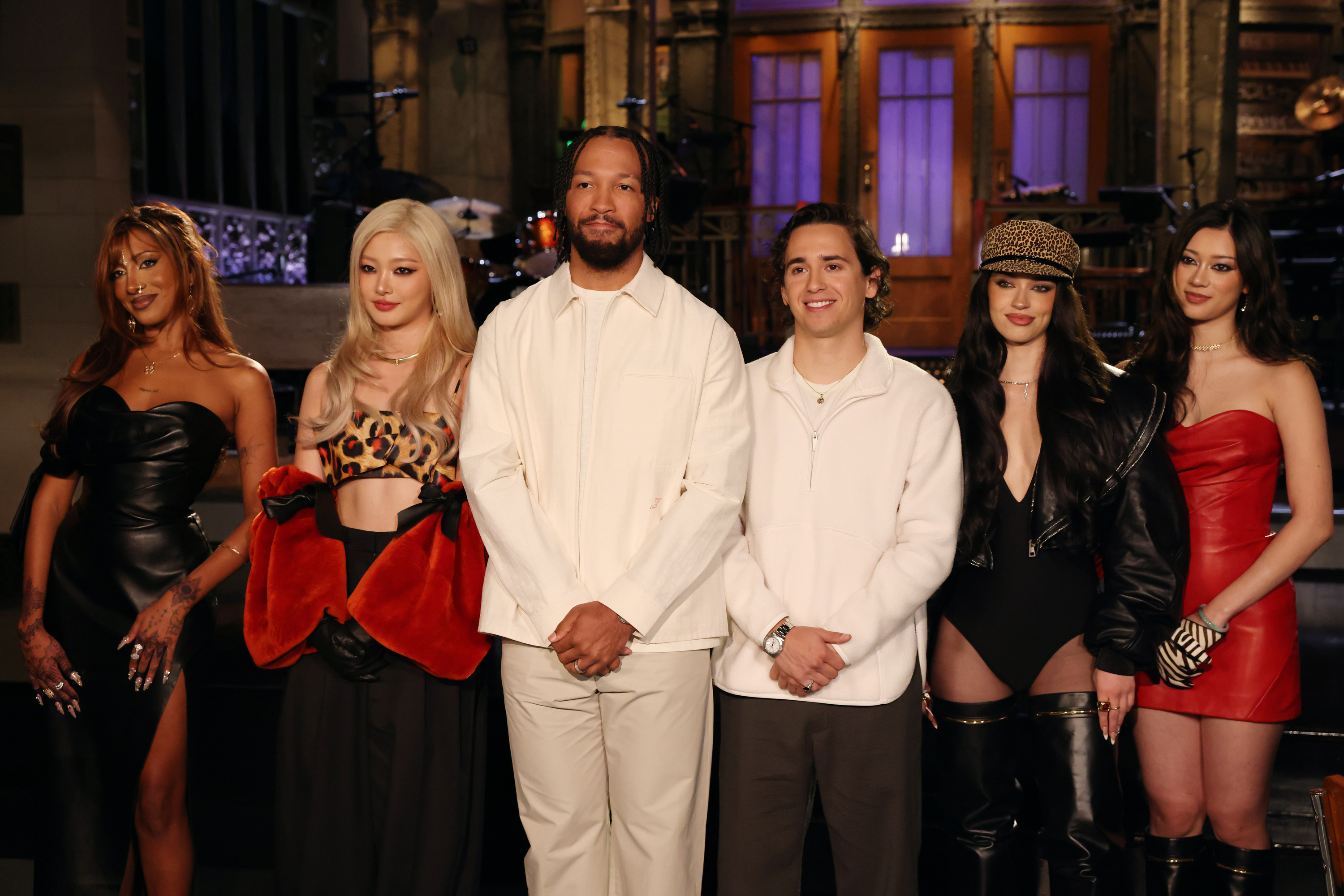
    Josh Hart had one question when Jalen Brunson opened the floor during his Saturday Night Live monologue: Was the $113 million his former Villanova teammate passed up to stay with the Knicks still up for grabs?

    Hart and Mikal Bridges later joined Brunson onstage, reuniting Villanova’s championship trio in Studio 8H.

    Brunson hosted Saturday’s season premiere three months after leading the Knicks to their first NBA championship since 1973. Hart and Bridges were seated in the audience with teammates Karl-Anthony Towns and O.G. Anunoby when Brunson invited questions.

    Towns asked whether he could foul out of SNL. Anunoby reminded Brunson of a missed shot that Anunoby tipped in to win Game 4 of the NBA Finals. Bridges wanted Brunson to acknowledge his long arms, then lamented that he would never be able to fly.

    Hart’s $113 million joke referred to the extension Brunson signed in 2024. The four-year, $156.5 million deal was roughly $113 million less than a five-year extension he could have sought by waiting until 2025. After answering Hart, Brunson asked why Hart had poked him during a Knicks celebration.

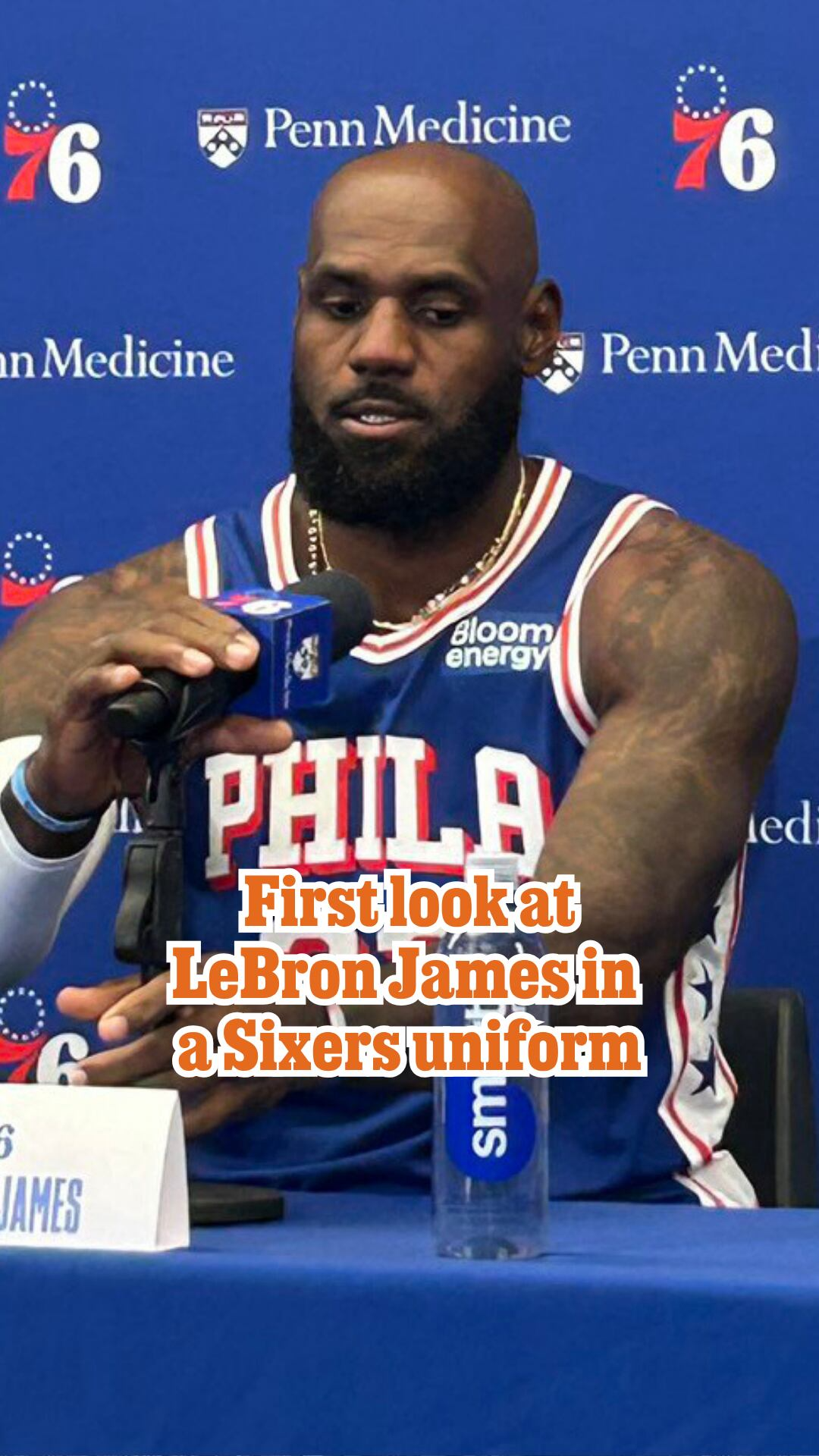
    First look at LeBron James in a Sixers uniform
    Video: First look at LeBron James in a Sixers uniform

    Hart’s explanation was simple: “Because it was funny.”

    The three former Wildcats won the 2016 national championship together. Brunson and Bridges added another Villanova title in 2018, after Hart had left for the NBA.

    A decade after their first championship together, all three were starters on the Knicks’ title run.

    Brunson opened the monologue with a promise about his hosting performance.

    Former Villanova star and New York Knicks guard Jalen Brunson was the host of “Saturday Night Live” this past week.Rosalind O'Connor

    “The first three quarters of the show are going to be god-awful,” he said. “The last sketch is going to be amazing.”

    Basketball followed him into his sketches. In “Office MVP,” Brunson played a coworker who kept finding reasons for one more attempt to toss a wrapper into a trash can. “North High” put him on a school basketball team in a High School Musical parody.

    The show found other ways to bring Brunson’s basketball life into the episode. In “Office MVP,” a meeting stalled when his character missed a shot into a trash can. He insisted there was still one second on an imaginary clock, then kept resetting it for another attempt.

    When a coworker thought he had run out of crumpled wrappers, he produced a basket full of them. Eventually, he revealed that the man struggling with an office wastebasket was Brunson.

    “North High” gave him a different opponent. Playing a transfer student in a High School Musical parody, Brunson joined a basketball team led by a student who expected to be the star. Brunson outplayed him on the court. When the student turned to singing, Brunson showed him up there, too, and won over his girlfriend.

    The night’s final sketch, “Old Friend,” brought another Philadelphia basketball connection into view.

    Brunson played himself in a locker room as Kenan Thompson approached him, claiming to be a coach from his childhood. Another stranger claimed to be his father. Brunson rejected that story with a joke about his real father’s bald head.

    His father, Rick Brunson, is an assistant coach with the Knicks and a former Temple guard. He played for John Chaney alongside Aaron McKie and Eddie Jones and entered Temple’s athletics Hall of Fame in 2011. The Temple connection stayed beneath the sketch’s joke, just as the Villanova connection did during the monologue.

    Thompson had appeared earlier in the show as Stephen A. Smith, delivering a lengthy apology for doubting Brunson when he signed with New York. Brunson cut him off before taking questions from his teammates.

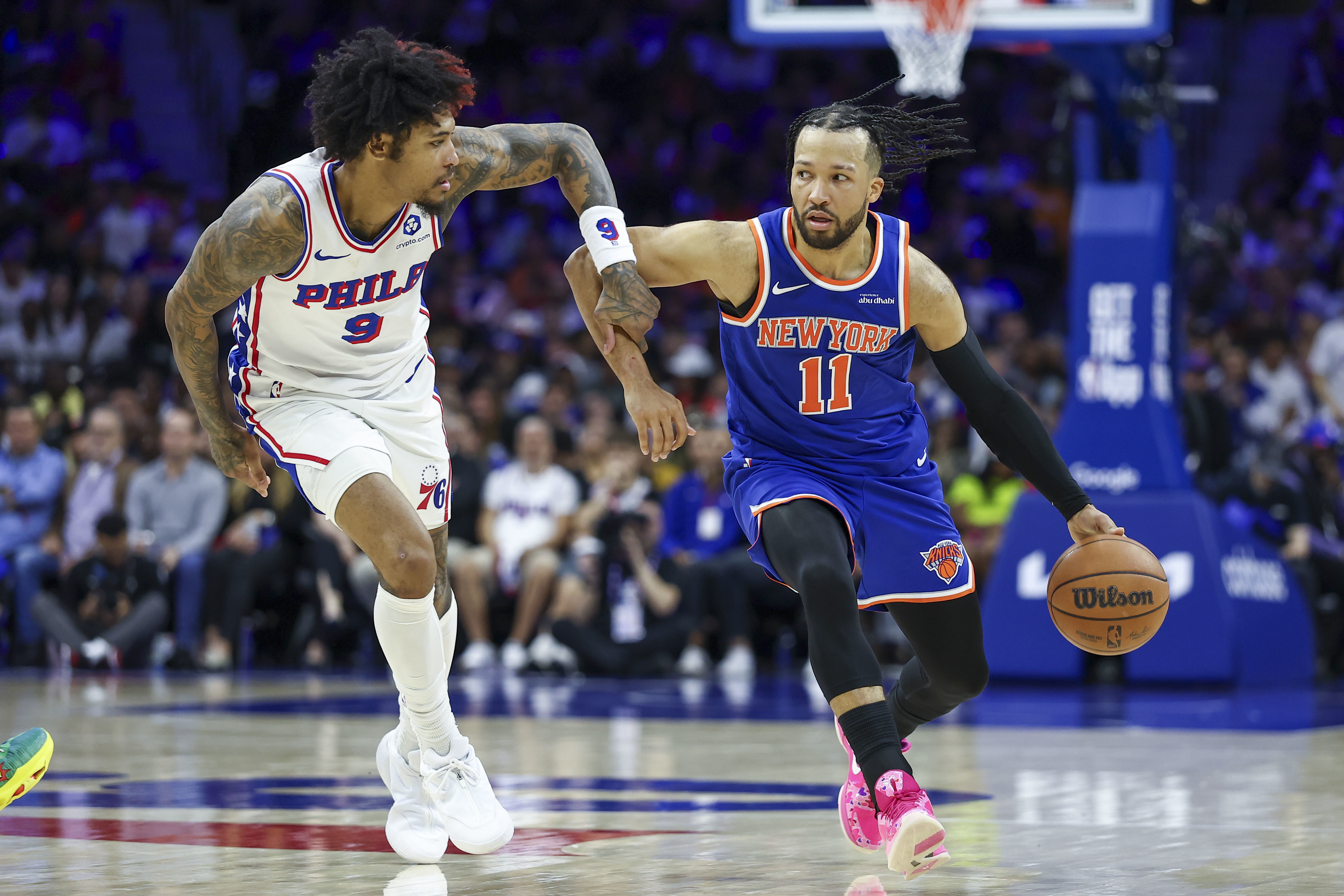
    Jalen Brunson, seen here battling with the Sixers’ Kelly Oubre, led the Knicks to the NBA title. Monica Herndon / Staff Photographer

    He also looked ahead to returning to Madison Square Garden, joking that it was the spot where Taylor Swift and Travis Kelce had gotten married.

    Brunson became the fifth NBA player to host SNL, following Bill Russell, Michael Jordan, Charles Barkley, and LeBron James. James was the last active NBA player to host in 2007.

    For Brunson, the television appearance came just before another opening night: The Knicks begin their title defense against the Sixers on Oct. 20 at Madison Square Garden.

  • Senate Republicans make a final legislative push ahead of the midterms

    Senate Republicans make a final legislative push ahead of the midterms

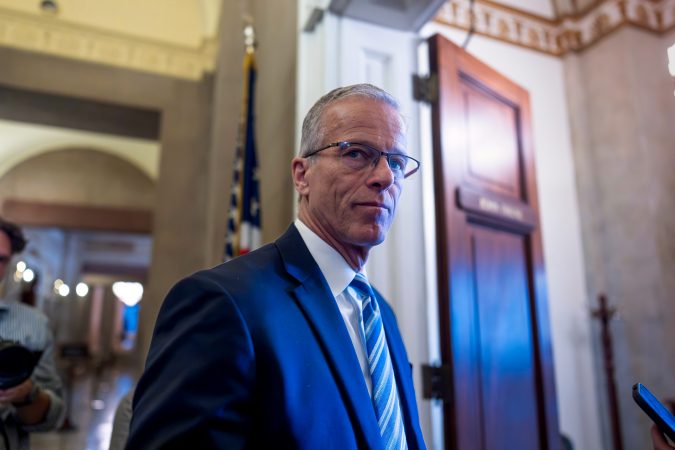
    Barely five weeks before November’s midterm elections, Senate Republicans are rushing to pass more legislation that they can run on as polling shows Democrats within striking distance of retaking the chamber.

    The Senate is expected to vote on legislation this week meant to protect consumers from high electricity costs caused in part by the data center building boom. And some Republicans are pushing to take up other bills to address voters’ frustrations with the cost of living.

    Senate Majority Leader John Thune (R., S.D.) decided against sending senators home early last week to campaign, opting instead to keep the Senate in session to try to bolster Republicans’ legislative record. This week is the last that the Senate is scheduled to be in session before Election Day.

    Republicans are confronting the once-unthinkable prospect that they could lose the Senate. Democrats are running competitively even in some states that President Donald Trump won by double digits in 2024, giving the party a shot at picking up the four seats they need to recapture the chamber.

    Almost no Republican is in more danger of losing his seat than Sen. Jon Husted (Ohio), who introduced the data center bill that Republicans are set to take up.

    Former Democratic senator Sherrod Brown, who is challenging Husted, has spent millions of dollars on ads attacking Husted over his support for data centers, which the ads blame for “causing electric bills to spike by thousands of dollars.” The National Republican Senatorial Committee warned in a memo last month that the ads are effective, describing data centers as an “anchor hanging around Husted’s neck.”

    Sixty-nine percent of likely voters in Ohio say data centers — enormous warehouses filled with servers that power the artificial intelligence boom and the rest of the internet — are mostly bad for home energy costs, according to a Bowling Green State University/YouGov poll conducted this month.

    Husted has defended his record on data centers and criticized Brown for supporting them in the past. He described his bill as a way to “show the American people that we’re serious about driving down electric prices and making life more affordable for them” — and he almost dared Democrats to block it.

    “If Senate Democrats want to be the lone obstacle to passage, then shame on them,” he told reporters. “That shows that they don’t really care about affordability.”

    It is not clear whether Husted’s bill will pass.

    The House approved it overwhelmingly, but Sen. Martin Heinrich (D, N.M.) blocked Husted from fast-tracking its passage this month, arguing that it did not go far enough. Heinrich sought to pass his own bill to force data centers to shoulder the costs of upgrading the electric grid, which Republicans blocked.

    Husted’s bill does not take full effect for two years and would not bring down electricity prices before the midterms. Some Democrats have argued that it would do little to address affordability at all.

    “Senator Husted’s bill is a fraud,” Senate Minority Leader Chuck Schumer (D., N.Y.) told reporters last week. “It’s voluntary. No company has to do it.”

    Republicans say Democrats are just trying to deny them victories. Sen. Bernie Moreno (R., Ohio) accused Democrats of blocking Husted’s bill “so they can just put up another TV ad to say that electricity prices are high so that they can win an election.”

    Senate Republicans have spent much of the past two weeks working to pass legislation from Sens. Ted Cruz (R., Texas) and Maria Cantwell (D., Wash.) to overhaul regulation of college sports. Cruz has argued the bill is crucial to “protect an American institution that millions of people love,” but some Republicans have groused that it is hardly the most pressing issue for the party to tackle right before the midterms.

    “With gas at over $4 a gallon, a persistent war with Iran, $40 trillion in debt, the Senate has decided that the most urgent thing now is to dictate how college sports are run from Washington,” Sen. Rand Paul (R., Ky.) said on the Senate floor.

    Sen. John Kennedy (R., La.) said he was prepared to support the bill if he secures an amendment vote but argued it is not a priority for voters, describing it as a way “to make the football coaches happy.”

    “I haven’t met a single person on the campaign trail, when they lie down to sleep and can’t, who are worried about the football coaches,” Kennedy told reporters.

    Husted is not the only Republican senator facing a tough race who has pushed to pass legislation that can be campaigned on before heading home.

    Sen. Susan Collins (R., Maine), who is seeking a sixth term in a Democratic-leaning state, has pressed Senate Republican leadership to take up a bipartisan bill to force insurers to cap the cost of insulin at $35.

    Another vulnerable Republican, Sen. Dan Sullivan (Alaska), tried to pass legislation last week meant to protect salmon in his state. He was blocked by Sen. Ed Markey (D., Mass.), who said he needed more time to seek feedback from fishermen in his state.

    Husted and other Republicans are campaigning on the tax and domestic policy bill that Trump signed into law last year, which cut taxes on tips and overtime. But some Senate Republicans have pushed for months to do more to address voters’ affordability concerns.

    Sen. Josh Hawley (R., Mo.) said he had urged Senate leadership to take up the insulin bill, along with legislation to suspend the federal gas tax and other bills to make life easier for working families.

    “My view is that ought to be our sole focus,” Hawley said. “If we’re not going to do that, it’s not clear to me what we’re doing here.”

    Rep. Ashley Hinson (R), who is facing a tight race for an open Senate seat in Iowa, last week called on the House to return to Washington to vote on suspending the federal gas tax as well as other steps to reduce fuel prices. The House adjourned earlier this month and has no plans to return before Election Day.

    Thune has faulted Democrats for obstructing his party’s agenda. Republicans and Democrats have spent months negotiating over legislation to overhaul the federal permitting process, which could bring down energy costs by making it easier to build power lines and other infrastructure. Thune said the Senate could take up such a bill before the midterms if the two sides were to reach a deal, but he acknowledged Thursday that it would not happen, which he blamed on Democrats.

    “While they may acknowledge the need for permitting reform, what they really care about is denying Republicans another legislative win” ahead of the midterms, Thune said on the Senate floor.

    Sen. Sheldon Whitehouse (R.I.) and Heinrich, the Democrats leading permitting negotiations, said Friday that they wanted to give senators more time to review the legislation and warned that trying to pass it before the midterms could kill the bill.

    “We are talking about major changes to how America builds energy and infrastructure,” they said in a statement. “Getting that right has to matter more than election-year deadlines.”

  • New Montco group wants to protect you from getting scammed

    New Montco group wants to protect you from getting scammed

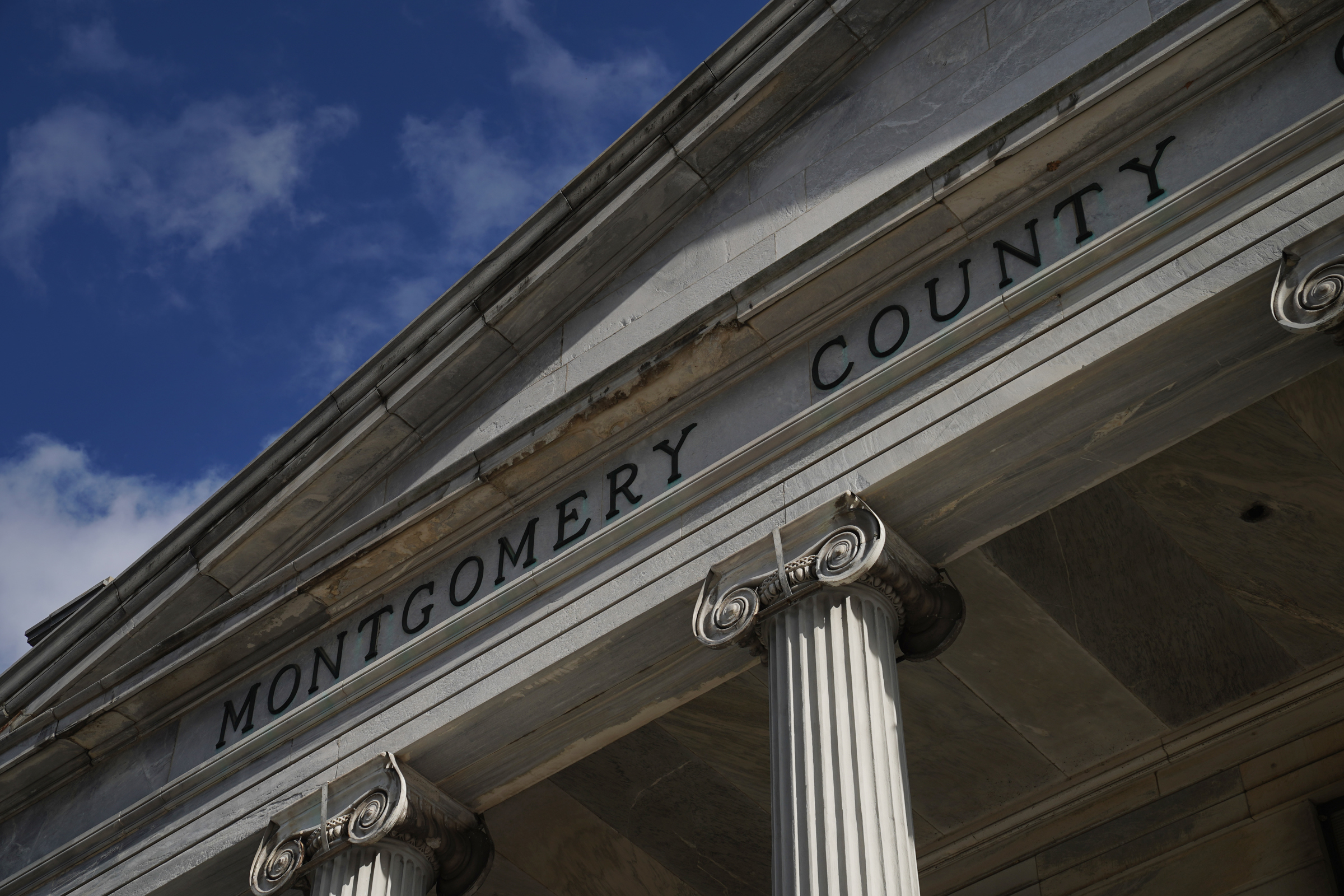
    Montgomery County officials are starting a new consumer protection collaboration and taking on cash-advance apps in one of its first cases.

    Montgomery County District Attorney Kevin R. Steele and the Montgomery County Board of Commissioners announced the effort Monday, saying that the solicitor’s office and district attorney’s office would work together to investigate issues that impact the finances, health, and well-being of residents.

    “When companies engage in unlawful or deceptive conduct that harms our residents, we will use every available tool to hold them accountable,” Steele said in a statement.

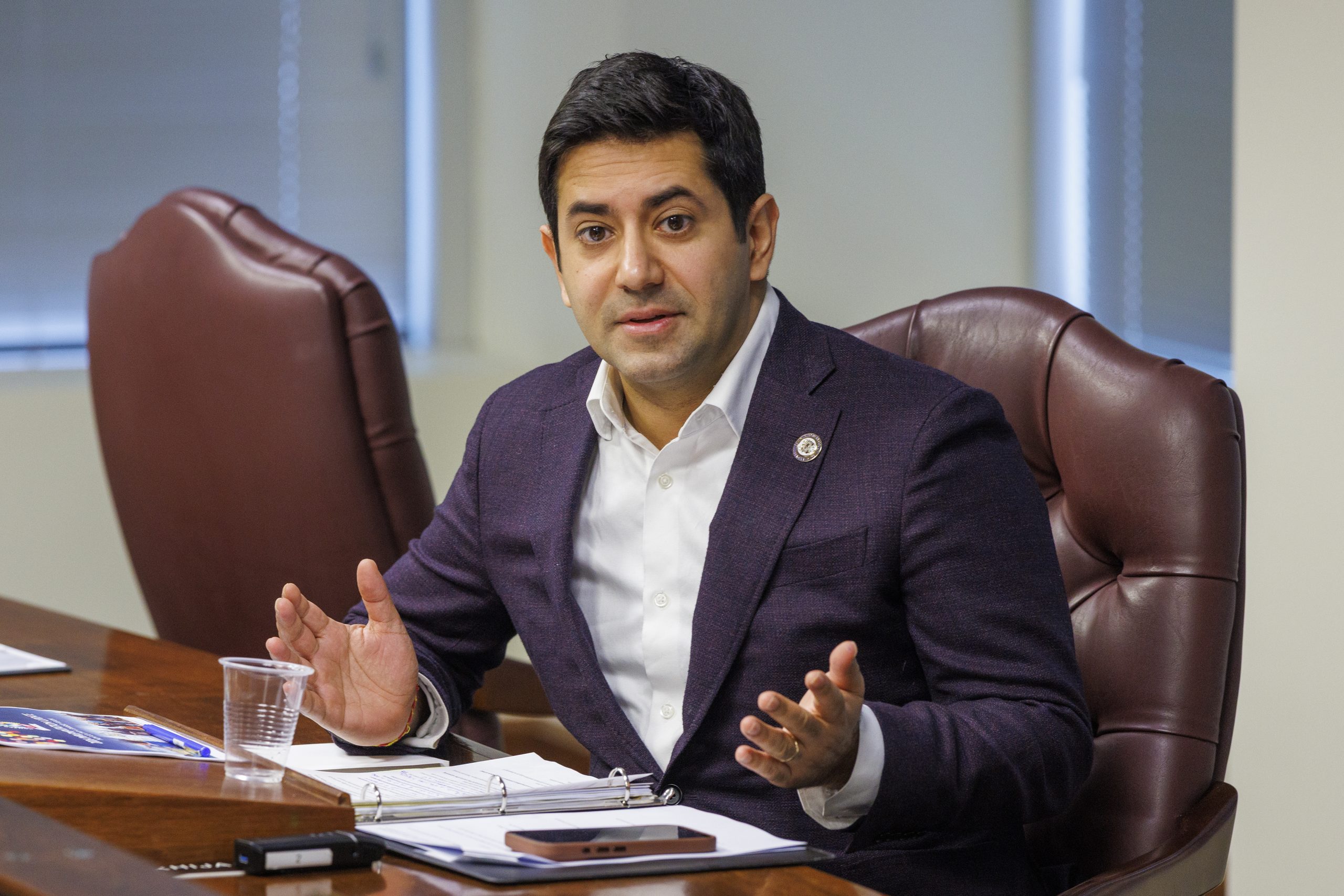
    “This is the first long-term partnership on consumer protection that we’re aware of,” Montgomery County Commissioner Neil K. Makhija said in an interview. He added that it is particularly important given continued economic uncertainty.

    “People are struggling to cover everyday needs,” Makhija, a public interest attorney, said. “Some companies see that and they see an opportunity to make a profit.”

    Montgomery County Commissioner Neil K. Makhija says digital lending apps have taken advantage of Pennsylvanians who are struggling to make ends meet.Alejandro A. Alvarez / Staff Photographer

    Some digital lending apps are among those companies, according to Montgomery officials.

    Traditional payday lending involves taking out a short-term, high-interest loan due on a consumer’s next payday. The practice is illegal in many states, including Pennsylvania and New Jersey.

    But Montgomery County officials say some apps continue to give out similar loans, disguised as interest-free cash advances.

    On Monday, the county district attorney’s office filed two lawsuits against the apps MoneyLion and Dave, alleging that the companies provide short-term cash advances and then tack on fees, tips, and other charges so they effectively function as high-interest loans, violating Pennsylvania law.

    Spokespeople for MoneyLion and Dave did not immediately return requests for comment.

    More than a million Pennsylvanians have used these apps, Makhija said, and officials hope to learn through the lawsuits how many Montgomery County residents have been impacted. Suits such as these can result in financial settlements or orders to stop illegal practices, the commissioner said.

    “The reason this is so powerful is that we are not bound by the fine print” that consumers often agree to when they sign up for these apps, Makhija said. “Consumers today unknowingly are waiving their rights to a jury trial … what we are able to do is take action on behalf of the Commonwealth by our district attorney.”

    The county accounted for this effort in its 2026 budget for the district attorney’s office.

    “These cases pay for themselves: You’re addressing harm and you’re able to recover funds to continue the work,” Makhija said. “This is not a cost sink for the county.”

    As part of the consumer-protection collaboration, Montgomery County also sued some of the country’s largest social media companies over youth mental health impacts, and joined other local districts attorney in a suit against online ticket-reseller Vivid Seats over hidden fees.

    Montgomery County residents can email consumer.complaint@montgomerycountypa.gov with tips about ongoing cases or other issues, Makhija said.

  • Sorrentino Pasta closed its Ambler restaurant and shop to pivot to wholesale

    Sorrentino Pasta closed its Ambler restaurant and shop to pivot to wholesale

    Sorrentino Pasta & Provisions may have closed its Ambler restaurant and market last month, but owner Rich Sorrentino is not getting out of the pasta business. He is concentrating on the wholesale operation that had grown alongside the storefront while developing a new shop nearby.

    Sorrentino’s business, which opened in 2021 on Butler Avenue near Ridge, combined a dining room, pasta workshop, and Italian specialty market in a narrow storefront next to Alice Bakery. You could walk in and buy fresh and dried pastas by the pound as well as focaccia, oils, vinegars, tinned fish, and cheeses from a small refrigerator. But insiders knew about the 15 restaurant seats under a blackboard in the front, where Sorrentino offered a changing menu of dishes such as pappardelle al cinghiale, casarecce with ’nduja, carbonara, and garganelli with pesto, pistachios, breadcrumbs, and arugula.

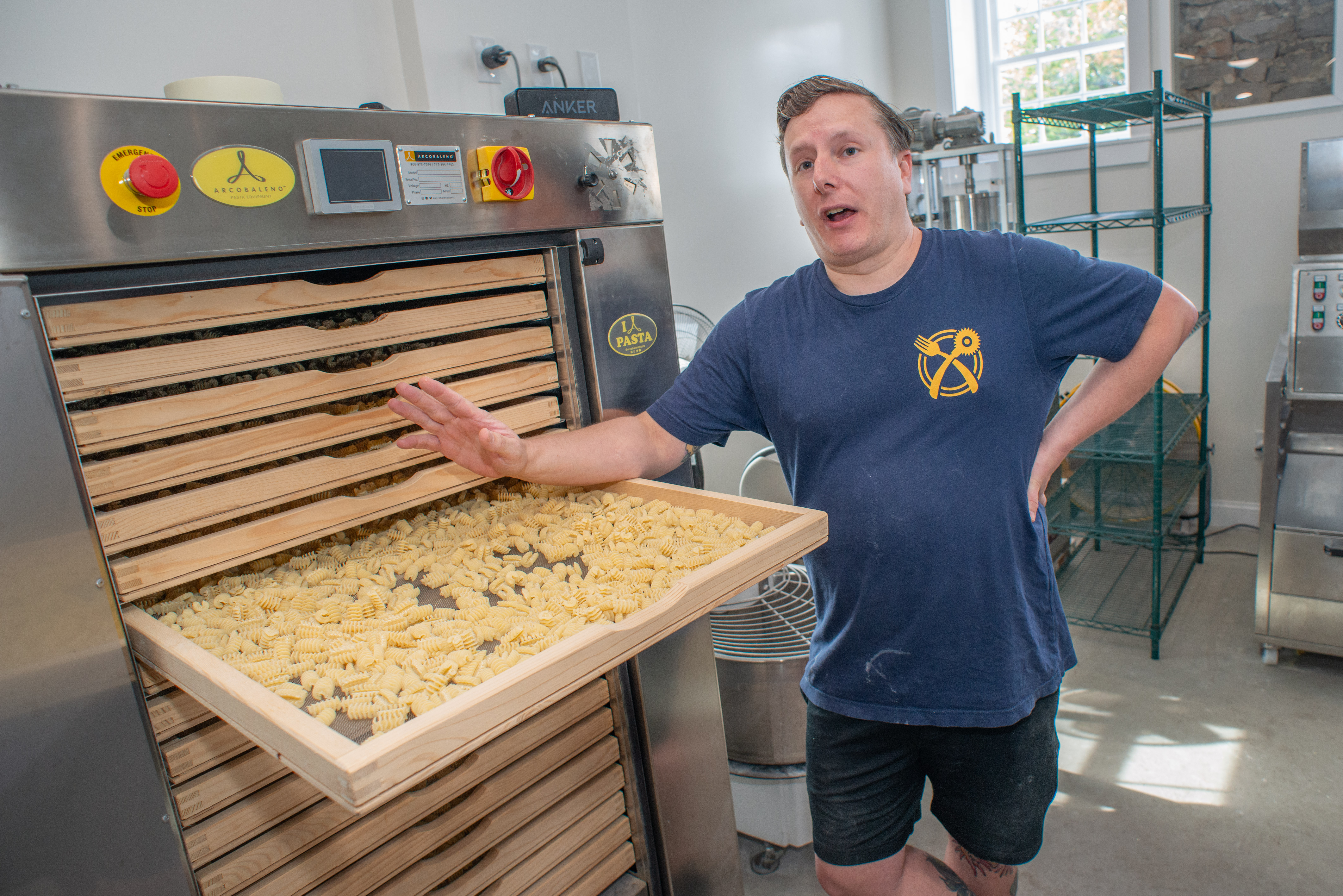
    Rich Sorrentino, at his Ambler workroom, says he started pasta making years ago “as a kind of relief — something therapeutic.”William Thomas Cain / For The Inquirer

    Wholesale pasta has been Sorrentino’s bread and butter for the last three years, especially after he acquired a small garage on a nearby side street, which he turned into a production facility. He supplies local restaurants and country clubs.

    Sorrentino said the wholesale business offered greater potential than a restaurant — as well as the attraction of a Monday-through-Friday schedule.

    “I can’t be in two places at once,” he said. “I weighed the options between the restaurant and the wholesale business and which one I wanted to keep going.”

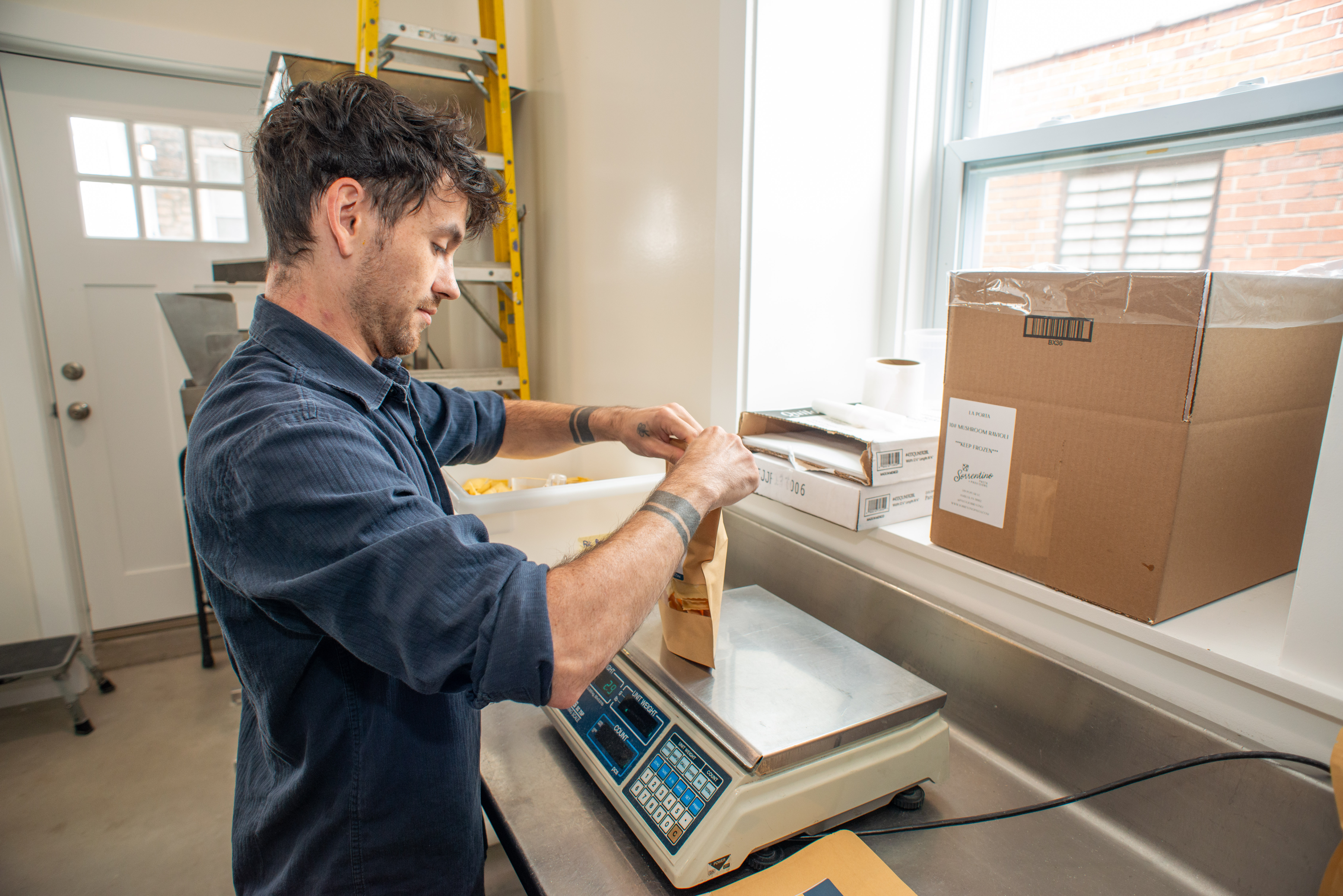
    Bags of Sorrentino’s dried fusilli and capanelle before they are boxed up and sent to stores. William Thomas Cain / For The Inquirer

    Locally, pasta makers have moved in both directions as their businesses have grown. Scaramuzza’s Pasta Products closed its Clifton Heights walk-in store in 2016 to concentrate on wholesale before later restoring retail at a larger facility, while Settantatré expanded from a combined Milmont Park shop and production space into a larger Berwyn store with a separate gluten-free production facility and event space nearby.

    For Sorrentino, the decision ended a five-year run for a business that grew out of his pasta-making hobby. “I come from a big Italian family,” he said. Before opening the shop, he was technical director for a large corporate chain. Given all the travel, “I found myself making pasta as a kind of relief — something therapeutic,” he said.

    The hobby eventually took over a room adjoining his kitchen, and small gatherings grew into large dinner parties. “I’d always had the idea of opening a fresh pasta shop,” he said. “Going to Italy as much as I do, I’ve seen a lot of cool concepts over there, and I always thought, ‘Man, this would be cool to do in a town like Ambler.’” He acquired the Butler Avenue building during the pandemic and decided to take the chance. He recently sold the property.

    Nick Pfeiffer seals a bag of pasta at Sorrentino in Ambler.William Thomas Cain / For The Inquirer

    Meanwhile, the wholesale operation continues, though Sorrentino says at 1,200 square feet, he is running out of room. With the closing of the restaurant kitchen, he cannot produce and package sauces for now.

    Sorrentino’s line covers both dry and fresh pastas, as well as frozen ravioli and his top seller, potato gnocchi.

    The company makes private-label ravioli and gnocchi for Weavers Way, the co-op. Sorrentino products are also sold at Corner Stoop in Philadelphia, Dave’s Backyard Farm in Huntingdon Valley, Tredici Market in Wayne, Sam’s Italian Market in Willow Grove, and Skippack Italian Market. The company alternates Saturdays between the Conshohocken and East Falls Farmers Markets and sets up at Horsham’s on Sundays.

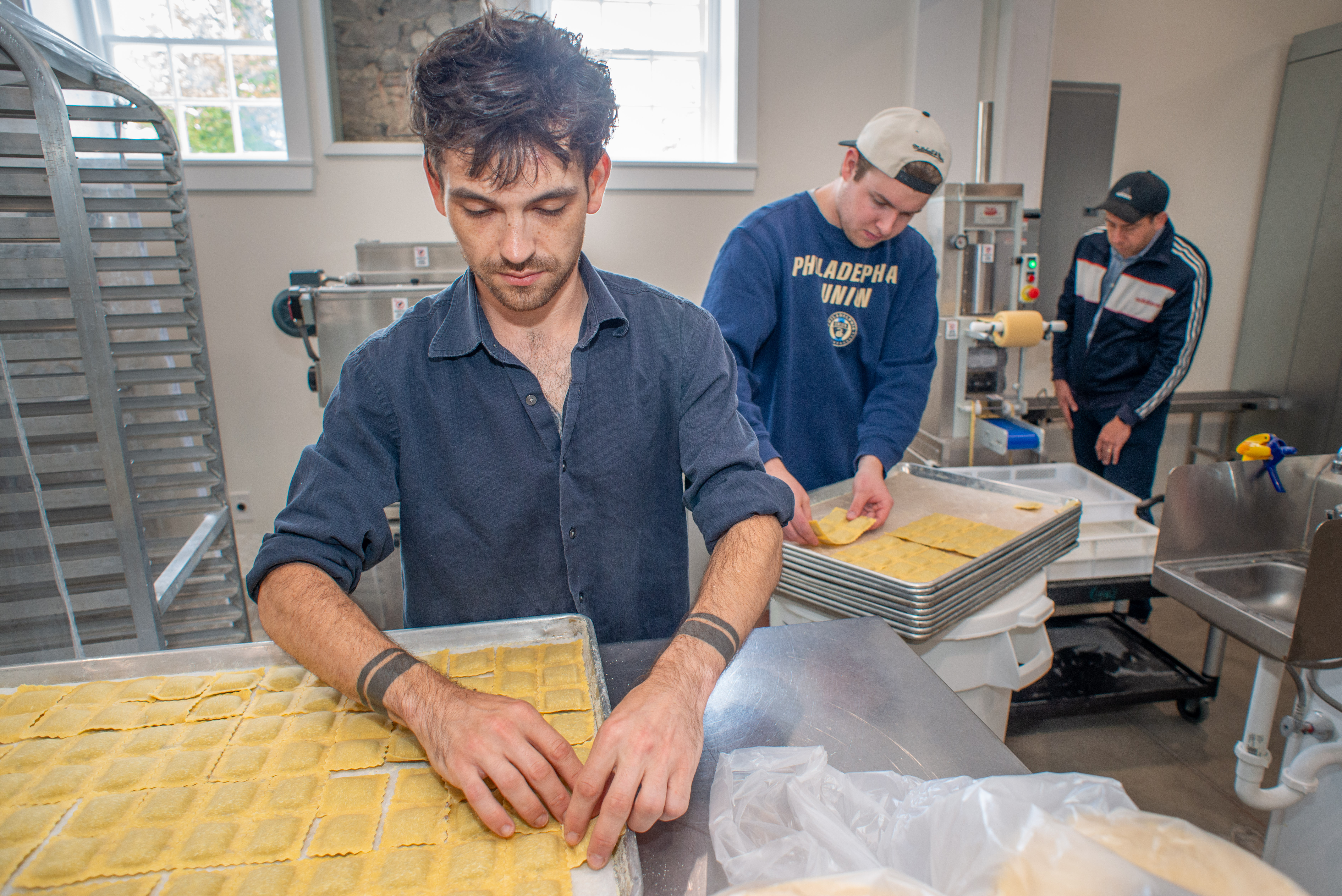
    Nick Pfeiffer (left), Nais Ryan, and Matthew Brunetto (right) work on mushroom ravioli at Sorrentino Pasta.William Thomas Cain / For The Inquirer

    Expanding retail availability is the next step, Sorrentino said. He is building out a small shop nearby; he’s not sure of the timeline.

    “We’re only now slowly getting into the retail world,” he said. “We’ve purposefully been slow about pushing that because we were trying to focus on our restaurant clients. But it’s something we’re going to focus on, now that the store is closed.”