Ever stare down the neck of a frozen turkey and think, “How did this become my job?” The rest of the fam’s in the living room wearing cozy sweaters and watching football, and you’re in the kitchen mashing potatoes and candying yams all day like a sucker.
Is this the year you outsource Thanksgiving? If so, you have options: Lots of local restaurants are willing to do the birdy work, from prepping heat-and-eat platters to sitting you down for a multicourse meal. Here are a few that caught our eye this year.
Go out
The Pub
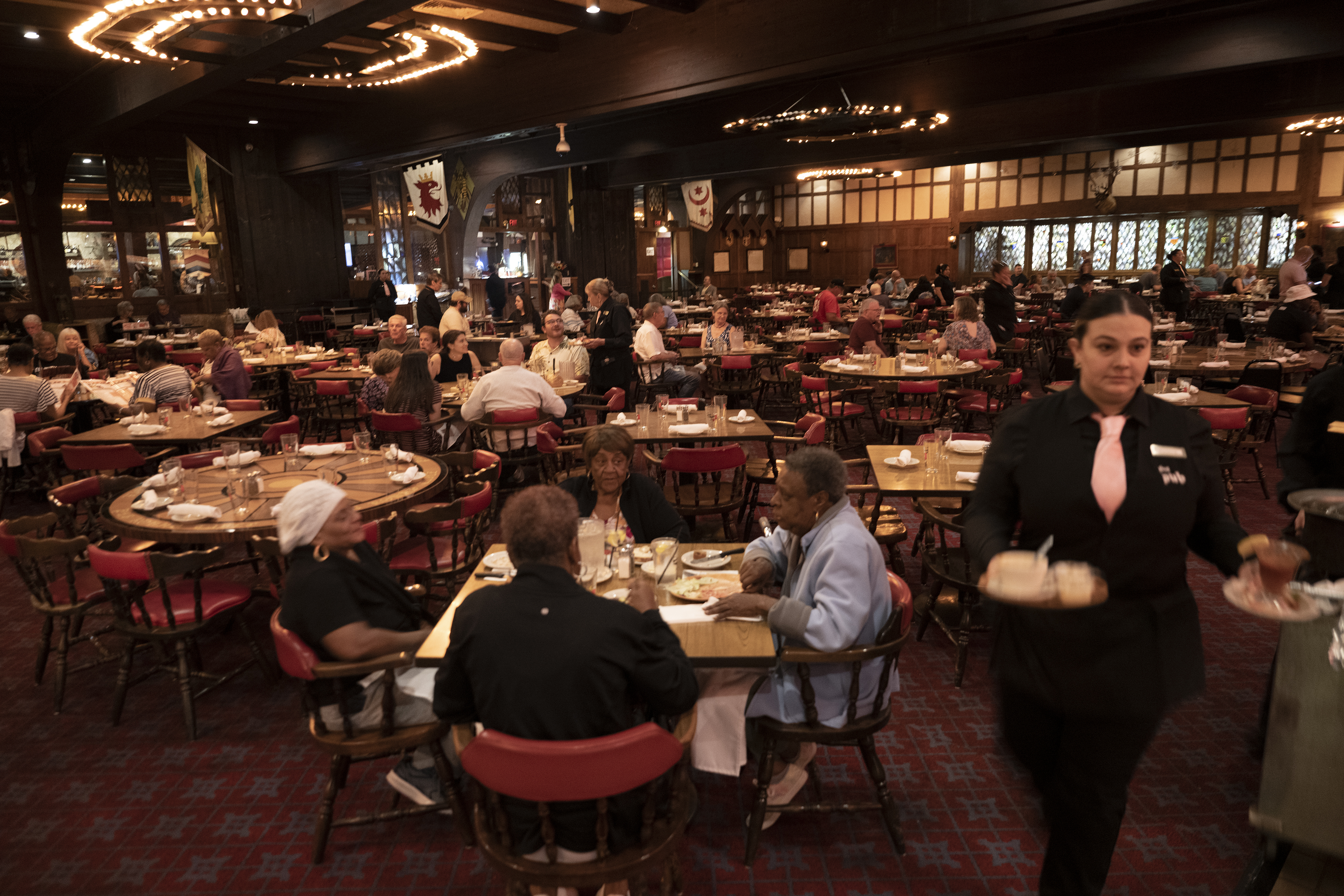
Historical revisionism is a Thanksgiving tradition, so it’s no great sacrilege if you eat dinner in a vaguely medieval British hunting lodge the size of a football field. The Pub — South Jersey’s largest, most legendary dining hall — will be serving up roasted young Vermont turkey (but not too young; that would be eggs), plus stuffing, gravy, veggies, candied southern yams, pumpkin pie, and infinite access to the identical-twin salad bars jutting out from the dining room’s corners like battleships at port. (The Pub is still for sale, by the way, but you have to promise not to change literally any part of it.)
$37.95 ($20.95 for kids), 7600 Kaighns Ave., Pennsauken, N.J., thepubnj.com
Fork
Ellen Yin’s Michelin- and James Beard-approved eatery in Old City is offering a prix fixe Thanksgiving feast, featuring options like celery root-cider soup, blue crab salad, or delicata squash to start, with turkey, maccheroni, or steelhead trout for the main course. Sourdough stuffing, potato terrine, root vegetables, and pie from nearby High Street round out the rest. (Psst: Here are some fancy words and phrases that we pared from the menu’s description — have fun guessing where they go: membrillo, sunchoke, kabocha squash curry, labneh, puntarella, and sherry jus.)
Aqimero’s Thanksgiving feast promises mimosas, bellinis, and four courses of “festive flavors and elevated culinary touches.”Aqimero
Aqimero
For a holiday so forgiving of gluttony, a Thanksgiving brunch buffet just makes sense. This one, at chef Richard Sandoval’s spacious Aqimero deep within the Ritz-Carlton compound, promises mimosas, bellinis, and four courses of “festive flavors and elevated culinary touches.” Of course, courses are an arbitrary distinction the buffet realm; if you wanna put stuffing, bacon, and pumpkin pie on the same plate, no one can stop you.
$95 per person, 10 Avenue of the Arts, aqimero.com
Parc
In addition to its usual menu, Rittenhouse Square’s busiest and perhaps Frenchiest fine-dining spot is offering a multicourse feast for T-Day: mushroom soup, roast turkey, and a slew of sides like stuffing, candied yams (topic: Are we candying enough things?), brussels sprouts, cranberry compote, and pommes puree. See? Got really French at the end there. Pumpkin pie to follow, mon ami français.
The eco-conscious King of Prussia eatery is offering prix fixe breakfast, brunch, lunch, and dinner menus all day with an impressive array of main-course options including turkey, ham, Southern fried chicken, prime rib, honey-glazed salmon, or veggie loaf, plus sides, soups, etc. (Pro tip: For an extra $75 you can take home a “leftover kit” stuffed with turkey, cornbread stuffing, mashed potatoes, and more.)
Tucked inside the Study hotel in University City, CO-OP specializes in seasonal and locally sourced ingredients. For T-Day, they’ll send you home with turkey, whipped potatoes, sage-and-onion stuffing, squash agrodolce, green beans, salad, and gravy made from “roast pan drippings,” a rather beastly phrase which nonetheless makes my mouth water.
$88 for two, $160 for four, 20 S. 33rd St., coopphilly.com
CO-OP has a Thanksgiving to-go menu for you and your family.Michael Persico
Heavy Metal Sausage Co.
South Philly’s most hardcore meat grinders will send you home with half a turkey (brined, deboned, smoked, and ready for sacrifice), plus seven sides (stuffing, root veggies, etc.). It’s a lot of food for four people, because leftovers are part of the plan. Separate orders for sides, wines, and charcuterie boards are also on the table. 🤘 Reign in gravy. 🤘
If you’re expecting a full house on Thanksgiving, let this West Philly Caribbean restaurant prepare a mighty feast. Pick your main course — turkey, jerk-marinated turkey, or prime rib — and they’ll pair it with the appropriate gravy and piles of sides: baked macaroni, candied sweet yams, veggies, and bread pudding with butter-rum sauce (I had to take a Lactaid just to type that). Lots of à la carte options too.
In Cherry Hill, where diners reign, Ponzio’s remains the king of the fancies — a sparkling, liquor-licensed cathedral of baked goods and majestic portions. They’ll send you home with turkey, stuffing, gravy, and cranberry sauce, plus a bunch of sides, soups, and pies of your choosing. (Pro tip: Before you go, check the bakery cases for Thanksgiving-themed cookies and cupcakes.)
$35.99 for one, $129.99 for four, $399 for 12 (includes a whole turkey), 7 W. Marlton Pike, Cherry Hill, ponzios.com
Little Fish is offering takeout trays of expertly prepared sashimi for Thanksgiving, if turkey and stuffing isn’t your jam.Marie DeFeliciantonio
Little Fish
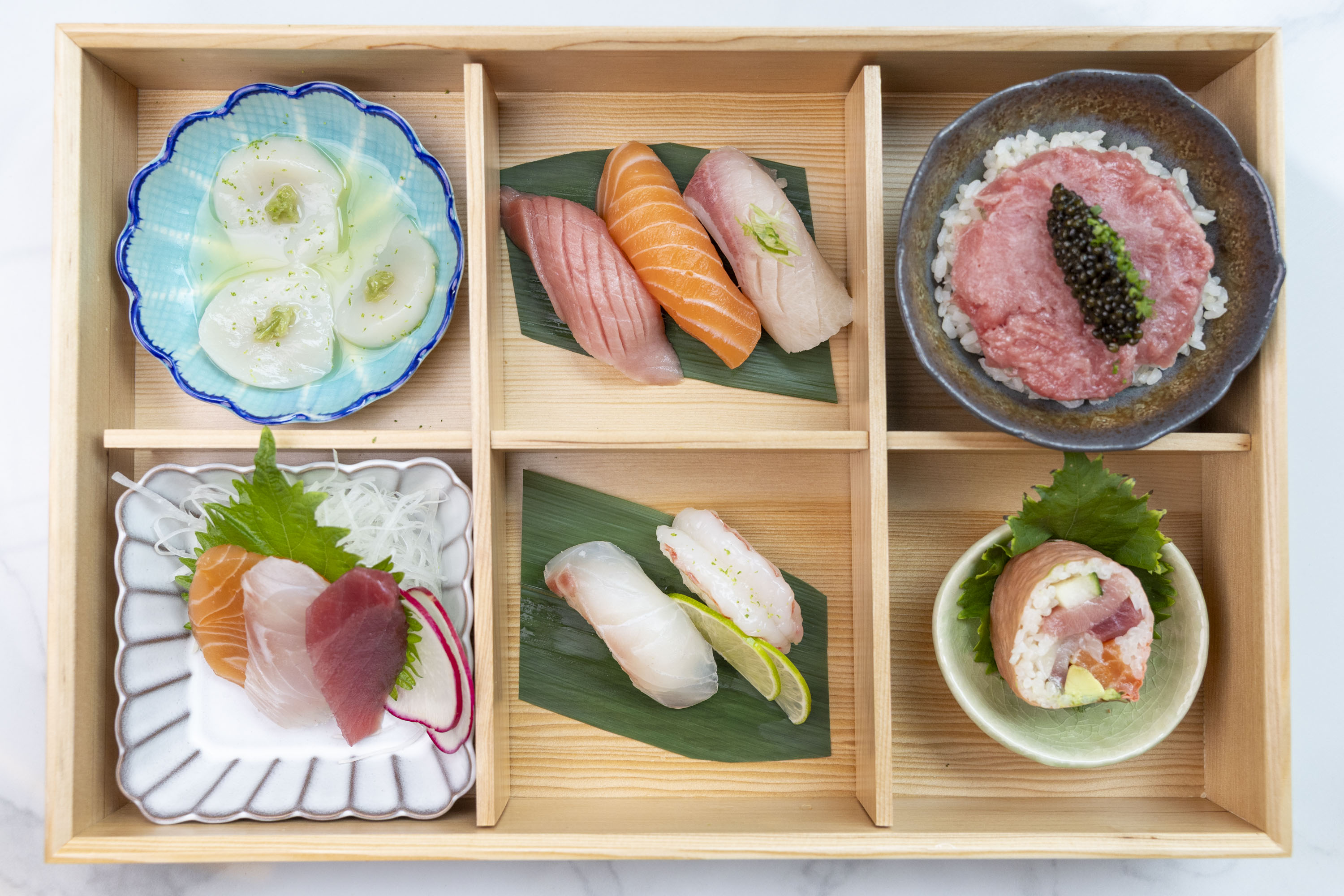
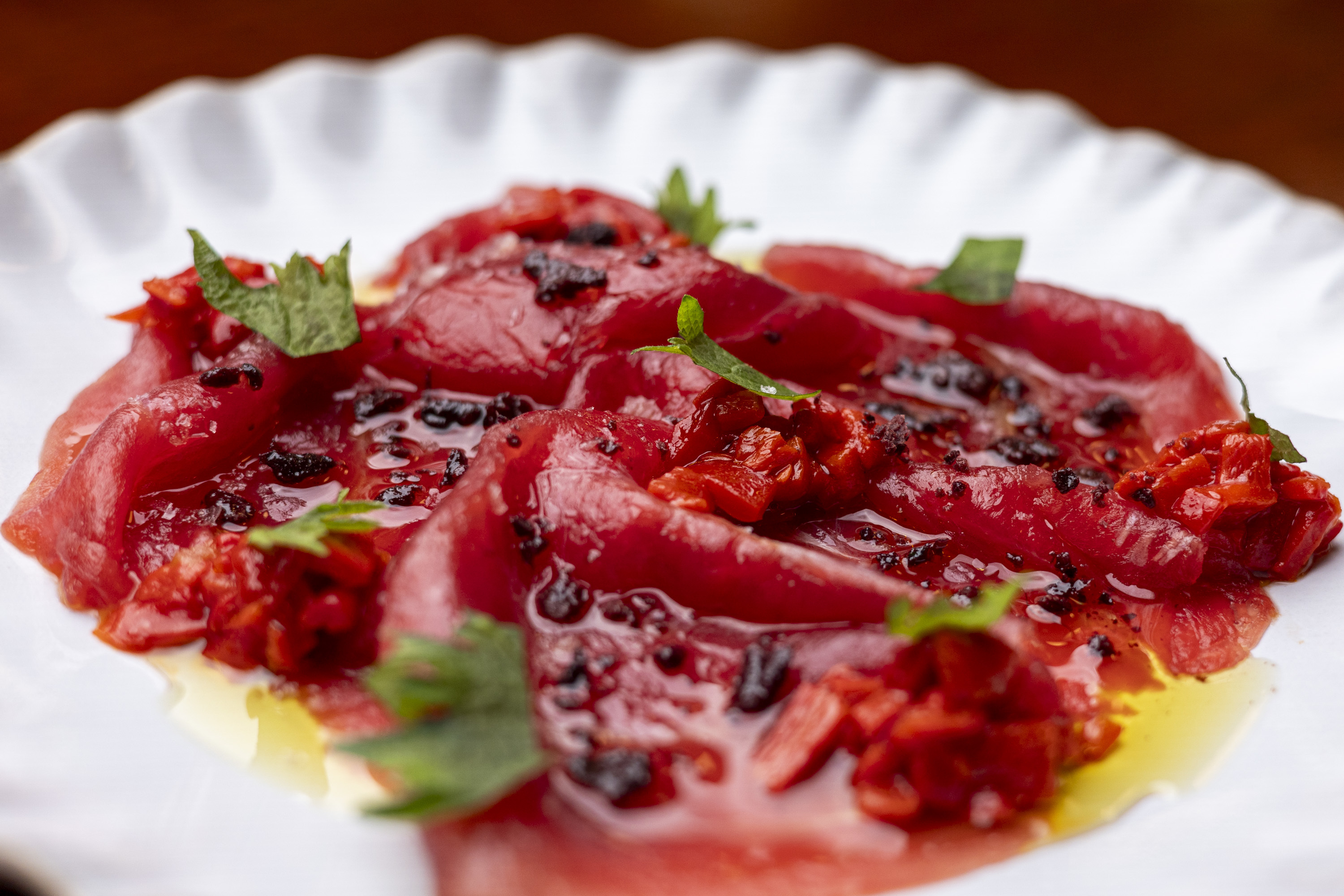
If you’re not into the whole turkey and stuffing thing, then you and I are very different people. But also, you might be interested in a Thanksgiving sashimi platter from this long-running and adorable Bella Vista BYOB. We’re talking bluefin tuna, king salmon (props to all ocean monarchs), scallops, tai snapper, hamachi, and spicy mayo tuna tartare.
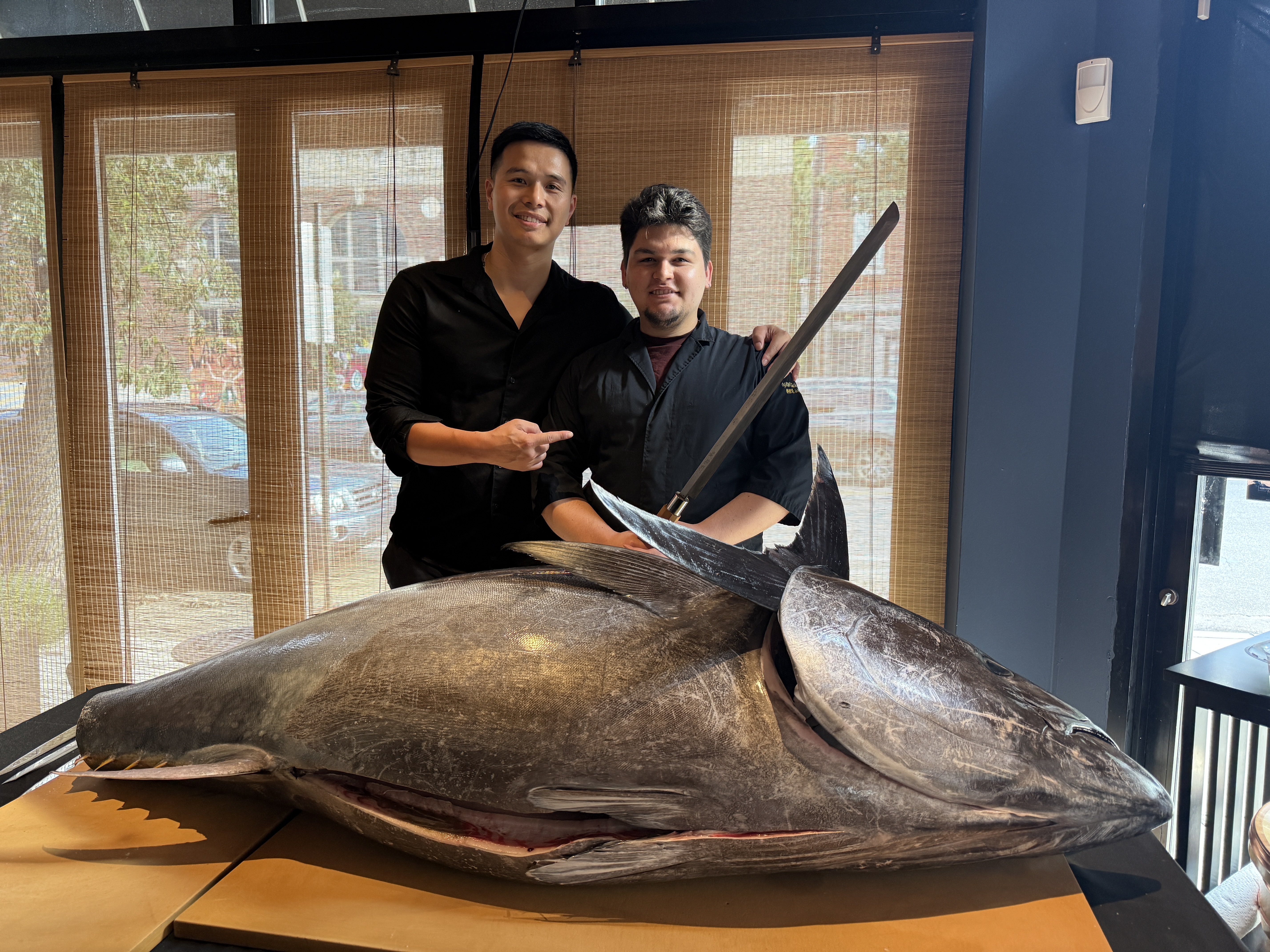
It takes four people to carry a whole bluefin tuna into Da-Wa in Fishtown. It happens in summer and fall, when chef-owner Joseph Kim orders the fish directly from Spain. In winter, Kim sources smaller Hokkaido bluefin straight from Japan. Kim breaks them down solo, into pieces suitable for service. The whole process takes him hours, and on tuna delivery days, he doesn’t make it home until 3 a.m. or later if he’s working on a 300-pound fish.
Kim’s palate is so attuned to the nuances between bluefin that he can taste them blind and tell you their provenance. Spanish bluefin is particularly soft and fatty. Hokkaido bluefin is less fatty and much smaller, at around 150 pounds vs. the 300 pounds that Spanish tunas average. Compared to more common, smaller varieties of tuna, like skipjack or albacore, bluefins are exceptionally buttery. In terms of fattiness and richness, Kim compared bluefin to wagyu.
No other varietal of the tuna passes through the door. But for Kim, the effort is worth it. “Bluefin has richness throughout the entire fish.” said Kim. “It is the heart of the sushi restaurant.”
It’s not just Da-Wa. Bluefin, once a controversial menu addition, is back in a big way. And the surge isn’t just restricted to high-end omakases, even though bluefin is some of the most expensive fish available. Bluefin is now at many of Philly’s newer midrange sushi restaurants like Palm Vintage, Javelin, and Oroshi, as well as restaurants that straddle the line between fine dining and neighborhood-driven, like Little Water and Alice. Bluefin is everywhere.
Bluefin tuna was, for years, an illicit luxury, though it never fully left menus. A decade ago, conservation groups were staging boycotts against consuming the fish, chefs were swearing off serving it, and demand for the increasingly rare fish was so high, it was fetching eye-watering prices. But now the coveted ultrasoft and fatty fish is back on the menu all over Philadelphia and far beyond.
The Palm V. Mini Omakase bento box at Palm Vintage.Tyger Williams / Staff Photographer
Off the menu
The return of bluefin tuna to restaurant menus was a long process. In the 1980s, sushi started trending stateside and eating tuna surged in popularity, which led to severe overfishing. In 2006, the International Commission for the Conservation of Atlantic Tunas (ICCAT) implemented a 15-year recovery plan to prevent the tuna population from collapse. This plan limited fishing seasons and raised the minimum allowable size of tuna for fishing.
Those measures worked, and the population bounced back. In 2021, the International Union for Conservation of Nature (IUCN) moved Atlantic bluefin tuna from the list of endangered species to those of least concern.
But it hasn’t just been Atlantic tuna returning in droves. Pacific bluefin, once restricted from fishing for environmental reasons, is now fair game again. To the delight of chefs in San Diego and Baja California, fishermen are catching bluefin tunas of record weight — nearly 500 pounds — in their waters. Giant bluefins have also returned to British waters (and even in the Baltic Sea), which have been mostly absent of the species since the 1960s.
Raw bluefin tuna at Little Water.Tyger Williams / Staff PhotographerBluefin tartare at Ogyu.Tyger Williams / Staff Photographer
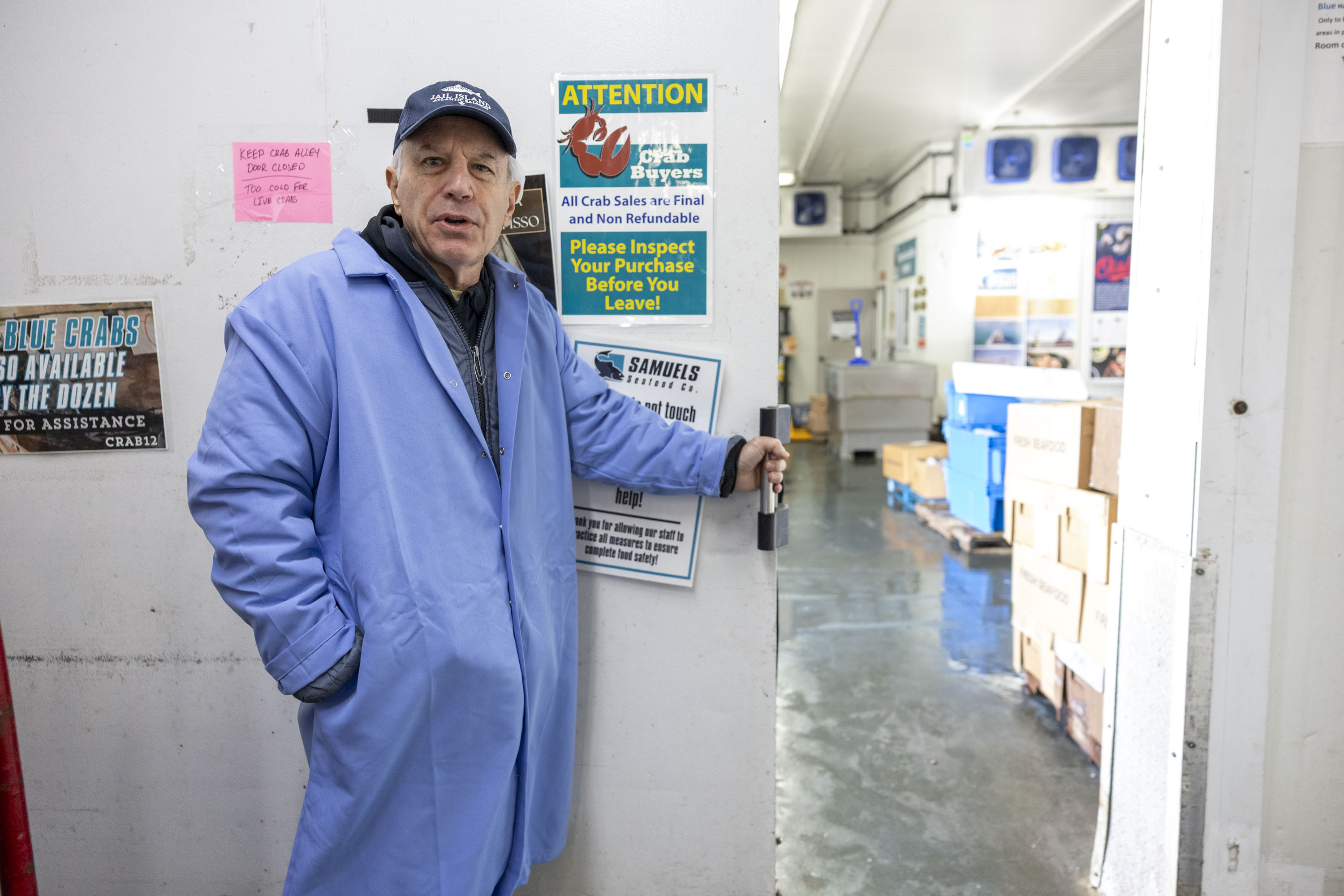
At South Philadelphia-based seafood distributor Samuels Seafood Co., the tunas come in from all over the world — in the summer months from along the East Coast and currently, from the Mediterranean, though also from the Carolinas and some from South Africa. They’re sold to customers along the East Coast, as far down as South Florida, and in some parts of the Midwest and Las Vegas.
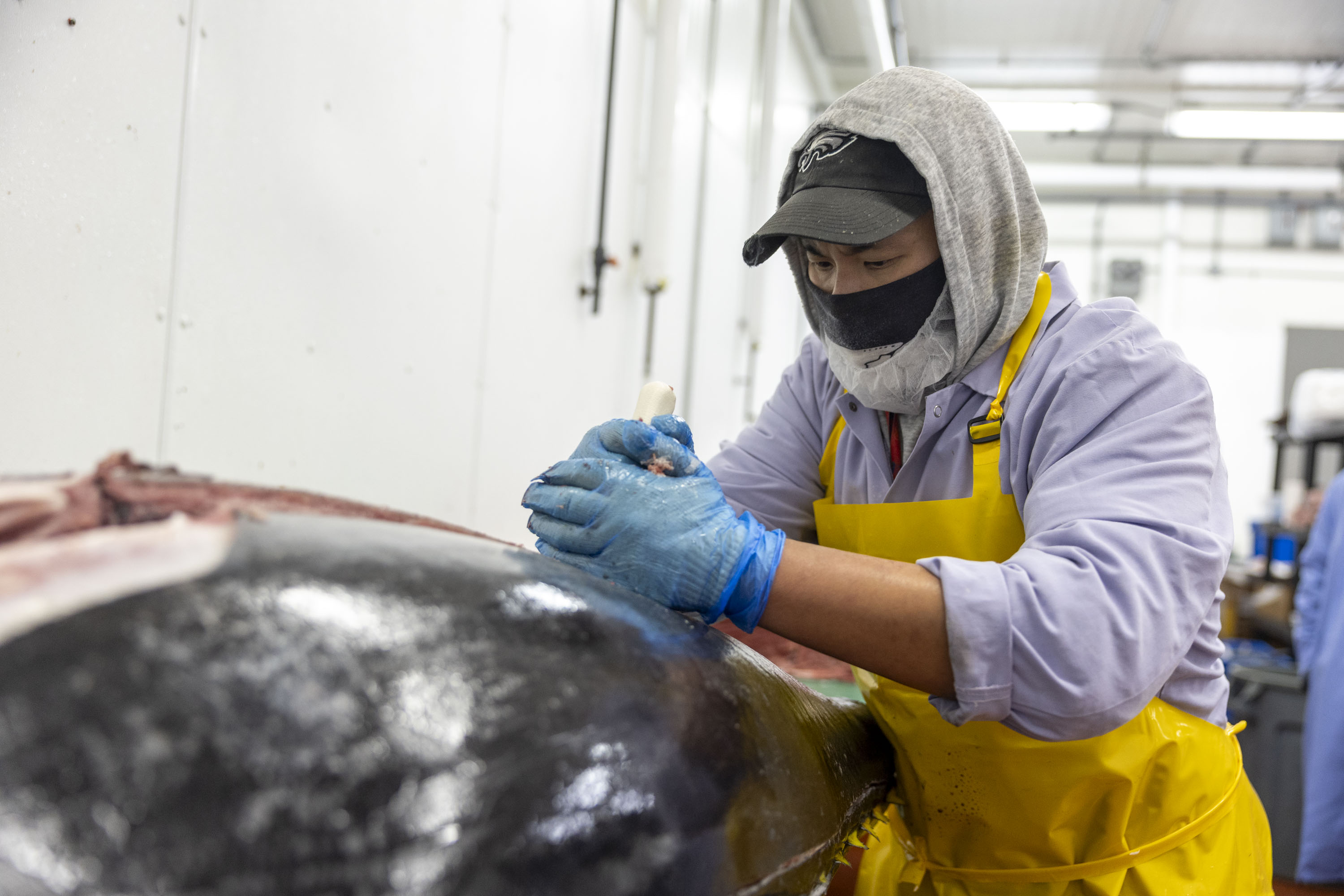
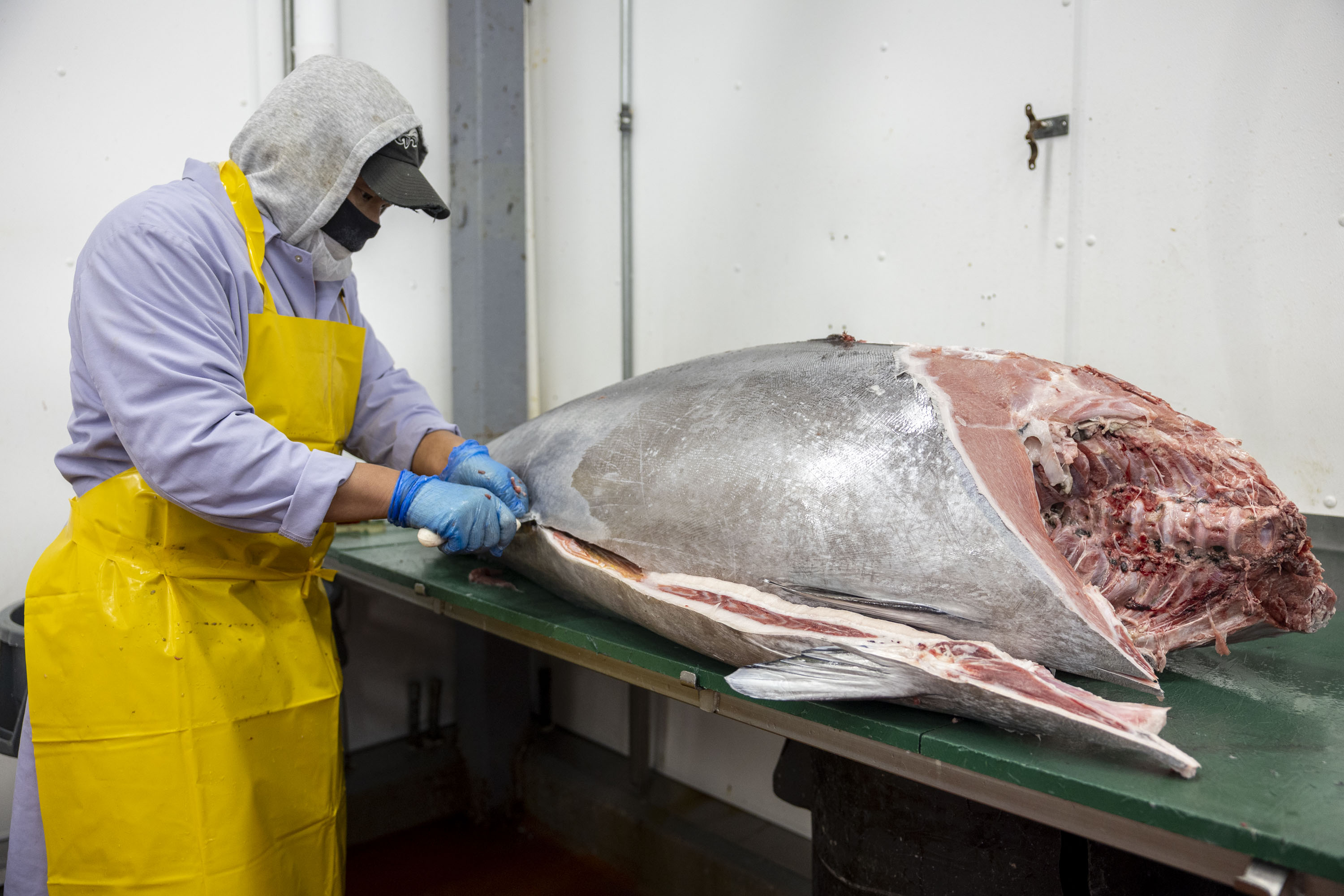
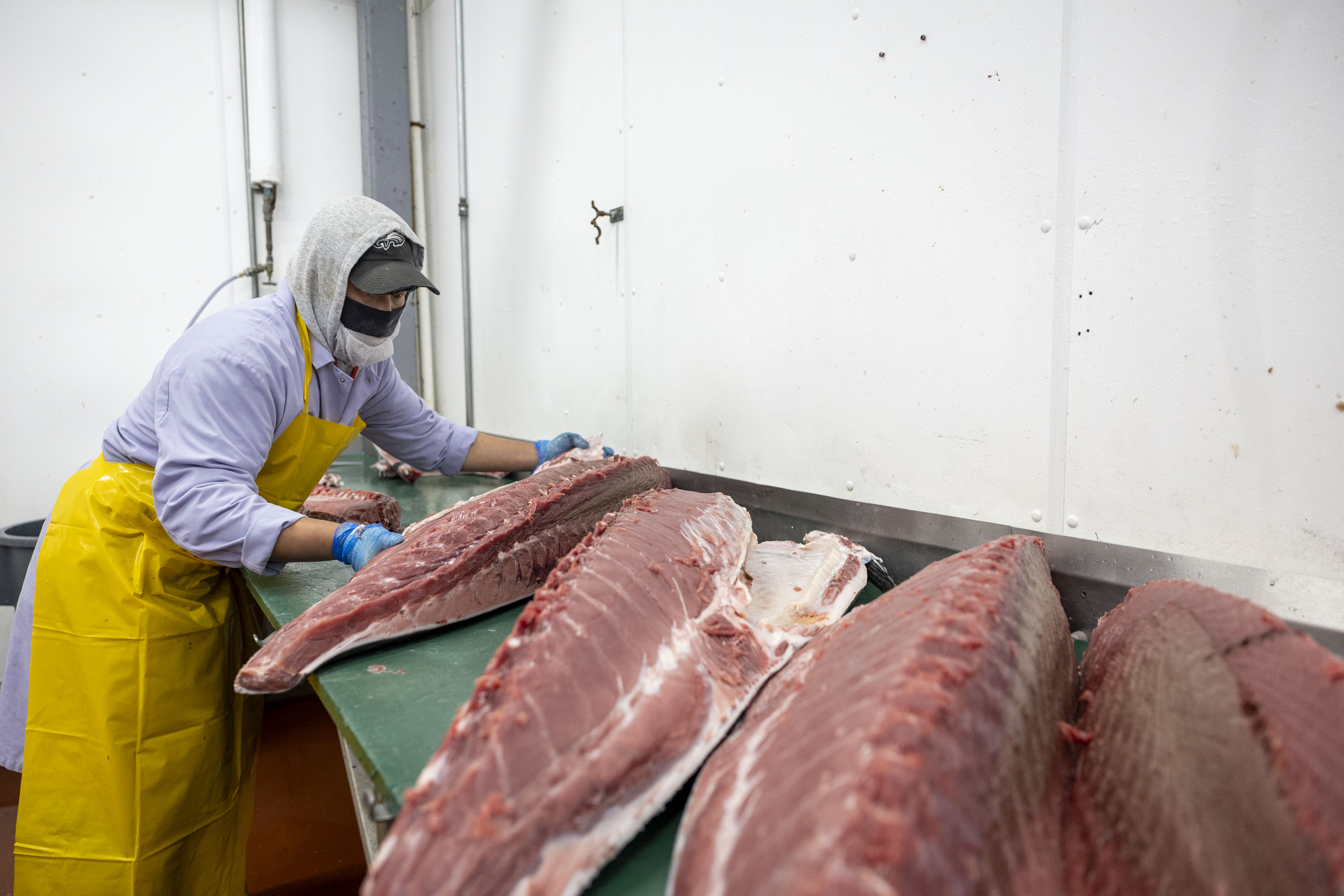
Joe Lasprogata, the company’s senior vice president of product development (who also trained as a marine biologist), oversees tuna shipments and their breakdown into loins for customers. At Samuels, it takes tuna cutter David Lam about 15 minutes to cut a whole 350-pound bluefin into loins and collars, to be further broken down by chefs and at sushi restaurants. The record weight for a bluefin brought into Samuels is 820 pounds.
Joe Lasprogata, vice president of product development at Samuels Seafood, gives a tour.Tyger Williams / Staff Photographer
The bluefins — or as Lasprogata calls them, “apex predators of the ocean” — that Samuels brings in twice a week are both wild and ranch-raised.
David Lam breaks down a bluefin tuna at Samuels Seafood.Tyger Williams / Staff PhotographerDavid Lam shows different cuts of a bluefin tuna at Samuels Seafood.Tyger Williams / Staff Photographer
“People are all excited about [bluefins coming back] but I think it’s a little premature,” said Lasprogata. “It’s great that the bluefin are coming back, but we’re also seeing other stocks lessening. So there’s still something out of balance.”
“Everything is cyclical,” he said.
Size does matter
Chefs like Kim of Da-Wa in Fishtown and seafood purveyors like Lasprogata of Samuels Seafood will tell you that bluefin has a sweet spot in terms of weight for prime deliciousness, and that’s around 300 pounds.
And they can get far larger, which means they have incredibly long lifespans and long gestation periods, according to Jackie Marks, the senior PR manager of the Marine Stewardship Council (MSC), which certifies marine fisheries, as opposed to the Aquaculture Stewardship Council (ASC), which sets responsible practices for farmed fish. “And that means they reach sexual maturity later in their lives and when you think about how that affects fishing, which often targets younger fish — they’re not able to reproduce yet,” said Marks. From her perspective — a biological one — the larger the tuna, the better.
If we overconsume bluefin, we’ll know by their size. “If the tuna that are being brought in are smaller and smaller, then we have a reason to be concerned [again],” said Marks. And keeping watch will take a coordinated effort among countries and governing councils.
Sushi chefs Albert Zheng and Carlos Wills in front of a 281-pound Spanish bluefin tuna at Javelin in Fairmount.Kiki Aranita / Staff /
Wild caught, if possible
Not just any bluefin is migrating back to Philadelphia sushi restaurants. Much of it, like the 300-pound bluefins regularly broken down at Samuels, is ranch-raised. This is a controversial practice that sits in between aquaculture (or seafood farming) and wild fishing, due to high FIFO or fish-in-fish-out ratios. The average ratio is 15:1, meaning that for every ton of ranch-raised tuna, 15 tons of feed is required. As a point of comparison, the FIFO ratio of farmed salmon is 0.82:1.
“It’s like Hansel and Gretel-ish,” explained Lasprogata. “You put them in a pen, feed them, fatten them up, and then harvest them.”
The benefit, he says, is that they can be harvested larger and more mature, after they’ve had the opportunity to procreate. The fish, so long as they’re dispatched properly, are also extremely high quality, with rich and oily, well-marbled flesh. Tuna ranches also operate year-round.
But chefs who are fanatical about bluefin tend to seek out wild bluefin, which can only be caught seasonally (and given that they’re a migratory species, the seasons change around the world), which is why Kim has to store his fish after breaking it down in three super freezers, set to between -64 and -110 degrees Celsius, which cost him $100,000. They keep his costly tuna fresh as he uses it over the course of three months.
“I don’t make money on tuna, but I am a chef, not a businessperson,” said Kim.
At Little Water and River Twice, Randy Rucker gets his tuna from the East Coast. “Wild bluefin tuna has a depth of flavor that is hard to compare to,” said Rucker, who works with his sous chef, Jeff McConnell, to use every part of the fish, incorporating the bloodline in their house-made XO sauce and meat scraped from bones in their seafood charcuterie program.
“We choose wild-caught bluefin tuna because of its incredible flavor, texture, and richness. But not all bluefin is the same. We pay close attention to the fat, color, texture, and how the fish is handled,” said Carlos Wills, the executive chef at Ogawa in Old City, which uses bluefin tuna on its omakase menu. Wills has also performed annual bluefin tuna breakdowns at Ogawa and Javelin in Fairmount, sourcing the massive fish from Spain, just as Kim from Da-Wa does.
And of all the fish in the sea, “There’s nothing else — no texture like bluefin. It’s so fatty and marbled, but also it can be intense and irony,” said Kim. With a close eye on bluefin stocks worldwide, right now, we can indulge in this wagyu of the sea.
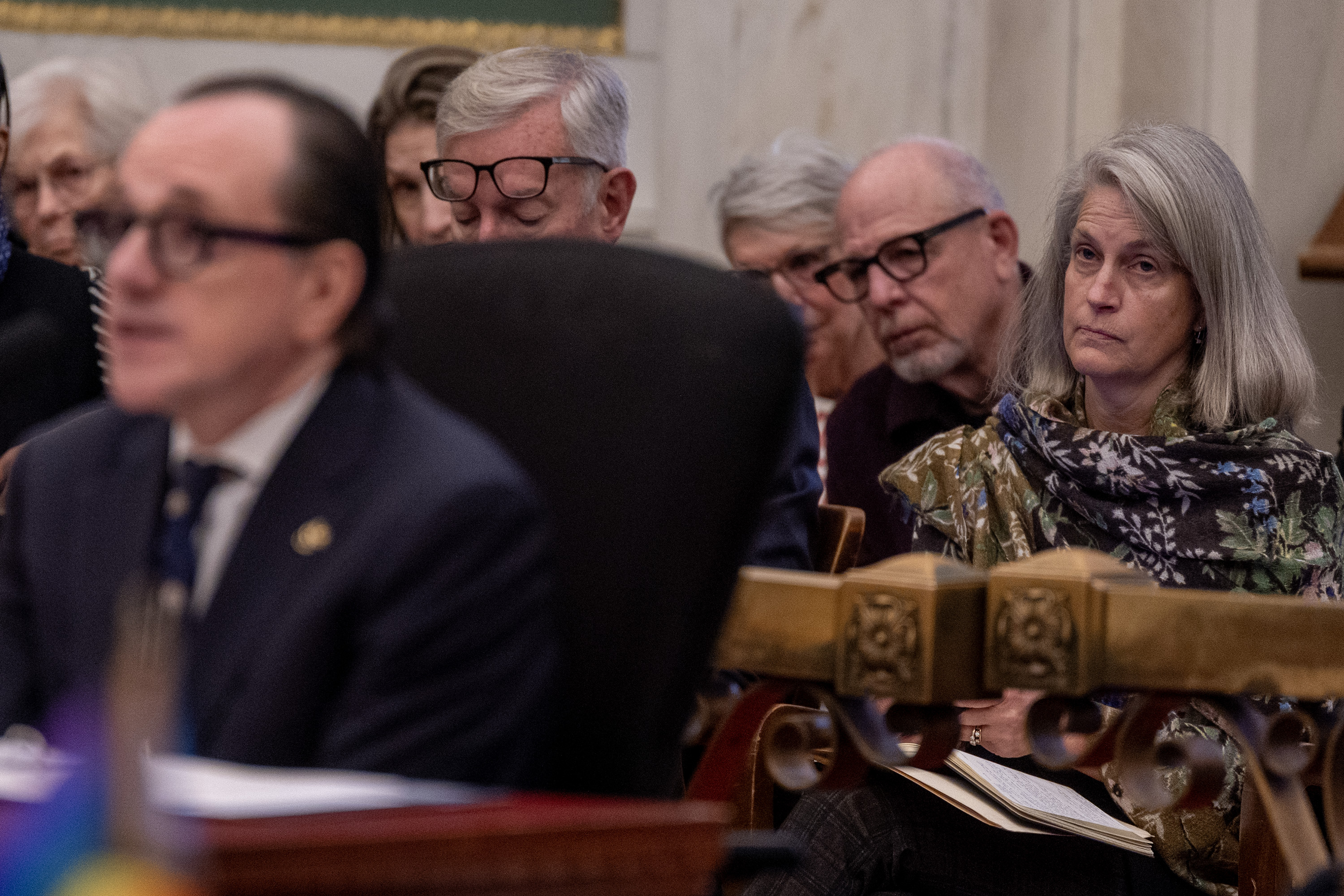
For the first time since the controversial closure of the Academy of Natural Sciences museum in September, Drexel president Antonio Merlo and Academy board chair Suzanne Biemiller both appeared in public to share their versions of why it shut down. The two organizations have had an affiliation agreement since 2011.
Each blamed the other side.
Merlo testified that it was the Academy’s idea to close the beloved museum, and that the Academy’s board had been exploring moving its collections to museums in Cleveland and Abu Dhabi.
From the audience, Biemiller shook her head as he testified.
Later, she told Council that it was Merlo who gave an ultimatum. “He basically said, ‘Look, you all need to move your collections and sell the building within two years,’” Biemiller said.
Mayor Cherelle L. Parker is aiming for a “high growth” target of 4,400 homes to turn around Philly’s beleaguered Market East Corridor.
There are already 1,700 households on the street, and another 620 apartments being built in the Wanamaker Building. That’s another 2,080 to go.
But how developers will be enticed to build that much housing hasn’t been spelled out. At a meeting of Parker’s Market East Advisory Group on Monday, officials from the administration discussed the need to bring more shoppers, tourists, and workers to the area to support existing businesses. Getting more people to live in the area would help.
However, building anything but data centers or high-end housing in Philly is a challenge right now, as construction and debt costs soar.
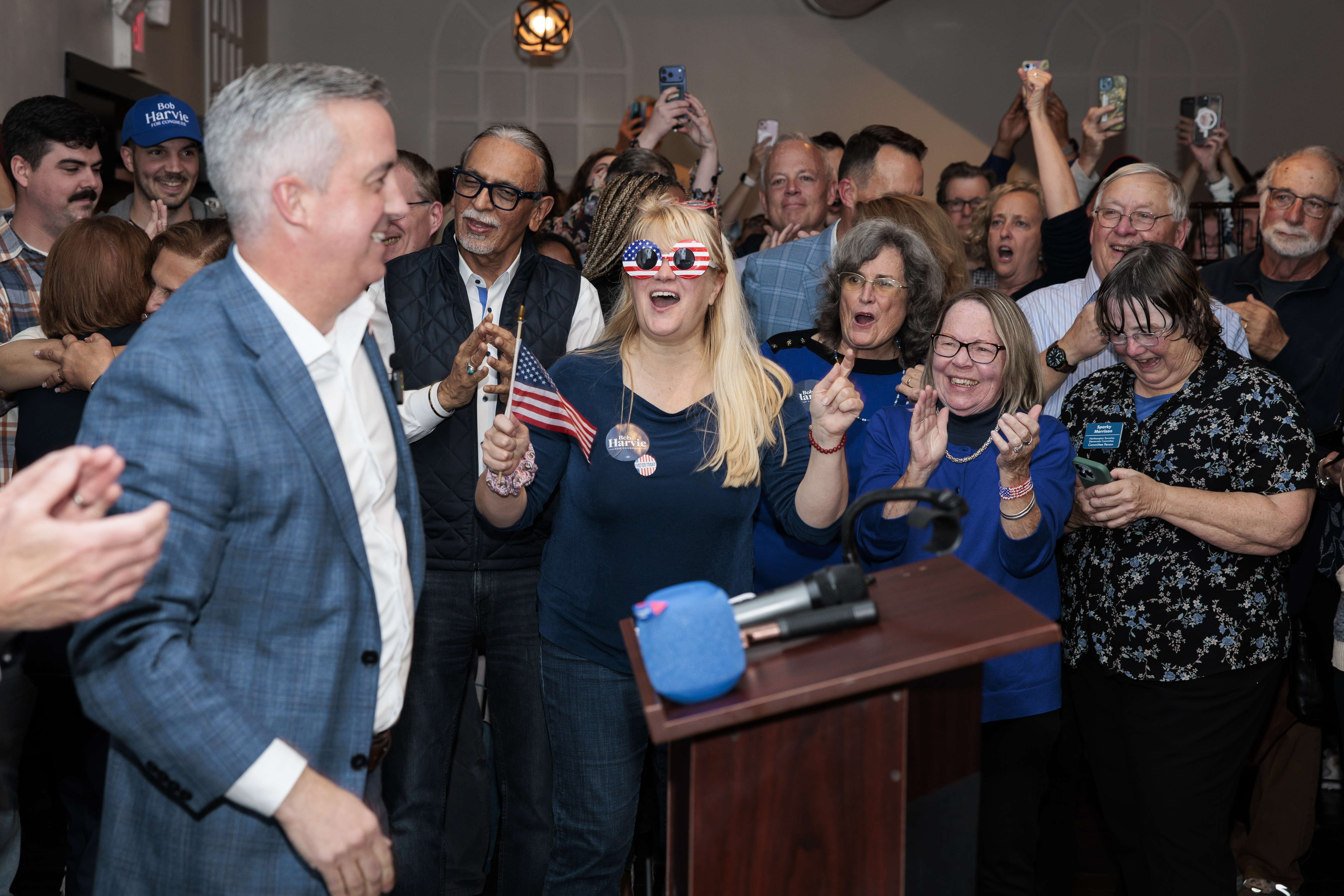
Democrat Bob Harvie’s win over Republican Brian Fitzpatrick in Pennsylvania’s uber-competitive 1st Congressional District was fueled by Bucks County’s younger, lower-income, and Hispanic voters.
Two residents of Pine and Spruce Streets with mobility issues have sued the city of Philadelphia, alleging a ban on cars stopping in bike lanes violates the Americans with Disabilities Act.
📺 Watching. The animated YouTube series Stuntboy was brought to life by a Drexel professor who wanted to see Black lead characters portrayed with sensitivity and nuance, writes The Inquirer’s Earl Hopkins.
🐟 Reading. Bluefin tuna populations, once depleted by overfishing, have bounced back. Food writer Kiki Aranita reports that means the buttery-tasting fish is now all over sushi menus again.
🧩 Unscramble the anagram
Hint: Federal law that requires U.S. cargoes shipped between ports on the Delaware River and other waterways to travel in U.S.-built ships worked by U.S. crews.
COT JEANS
Congrats to Brianna Reed, who correctly guessed Monday’s anagram: Love Is Blind. Two former Temple football players have appeared on the high-stakes reality TV show. Neither left the show wearing a ring.
There’s only one Big Papi. And before his annual celebrity golf event last weekend, the Hall of Fame slugger sat down with Phillies Extra to discuss Kyle Schwarber’s pursuit of 500 homers, watching Bryce Harper take batting practice as a teenager, and how Dave Dombrowski can improve the Phillies’ roster. Watch here.
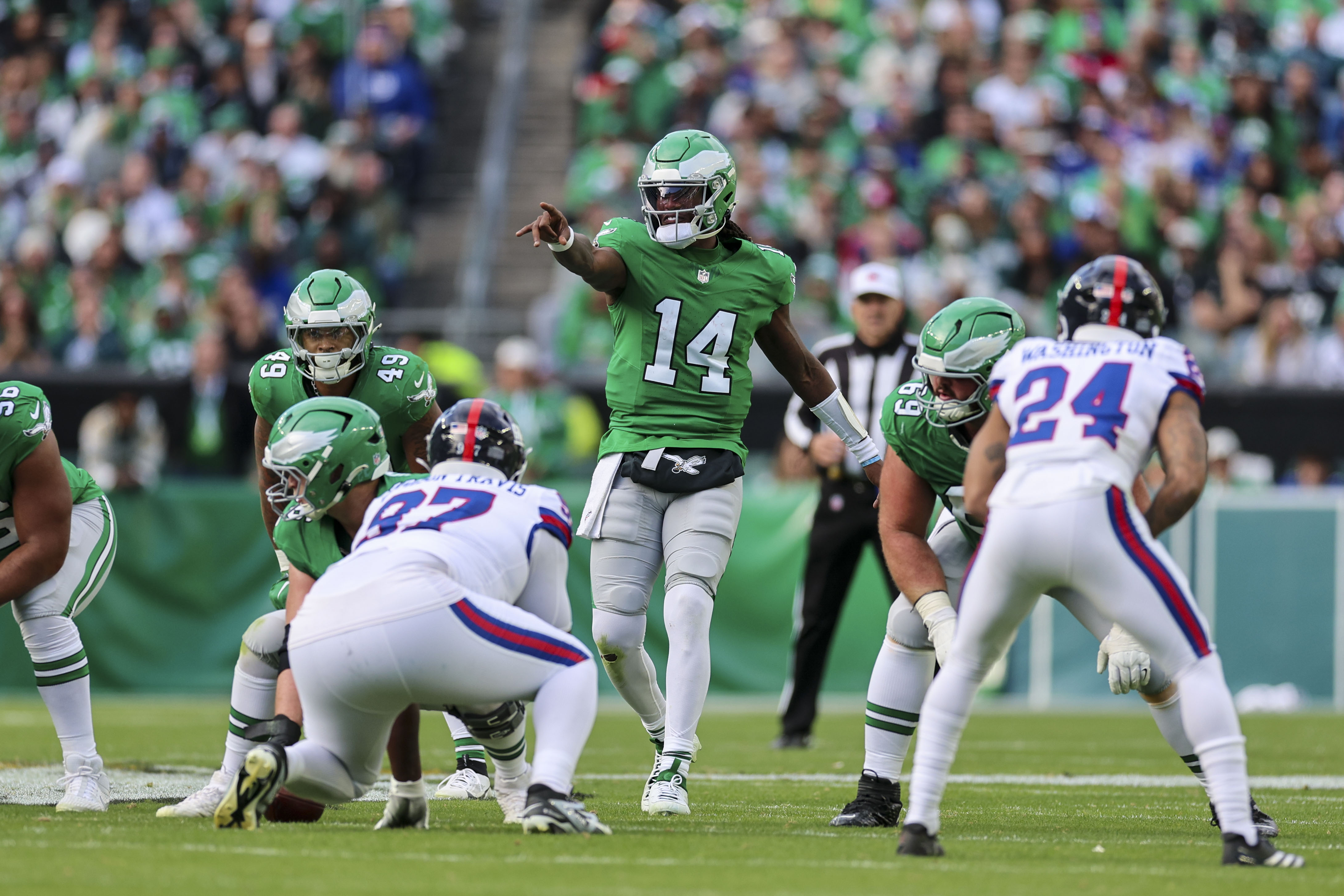
The scariest sight so far in any Eagles game this season hasn’t been their terrible kickoff coverage against the Jacksonville Jaguars … or Andy Dalton’s brutal end-zone interception against the Chicago Bears … or any number of plays on which the offensive line didn’t know who to block … or even the hellacious hit that New York Giants linebacker Arvell Reese laid on Joe Milton. Lord knows there have been plenty more.
No, the scene that had to terrify Jeffrey Lurie most happened as that 19-11 loss to the Giants last week neared its inevitable end. Lincoln Financial Field was as quiet as it has been in years. Few people bothered to boo because few people had bothered to stay. They streamed down the aisles and out of the stadium, making it clear that the Eagles’ most challenging opponent left over their final eight games wouldn’t be the Pittsburgh Steelers this week or the Seattle Seahawks next month or the San Francisco 49ers next year. It’ll be the paying public’s indifference.
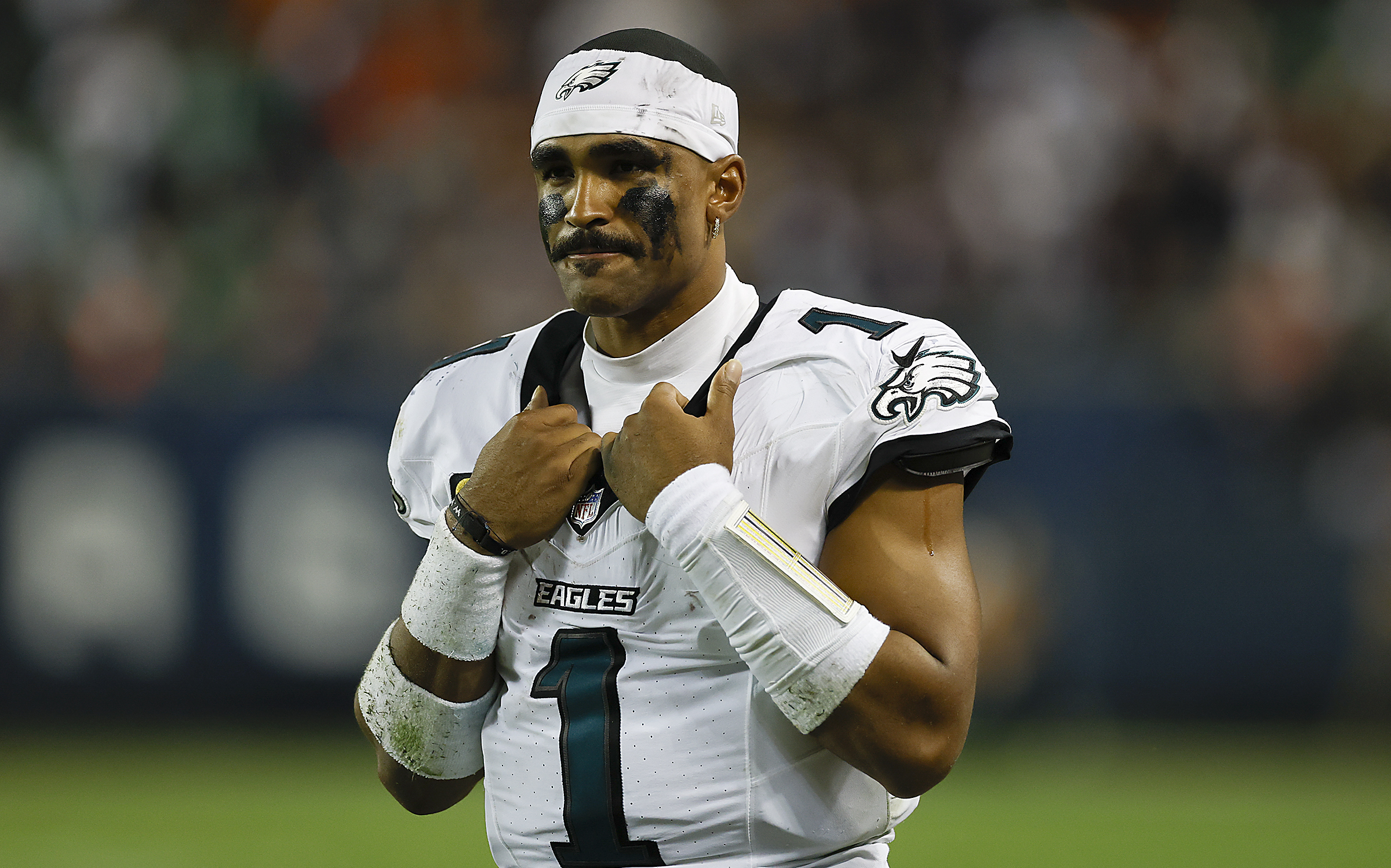
This is the other uncomfortable aspect to any discussion about the biggest question the Eagles face this offseason: What could and should they do at quarterback? (The quarterback question is more important than the head coach question? Yep. We’ll get to why in a minute.) It’s discomfiting enough that blood clots ended Jalen Hurts’ season, could have put his short- and long-term health at risk, and cast at least some doubt on his future in the NFL. But the Eagles’ descent and their fans’ resulting apathy add another layer of complication, one that would make it shocking if the Eagles didn’t use a high pick on a QB in next year’s draft.
If Hurts can’t play again — and what a horrible, unfair development that would be — then the Eagles will of course have to find a new quarterback. So for the sake of this thought exercise, let’s assume that he will be healthy enough to start Week 1 of the 2027 regular season. There are plenty of reasons it would make sense for the Eagles to keep Hurts as their starter. His accomplishments, both as an individual and based on his role as a team leader, are well known and worthy of respect. He’s a high-character veteran, and the Eagles have just so many left in the locker room.
Video: What is Jalen Hurts’ future with the Eagles? | unCovering the Birds
What’s in even shorter supply in that room (and around the NFL) is competent quarterback play, and Hurts can provide it, and no one, including the Eagles, should take that for granted. A franchise can spend years in the wilderness searching for a decent quarterback, let alone for one capable of winning a Super Bowl (which Hurts obviously was and might still be), and it shouldn’t embark on that chase lightly.
Should Lurie, Howie Roseman, and everyone else with some say-so decide Hurts is the Eagles’ best option, that no quarterback in the draft warrants a first-round pick, they could get creative about rebuilding the rest of the roster. With the top-10 pick they’re likely to have and all the other assets that Roseman has already acquired, they could put together an enticing package that would allow them to move up or drop down in the draft, pick up new players, and still take a chance on a quarterback in the second or third round.
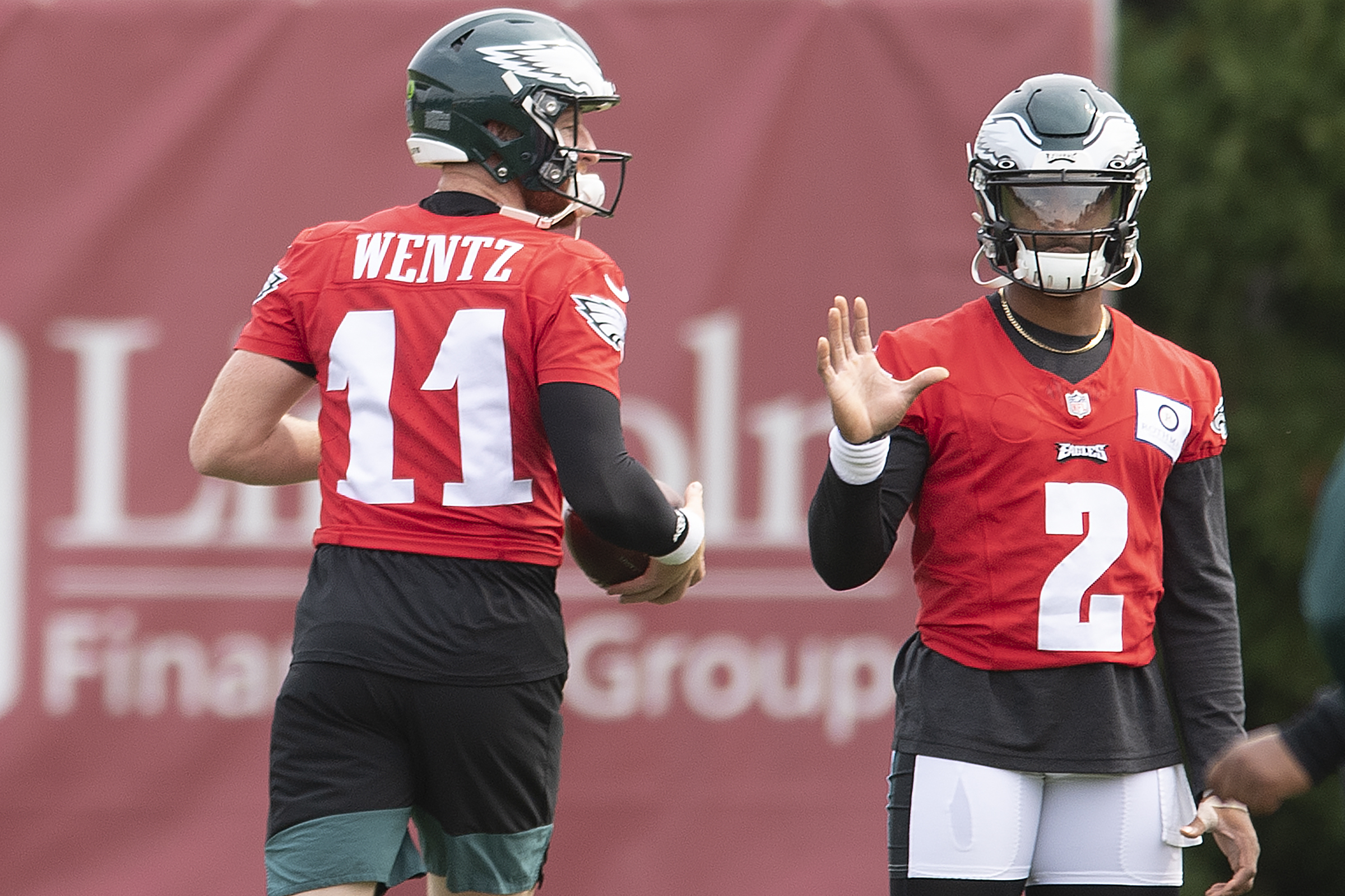
Would drafting a QB even that high bother Hurts? Maybe. So what? Has he given any indication over his career that he would allow such a thing to affect him or his performance? The last time he was in a bona fide positional competition (in his mind, anyway) was in 2020, immediately after the Eagles drafted him. He showed up to his first NFL training camp ready to chew bubblegum and beat out Carson Wentz as the starter, and the Eagles barely had time to offer him a stick of Juicy Fruit before he was in the lineup for good and Wentz was demanding to be traded.
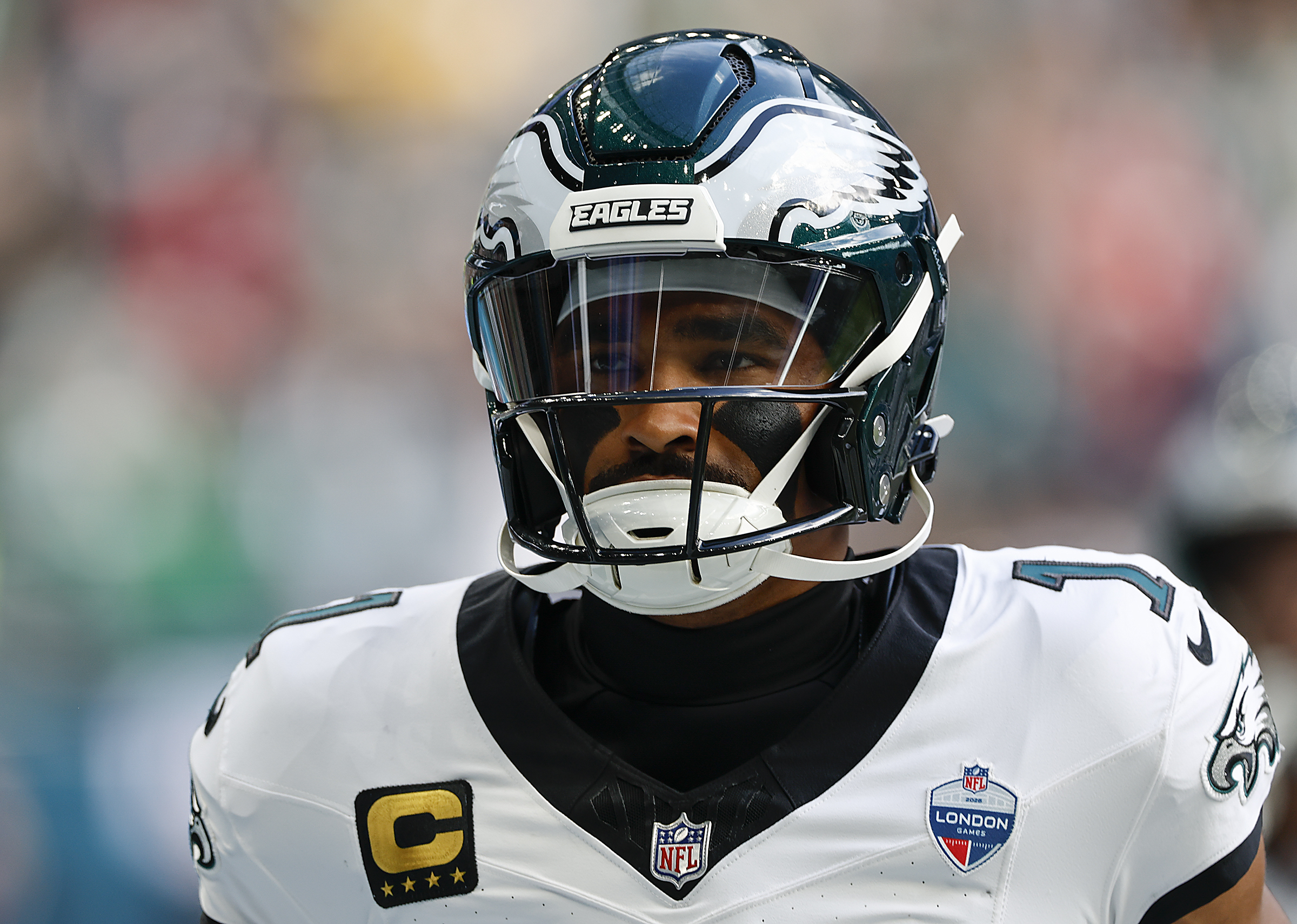
Jalen Hurts might soon be the incumbent in the same kind of QB competition he won with Carson Wentz. JOSE F. MORENO / Staff Photographer
So yes, staying with Hurts as the starter might make the best football sense for the Eagles. But — and here’s where things get complicated — it might not make the best business sense, and whether die-hard fans like it or not, they’d be naive to assume that such matters don’t matter when NFL teams, even the Eagles, make such important decisions. Consider the recent history here. You can pinpoint the moment when Hurts won over most of the town: Week 2 of the 2022 season, when he threw for 333 yards, ran for another 57, accounted for three touchdowns in a Monday night rout of the Minnesota Vikings, and remained an MVP candidate the rest of the season. He has been a reliable and impressive face of the franchise ever since.
Before he became a pariah in ‘20, Wentz was the Eagles’ prospective savior, the rising star who brought renewed hope in the aftermath of Chip Kelly’s ugly exit. And it took Donovan McNabb just two years before he and his mother, Wilma, brought the Eagles into everyone’s living room as spokespeople for Campbell’s Chunky Soup.
Lurie might replace Nick Sirianni, and people here will be curious about the next head coach, but they won’t be excited. When the home team is losing, no one is sticking around to watch the new guy call plays. Only a young, promising quarterback brings that kind of juice. It’s not just about the football. It never is. And it won’t be for the Eagles, especially if those lonely Sundays at the Linc keep piling up.
It was a quiet Monday in the Eagles’ world. Now, they are back from their much-needed bye.
But a week off might not change much for this 2-7 team, who seem to be in a hole that’s nearly impossible to climb out of, after several injuries and an ineffective offense has impacted the season.
Plus, last week brought one of biggest trades of the year, when the Birds sent Jordan Davis to Jacksonville for first- and second-round draft picks.
There’s still eight games remaining, and as the Eagles prepare to host the Steelers on Sunday, they have some questions facing them, including roster moves and if DeVonta Smith or Dontayvion Wicks will return.
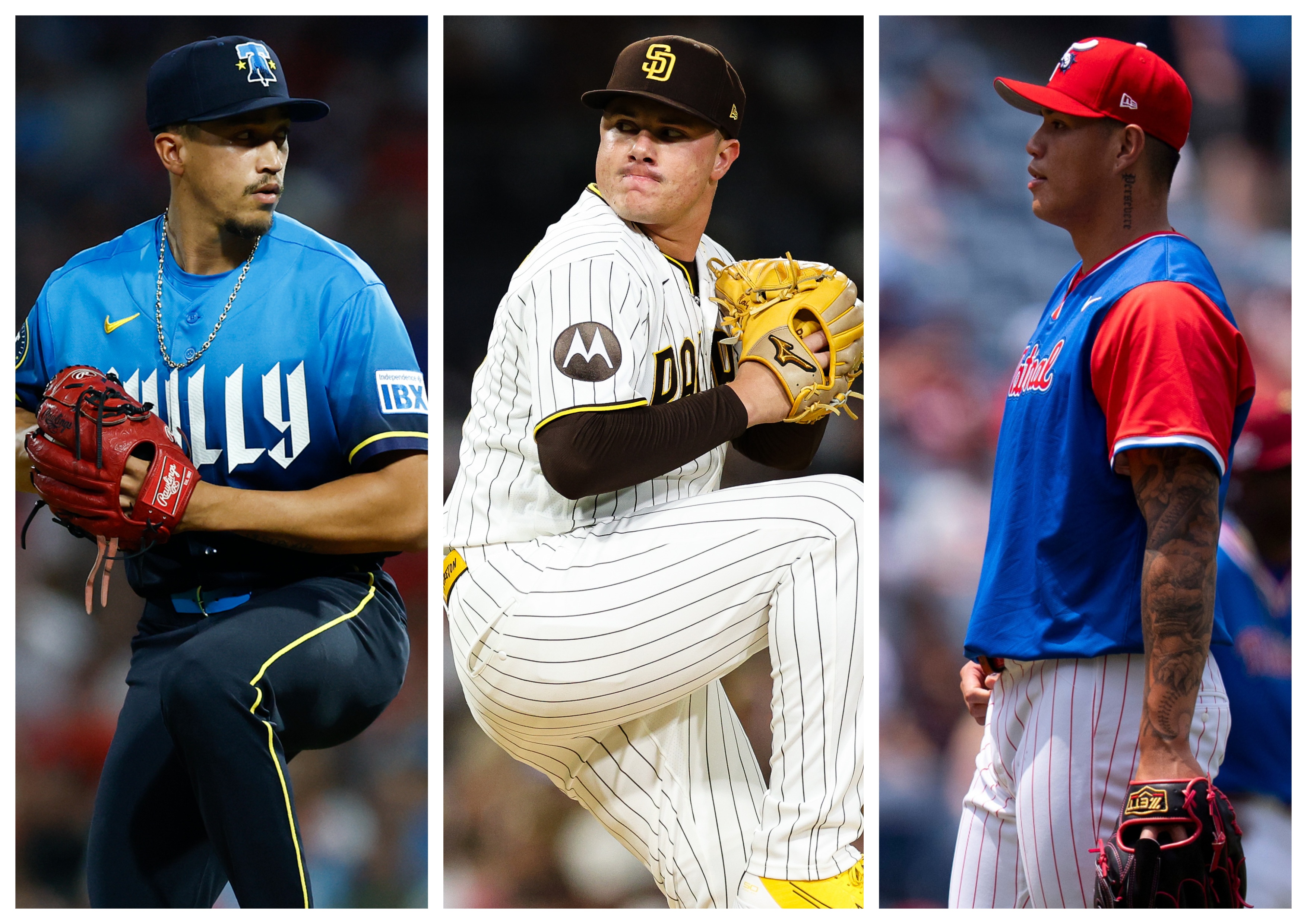
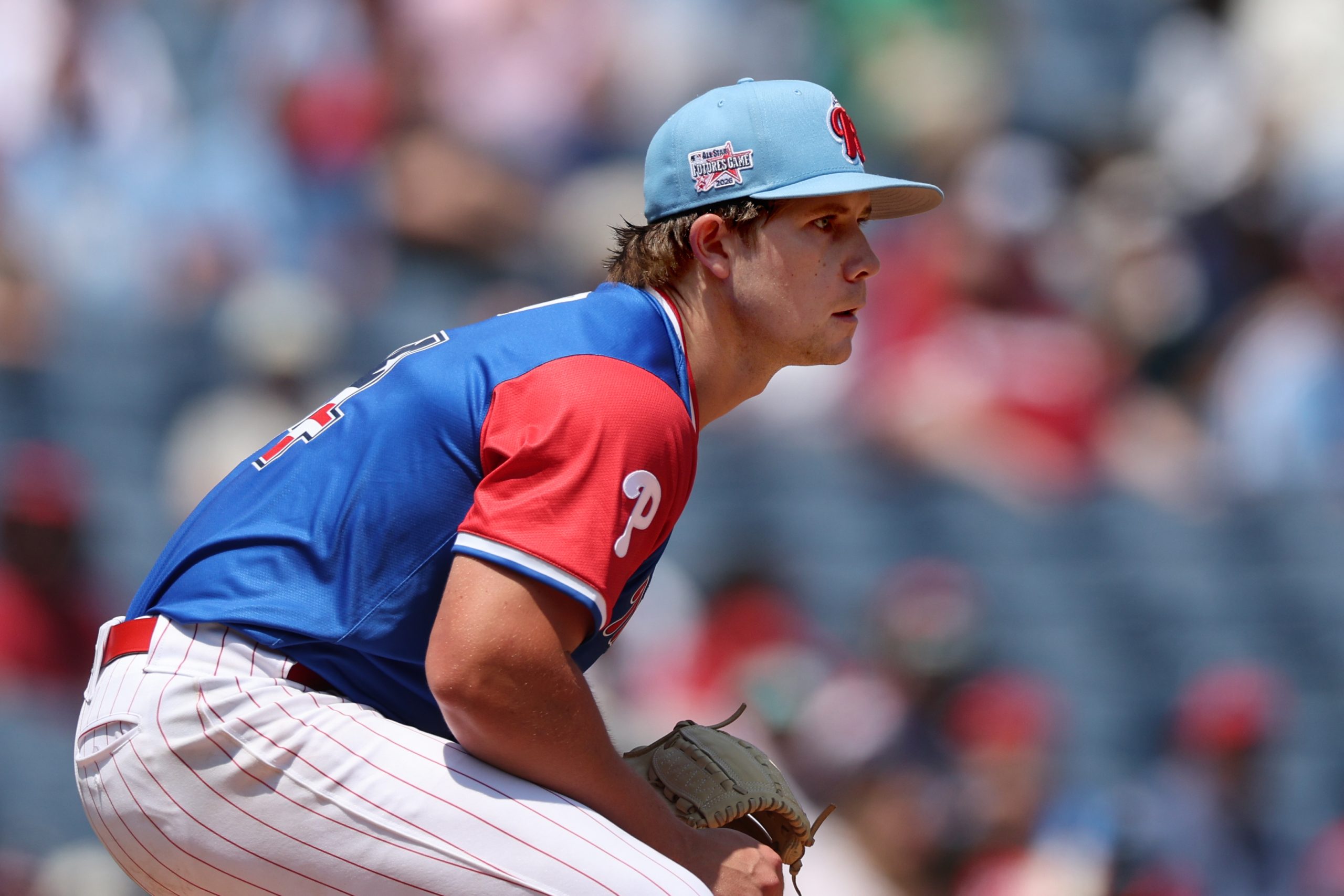
Alex McFarlane (left) has injected youth into the Phillies bullpen, Adrian Morejon (center)would be a pricy upgrade, and Wen-Hui Pan (right) is their No. 20 prospect.Yong Kim and Associated Press
The Phillies bullpen was beleaguered by injuries all year, and several trusted arms fell down the depth chart after disappointing seasons.
However, there were some bright spots, including the continued dominance of Jhoan Duran and the emergence of Alex McFarlane. But the bullpen as a whole is a major area of need. Lochlahn March breaks down a few of their options to improve in 2027.
What we’re …
📖 Reading: About a former and current Temple soccer player launching a fitness app and working to grow the platform.
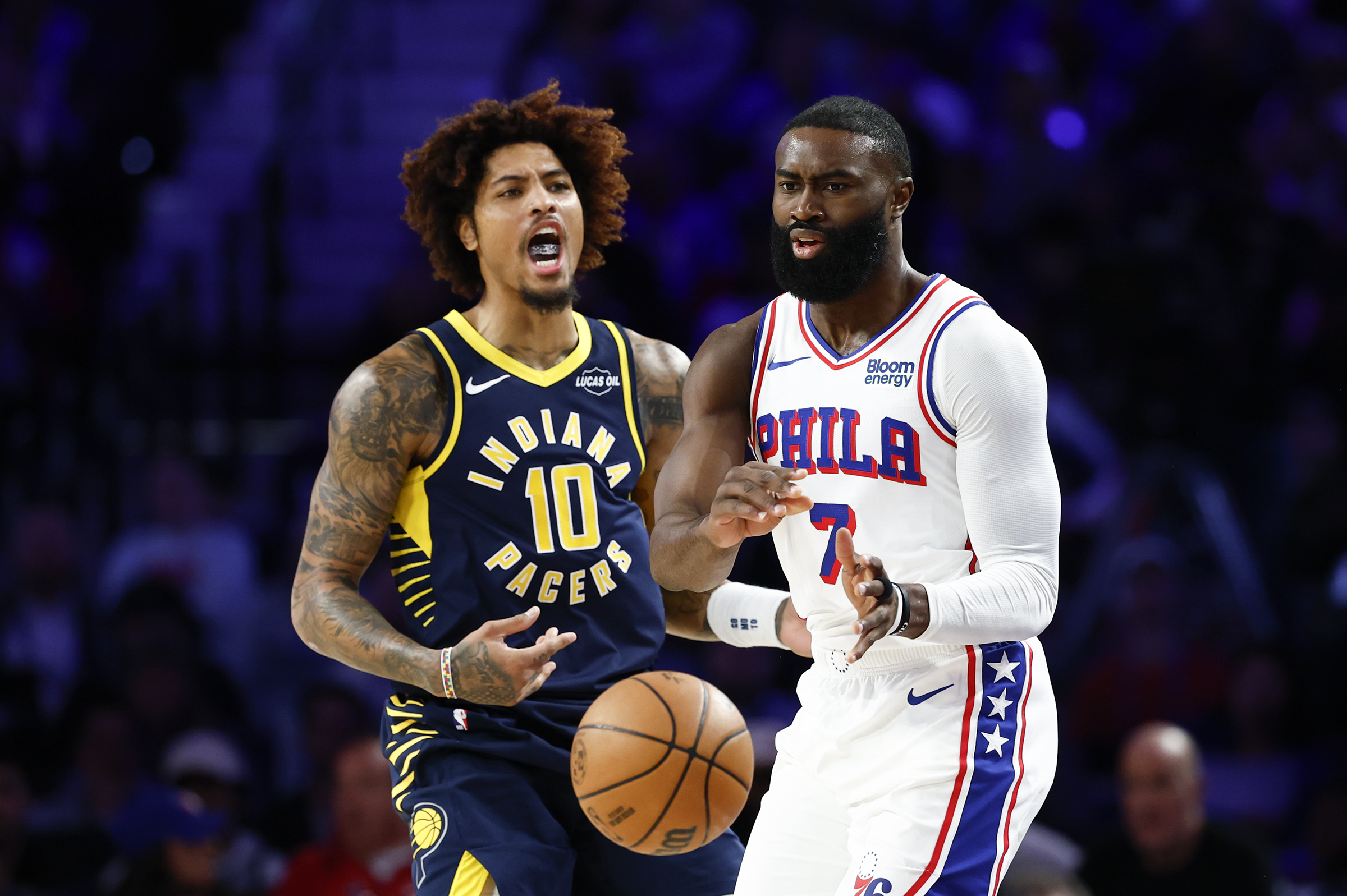
Kelly Oubre Jr. (left) scored 16 points for the Pacers on Sunday in his return to Philly.Yong Kim / Staff Photographer
Before Sunday’s tipoff between the 76ers and Paces, Kelly Oubre Jr. found Nick Nurse to give his former coach a hug.
The 30-year-old wing also came back to Xfinity Mobile Arena feeling a sense of gratitude for how his three seasons as a Sixer rejuvenated his career: “I was literally about to be done with basketball,” he said.
Joel Embiid scored a season-high in points during the Sixers’ 135-123 win over the Nets on Monday. They did it without LeBron James, who sat out the second game of a back-to-back.
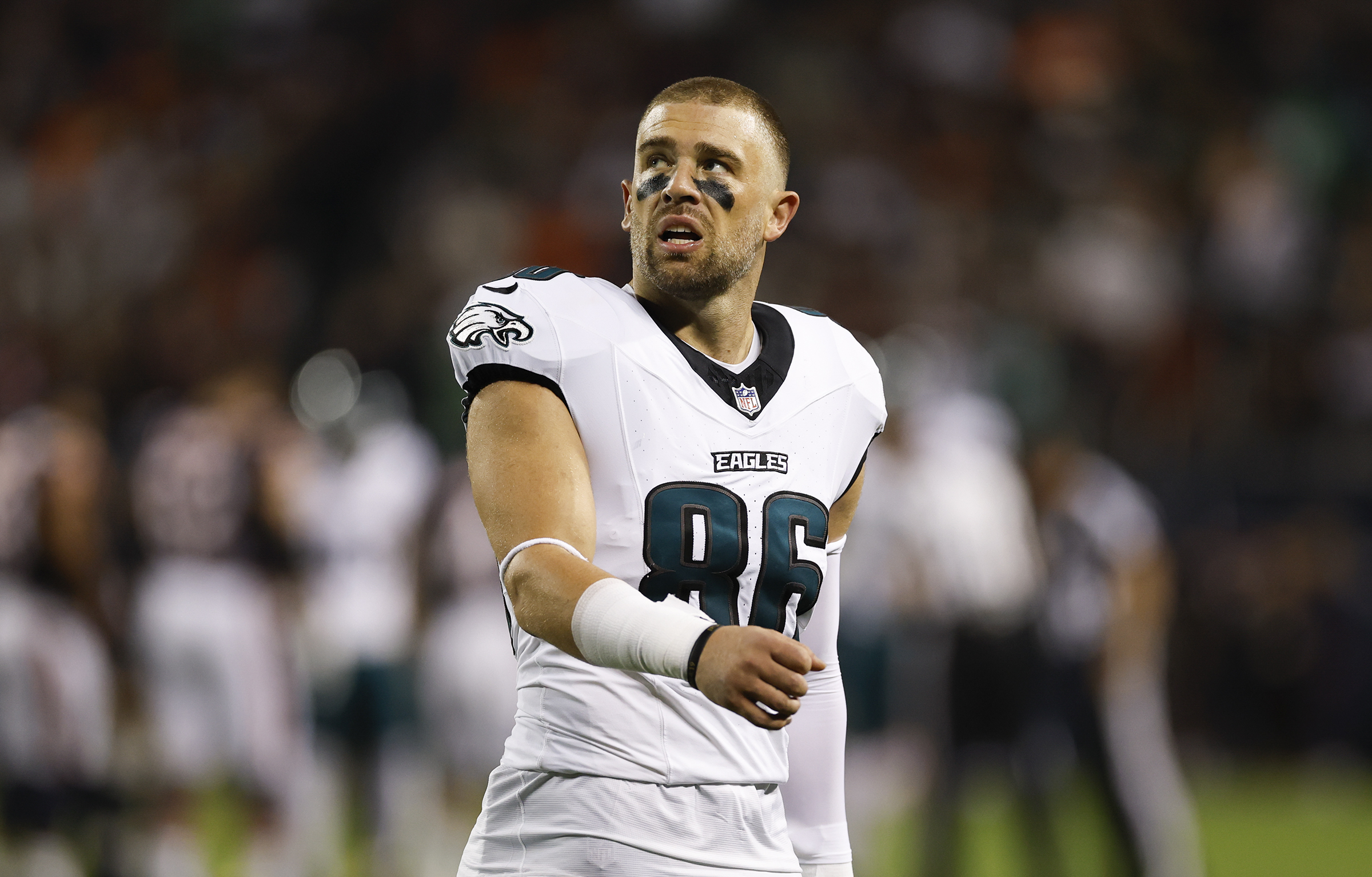
Zach Ertz is within striking distance of the franchise receptions record.Yong Kim / Staff Photographer
The Eagles signed tight end Zach Ertz to the active roster and is eligible to be active on game days again.
The 36-year-old had been on the Eagles’ practice squad since late September, but now has a chance to break the franchise record in receptions. The addition of Ertz coming out of the bye week wasn’t the only move the Eagles made.
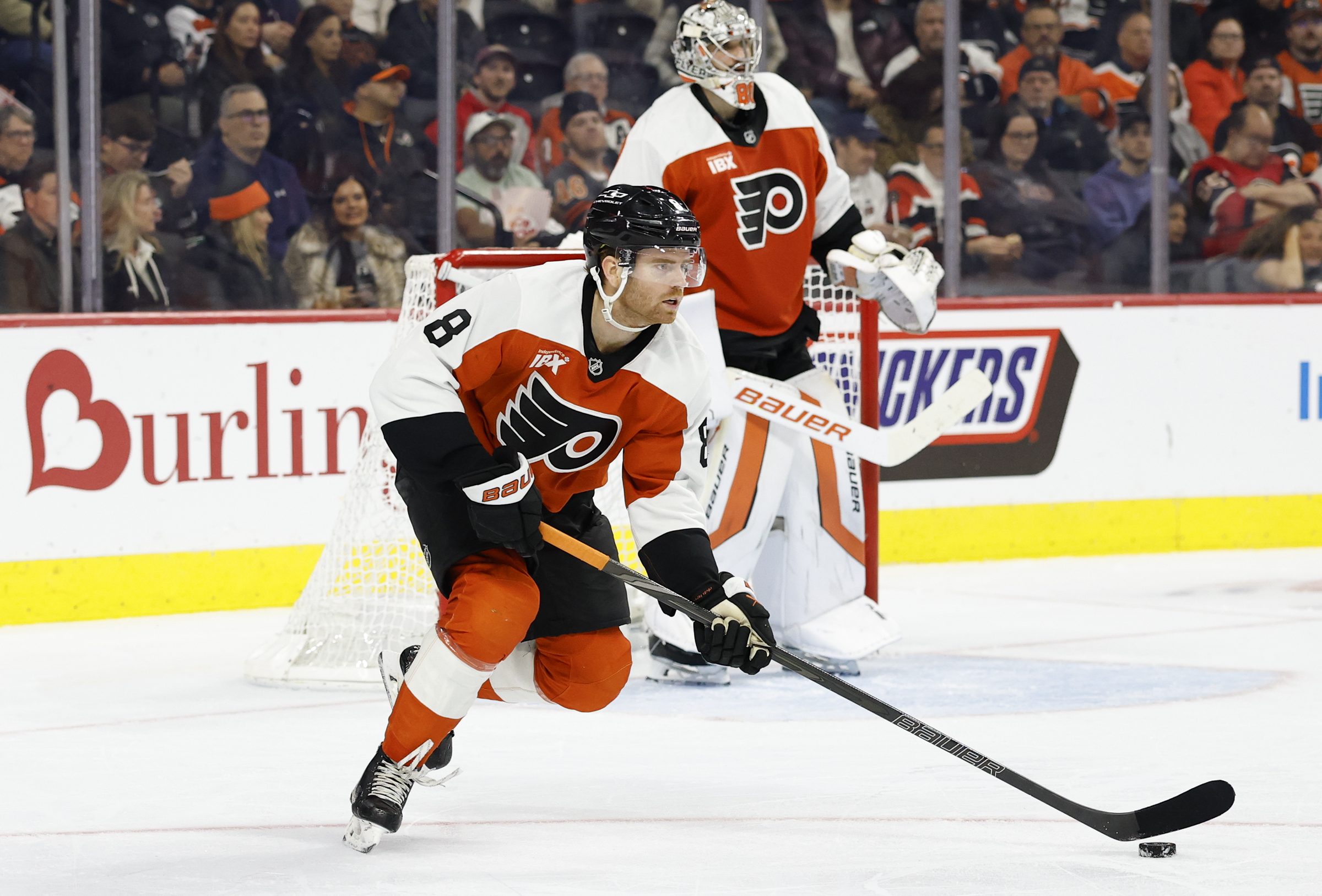
Flyers defenseman Cam York played his best game of the season on Sunday vs. the Oilers.Yong Kim / Staff Photographer
After 11 days on the road, the Flyers returned home on Sunday to face the Edmonton Oilers. While they fell 5-2, the score didn’t tell the full story.
One of that being Cam York is returning to form. He had his best game of the season, helping create two goals and assisting on one. He also posted season-highs in shots. Earlier this season, York missed eight games due to an upper-body injury. Now, he’s starting to showcase some of the swagger he’s capable of with the puck.
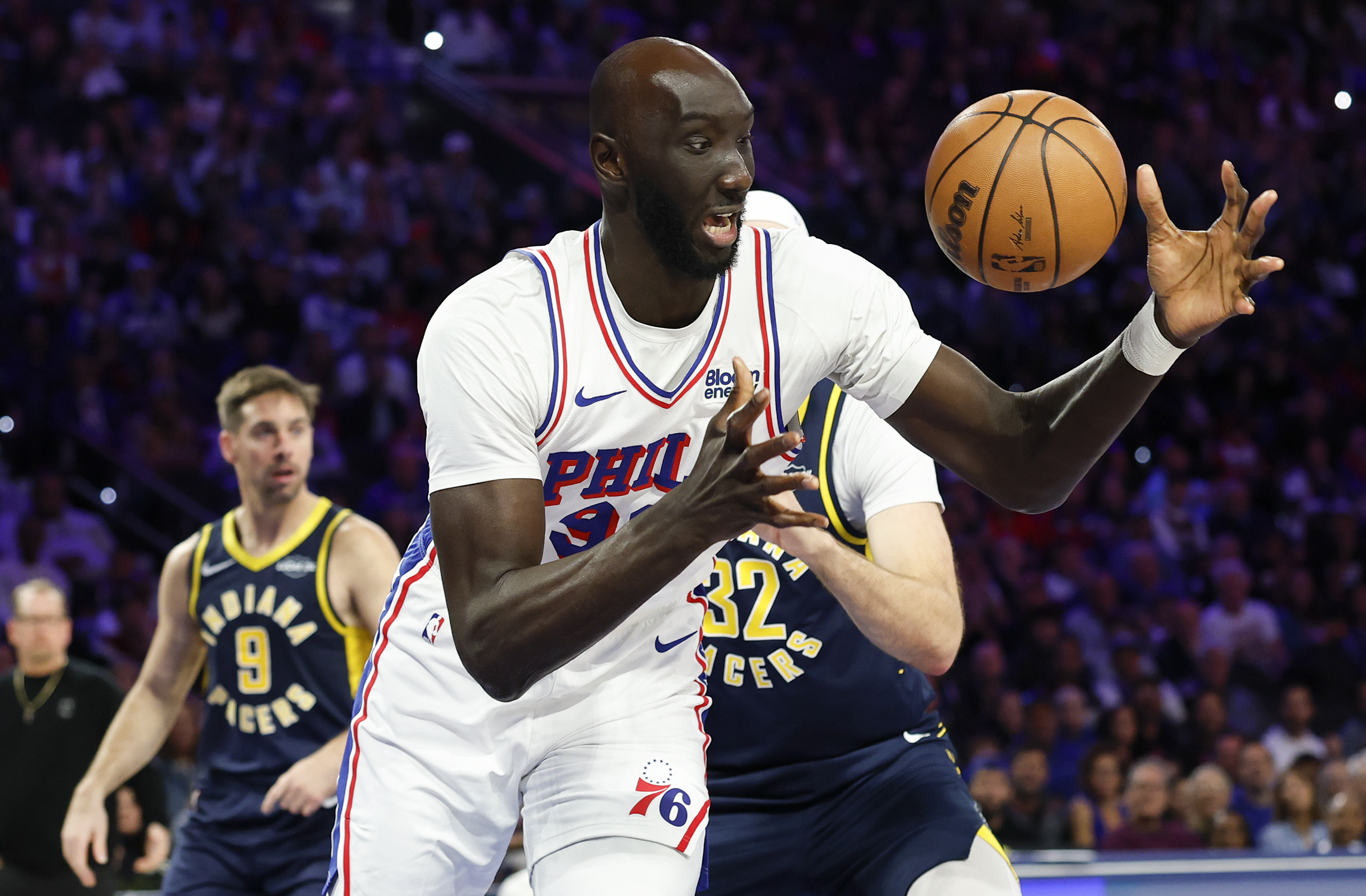
Tacko Fall played five minutes against the Pacers on Sunday, finishing with zero points and three rebounds.Yong Kim / Staff Photographer
It would be overselling things to say that the Sixers have figured out life without Joel Embiid. Even more so to pinpoint Tacko Fall’s five minutes of action in a win over the Pacers on Sunday.
Say this, though: Fall’s minutes mattered. His length caused some disruption on the defensive end, both around the rim and when contesting shots on the perimeter. He may not be the solution to life without Embiid, but he certainly has a great story, writes columnist David Murphy.
What you’re saying about coaches
We asked: What lessons or memories from a coach have stayed with you throughout life? Among your responses:
Ah, two of my all time favorite’s being Buddy Ryan and Charlie Manual. Buddy never called a player by his name. Always by his number. Something like “yo number 85 had a really good game but number 77 needs to step it up. Now with Charlie , well it’s hard to describe. Charlie was just Charlie. Loved to hear him just ramble along. — Ronald R.
In 10th grade at Springfield Delco High, Harry Ace Bell who was my homeroom teacher and a very well known baseball coach who developed Mike Scioscia and others once said to me “Sandy, don’t show your ignorance, hide it” as he responded to something stupid I said. Have never forgotten that although it was 70 years ago. — Everett S.
I remember cutting Coach’s lawn for 3+ years as he lived in Havertown, when I was a high school student at Haverford. Coach G lived a couple blocks from my house. He was always a great guy to talk with. I actually knew him from my father, John Klingman, who was head football coach at Bartram and also jv basketball and baseball at Bartram in the 50’s/60’s. He coached Earl Monroe at Bartram, when he played jv until the end of his junior year and finally moved up to varsity!! He also told me Joe ‘Jelly Bean’ Bryant played jv baseball for him! He always had a lot of respect for Coach Goldenberg, and told me he was tough, little in stature, but a good guy and obviously a good coach. — Steve K.
We compiled today’s newsletter using reporting from Jeff Neiburg, Olivia Reiner, David Murphy, Jackie Spiegel, Scott Lauber, Gina Mizell, Lochlahn March, Ariel Simpson, and Faiyaad Kamal.
By submitting your written, visual, and/or audio contributions, you agree to The Inquirer’s Terms of Use, including the grant of rights in Section 10.
That’s it for me this week. Kerith will be back in your inbox tomorrow. Have a wonderful Tuesday! — Bella
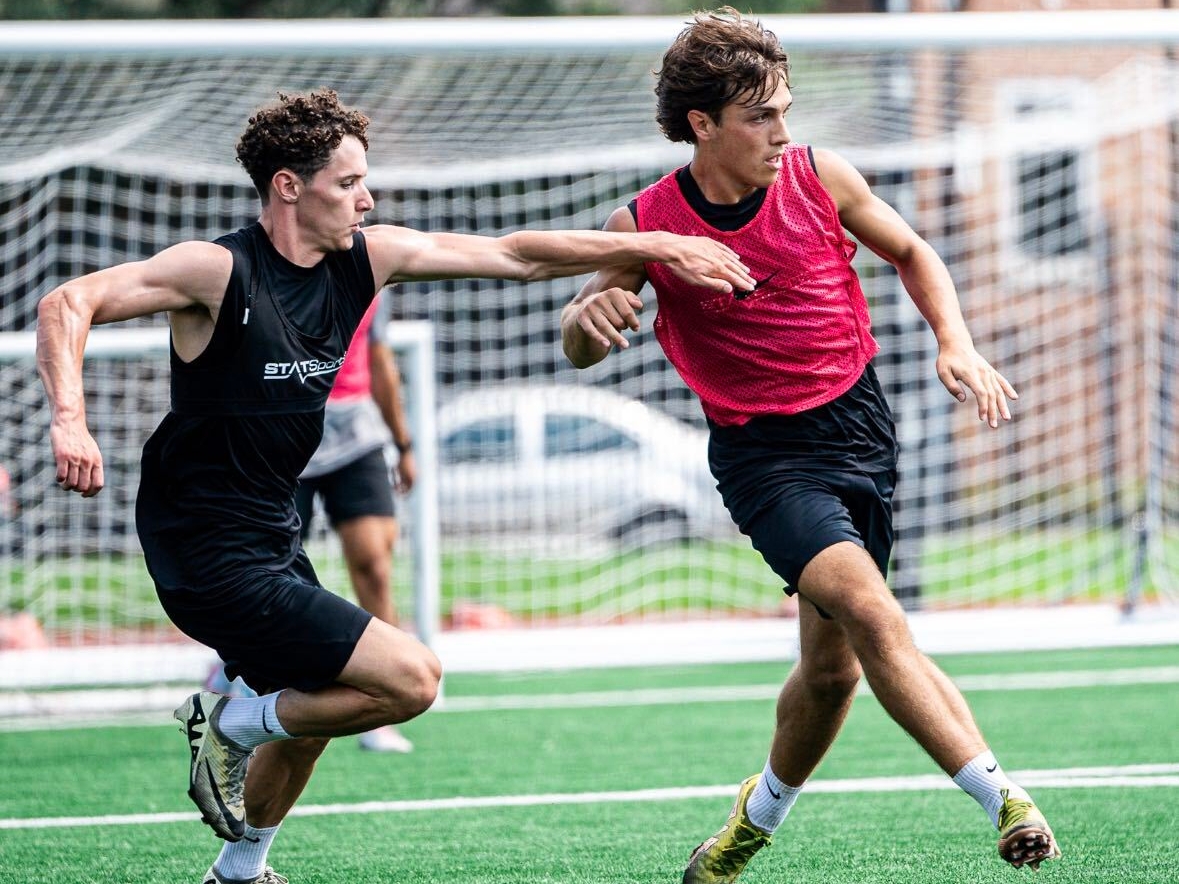
Cohen Williams and Elias Betancourt were on a six-hour bus ride from Akron, Ohio, to Philadelphia after a Temple soccer game in 2024. That was when Williams told his fellow midfielder about an idea he had.
As a high school junior, Williams starting going to the gym and didn’t know where to start, so he’d ask his friends to send him their routines. He would receive the lists through texts, but he wanted to engage with them further.
“I wasn’t able to interact with it and log my progress or keep track of any of my metrics,” Williams said. “So then, I had the idea to make an app where you had a profile and you could post your routines and then you could see your friends’ profiles.”
Betancourt, who transferred to Fordham in 2025, liked the concept but was busy with other commitments. They didn’t officially reconsider it until April, when Williams noticed AI tools, including Claude Code, were more capable. He called Betancourt to explain his vision, and the two officially started building their app called LOGR.
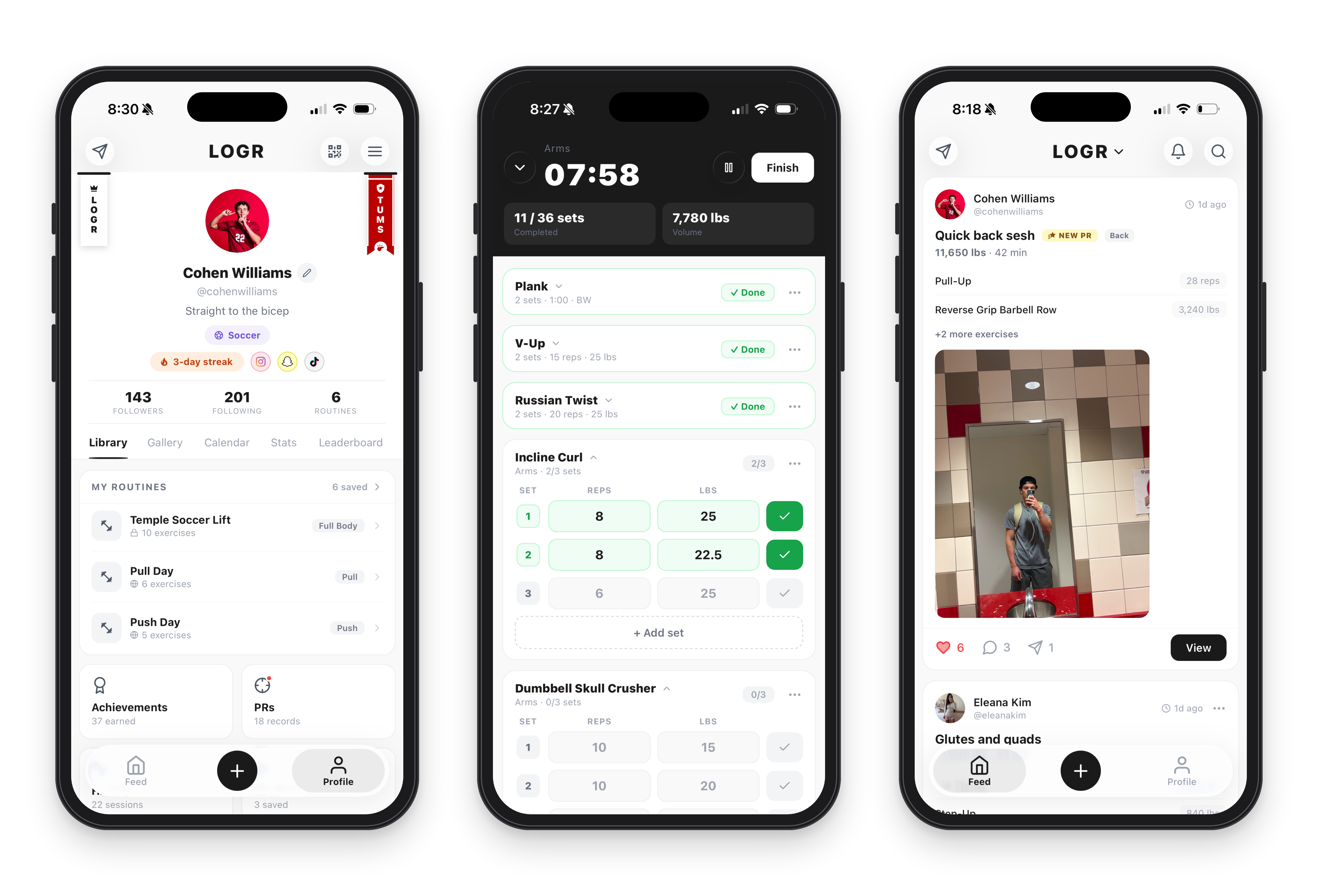
LOGR aims to make tracking workouts more social and easy. Friends can post progress photos and routines, and interact through likes and comments. The features serve as a source of accountability and incentivize people to work out through leaderboards and streaks.
The app, LOGR, aims to make tracking workouts more social and easy. Courtesy of Cohen Williams
Williams handled the app’s design, while Betancourt, a computer science major, took over coding duties. Constructing LOGR from scratch took repeated effort and energy. With Williams living in Philly and Betancourt in New York, they collaborated virtually.
They spent nights working on FaceTime together until 3 a.m. and balanced that with demanding schedules as student athletes.
“We’ve become closer because of this app, and I think we understand each other as people,” Betancourt said. “We understand what we’re good at, what the other person is better at, and how to balance that. … We had a great team culture at Temple and it shows.”
‘New to it all’
Their experience as former teammates made the creative process easier.
The two became close during Temple’s 2024 season, when Williams was a freshman and Betancourt a sophomore. Despite Betancourt transferring in the offseason, the two remained friends.
Williams and Betancourt had to pay out of pocket for the app’s expenses, such as Claude subscriptions, their database, and domain. But it’s all part of the early stages of something that they hope continues to grow.
“We don’t have funding,” Williams said. “So as of right now, everything we’ve done, we’ve had to learn on our own and fund on our own. We’re new to all of it.”
They released early versions of the app on TestFlight, allowing friends and family to try it during its drafting period. They received positive feedback and made Instagram and TikTok accounts ahead of its launch.
But the duo couldn’t make much time to market LOGR. Entirely a two-man operation, its functionality was the priority. Despite their hesitation, Williams and Betancourt decided to publish with minimal promotion.
On Sept. 21, LOGR officially launched on the Apple App Store. Users can log their lifts: how many reps they completed at what weight and how long they worked out. Routines and exercise history are then stored in their profiles to track progress and personal records. Runs and Pilates sessions can also be logged.
About two months since the app launched, the results have been positive. But the two are still searching for ways to improve the tool.
“We make sure to let everyone we talk to know that if there’s ever anything that they want to see changed, we’re super open to feedback,” Williams said. “We’re trying to build the best product possible, so I’ve had a couple people give us some feedback, and then we made changes.”
Continuing to grow
LOGR reached Temple and Fordham students first. While early users were mainly teammates, their base started growing to people they didn’t know. Williams would go to the gym and ask people to try the app, and later see their friends join.
Through the first seven weeks, LOGR accumulated 628 users, and 168 logged from Nov. 4-11. Weekly active users also rose from 29% in the first week to 61% in the third. Athletes from 17 Division I teams also joined in the first three weeks.
Williams and Betancourt look to reach out to colleges in the future and take a step up from TeamBuildr, the app their teams currently use. The two also hope to connect with fitness influencers to help gain more exposure.
Beside growth, the focus right now is keeping LOGR free. Paywalls aren’t part of the product they want to build.
“Everything that’s on the app right now is going to stay free for sure,” Betancourt said. “We don’t want to deter people or make people upset. This is a community that people should just be focused on their lifting, not worried about, ‘Oh, I have to pay money.’”
Williams and Betancourt have begun conversations with Temple students who can help market their product, while also doing their own research on how to expand their online presence and LOGR’s name out.
They believe their product offers something new for an avid lifter, an athlete trying to stay in shape, or a high schooler just stepping into the space.
And the two are motivated to see LOGR through and realize their expectations.
“I think that would be super rewarding for us to see people benefiting a lot because they actually like using our app,” Betancourt said. “We want to get to that point where we are that big name, because we have a product that is able to reach that.”
The Eagles are back from their much-needed bye this week at the Jefferson Health Training Complex before hosting the Pittsburgh Steelers on Sunday in a game that got moved to 1 p.m. from 4:25 p.m. thanks to the Eagles losing seven consecutive games.
Change was in the air during the bye week and trade deadline. The Eagles made one of the biggest trades of the season last Monday when they sent Jordan Davis to Jacksonville for first- and second-round draft picks. They also waived Fred Johnson and Hollywood Brown, and they tried to trade edge rusher Arnold Ebiketie before the deal with Cincinnati fell apart.
A rash of injuries and an ineffective offensive scheme have put the 2-7 Eagles in a hole that seems nearly impossible to climb out of. But eight games remain, and the Eagles have some questions facing them as they return to work.
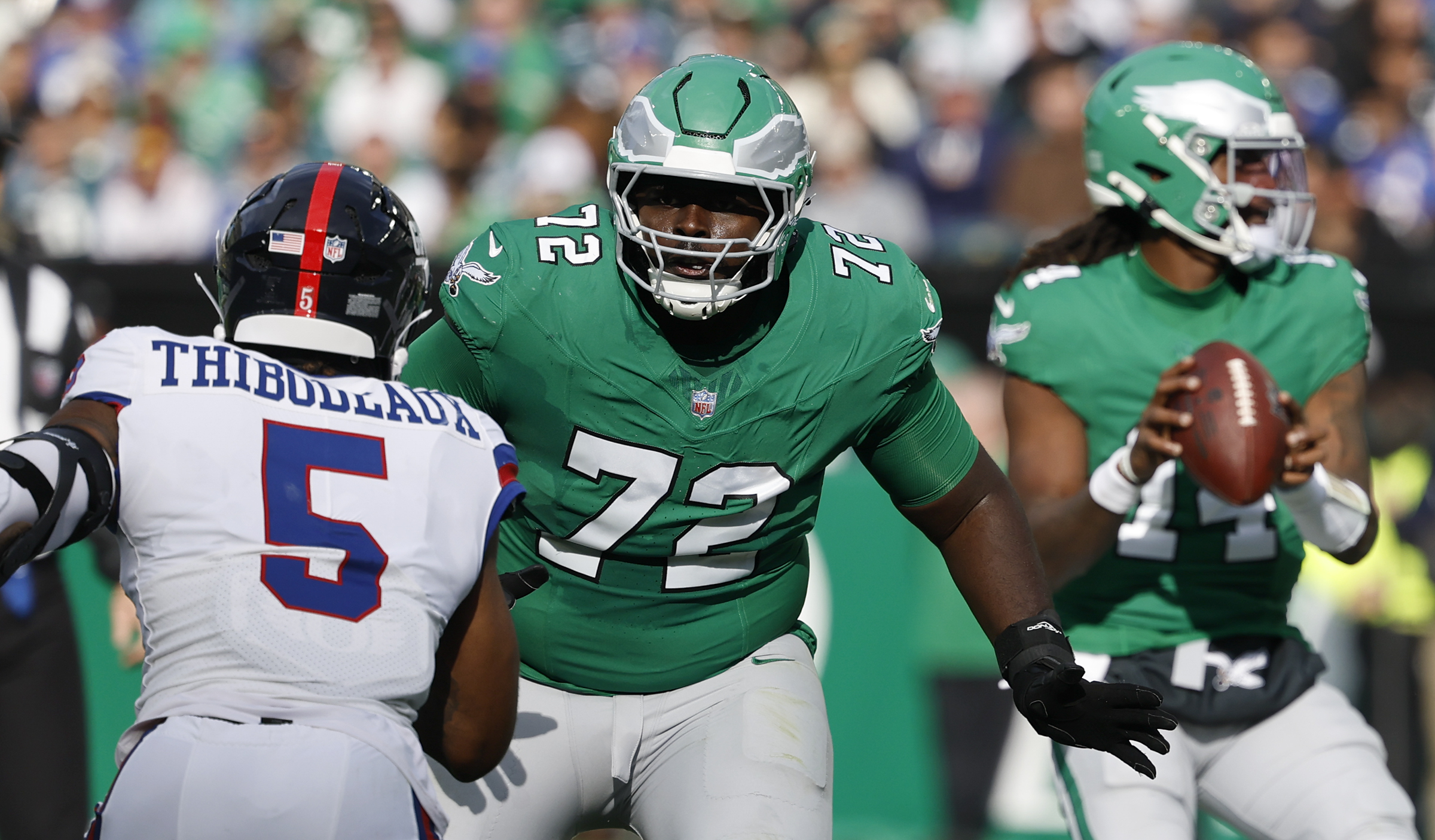
Markel Bell (72) has less of a safety net now with Fred Johnson gone from the roster. Yong Kim / Staff Photographer
What’s the tackle depth look like?
Waiving Johnson left the Eagles with three tackles on the active roster. One of them is starting left tackle Jordan Mailata, another is starting right tackle Markel Bell, and then there’s retired right tackle Lane Johnson, who remains on the roster for salary-cap reasons.
Bell, a rookie third-round pick, has had an up-and-down start to his NFL career, but the Eagles, by waiving the veteran Fred Johnson, are committed to letting Bell continue to develop.
Who will back him up? The Eagles answered that question Monday, when they signed John Ojukwu to the active roster from the practice squad. They also have Kiran Amegadjie and Evan Neal on the practice squad.
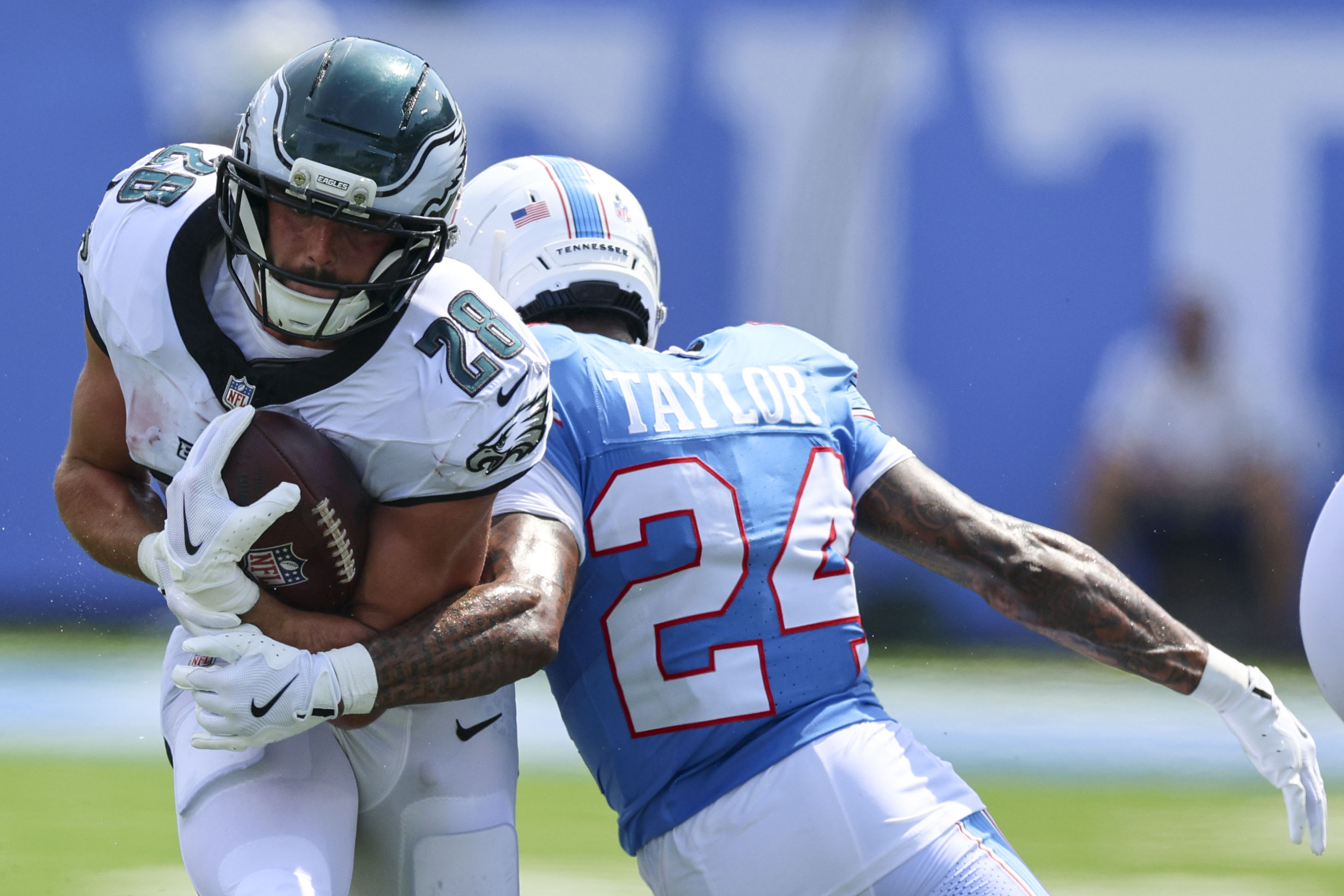
Will Shipley (28) could return to boost the Eagles’ running back depth. David Maialetti / Staff Photographer
Who fills the other open roster spots?
The 53-man roster was at 49 players on Monday morning before the Eagles signed Ojukwu and tight end Zach Ertz from the practice squad to the active roster.
Running backs Tank Bigsby and Will Shipley are eligible to come off IR and considering Saquon Barkley is the only running back on the active roster, perhaps that’s the plan. The Eagles opened Shipley’s 21-day practice window on Monday but not Bigsby’s.
Bigsby has been out since suffering a core muscle injury that required surgery in Week 4. His projected recovery timeline was around six weeks, which could put him in line to return to practice this week or next. Shipley suffered a plantar fascia injury in Week 5.
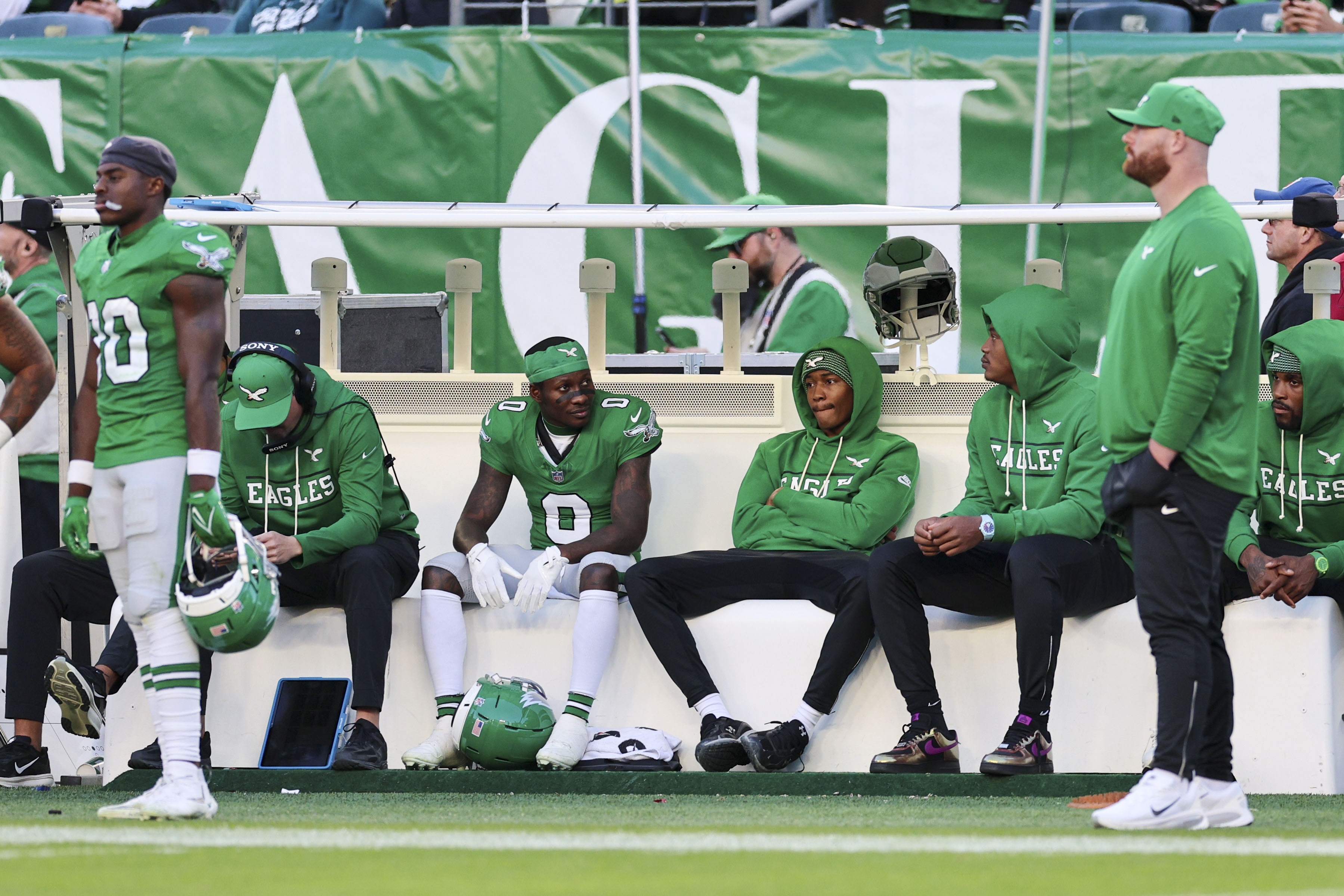
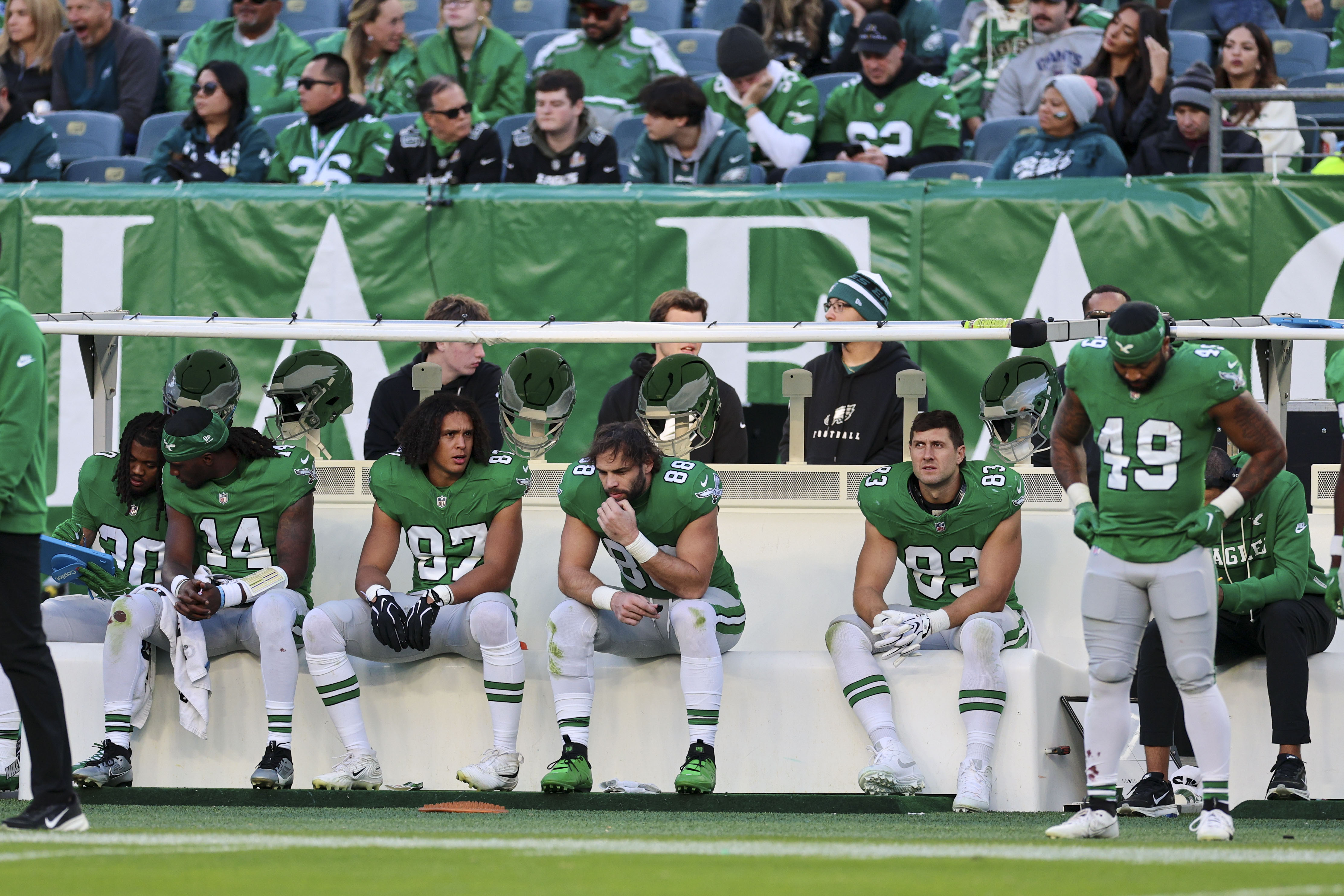
Eagles wide receiver DeVonta Smith (center – in sweats) watches the Giants game from the bench last Sunday. David Maialetti / Staff Photographer
Are DeVonta Smith and Dontayvion Wicks close to returning?
Part of the reason for the offensive ineptitude has been the unavailability of the Eagles’ top two wide receivers. DeVonta Smith has played in just four of nine games. Dontayvion Wicks has played in six.
The Eagles have been without both of them for the last three contests.
Releasing Brown would seem to indicate the Eagles are expecting to have at least one of them back this week. Considering neither hit injured reserve, it’s possible both players are ready to return following the bye week, Smith from his lingering hamstring injury and Wicks from an ankle injury.
Joe Milton should be back under center this week, possibly with a better group of weapons. David Maialetti / Staff Photographer
How many games will Joe Milton start?
Joe Milton became the fourth Eagles quarterback to throw a pass when he started the team’s Week 9 game vs. the New York Giants.
In benching Tanner McKee for Milton, the Eagles were hoping to spark an offense that ranks at or near the bottom in most offensive categories. They were inserting a quarterback with more mobility to escape the onslaught of pressure that the offensive line can’t seem to contain.
Things didn’t go any better, and it’s fair to wonder how long Milton will be the starter.
Will the Eagles go back to McKee if Milton can’t get the offense going this week vs. Pittsburgh? Will they roll the dice with rookie fifth-round pick Cole Payton?
Eagles tight ends Eli Stowers (87), Dallas Goedert (88) and Johnny Mundt (83) remain on the roster while franchise legend Zach Ertz is on the practice squad. David Maialetti / Staff Photographer
What’s the pecking order at tight end?
Dallas Goedert wasn’t traded before the deadline, which means the Eagles have a logjam at tight end after signing Ertz.
In a lost season, it’s one of the more interesting storylines to follow in the coming weeks.
The Eagles probably should be laser-focused on developing second-round pick Eli Stowers, who has missed a large chunk of his rookie season while recovering from multiple injuries.
Then there’s Ertz, who prior to being added to the active roster on Monday, was out of roster elevations and hasn’t played since Week 5.
The Eagles have five tight ends — Ertz, Goedert, Stowers, Johnny Mundt, and Grant Calcaterra — on the active roster, and it’ll be interesting to see how they divvy up playing time and pass-catching opportunities for the unit.
Will they make room for Ertz to chase down the franchise receptions record? He needs eight more. Will they have Goedert take a back seat at times to get Stowers some more routes and meaningful snaps?
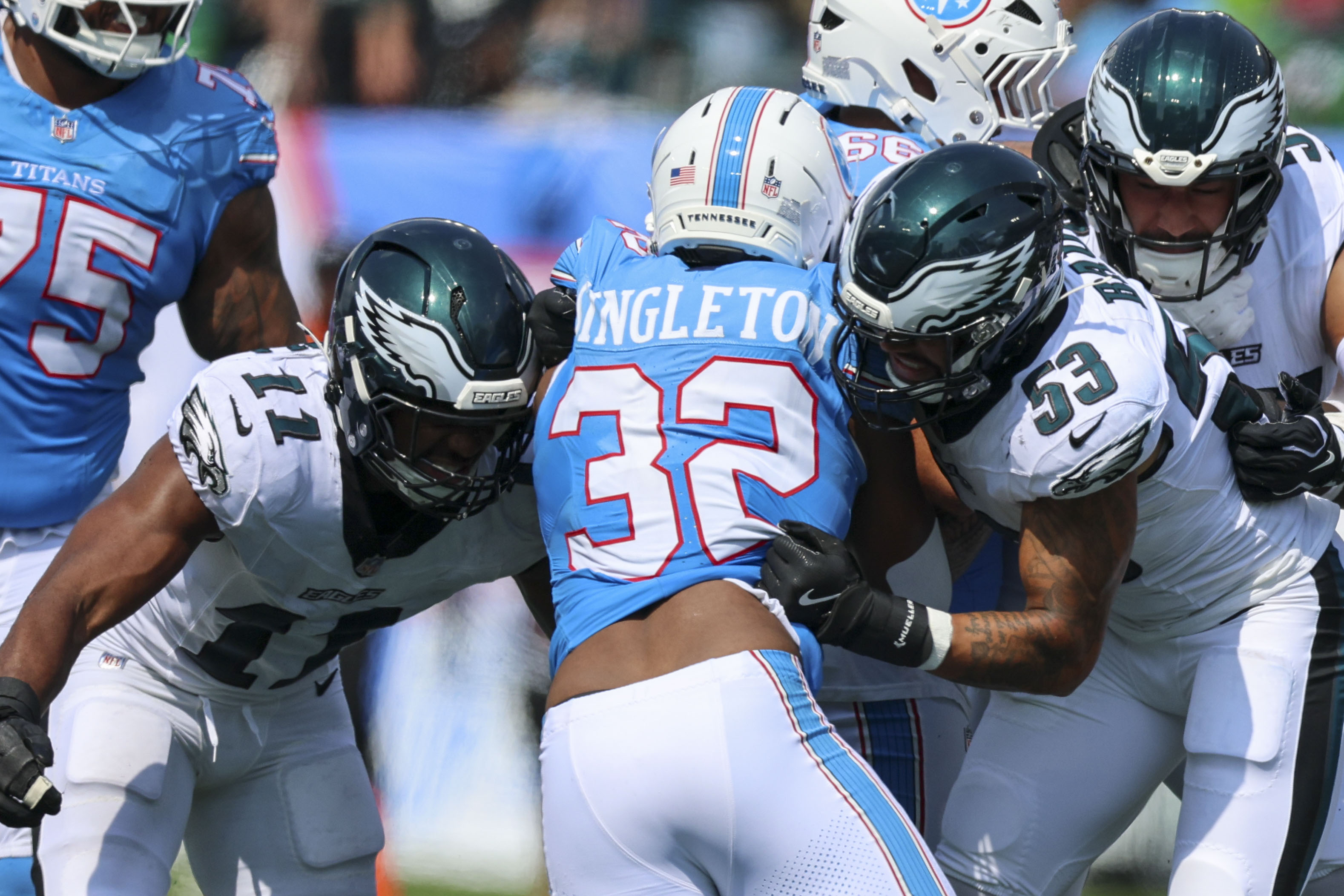
Jihaad Campbell (11) and Zack Baun (53) are part of a linebacker group that has seen some different looks. David Maialetti / Staff Photographer
Will the linebackers continue rotating?
Prior to Jihaad Campbell suffering hamstring and quad injuries, the second-year linebacker had fallen into a rotation at linebacker with Jeremiah Trotter Jr. next to Zack Baun.
If Campbell is ready to return to the field, it’ll be interesting to see how the Eagles deploy their linebackers on Sunday.
It stands to reason they would like to see Campbell work his way through some of his struggles in his second season, but Trotter has earned his playing time.
The investigation into the Jalen Hurts blood clot matter is taking shape. Yong Kim / Staff Photographer
What’s next with the Jalen Hurts situation?
Jalen Hurts, who is on injured reserve recovering from blood clots and unlikely to play again this season, was at the facility prior to the Giants game and may be in and out of the building in the coming weeks.
Meanwhile, “mutually agreed-upon independent medical experts” will review the events surrounding Hurts’ ailment and share their findings with the league and its players association, according to a statement from the office of U.S. Sen. Lisa Blunt Rochester (D-Del.), who sent a letter to the NFL last month.
“Following the ongoing joint review, the league and NFLPA will consider appropriate next steps, including whether this case points to a need for additional leaguewide guidance,” said Jeff Miller, NFL executive vice president of communications, public affairs and health policy, in a statement released by Blunt Rochester’s office.
There has been nothing to suggest Sean Mannion’s duties have changed heading into Week 10. David Maialetti / Staff Photographer
Were any coaching changes made?
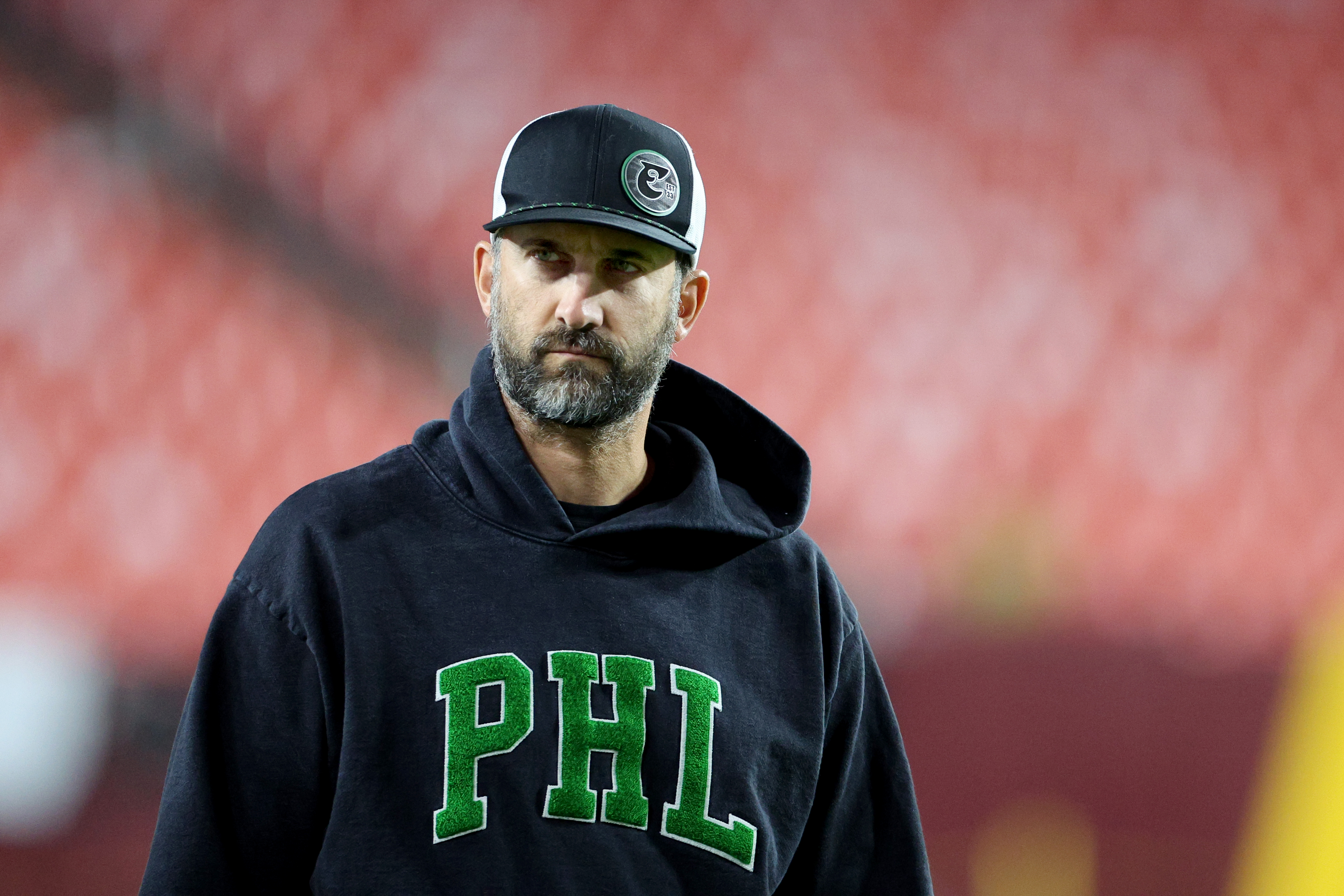
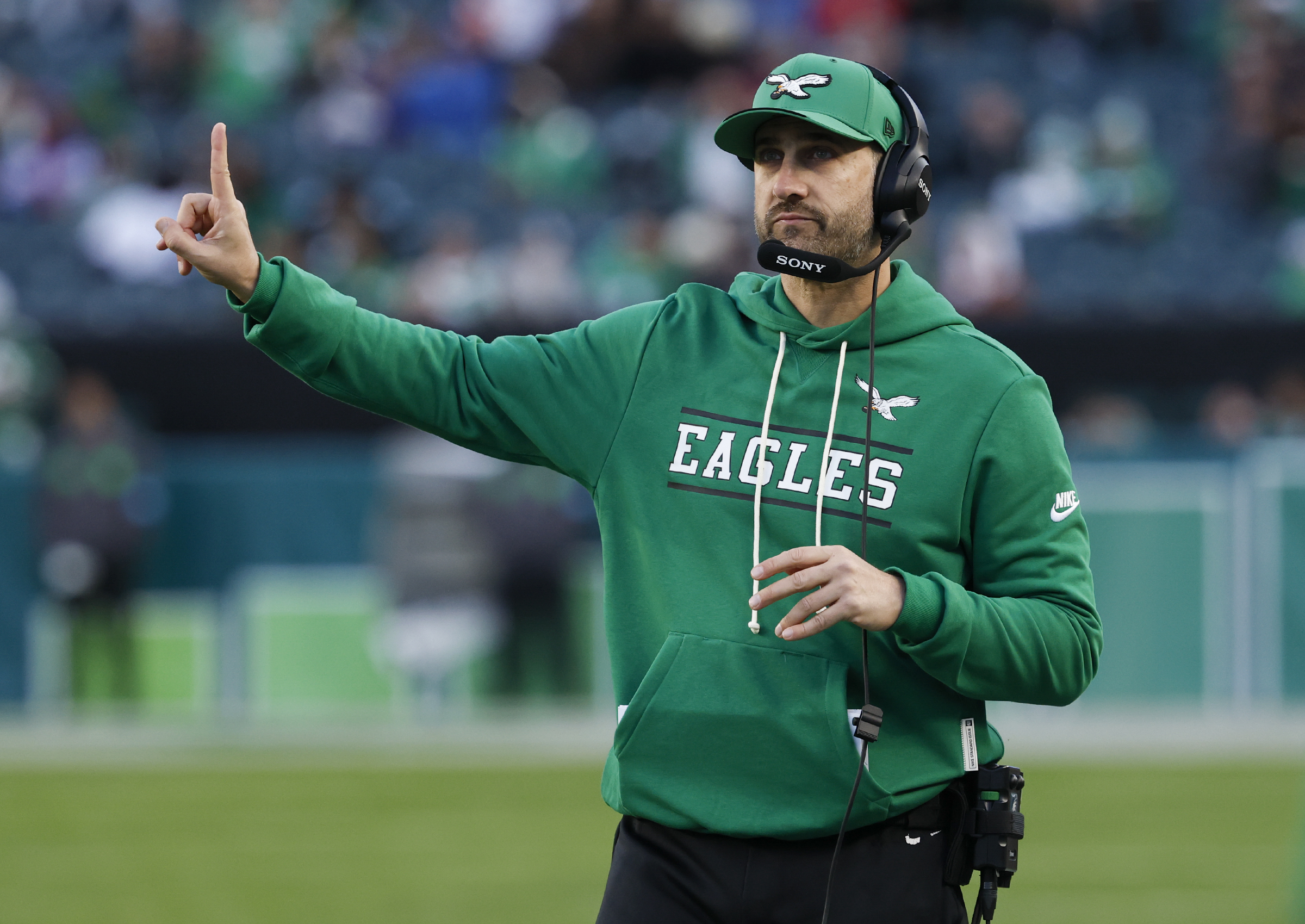
Nick Sirianni didn’t rule out changes to the coaching staff in the immediate aftermath of the seventh consecutive loss, but a day later he said that no changes were made and the staff planned to spend the bye week “going through our self-scout process.”
A week later, news broke from ESPN on Monday that the Eagles brought back T.J. Paganetti as a consultant. Paganetti was with the team for 10 seasons, most recently in 2024 as a run game specialist and assistant offensive line coach. He left the team to become Kellen Moore’s run game coordinator in New Orleans last year. He was let go by the Saints earlier this month.
Is adding Paganetti the only change the Eagles made?
In the three-game wild-card series loss to the Atlanta Braves, the Phillies used just four relievers.
Game 2 even required 10 innings to be decided. And still, the majority of the bullpen stayed seated, with manager Don Mattingly preferring to call on rookie starter Andrew Painter to cover the last three innings in that potential elimination game. The Phillies’ only true relievers to make appearances in the series were Jhoan Duran, Alex McFarlane, Jonathan Bowlan, and Tim Mayza. Members of the rotation covered the rest.
It was a reflection of the state of the bullpen, and how few arms remained in Mattingly’s circle of trust by that point.
The unit was beleaguered by injuries all year, and several trusted arms fell down the depth chart after disappointing seasons. There were a few bright spots, namely the continued regular-season dominance of Duran and the emergence of McFarlane. But the bullpen as a whole is a major area of need for the Phillies this winter.
Here’s a breakdown of the relievers’ outlook for 2027 and beyond:
Phillies closer Jhoan Duran had a 1.82 ERA and 33 saves in 2026.David Maialetti / Staff Photographer
The closer
The Phillies’ last three postseason series losses — the 2024 National League Division Series against the New York Mets, the 2025 NLDS against the Los Angeles Dodgers, and the 2026 wild-card series against the Braves — all had a common thread: A late lead in Game 1, blown by the Phillies bullpen, that the team could not come back from.
The go-ahead three-run homer Duran surrendered to Austin Riley in the eighth inning of Game 1 was just the latest example. But this one was perhaps the most stunning, because it was against the Phillies’ most trustworthy reliever.
Before Riley’s homer, Duran had a 1.82 ERA, 0.994 WHIP, and 33 saves in the regular season. He had surrendered two total home runs over 59⅓ innings. It all contributed to Duran’s second-place finish in National League Reliever of the Year voting to the San Diego Padres’ Mason Miller.
Based on what was available to Mattingly, there likely wouldn’t have been a better matchup on paper against the right-handed Riley. Which was why the closer was in the game at all, having entered in the seventh with the goal of a three-inning save.
But therein lies the issue: The Phillies need more options. The bullpen starts with Duran, but cannot rely solely on him. Especially as the flame-throwing righty enters his final season of team control in 2027, the Phillies need to build around him.
Video: The Phillies are counting on youth in 2027 | Gameday Central
The setup arms
The “bridge to Duran” was a question mark that remained unanswered all season. Brad Keller signed a two-year, $22 million contract last offseason to fill that role, but he had an uneven first half that ended abruptly with a UCL tear.
Phillies president of baseball operations Dave Dombrowski said that Keller is on pace to return from Tommy John surgery at some point in the second half of 2027. Even if he remains on track, however, pitchers don’t always return to their pre-injury level immediately after surgery. Keller had a 4.02 ERA in 31⅓ innings in 2026, up from the 2.07 ERA in 69⅔ innings the year before with the Chicago Cubs. If he does return to the Phillies’ bullpen in 2027, it’s fair to wonder what version they’ll get.
For a good part of the season, it appeared that Bowlan was the front-runner for the setup job. But a groin strain in April followed by another in September cost him some time. And even before the second strain, Bowlan had been struggling for the last month of the season.
An ERA of 2.90 across the first four months shot up to 6.75 in seven appearances in September, which included one loss and one blown save. The struggles continued when Bowlan returned from the injury in Game 3, giving up a homer to Matt Olson in his only postseason appearance.
But Bowlan still has one of the best four-seam fastballs on the team. In 2026, the pitch had a plus-10 run value, with a 37% whiff rate. According to StatCast, Bowlan’s four-seam has 18 inches of rise, which is 2.4 inches more than the average right-handed pitcher. Armed with a pitch that limited hitters to a .118 batting average last year, Bowlan enters 2027 as one of the Phillies’ top available arms after Duran.
Jonathan Bowlan emerged as a reliable right-handed reliever for most of the 2026 season.Yong Kim / Staff Photographer
Another is McFarlane, who burst onto the scene in August and continuously earned more trust. McFarlane bounced between the minors and majors earlier in the season, including a daylong stint in April when he didn’t even get into a game. But after he was recalled a third time on Aug. 11, McFarlane ensured he wasn’t going back to triple A.
In 19 major league innings, McFarlane put up a 2.84 ERA and racked up 20 strikeouts. He jumped right into the fire, with his first major league out coming against Shohei Ohtani, and also later striking out the likes of Mike Trout, Nolan Arenado, Brice Turang, and Juan Soto. According to those around him, he has the demeanor suited for high-leverage moments. And at 25 years old, McFarlane is a needed injection of youth into the bullpen.
But McFarlane doesn’t have enough experience to truly seize the setup role just yet. Entering 2027, it’s still a question mark.
“Is there [a setup man] that you would anoint right now? My answer is no,” Dombrowski said. “Do I think there can be one? Yes. As does our pitching people. I mean, you cannot believe the number of inquiries we get about a couple of our right-handed relievers to the point where somebody thinks they might be their closers.”
The Phillies didn’t get to see much of Caleb Kilian after they acquired him from the Giants before the Aug. 3 trade deadline.Yong Kim / Staff Photographer
Other righties
The Phillies didn’t have much to judge Caleb Kilian on, as he suffered an oblique injury just 3⅓ innings into his Philadelphia tenure. Before the trade deadline swap that also brought over Luis Arraez in exchange for a pair of pitching prospects, Kilian had a 4.26 ERA with the San Francisco Giants.
The 29-year-old right-hander saw a large velocity jump in 2026, going from 93.6 mph with his fastball in 2024 (his last season in the majors) to 96.6 mph this season. With his four-pitch arsenal — four-seam, knuckle curve, sinker, slider — the Phillies believe he has the stuff to be a key piece.
“We think he’ll be an important part of our bullpen next year,” Dombrowski said of Kilian.
Chase Shugart, 30, will likely remain a right-handed depth arm. Shugart took the ball whenever asked in 2026, even twice in one day to earn the win in both ends of an April doubleheader. Shugart had a 4.02 ERA in 53⅔ innings, and is primarily suited for low-leverage.
The bigger question will be the future of Orion Kerkering. The Phillies reached an impasse with the righty in September as his second-half struggles continued, and decided to option him to triple A knowing it would prevent him from being included on the wild-card roster. It was the first time Kerkering, 25, had been optioned since making his major league debut in September 2023.
“It got to the point where it’s almost unusable,” Mattingly said at the time.
Phillies reliever Orion Kerkering ended the 2026 season at triple A.Yong Kim / Staff Photographer
He started the season strong, rebounding from the infamous Division Series-ending error that had some wondering if Kerkering would ever throw another pitch in a Phillies uniform. But things fell apart after the All-Star break.
“It’s not like he started out struggling,” Dombrowski said. “People have talked about we should have moved on after the year that he had, after what happened in L.A. the year before. I thought he approached that very well, and did what he needed to do to help himself, and it was apparent he did it, because he pitched well for us. But that’s going to kind of be up to us to try to figure that out with him. And I do think he has a chance to still be an effective big league pitcher.”
In the first half, Kerkering had a 2.43 ERA and 1.16 WHIP. In the second half, those figures ballooned to 9.43 and 1.95. He dealt with turf toe that had him in a walking boot away from the field for a period of time, but the Phillies did not believe there was anything physical causing Kerkering’s struggles.
In his final outing before being demoted, Kerkering’s velocity had lost a few ticks. His fastball, which averaged 97.2 mph, was down to 95.3 mph. Batters were hitting all his pitches hard, but especially his signature sweeper, which they averaged .429 against in the month of September.
It’s fair to wonder at this point whether Kerkering’s time in Philadelphia has run its course, and if a change of scenery might benefit him. But Dombrowski expressed some confidence in Kerkering’s capability.
“He has the ability to turn it around. He’s got a good fastball. He’s got a good sweeper, and they’ve given him a splitter,” Dombrowski said. “He didn’t perform to those capabilities. Am I confident? I’m not going to go into there and say that he’s going to be our setup guy or seventh-inning guy. Do I think he can turn it around? I think he can, but we’ll have to wait and see on that.”
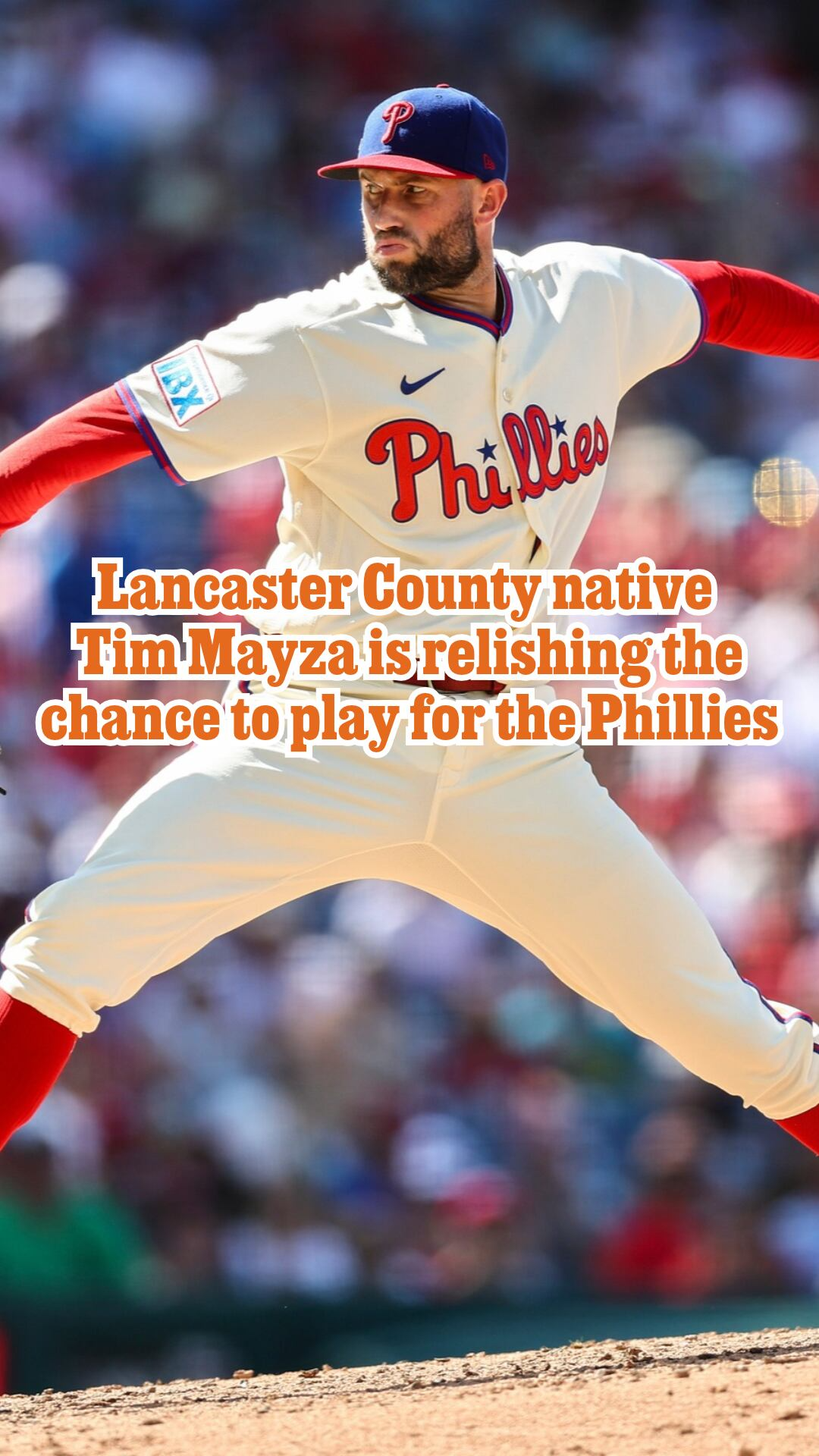
Video: Phillies pitcher Tim Mayza is relishing the chance to play for his hometown team | Phillies Extra
Left-handed struggles
One of the first moves the Phillies made this offseason was re-signing Mayza to a one-year, $2.75 million contract. The 34-year-old was one of the bullpen’s veteran leaders in 2026, filling a variety of roles: opener, bulk, and even occasionally high-leverage. He was also the Phillies’ only left-handed reliever to touch the mound during the wild-card series.
But that signing was just the first step. During the general managers’ meetings last week in Las Vegas, Dombrowski made his priority clear in acquiring a left-handed setup man.
“It’s something we want to really emphasize, with the number of left-handed hitters,” Dombrowski said.
That was what the Phillies hoped Brooks Raley might be at the trade deadline. It cost two prospects to acquire the lefty from the Mets, in what will likely live on as one of the worst trades in recent Phillies history. The 38-year-old had a 1.96 ERA with New York, but a 7.94 ERA with the Phillies. In 16 appearances after the trade, he was charged with three blown saves and two losses.
Raley wasn’t included on the wild-card roster.
He wasn’t the only lefty to struggle for the Phillies last season. As a collective, their left-handed relievers had a 4.58 ERA in 2026, which was third-worst in baseball. The Athletics and Washington Nationals were the only teams whose lefty relievers had higher ERAs, and they finished with records below .500.
José Alvarado is a free agent, with his tumultuous Phillies tenure likely coming to an end after a 5.86 ERA and 1.646 WHIP this season.
Phillies pitcher Tanner Banks struggled to regain his 2025 form.Elizabeth Robertson / Staff Photographer
The Phillies are hoping for a rebound from Tanner Banks, whose struggles led him to be optioned in June. After a 3.07 ERA campaign in 2025, Banks struggled to a 6.19 ERA this season. His walk rate went from 4.5% to 8.5%.
Banks also missed over two months of the season with a forearm strain, returning to fill a bulk role in September. He was somewhat improved in 7⅓ innings that month, with a 2.45 ERA.
Kyle Backhus remains intriguing, if only because he brings something different than any other pitcher on the Phillies roster. With an arm angle of 6 degrees, Backhus had the fourth-lowest arm slot of any lefty in the league in 2026.
For reference, the Phillies’ next-lowest left-hander is Jesús Luzardo with an arm angle of 26 degrees. Backhus had a 4.95 ERA in 20 innings in 2026 and didn’t quite carve out a major league role. But as a sidearmer he gives opposing hitters a completely different visual compared to anyone else on the staff.
However, none of these options seem likely to fulfill the setup role. And as the number of left-handed hitters in baseball continue to rise, the left-handed reliever increases in importance, too. In that regard, the Phillies are back to the drawing board.
Padres setup man Adrian Morejon could be a closer for many teams.Gregory Bull
Free-agent options
It’s a relatively deep free-agent class for relievers this winter, with Padres lefty Adrián Morejón leading the charge. Morejón would suit the Phillies’ needs exactly, as he pitched to a 2.83 ERA as the Padres’ setup man last season.
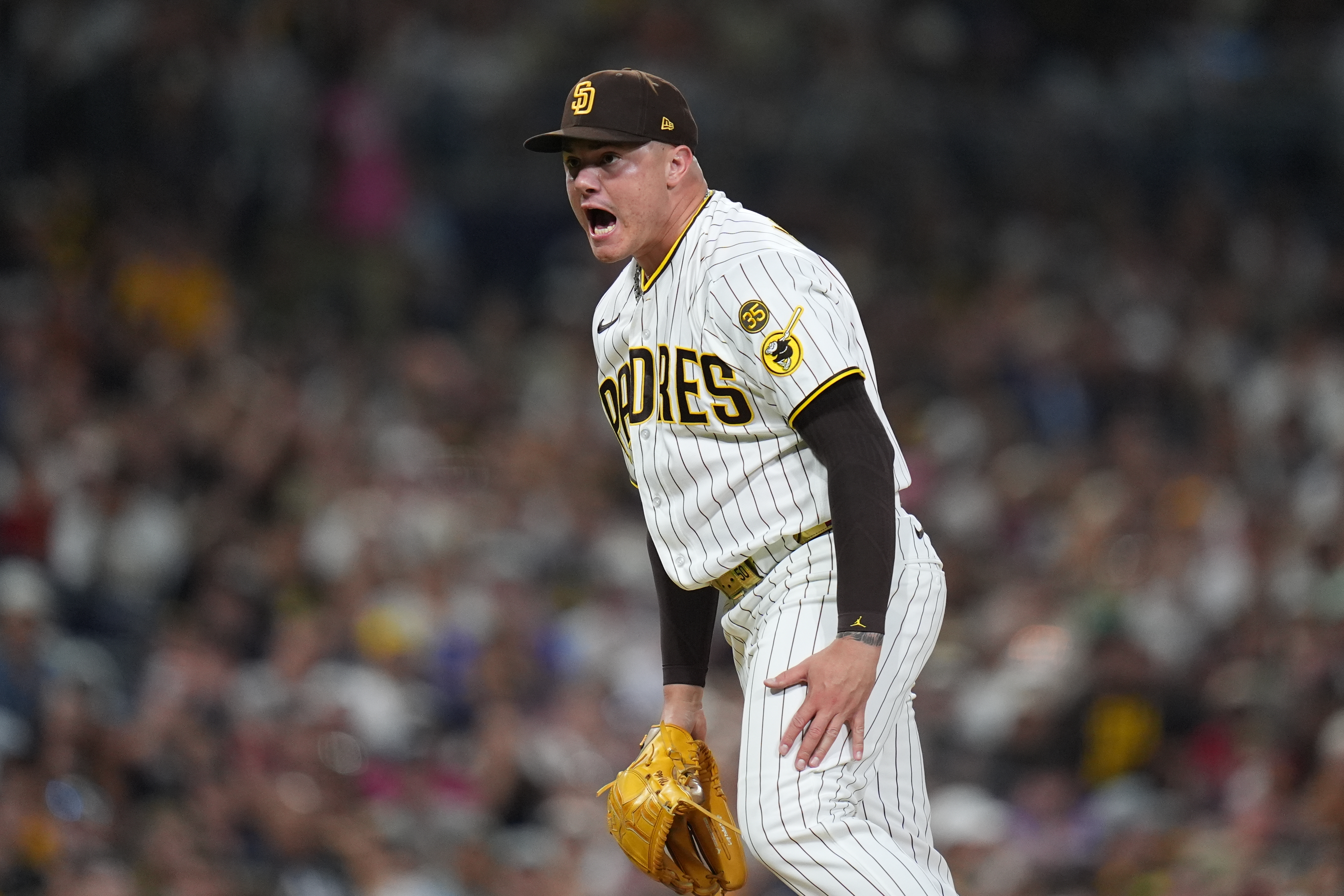
Morejón, whose four-pitch arsenal contributed to a 38.6% chase rate, 34.2% whiff rate, and 30.4% strikeout rate, could be a closer on most teams in baseball. He just happened to be blocked from that role on the Padres by Miller, who beat out Duran for National League Reliever of the Year and even garnered some Cy Young votes.
But Morejón is accustomed to high-leverage situations, and has the stuff to back it up. He can touch triple digits with his fastball, and his 58% ground-ball rate in 2026 was in the 98th percentile of pitchers.
Morejón, who will be 28 in February, has recorded an ERA under 3.00 in each of the last three seasons.
To sign a pitcher like Morejón, it’s likely that the Phillies will have to offer a multiyear deal. That’s not something Dombrowski typically likes to do for relievers, excluding last winter’s two-year deal for Keller. But it will be necessary if the Phillies want to compete for a higher-caliber arm.
“Last year, we gave [Keller] two, we hadn’t done in a while, he got hurt. It shows the volatility,” Dombrowski said. “There’s the rare exception of the star relievers, but there’s not very many of them around. I prefer [one-year contracts], but [it] doesn’t mean you’re going to get a deal done if you stick to that all the time. Sometimes you have to. I have felt myself, for relief pitchers, the shorter the better because of the volatility.”
Free agent lefthander Alex Vesia had a 2.64 ERA and 1.07 WHIP in 58 innings.Derik Hamilton
For a sense of the market, one of the first relief pitchers off the board this winter was righty Evan Phillips, who signed with the Braves for three years and $35 million. And that was after Phillips only pitched 26 innings in 2026 upon returning from Tommy John surgery in July.
Alex Vesia is another top left-hander available, coming off a strong season with the Dodgers. Vesia, 30, recorded a 2.64 ERA and 1.07 WHIP in 58 innings. He doesn’t have blazing velocity, sitting at 92.1 mph with his fastball, but the pitch is deceptive and helps Vesia generate a lot of whiffs (33.6%). He is effective against lefties (.138 batting average against) and righties (.155).
At 33 years old, A.J. Minter might be a more affordable option. The lefty had a 2.56 ERA and 1.051 WHIP in 45⅔ innings this season, and netted the Mets a pair of infield prospects when they dealt him to the Minnesota Twins at the trade deadline. Minter does have an injury history, though. He missed some time early in the season as he worked his way back from left lat surgery, returning to the mound in May.
Just because lefties are the Phillies’ priority, however, doesn’t mean they won’t look to add to their stable of righties if a deal comes together. A pitcher like Jonathan Loáisiga could also be a fit after his 2.42 ERA season with the Arizona Diamondbacks.
The 67 innings Loáisiga turned in for Arizona this year was his highest workload in five seasons. He saw the bulk of his appearances in the seventh, eighth, and ninth innings, recording two saves. Loáisiga’s fastball sat around 98 mph, and hitters averaged .148 against his four-seam. He generated a lot of chase (35.9%), while keeping his walk rate to just 5%.
The Phillies aren’t closing the door completely on top pitching prospect Gage Wood going to the bullpen at some point.
On the farm
The Phillies continue to view top pitching prospect Gage Wood as a starter, and will continue to build him up with the goal of impacting their major league rotation. But they are not closing the door completely on a future move to the bullpen.
In fact, the Phillies discussed potentially calling up Wood, who spent most of 2026 in double A, as a reliever last season. They ultimately decided against it, but it was an option on the table. If the need arose again, the Phillies would consider it.
“I can never say no to anything, but for me, I think it’s important he continues to develop as a starter,” Dombrowski said of Wood. “We think he can be a starter. We need starting pitching depth, so I think it’s more important for us to use him like that. … You could always do that later. You can’t stretch them out, necessarily, later, but you can do that.”
Right-hander Wen-Hui Pan returned from Tommy John surgery this season after being sidelined for all of 2025. Ranked the Phillies’ No. 20 prospect by MLB Pipeline, Pan had a 3.10 ERA in 38 relief appearances this season. His 40 ⅔ innings spanned three levels, with Pan finishing the season in double A.
Pan, 24, gets a lot of chase, with a 35.87% rate. He picked up six saves and finished the year strong, with five consecutive scoreless appearances to close out September.
Mavis Graves is another intriguing prospect. He began the season in the starting rotation for high-A Jersey Shore, but the lefty shone after a promotion to double A that came with a change in role. Graves, who turns 23 this week, had a 0.96 ERA in 14 relief appearances (18⅔ innings) for Reading. He held opposing hitters to a .152 batting average.
Video: Phillies Extra: Have the Phillies done enough to add talent to their farm system?
Estibenzon Jimenez also had a strong season at double A, converting all seven of his save opportunities after taking over closing duties from the graduated McFarlane. Jimenez, a 24-year-old right-hander, had a 2.38 ERA in 45⅓ innings and threw the final pitch to clinch Reading’s first Eastern League title since 1995.
Jimenez continued to get reps in the Arizona Fall League, where his numbers weren’t as stellar, with a 7.88 ERA in eight innings. However, that is somewhat inflated by one blowup outing on Oct. 26, when Jimenez was charged with five earned runs in one inning.
Bristol Borough had a 32-percentage-point swing toward the Democrat compared with 2024.
All precincts in the 1st District, which includes all of Bucks County and a portion of Montgomery County, swung toward Harvie compared with two years ago, but he found his strongest support in his win against Republican U.S. Rep. Brian Fitzpatrick in Lower Bucks municipalities with a higher percentage of key voting blocs.
Bristol Borough and four other communities in Lower Bucks — Bensalem Township, Bristol Township, Falls Township, and Tullytown Borough — are younger and lower-income, have fewer people with college degrees, and have a larger Hispanic population that the rest of the district. These areas had the biggest swing toward the Democrat and helped move the needle for Harvie throughout the district, an Inquirer analysis of municipal-level election results and census data from 2024 and 2026 found.
Fitzpatrick won Lower Bucks two years ago when he won the district by double digits, but this yearBristol Borough and 10 other municipalities had a 20-percentage-point or more shift toward Democrats from 2024 — including Tullytown Borough, Falls Township, Richlandtown Borough, and Bristol Township.
(function(){function e(){window.addEventListener(`message`,function(e){if(e.data[`datawrapper-height`]!==void 0){var t=document.querySelectorAll(`iframe`);for(var n in e.data[`datawrapper-height`])for(var r=0,i;i=t[r];r++)if(i.contentWindow===e.source){var a=e.data[`datawrapper-height`][n]+`px`;i.style.height=a}}})}e()})();
Both Harvie and Fitzpatrick are from Lower Bucks (with thefive-termGOP lawmaker growing up in Levittown), but Harvie’scampaign particularly focused on his upbringing in the county and community ties. He spent 20 years teaching social studies at Bucks County Technical High School and more than a decade as a Falls Township supervisor. He has served as a county commissioner since 2020, making him the first challenger of Fitzpatrick’s to have previously won countywide elections.
Harvie improved on 2024 nominee Ashley Ehasz’s performance in every corner of the district, and Democrats saw gains nationally with virtually every demographic group.
But in a race decided by fewer than 6 percentage points, these are the people and places that propelled Harvie to victory.
Building on the youth vote
The younger the municipality, the more it shifted toward Harvie.
The Democrat won a majority of the two-party vote in every age group across the district, but he had his strongest performance in boroughs or townships with a median age between 23 and 39.
Harvie took 57% of those areas, the analysis found.
Fitzpatrick had won among all age groups in 2024, but Harvie benefited from a 22-percentage-point swing among the youngest municipalities.
(function(){function e(){window.addEventListener(`message`,function(e){if(e.data[`datawrapper-height`]!==void 0){var t=document.querySelectorAll(`iframe`);for(var n in e.data[`datawrapper-height`])for(var r=0,i;i=t[r];r++)if(i.contentWindow===e.source){var a=e.data[`datawrapper-height`][n]+`px`;i.style.height=a}}})}e()})();
Though the 1st District is older overall than the United States as a whole, the backlash to President Donald Trump was particularly severe among young voters and may have helped Harvie and other Democrats.
He was deeply underwater with young votersacross all issues, particularly on the cost of living,an issue on which90% disapprovedof his handling, compared withonly 9%who approved.Aquarterof voters under 30who had cast a ballot for Trump in 2024 disapproved of his performance on the issue.
The district is, on average, more affluent than the country as a whole, but Harvie saw a roughly 22-percentage-point shift in his direction in communities where the median household income is between $65,000 and $94,000, the analysis found.
The lower a municipality’s median household income — such as in places like Red Hill Borough or Tullytown Borough — the larger the move toward the Democrat this year.
(function(){function e(){window.addEventListener(`message`,function(e){if(e.data[`datawrapper-height`]!==void 0){var t=document.querySelectorAll(`iframe`);for(var n in e.data[`datawrapper-height`])for(var r=0,i;i=t[r];r++)if(i.contentWindow===e.source){var a=e.data[`datawrapper-height`][n]+`px`;i.style.height=a}}})}e()})();
Though Fitzpatrick had won all four of the district’s income categories in 2024, this year he held on to only one — municipalities where median income is roughly between $95,000 and $112,000 (a demographic that Trump has won in the past) — but by lessthan a percentage point, 50.3% to Harvie’s 49.7%.
Trump ran in 2024 on a promise to lower costs on day one, butvoters this year were frustrated by rising prices in the grocery store and at the gas pump. Harvie focused much of his campaign on affordability — often discussing heating oil prices, housing costs, and healthcare expenses.
Harvie’s strongest performance came in municipalities where fewer people have a college degree — a statistic that dovetails with income. He won 56% of the vote in places where between 21% and 32% of adults hold a bachelor’s degree or higher.
But he also performed nearly as well in municipalities where a larger portion of the population is highly educated. He had 55% of the vote in areas where between 56% and 75% of adults have at least a bachelor’s degree.
Fitzpatrick won municipalities where 32% to 42% of adults have at least a bachelor’s degree, but that was the only group he was able to hold on to — by less than a percentage point —after previously dominating among all education levels in 2024.
Hispanic communities helped boost Harvie
Most of the 1st Congressional District — about 79% of the population — is white, but Hispanic voters helped push Harvie to victory.
Almost 7% of the 1st District identifies as Hispanic, and the larger a place’s Hispanic population, the more strongly it shifted toward Harvie, with Telford Borough, Bristol Borough, Souderton Borough, and Bensalem Township at the top of that list.
(function(){function e(){window.addEventListener(`message`,function(e){if(e.data[`datawrapper-height`]!==void 0){var t=document.querySelectorAll(`iframe`);for(var n in e.data[`datawrapper-height`])for(var r=0,i;i=t[r];r++)if(i.contentWindow===e.source){var a=e.data[`datawrapper-height`][n]+`px`;i.style.height=a}}})}e()})();
Democrats also made a point in the homestretch to reach out to Asian voters — a key voting bloc in the 1st District — for Harvie, with the Democratic Congressional Campaign Committee tapping Montgomery County Commissioner Neil Makhija, a Democrat and the first Asian American county commissioner in Pennsylvania, for a digital ad.
Harvie won a slightly higher share of the vote in places with more prominent Asian communities, such as Hatfield Township, than in the rest of the district. But these were communities where his party had also done well two years ago.