Blog

  • Ex-Comcast employee was hit in the face with a pie and tied to a chair for low sales, lawsuit says

    Ex-Comcast employee was hit in the face with a pie and tied to a chair for low sales, lawsuit says

    Sales low? You might get a pie to the face.

    That’s what a former Comcast retail employee says would happen, according to a new lawsuit filed against the Philadelphia-headquartered company.

    David Figueroa, a former employee at a retail location in Connecticut, alleges a store manager subjected workers to hazing and assault, forcing him to quit within a month of employment. That treatment included a monthly ritual where an employee was tied to a chair and smashed in the face with a cream pie. The antics were also videotaped.

    Comcast, the $125 billion-a-year media and communications giant, operates hundreds of retail stores nationwide. The stores act as point-of-sales locations for Xfinity products, including internet and TV products. They also offer equipment swaps and general customer support.

    “The Company has zero tolerance for harassment, humiliation, or any behavior that compromises a respectful and safe workplace,” Comcast spokesperson John Demming said in a statement. “This matter is in litigation so we will not comment on the specific allegations, other than to say that we disagree with the claims in the complaint and its characterization of the alleged events, and intend to fully respond through the legal process.”

    According to a lawsuit filed on behalf of Figueroa against Comcast, he was hired as a retail sales consultant in February at a retail location in Plainville, Conn., about 15 minutes outside of Hartford.

    But Figueroa said he was quickly rattled by his direct supervisor, the store’s manager, for her treatment of the staff. That store manager is not named as a defendant in the lawsuit. Demming declined to comment on the manager’s current employment status, citing personnel matters.

    The lawsuit says the store’s manager tracked employee sales metrics on a whiteboard in the back office that all employees could see. In the corner of that whiteboard, employees’ names were correlated to an emoji. The employee with the lowest monthly sales was listed next to an upset-looking emoji with a pie on its face, according to photos included in court documents.

    “[The chart] identified the employees who either had been recently assaulted or were scheduled to be assaulted in this way,” the lawsuit says.

    On Feb. 25, Figueroa witnessed a coworker being tied to the chair and assaulted in the face with a pie. The store manager “ordered, was present for, and videotaped this assault, as did the Plaintiff and other coworkers,” the lawsuit says. The coworker who struck the tied-up employee “had better sales results” and was ordered “to assault his poorer performing co-worker, in front of his peers,” the suit says.

    Figueroa’s coworkers showed him a video of another pieing incident where the assistant sales manager was hit in the face with a pie because of a poor survey score from a customer, according to the lawsuit.

    He attempted to report the incident to the store’s regional manager, who instructed Figueroa to send a text message documenting his concerns. According to the lawsuit, the regional manager “never responded” to Figueroa’s complaints about the store’s “hostile and violent work environment,” leading to his resignation.

    The Plainville retail location could not be reached for comment.

    Figueroa “suffered a pervasive and ongoing fear of being subjected to management-condoned assaults and public humiliation in the workplace,” the lawsuit says. Now, he’s suing Comcast for damages, including past and future financial, emotional, and reputational harm caused by the incident, along with court fees.

    It’s not the first time Comcast has found itself in a lawsuit involving a former employee. As reported on by The Inquirer, several past lawsuits waged by former employees have touched on hostile work environments at different Comcast stores, facilities, and call centers.

    The company reported lower profits last week, citing drops in domestic residential broadband customers in the second quarter.

  • Fed leaves interest rate unchanged but with 3 dissents as Warsh praises ‘good family fight’

    Fed leaves interest rate unchanged but with 3 dissents as Warsh praises ‘good family fight’

    WASHINGTON — The Federal Reserve left its key interest rate unchanged Wednesday, although three officials dissented in favor of higher rates as the central bank wrestles with how to deal with persistently high inflation.

    The Fed’s rate-setting committee reached its decision after two days of deliberations, marking the fifth straight meeting at which the benchmark rate was kept at around 3.6%.

    Some economists and Wall Street analysts had predicted the Fed would hike its rate by a quarter point. But while the decision to stand pat could be seen as good news for consumers, they might not feel much relief with the average credit card rate still near 20% and mortgage rates the highest since last August.

    Inflation has been stuck above the central bank’s 2% target for more than five years. The Iran war has generated uncertainty over the economic outlook and has driven energy prices higher, intensifying inflationary pressure and creating a quandary for Fed policymakers. In addition, the vast amounts of money being spent by technology companies on artificial intelligence are both driving manufacturing and have resulted in increased prices for items such as computer chips and electricity. President Donald Trump’s tariffs on foreign goods are also adding to inflation pressures.

    The three officials who dissented — Beth Hammack, president of the Federal Reserve Bank of Cleveland; Neel Kashkari, president of the Minneapolis Fed; and Lorie Logan, president of the Dallas Fed — had previously called for or signaled that they would be open to raising rates to combat high prices.

    “The dissents send a clear message: The Fed is not yet convinced the inflation battle has been won,’’ said Seema Shah, chief global strategist at Principal Asset Management.

    At a news conference following the rate decision, Fed Chair Kevin Warsh reiterated the Fed’s commitment to combating inflation. At the same time, Warsh said, “We have no magic wand. This isn’t something we’re going to be able to carry out in days or weeks.”

    Warsh said he welcomed vigorous debate at the committee meeting. “I asked for a good family fight and I got one,’’ he told reporters at a news conference.

    Warsh, who was appointed by President Donald Trump, has sought to bring a number of changes to the Fed including giving financial markets fewer signals about the Fed’s thinking on interest rates. He said he believed that reticence was a factor in the bond market pushing up yields in the past few weeks as it weighed new economic data. The yield on the 10-year Treasury has risen from around 4.50% in mid-June to 4.64% just ahead of the Fed’s rate decision.

    The market is “learning to play the ball and not the referee,” Warsh said.

    Coming into Wednesday, traders on Wall Street saw a 33% chance the Fed would issue a rate hike, although most expected policymakers to hold off, reluctant to risk disrupting financial markets. But they give a 55% chance of a rate hike in September, according to data from CME.

    Trump, who had persistently pressured the Fed to cut rates, voiced support for Warsh. “He’s fantastic. He’s a brilliant guy. Smart. I know he’d love to see lower interest rates, but he’s got a board and it’s a political board and they want to keep rates up,” Trump told reporters.

    Fed officials likely want to see more economic data before changing the benchmark rate. On Thursday, the Commerce Department delivers the first look at April-June economic growth and it will also publish the Fed’s preferred inflation measure — the personal consumption expenditures (PCE) price index — for June.

    Adding uncertainty to the Fed’s decision-making process is the rising violence in Iran. The price of oil briefly blasted past $100 a barrel last week on intensifying fighting. It’s since settled down on hopes the United States and Iran can find some way to reduce tensions.

    Yet early Wednesday, Jordan intercepted missiles launched from Iran early just hours after the U.S. military said it knocked down another Iranian barrage launched against American forces in the Middle East, ending a brief pause in fighting.

    After the U.S. and Israel attacks on Feb. 28, Iran shut down the Strait of Hormuz — through which a fifth of the world’s oil and natural gas pass. That caused the greatest disruption in oil supplies in history and sent energy prices surging. They’ve since bobbed up and down depending on the ever-changing state of the conflict and negotiations to de-escalate it, but the average cost for a barrel is $10 to $15 more today than it was at this point last year.

    Inflation has exceeded the Fed’s 2% target since early 2021 when the U.S. economy overheated as it roared back from COVID-19 lockdowns. Inflation peaked at just over 9% in mid-2022 and began to drop in the face of 11 rate hikes by the Fed in 2022 and 2023. But progress has more or less stalled.

    So-called core inflation — which excludes volatile food and energy prices — cooled in June, partly because apartment rents aren’t rising as fast as they had been. And a temporary drop in gasoline prices last month also helped contain overall inflation.

    But several Fed policymakers have been arguing that the Fed will have to raise rates to return inflation to the 2% target.

    “Sternly staring at inflation until it melts before our withering gaze is not an option,’’ Christopher Waller, an influential member of the Fed’s governing board, said in a speech this month.

  • Southern Europe burns as 3 firefighters die and France battles blaze 4 times the size of Paris

    Southern Europe burns as 3 firefighters die and France battles blaze 4 times the size of Paris

    LEGE-CAP FERRET, France — An uncontained wildfire four times the size of Paris threatened to surge again in southwest France on Wednesday — as three firefighters died in Greece and crews across southern Europe confronted a punishing mix of heat, drought, and strong winds.

    The deaths on Crete brought a fatal new dimension to a wildfire emergency stretching from the Atlantic coast to the eastern Mediterranean. At the peak of the evacuations, a third of a million people were driven from homes and vacation sites in France and Spain.

    In France’s Gironde region, the country’s biggest blaze had not spread during a calm night, authorities said. But as temperatures approached 104 F Wednesday afternoon and winds strengthened, the reprieve threatened to be short-lived.

    The landscape was so combustible that investigators believe routine brush-clearing work near a high-voltage line may have sparked the inferno, even though the work appeared to comply with regulations.

    At the command center in Lège, firefighters bent over maps spread across a car hood, tracking three danger zones: northern Cap-Ferret; the wooded corridor around Marcheprime, Cestas, and Saint-Jean-d’Illac; and a military site near Martignas, where a major outbreak forced a large deployment.

    Both firefighters and residents mobilize

    More than 2,200 firefighters and over 20 aircraft remained mobilized, backed by crews from across France and European partners.

    “We strike quickly and strike hard at any new smoke emissions,” Gironde fire commander Matthieu Jomain said.

    Beyond the command center, civilians were trying to hold the line themselves. At Souge, volunteers flooded the edges of dirt tracks while a local digger driver plowed through still-burning soil, trying to keep flames from crossing back when the expected west wind arrived. In Lacanau, residents pumped water from a lake into tanks headed for hot spots and firefighters’ cisterns.

    “If one day the fire starts in our neck of the woods, I know very well that all the people here would do the same for us,” said Flavien Dubuch, 33, who drove from Saint-Émilion with his father to help.

    Hottest day this week

    The advance of major fires in the Landes and Var regions has been halted. That left Gironde as France’s biggest remaining wildfire battle, Interior Minister Laurent Nuñez said.

    The Gironde fire forced 220,000 people to flee at the peak of the crisis. Tens of thousands have since been allowed home, but authorities warned that the danger had not passed.

    Extreme heat strips moisture from vegetation and drives down humidity, turning grasses, brush and forest litter into faster-burning fuel.

    Investigators believe contractors working near a high-voltage line for power-grid operator Enedis ignited the blaze while using a brush-cutting machine, Bordeaux prosecutor Renaud Gaudeul said.

    Météo-France said Wednesday would be the hottest and driest day of the week, with elevated wildfire danger across every region of France. Drought now covers mainland France and Corsica, with soils nearing the record dryness reached in August 2022.

    Smoke from the Gironde and Landes fires also pushed particulate pollution higher across both departments, regional air-quality monitors said.

    More evacuations ordered in France

    Gironde authorities ordered 4,000 more people out of tourist sites along the Atlantic coast on Tuesday, widening what may be France’s largest peacetime evacuation.

    “The situation remains complicated. That’s clear. We’re not out of the woods,” said Gironde prefect Sophie Brocas, who also authorized 60,000 evacuees to return to three Bordeaux suburbs untouched by fire.

    The opposing movements — thousands ordered out of coastal resorts as others returned with mobile phones on and emergency bags packed — captured how precarious the situation remains.

    The disruption was spreading beyond the burn zone into Bordeaux’s peak tourism season.

    Edouard le Grix de la Salle, who runs Château du Grand Verdus with his brother, said official appeals to avoid the region threatened its wine-tourism trade. “How did they not think about protecting that sector?” he told The Associated Press.

    At one point the Gironde blaze created a black thundercloud, electrified and lit from within, that generated lightning, violent winds and new fires beyond the original front. The pyrocumulonimbus was the first recorded in France.

    Fire in Greece turns deadly for firefighters

    Two firefighters died Wednesday while battling a wildfire in the Rethymno region of Crete, Greece’s fire department said. They were among about 125 firefighters confronting flames fanned by strong winds, with four helicopters and four water-dropping planes deployed.

    The circumstances of their deaths were not immediately clear. The department said they died “in the line of duty to protect the lives and property of citizens and the natural environment.”

    A third firefighter also died Wednesday outside the fire perimeter, after tackling a separate blaze in Greece’s southern Peloponnese region.

    Tens of thousands return home in Spain

    At the height of the crisis, roughly 330,000 people were driven from homes and vacation sites across France and Spain.

    Tens of thousands of people began returning home in central Spain after firefighters made progress around Madrid and Ávila. Evacuation orders were lifted for about 20,000 people in the Madrid region, while stay-at-home restrictions ended for another 14,000.

    But 10,000 people remain under evacuation orders in Castellón, where a fire was still out of control as Spain braced for its fourth heat wave of the summer.

    More than 1,160 square kilometers (448 square miles) have burned across France this year, according to the Interior Ministry.

    Europe is the world’s fastest-warming continent, warming at more than twice the global average, according to the European Union’s Copernicus climate service. Western Europe recorded its hottest June on record, with extreme heat and widespread dryness contributing to the spread and intensification of fires in France and Spain, Copernicus said.

  • Wills Eye doctor George Spaeth, 94, reflects on his award-winning research and humanistic approach to medicine

    Wills Eye doctor George Spaeth, 94, reflects on his award-winning research and humanistic approach to medicine

    As a resident training at Wills Eye Hospital, George Spaeth was perplexed by a 7-year-old patient’s symptoms.

    Her legs angled inward, her hair was straw-colored with an odd consistency, and she had intellectual disabilities.

    She had come in for faulty vision caused by her lenses — the part of the eye that enables vision by focusing light — becoming loose. Spaeth’s job was to simply prepare her for surgery to remove her lenses.

    Yet, he couldn’t help but fixate on the constellation of symptoms she presented with — and the unknown cause underlying them. Nothing in his medical texts fit her profile.

    “She didn’t look like anything I’d ever seen before,” he said.

    He asked nurses to collect her urine for testing, and discovered it was full of an amino acid called homocysteine.

    In 1962, he diagnosed the little girl with a previously unknown rare metabolic disorder called homocystinuria (HCU) — making her one of the first patients in the United States to receive the diagnosis.

    An Illinois-based nonprofit dedicated to the disease, HCU Network America, presented Spaeth this month with their HCU Hero Award for his significant contributions to the detection and treatment of the disorder.

    In the fall, the Chestnut Hill resident will also collect a leadership award from the Wills Eye Hospital Alumni Society and the Laureate Award from the American Academy of Ophthalmology.

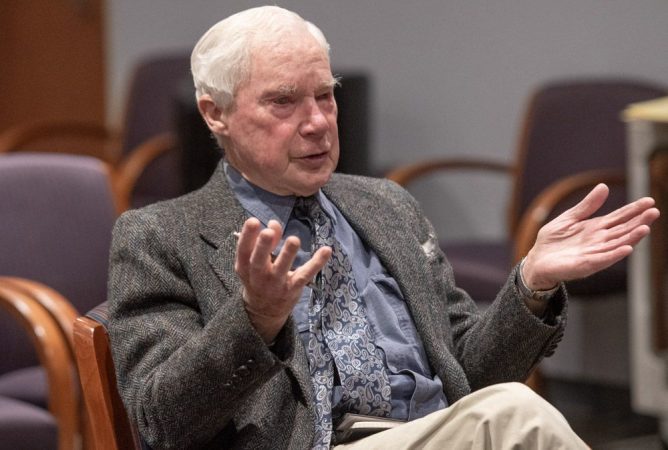
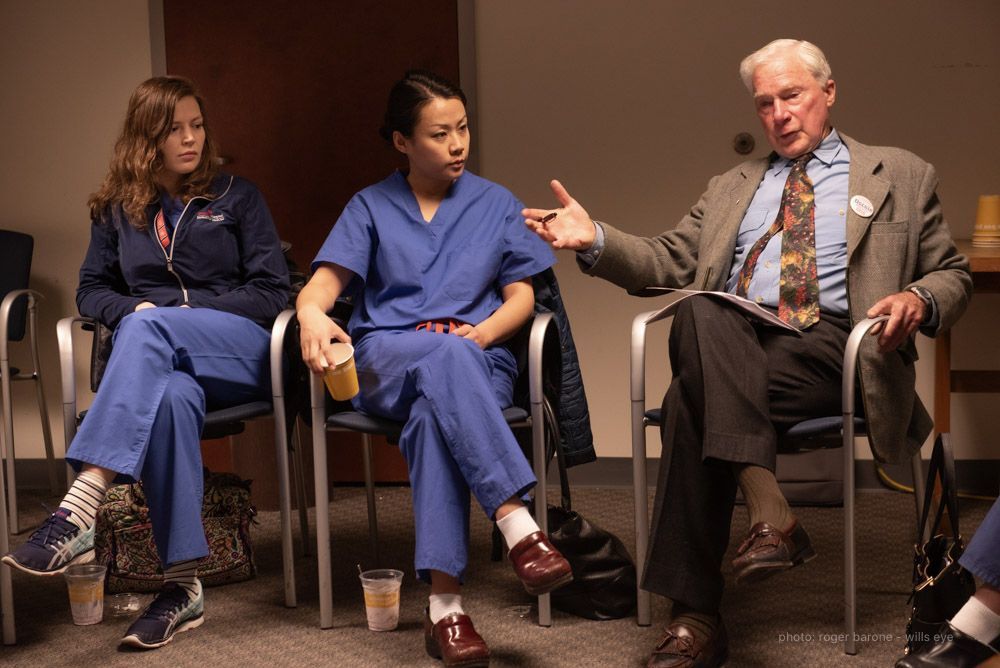
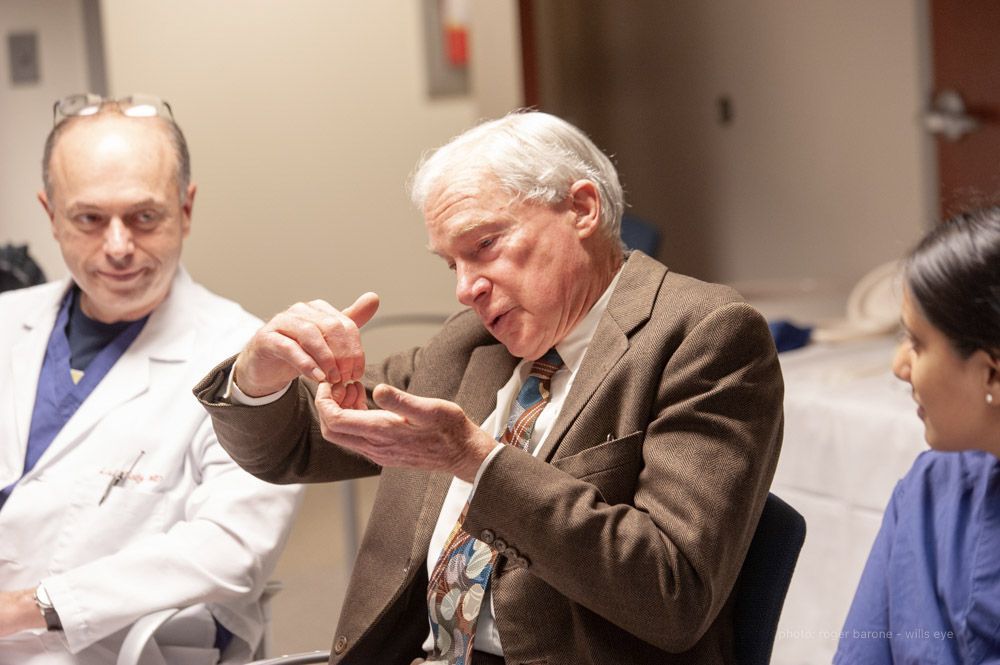
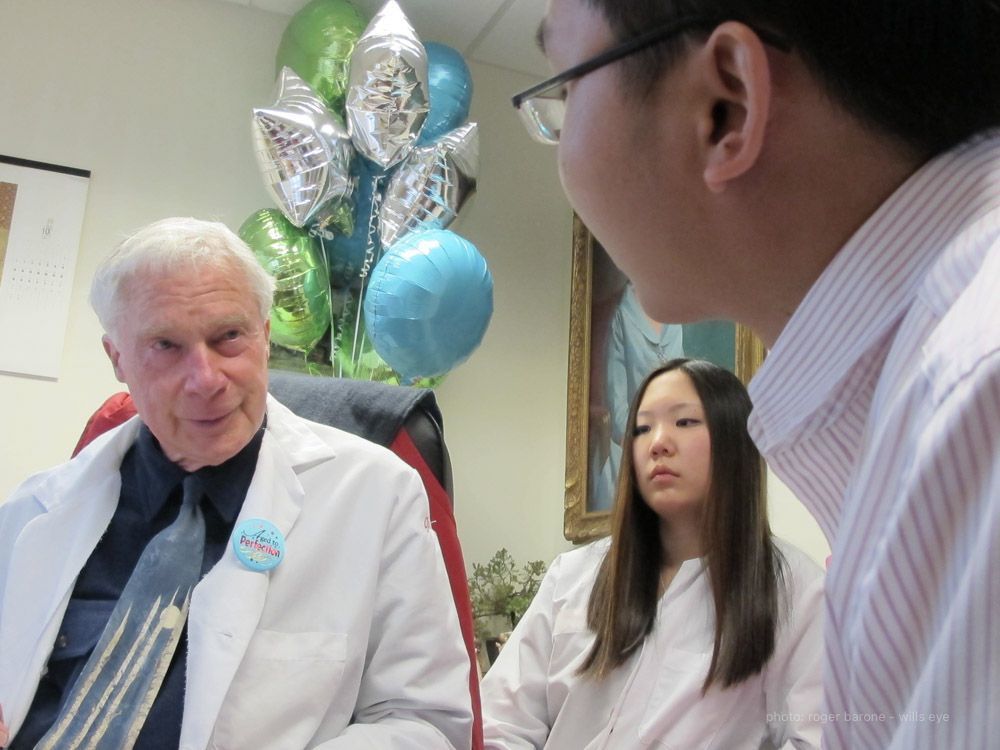
    The honors have given the 94-year-old ophthalmologist an opportunity to reflect on his decades-long career dedicated to research, finding the humanity in medicine, and emphasizing the importance of humility and curiosity.

    “The most important thing that I think any person in any field can do is say I don’t know,” he said.

    George Spaeth will be honored with a leadership award from the Wills Eye Hospital Alumni Society this fall.Courtesy of George Spaeth

    Solving a mystery

    When Spaeth told patients “I don’t know,” he tried to follow up with, “maybe we can find out.”

    Through studying the biochemical pathways involved in HCU, he landed on a potential treatment: vitamin B6.

    When his patient took it, the homocysteine levels in her urine dropped.

    Spaeth was the first to publish on this finding, which led to an uptake in the vitamin’s usage, said HCU Network America emeritus director Margie McGlynn. It works in about 50% of patients with the disorder, and is still used today.

    His work also helped spread awareness of the eye symptoms of the disorder, enabling earlier diagnoses.

    McGlynn’s sister, who first presented with severe nearsightedness, was diagnosed with HCU in the 1960s by an ophthalmologist who had recently read about the condition in a medical journal.

    “I firmly believe that it was Dr. Spaeth’s work and publication on this patient that made this ophthalmologist aware,” McGlynn said.

    Spaeth wrote to schools for children with intellectual disabilities and asked if they had any children that fit the symptom profile.

    When they sent urine samples, some came back positive for the disorder.

    One of the children he diagnosed at Willowbrook State School in Staten Island ended up dying. The boy’s mother told Spaeth she also had a daughter who was 2 years old and seemingly fine.

    “We better test your daughter,” Spaeth urged, given that the condition was inherited.

    He examined the boy’s sister, tested her urine, and diagnosed her with HCU.

    Spaeth started her on the vitamin treatment. Without it, she was likely to end up like her brother.

    Decades later, he received a call from her mother.

    “She was just admitted to medical school,” he recalled her saying.

    Finding the humanity in medicine

    Janine Tabas, vice chairman of the Wills Eye Alumni Society, said the society chose to honor him with their leadership award in recognition of his lifetime of accomplishments in patient care, teaching, and mentorship.Courtesy of George Spaeth

    Growing up, Spaeth dreamed of becoming a poet or composer, “but I’m no Bach, and I’m no Mozart,” he said.

    He studied history as an undergraduate at Yale University before pursuing medicine — the same profession as his father, renowned ophthalmologist Edmund Spaeth.

    He found he loved connecting with his patients, through finding out what they loved, and what they feared.

    “I was a great believer in putting my hand on the patient’s arm while I was talking to them and finding out who they were,” he said.

    In his field, glaucoma, he would often see the same patient for two or three decades.

    Spaeth operated on a 19-year-old college student suffering from severe headaches in 1969, and has stayed in touch with her ever since.

    Over the years, he watched her grow up and marry a wonderful man. When he fell and broke his leg, she came to visit.

    “I just think about what that means,” he said.

    Spaeth stopped seeing patients in 2013 to spend time with his wife, Ann, whose breast cancer had returned and stopped responding to treatment. She died that year.

    In the years since, Spaeth wrote and published a book for his late wife, Hope for Awareness, about “how lucky I was to be married to an amazing woman, and how unaware I was of how lucky [I was],” he said.

    ‘One of the forefathers’

    Janine Tabas, vice chairman of the Wills Eye Alumni Society, described him as “one of the forefathers of glaucoma” and “an absolute gentleman.”

    The society honored him with their leadership award in recognition of his lifetime of accomplishments in patient care, teaching, and mentorship, she said.

    When Tabas was a first-year resident at Wills Eye in the 1990s, Spaeth served on the senior faculty. She was struck by his humility and the way he treated everyone as equals.

    Spaeth invited her whole cohort to his home for dinner, where they sat on his living room floor together. He also asked her to play tennis, knowing that was one of her interests.

    “I was a lowly resident,” Tabas recalled. “And here was the chairman of glaucoma. The guy whose name was on every book in the lobby.”

    She has since continued Spaeth’s tradition of inviting the residents out to play tennis.

    George Spaeth stopped seeing patients in 2013.Courtesy of George Spaeth

    When asked why he thought he was being honored with awards this year, Spaeth pointed to the importance of having humanity and humility and not being “a real jerk.”

    “Remember, the most important thing you can do is become a good person,” he said. “If you’re a good person, the likelihood is that you’ll have a good career.”

  • Switch to new digital tablets in N.J. prisons prompts civil rights lawsuit

    Switch to new digital tablets in N.J. prisons prompts civil rights lawsuit

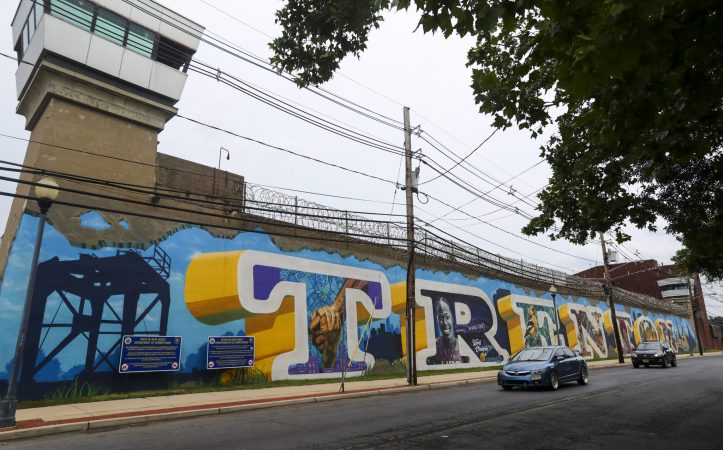
    A man incarcerated in a New Jersey prison has sued the state in a bid to block corrections officials from forcing prisoners to surrender personal electronic tablets they purchased to message loved ones, listen to music, and access other digital content.

    Alonzo Hill, who has been incarcerated at New Jersey State Prison in Trenton since 1990, filed a civil rights complaint last week asking a federal judge to allow inmates to keep the handheld devices and their content — or require the state to reimburse people what they paid for them.

    The dispute comes as the state Department of Corrections switches to a new provider, ViaPath Technologies, to meet the communications needs of the 13,000 people in state custody.

    JPay had supplied such services since 2014, with people purchasing tablets and paying one-time fees for content they downloaded for use in their cells and recreation areas. The ViaPath tablets, in contrast, are considered loaners that are provided for free but require users to continuously pay for content in a subscription model. ViaPath users in New Jersey prisons also face high restitution fees for damaging tablets and new limits on tablet use outside of cells.

    Inmates bought the JPay tablets and content with the understanding they were “owned property without limitations,” Hill wrote. Yet corrections officials are requiring people to turn them in for disposal or send them home, gave incarcerated people no opportunity to chime in on the changes, and ignored his inquiries and grievances over it, he added.

    That’s a violation of the 14th Amendment, which says that no state shall deprive people of property without due process of law, he charged. Hill is director of his prison’s Inmate Legal Association, a nonprofit in which jailhouse lawyers help other incarcerated people with their court filings and disciplinary matters.

    “Many inmates utilize these tablets and content (at no additional cost) multiple times each day to relieve stress and anxieties of prison life,” Hill wrote. “State inmates were led to believe that if they didn’t violate JPay’s terms or NJDOC’s rules regarding the e-tablets, the chargers and content, that they could purchase and retain both throughout their sentences.”

    He also objected to the “exponential cost increases” he suspects users will face under ViaPath, noting that many inmates make less than $2 a day for prison jobs — and some make nothing, such as those held in disciplinary units.

    Corrections officials also have failed to guarantee that family photos downloaded and digital content purchased through JPay will transfer to the new ViaPath tablets, he added. They told people in custody that JPay tablets not sent home or surrendered for disposal will be considered contraband subject to confiscation, with their owners facing discipline, Hill said.

    Chris Greeder, a Department of Corrections spokesman, declined to comment on the lawsuit.

    But he said in an email that the department, JPay, and ViaPath have “reached an agreement allowing digital assets, including music, emails, photos, and related attachments, to be transferred to the new platform.”

    Eight of the state’s nine adult prisons have transitioned to ViaPath since March, with 9,500 people now using the new tablets, Greeder added. New Jersey State Prison’s switch is scheduled for the week of Aug. 10, he said. The department’s contract with JPay was set to expire this Friday, so officials negotiated a 90-day extension so people incarcerated in Trenton can continue using JPay services, he added.

    Officials switched vendors because ViaPath offers “a modern communications system” at a lower cost than JPay, Greeder said.

    Phone calls, money transfers, electronic messages, and video visits through ViaPath were cheaper than similar services through JPay, according to contracts and price sheets the New Jersey Monitor reviewed in May. It was tough to compare prices for music, movies, games, and such content, though, because those are pay-as-you-go services under ViaPath and outright purchases under JPay.

    The Department of Corrections is “committed to providing incarcerated individuals with safe, secure, reliable communication services” that allow them to communicate with family and loved ones, Greeder said in an email.

    Critics, though, have accused ViaPath of predatory pricing because of its pricing structure, service fees, and other practices, with people incarcerated in Nevada prisons boycotting use of ViaPath tablets earlier this year. The Virginia-based company also has racked up more than 600 complaints in the past three years with the Better Business Bureau and averages one star (out of five) in 87 reviews on its website, with many people complaining about costs and customer service. (JPay fared only marginally better on the watchdog site, with 368 complaints over the same time period and 27 reviews averaging 1.2 stars.)

    Ronald Allen, who’s also incarcerated in Trenton, filed a statement supporting Hill’s lawsuit, voicing an additional concern. He said people make inquiries and file grievances through their JPay tablets, which connect to kiosks in each prison where people download content and communicate both inside and outside the prison via a restricted, surveilled intranet. He has stored all the inquiries and grievances he’s made in the past decade on his JPay tablet, he wrote.

    “Without the kiosks, no accurate, reliable records of inquiries or grievances will exist,” Allen wrote.

    Greeder said officials are working with the vendors to acquire historical records of inquiries and grievances.

    Hill accuses state officials of deliberate indifference and is seeking a court order that would allow inmates to keep their JPay tablets, require the state to transfer all JPay content to the new ViaPath tablets, or reimburse people for content officials can’t or won’t transfer over. People in New Jersey prisons have spent between $1.5 million and $3.2 million each year over the past decade on JPay services, according to data the New Jersey Monitor obtained from the Department of Corrections last spring.

    Hill also is asking the judge to appoint an attorney to represent him in court and award damages of $7,500 per defendant.

    The lawsuit names as defendants ViaPath Technologies, Gov. Mikie Sherrill, Corrections Commissioner Victoria Kuhn, and New Jersey State Prison administrators Jeffrey Crothers and Douglas Stark.

    Spokespeople for Sherrill and ViaPath did not respond to requests for comment.

    This story originally appeared on New Jersey Monitor.

  • Jalen Hurts has high hopes for the 2026 season. He knows delivering on them requires his teammates sticking together.

    Jalen Hurts has high hopes for the 2026 season. He knows delivering on them requires his teammates sticking together.

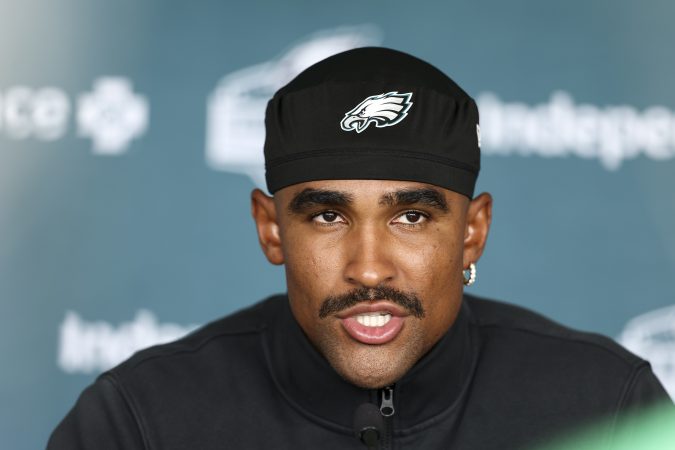
    Nick Sirianni opened his team meeting on Tuesday with a message about the importance of the team sticking together and staying aligned, according to Jalen Hurts.

    The Eagles head coach’s words compelled Hurts to jot down a phrase in his notebook, one that resonated with his own philosophy on how he seeks to build relationships with his teammates.

    “100% alignment and zero entitlement,” Hurts recalled on Wednesday.

    Hurts is bringing that mantra to life beyond the pages of his notebook. The sixth-year starting quarterback explained he has emphasized that approach ahead of camp with his teammates, a new-look group that is in the process of implementing a fresh offensive scheme under Sean Mannion.

    A new-look group that, as of two months ago, no longer includes A.J. Brown, a former key piece of the Eagles’ passing attack.

    In Hurts’ opening statement before taking questions at his news conference after the first practice of training camp, he outlined his own message of togetherness to his teammates, one that closely aligned with Sirianni’s.

    “I’d say one of my main points coming in, especially talking to my teammates and getting a sense of where we are throughout the summer and where we’re going is just the importance of discipline and unity,” Hurts said. “And I can’t emphasize enough how important it is to carry and protect the intimacy of this team and what we do because it takes all of us, and we know that there are challenges that come throughout a year.”

    Last year’s challenges, particularly on offense, are well-documented. The offense, which finished 23rd in the league in passing yards and 18th in rushing yards, never quite found its identity. Brown went public with his frustrations about the offense and his utilization within it, both in public comments and via social media, and was traded to the New England Patriots six months after the season ended.

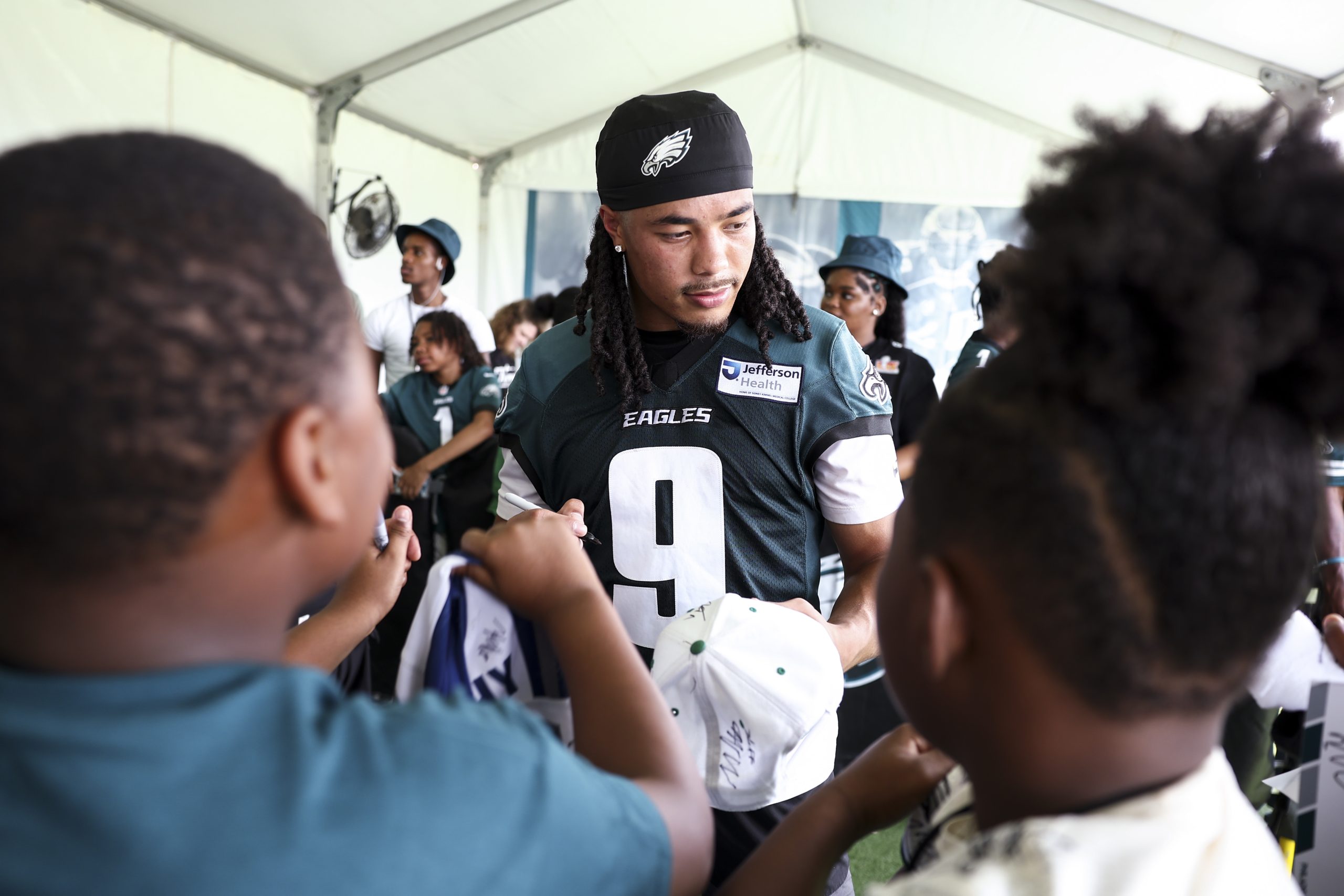
    Rookie wide receiver Makai Lemon (9) has sought to forge an early bond with quarterback Jalen Hurts. Monica Herndon / Staff Photographer

    New challenges await Hurts, who is tasked with adjusting to yet another offensive play-caller and a new scheme. He has plenty of new faces among his receiving corps, too, in Makai Lemon, Dontayvion Wicks and Hollywood Brown.

    But Hurts isn’t just preaching the importance of togetherness as he helps onboard his new teammates ahead of the new season. He’s living it, too, by spending time away from the facility with members of the offense this summer. Among the players he practiced with this offseason was Lemon, the Eagles’ first-rounder out of USC.

    “I see his heart and I see his hunger,” Hurts said of the rookie receiver.

    Hurts noted that he was playing in the NFL when Lemon was in high school back in 2022. While Hurts is in a self-described “vet role” as he answers Lemon’s questions, he acknowledged that he is also learning the new offense alongside the rookie.

    “We’re both learning something new, onboarding something new, and we want to be able to own it and say it’s ours and we’re growing in that,” Hurts said. “So we’re growing together.”

    Hurts noted the importance of kickstarting that growth in the summer with his receivers, as those offseason practice sessions are a “reflection of what comes in the season.”

    “I think it was really good to have everybody all in on it, going into this offseason, and have everybody expressing and showing that hunger to build and learn each other’s personalities a bit, so we can go out there and thrive on the field,” Hurts said. “So I was definitely excited about that, and I think it’ll pay forward. The work will show.”

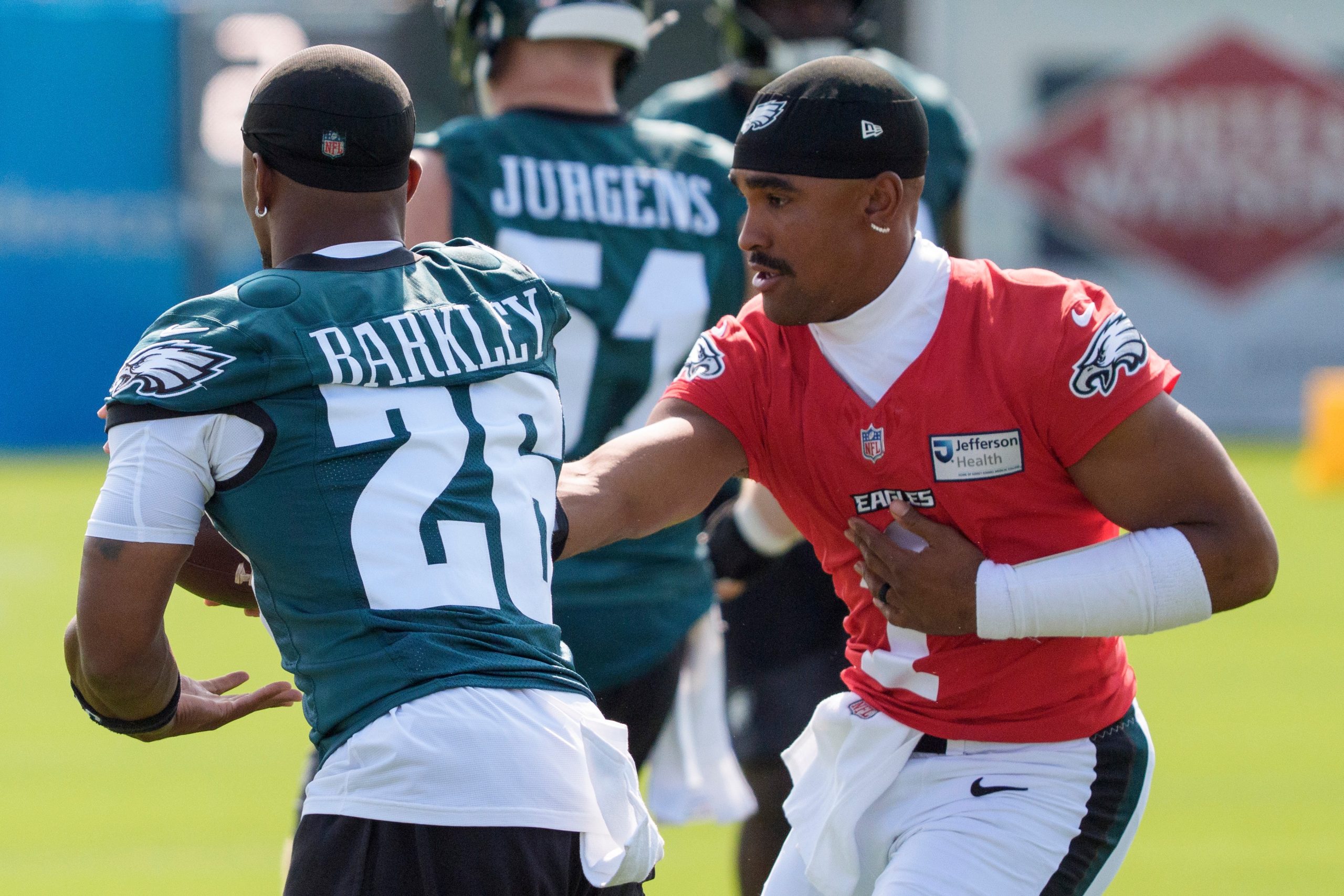
    “Jalen is willing and able to do whatever we ask him to do,” running back Saquon Barkley said on Wednesday. Chris Szagola

    Hurts and the rest of the offense had the opportunity to show the fruits of their offseason work on the first day of training camp. While the offense may experience some growing pains in a new scheme, Nick Sirianni said that the “standard remains the standard” as far as his evaluation of his players, Hurts included.

    The offense displayed some of those new wrinkles on Day 1, including the increased frequency of Hurts lining up under center, the emphasis on the play-action passing game, and the utilization of pre-snap motion. Hurts, according to Saquon Barkley, has embraced all of the intricacies of the offense.

    “Jalen is willing and able to do whatever we ask him to do,” Barkley said. “And he has that competitive mindset of just wanting to be great and doing whatever it takes to win. But also always trying to find ways to improve his game. And he’s doing that. It’s Day 1 and we’ve only had OTAs and we’ll all just keep getting better and better.”

    While the scheme may change, Hurts’ approach to training camp remains the same. He said that every summer, he strives to get on the same page with his offensive coordinator and his teammates.

    “I’m always seeking alignment, and I think with different pieces that come and go, it can make that challenging or it can make it easier,” Hurts said.

    Once alignment is achieved, Hurts will aim to make the most of the tools at his disposal, he explained.

    “At the end of the day, the goal is to go out there and win,” Hurts said. “So we’ve got to prepare ourselves to be able to do that.”

  • ‘Once’ Oscar winner and Irish musician Glen Hansard dies in motorcycle crash

    ‘Once’ Oscar winner and Irish musician Glen Hansard dies in motorcycle crash

    LONDON — Irish singer-songwriter Glen Hansard, who won an Academy Award for the 2007 film Once, died in a motorcycle crash on the outskirts of Dublin early Wednesday, his management said. He was 56.

    ATC Management told broadcaster RTE that Mr. Hansard’s family was “deeply shocked and heartbroken.”

    News of his death brought tributes from fellow musicians including Bruce Springsteen, who said on Instagram he was “heartbroken” at the loss of “a great musician, a good friend and a generous and gracious man.”

    Irish police said a man in his 50s died in single-vehicle motorcycle crash in Lucan, on the western outskirts of the Irish capital, before 4:30 a.m. Wednesday. The man, who they did not name, was treated at the scene but pronounced dead a short time later.

    Mr. Hansard combined acting and a musical career. He played a member of a Dublin soul band in the hit 1991 movie The Commitments and won an Oscar in 2008 for the song “Falling Slowly,” which he co-wrote for the indie musical Once with co-star Markéta Irglová.

    Once, a love story about two struggling musicians, was later adapted for Broadway, again with songs by Mr. Hansard and Irglová. It won eight Tony Awards in 2012, including best musical.

    Mr. Hansard was long-serving front man for rock band The Frames, half of rock duo The Swell Season with Irglová, and released solo albums including Didn’t He Ramble, which was nominated for a Grammy for Best Folk Album in 2016.

    Ireland’s President Catherine Connolly said he was one of Ireland’s great singer-songwriters.

    “Glen was one of the vital driving influences of the Irish music world, bringing people together in the sharing of live music,” Connolly said. ”He will be sorely missed by all who knew him or experienced his work.”

    Actor-comedian Chris O’Dowd said Mr. Hansard’s “energizing melodies and soulful, searching voice made the tough times more manageable, the stagnant times more beautiful, and the joyful times even more memorable.”

    Mr. Hansard started out as a busker on the streets of Dublin. He became famous for leading the Christmas Eve busk outside Dublin’s Gaiety Theatre, where members of the public gathered to see famous Irish musicians perform in aid of a homelessness charity.

    Former Irish president Michael D. Higgins said Mr. Hansard was a “wonderful musician and performer” who also “placed great emphasis throughout his life to the importance of tackling the problems of society.”

    At the funeral of The Pogues frontman Shane MacGowan in 2023, Mr. Hansard performed a rousing version of The Pogues’ song “Fairytale Of New York” with Irish singer Lisa O’Neill that had the congregation dancing in the aisles of the church.

    Mr. Hansard is survived by his wife, Finnish poet Maire Saaritsa, and their 3-year-old son, Christy.

  • Phillies blow a six-run lead to get swept out of Miami: ‘We expect better of ourselves’

    Phillies blow a six-run lead to get swept out of Miami: ‘We expect better of ourselves’

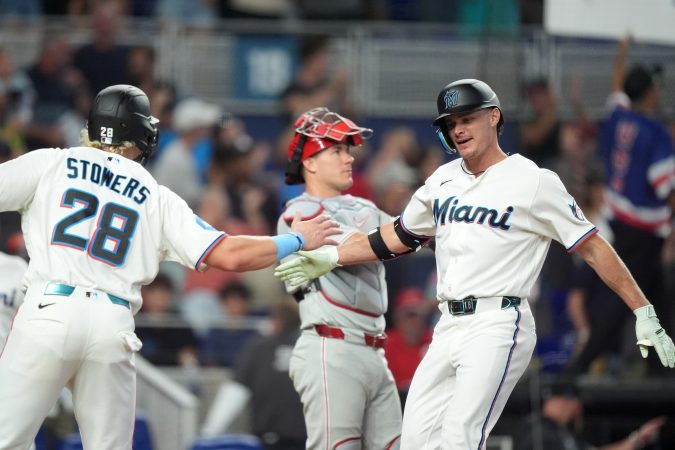
    MIAMI — As the offense poured on six runs in the first five innings, it felt like the Phillies were back on track, at least for the moment.

    But it didn’t take long for another of the team’s weaknesses to become magnified.

    The Phillies’ latest pitching collapse led to an 8-6 loss to Miami on Wednesday, squandering a game they had once comfortably led 6-0. The Marlins had started the series on a franchise-record 12-game losing streak, and they ended it by sweeping the Phillies out of South Florida.

    “We’re just not playing complementary baseball,” said Trea Turner. “Feels like when we hit, we don’t pitch as well, and when we pitch well, we don’t hit. It’s just frustrating.”

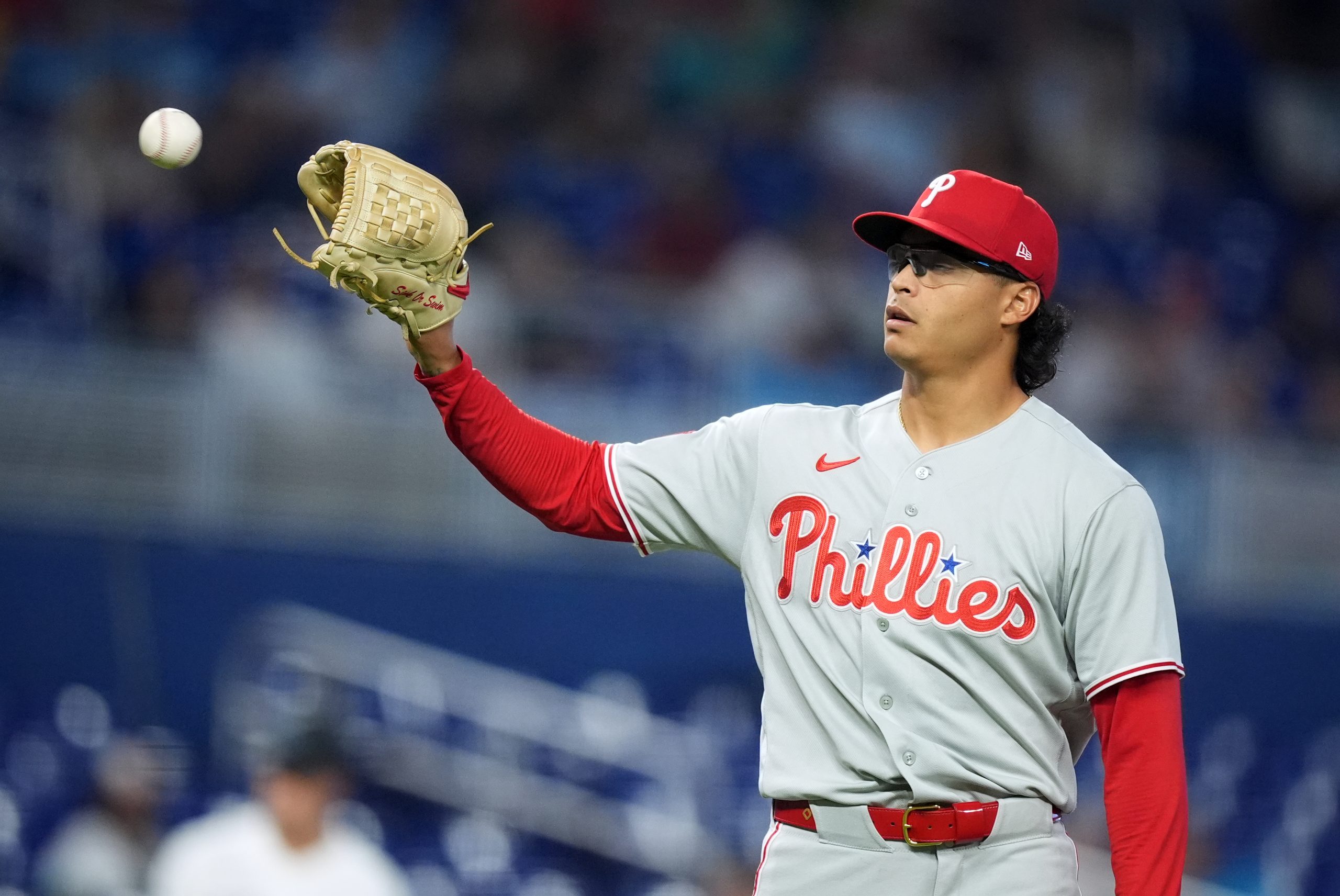
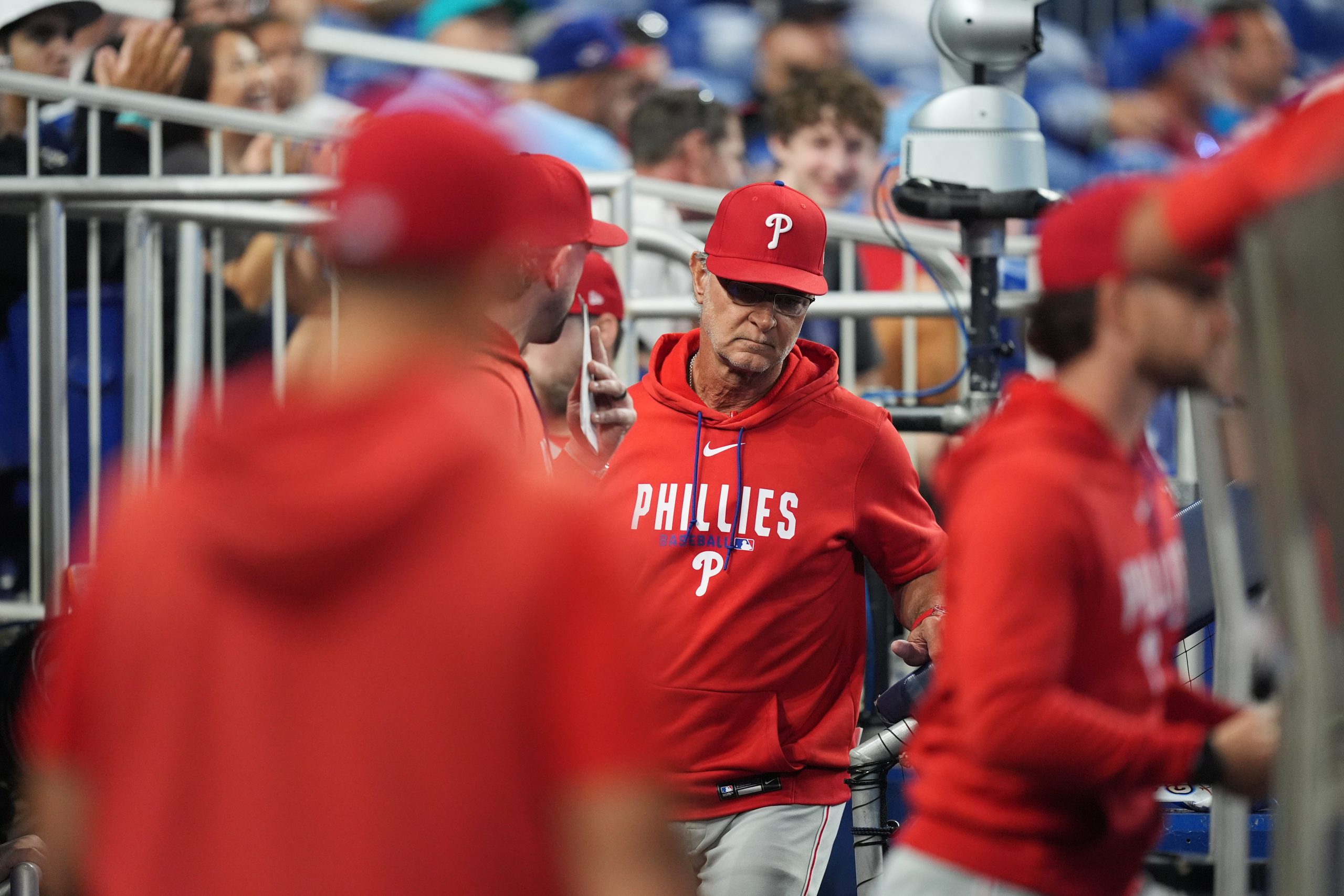
    In a pivotal spot in the seventh inning, interim manager Don Mattingly opted to go with righty Seth Johnson, and he struggled to command his pitches. After he left a slider up in the zone for Xavier Edwards, who capitalized with a two-run single, the Marlins had come all the way back to tie it at 6.

    The Phillies have played 29 one-run games — over a quarter of the season so far — and they have taken their toll on the back end of the bullpen. Both Orion Kerkering and José Alvarado were unavailable Wednesday after pitching two nights in a row. That left Jonathan Bowlan as the highest-leverage arm available, outside of closer Jhoan Duran.

    When Mattingly went to make a pitching change for starter Jesús Luzardo with one out in the seventh, he decided to save Bowlan for the eighth, even though the tying run was already on first.

    “Trying to get a short amount of outs [for Johnson], compared to Bowlan trying to get more,” Mattingly said.

    Jesús Luzardo gave up six earned runs in 6⅓ innings against the Marlins on Wednesday.Rebecca Blackwell

    When Bowlan did enter in the eighth, now in a 6-6 game, Miami delivered the knockout punch. Pinch-hitting Griffin Conine — who had walked off the series opener against Duran — sent a two-run homer out of the deepest part of the ballpark.

    The collapse stung all the more because the offense had shown some promising signs early. By the end of the third inning, the Phillies had already matched their hit total of four from the night prior. And unlike in Tuesday’s 1-0 loss, they had some runs to show for it, after Bryson Stott’s double drove in two.

    The Phillies tacked on another run in the fourth with a sacrifice fly, and sparked another rally in the fifth. Turner, who started at designated hitter with Kyle Schwarber unavailable due to a gastrointestinal illness, started things off with a solo homer.

    Stott walked, before Harper tucked an RBI triple just inside the right field foul line. A single from Alec Bohm brought Harper home, but that would prove to be the Phillies’ final hit of the day.

    “We expect better of ourselves,” Turner said.

    Even so, a 6-0 buffer should have been plenty for Luzardo. While the bullpen has been a weakness for the Phillies for most of the season, their top three starters have been relied on to carry the load. And Luzardo was cruising early against his former team, until a lapse in the fifth helped Miami halve the Phillies’ lead.

    Esteury Ruiz hit a leadoff double, advanced to third on a sacrifice bunt, and scored on an RBI groundout. Luzardo also hit Miami’s No. 8 hitter with a pitch, but he was a strike away from getting out of the jam when Heriberto Hernández blasted a two-run homer on a 3-2 changeup elevated in the zone.

    Don Mattingly’s Phillies have lost seven of their last eight games and nine of 12 games since the All-Star break.Rebecca Blackwell

    “My own fault,” Luzardo said. “Lefty on deck, I had a lot of things in my mind. Probably should have thrown something else, or been a little more aggressive with it. And that’s why I was kicking myself afterwards, just knowing who was on deck and just giving in on a 3-2 pitch.”

    He got into more trouble in the seventh. Ruiz started things off again, this time with a leadoff single. He stole second and then advanced to third on a throwing error by catcher J.T. Realmuto.

    The key at-bat came against Miami’s nine-hole hitter, lefty Jakob Marsee. Luzardo jumped ahead in the count 1-2, but ultimately lost the battle by issuing a walk. It turned the lineup back over to Otto Lopez, who singled off a changeup below the zone to score another run and end Luzardo’s day.

    “Frustrating,” Luzardo said. “We knew they were going to come out a little hungry after losing 12 in a row. But I mean, just frustrating the way it happened.”

    After Miami tied the game, the Phillies offense had no response. They went down in order in the eighth and ninth inning to seal their latest deflating loss.

    This marks the first time the Phillies have been swept in a series since their 10-game losing streak in April, which cost Rob Thomson his job as manager. But this skid feels a little different.

    For one thing, time is running out.

    “Earlier, those things happen, you try to learn from it, and now at this point in the year, you gotta find a way to win ball games,” Turner said. “And it’s kind of go time. So got to figure it out.”

    There surely will be changes to the roster in the coming days as the trade deadline approaches on Monday. But for Mattingly, now is when the true test of his club begins.

    “Now’s the time that we’re going to find out what we’re made of,” Mattingly said. “We’ve been through a struggle. We’ve let everybody stay in the race. So we find out who we are over these next couple of months.”

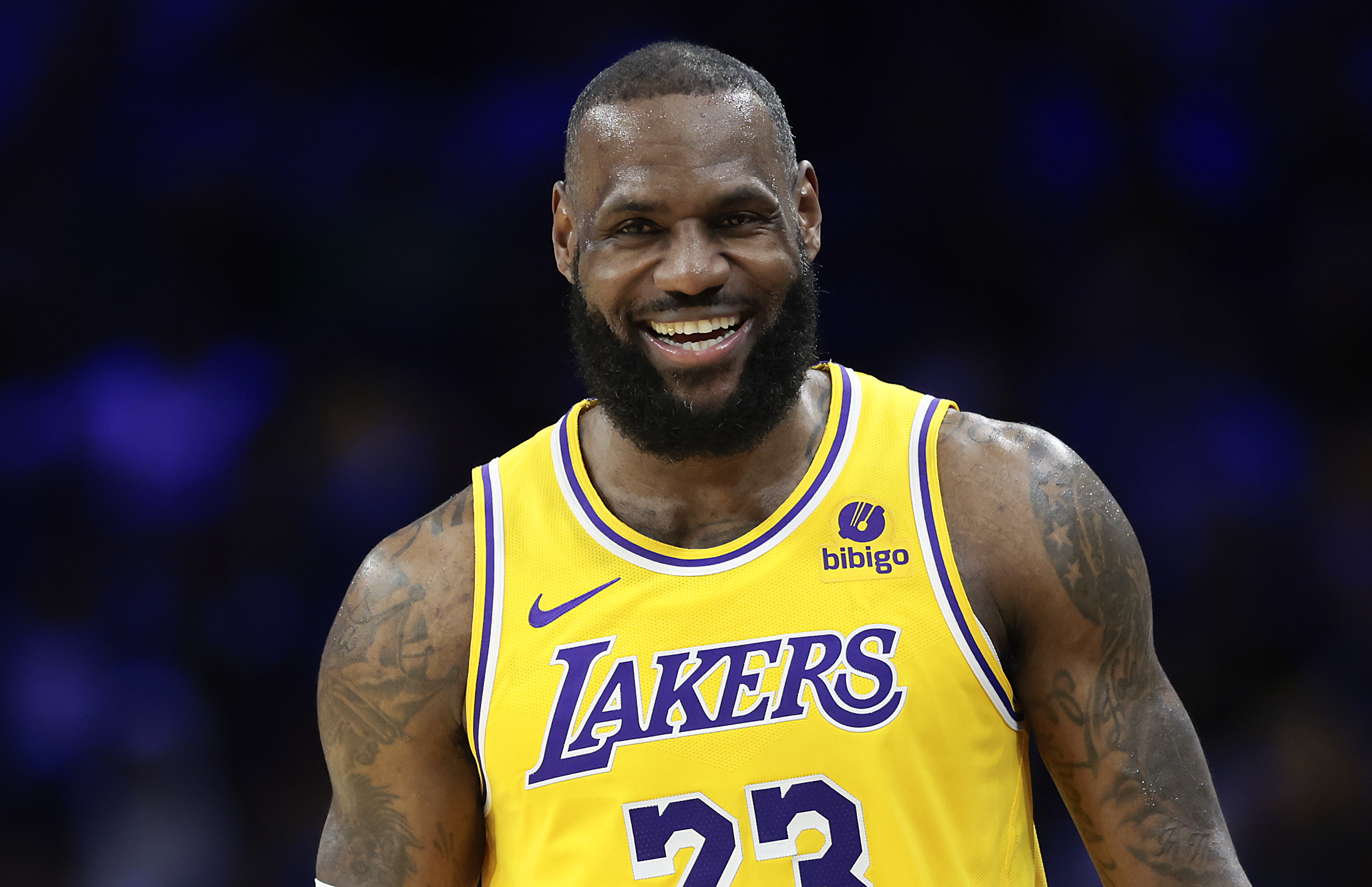
  • The Sixers now boast LeBron James and Jaylen Brown. How do they stack up in the loaded East?

    The Sixers now boast LeBron James and Jaylen Brown. How do they stack up in the loaded East?

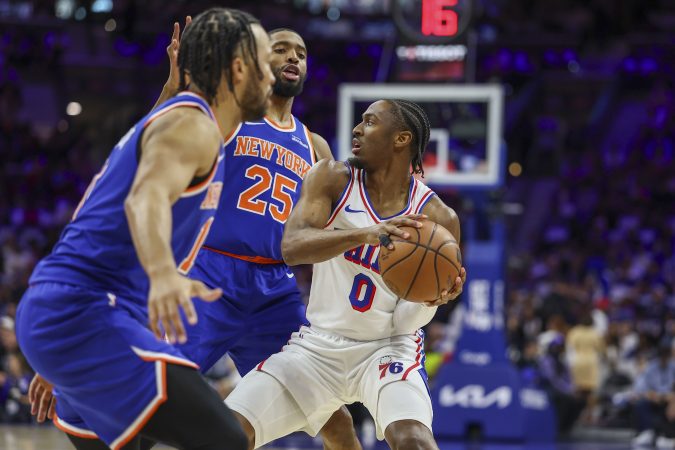
    The 76ers have executed the NBA’s splashiest offseason by signing all-time great LeBron James and trading for All-NBA wing Jaylen Brown … and still may not be the favorites in the Eastern Conference?

    That is how deep the East has become, at least on paper. It is a counter to the West, which may have the two best long-term teams and superstars in Victor Wembanyama’s San Antonio Spurs and Shai Gilgeous-Alexander’s Oklahoma City Thunder.

    But 11 East teams seem primed to compete for a top-six seed. That is too many for the play-in tournament, much less the actual playoffs.

    Injuries, in-season moves, and other factors can impact the East landscape from late October through June. But here is where things stand following a wild summer:

    The defending champ

    New York Knicks

    The Knicks deserve this respect after their torrid run to the NBA title last month. And they are running it back with much of their full rotation — including ’Nova Knicks Jalen Brunson, Mikal Bridges, and Josh Hart — except backup center Mitchell Robinson. That there has been no repeat NBA champion since the Golden State Warriors in 2017 and 2018 illustrates the steep challenge now facing the Knicks. But they still belong at the top of this ladder until they are knocked down.

    The challengers

    Sixers

    The Sixers might now boast the NBA’s most talented starting lineup, but how long does it take to gel? Health is always a concern with former MVP Joel Embiid — and, to a lesser extent, James at this point in his career. But the Sixers appear better equipped to withstand that by adding Brown to the dynamic Tyrese Maxey-VJ Edgecombe backcourt.

    Detroit Pistons

    The Pistons also deserve respect as last year’s top playoff seed, while anchored by MVP contender (and still ascending) Cade Cunningham. But losing in the second round of the playoffs demonstrates that steps remain for them to become legitimate contenders.

    LeBron James’ decision to join the Sixers was one of several large dominoes in the Eastern Conference. Yong Kim / Staff Photographer

    They’re in a contract stalemate with restricted free agent (and Roman Catholic product) Jalen Duren, an All-NBA selection last season who struggled mightily in the playoffs. But they addressed outside shooting concerns by trading for former Sixer Isaiah Joe and also added John Collins.

    Boston Celtics

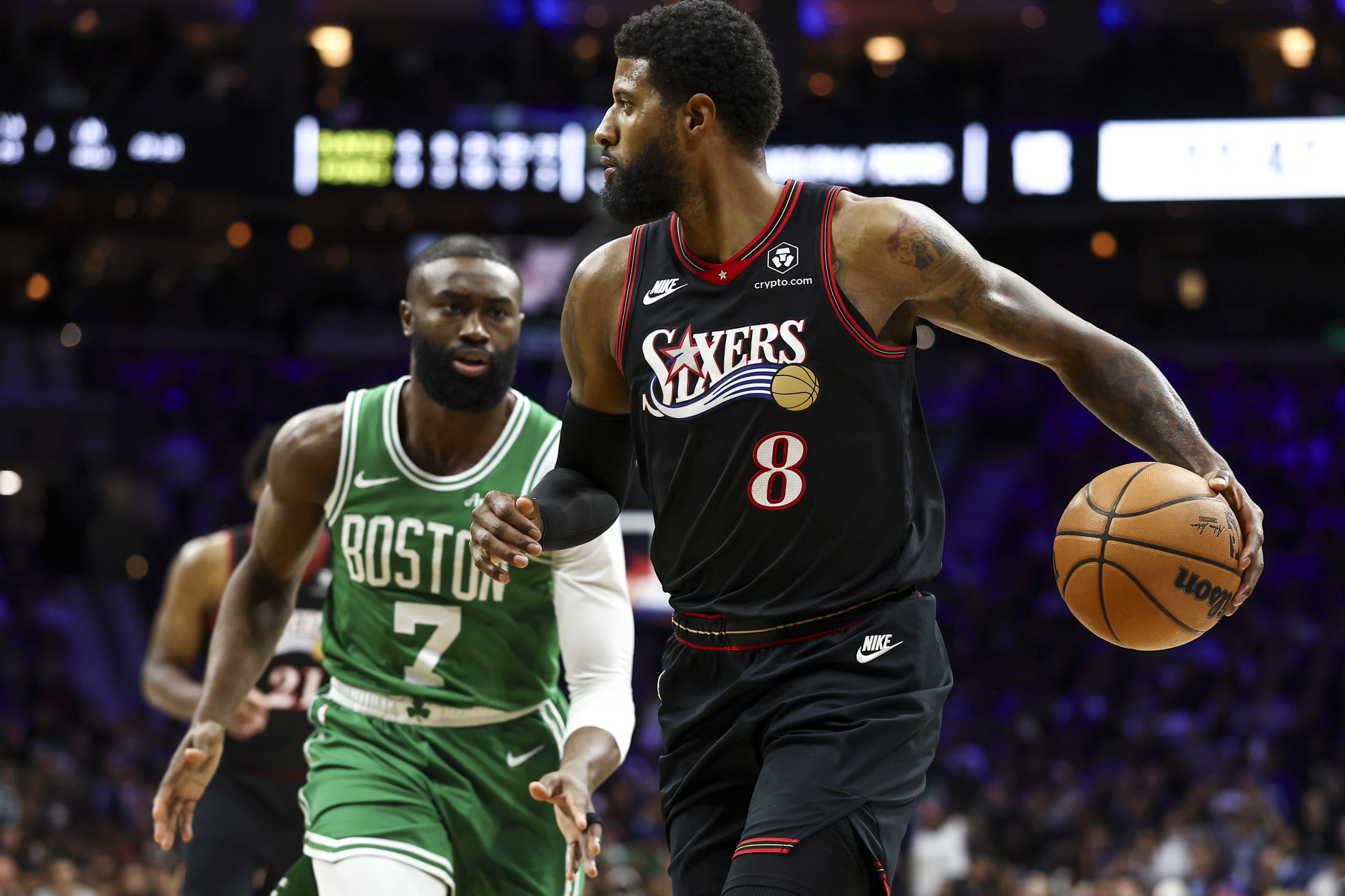
    Perhaps this is too high for Boston following the Brown trade that netted Paul George. But the Celtics are in a similar spot as last season, just with the now-healthy Jayson Tatum as the unquestioned top offensive option. George is a secondary offensive option, and they also added Robinson to address their center void, which was exposed during their first-round playoff loss to the Sixers.

    Figuring out the post-Brown era is a task for Joe Mazzulla, the reigning NBA Coach of the Year who may have gone too far with an unorthodox starting lineup in Game 7 against the Sixers and overall three-point-heavy scheme.

    Cleveland Cavaliers

    It might be fair to call the Cavaliers a subpar Eastern Conference finals team, given how that series went against the Knicks. Then they missed out on a sentimental second reunion with James, leaving them with a team that boasts an impressive core — All-NBA guard Donovan Mitchell and former Defensive Player of the Year Evan Mobley — but feels like it may have run its course.

    Perhaps Cleveland will now pivot to adding a complementary player such as Jonathan Kuminga, but is that enough to move the needle (or maintain their positioning) in this loading-up East?

    The wild cards

    Indiana Pacers

    Remember them? Assuming Tyrese Haliburton returns to All-NBA form following Achilles surgery, can the Pacers recapture the magic of their 2025 Finals run? Indiana started prepping for the upcoming season by trading for center Ivica Zubac at the February deadline but didn’t add a high draft pick thanks to horrendous lottery luck.

    Toronto Raptors

    If the Kawhi Leonard trade finally goes through, move the Raptors into the challenger tier. Leonard, who would return to Toronto still as one of the NBA’s best two-way wings when healthy, creates a super-fun duo with All-Star Scottie Barnes. The Raptors also still have helpful complementary players such as Immanuel Quickley and Collin Murray-Boyles.

    Miami Heat

    The Heat certainly seem like they’d belong in the challenger tier after trading for two-time MVP Giannis Antetokounmpo to pair with All-Star Bam Adebayo. But missing out on a reunion with James leaves Miami with a severe lack of playmaking and overall perimeter punch.

    Atlanta Hawks

    Atlanta was one of the hottest teams during the second half of last season and gave the Knicks their toughest postseason test. The Hawks successfully pivoted from the Trae Young era to building around All-Star Jalen Johnson and CJ McCollum.

    Following this summer’s blockbuster trade, Paul George will now shift to the second option in Boston.Monica Herndon / Staff Photographer

    This offseason, they traded for stout perimeter defender Lu Dort to play alongside 2025-26 Most Improved Player Nickeil Alexander-Walker and Dyson Daniels and drafted intriguing point guard Kingston Flemings.

    Orlando Magic

    Orlando has not changed much besides its coach, with Sean Sweeney taking over after impactful assistant stints with the Spurs and Dallas Mavericks. Two big questions facing this roster: Can Franz Wagner stay healthy, and can Paolo Banchero improve his efficiency?

    Charlotte Hornets

    One of last season’s feel-good stories has already undergone a shakeup by trading LaMelo Ball to the Minnesota Timberwolves. The Hornets still have an exciting young core with Kon Knueppel and Brandon Miller, but now feel a tick below these other teams after losing in last season’s play-in.

  • The Eagles extended Jalen Carter ‘based on future performance,’ Howie Roseman says

    The Eagles extended Jalen Carter ‘based on future performance,’ Howie Roseman says

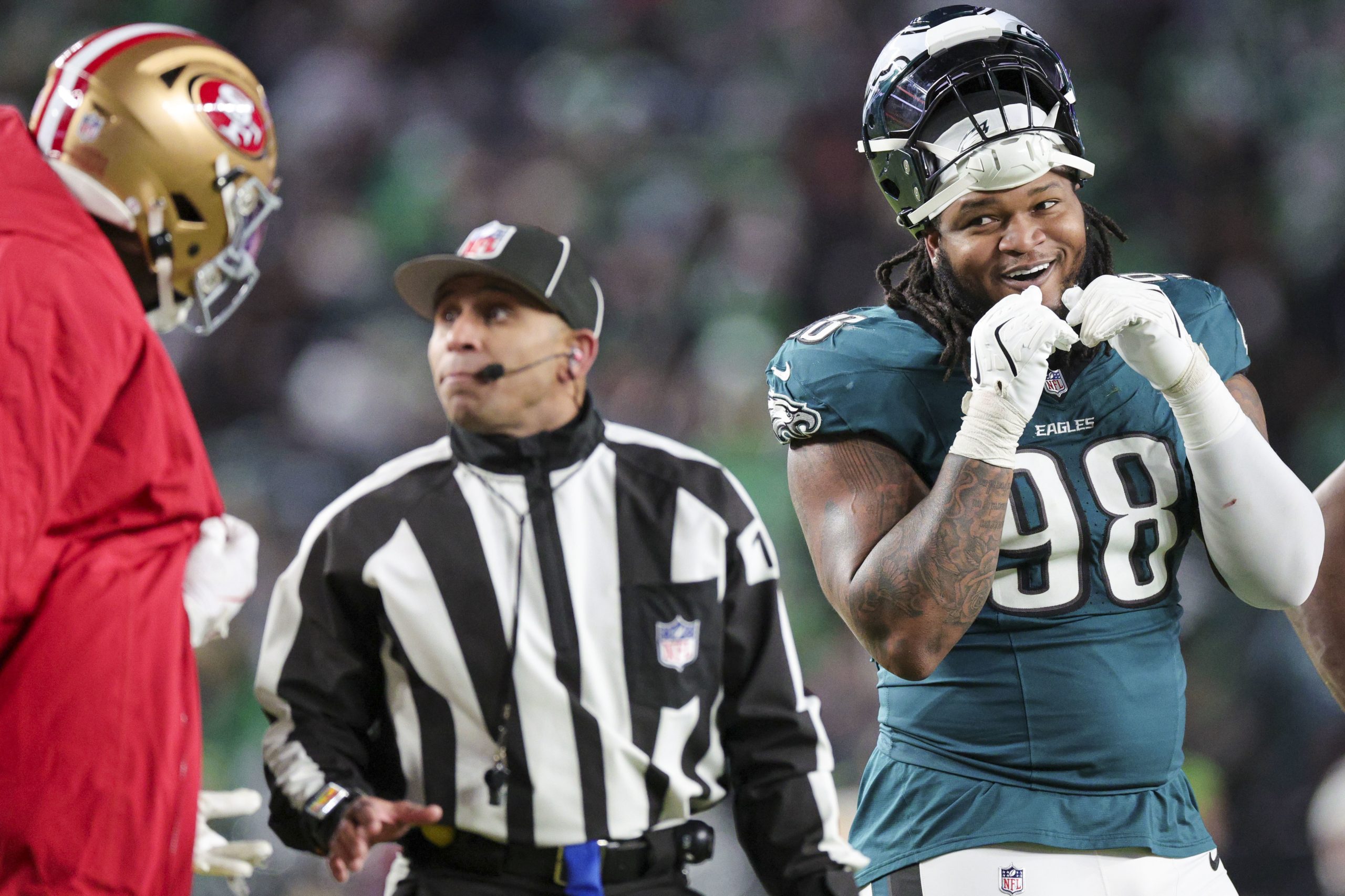
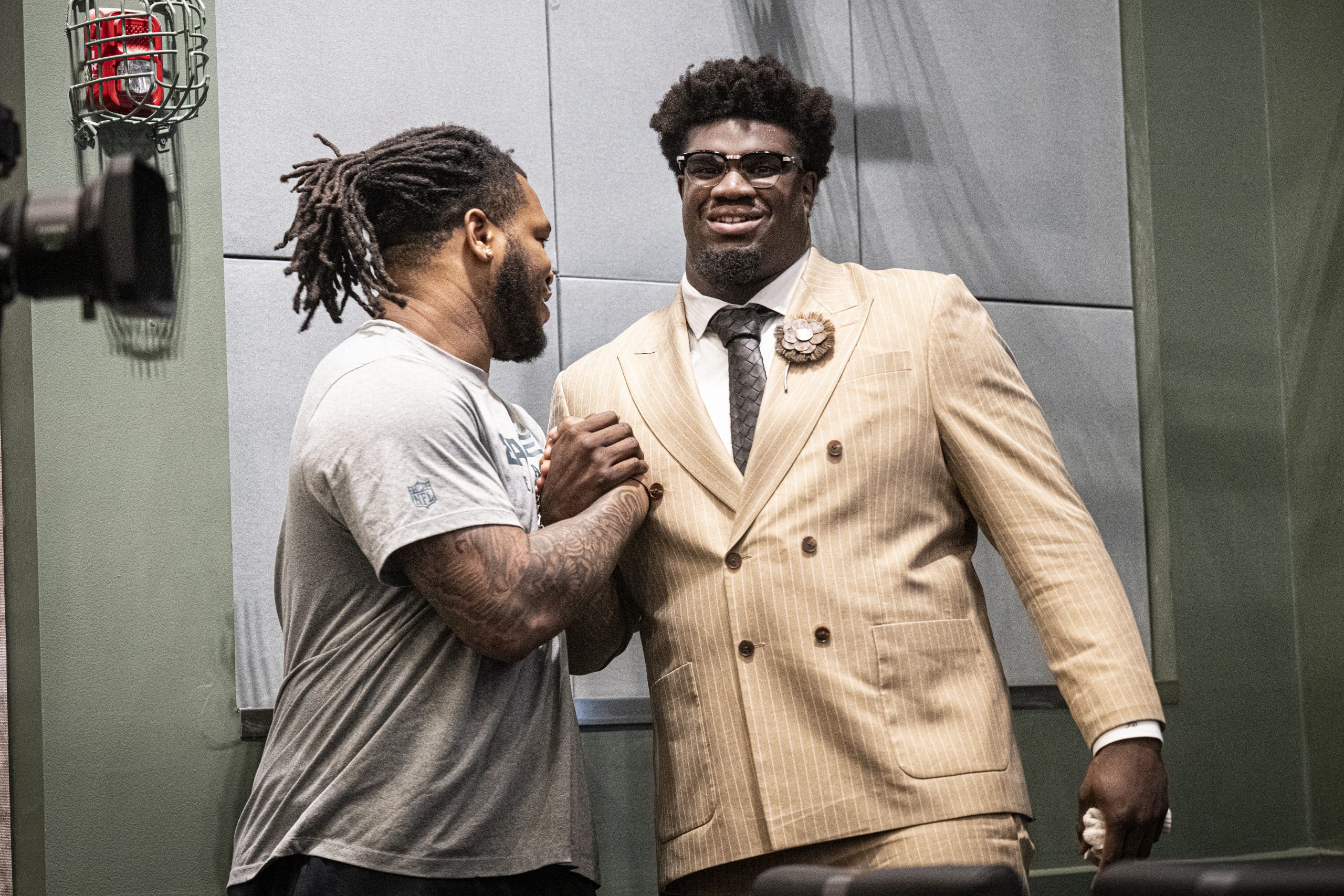
    Jordan Davis stood near the back of the media tent Wednesday afternoon with a slight smile on his face. Jalen Carter was sitting at the podium, answering questions a day after the Eagles made him the highest-paid interior defensive lineman in NFL history. Four months earlier, the roles were reversed.

    Carter was inside the auditorium at the Jefferson Health Training Complex when the Eagles held a press conference a few days after signing Davis to a $78 million extension.

    “He told me I was next up and I’m here right now,” Carter said.

    The Eagles invested $230 million this offseason on the former Georgia teammates they drafted in the first round in consecutive seasons, Davis in 2022 and Carter in 2023. There probably was a stretch of time when the idea of both being here together until at least 2029 was wishful thinking. Davis didn’t shed his label as an out-of-shape first-round bust until his breakout 2025 season. And Carter, who was dominant during the Eagles’ Super Bowl run in 2024, took a step back in 2025 while being limited due to shoulder injuries.

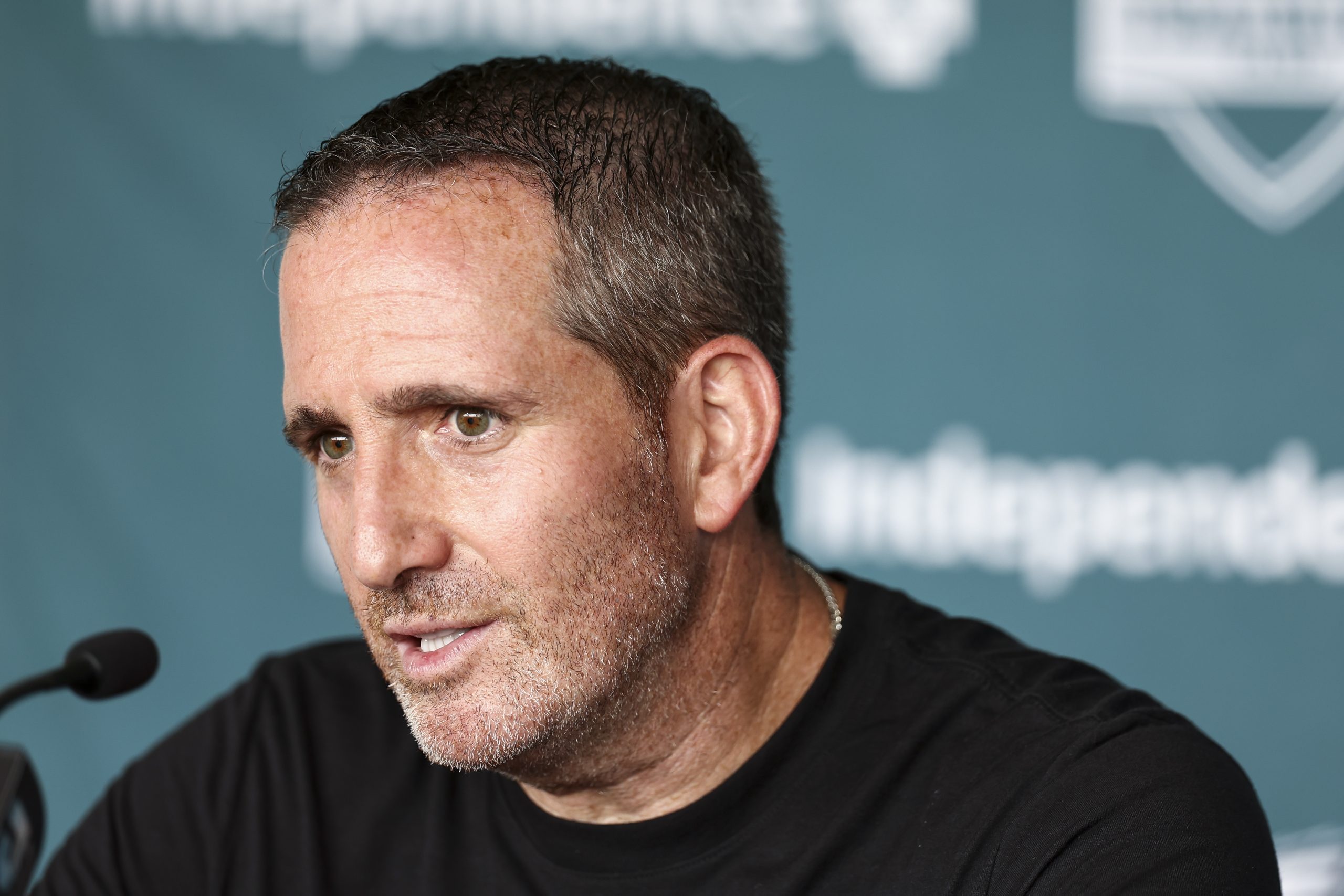
    But the Eagles, Howie Roseman said, wanted to make sure the interior defensive line continued to be a strength of their team. It’s a “deficient position,” Roseman said. “It’s hard to find guys like that.”

    General manager Howie Roseman had his eye on the future when he inked Jalen Carter’s extension. Monica Herndon / Staff Photographer

    Linebacker Zack Baun and Roseman crossed paths Tuesday after the Eagles and Carter completed their deal. Baun, Roseman said, told the general manager that someone told him after he signed his $51 million deal with the Eagles that “you don’t pay me for what I did, you’re paying me for what I’m going to do.”

    “That’s why we do these deals,” Roseman said Wednesday before the Eagles took the field for their first practice of training camp. “We don’t do anything based on retroactive performance, we’re doing things based on future performance.”

    The Eagles aren’t concerned about Carter’s shoulders, which required injections so he could finish the 2025 season. While negotiations played out, Carter said he let his agent, Drew Rosenhaus, and his mother, Toni Brown, figure out the contract while he focused on his body. He worked closely with Julian Allen at Hybrid Performance in Turnersville to build his strength back. Nick Sirianni credited Carter for coming into camp in “phenomenal shape” while the contract situation loomed over his head in the offseason.

    Roseman disagreed with a Sports Illustrated report that said the Eagles were hesitant to sign Carter when asked about it Wednesday. The Eagles normally like to re-sign players in March and April — Davis signed his deal in March — but called Carter’s situation “unique.” Roseman said the defensive tackle market was “in transition” during that timeline. Tennessee’s Jeffery Simmons helped reset the market, and Dexter Lawrence was extended by Cincinnati following his trade.

    The Eagles’ actions show they feel Carter is better than both, and much closer to the player they watched in 2024 and not 2025, when his pressure rate dropped from 8.9% to 7.7%.

    Jalen Carter’s production dipped in 2025, with injury a root cause. David Maialetti / Staff Photographer

    “This was a unique situation,” Roseman said. “By the same token, getting this done before camp was important for all of us. Good things happen when you get things off your plate and you’re able to focus on football.”

    Carter’s tenure with the Eagles has not been without drama. He has been flagged for multiple personal fouls, including an ejection from last season’s opener after Carter was caught spitting at Dak Prescott before the first snap of the game. He has struggled with conditioning issues at times. He also entered the NFL after being booked on reckless driving and racing charges stemming from a 2023 incident that resulted in the deaths of a Georgia football player and staff member.

    “Since Jalen’s been here, he’s put his head down, he’s worked hard, he’s made huge, impact plays for this organization, for this team,” Roseman said. “Like anyone, when you’re 25 years old you’re still growing as a person and a player.”

    Carter called the contract “a reflection of the trust that the coaches, the players, the organization has in me. I’m very thankful for that.”

    He said becoming the highest-paid defensive tackle wasn’t important to the process for him. It was important to stay with the Eagles, he said.

    Carter listed some of the people in the building that helped him reach the new deal; among them was Davis, who hosted Carter on his visit to Georgia and has become “like an older brother to me,” Carter said.

    Jalen Carter and Jordan Davis embrace in March after Davis signed his extension with the Eagles.Jose F. Moreno / Staff Photographer

    Davis said “the sky is the limit” for Carter, and expressed pride in watching Carter grow as a player and person over the last few years.

    “Coming into the league, it’s a learning process,” Davis said. “You have to learn how to be a professional. You have to learn how to navigate things, how to navigate problems that we didn’t have in college, that we didn’t have in high school.”

    They have done it all together, a process that will continue for at least a few more years.

    “It’s a blessing to work with him for a couple more years,” Carter said. “I’m just happy I can stay here and be with the guys that I grew up with.”