Blog

  • Inside Granite Run’s evolution | Inquirer Greater Media

    Inside Granite Run’s evolution | Inquirer Greater Media

    Hi, Greater Media! 👋

    Malls were once a quintessential part of everyday life, but that shifted with the rise of online shopping. The Granite Run Mall was no exception. We take a look at its evolution. Also this week, Wawa debuted a hoagie-inspired mini-tote, the county has launched a measles vaccination campaign, plus, Wallingford-Swarthmore School District has among the highest athletics participation in the region.

    If someone forwarded you this email, sign up for free here.

    Why the Granite Run Mall had to evolve

    The former Granite Run Mall has undergone a massive transformation in the past decade to turn it into a mixed-use town center. Google Earth

    A regular at Granite Run Mall growing up, Delaware County native Mike Fenn is a little saddened about the state of former malls throughout the region. After all, many hardly resemble what they did in their heyday.

    That’s the case for Middletown Township’s former mainstay, which closed in 2015 amid declining store occupancy. But it soon got new life when developer BET Investments began a more than $100 million effort to transform the hulking space into a mixed-use town center now known as the Promenade at Granite Run.

    Today it consists of luxury apartments, stores, restaurants, and a medical facility, with retail nearly fully leased and apartments not far behind, BET president Michael Markman said.

    The Inquirer’s Erin McCarthy takes a deep dive into why malls like Granite Run proliferated and then changed over the years.

    💡 Community News

    • Main Line Health, which owns Riddle Hospital, is in the process of adding specialty physicians such as gastroenterologists. The goal is to reduce how long patients have to wait to access specialized care.
    • As measles cases continue to climb statewide, Delaware County has launched an immunization campaign to increase vaccination uptake. While no cases have been reported yet in the county, it’s “only a matter of time,” the department’s director said.
    • A Havertown man, Sean Keenan, 40, has been charged with terroristic threats and ethnic intimidation after allegedly leaving racist, threatening voicemails for Delaware County Sheriff Siddiq Kamara.
    • More mosquitoes capable of spreading West Nile virus were recently detected in surrounding communities, including Ridley and Springfield Townships. The Pennsylvania Department of Environmental Protection conducted controlled spraying last week and reminded residents to reduce standing water on their properties.
    • Heads up for drivers: Roadwork will close the southbound I-476 ramp to Baltimore Pike from Saturday at 9 p.m. until Monday at 5 a.m. In Middletown Township, Darlington Road will be closed between Old Forge and Valley Roads from 8 a.m. to 5 p.m. through Friday. Expect paving today and tomorrow on select roads in Swarthmore. And in Aston Township, Pennell Road will be closed between Old Pennell Road and Glendale Boulevard Monday through next Thursday from 7 a.m. to 4 p.m.
    • Tomorrow is the last day to provide feedback on PennDot’s draft planning and environmental linkages study for its Routes 352 and 1 roadway improvements project.
    • Nonprofit Well Rooted has launched a new housing initiative geared toward young adults aging out of foster care. Ardmore-based Well Rooted Housing has partnered with Media home goods store Chosen Tweed to open two furnished apartments in the borough, which will be used by two individuals for the next year. The organization is also providing supportive services like mentorship, financial literacy, and trauma-informed mental health resources.

    🏫 Schools Briefing

    🍽️ On our Plate

    In addition to the tote, consumers could score a Wawa-themed charm and a T-shirt. Wawa
    • Delco-based Wawa recently teamed up with Lands’ End to create a limited-edition mini tote just big enough for lunch. Known as the Shorti Tote (naturally), the bag cost $39.95 and sold out online when it debuted last week.

    🎳 Things to Do

    🎶 Rose Tree Summer Concert Festival: Echoes of Laurel Canyon, which performs a wide range of American throwback covers, kicks things off tonight. Tomorrow, cover band FuseBox performs, followed by Prince tribute Controversy on Saturday, and the Merion Concert Band on Sunday. Reggae Thunder will perform Jamaican-style music on Wednesday. ⏰ Thursday, July 30-Wednesday, Aug. 5, 7:30 p.m. 💵 Free 📍 Rose Tree Park, Media

    🔥 Summer Fireside: There will be food trucks, fire pits, and marshmallows at this evening event. ⏰ Friday, July 31, 5-8 p.m. 💵 Admission is free for members and $10-$18 for non-members📍 Tyler Arboretum, Media

    🍿 Movie Night: Catch an outdoor screening of 1984 classic The Karate Kid. ⏰ Saturday, Aug. 1, around 8 p.m. 💵 Free 📍 Media Borough Hall lawn

    🗞️ What other Greater Media residents are reading this week:

    By submitting your written, visual, and/or audio contributions, you agree to The Inquirer’s Terms of Use, including the grant of rights in Section 10.

    This suburban content is produced with support from the Leslie Miller and Richard Worley Foundation and The Lenfest Institute for Journalism. Editorial content is created independently of the project donors. Gifts to support The Inquirer’s high-impact journalism can be made at inquirer.com/donate. A list of Lenfest Institute donors can be found at lenfestinstitute.org/supporters.

  • 🦅 Talkin’ ’bout practice | Sports Daily Newsletter

    🦅 Talkin’ ’bout practice | Sports Daily Newsletter

    It’s happening, y’all!

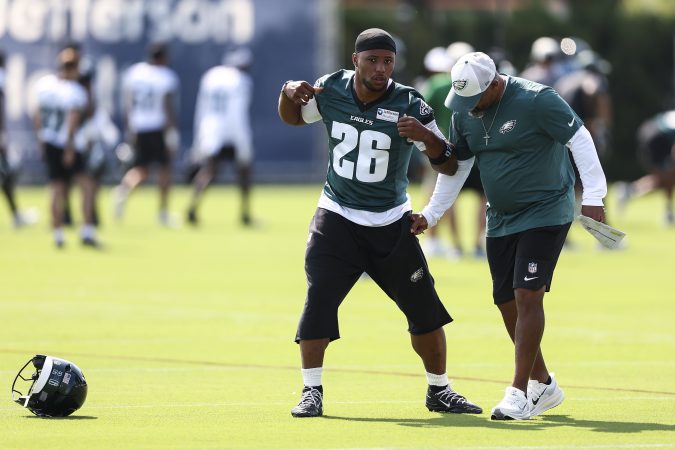
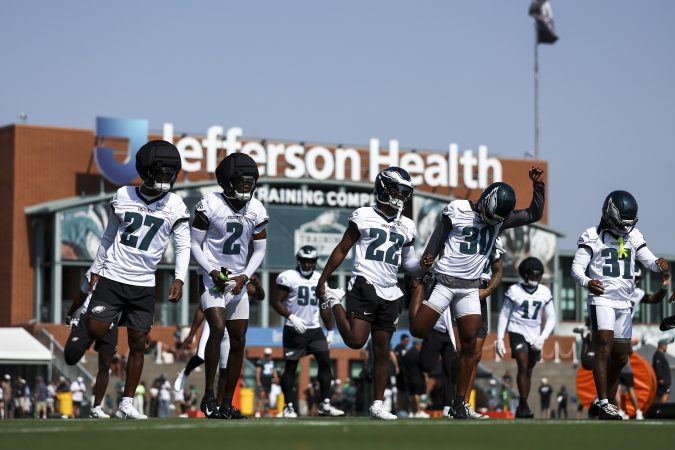
    What surely feels like Christmas morning for many in Philly and beyond dawned on Wednesday as the Eagles took the field for the first training camp practices of the 2026 season — and, for Jalen Carter, with a nice pay raise.

    So what did our writers see?

    In short: plenty.

    Plenty of Birds on the field (they’re healthy). Plenty of positional battles (especially on defense). Plenty of new concepts (on offense). And if you want the in-depth version of Wednesday’s key observations, Jeff McLane has you covered.

    — Maria McIlwain, @phillysport, sports.daily@inquirer.com.

    If someone forwarded you this email, sign up for free here.

    ❓While there’s plenty of reason to hope regarding the Sixers and Eagles, is it time to panic about the Phillies? Email us back for a chance to be featured in the newsletter.

    Birds in flight

    Eagles quarterback Jalen Hurts fakes a handoff to running back Saquon Barkley during the first day of on Wednesday.Monica Herndon / Staff Photographer

    Part of Nick Sirianni’s opening message to the team stuck out to quarterback Jalen Hurts. He wrote it down in his notebook, and it underscores his mentality as a new season begins.

    “100% alignment and zero entitlement,” he said Wednesday as the first practices of training camp began.

    So what does that look like, as Hurts embraces his role as a veteran and helps his new teammates get acquainted with the Eagles?

    And while there isn’t a Duolingo course for Sean Mannion’s offense, but Barkley is enjoying the challenge of “learning a new language” as the Birds install the offense.

    Next: The fun continues today at the Jefferson Health Training Complex.

    Dog day doldrums

    Phillies interim manager Don Mattingly returns to the dugout after making a pitching change. The Phillies blew a six-run lead to lose their third straight game on Wednesday in Miami.Rebecca Blackwell

    Bryce Harper’s candid comments about the Phillies’ needs ahead of the trade deadline certainly raised eyebrows on Tuesday night.

    Before Wednesday’s series finale vs. the Miami Marlins, interim manager Don Mattingly responded to his star first baseman, saying, “… players like being GMs and making calls and spending other people’s money, so just let it go at that.”

    And the Phillies’ on-field misfortune continued Wednesday, as they blew a six-run lead en route to an 8-6 loss to the Marlins.

    Next: After an off day Thursday, the Phillies’ road trip continues with a weekend series in Baltimore. The Orioles’ Brandon Young (8-2, 3.13) will start on Friday (7:05 p.m., NBCSP) against a Phillies starter to be determined.

    Max(ey) effort

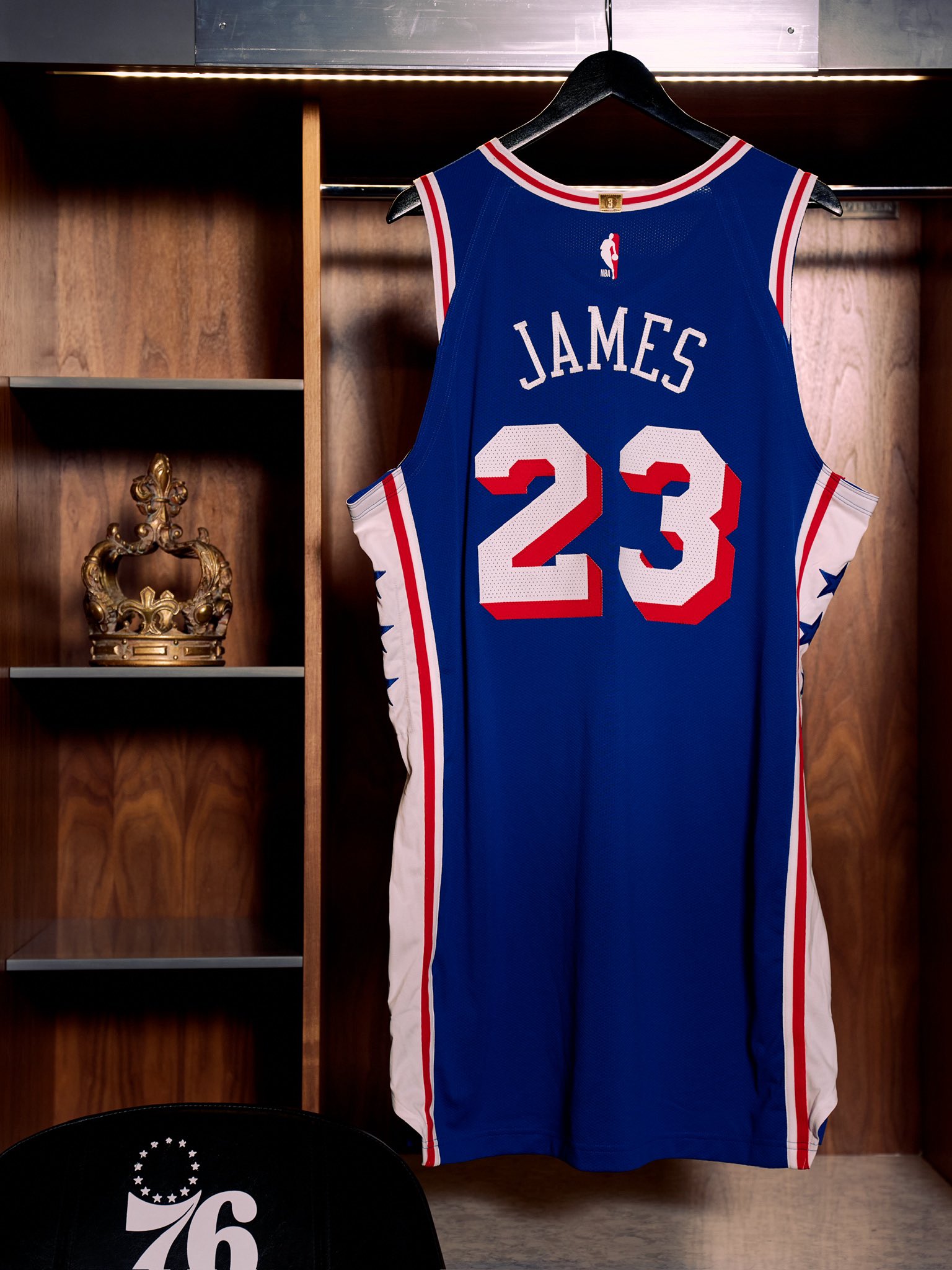
    LeBron James will wear No. 23 with the Sixers, the team announced Monday.Sixers

    OK, so what was the deal with that asterisk by Tyrese Maxey’s name on the now-infamous white board? Turns out the Sixers point guard had a notable role in helping bring LeBron James to Philly.

    Rich Paul, who’s James’ and Maxey’s agent, offered a glimpse into the decision process that brought the all-time great to the Sixers. He also hinted at James playing beyond that two-year deal, too.

    James jersey sales broke a record, according to Fanatics, and with him officially now in the fold, how do the Sixers stack up within the hierarchy of the Eastern Conference?

    ‘Opening doors’ in lacrosse

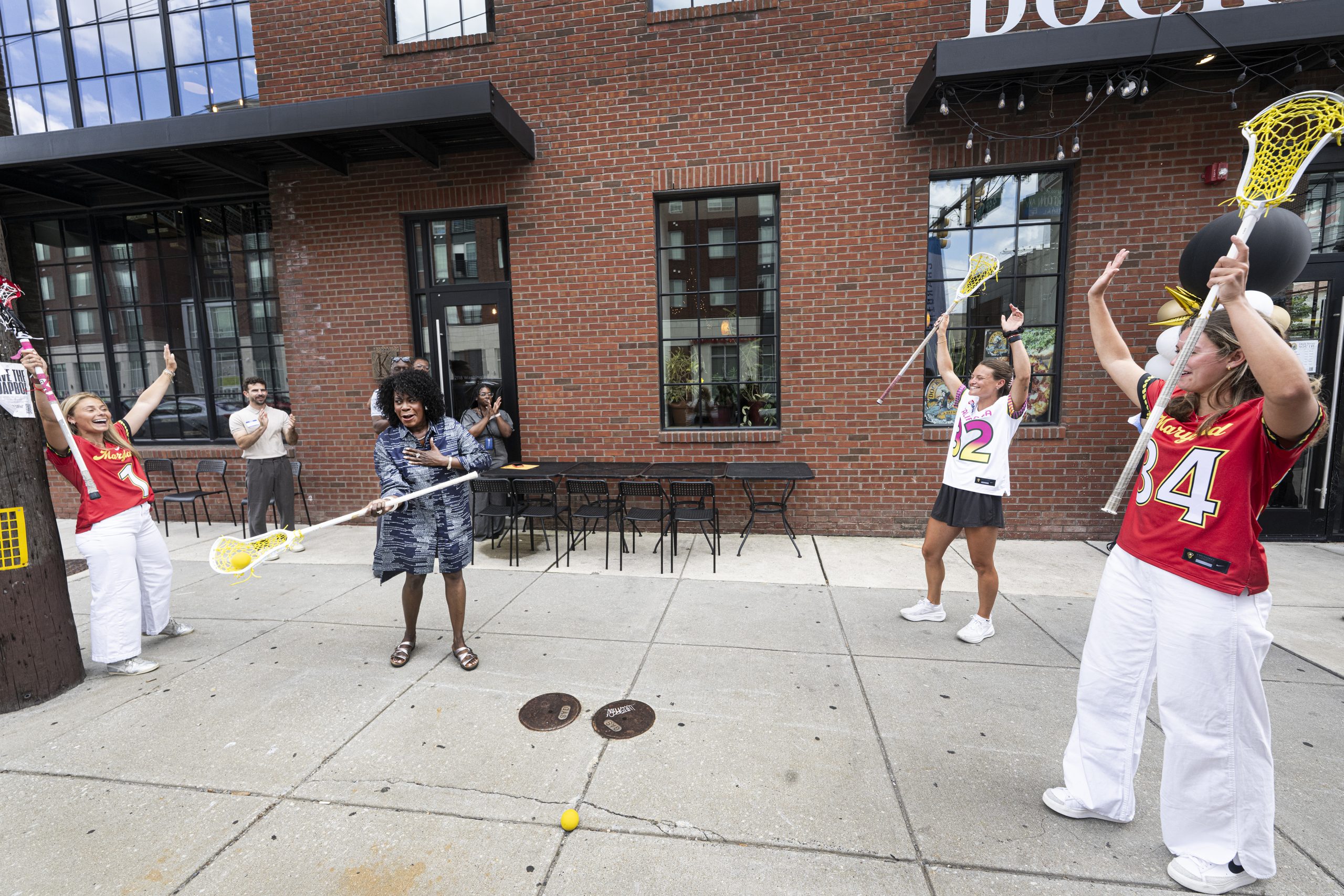
    Women’s Lacrosse League players Abby Bosco (left), Katie Detwiler, and McKenzie Blake demonstrate a lacrosse drill for Mayor Cherelle L. Parker on Wednesday.Jose F. Moreno / Staff Photographer

    The Philly area is a hotbed for women’s lacrosse. Of the Women’s Lacrosse League’s four teams — the Maryland Charm, California Palms, New York Charging, and Boston Guard — 18 players and two coaches have ties to the region.

    “I think it’s just super crazy growing up in the area,” said Katie Detwiler, a California Palms defender who’s from Devon. “When we were growing up, we didn’t have any of this. We played in college, and then it was on to the real world. So I think it’s really good for them to see what could be possible someday. It’s awesome to see.”

    And on Wednesday, Mayor Cherelle L. Parker, the WLL, and local lacrosse players came together to celebrate the league making history in the area when it plays its inaugural championship game in the area next month.

    Next: The inaugural WLL championship is coming to Subaru Park in Chester on Aug. 15 (5 p.m., ESPN).

    Sports snapshot

    On this date

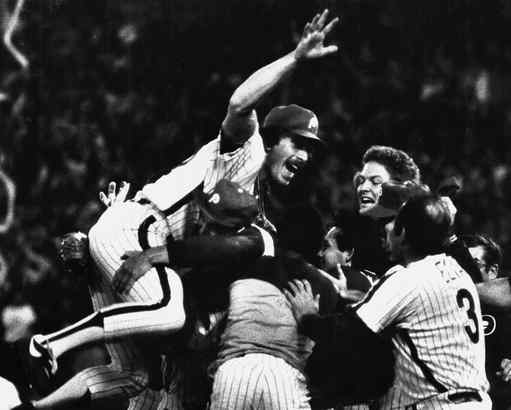
    Mike Schmidt and other Phillies celebrate their World Series triumph on the night of Oct. 21, 1980. Schmidt also was the National League’s most valuable player that season.File photograph

    On this day 31 years ago, two of the Phillies’ all-time greats were enshrined among baseball’s best as Mike Schmidt and Richie Ashburn were inducted into the National Baseball Hall of Fame in Cooperstown, N.Y.

    An article by the Hall of Fame estimated that 40,000 came out to see Schmidt, a 12-time All-Star and six-time Silver Slugger winner, and Ashburn, who hit .308 over his career. Which Phillies might be next?

    Standings, stats, and more

    It’s a bit early for scoreboard watching, but the Phillies’ hold on a wild-card spot has gotten precarious. They’re tied with the Diamondbacks for the final two spots, and the Marlins, Pirates, Nationals, and Padres just two games behind them.

    Here’s a place to access your favorite Philadelphia teams’ statistics, schedules, and standings in real time.

    Mike Sielski’s take

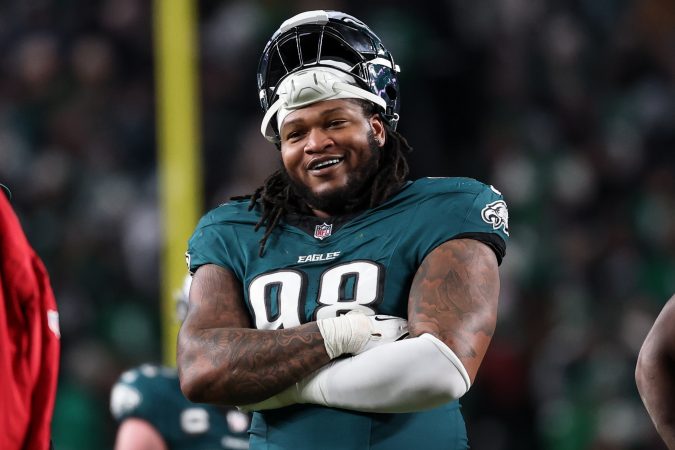
    Eagles defensive tackle Jalen Carter takes the field during the first day of training camp.Monica Herndon / Staff Photographer

    After Jalen Carter signed his lucrative extension, he met with the media flanked by two important people: security chief Dom (DiSandro) and his mom. Dom and Mom has a nice ring to it. They’re also the two people who’ll be most instrumental in making sure the Eagles get their money’s worth from the 25-year-old defensive tackle.

    Sure, he’s talented. But, as Mike Sielski writes, the Eagles are taking on a bit of risk here in signing Carter to this extension.

    What you’re saying about the Birds

    We asked: Which Eagles player is destined for a big year?

    #33 is going to have an incredible year. Cooper DeJean 2026 Defensive Player of the Year. — Ronald R.

    Jalen Hurts is destined for a big year. Rid of complaining AJ Brown, Jalen will have time and support to learn Sean Manion’s playbook without the pressure to cater to a diva receiver. — Bob C.

    I think Jalen Carter will have a great year as he works extra hard to prove that he is worth that $152 million. Unless he is injured I think he will have an outstanding year. You always have to be wary of these long time extensions due to memories of Carson Wentz and Russel Wilson, [Deshaun] Watson, Jay Cutler and others, but I don’t think Carter will ever fail like any those players. — Everett S.

    We compiled today’s newsletter using reporting from Jeff McLane, Olivia Reiner, Jeff Neiburg, Ryan Novozinsky, Lochlahn March, Gabriela Carroll, Gina Mizell, Ariel Simpson, Matt Breen, Becca O’Reilly, Mike Sielski, and Jonathan Tannenwald.

    By submitting your written, visual, and/or audio contributions, you agree to The Inquirer’s Terms of Use, including the grant of rights in Section 10.

    Thanks for reading along! Bella will be back in your inboxes tomorrow morning to close out the week. — Maria

  • Saquon Barkley says he loves the challenge of ‘learning a new language’ in Sean Mannion’s offense

    Saquon Barkley says he loves the challenge of ‘learning a new language’ in Sean Mannion’s offense

    Saquon Barkley has long been an admirer of the wide zone run scheme. He’d study film of running backs like Todd Gurley — who thrived with the Los Angeles Rams under Sean McVay — and think about what he might look like in an offense like that.

    Now he doesn’t have to daydream.

    The Eagles held their first training camp practice of 2026 on Wednesday, which means Barkley and Co. got another important taste of life under first-year offensive coordinator Sean Mannion, whose playbook looks similar to McVay and Kyle Shanahan’s. It’s only Day 1, but the play calls were a major deviation from the inside zone-heavy Eagles offenses of the past. This was evident from the very first play, when Jalen Hurts — lined up under center — ran a stretch toss in “12″ personnel (1 running back, 2 wide receivers, 2 tight ends).

    How fired up is Barkley about these changes? He spent nearly a minute lauding them after Wednesday’s practice.

    “I’ve always been intrigued with this kind of system,” Barkley said. “Watching it kind of from afar and seeing a lot of guys have a lot of success in it. The thing that changes for me is we coach it a little bit different. Outside zone and wide zone, the read is pretty much the same, but just trying to get more of a one-cut mindset.

    “I feel like naturally in my career, unless you are in a system like in college, most of us come from gun and playing shotgun. … You’re more natural to a duo, or to like an inside zone. Then, when you get into the NFL, you see a lot of guys struggle with outside zone in the beginning, but I’ve been working on that the whole time and just having that one-cut mentality, but still doing it in a way that I like to get out of the cut and being efficient and being aligned with the offensive line and in the play and making it work.”

    Saquon Barkley’s ability to click in the running game will take pressure off Jalen Hurts (right) and the passing attack. Chris Szagola

    Barkley’s excitement for a new system likely stems from his struggles (relative to his usual success) in the Eagles’ offense last season. The 29-year-old rushed for 1,140 yards and seven touchdowns under OC Kevin Patullo, as the Eagles went 11-6 and lost to the 49ers in the wild-card round. This came one year after Barkley’s dream first season in Philadelphia, during which he became the ninth player in NFL history to eclipse 2,000 yards and logged 13 rushing touchdowns en route to a Super Bowl crown.

    Of course, it’s only Day 1. Growing pains and adjustments are inevitable. But with Mannion in the mix, Barkley feels rejuvenated — even if it means “starting from scratch.”

    “I think it’s pretty cool that you start it from scratch again,” Barkley said. “Learning a new language, getting familiar with a new system. It’s fun. The way you take notes is a little bit different than you would … It’s going to put you in a spot to do something new, something you may not be used to. But as a competitor, you welcome that challenge.”

  • Jalen Carter got his money. The Eagles have to hope he has grown up enough to earn it.

    Jalen Carter got his money. The Eagles have to hope he has grown up enough to earn it.

    Jalen Carter plodded off the dais late Wednesday morning with a look of relief on his face, as if he were a student who feared public speaking and had just delivered an oral presentation for class. The Eagles’ first practice of training camp, at the Jefferson Health Training Complex, had ended minutes before. It was humid, and Carter wiped his brow with a towel. To his left were Dom DiSandro, who is the Eagles’ chief security officer, and Toni Brown, who is Carter’s mother. Dom and mom. Maybe the two most important people in making sure that the Eagles get their money’s worth from Carter, who is, for the moment, the highest-paid defensive tackle in the National Football League.

    “I messed up a little bit,” Carter said to Brown and DiSandro, “but it was good.”

    The Eagles had announced Tuesday that they and Carter had agreed to a four-year contract extension that reportedly guaranteed him $106 million and could pay him as much as $160 million. When a modern professional sports franchise holds a press conference, it does so not just to acknowledge the news that has already broken. The point and purpose of the event, from the franchise’s perspective, are to send subtle signals about what the angle on the news is supposed to be.

    So there was Brown near the dais. And there was tackle Jordan Davis, Carter’s teammate at the University of Georgia and with the Eagles, hanging near the back of the media tent, ecstatic for his friend. And coach Nick Sirianni and vice president Howie Roseman had been there hours earlier, making no mention of the risk the Eagles had taken on with this commitment to Carter.

    And there is risk here — plenty of it. Carter is just 25, and he has been a great player at times for the Eagles. He was the primary reason they beat the Los Angeles Rams in the 2024-25 NFC divisional round, and he has the power, strength, and raw talent to be the league’s best defensive tackle if he can stay healthy and keep his head on straight. But from the road-racing accident in January 2023 that led to two people’s deaths and caused him to drop far enough for the Eagles to trade in that year’s draft, to the decline in his play in the second half of his rookie season, to his dumb decision to spit in Dak Prescott’s face in last season’s opening game, to the two shoulder procedures that cost him a month of time, Carter has given the Eagles ample cause to cross their fingers here and hope.

    Roseman likes to consummate such deals — extending the contracts of players whom the Eagles want to retain for years — as early in an offseason as possible. Carter’s, though, took much longer, and the reasons go beyond the ones Roseman cited Wednesday, the suggestion that he and Drew Rosenhaus, Carter’s agent, were simply waiting for the market to settle.

    At just 25, Jalen Carter has the power, strength, and raw talent to be the league’s best defensive tackle if he can stay healthy.Monica Herndon / Staff Photographer

    “We felt like [defensive tackle] was one of the strengths of our team,” Roseman said. “We want that to be one of the strengths of our team going forward. The defensive tackle position in the league, in college football — it’s a deficient position. It’s hard to find guys like that. So we feel like it was a priority.”

    Understand: That’s why Carter got this extension, and that’s why the Eagles didn’t have much of a choice in giving it to him. He’s that talented, that vital to Vic Fangio’s defense. “The attention he draws is incredible,” linebacker Zack Baun said. “You’ve got to have four hands on him,” meaning the opposing offensive line has to double-team Carter at all times, opening up possibilities for his teammates to make plays. There’s no replacing a player like Carter, and if he commits another awful mistake off the field, if he does something dirty on the field and the NFL doesn’t go easy on him again — as it did last season after the Prescott incident — he will cost the Eagles dearly. As Roseman and more than one player said Wednesday, the Eagles don’t pay you for what you’ve done. They pay you for what you’re going to do.

    To his credit, Carter said all the right things Wednesday, even pausing, after taking two questions, to thank the Eagles and chairman Jeffrey Lurie and even the media members in attendance. Any teacher or professor would have passed him on his assignment.

    “When you get picked in the first round, a top-10 pick, you get a little bit of decent money,” he said. “That didn’t change me. I still came here. I had a goal. I let the team know and the fans know that the goal was to get a championship. It happened, but it’s a new contract, and it’s time to get more championships for the city of Philly.

    “My goal wasn’t to come out and ‘Let me be the highest-paid defensive tackle.’ My goal was to build team chemistry and win a championship. I think that all falls in line with getting to where I’m at now.”

    The proof was never going to present itself Wednesday. The easy part is over for Jalen Carter. He got his extension, and now he has to earn it. Now he has to keep every day clean. “I don’t think money is ever going to change me,” he said. It was an assertion that could cut either way, for good or bad, and it’s on him, his support system, and the Eagles themselves to make sure they don’t regret that he said it.

  • Main Line psychiatrist stripped of her medical license

    Main Line psychiatrist stripped of her medical license

    A Main Line psychiatrist has lost her medical license after a state investigation found she had sex with a young patient for years, all while prescribing him a revolving mix of up to 12 medications, including highly addictive psychotropic drugs, without proper evaluations.

    Amy Mazza MacIntyre, a child, adolescent, and adult psychiatrist in Bryn Mawr, started treating a then-17-year-old cancer survivor in 2004 when he was a senior at Lower Merion High School.

    MacIntyre first had sex with him in February 2011, when he was 24 years old. She stopped billing him for treatment around the same time, though she continued to take patient notes for another 2½ years. She continued prescribing him powerful psychiatric drugs while having sex with him through mid-2017, according to an investigation by the Pennsylvania State Board of Medicine.

    The board revoked her medical license in May, finding she had engaged in sexual misconduct and inappropriate prescribing in violation of state medical licensing laws. She is appealing the disciplinary board’s decision, which followed lawsuits between MacIntyre and the patient, Justin Kopicki, in civil courts.

    The board’s investigation — based partly on emails, texts, and voicemail messages that MacIntyre sent Kopicki — revealed that she gave him a $5,000 saxophone and a Cartier watch, hired him to work in her office, proposed marriage to him, told him she miscarried his baby, sent him naked selfies, and took him on trips, including to Turks and Caicos and Walt Disney World.

    Kopicki, who is now 39, said in an interview that MacIntyre had “groomed” and manipulated him while prescribing “really large quantities” of stimulants and benzodiazepines, including “Xanax and Klonopin mixed together.”

    “If I refused to go away on a trip with her, or I refused to see her, or I wanted to break up with her, she would refuse to prescribe antianxiety medications until I saw her again,” Kopicki said.

    She also prescribed medications to his mother and father, although they were not her patients, the board found.

    The board’s revocation order refers to Kopicki by his initials, but he gave The Inquirer permission to use his name.

    MacIntyre, 52, did not return calls and emails from a reporter. Her lawyer, Gary Samms, said he advised her to decline comment.

    “Dr. MacIntyre is an excellent, caring and compassionate physician,” Samms wrote in an email last week. “The board decision is being appealed to the Commonwealth Court where we believe we will be victorious.”

    The board revoked her license on May 28 and ordered her to “immediately cease practicing medicine.”

    “By engaging in a sexual relationship with a patient while continuing to prescribe medications without appropriate evaluation or oversight, [MacIntyre] compromised the safeguards that protect patients from harm and undermined confidence in the medical profession,” the board wrote in its revocation order.

    A woman who answered the phone at MacIntyre’s Lancaster Avenue office late last week said she was still practicing but unavailable to speak with a reporter. MacIntyre did not reply to a voicemail message asking whether she was still treating patients. Samms did not reply to a follow-up email on the subject.

    Earlier this month, the state board rejected her emergency request to stay the revocation of her license pending her appeal. She plans to argue her case before a judge on Thursday, Commonwealth Court records show.

    ‘Shifting explanations’

    MacIntyre admitted to sexual misconduct and violating medical licensing laws on three other counts: immoral and unprofessional conduct involving a patient; failure to maintain complete medical records; and fraudulent, reckless, or negligent practice.

    During the disciplinary proceedings, MacIntyre had only disputed claims that she engaged in improper prescribing. However, she argued for lighter discipline, such as probation, on all counts.

    She testified at a state hearing last year that she had been fearful of Kopicki and felt “trapped.” She said the sex was not consensual, but coerced, and that she had feared for her safety and that of her family.

    She said she had repeatedly tried to get a protection-from-abuse court order against the patient but did not qualify for one. (Such proceedings are not public record).

    The board rejected her arguments, citing a lack of evidence to support her “claims of coercion,” “shifting explanations,” and inexcusable actions.

    MacIntyre also cited “personal stressors,” including “family losses, the birth of a child, and her mother’s decline due to early dementia,” the report states.

    While treating Kopicki, she introduced him to her young daughter and was married, state and court records show.

    After contact with Kopicki ended in 2017, she said, she went to therapy to address her “understanding of appropriate boundaries.”

    She also limited her interactions with patients to mostly medication management rather than therapy. And she had not violated any regulations for the last decade, she said, arguing for less severe discipline.

    Kopicki said he provided the state with “thousands of text messages,” dating back to 2011, showing she aggressively pursued him and used medication to control him.

    “She put it in writing so it was extremely difficult for her to be like, `It was him. He’s the aggressor,’” Kopicki said.

    Her lawyer, Samms, said he believed MacIntyre’s appeal of the board’s revocation order to the Commonwealth Court will prevail.

    “There are numerous issues and contested facts that support the doctor’s position,” Samms wrote in an email, declining to comment further due to the appeal.

    First treatment, then sex

    Diagnosed with leukemia at age 4, Kopicki received chemotherapy treatments at Children’s Hospital of Philadelphia until age 7, when the cancer went into remission. In high school, he became depressed and anxious. His mother thought his mental health problems stemmed from his cancer history and contacted CHOP, which referred the family to MacIntyre. Then 31, the psychiatrist was considered “relatable to a younger patient,” Kopicki said.

    The board’s order described how her initial therapeutic care morphed into inappropriate sexual contact:

    MacIntyre diagnosed Kopicki with anxiety and agoraphobia at his initial appointment in 2004. She thought he also might have obsessive-compulsive disorder. She started him on medication.

    In 2010, his treatment sessions with MacIntyre “became focused on [Kopicki’s] sexual activity.”

    In early 2011, Kopicki, then 24, expressed feelings for her in an email; the relationship seemed to be crossing professional lines. He was unsure if he should continue treatment with her.

    MacIntyre, then 37, wrote him back, saying she “was sorry if he felt it was best not to meet” and to “let her know if he wanted to be back in touch.”

    During a session a few days later, she told him she “wanted to climb on top on him” and did so, kissing him, the board’s order says.

    They had sex for the first time at his father’s house in early February 2011, and she continued to formally treat him through June 2013, writing patient notes in his medical record, according to the board’s investigation.

    She kept a log of medications she prescribed him through March 2014 and continued prescribing into 2017, the board found.

    When Kopicki tried to cut ties with MacIntyre, he said in the interview, she would change or increase his medications, saying his “mood is out of control.”

    “I trusted her,” he said. “When she was like, ‘You need X, Y, and Z medication,’ I put trust in her.”

    Kopicki said she became very involved with his family, attending dinners and events, including his mother’s wedding in California. She also prescribed medications to his parents.

    In spring 2017, MacIntyre showed up at Kopicki’s father’s house, yelling and demanding to speak with Kopicki. His father called 911, the board found.

    Kopicki cut off all communication with MacIntyre in July 2017.

    ‘Not acceptable’

    Kopicki said he first complained about MacIntyre to the state medical board in 2017, shortly before filing a medical malpractice lawsuit against her in Montgomery County Court.

    His lawyers advised him not to cooperate with the state while the case was in litigation. The state dropped his complaint, he said.

    MacIntyre settled the case with Kopicki in 2020 for an undisclosed amount.

    After the settlement, Kopicki said, he again complained to the board in 2021.

    Later that year, MacIntyre sued Kopicki in civil court for breaching a nondisclosure clause in their settlement agreement that prevented him from discussing her actions with authorities.

    In January, a judge ordered Kopicki to pay MacIntyre $25,000 for violating the agreement, court records show.

    Kopicki, who is now in law school in Oregon, said he intentionally violated the agreement “for the good of the public interest.”

    “This is not acceptable and she needs to be held accountable,” Kopicki said.

  • The Phillies do ‘need some help’ by trades. But they also need some from Bryce Harper and his teammates.

    The Phillies do ‘need some help’ by trades. But they also need some from Bryce Harper and his teammates.

    Help!

    I need somebody …

    Help!

    … not just anybody …

    Help!

    … you know I need someone …

    Helllllllllllllp!

    Nine losses in 12 games over a span of 14 days will have an effect on people, especially when the trade deadline is bearing down.

    It caused Bryce Harper to channel John Lennon.

    “I think we need some help,” Harper told reporters in Miami — and that was before the Phillies gagged a 6-0 lead into an 8-6 loss Wednesday, the worst gut punch at the worst time.

    OK, before we continue: Harper isn’t wrong.

    Everyone can see that the Phillies need, at minimum, a right-handed hitter, a late-inning reliever, and another starting pitcher. The front office is aware; 29 other teams know it, too.

    Some of it is the consequence of bad luck. The Phillies’ most expensive offseason additions — right fielder Adolis García and reliever Brad Keller — went down with season-ending injuries. Mostly, though, it’s an indictment of Dave Dombrowski’s Jenga-tower roster that a team with a $317 million luxury-tax payroll has so many holes.

    And, well, take it away, Bryce.

    “I think we’ve proved pretty much all year, we’ve done a pretty good job, but any time you can get some help in here and reinforcements, I think it helps,” he said. “… I think obviously everybody knows what we need. We need both [hitting and pitching].”

    Bryce Harper (left) and Brandon Marsh have struggled at the plate since representing the Phillies in the All-Star Game.Yong Kim / Staff Photographer

    Harper shared that opinion during All-Star week and reiterated it to MLB.com and The Athletic a few days ago. But because his latest comments were on camera, and because the deadline is Monday, his words were amplified.

    So, can the Phillies get everything they need?

    “I don’t know,” Harper said. “We’ll see. I mean, that’s a Dave question.”

    As in Dombrowski, who irritated Harper after last season by wondering if he was still elite. They talked it out in spring training, and as owner John Middleton said, “I’m confident that everything’s behind us now.” Clearly it isn’t. As long as Harper hits and Dombrowski builds a contending roster, they will co-exist. But Harper’s cry for help, five days before the deadline, likely annoyed the front office.

    In reality, there’s only so much help available on the trade market, with right-handed bats especially scarce.

    Entering play Wednesday, 22 teams were no worse than 3½ games out of a wild-card spot. Within that extreme seller’s market, neither Mike Trout nor Byron Buxton is willing to waive no-trade rights. Buxton (hip) went on the injured list Wednesday, and two more available right-handed bats — Spencer Steer of the Reds and the Giants’ Casey Schmitt — suffered major injuries this week.

    Last weekend, the Red Sox dealt Connelly Early, a 24-year-old lefty with six quality pitches and five years of club control, for infielder Curtis Mead, who was having a breakout season for the Nationals after getting designated for assignment in March. And even before Mead broke his wrist in his first game, rival scouts agreed that Boston overpaid to gain access to a right-handed hitter.

    There’s a larger supply of available starting pitching. The Phillies scouted Giants lefty Robbie Ray last weekend and Mets righty Clay Holmes’ two injury rehab starts in the minors. They reportedly sent scouts to observe the Blue Jays’ Kevin Gausman, the Nationals’ Foster Griffin, the Mets’ Freddy Peralta, and others.

    But the Phillies really need offense. They’re tied for last in the majors in on-base percentage (.303), including a worst-in-the-majors .279 mark and .639 OPS from their right-handed hitters.

    And even if there was a high-impact bat available, the industry consensus is that they lack upper-level talent in the farm system to anchor such a swap.

    In that case, no matter what Dombrowski does before 6 p.m. Monday, Harper’s plea for help must extend to his teammates, too. Because although he’s right about the need for reinforcements, it’s really the stars — three hitters, in particular — that must shine brighter.

    Phillies shortstop Trea Turner has made seven errors since the All-Star break.Yong Kim / Staff Photographer

    Trea Turner

    After winning the batting title and finishing fifth in the National League MVP race last season, Turner is playing at less than replacement level, according to Baseball-Reference’s WAR calculation.

    Turner’s value is dragged down by his defense. He has seven errors since the All-Star break and leads the majors with 19, a striking regression from the best defensive season of his career last year.

    Lately, the Phillies hold their breath on every grounder to shortstop.

    Help!

    “He’s just in a place where he’s searching, and he’s too internal with his thought process,” infield coach Bobby Dickerson said this week on The Inquirer’s Phillies Extra podcast. “The ball’s put in play, and he’s thinking more about what to do with his body than engaging with the ball. … You can see he’s a step late, not as aggressive, not as decisive.

    “Right now he’s in a bad place. And it puts us all in a bad place, really. We just need to get him back to what he can do, and it’s my responsibility to get it done.”

    Not coincidentally, Turner’s problems in the field have come in the midst of his career-worst season at the plate.

    Through June 15, he was batting .216 with a .268 on-base percentage and a .595 OPS. The last six weeks have been better. In his last 35 games, Turner is batting .296 (43-for-145) and slugging .524 with eight homers.

    A midseason position change isn’t under consideration. So, as the Phillies try to fix Turner’s defense, they need at least a high level of production at the plate.

    Turner, as intelligent and self-aware as any player, often overthinks his struggles. Dickerson wants him to “be an artist instead of a scientist.”

    “He wants answers scientifically a lot of times,” Dickerson said. “The more scientific he is, the more he locks himself up. … We had his confidence flying high last year. He felt real confident. Now, he’s almost anticipating, don’t mess up. We’ve got to get it right.”

    Phillies outfielder Brandon Marsh has struggled since starting the All-Star Game.Yong Kim / Staff Photographer

    Brandon Marsh

    It took only 19 days for the Phillies to climb from the 9-19 start that got Rob Thomson fired to the .500 mark.

    Marsh batted .381 during that stretch.

    Kyle Schwarber hit 32 homers before the All-Star break, and yes, Harper was elite. But there wasn’t a more consistent Phillies hitter than Marsh, who played himself not only into the lineup against lefties but also into the cleanup spot for Don Mattingly.

    But Marsh is 5-for-43 with one homer since the break. He stopped hitting lefties, too, and was on the bench last week against the Dodgers’ Eric Lauer and the Yankees’ Ryan Weathers, hardly Chris Sale and Tarik Skubal.

    Help!

    “I was talking to some guys around the All-Star Week, and I was like, ‘Would you rather be an All-Star or win a World Series?’ And the answer is easy. You’d rather win a World Series,” said Marsh, 4-for-30 against lefties since June 25. “… If that means having to take a step back and be more of a role player, then that’s what I’m going to be.”

    Actually, the Phillies need Marsh to be a costar again.

    Because Dombrowski could trade for, say, Lane Thomas from the Royals to split time with Marsh as part of a triple-platoon in the outfield. But it would be easier if the Phillies could count on Marsh every day and add lefty-hitting Daulton Varsho from the Blue Jays or Jake McCarthy from the Rockies, or righty-swinging Jo Adell from the Angels or Taylor Ward, if the Orioles sell.

    “I do believe that [Marsh] is going to be a guy that can be an everyday guy,” Mattingly said. “Something we talked about is understanding how to hit lefties and what you need to do. Understanding ball movement, what do you want to hit, where does [the swing] have to start. He’s a guy that, honestly, at the big league level has really not had the opportunity to continue to do that.

    “But at some point, we’re trying to win games. We need to be better against lefties.”

    Phillies first baseman Bryce Harper is 8-for-43 (.186) with 16 strikeouts since the All-Star break.Yong Kim / Staff Photographer

    Harper

    Help me if you can, I’m feeling down …

    … and I do appreciate you being ’round

    Help me get my feet back on the ground

    Won’t you please, please, help me?

    Harper’s candor is refreshing. He speaks his mind, even when it ruffles feathers.

    “I mean, Dave’s been doing this a while,” Mattingly told reporters Wednesday. “He’s never really backed away from trying to get guys. We’re going to try to get better at the deadline.”

    Asked if he was bothered by Harper’s comments, Mattingly, whose son, Preston, works under Dombrowski as general manager, said he only was concerned with what they implied.

    “If you say something about our team,” Mattingly said, “then you’re saying something about one of our players that you don’t like.”

    “Bryce is Bryce,” Mattingly continued. “He’s going to say what he wants. I’m not really concerned about it. I take it kind of with a grain of salt, knowing how players are over the years.”

    But Harper also isn’t satisfied with how he has swung the bat lately. He’s 8-for-43 (.186) with 16 strikeouts since the break, even after homering in the first inning Monday and tripling home a run in the fifth inning Wednesday.

    As Harper likes to say: “Not enough.”

    The Phillies need more, even if help is on the way.

  • Is Bradley Cooper really from Jenkintown? We investigate.

    Is Bradley Cooper really from Jenkintown? We investigate.

    Unlike Philadelphia — a city, county, and school district all in one — the collar counties are a mesh of townships, boroughs, and informal neighborhoods.

    That geographical maze, along with the centuries-long evolution of the U.S. Postal Service, means some suburbanites are not even sure what town they live in.

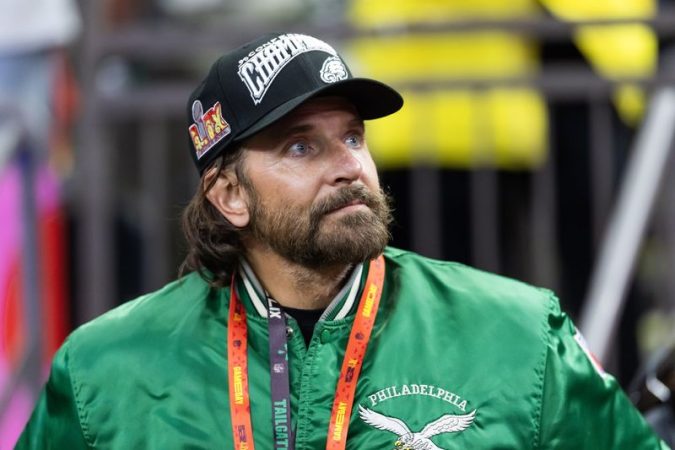
    Which may explain why one of Montgomery County’s most famous sons, former Daily News contributor Bradley Cooper, is often reported to be from Jenkintown, but he is not.

    He is from Abington Township and, like many Abingtonians, he has been living a lie.

    Where is Bradley Cooper from?

    Cooper grew up not in Jenkintown, but a mile away in the unincorporated Abington community of Rydal, in a house his parents bought before he was born, property records show.

    In the 1980s, he attended Rydal Elementary, where he played a mime, according to a playbill shared on social media.

    The Oscar-nominated actor later enrolled at Germantown Academy, a private school in Whitemarsh Township whose reunions he still attends.

    Cooper is known to call nearby Jenkintown his hometown from time to time — maybe because the borough is more well-known, and because that is what his childhood mailing address was. His reps did not return a request for comment this week.

    Some Abingtonians don’t know where they live

    But unlike people who grew up in the tiny enclave, Cooper could not have attended Jenkintown School District or participated in its National Geographic-famous Color Day.

    “As someone who grew up in Jenkintown and loved cute boys and is about the same age as Bradley Cooper, I can tell you he is not from the Borough of Jenkintown,” writer Lauren McCutcheon said.

    Many Abingtonians think they live in J-town, borough manager George Locke has said — so much so that his staff starts resident service calls by asking for an address. Otherwise they could spend 45 minutes on the phone, Locke said, before realizing the caller is in Abington.

    Residents of unofficial neighborhoods like Glenside, or towns that span counties like Telford, may be more aware of their official designation. Some Glensiders attend school in Cheltenham, while others attend Abington School District.

    For people without a kid in public school, an invisible municipal boundary may not matter much day to day. But it matters for local elections and during tax season.

    Nye Stevens, a longtime Postal Service expert for the U.S. Government Accountability Office and the Congressional Research Service, said mailing addresses can also affect people’s insurance rates, which are often based on zip code instead of municipality.

    And a zip code across two towns is nothing, Stevens added — some people get their mail from another state.

    Bob O’Brien of Wyncote used to think his practice, Relief Counseling & Art Therapy, was located in Jenkintown — until the tax bill from Abington arrived.

    “It was confusing,” O’Brien said — especially since there is a Jenkintown post office in the same building.

    “How it got this way, I’m not sure,” he added.

    The demands of mail delivery

    U.S. post offices began primarily as a pickup service in cities until the agency introduced home delivery in the late 1800s.

    Then cars expanded the suburbs, townships shifted, and assigned post office locations grew increasingly messy.

    “As townships grow, post offices seem farther away,” a New York Times headline about South Jersey observed in 1997.

    The U.S. has also closed tens of thousands of post offices in the last several decades, Stevens said, which may mean losing a mailing city that reflects where people actually live.

    A map shows the city limits of Waterloo, Iowa, in yellow, while a blue line shows the boundaries of the “Waterloo” zip code.U.S. Census Bureau

    Around 1990, some in Congress tried to fix the issue with a bill requiring the Postal Service make zip codes match municipal boundaries if towns request it.

    But such a change would “absolutely ruin the postal system,” Stevens said. “You can’t have a post office for every little borough.”

    The bill failed, and years later, the Postal Service was routinely rejecting zip code change requests, Stevens wrote in a 2006 Congressional Research Service report.

    “Some communities that lack delivery post offices complain that the need to use mailing addresses of adjacent areas robs them of a community identity,” he noted in the report.

    But at the end of the day, “zip codes are basically a delivery system. They’re not a neighborhood recognition system,” Stevens said this week.

    As for Bradley Cooper, the confusion around his addresses in the Philly suburbs has not ended.

    He supposedly owns an estate in New Hope. But he really lives in Solebury Township.

    This suburban content is produced with support from the Leslie Miller and Richard Worley Foundation and The Lenfest Institute for Journalism. Editorial content is created independently of the project donors. Gifts to support The Inquirer’s high-impact journalism can be made at inquirer.com/donate. A list of Lenfest Institute donors can be found at lenfestinstitute.org/supporters.

  • Avalon shut down a live band at Gully’s at 8 p.m. Now the tavern is fighting restrictions on its liquor license.

    Avalon shut down a live band at Gully’s at 8 p.m. Now the tavern is fighting restrictions on its liquor license.

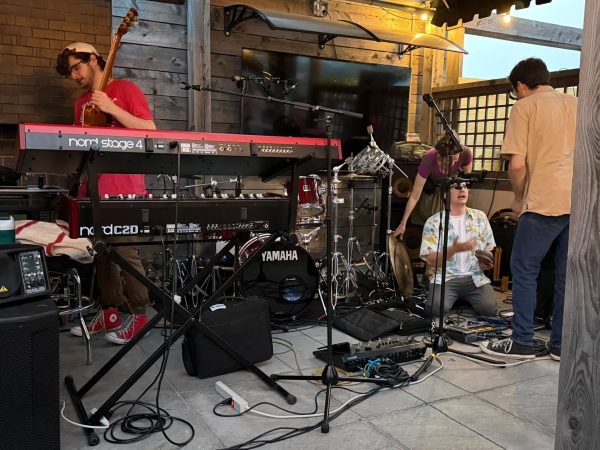
    AVALON, N.J. — For Three and One singer and guitarist Gus Thompson, 25, the music died on Dune Drive shortly after 8 p.m. on Friday, July 17.

    “We noticed the police out front,” the band’s front man said in a phone interview, recalling the night at Avalon’s new bar and restaurant with a patio for live music and other events. “Our set was ending very soon, so we didn’t think much of it. The owner said we’re being shut down. He said no more music.”

    The band was scheduled to play until 10 p.m., and had finished the early set with Thompson’s original song “No Idea,” but Avalon’s restrictions on Gully’s and all other bars in town prohibit any outdoor music after 8 p.m.

    Out in the crowd, Kate Nunan was incensed. At 8:36 p.m., she posted a picture of the band breaking down its setup in the Facebook Group Seven Mile Shenanigans, and wrote, “WTH is wrong with Avalon??? Shutting down a band at 8:30 because of a noise complaint??”

    The outrage has only grown, spilling over into a July 22 council meeting, with residents expressing concern that Avalon, long a place of late nights and live music, but now increasingly a place of private clubs and multimillion-dollar houses, was in danger of losing its small businesses and essential character.

    Gully’s has appealed the special conditions of Avalon’s liquor license to the state’s Division of Alcoholic Beverage Control, saying the ban on outdoor music after 8 p.m. is “arbitrary, capricious and unreasonable.”

    At the council meeting, locals like Merri Jones, who said she was a second-generation graduate of Avalon Elementary, stuck up for Gully’s, which replaced the Black Cactus restaurant with a restaurant touting “old school beachy vibes.” (Inquirer restaurant critic Craig LaBan praised its “clothesline of candied bacon.“)

    The hanging candied bacon served over grits and Gully’s blooming potato on Wednesday, June 17, 2026, in Avalon, N.J.Monica Herndon / Staff Photographer

    “They’re a breath of fresh air,” she told the council, which had been cautioned by Nicole Curio, the municipal solicitor, not to respond to comments about Gully’s since the liquor license restrictions were now a legal action with the state ABC, a division of the Office of the Attorney General.

    “It’s just a couple more hours to let them make their money,” she said. “We support it. A lot of locals do as well.”

    But neighbors on the 100 block of 27th Street, which has Gully’s at one end and Wawa on the other, and regularly idling 18-wheelers making deliveries to both, pleaded their case about the noise from Gully’s, including the amplified music and games like its Monday Minnow Races announced over a loudspeaker.

    Larry Hayes said he lives 450 feet from Gully’s, but the sound is causing an “unreasonable disruptive intrusion into our quiet enjoyment of our home.” The Avalon noise ordinance restricts any amplified sound that’s audible more than 50 feet away, he noted.

    The patio at Gully’s on Wednesday, June 17, 2026, in Avalon, N.J.Monica Herndon / Staff Photographer

    “We want to be good neighbors,” said neighbor Matt Tumasz. “We love the idea that there’s a family restaurant. But when you have a five-piece band playing and blasting music, and speakers that are 15 feet in the air, it’s just a little bit out of control.”

    Gully’s owner Beth Pearce did not respond to several messages from The Inquirer.

    On Facebook, Pearce posted: “From the beginning, our goal has been simple: to create a place where neighbors, families, visitors, and friends can come together and make memories.

    “We have tremendous respect for the role of our local officials,” she wrote. “We remain committed to working collaboratively, being good neighbors, and contributing positively to our community.”

    At the council meeting, she noted that several council members had patronized Gully’s with their families (and one admitted to being a fan during the council meeting).

    “The hope is we’re going to elevate all businesses,” Pearce said. She pledged to try to “figure out what the appropriate sound level is.”

    The exterior of Gully’s on Wednesday, June 17, 2026, in Avalon, N.J.Monica Herndon / Staff Photographer

    “I think we can find something where we can thrive together,” she said. “All we’re asking for is the same conditions as similar businesses within the district.”

    In an email, Avalon administrator Scott Wahl noted that the special conditions that permit outdoor music only between noon and 8 p.m. were adopted in June by council and apply to all seven holders of liquor licenses in Avalon, including the Union League, which took over the Whitebrier last year.

    Still, Wahl said, “I believe the Borough Council will attempt to revisit the issue to balance the interests of the business community and the residential community.

    “I think it’s fair to say both sides want to figure this out collaboratively,” he said.

    Three and One will be back at Gully’s this Friday. Thompson said the owners initially assured them the usual 6 p.m. to 10 p.m. gig would be fine but have since asked them to play from 4 p.m. to 8 p.m.

  • This La Salle rower built an app that’s changing the way athletes train — and the future of rowing

    This La Salle rower built an app that’s changing the way athletes train — and the future of rowing

    La Salle rowing coach Ivo Krakic had a problem.

    The app he was using to track his rowers’ stroke length and the amount of force they were using from the team’s ergometer rowing machines stored the information in different locations. Krakic wanted it on one screen.

    Eventually, Krakic contacted and paid the app’s developer to make the fix — which caught the attention of one of his rowers.

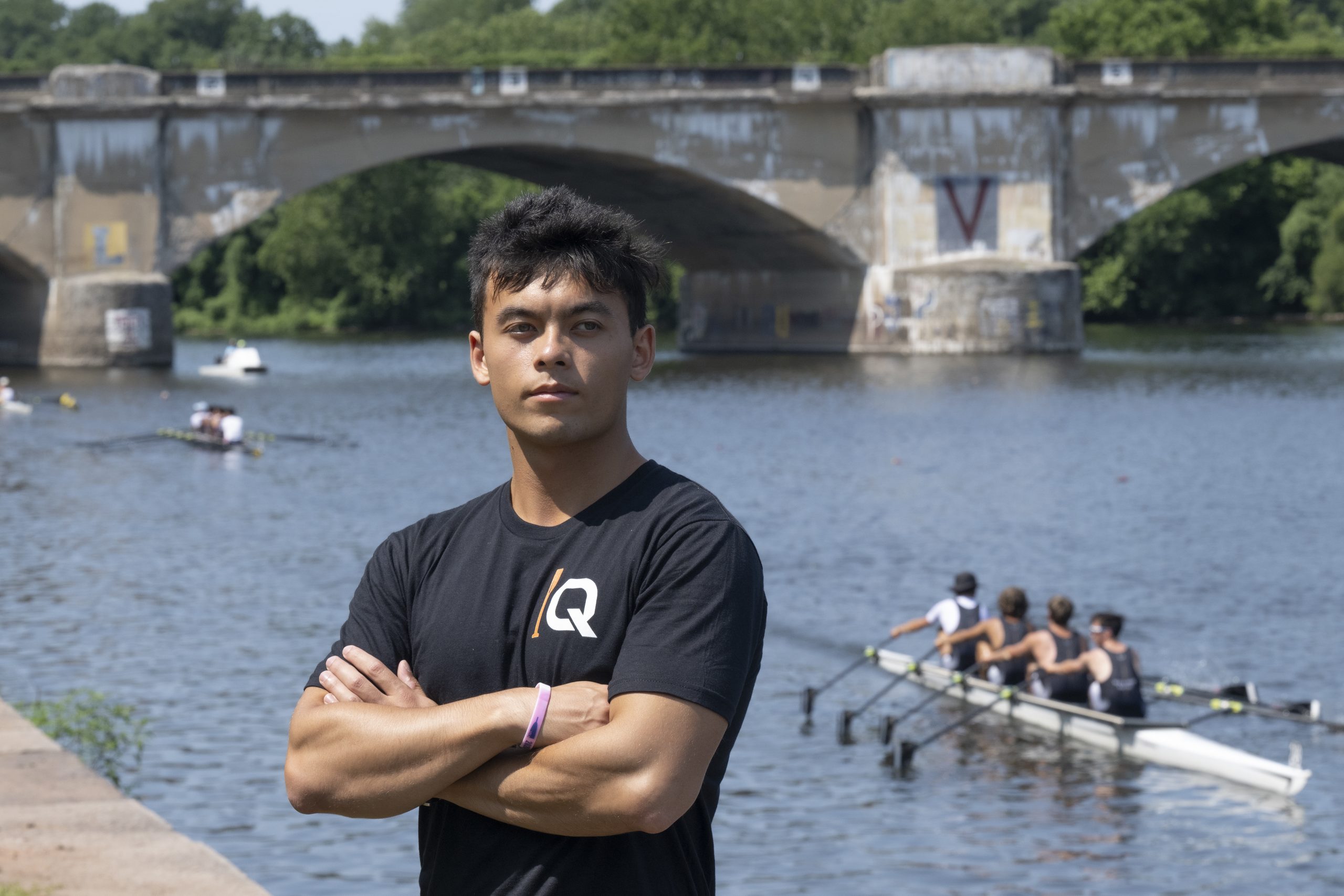
    “I was like, ‘Dang! My coach is paying $500 for something I could have done in 20 minutes,’” said Will Tran, a senior who primarily rows in the second varsity eight boat. “There’s a real gap in the market here. I used the app as well. I know I could improve this in so many different ways.”

    Tran, a computer science major, decided to build his own app.

    The final product became known as RowIQ. The app is an all-encompassing data ecosystem that uses artificial intelligence to pinpoint where and how rowers can improve. The app processes data from Concept2 ergometer rowing machines, smartwatches, and RowIQFuel — Tran’s nutrition app. In the future, RowIQ will also be able to collect data from on-water rowing monitors.

    “We have hundreds of thousands of data points that no one ever looks at,” Tran said. “In rowing, these races are sometimes won by a hundredth of a second, so you need that 1% sometimes. Actually, a lot of the time you need that 1%. What we’re aiming to do is give rowers a complete picture of their training with data that’s never been seen before.”

    Will Tran displays the training app he created. In the last two months, the RowIQ has received over 1,000 downloads.Jose F. Moreno / Staff Photographer

    The app also allows rowers to create groups, so coaches have access to their entire team’s data in one location. Tran noted that this feature lets coaches “see trends in less than a second,” allowing them to understand areas of improvement and create lineup decisions with ease.

    “It gives you really good data feedback on your [rowing] curve, how you’re rowing, and essentially what you’re doing and how you’re transferring your power,” Krakic said. “We’re able to match the guys indoors and then transfer that onto the water. We’re lucky to have it. It puts us ahead a little bit.”

    In the last two months, the app has received over 1,000 downloads. More importantly though, the app boasts impressive user retention. Tran noted that top users are logging over 200,000 meters per week on the app.

    Yin and yang

    For the first few months of RowIQ, Tran worked alone. But while he tinkered with the app’s coding, Tran found that he had little time to dedicate to RowIQ’s marketing, so he put together a small team. Fittingly, they all have a background in rowing.

    A few members from Penn’s lightweight crew team are developing a telemetry system to fully integrate RowIQ’s data into one central location. Meanwhile, former Harvard lightweight rower Zarret Mills is working as a consultant for the app.

    One of the most important members of the team has been Sergej Čipak, a former La Salle rower who moved back to his home country of Serbia to pursue electrical engineering. Tran and Čipak spent one year as teammates at 20th and Olney.

    “You spend a lot of time together, even when you’re not like racing or training,” Čipak said. “You’re eating together. You go to parties together. So I really grew close with Will over some time. Will has a very interesting personality. He can be kind of cold sometimes and give not-detailed-enough instructions. But I think we have some kind of dynamic that makes us really productive.”

    After starting part-time, Čipak’s role with RowIQ has grown exponentially. While Tran focuses on more big-picture endeavors, Čipak leads the app’s development. With the app’s success, Tran has been able to compensate Čipak — something Tran did not think he “would ever be doing at 22.”

    “It’s a yin, yang,” Tran said. “On one side, it’s awesome that someone pays for their apartment and their food via your idea and creation. It’s such a wonderful feeling to be able to provide that for someone and do it through something that you are so passionate about.

    “And then the other side of it is, I never want to go to sleep and I never want to get outworked because this person is relying on me, and I feel an obligation to always be on, always be working, always progressing. I never feel off. Sometimes I’m with my girlfriend and I say I’m present, but I’m not. I’m thinking like, ‘Shoot, we got to pay Sergej his monthly paycheck so he can pay his rent and buy his groceries.’”

    While Tran is adjusting to the added pressure of managing employees, Čipak is working full-time for a company that is not aligned with the career path he expected to pursue in Serbia. Still, he is on board with RowIQ for the foreseeable future.

    “We just crossed 1,000 users a few days ago, so I mean it’s really exciting,” Čipak said. “I never really worked on something like this in my life, and I do plan on keeping on working on this.”

    Can’t tell this kid no

    In the tech world, “college dropout” is somewhat of a lauded title.

    Mark Zuckerberg dropped out of Harvard to run Facebook full-time; Bill Gates did it before him, leaving Cambridge to co-found Microsoft; and Jack Dorsey left NYU a semester before his graduation to move to California, eventually starting Twitter.

    The list goes on and on.

    Today, chasing the AI boom, tech venture capital firms like Y Combinator and Antler are known to provide college students with hundreds of thousands of dollars to fund their startups. Meanwhile, industry giants like Palantir and Elon Musk’s xAI encourage students to ditch their formal education to work for them instead. Tran is no exception to this pressure.

    Will Tran, a rising senior at La Salle, has spent this summer growing RowIQ in the area.Jose F. Moreno / Staff Photographer

    “I’ve seriously debated taking this fall semester off,” Tran said. “Like genuinely — we’re continuing to close deals with high school clubs, college clubs, recreational clubs. We’re onboarding probably 70 new athletes a day from clubs. It’s huge, and I don’t know if I will have the time in college to do schoolwork, be a Division I athlete, be a boyfriend, and run RowIQ at the same time.

    “I have seriously debated taking the fall off and joining some sort of Y Combinator, coming back to school later. Do I think I’m going to do this? Probably not.”

    Tran has already sacrificed opportunities to focus on RowIQ. This summer, he turned down an internship offer from a data analytics company. For now, even if the balancing act can seem impossible at times, Tran will try to have it all at La Salle.

    “You can’t really tell this kid ‘no’ or ‘you can’t do it,’” Krakic said. “The more you say ‘don’t do this’ or ‘it’s not possible,’ the more he tries to prove you wrong.”

  • A refugee family found a new home and ‘the first step of hope’ in Philly. Now, fewer may get that chance.

    A refugee family found a new home and ‘the first step of hope’ in Philly. Now, fewer may get that chance.

    A small garden stands outside the two-story Northeast Philadelphia home where Fatima Alsalih Alti Keli and Waled Keli live with their three children. Inside, their 8-year-old daughter, Abeer Janna Keli, sits on the couch drawing pictures with her two brothers, her small arms carefully wrapped in bandages to protect her fragile skin. The ordinary domestic scene would have seemed nearly impossible before the family immigrated to the United States from Turkey, after the civil war in Syria had prompted both parents to flee.

    Over the last two years, the family’s future has been radically transformed in Philadelphia with the help of specialized treatment for Abeer. And yet, the resettlement process by which they were granted visas is threatened: When the family applied for resettlement in the United States around 2020, the annual refugee admission cap was set to 18,000. The cap this year is set to 7,500, the lowest in U.S. history.

    Alti Keli, 28, and Keli, 30, had known each other through their families in Syria, but they married after both had fled to Turkey and started their family there. Once in Turkey, they applied to move to seek medical treatment for Abeer, a process that took about five years.

    Abeer was born with epidermolysis bullosa, a rare genetic disorder that causes the skin to blister and tear from minor friction. Children with the condition are often described as having “butterfly skin.” Before the family came to the United States, Abeer had little access to specialized medical care. She struggled to eat because of sores in her mouth, relied on a wheelchair, and spent much of her time asleep.

    “She was like a ghost,” her mother said in Arabic through a translator.

    The family applied to immigrate through the United Nations High Commissioner for Refugees in 2020 on the basis of receiving treatment for Abeer’s disease and were connected with Children’s Hospital of Philadelphia, where Abeer still receives treatment. When they arrived in Philadelphia in July 2024, they went directly to CHOP, where Abeer stayed for 12 days before she could go home. Two years after the move, the Kelis have settled into their lives in Philadelphia.

    “Now that she is here, she is talking, walking, and is happy going to school,” Alti Keli said, smiling through tears. “Her doctors saved her life.”

    They moved to their predominantly Arab neighborhood after first living in Southwest Philadelphia. Struggling with the language barrier and the job search, they were feeling isolated there. The friction of daily life was a real struggle as the family balanced learning English, taking their daughter to medical appointments, finding employment, and coordinating schooling for Abeer and her brothers — Abdul Rahman, now 10, and Mahmoud, now 6.

    For example, they were flabbergasted when their water bill spiked from $50 to $500 a month. Realizing their toilet was leaking, they struggled to communicate with their landlord. Those struggles have eased. In their new neighborhood, their children can easily walk to school and have made friends who share their Arab heritage. With the help of English classes, phone translators, and a refugee-support organization, the family has been able to build a comfortable life.

    Volunteer Dan McVay talks with Abeer Keli, 8, about her drawing at her home on Wednesday, July 22, 2026 in Philadelphia. The Refugee Empowerment Support Team (REST) works with refugee families in Philly.Monica Herndon / Staff Photographer

    The Refugee Empowerment Support Team (REST) helped the family confront the logistical challenges of moving to a new country. Efforts by President Donald Trump’s administration to curb immigration have affected not only the number of refugees allowed into the country, but also the kind of help they receive while they are here. After the administration threatened to close resettlement offices in 2025 and froze federal funding, many of the offices shut down and laid off employees. Provisions in the One Big Beautiful Bill Act limited refugees’ access to government services like Medicaid, Medicare, and SNAP benefits.

    REST has filled in those gaps by helping to connect refugees with employers, assisting with transportation to medical appointments, and dealing with other logistical challenges. Dan McVay, a leader with REST, said more refugees are now contacting the organization directly through Facebook, asking for help finding jobs and accessing services.

    “There is no money for refugees already in the country,” McVay said.

    Alti Keli, however, is “very happy with the challenge” of adjusting to life in a new country. While she takes care of the children, her husband works in landscaping at a golf course. He also loves to garden at home and has filled the front of the house with potted plants and flowers.

    McVay describes the family as very welcoming, often serving guests tea or coffee and homemade sweets.

    Before the family moved to the United States, the Kelis fled to Turkey from Syria in 2014, where they married and had their three children. Alti Keli’s face contorts while describing her life in Syria, where she lost her father and four siblings, during the civil war: “It was like a nightmare.”

    The family had to keep moving and did not have access to shelter, food, or even potable water.

    “We had to drink dirty water,” Alti Keli said. In Turkey, life was better, but Abeer could not get the specialized care she needed.

    (left to right) Abdul Rahman Keli, 10, Mahmoud Keli, 6, Walid Keli, and Abeer Keli, 8, posed for a portrait at their home on Wednesday, July 22, 2026 in Philadelphia. The Refugee Empowerment Support Team (REST) works with refugee families in Philly.Monica Herndon / Staff Photographer

    A United Nations spokesperson described the situation in Syria during 2013 as “a complete meltdown of humanity,” as Bashar Assad’s Russian-backed regime tried to recapture rebel-held territory. During the war, civilians were subject to chemical warfare, indiscriminate bombing attacks, and systematic torture and execution by the Assad regime.

    Moving to Philadelphia was “the first step of hope,” Alti Keli said, a step that has been realized now that her daughter is doing well. “I came here for hope,” she says. “What else can I ask for?”