BUNIA, Congo — Ebola has killed more than 1,500 people in eastern Congo in the fastest-growing outbreak of the disease, data released Thursday showed, marking a 50% increase in around a week as the emergency continues to outpace response efforts.
As of Tuesday, 3,442 cases had been recorded, with 1,521 deaths, according to the latest government update. The sharp rise since last week partly reflects a backlog of cases and deaths that had not yet been confirmed or recorded, the Africa Centers for Disease Control and Prevention said Thursday.
The outbreak, declared on May 15, has been linked to the Bundibugyo virus, for which there are no approved vaccines or treatments. Delays in contact tracing, difficulties accessing affected areas, mistrust from communities, and violence by armed groups and some residents have hampered the response, the Africa CDC said.
The outbreak is mostly concentrated in eastern Congo’s remote Ituri province, which accounts for nearly 90% of cases, but there have been others confirmed in five provinces, including one of the country’s largest cities, Kisangani.
Neighboring Uganda declared itself free of Ebola on Tuesday following the discharge of the country’s last patient in mid-June.
Ebola is rare, but highly contagious and can be contracted via bodily fluids such as vomit, blood, or semen. The disease it causes is severe and often fatal.
Africa CDC Director-General Jean Kaseya said Thursday that 63% of confirmed deaths in the last two weeks occurred outside of treatment centers.
Kaseya said this is largely due to the “unsafe handling of infected bodies” by residents. Traditional burial practices in some communities involve touching the bodies of the deceased, which can be highly contagious.
The restrictions that health authorities have placed on such funerals, along with widespread misinformation asserting that the deadly virus isn’t real, have angered some residents and led to attacks on health facilities.
In Ituri’s Nyakunde health zone, international partners supporting the Ebola response had to temporarily relocate after a July 15 attack on a hospital and a treatment center, sparked by a patient’s death.
Officials say the relocation of these partners, including Africa CDC and Mercy Corps, has disrupted surveillance, contact tracing, and supplies.
Désiré Duabo, chief medical officer for the health zone, said foreign aid groups and agencies had provided much of the supplies, equipment, and operational support, and warned that the small stocks left are “almost depleted.”
Attacks such as the one in Nyakunde are causing anxiety among health workers and making it difficult for them to carry out their duties, said Pierre Akilimali, the Ebola response incident manager at the National Public Health Institute of the Democratic Republic of the Congo.
“They are working amidst risks of infection as well as risks to their personal safety,” he said.
Local health officials say security has since stabilized and are urging partners to return, with Africa CDC saying teams could redeploy as soon as next week.
The latest outbreak has killed more people at a quicker rate than any previous outbreak, including in 2014-2016 when 28,000 cases were reported, of which over 11,000 people died. That outbreak took about eight months to reach 1,000 deaths.
The World Health Organization says the global risk of spread remains low because Ebola does not travel through the air, making it much harder to spread than respiratory viruses. Cases detected outside the affected region have so far been quickly identified and contained without leading to sustained transmission, the agency said.
In Congo, however, the risk of the spread remains “very high,” according to the WHO.
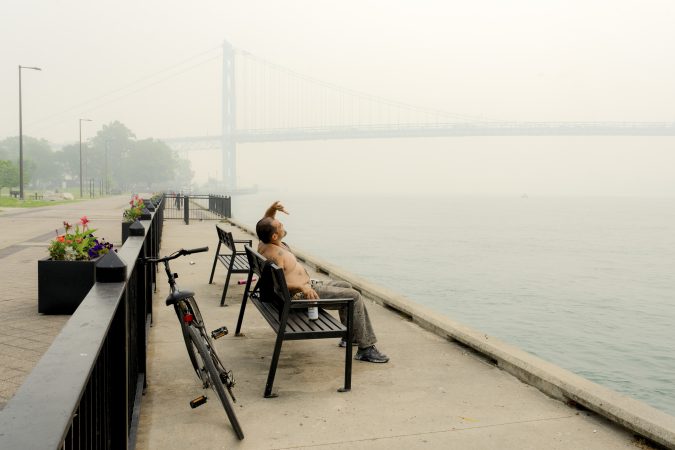
In July, Republican candidates in Michigan were lining up to excoriate Canada for the wildfire smoke wafting across the international border. “They MUST PAY and PUT OUT the fires!” wrote gubernatorial candidate John James on X, after declaring he would introduce legislation to impose sanctions on the neighbors to the north. Other politicians made similar claims about how they would deal with Canada. Meanwhile, Donald Trump moved to impose new tariffs on Canada in response.
Such political posturing shows little understanding of the actual situation. For example, it overlooks the fact that the scale and magnitude of these fires is surely linked to climate change, which the United States is arguably doing less to combat under the Trump administration than any other industrial nation in the world.
This is not the first time the two countries have dealt with cross-border air pollution. However, in the Great Lakes-St. Lawrence region historically, it was more often American emissions that were afflicting Canada.
By the mid-20th century, air pollution across the Michigan-Ontario border in the St. Clair-Detroit River corridor was raising significant concerns. At the request of both nations, the International Joint Commission (IJC), which had been created by the 1909 Boundary Waters Treaty, formed a joint St. Clair-Detroit Air Pollution Board in the 1960s to investigate the precise sources of air pollution in this region.
In a 1971 report, this board found that sulfur dioxide and particulate matter from Detroit’s auto and steel industries were crossing over to Windsor, Ontario. Along the St. Clair River, the joint board reported that Sarnia’s Chemical Valley south of the city, which had already developed into an enormous petrochemical complex that befouled both air and water, was the main pollution culprit. Certainly some of the poisons drifted into Michigan, though the board determined that the primary victims were in Ontario. The IJC duly recommended that the two federal governments create pollution boards and establish national air quality standards.
A similar dynamic played out in other transboundary air disputes between Ontario and adjoining U.S. states, with both sides (though more often the United States) found to be the culprit. Ontario Hydro built a large coal-fired power station at Atikokan in the northwest part of the province that threatened cherished recreational areas across the border, such as the Boundary Waters Canoe Area Wilderness in Minnesota. In another instance, the Reynolds aluminum smelter in Massena, N.Y., was accused of contaminating the nearby binational Mohawk community, including the parts in Canadian territory.
Over time, the air quality issues stemming from these specific sources mostly either fell off the public’s radar or became subsumed within wider debates about acid rain and national air quality agreements (such as the 1970 Clean Air Act). Indeed, by the 1980s acid rain dominated not only the Canada-U.S. environmental relationship, but general bilateral relations.
Acidified precipitation is created when sulfur and nitrogen oxides (SO2and NOx) emissions, often from coal plants, are transported through the atmosphere and transformed into sulfuric and nitric acids. This acid rain fell onto terrestrial and aquatic environments where it had a range of short- and long-term negative consequences. Melting acidic winter snows produce an “acid shock” in streams during the spring run-off, for example, which is predictably bad for aquatic species.
While both countries generated pollution that fell in the other’s territory, acid rain originating in the United States and descending to earth in Ontario was the biggest problem. Ongoing bilateral studies established that 70%-80% of it came from the United States. That acid rain affected cottage country north of Toronto — where many of the country’s elite have vacation homes — helps explain why this problem gained so much public traction.
But the two countries could not agree on solutions, such as the need for emission limitations and controls. As the primary contributor, the United States would have had to bear the brunt of any necessary changes, and the Reagan administration was ideologically opposed to any environmentally motivated regulations on economic activity. Washington stalled the talks, calling for more research.
The United States proved more amenable to addressing the problem after George H.W. Bush entered the White House in 1989. Negotiations began on what would emerge as the 1991 Canada-United States Air Quality Agreement (AQA), which permanently capped emissions at approximately 13.3 million tons by 2010 in the United States and 3.2 million tons in Canada. While the United States would not make any legal commitments to reduce emissions in Canadian territory, it did pledge to follow the requirements of its recently updated Clean Air Act, which reduced the emissions that created acid rain.
Made By History sponsorsInquirer Staff
Ultimately, the results of the 1991 Air Quality Agreement were mixed. SO2 emissions did go down by almost 70%. Granted, this decrease probably had more to do with domestic regulations and technological changes on both sides of the border. In the long run, neither country has fully followed through on its commitments.
The AQA also created a framework that could incorporate other air pollution issues, such as particulate matter and ozone. In that vein, Canada and the United States signed an “Ozone Annex” to the Air Quality Agreement in 2000. There was also a different type of ozone problem — the hole in the ozone layer — involving Canada and the United States; both were adherents to the 1987 Montreal Protocol on Substances that Deplete the Ozone Layer, considered by many to be the most successful global environmental treaty ever.
To be sure, the United States and Canada have had the world’s most consequential environmental and energy relationship over at least the last century. No two nations have exchanged resources and collectively modified ecosystems on the same scale — which, by extension, has created harmony in wider U.S.-Canada relations and established many important precedents for international environmental law and governance. Yet, both countries are also petro states and climate villains, with their societies and economies organized around deeply unsustainable industrial practices and consumption patterns.
The amity that has long characterized U.S.-Canada relations has been eroding with Trump at the helm. And this recent strife about transborder smoke is representative of the ways that breakdowns in U.S.-Canada environmental and energy relations can undermine the rest of the relationship.
Made By History takes readers beyond the headlines with articles written and edited by professional historians. Opinions expressed do not necessarily reflect the views of The Inquirer.
Democratic lawmakers announced Thursday that they are opening an investigation into the Iranian drone strike that killed six U.S. service members in Kuwait earlier this year, citing doubts over the objectivity of the military’s internal review of the attack.
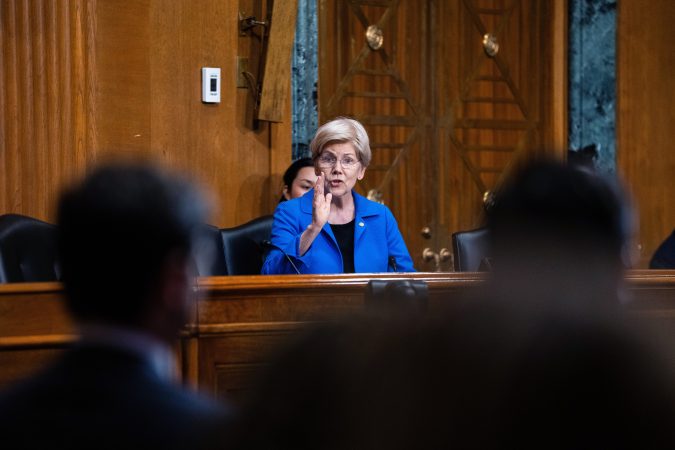
In a letter to Defense Secretary Pete Hegseth, Sen. Elizabeth Warren (D., Mass.) and Rep. Pat Ryan (D., N.Y.) — along with almost a dozen other House and Senate Democrats — cited recent reporting by the Washington Post and other media outlets scrutinizing the March 1 strike, saying they want answers to whether the military had adequate protections in place before the attack and whether the troops received proper medical care afterward.
“The need for this investigation goes beyond the Shuaiba attack — it’s about taking accountability and protecting our service members,” Ryan, an Army and Iraq War veteran, said in a statement to the Post. He was referring to Port Shuaiba, the facility along the Persian Gulf where the deadly strike occurred. “It’s our job as members of Congress to force [Hegseth] to give us real answers and make sure something like this never happens again.”
Reached for comment, the Pentagon did not address whether it would cooperate with lawmakers’ investigation, saying in a brief statement that “as with all Congressional correspondence, we will respond directly to the sender.”
It was just the second day of Operation Epic Fury, the name the Trump administration has given the conflict, when an Iranian Shahed drone crashed into the center of an Army operations center at Port Shuaiba. Dozens of service members were injured in the attack along with the six who died.
In the months since, survivors have alleged that military leaders failed to take appropriate action after being warned the facility lacked adequate defenses. Some have said, too, that troops wounded in the strike faced considerable difficulty obtaining treatment.
Military officials have contested both assertions.
As the Post reported this month, several soldiers who were at Port Shuaiba have said they doubt the Army’s internal review will hold anyone accountable. Citing a U.S. official familiar with the review, the Post also reported that the initial findings did not assign fault for the attack or address any punitive action.
The Army has shared its findings with the families of some of the fallen service members but has not released that information publicly.
In their letter to Hegseth, lawmakers questioned the seriousness and independence of the Army’s internal review, citing other reporting by the Post that revealed the task was assigned initially to a midgrade officer within the affected unit instead of an outside investigator.
The matter was later elevated to a more senior officer at U.S. Army Central, the affected unit’s parent command. Outside observers have said they were skeptical of the move, noting that it still left the review to be overseen by personnel in the same chain of command.
The lack of an independent investigator, coupled with new concerns about the Pentagon’s transparency and recordkeeping, raise questions about “whether investigations into service member casualty incidents will be conducted objectively,” Warren wrote in the letter.
Citing Democrats’ concerns about the Defense Department’s “failures to provide service members that sustained injuries in this war with adequate care and its inability to honestly and openly inform the American people about the consequences of this war,” the lawmakers have chosen to pursue answers on their own, the letter says.
They requested a response from the Pentagon by Aug. 12.
“More boring by a mile?” That was the assessment of one Facebook user after Avalon shut down a live music gig at Gully’s by the band Three and One, shortly after 8 p.m. on July 17.
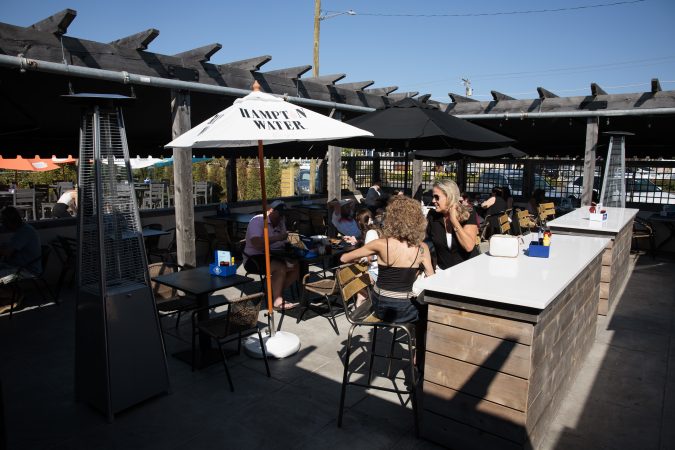
Someone complained about the noise, and Avalon police arrived on Dune Drive outside Gully’s, the lively new bar and restaurant that serves a Craig LaBan-approved “clothesline of candied bacon that dangles over a tasty plate of grits.”
Neighbors on 27th Street, meanwhile, tried to explain they weren’t against Gully’s — or even live music — but that the noise from the outdoor patio, either from live bands or amplified games like the Monday minnow races, were a “disruptive intrusion,” up and down the block.
It turns out that all of Avalon’s liquor licenses contain a special condition that permits outdoor music between noon and 8 p.m. Gully’s is now appealing that restriction through the state Division of Alcoholic Beverage Control, arguing that it’s arbitrary and capricious, and an abuse of Avalon’s discretion. The town has indicated it wants to be reasonable and figure out a solution. One council member spoke of his love for Gully’s and said, “We do appreciate your business and what you’ve done there.”
Have a listen to Three and One here, or check them out again this Friday at Gully’s, with a new daytime slot: 4 p.m. to 8 p.m.
📮 Do you think it’s reasonable for Avalon to limit outdoor music at bars to between noon and 8 p.m.? Or should businesses be given more leeway to thrive during the summer? How much say should people who live near commercial establishments have, especially during the summer? Let me know what you think by replying to this email, and I’ll include your most interesting responses in a future newsletter.
Have ideas or news tips, memories or pet peeves about the Shore? Send them to me here.
🫨 It’s been another crazy week of storms, but the weekend looks decent.
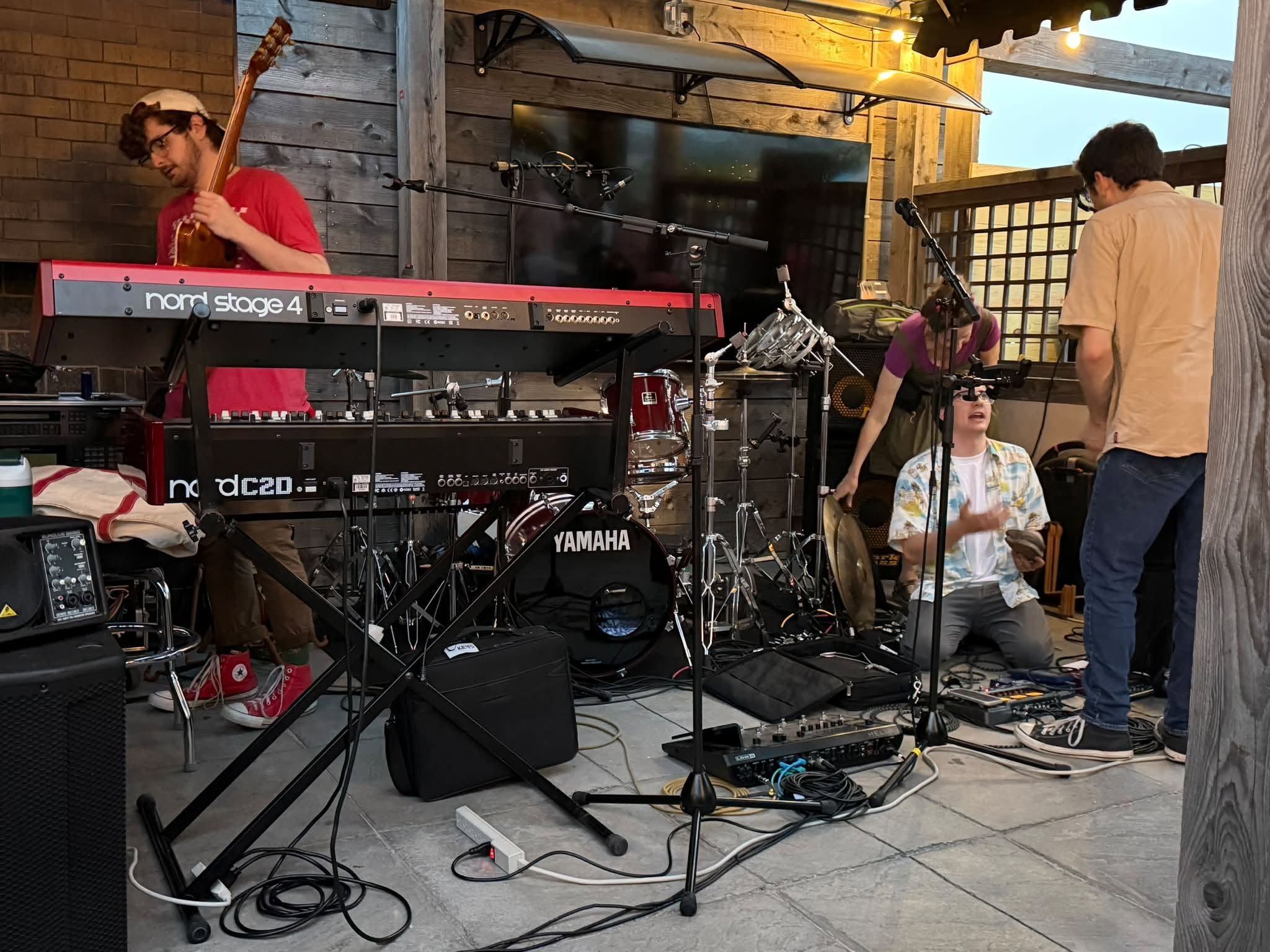
The band Three and One packs up at Gully’s in Avalon shortly after 8 p.m. July 17, 2026, after a noise complaint. The liquor licenses issued by Avalon to bars prohibits live music after 8 p.m., but Gully’s has appealed that restriction to the state N.J. Division of Alcoholic Beverage Control. The band was scheduled to play until 10 p.m.Kate Nunan
🧠 Trivia time
Lots of love for the Bongo Room, which was the Avalon bar that closed 39 years ago this summer and featured the Greaseband on Sunday nights. Betsy Strittmatter was first with the answer.
This week:
This legendary Ventnor ice cream and water ice shop’s recipes — particularly its black cherry water ice — continue on in another location, the North Beach Creamery.
Are the recipes originally from:
A. Custard’s Last Stand
B. Springer’s
C. Willow’s Way
D. Mento’s
If you think you know the answer, email us here. First one gets a shout-out.
More of your thoughts on: Sea Isle and the changing Shore
As a retiree I find it magical to live here year round. Sea Isle truly is a City for All Seasons! Yes, people sold their quaintcottages and they are now replaced by 6 bedroom homes. But is that so bad? Large extended families get to enjoy a taste of beach life for a week or two, families get to bond, cousins get to play together and we all happily co-exist. Yes, some people have beautiful multimillion dollar homes …. but is that so bad? Our restaurants and shops stay prosperous and our town is thriving. Sure, we need more parking, but if people are honest, it is mainly in the busy summer season. We need more trees? Look around people, there are new young trees planted every year and right now the Crepe myrtles are blooming beautifully. Personally I applaud the growth and embrace the change and credit our community leaders for keeping our shoreline pristine and our beaches replenished!
Reader Joseph Higgins brings us back down to earth.
All of the shore towns are out pricing blue collar workers. My parents bought a trailer for $30,000 in 2000 outside of Wildwood Crest in Shawcrest. The land rental fees have climbed from $3,000 to $7,900 per year. The trailer next door is currently listed for $275,000 with land rental fees of $11,400. The working man’s shore vacation spot is quickly disappearing.
Ask Down the Shore:
We put the dress code question to our Shore Line text group (still time to join us here). There was a deluge of responses!
Here’s a quick sample:
“Down the shore everything’s alright.” Sure it’s OK to wear beach attire (not sandy though, and do brush ur hair 😉)”
“I don’t care how much money you have. Make an effort, for the sake of the restaurant staff and other guests, to put on clean shorts and a polo for men and a cute cover up/sundress for women. If you can’t do that, then there’s always takeout.”
“Some people, when they come to the beach, lose or abandon their sense of propriety. Decent, casual attire respects the restaurant and other diners.”
Your Shore memory
My sampling of Ocean City pizza triggered this memory from Susan Carlbaugh.
As a Roxborough girl who lives in Baltimore now, reading your tribute to pizza on Ocean City’s boardwalk hit every nostalgia button possible! In my teen years, our friend ran the rides in Wonderland and that saved our cash for the rest of the night including the slice of pizza. Life was good!
We knew it as “Mack” & Manco’s and it was always a stop on our night on the boardwalk. After waiting for my Grandma to get out of the Music Pier’s nightly performance, and before we left the ‘boards, it included a nightcap of fresh-squeezed orange juice from Litterer’s!
Alex’s was our Roxborough home pizza shop. I can smell all of them right now. You are bringing tears to my eyes!
One day after Gov. Mikie Sherrill refused to turn over information about the thousands of noncitizens who were mistakenly registered to vote to the U.S. Department of Justice, a federal judge dismissed a lawsuit from President Donald Trump’s administration to obtain the state’s unredacted voter records.
A U.S. District judge ruled Wednesday that the Department of Justice does not have the authority to force New Jersey to give up its unredacted records.
The DOJ tried to use as leverage New Jersey’s disclosure last week that thousands of noncitizens were mistakenly registered to vote because of a software glitch in the motor vehicle system. It didn’t work.
The federal case predates last week’s news, and the ruling came one day after Sherrill formally told the DOJ that she would not release personal information about the noncitizens who were improperly registered.
What’s next? The Trump administration will likely appeal the case.
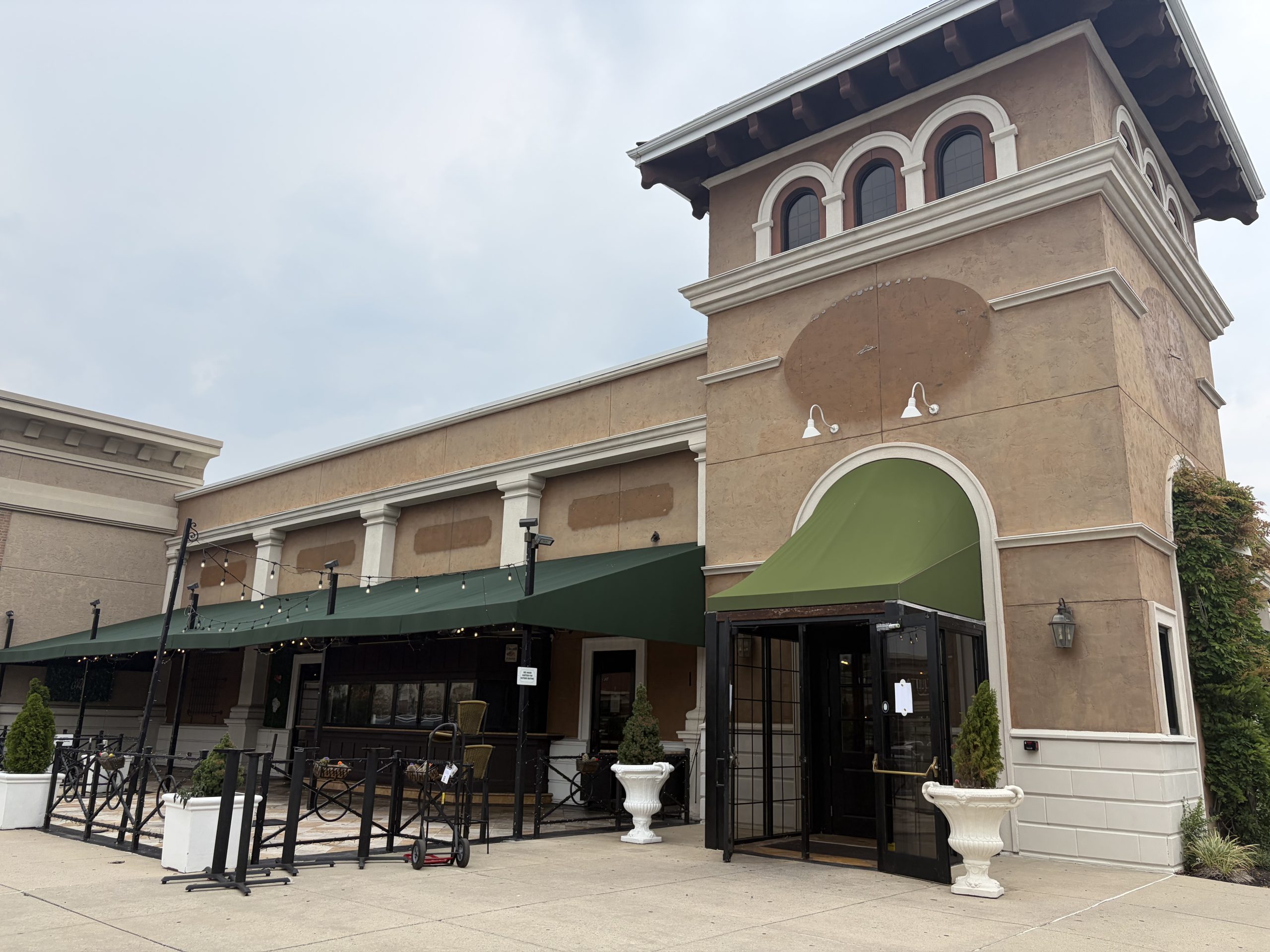
It’s pretty empty inside the building that was the Brio Italian Grille in Cherry Hill.
A sign on the restaurant entrance reads: “We have made the difficult decision to permanently close our Brio location in Cherry Hill. We are grateful for the opportunity to have served this community and are committed to supporting our team members during this transition.”
The abrupt closure comes after staff emphasized that it was still open as recently as last month. Rumors about the restaurant shutting its doors have been swirling since May.
A guard at a federal prison in Fort Dix had a sexual relationship with a prisoner for about a year, according to federal authorities. She was charged this week with sexual abuse of a person in custody.
A Camden man was arrested after a K-9 dog found a phone allegedly used to solicit explicit photos from a 7-year-old girl, according to Camden County Prosecutor Grace C. MacAuley.
An incarcerated man in Trenton is suing the state to block corrections officials from forcing prisoners to give up their purchased tablet electronics. The civil rights lawsuit comes after the state Department of Corrections switched communications tech providers. The new company does not allow prisoners to buy tablets outright and instead provides loaners for free, but requires a subscription model to use their content, New Jersey Monitor reports.
Award-winning former Inquirer photojournalist Akira Suwa of Laurel Springs, 84, died at his home this month due to complications from dementia. In addition to his photography, he is known for his mentorship, as well as his lifelong love of gardening.
🎄 Oaklyn Final Fridays: This monthly street festival features food, live music, and a variety of vendors. This upcoming Friday, get in the festive spirit and celebrate a belated Christmas in July. ⏰ Friday, July 31, 4:30-9 p.m. 💵 Pay as you go 📍 West Clinton Avenue, Oaklyn
🎤 Friday Night Live Music at Wenonah Lake:Hear from musical acts Lost Art, Arthur Herrmann, and Nonsense Maneuver. ⏰ Friday, July 31, 5 p.m 💵 $8 (cash only), free with membership 📍 North Jefferson Avenue and West Maple Street, Wenonah
🕺 80s and 90s Party:Indulge in nostalgia with throwback hip hop and R&B music and dance the night away. ⏰ Saturday, Aug. 1, 6-10 p.m. 💵 $24.71 📍 Vera, Cherry Hill
📚 Reading: University of Pennsylvania professor Emily Wilson’s translation of The Odyssey after her scathing review of Christopher Nolan’s film adaptation.
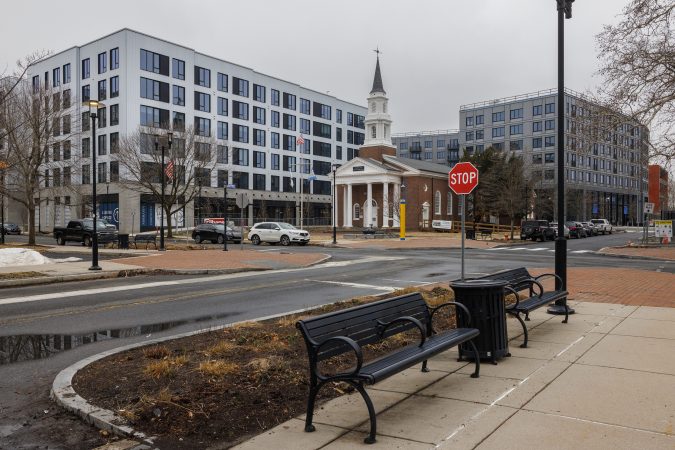
The Navy Yard is not your typical Philly neighborhood. But that’s partly why its first apartment renters say they like it.
The decommissioned military base at the southernmost edge of the city is now mostly a hub for offices and laboratories and is home to more than 150 companies. The first homes for people opened there late last year.
Sure the neighboring buildings are the only ones that house residents and you have to drive to get groceries, but some of the first residents of the apartments say that’s fine.
I visited the property in early March when the first tenants were moving in. My colleague Erin McCarthy went back this month. More people live in the buildings now, but about 70% of the 614 units still await tenants.
Renter Integra Feliciano told me the area is “still up-and-coming in terms of having more restaurants and stuff” but called the Navy Yard “a little gem.”
She and another resident Erin and I talked to said they’re not really city people, which is why they like living at the Navy Yard. There’s a lot of open space, and free parking is plentiful.
The national apartment brand AVE opened the Constitution building late last year and the Normandy building this spring. Normandy includes both unfurnished apartments and furnished units marketed to business travelers.
Navy Yard stakeholders eventually want to see thousands of apartments in the area.
Have you seen orange signs around your neighborhood that say “Their Profit. Your Loss!”?
In recent months, “Build Fair Philly” signs have popped up on rowhouses and lawns across the city. The campaign calls out the practice of shoddy and harmful real estate development.
Peter Kim in Passyunk said that when he found a flyer on his door, he figured it was from “some NIMBY [not in my backyard] anti-housing group.”
But the organization behind the campaign is actually the Eastern Atlantic States Regional Council of Carpenters.
The union is generally pro-development since building means work for its members. But the Carpenters are encouraging Philly residents to join its push for more regulation in the construction industry.
Come for the cute dog; stay for the energy efficiency.
With utility prices as high as they are, I’m always interested to hear about how folks are keeping costs down. Chuong Nguyen says he pays almost nothing to heat his Brewerytown house and about $100 a month total for all his utilities.
It all comes down to Nguyen’s focus when he was house hunting. He chose his home because it was a rare find: a multiunit Zero Energy Ready house.
He doesn’t have to turn on the heat until the outside temperature dips well below freezing, he said, because his home is well insulated, and windows let in sunlight all year.
Nguyen’s passion for living with a low carbon footprint stems from his childhood in Vietnam and eight years living in France.
In Brewerytown, Nguyen lives with his Yorkie poodle, Milo, in the two-bedroom upper unit and rents the two-bedroom lower unit on Airbnb. He furnished the house with secondhand items, mostly from Facebook Marketplace.
Much like the rest of President Donald Trump’s war with Iran, the latest outbreak of hostilities has produced nothing but death, destruction, and disorder. The current flow of traffic through the Strait of Hormuz makes the Schuylkill Expressway look fast, Tehran retains its capacity to terrorize its neighbors with cheap drones, and more American service members and civilians in the region have been killed or wounded.
Last week, the Trump administration brain trust devised a horribly creative means of adjusting this abysmal cost-benefit ratio: blaming the latest U.S. losses on some other war. The Pentagon now categorizes four of the service members killed in the region and more than 200 of those injured as casualties not of the Iran conflict, but of unspecified “overseas operations.” This is based on the notion that the U.S.-Iranian ceasefire and memorandum of understanding ended the war, which it obviously didn’t.
This accounting trick is an insult to the troops and their families. But the impulse behind it is correct in one sense: It’s time to actually cut American losses and end this misbegotten war for good.
Five months after the United States joined Israel in waging war on Iran for the second time in as many years, the effort has achieved none of the administration’s various stated aims. Iran continues to be ruled by an oppressive theocratic regime with nuclear ambitions and proxy forces that menace its neighbors.
The Islamic Republic is, in some respects, stronger than before, having shown it can fight the most powerful militaries in the region and the world to a standoff. At the same time, it now wields a weapon that may be more effective than a nuke: its ability to rattle the global economy by strangling oil and gas shipments through the strait.
Trump, meanwhile, is under pressure from his vulnerable allies (and business partners) in the Gulf, congressional Republicans staring down a midterm shellacking, and dwindling supplies of munitions. Sure, he can keep threatening to resume the American onslaught to the extent of committing war crimes. But the president has already done more than his share to prove the ultimate inefficacy of both the rhetoric and the bombs.
Rather than risk the lives of more Americans and others, and spend more billions to no avail, the administration must accept the necessity of a tactic it has largely avoided: multilateral diplomacy.
Trump himself has shown intermittent glimmers of understanding this, having periodically groused about the refusal of NATO and other allies to come to America’s aid in the war. Such complaints also revealed the president’s fundamental misunderstanding of the transatlantic alliance, which exists to deter rather than further military aggression, and the nature of international relationships, which rely on the sort of mutual respect to which Trump has laid waste.
It was the hard work of diplomacy that forged the Obama-era agreement among the world’s major powers to prevent an Iranian nuclear bomb, subject to verification by United Nations inspectors, until Trump unilaterally withdrew from the pact during his first administration. The peaceful transit through the Strait of Hormuz that prevailed before Trump’s war likewise rested on broad compliance with international maritime law.
A lasting peace and resolution of the U.S.-Iranian standoff over the strait and the nuclear question may not be possible even with the benefit of broader international cooperation. But they will be impossible without it.
A Main Line psychiatrist lost her license after a state investigation found her sessions with a young male patient turned sexual, even as she continued to treat him.
A Main Line psychiatrist has lost her medical license after a state investigation found she had sex with a young patient for years, all while prescribing him a revolving mix of up to 12 medications, including highly addictive psychotropic drugs, without proper evaluations.
Amy Mazza MacIntyre, a child, adolescent, and adult psychiatrist in Bryn Mawr, started treating a then-17-year-old cancer survivor when he was a senior at Lower Merion High School.
MacIntyre first had sex with him when he was 24 years old. She stopped billing him for treatment around the same time, though she continued to take patient notes for an additional 2½ years.
She also prescribed medications to his parents, although they were not her patients, the board found.
Four Cheltenham High School football coaches and six players have been charged in connection with two assaults in the school’s locker room that injured a 15-year-old player and led to the cancellation of two football seasons.
Multiple football players attacked a sophomore on the team, District Attorney Kevin Steele said. They stomped on his chest and groin while wearing cleats and used a broomstick to poke at his buttocks.
“The assaults on this victim were not typical goofing around by teammates, or horseplay, as some of the coaches in this case called it,“ Steele said. ”They were crimes.”
Cheers to Akili Z. Davis, who solved Monday’s anagram: SWISS FARMS. Like rival Wawa, the Delco fixture selling dairy, groceries, and convenience goods plans to add gas pumps under its latest owner.
Excited Eagles fans, including Santa, wait for autographs during the first day of training camp at the Jefferson Health Training Complex in Philadelphia.Monica Herndon / Staff Photographer
An eclectic crop of new restaurants has opened over the last several months across the Philadelphia suburbs in Pennsylvania, New Jersey, and Delaware. Some — like the three sports bars in Camden County alone — are breathing new life into familiar addresses. Others mark ambitious first ventures.
Here are 18 of them, from Phoenixville to Gloucester Township to Wilmington.
Pennsylvania
Academy Grill (424 S. Bethlehem Pike, Fort Washington): Michael Sloane and Jay Rosenthal’s group, Fine Line Dining, has transformed the former Cantina Feliz into a polished white-tablecloth destination. Jeffrey Power, longtime chef at the erstwhile Dettera in Ambler, oversees a menu of house-made pasta, seafood, and steaks.
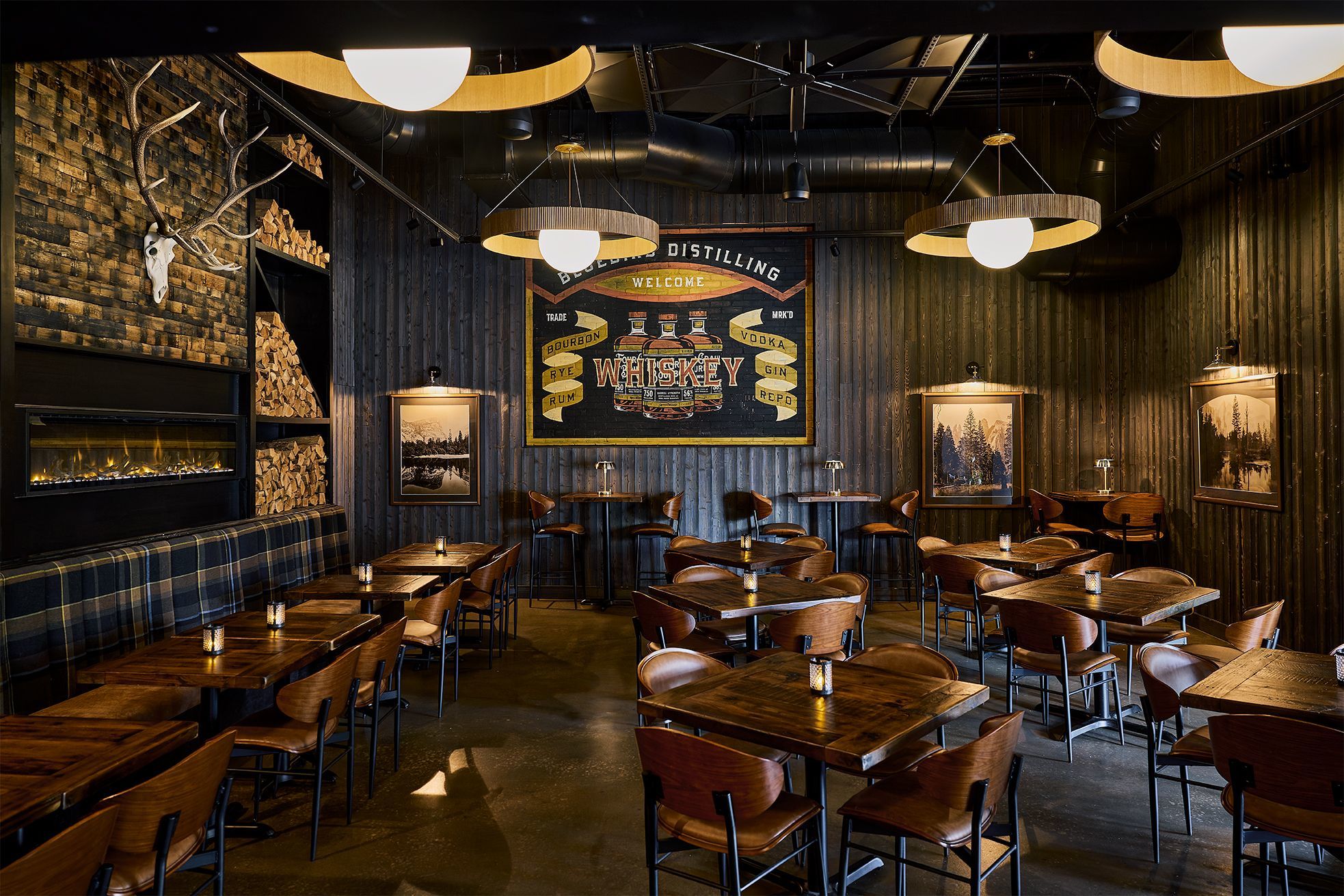
Bluebird Distilling has reopened with a new neo-Neapolitan pizzeria and restaurant.Photos courtesy of Ed Newton
Noah Clifford (left) and Sofia Siano working the pastry case at the Buttery in Bryn Mawr.Allie Ippolito / For The Inquirer
The Buttery Bryn Mawr (836 W. Lancaster Ave., Bryn Mawr): The Malvern bakery-cafe opened its Main Line expansion with 82 indoor seats and daily service from 7 a.m. to 5 p.m. The menu includes sourdough breads, pastries, Turkish eggs (poached eggs cooked in garlicky yogurt with a drizzle of spicy butter), sandwiches, and seasonal lunch dishes, plus grab-and-go foods after the kitchen closes at 3 p.m.
Cleavers (103 Squire Dr., Newtown Square): The Center City cheesesteak shop grand-opened its second location last month at Ellis Preserve, offering cheesesteaks, chicken cheesesteaks, burgers, sandwiches, fries, and milkshakes.
The Coffee Station (1117 Smithbridge Rd., Glen Mills): The Delaware County breakfast-and-lunch operator took over the former Meghan’s Restaurant, which had occupied the building for 27 years. The menu includes omelets, pancakes, breakfast sandwiches, burgers, hoagies, wraps, soups, and salads. Other locations are in Morton and Garnet Valley.
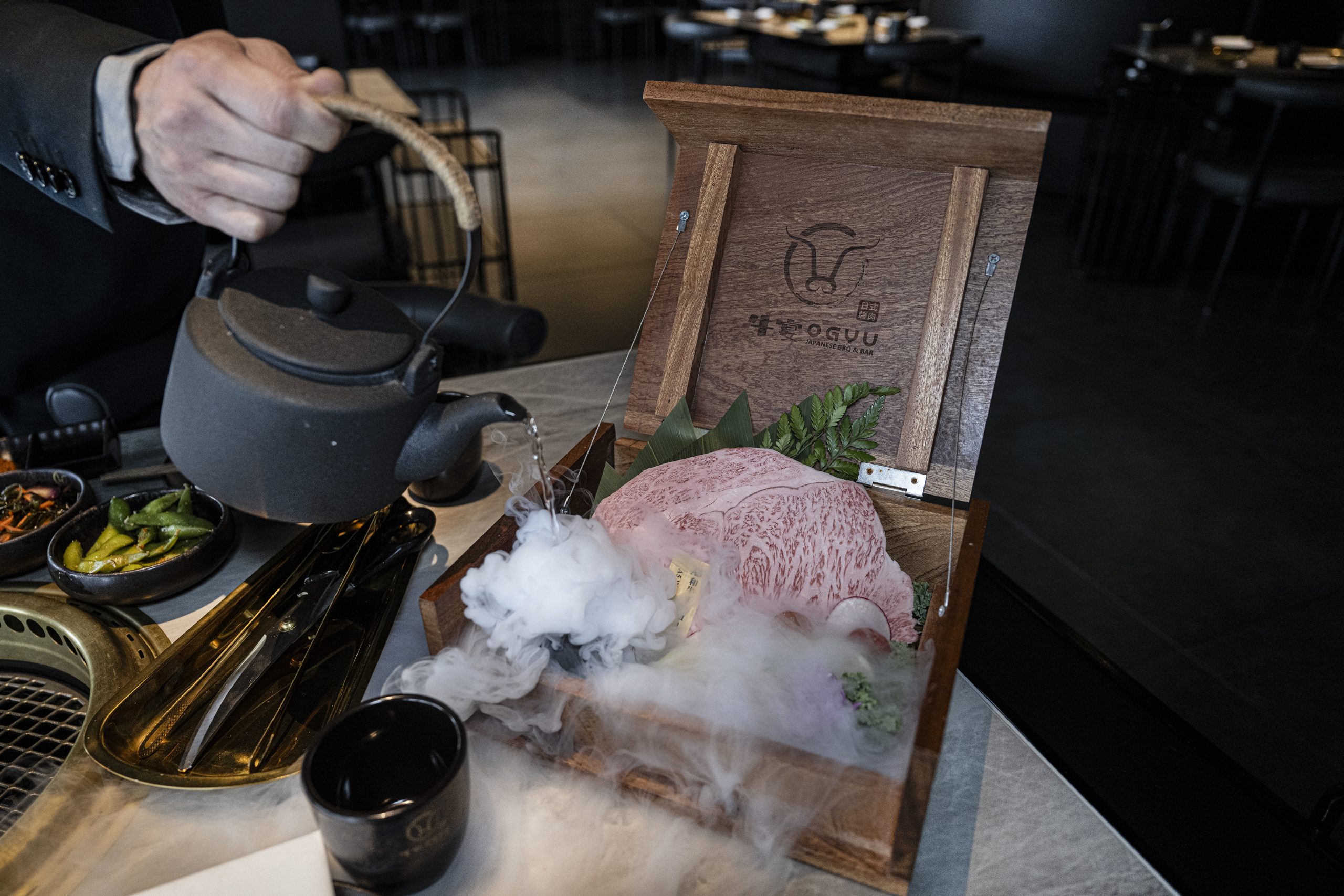
Tabletop and tableside cooking are offered at Ogyu Japanese BBQ.Jose F. Moreno / Staff Photographer
Ogyu Japanese BBQ & Bar (60 Greenfield Ave., Ardmore): Restaurateur Sam Li’s upscale yakiniku restaurant occupies the former Iron Hill Brewery. Customers grill premium Wagyu and other meats on tabletop burners, choosing from fixed-price packages or à la carte selections. The dramatically remodeled space includes black-and-gold finishes, marble-paneled walls, a large bar, and private dining rooms.
Upper Darby’s Tina Fey offers Jimmy Fallon a slice of Pica’s pizza on the “Tonight” show in 2014.Lloyd Bishop / NBC
Pica’s Italian Market (1101 Sussex Blvd., Broomall): After closing its landmark Upper Darby dining room earlier this year, the Pica family soft-opened this mostly takeout shop in a Delco light-industrial park, carrying the restaurant’s signature square pizzas, sandwiches, prepared foods, and other Italian specialties. Pica’s, which hit the national radar in 2014 when locally raised Tina Fey sampled its pizza on the Tonight show, traces its roots to Frank Pica Sr.’s West Philadelphia pizzeria. There’s a West Chester location, too.
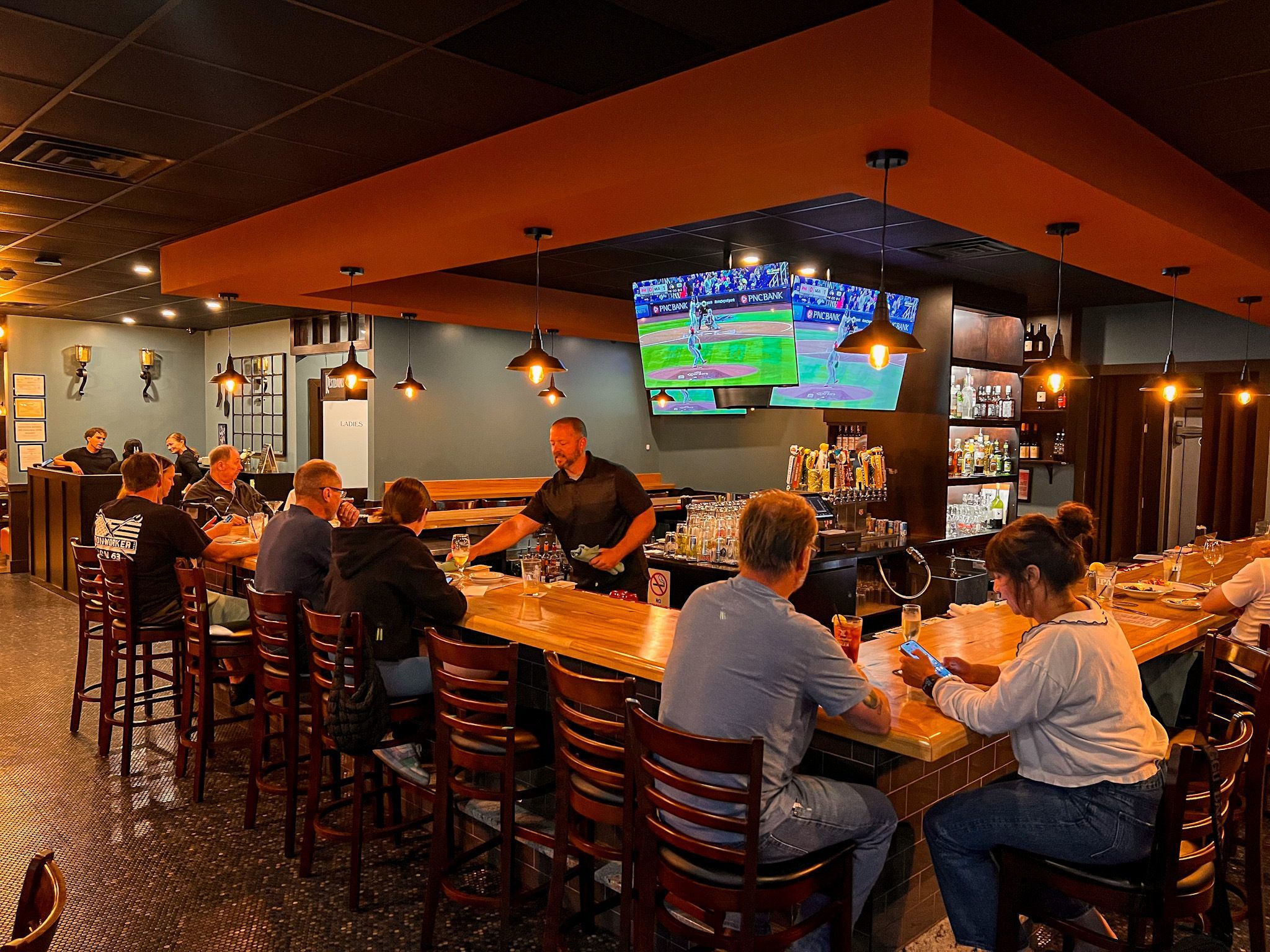
P.J. Whelihan’s (2920 S. Eagle Rd., Newtown): The regional sports-bar chain took over the former Iron Hill Brewery at the Village at Newtown with its signature wings, burgers, sandwiches, salads, and American entrees, backed by numerous televisions and a broad draft-beer selection. Most of Iron Hill’s existing layout was retained.
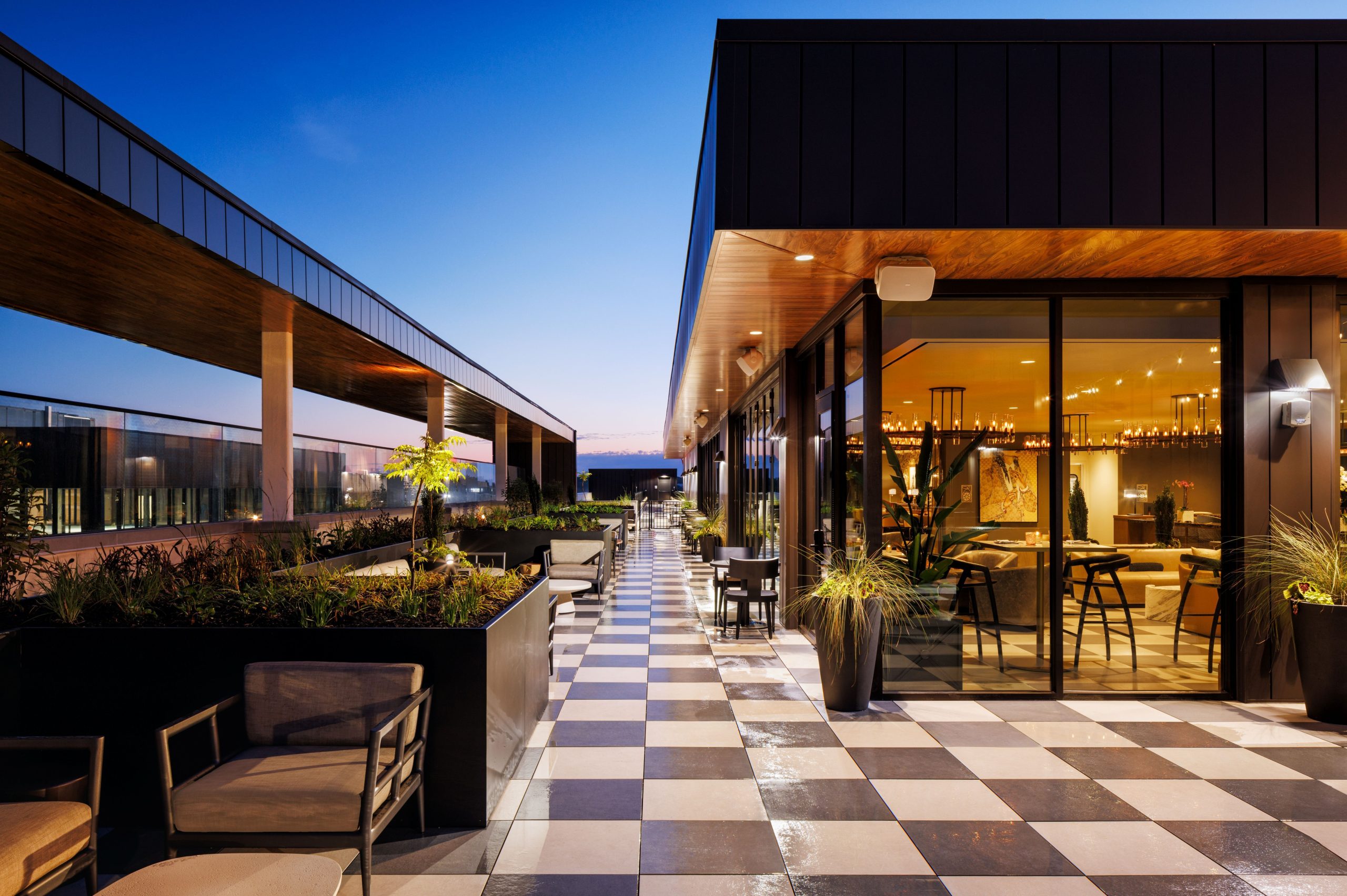
Pomelo Rooftop Terrace at the Brandywine, 165 King of Prussia Rd., King of Prussia.The Brandywine
Pomelo Rooftop Terrace (165 King of Prussia Rd., Radnor): This expansive rooftop bar and lounge atop The Brandywine hotel in Radnor (with 136 seats, inside and out) will grand-open Aug. 8 with chef Michael Davies’ menu of shareable plates (e.g. oysters, scallop crudo, a smash burger, grilled branzino, lion’s mane mushroom cake), raw bar, botanical-focused cocktails, wine, and beer. Weekend brunch begins Aug. 22.
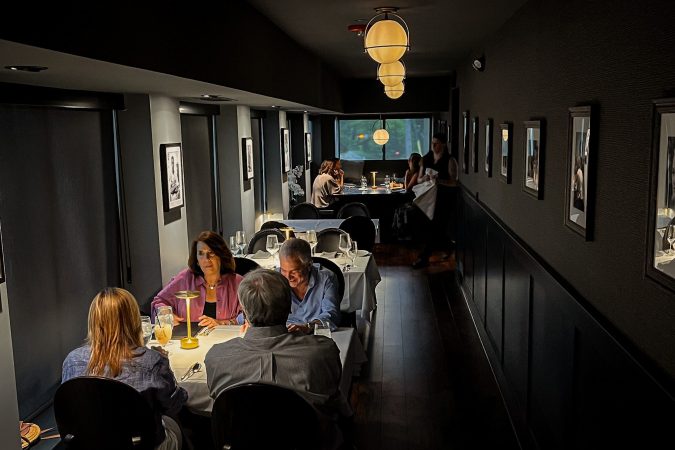
Porter (34 E. Butler Ave., Ambler): This newcomer is in the former Gypsy Blu space on the first floor of Ambler’s historic former Wyndham Hotel, offering contemporary American cooking in a candlelit, vintage-inspired dining room. Menu includes oysters, pasta, risotto, seafood, and meat dishes. Gaslight, a separate craft-cocktail bar with small plates, is upstairs.
Rick’s Tavern (201 W. Seventh Ave., Conshohocken): Chef Derek Davis runs the show at Rick and Gale Mahoney’s modern tavern on the rebuilt site of Pizza Time Saloon and Old Time Saloon. The two-story restaurant honors those neighborhood institutions with wood-fired pizza while adding house-made pasta, cocktails, private-event space, and live music upstairs on Friday and Saturday nights.
The bar at the Scratch Kitchen by Gallo’s, 575 Horsham Rd, Horsham.Michael Klein / Staff
The Scratch Kitchen at Gallo’s (575 Horsham Rd., Horsham): The Harvey family, owners of Gallo’s Seafood in Northeast Philadelphia, is behind this casual, roomy neighborhood restaurant in the former Farm & Fisherman Tavern. Chef Bob DeLange, the owners’ son-in-law, combines seafood dishes from Gallo’s with burgers and bar food inspired by Harv’s Burger Bar, Gallo’s adjoining Northeast Philadelphia tavern.
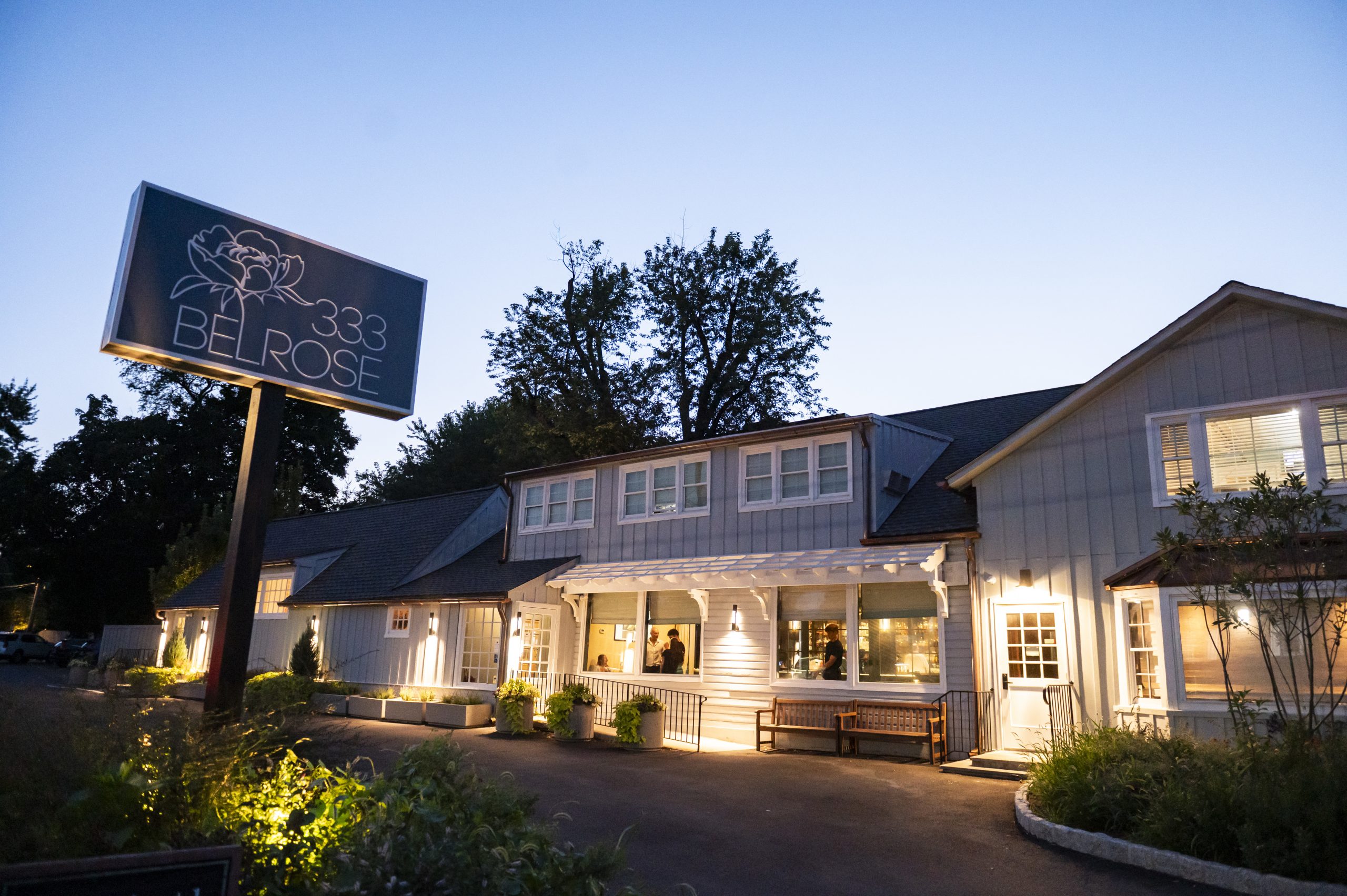
The exterior of 333 Belrose in Radnor’s St. Davids’ area.Allie Ippolito / For The Inquirer
333 Belrose (333 Belrose Lane, Radnor): The longstanding contemporary American restaurant has reopened under chef Ross Essner after an extensive renovation that flipped the positions of the bar and main dining room.
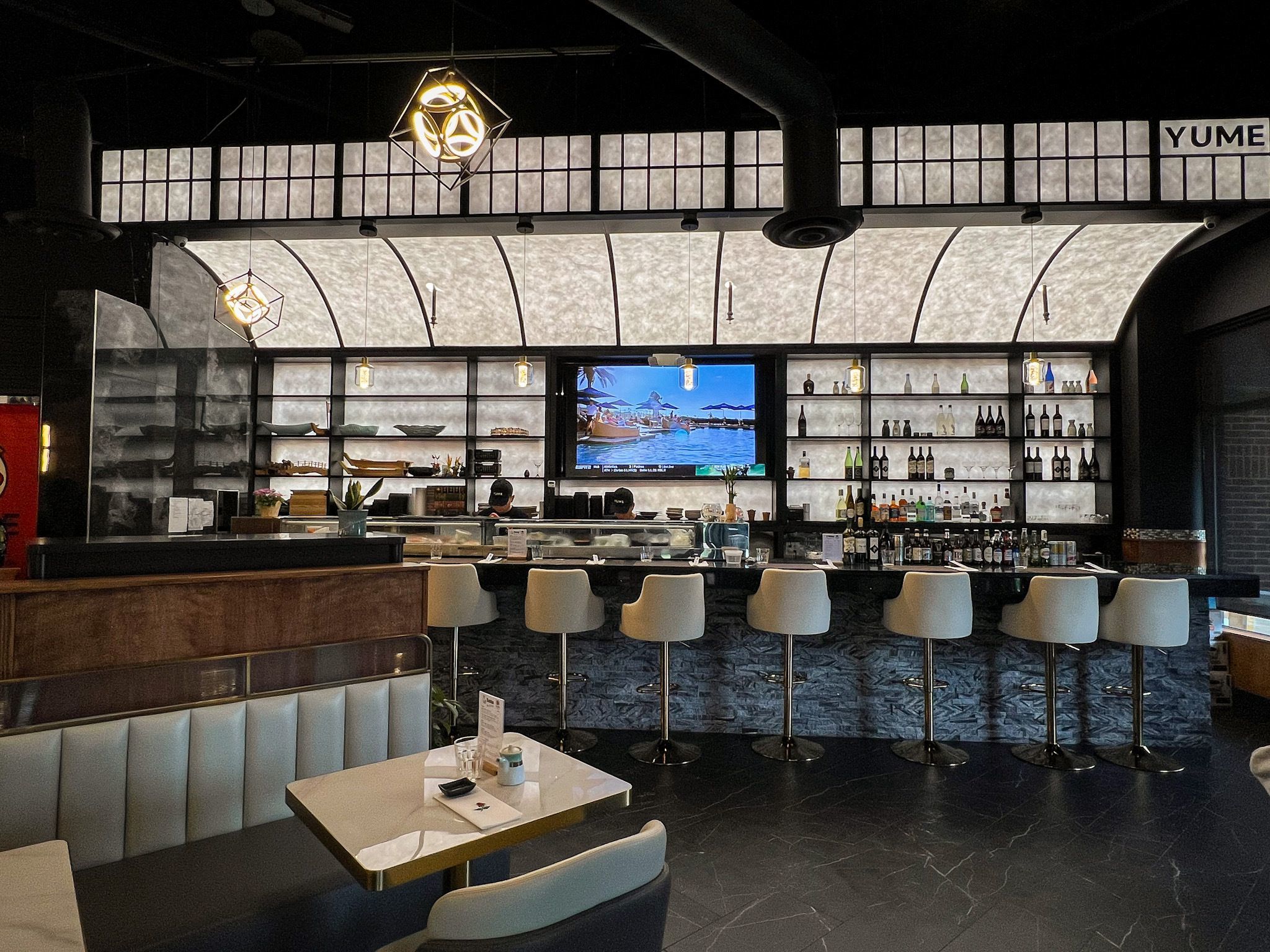
Yume Sushi in the Shoppes at English Village, 1460 Bethlehem Pike, North Wales.Michael Klein / Staff
Yume Sushi (1460 Bethlehem Pike, North Wales): This Japanese restaurant has opened in the Shoppes at English Village, down the row from Trader Joe’s. Co-owner and head chef Kevin Wan brings about a decade of sushi experience to the venture. The menu centers on sushi, sashimi, rolls, and Japanese-Asian fusion dishes.
New Jersey
Flying Pig Tavern & Tap (1300 Blackwood-Clementon Rd., Gloucester Township): The sprawling former Favorites off-track-betting building has come up as the fifth unit in a growing group. Menu of pizzas, burgers, wings, tacos, and entrees shares billing with live bands, darts, shuffleboard, and a covered tiki bar. A sixth location is planned for the former Andalusia Bar & Grill space in Bensalem.
Home Team Tavern (267 S. Black Horse Pike, Mount Ephraim): Greg D’Alesio has turned the former Mount Ephraim Bar & Grill into a compact, sports-themed neighborhood tavern. Its scratch kitchen serves pizzas, burgers, wings, sandwiches, and elevated bar food, alongside draft cocktails and beer.
Thirsty Turtle Tavern (270 White Horse Pike, Barrington): This new concept from SAS Restaurant Group in the former Chuck Lager space features an open kitchen, burgers, pizza, sushi, cocktails, draft beer, and an outdoor patio behind garage doors. It operates daily; weekday happy hour and weekend brunch are expected to begin in the fall.
Delaware
Ezme (625 N. Market St., Wilmington): Chef Antimo DiMeo and the Bardea Restaurant Group opened this coastal Mediterranean restaurant across from Bardea Food & Drink. Inspired by cuisine from Turkey, Greece, and the Aegean coast, the menu encompasses mezze, raw-bar dishes, handmade breads, grilled seafood, and fire-driven preparations accented with herbs, citrus, and spices. Both à la carte and tasting-menu formats are available.
The State Board of Medicine recently revoked the medical license of Bryn Mawr psychiatrist Amy Mazza MacIntyre.Julia Duarte / Staff Illustration,
Bryn Mawr psychiatrist Amy Mazza MacIntyre, whose practice is on Lancaster Avenue, has had her medical license revoked after a state investigation found she had sex with a young patient for years while prescribing him powerful psychiatric drugs.
The former patient, who attended Lower Merion High School and is now 39 years old, breached a nondisclosure clause in a previous settlement by discussing the case with authorities “for the good of the public interest.”
“This is not acceptable and she needs to be held accountable,” he told The Inquirer’s Wendy Ruderman.
John Goncher recently opened a brick-and-mortar space for Wild Yeast Bakehouse, which he initially launched in his Rosemont home. Tyger Williams / Staff Photographer
Last year when John Goncher’s Rosemont living room had become overrun by sourdough loaves, he knew it was time to reassess his burgeoning bread business: “I said to my wife, ‘It either has to contract or it has to really grow.’”
Goncher opted for the latter and recently debuted a brick-and-mortar for Wild Yeast Bakehouse in Wayne.
His new storefront in the Eagle Village Shops was designed by the same team who renovated his family’s home and maintains a living room vibe, while dramatically upping capacity.
Nearby Merion Golf Club’s East course is the second-best private golf course in Pennsylvania, according to a recent ranking from Golfweek. Several nearby courses, including Aronimink, also made the list.
🍽️ On our Plate
After a yearlong renovation, 333 Belrose is back up and running in neighboring Radnor. The Inquirer’s Michael Klein recently paid a visit to the Main Line staple to take a peek at its fresh “country house” aesthetic and approachable fare.
Mark your calendars: Pomelo Rooftop Terrace, the rooftop bar at the recently opened Brandywine hotel in Radnor, is debuting Aug. 8.
Nanu’s Hot Chicken in Ardmore is temporarily closed after a car crash resulted in damage to the storefront.
🎳 Things to Do
🎭 Hamilton: Catch a film screening of the original Broadway hit, complete with a singalong ahead of time. Registration is required. ⏰ Thursday, July 30, 5-8:30 p.m. 💵 Free 📍 Ludington Library
🎶 Bryn Mawr Twilight Concerts: Hear Americana duo Larry Campbell and Teresa Williams perform. ⏰ Friday, July 31, 7 p.m. 💵 $25.88, free for kids 12 and under 📍 Bryn Mawr Gazebo
🥖 Hands on Challah Bake: Learn the basics of making this braided bread or get a refresher on it. ⏰ Thursday, Aug. 6, 11 a.m.-12:30 p.m. 💵 $10 📍 Kaiserman JCC
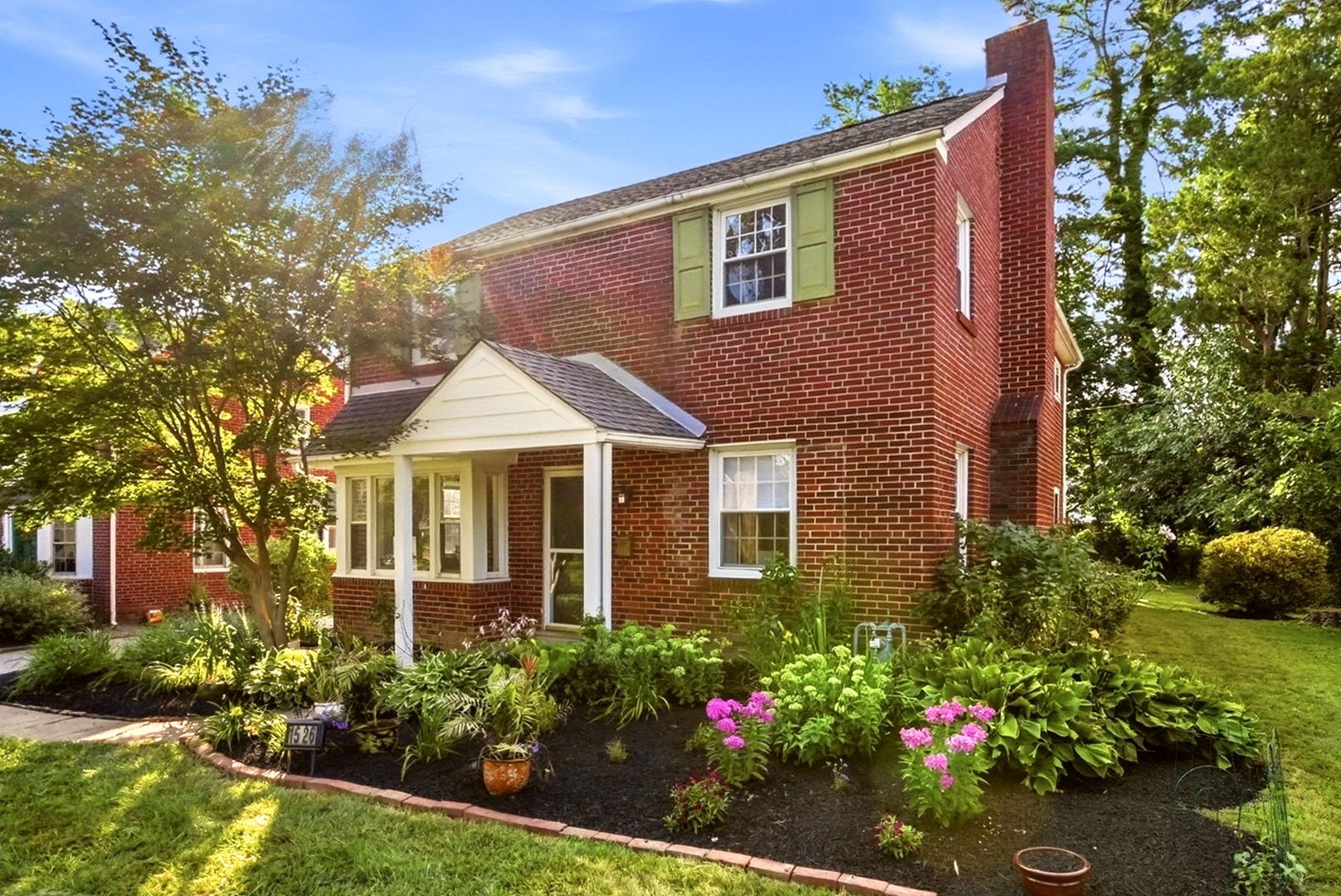
The home has three bedrooms and three bathrooms.Realtour Pilot | Courtesy of Matt Tallent/Keller Williams Main Line
Situated near South Ardmore Park, this three-bedroom Wynnewood home has been updated over the years, including with a three-story addition. Among the highlights is a bright and airy primary suite with vaulted ceilings, multiple skylights, and lots of windows. The space also has a walk-in closet and a bathroom with a tub. There are three upcoming open houses: tonight from 5:30 to 7:30 p.m., tomorrow from 5 to 7 p.m., and Saturday from 11 a.m. to 1 p.m.
By submitting your written, visual, and/or audio contributions, you agree to The Inquirer’s Terms of Use, including the grant of rights in Section 10.
This suburban content is produced with support from the Leslie Miller and Richard Worley Foundation and The Lenfest Institute for Journalism. Editorial content is created independently of the project donors. Gifts to support The Inquirer’s high-impact journalism can be made at inquirer.com/donate. A list of Lenfest Institute donors can be found at lenfestinstitute.org/supporters.