Blog

  • Doctors on the front lines of a measles comeback speak out

    Doctors on the front lines of a measles comeback speak out

    This isn’t just a bad year for measles. It looks to be the start of a bad era. Confirmed measles cases just hit a 35-year high, and it’s only July. Together with last year, the number of cases has exceeded the combined total over the previous 25 years. The vast majority of cases stem from domestic outbreaks fueled by low rates of vaccination—and rates are declining.

    For the first time in a quarter century, the U.S. no longer meets a main criterion for having eliminated measles as a public health threat. That status hinges on sporadic outbreaks fizzling out within a year. Utah’s outbreak has lasted for longer, since June 2025.

    Nearly 400 people have been hospitalized with measles in the U.S. this year and last, three people have died, and at least three suffered brain swelling with lingering symptoms.

    This month, the Centers for Disease Control and Prevention is set to finalize a comprehensive study of the nation’s measles situation, examining data from January 2025 through June 2026.

    “I don’t think we could say with a straight face that there hasn’t been transmission over the past 12 months,” said a CDC scientist with knowledge of the agency’s measles report. (KFF Health News agreed not to name the researcher, who is concerned about retaliation.) The researcher said a national committee of measles specialists will review the CDC’s internal report, which then goes to the Pan American Health Organization, a group that evaluates the measles elimination status of countries throughout North, South, and Central America, and the Caribbean.

    PAHO will make its decisions at an annual meeting this fall, but scientists say the writing is on the wall. “The assessment for elimination isn’t until November, but that is a scheduling issue, basically,” said Anne Schuchat, who led the CDC’s immunization and respiratory disease group from 2006 to 2015.

    “It’s just so sad, because some people will get brutally ill,” she said of measles’ return. “This is a wake-up call.”

    Pediatricians in Utah have been on the front lines as measles and other vaccine-preventable ailments have returned to the U.S. In interviews with KFF Health News, six doctors shared insights on this new era of vaccine hesitancy — and what could be done to turn the situation around.

    The conversations have been edited for clarity.

    On unvaccinated children hospitalized with measles complications

    Emilie Morris, a hospital pediatrician in Salt Lake County and Utah County: When children come in, they’re often bent over. We call it tripoding, which is particular to upper respiratory infections and airway swelling. They have a rash — viruses cause rashes all the time — but in this context, the kid is hunched over, mouth open, drooling, crying, maybe not even producing tears, because they’re so dehydrated. Really labored breathing, kind of tugging in their belly, tugging between their ribs. Their eyes look kind of glazed over. It’s like they’re seeing through you.

    Nathan Money, a hospital pediatrician in Salt Lake County and Utah County in Utah, says it’s “heartbreaking” to see children with measles struggling to breathe. (Amy Maxmen/KFF Health News) Amy Maxmen/KFF Health News

    Nathan Money, a hospital pediatrician in Salt Lake County and Utah County: If the child has a fever or trouble breathing, and they’re unvaccinated, I have to be way more aggressive from a medical standpoint, because they are at higher risk of having life-threatening illnesses. I have to do more blood work, or lumbar punctures to rule out meningitis. I have to do things which are painful, and it’s traumatic for the families.

    I tell them, “Because your child doesn’t have vaccines, I have to be more worried about conditions like sepsis or meningitis, so therefore I need to do more workup.” The last thing I want to do is miss something. These are parents who love their children. They always tell me, “Do what you need to do to make sure my child is safe.”

    Trahern W. Jones, a pediatric infectious disease specialist based in Salt Lake County, Utah, says parents are often surprised by how severe measles can be. (Amy Maxmen/KFF
    Health News)Amy Maxmen/KFF Health News

    On treating unvaccinated children hospitalized for measles

    Trahern W. Jones, a pediatric infectious disease specialist based in Salt Lake City: So I’m coming into a room and just hearing the most awful barking cough, just a cough and a high-pitch stridor as the child is trying to breathe. And he’s just coughing so hard it just makes you feel short of breath. He looks like he’s been beaten down for days, but he can’t rest, because the cough keeps him awake.

    The parents tell me they’re not anti-vaccine, but in the past, somebody they know had a reaction to a vaccine — or something they thought was a reaction to a vaccine — and so they paused vaccines when the child was a baby. They were planning to catch up later.

    In another case, the parent was stunned by how awful it was. I asked them what they knew about measles before their child was sick, and they said the only person who’d ever taught them anything about measles was their grandmother who had taken care of her kids with measles ages ago. That’s something I’ve heard from other parents. It’s such an awful illness. Even the best possible course is going to be one of the worst diseases most children ever go through.

    There are multiple facets to it. Physically, the child has been beat down for multiple days by this virus. The parents don’t get to sleep, because they’re nursing their child. Then there’s the emotional component because the parent is regretting not getting the vaccine, not realizing how bad this was, and then feeling deeply ashamed, trying to reconcile with family members who are really upset at them for not getting their child vaccinated.

    Morris: One child was from a family that was uninsured because they didn’t feel that they would need to use the medical system. They were faced with the high burden of cost of our healthcare system. The cost was playing into the parents’ decision on whether or not their child should receive necessary medical care. I said something like: “Please don’t go home. Your child needs oxygen. She has pneumonia. We will figure out a way to pay for this, because we acknowledge what we do is expensive.”

    On top of that, the parent had several other children in the home who weren’t vaccinated. It was past the period where we could intervene with vaccines to try to prevent infection, so then our recommendation was to quarantine their children at home for 21 days: “Don’t interact with anybody else in your community. Don’t go to the grocery store, even with a mask. Please take this seriously.”

    It takes time for parents to understand the level of concern I have, even when their child is physically ill in the hospital requiring ongoing care. It’s pretty indicative of the breakdown of trust between physicians and families. I say, “This is the gravity or severity of your child’s situation and how serious we need to be about protecting other people.”

    It’s frustrating. How can I make people understand I have a very genuine concern for their child? And I know they share that concern, but maybe it’s not the same degree of concern, because they don’t understand the illness and how severe it can become.

    Money: It’s heartbreaking to see these children struggling to survive when measles could have been easily prevented by a safe mechanism that is readily available and well studied. These are well-meaning parents who love their children, who have gotten bad information from federal leadership or from online sources. The saddest part to me is when I am caring for a child and the parent says, “I didn’t know that this could get so bad.”
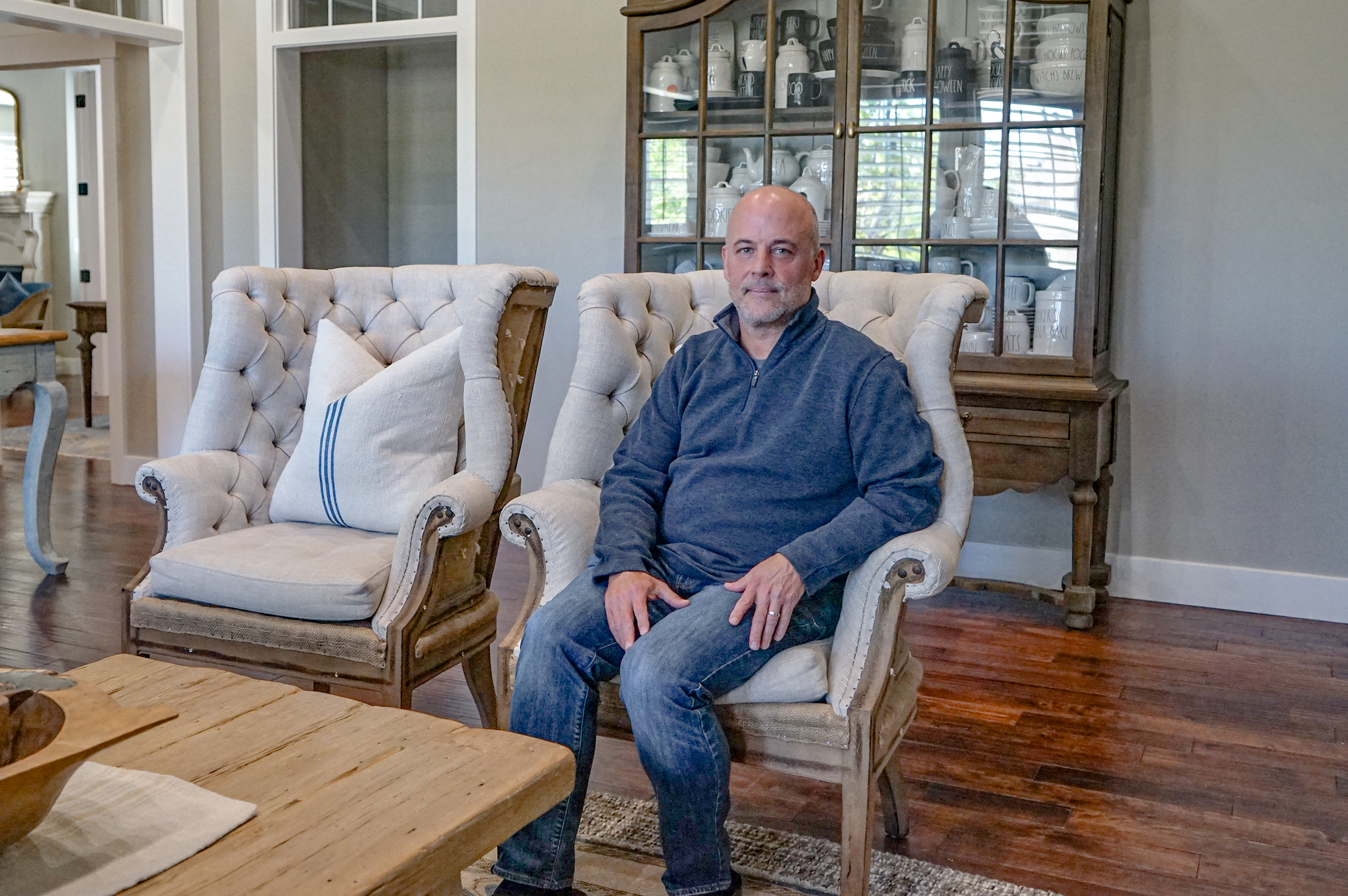
    Tim Duffy, a pediatrician in Salt Lake County, Utah, says many parents are concerned about incorrect claims about vaccines seen on social media. (Amy Maxmen/KFF Health
    News)Amy Maxmen/KFF Health News

    On conversations with parents who don’t vaccinate their children

    Tim Duffy, a pediatrician in Salt Lake County: A lot of families aren’t aggressively anti-vax, but they’re hesitant. Younger parents who grew up in the digital age have done their research — “research” in quotation marks — for months. And they keep getting confirmation of their concerns on social media. They think they’re doing what’s best for their child.

    I’ve told families: “You could do nothing I say as a pediatrician. You could sleep your child on their stomach. You could not put them in a car seat or, when they’re older, not use seat belts. You could do nothing I say, and for your individual child, they will probably be OK. But from my standpoint, where I’m taking care of thousands of kids, within a system that takes care of hundreds of thousands of kids, we will have bad outcomes. These children will show up at our facilities, and it’s so sad.”

    Pediatrician in southern Utah whom KFF Health News agreed not to name, because of concerns about harassment after being targeted by anti-vaccine activists in the past: A lot of parents are concerned about autism. I’ve told them that I’d be very concerned if there was any evidence that what we’re doing is causing autism. But if vaccines were causing autism, we should see more cases of autism in vaccinated kids compared to unvaccinated kids, and we’re just not seeing that.

    I’ve also had families who say they want to be natural, or that they’re concerned about what is in the shots. A frequently asked question is: “Did you vaccinate your children?” I say that knowing what I know, I’m confident giving this to my kids. They’re all vaccinated.

    On the influence of politics on vaccine hesitancy

    Jones: Vaccines have become a political football. That wasn’t true 20 years ago. But now it’s used to drive a wedge between groups of people, which is unfortunate. Vaccines are one of the main reasons why we don’t have to worry about losing our kids.

    Southern Utah pediatrician: People don’t know who to believe. If politics comes up, I tell parents that my messaging on vaccines is not politically motivated. When parents ask about changes to the vaccine schedule, I’m transparent. [In January, the Department of Health and Human Services controversially recommended reducing the number of vaccines given to children. A few months later, a federal judge blocked those changes.]

    I’ve said there was a process for the approval of immunizations through ACIP [the Advisory Committee on Immunization Practices], which is made up of scientists, public health experts, and doctors, and all those people were let go, and a new panel was selected. A couple of individuals changed the recommendation outside of the time-tested, evidence-based process for evaluating vaccines. That raises concerns for me as a doctor. I tell parents that the American Academy of Pediatrics, the American Academy of Family Physicians, and several other professional organizations have issued statements saying that these changes are not based on evidence.

    Ellie Brownstein, a pediatrician in Salt Lake County and president-elect of the Utah chapter of the American Academy of Pediatrics: I avoid talking about politics, but what’s being said has added another layer to our work. One family asked me about changes to vaccine recommendations, so instead of just telling them what immunizations are due, I talk with them about why physicians and researchers have followed a different schedule for years, about the reasoning and the science behind it. I explain that I trust these experts over someone without a lot of experience.

    Money: People are not vaccinated, because they’ve lost trust in the medical community. They’re placing trust elsewhere. Rebuilding trust is a complicated process, but it comes from consistent messaging at every level, from the pediatrician to local health departments to community leaders, city leadership, district leadership, religious leadership, educational leadership.

    We need consistent messaging from state leadership, which has been pretty absent. I want to see commercials on TV about the safety of the MMR [measles, mumps, and rubella] vaccine and the dangers of the measles, sponsored by my state leadership. I’d like to see this on billboards and in schools, in public buildings and grocery stores. I want to go to a sports event and see messages about the measles and the MMR vaccine. Right now, people have to go out of their way to find information from reputable sources.

    We also need policy changes to support vaccination. This train is going in the wrong direction, and it can feel like a helpless situation, because we’re just not seeing the public messaging and leadership that’s needed to turn this around.

    Advice on talking with parents who don’t vaccinate their children

    Jones: Approach them with as much compassion as you possibly can. Ask open-ended questions to learn about their experiences that led them to have these concerns. I think it’s really important to not come down on them, citing facts and figures and pointing to guidelines on why they need to get their kids vaccinated. But try to direct their attention to the fact that you’re a real person with your own real experiences and knowledge. I point out to families that I have my own kids, and I would never recommend something for your kids that I wouldn’t do for mine.

    Southern Utah pediatrician: I’ve learned that if you come down hard, you’re going to lose people who need care. My number one goal now is to build bridges and maintain a relationship with families, because that’s what’s going to allow me to convince some of them.

    I approach people differently depending on where they are. Parents who are very skeptical or anti-vax will say no when I tell them their child is due for immunizations. I’ll say: “Fine. You guys get to choose. You’re the parents. But I’m curious to know what your reasoning is.” Sometimes they’re just like, “It’s something I’ve decided.” They don’t want to have a conversation.

    It’s a good day if I can have a conversation with someone who doesn’t want to vaccinate, even if I don’t convince them. I try to help them think through things rather than shoving anything down their throat. When they’re done talking, I’ll ask, “Can I share my perspectives on this?” Some will say yes enthusiastically, and others will say yes because they’re being polite.

    A lot of parents aren’t sure what to do, and those are the people I focus most of my time on. I focus our conversation on their specific concerns, and I’m open about specific side effects that different immunizations can have. For example, I’ll tell them that some children get a fever after a vaccine, which is OK. The fever is not harmful, but it can make babies feel crummy as their body is building up antibodies against viruses and bacteria.

    Brownstein: I don’t like the idea of excluding unvaccinated kids from my practice. I know some do that. But what that does is it ends any future discussion. I can’t keep talking with parents about vaccines if I kick them out of my practice, and if these parents find like-minded doctors, this situation will get worse.

    On being on the front lines of measles’ comeback in the U.S.

    Money: I wish that people could see what I see. Everyone else sees what people post on Instagram. Or they think, “Someone I know had measles when they were a kid and they were fine.” But as a hospital-based pediatrician, I see what happens when things go poorly. I see what happens when children with measles aren’t able to breathe on their own, and they’re in a hospital bed with a cannula in their nose, struggling to breathe, an IV in their arm because they can’t drink on their own. And the child is terrified, and the parents are scared that their child might die.

    It’s heartbreaking as a pediatrician and as a father to know that the entire situation could have been easily prevented.

    Duffy: Even though parents say vaccination is their choice, I still feel personally responsible if something bad happens that’s preventable, because I feel like I didn’t say the right thing, I didn’t ask the right questions. Maybe I let it drop because of the look on a parent’s face.

    Morris: Every pediatrician I know cares so deeply about what they do. Sometimes people forget that we are human beings practicing this discipline, and we bring all our concerns for our community into this space. I’m trying to navigate a lot of complex human emotions, like how it feels to hold grief with a family when something bad happens that was preventable — which is the worst situation, because you think, “Could I have done something differently?”

    Jones: I think we’ll see more diseases start coming back that we thought we had gotten rid of. I think it’s going to take dramatic changes to actually prevent those outcomes. I’m not necessarily seeing those changes being done by those in power.

    I think of that quote from The Lord of the Rings. It’s something like, you don’t get to choose the time that you’re born into, but you get to choose what you’re going to do about it. And if there’s any comfort that I have, it’s in knowing that there are right decisions to make and that I’m going to make them, and I’m going to help others make them, too.

    KFF Health News is a national newsroom that produces in-depth journalism about health issues and is one of the core operating programs at KFF — the independent source for health policy research, polling, and journalism.

  • Economic growth falls short of experts’ expectations, but inflation improves

    Economic growth falls short of experts’ expectations, but inflation improves

    The U.S. economy slowed to a 1.5% pace from April through June, as increases in consumer and business spending were partially offset by a drop in government outlays, the Commerce Department said Thursday.

    Larger-than-usual income tax refunds helped Americans keep spending in the second quarter, while soccer’s quadrennial World Cup tournament gave them — and visitors from abroad — a good reason to do so, economists said.

    Growth overall came in below economists’ expectations, which were at roughly 2%.

    “It’s an economy that’s doing OK. It’s not overheating. It’s not underheating,” said Brian Bethune, an economics professor at Boston College.

    Other indicators suggest the economy remains solid. Real final sales to private domestic purchasers — a combined measure of consumer spending and business investment — rose by 3.9% in the period. That was up from 1.7% in the first three months of the year.

    “The second-quarter GDP figure seriously undersells a healthy economy,” economist Bradley Saunders of Capital Economics wrote in a client note.

    The net effects of trade subtracted from growth, as a surge in imports swamped an increase in exports. Many of the shipping containers arriving at U.S. ports in recent months were filled with foreign capital goods, such as machinery, computers, and telecommunications gear, needed for the build-out of artificial intelligence facilities, according to Oliver Allen, senior U.S. economist for Pantheon Macroeconomics.

    “Much of the recent strength in AI-related [capital expenditures] is bleeding out into spending on tech imports, rather than supporting the domestic economy,” he told investors.

    A separate government report provided good news on the inflation front, though economists say the respite may prove short-lived. Prices rose in June at an annual rate of 3.7%, an improvement from the previous month. Excluding volatile food and energy costs, the inflation rate was 3.3%, according to the Federal Reserve’s preferred gauge.

    A ceasefire between the United States and Iran helped reduce gasoline prices, which averaged $4.30 on June 1, by nearly 50 cents a gallon. But the resumption of fighting caused prices to bounce off those recent lows, reaching $4.10 per gallon on July 27, according to the U.S. Energy Information Administration.

    “The renewed rise in energy prices means households must again deal with higher prices at the gas pump,” said Kathy Bostjancic, chief economist for Nationwide, who expects the Fed to face pressure to raise interest rates in the coming months.

    The new data does not reflect the impact of President Donald Trump’s decision earlier this month to resume bombing Iran or his imposition last week of tariffs on more than 80 U.S. trading partners.

    Persistent inflation, meanwhile, led to a split Wednesday among members of the Federal Reserve’s policymaking board. By a vote of 9-3, the Fed’s Open Market Committee opted to hold short-term interest rates steady between 3.5% and 3.75%.

    Inflation has now been higher than the Fed’s 2% price-stability target for more than five years. U.S. stocks slid Wednesday, while Treasury yields soared, a sign that investors are growing anxious about the Fed’s willingness to combat inflation.

    Voter unhappiness with the economy looms as a major threat to Republican hopes of retaining control of Congress in November’s midterm elections. In a Quinnipiac University poll released Wednesday, just 34% of voters said they approved of Trump’s handling of the economy while 62% disapproved. And 59% of those surveyed said the economy is getting worse; 19% said it was improving.

    Some of the forces that buttressed growth in recent months are almost tapped out, meaning the economy may slow, Bethune said.

    Thanks to the president’s signature tax bill, individual refunds were more than 11% larger this year than in previous years, according to the IRS. But most refunds have now been dispatched.

    Plus, the World Cup ended on July 19, meaning that international soccer fans have returned home, and Americans who splurged on the special event may tighten their belts.

  • Trump says he may pull Blanche’s attorney general nomination until dissenting senators leave office

    Trump says he may pull Blanche’s attorney general nomination until dissenting senators leave office

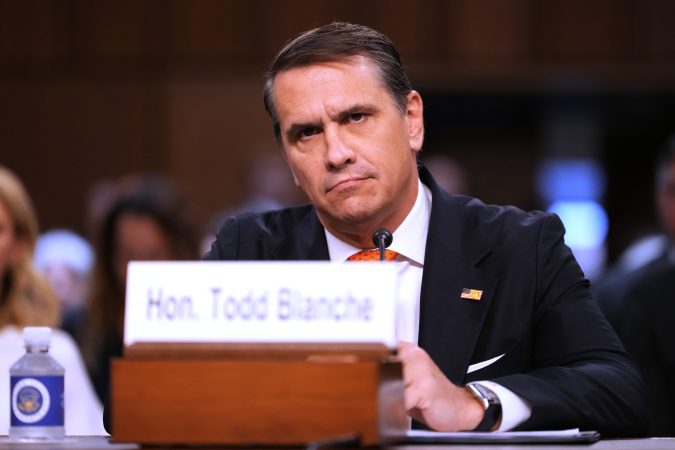
    President Donald Trump suggested Thursday that he might withdraw Todd Blanche’s nomination to become attorney general until next year amid a standoff with two Republican senators who are demanding concessions from the administration in exchange for their votes.

    Sens. John Cornyn (Texas) and Thom Tillis (N.C.) have called for changes, in writing, to the controversial deal the Justice Department struck earlier this year to resolve a lawsuit Trump filed against the IRS. Despite days of negotiations with the Justice Department, an agreement appeared far from likely.

    In a social media post Thursday, Trump called out the senators, both of whom are set to leave their elected positions at the end of the year, and suggested their resistance to supporting Blanche stemmed from Trump’s refusal to back them for reelection.

    “John Cornyn, of Texas, and Thom Tillis, of North Carolina, both of whom I refused to Endorse, and whose political careers have been ended by my action, are refusing to vote for this Great Nominee,” Trump wrote.

    He added: “I have no objection to temporarily withdrawing Todd’s name, if they do not do the right thing, and putting him back after Cornyn and Tillis are out of office.”

    If Trump follows through on that threat, Blanche could remain the head of the Justice Department on an acting basis for the foreseeable future.

    Still, the fact that two senators from the president’s own party had brought Trump to consider such a move signified the extent to which Republican lawmakers are showing an increased willingness to buck the president’s demands as his popularity falls and the midterms approach.

    Cornyn lost his bid for reelection in May after the president endorsed his primary opponent, Texas Attorney General Ken Paxton. Tillis opted not to seek reelection this year after a dispute with Trump. Since then, both senators have opposed the president on occasion, but their stand on Blanche’s nomination is the most significant break so far.

    Despite Trump’s pronouncement, there is no guarantee that Blanche’s path to nomination would become easier if the president waits for the senators to leave office. Analysts from both sides expect Democrats to make gains in the midterm elections, potentially retaking one or both chambers of Congress.

    Responding to Trump’s threat Thursday, Cornyn shot back with a social media post of his own saying the president “is mistaken if he believes concerns about the provisions in his tax lawsuit settlement are limited to me and Senator Tillis.”

    “This is not just a problem with just Thom Tillis and me — we just happen to be on the front lines on the Judiciary Committee,” Cornyn later told reporters. “I think there’s a serious question whether — if this goes unresolved — whether he could ever get confirmed. And I think that’s too bad, because I think he’s basically a good guy.”

    “After the midterms, who knows who’s going to be the next United States senator from North Carolina or Texas?” Cornyn said.

    Earlier in the day, the senator dismissed the notion that his and Tillis’ position stems from hostility to Trump. “This is about making sure that we maintain the integrity of our justice system and fairness for everybody involved,” Cornyn said.

    That back-and-forth came hours after Sen. Chuck Grassley (R., Iowa), chairperson of the Senate Judiciary Committee, was forced to postpone a committee vote on Blanche’s nomination that had been scheduled for Thursday morning or risk a losing outcome.

    Republicans enjoy a 12-10 advantage on the Judiciary Committee, including Sen. Darline Graham of South Carolina, who recently replaced her late brother, Sen. Lindsey Graham. Either Cornyn or Tillis voting against Blanche would be enough to force a tie, stalling the nomination before it could reach the Senate floor. “No” votes from both senators would kill the nomination in committee.

    “Chairman Grassley works to set President Trump’s nominees up for success in committee, not failure,” Grassley’s office said of the decision to postpone the vote.

    Cornyn and Tillis are demanding changes to two aspects of the Justice Department’s deal with Trump, which resolved the lawsuit the president had filed against the IRS over the leak of his tax returns to the media.

    They want Blanche to codify in writing his public pledge that the administration will not move forward with the “Anti-Weaponization Fund,” a nearly $1.8 billion payout fund to compensate people who claim they are victims of politically motivated prosecutions.

    They are also seeking to limit a separate provision that offered Trump, his family members, and their businesses protection from past tax claims — a potentially lucrative benefit for a president who has often complained of burdensome IRS audits. That aspect of the deal has led to accusations of corruption and self-dealing.

    The federal judge who oversaw Trump’s lawsuit recently denounced it as an improper attempt to “manipulate” the court process. She said it was not a legitimate legal dispute between two independent parties, given that both sides ultimately reported to Trump, but rather a pretext to come up with a questionable deal, which was reached without court approval.

    Blanche has said he did not play a direct role in overseeing the negotiations between the Justice Department and Trump’s legal team. However, his signature is the only one that appears on the documents relating to the deal’s tax provisions.

    Cornyn, among other things, wants the administration to clarify in writing that those protections do not apply to the Trump family’s future actions.

    Neither side is offering specifics on the status of their ongoing negotiations, but talks continued into Thursday morning, with the Justice Department and the senators swapping proposals and counteroffers.

    A Justice Department official, speaking on the condition of anonymity to share details on the talks, said the department had sent a new proposal to Cornyn and Tillis late Wednesday.

    “The Department has been in regular communication with Committee members for weeks, and we look forward to continuing to work productively with Senators to address any concerns,” the department said in a statement.

    Cornyn sent a proposal of his own Thursday morning but told reporters that he had not heard back and had no scheduled meetings or calls with White House or Justice Department officials.

    Trump is generally not inclined to make concessions to lawmakers who he thinks are not on his side, said one Trump adviser, speaking on the condition of anonymity to discuss the president’s mindset. Trump does not think he needs Senate Republicans as much as they think he does, the adviser added.

    Cornyn suggested that the $1.8 billion payout fund was no longer the main source of the impasse. Instead, he said, the latest hang-up involved the senators’ requested revisions to the part of the deal containing tax protections for Trump.

    Tillis said separately that Trump’s threat to withdraw Blanche’s nomination rather than formally rescind the payout fund casts doubt on Blanche’s promise that the fund is dead.

    “It doesn’t add up,” Tillis told reporters. “It suggests to me that there’s at least one or two people in the White House that wanted to have this latent capability for future use.”

    Both senators blamed the White House, not Blanche, for the impasse.

    “I’m happy to solve the problem,” Cornyn said. “I thought we had solved it last night. … I think as far as Blanche and the Department of Justice, we were pretty much on the same page. But then when the president got wind of it, he wasn’t.”

  • South Jersey figure skater Isabeau Levito teases two new programs — including a ‘Pirates of the Caribbean’ theme

    South Jersey figure skater Isabeau Levito teases two new programs — including a ‘Pirates of the Caribbean’ theme

    This season, South Jersey figure skater Isabeau Levito is branching out for her programs.

    Previously, her coach, Yulia Kuznetsova, would suggest the music and choreograph the programs for Levito, 19, who grew up in Mount Holly and lives in Mount Laurel.

    For the 2026-27 season, Levito announced on social media that three choreographers had created her programs. Her short program will be to the song “Memória” by Rosalia, choreographed by Lori Nichol and Carolina Kostner. Levito went to Canada to learn that program.

    Her free skate will be to the soundtrack from Pirates of the Caribbean, choreographed by Benoit Richaud.

    Skaters used to keep programs strictly under wraps until their first competitions in late summer or early fall. Sometimes, their final costumes wouldn’t be ready yet and they would skate in older costumes or elevated practice clothes.

    But now, program announcements are more like movie trailers, getting fans eager to see what’s coming. This has been especially true after the Olympics this past winter in Milan, Italy. Many skaters have retired — or in the case of pairs and ice dance, switched partners. Some talked about taking a year off. A small number of skaters, including Levito, toured in prominent shows such as Stars on Ice.

    But it was a big transition season and a time when many people forget about winter sports.

    Levito has said that she’s barely been home in months. Along with the tour and Canada, she returned to Italy to participate in Richaud’s Peak Ice Camp in Courmayeur.

    She also may start the season without her final costumes. Despite releasing a video on Instagram that includes a thumbnail of her in a pirate costume, that is not what she will be wearing. In an interview on Peak Ice Camp’s YouTube page, she said she called costume designer Lisa McKinnon to discuss her new programs and that it would be a minute before they could move forward.

    “Benoit proposed the idea of pants” for Pirates, Levito said, “and I was like, ‘No.’”

    She also suggested she might start the season later than usual because she still needs to heal from an injury she sustained in a bad fall during Stars on Ice.

    Levito released a portion of her free skate step sequence on Instagram, and her programs are the subject of much speculation on social media. She is known as an elegant, balletic skater with beautiful spins and a lot of personality.

    Pirates of the Caribbean music is considered overdone. There is a long list of skaters who performed to Pirates, including 2008 U.S. champion Mirai Nagasu, Spain’s Javier Fernandez (a two-time World champion and 2018 Olympic bronze medalist), eight-time Polish champion Ekaterina Kurakova.

    But certain pieces of music are used frequently in skating for a reason. In the case of Pirates, it is lively and fun. Richaud also is a popular choreographer for a reason, and there is room for him to have made Levito’s Pirates different and special.

    Richaud, a French former ice dancer, is one of the hot choreographers of the moment. At February’s Olympics, he worked with 16 skaters from 13 countries and was frequently seen with them in the kiss and cry, wearing jackets from different countries. His skaters included American ice dancers Emilea Zingas and Vadym Kolesnik, French skater Adam Siao Him Fa, and Georgian skater Nika Egadze.

    Nichol, who is Canadian, also has been a hot choreographer. She created many fan-favorite programs for Michelle Kwan and more recently two-time Olympic silver medalist Yuma Kagiyama. She works often with Kostner, the 2014 Olympic bronze medalist from Italy.

    Levito has said that she wants to increase her difficulty and is eager to eventually land a triple axel and a quadruple jump, whether or not she does them in competition.

  • A shrinking weapons stockpile is testing the Pentagon’s sweeping new strategy

    A shrinking weapons stockpile is testing the Pentagon’s sweeping new strategy

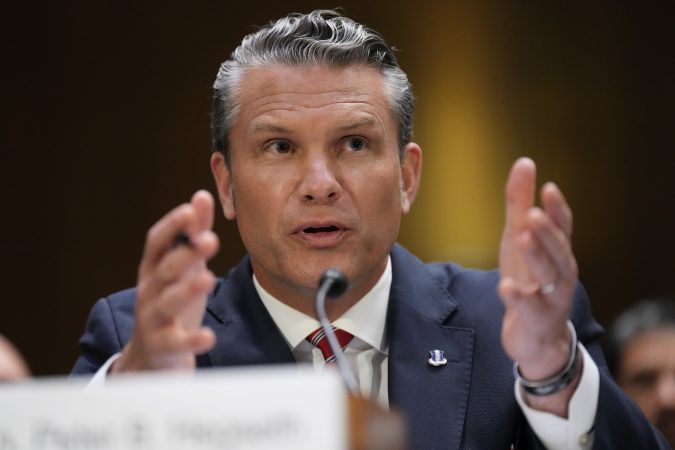
    In a late-June meeting with more than a dozen of the nation’s top defense technology firms, Defense Secretary Pete Hegseth had an urgent message: The Pentagon needed their help to rapidly replenish America’s weapons arsenal.

    Outside the room, the United States was mired in a conflict with Iran that was rapidly depleting U.S. stocks of missiles and interceptors. According to three people familiar with the meeting, some of whom spoke on the condition of anonymity to discuss sensitive information, Hegseth told executives that their companies would be critical to restocking the nation’s supplies.

    The meeting, several details of which were previously unreported, underscores a pivotal shift in the U.S. defense industry. With the Iran war consuming vast quantities of precision munitions and relying less on ground troops or drone warfare, the Pentagon is leaning on venture-backed startups to solve one of its most pressing problems: rebuilding America’s weapons stockpiles at speed.

    The meeting was filled with the Pentagon’s top brass, including Steve Feinberg, the deputy defense secretary; Emil Michael, the undersecretary of defense for research and engineering; and Michael Duffey, the Pentagon’s top acquisitions official.

    Leading defense tech firms were summoned, including AI-aircraft software company Shield AI, the autonomous weapons firm Anduril, cruise missile startup CoAspire, and low-cost munitions maker Castelion. Some details of the meeting were previously reported by Breaking Defense.

    In many ways, this is the moment Silicon Valley’s defense entrepreneurs have said they were made for — to be cheaper, quicker, and more nimble to the needs of the U.S. fighting force than legacy multibillion-dollar defense contractors.

    They represent a sharp departure from established firms, which have far more experience managing clunky government acquisition processes and billions of dollars in capital to spend producing weapons en masse and lobbying lawmakers, but can move more slowly, especially in creating new supplies featuring cutting-edge technology, including artificial intelligence.

    The urgent need for new weapons is a major test for the Trump administration, which has turbocharged its relationship with Silicon Valley and made collaboration with startups a core part of its weapons acquisition process. The conflict, according to industry experts, may reveal whether newcomers can deal with the challenging realities of providing weapons at scale, overcoming antiquated contracting processes and congressional gridlock.

    Hegseth focused on these hurdles at the gathering, asking each executive what obstacles stood in the way of producing more weapons, according to the people. Several pointed to slow Pentagon contracting processes and the difficulty startups face securing enough up-front financing to fund large production runs and expensive research and development.

    It’s unclear, however, whether the industry’s newest entrants can scale quickly enough to meet the Pentagon’s demands.

    “It’s one thing to build … it’s another thing to then mass produce,” said Jerry McGinn, the director of the Center for the Industrial Base at the Center for Strategic and International Studies. “Can they deliver?”

    Acting Pentagon press secretary Joel Valdez said in a statement to the Washington Post that the Defense Department is “transforming how the Department fights, buys, and builds” its weapons “to ensure we rapidly deliver critical technology to the warfighter at scale.” He added that the department “will harness the creativity and drive of American innovators, clear bureaucratic blockers, and put our acquisition system on a wartime footing to deliver tangible solutions to the Joint Force.”

    Anduril and Shield AI did not reply to a request for comment.

    ‘Begging to be unleashed’

    In the second Trump administration, the Pentagon has made it increasingly clear that Silicon Valley will be essential in creating cheaper, smarter, and smaller weapons to reshape how the U.S. fights war.

    The Defense Department’s top leadership has become stuffed with former Silicon Valley executives, bringing their startup ethos to the Pentagon to transform the military.

    Speaking in November at the National War College in Washington, Hegseth outlined his vision to overhaul the Pentagon’s acquisition process in partnership with U.S. industry to ensure it can operate on a wartime footing.

    “American industry and its innovative spirit are begging to be unleashed to solve our most complex and dangerous warfighting problems,” he said. “We need to get out of our own way, out of your way and enter into real partnership with you rather than overprescribe and decelerate your natural progress.”

    Approximately 10,000 new defense tech companies have entered the market since 2024, according to a July report by CSIS. Nontraditional companies outside of legacy defense contractors received more than $120 billion in contract obligations in the 2025 fiscal year.

    But one of the Pentagon’s most urgent needs is munitions. The war with Iran has sharply depleted U.S. stockpiles, with CSIS estimating Monday that inventory of Patriot interceptors has fallen from 2,200 before the war to fewer than 827, and THAAD missiles from 452 to fewer than 278.

    It could take three or more years to replenish the supply of THAAD and Patriot missile defense systems to what it was before the Iran war, according to a CSIS analysis in May, putting the U.S. at increased risk of service members dying and military assets abroad becoming damaged due to weakened defenses. Precision strike and joint air-to-surface missiles may take several months to a year to replace, according to the analysis.

    The Defense Department is aiming to fill this gap by turning to tech companies that make low-cost munitions. The Pentagon’s fiscal 2027 budget calls for nearly half of all of its munitions to be low-cost, with that share rising to 70% by fiscal 2031, CSIS analyzed.

    This mindset has filtered into current agreements. In May, the Pentagon announced several multiyear arrangements with defense tech companies, including Anduril, Castelion, CoAspire, Leidos, and Zone 5, to “aggressively expand” the U.S. military’s strike capabilities and purchase their low-cost missiles.

    The goal, according to the announcement, is to procure 10,000 low-cost cruise missiles in three years, starting in 2027. The Defense Department has also said it will issue a contract to Castelion to purchase a minimum of 500 of its low-cost hypersonic missiles — called Blackbeard — annually with a desire to buy up to 12,000 over five years if the technology receives proper testing accreditations.

    McGinn of CSIS said the demand will expose the industry to the realities of making weapons in real time. The startups have shown they can build the technology at low cost, he said, but now they have to prove their products are up to Pentagon standards, while navigating the whims of Congress, which appropriates defense spending.

    Doug Denneny, the founder and chief executive of cruise missile startup CoAspire, said startups face a challenge beyond mastering technological advancements.

    “That is the direct messaging that we receive from the Department of War,” he said, using the Trump administration’s preferred name for the Defense Department. “‘Great that you’ve got this great technology. … We get it. We believe it. You’ve demonstrated it. You’ve proven your capability. Now you have to manage your supply chain, and now you have to produce at scale. Otherwise, it’s not worth the investment.’”

    “The importance of that has been emphasized to me personally by senior leadership in the Pentagon,” he added.

    The rush to expand weapons production could also overwhelm the subcontractors that supply critical components, creating bottlenecks across the defense supply chain, Denneny said.

    Bryon Hargis, co-founder and chief executive of Castelion, said the Pentagon’s reliance on startups carries enormous pressure. His company’s Blackbeard hypersonic missile could cost about $500,000 each — far below the roughly $5 million price tag of comparable weapons v but scaling production to meet military demand remains the challenge.

    “I feel the weight of … everything that we still have yet to do and to build out,” he said, adding that making good on supply promises is “going to be just tremendous amounts of pain over the next years.”

    He noted that the partnership is “an honor, but it’s a great responsibility. Like I feel we have to deliver.”

  • Philly’s new cruise terminal is behind construction schedule and will cost millions more than expected

    Philly’s new cruise terminal is behind construction schedule and will cost millions more than expected

    A cruise ship sailed out of the Port of Philadelphia this spring for the first time in 15 years, as state and local officials celebrated a new economic driver for the region.

    Officials have projected that the new cruise business — anchored by Norwegian Cruise Line at a Hog Island terminal near Philadelphia International Airport — will create more than 2,100 jobs and generate $300 million in annual economic activity.

    What they did not anticipate before breaking ground in December was that several obstacles — including several weeks of subfreezing temperatures and icy conditions on the Delaware River — would send the construction project millions of dollars over budget.

    The cost of building the terminal has increased 50% to more than $60 million, according to the Philadelphia Regional Port Authority (PhilaPort), an independent state agency that owns seaport facilities along the Delaware. The port authority is funding the project.

    PhilaPort is considering obtaining financing to help cover the $20.1 million in cost overruns. The authority’s board this month approved a resolution authorizing staff to borrow up to $15 million. PhilaPort spokesperson Marty O’Rourke said loan terms remain under negotiation.

    In addition to the potential financing, the port authority is funding the project from operating revenues, O’Rourke said. PhilaPort generates revenue from its leases with tenants that operate facilities such as marine terminals and warehouses.

    PhilaPort’s budget for the fiscal year that began July 1 includes $34.5 million in revenue.

    Despite the delays, Norwegian Cruise Line’s ships have continued to dock at PhilaPort’s under-construction terminal since April. Mayor Cherelle L. Parker and Gov. Josh Shapiro, both Democrats, attended an onboard ceremony for the Norwegian Jewel’s inaugural call that month.

    Shapiro — whose appointee chairs PhilaPort’s board — touted the cruise business “as the newest addition to our commonwealth’s fast-growing tourism industry.”

    There had been 13 voyages as of mid-July.

    PhilaPort remains upbeat about its new revenue stream. Under a seven-year agreement, Norwegian Cruise Line has committed to 41 voyages annually to locations like Bermuda, and PhilaPort says it will receive $59 million in rent from the company over that period of time.

    “The key point to remember moving forward is that all infrastructure is now in place for additional cruise lines to start using the PhilaPort Cruise Terminal,” O’Rourke said. Each new line has the potential to generate an additional $8.5 million in annual rent, he said.

    Construction began in December after PhilaPort acquired the Hog Island terminal facility in Tinicum from Energy Transfer Marketing & Terminals L.P. for $10. Under the deal, ownership of the 15.5-acre property reverts back to Energy Transfer in seven years.

    PhilaPort’s board in November authorized the agency to bypass competitive bidding “due to the urgency of need to ensure that the cruise terminal is operational and ready to receive passengers by the first scheduled sailing in April 2026.”

    The port authority hired Bridgeport, N.J.-based Commerce Construction Corp. to handle waterside construction, based on their past maritime experience, O’Rourke said.

    Norwegian Cruise Line tapped Philadelphia-based A.P. Construction to lead landside construction.

    O’Rourke said PhilaPort “had a very narrow four-month window to complete construction in time for the first ship berthing.”

    “This tight construction window was compounded by severe weather-related obstacles and delays caused by several weeks of subfreezing temperatures, resulting in higher-than-anticipated costs for labor overtime and added acceleration fees for materials acquisition,” he said in an email.

    Also contributing to added costs were regulatory requirements, environmental remediation, additional landside mooring work, and temporary facilities needed to support vessel operations, O’Rourke said.

    The landside construction was originally scheduled for completion by the end of June. The port authority now anticipates the terminal will be complete by its grand opening Aug. 27.

    Commerce Construction didn’t respond to a request for comment, but the contractor posted on LinkedIn earlier this summer that it had made progress despite “extreme cold, icy conditions, and a relentless deadline.”

  • At the Kimmel, jazz legend Herbie Hancock gave way to rock star Herbie Hancock

    At the Kimmel, jazz legend Herbie Hancock gave way to rock star Herbie Hancock

    At some point in his 86 years of life, Herbie Hancock — one of the most revered artists in jazz — became a rock star.

    That was evident simply from the rapturous reception that greeted the legendary keyboardist and composer at Kimmel Center’s Marian Anderson Hall on Wednesday night, from a packed crowd that would have been a demographer’s dream.

    The point was driven home throughout his nearly two-hour performance, which was raucous, pyrotechnical, and just plain big.

    That includes the members of his audacious quintet, outsized musical personalities all.

    Trumpeter Terence Blanchard is a fellow NEA Jazz Master who likely answers few calls for sideman work these days, busy as he is writing scores for Spike Lee and other filmmakers, composing acclaimed operas, and leading his own band.

    Benin-born guitarist Lionel Loueke pairs a singular sound (Hancock mused that he must be “either alien or AI”) with vocals that incorporate Xhosa-inspired rhythms and tongue clicks.

    James Genus is a virtuoso with a deep groove whose Saturday nights have been booked solid for more than 25 years as the bassist in the SNL band.

    The wild card was 27-year-old drummer Jaylen Petinaud, who played with the destructive force of a bulldozer, an avalanche of funk that provoked his elders on the stage into visceral flights. He was embraced so quickly by the Kimmel crowd that he received a trademark hazing, getting heckled for daring to show up for the gig sporting a Knicks cap. He obliged by turning the offending logo to the back.

    Herbie Hancock greets the audience during his tour stop at the Kimmel Center in Philadelphia on Wednesday, July 29, 2026.Elizabeth Robertson / Staff Photographer

    Hancock, attempting to introduce the band, was unaware of the details but quickly picked up on the vibe, asking, “What’s that, some Philly stuff?”

    As tumultuous as the set would become, it began in a meditative mood. Hancock spent the first few minutes musing on “Maiden Voyage,” the title tune from his 1965 Blue Note classic, letting the melody submerge and rise again from his elegant, gossamer lines as if gently bobbing on ocean waves.

    After a few minutes, he turned to his right, bringing in the band with the familiar strains of “Watermelon Man” on his Korg keyboard. In that 90-degree swivel was represented a pivot point in jazz, the turn from the acoustic piano to the electric keyboard and the adoption of ‘70s rock into fusion, as embodied by Hancock’s Headhunters.

    The bandleader has long since melded the two strains into one, moving effortlessly throughout the show between piano, keyboard, and keytar — the latter allowing him to roam the stage and bend notes like a guitar wizard.

    Hancock’s age was a constant theme of the night, for him at least — nothing about his playing or his stamina showed any sign of slowing, even if his gait shuffled more than in the past. By the end of the night, he would be face-to-face with Loueke, wailing on the keytar while executing synchronized jumping jacks with the guitarist more than three decades his junior.

    Herbie Hancock (left) and guitarist Lionel Loueke perform during “Herbie Hancock’s Summer Tour 2026” stop at the Kimmel Center in Philadelphia on Wednesday, July 29, 2026.Elizabeth Robertson / Staff Photographer

    He introduced much of the set with jabs at the material’s age, only backing off when he realized that he might be insulting fans who can remember when these songs were new. “I was going to say this one is older than me, but that can’t be,” he remarked at one point — then added, “Nothing’s older than me.”

    This was in Hancock’s introduction to “Actual Proof,” an avant-funk framework for improvisation from 1974’s Thrust that proved to be one of the show’s most vital and exuberant highlights. Driven by Petinaud’s percussive barrage, Hancock erupted into forceful cascades along the piano, his hands crashing down onto the keys and then skittering away into curious, serpentine lines. (“I call that a finger-breaker,” he commented afterward.)

    Blanchard’s turn opted for tension, his electronically-enhanced trumpet sculpting sleek contours vigorously resisting the pull of Petinaud’s boisterous funk. Loueke’s quicksilver solo, Genus’ burbling flow unfolding with the logic and cadence of a monologue, and Petinaud’s final explosion rounded out the jaw-dropping showcase.

    These classics were balanced by a few newer pieces that Hancock introduced as works in progress, though “Secret Sauce” has been a staple of his setlist for nearly a decade. The other, tentatively titled “Phoelix” after one of its cocreators (along with Loueke and flutist Elena Pinderhughes), was a neo-soul-inflected number featuring Hancock singing through a vocoder. Genus’ eloquent unaccompanied solo, fleet and mellifluous, so impressed one woman in the audience that she was moved to announce, “I love bass players!”

    Herbie Hancock (left) and guitarist Lionel Loueke perform during “Herbie Hancock’s Summer Tour 2026 Tour” stop at the Kimmel Center in Philadelphia on Wednesday, July 29, 2026.Elizabeth Robertson / Staff Photographer

    “Footprints” was also included as an homage to the late Wayne Shorter, Hancock’s bandmate in Miles Davis’ second great quintet and “my best friend.” His investigatory piano solo offered a capsule portrait of Shorter’s quizzical and mysterious nature, becoming increasingly insistent and blistering as it unfurled, hinting at stride inflections that further expanded the historical reference points. Loueke’s solo turned from an intricate guitar/vocal pairing to blues-rock shredding, then to taut, gnarled figures, the malleable rhythm section hyper-attuned to every swerve and sudden stop.

    “Let’s see if we can have some fun,” is how Hancock introduced the evening, making sure to wave to every section and balcony before taking his seat at the piano.

    Mission accomplished, judging by the standing ovation from the crowd and the ear-to-ear grin on Hancock’s face after every tune. He confirmed the feeling with a final outburst of, “We had fun!” before breaking into a giddy run across the stage and shaking hands with an adoring crowd.

  • Former Sharon Hill police officer sentenced to state prison for raping, sexually assaulting three children

    Former Sharon Hill police officer sentenced to state prison for raping, sexually assaulting three children

    A former Sharon Hill Police officer was sentenced to nine-to-20 years in state prison after admitting he raped and sexually assaulted three children, one as young as 9.

    Tyler Humphreys, 24, pleaded guilty in March to rape, corruption of minors, involuntary deviant sexual intercourse, and related crimes in connection with the assaults, which took place between 2014 and 2022.

    The sentence was handed down by Chester County Court Judge Annalisa Sondergaard during a lengthy hearing Wednesday evening. As a condition of his sentence, Humphreys, of Malvern, is barred from contacting any of the victims or their families.

    His attorney, Elliot Marc Cohen, did not immediately return a request for comment Thursday.

    During the hearing, the mother of one of the victims described how Humphreys betrayed the trust afforded him as a public servant and had torn their family apart.

    Humphreys was hired as a Sharon Hill police officer in September 2023, three months before he was arrested.

    The borough fired Humphreys shortly after the charges were filed by prosecutors in Chester County. During his brief stint with the department, Humphreys worked as a school resource officer, but Sharon Hill officials have said there were no allegations that he had committed any crimes during his tenure with the department.

    Investigators said they received a report in November 2023 about the rape, which occurred the previous December at a home in Charlestown Township, according to the affidavit of probable cause for Humphreys’ arrest.

    The victim, then 15, told police Humphreys served her alcohol until she was drunk, then carried her to a bedroom and raped her as she was “in and out of consciousness, the affidavit said. Humphreys was 20 at the time.

    Another victim later told police about a second incident that also occurred in December 2022.

    The woman, then 19, told police she woke up next to Humphreys in bed, and felt sharp pain in her genitals, according to the affidavit. Earlier, she said, Humphreys had urged her to take over-the-counter medication in a dosage that far exceeded what was recommended. When she confronted him about the pain she felt, he denied any wrongdoing, the affidavit said.

    She also told investigators that Humphreys sexually assaulted her, groped her and exposed himself a number of times between 2014 and 2018, starting when she was 11 and he was 12, according to the affidavit.

    Humphreys was also charged with — and admitted to — the sexual assault of a 9-year-old boy that took place when Humphreys was 12.

  • Johnny Doc will remain in prison after a judge again denied his request to be released on house arrest

    Johnny Doc will remain in prison after a judge again denied his request to be released on house arrest

    Convicted former Philadelphia labor leader John Dougherty will remain in prison after a federal judge again denied Dougherty’s request to be released on house arrest to provide care for his gravely ill wife.

    U.S. District Judge Jeffrey L. Schmehl wrote in a memorandum filed Thursday that Dougherty and his lawyers had failed to demonstrate that he was the only person who could provide adequate care for his wife, Cecelia, who for years has suffered from a debilitating brain injury.

    In addition, Schmehl wrote, Dougherty did not sufficiently specify when a trust fund established to support his wife’s care would run out of money. Those factors, coupled with the “minimal amount of time” Dougherty has served in his six-year sentence, Schmehl wrote, “do not weigh sufficiently in favor of relief.”

    The decision was a blow to Dougherty, 66, who for months has been contending in court documents and in testimony before Schmehl that his wife’s condition has significantly worsened while he has been imprisoned, and that if he is not released to care for her, she will likely die.

    Dougherty’s attorney, George Bochetto, said in an interview Thursday that he was “deeply, gravely disappointed” by the ruling, and that he disagreed they had not shown the acute nature of the emergency that should qualify Dougherty for release.

    “I thought the evidentiary hearing we had in front of Judge Schmehl was extraordinary, and it left no doubt in anybody’s mind” about the merits of Dougherty’s petition, Bochetto said.

    The ruling followed another rejection in Dougherty’s ongoing bid for freedom. Earlier this month, President Donald Trump denied Dougherty’s request for a commutation, a legal avenue that could have cut Dougherty’s prison term short.

    Schmehl, in his memorandum, did say that Dougherty could file a renewed motion in the future, “should the facts materially change.”

    Bochetto said he would not wait that long. He was already working on his notice of appeal to the U.S. Court of Appeals for the Third Circuit, he said, and he intended to ask the court to consider the case on an emergency basis.

    “This is why God invented appellate courts,” Bochetto said.

    Dougherty was sentenced in 2024 to six years in prison after being convicted in separate bribery and embezzlement trials that centered on actions he took while serving as the head of his politically powerful union, Local 98 of the International Brotherhood of Electrical Workers.

    But last year, Dougherty — known colloquially as Johnny Doc — filed emergency motions asking Schmehl to allow him to serve the remainder of his prison term on house arrest so he could be his wife’s primary caregiver.

    In his first request, filed in the summer, Dougherty said that the trust fund established to pay for her care was about to run out of money, and that his daughters and other relatives were unable to provide the kind of around-the-clock assistance she needed.

    Then, in December, he filed another motion, saying the situation had become more dire after the death of his father-in-law, who had been serving as the primary caregiver in his absence.

    Prosecutors opposed Dougherty’s requests, saying that although they were sympathetic to his wife’s plight, they did not believe he had served enough of his sentence to merit release.

    And in January, Schmehl denied Dougherty’s request, writing that he, too, recognized the significant health challenges, but that they did “not outweigh, at this point in time, the need for punishment that has been adjudged.”

    Bochetto appealed that ruling. And in May, Schmehl held an evidentiary hearing to learn more.

    At the hearing, Dougherty took the stand for more than an hour, and occasionally choked back tears as he described his wife’s myriad complications and detailed the efforts he had made in prison to help her, including by sending her dozens of letters and using all of his allotted monthly phone minutes to call her.

    But prosecutors argued that Dougherty and his relatives had not sufficiently looked into alternative care arrangements that might be covered by Medicaid or other insurance. And they said that while many families across the country could benefit from having an incarcerated defendant released to help care for their relatives, Dougherty had not shown that he was the only person who could do so for his wife.

    Schmehl, in his order, said that Dougherty’s wife is being cared for by private nurses and her two daughters, and that “neither party suggests that her current care is inadequate.” Beyond that, the judge said, Dougherty did not sufficiently specify when her trust fund would run out of money and did not adequately explain what would happen once it did.

    The ruling will leave Dougherty, for now, to serve out the remainder of his term, which he is serving at a federal prison in Lewisburg, Pa. His projected release date is in June 2029, according to the Bureau of Prisons website.

  • Tuskegee University’s ban on hair bonnets and do-rags in class? I’m here for it.

    Tuskegee University’s ban on hair bonnets and do-rags in class? I’m here for it.

    Say what you want about Tuskegee University’s new ban on hair bonnets, bedroom slippers, and do-rags in classrooms and the dining hall. But the historically Black college’s iconic first president, Booker T. Washington, would be all for it.

    Born into slavery and educated at what is now Hampton University, Washington was nothing if not pragmatic. He was hired as the first principal at the school in central Alabama in 1881. Given the economic subordination of African Americans in the post-Reconstruction era, he believed that Black people needed to do whatever they could to survive.

    Sears founder Julius Rosenwald (left) with Booker T. Washington at the Tuskegee Institute in 1915. The Institute became Tuskegee University in 1985.

    Students dressed in uniforms and learned skills such as shoemaking, dressmaking, carpentry, and other practical trades. The renowned educator recalled in his autobiography Up From Slavery that ”when the students march out of chapel in the evening and their dress is inspected, as it is every night, not one button is to be found missing.”

    Newly emancipated Black Americans had few rights and were often forced to work as sharecroppers. Critics might not think of Washington as having been woke, as they say, but he was convinced that, “No white American ever thinks that any other race is wholly civilized until he wears the white man’s clothes, eats the white man’s food, speaks the white man’s language, and professes the white man’s religion.”

    Fast forward to today where at Washington’s beloved HBCU in rural Alabama so much has changed but other things haven’t.

    The entrance to Tuskegee University in Tuskegee, Ala., in a photo from 2024.Mike Stewart

    Mark A. Brown, Tuskegee’s current president, recently addressed the issue of proper attire on the school’s sprawling 5,000-acre campus. In a letter to students Brown wrote that the goal is to prepare them for the workforce, adding, “Employers are less forgiving and too often presentation may overrule stellar preparation.”

    Many take exception to the ban on hair bonnets and do-rags, which customarily are worn to protect Black hairstyles while people sleep. In recent years, it has become much more common for people to also wear them on airplanes, at the mall, and in classrooms.

    As for me, I’m old school when it comes to this sort of thing. I don’t wear hair bonnets outside. I hate to admit it, but I low-key judge others when they do. So, even though it smacks of respectability politics — which refers to the adjustments people make to fit in with mainstream culture to shield themselves from racism — I am not mad at Tuskegee’s new dress code.

    It’s about having standards and encouraging young adults to take pride in their appearance. During my days at Howard University, we tried to look as good as we could whenever we stepped onto The Yard. It’s part of the HBCU mystique. Whenever I see old photos of my parents at their alma mater, North Carolina Central University, they were dressed in what today we’d consider business casual clothes — slacks, pencil skirts, collared shirts.

    Ever since the news broke about Tuskegee’s new policy, commenters have been buzzing on social media about the topic. Many see their ability to wear what they want — when they want and absolutely wherever they want — as an issue of personal freedom.

    “I can guarantee you that none of these people are walking into meetings and boardrooms in their do-rags and hair bonnets,” pointed out Danyl Patterson, an attorney from West Philly. “This is no different from code-switching. We know when and how to do it.”

    She brought up the issue of comfort. “When you’re a student, you drag yourself,” Patterson recalled. “You might be tired and you’re telling me this is the only food I have access to and I need to get fully dressed to go get cereal?”

    She presents a great argument.

    But I still cringe at the idea of people showing up for class in what I consider nightwear. It’s not too much to require college students to present themselves a little better. Tuskegee students also are now prohibited from wearing revealing clothing to class, the cafeteria, and convocation.

    Isis Rodriguez, whose son is a senior at Tuskegee majoring in veterinary science, agrees with the changes. “After COVID, it seems as if people slid into a state of complacency and comfortability. We all were in bonnets and pajamas.”

    That was then, she added: “But at some point, we had to get out of that rut and this is the time — because we need to send our young people into the professional world wearing real clothes.”

    African Americans fare much better than when Washington presided over Tuskegee, but we continue to face widespread systemic disadvantages in the workplace. President Donald Trump and members of his administration are doing all that they can to end DEI, which helps level the playing field for Black people, women, people with disabilities, and so many others.

    Newly minted graduates need to be ready to compete on day one. Preparation for that starts with them showing up to their classes regularly sans bedroom slippers, hair bonnets, and do-rags.

    Besides, as Iyatunde Garrett, a registered nurse who lives in Southwest Philly, said to me: “What professor wants to sit in a classroom with a bunch of students who look like they literally just got out of bed?”