Zachery McKinnon grew up in Michigan but moved to various places, always fostering a passion for art and home renovation.
Now, after over a decade in the East, he is selling the Washington Square West condo he bought last year. He is drawn back home for a long stay to help his parents.
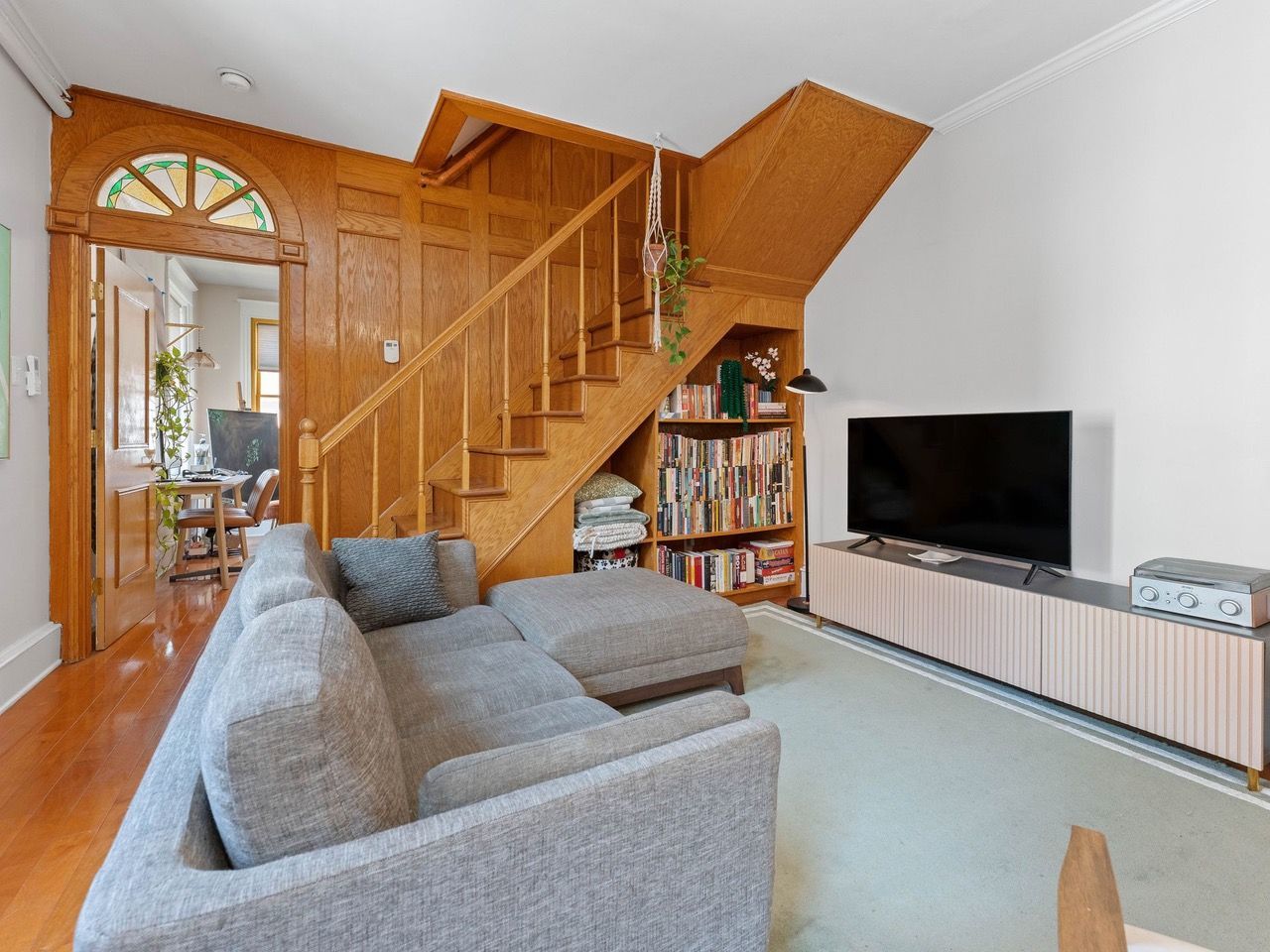
Living room with stairway to rooftopCal Media
His one-bedroom, one-bathroom condo spans 603 square feet. “The rooftop was really why I bought the place,” said McKinnon, who works in data analytics for an education nonprofit.
The condo’s proximity to City Hall, Thomas Jefferson University Hospital, the Kimmel Center for the Performing Arts, Old City, South Street, Chinatown, and SEPTA Regional Rail were convenient for McKinnon, who doesn’t own a car.
RooftopCal Media
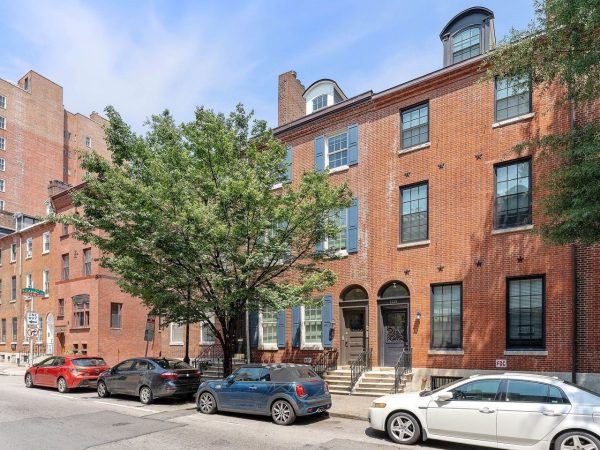
The six-unit building, the Aldrich, was built in the 1820s and is on the Philadelphia Register of Historic Places. It underwent a major renovation in 2021, including new floors.
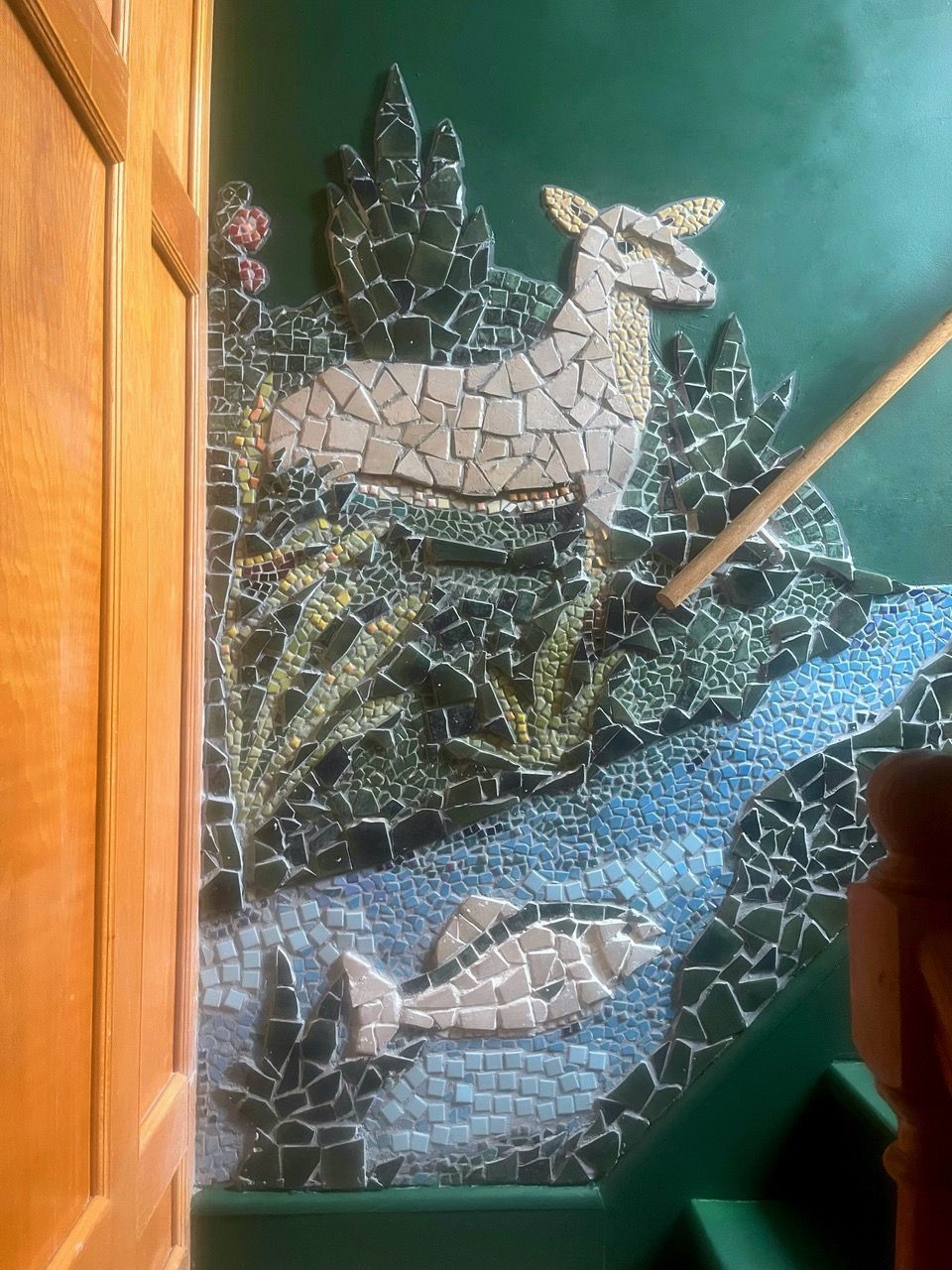
McKinnon did some work on the condo’s kitchen and added mosaics throughout the unit. He is an admirer of mosaic artist Isaiah Zagar.
Mosaic by Zachery McKinnonCal Media/Aaron Cantu
The unit has tall windows, high ceilings, an in-unit washer and dryer, and dedicated basement storage.
There is year-round mini-split AC and gas heat.
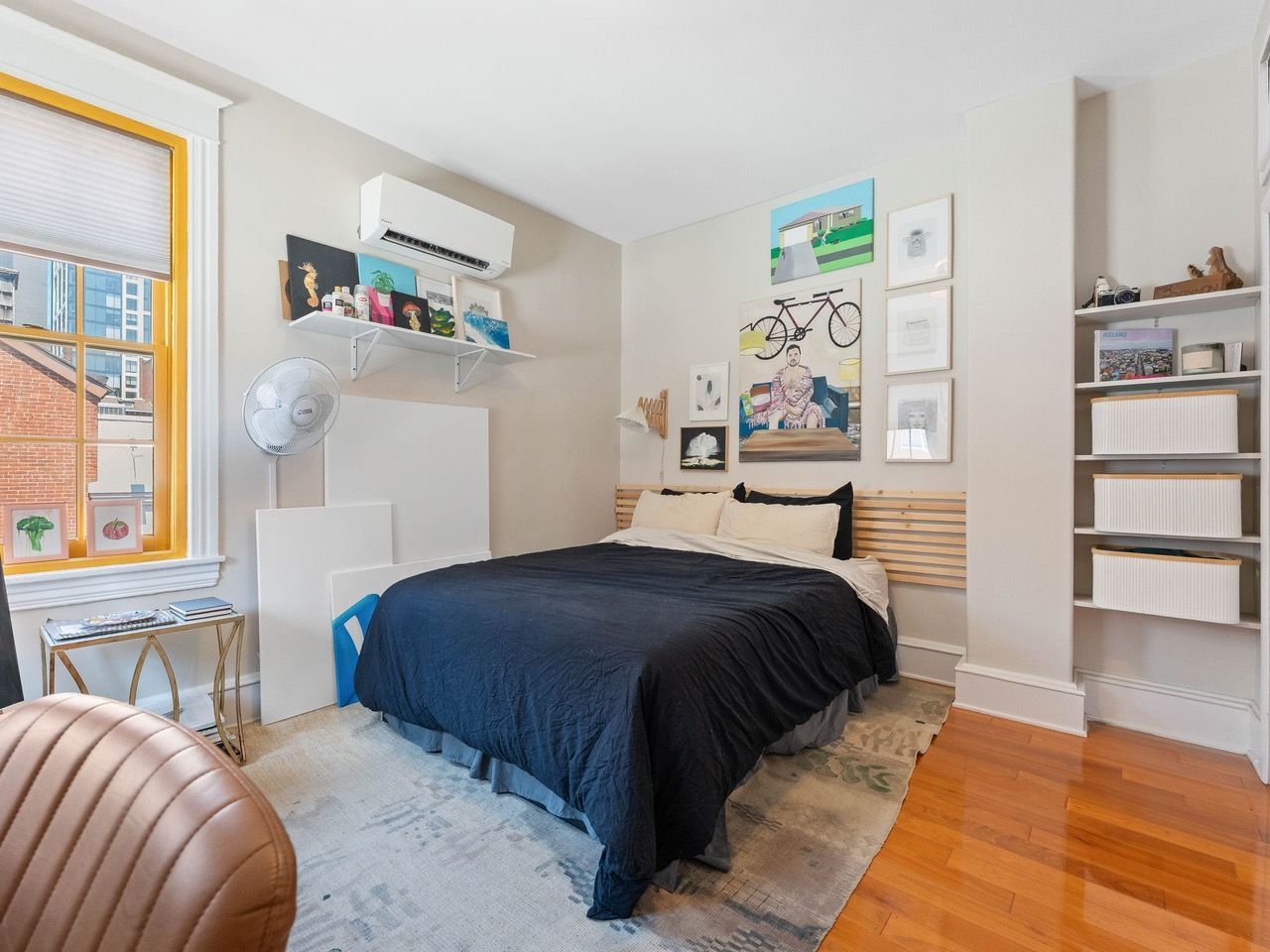
BedroomCal Media
The condo building is pet-friendly.
The unit is listed by James A. Olivieri of Penn Jersey Realty for $339,900.
Editor’s note: This story has been updated to reflect a change in the listing price.
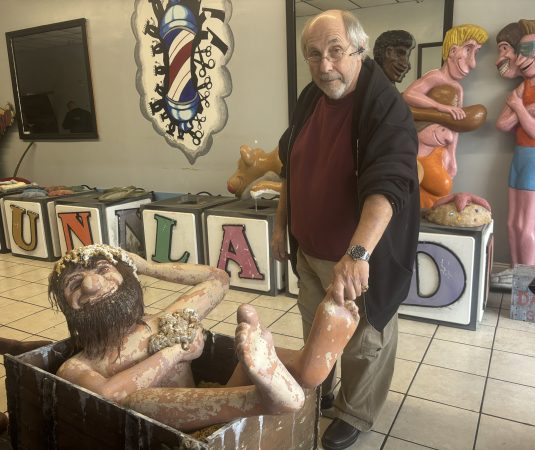
Almost two years after Gillian’s Wonderland shuttered, there are still 20 unsold eclectic artifacts from the iconic boardwalk amusement park at Obnoxious Antiques in Burlington.
Any chance you’re interested in the 12-by-6-foot skeleton head and hands that once gripped the Haunted Dark Ride at Gillian’s Wonderland Pier in Ocean City?
That item — priced at $8,500 — and 19 other spooky artifacts from the closed amusement park are for sale at Obnoxious Antiques in Burlington.
Ocean City Mayor Jay Gillian made the decision in October 2024 to close the park his family owned.
The owner of the vintage store hopes this upcoming Halloween season will bring in more buyers.
So far, half of the sold items have gone to people out of state and the other half returned to Ocean City.
According to the members of the New Jersey congressional delegation, a man who was detained at the Delaney Hall ICE facility in Newark has died.
The detention center has attracted national attention during President Donald Trump’s immigration crackdown, with numerous complaints about its practices almost since it reopened in 2025.
It’s been the site of altercations between law enforcement officers and protestors, and of political fights between state Democrats and the federal government.
The office of U.S. Sen. Andy Kim, a South Jersey Democrat, confirmed the Newark ICE field office notified the senator’s team of the death Monday. The immigrant rights group Cosecha New Jersey shared a video identifying the person who died as Edwin Jeovanny López Cornejo.
Hanwha Philly Shipyard wanted more space for better contracts, more hiring, and more profit-making potential. The yard’s leader eyed a facility in Paulsboro — but then the port operator, Holt Logistics, refused the approval. Months later, Hanwha is giving up on the New Jersey option and now is collecting offers from Southern states.
State Republicans are hopeful that a voter identification law could pass after Gov. Mikie Sherrill last week said she would support it, New Jersey Monitor reports.
Monday’s thunderstorms delayed the start of the $2.5 million project to make repairs on Collings Avenue Bridge over Newton Creek on the border of Camden and Gloucester City. It is now set to begin today and the bridge will be closed for about three months.
Speaking of roadway maintenance, residents in Camden, Oaklyn and Cherry Hill should plan to make detours since that is where the bulk of the roadway projects will occur this week.
A teacher from West Deptford suffers from retinal vasculopathy with cerebral leukoencephalopathy, or RVCL, a disease affecting fewer than 50 families worldwide that damages small blood vessels and causes premature death after harm accumulates on organs. The University of Pennsylvania got a $10 million gift to try to find a treatment.
The veteran actor Vincent Pastore, best known for playing Salvatore “Big Pussy” Bonpensiero on Jersey-set The Sopranos, has died at 80, according to the Associated Press.
🗣️ Quote of the week
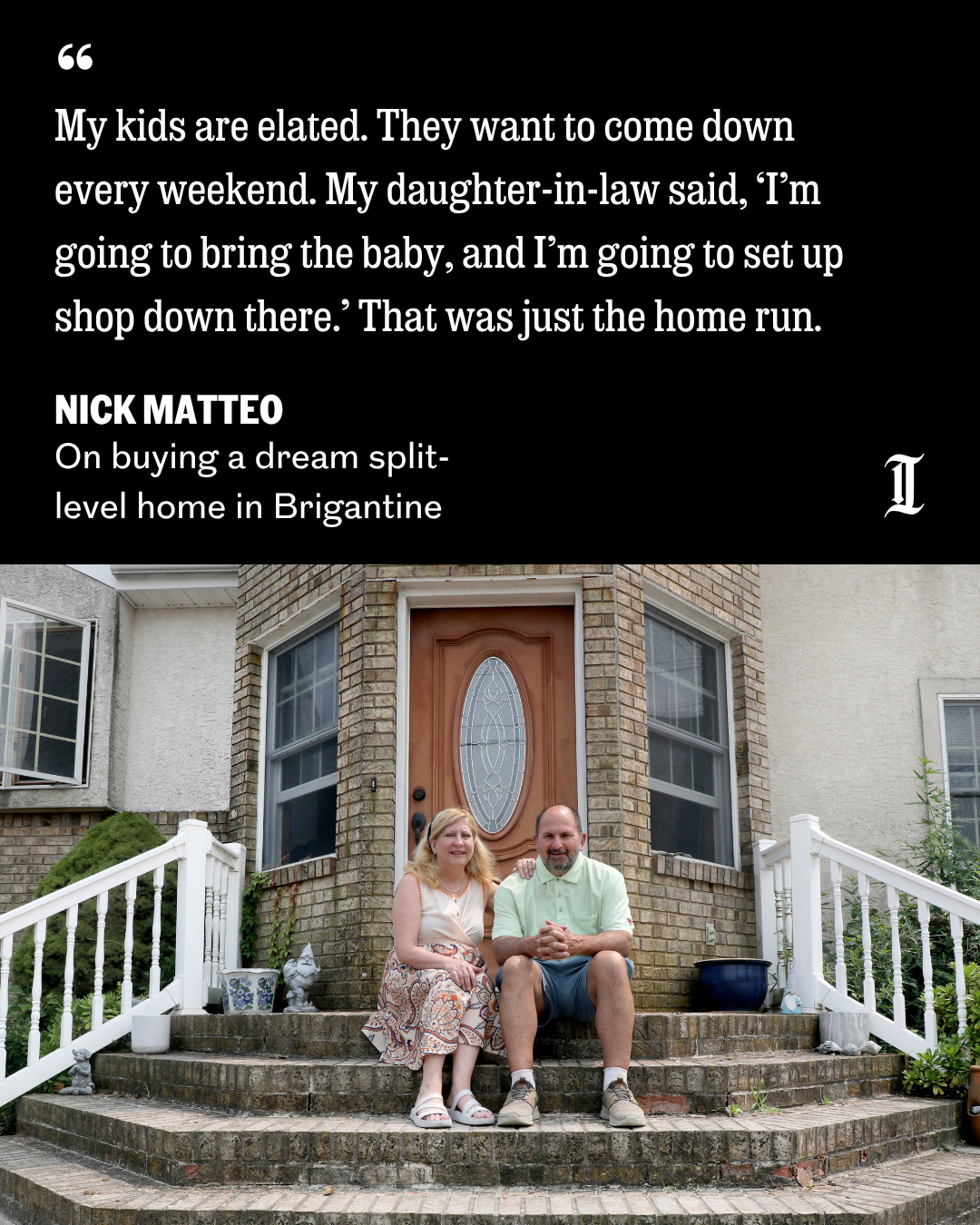
Nick and Sandy Matteo immediately fell in love with the split-level after driving by, they told The Inquirer in the latest How I Bought This House column. They called the listing agent from outside the house and got a tour the same day.
Did you recently buy a home in South Jersey? Share the story of how you did it. Email Inquirer real estate reporters at properties@inquirer.com.
🧠Trivia time
Former Gov. Phil Murphy declared which date as Bruce Springsteen Day?
HARRISBURG —More than one million Pennsylvania households spend over 30% of their income on housing. And over the next decade, the state’s housing crunch is slated to intensify, with estimates that Pennsylvania will have nearly 185,000 fewer new homes than it needs to keep up with projected demand.
State legislators have pushed to address the need, introducing bills that would increase the housing supply through accelerated approval processes and lifting restrictions on new developments — and urged leaders to include those initiatives in this year’s budget negotiations.
But none of the proposed policies were included in the final budget deal, passed last month. Instead, the budget included the creation of a housing database — a move some lawmakers and advocates say falls short of addressing Pennsylvania’s burgeoning housing crisis.
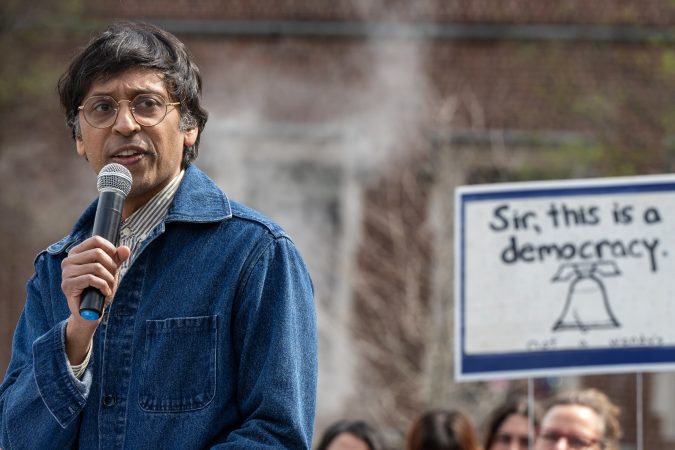
“I think the budget generally left a lot of questions unaddressed. And housing, one of the top three issues in terms of the cost-of-living crisis, was one of them,” said Sen. Nikil Saval (D., Philadelphia).
Saval was one of six senators who voted against the budget. He has since said that was because it left many key policy issues, including housing, unaddressed. Sen. Katie Muth (D., Montgomery), the only other Democratic senator to vote against the budget, has also said she believes the budget left issues like housing, rising energy costs, and affordability unanswered.
Shapiro’s office did not respond to a request for comment.
(function() {
var l2 = function() {
new pym.Parent(‘pa_housing’,
‘https://media.inquirer.com/storage/inquirer/projects/innovation/arcgis_iframe/pa_housing.html’);
};
if (typeof(pym) === ‘undefined’) {
var h = document.getElementsByTagName(‘head’)[0],
s = document.createElement(‘script’);
s.type = ‘text/javascript’;
s.src = ‘https://pym.nprapps.org/pym.v1.min.js’;
s.onload = l2;
h.appendChild(s);
} else {
l2();
}
})();
The new housing database — incorporated through a bill sponsored by Saval and authored by fellow Philadelphia Democratic Sen. Vincent Hughes — will be overseen by the Pennsylvania Housing Finance Agency. Saval said it will ensure more robust data collection to provide transparency on how much affordable housing is available across the state.
Under the new legislation, the agency will be required to create an online searchable database of all publicly financed housing that is subjected to public assistance programs. It will include anticipated termination dates on properties’ affordability restrictions and will note if the property has been granted an extension on those restrictions.
Saval said the publicly available database will ensure lawmakers have a better idea of the state’s affordable housing stock. Much of the affordable housing in the state was created with the help of low-income tax credits that are subject to expiration dates. As termination dates on these housing units loom, with many set to expire within the next five years, Saval said, the database will keep lawmakers aware of when housing is no longer affordable and allow them to see if restrictions can be extended.
The database will be updated annually by the PHFA, with local housing agencies submitting data every year.
Chris Anderson, communications officer for the PHFA, wrote in an email that the database is still in the early stages of being built, but that it will not pose any significant costs to the agency and existing resources will be used to create it.
There are no penalties if the PHFA does not update the database, and the new law does not make it mandatory for local agencies to report information to the agency. The intended audience is primarily housing advocates and organizations, as well as policymakers, Anderson said.
Saval said the database will help lawmakers know how much affordable housing there actually is in the state.
But he said the state budget — where legislators often pass policies in addition to the yearly spending plan — was still a missed opportunity to address Pennsylvania’s housing concerns.
“Anytime there’s a set of budget negotiations where there’s the potential to allocate funding, or create policy that would increase the supply of housing, or address the concerns faced by renters, and anytime that opportunity is missed as it was in this budget, I think it’s a step back,” he said.
‘Missed opportunity’
Carrie Rathmann, vice president of strategic partnerships for Habitat for Humanity Philadelphia, said one initiative notably absent from the final budget deal was the PA Home Preservation Program, a grant administered by the Pennsylvania Department of Community and Economic Development to provide funding for construction cost gaps and keep homeowners in their houses through repairing outdated buildings. The initiative was last funded when it was signed into the budget in 2022, but has not received funding since.
Previously known as the Whole-Home Repairs Program, the state allocated $125 million toward the program using American Rescue Plan dollars, repairing more than 2,600 affordable homes across the state.
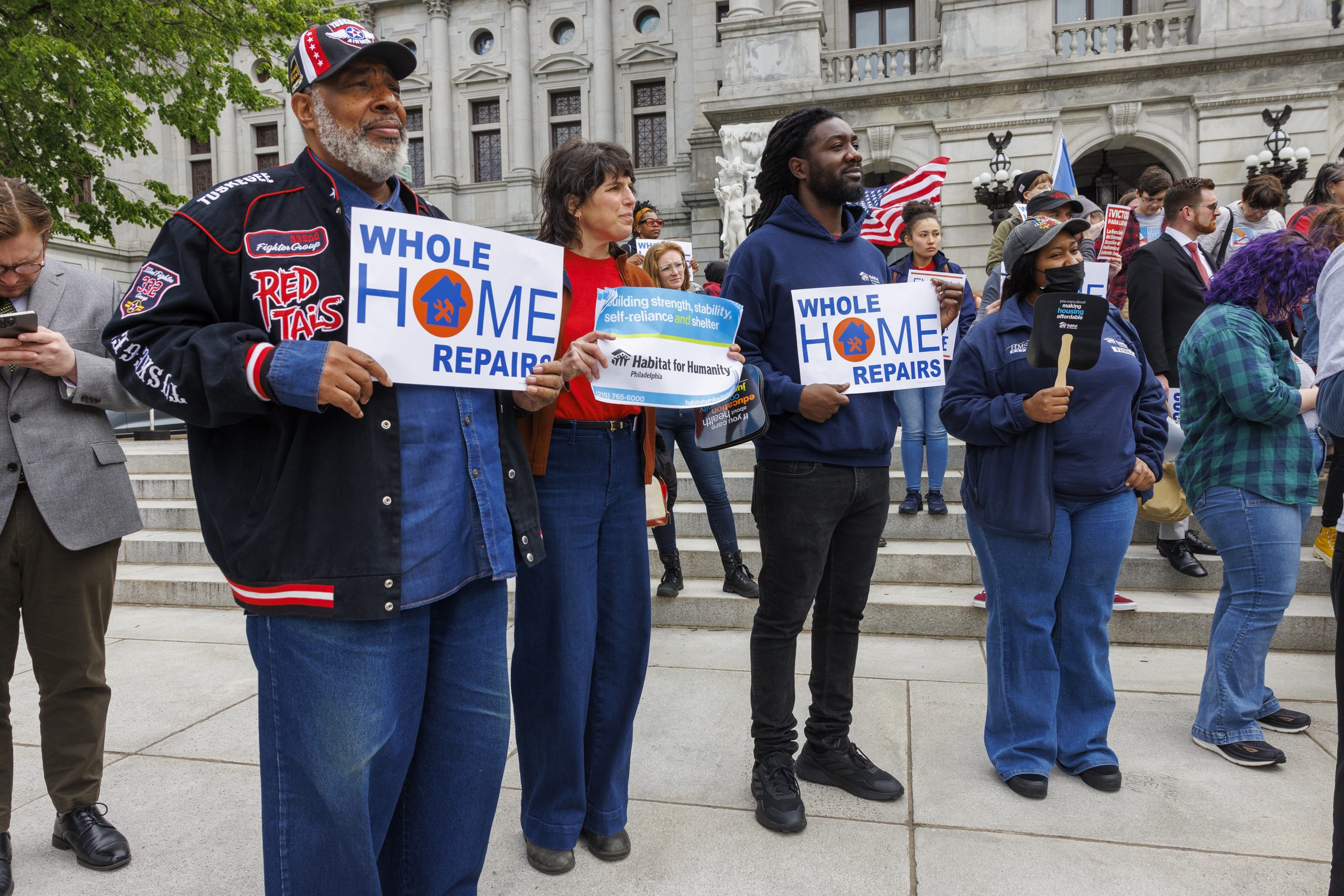
Douglas Paige (from left), Carrie Rathmann with Habitat for Humanity, Tyron Cheeseboro, and Danielle Paige on the steps of Pennsylvania Capitol during a 2023 rally for the Whole-Home Repairs Program.Alejandro A. Alvarez / Staff Photographer
Housing advocates have pushed for the state to renew the funding, with the Housing Alliance of Pennsylvania calling it one of the organization’s biggest priorities.
In an email, spokespeople from the housing alliance noted that the state funding in 2022 was not enough to support the number of people that applied for it, meaning there are still people waiting to have their homes repaired.
“The program received far more applications from qualified homeowners than available funding could support, highlighting both the scale of unmet need and the importance of preserving existing housing,” the spokespeople wrote.
The program has not returned in a line item in the state budget since 2022. Companion bills in both chambers supporting the program have received bipartisan support — the House bill passed 122-80 — but are sitting in the Senate Urban Affairs and Housing Committee.
“That felt like it represented a huge missed opportunity to help thousands of Pennsylvanians stay housed and to keep homeowners safe and healthy in the homes that they already own, because without that dedicated investment, this crisis will only grow,” Rathmann said.
Habitat for Humanity is a nonprofit that does not rely on state dollars, but Rathmann said state money goes to counties and housing providers like the Philadelphia Housing Development Corp. The money helps an “ecosystem” of housing organizations in the Philadelphia area, and Habitat uses it for a portion of the organization’s work. That included the Built to Last program, an initiative spearheaded by the Philadelphia Energy Authority that inspired the statewide initiative of Whole-Home Repairs in 2022.
Rathmann said state initiatives that increase efficiency on building houses are key to developing homes faster and cheaper, which in turn increases the housing supply and can keep people in high-quality houses. This includes incentives like building lower density “by right,” meaning property owners can build low-density housing without special approval.
“We see every day at Habitat that that impact is real, it’s tangible, it crosses different sectors like kids can get to school and do better,” Rathmann said. “Seniors are healthier. People are healthier. People feel less stressed. They have more money in their pocket for medication and food.”
‘Risk aversion on all sides’
Lawmakers on both sides of the aisle in Pennsylvania’s divided state legislature have pushed for their own housing initiatives. Bills have passed through the Democratic-controlled House or Republican Senate, but have yet to move forward in the opposing chamber.
Democratic-backedHouse bills sitting in Senate committeesinclude proposals to remove barriers to building accessory dwelling units, lift restrictions on how many unrelated people can live in one home, and seal eviction records to help tenants.
Beth Rementer, spokesperson for House Democrats, wrote in an email that the House has sent 22 bills to the Senate Housing Committee, while the Senate sent two in June.
The state’s lack of housing action marks a difference from the Republican-controlled federal government. In early July, Congress sent the ROAD to Housing Act to President Donald Trump’s desk — a bill that reduces barriers to home construction and modernizes housing programs alongside other initiatives, including a pilot of Whole-Home Repairs.
Saval attributed the Pennsylvania legislature’s inaction to a desire to pass the state budget quickly without debate on hot-button policy issues ahead of the November election, when half the Senate and all members of the House are on the ballot.
“Essentially, there was risk aversion on all sides,” Saval said. “And, understandably, an unwillingness to get into a budget discussion that would prolong the budget negotiation process.”
Kate Flessner, spokesperson for the Senate Republicans, said in an email that the Senate supports a number of housing initiatives, but that underlying issues lie in how the state will pay for them in light of the roughly $5 billion structural deficit.
“As we continue working to address the state budget’s serious structural deficit, we will be primarily focused on ways we can improve housing access that do not require vast sums of taxpayer money — and there are many of them,” Flessner said.
Natalie Javitt is an intern with the Pennsylvania Legislative Correspondents’ Association. She can be reached at natalie.javitt@gmail.com.
Pennsylvania lawmakers last month quietly repealed an unenforced 1929 law that allowed traditional midwives, the main group of midwives delivering home births, to practice.
Now, traditional midwives — who differ from midwives usually found in hospitals, are not medically trained and often serve religious minorities like the Amish — are worried they have no legal standing to work in Pennsylvania, and are challenging the repeal in state court.
Other forms of midwifery — such as nurse midwives and certified midwives, who are medically trained and are formally affiliated with a doctor or health system — are highly regulated by the state and its medical board.
But these affiliations often prevent nurse midwives and certified midwives from offering home births, as the health systems see them as possible risks for medical malpractice lawsuits.
A historic destination in Chester County will be sold at an absolute public auction to the highest bidder.
Nestled in Warwick Township, St. Peter’s Village could see a bump in residences if initial development visions are executed.
But this small village’s scenic, rural location is a bit out of the way.
At the auction, scheduled for Sept. 30 at the Desmond Hotel Malvern, up for sale will be roughly 83 acres of the historic 19th-century village that sprung up in the Gilded Age, thanks to its rich mineral resources and its proximity to French Creek.
The Philly school district promotes some administrators, changes principals elsewhere. Here’s a rundown.
The Phillies acquired the National League batting leader Luis Arraez from Giants before the trade deadline.
Quote of the day
Spirit Halloween, the retailer best known for its costumes, animatronics, and creepy dolls, hosted the annual grand opening of its 20,000-square-foot flagship store in Egg Harbor Township, N.J. Preregistration for the event was capped at 2,000 people, but about 1,000 more people showed up for general admission.
Cheers to Mark Burgoyne, who solved Sunday’s anagram: THOMAS EAKINS. The painter and photographer turned Philadelphia’s medical history into high art. Two of his pieces are on display in the city.
Photo of the day
Eagles quarterback Jalen Hurts participates in an indoor practice at the Jefferson Health Training Complex in Philadelphia.Jose F. Moreno / Staff Photographer
Enjoy your Tuesday.
By submitting your written, visual, and/or audio contributions, you agree to The Inquirer’s Terms of Use, including the grant of rights in Section 10.
In the winter of 1777-78, after the Second Continental Congress hightailed it from Philadelphia following the British army’s attack on the city, the Revolutionary Army of the freshly minted United States hunkered down in Valley Forge.
Soldiers dropped dead from disease and malnourishment, as they huddled for warmth in little wood huts. Lice ran wild.
By the summer of ’78, American troops, under the leadership of General George Washington, emerged, battered but not beaten, reengaged the British, and turned the tide of the Revolutionary War.
In that short time, Valley Forge became synonymous with American perseverance and resilience.
The Marquis de Lafayette and Gen. George Washington, with whom he had a father-son relationship, at Valley Forge. From John Ward Dunsmore painting, 1909.From John Ward Dunsmore painting, 1909
This push-and-pull between myth and reality — between what the United States aspires to, and what it actually is — is embodied in the legendary status of Valley Forge in the American psyche.
It’s a tension that, a new book argues, undergirds a current crisis in American masculinity.
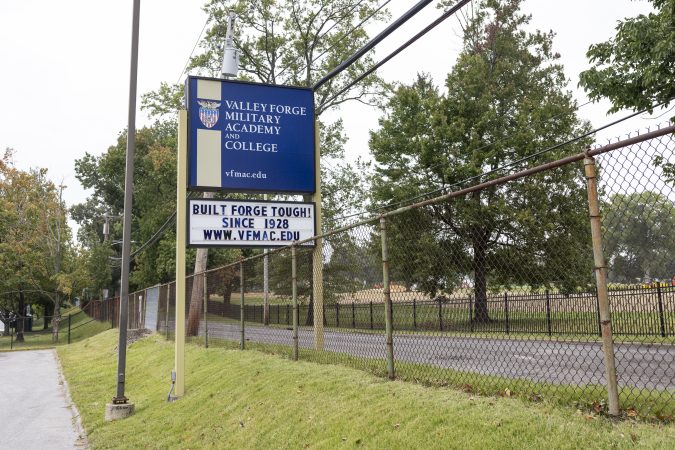
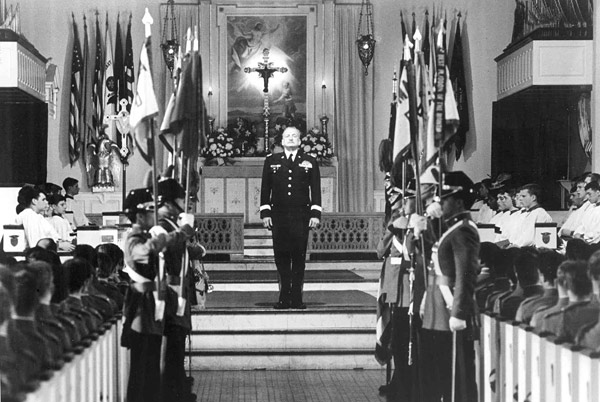
Established in 1928 by a U.S. Armed Forces lieutenant general named Milton G. Baker, Valley Forge Military Academy (VFMA) in Wayne, Pa., promised parents: “Send us your boy and we will return to you a man.”Jasper Craven
The George Washington school of American masculinity
Journalist and author Jasper Craven argues that the figure of the American male, for better and worse, owes a lot to Washington. Or, at least, to the idea of him championing his country’s freedoms against all odds.
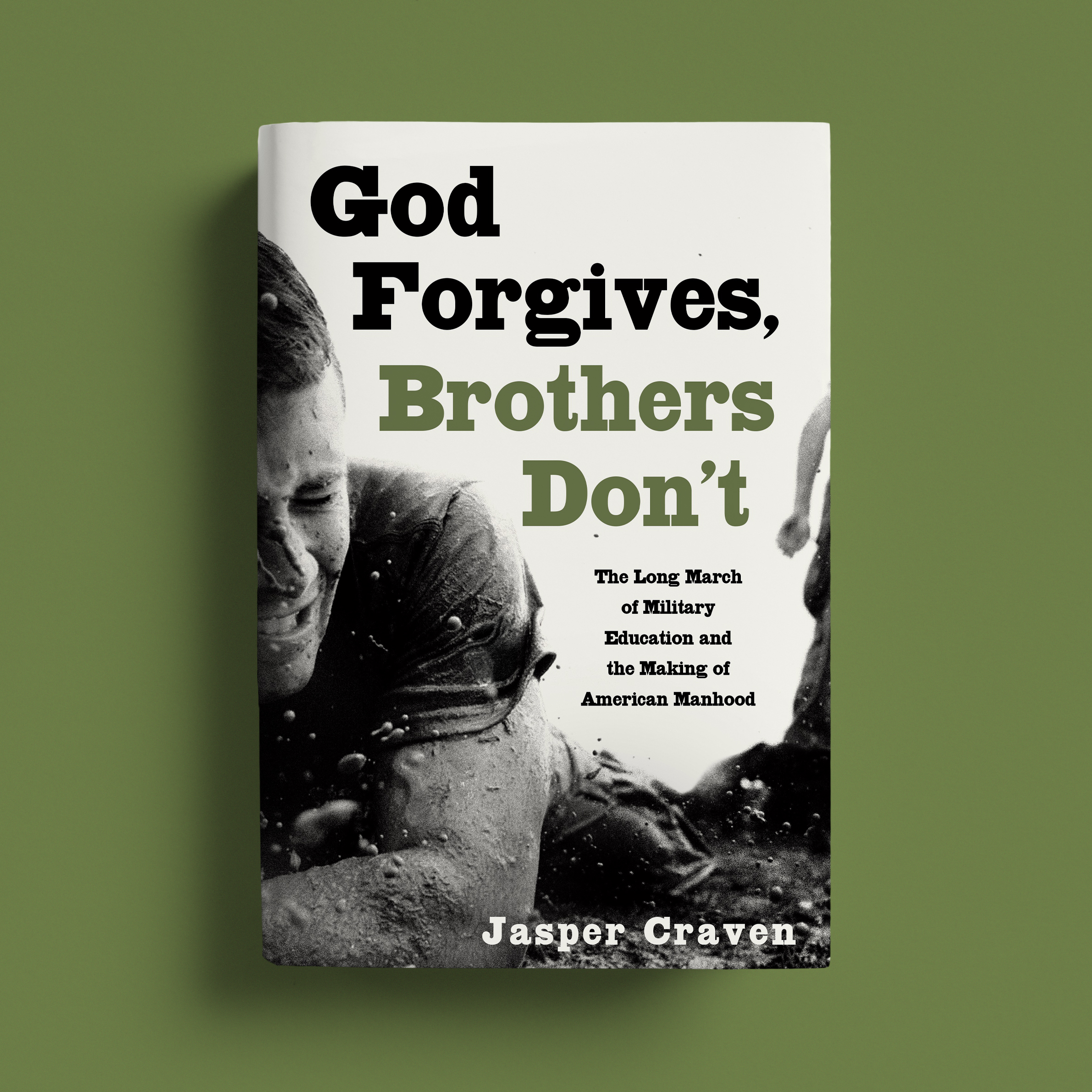
In his new book-length history of American militarized machismo, God Forgives, Brothers Don’t, Craven locates a tension in Washington that proves foundational.
“Washington made efforts to establish himself as a man who was stronger, mightier, braver than he actually was,” Craven said. “[He] captured the American imagination, and was an early, influential archetype on young boys.”
So it followed that generations of boys would attempt to embody a Washingtonian archetype — resilient, brave, dignified — near the site of that mythic winter encampment at the Valley Forge Military Academy (VFMA) in Wayne. Established in 1928 by a U.S. Armed Forces lieutenant general named Milton G. Baker, Valley Forge promised parents: “Send us your boy and we will return to you a man.”
Author Jasper Craven’s new book-length history of American militarized machismo, “God Forgives, Brothers Don’t” is a look into the fraught history and ominous future of military education in the USA, per its summaryCourtesy of Atria/One Signal Publishers
Craven’s book argues that it was at schools like Valley Forge that the modern idea of the American male was made.
“These military schools represent an extended, expanded, more pedagogical version of boot camp,” he says. “You arrive a young boy, a little bit reckless. Maybe you’re a bully. But very quickly, everyone is stripped of their identities, given matching uniforms, see their heads shaved, and are put into a very grueling hierarchy.”
On paper, this pedagogical vision mirrors America’s notion of meritocracy: Everyone starts at zero, and scrambles for rank, and prestige, among the militarized hierarchy. Ribbons and bows are awarded to the most industrious scramblers.
But, as Craven’s book reveals, that ostensibly fair model of achievement can be riven with dehumanization, corruption, and systemic emotional, physical, and sexual abuse. Even the nickname “The Forge” has a double resonance — suggesting both hammering something out in fire, and total fakery.
Established in 1928 by a U.S. Armed Forces lieutenant general named Milton G. Baker, Valley Forge Military Academy in Wayne, Pa., promised parents: “Send us your boy and we will return to you a man.”Jasper Craven
A history of abuse
As Craven notes in his book: “Between 2015 and 2020, the Forge logged more than 30 incidents of alleged sexual misconduct, from stalking and fondling to rape, as well as fistfights, assault with a knife, even arson.” Cadets as young as 13 were driven to suicidal behavior.
Craven played a key role in exposing these incidents.
God Forgives, Brothers Don’t grew out of his 2022 reporting for Mother Jonesmagazine, which cast a piercing light on the school’s hallowed halls. His reporting captured not only the violence visited upon “plebes” (military slang for first year cadets) by upperclassmen, but the equally endemic corruption of the school’s administrators, who pocketed hefty tuition fees while essentially operating what one graduate called, “a sleepaway camp for troubled kids with very little supervision … more Lord of the Flies than The Catcher in the Rye.”
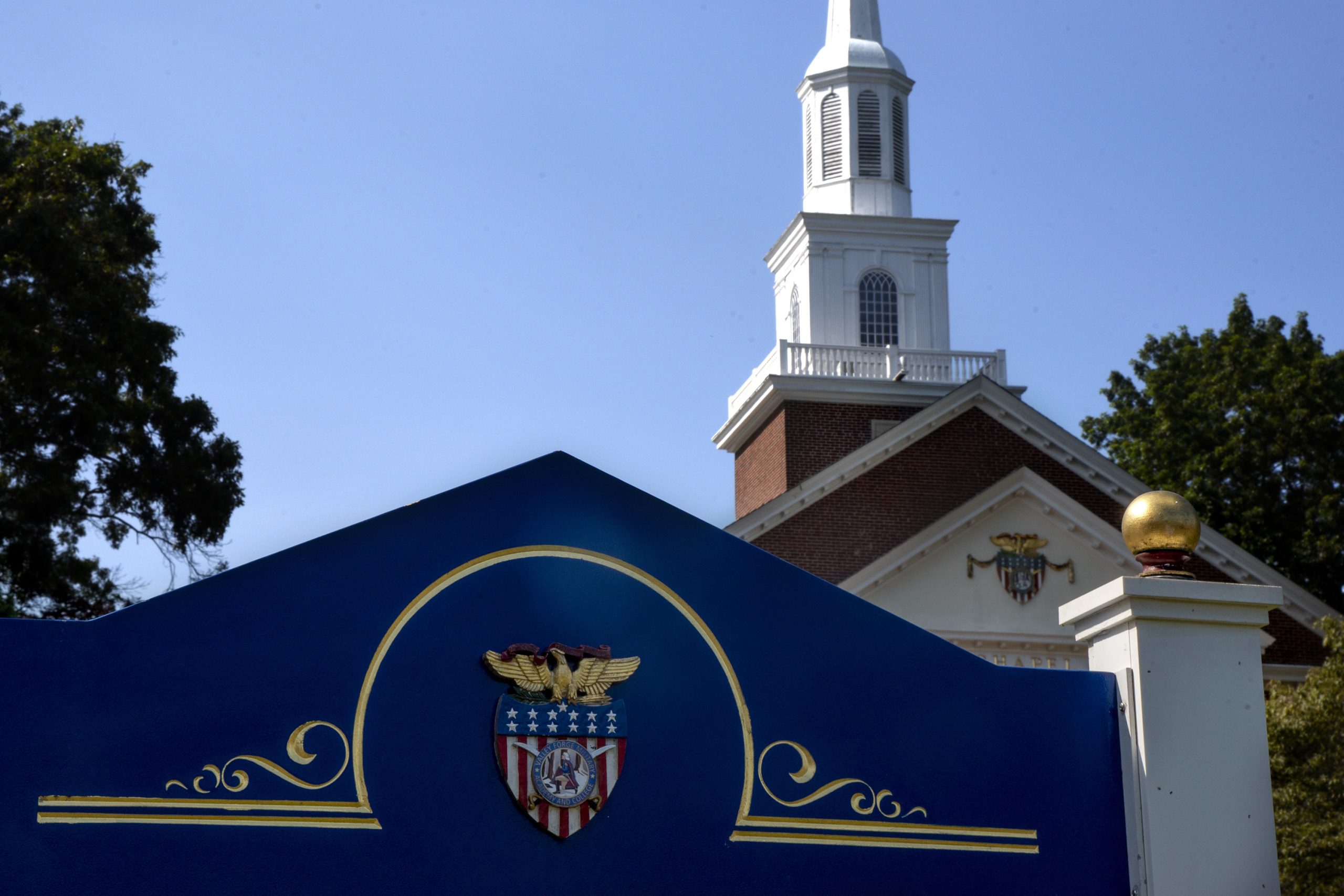
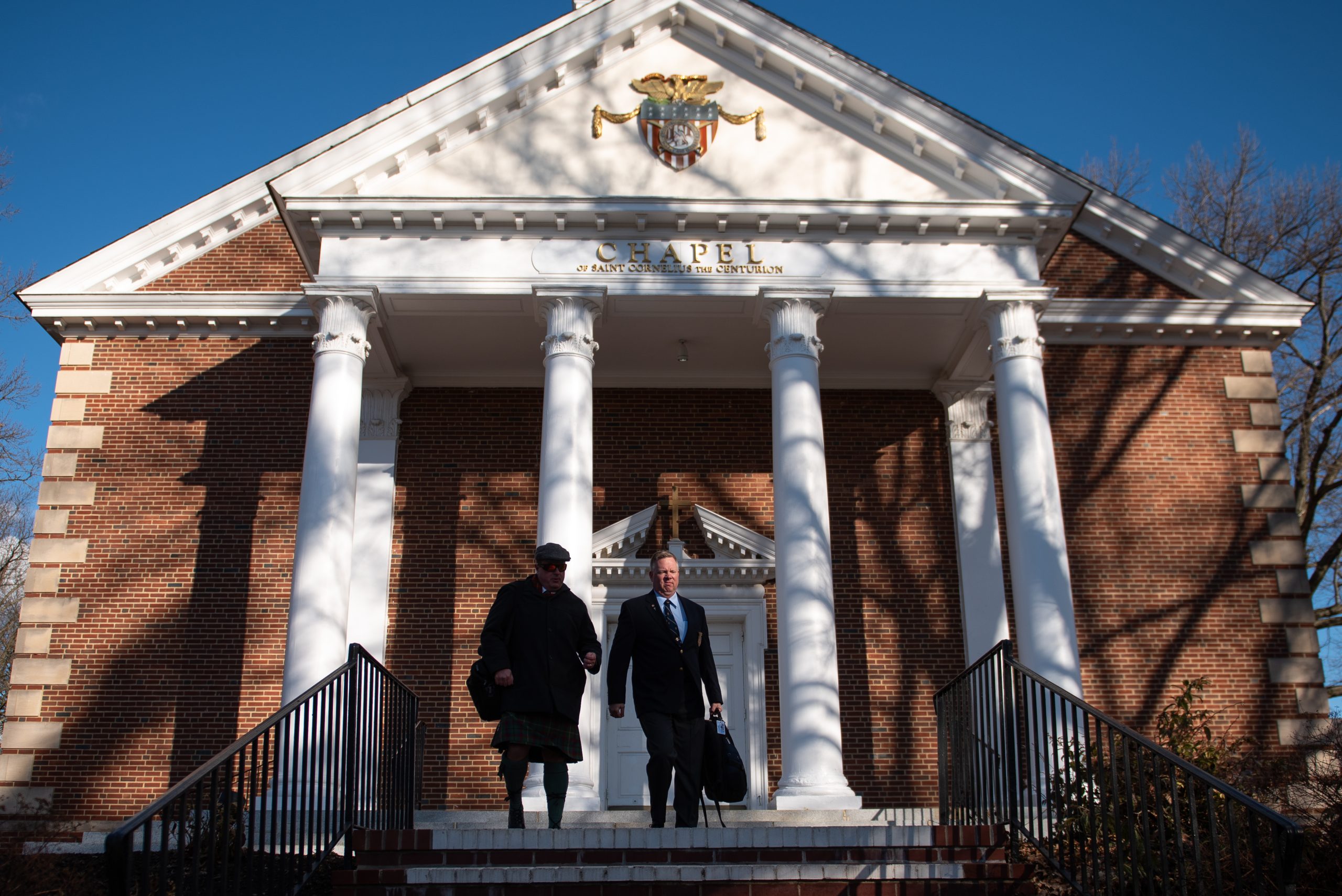
The Chapel of St. Cornelius the Centurion at Valley Forge Military Academy & College in Wayne is photographed July 21, 2020.TOM GRALISH / Staff Photographer
(Speaking of Catcher in the Rye: Author J.D. Salinger is among the Forge’s more notable graduates, and Craven traces the author’s conflicted relationship with the school, and its disciplinary culture, as a major influence on his fiction.)
In 2025, the VFMA announced its closure; the May 2026 graduating class was its last. The neighboring Valley Forge Military College, a private military junior college, remains operational, having separated from the larger Academy in 2023, amid ongoing scandal.
More than a deeply researched and utterly harrowing inquest into how the American military turns boys into men, Craven’s book doubles as a critique of American masculinity itself: its valorization of violence, its codes of silence, its curated pathologies of aggression and shame.
“While we have not read the book and therefore cannot comment on its specific arguments, we generally disagree with the author’s perspective on military schools,” the Valley Forge Military Academy Foundation said in a statement. “We believe military schools can have a profoundly positive and transformative impact on students by providing structure, discipline, leadership development, and a strong sense of purpose.”
George C. Scott faces rebellious cadets in “Taps,” much of which was shot at Valley Forge Military Academy in 1981. After previewing the film, the academy repudiated it and nixed plans to host a premiere.
It’s a dismal vision of chauvinist mock-virility that endures, culturally, Craven said, in everything from the prevalence of Punisher skull T-shirts and bumper stickers, to the vacant bellicosity of President Donald Trump (himself a military school alum who eventually avoided the Vietnam War draft), and the self-styled posturing of Pete Hegseth as “Secretary of War.”
A workable alternative
“Military schools across the country, including ours, have long lists of distinguished alumni who have gone on to achieve great success, many of whom credit their time at these institutions with helping shape their character, leadership, and future direction,” reads the VMAF statement.
But in the course of his reporting, Craven was disillusioned of any idea that militarized men embody any sort of ideal.
“The best evidence of my book’s thesis,” he said, “is that all these dudes who claim they’re the most macho and militaristic people around are all so jumpy, so self-conscious, and so uncomfortable with themselves.”
“They are so clearly not happy with this identity they’ve constructed,” he said, “and yet are desperate to reinforce all the time.”
Asked if there are any workable alternatives for this conception of the American man, Craven (who is a civilian) draws from a nonmythical figure in his own life: his father, the American activist and filmmaker Jay Craven.
Valley Forge Military Academy alums pass in front of the school’s chapel on their way to a board of trustees meeting held at the Wayne, Pa. campus on Saturday, March 16, 2019. Kriston Jae Bethel / For The InquirerKRISTON JAE BETHEL / For the Inquirer
“My dad grew up in Pottstown, Pa., and almost went to Valley Forge, before finding a Quaker school and becoming involved in the anti-war movement,” he said. “There was a moment in America where the peacenik was the prevailing masculine pinnacle. He has his own ‘war stories.’ He was followed by the feds. He was imprisoned. He was beat up. He’s got some scars, which is cool. He even dated Jane Fonda for a bit.”
In tribute — and, perhaps, in aspiration for the future of the American male — God Forgives, Brothers Don’t is dedicated, “To my dad, who taught me how to wage peace.”
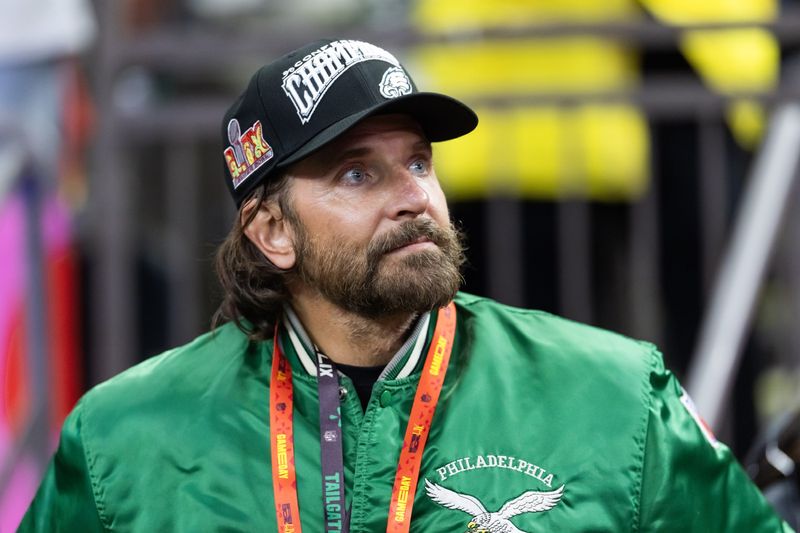
Apparently Bradley Cooper has a thing for confusing home addresses. Montgomery County’s hometown hero is often said to be from Jenkintown, when in reality, he hails from Abington Township — the unincorporated community of Rydal, to be exact.
The Oscar-nominated actor also supposedly owns a New Hope estate, though he actually lives in Solebury Township.
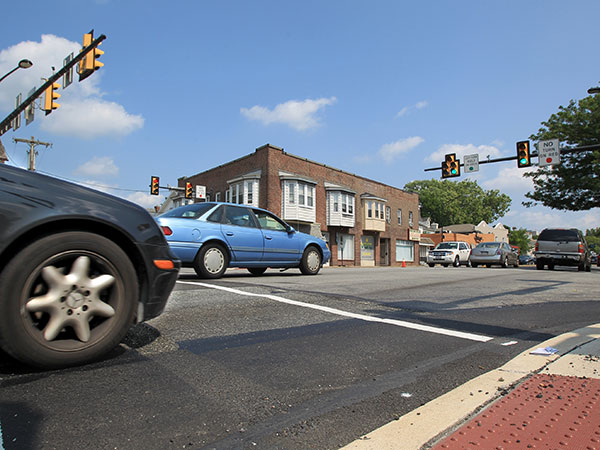
Could you also be among the many Abingtonians living a lie? Many mistakenly believe they live in Jenkintown, and sometimes the appearance of a tax bill from Abington is the catalyst that tips them off.
Four football coaches and six players have been charged in relation to two violent 2025 attacks in the school’s locker room that injured a 15-year-old student and prompted the cancellation of two football seasons. Prosecutors said coaches tried to cover up the assaults, in which multiple cleat-wearing teenagers stomped on the victim’s chest and groin, and used a broomstick to poke at his buttocks.
The Montgomery County grand jury that recommended the charges also faulted the Cheltenham School District for a “level of incompetence” that “put every young man on the football team at risk.”
Felony rape and sexual assault charges were dropped against Jenkintown physician John Smyth Michel, 56, after his accuser failed to appear to his criminal trial. Michel is the founder of the currently closed Excel Medical Center, which is made up of 12 locations in the Philadelphia region.
The Holocaust Awareness Museum and Education Center in Elkins Park is dedicating its archives to the late Donald Wittenberg, the site’s longtime curator who died in March. Wittenberg spent decades chronicling how the Holocaust impacted folks in the Philadelphia region and educating people on how to prevent a similar occurrence in the future.
Neysa Adams, a former Elkins Park resident who established the Neysa Adams’ Library Fund at Reform Congregation Keneseth Israel, died recently at 104. Known as a civic and community leader, scientist, and teacher, Adams was once recognized by former Gov. Ed Rendell as a Distinguished Daughter of Pennsylvania for her “outstanding service and contributions to the Commonwealth of Pennsylvania.”
Drivers in Cheltenham Township can expect a daily lane closure through Friday from 9 a.m. to 3 p.m. on Church Road between Township Line Road and Route 73 due to utility adjustments. Milling will also close a lane at the same spot overnight through Friday, from 8 p.m. to 5 a.m.
🍽️ On our plate
Glenside/Jenkintown Restaurant Week kicks off Sunday and continues through Aug. 16. Participating eateries include The Highland, Lilly’s Authentic Indian Cuisine, and Moma Mediterranean Kitchen.
Don’t panic: Prime ice cream season still has some legs. The Inquirer’s got the scoop (pun intended) on Greater Philadelphia ice cream spots we melt for, including ones in Elkins Park and Jenkintown (the latter is Carminati Creamery, formerly of Glenside).
🎳 Things to do
🐦 Curtis Arboretum Bird Walks: Spend some time with nature on this mixed-terrain outing. ⏰ Friday, Aug. 7, 8-10 a.m. 💵 Free 📍 Curtis Arboretum, Wyncote
🧶 Stitch and Chat: Make some progress on your current craft project or start a new one, and maybe make a friend along the way. ⏰ Friday, Aug. 7, 1-3 p.m. 💵 Free 📍 Roslyn Branch Library, Abington
🥁 Stranger Things Rock: Check out the classic rock band’s return to The Drake Tavern. ⏰ Friday, Aug. 7, 7-10 p.m. 💵 Pay as you go 📍 The Drake Tavern, Jenkintown
🎥 Flick ‘N’ Float: Bring your own float or raft to watch a movie while cooling off in the pool, or post up on the lawn. ⏰ Friday, Aug. 7, 8 p.m. 💵 $5 for members, $10 for non-members 📍 Conklin Pool, Elkins Park
This sprawling estate from 1904 spans more than two acres in Rydal (anyone seen Bradley Cooper lately?). Live-in carpenters carefully crafted the details in the residence, which was constructed from locally quarried stone, according to the listing.
Inside features private au pair quarters and multiple princess suites, while the back leads to gardens, an in-ground pool, a hot tub, and large terraces.
By submitting your written, visual, and/or audio contributions, you agree to The Inquirer’s Terms of Use, including the grant of rights in Section 10.
This suburban content is produced with support from the Leslie Miller and Richard Worley Foundation and The Lenfest Institute for Journalism. Editorial content is created independently of the project donors. Gifts to support The Inquirer’s high-impact journalism can be made at inquirer.com/donate. A list of Lenfest Institute donors can be found at lenfestinstitute.org/supporters.
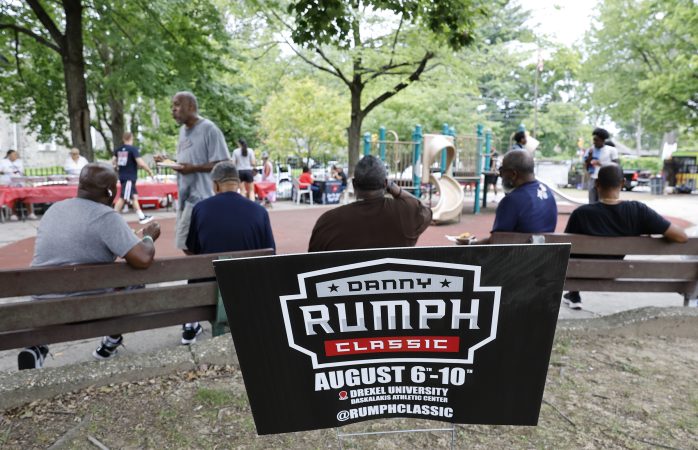
But today, we’re leading off with a Philly staple that tips off this week: The Danny Rumph Classic. Now in its 21st iteration, the Rumph returns to Drexel for five days of basketball across men’s, women’s and youth tournaments beginning on Thursday.
But before the event tips off, the Rumph went back to its roots inside the Germantown-based recreation center with his namesake for an event that bridged young and old across neighborhoods for a common cause. It’s how we’re starting your Tuesday.
Alec Bohm (left) and Bryson Stott will change positions with the addition of Luis Arraez courtesy of yesterday’s MLB trade deadline. Heather Khalifa / Staff Photographer
This is not Bryson Stott’s first rodeo. At third base, that is. But it’s where Stott will find himself for the first time since his Major League debut after the Phillies traded for Luis Arraez on Monday.
The move will now see Arraez take over second base with Stott shuffling to third and Alec Bohm moving over to first, putting Bryce Harper back in the outfield. But Stott, who found out via text from manager Don Mattingly on Monday morning, doesn’t seem too fazed by any of it.
“I told him the same thing I’ve said for years,” Stott recalled in his conversation with Mattingly. “I don’t care. I just want to play.”
Inquirer writer Scott Lauber has a complete wrap-up on the MLB trade deadline.
Next: The second of a four-game series against the Nationals continues tonight at Citizens Bank Park as part of a seven-game homestand (6:40 p.m., NBCSP).
What we’re…
🤔 Wondering: What Brooks Raley will bring to the table as the Phillies newest reliever, who was acquired yesterday in a trade with the New York Mets.
👀 Watching: Jalen Hurts and the Eagles offense have a day during Day 4 of training camp.
⚽ Hoping: That keeping Mauricio Pochettino on as the head coach for U.S. Soccer was the right call heading into the 2030 cycle.
🏈 Reading: NFL players from the 2022 class have the option to return to college and play a fifth season, courtesy of this new NCAA rule.
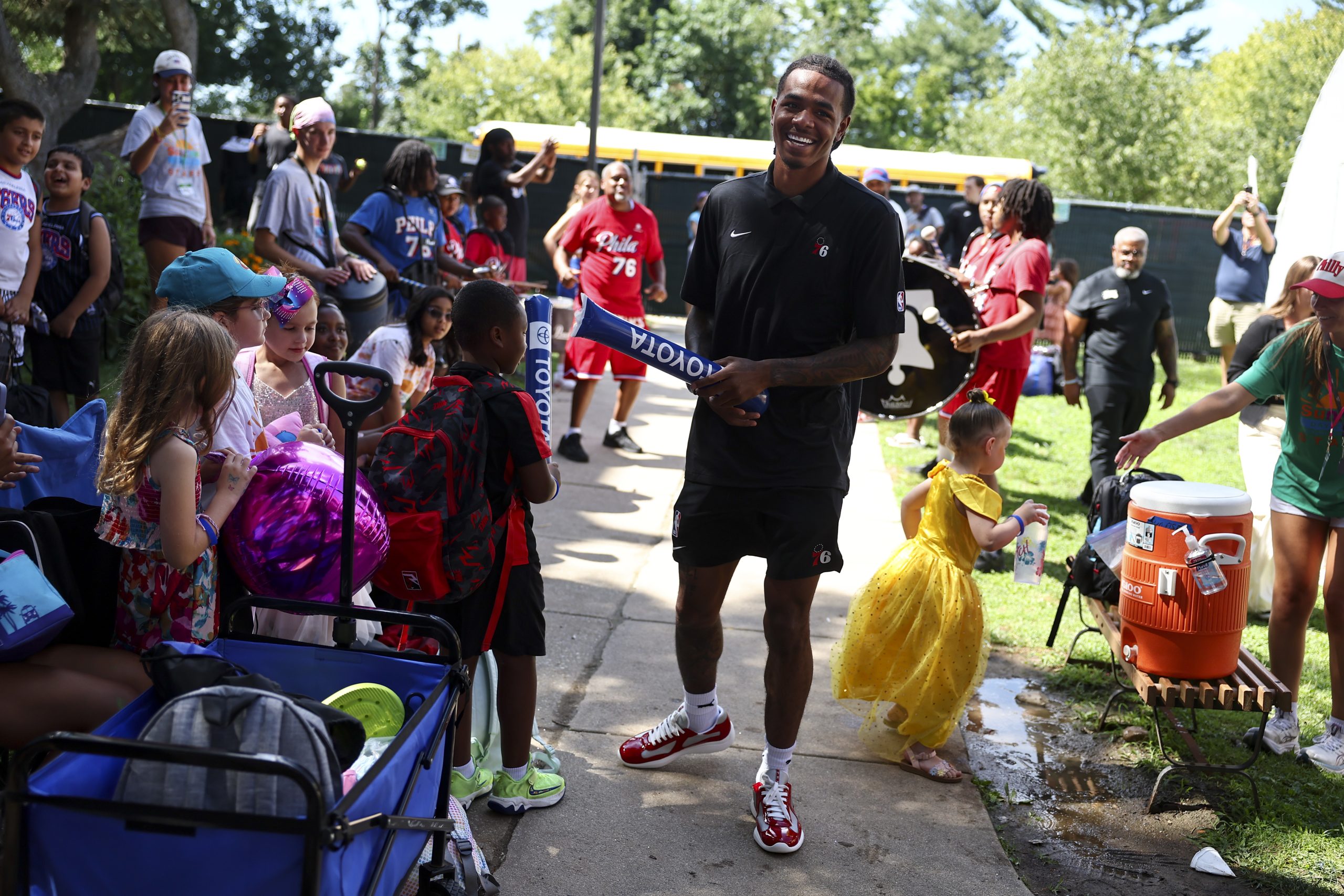
Sixers rookie Lebaron Philon Jr. greets campers at Sunrise Day Camp on Monday.Monica Herndon / Staff Photographer
Labaron Philon Jr., looked like a steal when the Sixers selected him with the No. 22 pick in the June draft. Little did he know his selection would be the first of several dominoes that would lead to a transformational offseason that included signing LeBron James and trading for Jaylen Brown.
Philon acknowledged that his role will change from what was originally envisioned after he ripped up Las Vegas Summer League. He knows that this season now has “a lot at stake.”
“Who wouldn’t want to be around that?” Philon said Monday from an appearance at Sunrise Day Camp-Greater Philadelphia’s basketball clinic at Kaiserman JCC in Wynnewood. “I feel like we’ve got a lot of great guys, and [we are] just going to continue to do the right things and just make it happen.”
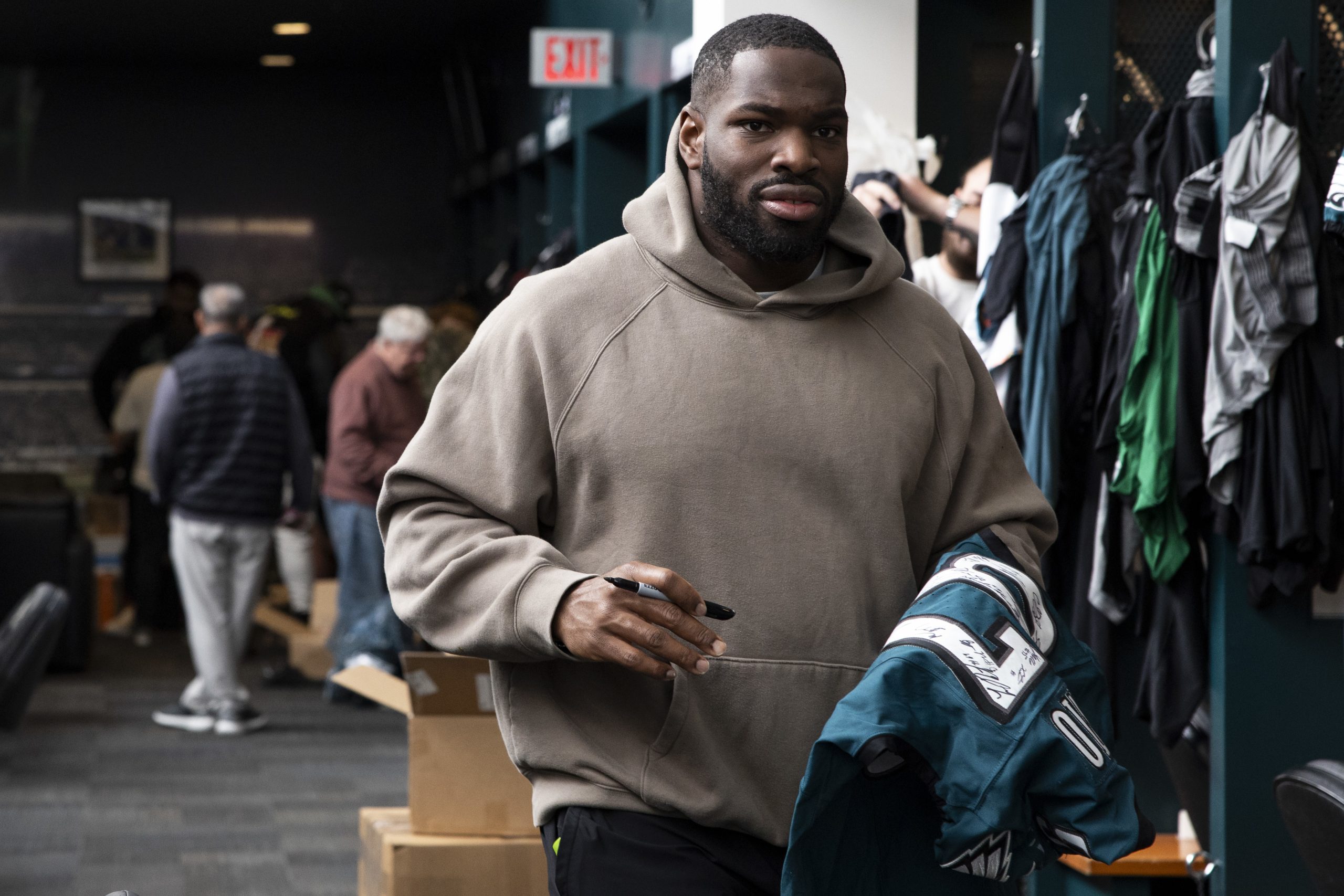
Eagles defensive tackle Moro Ojomo is in the final year of his current contract.Monica Herndon / Staff Photographer
Moro Ojomo is in the final year of his current contract. It happened to be the same year he saw two of his teammates on the defensive line get paid. When both Jalen Carter and Jordan Davis, Ojomo’s teammates on the interior defensive line, inked hefty contract extensions this offseason, it ignited a fire.
Four years, $152 million tends to do that, specifically looking at Carter’s contract. But for the seventh-round selection out of Texas, getting on the field isn’t enough; he wants to have his fourth season with the Birds be so dominant that Eagles brass has no point but to dust off the checkbook
“That just motivates me more,” Ojomo said on Monday. “I’ve always kind of been a hungry guy. Always kind of had the chip on my shoulder. So to see both of those guys succeed at a high level, I just want to succeed more.”
Aug. 4, 1961: This is more of an On This Date, and more of a Did You Know, but today, 65 years ago, fresh off the 1960 NFL Championship, the Eagles played a group of college all-stars from that season and beat them 28-14? It was a regular event called the Chicago Charities All-Star Game.
🧠 Trivia time
Which Sixers player was once ranked the 153rd best player in the country coming out of high school by 247Sports?
A) Jaylen Brown
B) VJ Edgecombe
C) Tyrese Maxey
D) Joel Embiid
What you’re saying about the Phillies
We asked: What moves did you hope the Phillies would make on Monday?
It’s not my money, and I don’t profess to be smarter than [Phillies general manager Dave] Dombrowski and the front office. But I have a few ideas that I’m sure the baseball minds have considered. A fleet and strong right-handed outfielder. Trade [Alec] Bohm, since he is in the last year of his contract to Baltimore in exchange for Gunnar Henderson and move either him or Trea Turner to third. We need a stronger bullpen. I’ve never been a fan of [Jose] Alvarado, and [Orion] Kerkering has been a big disappointment. At this point of the season, picking up an excellent arm is more than difficult. Now that the Dodgers picked up Szubal, everyone else is playing for runner-up. The team has given us many enjoyable moments and applaud the brain trust for what they have done. With the looming work stoppage for next season, enjoy the remainder of 2026. — Nick S.
None! No moves at all. Fact is my thinking is most teams will stand pat. No one is going to beat the Dodgers so why throw your assets away? On the other hand, any major trades that might take place will be 6-7 week rentals for free agents at the end of the season. I read yesterday that the Yankees might be willing to pay $400 million for the Detroit pitcher that the Dodgers just traded for. Did somebody say “CAP?” — Ronald R.
Yes time is running out and Dombrowski, unlike the Dodgers, probably does not have the players to work with unless he used up front players such as [Aaron] Nola, [Bryson] Stott, Bohm, etc. The Phillies’ biggest needs are a right-handed slugger, although De La Cruz is proving to be interesting, and of course an excellent middle reliever. I am pessimistic, unfortunately. — Everett S.
We compiled today’s newsletter using reporting from Conor Smith, Jeff McLane, Olivia Reiner, Gina Mizell, Lochlahn March, Scott Lauber, Jonathan Tannenwald, Vaughn Johnson, and the Inquirer social media team.
By submitting your written, visual, and/or audio contributions, you agree to The Inquirer’s Terms of Use, including the grant of rights in Section 10.
That’s your quick sports hit. You have me two more times this week; I’ll be back in your inbox on Thursday and Friday. Catch you then, and enjoy today. — Kerith
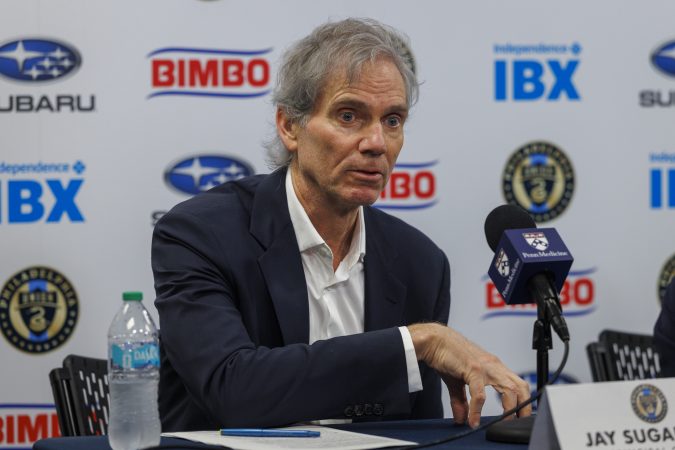
NEW YORK — After a rough first half of the season, Union principal owner Jay Sugarman finally has some reasons to be in a good mood.
Though there’s still a ways to go before the club is fully back, the current three-game winning streak has lifted everyone’s spirits at Subaru Park. Saturday’s wild comeback win over Atlanta United was the latest chapter, with the tying and winning goals toward the end of eight minutes of second-half stoppage time.
“I have to say, that spirit, it’s really the Union spirit,” Sugarman told The Inquirer as he left the meeting where Cherry Hill native Larry Berg was elected MLS’s new commissioner. “You can feel it: the guys, they’re not giving up. They want to fight to the end, and that makes me really happy.”
You can count the reasons why, including a new-manager bounce from Bradley Carnell’s dismissal and Ryan Richter’s promotion during the World Cup break. But it’s clear that Kai Wagner’s return at left back is likely the biggest factor.
He has created 14 scoring chances in three games so far, and officially notched three assists. It would be four if his cross for Milan Iloski’s opener Saturday hadn’t taken a deflection along the way.
For as much as Wagner wanted to return to Philadelphia, Sugarman had to get out his checkbook to seal the deal with Birmingham City. The Union paid a $4 million transfer fee, one of the biggest in their history (though not huge by current MLS standards).
But it’s certainly been worth the money so far. Wagner and his family are happy to be back, and one of the best left backs in MLS history looks like he didn’t miss a beat.
“Kai checked so many boxes for us,” Sugarman said. “I always thought he was an incredibly valuable piece, and I think that was the piece we didn’t expect to lose. And so, say what you will about all the other decisions we made, but that was the one that was involuntary, and it had repercussions that were way beyond what we could have expected.”
Union defender Kai Wagner has brought a spark to the team’s efforts to ascend the standings. Yong Kim / Staff Photographer
He knows what fans’ responses will be to that. Some might have expected it given all the offseasons when Wagner wanted to leave; and it could have been expected that the Union would suffer a lot in losing him.
There are other left backs in the world, though. Perhaps if the one the Union signed, Philippe Ndinga, had been better, there wouldn’t have been so much pining for what was lost.
Sugarman knows this, because it can happen to any soccer team when a new player isn’t as good as the prior one. He also knows he might have to leave the checkbook open. But he has said often over the years that if the right move comes along, he’ll pay for it, and he did here.
“So I was like, if you can get him back, get him back,” he said. “We paid up for him, but he’s been proven both here and there to be a difference-maker. And he’s been a difference-maker already.”
Early Sunday afternoon, the Daniel E. Rumph II Recreation Center looked unassuming. The old Germantown basketball gym was empty outside of a few local kids shooting around. Every dribble sounded like three, with the bounces echoing off the building’s cement walls.
A few hours later, it was nearly impossible to hear the ball bounce once.
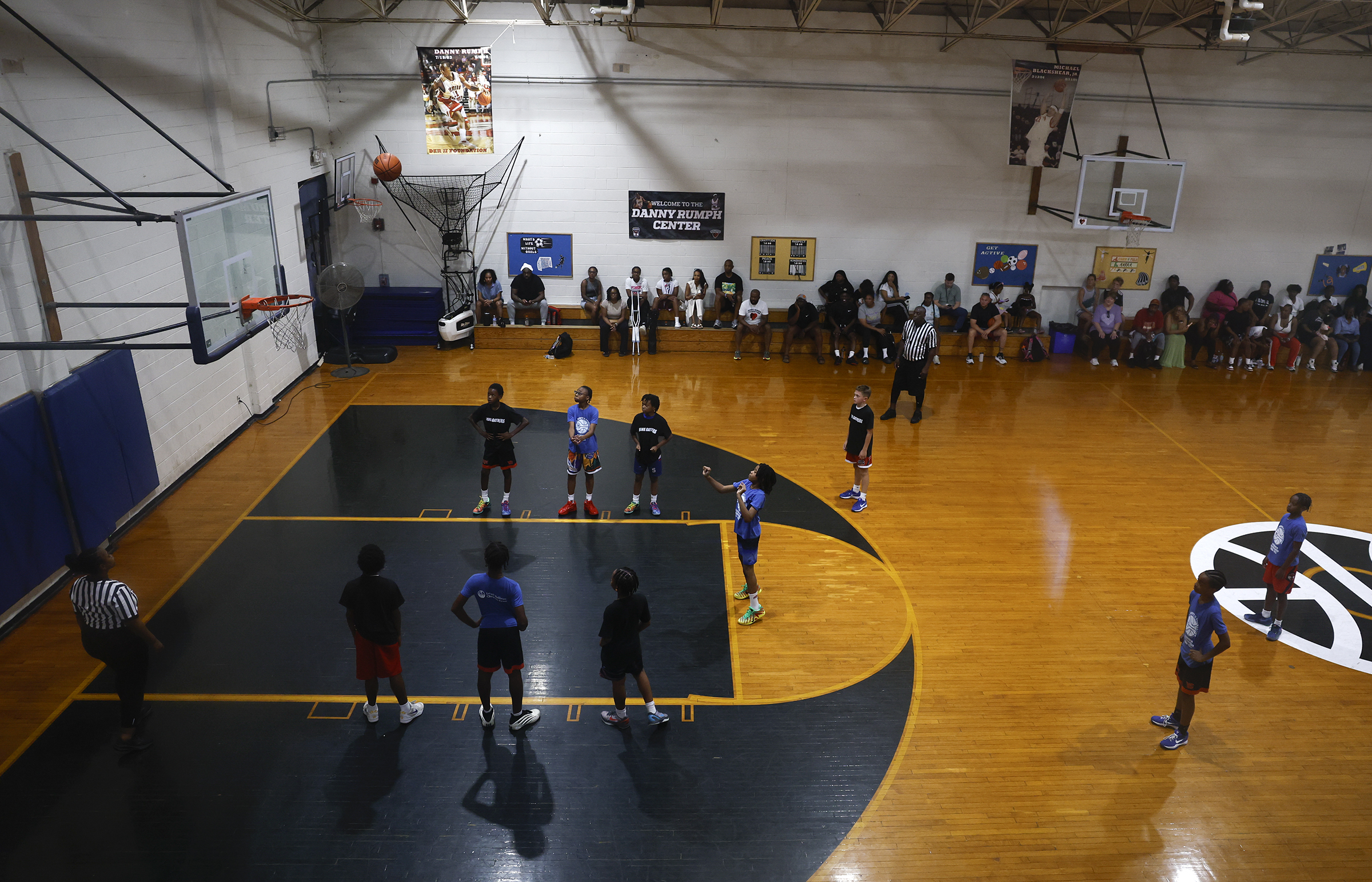
On Sunday, the center hosted three basketball games and a community barbecue. The event brought in a large crowd, quickly filling the hallowed hall with laughter, music, and friendly jeers.
The event was held in partnership with the Hank Gathers Recreation Center. The two Philly rec centers share a mission to spread awareness for hypertrophic cardiomyopathy — a condition that makes it harder for the heart to pump blood. Most are unaware they have the condition until they receive a screening.
The Rumph-Mallery Recreation Center hosted a youth game between Team Rumph and Team Hank Gathers Center on Sunday.Yong Kim / Staff Photographer
Both Danny Rumph and Hank Gathers, the namesake for the respective centers, died from HCM while playing basketball. In 1990, Gathers, a Philadelphia native and standout at Loyola Marymount, collapsed on the court while playing against Portland in the West Coast Conference semifinals.
It would be 15 years later when Rumph went into sudden cardiac arrest during a pickup game at the same Germantown gym that hosted Sunday’s event. It was later renamed after him.
“Danny was at this exact rec center where he collapsed on a court, and it took a long time for an ambulance to come,” Janet Williams, a board member for the Daniel E. Rumph II Foundation, said. “There wasn’t an AED here. Even though they started CPR, it still wasn’t enough. So, we’re trying to bring education to the community at large, not just youngsters in sports.”
The Rumph Foundation has provided every recreational center and Boys & Girls Club in Philadelphia with a defibrillator. They have also partnered with Youth Heart Watch, a program with a similar mission, to provide both CPR and AED training to the community. A majority of the foundation’s funding comes from the Danny Rumph Classic, a five-day pro-am basketball tournament.
This year, the 21st iteration of “The Rumph” will tip off on Thursday at Drexel’s Daskalakis Athletic Center. In the past, NBA stars like Jalen Brunson, James Harden, and Tyrese Maxey have graced the tournament’s floor. For the third consecutive year, the event will feature a women’s pro-am tournament, featuring local players.
Team Rumph and Team Hank Gathers Center compete against another in a youth game on Sunday.Yong Kim / Staff Photographer
Sunday’s event in Germantown acted as a way for the foundation to connect with the community and with those who have been crucial to its success. The afternoon started with a 50-and-over game — for the hoop veterans who have seen the foundation flourish over two decades.
“The whole reason why a lot of us are still close to this day is the friendships that we built playing here as kids,” said Mike Morak, the foundation’s director of events. “How do we celebrate 21 years? And it was like, let’s come back to where we started.”
“Let’s get everybody together,” Morak said. “People can come and go as they please. The reason we’re here and where we all started was because of this playground. So it was like no better way to just come back to the neighborhood, making sure we can all have a fun day together and then get ready for the full Danny Rumph Classic this week.”
‘It’s really a homecoming’
When Morak had the idea to bring the Rumph and Gathers recreational centers together for Sunday’s event, he thought to invite Derrick Gathers — the younger brother of Hank.
Derrick Gathers was a quick “yes,” having known Morak and the role the Rumph Foundation has played in the community. What Gathers didn’t know is that he would be given a full uniform at the door.
“Well, I was set up by Mike,” Gathers, who played in the 50+ game, said with a laugh. “Mike set me up.”
“I get up here, they talking about ‘suit up,’” Gathers added. “I ain’t played in a long time, but it felt good, you know, just to hang out with the guys, the guys I grew up with. … I think it’s a tribute to them for just keeping the Danny Rumph legacy going for so many years. That’s outstanding.”
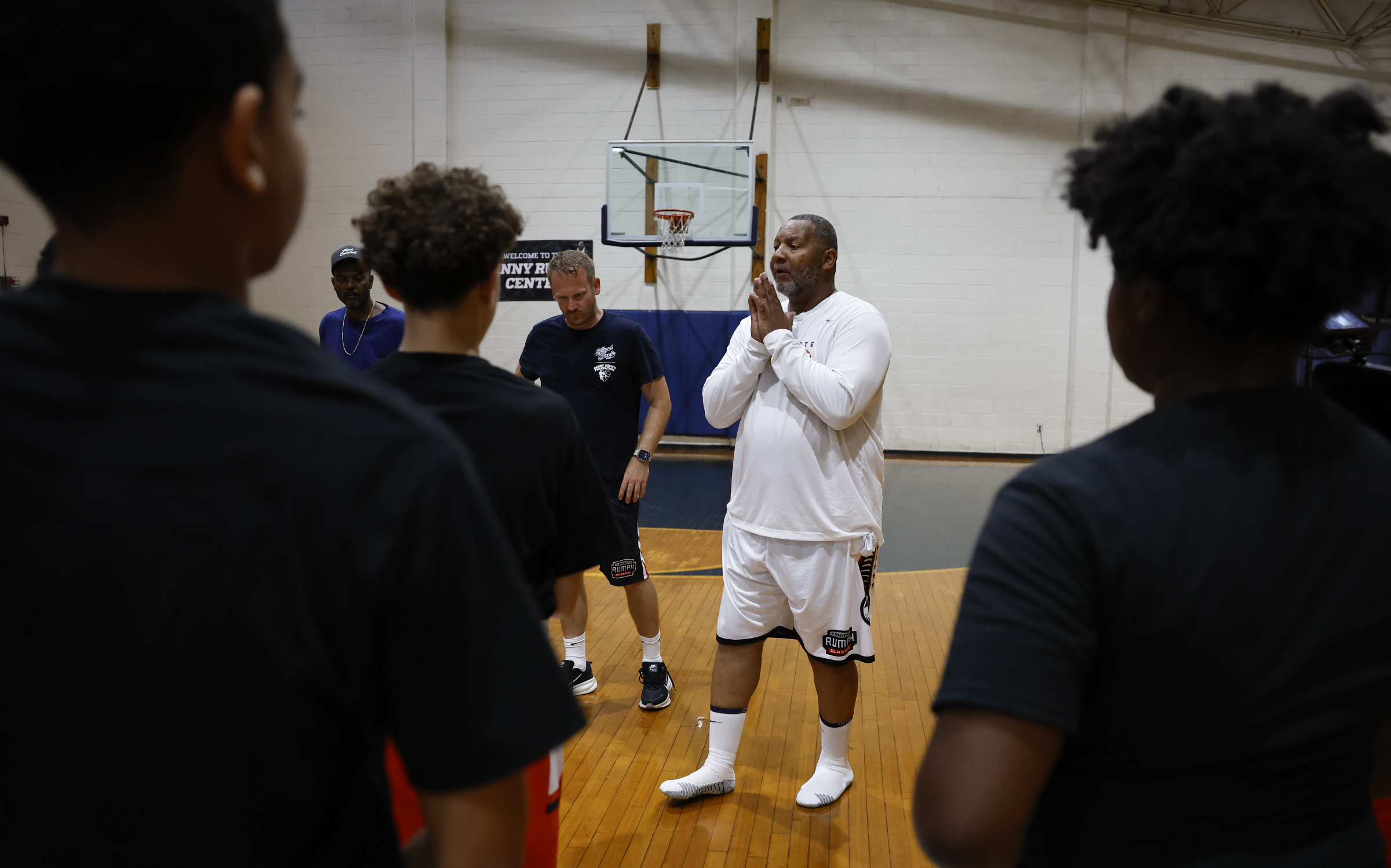
Derrick Gathers addresses members of Team Rumph and Team Hank Gathers at the Rumph-Mallery Recreation Center on Sunday.Yong Kim / Staff Photographer
After Gathers’ game, which his team won, he joined Morak at center court to address the 11-and-under and 13-and-under players before their games began. Kids who played at both centers were invited to participate — but with a twist.
Instead of matching up against each other, the centers’ teams were combined, so the players would get to know one another.
“A lot of these kids don’t know the similarities of the story, so we want to make sure [they do],” Morak said. “Man, bring those kids up here. Let’s also explain to them how they’re all interwoven. Some kids today don’t really realize what happened to Danny. They don’t realize what happened to Hank. They don’t realize how we’re all connected.”
Added Williams: “It’s getting the generations together, the older and the younger, and passing it down. Showing the importance of community, showing not just the importance of sports, but making sure that you stay healthy.”
Daniel E. Rumph II Foundation board member Janet Williams (left) and volunteer Carol Oliver (right) serve food during a BBQ after basketball games at the Rumph-Mallery Recreation Center on Sunday.Yong Kim / Staff Photographer
Like the Classic, Sunday’s community event was powered by volunteers. Dozens of people worked behind the scenes to make sure the games and the barbeque ran smoothly. One of these volunteers was Shawn Werdt, who coached the “Team Rumph” 11U team. Werdt, who regularly runs clinics at the center, helped out because he “believes in the mission of the foundation.”
“It’s really a homecoming,” Werdt said. “Guys always come back to this and either want to play or support it, and you just see a lot of old friends, old faces in the crowd, and it’s just a really good event. A really, really fun week of basketball.”
What started as a routine car stop in Philly quickly evolved into a mystery concerning the fate of two missing women — and a boarded-up home in Olney that contained a confounding set of clues.
In June, police encountered 44-year-old Eugene Horsch with a woman near Independence Mall, carrying drugs, illegal guns, and fake IDs. One of them featured the name of Blair Tonzelli, a woman who has been missing for three years.
That led local and federal investigators to Horsch’s twin house in Olney, where they unearthed an array of disturbing evidence, including vats of chemicals, notes describing serial killings, and Tonzelli’s bank cards. Tonzelli’s case also resurfaced questions about Amy McHale, who was last heard from at the Olney house in 2016 and is the ex-wife of Eugene Horsch’s deceased father, Raymond “R.C.” Horsch.
Eugene Horsch remains in jail on illegal gun and drug charges, as well as one count related to carrying fake federal law enforcement credentials. No bodies have been found, and police have not charged him with any crimes related to the women.
Despite the disturbing evidence found in the Olney home, the investigation is clouded by the unusual lives and predilections of Eugene Horsch and his father, who was an erotic filmmaker and photographer obsessed with depicting sexualized violence against women in addiction — many of whom he lured to his home studio with drugs.
To unravel the backstory behind the case, The Inquirer interviewed more than 30 people familiar with the Horsch family, reviewing hundreds of pages of police documents, court records, newspaper clippings, and archived interviews. The result is a portrait of a thrill-seeking criminal artist and his son as they navigated seaside New Zealand, rural Bucks County, and the drug markets of Kensington.
Here are five takeaways from our weeks of reporting:
Raymond ‘R.C.’ Horsch’s directorial debut was a violent pornographic film financed by a Philly mob associate.
Raymond Horsch was a bookish engineer from Bucks County who underwent a sexual awakening during the so-called Golden Age of Porn in the 1970s. His 1973 film, The Erotic Memoirs of a Male Chauvinist Pig, was financed by Philly mob associate Sam “The Barber” LaRussa, a nightclub owner and friend of Nicodemo “Little Nicky” Scarfo, who went on to run the Philadelphia-area Mafia.
The low-budget movie depicts rape, bondage, underage sex, and the titular character’s violent relationship with a drug-addicted woman.
These hypersexualized themes would become a constant fixation of Raymond Horsch’s later life and artistic works.
Raymond and Eugene Horsch have long criminal histories.
In the late 1970s, Raymond Horsch was busted for printing counterfeit money, and then a few years later for running a methamphetamine lab. He skipped bail after the second arrest and absconded to coastal New Zealand after stealing the identity of a real-life chemist.
He married a longtime girlfriend, who gave birth to his son, Eugene, while Raymond Horsch was an international fugitive. Raymond Horsch worked in the port city of Timaru at a chemical plant thanks to his adopted alias and a forged Stanford diploma.
He was ultimately caught in New Zealand with five fake passports and fled back to the U.S. He was apprehended in Florida and returned to Philadelphia, where he was sentenced to federal prison.
Raymond Horsch recruited dozens of women in addiction by trading drugs if they agreed to appear in his pornographic art.
Between stints as a porn actor and director, Raymond Horsch searched the streets of Kensington for women in addiction to use, in his description, as models. He asked one of his son’s high school friends to star in one of his films. He recruited another woman with a classified ad for a housekeeper. He offered them cash and drugs in exchange for sexual favors and to appear in films or photographs, which often featured simulated acts of violence or death.
After he was arrested in the 2000s on another drug charge, he lost his home in Chalfont. Both father and son moved into the home in Olney, which they had inherited from relatives, and Raymond Horsch allowed some of the women he recruited to reside in the home, sometimes for years.
At least five women connected to Raymond Horsch died of accidental drug overdoses.
Krista Killen lived off and on in the Horsches’ Olney house from 2016 until her death last year at the age of 47. Killen, who had been estranged from her family, told friends that Raymond Horsch was never violent toward her and that she cared deeply for him.
But she told friends that she was scared of Eugene Horsch. She told two friends that one night, she was asleep when Eugene shattered her bedroom door and threatened to kill her. Raymond, then 80, had to pull his son away.
In late 2024, within a span of a few months, doctors had to amputate part of Killen’s leg, her beloved tabby BabyCat died of a brain tumor, and Raymond Horsch died of a lung condition, leaving her alone in the Olney home with Eugene. Three months after Raymond’s death, Killen died of an overdose. Eugene Horsch shared the news on Killen’s own Facebook page. He wrote that he and Killen were in love and had planned to get married, something her friends said was not true.
Raymond Horsch said his art blended facts with his violent fantasies, and he wanted people to wonder what was true.
Investigators are reviewing Raymond Horsch’s films and self-published novels, some of which depict various ways to murder women. He casts himself in some of the stories as an “empathetic” serial killer who preys on addicted women and kills them to end their suffering. The books are billed as true stories that include both real details from Horsch’s improbable life story and passages that he concedes are fictitious — noting that he wanted readers to parse fantasy from reality.
In a scene from one of his novels, Raymond Horsch describes how he dissolved a body with chemicals in a bathtub. Is it just another of his violent fantasies? Complicating that question is the fact that a woman told investigators that Eugene Horsch told her he knew how to dissolve a body with chemicals, making it small enough to flush down a toilet.