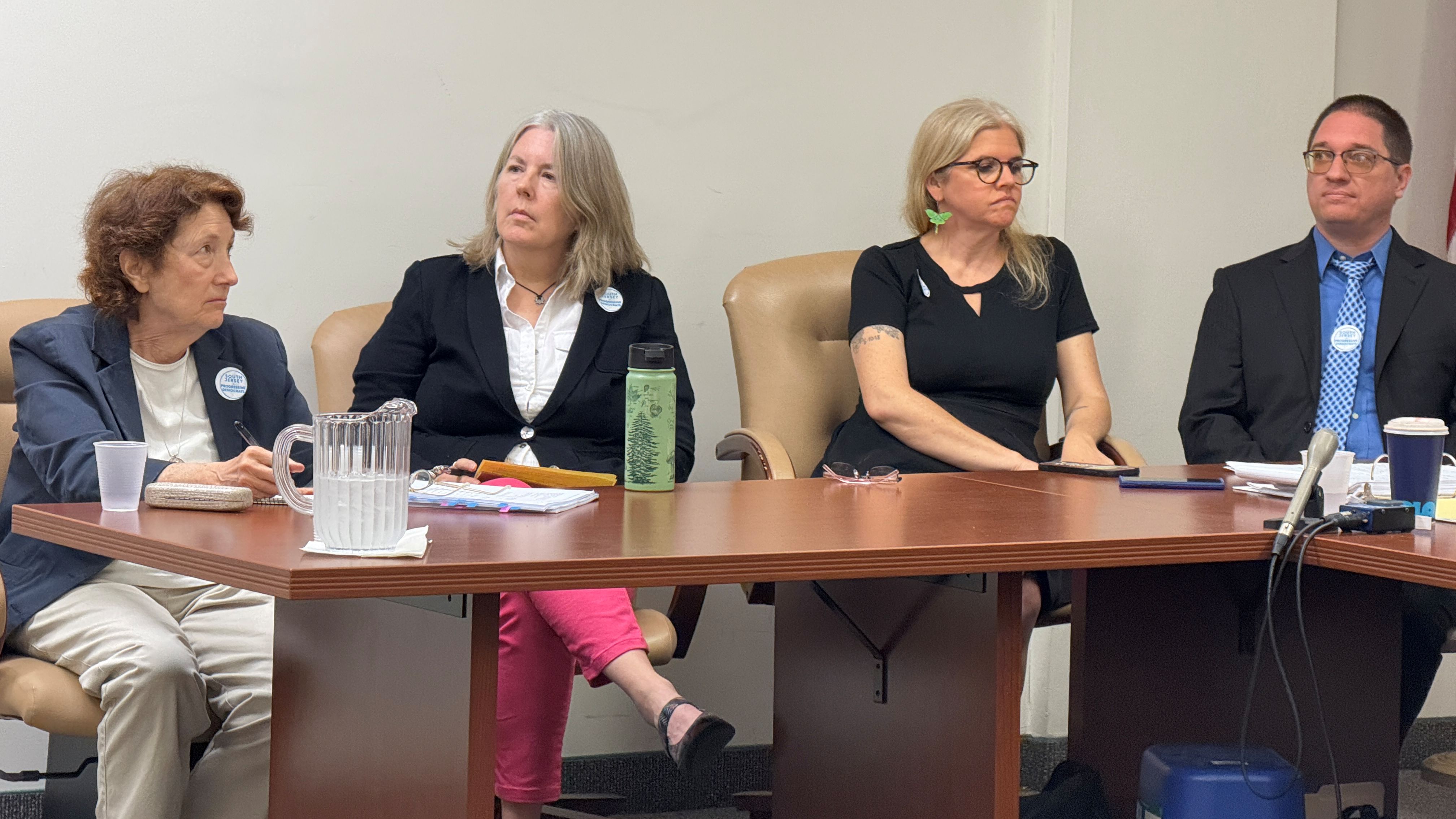
Efforts by Democrats led by George E. Norcross III to unseat a dissident faction from control of the Cherry Hill Democratic Committee will not be considered by New Jersey’s highest court.
The New Jersey Supreme Court on Sept. 16 denied a petition for certification filed by the Camden County Democratic Committee and committee chairman and State Sen. James Beach that would have challenged a state appellate court decision in April that allowed the South Jersey Progressive Democrats to name members of the committee.
Three Cherry Hill residents who are members of the South Jersey Progressive Democrats won the June 2025 primary, defeating the Norcross group, which ran with names for all 74 seats on the ballot. Voters voted once, either for the progressives or the Norcross group.
After their loss, the Camden County Democrats sued, challenging the progressives’ right to fill the 71 vacancies with members other than those who were listed in the losing group on the ballot.
Voters elected the progressives over the Norcross group by a vote of 5,547 to 3,350, or 62% of the votes cast.
At stake is control of the powerful Democratic Party in Cherry Hill, including candidate selection and choosing citizens to fill elected offices when they become open between elections. The Cherry Hill unit is also the largest single faction on the 522-member Camden County committee, which has even more power.
“Having read the appeals panel decision, I had complete confidence that the New Jersey Supreme Court would deny certification in our case, ending the Camden County Democratic Committee’s colossal waste of donors’ money attempting to overturn the will of Cherry Hill voters,” one of the three winners, Rena Margulis, said in an email on Wednesday. The other two winners were David Stahl and Susan Druckenbrod.
Margulis said that as of early September, the group has 47 Cherry Hill Democratic Committee members. She said Cherry Hill residents are being recruited to run in the Democratic primary next June.
A call to Camden County Democratic Party headquarters for comment on the decision was not returned.
70and73.com is a hyperlocal news site focused on South Jersey, including the communities of Cherry Hill, Evesham, Mount Laurel, Voorhees, Medford, Medford Lakes, and Moorestown.
The move comes as PHS prepares to mark its 200th anniversary next year.
PHS’s roughly 100 office-based employees have worked on a hybrid schedule since 2022, president Matt Rader said. The in-person cadence ranges from a couple days a week to a couple times a month, he said.
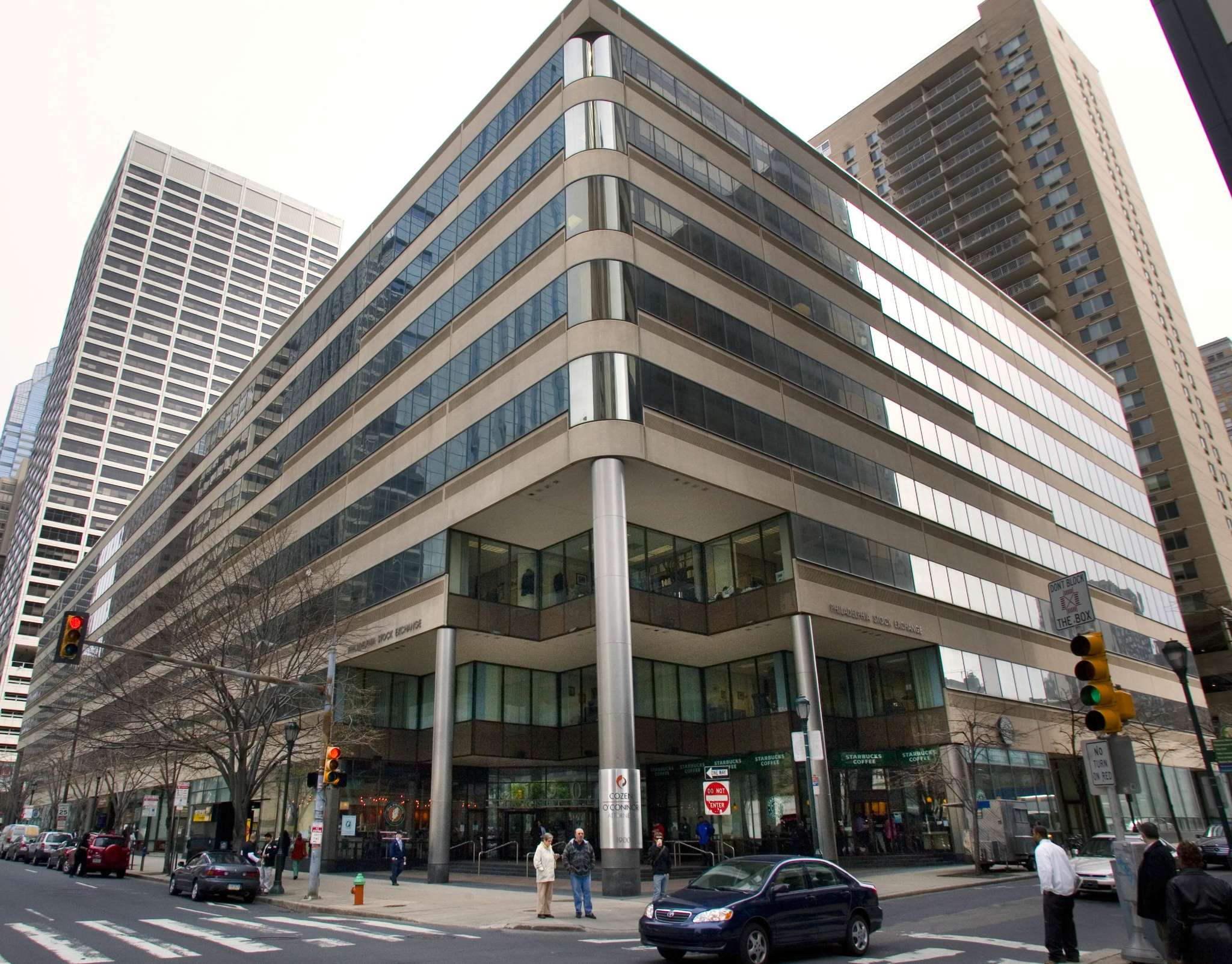
That will change starting in the spring at PHS’s new office at 1900 Market St., where the organization signed a 16-year lease. Rader said employees would be required to come into the office three days a week.
In its current building at 100 N. 20th St., PHS leases 31,000 square feet, subleasing two-thirds of that space to another tenant, Big Brothers Big Sisters. Its workforce is split into two suites on different floors. The new location, at the site of the former Philadelphia Stock Exchange building, is a single space spanning 18,000 square feet.
“Our current office space that we’re occupying is quite small because we’ve been on this largely hybrid model, and we wanted to move into a situation where we could have the team comfortably in-office three days a week and have everybody in one space,” Rader said.
Matt Rader, president of the Pennsylvania Horticultural Society, in 2024.Jessica Griffin / Staff Photographer
“PHS, despite being two centuries old, has the nimbleness of a start-up,” he said. “We’ve been in a significant chapter of growth, particularly in our neighborhood work. We do a lot of work around tree planting, community gardening, vacant land greening, small-business development, and job training across the city and region, and that work has grown significantly since 2019.”
Staying in Center City was an easy decision, Rader said.
“We believe very much in Center City,” he said. “We work in more than 230 city and suburban neighborhoods. So our PHS community of supporters, volunteers, staff is kind of everywhere.”
That means easy access to public transit is important, Rader said.
As for its 200th anniversary, PHS plans to double down on its neighborhood greening work, invest more in the annual Flower Show, and launch a new vision, Rader said: “Every person, every place, gardening for the greater good.”
“Our job is to scale up the places and people involved in using gardening to improve the health and well-being of the region, and we see this new headquarters office space as a great first step on that journey,” he said.
Radnor commissioners in July advanced a proposal to purchase the former office at 405 W. Wayne Ave. and convert the building into a local courthouse.
Radnor’s magisterial districtcourt — which typically handles preliminary criminal hearings, traffic and local ordinance violations, and small civil suits — has been located in Newtown Square for three years as Radnor has been unable to find a home for it in the township.
At a series of public meetings in recent weeks, residents pushed back against the West Wayne Avenue proposal, raising concerns that the courthouse would bring traffic and parking issues to the area and put individuals accused of crimes in proximity to the children who live and play in the neighborhood.
The township dropped the plan to purchase the veterinarian’s office earlier this month, citing resident concerns and a “thorough review of the site and vital feedback.”
With that site off the table, Commissioner Jack Larkin told residents during a Tuesday information session that the township is continuing to look, but has found no other suitable options for a local courthouse, leaving questions regarding whether the court will be able to find a home in Radnor at all.
Locating a new space for the court has been made difficult by a series of parameters from Delaware County and the Administrative Office of Pennsylvania Courts, Larkin said, including ADA accessibility, size, and parking. Delaware County, which is responsible for footing the bill for the building, has told Radnor it can pay between $20 and $30 per square foot for the space, a rate that is hard to come by in the township, Larkin said.
On top of the guidelines from the state and county, Larkin said, residents have made clear they do not want a court near a residential neighborhood, a needle that is difficult to thread in Radnor, he said,where many commercial districts abut residential areas.
At Tuesday’s meeting, a group of around 20 residents rebuked commissioners for what they described as poor planning and a lack of communication around the West Wayne Avenue acquisition proposal. Some said a lack of social media and email notification about the process made community members feel the commissioners were “sneaky.” One attendee said the court relocation effort is a “pet project” that residents have not asked for.Others rejected Larkin’s justification for why the court needs to move into Radnor at all.
Larkin, an attorney, has argued repeatedly that it is important for Radnor residents to elect their own local judge rather than be split between other districts, and that bringing the courthouse home will signal to Pennsylvania that Radnor cares about retaining its own judge come the state’s decennial court district realignment process.
“I just generally think that it’s good to have your judge in the community that he’s judging. That’s the way the system is supposed to work. The [magisterial district judge] is supposed to be in the magisterial district where he lives, where he works,” Larkin said.
Until three years ago, Radnor’s district court cases were split between Marple and Newtown Townships.
In response to questions about whether Radnor’s district courthouse being located outside the township’s bounds would affect the judicial realignment process, Stacey Witalec, director of communications for the Pennsylvania Judicial System, said “there are several courts within Delaware County which are co-located” and pointed to the court reestablishment procedures outlined in Pennsylvania statute.
This suburban content is produced with support from the Leslie Miller and Richard Worley Foundation and The Lenfest Institute for Journalism. Editorial content is created independently of the project donors. Gifts to support The Inquirer’s high-impact journalism can be made at inquirer.com/donate. A list of Lenfest Institute donors can be found at lenfestinstitute.org/supporters.
UNITED NATIONS — Ukrainian President Volodymyr Zelensky urged the world’s leaders Wednesday to keep choking Russia’s revenues and impede its war efforts, telling the U.N. General Assembly that “Russia’s revenues must remain a target.”
“When someone gives Russia more money through trade, they give this war more time. And that is exactly why we insist on limiting trade with the aggressor, and why we are burning Russia’s revenues ourselves,” he said in English, a language he often uses at the world body.
Russia gets its turn Saturday to address the assembly. President Vladimir Putin hasn’t traveled to the gathering in years, sending Foreign Minister Sergey Lavrov instead.
Lavrov told the U.N. Security Council on Wednesday that Russia is prepared to negotiate toward a lasting peace but won’t just “pause” the war. He argued that such a pause would just buy Ukraine and its backers time to line up more weapons.
Zelensky cast doubt on Russia’s interest in ending the fighting.
“Something always seems to stop Putin from saying, ‘That’s it. Enough. Peace,’” Zelensky said. “Can you even imagine him without war? He is ‘Patient Zero’, the one from whom war keeps spreading further. … ‘Patient Zero’ must be stopped.”
The war has reverberated across the planet
Russia invaded Ukraine more than 4½ years ago and says it’s out to protect its own security and the interests of Russians and Russian-speakers in parts of Ukraine. Western analysts estimate that over 500,000 Russian troops have been killed and that Ukraine has recorded more than 500,000 military casualties, including up to 140,000 deaths. Neither country discloses its own casualty totals.
The war has had global repercussions for fuel, fertilizer and grain shipments — and for geopolitics, widening divisions between Russia and the West.
With front-line positions in eastern and southern Ukraine largely unchanged since last year, Russia and Ukraine have intensified long-range attacks with drones and missiles.
Russian drones pounded the Ukrainian capital, Kyiv, in daylight attacks on Wednesday, killing two people and wounding 23; two others were injured by a strike that started a big fire at a shopping mall in the southern city of Zaporizhzhia.
Russia’s Defense Ministry said it struck Ukrainian military-industrial and energy facilities, logistics centers, and sea vessels overnight. The ministry said its air defenses intercepted more than 500 Ukrainian drones over multiple Russian regions and Crimea, as well as the Sea of Azov and the Black Sea. Crimea is the peninsula that Russia seized by force and illegally annexed in 2014.
Zelensky says ‘you can stand and survive’
Zelensky told the assembly that Russia has used 63,000 attack drones of different types against Ukraine so far this year alone. While celebrating that his own country “has proven that even against a much bigger enemy, you can stand and survive,” he implored world leaders to deny Putin money or foreign fighters.
“Limit his money. Limit his war,” the Ukrainian leader said.
Meanwhile, Ukraine has been looking for additional resources. Zelensky noted to reporters Tuesday that his country hasn’t yet gotten clear answers to its effort to acquire more U.S. Patriot air defense systems.
Zelensky met Tuesday with U.S. President Donald Trump on the U.N. sidelines.
In brief remarks to the media before the meeting, Trump reiterated that he believes “we’re going to make a deal” with Russia and Ukraine to quell the fighting. The president predicted on the 2024 campaign trail that he’d swiftly broker an end to the war but hasn’t succeeded so far. Zelensky said Tuesday he was hopeful.
“Sometimes, it may seem that Ukraine is focused, focused, only on war because we speak about weapons, we speak about defense and sanctions against the aggressor. But Ukrainians did not choose this war,” he told the assembly on Wednesday. “We choose not to die. …. We are defending ourselves.”
President Donald Trump’s administration cannot demand that Philadelphia officials assist his deportation agenda and enforce federal immigration law, the city told a judge Tuesday.
Attorneys for the city and local officials asked U.S. District Judge Chad F. Kenney to toss out the Department of Justice’s challenge to an ordinance that prohibits Philadelphia agencies and employees from honoring immigration detainers.
“The federal government cannot conscript City employees as its agents, including by ordering them to keep an individual in custody, solely to assist with federal immigration enforcement,” the city’s motion said.
The Trump administration’s position in the case runs afoul of the Tenth Amendment to the U.S. Constitution, which prevents the federal government from commandeering state and local governments to enforce federal laws, the city said.
And the Justice Department cannot point to any federal law “mandating” state and local officials assist with immigration enforcement, said the filing on behalf of Mayor Cherelle L. Parker, former City Solicitor Renee Garcia, and District Attorney Larry Krasner.
The city declined to comment on the ongoing litigation. Krasner and the Justice Department did not immediately respond to requests for comment.
That decision should have come as no surprise to Parker’s administration. Parker allowed the bill to become law without her signature, following Garcia’s advice that signing the measure “would send an inaccurate signal to the public that the Administration can legally and practically enforce” its provisions.
The Justice Department expanded its lawsuit in August to include a challenge to the bill that prohibits honoring immigration detainers, requests by U.S. Immigration and Customs Enforcement that a local law enforcement agency keep a person in custody long enough to be handed over to federal agents.
Parker did sign that legislation, which codified a long-standing city practice, along with five other “ICE Out” bills.
The ordinance makes it illegal for a city agency or employee to comply with a detainer by keeping people otherwise eligible for release in custody because of an immigration detainer, an administrative warrant, or suspicion that they violated immigration law.
The amended complaint does not mention Philadelphia’s history of not cooperating with ICE detainers. But with the local law, the city “foreclosed” the prospect of using the mechanism to deport people who were arrested, the suit says.
With oil and gasoline prices spiking amid President Donald Trump’s war with Iran, it was an awkward moment for optimism about the world’s energy situation.
But Energy Secretary Chris Wright brought a sunny message to Houston last week at a gathering of energy ministers from the Group of 20 nations. The Trump administration, he said, was ushering in an era of energy abundance by expanding oil and gas supplies in places like Alaska and Venezuela.
That pitch was often overshadowed by the effects of the conflict in the Middle East. Between lauding oil and gas deals, Wright fielded questions about a damaged Saudi oil pipeline and sparred on social media with Gov. Gavin Newsom of California, a Democrat, over surging gasoline costs.
Wright acknowledged some tension, though he insisted it was temporary.
“Everyone’s frustrated with higher energy prices,” he said of the mood at the meeting. “But I’ve not met one person who’s comfortable with a nuclear-armed Iran. So everyone gets what we’re doing and this is a critically important mission. It creates dislocations in the short term. But the only answer to short-term dislocations is the energy abundance agenda.”
The situation was familiar for Wright, 61, one of the most forceful defenders of Trump’s vision of “energy dominance.”
Over the past two years, the administration has dismantled efforts to tackle climate change and ended support for wind and solar power. Instead, officials have sought to expand the use of oil, gas, coal, and nuclear energy — sources they see as more reliable. The aim, they say, is to reduce consumer prices, increase U.S. fuel exports, and provide enough electricity to win the artificial intelligence race against China.
Wright, a former fracking executive, has been out front in articulating that shift.
Whereas Trump speaks bluntly about energy — chanting, “Drill, baby, drill”; calling wind turbines ugly; or claiming that global warming is a hoax — Wright gives his arguments an intellectual gloss.
He cites figures on how solar panels underperform during winter storms. Or he argues that global warming is not as big a problem as energy poverty, which he says can only be alleviated with more oil, gas, and coal, even if that means more planet-heating greenhouse gas emissions.
Administration allies say that has made Wright invaluable.
“He has been one of the most consequential picks for energy secretary I’ve seen,” said Thomas J. Pyle, president of the American Energy Alliance, a research group that promotes fossil fuels. “He’s very experienced, brings a lot of substance, and he articulates President Trump’s vision clearly.”
Critics say Wright’s approach ignores the real risks of climate change and dismisses two of the world’s fastest-growing power sources: wind and solar. They also point to rising energy costs — diesel prices have hit record highs, and electricity rates are still increasing faster than inflation — as evidence that the administration’s policies aren’t working.
During his Senate confirmation hearing last year, Wright appeared to reassure lawmakers that he supported all energy sources, including renewables. He cited his graduate work on solar power and called climate change a “global challenge that we need to solve.”
But since taking office, he has been more combative, deriding wind and solar power as a “parasite” on the grid, blasting Democratic-led states for environmental policies that have shut down coal and gas plants, and accusing Europe of being in thrall to a “climate cult” that is limiting economic growth.
The Energy Department infuriated Democrats in Congress last October by canceling nearly $8 billion in Biden-era clean energy grants located almost entirely in states that didn’t vote for Trump. Asked about the decision at a June congressional hearing, Wright said political considerations had nothing to do with the decisions.
But in court filings in July, administration officials conceded that the cancellations were targeted in states that were represented by Democrats and had voted for Kamala Harris, the party’s presidential nominee, in the 2024 election.
Energy Department officials have said that they recommended that grants be canceled in red and blue states alike but that the decisions on which terminations to announce were made by the White House.
Sen. Martin Heinrich of New Mexico was one of eight Democrats who voted to confirm Wright last year but has since become a vocal critic.
“Of all the Trump nominees, I am particularly disappointed in his conduct,” Heinrich said. “He obviously had an oil and gas history, but he also had a clean energy history. And he just threw all of that away to be a partisan mouthpiece.”
In response, Ben Dietderich, an Energy Department spokesperson, said in a statement, “Secretary Wright doesn’t have preferred energy sources. He just believes in being honest about math and energy security. Unfortunately, many in the climate lobby don’t like that. The Department is proud to have ended energy subtraction policies that lead to higher prices, less energy security and human impoverishment.”
Wright first gained prominence as the founder of Liberty Energy, a Denver-based oil-field services company that was heavily involved in the fracking boom.
Even among oil and gas executives, Wright stood out as an evangelist for fossil fuels. In 2021, as world leaders and even many oil companies were pledging to slash emissions, Wright published a 180-page report criticizing what he saw as a “myopic focus on climate change.”
He argued that people in developing countries still lacked enough energy to enjoy a decent standard of living and that renewables couldn’t replace oil, gas and coal to provide that power.
“At the height of this era when everyone was saying energy policy should just be about climate, Chris Wright was one of the few CEOs that ran oil and gas firms who clearly and vocally spoke out,” said Arjun Murti, a partner at the energy research firm Veriten.
Wright also had a flair for the dramatic. He once drank fracking fluid on video to show it was safe. In 2021, he rented billboards around Denver to heckle The North Face after the company declined to work with an oil firm.
He landed appearances on Fox News and won the job of energy secretary on the recommendation of Harold Hamm, a fellow fracking pioneer and major donor to Trump.
Wright quickly transformed the department. Out were programs to develop novel technologies to fight climate change, like green hydrogen or low-emissions steel. Instead, federal funds went to help utilities finance gas plants, nuclear reactors and transmission lines or upgrade older coal plants, which officials say are essential for meeting rising electricity demand.
Wright also lifted a Biden-era pause on expanding exports of liquefied natural gas, now the nation’s fastest-growing export, and has pressured Europe to ease rules on methane, a potent greenhouse gas, saying they could hurt U.S. exports.
“He brought a whole new attitude to the agency,” said Scott Segal, an energy lobbyist at Bracewell. “It’s all about how do we produce enough energy to support AI and economic growth.”
Some changes have attracted bipartisan support, such as Wright’s promotion of nuclear and geothermal energy, which don’t produce planet-warming emissions. His agency has dangled billions of dollars in loans to kick-start the largest expansion of nuclear power in a generation, while a program to help startups develop small reactors has moved faster than many expected.
Other moves have been more contentious.
To rescue the declining coal industry, an obsession of Trump’s, the Energy Department used emergency powers to keep plants running past their scheduled retirement dates, which could cost ratepayers billions. (This month, a federal judge struck down one such order, saying the agency had overstepped its authority.)
Last year, Wright picked five skeptics of mainstream climate science to write a report arguing that concerns about global warming were overblown. That report prompted furious pushback from hundreds of scientists, who denounced its findings as riddled with errors. A federal judge later ruled that Wright had acted unlawfully by secretly convening the authors.
Wright, who often criticizes wind and solar for not running at all hours, has cut renewable energy programs and renamed the National Renewable Energy Laboratory as the National Laboratory of the Rockies. While experts agree that the variability of wind and solar poses real challenges, many say it goes too far to call the sources “worthless.” Texas gets roughly one-third of its power from renewables and has kept costs low.
“It’s borderline petty how anti-renewable this Energy Department is,” said Samantha Gross, a director at the Brookings Institution. “Especially since we’re still building more renewables, particularly solar, than any other form of energy in the U.S. right now.”
Roughly 2,700 staff members have left the agency, which analysts and former employees said could make it difficult to carry out its mission.
Wright’s supporters say he has helped steer the country away from what they saw as the Biden administration’s unrealistic plans to rapidly phase out fossil fuels.
Some say the debate is shifting in his direction. Many states and businesses are backing off ambitious climate targets, and Democrats are less vocal nowadays about climate change. Tech companies are using more natural gas to meet exploding demand for data centers. The International Energy Agency, after some browbeating by Wright, is revising up its projections for how long fossil fuels will stick around.
“There’s been a real shift in how investors and others now talk about energy,” said Travis Fisher, a director of energy and environmental studies at the libertarian Cato Institute who worked with Wright to organize the agency’s climate report. “Climate has become a lot less salient.”
The administration’s strategy faces its biggest test yet with the Iran war. While The New York Times reported that Wright was excluded from the decision to launch the war, he has been busy managing the energy fallout. He often appears on television to discuss U.S. military escorts of oil tankers through the Strait of Hormuz. And he is quick to counter that Democratic-led states face high energy costs because of decisions to close refineries or oppose pipelines.
In the short term, the war and resulting energy shortages have benefited many U.S. suppliers, which are exporting more oil and gas than ever before. But in the long term, some experts and companies worry the chaos could hurt the market for fossil fuels as countries seek to reduce reliance on energy imports.
Wright, for his part, says fossil fuels are too useful to recede anytime soon.
“We will never, ever come remotely close to running out of hydrocarbons, which means you need better technology and innovations to eventually eat into their market share,” Wright said at a Cato event in May.
He said he was excited about recent breakthroughs in areas like fusion. But, he added, “the biggest innovations the rest of my lifetime in energy are almost certainly going to be in oil, gas and coal, because they are what matter.”
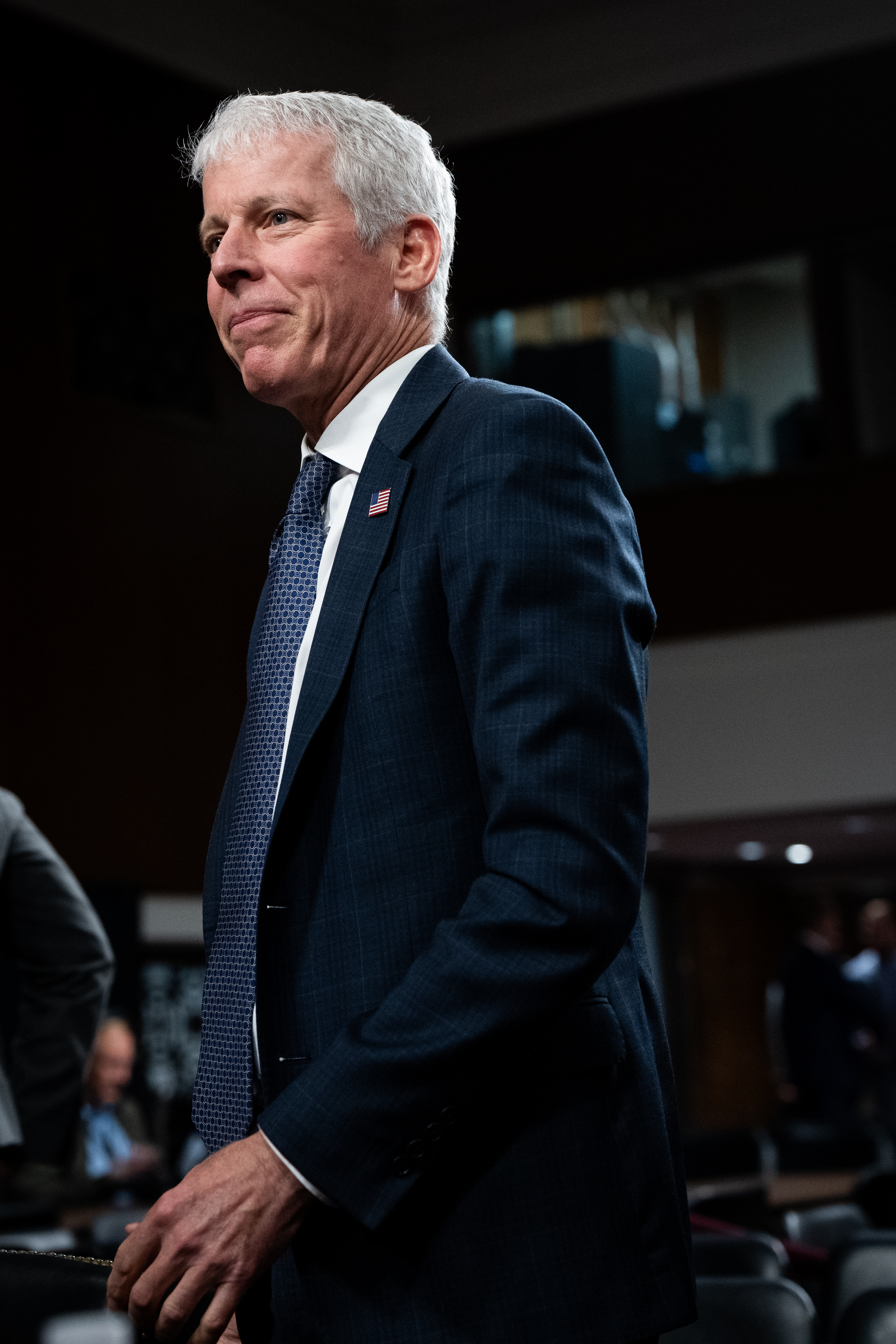
FILE — A monitor shows Chris Wright, the Trump administration’s Energy secretary, at a hearing on Capitol Hill on May 13, 2026. Wright, a former fracking executive, pitches a future of fossil fuel abundance. It hasn’t always been an easy sell as the war with Iran drags on and oil prices surge. (Haiyun Jiang/The New York Times)HAIYUN JIANG
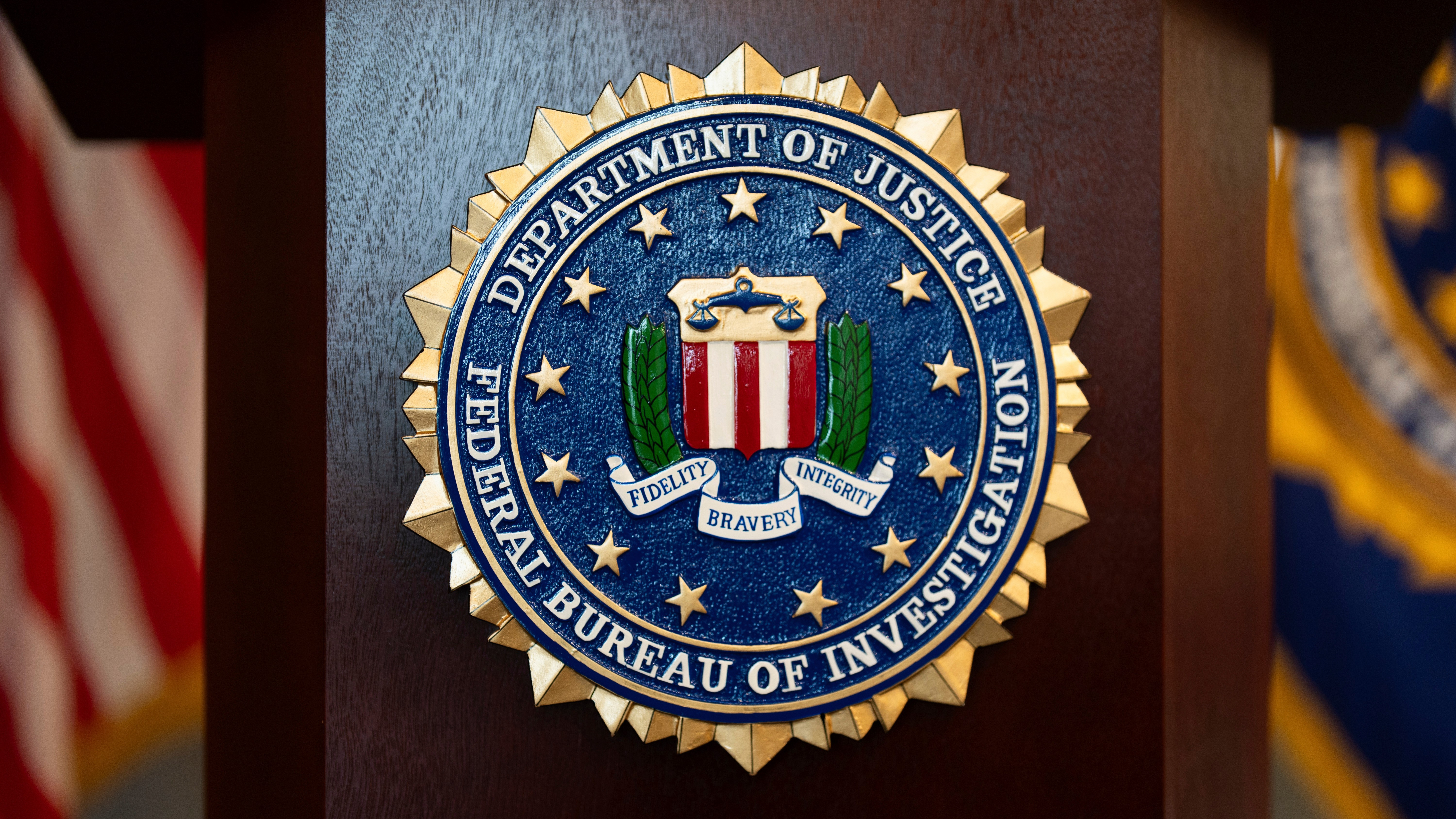
WASHINGTON — The FBI said Wednesday it was investigating a criminal hacking group’s claims that it had stolen “very sensitive data” belonging to thousands of agents and applicants and that it had compromised the bureau’s jobs website.
“The FBI is aware of a cyber-criminal enterprise group claiming a compromise of the FBIJobs.gov portal and alleged impact to FBI employee personally identifiable information,” the FBI said in a statement. It said that while the “point of breach” was undetermined, “we are actively and aggressively investigating this matter and working closely with those third-party providers that support FBIJobs.gov to mitigate any and all risk.”
A message that circulated online from a hacking group known as ShinyHunters claimed responsibility for the hack. The jobs website, the main portal for prospective employees to learn about the FBI and initiate the application process, remained offline as of Wednesday afternoon.
“We have compromised the FBI. We hold very sensitive data on almost ALL FBI Agents and individuals who filed an application with the FBI for a job,” said the ShinyHunters message, which was directed to FBI Director Kash Patel and Brett Leatherman, the assistant director in charge of the bureau’s cyber division.
The claims could not immediately be verified. An email to an address associated with ShinyHunters was not immediately returned.
In its message, ShinyHunters said it would give the bureau one week to correct or remove what it says are false allegations contained in an FBI public advisory from May that described the organization as a “cyber criminal group specializing in large-scale data breaches and extortion.”
That public service announcement characterized ShinyHunters as “threat actors” who often “use their real or exaggerated claims of access to sensitive or personal information to prompt payment from victims,” commonly harass or threaten victims and “may falsely claim to have sensitive or compromising information, including embarrassing photographs or videos of victims, which frequently do not exist.”
ShinyHunters said in its message to the FBI that it was “offended” by those characterizations and demanded that the FBI remove those claims. It did not say what would happen if the FBI did not do so within a week.
“This is not a ransom, coercion, or extortion. Your federal policies do not apply here. This PSA is NOT financially motivated,” the hacking group’s message said.
The FBI, the nation’s premier federal law enforcement agency, has been a common hacking target.
In March, the FBI disclosed that it was investigating “suspicious activities” on an internal system that contains sensitive information related to surveillance operations and investigations. Also that month, a pro-Iranian hacking group claimed to have hacked an account of Patel’s and posted online what appear to be years-old photographs of him, along with a work resume and other personal documents dating back more than a decade.
The FBI described the compromised information as “historical in nature” and said it involved “no government information.”
The Jenkintown School District is cancelingthe rest ofits varsity football season over safety concerns from low participation, officials announced this week.
The high school team in Montgomery County’s smallest school district had played two games so far this season and was set to play Lower Moreland on Friday.
There were not enough players on the team, nor enough active participation, to safely play a whole season, high school principal Thomas Roller and athletic director Aubrie Breisblatt wrote in a letter to the school community Tuesday, and the team had already been forced to forfeit games.
“Continuing to compete under these circumstances would place significant physical demands on a limited number of players,” the school leaders wrote, adding that the decision had come at the head coach’s recommendation.
While the team will not play any more games this year, the program will continue to hold practices, and officials hope to rebuild the program in the future.
“Sports participation, especially at a school as small as Jenkintown, ebbs and flows over time depending on students’ interests,” school board president Carolyn Riley wrote in a text Wednesday.
”We remain very supportive of our students committed to playing football.”
Nursing homes would no longer be required to report each week how many residents were stricken by COVID-19 and other respiratory diseases, under a Trump administration plan to repeal a key public health response to thousands of pandemic deaths.
A draft summary of the proposed rule obtained by The New York Times outlines how the administration agrees with the industry’s objections to weekly reporting of viral caseloads, calling it burdensome. In its waning days, the Biden administration made COVID reporting rules permanent, adding influenza and respiratory syncytial virus to the list of threats that facilities also must track and record. The policy took effect in January 2025.
Advocates for nursing home residents reacted with dismay to the proposed rollback. Elderly, frail residents are especially vulnerable to infections, and they live in close quarters, where viruses can spread rapidly.
“That’s crazy,” said Sam Brooks, director of public policy at the nonprofit National Consumer Voice for Quality Long-Term Care. “We know, if anything, that respiratory disease has a disproportionate and deadly impact on nursing home residents.”
He said the Centers for Medicare and Medicaid Services, or CMS, which regulates nursing homes, would be blinding itself to an important method for tracking infection control and pinpointing problems.
The administration has cut back on data updates at other agencies, including the Centers for Disease Control and Prevention, where a study published this year found that databases related to vaccine and respiratory diseases had gone dormant.
Nursing home industry representatives declined to comment on specifics, because the changes have not been announced. They contend infection reporting consumes too much staff time and is duplicative, because infection data is reported to the federal government and states in other ways.
CMS, which drafted the plan, declined to discuss the proposal or disclose when it would be made public.
During the peak years of the pandemic, from early 2020 through early 2022, more than 200,000 nursing home residents and staff members died after being infected by coronavirus, according to KFF, an independent health policy organization, which cited CDC data.
The high death toll has been attributed in part to a lack of preparedness and weak infection controls. The Government Accountability Office said in 2020 that inspectors had cited 82% of nursing homes for infection control deficiencies from 2013 to 2017, and that half of those were found to be repeat violators.
In the internal document obtained by the Times, Dr. Mehmet Oz, the director of CMS, recommended to his boss, Health Secretary Robert F. Kennedy Jr., that the agency pursue steps to undo the mandate.
“The agency does not comment on purported internal or predecisional deliberative materials,” a CMS a spokesperson said in an email. He said the agency evaluated regulations to ensure they “allow providers to focus time and resources on delivering care rather than unnecessary administrative burden.”
The draft memo from Oz to Kennedy said CMS would reserve the power to reinstate weekly reporting if another public health emergency occurred.
The plan also would end a requirement that nursing home staffs be educated about COVID vaccines and offered the shots. Groups representing residents called the move unwise, pointing out that front-line caregivers were a key pathway for the coronavirus to enter nursing homes during the height of the pandemic. COVID vaccine rates among staff members in recent years have been below 10%, the CDC has reported.
The administration plan would continue to mandate that facilities offer the COVID vaccine to residents.
The nursing home industry has already achieved its biggest goal of President Donald Trump’s second term: After a heavy lobbying blitz, the administration last year scrapped Biden-era minimum staffing rules that were intended to improve resident care.
Biden officials, in pushing the staff minimums, had cited COVID deaths along with decades of concerns about poor care, including deaths from bedsores, falls and medication errors. But the Trump administration said too many nursing homes, especially in rural areas, could not find enough staff to satisfy the requirements. Many workers who care for the elderly are typically paid less than janitors and retail employees, and the work can be grueling.
With the proposed change on infection reporting, the administration anticipates favorable reaction from the industry, according to the draft memo.
Two main nursing home lobbying groups — the American Health Care Association and LeadingAge — reiterated their opposition to weekly respiratory infection reporting, saying that other government programs track COVID infections and that respiratory illnesses are reported to many local health departments.
“This outdated reporting requirement is only adding hours of unnecessary administrative tasks to caregivers each week” said Holly Harmon, the American Health Care Association’s senior vice president of quality, regulatory and clinical affairs. “It’s time to streamline public health reporting and put patients over paperwork.”
But industry critics contend that operators are failing to heed the lessons of the pandemic. With low staffing levels and high turnover, infection control efforts are most likely in line with the prepandemic patterns flagged by the GAO, said Toby Edelman, senior policy attorney at the Center for Medicare Advocacy.
“I don’t think there is any reason to believe they have beefed up what they are supposed to be doing,” Edelman said.
Ron Heller stepped out of the shower naked and took a boxing stance. Jerome Brown stood across from him in full pads. Mike Golic and the rest of the Eagles defensive line at the time dropped their helmets as offensive linemen began filing out of the showers.
After a training camp practice filled with fights, Golic thought the two lines might be about to have another.
Instead, everyone started laughing.
Golic revisited the locker room standoff Tuesday on ESPN’s This Is Football, recounting the practice that led to it and a confrontation involving Brown that had escalated to talk of guns.
During one-on-one pass-rushing drills, offensive lineman Ron Solt and Brown led a series of fights. But it was a fight “not just between the two players, but through the whole O-line and D-line,” Golic said, adding that it happened after six or seven consecutive plays.
According to Golic, Solt said he would go to his car for a gun. Brown replied, as Golic remembered it, “I’m going to beat you to my car and get my gun.” Neither player retrieved a weapon, Golic said, but the drill had spun out of control.
“You didn’t get a whole lot done in practice when you’re fighting that much,” Golic said.
The Eagles stopped the one-on-one session and moved to a two-minute drill, but another fight disrupted everyone’s work. After practice, the defensive linemen stayed on the field for extra drills while the offense headed inside.
Beloved Eagles defensive end Jerome Brown was one of the subjects in a wild story told this week by former Eagles teammate Mike Golic.
At West Chester University, where the Eagles held camp, the route to the defensive locker room passed the showers. Golic and his teammates were walking in still wearing their uniforms when Heller emerged. Heller had faced Golic when they played for Penn State and Notre Dame, respectively. Golic remembered him as one of the toughest opponents he had faced.
Heller stopped directly in front of Brown. In Golic’s telling, he tried to put the practice dispute behind them: “Hey, Jerome. All good. Practice, whatever.” Brown answered with expletives and made it clear he was still angry. Heller squared up as more offensive linemen came out of the showers.
“It was like West Side Story, but one group was naked,” Golic said.
Golic had considered what he might do if the groups fought.
“I would’ve used my cleats in a very, very bad way against a naked man,” he said.
No one got that far. The sight of one line in pads facing another fresh from the showers broke the tension. Golic said the players laughed, the defensive linemen went to their lockers, and the offensive linemen finished showering.
The stories offered a glimpse of the practices over which Buddy Ryan presided in Philadelphia. Ryan encouraged fighting, according to Golic, who joined the Eagles in 1987 partly because he wanted to play for a coach known for his defense. The roster included Reggie White, Clyde Simmons, and Brown up front; Seth Joyner at linebacker; and Eric Allen in the secondary.
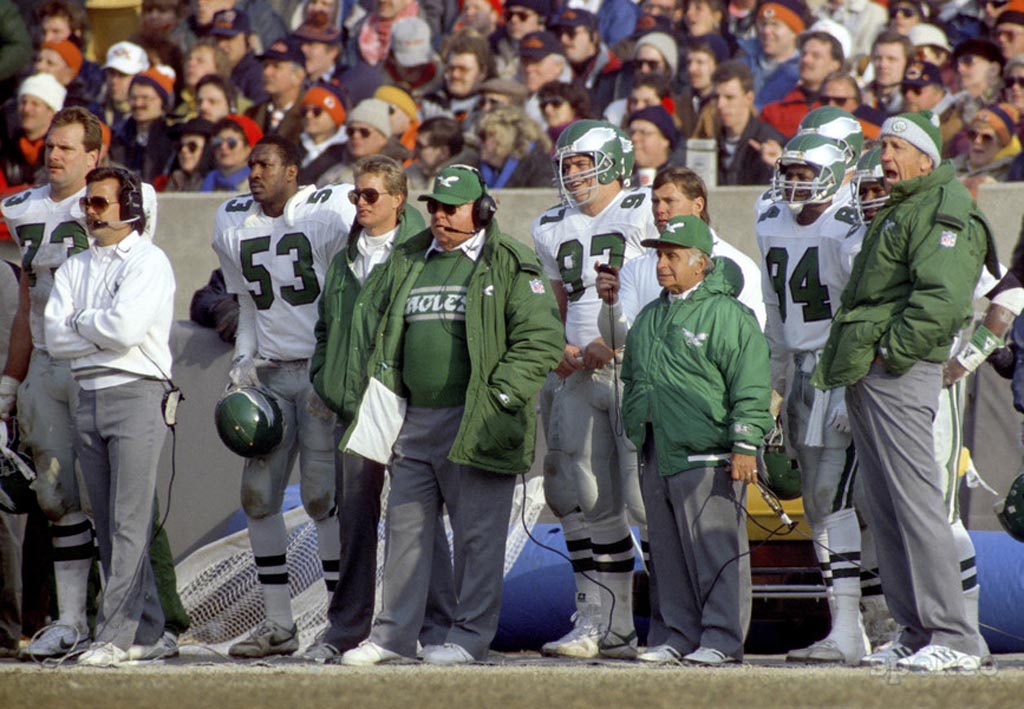
According to Golic, former Eagles coach Buddy Ryan (center) didn’t mind a scuffle every now and again.
Ryan later called a defensive front featuring White, Simmons, Brown, Mike Pitts, and Golic the best he had coached. He previously coordinated the Chicago Bears’ celebrated 1985 defense. His Eagles reached the playoffs three straight seasons from 1988 through 1990, though they never won a postseason game under him.
The defense continued to dominate after Ryan’s tenure ended. In 1991, the Eagles allowed the fewest total yards in the NFL. Brown earned the second of his two first-team All-Pro selections. He died in a car crash in June 1992 at age 27, and the Eagles later retired his No. 99 jersey.
Golic has told the shower story before. But on Tuesday, he also recalled the threat-filled fight between Solt and Brown that preceded it. That day’s work ended in a locker room full of players laughing at how close they had come to fighting again.