Blog

  • Trump’s National Guard deployment in D.C. set to cost additional $1.4 billion

    Trump’s National Guard deployment in D.C. set to cost additional $1.4 billion

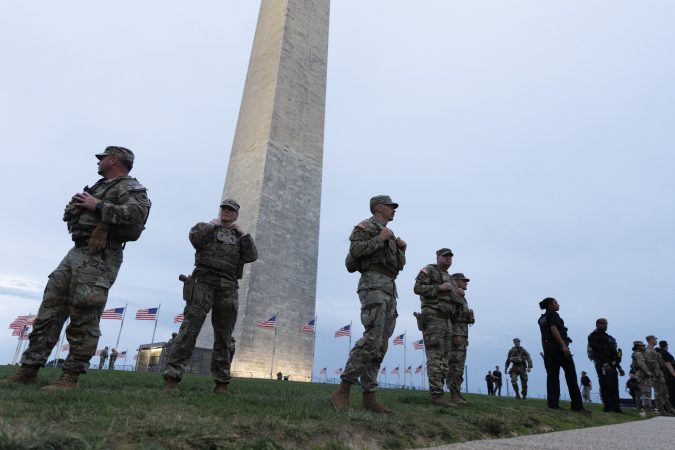
    The Pentagon’s deployment of National Guard troops to Washington, D.C., is set to cost an additional $1.4 billion through the end of the Trump administration, according to information provided to Congress and reviewed by the Washington Post.

    The estimate, which encompasses October 2026 through January 2029, adds to the hundreds of millions of dollars spent on the mission to date. While the administration has not disclosed the full cost of the mission so far, the new figure represents the most comprehensive accounting yet of President Donald Trump’s unprecedented use of the military to patrol the nation’s capital — an operation fiercely criticized by many Democrats and civil liberty advocates.

    The information was provided to Sen. Elizabeth Warren (D., Mass.), a member of the Senate Armed Services Committee, by Jules Hurst III, Trump’s nominee to become the Pentagon’s comptroller, as part of his confirmation process. Hurst is set to be confirmed in a bloc of Trump administration nominees as soon as this week.

    The administration deployed National Guard personnel to Washington in August 2025, after Edward Coristine, a former staffer in Elon Musk’s U.S. DOGE Service initiative to slash the federal government, was assaulted in an attempted carjacking. The National Guard will maintain a presence in D.C. until January 2029 or “until the president says the mission is over,” Brig. Gen. Leland Blanchard II, the interim commanding general of the D.C. National Guard, told reporters in a news briefing Monday.

    The cost estimate provided to Warren assumes a deployment of about 2,500 National Guard personnel. There are approximately 4,600 service members in the city now, Blanchard said, part of a temporary surge coinciding with summer events to commemorate the 250th anniversary of the signing of the Declaration of Independence.

    Democrats have called the deployment a wasteful use of military resources and an infringement on Americans’ civil liberties, and they have pressed Defense Secretary Pete Hegseth to justify the mission as the Pentagon faces urgent budget shortfalls because of the Iran war and other military operations.

    “The National Guard are not pawns and taxpayer dollars are not a piggy bank for Trump’s political stunts,” Warren said in a statement.

    In testimony to the Senate Appropriations Committee last month, Hegseth acknowledged the Defense Department is facing financial pressure but repeatedly blamed the situation on the Biden administration’s management of the military.

    The Pentagon did not immediately respond to a request for comment.

    Since returning to office, Trump has deployed active-duty and National Guard units to American cities on controversial missions to stop crime or protect federal immigration agents. Academics and researchers who specialize in politicization and the military, along with local officials in some of the targeted communities, have argued that the operations violate laws barring the military from engaging in domestic law enforcement.

    Some state and local governments, including Washington, have challenged the deployments in court.

    The Congressional Budget Office estimated in January that the administration’s National Guard deployment in Washington cost $223 million through the end of 2025. It said deployments in Los Angeles, Memphis, Chicago, and Portland, Ore., together cost an additional $273 million in 2025.

    CBO has estimated that each additional month of deployment in Washington would cost about $55 million.

    Trump’s record $1.5 trillion defense budget request for fiscal 2027 includes $2.3 billion in funding for domestic use of the military, including $605 million for the National Guard mission in Washington.

    In a separate request to Congress for $67 billion in additional funding to help cover the costs of the Iran war, the Trump administration also requested $800 million for the National Guard. Sen. Patty Murray (Wash.), the Appropriations Committee’s top Democrat, said during last month’s hearing with Hegseth that those funds would go toward extending the D.C. deployment.

    Blanchard, the National Guard general, defended the mission, noting that last month the Trump administration signed a $292 million contract to move National Guard members into local apartments from hotels in and around Washington. The move, Blanchard said, will save $90 million on lodging and transportation costs over the course of the contract.

    He said, too, that service members have responded to about 800 medical emergencies — performing CPR and applying tourniquets on gunshot victims, and administering 325 doses of Narcan, a drug used to treat overdoses.

    While Trump officials have repeatedly asserted the National Guard was necessary to help address a crime emergency in the city, D.C. police data shows violent crimes this year have remained about the same from this time in 2025. Property crimes, including burglary from cars and motor vehicle theft, have decreased by about a quarter. When the National Guard was deployed last year, crime rates were near a six-year low, according to federal data.

    National Guard personnel in Washington are supposed to yield to local police for law enforcement activities, such as arrests, said Michael Perloff, the senior staff attorney for the American Civil Liberties Union’s D.C. chapter. But their orders leave open gray areas, including how personnel should respond in an emergency or when under threat, he said.

    “National Guard members aren’t trained to handle those situations,” said Perloff, whose organization is challenging the mission’s legality in court.

    The service members deployed in D.C. have been tasked with a variety of missions, such as guarding the Reflecting Pool in front of the Lincoln Memorial and cleaning up garbage on city streets.

    In November, two National Guard personnel were shot while patrolling the city blocks away from the White House. One died from her injuries.

    Rahmanullah Lakanwal, an Afghan national charged in the shooting, pleaded not guilty in June. He is facing a possible death sentence if convicted.


  • ICE begins outfitting Haitian immigrants with ankle monitors, attorneys say

    ICE begins outfitting Haitian immigrants with ankle monitors, attorneys say

    The Department of Homeland Security has begun summoning Haitian immigrants in Ohio to check-in appointments with federal officers who are outfitting them with ankle monitors, in what appears to be a new enforcement effort after the Supreme Court allowed the Trump administration to end their humanitarian protections.

    Guerline Jozef, executive director of the Haitian Bridge Alliance, said about 50 Haitians with temporary protected status in Springfield, Ohio, were called into Immigration and Customs Enforcement offices on Friday. Local attorneys said the immigrants were arrested and then conditionally released with electronic monitoring devices. They were instructed not to travel anywhere outside a 75-mile radius from their homes.

    A Trump administration official confirmed the effort to call Haitians with temporary protected status into ICE offices, give them ankle monitors, and release them. The official, who spoke on the condition of anonymity to discuss internal ICE operations, expected the check-ins to be scheduled in waves.

    The U.S. Supreme Court ruled in June that the Trump administration could end temporary protections for about 350,000 Haitians, despite ongoing political instability and gang violence in the Caribbean nation. DHS alerted employers last week that it had officially ended temporary protected status for Haitians, triggering mass layoffs and confusion because a lower court that had blocked the administration’s attempts to terminate the program has not yet lifted the order keeping TPS benefits in effect.

    Congress created temporary protected status in 1990 to shield immigrants in the United States from being deported to countries engulfed in armed conflict, a natural disaster, or another extraordinary crisis, allowing them to work legally in the U.S. for up to 18 months. Applicants to the program cannot have serious criminal records, and they must pay fees and pass a background check. DHS can renew the protections — and it has, multiple times, for several countries.

    Advocates and immigration attorneys said the new arrests in Ohio reflect ICE’s attempts to more quietly carry out President Donald Trump’s deportation campaign. Rather than large-scale operations like the ones DHS conducted in Minneapolis and Chicago, the agency has been focusing on arrests that take place after traffic stops and ICE check-ins. Arrests rose significantly in July.

    “Rather than showing up with a militarized force in a particular neighborhood in Springfield and having communities be able to organize around that, this is calling people into a very secure facility,” said Erik Crew, a senior attorney at the Haitian Bridge Alliance, a California-based advocacy organization. “Yes, people can protest outside, but sometimes people can go in and never come out and be sent to a detention center somewhere remote, likely in the South, and be sent out of the country from there.”

    A DHS spokesperson said the agency does not discuss “ongoing or future” operations but conducts enforcement daily.

    “Temporary Protected Status is exactly that — temporary. For too long, TPS has been allowed to function as a de facto amnesty program despite Congress never intending it to be permanent,” DHS said in a statement. “What we would say now is it’s closing time which means you don’t have to go home, but you can’t stay here.”

    Many of the Haitians outfitted with ankle monitors in recent days have ongoing asylum claims and no final order of deportation, their attorneys said. Historically, the agency has deployed the worn devices on a case-by-case basis, but immigration attorney Carolyn Marks, who accompanied two Haitian clients to appointments with ICE on Sunday, said they are now being used more broadly.

    “In the past, they have been used with people who have criminal records or had missed court hearings or an order of deportation,” Marks said. “But all these people had been and are complying with the law.”

    Trump has long stated that he intended to target Haitian immigrants as part of his mass deportation drive. During his campaign, he falsely claimed that Haitian residents in Springfield were killing and eating their neighbors’ pets. After the Supreme Court ruling was announced, Stephen Miller, the White House deputy chief of staff, told reporters that Haitians and others with temporary protected status should be detained and deported once they lose the benefit.

    Sens. Chris Murphy (D., Conn.) and Chris Van Hollen (D., Md.) criticized the Trump administration’s efforts to terminate TPS in a call with reporters on Monday. Both senators said the cancellations were not only putting families in danger but pulling thousands of needed workers out of the labor force.

    “This is an embarrassment for the United States of America,” Murphy said. “There is no safe place to return for TPS holders from places like Haiti and Yemen and Venezuela and Syria. In fact, in those places I just mentioned, the situation is not stabilizing, getting better. It is getting worse.”

    Katie Kersh, managing attorney with Advocates for Basic Legal Equality, a nonprofit based in Ohio that is providing legal representation to Haitian immigrants in the area, said ICE officers asked people who went to the check-ins over the weekend for biographical information and collected their fingerprints. She and other attorneys said the officers encouraged the immigrants to leave voluntarily and noted the $2,600 financial incentive DHS is offering those who choose to self-deport.

    Kersh said one of her clients is a woman in her 60s who may miss the birth of her grandchild in Indiana as a result of the travel restrictions. She is a diabetic and worried that having the device strapped tightly to her ankle would cause pain. She inquired about an alternative, which ICE does sometimes provide, but was not offered one.

    “ICE is setting up circumstances that makes it easier to detain them,” Kersh said.

    Vilés Dorsainvil, who runs the Haitian Support Center in Springfield, stood outside an ICE office near Cincinnati as people reported for appointments. He said he asked ICE officers if the devices were necessary and was told that the “the order came from the top,” referring to DHS Secretary Markwayne Mullin.

    DHS stated online last week that temporary protected status for Haitians was “terminated, effective July 27, 2026.” But lawyers say that TPS cannot officially end until lower courts execute a Supreme Court ruling and officially allow the Trump administration to terminate the program, which was first established for Haiti in response to the catastrophic 2010 earthquake in that country.

    A DHS spokesperson disagreed, saying, “These activist lower court judges are openly defying the Supreme Court on this, but the end result will be the same. Haitians with TPS cannot and will not be able to stay.”

    Jessica Bansal, an attorney focused on TPS litigation with the National Day Laborer Organizing Network, said that “for all practical intents and purposes, there is no longer any protection.”

    Ruby Powers, a Houston immigration attorney who represented clients from Venezuela who lost TPS after the administration canceled it for those immigrants, said ankle monitors and more frequent ICE check-ins are a means of pressuring people to leave.

    “It’s the government’s way of signaling, ‘We know where you are, we are monitoring you closely, and we have the ability to detain you at any time,’” she said.

    Marks, the immigration attorney, said that whatever might happen next will change her community.

    “It’s going to be a very destabilizing event for Springfield,” she said.

  • Investigative report criticizes Quakertown police chief for role in anti-ICE clash with student protesters

    Investigative report criticizes Quakertown police chief for role in anti-ICE clash with student protesters

    An investigative review of the February clash between student anti-ICE protesters and Quakertown police sharply criticized Police Chief Scott McElree for his “calamitous” decision to charge into the crowd of demonstrators.

    The 20 page review, ordered by by the Bucks County District Attorney’s Office, however did not call for any new criminal charges against either the protesters or police.

    “The investigation established that the precipitating factor that led to violence was Chief McElree’s decision to swiftly enter an agitated crowd of teenagers while wearing plain clothes, with no visible badge, uniform, body-worn camera, or handcuffs,” the investigative report said.

    “This decision created a ‘fog of war’ where students — believing that an unidentified vigilante was attacking them — acted to defend themselves or others, while police officers, seeing McElree attacked, acted lawfully to stop and arrest people who were assaulting a police officer,” the report said.

    McElree’s “ill-advised decision to do so was the precipitating incident which led to violence,” the report said.

    Quakertown Police Chief Scott McElree.Courtesy of Bucks Back the Blue

    Five teens were initially charged with aggravated assault as well as misdemeanor offenses, but all the aggravated assault charges were eventually dropped. Prosecutors have since struck diversion-program deals with the teens.

    The clash between the students and police on Feb. 20 was captured on video by onlookers and circulated widely online. One video showed McElree grappling with a boy on the sidewalk. Another captured the 72-year-old McElree with his arm around a teen girl’s neck.

    The Quakertown Police Department had sought additional charges against juveniles for allegedly assaulting McElree, who also holds the position of borough manager, but the District Attorney’s Office announced Monday that it has denied the request.

    Officials said McElree had sought medical care after the clash for injuries that included fractured ribs. He also took worker’s compensation leave for several weeks before returning to work in May.

    A panel of area police chiefs later cleared McElree of wrongdoing following a review of the case.

    A spokesperson for Quakertown Borough could not be reached for comment Monday evening.

    The investigative report also placed blame on some of the students.

    “The truth is that while most students protested lawfully, some broke the law. While most protestors and observers did not recognize McElree as a police officer at first, a few students assaulted police officers in uniform and assaulted McElree even after it should have become evident that he was with the” Quakertown Police Deparment,” the report said.

    Investigators also looked at allegations that McElree was ideologically hostile to the anti-ICE protest and had tried to stop it from happening.

    The investigation “found no evidence to support these claims,” the report said.

    Ettore Angelo, a lawyer for one of the teens who was charged, said in a statement Tuesday that the police chief should have faced more consequences for his actions.

    “My client was incarcerated for four days, on house arrest for 28 days, has been vilified in the community, has been harassed in school, and has faced trauma and turmoil no 15-year-old should ever have to endure. She is a remarkable child, and I am very proud of her, as are her parents,” Angelo said.

    “She did not deserve this, nor did the other kids. Meanwhile, Chief McElree ends up with no consequences. Apparently, even when not wearing a badge or uniform, he can manhandle children with impunity,” Angelo said.

    District Attorney Joe Khan said in a statement that he and members of his staff will “engage in conversations with the Quakertown community” over the next 45 days and then release recommendations “about how to move forward to help heal these rifts.”

    Khan also said it was important to remember the events leading up to the Quakertown protest.

    “Kids across Bucks County, including my own, learned of the horror of civilians like Renee Goode and Alex Pretti being shot and killed in the streets of Minneapolis by ICE and Border Protection agents,” Khan said.

    “Young people witnessed their immigrant neighbors living in fear. Bucks County students raised their voices and spoke up about the grievous injustices they saw,” Khan said.

    “It’s true that some students broke the law, though most protested and exercised their First amendment rights peacefully. It’s also true that the police chief made terrible mistakes even as most officers acted with professionalism and restraint that day,” Khan said.

    “The heavy-handed actions of ICE nationwide have caused stress between law enforcement and the communities they serve. We saw that reflected in so much of the footage we reviewed of the protest. For many folks, it was traumatic to see front page images of a law enforcement officer with his arm around the neck of a teenage girl who was protesting ICE. That is why it is important for our office to explain our findings and to engage the community in a meaningful dialogue in the weeks ahead,” Khan said.

    The investigative review was assigned to the Special Investigative Unit of the district attorney’s office, with prosecutors and detectives who had no ties to Quakertown or any involvement in the delinquency proceedings against the five juveniles.

    County detectives conducted more than two dozen interviews over the course of five months. The interviews included 22 civilian witnesses, including four juveniles who could not be interviewed until after their prosecutions had been resolved. The last interview took place last week.

  • Penn State ranked No. 17 in Top 25 preseason coaches poll

    Penn State ranked No. 17 in Top 25 preseason coaches poll

    The annual preseason college football coaches poll was released, and Penn State was included despite a disastrous 2025 season.

    On Tuesday, Penn State was ranked No. 17. Eight Big Ten schools were included in the Top 25 poll, with Ohio State atop the list.

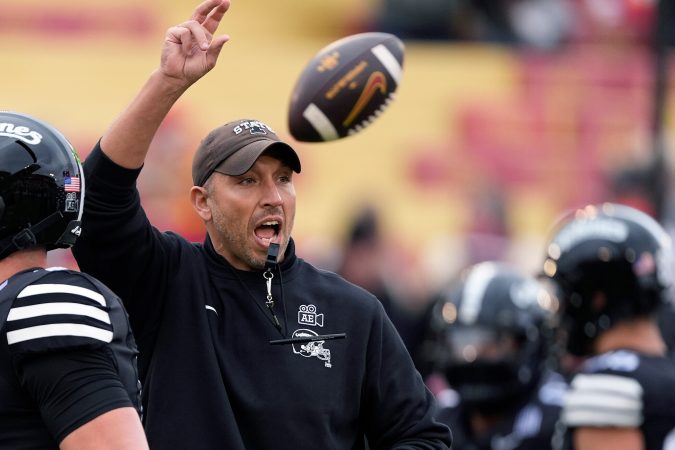
    Last season, the Nittany Lions were ranked third overall in the same preseason poll, which was not indicative of the season the team had. The Nittany Lions finished 7-6 overall and 3-6 in conference play. Longtime head coach James Franklin was dismissed in the middle of the season. Former Iowa State coach Matt Campbell was hired in December to take over the program.

    “Over the past six months, we’ve been reminded every day why Penn State was the right fit,” said Campbell during Big Ten media day last week. “The history is special. The tradition is special. But what really resonated with me is how Penn State has always valued integrity, character, and class at its best.”

    It seems Campbell’s peers believe he can help the program bounce back. To do so, he will lean on some familiar faces, as 24 Iowa State players followed Campbell to Penn State through the transfer portal, including starting quarterback Rocco Becht.

    In 12 games last season, playing with a torn labrum on his nonthrowing shoulder, Becht threw for 2,584 yards and 16 touchdowns. He is the winningest returning quarterback in college football.

    Quarterback Rocco Becht followed Matt Campbell to Penn State.Carolyn Kaster

    “We have our goals in mind, and that’s to win a Big Ten championship and ultimately get to the College Football Playoff to have a chance to win a national championship,” Becht previously told the Inquirer. “With the team that we have now, I think we’re fully capable of doing that. Everybody just has to buy in, be consistent with the standards, and I think we’ll be in good hands.”

    Here are the full coaches poll rankings:

    1. Ohio State
    2. Oregon
    3. Georgia
    4. Texas
    5. Notre Dame
    6. Indiana
    7. Miami
    8. Texas A&M
    9. Oklahoma
    10. Ole Miss
    11. Alabama
    12. Texas Tech
    13. LSU
    14. USC
    15. BYU
    16. Michigan
    17. Penn State
    18. Tennessee
    19. Washington
    20. SMU
    21. Utah
    22. Iowa
    23. Clemson
    24. Houston
    25. Missouri
  • WHYY and Penn State take next step to transfer ownership of WPSU

    WHYY and Penn State take next step to transfer ownership of WPSU

    WHYY is one step closer to taking ownership of Pennsylvania State University’s public radio and television station, WPSU, with a new Federal Communications Commission filing.

    WHYY and Penn State filed an application with the FCC late last week to transfer WPSU-FM and WPSU-TV, among other properties, to WHYY for a sale price of $1, according to commission records. The station said in a statement that it was “pleased to have reached an agreement with Pennsylvania State University that marks an important milestone.”

    “We are appreciative of Penn State’s partnership throughout this process, as they have been integral to ensuring uninterrupted service for WPSU’s viewers, listeners and communities,” the station added. “Our shared goal is to preserve and strengthen WPSU’s longstanding mission of providing trusted local journalism, educational programming and community storytelling for the enjoyment and enrichment of generations to come.”

    The FCC needs to approve the deal before it can be completed, the station said. It was not immediately clear how long that process could take, but the review period typically includes a 30-day window during which the public may submit comments.

    The application’s submission marks the latest step in a lengthy process. In October, Penn State trustees unanimously approved a revised proposal to sell WPSU’s operating assets to WHYY, which itself revived a path to keep the station alive following a previous failed deal.

    Under the approved agreement, WHYY is to continue operating WPSU for at least three years following the station’s sale, and give current employees the opportunity to interview for roles under the new leadership. About 44 employees remained at the station following layoffs in June last year, The Inquirer previously reported.

    Previously, WHYY said it was working to raise funds to support WPSU to allow it to continue broadcasting.

    In September, WPSU’s days appeared to be numbered, with Penn State saying it planned to wind down the station’s operations and lay off employees by the end of June. The station’s annual budget was funded largely by the university coupled with federal dollars, the latter of which had been slashed after President Donald Trump’s administration stripped away federal funding for public media, The Inquirer previously reported.

    School trustees in September unanimously voted down a plan for WPSU’s sale to WHYY, largely citing concerns about $17 million in subsidies Penn State would have to provide to WHYY over five years as part of that deal. Under the plan approved in October, the university said last year, WHYY agreed to raise funds itself.

    WPSU began broadcasting more than 70 years ago. When it was faced with a possible closure last year, university leaders said that they received about 1,300 public comments about the station, many of which urged the school to reconsider its decision to wind down operations. WHYY president and CEO Bill Marrazzo later said WPSU would “continue to be here” for listeners.

    “WHYY and WPSU are joining forces to expand what is possible — strengthening local journalism, creating new educational opportunities, and developing innovative ways to deliver the content people value most,” Marrazzo said last year.

  • A.J. Epenesa on Cleveland backing out of signing him: ‘Happy that I’m not a Brown and that I’m an Eagle’

    A.J. Epenesa on Cleveland backing out of signing him: ‘Happy that I’m not a Brown and that I’m an Eagle’

    A.J. Epenesa couldn’t help himself.

    Asked Tuesday about the offseason drama he endured when the Browns signed him to a one-year deal worth up to $5 million before balking at the deal weeks later (reportedly due to a failed physical), the Eagles edge rusher first took a diplomatic approach, before taking a shot at Cleveland.

    “It was a weird situation,” Epenesa said after Day 5 of Eagles training camp. “I don’t necessarily want to go back and talk on that in just a weird sense.

    “I’ll just leave that in the past and just be happy that I’m not a Brown and that I’m an Eagle.”

    The 27-year-old certainly looks like he’ll fit right in with the loaded edge rusher group. Epenesa, formerly of the Bills, recorded multiple would-be sacks the first week of camp and even nabbed an interception on a pass intended for wide receiver Danny Gray on Day 2.

    He looks sharp. But the fact remains that the Browns backed out of signing him because of health concerns. So, is he healthy? Epenesa, who played in 16 games last season but suffered a concussion in November as well as battling pectoral, foot, and neck injuries, didn’t hesitate when the question was asked.

    “Oh, very healthy,” Epenesa said. “Feeling good and happy to be here.”

    A.J. Epenesa (57) is part of a deep and talented pass-rushing group. Tyger Williams / Staff Photographer

    Epenesa hopes to be a key cog in an edge group that features Jonathan Greenard — who’s nursing a pectoral injury — Jalyx Hunt, Nolan Smith, and Arnold Ebiketie. The Eagles lost Jaelan Phillips to the Carolina Panthers in free agency, so improving the group’s depth was one of general manager Howie Roseman’s top priorities this offseason. The trade for Greenard and the signing of Epenesa on June 10 signified that.

    Epenesa was mostly a rotational piece on Buffalo’s defensive line, starting just 19 games in six seasons, but he made the most of his role. His best season came in 2022, when he logged a career-best 6½ sacks, 10 quarterback hits, 14 quarterback pressures and 16 tackles.

    So, what drew him to the Eagles — whose defense is powered by a loaded defensive front — over another team where he could win a starting job?

    “I wanted to go to a place that could help make me better,” Epenesa said. “A place that’s going to win games and a place that has competition. I don’t want to go to a place and just be handed everything.

    “I love having this around me. These guys are making me better. They’re incredible athletes. They’ve all been in the system for two, three-plus years. So all of that knowledge that they have is leaking into me. Whether they know it or not, I’m watching.”

    A.J. Epenesa (57) was a situational pass rusher for most of his tenure in Buffalo. Bob Donnan, Bob Donnan-Imagn Ima

    Epenesa’s coaches are taking notice of this spongelike attitude. Epenesa rarely dropped back in coverage in Buffalo, but he’s quickly added that skill to adapt to Vic Fangio’s scheme. Fangio seldom goes out of his way to praise players, but he did so for Epenesa last Thursday.

    “I told A.J. this, and I said it in front of the whole team, too,” Fangio said. “For a guy that’s being asked to do a few things that he’s never done before, I thought he did a nice job. It was very encouraging.”

    Epenesa winding up in Philadelphia is a positive outcome to a bizarre situation. Now, the veteran edge rusher said, he wants wins to come with it.

    “[The Eagles] are always competitive every year,” Epenesa said. “That’s one of the key things, I think, when you’re trying to find a team. That’s something you’re looking for. And these guys, they messaged, they hit me up, they wanted me.

    I want to be on a team that competes and wants to win. And it worked out.”

  • CDC expands largest known cyclospora outbreak to 15 states

    CDC expands largest known cyclospora outbreak to 15 states

    The Centers for Disease Control and Prevention is expanding the largest known cyclospora outbreak to 15 states, adding six states where illnesses have been traced to shredded iceberg lettuce sourced from central Mexico, according to three individuals familiar with the investigation.

    Missouri, which is reporting 1,095 cases, is one of the states being added, according to a state health department spokesperson. The number of state cases jumped dramatically in the past week. Patients who were interviewed at length by state and local investigators said they consumed Taco Bell before getting sick, spokesperson Lisa Cox said.

    Information was not immediately available about the five other states. The individuals spoke on the condition of anonymity to discuss an ongoing investigation.

    The expansion marks a significant widening of the outbreak. On Monday, Michigan health officials announced that two people have died in the cyclospora outbreak there, the first deaths confirmed in the United States related to the microscopic parasite. Both people had underlying health conditions that may have been affected by the intestinal illness and dehydration.

    On July 24, federal officials had linked illnesses in nine states to the outbreak. The CDC has said epidemiological and trace-back data continues to show that iceberg lettuce from Taylor Farms de Mexico was contaminated with the parasite that has made people sick.

    The newly linked states join Illinois, Indiana, Kansas, Kentucky, Michigan, Ohio, Oklahoma, Pennsylvania, and West Virginia.

    Taylor Farms recalled shredded iceberg lettuce sourced from central Mexico on July 17 after investigators linked the product to illnesses among people who had eaten at Taco Bell. The company said the lettuce was distributed from June 29 through July 16 through food-service channels and retail stores in 27 states.

    Federal investigators so far have publicly linked illnesses to only a portion of the states where the company said the recalled lettuce was distributed. Federal officials are also investigating outbreaks and illness in more than two dozen states that have not been linked to the 15-state outbreak. The sources of other outbreaks have not been identified or tied to Taylor Farms.

    Taylor Farms has declined to provide additional details, including how many pounds of product were covered by the recall and where shredded lettuce was distributed before June 29. A Taylor Farms spokesperson did not immediately respond to a request for comment.

    During foodborne-illness outbreaks, the CDC is charged with trying to identify the food sickening Americans, relying on labor-intensive disease detective work that includes detailed interviews with people about what they ate, where they ate it, and when. The Food and Drug Administration works to determine who produced the contaminated food and works with food companies to stop it from being sold. The FDA also tries to identify how the food may have become contaminated.

    The new cases being reported don’t necessarily mean the risk is still ongoing, experts have said. The true number of sick people in the multistate outbreak is probably higher than the number reported, and the outbreak may not be limited to the states with known illnesses, the CDC has said.

    The incubation period is long, and some people recover without medical care and are not tested for cyclospora. Recent illnesses may not yet be reported because it can take as long as six weeks to determine if a sick person is part of an outbreak.

    “We’re always trying to figure out what is the risk today of going and eating a salad, for example,” said Craig Hedberg, a professor at the University of Minnesota’s division of environmental health sciences.

  • Booker Rowe, celebrated trailblazing Black violinist with the Philadelphia Orchestra, has died at 85

    Booker Rowe, celebrated trailblazing Black violinist with the Philadelphia Orchestra, has died at 85

    Booker Rowe, 85, of Philadelphia, award-winning violinist, the first Black musician to play with the Philadelphia Orchestra and the Nashville Symphony String Quartet, the second permanent full-time Black player in the Philadelphia Orchestra, teacher, mentor, and role model, died Friday, July 31, of complications from pneumonia and sepsis at Jefferson Abington Hospital.

    A lifelong musician — he played piano at age 5 and violin at 11 — Mr. Rowe was invited by famed music director Eugene Ormandy in 1968 to become the first Black musician to perform with the Philadelphia Orchestra. He was a substitute violin during most of the 1968-69 season and returned for good in 1971 as the orchestra’s second Black permanent full-time member.

    Mr. Rowe stayed for 49 years.

    “My first day, I came in late from New York, and the orchestra was already rehearsing, and I sat myself down on the last stand to play,” Mr. Rowe told The Inquirer’s Peter Dobrin in 2020. “The sound was amazing. It was like stereo all around me. The stage was slanted down, and when the brass and winds would play I had to brace myself with my right leg from being blown off stage. It was just so beautiful.”

    For five decades, until his retirement in 2020, Mr. Rowe played with half a dozen elite conductors and traveled the world in the orchestra’s second violin section. He and his colleagues gave thousands of memorable performances at the Academy of Music, the Kimmel Center, and the Mann Center in Philadelphia, Carnegie Hall and the Lincoln Center in New York, and the Saratoga Performing Arts Center in Saratoga Springs, N.Y.

    They played at the 1993 World Series at Veterans Stadium, for Pope Francis in 2015, and at the Vail Music Festival in Colorado. They played in Europe, South America, Asia, and elsewhere around the world.

    This photo of Mr. Rowe (left) appeared in the Daily News in 1993Newspapers.com

    In 1973, the orchestra made a historic 10-day, five-concert cultural exchange tour in China, and Mr. Rowe told the Daily News afterward that he visited a commune and returned with Chinese instruments. In 2008, he mingled with former Secretary of State Alexander Haig and other international notables after a concert in Beijing.

    In 2013, he posed for pictures with the Chinese welcoming contingent at Shanghai Airport. “Booker was such a kind soul, and his passion, his artistry, and his humanity are woven into who we are,” Yannick Nézet-Séguin, the orchestra’s music and artistic director, said in a tribute.

    Ryan Fleur, the orchestra’s president and chief executive officer, said: “He was a warm and steadying presence in our orchestra.”

    Born in Kentucky, Mr. Rowe and his family moved to North Philadelphia when he was 2. His father was a singer, and his mother played piano, and they “pushed me in the direction of classical music,” he told the Daily News in 1981.

    He became concertmaster for the West Philadelphia High School orchestra, the All-City high school orchestra, and the old all-Eastern Conference college orchestra. He earned a bachelor’s degree in music at Temple University in 1963 and a master’s degree in music at Yale University in 1968.

    Before Philadelphia, he played solo in New York and with symphony orchestras in Nashville, New Haven, Conn., and Washington. Later, he played with the old Symphony Club of Philadelphia, the Lansdowne Symphony Orchestra, and other local groups.

    Mr. Rowe (left) stands with fellow musicians Andre Watts (center) and Renard Edwards.Courtesy of the family

    He also got freelance gigs with Sammy Davis Jr., Isaac Hayes, Smokey Robinson, the Supremes, Barbra Streisand, Aretha Franklin, and other stars. He played with chamber music ensembles around the country and gave dozens of free concerts for children, churches, and community and scholarship fundraisers.

    He championed racial and ethnic diversity, and was active with the Philadelphia Orchestra’s cultural diversity initiative. He sought and performed work by Black and other minority composers, and mentored dozens of colleagues and students.

    He encountered at least one racist incident that first year in Philadelphia and told the Daily News in 1981: “The time was right for an Afro-American in the Philadelphia Orchestra. It was just a matter of finding somebody who was ready.”

    Mr. Rowe and his family lived in Center City, East Mount Airy, and Germantown. Courtesy of the family

    A friend said on Facebook: “His legacy and historical contributions are unparalleled.”

    Mr. Rowe taught at Settlement Music School and gave private lessons. He earned music and service awards from City Council, the American Foundation for Negro Affairs, and other groups.

    In 2019, he was asked to advise young musicians in a video interview for the Philadelphia Orchestra website, philorch.ensembleartsphilly.org. “Practice, practice, practice,” he said. “But also enjoy, enjoy, enjoy. Do it with love in your heart.”

    Booker Taliaferro Washington Vance Rowe Jr. was born Dec. 10, 1940, in Lexington, Ky. In Philadelphia, he studied at the old Philadelphia Musical Academy and Settlement Music School, and his father worked at RCA Victor records in Camden. So their home was always filled with music.

    Mr. Rowe (rear center) stands with Philadelphia Orchestra colleagues and members of the Chinese welcoming contingent in 2013.

    Jan Regan / Philadelphia Orchestra

    He met soprano Patsy Baxter at a Philadelphia Orchestra concert, and they married in 1970 and had a son, Landis, and a daughter, Vivian. They lived in Center City, East Mount Airy, and Germantown, and visited his family often back in Kentucky and Tennessee.

    Mr. Rowe enjoyed puzzles, hiking and kayaking with his family, and tai chi. Friends noted his “kindness,” “million-dollar smile,” and “cheerful presence” in Facebook tributes.

    “He liked people,” his wife said. “He liked socializing. He liked to stick with one thing and concentrate on it.”

    His son said: “My father and I always had a good time together, and we never knew when playful sparring would break out.”

    Mr. Rowe and his wife, Patsy, married in 1970.
    Jose F. Moreno / Staff Photographer

    His daughter said: “He was very fiery and lovable. He was always who he was. He was one of a kind.”

    In addition to his wife and children, Mr. Rowe is survived by a daughter-in-law, Maria, two granddaughters, and other relatives.

    A celebration of his life is to be held later.

    Mr. Rowe (rear second from left) enjoyed time with his family.Courtesy of the family
  • Netanyahu says no Israeli withdrawal from Gaza until Hamas has been completely disarmed

    Netanyahu says no Israeli withdrawal from Gaza until Hamas has been completely disarmed

    DEIR AL-BALAH, Gaza City — Israeli Prime Minister Benjamin Netanyahu said Tuesday that Israeli forces will not withdraw from their current lines in Gaza until Hamas has completely disarmed.

    In remarks on social media, Netanyahu suggested there were differences between Israel and the Trump administration over a recent deal announced to disarm the militant group.

    The agreement called for Hamas to begin disarming and for Israel to halt its strikes and begin withdrawing from Gaza. It was part of an October ceasefire agreement that ended major military operations but has stalled on other fronts. Netanyahu instead said disarmament should come first, and that Israeli forces would continue to “do whatever is necessary to protect themselves, our territory, and our citizens.”

    The Trump administration “sent us a draft. We did not agree. It is not our draft. We sent our comments,” Netanyahu said. “This is our position. We stand firm on our interests, I believe both wisely and resolutely.”

    Earlier on Tuesday, Palestinians gathered for a mass funeral of more than 100 bodies finally recovered from a deadly Israeli strike in Gaza in 2023. More than 300 people were killed on Nov. 22, 2023, weeks into the war with Hamas, when warplanes flattened a residential block in Gaza City’s Sabra neighborhood.

    Around 40 bodies were recovered soon afterward in a frantic scramble of rough tools and bare hands, but most were buried deep beneath the rubble. Reports of the high number of victims in one of the war’s deadliest attacks took days to reach the public in the chaos just before its first ceasefire.

    Over the weekend, first responders dug through the destroyed buildings and recovered remains of 112 victims, including 40 children, according to the Civil Defense, a rescue agency operating under the Hamas-run Interior Ministry.

    It said 157 bodies still have not been found.

    “The only crime of these martyrs was that they remained steadfast and resilient in their homes, believing that these homes would protect them,” one relative, Taysir al-Hassayna, told the Associated Press following the funeral prayers.

    For the missing, it’s “as if their bodies had evaporated without a trace.”

    The current ceasefire has allowed recovery of remains

    Only now are some bodies of people killed in the war’s ferocious early months slowly being recovered, as a fragile ceasefire that took effect in October allows such efforts to push ahead in parts of devastated Gaza.

    Those discoveries have contributed to the war’s rising toll. The Hamas-led militant attack on southern Israel on Oct. 7, 2023, killed around 1,200 people and saw 251 taken hostage. Israel’s retaliatory offensive has killed more than 73,377 Palestinians, including since the ceasefire, Gaza’s Health Ministry said.

    At least 7,400 people have been reported by relatives to still be under the rubble, Zaher al-Waheidi, head of the ministry’s records department, told the AP. The true number is likely thousands higher because in some cases entire families were killed in a single bombing, leaving no one to report the missing, al-Waheidi has said.

    The people mourned on Tuesday were from a residential block belonging to the Hassayna and Abu Sharia clan, and many were related. The Associated Press has identified at least 60 families across Gaza who lost 25 or more family members during the first three months of war.

    On Tuesday, the remains of the victims, wrapped in Palestinian flags, were laid in rows on the ground. Many were marked with photos, and flower petals were scattered around all. Hundreds of people surrounded the bodies for funeral prayers, some standing on the rubble.

    Following the prayers, people carried the bodies on stretchers along a narrow street lined by destroyed buildings and buried them in a nearby cemetery.

    Gaza is struggling to rebuild amid ceasefire violations

    The ceasefire halted much of the fighting, but at least 1,252 people have been killed in Gaza since it took effect, according to the territory’s Health Ministry. The ministry, part of the Hamas-led government, maintains detailed casualty records that are seen as generally reliable by U.N. agencies and independent experts. It does not give a breakdown of civilians and militants but says women and children make up most of the dead.

    Israel says its strikes are against militants who endanger its soldiers, took part in the Oct. 7 attack, or carry out other violations. Five Israeli soldiers have been killed since the ceasefire.

    Gaza remains largely shattered. Most of its 2 million Palestinians are displaced, many living in tent camps where poor conditions and overcrowding have led to rodent infestations and outbreaks of infectious diseases such as chickenpox.

    Each side has accused the other of violating the ceasefire, and negotiations on further steps have largely stalled. Hamas has held onto its weapons, despite agreements to disarm, and the Israeli military has refused to withdraw and controls over half the territory.

    The Board of Peace official overseeing Gaza’s postwar transition, Nikolay Mladenov, on Monday met with Netanyahu, in part to discuss a new disarmament deal the U.S.-created board has reached with Hamas.

    Last week, President Donald Trump announced an agreement that calls for Israel to cease its military operations in Gaza and for Hamas and its allies there to halt all militant activity. After the text of the agreement was released, Israel said it had “serious security concerns.”

  • Did Bradley Cooper and Gigi Hadid secretly tie the knot?

    Did Bradley Cooper and Gigi Hadid secretly tie the knot?

    Did this celebrity Bucks County couple secretly tie the knot?

    After actor Bradley Cooper and supermodel Gigi Hadid were photographed wearing his-and-hers rings during an outing in Paris on Monday, rumors began to swirl about a confidential marriage.

    In close-up photos posted by gossip blog DeuxMoi, Cooper, 51, and Hadid, 31, were spotted wearing what looked like thin wedding bands on their left-hand ring fingers on a walk from their hotel to the gym.

    The couple were all smiles in the photos. Cooper wore light blue shorts with a dark blue T-shirt, and a backward NFL cap, while Hadid sported a white tank top with grey leggings.

    The famously private couple hasn’t commented on the rumors, but fan chats and rumor mills are buzzing about the potential union, which comes nearly three years after dating rumors surfaced.

    The couple was first spotted together on a date at New York City’s Via Carota in October 2023 after meeting at a backyard birthday party for the child of a mutual friend, according to Vogue.

    In a March 2025 interview in Vogue, Hadid said the couple had agreed to keep things quiet but described their relationship as “very romantic and happy” and revealed she feels “lucky” to have someone like Cooper by her side.

    “I respect him so much as a creative,” she said, “and I feel that he gives so much to me: encouragement and, just, belief.”

    Gigi Hadid (left) and Bradley Cooper sit in a box with Philadelphia Eagles owner Jeffrey Lurie (right), during an NFL game between the Eagles and the Detroit Lions on Nov. 16, 2025, in Philadelphia. (AP Photo/Matt Slocum)Matt Slocum

    The couple made it Instagram official in May 2025, when Hadid posted a photo of her and Cooper kissing at her 30th birthday party. “It’s a blessing to feel so loved!! I am grateful and honored to take on a new decade x x G,” the supermodel wrote.

    The pair may now be in Paris but they are bona fide Pennsylvanians.

    Hadid bought a farmhouse in New Hope with then-boyfriend Zayn Malik; they split in 2021. Cooper, who shares his daughter, Lea De Seine, with ex Irina Shayk, grew up in Abington’s Rydal community, though he’s long claimed to be from Jenkintown.

    Actor and director Bradley Cooper attends the special screening of “Is This Thing On?” at the DGA New York Theater on Wednesday, Dec. 10, 2025, in New York. (Photo by Andy Kropa/Invision/AP)Andy Kropa

    Shortly after the Silver Linings Playbook actor began dating Hadid, Cooper purchased a $6.5 million, 33-acre Bucks County estate in Solebury Township, strategically located near Hadid’s residence.

    Before they were sighted in Paris, the couple attended Taylor Swift and Travis Kelce’s wedding at Madison Square Garden on July 3.