Blog

  • Philly shipyard owner Hanwha is shifting its investment focus to the South and West

    Philly shipyard owner Hanwha is shifting its investment focus to the South and West

    A unit of the Hanwha Group, which paid $100 million for Hanwha Philly Shipyard in 2024, has offered to pay more than $1 billion for an Australian company’s shipyard in Mobile, Ala., the company’s nearby nuclear submarine fabrication sites, and a San Diego ship repair facility.

    Hanwha has four weeks to review the facilities and meet with the U.S. Navy and other government agencies before closing a deal, according to a statement from shipbuilder Austal USA.

    The South Korean-owned Hanwha Group last year promised to pump $5 billion into the facilities it owns at the heart of the former Philadelphia Naval Shipyard to add a second giant Goliath crane, a second 1,000-foot dry dock, larger fabrication structures, and other portside facilities. The company also said it would hire thousands more workers, as part of a larger $150 billion investment by several South Korean companies to revive U.S. shipbuilding.

    Hanwha Philly Shipyard has not added those major facilities. Company officials have since said their group is looking at other U.S. sites to build enough ships to turn a profit.

    Hanwha “is exploring a range of options to expand our footprint in the United States,” said James Hewitt, Hanwha Defense USA spokesperson. The company declined to say more about its search.

    South Korean President Lee Jae Myung waves as he arrives at the Hanwha Philly Shipyard for a christening ceremony in 2025. Jose F. Moreno / Staff Photographer

    The proposal fits with Hanwha’s ambition to be a leading global defense contractor, competing with General Dynamics and other big shipbuilders, said Gary Kim, a U.S. Naval Reserve engineer and Wharton graduate student who writes extensively on shipbuilding. The Philadelphia yard “would focus on surface auxiliary vessels, where Austal would focus on smaller warships and submarine modules.”

    In Philadelphia last month, JPMorgan CEO Jamie Dimon said his bank looks forward to helping fund Hanwha’s expansion.

    Hanwha last year had agreed to purchase portside facilities in Paulsboro, Gloucester County, four miles up the Delaware River from its South Philly yard. It pulled out of the agreement after failing to reach a deal with the port operator, Holt Logistics.

    Hanwha has not ruled out developing another Philadelphia-area location but has been visiting southern facilities that are ready to run, such as the Austral yards. Austal USA employs around 3,500, compared to around 2,000 employees and outside contractors at Hanwha Philly Shipyard.

    The former Philadelphia Navy Base covered a much larger area before it closed in 1994. Philadelphia Industrial Development Corp., a partnership between city government and the Chamber of Commerce that screens tenants for vacant land, has since committed much of the property to corporate offices, apartments, and other nonindustrial uses, though some waterside industrial property is still available.

    Hanwha Philly Shipyard in July. Joseph N. DiStefano

    Hanwha’s specialty at its main yard on South Korea’s Geoje Island is mass-producing cargo ships. Hanwha Defense said in a statement last month that building ships for the U.S. government is more profitable for the Philadelphia yard than commercial ships.

    Hanwha is finishing work on the final two of five ships it is building for the U.S. Maritime Administration to use as state merchant marine trading academies. Secretary of Transportation Sean Duffy said last month that the Philly yard had built those ships “on time and on budget,” in part by hiring Tote Services of Jacksonville, Fla., to manage construction. Hanwha says it has lost money on the $1.7 billion program, which began in 2021.

    The government said last month that Hanwha Philly Shipyard will also build two “tracking ships” replacing missile-defense ships from the 1960s.

    Hanwha Philly Shipyard is also building three ships for a total of around $1 billion for the Matson container line to operate between U.S. ports under the Jones Act requiring U.S.-built ships between U.S. ports. The cost of those ships is more than double what Chinese yards are charging for similar ships.

    The Trump administration suspended the Jones Act last winter, and foreign ships are now carrying cargoes between U.S. ports, including natural gas from Marcus Hook to ports in Puerto Rico and New England.

    In a securities filing Tuesday, Austal USA’s owner, Austal Ltd., disclosed that its shipbuilding arm has lost $175 million in its recently concluded fiscal year, after the U.S. Navy last week refused to pay more for ships Austal has been building.

    Austal has been building noncombat salvage, dry dock, and equipment-landing ships for the U.S. Navy. The company based its case for larger payments on changes in Navy orders and “deficiencies in design specifications.” Austal said it would “strongly pursue the claims” even after the War Department’s recent refusal.

    At an Alabama facility near its shipyard that would be part of the deal with Hanwha, Austal USA constructs submarine modules for General Dynamics, which builds Navy nuclear submarines in Connecticut and Rhode Island. Austal says that business is profitable.

    Rhoads Industries, Hanwha’s neighbor at the former Philadelphia Naval Shipyard, also fabricates nuclear submarine modules used by General Dynamics and plans to double employment to 1,400, as it builds new facilities for that business over the next few years.

    Hanwha has said it wants to enter the submarine supply business as well. An Austal USA purchase would add that capability.


  • Letters to the Editor | Aug. 11, 2026

    Letters to the Editor | Aug. 11, 2026

    Bogus claims

    It’s time America goes on the offensive regarding Donald Trump’s lies about his winning in 2020 and his unfounded statements about weakness in the security of our elections. He presented little or no evidence to support his claims. Immediately after Trump’s speech, some GOP pols were pushing for the passage of the SAVE America Act, which is a blatant attempt to stop some citizens from voting.

    In Trump’s second term, the FBI’s Foreign Influence Task Force has been shut down, the Office of the Director of National Intelligence has been cut back sharply, and a task force that warned against foreign meddling and the Cybersecurity and Infrastructure Security Agency have been gutted.

    In 2020, Christopher Krebs was fired by President Trump as head of the cybersecurity agency known as CISA after contradicting the president’s baseless claims of widespread election fraud. The same people who perpetuated the lie that the 2020 presidential election was stolen are now embedded in the White House and throughout the federal government.

    I suggest we call our federal and state senators and representatives and demand they publicly denounce Trump’s lies about him winning in 2020 and his baseless allegations of fraud in our elections.

    Steve Clifford, Langhorne, hs12@verizon.net

    Power paradox

    The blindness community has always had a certain degree of smugness, particularly around energy sources. Using mass transit or various forms of power transit, we did not contribute significantly to the use of fossil fuel. We were not the ones going up to the gas station and driving off — polluting all the way. We frequently worked from home and did not clog the highways. We weren’t the ones snarling traffic. Most blind people have some usable vision, but for those of us with next to no vision, we would often turn off the lights and do whatever tasks needed to be done. Then artificial intelligence came along.

    Now there are data centers that use a lot of energy and water. AI tools, such as smart glasses and advanced GPS units, are marketed heavily to blind people. Many blind people have devices that tell them what is in their environment and describe things around them.

    Blind people are beginning to take photos and videos. AI is able to tell them when something is in the center of the photo frame. It’s also easier to get information off the web by using a chatbot. I find that my ability to cook has been enhanced. I can pick up a package from my spice cabinet and have my smart glasses identify the item. The possibility of needing to open the package and smell it to identify it has been eliminated. I can ask my smart glasses about cooking times and proportions. If I need to find something in my apartment, I no longer need to feel around or think about where I might have put something. The smart glasses can help me find the item.

    This has all been very useful to me, yet I still have concerns about data centers and their power and water usage. I sometimes feel guilty about using AI to do many of these tasks. I used to accomplish so much without AI, but now it’s becoming a default. I do have one question for those technology experts out there: With artificial intelligence and quantum computing becoming so much more advanced every day, why don’t we ask these advanced technological wonders to solve their own energy dilemma? Perhaps quantum computing and AI can figure out how they should be empowered. Perhaps the energy and environmental solution to the data center difficulty can be solved by the very technology that requires the data centers.

    David W. Wannop, former music business worker, Philadelphia

    Join the conversation: Send letters to letters@inquirer.com. Limit length to 150 words and include home address and day and evening phone number. Letters run in The Inquirer six days a week on the editorial pages and online.

  • ‘Phillies Extra’ Q&A: Kevin Stocker on the infield shuffle, why Trea Turner isn’t an outfielder, and more

    ‘Phillies Extra’ Q&A: Kevin Stocker on the infield shuffle, why Trea Turner isn’t an outfielder, and more

    In trading for Luis Arráez at the deadline, the Phillies displaced three-fourths of their infield with less than 50 games left in the season.

    It was unprecedented.

    Kevin Stocker, the Phillies’ pennant-winning shortstop in 1993 and now a member of the radio broadcast team, joined The Inquirer’s Phillies Extra podcast, to share his thoughts on all the moving parts — Bryson Stott to third base, Alec Bohm to first, and Bryce Harper to right field — as well as the one player who stayed put: shortstop Trea Turner.

    Watch the full interview below and subscribe to the Phillies Extra podcast on Spotify or Apple Podcasts.

    Q: What was your reaction when you heard the Phillies were trading for Luis Arráez, and that they were going to uproot three-quarters of the infield with less than 50 games left in the season?

    A: I was happy because it was Luis Arráez. I like the kind of player that he is offensively, and very confused, I guess, onto the limitations he kind of put on if he was only going to play second. I got so many feelings about uprooting three guys in the middle of the season. It’s not like it’s new. We’ve seen this before with other guys. I think the most recent maybe Mookie Betts has moved. I remember back in the day, Robin Yount moved out to center because of an injury, but never three guys at once. So I guess if we were to take each spot as it is, for example, Bryson Stott having to move from second to third. I don’t think it’s going to affect Bryson as much, other than the fact … the middle infield, shortstop, and second base are your main spots that handle most of the baseballs. To me, Bryson Stott is probably the best fielder, definitely on this team. I know he’s not an All-Star. … He’s the captain of the infield, and now you’re moving him out of there. That was my first concern.

    … He’s constantly directing traffic, calling timeout. He’s helping the pitcher. You’re going to lose some of that by bumping him over to third base. However, defensively, I think he’ll be fine. He’s played that side of the infield, super strong arm. I don’t worry about him over there at all.

    Now you bump Bohm over to first. Now I think Alec has done tremendous things at third as far as making strides. He’s worked his tail off. He’s become pretty comfortable. I wouldn’t say he’s the best third baseman, anything like that. But he’s solid over there. At first base, to me, he’s got a lot to learn. I love the fact that he’s 6-5. If I was a shortstop throwing over there, I would want the tall first baseman. Fred McGriff was over there for me, and I loved that. So it’s going to take him a little while, I think, to kind of get better at first base.

    So that is a little bit interesting to me. It’s going to take him a while. I’m not sure how that’s going to go. I will say that in the same breath, I love that Harper’s going back to right field. … and here’s why. One, he’s a hitter first. When he’s on that field, he’s thinking about hitting. When he goes to first base to play defense, he’s still thinking about hitting. I’ve played with a lot of guys in my career, and all the hitters were the same. The guys in the outfield, I would look out in left field, and I might see a guy out there who’s a hitter, and he’s in between pitches. He’s working on a swing, and I’m like, ‘Hey, man, we got to play defense.’

    The infield demands so much focus all the time, and at first base, Bryce was good. He’s very athletic, but I think there was a lot of balls over there that he wasn’t comfortable maybe helping Trea out or helping the infielders out. Not that he was bad. I don’t know that he’s having the greatest year this year, but a couple years ago he was fine. I just think in right field to me, he will be a better hitter, better player, and happier. That’s just me. I haven’t seen him play a lot of right field, and I also think it takes care of the right field problem that the Phillies had. So you get Luis Arraez and people are like, ‘Why didn’t we go get a right fielder?’ Well, the Phillies did. They bumped Bryce out there and now they have one.

    Trea Turner’s 18 errors are second in baseball only to the Nationals’ CJ Abrams (19) going into Monday’s games.Yong Kim / Staff Photographer
    Q: What’s your take on leaving Trea Turner at shortstop and moving everyone else around?

    A: I never saw Trea play outfield. I saw him play a little bit at second base. That was with the Dodgers for a short period of time, and I don’t think he was comfortable over there. But a lot of people want Trea to go to the outfield. So this is what I would say with that in the outfield. I’ve watched Trea long enough to know now that he is not the most aggressive player defensively. And what I mean by that is, for example, if he’s going back on a popup over his head, it’s pretty ginger when he goes back there. Whereas Bryson Stott just goes … running back. Trea doesn’t play that way. He’s a little bit more cautious.

    So now everybody wants him to go to center. You do not want a cautious center fielder. That’ll totally mess up the corners. Now you got [Brandon] Marsh, and you got Harp over here. I’ve talked to [infield coach] Bobby [Dickerson] about this a lot. He’s worked so hard at shortstop. He’s not having that great year that he had last year, a much better year. I just don’t know if he’s better anywhere else on the field. And if you asked me to disrupt three guys, Turner would be the last one I would want to disrupt right now because that would just create a lot more problems in his head. And he’s starting to hit.

    The other thing about Trea, he is just like Harper. He is a hitter first, defense second. When I played, I was defense all the way. I think Stott is defense first, and then kind of mixes in the offense. So as a hitter-first guy, you’re going to get some years that are good. You’re going to get some years that he struggles, and it’s been a challenge there. But I just don’t think it would have been a wise move for me to move him. I just think that would have created more problems in his head.

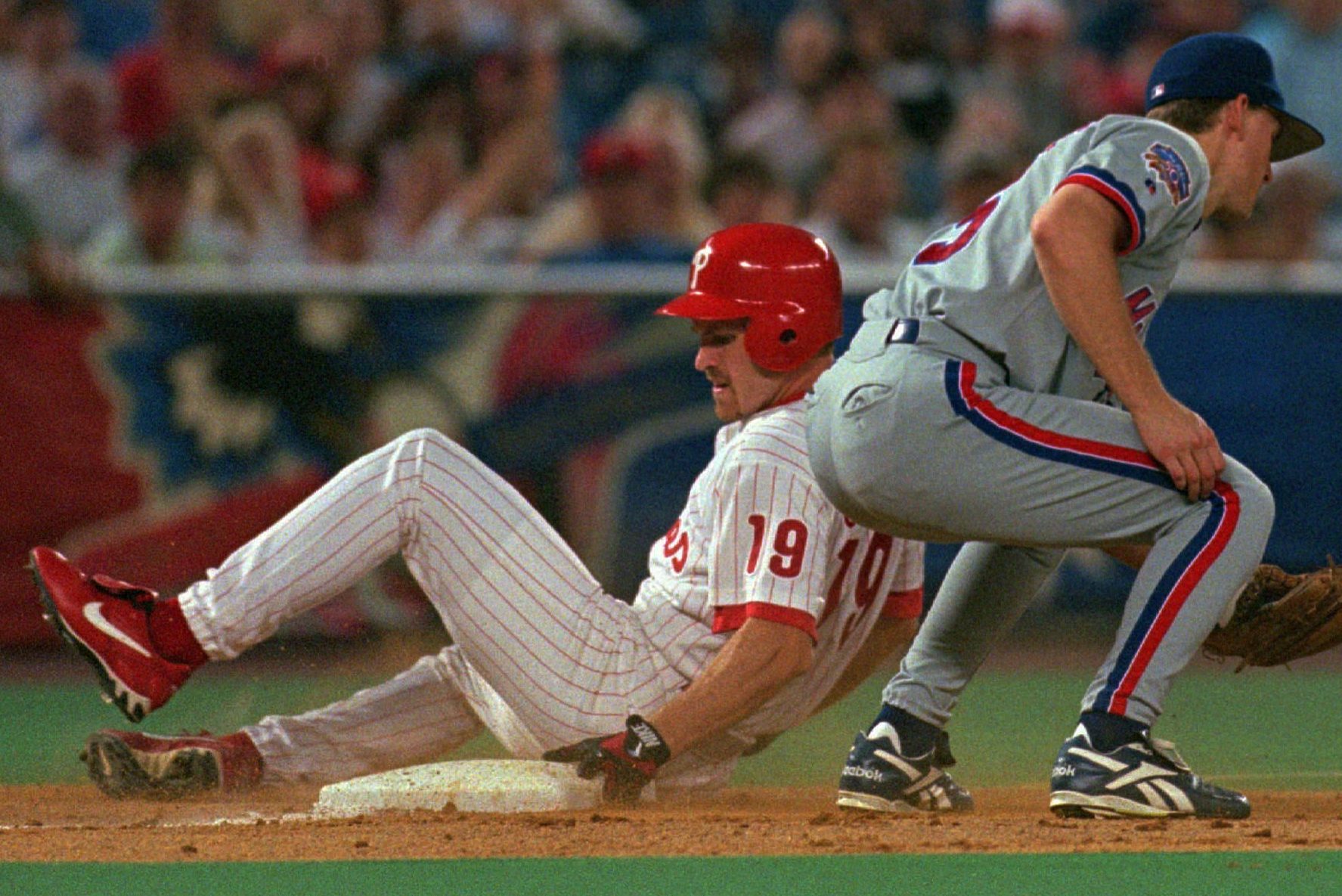
    Kevin Stocker, seen here sliding into third base past the Expos’ Doug Strange for a triple in 1997, played five seasons with the Phillies.George Widman / AP
    Q: How was shortstop different for you when you were 24, 25, vs. when you were 30? How does it get harder as you get a little older?

    A: Well, there’s a couple of things. The most direct thing that gets tougher, whether you’re 30 or 33, you start to, I don’t want to say lose a step, but I needed to go out and take ground balls at full speed on Sunday morning when I did not want anything to do with that. I didn’t want to go take ground balls or BP. When I was younger, I was so jazzed. I was like, ‘I’m going to go to the park, and I would go get Bowa and say, ‘Let’s go take ground balls.’ … As you get older, you start to lose that edge. You start having to go out. … you’re just not getting in the same work, and so then what happens is you’re not quite playing … I call it playing on the edge. That’s where you want to be. So that’s one thing.

    And then you just don’t recover as quickly. You just don’t. Like that dive [Turner] had the other day, it was very jarring. When you lay out and you land on your chest, it is a huge jarring. … that stuff gets tougher to recover from the next day. You’re rolling out of bed, like I got hit by a truck. So the amount of work — that’s why I admire Edmundo Sosa, who has all these positions. He’s out there every day. He has to in order to keep the legs and the body moving.

    But I do remember that last year. I think I was even in camp with the Rockies. It was right before I retired, and I went out and played a little bit of shortstop. And I’m like, I’m not moving as fast as the other guy that’s 25, 26 to my left and right. So that’s one of the things I think is just keeping the edge to go out there and make sure you get the right amount of work in. I really admire the fact that Trea, at his age at 33, and the amount of time he’s played, hasn’t really lost a step. I don’t think he has. Sprinting and running. I think he’s guarded as times, like he’s not running full speed all the time, but I don’t know if he has to.

  • Bucks County farm owner who fled to Belize to dodge animal abuse charges pleads guilty

    Bucks County farm owner who fled to Belize to dodge animal abuse charges pleads guilty

    A Bucks County woman who presided over squalid conditions on a Wrightstown farm and mistreated more than 100 animals in one of the worst neglect cases in county history has pleaded guilty.

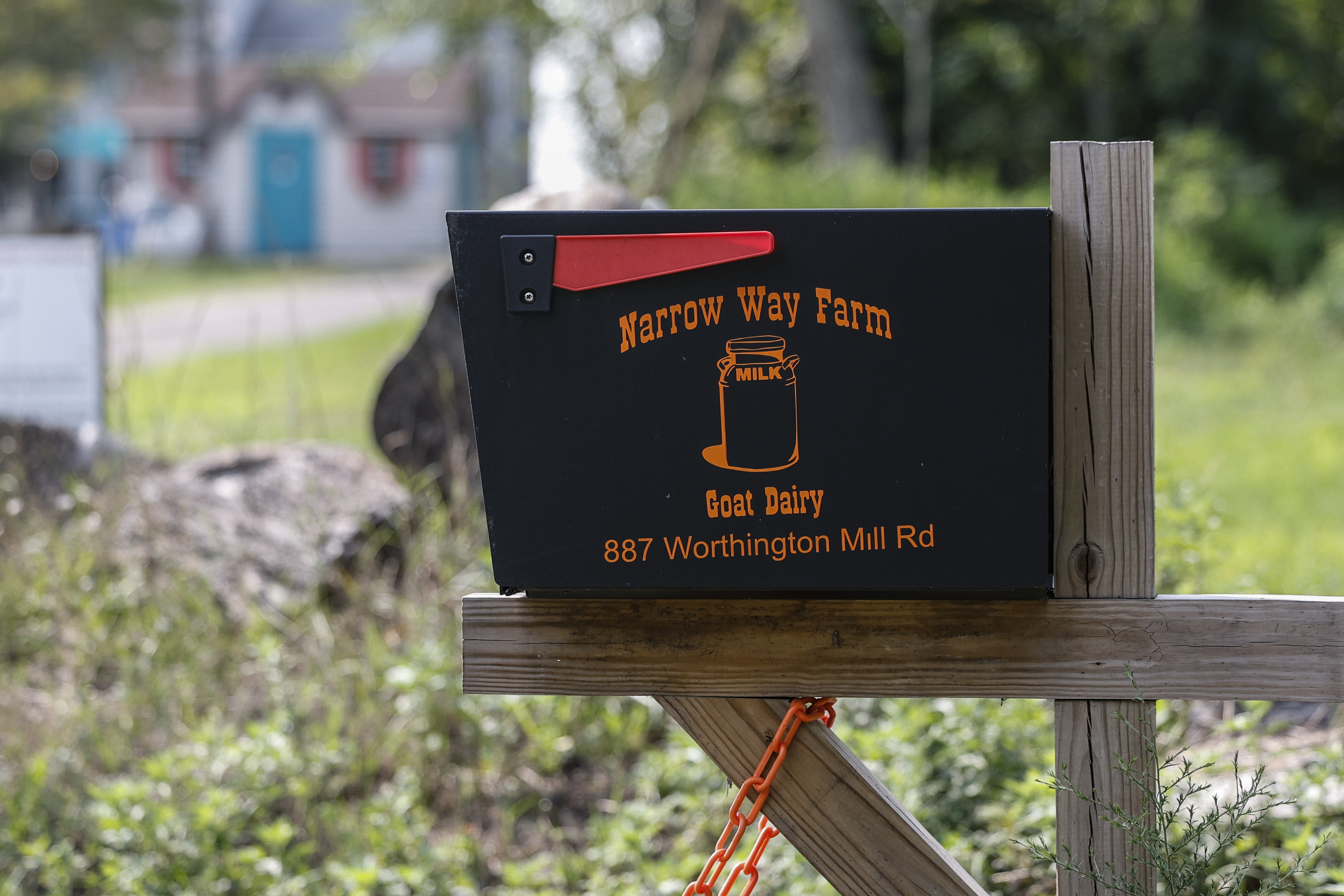
    Abigail Tuttle O’Keeffe, 55, the former owner of Narrow Way Farm, entered guilty pleas to aggravated cruelty to animals, neglect of animals, and related crimes late last month. She was spared from prison by entering a diversionary program, prosecutors said Monday. O’Keeffe must attend substance-abuse and mental-health counseling, and is barred from owning animals.

    Her attorney, Josh Buchanan, declined to comment Monday.

    In August 2024, the Bucks County SPCA served a search warrant on O’Keeffe’s property after a farm manager notified the agency that a sheep had been found dead, according to the affidavit of probable cause for her arrest.

    Abigail Tuttle O’Keeffe was extradited to Bucks County in September 2025 by the U.S. Marshals Fugitive Task Force. In this photo provided by the U.S. Marshals Service, her face was obscured.U.S. Marshals Service

    Officers rescued more than 100 pigs, goats, and sheep, many suffering from infections, parasites, and other chronic medical conditions. One severely emaciated goat died while investigators were searching the property. Another one was so malnourished and riddled with parasites that it had to be euthanized after weeks of intensive care, the affidavit said.

    Volunteers at Narrow Way who spoke with The Inquirer in 2024 said O’Keeffe, who holds a doctorate in developmental psychology, did not have the skills to match her ambitions of running a working farm.

    Most of O’Keeffe’s workforce also had little to no farm experience, and the 36-acre property was in disarray, to the detriment of the livestock she kept there, according to some of those volunteers.

    In one incident, workers botched the dehorning of a calf, leaving the animal with permanent nerve damage.

    Word of the conditions at Narrow Way spread quickly: The owner of a nearby farm said O’Keeffe was not “a real, active farmer,” shied away from the work that required of her, and ran the operation like a cult, comparing her farmhands to “disciples.”

    But when local investigators came to the farm, O’Keeffe was thousands of miles away. Prosecutors said she moved to Belize, where she was arrested in April 2025 on gun charges.

    U.S. Marshals extradited her to Bucks County months later.

    Staff Writer Jesse Bunch contributed to this article.

  • ‘We survived, right?’ Andrew Painter and Phillies bullpen rise to occasion, deliver 6-5 win over Cardinals

    ‘We survived, right?’ Andrew Painter and Phillies bullpen rise to occasion, deliver 6-5 win over Cardinals

    ST. LOUIS — There was no backup plan.

    As the Cardinals wheeled around the bases in the eighth inning, finding gap after gap, lucky break after lucky break, interim manager Don Mattingly could do nothing but watch. The Phillies’ lead shrank from four runs to one, and still, the bullpen phone in left field never rang. It couldn’t. There was no one to call on.

    “We had one bullet out there,” Mattingly said, “and that was it.”

    That bullet was Jonathan Bowlan, who was tabbed for the ninth. With a relief corps that has been run ragged over the past week, the Phillies had no choice but to rely on rookie Andrew Painter and fringe starter Alan Rangel to cover eight innings against the Cardinals.

    If the game went to extras — like the Phillies did three times in the last five days — Mattingly was planning to put backup catcher Garrett Stubbs on the mound and functionally concede the game to St. Louis.

    But Rangel, who had piggybacked Painter, took a breath. He went back to the rosin bag behind the mound. The Cardinals had already tagged him for three runs on five hits — including three doubles — in the inning. They had the tying run on third, the go-ahead run on second, a pinch-hitting lefty at the plate.

    Rangel went to his best pitch — his change-up — and left-handed Bryan Torres sent a soft liner out to Justin Crawford’s waiting glove in center field. For now, the threat was quelled.

    “Gutsy,” Mattingly said.

    The Phillies ultimately pulled off a 6-5 win over the Cardinals to open the series because the plan — the only plan they had — worked out. Painter delivered one of his strongest starts of his rookie season, taking a no-hit bid into the sixth. Rangel managed to survive 2⅔ innings. And Bowlan delivered his first career major league save with a 1-2-3 ninth.

    “It’s the first time that they’ve given me such an important task,” Rangel said. “And I just feel proud of myself and I feel good with what we did today.”

    The offense did just enough to back them up. They jumped out to an early lead in the second, capitalizing on a throwing error from Cardinals starter Hunter Dobbins and a single from Edmundo Sosa. From there, the Phillies continued to tack on. Kyle Schwarber finished with two doubles and came a foot away from a homer in the eighth, but it hung up just enough to be playable for right fielder Jordan Walker.

    Sosa, who spent nearly 10 years in the Cardinals organization until being traded to the Phillies in 2022, also hit an RBI double in the eighth.

    “It’s always nice to come here and enjoy playing in this beautiful stadium,” Sosa said. “Back when I was younger, way younger, I dreamed of playing in this stadium.”

    Meanwhile, Painter kept St. Louis off-balance with his change-up, which has been a weapon for him since being recalled from the minors. While in triple A, Painter tweaked its grip, and he has been throwing it with conviction.

    Three of his six strikeouts came on the pitch.

    “Just more and more reps with that build the confidence up, and I feel comfortable throwing it to both sides of the plate, lefty or righty, and really just in any count,” Painter said of his change-up.

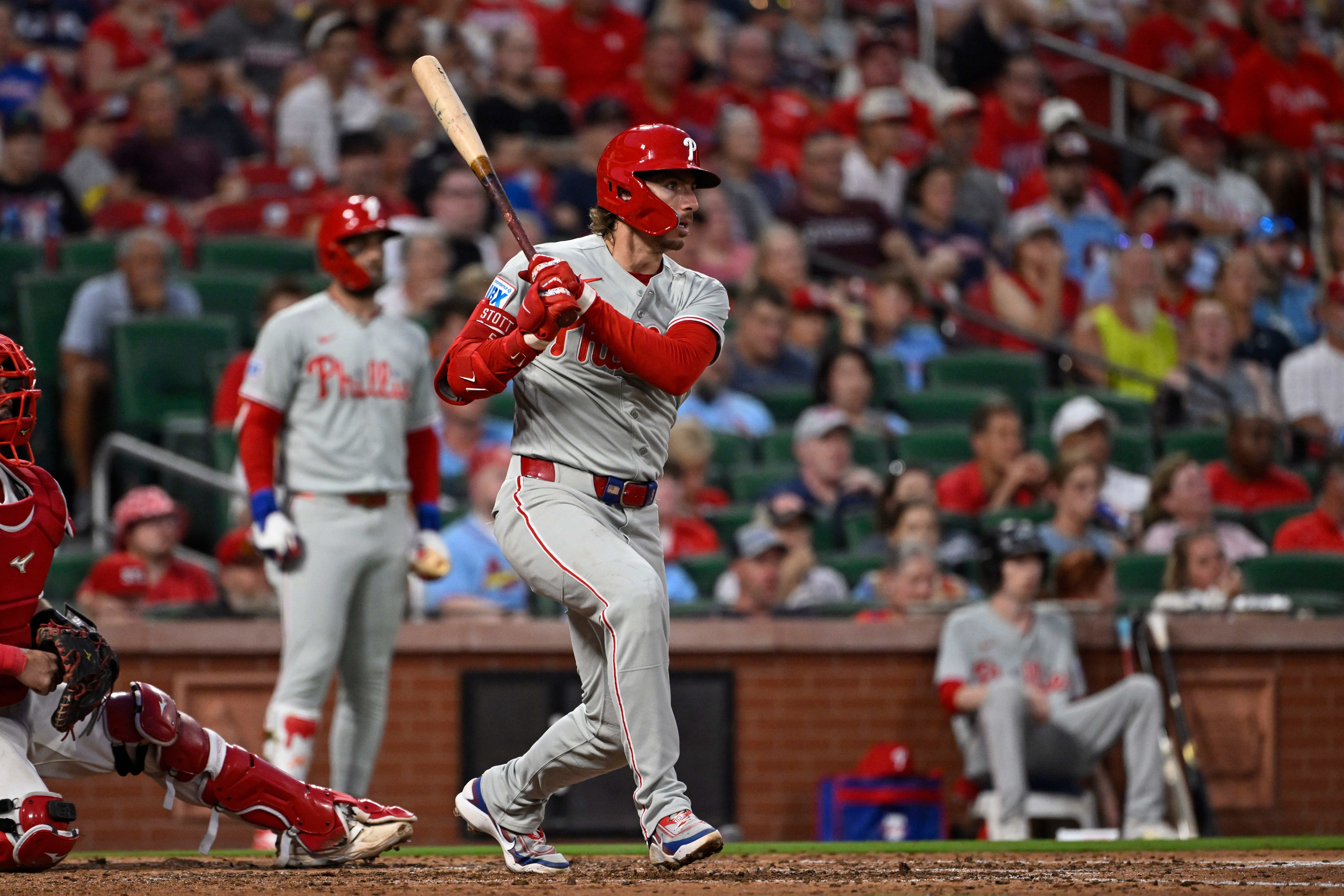
    The Phillies’ Brandon Marsh (center) crosses home plate. He scored two runs in his team’s 6-5 win. Joe Puetz

    Painter, 23, became the youngest Phillies pitcher to carry a no-hit bid through five innings since Cole Hamels did so at age 22 against the Astros in September 2006.

    “It’s three in a row that he’s thrown the ball well since he’s come back,” Mattingly said. “So that’s obviously positive for us, but that was something that the team needed right there. And for him to come through in that spot is really good for him, and good for our club.”

    But soon after the Cardinals’ first hit fell in the sixth — Iván Herrera tucked a line drive just inside the left field line for a double — the shutout evaporated, too. Alec Burleson hit a two-run single to chase Painter from the game, bringing in Rangel.

    The Phillies were well-aware of the state of their bullpen heading into Monday night. That morning, they had been dealt another blow with newly acquired reliever Caleb Kilian landing on the injured list.

    As usual, the Phillies staff checked in on every reliever and how they were feeling ahead of the game, and Bowlan was the only one they felt comfortable calling on.

    “I was prepared,” Bowlan said. “I mean, you always got to be prepared down there.”

    He added that he would do anything he was asked to, even if it was to pitch more than one inning. But as it happened, he only needed 10 pitches to retire the side in order. Bowlan fulfilled the last piece of the plan and picked up his first major league save, all at once.

    For him, it was kismet that it happened on this day, in this ballpark. Bowlan grew up in Tennessee watching the Memphis Redbirds, a Cardinals affiliate, and his father Mark was a 19th-round pick for the Cardinals back in 1989. Bowlan estimated he had 20 family members and friends looking on in the stands on Monday.

    Last season, Bowlan bounced between the majors and minors in the Royals organization. This year, he has ascended into a key high-leverage arm, most often to set up Phillies closer Jhoan Duran. And his family was there to see it come to fruition with his first save.

    “It’s kind of full circle,” Bowlan said. “Family was able to come out, and being the fact that they were here for it, it’s very special. Family means the world to me. Personal accolades, that’s cool. That’s awesome. Keep going and see where this thing goes.”

    The Phillies bullpen will have more options on Tuesday, but will still likely not be back at full strength. That’s how much stress has been placed on the unit in the past week. But with Cristopher Sánchez and Zack Wheeler scheduled to be on the mound, the Phillies have come to expect quality starts, which would lighten the load.

    To get there, though, they needed a rookie, a fringe starter, and a breakout reliever to step up.

    “We survived, right?” Mattingly said. “And that’s really what you’re looking for, is find a way to win a game tonight.”

  • How local contractors and construction companies are leaning into AI | Expert opinion

    How local contractors and construction companies are leaning into AI | Expert opinion

    Painters? Windows installers? Flooring specialists?

    These may not be the first people that come to mind when you think of AI. But many local companies in construction and contracting are struggling with a very tight labor supply and higher costs, so every dollar they save through automation can make a big difference.

    This is why AI is producing a measurable business impact for approximately 38% of contractors, according to a 2026 survey of 1,000 companies by field service management software company ServiceTitan. That’s up from just 17% in 2025.

    Takeoffs

    Construction professionals know how important it is to get their estimates right. AI is quickly becoming integral to the process, beginning with the initial “takeoff” phase.

    A takeoff is the process of reviewing construction plans to identify and measure the materials, surfaces, and fixtures needed to prepare an accurate project estimate or bid. AI is helping to improve speed and accuracy during this process.

    AI is used in construction applications like Togai, Stack and On Center to read specification sheets, analyze photos, flag revisions, verify measurements and then set up estimates, produce reports, and recommend construction documents.

    “When we receive a set of drawings, our team will upload the plans into our AI takeoff platform, which automatically identifies walls, ceilings, substrates, finish areas, and other relevant surfaces for painting or wall covering,” said James Geisel, a project manager at Philadelphia-based Hispanic Ventures, which does painting and wall covering. The AI tool “calculates square footage, linear footage, and quantities with a very high accuracy rate.”

    AI does the “time-consuming measurement work,” Geisel said, while his estimators still apply their judgment to labor pricing, logistics, risk, and competitiveness.

    Commercial flooring contractor Seamless Flooring Systems in Somerdale, Camden County, also relies heavily on AI for project takeoffs, said president Chris McDermott.

    “It has really streamlined our production rate and has eliminated a ton of human error,” he said.

    Estimating and bidding

    In construction, after a takeoff comes estimating and bidding.

    Applications like Procore, Autodesk, and Stack can advise an estimator on square footage and linear footage, material quantities, and cost-related inputs to draw up project estimates and determine pricing and bid preparation.

    An application like this is “essential,” said Matt Biedekapp, a sales manager with Pella Windows & Doors in Scranton. It’s used when bidding on both residential and commercial construction projects because it helps with measurements, cost analysis, and timing of installation.

    On the residential side, Biedekapp said his company uses AI tools to help with window measurements and hard-to-reach places, as well as overall quality assurance. For commercial customers with very large plans, they use AI software to identify, filter, and tag windows and doors for better accuracy and efficiency.

    “Along with quickly getting window counts, we can also provide more accurate material lists using built-in formulas or even creating our own formulas,” he said. “Our AI-assisted measurements provide another layer of quality assurance and help us reduce remeasuring or reordering of materials, which can be costly.”

    Geisel said AI also helps his team create standardized cost assemblies and recognize patterns from previous jobs.

    “It recommends labor or material benchmarks based on similar projects,” he said. “It allows us to provide tighter, more accurate bids with less administrative work.”

    Office automation

    Like many of my clients, all three construction companies said they’re using AI in the office to help draft emails and proposals, summarize long email threads, prepare responses to requests for information, produce scope letters, and turn estimating data into professional reports.

    Geisel said his team uses Microsoft Copilot.

    “Copilot also helps turn raw estimating data into clean, professional reports that can be sent to clients,” Geisel said. “Instead of spending an hour formatting a scope breakdown or executive summary, you can generate a polished version in minutes and then refine it to your needs.”

    Reporting and analysis

    After projects are completed, companies can use AI to analyze and report on job performance in comparison to the estimates and evaluate overall profitability.

    “Thanks to AI, we have been able to reduce our ‘recoveries’ significantly, which in our industry boils down to time,” Biedekapp said. “It helps us save the time spent to remeasure, reorder windows, parts, pieces, as well as the time spent tying up our project coordinators and carpenters.”

    That translates to money saved too, he said, “but as a small business, the time is most valuable.”

    As for staffing, McDermott said AI won’t be replacing any employees. But it will allow them to work better. “It will just give them a way to redirect their skills to strengthen on a different task and be more productive.”

  • Sixers open season Oct. 20 at Knicks, face Cavaliers in Philly home debut for LeBron James, Jaylen Brown

    Sixers open season Oct. 20 at Knicks, face Cavaliers in Philly home debut for LeBron James, Jaylen Brown

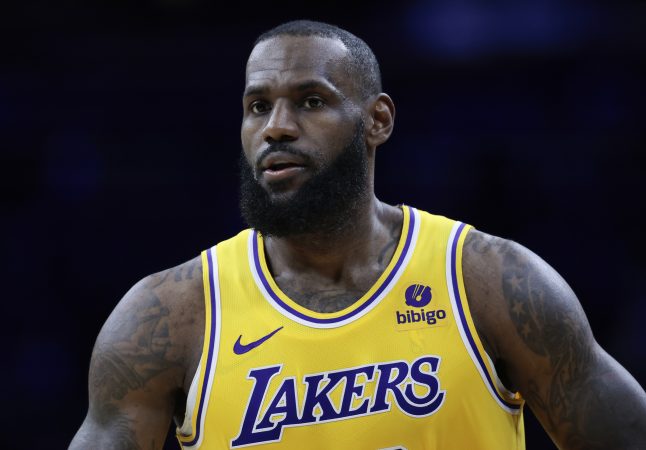
    The 76ers will be one of the NBA’s highest-profile teams this season after adding LeBron James and Jaylen Brown to a roster that already included Joel Embiid, Tyrese Maxey and VJ Edgecombe.

    And they’re being treated as such as the league announces its schedule. That started with the opening week slate and marquee meetings on Tuesday, including opening night and Christmas Day. The Sixers will travel to face the Knicks in the season-opener on Oct. 20, returning home two nights later to host the Cavaliers in the home Philly debut for James and Brown.

    The Sixers will reportedly play in 30 national TV games in the 2026-27 regular season, starting on opening night against the defending champion Knicks.

    The marquee matchups keep coming on Christmas Day as the Sixers are slated to face a Los Angeles Lakers team James decided to leave this offseason.

    The matchup against the Knicks speaks to the outsized expectations for this new iteration of the Sixers. While the Sixers and Knicks have shared recent history, including a 2026 second-round sweep as the Knicks marched to a title, New York has gotten the better of that rivalry. But the Sixers have since fired former president of basketball operations Daryl Morey and hired Mike Gansey, traded for Brown and signed James to a two-year, $8 million deal. They also added depth in the offseason, with Anfernee Simons, Dean Wade, Kentavious Caldwell-Pope and Labaron Philon Jr. all figured to feature heavily in the rotation.

    The prominent scheduling of the matchup against the Lakers was almost a foregone conclusion. Christmas Day, which some consider the unofficial open of the NBA season, is as good a day as any. James decided to leave Los Angeles as the franchise prioritized younger players in the offseason, with Luka Doncic and Austin Reaves both playing on max deals.

    More games against rivals come early as the Sixers will see the Boston Celtics twice in the NBA preseason. That means we will get an early preview of Brown against his former team and running mate Jayson Tatum in some form, with the real games coming later. The Sixers’ three preseason games will be played at the Brooklyn Nets on Oct. 8 and in a back-to-back against the Celtics on Oct. 10 and 16.

    James spent the previous eight seasons as a member of the Lakers, delivering a title in the pandemic-shortened 2020 season. He kept the Lakers in contention for the rest of his tenure, including last season when he averaged 20.1 points, 6.1 rebounds and 7.2 assists in his 23rd season. James also served as the offensive engine in the postseason at age 41, delivering a surprising first-round defeat of the Houston Rockets with Doncic and Reaves dealing with injuries. The 2025 champion Thunder ended the Lakers’ run in the second round.

    Brown played his entire 10-year career with the Celtics, winning Eastern Conference finals MVP and NBA Finals MVP as he helped lead the franchise to a title in 2024. An All-NBA performer in 2025-26, Brown is fresh off one of his best individual seasons. He averaged 28.7 points, 6.9 rebounds and 5.1 assists as the Celtics outperformed expectations and landed the second seed before falling in seven games to Embiid, Maxey and the Sixers.

    James and Brown will join a Sixers franchise big on talent. Maxey has blossomed into an All-NBA performer, Embiid is a former MVP and Edgecombe finished third in a competitive Rookie of the Year race last season.

    The Sixers’ opening night matchup against the Knicks is part of a tripleheader that starts with a matchup between the Boston Celtics and Detroit Pistons, followed by Sixers-Knicks and Spurs-Thunder. The week continues with Oct. 21 meetings between the Minnesota Timberwolves and Miami Heat, followed by a meeting between the Golden State Warriors and Los Angeles Lakers. The next night, which is headlined by Sixers-Cavs, will also feature the Thunder against the Denver Nuggets.

    Christmas Day, the league’s vaunted quintet of games will start at noon with an NBA Finals rematch between the Knicks and Spurs and run deep into the night, with the final showing, a West Coast game between the Nuggets and Warriors, kicking off at 10:30 p.m. ET. Heat-Celtics, Sixers-Lakers and Thunder-Timberwolves will fit in between those games.

    Inquirer Sixers beat reporter Gina Mizell contributed to this report.

  • House of the week: A Queen Village trinity for $349,000

    House of the week: A Queen Village trinity for $349,000

    When Hunter Wages and his wife, Lauren Nalley, bought their Queen Village trinity in 2023 after renting nearby for two years, they especially liked having the Weccacoe Playground across the street.

    They liked the constant activity there, such as park cleanup days, and, “It’s hard to beat having a tennis court in your front yard,” said Wages.

    For Nalley, an environmental engineer in water resources, and Wages, who does software testing for a veterinarian agency, the two-bedroom, 1½-bathroom house was the first they had owned together.

    Living roomJim Armstrong

    Noting the home’s “historic charm,” Wages said, “trinities are unique.” And he found the exposed brick sections of the interior attractive. But they are moving to Colorado to be with friends and family.

    The 710-square-foot house on a tree-lined street has replacement windows and central air-conditioning.

    The private fenced patioJim Armstrong

    The living room has hardwood floors, built-in custom cabinetry, and French doors opening to a private fenced patio.

    The lower level also has a modern kitchen.

    KitchenJim Armstrong

    The second floor has a bedroom, the full bathroom, and multiple closets. The primary bedroom is on the third floor, with built-in shelves, vaulted ceilings, and an updated half-bathroom.

    There are also decorative fireplaces on the first and third floors.

    The primary bedroom has built-in shelves and a decorative fireplace.Jim Armstrong

    The house is steps away from neighborhood restaurants such as Southwark and Ambra, as well as the Famous 4th Street Delicatessen and the Delaware River Trail.

    It has easy access to I-95 and several bus routes.

    It is in the William M. Meredith School catchment area.

    It is listed by Jim Armstrong of JG Real Estate for $349,000.

  • Trump told Ukraine it had no cards. Then Kyiv took the war to Russia

    Trump told Ukraine it had no cards. Then Kyiv took the war to Russia

    The meeting in the Oval Office between U.S. President Donald Trump and Ukrainian President Volodymyr Zelenskyy was a diplomatic car crash.

    “Your country is in big trouble. You’re not winning,” Trump said, dressing down Zelenskyy in front of the world’s media. “You don’t have the cards.”

    The blowup in February 2025, three years into the war, was more than just a heated public exchange: The Ukrainian delegation was asked to leave the White House, and Washington briefly suspended intelligence sharing with Kyiv. In the ensuing months, as Russia made slow but steady gains on the battlefield, Trump warmly welcomed Russian President Vladimir Putin in Alaska and seemed ready to push Ukraine into an unfavorable peace deal, including forcing it to give up territory.

    But even as Zelenskyy sat next to Trump, his forces were preparing an operation that would reveal Ukraine’s ability and ambition to take the war to Russia: Months later, drones smuggled into the country attacked Russian bombers, destroying or damaging planes worth hundreds of millions of dollars.

    Since then, Kyiv has ramped up a campaign of longer-range strikes inside Russia and in areas Moscow has seized, increased production of weapons, targeted Russian air defenses, and hit oil infrastructure and the warehouses of a major retailer in a bid to ensure ordinary Russians feel the impact of the conflict.

    In an embarrassment to Putin, Ukrainian drone strikes sent thick plumes of smoke billowing over St. Petersburg shortly before the opening of an international economic forum in June. Concern over Ukraine’s attacks led Russian authorities to scale down the May 9 military parade commemorating the defeat of Nazi Germany. Strikes on oil refineries have caused a summer fuel crisis.

    By the time Trump and Zelenskyy met at a NATO summit in July, the American president said the Ukrainian leader had “been very effective” in the war. “We’ve actually developed a good relationship,” Trump added.

    But as Ukraine’s strikes have intensified, so have Russia’s — and Kyiv faces major challenges in defending against them because of shortages of American Patriot air defense missiles.

    In the first six months of the year, 1,396 civilians were killed in Ukraine, according to the U.N. Meanwhile, the world body said Russian authorities reported 250 civilians killed in the same period. On Monday, a strike that Ukraine said hit an oil refinery in Russia killed 13 people, according to local officials.

    And while Ukraine’s effort appears to have shifted the narrative about the war in Washington, it’s still not clear if it will be able to push Putin toward the negotiating table.

    Ukraine’s strikes are aimed at undermining the idea that Russia can afford to “just let this roll,” said Jack Watling, a senior research fellow at the London-based RUSI think tank.

    The question of whether it will succeed depends on how much pain Ukraine can exact. “Logically, above a certain threshold, it does work but whether they can reach that threshold is an interesting question” — and one that depends at least partly on factors outside Kyiv’s control, like continued European financial support, he noted.

    Ukraine brings the war to Russia

    While most of Ukraine’s strikes have a range of less than 200 kilometers (125 miles), its longer-range attacks have increased dramatically this year. It launched three times as many of those strikes in July as it did in January, according to data from ACLED, an independent conflict monitor. Repeatedly hitting deep into Russia has forced its military to stretch air defenses over a larger area.

    Many of its strikes have focused on four key categories of targets, according to an Associated Press analysis of hundreds of Ukrainian attacks this year — compiled from statements by Russian officials and state media and the Ukrainian military.

    As the Iran war pushed up energy prices, leading the U.S. to ease sanctions on Russian oil, Kyiv ramped up strikes on oil infrastructure to deny the Kremlin revenue from fuel exports and force shortages on ordinary Russians. It is also striking defense manufacturing to damage Russia’s long-term ability to produce weapons, targeting air defenses to clear a path for its own arms, and hitting retail warehouses to bring the effects to ordinary Russians.

    — As part of the campaign against oil infrastructure, Kyiv said it hit Russia’s largest oil refinery, more than 2,500 kilometers (1,550 miles) from Ukraine.

    — Kyiv has also targeted defense manufacturing centers. It hit a factory making navigation systems multiple times, including with its own Flamingo missile.

    — In July and August, Ukraine struck Wildberries warehouses. Kyiv said the company helps supply the Russian military. Moscow denies that.

    — Many of Ukraine’s strikes on Russian air defenses and radar are around Russian-held Crimea and are often carried out with drones.

    Maj. Robert “Magyar” Brovdi, the commander leading Ukraine’s drone war, told the AP its strikes in Crimea are also aimed at rendering the peninsula unusable as a staging ground for Russian forces.

    Starlink gives Ukraine an advantage — for now

    It’s not always clear if Ukraine’s attacks are effective — and some may have resulted in minimal or no damage. In May and June, Ukraine said it hit several satellite, reconnaissance or signals intelligence facilities in Russia, but satellite images analyzed by AP did not show major damage.

    Still, Ukraine has one advantage that can help it strip back Russian air defenses and make its drone strikes more precise.

    It has access to Elon Musk’s satellite communications service Starlink — which means its operators can control drones in real time in Russian-held Ukrainian territory. Russia has been blocked from using Starlink.

    But Russia is also building its own version of Starlink, and is installing jamming systems that hamper Starlink connectivity, Brovdi said.

    Ukraine is investing heavily in weapons production

    Even before the Oval Office meeting, Ukraine scrambled to invest in new weapons — but that moment was “a real wake-up call,” said a European military official who spoke on condition of anonymity to discuss the front-line situation in detail. It became clear that U.S. support could be stopped “from one day to the next.”

    Ukraine doubled down on production, churning out a growing array of weapons in larger numbers and shortening traditional research and production cycles from decades to years or even months.

    Even so, Ukraine is still not able to produce as many missiles as it needs. It also took Ukraine time to make systems that could target facilities precisely enough that Kyiv felt comfortable using them to strike deep into Russia, Watling said.

    And while Ukraine has begun to resolve navigational issues with its missiles, such as the Flamingo, those weapons are still not as accurate — or as stealthy — as their Western analogues. That often means hundreds of drones must be fired to overwhelm Russian air defenses to allow a missile to get through.

    It’s an expensive and time-consuming way to wage war since only 5% to 9% of what Ukraine fires gets past Russian air defenses, according to Watling.

    But, although Russia’s weapons are more powerful, Zelenskyy suggested at the NATO summit that Putin is “losing the initiative” in the war as Ukraine has moved the fight from the stalled battlefield to the sky.

    Sitting next to Trump at the summit, the Ukrainian leader even cracked a joke, demurring when Trump asked him if he would accept Moscow as a venue for peace talks, as Putin has suggested.

    “There are a lot of Ukrainian drones in the air,” Zelenskyy said. ”It would be dangerous.”

  • In rejecting Trump’s Gaza plan, Netanyahu reprises a balancing act he has mastered

    In rejecting Trump’s Gaza plan, Netanyahu reprises a balancing act he has mastered

    It’s possibly the most important job of any Israeli prime minister: maintain good relations with the United States while pushing back on demands seen as undermining Israel’s security.

    No one has managed the balancing act longer than Prime Minister Benjamin Netanyahu, Israel’s longest-serving leader. But with the Iran war at a stalemate, and U.S. President Donald Trump looking to advance peace efforts elsewhere, Netanyahu’s task is getting harder less than three months away from Israeli elections.

    On Sunday, Netanyahu rejected Trump’s latest plan to advance the stalled ceasefire in Gaza, saying Israel will not withdraw from any of the roughly 60% of the territory it controls until Hamas has been completely disarmed — something the militant group controlling the other 40% has long resisted.

    Netanyahu risks angering Trump, who he has repeatedly said is the greatest friend Israel has ever had in the White House. But even a hint of compromise with Hamas could be fatal for Netanyahu’s reelection in a country deeply traumatized by the Oct. 7, 2023, attack that happened on his watch.

    Trump, meanwhile, is under pressure to deliver on his promise of being a global peacemaker as talks with Iran stall and gas prices stay elevated ahead of U.S. congressional elections in November.

    Netanyahu: No progress on Gaza ceasefire until Hamas disarms

    The Gaza plan announced by Trump last month grew out of his October ceasefire deal, which ended major Israeli military operations there and brought about the release of all remaining hostages but has otherwise largely stalled.

    Under the latest agreement, Hamas would gradually give up its weapons while Israeli forces halt their attacks and begin withdrawing from Gaza. Hamas accepted the deal, even as the group linked the surrender of its heaviest weapons to the creation of a Palestinian state, something Israel’s current government and most of its political class adamantly reject.

    Netanyahu rejected the plan, saying Israel would not retreat from any of its positions in Gaza until Hamas has been completely disarmed. That would leave other elements of the ceasefire, including the deployment of international forces and any reconstruction of the devastated territory, on hold.

    At the same time, the Israeli military seems to have eased off on its strikes on Gaza that have killed over 1,250 people since the ceasefire came into effect, according to Gaza’s Health Ministry.

    Israeli media reported that the authority for carrying out strikes has been limited to the army’s chief of staff, apparently in a quiet gesture toward Trump’s ceasefire efforts. The Israeli military did not respond to a request for comment.

    “We are focused on actions, not rhetoric or politics,” an official with the Board of Peace, the Trump-led entity overseeing the ceasefire, told the Associated Press. “There have been some results on the ground in the last few days,” the official added, including “restraint from strikes” and new Israeli military procedures.

    “There is constructive cooperation behind the scenes and our conversations continue,” the official said, speaking on condition of anonymity because they were not authorized to talk about the ongoing discussions.

    Oct. 7 looms over a tough campaign for reelection

    In his election campaign, Netanyahu has boasted of Israel’s military achievements in the wars that followed the Oct. 7 attack. Israeli forces have seized territory in Gaza, Lebanon and Syria, and launched two major air wars against Iran and its disputed nuclear program.

    But the “total victory” Netanyahu promised in Gaza has yet to materialize. Many Israelis blame him for the security failures that led to the initial attack, as well as previous attempts to contain Hamas that at times included allowing Qatar to deliver suitcases filled with cash to Gaza.

    Netanyahu’s far-right allies, who will likely be crucial to his Likud party’s ability to form a government after the elections, have welcomed his rejection of the Trump plan.

    Trump “wants to see real steps taken toward rehabilitating Gaza, while Netanyahu’s two right-wing partners and the Likud’s faltering election campaign is keeping him from yielding even a millimeter,” wrote Jonathan Lis, the diplomatic correspondent for Israel’s Haaretz newspaper.

    Ghaith al-Omari, a former Palestinian negotiator who is now a senior fellow at the Washington Institute for Near East Policy, said that even if the White House ignores Netanyahu’s rejection of the plan, Trump is still stuck unless he can persuade the Israeli leader to change course.

    Hamas is meanwhile winning the “blame game” by appearing to be the more reasonable of the two sides, he said.

    Trump’s standing in Israel has fallen

    Trump was wildly popular in Israel during his first term, when he lent unprecedented support to Israel’s claims to territory seized in war, including by moving the U.S. Embassy to Jerusalem.

    The trend continued in his second term, as he backed Israel’s actions in Gaza and joined it in bombing Iran. The alliance was particularly beneficial to Netanyahu, whose political future remained uncertain. The prime minister relied on Trump to improve his image at home.

    But the allies’ interests diverged last spring, as Israel pressed for further strikes on Iran and against Hezbollah in Lebanon, while Trump looked to wind down the regional conflict in order to reopen the Strait of Hormuz to ease pressure on the world economy.

    Since then, Trump has said that he would “likely” endorse Netanyahu ahead of the Israeli election but has not yet given his full backing. And while a formal endorsement from a U.S. president still carries weight in Israel, the rift between the two leaders suggests it could also complicate Netanyahu’s campaign.

    “A few months ago, a significant majority of Israelis assumed that when President Trump is making decisions, he’s taking Israeli security interests into account. This is no longer the case,” said Yohanan Plesner, head of the Israel Democracy Institute, a think tank in Jerusalem.

    The closeness between Netanyahu and Trump “used to be an asset,” he said, but not anymore.

    Netanyahu has defied past U.S. presidents

    Netanyahu has a long history of defying U.S. presidents, particularly Democratic ones. During his first term, in the late 1990s, he resisted efforts by President Bill Clinton to resolve the conflict with the Palestinians. He clashed publicly with President Barack Obama over the 2015 nuclear deal with Iran.

    But that approach carries greater risks now, as Israel’s military campaigns have left it increasingly isolated diplomatically and upended its historic support among Democratic voters in the U.S., leaving Trump as one of Israel’s few strong allies.

    Netanyahu’s dependence on Trump is “tremendous,” Plesner said, and voters will punish him if he is seen as mismanaging the key relationship.

    “If Trump will insist on carrying on, I think Netanyahu will have no choice but to tag along rather than take on the president, since he’s left Israel with very few diplomatic cards to maneuver.”