Blog

  • GOP lawmakers release Fauci texts discussing COVID vaccine and pregnancy

    GOP lawmakers release Fauci texts discussing COVID vaccine and pregnancy

    Two Republican senators on Monday released the first in a trove of text messages from Anthony S. Fauci’s former government cell phone, including a discussion with health officials about whether the COVID vaccine posed a risk for pregnant women.

    The messages were released by Sens. Ron Johnson (R., Wis.) and Rand Paul (R., Ky.), who lead panels investigating Fauci, the longtime infectious-disease scientist who left government at the end of 2022 after becoming a highly visible official helping lead the pandemic response.

    The texts appear to show an exchange between Fauci and top health officials in January 2021 related to the safety of the COVID-19 vaccine for pregnant women.

    In one message, according to screenshots the senators released, Fauci wrote: “Since many people have significant cytokines storm and fever after the 2nd dose. this theoretically could be associated with miscarriage in the 1st trimester.”

    “Definitely a good point, esp after dose two,” then-Centers for Disease Control and Prevention Director Rochelle Walensky responded.

    In a news release, the senators pointed to several subsequent public statements from Fauci and other administration officials in which they said the benefits of pregnant women getting vaccinated appeared to outweigh the risks.

    In February 2021, for instance, Fauci said the Food and Drug Administration has “found, thus far — and we’ve got to be careful — but thus far, no red flags about that, about pregnant women.”

    Some of the statements cited by Johnson and Paul occurred after the CDC officially recommended pregnant women get the vaccine in August 2021, citing an agency analysis that found no increase in miscarriage in pregnant women.

    In a statement, Johnson said the release of the texts “could have an immediate impact on public health.” He added that “you don’t wait a day, months, or years, to inform the public of potential dangers.”

    The CDC states that with more than a million pregnant women vaccinated globally, studies have not shown increased risk for complications like miscarriage, preterm delivery, and more. Health officials have said such past exchanges reflect the evolving nature of the science and debate at the time.

    Fauci declined to comment on the released messages. Walensky and Vivek H. Murthy, at the time a member of President Joe Biden’s COVID advisory board who was also included in the texts, did not immediately respond to a request for comment.

    Pregnant women are historically excluded from clinical trials, including those for the coronavirus vaccine. But it became clear that contracting the virus during pregnancy could be associated with increased risk of preterm birth and other adverse outcomes, and so health officials concluded that the benefits of vaccination appeared to outweigh the risks, according to a former public health official who spoke on the condition of anonymity to speak candidly.

    The senators said the texts are among more than 34,000 recovered from a copy of Fauci’s former iPhone. It also contains 522 voicemails, they said. The phone was obtained from the Department of Health and Human Services, now led by fellow Fauci critics, including Health Secretary Robert F. Kennedy Jr.

    “Now that we have the documents and Fauci’s government-issued phone, my investigation has only just begun,” Johnson, the chairperson of the Senate’s permanent subcommittee on investigations, wrote Monday on social media.

    As part of Paul’s investigation of Fauci, HHS also turned over years of Fauci’s personal diary entries that were collected from government servers.

    Last week, a Senate committee that Paul chairs voted along party lines to hold Fauci in contempt of Congress after he declined to answer its questions and accused Paul of trying to wrongly entrap him. The Justice Department, which is not obligated to prosecute Fauci, said it received Paul’s letter referring the matter but did not confirm whether it planned to pursue any criminal charges.

    In April 2021, a New England Journal of Medicine article written by CDC officials stated that preliminary findings “did not show obvious safety signals” among pregnant women who received the vaccines — meaning there wasn’t an unusual number of adverse events — but added that more follow-up was needed.

    “Our societies [American College of Obstetricians and Gynecologists and Society for Maternal-Fetal Medicine] were strongly recommending and advocating for pregnant women to have access to COVID vaccines in the earliest stages of the pandemic because those of us who were dealing withCOVID in pregnancy were seeing exceptionally high rates of complications,” said Neil S. Silverman, a member of the Society for Maternal-Fetal Medicine’s Infectious Disease and Emerging Threats Committee and maternal-fetal medicine faculty at the David Geffen School of Medicine at UCLA.

    Fauci has faced numerous legal threats from Republicans, including Paul and Johnson, who accuse him of covering up his agency’s funding of risky coronavirus research in Wuhan, China, before the virus was first detected there. Fauci has dismissed those claims as “preposterous.”

    Kennedy, his allies, and some Republicans in Congress have expressed concerns about vaccine safety.

    Kennedy, the founder of a prominent anti-vaccine group, has been an outspoken critic of mRNA-based shots, and once called the coronavirus shots “the deadliest vaccine ever made.” Medical experts say COVID-19 vaccines are effective at protecting people from getting seriously ill, being hospitalized, and dying.

    Last year, Kennedy sought to no longer recommend the coronavirus vaccine for healthy pregnant women. The American College of Obstetricians and Gynecologists said it was “concerned” and “extremely disappointed” by the move, and the medical society has continued to recommend the shot for pregnant women.

    On Monday, President Donald Trump signed an executive order that called for cutting the number of recommended childhood vaccines, spacing out those shots and making other changes that would upend decades of federal guidance on vaccines for children.

    Speaking in the Oval Office, the president reiterated his long-held claim that childhood vaccines have led to a rise in U.S. autism cases, an idea that outside researchers have largely debunked.

  • How the Haverford antisemitism settlement harms free speech

    I believe in Israel.

    I oppose its current leadership and its policies in Gaza and the West Bank. But I support its right to exist as a Jewish state. And I reject the idea that Zionism is inherently racist or malevolent.

    That’s why it’s important for me to hear from people who see Israel differently than I do. I need them to question, provoke, and challenge me. That’s how I learn.

    And that’s also why I’m worried about the settlement Haverford College announced last week, pledging to protect Jewish students from antisemitic speech. In a statement, Haverford president Wendy Raymond declared that the college would not tolerate “discrimination, harassment, and bias” against “students who identify as Jewish” or “those who support Zionism.”

    So does that mean you won’t be able to say “Zionism is racism” or “Israel is an apartheid state”? The lawyer representing Jewish students who sued the school — and who said she was “very pleased” with the settlement — seemed to think so.

    “It’s a new form of antisemitism, saying, ‘Oh, no, I don’t hate Jews, I just hate Zionists,’” she said. “For a Jew to hear that was incredibly painful.”

    I’m sure that it was. I’m Jewish, and anti-Zionist rhetoric is hard for me to hear, as well.

    But that’s why I should hear it. Zionism is probably the most contested question on our campuses right now. Unless everyone can address it, freely and openly, we’ll never get a good purchase on it.

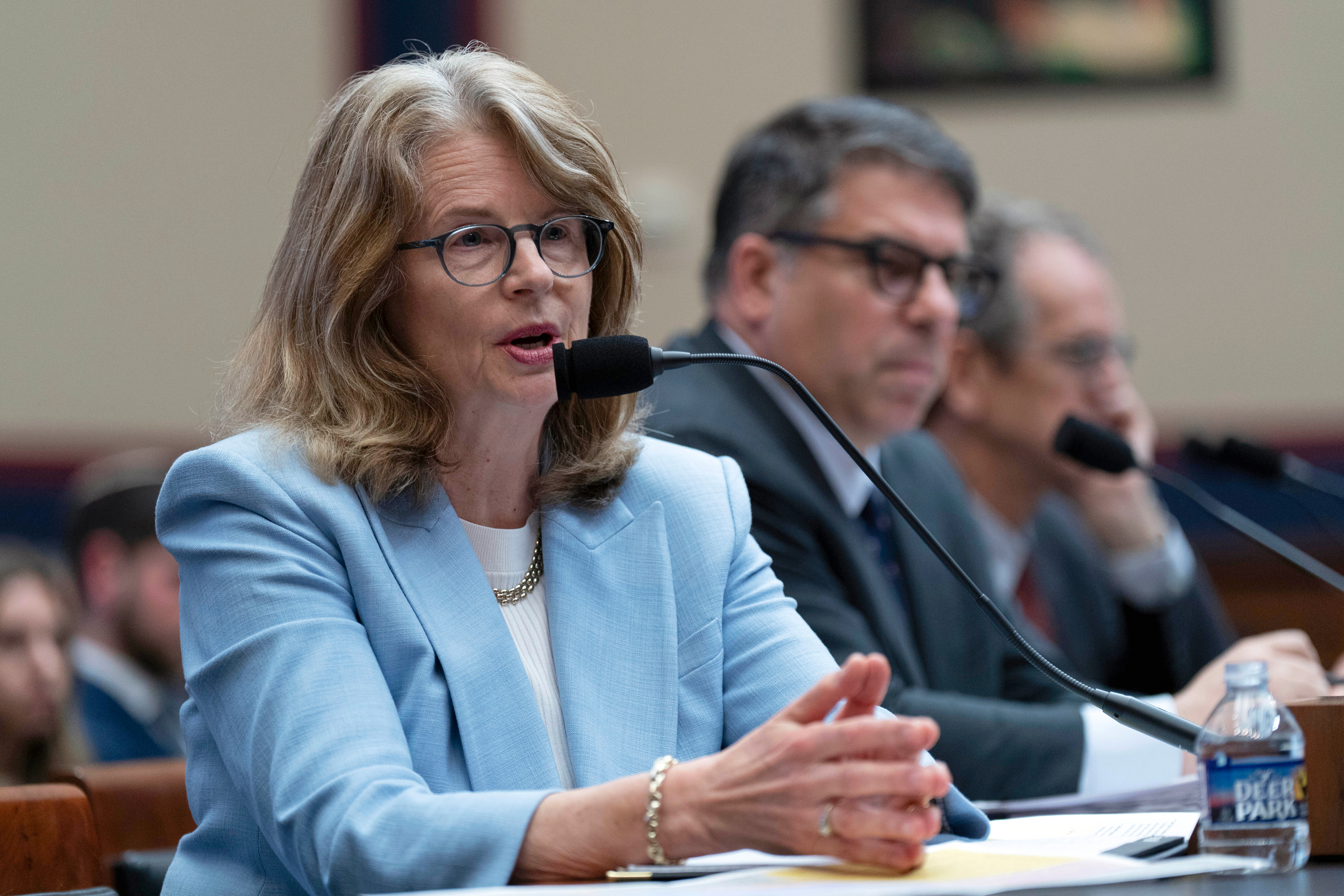
    Wendy Raymond, president of Haverford College, pledged that the college would not tolerate “discrimination, harassment, and bias” against “those who support Zionism.”Jose Luis Magana

    Ditto for Columbia, where I went to college 40 years ago. Back then, you could argue about anything. But now Zionism, too, is effectively off the table.

    That’s because the university adopted the International Holocaust Remembrance Alliance’s definition of antisemitism. According to the IHRA, “claiming the existence of a State of Israel is a racist endeavor” and “drawing comparisons of contemporary Israel policy to that of the Nazis” are antisemitic.

    But a competing standard, the Jerusalem Declaration on Antisemitism, argues that “criticizing or opposing Zionism as a form of nationalism” or offering “evidence-based criticism of Israel as a state” are not, on their face, antisemitic. Haverfordʼs settlement seems to lean entirely on the first definition and ignores the second, which has not been adopted by the college or most other institutions, but was endorsed by Bucknell University’s faculty last year.

    Under the IHRA definition, would a student or professor who said Israel was committing genocide in Gaza — like the Nazis did in Europe — face punishment at Columbia? I don’t think Israel’s action in Gaza constitutes genocide, but I know other historians do. And again, I need to hear from them.

    In their 2024 lawsuit against Haverford, Jewish students complained that a professor called supporters of Israel “racist genocidaires.” I can understand why they felt “pain and harm” about these kinds of comments, as Raymond acknowledged at the time.

    But you can censor anything — literally, anything — on those grounds. During the 2016 presidential campaign, students at Emory University said they were harmed by campus chalk messages backing Donald Trump. “Supporting him, repeating his catchphrases [is] an implicit attack on the Muslim, Latinx, Black, and other communities at Emory and across the country,” protesters declared. “This is not political expression; it is hate speech.”

    And in 2021, Harvard biology professor Carole Hooven caused an outcry when she told Fox News that gender could take any number of forms, but sex is binary: male or female. After a colleague denounced Hooven’s “transphobic and hateful” comments on Twitter (now X), she became a campus pariah. Her mental health plummeted, and she resigned.

    Like Zionism, the biology of sex is a hugely contested and complicated matter. And we won’t be able to learn more about it if we inhibit discussion of it.

    How many people celebrating the new restrictions on anti-Zionist speech at Haverford would be OK with prohibiting claims that sex is binary? Likewise, would any of the critics who pushed out Hooven rest easily if critics of Israel were silenced, too?

    We all want to have our own say, of course. But when we feel pained or harmed by someone else’s political expression, we call it hate speech. And we try to blot it out.

    To be clear, nobody should be subject to threats of physical violence. Whatever you think of Zionists on campus, you can’t say you’re going to assault or murder them. That’s against the law, and our colleges should be vigilant in enforcing it.

    But at Haverford, it would now appear, you can’t say anything negative about Zionism. Period. If you don’t think Israel should exist, you’re an antisemite. And you need to keep your big mouth shut.

    I know some people on campus have been “deeply hurt” by anti-Israel rhetoric, as Raymond said in her statement last week. But once that becomes the barometer for what the rest of us can say, we won’t be able to speak — or listen — across our differences. Isn’t that why we gather at universities in the first place: to learn from each other?

    Either you believe in free expression for everyone, or you don’t believe in it at all. Period.

    Jonathan Zimmerman teaches history and education at the University of Pennsylvania. He is the author of “Schooling Citizens: How Education Can Save Democracy,” which will be published next spring by the American Philosophical Society Press.

  • Trump refuses to back down as Supreme Court blocks major policies

    Trump refuses to back down as Supreme Court blocks major policies

    Over the past few weeks, President Donald Trump has made it clear that he will not take Supreme Court decisions as the final word on some of his most cherished priorities.

    The president has introduced new tariffs, renewed efforts to fire Federal Reserve governor Lisa Cook, and issued new executive orders to limit birthright citizenship. While experts said the moves do not signal outright defiance of the high court, they nonetheless push the limits of the rulings that Trump lost earlier this summer.

    “Without question, President Trump is challenging the bounds of the court’s opinions,” particularly regarding Cook’s firing and birthright citizenship, said Richard Lazarus, a law professor at Harvard University.

    The high court’s opinion affirming that nearly everyone born in the United States is a citizen does not allow Trump to create exceptions like some set out in his recent executive orders, Lazarus said. Those orders say children are ineligible for birthright citizenship if born to “alien enemies,” foreign terrorists, foreign lobbyists, or people who fraudulently request tourist visas in order to give birth in the U.S.

    In signing the orders, Trump referred to the Supreme Court decision on birthright citizenship, saying, “We’re ending it a different way.”

    The Trump administration has always followed court orders, said White House spokesperson Lauren Bis. “All actions taken by the president since the recent Supreme Court rulings are consistent with the holdings and analysis set forth by the court,” she said.

    As for Cook, the justices ruled that she deserved notice and a chance to respond before being fired, and Trump’s latest move seeks to provide that. The White House sent a letter to Cook last week renewing the threat to fire her, giving her 21 days to respond, and directing her to submit any response to the White House by Aug. 26.

    “The Supreme Court’s ruling on the Cook case required notice and an opportunity for a hearing in considering whether the president should take certain adverse employment actions,” Bis added. “The president’s notice sent to Fed. Governor Cook offers exactly that within the precise structure enunciated by the Court.”

    Still, Trump’s underlying rationale for dismissing Cook — that she engaged in mortgage fraud — remains unproved, and she has not been charged. While the renewed push to fire her does not “repudiate” the Supreme Court’s opinion, Lazarus said, it “certainly confronts it by challenging its limits.”

    Trump is not the first president to look for ways around adverse Supreme Court rulings. Most recently, when President Joe Biden’s plan to forgive student loan debt was struck down by the Supreme Court, Biden within hours announced a separate plan to forgive the debt.

    Two decades earlier, President George W. Bush wrestled with the court over procedures for detainees seeking freedom from the military prison at Guantánamo Bay, Cuba.

    But such instances appear to be historical exceptions rather than the rule, said David Super, a professor at Georgetown Law.

    “Most presidents treated Supreme Court rulings as dispositive of the issues involved rather than as technical documents to be evaded,” Super said.

    That includes an earlier version of Trump. During his first term, the president was more willing to accept losses at the Supreme Court and move on, Super said. He cited rulings against Trump’s efforts to end the Deferred Action for Childhood Arrivals (DACA) program and to add a question on citizenship status to the 2020 Census.

    “The second-term President Trump appears to have much less regard for the other branches of the federal government than the first-term one did,” Super said.

    Similarly, the Trump administration last month imposed new tariffs on U.S. imports from 60 economies under an authority different from the one the Supreme Court rejected in February. The new duties, imposed under Section 301 of the Trade Act of 1974, purport to penalize countries that fail to curb imports produced by forced labor.

    That does not directly go against the Supreme Court’s decision. But critics call the forced-labor rationale a pretext for reimposing the sweeping tariffs struck down by the court, and small businesses have sued to block them for that reason.

    Some experts say Trump, far from challenging the Supreme Court, is working within the bounds of the justices’ rulings.

    “The court ruled against Trump in these three big cases, and all of them sort of left openings to do something else — and in all three cases he did something else,” said Josh Blackman, a law professor at South Texas College of Law at Houston.

    “Trump is more aggressive because he views rulings as political,” Blackman added. “He’s willing to push back, especially with conservative judges, three of whom he appointed.”

    Still, Trump has added to the sense that he is challenging the court by using heated rhetoric against it.

    After the court overturned his tariff regime in February, the president called the conservative justices who ruled against him “fools and lapdogs.” Last week, when Trump introduced his new birthright measure, he called the court’s decision “a bad decision, very unfair decision,” saying the “country suffers because of it.”

    President Barack Obama criticized the court in his 2010 State of the Union address, though he did so in a more genteel manner. “With all due deference to the separation of powers,” Obama said in criticizing the Citizens United decision (which lifted limits on independent political expenditures by corporations and unions), the court has “reversed a century of law that I believe will open the floodgates for special interests.”

    The Trump administration has also had a tense relationship with the federal judiciary more broadly.

    A Washington Post analysis last year found that Trump and his appointees were accused of flouting the courts in more than a third of the 160-plus lawsuits against the administration in which a judge had issued a substantive ruling. The administration has also sparred with the judiciary over Trump’s picks to lead federal prosecutor’s offices.

    But Mike Fragoso, a former chief counsel to Sen. Mitch McConnell (R., Ky.), said Trump’s responses to the Supreme Court’s most recent decisions do not appear out of the norm.

    Instead, particularly with regard to the new birthright order, Trump appears to be adopting the longtime conservative view that a Supreme Court decision binds the president only to the specific case at issue, not necessarily to its broader reasoning, he said.

    Fragoso, now an attorney at Torridon Law, pointed to President Abraham Lincoln’s rejection of the Supreme Court’s logic in its infamous 1857 decision Dred Scott v. Sandford, which held that African Americans were not citizens.

    “On birthright, it’s a question testing the limits of what the Supreme Court said” while not being inconsistent with the opinion, Fragoso said, adding that Trump’s actions could be described as “Lincolnian.”

  • Scamming NFL players and regular people | Morning Newsletter

    Good morning! Looks like we’re in for another hot day, with maybe some thunderstorms in the late afternoon. Translation: It’s August in Philly.

    This morning, we have the story of a man who allegedly bilked NFL players and others out of money in a scam involving fake Shopify stores.

    We also have details about Gov. Josh Shapiro’s early days in office when he welcomed businesses into Pennsylvania — including data centers, which are decidedly unpopular now.

    Plus, some members of Congress want FanDuel to eliminate its VIP program in light of the Bryce Harper controversy. The Portal is going to move away from City Hall — and could leave Philly altogether. — Ellen Dunkel

    (morningnewsletter@inquirer.com)

    If someone forwarded you this email, sign up for free here.

    Football, Shopify, and an alleged Ponzi scheme

    Hours before they found him dead in his Gloucester County home, one of Mohamed Coulibaly’s alleged victims said the 23-year-old entrepreneur had been desperately seeking a $75,000 loan.

    A recent Barron’s investigation alleged Coulibaly defrauded three former NFL players out of $1 million in an e-commerce scheme involving fake Shopify stores.

    Now others who invested in the venture or lent Coulibaly money, were blowing up his phone. They wanted to know if Eagles Jalen Carter and several former members of the team, including Nakobe Dean and Terrell Edmunds, were even real clients, a claim Coulibaly made on promotional materials.

    Above all, these people wanted their money back.

    Reporter Ximena Conde digs into the case.

    Data centers are weighing on Shapiro’s popularity

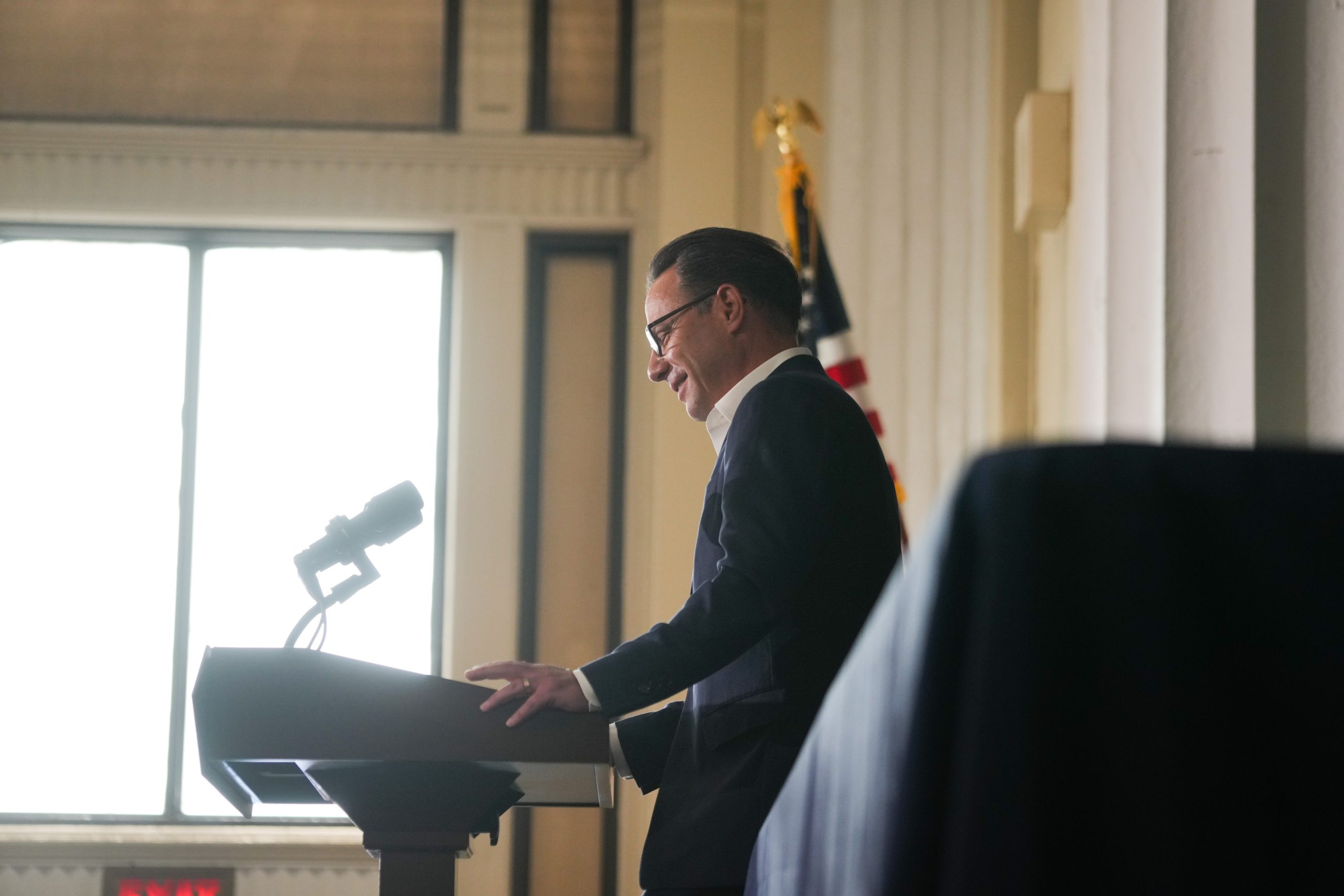
    Gov. Josh Shapiro made a declaration in the early days of his administration: Pennsylvania is open for business.

    The move would ultimately include promises to slash bureaucratic red tape, cut permit wait times, and offer a new direct line to Shapiro’s office for major corporations hoping to set up shop in Pennsylvania.

    It was with this same spirit last summer that Shapiro announced the largest single private sector investment in Pennsylvania history: Amazon committed $20 billion in Pennsylvania that included two data center campuses in Luzerne and Bucks Counties.

    But in a year’s time, the politics — and public opinion on both sides of the aisle — have dramatically shifted on data center development.

    Reporters Michelle Baruchman and Gillian McGoldrick have the details.

    What you should know today

    Quote of the day

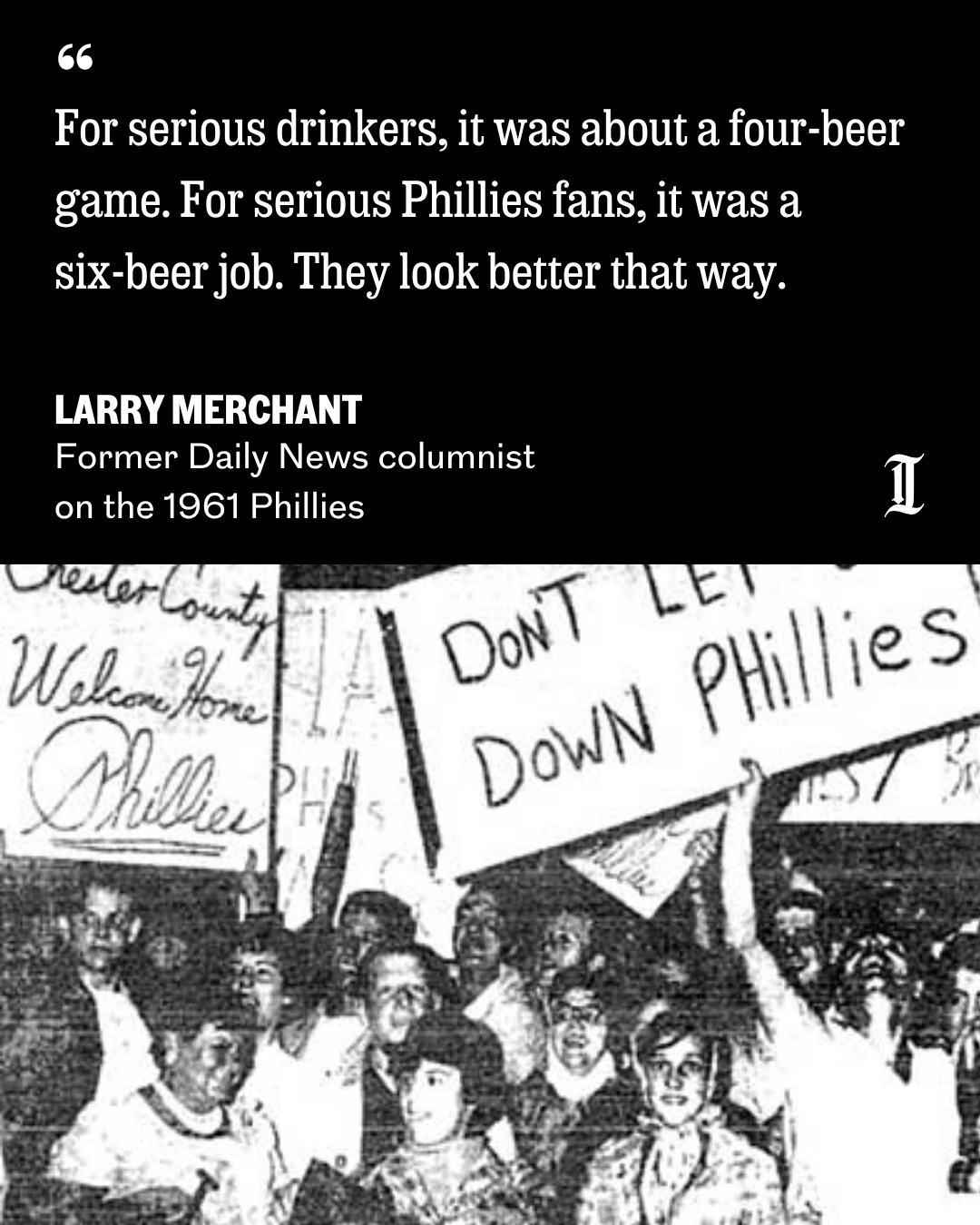
    “Baby boomers like me vividly remember the towering, then-state-of-the-art right field scoreboard at Connie Mack Stadium,” Dave Caldwell writes, “topped by a gigantic advertisement for Ballantine Beer. Well, that scoreboard was erected in 1956, five years before beer was sold there.”

    🧠 Trivia time

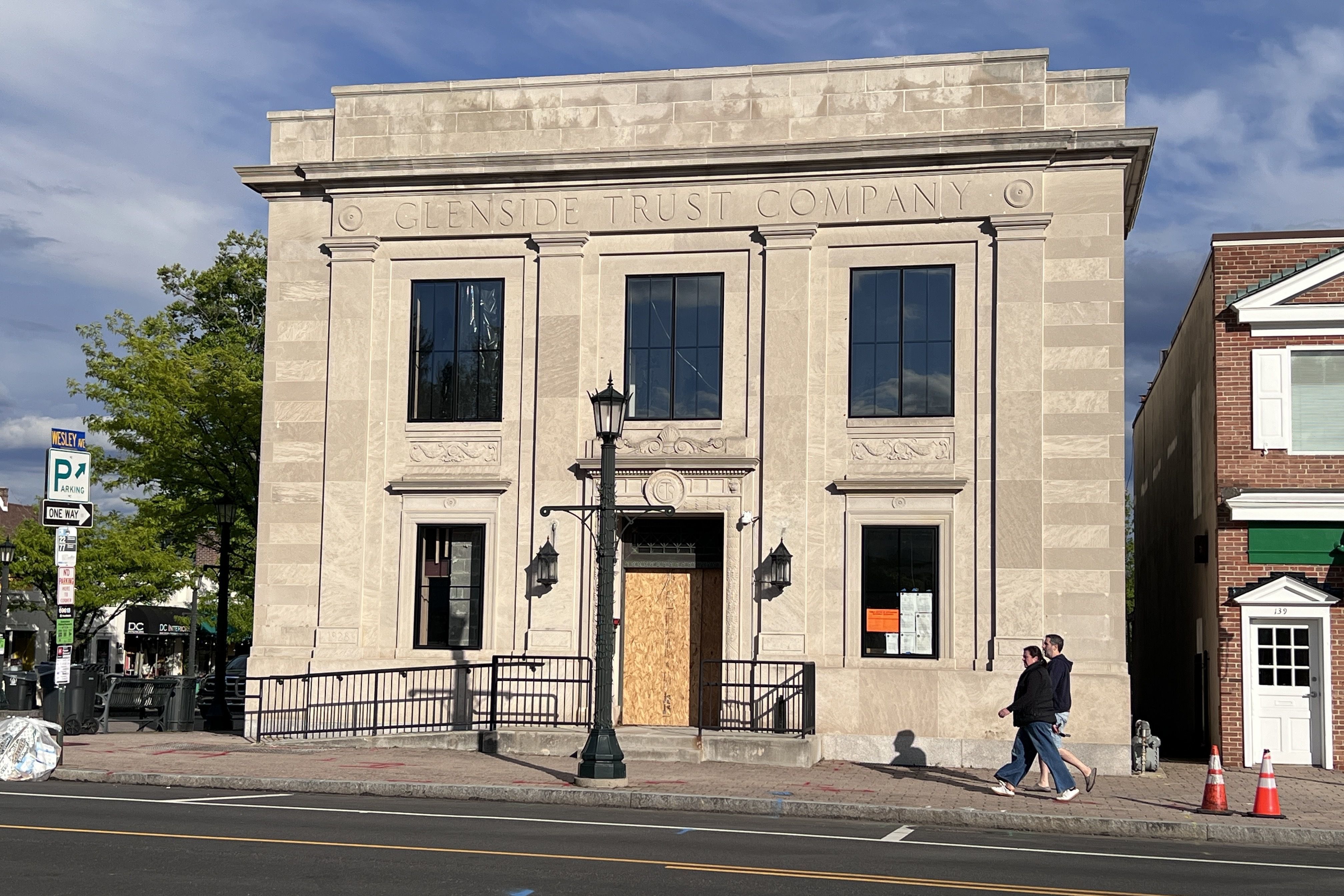
    Which South Jersey town recently celebrated its 100th anniversary of incorporation?

    A) Haddonfield

    B) Lawnside

    C) Merchantville

    D) Glassboro

    Think you know? Check your answer.

    What we’re …

    🍕Eating: Pizza topped with oxtail and collard greens, jerk chicken, and shrimp and grits.

    🌱 Planting: Native vegetation. Here’s how Jersey Shore gardeners do it.

    🧰 Borrowing: Tools from the Northwest Tool Library. After all, not everyone has a leaf blower.

    🧩 Unscramble the anagram

    Hint: People are stocking up on this dish since the Northeast Philly restaurant that specializes in it announced that it’s closing.

    PAPERS PUN SO

    Email us if you know the answer. We’ll select a reader at random to shout out here.

    Cheers to Gary Bolton, who solved Monday’s anagram: Lane Johnson. The six-time Pro Bowler and two-time first-team All-Pro said 2026 will “probably” be his final season.

    Photo of the day

    A rainbow sits over Citizens Bank Park before the Chase Utley Wall of Fame ceremony and the Phillies and Toronto Blue Jays game on Friday.Yong Kim / Staff Photographer

    Chase Utley’s path to the Phillies Wall of Fame was forged with hours in the video room.

    Enjoy your Tuesday!

    By submitting your written, visual, and/or audio contributions, you agree to The Inquirer’s Terms of Use, including the grant of rights in Section 10.

  • Cheltenham’s got a plan for 2040 | Inquirer Greater Abington

    Hi, Greater Abington. 👋

    I hope you’ve been surviving the summer heat. This week, we dive into Cheltenham Township’s new comprehensive plan, which lays out a vision for what it could look like by 2040. We also continue to follow the ongoing turmoil in the Cheltenham School District, where elementary school parents now say they’ve flagged concerns about alleged sexual and physical incidents since October.

    Plus, a new Yemeni- and Saudi-inspired concept (with a drive-through!) opens in Willow Grove, and other news.

    — Laura Smythe (greaterabington@inquirer.com)

    P.S. Our journalists want to solve the local mysteries that keep you up at night. Submit any questions you might have about the region to Curious Greater Abington, and we’ll see if we can dig up some answers in a future story.

    If someone forwarded you this email, sign up for free here.

    Cheltenham’s plan for 2040

    Cheltenham Township’s new comprehensive plan lays out challenges and recommendations for homes, businesses, transportation, community services, and historical assets over the next 10 to 15 years.

    Among the dilemmas facing the township is navigating the need for more tax revenue while avoiding too big a boom of new residents. That’s because many of the large estates in Cheltenham belong to non-property-tax-paying institutions.

    The Inquirer’s Jess Rohan has all the details on the 2040 plan, including which neighborhood hubs have been identified for more development and why the township may be drawing inspiration from 1990s-era Ardmore.

    Following Cheltenham superintendent’s resignation, families say safety problems extend beyond high school

    The Cheltenham School District remains embroiled in controversy as families in the township allege safety issues aren’t confined to the high school. Here’s the latest:

    Superintendent Brian Scriven resigned last week after two violent assaults in the high school locker room led to charges against four football coaches and six players. But Cheltenham High School football families repeatedly warned against the former head coach’s hiring because of allegations that he allowed bullying to fester in his prior coaching position at Abington Senior High School.

    Cheltenham Elementary parents now say they’ve been raising concerns to administrators since last October over multiple alleged physical or sexual incidents affecting students. The district has not commented on the status of any other administrators. Its school board meets tonight.

    The Inquirer’s latest reporting on the ongoing tumult examines how the district is struggling to contain the alleged mishandling of these incidents.

    💡 Community news

    🏫 Schools briefing

    • In the wake of the fallout from the Cheltenham locker room assaults, Inquirer columnist Mike Sielski unpacks the incidents through the lens that they are yet another example of failed adult leadership in youth and high school sports.
    • University of Pennsylvania education professor Jonathan Zimmerman shares a perspective on the prevalence of hazing at institutions across the U.S. over the years.
    • Valencia Peterson, who has more than a decade of experience working in violence prevention through youth sports, pens an op-ed about how the Cheltenham incidents should prompt schools and athletic organizations nationwide to ask, “Could this happen here?”

    🍽️ On our plate

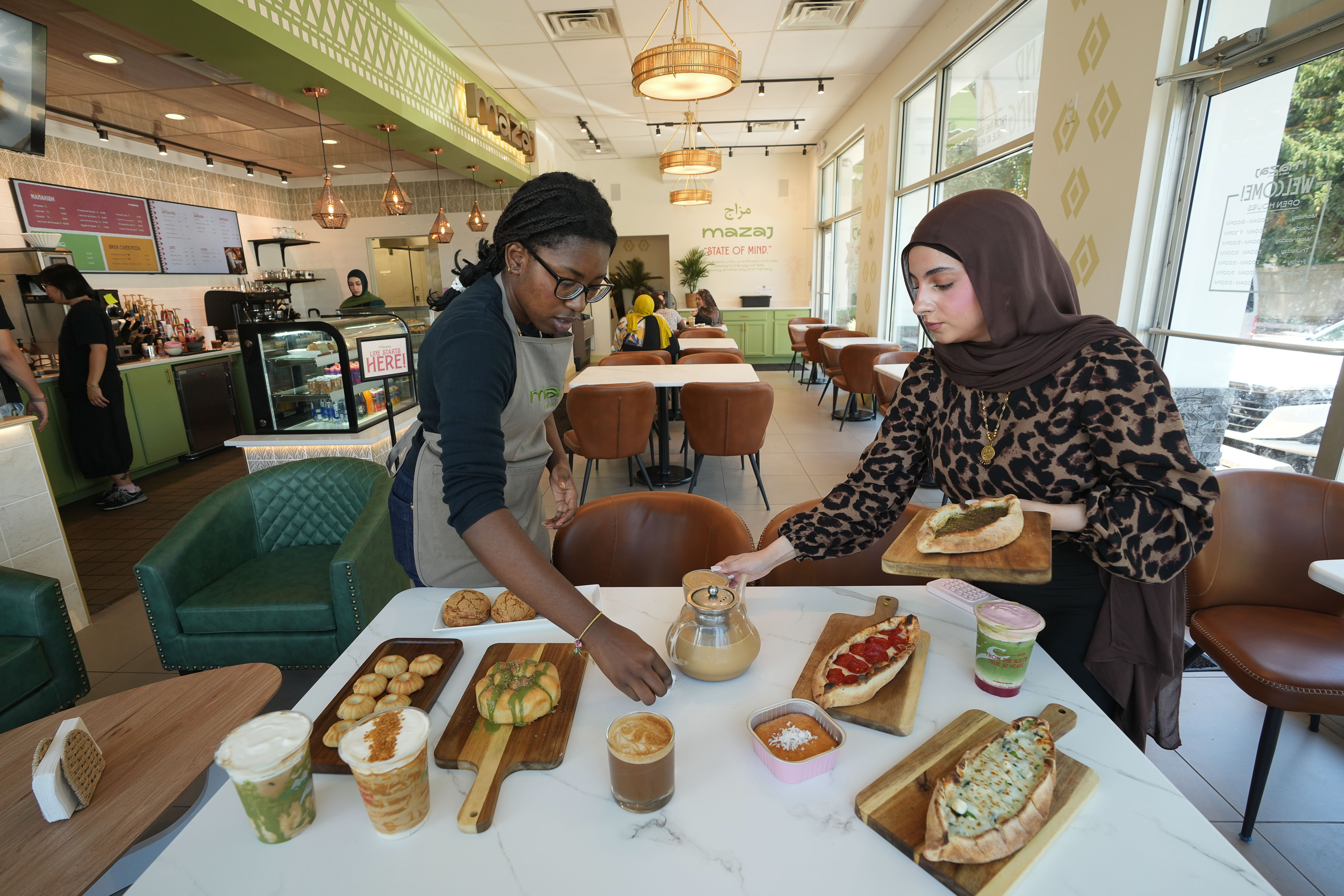
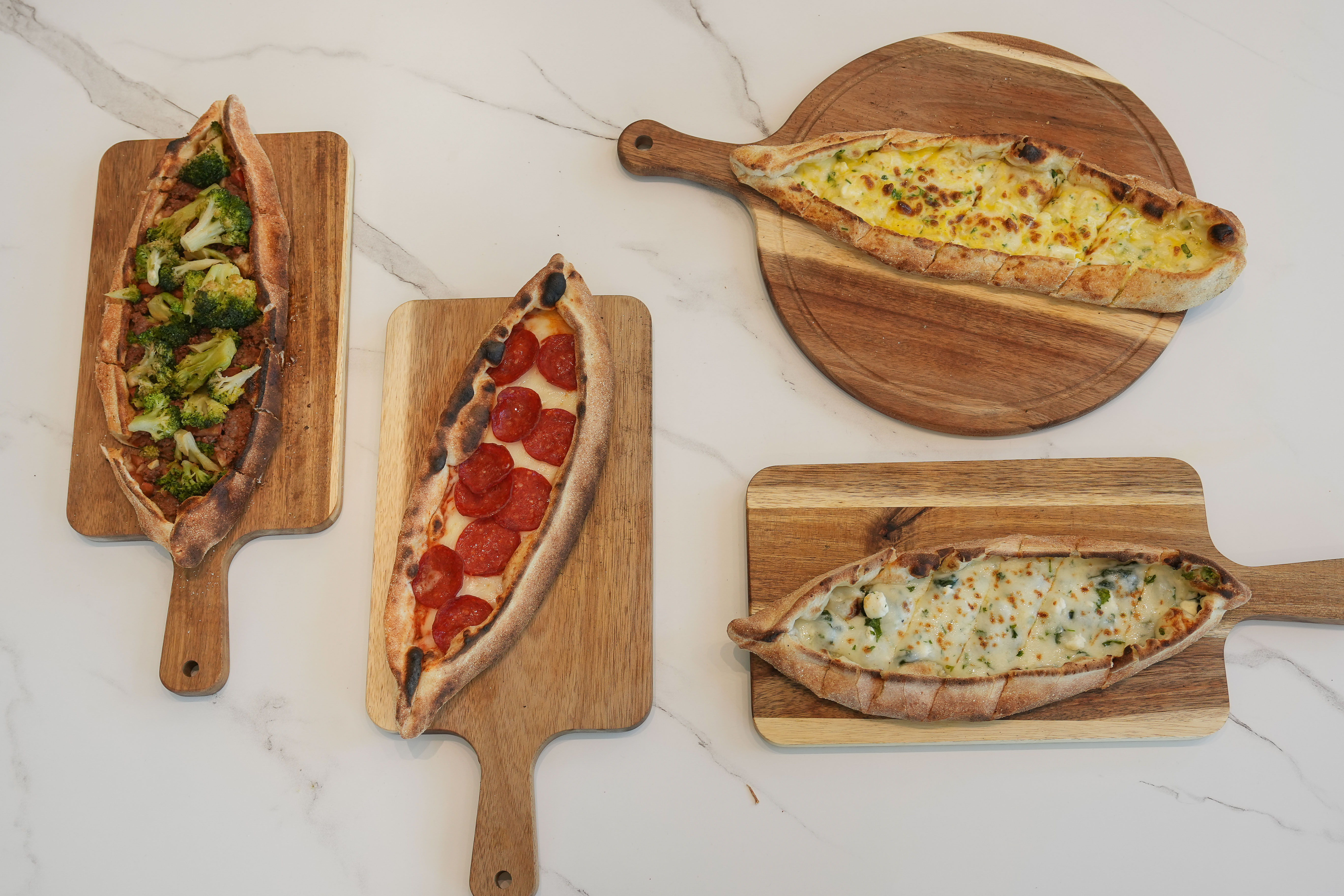
    • Mazaj, a Yemeni- and Saudi-inspired cafe slinging coffee, pastries, and za’atar-topped flatbreads and pizzas, recently opened in Willow Grove. It plans to debut a drive-through later this month.

    🎳 Things to do

    📚 Silent Book Club: At this dream event for introverts seeking new pals, get comfy with a good book and read alongside your neighbors. ⏰ Friday, Aug. 14, 4-6 p.m. 💵 Free 📍 Jenkintown Library

    🎞️ Movie Under the Moon: Take a trip back to good ‘ol 1993 with an outdoor viewing of The Sandlot projected on the big screen. ⏰ Friday, Aug. 14; movie starts at dusk 💵 Free 📍 Conway Field, Abington

    🎲 Game Night: Show off your skills or learn to play a variety of board and card games. ⏰ Monday, Aug. 17 at 6:30 p.m. 💵 Free 📍 Elkins Park Free Library

    🏡 On the market

    A cozy Colonial with character

    Inside 124 Kingston Road in Cheltenham, PA.

    Tucked away on a tree-lined street in Cheltenham, this stone-and-brick house comes complete with a fireplace, partially finished basement, and details such as exposed beams and a bay window. It has five bedrooms and four bathrooms, including a private first-floor suite with a full bathroom and separate entrance.

    See more photos of the home here.

    Price: $549,000 | Size: 3,667 SF | Acreage: 0.25

    🗞️ What other Greater Abington residents are reading this week:

    By submitting your written, visual, and/or audio contributions, you agree to The Inquirer’s Terms of Use, including the grant of rights in Section 10.

    This suburban content is produced with support from the Leslie Miller and Richard Worley Foundation and The Lenfest Institute for Journalism. Editorial content is created independently of the project donors. Gifts to support The Inquirer’s high-impact journalism can be made at inquirer.com/donate. A list of Lenfest Institute donors can be found at lenfestinstitute.org/supporters.

  • Willow Grove’s new cafe and bakery has Yemeni coffee drinks, honeycomb bread, hot manakish — and a drive-through

    Willow Grove’s new cafe and bakery has Yemeni coffee drinks, honeycomb bread, hot manakish — and a drive-through

    What started as a halal coffee-and-pastry counter tucked inside a Narberth restaurant has grown into a full-fledged cafe in Willow Grove, with a bakery operation fueled by a mosaic-tiled oven turning out za’atar-topped flatbreads and pizza. And for good measure, the new Mazaj will have a drive-through.

    Mazaj, a Yemeni- and Saudi-inspired cafe, opened earlier this month in the former Grandma’s Grotto Pizza on Route 611 near Blair Mill Road.

    Owners Mohammed Tashkandi, Mohammed Aqlan, Yousef Muneer, and Omar Alkahily also operate Malooga, the Yemeni restaurants in Narberth and Old City. Mazaj began in March as the coffee bar and bakery inside the Narberth location, where the partners developed its drinks and pastries while spending more than two years searching for a place where the concept could stand on its own.

    They deliberately looked beyond the city limits, Tashkandi said. They wanted parking, easy access, and enough room to create the sort of coffeehouse where customers could settle in — without making a quick coffee run difficult.

    Manakish are baked to order in a Forno Picone oven near the front of the cafe at Mazaj. The flatbreads can be spread with za’atar and olive oil or topped with cheese or meat.Jessica Griffin / Staff Photographer

    The Willow Grove location, at 2700 Easton Rd., just north of the Pennsylvania Turnpike interchange, is designed to do both. There are sofas and upholstered chairs for lingering, tables lining the windows, and — unlike Narberth — a drive-through for customers who have no intention of lingering at all. The drive-through is expected to open at the end of the month with premade pizzas and manakish that can be reheated in two minutes.

    “Two things can be true at the same time,” Tashkandi said. “Our homemade food, locally roasted coffee, and crafted drinks are intentionally chosen to elevate your day, whether you want to spend time in our spaces or grab something to go as you move through your day.”

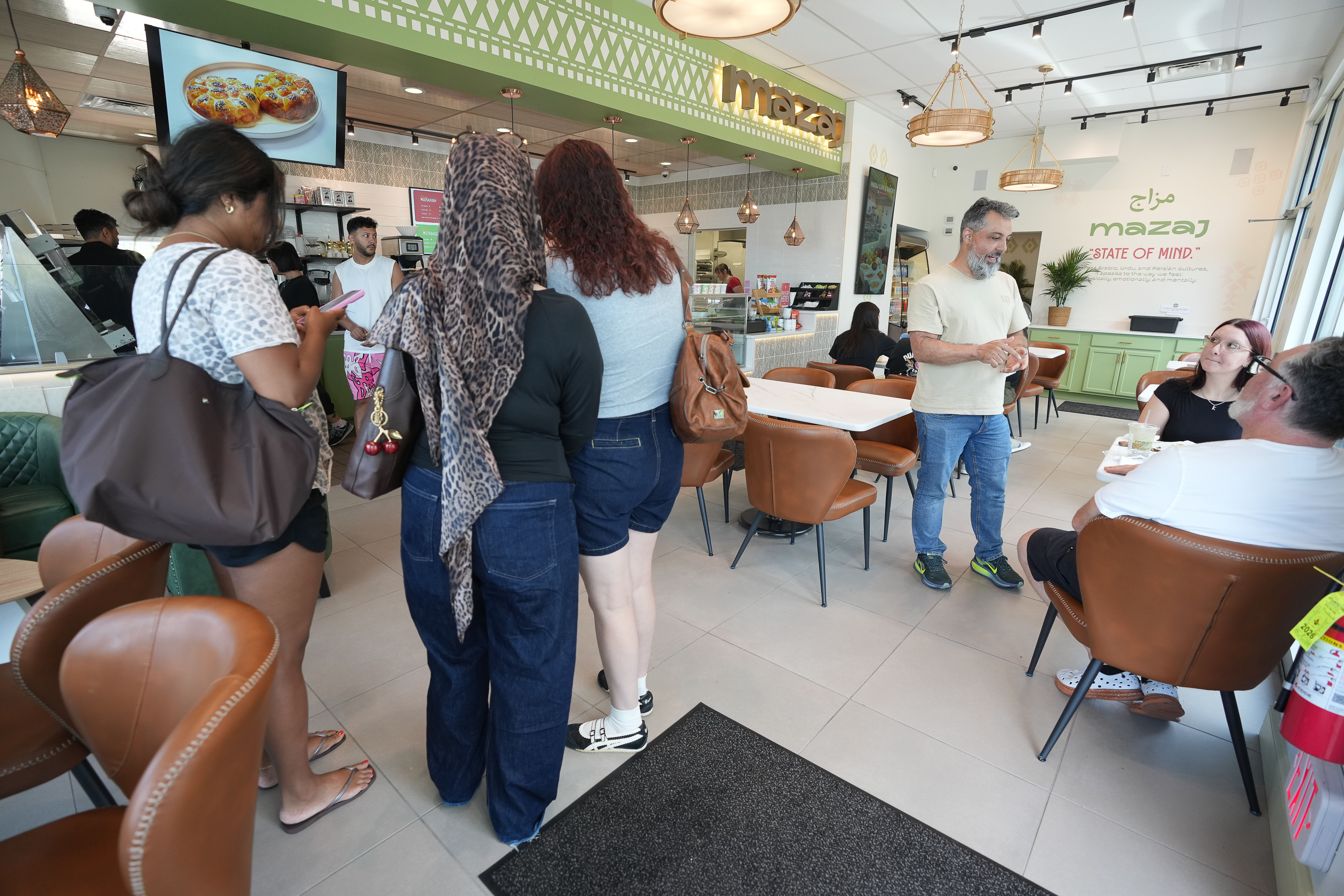
    A crowd has already formed at the new Mazaj in Willow Grove, Aug. 4, 2026.Jessica Griffin / Staff Photographer

    That dual identity is wrapped into the name. Mazaj — also spelled mizaj or mizaaj — is an Arabic word for “mood,” “temperament,” or “state of mind” that is also used in Urdu and Persian. The partners were compelled to choose it because of the idea that what people eat and drink can change how they feel.

    The menu crosses borders. Tashkandi is from Saudi Arabia, while his partners are from Yemen, but they don’t describe Mazaj strictly as a Yemeni coffee shop, an increasingly popular cafe format. They see it as a broader Middle Eastern cafe.

    Honeycomb, Yemeni pull-apart bread, before it is baked at Mazaj, in Willow Grove, Aug. 4, 2026.Jessica Griffin / Staff Photographer

    There are Saudi coffees and mutabbaq, the flaky stuffed pastry pockets popular in Yemen and Saudi Arabia, alongside Levantine manakish, honeycomb bread, date cake, and other pastries. The contemporary coffee-shop side of the menu brings espresso drinks, ceremonial-grade matcha, and flavored lattes.

    Mazaj’s manakish are baked to order in a Forno Picone oven, a striking, mosaic-covered centerpiece near the front of the cafe. The flatbreads can be spread with za’atar and olive oil or topped with cheese or meat.

    And now there’s pizza.

    Pizza topped with beef pepperoni coming out of the oven at Mazaj, in Willow Grove, Aug. 4, 2026.Jessica Griffin / Staff Photographer

    It is the major menu addition in Willow Grove, baked in the same oven as the manakish. A separate commercial deck oven handles the cafe’s pastries.

    The expansion has turned Willow Grove into the baking hub for the partners’ other restaurants. The owners are shifting production from Malooga to the new cafe, which will supply baked goods to both Narberth and Old City. The company has also begun laying the groundwork for a wholesale operation to sell pastries to other coffee shops and supermarkets, and the partners say they are meeting with potential franchisees.

    Head baker Samar Alasbahi leads a baking staff with backgrounds in Yemen and Syria. The pastries are made in-house, and Tashkandi said leftovers aren’t put back into the case the next morning. Unsold baked goods instead go to employees, neighbors, and others in the community.

    Customers can linger in the comfy upholstered furniture at Mazaj.Jessica Griffin / Staff Photographer

    The partners have thoroughly remade the former pizzeria. Olive green and cream set the palette, with patterned tile, geometric motifs, Moroccan-style pendant lights, and a long pastry-and-coffee counter. Faux marble tables and caramel-colored chairs dot the narrow, window-lined dining room, while deep-green upholstered chairs and a sofa make up a small lounge. Behind glass near the front sits the new, dark-tiled brick oven.

    For all the Yemeni and Saudi influences behind Mazaj, Tashkandi said the idea is deliberately broader: a cafe where Middle Eastern food traditions overlap rather than stay within national boundaries. “We want the menu to reflect that diversity,” he said.

    Mazaj, 2700 Easton Rd., Willow Grove, 267-900-3167, mazajpa.com. Hours: 8 a.m. to 9 p.m. Monday through Friday, 8 a.m. to 4 p.m. Saturday and Sunday.

  • Zuckerberg manifesto pushes an open-source approach on AI as Meta releases its latest model

    Zuckerberg manifesto pushes an open-source approach on AI as Meta releases its latest model

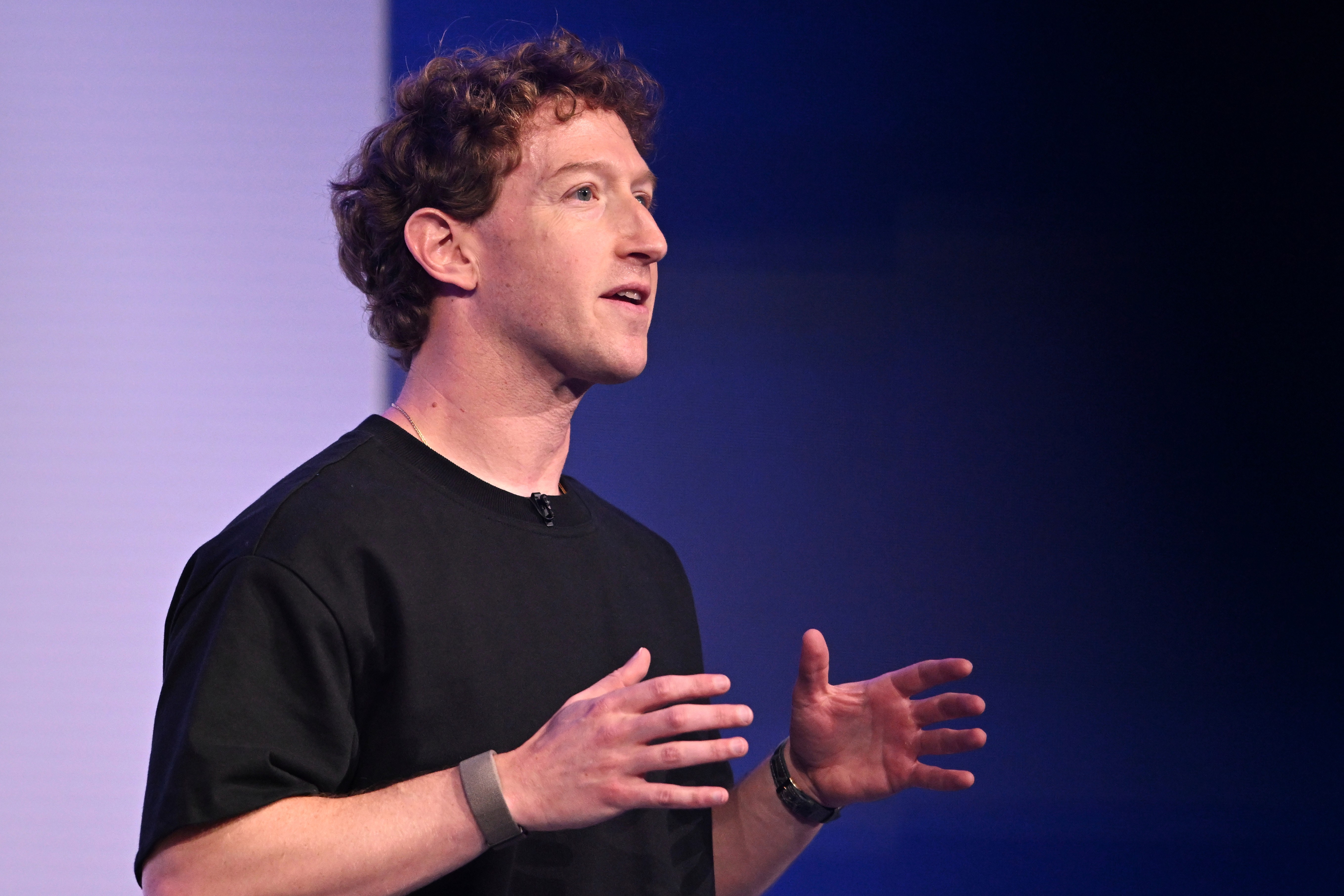
    Meta Platforms CEO Mark Zuckerberg laid out a vision Monday of what he said artificial intelligence can do for the world, imagining a future where everyone has their own, all-knowing AI agent that strives to improve all aspects of their lives.

    Zuckerberg detailed his ambitions for the technology in a 6,500-word essay published online where he also outlined why he favors open-source AI technology, in which developers make key components accessible for anyone to examine, modify and build upon.

    In a document derided by critics as fantastical, Zuckerberg said his company is working toward an era where everyone will have the tools to create new businesses, receive Ph.D.-level tutoring, and provide personalized lifestyle tips. His 8-year-old daughter, he wrote, can already code her ideas and quickly produce videos.

    “Everyone will soon have invention superpowers,” Zuckerberg wrote.

    Zuckerberg warned of risks if control of advanced AI is concentrated with a select few companies, institutions, or governments. On Monday, Meta also announced the release of a new open-source AI model, Muse Glimmer, which can run on a personal computer, and Zuckerberg said the company would also would provide a way for developers to access a more powerful AI model, Muse Spark 1.2.

    Meta makes AI models, like several other tech companies, and uses them to power platforms such as Instagram and Facebook. The Menlo Park, Calif., company also makes them available to developers who can create their own apps and features.

    Skeptics urge a slower pace of AI development

    Critics said Zuckerberg was not reckoning fully with the risks inherent in AI’s rapid development.

    Noting recent incidents where AI models, including Meta’s own, hacked other companies on at least three separate occasions, Anthony Aguirre, president and CEO of the AI safety nonprofit Future of Life Institute, asked “what on Earth makes Meta think they — or anyone — could control something exponentially smarter, faster, and more capable?”

    “Meta’s chosen path is ultimately one of human replacement and disempowerment, but there is an alternate, pro-human path — one that brings about individual flourishing and scientific breakthroughs with controllable AI tools. What’s urgently needed now is for governments to facilitate a pause on advanced AI development and steer us onto the pro-human path — before it’s too late,” Aguirre said.

    Meta chief says AI should be broadly distributed

    In his essay, Zuckerberg outlined why he thought open source is a better path for fair development of AI. He warned that if control of AI “superintelligence” is too concentrated, it will lead to less favorable outcomes for everyone else. The key, he wrote, is finding a balance that ensures advanced AI is “broadly distributed” to empower billions of people equitably.

    Meta has long been a proponent of open-sourcing its AI models, but has struggled to keep up with rivals such as OpenAI, Anthropic, and Google that have not taken the same approach.

    Zuckerberg made what could be a veiled reference to Meta’s rivals without naming specific companies.

    “Most other labs are focused on building AI for companies, governments, or other institutions, so if those labs lead, then the balance of power will favor larger institutions over individuals,” he wrote.

    Zuckerberg also included policy recommendations for keeping the U.S. ahead of rivals, including China. The United States and its allies need to speed up building energy capacity and infrastructure to stay competitive, he said.

    Zuckerberg called for authorities to reconsider their position on “distillation,” which involves training a less capable model on the outputs of a stronger one. The Trump administration has vowed to crack down on Chinese AI companies using distillation to extract technical features from U.S. AI models. Anthropic earlier this year accused China’s DeepSeek of using distillation.

    “Some have tried to frame distillation as harmful, but I think it is important to protect the principle that you can learn from anything you can observe,” Zuckerberg said. “This is how the world works, and the U.S. will not be able to lead if we restrict ourselves on this front.”

    Critics see a self-serving message from Meta

    Matt Lane, senior policy counsel at the nonprofit digital rights advocacy group Fight for the Future, called Zuckerberg “annoyingly out of touch on his best day,” but said the CEO is right about the importance of open-source AI.

    Shared access to open-source AI systems is important for protection in a world where AI can be used to hack into electronic systems, like voting systems and benefits infrastructure, he said.

    But he said only Meta will benefit if everyone were to use Meta-designed AI systems, even if they are fully open-source. “Open-source AI needs to be supported beyond these corporate interests. We, unlike Zuckerberg, hope for as much competition as possible,” he said.

  • This corner store has the best chicken sandwich in Philly, but we don’t quite know what it’s called

    This corner store has the best chicken sandwich in Philly, but we don’t quite know what it’s called

    When Point Breeze resident Bonnary Lek, 46, first moved to the neighborhood in 2023, a neighbor told her that at the corner of 17th and Wharton Streets, “there’s an Asian couple who makes the best chicken sandwich in Philadelphia.” This particular sandwich has found fame in Point Breeze and far beyond, primarily through word-of-mouth.

    Some people refer to the store, which has no visible signage, as Mrs. Lee’s. Even Lek and her fiancé, Manong sous chef Juan De Ocampo, cannot agree on what to call the store. De Ocampo swears it’s “Jimmy’s.” Credit card receipts read “Kim Woa Store,” a name which is strikingly similar to another South Philly fried chicken sandwich institution, Kim Woo Store, which is at the corner of 19th and Moore Streets.

    Whatever the name of the store is, it’s an ordinary corner store with uneven linoleum floors laid with mismatched tiles, soda bottles lining the shelves along with single rolls of toilet paper and canned soup. Extremely neat, if a bit shabby.

    Longtime regulars drive in from New Jersey, Delaware, and as far south as North Carolina — mostly former Point Breeze residents who need their chicken sandwich fix. TikTok has brought customers as far away as Canada.

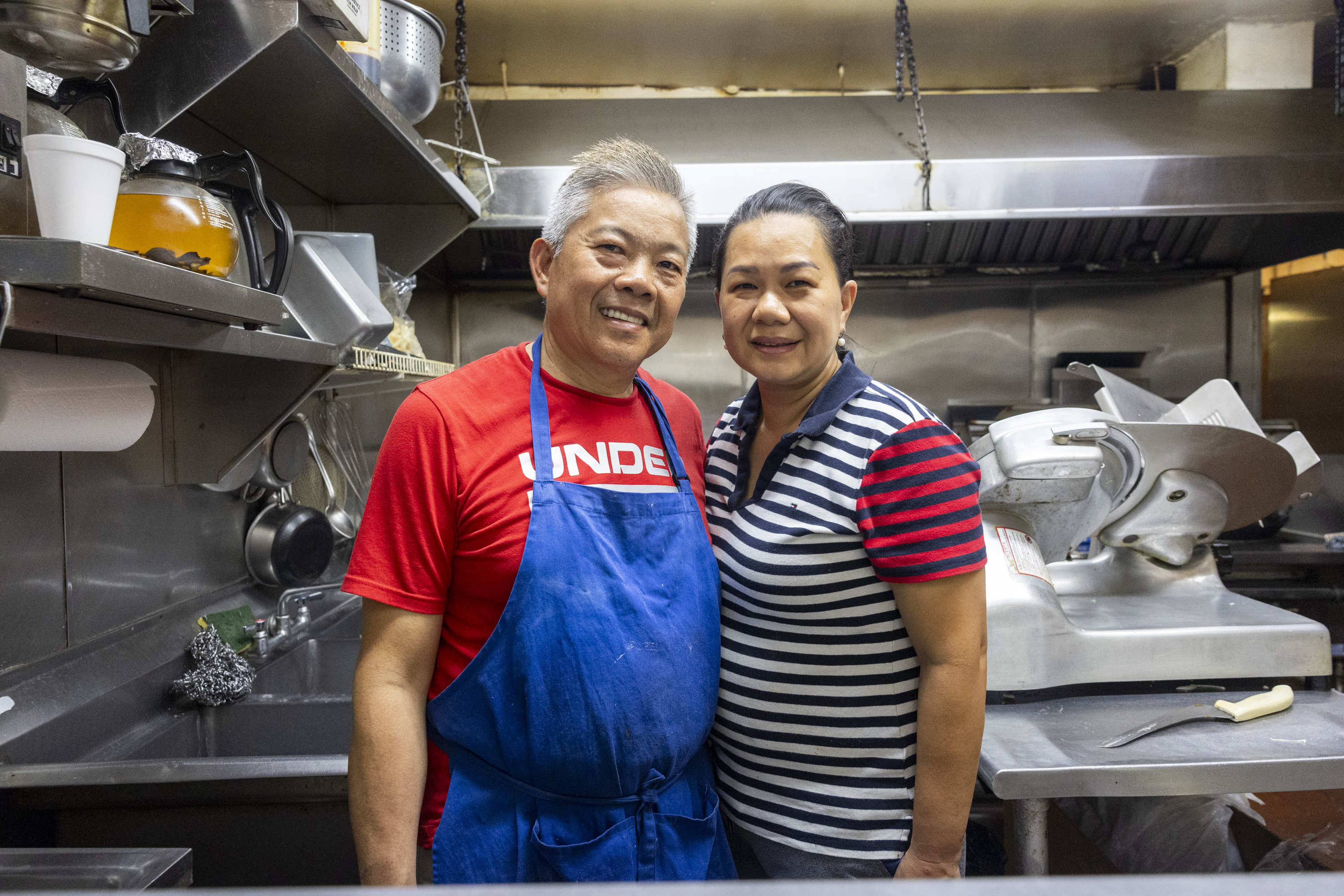
    The store is owned by Lynda Cong, 50, and Jimmy Cong, 53. They met in Philly in the early 2000s, after Lynda came to the area to study public health at Stockton University. Both the Congs are southern Chinese, but came from Saigon, now Ho Chi Minh City. They speak to their children (the two younger ones help out in the store, and two older ones are grown) in Cantonese.

    A customer, before he moved away seven years ago, presented the Congs with a custom sign that reads: “The Best Chicken Sandwich in Philly.” It hangs in the spotless, stainless steel kitchen, facing the interior of the store.

    Above the kitchen window: a handwritten menu with prices scratched out.

    Lynda Cong and her husband, Jimmy Cong, pose for a portrait at their corner store in Philadelphia on Aug. 5, 2026.Tyger Williams / Staff Photographer

    The Congs took the store over from Jimmy’s sister “between 10 and 15 years ago,” according to Lynda, when the sister retired. Jimmy’s sister was known as “Mrs. Lee” and she first opened the store in 1986. “Kim Woa” is an older Romanization of the Cantonese phrase “gam waa,” which translates literally to “golden splendor” and means “prosperity.”

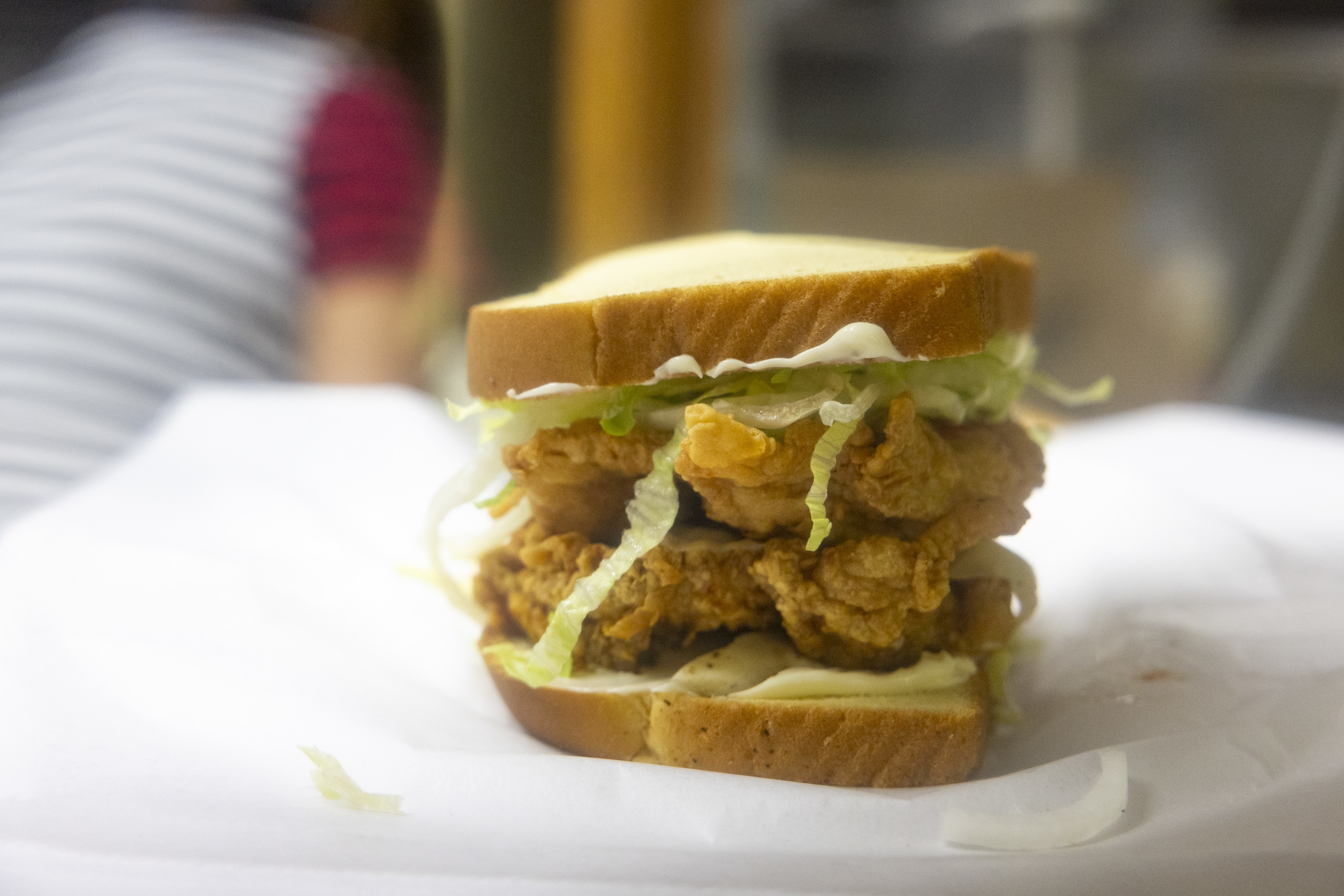
    “Golden” is apt, as it accurately describes the fried breading on the sandwich, which costs $9 and consists of two chicken breast cutlets, thickly breaded with a super crunchy exterior. Ordering it “with everything” means that it comes with pickles, mayo, onion, tomato, and lettuce, laid on two slices of potato bread.

    Earlier this year, a few TikTok influencers also discovered the sandwich, though it has still hardly reached the point of virality. The chicken sandwich whisper network, however, did prompt me to get one.

    After one bite, I promptly texted my editor, “I hit the chicken sandwich jackpot.”

    @reusparx

    Is this The Best Chicken Sandwich in Philly ? I let My Followers Pick My Spot & Meal for The day & This Was The First Suggestion ! So I’m at Kim Woo Store in Philly on 19th St I Got The Chicken Sandwich 🔥 . . . . . . . . . #food #fyp #philly #foodie #WhereToEat

    ♬ original sound – Reusparx

    The wings are improbably juicy, with the same crispy breading and are perhaps even more delectable than the famous chicken sandwich. “It’s just salt, pepper, flour, water, and garlic powder,” said Lynda, who has met this sudden interest in the sandwich with amusement. The Congs now sell about 50 of the sandwiches every day; they say the interest has only somewhat affected daily sales.

    The sandwich and the wings (three for $5 or six for $9.60), along with a massive array of salads, cheesesteaks, hoagies, wraps, and fried rice, emerge from a highly polished and well-scrubbed stainless steel kitchen. (You can order things that aren’t even on the menu. You can order whatever you’d like in a wrap.)

    Over the years, the Congs have watched the neighborhood around them evolve. They’ve added most of the menu items to meet new demands and new tastes. But the chicken sandwich has stayed the same.

    Kim Woa Store, 1300 S 17th St, 215-463-5426, Hours: Monday to Saturday, 9 a.m. to 6:30 p.m.

  • Unemployment improved — because thousands of workers disappeared. Where did they go?

    Unemployment improved — because thousands of workers disappeared. Where did they go?

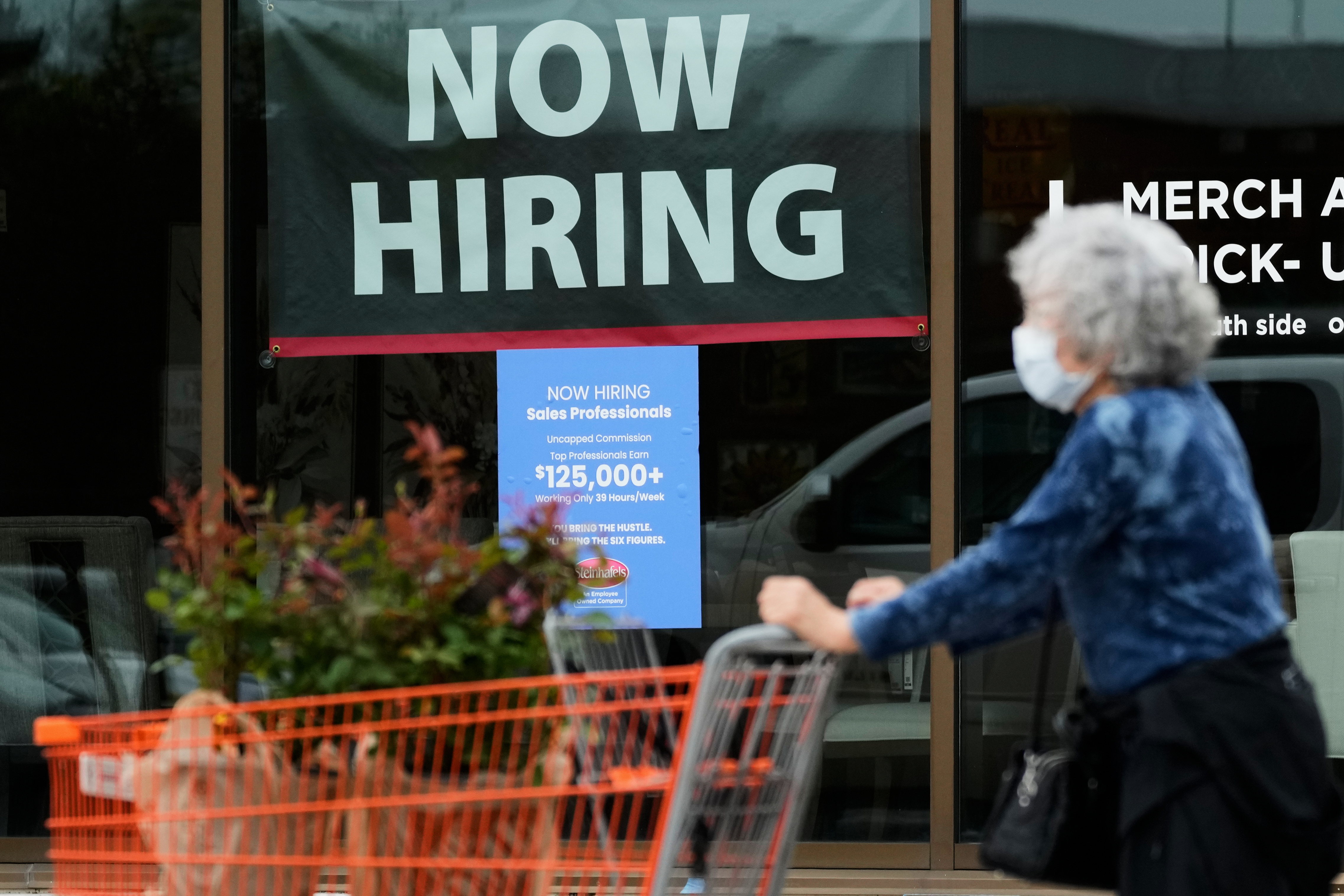
    The U.S. economy shed jobs in July, yet the unemployment rate improved — an unusual pairing that points to a worrying story unfolding behind the numbers for some economists.

    That’s because even as the U.S. economy lost jobs, American workers left the labor market faster.

    “This is one of the very, very few times where you see the number of jobs shrink but the unemployment rate falls,” said Stephen Moore, a conservative economist. The explanation, he said, is fewer people looking for jobs. “That’s a big economic story: Where are the workers?”

    The share of adults working or looking for work slipped to 61.4% in July, extending a weakening in the labor force participation rate this year. That rate has reached the lowest level since February 2021, during the pandemic.

    Employers shed 23,000 jobs in July, according to Labor Department figures released Friday, and the unemployment rate fell slightly to 4.1% from 4.2%, due in large part to fewer workers in the labor market.

    The aging population is one of the bigger forces leading to fewer workers. As baby boomers retire, they pull down the share of adults either working or looking for work. But that doesn’t explain the full drop this year in the labor force participation rate.

    The share of workers in their “prime working years,” ages 25 to 54, fell sharply between May and June, and only partially recovered in July, leaving economists to fear that young and middle-aged people are abandoning job searches.

    Men in particular have been seeing a sharp decline in the workforce, with participation at an all-time low outside of the peak of the pandemic, at 66.8% in July, with both older men and the youngest men in the workforce driving the decline. That’s concerning for both social and economic reasons, Moore said. “That is not a good trend.”

    “We’re just not seeing males working as much, and I don’t have a good explanation for why that is,” he said.

    A shifting economy plays one role. Most recent job growth has come in healthcare and private education, fields long dominated by women. Several male-dominated industries, including manufacturing, transportation, and mining, have shed jobs over the past year. That leaves a mismatch between the skills many men have and the jobs available.

    The decline is a potential warning sign, many economists say.

    “We like to see the unemployment rate go down typically, right?” said Alexander Bick, an economist at the Federal Reserve Bank of St. Louis. But that’s because it normally indicates employment is going up.

    Bick has watched the labor force participation rate fall for months, and he said it’s “a worrying trend.” The fear is that discouraged workers are giving up.

    But the picture is not yet clear, because other factors are also playing a role, including the Trump administration’s big push to seal borders, stop immigration, and deport immigrants, which has led to a decline in foreign-born workers.

    Teens and young adults have also fallen out of the workforce. The share of 16- to 19-year-olds working or looking for work has fallen this year, hovering near the lowest levels since the pandemic after teen employment surged in 2023 and 2024. The share of 20- to 24-year-olds in the workforce has also fallen in recent months.

    One reason some teens are not working: More are graduating high school, reflected in rising high school graduation rates, experts say. But another reason is weaker hiring in the hospitality and retail sectors, which tend to employ young people.

    Growth in artificial intelligence and other technologies may also be creating new barriers to entry-level roles. For example, self-service kiosks have taken the roles of many cashiers, said Sara Estep, an economist at the Center for American Progress, a liberal think tank in Washington. Also, AI applicant screening tools could be favoring more experienced workers.

    Estep said she worries young people are missing out on work experiences that could help them gain a foothold in the labor market for years to come.

    There is one bright spot from the latest jobs report, said Guy Berger, director of economic research at the Burning Glass Institute, a Philadelphia think tank that studies the labor market. Even as workers have left the workforce, the number of people who say they want a job but have given up searching over the past month has ticked slightly down.

    “The things that would make me really worried about labor force exits aren’t showing up,” Berger said. “People aren’t telling us, ‘I want a job but can’t find one.’”

  • ⚾ Infield shuffle | Sports Daily Newsletter

    ⚾ Infield shuffle | Sports Daily Newsletter

    Last week, I asked my fiancé, a Phillies fan, “Who’s going to struggle the most with the realignment?”

    For context, after second baseman Luis Arráez was acquired at the trade deadline, the Phillies shuffled their infield with Bryson Stott moving from second base to third and Alec Bohm shifting to first with Bryce Harper going to right field.

    He responded: “Trea Turner.” It was a fair answer. Turner is second in the league in committed errors with 18. The one infielder who didn’t switch positions happens to be among the worst defenders in the sport this season.

    But there was never a discussion to move Turner off shortstop, according to interim manager Don Mattingly.

    How come? Scott Lauber sat down with Kevin Stocker, the Phillies’ pennant-winning shortstop in 1993, to get his viewpoint on why Turner isn’t an outfielder, among other thoughts about this new look for the Phillies.

    — Isabella DiAmore, @phillysport, sports.daily@inquirer.com.

    If someone forwarded you this email, sign up for free here.

    ❓Do you think the Phillies should keep Turner at shortstop? Email us back for a chance to be featured in the newsletter.

    Confidence is king

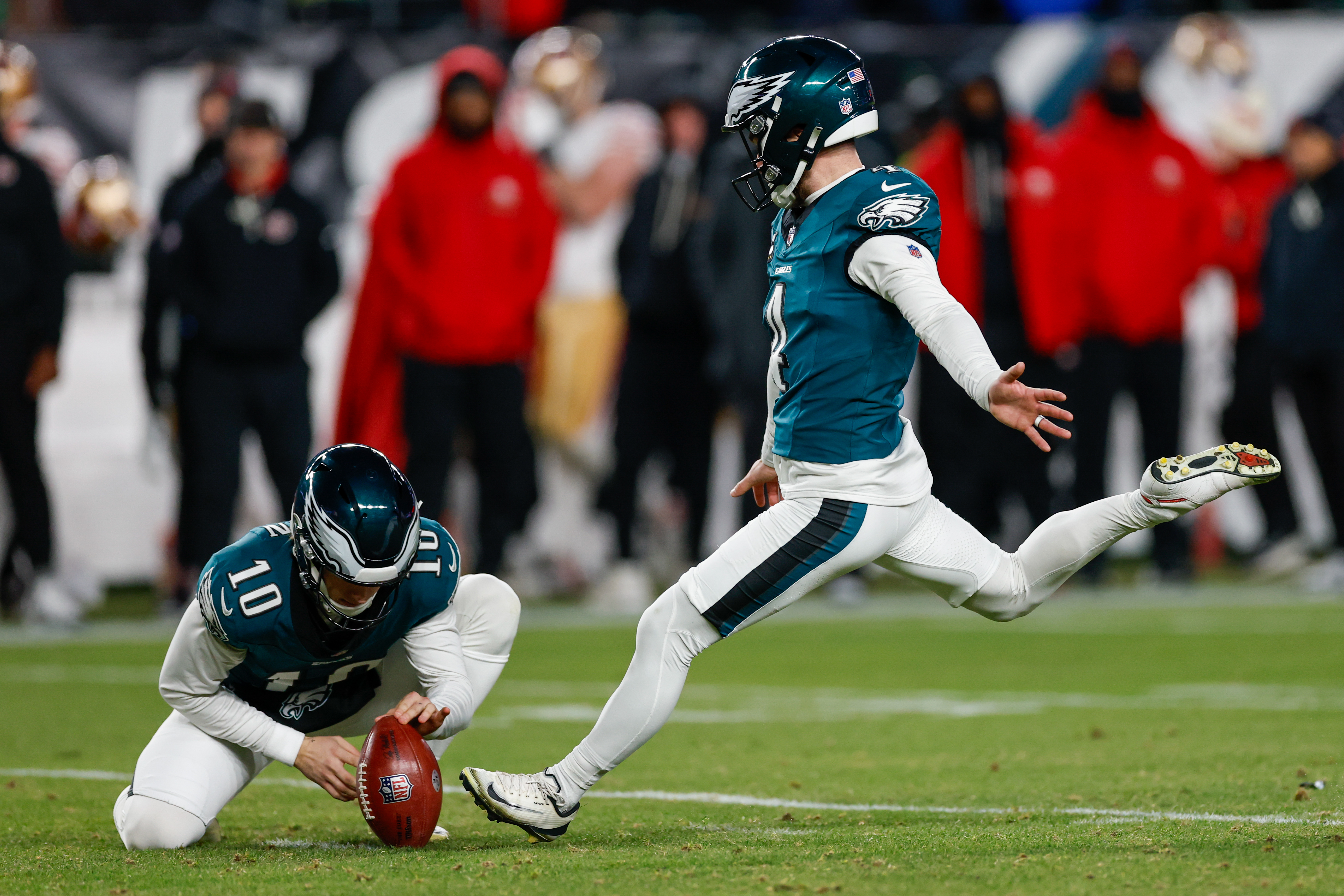
    Eagles kicker Jake Elliott kicks a field goal in the NFC wild-card round on Jan. 11.Yong Kim / Staff Photographer

    Jake Elliott suffered a poor 2025 season by his standards.

    The former Pro Bowler and two-time Super Bowl champion went 20-for-27 on field goal attempts, a 74.1% conversion rate that was the second-worst of his career. Meanwhile, his 76.2% clip (48-for-63) over the past two seasons rates as one of the worst marks for a primary kicker in the league. But Elliott is unfazed, speaking Monday about looking forward.

    “I’m extremely confident in myself right now,” Elliott said. “I feel like I’ve had a great offseason, I’m putting together a good camp, I feel like I’m striking it best I have in a while. Every day is a new day. Just trying to build on it.”

    Special teams coach Michael Clay noted that Elliott has responded well to whatever blips on the radar arose in 2025. Here’s more from Jeff Neiburg on Elliott’s rebound efforts.

    And the first true fight of camp occurred on Monday. It came early in the first-team drill period, but it had been brewing for days. Jeff McLane fills us in on what happened, among other things, in his practice observations.

    What we’re…

    🤔 Wondering: What Michael Vick said about Jalen Hurts and how he’ll look with a new offensive scheme.

    👏 Supporting: Drue Nicholas, a Drexel graduate, took the first drive of the U.S. Amateur on his home course.

    🔍 Analyzing: Monday’s Temple football practice revealed more about how the starting lineup will rollout, but the quarterback competition continues.

    🏈 Learning: About first-year coach Rick Santos and what changes he plans to bring to Penn football.

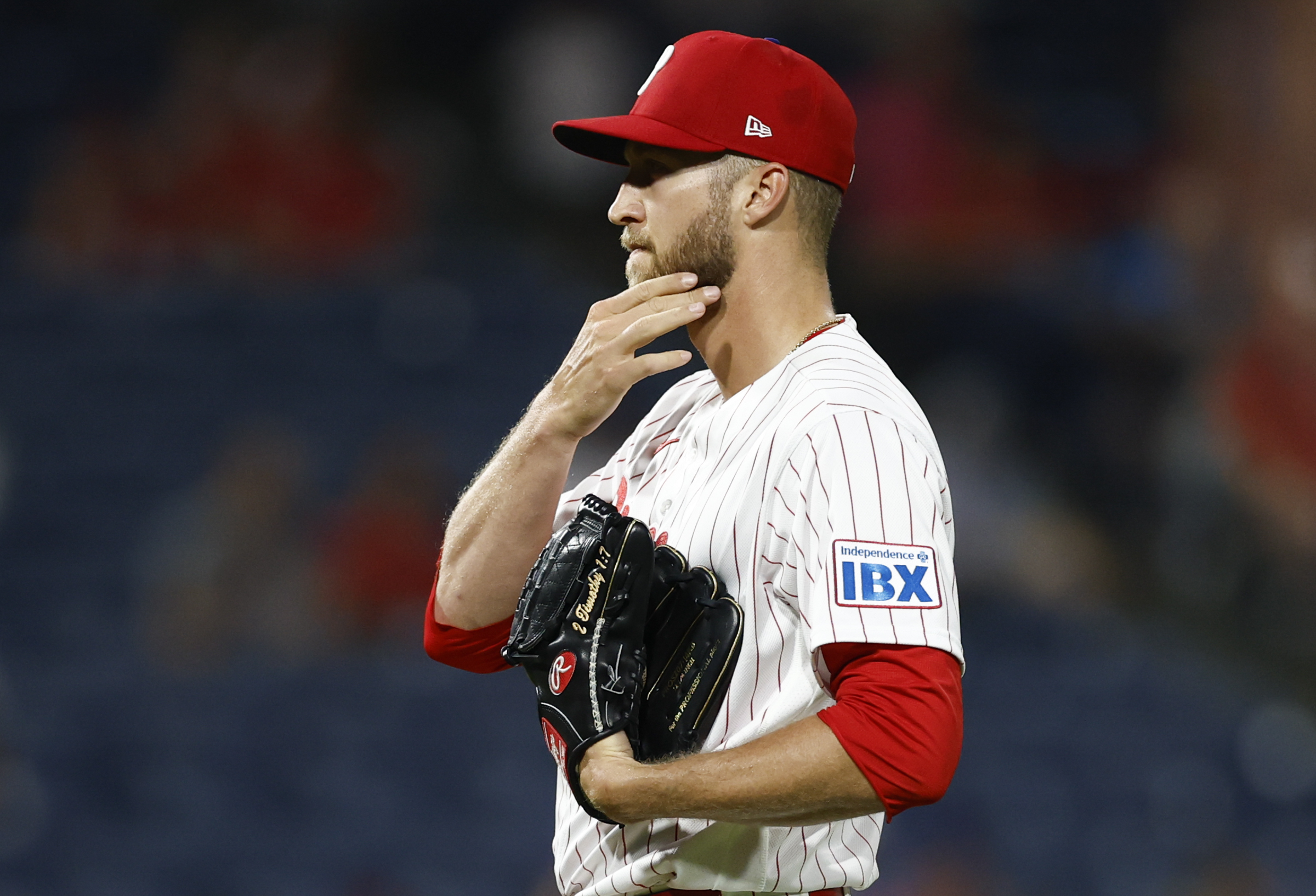
    Another bullpen blow

    Reliever Caleb Kilian made four appearances since arriving via trade on Aug. 3.Yong Kim / Staff Photographer

    The Phillies announced Monday that right-handed reliever Caleb Kilian was placed on the 15-day injured list with a left oblique strain. To fill Kilian’s spot, the Phillies recalled right-hander Chase Shugart.

    The bullpen has been extremely taxed in the last week. The club is in the midst of a stretch of 14 consecutive games before a day off Friday. Plus, the three extra-inning games during its homestand didn’t help.

    Despite this shortcoming, Andrew Painter delivered the best performance of his young career and helped guide the Phillies to a 6-5 win in St. Louis.

    Lessons learned

    Union’s Danley Jean Jacques runs with the soccer ball against Necaxa during a Leagues Cup group stage game on Sunday.Yong Kim / Staff Photographer

    The Union have a slim chance of advancing to the knockout stage of the Leagues Cup. Sitting on three points after two matches, they are not mathematically eliminated from advancing, but need a lot of help to jump from tied for tenth to inside the top four on the final match day.

    Next is the Union’s assumed Cup finale against Santos Laguna at Subaru Park on Thursday. If they aren’t going to advance, what can the club bring back with them into the MLS schedule?

    The most obvious answer is rest, but these games also helped interim head coach Ryan Richter gather more information about his personnel.

    Marcus Hayes’ take

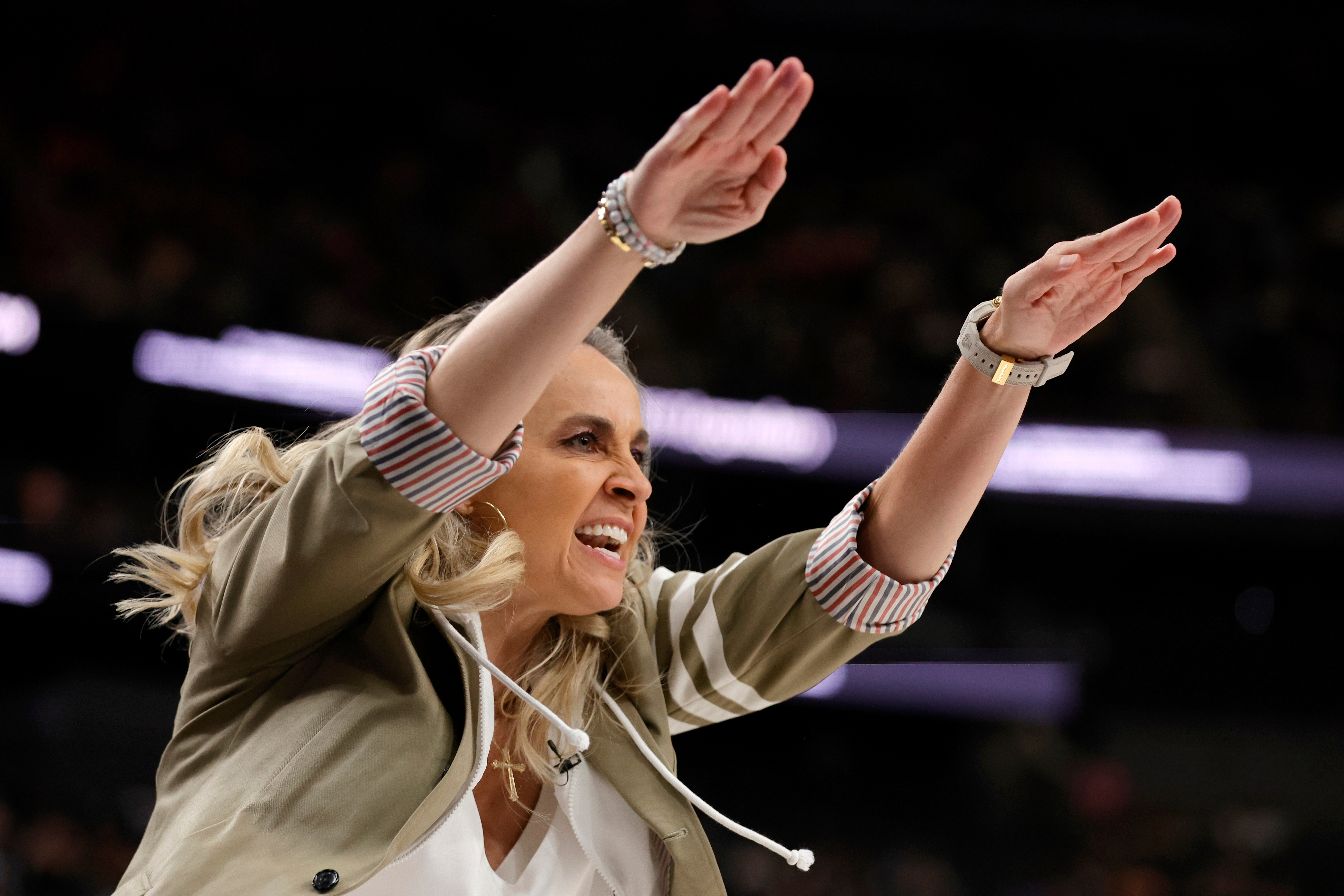
    Becky Hammon’s personnel tactics are a self-own for the WNBA.Steve Marcus

    On Sunday, my family was in dismay when we tuned in to an afternoon game between the Aces and the New York Liberty and discovered that three-time league MVP A’ja Wilson, Chelsea Gray, and five-time All-Star Jackie Young would not play. At. All.

    From pitch counts to minute restrictions to scheduled losses, load management has become a distasteful aspect of professional sports. This was far more than load management, writes columnist Marcus Hayes.

    What you’re saying about the Phillies’ bullpen

    We asked: How can the Phillies address their bullpen issues? Among your responses:

    The bullpen is as inconsistent as the hitting can be. Kerkering should be sent down for a couple of weeks. Mattingly needs a dartboard to figure out who to put in. LUZARDO had another great start. All for nothing. — Tom G.

    Now if Stubbs could only develop a sweeper he’d be my choice as our “set up” guy. His ERA is better than our #4 starter Nola and our #1 setup man Alvarado. Ranger would sure look good now but he’s having a blast in Boston. Most all of the free agent relief pitchers our chief of baseball operations hired over the past 4 years were stiffs. Sorry but as season 4 winds down you are asking the same question the last 3 years. — Ronald R.

    Getting Arraez was great, but the bullpen should have been issue #1. Put Alvarado on waivers or drop him to Lehigh. Put Nola in as long reliever and go with a four man rotation. Robin Roberts and Steve Carlton pitched most of their carers in a four man rotation. — Everett S.

    GET RID OF ALVARADO IMMEDIATELY. — Murray U.

    We compiled today’s newsletter using reporting from Jeff McLane, Ryan Novozinsky, Jeff Neiburg, Scott Lauber, Marcus Hayes, Owen Hewitt, DeAntae Prince, Lochlahn March, Conor Smith, and Mike Livingston.

    By submitting your written, visual, and/or audio contributions, you agree to The Inquirer’s Terms of Use, including the grant of rights in Section 10.

    Have a wonderful Tuesday. We’ll be back in your inbox with the latest sports news tomorrow. — Bella