Blog

  • Cavan Sullivan and the Union won’t win the Leagues Cup this year, but they’ll still gain something big

    Cavan Sullivan and the Union won’t win the Leagues Cup this year, but they’ll still gain something big

    Ryan Richter knew the odds when he stepped onto the podium at Subaru Park on Sunday night.

    Though the Union still have a mathematical chance to advance to the Leagues Cup quarterfinals, it would take a blowout win over Santos Laguna on Thursday in Chester (7 p.m., Apple TV) and so many results by other teams that it’s barely worth thinking about.

    “It will be a little different, that’s the reality,” he said after Sunday’s win over Necaxa.

    But while the chance for a trophy has sailed down the Delaware River — the least important of the trophies the Union can win, as the low attendances have once again proved — that doesn’t mean the team has failed here. In fact, something quite important has happened.
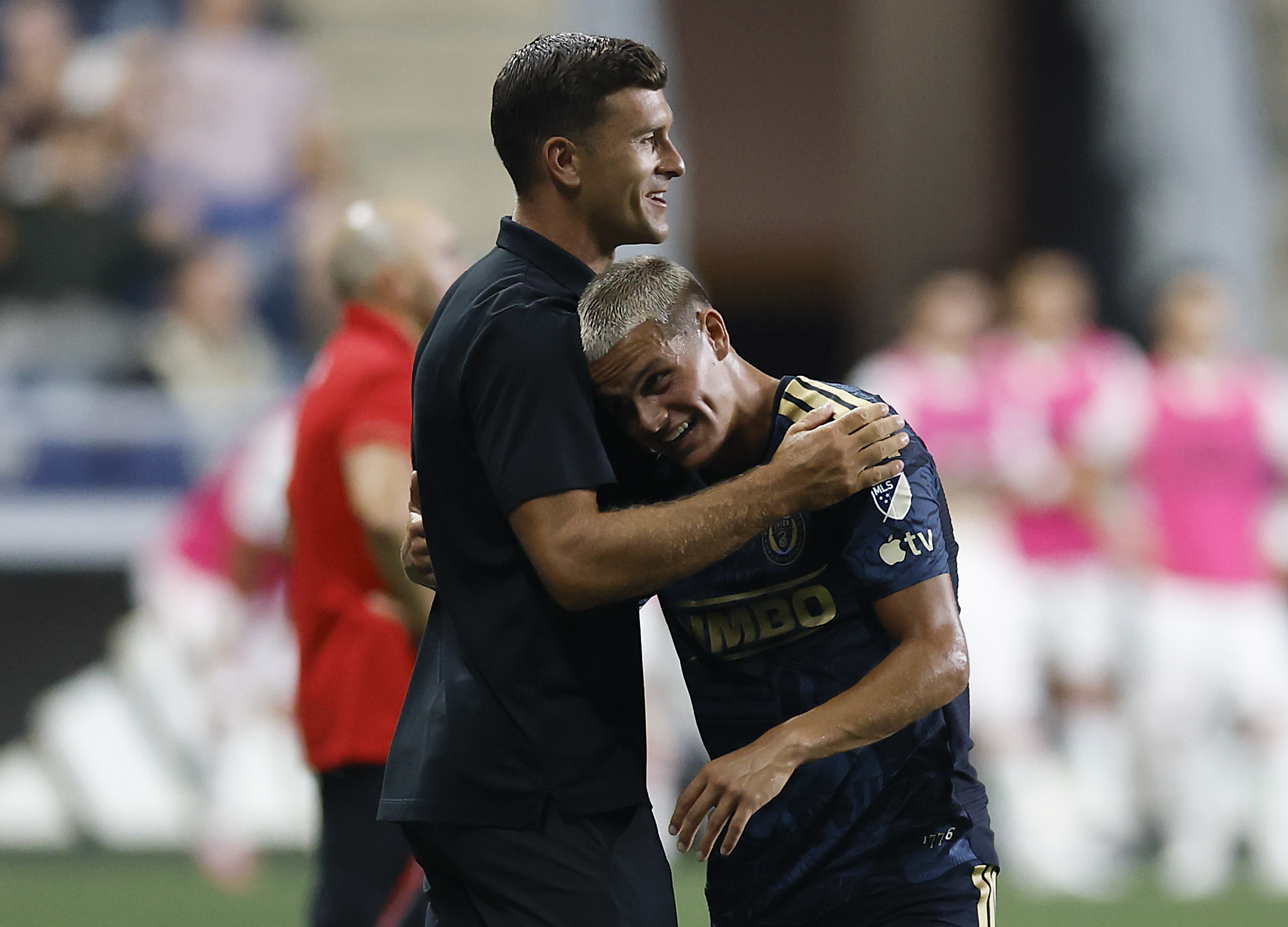
    Ryan Richter (left) embraces Cavan Sullivan after subbing Sullivan out of the Nexaca game, where the 16-year-old had a goal and an assist.Yong Kim / Staff Photographer

    For a young American player with dreams of representing the country on soccer’s biggest stages, there’s no experience like facing teams from other Concacaf nations early in your career. No amount of teaching in the Union academy’s classrooms can match learning by doing, and a slew of Union players have done it this summer.

    “You see the physicality, and almost the cleverness,” Richter said. “The way that they are able to use their bodies, the way they’re able to position themselves. The physicality is just a little bit different, I would say, and the style of player.”

    As an example, he cited “the way the striker, [when] the ball comes in [to] him, you’re getting the elbow early in your stomach to make the 2 yards of space for himself. It’s a very savvy way of playing.”

    It’s also the sort of thing that makes new soccer fans recoil — until, of course, their own player does the same thing and benefits from it.

    Frankie Westfield (right) going up for a header against Cruz Azul.Isaiah Vazquez / For The Inquirer

    ‘That Concacaf feel’

    Which Union players have gained the most from these two games? Cavan Sullivan tops the list. He was a force in both, and he knew exactly what he was getting into.

    “It’s a different element than MLS, so it’s great experience,” said Sullivan, who was a U.S. stalwart at last year’s under-17 World Cup. “More of that Concacaf feel: that gritty, aggressive battle, games that are just battles. So I think it’s great for us, great for young guys.”

    Quinn Sullivan has fit right back in during his first games back from the long injury absence. Obviously he has needed time to ramp up to full fitness, but he’s now showing he’s close.

    Neil Pierre has continued a breakthrough summer at centerback that has left scouts across the sport raving. Spanish superpower Barcelona was reportedly already monitoring him before he returned to Chester from his loan to Denmark’s Lyngby, and you can be sure the line of suitors will keep growing.

    Neil Pierre (left) battling Cruz Azul’s Agustín Palavecino.Isaiah Vazquez / For The Inquirer

    Andrew Rick has built upon his priceless experience with the U.S. World Cup team, starting in net for both Leagues Cup games and playing especially well against Necaxa. (It wasn’t his fault that a breakdown in front of him left Japhet Sery Larsen having to mark two attackers at once, leading to the visitors’ goal.)

    Last, but a long way from least, Frankie Westfield has continued his impressive rise at left back, despite making the error that led to Cruz Azul’s goal in the Leagues Cup opener.

    Perhaps this all seems strange to be saying about a team that not only won’t win the Leagues Cup, but might now call just making the playoffs a successful season after years of higher aspirations.

    But a broader look could explain it.

    World Cup and Olympic potential

    The continuing afterglow of the World Cup includes Mauricio Pochettino’s renewal with the U.S. men’s national team. He has pledged to look at new players for the 2030 cycle, and his first opportunity to do that will come in the four friendlies that start late next month.

    Since the two FIFA windows after that (in November and next March) are reserved for the serious business of the Concacaf Nations League, there’s ample reason for Pochettino to leave some veteran stars home for the friendlies and give newcomers a chance.

    Cavan Sullivan is on the list of candidates. Quinn Sullivan might be, too, since Pochettino knows him from last summer and respects his game.

    “Obviously that’s a goal,” Quinn said, though he was quick to add, “Right now I’m really focused on building my fitness back.”

    Quinn Sullivan on the ball in the Necaxa game.Yong Kim / Staff Photographer

    It’s also worth remembering the manager’s praise for Nathan Harriel last fall, though other defenders are higher up the priority list right now. The 25-year-old has a lot of experience under his belt now, not just the tactical kind but the streetwise kind.

    “All these opportunities you get to play against these Mexican teams are good learning moments for sure,” Harriel said. “Those games you get up for [them]. And it’s difficult, it’s hard, there’s tough moments, but you learn and you can grow from it.”

    Is Pierre on the list, still a raw talent at age 18 but in that impossible-to-miss 6-foot-7 frame? The senior national team might be a step too far at the moment. But there’s also the 2028 Olympic team to consider, an under-age-23 squad. He could definitely be of interest to that group’s head coach, Steve Cherundolo, now and over the next two years.

    The same goes for Rick, as Cherundolo and Pochettino ponder what to do with a crop of young goalkeepers that is interesting but has no standout yet.

    Andrew Rick (center) in action against Cruz Azul.Isaiah Vazquez / For The Inquirer

    Obviously, Rick has to contend with being Andre Blake’s backup, and the limited playing time that results. But he has amply proved his abilities to the Union, and likely to the U.S. staff, too.

    Westfield has perhaps the most potential for the Olympic team. Outside backs are always hard to come by, and the 20-year-old from Morrell Park in Northeast Philadelphia can play either flank. If he keeps playing this well, his stock should be quite high.

    “Everyone’s going to be shooting for the Olympics and World Cup, and we have big dreams,” Quinn Sullivan said. “These smaller versions of the big thing are always helpful.”

    And as Harriel said of his journey: “Anything’s possible — I thought I had no shot, and I ended up being there.”

    The Leagues Cup has helped show why these players do have a shot.

  • 🏌️‍♂️ A shot at history | Sports Daily Newsletter

    🏌️‍♂️ A shot at history | Sports Daily Newsletter

    The Summer of Philly continues this week, with the arrival of UFC 330 and a women’s lacrosse championship at Subaru Park. While both of those events feature exclusively professional competitors, there’s another major sporting event underway on the Main Line this week that features amateur athletes ages 15 to 63 taking on one of its sports most historic venues: the U.S. Amateur Championship at Merion Golf Club.

    The second big men’s golf event in the area this year, after May’s PGA Championship at Aronimink, starts its second stage today, following Tuesday’s cut that trimmed field from 312 to its final 64 players. The remaining golfers will now square off head-to-head in a bracket-style, single-elimination, matchplay tournament that will be capped off by a 36-hole final on Sunday. And after the first two days, everything is coming up Philly.

    Among those making the cut at Merion, which will also host the 2030 men’s U.S. Open, is Norristown native Joshua Ryan. Not only did the 22-year-old former Liberty University golfer advance, but he finished the stroke-play portion of the tournament at 8-under par, two strokes better than the rest of the field. Merion member Drue Nicholas, a former Drexel golfer, finished at 3-over, one stroke over the cut.

    “The first hole, I chunked a 3-wood and it went like 280 [yards]. The hands were shaking. We were pretty excited,” Ryan said. “I wasn’t super nervous, just more excitement. Everyone kind of started buzzing right away.

    “That was fun.”

    If Ryan makes it all the way through and hoists the Havemeyer Trophy on Sunday, he’ll not only get a gold medal and his name etched onto the wall at the USGA Museum — alongside greats like Tiger Woods, Jack Nicklaus, Arnold Palmer, and Bobby Jones, who capped off his 1930 grand slam by winning the Amateur at Merion — but he’ll also earn invites to three of next year’s four majors, including the Masters.

    — Matt Mullin, @phillysport, sports.daily@inquirer.com.

    If someone forwarded you this email, sign up for free here.

    ❓What has been your favorite sporting event in Philly so far this year? Email us back for a chance to be featured in the newsletter.

    A little bit of ‘Moonlight’

    Charles “Mickey” Harrington appeared in just one game for the Phillies — only as a baserunner. Julia Duarte / Staff Illustration, Courtesy of Harrington Family

    Following their series against the Cardinals — which included an X-2-0 loss Tuesday night — the Phillies will make the trip from St. Louis to Dyersville, Iowa, the setting of the classic baseball film Field of Dreams, where they’ll take on the Minnesota Twins.

    One of the film’s characters is Moonlight Graham, a longtime minor-league player who played one inning in the majors as a defensive substitute in 1905 but never had a chance to hit. The Phillies have their own version of Graham in Mickey Harrington.

    As for the current Phillies, Bryce Harper admitted Tuesday that his knee — which he “banged up” against the Detroit Tigers just before the All-Star break — has started to bother him again since his move back to right field.

    Next: Zack Wheeler and Phillies face the Cardinals in their series finale at 2:15 p.m. (NBCSP)

    What we’re …

    No more ‘big daddy meals’

    Eagles defensive tackle Jalen Carter said he lost 10 pounds this offseason.Monica Herndon / Staff Photographer

    Despite a down year in 2025, Jalen Carter signed a massive contract extension this offseason, one that made him the highest-paid defensive tackle in the NFL. By the time he reported to camp, the Eagles found out they’d be getting less of Carter — 10 pounds less, to be exact.

    That’s because Carter made a bet with defensive coordinator Vic Fangio over his weight. And according to the fourth-year lineman, he won by cutting out items including what he described as “big daddy meals” and Minute Maid blue raspberry juice. Winning the bet was more important even than a shiny new contract to Carter, who said this offseason his “biggest focus was putting a smile on Coach Vic’s face.” It’s already paying dividends on the field.

    On the other side of the ball, another Jalen — quarterback Jalen Hurts — is working on developing his rapport with new receivers Dontayvion Wicks, Hollywood Brown, and Elijah Moore, and continuing to work with Darius Cooper, the 2025 undrafted free agent out of Tarleton State, as the team’s top receivers, DeVonta Smith and Makai Lemon, deal with hamstring injuries.

    And as always, Jeff McLane has your practice recap from yesterday’s training camp session in South Philly.

    Next: The Eagles visit the Baltimore Ravens on Saturday (7 p.m., NBC10) for their preseason opener.

    Here come the Sixers

    The LeBron James era will begin in earnest on Oct. 20, per Tuesday’s NBA schedule release.Yong Kim / Staff Photographer

    The NBA will release its full schedule on Thursday afternoon, but the league is throwing out a few quick previews throughout the week. That started on Tuesday, when it shared the slate for its marquee games, including opening week and Christmas Day.

    It’s no surprise that the new-look Sixers factored heavily in both after adding LeBron James and Jaylen Brown this offseason. They will open the season against the New York Knicks at Madison Square Garden in a game that’s already breaking ticket-price records. Two of the Sixers’ big games — their home opener and Christmas Day — will come against a pair of James’ former teams.

    We’ll know more as the week progresses. The NBA Cup schedule will be released Wednesday and the full schedule will be here before we know it. Don’t look now, but here come the Sixers.

    Learning on the fly

    Cavan Sullivan has gotten solid experience despite the Union’s likely early Leagues Cup exit.Yong Kim / Staff Photographer

    The Union almost certainly won’t advance out of the group stage in this year’s Leagues Cup — they’d need a blowout win over Santos Laguna on Thursday night and so many other results to go their way that it’s not worth mentioning them all here. But that doesn’t mean the tournament has been a bust for the team from Chester … especially for its young American players who dream of representing their country on the game’s biggest stage.

    Which Union players have gained the most from these two games? Cavan Sullivan tops the list. He was a force in both, and he knew exactly what he was getting into.

    Next: The Union host Mexican side Santos Laguna on Thursday at Subaru Park (7 p.m., Apple TV) for their third and final Leagues Cup group-stage game.

    Who said it?

    The Birds open their preseason schedule this weekend in Baltimore, where we’ll get our first look at Sean Mannion’s offense. It remains to be seen whether Jalen Hurts or other starters take the field, but earlier this week a former Pro Bowl Eagles quarterback made a cameo at camp and had the above to say about Hurts, adding that he thinks the current QB will thrive in the new system. Check your answer here.

    What you’re saying about Trea Turner

    Phillies shortstop Trea Turner bobbles the ball while trying to turn a double play during on Sunday against the Toronto Blue Jays.Monica Herndon / Staff Photographer

    We asked: Do you think the Phillies should keep Turner at shortstop?

    Absolutely not. Trea is great offensively but he also had a four error game (that benefited from hometown scorekeeping to reduce the number of recorded errors) a few weeks ago. … If you don’t think he should play outfield, he should be playing first base instead of Alec Bohm, who is barely a MLB player at this point. — Anthony P.

    Hell, I don’t want to keep Turner at all. Needs to be traded for a player to be named later. — Bill M.

    With all of the infield shuffling, and the late date, Turner is our best option at shortstop for the balance of the season. I do not yet trust him in the outfield and he clearly will not be playing second base. — Bob C.

    I’m OK with keeping Turner at shortstop for the remainder of the season. However, if the Phillies are fortunate enough to sign Arraez for next season, I think they need to reshuffle the fielding positions again by bringing Harper back to first base, move Stott to shortstop, and Turner to one of the corner outfield positions. — Jim V.

    We compiled today’s newsletter using reporting from Lauren Jones, Owen Hewitt, Matt Breen, Lochlahn March, Conor Smith, Mia Messina, Rob Tornoe, Olivia Reiner, Ryan Novozinsky, Jeff McLane, DeAntae Prince, and Jonathan Tannenwald.

    By submitting your written, visual, and/or audio contributions, you agree to The Inquirer’s Terms of Use, including the grant of rights in Section 10.

    Thanks for reading the newsletter. We will be back in your inboxes on Thursday. — Matt

  • Intensifying summers are putting the Philly suburbs’ aging infrastructure to the test: ‘We get a 100-year storm every year’

    Intensifying summers are putting the Philly suburbs’ aging infrastructure to the test: ‘We get a 100-year storm every year’

    Tori Bauver was sitting at home on July 11 when the sky outside of the Wyndon Apartments in Wynnewood began to darken. Bauver watched the clouds roll in, then the rain come, blowing “literally sideways” outside her window. She remembers leaning in to see the darkening landscape and noticing that rain had begun to penetrate her windows. Then the “outside went stark white” and water started pooling on her windowsills.

    “I was like, ‘Oh, my God. This is gonna flood. This apartment’s gonna flood,’” she said.

    The light fixture above Bauver’s bed filled with water, then poured over the edges. The ceilings began to leak, then one by one, they collapsed. The building’s roof ripped off, and Bauver had a clear, and unsettling, view of the sky from her living room.

    Bauver, now a resident of West Chester, where she and her partner moved after breaking the lease on her Wynnewood apartment, had been living in the Wyndon Apartments for two years when the July microburst storm tore through Lower Merion, destroying her home and more than $5,000 of her and her partner’s belongings. She was one of dozens of suburban residents who emerged from the storm with damaged property and a devastated home.

    As the Philadelphia region sees hotter and more humid summers, flash flooding, extreme precipitation, and life-threatening storms have become a more common feature of daily life. Weather events marked by downed trees, dangerous flash floods, waterlogged roadways, and eroded bridges are, more and more, forcing suburban residents and cash-strapped local governments to pour millions into repair and resilience projects, all while large swaths of the region’s infrastructure are built to withstand weather patterns of a bygone era, one in which storms like July’s microburst happened once in a decade, rather than multiple times a summer.

    As the region’s weather patterns intensify, officials and climate experts say the municipal mosaic of Philadelphia’s suburbs faces unique challenges when it comes to planning for a future marked by climate change.

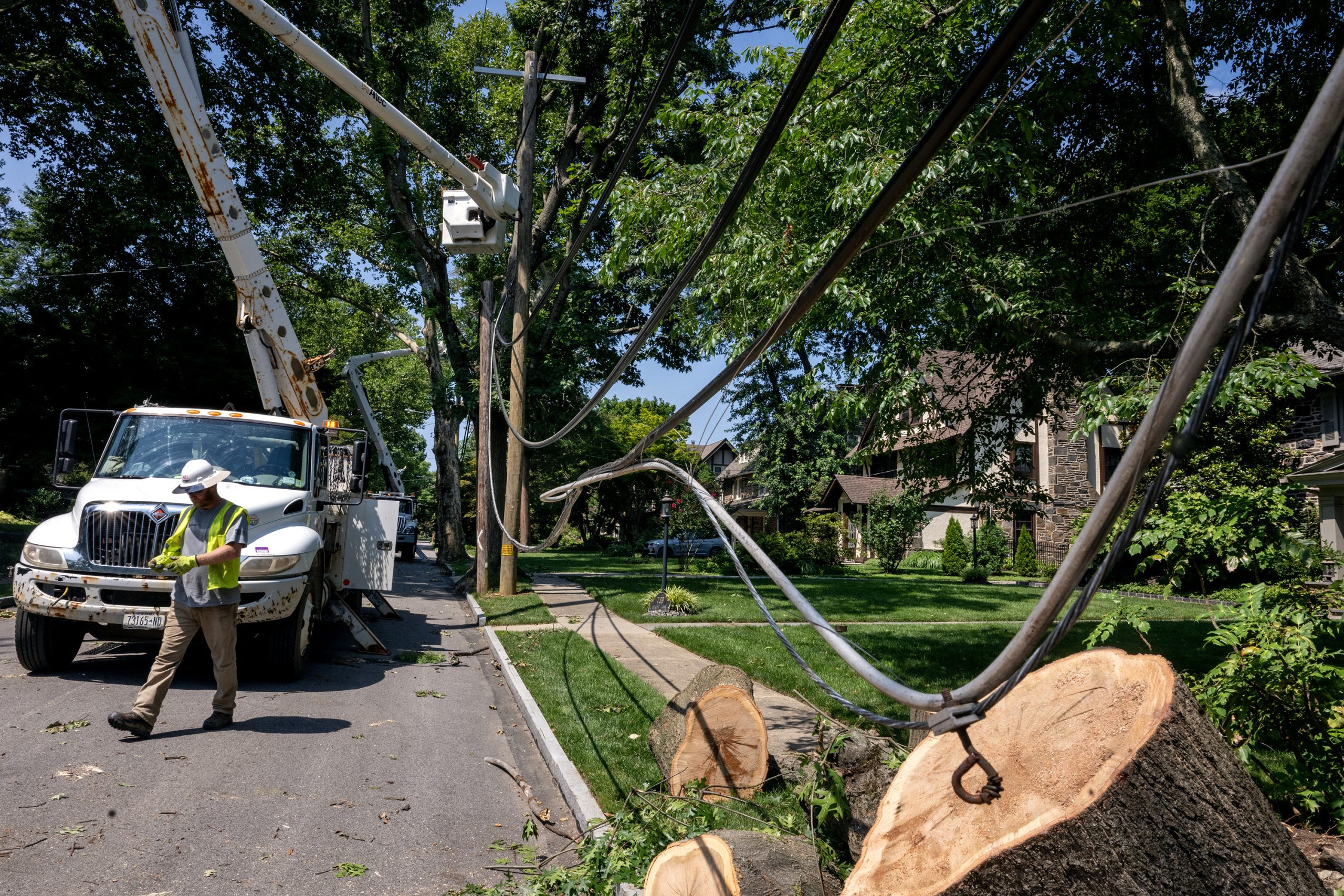
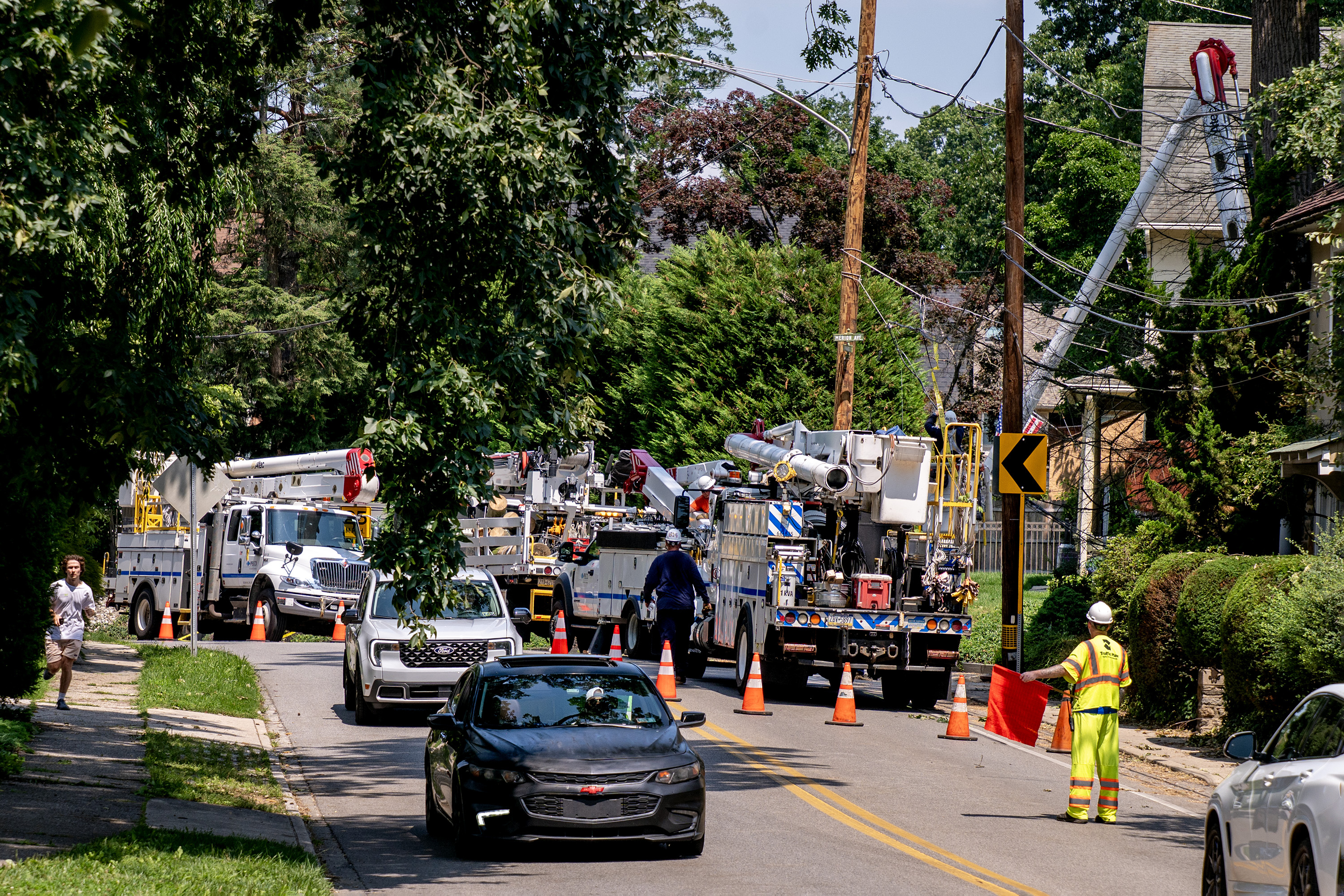
    Utility workers restore power in Merion Station on July 13 after a microburst storm ripped through parts of Philadelphia and Montgomery County.Tom Gralish / Staff Photographer

    The Philadelphia region’s changing weather

    The average July temperature in Philadelphia has risen 4.4 degrees since 1940. In the 1900s, Philadelphia averaged four days per year with temperatures above 95 degrees, according to a 2024 EPA report. This summer, Philly has seen six days with high temperatures above 95 degrees, according to the National Weather Service. By the end of the 21st century, that number could climb to more than 50 days per year.

    Hotter weather means more precipitation, and more frequent and intense rain events. For every 1.8 degrees the air temperature increases, the amount of water the atmosphere can hold increases by 7%.

    “The infrastructure we have now is not always built to a standard to accommodate the extreme weather we’re seeing now,” said Chris Linn, manager of the Office of Resilience and Environment at the Delaware Valley Regional Planning Commission.

    As Ray Courtney, a Lower Merion commissioner and chair of the township’s sustainability committee, said, “We get a 100-year storm every year.”

    Cars in a flooded parking lot at the Ferry Avenue PATCO station in Camden on July 6. Philadelphia and its suburbs have been hit with numerous flash floods this summer, as an increasingly hot and humid atmosphere gives way to more extreme weather.Tom Gralish / Staff Photographer

    Flooding as ‘the biggest and most common hazard’

    The impacts of intense storms are multitudinous and cascading, and the topography of Philadelphia’s suburbs can make it particularly difficult to find effective solutions.

    Linn said flooding is “the biggest and most common hazard that communities face,” and it presents the most “consistent and pervasive” issues for municipal leaders.

    Intense precipitation and flash floods, which have been a constant this summer, can disrupt transit, turn roads into rivers, and endanger residents’ lives. High winds and saturated soil frequently bring down trees, damaging homes and cars and knocking out overhead power lines. Disruptions to power can be particularly dangerous when residents are left without fans or air-conditioning during hot summers.

    Flooding has been reported more than 200 times in the Philadelphia region over the last two summers.Stephen Stirling

    “I see roads flooding consistently, trees coming down, power going out, and then our local government spending resources every time one of these storms happens. It’s overtime costs and tree costs, and then also all the private citizens having to spend costs cleaning up trees and other debris,” Courtney said.

    “These unlikely, freak events are really the ones that break us,” said Matthijs Bouw, architect and professor at the University of Pennsylvania’s Stuart Weitzman School of Design.

    A key tool for managing extreme weather is stormwater systems, or the collection of drains, basins, ditches, and pipes that collect rainwater and snowmelt and move it from developed areas into local waterways. Stormwater systems are critical in moving water off impervious, or impenetrable, surfaces, like the parking lots, paved roads, and shopping centers often found in the suburbs.

    The more developed a suburb is, the more runoff a storm will produce, increasing flooding risks, said Franco Montalto, professor of civil, architectural, and environmental engineering at Drexel University.

    Yet many municipalities are contending with aging stormwater systems that require costly repairs. Lower Merion’s 2018 Comprehensive Stormwater Management Plan listed aging pipes, undersized infrastructure, operational costs, and increasing flooding as challenges for the township. Many of Philadelphia’s suburban communities are composed of buildings that predate a 1978 state law requiring counties and local governments to plan with stormwater management in mind.

    Some communities are more vulnerable to climate impacts than others, with density, land cover, wealth, and the state of repair of existing infrastructure as factors. A 2021 climate change vulnerability analysis by Montgomery County found denser, water-proximate communities like Norristown and Pottstown to have some of the highest risk of increased stresses due to climate change. Greener, more rural parts of the county like New Hanover and Marlborough Townships presented lower risks.

    The aftermath and clean up of flooding in Camden on July 6. Stormwater systems are a critical tool for local governments to manage flooding. Jessica Griffin / Staff Photographer

    How can communities mitigate impacts?

    Experts described a range of interventions for managing climate impacts, from constructing rain gardens to rewriting zoning ordinances.

    Maintaining a healthy tree canopy and building rain gardens can help rainwater permeate into the ground. Larger infrastructure efforts like stream restoration projects and floodplain maintenance can help stabilize the built environment.

    However, Linn said, these interventions “don’t necessarily address more severe or catastrophic flooding in terms of mitigating those impacts.”

    Long-term climate resilience, experts said, relies on making land-use and zoning decisions that preserve floodplains and natural drainage patterns and ensure stormwater systems can manage our new, rainy reality.

    Montalto is interested communities that have become “safe to flood,” or that have created parks, parking lots, road medians, and other open spaces that trap water during floods, then properly drain it, keeping it away from buildings and roads. A basketball court built below a park, for example, can fill with water during a storm and slowly drain, mitigating runoff (one was recently installed in New York City). Copenhagen’s Cloudburst Management Plan, adopted in 2012 after a major storm, is a blueprint of sorts in Montalto’s mind.

    However, bringing “safe to flood” infrastructure to Philly’s suburbs may be a far-out goal.

    In the vast suburbs, the collection of boroughs, townships, and county lines makes unified action difficult, and forces officials to think along municipal, not watershed, lines. On the Main Line alone, rainfall and snowmelt drain into a collection of dozens of creeks and streams that do not start or stop where a municipal boundary is drawn, making it difficult to take coordinated and effective action when it comes to flood mitigation along certain waterways.

    Finding the funding to repair and replace stormwater infrastructure, too, can be taxing, as local governments stare down costly projects, even with the availability of state and federal grants. Political will factors in, with municipalities differing in their desire and ability to use taxpayer dollars to tackle climate issues.

    Philly’s suburbs, like the city, are also often old, dense, and built out, making it hard to retrofit them to be more climate-sensitive.

    “So many of our communities are built out and have been built out for a long time, so the vulnerabilities and the challenges are built in to the community,” Linn said.

    Utility workers restore power along Wynnewood Avenue in Merion Station on July 13.Tom Gralish / Staff Photographer

    Solving ‘complex issues’ in Montgomery County

    Despite the challenges, progress is being made, said Montgomery County Commissioner Jamila Winder.

    Montgomery County in 2025 led a flood mitigation planning study for the 362-square-mile Perkiomen Creek Watershed, which stretches across Montgomery, Bucks, Berks, and Lehigh Counties. The study identified flood-prone areas, evaluated mitigation tactics, and worked to build a framework for long-term resilience. The county is currently in the process of carrying out a floodplain restoration project along the Wissahickon Creek in Whitemarsh Township. Both projects came to fruition after Hurricane Ida tore through the region, bringing record floods and killing multiple people.

    The county has repaired 30 structurally deficient bridges since 2017 and has repaved dozens of miles of road. County workers also removed 200 dangerous trees earlier this year, resulting in a significant drop in emergency phone calls about tree damage, Winder said.

    Lower Merion in 2021 hired its first full-time sustainability manager and in 2023 completed its first sustainability plan. Radnor Township has adopted a comprehensive climate plan, and Haverford Township has set out to achieve 100% zero-carbon renewable power by 2035.

    The Pennsylvania Department of Environmental Protection in January announced more than $17 million in funding for environmental projects across the state, including stream restoration and stormwater management.

    Winder said, “We’re seeing that when we work across federal, state, county, and local leadership, that we can come together to solve some of these complex issues.”

    This suburban content is produced with support from the Leslie Miller and Richard Worley Foundation and The Lenfest Institute for Journalism. Editorial content is created independently of the project donors. Gifts to support The Inquirer’s high-impact journalism can be made at inquirer.com/donate. A list of Lenfest Institute donors can be found at lenfestinstitute.org/supporters.

  • 45 affordable apartments for artists on Broad Street will be partly funded by Knight Foundation

    45 affordable apartments for artists on Broad Street will be partly funded by Knight Foundation

    Affordable artist apartments will be coming to South Broad Street next year after the John S. and James L. Knight Foundation awarded a $2.5 million grant to the development company that promises to turn former University of the Arts dorms into low-priced housing.

    Lindsey Scannapieco’s company Scout acquired Hamilton Hall, facing Broad Street, and the accompanying Frank Furness-designed former dormitory that front on 15th Street in early 2025 after the surprise bankruptcy and closure of the University of the Arts.

    Scout has renamed the combined complex as the Village of Industry & Art. The company is most known for its redevelopment of a former South Philly public school into a warren of artist studios, small businesses, and eateries, now known as the Bok Building.

    Scannapieco has long promised 45 affordable artist apartments for the former dormitory space, and the Knight Foundation grant provided the final funding to move forward.

    “We have the rest of the funding in place, so this was really about bridging the gap that was required to make this happen,” Scannapieco said.

    She also noted that the project’s affordability would be deed-restricted, locking it in place for the long term.

    “We have a deep commitment now that regardless of what happens to me or my team, this will be affordable housing for artists and cultural workers,” Scannapieco said.

    Scout plans for 35 of the units to be long-term rentals for artists who make between 60% and 80% of area median income, or between $50,000 and almost $67,000 for a one-person household.

    Ten of the units will be furnished and are slated for visiting artists conducting short-term residencies in Philadelphia.

    The apartments range in size from the smallest at a little over 500 square feet to the largest at 726 square feet, with the majority around the 600 square-foot range.

    Those sizes are comparable with the Philadelphia apartment market. In 2023, a study showed that the average size of a new one-bedroom apartment built in Philadelphia over the previous decade had been 764 square feet, while the average studio was 445 square feet. A more recent study found that $1,500 a month would get a renter 591 square feet in the city.

    Scannapieco says Scout has been studying complexes that include artist housing and workspace in cities like New York, Baltimore, and Pittsburgh. The 15th Street project will include specialized amenities like dark rooms, slop sinks, and material storage libraries.

    “Artists are essential to Philadelphia’s identity, economy and future,” said Kristina Newman-Scott, Knight Foundation’s vice president of arts. “This project demonstrates what becomes possible when we design cities with artists in mind, creating affordable places for artists to live and work is an investment in Philadelphia’s long-term vitality.”

    Scannapieco says she expects the affordable artist apartments will be open by mid-2027.

    “A lot of people talk about the need for permanent commitments and allocation of housing for artists and cultural workers, and we’ve never been able to frankly do it at this scale in Philadelphia,” she said. “So that’s very much what this project will provide.”

    The Village of Industry & Art, which covers over 110,00 square feet, currently hosts the popular outdoor restaurant and bar Frankie’s Summer Club in its courtyard facing 15th Street.

    A news release from Knight and Scout noted that it already includes tenants such as BlackStar Projects, Monument Lab, DesignPhiladelphia, and the Stained Glass Project.

  • Letters to the Editor | Aug. 12, 2026

    Letters to the Editor | Aug. 12, 2026

    Fair retirement

    As a retired federal employee, I am proud of my years of public service and the opportunity I had to serve the American people. Like many retirees, I planned my retirement carefully, expecting the benefits I earned to help provide financial security throughout my retirement.

    Unfortunately, retirees under the Federal Employees Retirement System (FERS) do not receive the same full annual cost-of-living adjustments (COLAs) as retirees under the Civil Service Retirement System (CSRS) or many Social Security beneficiaries. During periods of high inflation, that difference can significantly reduce the purchasing power of a retiree’s earned annuity, making it more difficult to keep up with the rising costs of housing, groceries, healthcare, and other everyday necessities.

    The Equal COLA Act (HR 491/S 624) would correct this inequity by providing FERS retirees with the same full annual COLAs received by CSRS retirees. It’s a matter of fairness for the men and women who devoted their careers to serving our nation.

    Bob Downey, Marlton

    ICE success

    Rosemary McDonough from Narberth submitted a letter to the editor that rightfully complimented Luis F. Carrasco’s recent column on immigration. In that letter, she asked an excellent question: If U.S. Immigration and Customs Enforcement were succeeding in arresting the “worst of the worst,” why isn’t this front-page news? The answer to McDonough’s question is clearly not that ICE has been unsuccessful. If anyone chooses to access the ICE website, they would find a section that identifies 27,400 of the “worst” illegal immigrant criminals it has apprehended. There are 3,425 pages (eight per page).

    The answer to her question appears to be that the media is unwilling to cover that side of the ICE situation — preferring to align themselves with the liberal narrative that demonizes the people working so hard to resolve the ponderous immigration situation they created.

    Mark Fenstermaker, Warminster, markfense@gmail.com

    A key omission

    I read Jonathan Zimmerman’s column on the Cheltenham hazing incident and was struck by what was left out. Although I don’t disagree with what Zimmerman said, what he left out is important to fully wrap our heads around this heinous story. Nowhere did Zimmerman mention that we elected as our president a man who stated he could grab a woman’s private parts whenever he wants and was convicted in civil court of sexual assault. Despite that, he was elected twice and is still defended by followers, including many elected officials. Zimmerman’s right: This is who we are. If we want different, we must all fight for the change we want, and not just at one moment of trauma or in one school district.

    Diane Payne, Philadelphia

    Absent honor

    Do we need more proof of our draft-dodger-in-chief’s disdain for the military? More proof is the latest news about U.S. Immigration and Customs Enforcement’s detention and deportation of families of active-duty service members.

    Really? This, after recruiters inform men and women during the enlistment process that their families would enjoy immigration benefits.

    It is beyond outrageous and cruel. And once again it shows that Donald Trump has no regard for our service members. Of all persons, he who dodged the draft is condoning this action.

    “Duty, honor, country” is the motto of the U.S. Military Academy. “… to keep our honor clean” is in the Marine Corps hymn (I served as an officer). I imagine the other military services have similar promises they make to America. Trump and his enablers have no concept of honor, and we Americans and the whole world know it.

    Luis W. Morales, Paoli

    Shared blame

    Now that hearings are underway to look at the crowd control tactics of the police during Pride in June, Police Commissioner Kevin J. Bethel seems to be taking all the heat. His police force, his responsibility. But it would seem there are other players we should be looking at. Mark Squilla is the City Council member for that district. Where was he in the decision-making process over whether or not to close the streets in the Gayborhood? Rue Landau is leading the inquiry over the event. As a member of the LGBTQ+ community, does she not have contacts in the Gayborhood? Did she not consult them? The rest of City Council? Hell, where was Mayor Cherelle L. Parker throughout this? Did anyone reach out to the bar and other business owners for input? I’m not attempting to minimize Commissioner Bethel’s responsibility over his officers. I’m just saying he shouldn’t bear it all.

    Tim Reed, Philadelphia

    RINOs and sheep

    We have to be honest about what happened around the appointment of a permanent U.S. attorney general. Sens. Thom Tillis of North Carolina and John Cornyn of Texas, both of whom will be leaving the Senate, got absolutely nothing in terms of concessions from the White House after threatening to oppose the nominations. In the end, they caved — plain and simple. No one can legitimately say they stood up to President Donald Trump. They merely gave cover to all the vulnerable Republicans in Congress who, for obvious political reasons, were reluctant to vote on the nomination. Tillis and Cornyn, it should be remembered, are first and foremost Republicans in Trump’s Republican Party. As has been the case since Trump was reelected in 2024, Republican leaders doth protest too much. At first, they feign concerns, and then acquiesce when the critical vote comes. Enough said. Please stop insisting Tillis and Cornyn are heroes; they are cowards — RINOs in sheep clothing. They represent what is wrong with politics in the age of MAGA.

    Richard Cherwitz, Austin, Texas

    Pandemic amnesia

    Anthony Fauci, a public health researcher, has served under seven presidents. The current and former president, Donald Trump, awarded him a presidential commendation on the last day of his first term. Today, the 85-year-old Fauci must have full-time security. The secretary of Health and Human Services, Robert F. Kennedy Jr., copied Fauci’s diaries so Republican Kentucky Sen. Rand Paul could distribute them so they would become available to the public. Republican Sen. Ron Johnson of Wisconsin has possession of Fauci’s phone and is investigating its contents.

    As the witch hunt continues, and while the nonscientists on the Republican side of the aisle run a revisionist history of the COVID-19 scourge, there are a few pieces missing. More than one million Americans died of COVID. Many spent their last days and hours on ventilators as their families watched them die through hospital windows. Body bags were sent to freezer trucks in some cities. Some still suffer from the debilitating effects of long COVID. The coronavirus was novel and contagious and deadly. Fauci steered us through this scary time as we all navigated this together. He exercised extreme caution, steered us away from crackpot quick fixes, and with the help of the vaccine, helped us get beyond it. But the crackpots have taken over. Fauci is paying the price. We only have to watch the measles statistics and the scary trip down the produce aisles to recognize that the Trump administration and the U.S. Department of Health and Human Services are putting us all at risk for worse to come.

    Elliott Miller, Bala Cynwyd

    Join the conversation: Send letters to letters@inquirer.com. Limit length to 150 words and include home address and day and evening phone number. Letters run in The Inquirer six days a week on the editorial pages and online.

  • Horoscopes: Wednesday, Aug. 12, 2026

    ARIES (March 21-April 19). Your emerging talent: Making ambitious goals doable, or even easy. New Moon Mantra: Big accomplishments are built over time with manageable steps. I keep stacking smart decisions until one day people call it an overnight success.

    TAURUS (April 20-May 20). Your emerging talent: Disarming powerful people with your authenticity. New Moon Mantra: Titles are not inherently impressive. It’s the person who makes the title and not the other way around. I relate easily to those who value what I do.

    GEMINI (May 21-June 21). Your emerging talent: You take a kernel of hope and grow it into something substantial. New Moon Mantra: Life-changing achievements start with little beginnings. I sense the promise in myself and others and keep investing in what works.

    CANCER (June 22-July 22). Your emerging talent: Reading the room. New Moon Mantra: I take a moment to assess the vibes and guess at the wants, needs and interests of the people around me so my conversations, presentations and general way of showing up begin on a strong footing.

    LEO (July 23-Aug. 22). Your emerging talent: Landing on your feet. New Moon Mantra: Wherever life drops me, I find my way. I figure out how to work the scene, stay balanced and keep serving the purposes that are important to me.

    VIRGO (Aug. 23-Sept. 22). Your emerging talent: Sensing and taking your moment. New Moon Mantra: I somehow know when to jump in and I simply trust the instinct and follow through. I’m patient, I’m confident, and I’m always paying attention.

    LIBRA (Sept. 23-Oct. 23). Your emerging talent: Mastering what’s difficult and explaining what’s complicated. New Moon Mantra: I don’t stop asking questions until I understand it so thoroughly that I can explain it over lunch with a napkin and a pen.

    SCORPIO (Oct. 24-Nov. 21). Your emerging talent: Getting to the right question and being bold enough to ask it. New Moon Mantra: With careful observation, relentless curiosity and the patience to pursue an issue until the logic adds up, I get to the bottom of things.

    SAGITTARIUS (Nov. 22-Dec. 21). Your emerging talent: Finding the ethical shortcut. New Moon Mantra: My instinct is for directness and efficiency. I save myself and others from meandering and needless labor. I move with confidence and forge new paths.

    CAPRICORN (Dec. 22-Jan. 19). Your emerging talent: Becoming unforgettable. New Moon Mantra: I turn ordinary things into adventures, do remarkable work and deliver a unique experience. Knowing me is a treat.

    AQUARIUS (Jan. 20-Feb. 18). Your emerging talent: Astounding discernment. New Moon Mantra: I see what’s worth fixing and what’s worth leaving alone. I don’t waste time polishing things that don’t matter. My eye goes straight to the one adjustment that changes everything.

    PISCES (Feb. 19-March 20). Your emerging talent: Envisioning and creating the future. New Moon Mantra: I believe in a better tomorrow. I see things that don’t exist yet. With endless creativity, I find ways of bringing beautiful visions into reality.

    TODAY’S BIRTHDAY (Aug. 12). It’s your Year of the Observatory. There are marvels, solutions and breakthroughs to be drawn into focus. What you learn will make many lives richer, including your own. More highlights: Your interests expand, and you’ll learn cultures, communication styles and operational methods to become masterful in new realms. You gain access Gemini and Capricorn adore you. Your lucky numbers are: 6, 25, 13, 1 and 40.

  • Dear Abby | Daughter’s wedding planning has been hijacked

    DEAR ABBY: My 33-year-old daughter is getting married, and the mothers have taken over her wedding plans. They want more than 200 guests, a full Catholic ceremony, fine wines, a full bar, plated dinner and a live band.

    My daughter wants to please everyone but is not a practicing Catholic. She wants a small, intimate wedding with twinkling lights, a DJ and house wines from the California vineyard venue. Nothing she suggests is acceptable to the mothers, who see the ceremony as a means to impress their friends and business associates.

    I divorced her mom years ago, but I’m still involved in my daughter’s life. How can I advise her to take control of her wedding?

    — DOTING DAD

    DEAR DAD: I tend to agree with you that a bride is entitled to the ceremony she wants, but sometimes there is no clear path to that end. No one will ever convince these moms to back off, and the repercussions of an elopement would be devastating.

    My advice to the bride and groom is to grin and bear it. Let the mothers impress their friends (as long as they are willing to pay for it all), and the relaxation of the honeymoon will be all the sweeter.

    Your daughter can save her more intimate plans for a renewal of vows ceremony held on a milestone anniversary. Obviously, she will want to avoid telling the moms about it until after all the arrangements are in place!

    ** ** **

    DEAR ABBY: Our son, daughter-in-law and only grandchild live 1,400 miles away. We are able to see them only about three times a year. We have a warm, wonderful relationship. When we last visited, I noticed a picture in his room of our grandson, who is a year-and-a-half old, with his babysitter. There are no pictures of us with him in the entire house. I would like our grandson to have pictures of us so he will remember us. Should I say anything?

    — REALLY HURT IN CALIFORNIA

    DEAR HURT: Because you have a warm, wonderful relationship with your son and his family, the lack of photos of you with your grandson is likely not a deliberate slight. The next time you visit, ask them casually why there isn’t one. Then ask one of them to snap some of the three of you and offer to have one framed for them.

    ** ** **

    DEAR ABBY: My parents are retired. They live on a limited income and still support my 31-year-old brother, who lives rent-free in their basement. They told me how expensive their electric bill is becoming, and I asked why they don’t have my brother help with expenses or pay rent? Abby, he makes close to $100,000 a year. They quickly changed the subject, and when I tried to circle back, I was told to drop it.

    How can I help my parents see that what they are doing is hurting them, not helping their adult son?

    — THEIR OTHER SON IN MAINE

    DEAR SON: There is truth to the adage, “You can lead a horse to water, but you can’t make it drink.” Understand that your parents must be deriving some satisfaction from encouraging your brother’s dependency. Your attempt to help them resulted in their becoming defensive, so stop talking to them about it. HOWEVER, you should consider talking to your brother about the fact that the electric bills are now so steep it is causing your parents hardship and suggest he help out. It’s worth a try.

  • Missed opportunities deflates Phillies’ offense in 2-0 loss to the Cardinals

    Missed opportunities deflates Phillies’ offense in 2-0 loss to the Cardinals

    ST. LOUIS — The Phillies could smell blood in the water.

    Bryce Harper had just won a nine-pitch battle, fouling off four of them, to draw a third consecutive walk from Caleb Ferguson. The Cardinals reliever walked the bases loaded without recording an out in the eighth inning on Tuesday.

    While St. Louis went back to its bullpen to bring in Ryne Stanek, cleanup hitter Luis Arraez and his vaunted batting average were lying in wait.

    On paper, he was exactly the hitter you’d want for that situation. Arraez has the lowest strikeout rate in the majors. He is hitting .363 with runners in scoring position this season. The Phillies were trailing, 1-0, and a ball out of the infield would tie it. A hit could give them the lead.

    “You know he’s going put it in play, and just who he is, he’s going to hit the ball hard somewhere,” said interim manager Don Mattingly.

    But Arraez also happens to be in the midst of his longest hitless streak of the season. And while he did put the ball in play and he did hit it hard, it was a grounder directly at Cardinals first baseman Alec Burleson. He combined with catcher Pedro Pagés to turn a deflating double play, getting a force out at the plate to prevent a run.

    And suddenly, the momentum had completely shifted back to St. Louis. J.T. Realmuto flew out two pitches later to end the inning, and the Phillies had nothing to show for it. In what would become a 2-0 loss to the Cardinals, the missed opportunity loomed large.

    Bryson Stott has taken his move to third base in stride.Joe Puetz

    Arraez is 0-for-15 in his last three games. He declined to comment postgame through a team spokesperson.

    “We had a few chances. Still like our at-bats,” Mattingly said. “You want to get a hit in there with guys on base and stuff, but still putting pressure on guys. Tonight, obviously, double plays hurt us.”

    The infields on both sides were kept busy. The eighth-inning double play was one of four turned by the Cardinals, while the Phillies turned two. That included a key moment in the second inning, the only time the Cardinals had really threatened against starter Cristopher Sánchez.

    Sánchez allowed back-to-back singles to put runners on the corners, and Blaze Jordan hit a chopper to Bryson Stott at third base. Stott charged in, fielded it, and threw across his body to second. It was in time to catch a speedy Masyn Winn, before Arraez’s subsequent throw to first ended the inning.

    It was one of several strong plays from Stott, who has taken immediately to his new position after moving over from second base.

    Sánchez scattered four singles and struck out seven. He retired the final seven Cardinals he faced, but after the sixth inning, Mattingly could tell the Missouri heat was affecting the lefty.

    Trea Turner hits a single in the sixth inning, one of just five hits for the Phillies in their 2-0 loss to the Cardinals on Tuesday.Joe Puetz

    “I didn’t want to pull Cristopher to start with, but checking on him after the inning, he was done,” Mattingly said.

    Sánchez’s pitch count was still in good shape at 89, but Mattingly made the call to bring in reliever Alex McFarlane for the seventh. Through a team interpreter, Sánchez said it was a “joint decision.”

    “It was really uncomfortable today,” he said. “The weather was a little uncomfortable, but you can’t use that as an excuse. We have to perform out there every day. It doesn’t matter how it is, we just have to go out there on the field and try to put the team in the best position we can to win the games.”

    McFarlane, recalled earlier on Tuesday, entered the game to face the heart of the Cardinals order. With the Phillies bullpen still depleted, he was one of a few arms available. He recorded his first major league strikeout after blowing a 100.5 mph fastball by Burleson. But the Cardinals capitalized on a walk, stolen base, and a single to finally break the stalemate against the rookie reliever, taking a 1-0 lead.

    After the Phillies wasted their opportunity to strike back in the eighth, St. Louis doubled its advantage with a homer off lefty Tim Mayza.

    Cardinals catcher Pedro Pages throws out Phillies’ Luis Arraez at first base in the eighth inning to complete a double play.Joe Puetz

    The Phillies went down in order against Riley O’Brien in the ninth. In total, they left eight men on base, and were 0-for-7 with runners in scoring position.

    Compounding their frustration was the fact that they made a lot of hard contact overall. Collectively, the Phillies clocked exit velocities harder than 95 mph 12 times, and only two of those fell for singles.

    In the fifth inning, Alec Bohm was halfway through a home run trot before realizing that Pereira had pulled off a leaping catch right at the center field wall. According to StatCast, it would have been a homer in 17 out of 30 major league parks.

    Justin Crawford tossed his helmet in frustration after hitting a 105.8 mph liner directly at right fielder Jordan Walker, which stranded a pair in the seventh inning.

    “Feel like I was squaring the ball up a little bit, not just me personally, but for a lot of guys in here in our lineup,” Crawford said. “Just frustrating, but it’s part of it. Just got to continue to keep going, keep stacking at-bats, keep competing, and putting together good at-bats.”

    The loss dropped the Phillies to a 64-57 record. After the Padres pulled off an 11-2 rout of the Brewers in San Diego on Tuesday night, they moved into a three-way tie with the Phillies and Diamondbacks for the final two wild-card spots.

    The Phillies hold the tiebreaker over the Padres after sweeping the season series, but their playoff position has become vulnerable with 41 games remaining.

  • Cheltenham school board promises frustrated parents it will ‘move with deliberate speed’ to rebuild trust after locker-room assaults

    Cheltenham school board promises frustrated parents it will ‘move with deliberate speed’ to rebuild trust after locker-room assaults

    The Cheltenham school board said it would review safety procedures and assess the culture in all of its athletic programs as it pledged to rebuild community trust after an explosive grand jury report condemned the district’s response to the assaults of a football player last season in a high school locker room.

    The attacks on the 15-year-old, which took place in August and September 2025, “arose in the context of a culture of intimidation and acceptance of violence,” board president Leah Mulhearn said Tuesday night at the board’s first meeting since criminal charges were announced against four coaches and six players.

    Mulhearn, who also announced that veteran educator Chris McGinley would be tapped as interim superintendent, promised the board would move quickly to fix problems.

    The district already canceled the 2026 football season in May. “Football will not return until we address this, no matter how long it takes,” Mulhearn said.

    Parents, who lined up behind a microphone in the district’s administration building awaiting their turn to speak, expressed skepticism and demanded more from the board after a grand jury report accused the district of endangering students through a failed response to the assaults, one of which was captured on video.

    In emotional comments, some parents said their children had been assaulted in the schools, while others questioned how they could believe the board, when they had warned against hiring a coach who has since been charged with conspiracy and endangering the welfare of a child.

    “We entrusted our children to this district,” said Chowan Cowans, who withdrew her son, a rising senior and former Cheltenham football player, because “I don’t feel safe with him being there anymore.”

    Cowans accused the district of a lack of transparency, which “has to mean something when the truth is uncomfortable,” she said.

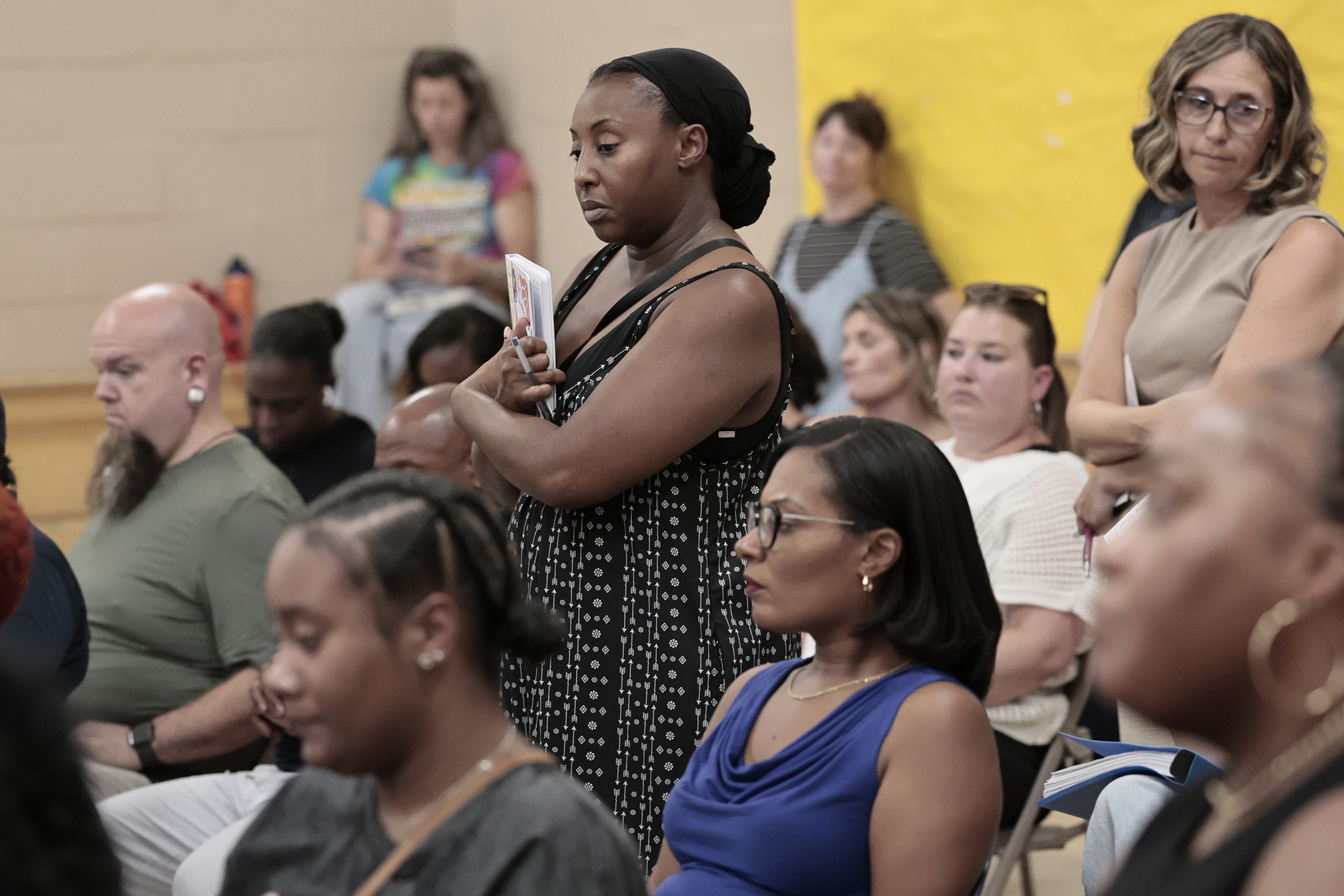
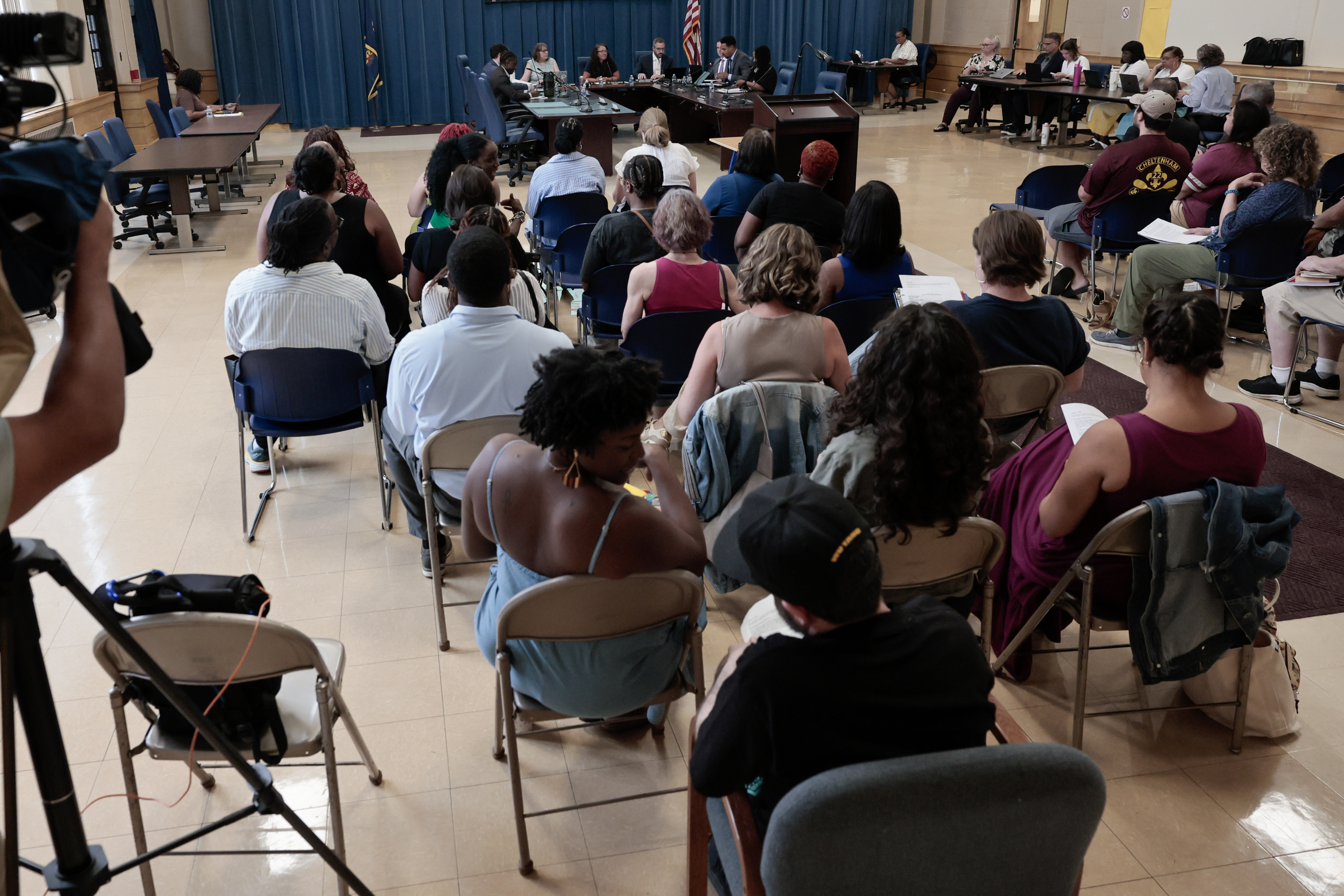
    PTO president Stephanie Curry (center) waits in line to speak during the Cheltenham School Board meeting in Elkins Park on Tuesday, August 11, 2026. The school board was meeting for the first time since criminal charges against four football coaches and six players were announced, and since Brian Scriven resigned as superintendent. .Elizabeth Robertson / Staff Photographer

    ‘Mistakes were made’

    The board has been navigating the fallout since Montgomery County prosecutors nearly two weeks ago announced the charges in the locker-room assaults and delivered a stinging assessment of the school district, with a grand jury report accusing it of “incompetence” in its handling of the situation.

    Employees at the high school appeared to minimize the Sept. 3 assault after it was reported to them by the 15-year-old victim’s mother, according to the grand jury report. They also took the head coach, Terence Tolbert, at his word that he had not instructed the player not to tell his parents what happened, and they included the coach in their investigation — which failed to uncover that there were two assaults, the report said.

    It also noted that employees were also confused about their mandatory reporting requirements.

    On Tuesday, Mulhearn said that while the board “may differ with the grand jury with respect to some of its findings about how the district and board responded, the hard truth is that we must acknowledge that mistakes were made.”

    Mulhearn said the board would “move with deliberate speed to address these issues.” She said the board would enlist an outside attorney, Leigh Dalton — who was hired by the Central Bucks School District last year to investigate special-education abuse allegations — to review the district’s policies and procedures and make recommendations within 60 days.

    She did not comment on Superintendent Brian Scriven’s resignation last week. Some parents questioned whether and when the board’s position on Scriven had shifted, after the board praised the superintendent’s leadership in May.

    A district spokesperson did not respond to a question this week about whether Scriven, who received a new five-year contract in December, would receive any payout following his resignation.

    Nor did the board indicate whether it was considering taking action against any employees at the high school. One parent, for instance, asked whether Mark Hoff, the former vice principal at Cheltenham High School, would still become the vice principal at Wyncote Elementary, in light of the grand jury report faulting high school employees.

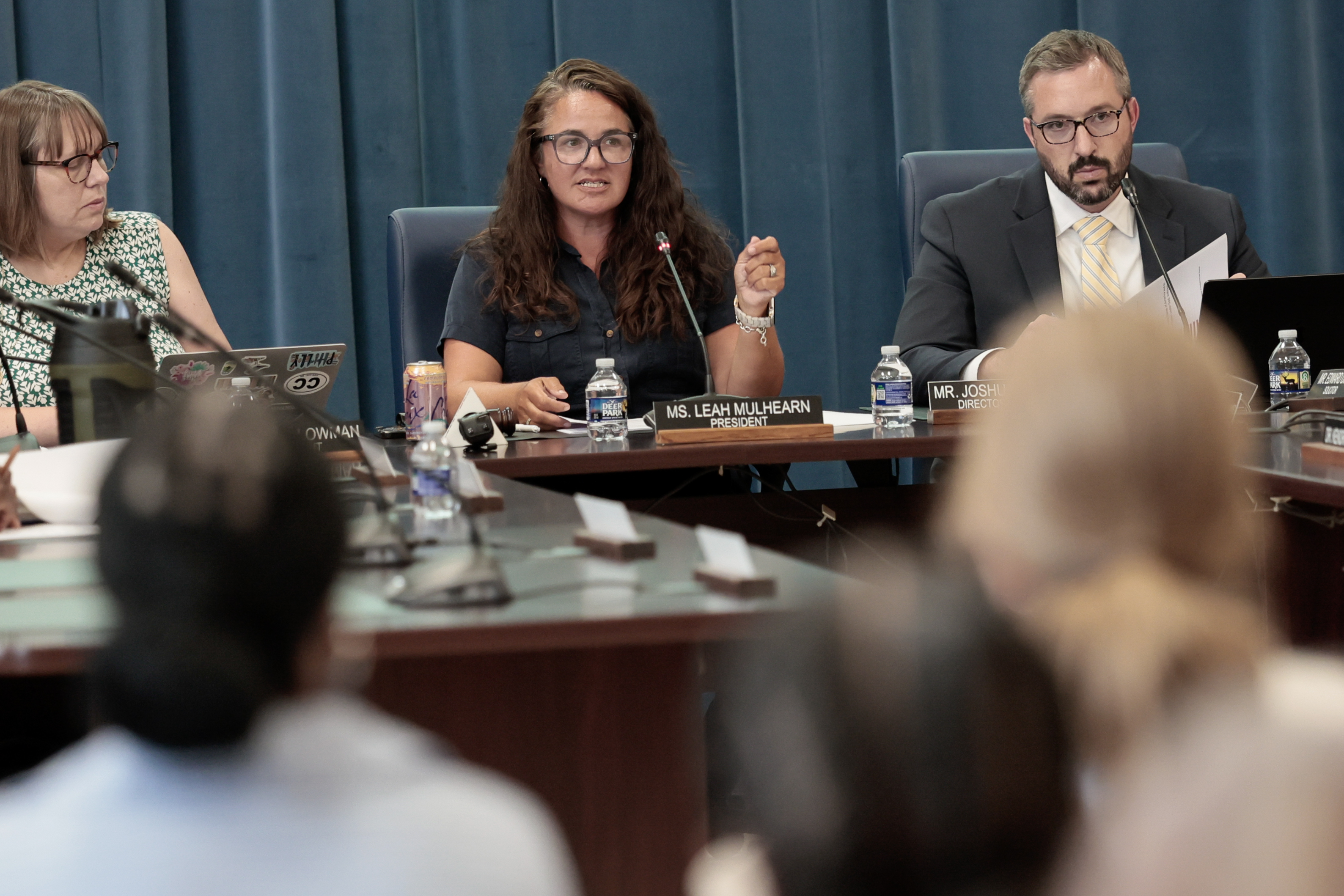
    Taryn Knox (left) speaks to School Board President Leah Mulhearn and Director of Business Joshua Sweigard during the Cheltenham School Board meeting in Elkins Park on Tuesday, August 11, 2026. The school board was meeting for the first time since criminal charges against four football coaches and six players were announced, and since Brian Scriven resigned as superintendent. .Elizabeth Robertson / Staff Photographer

    The board, which appointed director of business services Joshua Sweigard acting superintendent on Tuesday, will hold a special meeting next week to appoint McGinley as interim superintendent, Mulhearn said. McGinley previously led both the Cheltenham and Lower Merion districts and more recently served on the Philadelphia School Reform Commission and Philadelphia school board. His most recent position was as the faculty program coordinator of the Educational Leadership and Policy program at Temple University.

    Parents’ pleas

    Parents urged the board to commit to more steps. In a joint statement, the United Parents Group, the Special Education Alliance of Cheltenham, and the Cheltenham African American Alliance called for numerous actions, including a community town hall ahead of the first day of school and an assembly on the first day “to enforce a zero-tolerance policy regarding sexual harassment, bullying and hazing.” They also called for safety data to be a part of every school board meeting.

    “We are demanding a fundamental shift in how our school district operates,” Aubria Nance, reading from the groups’ joint statement, told the board.

    Numerous parents from Cheltenham Elementary, who have been pressing the district to address safety concerns they say have affected students and staff, questioned how the board’s response this time would differ.

    “Every time I hear a commitment to our students’ safety, I want to see the proof,” said Erin Fadako, a parent at the school.

    The Inquirer reported last week that some football parents had urged the district not to hire Tolbert, saying he had allowed bullying while previously serving as head coach in Abington, where he left after one season.

    “Everyone from the administration on down that has failed these students, you all have approved them to be hired here,” said Taryn Knox, who was among the football parents who had asked the district not to hire Tolbert.

    After a year of negative news coverage, Knox said, “we’re now about to go into the next school year, and the news is still here.”

    The Cheltenham school board meeting Tuesday, Aug. 11, 2026, in Elkins Park.Elizabeth Robertson / Staff Photographer

    As they voiced their frustration, parents pleaded with the board to make real changes.

    “Stop being risk averse and do what you need to do to make it safe for our children,” said Stephanie Curry, president of the high school’s parent teacher organization. “Our kids are the ones that are suffering.”

  • Norristown’s Joshua Ryan earns the top seed entering match play at the 126th U.S. Amateur Championship

    Norristown’s Joshua Ryan earns the top seed entering match play at the 126th U.S. Amateur Championship

    When Joshua Ryan woke up in his Norristown home on Tuesday morning, he was very calm, his mom Michelle said.

    On Monday, Ryan shot 3-under 67 at Philadelphia Country Club during the first round of the 126th U.S. Amateur at Merion Golf Club, just seven miles away from his home course 1912 Club.

    “There’s no experience like staying in my own bed, eating my mom’s food,” he said about competing close to home. “She made chicken parm last night, so couldn’t complain. And just excited to be in my style of golf.”

    Sleeping in his own bed and eating his mom’s home cooked meal seemed to fuel Ryan to shoot a 5-under 65 at Merion Golf Club Tuesday, earning medalist honors and the No. 1 seed heading into match play on Wednesday.

    Ryan had only played Merion four times prior to the tournament. He competed in the 2021 Pennsylvania Amateur, but otherwise didn’t have much experience with the course. However, the bent grass and thick rough were conditions he’s used to.

    Ryan, who recently won the Pennsylvania State Amateur at Oakmont Country Club in Pittsburgh, started playing golf when he was younger because his older brother, Caleb, played. He consistently attended his brothers’ tournaments and kept begging his mom and dad to let him play. Eventually, they signed him up and his love for the game took off from there.

    Ryan was homeschooled and graduated from Commonwealth Charter Academy, a cyber charter school based in Harrisburg, before playing golf at Liberty University in Lynchburg, Va. When he received the offer to play golf from head coach Jeff Thomas, he accepted because of the school’s strong emphasis on Christianity, his mom said.

    This is Ryan’s second USGA event and competing so close to home has made it even more meaningful.

    “It’s awesome. There’s a lot of people who’ve never seen me play who were able to get out to watch this week,” he said. “It was super special.”

    Michelle said Josh thrives under the pressure of competing in front of a crowd. Luckily for him, the crowd showed out on Tuesday.

    Members from the 1912 Club, his home course, took a bus and traveled to Merion to watch him. Former Liberty teammates were there, along with friends from his church.

    “The first hole, I chunked a 3-wood and it went like 280 [yards]. The hands were shaking. We were pretty excited,” he said. “I wasn’t super nervous, just more excitement. Everyone kind of started buzzing right away.

    “That was fun.”

    Ryan graduated from Liberty in May, and is looking to become a professional golfer after the amateur at Merion.

    On Friday, Ryan will turn 23. If he can continue the momentum he built during the first two days, it could make for a memorable birthday, he said.

    Joshua Ryan hits from the fairway on the second hole during the second day of the 126th U.S. Amateur Championship at Merion Golf Club on Tuesday.Jose F. Moreno / Staff Photographer

    “I mean, anytime you can tee it up at Merion, it’s going to be a good day. So on the birthday, that’d be really cool,” he said.

    Ryan will compete in the first round of match play Wednesday, with the top 64 still to be determined after play was suspended due to darkness at 8:09 p.m. on Tuesday night. Play will resume at 7 a.m. on Wednesday.