Blog

  • The same structural failures cost the Phillies again in the playoffs. The onus falls on Dave Dombrowski

    The same structural failures cost the Phillies again in the playoffs. The onus falls on Dave Dombrowski

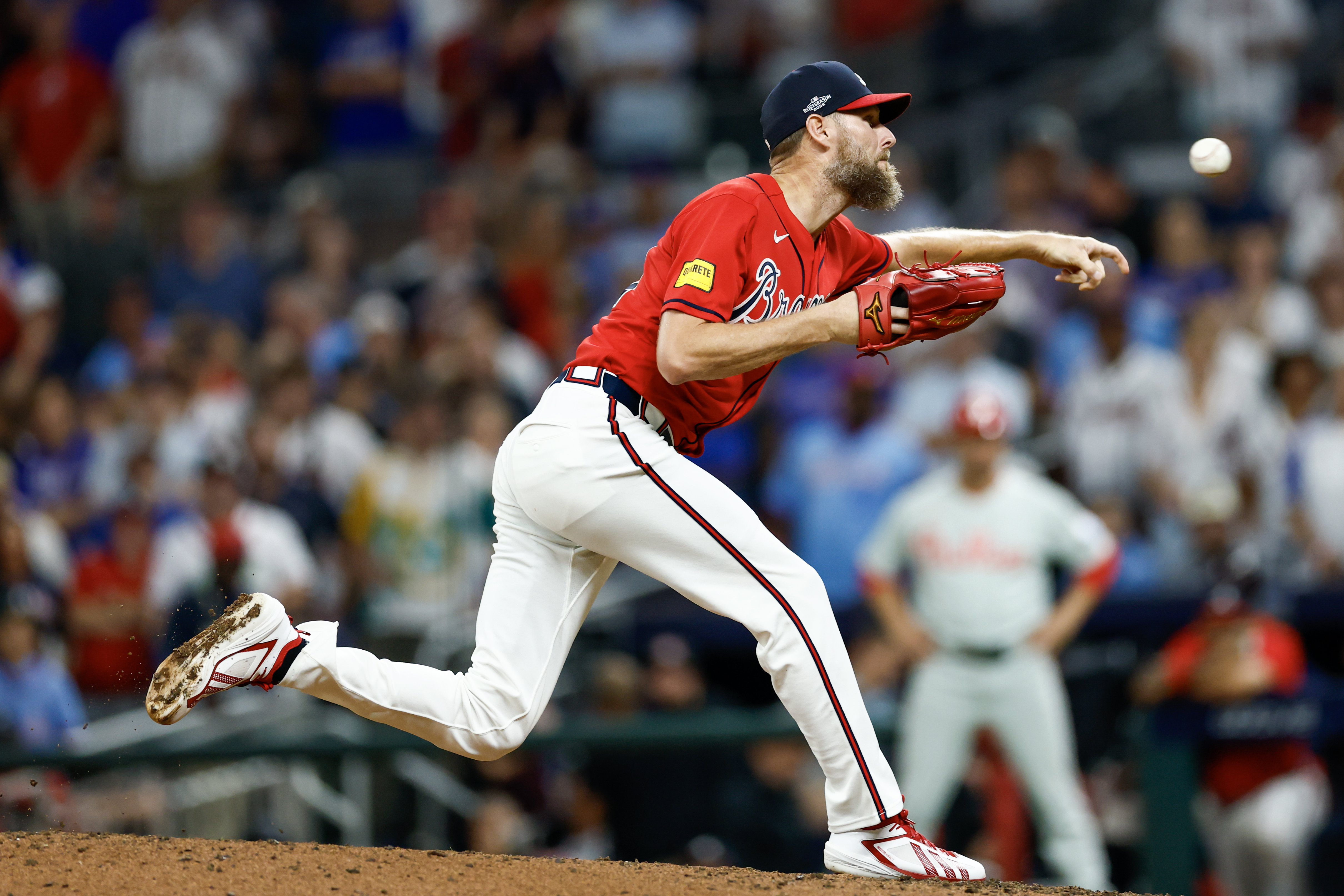
    ATLANTA — You can blame the manager for his handling of the pitching staff. You can blame the front office for forcing him to handle a grenade. I suppose you can blame the pitchers themselves: Jhoan Duran for giving up the decisive three-run home run in Game 1, Aaron Nola for doing the same in Game 3.

    But before we blame anybody for the way the Phillies’ season ended, a 6-2 loss in a decisive Game 3 at Truist Field on Thursday night, let’s at least take a moment to acknowledge what they accomplished.

    A baseball season is a maddening, fluky, grind of a thing. Qualifying for the playoffs in five straight seasons is an extraordinarily difficult task. The Phillies are one of only nine franchises in major league history who have ever done it. Their current streak is the second-longest active one in the majors, behind only the Dodgers (14). That’s not apologetics. It’s reality.

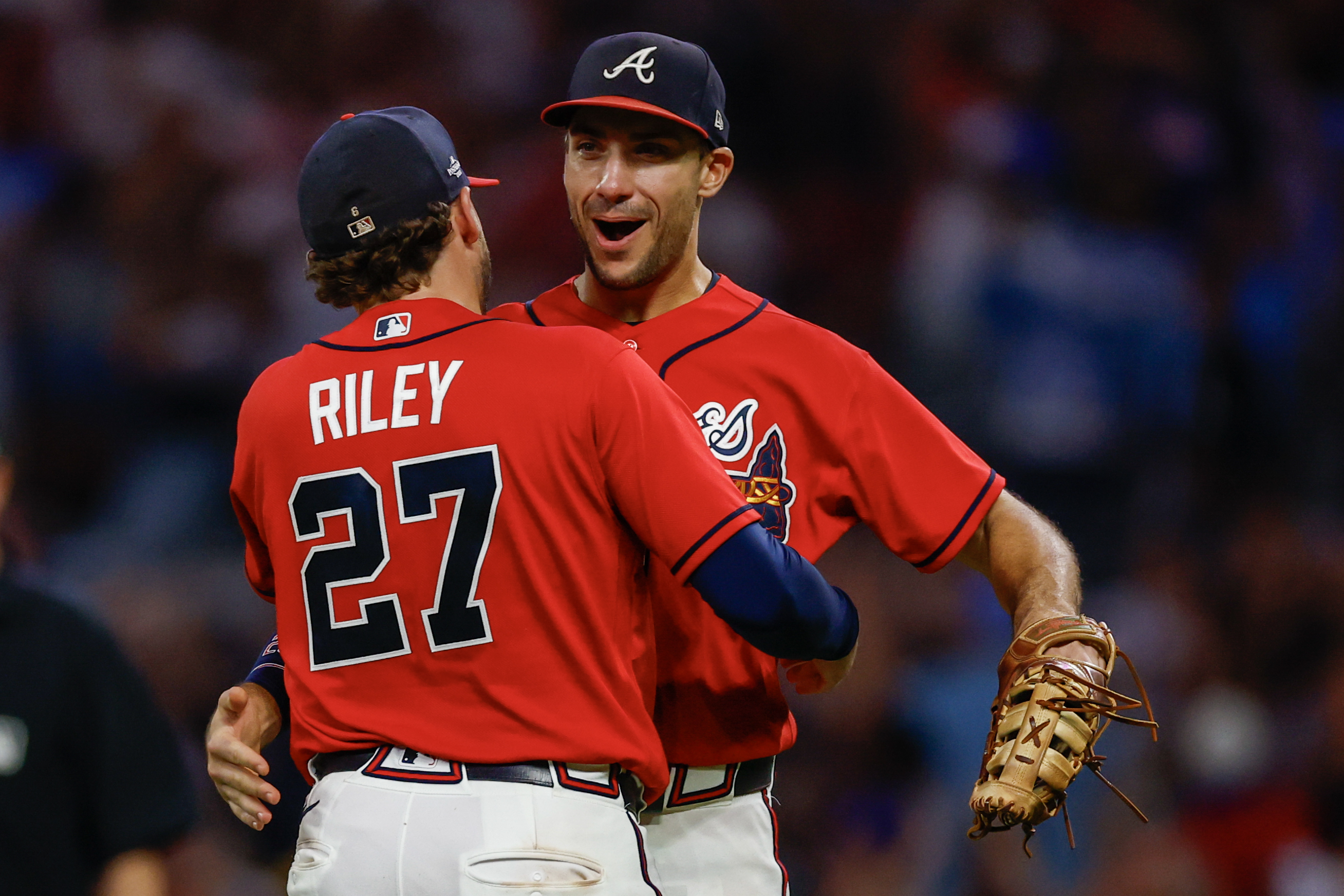
    Just ask the Braves, who were down to their last four outs in Game 1 when Austin Riley homered off Duran. Or, heck, ask the Dodgers. Los Angeles made the playoffs seven straight times without winning a World Series before finally breaking through in 2020. That initial stretch included three National League Division Series losses. They’ll be favored against the Braves in this year’s NLDS, which starts Saturday. They know how little it means.

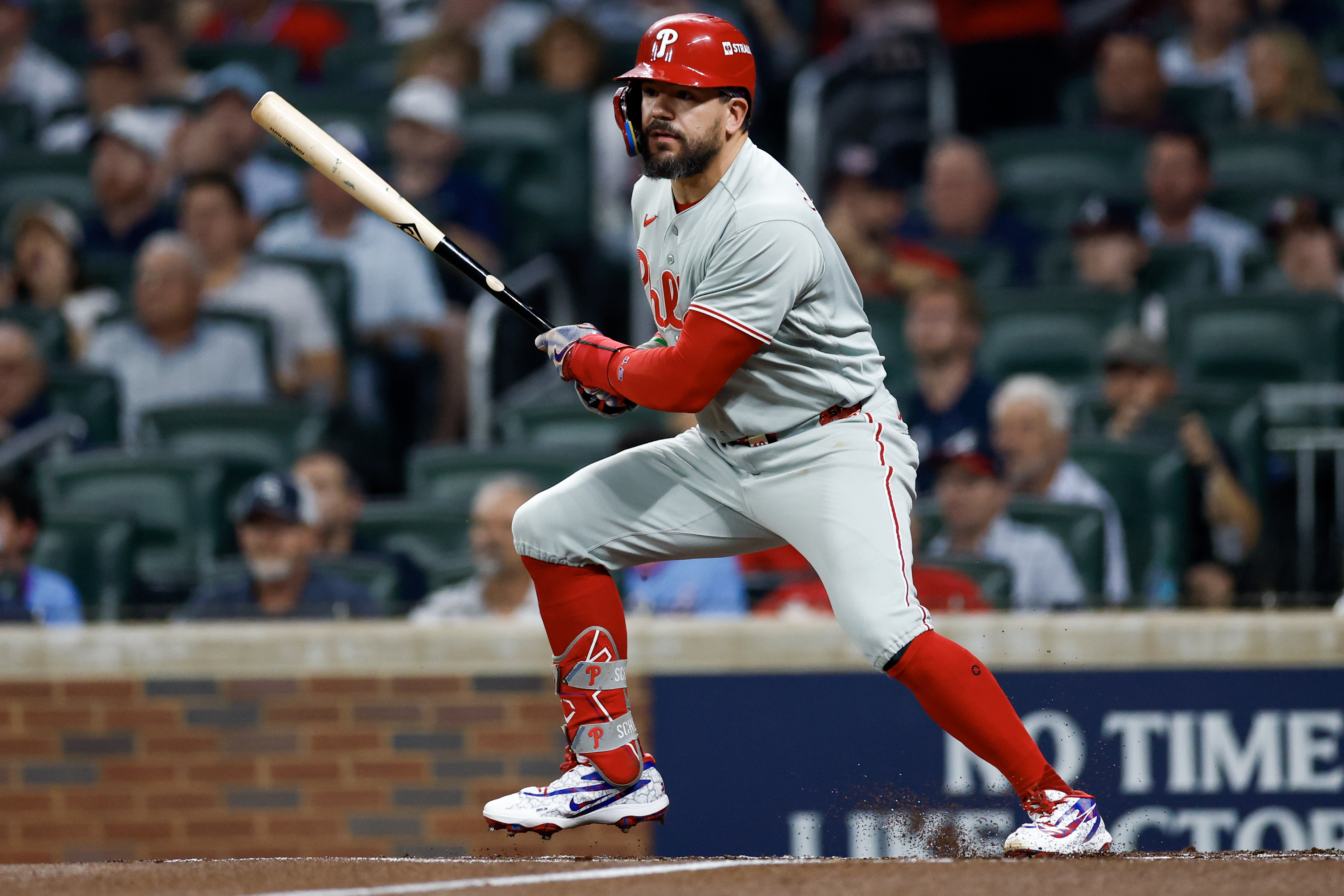
    “It’s just as frustrating as last year, and the year before that,” said Kyle Schwarber, who had two of the Phillies’ six hits against a Braves team that used six pitchers, none for more than 10 outs. “We have to keep finding ourselves in position, first off, to be in this position. Because it’s never going to be a guarantee that you’re in a postseason. You have to keep fighting to be in those spots and when you are in the postseason, keep trying to find a way to win a game.”

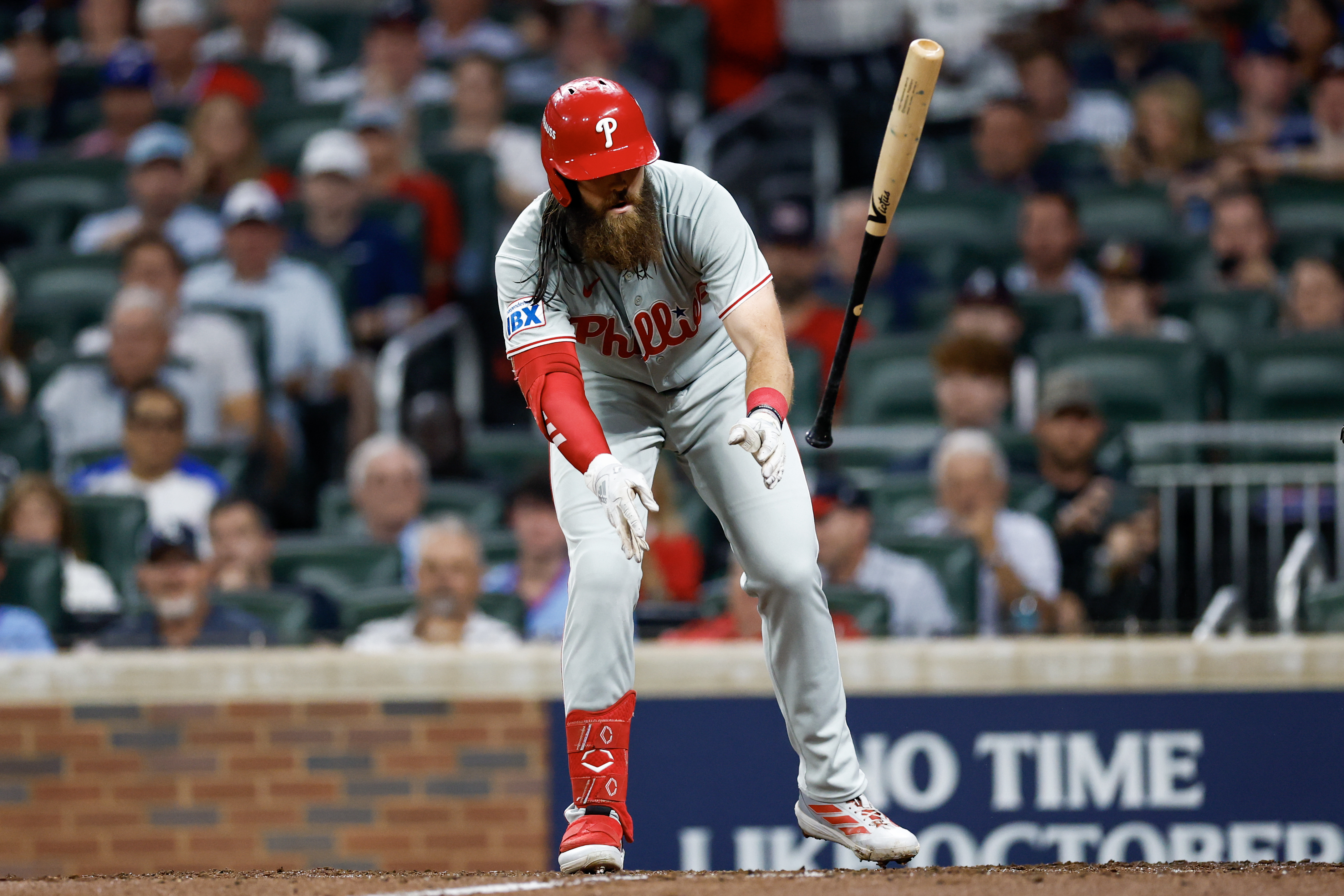
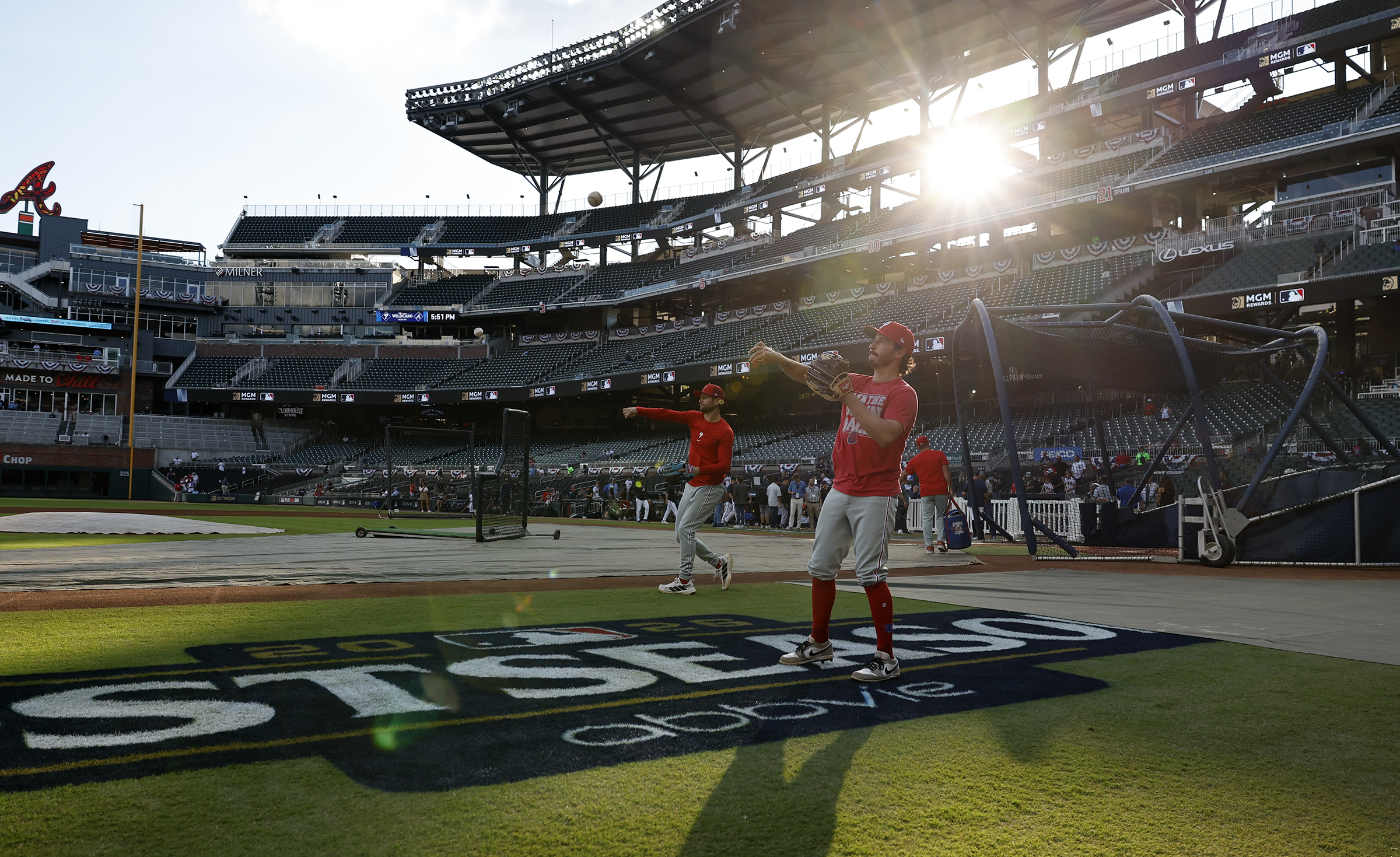
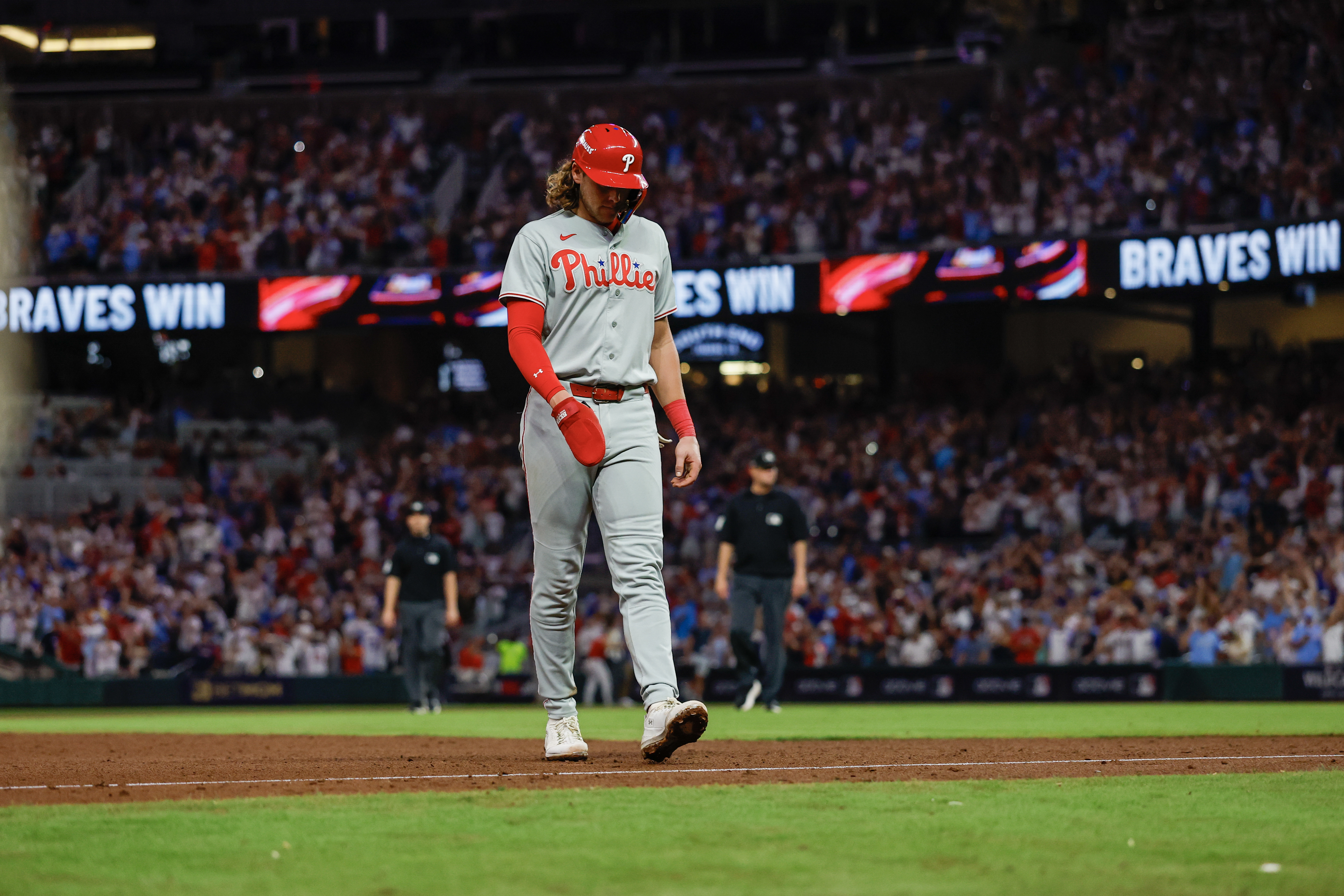
    Alec Bohm walks off the field after the Phillies lost to the Braves in Game 3 on Thursday.Yong Kim / Staff Photographer

    None of this is meant to serve as consolation. Nor does it nullify the litany of criticisms one can and should direct at these Phillies. As difficult as it is to make five straight postseasons, it is nearly as difficult to lose four straight postseason series on luck alone. There are clearly some structural issues here.

    • In their last nine postseason games, the Phillies have scored a total of 10 runs in the first six innings. About a third of those runs came in one inning, when they scored three off Shohei Ohtani in Game 1 of last year’s NLDS loss to the Dodgers.
    • In those same nine postseason games, the Phillies have allowed a remarkable 19 runs in the seventh inning or later.

    Just as obvious as these KPIs are their underlying causes. The Phillies are a top-heavy team in both phases of the game. Dave Dombrowski’s biggest failure over the last three-plus years has been his inability to address either.

    The last time the Phillies won a playoff game where neither Bryce Harper nor Kyle Schwarber homered was Game 4 of the 2023 NLDS. In fact, the duo has combined for at least two home runs in five of the six wins since. It is neither sustainable nor reasonable to place that much responsibility on two members of a nine-man lineup.

    Same goes for the pitching staff, which has leaned so heavily on its key members that you can’t help but wonder about the cumulative effects.

    In Game 3, 36-year-old Zack Wheeler was out there throwing 68 pitches on three days rest. This was two days after Jesús Luzardo threw 77 pitches in his first start off a three-week stint on the injured list. Which was the same day Duran threw 27 pitches in the seventh and eighth innings and wasn’t heard from again.

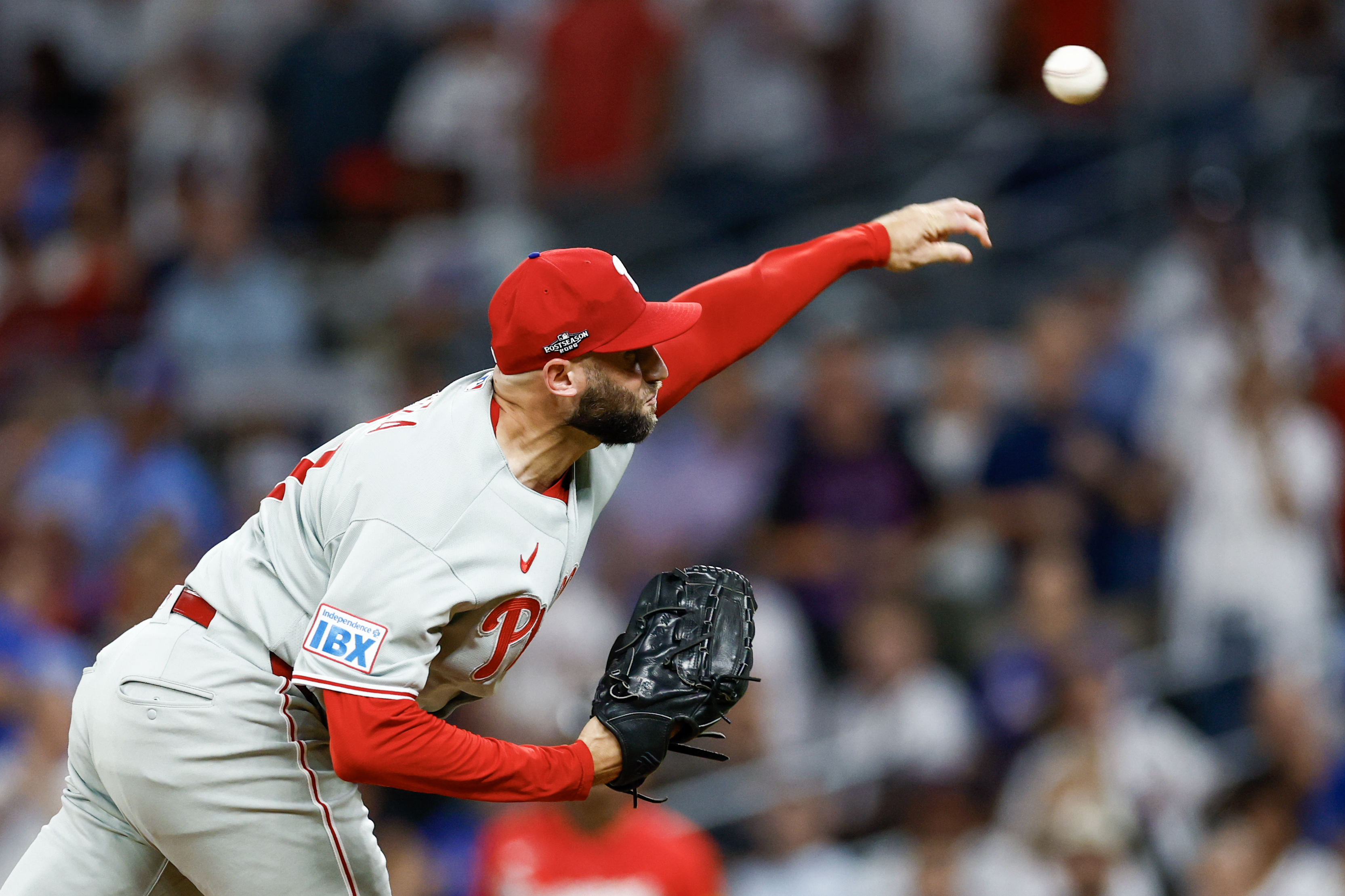
    Zack Wheeler threw 68 pitches in Game 3 on three days’ rest.Yong Kim / Staff Photographer

    You can second guess some of what interim manager Don Mattingly did with his pitching staff against the Braves. Bringing Duran into Game 1 when he did, allowing him to throw as many pitches as he did, starting Nola in Game 3. None of these decisions looked much different from the ones the previous guy would have made. This is how it looks when a manager feels like he does not have enough options.

    “I don’t think it’s the time right now to try to evaluate why or whatever happened, what’s good, what’s bad,” Mattingly said after the loss. “It’s like any situation. You look at your club, you evaluate it, what went wrong, what went right, what’s the positive, what’s the negative, how do you move forward.

    “But again, that’s not my place to talk about that. I think that’s the organization’s place. It’s Dave’s spot to — how they build the club. I’m sure those are things they’ll be thinking about over the winter.”

    Mattingly is right to defer to his boss. The onus is clearly on Dombrowski, obviously. Credit him for drafting Alex McFarlane in the fourth round in 2022. The rookie setup man is the kind of arm the Phillies needed to find to have any hope at solving their longest running issue. Of course, we once said the same of Orion Kerkering.

    You can’t fault Dombrowski’s effort. He’s taken plenty of swings. The whiff rate is the issue. Neither of the two relievers he acquired at the trade deadline was on the playoff roster: Caleb Kilian due to injury, Brooks Raley due to ineffectiveness. Same goes for Dombrowski’s biggest offseason acquisition. Setup man Brad Keller went down in early July with an elbow injury that will likely sideline him through next season. Kerkering finished the season in triple A, capping a steady downward slide from his promising debut in late 2023. Dombrowski’s best move of the year was acquiring righty Jonathan Bowlan from the Royals for lefty Matt Strahm. But Bowlan, too, spent most of the series on ice, appearing only after the Braves had taken a 5-0 lead in Game 3.
    The issues with the lineup will be even more difficult to solve. The Phillies still haven’t found a replacement for Rhys Hoskins behind Schwarber and Harper. Whit Merrifield, Austin Hays, Adolis García, none even managed to offset the decline and fall of Nick Castellanos.

    These aren’t just nitpicks. These are issues that will almost certainly need to be solved before the Phillies are capable of winning three or four straight playoff series, let alone one. And, really, they transcend whatever transaction-level pass-fail grades you assign to Dombrowski’s moves. The Phillies’ structural issues extend to their payroll. For the most part, their big-money guys performed about as well as can be expected, at least when grading against typical aging curves (i.e. in the case of J.T. Realmuto and Nola).

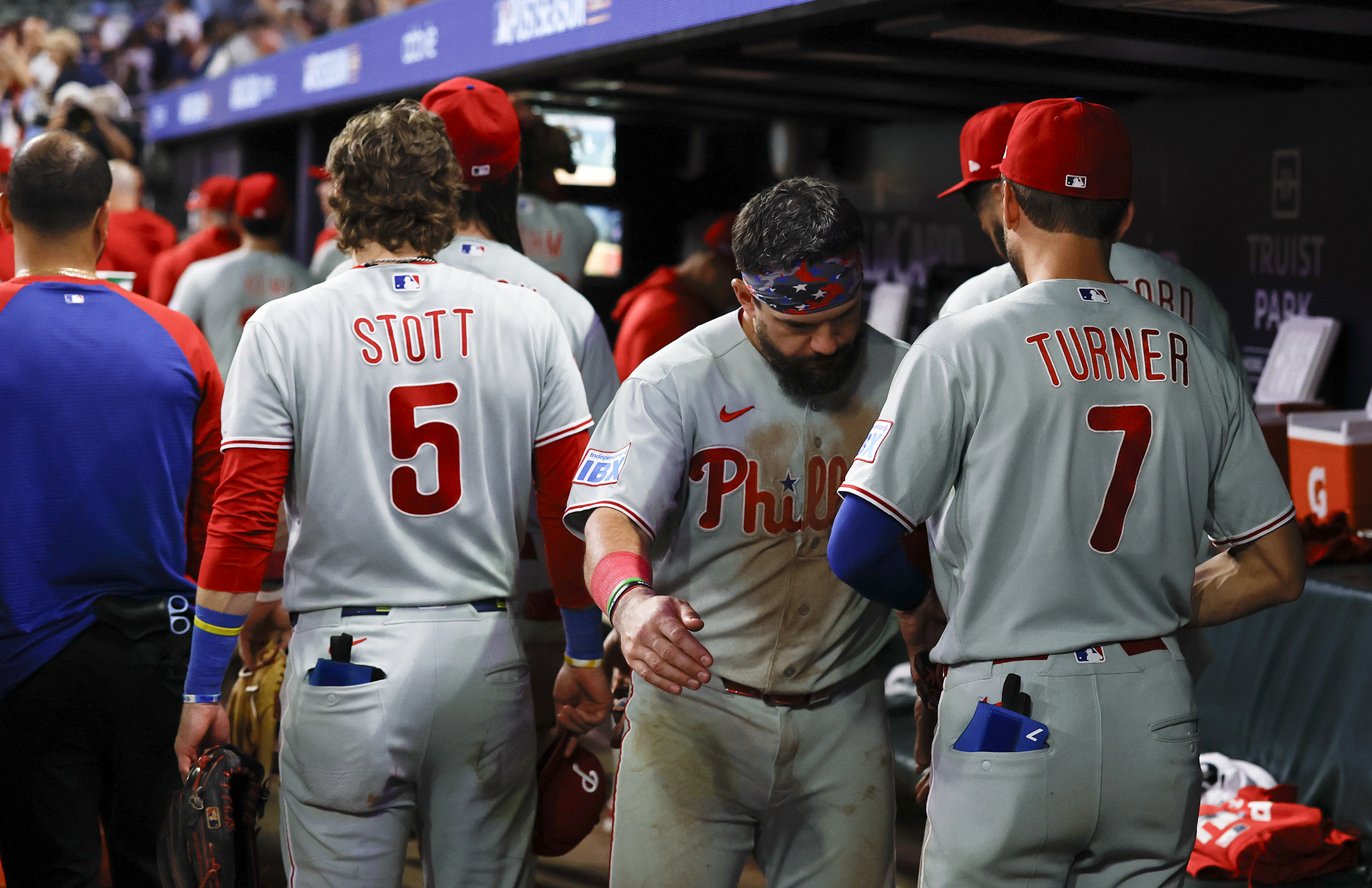
    The one significant exception is shortstop Trea Turner, who has seven years and roughly $190 million remaining on his contract and is coming off a 33-year-old season in which he posted a career-low .675 OPS. He went 1-for-11 with no walks in three games against the Braves. Turner is 8-for-55 in his last 14 playoff games dating back to Game 5 of the 2023 NLCS.

    “I think it starts with me,” Turner said of the offense’s struggles. “I take a lot of responsibility for it.”

    Phillies shortstop Trea Turner has seven years left on his $300 million contract.Yong Kim / Staff Photographer

    Even with some improvement from Turner, Dombrowski will need to take a careful look at every level of his organization and consider how to better balance this team beyond spinning the roulette-wheel of mid-level free agents and living trade deadline to trade deadline. He will need to explore the offseason trade market. He will need to come up with an accurate assessment of top hitting prospect Aidan Miller’s short- and long-term future after he missed most of the year with a back injury. He may need to consider whether Brandon Marsh can be swapped for a better lineup fit as the outfielder heads into his walk year.

    These are difficult decisions. But they are the reason Dombrowski’s job exists.

    The issue with the Phillies is not their heart, or their brains, and it certainly isn’t their grit. It isn’t their age, or their two best hitters. They came back from a disastrous start that earned their beloved manager a pink slip. They came back from a disastrous seventh inning in Game 2, one day after a victory slipped away from them late. Schwarber and Harper were as good a tandem as any in the league, all the way through this loss to the Braves.

    The hardest general managin’ is taking a roster from good to great. Here we are, seeing it once again.
  • For separate reasons, Saturday offers a fresh start for Penn coach Rick Santos and freshman QB Miles Teodecki

    For separate reasons, Saturday offers a fresh start for Penn coach Rick Santos and freshman QB Miles Teodecki

    Three days after a loss to No. 7 Lehigh in Penn’s home opener, freshman quarterback Miles Teodecki celebrated his 19th birthday.

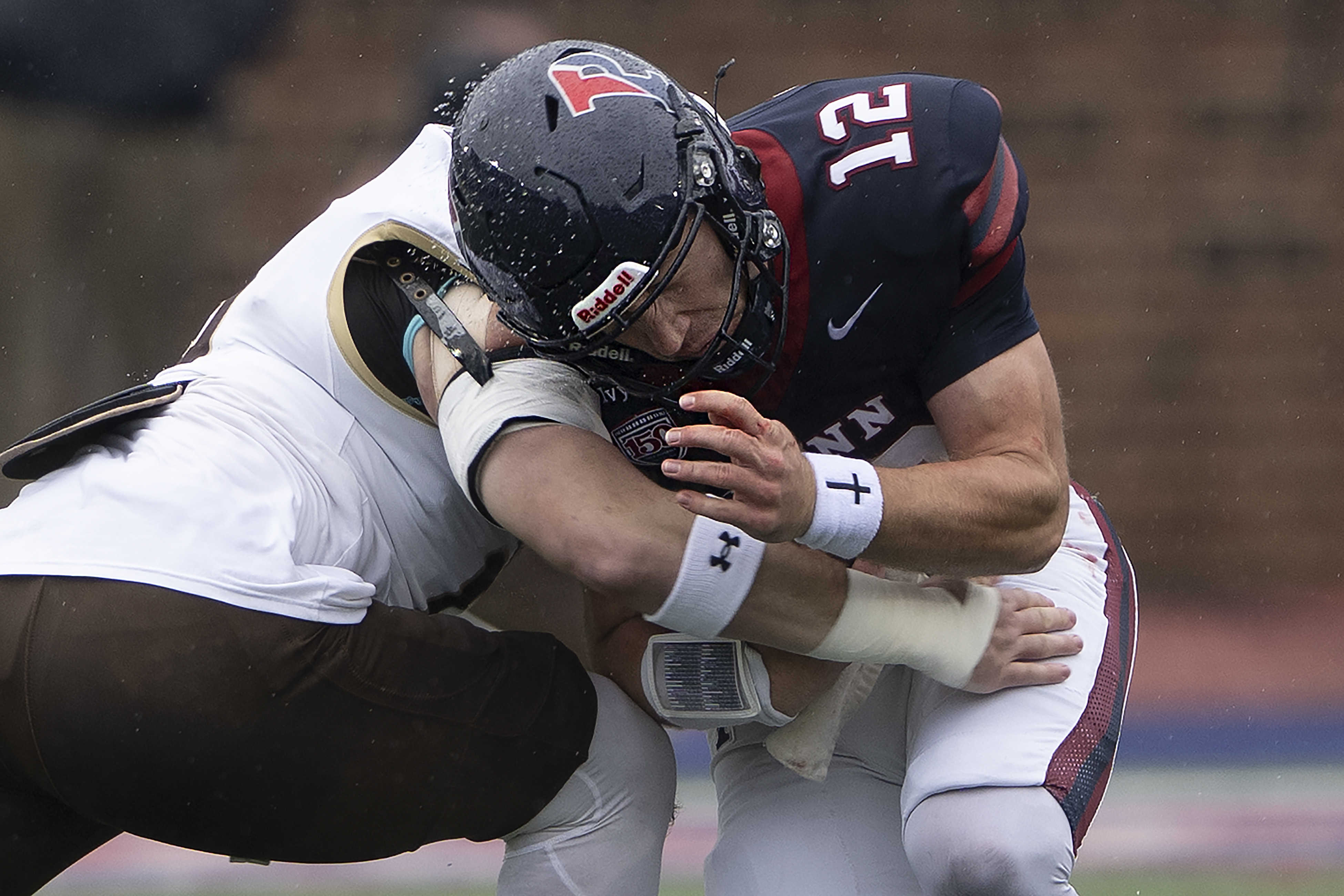
    Teodecki’s performance was one he would rather forget, throwing two interceptions and being sacked four times.

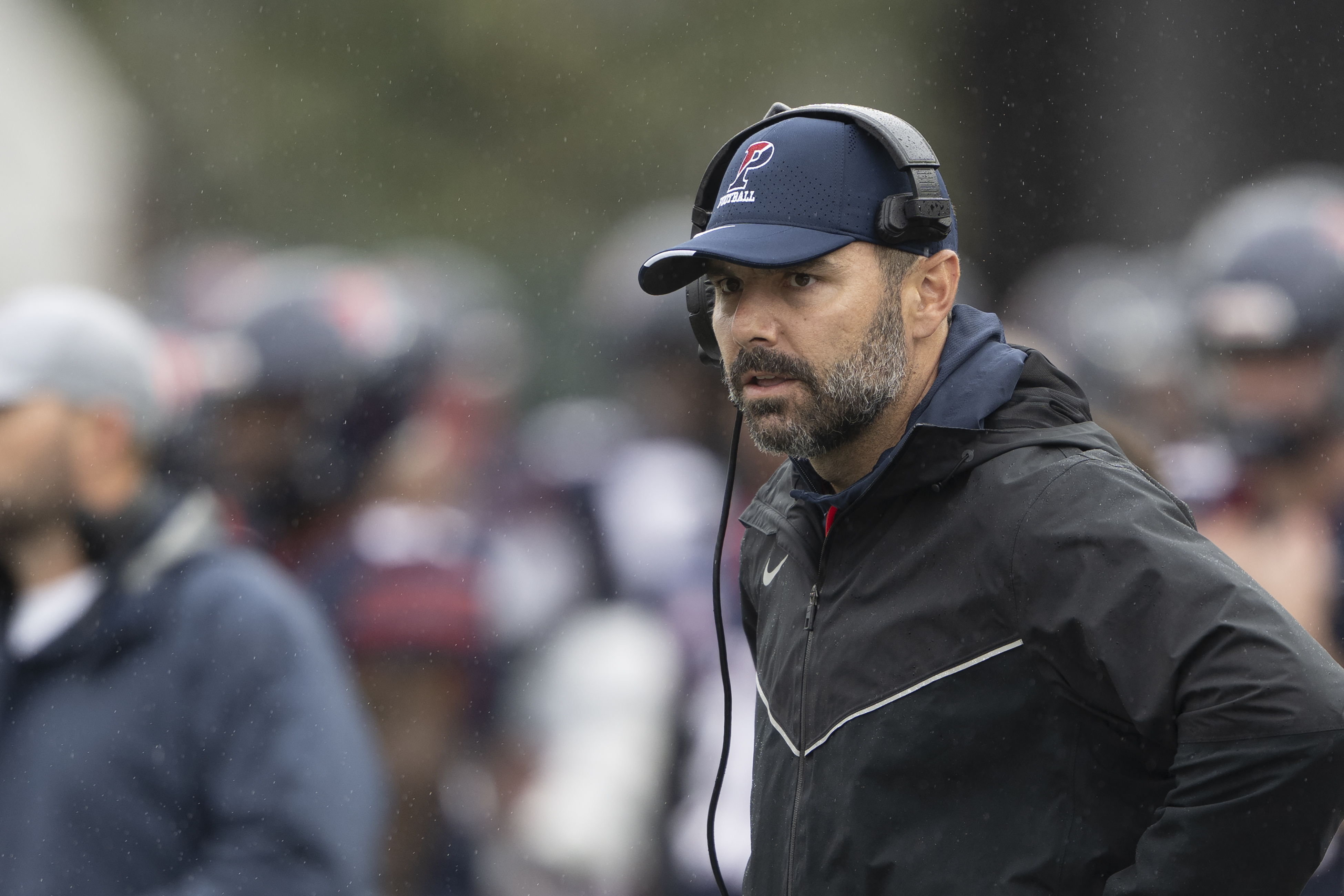
    Quakers head coach Rick Santos put it in perspective.

    “The game moved fast for him,” Santos said, “And the quickest way for you to get sped up is to get hit in the mouth and get sacked a couple times, and the ball’s going to come out of your hand a lot quicker than the next time. I promise you that.”

    Though he sees room for improvement, Santos also knows that Teodecki only has two games under his belt — and just turned 19.

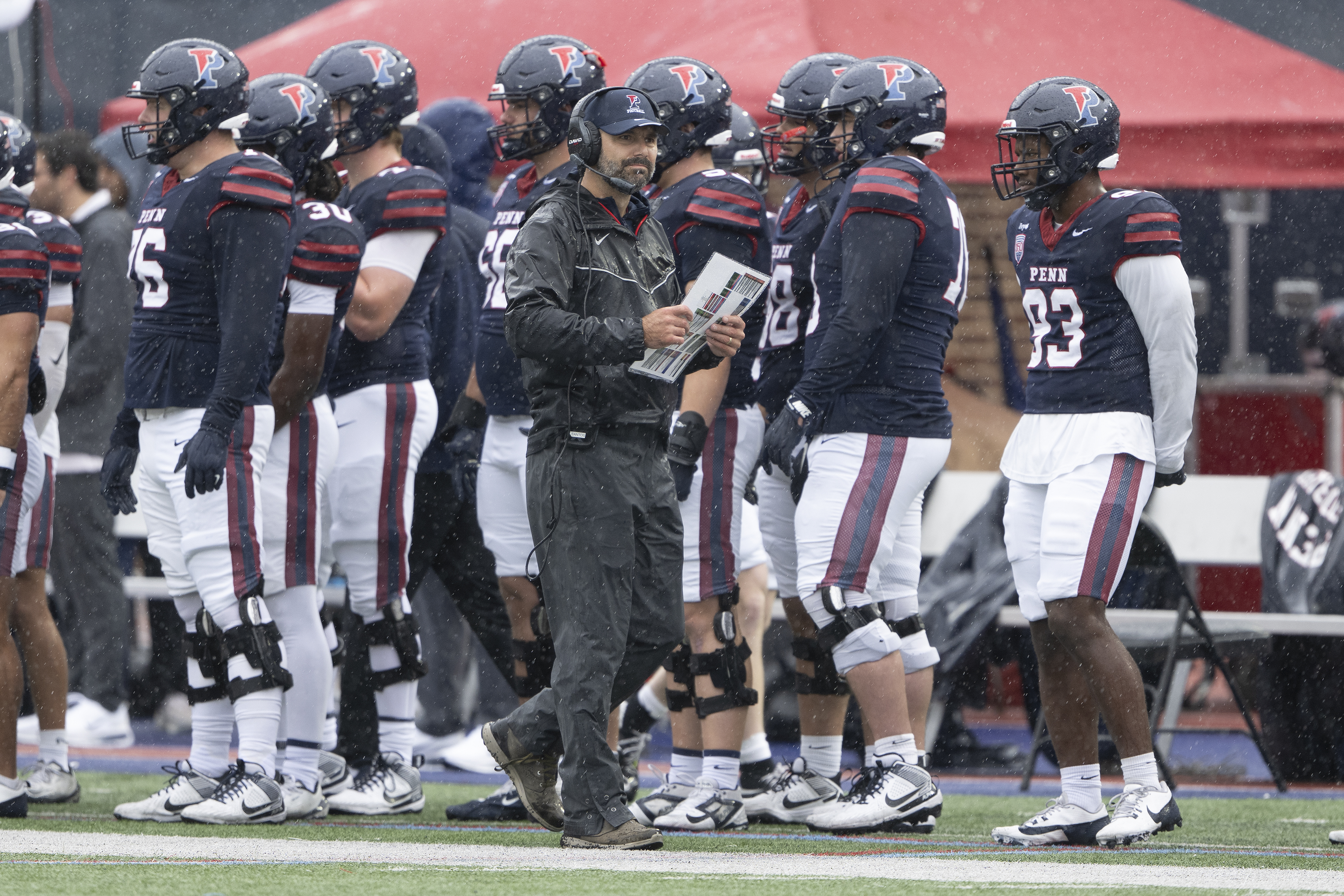
    Penn head coach Rick Santos said that Teodecki’s maturity is one of his best assets in being able to learn from his mistakes. Jose F. Moreno / Staff Photographer

    “He’s young, but he’s extremely emotionally mature for his age,” Santos said. “And I think, in a game where the elements were such, it was gust[s] of 40 or 50 [mph], it was raining half the game, we were forced to throw the ball almost the entire second half. So there was way too much pressure that was put on a freshman quarterback’s shoulders.”

    Santos, who has “all the guys’ birthdays in [his] calendar,” made the team sing happy birthday to Teodecki, who gave a “pump-up speech” before practice.

    His speech “wasn’t a movie ‘rah rah’ speech,” according to Santos, but straightforward: “Let’s be extremely competitive today and let’s go at it.”

    For Teodecki, it wasn’t about turning 19. It was about football.

    Committed to the cause

    Finding players who are committed to the game and to staying for all four years is what drew Santos to coaching in the Ivy League, and at Penn. The former University of New Hampshire head coach wanted the “ability to retain a lot of our rosters and really build a sustained culture here.”

    Now, Santos will return to the Granite State as Penn (1-1) opens conference play against Dartmouth (0-2) on Saturday (1:30 p.m., ESPN+).

    “I’m not going to lie, there’s a lot of nostalgia heading back up,” he said. “A lot of emotions.”

    Santos (center) leads Penn now, but regrets not being able to bid farewell to his team at his former stop with the University of New Hampshire.Jose F. Moreno / Staff Photographer

    Unable to tell his New Hampshire team in person his decision to leave for Penn, Santos had a Zoom meeting planned, but the decision broke the night before.

    “That did not sit well with me, kind of how I left there,” he said. “So all those things are kind of playing over my head, but really it’s just the joy and the gratitude for my time at UNH.”

    While Santos appreciates Penn’s academic emphasis, he likes that his players take their sport seriously, too.

    “I just love the fact that they’re so well-rounded,” he said of Penn’s players, noting the smaller senior class this year. Santos says he looks for guys who will stay all four years, who are “a football player first who happens to be smart enough to get into a place like UPenn and not the other way around.”

    A strategic approach

    Slowing down the game for Teodecki seems to be a focus for Santos and his staff. They decreased the number of first- and second-down plays, choosing instead to increase the number of times they elect to run the football on a single play so that “he can get every single defensive look that he might see.”

    That patience and ability to see the game will be critical against Dartmouth.

    “If you force the ball into coverage against this team, they’re going to beat you every single time,” Santos said. “So it’s a great opportunity for Miles and our offense to be patient, to be really efficient.”

    Sammy McCorkle, Dartmouth’s head coach, is “defensive-minded, special-teams minded as well,” Santos said, adding: “They win on those two fronts.”

    Noting Dartmouth running back Myles Craddock as a player to watch, Santos said that “he’s got long speed, he’s tough, he’s physical.

    “They make you work the ball down the field … they do not want the ball to get behind their corners and their safeties.”

    Santos hopes to build an offensive line that will improve the run game and a special teams unit that will place the offense and defense in prime positions on the field. So far, the defense has been the Quakers’ strength.

    Now, he is looking to help the offense find its flow.

    “The identity needs to fall on the shoulders of our offensive line and our running backs, and be efficient in terms of our running game,” he said.

  • Isaiah Ragland had to get comfortable with being uncomfortable to become a leader at Villanova

    Isaiah Ragland had to get comfortable with being uncomfortable to become a leader at Villanova

    Isaiah Ragland has seen Villanova reach success during the junior’s first two seasons as a Wildcat, including last year’s run to the FCS semifinals.

    This year has gotten off to a rocky start, as Villanova has fallen to 2-3 and 1-2 in the Patriot League, while also leading the conference in total penalties and penalty yards per game.

    However, for Ragland, there is no lack of drive to turn things around as Villanova prepares for another nonconference matchup, against Morgan State on Saturday (1 p.m., ESPN+), before entering a bye week.

    “We’re definitely hungry,” Ragland said. “As a team, we know it’s not the outcomes that we’ve wanted. But, it definitely has made us more hungry and made us more focused on the goals that we do have, not only for the future but right now — focus on the now.”

    A bright spot for Villanova has been its backfield tandem of Ragland and Ja’briel Mace. A season ago, both were part of a running back by committee system, with David Avit and Isaiah Wright also getting carries. After Wright graduated and Avit transferred to Arizona State, it’s been the two juniors splitting the carries.

    And the early results have been promising. They’ve combined for 555 rushing yards and five rushing touchdowns, with Ragland scoring three of the five.

    “It’s been really good, because me and him feed off each other and we feed off the [offensive] line because we only go as far as [they] take us,” Ragland said. “We have a great line, great coaches, staff and our coaches push us and I like to push our line and they like to push us. I think it’s a great compliment to just feed off each other.”

    Ragland was elected as captain by his teammates for the first time. For head coach Mark Ferrante, he has always trusted Ragland and has seen his growth on the field.

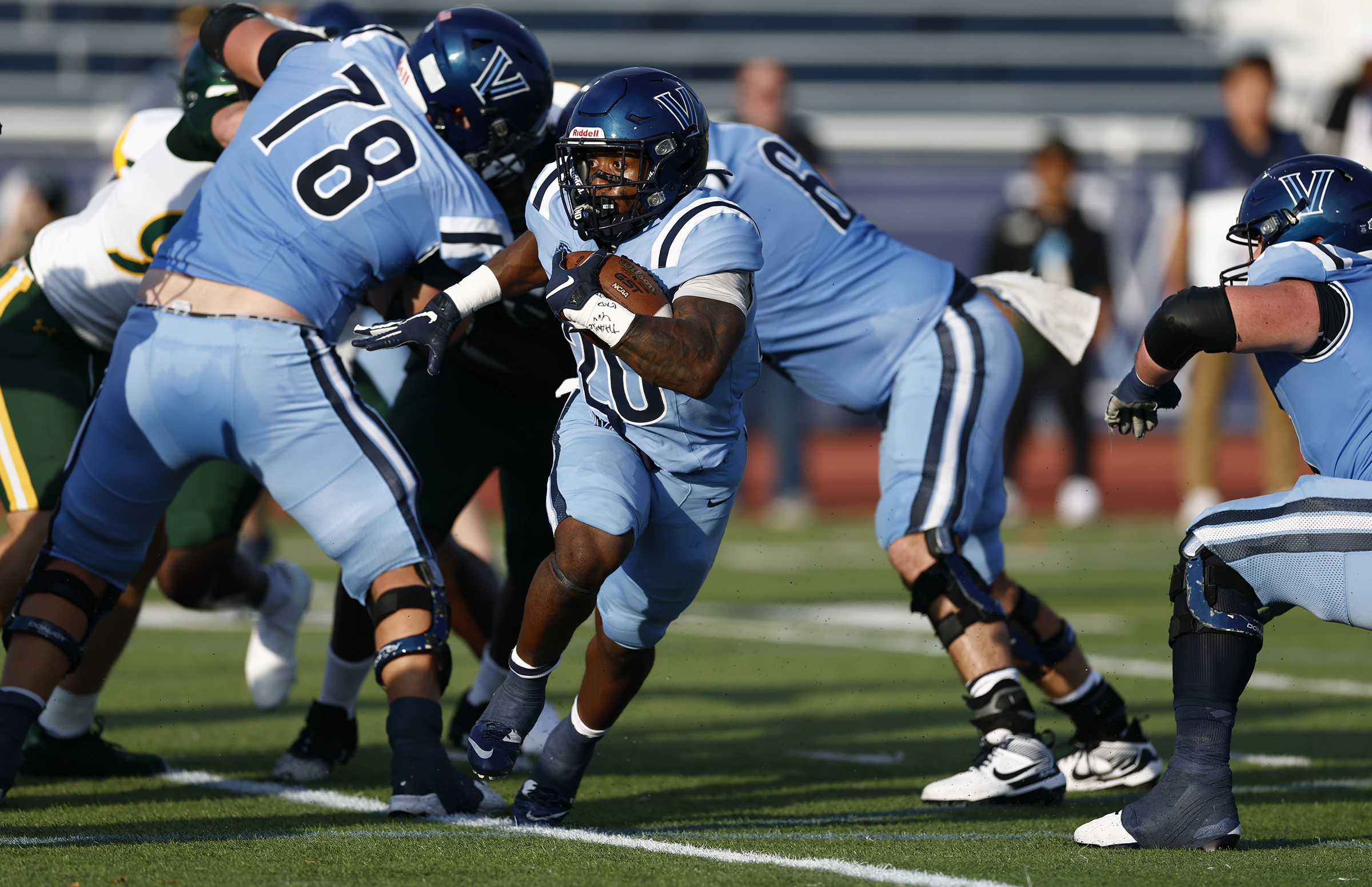
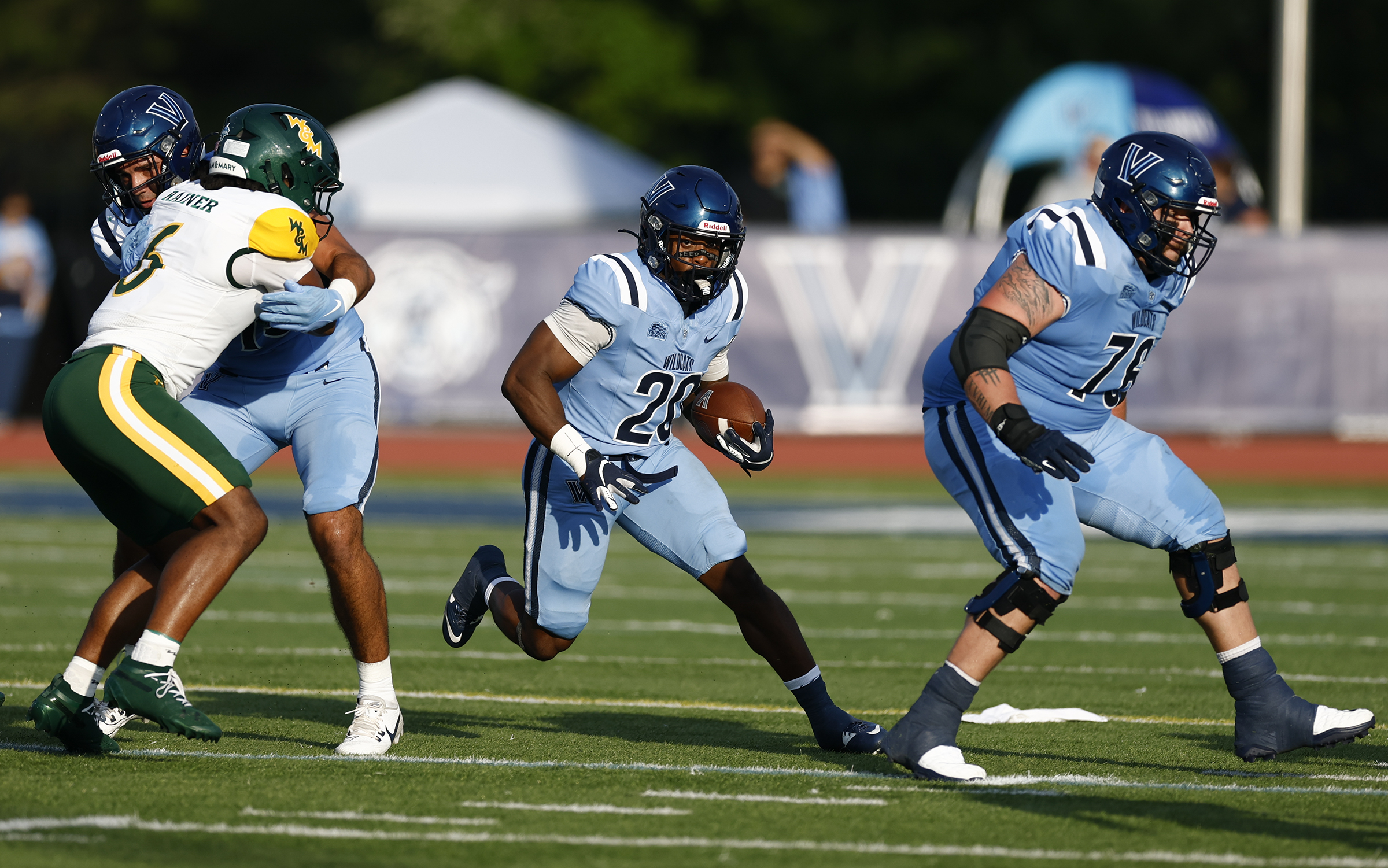
    Villanova running back Isaiah Ragland has scored three touchdowns and rushed for 269 yards.Yong Kim / Staff Photographer

    “He’s trying to lead,” Ferrante said. “Once [you’ve] been elected captain, you have a little added burden to your habits and practice in your communication with team members. … He does a really good job behind the scenes, he does a really good job communicating with the guys.”

    Ragland admitted he was hesitant about speaking up in the past, but has learned with additional responsibility he needed to operate outside of his comfort zone.

    “I’ve definitely been more of a lead by example type of guy, but I know if this team needs [it], you have to be comfortable with being uncomfortable and something I was uncomfortable with in the past has been talking more,” Ragland said. “I’ve definitely tried to step into that role a bit more and I think it’s definitely helping us for sure.”

    But besides Villanova’s backfield, the Wildcats have struggled through the first five games. They allowed six sacks against Colgate. Quarterback Pat McQuaide has thrown five total interceptions, and the Wildcats have committed 44 total penalties.

    Ferrante called Villanova its “own worst enemy” after last Saturday’s loss to Colgate. The Wildcats haven’t found their footing yet as they did last season.

    “We got to keep working, keep grinding, keep tapping the rock as we like to say and hopefully, the rock will crack and we’ll get the results that we’re working towards and aiming for,” Ferrante said. “But right now, we haven’t done it consistently enough for four quarters.”

    After experiencing successful seasons as an underclassman, the page has flipped for Ragland to be the guy to look up to.

    “Just having the mindset to go 1-0, focus on that,” Ragland said. “Every game is not going to be an easy game. You got to respect every opponent you go against because it’s going to be a dogfight every time you go out there, but just having a ‘go 1-0′ mindset, think it’ll definitely help you.”

  • Trea Turner is the Phillies’ biggest problem. He knows it: ‘A lot of that is on me.’

    Trea Turner is the Phillies’ biggest problem. He knows it: ‘A lot of that is on me.’

    ATLANTA — If you weren’t careful you’d have gotten blood on your shoes when Trea Turner fell on his sword.

    Turner knows exactly why the Phillies don’t score as much as they should. He looks that reason in the eye every morning.

    “Me,” he said. “I mean, it’s pretty simple.”

    Turner spoke in front of his locker in the visiting clubhouse at Truist Park after a Game 3 wild-card loss to the Braves crushed the Phillies’ playoff hopes, the fourth consecutive year in which a billion-dollar lineup produced dime-store offense and, as a result, for the third consecutive season, it exited the postseason in the first series in which it played.

    Turner’s dead wood isn’t the only issue on this club. It lost crucial deadline addition Luis Arraez, a .300 hitter, to injury last week. Its bullpen, flawed even when whole, was ravaged by injury as well. It is a poor defensive team with subpar speed that often is amplified by bafflingly bad base-running.

    Turner isn’t the only hole in the lineup, either. Bryson Stott has been just as bad at times, as has catcher J.T. Realmuto, who went hitless in the 2024 postseason and was 2-for-10 against the Braves.

    But both Stott and Realmuto are defensive stars. Turner can be a defensive liability, even though he plays shortstop. But then, that’s a different conversation, and besides, it only reinforces this reality: No money is more poorly spent by the Phillies than the money they’ve spent on Turner. There is no simple solution. Turner is 33, he has an untradeable contract, and he’s locked in for seven more seasons. Hopefully, by the time he’s 40, he will have figured it out.

    Trea Turner can be a defensive liability at shortstop.Yong Kim / Staff Photographer

    Dave Dombrowski, the team’s president, gave Turner a $300 million contract in 2023 with a simple, specific job: Get on base in front of Kyle Schwarber and Bryce Harper so they could drive him in.

    Sure, he might hit the odd home run, but Turner has two batting titles, and he’s got speed to burn.

    All he’s been burning in the Phillies’ postseasons is John Middleton’s cash.

    “You know, when you hit first or second, you get a lot of at-bats, and I kind of get things going,” he said.

    He spoke of the design, not the execution.

    Because he hasn’t gotten things going. Not in a long time. Not in the playoffs, especially.

    After their 6-2 loss Thursday, the Phillies now have three runs or fewer in the first nine innings in 11 of their last 13 playoff games. That encompasses the last two games of the NLCS against the Diamondbacks in 2023, the four NLDS games against the Mets in 2024, the four NLDS games against the Dodgers in 2025, and the three against the Braves this year.

    Not coincidentally, they now have lost 10 of those 13 games.

    In those 13 games, Turner is 8-for-52. That’s a .154 average.

    And that, folks, is the biggest reason why the Phillies can’t score.

    Further, lack of scoring is the biggest reason why the Phillies can’t win. Not the bullpen. Not the defense.

    The offense.

    Period.

    Turner’s postseason struggles from last year bled into his regular-season efforts this year. His batting average fell from .304 in 2025, best in the National League, to .242, the worst of his 13 full seasons — the worst by 24 points. The Phillies’ team average dipped from No. 2 in the NL in 2025 to No. 12 in 2026. They also scored 65 fewer runs in 2026 than in 2025.

    Some of those runs, had they been scored in late September, would have helped the Phillies earn home-field advantage in the wild-card round. The Phillies held the top wild-card spot, but, with five games to play, they hit a four-game slide. They scored one run in three of those games. They were shut out in the fourth.

    As such, they needed to win Game 162 in order to ensure the third wild-card slot, and they burned ace Zack Wheeler in that game. That meant Wheeler was not available for Game 1 of the wild-card series against the Braves on Tuesday.

    “Having your pitching set up is really important this time of year,” Turner said. “And we didn’t do a good job playing down the stretch to have that happen.”

    The Phillies lost that game. They had to use closer Jhoan Duran early, and for too long, and he tired, and they lost.

    Turner went 0-for-3 in Game 1. He got picked off, too.

    It was a rough visit to Georgia.

    Turner finished the wild-card round 1-for-11 despite having the two magnificent sluggers hitting behind him, as they did all season.

    “A lot of that’s on me,” Turner said. “I think you know, Kyle and Bryce did a good job.”

    Good, maybe. Not great.

    Harper was 3-for-13 with a double, a homer, and two RBIs. Schwarber was 4-for-11 with a homer. Their overall postseason production, however, is Ruthian.

    To be fair, in his 67 career playoff games, Turner has not been a total bust. He hit .270 in his first 54 playoff games, which included a World Series title run with the Nationals in 2019. In his first 11 playoff games with the Phillies, in 2023, he hit .415 with three homers, five doubles, and 1.224.

    He has been a black hole since. Again, he is not alone.

    Stott, since Game 6 of the 2023 NLCS against the Diamondbacks, is 8-for-45 (.178) with one extra-base hit and 14 strikeouts.

    Bryson Stott strikes out looking to end the fourth inning in Game 3.Yong Kim / Staff Photographer

    But then, Stott has made about $10 million since 2023.

    Turner has made almost $110 million since 2023.

    He makes more than $27.2 million per season. How will he better earn his money in 2027?

    Turner has no idea.

    “It’s a question. Got a lot of work to do. Go over everything and just figure out, as much as I can. Find answers. See what I did bad,” Turner said. “This year was the biggest question mark for me offensively in a long time. I’ve got to figure that out. So I’m definitely gonna have a lot of work to do there. And I’ll do it.”

    Doing the work is one thing.

    Getting the hits: That’s something else.

  • Oil flows are up, but Iran is still menacing the Strait of Hormuz

    Oil flows are up, but Iran is still menacing the Strait of Hormuz

    Almost every day in September, Iranian media outlets have published reports of explosions “heard from the sea,” an ominous sign that military activity is taking place in the Strait of Hormuz.

    But the reports left mysterious just who was carrying out the attacks.

    It turns out it was Iran itself.

    Confidential data shared with the New York Times by a Western security official who spoke on condition of anonymity to discuss operational matters shows that Iran has been launching dozens of drones and missiles at commercial ships in the strait each week, largely out of the public eye, though it has often failed to strike its targets.

    And on Wednesday, Iran’s Revolutionary Guard for the first time appeared to confirm it was behind the near-daily sounds of explosions heard from Iran’s southern coast, saying it was striking targets in the Strait of Hormuz every 24 hours.

    “We prevent them from passing, but for some time now, America has not responded,” a spokesperson for the Revolutionary Guard said in a state news interview.

    The aggression shows that even as oil exports from the Middle East have rebounded in recent weeks, shipping through the waterway remains risky, as Iran jostles to keep control of one of its biggest sources of leverage.

    “Negotiations aren’t going anywhere. Neither side is really budging. So it’s a standoff,” said Gregory Brew, an Iran analyst at the Eurasia Group. He said that the violence in the strait “speaks to the position that both sides are in: Neither is looking to aggressively escalate the conflict.” But both, he said, want to control the waterway.

    Since the beginning of August, Iran has launched about 30 drone attacks and 10 anti-ship missile attacks per week against commercial ships transiting the Strait of Hormuz, according to the data shared with the Times by the Western security official. At least four commercial ships have been hit by Iran in the past 10 days, the official said.

    A tally of reports by a monitoring group run by the British navy show that since Sept. 10, at least 13 ships, most of them oil tankers, had been struck by projectiles or debris from projectiles. (Those reports may be incomplete because they are based on voluntary reports by ship crews.) While the reports do not specify who was responsible for the attacks, maritime experts say the details suggest many were Iranian.

    Motorcyclists pass a billboard depicting President Donald Trump underwater amid explosions, with the words “Great Victory! Strait of Hormuz,” in Tehran, Iran, on Aug. 24.Vahid Salemi

    The attacks in the strait have kept up even as crude oil exports from the Middle East have gotten closer to prewar levels. Part of that turnaround, analysts say, is because of a U.S. military operation aimed at protecting the vessels from the attacks, an effort that appears to have encouraged more shipments from big exporting countries, such as Saudi Arabia and the United Arab Emirates.

    Those ships pass through Oman’s territorial waters in a U.S. Navy-guided route, with the support of U.S. fighter jets and attack helicopters to help ward off strikes. Some ships also turn their transponders off to help pass through the strait undetected.

    But analysts say U.S. military protection requires significant resources and will be hard to maintain indefinitely. And a big part of the regional increase in exports, according to Kpler, a cargo tracking group, is from export routes that circumvent the Strait of Hormuz altogether.

    Just because more ships and oil are moving than seen earlier in the war “doesn’t mean we’re seeing a normalization of flows,” said Ana Subasic, a trade risk analyst at Kpler.

    U.S. Central Command, which oversees military operations in the Middle East, declined to comment on Iranian attacks on shipping in the Strait of Hormuz in September. The Pentagon has not announced any strikes on Iran or Iranian vessels since early that month.

    Ian Ralby, president of the maritime governance nonprofit group Auxilium Worldwide, said the fact that Washington has appeared not to respond militarily against Iran for its shipping attacks may be a function of the Trump administration’s seeking an off-ramp to the conflict now in its seventh month.

    Brew, the Iran analyst, said that with the rise in oil exports, the administration may think it has less to gain from retaliatory strikes.

    Ever since the United States and Israel attacked in February and started the war, Iran has used its ability to throttle shipping through Hormuz, a key route for oil and gas exports, disrupting the global economy.

    The United States has imposed a naval blockade and tougher sanctions on Iran in retaliation, putting the country under further pressure, as President Donald Trump has sought to pivot the war from a military campaign to one focused on strangling its economy.

    This article originally appeared in The New York Times.

  • AI groups are spending millions to influence the midterms

    AI groups are spending millions to influence the midterms

    Artificial intelligence companies racing to shape how the federal government might regulate their industry amid rising safety and economic concerns are spending heavily to influence which candidates make it to Congress.

    A New York Times analysis of federal campaign finance data shows that the political groups aligned with the two leading AI developers, OpenAI and Anthropic, have quietly but decisively intervened in key 2026 races, spending on campaign advertising and outreach to voters to the tune of $55.7 million.

    So far, the spending has been concentrated almost entirely in the primaries. The two groups have spent $52.6 million on safe seats — those that are unlikely to change party hands but that often feature intense intraparty contests.

    The big AI players have also spent more heavily for Democrats than Republicans. They have bolstered candidates who align with their agendas, helped defeat those they see as hostile to them, and ingratiated themselves with front-runners who are likely to be in positions of power in the next Congress to make decisions critical to their bottom lines.

    But with voters quickly souring on their industry — including demanding that lawmakers do more to regulate AI and halt or mitigate the proliferation of data centers — they have taken pains to obscure their involvement. With few exceptions, they have intervened without ever explicitly mentioning AI or data centers in the TV and digital ads they have purchased.

    (The Times has sued OpenAI and Microsoft, claiming copyright infringement of news content related to AI systems. The two companies have denied those claims.)

    The Times reviewed 95 unique ads bought by four AI super political action committees heavily funded by the two biggest players — the OpenAI-aligned Leading the Future and the Anthropic-aligned Public First Action — each of which funnels its money through separate Republican and Democratic groups. None of the ads mentioned data centers. Only seven mentioned AI or an AI company directly.

    An ad for Rep. Barry Moore (R., Ala.) featured the phrase “CHAMPION AMERICAN INNOVATION” as he shook hands with firefighters in a garage — one of several AI-backed advertisements that used that phrase over images of workplaces that appeared to have nothing to do with AI.

    Another was in support of former Rep. Jesse Jackson Jr., a Democrat running for an open House seat in Illinois. It was paid for by Think Big, which is aligned with OpenAI, and praised him as committed to reducing gun violence and supporting law enforcement.

    And in some instances, both the Republican and Democratic groups funded by the same big AI player created advertisements advocating opposing sides of an issue. For example, two spots for House candidates in Texas, a Democrat and a Republican, praise opposite positions on immigration. Both are funded by the Anthropic-aligned super PACs.

    “It’s so cynical,” said Nate Blouin, a state senator in Utah who lost a Democratic primary to an opponent who had been backed by more than $1 million in AI-funded ads. “They’re coming into races in safe seats that they know that they’re going to be decided in the primaries, and they are spending millions of dollars on things that are unrelated to the core issue that they are pushing for.”

    It is a strategy that has also been deployed this cycle by the American Israel Public Affairs Committee, another major interest group whose brand has become a liability in recent years and has spent in the midterms to the tune of tens of millions of dollars while rarely mentioning its top issue.

    The companies behind the spending have somewhat different policy agendas. Anthropic generally supports stricter regulation of AI development, while OpenAI tends to push for fewer guardrails to allow for the acceleration of AI development. But they both share the same goal: promoting AI and electing policymakers who hold a favorable view of it.

    In a statement, Anthony Rivera-Rodriguez, a spokesperson for Public First Action, vehemently denied that the Anthropic-aligned group had a parallel agenda to the political group affiliated with OpenAI.

    “We reject any suggestion that we have anything in common with Leading the Future, a group that exists to gut every serious attempt to regulate artificial intelligence,” he said. His organization, he added, “was founded to be the counterweight to Big Tech’s political machine” and stands “with the people willing to fight for real rules on this technology and protect kids, workers and families from AI harms.”

    Jesse Hunt, a spokesperson for Leading the Future, said the group was “focused on building a bench of champions who understand the need for a national AI framework that keeps America at the forefront of innovation while putting responsible safeguards in place to protect workers, families and communities.”

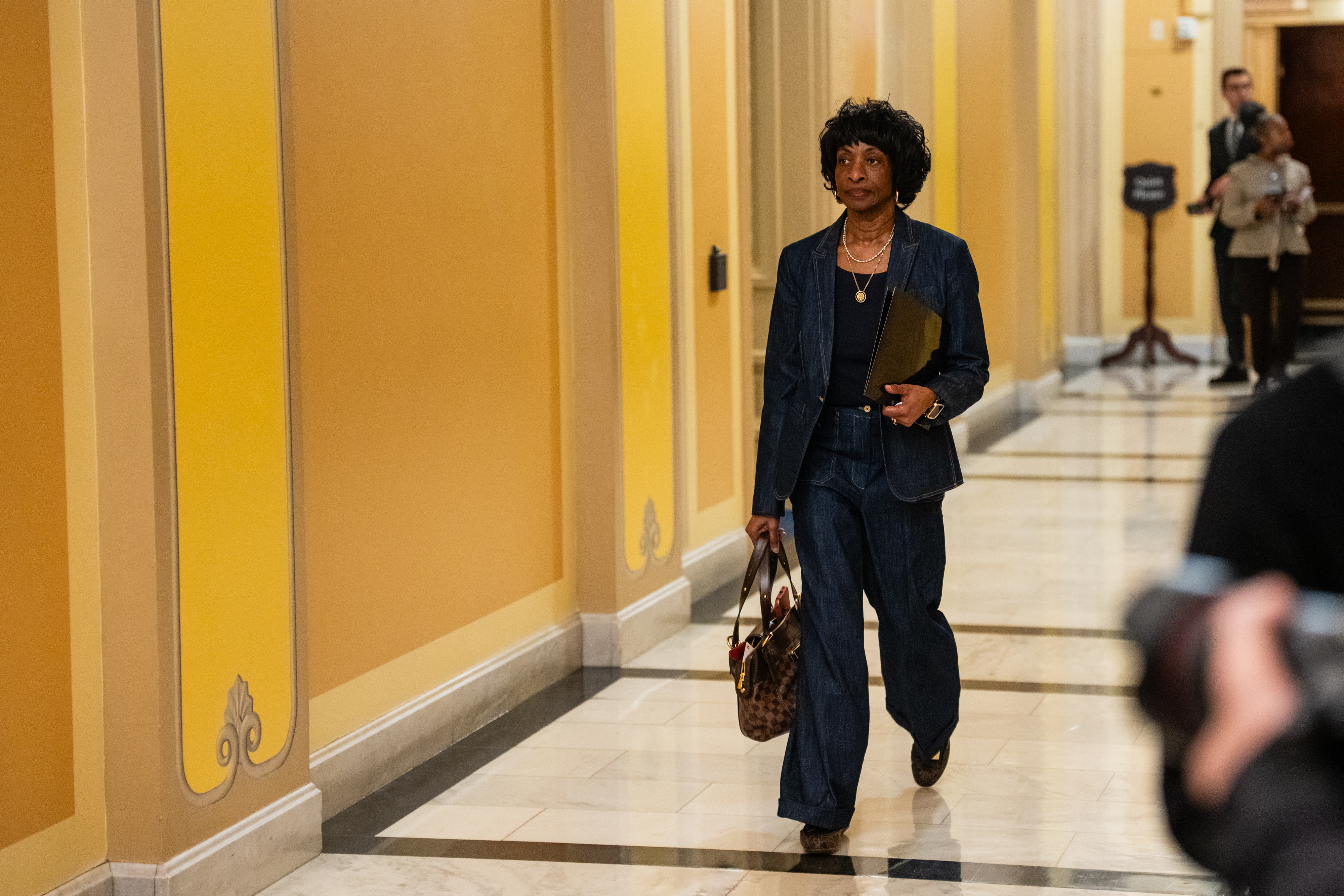
    A PAC aligned with Anthropic spent $1.6 million to help Rep. Valerie Foushee (D., N.C.) win her primary.ERIC LEE

    Helping the AI-friendly

    Late last year, Rep. Valerie Foushee, a Democrat who represents most of North Carolina’s Research Triangle, was staring down a formidable primary challenge.

    Then, two days before Nida Allam, a younger, more progressive candidate who had challenged her in the past, announced that she was running again against Foushee, Rep. Hakeem Jeffries of New York, the Democratic leader, named Foushee as co-chair of the party’s new Commission on AI and the Innovation Economy.

    Two months later, the Anthropic-aligned Jobs and Democracy PAC spent $1.6 million in support of Foushee. She won narrowly, defeating Allam by less than 1 percentage point.

    “These committees and task forces — they’re basically a flag or indicator to the lobbyist industry that these are people who will have decision-making power over your industry and so you need to go spend money on their campaigns,” Allam said in a recent interview. “No one is spending that amount of money unless they’re getting something in return.”

    In a statement, Foushee denied that the money had bought any favorable treatment for AI, saying that her work on the issue “has centered on establishing guardrails, holding corporations accountable and protecting our children, communities and jobs.”

    In Washington state, American Mission, an OpenAI-aligned PAC, waded into the GOP primary to replace Rep. Dan Newhouse, who is retiring at the end of this Congress, to back Amanda McKinney. McKinney, a Yakima County commissioner, won President Donald Trump’s endorsement this cycle but was running against a former race car driver who had won Trump’s endorsement in 2024 when he challenged Newhouse.

    “She believes the United States must lead in artificial intelligence and advanced technologies, not surrender leadership to China or other adversaries,” her campaign website says. “Amanda opposes heavy-handed regulation that stifles innovation or drives jobs overseas.”

    American Mission spent about $780,000 to support McKinney. She advanced from her primary with 35% of the vote.

    Punishing the skeptics

    With other seats, in Utah, Illinois and New York, the PACs moved to undercut candidates who had established themselves as opponents of AI.

    The most prominent example was in the primary to succeed Rep. Jerrold Nadler (D., N.Y.). The race was inundated by outside spending after Alex Bores, an Assembly member, sponsored legislation seeking to regulate advanced AI models. That set off a multimillion-dollar influx from rival AI interests, with Think Big, aligned with OpenAI, attacking Bores and Jobs and Democracy, aligned with Anthropic, defending him. He narrowly lost the race.

    Along with Foushee’s contest in North Carolina and a primary in the Florida district of Rep. Debbie Wasserman Schultz, the former chair of the Democratic National Committee, the race drew the most money from the AI PACs this cycle.

    In Utah, Think Big intervened to back Ben McAdams, a former Democratic member of Congress.

    It was not expected to be a highly competitive primary, and was made even less so after Punchbowl News unearthed a series of old posts in which his opponent, Blouin, joked about sexual assault and made offensive comments about women and Mormons. McAdams made no mention of AI on his campaign website, though he wrote an opinion essay arguing that schools “should begin treating AI fluency as a basic form of literacy.” He said he opposed the construction of a 40,000-acre AI data center campus proposed in the district.

    But Blouin, the state senator, described himself as a “leading skeptic of the push for unchecked growth of data centers,” and grew increasingly vocal about AI and data center regulation as the race went on.

    Think Big spent about $1.1 million on television and digital ads and text message blasts supporting McAdams. Asked for comment, McAdams reiterated a previous statement he made during a June debate, in which he said that “every member of Congress needs to be proactive in providing oversight of AI in order to protect jobs, our kids, the environment and the fabric of our communities.”

    “That will require federal guardrails to make sure this technology happens carefully and transparently, with appropriate regulation, strong oversight, human accountability, and safeguards for data privacy and civil rights,” he said. “AI could potentially cure cancer, but it could also destroy our kids. I believe thoughtful policy can unleash the good and stop the bad.”

    Backing front-runners

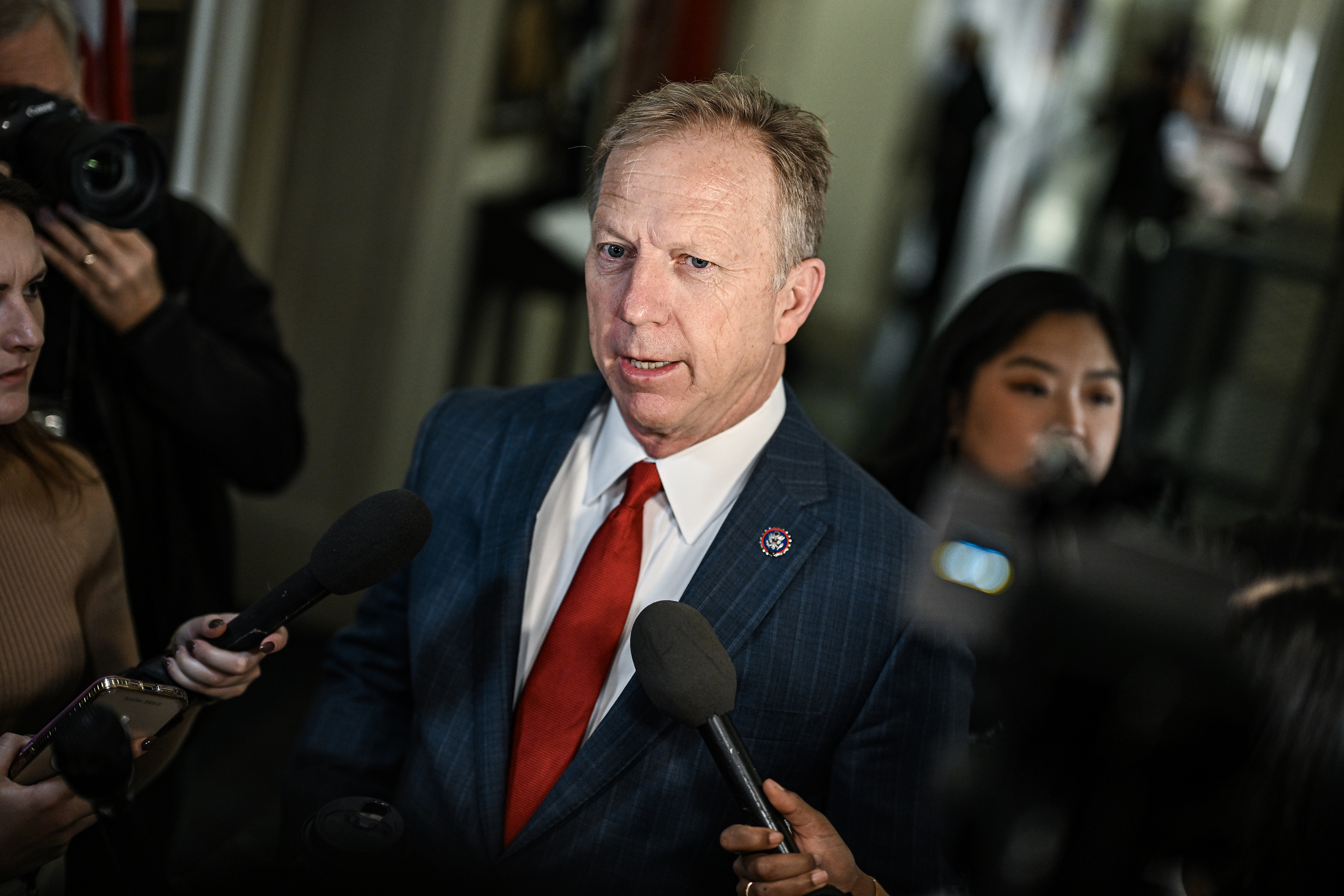
    The AI groups spent in support of clear front-runners in primaries all across the country, including favorites of party leaders, many of them Republican. Rep. Kevin Hern of Oklahoma, who was widely expected to win the nomination to replace Markwayne Mullin in the Senate, was backed by nearly $1.3 million spent by American Mission and Defending Our Values, an Anthropic-aligned PAC, before his victory in June.

    Rep. Kevin Hern (R., Okla.) prevailed in his primary to replace Markwayne Mullin in the Senate. He received backing from Anthropic and OpenAI.KENNY HOLSTON

    Defending Our Values also supported Carlos De La Cruz, the brother of Rep. Monica De La Cruz of Texas, who both received speaking slots at the midterm convention in Dallas. Carlos De La Cruz is favored to win his election; the nonpartisan Cook Political Report recently rated Monica De La Cruz’s race as a “toss-up.”

    American Mission spent about $375,000 to support Sen. Lindsey Graham for his primary campaign in South Carolina, though it was never expected to be particularly competitive. After he died, the super PAC spent nearly $1.2 million supporting his sister, Darline, in the primary and general contests.

    A vanishing money trail

    With about a month until the midterms, the AI groups have yet to wade into many general election contests.

    American Mission has doled out roughly $500,000 each on behalf of three Republican candidates for Senate who are running in less competitive races: Rep. Julia Letlow in Louisiana, Graham in South Carolina, and Cindy Hyde-Smith in Mississippi. Think Big, the Democratic super PAC, has spent nearly $300,000 to support three House candidates: Reps. Greg Stanton of Arizona, Emilia Sykes of Ohio and Steven Horsford of Nevada — as well as roughly $50,000 to support Rep. Joseph Morelle in New York.

    The amounts could grow. But political operatives closely following their spending believe that the groups will have to shift their strategy amid the furious outpouring of anti-AI sentiment, and will instead move money through other means. That could include donating directly to the major political PACs associated with House Democrats or Republicans, or establishing smaller, more obscure groups to move the money through, as AIPAC has done.

    Usamah Andrabi, the communications director for Justice Democrats, the ultraprogressive organization that backed many candidates whom AI groups spent against, said the industry’s influence was already becoming as difficult to track as that of AIPAC and other pro-Israel groups.

    “There was a time where I could tell you every Israel lobby super PAC, and I cannot tell you that anymore because there’s so many pop-up PACs, there’s so many shell PACs, there’s so many pass-throughs,” Andrabi said. “And I think the same thing is happening with the AI lobby.”

    This article originally appeared in The New York Times.

  • Josh Shapiro will be in Bucks County this weekend to campaign for Democrats in key races

    Josh Shapiro will be in Bucks County this weekend to campaign for Democrats in key races

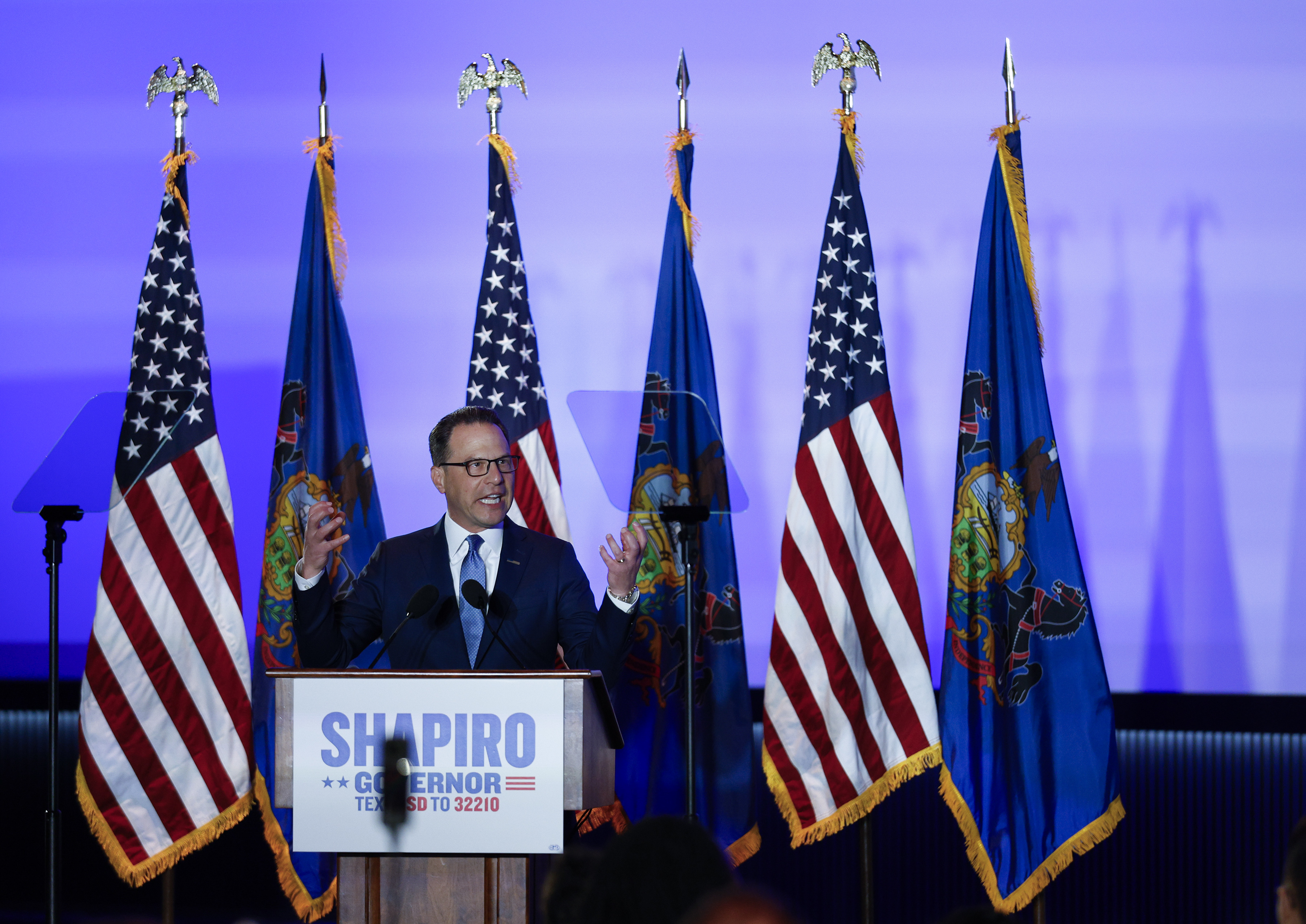
    Gov. Josh Shapiro will be in Bucks County on Saturday to campaign for Democrats up and down the ballot in the key swing county.

    Shapiro, who kicked off Democrats’ general election campaigns at a space centrifuge in Warminster this past spring, is returning to Bucks, emphasizing the important role that the perennially purple county will play in November’s midterms with competitive contests for Congress and state Senate on the ballot.

    The governor will appear at a canvass launch in Langhorne organized by Planned Parenthood PA PAC, the organization’s state-level political action committee. The PAC has endorsed Bucks County Democrat Eileen Hartnett Albillar, who is running for state Senate in the 6th District, a crucial seat for the party, and state House candidates Bryan Allen, Kristin Egan, and Monica Weninger.

    Shapiro will also appear alongside Democratic County Commissioner Bob Harvie, who is challenging GOP U.S. Rep. Brian Fitzpatrick in the Bucks-based 1st Congressional District — one of four seats in the state being targeted by both parties. Harvie is endorsed by Shapiro and Planned Parenthood’s federal PAC.

    Democratic U.S. Reps. Madeleine Dean, of Montgomery County, and Mary Gay Scanlon, of Delaware County, will also be in attendance.

    Democrats are hoping to win control of the state Senate — which they haven’t had for 33 years. The GOP currently holds 27 seats in the 50-member state Senate.

    To take control of the chamber with the lieutenant governor’s tie-breaking vote, Democrats would need to flip at least two seats and maintain control of the governor’s office. With a trifecta in Harrisburg, Democrats hope to advance legislation on issues that haven’t gained support in the Republican-controlled Senate, like codifying abortion protections.

    The Shapiro-endorsed candidates have an opportunity, if successful in November, to give Democrats more governing power, whether that’s winning party control in the U.S. House, the state Senate, or giving Democrats an expanded majority in the state’s lower chamber.

    Shapiro is running for a second term as governor, but he’s spending much of his time using his political prowess to bolster other Democrats ahead of the midterms. Recently, he was in Philadelphia with Democratic Michigan Gov. Gretchen Whitmer to energize volunteers. Earlier this month, he was in Montgomery and Chester Counties campaigning for down-ballot candidates.

    Shapiro has invested more than $5.7 million in the state party since fall 2025, his campaign said last month.

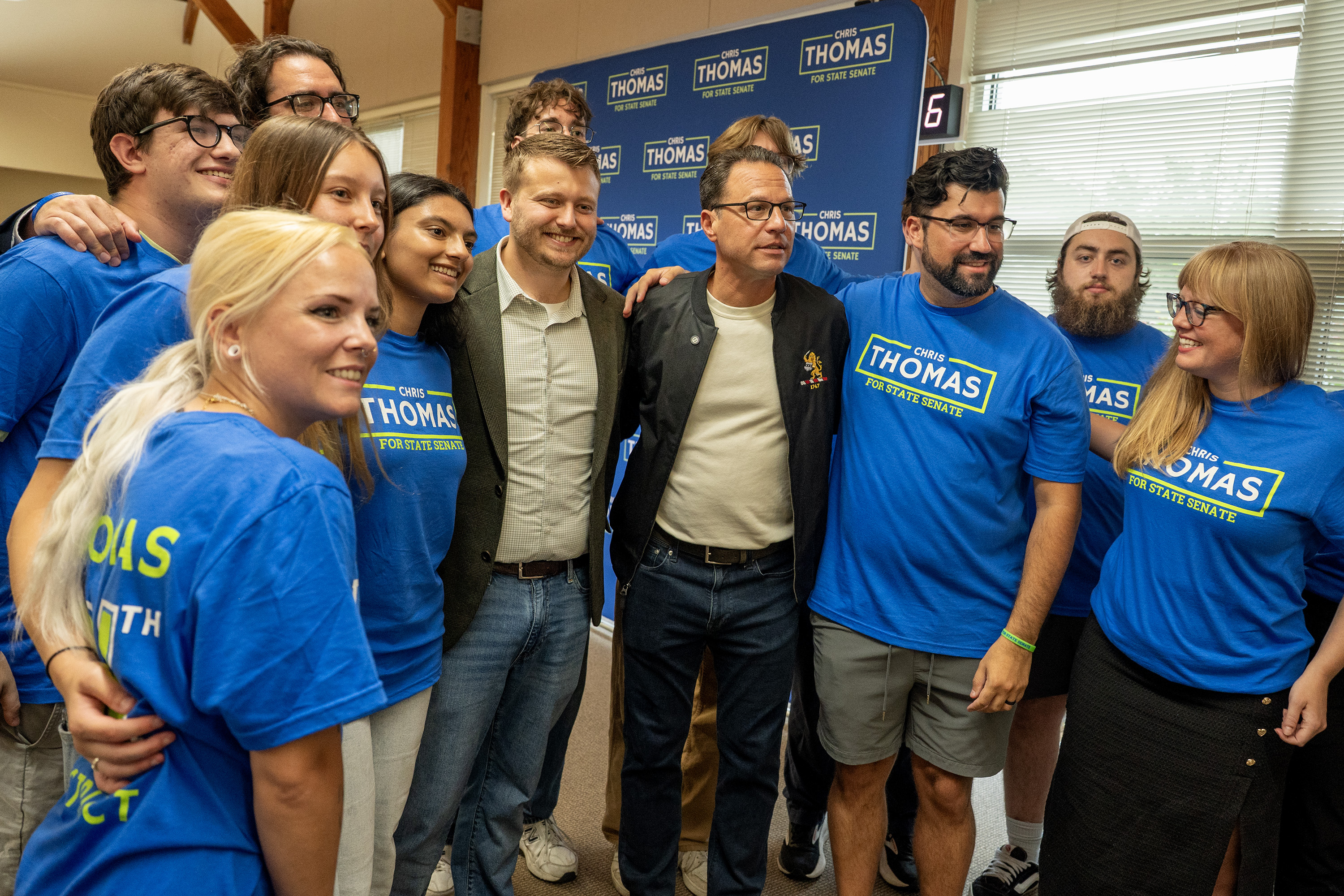
    Gov. Josh Shapiro poses with Democratic Pa. Senate candidate Chris Thomas (left) and his supporters after a rally in Towamencin, Montgomery County before heading out to canvass Sunday, Sept. 29, 2026.Tom Gralish / Staff Photographer

    In July, he launched an effort — “Rise Up Pennsylvania” — that is aimed at pooling donations to fund campaign resources for key state Senate and U.S. congressional races.

    Abortion protections remain a key piece of the party’s platform, even as Democrats have refocused their messaging on affordability ahead of November.

    “Bucks County will be critical to building a pro–sexual and reproductive health care trifecta in Pennsylvania,” Signe Espinoza, executive director of Planned Parenthood PA PAC, said in a statement Friday.

    “We endorsed these candidates because we know they will stand up to fight to protect every Pennsylvanian’s freedom to make their own decisions about their body, health and future.”

  • 🗳️ It’s Bucks season | PA 2026 Newsletter

    🗳️ It’s Bucks season | PA 2026 Newsletter

    📅 There are 32 days until Election Day.

    It wouldn’t be a Pennsylvania election without Bucks County becoming the star of the show.

    And that’s exactly what’s happening this weekend, when Gov. Josh Shapiro travels to the swingiest of the swing counties to stump for Democrats up and down the ballot in key races.

    🎤 I’m Fallon Roth, the suburban politics reporter at The Inquirer, coming to you live from Bucks (my home county) as we dig into how the suburb will be the make-or-break place for Democrats’ wishlist next month, including a win for Bob Harvie in the 1st Congressional District and shift in party control in the state Senate, which could only happen with help from the Philly suburbs.

    We’ll also explore whether Pennsylvania voters would support Shapiro turning his attention to a bid for the White House in 2028.

    In this edition:

    🗳️All hands on deck: Shapiro will be in Bucks County Saturday to launch a day-of-action for Democrats, organized by Planned Parenthood’s state-level PAC.

    🗳️ The Bucks stops here: Two Bucks County swing districts and another in Montco could determine which party controls the state Senate.

    🗳️Homefield (dis)advantage?: Pennsylvania voters are split on whether Shapiro should run for president in 2028.

    -Fallon Roth, Michelle Baruchman, Sam Janesch, Gillian McGoldrick (pa2026@inquirer.com)

    The latest

    • The price of gas, groceries and, well, living is on the rise and Pennsylvania’s swing district voters will have affordability on their minds as they head to the ballot box next month.
    • As democratic socialist candidates become more mainstream — including in Philly — most Pennsylvania Democrats said in a recent Inquirer/New York Times/Siena University poll that they have a positive view of socialism.
    • Shapiro and Michigan Democratic Gov. Gretchen Whitmer (possible 2028 rivals) went to Sam’s Morning Glory Diner in Philly to energize voters ahead of the midterms.
    • Robert F. Kennedy Jr., President Donald Trump’s health and human services secretary, is even less popular than the president with Pennsylvania voters.

    Data dive

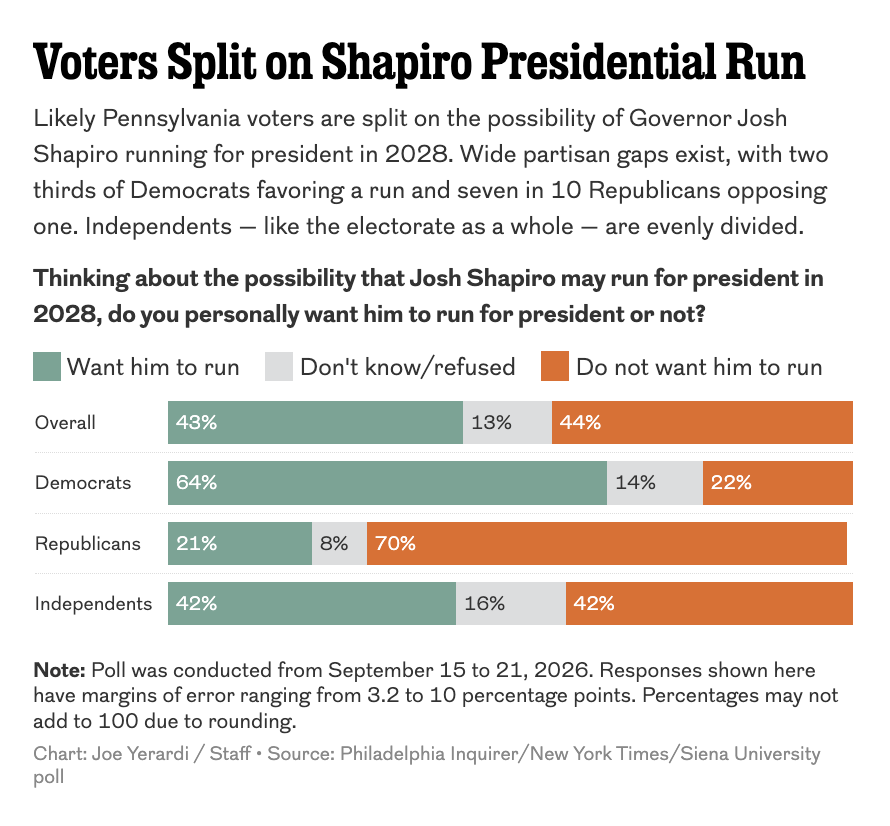
    📊 Without a doubt, Shapiro is a popular governor. He’s viewed favorably by Democrats, independents and even some Republicans — no small feat in a swing state that voted for President Donald Trump in 2024. But whether these likely Pennsylvania voters want Shapiro to run for president in 2028 is an entirely different question.

    Voters, in a poll conducted by Siena University on behalf of The Inquirer and the New York Times, were split on whether Shapiro, who is expected to pursue a White House bid, should run: 43% of respondents want him to run, and 44% don’t.

    Of those supporting a potential presidential campaign, 41% ranked his character and competence as their reasons, and nearly one in five said they were satisfied with Shapiro’s performance as governor. But for those who oppose a run, it’s not necessarily because they don’t like him (although that is the case for 21% of respondents).

    About one in 10 said they would prefer Shapiro, who is up for reelection this November with a commanding lead against his competitor, to remain in Pennsylvania. Campaigning and presidential debates would likely begin soon into his second term.

    Others, however, said they are worried that the U.S. is not ready for a Jewish president. Shapiro has spoken openly about his faith and experiences with antisemitism.

    “I like his views. I like his policies. I like everything. I just think his religious affiliation will stop him from winning because I think the rest of the country, especially the middle of the country, will rally against him,” said Michael Biello, a 68-year-old Democrat in Philadelphia.

    Campaign scrapple

    🏥 Is the U.S. ready for Medicare for All?

    Democrat Bob Harvie thinks there needs to be more trust in the federal government first before it starts running the healthcare system, he told The Inquirer on Tuesday evening.

    Harvie, a Bucks County commissioner challenging GOP U.S. Rep. Brian Fitzpatrick in the swingy 1st Congressional District, has focused his campaign on addressing rising costs and increasing access to healthcare, such as advocating for 55-year-olds to be able to buy into Medicare.

    Congressional candidate Bob Harvie (D, Pa.) speaks on Friday, September 11, 2026 at the Garden of Reflection in Yardley, Pennsylvania.William Thomas Cain / For The Inquirer

    “My worry is you start talking to people about well, ‘We’re going to take away the healthcare system you have, and we’re going to give you another one, and the government’s going to run it,’” Harvie said of Medicare for All. “We’ve got a lot of work to do to rebuild trust in the government, just like we have a lot of work to do to rebuild how this healthcare system works.”

    Harvie was joined Tuesday by Democrats Eileen Hartnett Albillar, running in the key 6th state Senate district, and U.S. Rep. Lauren Underwood, of Illinois.

    📸 Behind the scenes snapshot

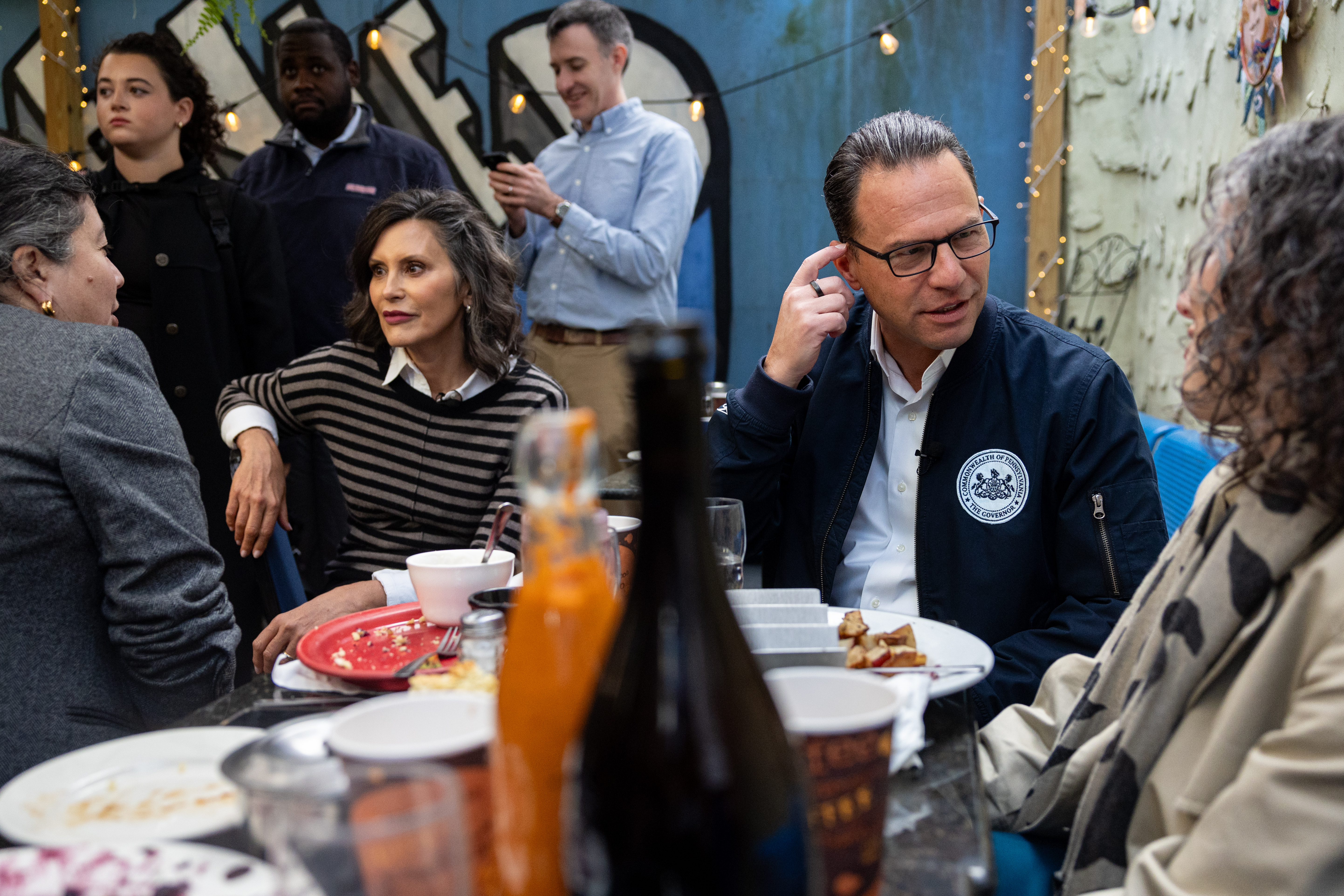
    Michigan Gov. Gretchen Whitmer (second from the left) and Pennsylvania Gov. Josh Shapiro chat with diners at the Morning Glory. The two Democrats have grown close in recent years, but they could become rivals in 2028 if they both pursue the presidency. Aidan T. Gallo / Staff Photographer

    👀 What we’re watching

    Shapiro and Garrity will face off in a live, televised debate this coming Wednesday, Oct. 7. The Harrisburg-based TV station ABC27 is hosting the debate, which will air on several stations owned by Nexstar across Pennsylvania, including WPHL-TV in Philadelphia. Politics reporters Gillian McGoldrick and Michelle Baruchman will break the major moments down at inquirer.com/politics.

    Quote of the week

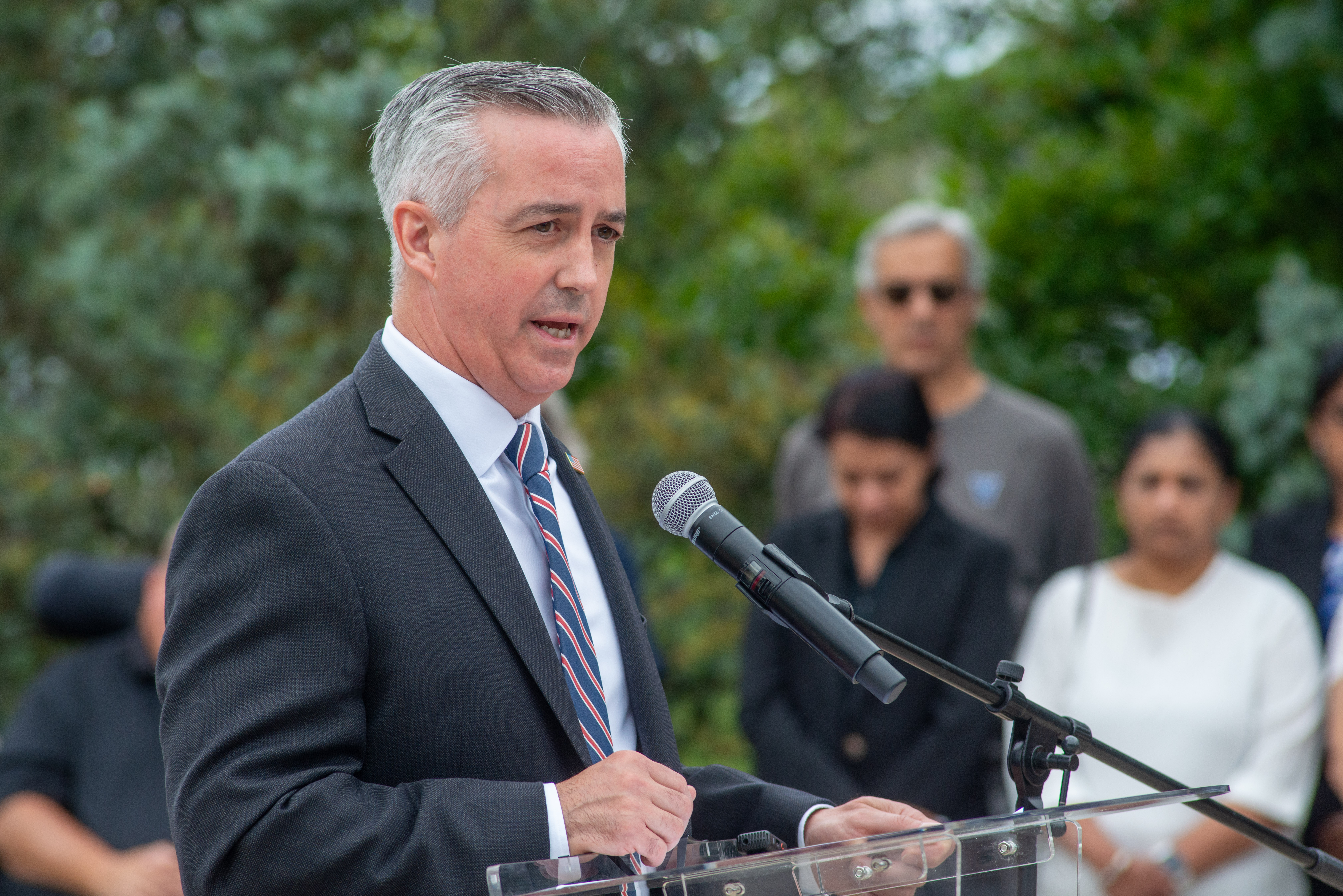
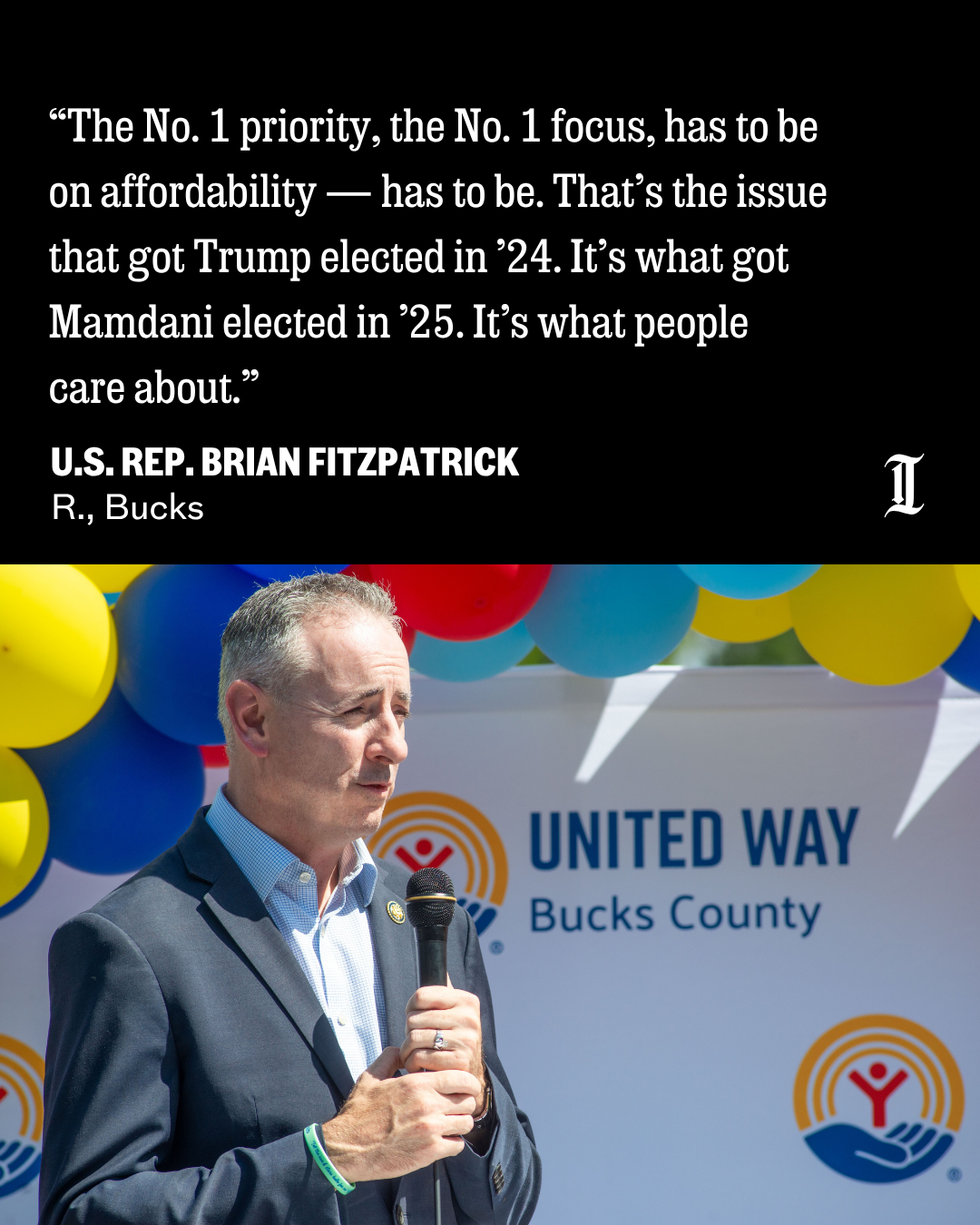
    U.S. Rep. Brian Fitzpatrick weighs in on the No. 1 issue this election. William Thomas Cain / For The Inquirer

    Fitzpatrick agrees with his opponent, Harvie, on one thing: this election will hinge on which party voters think will do a better job lowering the cost of living.

    Voters in the four key congressional swing districts have repeatedly expressed frustration that their dollar doesn’t go as far as it used to and that could be trouble for incumbents this fall.

    👋 Thanks for reading, and don’t forget to check back as we enter a final campaign month packed with debates, candidate events and maybe even a few October surprises. You can follow The Inquirer politics team’s coverage here, and we’ll see you in your inbox next Friday.

  • 🎉 Fall festivals to enjoy | Outdoorsy Newsletter

    🎉 Fall festivals to enjoy | Outdoorsy Newsletter

    Happy October, friends.

    How’s “false fall” treating you? If you pulled your sweaters out thinking summer was done and dusted, you’re not alone. Soon enough, it’ll start to feel like autumn (real autumn).

    As the clock ticks on, we’re losing roughly 2½ minutes of sunlight each day, The Inquirer’s weather whisperer Tony Wood reports. One sure way to combat the negative effects of shorter days? “Get outside and move your body daily,” an expert told Wood.

    You don’t have to tell me twice.

    Here’s today’s itinerary:

    ⛅ Your weekend weather outlook: A mix of sun and showers. Friday will be warm, but temps will cool off Saturday and Sunday.

    — Paola Pérez (outdoorsy@inquirer.com)

    If someone forwarded you this email, sign up for free here.

    From First Fridays to the Philly Bike Ride

    In Philly and the surrounding region, we have a variety of fall festivals and markets to embrace the season in good company.

    Here’s a preview of some lively events to look forward to:

    🏺 Mt. Airy Arts Fest (Oct. 3) at Allens Lane Park will have stations for painting, printmaking, and ceramics to make art with your own hands, along with live performances and food to enjoy.

    🧀 Manayunk Fall Festival (Oct. 17) lets you mac-and-cheese-crawl your way through local vendors. Plus, just one neighborhood over, enjoy free pumpkin decorating and more fun for all ages at East FallsFest.

    🍁 Cherry Hill Harvest Festival (Oct. 18) at Croft Farm will host a beer garden, free pumpkins, and a petting zoo.

    See our full roundup.

    News worth knowing

    🌳 Your outdoorsy experience

    My colleague Sam Stewart recently spent a couple of days in the Poconos and was excited to share this with us:

    These pics are from the Little Falls Trail in Promised Land State Park! It was SO beautiful, lots of water along the trail (including a waterfall!), and it was a super easy, 1.5-mile loop. It was my first fall hike of the year, the weather was incredible and the sun was shining 🙂

    Such a spectacular sight! I’m already planning my own trip up there. Thanks, Sam.

    How about you, dear reader? What’s happening in your neck of the woods? Email me with your favorite adventures or special outdoor memories (and pictures, if you have them). You may see it featured here.

    Tapping into agritourism

    🎤 Here’s rural reporter Jason Nark.

    Pennsylvania is home to tens of thousands of farms, and Airbnb wants you to stay on them.

    The short-term rental giant is partnering with the American Farmland Trust and recruiting Keystone State farmers — and even offering grants — to host guests and tap into the growing agritourism industry. The average farm stay listing on Airbnb, the company said, can make an extra $9,600 per year.

    Valerie and Jeff Fellenbaum said they’re making much more than that at Pleasant Pines Stables, their horse farm dating to the early 19th century in Lancaster County.

    “Once we started, we never looked back,” Valerie Fellenbaum said. “I would say, from March to about the end of October, we’re anywhere from 85% to 90% booked.” — Jason Nark

    Discover how farms in Pennsylvania and beyond are looking to agritourism to stay profitable and find alternate sources of revenue.

    Paola’s picks

    🚣 An activity: Find a good spot to watch sailboats hit the Delaware for the annual Philadelphia Regatta Cup.

    👟 A shoutout: Look out for these runners at the Delco 10 Miler.

    🐕 A fun pup-ortunity: Join “The Dogist” for a walk along the Schuylkill Banks and up the Rocky steps on Sunday.

    💡 A fall fact: According to Merriam-Webster, the term “autumn” entered English in the 1300s, and “fall” became the shortened version of “the fall of the leaves” in the 1600s.

    🎵 A song: “Fall in Philadelphia” by Daryl Hall & John Oates.

    An unassuming view

    There are spotted lanternflies hidden among these vines.Paola Pérez

    I believe this is a Virginia creeper plant, also known as woodbine. It also bears some resemblance to poison ivy. Avoid its berries, though — while wildlife can feed on them, they are toxic to humans.

    👀 Can you spot a spotted lanternfly among the leaves? By my count, I think there are at least two.

    Speaking of the invasive species, my colleague Nick Vadala reported this week about a man tricking at least 80 Pennsylvanians into paying for fake trainings and permits to contain the invasive species. Be wary of scams like that, folks.

    👋🏽 Our next adventure awaits!

    By submitting your written, visual, and/or audio contributions, you agree to The Inquirer’s Terms of Use, including the grant of rights in Section 10.

  • Cornell students call for change at fiery public meeting

    Cornell students call for change at fiery public meeting

    ITHACA, N.Y. — There were fiery testimonies, voices lurching and pleas for action from school leadership. There were fingers pointed angrily at Cornell University’s internal investigators, including by a woman who faced her student government representatives and said, emphatically: “I am also speaking as Jane Doe.”

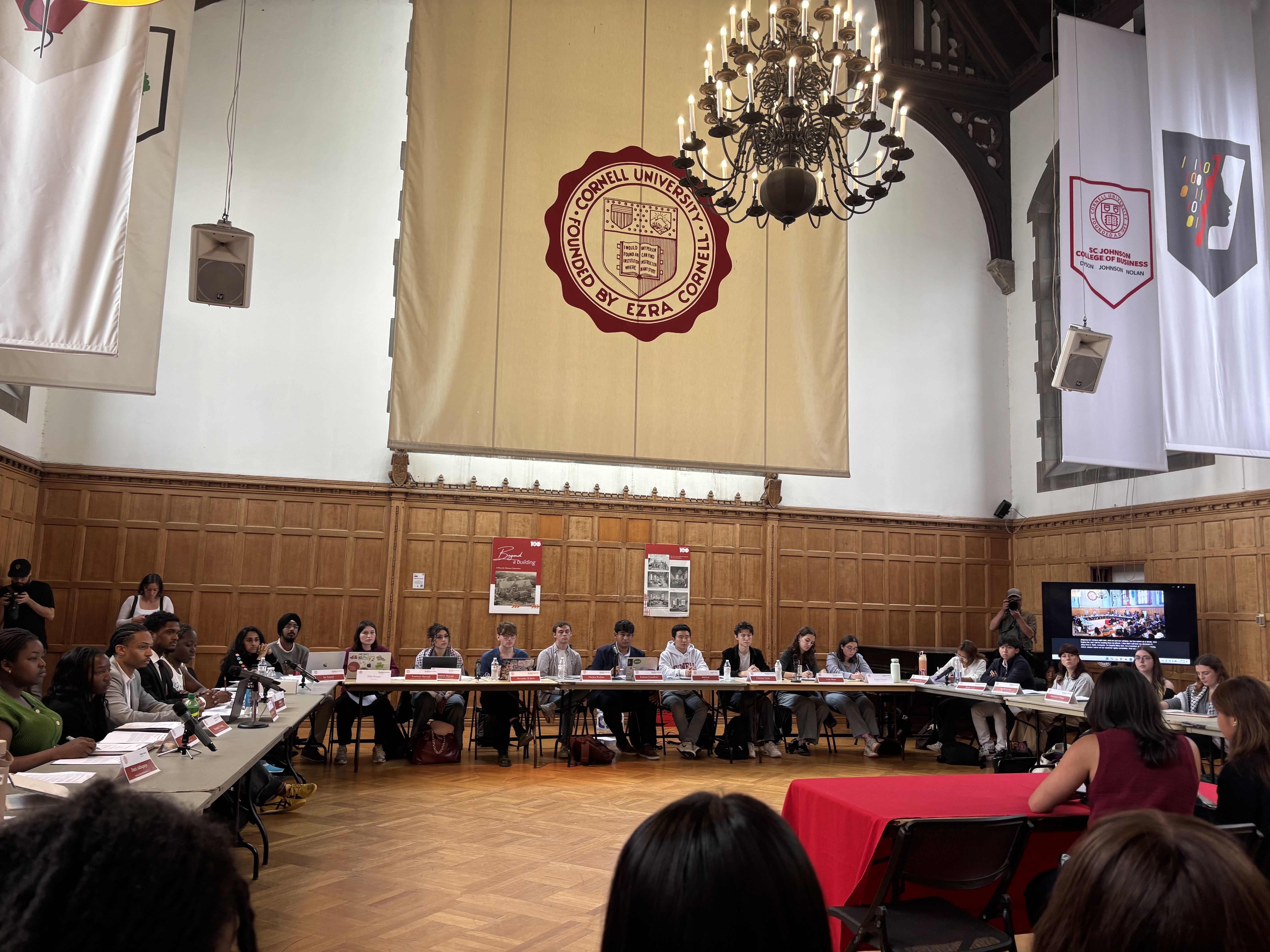
    Cornell’s student government convened a public hearing on sexual assault Thursday, and some 100 people turned out to share their raw emotions in a student union auditorium, Cornell flags and chandeliers hanging overhead.

    Some broke down in tears, channeling the churning emotions of the broader campus. They walked forward, one by one, to offer testimonies, facing a semicircle of somber-faced student assembly representatives who were surrounded by backpacks and soda bottles.

    “I cannot pretend this is a normal Thursday,” said Sophia Riley, a junior, remembering that as a freshman in 2024 she was shattered to hear that a student said she was assaulted at the Chi Phi fraternity house. “I cried about it then, and I’m still equally devastated now.”

    In the days since a lawsuit and rape allegations put Cornell in the national spotlight, the school’s Ithaca campus has been consumed by the news. The meeting gave students a chance to denounce administrators, saying that they had mishandled the allegations of assault, though few school leaders were in the room and the university president, Michael Kotlikoff, was absent.

    Some students expressed rage about the fraternity culture cited in the lawsuit. The suit had prompted the Tompkins County district attorney to reopen the investigation into the claims by a woman known only as Jane Doe that she was sexually assaulted by seven men at a fraternity house.

    University officials have defended their disciplining of the defendants in the lawsuit and denied that the consequences were not strong enough, saying that “false narrative” could make assault survivors feel less safe and less likely to report crimes.

    None of the men accused in the lawsuit has been charged with a crime, and they all have denied any wrongdoing. Four said that they had consensual sexual contact with the woman at the party, and the others denied any participation. Two were expelled, and others received lesser penalties.

    Along with the students, the forum brought together faculty members and a smattering of Cornell parents. Eeshaan Chaudhuri, the student body president, began the event by addressing the room.

    “We’re absolutely ashamed of the events that happened on campus,” Chaudhuri said, before inviting members of the community to line up and make comments. “I think we’ve made it abundantly clear for the past couple of days that we as a campus community stand with victims of sexual violence.”

    A stream of ideas and proposals followed from students, some of whom feel besieged by national media and eager to shift the focus to solutions. Students urged administrators to improve the required workshops and trainings that teach students about consensual sex. And they asked for their classmates to be supported if they can’t complete homework and exams this week because of distress about the case.

    “Students should not have to choose between grieving and keeping up with their academic responsibilities as if nothing had happened,” said Riley, declaring that the campus is in a “mental health crisis.”

    While the majority of the meeting was declared off the record so students could come forward and candidly share their reflections, a handful shared their stories in front of reporters gathered for the public portion.

    Emotions heightened as a woman came to the front of the room and said she, too, had reported a sexual assault at Cornell and felt let down by the university’s Title IX process, which investigates complaints of sexual assault on campus. She saw her own experience reflected in the accuser’s reports, of having an assault claim mishandled.

    “When I filed my Title IX case in the midst of all of my mental, physical and emotional recovery from the assault,” Jane Wang, a junior, said, “I was also met with an abundance of paperwork, very little instruction on how to navigate it and no follow-up from our Title IX office of an outcome.”

    Wang said that for students like herself to feel comfortable coming forward to report assault, they need to know the institution will act on it. “Through this event, we have witnessed the complete opposite,” she said.

    This article originally appeared in The New York Times.