Blog

  • A longtime local caddie is on the bag for one of the semifinalists at the U.S. Amateur at Merion

    A longtime local caddie is on the bag for one of the semifinalists at the U.S. Amateur at Merion

    The field at the 126th U.S. Amateur Championship is down to four.

    Eight golfers competed in the quarterfinals of match play on Friday afternoon at Merion Golf Club.

    All four of Friday’s matches were decided before the 18th hole. The first pairing of the day, Brandon Knight and Carter Loflin, made it the furthest before Loflin closed out Knight on Hole 16.

    Loflin will tee off against Jack Whaley at 2 p.m. Saturday, while Jay Leng Jr. will face Logan Reilly at 2:15 p.m. for a place in Sunday’s final.

    In addition to a place in the final match, the four remaining golfers are playing for exemptions to the U.S. Open and the Masters. The winner and the runner-up from the Amateur will gain entry into both tournaments in 2027.

    Michael Lugiano, the only Pennsylvania native to make the U.S. Amateur quarterfinals, had the biggest following of the day, but he dropped his match to Reilly, 6 and 4.

    Reilly won five of the last six holes to beat Lugiano, who hails from Jackson Township, Pa. and plays college golf at Liberty.

    “I actually really enjoyed it,” Reilly said of playing in front of the crowd supporting Lugiano. “I loved how many people there were out there. Just gave me a little extra motivation, honestly. Thank God I got a couple of my friends that came out, so they were trying to get loud. But yeah, it was great. Unbelievable atmosphere.”

    Loflin, a Duluth, Ga., native who played his collegiate golf at Georgia, won six holes against Knight. Birdies on holes Nos. 7, 8, 10, and 13 helped Loflin lock down his match early.

    Jack Hopkins has 35 years of experience caddying at Merion and has carried Carter Loflin’s bag at the Amateur this week.Clem Murray / Staff Photographer

    Loflin is the last player remaining with a local caddie. Jack Hopkins has 35 years of experience caddying at Merion and has carried Loflin’s bag at the Amateur this week.

    Loflin hopes that gives him an advantage on Saturday.

    “[Hopkins] knows this place so well,” Loflin said. “He’s an incredible green reader, and he’s a very calming influence. He doesn’t talk very much. He’s very quiet, which I like because I talk a lot. … Whenever he says stuff, it really means something. If he tells me no, then I’m not going to do it. It’s been a lot of fun.

    Leng, who plays at Stanford, was the first golfer off the course Friday after winning, 6 and 5, over Jack Turner.

    After a tie on the ninth hole, Leng, a San Diego native, made four consecutive birdies, including hitting a near-perfect drive on 13th hole with a sand wedge, to cement his spot in the semifinals.

    “I knew since I was pretty far up, I didn’t want to do anything stupid,” Leng said. “Hit a full sand wedge, and it was the perfect number, spun back nicely.”

    Leng is two weeks removed from winning the Western Amateur in Chicago. If he can put together two more winning efforts, he will become the 10th player since World War II to win the Western Amateur and the U.S. Amateur in the same year.

    Other players to accomplish the feat include Tiger Woods and Jack Nicklaus.

    After his round on Friday, Leng said improved putting has unlocked extra confidence this summer.

    “Just knowing that I have a chance, no matter where I am on the green,” Leng said. “It’s really helping me free my game up a little bit.”

    Whaley beat Adam Bresnu, 5 and 4, to secure his place in the semifinals. Whaley, an Englishman who golfs at Florida State, did not drop a hole to his Moroccan opponent Bresnu.

    Whaley, a rising senior, is two seasons removed from playing at NAIA school Dalton State in Dalton, Ga. Now, he’s one win away from earning a place in two major tournaments.

    “Obviously it would be a huge thing to go and play in those prestigious events,” Whaley said. “I’m trying not to think about it as much as I can because obviously it can add a little bit more pressure, but at the end of the day, I’ve still just got to go out and play my own game, and if that comes at the end of it, then I’ll be very, very pleased.”

  • West Chester team advances to the Little League World Series

    West Chester team advances to the Little League World Series

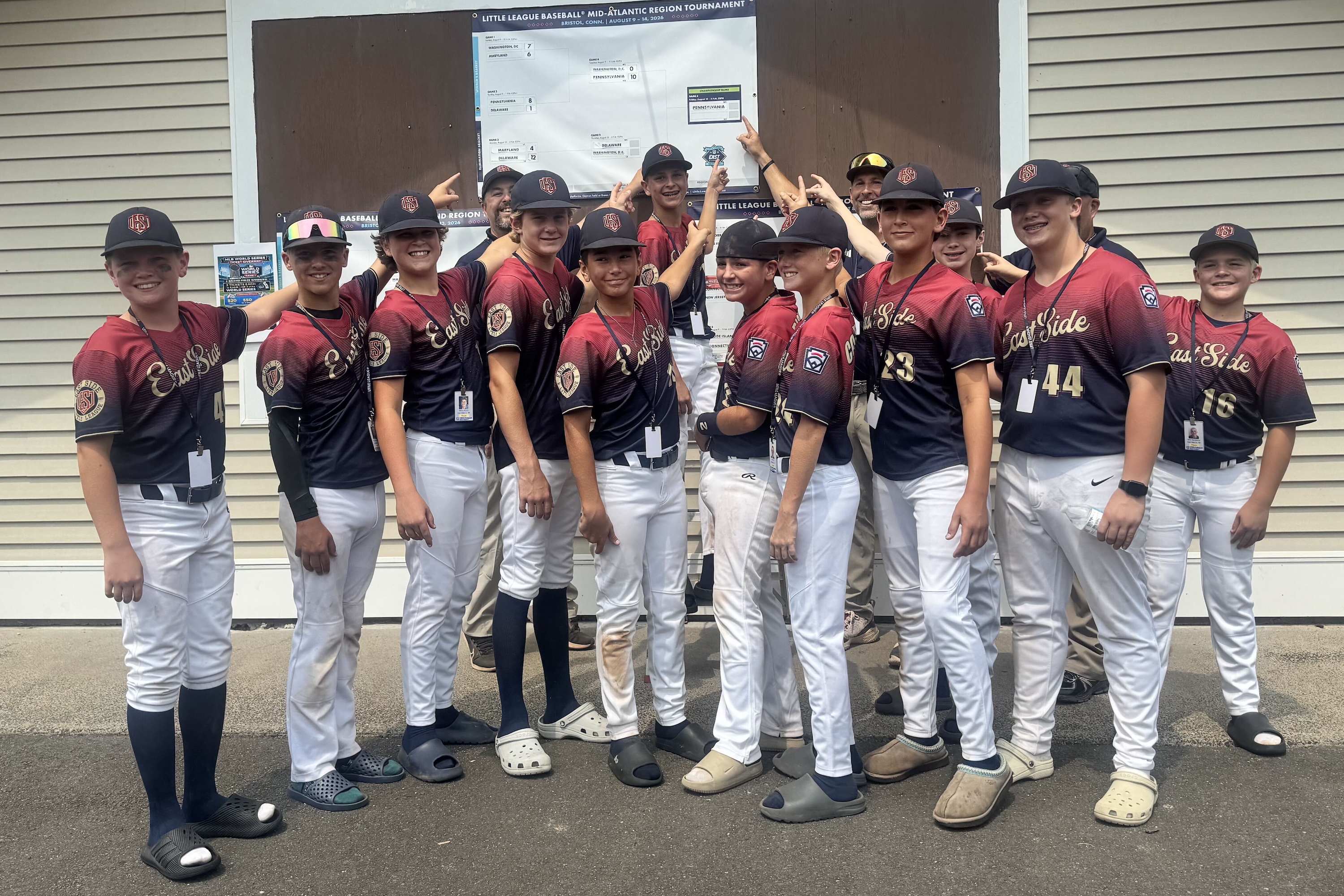
    East Side Little League, a 12-and-under baseball team from West Chester, is headed to Williamsport, Pa.

    On Friday, East Side defeated Wilmington’s Naamans Little League, 3-1, to punch its ticket to the Little League World Series. East Side was powered by pitcher Cole Warner, who allowed just one run on four hits and struck out eight in five innings.

    “Feels really good, just representing Pennsylvania,” Warner said on the ESPN broadcast. “Little kids who play for East Side, we set the example. Hopefully, they can carry on.”

    Warner set East Side up, but relief pitcher Ryan Donnelly made the game-clinching play.

    In the final inning, with runners on first and second, Naamans second baseman Joey DeCaro hit a short roller toward third base. Donnelly slid to grab the ball, and his throw beat DeCaro to first for the game’s final out.

    East Side went to celebrate, throwing their gloves and piling on top of each other, but a challenge delayed the party. Eventually, after an almost four-minute review, the call was confirmed. East Side was heading to the World Series, and the team got to celebrate for a second time.

    “It felt really good waiting there,” Warner said. “We all knew he was out.”

    East Side scored all three of its runs in the first inning. Center fielder Ryan Hennessey got his team started, launching a ball to center to bring in Donnelly and — following a Naamans error — Warner. East Side would score once more in the inning with third baseman Jack Cassidy hitting a single to bring Hennessey home.

    Naamans scored its run in the second when utility player Taj Amobi doubled in left fielder Charles Puit.

    East Side will look to become the first team from Pennsylvania since 1960 to win the Little League World Series, when Levittown American defeated Fort Worth, Texas, 5-0, in the championship game. However, a few area teams have reached the series in recent years: Glenmoore Eagle Little League (from Upper Uwchlan Township) last year, Council Rock Newtown Little League in 2024, and Media Little League in 2023.

  • Police grapple with a lack of bodies in disturbing Olney investigation — and for families, a lack of closure

    Police grapple with a lack of bodies in disturbing Olney investigation — and for families, a lack of closure

    Philadelphia police this week acknowledged that the sprawling missing persons investigation in Olney has evolved into something even more complex — a death investigation without any dead bodies.

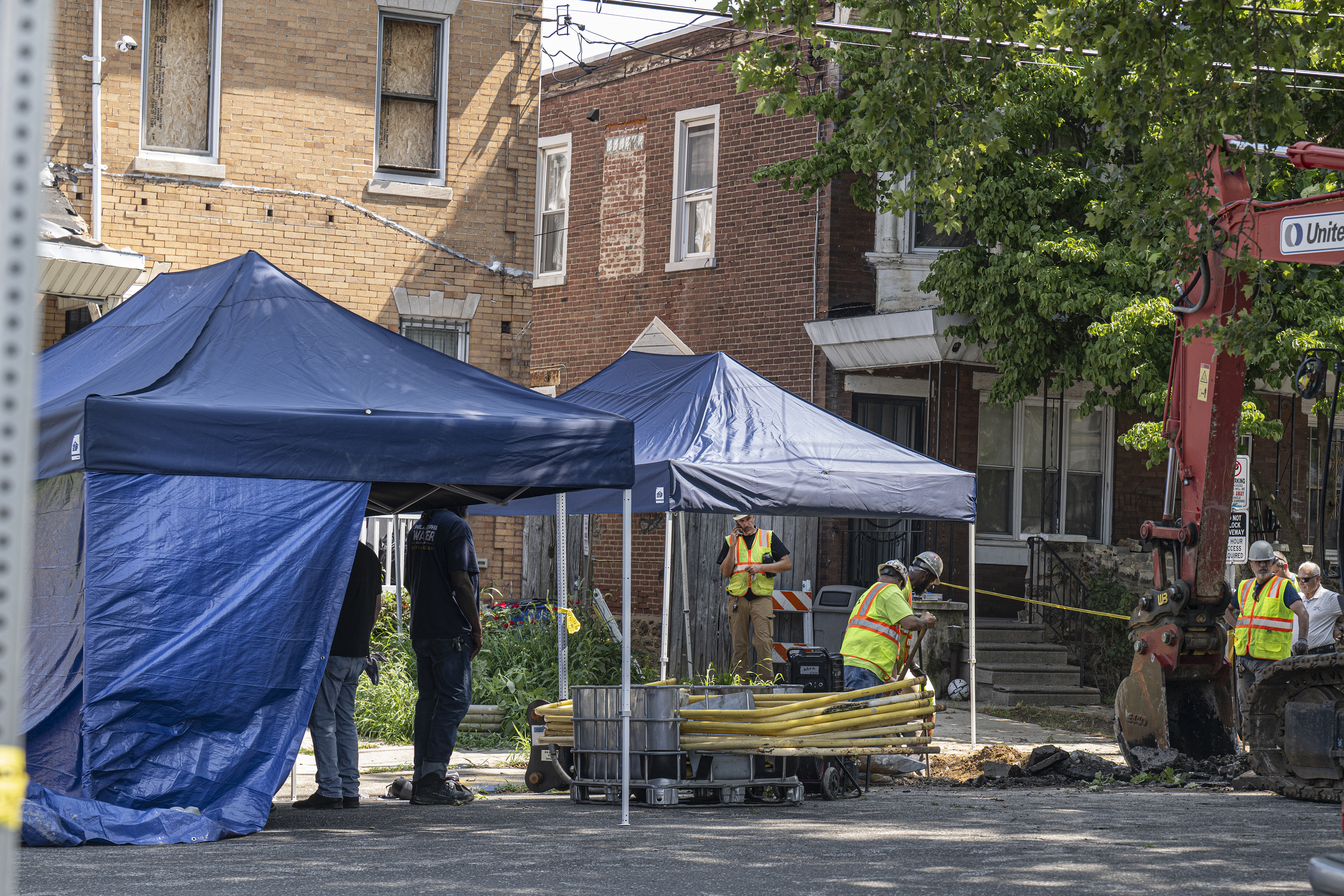
    Adding to the challenge is that there are now at least four missing women linked to a crumbling house on West Chew Avenue, where for decades, Raymond “R.C.” Horsch had lured drug-addicted women to shoot pornographic photos and movies depicting graphic violence.

    On Wednesday, Police Inspector Raymond Evers said a hard drive recovered from the family home of Raymond and his son Eugene Albert Horsch contained “images and video of what appeared to be two deceased females” taken inside — and that police believed the women had really died there, even though they have found no human remains.

    “Usually when we have a homicide investigation, we have a body, we have body parts,” Evers said. “This time we do not.”

    Police said they have not yet determined when Gabrielle Amarando and Maribel “Bella” Fresses died. Without a body, the medical examiner, too, cannot determine a cause or manner of death, and officials did not share publicly, or with the women’s families, the extent of their injuries.

    Law enforcement sources said the images showed women with ashen skin, posed in ways that would be nearly impossible for someone who was still alive. Authorities are still working to identify dozens more people featured in the materials to determine where they are today — and if they’re still alive, said the sources, who spoke on condition of anonymity to discuss an ongoing probe.

    The images are further complicated by the fact that Raymond Horsch spent decades using women struggling with addiction as models in apparent snuff films and pornographic photos that featured bondage, sexual violence, and death. Some appeared to be staged or digitally altered.

    Michael Yoder, a retired FBI agent who has advised on over 45 no-body homicide cases, said he had never seen a case of this nature, as the typical such case involves a missing spouse or relative.

    “This is a no-body homicide and a potential serial homicide case,” Yoder said. “The fact that you also have these videos of simulated deaths or assaults, I’ve never seen that in a no-body homicide case.”

    Gabrielle Amarando (left), missing since 2012, and Maribel Fresses, 27, reported missing in 2018. Police believe they were killed inside the Olney home.Obtained by The Inquirer

    Detectives have so far reviewed around 5% of hundreds of thousands of photos, videos, and written materials recovered in the home. Yet despite the trove of digital files, police say they have found not a trace of human remains or DNA from any missing women.

    Police say they have evidence that some works likely went beyond make-believe.

    The two women police said died at the house were last seen about a decade ago.

    Evers said Wednesday that “if the images and the video are real and not altered in any way,” the women are dead. That leaves police facing the unusual prospect of seeking formal death declarations for both women in the city’s Orphans’ Court without a body, which adjudicates the rights of persons unable to handle their own affairs.

    Police were first led to the home after Eugene Horsch, 44, was arrested during a June 19 car stop that uncovered illegal weapons and the phony ID in the name of another woman, Blair Tonzelli, who was reported missing in 2023 and last seen at the Olney home. A fourth missing woman, Amy McHale, Raymond’s ex-wife, was also last seen at this house in June 2016.

    Inside the crumbling twin, investigators found chemical vats, dozens of computers and hard drives, and a cryptic handwritten note that referenced harming people and alluded to serial killer Ted Bundy.

    Raymond Horsch died last year. Eugene has not been accused of any violent crimes. He was incarcerated at the time of at least one disappearance. An attorney for Horsch has declined comment.

    After years of silence from their daughters, the Fresses and Amarando families said they were devastated to learn from police that the women are dead. But their relatives still don’t have all the answers they seek.

    “I hate to say it, but I don’t have an actual body to say, ‘OK, this is my daughter,’” said Patricia Fresses, Maribel’s mom. “I need to see it.”

    Maribel Fresses, 27, reported missing in 2018. Police believe she was killed inside the Olney home.Courtesy of Melissa Fresses

    A rise of no-body homicides

    Bodiless murder cases have become more common in recent decades, thanks to advances in forensic technology that have enabled prosecutors to bring charges in cases with limited physical evidence.

    Some past cases locally have ended in successful convictions.

    In 1997, the FBI arrested former Delaware prosecutor Thomas J. Capano, who was a suspect in the 1996 disappearance of congressional aide Anne Marie Fahey in Philadelphia.

    To this day, Fahey’s remains have never been found. However, the pair were known to be having an affair, and they were last seen together dining in Center City. Letters written by Capano pointed to an increasingly controlling romantic relationship, and a search of his car and home later revealed traces of Fahey’s blood.

    The former prosecutor was later arrested and convicted in 1999 of murder.

    But that outcome is not always certain.

    In Chester County, in 2025, Malvern resident Allen Gould was charged with homicide following the 2017 disappearance of his wife, Anna Maciejewska, who has also never been found. Prosecutors alleged that Gould demonstrated little concern about this vanishing, reporting it to law enforcement only under pressure from family and friends.

    Yet without a body or murder weapon, Gould’s lawyers have argued the prosecution is built on circumstantial evidence.

    That case is expected to proceed to trial later this year.

    A former U.S. Attorney told The Inquirer in 2013 that, nationwide, 88% of the 400 no-body homicide cases that had gone to trial ended in convictions. Yet this figure only accounts for the cases that are actually brought before a court.

    In the Capano matter, investigators were able to charge the former prosecutor because of additional forensic evidence, and the suspect’s own inconsistent testimony about their final moments together.

    But investigators in the Horsch case face three steep challenges: There are no bodies, no other human remains, and one potential suspect — Raymond Horsch — died last year from a lung condition at the age of 82.

    Yoder, the retired FBI profiler, said a no-body homicide prosecution would require evidence that clearly shows someone else was responsible for the deaths, and said additional forensic details like metadata taken from the photographs could establish a compelling timeline. Raymond’s graphic fantasies, he reasoned, would be irrelevant to the prosecution of another suspect.

    “If you say he videoed women in fake death or fake assaults on video, it’ll throw a jury through a loop,” he said. “You’re getting the point of, if they don’t believe something, they won’t believe everything.”

    Gabrielle Amarando as a child. Gabrielle was missing since 2012 and police believe she was likely killed in the house on Chew Avenue in Olney.Courtesy of Karen Amarando Riley

    No bodies, no closure

    Regardless of the possibilities for justice in court, death declarations also generally mark the end of any hope that an individual or their remains will ever be found or properly interred.

    In a 1980s article on the Orphans’ Court, a judge told The Inquirer they handled about a half dozen bodiless death declarations annually, but could not recall any in which a missing person was later found.

    “Most of them just disappear,” the judge said.

    Last year, Gabrielle’s mom, Karen Amarando Riley, talked to a psychic in a desperate attempt to get answers about her missing daughter.

    Riley said the psychic described Gabrielle’s descent into addiction, and that she couldn’t see Gabrielle alive past the age of 27, which would have been in 2017.

    The mother was shaken.

    “She nailed everything … the time she started doing drugs and what drugs she did and everything in her life,” she said. “The last image she could get was Gabrielle standing in front of a brick building in a city.”

    “I just wanted closure,” she said. “And she couldn’t give it to me either.”

    Gabrielle Amarando with her mother, Karen Amarando Riley. Gabrielle was missing since 2012 and police believe she was likely killed in the house on Chew Avenue in Olney.Courtesy of Karen Amarando Riley

    The families of the Fresses and Amarandos — and potentially others seeking loved ones who vanished in Kensington — now face the possibility of closure without the recovery of a body or, possibly, a homicide conviction.

    Riley, of Ocala, Fla., last heard from her daughter Gabrielle when she called from a Philadelphia prison on Christmas Day in 2012.

    “I thought maybe she overdosed because she would have been in touch with somebody, if not me, somebody,” Riley said.

    She is tormented by the thought that her child was reduced from the beautiful aspiring model she once knew, falling into addiction and, police say, ultimately being lured into the home on Chew Avenue.

    “It tears me up. I don’t know what he did to her before he killed her,” she said. “I always wanted closure, but I didn’t want this.”

  • American missionary kidnapped in Niger soon to be reunited with family

    American missionary kidnapped in Niger soon to be reunited with family

    A mission organization said on Friday that a pilot who was kidnapped while working for the group in the West African country of Niger last year was in “good health” after his release.

    The missionary pilot, Kevin Rideout, was seized from his home in Niamey, the capital of Niger, in October. A U.S. official said on Friday that Rideout had arrived at Ramstein Air Base in Germany and was undergoing medical evaluation. Like others in this article, the official spoke on condition of anonymity to discuss operational matters.

    Rideout’s organization, called Serving in Mission, said in a statement that he would soon be reunited with his loved ones.

    “We are grateful to confirm that our good friend and brother in Christ, Kevin Rideout, has been released,” the statement read. The mission noted that he was in “good health in the care of U.S. officials” and would soon be reunited with his wife, Krista; their four children; and his extended family.

    “Krista and the rest of Kevin’s family are profoundly grateful for the prayers offered on their behalf by people around the world throughout his captivity,” the statement added.

    Another U.S. official said on Thursday that Rideout’s release, which was earlier reported by the New York Times, was not the result of a military rescue operation but “by other means,” offering no further details.

    The official linked Rideout’s release to U.S. military pressure on the Islamic State in Nigeria, Niger’s southern neighbor, in recent months. In May, President Donald Trump said that American and Nigerian forces had killed Abu Bilal al-Minuki, a high-ranking Islamic State leader in Lake Chad, a region at the intersection of four countries, including Nigeria and Niger.

    The official said that raid had helped influence the kidnappers’ decision to release Rideout.

    How and where he was released were not yet clear, U.S. officials said earlier, and it was also unclear which group held him at the end of his captivity. Rideout’s release had been a major priority for the White House and for the military’s Africa Command.

    In May, French journalist and researcher Wassim Nasr, who has been monitoring jihadi groups in the area for several years, said that Rideout was being held in Ménaka, a region in Mali just over the border with Niger. That area is mostly controlled by a local branch of the Islamic State.

    For years, Mali and Niger have been battling insurgents affiliated with al-Qaida and the Islamic State. In April, al-Qaida-linked militants launched coordinated attacks across Mali, seizing a major city and killing the country’s defense minister.

    This article originally appeared in the New York Times.

  • State correctional officer in Delco charged in child porn case

    State correctional officer in Delco charged in child porn case

    A state correctional officer in Delaware County has been charged with numerous counts related to possessing and sharing child pornography, court records show.

    David Lemmon, 45, of Clifton Heights, was charged with more than 100 counts related to possessing and sharing child pornography, according to court documents. Bail was set at 10% of $100,000, which he posted on Monday.

    His lawyer, Olivia Leigh Mastrangelo, declined to comment on the case Friday.

    Maria A. Bivens, press secretary of the Pennsylvania Department of Corrections, said Lemmon has not reported for work since his arrest Monday.

    “The Department is taking appropriate administrative action, including moving to suspend his employment, in accordance with the Department’s policy and the Governor’s Code of Conduct,” Bivens said in an email.

    The Delaware County District Attorney’s Office could not be reached for comment.

    Lemmon was assigned to the State Correctional Institution at Chester.

    The criminal investigation began with a tip from the social media app Snapchat, NBC10 reported. Investigators questioned Lemmon at the Chester prison in June and confiscated his phone. They also searched through devices found at his home, NBC10 reported.

  • Oil, hunters, and Dr. Phil: How a longshot project is shaking up Greenland

    Oil, hunters, and Dr. Phil: How a longshot project is shaking up Greenland

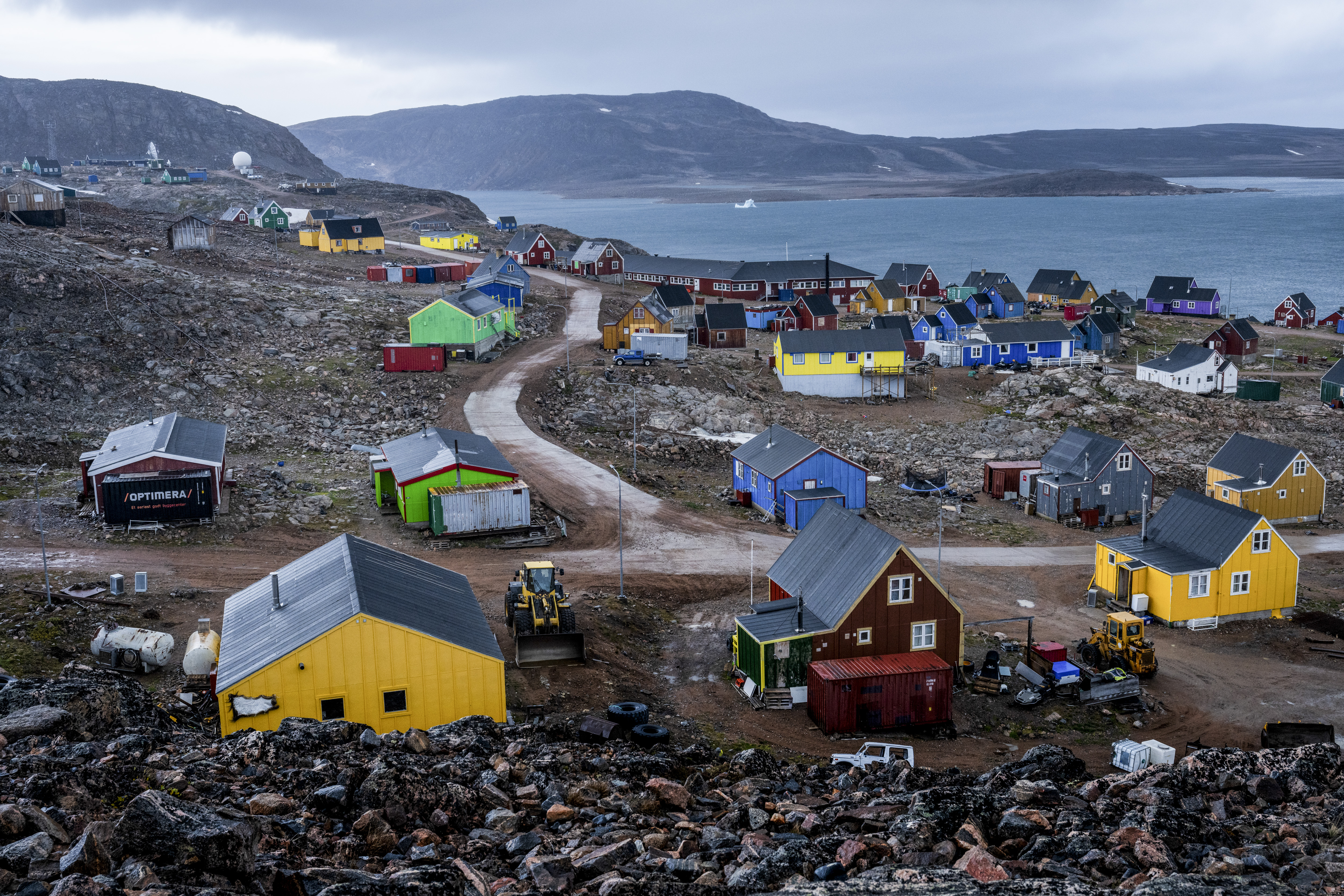
    LONDON — In one of the most remote towns on Earth, on the frozen crust of Greenland’s east coast, the American oilman made his pitch.

    Near to the very room where they were all sitting, he told a crowd of Greenlanders, could be as much as 13 billion barrels of oil. His company planned to drill two exploratory wells, and if it struck oil, it could be a major worldwide discovery bringing much-needed jobs, loads of tax money, and relief to world energy markets.

    The people who attended the meeting, which was held in June in an isolated town called Ittoqqortoormiit, had some questions.

    Why would Greenland get only 15% of the profit?

    What kind of chemicals would be used?

    And what about the musk ox? (Musk ox hunting is a big deal up there.)

    The meeting wrapped up with a lot of unhappy people filing out, according to a video of it that was shared with the New York Times, and a showdown over oil exploration has now joined the cloud of issues swirling over Greenland.

    The wildcat oil project is being pumped up by Dr. Phil McGraw, the TV personality known as Dr. Phil, and Gov. Jeff Landry of Louisiana, both powerful allies of President Donald Trump. It’s the latest push by the MAGA camp to close in on this gigantic Arctic island that Trump threatened to annex and remains a fixation of his.

    If the discovery is anything close to what the company says, and if it makes economic sense for major production — and those are two enormous ifs — this project could thrust Greenland into a radically different future, possibly as an Arctic petrostate.

    But it’s off to a bumpy start. After a wave of negative publicity, protests by Greenlanders, and a slipup by the project’s organizers who have a drilling license, Greenland’s authorities tapped the brakes. This week, the government pushed back the timeline for granting final approvals, saying that it’s unlikely any drilling would be authorized before 2028.

    The Texas-based firm leading the project, Greenland Energy Co., now says it will focus on drilling only one well, not two. And the delays are expected to cost millions. As a result, Greenland Energy’s share price has plummeted, trading at little more than a dollar, half its value from just days ago.

    A few years ago, Greenland declared it was suspending oil exploration. The Arctic is among the fastest-warming regions in the world, and the Greenlandic government felt it was wrong to contribute more fossil fuel pollution.

    But the oil prospectors in this case are operating with a valid license granted before the policy changed, according to documents reviewed by the New York Times. So Greenlandic officials, who have been trying to navigate the intense pressure Trump has put on them, find themselves in a tight spot.

    They are more than aware that if they reflexively block Americans from drilling, especially at a time when world events have squeezed the global oil supply, that could give Trump the pretext he needs to return to his threats to “get” Greenland, “one way or the other.” At the same time, there’s obvious resistance from ordinary Greenlanders and government officials to the project.

    “In a world where Donald Trump has pursued such a confrontational policy toward Greenland, you can’t help but be a little concerned,” said Mikkel Runge Olesen, a senior researcher at the Danish Institute for International Studies. “If you suddenly throw a major oil discovery into the mix, who knows what might happen.”

    For months, the United States, Greenland, and Denmark — the island’s former colonial master that still controls many of its affairs — have been locked in sticky negotiations over the island’s future. One key issue has been America’s access to Greenland’s natural resources.

    Ever since Trump set his sights on the island, Greenland has become a magnet for investors and allies chasing Arctic resource dreams. But oil has never been easy.

    Chevron and Shell prospected decades ago with no success. It’s incredibly expensive to build an oil industry from scratch in one of the most remote and inhospitable places on the planet. Most of Greenland is covered in ice. One major U.S. company, ARCO, decades ago sank today’s equivalent of $250 million — far more than the $80 million the current players have raised — into seismic studies in the same area, only to abandon the project in 1990.

    “There are so many red flags here,” said Naaja Nathanielsen, Greenland’s former minister of natural resources and now a representative in Denmark’s parliament. She said she hasn’t seen any hard data supporting the project’s tantalizing claims, adding, “I think they are selling hot air.”

    Not so, say the backers of the project, a joint venture between Greenland Energy, the small, publicly traded U.S. company that raised the money, and 80 Mile Plc, a British outfit that acquired the drilling licenses several years ago.

    Roderick McIllree, 80 Mile’s executive director and a board member of Greenland Energy, said this stretch of Greenland had the same geology as the North Sea oil fields, where European countries have extracted billions of barrels. And climate change is working in their favor, he said.

    Warming temperatures mean less ice clogging Greenland’s coast, making any oil discovered cheaper to export than it would have been decades ago, he said.

    One investor is the Citadel hedge fund, run by investment titan Ken Griffin, and the Trump administration fully supports the project.

    “Greenland could be exporting 2 million barrels of oil a day,” said Landry, Trump’s special envoy to Greenland, in a Fox News interview in May. He added, “Think about what kind of pressure that would relieve in the Straits of Hormuz.”

    Before the project is allowed to start, its plans, including a detailed environmental assessment, must be approved. But the organizers have been moving ahead anyway and recently carried out two disputed equipment transfers.

    First, they brought in a barge load of equipment from another part of Greenland on what authorities said was an expired permit. Jorgen Hammeken-Holm, the head of Greenland’s mineral resources department, called the move “naughty, naughty.”

    Then, a few days later, they unloaded another piece of heavy equipment without proper notification, authorities said.

    “We have the police and the military,” Hammeken-Holm warned. “They can assist in dealing with unlawful activities if necessary.”

    McIllree admitted, “We kind of fell down.” He said the company apologized to Greenlandic officials.

    The potentially oil-rich area, known as Jameson Land, is a highly protected environmental zone, an Arctic swampland of sorts, home to tenacious shrubs and musk ox, foxes and migrating birds like the pink-footed goose. The musk ox is prized for its meat and its fur, which is turned into a luxurious yarn.

    All this has attracted Dr. Phil, who did a recent 44-minute podcast on the project. He titled the episode “Frozen Gold,” and according to documents on Greenland Energy’s website, the company has established “a wide-ranging partnership” with him to make a six-episode series on “this modern-day treasure hunt.”

    His company did not respond to requests for comment about his involvement in the project. But on his podcast, Dr. Phil said he would soon head to the Arctic.

    “I’m going to have to mug a kitten and get some mittens because I’m going to go up there and see this firsthand,” he said.

    Ittoqqortoormiit (It-tok-kor-TOR-meet), population 329, is trying to make sense of what’s happening. This spring, members of the local council seemed ready to negotiate and drafted a list of things they wanted from the oil company: a heated community pool, new hunting cabins, and funding for residents to fly over Jameson Land in helicopters one last time before their hunting grounds were turned into an industrial site.

    But the public meeting in June changed the mood.

    McIllree conceded that the team that led the meeting didn’t show enough respect.

    “They forgot whose house they were in,” he said.

    Still, some residents support the project.

    Aage Uugi Pike Barselajsen, a construction worker, said in a telephone interview that Ittoqqortoormiit desperately needed jobs.

    “You have to think about the future and the money,” he explained. “Maybe Greenland could become like Dubai. That’s my dream.”

    This article originally appeared in he New York Times.

  • Owner of Zena’s American Mediterranean Cuisine in Collingswood released on bond from ICE detention

    Owner of Zena’s American Mediterranean Cuisine in Collingswood released on bond from ICE detention

    Iemad Saifo, the 65-year-old owner of Zena’s American Mediterranean Cuisine in Collingswood, has been released after spending two weeks in ICE detention at Delaney Hall in Newark, N.J.

    Saifo emigrated to the United States from Syria in 2002 on a business visa and later sought asylum after the outbreak of the Syrian civil war. He was detained during a routine ICE check-in July 31.

    Saifo is the primary caregiver for his 12-year-old son, who has autism. The elder Saifo also has spasmodic dysphonia, a rare condition that makes it difficult for him to speak, as well as chronic kidney disease.

    Dozens of Collingswood-area community members wrote letters and signed a petition urging the court to keep him in South Jersey with his family.

    As President Donald Trump pushes his mass deportation agenda, routine check-ins have become increasingly risky for immigrants. Immigration advocates say many of those who have been arrested at ICE check-ins were simply following government protocols.

    Last week, New Jersey Attorney General Jennifer Davenport announced her office was investigating Delaney Hall after multiple detainees died there during the last year, raising concerns about the facility’s conditions and medical negligence. The privately operated detention center under contract with ICE has been the scene of fierce protests and political fights between the Trump administration and Democrats since its May 2025 reopening.

    U.S. Immigration and Customs Enforcement said in a statement that Iemad Saifo was arrested both because he does not have permanent status and because of a 2018 case in which he was indicted and found guilty of witness tampering and sentenced to five years’ probation.

    “Under President Trump and Secretary Mullin, ICE is targeting the worst of the worst,” a Department of Homeland Security spokesperson wrote. “Nearly 70% of ICE arrests are of illegal aliens charged or convicted of a crime in the U.S.”

    One of Saifo’s attorneys, Fiona Powell, credited the 150 notarized letters from community members testifying to his character with helping secure his release.

    “This was an outpouring of community support like I’ve never seen before,” she said.

    Those letters were authored last weekend during an event that friends, family, and community organizers hosted at his restaurant.

    Many in South Jersey know Iemad Saifo from his restaurant, which opened in 2011, and from the nearly 10 years he previously spent working at a local 7-Eleven, said his 27-year-old daughter, Zena Saifo, for whom the restaurant is named.

    Zena Saifo said she, her mother, and one of her brothers were granted asylum after the war began. Her father never heard back from the Department of Homeland Security on his asylum application, she said, so he later applied for permanent residency through his younger son, who was born in the United States.

    “He’s always willing to help people, to give,” Zena Saifo said of her father. “People are really enraged and disgusted by what’s happening and doing everything they can to support him.”

    Zena Saifo is still reeling from the day of his detention, she said, when she, her brother, and lawyers arrived at the Mount Laurel ICE office for the check-in around 7:30 a.m. and were made to wait until past noon. The Saifos’ lawyer notified Zena her father would be detained. She tearfully pleaded with the ICE officer to let her say goodbye to him but was denied, she said.

    “‘Was this the last time I saw my father?’” Zena Saifo recalled wondering in the moment. “It was just really, really devastating.”

    In the period since Iemad Saifo’s detention, two of his sons, ages 24 and 26, have taken over the restaurant. His wife has stayed at home and taken care of the youngest. He turned 12 last weekend without his father present.

    Zena Saifo said her father’s two requests of her in his absence were to water the family fig tree and to host a big celebration for her brother’s birthday.

    On Friday morning, the family was en route to pay the $7,500 bond and pick Iemad Saifo up from Delaney Hall, Powell said.

    The 2018 charge was brought up during the bond review, she said, but “in the end the judge was able to see that he’s an older man with a family who needs him and strong community ties and that he deserves to be home with his family.”

    Going forward, Iemad Saifo’s legal team will do all it can to secure permanent residency for him. In the interim, Powell said, immigrants are always at risk of detention regardless of their circumstances. The Trump administration has issued 46,000 orders of removal or voluntary deportation since the start of last year in Pennsylvania, New Jersey, and Delaware, more than in the entirety of former President Joe Biden’s term. In New Jersey’s courts, orders of removal or voluntary departure rose 47% just between May and June, from 2,348 to 3,446.

    However, to legally detain Iemad Saifo again, the government would need to show something about his situation has changed.

    “It could take potentially months or years more in order to get him permanent status here, but we will continue doing everything we can to keep him here,” Powell said.

  • Federal investigators subpoenaed records about Philly lobbyist William Dunbar, who was key to Mayor Parker’s campaign, sources say

    Federal investigators subpoenaed records about Philly lobbyist William Dunbar, who was key to Mayor Parker’s campaign, sources say

    Federal investigators last summer issued subpoenas for documents and financial records related to William F. Dunbar Sr., a Philadelphia lobbyist who was a close confidant of Mayor Cherelle L. Parker during her 2023 campaign, according to three people with direct knowledge of the probe.

    Dunbar, who has extensive political ties, was a key member of Parker’s informal “kitchen cabinet” of unpaid advisers during her 2023 run, and he ran her campaign, People for Parker, for most of 2024, the mayor’s first year in office. He has also raised money for U.S. Sen. Cory Booker of New Jersey and members of Philadelphia City Council, and he co-chaired Gov. Josh Shapiro’s 2023 inaugural committee.

    The sources, who spoke on the condition of anonymity to discuss a sensitive legal matter, said federal investigators in the summer of 2025 issued subpoenas to multiple associates of Dunbar’s, compelling them to produce records related to his business and political dealings. One source described the investigation as “fairly broad.”

    None of the sources said they were aware of an investigation centered on Parker.

    Dunbar, 42, declined to comment Thursday.

    A spokesperson for the U.S. Attorney’s Office in Philadelphia declined to comment. No charges have been filed in relation to the probe.

    A Parker campaign spokesperson declined to comment on her behalf.

    Records show that Parker’s campaign increased its spending on legal services in 2025, around the time that the sources said the subpoenas were issued. The Inquirer reported this week that the campaign has paid its law firm, Dilworth Paxson, about $108,000 since the start of 2025, according to campaign finance reports. It paid the firm less than $15,000 during the 2023 election year and about $19,000 in 2024. People for Parker did not respond to a request for comment on what was driving the increased legal bills.

    During the 2023 election, the campaign was led by campaign manager Sinceré Harris and senior adviser Aren Platt. Dunbar and several other informal advisers, however, were part of Parker’s inner circle, helping with strategy and fundraising.

    In 2024, Dunbar officially joined the campaign for the first time after Platt and Harris became chief deputy mayors in Parker’s administration. Both have since resigned from city government. Platt later returned to the campaign to serve as executive director of People for Parker.

    Dunbar has never been personally paid by People for Parker, according to campaign finance records. The campaign made rent payments to his firm, Dunbar Public Affairs & Associates, totaling $22,850 from March 2024 to November 2024.

    Parker’s campaign parted ways with Dunbar in late July 2024. Dunbar at the time said it was the mayor’s decision to take the campaign in a different direction.

    “I’m very much still an informal senior adviser but because of a different set of priorities, the mayor has decided to manage her politics herself,” Dunbar told The Inquirer at the time. “My business has continued to grow as we work to support our clients.”

    Parker added: “Will has been a valued friend to me, and let me just say that life is good right now [for Dunbar] and business is good and it’s growing.”

    Dunbar, an Overbrook Park native who got his start in politics working for former U.S. Rep. Chaka Fattah (D., Philadelphia), has developed an extensive political network through fundraising and advising campaigns. He worked in government affairs for Comcast before expanding his lobbying portfolio after Parker’s victory in the 2023 election.

    Dunbar in recent years registered as a city government lobbyist on behalf of several clients, including Comcast, the Philadelphia School District, the Chamber of Commerce for Greater Philadelphia, Jackmont Hospitality, and several other companies, according to public disclosures. Dunbar’s lobbying registration had been listed as “expired” in city records Friday, but was changed to “submitted” after the initial publication of this story.

    Dunbar worked with the school district as a subcontractor for a Harrisburg lobbying firm, DT Firm.

    “In June, the DT Firm informed the District [that] Mr. Dunbar was no longer a subcontractor with the firm,” district spokesperson Naima DeBrest said in a statement.

    DeBrest did not respond to a question about whether the district received a subpoena. The DT Firm declined to comment.

    Comcast and the chamber also declined to comment.

    Jackmont, which operates concessions at Philadelphia International Airport and also runs two TGI Friday’s locations in Philadelphia, did not respond to a request for comment.

    Staff writer Ryan W. Briggs contributed to this article.

  • Jefferson Health reported a $181.5 million operating loss in fiscal 2026

    Jefferson Health reported a $181.5 million operating loss in fiscal 2026

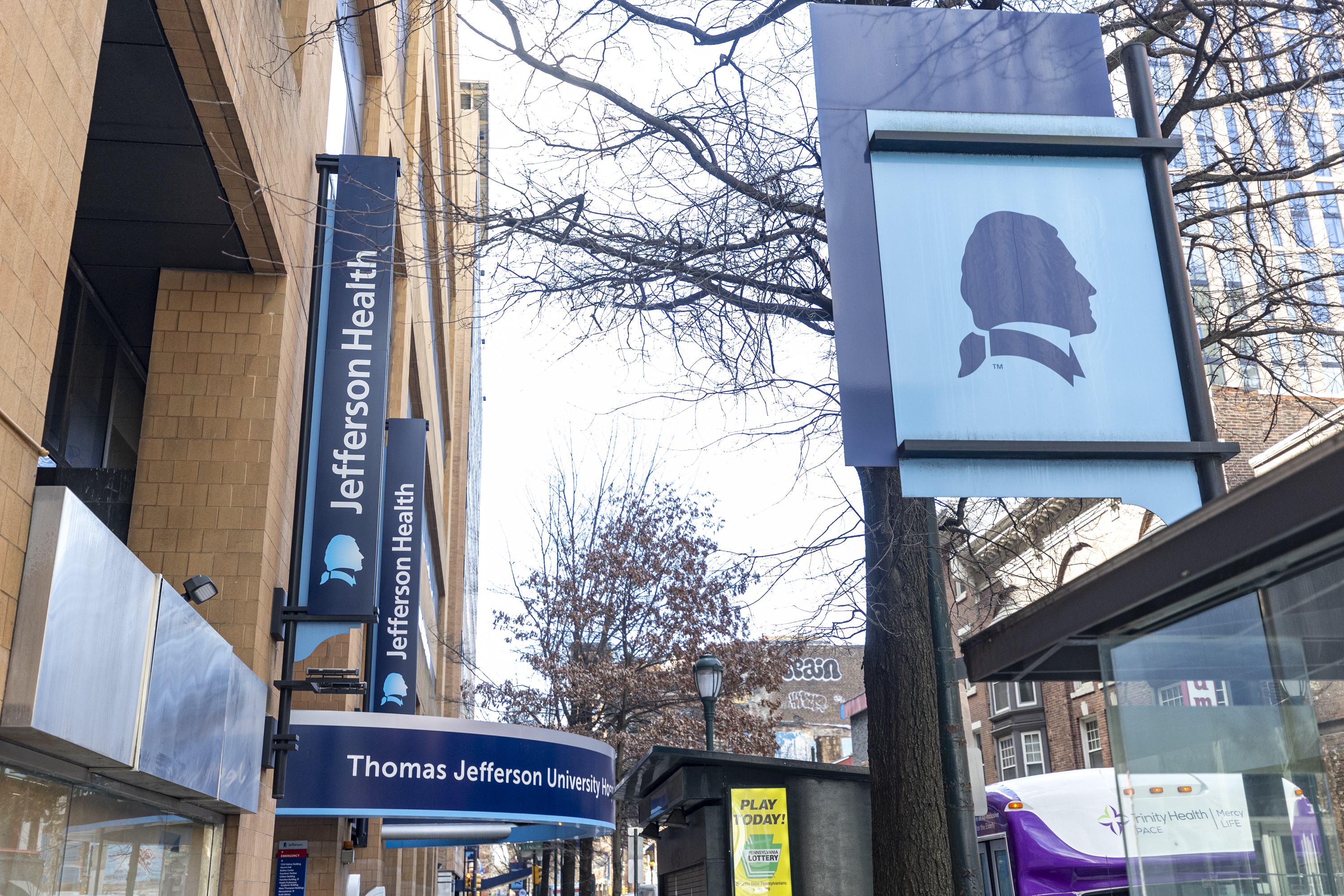
    Thomas Jefferson University and Jefferson Health posted an operating loss of $181.5 million in the year that ended June 30, an improvement over last year’s $208 million loss. In both years, the loss was concentrated in Jefferson’s insurance business.

    The fiscal 2026 results, reported to bondholders Friday, included $112 million in costs for layoffs and other moves designed to put the Philadelphia region’s largest health system on firmer financial ground.

    Jefferson highlighted in its preliminary report to investors that results improved each quarter of fiscal 2026 — from an operating loss of $103.8 million in the first quarter to a $71.1 million operating profit in the fourth quarter.

    “We’ve made significant progress strengthening Jefferson’s financial performance, yet those gains are increasingly threatened by the actions of commercial insurers in Pennsylvania,” Jefferson’s chief financial officer, Michael Harrington, said in an email.

    Jefferson sued Independence Blue Cross last month over policy changes that the health system says amount to back-door price cuts.

    “Despite already paying some of the lowest reimbursement rates in the nation, certain payers are now attempting to unilaterally rewrite or reinterpret existing contract terms to further reduce payments and improve their own margins at the expense of providers and the patients they serve,” he said.

    Separately, Jefferson sued Aetna in April over a policy that reduces payments for hospital stays for Medicare Advantage patients that Aetna decides aren’t sick enough to qualify for full payment.

    Insurers are under pressure from employers to slow healthcare expense growth. Independence said in response to the lawsuit that it acts in the best interest of its customers. Aetna said its policies comply with federal laws and regulations.

    Here are more details on Jefferson’s results:

    Revenue: Jefferson’s revenue reached $17.7 billion, up from $15.8 billion the year before. Fiscal 2025 included just 11 months of Lehigh Valley Health Network results. Jefferson completed that acquisition on Aug. 1, 2024, expanding its reach into Northeastern Pennsylvania and giving the nonprofit more than 30 hospitals.

    Jefferson Health Plans: Jefferson’s insurance arm had a $130.3 million loss in fiscal 2026, an improvement over a $169.9 million loss the year before. The insurance arm had 415,172 members on June 30, up from 366,780 the year before. The plan is diversifying away from Medicaid as it increases enrollment in Medicare Advantage and the Affordable Care Act markets. The percentage of membership in Medicaid fell to 75% this year from 87% last year.

    Notable: The fourth quarter of fiscal 2026 was Jefferson’s first profitable quarter in at least four years, according to Inquirer calculations that exclude investment income. Unlike other local health systems, Jefferson follows accounting rules for higher education, allowing it to include a portion of investment income in revenue.

  • Russian drones kill a woman and 9-year-old son at home as Ukrainian civilian casualties surge

    Russian drones kill a woman and 9-year-old son at home as Ukrainian civilian casualties surge

    KYIV, Ukraine — Russian jet-powered drones struck a home in northern Ukraine on Friday, killing a 29-year-old woman and her 9-year-old son, officials said.

    The strike came a day after the United Nations said July was the deadliest month for Ukrainian civilians since the weeks following Moscow’s all-out invasion of its neighbor more than four years ago.

    At least 437 civilians were killed and 2,610 wounded last month, the U.N. monitoring mission in Kyiv said, as Russia escalated its bombing of Ukrainian towns and cities. That was 70% higher than in July last year and 30% up on June of this year.

    Overall, since Russia’s invasion on Feb. 24, 2022, U.N. human rights monitors say the war has killed at least 16,874 civilians, including 820 children, and wounded 51,273, including 3,126 children.

    “Every month this year the number of killed and injured civilians has increased. That trend accelerated sharply in July,” said Danielle Bell, head of the U.N. human rights monitoring mission in Kyiv. “The number of civilian casualties in July was the highest we documented in a single month since March 2022.”

    The Russian strike in northern Ukraine’s Sumy region early Friday also wounded four other people, including the dead boy’s father and grandmother, who were hospitalized with severe burns, the regional military administration chief Oleh Hryhorov said.

    Russia’s top diplomat says Moscow will intensify attacks

    Russian Foreign Minister Sergey Lavrov warned that Moscow is planning to escalate its strikes on Ukraine, even as U.S. diplomatic efforts to end the war are set to continue.

    “We will use much harsher methods to destroy everything that feeds Kyiv’s war machine from the West,” Lavrov said in an interview with Russian state TV broadcast Friday, referring to military aid Kyiv receives from abroad.

    Officials in Washington said last month that Steve Witkoff and Jared Kushner, President Donald Trump’s main envoys, would travel to Kyiv sometime in the future. No date for the trip is publicly known, as the U.S. focuses on the Iran war.

    President Volodymyr Zelensky has accepted an unconditional ceasefire demanded by Trump, but Putin has refused, demanding a comprehensive peace agreement first, and Lavrov said that position hasn’t changed.

    “We will only stop when there’s a long-term, reliable, and sustainable settlement,” he said.

    Russian glide bombs hit residential areas near front line

    In Ukraine’s eastern Donetsk region, a Russian glide bomb demolished six floors of a 10-story apartment block, killing one person and wounding 16 others, Zelensky said.

    Russia is launching around 220 glide bombs every day against settlements near the front line in eastern and southern Ukraine, Zelensky said in a social media post Friday.

    Russian forces crush settlements with the brute force of 3,000-pound glide bombs, artillery, missiles, and drones, then send in infantry units to attack the exposed defenders. The tactic has rendered many towns and villages uninhabitable.

    In addition, Russian forces struck two tugboats in the Black Sea that were escorting cargo ships carrying Western weapons for Ukraine, the Defense Ministry in Moscow said.

    It also said that its drones overnight hit the railway station in Ukraine’s southern port of Izmail that it said is used for transporting military cargo and fuel for the Ukrainian armed forces.

    In all, Russia attacked 12 Ukrainian regions overnight, wounding dozens of people, Zelensky said.

    Ukrainian drones strike a major port north of Moscow

    Ukrainian forces, meanwhile, extended their long-range strike campaign against Russian infrastructure, hitting the port of Ust-Luga in the Leningrad region north of Moscow and starting a brief fire, its governor Alexander Drozdenko said.

    Ust-Luga is one of Russia’s largest oil and gas export terminals, located more than 500 miles from Ukraine.

    It has been a frequent target of Ukrainian drone attacks this summer, as Kyiv seeks to undermine Russian oil exports that provide Moscow with vital revenue for its war effort.

    Ukraine also launched another attack on the premises of Wildberries, Russia’s biggest online retailer, which Kyiv says helps supply the Russian military.

    The attack damaged a wall of a Wildberries warehouse in the Tver region north of Moscow, the region’s acting governor, Vitaly Korolyov, said.

    Wildberries reported “insignificant damage” and said the goods stored at the site were not damaged.

    The Russian Defense Ministry said Friday its air defenses overnight intercepted 553 Ukrainian drones over 18 Russian regions, as well as occupied Crimea and the waters of the Azov and the Black seas.

    NATO warplanes shoot down a drone over Latvia

    NATO fighter jets shot down a drone that entered Latvian airspace in the early hours of Friday, the Latvian army and an official for the military alliance said.

    Latvian authorities did not say what the origin of the drone was, but said it had entered Latvia “as a result of Russian electromagnetic warfare.”

    Several drones have previously crossed the border into Latvia. Most of them are thought to be Ukrainian drones that strayed off course due to Russian electronic jamming.

    Two Italian Eurofighter jets were scrambled to tackle the drone and one of them shot it down, NATO spokesperson Allison Hart said.

    Two Turkish fighter jets were also deployed, she said.

    Residents in five municipalities in eastern Latvia were warned about the threat to airspace and told to take shelter.

    Another drone crashed in woodland in Romania 3.1 miles from the border with Ukraine, the NATO member’s Defense Ministry said Friday.

    Military radars did not detect the drone, which landed in eastern Tulcea County, because it was flying at a “very low” altitude, it said without providing details about the drone’s origin.

    The ministry said later that another drone was found Friday in the village of Plauru, also in Tulcea County, which is situated across the Danube River from Ukraine’s port of Izmail. A specialist team was deployed to the area, which was secured, it added.