Inspira Medical Center Mullica Hillhas doubled the size of its maternity unit to meet rising demand.
The updated maternity unit, which opened this week, is part of Inspira’s $257 million expansion project at the Mullica Hill hospital that includes a new five-story tower for surgery, intensive care, education and residency programs, and additional parking.
The maternity unit doubled its size, to a total of 36,000 square feet, and increased the number of beds to 38, up from 20. The extra space is intended to give families more privacy and improve patient flow from delivery to recovery.
“Opening this expanded maternity unit is an important step forward for families across South Jersey and for the future of Inspira Medical Center Mullica Hill,” Lydia Stockman, executive vice president and chief clinical officer at Inspira Health, said in a statement.
Inspira opened the Mullica Hill hospital in late 2019, and it has quickly become one of the system’s busiest hospitals in a growing South Jersey community.
The hospital had 1,374 births last year.
The new patient tower, expected to open in 2027, will add more beds and an observation unit to ease strain on the emergency department. It will also include a surgery unit, intensive care beds, and a neuro ICU.
Summer break ended Monday for 9,000 Philadelphia School District teachers, counselors, nurses, and other school staff.
But instead of heading back to their own building, 90 Kensington High educators and support staff were rerouted to a school more than seven miles away — the former Austin Meehan Middle School in the Northeast — because of concerns over an HVAC project that led to damaged asbestos in the Kensington facility.
Staff and students are expected to remain at Meehan for the rest of the calendar year while an asbestos remediation project is completed.
Philadelphia Federation of Teachers officials expressed frustration Monday over the way the district initially handled the project, the inconvenience to staff and students, and the potential for further complications.
“People are angry,” said Arthur Steinberg, PFT president. “They’re upset.”
PFT staff were on hand Monday at Meehan, he said, answering staff questions: “Unfortunately for the staff and kids and the community, it’s going to be a chaotic year.”
‘It did not get followed’
The Kensington closure comes a year after the district was criminally charged over its past handling of asbestos management at city schools. After a yearslong secret probe, the school board signed off in June 2025 on a deferred prosecution agreement that comes with strict federal scrutiny of its environmental management.
Philadelphia was the first school district in the U.S. that faced criminal charges for environmental violations.
Steinberg and Jerry Roseman, the PFT’s longtime director of environmental science, said at a news conference Monday that the trouble at Kensington High traced back to mid-July.
Workers were installing a new heating and cooling system at Kensington, a 100-year-old school on East Cumberland Street, when a contractor inadvertently disturbed some asbestos.
The asbestos was then removed “in a non-regulated way by someone who’s not certified to remove asbestos,” Steinberg said. “They then traipsed it all over the building.”
Steinberg said the district initially told the PFT the damage was limited and could be completed in time for teachers to return to Kensington High by Monday.
“We thought that was unrealistic all along, and insisted that certain protocols be put in place before they decide to open,” Steinberg said. “Lo and behold, we get to maybe the end of last week. Guess what? It’s not going to open, you know, they don’t have time to abate the asbestos properly, clean it, test the air, and then complete the renovation that was going on.”
The district has agreed to remove all remaining asbestos inside the Kensington building, and developed a remediation plan in conjunction with Roseman, the PFT’s environmental expert, Steinberg said. It has also agreed to additional environmental oversight.
“In light of the publicity that they’ve received, they agreed to remove it all, which means it will be safer when folks go back in,” Steinberg said.
Asbestos, commonly used in building projects for most of the 20th century, is considered safe when undisturbed. But when it is damaged, asbestos can be toxic, releasing microscopic fibers that may cause lung disease and cancer.
Steinberg and Roseman said the Kensington mishap underscores an ongoing problem: The district has a vast stock of aging buildings, many of which have environmental issues.
“There was a plan” to deal with known areas of asbestos, Roseman said, and “it did not get followed.
A lack of proper oversight and management “is an ongoing problem,” Roseman said, “and as the [district’s $3 billion facilities master plan] gets put in place, this is one of our concerns.”
Naima DeBrest, a district spokesperson, said the Kensington situation differs from instances when schools have been closed because of observed asbestos damage.
“In this case, a third-party contractor is suspected of improperly removing asbestos containing material during demolition, which was being conducted in support of a school upgrade project,” DeBrest said in a statement. “The district immediately and transparently prioritized the health and safety of workers and stopped the project to assess the scope of the potential lapses. The subcontractor was removed from the job and has no other work with the district.”
‘A disruption for everybody’
José Lebrón, Kensington’s veteran principal, said in a letter sent to families this weekend that school and district staff have been “working around the clock to create a safe, vibrant, and welcoming space where our students can thrive from day one.”
Meehan is a closed district building often used to house school communities that need a temporary home.
Necessary educational materials are being brought from Kensington to Meehan, officials said, and when school opens next Monday, the district will provide shuttle service to Meehan.
For some staffers who had expected to drive to work in Kensington, commuting to the Northeast creates challenges around childcare, public transit, and commute times, Steinberg said.
“Make no mistake about it, it’s a disruption for everybody,” he said. “It’s not an ideal situation, to say the least.”
Oz Hill, the district’s deputy superintendent for operations, said in a letter to Kensington staff and families that “other options closer to Kensington were considered, but did not meet the space or accessibility needs for Kensington’s more than 400 students and 90 staff.”
Willie Nelson is on the road again — and this time, he’s bringing Neil Young with him.
Every summer since 2017 — with the exception of the COVID-19 shutdown year of 2020 — Nelson has brought his Outlaw Music Festival to the Philadelphia area, playing either the waterfront amphitheater in Camden or the Mann Center in Fairmount Park.
That streak ended this year, with Nelson cutting down on his touring schedule and eliminating many cities, including Philly, from the itinerary of the festival — which was founded in Scranton in 2016.
The lighter workload is certainly understandable: He’s 93!
But it turns out that the Red Headed Stranger isn’t skipping Philly after all. On Sept. 24, Willie Nelson & Family and Neil Young and the Chrome Hearts will play a coheadlining date at the Highmark Mann. Highly-touted Austin, Texas, teenage songwriter Ty Myers is also on the show.
The late-breaking booking seems like it came out of nowhere but makes perfect tour-routing sense. Young and Nelson, of course, play together each September at Farm Aid, the fundraising show that has taken place every year since 1985, when it was inspired by a Bob Dylan onstage remark at Live Aid in Philadelphia two months before.
Neil Young at the Freedom Mortgage Pavilion in Camden on May 12, 2024. Young will play with his band the Chrome Hearts at the Highmark Mann with Willie Nelson on Sept. 24. Elizabeth Robertson / Staff Photographer
This year, Farm Aid — with Nelson and Young joined by John Mellencamp, Margo Price, Dave Matthews & Tim Reynolds, Sierra Ferrell, Nathaniel Rateliff, and others — will take place Sept. 26 in Virginia Beach, Va. So the newly added Philly show qualifies as a warm-up of sorts, the first part of a Willie and Neil long weekend.
Young’s show with the Chrome Hearts — his backing band which includes Willie’s son Micah Nelson and organist Spooner Oldham of the celebrated soul music Muscle Shoals Rhythm Section — will be his first in the Philly area since his date with Crazy Horse at Camden’s Freedom Mortgage Pavilion in 2024.
It will also be Young’s first show at the Mann since 1988, when he played with his big band blues ensemble the Bluenotes on his “Sponsored by Nobody Tour.” The Canadian rocker, 80, also played the venue in 1987 with Crazy Horse and in 1985 with his countryfied band the International Harvesters.
Tickets go on sale via artist pre-sales at 10 a.m. on Wednesday, Aug. 19. The general on sale is Friday, Aug. 21 at 10 a.m. via ticketmaster.com.
Willie Nelson & Family and Neil Young & the Chrome Hearts are coheadlining a show at the Highmark Mann on Sept. 24.Live Nation
Northeast Philadelphia’s last traditional Jewish delicatessen will close this weekend, ending a chapter in a food culture that for decades seemed inseparable from the area itself.
Steve Stein’s Famous Deli, in Bustleton’s Grant Plaza, outlasted a food landscape once crowded with Jewish delis, bakeries, butchers, and other specialty shops. Its closing Sunday comes more than nine years after the finale of Jack’s Deli in Bell’s Corner, the Northeast’s penultimate deli. Like Stein’s, Jack’s combined a retail counter with a restaurant.
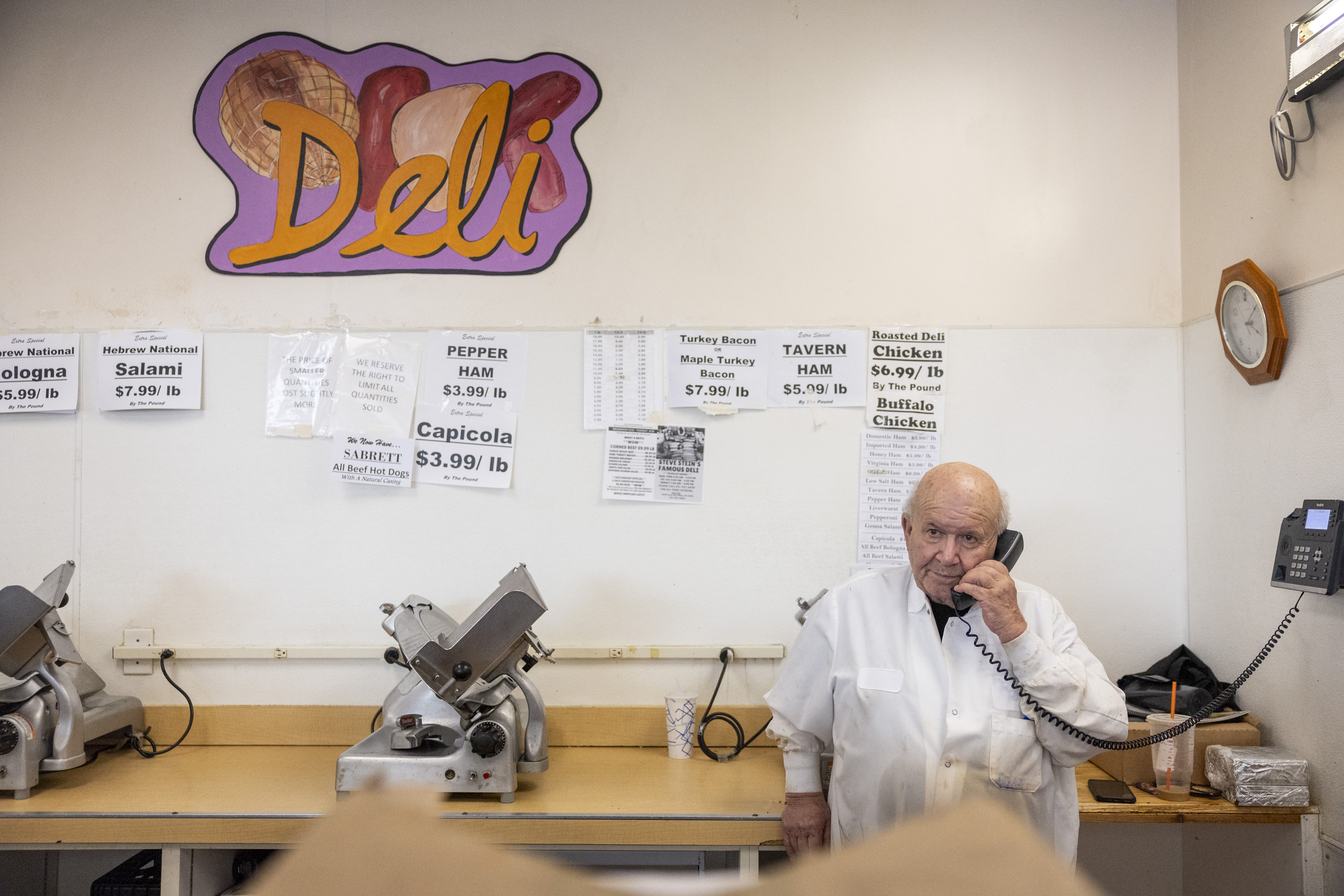
The deli counter at Steve Stein’s Famous Deli on Aug. 14, 2026.Tyger Williams / Staff Photographer
For Steve Stein, 83, the closing will end a family business whose roots stretch back to the late 1950s, when his family became involved with the Famous Deli location at 6826 Bustleton Ave. in Castor Gardens.
Famous was part of an older Philadelphia deli dynasty. Beginning in the 1920s, the Auspitz brothers launched a string of delis around the city, including the flagship at Fourth and Bainbridge Streets in Queen Village, now owned by Al Gamble.
Around 1960, Stein said, the Auspitzes sold the Bustleton Avenue Famous to Stein’s father, Mike, his brother Arnold, and his cousin Jack. The boys had run the produce concession there. Steve and Arnie, who died in 2010, later ran it side by side. Steve now runs the place with his son, Lee, now 57.
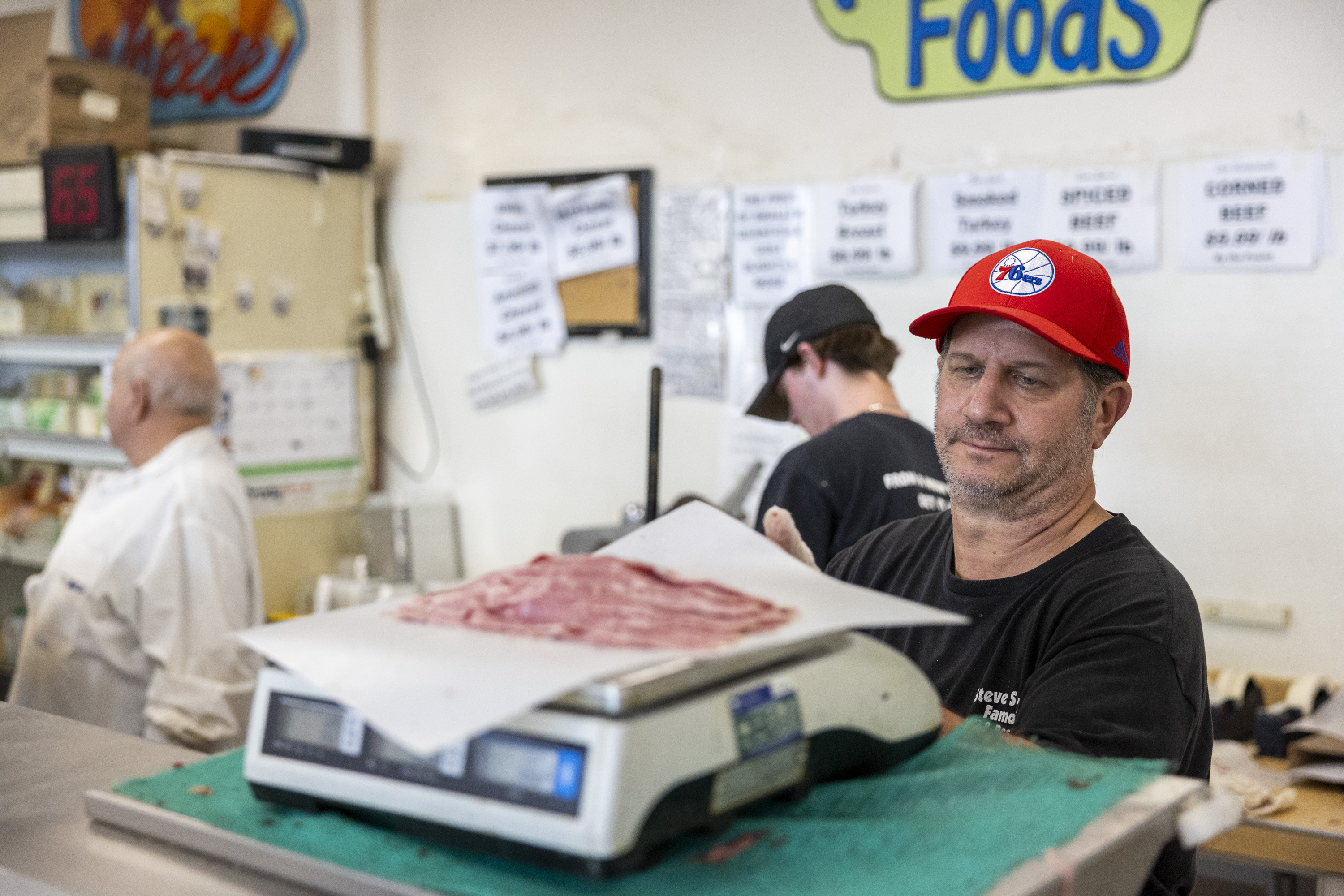
Lee Stein weighs corned beef at his father’s deli on Aug. 14, 2026.Tyger Williams / Staff Photographer
Since Stein announced the closing, customers have been stocking up on corned beef, smoked fish, rye bread, and other foods they fear they will not easily replace. Stein has cut prices as he tries to move inventory.
“Nobody’s charging $9.99 a pound for house-cured corned beef,” Lee Stein said.
On Friday, Tracey Lynn of Fox Chase ordered two pounds of corned beef while plucking garlic-perfumed sour tomatoes from a barrel, telling Stein that she planned to freeze some of the meat.
Lynn said she and her husband have been customers since 1993. She is not sure where she will shop next. “I don’t want whitefish salad from BJ’s or from Costco,” she said.
The closing is partly a retirement story. Stein said problems with his legs have made it increasingly difficult to work.
But it is also about labor costs, food prices, succession, and a neighborhood whose demographics have changed dramatically over the life of the business.
As Jewish families moved farther into the Northeast, Famous followed: first, in the mid-1970s, to Krewstown Road (where it had two locations) and, 14 years ago, to Grant Avenue. Stein, who later also had a short-lived store in Holland, Bucks County, sold the Bustleton Avenue store in the mid-1970s.
In that sense, the history of Famous tracks the movement of Jewish Philadelphia itself.
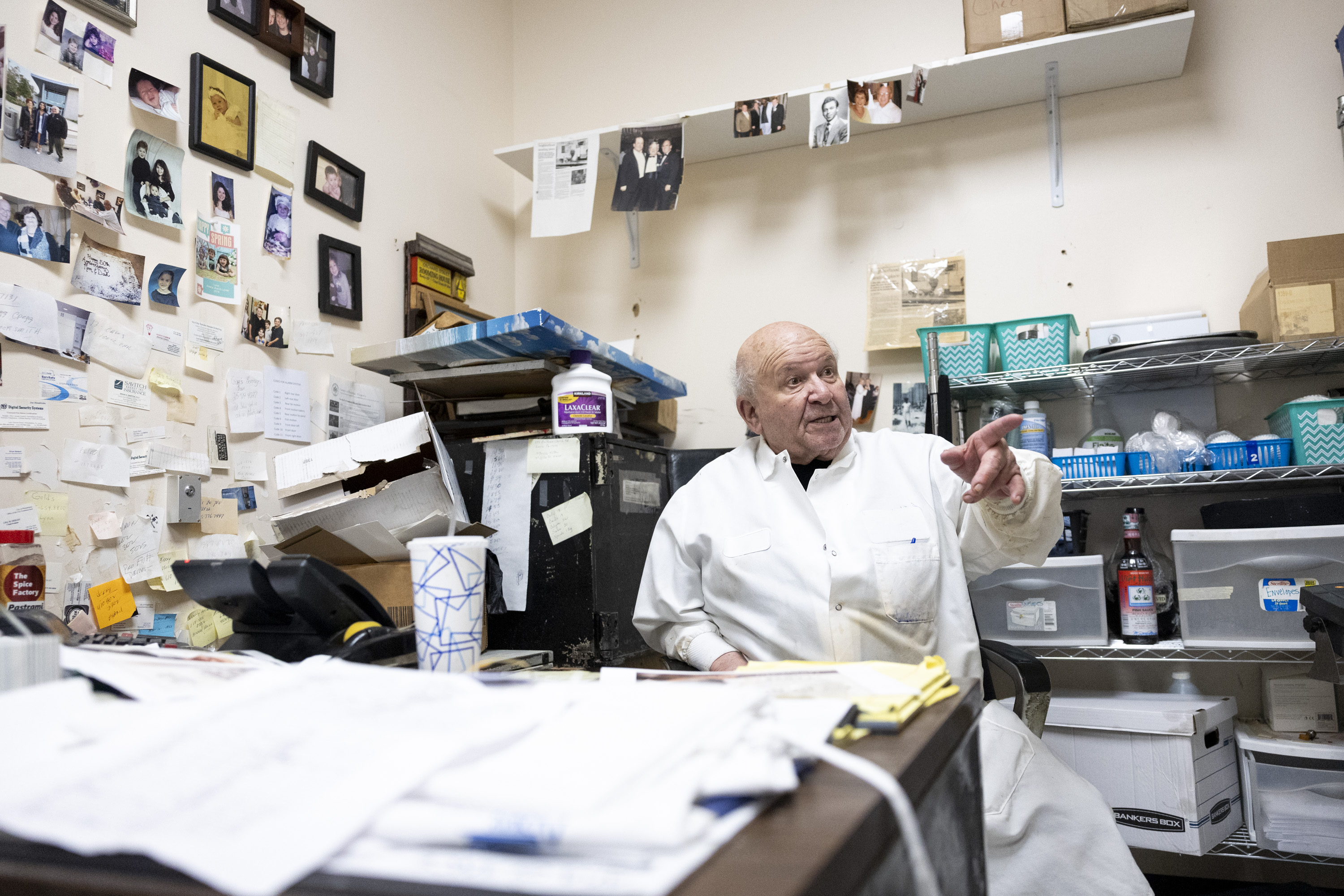
Steve Stein, owner of Steve Stein’s Famous Deli, takes a break in his office.Tyger Williams / Staff Photographer
A suburban diaspora
After World War II, thousands of Jewish families left older Philadelphia neighborhoods such as Strawberry Mansion, Queen Village, and Wynnefield for Oxford Circle, Castor Gardens, Rhawnhurst, and Bustleton in the rapidly developing Northeast. Others moved to Lower Merion and Cherry Hill, which developed large Jewish communities and deli cultures of their own that remain.
By 1970, demographer Ira Rosenwaike estimated, using Census data on Yiddish as a mother tongue, that more than 68,000 Jewish adults 25 and older lived in the Near and Far Northeast.
That population supported an extraordinary density of Jewish food businesses: Abe’s Appetizers, Castor Deli, R&W, Stern’s, Paul’s, Four Lads, Dave’s, Casino, the Nasherei, four Barson-Overbrook locations.
Steve Stein (left), owner of Steve Stein’s Famous Deli, behind the counter with his son, Lee.Tyger Williams / Staff Photographer
To Hasia Diner, a historian and New York University professor who specializes in American Jewish history, the significance of delis was precisely their ordinariness. They were not institutions created to preserve Jewish culture. They were where neighborhood life happened.
“On the one hand, [delis] seem so everyday,” Diner said in an interview. “They’re not great synagogues where religion was expounded, or places where great ideas were pronounced. But they were places where life was lived.”
Some were kosher and others were not. What mattered, Diner said, was that the deli offered a secular Jewish space, rooted as much in neighborhood and food as in religious observance.
By the 1980s, however, those neighborhoods were changing. In a 1987 Inquirer article, Bruce Isakoff of Paul’s Deli, on Castor Avenue near Brighton Street, said his business was doing more lunchtime trade as Jews left the neighborhood and it became a more generic deli. By then, Four Lads, on Castor Avenue at Creston Street in Oxford Circle, had stopped carrying smoked fish and pastrami. Both are long gone.
A ‘kind of shrine’
Many Jewish households moved farther north and into Bucks and Montgomery Counties. A 1996-97 Jewish Federation study found that Philadelphia accounted for 41% of the region’s population living in Jewish households, down from 54% in 1984, while Bucks County’s share had nearly doubled.
The studies used different definitions and geographic boundaries, but the direction was unmistakable: The dense Jewish population that once sustained neighborhood delis had dispersed.
Steve Stein, owner of Steve Stein’s Famous Deli, taking a deli order on Aug. 14, 2026.Tyger Williams / Staff Photographer
The movement itself was nothing new, Diner said. American Jewish communities repeatedly established themselves in neighborhoods and moved elsewhere. What changed was the role of the old neighborhood — and of the deli within it.
“The deli was often the kind of shrine to which they went back,” she said.
The old delis offered something beyond nostalgia. In their heyday, Diner said, they were overwhelmingly Jewish spaces where customers did not have to explain themselves or worry about how they appeared to outsiders.
“These places were so rich with a kind of embeddedness, of comfort and security and, again, letting your hair down,” she said.
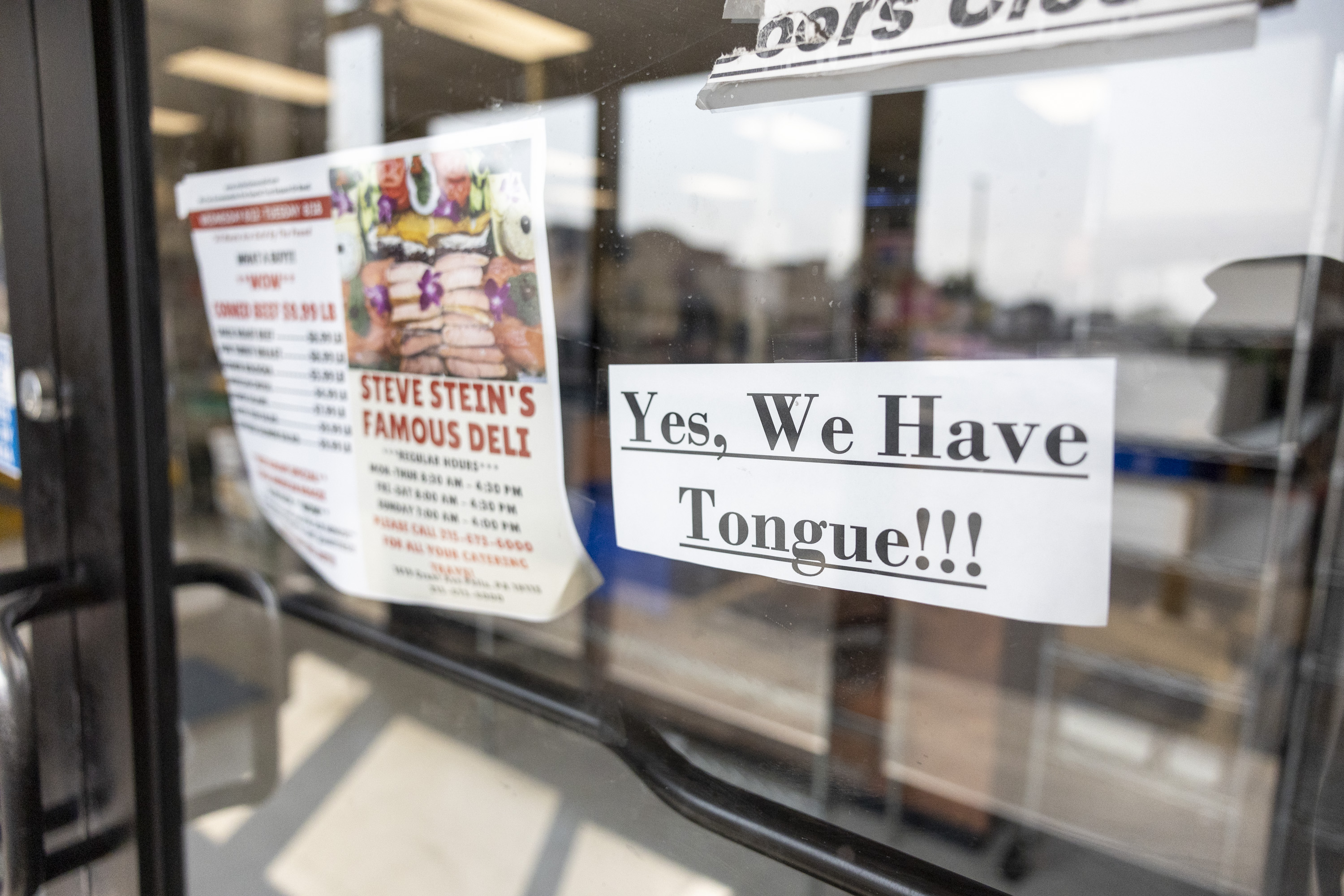
A sign proclaiming, “Yes, We Have Tongue!!!” at the entrance at Steve Stein’s Famous Deli.Tyger Williams / Staff Photographer
Population was only part of the story. Supermarkets increasingly stock foods that once sent customers to specialty counters: corned beef, pastrami, smoked fish, whitefish salad, herring, rye bread, bagels, pickles, and knishes. But not everything. Signs at Famous proclaim, “Yes, We Have Tongue!!!” Not many others do.
More important, Diner said, is what cannot be sold at a supermarket: the deli as a secular gathering place, where being Jewish required neither religious observance nor agreement about politics. “A pastrami sandwich is a pastrami sandwich,” she said.
Costly ingredients
The traditional deli model itself is expensive and labor-intensive, built around extensive preparation and a sprawling inventory. Famous still cures its corned beef and makes its own turkey, pastrami, whitefish salad, and spice beef.
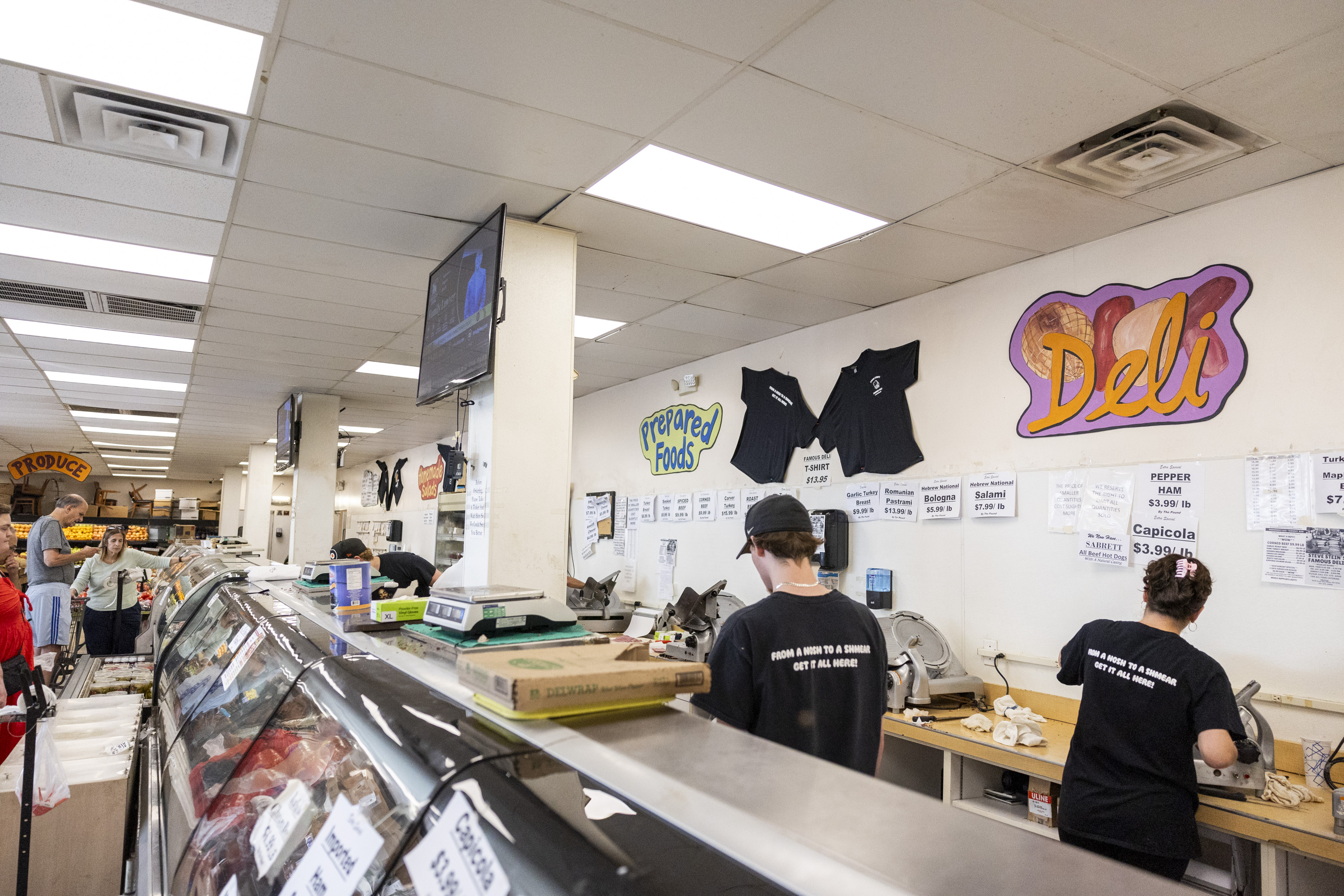
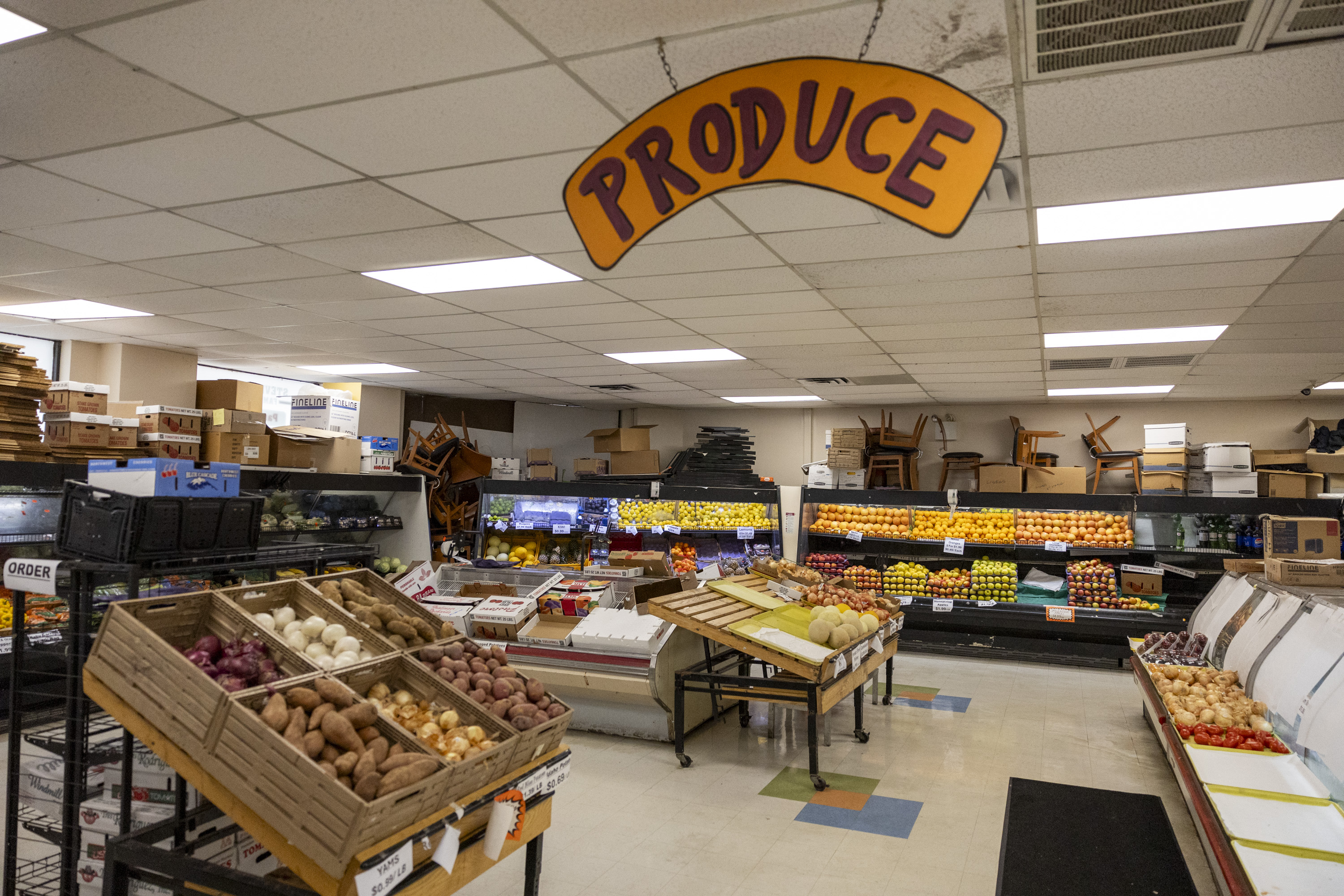
Steve Stein’s Famous Deli is equal parts market, deli counter, and restaurant.Tyger Williams / Staff Photographer
Steve Stein said finding employees has become increasingly difficult. Lee Stein said prospective workers have easier options, such as driving for Uber or making deliveries for Grubhub.
The deli has about 35 employees, many part-time. Some are placed through SPIN, the Philadelphia nonprofit that supports people with intellectual, developmental, and autism spectrum disabilities.
Survival has also required adapting to the customer base, increasingly non-Jewish. Lee said he remembers when Famous carried a single canned ham, hidden behind the counter. Though few Jewish delis are kosher, pork traditionally has been another matter.
“Nobody was allowed to say the word ham,” he said.
Today, their case holds about a dozen varieties.
Rob Woloshin, 40, owner of Manny’s Deli Stop in Willow Grove, grew up going to Stein’s Famous with his father. His deli represents a leaner version of the old model: counter service, a few tables, online ordering, and delivery, with traditional deli sandwiches alongside chicken cutlets, wraps, and other contemporary offerings.
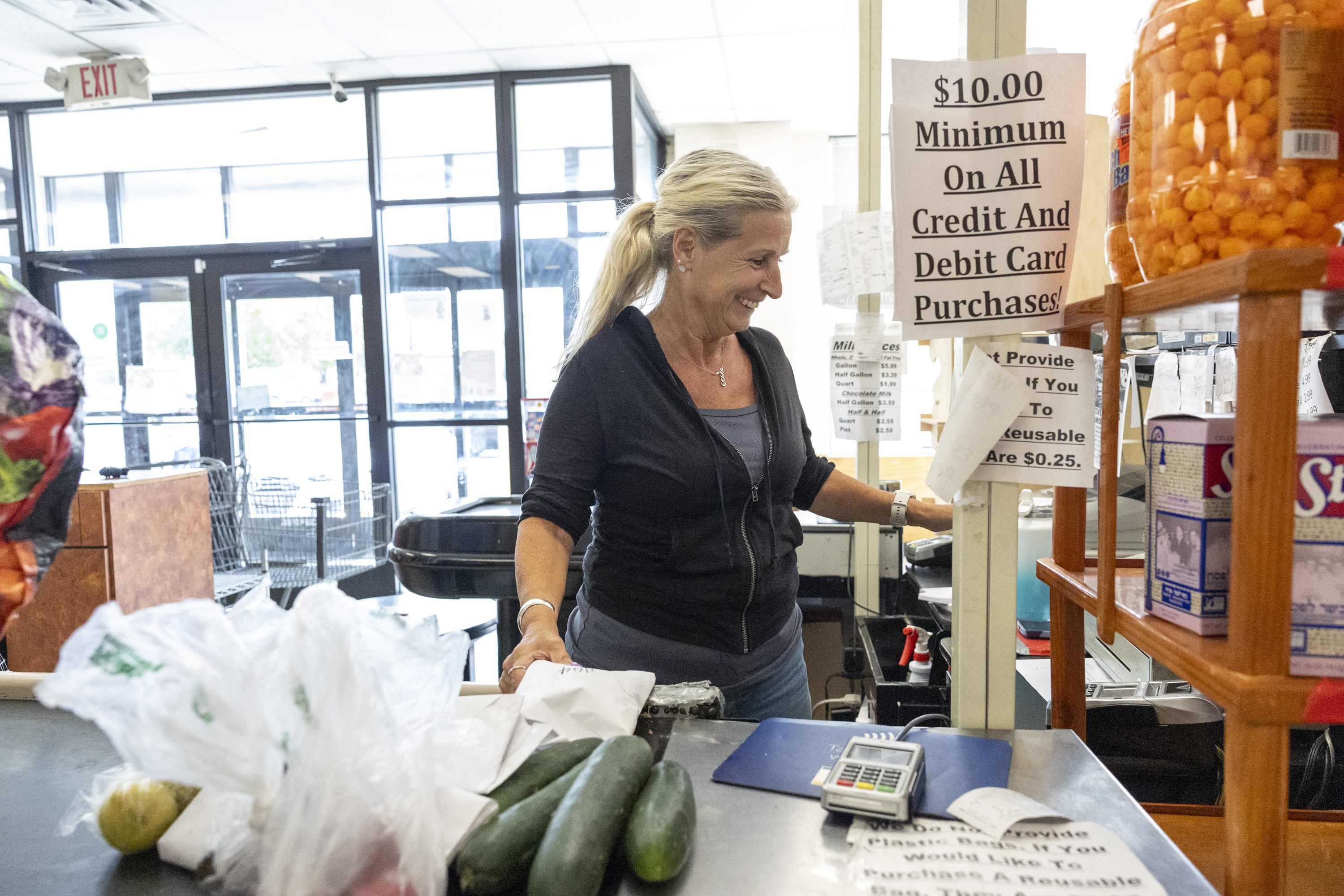
Cashier Linda DiNenno, who has worked at Steve Stein’s Famous for about 13 years, checks out a customer.Tyger Williams / Staff Photographer
“We’ve kind of modernized, I guess, as much as the Jewish deli can be modernized,” Woloshin said.
Famous may yet have an afterlife. Lee Stein said he is talking with the landlord about a deal that could keep him in the space, under another name, in time for the Jewish High Holy Days, which begin Sept. 11. If not, he might offer catering from a synagogue kitchen.
For longtime cashier Linda DiNenno, the closing is less about corned beef than the people around the counter. She said she will miss the family atmosphere among employees and customers who have been calling to say goodbye.
“I’ve got customers calling on the phone, like, ‘Oh my God, I’m gonna miss you, Linda,’” she said.
Comcast is launching a new AI-fueled home-security platform, building on its suite of internet-related services for broadband customers as it looks to bulk up that side of its business,
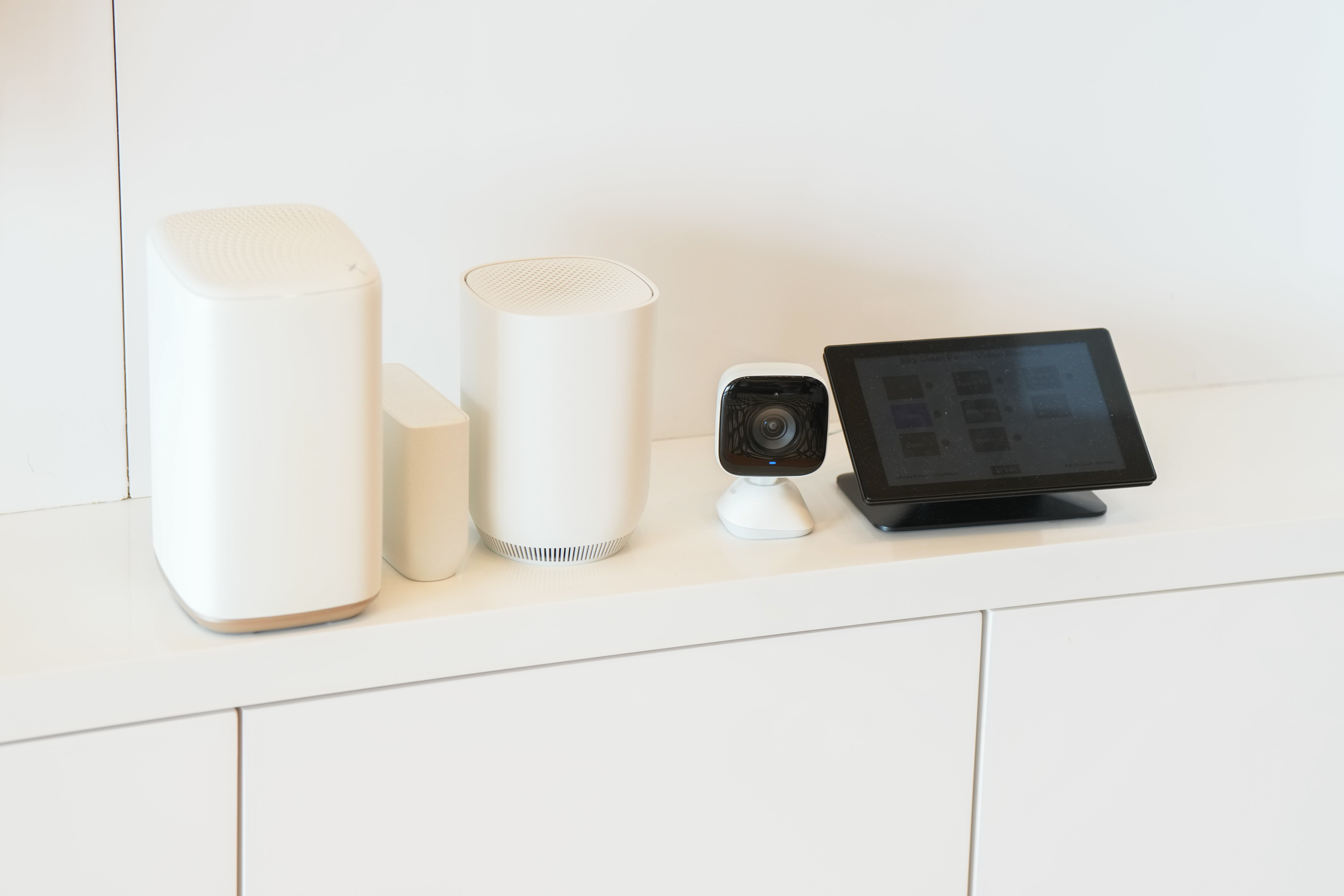
While it’s not the company’s first foray into home security technology, the newest offering combines cybersecurity, parental controls, cameras, and sensors for streamlined protection over its Wi-Fi network. It comes at a slightly higher monthly price than its previous comparable iteration.
The move represents the Philadelphia-based telecom giant’s latest effort to diversify its services amid a steady erosion of cable subscribers and a leveling-off of broadband customers.
The platform, Xfinity Shield, consists of cybersecurity and protection features that are available to existing Wi-Fi customers at no additional charge, as well as a premium tier of AI-powered tools that cost $15 per month.
“It is a combination of things that we’ve had and brand new innovations,” Fraser Stirling, Comcast’s global chief product officer, said in a recent interview. He added that platform creators tried to answer the question: “How do you make these complicated things simple for people?”
Fraser Stirling, Comcast’s global chief product officer, gives a presentation in April.Jessica Griffin / Staff Photographer
On customers’ Xfinity app, they can protect themselves from online threats, limit their children’s screen time, and detect movement in their home while they’re away. Users can customize their settings and notifications for different times, including at night and when they’re away.
Starting Tuesday, existing Wi-Fi customers with advanced Gateway routers can use those tools, though they have to opt in to the Wi-Fi Motion monitoring. The feature detects changes in the radio frequency signals between the Gateway and Wi-Fi-connected devices in the home, without recording video, taking photos, or identifying people, according to Comcast executives.
Wi-Fi customers who want more features can pay $15 a month for a package that includes an indoor camera, door and window sensors, video storage, and the ability to call for emergency help at the tap of a button. Called Xfinity Shield Select, this service can work with a range of compatible hardware including outdoor cameras and smart locks.
The Xfinity Shield services are being rolled out as Comcast changes its company structure and responds to evolving consumer demands.
(function(){function e(){window.addEventListener(`message`,function(e){if(e.data[`datawrapper-height`]!==void 0){var t=document.querySelectorAll(`iframe`);for(var n in e.data[`datawrapper-height`])for(var r=0,i;i=t[r];r++)if(i.contentWindow===e.source){var a=e.data[`datawrapper-height`][n]+`px`;i.style.height=a}}})}e()})();
The number of broadband customers has plateaued in recent years, while the number of traditional cable TV subscribers has fallen off precipitously. Comcast reported about 10.7 million cable customers in its second-quarter earnings report, down from 11.3 million at the end of last year and 18.2 million in 2021.
Xfinity Mobile, meanwhile, has seen growth, with about 900,000 new wireless lines being added in the first half of this year, according to earnings reports. As of June, there were about 10.2 million Xfinity Mobile lines, with each customer having two lines on average. Many of these connections are part of a free-line-for-a-year promotion, which will end for some customers later this year.
Only new or existing broadband customers can sign up for mobile, which costs $30 or $45 a month depending on the plan. Wireless uptake represents a fraction of the company’s 28 million home internet subscribers, and brought in about $5 billion last year, out of $71 billion total internet and cable revenue.
Comcast executives are hoping that some internet subscribers are willing to pay for Xfinity Shield Select.
“The more of these products you take from us, the better the experience is,” Stirling said.
Xfinity’s older home-security system and products remain available for existing customers, but the $10-a-month Smart Home indoor-monitoring package is no longer offered to new customers. Current Smart Home customers can keep their plan or switch to Xfinity Shield Select for the newer features. The more traditional home-security system, which includes 24/7 professional monitoring,costs $55 a month and will remain available for new and existing customers.
Armed with signs that read “Just say no!” and buttons etched with “Save our community,” Middletown Township residents on Tuesday pushed back fiercely against a proposal to build a new school on open land behind Penncrest High School as negotiations between the Rose Tree Media School District and the township drag on into the fall.
The Rose Tree Media School District, which serves families in Media borough and Edgmont, Middletown, and Upper Providence Townships, is proposing a new school for kindergarten and first grade students on an empty lot behind Penncrest High School. The district says the school will relieve overcrowding and allow Rose Tree Media to finally offer full-day kindergarten, bringing it up to par with neighboring schools.
Yet the proposal has not been welcomed by many neighbors in Middletown, who during nearly two hours of public comment on Tuesday raised concerns that the school would create dangerous driving conditions on key roadways, increase traffic, and burden taxpayers.
During the meeting, representatives from the school district presented traffic impact data to theplanning commission, an advisory board that will issue a recommendation to Middletown’s seven-membercouncil on whether the township should approve the project. The planning commission voted to postpone a recommendation voteuntil a later date, when the school district will be expected to provide more detailed traffic data.
The estimated cost for the school building is around $84 million, with an additional estimated $7.5 million for a proposed athletics addition. The realignment of Rose Tree Road will cost around $3.7 million, but is likely to be funded in part by grants.
The meeting was the latest development in a protracted process for the Rose Tree Media School District, which has been attempting, unsuccessfully, to build a new school for six years.
School officials say the district is overcrowded and unprepared for a wave of young students coming in the next decade.
The school district’s enrollment has risen steadily in the last 10 years, from 3,779 students in the 2015-16 school year to 4,319 in the 2025-26 year. Enrollment is expected to peak in 2032-33 with nearly 4,600 students. Student population growth has forced the district to adopt space-saving measures, including installing multiple modular classrooms.
!function(){“use strict”;window.addEventListener(“message”,function(a){if(void 0!==a.data[“datawrapper-height”]){var e=document.querySelectorAll(“iframe”);for(var t in a.data[“datawrapper-height”])for(var r,i=0;r=e[i];i++)if(r.contentWindow===a.source){var d=a.data[“datawrapper-height”][t]+”px”;r.style.height=d}}})}();
The new school would also allow the district to provide full-day kindergarten, officials say, as Rose Tree Media is one of the few remaining school districts in the region that only offers a half-day option.
During brief remarks at the beginning of the meeting, Rose Tree Media’s superintendent Joe Meloche said, “I think we all want the same thing ultimately, which is a plan that is safe, practical, and thatworks well for everyone.”
Yet dozens of Middletown residents, many of whom live in close proximity to the proposed school site, said they felt the project was misguided, poorly planned, and would add hazards to already congested roadways. Some recounted watching dangerous car accidents on the streets abutting the site. Others charged the district with failing to account for how many cars would be clogging roads during peak pickup and drop off times. Many said they disagreed with the concept of a K-1 center as a whole and asked the planning commission to require the district to come up with a different option.
“The site is too small, and student capacity is too great,” said resident Peter Wolf, who called the proposal “an oversized industrial project.”
Residents of Middletown Township line up to make public comment at an Aug. 11 meeting of the township’s planning commission. Dozens of residents spoke in opposition to a new K-1 school proposed by the Rose Tree Media School District.Denali Sagner
Resident Sally Turek said she agrees that the district needs full-day kindergarten, but that “there are definitely other, better options than this.”
“This is like planning for Disney World. We can’t afford Disney World. We don’t need Disney World,” Turek said. “This is not the right time to do this, nor the right place.”
A small contingent of parents spoke in favor of the proposal, describing the crowd as a vocal minority and saying that the residents who needed the school most, namely parents and their young children, were the very people who were unable to attend the evening meeting.
“The kids are here. They need a place to go, and this notion that we can move the fifth grade to the middle school does not solve the problem,” said Ron Peterson, parent of an elementary school student.
“Is this an ideal spot? Perhaps not,” Peterson said. “But there aren’t better spots available.”
The proposal in Middletown Township is Rose Tree Media’s second attempt to find a home for a new school. The school district proposed putting a new elementary school in Edgmont Township in 2023, a planthat was voted down by the township’s board of supervisors, who cited traffic and location concerns.
The planning commission will reconsider the proposal in September or October and has asked the school district to provide more detailed traffic data.
This suburban content is produced with support from the Leslie Miller and Richard Worley Foundation and The Lenfest Institute for Journalism. Editorial content is created independently of the project donors. Gifts to support The Inquirer’s high-impact journalism can be made at inquirer.com/donate. A list of Lenfest Institute donors can be found at lenfestinstitute.org/supporters.
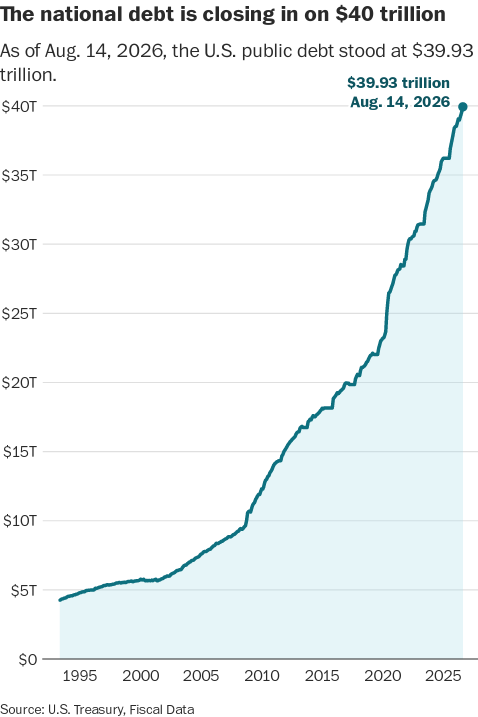
The U.S. national debt is likely to surpass $40 trillion this week, months earlier than forecasters previously expected, in part because of billions of dollars in lost revenue from President Donald Trump’s invalidated tariffs.
The lost revenue has forced the U.S. Treasury Department to borrow more rapidly to cover the nation’s bills: Six months ago, the nonpartisan Congressional Budget Office projected that total borrowing would top out at $39.4 trillion this fiscal year. But on Monday, Treasury reported that the debt stood at $39.9 trillion and counting.
The faster accumulation of debt means the next deadline for raising the legal limit on borrowing is also likely to arrive ahead of schedule. Just last year, Congress set the debt limit at $41.1 trillion. Budget analysts now say borrowing could hit that threshold by early next year, forcing lawmakers either to suspend it or raise it again to avoid the risk of an economy-shaking default.
Trump is already focused on the debt limit, which has repeatedly plunged Washington into a dangerous game of legislative chicken. Late last month, the president urged the Senate to address “the ever looming Debt Ceiling disaster” before leaving town for its August recess.
Senate leaders did not comply, but Majority Leader John Thune (R-South Dakota) told reporters at the time that “we’ll have to be dealing with it.” He added: “$40 trillion in debt — seems to me that should get our attention.”
For the past quarter-century, the national debt has grown under both parties, through the tax cuts of the George W. Bush era, the wars in Iraq and Afghanistan, the Great Recession, the 2017 Trump tax cuts and the nearly $2 trillion Biden administration initiative to prop up the economy during the coronavirus pandemic. Trump pledged during his first campaign in 2016 to eliminate the debt within eight years; instead, it has doubled since he first took office.
This year, the gap between spending and revenue was already expected to approach $2 trillion, the CBO reported in February. Days later, the U.S. Supreme Court struck down Trump’s “Liberation Day” tariffs, cutting federal revenue by an estimated $250 billion. The Treasury has also increased borrowing lately to build up its cash reserves.
Military spending tied to the conflict with Iran could add more to the debt in the months ahead, according to the Bipartisan Policy Center, a nonpartisan Washington think tank that tracks federal spending.
“Our current fiscal trajectory is plainly unsustainable, and that’s the best-case scenario,” BPC president and CEO Margaret Spellings said in a statement. “AI disruption, a recession, global war, or any number of other events could quickly push us over the edge from a challenge into a full-blown crisis. Even in the rosiest scenarios, we’re speeding toward a cliff and refusing to turn the wheel.”
In an email, White House spokesman Kush Desai said that “the Trump administration remains focused on slashing waste, fraud, and abuse across the federal government while accelerating economic growth, policies that will get America’s debt-to-GDP ratio trending in the right direction.”
So far, Washington lawmakers have raised or suspended the debt limit every time it has been reached, but often after dramatic, deadline-pushing partisan battles. Even these near misses have rattled markets and carried a price: Standard & Poor’s, Fitch and Moody’s have each downgraded the credit rating of U.S. government debt since 2011, moves tied at least partly to debt ceiling brinkmanship.
Congress last raised the debt limit in quieter fashion, adding $5 trillion to the debt ceiling as part of the One Big Beautiful Bill Act, the Republicans’ marquee tax and spending law. Measures to raise the debt ceiling often include spending cuts aimed at reducing the annual budget deficit. But the One Big Beautiful Bill Act, which Trump signed in July 2025, did the opposite: That law added $4.7 trillion to projected deficits over the next decade, according to CBO estimates.
According to preliminary projections by the BPC, Washington is on track to next hit the debt limit between late winter and midsummer 2027. Based on the latest borrowing figures, the center’s estimate is “trending toward the earlier end” of that range, Shai Akabas, the center’s vice president of economic policy, said in a statement.
Hitting the debt ceiling would not by itself trigger a default. Once the borrowing limit is reached, Treasury can pay bills by drawing on its cash reserves and using stopgap accounting maneuvers known as “extraordinary measures,” which typically buy another six to nine months, according to the BPC. Only after that runs out does the government reach what’s known as the X-date, when the Treasury risks running out of cash and defaulting on its obligations.
If Republicans lose one or both chambers of Congress in the Nov. 3 midterm elections, they could attempt to raise the debt limit in the lame-duck period during November and December — before the new Congress is seated in January. Otherwise, they could be forced to make policy concessions to Democrats that Republicans — and the White House — would prefer not to make.
But raising the debt ceiling could prove challenging even under total GOP control. Especially in the House, where the GOP holds a slim majority, party leaders would be forced to win over their fiscal hawks, who have previously revolted when a debt ceiling increase was not accompanied by an agreement to cut spending.
“You have to raise the debt limit just the same way that you have to pay your credit card bill,” said Marc Goldwein, senior policy director for the Committee for a Responsible Federal Budget, a nonpartisan group focused on deficit reduction. It reflects spending choices you’ve already made, he said. “But if you keep getting credit card bills that are more than you can afford, it’s probably a good time to reassess how much you’re spending, or to get a second job, right?”
As with many credit cards, interest is itself becoming a bigger part of the problem. Last week, the U.S. government sold 30-year bonds at 5.216 percent, the highest rate in a quarter-century, Bloomberg News reported. Treasury rates ripple into mortgage rates, corporate debt and other borrowing.
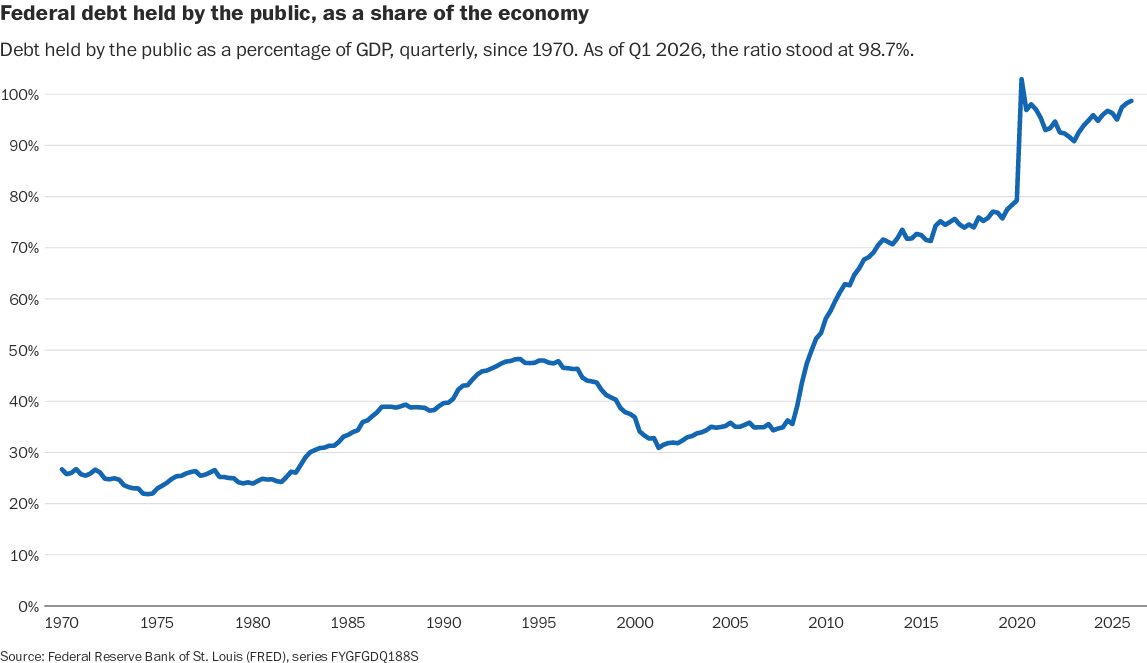
Annual interest payments on the debt are projected to top $1 trillion this year, according to CBO — about the size of the Pentagon budget. They now consume about 19 percent of federal revenue, according to the Peter G. Peterson Foundation, a nonpartisan group that tracks the debt and advocates for fiscal discipline, and are projected to climb to 26 percent by 2036.
“Interest costs are paying for your past, not paying for your future,” said Peterson Foundation chief executive Michael Peterson, and unfairly burden future generations.
“It’s immoral to, year after year, trillion after trillion, just keep borrowing the money, not paying your bills for immediate consumption and deferring not only the principal balance but the interest costs onto our kids and grandkids,” he said.
Peterson pointed to Social Security as a preview of what happens when Washington puts off big problems: Unless Congress acts, the program’s trust fund is projected to become insolvent in 2032, triggering an automatic 22 percent cut in benefits.
“Can a democracy that’s run by all of us collectively make tough decisions to sacrifice in the short term for long-term benefit?” Peterson said. “The political system hasn’t risen to this challenge in recent decades.”
Theodoric Meyer and Jarrell Dillard contributed to this report.
Once again, Head Start — a program beloved by millions of families and with overwhelming public support — is being threatened by the Trump administration.
I was a Head Start teacher, administrator, and coach for nearly 15 years, and can attest to the transformative power of the program. I saw children thrive thanks to Head Start’s visionary emphasis on the whole child by providing a high-quality education, welcoming classrooms, healthy nutrition, and dental and health screenings. Through home visiting, regular parent communication, and frequent parent participation in the classroom, I saw families become stronger and more resilient.
Research has shown, time and again, that Head Start increases high school, college, and postsecondary graduation rates, leads to higher self-esteem for participants, and has a positive effect on future generations, as examined through parents’ practices exhibited decades later.
Which is why I am astounded by the methodical steps to dismantle a program that is the gold standard when it comes to early childhood programs. Back in 2023, the Heritage Foundation made exaggerated claims of fraud and abuse in its call to eliminate Head Start in the now-infamous Project 2025 plan for the second Trump administration.
A year later, word leaked that President Donald Trump was planning to use the biased Heritage Foundation report to zero out federal funding for Head Start. Widespread public outcry and political pressure thwarted that plan.
Undeterred, the Heritage Foundation developed a new strategy to kill off Head Start through death by a thousand cuts: If Head Start can’t be eliminated outright, deregulate it until it’s a skeleton of itself. Trump’s Department of Health and Human Services is proposing changes to Head Start that will do just that.
In May, Health and Human Services put out a proposal to retract wage increases for Head Start teachers. This move would exacerbate the already significant challenges in recruiting and retaining the standard high-caliber staff, resulting in fewer slots and lower enrollment.
Recently, Health and Human Services announced another proposed change to Head Start that would lower staff qualifications while raising the teacher-student ratios. The latest proposal would also eliminate some of the structures that keep lines of communication open between parents and providers, like parent-teacher conferences. And a new English-only mandate in instruction, written materials, and family communications would isolate parents and children who are dual-language learners.
Once again, people-power can successfully defend Head Start. Contact Sens. John Fetterman and Dave McCormick and your representative and tell them to pressure the Trump administration to withdraw these proposed changes.
Members of the public — like you — are able to voice your opinion, life experiences, academic research, or general passion for Head Start in response to the proposed changes. You can submit public comments on the Health and Human Services website — comments Health and Human Services must read and report on before finalizing anything.
Head Start sets up society as we know it for success. We must defend against this tactic of death by a thousand cuts and make sure future generations are able to reap the rewards of this tried-and-true program.
Zaina Cahill is the early childhood education policy director at Children First.
Candidates are trading debate challenges in a contentious congressional race in a key swing district in the Philadelphia suburbs.
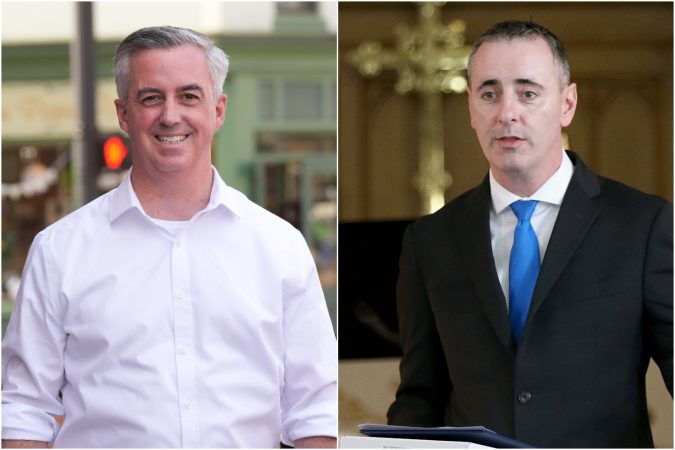
Democrat Bob Harvie is challenging Republican U.S. Rep. Brian Fitzpatrick to four debates, his campaign told The Inquirer.Fitzpatrick, after learning of Harvie’s challenge from The Inquirer, countered with 10 debates — but only if Harvie releases files related to an FBI investigation that Fitzpatrick and allies have routinely alleged focuses on the Democrat.
Harvie does not have files to release, said Dan McCormick, the candidate’s campaign manager. Harvie also has never been under investigation, lawyers for his campaign said. And he has already filed a defamation lawsuit against a pro-Fitzpatrick super PAC for making the same claim.
“Bob would be happy to participate in 10 debates,” McCormick said. “Bob has no files to release and Brian Fitzpatrick knows it. If Fitzpatrick has proof as he says he does, he should put up or shut up.”
The back-and-forth emerged Monday when the Harvie campaign told The Inquirer that the two-term Bucks County commissioner would be challengingthefive-term GOP lawmaker to three debates in Bucks — one each in the lower, central, and upper parts of the county — and a fourth in the Montgomery County portion of the 1st Congressional District.
Harvie said that Fitzpatrick“refuses to answer questions here at home” and “has nothing to show for his nearly 10 years in Washington.”
The increasingly heated race is one of four marquee congressional contests in Pennsylvaniathat could decide which party controls the U.S. House in November.
“It’s time for Fitzpatrick to show up in Bucks and Montgomery County — not Manhattan or the Lavender Fields in France,” Harvie said in a statement, referring to the venues for Fitzpatrick’s wedding and engagement to Fox News senior White House correspondent Jacqui Heinrich. “I’ll be there whether or not he shows, because I will never forget who I am fighting for.”
Heather Roberts, a spokesperson for Fitzpatrick, said as soon as Harvie releases “his full FBI files,” the campaign will move forward with date and venue selections for 10 debates.
“If the Subject of an FBI Corruption investigation is asking to be provided a platform by the only FBI Agent in Congress, he sure as hell will be required to come clean with the public and release these documents in their entirety,” Roberts said in a statement. “If he has nothing to hide, this should be an easy decision for him.”
Roberts also proposed a joint sit-down interview with Harvie and Fitzpatrick, conducted by The Inquirer, to discuss the allegations.
Roberts said that Fitzpatrick, who served 15 years as an FBI agent and a federal prosecutor, “is extremely familiar with this specific grand jury protocol and the documents that are generated.”
The debate drama is the most recent development in what has become an increasingly combative race, filled with personal jabs and legal filings related to controversial ads making allegations that Harvie is the subject of an FBI investigation.
Harvie, a former Falls Township supervisor, and other officials testified as witnesses to a grand jury in an FBI probe in 2022 into political donations and union contracts related to the Pennsbury School District. In 2020, the FBI interviewed several people connected to Falls Township and Pennsbury.
It has been fouryears since voters have been able to see a general election debate in the 1st Congressional District. In 2024, Fitzpatrick did not debate Democratic challenger Ashley Ehasz, after doing so in 2022.
The Harvie campaign said that it would be willing to work with the Fitzpatrick campaign on logistics and other event details, but that the commissioner’s preference is a town hall-style debate so voters can hear from him directly.
Fitzpatrick has held tele-town halls, including one in June, for constituents, and frequently posts on social mediarecapping the meetings and events he attends in the community.
Now comes the latest pocket-lining scheme that reeks of insider trading.
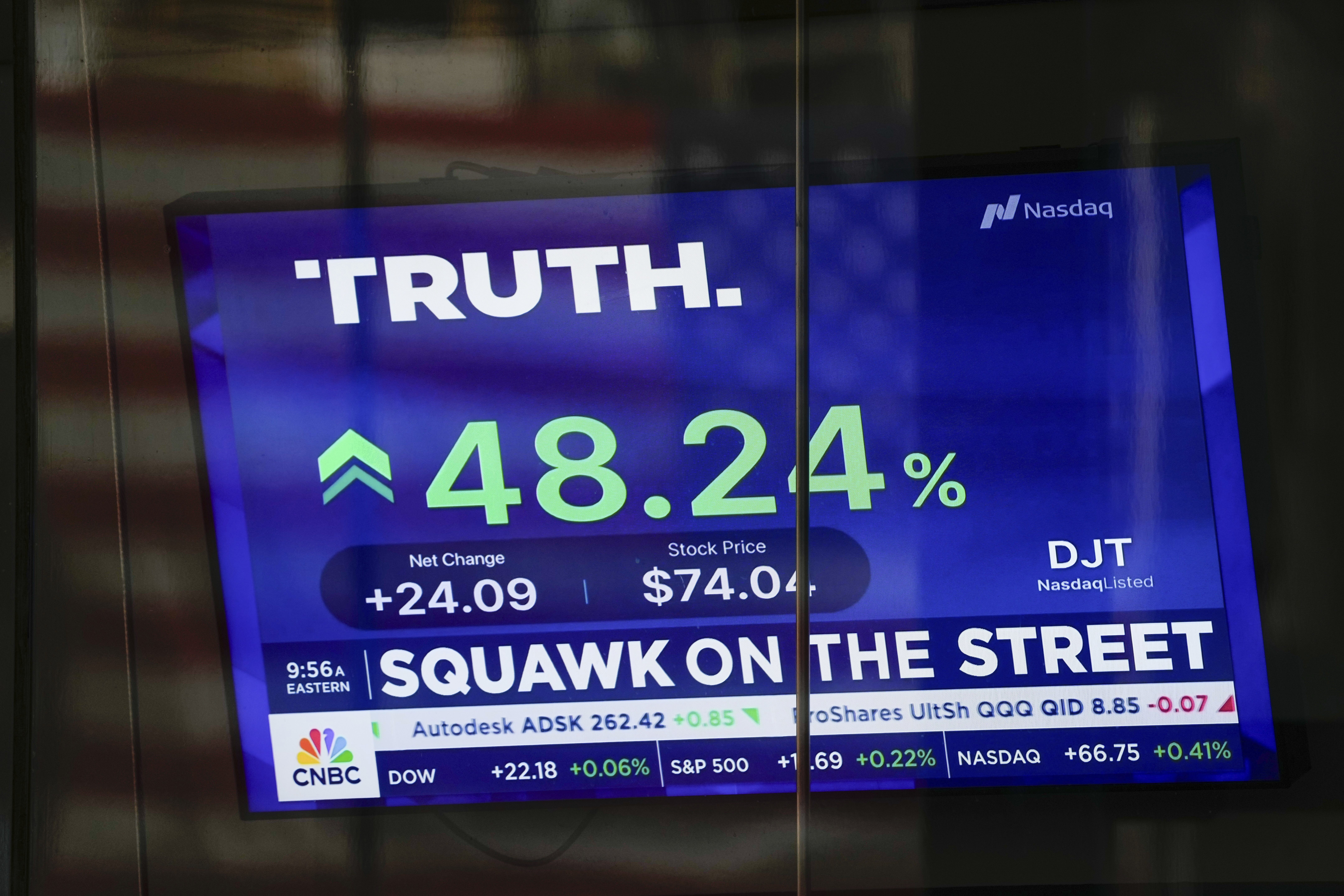
Trump’s media company has begun selling investors advanced access to his often market-moving Truth Social posts. More than 10 customers are paying up to $100,000 a month to get an early peek at the president’s social media posts.
The CEO of Trump Media and Technology Group (TMTG) told investors he expects more buyers to sign on, and that selling early access to the posts could “grow into a meaningful, durable contributor.”
Joe Rogan, the podcaster and Trump supporter, asked the obvious question: “How is that legal?”
Two media organizations sued Trump over the service, arguing it is unconstitutional, and Rep. Jamie Raskin (D., Md.) said it represents “the depraved essence of insider trading.”
Trump is the majority owner of TMTG, which owns Truth Social, the main platform he uses to communicate to his followers and the world, sometimes going on unhinged rants and posting more than 100 times a day.
But major announcements from Trump about issues such as tariffs, the erratic peace negotiations with Iran, and attacks on Federal Reserve interest rate policy often cause stock, oil, and bond markets to rise and fall.
Advanced knowledge of such information will enable insiders who buy early access to profit from Trump’s posts. Indeed, suspicious trading ahead of some of Trump’s previous market-moving announcements has raised red flags of insider trading.
Trump knows how to manipulate financial markets.
Last April, he wrote on his social media platform: “THIS IS A GREAT TIME TO BUY!!! DJT.” Hours later, the president detailed a 90-day pause on nearly all his tariffs, causing the stock market to gain back about $4 trillion that had been lost in the previous days of trading.
Trump has also used his presidential bully pulpit to bolster individual stocks.
He touted Dell stock after founder Michael Dell and his wife, Susan, pledged to donate more than $6 billion to the “Trump Accounts” program. Shares of Dell jumped 7% after Trump urged investors to “go out and buy a Dell computer.”
After shares of Tesla sank following Elon Musk’s disastrous tenure dismantling the government as the DOGE figurehead, Trump held an embarrassing promotional event outside the White House praising the cars.
Commerce Secretary Howard Lutnick followed Trump’s Tesla promo by going on Fox News and urging viewers to buy the stock — an apparent violation of federal ethics rules that prohibit officials from endorsing products or businesses.
But don’t look for the U.S. Department of Justice or the Securities and Exchange Commission (SEC) to investigate Trump’s plan to sell access to his Truth Social posts.
Todd Blanche, the newly confirmed attorney general who enriched himself as Trump’s defense attorney, refused to pledge that he will always act independently of the White House.
SEC enforcement cases hit a record low during Trump’s first year back in office. The agency just dropped insider trading charges against a healthcare executive the president pardoned.
Several Democratic lawmakers called on the SEC to investigate the Truth Social deal. But any real investigations of Trump’s moneymaking are unlikely until Democrats win control of the House or Senate.
Trump made an estimated $2.2 billion last year on side hustles involving cryptocurrency, branding deals, real estate ventures, and legal settlements with media companies that blur the power of the presidency with profiteering.
The Truth Social scheme will add to Trump’s pocket lining.