Blog

  • Trump lashes out at Oman as preliminary deal with Iran expires

    Trump lashes out at Oman as preliminary deal with Iran expires

    As a crumbling truce with Iran officially collapsed Monday, President Donald Trump signaled his frustration at his inability to resolve a war that he started but cannot seem to end.

    In an interview with Fox News, the president lashed out at a U.S. ally, Oman, that has been trying to mediate negotiations with Iran.

    “If Oman gets in the way, we’ll bomb the s— out of them,” Trump said in a phone interview, according to Fox News’ Trey Yingst.

    The latest threat toward Oman, which has facilitated talks between the United States and Iran for years and maintains that it is still a neutral mediator, came as Trump found himself without much leverage to reach the goals he set out at the start of the war.

    Hostilities have now stretched past the six-month mark in a conflict that began with the United States and Israel launching strikes across Iran in February. Administration officials pledged at the time that the war would be over in four to six weeks.

    In June, the two sides agreed to a memorandum of understanding, but that quickly fall apart amid disputes over its wording. Both Trump and Iran’s leaders have said the deal is essentially dead.

    As the ceasefire officially expires, the president and his team have promised to level crushing sanctions against Iran this week, though the details of those plans have yet to be unveiled. And Defense Secretary Pete Hegseth has said the United States can maintain a naval blockade of the Strait of Hormuz, a critical oil shipping corridor, indefinitely — an acknowledgment that there was no end to the war in sight.

    In the Fox News interview, Trump sought to project patience, saying he was “not in a hurry” to secure a deal while maintaining that his central goal remained preventing Iran from possessing a nuclear weapon.

    But in the meantime, it was Oman that received the president’s fury.

    It was the second time this year the president has threatened the country. After it emerged in May that Oman had discussed partnering with Iran to charge fees for ships to pass through the strait, Trump snapped.

    “Oman will behave just like everybody else, or we’ll have to blow them up,” Trump told reporters that month. “They understand that. They’ll be fine.”

    A White House official did not immediately respond to a request for comment.

    This article originally appeared in the New York Times.

  • Trump’s overture to Kim Jong Un strains alliance with South Korea

    Trump’s overture to Kim Jong Un strains alliance with South Korea

    SEOUL, South Korea — The South Korean and U.S. militaries view their annual drills in South Korea as more critical than ever. The stakes have risen dramatically as North Korea has gained battlefield expertise with drones and modern warfare by deploying troops to support Russia’s war in Ukraine.

    The summer exercise had barely begun Monday when President Donald Trump denounced it, dealing yet another blow to the seven-decade-old alliance between Washington and Seoul. Under Trump, bilateral relations have already come under immense strain from ​his punishing tariffs on South Korean exports.​ And his transactional diplomacy has frustrated South Korea, most recently when he appeared to put Saudi Arabia on the path to enriching nuclear fuel on its own soil, a demand Seoul has made for years.

    In recent years, North Korea has ​not only expanded its nuclear arsenal but also repeatedly threatened ​to use it against South ​Korea, labeling its neighbor ​a “most ​hostile enemy.” Its leader, Kim Jong Un, has also forged a mutual defense treaty with Moscow, dispatching troops and​ weapons to ​support Russia’s war against Ukraine. Despite these escalations, Trump, in a social media post, characterized North Korea as “unthreatening and respectful” while boasting of his “very good relationship” with Kim.​

    In the same post, he ​also criticized the decades-old joint military drills with South Korea as “not only costly” but “totally inappropriate and hostile” toward North Korea.

    “I am not happy with the fact that the United States has, long ago, agreed to participate in Joint Military Exercises with South Korea,” he said. “Based on the fact that it is too late to cancel, I have instructed Secretary of War, Pete Hegseth, to substantially reduce the Joint Military Exercises!”

    If implemented, the directive would mark Trump’s first-known concrete overture toward North Korea in his second term. However, it remains unclear whether Kim will embrace the gesture.

    Throughout his political career, Trump has treated the alliance as a​ bad bargain for Americans, frequently accusing Seoul of failing to pay its fair share for the U.S. troops stationed in South Korea — who act as a deterrent to North Korea. During his first term, he unilaterally canceled or downscaled major drills, calling them “tremendously expensive” and “​very provocative.”​ That concession helped facilitate three summit meetings with Kim but failed to roll back his nuclear ambitions.

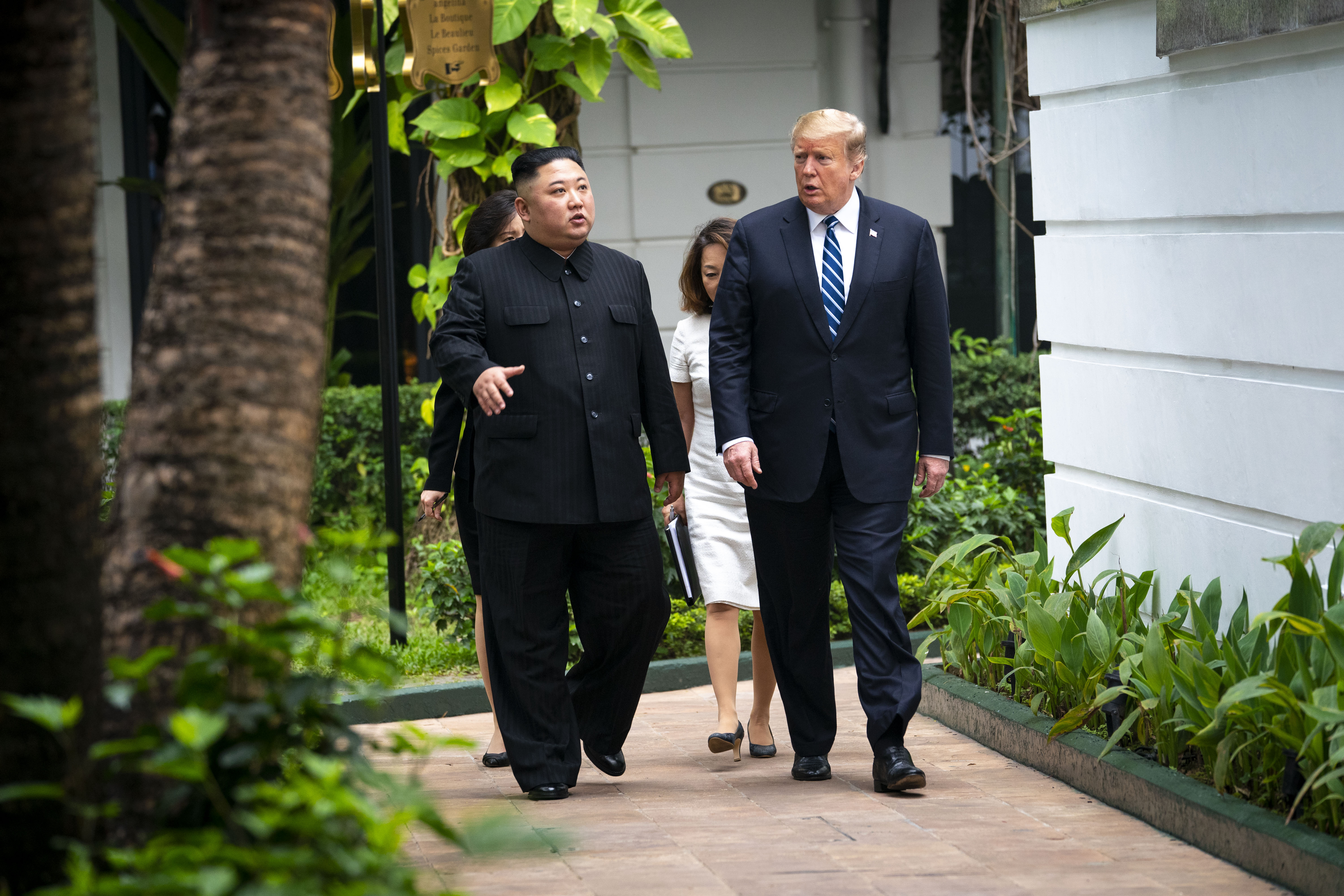
    Since returning to the White House, Trump has signaled a desire to renew that personal diplomacy. Over the weekend, he posted a 2019 photograph of himself and Kim at the inter-Korean border, writing, “Kim Jong Un and I get along GREAT!”

    “Trump’s description of the DPRK as ‘unthreatening and respectful’ is alarming to allies, who have watched the regime steadily improve its missile and nuclear capabilities, while also gaining an additional patron in Russia for its support in the war on Ukraine,” said Emma Chanlett-Avery, the deputy director at the Asia Society Policy Institute, referring to North Korea’s full name, the Democratic People’s Republic of Korea.​

    Th​is summer’s 11-day Ulchi Freedom Shield exercise was designed to adapt to these shifting dynamics​, incorporating lessons learned from recent conflicts, including from Ukraine. Lt. Gen. Joseph E. Hilbert of the U.S. 8th Army noted that the maneuvers would ​also test “the alliance’s ability to rapidly project combat power and secure key terrain within the First Island Chain”​ —​ a long Pacific archipelago seen by the U.S. military as a strategic frontier against China’s expansive territorial claims.

    But Trump found fault with South Korea on another front; in his post, he also criticized Seoul for failing to help “denuclearize” Iran.

    South Korea’s Foreign Ministry on Monday pledged continued coordination with the United States on both joint military exercises and Iran.

    While South Korea’s government confirmed that the drills had begun as scheduled, its defense establishment was deeply rattled. Trump’s directive fueled growing fears​ that the alliance was hollowing out.

    “South Korean conservatives​, in particular, will see the alliance turning into a zombie, ​considerably losing its old strategic objectives and political energy under Trump,” said Lee Byong-chul, an analyst at the Institute for Far Eastern Studies in Seoul.

    Trump’s overture toward North Korea, however, is not entirely unwelcome for his South Korean counterpart, Lee Jae​ Myung, analysts said. A staunch proponent of inter-Korean reconciliation, Lee has urged Trump to ease tensions on the Korean Peninsula through direct talks with Kim. ​North Korea has long cited the joint drills as a major stumbling block to such efforts, calling them “a rehearsal for an aggressive war.”

    On Monday, South Korea reiterated its hopes that the rapport between Trump and Kim would foster “meaningful dialogue.”

    But a second round of Trump-Kim diplomacy faces much steeper hurdles than it did in 2018. North Korea is now a de facto nuclear state that has been bolstered by economic lifelines and diplomatic leverage from Moscow and Beijing. While Kim has noted that he retains “a good memory” of Trump, he has emphasized that North Korea would resume talks ​only if Washington abandons its insistence on denuclearization.

    This article originally appeared in the New York Times.

  • A man who stole $1 million in cryptocurrency was sentenced to seven years in prison

    A man who stole $1 million in cryptocurrency was sentenced to seven years in prison

    A 24-year-old Portuguese man was sentenced Monday to seven years in federal prison for stealing more than $1 million in cryptocurrency from unwitting victims, including a resident of Montgomery County — crimes prosecutors said the man committed while he was associated with an international cybercrime network.

    Ruben Filipe Gabriel Martins pleaded guilty last year to wire fraud and identity-theft charges for using sophisticated phishing tactics to obtain victims’ cryptocurrency account information, then stealing their investments.

    Prosecutors said Martins committed his fraud while he was part of a group called “the Com,” a global network of people who use technology to commit a variety of crimes across the world, including extortion, theft, and even incitements of violence.

    Last year, a teen who was associated with a subset of the Com made hoax active-shooter calls targeting Villanova University and other colleges, prosecutors have said, crimes that led to massive police responses and inspired widespread panic.

    Martins, meanwhile, was associated with a subset known as “CryptoChameleon,” a group that uses a variety of deceptive tactics to obtain account information from cryptocurrency holders. In Martin’s case, prosecutors said, he pretended to be a customer support representative for Coinbase, a cryptocurrency exchange, and told his victims he could offer support for their compromised accounts — tactics he used to get into the accounts and steal the victims’ funds.

    Martins then went on to transfer the proceeds into other cryptocurrencies, prosecutors said, and ultimately spent his ill-gotten gains on luxury goods, traveling, and gambling.

    His scheme began to unravel in 2024, when prosecutors said a man from Towamencin Township told police that more than $60,000 had been stolen out of his cryptocurrency account after he’d replied to text messages and calls about its security. Authorities were ultimately able to link that activity to Martins, who was born in Portugal and went on to live in Scotland.

    Martins’ lawyer said in court documents that Martins had never intended to become “a career criminal.” But after being raised in modest circumstances — including by working in a fish factory as a teenager — Martins was introduced to a host of wealthy benefactors due to his skill in online gaming, his lawyer said, and some of those people then flew him to Paris and recruited him to participate in their digital exploitation operation.

    In court Monday, Martins apologized for his actions, saying he was in debt when he committed his crimes and viewed the scheme as a way to make “really easy money.”

    “I made a mistake when I was really down,” he said, “and I’d just like to have another chance at life.”

    But U.S. District Judge Gerald J. Pappert said it was a significant understatement to describe the crimes as a “mistake ” — saying Martins had used his computer skills and desire for money to turn himself into a “dangerous” person who stopped only when he got caught.

    “Not one thing you did in two years was a mistake,” Pappert said. “You needed money. You saw what for you was an easy way to get a lot of money. … And I don’t know to what extent, if at all, you ever felt bad about it, because these people were all behind a computer, and you never had to look them in the eye.”

    One of Martins’ victims has seven children, Pappert noted, and others were intelligent people who lost significant portions of their life’s savings.

    Martins is expected to be deported to Portugal once he finishes his prison sentence. But Pappert said his victims may never get over the shame and financial hardship he caused them.

    “These were horrible crimes,” Pappert said. “None of these people deserved this.”

  • Kushner meets Netanyahu in effort to break logjam over Gaza

    Kushner meets Netanyahu in effort to break logjam over Gaza

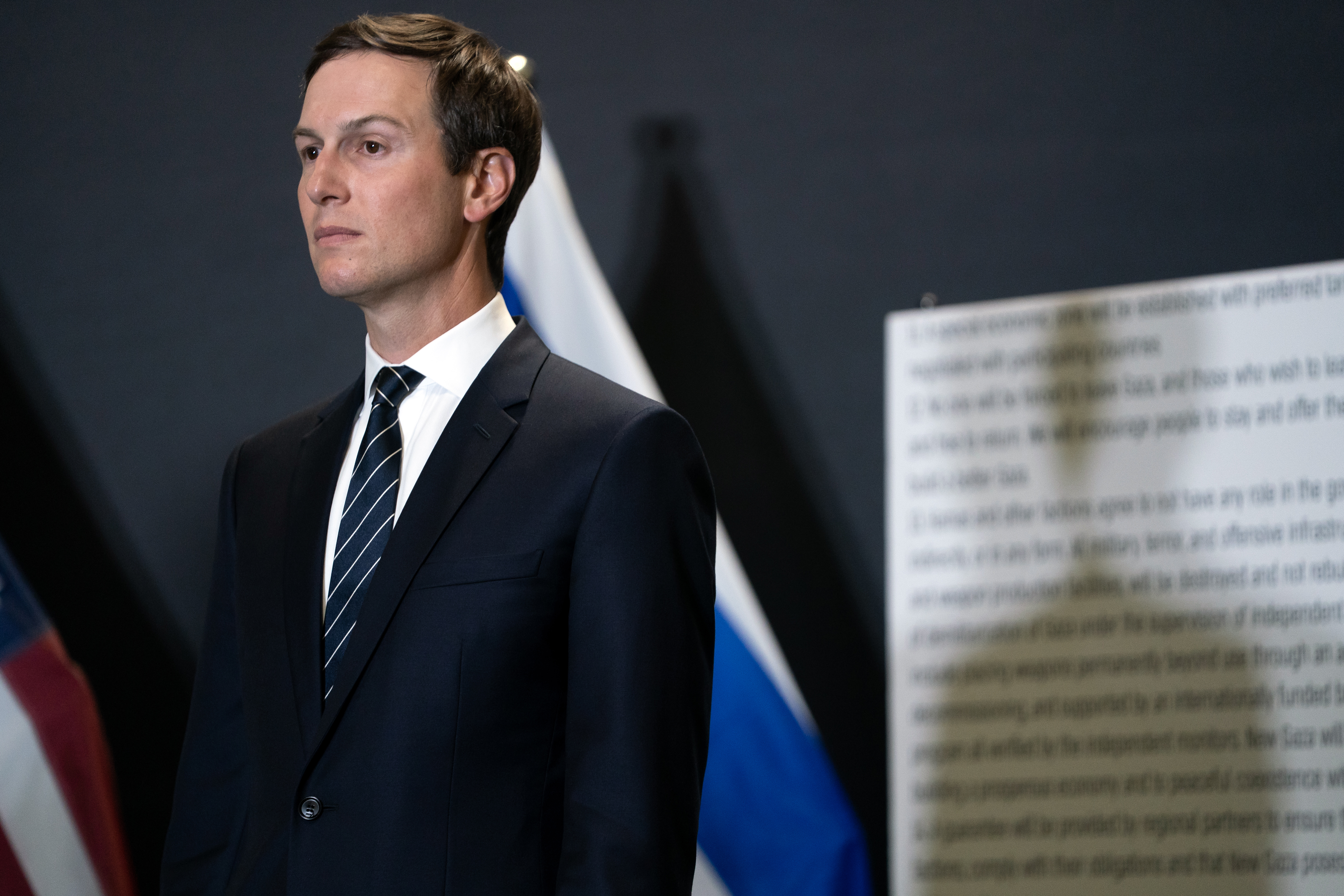
    JERUSALEM — Jared Kushner, President Donald Trump’s son-in-law and former White House adviser, was meeting with Prime Minister Benjamin Netanyahu of Israel in Jerusalem on Monday in an effort to break a logjam over Trump’s plan for the future of the war-ravaged Gaza Strip.

    The plan had been stalled for months over Hamas’ refusal to lay down its arms, as well as Israel’s frequent airstrikes and military operations beyond the withdrawal line it agreed to in the ceasefire reached in October 2025. Israel has also failed to meet its commitments to allow specified amounts of fuel and other necessities into Gaza.

    Trump’s announcement last month that his Board of Peace had secured Hamas’ agreement to disarm briefly raised hopes for progress. A 15-point “road map” that Hamas agreed to called for the militant group to lay down its weapons in a phased approach that would be matched by Israel withdrawing from parts of Gaza.

    But Netanyahu rejected the deal this month, insisting that Israel would not pull back within Gaza, let alone from Gaza, until Hamas had disarmed completely.

    Kushner and members of the Board of Peace flew to Israel for Monday’s meeting after holding talks with representatives of Hamas, including its political leader, Khalil al-Hayya, on Sunday in El-Alamein, Egypt.

    Hamas officials presented Kushner with a list of what they contended were Israel’s violations of the ceasefire, according to a Hamas official and two people briefed on the talks, and he promised to speak to Netanyahu about Israel upholding its end of the agreement.

    Kushner, in turn, asked the Hamas representatives to move ahead with disarmament, the two people said. But they replied that Israel first needed to keep its commitments under the ceasefire, and they warned that the road map they agreed to last month was not open for changes.

    The Board of Peace’s deal with Hamas says that, as part of the disarmament process, Israel should first uphold its side of the ceasefire. But political considerations are widely believed to be preventing Netanyahu from upholding all of Israel’s commitments under that deal.

    The Israeli leader faces a tough campaign for a new term in elections to be held Oct. 27, and his right-wing coalition is behind in the polls. Any concessions to Hamas or perceived softening of his posture toward Gaza could subject him to attacks from allies he considers vital.

    Political considerations are also important for the Board of Peace and for the Trump administration. With the U.S. midterm elections approaching in November and the anniversary of the ceasefire in early October, a failure to reach an agreement that could pave the way for reconstruction in Gaza could be highly embarrassing for the board, for the White House, and for its approach to the Middle East.

    This article originally appeared in the New York Times.

  • Ohio State and Oregon are 1-2 in preseason Top 25 football poll; Penn State 18th

    Ohio State and Oregon are 1-2 in preseason Top 25 football poll; Penn State 18th

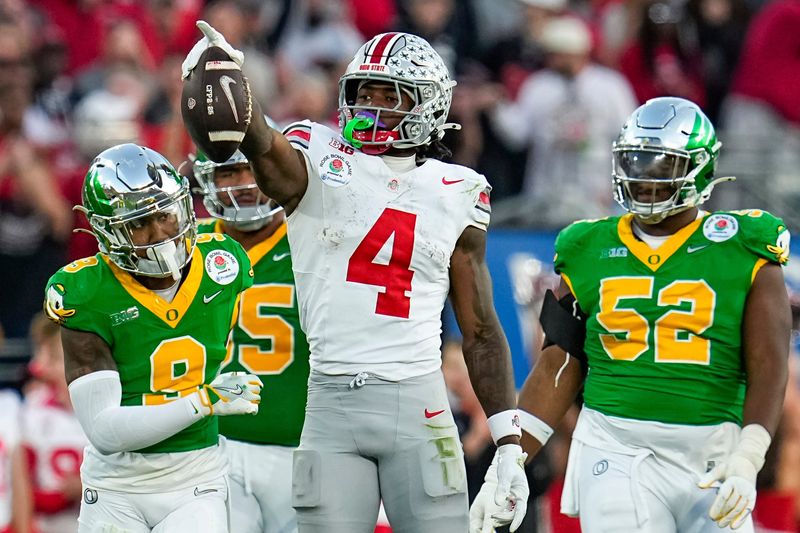
    Ohio State and Oregon are 1-2 in the AP Top 25, giving the Big Ten Conference the top two teams in the preseason rankings for just the second time ever. Georgia, Notre Dame and Texas round out the top 5.

    The Southeastern Conference gets bragging rights with nine ranked teams, but the Big Ten isn’t far behind with eight.

    Penn State is ranked 18th going into its first season with coach Matt Campbell, who was hired in December following a 7-6 season that cost James Franklin his job in October. Penn State is one of four teams in the Top 25 with new coaches.

    Indiana finished the 2025 season at No. 1 in the rankings after a historic 16-0 run and national championship game victory. This season, Ohio State enters with the best odds (+600) to win it all. Notre Dame (+650), Texas (+650), Indiana (+800) and Oregon (+800) round out the top five.

    The Top 25 voters are more than 60 journalists covering college football for AP members and other news organizations. They’re urged to base their votes on head-to-head results, not reputation, preseason speculation or regional bias.

    Conference breakdown

    SEC (9): No. 3 Georgia, No. 5 Texas, No. 8 Texas A&M, No. 9 Mississippi, No. 10 Oklahoma, No. 11 LSU, No. 13 Alabama, No. 20 Tennessee, No. 25 Missouri

    Big Ten (8): No. 1 Ohio State, No. 2 Oregon, No. 6 Indiana, No. T-14 USC, No. 16 Michigan, No. 17 Washington, No. 18 Penn State, No. 22 Iowa

    Big 12 (4): No. 12 Texas Tech, No. T-14 BYU, No. 21 Utah, No. 23 Houston

    ACC (3): No. 7 Miami, No. 19 SMU, No. 24 Louisville

    Independent (1): No. 4 Notre Dame

    SEC has 9 ranked teams to Big Ten’s 8

    Having Ohio State and Oregon enter the season Nos. 1 and 2 ahead of sixth-ranked defending conference and national champion Indiana is a flex for the Big Ten, which already is riding the momentum of winning the last three national titles.

    Having five of the top 10 teams, and seven of the top 13, bolsters the SEC’s contention that it has greater depth. The SEC has nine ranked teams compared to the Big Ten’s eight.

    The debate goes on over conference supremacy and will only heat up when the Big Ten and SEC square off in the first heavyweight games of the season Sept. 12. That’s when No. 10 Oklahoma visits No. 16 Michigan and No. 1 Ohio State goes to No. 5 Texas. Both are rematches of games won by the home team last year — OU 24-13 and Ohio State 14-7.

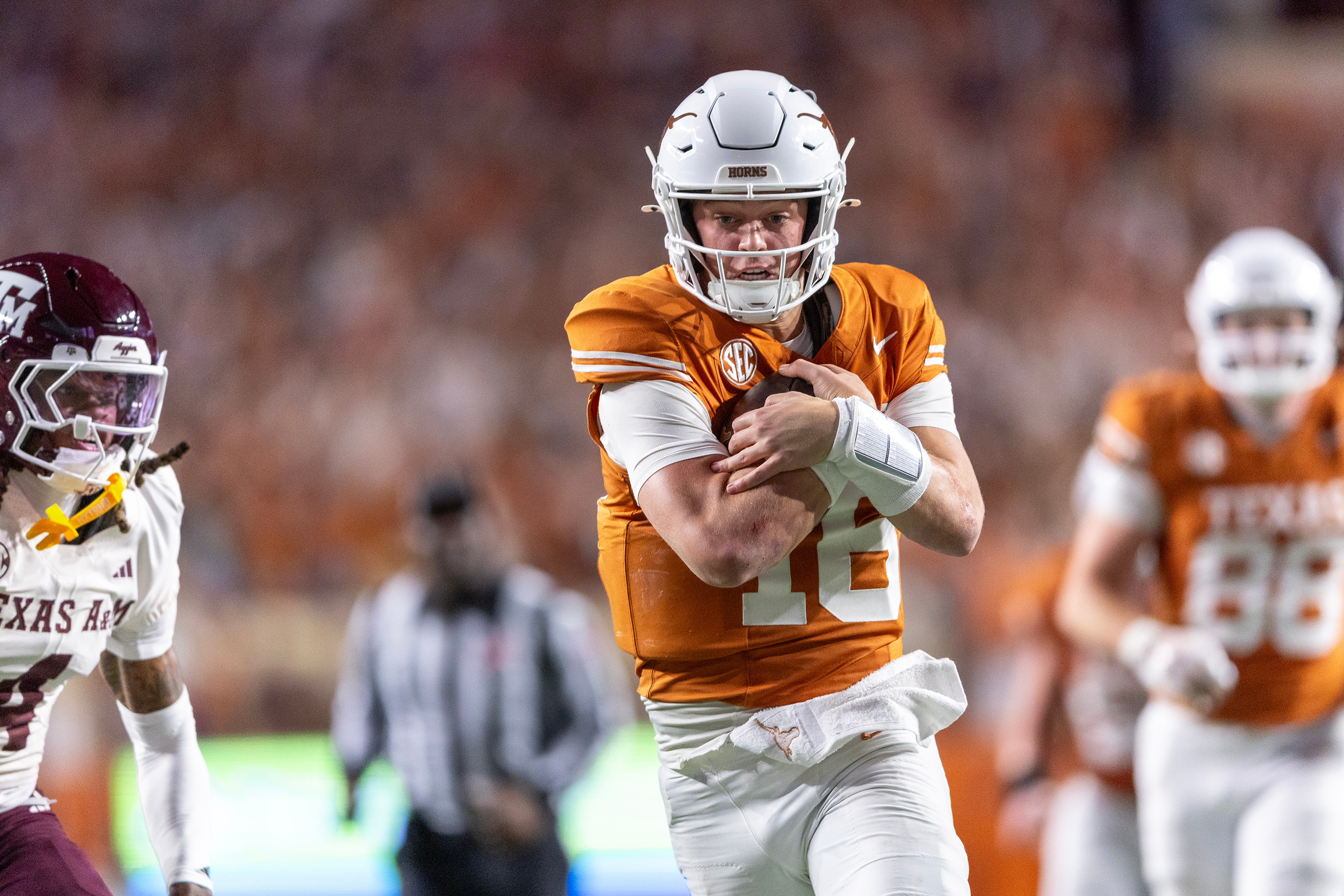
    Texas quarterback Arch Manning is expected to be a Heisman Trophy candidate this season.Stephen Spillman

    Longhorns, No. 1 in last year’s preseason poll, look to bounce back

    The Longhorns entered the 2025 season at No. 1 after receiving 25 first-place votes — two more than No. 2 Penn State. But after a Week 1 loss to Ohio State, Texas found itself fighting upstream to maintain its top-ranked status. An October loss to a struggling Florida team didn’t help either, knocking Texas out of the rankings altogether.

    The Longhorns, despite gutting out a few impressive wins, ultimately fell short of the 12-team College Football Playoff after Georgia handed them a third loss.

    Eyes will be on quarterback Arch Manning, who the Longhorns hope makes the expected jump from year one to year two as a full-time starter. Manning, a favorite for the Heisman Trophy this year, will have to lead a team facing plenty of expectations once again.

    Buckeyes are an early favorite

    It’s the first time the Buckeyes have topped the list since the 2015 preseason.

    Ohio State ranked No. 1 in the AP Top 25 for the entire regular season last year, only dropping after a Big Ten Championship game defeat from Indiana. With a 12-1 record, Ohio State still earned the No. 2 seed and a first-round bye in the College Football Playoff. The Buckeyes ultimately went on to drop 24-14 to eventual runners-up, Miami, in the Cotton Bowl.Gallery

    This season appears promising with quarterback and receiver duo Julian Sayin and Jeremiah Smith returning to the offense. Veteran defensive end Kenyatta Jackson Jr. is expected to anchor the defense. Notre Dame and Texas are tied for the second best odds at +650. Indiana (+800) and Oregon (+800) round out the top five.

  • The inaugural JAB Classic brought a bevy of basketball stars for a showcase to foster unity

    The inaugural JAB Classic brought a bevy of basketball stars for a showcase to foster unity

    Philadelphia natives Marcus Morris Sr. and Markieff Morris showed out in front of a home crowd on Sunday.

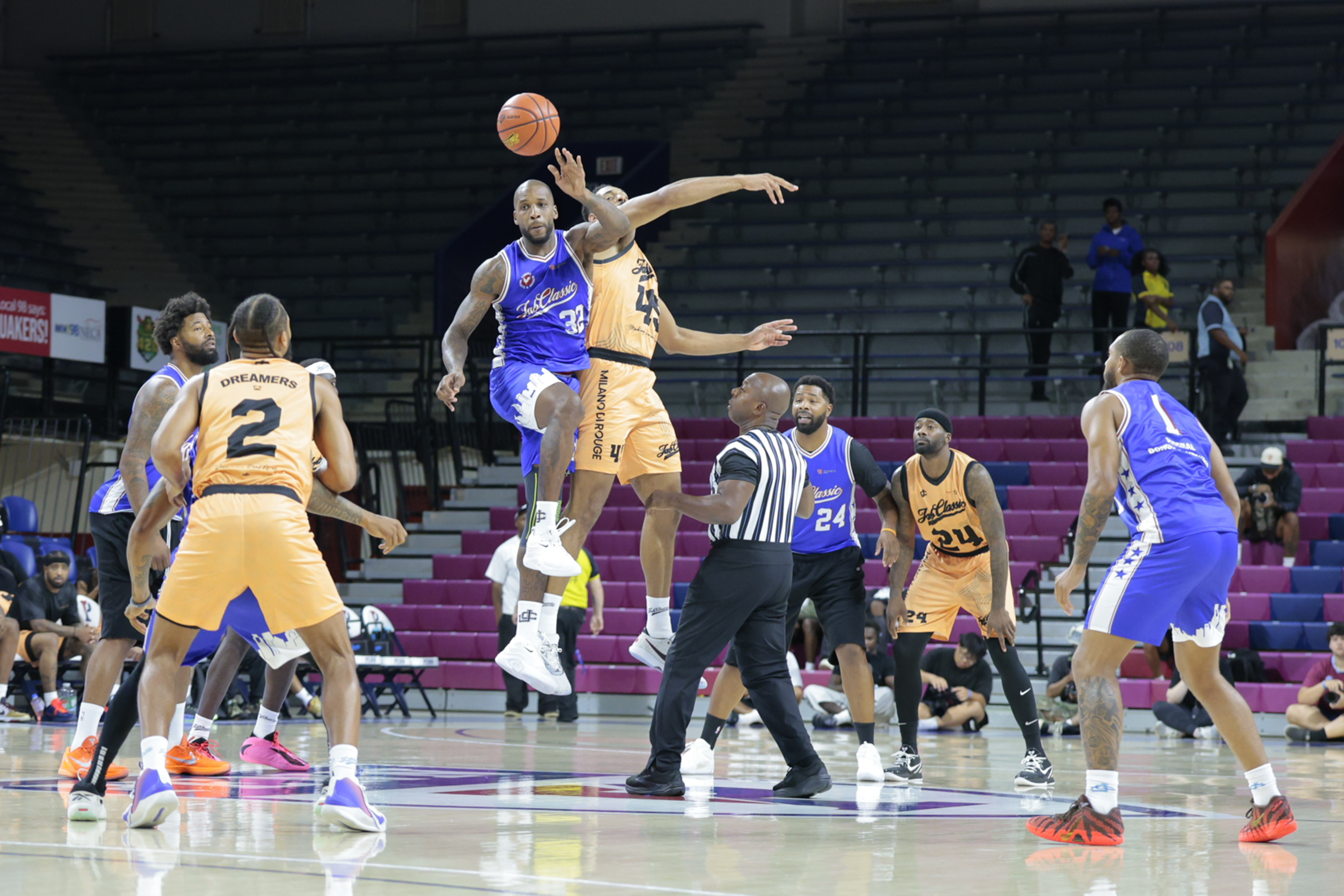
    The Morris twins, who put together long careers in the NBA, starred for a team representing Chuck Ellis Workouts in the inaugural JAB Classic Championship — the culmination of a three-day pro-am basketball tournament at the Palestra.

    The final saw their Philly-based team defeat Texas’s Trusted Vision, 106-77. Zid Powell, a former standout at Rocktop Academy while attending Overbrook High, was named the game’s most valuable player.

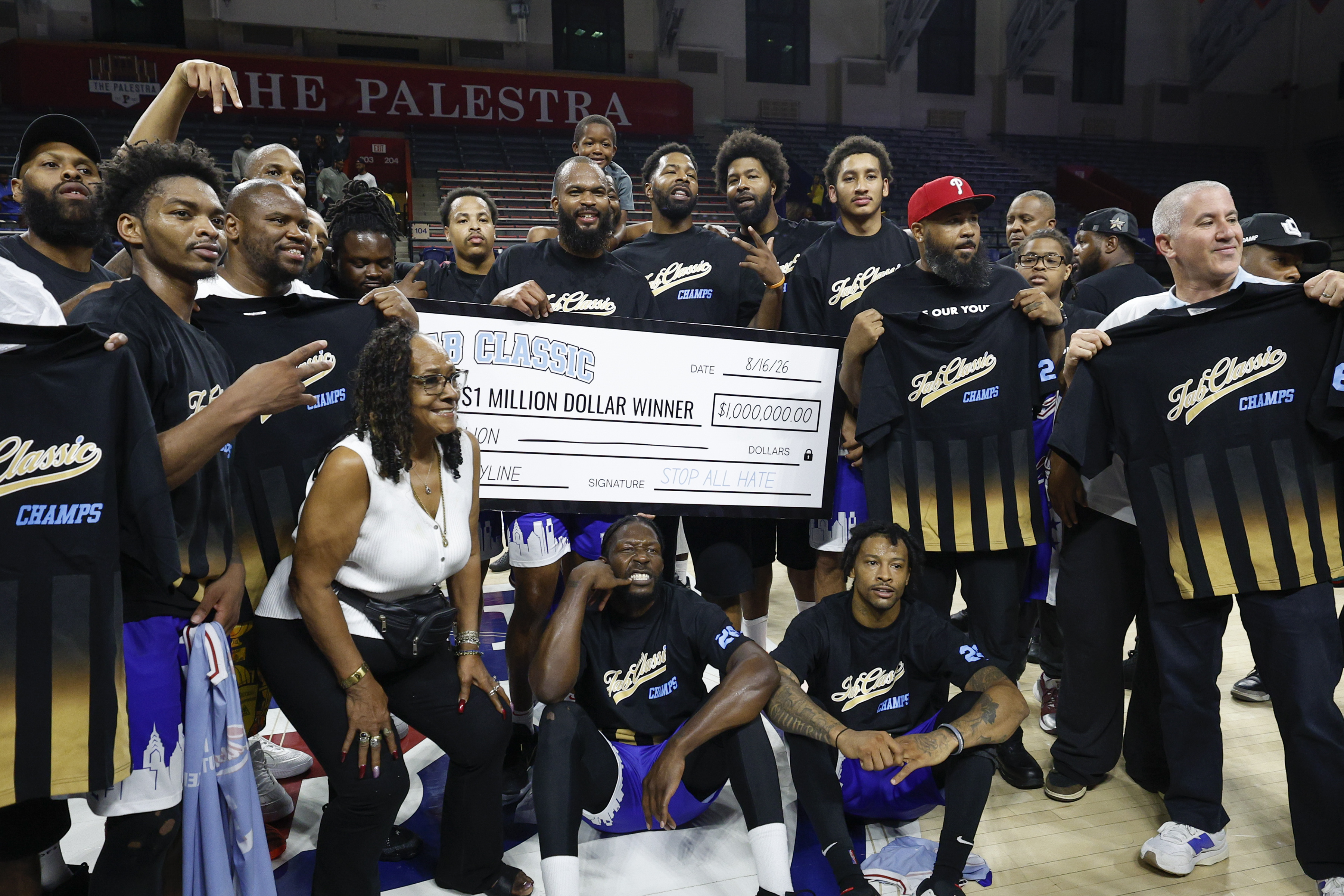
    After the final whistle, Chuck Ellis Workouts was awarded a $1 million championship bonus check.

    “I already knew what time it was, man,” Marcus Morris Sr. said after being presented the check. “I already knew. Just show some love. Just show some respect, man. You know what time it is. I’m taking [the check] to the crib, and we know what it is — a million.”

    In 2024, Marcus Morris, then a member of the Sixers, received a key to the city for his philanthropic work. Marcus and Markieff helped found the Family Over Everything Foundation, a program that provides assistance to local children in single-parent households and other underserved communities. For the Morris twins, playing in the JAB Classic was another way to give back to Philadelphia.

    Chuck Ellis Workouts shows off their prize after beating Trusted Vision to win the JAB Classic and the $1 million grand prize at the Palestra on Sunday.Steven M. Falk / For The Inquirer

    “It’s amazing to have people come out,” said Marcus Morris. “Been playing in the NBA for 15 years. And even when I’m not playing, they still come to show love, man. It’s always about Philly.”

    Markieff Morris added: “Felt good, had the city come out. We need more of it.”

    The JAB Classic was centered around fostering unity. JAB founder Jared Armstrong thought to bring the inaugural tournament to Penn after years of campus turmoil following the Hamas-led attacks on Israel on Oct. 7, 2023, and the ensuing war in Gaza, which has killed more than 70,000 people.

    Armstrong, who plays professionally in Israel, has helped fund the renovation of 17 total basketball courts between Israel and Philadelphia. The tournament, which ran from Friday through Sunday, will help fund a new court in the city. The location has yet to be announced.

    “I just think [combating] the rise of hate [is the goal],” Armstrong told The Inquirer last week. “Whether it’s racism, antisemitism, Islamophobia — it’s going to start with the next generation and really educating them.”

    Jared Armstrong, who plays professionally in Israel, started the JAB Classic, he says, as a way to grow the sport both overseas and here in Philly. Jared Armstrong

    The Morris twins were far from the only high-level talent that graced the Palestra’s court. In total, over 35 current and former NBA players were featured on the classic’s eight teams. Other notable names included 76ers forward Dominick Barlow, two-time NBA champion Quinn Cook, former NBA Sixth Man of the Year Montrezl Harrell, and former Villanova standout Omari Spellman.

    On Friday, Philadelphia rapper Kur performed between Games 3 and 4. Then, during halftime of Sunday’s championship matchup, prominent Chicago emcee G Herbo performed a medley of his hits.

    Despite the evident star power, the JAB Classic failed to pack the Palestra. Sunday’s championship round, the best attended of the tournament’s three days, filled roughly a quarter of the arena. Marcus Morris hopes to help bring in more fans if the event is held again.

    “Next year we want to get [ahead] of it a little bit earlier,” he said. “So we can get more people to come out.”

    Still, the fans who did show up on Sunday made themselves heard.

    In the second half, when Chuck Ellis Workouts began to run away with the lead, a crowd formed on the baseline. One player that fed off the section was Chuck Ellis Workouts guard Josh Sharkey, a graduate of Archbishop Carroll.

    “Man, they gave us a lot of energy today,” Sharkey said. “You know, we [were] trying to promote it and get people in here, and they gave us a lot of energy. So it was good to come out and give them a show in front of the city and to win the money here.”

    “We [had] a very well put-together team,” added Sharkey, who also played in last week’s Danny Rumph Classic. “Shout-out to the [Morris] twins. Shout-out to Chuck [Ellis] for putting us together. And we had a goal, and we had no egos on the team.”

  • Supreme Court again rejects Trump’s appeal of $5 million E. Jean Carroll payment

    Supreme Court again rejects Trump’s appeal of $5 million E. Jean Carroll payment

    WASHINGTON — The Supreme Court for a second time refused a request by President Donald Trump to review a $5 million civil judgment against him after a jury found in 2023 that he had sexually abused and defamed writer E. Jean Carroll.

    The announcement Monday did not include the justices’ reasons, which is typical when the court issues routine orders. There were no noted dissents.

    Trump paid Carroll in July, a few days after the court initially turned away the president’s appeal. He also made a long-shot request to the justices that they reconsider, which the court formally declined Monday.

    The president has separately asked the Supreme Court to overturn a much larger award of $83.3 million that a jury ordered him to pay in 2024 for defaming Carroll in 2019, after she accused him of a decades-old rape. The justices are on summer recess and not expected to consider whether to take up that case until late September at the earliest.

    The request the justices dispatched Monday was always a long shot, since they rarely reconsider when asked. Still, it was another in a series of blows to the president’s efforts to contest Carroll’s claims and avoid the two separate monetary awards that juries have ordered him to pay related to Carroll’s allegations.

    In a statement, Trump’s legal team said: “The American people stand with President Trump as they demand an immediate end to all of the witch hunts, including the Democrat-funded travesty of the Carroll hoaxes. President Trump will keep winning against liberal lawfare, as he continues to focus on his mission to make America great again.”

    Carroll’s lawyer Roberta Kaplan said in a statement: “We are pleased that the United States Supreme Court has declined again to hear this case. As a result, the jury’s unanimous verdict that Donald Trump sexually assaulted and then defamed E. Jean Carroll is now final and cannot be challenged in any court.”

    The $5 million matter stems from a trial held in May 2023, when a federal jury in New York found the president liable for sexually abusing and defaming Carroll.

    The jury agreed that Carroll, a former magazine writer, had sufficiently shown that Trump sexually abused her in a dressing room of the Bergdorf Goodman department store when the two crossed paths in the 1990s. Further, the jury found that Trump had defamed Carroll by posting a statement on social media calling her case “a complete con job” and “a Hoax and a lie.” Throughout, Trump denied Carroll’s allegations.

    After that verdict, Trump appealed to the 2nd U.S. Circuit Court of Appeals, asserting, among other things, that the trial judge, Lewis A. Kaplan, erred by allowing certain evidence to be shown to the jury.

    In December 2024, a three-judge appeals court panel upheld the jury’s verdict, finding that Trump failed to show that the evidence had harmed his rights to a fair trial.

    Trump then asked the justices to weigh in and find that the trial court had erred.

    This article originally appeared in the New York Times.

  • Inside the gentle, careful work of restoring famous paintings of Lincoln

    Inside the gentle, careful work of restoring famous paintings of Lincoln

    Heather Smith stood before the tattered portrait of Abraham Lincoln, holding a fine-tipped sable brush and a small plastic palette smeared with dabs of conservation paint.

    Wearing special magnifying glasses, she peered at the edge of the unframed portrait where paint was missing and pieces of old canvas remained.

    Lincoln, shown in the portrait resting his chin on his right hand, seemed to be watching.

    “He’s been through a war of his own,” she said of the painting of the nation’s Civil War president. “It’s terrifying to think about.”

    The 6-foot-2-inch portrait of a contemplative Lincoln sitting in a chair was painted in 1887. Time has weathered it and pocked it with flaws: Its original canvas was removed, probably with a scalpel. The surface of the painting was abraded, perhaps with an iron. And spots dotted the portrait where the paint was gone.

    But the Baltimore art conservator, working for the Smithsonian’s National Portrait Gallery, which owns the painting, has now embarked on a months-long effort to restore the majestic portrait to its original look.

    The effort is part of the portrait gallery’s project to assess 110 of its presidential portraits and repair those in need. The work has been funded, in part, by a grant from Bank of America.

    Smith is the owner of Maryland Art Conservation, which is based in a former Baptist church in northern Baltimore.

    She has already worked on the gallery’s 1785 portrait of George Washington by English artist Robert Edge Pine. And she is scheduled to work on gallery portraits of presidents Theodore Roosevelt, Benjamin Harrison, Woodrow Wilson, and Dwight D. Eisenhower.

    She is also working on another Lincoln — known as the penny portrait, which resembles the image of Lincoln on the coin.

    But the large portrait of Lincoln seated is, perhaps, the most dramatic and well-known of the group. He is shown wearing a dark suit, white shirt and bow tie. He is leaning forward, his left hand gripping the arm of the chair, as if listening.

    The painting is too big to fit on an easel, Smith said, so it leans against a wall, flanked by two large windows. It was last on view at the portrait gallery in 2022.

    It is one of four similar Lincoln portraits painted by the prolific American artist George Peter Alexander Healy, said Mindy Farmer, a portrait gallery historian.

    “This has been an iconic work since it was created,” she said.

    Another version, painted in 1869 and once owned by Lincoln’s son, Robert, is in the White House, according to the White House Historical Association.

    The portraits are based on The Peacemakers, a painting Healy did in 1868 depicting Lincoln meeting with Lt. Gen. Ulysses S. Grant, Maj. Gen. William T. Sherman, and Rear Adm. David D. Porter near the end of the Civil War, according to the association’s website.

    The gallery’s 1887 portrait was commissioned by Lincoln’s longtime friend and political ally Elihu B. Washburne, who wanted it for his home, art historian Alba Campo Rosillo wrote in Smithsonian Magazine in 2021.

    Healy painted the portrait in the winter of 1887 in his studio in Paris, where he was living, Rosillo wrote.

    Washburne died in Chicago later that year, and the painting passed to his brother, William, who died in 1912.

    It was purchased in 1934 by the A. W. Mellon Educational and Charitable Trust. It was given to the National Gallery of Art in 1942 and transferred to the planned portrait gallery in Washington in 1965, according to the gallery. The gallery opened in 1968 with the Lincoln portrait on display.

    In the early 1940s, during conservation at a now-defunct gallery in New York, the painting underwent what Smith said was a radical treatment procedure.

    “I’ve never encountered this before,” she said in an interview in her conservation lab. “They put [it] face down, removed the canvas from the back of the paint layers, which is extremely unusual.”

    “They would have protected the front with something called a facing, which is paper glued to the front of the painting to keep everything intact, and then worked on the back,” she said.

    The old canvas was probably scraped away little by little, except for a small ridge along the edges of the painting, she said. “I would not be surprised if that is how some of the painting’s numerous tears and holes were inflicted.”

    The old canvas was replaced with a new backing, Smith said. The portrait also shows evidence of “abrasion,” where the paint has been worn down. What probably happened was that a prior conservator, assumably in the 1940s, used an iron to try to fix cracks in the paint surface, she said.

    “When they ironed them, they didn’t put anything protective between the iron and the painting,” she said. “And I’m guessing they just wore down the paint.”

    The painting’s last major conservation was in 1966, Smith said, and the portrait was in poor shape when she got it earlier this year.

    She has since removed dirt and old varnish and reattached bits of paint that were loose.

    She plans to soon begin comprehensive inpainting — adding paint to places where it’s missing. In her lab, she keeps books, paint brushes, picture frames, lighting equipment, jars of pigment, and a bed for her dog, Charity.

    Across the room from the large Lincoln portrait, his penny portrait rests on a table. The work on it requires using bits of cotton on the end of a bamboo skewer to clean off dirt and soot.

    The 1864 portrait, by the Boston artist William Willard, may have hung above someone’s fireplace, she said. The painting was given to the gallery in 1976 by Mr. and Mrs. David A. Morse, the gallery’s website says. It was last exhibited in 2009.

    Smith, a native of Westminster, Md., has been an art conservator for more than 20 years, taking over the business in the small wood-shingled church when her employer retired.

    She said she feels a sense of responsibility adding paint to damaged works of historic art.

    “Early in my career … I would have conversations with the artist — ‘I’m sorry this happened to your painting,’” she said. “Over time, you treat enough paintings, you’re more looking at it as the materials, you kind of break it down in your head to the raw materials.”

    She said that there is a sense of gravity to the work, a realization that the person restoring the art is part of its history.

    “Obviously, you want to do no harm but make it look as good as possible,” she said. “Eventually, you won’t see any damages any more and will focus on what we’re here to see.”
  • The Supreme Court again rebuffed Trump’s push to toss out the $5 million verdict in the E. Jean Carroll defamation case

    The Supreme Court again rebuffed Trump’s push to toss out the $5 million verdict in the E. Jean Carroll defamation case

    WASHINGTON — The Supreme Court on Monday again rebuffed President Donald Trump’s push to throw out a jury’s $5 million finding that he sexually abused the writer E. Jean Carroll at a New York City department store in the mid-1990s and later defamed her.

    The Republican president’s lawyers had asked the justices to reconsider their refusal to hear his appeal. The court denied Trump’s petition along with several others.

    It’s unusual — although not unheard of — for the court to grant such requests. Trump paid the judgment shortly after the court declined to take up his appeal in June.

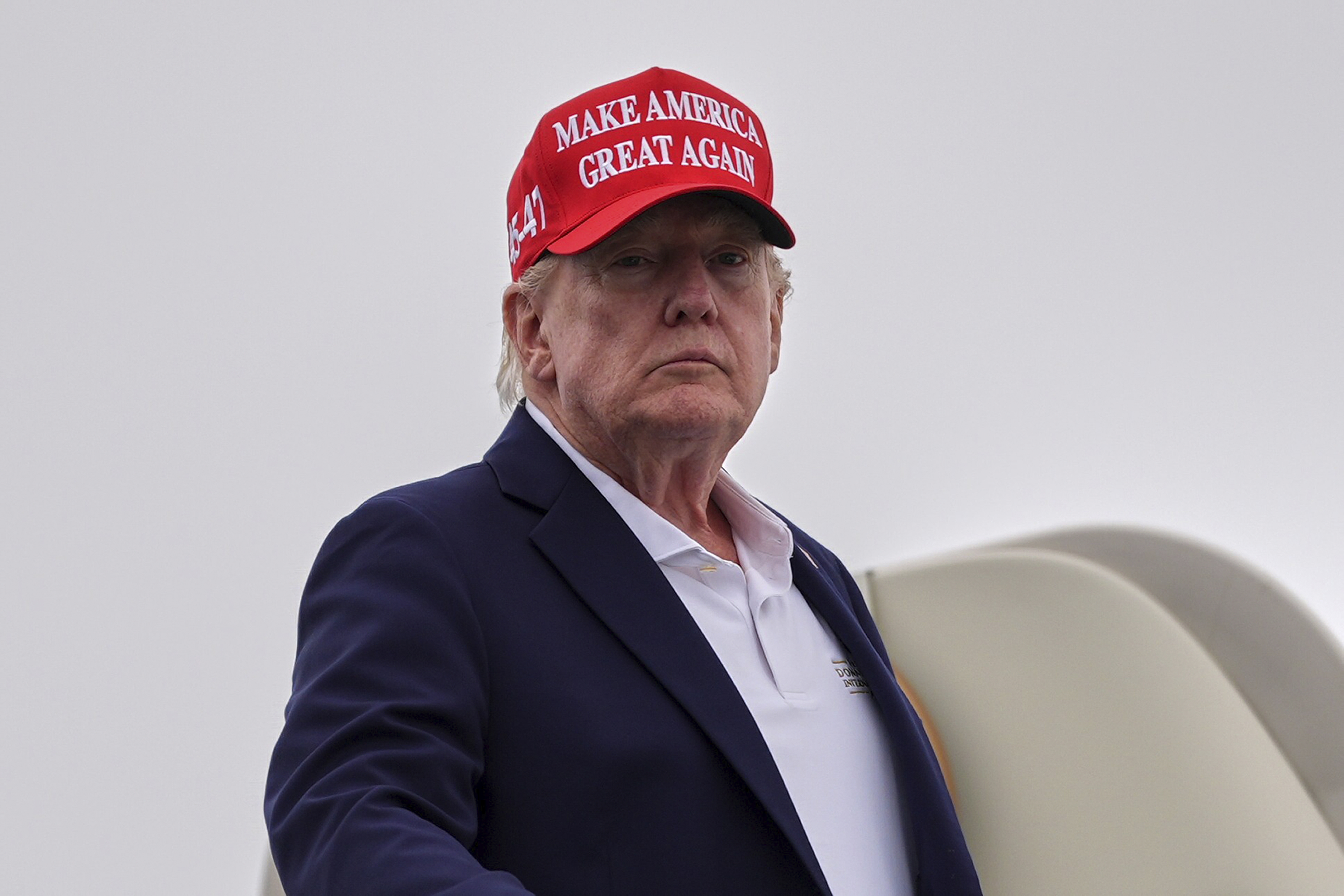
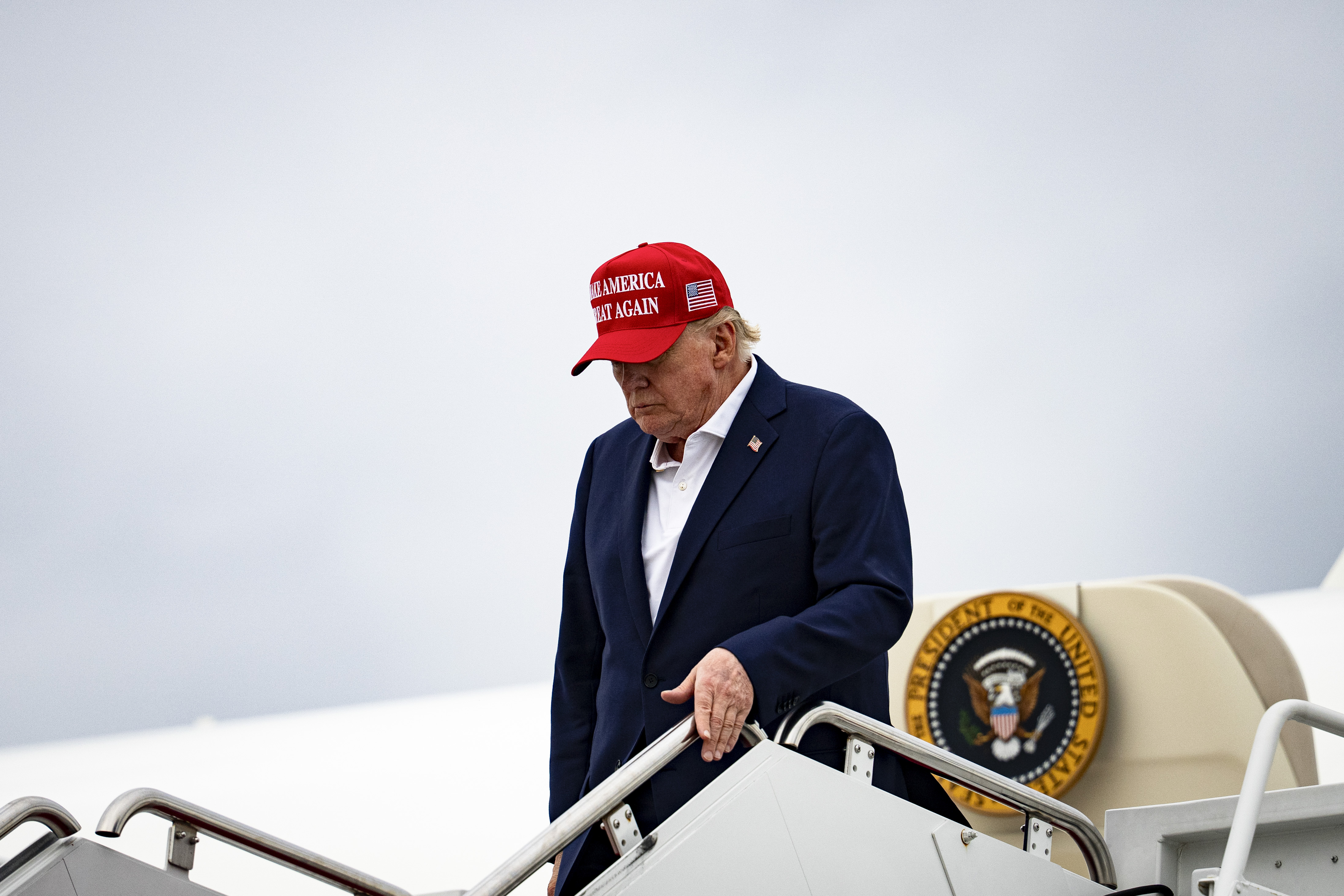
    President Donald Trump boards Air Force One on Sunday, Aug. 16, 2026, in Morristown, N.J. Julia Demaree Nikhinson

    Trump and the Justice Department are also asking the high court to toss out a second Carroll verdict totaling $83 million. They argue he’s immune from being sued over comments he made about her in 2019, when he was president. The court has not yet acted on that appeal.

    Carroll is a longtime advice columnist and former TV talk show host. She testified at a 2023 trial that Trump turned a friendly 1990s encounter into a violent attack in the dressing room at Bergdorf Goodman, a luxury retailer across the street from Trump Tower in Manhattan. The jury found Trump liable for defaming Carroll when he denied her allegation in 2022.

    Trump has denied any wrongdoing.

    The Associated Press does not identify people who say they have been sexually assaulted unless they come forward publicly, as Carroll has done.

  • N.J. school athletic director charged in Bucks County with prowling outside young neighbor’s window

    N.J. school athletic director charged in Bucks County with prowling outside young neighbor’s window

    An athletic director at a Mercer County school district has been charged with loitering and prowling after he leered into the bedroom window of his neighbor’s underage daughter, Plumstead Township Police say.

    Winfield “Tripp” Becker, 48, was caught on a surveillance camera Aug. 6 looking into the window, according to the affidavit of probable cause for his arrest. The victim’s mother installed that camera after an unidentified man spent months knocking on the window at night and then “fleeing the area,” the document said.

    Neither Becker nor his attorney, Thomas Logan, responded to requests for comment.

    Becker lives one street over from the victim in Pipersville, according to court records, and is known to the girl and her family. He was charged via summons, and has a preliminary hearing scheduled for next month.

    Becker is the athletic director at Hopewell Valley Regional School District, a district north of Trenton that serves about 3,400 students. In a letter sent to parents, Superintendent Rosetta Treece, without naming Becker, said a district employee was the subject of a criminal investigation, and had been suspended until the conclusion of that investigation.

    Treece said the district was working to secure temporary staffing to fill the position.