Blog

  • 14 people have been charged in a Penn State fraternity cocaine-trafficking ring

    14 people have been charged in a Penn State fraternity cocaine-trafficking ring

    Fourteen people have been charged in a cocaine trafficking case at Pennsylvania State University, the state attorney general’s office announced Monday.

    The drug ring involved students’ purchasing large quantities of cocaine from Philadelphia and New York, cutting and packaging it at two fraternity houses, and distributing it to their classmates, prosecutors said.

    The alleged ring was active from 2023 to 2024, when all but one of the defendants were students at Penn State. The other defendant is the father of one student, and he was charged with evidence tampering and hindering law enforcement’s investigation. At least four of those charged are still students at Penn State.

    “This was a coordinated and highly profitable drug-trafficking crew revolving around two senior members of the fraternities, other fraternity brothers, and pledges,” said Attorney General Dave Sunday in a statement. “According to the evidence uncovered, cutting and packaging cocaine was, for some pledges, an indoctrination into the fraternities,”

    The State College Police Department began investigating in September 2024, and used informants to purchase drugs on several occasions, according to a criminal complaint.

    The two key suppliers for the group, Agostino Abbatiello, 24, and Thomas Robinson, 23, allegedly made regular trips to Philly and New York to acquire large quantities of cocaine. After Robinson was arrested, he told State College police he purchased cocaine from Abbatiello, including as much as one kilogram for $22,000 at a time, according to the complaint. Abbatiello eventually became known as the main dealer for cocaine on campus, it said.

    The cocaine was packaged for distribution primarily at the off-campus Delta Upsilon and Sigma Chi fraternity houses, according to the complaint. Penn State has placed Delta Upsilon on interim suspension while the university’s Office of Student Accountability and Conflict Response investigates. Sigma Chi is not a registered student organization and receives no support from Penn State, the university said in a statement.

    “We are horrified by these serious allegations against current and former students,” said Andrea Dowhower, Penn State’s vice president for student affairs. “Criminal activity, including hazing, such as this has no place at our institution, and we will cooperate with law enforcement in any way we can. We will continue to enhance our efforts around health and safety and hazing educational efforts for all our organizations.”

    Abbatiello, Robinson, and three other defendants are charged with felony conspiracy, possession with intention to manufacture or deliver a controlled substance, and other related charges. Eight defendants are charged with misdemeanor drug possession. Lawyers for Abbatiello and Robinson were not listed in court records.

    Over the past decade, Penn State’s fraternities and their hazing rituals have been a source of campus misconduct and serious legal violations. In 2024, two fraternity leaders were sentenced to two to four months in prison for their role in the 2017 death of Timothy Piazza, a 19-year old Penn State student who died following a hazing incident while pledging Beta Theta Pi.

    Piazza’s parents helped push for the successful passage of the federal “Stop Campus Hazing Act,” which requires institutions of higher education participating in federal student aid programs to report hazing incidents.

    More recently, in April, Penn State suspended one fraternity for at least four years after it investigated reports of hazing. Since 2017, the university has fully suspended five fraternities, while four others are technically suspended by the university, but continue to operate with the support of their parent organizations.

  • A Bucks County man who allegedly killed his girlfriend, abandoned her body, and fled to Honduras is charged with murder

    A Bucks County man who allegedly killed his girlfriend, abandoned her body, and fled to Honduras is charged with murder

    A Telford man has been charged with murder after, officials say, he stabbed his ex-girlfriend to death inside the apartment they shared and fled the country, hiding out in Central America for months.

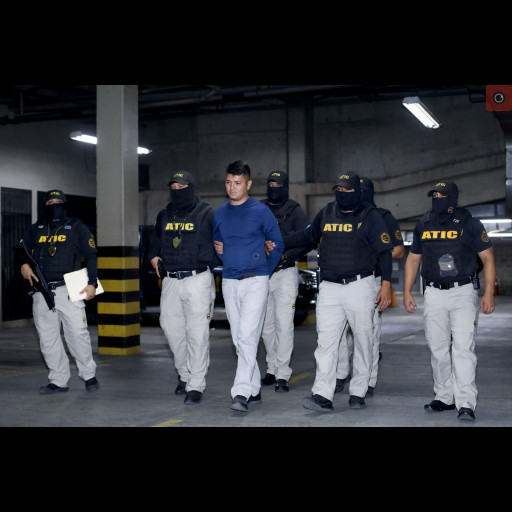
    Darwin David Espinal del Cid, 27, was taken into custody during the weekend by officials in his native Honduras in the March 7 death of Maria Popol, Bucks County District Attorney Joe Khan said Monday.

    Khan, in announcing the arrest, described Popol as a loving daughter and sister who cared deeply about her family. Espinal del Cid, he said, ended her life in a heartless, violent manner and then furthered her family’s suffering by stealing her cellphone and pretending to be her, in text messages he sent them.

    Maria Popol was found dead in March by police in Telford.Courtesy of Maria Popol's family

    It was an attempt, Khan said, to throw investigators off his trail as he fled the country.

    But investigators were able to track Espinal del Cid’s movements, in part through his cellphone, according to Khan.

    “This was a place where he thought he would be safe, that he could outrun the law, that the Bucks County DA’s office and the authorities wouldn’t catch up to him,” Khan said. “And at a certain point he may have believed that he was successful, but he was wrong.”

    He remains in custody in Honduras, and is awaiting extradition to Bucks County.

    Popol’s body was found on March 15 inside a second-floor apartment on North Main Street in Telford where she previously lived with Espinal del Cid. Her parents had filed a missing person’s report two days earlier, on what would have been her 23rd birthday, Khan said.

    A neighbor, helping the family search for Popol, entered her apartment and found her.

    Her family, in a statement to The Inquirer, said she was in the process of moving to a new apartment nearby, fleeing what they described as an abusive relationship with Espinal del Cid.

    Khan said Espinal del Cid stabbing Popol in the neck with a sharp object and hid her body in a closet as she bled to death.

    Popol’s family told The Inquirer they last heard from her on March 6, after she rode in an Uber with Espinal del Cid. The two were arguing, prosecutors said, about Popol’s decision to end their relationship.

    She texted her mother and told her she was looking for a new apartment, according to the affidavit of probable cause for Epsinal del Cid’s arrest.

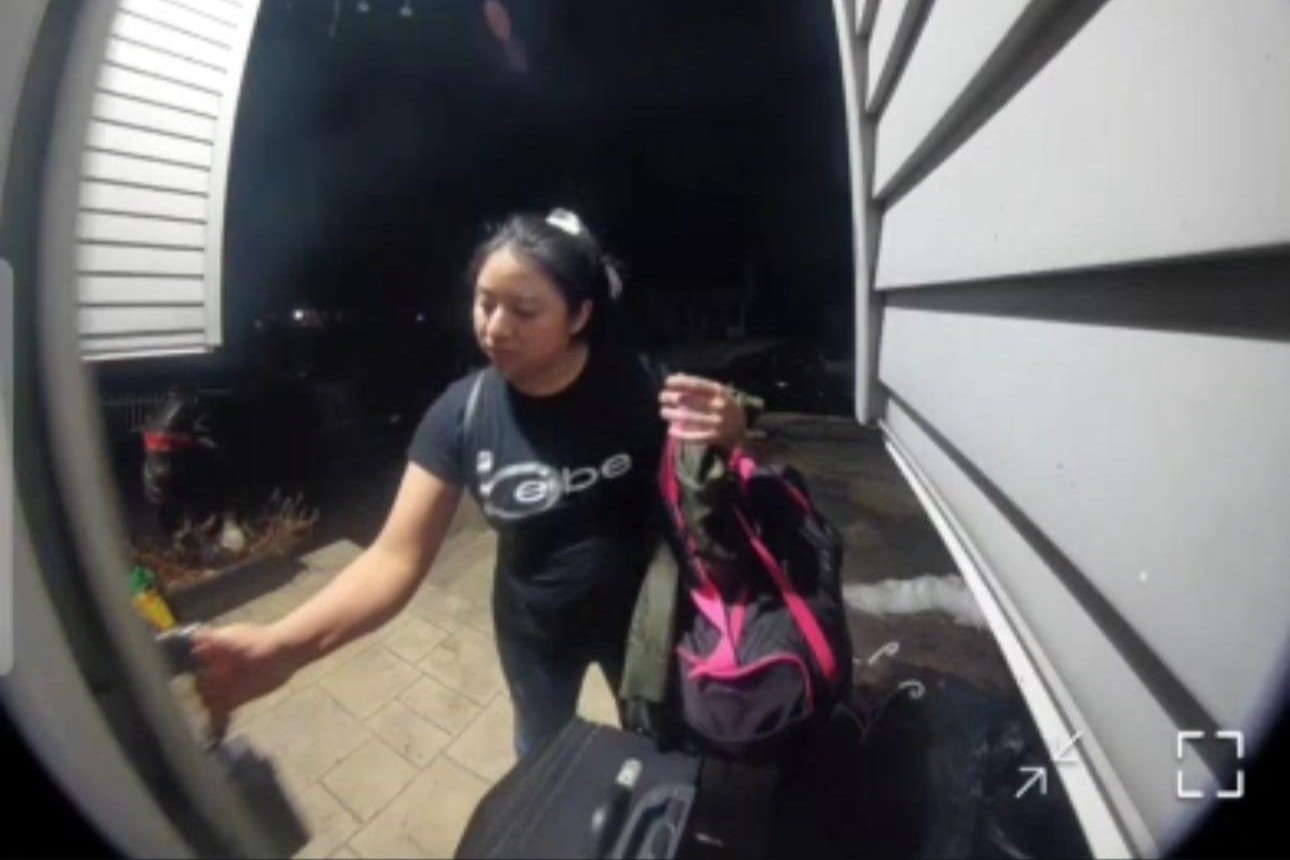
    Her brother, Ronaldo, said she was seen hours later in a video from a doorbell security camera carrying luggage while she was moving into her new apartment.

    The last time Maria Popol was seen by her family was in a doorbell camera video from March 7 at her new residence. She was found dead March 15 at her old apartment she had shared with a man, her brother said.Rolando Popol

    A witness told police that, while picking up Popol to take her to her new apartment, Espinal del Cid forced himself into the car, crying and acting hysterical, saying that he “couldn’t afford to lose her,” the affidavit said.

    When Popol returned to the apartment where she lived with Espinal del Cid, the two got into another heated argument, loud enough for neighbors to overhear, according to the affidavit.

    In the days that followed, Espinal del Cid continued to act erratically, asking his former boss for money to buy a plane ticket to Honduras, weeping openly in public and saying, “God forgive me.”

    A friend of Espinal del Cid who drove him to the airport noted he was carrying three cellphones, one of which appeared to be Popol’s, the affidavit said.

    On March 9, Espinal del Cid boarded a plane heading to Honduras by way of Florida at Philadelphia International Airport.

    The entire time, investigators said, Epsinal del Cid texted Popol’s friends and employer, asking for money in messages that they agreed were not written in her usual style of talking.

    Popol moved to Bucks County from her native Guatemala in 2023 to support her parents, who are in declining health, according to her family. She worked as a waitress at Don Leo, a Latin American restaurant not far from her apartment.

    “She had come to this country hoping for a better life,” Ronaldo Popol said, describing his sister as “very affectionate, kind, and patient.”

    Khan said Popol’s death is the latest example of fatal domestic violence in Bucks County. Since he took office in January, nearly all of the murders his office has investigated have been committed by one of the victim’s loved ones.

    “It’s the reason that we are showing this picture of [Espinal del Cid], not to glorify him, but to ask for the public’s help, because while he thought he was smarter than everyone else, the law was catching up to him and we want the public’s help,” Khan said.

  • A dispute about fact vs. fiction at the trial over Tupac Shakur’s 1996 killing in Las Vegas

    A dispute about fact vs. fiction at the trial over Tupac Shakur’s 1996 killing in Las Vegas

    LAS VEGAS — A prosecutor said Monday that while few have been willing to speak about the 1996 killing of Tupac Shakur, Duane “Keffe D” Davis is the “one person who has a hard time being silent.”

    “Let’s be clear, Duane Davis did not pull the trigger. But he did plan the shooting in retaliation of the beating of his nephew,” Chief Deputy District Attorney Binu Palal told jurors at the start of Davis’ Las Vegas trial. “Remarkably, you will learn that from Duane Davis himself.”

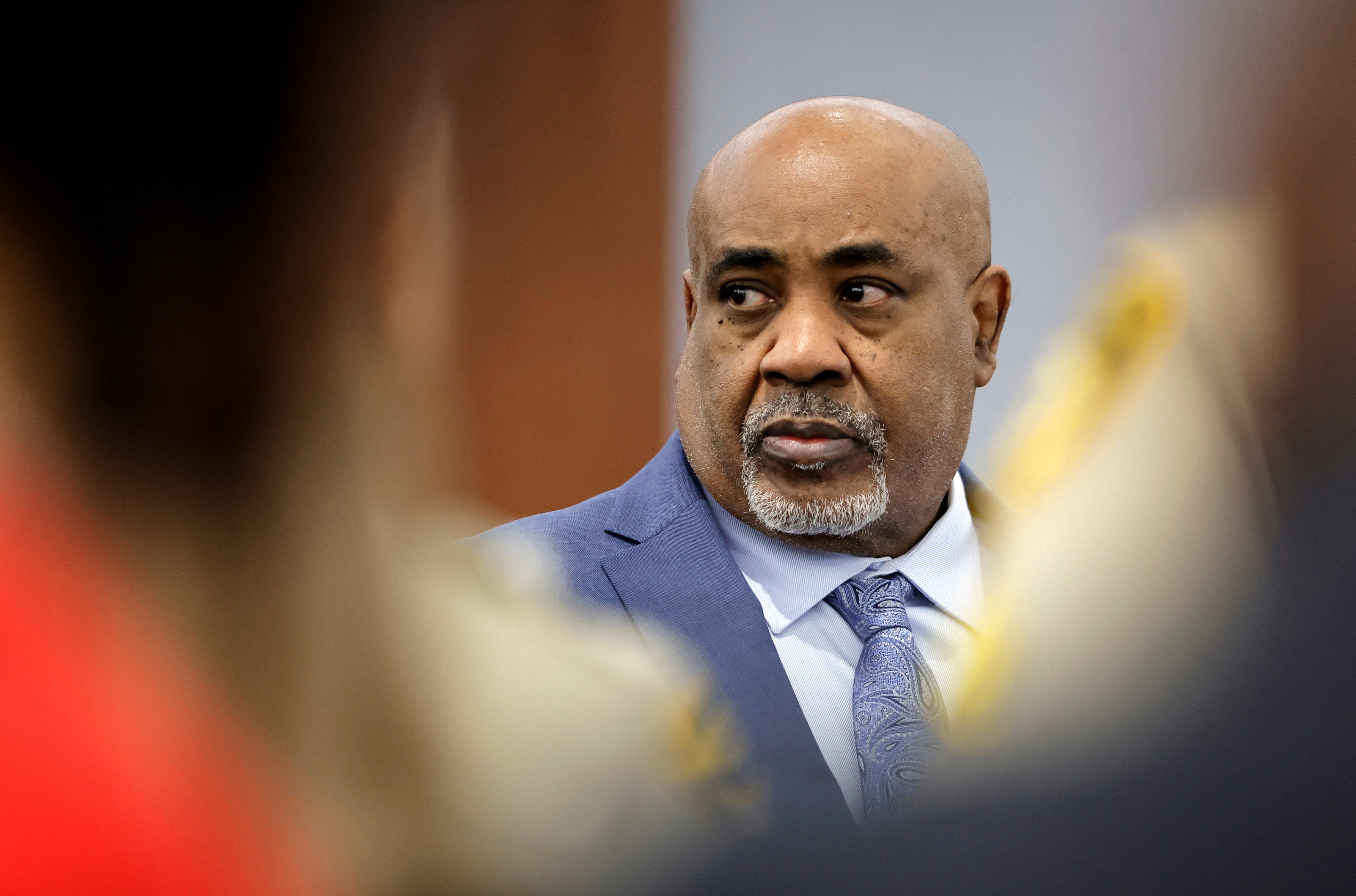
    Davis, 63, is charged with murder with a deadly weapon with the intent to promote, further, or assist a criminal gang in Shakur’s death. He pleaded not guilty. His lawyer in the defense opening called the prosecution’s narrative “fiction.” If convicted, Davis faces life in prison.

    Palal showed jurors video of Shakur’s entourage attacking Davis’ nephew Orlando “Baby Lane” Anderson outside a boxing match at the MGM Grand hours before the shooting on Sept. 7, 1996.

    Davis spent the next two hours planning how to get even, said Palal, and Shakur was gunned down “in an act of revenge.”

    What he told investigators in 2008

    In a 2008 interview with a federal task force investigating the killing of Shakur’s rival, the Notorious B.I.G., Davis instead talked about the Shakur shooting. He described handing a gun to the men in the back seat of a white Cadillac that fired on a black BMW with Shakur and Marion “Suge” Knight inside.

    As prosecutors played audio of Davis explaining the moment Shakur was shot, members of Shakur’s family, including his stepbrother Maurice “Mopreme” Shakur, stared ahead and listened intently from the audience.

    Palal told jurors Davis held onto a visceral hatred for Shakur for decades that drove him to speak.

    He said as early as 1998, the defendant talked to the FBI and admitted he had been in Las Vegas the night of the shooting. He spoke again in 1999 to the FBI and said again he was in Las Vegas then but denied responsibility.

    In 2009, he admitted to his role in the killing in an interview with Las Vegas police, Palal said.

    “And now 30 years later, we’re going to ask you to finally hold Duane Davis accountable,” Palal said.

    He also showed jurors the 2019 memoir that Davis co-authored, Compton Street Legend, that the prosecution will use and that the defense fought to keep out of the trial, along with several of the defendant’s interviews.

    How Davis’ legal team is defending him

    Davis, wearing a blue suit and tie, watched the presentation while sitting next to his attorney. He sat quietly with his hands folded on the table in front of him, occasionally nodding along as his attorney spoke.

    “The state has just told you what they believe is the evidence in this case,” attorney Michael Sanft said to jurors in his opening. “What they are telling you, they are representing as fact, when it’s really fiction.”

    Sanft said Davis wasn’t previously charged for the 1996 killing because law enforcement knew that he was “full of crap.”

    “There’s no facts,” he said, to back up what Davis said in his book.

    The defense attorney also pointed to missing documents in the original investigation and distrust between Los Angeles and Las Vegas police departments. He pointed out that the Compton Police Department was shut down in September 2000 due to corruption.

    He called one detective’s work “biased,” “sloppy,” and “incomplete.” He said retired Detective Clifford Mogg read portions of Davis’ book into the record as if it were fact, but said Mogg didn’t verify claims in it.

    Most eyewitnesses didn’t live to trial

    The story of the drive-by shooting has long gripped the hip-hop community, partly because no one was charged until Davis was indicted in 2023.

    The other three men riding in the Cadillac have all died in the years since.

    “When he says he’s the only person who can tell what happened, he’s right,” Palal said.

    Shakur remains a cultural icon and is considered one of the most influential and versatile rappers of all time, despite dying at 25. He was nominated for six Grammy Awards and was inducted into the Rock & Roll Hall of Fame in 2017.

    Witnesses describe the night Tupac was shot

    Retired Las Vegas police officer Garry Dale was the first of the 35 to 45 witnesses the prosecution plans to call at the trial, which is expected to last about a month. He recounted how he and another officer stopped a car carrying Knight and Shakur because the vehicle didn’t have a license plate. They let the pair go with a warning.

    About 10 minutes later the two officers responded to a call about a shooting and found Shakur being pulled from the car by EMTs, Dale said. Knight had been grazed by bullets, but told the officers to take care of Shakur, he testified.

    Dale jumped in the ambulance and tried to get Shakur to tell him who shot him. The retired officer said that Shakur said something like “no, we’ll take care of it.”

    Another witness, Ingrid Stokes, testified that she and her friends were heading home from Las Vegas when they encountered Shakur and Knight, who was friends with a woman in Stokes’ group.

    Knight invited them to a nightclub, she said, and they decided to meet them there.

    The car Stokes was riding in was one lane over and a car length ahead of Knight’s vehicle, when they heard gunshots while stopped at an intersection, she said.

    Stokes said they feared more gunfire and drove away, almost hitting a white four-door vehicle in the process.

    When they returned to the scene, police treated them like suspects, she said, and made them sit on the sidewalks. She was scared to talk about the case, worried about poor treatment from law enforcement and the potential for retribution from the unknown shooter.

    “Snitches get stitches,” she said.

  • Police release images of a suspect in the killing of an off-duty Philly officer

    Police release images of a suspect in the killing of an off-duty Philly officer

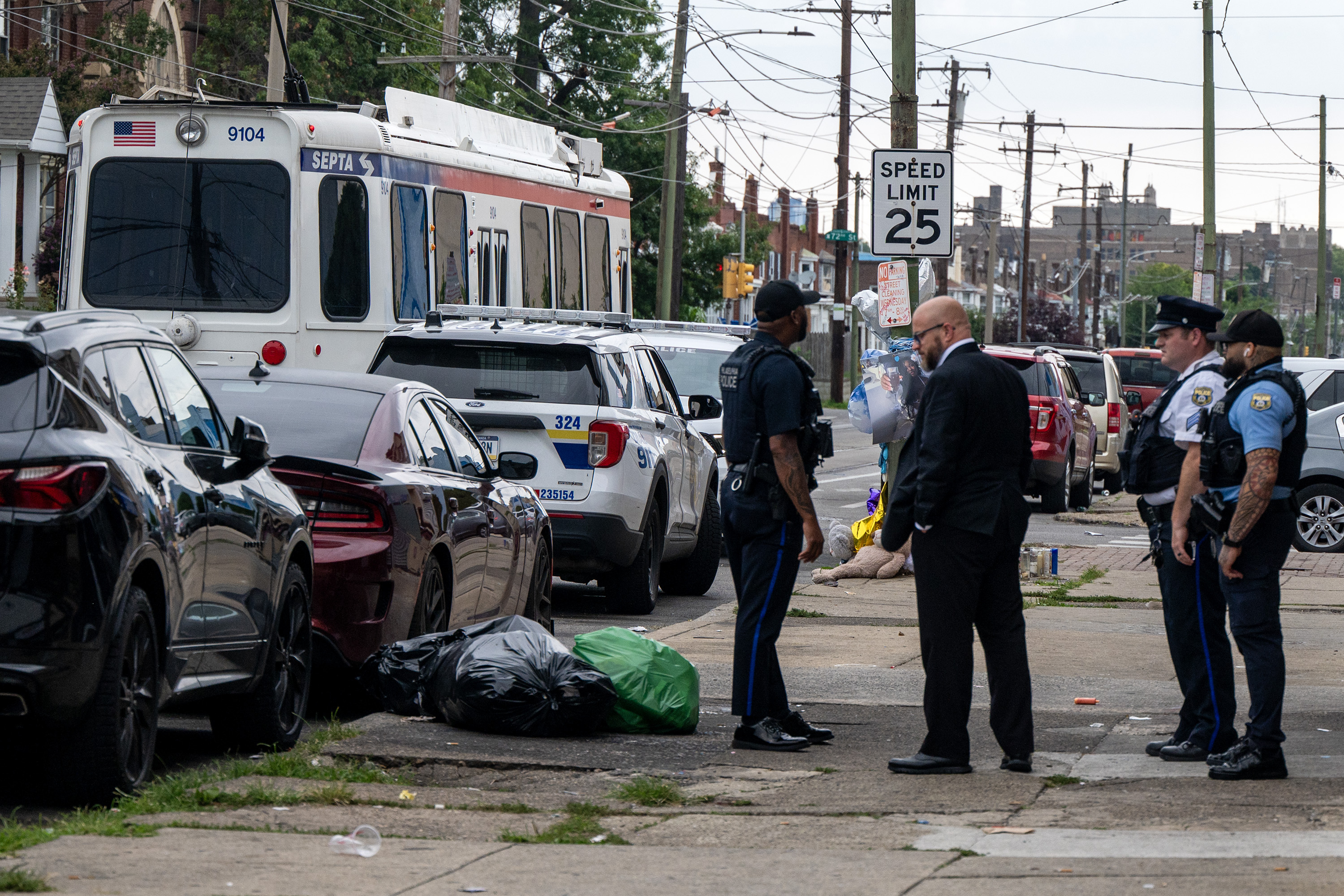
    Investigators on Monday released images of a suspect in the fatal shooting of an off-duty Philadelphia police officer outside an after-hours nightclub in Southwest Philadelphia early Sunday morning.

    The man, whom police did not identify, was seen on 73rd Street near Buist Avenue, about a block away from the shooting in which 29-year-old Officer Alhassane Barry was killed and another man was critically injured.

    Surveillance images released by the department Monday show the suspect wearing a black hoodie and a blue face mask.

    Deputy Commissioner Frank Vanore urged the public to come forward with any video or images that may depict the suspect or others who were outside what a social media account linked to the address called “Nipsey’s Hookah Lounge,” an unlicensed nightclub that city inspectors have repeatedly cited and some neighbors described as a nuisance.

    Gunfire erupted outside the property on the 7200 block of Elmwood Avenue around 4 a.m., sending bystanders running.

    Investigators have not identified a motive for the shooting, and the suspect remains at large.

    “We need answers right now,” Vanore said during a news conference in which he sought the public’s help locating the suspect. “We need to solve this case.”

    Police said the suspect was last seen fleeing south on 73rd Street.

    Investigators recovered a firearm and eight spent 9mm shell casings from the scene, though they said they had yet to determine to whom the gun belongs.

    Barry and the other victim, a 35-year-old man whom police did not identify, were rushed to Penn Presbyterian Medical Center, where the officer was pronounced dead at 8 a.m. Sunday.

    The second victim, who was struck multiple times, and placed in critical condition, remained in the hospital as of Monday morning. No update on his condition was available.

    During a service for Barry held earlier in the day, a procession of mourners shut down traffic outside a mosque in a bustling Southwest Philadelphia neighborhood, where more than a hundred people gathered at the Fouta Islamic Center.

    More than a dozen uniformed police officers stood in formation as a hearse carrying Barry’s body departed the mosque, located just blocks from the site of the shooting.

    “He was a bright young fellow,” said attendee Amina Sheriff-Comteh, adding that in keeping with Islamic tradition, the burial was being held shortly after the death.

    In honor of Barry, Sheriff-Comteh said, she and other attendees prayed for blessings, forgiveness, and peace.

    “He was an amazing guy,” said a young man outside the service, who declined to offer his name given that police were still searching for Barry’s killer.

    Those who knew Barry spoke proudly of his two-year career with the Philadelphia Police Department, where he was assigned to the 12th District in Southwest Philadelphia, as well as his lengthier tenure in the military.

    Barry enlisted in the Pennsylvania National Guard as a cavalry scout in 2015 and spent a decade in service, said Heather J. Hagan, a U.S. Army spokesperson.

    He spent two years deployed to Egypt’s Sinai Peninsula and left the Army as a sergeant, according to Hagan.

    He was awarded multiple medals and ribbons throughout his service, she added.

    Vanore, the deputy commissioner, said police would work tirelessly to locate the suspect.

    He said questions about the business practices of the after-hours lounge would have to wait as police take on the more pressing job of arresting Barry’s killer.

    Property records for the lounge shows a history of failed licenses and inspections investigations going back to 2021, with the most recent inspection filed in January.

    In 2023, L&I inspectors wrote that Nipsey’s owners had not obtained a permit to operate the building as an after-hours lounge.

    They also wrote additional violations for improper use of extension cords, unsecured compressed gas cylinders, and storing materials that were a fire risk in the rear yard.

    Kandyce Stukes, a spokesperson for the Quality of Life division in the city’s Department of Licenses and Inspections, said inspectors issued orders to the building’s owner in 2023 and 2024 to cease operations.

    The owner appealed and said they were unaware of the tenant’s conduct.

    The case was sent to the Court of Common Pleas, and the L&I has since been navigating the legal process, Stukes said.

    The cease-operations order remains in effect and any business operating there is doing so illegally, Stukes added.

  • Congo’s fast-moving Ebola outbreak becomes the country’s worst with over 2,300 dead

    Congo’s fast-moving Ebola outbreak becomes the country’s worst with over 2,300 dead

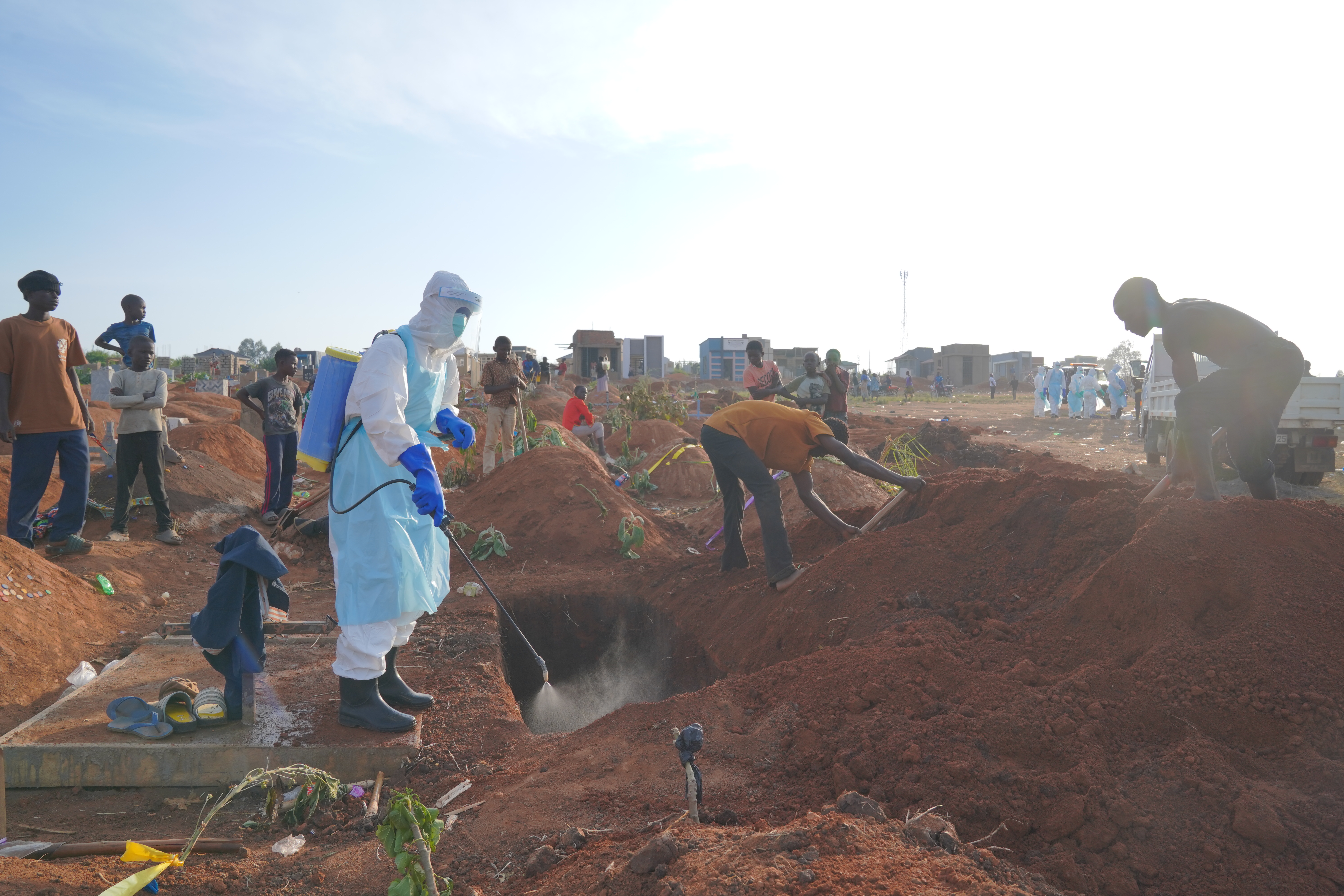
    BUNIA, Congo — Congo’s fast-moving Ebola outbreak has now killed over 2,300 people and become the deadliest outbreak of the disease on record in the Central African nation.

    The outbreak unfolding in one of Congo’s most vulnerable regions is the fastest-growing Ebola outbreak ever, with 4,945 cases including 2,325 deaths, according to government data released overnight into Monday.

    This is Congo’s 17th and largest Ebola outbreak. The toll eclipses that of the country’s 2018-2020 outbreak when 2,299 deaths out of 3,481 cases were recorded.

    The latest data shows 101 new cases and 33 deaths reported in the previous 24 hours. Over 1,000 people have recovered, while 730 remain in hospitals or isolation.

    The outbreak has infected and killed more people at a greater speed than any other outbreak in history. The World Health Organization has said it is on track to surpass the 2014-16 Ebola outbreak in West Africa, the deadliest on record with more than 11,000 deaths.

    There are no approved vaccines or treatments for the rare Bundibugyo virus responsible for the current outbreak across six provinces in Congo’s east. Trials for those are ongoing in Ituri province, the epicenter.

    Most new cases and deaths are being reported outside of people being monitored. Challenges also include strikes by some unpaid health workers, threats by rebel groups, anger from long-traumatized communities, territories difficult to reach due to bad roads, and misinformation asserting that Ebola isn’t real.

    WHO warned over the weekend that the outbreak is still moving at an “exceptional pace” ahead of efforts to track it, noting that it reached a weekly record of 579 cases and 304 deaths in the previous week.

    “A substantial scaling up of response activities is underway to get ahead of the outbreak,” the agency said.

    On Friday, United Nations humanitarian chief Tom Fletcher announced the allocation of an additional $30.5 million and the deployment of 20 more staff to aid the response on the frontlines.

    “This is a wake-up call,” Fletcher said. “We need speed, scale and solidarity before this virus gets even further ahead of us.”

  • Moro Ojomo contrite about training camp skirmish with Eagles teammate Fred Johnson: ‘You fight with your brothers’

    Moro Ojomo contrite about training camp skirmish with Eagles teammate Fred Johnson: ‘You fight with your brothers’

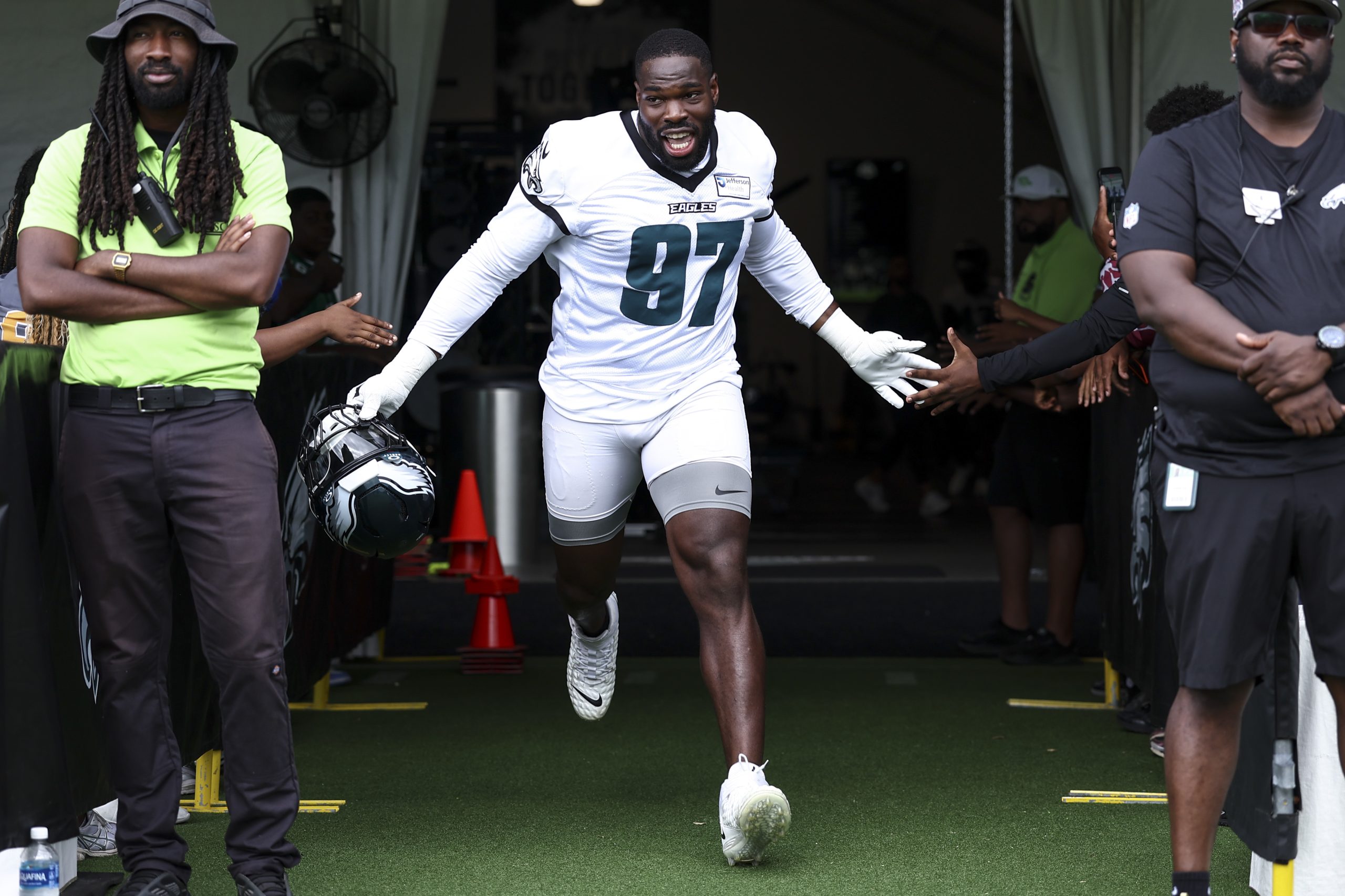
    Moro Ojomo admits that his fracas with Eagles offensive tackle Fred Johnson in the final moments of last Thursday’s practice was not the defensive tackle’s finest moment.

    Tensions between the two had been festering during team drills. They eventually quarreled on back-to-back snaps, with Ojomo lunging at Johnson’s lower half not long after their teammates attempted to separate them following the second play.

    Football is an aggressive sport, Ojomo said. But he expressed an understanding that he crossed the line.

    “Emotions, and you fight with your brothers,” Ojomo said Monday. “It was just over football. Got a little heated. It was wrong. It’s not a standard that we set out here, and it was a mistake, and I messed up.”

    After three weeks of practicing against his teammates in training camp, Ojomo is ready to direct his aggression at someone else.

    Enter the New England Patriots.

    Moro Ojomo is among the Eagles projected starters ready to hit someone from another team. Monica Herndon / Staff Photographer

    The Eagles will head to Foxborough, Mass., for a pair of joint practices against the defending AFC champions on Wednesday and Thursday ahead of Saturday’s preseason game. For Ojomo, the joint practices are welcome opportunities to compete against another team in a controlled environment, especially for the starters who are unlikely to play in the preseason.

    “We’ve been hitting each other so much,” Ojomo said. “We want to kind of create that camaraderie and go versus someone, and ultimately we want to get the train rolling. We’re trying to have a great season, and you start it off with a great joint practice with [the Patriots].”

    Foxborough is familiar territory for the Eagles. The Patriots hosted them for a single joint practice ahead of the 2024 season. On that day, the Eagles defense — in its first summer under Vic Fangio — dominated the Drake Maye-led offense that went on to rank 30th in the NFL in scoring that year.

    This week’s practices should be a little more evenly matched for Ojomo and his defensive teammates. Maye, who finished second in MVP voting last season behind Matthew Stafford, is now headed into his third season and his second under head coach Mike Vrabel. The Patriots have invested in Maye’s supporting cast, from the offensive linemen who protect him to the receivers — including former Eagle A.J. Brown — who catch his passes.

    Brown won’t be the only former Eagle in attendance. Milton Williams, the 2021 third-rounder out of Louisiana Tech, signed a four-year, $104 million contract with the Patriots in the offseason that followed the Eagles’ Super Bowl victory.

    Ojomo had a theory regarding why Williams got paid by the Patriots that year.

    “He had a great, great practice up there,” Ojomo recalled of their joint practice.

    Ojomo acknowledged that the Eagles have a history of defensive tackles, including Williams in 2025 and Javon Hargrave in 2023, playing their way into paydays with other teams.

    He could follow the blueprint that Williams and others set forth. Ojomo, the Eagles’ 2023 seventh-rounder out of Texas, is in the final year of his rookie deal. If Ojomo builds upon a breakout 2025 season in which he registered six sacks, he could be in line for a hefty raise with the Eagles or elsewhere.

    Ojomo said earlier this month that watching Jordan Davis and Jalen Carter sign extensions to stay in Philadelphia this offseason is serving as motivation in Year 4.

    But he is driven by Williams’ trajectory, too, which ultimately landed him with a different team.

    “I think everyone’s encouraged by that,” Ojomo said. “Everyone’s encouraged by seeing when someone [balls] out and ultimately gets to that second contract, which is kind of that big, abstract goal for players as a rookie.”

    That abstract goal will become more tangible for Ojomo once the season gets underway. But first, after weeks of going head-to-head with his own teammates, he’s eager to compete in joint practices with an outside opponent.

    “At the end of the day, that’s a Super Bowl team from last year,” Ojomo said of the Patriots. “You’re not going to get much better competition than that, right? So, we’re very excited, and we’re going to try to give them our best shot. And I feel like, likewise, from their part.”

  • British leader exchanged texts with someone posing as Trump’s chief of staff

    British leader exchanged texts with someone posing as Trump’s chief of staff

    LONDON — British Prime Minister Andy Burnham exchanged brief text messages with a person he thought was President Donald Trump’s chief of staff, Susie Wiles, a government official said Monday.

    Burnham quickly grew suspicious and reported the interaction to security authorities, the official added.

    It was unclear when the exchanges took place. A spokesperson for Burnham declined to comment publicly, citing a long-standing policy not to comment about national security issues.

    But the government official, who declined to be identified because of the security policy, said the prime minister had exchanged a few messages of no significance with someone claiming to be Wiles, Trump’s top White House aide.

    The official declined to provide details about the text messages, which were first reported by Politico, or to say which security agency Burnham had reported them to.

    Wiles is one of Trump’s closest advisers. She comanaged his 2024 presidential campaign and has been running his White House staff since he returned to office in 2025.

    Last year, the Wall Street Journal reported that senators, governors, and some business leaders had received phone calls or text messages from someone claiming to be Wiles, and that Wiles had said contacts on a personal cell phone of hers had been hacked. The Journal said at the time that federal officials were investigating.

    In 2024, David Cameron, then the British foreign secretary, had a video call and exchanged several text messages with someone pretending to be Petro Poroshenko, a former president of Ukraine.

    As foreign secretary in 2018, Boris Johnson had an 18-minute phone call with someone claiming to be the prime minister of Armenia. According to audio that was later released, the pair talked about President Vladimir Putin of Russia and about the poisoning of Sergei Skripal, a Russian double agent, in Salisbury, England.

    This article originally appeared in the New York Times.

  • What we know about damages from Hurricane Lala in Hawaii

    What we know about damages from Hurricane Lala in Hawaii

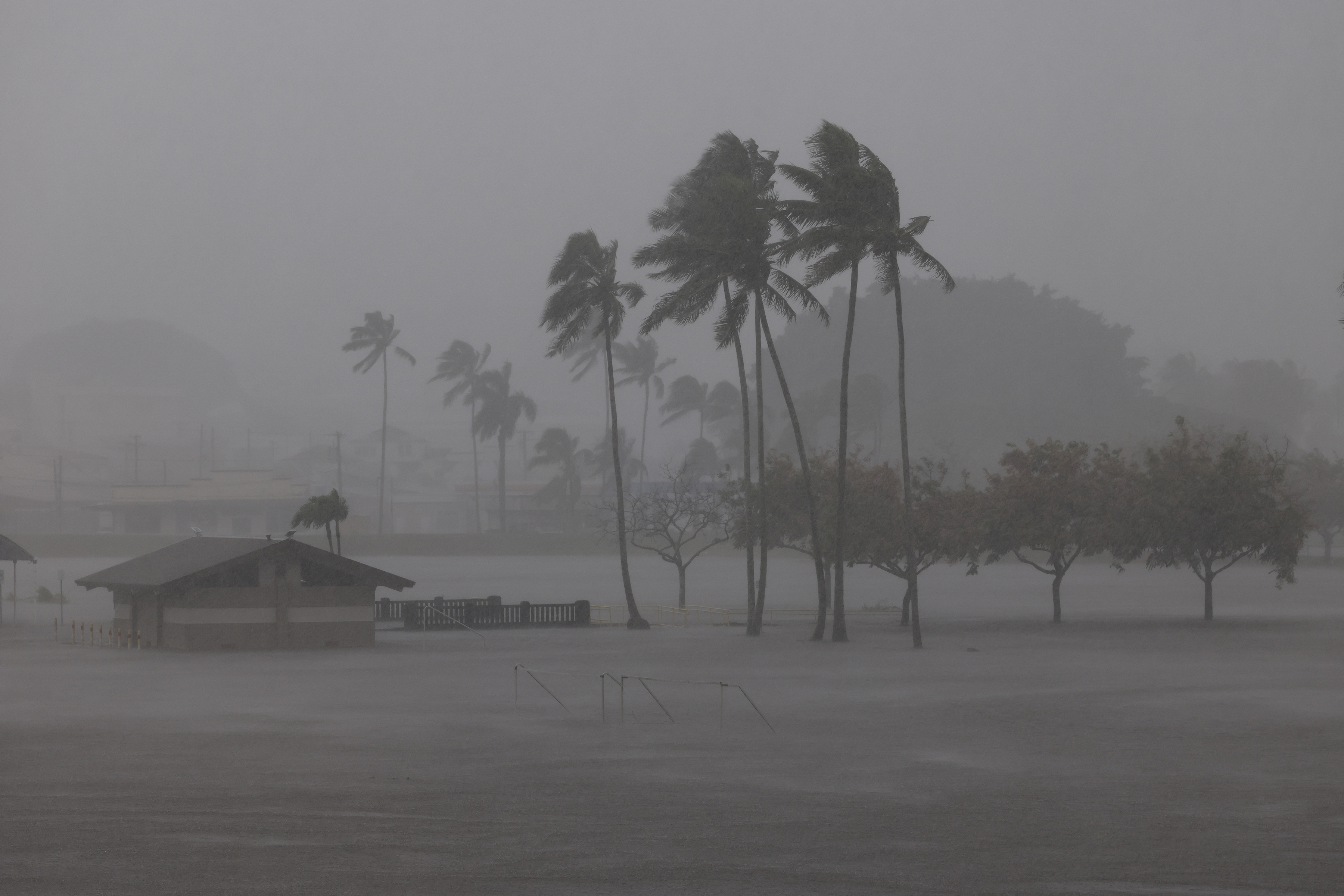
    Hawaii residents faced extensive power outages, submerged bridges and roads, and damaged homes after Hurricane Lala brushed along the islands.

    Hurricane Lala, which was a Category 1 hurricane, did not make landfall but moved close enough to wash out highways, wreck properties, and topple trees. Hurricanes are common in the Pacific Ocean, but landfall in Hawaii is rare because of its small size in relation to the expansive ocean. The eye of Lala did not cross over into land, but the outer bands still left significant destruction, primarily affecting people living along the southern and eastern edges of Hawaii’s Big Island.

    On Sunday and Monday, residents and emergency crews continued to sift through damage. Here’s what we know:

    The Big Island was drenched

    Gov. Josh Green of Hawaii said that some areas received as much as 30 inches of rain and that there were several reported mudslides. More than 13 inches had fallen at Hilo International Airport as of Sunday night. About 35 inches of rain was recorded near Nene Cabin, a weather observation site on the southern tip of the Big Island. Laupahoehoe, on the Hamakua coastline in the northeast part of the island, measured more than 43 inches during the storm, with the majority of precipitation falling within 24 hours beginning Saturday afternoon.

    Hilo, on the eastern edge of the Big Island, is one of the rainiest cities in the United States, and residents are used to frequent downpours. But many residents said they were surprised at the intensity of the storm.

    Hurricane Lane in 2018 similarly passed south of Hawaii and produced comparable rainfall totals in the same locations. The difference with Lala is that it came dangerously close enough to produce damaging winds, including hurricane-force winds, on the Big Island.

    Residents were spared the worst of the worst, which is found in the eyewall, but the more intense side of Lala (the right side in the direction the storm is traveling) hit the Big Island directly. One wind gust at the Mauna Kea Summit measured 140 mph, and another near sea level in Kona registered 78 mph. (Hurricane-force winds are 74 mph or greater.)

    One person was killed, and about 100 homes were damaged on the Big Island.

    On Saturday, when the storm passed through, a 45-year-old man was killed in a head-on car accident in the southern area of the Big Island. A 21-year-old woman was critically injured from the collision.

    Two paramedics were also rescued in Naaleuh, in the southern region of the Big Island, after floodwaters trapped them in their vehicle.

    About 100 homes had been damaged or washed away because of the storm, Green said.

    Officials said some of the worst damage may have occurred in rural places in the southern edge of the Big Island but that fallen electrical lines have complicated efforts for people to get to the area.

    The coastal town of Pahala, which has about 1,800 residents, was cut off from the rest of the island after floodwaters inundated roads and bridges — six were destroyed or severely damaged, officials said. Part of a major highway also collapsed, which blocked road access to Ka’u Hospital, the region’s only hospital.

    County fire officials said they were prepared to use helicopters to move patients with medical emergencies.

    “There’s a lot of damage that we’ll be working on,” Green said Sunday afternoon.

    Hundreds of thousands remain without power

    More than 114,000 homes and businesses remained without power in Hawaii on Monday, down from about 200,000 customers Sunday. That includes about 40% of the customers on the Big Island, which is largely rural.

    People could face days or weeks without power because the storm downed transmission lines that connect power plants to homes and businesses. Because of widespread flooding and other challenges traveling along rural roads, officials said it could take weeks for the power to be fixed on the Big Island.

    Green said that schools, state and county offices, and courts across the state would be closed Monday, as Hawaii recovered from the storm and worked on restoring power. All airports and harbors had reopened, according to the Hawaii Department of Transportation.

    The damaged transmission lines include one that runs for 42 miles on the Big Island. In addition to knocking out power lines, the storm also damaged many of the large structures that carry the lines on the Big Island and Oahu.

    This article originally appeared in the New York Times.

  • Russian court jails a Kremlin critic for 11 years for opposing the war in Ukraine

    Russian court jails a Kremlin critic for 11 years for opposing the war in Ukraine

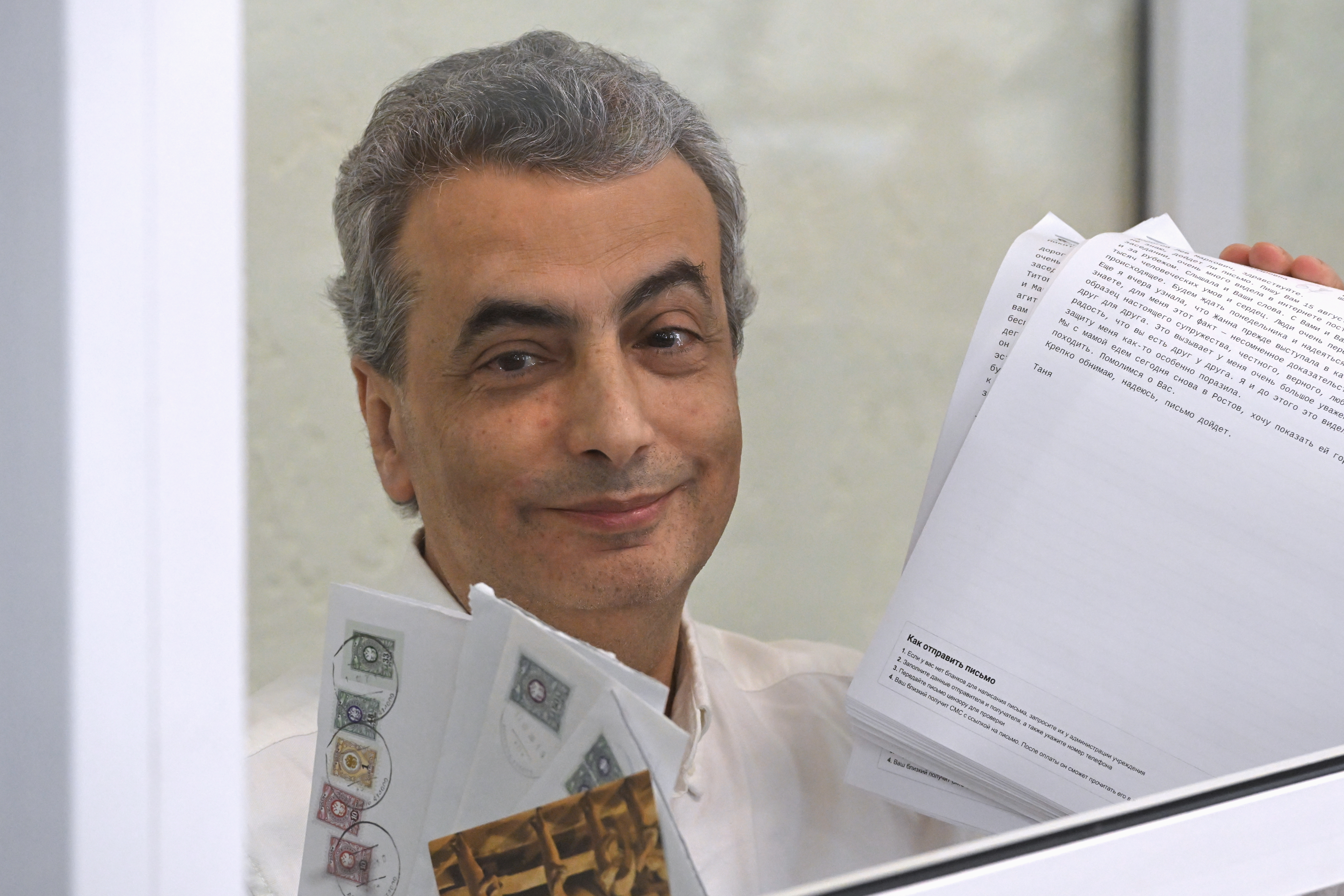
    A Russian court on Monday convicted a prominent opposition politician for speaking out against the war in Ukraine and sentenced him to 11 years and one month in prison in the latest crackdown leading up to next month’s parliamentary election.

    The verdict against Lev Shlosberg, a senior member of the Yabloko party, was another step by the Kremlin to stifle dissent since Russia invaded its neighbor in February 2022. Yabloko is the only official political party overtly opposing the war.

    In a separate ruling Monday, Russia’s Supreme Court upheld its earlier decision to bar Yabloko from the ballot in the Sept. 18-20 parliamentary vote, denying an appeal by the party.

    The moves against Shlosberg and Yabloko highlight the Kremlin’s intolerance toward any criticism of the war, now in its fifth year.

    It was Shlosberg’s second trial in 2 years

    Shlosberg, 63, is Yabloko’s deputy chairman and served in the regional legislature of Pskov from 2016-21. He stood trial in the city of Pskov, some 370 miles northwest of Moscow, on charges of “discrediting” and spreading “false information” about the Russian military.

    The charges stemmed from a debate in which he called for ending the war and from posting on his Telegram channel a British tabloid front page featuring an image of a bloodied woman next to one of Russian President Vladimir Putin, with the headline: “Her blood … his hands.” Shlosberg has rejected the charges as unfounded.

    It was the second trial for Shlosberg in the last two years. He has also been designated a “foreign agent,” a label that carries strong pejorative connotations in Russia and brings additional government scrutiny. He was convicted of violating the foreign agent regulations.

    In December 2025, he was placed in pretrial detention on the new charges and has been behind bars ever since. He is one of several prominent Yabloko members in recent years to be jailed or designated a “foreign agent” as Kremlin pressure on the party has mounted.

    Yabloko called the sentence ‘barbaric’

    In his final statement to the court Friday, Shlosberg said that for 30 years, Russia has traveled “a path from hopes for freedom to the almost complete destruction of human and civil rights and freedoms.”

    He said the war in Ukraine has “changed the lives of every Russian citizen without exception,” and predicted that once its true death toll becomes known, “the entire country will shudder.”

    Yabloko said Shlosberg received a “barbaric sentence” for “love of the Motherland and calls for a ceasefire.” In a statement on Telegram, the party said Shlosberg will appeal.

    Amnesty International denounced the verdict against Shlosberg.

    “His arbitrary prosecution and sentencing are blatant reprisals for exercising his right to freedom of expression to call for peace,” said Marie Struthers, the group’s Eastern Europe and Central Asia director.

    “The Russian authorities must immediately and unconditionally release Lev Shlosberg and quash his conviction,” her statement added. “They must repeal legislation criminalizing peaceful anti-war expression, end the persecution of Yabloko members and supporters, and respect the rights to freedom of expression, association, peaceful assembly, and political participation for all Russians.”

    Supreme Court upholds removing Yabloko from the ballot

    In Moscow, the Supreme Court upheld its ruling of a week ago to remove Yabloko from the ballot in the election for the State Duma, Russia’s lower house of parliament, denying an appeal by the party.

    The Central Election Commission in July had allowed Yabloko on the ballot along with 10 other parties. Young social media users and many Russian opposition figures in exile have since come out in support of Yabloko, urging voters to back the party, once a leading liberal voice in parliament that later lost its bloc of seats as the Kremlin tightened its grip on politics.

    In recent years, Yabloko was the only registered opposition party that opposed Russia’s full-scale invasion of Ukraine.

    Its campaign slogans for this year’s election included, “For a ceasefire agreement, diplomacy, and peace!” “Our goal is to prevent nuclear war!” and “For a Russia free from fear and political repression!”

    Several Kremlin parties publicly assailed Yabloko for its anti-war stance after it got a slot on the ballot. The Motherland Party filed a lawsuit with the Supreme Court, demanding its removal from the ballot, accusing Yabloko of copyright infringement and exceeding campaign spending limits. The party also viewed Yabloko’s stance on Ukraine as unlawful and tantamount to calling for the violation of Russia’s territorial integrity.

    Yabloko rejected these accusations, but the Supreme Court sided with the Motherland Party.

    As the court met Monday on Yabloko’s appeal, the party’s supporters gathered outside the courthouse and Russian media reported that several dozen people were detained.

    Liberal politician Grigory Yavlinsky, who co-founded Yabloko in the 1990s and chairs its political committee, deplored the court’s ruling in an online statement. It marked “a serious, deepening crisis in the Russian political system and a lack of understanding of a desired future,” he said.

    “People begin to feel this more acutely, regardless of their political views and positions,” he said, adding that Yabloko’s campaign “for peace and freedom” hit this particular “sore point.”

    Yabloko chairperson Nikolai Rybakov told reporters after the ruling that the party will continue its fight by lodging a complaint to the Presidium of the Supreme Court and possibly going to the Constitutional Court.

    “We achieved the main thing: The whole world knows how many people in Russia want peace, want to live normally, and to raise children under a peaceful sky in their country,” Rybakov said.

    Regarding the prison term handed to Shlosberg, Rybakov said, “Our feelings are with Lev and other political prisoners who have fought and are fighting for peace, for people to not die.”

  • Trump administration briefly pauses contentious border project in Texas’ Big Bend National Park

    Trump administration briefly pauses contentious border project in Texas’ Big Bend National Park

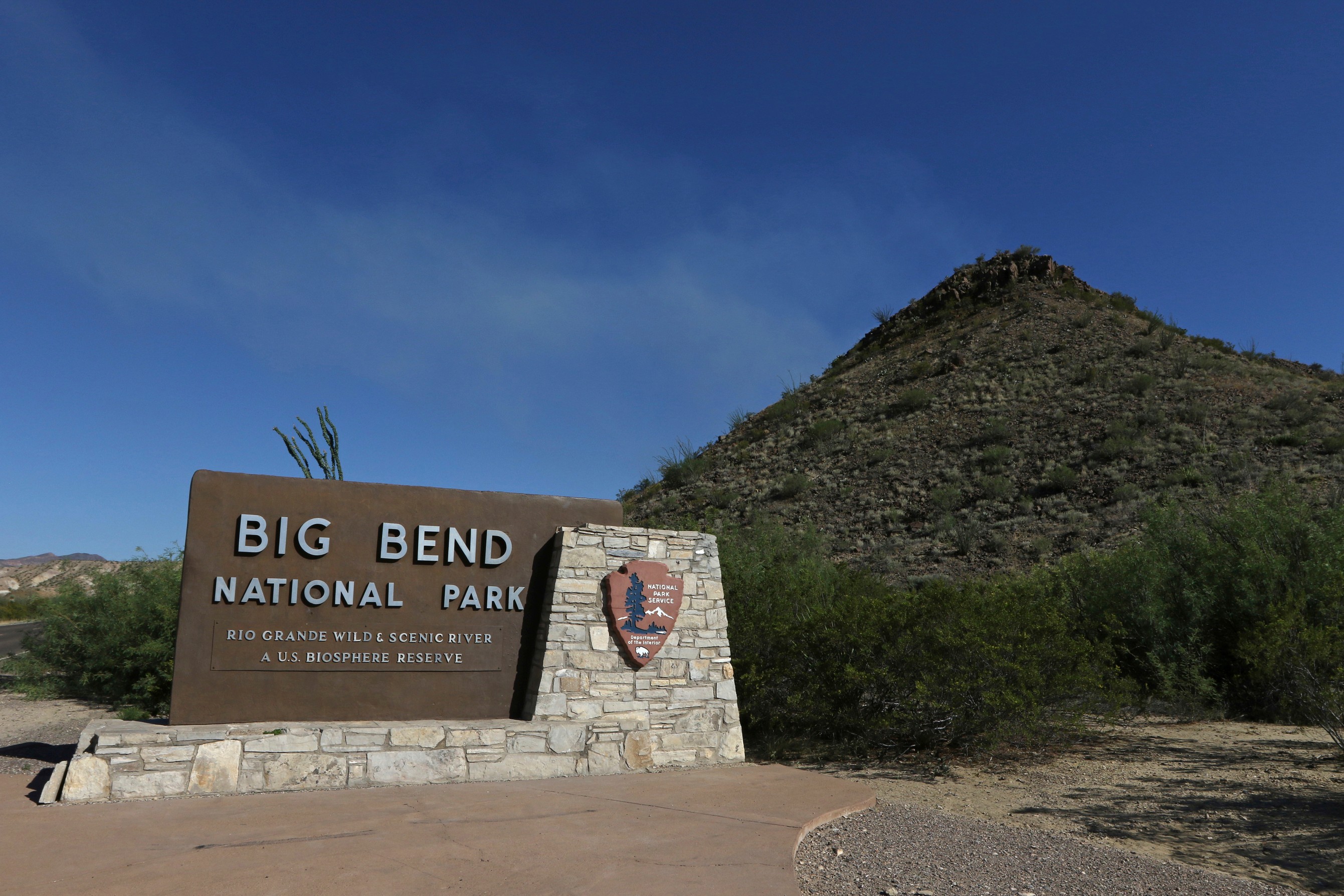
    WASHINGTON — The Trump administration said Monday it is temporarily pausing construction of a contentious border construction project in Texas’ Big Bend National Park while the head of the agency tasked with building the wall visits to do an “on-the-ground evaluation.”

    The project through the national park in southern Texas has faced fierce bipartisan opposition by critics who say it is marring the area’s pristine environment. They argue the region’s rugged and remote terrain already serves as a deterrent to migrants and smugglers. Border crossings in the area have historically been lower than other regions and have dropped even further over the past two years.

    “CBP is pausing all construction activity in Big Bend National Park while I visit and conduct a personal, on-the-ground evaluation,” Rodney Scott, who heads Customs and Border Protection, said on X. Scott said over the next couple of days, he was going to “listen to local leadership, community members, and stakeholders” to address what he said were “real” national security threats while protecting the park.

    While it isn’t clear whether the brief suspension portended a more permanent halt to the construction in the area, it reflected the intensity of the bipartisan opposition and was a rare concession from the administration on a signature promise of the president’s that it has raced to complete.

    Congress gave the Trump administration $46 billion last summer to build a wall from the Pacific Ocean to the Gulf of Mexico, and the administration has been charging ahead and waiving numerous regulations in an effort to swiftly build the wall.

    Scott has said that he expects the first layer of the wall to be built by the end of next year.

    But the administration has run into fierce opposition in Texas especially when it comes to construction in and near Big Bend National Park and a state park to the west.

    Customs and Border Protection earlier this year backed off of plans to build a 30-foot-tall bollard wall through the parks but was still moving forward with other border protection measures such as a new road, lights, miles of barriers designed to stop cars from crossing the border, and technology such as fiber optic cables to be buried under the fences.

    That has sparked opposition from Democratic and Republican sheriffs in the region, former national park officials, local residents who rely on the parks for their livelihood, and from some Texas elected officials. Critics have said it will scar the rugged landscape that attracts tourists who raft down the Rio Grande and take advantage of some of the clearest night skies in the U.S. to gaze at stars.

    Last week, bulldozers were seen clearing land at the park, sparking even more concern and raising questions from one of the state’s Republican senators. Sen. John Cornyn, who lost the Republican primary to the state’s attorney general, wrote to Homeland Security Secretary Markwayne Mullin over construction concerns.

    “My constituents believe that the 1,000-foot riverbank cliffs and remote Big Bend terrain offers its own source of deterrence for any illegal migrants crossing into the United States. The dangerous terrain includes steep mountains, deep canyons, and expansive deserts which they believe act a natural barrier that limits large-scale movements,” Cornyn wrote.